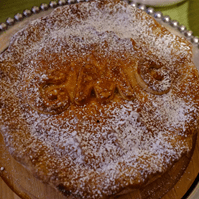
Kim Smith Sends In Her Photo of Her Version of Sista Felicia’s Apple Spice Cake

Hi Felicia and Joey,

Felicia’s Apple Spice Cake was a super fabulous hit with my family Thank you!!!!!

xKim

P.S. Chunks went missing before i had a chance to photograph!

PP.S I don’t have a large bundt pan; your recipe made four smallish cakes: one small bundt, one heart-shape, and two very small loaf pans. I froze the two loaf cakes so the kids can take them back to school. And also added grated orange rind to the batter and chopped walnuts to the batter and frosting.

Felicia's Apple Cakejpg

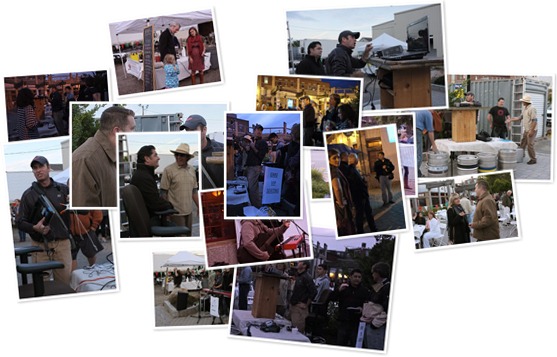
Kim Smith’s GMG Bloody Mary Contest Photos

Kim Writes-

Lots of fun today–what a great thing you and E.J. and GMG have created!!!!!!!!!!!!!!!!! Felicia’s ricotta pie was simply divine!

Chickity Check It! The Bean and Snoop Maddie Mad Send Monarch to Mexico

Visit Kim Smith’s Blog-

Releasing Monarch Butterfly

September 28th, 2011

Eloise and Madeline Send Monarch to Mexico

video- lobster roll preparation with kim smith, wendie demuth and sista felicia

Celebrate Gloucester 2 At Lat 43 From Kim Smith and Terry Weber

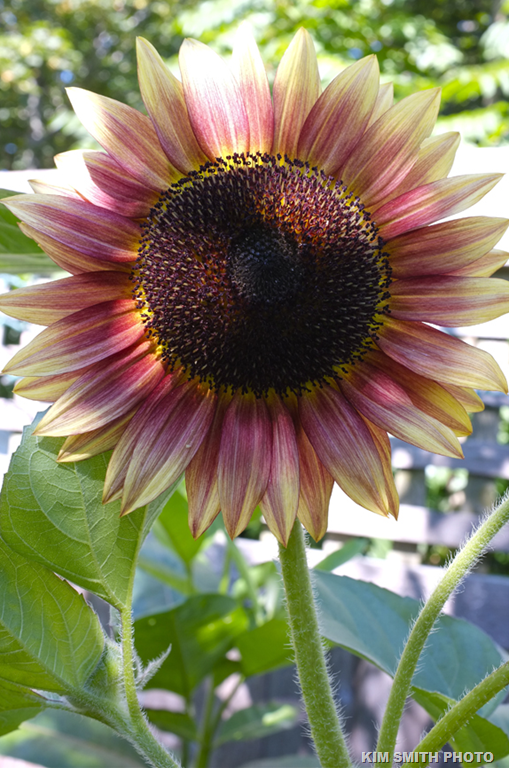
Labor Day Sunflowers from Kim Smith

Labor Day Sunflowers–visit my blog for more photos of sunflowers, Joe and Helen Garland, moving the kids to college and grad school, and of course, butterflies! Also, a beautiful illustration found while looking online for Rockwell Kent images of the Labor Movement. TitledGodspeed, it is a wood cut of an angel watching over a sailing vessel, with Northern Lights in the distance.

Enjoy this gorgeous weather and Happy Labor Day to you!

image

Check Out Kim’s Blog Here- http://www.kimsmithdesigns.wordpress.com/

When to Mow Your Fields for Butterflies and Other Beneficial Insects From Kim Smith

Recently a design colleague wrote inquiring as to the best time to mow her client’s fields as she was concerned about disrupting the breeding cycle of the Monarch butterfly. I am often asked this question and it is well worth considering, not only for the sake of the Monarchs, but for the survival of the myriad species of butterflies, bees, and other pollinating and beneficial insects that find food and shelter in untilled fields.
image

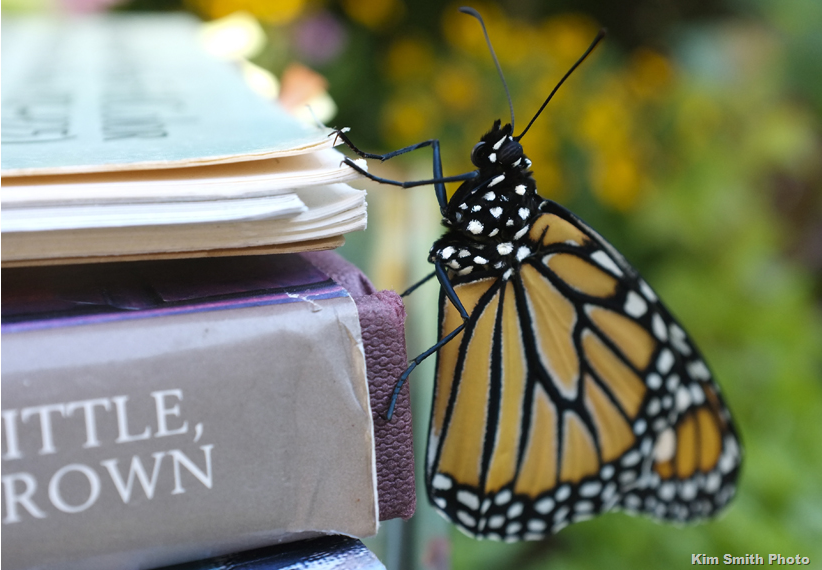
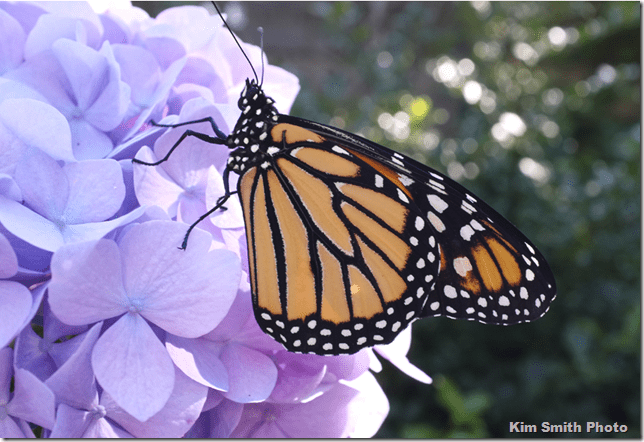
Newly Emerged Monarch

Dear Laurel,

I generally advise my readers and design clients that own similar untilled fields to alternately mow in stages–-half a field at a time. The Monarch is a large, charismatic butterfly with an easily observed life cycle. The typical field comprised of native (and introduced) wildflowers and grasses creates a rich biodiversity, supporting innumerable species of butterflies and beneficial insects. It is hard to know when exactly to mow for each different species and when to mow for even one single species because, from year to year, depending on many variables including temperature and air currents, the insects breeding times are somewhat variable. For example, this year I have had three broods each of both Monarchs and Black Swallowtails, when in a more typical year I may only have two broods.
image

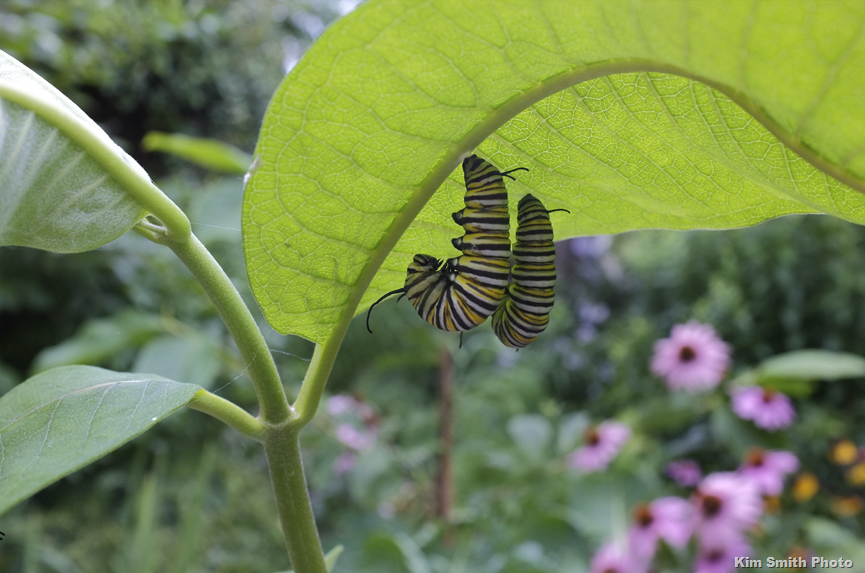
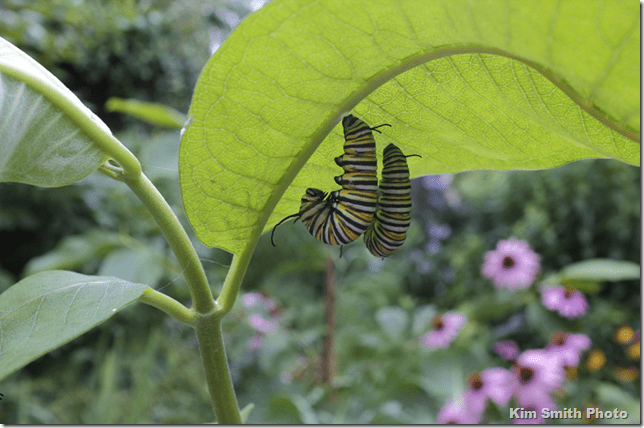
Monarch Caterpillars Attached to Milkweed Leaf (Asclepias syriaca)

I think of not too long ago when we were primarily an agrarian society. Farmers then would have mowed different fields at different times during the growing season. A woman in our community, whose field is rife with common milkweed, always mows in late June or early July. Initially I thought that this was perhaps not good practice for the Monarchs, but the thing with Common Milkweed (Asclepias syriaca) is that when mown to the ground in early summer, it shoots right back up again. By the time the late July, early August Monarchs have arrived and are breeding in our region,her milkweed has re-sprouted, grown at least a foot, is lush and green, and flowering.

That your client is interested in caring for the flora and fauna that abounds in her fields is wonderful! We want weeds (wildflowers) growing in our fields–they provide food and shelter for benefiel insects and wildlife and also help retain moisture in the soil.

The single greatest threat to the Monarch butterfly is the use of Monsanto’s Roundup Ready genetically modified corn and soy bean seed, which are designed to tolerate potent does of Monsanto’s herbicide Roundup, however, Roundup kills all other surrounding plants and all beneficials insects and their larvae. Additional threats include the extreme weather condiitons caused by climate change, overdevelopment in the US, which has led to loss of habitat, and lastly, the unrelenting poverty in rural Mexican villages, which is leading to the deforestation of the butterflies habitat in Michoacán.

To Read the rest of Kim’s Post Check Out Her Blog Here-

Kim Smith Designs

Hummingbird Clearwing Moth From Kim Smith


Kim Smith writes-

Dear Gardening Friends,

At this time every year readers write in to inquire about the mysterious and startling "furry shrimp" flying in their gardens. Perhaps you have a Hummingbird Clearwing Moth I write back? Clearwings are often seen nectaring at our North American native wildflowers bee balm (Monarda didyma) and white flowering summer phlox ‘David’ (Phlox paniculata), as well as the butterfly bushes and Verbena bonariensis.

I find August and September are the very best months for butterflies in our region. Only three days into August and this year is not disappointing. And then there is the resplendent light that surrounds here on Cape Ann. Gorgeous, warm, luminous light–I find, too, that August and September are some of the best months for photographing the natural beauty found on Cape Ann.

image

For the rest of Kim’s Post check here

Kim Smith Tapes Butterfly Show with Lisa Smith and Cape Ann TV’s After-the-Beach Teen Video Club

Kim writes-
I believe I mentioned that this past week, Lisa Smith and her Cape Ann TV After-the Beach Teen Video Club stopped by for a tour of my garden. Here’s a short clip, with a wonderful surprise visit by the friendly Question Mark butterfly, who very conveniently, stole the show.

The teens and Lisa did a great job and all very much enjoyed the beautiful creatures that flew in and out of our story. It is not easy to focus on tiny subjects using a heavy camera attached to a tripod. The full video of the garden tour and interview will air in the near future and we will keep you posted.

Oh Joyous July! Kim Smith Is Excited!

Kim Smith Writes-

Dear Friends,

Have you noticed the sheer numbers of our winged friends? Returning this evening from a swim at 6:45, I bumped into three Monarchs nectaring and a Red-spotted Purple (all in pristine, newly emerged condition). Early evening is an unusually late time of day for butterflies on the wing, especially when skies are slightly overcast. This, after a day of observing and shooting numerous numbers of butterflies, caterpillars and hummingbirds–and never leaving our garden. I work for a bit, but then the garden calls and I’m out the door with both video and still cameras. If this fabulously warm weather keeps up, I think we are in for another banner year with the butterflies, and skippers too.

Currently, we have 22 Monarchs, in various stages of their development, residing in our kitchen, and seven Black Swallowtail caterpillars and chrysalids.

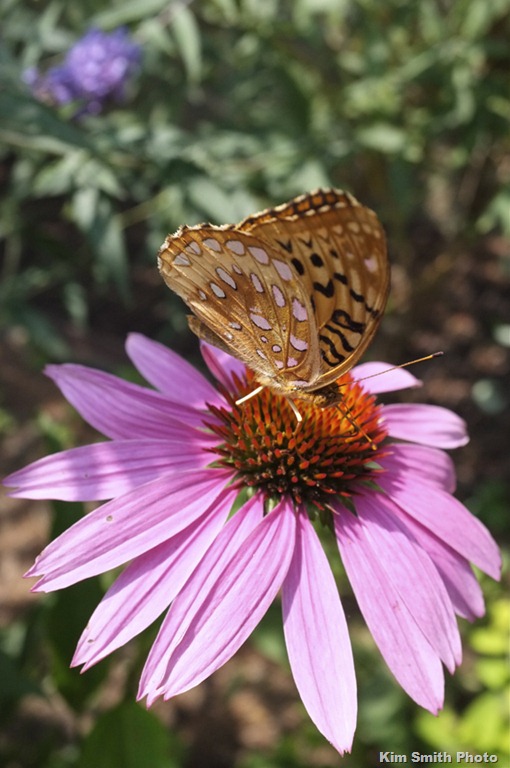
Great Spangled Fritillary nectaring at native Coneflower (Echinacea purpurea)

kimsmith1

Check out the rest of Kim’s Butterfly and caterpillar ramblings at her blog-

Kim Smith Designs

7th Wave Restaurant Review From A Completely Impartial Kim Smith

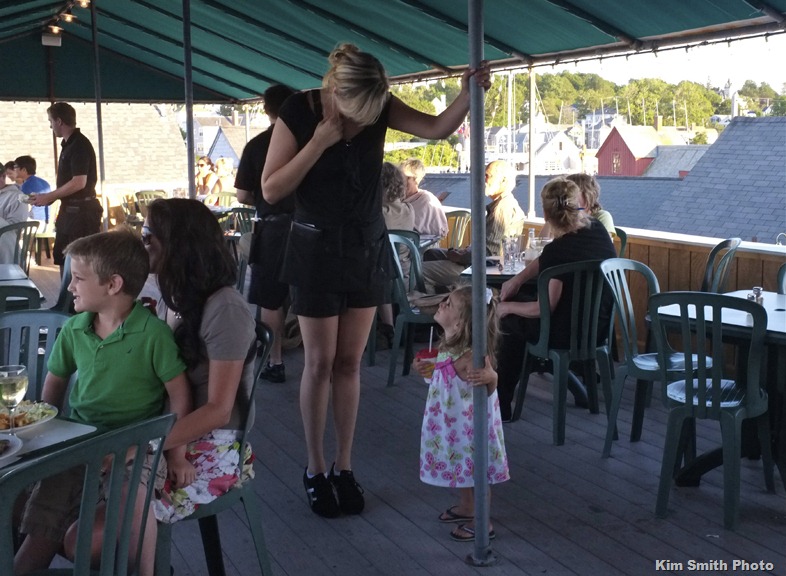
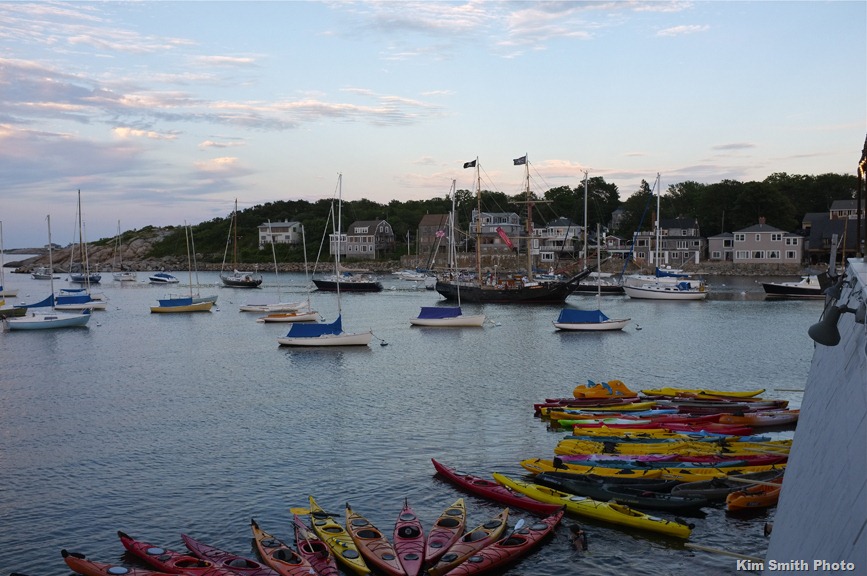
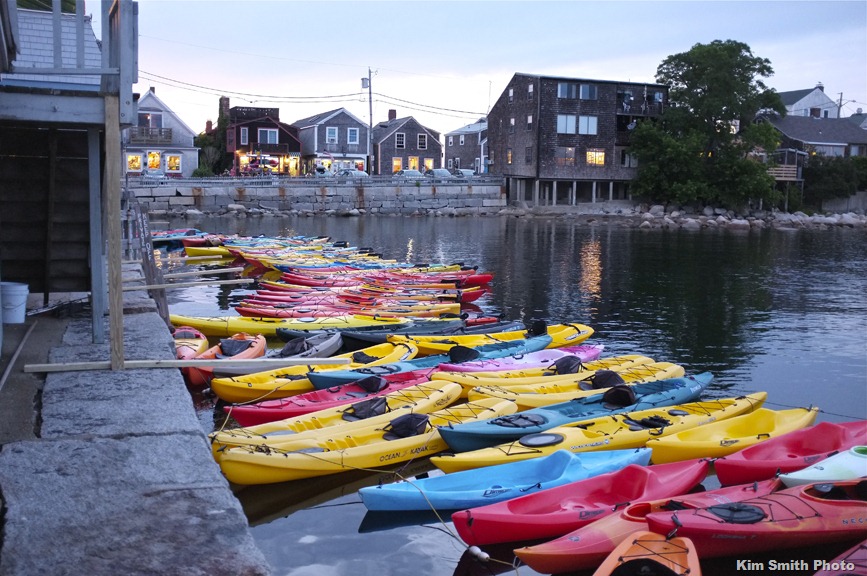
Sunday night my husband and I tried a new restaurant (new for us, that is), the 7th Wave in Rockport on Tuna Wharf. Our son Alex is cooking there this summer. The hostess was lovely and Talia, one of the owners, greeted us at the front desk. We had made a reservation for 7:00 and were seated immediately on the upper deck, with the stunning view of Rockport Harbor and beyond.

7thwave

The atmosphere is lively, relaxed, and entirely kid-and family-friendly. The waitstaff was hardworking and alot of fun and our food came along very quickly, no waiting for anything, despite the fact that it was a full house.

7thwave2

Our son was working the grill, so we restricted ourselves to grilled items only. I had the surf (super delicious grilled shrimp) and turf (petite filet, cooked to perfection) and Tom, the fantastic grilled tuna. I am usually more of a chowder and lobster person and can’t wait to go again and try more items on the menu. The lobster rolls and lobster salads passing by our table were heaped high with lobster meat and the chowder looked creamy and hearty. Elaine, mother of Talia, and owner, stopped by our table to say hello and to chat. It’s a family-owned business and the restaurant is named the 7th Wave because of their seven family members. The Kahn family opened their doors in June 2009 and they had their busiest night ever, the Saturday night before we ate dinner there. It was great to hear about their thriving business and we are looking forward to many return visits! The menu and hours of operation are posted on their website. 7th Wave Restaurant, 7 Tuna Wharf, Rockport.

7thwave3

Looking back toward Bearskin Neck from Tuna Wharf.

7thwave4

Check Out Kim’s Blog Here

KIM SMITH- Northward Migrating Monarch Butterflies Arrive to Good Harbor Beach and to Our Garden!

To read the full story, with many more photos than I can attach to the newsletter, click here for blog.

While snapping a photo of the divinely scented honeysuckle embowering the outside shower…
Honeysuckle embowered shower enclosure Lonicera japonica 'Purpurea'

I spotted our first female Monarch butterfly of the season.

Monarch Butterfly Marsh MilkweedShe’s arrived a bit earlier than usual this year, or more accurately, the milkweeds in our garden are slightly behind in blossoming time-Marsh Milkweed won’t bloom for another half-week and Common Milkweed won’t flower for another two weeks (both milkweed patches are growing nearby the shower enclosure). However, she did not have nectaring in mind.

Monarch Butterfly Marsh Milkweed

Click here to read the rest at Kim’s Blog

Chickity Check it!- Our Beautiful Sweet Bay Magnolia From Kim Smith

Dear Gardening Friends,

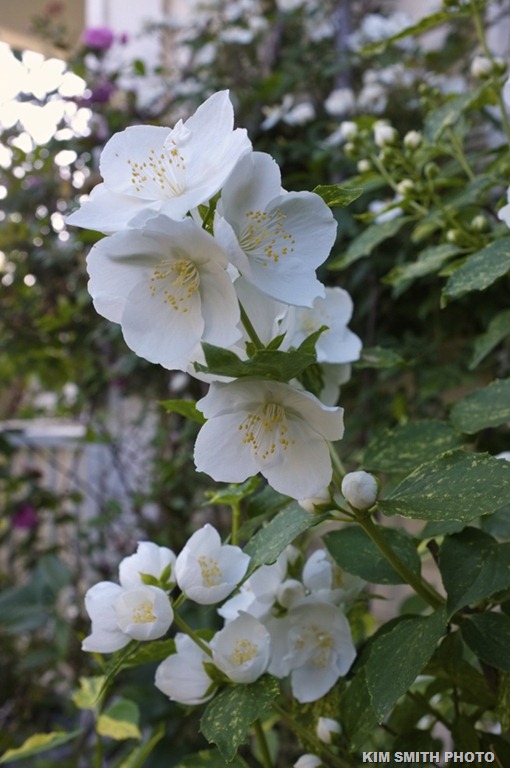
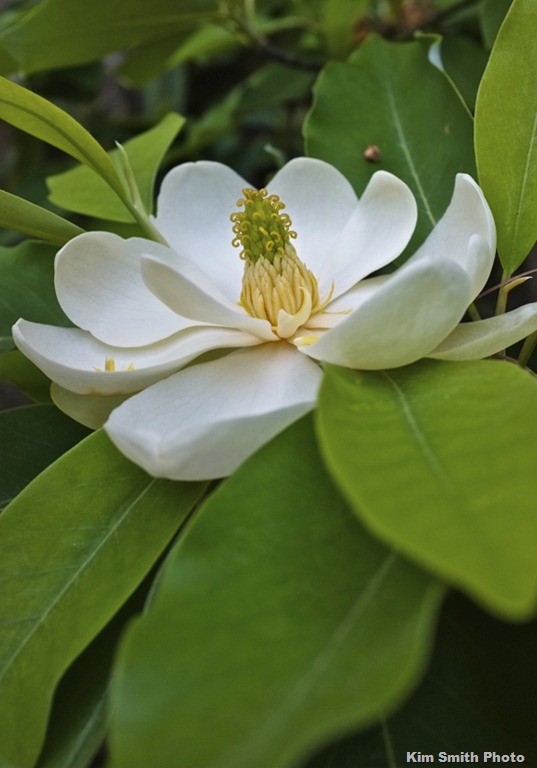
The air is redolent with June’s dreamy scents–Virginia sweetspire, mock orange and rose, Oyama magnolia and honeysuckle, and none more heady than our luxuriant, native sweet bay magnolia (Magnolia virginiana).

For more information about the history of the mysterious Great Magnolia Swamp and of the sweet bay magnolia in Gloucester see the article posted on my blog.

Warmest wishes,

Kim

Magnolia virginiana ~ Sweet Bay Magnolia

Located in the heart of Ravenswood Park in Gloucester there is a stand of Magnolia virginiana growing in the Great Magnolia Swamp. It is the only population of Magnolia virginiana known to grow this far north. I took one look at the native sweet bay magnolia and breathed in the fresh lemon-honeysuckle scent of the blossoms, fell in love, and immediately set out to learn all I could about this graceful and captivating tree. Recently having returned from a trip to visit my family in northern Florida, I had tucked the bud of a Magnolia grandiflora into my suitcase. I was dreaming of someday having a garden large enough to accommodate the Magnolia grandiflora and was overjoyed to discover the similarities between M. virginiana and

M. grandiflora. For those not familiar with the Southern magnolia, it is a grand, imposing specimen in the landscape, growing up to fifty feet in the cooler zones five and six, and one hundred feet plus in the southern states. M. grandiflora is the only native magnolia that is reliably evergreen in its northern range, flowering initially in the late spring and sporadically throughout the summer. The creamy white flowers, enormous and bowl-shaped (ten to twelve inches across), emit a delicious, heady sweet lemon fragrance.

kimsmith

Kim Smith Lilac Culture

Dear Gardening Friends,

Baking temperatures and sweltering humidity have their appropriate months, but early June is too soon for the recent 95-plus degree days! I am grateful for this cooler weather—our newly planted vegetables and annuals will have an easier transition out of the melting temperatures of last week. On another note, our daughter Liv is preparing to attend NYU Steinhardt Masters of Music program this coming fall. To make this dream of hers come true she is working many long hours with a combination of three jobs. If anyone knows of an apartment to share or sublet please let us know. She is hoping to find something downtown, relatively close to NYU and/or public transit but will consider nearly any arrangement

This is the ideal time of year to prune your lilacs, immediately after flowering (attached article). See blog for photos of several native companion plants for lilacs. The photos from the lilac posts and the flower power post were shot with the new Fujifilm x100—a truly fantastic, albeit quirky, camera. I am so looking forward to spending fun times getting to know this camera and will once my design jobs settle into their seasonal rhythm.

Perhaps we will have another summer similar to last year’s, with days on end of warm temperatures and minimal rain, the ideal weather for butterflying (we can hope!). Last week’s warm temperatures brought a Monarch to Willowdale and our garden was rife with angelwings, azures, and swallowtails.

Happy Flag Day!

Warmest wishes, Kim

President Grevy

click here to view Kim’s site

Kim Smith Gardening Updates

Dear Gardening Friends,

Come join me this Tuesday, June 7th at Willowdale Estate, from 4:00 to 6:00, for a house and garden tour of this beautiful, and beautifully restored, historic Arts and Crafts manse. Members of the Willowdale staff will be giving guided tours of the house and I will be available to talk about the garden, including how the Arts and Crafts movement influenced our horticultural decisions. Admission is free and the event is open to the public.

Thank you for the all the thoughtful comments and praise for last week’s column “The most highly scented lilacs…” Additionally, you will always find more photos posted on the blog. I cannot email too many photos in one newsletter because many of my reader’s email accounts have MB limits. Recently, several readers mentioned they keep a separate file for my columns on their desktop or in their email accounts, however, just to let you know, all columns and newsletters from the past year are archived on my blog. Columns prior to January 2010 are archived on my website.

lilackimsmith

Next week I will send you information on lilac culture as this is the ideal time of year to trim and shape your lilacs for maximum blooms next year.

Reader Irma wrote the following: I picked my lilacs at their height. In water, in the vase they lasted 2 days and drooped! Last year the same. I couldn’t believe it. Do you know why?

Hi Irma, Lilacs have woody stems and do not easily absorb water in the vase. Depending on whatever tool is handy, I do one of two things. With a hammer, crush the stems, at least six inches along the length, and immediately place in a vase filled with tepid or warm water. Over the years I have also discovered that peeling the stems with a vegetable peeler is just as effective, and less messy. Peel away the woody outer layer, all around the stem, again at least six inches up the stalk (peel down to green). Still, even with treating the stems, the arrangement will be fleeting and only look beautiful for several days. The scent of the lilacs permeating throughout your home is worth the extra effort!

Click to view more on Kim’s Blog here

The most highly scented lilacs… From Kim Smith

Lilacs,

False blue

White

Purple

Colour of lilac

Heart-leaves of lilac all over

New England,

Roots of lilac under all the soil

of New England,

Lilacs in me because I am

New England,

because my roots are in it,

Because my leaves are in it,

Because my flowers are for it,

Because it is my country

And I speak to it of itself

And sing of it with my own voice

Since certainly it is mine.

—from Lilacs by Amy Lowell (1874–1925)

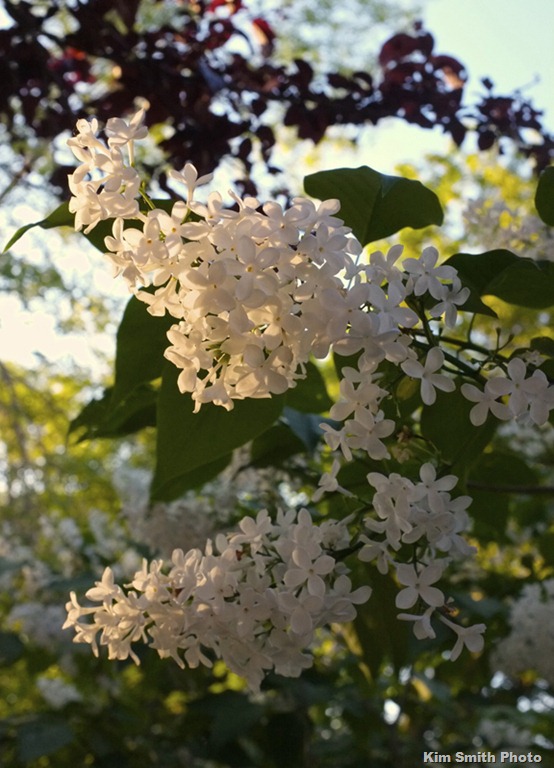
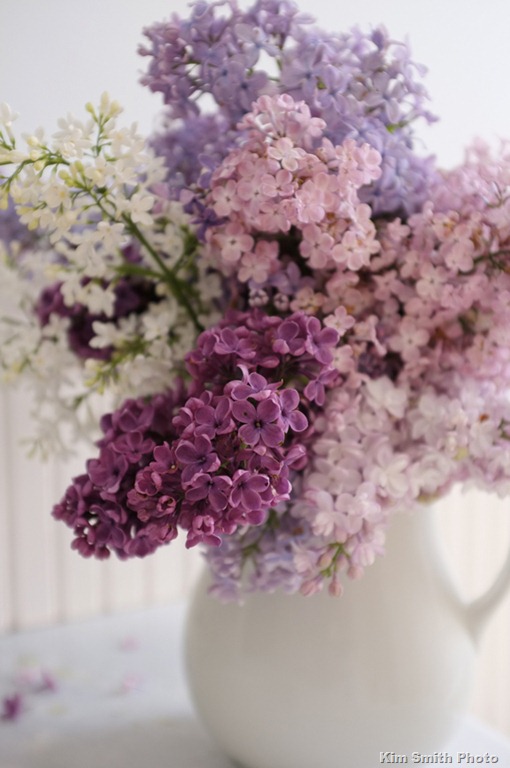
Surely at the top of the list of shrubs to grow for creating the framework of an intimate garden or garden room are lilacs, in particular Syringa vulgaris and their French hybrids. Syringa vulgaris are grown for their exquisite beauty in both form and color of blossoms, although it is their fragrance flung far and throughout gardens and neighborhoods that make them so unforgettable.

Not all species of Syringa and cultivars of Syringa vulgaris are scented. The early French hybrids and hybrids of Leonid Kolesnikov have retained their fragrance.Syringa oblata has a similar fragrance, though is not nearly as potent. Several of the Chinese species have a spicy cinnamon scent, while many of the Asian species and their hybrids have very little, if any, fragrance. To find your personal preference, I suggest a visit to a local arboretum, or take your nose to the nursery during the extended period of time (six to eight weeks, or so) in which the different cultivars of S. vulgaris are in bloom.

kimsmithlilac

For the rest of Kim’s Post check out and subscribe to her blog- Kim Smith Designs

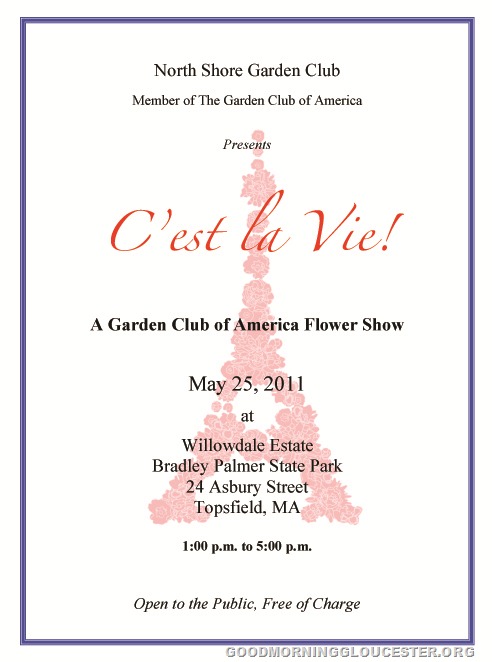
C’est la Vie! at Willowdale Estate–From Kim Smith


Kim Smith Writes-

Dear Gardening Friends,

Think Spring! Come join the North Shore Garden Club for what promises to be a wonderful event. I will be there and available to answer questions about the butterfly garden. Hope to see you there!

Warmest wishes, Kim

Microsoft Word - CestVFinalCover.doc

The North Shore Garden Club is hosting a beautiful exhibition of all things flowers, which will be held at historic Willowdale Estate in Topsfield, Massachusetts. The grounds are open to the public and the event includes classes in flower arranging, photography, and horticulture, and all is free.

The North Shore Garden Club (established in 1915) is a member of the Garden Club of America and was created for the purpose of stimulating interest in all aspects of gardening, as well as to support civic beauty and conservation of natural resources.

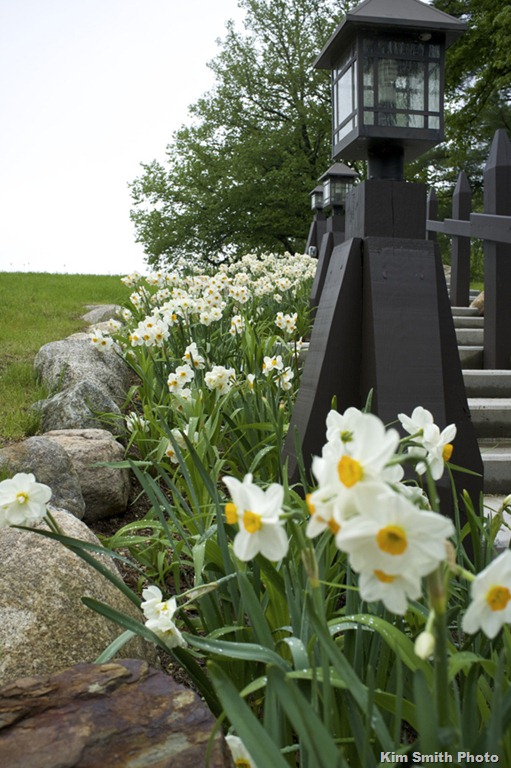
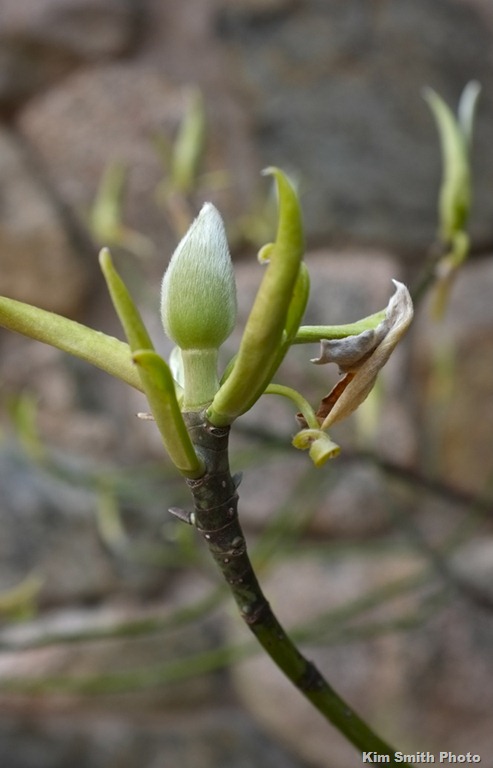
Of note at Willowdale this past week…

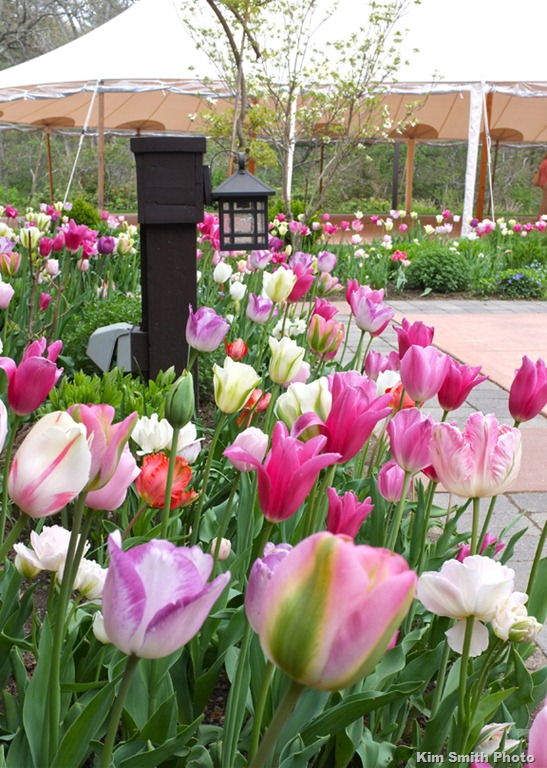
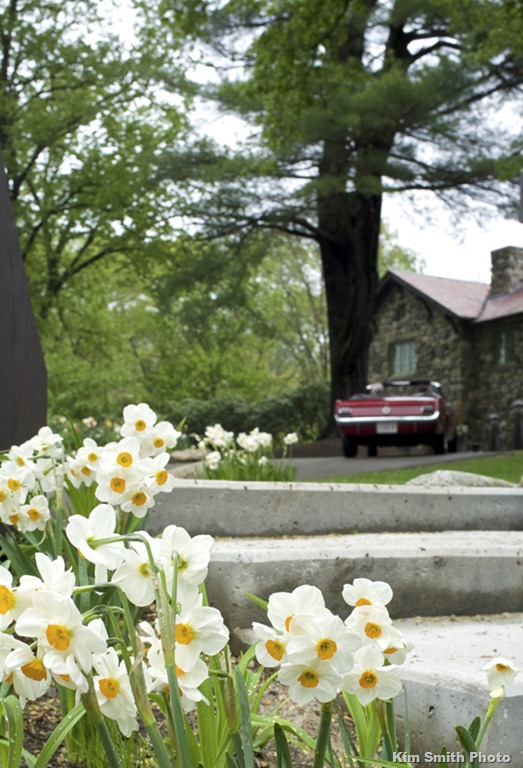
A sea of fabulously fragrant narcissusMagnolia sieboldii bud Tulipomania at WillowdaleView from the parking lot stairs

Check out Kim’s Blog here