Sam Novello asks GMG, “Joe, what happened to the cannons at Stage Fort Park—— two are gone?”
The cannon(s) are undergoing restoration (cleaning, chemical treatment and re-painting). In 2018, the CPA Committee awarded $22,705 of an estimated $46,000 to the Stage Fort Park Advisory Committee to refurbish the Parrot Rifle Cannon for work scheduled to commence spring 2020. The project is led by the Stage Fort Park Advisory Committee. The grant application project summary indicates the scope of work as follows:
The fabrication of an aluminum “historic-rendering of a carriage for the Parrot Rifle Cannon as part of a multi-year project to restore the Fort area of Stage Fort Park.
Cleaning, treatment and repainting of the Parrot Rifle Cannon.
Machining or “sleeving” of the Parrot Rifle Cannon to create a narrow lined bore capable of firing a small charge report.
“Our final goal is to restore the Fort area as a historic feature of the Park and its importance to our local military history.* Repairs and restoration of this site are long overdue. The ramparts are overgrown with vegetation**. The cannon barrels are suffering due to neglect. The barrels are subject to trash, dirt and debris. We hope to preserve this site for future generations. The cleaning, capping and painting of the cannon will protect the barrel against future damage. We have proposed an annual stipend in the city budget of $2000 for maintenance of the Fort as well as a security plan for the Fort which would include lighting and security cameras. *Our ultimate goals include a visitor education center with historic references to the Fort and its history. It is expected that the entire Stage Fort Park will be used as a centerpiece of the city’s 400th anniversary celebrations.”
– Stage Fort Park Advisory Committee CPA application excerpt, photo from packet and phasing goals
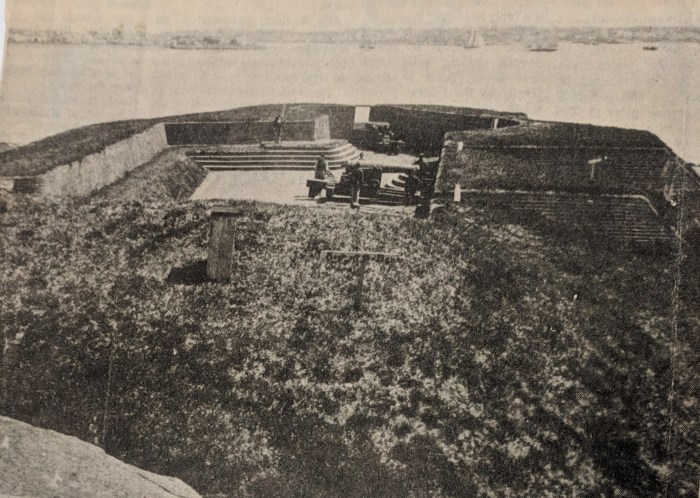
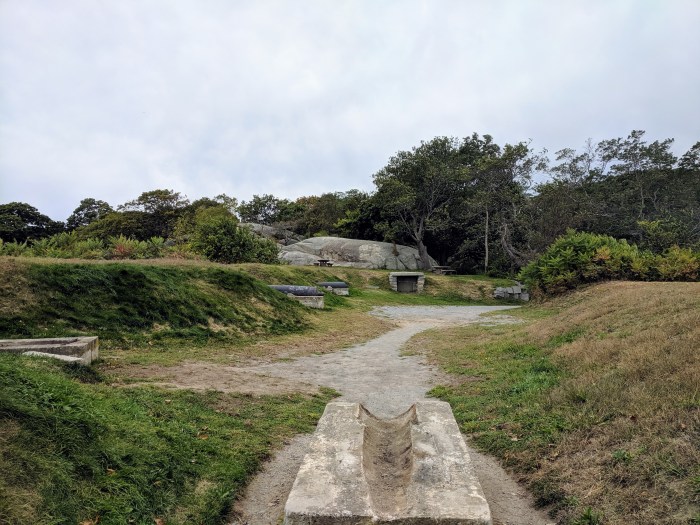
*There is no finalized plan for this area overall. (See photographs then/now below.)There IS a history of Fort use and restoration for historic battles –as well as city celebrations– honoring this legacy and the kind souls who volunteered to do so.
For example: I’m not sure if the 187th Infantry Brigade was paid for the work they did in 1973, which I’m assuming was the last big overhaul. The CPA grant is just about the work on the cannons. The Historical Commission wrote a letter of support stressing replica accuracy using period materials (wood and metal)
**The area is overgrown at the moment because of various DPW work on the boulevard and future plans. (When I photographed the area annually it’s cleared.)
Stage Fort is the oldest fort in the Massachusetts Bay Colony.
2019
October 2019 cannons removed for restoration from site design 1973 by 187th Infantry Brigade
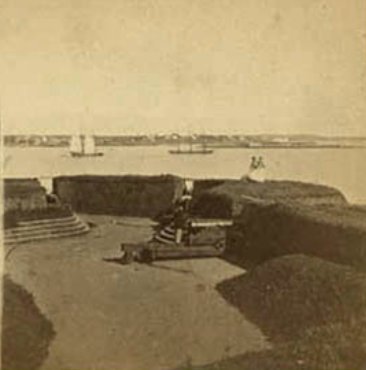
ca.1870
“Fort Conant”, post Civil War – pre 1900 site of ramparts before land set aside as Stage Fort Park. Four cannons were mounted during the Civil War
1973
As part of the city’s 350th celebration prep, the cannon site area (earthworks, entrance area, powder magazine, and gun embrasures) was restored by an engineer brigade from Wollaston. The design intent turned the clock back to how the fort would have been built out in the 1700s. Julian Hatch, the chairman of the 350th, had been director of public works for the city. The project was decades in the wishing and sensitively designed at long last.
1930
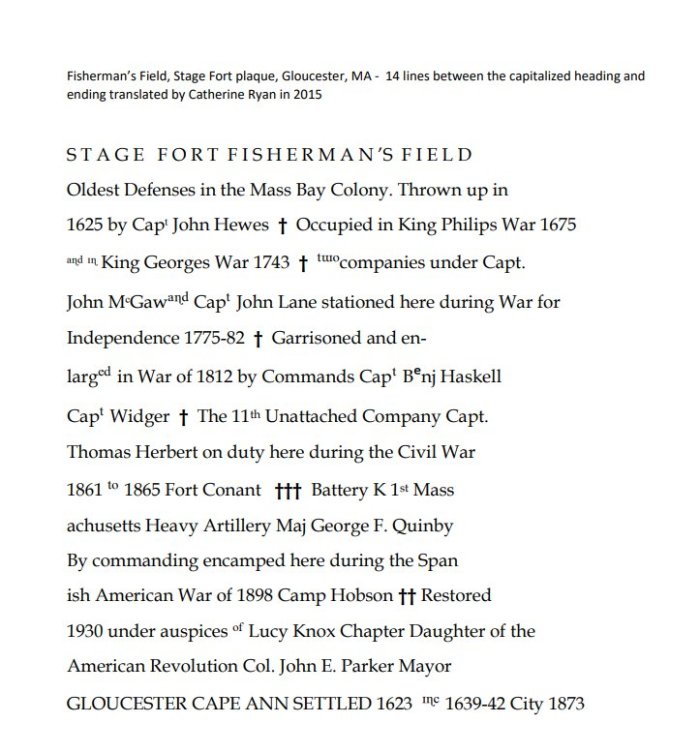
In 1930, the Fort was spruced up from its formal design post Civil and Spanish war. Fisherman’s Field Stage Fort information plaques were commissioned and unveiled.
Bronze tribute plaques embedded in Tablet Rock at Stage Fort Park detail the site’s history and were commissioned and unveiled at different times. The monumental and stunning Founders plaque from 1907 on Tablet Rock itself is in fantastic condition. Two DAR plaques were inlaid on the glacial outcroppings past half moon beach on the way to the cannons. The Fisherman’s Field (ca.1930) is so worn it’s nearly indecipherable, though that’s part of its charm. The plaque compels close inspection, lingering and discovery. It’s a fun family activity for anyone who likes a challenge. For those who want help reading the content, I transcribed it back in 2010. ”
Read more about historic battles and Gloucester Stage Fort Park in this trivia quiz designed by Shaun Goulart, GHS history teacher, in this prior GMG post.
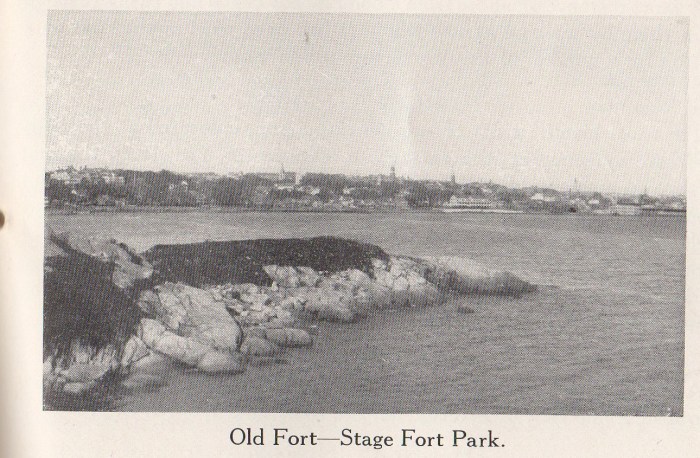
1921
copy of Frank L. Cox fine art photograph (pre dates 1921) he used to illustrate his pocket Gloucester guide “The Gloucester Book”, and sell prints
ca.1870
Spread The GMG Love By Sharing With These Buttons:
Sharing press release from Mary Ellen Lepionka and Bill Remsen followed by a selection of visual arts, maps, and writing spotlighting Dogtown (1633-1961) by Catherine Ryan.
Nov 29th, 7PM, Public Meeting
Come to a special public presentation November 29th in Kyrouz Auditorium in Gloucester City Hall, 9 Dale Avenue, at 7pm.
Week of Nov 13
“During the week of November 13 a team of archaeologists from the Public Archaeology Laboratory (PAL) in Providence will be conducting fieldwork in Dogtown. They will begin mapping and describing an area to be nominated to the National Register of Historic Places, a National Park Service program to honor historically significant buildings and landscapes.
What do you think?
“Presenters at City Hall on Nov 29th will include Betsy Friedberg from the Massachusetts Historical Commission, who will explain how the National Register program works and what it does and does not do, and Kristen Heitert from the PAL, who will present an initial plan for defining the boundaries of Dogtown as a National Register District. People attending the meeting will be asked to respond to that plan and to express their views about what makes Dogtown special. What should be the boundaries of the proposed National Register District, and what cultural features should be included in it? What would be the benefits of National Register status, and are there any drawbacks?
Who all is involved?
“The Dogtown archaeological survey is funded through a matching grant from the Massachusetts Historical Commission and the Dusky Foundation and is financed by the City of Gloucester. The Gloucester Historical Commission applied for the grant and is coordinating the project in collaboration with the Rockport Historical Commission. The PAL team will also have the assistance of members of the Dogtown Advisory Committee, the Rockport Rights of Way Committee, the Cape Ann Trail Stewards, and the Friends of Dogtown.”
– Dogtown is eligible for the National Register. Will Gloucester earn another major district designation? Above excerpts from the press release for the Nov 29th event shared by Bill Remsen, local project coordinator, and Mary Ellen Lepionka, co-chair Gloucester Historical Commission, and some Dogtown maps and memorabilia 1633-1961
Dogtown Maps and memorabilia 1633-1961 selected by Catherine Ryan
Prior 2017 Dogtown public forums, lectures and meetings mentioned consideration of controlled burns to clear brush and return some land to a former moors state, with various potential benefits.
“Nature takes a lot of courses.” Chris Leahy said. He focused on Dogtown, “a very special place”, and possible merits of land stewardship geared at fostering greater biodiversity. Perhaps some of the core acres could be coaxed to grasslands as when parts of Gloucester were described as moors? Characteristic wildlife, butterflies, and birds no longer present may swing back.” March 4 2017 Dogtown Forum at Cape Ann Museumin collaboration with Essex County Greenbelt, Mass Audubon, and Friends of Dogtown group
February 23, 2017 Chris Leahy also gave a talk at Sawyer Free Library Dogtown- the Biography of a Landscape:750 Million Years Ago to the Present A photographic history through slides presented by the Gloucester Lyceum and the Friends of the Library
“Today the Hudson River Valley in upstate New York is gorgeous. The hills are covered with oak forests, and the valleys are patchworks of hayfields and farms. But Ostfeld says the area didn’t always look like this. When the Europeans came here hundreds of years ago, they clear-cut nearly all of the forests to plant crops and raise livestock. “They also cut down trees for commercial use,” Ostfeld says, “to make masts for ships, and for firewood.” Since then a lot of the forest has come back — but it’s not the same forest as before, he says. Today it’s all broken up into little pieces, with roads, farms and housing developments. For mice, this has been great news. “They tend to thrive in these degraded, fragmented landscapes,” Ostfeld says, because their predators need big forests to survive. Without as many foxes, hawks and owls to eat them, mice crank out babies. And we end up with forests packed with mice — mice that are chronically infected with Lyme and covered with ticks.”
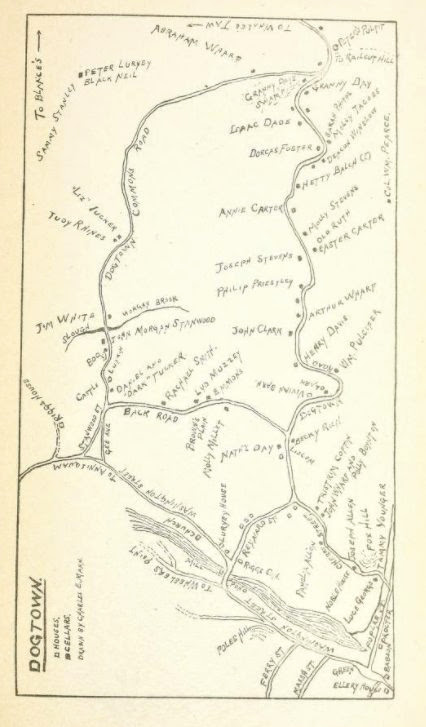
Selection of maps
from books, and memorabilia I’ve pulled on Dogtown (1634-1961):
1961
From Gloucester 1961 Cape Ann Festival of the Arts booklet
1954
From Gloucester 1954 Festival of the Arts booklet, prepared for the second of the Russel Crouse Prize Play, the Witch of Dogtown, by S. Foster Damon. “Each year it is hoped new plays dealing with the Gloucester or Cape Ann theme will be produced.”
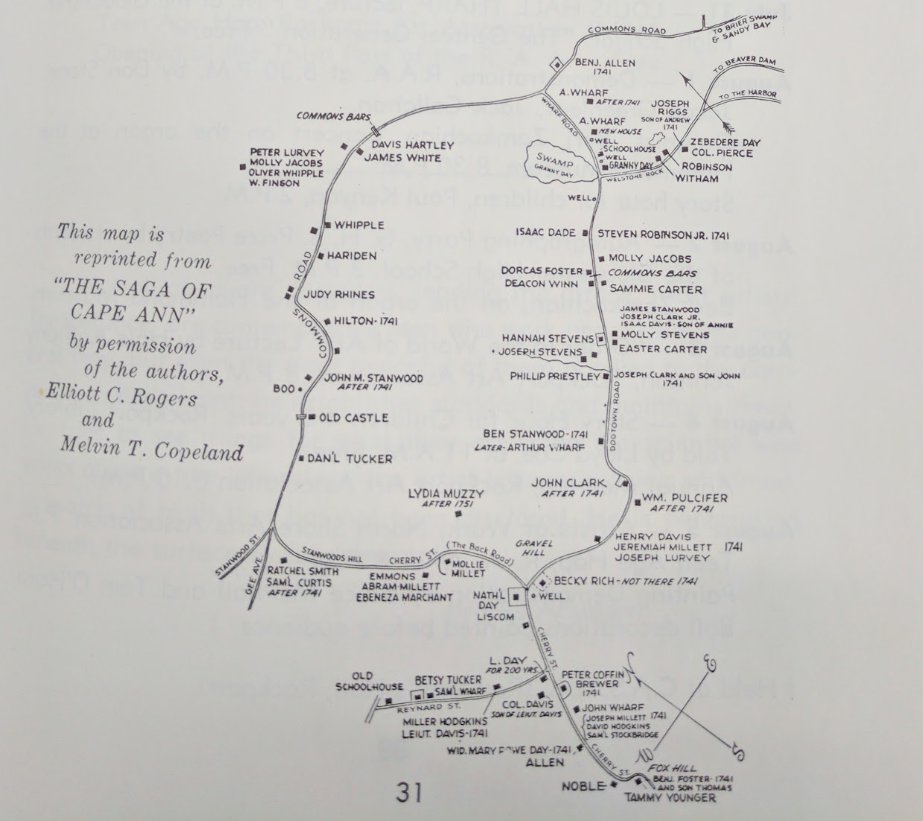
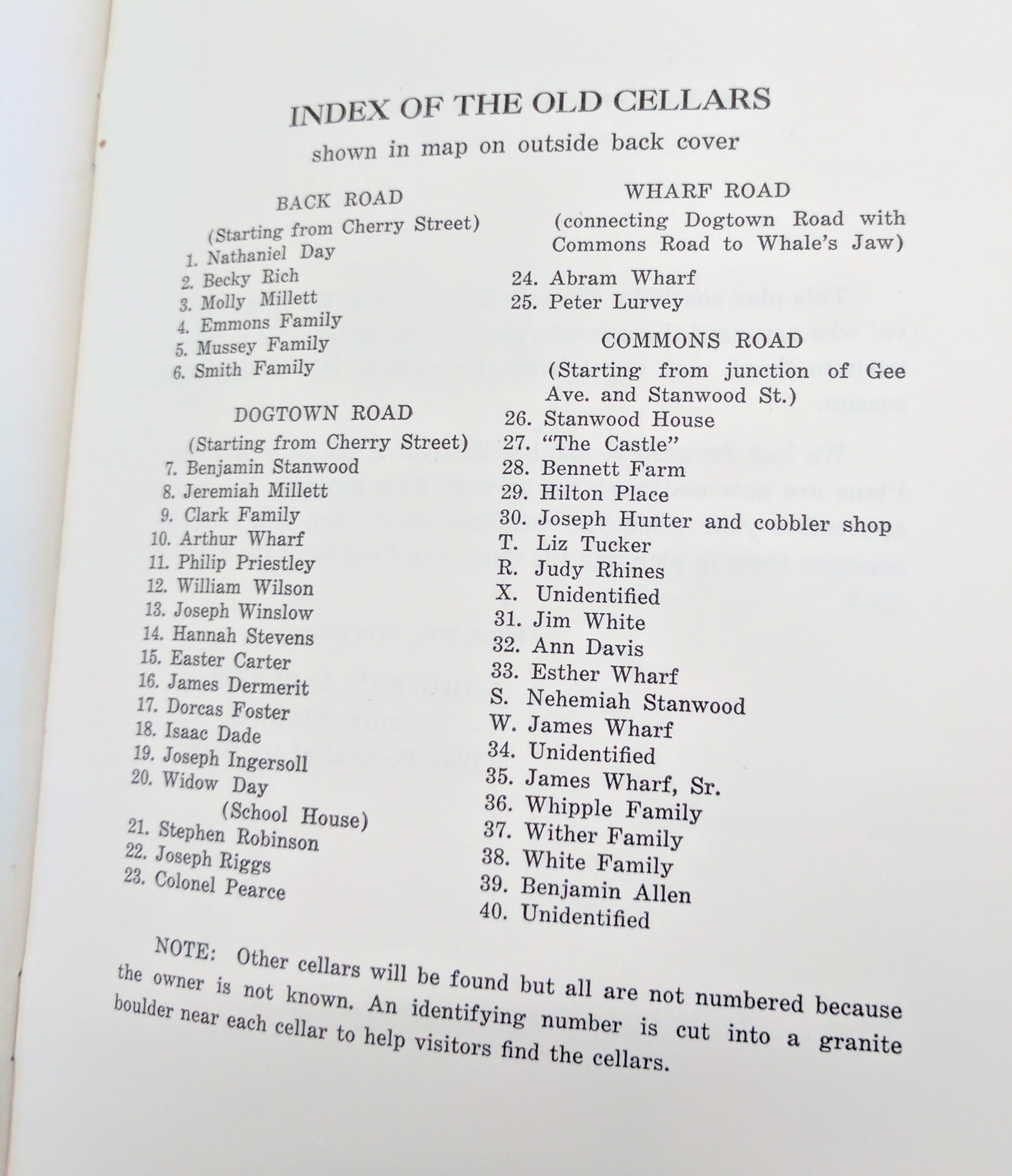
Joshua Batchelder 1741 survey map of “a good part of Dogtown common” printed and annotated for Gloucester’s 3rd Annual Cape Ann Festival of the Arts in 19541954 Index to annotated map
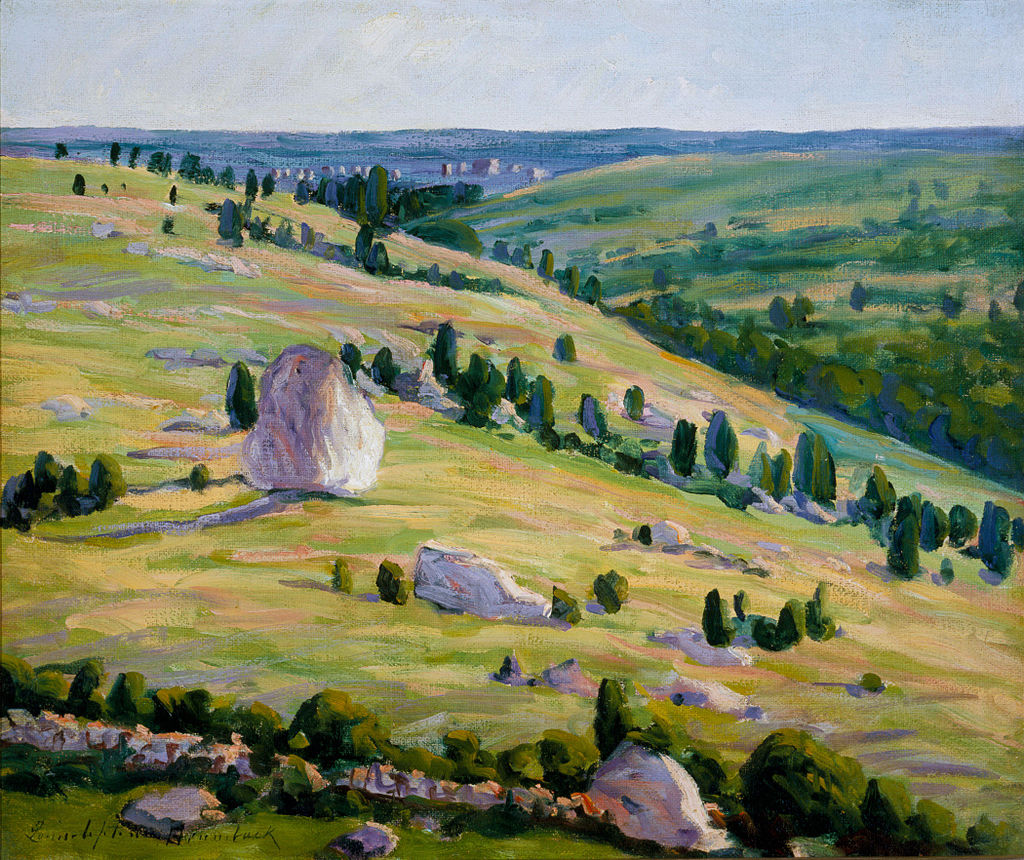
1923 Christian Science Monitor art review for Gloucester Society of Artists
“Dogtown Common, the now deserted hill home of the first settlers who 300 years ago braved the dangers of a hostile and Indian Annisquam, offers both romance and reality. It has remained for Louise Upton Brumback to interpret its clear contrasts, its far spaces, blue skies, white clouds and stiff green pointed cedars. Although the draftsmanship is crude in the extreme, the effect is rare and genuine. The old resident who passes through the gallery will shake his head dubiously at the false color creations of harbor and rock, but accepts this striking and bold visualization of Dogtown Common as the true spirit of Cape Ann…”
Inland among the lonely cedar dells Of Old Cape Ann, near Gloucester by the Sea, Still live the Dead–in homes that used to be. All day in dreamy spells They tattle low with sounds of tinkling cattle bells Or spirit tappings of some hollow tree And there, all night–out of the dark– They bark–and bark…
“Note: From a little volume, by Charles E. Mann, entitled “In the Heart of Cape Ann” Gloucester, Mass., The Proctor Bros. Co), the curious reader may learn more strange, half forgotten facts concerning the old Puritan life of that region. Among its singular New England characters, certain authentic and legendary figures have entered the theme of this poem. P.M-K. Miami University, Oxford, Ohio. March, 1921
Percy MacKaye (1875–1956) was an American dramatist and poet.
Harvard MacKaye papers: “History note: Percy Wallace MacKaye, author and dramatist, graduated from Harvard in 1897, wrote poetic dramas, operatic libretti, modern masques and spectacles, and was active in promoting community theatre. The collection includes his papers and those of his wife, Marion Homer Morse MacKaye, as well as material relating to the career of his father Steele MacKaye (1842-1894), an American theatrical designer, actor, dramatist, and inventor. The bulk of the collection consists of material pertaining to community drama; correspondence with literary and theatrical figures including Edgar Lee Masters, Edwin Arlington Robinson, George Pierce Baker, Theodore Dreiser, Amy Lowell, Upton Sinclair, Edward Gordon Craig, Louis Untermeyer and Thornton Wilder.”
Dartmouth: The MacKaye Family Papers “contain materials documenting the life and career of four generations of the family. They include a large amount of personal and professional correspondence as well as original manuscripts and typescripts of plays, prose, masques, pageants, poetry, essays and articles. Of note are manuscript materials for Benton MacKaye’s works on geotechnics entitled “Geotechnics of North America,” and “From Geography to Geotechnics,” as well as Percy MacKaye’s biography and works on his father Steele MacKaye and the MacKaye family, entitled respectively, “Epoch,” and “Annals of an Era.”
(Gloucester, Dogtown Common, is not on the MacKaye Wikipedia page)
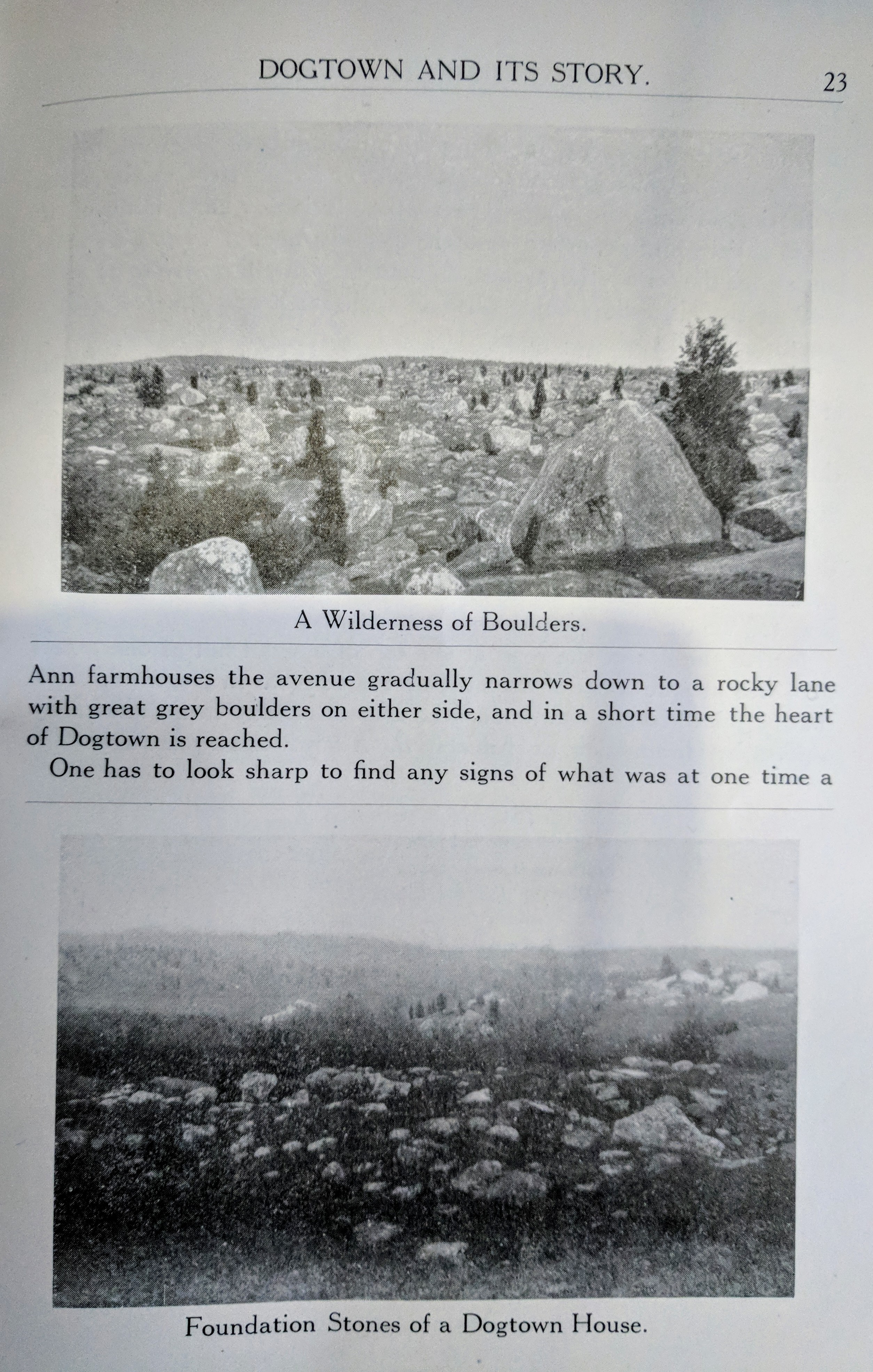
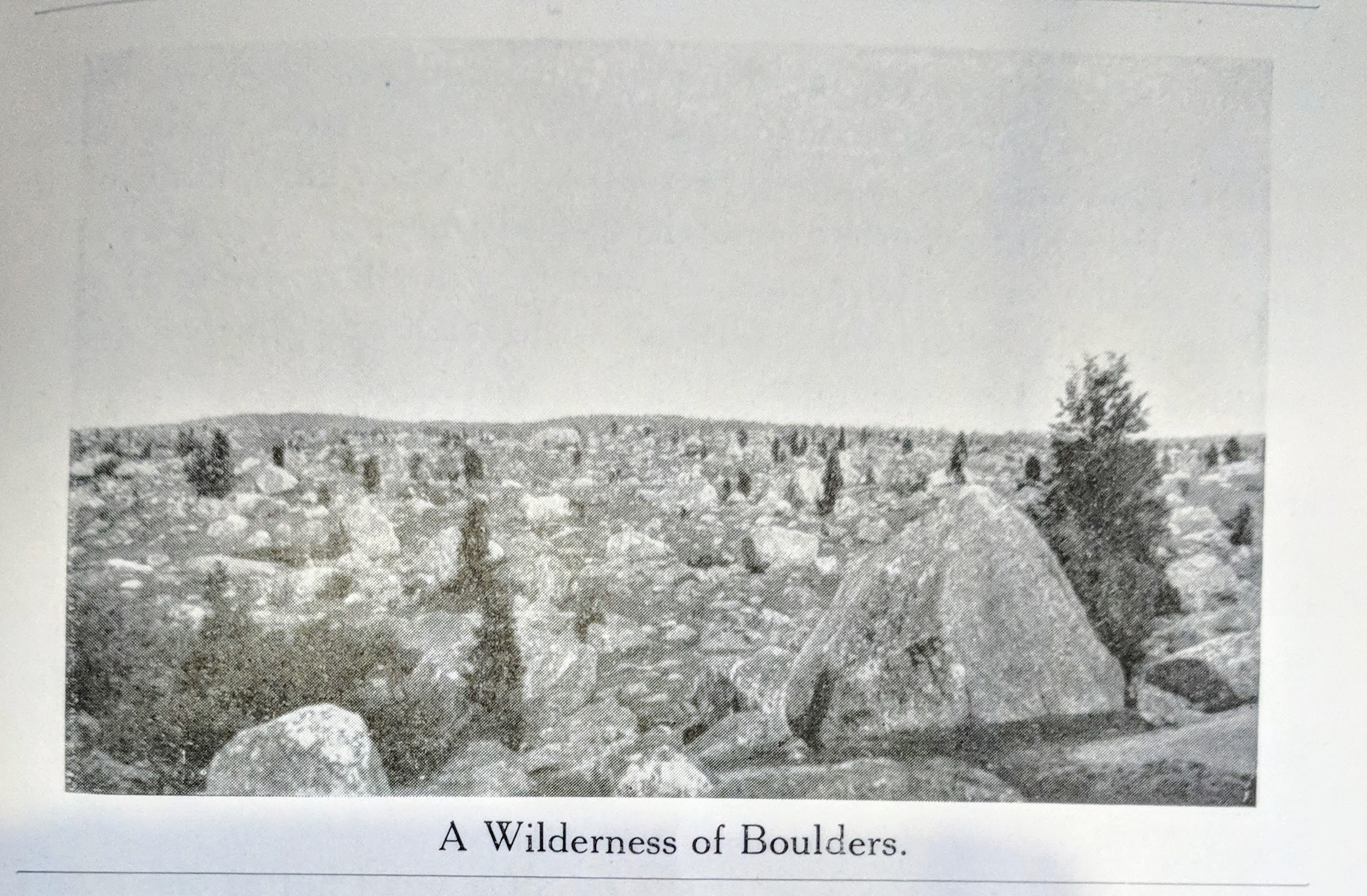
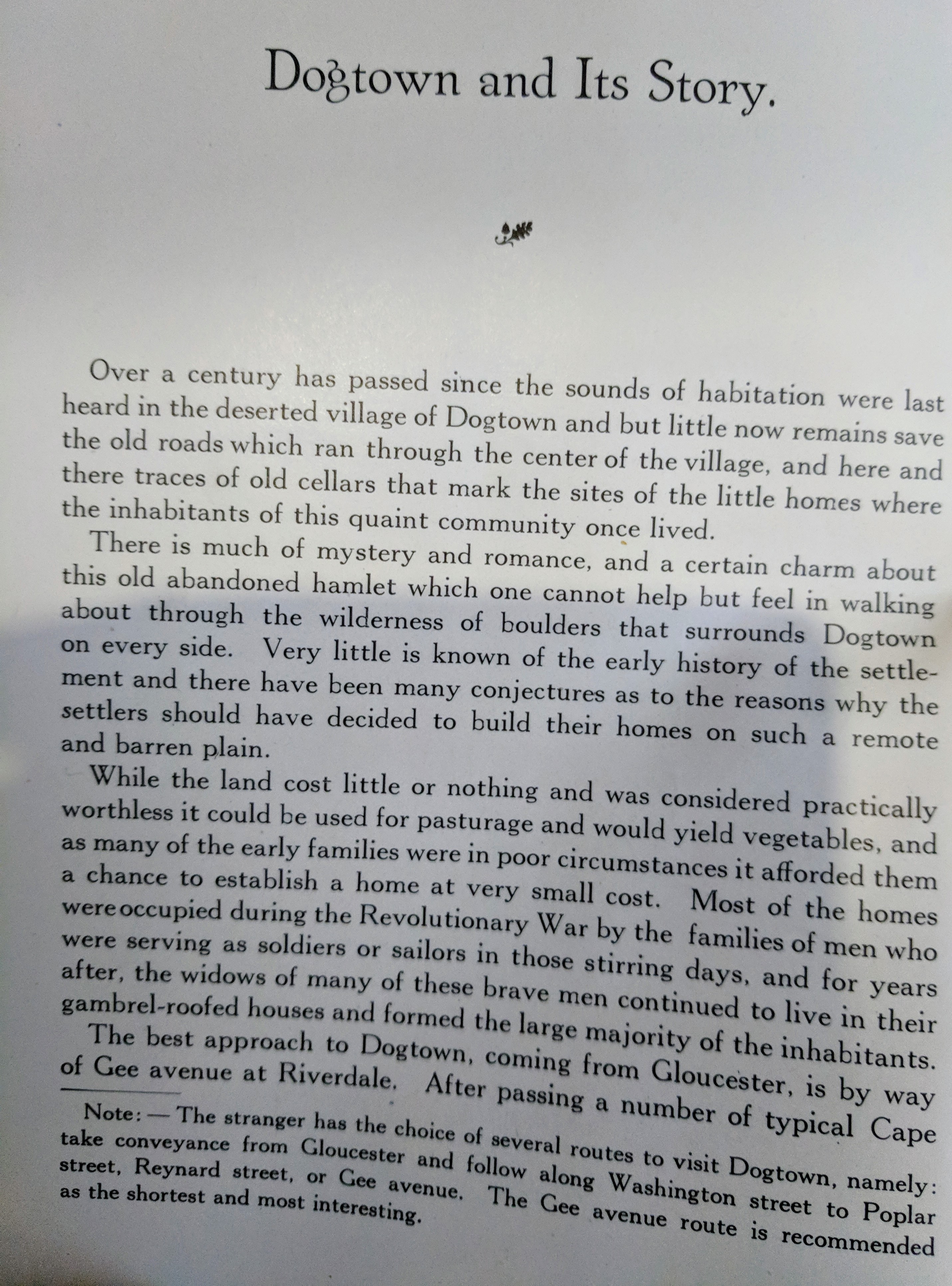
Great read p.22 from the Dogtown and Its Story chapter, in The Gloucester Book, by Frank L. Cox, 1921
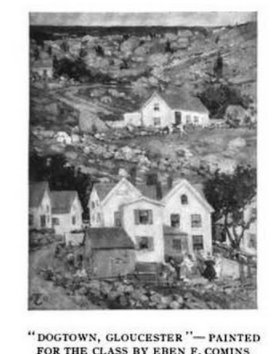
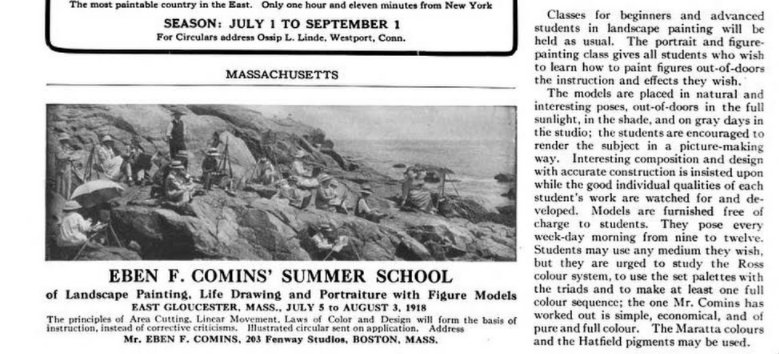
1918 Eben Comins painting
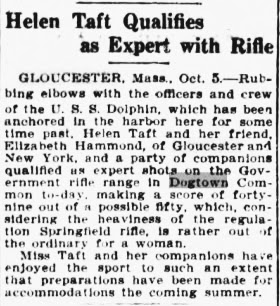
1912 government rifle range Dogtown
1904 (1742)
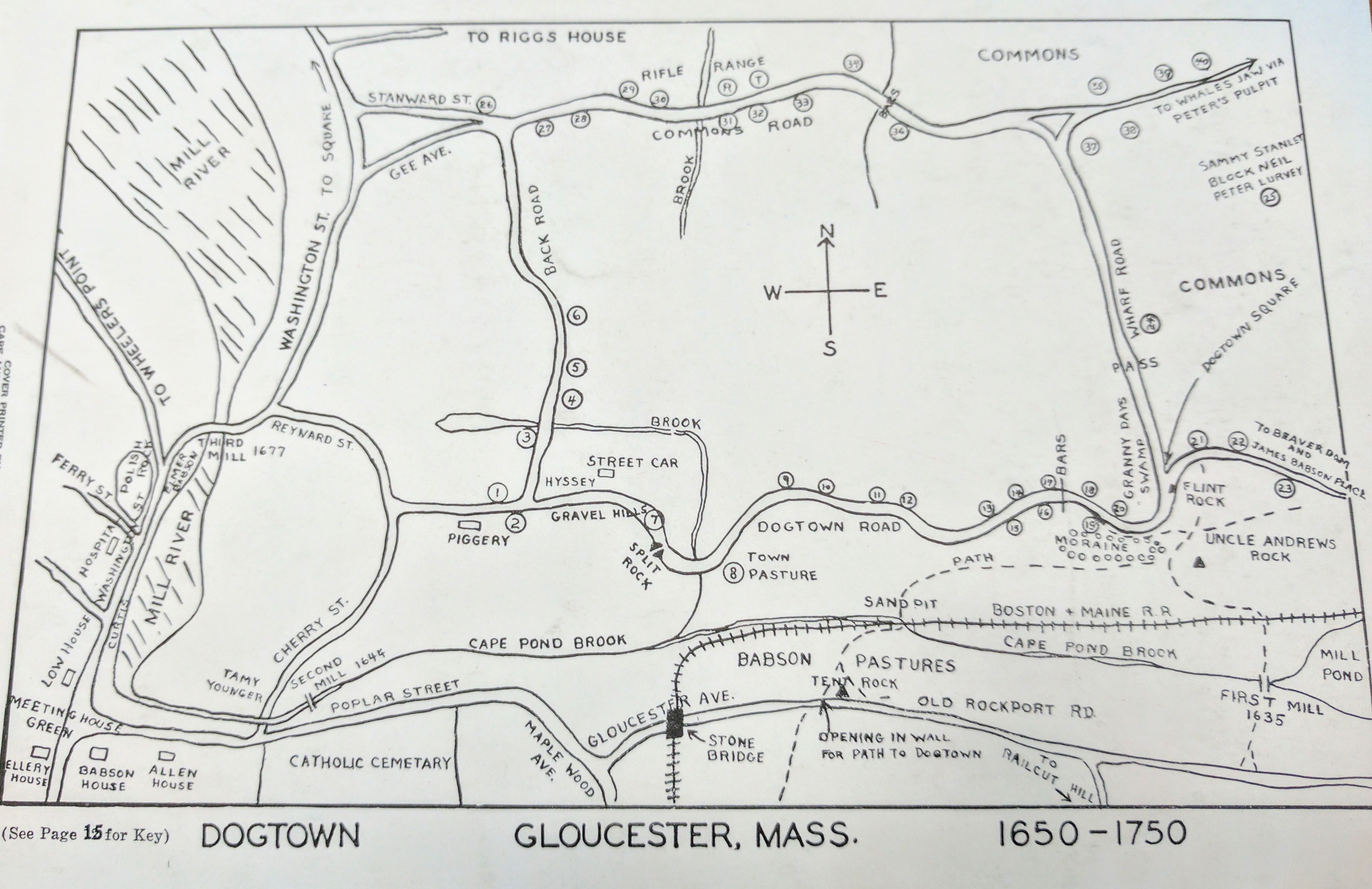
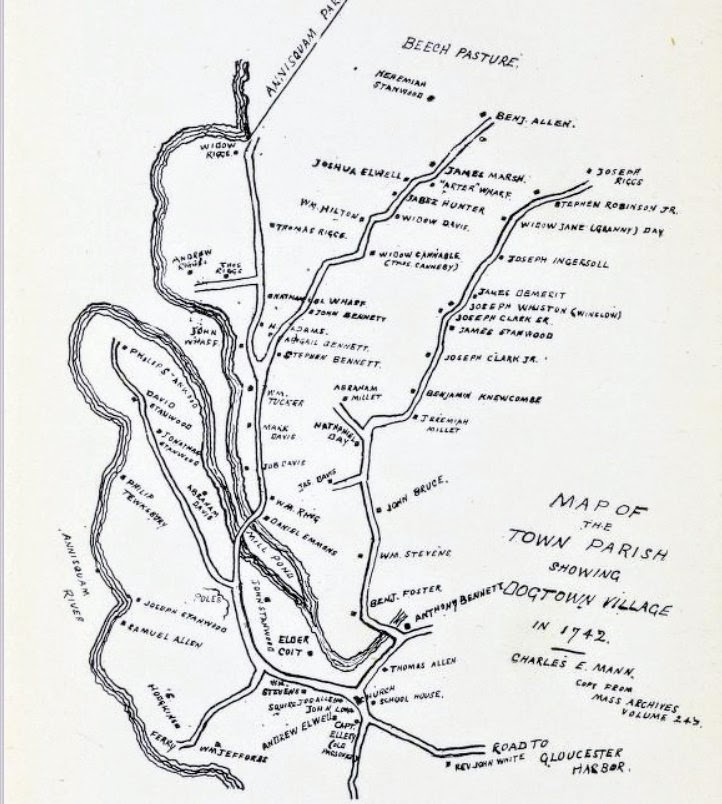
ca.1904 Charles E. Mann map copied from 1742 map in MA archives collectionMann
1877 Higginson
“Three miles inland, as I remember, we found the hearthstones of a vanished settlement; then we passed a swamp with cardinal flowers; then a cathedral of noble pines, topped with crow’s-nests. If we had not gone astray by this time, we presently emerged on Dogtown Common, an elevated table-land, over spread with great boulders as with houses, and encircled with a girdle of green woods and an outer girdle of blue sea. I know of nothing more wild than that gray waste of boulders..”
In 1855, Henry David Thoreau wrote in his journal: “I am [reading] William Wood’s “New England’s Prospect”… William Wood New Englands Prospect was originally published in 1634 in London. Here is a Wood excerpt concerning burning brush to clear land, a historical antecedent (and apt surname) to keep in mind when considering stewardship 2017 and beyond.
…The next commodity the land affords is good store of woods, and that not only such as may be needful for fuel but likewise for the building of ships and houses and mills and all manner of water-work about which wood is needful. The timber of the country grows straight and tall, some trees being twenty, some thirty foot high, before they spread forth their branches; generally the trees be not very thick, though there may be many that will serve for mill posts, some being three foot and a half over. And whereas it is generally conceived that the woods grow so thick that there is no more clear ground than is hewed out by labor of man, it is nothing so, in many places diverse acres being clear so that one may ride a hunting in most places of the land if he will venture himself for being lost. There is no underwood saving in swamps and low grounds that are wet, in which the English get Osiers and Hasles and such small wood as is for their use. Of these swamps, some be ten, some twenty, some thirty miles long, being preserved by the wetness of the soil wherein they grow; for it being the custom of the Indians to burn the wood in November when the grass is withered and leaves dried, it consumes all the underwood and rubbish which otherwise would overgrow the country, making it unpassable, and spoil their much affected hunting; so that by this means in those places where the Indians inhabit there is scarce a bush or bramble or any cumbersome underwood to be seen in the more champion ground. Small wood, growing in these places where the fire could not come, is preserved. In some places, where the Indians died of the plague some fourteen years ago, is much underwood, as in the midway betwixt Wessaguscus and Plimouth, because it hath not been burned. Certain rivers stopping the fire from coming to clear that place of the country hath made it unuseful and troublesome to travel thorow, in so much that it is called ragged plaine, because it teares and rents the cloathes of them that pass. Now because it may be necessary for mechanical Artificers to know what timber and wood of use is in the Country, I will recite the most useful as followeth*…” *see photos for Wood’s trees list
Thoreau was thinking along these lines, finding god in berries.
“From William Wood’s New England’s Prospect, printed about 1633, it would appear that strawberries were much more abundant and large here before they were impoverished or cornered up by cultivation. “Some,” as he says, “being two inches about, one may gather half a bushel in a forenoon.” They are the first blush of a country, its morning red, a sort of ambrosial food which grows only on Olympian soil.” -Thoreau’s Wild Fruit
“If you look closely you will find blueberry and huckleberry bushes under your feet, though they may be feeble and barren, throughout all our woods, the most persevering Native Americans, ready to shoot up into place and power at the next election among the plants, ready to reclothe the hills when man has laid them bare and feed all kinds of pensioners.”
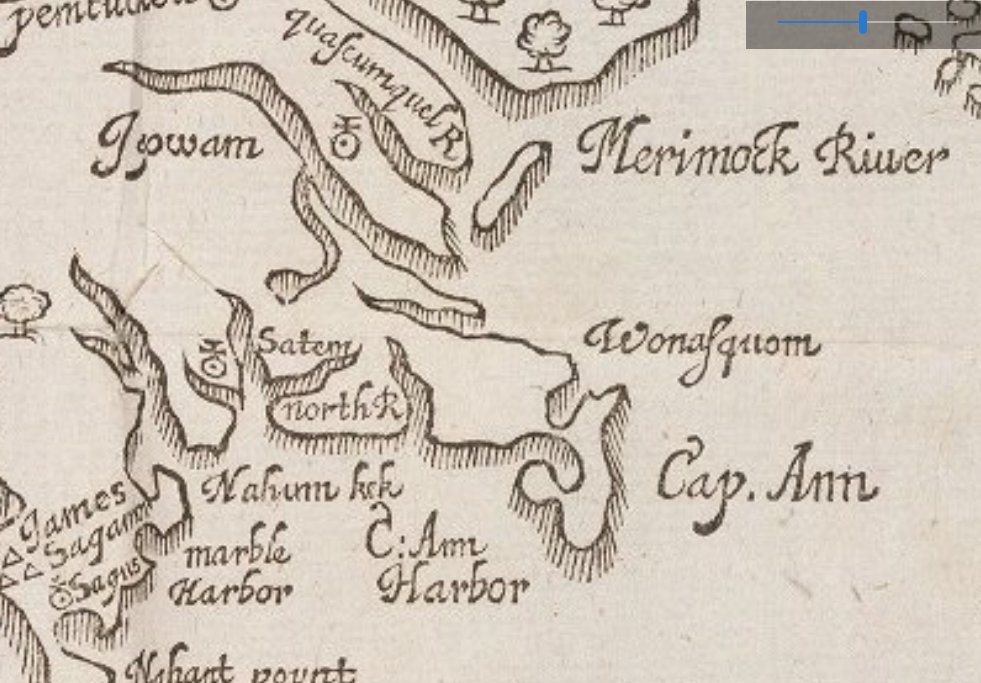
photos: William Wood’s New Englands Prospect scanned from book in the University of CA collection. “Wonasquam” on map at Cape Ann
“Of their Custom in burning the Country, and the reason thereof” The Salvages are accustomed to set fire of the Country in all places where they come, and to burne it twice a year: at the Spring, and the fall of the leaf. The reason that moves them to do so, is because it would other wise be so overgrown with underweeds that it would be all a coppice wood, and the people would not be able in any wise to pass through the Country out of a beaten path… And this custom of firing the Country is the meanes to make it passable; and by that meanes the trees growe here and there as in our parks: and makes the Country very beautiful and commodious.”
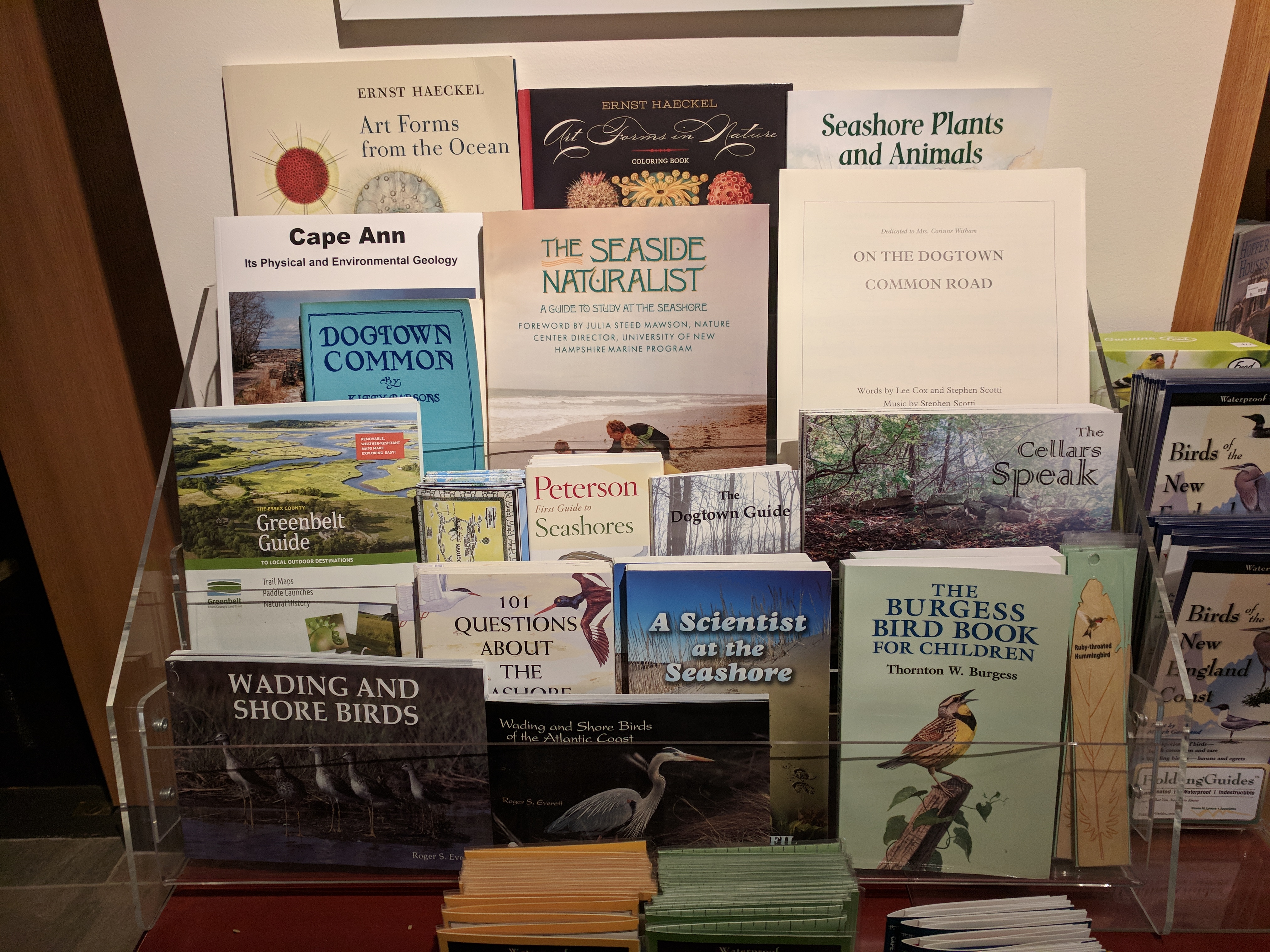
Cape Ann Museum book shop display October 2017
Spread The GMG Love By Sharing With These Buttons:
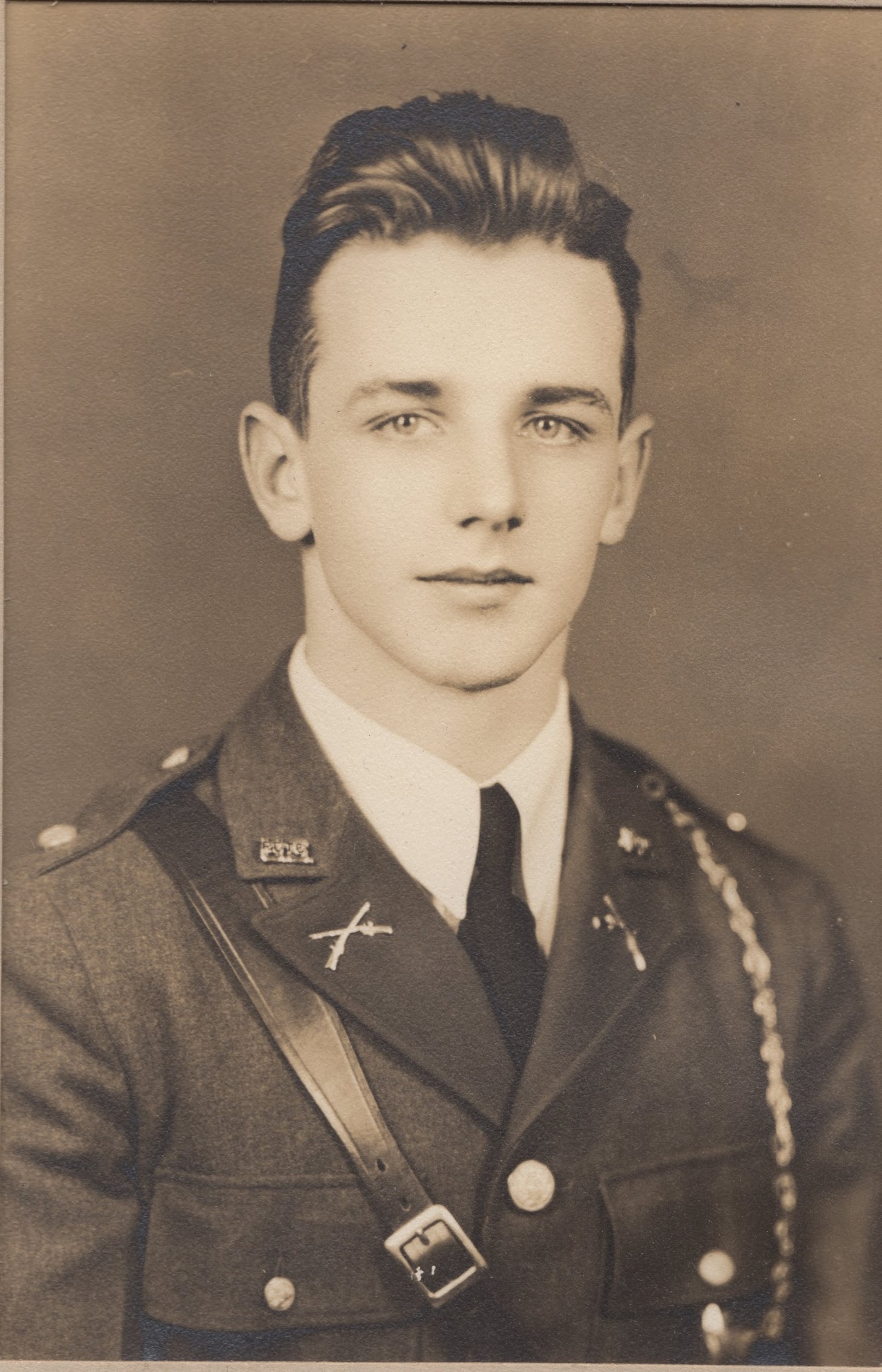
(L-R GHS senior photographs) David Cox, Norm Cox, and seeking photo of Frank Cox
David Cox had five older siblings. At the time of David’s graduation photograph, the family of Mr. and Mrs. Frank L. Cox were residing at 853 Washington Street, Gloucester, MA. David’s mom was so beloved 2 families named their daughters after her, and 3 families named their sons after her (her maiden name ‘MacAulay’ as their middle.)
Here is a close up of the GHS photograph for his brother, Norman (“Norm”). Norm gave this print to his friend, Ken. Thankfully it made its way back to the Cox family.
Norman Cox
Frank and Norm graduated together from Gloucester High School in 1941; Frank had to make up a missed year recovering from pneumonia. He must have been busy as he was a recognized athlete and Flicker mentions his status in “our rogues gallery”. At this time the Cox family resided at 616 Western Avenue.
We are wondering if anyone has a copy of a cadet formal photograph of the oldest brother and sibling, Frank Cox? Or a copy of the senior photo as seen in the yearbook. Both Frank and Norman were in the Army Air Corp during WWII. Frank was drafted out of the Citadel and was a bombardier flying missions out of England. Norm went to Harvard on a GI bill. After retiring from a long career at Mitre Corp, Norm worked with David at the store. At Gloucester High School, all three Cox brothers were cadets which Albert Bacheler established at the school. David won awards.
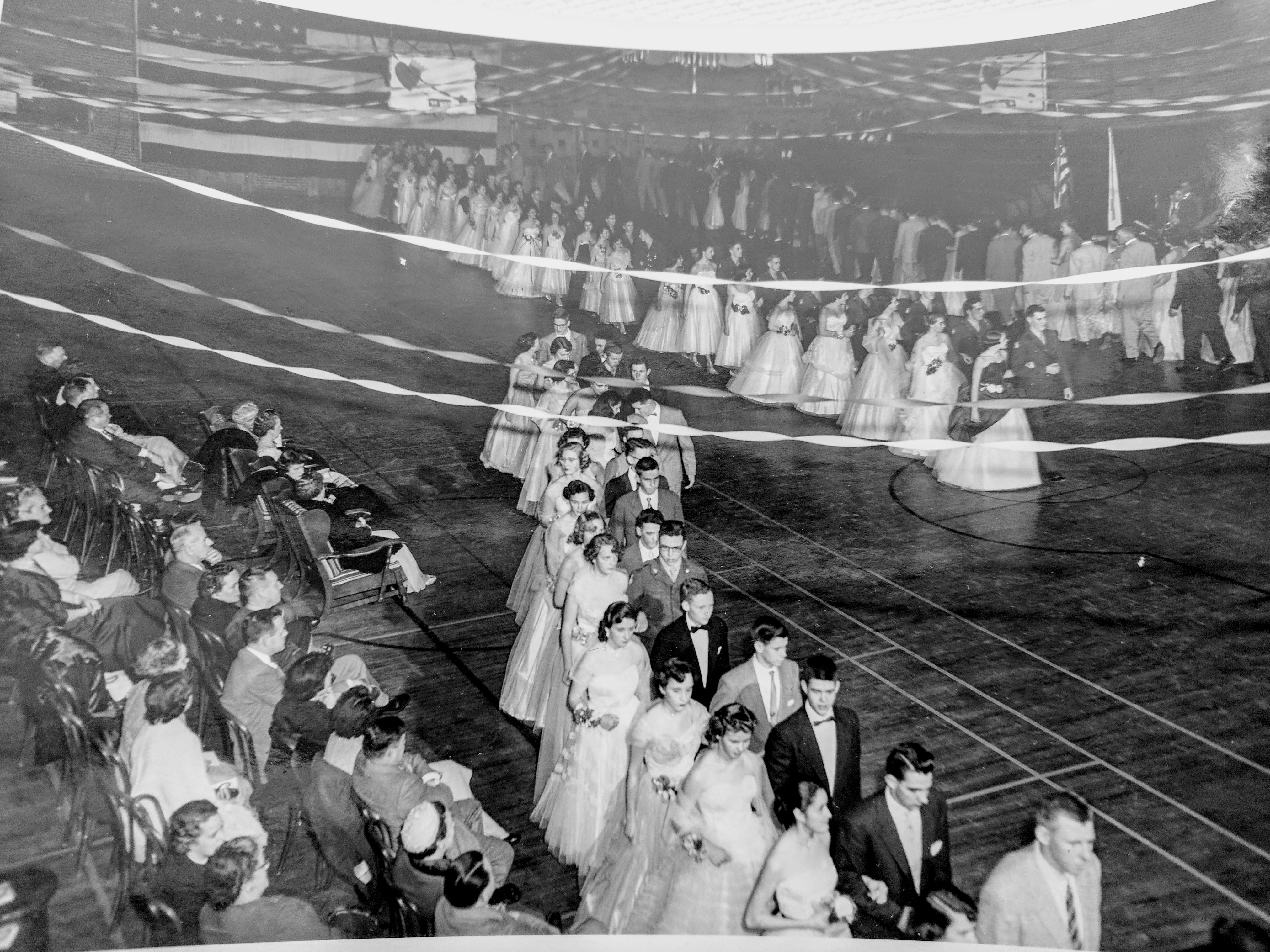
Here’s one mention from the papers that David hopes I ditch, which I’d consider however it’s worth repeating for that mention of Albert Bacheler (see Civil War coat) and the brag: “David Cox, a senior cadet from Company E, turned in a brilliant effort last night to take top honors in the 63rd annual Prize Drill and Dance in Albert W. Bacheler Drill hall of Gloucester High School.”
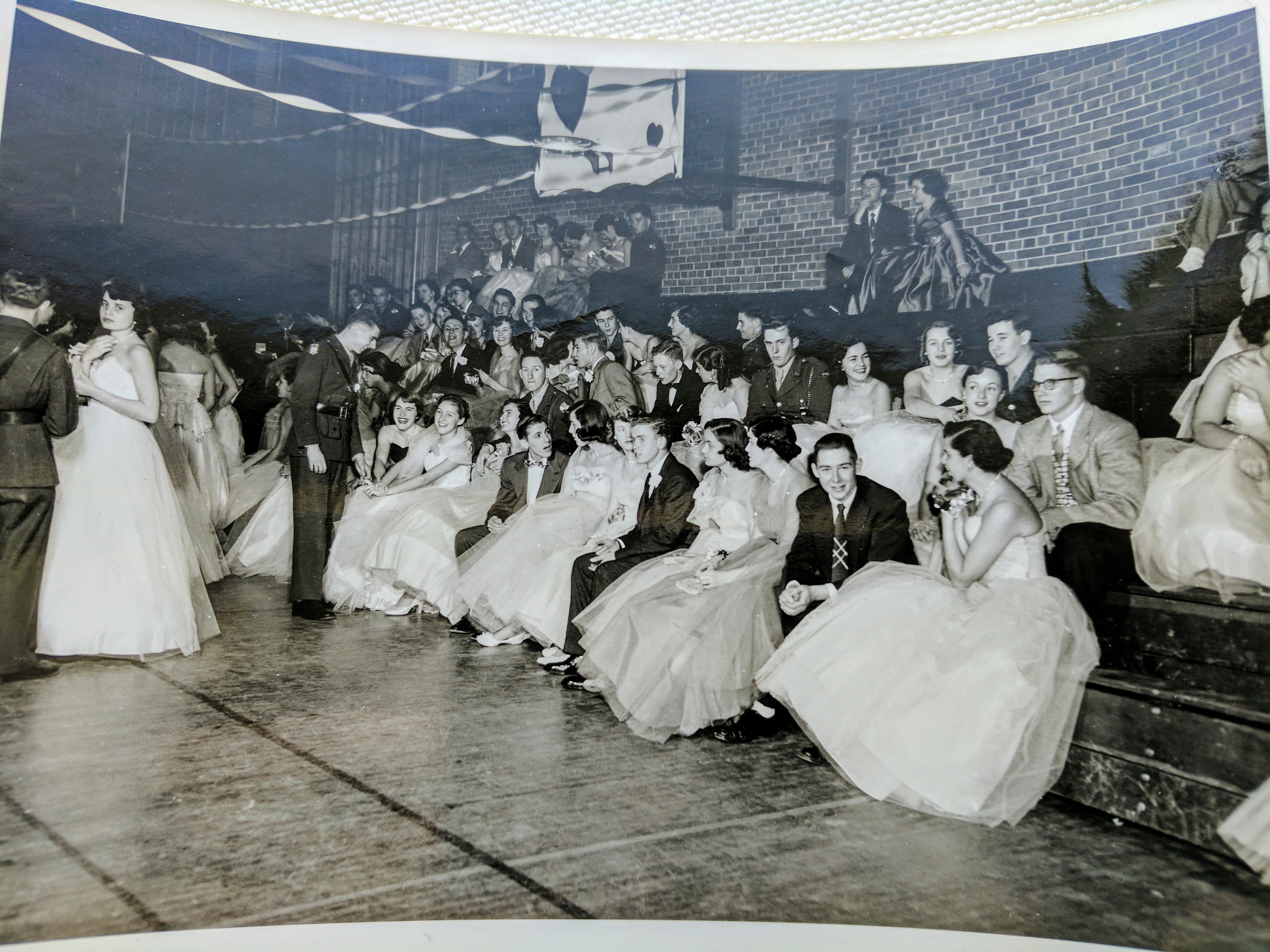
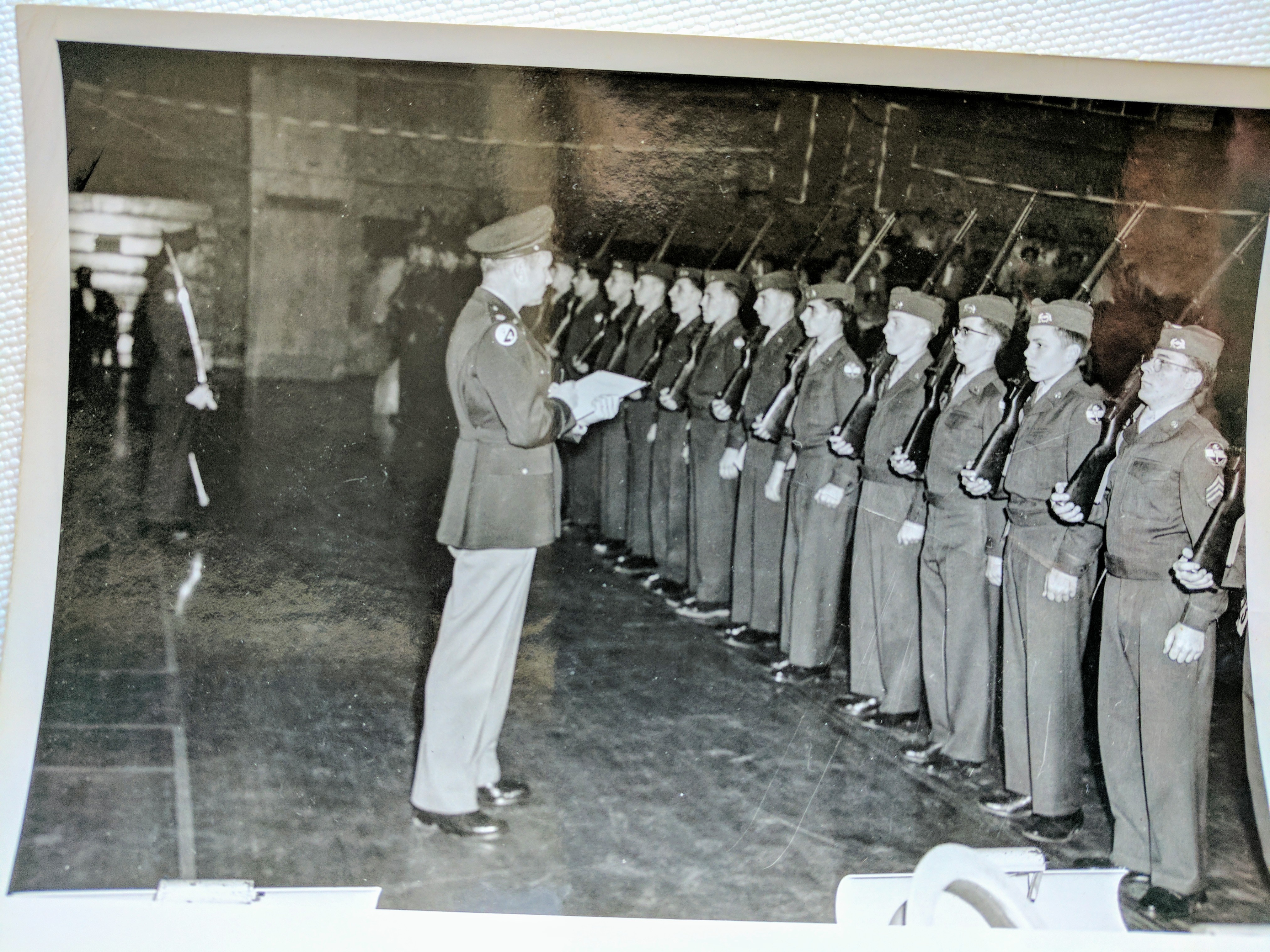
The girls had their own unit, the ‘Girls Drill Team’ which David’s sister and athlete, Theo, won. We don’t know if there were cadet photos for the girls. Louise and Christine were David’s other siblings. David told me that there were 4 special Prize Drill and Dance galas at Gloucester High School each school year. The first was the individual drill competition. The second was the prize squad drill competition. The 3rd dance was the Officers Party. The 4th and final prom was the Sargents Party and for this one the boys wore white jacket cut aways. These scans are from the collection of David Cox. He’s speaking to Nancy Knowles Rossi in one of the photos. Who can you recognize?
What is everyone gathered around in that last photograph?
Spread The GMG Love By Sharing With These Buttons:

















 Good Morning Gloucester