Three years ago (!) almost to the day, Deborah Cramer’s NY Times op ed , “Silent Seashores” was published and her horseshoe crab and Red Knot poetic missive “The Narrow Edge: A Tiny Bird, an Ancient Crab, and an Epic Journey” advanced a global ecological message to the masses. “I hope I never walk beaches empty of sandpipers and plovers. But it is possible that may happen. In the case of some shorebirds, it is increasingly likely. This is why we must commit the money and muscle needed to give these birds safe harbor. If we do, we just might keep our shores teeming with shorebirds.” Deborah Cramer is a visiting scholar at M.I.T., and resides in Gloucester.
April 28, 2018
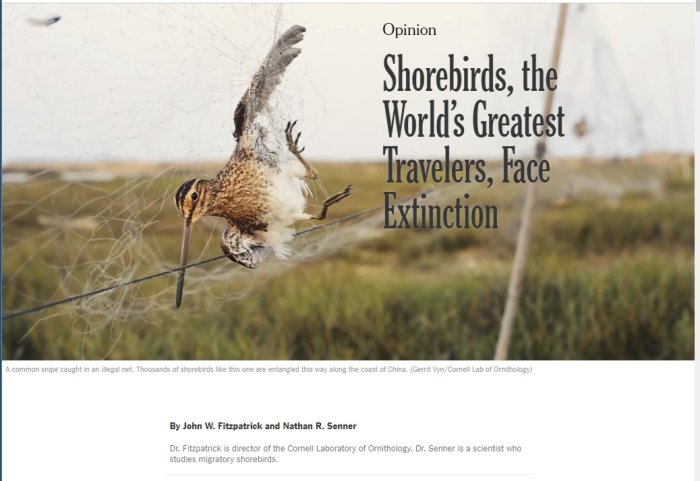
The New York Times, published another mighty call to arms making use of today’s improved visual storytelling tools. “Shorebirds the world’s greatest travelers, face extinction”is breathtaking and devasting digitial photojournalism about shorebird extinction by John W. Fitzpatrick (Director Cornell Laboratory of Ornithology) and Nathan R. Senner (scientist University of Montana). Stuart A Thompson designed the superb interactive graphic element. The indeliable header pulses with a bird on a wire, a “common snipe” it’s captioned, peering, chest beating, and then a sickening struggle. The bird’s caught, and we’re its snipers. Do. Not. Look. Away.
While you’re checking out this NY Times must read on line, think about Gloucester, Deborah Cramer, and Kim Smith. How one person can and continues to make a difference. Among many other projects, Smith is leading the effort to protect piping plovers at Good Harbor Beach. Let’s support the laws in place to safeguard the natural world. No dogs year round may be easier to remember. Honor system, volunteers, and enforcement (without “teeth” and more funding) are not working. If compassion, art, rules, and legacy aren’t persuasive, there’s always the bottom line. Natural culture all about us is a strategic resource.
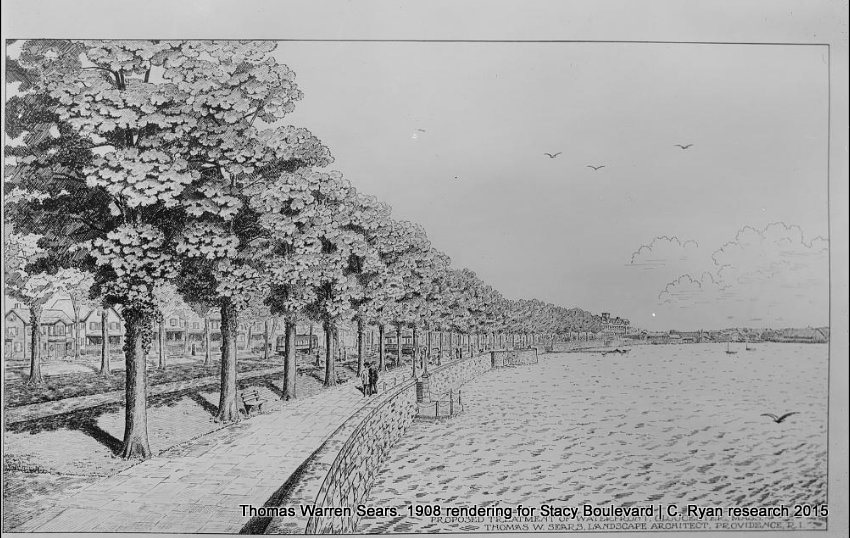
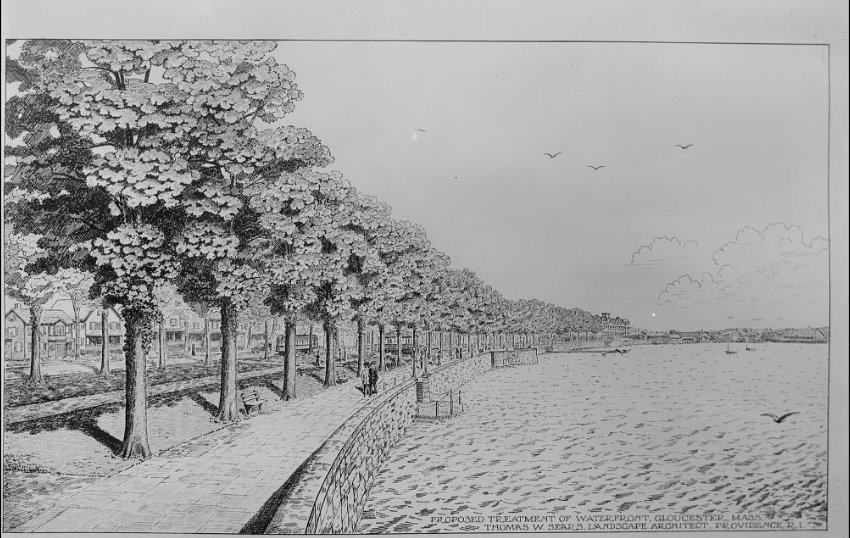
The Gloucester Daily Times published this image in 1923 with the photo caption: “Now Under Construction on the Southern Side of Western Avenue, this Project When Completed Will Give Gloucester one of the Finest Approaches of Any City on the Atlantic Seaboard.” The meticulously hand drawn credit within the drawing itself caught my eye as much as the drawing: “Proposed Treatment of Waterfront, Gloucester, Mass. Thomas W. Sears Landscape Architect, Providence RI”. Thomas W. Sears was a remarkable 20th Century landscape designer. The modern Boulevard work completed in 2014-17 gracefully carries out and returns to the original dreams for the Western Avenue highway and park that are more than a century in the making.
Thomas Warren Sears (1880-1966) preliminary designs for Gloucester’s future Boulevard
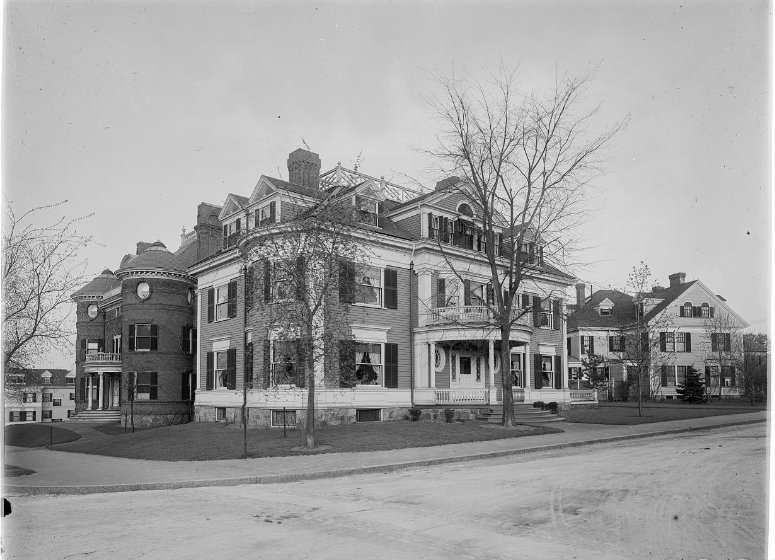
Thomas Warren Sears was born in 1880 in Brookline, Massachusetts, and grew up in this elegant abode at the corner of Beacon and Charles Street. This black and white house portrait was shot in 1897.
Here’s a Google street view photo for comparison today.
After being ousted from the New York City parks department, the ‘father of American landscape design’, Frederick Law Olmsted (1822-1903), launched his business a ten minute walk from the Sears family home. The headquarters at 99 Warren Street was named “Fairsted” and was in operation until 1979 when it was declared a National Historic Site and transferred to the National Parks.
If there was no neighbor connection early on, a professional one came soon: Sears worked for the Olmsted Brothers immediately after receiving two degrees from Harvard– his BA in 1903 and his BS in 1906. (There may have been an earlier Brookline connection.) Rather quickly Sears left to set up his own firm: first in Providence, RI, when he did work for Gloucester’s Boulevard, and not long after in Philadelphia. In 1911 he gave a talk for the Proceedings of the Engineers’ Club of Philadelphia 28 (April 1911):147-158., “The Functions of the Landscape Architect in Connection with the Improvement of a City”available online as part of an urban planning anthology compiled by John W. Reps, Professor Emeritus, Cornell University. I wonder if he shared his Gloucester photographs as part of his talk?
“There are two main approaches to cities: (1) On water by boat, and (2) on land by railroad. Along both of these lines of approach land should be taken for public use, and for very different reasons. Take first the use of water fronts: Unless some provision is made for the public, the whole water front, whether it be river or harbor, may be usurped by commercial enterprise and the public deprived of ever seeing the water except when aboard a boat. In certain cases, as in New York, where the water front must of necessity be utilised for dockage, a combination of commercial and public use may be successfully employed. There the docks are owned by the city and leased by the steamship companies; in this way their appearance can be controlled. At present it is planned to build on the tops of these docks huge recreation parks which may be used by the public.”- 1911 Thomas W. Sears
Mike Hale’s contemporary perspective shares a similar philosophy with Sears:
“An effort has been made in this paper to show clearly that landscape architecture is utilitarian quite as much as esthetic; that whatever one is designing, whether it be a city plan or any of the elements in a city, the design should be governed by use as much as beauty.” – 1911 Thomas W. Sears
By 1917 Sears was commissioned regularly and had a long, full career including notable designs for the Reynolda estate now part of Wake Forest University, Winston-Salem, North Carolina, and the wildly influential outdoor amphitheater for Swarthmore College, the Scott Outdoor Auditorium. His work in Gloucester is rarely mentioned.
Since the Gloucester drawing was marked ‘Providence’, I knew the drawing was done long before the 1923 construction. I tentatively dated the schematic ca.1910. Thankfully Thomas Warren Sears was a photographer, too. Turns out that this image is a Sears’ photograph of a lovely Sears’ design. The glass negative is dated 1908 which squares with his professional career timeline.
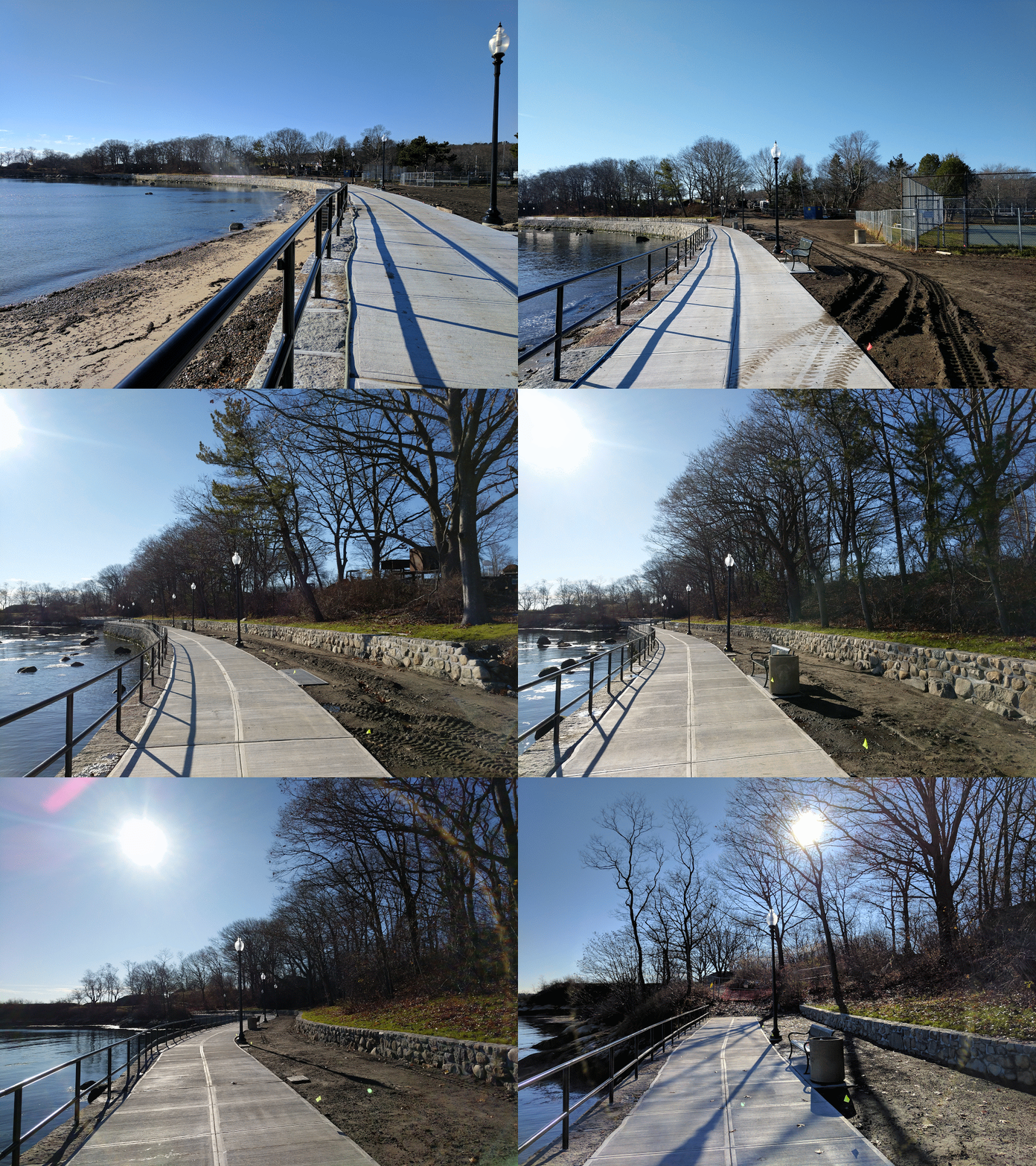
ALL NEW LED LIGHTS
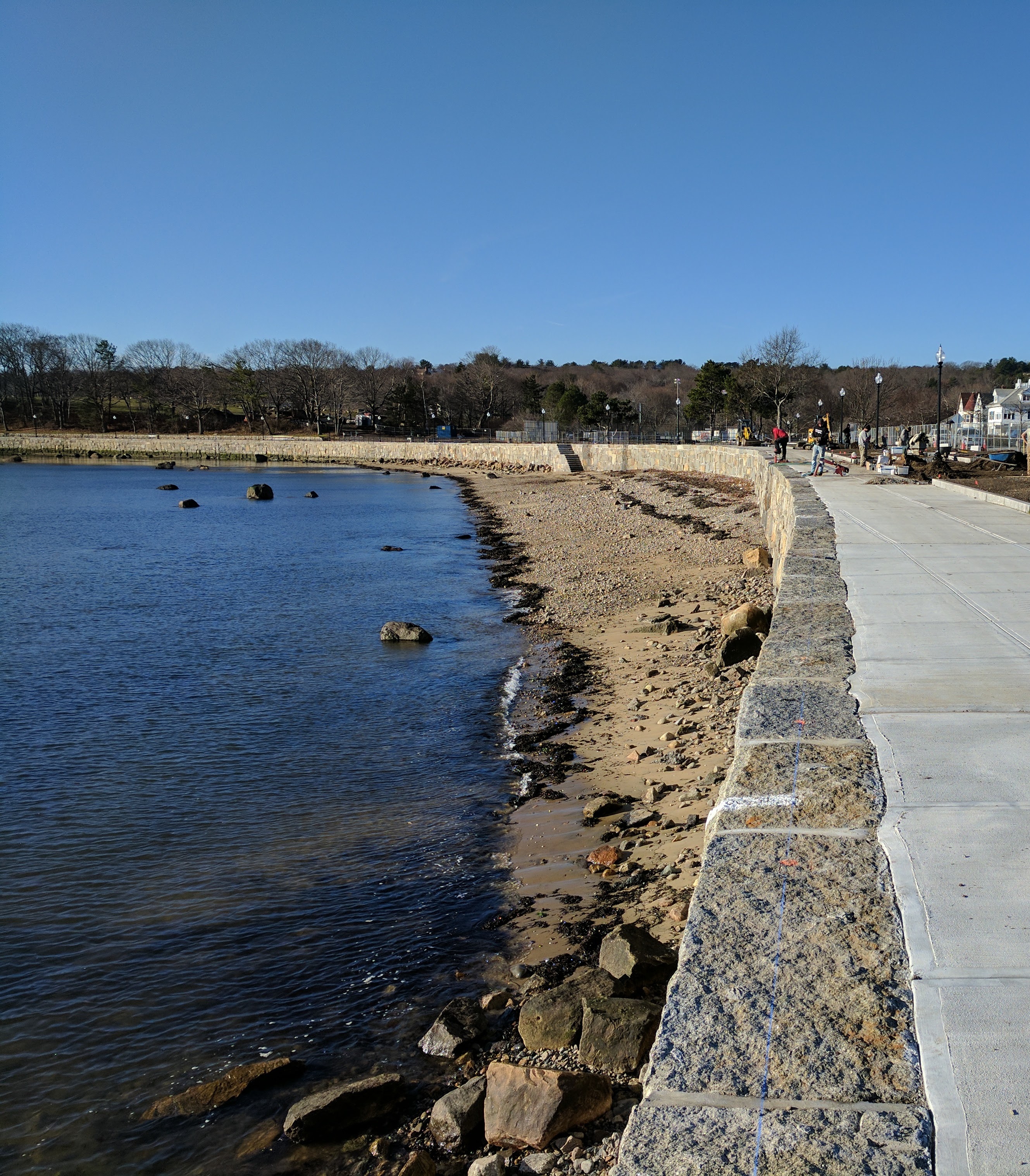
One of the modern design elements is the welcome ornamentation of lights. They feel like they were always here because line is such an essential part of design and they add the vertical visual interest. When I saw the new light bases I thought of the line of trees in the Sears drawing. I love the mix of natural and formal design in his rendering, but am equally gobsmacked by the sweeping open vista. Both are sensitive approaches and part of the context of the Boulevard’s build.
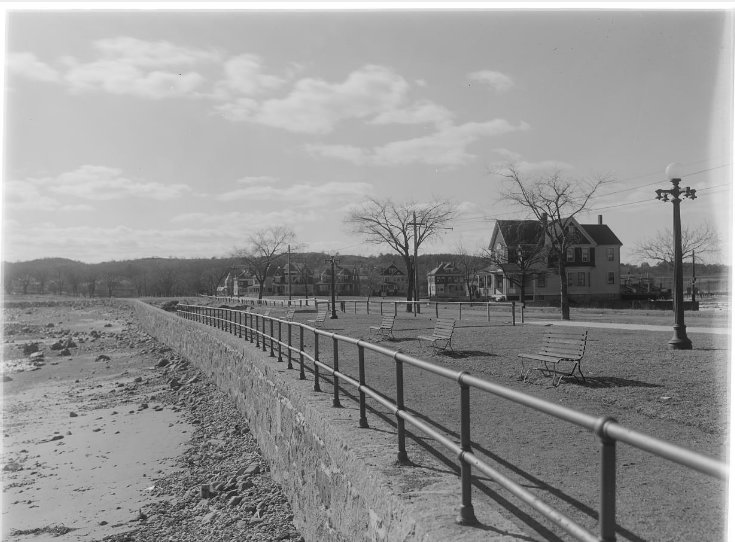
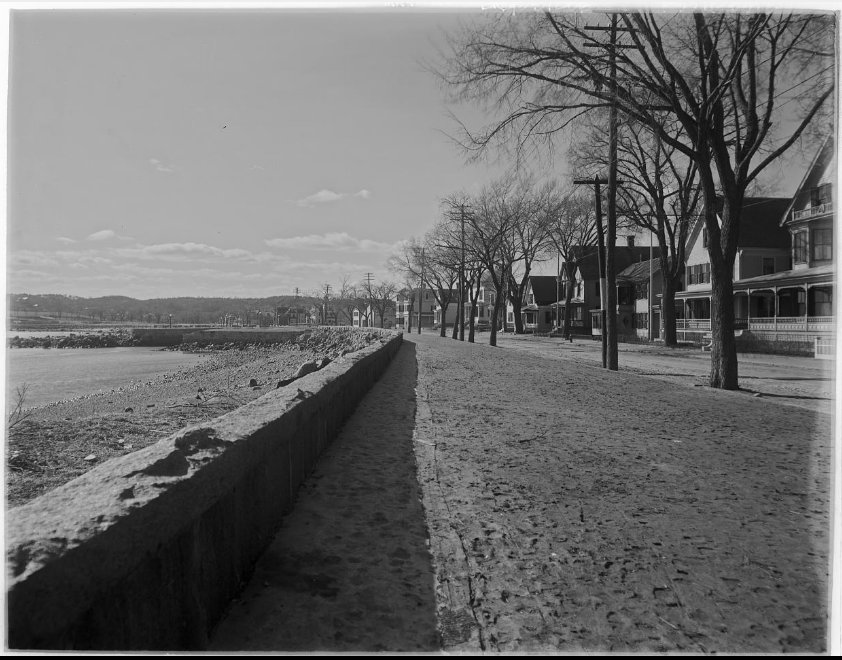
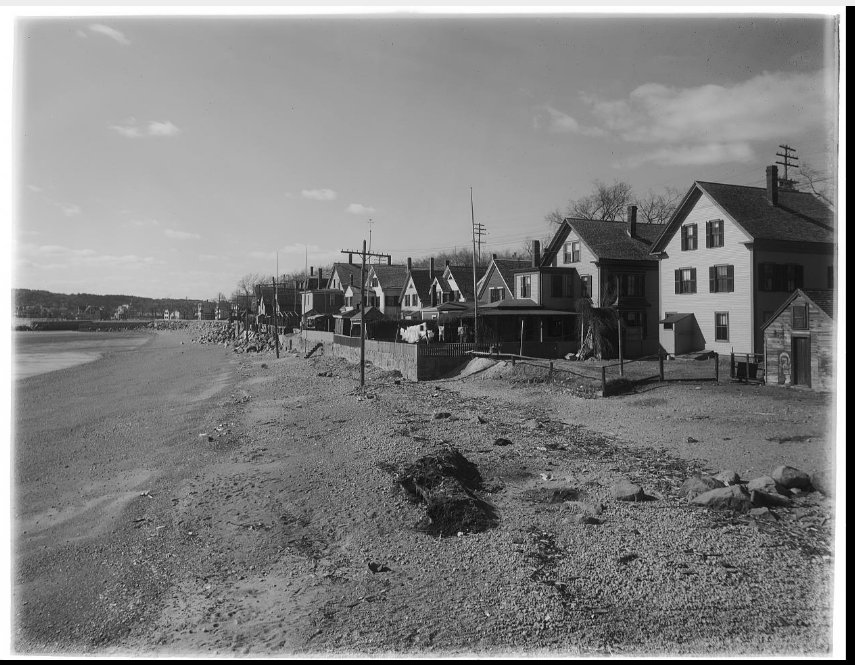
Thomas Warren Sears photographed Western Avenue for his preparatory work. See the homes along the beach that were later removed for the construction of the Boulevard; distant vistas to the Surfside Hotel (built after Pavilion burned) and Stage Fort park; and Western Avenue street scenes looking east and west before the road was widened.
A great and inexpensive way to inspire your budding athletes….in this case, especially your daughters.
Watch Harvard Women’s Hockey take on Cornell on Saturday. They’re hoping to beat their attendance record and would love your help. If you wear White to their Bright-Landry Hockey Center (hence the White the Bright) you also get to spin the prize wheel. Total bonus is that Adult tickets are only $10 and children 12 and Under are totally FREE. So, take in an awesome Ivy League hockey game for super cheap and then spend the money you saved at Fire and Ice or somewhere else cool.
Pick #2
The Ipswich River Wildlife Sanctuary is always a no brainer…I’m sure I’ve said that before, but some weekends are even better than others…and, hence, are worth singling out and mentioning. The following activity, for example, sounds excellent.
Tickets range from $10-$13 depending on whether or not you’re a member.
Come see live birds of prey up close in this indoor presentation that will introduce you to the different types of raptors including eagles, hawks, falcons, and owls. We’ll discuss the special features these birds have that enable them to be successful predators at the top of the food chain. We’ll talk about how they hunt, what they eat, and their amazing vision, hearing, and feathers. Don’t miss this fantastic opportunity to see birds such as the golden eagle, red-tailed hawk, saw-whet owl, and more (birds subject to change).
With no professional football scheduled (obviously) and Superbowl hype building by the second, I can’t think of a better weekend to make the little trek to the Hall at Patriot Place to further inspire your little ones…and get them revved up prior to the big game. Patriot Place is also a great destination for some shopping and dining. My boys are CRAZY about the Bass Pro Shops!
The Hall at Patriot Place presented by Raytheon is an exciting, innovative and interactive, modern museum experience for all ages. The Kraft family long considered the best way to honor the greatest Patriots of all time while simultaneously preserving Patriots history. They scored a touchdown when they opened The Hall in September of 2008.
The family’s investment in The Hall at Patriot Place presented by Raytheon accomplishes its goal to give Patriots fans a unique, technologically advanced venue to relive and celebrate great moments and great players and even recall some of the hard times that make all fans, including long-time season ticket holder Robert Kraft, appreciate the recent Super Bowl championships. The Hall will impress Patriots and football fans alike.
The Hall is a modern “museum” that takes guests through Patriots and New England football history in a cutting-edge way, utilizing amazing video and audio to tap into fans’ emotions in a manner never before seen in a sports museum.
Pick #4
Kicking it old school…. Don’t forget to go bowling and/or ice skating! This weekend you can also make a date to see Paddington because it was super cute.








 Good Morning Gloucester