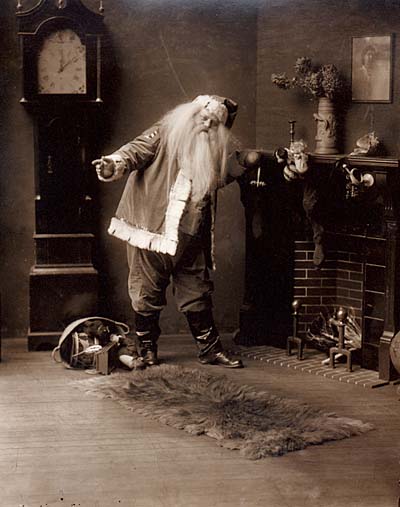
A Visit from Saint Nicholas

Saint Nicholas, circa 1890 Anonymous/©Fredrik D. Bodin
I always make sure I have Santa on display in the gallery for the holidays. There is a magical quality about him – a certain timelessness, for this is the real Santa. People who collect Santa Claus related objects love this photograph. So when the Christmas decorations come out of the attic, so does old Saint Nicholas.

‘Twas the night before Christmas, when all thro’ the house
Not a creature was stirring, not even a mouse;
The stockings were hung by the chimney with care,
In hopes that St. Nicholas soon would be there;
The children were nestled all snug in their beds,
While visions of sugar plums danc’d in their heads.
Happy Christmas to all, and to all a good night!
Fred
Printed from the original 8×10 inch glass negative in my darkroom. Image #88810-045

Whither the Sign Painter?

Whither the Sign Painter?Sign Painter, circa 1900 Anonymous/©Fredrik D. Bodin

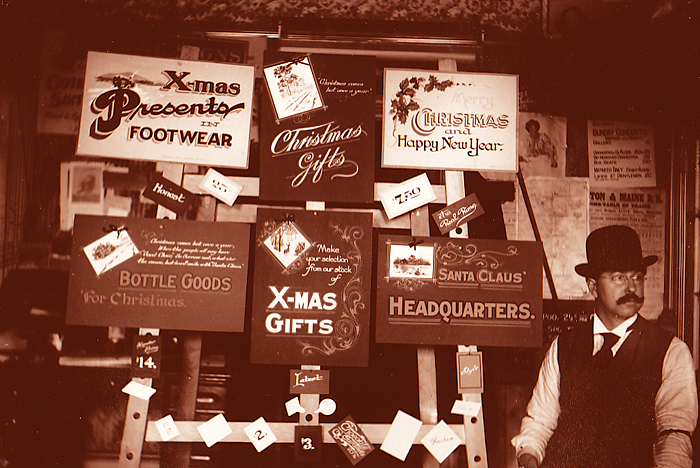
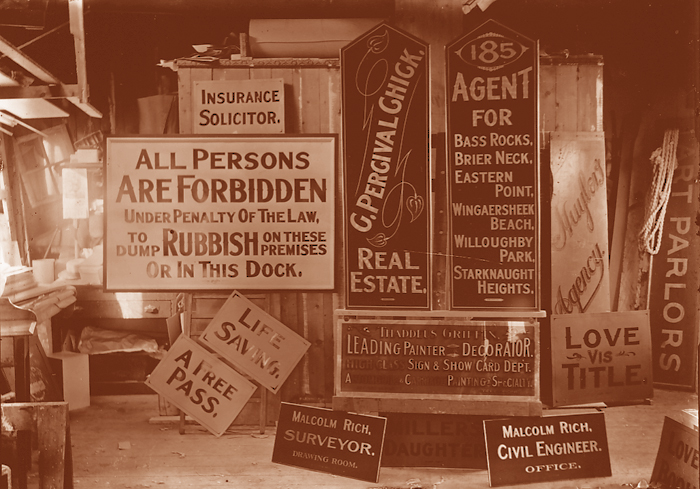
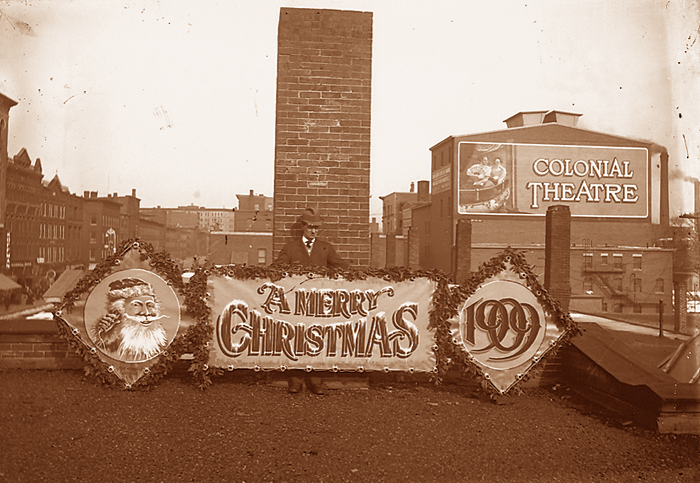
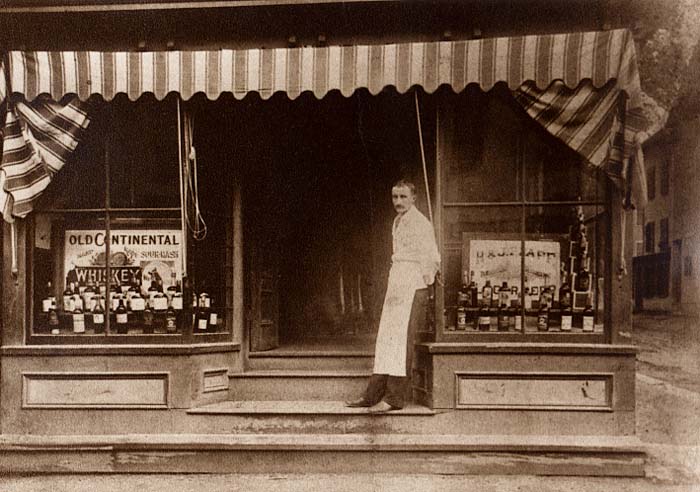
Before the age of computers and large printers, every sizable town or city had sign painting shops, including Gloucester. Signs were hand made by skilled artisans, who learned the trade by means of apprenticeships. In addition to expert handling of the lettering brush, sign painters had to master gold leafing, carving, stenciling, and silk-screening. When I opened my gallery fifteen years ago, I hired a professional sign painter, Bob Condon (now an attorney), to paint me a sign. Curiously, I have about 60 sign making photographs in my collection. These are a few of my favorites.

Gloucester Signs, circa 1915 Alice M. Curtis/©Fredrik D. Bodin
Merry Christmas, Salem, 1909 Alice M. Curtis/©Fredrik D. Bodin
All photographs printed from the original 5×7 inch glass negatives in my darkroom.

Gloucester City Hall – Brand New

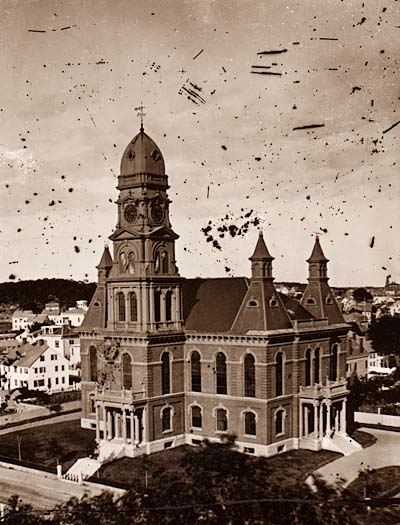
Gloucester City Hall, circa1875 Alice M. Curtis/©Fredrik D. Bodin
I made this print of City Hall from one of my oldest negatives. It was shot from a high vantage point on Middle Street. Dale Avenue is in the lower left, and Pleasant Street is on the right. The Civil War Statue, erected in 1879, now in the front center, is not yet there. Boston architects Gridley J.F. Bryant and Louis P. Rogers designed the building, which was listed on the National Register of Historic Places in 1973. One thing I learned while writing this is the four towers on City Hall’s corners are ventilation shafts. Questions for Cape Ann Museum’s Photo Archivist Fred Buck: Can you add to this (shooting location, surrounding buildings, etc.), and do you have anything older?
Printed from the original 5×7 inch glass negative in my darkroom. Image #9157-251 Note: The black objects in the sky are missing parts of the negative.
Fred Bodin
The Infamous Fred Buck Replies-

well, sure. yours is probably a copy neg (5×7 is way too big) of one of several stereograph images of city hall (each side albumen plate 3×4 and joined on a piece of clear glass to print the stereo card) taken by erastus g. rollins about 1872 from the tower of the unitarian church on middle st. to the left of the building is franklin square. on the right is the nice circular drive fronting warren st. cape ann museum has rollins’s original glass negs of these views in their archive (without homie poop all over them) as well as the stereo cards printed by rollins and succeeding owners of the plates. we also have bryant and rogers’ original plans of the building. c’mon down!

fred buck, photoarchivist, cape ann museum.

p.s. don’t think alice m. curtis was taking photos in the 1870s.

Thanksgiving and the Sacred Birches

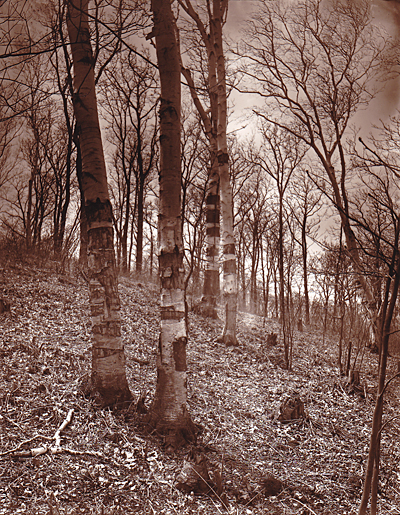
The Sacred Birches, Lanesville, circa 1900 John I. Coggeshall/@Fredrik D. Bodin
Many of my best Thanksgivings have included a walk in the woods, notably among birches. Birch trees were among the first trees to grow after the last ice age, and are the national tree of Russia, symbolizing fertility, renewal, and miracles. They’ve been revered by many cultures since the ancient Celts, including the Finns, Swedes, and Norwegians, who settled here on Cape Ann. Birch groves in Dogtown and Lanesville are still highly regarded. At the turn of the century, John I. Coggeshall photographed these birches near his Lanesville home. I hope to find them after turkey dinner with friends in the Plum Cove neighborhood. If you know where this treed slope is, please let me know.
Printed from the original 8×10 inch negative in my darkroom. Image # A93810-007
I’m not a big poetry reader, but one particular verse from Robert Burns struck a chord with me, and I recite it at meals such as Thanksgiving:
A Scottish Grace

Some have meat and cannot eat
And some have none and want it
But we have meat and we can eat
So the Lord we thanketh.
Happy Thanksgiving!

Fred
Fredrik D. Bodin
Bodin Historic Photo
82 Main Street
Gloucester, MA 01930

Howard Blackburn’s Bartender

Howard Blackburn’s Bartender, circa 1910 Anonymous/©Fredrik D. Bodin
Swedish immigrant Nils Lund settled in Gloucester to work as a fisherman. About 1910, he took time off from fishing to tend bar for the legendary Howard Blackburn. The Blackburn Tavern was located at 289 Main Street, where Halibut Point Restaurant is now. Chiseled into the front of the building in large letters: Blackburn 1900.

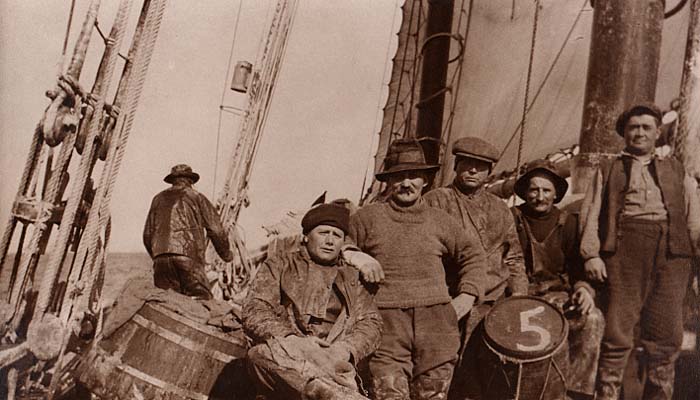
Albin and Nils Lund, Schooner Natalie Hammond, circa 1920 Anonymous/©Fredrik D. Bodin
In the days of sail, fishermen would sign on to schooners headed for destinations they wanted to travel to. Nils and his brother Albin fished their way to Sweden and back several times. The photo above shows the mustachioed Lund fishermen, Albin on the left and Nils on the rightThe two brothers found brides in Gloucester, with Albin’s wife Josephine owning a boarding house on Main Street, next door to today’s Crow’s Nest tavern.
Printed archivally in the darkroom from 6×7 cm copy negatives. Original prints supplied by Lillian Lund Files. Image #  AC960901-03#05 (bartender Nils) and # AC010129-01#07 (brothers at sea)
Fred

Fredrik D. Bodin

Bodin Historic Photo

82 Main Street
Gloucester, MA 01930

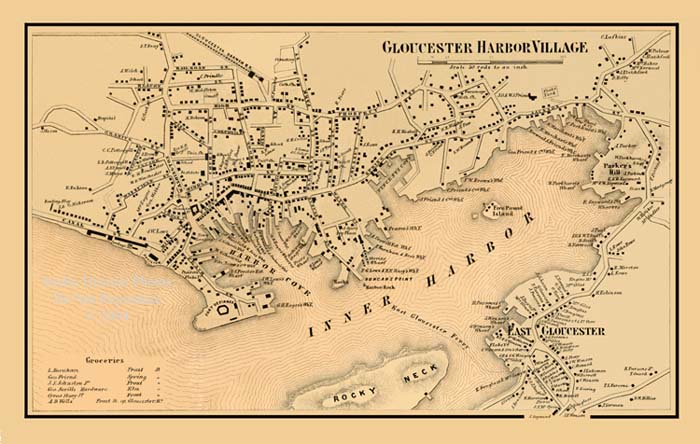
Gloucester Harbor Village, 1856

Gloucester Harbor Village, 1856 H. F. Walling/ ©Fredrik D. Bodin

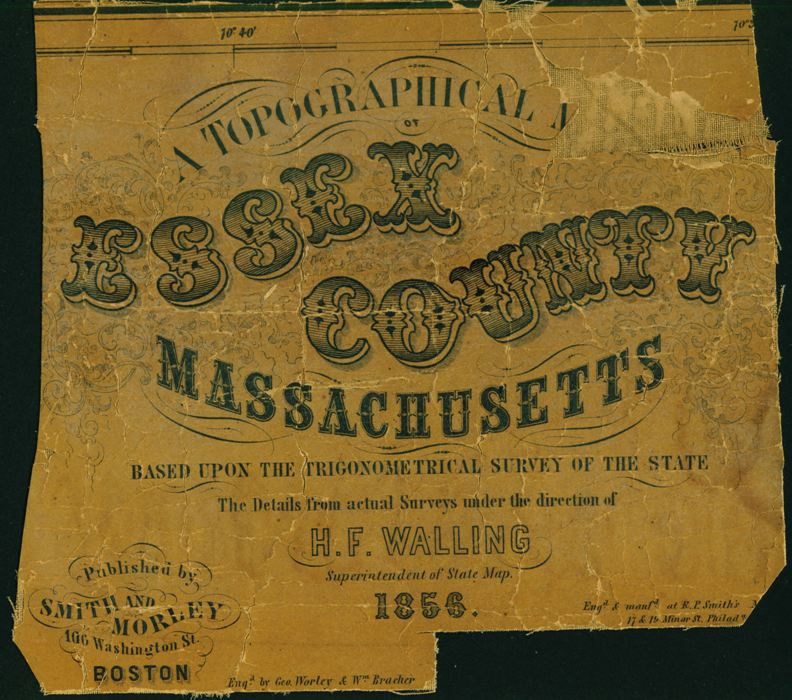
The Gloucester Harbor Village map was a small inset on a larger map, A Topographical Map of Essex County Massachusetts, which measured 62 inches x 62 inches. It was a wall, or scroll map, and was printed on linen and hand colored. The surveys and map were made by civil engineer Henry Francis Walling (1825-1888),  Superintendent of State  Map. Some of the 49 insets, which were approximately 5 inches  x 9 inches, were Annis Squam Village, Lanes Ville, Rockport Village, and Pigeon Cove Village (which I have). Interesting features of the Gloucester Harbor Village map include: Canal Street (the Boulevard) and the long Cordage Mill (rope factory); Fort Defiance at the end of Peach Street (The Fort); Front, Spring, and Jackson Streets running the length of the Gloucester waterfront (no Rogers Street yet); Rocky Neck with it’s first wharf – the Walen Story Wharf; and the end of the railroad line is in Gloucester. Also significant is the now non-existent Vincent’s Cove, and Five Pound Island, which is now the terminus of the State Fish Pier.

Printed archivally from a scan of the original map. Image # AM04-001

Title Section of A Topographical Map of Essex County Massachusetts, 1856 H. F. Walling


~Fred


Wheeler or Wheelers Point?

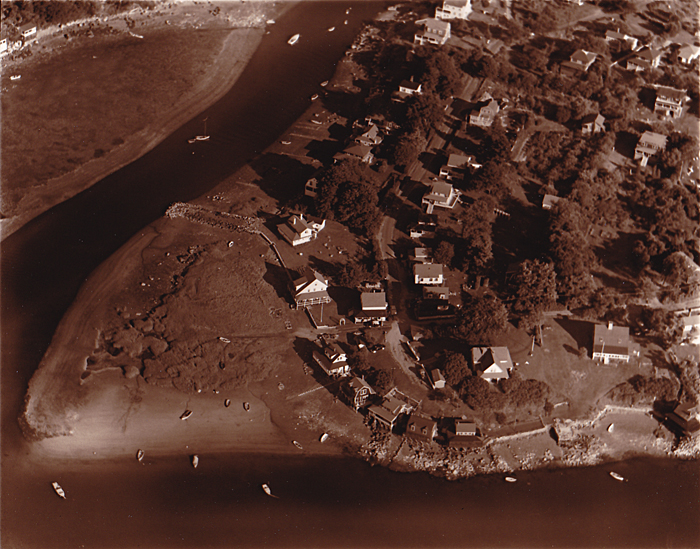
Wheeler Point, Mill and Annisquam Rivers, circa 1950 Don Felt/ ©Fredrik D. Bodin
You say Wheeler, I say Wheelers;

You say Wonson, and I say Wonsons;

Let’s get the whole thing right…
My friend Cliff McCarthy and I disagreed on whether it’s Wheeler Point or Wheelers Point. We based our opinions on what we’ve heard people say and maps we’ve looked at. Who’s right? The United States Board of Geographic Names (US BGN) is right – they define the official names of everything geographic. Their database holds the Federally recognized name of every feature’s location by state, with USGS topographic map, geographic coordinates, altitude, and even includes undersea features. This is the gold standard for place names. In the American West after the Civil War, rapid westward expansion led to confusing names for geographic features. This was a serious problem for surveyors, map makers, and the military. In 1890, President Harrison created the US BGN to standardize geographic names.
The final word on Wheeler(s) Point and Wonson(s) Cove is here: http://geonames.usgs.gov/domestic/index.html Click on Search Domestic Names, type in what you’re looking for in the Feature Name box, select the State, select the County, then press the Send Query button. You’ll see that Wheeler Point is correct (with Wheelers Point as a variant name))and so is Wonson Cove (with Wonson’s Cove as a variant name). Cliff, you were right!
Here are some interesting official names on Cape Ann: Cressy Beach (with Cressys Beach as a variant name), Dog Bar (an underwater bar), Dog Bar Breakwater (a dam) , Dog Bar Channel, and Dogtown Common ( listed as a Populated Place with an elevation of 79 feet). Some places we know are not listed, such as Cripple Cove. The US BGN invites any person or organization to propose new names, name changes, or names that are in conflict.
Fred
Printed from the original 4×5 inch film negative in my darkroom. Image # A9245-546
Fredrik D. Bodin
Bodin Historic Photo
82 Main Street
Gloucester, MA 01930

Marooned on – Eastern Point Island

Eastern Point Light, Perfect Storm, 1991 ©George B. Lenart
On October 31st, 1991, diesel mechanic and photo enthusiast George B. Lenart was caught in a historic storm on Cape Ann’s granite coast. He drove his big Mogul Motors truck out to the end of Eastern Point for a job with the Eastern Point Yacht Club. What George walked into was a hurricane strength tempest with sustained winds of 75 miles per hour and gusts up to 98 miles per hour (hurricane devastation occurs at 73+ mph). Unexpectedly, George Lenart was marooned by rising water and monstrous waves. He grabbed his camera  and captured this incredible scene from the 3rd floor of the Eastern Point Yacht Club. It shows Eastern Point Light and Dog Bar Breakwater, which guard the entrance to Gloucester Harbor. Waves built to 70 feet, one of which swept right through Mother Ann Cottage, seen on the left, and completely destroyed a house high atop Sherman Point by Good Harbor Beach. George’s only option was to camp out overnight at the yacht club.
I didn’t photograph the Halloween Storm. I was busy helping a Bearskin Neck artist move his paintings to safety, aided a neighbor on Rocky Neck save what she could after storm surge took most of her personal belongings out to sea, and salvaged the 150 framed photos that were damaged in my gallery on Tuna Wharf. The phrase perfect storm has become part of the English language, being synonymous with “worst-case scenario.”
Photographed on 35mm color negative film by George B. Lenart. Scanned and printed digitally. Image #GBL-001c
And yes, we do sell this photograph in the gallery. Thank you George.
Fred
Fredrik D. Bodin
Bodin Historic Photo
82 Main Street
Gloucester, MA 01930


Old Salt, circa 1890

Old Salt, circa 1890 Anonymous/ ©Fredrik D. Bodin
I love this photograph, and affectionately call the subject  “Old Salty.” I like it so much it’s my profile picture on Facebook. This is a classic Gloucester fisherman image, with oilskin, sou’wester hat, and old fashioned beard. What’s really striking is the far away look in his eyes. He’s seen it all: Weather, endless ocean, severe hardship, and extreme danger. The portrait is carefully posed and lit – probably taken for the tourist trade. I was told that Old Salt could be Jessie Bates or Rufus Bates Parsons, and was taken in Gloucester.
If you know Salty, please let me know. In the meantime, today’s tourists who have seen my Facebook page will come to the gallery looking to meet the fisherman with the beard.
Printed archivally in the darkroom from a 6×7 cm copy negative. Image # AC020128-02#11
Fred
Fredrik D. Bodin
82 Main Street
Gloucester, MA 01930

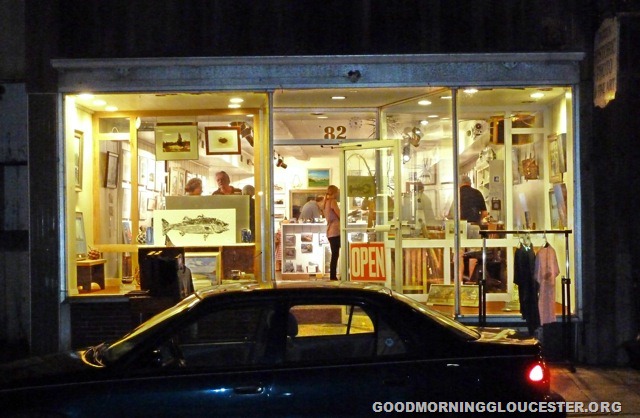
Artober Opening Photos At Bodin Historic Photo Covered By Fr Matthew Green

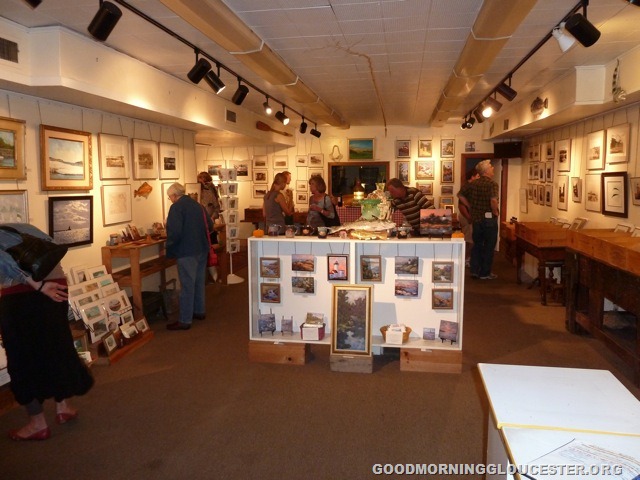
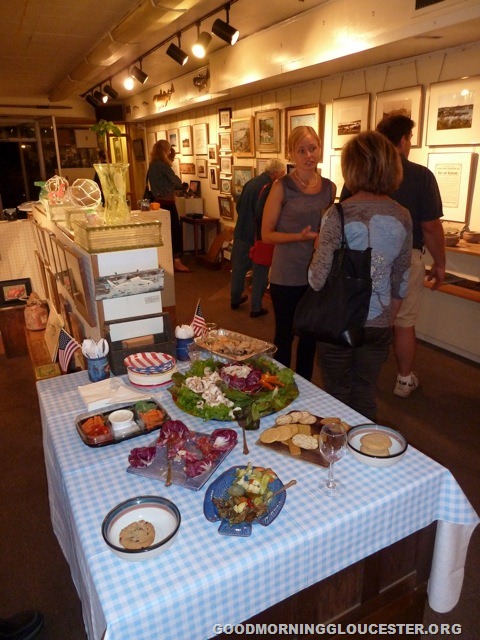
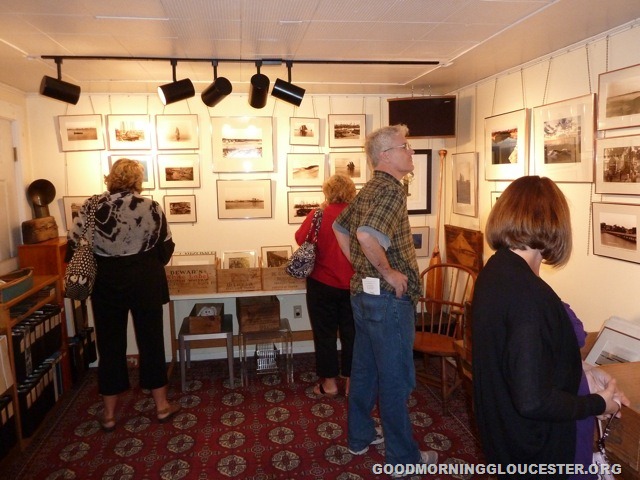
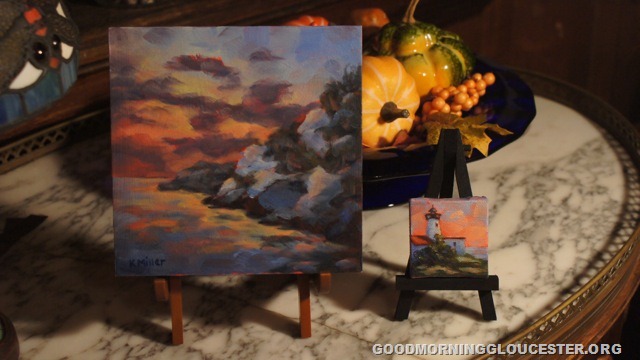
Good evening, Joey! I just got back from the Artober opening at Bodin Historic Photo.  It was great to meet Kathleen Miller, who is a wonderfully talented artist. Besides the paintings – which seem to glow with their own light – there was a great selection of photos and other art, and delicious wine and finger food, including some home-made strudel good enough to knock your socks off.
Photos:
Light in the darknessStorefront

An overview of the galleryP1070270

The refreshment tableP1070271

Visitors peruse the gallery

P1070272

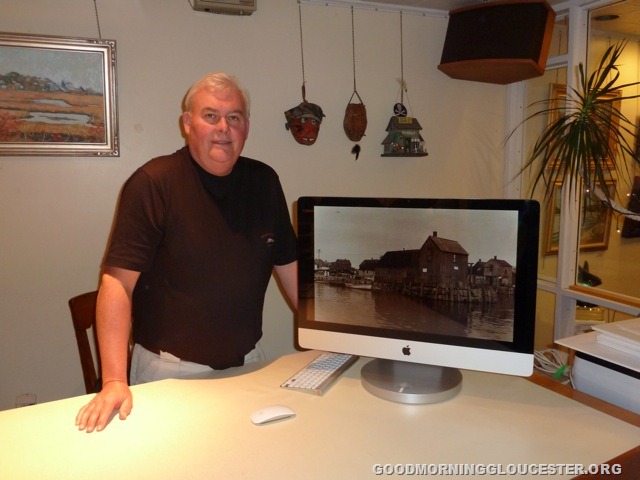
Fred with his iMac showing historic photos

P1070277

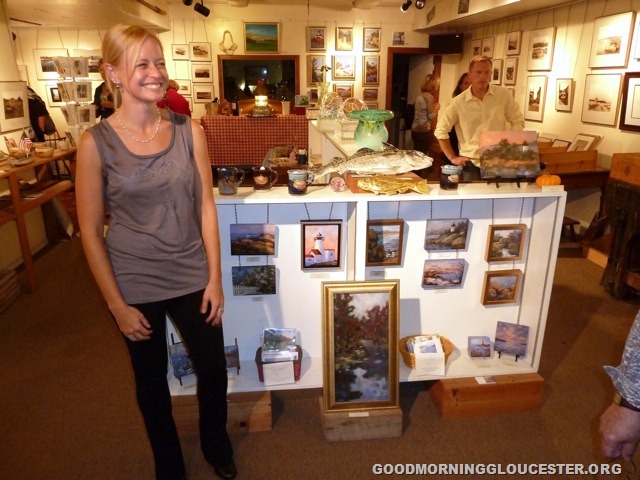
Kathleen Miller with some of her paintingsKathleen Miller with some of her paintings

The ones I bought:

DSC03584

Note from editor Joey C- “When I popped in to say hey to Fred just a few days ago I met Kathleen and told her I loved the light in that very painting you bought with the lighthouse.  Loved he way she recreated the light behind the lighthouse!

Ipswich Light

 IIpswich Light and Steep Hill, 1934 Alice M. Curtis/ ©Fredrik D. Bodin
Many Ipswich residents and beach goers who come to the gallery are unaware of Ipswich Light and its interesting history. The first Ipswich Light was built on Crane Beach in 1838 to guide ships to the mouth of the Ipswich River. It was actually two towers, called a range light (like Rockport’s Thacher Island Light). This was replaced in 1881 by a 45 foot tall cast iron structure, very similar to Gloucester’s own Ten Pound Island Light (erected the same year). In 1881, Ipswich Light stood 82 feet from Ipswich Bay. By 1911, it was 1,090 feet inland. In addition, drifting sand covered the lighthouse to the extent that personnel had to enter through a third story window. In 1939, the Coast Guard floated the lighthouse by barge to Edgartown on Martha’s Vineyard. It now guards the entrance to Edgartown Harbor, bearing the plaque: Formerly Ipswich Light. Today’s Ipswich Light is a 29 foot tall sand dune resistant skeleton tower.
 

Ipswich Light, Crane Beach, 1934 Alice M. Curtis/ ©Fredrik D. Bodin
Photographs printed from the original 4×5 inch negatives in my darkroom. Images # A8845-056 and A8845-053
Note: I was asked today if any of the photos on my posts are for sale. Yes they are! The post from 9/14/11 resulted in the Brooklyn Bridge going to Oklahoma, and last week’s post (Cape Ann – a Farming Town) resulted in a purchase for a descendent of a Cape Ann farming family.
Fred Bodin
Bodin Historic Photo
82 Main Street
Gloucester, MA 01930

Cape Ann – a Farming Town

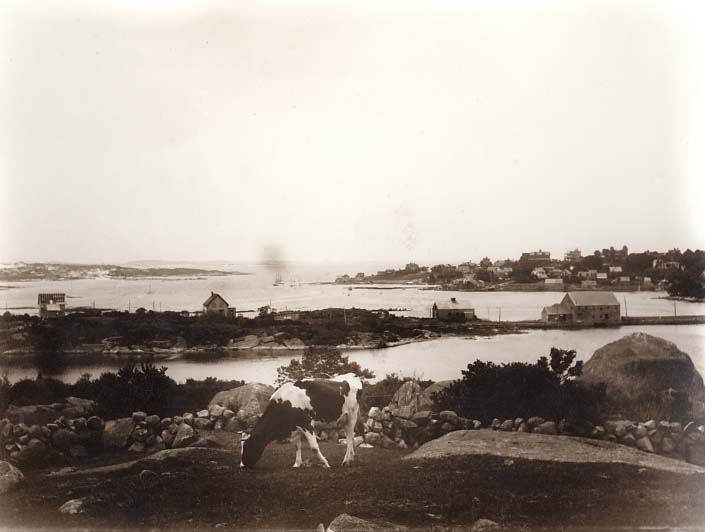
Goose Cove, circa 1890 Charle E. Dennison/ ©Fredrik D. Bodin
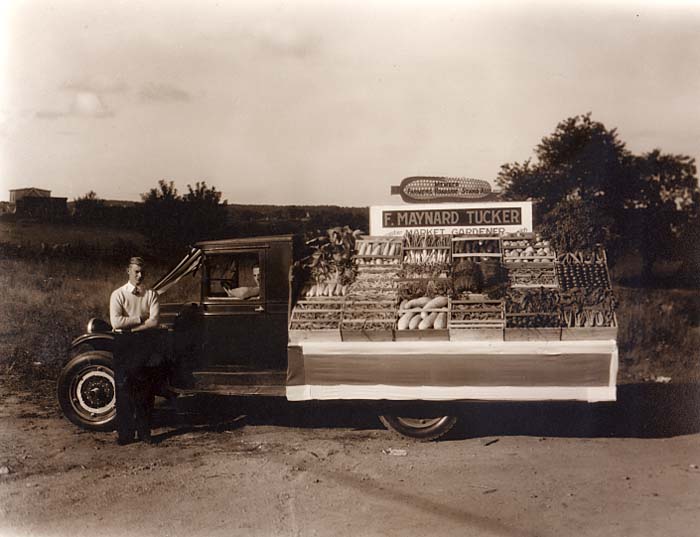
Gloucester and Rockport have historically produced nearly everything they needed: Ships, anchors, tools, rope, lumber, granite, fish, produce, and milk. Our first farm was established in 1658 by James Babson, and was located at the Babson Cooperage property in Rockport. Gallery visitor Laura Kerr told me that she and her husband counted eighteen working dairies on Cape Ann. In my shop, I display bottles from Bass Rocks Farm (George C. Nugent),  D.J. Spittle Dairy, Doctor Babson Farm (Washington Street in Riverdale), Kerr Farm (Riverdale), Lanes Dairy (The Best Milk – From Our Dairy to You), Lanes Farms, and O’Neil & Newman (West Gloucester). I wish I had more information and bottles.
 F. Maynard Tucker’s Vegetable Truck, 1930 Alice M. Curtis/ ©Fredrik D. Bodin
Photographs printed from the original 5×7 inch glass negative in my darkroom. Images # JW-001 (Cow) and A8457-037 (Vegetable Truck)
Dr. Babson’s milk bottle, from Fred’s collection.
Fredrik D. Bodin
Bodin Historic Photo
82 Main Street
Gloucester, MA 01930

Gray’s Hardware, the Talking Machine, and Four Generations

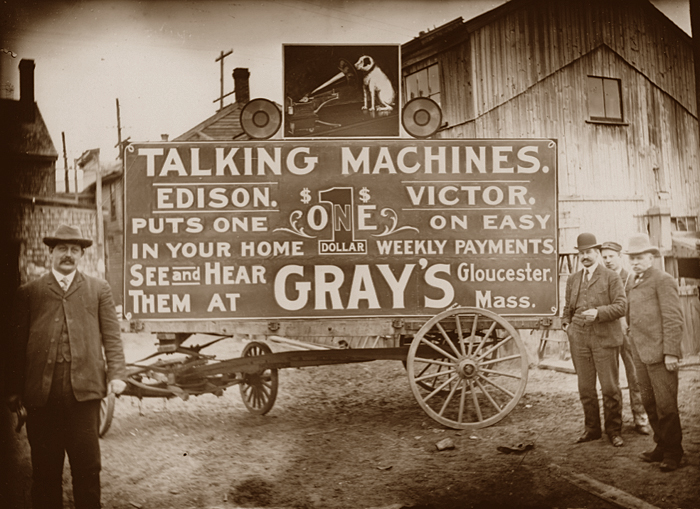
   Talking Machine Sign for Gray’s Hardware, Gloucester, circa 1900 Anonymous/ ©Fredrik D. Bodin
My research for Gray’s Hardware began a week ago when I got an email from Lynn Gray. She’s the great granddaughter of Charles A. Gray, who founded the store more than a century ago, and wanted to know if I had any photos of it. As you can see, I have a picture of Gray’s Talking Machine sign (or is it a horse-drawn billboard?). Lynn loved it, but what she really wanted was the front of the building, which was located at 129 Main Street (where Growing Pains is now). I was on a mission.
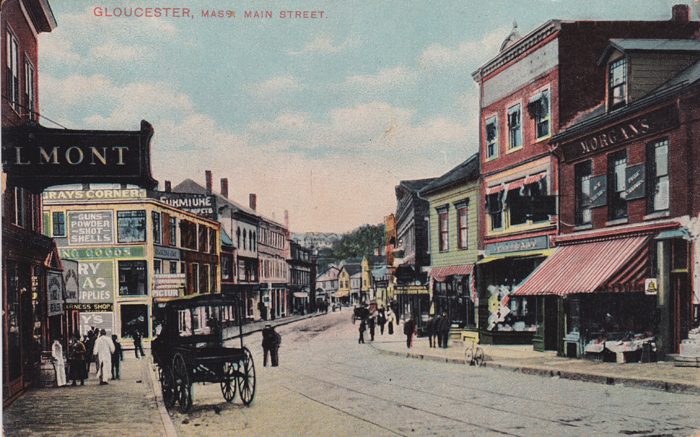
I called up an old friend and retired lobsterman, who grew up going to Gray’s for onion and potato sets (bulbs), nails, screws, and hardware.  He said it was the first shop on Cape Ann to sell Kodak photo supplies. I think they were also the first “phonograph parlor” here, which were springing up nationwide since the Talking Machine’s invention in 1877 by Thomas Edison. My friend’s circa 1900 post card appears below, showing they named the intersection “Gray’s Corner.”
From Lynn Gray: “Gray’s Hardware was built in the early 1870’s. It was started by my great grandfather, Charles A. Gray, and was later run by my grandfather Charles J. Gray. My dad, James Gray, used to ride an old fashioned bicycle with the large front wheel around Gloucester as advertising for the store. He lives and works at Kimball Union Academy in Meriden, NH. If anyone has a picture of my dad on that bicycle, now THAT’s something I’d like to see :)”
If you can help Lynn find her father on that bicycle – please let me know!
Talking Machine photograph printed from the original 5×7 inch glass negative in my darkroom. Image # A9357-002
Post card from a private collection.
Fred
Fredrik D. Bodin
Bodin Historic Photo
82 Main Street
Gloucester, MA 01930

The Castle on Salt Island

 Castle on Salt Island, 1919 Alice M. Curtis/ @Fredrik D. Bodin
I encounter locals, and even Brier Neck residents whose homes overlook Salt Island, who don’t know about the castle that was situated there. Here’s the story:
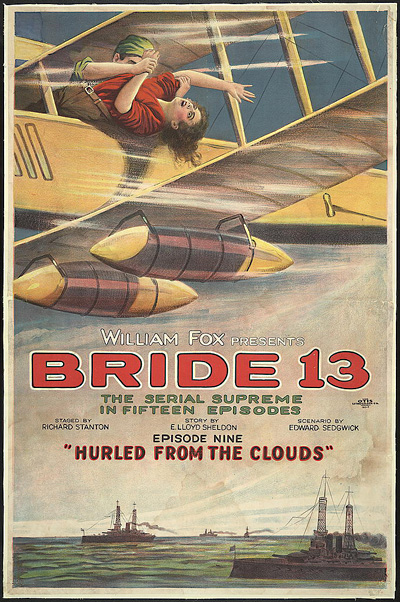
In the fall of 1919, the Fox Movie Company built a wood and plaster facade of a Gothic castle for the silent film Bride 13. This was a 15 part serial, or cliff hanger. The plot revolved around the kidnapping and ransom of thirteen beautiful damsels by a ruthless Moroccan pirate and his motley crew. Action scenes included the firing of a 450 pound cannon, a hot air balloon escape, US Navy battleships and submarine, a schooner wrecked and burned in Brace Cove, and the dynamiting of the castle as the movie’s finale.

Where is this film? I’d love to know. All sources indicate that Bride 13 was either lost or destroyed, as happened with many silent films. The reference used for this post was the May 1972 Yankee Magazine article, Lights! Camera! Disaster!, authored by the late Joseph E. Garland of Gloucester. Thanks, Joe–you gave us so much–we miss you.

Photograph printed from the original 5×7 inch glass negative in my darkroom. Image # A8357-053
Fred Bodin
Bodin Historic Photo
82 Main Street
Gloucester, MA 01930

Schooner Adventure Wins the Mayor’s Race


Adventure Wins! 1991 ©Fredrik D. Bodin
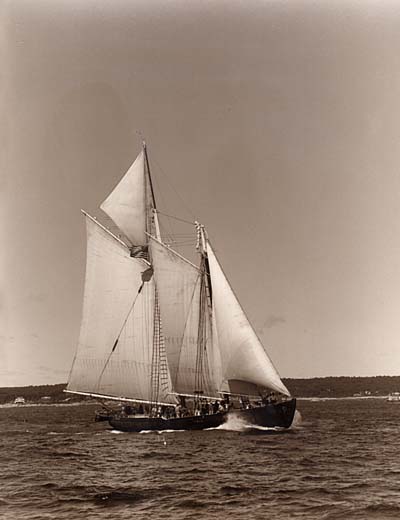
Three years after her 1988 arrival in Gloucester, Schooner Adventure won the Mayor’s Race for the second time. Race day was crystal clear and very windy, which Adventure, with her 6,500 square feet of sail, took advantage of off the East Gloucester shore. The 122 feet long knockabout schooner was built in Essex (MA) in 1926. She fished until 1953 as the most productive dory fisherman ever.
Now listed as a National Historic Landmark, Adventure is being restored to sail again as a floating classroom. Although she won’t be sailing this year, Adventure will be offering a full schedule of events during Gloucester Schooner Festival: http://schooner-adventure.org/
Note: To help Schooner Adventure, I granted them publicity and promotional rights to this photo and to Adventure Wins! 1988. You can see another photo of Adventure on our distillery Ryan & Wood’s Knockabout Gin label.
Printed archivally in the darkroom from my original 6×7 cm negative. Image # FDB910901-02#09

Fred  Bodin

Bodin Historic Photo
82 Main Street
Gloucester, MA 01930

The Essex Dragger Newton

Dragger Newton, Essex, 1930 Anonymous/ © Fredrik D. Bodin
In view of the arrival of our newest Essex-built Schooner Ardelle, I thought it appropriate to show you another arrival in her time. The 116 feet long by 23 feet wide Newton. The Dragger Newton was built in the A. D. Story Shipyard for the Boston Trawling Company. Decorative flags and lines on the bow tell us she’s ready for the September 10th, 1930 launch. The Newton’s sister ship, the Brookline, was launched on December 18th of the same year.
Printed from the original 4×5 inch glass negative in my darkroom. Image # A9145-373

Fredrik D. Bodin
Bodin Historic Photo
82 Main Street
Gloucester, MA 01930

The Ramparts, Commodore Rouse, and the Schooner Niagara

The Ramparts, Eastern Point, circa 1900 Anonymous/ @Fredrik D. Bodin

 Schooner Niagara, Eastern Point, circa 1898 Phelps/ @Fredrik D. Bodin

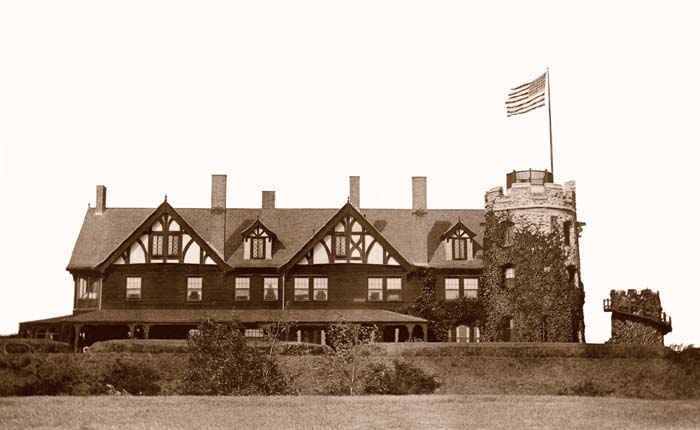
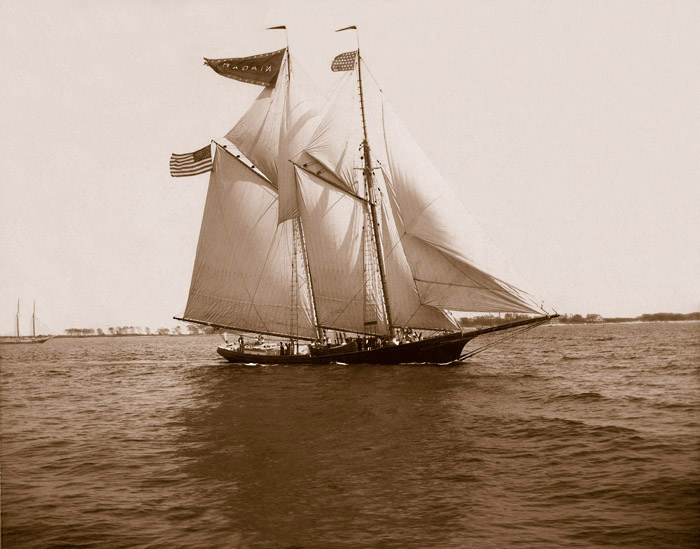
The Ramparts was built in 1896 on Eastern Point (Gloucester, MA) by Commodore Henry Rouse of Cleveland. Rouse was a railroad tycoon and commodore of the Seawanhaka-Corinthian Yacht Club of New York. In 1898, Rouse was visited by financier Howard Gould, the ninth richest man in America, on his Schooner Niagara. In the photo, Niagara sails off Eastern Point, with The Ramparts visible between the jib and the bowsprit. Ladies and gentlemen enjoy the outing, probably with Rouse aboard, and the man with the top hat just aft of the mainmast likely robber baron Gould himself.
Printed archivally from a scan of the original. Image # AD07-002 (Ramparts) and AD07-001 (Niagara)

Fred  Bodin
Bodin Historic Photo
82 Main Street
Gloucester, MA 01930


Open House Saturday 8/13/11

Hi- We are having a summer artist’s open house here on Saturday evening August 13th from 6 pm to 10 pm. We’ll be serving light hors d’oeuvres and refreshments. See the new maps, photos, paintings, sculpture, ceramics, and the work of our newest local artist- glass blower Aron Leaman. Don’t forget to join our Facebook page if you haven’t yet (see below).

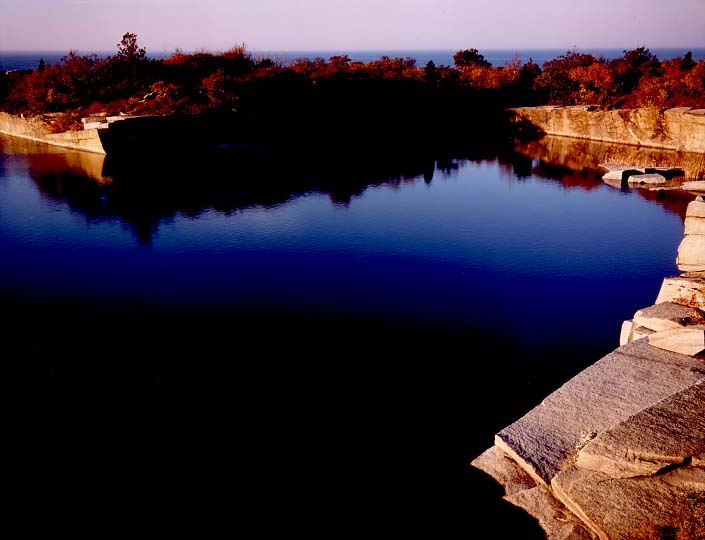
 Babson Farm Quarry, Rockport ©Fredrik d. Bodin

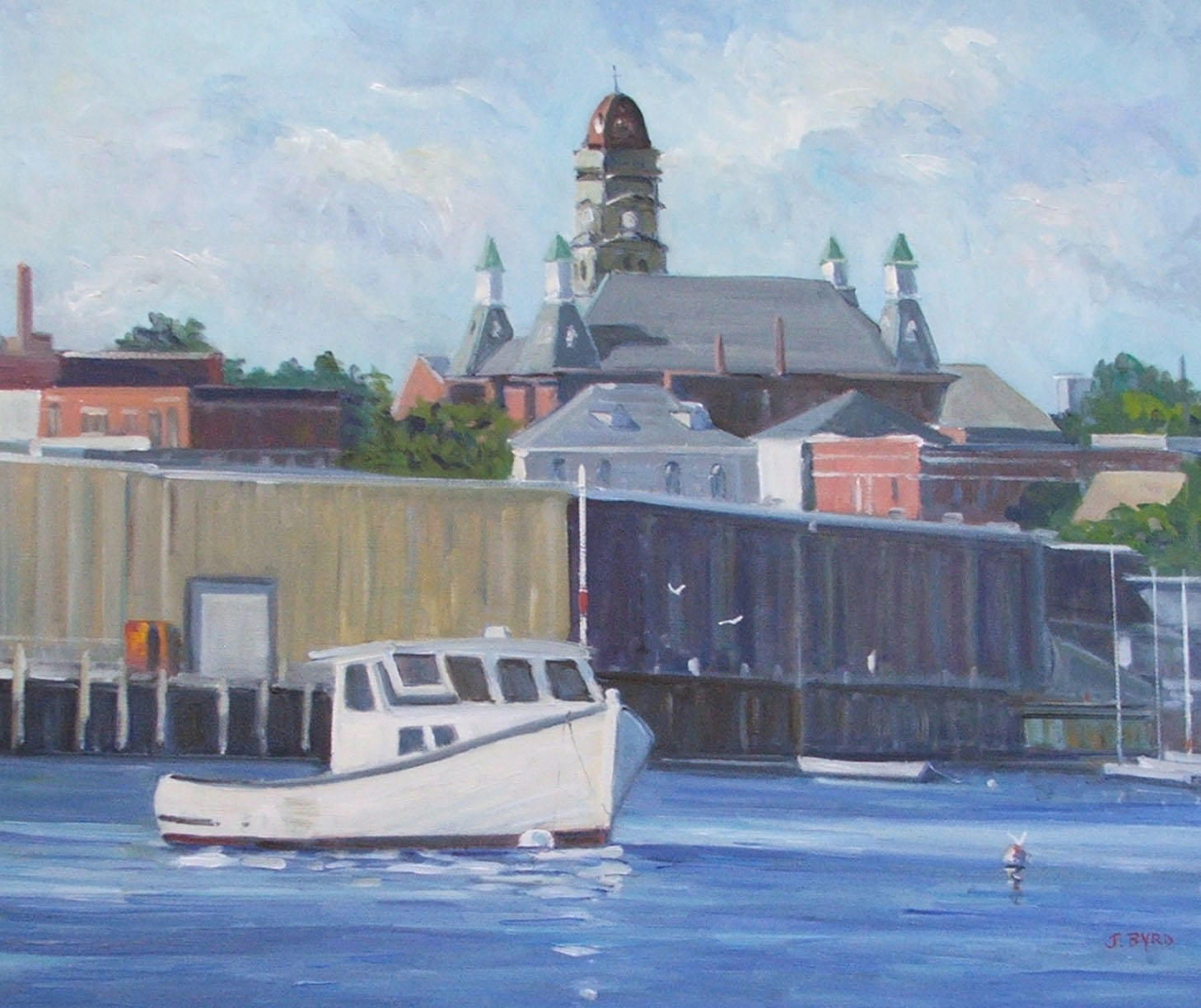
Fish City © Jean Byrd

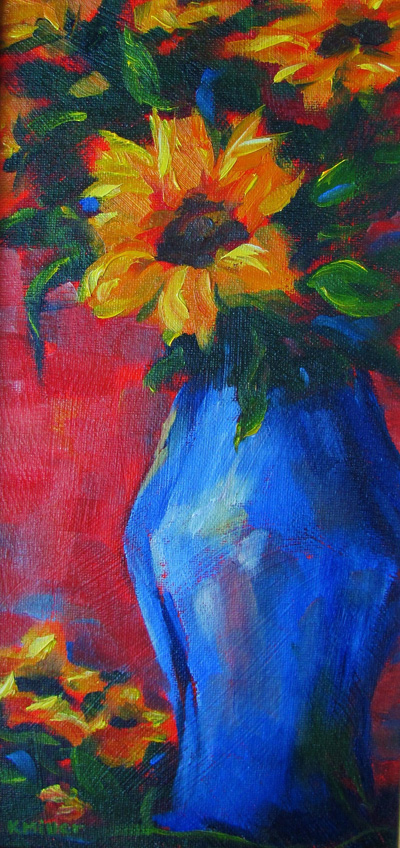
 Vibrancy © Kathleen Miller

Our neighbor on Main Street, the POP Gallery, is also having an opening at the same time for Christina PitschHer work is work in print, drawings, and sculptural pieces. They will have snacks from our neighbor the Dog Bar, and wine & beer.

Come on Downtown and enjoy!

Fred

Fredrik D. Bodin

Bodin Historic Photo

82 Main Street
Gloucester, MA 01930

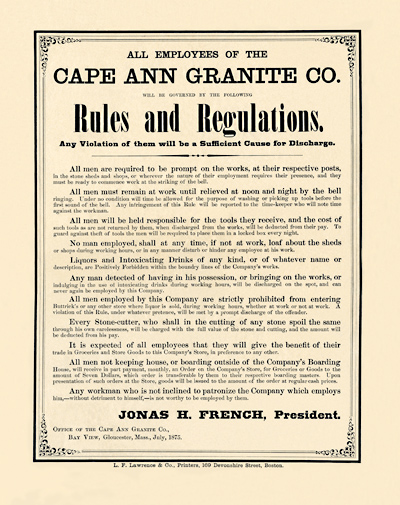
Rules and Regulations – No Loafing About the Sheds!

Cape Ann Granite Company Rules and Regulations, 1875

The Cape Ann Granite Company was organized in 1869 by Civil War veteran Colonel Jonas H. French. It was located near his summer home in Bay View (Gloucester, MA). Colonel French’s quarries supplied granite for the Boston and Baltimore post offices, the Brooklyn Bridge, and was one of the largest suppliers of paving block in the country. One of French’s claims to fame was cutting out a 122 feet long by 45 feet wide and 30 feet deep block of granite from Old Pit quarry in 1871. The original Cape Ann Granite Company was bought out by the Rockport Granite company in 1893. Remember: “No loafing about the sheds.”
Printed archivally from a scan of the original. Negative # ADP-011-001
Fred Bodin
Bodin Historic Photo
82 Main Street
Gloucester, MA 01930