Anita Walker, Executive Director of the Massachusetts Cultural Council, message about the superpower of art & culture

December 2018 looking ahead:

“We are on the front lines of a war on poverty. Not necessarily a shortage of material wealth, although its distribution in America is both a consequence and contributor to the current distress.

The poverty our field confronts every day is that which Robert Kennedy confronted while running for President in 1968. He contrasted the wealth represented in the nation’s gross national product with the wealth necessary to sustain a democracy and make life worth living. 

He said, “…the gross national product does not allow for the health of our children, the quality of their education or the joy of their play. It does not include the beauty of our poetry or the strength of our marriages, the intelligence of our public debate or the integrity of our public officials. It measures neither our wit nor our courage, neither our wisdom nor our learning, neither our compassion nor our devotion to our country. It measures everything, in short, except that which makes life worthwhile.”

We are currently in one of the best economies in a generation, but studies show record declines in our sense of well-being. Worse yet, life expectancy in the U.S. has declined for the third straight year. Major newspapers are sounding the alarm. In the Washington Post, George Will writes that loneliness, a major public health problem, is in “epidemic proportions” and that people are unhappier, more isolated and less fulfilled. David Brooks claims, in the New York Times, the biggest factor is the crisis of connection. We are “in a straight-up social catastrophe,” he writes. 
 
For nearly the last 20 years, those of us who advocate for the arts and culture have made the economy the centerpiece of our argument. We’ve collected economic impact data, counted the jobs we create and the taxes we generate, and touted our centrality to the tourism industry. We became the poster child of the creative economy. In an environment of it’s the economy stupid, these arguments won over state legislators and delivered budget increases to state arts agencies.

Five years ago, I wrote a column for a national arts blog suggesting that it was time to dial back the economic argument, even suggesting that there is something powerful about the intrinsic value of the arts. That the transforming power of culture is the power of creative expression, human engagement, and empathy. 

This is the poverty of our time. When Kennedy spoke of joy, beauty, intelligence, integrity, wit, wisdom, courage, compassion, and devotion he spoke of the ideals that are inherent in art and culture.

The arts and culture are the antidote to what ails us as a nation. In fact, they can both prevent and cure. Studies show that creative and cultural participation enhances human health and well-being leading to: reduced social isolation; opportunities for learning; calming experiences and decreased anxiety; more optimism, hope and enjoyment; increased self-esteem and sense of identity; increased inspiration and “meaning-making;” and better communication.

I can write about the studies and outcomes, but the heart is more articulate:
“It is a remarkable experience to witness a high school student watching a young adult with down’s syndrome or cerebral palsy offer a sonnet, and think to himself, ‘I want to do that. I want to have that kind of courage, that kind of conviction.’ Or to be a man or a woman of any age and watch someone you have typecast in your heart of hearts as somehow less than, stand in the center of a crowd and speak a truth about what it is like to dream of being seen for all of what you offer and know that a wall has just fallen…and through that kind of honest performance, know that you have been changed for the better,” writes Maria Sirois about Community Access to the Arts in Great Barrington, an organization that unleashes the arts in people with disabilities.

Music can help stroke victims regain their speech. You’re never too old to sing, or dance, or paint. Victims of Alzheimer’s disease or dementia find calm and clarity through the arts. Art is a universal language that bridges race, ethnicity, and culture – in a neighborhood, or across continents. The arts help explain the complexity of physics or climate change. Science and art are close cousins, sharing the bloodlines of creativity, risk taking, and problem solving.
 
Massachusetts cultural organizations are committed to serving everybody in the Commonwealth. They joined a new program this year to offer the benefits only the arts and culture can provide to people who have fallen on hard times and are receiving assistance through the state EBT card, a card that provides help to families living near the poverty level. Our organizations agreed to offer free or greatly reduced admission prices to EBT cardholders. In our first year, we tracked 220,000 EBT admissions. 

Nearly a quarter of a million doses of arts and culture to people in need. Again, the heart is in the stories. One concertgoer, who had not been able to attend a concert in years said, “It was nice to have a slice of my old life back.” Another said “It’s hard to describe the feeling of being able to do something ‘normal’ when everything else isn’t.”

The Mass Cultural Council is not an economic development agency, but when we do arts well, tourists visit and spend money, communities become destinations and better places to live, jobs are supported and created, innovators want to live here, and build new businesses.
 
The Mass Cultural Council is not an education agency, but when children have a quality experience participating in the arts, in school, and out of school, they exercise their creative minds, learn to think critically, are better observers and team players, and get a better education.

The Mass Cultural Council is not a human service agency, but when some of our most troubled youth participate in arts programs that give them a productive outlet for their fears and anger, provide a supportive community, build self-esteem and teach skills that will last a lifetime, these young people are saved from gangs, prison, drugs, even death.

In her book “Not for Profit: Why Democracy Needs the Humanities,” philosopher Martha Nussbaum writes:

“Citizens cannot relate well to the complex world around them by factual knowledge and logic alone. The third ability of the citizen, closely related to the first two, is what we can call the narrative imagination. This means the ability to think what it might be like to be in the shoes of a person different from oneself, to be an intelligent reader of that person’s story, and to understand the emotions and wishes and desires that someone so placed might have.”

Martha Nussbaum is a close reader of Aristotle, who defined the good life as one that was authentically meaningfully rich: rich with relationships, ideas, emotion, health and vigor, recognition and contribution, passion and fulfillment, great accomplishment, and enduring achievement.

George Will writes of the crumbling of America’s social infrastructure and the need for new habits of mind and heart, new practices of neighborliness. David Brooks says, “It’s not jobs, jobs, jobs anymore. It’s relationships, relationships, relationships.” Real relationships, not virtual or transactional ones. True engagement of heart and mind.

The poverty we face is one we can defeat. Novelist Alice Walker once said, “The most common way people give up their power is by thinking they don’t have any.”
 
Story. Imagination. Empathy. This is our superpower: the power of culture.” – 
Anita Walker , Executive Director, Massachusetts Cultural Council (MCC) 

Visit the Mass Cultural Council website

Have a podcast listen – Creative Minds Out Loud:  podcast for art and Culture –  Informative and lively conversations with arts and cultural leaders. Creative Minds Out Loud is a project of the Mass Cultural Council, and is hosted by Executive Director Anita Walker. https://creativemindsoutloud.org


Cape Ann Report – Opioid Use Disorder

New episdoe of Cape Ann Report!

Cape Ann Report – Opioid Use Disorder

Maureen Aylward, Host of Cape Ann Report, talks with Damian Archer, MD, Chief Medical Officer at North Shore Community Health Gloucester Family Health, Tito Rodriguez, Care Advocate and Outreach Specialist at PAARI Gloucester Police Assisted Addiction and Recovery Initiative, and Kara Blake, Harm Reduction Program Manager at North Shore Health Project Gloucester. They talk about the opioid epidemic, the stigma, treatment of the disease, and all the options available to those struggling with the disease and their loved ones.

Webinar help for the 2019 Bruce J. Anderson Grant from the Boston Foundation

bruce-j-anderson-the-boston-foundation-info-gatherings-©c-ryan

from The Boston Foundation for the Bruce J. Anderson Foundation (BJA):

Dear friends, 

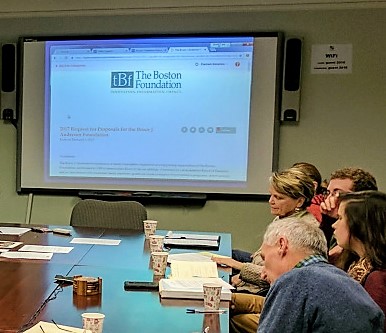
We hope you are having a great start to the new year.  We are hosting a Webinar Information Session for the Bruce J. Anderson Foundation (BJA) next Friday on January 11th at 11:00 a.m. EST.   The purpose of the Information Session is to:

  • Provide an overview of the mission and funding priorities of the BJA
  • Assist with technical questions related to the online application.

This Information Session is primarily for organizations applying for funding for the first time and/or need help submitting the proposal online. Please note that this webinar is not mandatory and attendance will not affect how your application is reviewed. Reminder: The online application is due on Friday, February 8th at 11:59 p.m. EST.  You can access it here. To attend the webinar on Friday, January 11th at 11:00 a.m. please follow the instructions below and accept the attached calendar invitation:

Join Skype Meeting

Trouble Joining? Try Skype Web App

Step 1: Dial in to the meeting: (206) 902 3250. Passcode: 587776 #

Step 2: Click “Join Skype Meeting.”

Step 3: Download the Skype for Business Meetings app and run the application by following the prompted instructions.

Best regards, Ritika Kumar, Donor Services Associate, The Boston Foundation, 75 Arlington Street, Boston, MA 02116, Ritika.Kumar@tbf.org

Prior GMG post about 2019 Grant Announcement

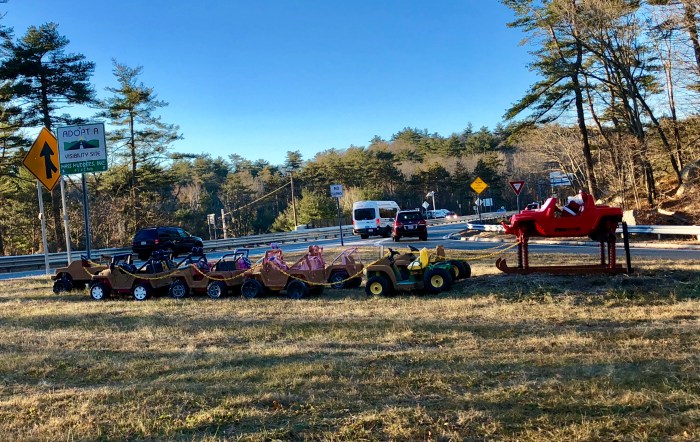
Mass Mudders Sleigh

My boys love this.  Nice job, Mass Mudders

What a creative and fun thing to do with their Adopt a Visibility Site!  We have always enjoyed seeing their displays at Exit 14 over the years and this one is our favorite.  I think it is so great that they put such thought and effort into what they do with their site….and my boys definitely appreciate the work that goes into it.  So, thanks to Mass Mudders!

unknown-4

Art Reception for Jon Sarkin and Paul Cary Goldberg at Gloucester Marine Genomics Institute (GMGI)


gloucester marine genomics institute_gmgi_acquires original art by jon sarkin r and paul cary goldberg l_big-boy-fish-head-548x465_gloucester_ma
“Big Boy Fish Head” GMGI acquisition; Paul Cary Goldberg (L) Jon Sarkin (R)

Gloucester Marine Genomics Institute (GMGI) acquired original art by Paul Cary Goldberg and Jon Sarkin for its special new research institute headquarters on Main Street — which means they built an impressive ~~temporary~~ corporate collection from the get-go! *update 1/10/19: GMGI stresses that “these pieces are on loan, and remain property of the artists and are for sale.” Ok! So they could be a great start to a permanent collection. For a peek inside, including in-situ shots, see Kim Smith’s post about the GMGI expansion groundbreaking 

ARTIST RECEPTION JANUARY 10, 2019

Gloucester Marine Genomics Institute (GMGI) is excited to host an Artist Reception for Paul Cary Goldberg and Jon Sarkin on Thursday, January 10th from 5- 6:30pm at GMGI’s Research Institute at 417 Main Street. RSVP Please contact Ashley Destino (772.708.8266 or Ashley.destino@gmgi.org) if you’d like to join us!

UPCOMING

GMGI regularly hosts private groups, including science educators from the North Shore this January. GMGI will be announcing plans for public Open House dates in the coming weeks!

Mark your calendars: on Thursday January 24th, 2019, there’s an academy open house at the teaching facility in Blackburn (55 Blackburn Circle, Gloucester, MA.,) for the community and prospective students to learn more. Check it out!

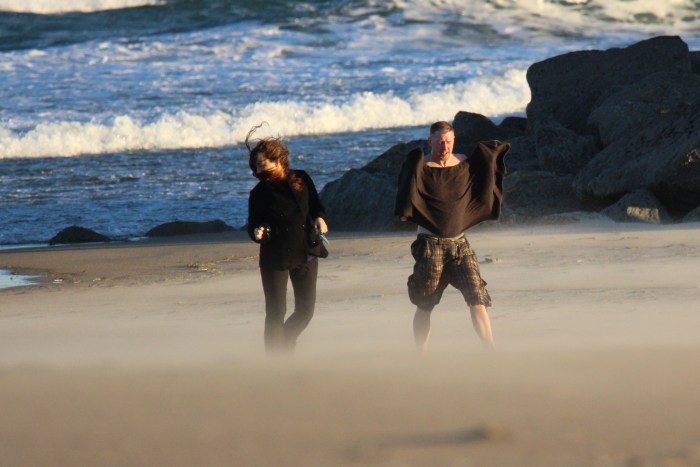
Blowin’ In the Wind

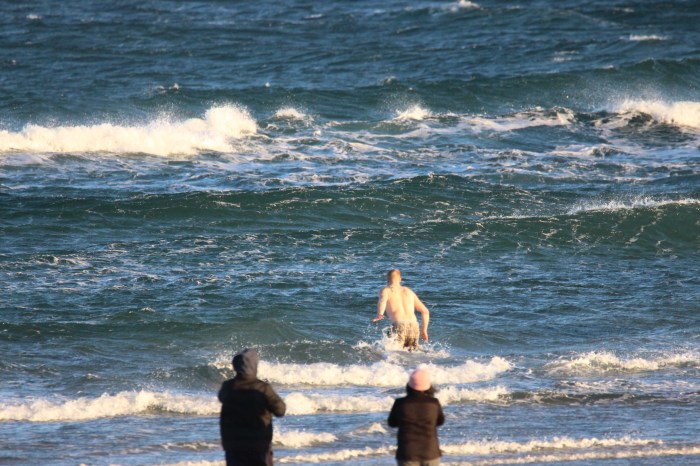
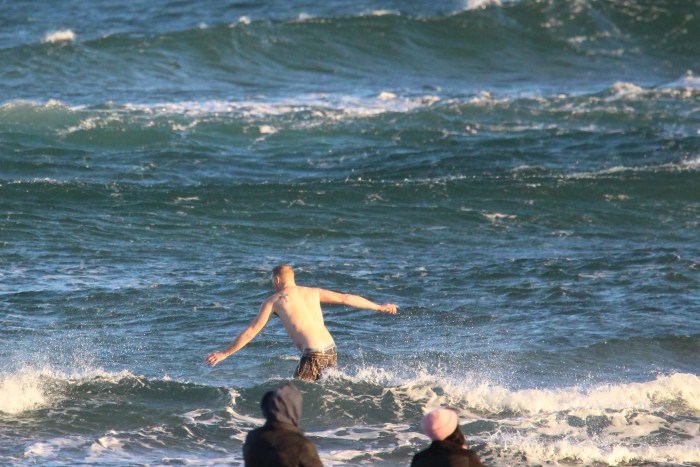
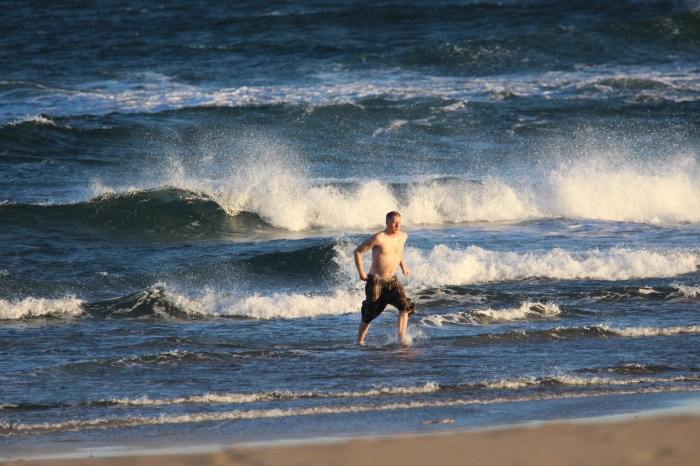
We visited Salisbury Beach on windy New Year’s Day and noticed this guy removing his shirt and running straight into the waves. I think the people on the shoreline just happened by and were unrelated to the plunger. His name is Shawn and he told me it’s his annual tradition. Good on you, Shawn!

I was struck by the differences between this solo plunge into the wild waters at Salisbury Beach and the numerous plungers into relatively calm waters on Rocky Neck earlier in the day.

img_1604img_1613

img_1624img_1637


THE SPUNKY AND PUNKY AMERICAN WIGEON

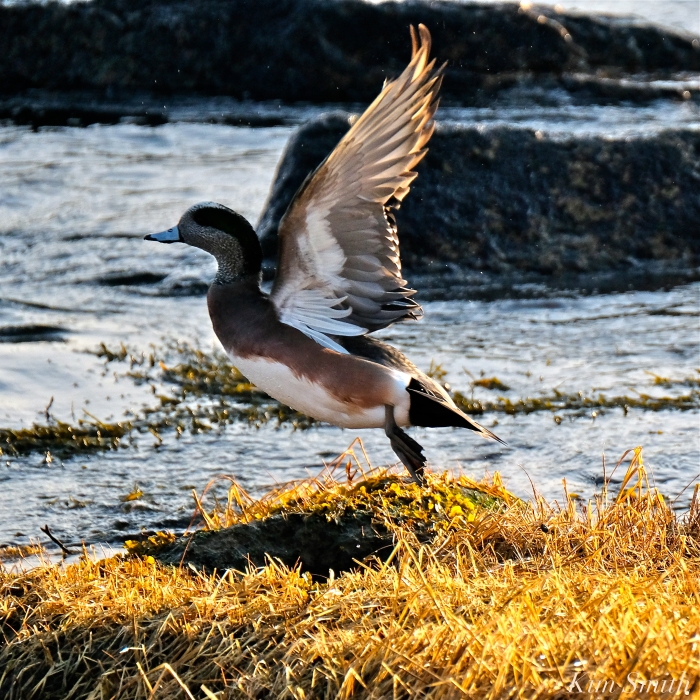
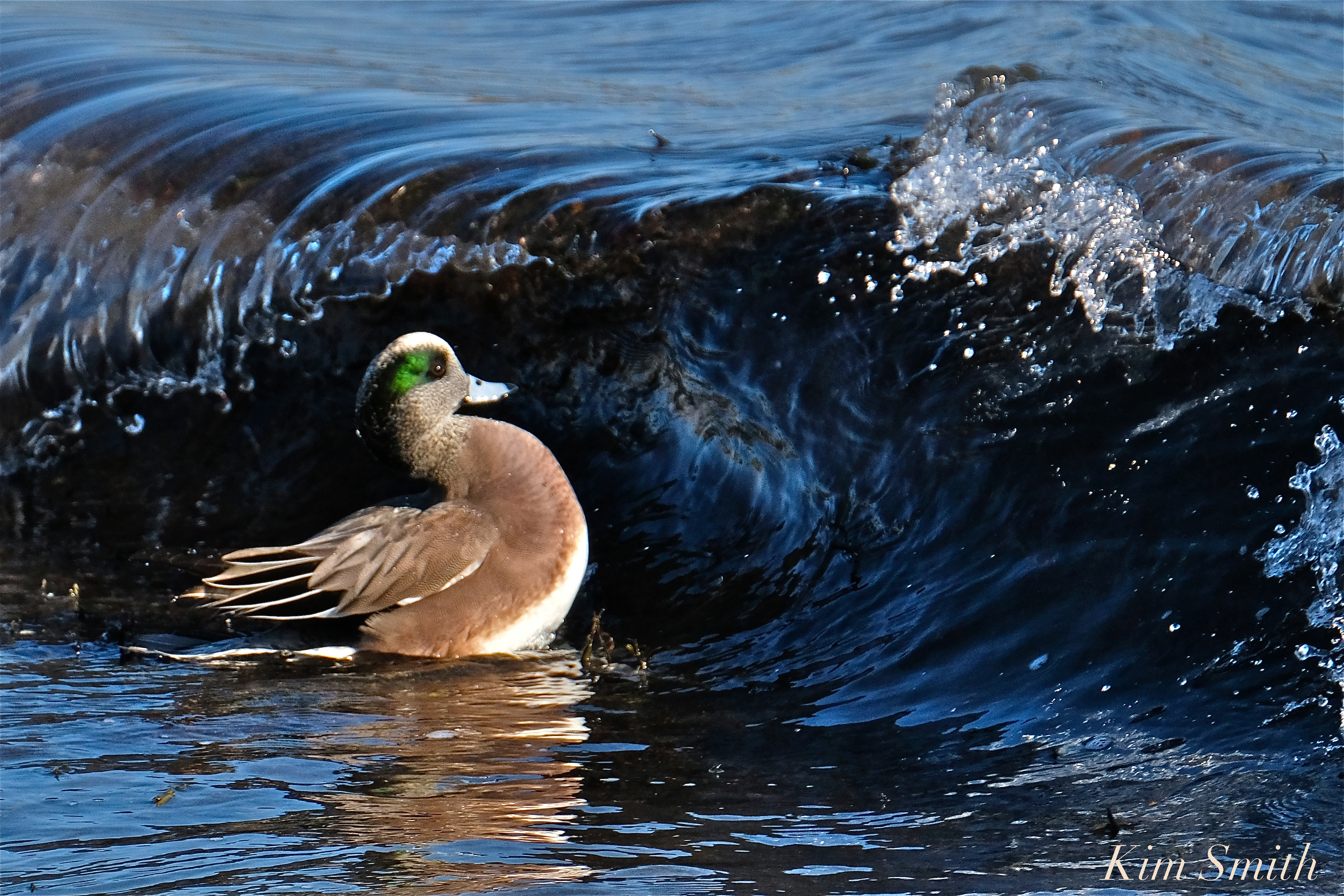
For the past week or so, a duo of male American Wigeons has been spotted foraging along the coastline. They dip and dabble, close to the shore, and are eating sea lettuce and seaweed.

American Wigeon male eating sea lettuce

Smaller than a Mallard but larger than a Bufflehead, the punky male flashes a brilliant green swath across the eye and has a beautiful baby blue bill. The males were are also colloquially called “Baldplate” because the white patch atop his head resembles a bald man’s head.

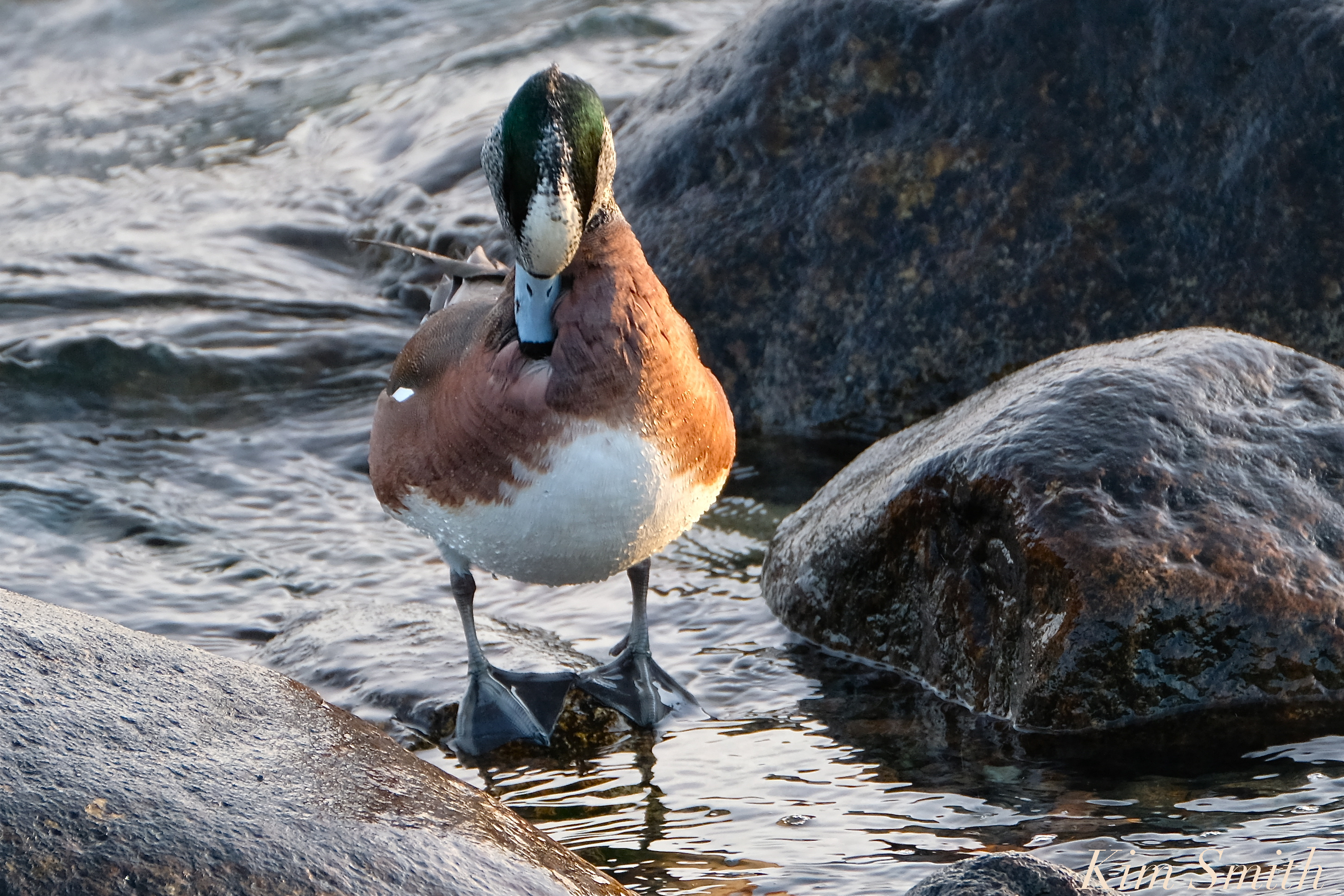
Oiling their feathers (called preening) and constantly aligning the feathers keeps the ducks both afloat and aloft.

Notice how the water forms beads on the duck’s breast, a sure sign the feathers are well-oiled. Ducks have a gland at the base of their tail called the uropygial gland (you can also say preen gland or oil gland). The preen oil creates a protective barrier that prevents the feathers from becoming waterlogged.

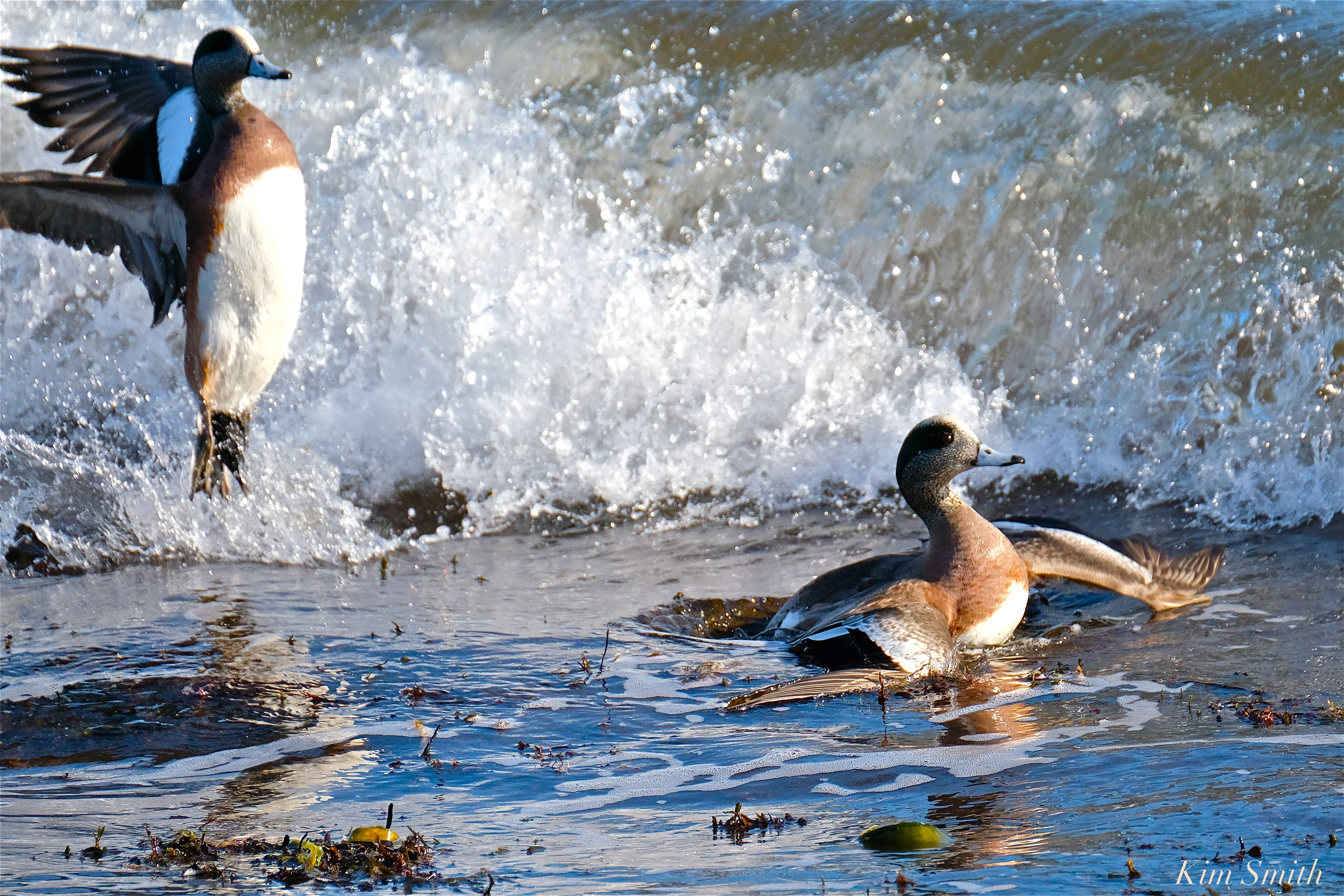
I like to think of the American Wigeon as both spunky and punky. Spunky because of the way they bounce back after diving in rough surf. Punky because of their occasionally holligan-like behavior.

Last year when first encountering American Wigeons I didn’t understand why the Mallards were so aggressive towards the Wigeons, snapping and nipping at the pair whenever they got too close to the Mallard’s meal. Now I see why. American Wigeons often feed alongside other ducks, especially diving ducks such as Coots. The Wigeons opportunistically snatch away the aquatic vegetation the divers pull up although, our two travelers were quite amicable and while feeding together, not in the least hoodlumish toward each other.

Watching the ducks tumbling around in the rough surf while casting about for food is a site I won’t soon forget. It was beautiful to see the Wigeon’s surf dance but also a window into their daily struggle for survival. I marveled at the ducks’ resilience. Roughly a third of migrating birds that winter each year in the mainland of the United States do not survive the journey.

The pair has not been since that morning foraging in the choppy waves. Perhaps they took a cue, of winter weather yet to come.

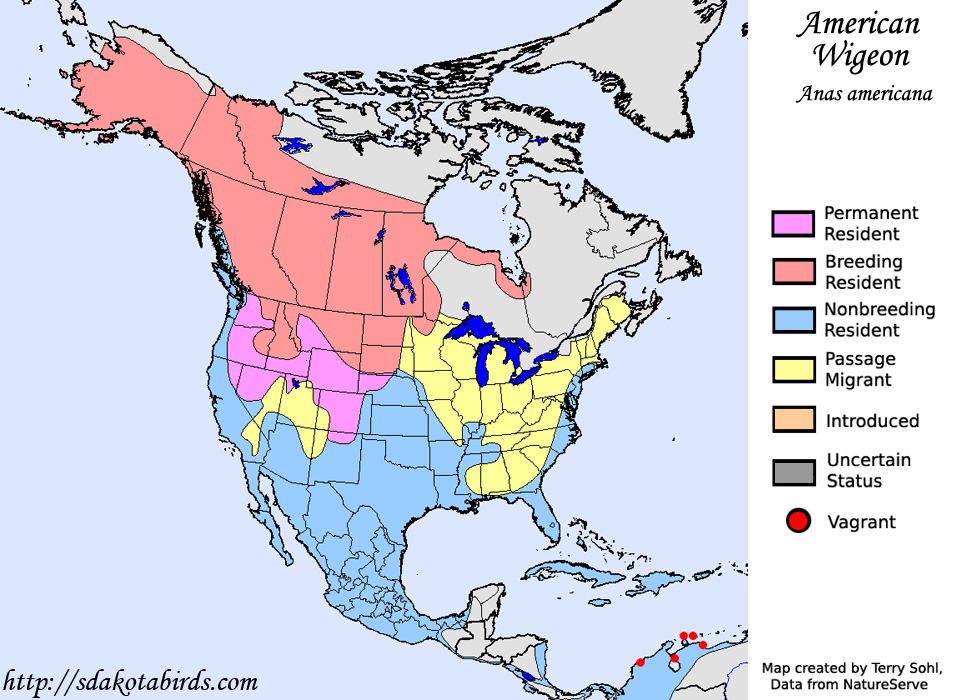
For many weeks during the late winter and early spring of 2017, a male and female American Wigeon made Rockport their home, and now we have had these two feisty boys. I wonder if the Wigeon’s winter range is expanding northward or if we are merely a stopover on their southward migration. Most of the migration occurs further west and south so I think we are pretty fortunate to have this dynamic duo visiting our shores.

A day at Parker River Wildlife Refuge and Salisbury State Reservation

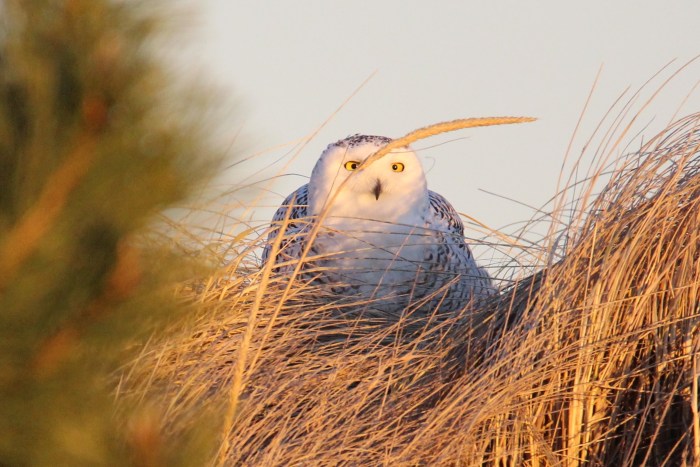
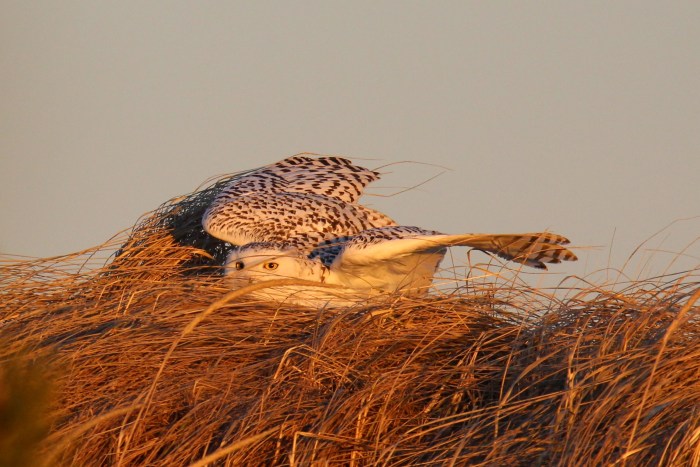
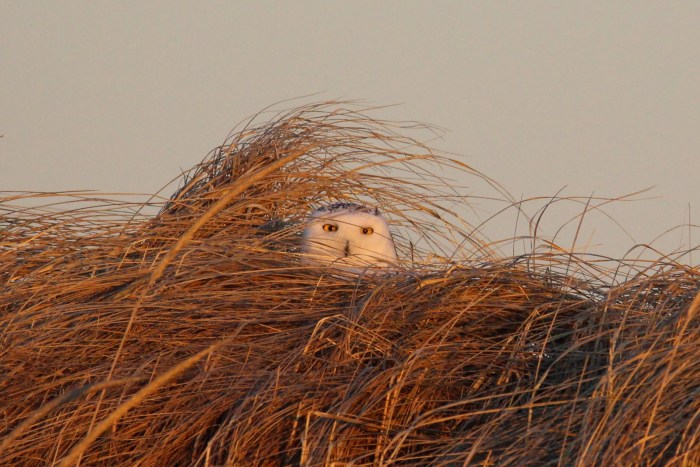
On Sunday went to Parker River Wildlife and Salisbury State Reservation.  No Snowy but the light and weather were beautiful.  First the sun, hail, rain, snow and wind.  Pretty day all around.

Appropriately Busy or Over-Scheduled?

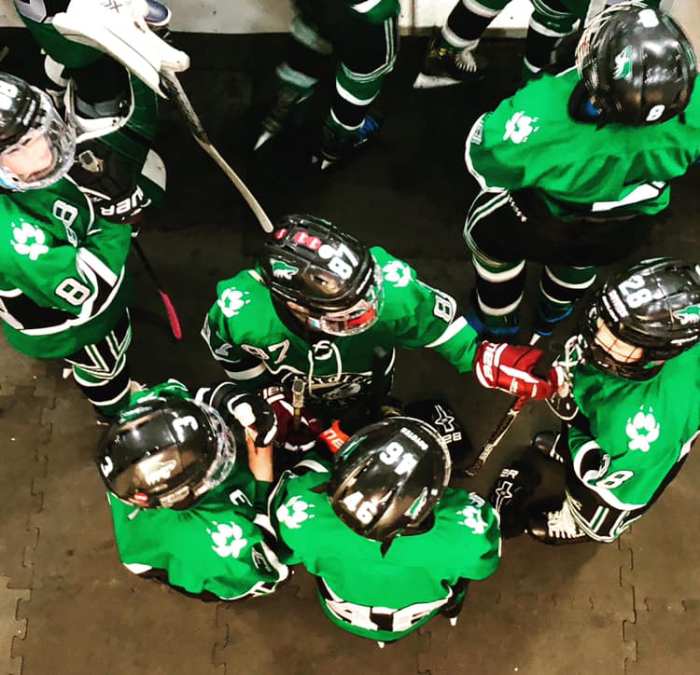
I often joke, maybe even complain, about the schedule that we (and many other families) keep. It is met with a mixed bag of opinions. Some people applaud and appreciate the long weekends and busy days that our boys tend to have. Other people find it to be “too much”…detrimental even, so I’ve been told. I do understand both sides of the argument. Truly.

That having been said, I can tell you that we only do it because our boys love it. And, after weekends like this, I am incredibly proud of their determination, stamina, and commitment.

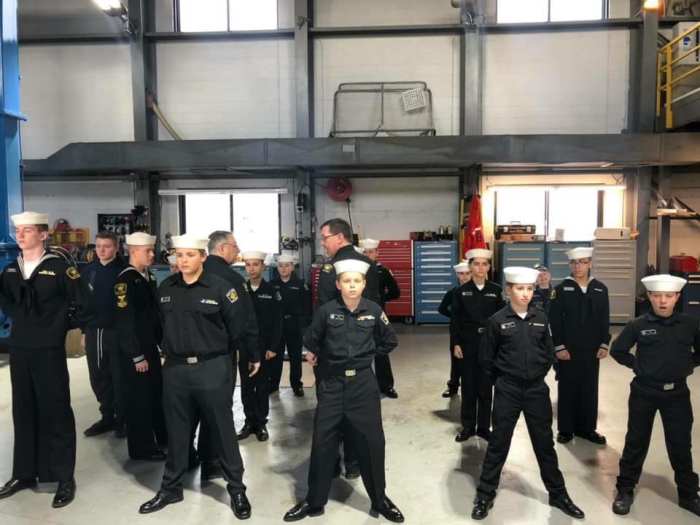
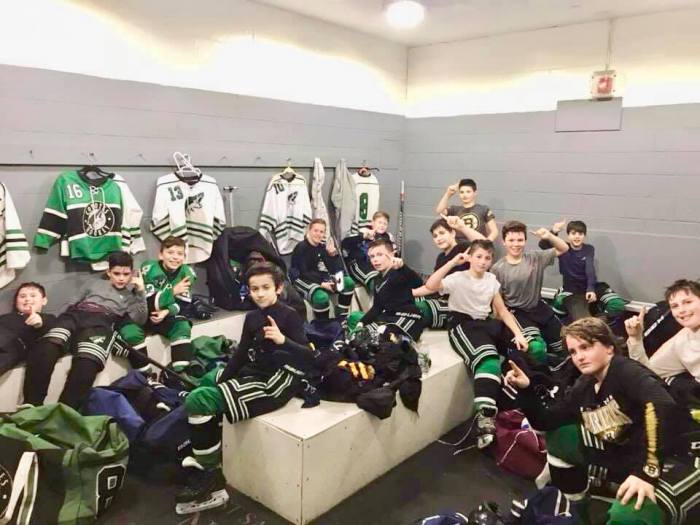
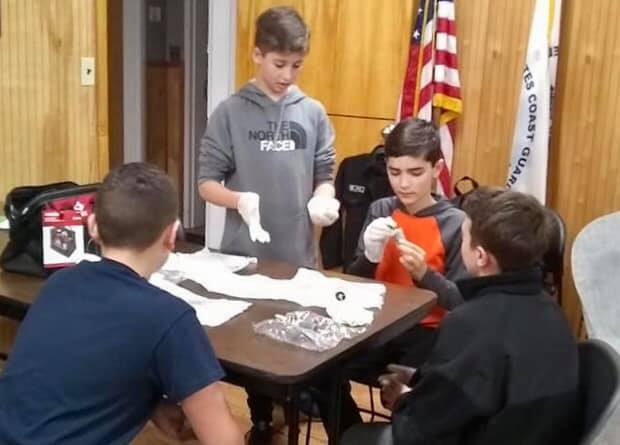
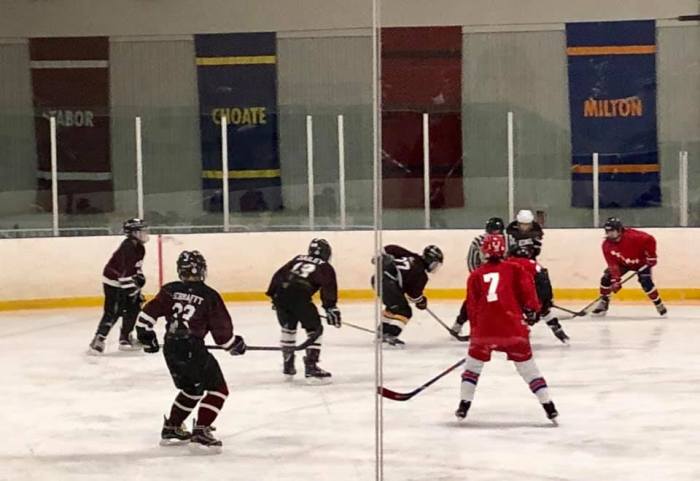
Thatch skated hard late Friday night with a short handed Rockport Middle School team. After getting home at 10:30 he was up at 5:00am to play in Haverhill with Cape Ann PW1. With no downtime in sight, he went directly to the Coast Guard Station for three hours of Sea Perch training and annual inspection prep with the Navy Sea Cadets. He was dismissed at noon and we drove directly to Rhode Island for two big Coyotes games. Back in Rockport at 10:00, and totally wiped, he managed to tackle his math homework patiently and without fuss.

Over-scheduled?  Perhaps.  Dedicated?  Absolutely.  Was he happy to be in all of the places he was?  For sure.  Being a part of these teams, groups, and organizations means everything to him.  

I love him and all that he gives. I also love all that their sports, interests, and activities have added to our family dynamic….especially the friends it has added to our lives. We’re pretty lucky.

So, is there a fine line between appropriately busy and over-scheduled?  No doubt it depends on the child.  But, until one of the boys asks us to do things differently, we’ll keep on going on.

50022267_10218559101238716_9184407745653112832_n

49407142_10218559101478722_112471114579443712_n
Photo courtesy of Adam Curcuru
49748398_10218559101878732_3437294449049206784_n
Photo courtesy of Mark Leonard
49938502_10218559101838731_7868871464890400768_n
Photo courtesy of Robert Pallazolla

49459782_10218559102798755_3069010031438462976_n

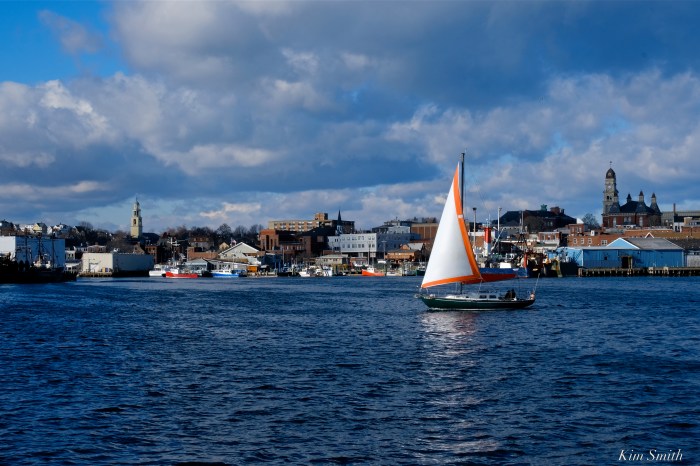
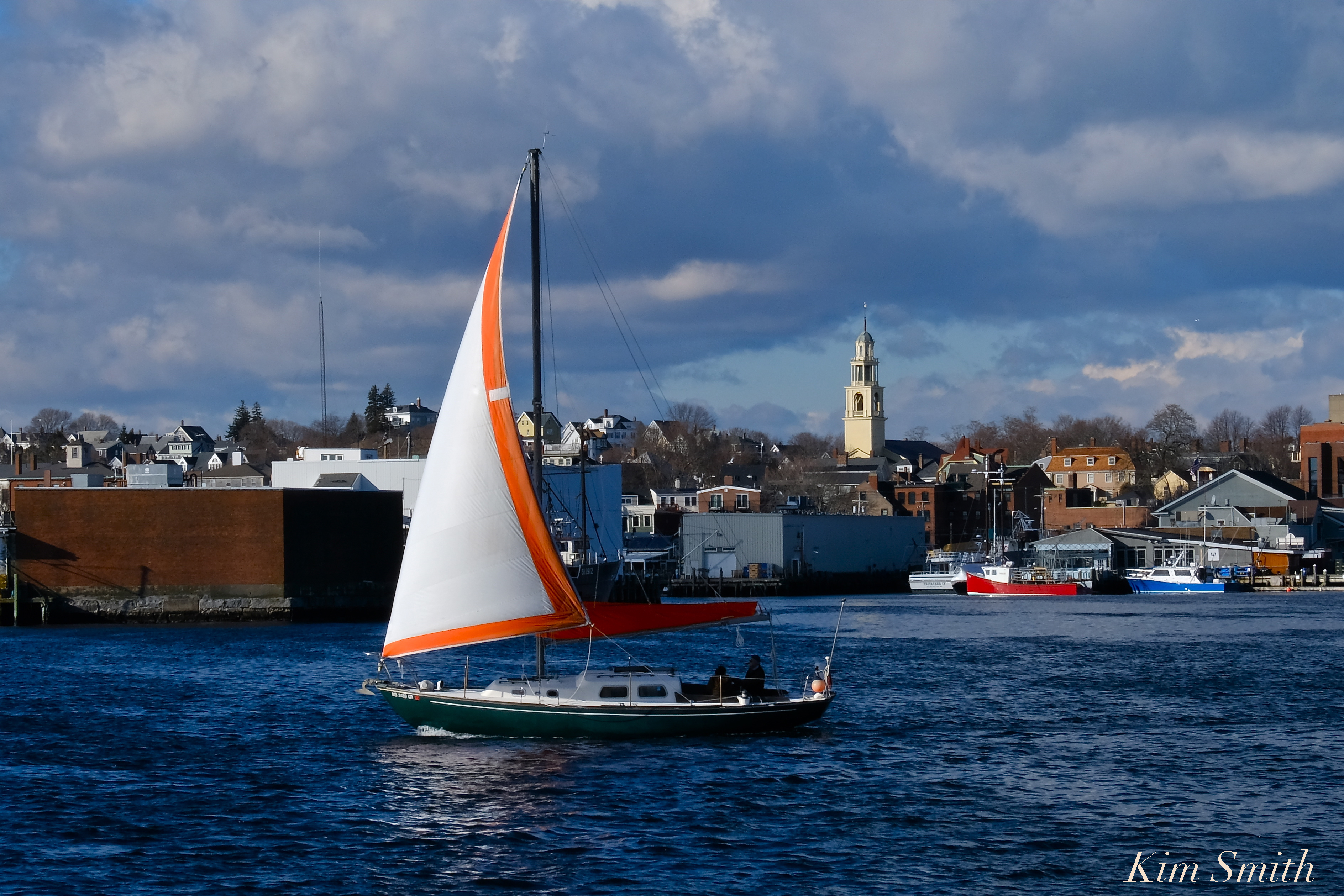
PICTURE PERFECT DAY FOR A WINTER SAIL

The winter’s afternoon blue, blue sky, blustery clouds, and orange-trimmed sail made for a picture perfect scene as the boat made its way through the Harbor.