HUMPBACK WHALE BREECHES AND SENDS FISHING BOAT FLYING

ABC Newsonline.

August 7, 2017

Six men are lucky to be alive after a whale threw their boat metres into the air in the Whitsundays (Australia).

WARNING: This story contains graphic images that may disturb some readers.

The group was returning from a reef fishing trip on Saturday afternoon, when the large humpback breached underneath the 8.5-metre aluminium vessel, near Gloucester Island.

The impact of the collision with the whale and the water was so great that those on board were violently thrown around the boat, with two men knocked unconscious.

READ FULL STORY HERE

Skippers need to keep a lookout, authorities say

The Whitsundays is considered a whale nursery, with the species choosing the warm waters off the Queensland coast to birth their calves.

A spokesperson for the Department of Environment and Heritage (EHP) said about 30,000 humpback whales were migrating along the Queensland coast this year.

“Humpbacks have made a remarkable comeback since the 1960s when hunting stopped,” the spokesperson said.

“EHP and the Queensland Parks and Wildlife Service would remind boaties to be very cautious during the humpback migration — humpbacks are on the move day and night on their migration.”

The spokesperson said adult humpbacks could weigh up to 45 tonnes.

“These huge, unpredictable mammals may surface, slap their tails or leap out of the water unexpectedly around vessels.

“Skippers need to keep a lookout at all times — even if skippers avoid cutting across the path of a whale or going within the approach limits, humpbacks may approach or nudge boats.

“If a skipper becomes concerned about the safety of their vessel and passengers due to a whale’s behaviour, he/she should stop, slow down and/or steer away from the whale immediately.”

CHECK OUT KATHLEEN ERICKSON’S WONDERFUL HUMPBACK WHALE SIGHTING


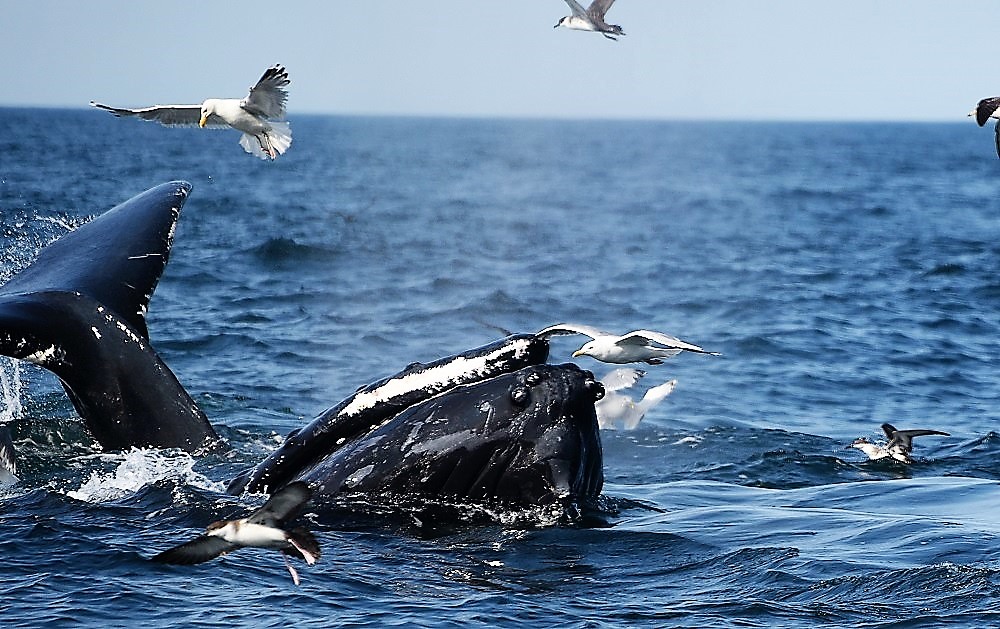
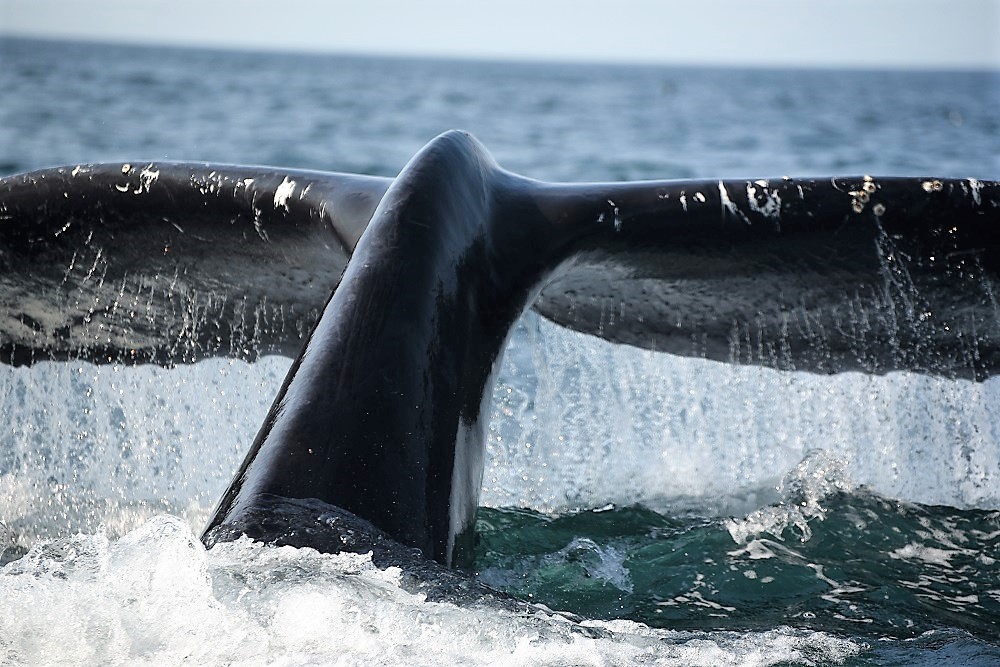
Kathleen writes, ” We came across a pod of Humpbacks bubble feeding just off the outer shore of Cape Cod, south of P-town.  Incredible!  Here are a few shots.” 

OPEN DOOR AND PERIOD PARTNERS TEAM UP FOR PERIOD PARTNERS PRODUCT DONATION DRIVE!


NEW NON-PROFIT PROVIDES MENSTRUAL PRODUCTS TO PEOPLE IN NEED ON CAPE ANN

Product Donation Drive August 12, 2017, at Stop & Shop in Gloucester

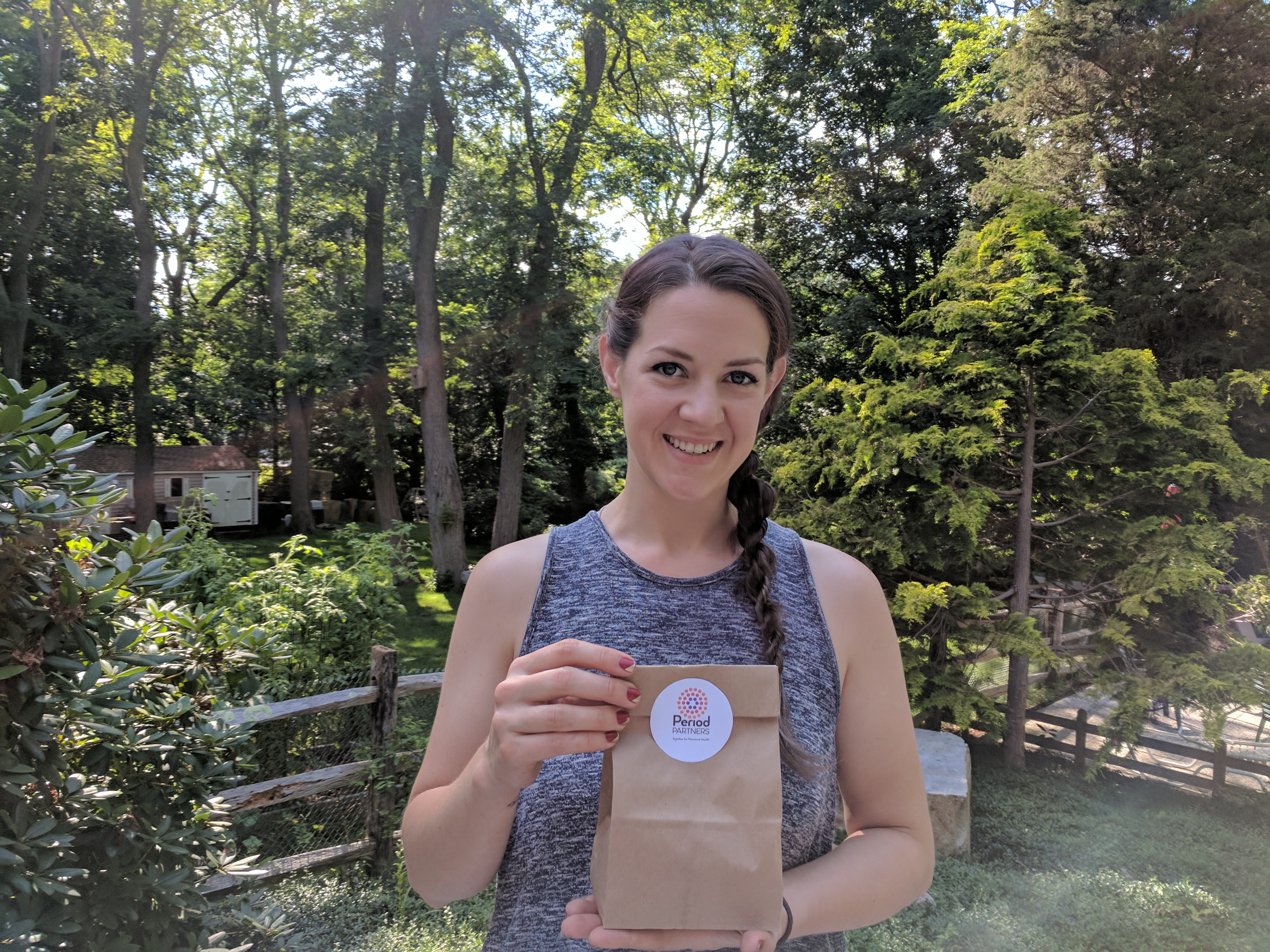
A new organization, Period Partners, has been established to provide menstrual products to people who need them on Cape Ann.

Access to menstrual hygiene products is a basic survival need, but tampons and pads are not covered by WIC or food stamps. Those living in poverty often make do without. This affects people’s health and can cause them to miss work, school or appointments, making it hard to escape the cycle of poverty.

Period Partners was formed to change this, working in partnership with The Open Door. The Open Door will serve as Period Partners’ fiscal sponsor (which means donations will be fully tax-deductible under TOD’s 501(c)3). Period Partners care packages will be distributed through The Open Door’s food pantries as well.

26-YEAR-OLD FOUNDER

Period Partners was founded by 26-year-old Gloucester resident Lucy Gross when she became aware how seldom menstrual products are donated to homeless shelters and other social agencies. “Because it’s something we rarely talk about, people just don’t think to donate these essential items,” she said.

“I believe that everyone has the right to a healthy period,” said Gross, a fourth-generation Gloucester resident whose grandfather, Dr. Robert Lundberg, and grandmother, Renee Gross Nutbrown, both served the Gloucester health community. “No one should be held back because of this basic need.”

“The Open Door is pleased to work with Period Partners to meet this critical need,” said Julie LaFontaine, executive director of The Open Door. “It is a natural collaboration that will benefit this community.”

PRODUCT DRIVE AUGUST 12

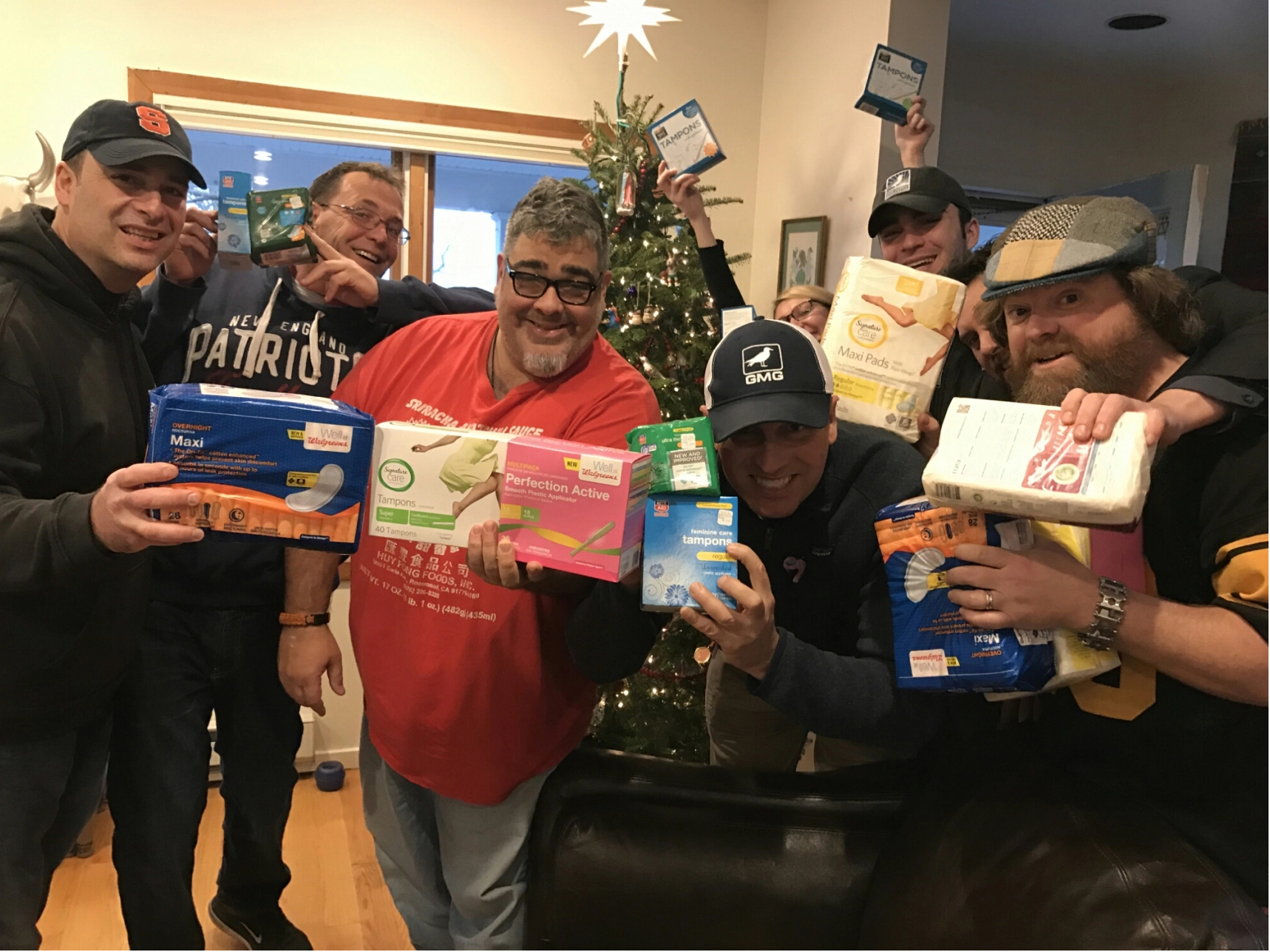
Period Partners will provide clients of The Open Door with a year’s supply of tampons and pads. To kick off its fund-raising efforts, the group will hold a product drive at Stop & Shop, 6 Thatcher Rd. in Gloucester, on Saturday, August 12, from 9 a.m. to 1 p.m.

Can’t make it to the drive? You can make a tax-deductible donation at https://theopendoor.givecorps.com/ – write “for Period Partners” in the note field. Or email goperiodpartners@gmail.comfor more info.

About Period Partners: Period Partners was founded in November 2016 to provide menstrual products to people in need on Cape Ann. It operates in collaboration with local organizations and members of the community. For more information visit facebook.com/periodpartners

About The Open Door: Founded in 1978, The Open Door’s mission is to alleviate the impact of hunger in the community by connecting people to good food, advocating on behalf of those in need, and engaging others in the work of building food security. Programs include two Food Pantries, Community Meals, Mobile Markets, Summer Meals, Senior Soup and Salad, and more. For more information visit http://www.foodpantry.org

For more information, please contact Abbie Lundberg at:

goperiodpartners@gmail.com

Craig Kimberley Photo

CAMBRIDGE’S MARY PRENTISS INN URBAN POLLINATOR GARDEN!

All are welcome at The Mary Prentiss Inn, people and pollinators!

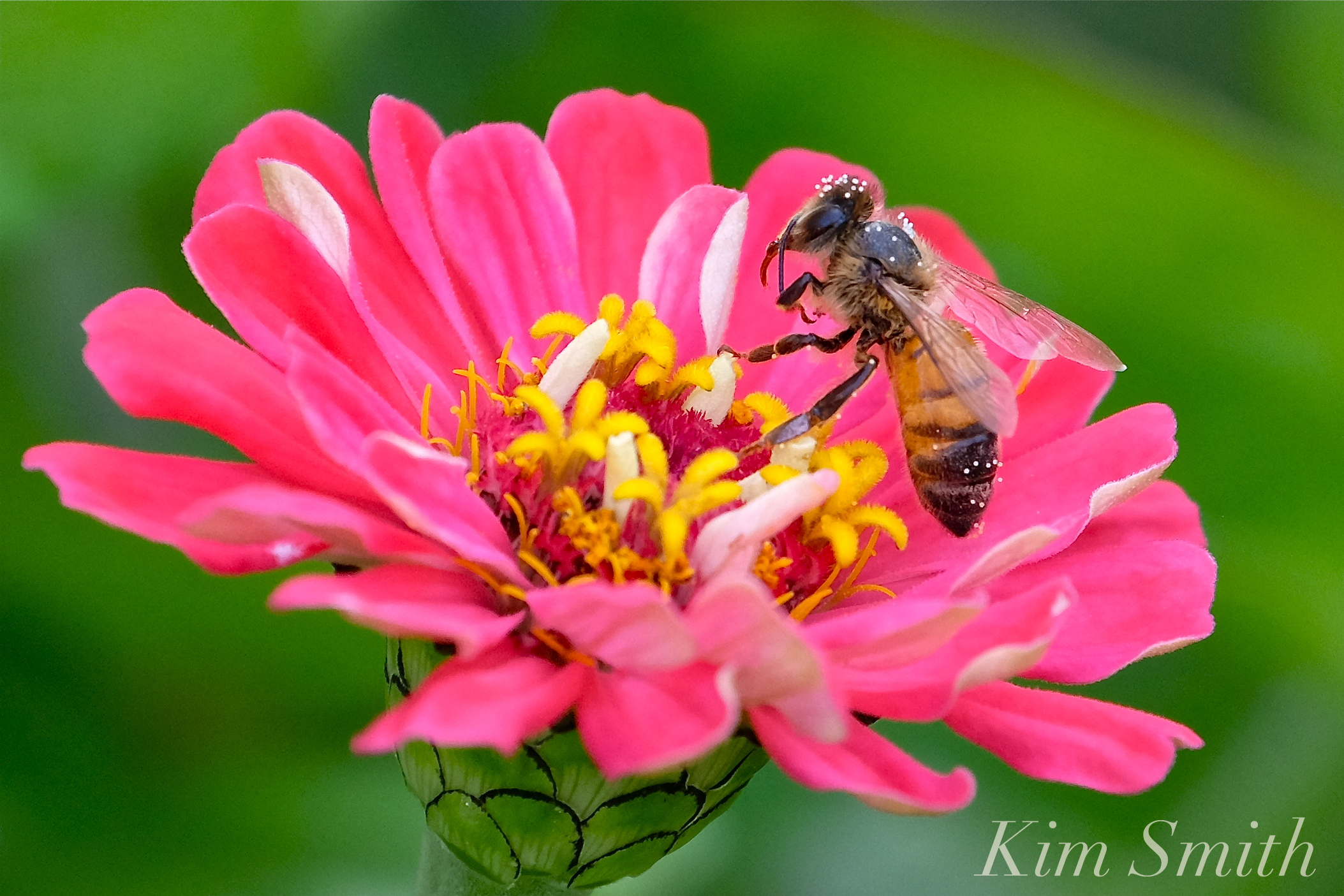
Pollen-dusted Honey Bee

We’ve planted the front dooryard garden with an array of eye-catching, fragrant, and nectar rich flora for both guests and neighbors to enjoy, and to sustain the growing number of bees, butterflies, and songbirds frequenting the garden. 

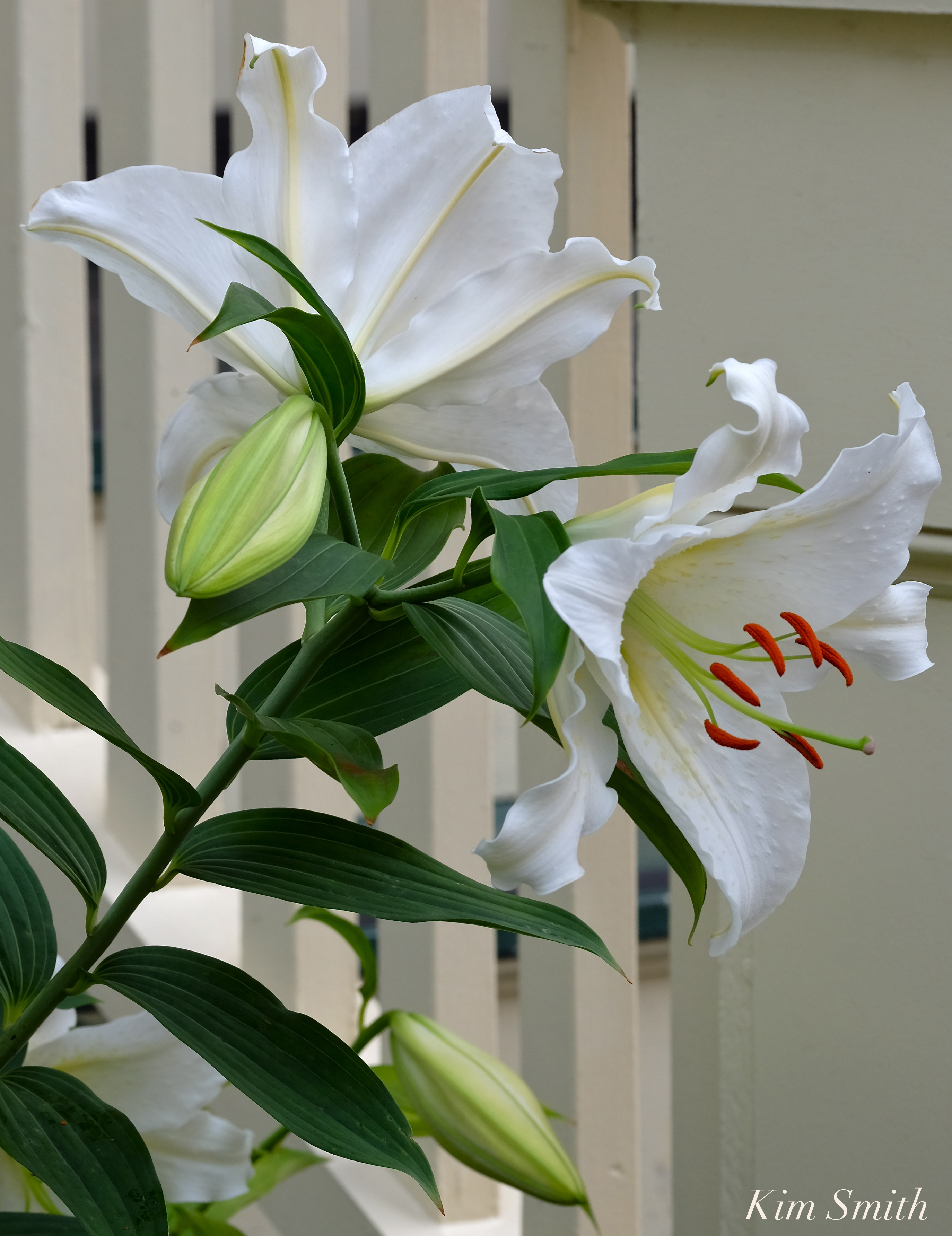
Fabulously fragrant Oriental Lilies are planted adjacent to the front door to welcome visitors as they enter the Inn.

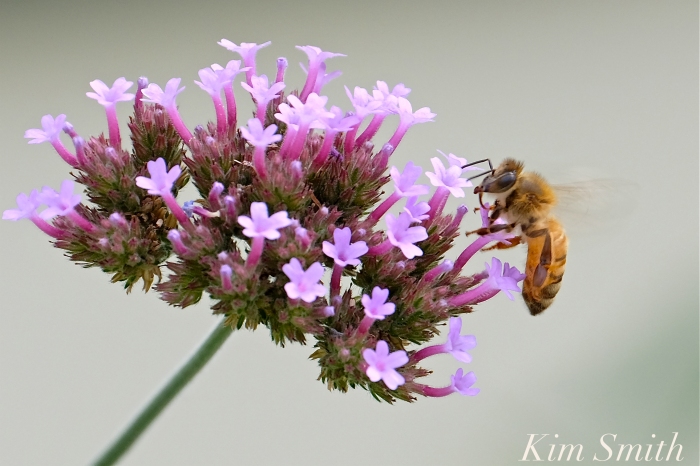
The Mary Prentiss Inn, from the pollinators point of view~

The Mary Prentiss is a stunning twenty-room Greek-Revival style inn located on a quiet street minutes away from Harvard Square. Elegant, comfortable, and charming, with period architectural detail and decor, the Inn is outfitted with all modern amenities. Visit The Mary Prentiss Inn website for more information.

Enjoy a delicious made-to-order breakfast or afternoon tea at the Inn’s secret garden.

The Mary Prentiss Inn is listed on the National Register of Historic Places and is the proud recipient of the Massachusetts Historical Commission Preservation Award for 1995.

The Mary Prentiss Inn is located at 6 Prentiss Street, Cambridge. Call 617-661-2929 or visit maryprentissinn.com

THE DANCE OF COLOR AND LIGHT

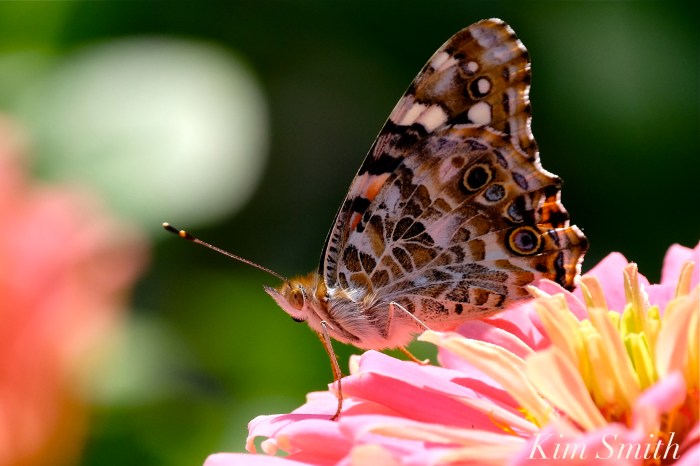
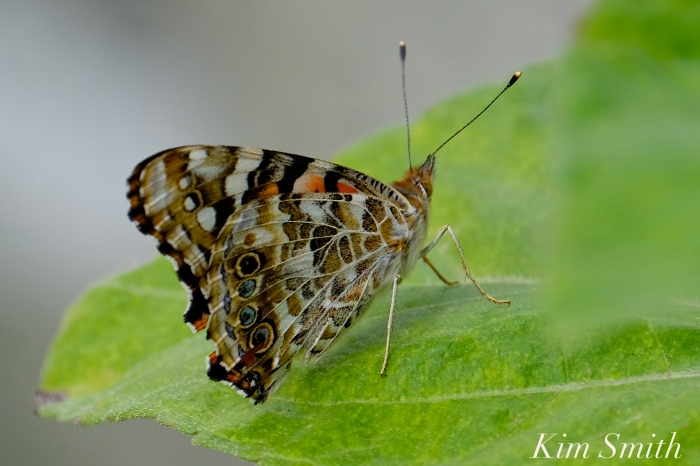
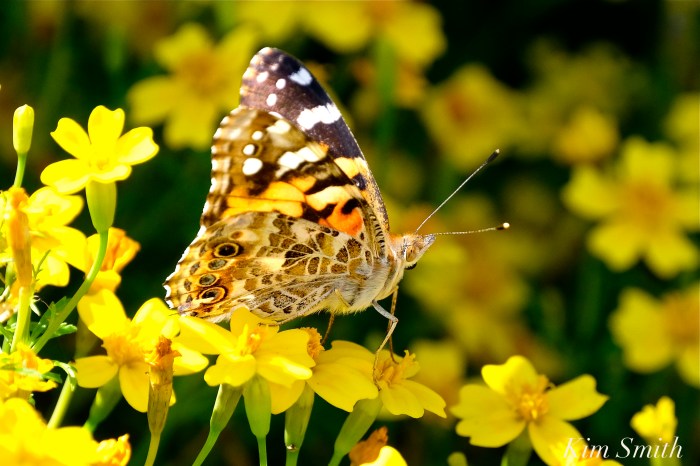
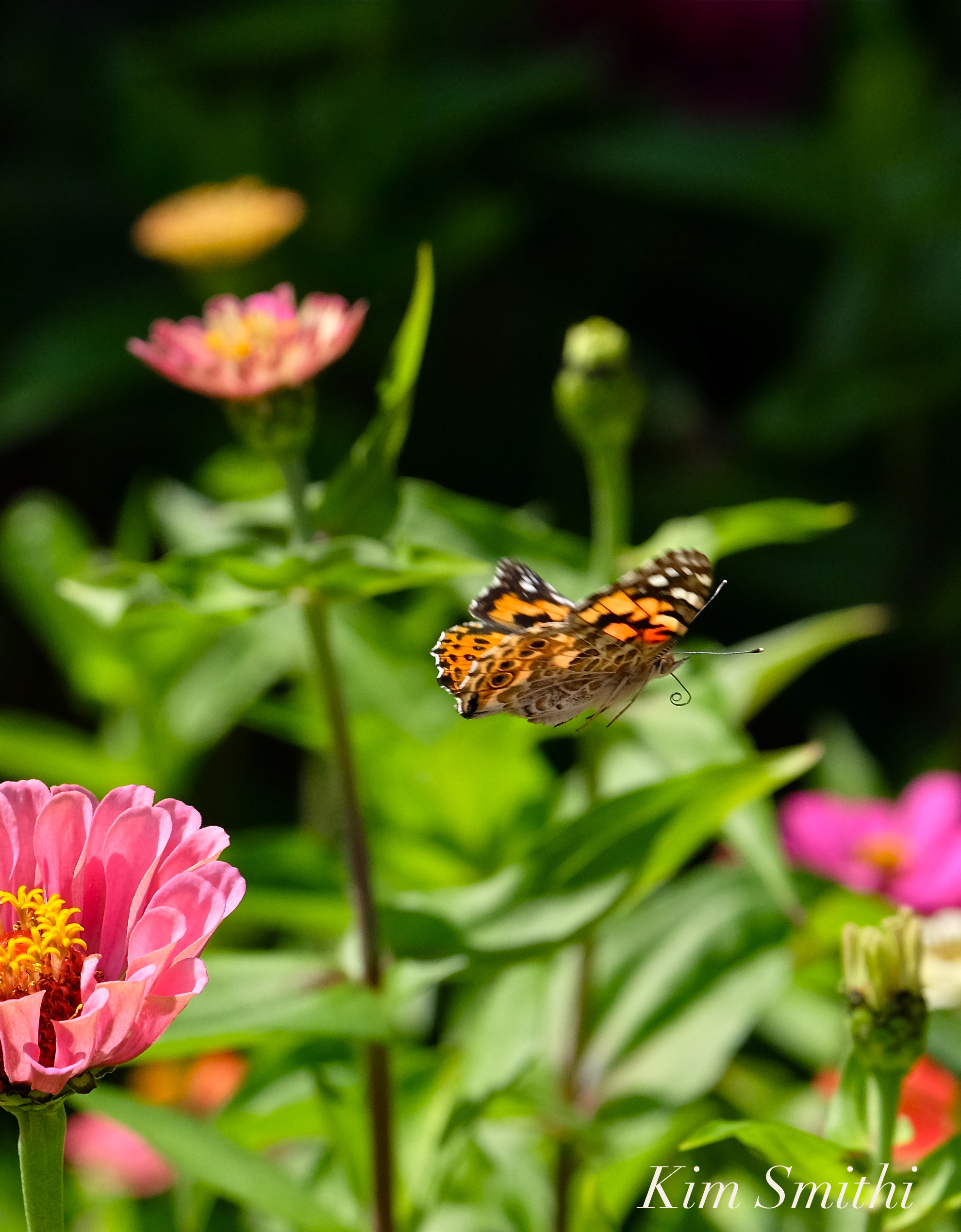
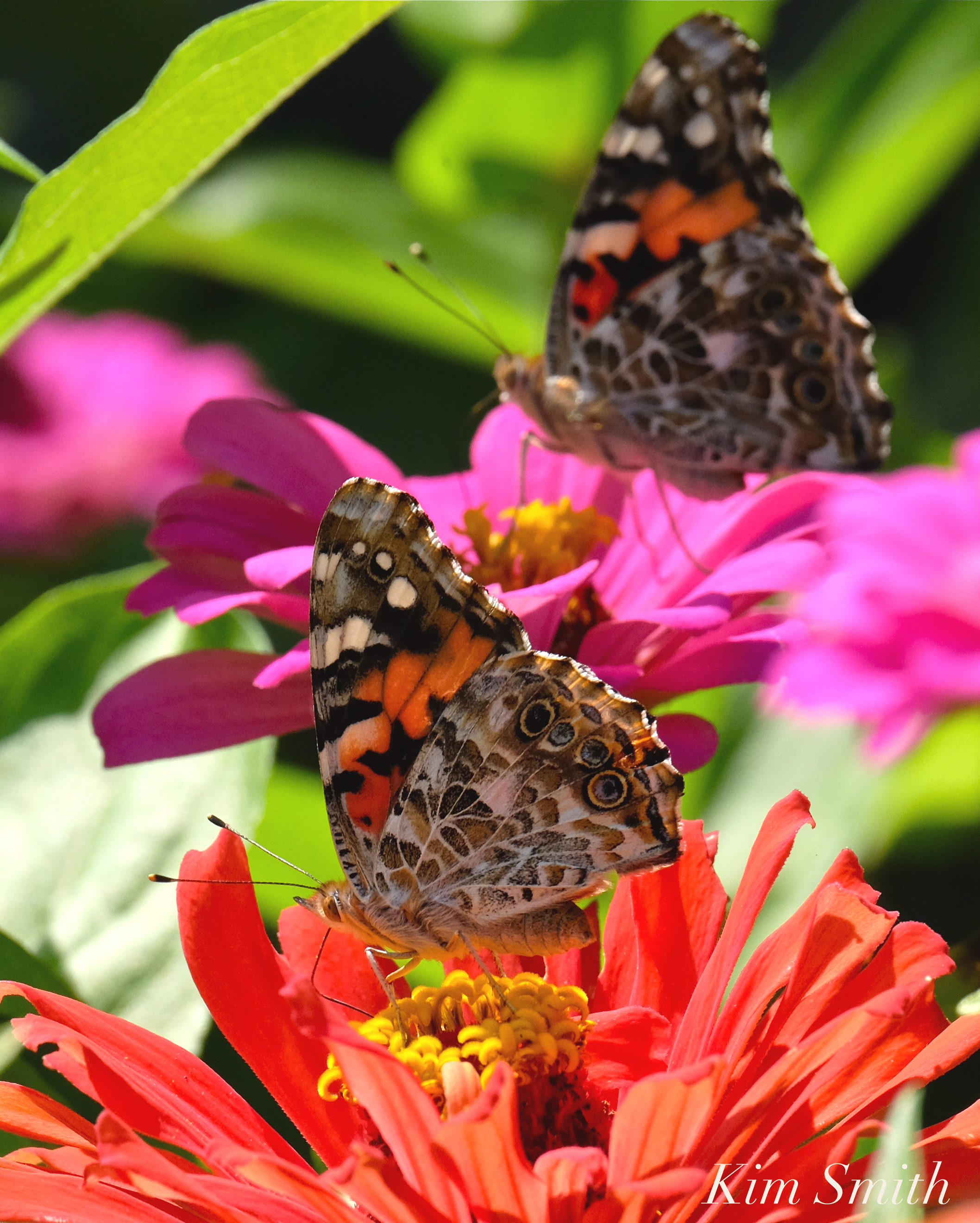
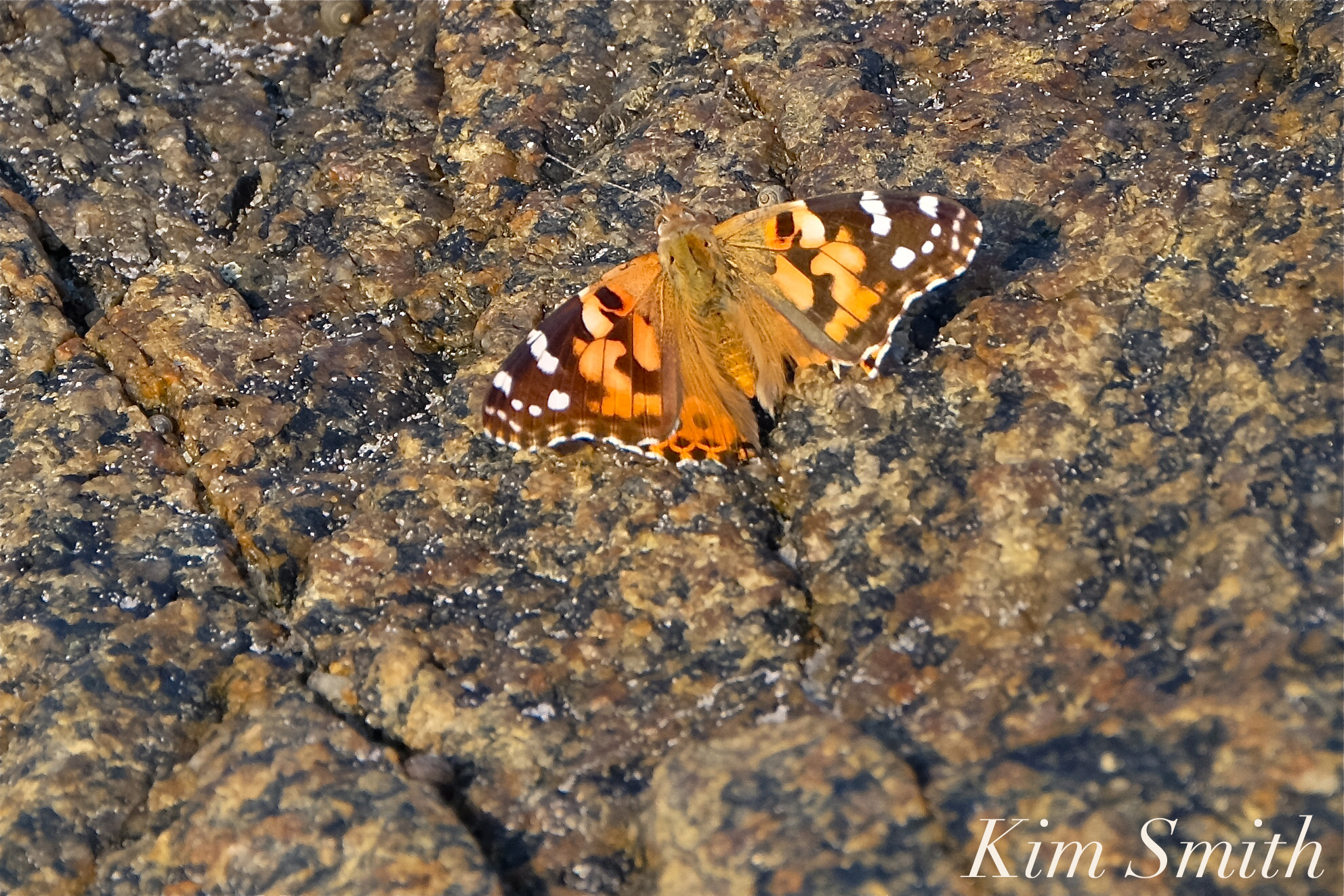
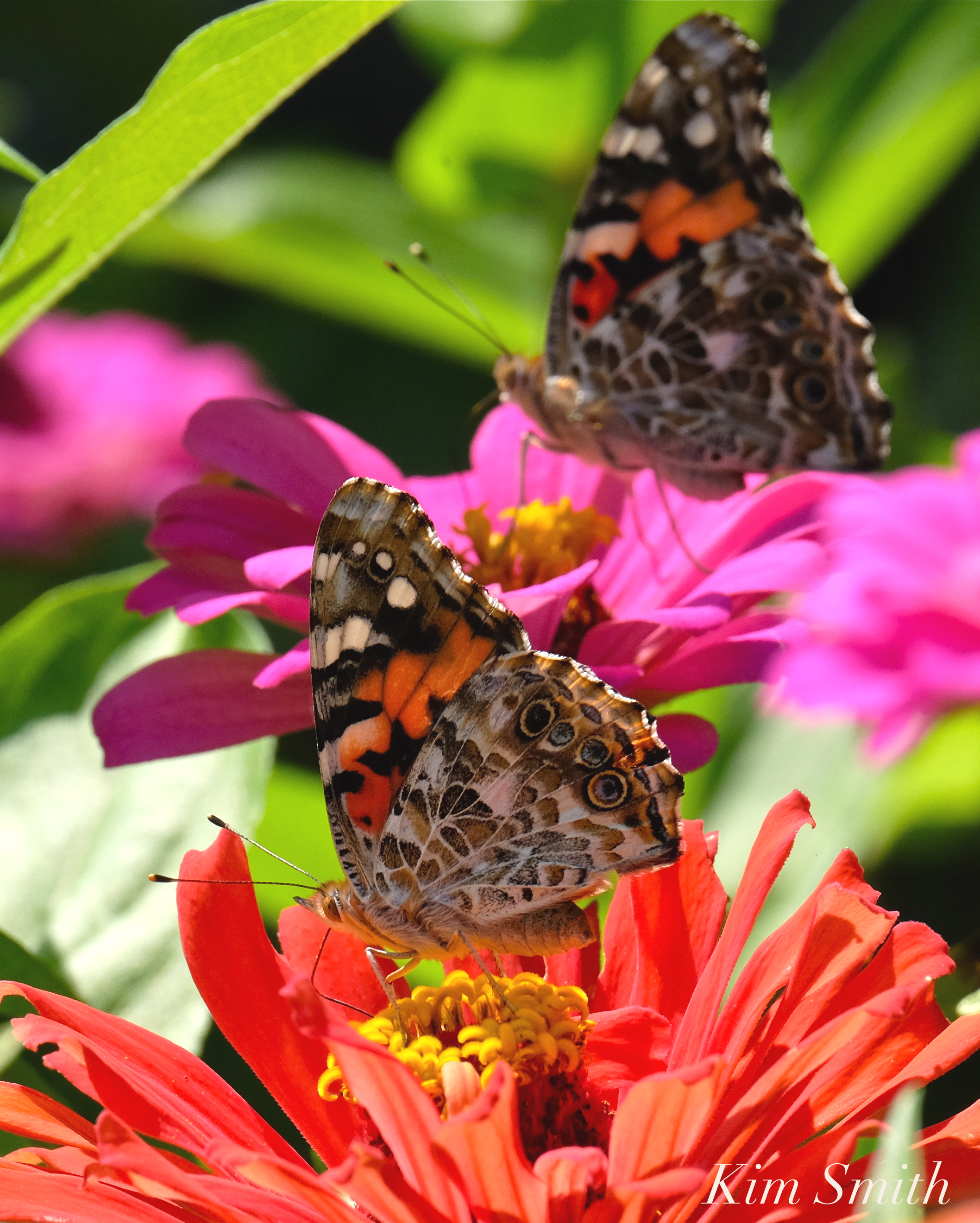
Have you noticed the beautiful Painted Lady Butterfly flitting about your garden, in the meadows, along roadways, and even at the beach? I think we are having a Painted Lady irruption. The wave of Painted Ladies began appearing in large numbers this past spring, with reports of a dramatic increase in sightings in the midwest.

Seeing Double

The Painted Lady is the most successful butterfly in the world. It lives some part of the year on every continent except South America, where it is rare or absent. Despite the fact that the Painted Lady is the most widely distributed butterfly, not a great deal is known about its migration. In North America the annual spring migration is thought to originate in the northwestern region of Mexico, where they can be found all year round. Heavy rains in late winter in that region trigger an explosion of northward migrating Painted Ladies that establish the spring brood.


I watched this little torn and tattered Painted Lady fly south over the Essex River, from Crane’s Beach to Wingaersheek Beach. She rested on a rock briefly, and then headed to the wildflowers in the dunes.


THE ANNISQUAM VILLAGE PLAYERS PRESENTS “SINGIN’ IN THE RAIN!”

We’re looking forward to attending opening night, Tuesday, August 8th! Always a sell-out show, get your tickets now at annisquamvillageplayers.org or at the Annisquam Exchange.

POSSIBLE LITTLE CHICK SIGHTINGS!

A postscript to yesterday’s “Farewell Little Chick” ~ 

Thank you to Everyone for your kind notes, thank yous, love, and interest in our Little Chick. 

I thought  readers would like to know that since Little Chick departed Good Harbor Beach Friday morning several friends have shared that they have seen a small flock of Piping Plovers at other local beaches!

Carol Ferant wrote that Friday afternoon she was swimming by Corliss Landing and saw a small group feeding on lots of worms at the low tide sandbar. They stayed for a good long while and then flew off towards the marsh.

Abbie Lundberg wrote that in Annisquam this morning, Saturday, she saw a group of four Piping Plovers, three the same size, and one seemingly appeared smaller, about 2/3 the size of the others.

It makes complete sense to me that the Piping Plovers would move around from local beach to local beach before undertaking the long journey south. Comparing notes from last year, a mixed group of adults and fledglings grew larger and larger in number until one day, nearing the end of August, they all departed.

Today I was looking through the photos, from back in April though yesterday. We have every aspect of our Good Harbor Beach plover family documented–courtship, mating, eggs, all the different stages of development, friends, predators, other species of migrating shorebirds, scenery–thousands of images to organize. And after that, the next step is tackling all the film footage.  Big Project!

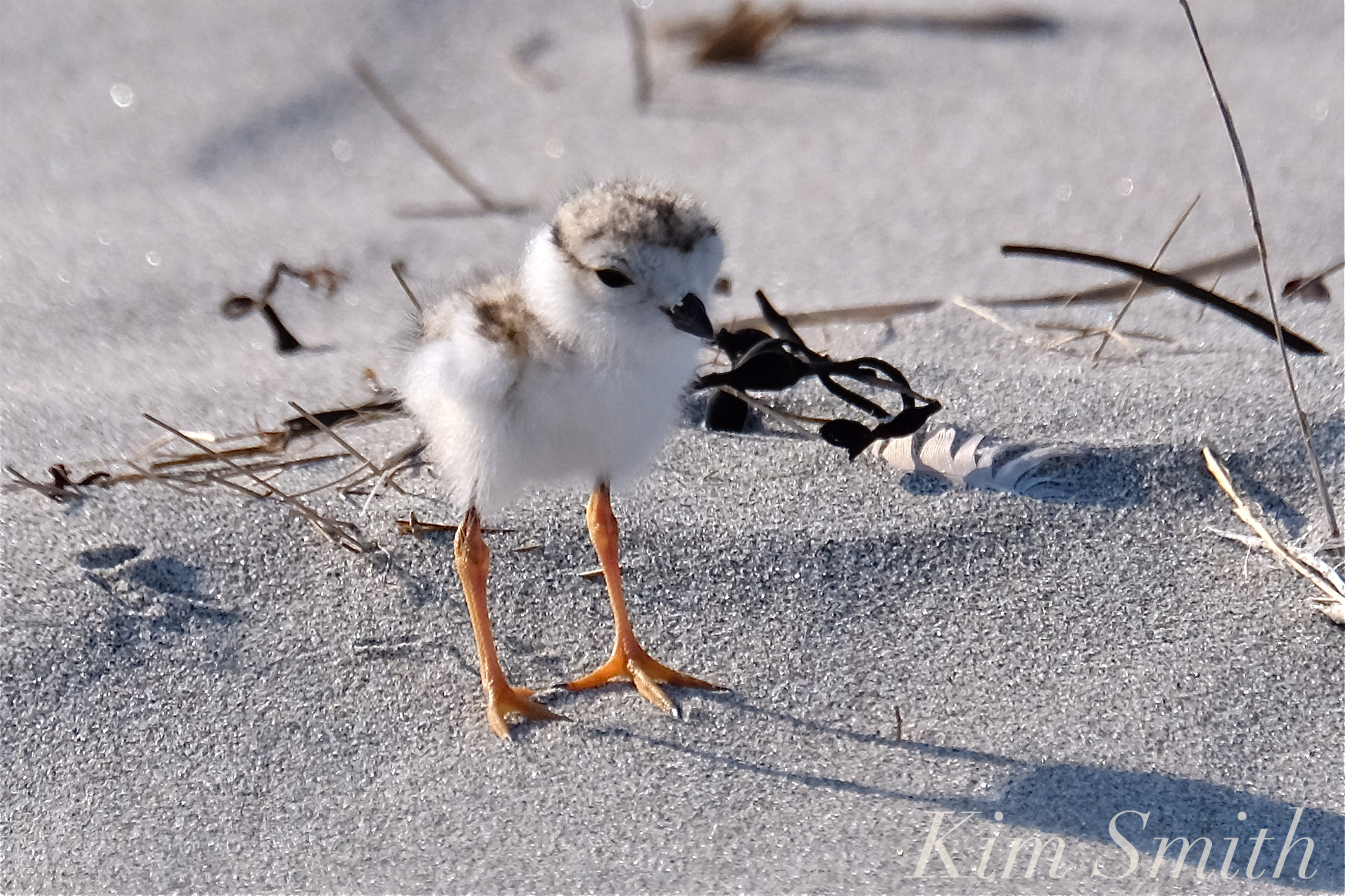
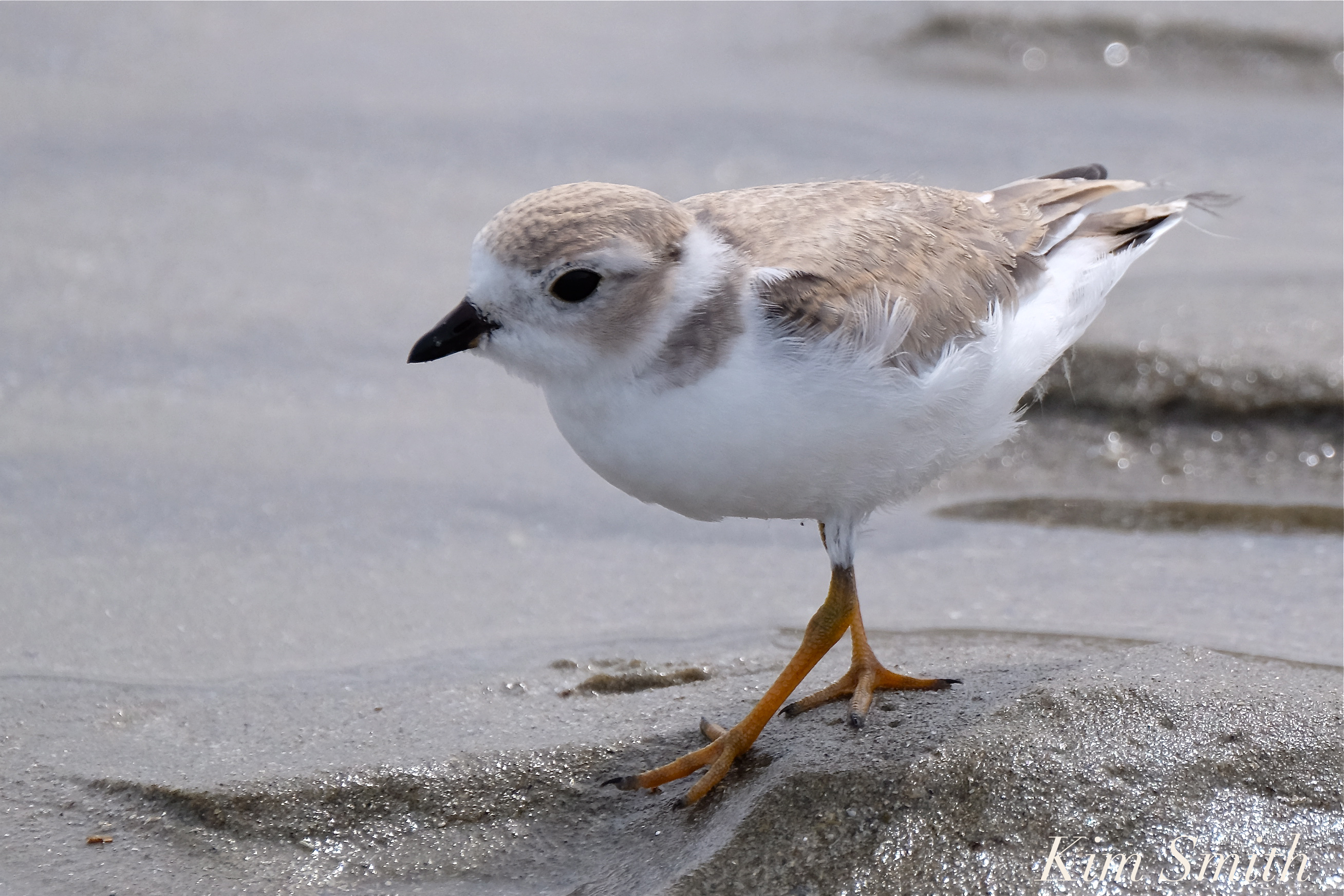
 Four-day-old and five-week-old Little Chick

FAREWELL LITTLE CHICK!

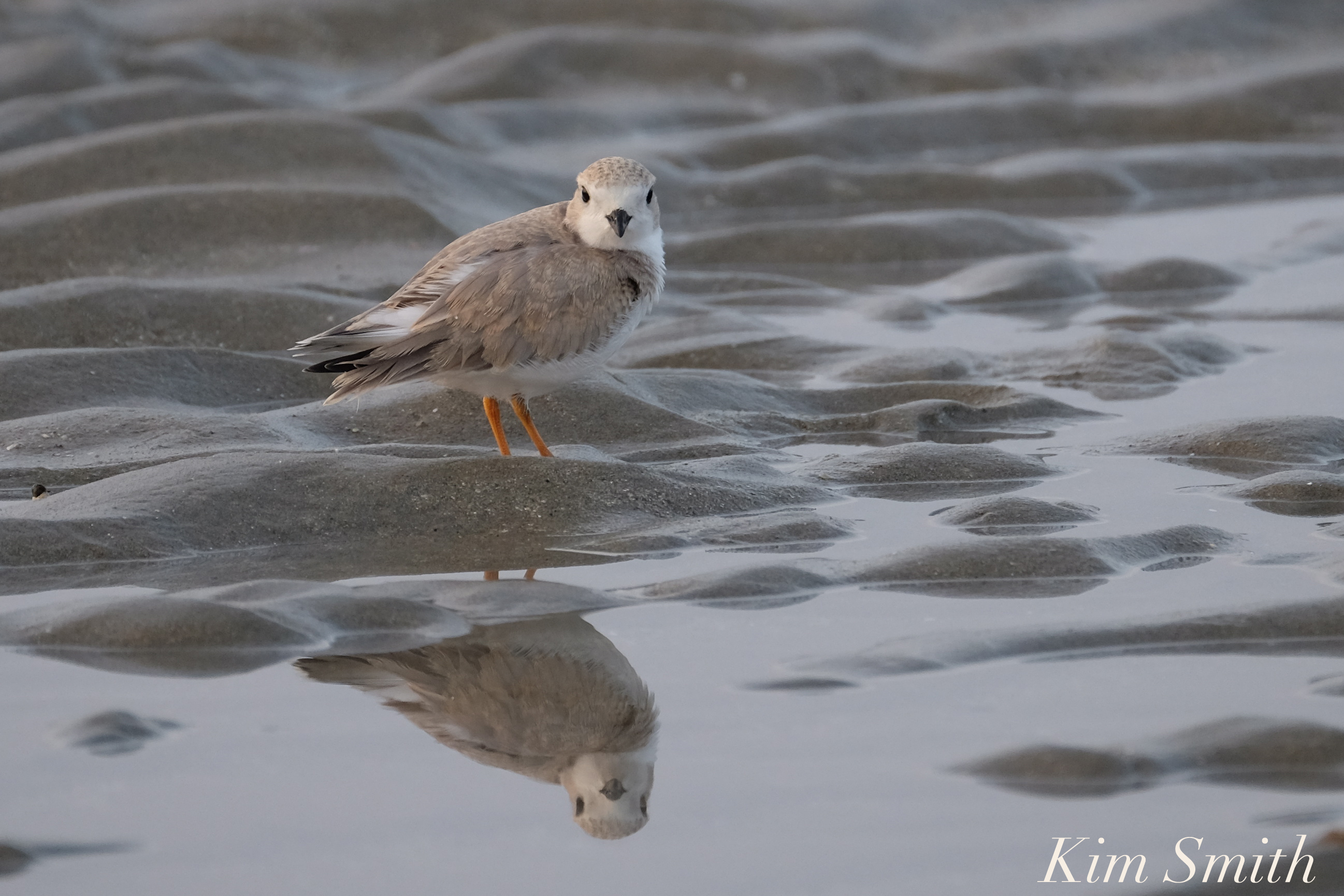
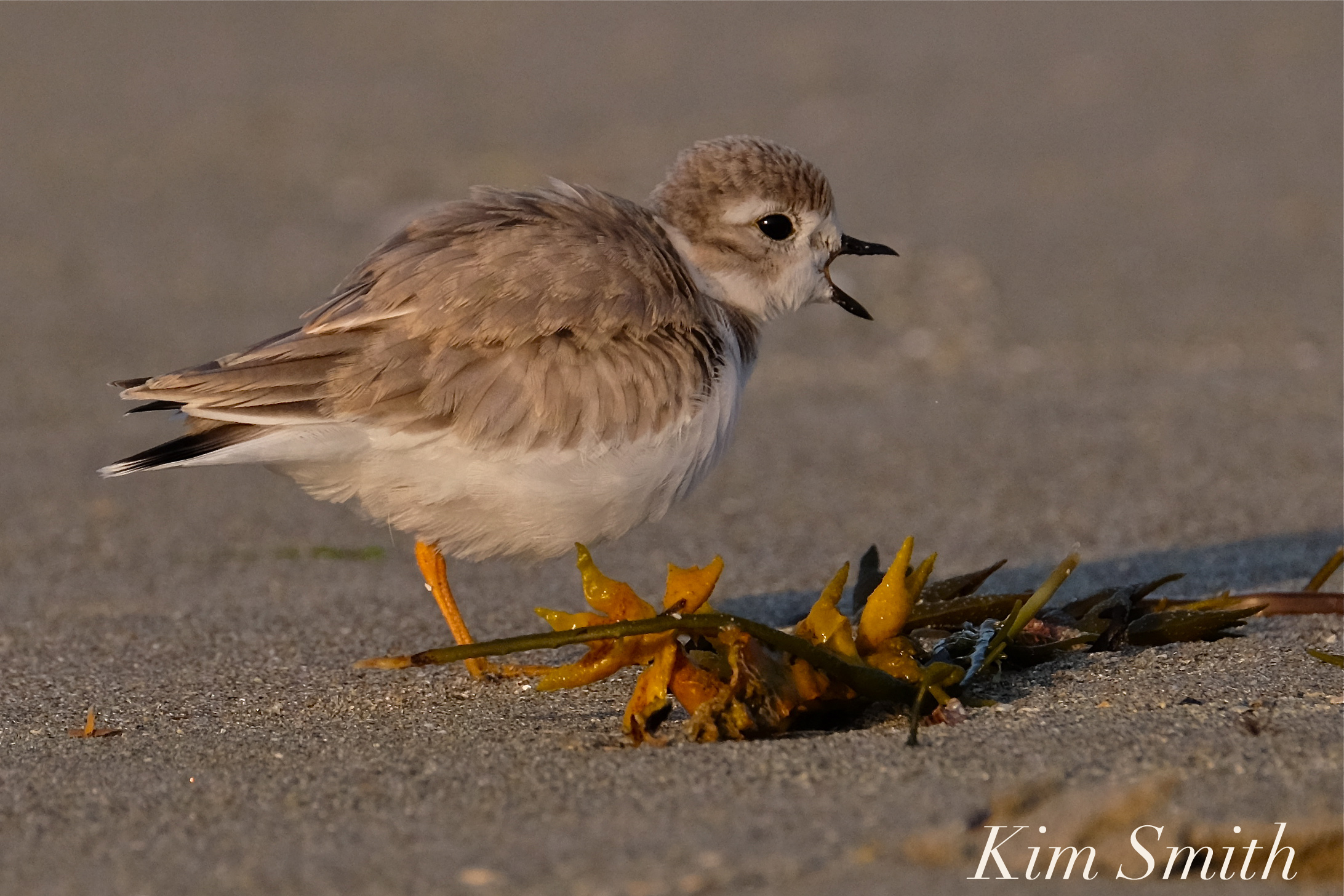
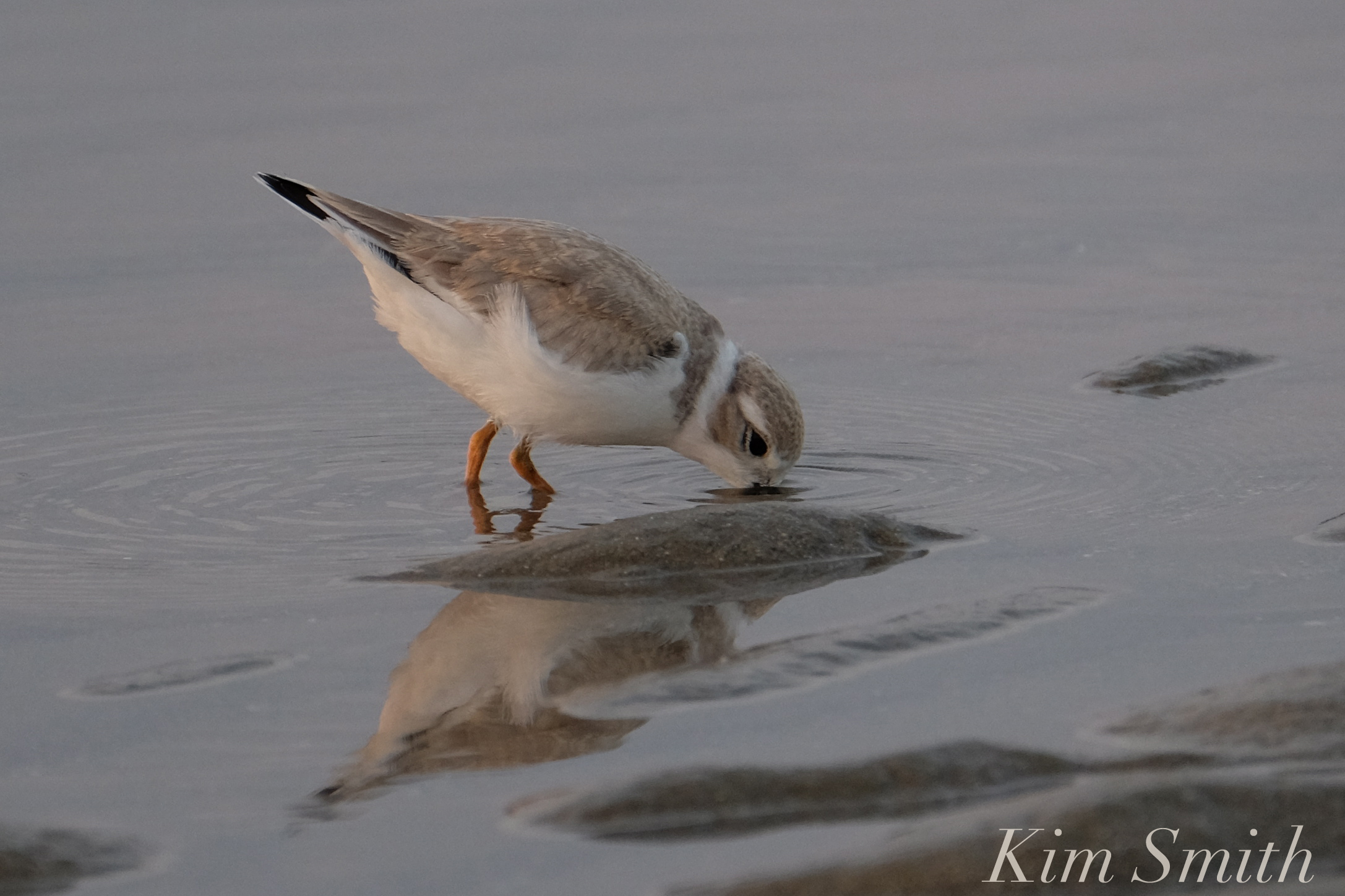
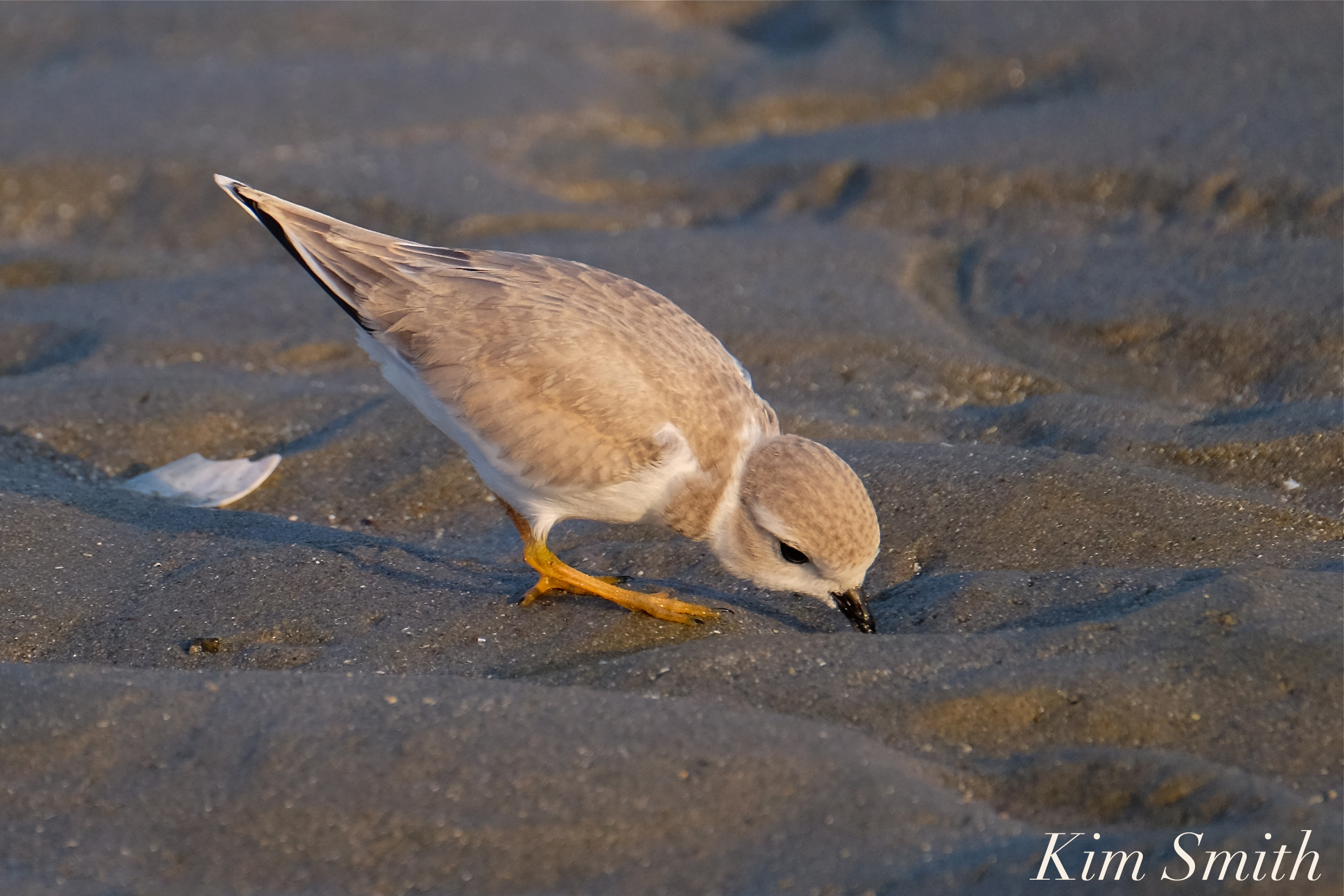
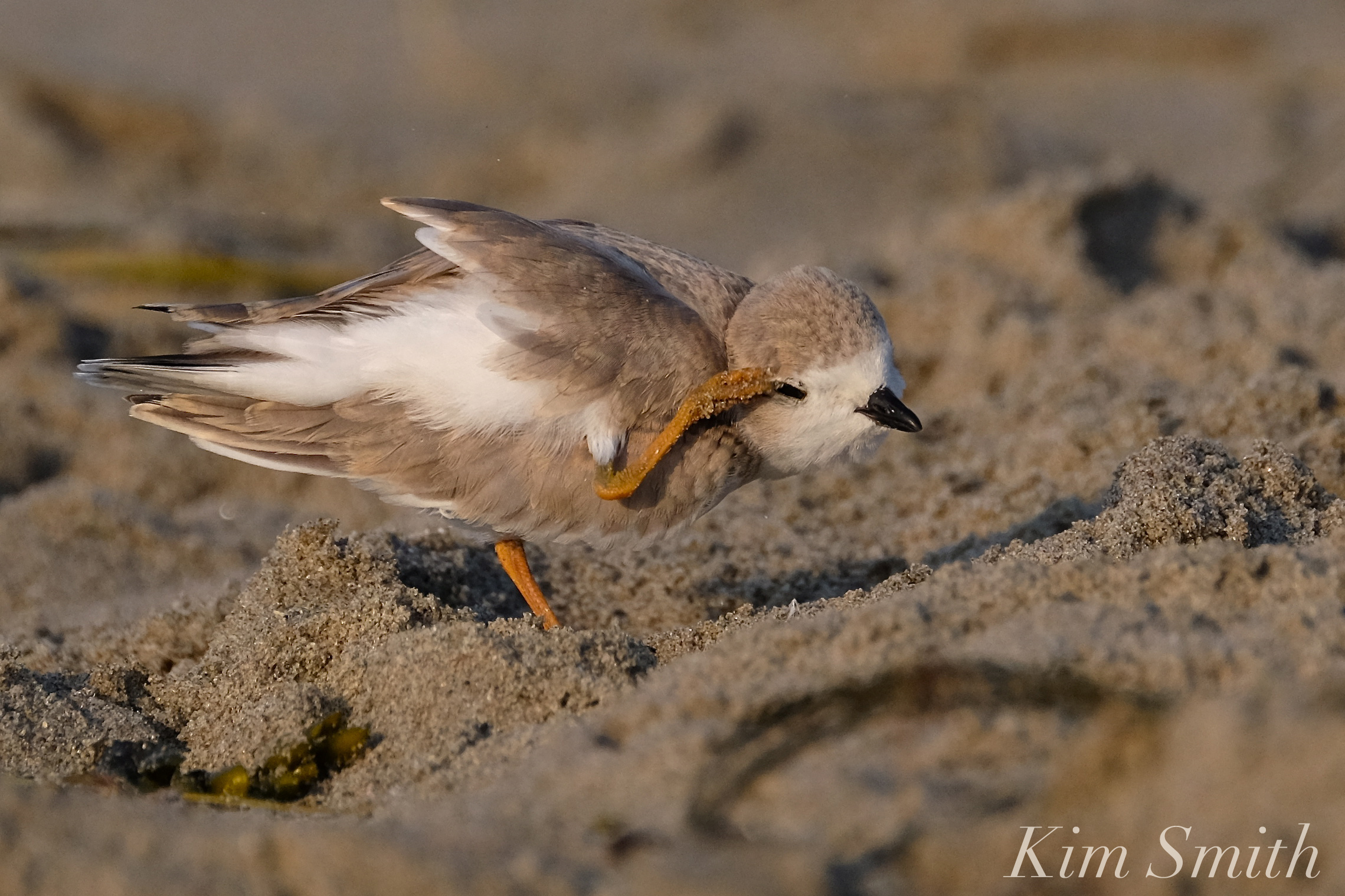
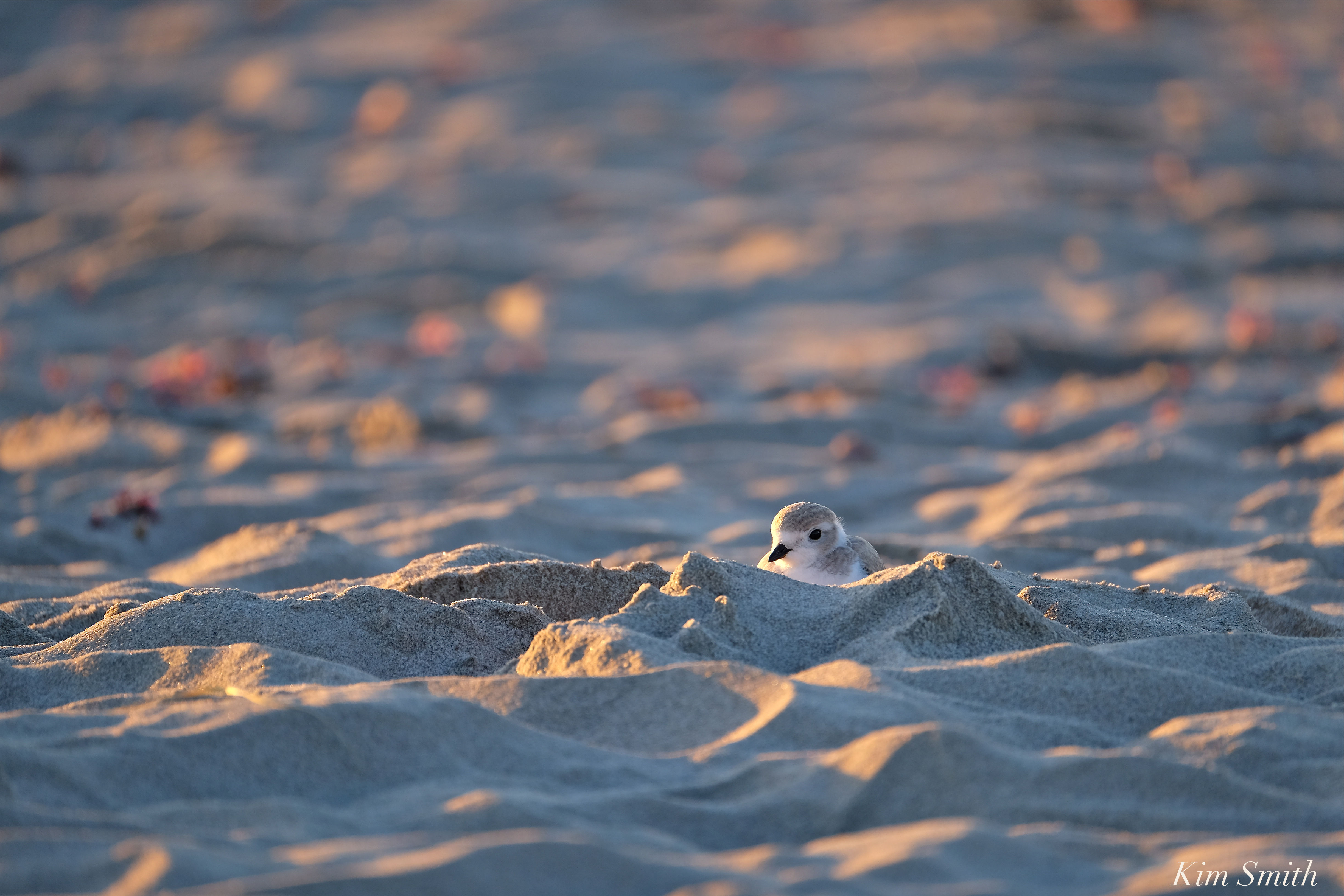
Our six-week-old Little Chick has begun his southward journey. At sunrise this morning I found him sleeping in front of the roped off area. Way down by the water’s edge, was a small flock of three Piping Plovers, but the light was so soft I could not tell if they were males, females, or fledglings. Sensing Little Chick’s time to depart was nearing, I didn’t want to investigate just then, but stayed on the beach to film our plover.

Little Chick awoke with his usual stretching routine and then made his way through the tidal flats mostly eating, but stopping several times to arrange his feathers. In no time he was foraging alongside the three migrating Piping Plovers and, within mere moments he, and the Piping Plover flock, flew, not along the beach or over to the creek as he has been doing, but this time, first straight out to sea and then curving around and disappearing behind the Sherman House.

I stopped by Good Harbor Beach several times later this morning and again in the afternoon, as have several of the volunteers, and no one has seen our Little Chick. Although feeling somewhat melancholy (but also very happy) to see him depart, this is the best possible outcome. We can all hope his journey is a safe one. And we hope too, that he parents many offspring!
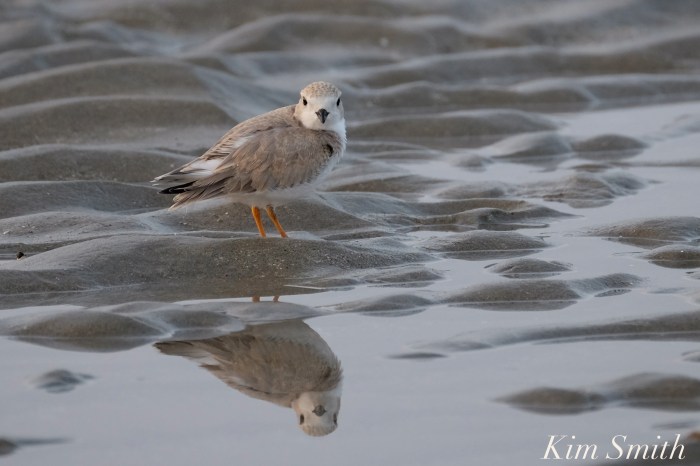
We have been treated to a window into the world of nesting Piping Plovers. Most species of shorebirds breed many thousands of miles away, in the Arctic tundra of Canada and Alaska. We were blessed to see this beautiful story unfold, despite taking place in the least of safe habitats.

The greatest thanks to all the Piping Plover volunteers: Carol Ferant, Caroline Haines, Jeannine Harris, Hazel Hewitt, Charles King, Cliff King, George King, Paul Korn, Chris Martin, Lucy Merrill-Hill, Diana Peck, Ruth Peron, Catherine Ryan, Karen Shah, and Ken Whittaker. Without their daily monitoring of people, balls, dogs, gulls, crows, and what have you, we most assuredly would not have seen our Little Chick grow into a fledgling. Thank you too for their eagerness in sharing information about the PiPls with interested beachgoers. There is still a great deal about Piping Plovers that is a mystery. Studying the life story of one plover family creates a focusing lens from which we can all learn. I’d like to add special thanks to volunteer Hazel Hewitt who created the informative signs describing the PiPl that you may have seen all around the beach entryway ways.

If you see Ken Whittaker, Gloucester’s conservation agent, please thank him for all his help. After I discovered the Piping Plover nest on May 23rd, I spoke with Dave Rimmer to let him know precisely where the nest was located, and Ken immediately became available to lend a hand. In a way, we can thank Sharon Bo Abrams, too. After reading about how we were struggling to keep last year’s chicks alive, it was she who suggested that we form a group of volunteers. I mentioned this to Dave, who in turn spoke with Ken. It was Ken who spearheaded the volunteer effort and organized the group’s schedule so that at all times of day, from sunrise to sunset, someone was on the beach monitoring the Plover family. We can also thank Ken for listening to us volunteers regarding the importance of leaving the symbolic fencing in place as long as the chick was using it as his “safety zone.”

Thank you to Mayor Sefatia, Chris Sicuranza, and Frank DiMecurio for their interest and support. Thank you to all our readers for your kind comments and interest in the Plover daily updates.

Thank you to Gloucester Police Chief John McCarthy and Gloucester’s Animal Control Officer Dianne Corliss for their help monitoring the dog owner situation. They both made Good Harbor Beach part of their routine and their mere presence has made a tremendous difference.

A huge shout out to Gloucester’s Department of Public Works Mike Hale, Mark Cole, and Joe Lucido, and the DPW’s team of beach cleaners and rakers, who always went out of their way to keep an eye out for Little Chick and helped keep him safe.

Thanks is owed to Gloucester’s volunteer beach-picker-uppers who, on a daily basis, before everyone else arrives to enjoy the beach, are out there cleaning up what was left from the night before and helping to prevent a plethora of plastic from contaminating the ocean. Three who come to mind immediately, and who have been taking care of Good Harbor Beach for years are Patti Amaral, and husband and wife Patti and Kerry Sullivan. By cleaning the beach, it helps tremendously to keep down the crow, gull, and coyote populations, all of which are predators of shorebird eggs and chicks.

Thank you Community!  Without your support, care, and kindness I would not be writing this thank you note.

Several readers have suggested that I write a children’s book, with photographs, about The Good Harbor Beach Little Chick. While I am giving this idea serious consideration, I would only want to undertake a project like this with a top-notch publisher.

Perhaps Papa Joe and Mama Joy will return to Good Harbor Beach for a third year. With less than 8,000 Piping Plovers remaining in the world, we can only hope.
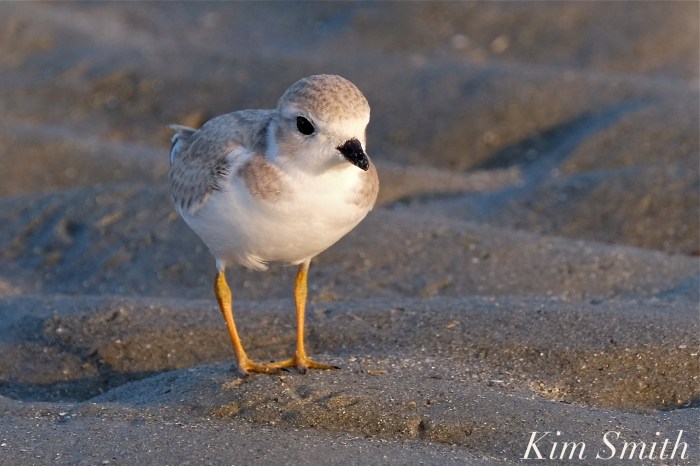
Bon voyage and safe travels Little Chick!

If I have neglected to thank you, please accept my sincere apology and please write and let me know so that I may add your name to the post. Thank you so much.

MEET ME AT THE SIGN NEATH THE APPLE TREE…

New Good Harbor Beach sign with beach news updates provided by the Friends of Good Harbor Beach

https://www.instagram.com/p/BXYDXxLlGbs/

HAPPY SIX WEEK BIRTHDAY LITTLE CHICK!!!

Celebrating day forty-two with our Good Harbor Beach Little Chick!

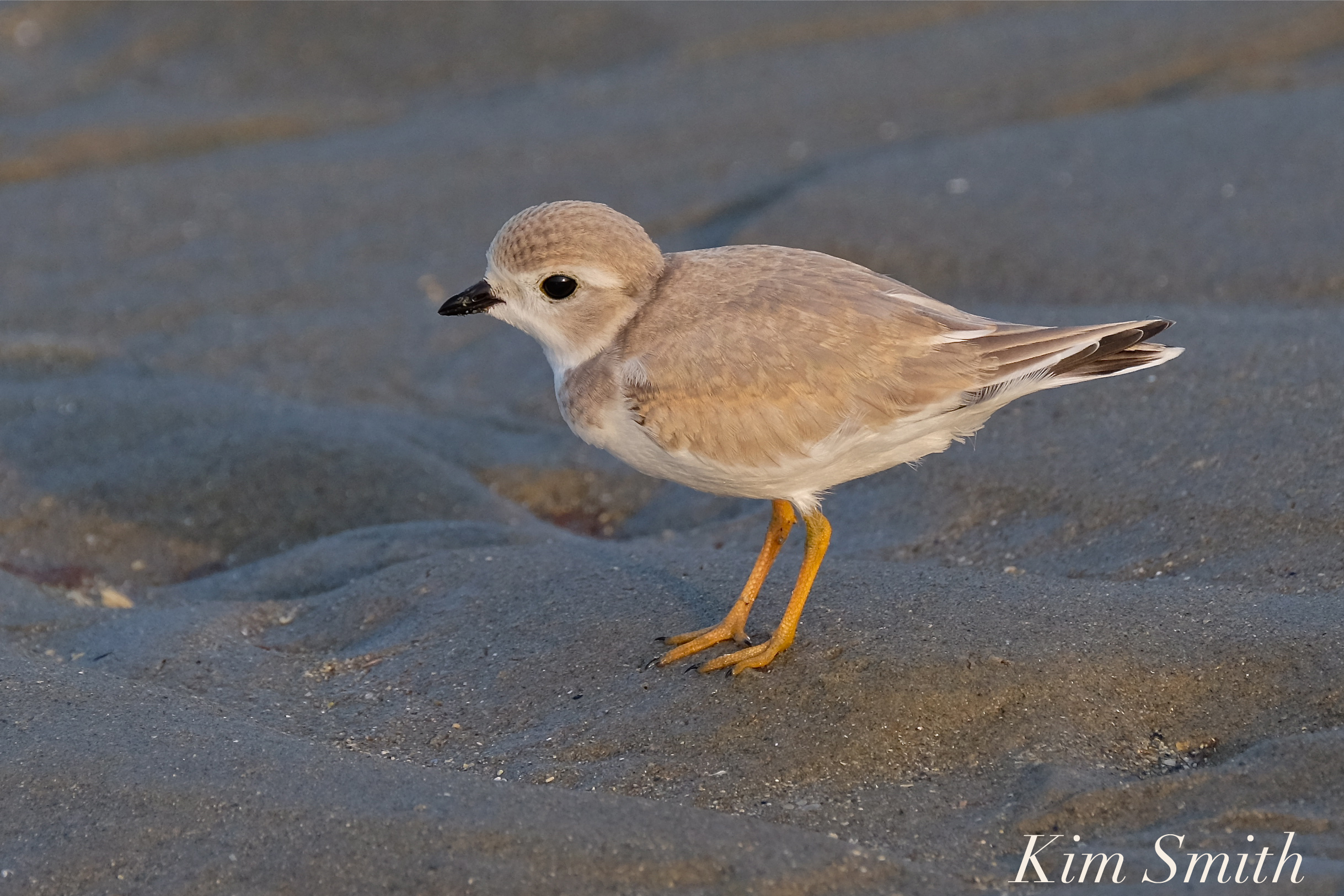
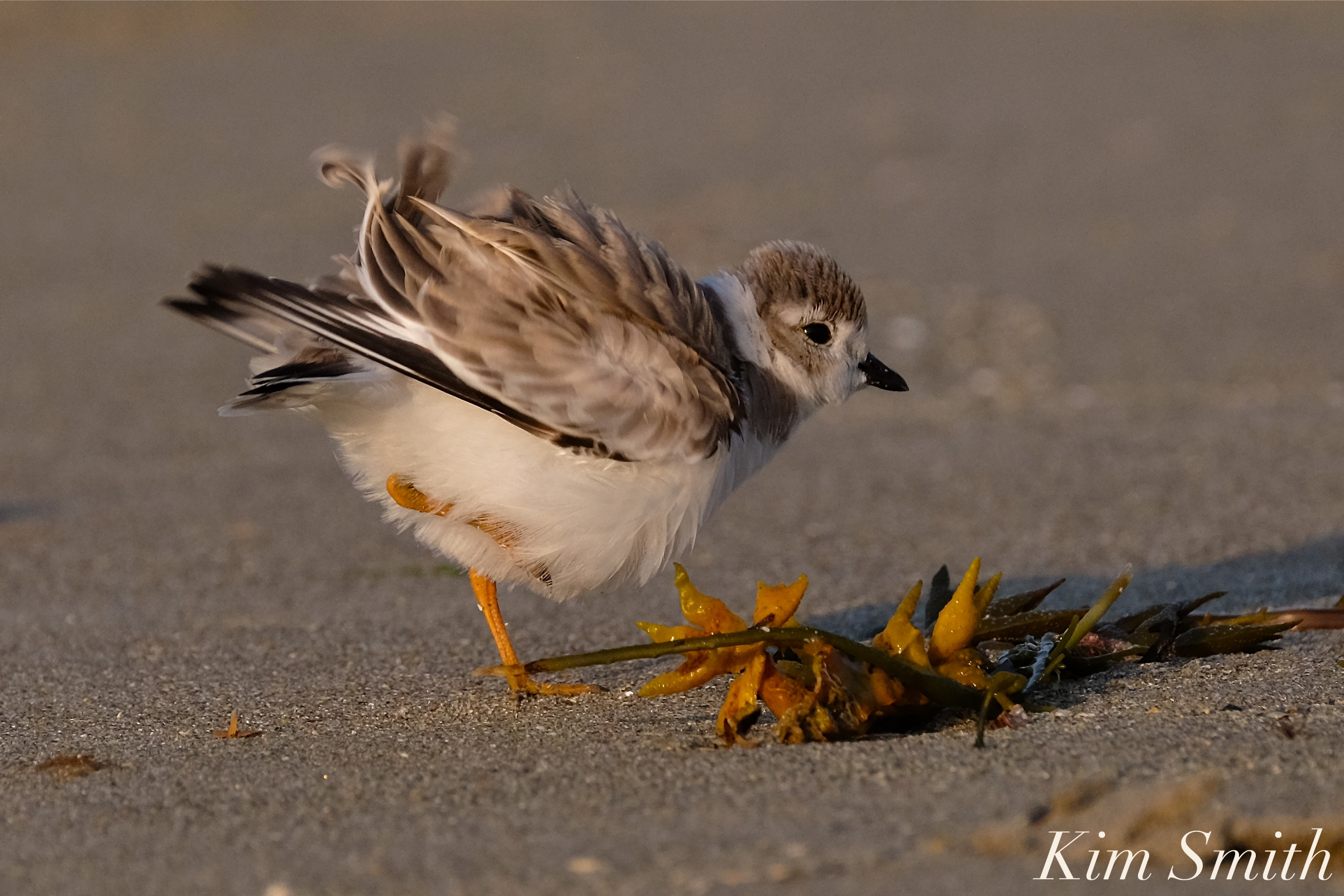
Our Little Chick had a great morning, feeding in the intertidal zone, resting and preening by the enclosure, and flying more than several times up and down the length of Good Harbor Beach. He is gaining confidence in his flying ability. And, too, he quickly moves out of the way of approaching danger. Little Chick didn’t associate much with the other species of birds feeding at the water’s edge until the mixed flock got spooked by a jogger and all took flight at once.

He only flew to the edge of the enclosure while the Semipalmated Plovers, Sanderlings, and Semipalmated Sandpipers headed down to the private end of Good Harbor. Last year, about mid-August, migrating Piping Plovers began arriving at Good Harbor Beach, staying for varying lengths of time to forage and to rest. My greatest hope for our Little Chick is that he will find a flock of Piping Plovers (or they will find him) to join with before undertaking the long journey south.

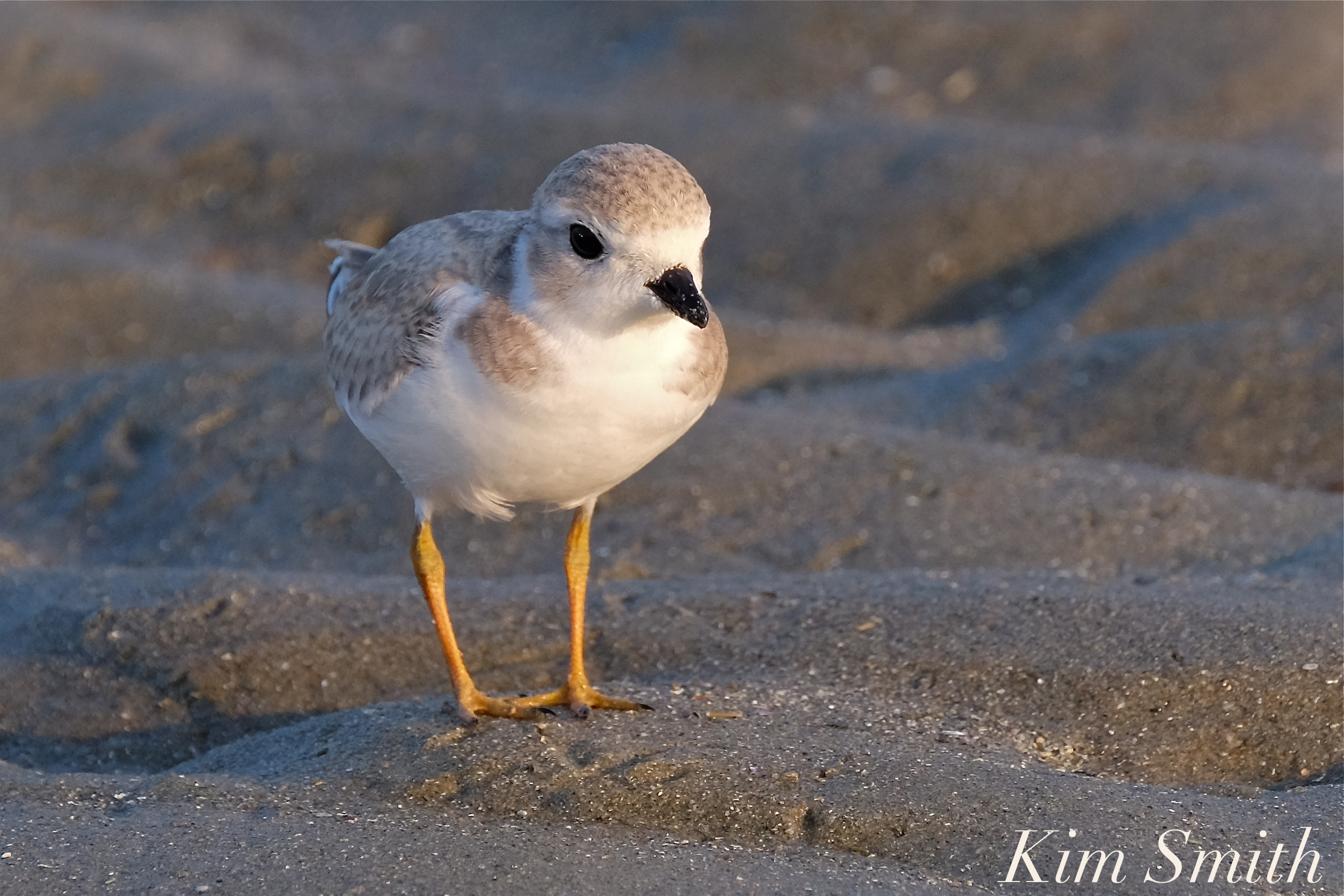
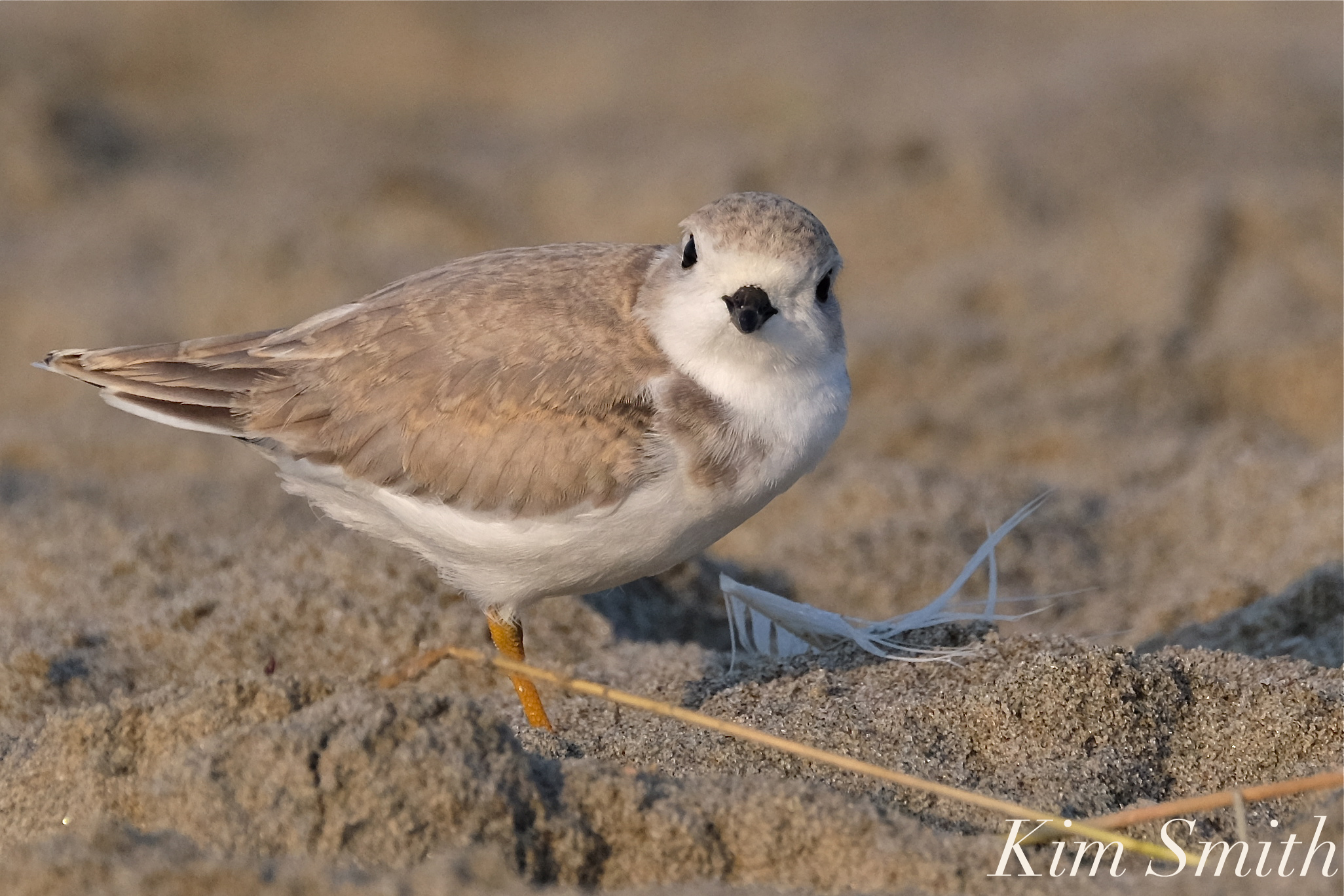
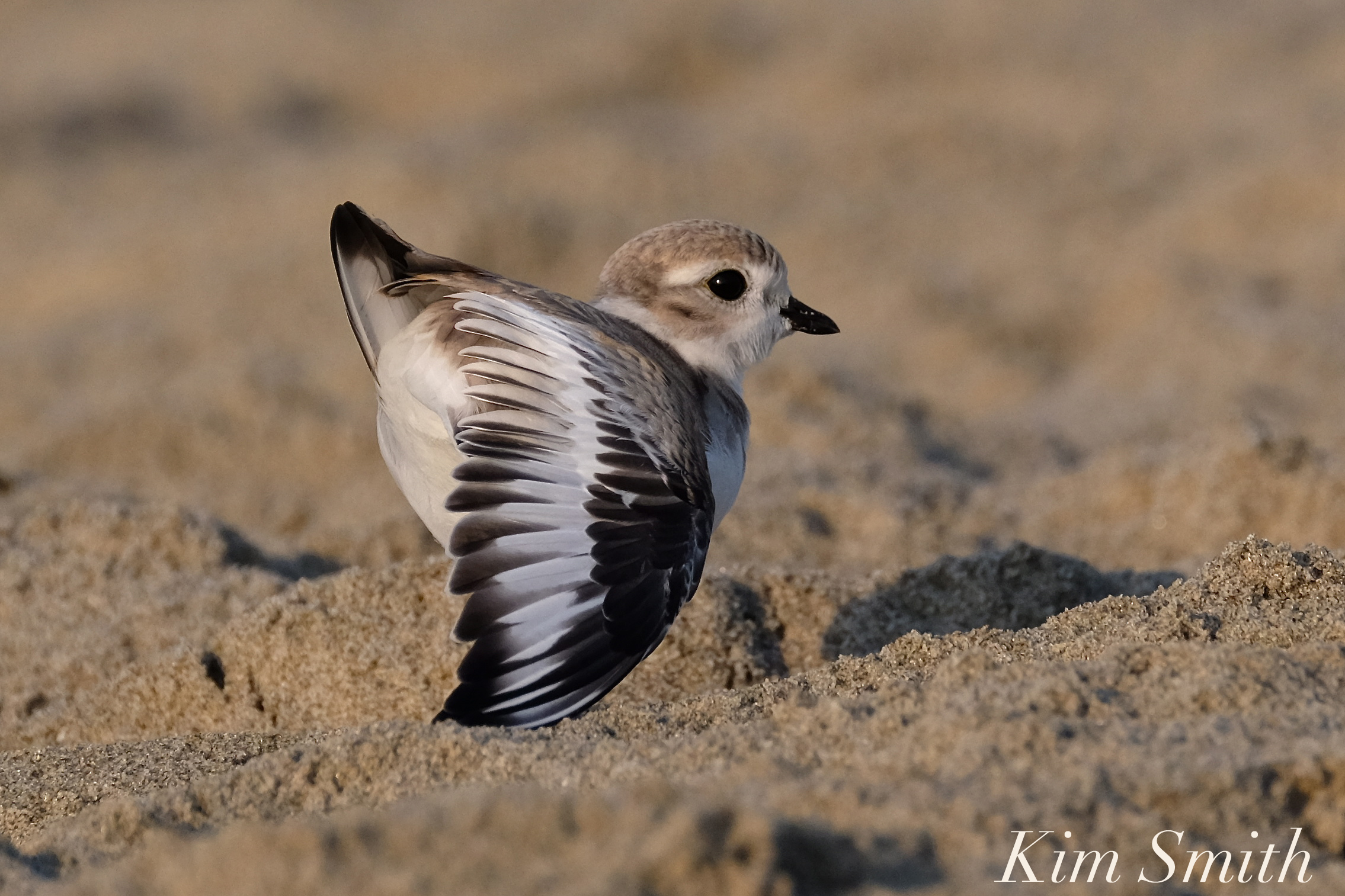
Notice how Little Chicks flight feathers are gaining in length and strength. Everyday his bill looks more and more like an adults’s bill, too.

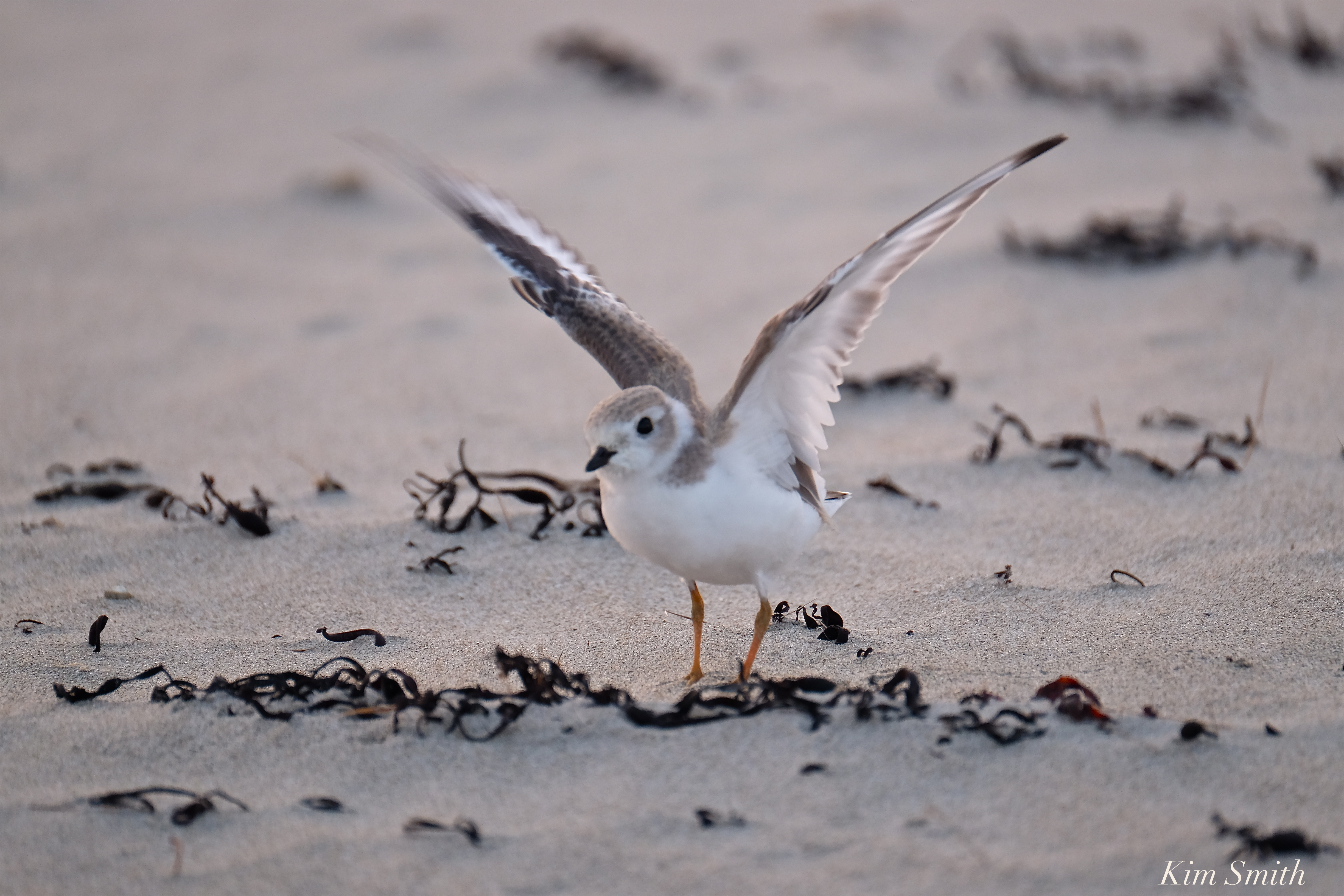
Little Chick showing off his primary and secondary flight feathers

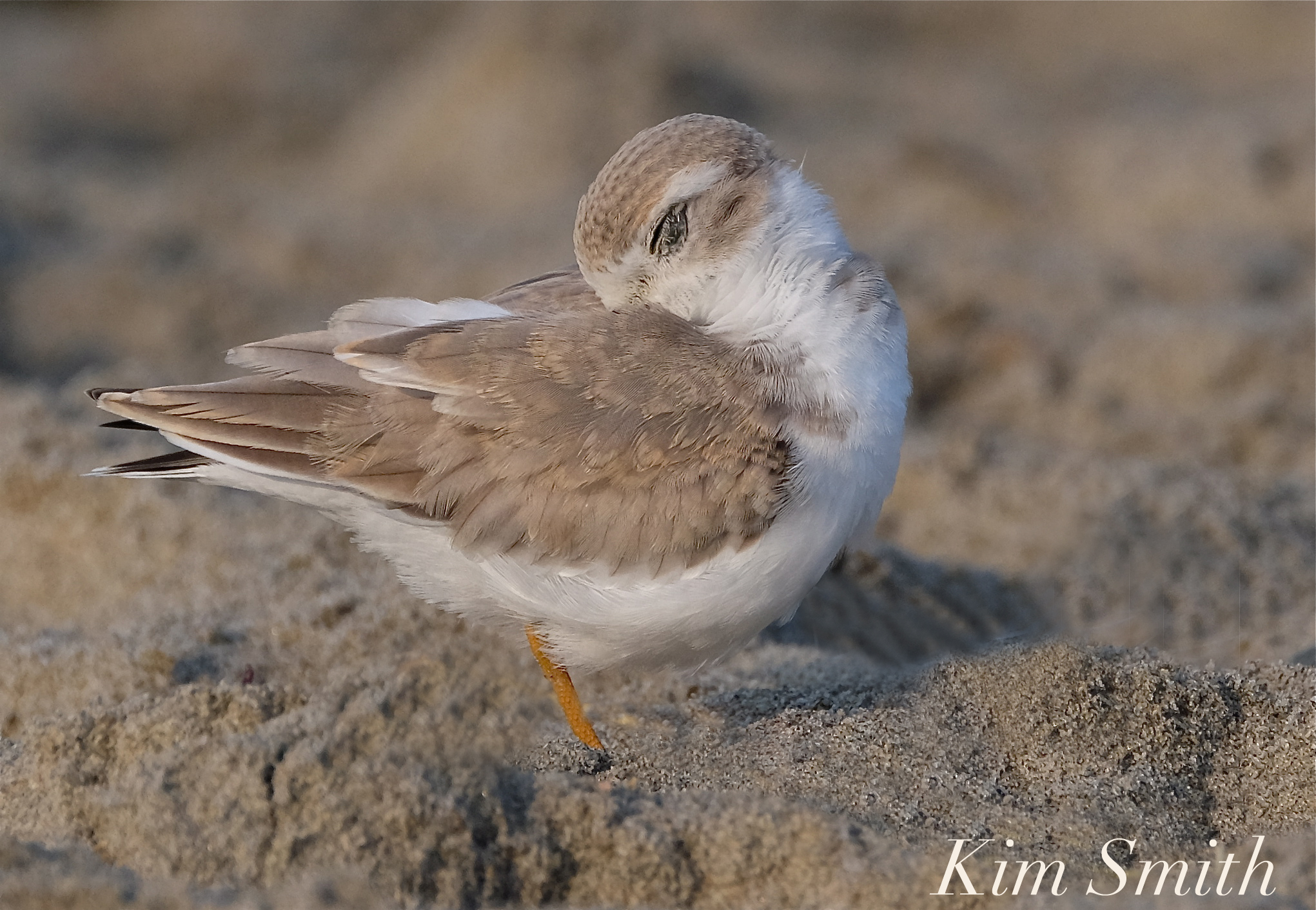
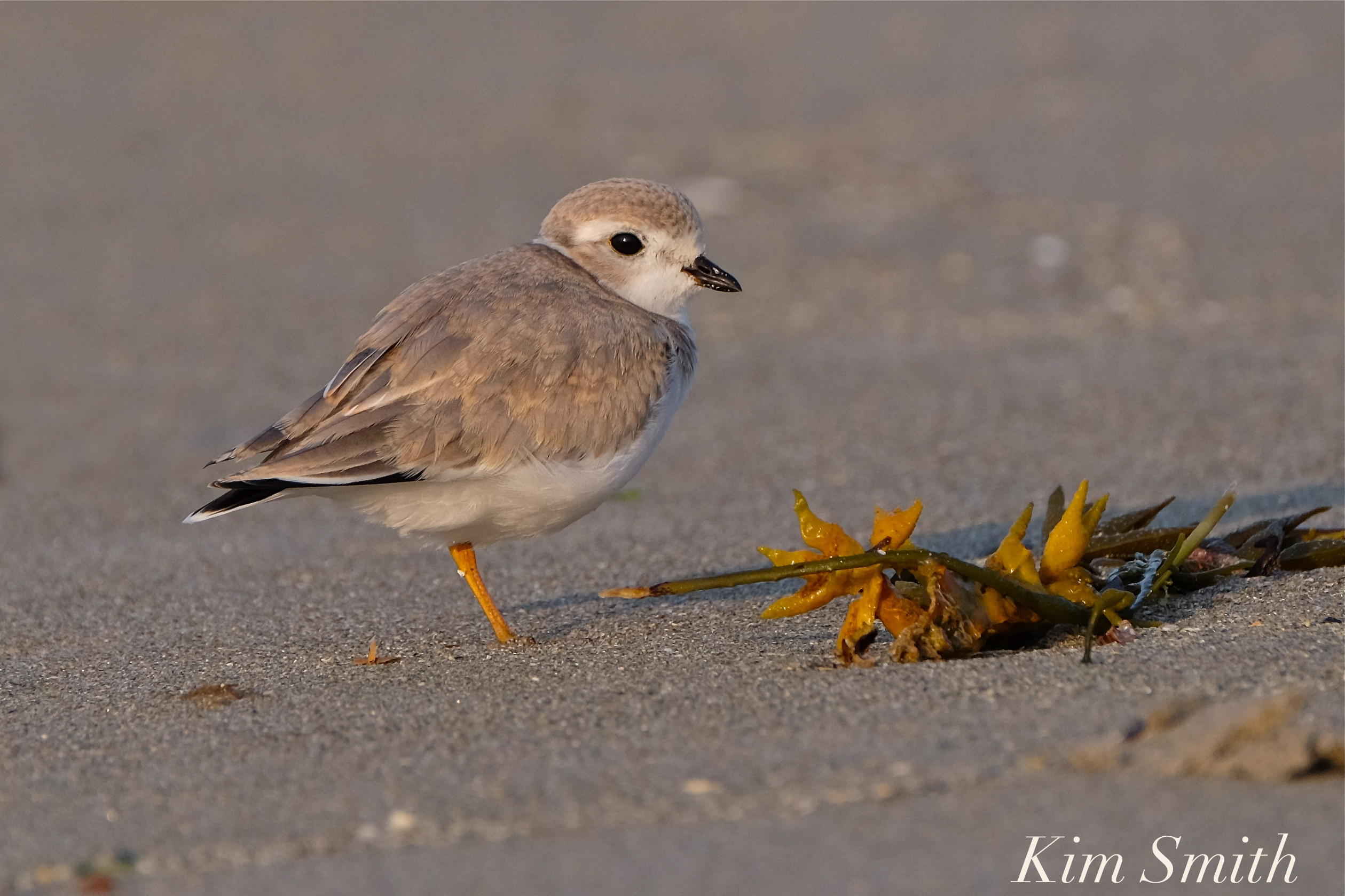
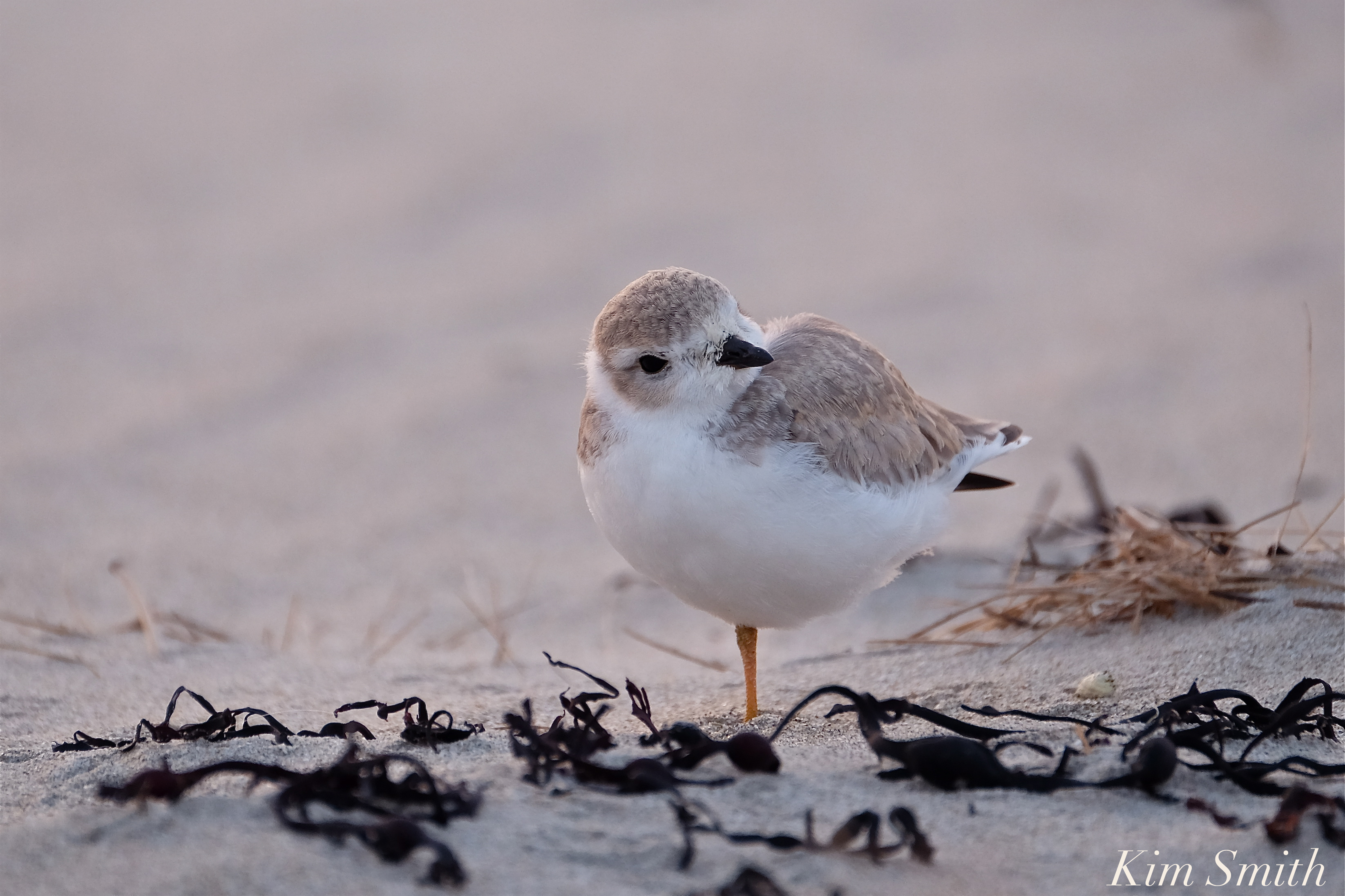
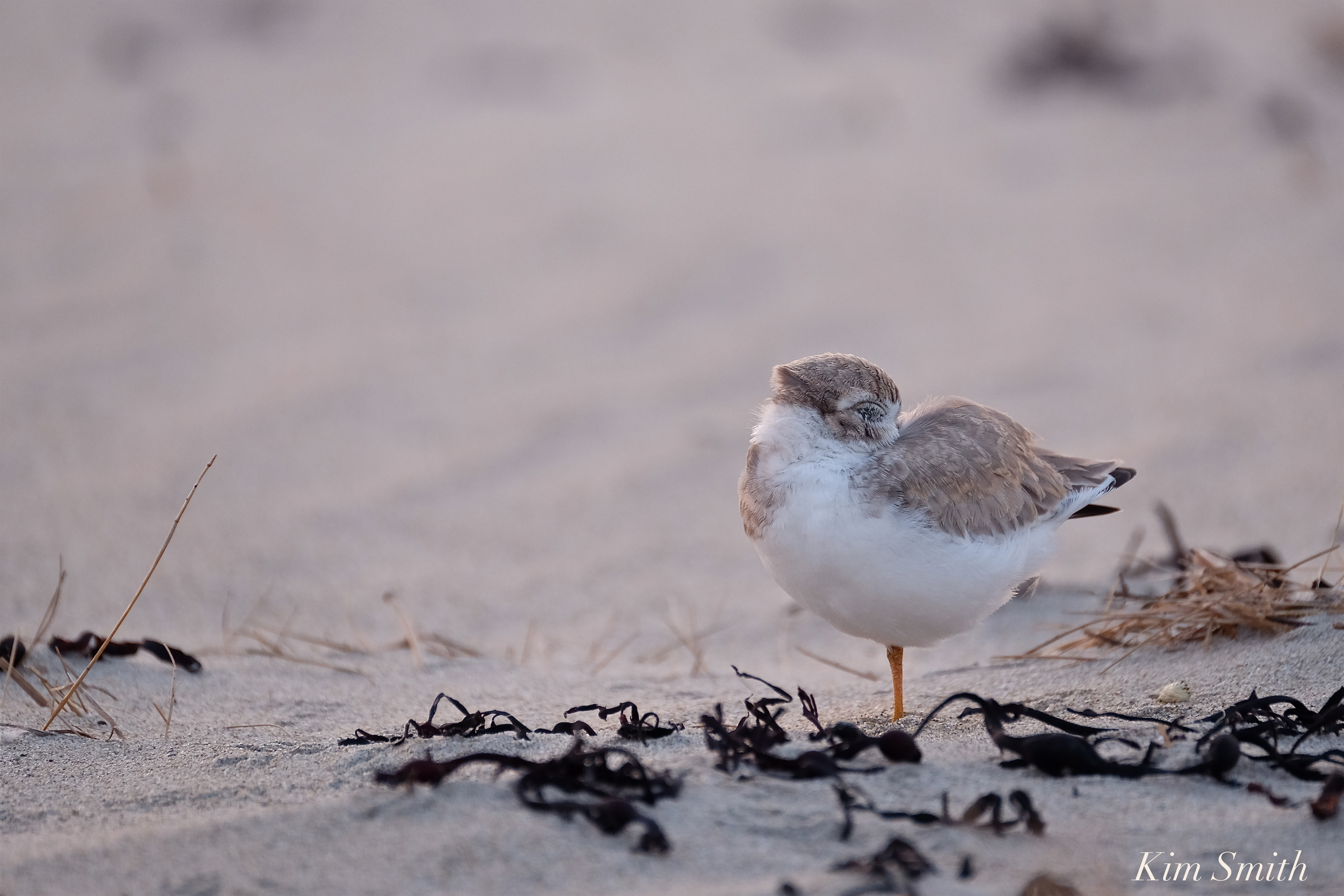
Resting, Preening, and Piping, all on one leg!

Foraging at the tide pools at day break.

And at the intertidal zone later in the morning.


Sherman House reflection


GOOD MORNING GLOUCESTER BROUGHT TO YOU BY ANOTHER GLORIOUS GOOD HARBOR BEACH DAYBREAK

Glorious Good Harbor Beach sunrises, no two are ever alike  🙂

WHY IS LITTLE CHICK “MISSING” A LEG?

Why is Little Chick “missing” a leg? That is a question I am often asked when filming Little Chick and an interested person stops by to visit our GHB Piping Plover. Or the comment, “Oh, no, he is one-legged!”

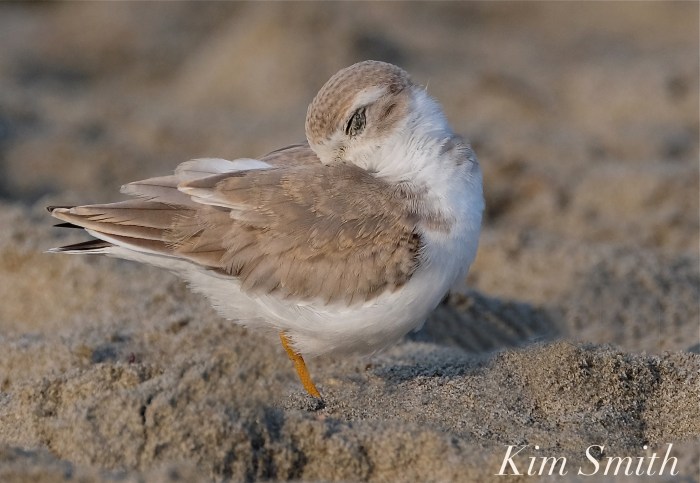
If you see Little Chick resting in the sand and he is standing on one leg, know that he is doing it very purposefully. The short answer is that for the simple reason that you put your hands in your pockets when cold, birds stand on one leg to conserve heat. Birds also stand on one leg to relax muscle fatigue in the retracted leg.

The long answer is that birds’ legs have a blood flow referred to as “rete mirabile” that minimizes heat loss. The arteries that transport warm blood into the legs are next to the veins that return colder blood to the bird’s heart. The arteries act as a heat exchanger and warm the veins. Because the veins also cool the arteries, the bird’s feet are closer to environmental temperature and thus don’t lose as much heat as they would if they were at body temperature. By standing on one leg, a bird reduces the amount of heat lost through unfeathered limbs.

Birds that have short legs, such as Mourning Doves, do not need to stand on one leg because they have fleshy feet and they can snuggle down so that their warm belly presses against their feet.

Forty-one-day old Piping Plover standing on one foot.

Our Little Chick is doing beautifully. I checked in on him briefly at day break and again at 9:30 this morning. Foraging, resting, flying (the longest distance yet, from the enclosure to the back of the Creek.) Both last night (thank you Heidi Wakeman) and this morning, I found him in the enclosure. I think our Little Chick is extra super smart to recognize the roped off area as his “safety” zone. We are grateful to the community and to Gloucester’s conservation agent Ken Whittaker for allowing the roping to remain in place. 

The light was very low and the photo is a little too softly focused, nonetheless I liked the image of Little Chick taking off.

LIGHTING LANTERNS IN THE RISING SUN

Evocative light while filming this morning at daybreak. 

Lantern lighting in the rising sun.

#POLLINATORHERO

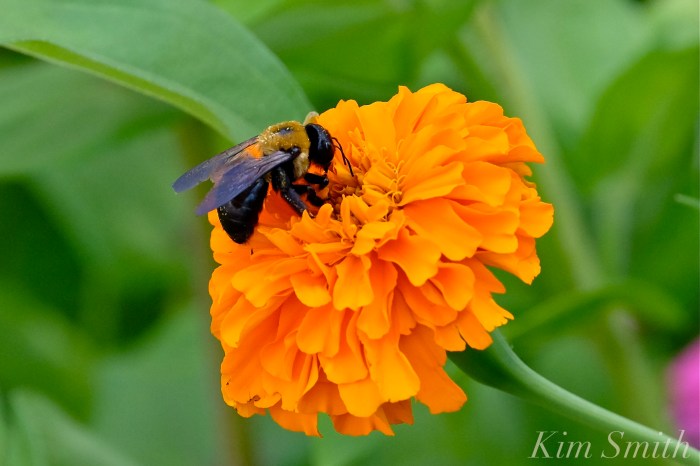
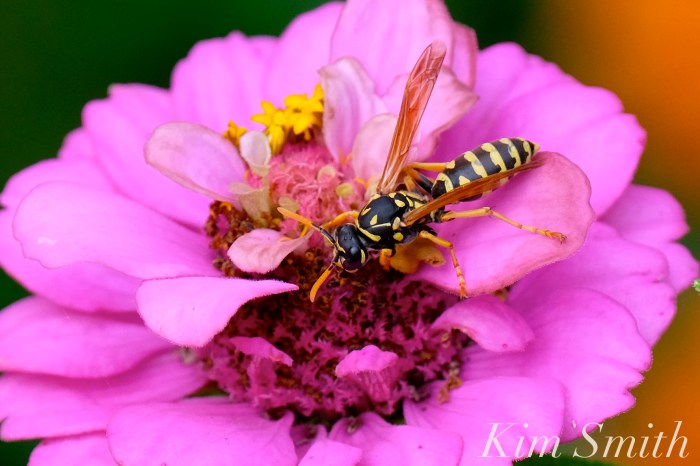
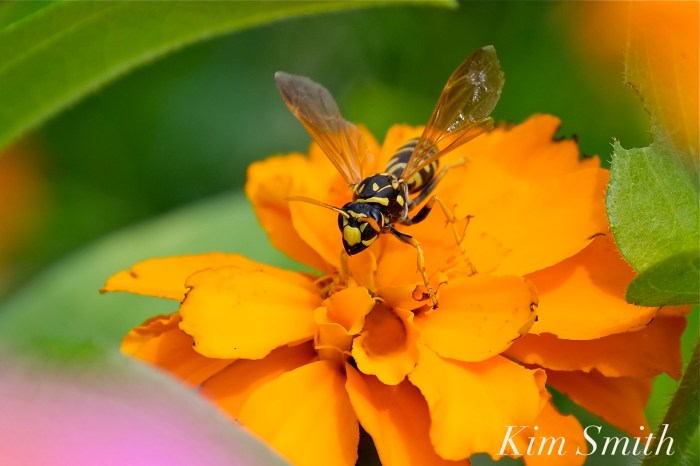
Bees and butterflies, as we all know, pollinate flowers, but did you know that bats, songbirds, hummingbirds, wasps, beetles, moths, flies, midges, and even nasty mosquitoes also deliver pollen from plant to plant?

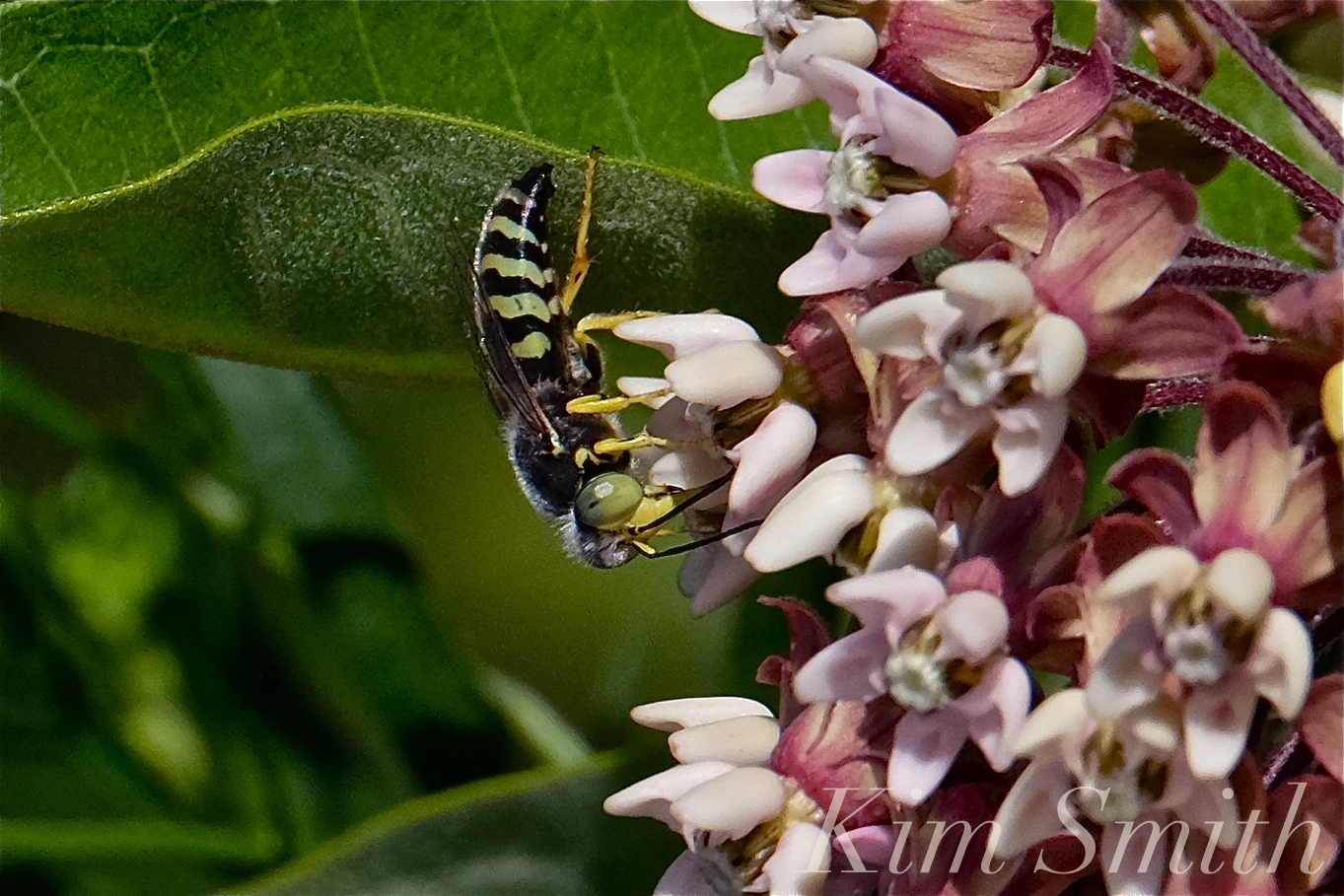
Flower pollinating Green-eyed Wasp drinking nectar from Common Milkweed florets.

The eyes of the male Green-eyed Wasp are larger than the females, all the better to see her, and predators. Green-eyed Wasps are also known as sand wasps because females excavate burrowing nests in sand (as well as soil).

Male Monarch Butterfly flitting about our garden and drinking nectar from the Marsh Milkweed florets. Notice the mass of orange Milkweed Aphids in the background. Lady Beetles are another pollinator super hero because they help milkweed plants by eating aphids.

https://www.instagram.com/p/BXTNYD9F_We/

LOOKING FORWARD TO ATTENDING HANNAH KIMBERLEY’S READING FROM HER NEW BOOK AT THE SAWYER FREE THURSDAY NIGHT!

WHERE WILL YOU GO LITTLE CHICK?

Our Little Chick is growing stronger (and plumper) everyday. He will most likely leave Cape Ann by the end of August, based on the Plovers that I filmed last summer. His voyage is a long one for a little bird weighing only about six ounces. Like all migratory species of birds (and butterflies), he must build his lipid, or fat, reserves before undertaking the journey.

Where will Little Chick spend the winter? Perhaps along the Atlantic coastline of South Carolina or Florida, or possibly even further afield to the Caribbean Sea, to the Bahamas, or further still, to Turks and Caicos.

*Note to Friends of Little Chick ~ While walking toward the enclosure yesterday, I was slammed in the back with a football. It was very startling, painful, and wholly unexpected. I was under the impression that there are guidelines about not playing ball in densely populated areas of the beach, whether football or volleyball. This occurred after five, after the lifeguards had left, but the beach was still crowded. Facing toward the enclosure, the ball games were taking place just to the right. If the ball had hit the chick, he would have been killed instantly. I am hoping folks can help Little Chick keep safe by taking their ball games to less populated areas of the beach, away from the roped off area. Just hoping 🙂

Piping Plover Chick Day Forty

https://www.instagram.com/p/BXQZsc_lrpo/

SLEEPY LITTLE BROWN BAT

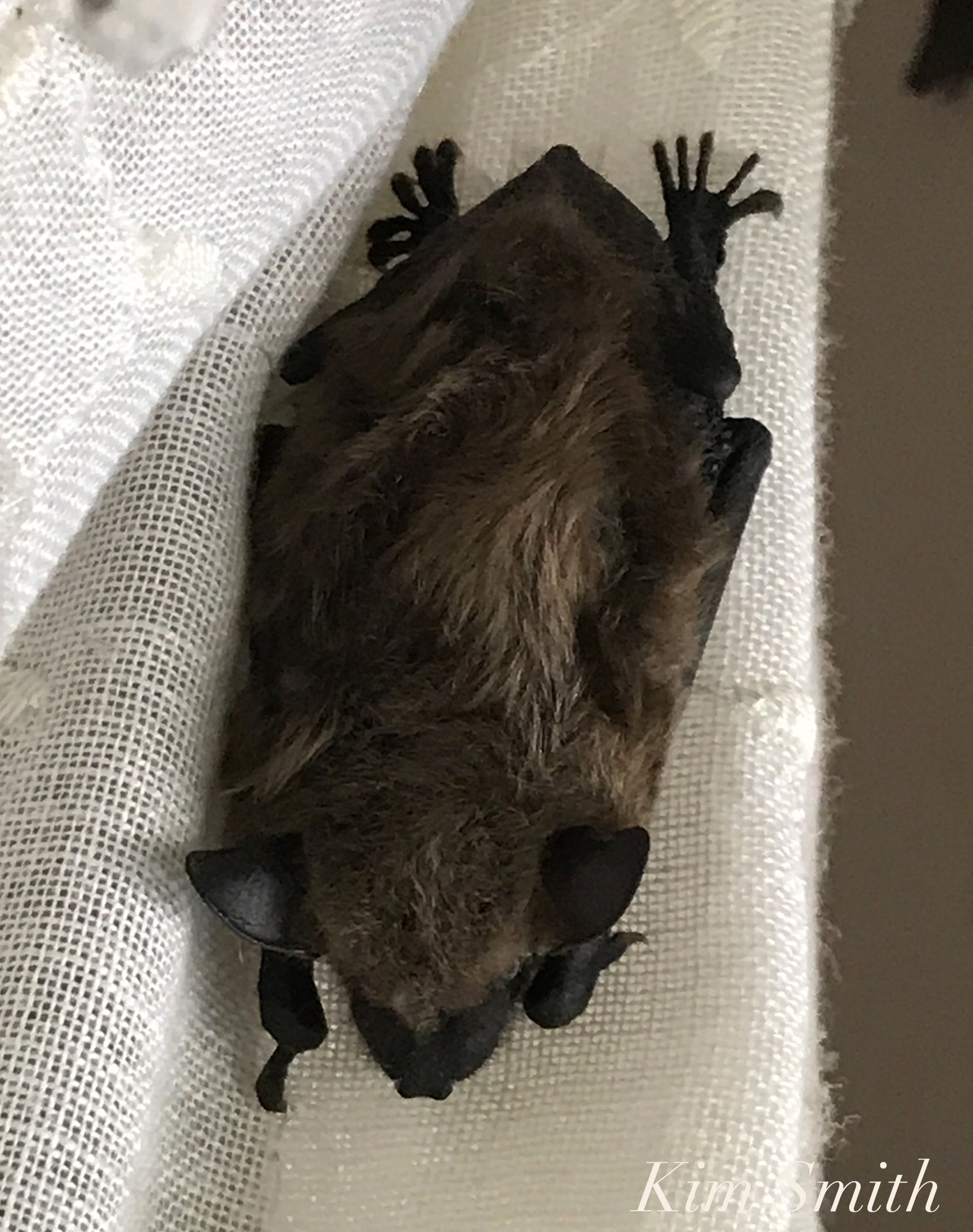
This morning we awoke to find a sleepy Little Brown Bat, as opposed to a Big Brown Bat, fast asleep in the dining room curtains. It’s a mystery how he got in and why it took so long to wake him up. Once outdoors, he spread his wings and flew over the fence and into our neighbor’s trees.

https://www.instagram.com/p/BXQT5kkFrnR/

The Mass Audubon website has a page on the most commonly seen bats in Massachusetts:
Bats, our only flying mammals, are truly remarkable animals. It’s too bad their unwarranted reputation has prevented many people from appreciating how beneficial and unique they are.

Bats belong to the order Chiroptera, which means “hand-wing.” Their wings are composed of two thin layers of skin or membrane, attached to elongated finger bones. Each membrane has four fingers and a thumb, which control the wing’s movement. The thumb, located at the top of the wing, acts as a hook with which the bat is able to crawl on flat surf

The two most common bats found in Massachusetts are the little brown bat (Myotis lucifugus) and the big brown bat (Eptesicus fuscus). Both have short, soft fur covering their head and body and rich brown bodies with slightly darker brown wings.

The body of a little brown bat measures 4½ to 5½ inches long, including the tail, and has an 8½ to 10½ inch wingspan. The big brown bat’s body ranges from 5½ to 8 inches in length with a 12 to 13 inch wingspan.

In the spring and summer, females of little brown bats form colonies consisting of hundreds of individuals. Big brown bats, which prefer the more urban areas inside Route 495, are usually found in colonies of less than two hundred bats.

Read More Here.

Learn more about Bat species in Massachusetts.


WORK PROGRESSING ON THE GOOD HARBOR BEACH GUEST STATION WITH MASONS JOHN TRUPIANO AND NOEL MITCHELL

The new guest station at the footbridge end of Good Harbor Beach is progressing right on schedule, with today’s work entailing masonry and setting a granite stone border.

John Trupiano and Noel Mitchell

In response to a GMG readers’ recent inquiry, Joe Lucido shared that the shower spigot will be set to a timer, with time set to roughly 5am to 9pm, to take into consideration the early morning surfers and late day beach goers.