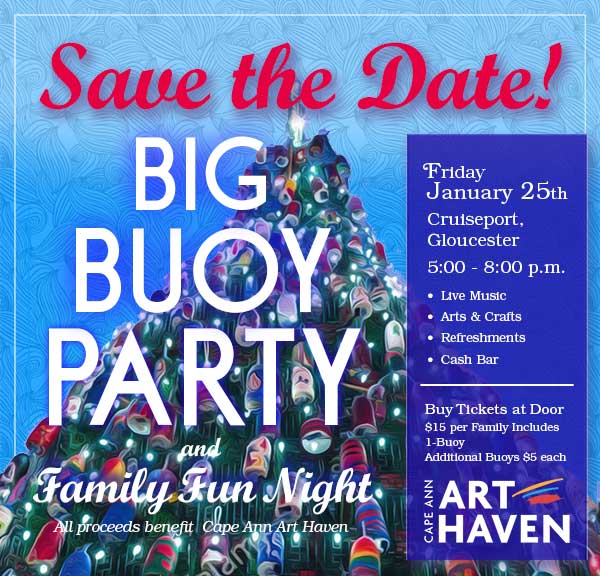
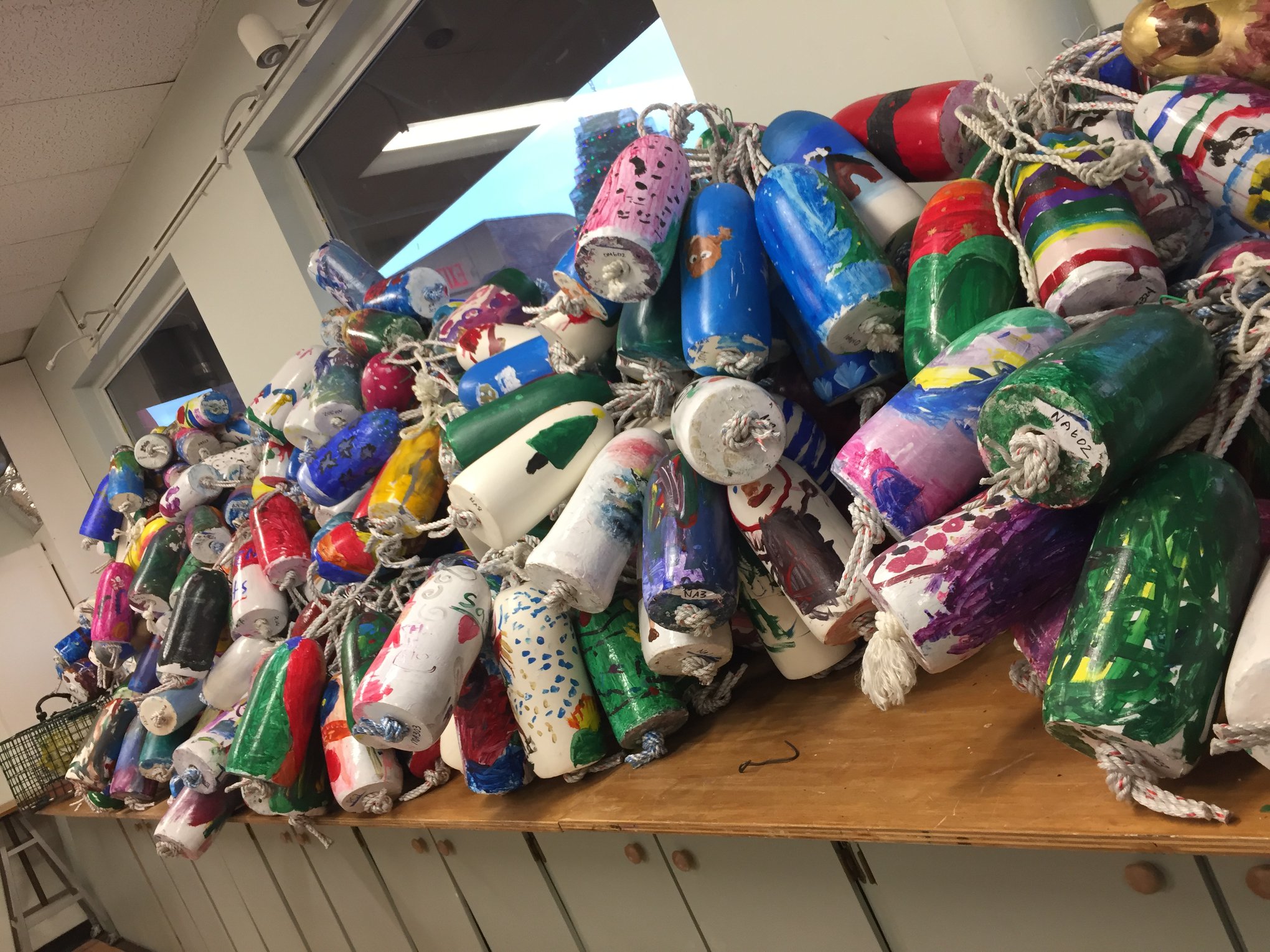
Big Buoy and Family Fun Night Friday.
See you there!
My View of Life on the Dock


WINTER YOUTH PROGRAMS SET FOR GLOUCESTER STAGE
Gloucester Stage Youth Acting Workshop
Winter 2018 Session Accepting Students



CATA Student Bus Passes are scheduled to be sold Wednesday, January 30, , Thursday, January 31 and Friday, February 1 from 11 a.m. until 4 p.m. in the Gloucester High School Atrium. The Pass Plus and the Unlimited Spring Semester Pass will be on sale at that time. The Pass Plus is $25 and the Unlimited Spring Semester Pass is $100. All Passes are payable by cash or check.. No passes will be sold at the CATA office on these dates.
For further information call the CATOC office at 978-283-7278.


Their shadows in flight crisscrossing the light through my office window, I look up to see one feather-fluffed fellow sitting on a crabapple branch, gazing right back at me. I wonder, if I silently and cautiously open the window, will he fly in?
It is so very cold out doors. The flock seems more weary than in past years. One sits on the ground outside the window, barely moving aside when I walk down the garden path; another is half asleep in the holly limb overhead. There are fewer, too, perhaps only eight to ten when often we see several dozen. On this coldest of January days, it must be difficult to keep warm, especially as there are no little fish to catch along the frozen sea’s edge to warm their bellies.
This one appeared so worn out, he sat in the snow beneath the holly tree, eating what the other Robins dropped on the ground.
The winter Robins arrive to our garden every year in January, nearly to the day (today, January 21st). Our garden is a postage stamp but we have planted it richly for the songbirds. The pair of ‘Dragon Lady’ holly trees hold their berries for the Robins, the crabapples have yet to be sampled, the winterberry is still ripe with fruit, and the tiny rosehips of the climbing white rose are beckoning.
We’re fortunate that on Cape Ann many American Robins nest and migrate along our shores. Some Robins live here all the year round; some arrive in springtime, having spent the winter further south in parts warmer; and some–the ones I like to call winter Robins–arrive in January, from parts further north. We are like their Bermuda, and they are here to feed on wild fruits and berries, as well as small fish fry and fingerlings, and mollusks.


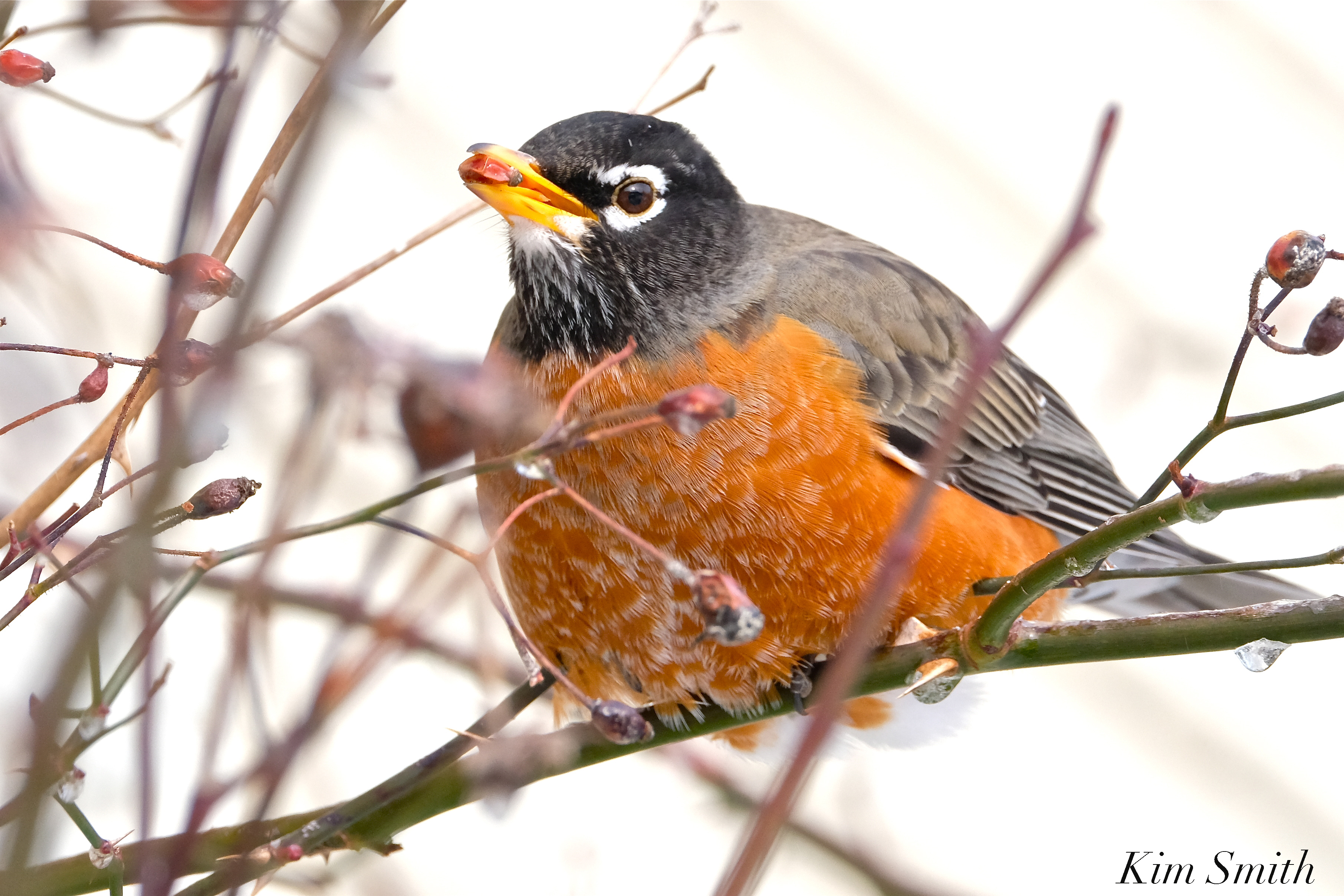 Rime-sweetened rosehips

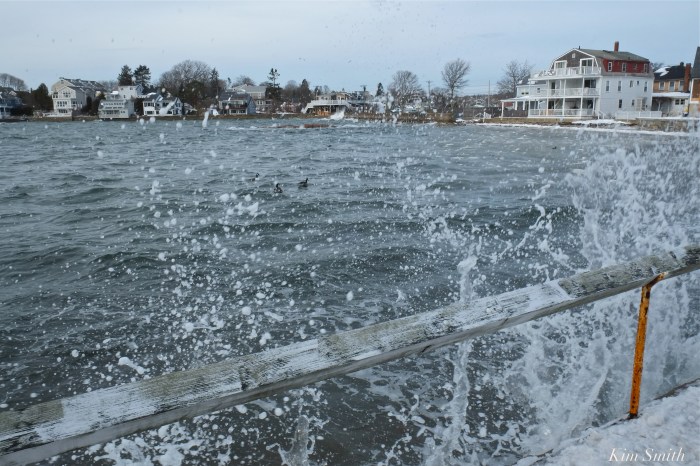
Super high tide all along the Massachusetts coastline–these photos were taken at Flat Cove Landing and Smith Cove.


Last night we spoke during open comments at the January City Council meeting. Many, many thanks to Councilor Steven LeBlanc for the advice on how to address the councilors, and to all the councilors present for taking the time to listen, including Scott Memhard, Sean Nolan, Paul Lundberg, Melissa Cox, Valerie Gilman, James O’Hara, and Jen Holmgren.
We are working toward the goal to see the recommendations in place by April 1st of 2019, before the Piping Plovers arrive at Good Harbor Beach. These recommendations were first given in writing on July 9, 2018 to Mayor Sefatia and the City Council.
The following are the concerns and recommendations presented to the councilors on behalf of the Piping Plover volunteer monitors.
January 22, 2019
Piping Plover Recommendations
On behalf of the Piping Plover volunteer monitors, we are submitting our short list of recommendations regarding the Piping Plovers nesting at Good Harbor Beach. Our goal is to have in place by April 1, 2019, measures and ordinances that will greatly increase the likelihood that the hatchlings of this tiny threatened shorebird will have a fighting chance at surviving life on Good Harbor Beach.
Piping Plovers began nesting at Good Harbor Beach in 2016. Each year, the PiPl are coming earlier and earlier. In 2016, they arrived mid-May, in 2017 they arrived at the beginning of May, and this past year, they arrived on April 3. It would appear that the same pair is returning to Good Harbor Beach, as the male marks his territory and attempts to build a nest scrape only several feet from the previous year’s nest (at Boardwalk #3 nesting area).
More Plovers than ever were seen at Good Harbor Beach this spring, and if not for constant disturbances by dogs in the Boardwalk #1 nesting area, we would have had two pairs nesting on the beach.
Why are the birds arriving earlier and earlier? We can presume that the pair are more experienced travelers and parents and that Good Harbor Beach is their “territory.” Does this mean we will eventually have dozens of pairs nesting on Good Harbor Beach? No, because the PiPl are very territorial and they will defend a fairly large area, preventing other PiPl from nesting in their site.
This past year the PiPl pair hatched four chicks. All four chicks were killed by either crows, gulls, or dogs. All three are human-created issues, and all three can be remedied. The following are the four recommendations and actions we wish to see take place.
Recommendations
1) Change the dog ordinance to not allow dogs on the beach after March 31.
Currently, dogs are allowed on the beach from October 1 to May 1. The Piping Plover volunteer monitor core group, Dave Rimmer from Greenbelt, Mass Wildlife’s John Regosin, and Gloucester’s Animal Advisory Committee all recommend that dogs should not be allowed on Good Harbor Beach beginning April 1st.
This new suggested time frame will allow birds to nest on the beach (as opposed to in the parking lot), with far less interruption, shorebirds will nest earlier in the season, which will help with the chicks survival rate, and the chicks will be stronger by the time Good Harbor fills with summer crowds.
This is a very logical and simple solution. Disallowing dogs on Massachusetts coastal beaches where shorebirds are nesting, beginning April 1, is the norm. Allowing them to return after September 30 is also very common. For Piping Plovers and other nesting shorebirds, protecting their habitat and sharing the shore is a matter of life and death.
2) Rope off the nesting area by April 1.
Poles, with threatened species signs, and a triple row of roping of nesting sites, to be in place no later than April 1. Essex County Greenbelt’s Dave Rimmer will assist with this measure.
3) Enforce the existing ordinances regarding dogs (and littering) at all times throughout the year.
Only enforcing dog ordinances at Good Harbor Beach during nesting season is creating hostility toward the Piping Plovers.
Additionally, we do not recommend extremely high fines as we feel that may become an impediment to issuing and collecting the fines.
We know of at least one example where the magistrate dismissed the tickets issued to a woman who claimed to have a service dog. This woman was running rampant on the beach and throughout dunes with her service dog off leash throughout the entire time the PiPl were nesting, from April through May. Despite the fact that former dog officer Diane Corliss caught the woman on camera with her dog off leash on the beach, and in the dunes, all the tickets that were issued by the animal control officer were dismissed. This is neither fair to the officers who are working hard to keep the dogs off the beach or to the plover volunteers who are spending inordinate amounts of time trying to keep the PiPl safe.
4) Increase trash collection.
When no barrels are placed at the entrances to the beach, people dump bags of trash there anyway. When barrels are in place, people put trash in the barrels however, when the barrels become full, they again resort to leaving bags of trash behind, only next to the barrels. In either scenario, gulls and crows are attracted to the trash. Both gulls and crows rip open the bags and the trash is blown throughout the parking lot and marsh, soon finding its way onto the beach and into the ocean.
Hungry gulls and crows waiting for people to leave their trash behind eat tiny shorebirds.
Thank you for taking the time to consider our recommendations.
Can these recommendations be actionable for the spring of 2019?
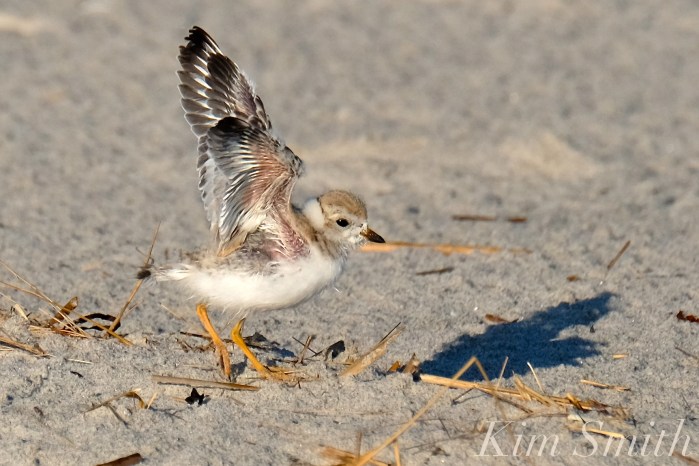
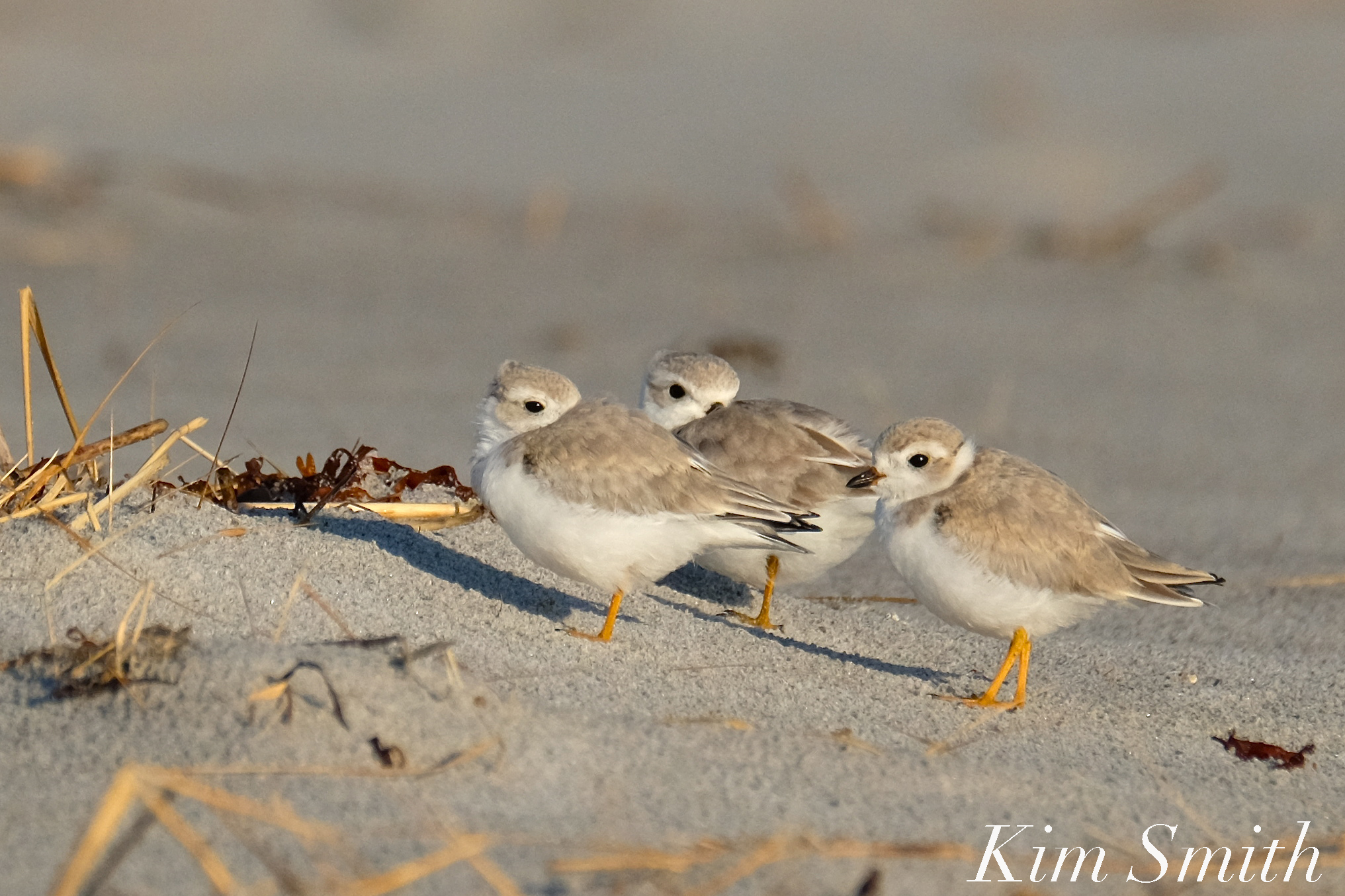
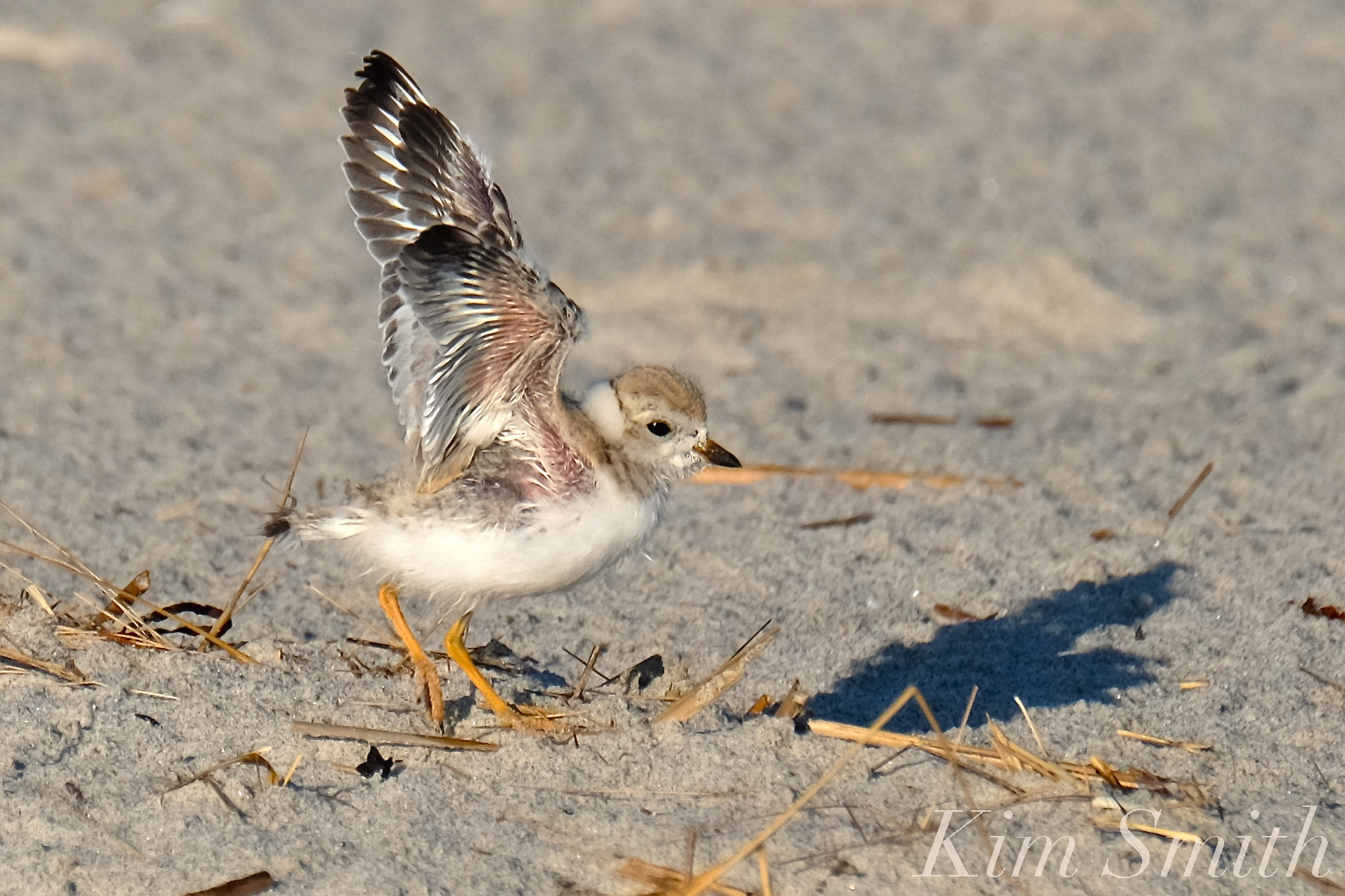 Piping Plover chick spreading his wings.
https://www.instagram.com/p/Bs9cvCgH2YS/

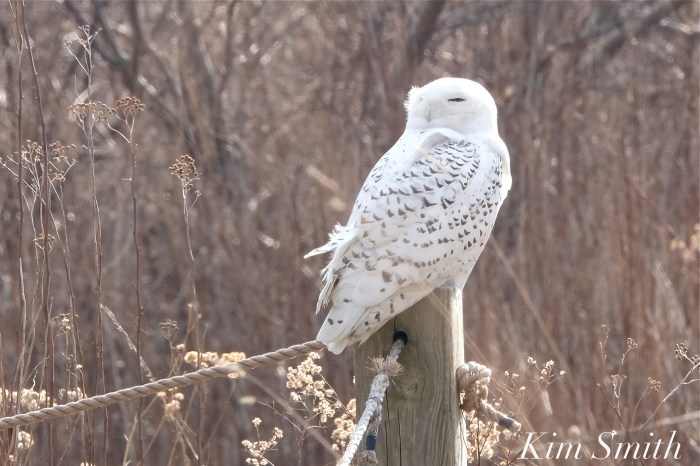
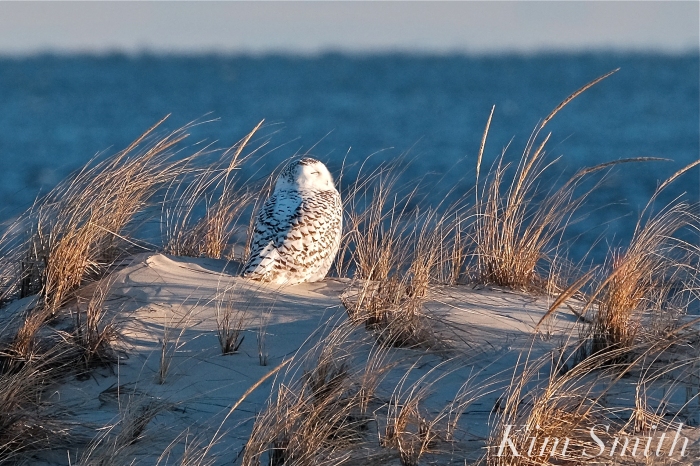
I dream about Snowies sometimes, especially in wintertime. I wonder if Snowies dream–probably, if they do, its all about tasty morsels 🙂
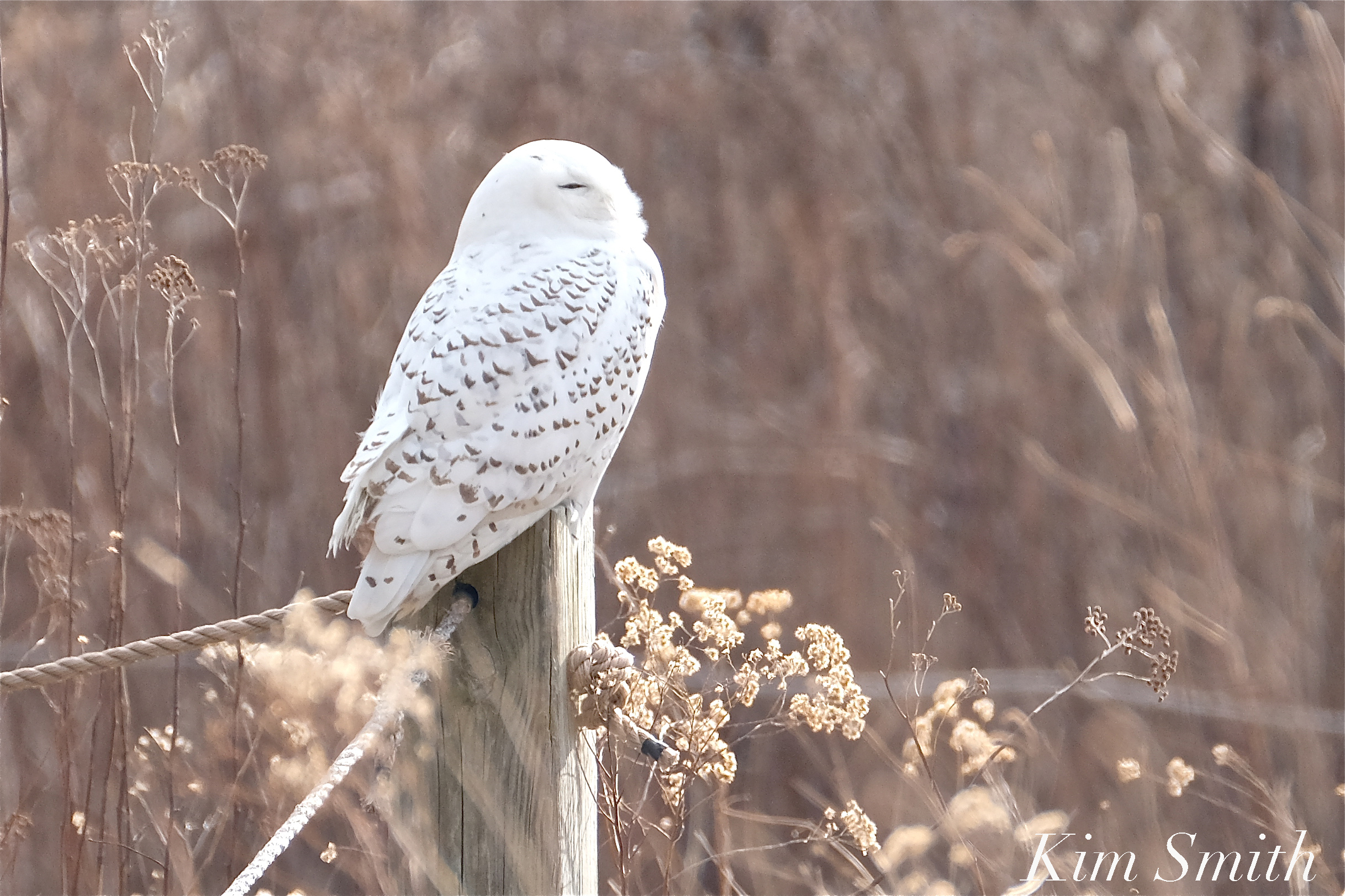
Sleepy Snowy Boy in the wildflower patch.
Do Snowy Owls, like other owl species, feed at night?
Snowy Owls are crepuscular (active and feed at dawn and dusk), diurnal (hunt during the day time), and nocturnal (hunt during darkness). Mostly, while wintering in our region, they rest during the daylight hours. When you see a Snowy sleeping, whether on the beach, a fence post, rooftop, or tree, please give him/her lots of space and let him rest quietly and undisturbed.
In the summer months, Snowies feed in the continuous daylight hours of the Arctic. Their main source of food is lemmings. In years when lemmings are super abundant, female Snowies will actually lay more eggs! Both the male and female hunt and bring food to the growing owlets. Feeding a hungry brood of baby owls is nonstop during the long days of the Arctic summer, and the owls also cache food.
What do Snowy Owls eat when wintering over in New England? I’ll share what we saw Hedwig eat because I am reading tons of misinformation posted online. We saw her eating rabbits, shrews, rats, mice, and yes, sea ducks. At day’s end, she would leave her hotel perch, sometimes heading over the golf course for a rabbit, or swooping down to the rocky shoreline for a shrew, or out to sea for a Common Eider or Bufflehead.
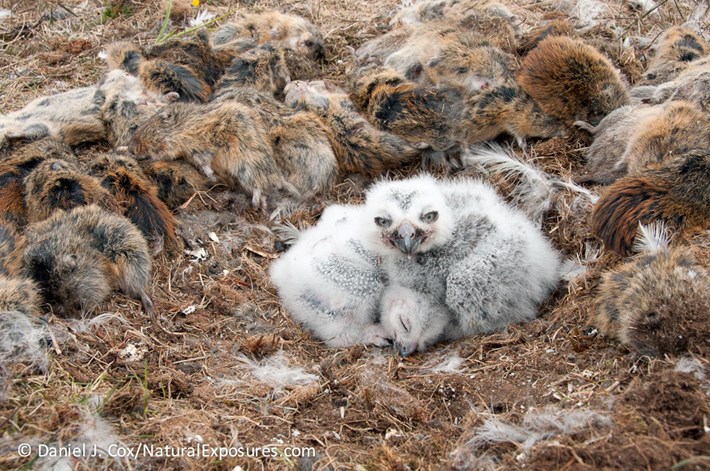
A cache of lemmings circling a Snowy Owl nest–and btw, aren’t they just the cutest!
A Snowy Owl irruption occurs when there is an abundance of lemmings, which leads to an abundance of Snowy Owl hatchlings (more lemmings equals fewer hungry owlets), which leads to more fledglings. Easier-to-catch food is available for the less experienced young hunters further south in the lower 48 states. The adults typically keep north, the first- and second-hatch-year owls often head south. This is another reason to keep a respectful distance, many of the owls are still developing and growing.
Our Hedwig appeared especially adept at catching rodents that were scurrying between the rocks at Bass Rocks. In summer, Arctic Lemmings shelter in shallow underground burrows, or under rocks, just as do Cape Ann members of the rodent family.
Interestingly, some Snowy Owls move further north for the winter. They spend these darkest and most frigid of months at sea, ice hunting for Arctic birds at open patches of water.
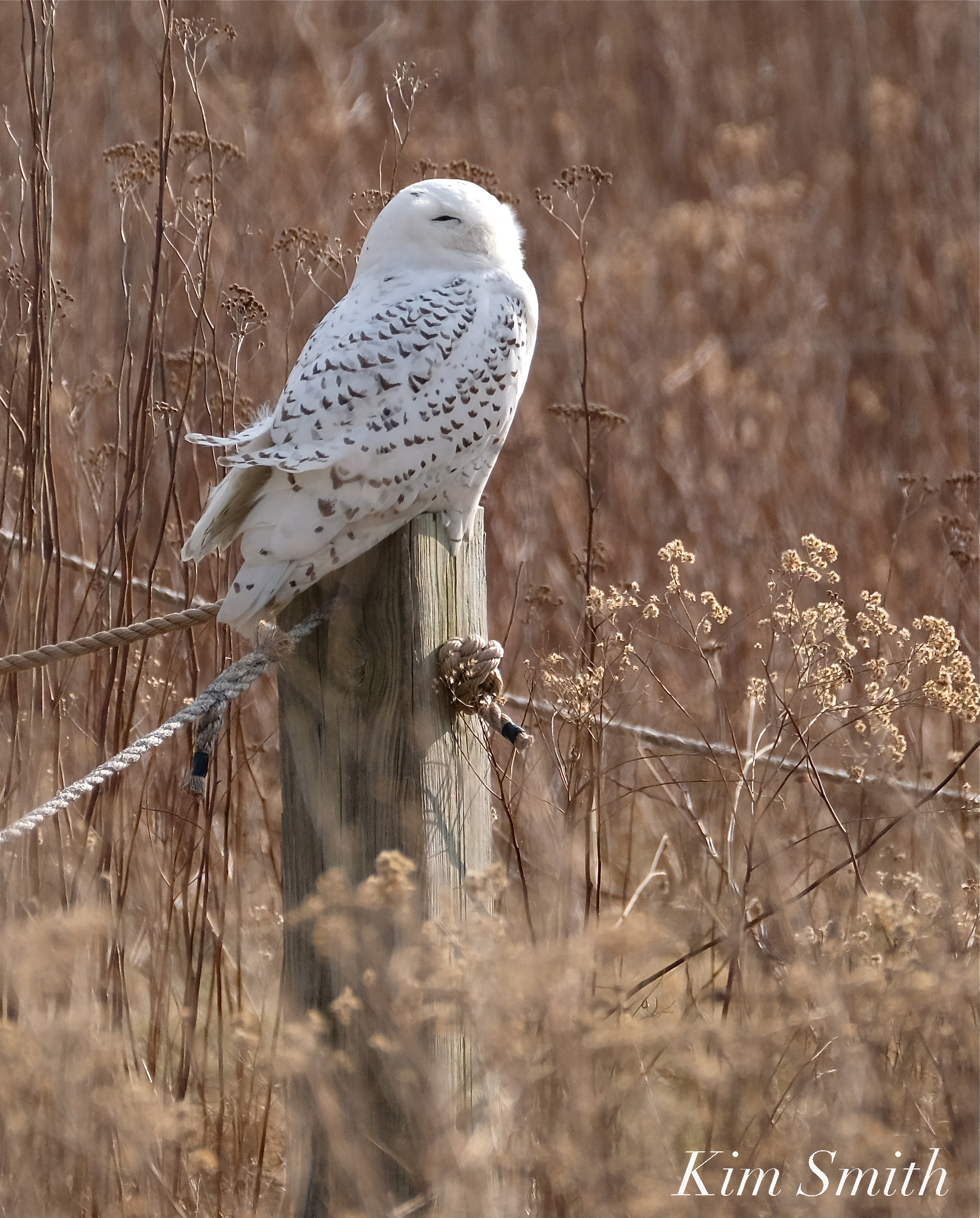
Please Do Not Disturb


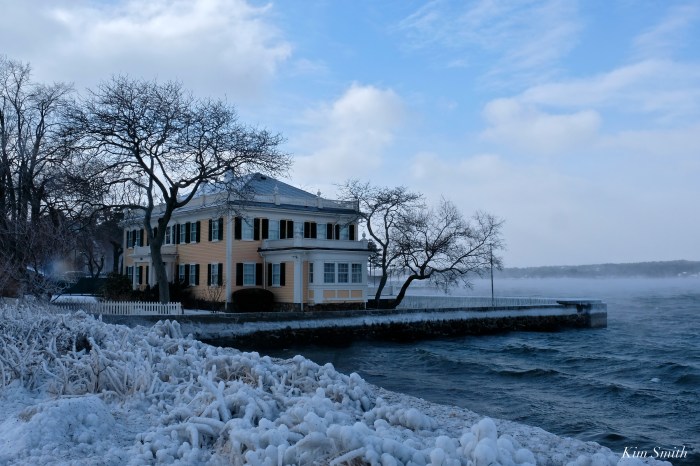
Snapshots from a brief tour around the back shore while out doing errands this afternoon. With temperatures hovering at 5 degrees, Cape Ann was blanketed with a thick layer of impenetrable ice, snow squalls, and sea smoke.
Happy to see the temperatures are heading towards the forties after Tuesday!


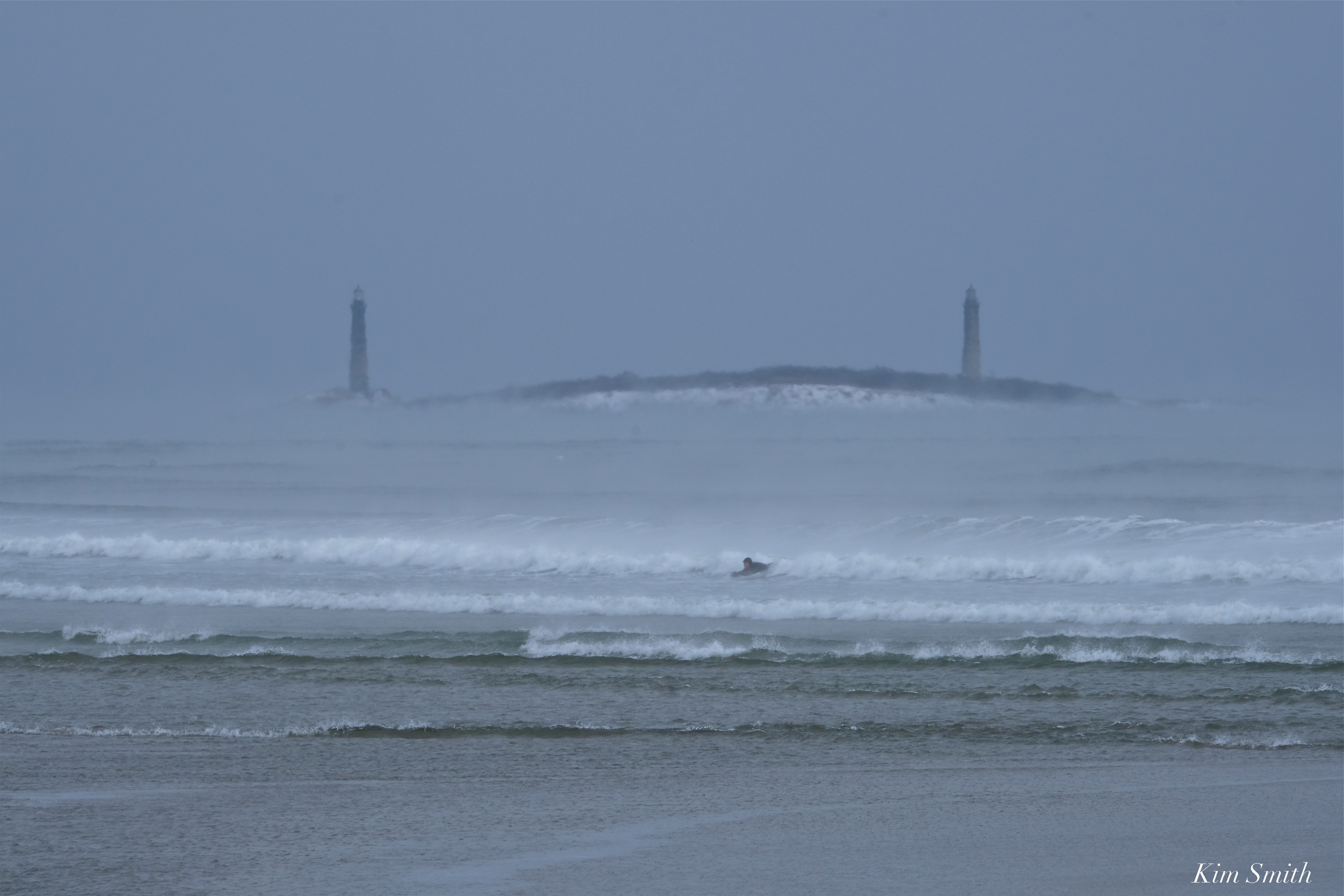 A crazy person surfing at GHB 🙂

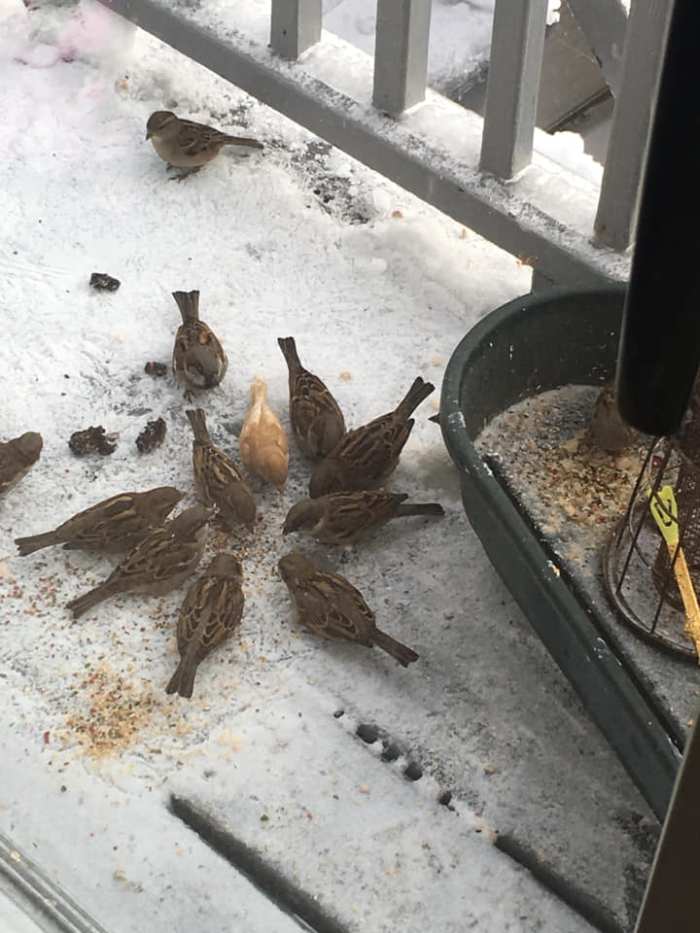
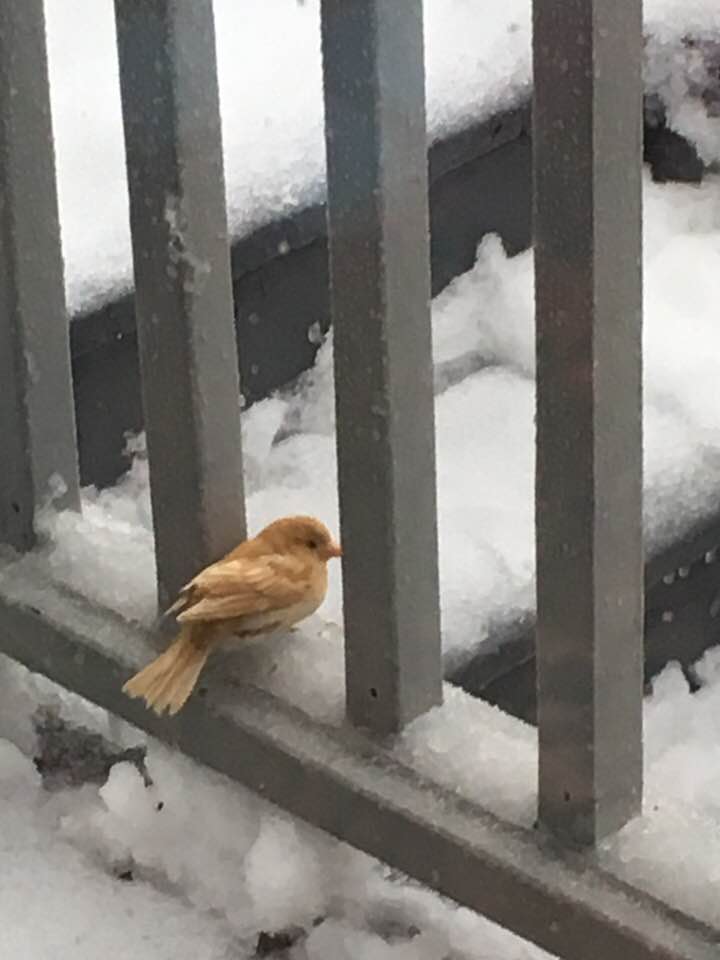 My friend Anita shared these photos of a rarely seen Golden Sparrow.
The beautiful blonde sparrow was feeding with Starlings and House Sparrows. A Golden Sparrow is a leucistic House Sparrow. Albino House Sparrows are even rarer.
A leucistic bird lacks melanin pigment due to the cells responsible for melanin production whereas an albino bird is caused by a genetic mutation causing an absence of tyrosinase in pigment cells.
If you are not sure if you are observing an albino or leucistic bird check the eyes. Albino birds eyes have pink eyes, while the eyes of leucistic birds retain pigment and are dark.
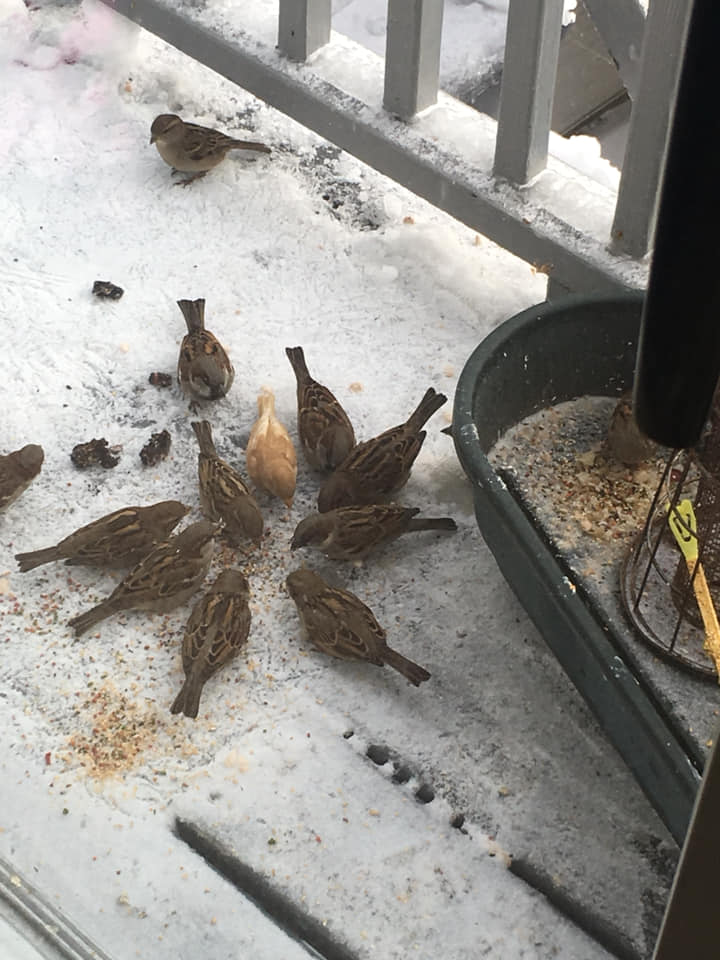
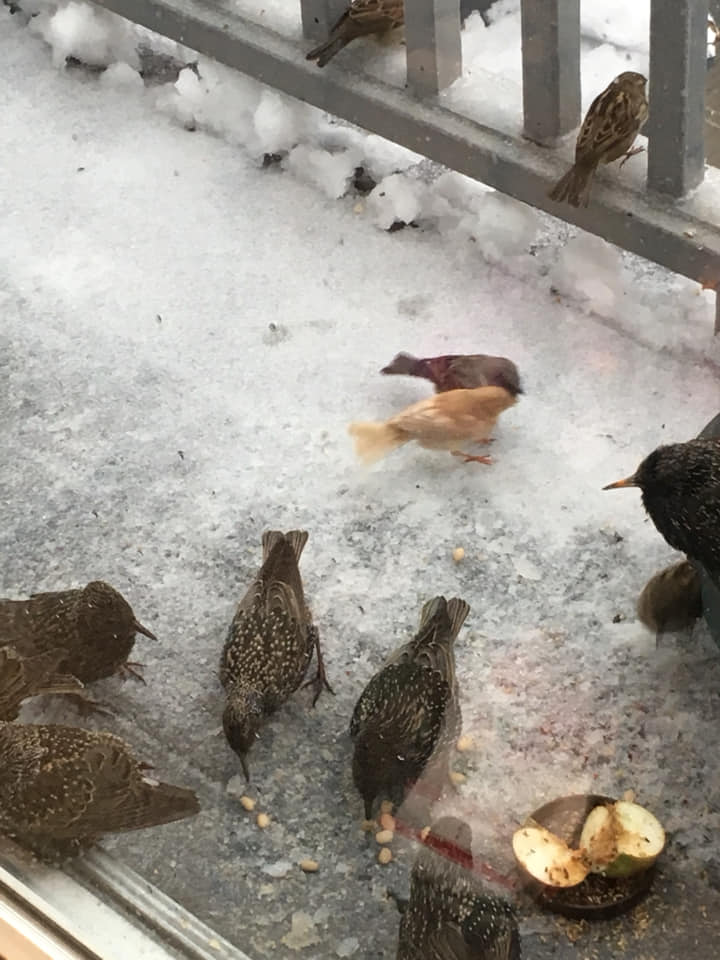


 Super Blood Wolf Moon January 20, 2019
It was way too slippery for me last night to venture very far to photograph. The above photo was taken last night from my back door kitchen stoop and there were clouds swirling across the moon, but you can still see how beautiful.
There’s something very spectacular about these January full moons. The photos below were taken last January, during the first full moon of the month, which took place on the first, and during the Super Blood Wolf Moon Eclipse, which took place on the 31st.


 Jeff Denoncour, the Trustees of Reservations Eastern Region Ecologist, gave an outstanding and informative presentation to a packed audience Saturday afternoon. Subjects included the formation and history of Crane Beach, marsh, and dunes; the seven uniquely different ecological zones; the many species of flora and fauna that comprise the rich biodiversity at Castle Island; and the Trustees protective measures managing rare and endangered species.
Since 2010, Jeff has managed the Trustees Shorebird Protection Program at Crane Beach. Because of the very excellent shorebird management at Crane Beach, 2018 was a banner year, with 42 pairs of nesting Piping Plovers and approximately one hundred PiPl chicks fledged. Our community can learn a great deal from the success at Crane Beach in how to better manage shorebirds migrating and nesting at Cape Ann beaches.
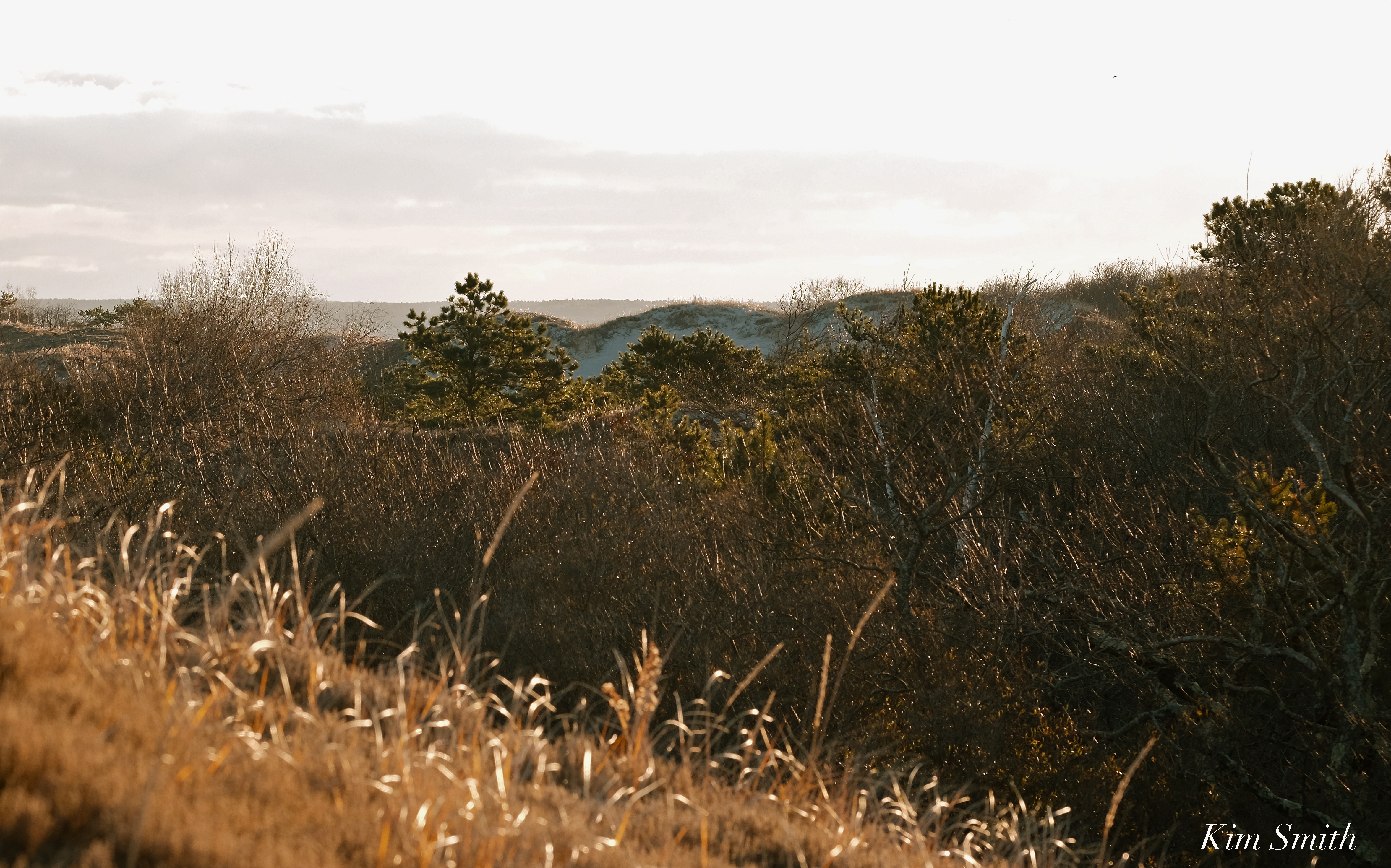 We learned from Jeff that Crane Beach is part of a string of barrier beaches formed from sediment deposited by the outflow of the Merricmack River. Salisbury Beach is at the northern end, then Plum Island, then Crane, with Coffins and Wingaersheek at the southern end. The sand that was deposited at Salisbury Beach is the coarsest; the sand at Wingaersheek the lightest and finest as it would have more easily flowed furthest away from the mouth of the river.
Excerpt from a previous post OUTSTANDING COASTAL WATERBIRD CONSERVATION COOPERATORS MEETING! talking about Jeff and the success of the Crane Beach Trustees Piping Plover
“Readers will be interested to know that our region’s Crane Beach continues to have one of their best year’s ever. Trustees of Reservations Jeff Denoncour shared information on the latest census data from 2018 and Crane Beach has a whopping 76 fledglings, with 25 more chicks still yet to fledge. Because of the huge success at Crane Beach, the northeast region, of which we are a part, has fledged a total 136 of chicks in 2018, compared to 108 in 2017, and as I said, with more fledglings still to come! The northeast region encompasses Salisbury Beach to the Boston Harbor Islands.
Jeff noted that this year they had less predation by Great Horned Owls. Because of owl predation, several years ago the Trustees gave up on the wire exclosures and now use electric fencing extensively. The Great Horned Owls learned that the Piping Plover adults were going in an out of the exclosures and began perching on the edge of the wire, picking off the adults as they were entering and exiting the exclosure.
Crane has an excellent crew of Trustees staff monitoring the Least Terns and Piping Plovers, as well as excellent enforcement by highly trained police officers. No dogs are allowed on Crane Beach during nesting season and dogs are prevented from entering at the guarded gate. As we saw from one of the graphics presented about nesting Double-crested Cormorants, when a dog runs through a nesting area, the adults leave the nest, temporarily leaving the eggs and chicks vulnerable to predation by crows, gulls, raptors, and owls.”
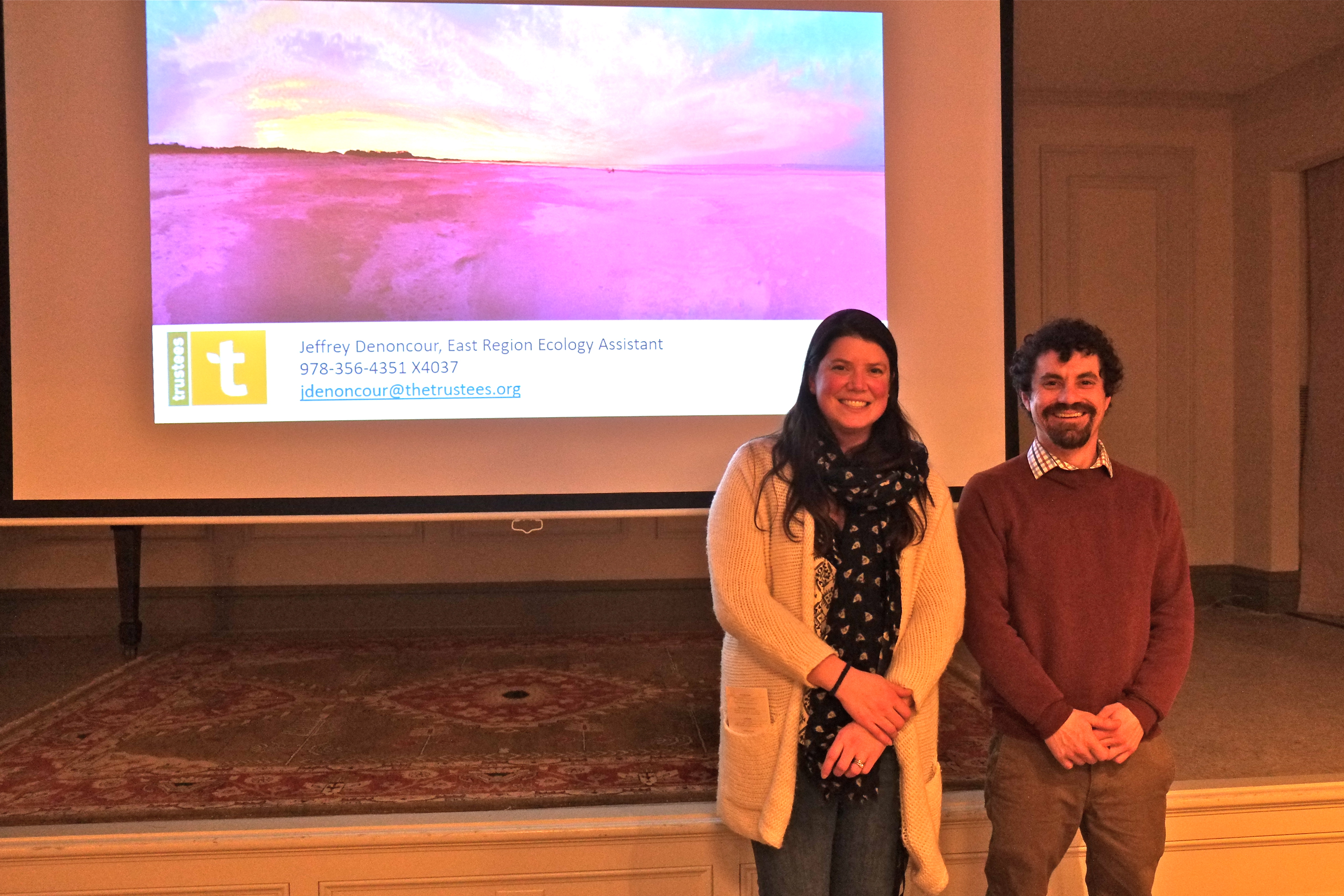 Jeff Denoncour and Courtney Richardson, Director of Education and Public Programs at the Cape Ann Museum


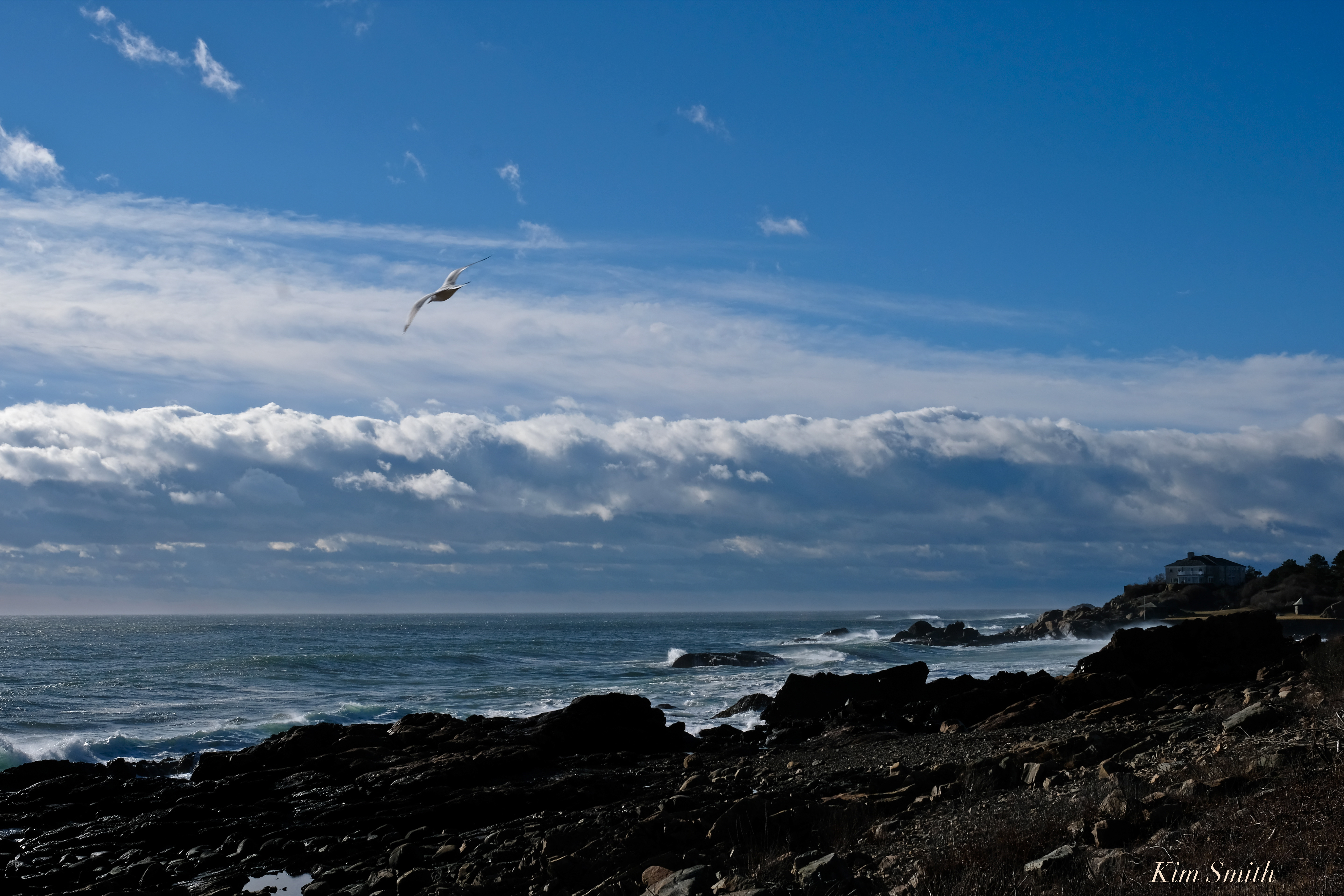
Staying warm and cozy and wishing everyone keeps the same during the pending storm. Here’s to blue skies on the other side 🙂

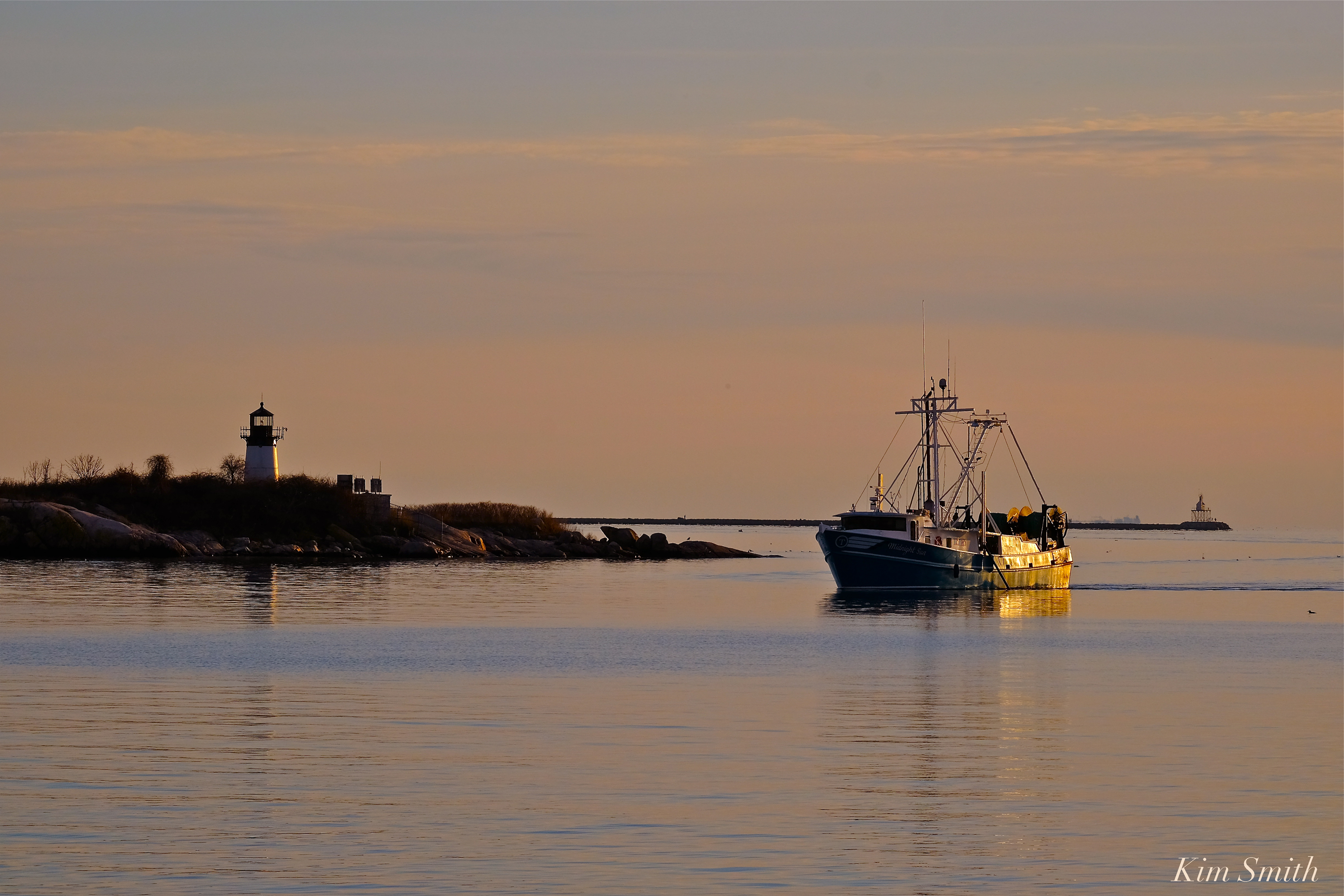 FV Midnight Sun Ten Pound Island Lighthouse

USA Today
By Pete Thomas
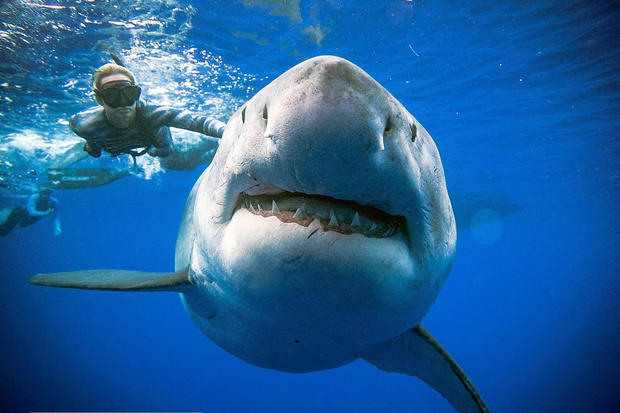
A strikingly massive great white shark, one of the largest ever documented, was spotted by divers in Hawaii on Sunday as the apex predator feasted on a sperm whale carcass.
The sighting of “Deep Blue” off Oahu was remarkable because the handful of previous sightings were documented 2,600 miles away at Guadalupe Island off Mexico’s Baja California peninsula.
“My first reaction was just disbelief,” Mark Mohler, who captured the images for this story, told For The Win Outdoors. “She followed three tiger sharks in toward the whale carcass, and her sheer size made them look like barracudas.”
Photographer George T. Probst announced the Deep Blue sighting via Twitter on Tuesday, when another enormous white shark was spotted near the whale carcass.
Deep Blue has unique skin markings. Probst said he compared footage captured Sunday to photos in the Guadalupe Island database, and that the ID was confirmed by Michael Domeier and Nicole Nasby Lucas of the Marine Conservation Science Institute. MCSI has tagged dozens of Guadalupe Island white sharks.
Those sharks typically migrate into open ocean, as far as Hawaii, during late fall or early winter. Most return to Guadalupe by early or mid-summer.
White shark sightings off Hawaii, however, are rare.
Deep Blue, believed to measure at least 21 feet, became famous after being featured by Discovery in 2014 (with footage captured in 2013).
The gargantuan shark generated headlines again in 2015 when Mauricio Hoyas Padilla, a Mexico-based scientist, shared footage showing the shark dwarfing divers in cages at Guadalupe Island.
On Sunday, Deep Blue was fattening up on sperm whale flesh as the carcass drifted slowly south, away from Oahu.
Diving with Mohler were Andrew Gray, Kimberly Jeffries, Laura Rock, and Daren Babula. They received surface support in boats from Danny Roberts, Tim Andrews, and Heather Armstrong.
“After I spent some time with her, and then again when we confirmed her identity as Deep Blue, it was an incredible feeling of euphoria,” Mohler said. “Everyone was in awe when we saw her. It was both disbelief and euphoria. Her size was absolutely incredible.”
And from Hawaii News Now
There’s been a rare sighting in Hawaii waters of what’s believed to be the biggest great white shark on record. An incredible video taken by OneOcean Diving, a massive great white was seen off Oahu. The shark in the video is believed to “Deep Blue,” a shark that’s nearly 20 feet long. She’s also believed to be more than 50 years old. In the past few years, Blue has become so famous that she even has her own Twitter account. Deep Blue apparently had quite a meal a couple days ago, when she was spotted feeding on a sperm whale carcass that is about 20 miles off Oahu’s southern shore. In the videos, the shark exhibited calm behavior as divers bravely swam alongside the shark, cage-free. Deep Blue was previously spotted in Mexico.

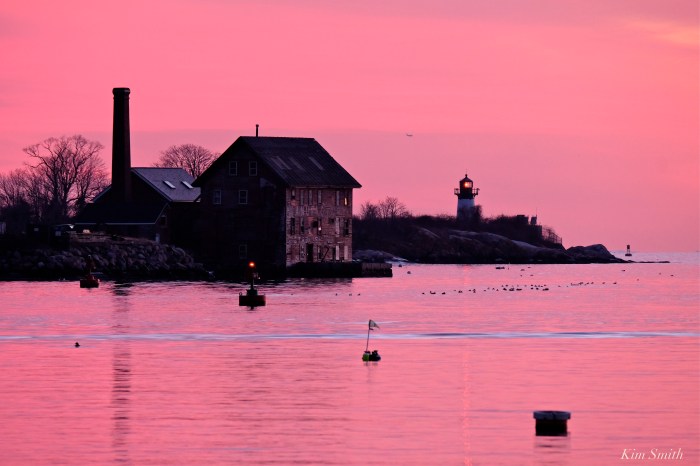
Gloucester Harbor twilight hues as the light shifts from saffron to cinnabar to rose-violet. Click through slideshow to see full size.


Go here to read Part One: Winter
Go here to read Part Two: Spring
PART THREE: SUMMER

The most joyous story about Cape Ann wildlife during the summer months of 2018 is the story of the high number of Monarch butterflies and caterpillars in gardens and meadows, seen not only in strong numbers along the Massachusetts coastline, but throughout the butterfly’s breeding range–all around New England, the Great Lakes region, Midwest, and Southern Canada.


Three days after celebrating the two week milestone of our one remaining Piping Plover chick, Little Pip, he disappeared from Good Harbor Beach. It was clear there had been a bonfire in the Plover’s nesting area, and the area was overrun with dog and human tracks. The chick’s death was heartbreaking to all who had cared so tenderly, and so vigilantly, for all those many weeks.
Our Mama and Papa were driven off the beach and forced to build a nest in the parking lot because of dogs running through the nesting area. Despite these terrible odds, the Good Harbor Beach Piping Plover pair hatched four adorable, healthy chicks, in the parking lot. Without the help of Gloucester’s DPW, the Piping Plover volunteer monitors, Ken Whittaker, Greenbelt’s Dave Rimmer, and the AAC, the parking lot nest would have been destroyed.
These brave little birds are incredibly resilient, but as we have learned over the past three years, they need our help to survive. It has been shown time and time again throughout the Commonwealth (and wherever chicks are fledging), that when communities come together to monitor the Piping Plovers, educate beach goers, put in place common sense pet ordinances, and reduce trash, the PiPl have at least a fighting chance to survive.


Little Pip at twelve- through seventeen-days-old
All four chicks were killed either by crows, gulls, dogs, or uneducated beach goers, and in each instance, these human-created issues can be remedied. Ignoring, disregarding, dismissing, or diminishing the following Piping Plover volunteer monitor recommendations for the upcoming 2019 shorebird season at Good Harbor Beach will most assuredly result in the deaths of more Piping Plover chicks.
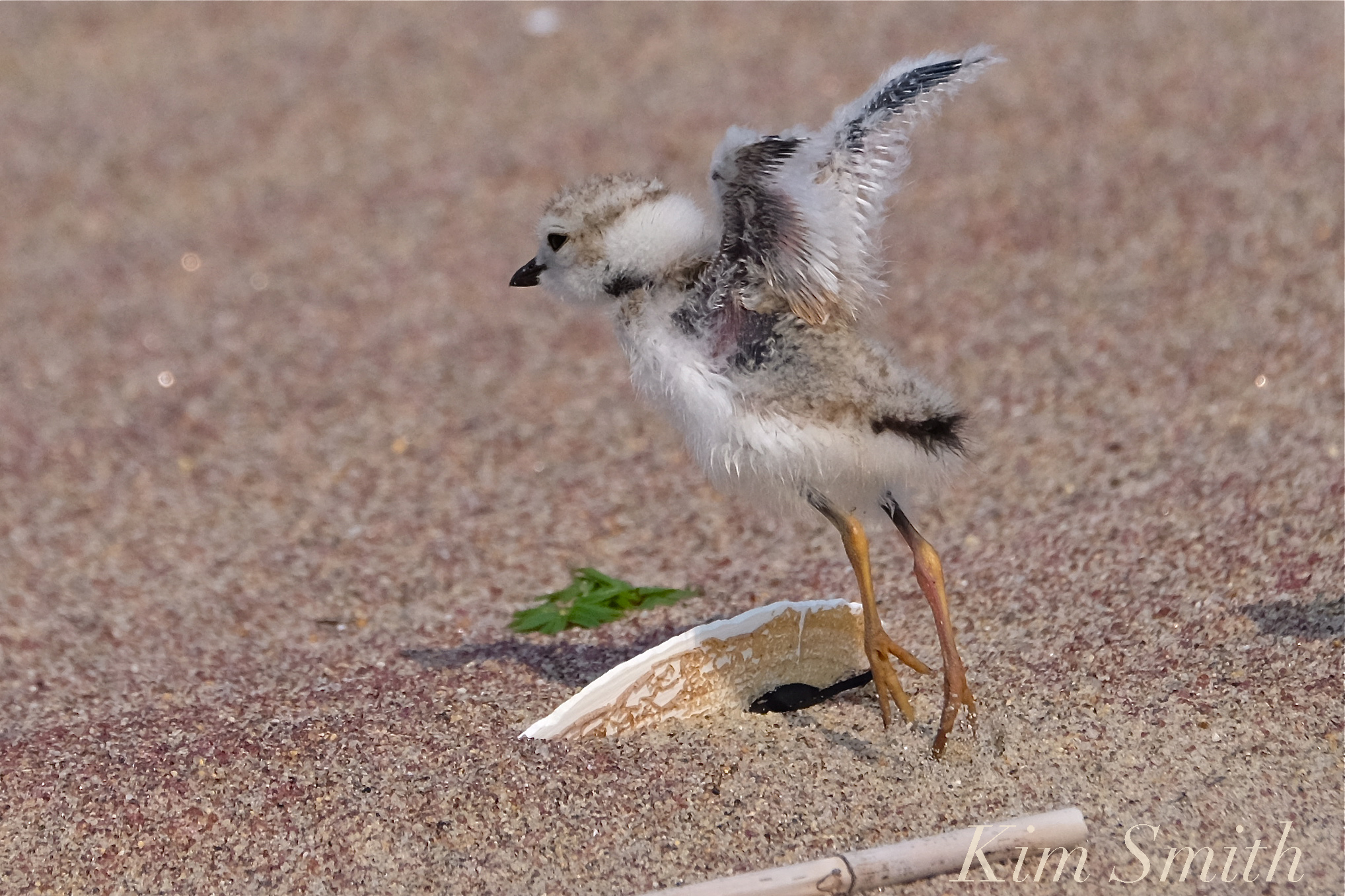 Piping Plover chick testing its wings.
Not one, but at least two, healthy and very hungry North American River Otters families are dwelling at local ponds, with a total of seven kits spotted. We can thank the fact that our waterways are much cleaner, which has led to the re-establishment of Beavers, and they in turn have created ideal habitat in which these beautiful, social mammals can thrive.


Several species of herons are breeding on our fresh water ponds and the smaller islands off the Cape Ann coastline. By midsummer, the adults and juveniles are seen wading and feeding heartily at nearly every body of water of the main island.


In order to better understand and learn how and why other Massachusetts coastal communities are so much more successful at fledging chicks than is Gloucester, I spent many hours studying and following Piping Plover families with chicks at several north of Boston beaches.


In my travels, I watched Least Terns (also a threatened species) mating and courting, then a week later, discovered a singular nest with two Least Tern eggs and began following this little family, too.


Least Tern Family Life Cycle
Maine had a banner year fledging chicks, as did Cranes Beach, locally. Most exciting of all, we learned at the Massachusetts Coastal Waterbird meeting that Massachusetts is at the fore of Piping Plover recovery, and our state has had the greatest success of all in fledging chicks! This is a wonderful testament to Massachusetts Piping Plover conservation programs and the partnerships between volunteers, DCR, Mass Wildlife, the Trustees, Greenbelt, Audubon, and US Fish and Wildlife.
 Fledged chick
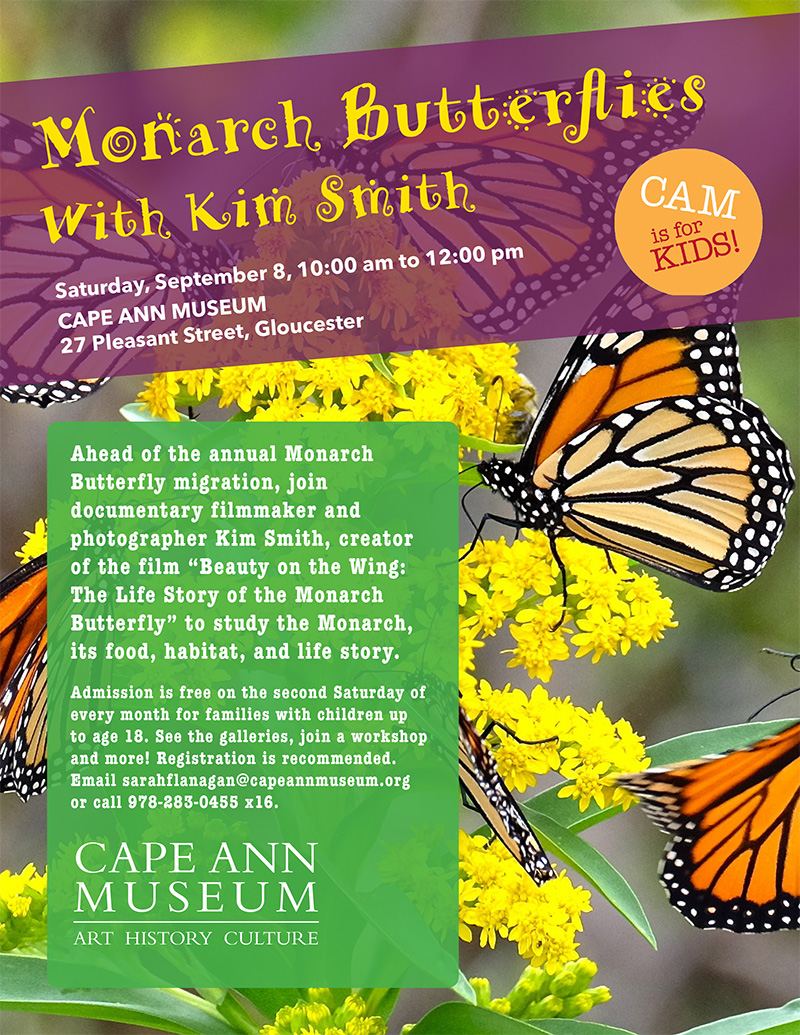 Cape Ann Museum


Monarch Madness
Friends Jan Crandall and Patti Papows allowed me to raid their gardens for caterpillars for our Cape Ann Museum Kids Saturday. The Museum staff was tremendously helpful and we had a wonderfully interested audience of both kids and adults!
 In August I was contacted by the BBC and asked to help write the story about Monarchs in New England for the TV show “Autumnwatch: New England,. Through the course of writing, the producers asked if I would like to be interviewed and if footage from my forthcoming film, Beauty on the Wing, could be borrowed for the show. We filmed the episode at my friend Patti’s beautiful habitat garden in East Gloucester on the drizzliest of days, which was also the last day of summer.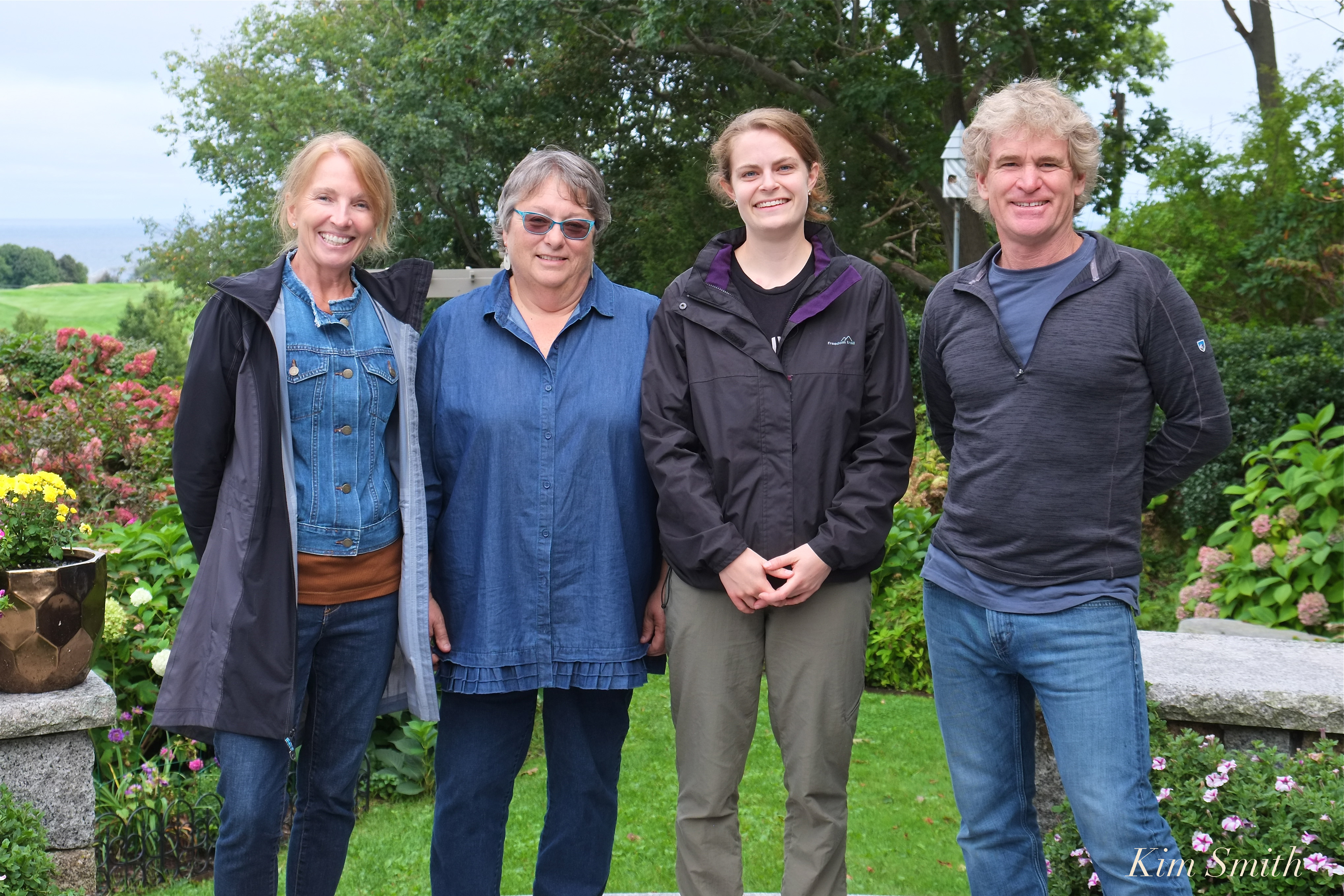


Happy Two-week Birthday to Our Little Pip
Common Eider Ducklings at Captain Joes
Little Pip Zing Zanging Around the Beach
Piping Plover Update – Where Are They Now?
42 Pairs of Piping Plovers Nesting at Cranes Beach!
Welcome to Good Harbor Beach Mama Hummingbird!
Least Tern One Day Old Chicks!
Welcome to the Mary Prentiss Inn Pollinator Paradise
Piping Plover Symbolic Fencing Recomendations
Good Morning! Brought to You By Great Blue Herons Strolling on the Beach
OUTSTANDING COASTAL WATERBIRD CONSERVATION COOPERATORS MEETING!
Stuck Between a Rock and a Hard Place
Grow Native Buttonbush for the Pollinators
A Fine Froggy Lunch for a Little Blue Heron
Snowy Owls in Massachusetts in August!?!
Monarch Butterfly Eggs and Caterpillars Alert
Snapshots from Patti Papows Magical Butterfly Garden
Keep Those Monarch Babies Coming!
A Chittering, Chattering, Chetamnon Chipmunk Good Morning to You, Too!
Butterflies and Bird Pooh, Say What?
Thank You To Courtney Richardson and the Cape Ann Museum Kids
A Banner Year for Maine’s Piping Plovers
Snowy Egret Synchronized Bathing
Good Harbor Beach Super High Tide
Otter Kit Steals Frog From Mom
Monarch Butterfly Ovipositing Egg on Marsh Milkweed: NINETEEN SIBLINGS READYING TO EMERGE
FILMING WITH THE BBC FOR THE MONARCHS!

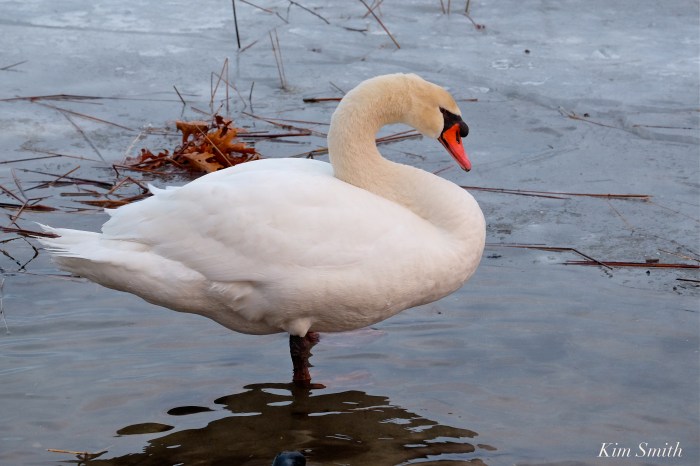
Dear Readers,
Over the weekend the Rockport Fire Department was called by a well-meaning person because they thought Mr. Swan was stuck in the ice. Believe me when I write that Mr. Swan has spent the last 29 years of his life (at least 29 years) on Cape Ann’s wintry waterways. If Mr. Swan finds himself partially frozen in the ice he uses his mighty breast to break up the ice by lifting his body out of the water and then coming down hard, pounding the ice with his chest. We have seen him do this powerful move dozens of times.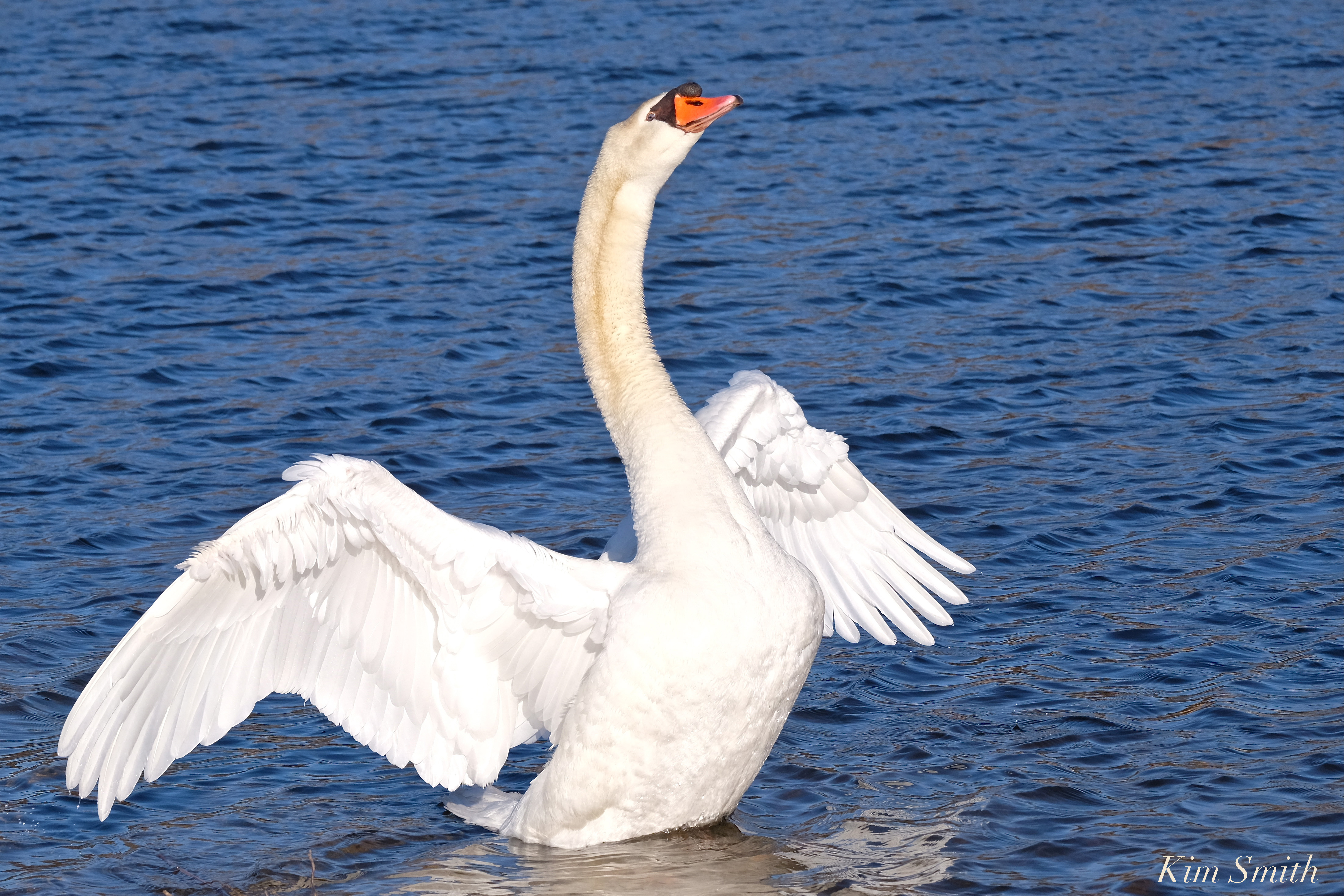
Notice Mr. Swan’s large and well-defined breast bones, which are ideal for breaking up ice.
There was a concern last year about him being unable to get off ice he had unwittingly flown onto, only because he had an injured foot. With his gimpy foot, he could not get a running start to take off flying. Mr. Swan’s foot has healed and he is doing beautifully.
It is of grave concern when the local authorities are called regarding Mr. Swan. We are afraid that the case will be referred to Mass Wildlife. Mute Swans are considered an invasive species and it is not part of their protocol to save non-native species of wildlife. As he is a “community” pet, some leeway may be permitted, but that is not guaranteed.
Please contact me at kimsmithdesigns@hotmail.com. When you contact me about any issues regarding Mr. Swan, I in turn contact and discuss with his longtime caretakers and friends Lois and Serena, Lyn, Skip, Joel and Skip, Elaine, and Jodi and Erin at Cape Ann Wildlife. It was a terrible ordeal last time there was an attempt to capture Mr. Swan. We don’t want him to go through that kind of trauma ever again, especially at his age.
During the winter months, Mr. Swan’s territory expands tremendously and it includes the length of the Annisquam River and all inlets, all along the backshore from Rockport Harbor to Gloucester Harbor, and all the fresh bodies of water in between. Please let people know and share this post with everyone you know who may have contact with Mr. Swan.
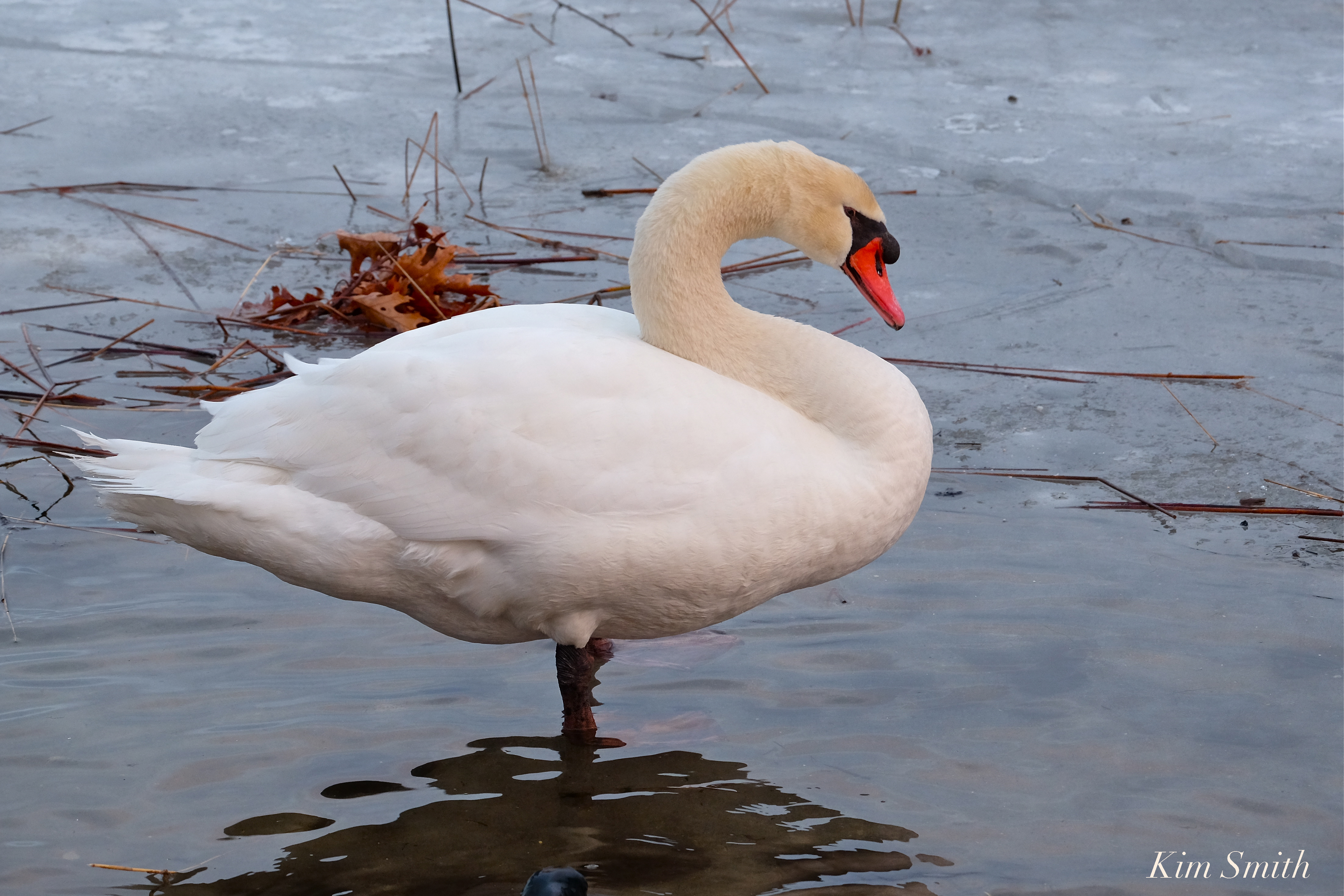 Mr. Swan in the partially frozen water at Niles Pond

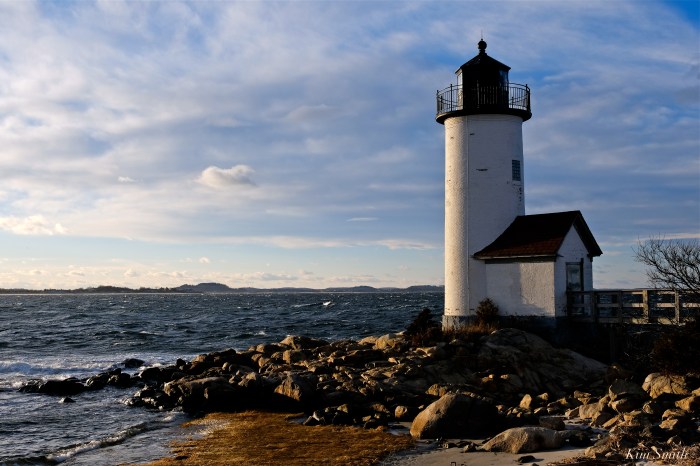
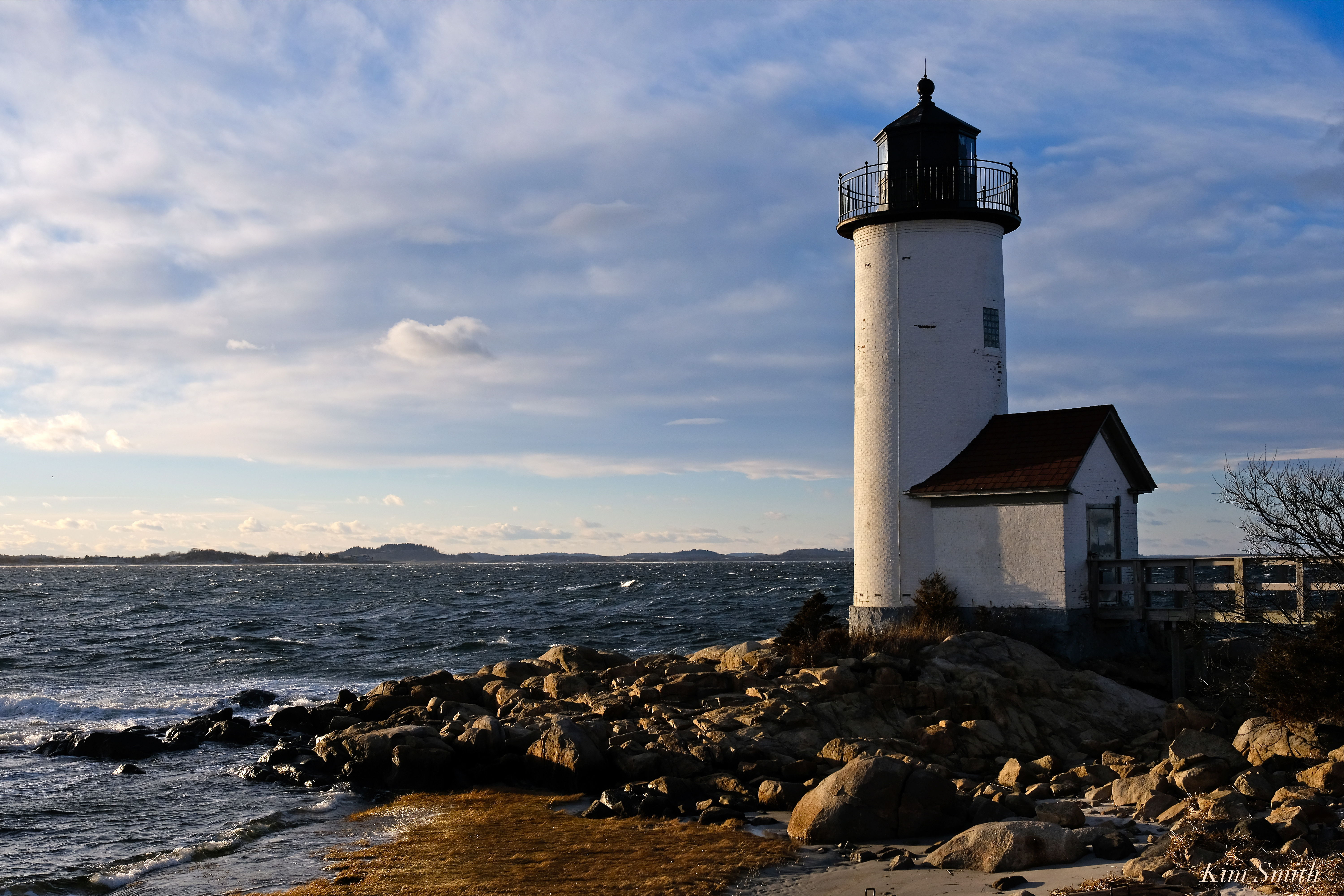
Beautiful Squam Light in last week’s departing storm.
Weather expert friends–what would you call this type of cloud formation? The first photo shows it best I think. Thank you for any information 🙂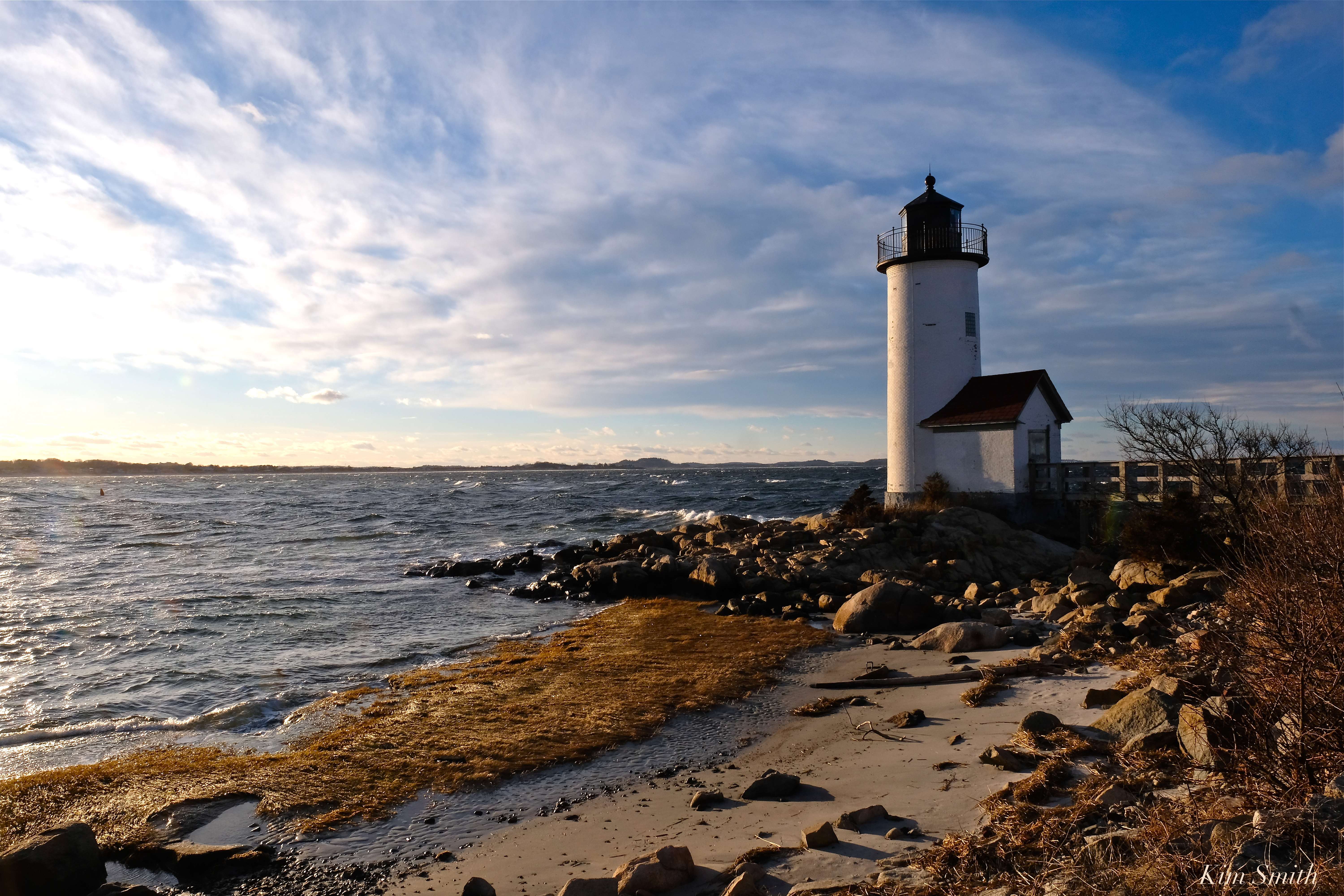

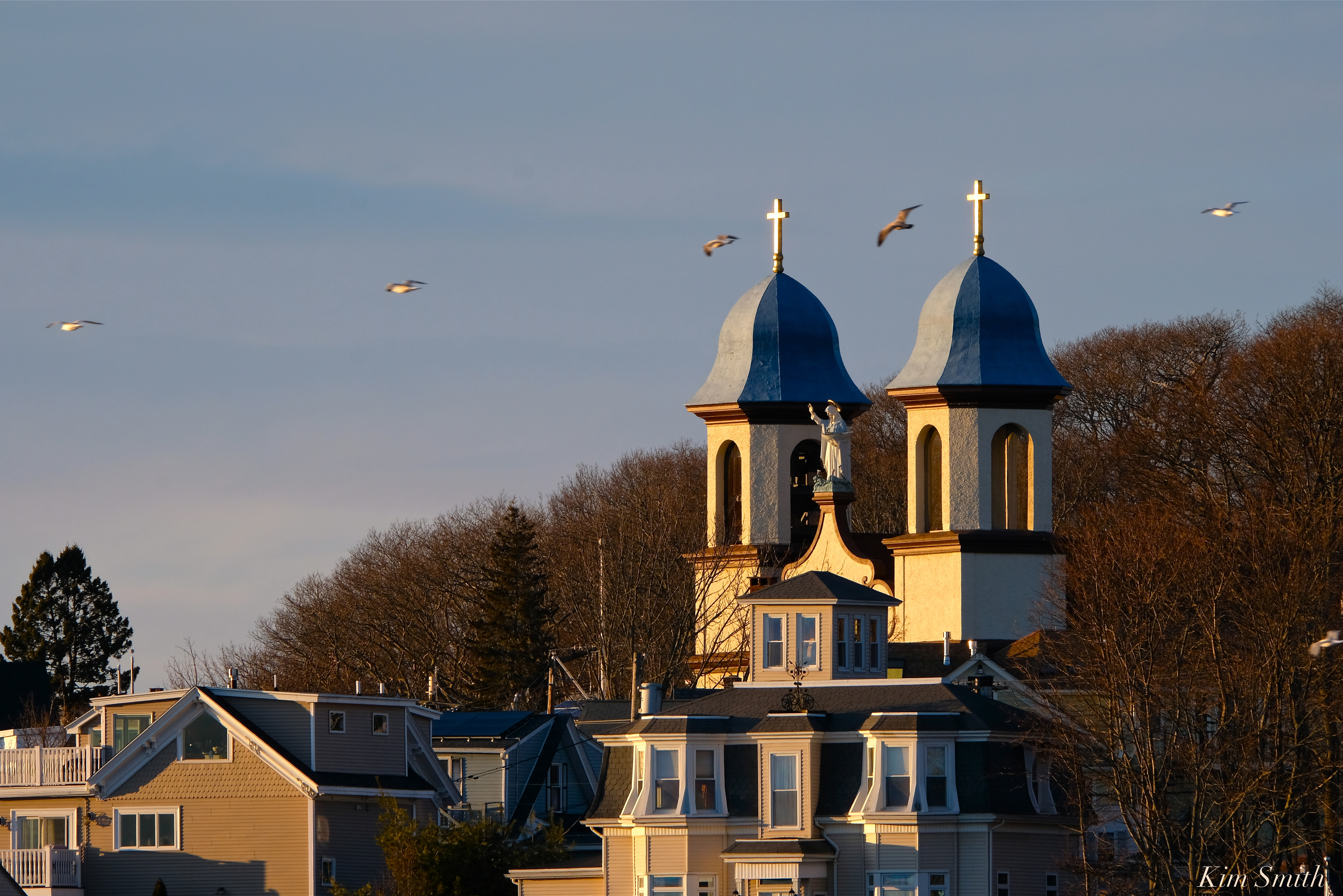 Our Lady of Good Voyage

 Good Morning Gloucester