I wonder if Rocky Neck artist Brenda Malloy was here ❤

My View of Life on the Dock

I wonder if Rocky Neck artist Brenda Malloy was here ❤

Wishing all our readers a joyous spring holiday, Happy Easter and Happy Pesach
 View of the three crosses of Our Lady of Good Voyage and Saint Ann Church from Good Harbor Beach

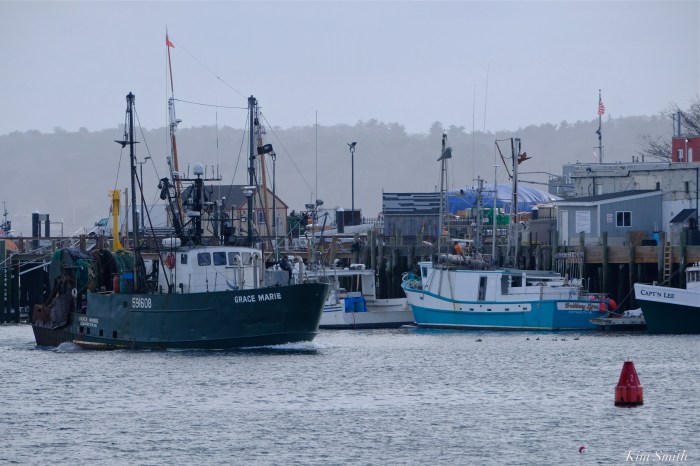

F.V. Grace Marie


See Joey’s previous posts about the Grace Marie from 2010

My friend Jay Featherstone will be reading from his new book of poems Glass at the Gloucester Writers’ Center on May 15th at 7pm. You can order Glass from fenwaypress.com, or from his website, jayfeatherstone.com, which has some sample poems and the beginning of a schedule of readings. Or ask a local bookstore to carry this book from an independent press.
Jay wrote another beautiful book about poems awhile back that you may be familiar with, Brace’s Cove, which is also available to purchase on his website



In celebration of Earth Week next week, MassWildlife will be holding a variety of events to which the public is invited. You are receiving this information because there is an event in your area. Thank you for helping us publicize these events.
April 24 and May 1: Adult Learn to Fish Course, Westborough This is a two session adult only fishing course designed for beginners. Come learn how to make this great pastime part of your life. The first session will be held on Wednesday, April 24 at the MassWildlife Field Headquarters (1 Rabbit Hill Road, Westborough), 6–8 p.m. The second session will be held on the water (Location TBD) on Wednesday, May 1, 6–8 p.m. *Open to the public. Pre-registration is required. For more information or to pre-register, contact Jim Lagacy at jim.lagacy@mass.gov or (508) 389-6309.
April 25: Stock Trout at Jamaica Pond, Boston. Meet the stocking trucks at 10 a.m. – 11 a.m. at the Jamaica Pond Beach Area, Jamaicaway, Boston, between Pond Street and Elliott Circle and help stock fish for this annual “rite of spring”. Annually, MassWildlife stocks brook, brown, rainbow, and tiger trout to more than 500 rivers, streams, lakes and ponds throughout the Commonwealth each year for anglers of all ages. Approximately 500,000 trout grown at MassWildlife’s hatcheries will be stocked this spring through the month of May. Trout stocking schedules are updated on the agency website daily through the trout stocking season for the convenience of the state’s anglers. (www.mass.gov/trout) Anglers 15 years old and older need a fishing license to fish in Jamaica Pond and all other fresh water bodies in Massachusetts. Young people under 15 don’t need a license to fish. License fees pay for the stocking program and other fish and wildlife conservation and recreation programs. Purchase a license online at www.mass.gov/massfishhunt or in person atMassWildlife offices or select sporting goods stores.
April 26: Take a Lunch Break Bird Walk, Rockport – Celebrate Earth Week with MassWildlife Technician Josh Gahagan as he leads free Lunch Break Bird Walk from Noon to 1PM at Halibut Point State Park in Rockport. Participants will search for early spring migrants such as warblers and thrushes in the woods, as well as any lingering sea ducks on the oceanfront. Paths are level and easy strolling for most people, but muddy areas are possible. Wear appropriate footwear for this rain or shine event. Bring binoculars if you have them. MassWildlife may loan a few extra binoculars, spotting scope, and field guides. Handouts about Massachusetts birds and other birding resources will also be provided. No pre-registration necessary. For more information, contact Marion Larson at marion.larson@mass.gov or call 508-389-6360.
April 27: Cops and Bobbers Family Fishing Festival, Springfield – This event is intended for children 12 and under and their families. This is a free, learn to fish event at Forest Park (299 Sumner Ave. Springfield, MA 01108) from 7:30 a.m. to 12 p.m. Bring your fishing equipment, or borrow ours; limited equipment and bait will be provided. This event is in cooperation with the Springfield Elks, the US Fish and Wildlife Service, and the Springfield Parks Department. *Open to the public. Pre-registration required. For more information or to pre-register, contact Jennifer Lapis at jennifer_lapis@fws.gov or (413) 256-5502.
April 28: Earth Day Fishing Clinic, Middleton – This is a free, family friendly “learn to fish” program at Creighton Pond Camp (210 Essex St.) at the Middleton Stream Team Earth Day Festival from 12 p.m. to 3 p.m. Rain date is Sunday, May 5. This event is in cooperation with the Middleton Stream Team. *Open to the public. No pre-registration required. Contact mstmiddletonma@gmail.com for more information.

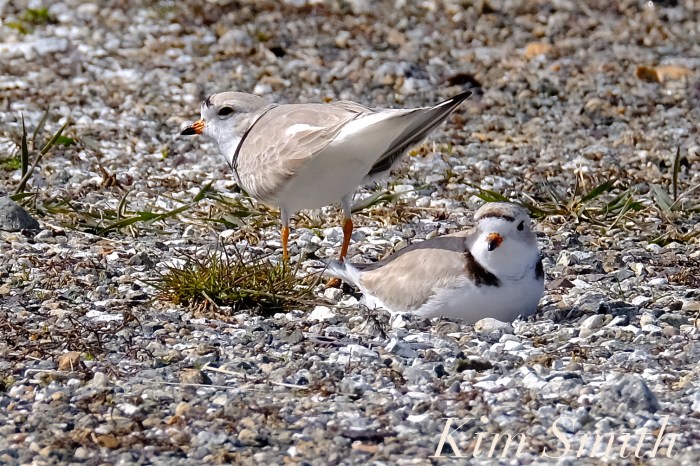
Our Good Harbor Beach PiPls are waffling between the parking lot and the beach.
Tuesday at daybreak I found them mating and sitting in the nest in the parking lot.
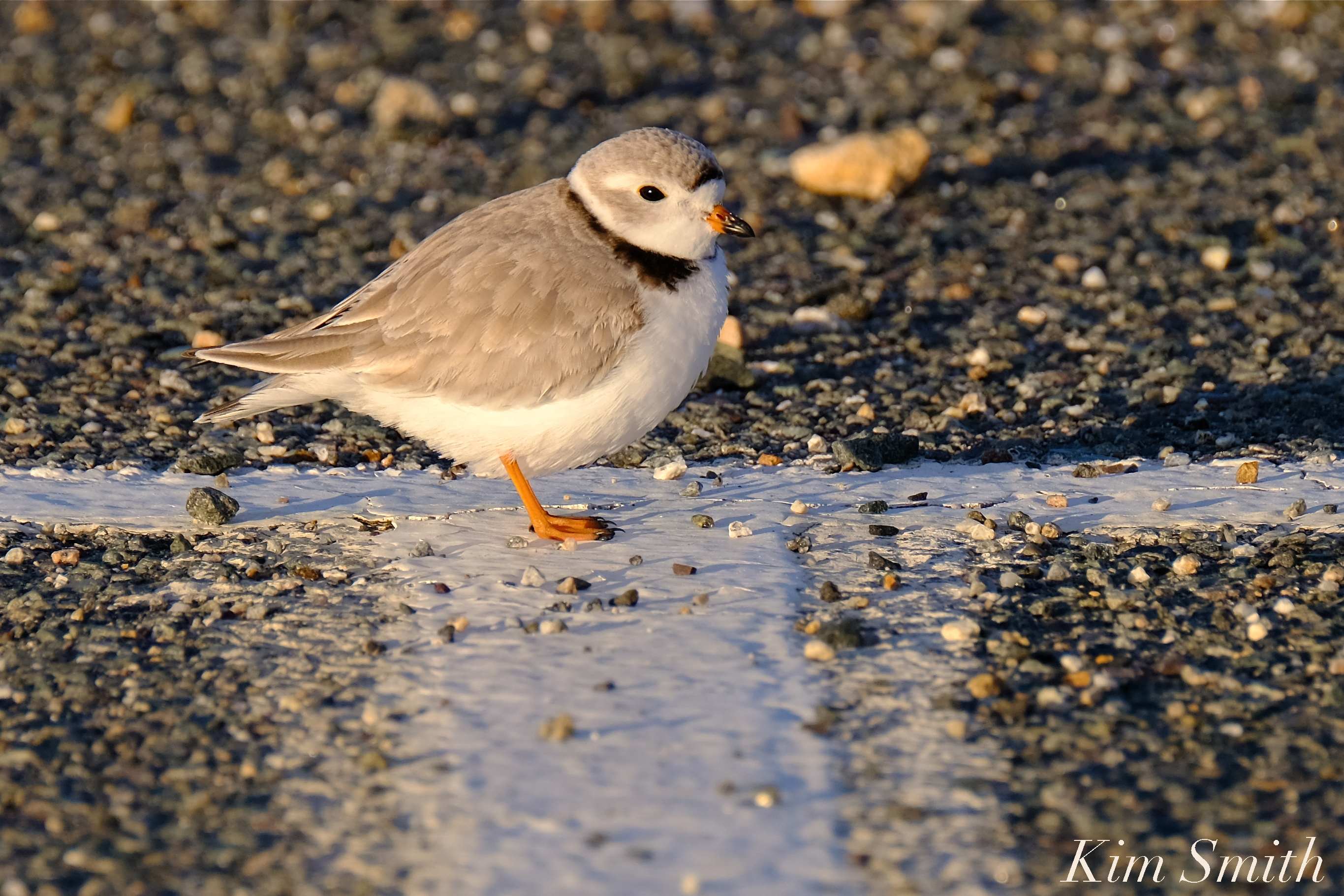 Standing at the crossroads- parking lot nest or beach nest?
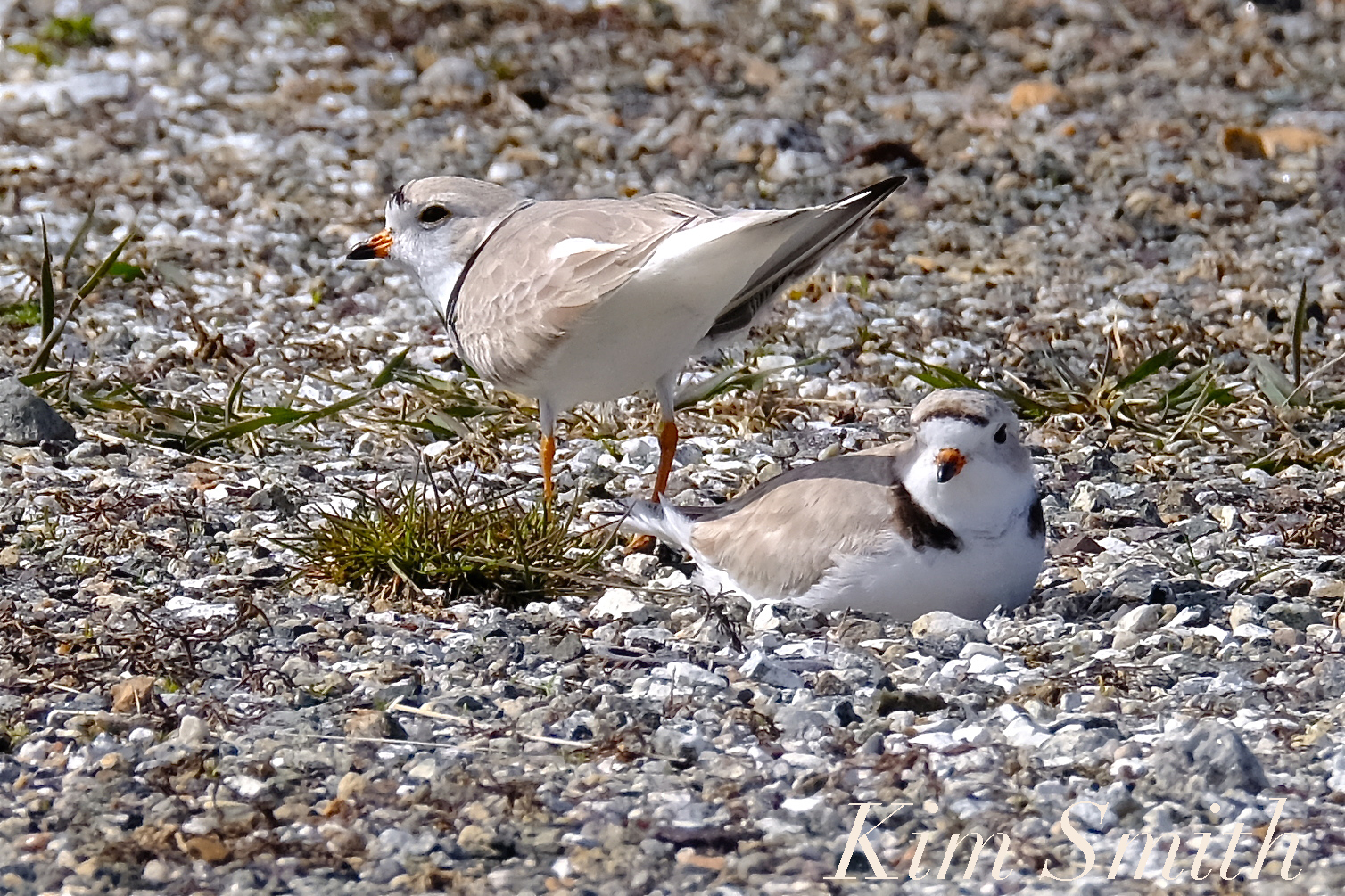 Papa and Mama courting at the parking lot nest scrape Tuesday.
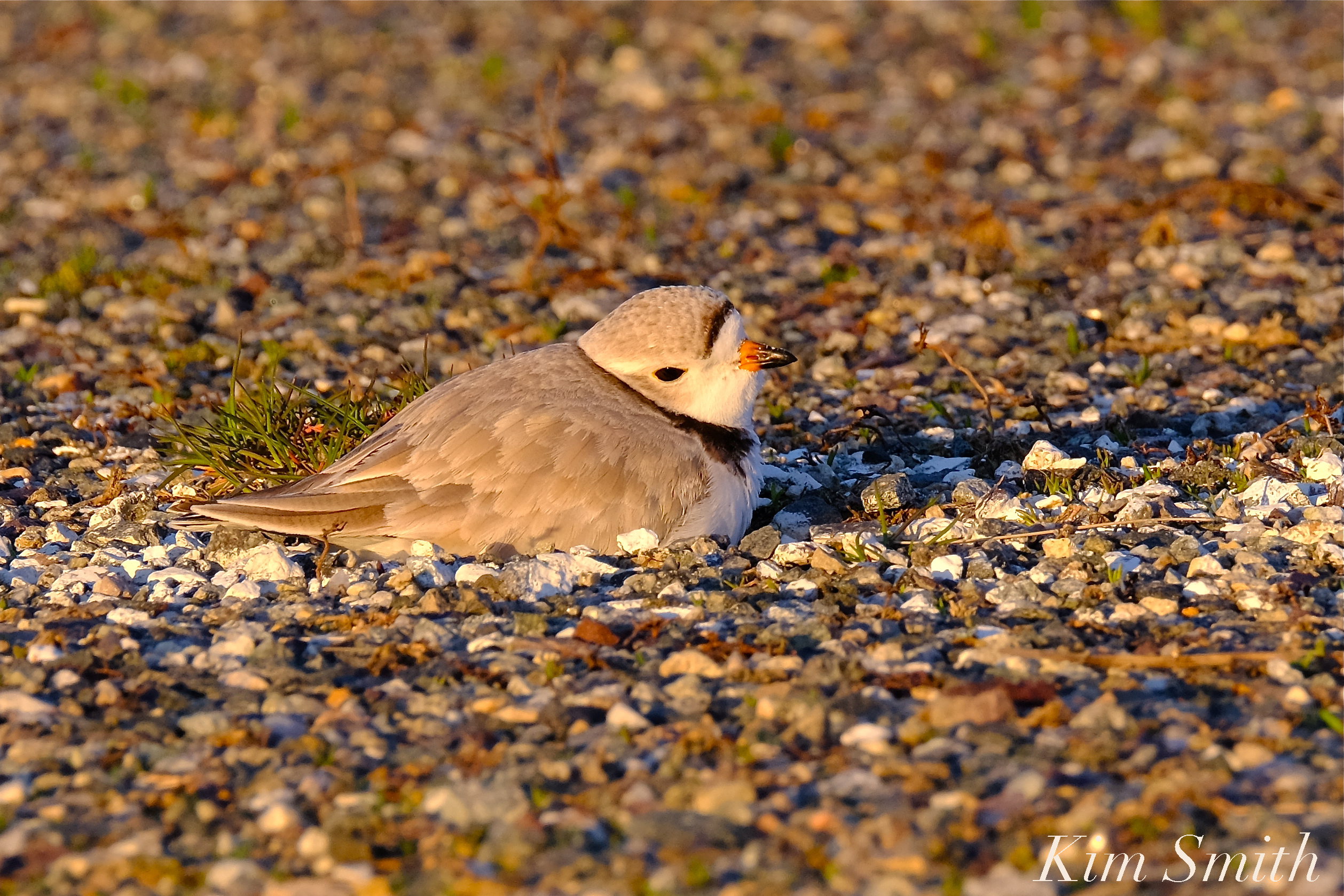
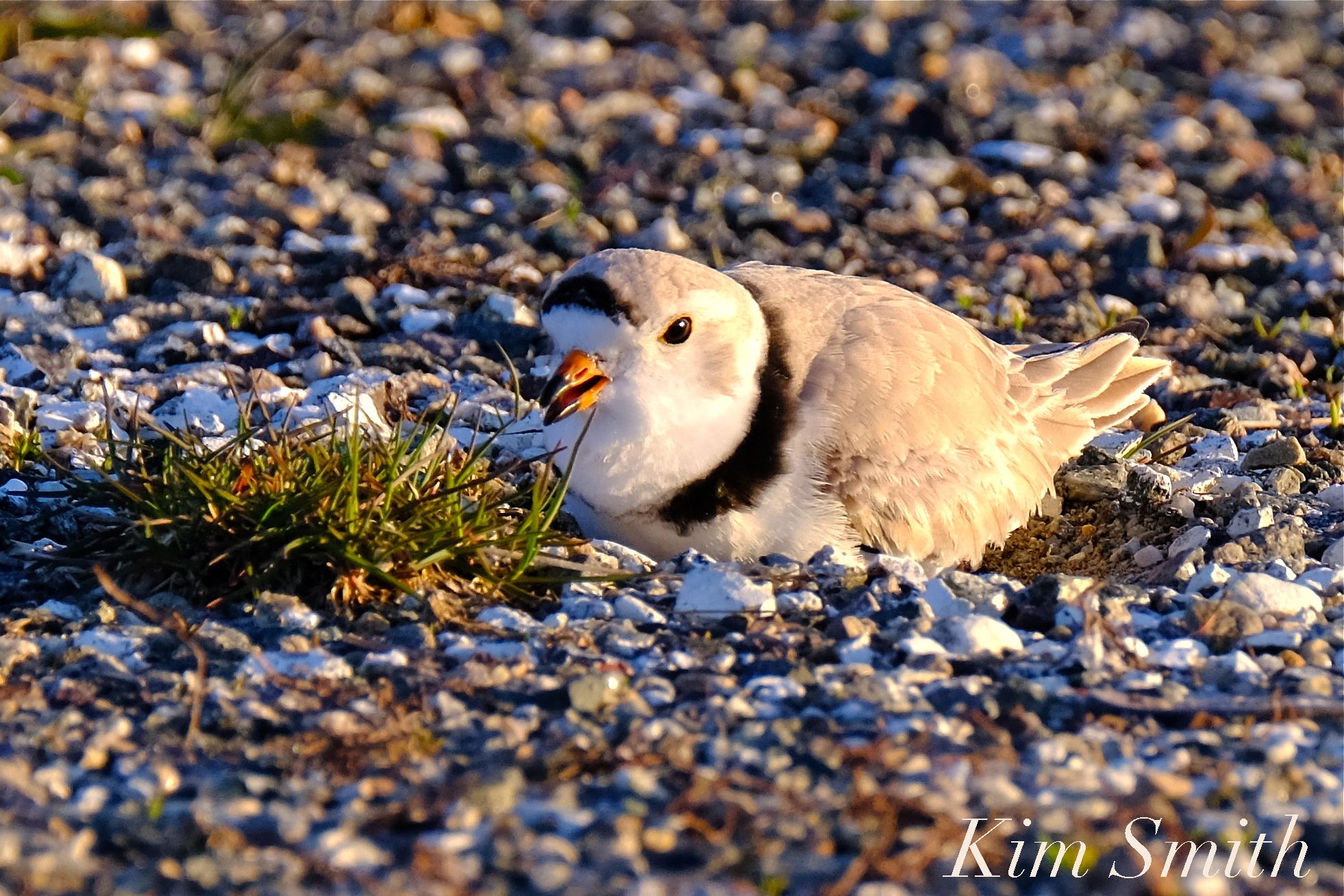
Mama (left) and Papa( right) in the parking lot nest scrape.
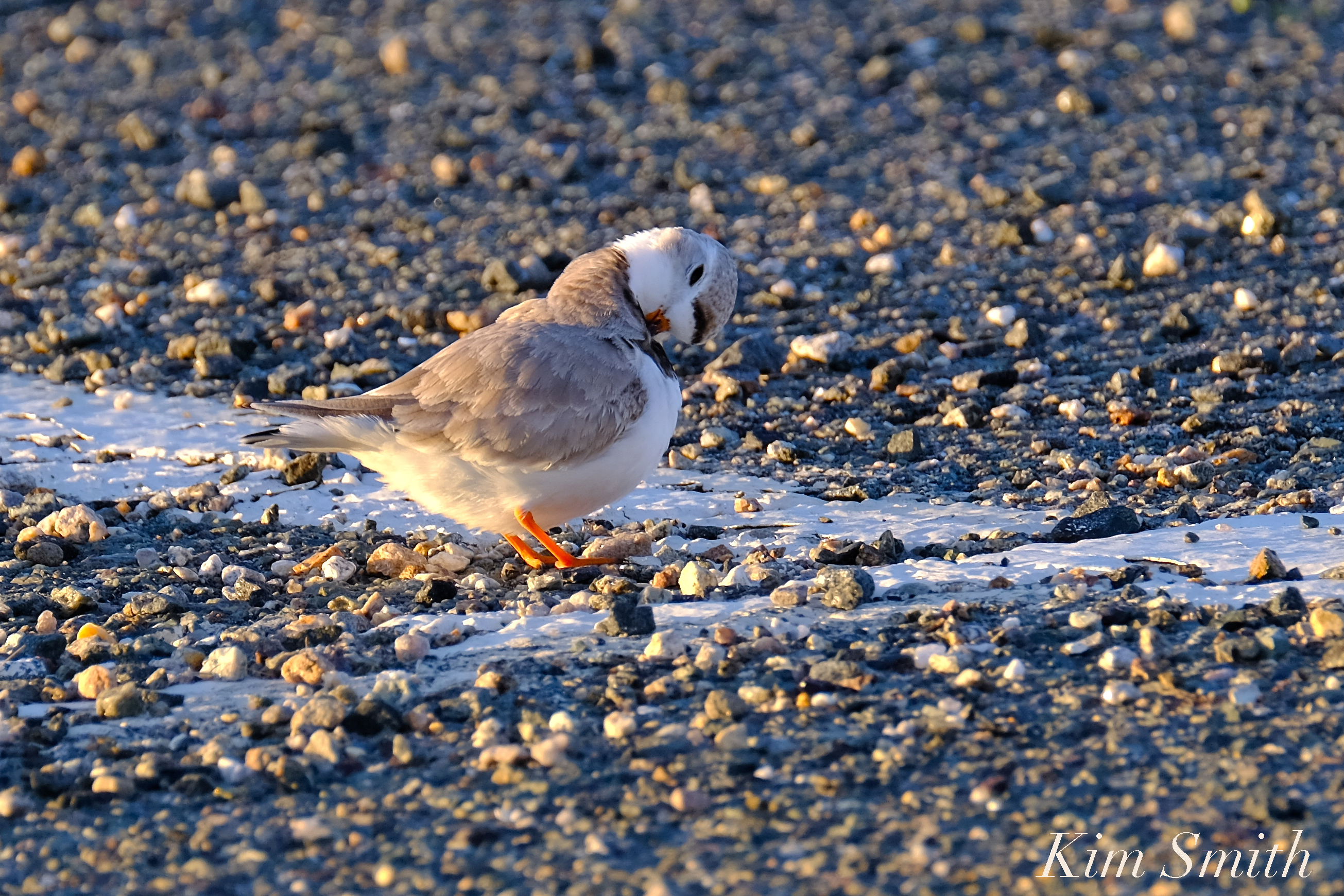 The painted white lines provide camouflage.
Late Wednesday afternoon, the two were this time mating at their beach nest scrape. Throughout most of the day they were seen on the beach!
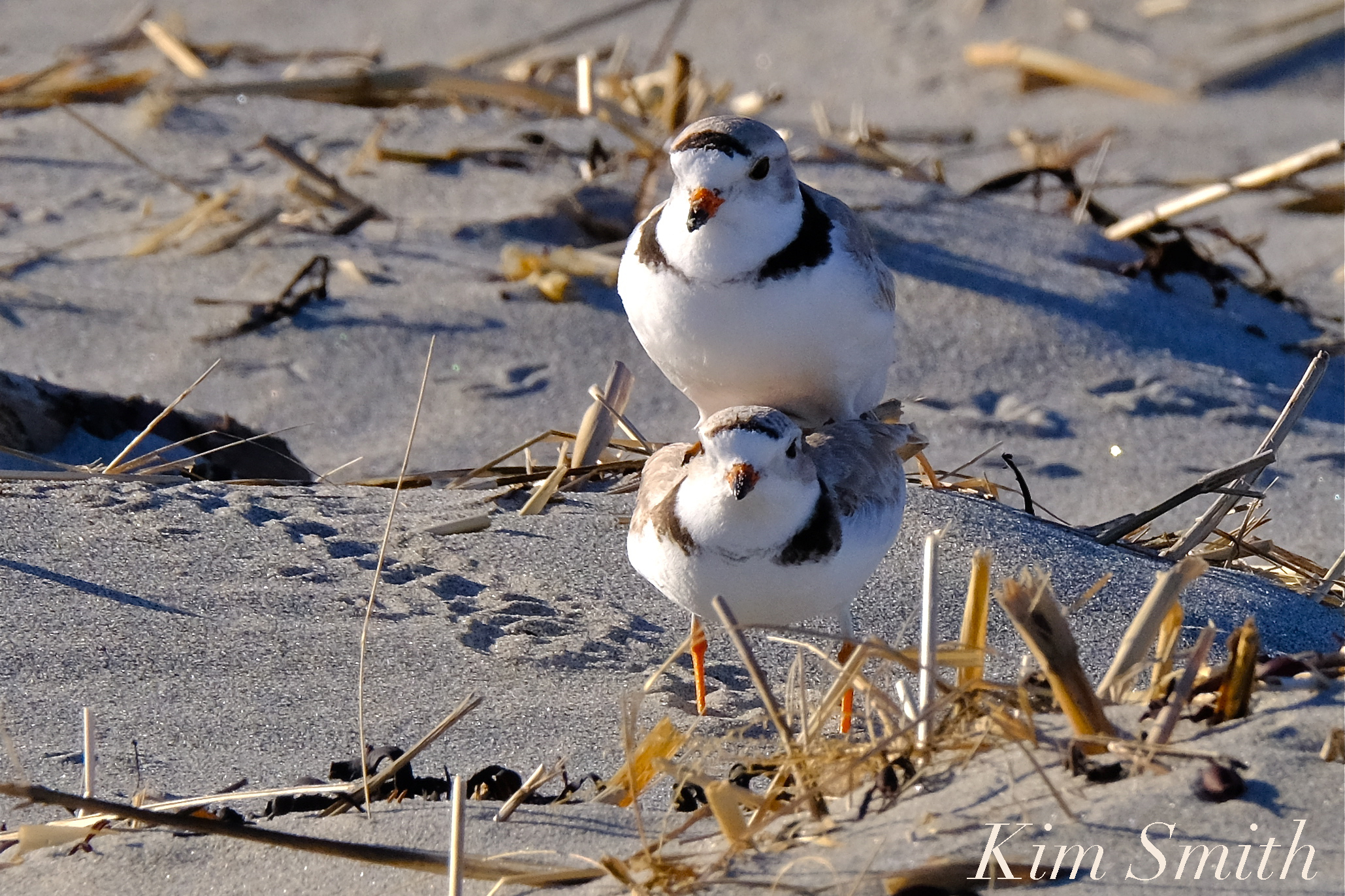 Mama and Papa mating on the beach Wednesday afternoon.
Aside from some pre- and early dawn scofflaws, along with the occasional visits by dogs off and on leash during the day, the beach appears to becoming less frequented by pets. Perhaps the beach will become the safer of the two locations and our little pair will decide to return for the duration of the season.
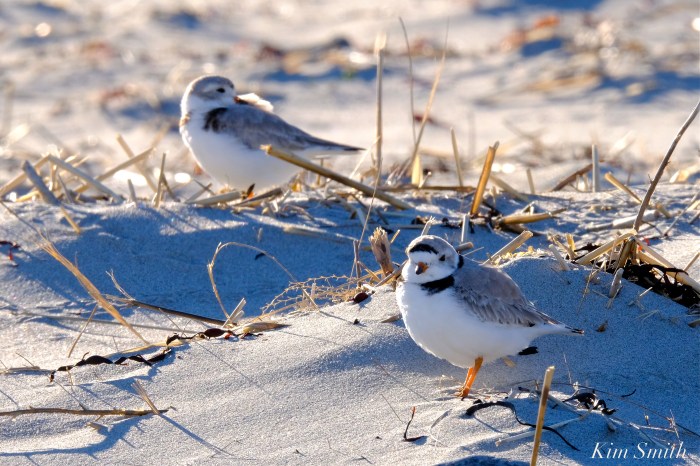
Thank you again to dog Officers Jamie and Teagan for their continued stepped up presence, and to Mayor Sefatia, Mike Hale and the DPW for the fantastic, clear simple signs. The past few days, the signs appear to really be having an effect!
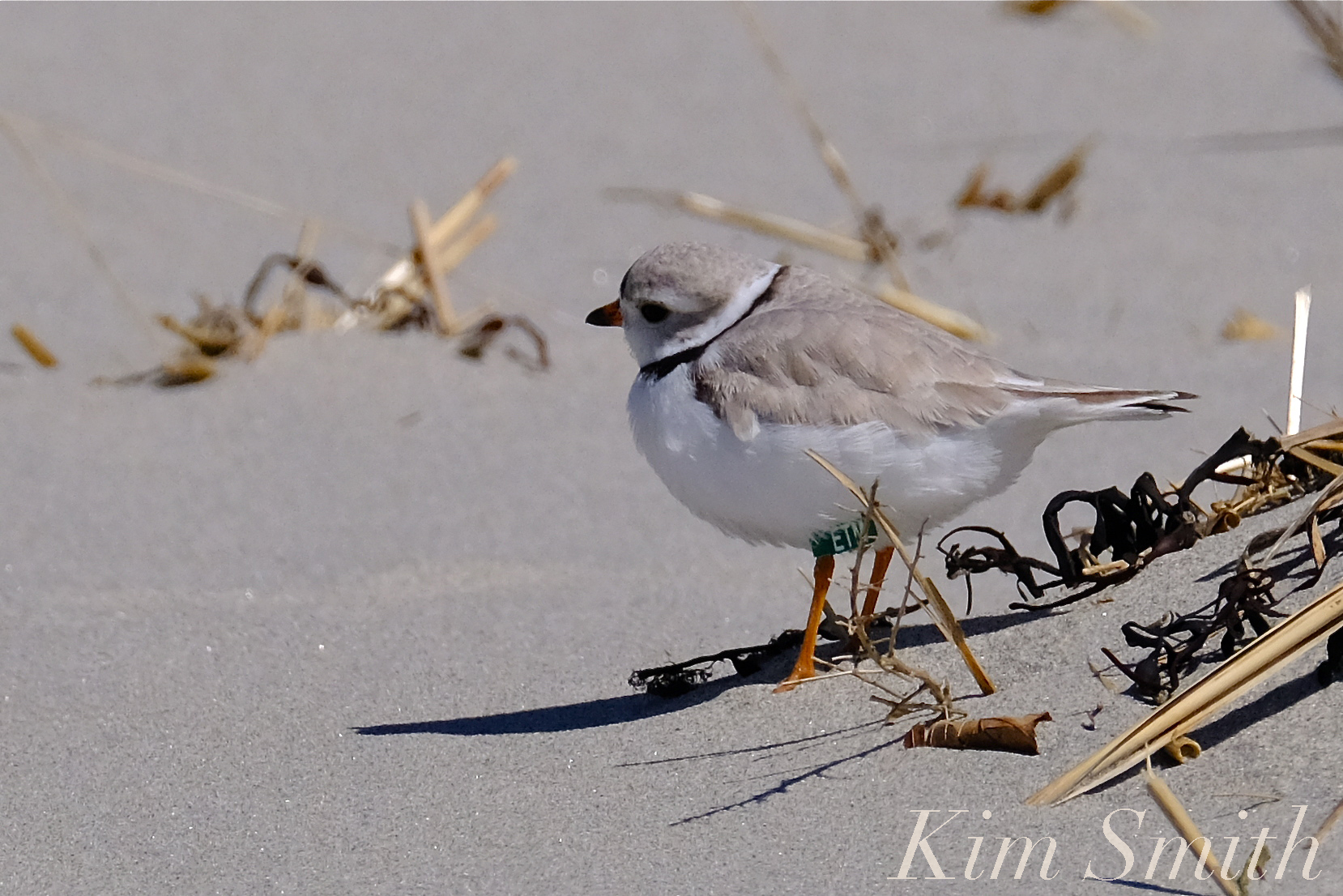
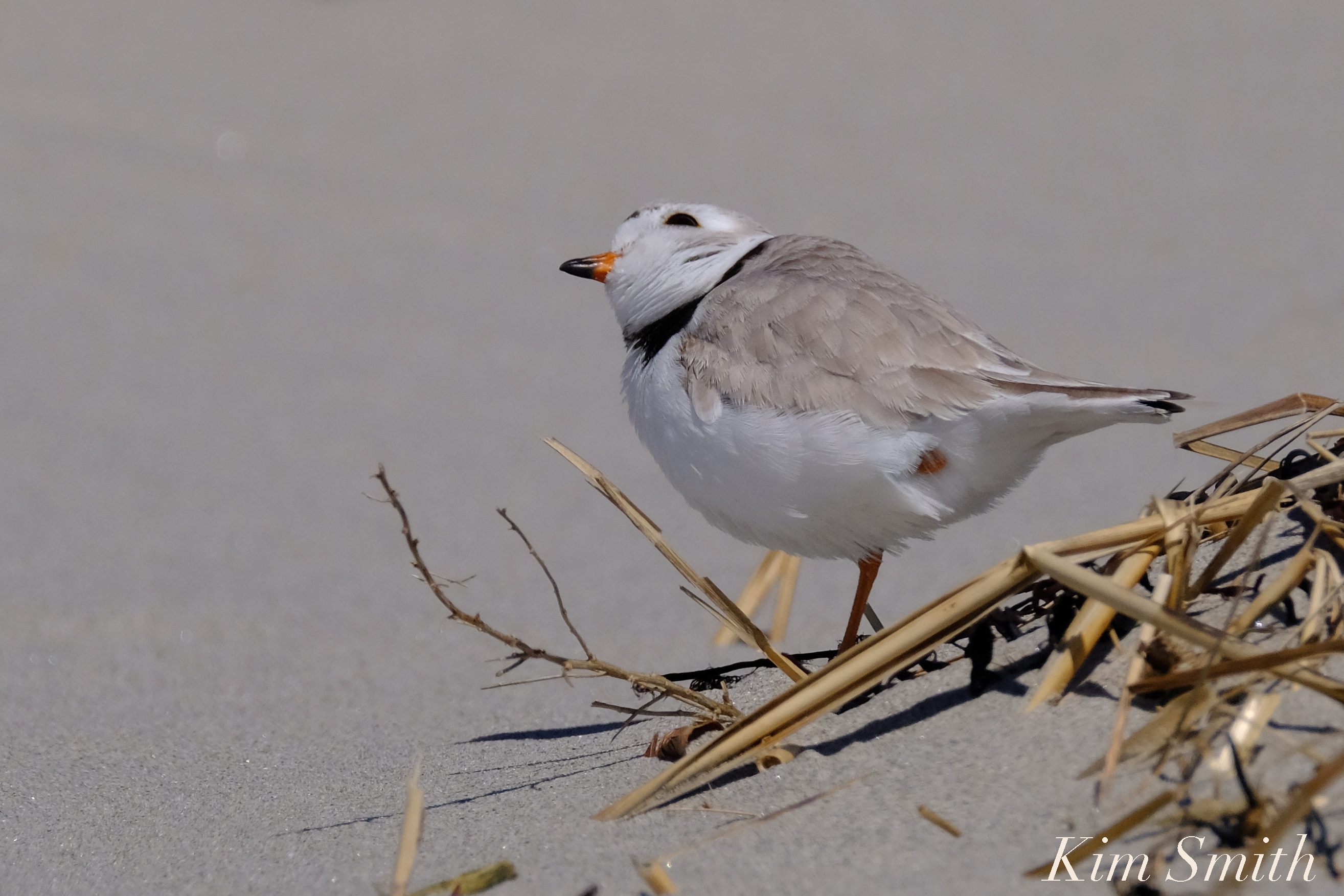
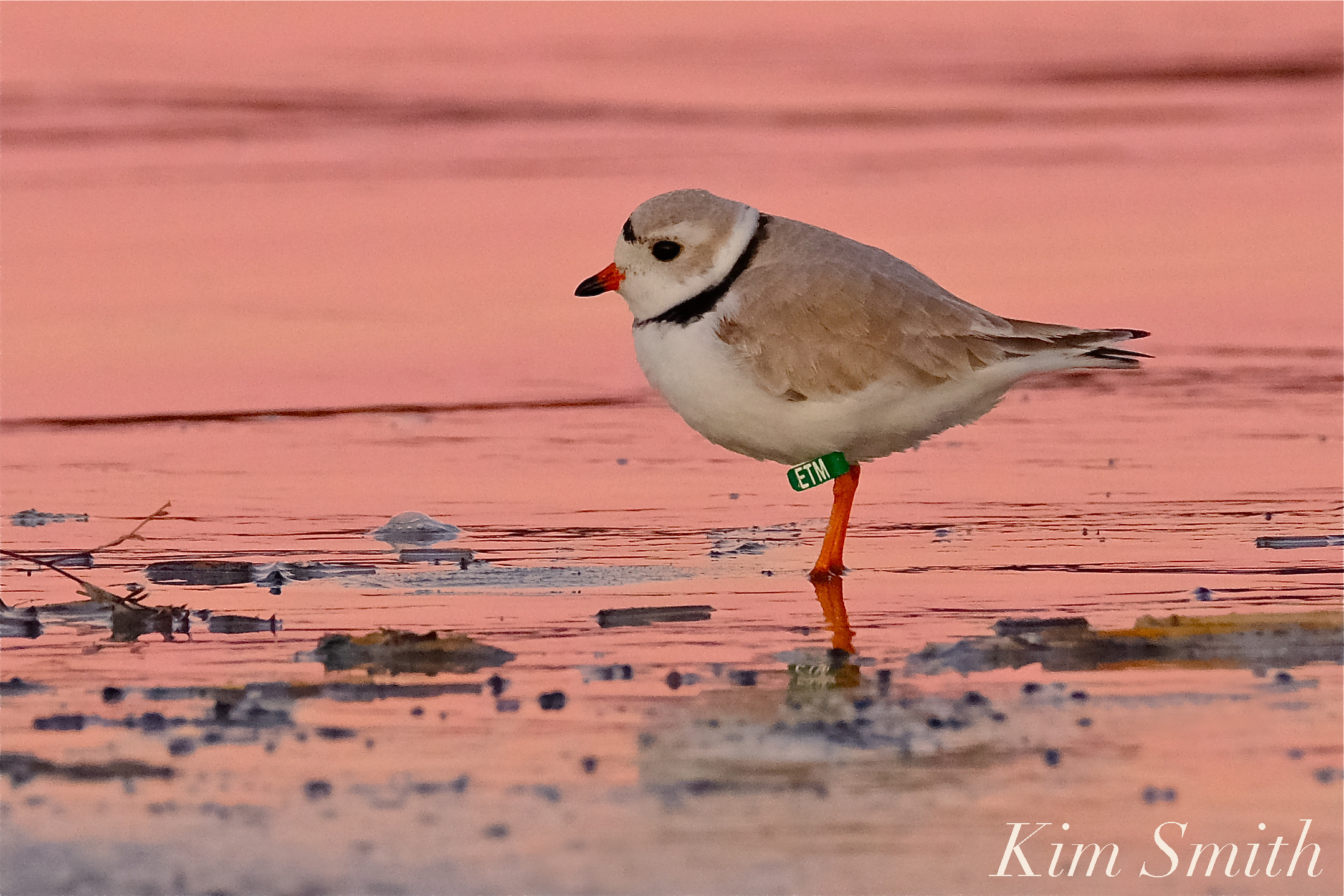
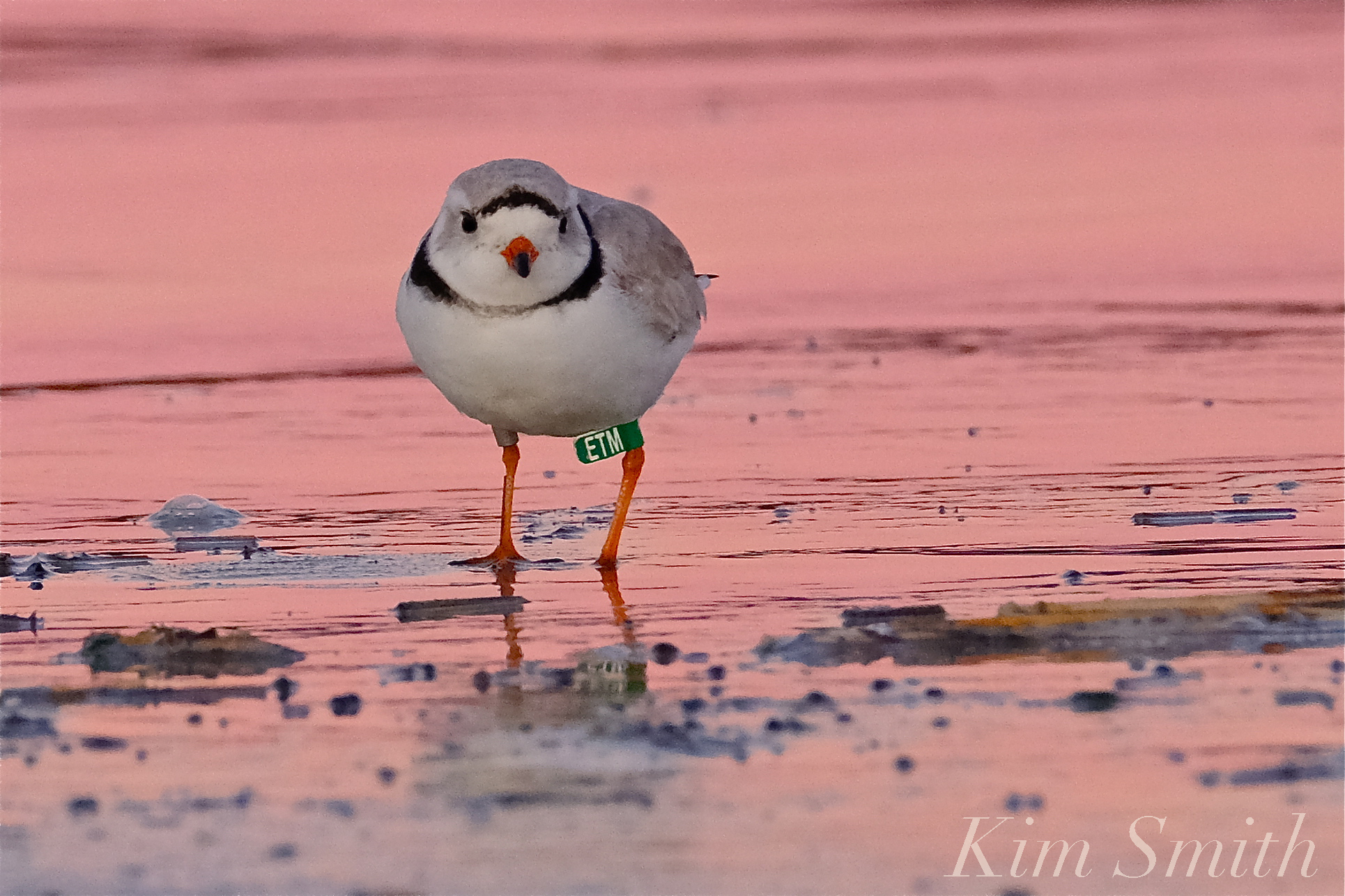
Banded Piping Plover ETM was observed again Wednesday. You can see his ETM leg band in the photo on the left, but not when he is standing with his left leg tucked up under his belly.
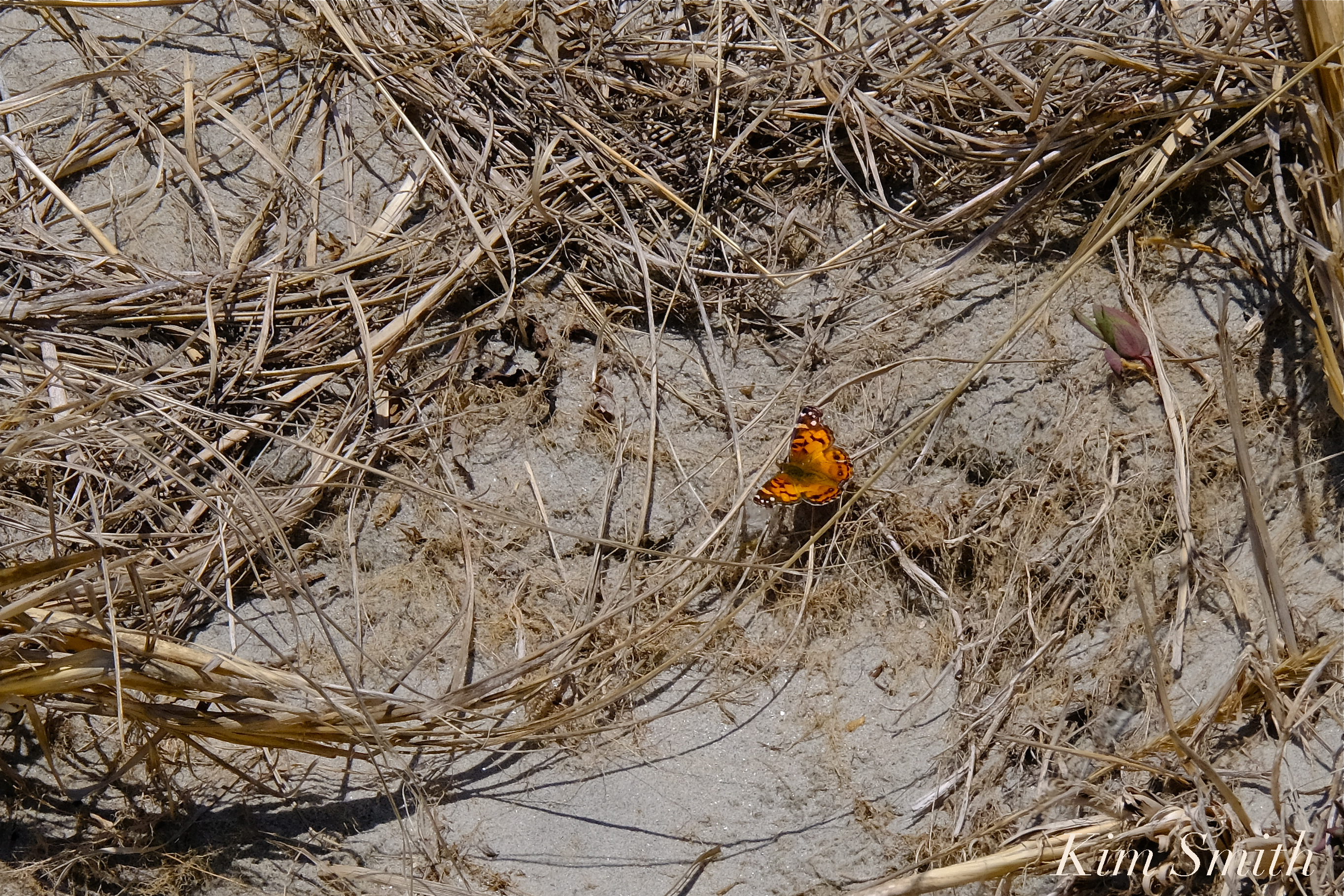 Painted Lady flying in off the water into the dunes.
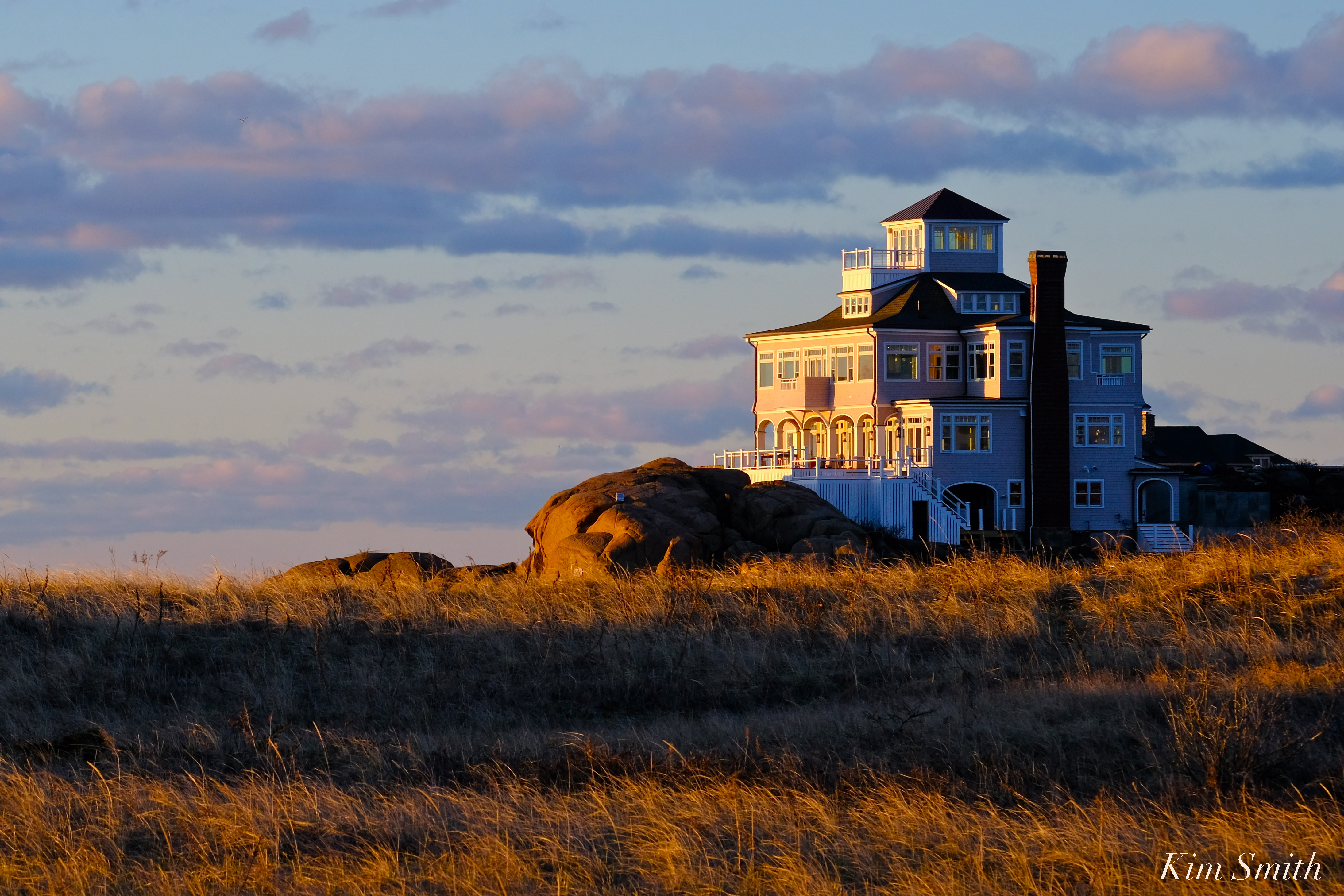

When schooners lose their winter wrappings.
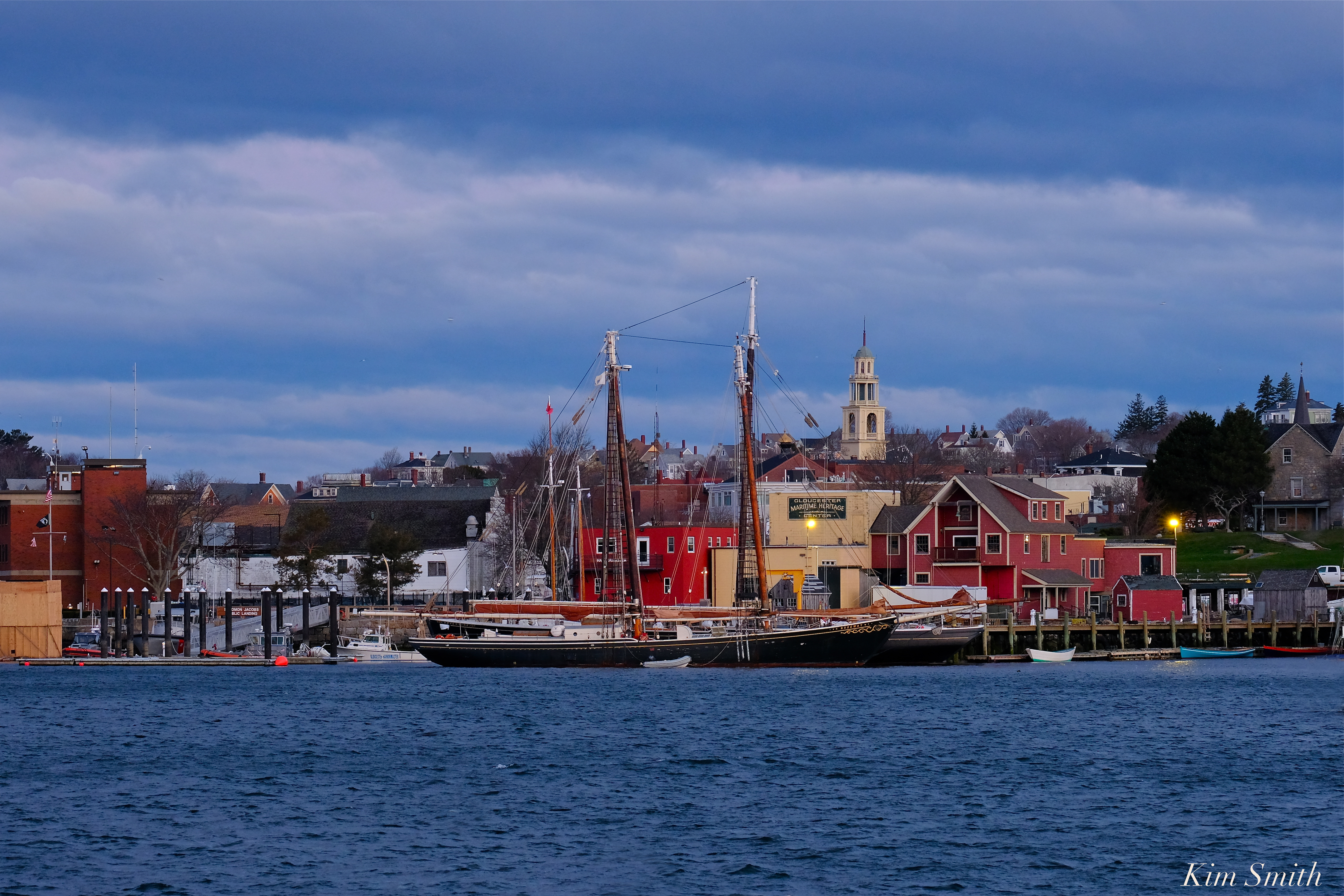
So lovely to look across the Harbor at the Maritime Center and see the Schooner Adventure “unwrapped.”

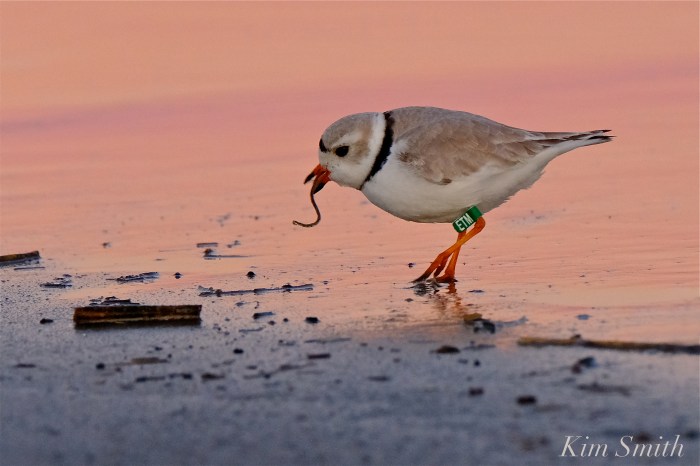
Late yesterday afternoon, our Piping Plover volunteer monitor Heather Hall identified a new addition to the three Piping Plovers currently residing at Good harbor Beach. She observed that he was super hungry and that he was wearing not one, but two identifying bands! The green band is located on his upper left leg and is etched in white with the letters ETM. On his upper right leg is a nondescript aluminum band most likely placed there by USFW.
The little guy was tagged on October 7th of this past year at Cumberland Island, Georgia, by the Virginia Tech Shorebird Program. He is a first hatch year, which means he is not quite yet a year old. ETM was spotted several more times at Cumberland Island indicating that he spent the winter there.
Cumberland Island is a barrier island and is the largest and most furthest south of the “Sea Islands” of the southeastern United States. You may have heard of Sea Island cotton, a very luxurious type of cotton. The fibers of the cotton that are planted on the Sea Islands grow extra long. In spinning and weaving cotton, the longer the fibers, the smoother and more luxurious the cotton feels. The word long-staple is used to describe very fine cotton threads.
Cumberland Island National Seashore sounds like a stunning and fascinating place to visit and I hope to do just that someday soon 🙂
To learn more about the Virginia Tech Shorebird Program:
The Virginia Tech Shorebird Program is a consortium of conservation biologists in the Virginia Tech Department of Fish and Wildlife Conservation. Although our biologists have a variety of interests, we share a common goal of conservation of coastal wildlife resources through transformational research. We work closely with managers and stakeholders to provide research that is timely and pertinent to management. The VT Shorebird Program began in 1985 with a study of piping plovers on the coasts of Virginia and Maryland. Since that time, our biologists have worked up and down the Atlantic and Gulf coasts, along the shores of prairie rivers and lakes, and internationally in the Bahamas, Canada, and China, promoting the conservation of seabirds and shorebirds through research. We have worked with a variety of species, including piping plovers, least terns, snowy plovers, killdeer, spotted sandpipers, red knots, common terns, gull-billed terns, roseate terns, and black skimmers in an effort to conserve our coastlines and the animals that depend on it. Read More Here
And here’s more from Audubon –
Cumberland Island is Georgia’s largest and southernmost barrier island. It is also one of the oldest barrier islands in Georgia, with rich soils capable of supporting a diversity of plants. It is bordered by the Cumberland River, Cumberland Sound, and the Atlantic Ocean. Three main natural communities are found on the island: extensive salt marshes on the western side comprise almost 17,000 acres; an ancient, mid-island maritime forest of live oak, pine, cedar and saw palmetto covers 15,100 acres; and a narrow strip of dune/beach stretches along the Atlantic Ocean side of the island. Parts of the island have regenerated from use as plantations, when clear-cutting for sea island cotton farming and timber harvests for ship building were profitable. It has several noteworthy features, including 50 miles of shoreline, freshwater marshes and ponds, high bluffs, interdune meadows, tidal mudflats and creeks, and a large, freshwater lake. It is accessible only by ferry, a concession arrangement with the national park service.
As a United Nations-sanctioned International Biosphere Reserve, the wilderness on Cumberland Island protects many threatened and endangered species, including six species of migratory and shore birds and four species of sea turtles. It is clearly a place of global significance.
Cumberland Island is a major stopping point on the transatlantic migratory flyway, with over 335 species of birds recorded. Threatened and endangered species include Least Tern, Wilson’s Plover, and American Oystercatcher. The southernmost point of the island, known as Pelican Banks, is a favorite place for Black Skimmers, oystercatchers, pelicans, and numerous ducks and shore birds. The fresh water ponds provide excellent rookeries for Wood storks, white ibis, herons and egrets. In the forest canopy, warblers, buntings, wrens and woodpeckers abound. On the shores, osprey, peregrine falcons, and the occasional Bald Eagle and Golden Eagle can be seen. CI is a breeding site for endangered/threatened/high priority species such as Wood Stork, GAEA, Least Tern, Painted Bunting. Extensive, regular use by migrants and winter residents (warblers, shorebirds, PE, FA). The habitat is largely undisturbed and the island is one of GA’s largest. Area attracts several rare/accidental species (LBCU, GLGU, WEK). Northern edge for some species (i.e., WIPE winters) = seasonal use and range. Contains steadily increasing population of TUTI (uncommon to rare on many barrier islands). AMWP (winter and a few summer), REEG, etc.
Black Rail, Piping Plover, Saltmarsh sharp-tail Sparrow, Nelson’s sharp-tail Sparrow, Painted Bunting, Cerulean Warbler, Golden-winged Warbler, Red-cockcaded Woodpecker (Source: Shelia Willis checklist) Read More Here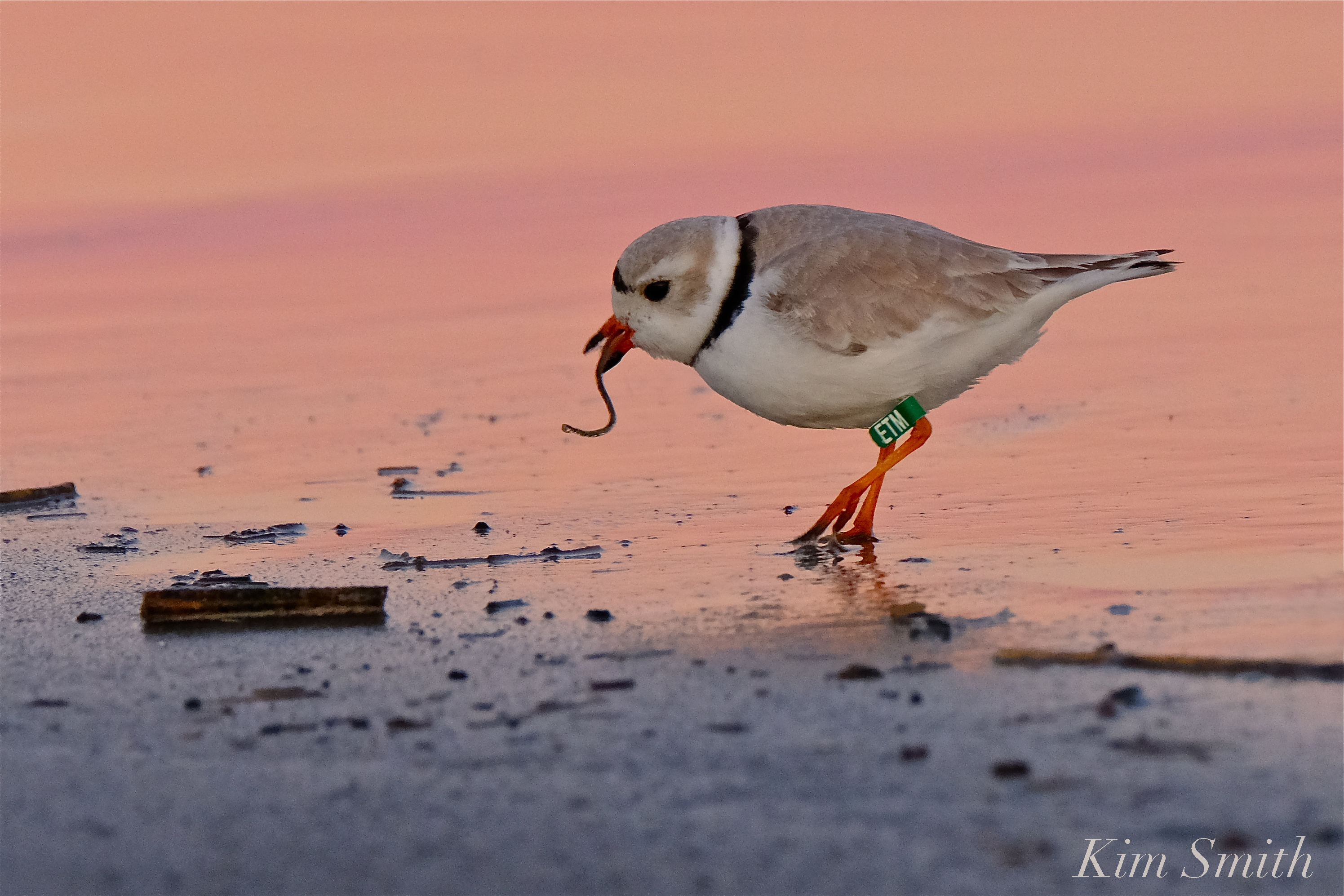

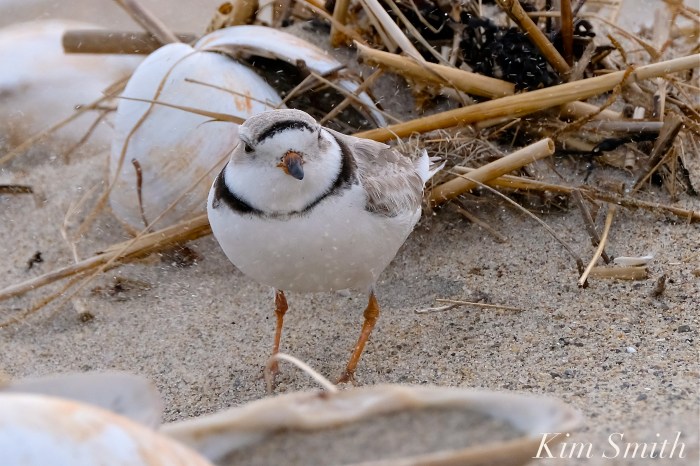
 A question often asked is “where do the birds go when the weather is inclement?”
The answer depends on what type of bird. Some birds, like perching birds, have it a bit easier than seabirds and shorebirds because their little toes reflexively cling tightly to a branch or limb. But many, many birds lose their lives in hurricanes and super storms.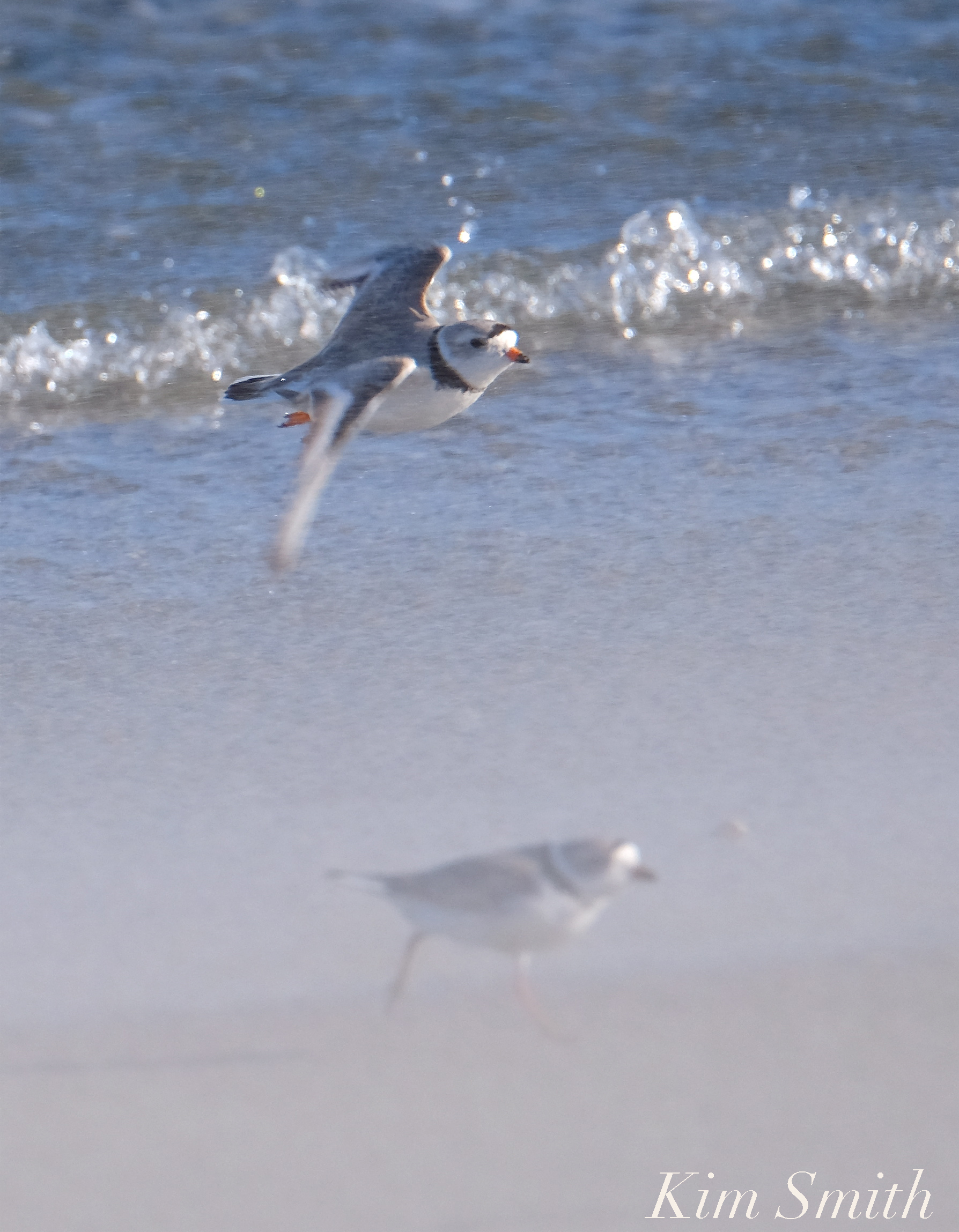
Extreme weather events are especially harmful to threatened and endangered shorebirds. Wave action, high winds, and storm surges destroys coastal habitats and flooding decreases water salinity. Birds, especially young birds, are blown far off course away from their home habitats. A great deal of energy is expended battling the winds and trying to return home.
In the case of Piping Plovers, for the most part, business continues as usual during average inclement weather. You won’t see them sit in a tree or dune shrub because they will lose their primary advantage against predators, that of the safety afforded them by the camouflage of their sandy beach coloring.
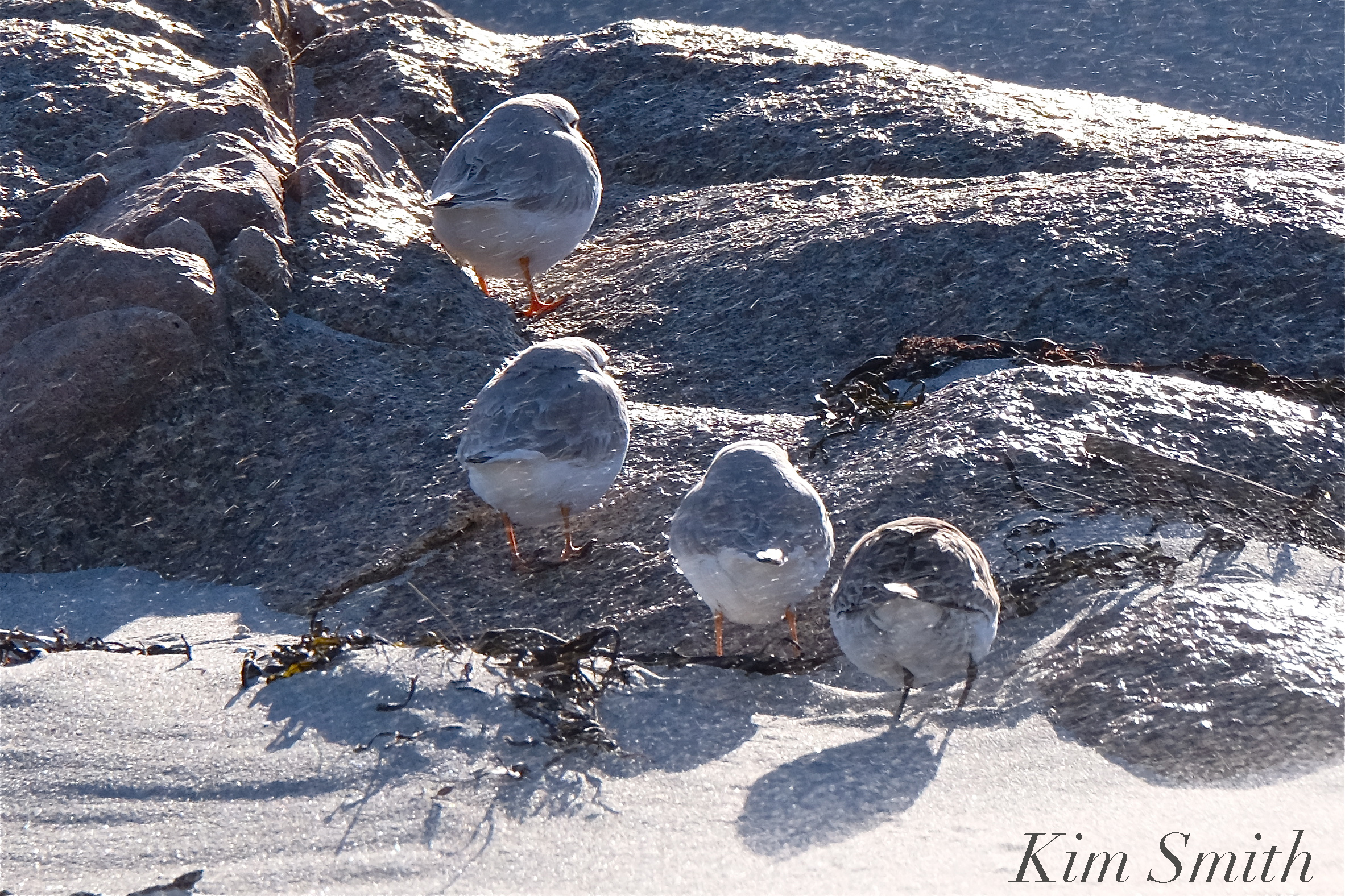 Piping Plovers and Dunlin taking shelter behind the landmark rock at Good Harbor
Perhaps they’ll find a rock on the beach, or ridge in the sand, to crouch behind and out of the path of the wind. Piping Plovers are much harder to find in inclement weather because their feathers mirror shades of rain and snow and fog. Drenching rain, spring snow squalls, and biting summer sand storms won’t stop these indefatigable creatures, we see them foraging during every type of weather event.
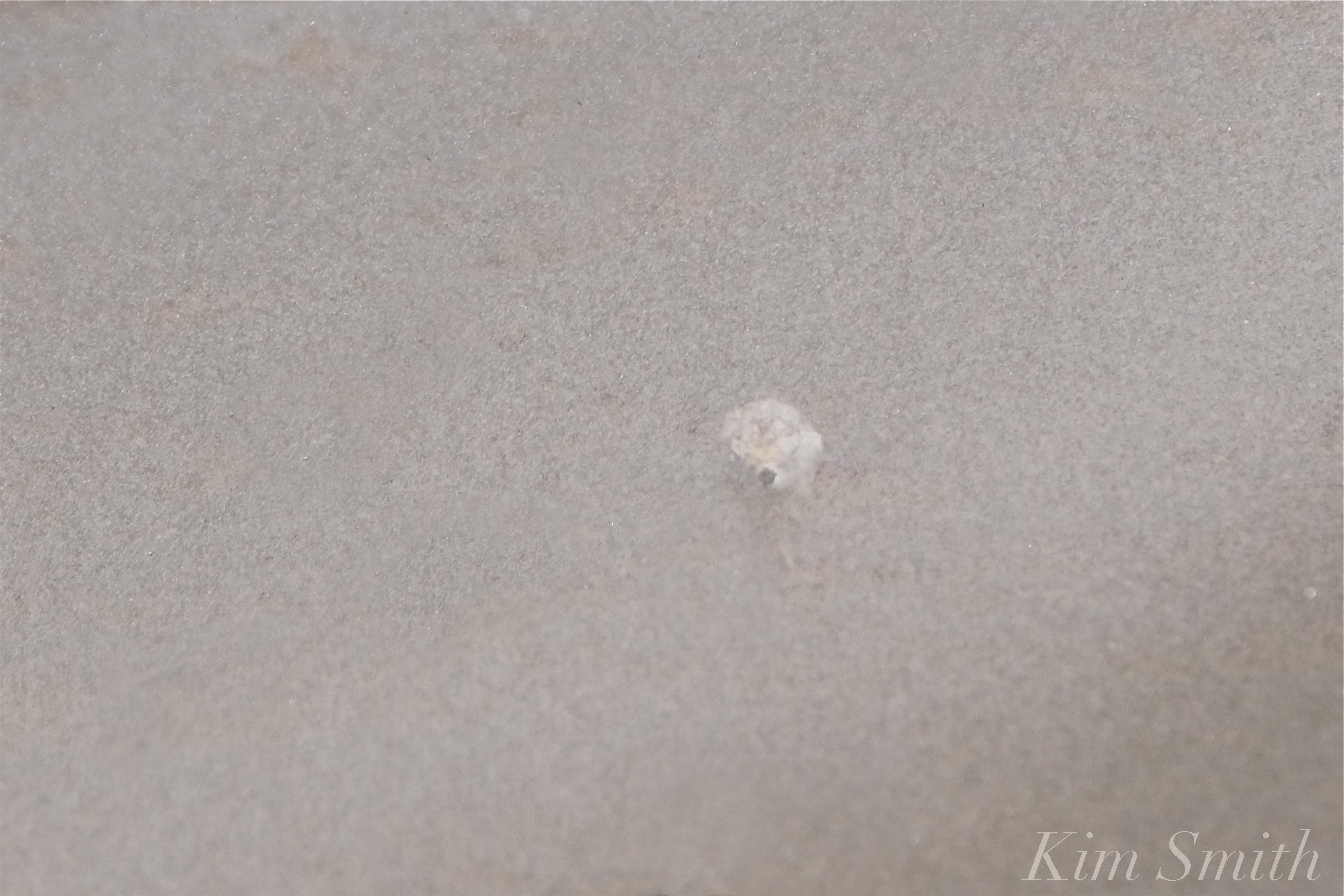
Even Piping Plover chicks, weighing not much more than nickel, have the ability to withstand harsh summer sandstorms.
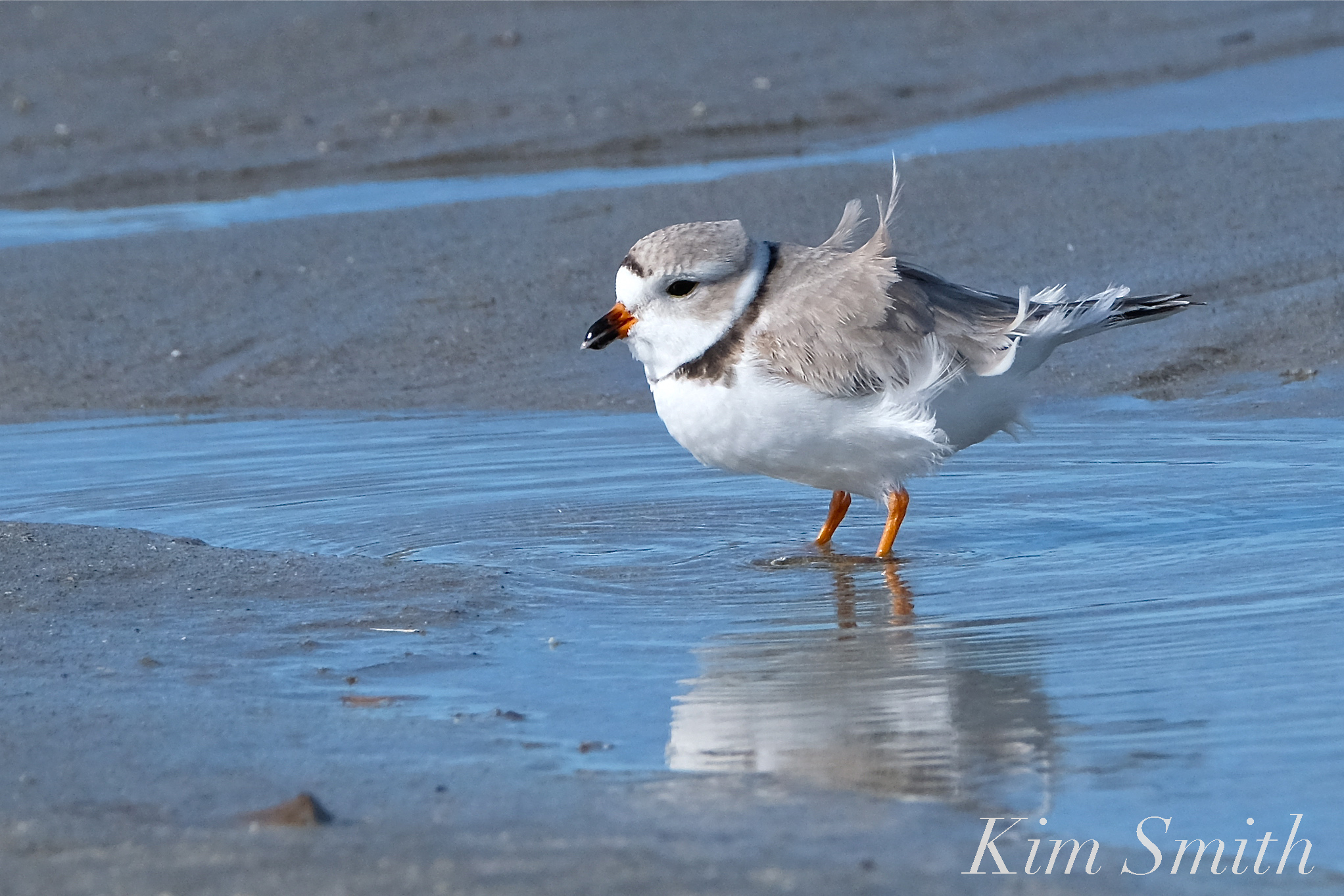 Nearly freezing and made worse by whipping wind.


Animal wildlife rehabilitator Erin Hutchins recently shared a link to her Amazon fundraiser to help gather supplies for Cape Ann Wildlife rehabilitation center. She is so deeply touched at how generously folks have given to her fundraiser that she is actually tearing up when she sees the items on her doorstep. Erin is sending GMG readers a HUGE THANK YOU!!! and wants everyone to know how these supplies are going to be of such tremendous help.
In case you missed the link here it is again: Cape Ann Wildlife Amazon Wishlist
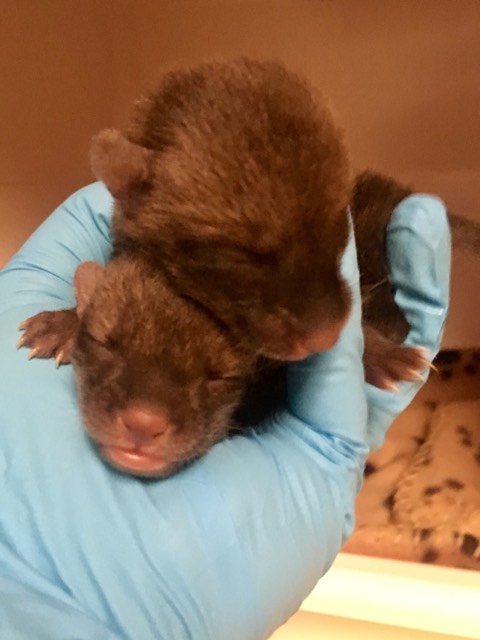 Erin, are these Red Fox kits, babies?? So adorable!


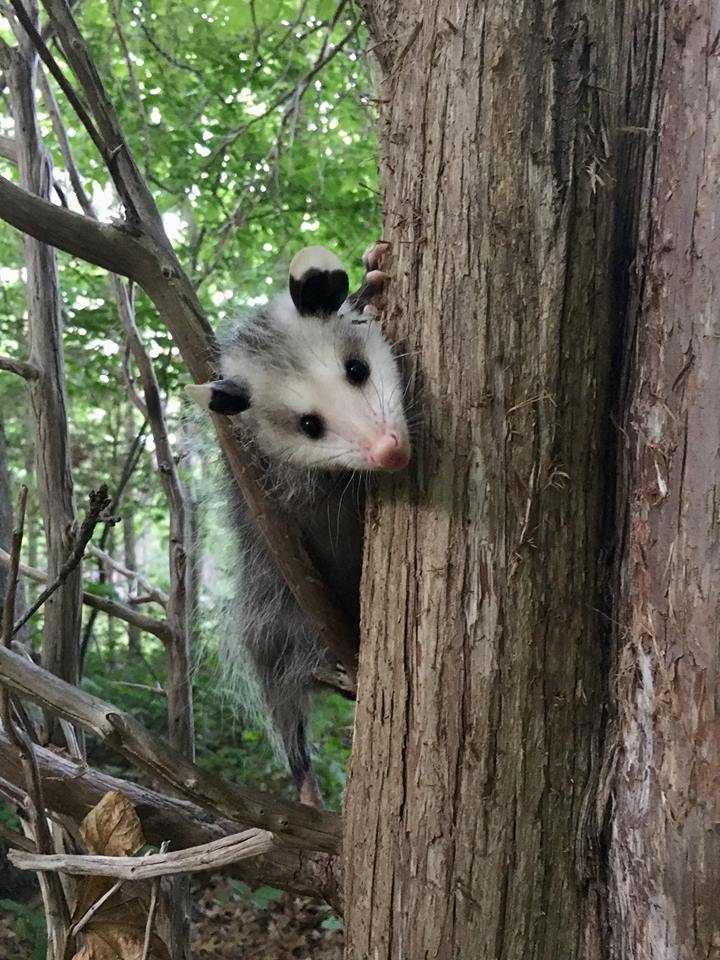




Beautiful but fleeting surprise spring sighting at Bass Rocks this weekend- a male Red-winged Blackbird collecting cattail fluff for nest building, and two species of herons foraging, a Great Egret and Black-crowned Night Heron. Oh Joyous Spring!


Dear Cape Ann Friends,
Today is the official release of Stamford ’76, A True Story of Murder, Corruption, Race, and Feminism in the 1970s. Woo hoo. And only 20 years in the making.
I have a reading at the library at 7 this Thursday, April 18th, and I will be doing a Gloucester Writers Center event at the Rocky Neck Cultural Center on May 22nd. Other regional readings are on my website, http://www.joeannhart.com. Come join me when you can. Love you all.
JoeAnn


Our little Piping Plover family has for the second year in a row been shunted into the parking lot. Saturday morning at 7am they were seen courting and nest scraping on the beach. After a full morning of plenty of dogs off leash romping on the beach, they were nest scraping in the parking lot. By nightfall, they were mating in the parking lot.
 Piping Plover Good Harbor beach nest scrape April 13, 2019
This behavior is precisely what happened last year. The PiPls would begin their morning courting and nest scraping on the beach but by the end of each warm April weekend day, especially off leash days, they were found courting and nest scraping in the parking lot.
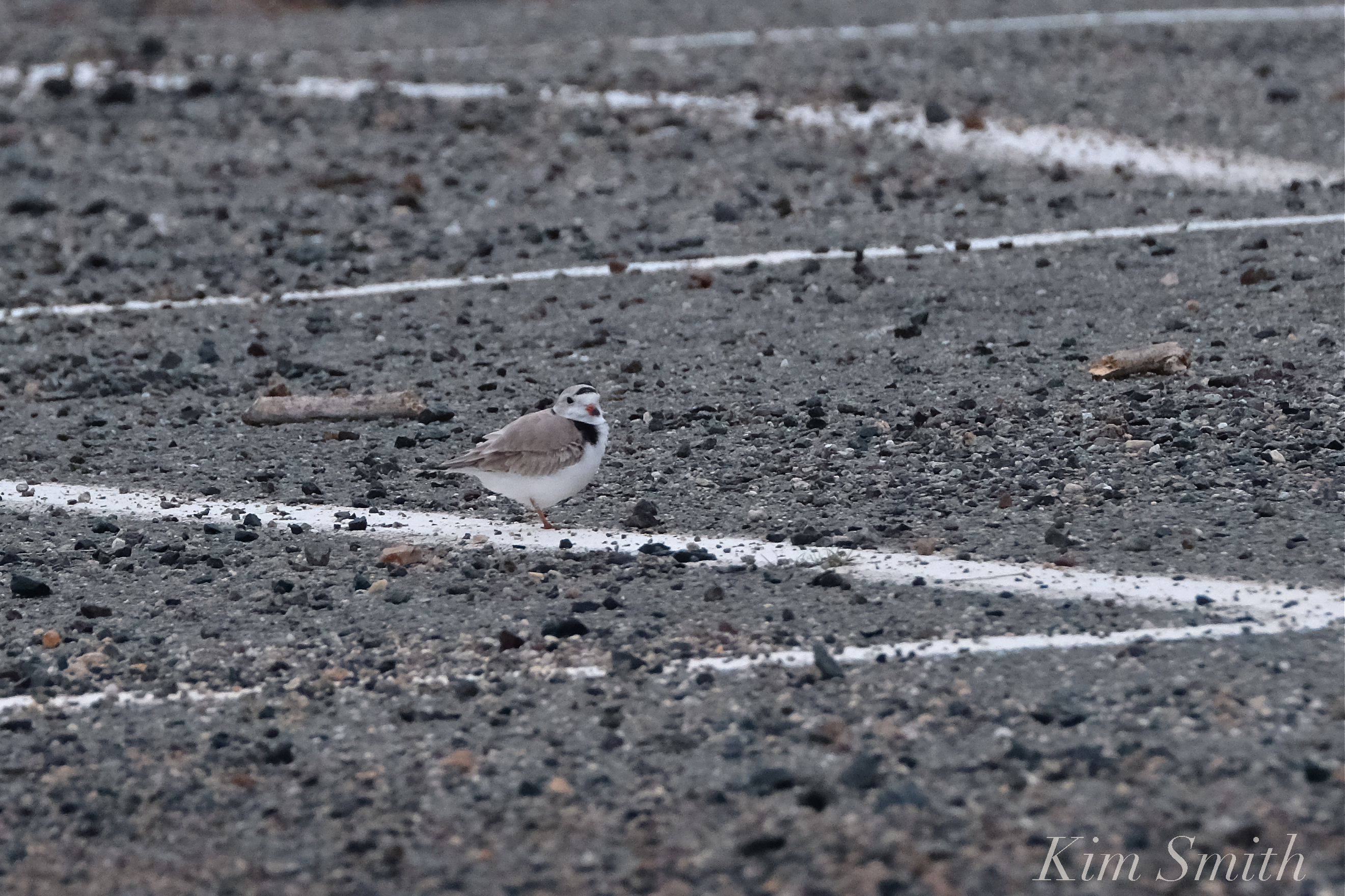 Piping Plover parking lot courtship Good Harbor Beach April 2019
Sadly, there is a contingency that endlessly denies that the people not following the leash laws have any responsibility. They expertly spread misinformation and twist words around and this is not helping the Piping Plovers successfully nest and fledge chicks. It’s heartbreaking really because nesting in the parking lot very adversely affects the health of the parents and chicks for a whole host of reasons. The adults will be expending twice as much energy, guarding a nest scrape in both the parking lot and on the beach. Last year, the birds maintained their territory on the beach the entire time they were brooding eggs in the parking lot. Intelligently so, when you think about it, because the beach nest is the precise location they marched their chicks to only one day after hatching.
Piping Plover monitors are not dog haters. Many of us are dog owners (some with multiple dogs) and most of us love all animals, wild and domestic.
I have, as well as have many of our PiPl advocates, been addressing not only the issue of people not following the leash laws at Good Harbor Beach, but problems around littering and trash collection and how these issues adversely affects Piping Plovers and all wildlife. Before there was the Animal Advisory Committee list of recommendation and the city’s Piping Plover Plan, I presented a list of recommendations, which included how to help the PiPl in regard to littering. This plan was presented on July 9, 2018. We fully recognize the threat gulls and Crows pose to the chicks. The focus of late has been the dogs on the beach because they are the greatest disrupters to courtship and brooding and because the PROBLEM IS STILL NOT RESOLVED, despite the ordinance change. There were dogs off leash all over Good Harbor Beach at the time of this writing (Saturday night) and only a very few gulls and Crows. We recognize that compliance with the ordinance won’t happen overnight, but rather than helping, misinformation is continually spewed.
As we have posted many times (including photos of), there are Eastern Coyotes and Red Fox on our local beaches. We see their easily recognized tracks in the sand. But one coyote or one fox, which is the most set of tracks that we ever see on a beach on a given morning at dawn or an evening at dusk, does not in any way equal the disruption to Piping Plovers while they are courting and brooding to that which is caused by several hundred dogs romping on the beach on a single day.
ADULT BIRDS ARE NOT IN DANGER OF BEING EATEN BY FOX, COYOTES, AND DOGS BECAUSE THEY CAN FLY AWAY FROM MAMMALIAN PREDATORS.
Crane Beach, which has by far many more natural predators than does GHB, successfully fledges chicks every year.
 Crow in the dune this morning at daybreak. I have posted often about the problem of gulls, Crows, and litter and how the issue negatively impacts Piping Plovers.
ADULT PIPING PLOVERS AND GULLS FEED SIDE BY SIDE ALONG THE SHORELINE.
Gulls and Crows threaten Piping Plover chicks, but we are not even at the chick stage yet. Folks might want to know that because of the restaurants lining the boulevard at Revere Beach, the community has a much, much greater problem with gulls and Crows than we could ever imagine, literally hundreds, if not thousands, on any morning or afternoon. And yet, Revere Beach successfully fledges chicks each year in the exact same locations, and only doors down from where the restaurants are located.
Winthrop Shores Reservation Beach, a densely packed neighborhood with rows upon rows of of triple decker homes facing their beach has a problem with house cats on the beach, and yet this community manages to successfully fledge chicks year in and year out, in the exact same locations.
What do these three very different types of beach habitats have in common, and what are these three beach communities doing right that we are not doing? Perhaps it is because the citizens respect their community’s leash laws.
Repeatedly claiming disbelief at the number of dogs we are encountering at Good Harbor Beach, I have been pressured and cajoled into sharing photos of dogs on the beach, and when I do, there is public objection on their part. I invite all the negative PiPl Facebook commenters who we NEVER, EVER, EVER see at Good Harbor Beach, to come lend a hand. You were invited to work with us on solving the dogs on the beach issue and our invitation was ignored.
Additional note- Today, Sunday, a former off-leash day, there were fewer dogs on the beach than yesterday, a former on-leash day (as of 12pm). Puzzling, but we are not questioning the PiPls good fortune! Huge shout out to ACOs Teagan and Jamie for their hard work, to to all the people who did not bring their dogs to the beach today, to Gloucester’s DPW for installing the unmissable new signs, and to all the folks who came to GHB today, read the signs, and departed (we saw that happen)!
Our GHB Piping Plovers are weighing their options. Perhaps if we can keep the dog disturbance to a minimum, they will abandon their nest scrape in the parking lot and stay on the beach.
 Very briefly gorgeous sunrise this morning, before the heavier clouds descended

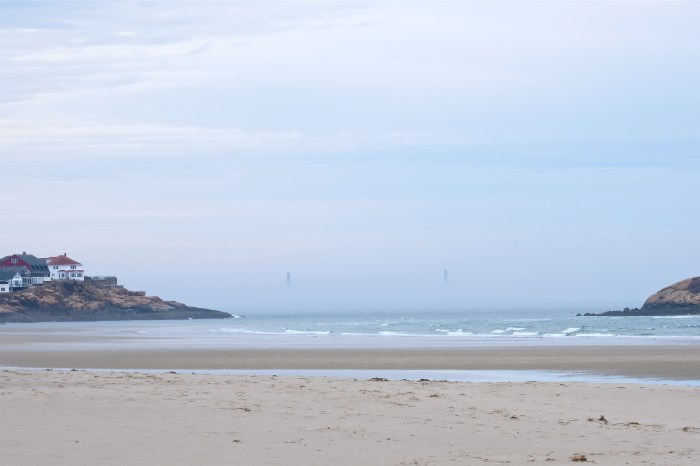
The Twin Lights were slipping in and out of visibility from Good Harbor Beach this afternoon. It was beautiful, and even more so when the sun peeked out for a bit. All three Piping Plovers were seen and unfortunately, so were a bunch of dogs 😦
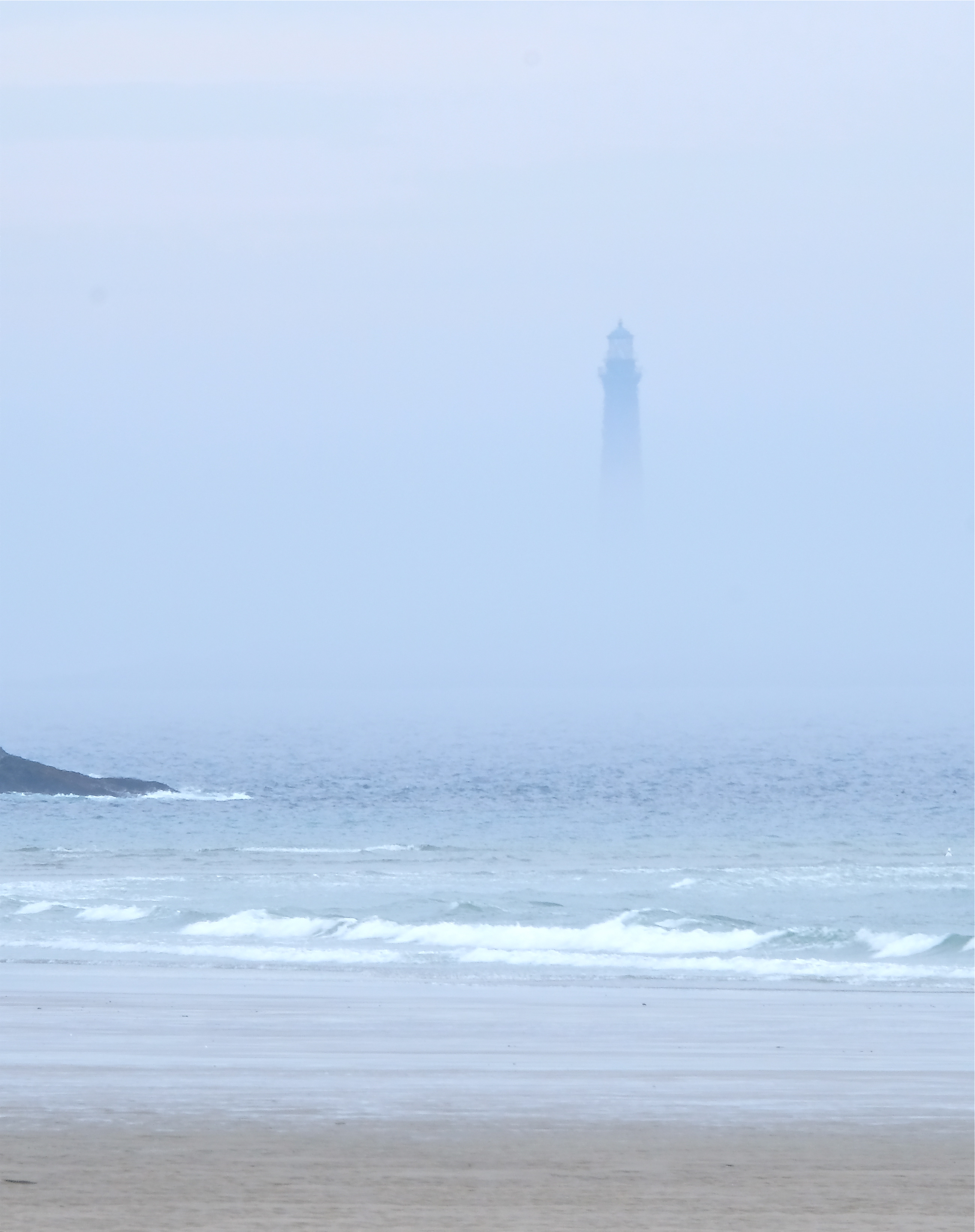 North Light
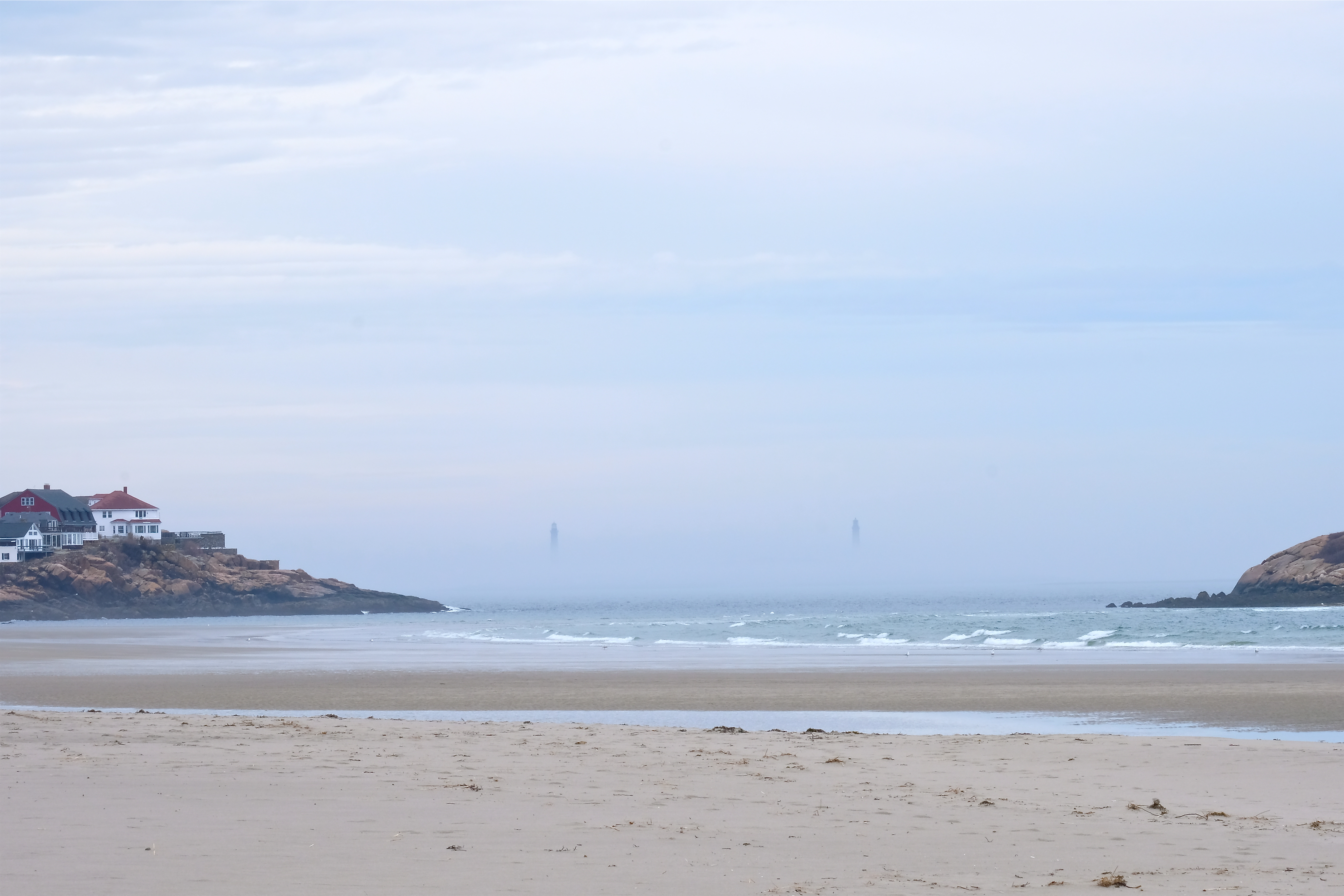 Thacher Island North and South Lights

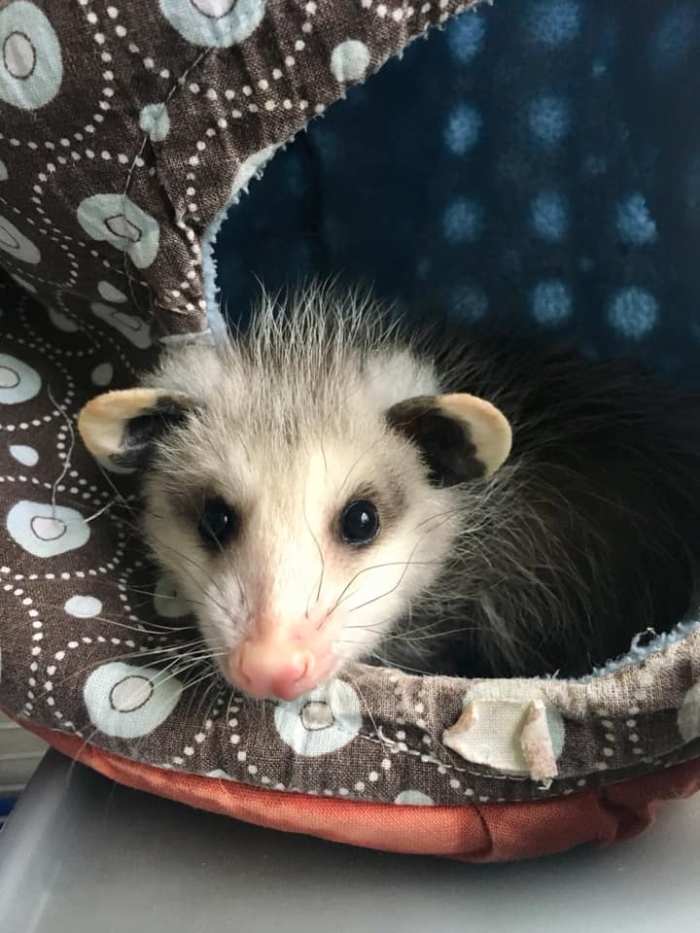
Message from Erin – Big thank you to Jodi Swenson!!! Just look at all the goodies she got me from my “Wildlife List” on Amazon!! As you know, we do not get paid to rehab wildlife, we rely solely on donations or it comes out of our own pocket. Now that I’m State and Federally permitted to rehab wildlife I’m going to have even more patients this year! Donations to Cape Ann Wildlife or my “Wildlife List” on Amazon https://www.amazon.com/hz/wishlist/ls/3SGHHZJ5OBGN0… are greatly appreciated!!


In addition to following through with a number of critical issues related to the Piping Plovers at Good Harbor Beach, Scott has printed up educational USFish and Wildlife brochures, and other handouts, for the PiPl monitors to distribute to beach goers. We are so grateful to Scott and just want to give him a huge shout out!
The PiPl volunteer monitors are also deeply appreciative of all the good will and work done by many of Gloucester’s City Councilors including Melissa Cox, who along with Scott, introduced the ordinance change to the Council when it had been stalled, and to Paul Lundberg, Steve Leblanc, Jamie O’hara, and Sean Nolan for pushing the ordinance through when not much time remained to get it done before April 1st. Also, thanks to Jamie O’hara who checks in regularly with the PiPls progress. Thank you to all the Councilors for voting for the ordinance change.
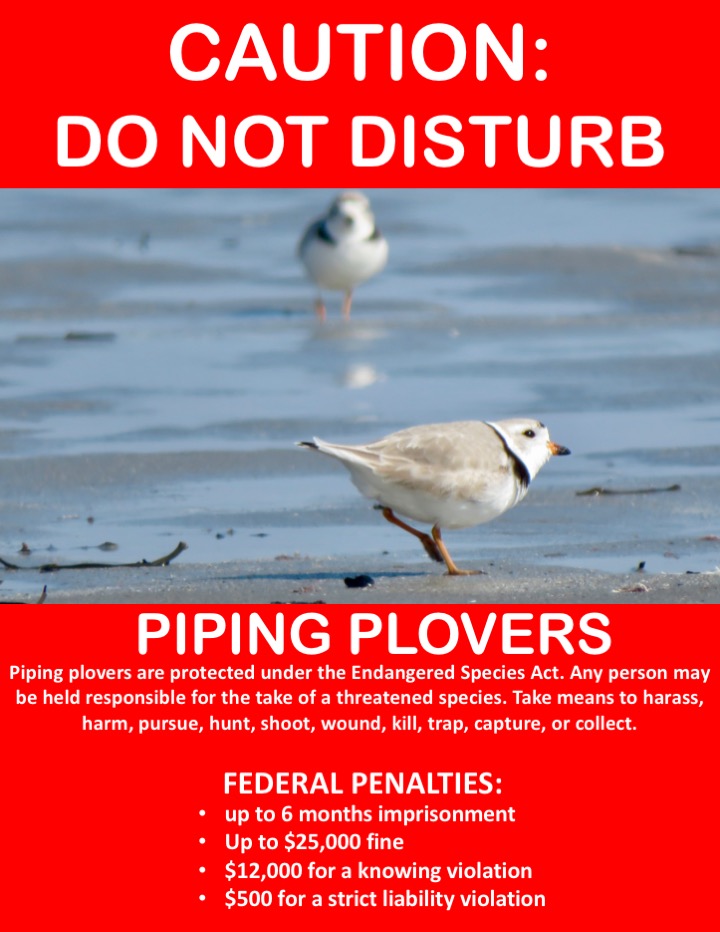

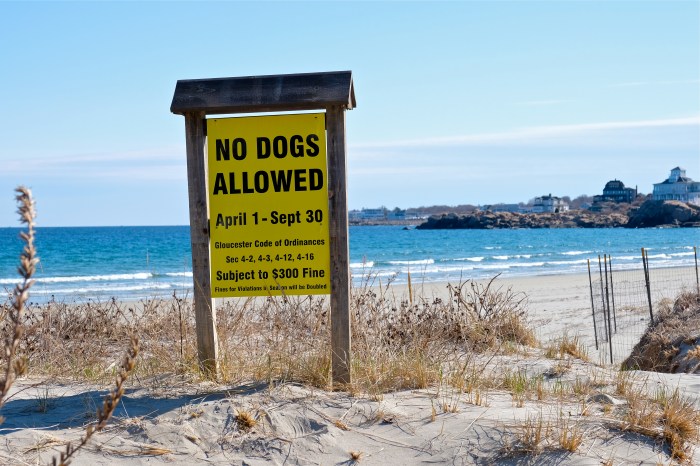
The bright yellow and prominently positioned No Dog signs went up this afternoon. One is placed at each entrance–the footbridge, the parking lot and Whitham Street. They are also positioned to hide the ultra confusing blue signs.
I think the signs will be of immeasurable help in getting people to understand the ordinance change. Thank you so much to Gloucester’s DPW Mike Hale and to the City for getting it right!


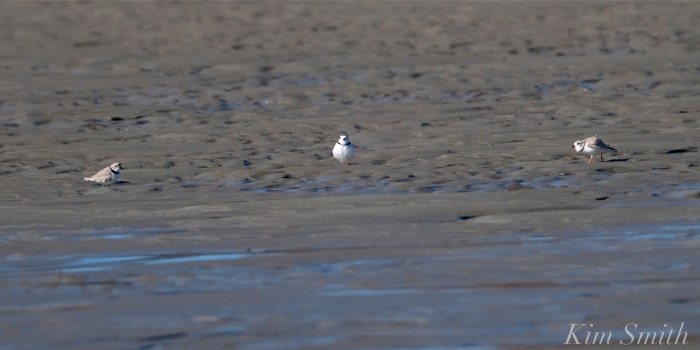
The Bachelor has returned and he was up to his old tricks this morning, trying to horn in on Mama. Neither Papa nor Mama were having any of it and all three took off down the beach with the mated pair pursuing the unmated male. A confrontation (PiPl style) then ensued where both males puffed out their chests and repeatedly ran towards each other, until the bachelor backed down and flew away.
The photos were taken far down the beach, but at least you can see all three, with the two males positioned for battle. Disputes between PiPls, over territory and mates, take place where ever the shorebirds nest.


City Councilor Scott Memhard forwarded the following three photos. They are of the signs that Mike Hale is having made for Good Harbor Beach–note that they measure a whopping 24″ by 36″!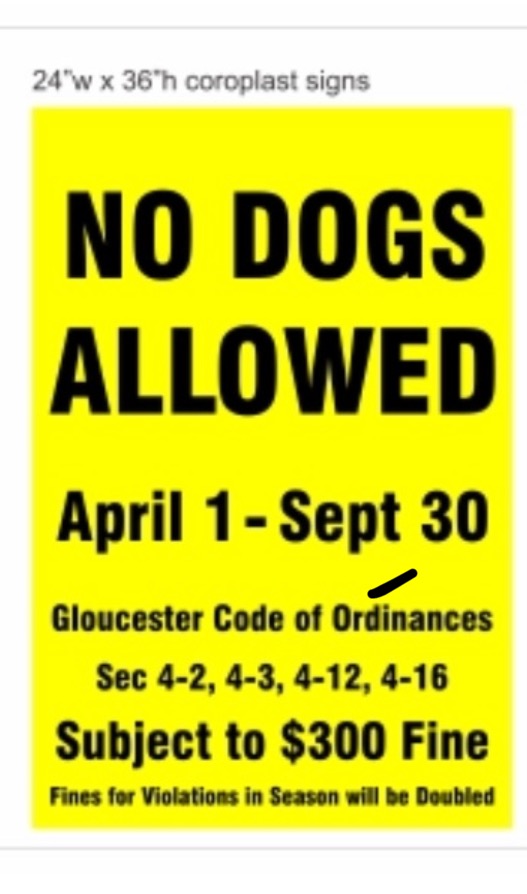
Scott has been working with Laurinda and Patti from the Cape Ann Photography Club on the glass box signs. Scott posted the flyers and the Club has changed the date at the footbridge entrance. We’re looking forward to seeing the changes at the other glass box display cases. Thank you Scott for your tremendous follow through!


Folks are disbelieving of the fact that there were a plethora of dogs Good Harbor Beach on Saturday , with nearly as many on Sunday. The photos aren’t that great and I wasn’t planning on posting the images but because people (who know better) are saying outlandish things, here are two batches from Saturday. The first batch are only some of the dogs because when you are standing at the Whitham Street entrance, it is impossible to document the dogs at the footbridge end, and vice versa.
Saturday morning – approximately 10:30am to 12:30pm on Saturday April 6, 2019
Saturday afternoon at approximately 4:15
Dogs on beach photos posted at www.kimsmithdesigns.com





 Good Morning Gloucester