Author: Joey Ciaramitaro
The creator of goodmorninggloucester.org Lover of all things Gloucester and Cape Ann. GMG where we bring you the very best our town has to offer because we love to share all the great news and believe that by promoting others in our community everyone wins.

Nominations for 2014 Gloucester Citizenship Awards
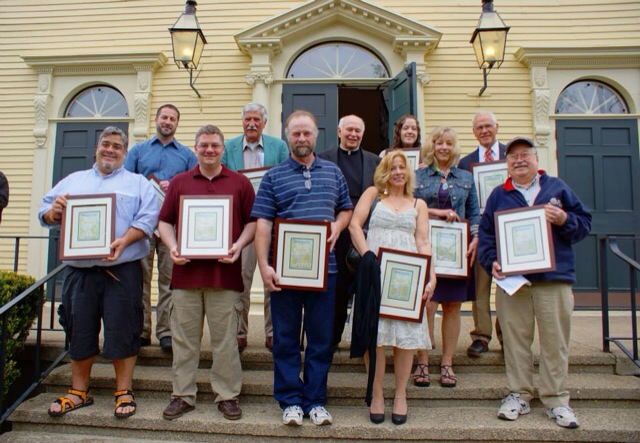
It’s time to nominate your favorite local volunteer or do-gooder for a Gloucester Citizenship Award! Joey Ciaramitaro is a past winner. Attached is a photo of the 2013 winners – how many of them can you name?
CHURCH SEEKS NOMINATIONS FOR CITIZENSHIP AWARDS
The Gloucester Unitarian Universalist Church is inviting nominations from the public for its 2014 Gloucester Citizenship Awards. The church annually seeks to recognize up to 10 individuals for contributions they voluntarily make to Gloucester, without thought of remuneration or recognition.
The people who receive these honors will come from all walks of life. Some are known for simple deeds they do for their neighbors. Others are honored for giving generously to the entire community. All will be people who have worked persistently and quietly to make a mark on Gloucester. They will be chosen because their actions embody the best of the spirit that guides Unitarian Universalism – open-hearted giving to others, solely for what those gifts mean, for no pay, and often with little or no public notice. From young to old, there are no age limits. Nominees need not be citizens of the United States.
Nominations are due no later than Friday, April 4. They must be in writing and include the name and address of the nominee, why this person should be honored, and the name and contact information of the person making the nomination. Nominations may be mailed to the Gloucester Unitarian Universalist Church, 10 Church St., Gloucester MA 01930, or emailed to gloucesteruu@earthlink.net. Final choices will be made by the church’s Social Justice Committee. The awards will be made at a public event at the church on Sunday, May 4.
Matthew a Green Photo
Spread The GMG Love By Sharing With These Buttons:

Representative Ferrante Joins Committee Chairs to Lobby for More Funding
Representative Ferrante Joins Committee Chairs to Lobby for More Funding
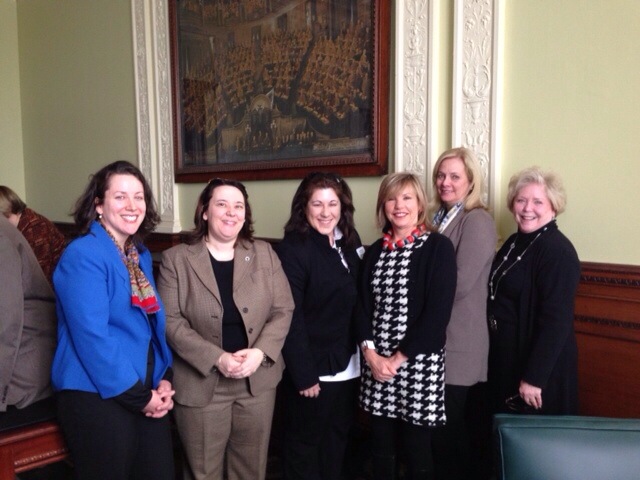
State Representative Ann-Margaret Ferrante lobbied alongside Representative Cory Atkins and Senator Kathleen O’Connor Ives, the Chairs of the Joint Committee on Tourism, Arts and Cultural Development, for more funding for the Massachusetts Cultural Council and the Massachusetts Office of Travel and Tourism. The delegation was joined by Anita Walker, Executive Director of the Massachusetts Cultural Council; Ann Marie Casey, Executive Director of the North of Boston Convention and Visitors Bureau; and Betsy Wall, Executive Director of the Massachusetts Office of Travel and Tourism.
“Cape Ann is a perfect example of how strong support for the arts, culture, and tourism is a driver for local economics. Cape Ann is home to four cultural districts – Gloucester’s Rocky Neck Cultural District, Gloucester Harbortown Cultural District, the Rockport Cultural District, and the Essex River Cultural District. Without the support we received from the Massachusetts Cultural Council and the Massachusetts Office of Travel and Tourism, the significant distinction as a cultural district may not have been possible. It is increasingly important to maintain state investment to keep tourism and cultural development of our cities and towns thriving to help grow our local economy” said Ferrante.
In fiscal year 2012, tourism generated $17.7 billion in direct spending as well as $1.1 billion in state and local taxes, making it the third largest industry in Massachusetts. Tourism supports nearly 126,500 jobs for Massachusetts residents, which pay $3.7 billion in wages. The arts and culture industry employs 16,700 full-time and part-time workers and 14,000 independent contractors generating $32 million in payroll taxes. In addition, $1 billion is generated through direct spending on goods and services while $138 million is generated by individual contributions from Massachusetts and beyond.
On average, every $140,283 spent in Massachusetts by domestic and international travelers generated one job in 2012. Without these jobs generated by travel, Massachusetts’s 2012 unemployment rate of 6.7 percent would have been 3.6 percentage points higher, increasing it to 10.4 percent.
On Cape Ann we have witnessed the benefits of our cultural and tourism assets such as The Rocky Neck Cultural Center, the Shalin Liu Performance Center, Cape Ann Museum and Gloucester Stage, which have all been recipients of Cultural Facilities Funding.
Today Representative Ferrante will vote to recognize The Cultural Facilities Fund in the hopes of providing more local aid to our cultural assets such as Gloucester City Hall.
Spread The GMG Love By Sharing With These Buttons:

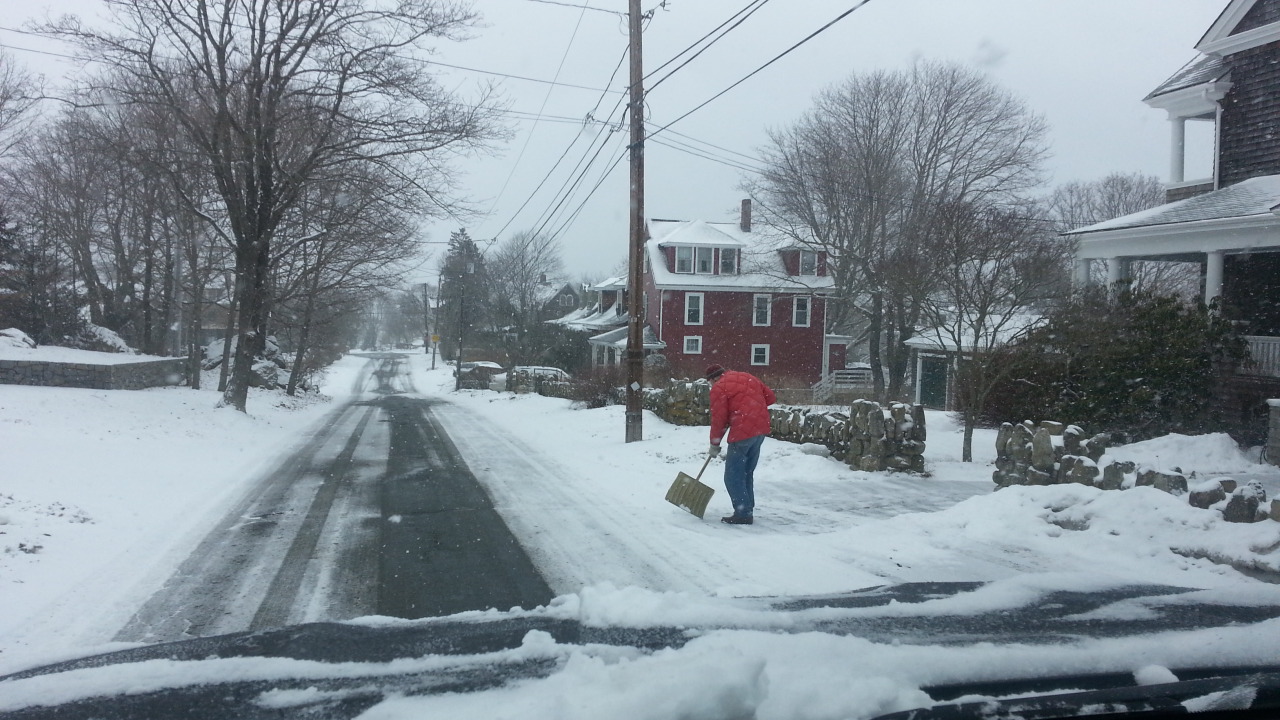
And this is why I call March the meanest month
Spread The GMG Love By Sharing With These Buttons:

Just saw on twitter- mention this tweet & get free coffee with your meal 830am-11am today at Mamie’s Kitchen
@MamiesKitchen: #marchmadness mention this tweet & get free coffee with your meal 830am-11am today! Bacon cups today! #capeann @Joey_C @CompanyPrtyGirl
Spread The GMG Love By Sharing With These Buttons:
Cape Ann Farmer’s Market March Madness Market
Due to popular demand, the Cape Ann Farmers Market is adding the March Madness market on March 15th. It will be held downstairs at the Gloucester Unitarian Universalist Church, at the corner of Middle & Church Streets, from 9:00 a.m. to Noon. The market is open to the public, and will feature produce from Farmer Dave’s, Alprilla, Mehaffey, and Seaview Farms. Markouk Bread, Tatiana’s, and Swiss Bakers will have baked goods. Other vendors include Sasquatch smoked fish, The Herb Farmacy, Trupiano sausage, Patti’s Guacamole, Valencienti Organico Pasta, Maitland pickles, and much more. Tickets for the popular Dinner and a Movie Fundraiser in April, with special membership packages, will be available. For more information, go to http://www.capeannfarmersmarket.org, or call 978-290-2717.
Spread The GMG Love By Sharing With These Buttons:
Cape Ann MarketWatch From Kenny MacCarthy
Saturday March 1, 2014
From: Gloucester
10, clear and sunny
Hi Joey,
This week, we’re talking about:
- The “lack of inventory” fallacy
- Views
- 8 properties in various states of repair and disrepair

Spread The GMG Love By Sharing With These Buttons:

Can You Guess Where Kay Ellis and The Classic GMG Cap Are?

Hint #2: Total snowfall as of today: 356 inches. And it’s supposed to snow every day this week!
Kay Ellis
Schooner Thomas E. Lannon
http://www.schooner.org
Spread The GMG Love By Sharing With These Buttons:

Live Blogging: Joey’s Third Nipple Removal. Enjoy Your Breakfast!


Spread The GMG Love By Sharing With These Buttons:

Unusual Frost Patterns From Len Burgess
Hi Joey, I had some unusual frost patterns not on my house windows but on my car early one morning that I’ve never seen before.
I had to shoot quickly inside and outside the car before the sun melted them. Here’s only a few of the many photos I took. –Len
https://plus.google.com/photos/101278359235301240346/albums/5986374592439960897

Spread The GMG Love By Sharing With These Buttons:

The Hive is hosting a Bowl-a-Thon for the Empty Bowl event: Sunday, March 23 noon-4:00pm

Spread The GMG Love By Sharing With These Buttons:

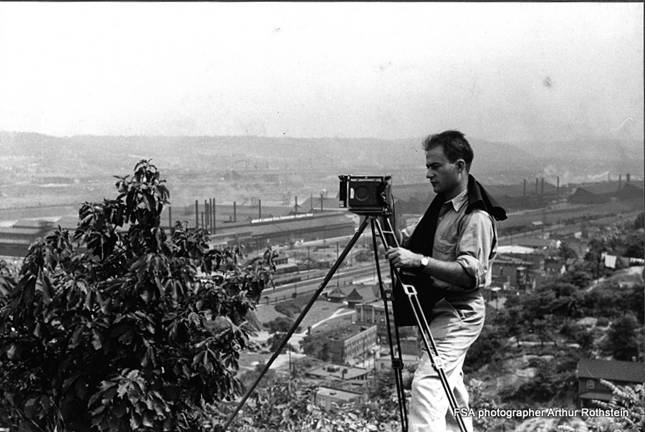
CROSS-COUNTRY CHRONICLE Catherine Ryan on Gloucester, MA in landmark FSA / OWI documentary photographs Part 2 Arthur Rothstein
| American Photographer ARTHUR ROTHSTEIN (1915-1985)19 FSA photos in Gloucester, MA, September 1937 | |
| Joey recently featured Wallflowers, by Gordon Parks on GMG which reminded me of the road less traveled within the historic collection of photographs archived at the Library of Congress and the New York Public Library. This post is Part 2 in a series on Gloucester images in this legendary Farm Security Administration / Office of War Information (FSA/OWI) collection. You can go back to Part 1 about Gordon Parks and for some background about the program. | |
 |
|
| Arthur Rothstein is one of Roy Stryker’s elite team of FSA/OWI photographers. There are over 10,000 photos by Rothstein alone in the massive collection. Rothstein became a premier American photo journalist and the Director of LOOK (1947-1971) and Parade magazines.Director Roy Stryker brought recent graduate Arthur Rothstein to WashingtonDC to set up a state of the art dark room for the new Resettlement Administration Historical Section. In his senior year at ColumbiaUniversity, Rothstein had worked with professors Tugwell and Roy Stryker.Rothstein was 20. Stryker had him out in the field almost immediately. The job meant he had to learn how to drive a car. |  |
 |
|
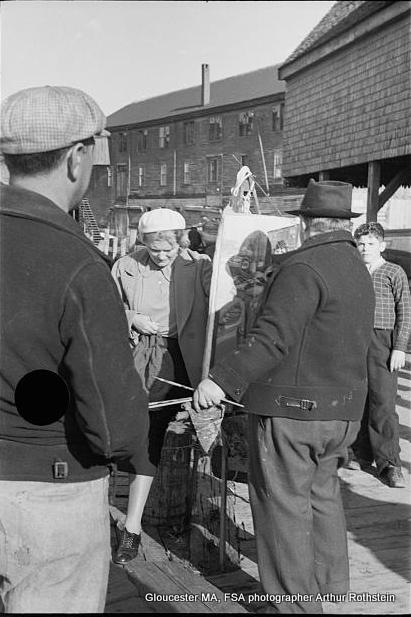
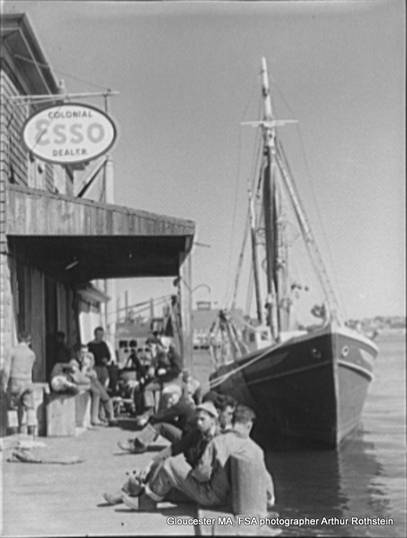
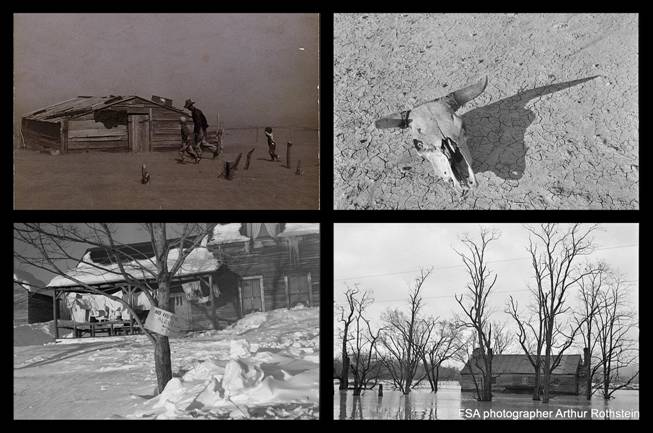
| In May 1936, Rothstein’s South Dakota Badlands drought images caused controversy then, and discussion still. Rothstein’s April 1936 Oklahoma photograph of a father and his two boys fleeing Mother Nature in CimmaronCounty may be the archetypal image of the Dust Bowl.Here are a few examples and flavor of a fraction of Rothstein’s FSA work (broad themes): Mother Nature/Disaster; migrant workers and flight (showing one from MT); Gees Bend; sense of humor.Those images are followed by a few he did in Gloucester. The people are not identified in the Arthur Rothstein Gloucester photos. He’s here in 1937, the same year that the movie adaptation of Captains Courageous is a big hit.
There’s an artist in action, seen from the back. Who is it?
|
|
| “Migratory workers returning from day’s work. Robstown camp, Texas. Everyday from twenty to thirty cars moving out from the Dakotas pass the Montana Highway Department’s port of entry.” | |
 |
|
 |
|
 |
|
 |
|
 |
|
 |
|
 |
|
 |
|
 |
|
| COLLECTION QUICK FACTS The Farm Security Administration/ Office of War (FSA/OWI)Director throughout = Roy Stryker acting akin to visionary art dealer
Photographers = Pioneers in the field of photo journalism, photography, including Dorothea Lange, Walker Evans, Arthur Rothstein, and GordonParks Library of Congress FSA/OWI collection = Nearly 280,000 objects as follows: black and white negatives (170,000+); black and white prints (100,000+); color photographs (1600+). New York Public Library has a substantial collection. 1937 Arthur Rothstein: 10,000+ images (FSA/OWI) / 19 images Gloucester.Mostly rural images. For example 1400+ images in MT and less than 40 total for MA 1942 Gordon Parks: 1600+ (FSA/OWI) / 220+ images Gloucester. Gloucester names to search for: Frank Mineo, the Alden, Vito Cannela, Vito Camella, Vito Coppola, Frank Domingos, Gaspar Favozza, Giacomo Frusteri, Vito Giocione, Pasquale Maniscaleo, Anonio Milietello, Anthony Parisi, Franasco Parisi, Dominic Tello, Antonio Tiaro, Lorenzo Scola, the Catherine C; Mary Machado, Isabell and Joseph Lopez, Dorothy and Macalo Vagos, Irene Vagos, Francis Vagos 1942 Howard Liberman: 700+ (FSA/OWI) / 150+ images Gloucester. Gloucester names to search for: John Ribiera and his wife, the vessel Old Glory There are many portraits and most are not identified. Please help. 1940 Dixon: 350+ (FSA/OWI) / one image of Gloucester; headed the lab in DC Occasionally when Stryker or the artist considered a photograph a reject, he would punch a hole through the negative. |
|
| TIMELINE FOR SOME SPECIFIC IMAGE CONTEXT (primarily pre 1950)1900W.E.B. Du Bois receives a gold medal at the 1900 Paris Exposition for curating and collaborating on a major exhibit featuring 500 photographs displaying the present conditions of African Americans
1908-1917 Along with an extensive visual archive, the FSA team was extremely versed and/or required to study images. One example: Lewis Hine, a NYC school teacher and sociologist who stirred American consciences with his photos. Margaret Sage, the widow of railroad magnate, Russell Sage, established an endowment to research social sciences still active today. Hine’s Ellis Island photographs landed a staff position with the Foundation. His work for them produced their first influential impact: the Pittsburgh Survey. From there, Hines was hired by the National Child Labor Committee and his photographs over the next decade were instrumental in changing child labor laws. Also Stieglitz, Charles White, Paul Strand, and many others. 1924 Russel Smith’s North America, Its People and the Resources, Development, and Prospects of the Continent as an Agricultural, Industrial and Commercial Area 1925 Tugwell with Stryker and Thomas Munro: American Economic Life 1931 Hines was hired to photograph the construction of the EmpireStateBuilding. Ironically, despite his importance and direct influence on future photographers, the arc of his career ends with hard times. He was not included with the FSA hires.. The reception of Hines work declined so much that he was forced to sell his house. MoMA rejected his archives. George Eastman House took them in 1951. 1930s/40s Paul Robeson. Period–International influence. 1931 The continued influence of Margaret Bourke-White. Her professional career took off in 1927. FORTUNE magazine sent her to cover Russia which published Eyes on Russia in 1931. 1932 Huge audience for Mervyn Leroy’s movie I Am A Fugitive from a Chain Gang 1934 FORTUNE magazine sends Margaret Bourke-White to cover the Dust Bowl 1935 Henri Cartier-Bresson exhibits in the US 1935-1937 The Resettlement Administration Historical Section’s photographic project is tasked with documenting the crisis state of rural poverty. The government hires Roy Stryker. Stryker hires the photographers. Many other Federal creative arts programs. 1935 The government sends Dorothea Lange to photograph migrant farm workers in CA. Lange, Walker Evans and Ben Shahn already established careers when hired for the FSA but not household names. 1935 Berenice Abbott Changing New York 1936 In November, LIFE magazine’s large-scale, photo dominant iteration is first published. LIFE sold more than 13 million copies per week 1936 The Plow that Broke the Plains, Pare Lorentz with Pauls Strand, Steiner, others 1937 The movie adaptation of Rudyard Kipling’s Captain’s Courageous is a huge hit. 1937 FSA/OWI Arthur Rothstein is sent to Gloucester. Depression era movie audiences purchased 60 million tickets per week. 1937 LOOK magazine starts publishing bi-weekly 1937 You Have Seen Their Faces, photo-book collaboration by Erskine Caldwell and Margaret Bourke White is wildly successful so much so that it pushes back the publication of Let Us Now Praise Famous Men by James Agee and Walker Evans (1941) 1937 The Resettlement Administration’s Historic Section folds into the Farm Security Administration (FSA). Stryker expands this photographic survey of Depression Era America, while publicizing the work of the FSA 1937/1939 Steinbeck’s Of Mice and Men is published in 1937. The movie adaptation opens 1939. 1938 FSA group exhibit at the International Photographic Salon, Grand Central Palace, New York featured a selection of bleak but respectful images. Reviews felt that the photographers avoided negative stereotypes. The tone of the exhibit was so influential that it was oft repeated. Stryker felt that well over ½ the images in the collection were affirmative and positive. 1938 Richard Wright hired for the WPA Writers Project guidebook for New York and wrote the part on Harlem. He received a Guggenheim Fellowship and was able to finish Native Son. 1938 Architectural Forum introduces Frank Lloyd Wright to American audiences. Managing Editor Ruth Goodhue was the first female at the head of any Time Inc publication, and a colleague of Stryker’s. Stryker credits RUTH GOODHUE* for propelling his encyclopedic quest to catalogue every day life with what sounds now like “a distinct sense of place”, 2014 placemaking terms. Her advice to Stryker echoes the later work of Jane Jacobs** “The Death and Life of Great American Cities”, the Main Street movement, and our current cultural district designations. Thirty years later Stryker credited numerous people, but he repeats his credit to Goodhue several times. Looking back, by the time 1940 rolls along, it’s Stryker’s creed. It’s thrilling how one inspirational comment can engender such a unique mobilization! 1939 An American Exodus, photo book collaboration by Dorothea Lange and Taylor 1939 FSA photos exhibited at the 1939 World’s Fair in New York City 1939/1940 Steinbeck’s Grapes of Wrath is published and is phenomenally successful. The 1940 movie adaptation is a blockbuster, too. 1941 Richard Wright and Edwin Rosskam produce Twelve Million Black Voices. Migration coverage went to the city. 1941 Movies Citizen Kane (trailer 1940) and How Green Was My Valley 1942 Artists for Victory 1942 Gordon Parks’ position within Stryker’s department is underwritten with the support of a Julius Rosenwald Fellowship. Rosenwald was a partner in Sears Roebuck. His foundation operated from 1917-1948 with the mandate to focus on the well-being of mankind and with a particular education outreach for African Americans. The endowment was to be spent down completely and it’s estimated that 70 million was given. Of particular note, from 1928-1948 open-ended grants were given to African American writers, researches, and intellectuals and the list is a Who’s Who of 1930s and 1940s. This is precisely the type awarded to Gordon Parks so that he could work at the famous FSA program. 1942 Gordon Parks in Gloucester May and June. Howard Liberman in Gloucester, September. 1943 May Four Freedoms Day; October 20 America in the War exhibits 1942-45 FSA absorbed by the Office of War Information (OWI), focus shifts to the domestic impact of WWII 1955 Edward Steichen’s Family of Man exhibit at the Museum of Modern Art includes many of the photos 1962 The Bitter Years 1935-1941: Rural America Seen by Photographers of the FSA Edward Steichen’s last and seminal exhibit as Director of the Museum of Modern Art is dedicated to Stryker and the FSA photographers. As with other FSA themed exhibits, photographs by Gordon Parks– and many other artists–were not included, still aren’t included. 1990/2000s Gees Bend quilts *Roy Stryker on Ruth Goodhue “Ruth Goodhue was the managing editor of “Architectural Forum.” Her father designed the very famous Nebraska capitol, a very unusual building. She was another one on my circuit. But I stopped to have breakfast with her, she was over at that time in the Chrysler Building with the Life complex there and I had breakfast with her and I went up to her office. She was the one that said — I’ll tell you this story because it’s how I reacted so often — “Roy Stryker, I wonder if all towns of 5,000 are alike, because they have the same boiler plate, they have the same radio programs, and so on?” Well, I had to go on a trip and when I got back I had an outline on small towns.” Also: “She was a charming woman and very bright and very proactive. And she said to me, “Are all little towns in America alike because they read the same boiler plate, listen to the same radios on the air, and because they eat the same breakfast food?” Proactive questions, just what I needed. I have a very bad habit of writing memos to myself; I love to put things down, write a page after page and take it home. By the time I got back to Washington, the photographers hadn’t been taking pictures of the little towns they went through. So then there grew an outline — a perfect bombardment of twenty-five pages, I guess. Did you stay overnight? Let’s begin to cover the main street of America, you know, just to see what the heck occurs on it.” **Jane Jacobs As writer and associate editor of The Iron Age, Jane Jacobs published “30,000 Unemployed and 7000 Empty Houses in Scranton, NeglectedCity”, an article which brought attention to her home town. This led to more freelance work and in 1943 a job writing features for the US Office of War Information (OWI). After 1945 and into the 1950s, Jacobs wrote and was editor for the State Department’s magazine branch, primarily for Amerika Illustrated, a Russian language magazine. In the public sector she went on to Architectural Forum. I wonder if Goodhue was a mentor for Jacobs or if they had any overlap. I certainly consider the FSA/OWI files as formative for her ideas — and Goodhue influenced that program. Gloucester connections: Charles Olson In New York City 1937, Charles Olson was hired by the government to work for the American Council of Nationalities Services, an agency that offered support programs for immigrants and refugees. He also wrote for the Office of War Information from 1942 – May of 1944. The timing overlaps with Jane Jacobs somewhat. Gloucester writer, Edward Dahlberg, introduced Olson to Alfred Stieglitz in New York City back in 1937. Goodhue and Cram Ruth Goodhue’s father, Bertram Grosvenor Goodhue, was a famous architect. Through his friendships with Ernest Fenollosa of the Boston Museum of Fine Arts and others in the orb of the Boston Society of Arts and Crafts (1897), he met architect Ralph Adams Cram. Goodhue and Cram partnered to form a successful architectural firm, in business together for over twenty years. They had great solo careers, too. Cram designed the Atwood Home, Gallery-on-the-Moors, in East Gloucester, and preliminary plans for the towers on Hammond Sr’s property, and the inspiration or more for Stillington Hall and others. |
|
| -Catherine Ryan / all photos Library of Congress, FSA/OWI black and white photography collection | |
Spread The GMG Love By Sharing With These Buttons:

Fat Tuesday At Sticky Fingers Bakeshop Inside Brown’s Mall Tomorrow
Stop by tomorrow for blue crab quiche, red beans and rice soup, and bread pudding with New Orleans bourbon sauce!!!

Spread The GMG Love By Sharing With These Buttons:

$4.99Lb T-Bone and Porterhouse Steaks at Stop and Shop Right Now. Go Get ‘Em
Before

After

Spread The GMG Love By Sharing With These Buttons:

Why Creative Geniuses Often Keep a Messy Desk
I’m not saying I’m a creative genius but I sure as fuck have the messy desk thing down pat.
Spread The GMG Love By Sharing With These Buttons:
Community Stuff 3/3/14



Spread The GMG Love By Sharing With These Buttons:

Community Photos 3/2/14
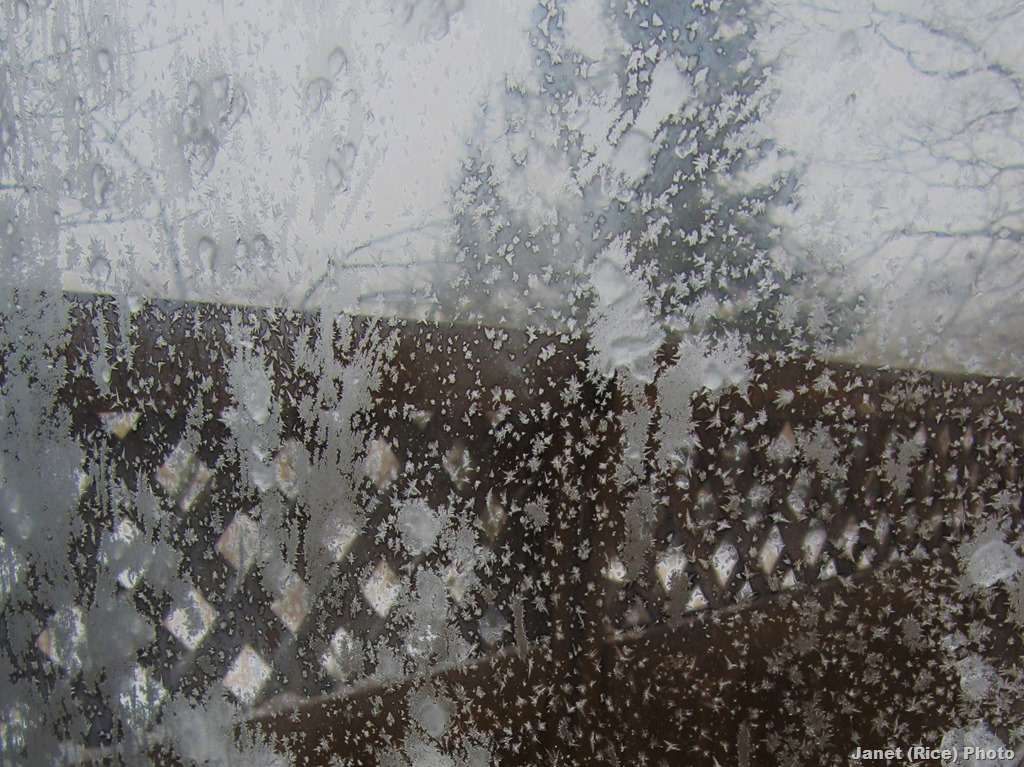
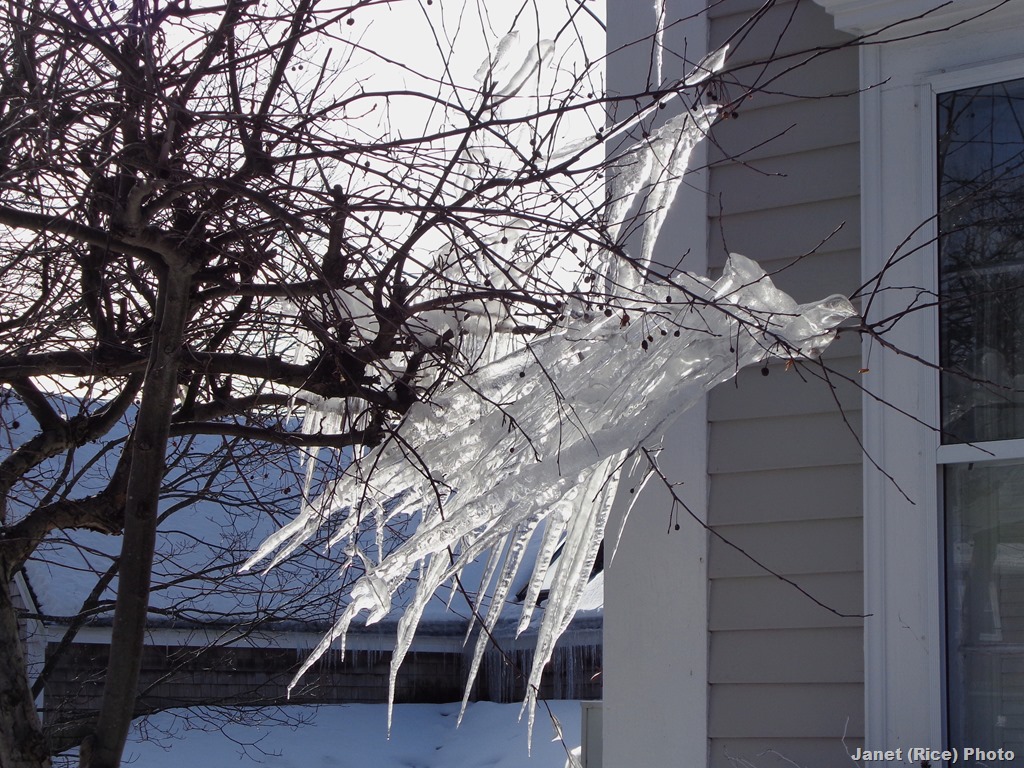
Examples of Mother Nature’s fabulous February artwork!
Best, Janet (Rice)


Spread The GMG Love By Sharing With These Buttons:

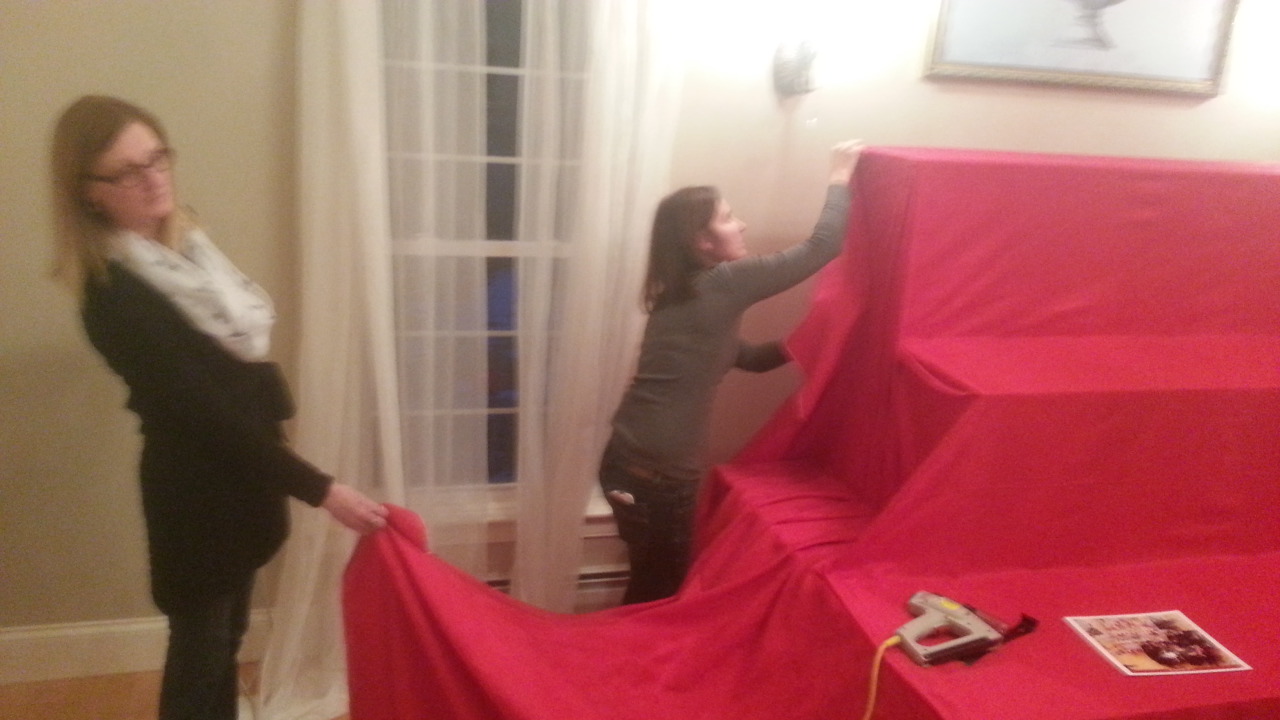
Live At Sista Felicia’s- St Joseph’s Novena Prep Is Underway

Update 6:53PM

7:19PM Update

Spread The GMG Love By Sharing With These Buttons:

Wicked Tuna Tonight: A Storm Stalks Gloucester
Spread The GMG Love By Sharing With These Buttons:
“Divorce Corp.” (Sun. Mar. 9 @ 4:00pm) At Cape Ann Community Cinema Followed By Discussion With David Calvo
SPECIAL SCREENING – “Divorce Corp.” (Sun. Mar. 9 @ 4:00pm)
By Robert Newton on January 15, 2014

For roughly 50% of American families divorce is an unpleasant fact of life. Dealing with divorce and its effects destroys lives and bankrupts individuals every day. Family law, which barely existed for most of our country’s history, has morphed into a gigantic industry over the past several decades. Learn first-hand about the excesses and injustices rampant in the U.S. family court system. Do not miss the riveting film that offers a spotless condemnation of family courts across America. In interviews with top insiders and an array of litigants, a place aptly termed “the last fiefdom of lawlessness and tyranny,” is uncovered.
DATE:
SUNDAY, MARCH 9TH @ 4:00PM
TICKETS:
$10.00 ADULTS / $8.50 STUDENTS & SENIORS / $7.00 CINEMA MEMBERS


 Good Morning Gloucester