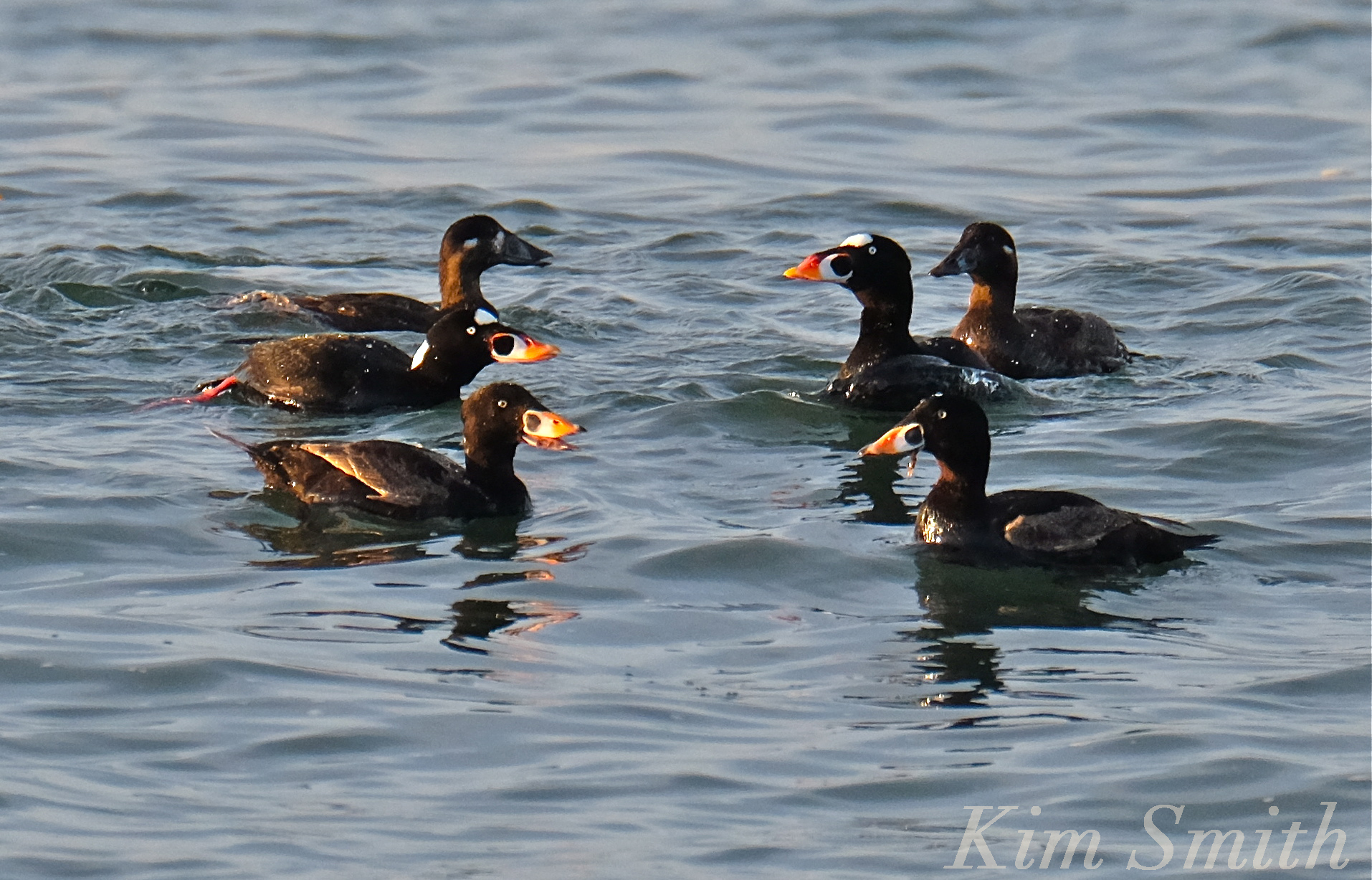
 Although described as common along both the Atlantic and Pacific Coasts, this raft of velvety black ducks was new and different to my eyes. The Surf Scoters were here for several days gathering along Cape Ann’s backshore and feeding heartily several hundred yards off the beach. Both in the evening and the following early morning that I found them, they were first to arrive on the scene, soon joined by a paddling of Buffleheads and then several Common Eiders, and all amicably diving together.
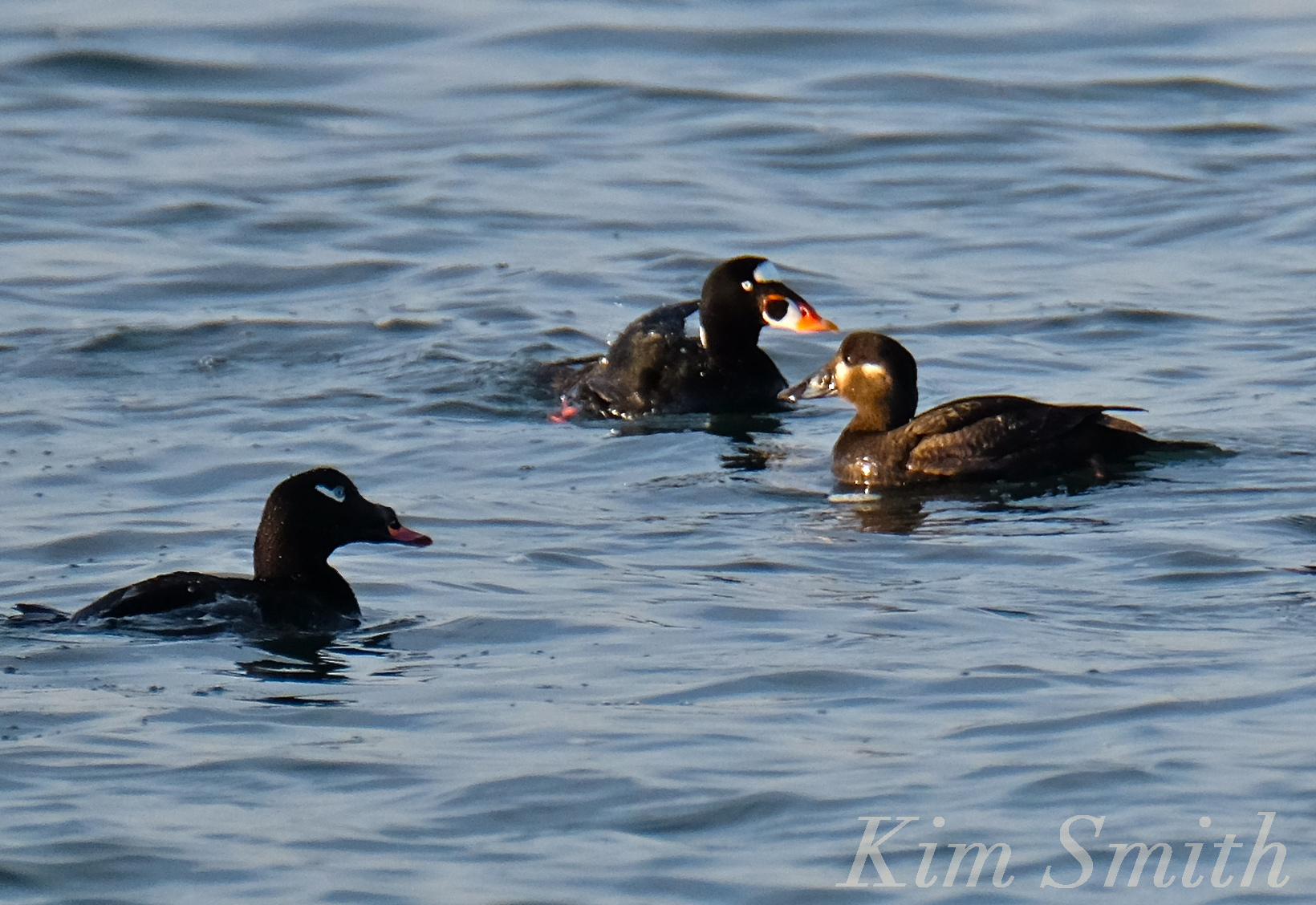
Fairly far off shore at least we can catch a comparative glimpse of the difference between the male and female Surf Scoter (the female is far right).
The male Surf Scoter’s well-defined stark white patches against ebony feathers lends this seaduck its common name, “Skunk-headed Coot.” But it is the scoter’s bulbous-at-the-base orange, black and white patterned bill that I find interesting and almost comical. The female is a plainer dull blackish-brownish with light colored patches, one behind each eye and at the base of the bill.
I would love to know if any of our readers have seen Surf Scoters, when and where, if you have a moment to write. Thank you!
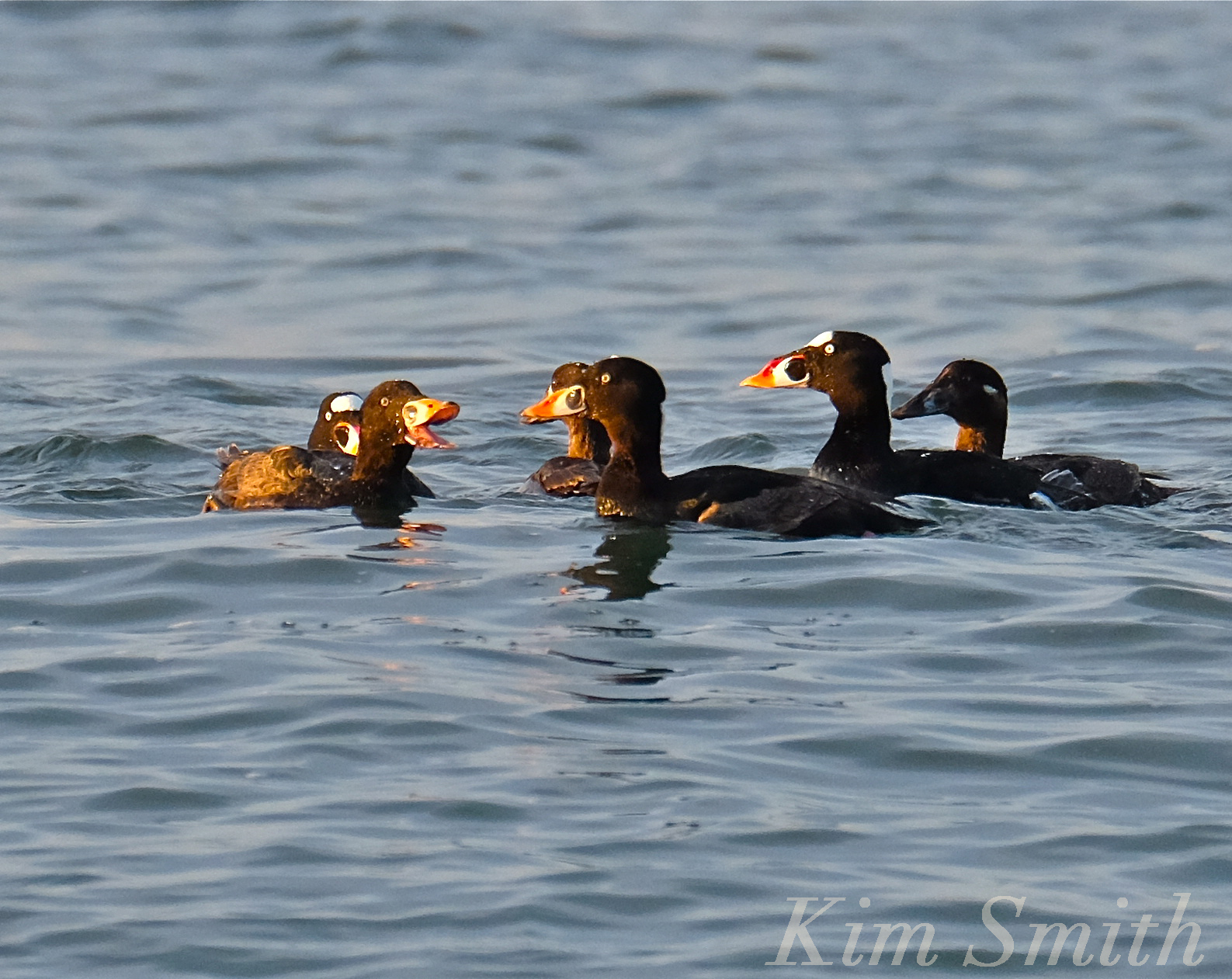
While watching them feeding and courting in the surf, several times it appeared as though they were squaring off, as in the top photo, and preparing to promenade in a hoedown!


 Good Morning Gloucester
Hi Kim, we saw them at the end of bear skin neck in rockport at the end of March. So pretty!
LikeLiked by 1 person
Thank you Michell! Several more sightings from readers were posted on my facebook page and email. When I get home form work tonight will include those, too.
LikeLike
Funny, Kim, but I never thought much of it when we were living in Manchester in the ’80s and saw surf scoters every day in late winter/early spring, just offshore west of White Beach. They often mixed with female eiders — but never a single male eider in the flock. Then we’d drive to Gloucester to walk the Boulevard, and see flocks of surf scoters, as well as male eiders along the Stage Fort shore, but seldom a female eider. If the two flocks had gotten together no doubt we’d be up to our eyebrows in eiders! Nature’s way of keeping the numbers down.
LikeLiked by 2 people
I think that the non-breeding males (too young to breed) keep separate until they are ready to mate.
LikeLike
They are here all winter long. I’ve seen them at pebble beach in Rockport and Gloucester Harbor and the back shore. They are a neat looking duck. We have three kinds of scoters here…black, surf and white-winged.
LikeLiked by 2 people
Thank you Deb for sharing that! Pebble Beach is where I see them and wish so much they would come in closer!!
LikeLike
Reader Caroline writes,
“I saw your post on GMG re: the Surf Scoters. I’ve seen many these past few weeks in the harbor, tucked inside the breakwater. I’ve also had them, as well as black scoters and white winged scoters, off Halibut point.
Yesterday I had my FOY ( first of the year) black crowned night heron at the Blynman Canal, along with some Northern Rough Winged Swallows.
Good birding!”
LikeLike
Thank you Caroline, Great Info!!
LikeLike
Thanks! They sure are out and about the bills are eye catching! 🙂 Dave & Kim 🙂
LikeLike