For any of you geeks like me, this skit is hilarious.
Sent in by Penelope Crane
My View of Life on the Dock
For any of you geeks like me, this skit is hilarious.
Sent in by Penelope Crane


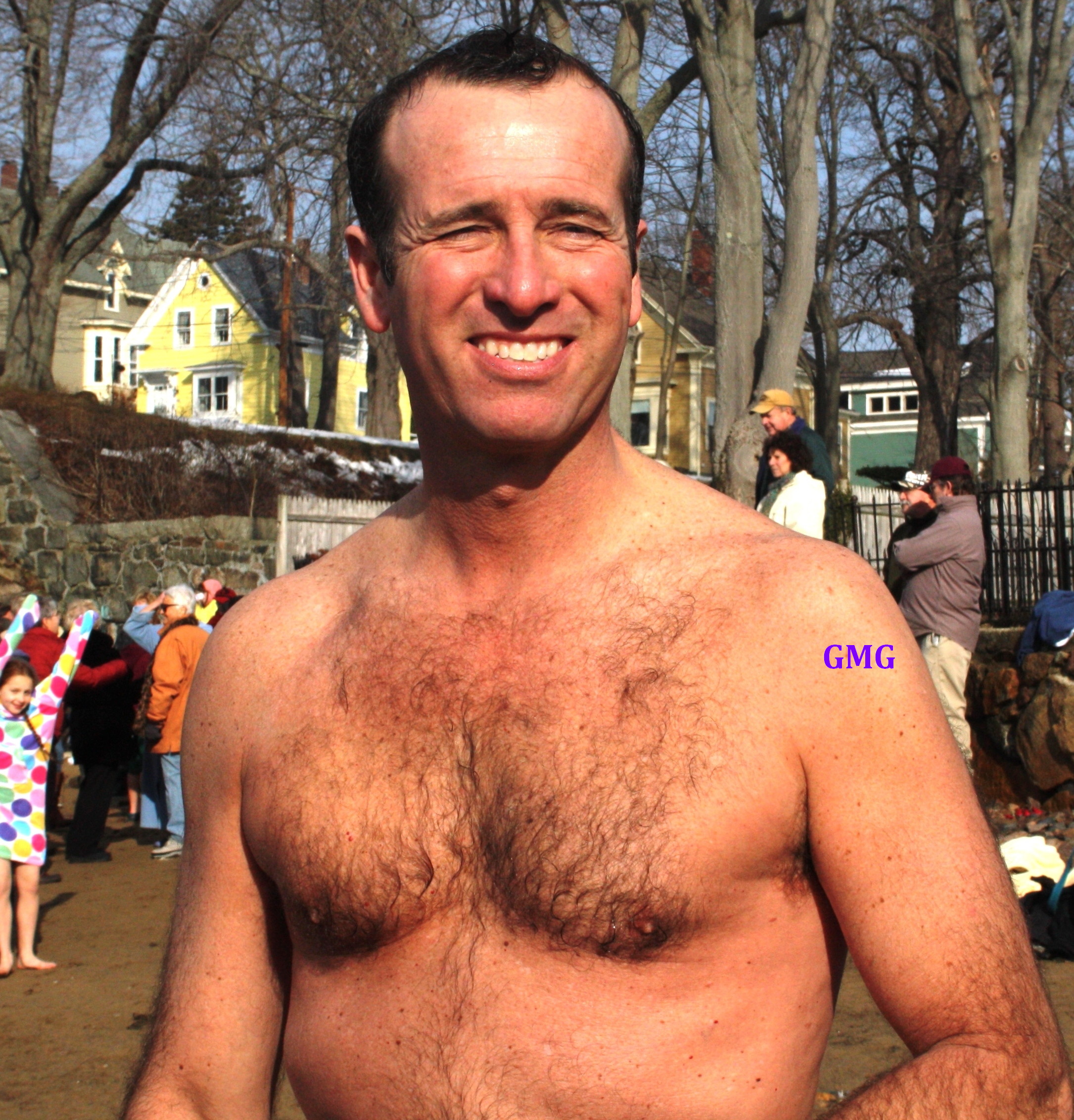
January 3, 2011, Happy Perihelion! The earth is whipping around the sun right now and is at closest approach to the fiery ball than at any time of the year. Pretty much nothing to do with water temps, the tilt of the earth does all of that. But while warming up from the Polar Bear plunge I was wondering when the water would warm up in the spring to the New Year’s Day temperature. That is, what day could I dive in the water and expect the same refreshing tingle I got that day? So I went out to buoy AO1 just 8 miles off Gloucester and grabbed the water temps. To smooth it I took the noon water temp, average for the week, one meter down. Onshore might be a tad warmer but it will show the trend.

The water temp over the past ten years hits the lowest around the first week of February. A Ground Hogs Day Polar Plunge would be chilly but really only around 37 F instead of this New Year’s Day 42 F. The temperature always seems to rebound and match New Year’s Day by April Fool’s Day. Anyone want to dive in then?

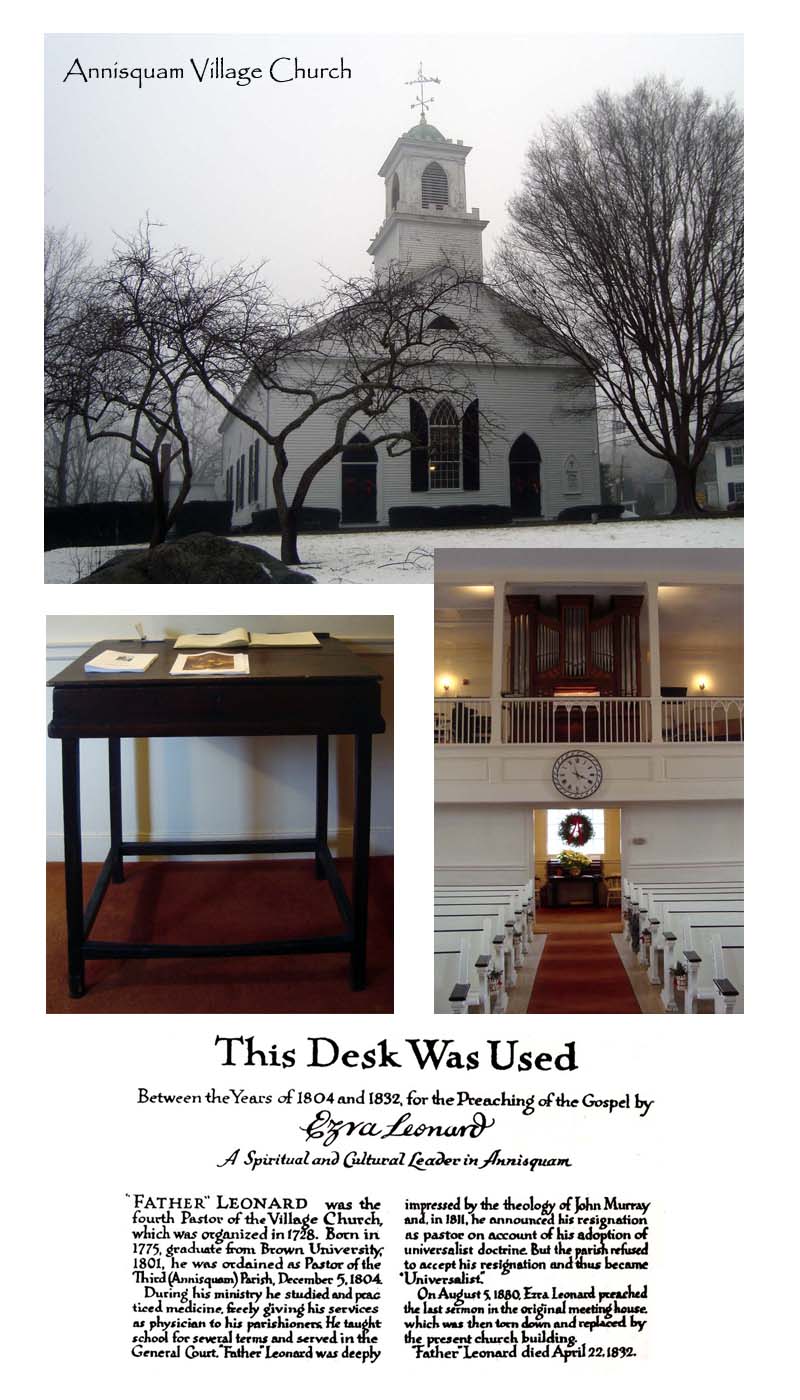
That the Annisquam Village Church is an interdenominational community church. The geographic area of the Annisquam Village Church, called The Third Parish, was established in 1728, and originally included the villages of Annisquam, Bay View and Lanesville. Today the community of the church extends well beyond those boundaries. In 1728, when the Third Parish was founded, the Church was Puritan in belief and Congregation in polity. Pastor Benjamin Bradstreet served for 34 years, from 1728 until his death in 1762. The church primarily relied on local supply ministers until “Father” Ezra Leonard was hired in 1804. He served until his death in 1832. He was considered a “Renaissance Man.” In addition to serving as pastor, he also served as medical doctor, teacher, and state representative. In 1811, Father Leonard had a “conversion experience” and left behind his orthodox, Puritan beliefs in favor of becoming a “Universalist.” The Third Parish became a Universalist Society and kept Father Leonard as their pastor. In 1830, a New Meeting House was constructed; this is the building that you see above. Father Leonard died in 1832. There were many pastors after his death. In 1944, the pastor had a “conversion experience” (from Universalist to Episcopalian). The Church voted to keep him as pastor, and Episcopalian doctrine was taught in Sunday school. The next pastor urged the Church to become a non-denominational, Protestant, Community Church. In 1954, the Parish voted “To conduct a Protestant interdenominational church for public worship of God.” The church remains such today. This is a really lovely old church near Lobster Cove, which you can see through the windows of Fellowship Hall where they serve refreshments after service. I found their service unique and refreshing, the organ and choir excellent, and the people of the church very welcoming. If you want to check it out, there website is http://www.annisquamvillagechurch.com/
E.J. Lefavour
www.khanstudiointernational.com


![SOS-flyer[1]](https://goodmorninggloucester.com/wp-content/uploads/2011/01/sos-flyer1.jpg "SOS-flyer[1]")

![New%20Years%20day%202011%20005[1]](https://goodmorninggloucester.com/wp-content/uploads/2011/01/new20years20day202011200051.jpg "New%20Years%20day%202011%20005[1]")



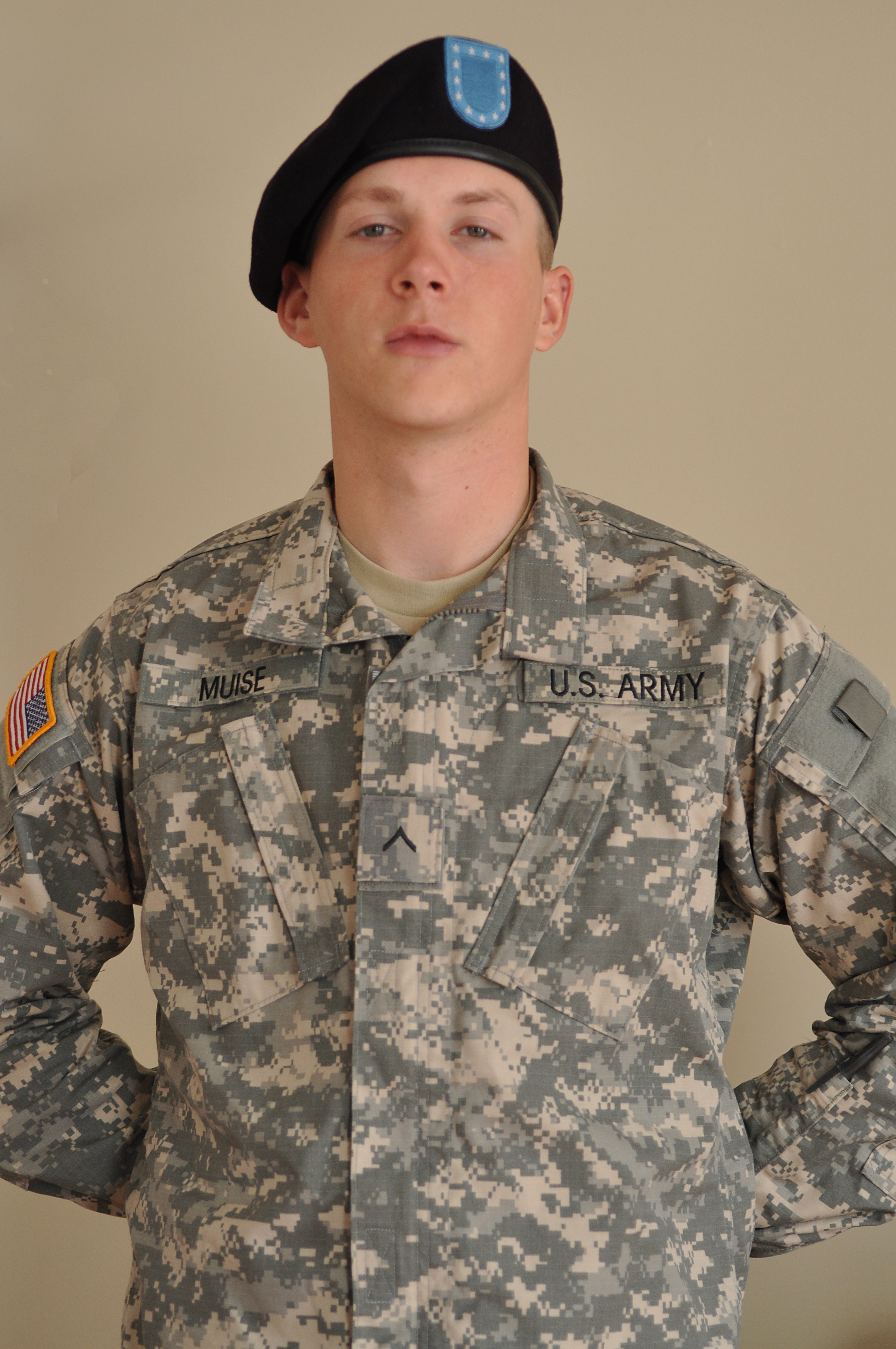 Three weeks went by too fast. Grandson Chris is heading back to basic training at Ft. Benning GA this morning We all loved having him home and will miss him terribly. Here’s his address:
Pvt Muise, Christopher D rn 130
E co. 1st BN 19th INF
9075 Holcomb drive
Ft benning GA 31905
Tell him you know his Nani.
Thanks —Sharon
We love you,Chris!



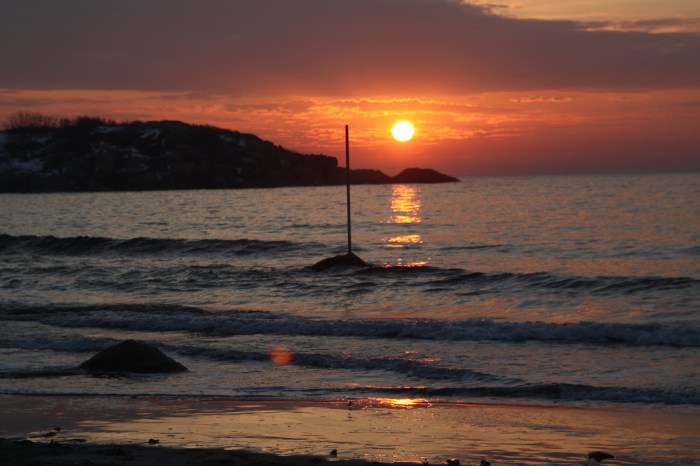
Click on photo and enjoy the first sunrise of 2011 at Good Harbor Beach.


Thomas Writes-
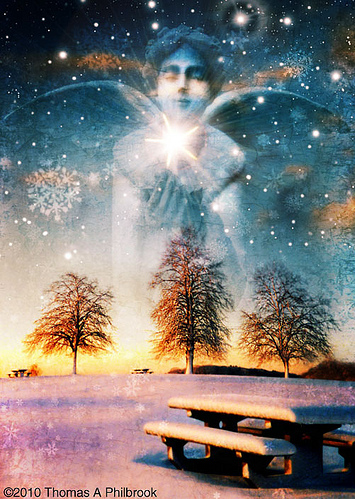
I had this great shot of dawn at Stage Fort Park in Gloucester MA. Naturally, I couldn’t leave well-enough alone. Used this image for my 2010 Winter Solstice greeting.

![Huge%20Ship%20going%20by%20Dog%20Bar%20taken%20from%20the%20Blvd.[1]](https://goodmorninggloucester.com/wp-content/uploads/2011/01/huge20ship20going20by20dog20bar20taken20from20the20blvd-1.jpg "Huge%20Ship%20going%20by%20Dog%20Bar%20taken%20from%20the%20Blvd.[1]")

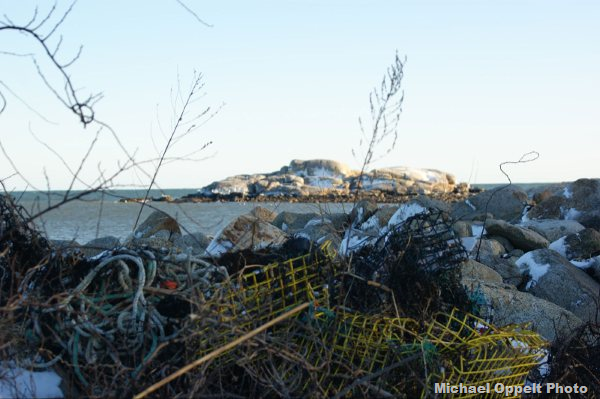
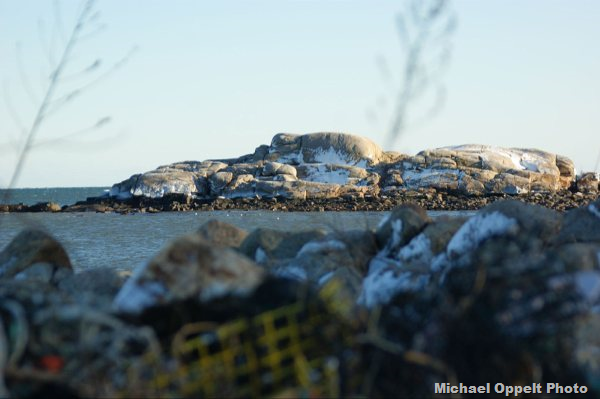
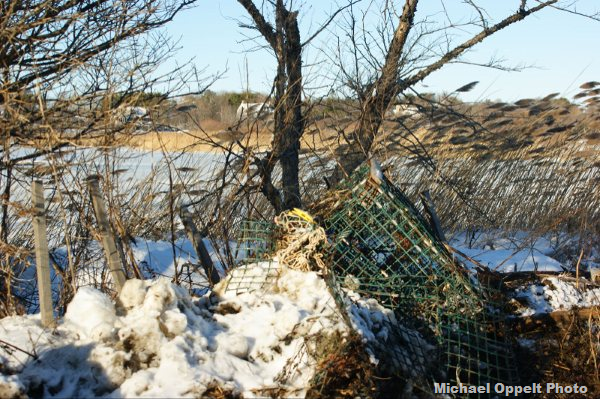
Michael Oppelt sends in these photos-

Researching Alone at Sea, an illustrated talk with author John Morris
The Cape Ann Museum is pleased to present Researching Alone at Sea, an illustrated talk with author and Gloucester native John Morris on Saturday, January 15 at 3:00 p.m. Morris will be discussing how a personal journey to learn more about his ancestors led him to the Cape Ann Museum Archives. This program is free and open to the public. Reservations are required. For reservations please call 978-283-0455, x11.
John N. Morris’s grandfather, Steve Olsson, was a Gloucester doryman who disappeared at sea without a trace in 1935. Olsson and his dorymate lost contact with their schooner and were never seen again. Morris set out on a quest to discover what might have happened to his grandfather and what a doryman’s life was like. The result—after ten years of exhaustive research and dozens of interviews—is the most complete and authoritative history of the Gloucester fishing industry ever written. This epic highlights life at sea, life at home, and the industry that connected them, growing and then fading over more than 300 years. Alone at Sea is illustrated with over seventy period photographs and maps, many of which came from the Cape Ann Museum archives.
John N. Morris, Ph.D., is the grandson of one of the last Gloucester dorymen lost at sea. A native of Gloucester himself, John is descended from a line of fishermen going back to the seventeenth century. His father was a fish cutter, his mother a fish packer. Director Emeritus of the Institute for Aging Research at Hebrew Senior Life in Boston, a Harvard-affiliated hospital and research program, John has published widely in his field. A board member of the group preserving one of the last surviving Gloucester schooners, Adventure, he now lives in Tyngsboro, Massachusetts.
Funding for this program was made possible through a grant from the Massachusetts Cultural Council, which promotes excellence, access, education and diversity in the arts, humanities and interpretive sciences, in order to improve the quality of life for all Massachusetts residents and to contribute to the economic vitality of our communities.
The Cape Ann Museum is located at 27 Pleasant Street in Gloucester. Hours are Tuesday through Saturday from 10:00 a.m. to 5:00 p.m., and Sundays from 1:00 p.m. to 4:00 p.m. The Museum is closed during the month of February, on Mondays, and on major holidays. Admission is $8.00 adults, $6.00 Cape Ann residents, seniors and students. Children under 12 and Museum members are free. Admission for Cape Ann residents is free during the month of January. The Museum is wheelchair accessible. For more information please call: (978) 283-0455. Additional information can be found online at www.capeannmuseum.org

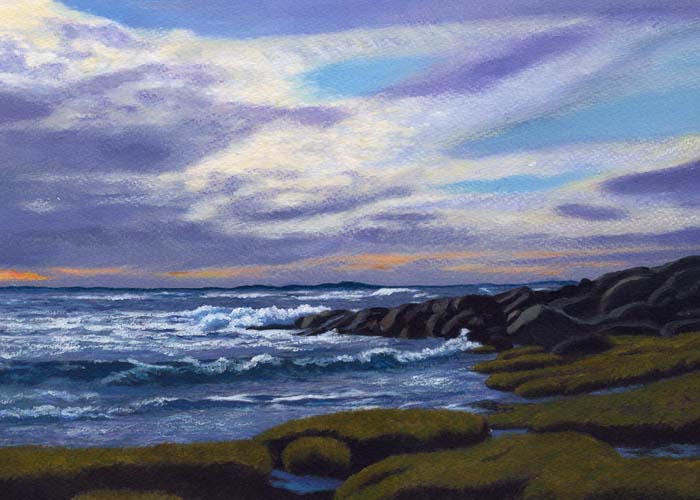
This poem was written by my dear friend, Bina Benestante. It epitomizes life on Cape Ann to me, so I wanted to share it with all of you. You have to read all the way to the end to catch the magic.
EDGE
(“Whoever is not living on the edge, is taking up too much room!”)
By Sabina Troger Benestante
Out on the edge again
One step away: a deep, steep abyss,
Yawning before my feet.
I’m standing on a towering cliff top,
High above the sea.
Gusts of cold wind whip my face
Spraying white foam on roaring waves
Forever breaking, breaking at the rough rock’s edge.
A carnivorous bird is shooting like an arrow
Down at some hapless creature of the sea
As suddenly the clouds rip open, like a ghoulish wound
A sunbeam crashes through, furrowing
A narrow band of fiery lava
Into the waves, stretching as far as the horizon
The wind is howling…
Other people exist in soft, lush valleys, I complain,
Above them clear blue skies, sweet air, a feathery cloud.
Completely cozy, they listen to the willows’ whispers,
Growing around a calm and shallow pond
Maybe next to a brook, sheltered by elms,
With flimsy butterflies, dancing above unruffled meadows
Of fragrant summer grass…
While I forever find myself just barely hanging in there
My nails like claws, clutching bare rock, and by my teeth’s skin merely holding on: Why me?
Yeah, God answered. But you have the view.



 Good Morning Gloucester