Tag: Wingaersheek Beach

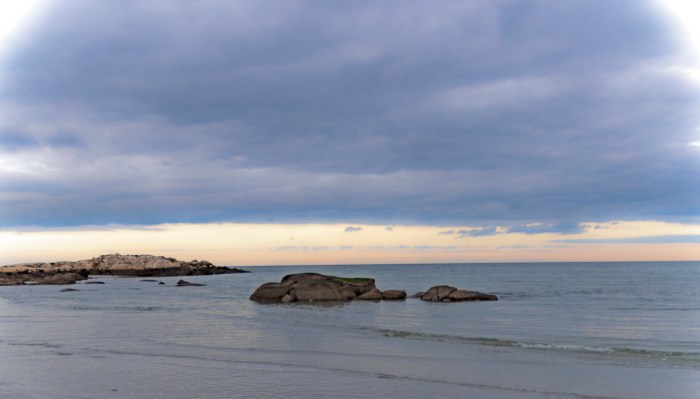
Late Summer Wingaersheek Beach
Spread The GMG Love By Sharing With These Buttons:

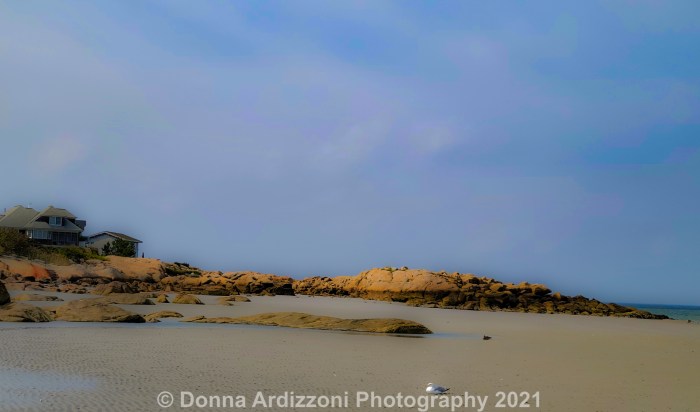
Clouds over Wingaersheek Beach
Spread The GMG Love By Sharing With These Buttons:

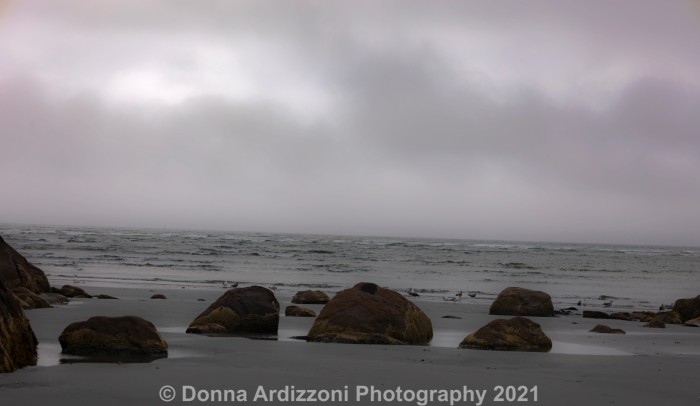
Calm day at Wingaersheek Beach
Spread The GMG Love By Sharing With These Buttons:

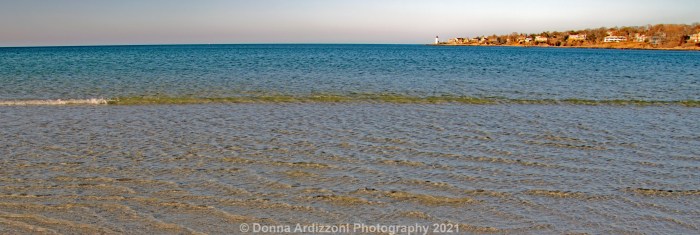
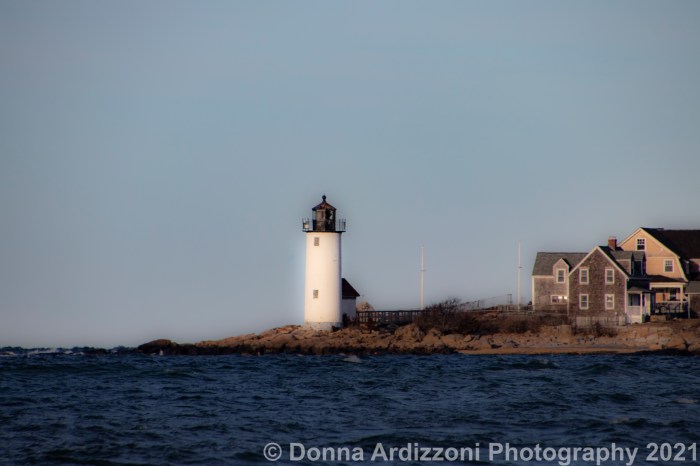
Annisquam Light from Wingaersheek Beach
On a cold day went for a walk over to Wingaersheek Beach. Even though it was cold, love the fact many people were there.
Spread The GMG Love By Sharing With These Buttons:

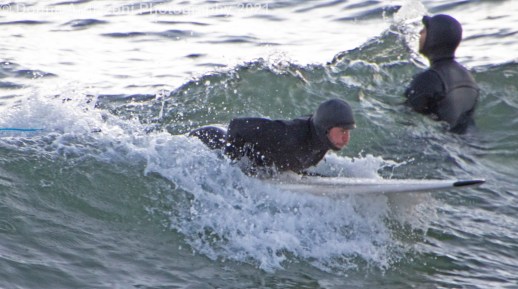
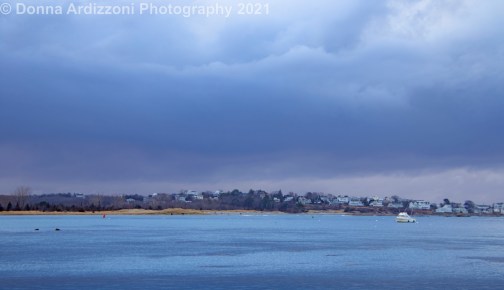
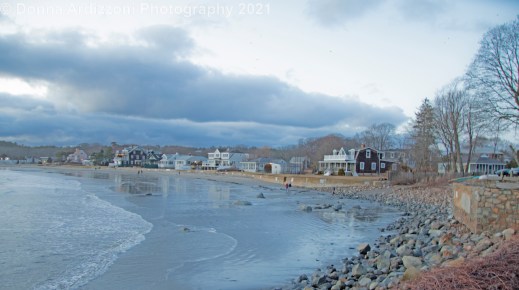
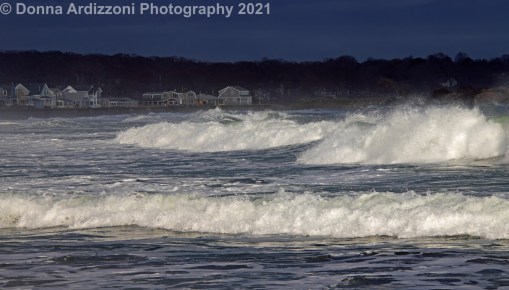
Beautiful stormy day on Saturday
As the sun came out on Saturday the ocean, waves and clouds showed their beauty.
Spread The GMG Love By Sharing With These Buttons:

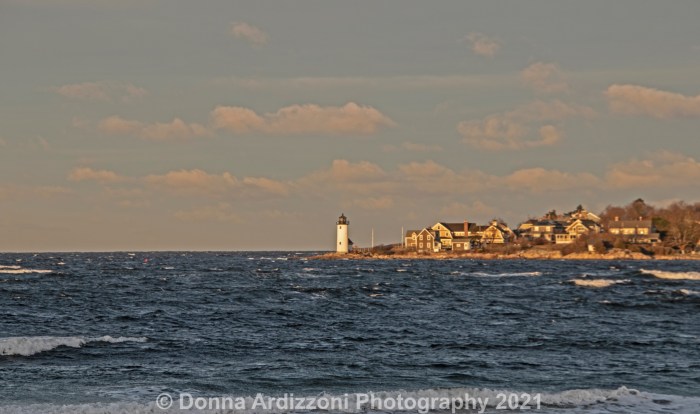
From Wingaersheek Beach
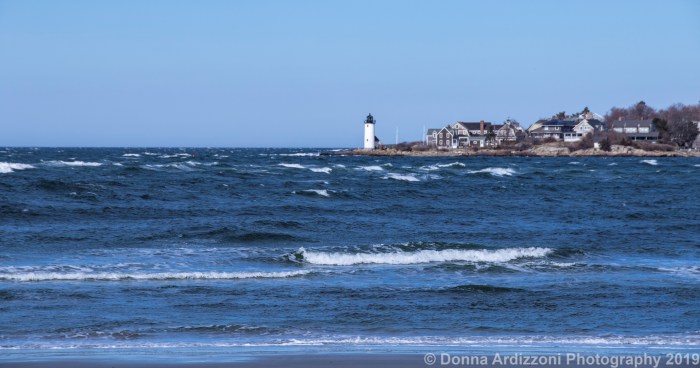
On Monday took a walk on Wingaersheek Beach. It was windy and the ocean was rough. The Annisquam Lighthouse looked very pretty as always.
Spread The GMG Love By Sharing With These Buttons:


1894 and 1902 poem and photo series on the business of fishing and the beauty & charm of Gloucester | Clarence Manning Falt #GloucesterMA essentials

Clarence Manning Falt (1861-1912) by Catherine Ryan
Clarence Manning Falt was a Gloucester poet and photographer, a son of a Canadian immigrant & fisherman and a Gloucester mother & homemaker (born and raised in a fisherman generations family herself). They had seven children. The Falt family eventually purchased 172 East Main Street; Clarence and his surviving siblings continued to live there as adults. It’s a huge home.
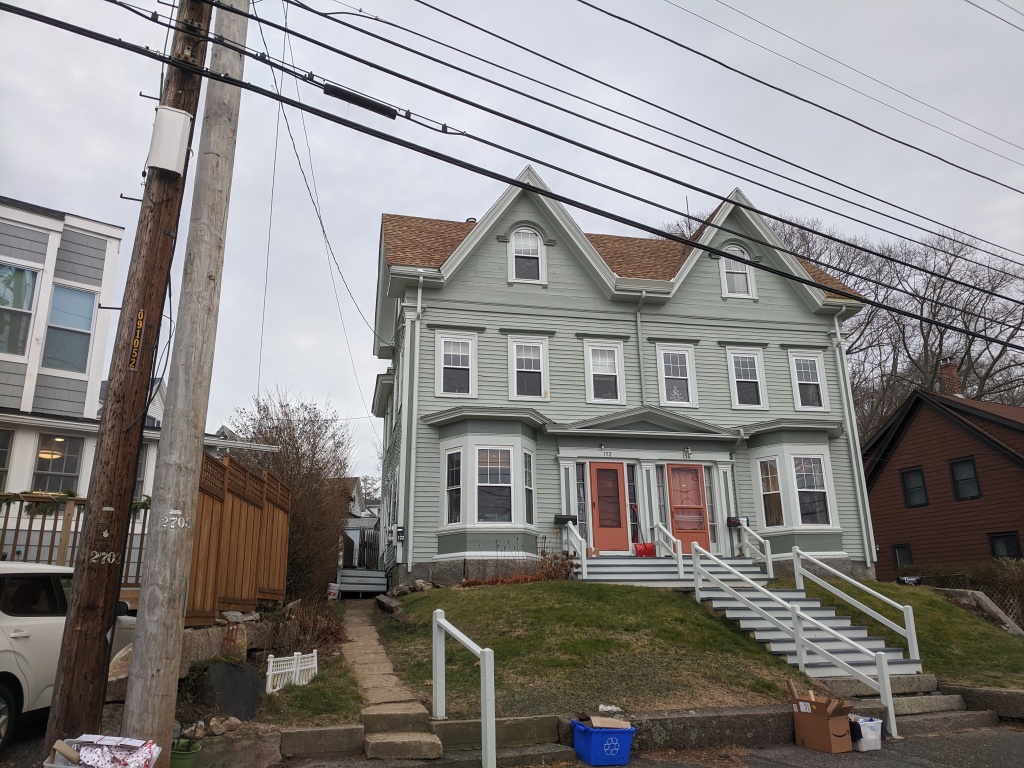

photo caption: 172 East Main Street, Gloucester, Mass. An Edward Hopper drawing of this Gloucester house, which I identified, was gifted to the Minneapolis Art Institute and included in a travel exhibition highlighting major drawings from this famous repository.
Clarence Manning Falt clerked for various businesses on Main Street to support his art practice.

By the 1900 census, clerk was dropped from the “occupation” category, “Author” stood alone.
Falt photographed and wrote about Gloucester, where he was born and raised during the late 1800s. His work reflects his own personal experiences including the fishing industry of his parents’ world. The best ones connect readers to this world because of his talents and an insider’s careful observations. Some of the writing relies too much on tropes and can be a chore, though never as difficult as the jobs he portrays, and may stick with you just the same because he is successful in providing such accurate and detailed examples of the business of fishing and the beauty of Gloucester. Some poems rise to evoke a full and cinematic day at the docks and ideas to mull over.
POINTS OF INTEREST: GLOUCESTER IN SONG
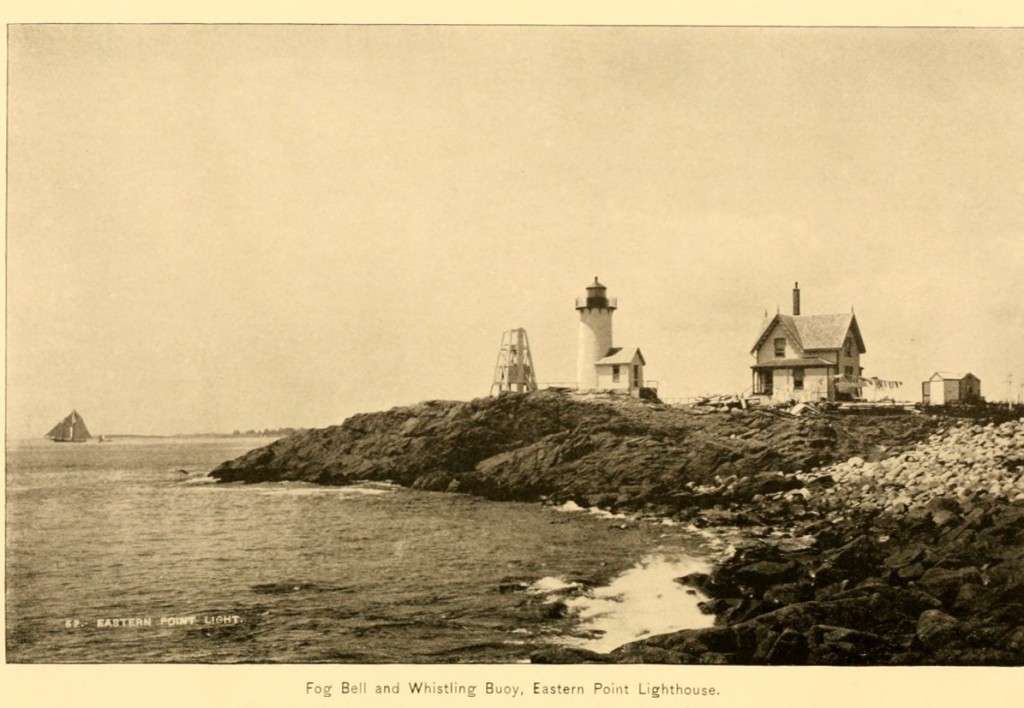
Falt’s book of poems and photographs, Points of Interest Gloucester in Song, was published in 1894, the year after his mother died. He dedicated the volume to her. Examples of his original and stunning photographs are from the copy held in the collection of the Library of Congress which was digitized. The pairings aren’t always successful and one might long for more photos, as I have. A few appear to be source photos for vintage postcards.
“To those who have grown up from childhood amid the grandeur and solemnity of these scenes, to the stranger who has become familiar with them, may their hearts be quickened with a keener appreciation for, and a deeper sympathy with, all that has made Gloucester and its suburbs charming and historic.”
Clarence Manning Falt
and: The Old Fort, Eastern Point and: The Bell, The Whistle, and the Buoy
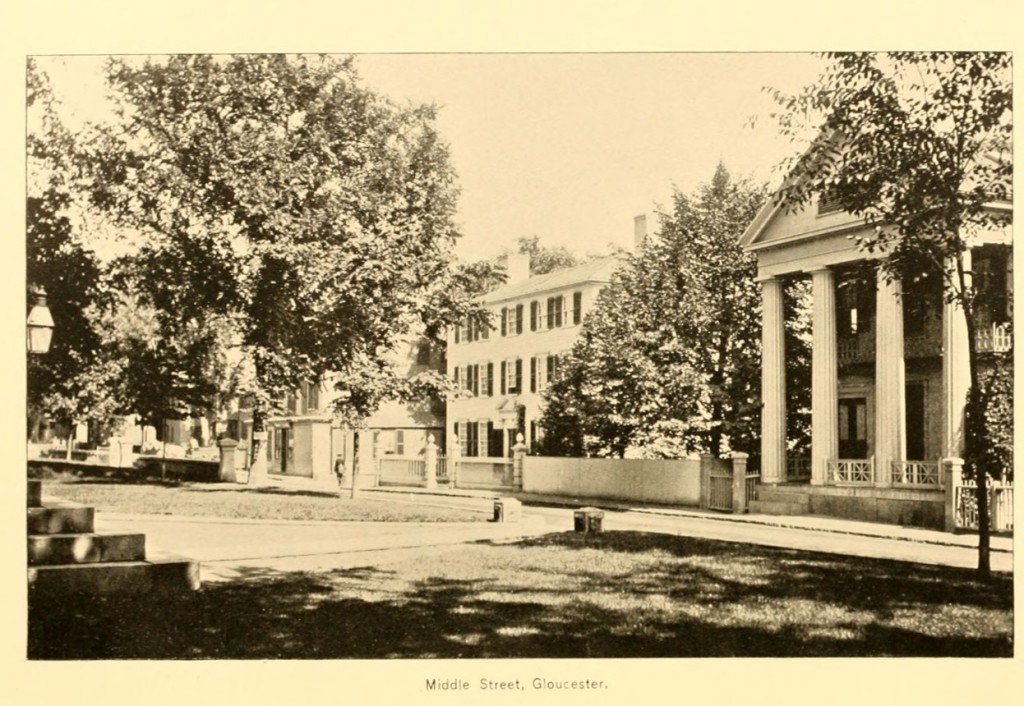
Have you seen this rock face profile?
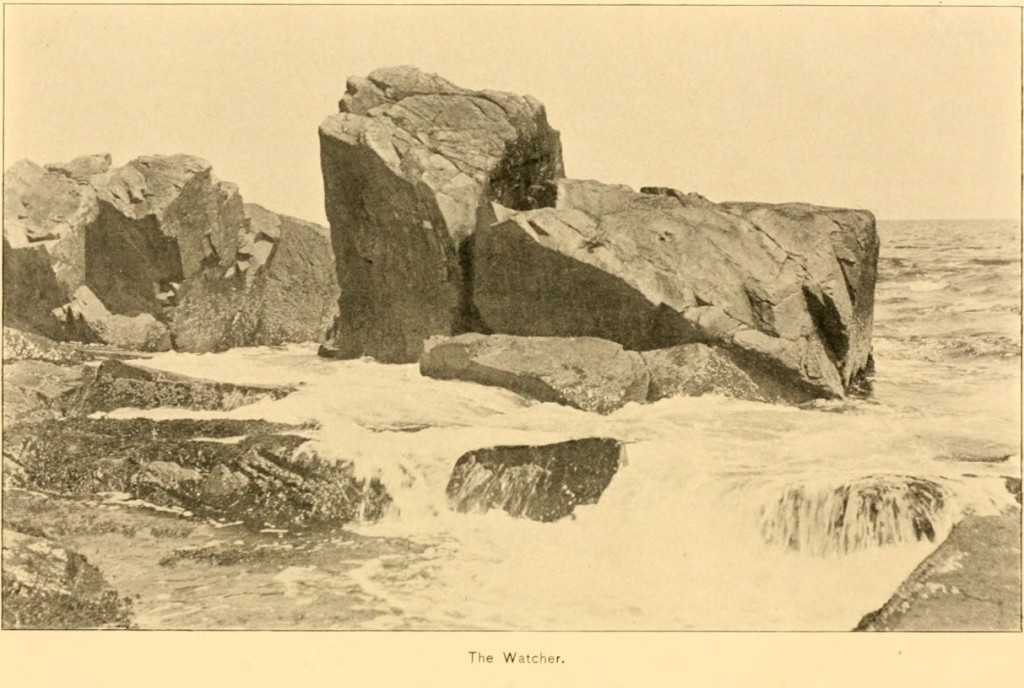
photo caption: The Watcher
Have you walked past this balancing skinny topper?
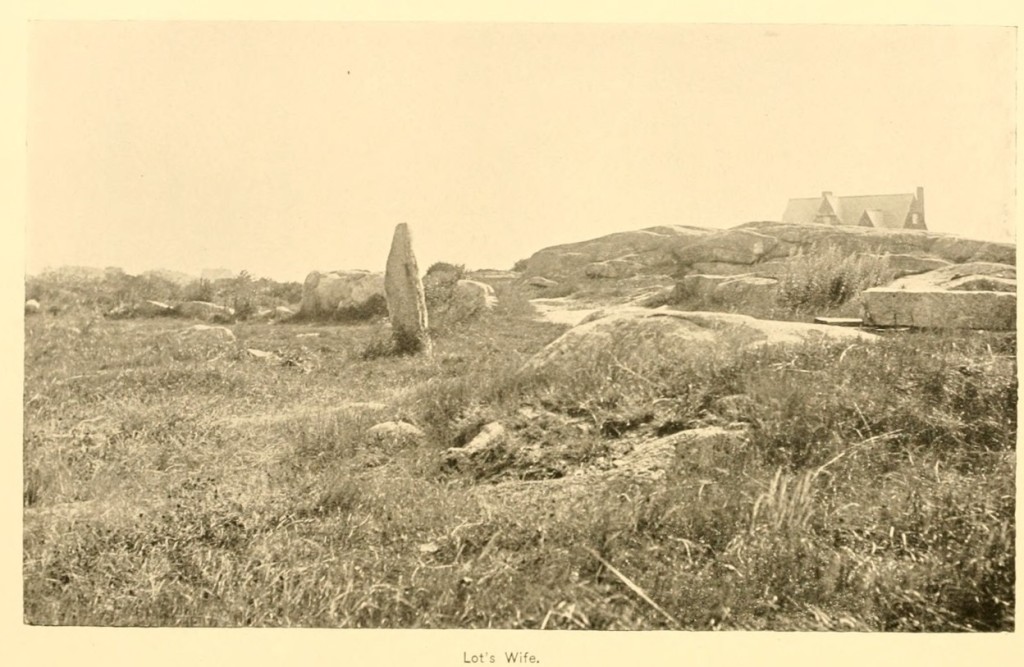
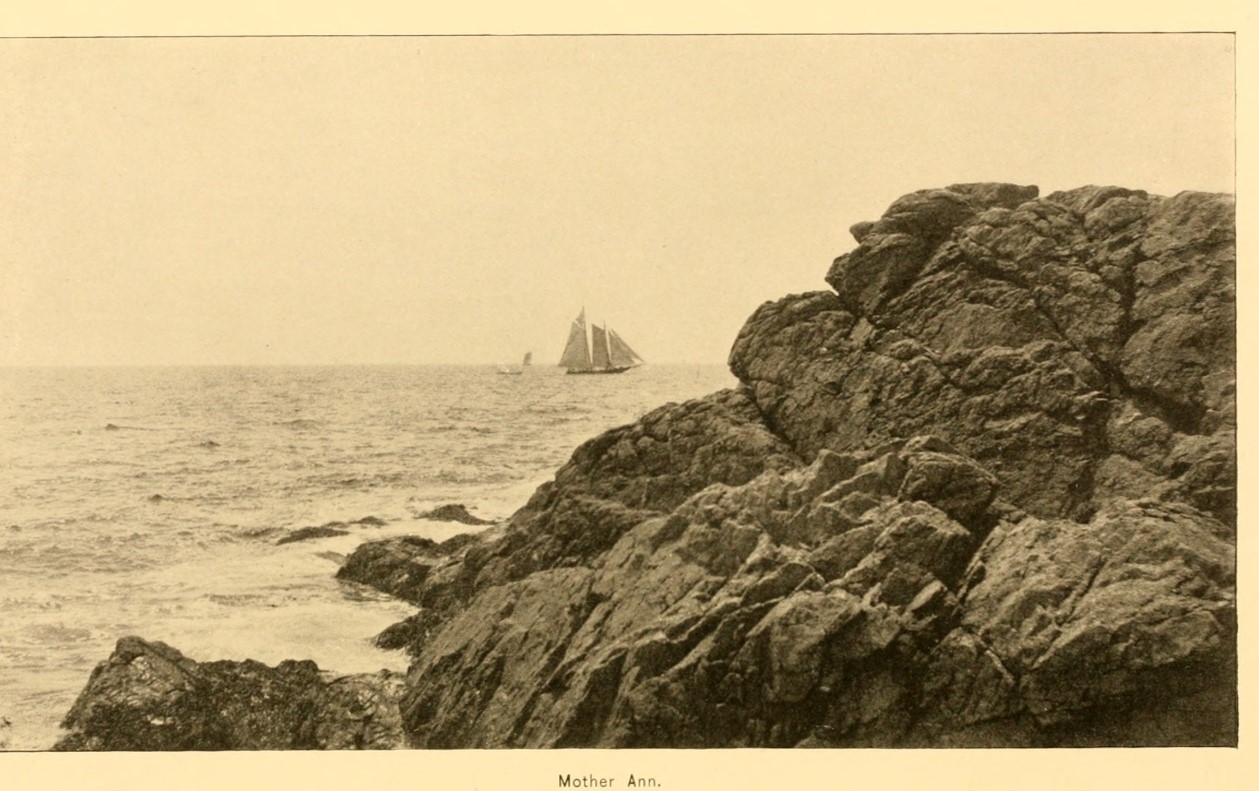
Poem titles and links for the photo grid below:
- Night-Fall at Brace’s Cove
- Mother Ann
- Nightfall at Turk’s Head
- Towards Norman’s Woe
- To The Annisquam River
- To the Willows of Riverdale
- At Patch Willows
- Evening at Wingaersheek Beach
- At Bass Rocks (with view Sherman’s Cottage and back to Good Harbor Beach)
- The Iron Cross at Magnolia
- At Pigeon Cove
- A Day With Shakespeare at the Singing Sands
(take time to enlarge the photos!)

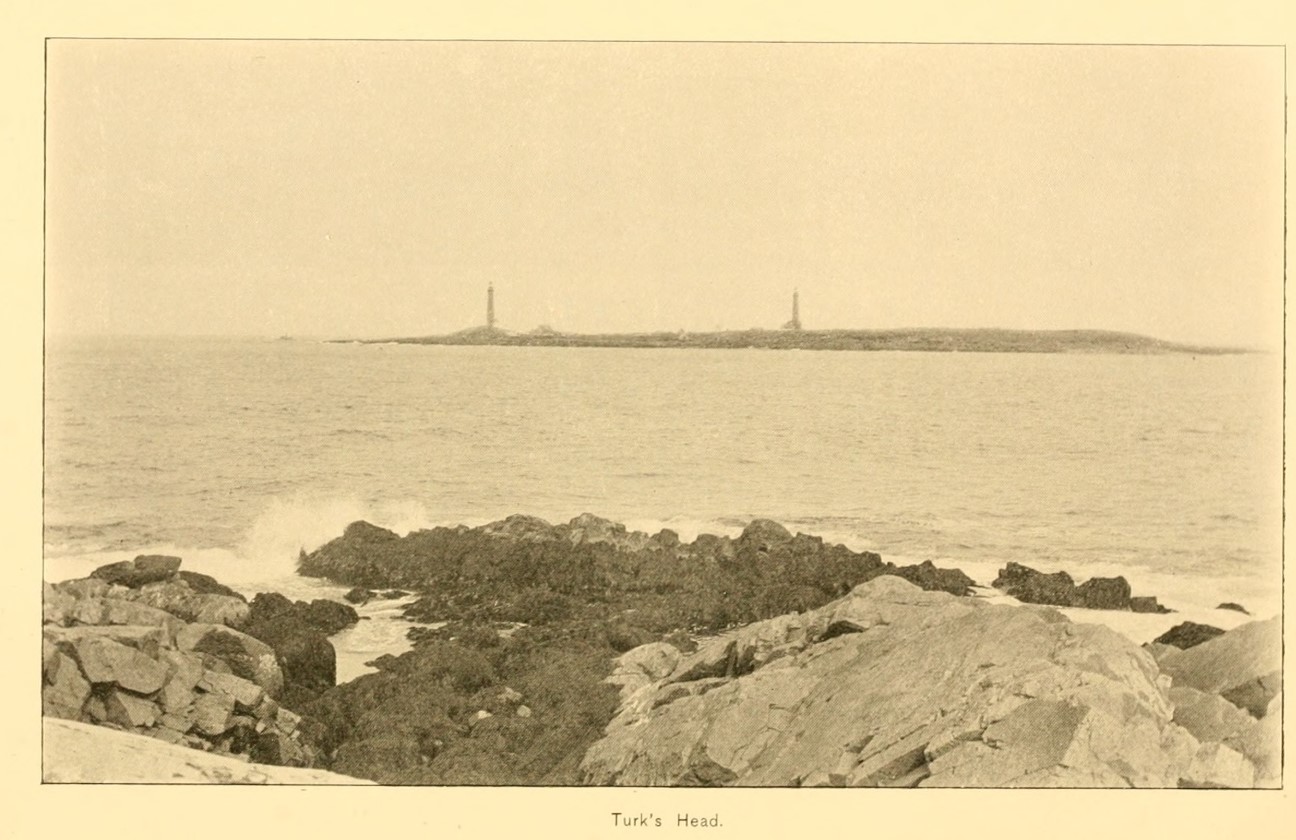

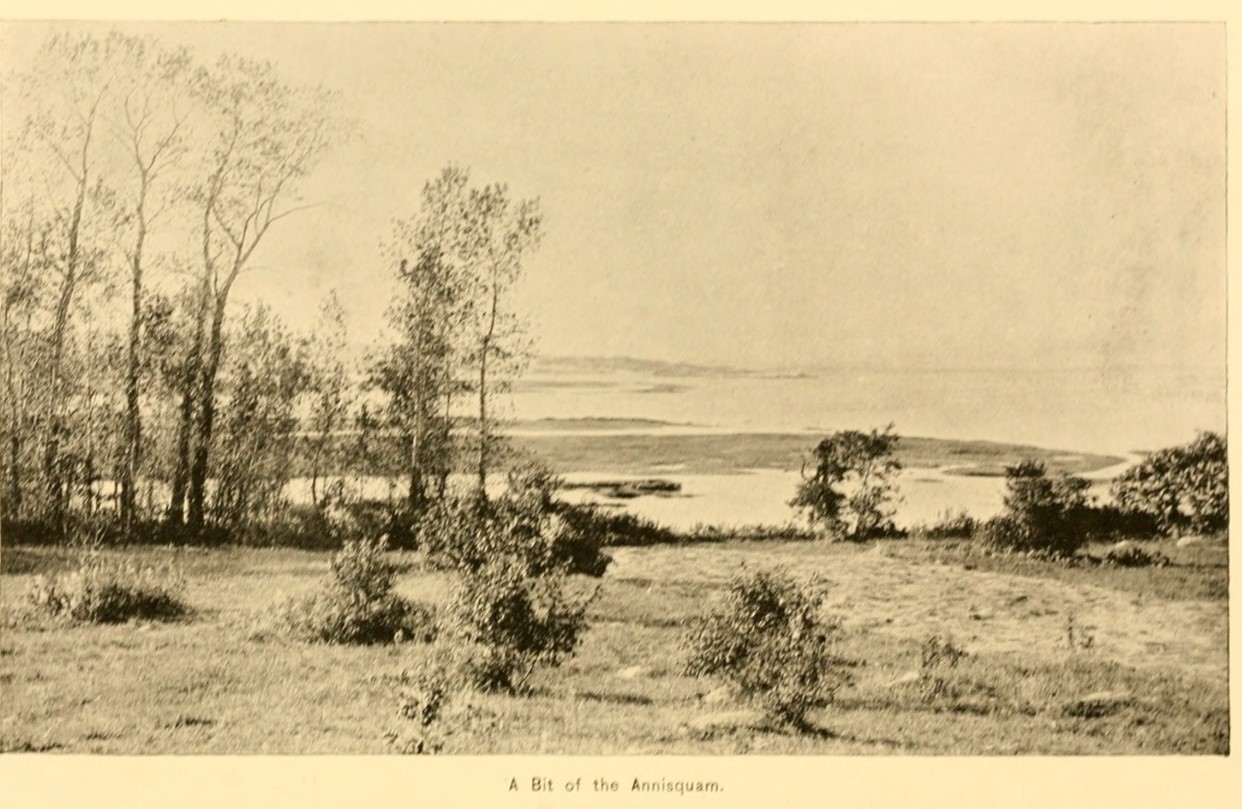
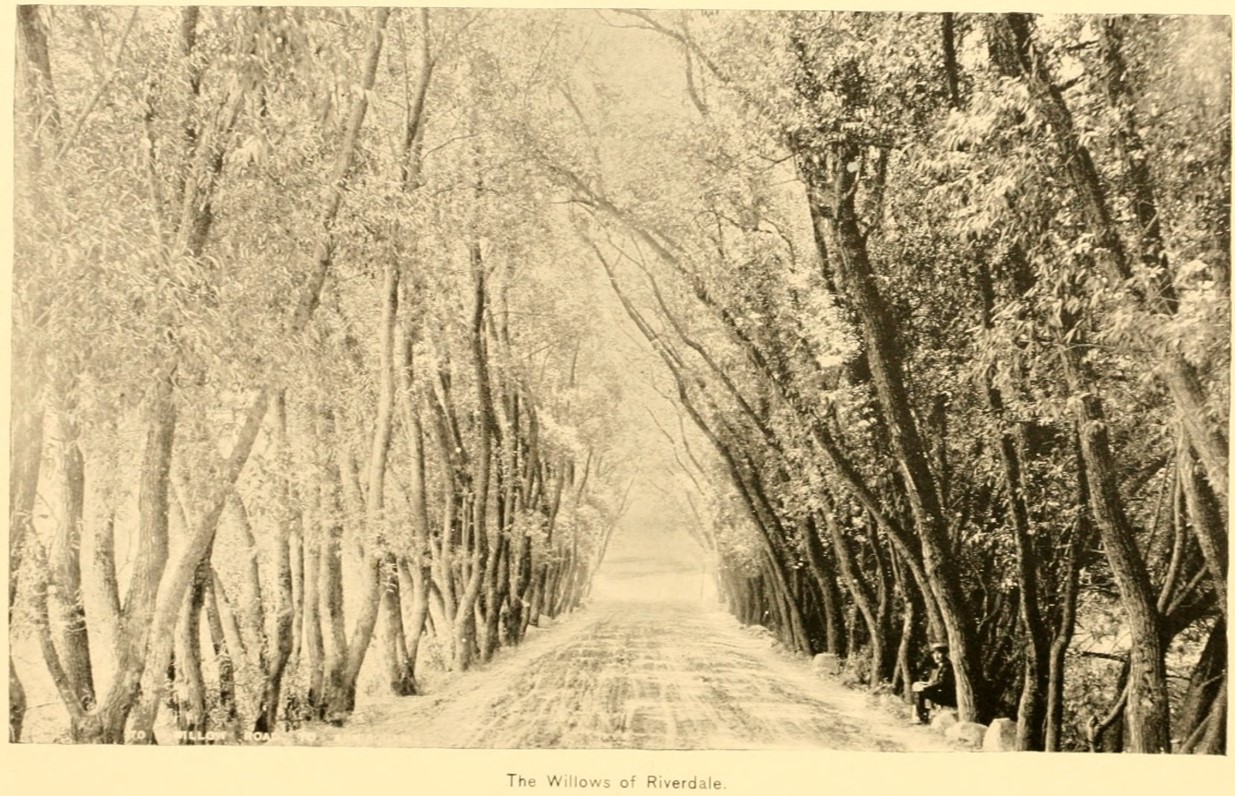

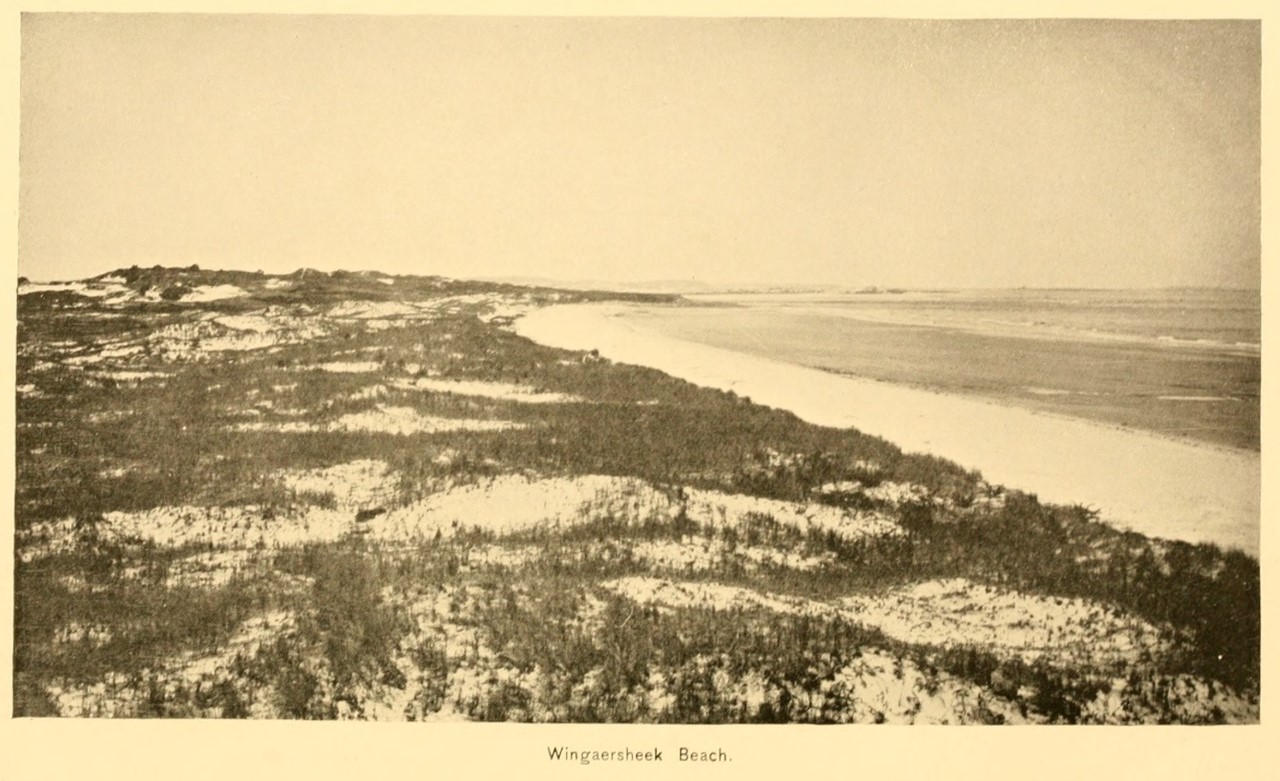
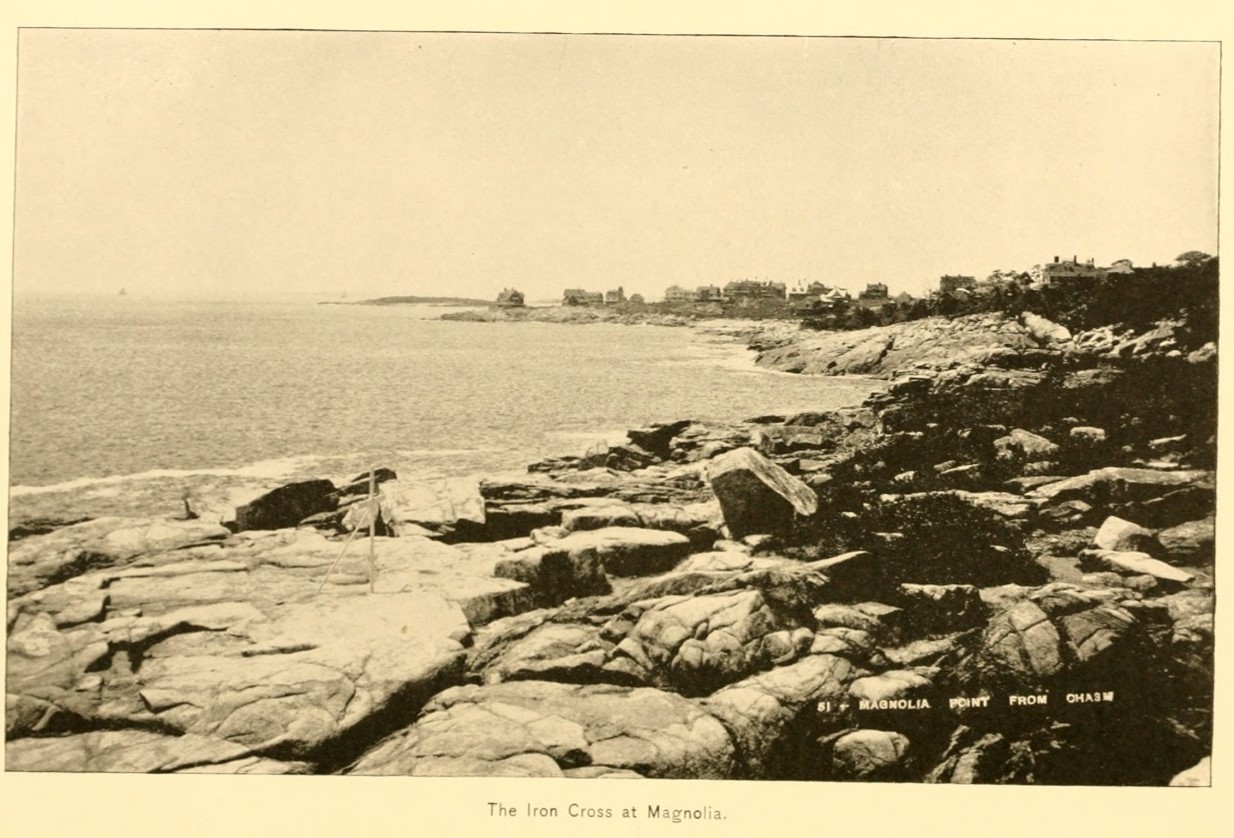
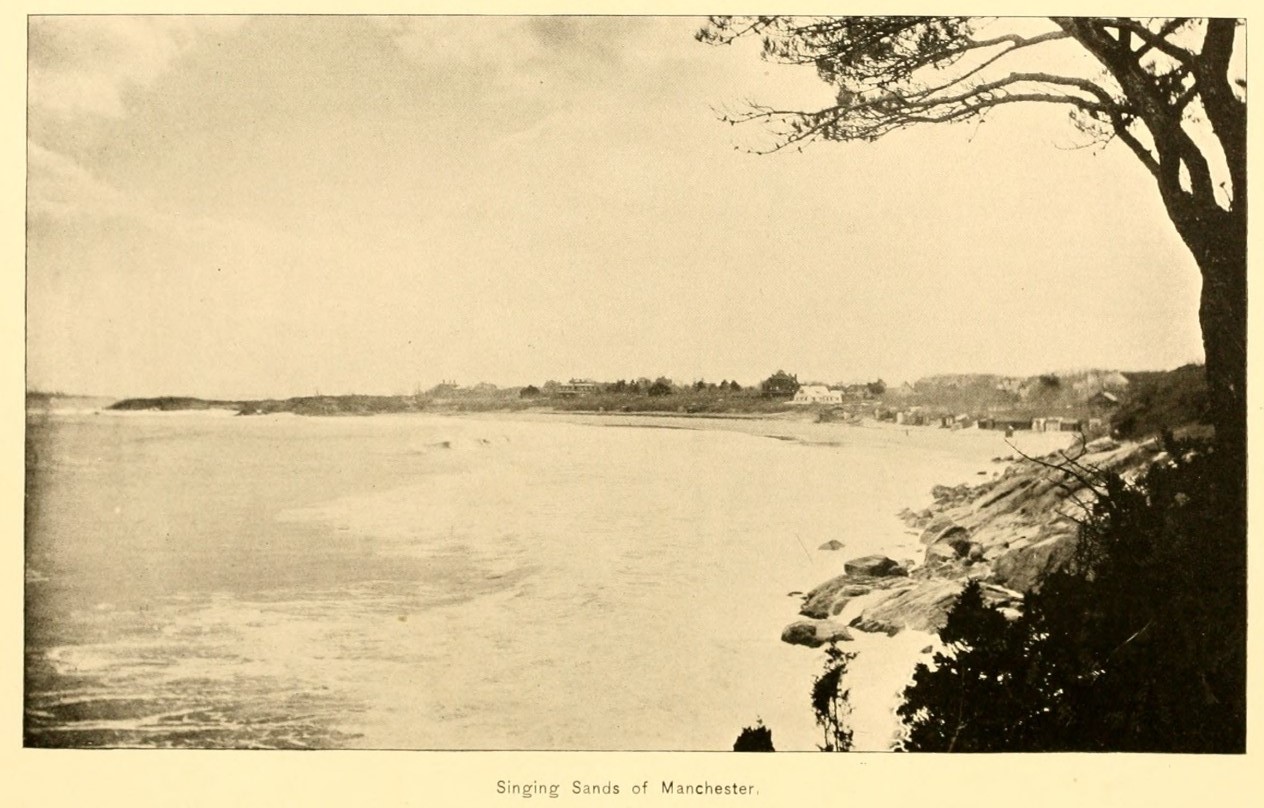

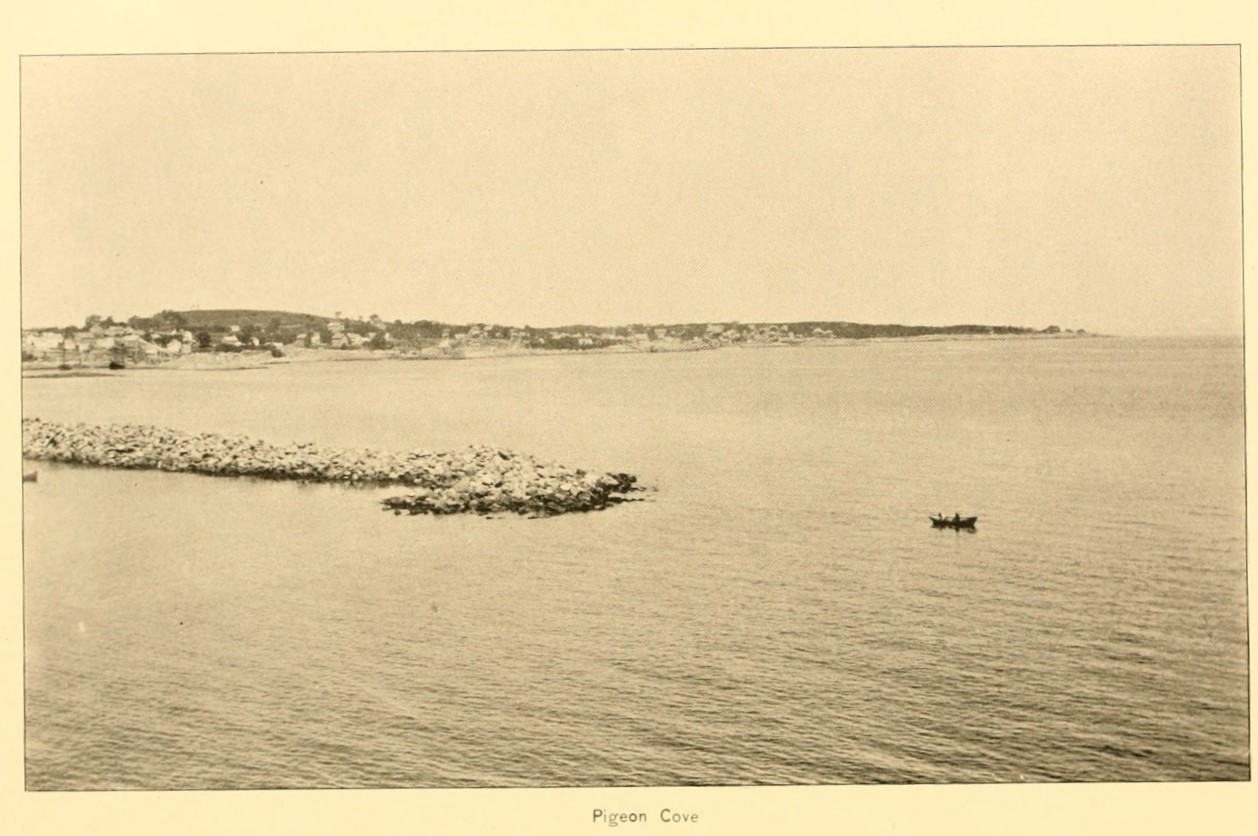
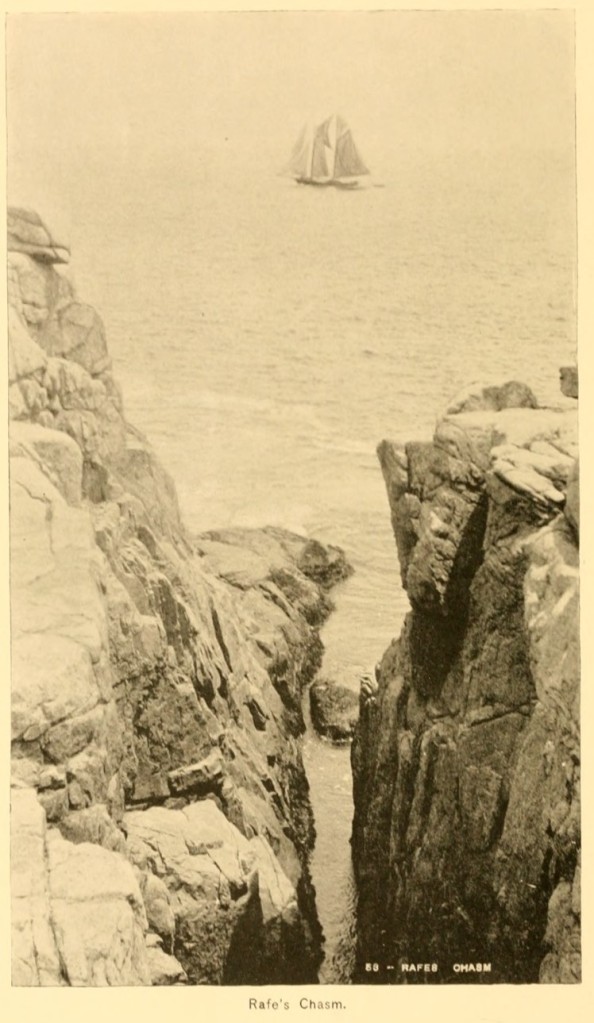
Falt poems from nature (without photographs) from this volume and worth a read
THE BLUETS

 IN mosses green
 A charming scene,
 To me a sweet surprise,
 In bright array
 This fair spring day
 The bluets greet my eyes.

 Each dainty cup,
 Is lifted up
 With tints of heaven’s hue;
 Each budding gem
 A diadem
 Bespangled with the dew.

 Like tiny shields
 Amid the fields,
 On bodies, slim and frail,,
 They wave and bend
 And sweetly send
 The Welcome Spring’s All hail!

 Where bright sunshine
 By one divine
 Can reach each fragile heart,
 They lovely gleam
 Like some sweet dream
 And Joy’s sweet pulses start.

 My better self
 (The heart’s stored wealth)
 Enraptured at the sight
 On each sweet face
 See’s Heaven’s grace
 And life, immortal, bright.

 On, tiny blooms,
 When waking tombs
 Lie buried ‘neath the snow,
 And Death doth keep
 Guard o’er thy sleep
 And blust’ring winds they blow,

 Backward apace
 My heart will trace,
 And bring, begemmed with dew,
 ‘Mid mosses green
 The charming scene
 Of you, sweet buds of blue.

 -Clarence Manning Falt, 1894,
in Gloucester, Ma.

Bluets, photo courtesy Justine Vitale
WHARF AND FLEET
Falt’s volume of poems and photographs, Wharf and Fleet: Ballads of the fishermen of Gloucester, was published in 1902. A copy of the book held at the University of California was digitized and uploaded in 2006.
This one was dedicated to Winthrop L. Marvin* (1863-1926), author of The American merchant marine; its history and romance from 1620 to 1902, also published in 1902.
“…Ever since 1713 Gloucester has been the peculiar home of the schooner, and this is now and long has been the unvarying rig of her unrivalled fleet of deep-sea fishermen. The first entry of a schooner in Boston’s commerce occurs in 1716, — “Mayflower,” Captain James Manson, from North Carolina. As Captain Andrew Robinson was a direct descendant of John Robinson who preached to the Pilgrims at Leyden, it is conjectured that this “Mayflower” was the fist schooner, the original Gloucester craft. Be this as it may, her useful successors are numbered by the thousands,…”
and re: the 100 days War with Spain:
“At the Gloucester recruiting station, in the early summer of 1898 , 76.5% of the men examined were accepted. At Boston the percent accepted was 14.5; at New York only 6. This means that in physique and intelligence the fishermen of New England are very much superior to the merchant sailors of the great seaports. So valuable a national resource as the deep-sea fisheries cannot be suffered to decline.”
*Winthrop Lippitt Marvin – U.S. journalist, and author; Civil Service Commissioner of Massachusetts; secretary of the Merchant Marine Commission
Back to Falt
Clarence Manning Falt was clearly proud of his parents and hometown and had a linguist’s ear and aptitude for the music of words. He studied public speaking and drama in Boston and New York. This book incorporates strongly stylized dialect deliberately, heavily.
“There is no distinct vernacular used, for the nationalities represented in this fishing port are so complex as to render that impossible, but there are many phrases in general use which I have endeavored to bring forth in these ballads. Born in this seaport city, with blood of seafaring people in my veins, the grandeur and pathos of this variable life have ever enthralled me.”
Clarence Manning Falt

More From his intro
Gloucester’s “population at the writing of this work is about 29,000. As a fishing-port, it is the largest in the world. Here can marine life be studied in all its phases. Here, lying at their moorings, will be found the up-to-date Gloucester fishing vessels, for the modern type of fishing vessel is t he pride and delight of a Gloucester skipper’s heart. He considers his stanch craft his ocean home. Indeed, these handsome vessels are as fine as the stately yachts that daily grace the harbor, for one would immediately note their fine sheer, perfectly fitting sails, clean decks, trim rig, and crews of able-bodied seamen, marking a wonderful and almost magical development from the primitive types of the quaint shallops, pinnaces, and pinkies of the olden days.
Gloucester harbor, like some might arena of old, is terraced with impregnable bastions of rugged hills and seared and time-furrowed cliffs…At night its beauty is unrivalled. Seaward its light-towers flash and gleam…the fleets glowing to port and windward, vying landward with the city’s brilliant reflections, sparkling with the shimmering glows of the wharf lights, the anchored fleets, and the inverted spangles of the stars of heaven… The wharf life has also developed marvelously. Every up-to-date method of prosecuting this industry is employed. This development has brought many new occupations and newer characteristics of the life. ”
Clarence Manning Falt, 1902 excerpt from his introduction Wharves and Fleet
A Matter of the Ear
“Packin’ Mack’r’l” — that does sound musical, and easily missed! How it makes me smile imagining Falt enlivened by the sights and sounds all about, fishing for just the right words and photographs; all the while diligently preserving a specificity of Gloucester’s fishermen’s dialect; a language all its own, encompassing many nationalities; one in which he was fluent and could translate and that he felt through his art. I wish that there was an audio recording of his reading aloud (or under his direction).
reminder comparable- post Civil War there was an uptick of slang dialects expressed in American writing, notably Tom Sawyer published 1876 and Huck Finn 1885(US)
Falt poem & photos- Gloucester sound and “see”scapes


SELECTION OF FALT’S POEMS
Many of the poems from Wharves and Fleet include vivid definitions tagged beneath which are delightful, personal and informative.

In building a wharf, the piles are first inserted into holes made in the dock, then after being carefully inserted and put in shape, they are driven down to a certain point by a heavy iron weight suspended from the top of the scow.
“Fly an’ spider”: figuratively used when the heavy iron weight (“th’ spider”) strikes the top of the pile (“th’ fly”). An old saying, long handed down by the fisher-folk**.
Notes from – Clarence Manning Falt
**have you heard this expression?
Ride stilts- “reflections of the piles at low tide. As the hawser lifts and drips and the crew hauls upon it, the phosper at night gleams most beautifully.
Notes from – Clarence Manning Falt
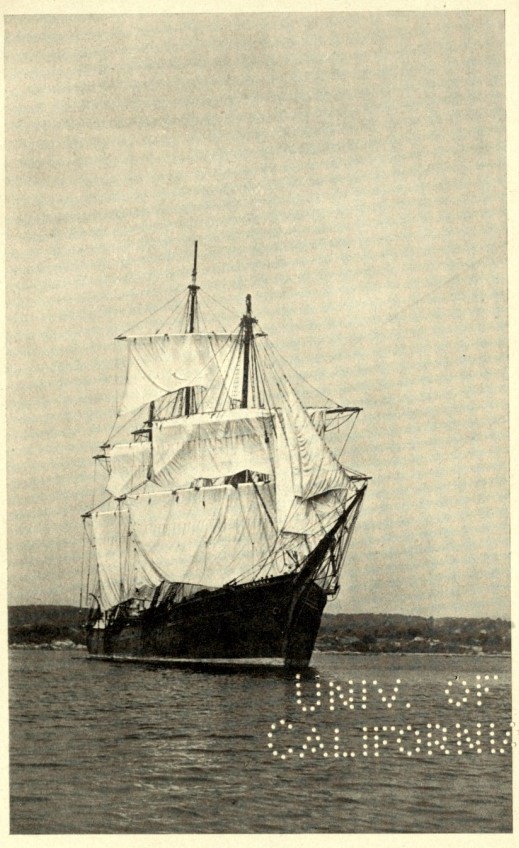
Dryin’ time after a heavy rain or spell of easterly weather, one of the most picturesque scenes of the harbor is the hanging of hoisted and half-hoisted sails from all sorts of crafts to dry in the coming forth of the sun.
Note about “Drying Time” – Clarence Manning Falt
Some of the poems I like most helped me learn about ancillary jobs and a bigger , tender portrait of this port.
GITTIN’ UNDERWAY
           GITTIN’ UNDERWAY
 In th’ early dawn ere th’ doors unlock,
 Then it’s crick, crick, crick, an’ it’s
      crock, crock, crock
 An’ it’s ho an’ hi fer th’ blocks ter talk
 In th’ early dawn e’er th’ doors unlock.

 Then it’s ho na’ hi fer th’ dreams ter die,
 Fer th’ crews an’ th’ bunks ter say good-by,
 Fer th’ yawn an gape, fer th’ stretch an’ sigh,
 In th’ early dawn ere th’ cocks crow high

 Then it’s ho fer doublin’ th’ Woolsey smocks,
 An’ twicein’ th’ toes in th’ home-knit socks,
 An cuddlin’ th’ ears up under th’ locks,
 An’ haulin’ down tighter th’ souwes’ chocks.

 Then it’s ho fer housin’ th’ rubber boots,
 An’ firmin’ th’ heart in th’ stiff oil suits,
 W’ile the cuddies blaxe, an’ th’ coffee goots,
 An’ th’ windlass creaks, an’ th’ horn it hoots.

 Then it’s ho fer grubbin’ an’ hi fer drink,
 Then shadder th’ gangway an’ meet th’ brink
 Ter shape out th’ course an ter careful think
 In th’ early dawn w’ile th’ stars still blink.

“Block ter talk”: the hoisting of the sails.
“Woolsey smocks”: flannel shirts.
“Souwes’ chocks”: the flannel-line lappets
that are attached to the sou’westers.
“Housin’ th’ rubber boots”: pulling them on.
“Cuddies”: forecastle.
“Windlass”: it is located forward the foremast,
and is used in weighing up the anchor.
“Horn”: the hand foghorn.
“Shape out th’ course”: making the grounds
by chart and compass.
“Sou’wester”: a broad-brimmed oil-cloth hat
with ear-lappets lined with flannel.
   -------
 Clarence Manning Falt, Wharf and Fleet, 1902, Gittin’ Underway, p. 37-38
TH’ NIPPERWOMAN
          TH’ NIPPERWOMAN

  I SEE her black shawl mid th’ butts
      Clutched tight erpon her breast,
  I see her black cloud full uv ruts
      Er shamin’ off its best,
  I see her pinched an’ wrinkled face
      Er quizzing uv th’ crew,
  An’ this ter-nigh is ole Mart Place,
      That once wuz Marthay True.

   I see her lookin’ down th’ deck
      Ter git some welcome nod,
   Or still perchance th’ courage beck
      Ter put her feet erboard.
   I know her arms are tired out
      Er holdin’ uv th’ string,
   Fer ev’ry one is knitted stought
      Ter pace th’ haddickin’.

   Oh, Marthay True uv long ergo,
      Could you have looked ter see
   Yer rosy cheeks an’ eyes erglow
      Come cryin’ back ter thee,
   Could you have looked ter see each braid
      Thin twisted stran’s uv snow,
   I know yer would ter God have prayed
      Fer ankrige long ergo.

   Oh, Marthay True that bird-like sang,
      An’ twined th’ red rose high,
   An bade my boyhood’s heart ter hang
      Er love-light in thine eye,
   Could you have known th’ years would
               fling
   Yer, stranded wreck uv Time,
     Ter sell with ev’ry knitted ring
   Er dead heart’s silent chime,

   Er Nipper woman in th’ cold,
      Unnoticed an’ forlorn,
   Mid fisher faces sad an’ bold,
      With hearts bruised like yer own,
   I know yer would ter God have prayed
      Fer ankrige long ere this,
   Than rather been by Fate errayed
      Er thing fer chance ter kiss.

   O, Marthay True, we laugh an’ woo,
      An’ twine th’ red rose high,
   An prate, an’ tell what we will do,
      With laughter in our eye;
   But way down in our hearts we know
      Time’s but er fickle thing,
   An’ ere life’s winds begin ter blow
      Come grief an’ sufferein’.

   Oh, Marthay True, we laugh an’ woo,
     An’ twine th’ red rose high,
   An prate, an’ tell what we will do,
     With laughter in our eye;
   But soon, too soon, our castles fall,
     Our gay ships drink th’ sea,
   An’ what should been joy’s merry call
    Jest tears fer memory.

   Oh, Marthay True, God wot that thou
     Meet luck with all th’ fleet,
   An if er kind word will endow
     I’ll speak it quick an’ neat.
   I know er fisher’s tender spot
     Is ankered in his heart,
   Fer once with Christ they threw th’ lot,
     An’ hauled er goodly part.

   Oh, Marthay True, yer tale is told.
     Th’ hearts are tried an’ staunch,
   An, they have trawled er sum uv gold
     Ter speed yer in joy’s launch.
   God wot that thou mayst happy be.
     Jest keep yer sad heart bright,
   An’ He will steer yer down Life’s sea
     Ter find Hope’s port erlight.

Nipper woman: one of a class of women who knit
and sell to the crews of the fleet the woolen
nippers worn to prevent chafing of the fishing lines.
It is an industry pursued in the winter
and sold to the firms and the crews in the
early spring, at the fitting out or in the fall
at the “shifting of voyages.”

Nippers: when the trawl gets caught,
--“hung up,” in fishing vernacular,
--mittens are removed and the trawls
are hauled in with a pair of nippers,
bracelets of knitted wool or
cloth held in the palm of the hand,
creased to allow of a better hold of the line.

 ------
Clarence Manning Falt, Wharf and Fleet, 1902
Th’ Nipper woman,  p. 37-38
Woolen nippers from Gloucester on view at the Smithsonian were exhibited in the 1883 International Fisheries Exhibition in London. I think of Falt’s poem, Th’ Nipper Woman, above, when I see this display, and find it all the more poignant now picturing the women & men working the dock and sea and seasons at port. Intimate and full. Gentle and rough.

GAFFIN’ FISH
          GAFFIN' FISH
 W’EN th’ tide is out er flirtin’,
   An’ fergits ter shut its door,
 An’ th’ happy clams are squirtin,
   Playin’ injine with the shore,

 An th’ kids are ripe fer junkin’,
   An’ fer skippin’ rocks an’ shells,
 An fer woodin’ an’ fer punkin’
   Bobbin’ bottles in th’ swells,

 An’ yer hear th’ rats er squalin’
   Frum th’ black cracks in th’ walls,
 An’ yer quiz th’ tomcats stealin’ Nearer,
   nearer ter th’ calls,

 An’ yer mark some ole trap histid,
   Like er giddy thing on cogs,
 With its body kind uv listid
   T’ward th’ black spiles an th’ logs,

 All togged up in robes uv coal tar,
   Yaller oaker, sash’s an’ bo’s,
 P’r’aps er crimson-pintid five-star
   Sunburs’in’ its puggy nose,

 Like some poor, ole primay donnay
    Thet has wobbled all her say,
 Now shoved further ter th’ corner
    W’ile th’ daybute works her lay,

  P’r’aps er ole T.D. er puffin’
    Frum er drollin’ mouth er stern,
  Use ter bluffin’, use ter cussin’,
    Use ter words I know yer’v hern,

 Then yer know time’s ripe fer gaffin’
   An’ fer puntin’ roun’ th’ docks,
 Fer it’s then th’ crews git chaffin’
   An’ er rattlin’ th’ pitchforks,

 Fer it’s then th’ strays go slippin’
   Frum th’ ole caps with er thud,
 An’ th’ guick gaffs raise ‘em drippin’
   Ter th’ sly punts frum th’ mud.

 Oh, it’s art ter watch th’ sneakin’
   Uv th’ puntin’ through th’ spiles,
 Oh, it’s art ter watch th’ peekin’
   Uv th’ gaffers an’ th’ wiles,

 Fer it’s thievin’ pure an simple
   An’ it’s skittish work at bes’,
 Though th’ cheek may wear th’ dimple,
   An th’ eye stan’ heaven’s tes’.

 Oh, it’s risky work er gaffin’,
   Full uv duckin’s, fights, an’ jaws,
 Full uv skuddin’, full uv chaffin’,
   Full uv haul-ups, full uv laws.

 Fer if caught, as sure as Moses,
   Yer’ll be chucked deep in th’ dump,
 W’ile th’ smells uv sweet June roses
   Won’t c’logne up th’ homeward slump.

When the trips are being taken out,
often many fish slip from the pitchforks
and sink to the docks. A class of young
men and boys then row around in little boats,
called punts, and gaff up the fish beneath
the wharves and sell them. It is an illegal
business, and if caught, they are subjected
to a fine and imprisonment.
It is operated at low tide.

“Ole trap histid”: the old-fashioned shore
boats that haul up on the dock flats for repairs.

"Pintid five-star”: an old-fashioned emblem
For decorating ends of bowsprits.
------
Clarence Manning Falt, Wharf and Fleet:
ballads of the Gloucester Fishermen, 1902
Gaffin’ Fish, p.39-41
For me, this one is a compelling balance: he carries water for the skippers and (less) for the gray market hustlers. It’s messy. His dad’s guiding hand on this one. Scroll back up and look at the “Th’ spider an’ th’ fly” photograph, the pilings and surface of the water. The images and words flow and force, back and forth. The pairings aren’t so cut and dry.
Clarence Manning Falt fast facts:
| Born | August 1861, Gloucester, Mass. |
| Father | Cpt. Walter M. Falt (b. Canada April 18, 1823- d. Glouc. 1904) emigrated in 1845; fish dealer aka fish merchant 1870 census; skipper; master fisherman 1880 census; day laborer 1900 census misspelled as “Fault”, Cpt and Master Sea Foam 1878 |
| Mother | Mary Carlisle Robinson (b. Glouc. 1826 – d. Glouc. 1893) parents married Nov. 30, 1847 “keeping house” |
| Resided family home | 172 East Main Street, he and his siblings with their parents Edward Hopper drawing of this house in the collection of the Minneapolis Art Inst. |
| Day job | clerk for downtown businesses (drugstores on Main) |
| University | studied oration and acting |
| Occupation | “clerk” and “apothecary clerk” on earlier census “author” on 1900 census |
| 6 siblings | dates on family headstone Marion, (1849 -1931) 1848? Walter P. (1851-1877) laborer 1870 census Julia Procter (1852-1924) Clarence M. (1861-1912) author 1900 census Austin C. (1866-1915) stevedore 1900 census Roland H. (1868-1870) Mary Taylor (1876-1917) 1874? |
| Published works | 1894- Points of Interest: Gloucester in Song 1902- Wharf and Fleet: ballads of the Fishermen of Gloucester |
| Died | 1912 |
| Grave | family plot, Mt. Pleasant Cemetery |
Under a Banner of Many Nations
Note from the author: Over the past week, I’ve shared Boston Globe Gloucester stories about immigrants: Swedish, Canadian, Italian, Sicilian, Portuguese , Irish, Scotch and so on. I thought of Falt’s books with each post.
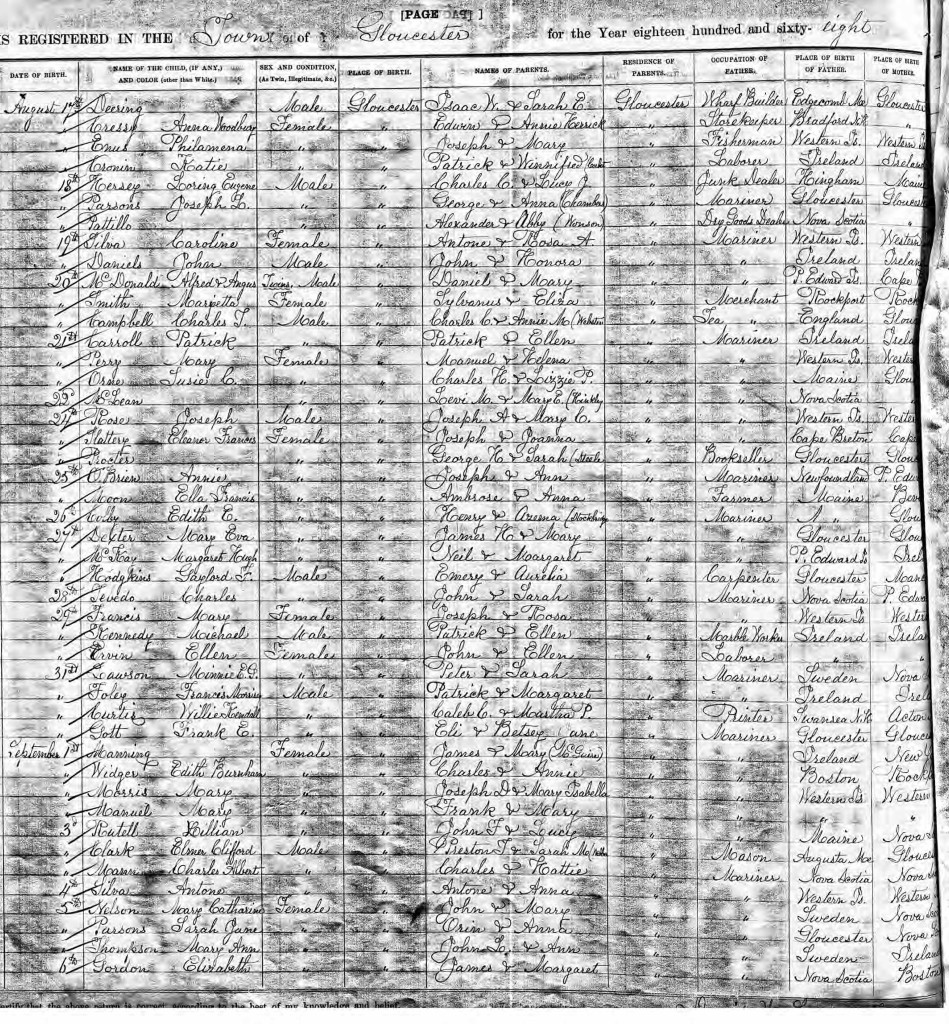
Nations jump from the page when scanning vital stats documents, too- like this one from Gloucester birth registry 1868 – scroll over to the right through Occupation / place of Birth of Father/ place of Birth of Mother.
(To get the full experience, go big! The wordpress format reduces the size, however all photos in this post can be clicked, double clicked through, or pinch & zoomed to enlarge)
1897 Boston Globe century list of top captains
1897 Gloucester Fisherman: Master Mariners List – Careers of Men Who Caught the Most Fish and Sold Them ProfitablyDownload
- Captain Thomas Bohlin #3 “king pin among the halibut fishermen” (born in Sweden)
- Captain Charles Harty tie for #2 mackerel “as a seiner his reputation has been made.”
- Captain Solomon Jacobs #1 OG “widest known fisherman this country has ever produced…having started out as record beater, has had to live up to his reputation and has succeeded…” codfishery then mackerel seining – global expansion, lost everything & came back again “at the foot of the ladder. His old time luck had not forsaken him…” (born in England, brought to Newfoundland when a baby)
- Captain Alex McEachern #7 high lines, particularly Grand bank codfisheries beat all records in 1897 (born Cape Breton)
- Captain John W. McFarland tied for #2 “the only one to make two newfoundland herring trips, and marketed them in New York, on one season” (born in Maine)
- Captain Andrew McKenzie #8 Iceland halibut and Newfoundland herring (born in PEI)
- Captain Lemuel F. Spinney #5 “high line halibut catcher who is in the first flight of the “killers.” (born in Yarmouth, N.S.)
- Captain Charles Young #6 halibut fleet -1895 record for most trips in one year (born in Copenhagen)
- Captain Richard Wadding #4 halibut (born in England)
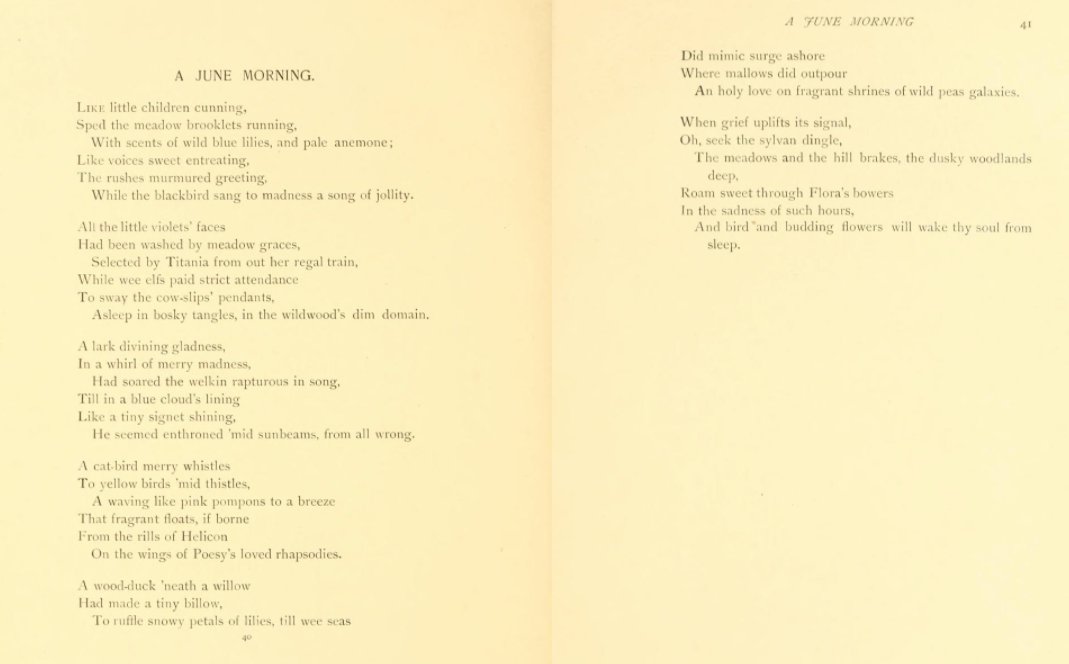
A June Morning – arch yes to my ear, and interesting catalogue of flora and fauna then
Spread The GMG Love By Sharing With These Buttons:

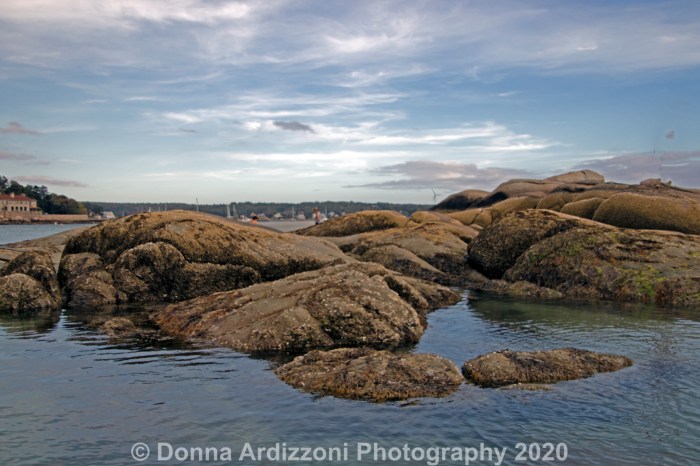
Wingaersheek Beach on a pretty Sunday afternoon
Spread The GMG Love By Sharing With These Buttons:

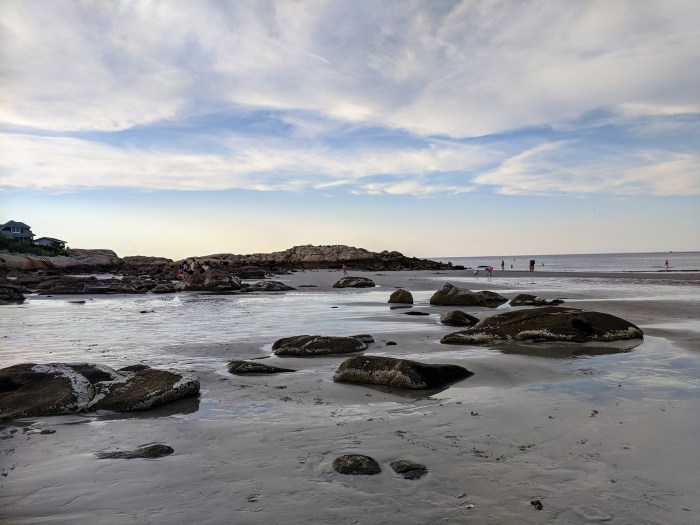
Gloucester beaches – Wingaersheek July 2020
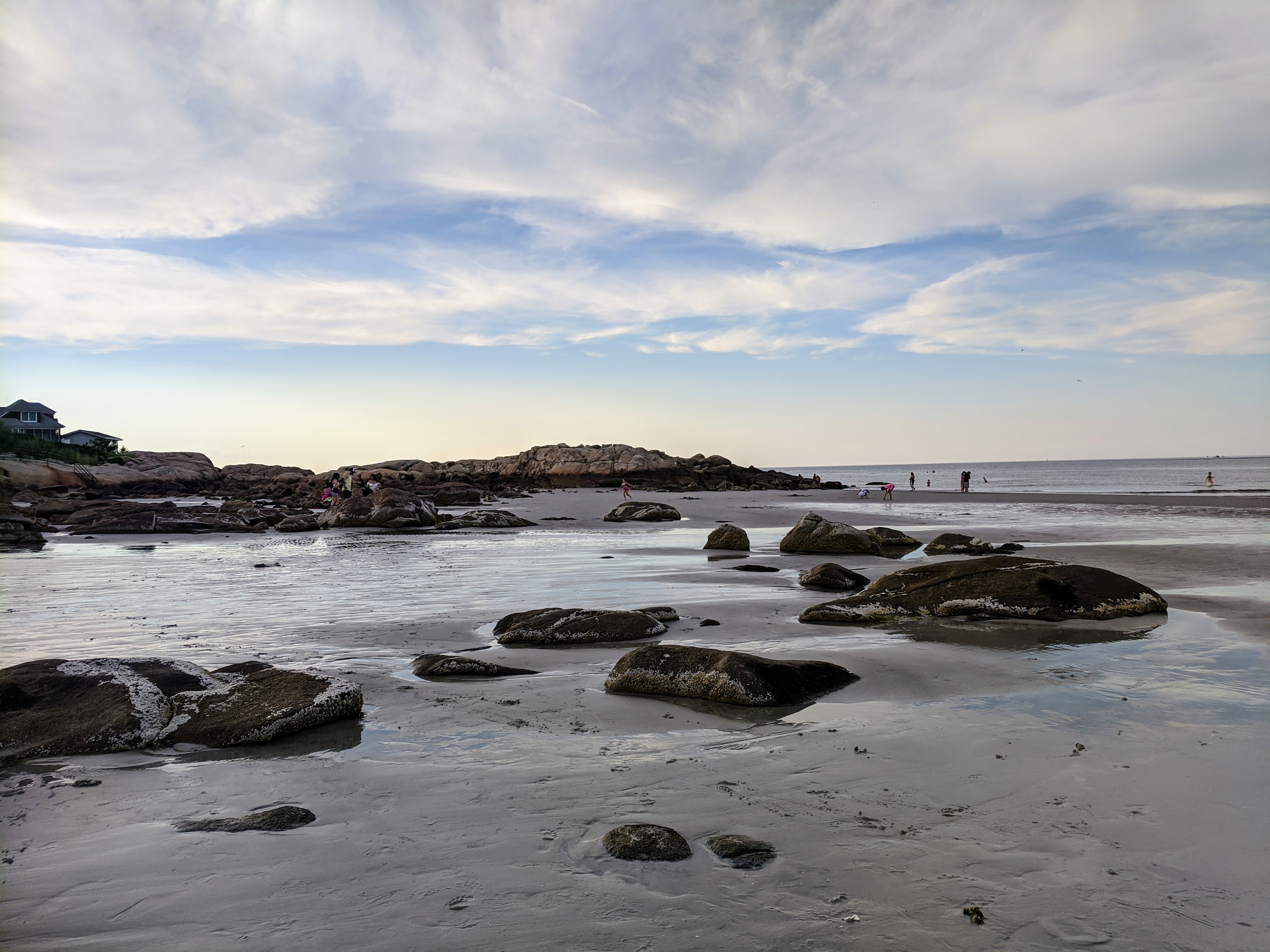
Spread The GMG Love By Sharing With These Buttons:

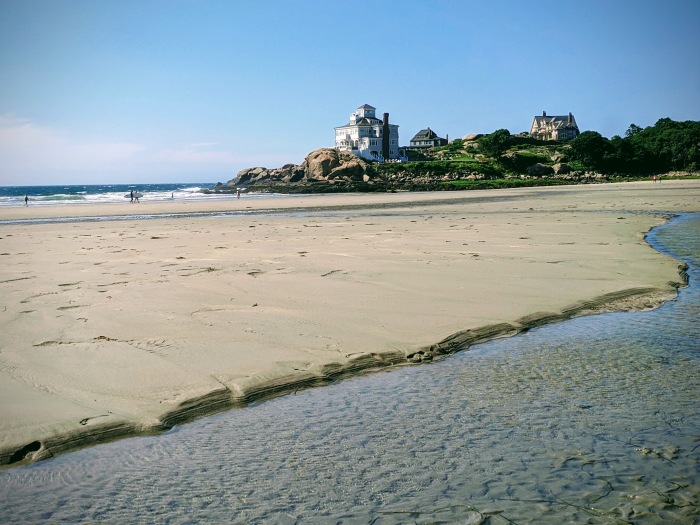
Are you up for the 13-2 Gloucester beaches challenge? 13 beaches. 2 jumps. 1 city. Go! #Staycation #safecation #Covid19
Covid-19 and summer brought an old post to mind. Reposting summer 2020; First published in July 2016.


Are you up for a Gloucester beaches challenge?
A mid-week vacation day is the easiest. Oh, and you’ll need your resident beach sticker. We prepped our car with a picnic blanket for the seat, extra towels, and ice waters. Start early and grab a big “lobsterjack” breakfast because you’ll need the fuel. End late.
Let’s establish some base rules here.
First off, you need to spend at least 15 minutes at each beach. (You can tweak this a little if you want.) Next, you need to dive under. We suggest a ritual for each beach, e.g. ‘The Five and Dive’. Finally, you have to stop for ice cream and candy. Remember, you can do these beaches (or others or quarries in Gloucester) and jumps in any order. Be flexible for different ages and unexpected delays like staying at one beach for hours, or a friend asking you to drop off a sub (*cough* Joey *cough*). Most importantly, you have to do at least 13 beaches and 2 jumps in one day. Mind the tides. Be grateful we have so many choices.
The Beaches- partial list
alphabetical order
Annisquam lighthouse. Coffin’s beach. Good Harbor beach. Long beach. Magnolia beach. Niles beach. Pavilion beach (by Beach Court). Pavilion beach bonus (by the cut). Plum Cove beach. Rocky Neck Oakes Cove beach. Stage Fort Park (1) – Cressy’s beach ( our alt. title ‘sea serpent’ big beach). Stage Fort Park (2) – Half Moon beach. Wheeler’s Point. Wingaersheek beach.
The Jumps- partial list
Annisquam bridge. Magnolia Pier.
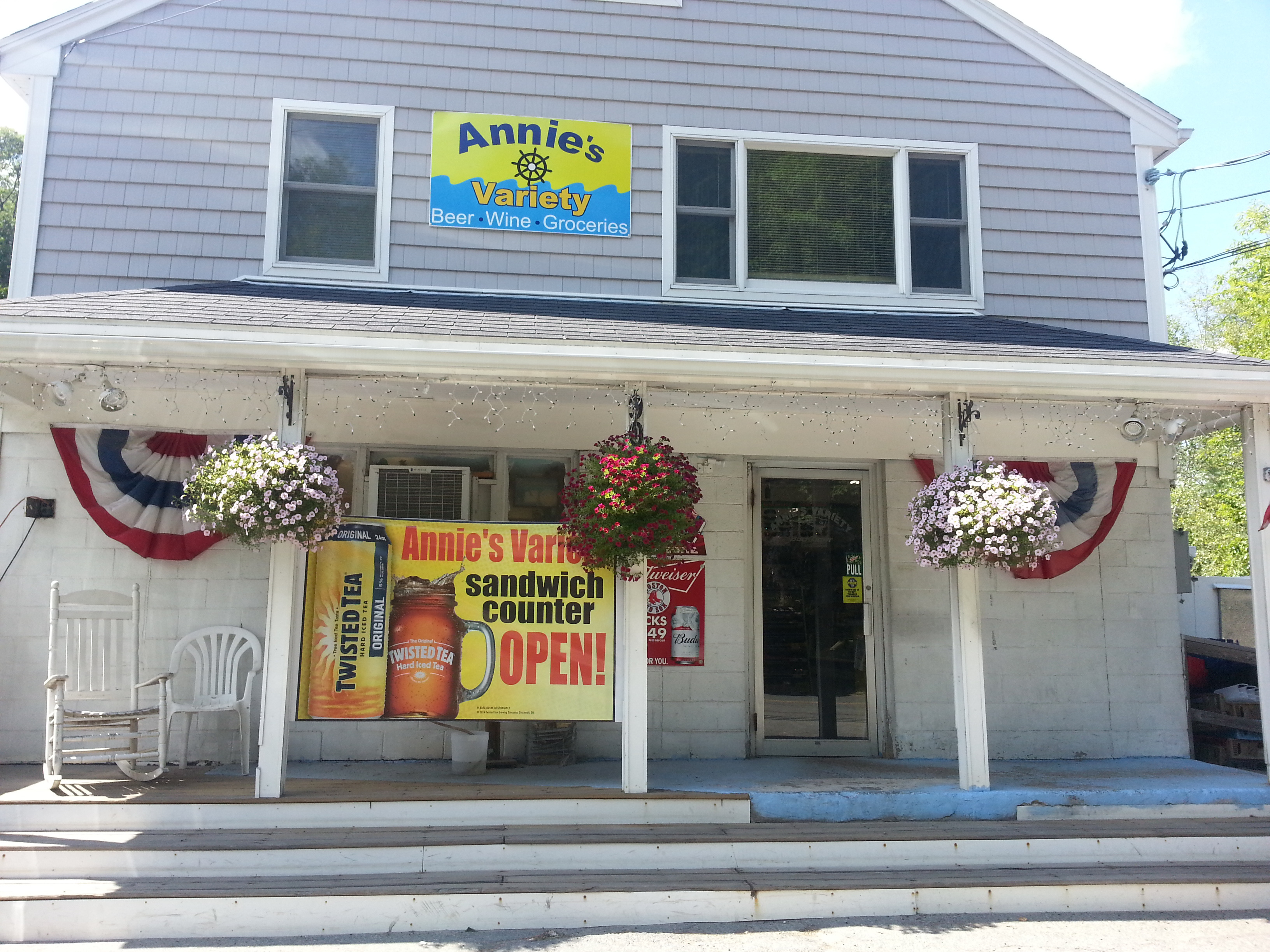
*We did this challenge at least once each summer. (In 2016) we started off with breakfast at Willow’s Rest and continued from there. Our timing was random especially as we spent hours at Wingaersheek. The second meal to get us through the day came from the sandwich counter at Annie’s by Wingaersheek. Yes, they have a sandwich counter.
Gloucester Beaches sandwich directory

Spread The GMG Love By Sharing With These Buttons:

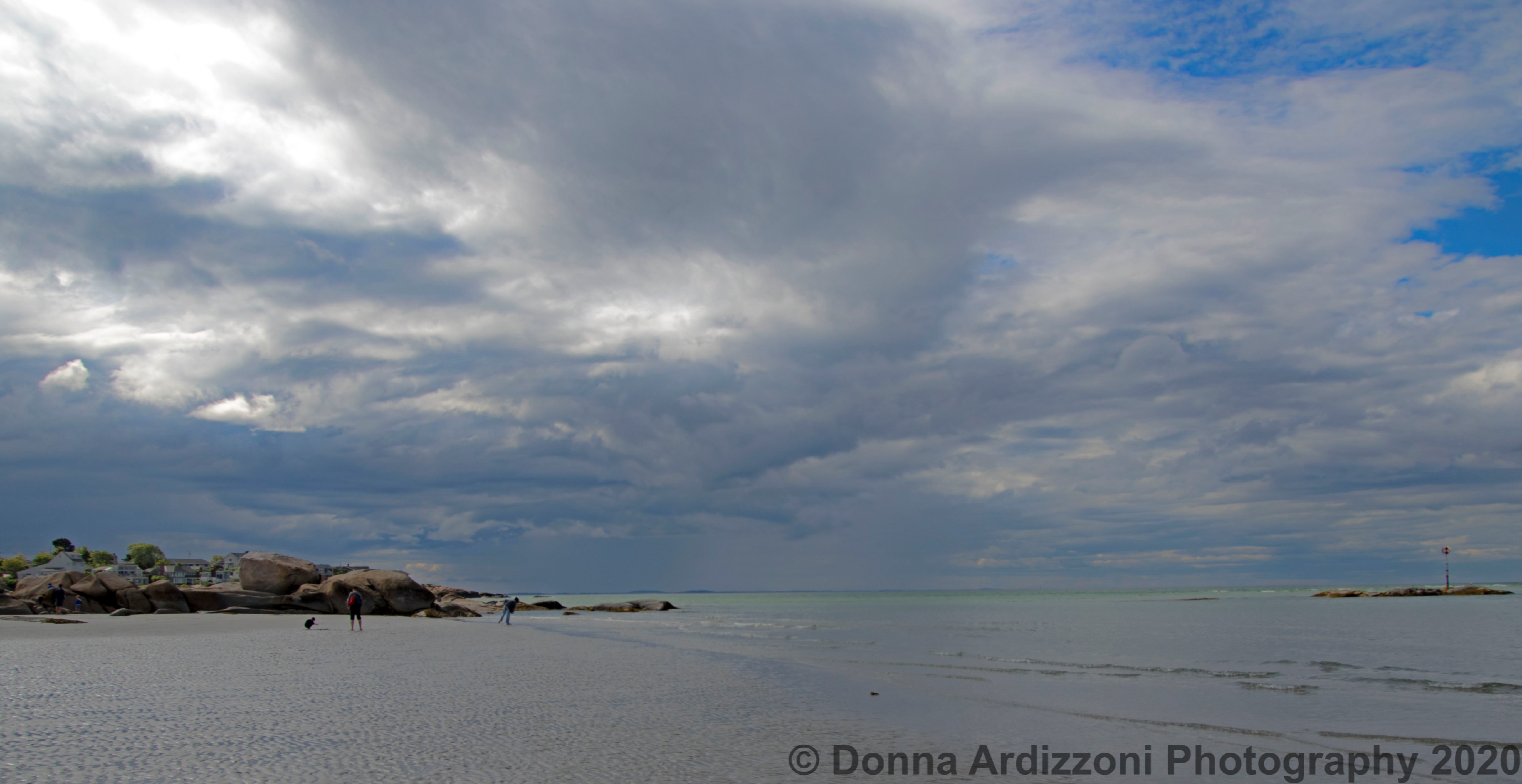
On Sunday the clouds looked like a staircase
At Wingaersheek Beach on Sunday, the clouds looks so interesting.
Spread The GMG Love By Sharing With These Buttons:

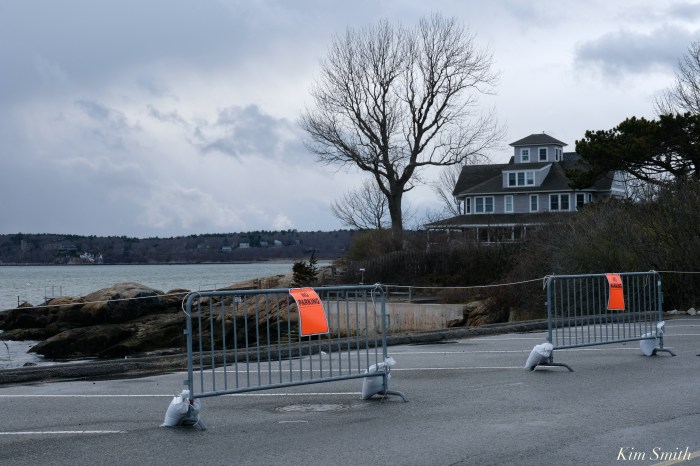
PARKING BAN AT NILES BEACH AND NEIGHBORHOOD STREETS SURROUNDING GOOD HARBOR BEACH AND WINGAERSHEEK BEACH
New beach parking restrictions are being implemented by the Mayor’s office. These restrictions include Witham Street, Nautilus Road, Eastern Point Road (the road that runs along Niles Beach) and the neighborhood roads around Wingaersheek Beach.
Barricades were placed today in several locations and we imagine more will be forthcoming.
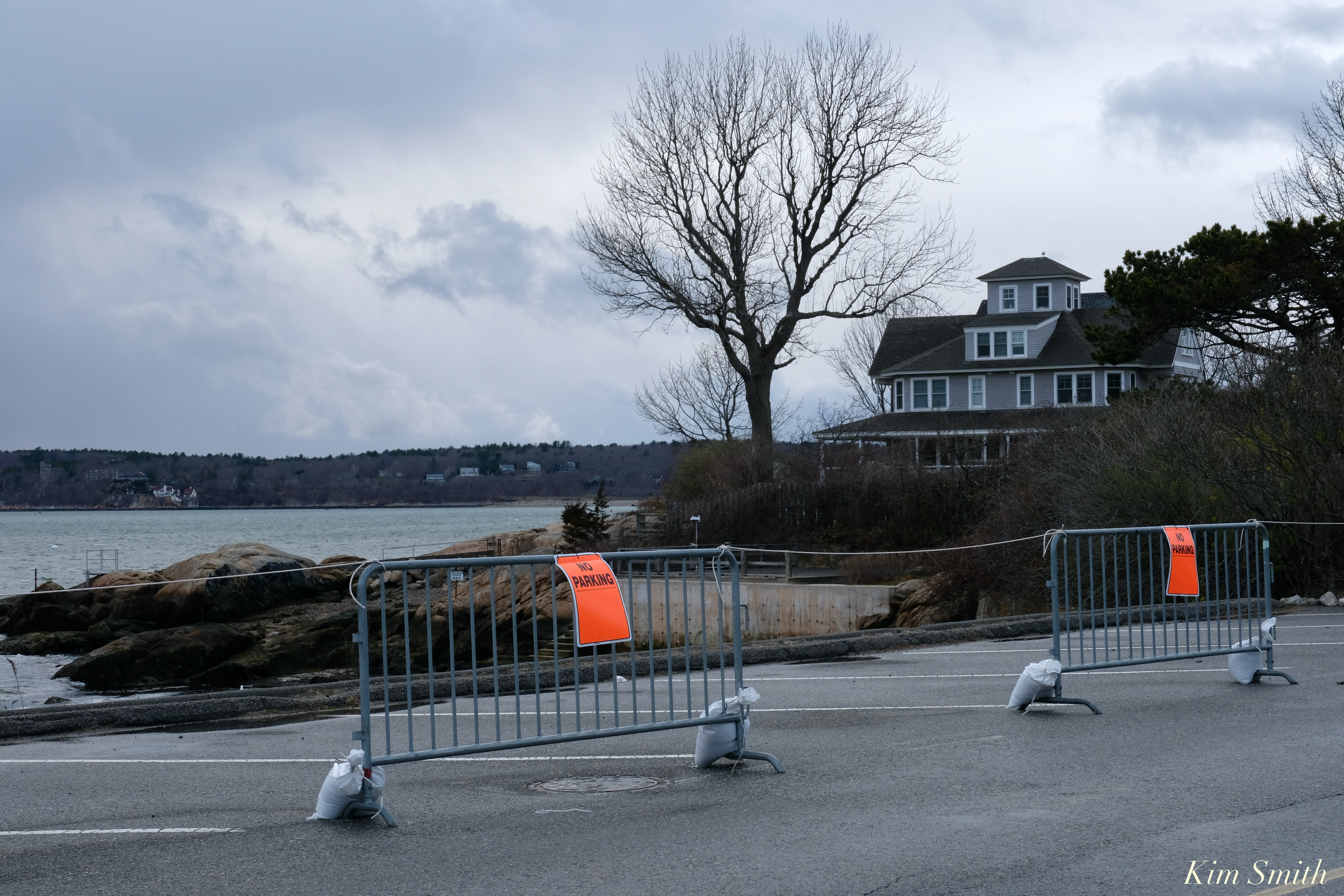
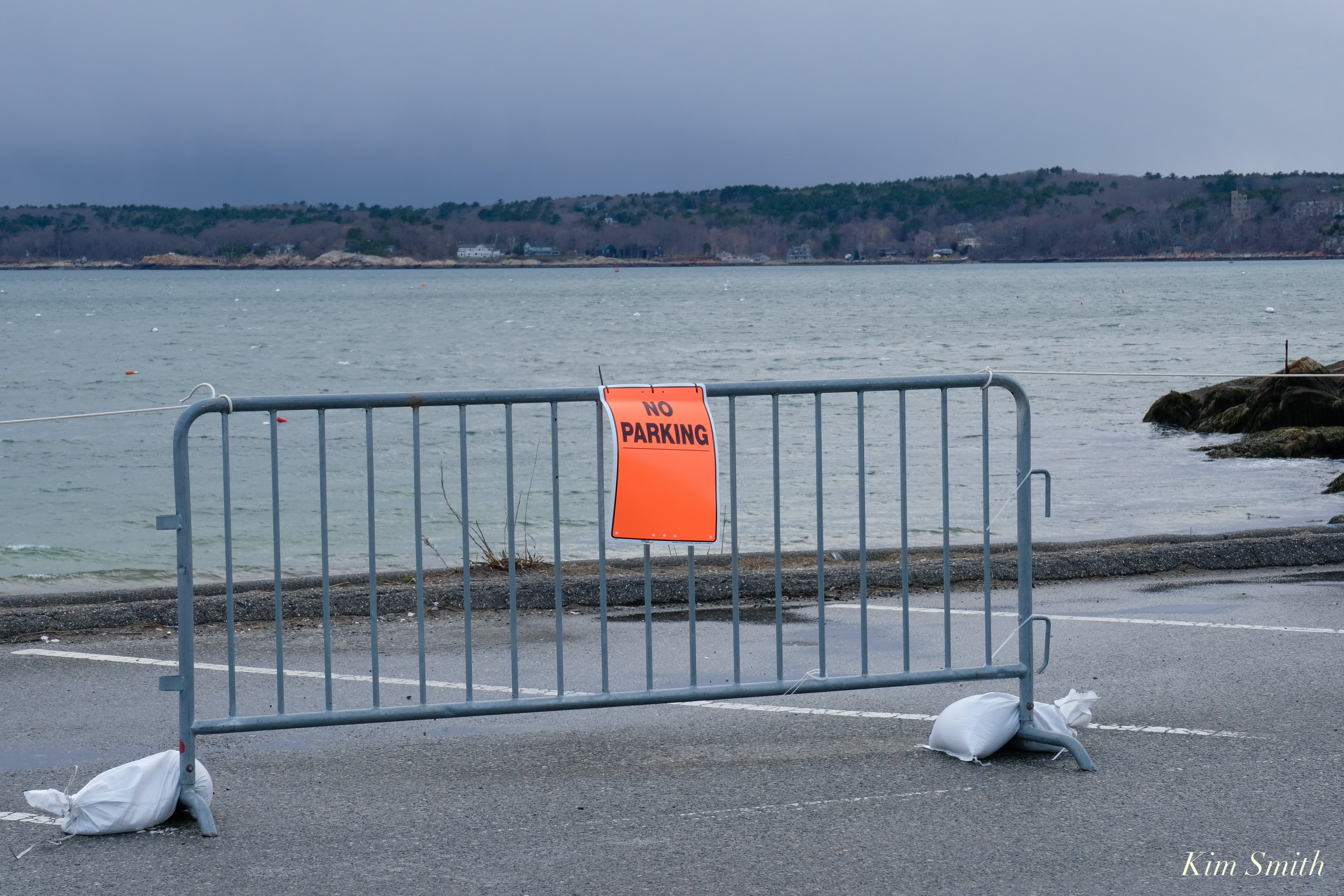
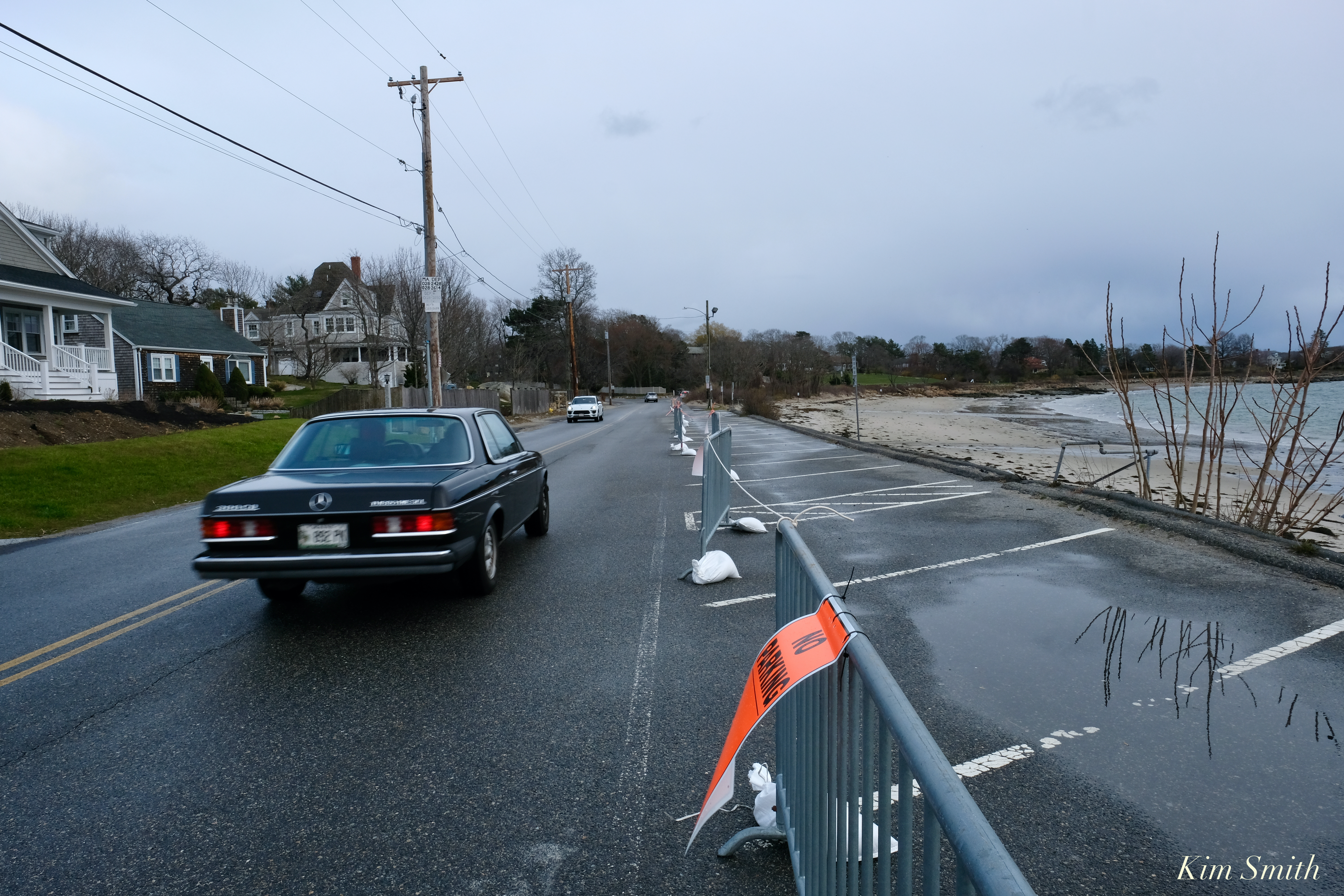
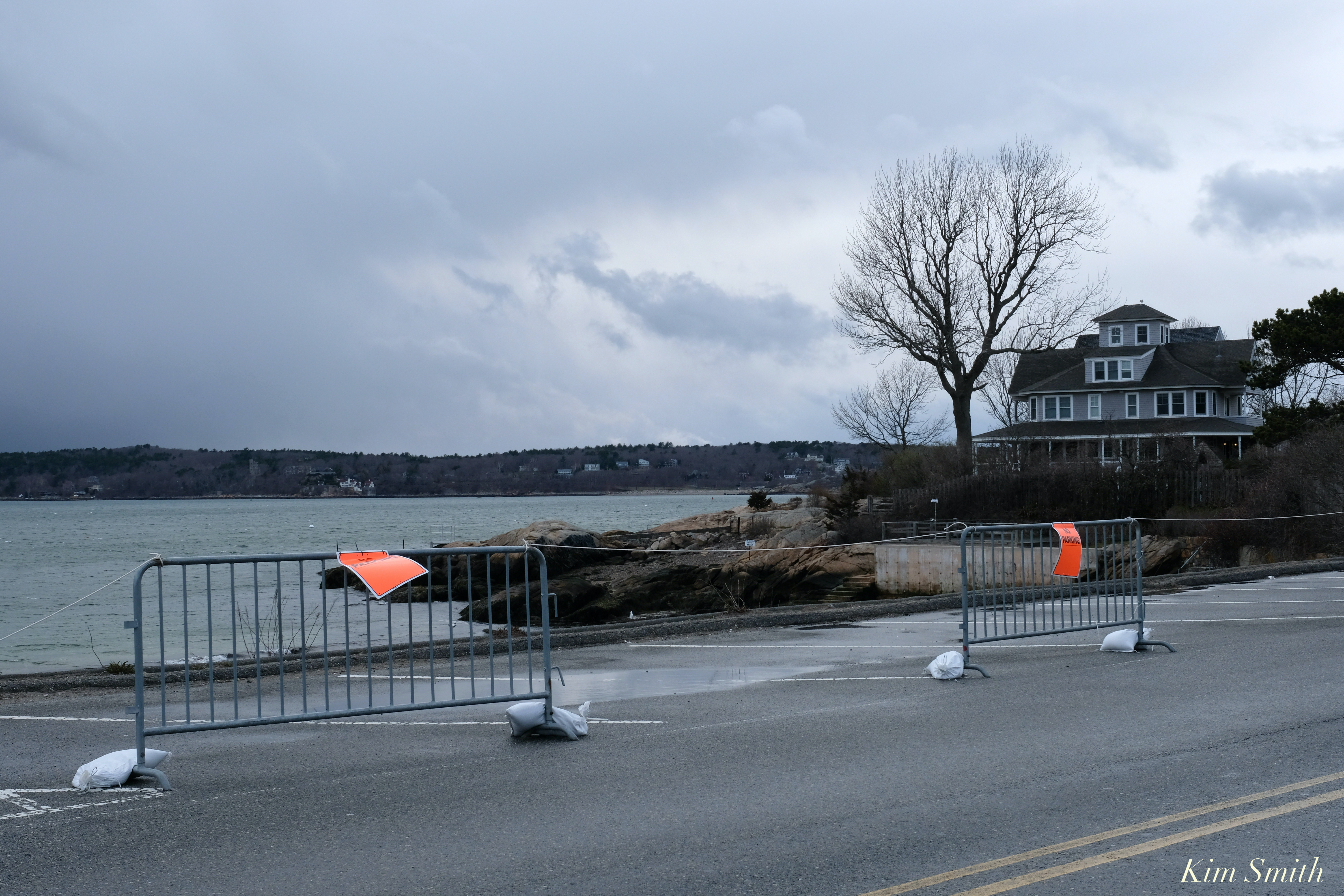
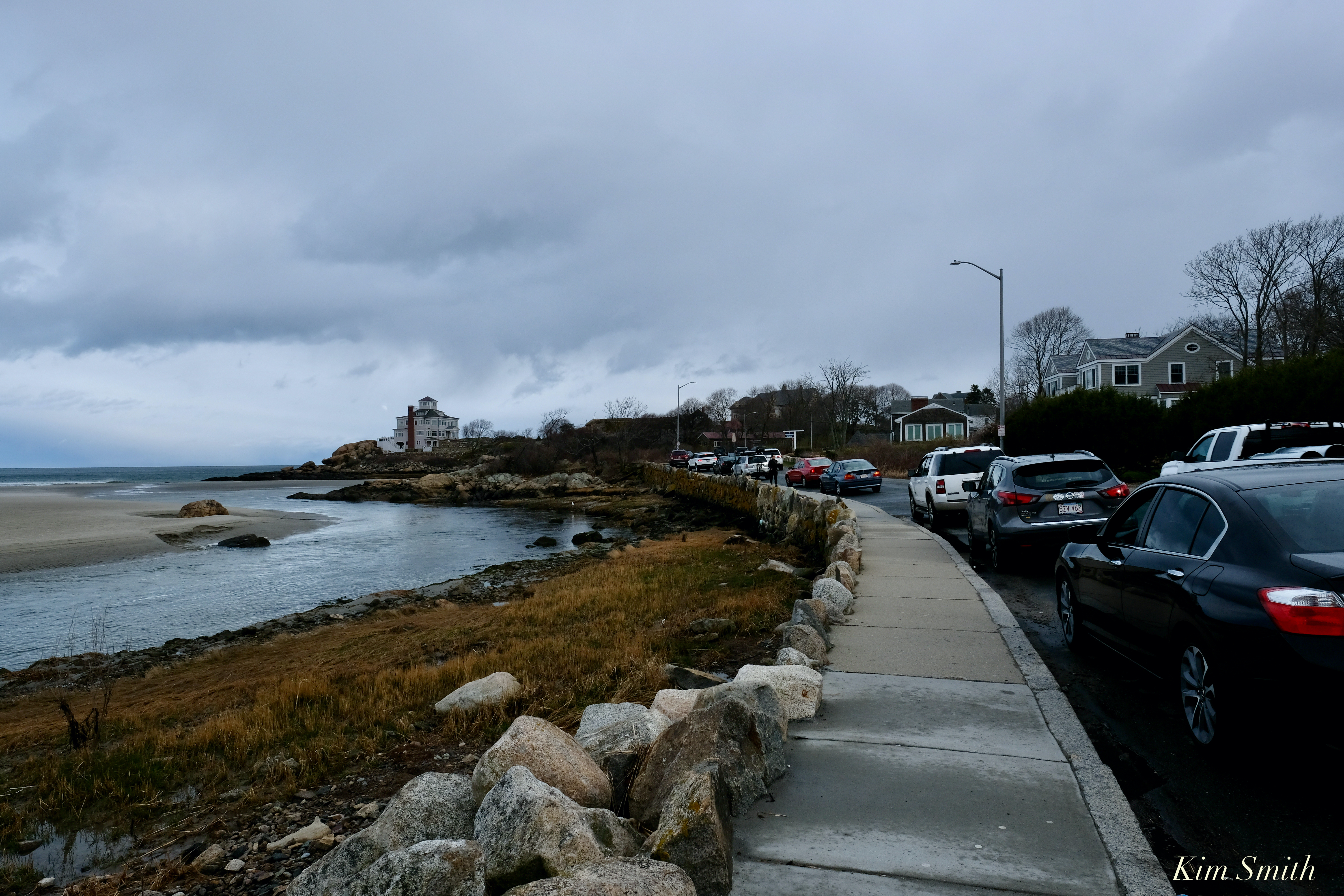 No barriers yet on Nautilis Road (we expect they are coming)
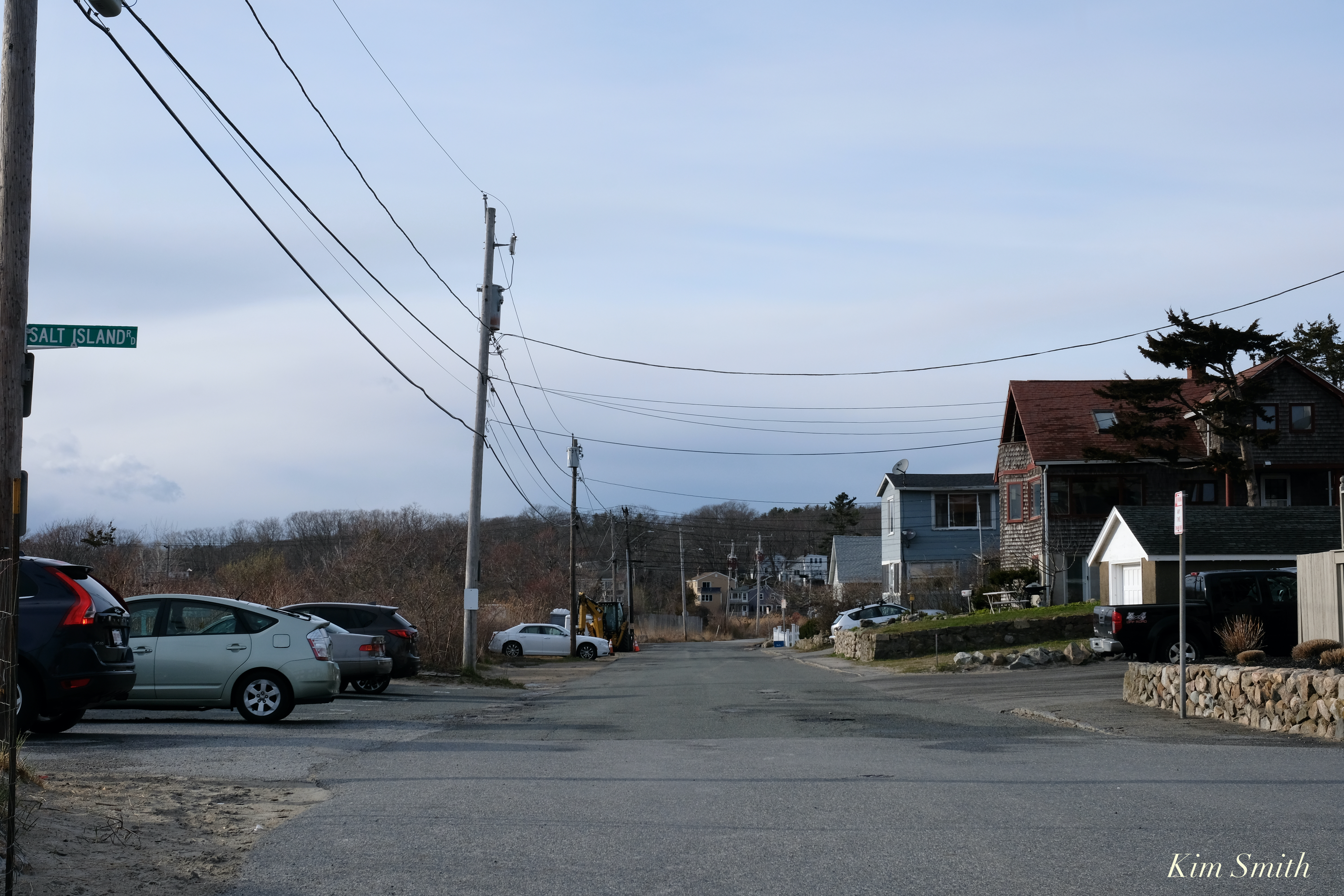 No barriers yet on Witham Street
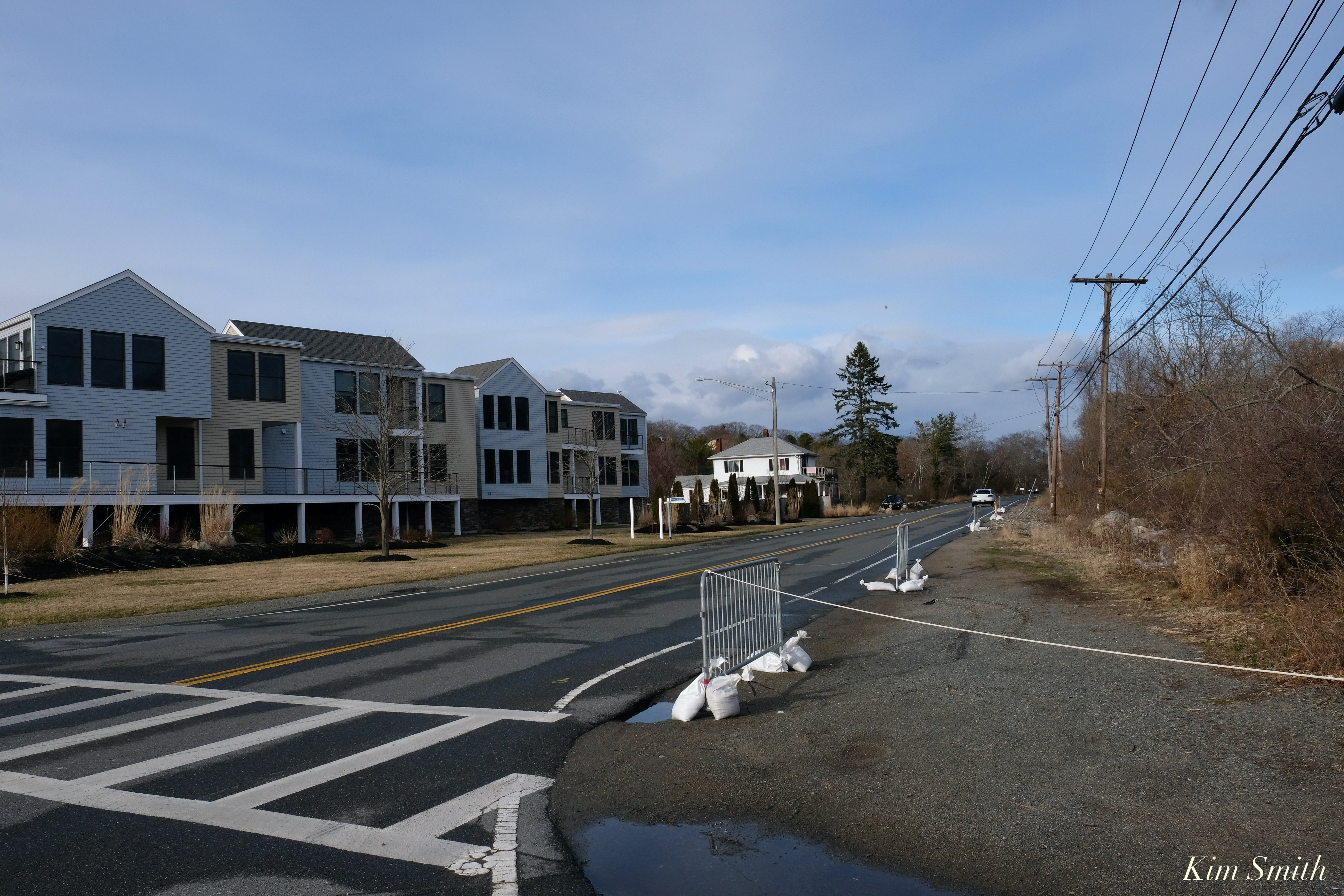 New barriers at the corner of Witham and 127A
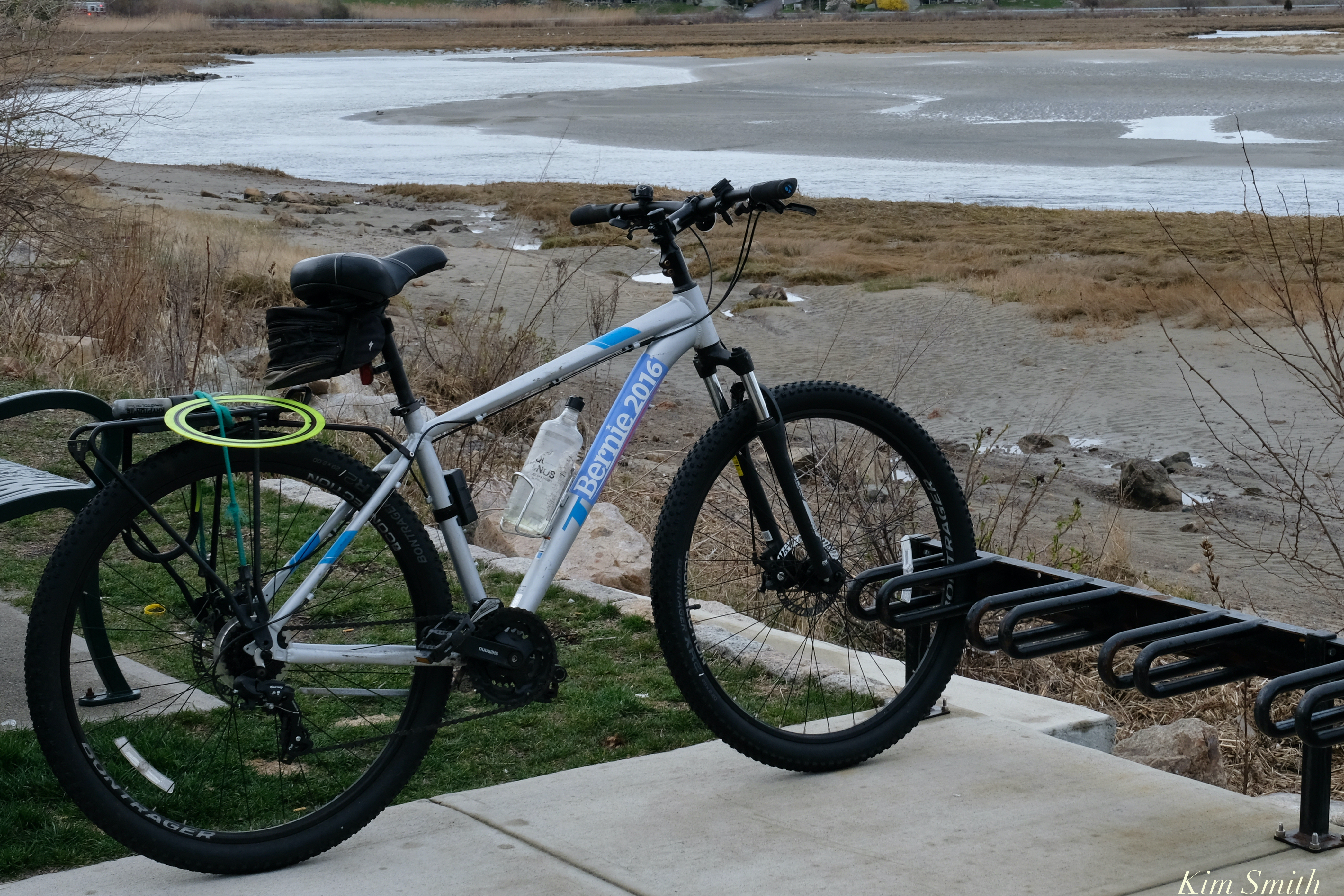 Walk-ons allowed and bike stand still in place at Good Harbor Beach
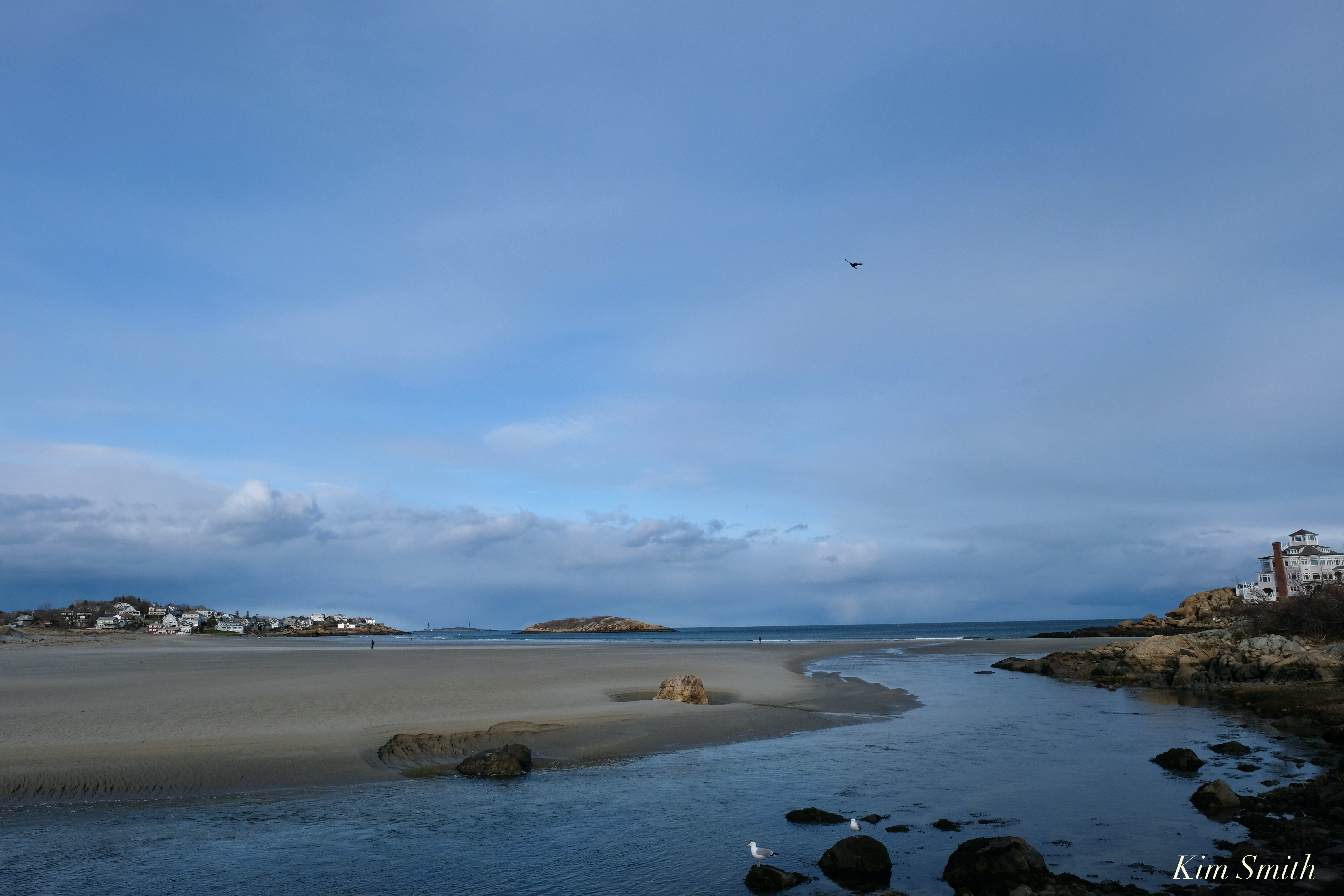 Good Harbor Beach this afternoon, in and out of storms
Spread The GMG Love By Sharing With These Buttons:

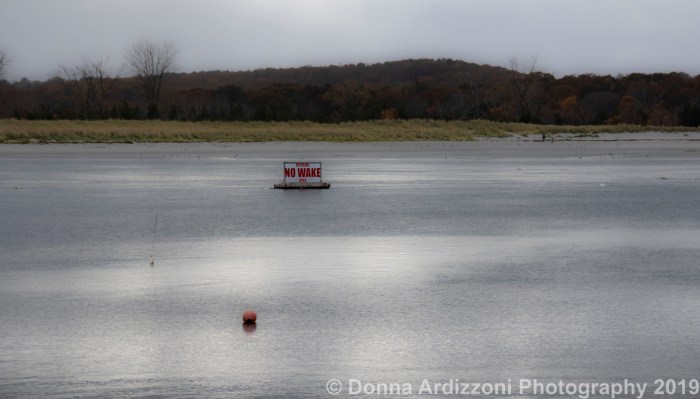
No Wake Zone
On a cold and rainy Monday, the light on the Annisquam facing Wingaersheek Beach look so quiet.
Spread The GMG Love By Sharing With These Buttons:

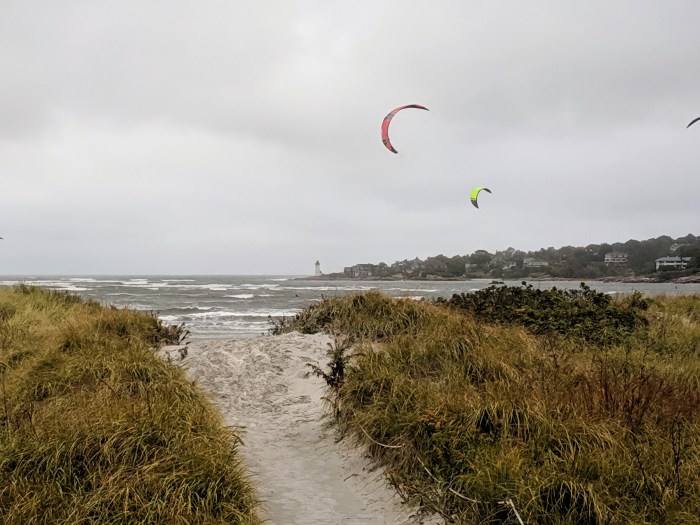
Wingaersheek Beach: kite surfing fruit slices & windy choppy waves on day 3 nor’easter #GloucesterMA
I wondered what impact the storm had on Wingaersheek and was surprised by penny candy on the horizon. If surf on the ocean side is not amenable, there are so many alternate beach options in Gloucester.


Spread The GMG Love By Sharing With These Buttons:

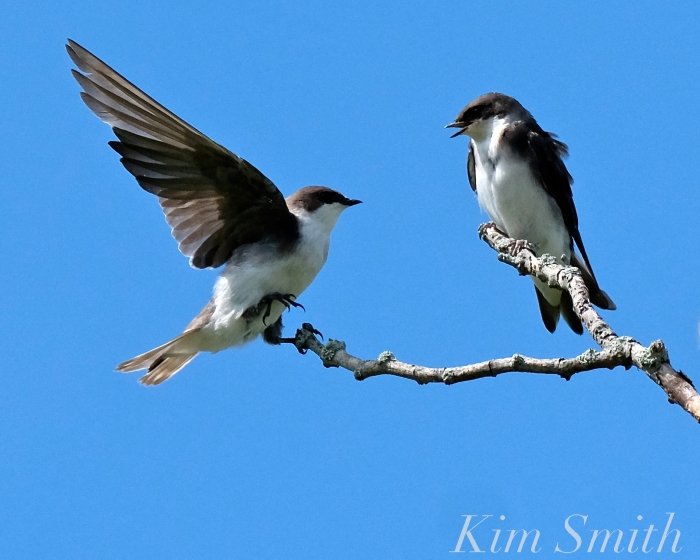
DANCE OF THE SWALLOWS
Without doubt, the spectacular summer/autumn migration that takes place each year along the shores of Cape Ann has begun. Everywhere we turn, there are magnificent creatures foraging along our shoreline. In one day alone on an early morning walk this past week were Ruddy Turnstones, Black-bellied Plovers, Willets, Spotted Sandpipers, and great flocks of Semi-palmated Plovers and Sanderlings. I think I’ll write a little series with a paragraph or two devoted to each species for the upcoming week.
For today though, I wanted to share photos of a flock of Tree Swallows that were gathering at Good Harbor Beach. A friend wrote wanting to know more about the beautiful birds we see massing at both Good Harbor and Wingaersheek Beaches at this time of year.


From 2018 – Over the course of the summer while filming the Piping Plover Family at Wingaersheek Beach, Tree Swallows began flocking in ever increasing numbers. They became part of the Piping Plover story not only because they occasionally dive bomb the Piping Plovers, for whatever reason I am not entirely sure, but also because they are beautiful to observe, and occasionally, seemingly playful, too.
Songbirds that they are, Tree Swallows make a cheery chirping chatter. They have long narrow forked tails, all the better for gliding and for their signature aerial acrobatics. The male’s upper parts are a brilliant iridescent blue-green, the female’s somewhat duller, and both female and male have white underparts. The migrating juveniles are almost entirely brown with either white or pale grayish underparts.
Tree Swallows breed in the wetlands and fields of Cape Ann. Their name comes from the species habit of nesting in tree cavities. Tree Swallows have benefited tremendously from efforts to help save the Eastern Bluebird because they also nest in the nest boxes built specifically for the Bluebirds.
Acrobatic aerialists, they twist and turn mid-flight to capture a wide variety of insects including butterflies, dragonflies, greenheads, bees, beetles, and wasps.
Utilizing both fresh and saltwater to bathe, Tree Swallows have a unique habit of quickly dipping and then shaking off the excess water while flying straight upwards.
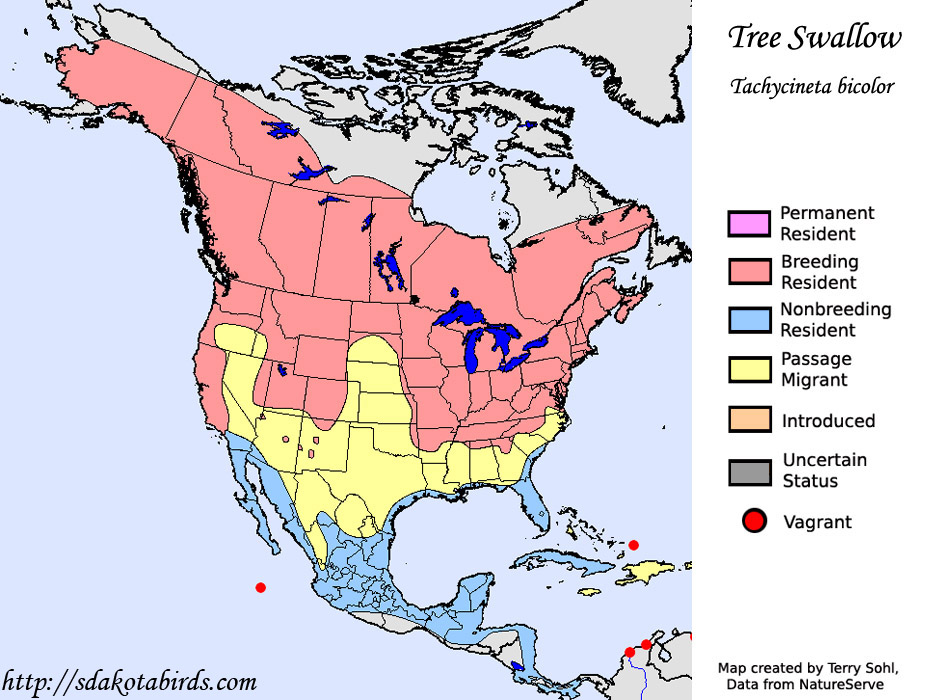
Tree Swallows begin migrating southward in July and August. The flocks that we see gathering on Cape Ann migrate along the Atlantic Flyway. They overwinter in the southern states of the U.S., Mexico, the Caribbean, and Central America. Unlike migrating species of butterflies, several generations of Tree Swallows migrate together, the older birds showing the younger birds the way.
Music composed by Jules Massenet: “Méditation” from Thaïs
Spread The GMG Love By Sharing With These Buttons:

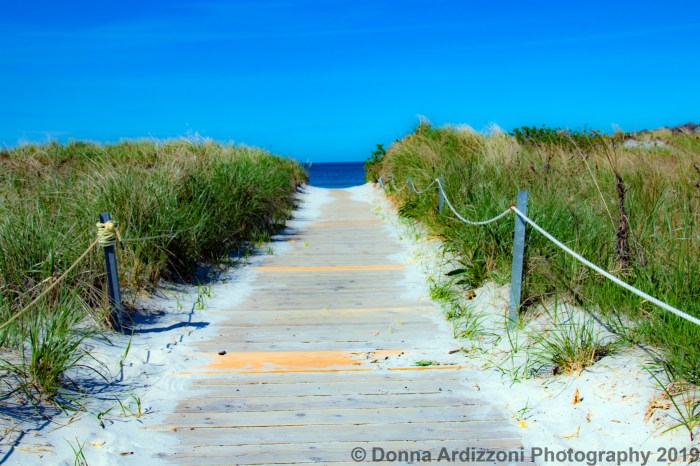
Dunes on beautiful Wingaersheek Beach
Took a walk over at Wingaersheek Beach on Thursday. The sun was out and the feel of summer was in the air.
Spread The GMG Love By Sharing With These Buttons:

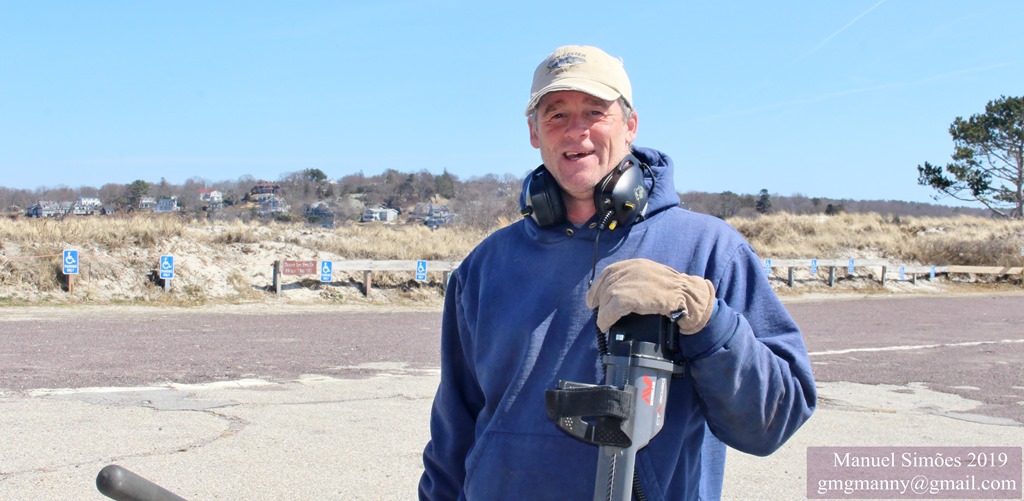
Gloucester Smiles-1183
Spread The GMG Love By Sharing With These Buttons:

Gloucester Smiles at Wingaersheek Beach
Great Smiles Posing with My Custom Made Clam Fork at Wingaersheek Beach


Spread The GMG Love By Sharing With These Buttons:

A windy Saturday on Wingaersheek Beach

 Good Morning Gloucester