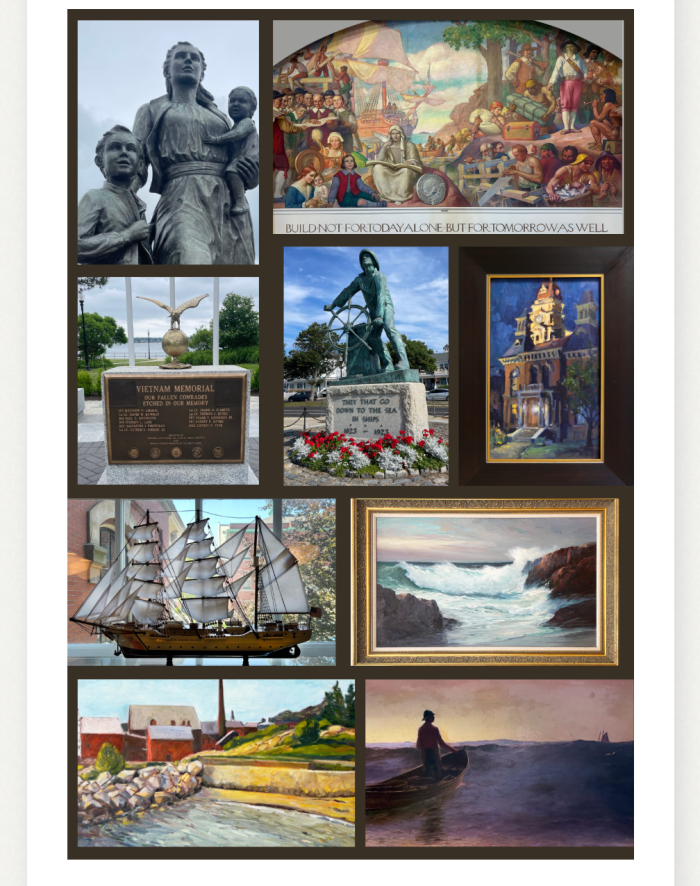
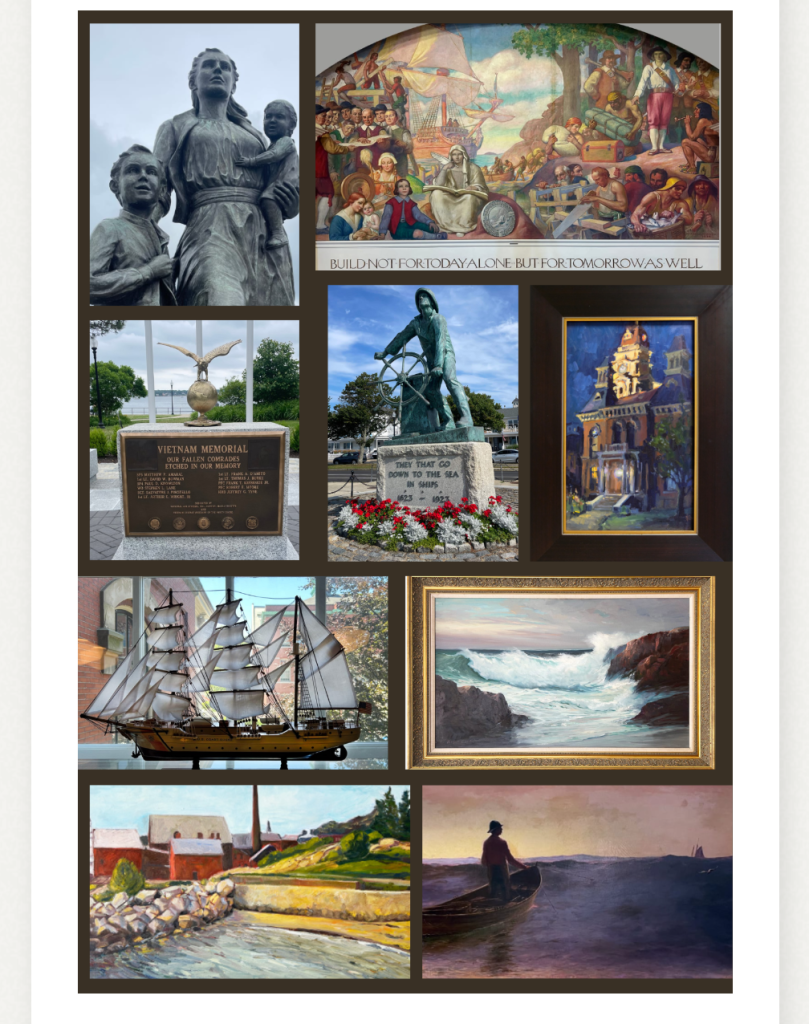
Gloucester City Owned Art collection archive is browsable online! soft launch November 2024 #GloucesterMA

Art and culture have been laced throughout Gloucester’s history. City staff, departments, partner organizations, artists, and volunteers have kept detailed inventory checklists and care of a world class municipal art collection decade by decade for more than a century. Several lists were managed by American art luminaries. Here is a City Hall example from 1937, “A Catalogue of Murals and Decorations in Gloucester Done by Gloucester Artists in the Employ of the Federal Art Project”.

And another.

The 250th anniversary formed a committee for the arts. Mayor Alper reinvigorated the City Hall collection display in 1977, “Gloucester Arts & Humanities”. The Waywell inventory dates from the 1990s. When the City updated all its ordinances in 2000,  the Committee for the Arts was formally added.  In 2005 then CFTA Chair Kate Bodin and former CFTA member John Ronan drafted a prescient and comprehensive art policy celebrating all forms of creative expression. Since 2000, 6 inventory lists have been compiled—by volunteers and/or commissioned.

A major inventory checklist and report completed in 2006 was a dual project orchestrated by the City Archives (link here) and Committee for the Arts that focused on City Hall. Although the report did not include artwork measurements and was a work in progress, it was another decade’s invaluable record to build upon.

The Art of Gloucester City Hall, 2006. See printable PDF of inventory below (some attribution errors). A written evaluation was included which I’ll add in.

  • Bethany Jay (principal writing and research)
  • Information on Gloucester City Hall compiled by Sarah Dunlop, Jane Walsh, and Stephanie Buck of the Gloucester Archives office. Supplemental materials were written by John Ronan. Mayor John Bell.
  • Gloucester Committee for the Arts- John Ronan, Judith Hoglander, Dale Brown, Christine Lundberg, Steve Myers, Sage Walcott

Committee for the Arts member, Eric Schoonover, took on the task of the first database and digitized record–CDs, later joined by Marcia Hart, with ladder in tow to double check the inventory status and measurements which was not on the 2006 report. Several excels and docs followed and were shared widely. Under successive administrations led by Mayor Kirk and Mayor Romeo Theken, an open access inventory and available online gallery was an expressed goal for multiple city and partner grants, the city’s tourism efforts (a precursor to Discover Gloucester), the City’s two cultural districts, HarborWalk, Gloucester Arts & Cultural Initiative, public arts projects, free apps and platforms.

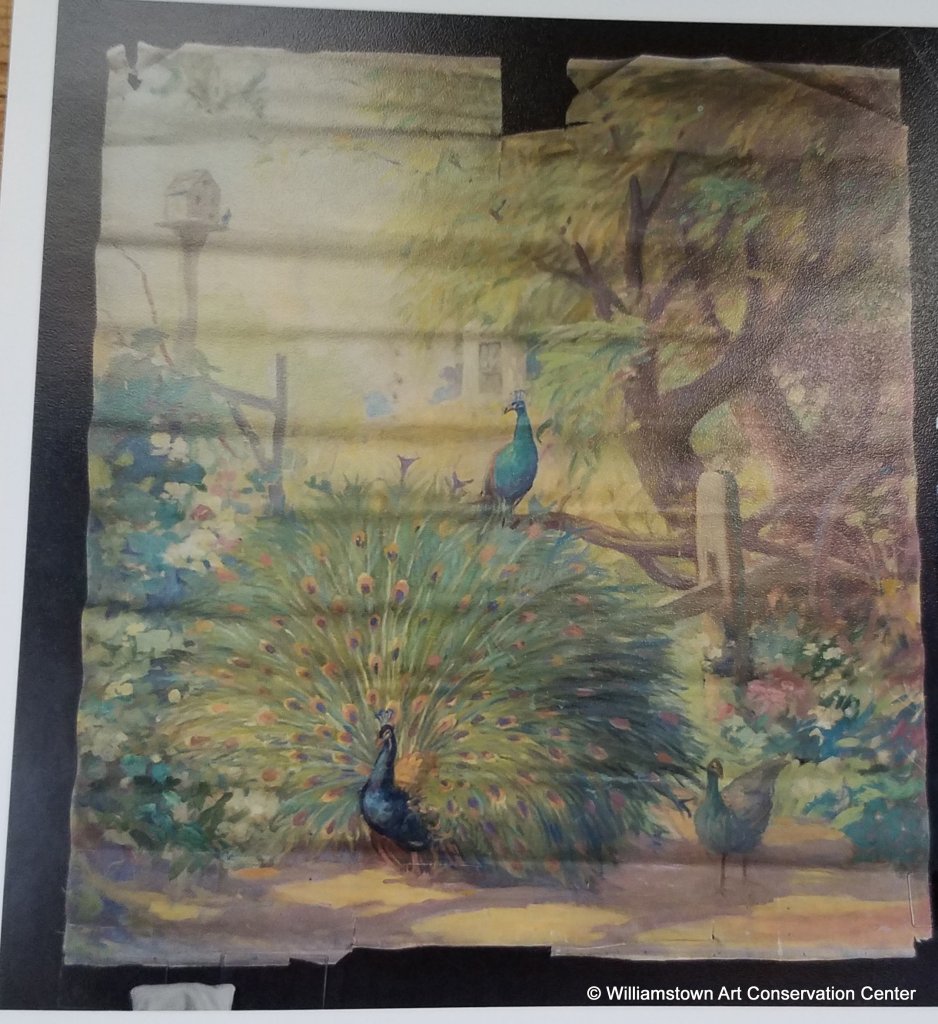
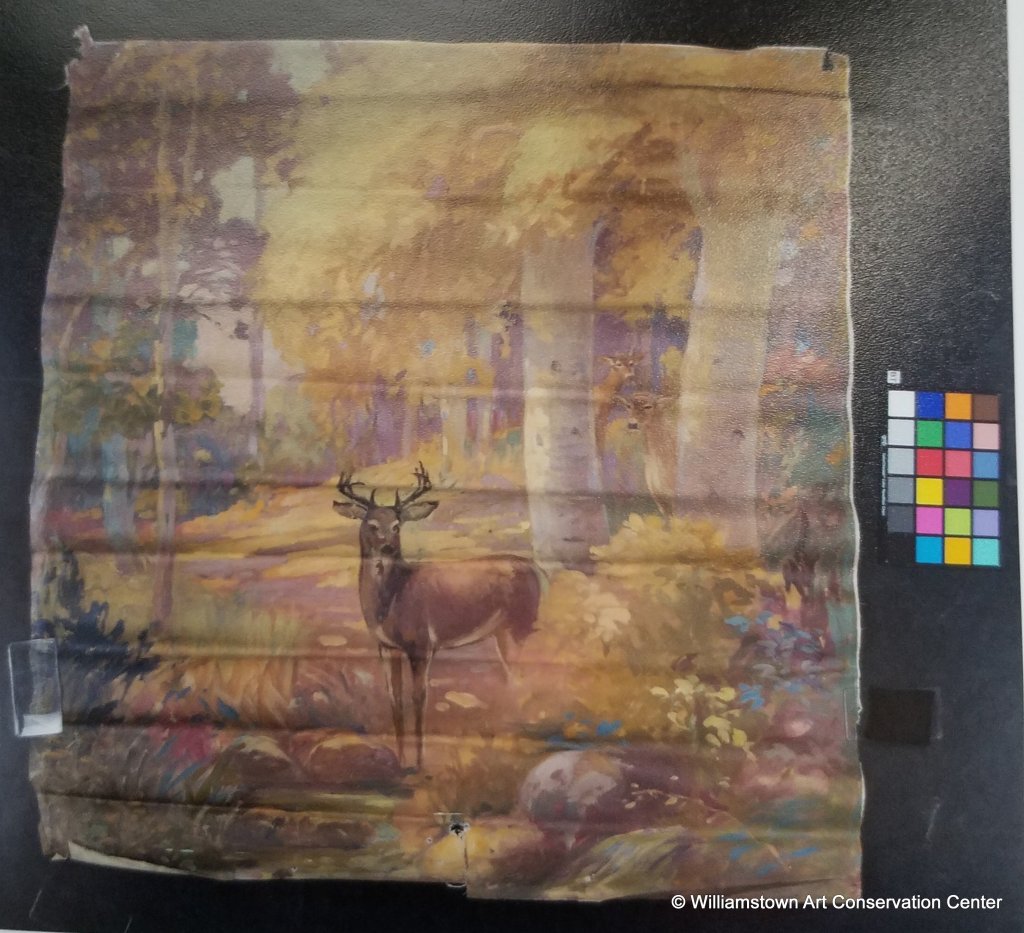
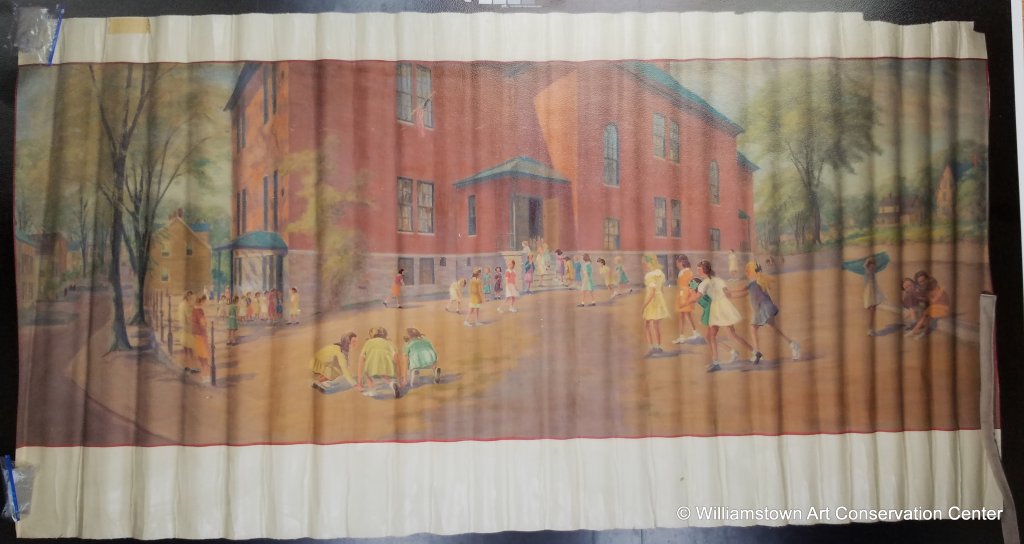
In 2018-19, Williamstown Art Conservation completed a conservation and full inventory report for the City mural collection, triage and stabilizing–for the first time including works not on display. (author note: I will add the PDF here)

Flash forward to 2024, the Gloucester art collection archives is available anew in an online art gallery through Art Work Archive (www.artworkarchive.com). Keep in mind that this is a work in progress. Some of the artwork information is incomplete or a placeholder. I’m sure cross-checking with the original documentation will continue and help with corrections, and more works will be added.
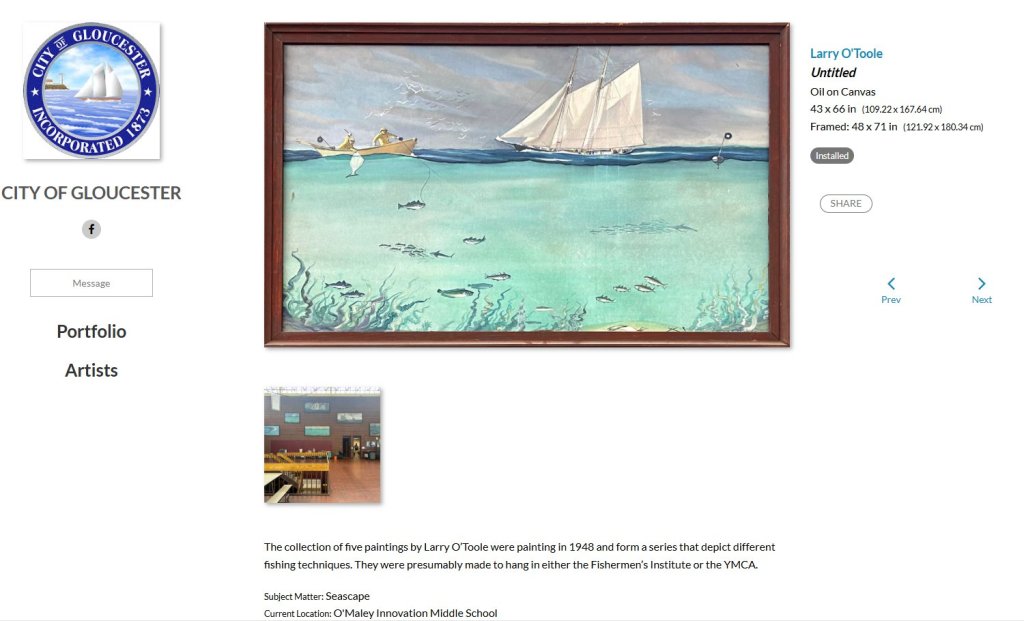
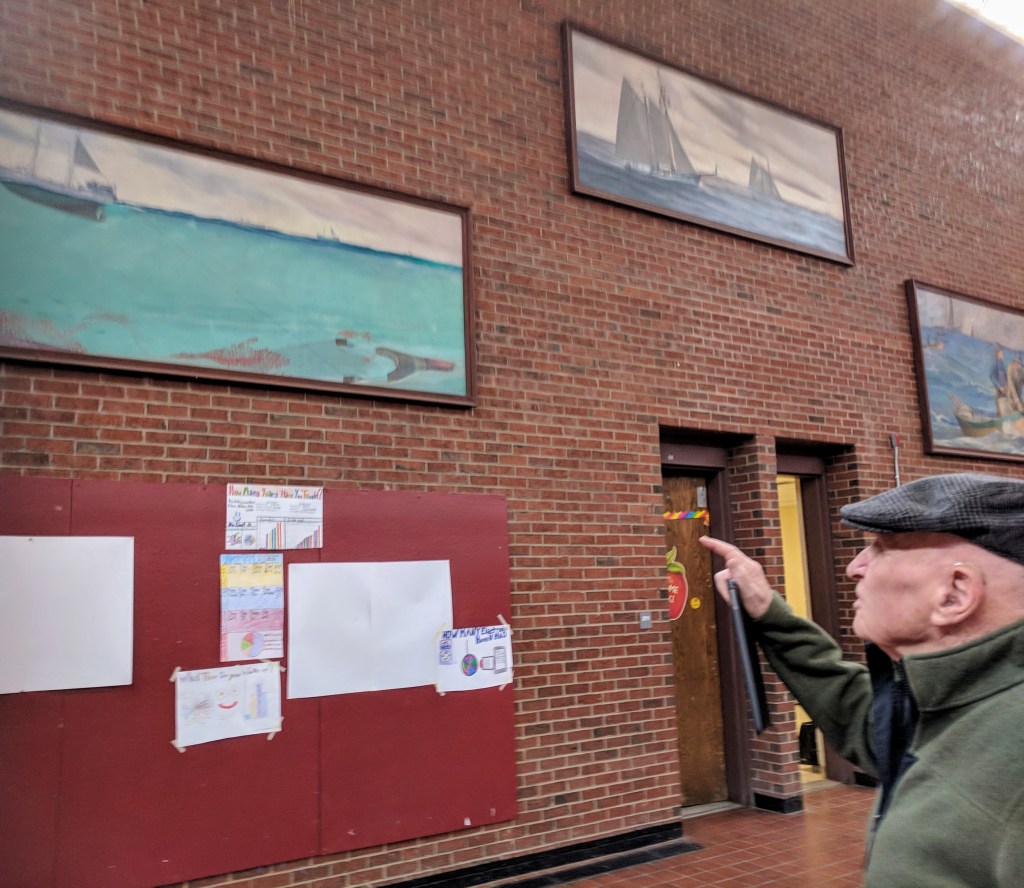
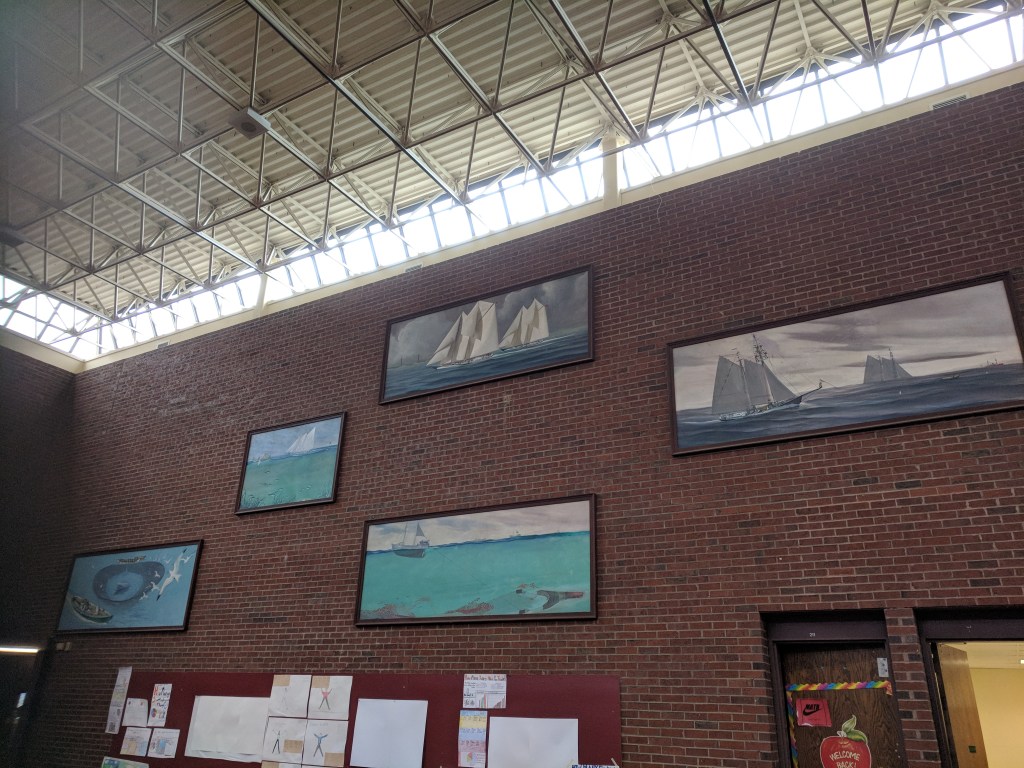
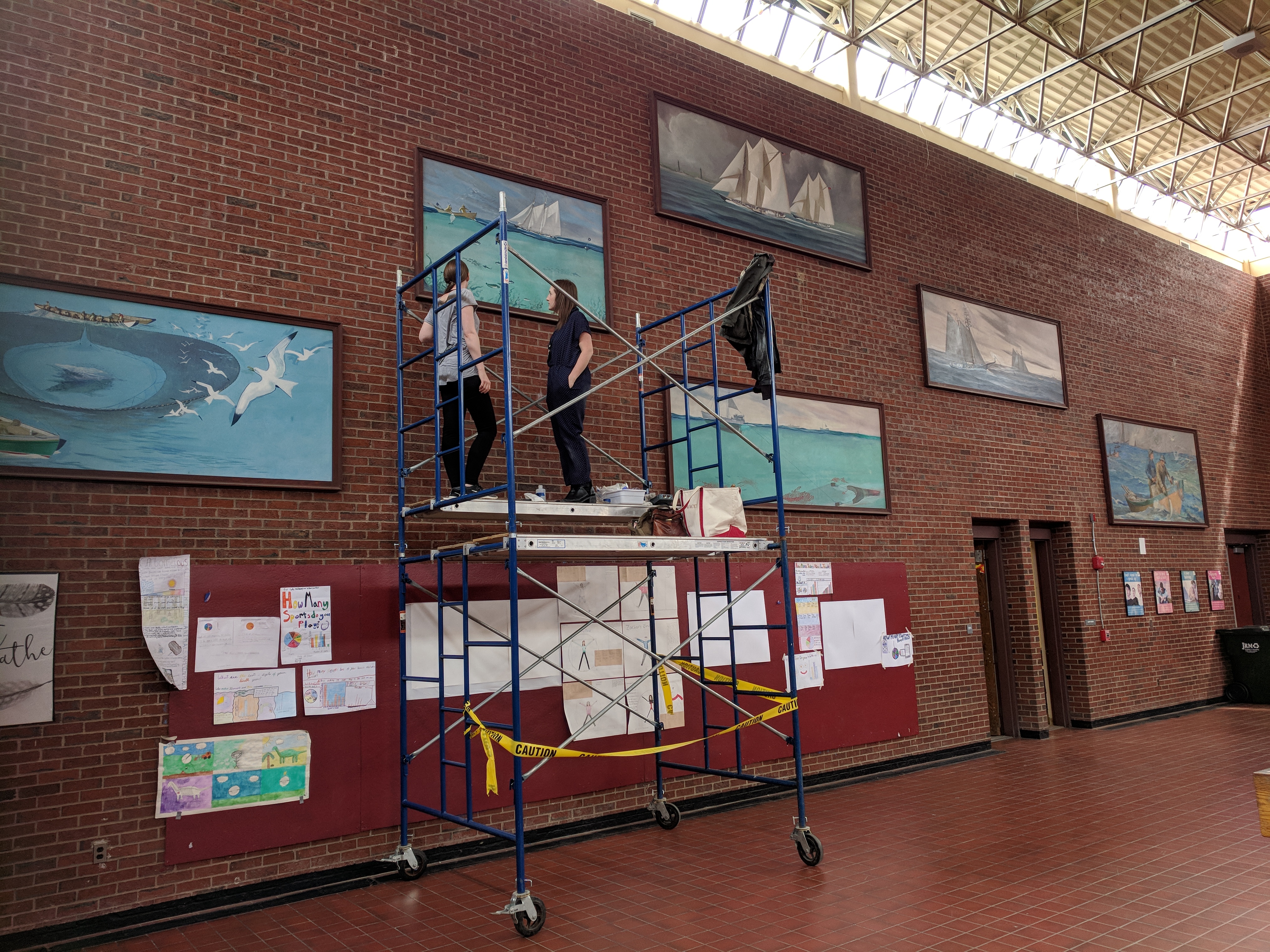
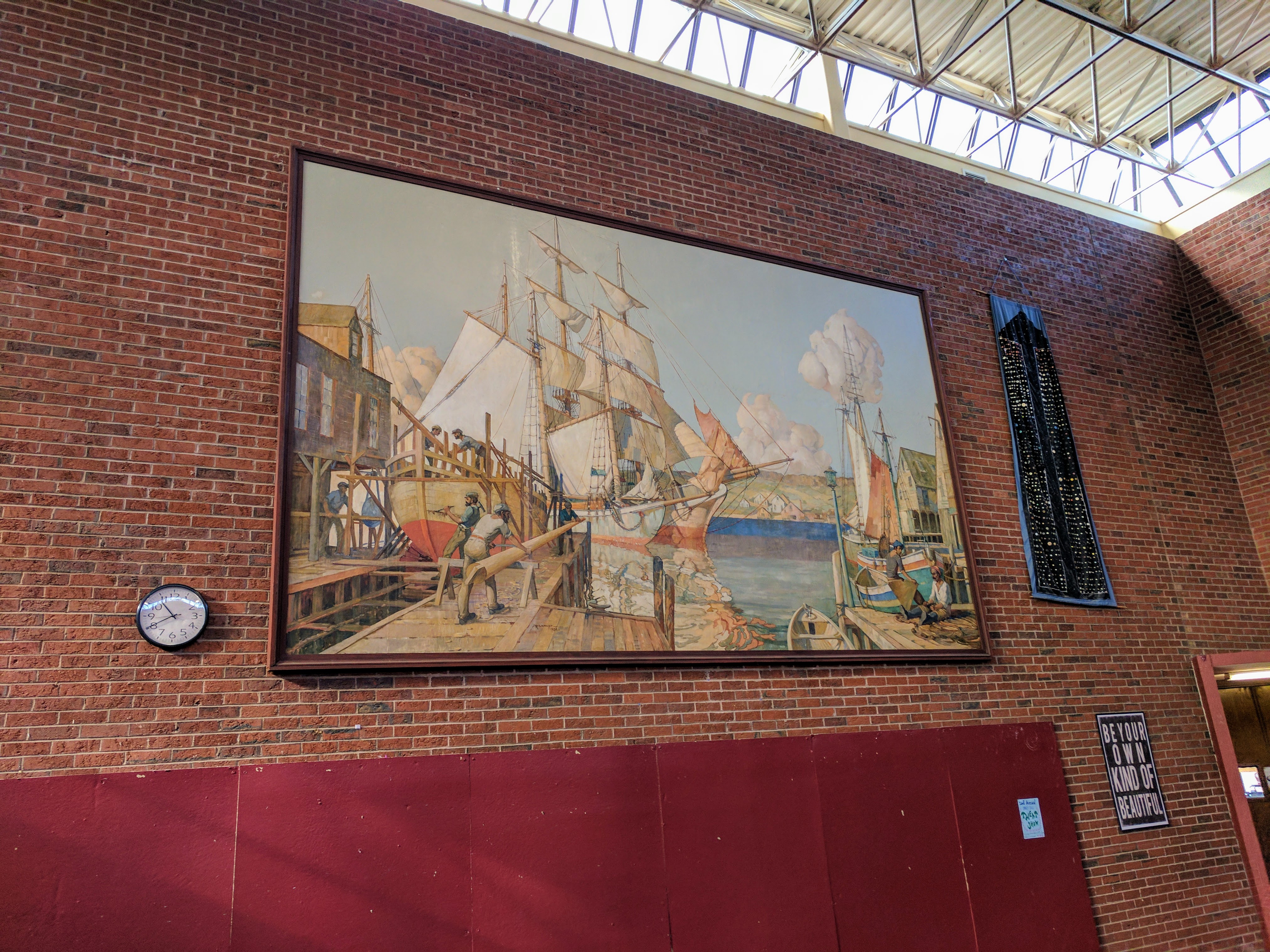
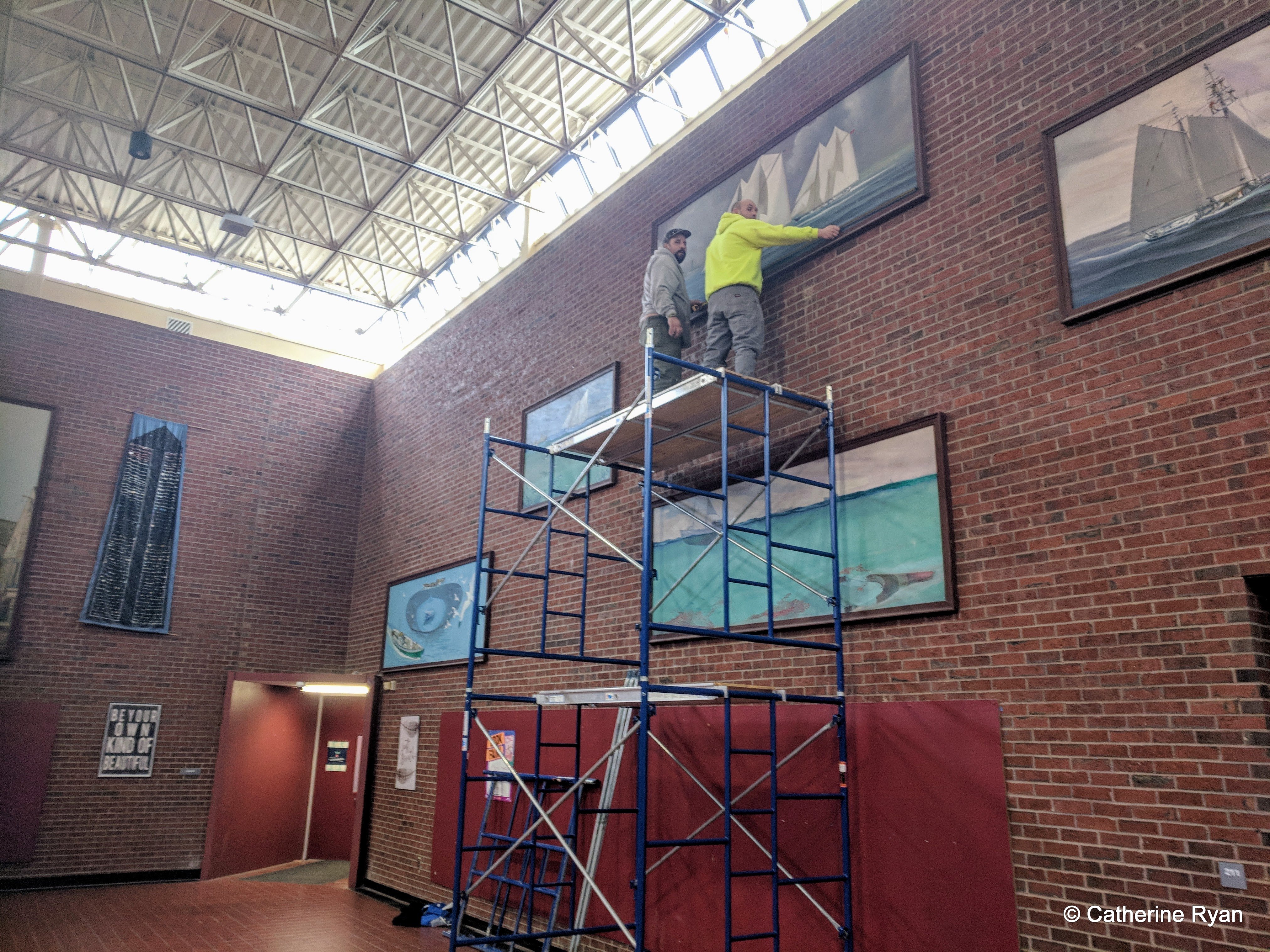
For example, the monumental murals by Lawrence “Larry” O’Toole (1909-1951) installed in 1982 in O’Maley Middle School are listed “Untitled” in the archive pages. They’re not untitled. They were originally commissioned by Ben Pine for the Gloucester Fisheries Institute and YMCA circa 1940-48 and illustrate fishing industry and vessels common in Gloucester. I interviewed Ron Gilson who confirmed the history and my research. DPW inspected and measured them almost 10 years ago and Williamstown Art Conservation Center, of course, when they did their evaluation. Titles are:

  • Larry O’Toole, Returning to Harbor, Twin Lighthouses
  • Larry O’Toole, Tuna Fishing with Spears
  • Larry O’Toole, Schooner with Rod Fishing
  • Larry O’Toole, Seine Fishing with Seagulls Overhead
  • Larry O’Toole, Trawling

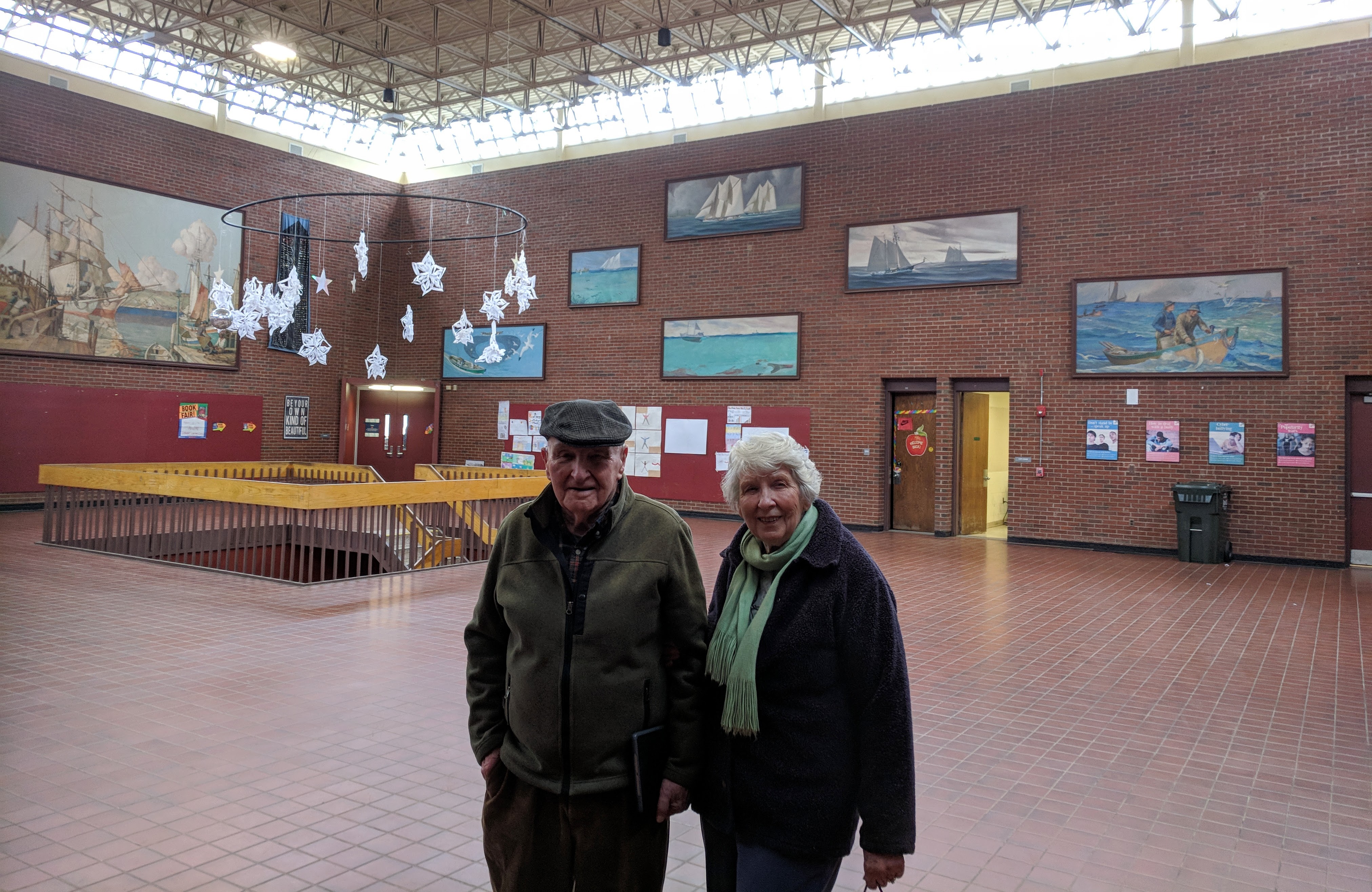
Puzzlingly, the Mulhaupt series across from the O’toole’s are on display out of order at O’Maley and could have fit sequentially if the two series were switched at installation in 1982.

In 2021, the Wall Street Journal featured an article about WPA era art and online catalogue resources. Gloucester’s are largely absent, for many reasons. I shared the article news here (3/25/2021) and wrote:

Judith Dobrzynski highlights WPA murals and a renewed online resource* for “Arts in Review” the Wall Street Journal.

“During the Great Depression, federal programs funded the creation of thousands of murals in post offices, hospitals and other locations across the country, many of which can now be viewed online.”Judith H. Dobrzynski. The Staying Inside Guide: Big-Deal Art in Plain-Spoken Venues. Wall Street Journal. March 23, 2021. *A few of the WPA murals completed in Gloucester had been included in an earlier iteration of the website, in some cases misattributed. Gloucester is not mentioned in the article.

The reviewer highlights Coit Tower in San Francisco as one renowned example.

“The New Deal murals inside Coit Tower in San Francisco are also well-known. Painted by some two-dozen artists in 1934, they are social realist panels about life in California during the Depression, with titles like “Banking and Law” and “Meat Industry.” Their story, with a detailed layout, is available in a San Francisco Recreation and Park Department brochure.”Judith H. Dobrzynski for WSJ

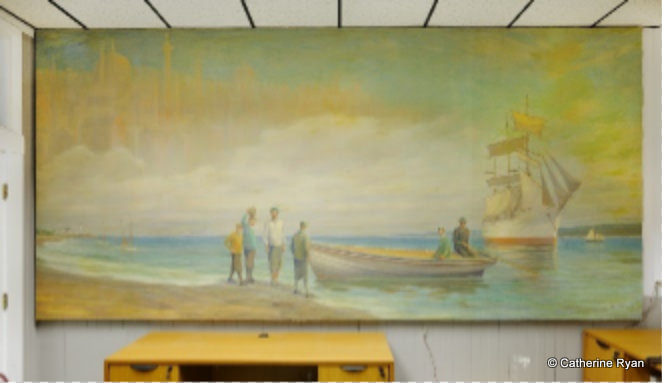
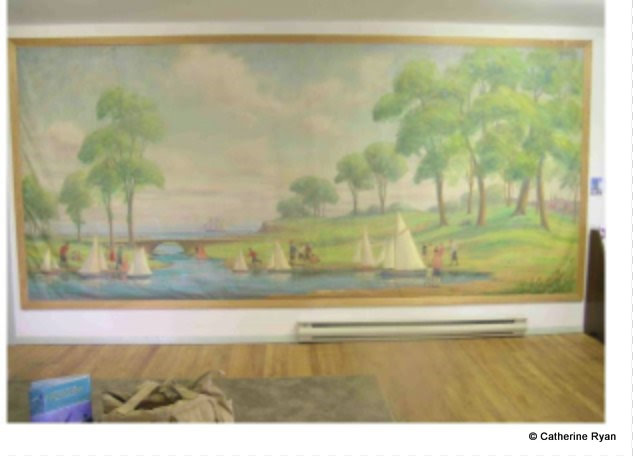
The reverse ratio is evident here: Gloucester selected four artists who completed scores of masterworks* for specific public buildings. Monumental stunning mural cycles were commissioned under the auspices of Federal Arts PWAP and WPA-era programs from 1935-42 for Sawyer Free Library, City Hall, the High School on Dale Ave (now Central Grammar apartments), Hovey, Maplewood, and Forbes elementary schools. As schools were closed, disposed, or repurposed, murals were rescued and re-sited within City Hall and later O’Maley.

The City of Gloucester artists were significant muralists and painters. In truth, venerated. They captured stories of Gloucester and became a celebrated part of our history and artistry. When considered as a whole, the Gloucester murals rival WPA era collections completed in big cities. The density of murals are as concentrated as any found in larger cities, like Coit Tower in San Francisco, though spread out among buildings rather than one tower, or one structure, as with Harlem Hospital.

Gloucester’s post office nearly landed a commission, but fate intervened. I’ll save that for the Part 2 post.

Gloucester and greater Cape Ann artists were commissioned for murals beyond Gloucester and Massachusetts and served key roles on selection panels and planning.

Gloucester is not mentioned in this WSJ article or few major compilations.

“Though painted by nationally known and successful artists at the top of their game, the works have suffered from a perfect storm of anonymity.” Catherine Ryan, 2012

City Owned Art Work Archive online gallery

What is new about this 2024 city owned inventory online gallery is that 1) a wonderful creative director, Anna Chirico, was hired to photograph and inventory the collection. Fun fact, Chirico of course has helped her mom, JoAnn, with goodlinens studio on Main Street in Gloucester (goodlinenstudio.com), and 2) Kate Shamon Rushford, Gloucester’s arts, culture, and events coordinator was hired for a part time position within Community Development dedicated to projects like this one. Shamon Rushford is pursuing a Gloucester presence online through Bloomberg Connects Arts and Culture online, too.

I recommend that the city’s .gov website maintain exclusive pages as well, because what’s new and trending in arts engagement is not static or exclusive.

Gloucester DPW has utilized 3D photography for jobs (City Hall after the fire), and city departments including Community Development/Engineering make use of arcgis subscriptions. These resources on the .gov site would help with virtual tours and printables. It’s important to keep city ownership of the content. Gloucesterma.gov went to Discover Gloucester. As long as the content is retrievable, dedicated pages can be available on the .gov site itself regardless of technological or fad obsolescence.

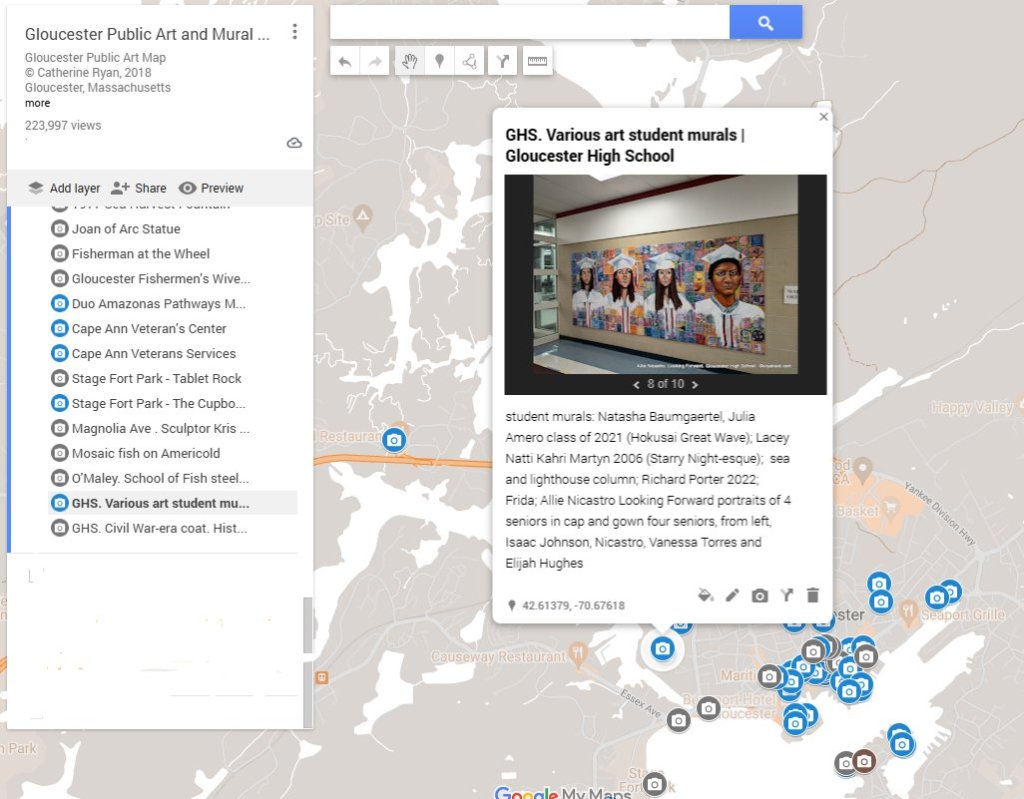
GLOUCESTER PUBLIC ART | MURAL MAP HERE
Printable Press Release

Read more: the City’s Press Release about the NEW online gallery for city owned art hosted on art work online below.

Boston Globe article about the City’s new online gallery by Cate McQuaid is here.

Pretty City Hall. Gloucester DPW rehung art after the smoke damage cleared. Check out the ceiling cleaning!

Gloucester DPW rehung art throughout City Hall following the 2023 fire & smoke damage. Frames were rewired.

In Kyrouz Auditorium, the Mayors Portrait Gallery installation was shuffled and reordered to incorporate portraits past and future with more to come. Two large Howard Curtis paintings recently donated to the city’s art collection are featured in the main hall.

The Mayor Portraits Gallery is extensive, nearly complete, and a work in progress. Mayor portraits are installed following service: A portrait of Mayor Romeo Theken will be added. A poster of the Mayor Barrett portrait will come, the third in a series of poster reproductions for the trio of Mayor portraits painted by Charles Allan Winter (quick, not from life, unprimed, and flaking). I recommended the portrait of Mayor Dyer (A.H. Bicknell, 1879) be brought upstairs in sequence with the others, and that Mayor Merchant be represented (he wasn’t), so it’s great to see those two included. I also recommended that the portrait of Mayor O’Maley be brought back from O’Maley school and one future day a portrait of Mayor Foster (rather than a plaque) and perhaps a larger portrait of Mayor Beatrice Corliss be commissioned.

Images: Kyrouz Auditorium, City Hall, Jan. 2024, ©C. Ryan.

As is common with Gloucester DPW, the staff admires the architectural details and history of the building. Here, Joe and Jim take in the ‘scenic overlook’ from the balcony. Jim talks about the Kyrouz ceiling lights: the original engineering mechanism that drops the fixtures so that the bulbs can be changed remains operational.

2023 custom scaffolding set up CLEANING CITY HALL CEILING AFTER THE BASEMENT FIRE/SMOKE DAMAGE

The ceiling is sparkling because workers could reach it from atop a specialty scaffolding platform (a la Michelangelo :)). Images: Kyrouz Auditorium, City Hall, 2023. Courtesy photos, Joe Lucido, Asst. Dir. DPW

Look up!

On the Dale Avenue entrance side of City Hall, above the fire & smoke incident, the stairwell walls and ceiling received attention, too. The facilities remediation project was smartly directed by DPW.

City Hall 1867 1869 1871

photo: 2013, C. Ryan

City Archives is open and as ever ready to help!

Wall Street Journal features New Deal public art | #GloucesterMA WPA murals are a treasure! Learn more about their history.

photo: C. Ryan. Wall Street Journal pages

Judith Dobrzynski highlights WPA murals and a renewed online resource* for “Arts in Review” the Wall Street Journal.

“During the Great Depression, federal programs funded the creation of thousands of murals in post offices, hospitals and other locations across the country, many of which can now be viewed online.”

Judith H. Dobrzynski. The Staying Inside Guide: Big-Deal Art in Plain-Spoken Venues. Wall Street Journal. March 23, 2021. *A few of the WPA murals completed in Gloucester had been included in an earlier iteration of the website, in some cases misattributed. Gloucester is not mentioned in the article.

The reviewer highlights Coit Tower in San Francisco as one renowned example.

“The New Deal murals inside Coit Tower in San Francisco are also well-known. Painted by some two-dozen artists in 1934, they are social realist panels about life in California during the Depression, with titles like “Banking and Law” and “Meat Industry.” Their story, with a detailed layout, is available in a San Francisco Recreation and Park Department brochure.”

Judith H. Dobrzynski for WSJ

The reverse ratio is evident here: Gloucester selected four artists who completed scores of masterworks* for specific public buildings. Monumental stunning mural cycles were commissioned under the auspices of Federal Arts PWAP and WPA-era programs from 1935-42 for Sawyer Free Library, City Hall, the High School on Dale Ave (now Central Grammar apartments), Hovey, Maplewood, and Forbes elementary schools. As schools were closed, disposed, or repurposed, murals were rescued and resited within City Hall and later O’Maley.

The City of Gloucester artists were significant muralists and painters. In truth, venerated. They captured stories of Gloucester and became a celebrated part of our history and artistry. When considered as a whole, the Gloucester murals rival WPA era collections completed in big cities. The density of murals are as concentrated as any found in larger cities, like Coit Tower in San Francisco, though spread out among buildings rather than one tower, or one structure, as with Harlem Hospital.

Gloucester’s post office nearly landed a commission, but fate intervened. I’ll save that for the Part 2 post.

Gloucester and greater Cape Ann artists were commissioned for murals beyond Gloucester and Massachusetts and served key roles on selection panels and planning.

“Gloucester is not mentioned in this WSJ article or few major compilations. “Though painted by nationally known and successful artists at the top of their game, the works have suffered from a perfect storm of anonymity.”

Catherine Ryan, 2012

In recent years thanks to a CPA award, the Williamstown Art Conservation Center, established in 1978 to help museums with conservation, evaluated the condition of the city’s historic Depression era collection to help with important restoration. Gloucester’s impressive collection itself is the museum and the city a work of art that continues to inspire generations of artists.

*The quantity of murals is 68 if one includes the five O’Toole murals from the 1940s. Note: because the Gloucester murals are multi-piece or series, the sections tally up to a whopping 75-90 count.

Selection of some murals on view (when open).

Gloucester’s murals at Sawyer Free

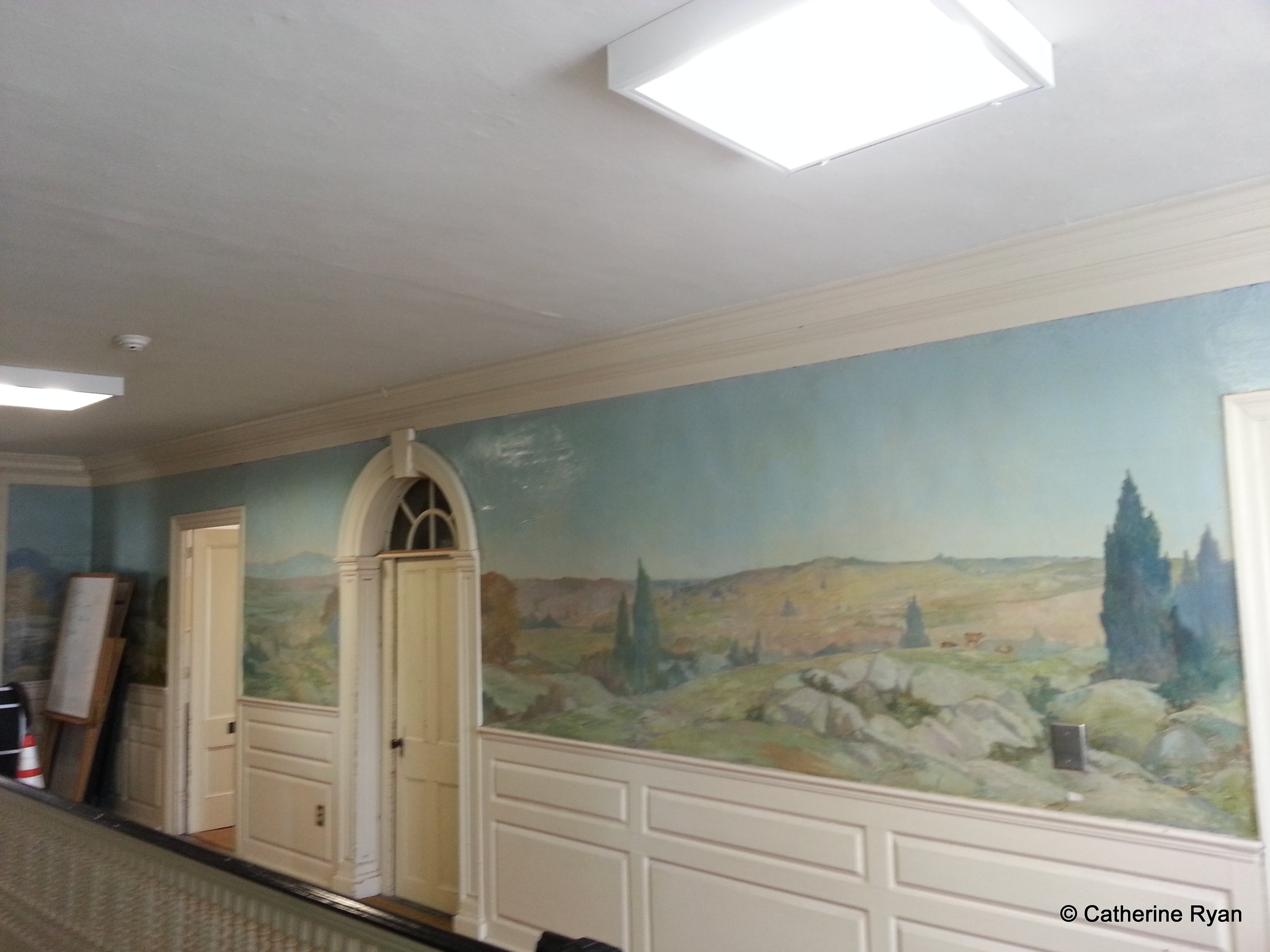
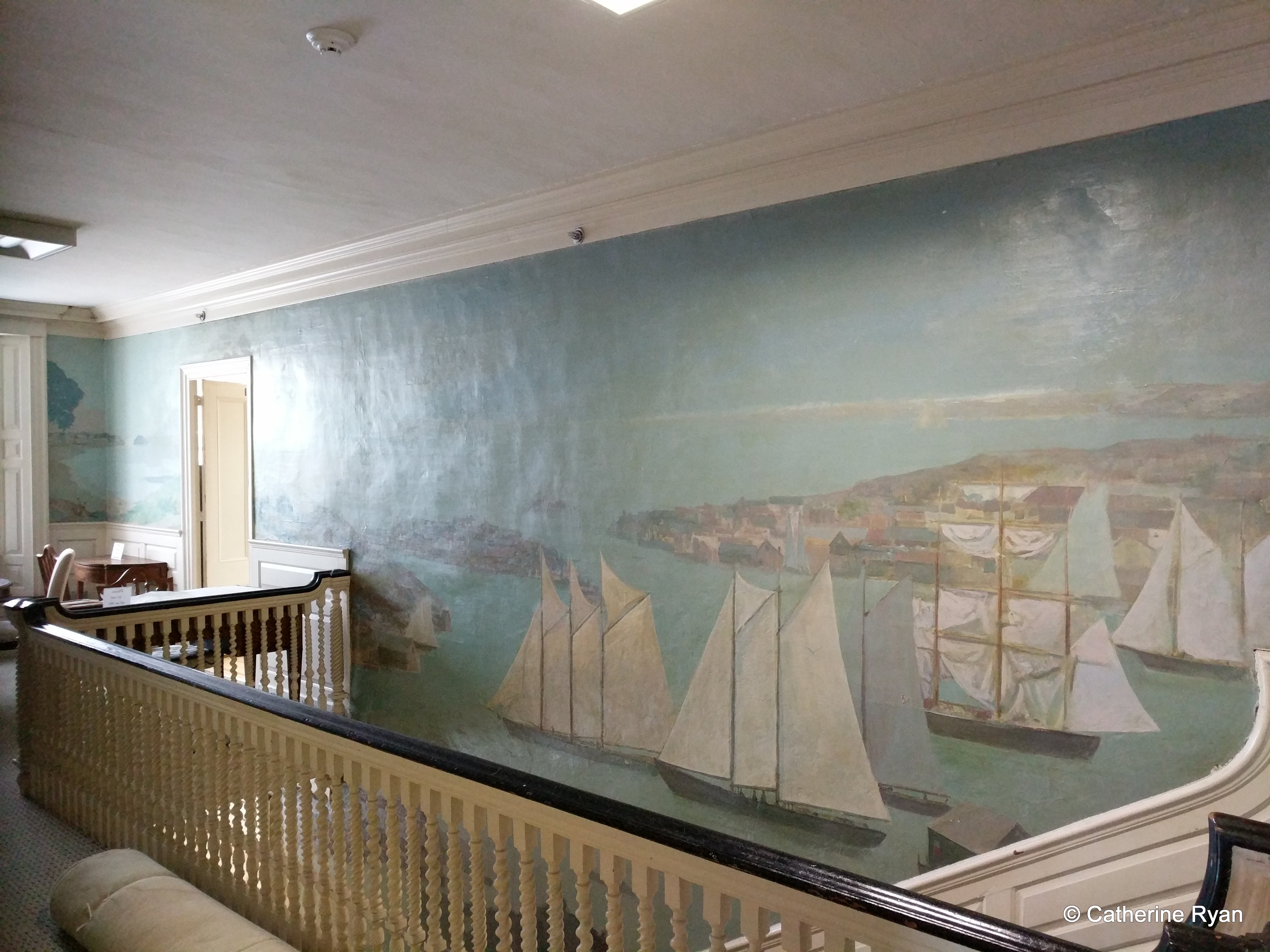
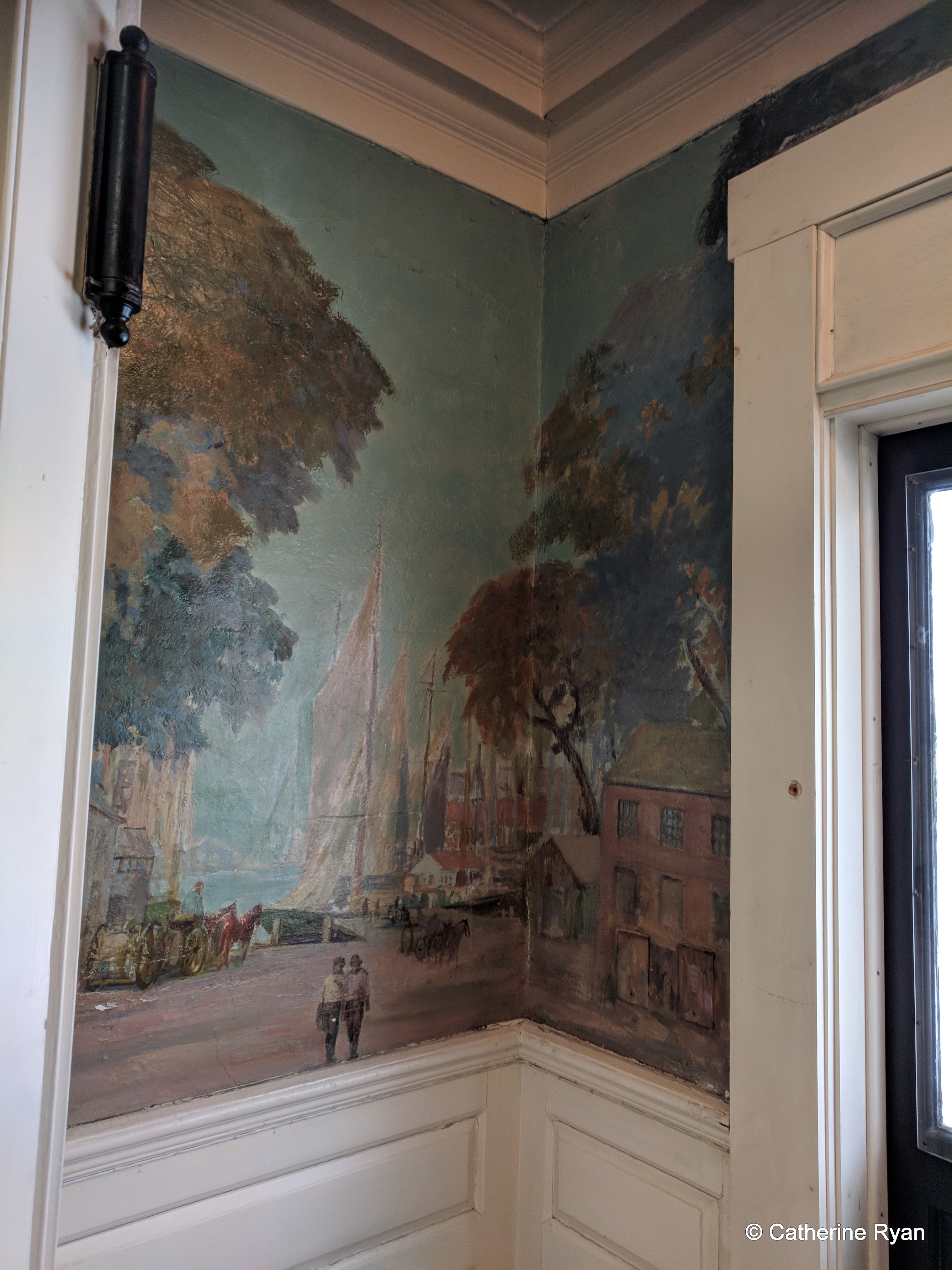
Within Sawyer Free Library are the city’s only New Deal works painted directly on plaster walls. Frederick Stoddard’s designs throughout the Saunders house encompass the first floor entryway, two story stairwell, and 2nd story wrap around stairwell hall. He described this two-story “decoration” above wainscotting upstairs and down as “a conventionalized treatment of the Gloucester region”. Familiar scenes include Dogtown “Moors”.

Marine scenes wrap around the former children’s space on the top floor.


A Gloucester Daily Times article from 1934 mentions a trifecta opening honoring the architectural overhaul for the building, new murals, and Rachel Webber’s retirement:

“July 25, 1934- “The public reception at the Sawyer Free Library yesterday afternoon was for three purposes: to observe the 50th anniversary of the occupancy of the present building, to give a public showing to the mural decorations recently completed by Fredercik L. Stoddard and to the entirely restored and renovated building, and to recognize 44 years of service by Miss Rachel S. Webber, librarian who is to retire in the fall…The building has been completely repaired and largely restored. The three story tower which had been built on the front of the building has been removed*, as has the old porch which extended across the front of the house, leaving only an entrance porch. A bay window facing Dale avenue which the architects decided spoiled the character of the building has been sliced off. Everything has been painted and repaired and new lights have been installed.”   

*all work near murals!

Howard Curtis assisted Stoddard with some repair work as a result (and was brought back again in 1953, 1974, and 1976-1980). In 1935, Curtis was busy completing his original “The Creation of Light” commission for the Methodist Episcopal Church on Prospect Street (now apartments).

O’Maley

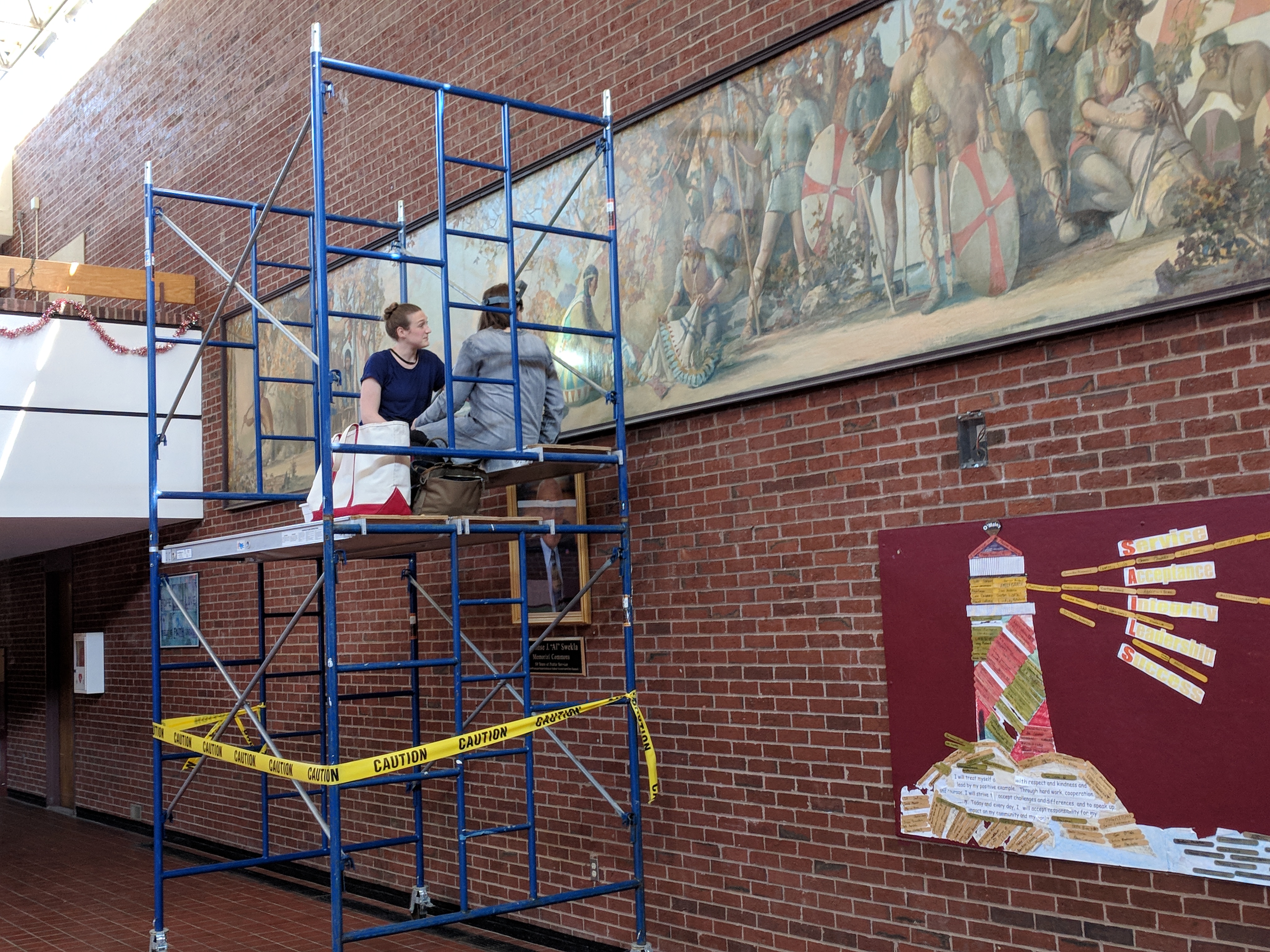
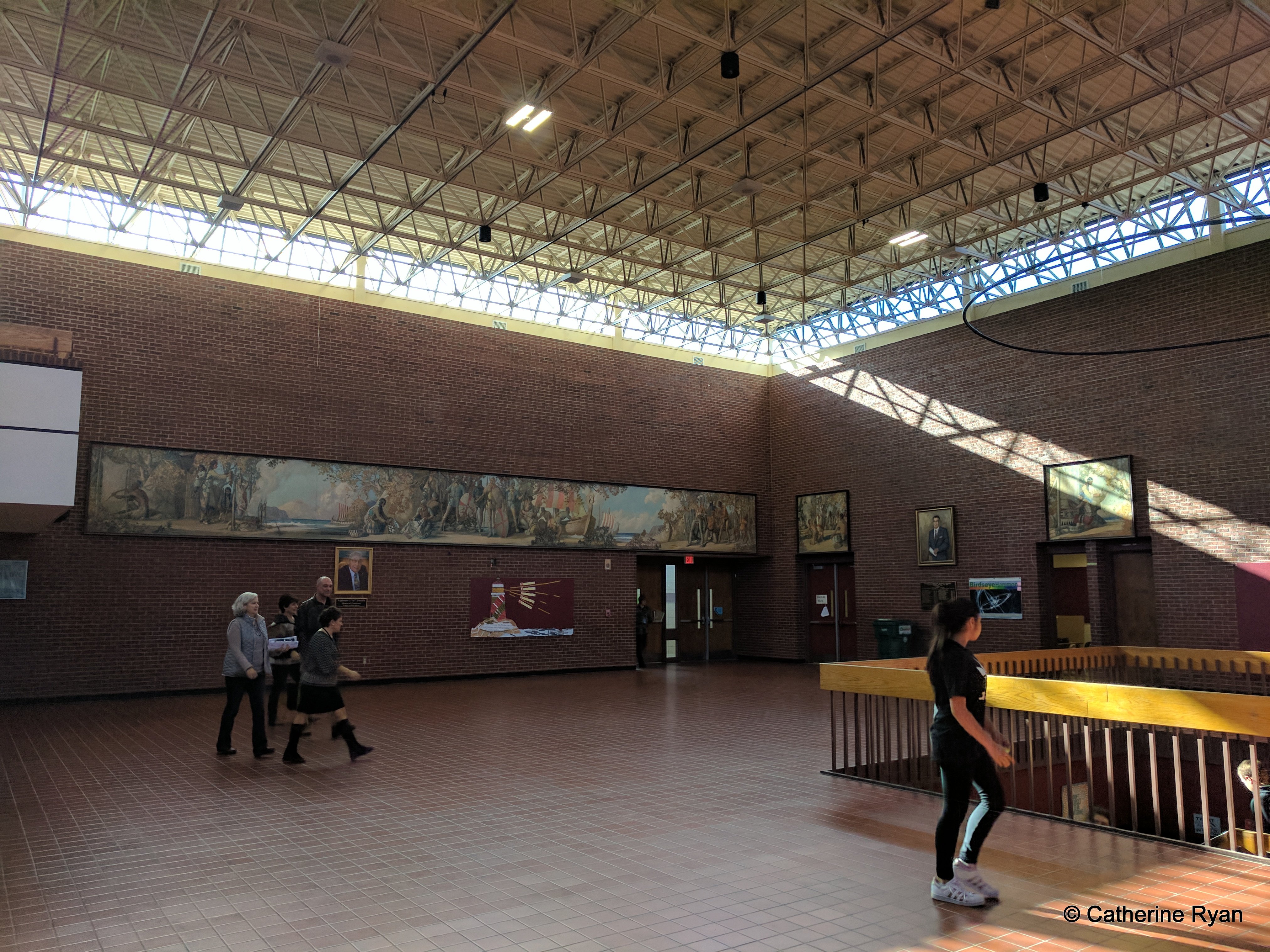
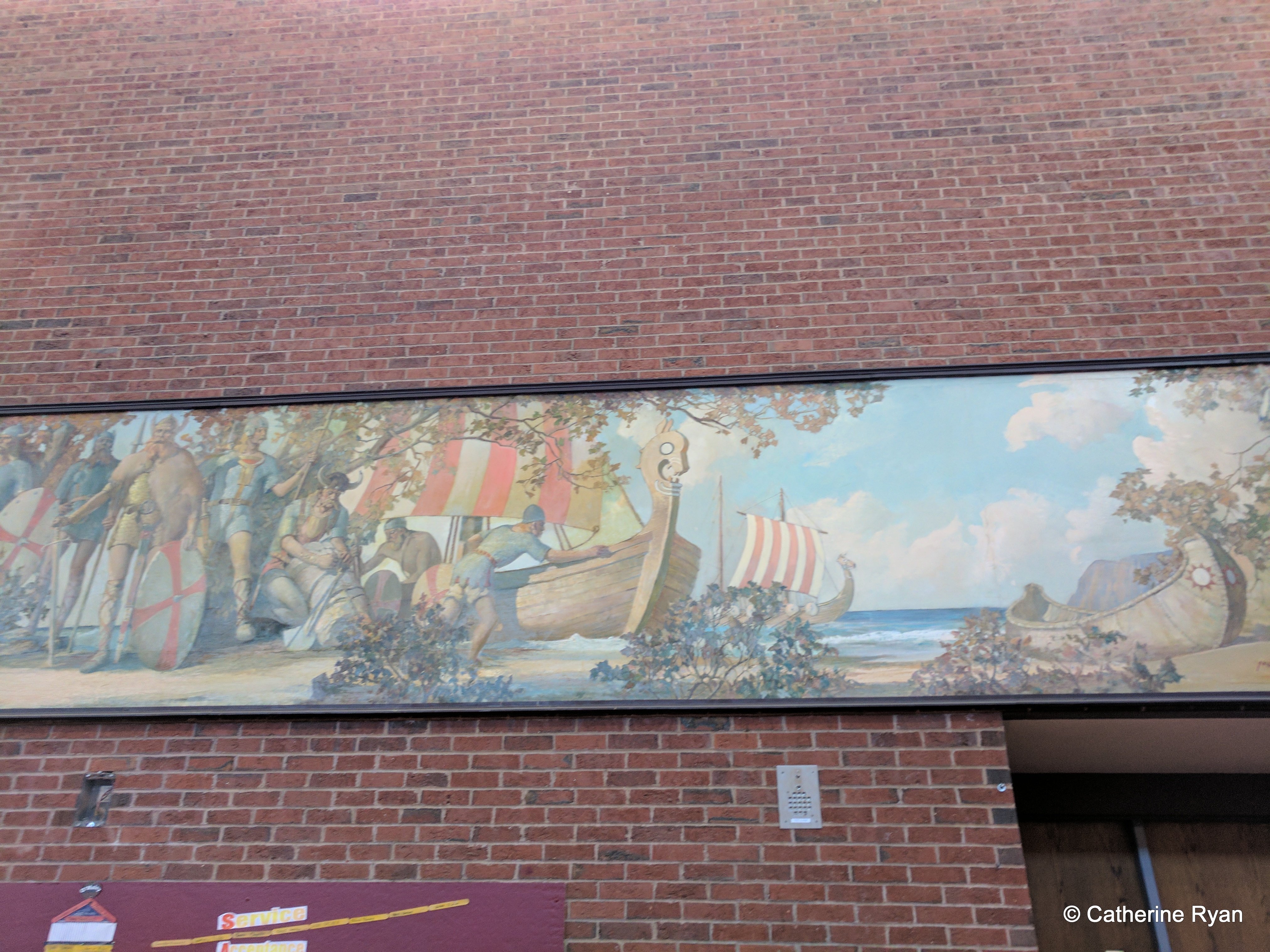
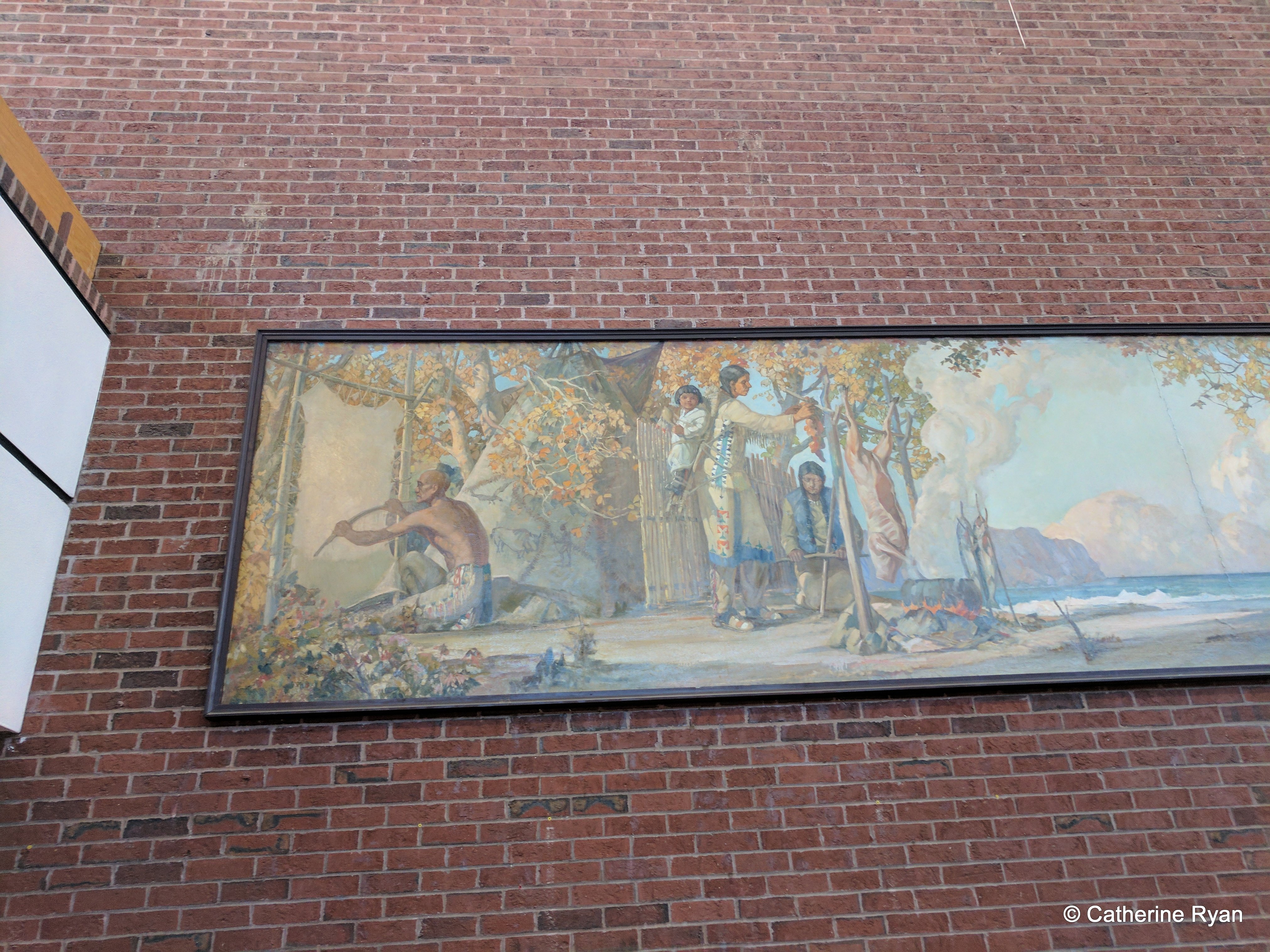
Within O’Maley Innovation Middle School are a complete though out of order Frederick Mulhaupt series (originally at Maplewood); a partial and crucial section from a 2nd immersive series (originally at the High School); and “Our Daily Bread” by Frederick Stoddard, cropped. There are important works by Larry O’Toole commissioned by Ben Pine for the Gloucester Fishermen Institute and YMCA that were painted in the 1940s. Ron Gilson, Gloucester native, author and local historian, helped with the attribution and remembered the completed art being carried out the door. Gilson was great friends with Ben Pine, his first boss, and knew O’Toole.

above: sections from Mulhaupt’s fantastical “Landing of the Viking Thorwald in Vinland” 1935; and central panel “Gloucester harbor” 1936 | below: DPW inspecting the O’Toole 1940s murals (photo 2015)

Gloucester DPW helping inventory O'Toole murals gift to Gloucester commissioned by Ben Pine ©c ryan 2015

The Gilsons visit the murals at O’Maley, portrait © c ryan, 2018

City Hall

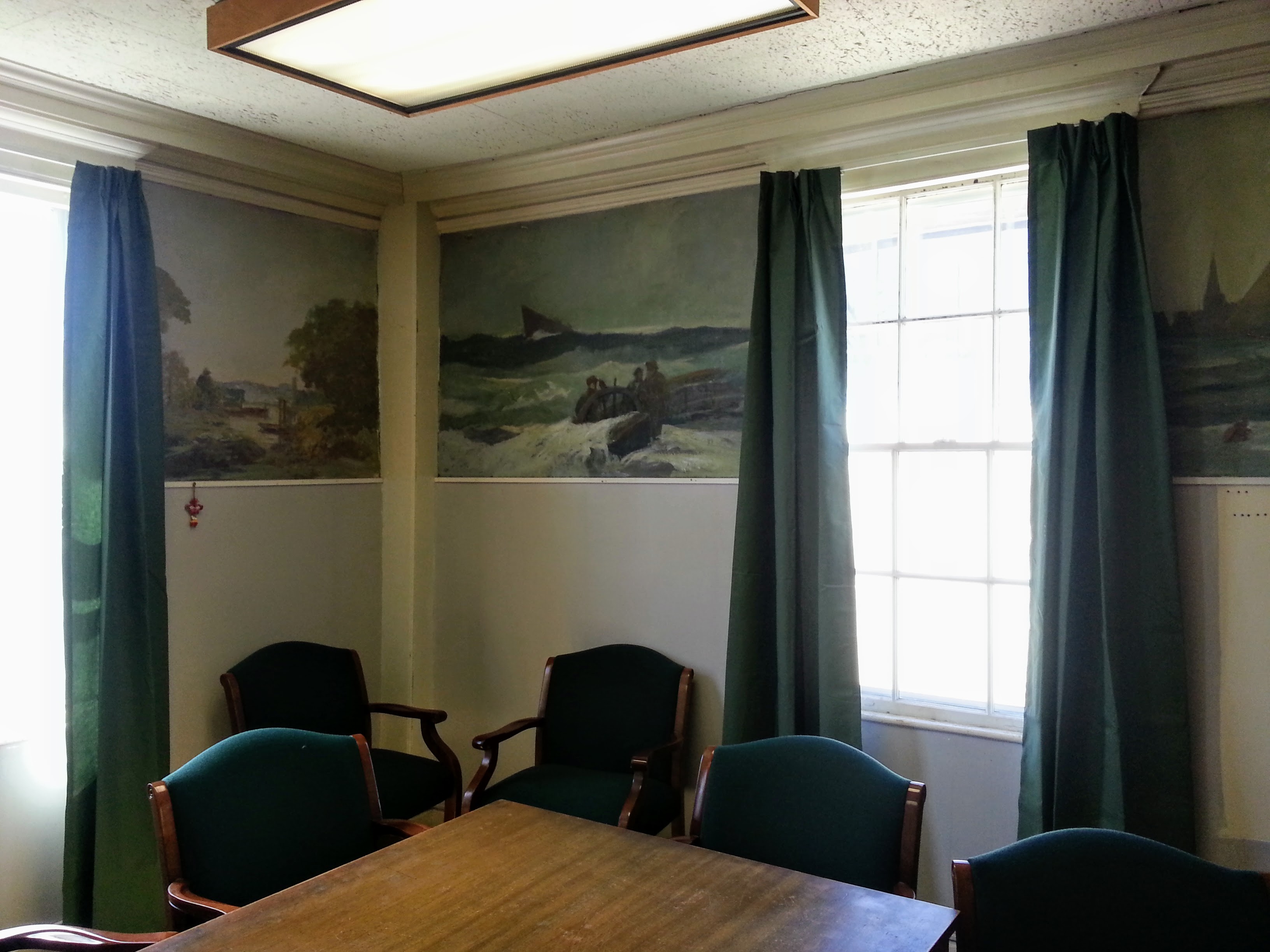
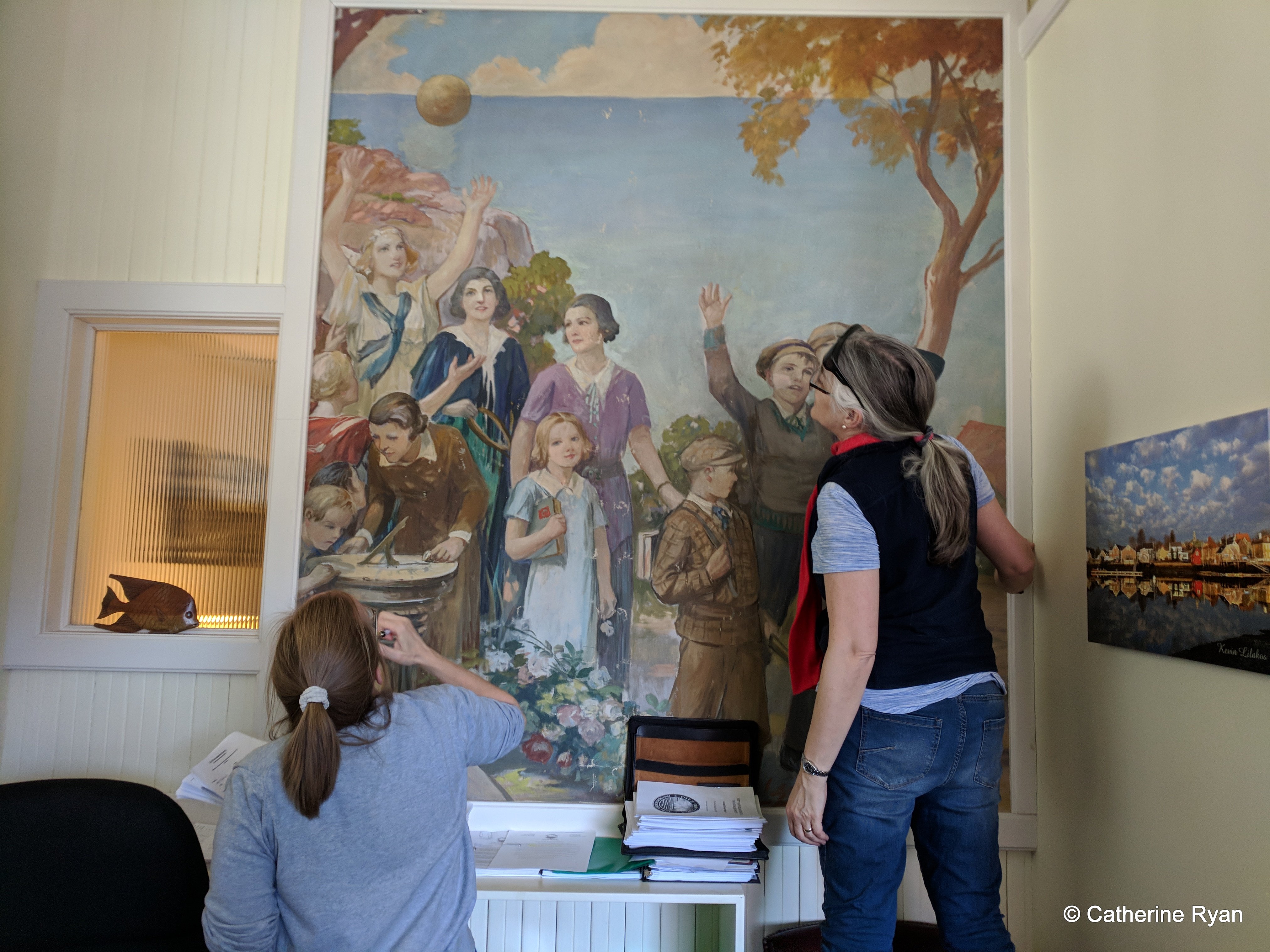
Within City Hall, there are 10 monumental New Deal murals by four artists: Charles Allan Winter, Frederick Stoddard, Frederick Mulhaupt, and Oscar Anderson. Three are multi panels so the collection in this building seems much greater than 10 murals. The Winters in the lobby and Kyrouz were site-specific for City Hall.

One is a small Stoddard panel from a triptych spanning 65 feet for Eastern Avenue School!

I’ll follow up with posts detailing more biographical information about the artists.

Does a pair of Gloucester Forbes school murals jog your recall?

The City of Gloucester murals have the potential to be listed among the nation’s most concentrated holdings of New Deal art from the 1930s and 40s on public view anywhere today. However, they are not all on view. Historic murals not on display await further conservation treatment.

Frederick Stoddard set up a studio in an unused room of the Point Primary School in East Gloucester to paint a variety of panels for the Forbes school. African animals by a waterhole, “the only liberty was animals all close to each other and peaceful,” accompany scenes of wild animals & birds and domestic animals. An underwater scene of local fish and vegetation is missing. I imagine every child and adult found it impossible to settle on just one favorite animal.

The largest composition stretched almost 20 feet. Joseph Nunes helped Stoddard with the installation.

This pair from the series were set over the doorways leading to classrooms. Each measures 5′ x 5′, so tall ceilings. Do they look familiar?

Did you attend or are you related to someone who was enrolled at the Forbes elementary school in 1935? Perhaps you visited one of the special viewing days set aside for the public. Fun fact: There have been seven Forbes school locations if we include the two modulars from the 1920s.

Oscar Anderson painted seven soft hued and dreamy murals for Hovey School including three panoramas. Four smaller works from this school are missing since ca.1972 or later. Does seeing a few of them together help you picture the Hovey school interior?

Sited in the Office of the Mayor

On loan NOAA headquarters, lobby

WPA District Briefs – 1930s

Beyond art, Gloucester benefited from multiple New Deal projects big and small. The Jodrey State Fish Pier was a Public Works Administration (PWA) biggie. Emergency funds allocated through the Treasury department paid for new public buildings like Gloucester’s post office.

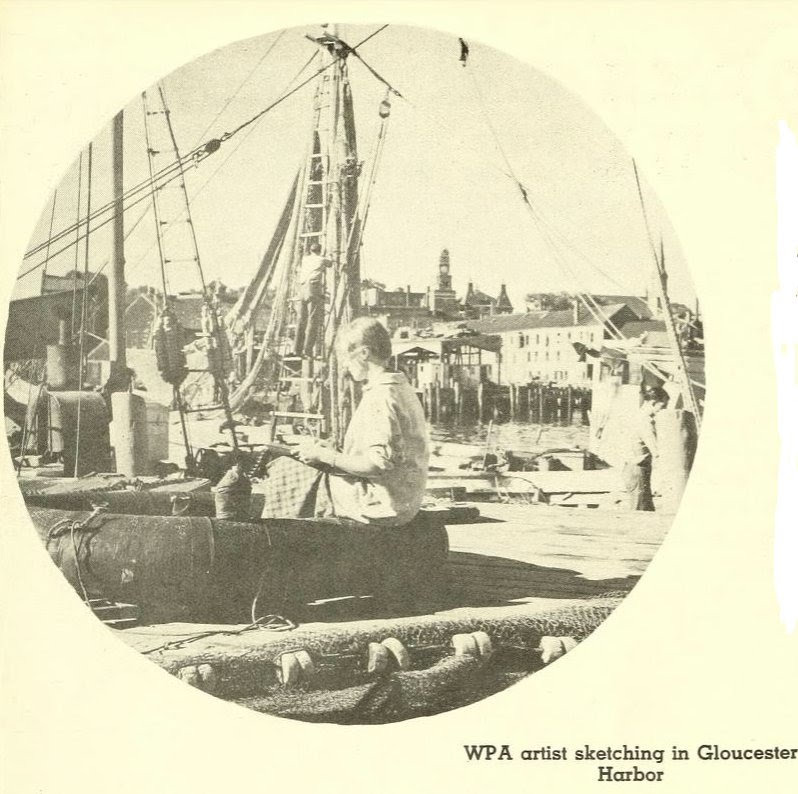
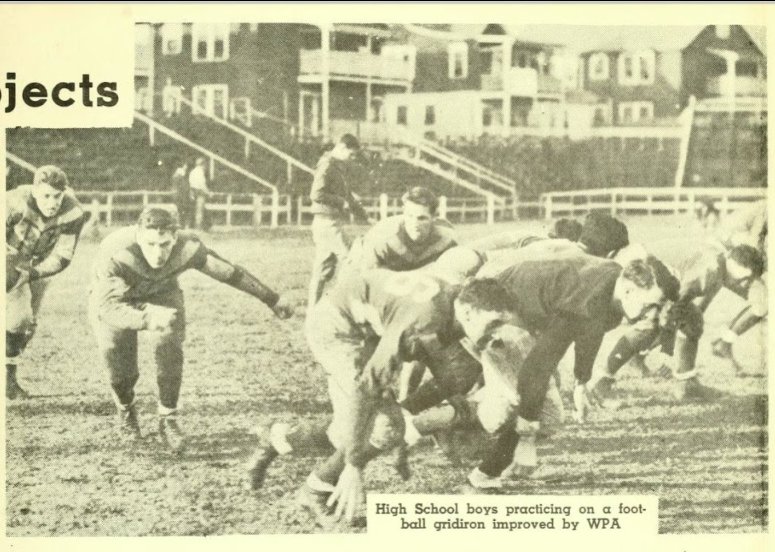
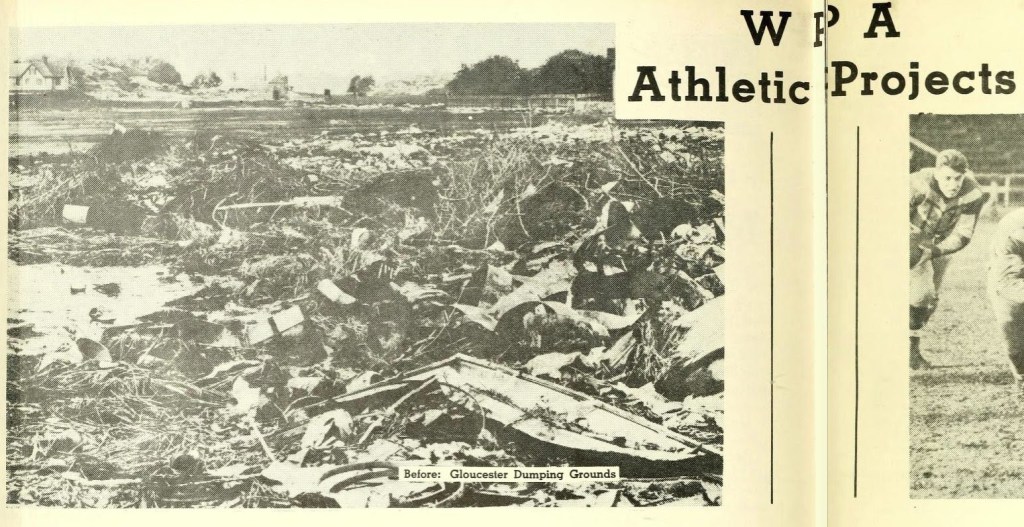
The WPA helped Gloucester finally cap off the new track and field on Centennial. For years Gloucester residents were asked to dump their trash to build up landfill. The recreation space (now New Balance Field at Newell Stadium) was recognized nationally and dubbed, “Gloucester WPA Centennial Avenue Athletic Field”.

“The benefits of men working has changed unsightly, unhealthy Gloucester dumping ground into a modern fully equipped athletic and recreation field.”

1937 WPA bulletin

WPA Athletic Field 1937 – before GHS (Gloucester vista painted by Edward Hopper, now at the MFA)

Super complimentary letter from Colorado in response to the Gloucester story:

“I have just received your bulletin of October and I cannot refrain from writing to say that I think your inside spread showing the original dumping grounds, the football game, and a panorama of the athletic field at Centennial Avenue Gloucester, is one of the most remarkable photographic histories for public information that I have seen. How fortunate it was that your photographer saw it to get that first picture. It merits very widespread contemplation.”
Very respectfully yours,

ERNEST W CORN
Assistant State Administrator Division of Information Service. Denver, Colorado
GHS Football players- recognize anyone?

The field also gained coverage with other WPA football projects

Before: Gloucester Dumping Ground (GHS)


Stage Fort Park

WPA salvage work helped to build a new seawall at Stage Fort Park for flood and erosion control – “More than 3500 tons of stone set in cement were required in the construction of this 1100 foot WPA sea wall at Stage Fort Park, Cressey Beach, Gloucester. The wall preserves the beach area by preventing water and driven sand from flooding the park property.”
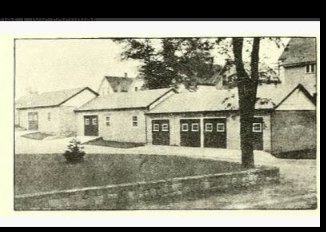
“At City Home, Gloucester, WPA razed a dilapidated wooden structure and built an all-stone garage and storage shed. These buildings will be used jointly by the City Home and the Welfare Department.”

Contributions in support of murals needing treatment can be sent to the “City of Gloucester”, note for mural conservation, City Hall, 9 Dale Avenue, Gloucester, MA 01930

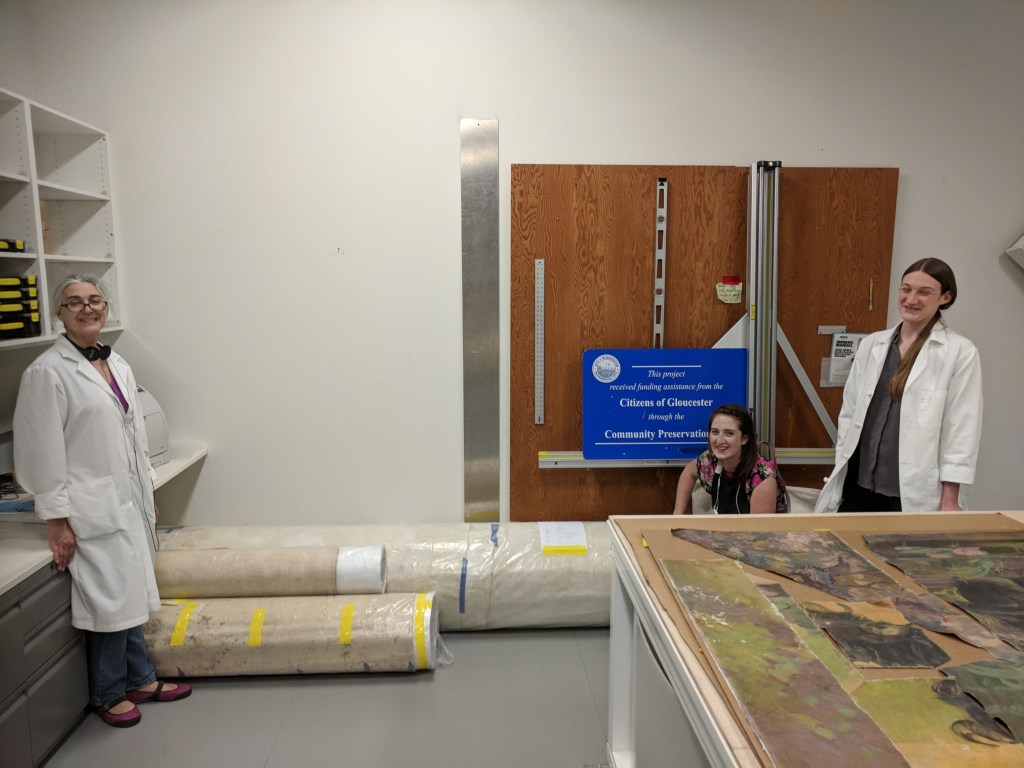
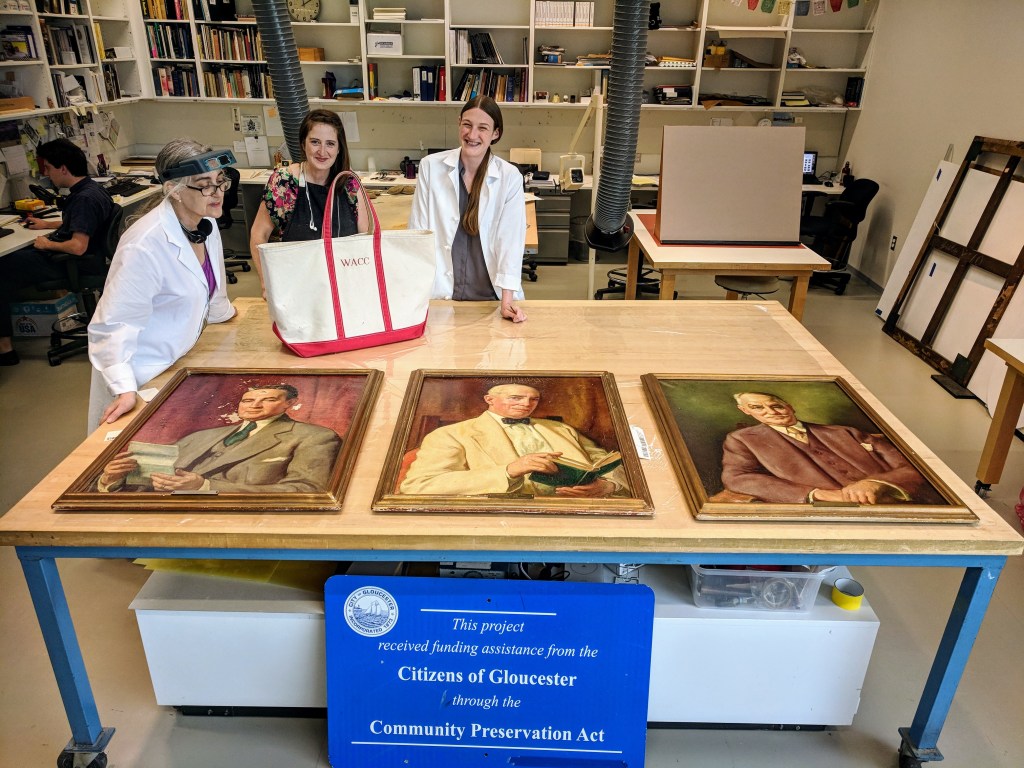
Public Art happiness is … Renowned Williamstown Art Conservation Center caring for historic Gloucester murals

Williamstown Art Conservation teams commence work for Gloucester MA_on its historic mural many WPA era _20180510_© Catherine Ryan.jpg
WACC conservation teams on the ground in Gloucester, MA, 2018

Thanks to Mayor Romeo-Theken, city officials & departments and staff, residents, volunteers, archives and generous grant awards & donations, — Gloucester’s extant historic mural collection has begun a new chapter and is beginning to receive most fitting care at the illustrious Williamstown Art Conservation Center.

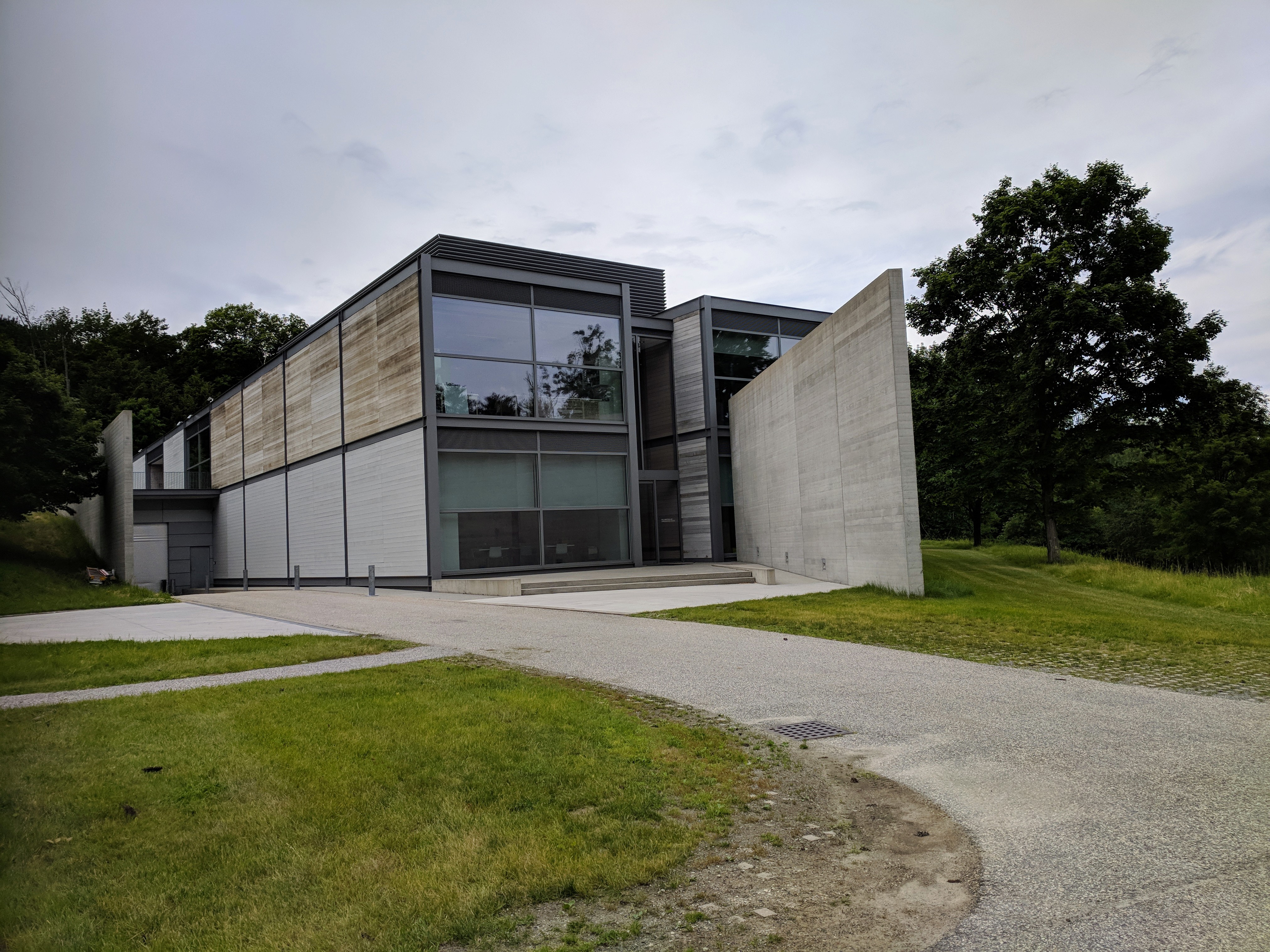
Located on the Sterling and Francine Clark Art Institute campus, The Williamstown Art Conservation Center​ (WACC) is a non-profit institution that was established as the regional conservation center for New England by the US government back in 1977.

WACC_20180620_© catherine ryan.jpg
The Williamstown Art Conservation Center is located on the campus of the Sterling and Francine Clark Art Institute in Williamstown, Massachusetts. (architect Tadao Ando)

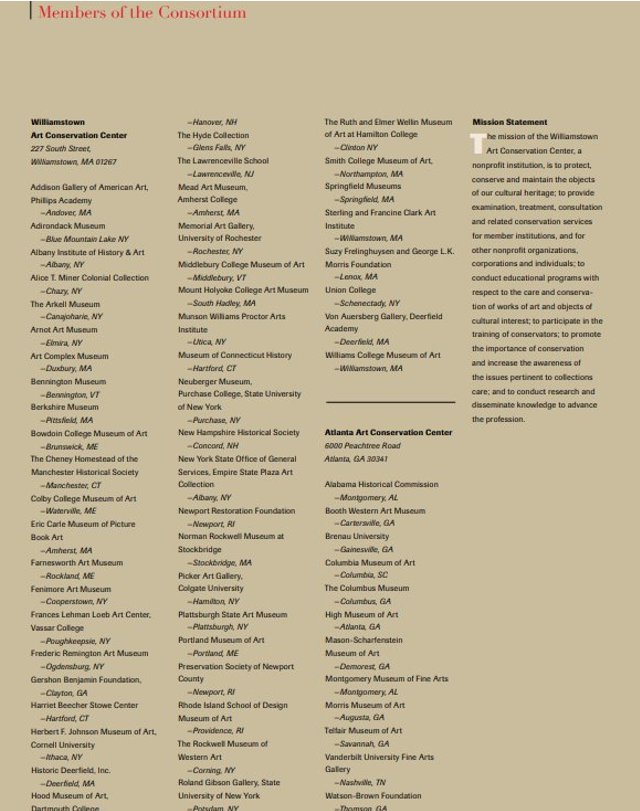
The summer 2017 issue of Art Conservator, WACC’s indispensable industry magazine, ​focused on the center’s 40th anniversary milestone and Director Tom Branchick. The back page prints the 2017 Center consortium members.

williamstown art conservation center member consortium 2017
Gloucester Massachusetts art collection stands with important American collections and just might be the first municipality on this list!~

You can peruse the issue here or follow the link to explore a complete digitized repository of current and past issues. The WACC website URL is: www.williamstownart.org

Conservators at the center assessed the condition  and performed necessary triage because of the invaluable support from the city’s Community Preservation Act (CPA). CPA funding and Williamstown Art Conservation Center’s stature are inspiring endorsements for broadcasting the project and compelling additional financial support. As money is raised, every mural will have its necessary care regimen completed. Donations in support of the mural care can be sent c/o the Auditor’s Office, City of Gloucester, 9 Dale Avenue, Gloucester, MA (note mural restoration). All murals will be displayed in Gloucester as soon as their care is completed.

Sneak peek then and now:

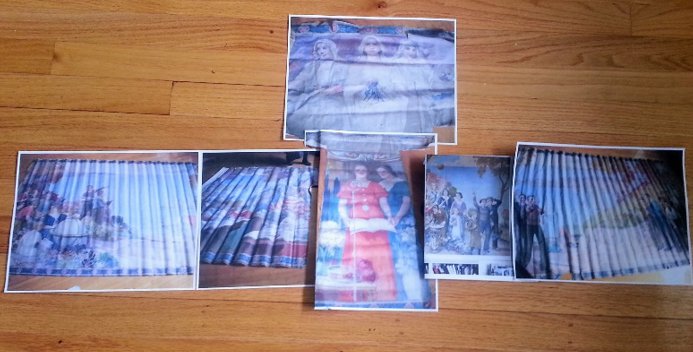
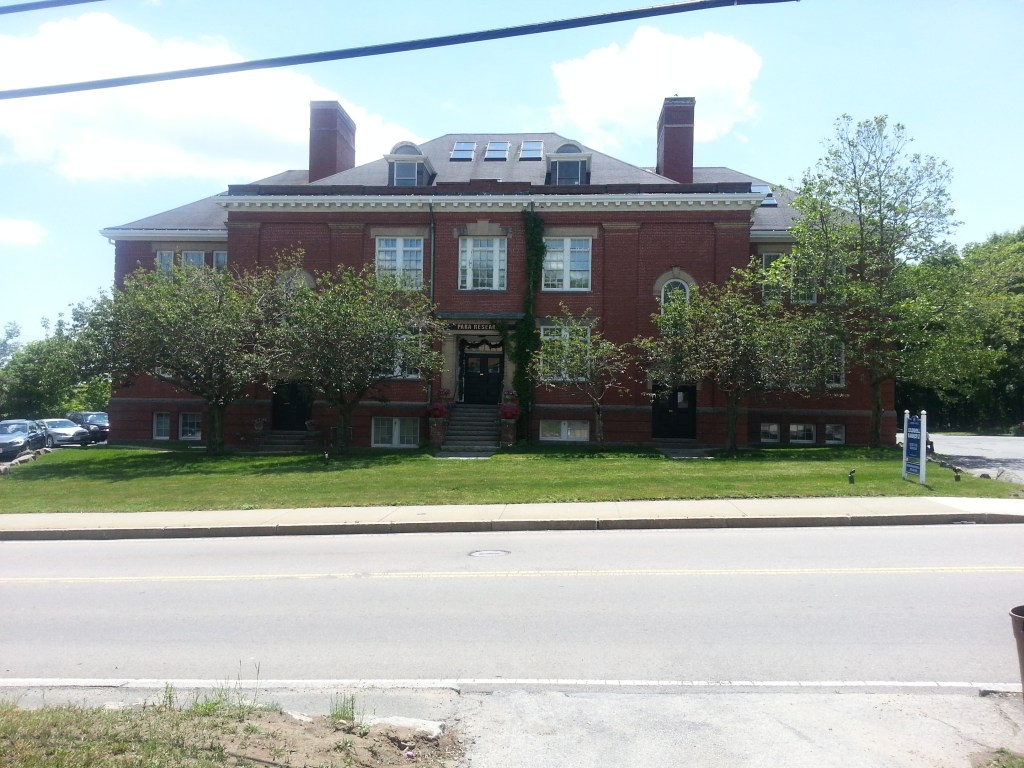
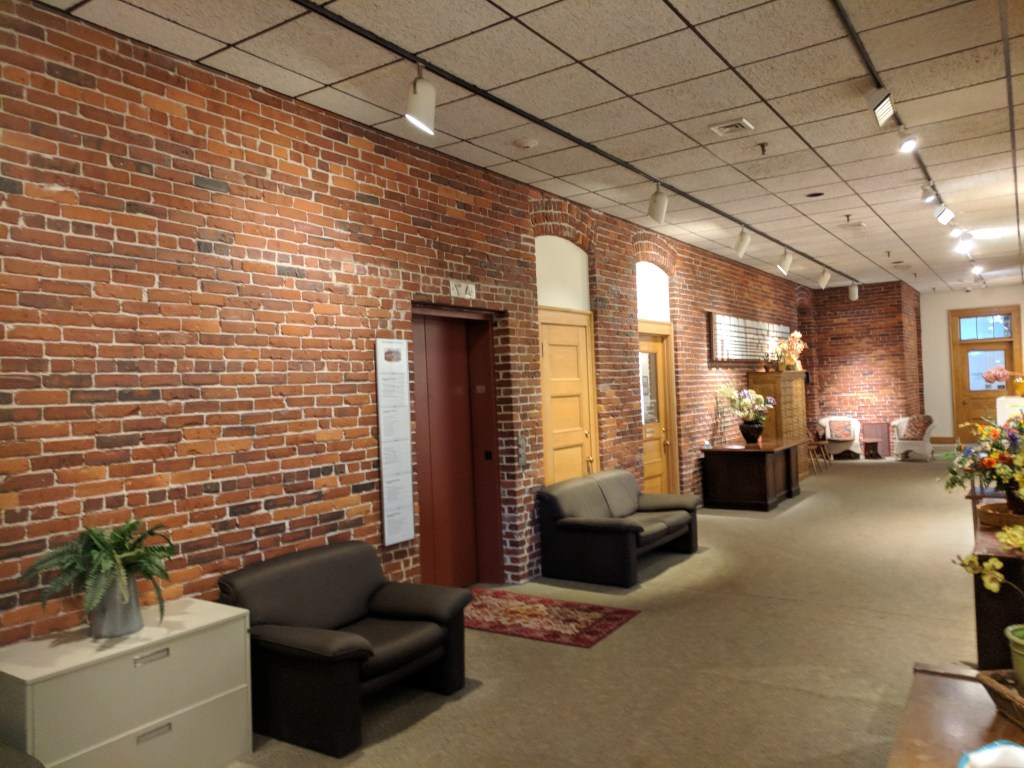
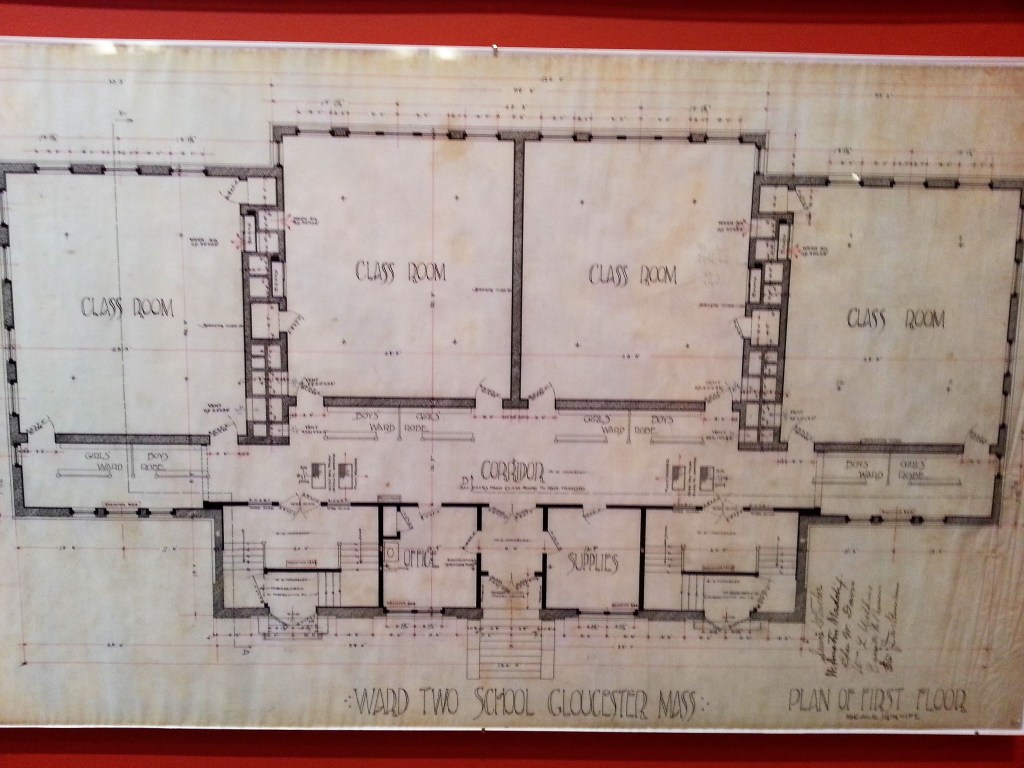
The former Eastern Avenue School (85 Eastern Avenue) was the site for the monumental mural, Schooldays, by Frederick L. Stoddard, from 1936.  This multi-panel triptych was painted 8 feet high and nearly 60 feet long despite an array of unusual architectural challenges. My hunch for its original location on the main floor was confirmed thanks to Barbara Tarr. I’m looking for interior photos of the school that show the mural installed. Over time the school walls were resurfaced, doors blocked, and an elevator installed. Based on my expertise, I recognized that a stand alone piece was misattributed and must have been dispersed, not as bad as the scarecrow in the Wizard of Oz after the flying monkeys descend-… still it was dire and will be amazing to have it whole once again! Special thanks go to Gloucester’s Department of Public Works.

catherine ryan correct attribution and rediscovery for major and amazing frederick l stoddard gloucester ma 1936 mural © catherine ryan