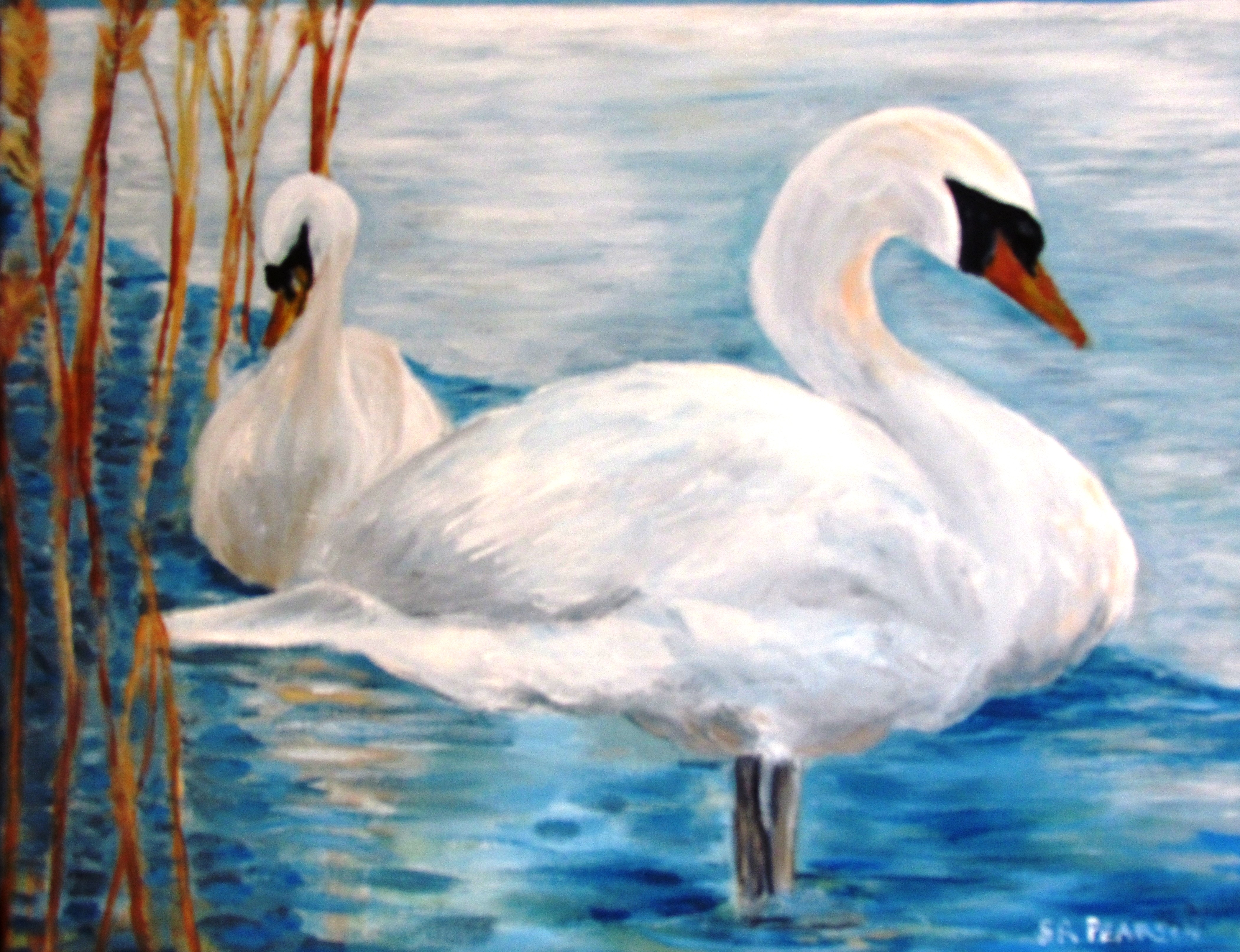
GMG FOB Sue Ann Pearson from Kettle Cove Studios in Magnolia submits her lovely painting, along with a sweet note to Joey ~
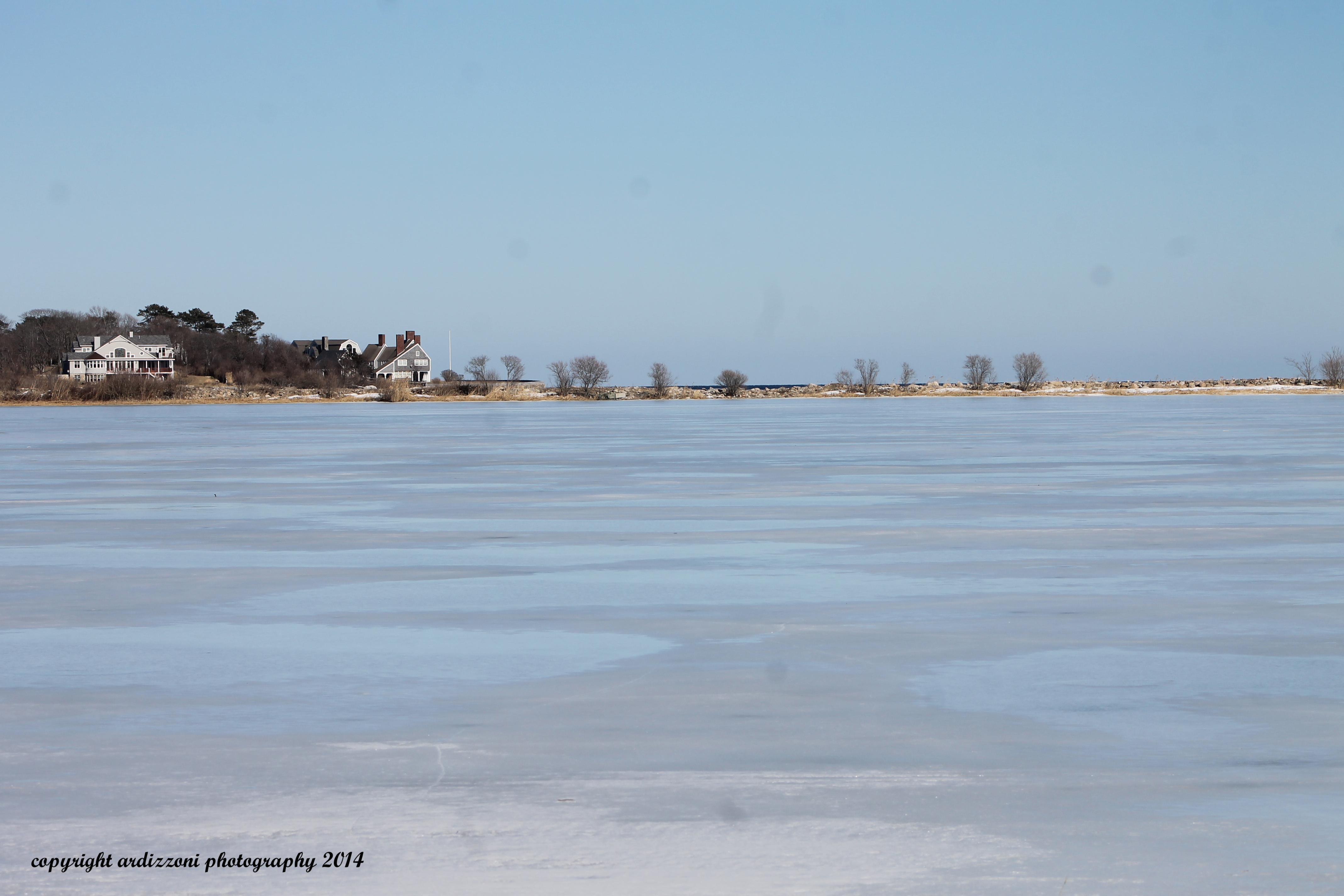
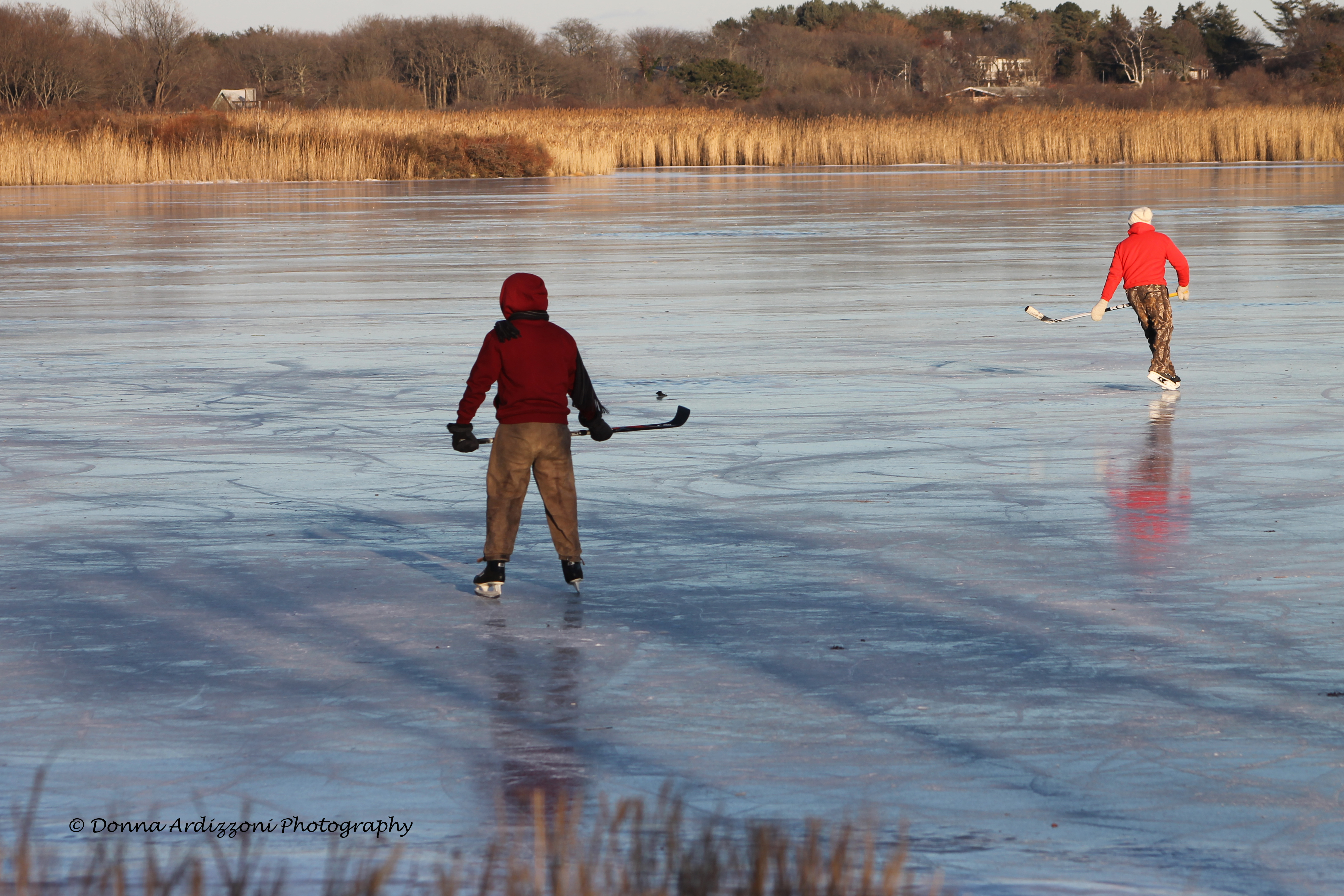
A big thank you to Kim Smith for all of her lovely nature photos. Here is a painting I did of one of her inspiring photos. I call it “Waiting for the Ice to Melt on Niles Pond.”
I am very touched Sue. Thank you for sharing!
Spread The GMG Love By Sharing With These Buttons:
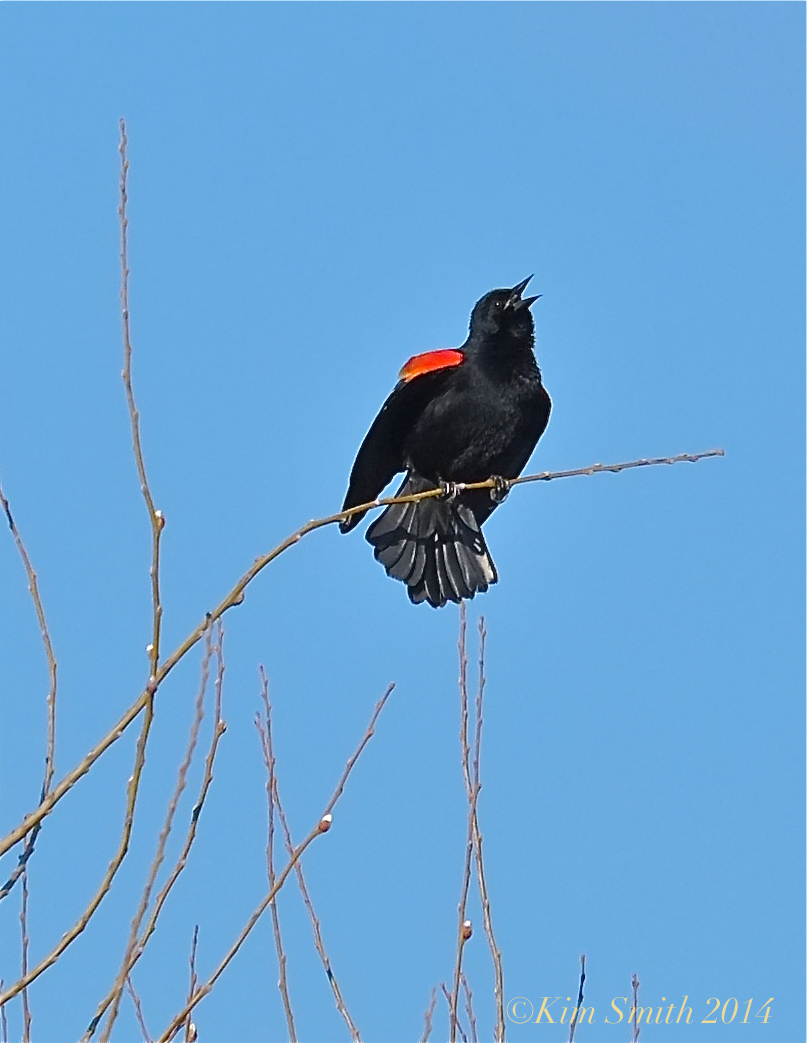
Although Red-winged Blackbirds are spied around Niles Pond during the winter months, spring brings flocks, and the males are an especially welcome sight chortling atop the pussy willow branches along the water’s edge. Red-winged Blackbirds are one of North America’s most abundant birds. If you were a male of the kind, you might be singing your heart out, too. The species is highly polygynous and some males have been known to have as many as 15 mates during a single season!
Female Red-winged Blackbird Image Courtesy Wiki Commons Media
The males are glossy black with distinctive red epaulettes and yellow wing bars, which they often puff out confidently when singing from their perches. The females have a streaky brown song sparrow-like wing patterning and stay close to the ground feeding and building their intricately woven nests at the base of cattails and reeds, along the marsh’s edge.
If you have a spare moment, send us a photo of your favorite signs welcoming spring and we’ll post them under a group ‘welcome spring’ post. Send photos to me at kimsmithdesigns@hotmail.com (thanks Lenny).
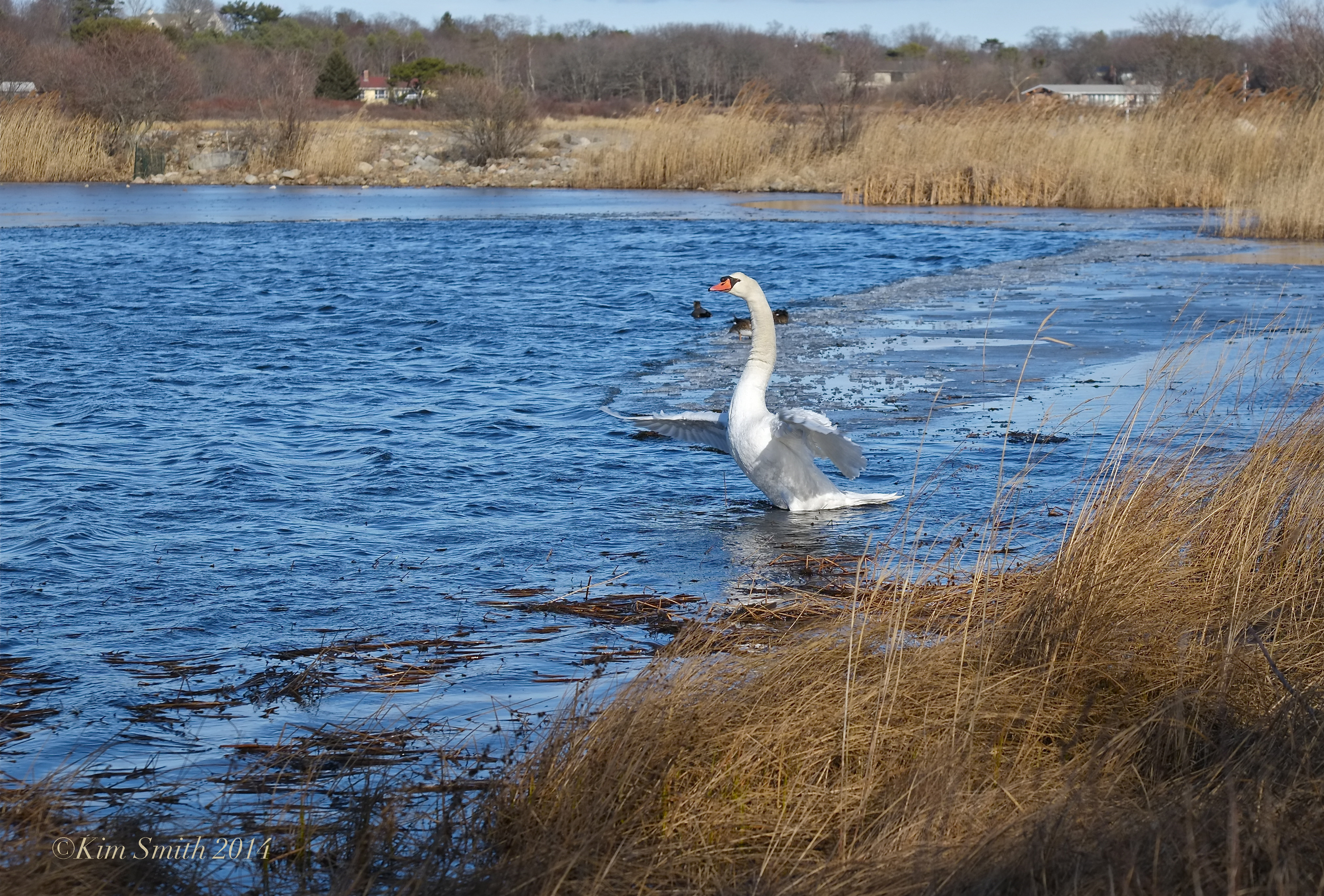
The extraordinarily powerful wings and torso of the Mute Swan ~ click to view larger
The above photo is a lucky capture as I was actually filming the Gadwalls behind the swan. When the swan began to lift out of the water I quickly turned my attention toward it. The first two photos are the same; the first is cropped, the second uncropped so that you can see the tremendous scale of the swan’s body and wings in relation to its environment. The Mute Swan is the second heaviest waterfowl, second only to the Trumpeter Swan. In observing swans, I marvel in nature that a creature this heavy can soar majestically through the clouds and swim so gracefully through water.
Mute swans feed primarily on submerged and emergent aquatic vegetation and a small percentage of their diet also includes frogs, small fish, and insects. Because swans feed in deep water they do not compete with smaller waterfowl such as ducks. It is thought that food is made more readily available to ducks because the swans do not eat all the food they pull up. This seems logical and factual from my own observations at our local ponds and marshes. I very often see a wide range of waterfowl congenially feeding with the Mute Swans.
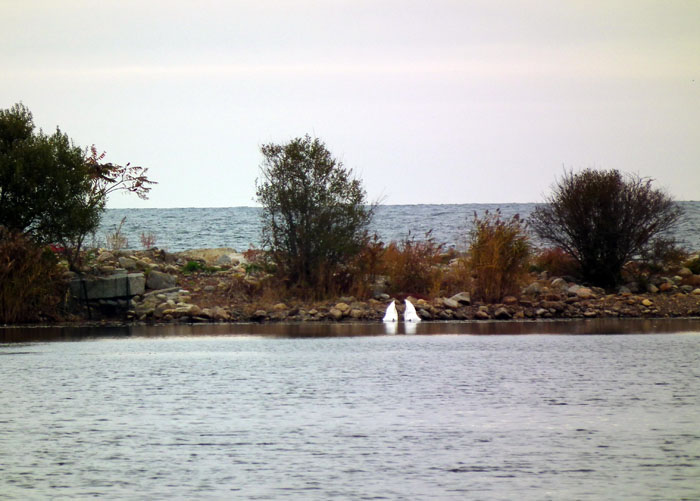
Mute Swan feeding on submerged vegetation at Niles Pond
Note ~ Mute swans, which are a nonnative species, do compete directly for food with North American native Trumpeter Swans, in regions where Trumpeter Swans are indigenous (Trumpeter Swans are not native to Cape Ann).
For more photos, information, and video see previous GMG posts about the Mute Swan:
While filming along the berm between Niles Pond and Brace Cove at 11:30 today, my dog Rosie had a near death experience. I was crouched down on a lower rock and Rosie was sitting on the rock above me waiting while I was photographing. Suddenly all the birds took flight. I didn’t think too much of it because that happens seemingly at random sometimes. Rosie was engrossed in watching the birds, too. I stood up and charging toward her, not ten feet away, was a coyote. Upon seeing me as I stood up, the coyote hightailed it down the path towards the scrubby, wooded area between the pond and the sand.
Spread The GMG Love By Sharing With These Buttons:
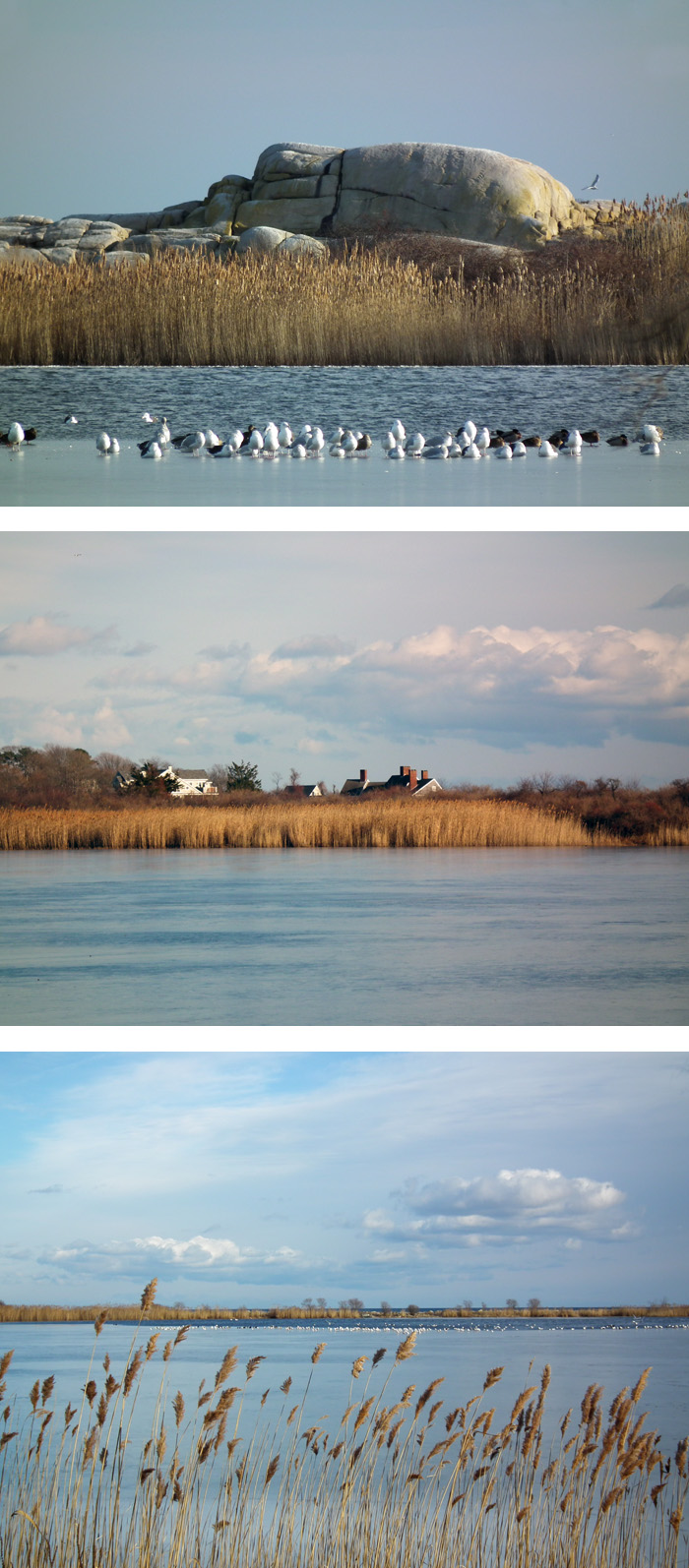
Niles Pond is beautiful in every season. Because of the leaves being gone from the trees, the first shot of the pond with Brace rock behind was a perspective I had never seen before and looked strange to me, like the rock had moved onto the beach and was nestled in the grasses.
E.J. Lefavour
Spread The GMG Love By Sharing With These Buttons:
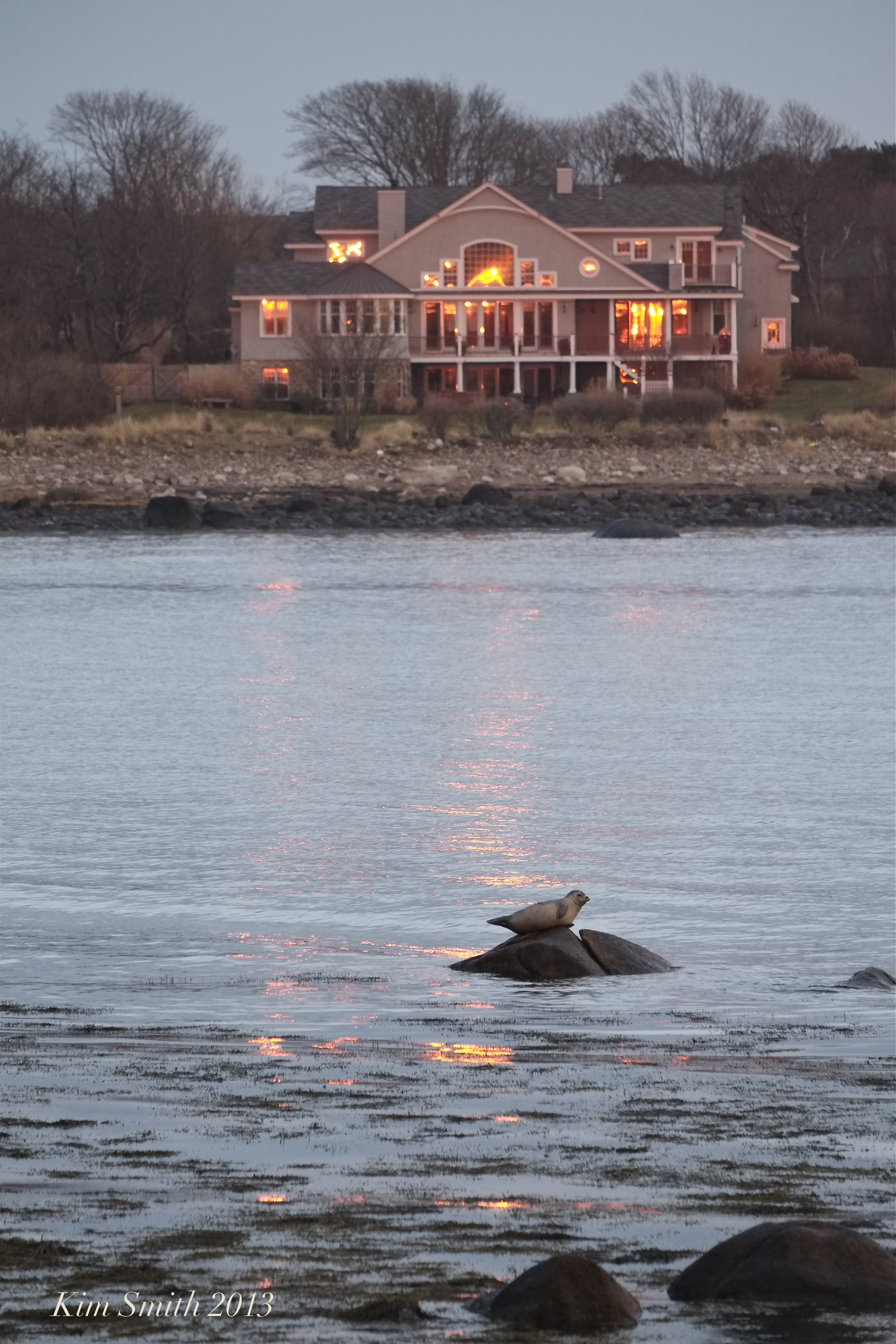
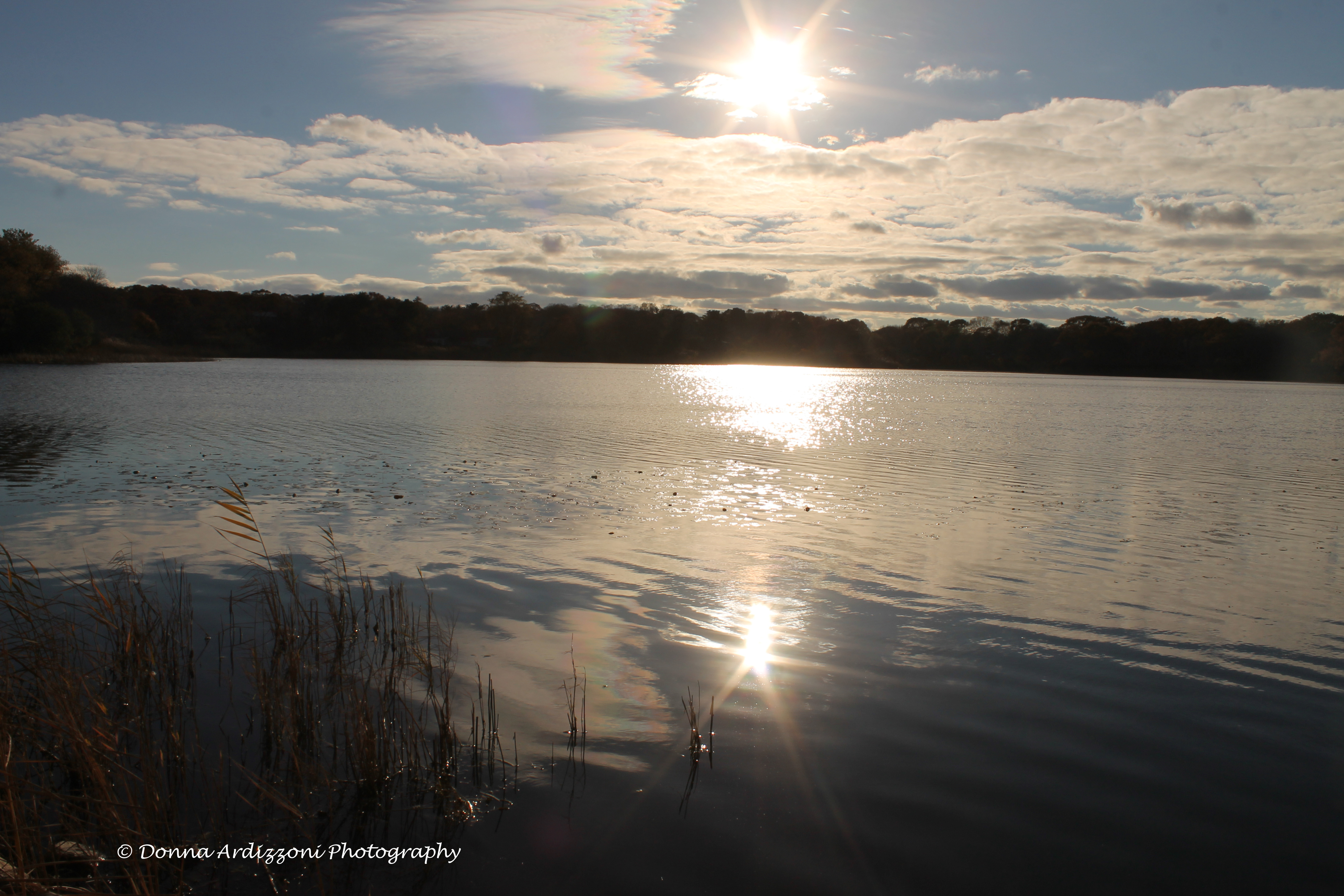
Our plane was delayed 7 hours en route to Cincinnati for Christmas. Fortunately, we were able to stay in contact with the airline from home. My daughter Liv and I went for a walk along the berm dividing Brace Cove and Niles Pond while waiting to leave. As we were looking at the sun setting over Niles Pond, we by chance turned towards Brace Cove and were captivated by the vibrant colors reflected in the windows of the home on the point. Magically a Harbor Seal swam onto the scene and scootched up on the rock and he too, caught the last of the sun’s fleeting light!
Niles Pond December Sunset
Spread The GMG Love By Sharing With These Buttons:
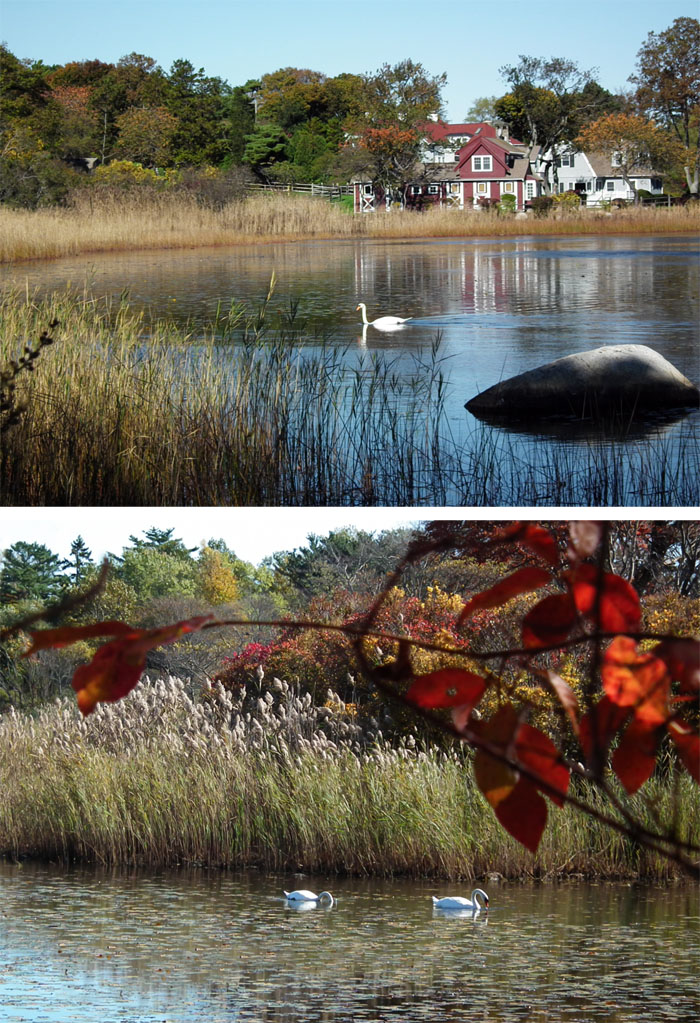
A reader emailed inquiring as to where do the Niles Pond swans go during the winter months. The Niles Pond swans are Mute Swans (Cygnus olor) and they are neither mute nor migratory. Mute Swans do not fly south in the true sense of a great migratory distance traveled, but do move around between bodies of water, and may move to a slightly warmer region.
Mute Swans swans grunt, snort, and hiss and their wingbeats make a beautiful throbbing sound when flying. See previous GMG posts about the Niles Pond Mute Swans ~
Yesterday afternoon I was photographing a friend’s garden, looking west towards the very last shimmer of sunlight as it melted into the horizon. I packed up my gear and while heading home, passed the rising Harvest Moon brightly illuminating Niles Pond. Knowing my family was home hungrily waiting for dinner, I hopped out of the car and snapped away for only a brief moment, wishing I could stay but happy to to get a few photos. At this time of year, every which way you turn brings the reward of unfolding beauty.
Full Harvest Moon Over Niles Pond
Spread The GMG Love By Sharing With These Buttons:
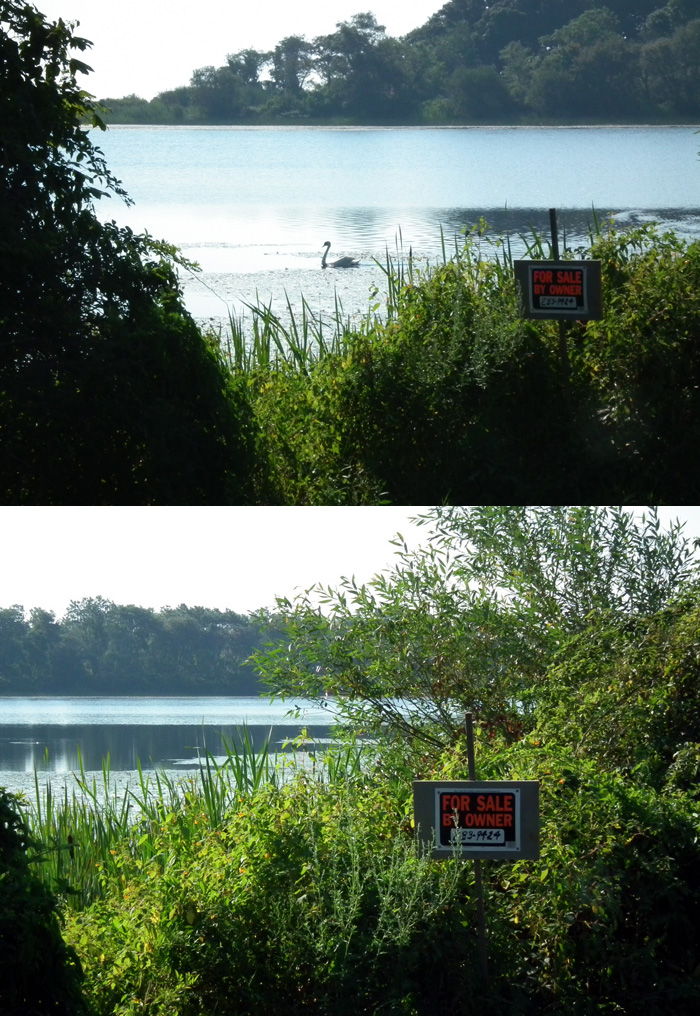
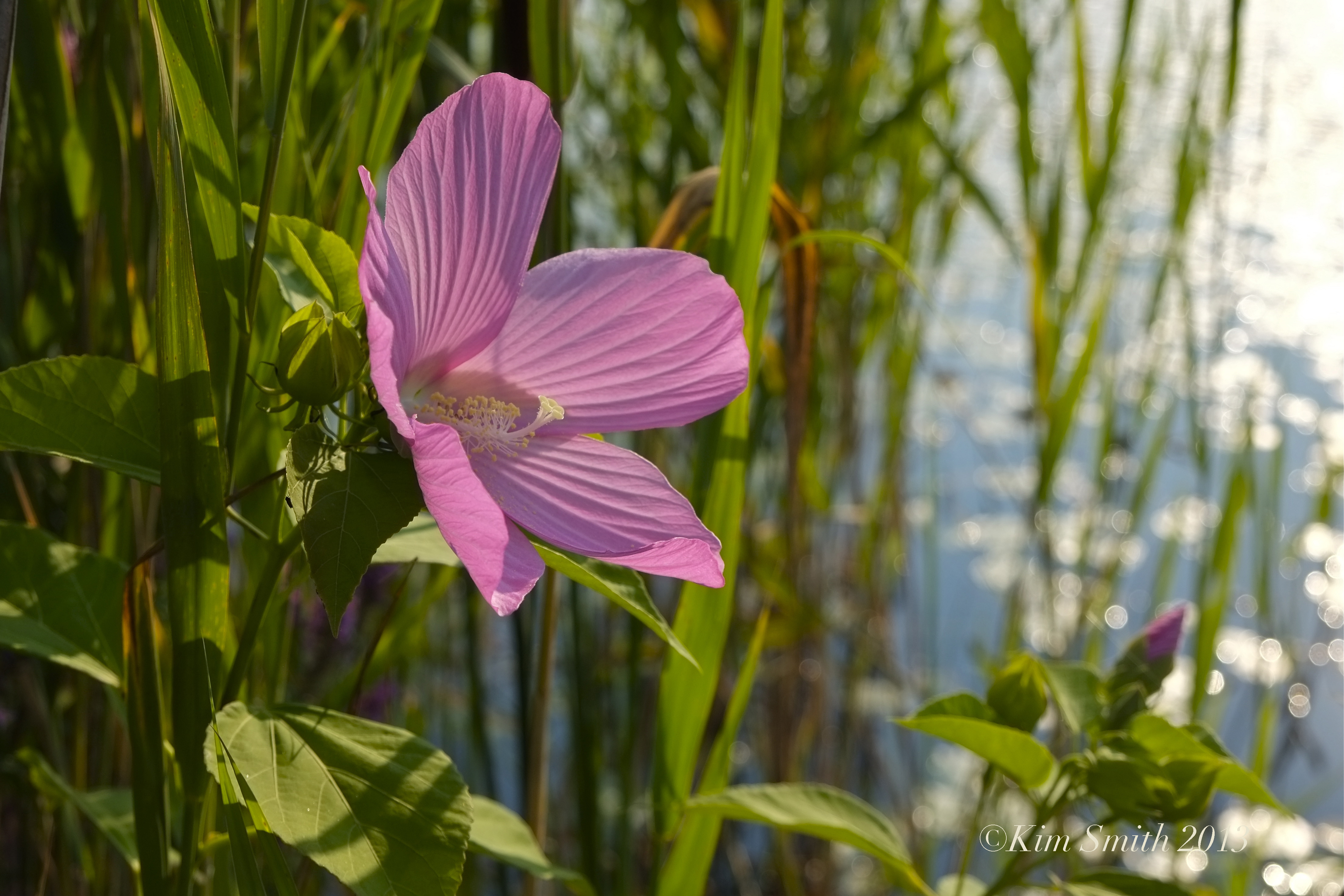
Looks like someone is selling Niles Pond, or at least the spit of land at its shore. Anyone know what’s up with this? It would be a shame not to be able to encounter lovely flowers like this rose mallow (or swamp mallow) along the shore of Niles Pond.
E.J. Lefavour
Spread The GMG Love By Sharing With These Buttons:
Hibiscus moscheutos, known by many common names including Swamp Rose Mallow, Swamp Mallow, Eastern Rose Mallow, and my favorite, Crimson-eyed Rose Mallow, is a wonderful perennial garden plant and when found in nature, is a wetland plant that can grow in great drifts. Hummingbirds and bees drink nectar from mallows. The flowers of Hibiscus moscheutos range is shades from pure white to deepest rose, and some have a brilliant magenta eye.
Rose Mallow was planted widely at the beginning of the previous centurey, when an awaresness developed about conserving our North American native wildflowers. You would be hard pressed perusing a home and garden publication from that era and not find a lovely illustration of Crimson-eyed Rose Mallow.
Spread The GMG Love By Sharing With These Buttons:
























 Good Morning Gloucester