Don’t be distracted by a simplistic thematic construct especially when it coaxes a mind game of “What about…?” as in: What about this artist or that one? Why aren’t they included? (Visual artists like May Stevens, Vija Celmins, Blanche Lazzell, Juane Quick to see Smith, April Gornik, Joan Nelson, Duncanson, Eric Aho, Morris graves, Rauschenberg, Fischl, Frankenthaler, Fitz Henry Lane, Winslow Hopper, and Edward Hopper sprang readily to mind. And more Lawrence.) What about the de rigueur annual summer exhibitions at major galleries and institutions, since late 1880s? Aren’t the planet’s oceans a global motif not limited by media or place?
Ignore the categories or “chapters”.
Forget the sea change promise.
Just go.
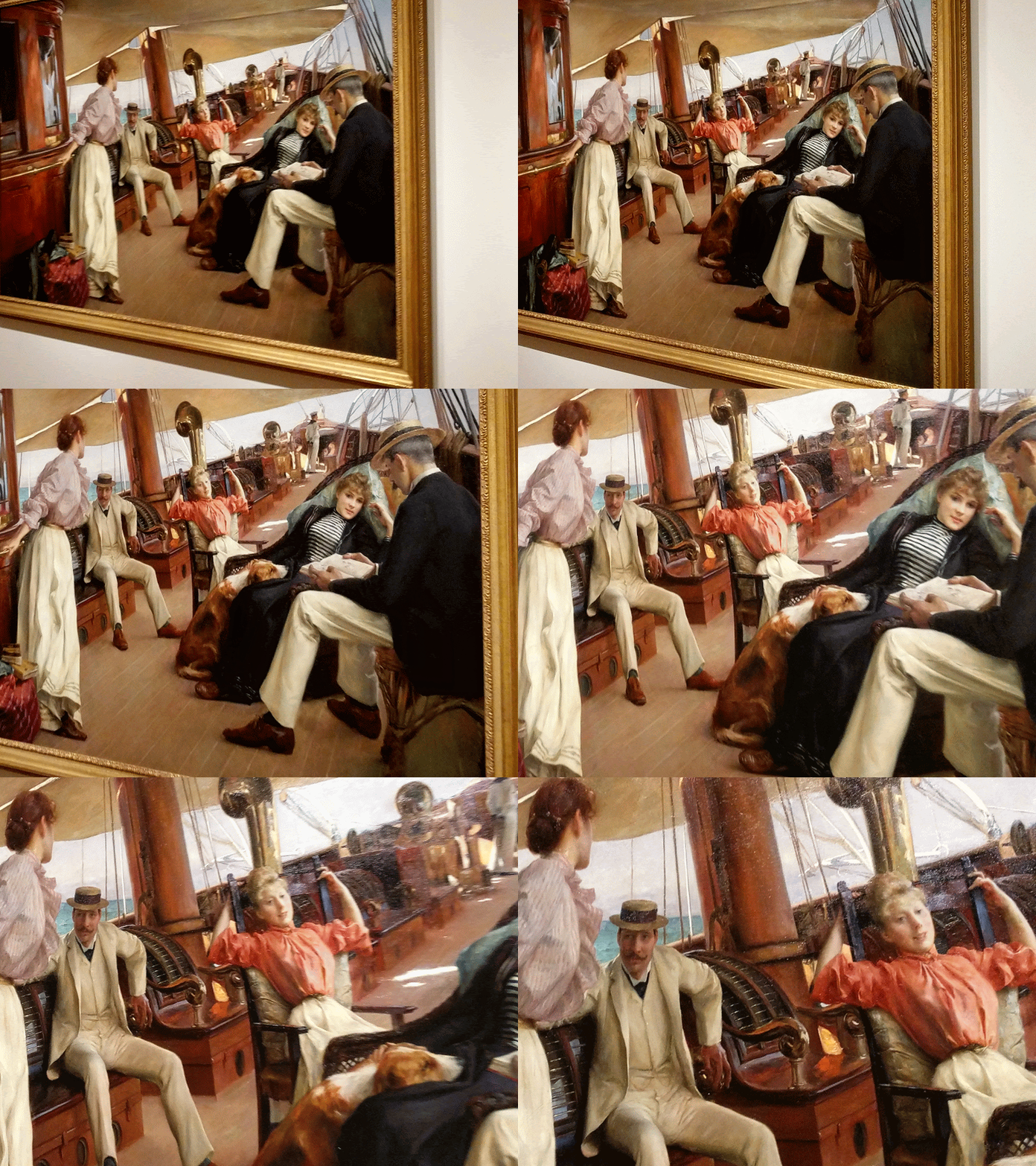
Do make the must see trip to be awed and enjoy the momentous loans and great gift of seeing these selections displayed, together and their many moods of expression. Sensuous, tranquil, volatile, mysterious, distant, abstract–this major group show delivers art that conveys emotion, expressed and experienced.
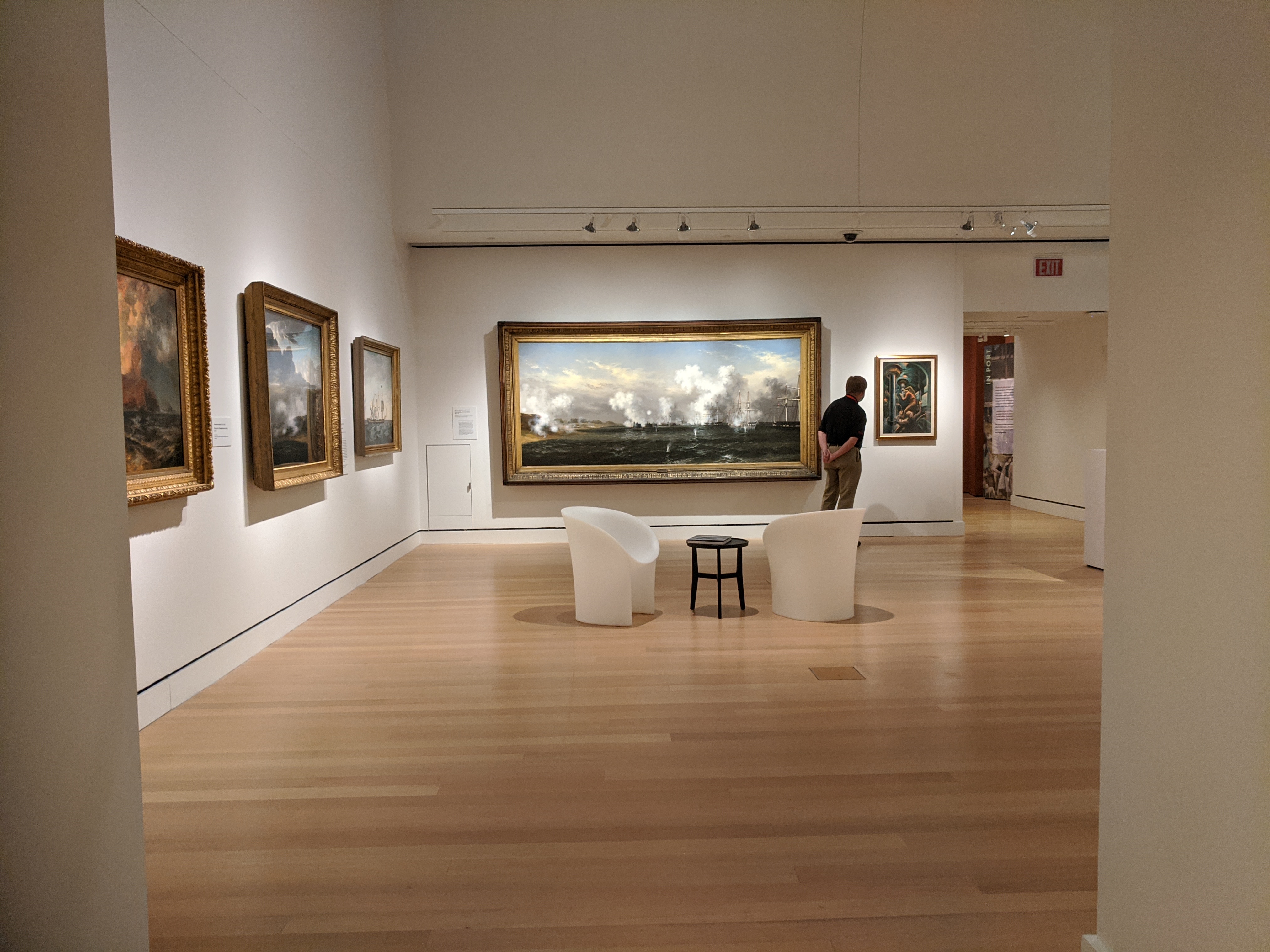
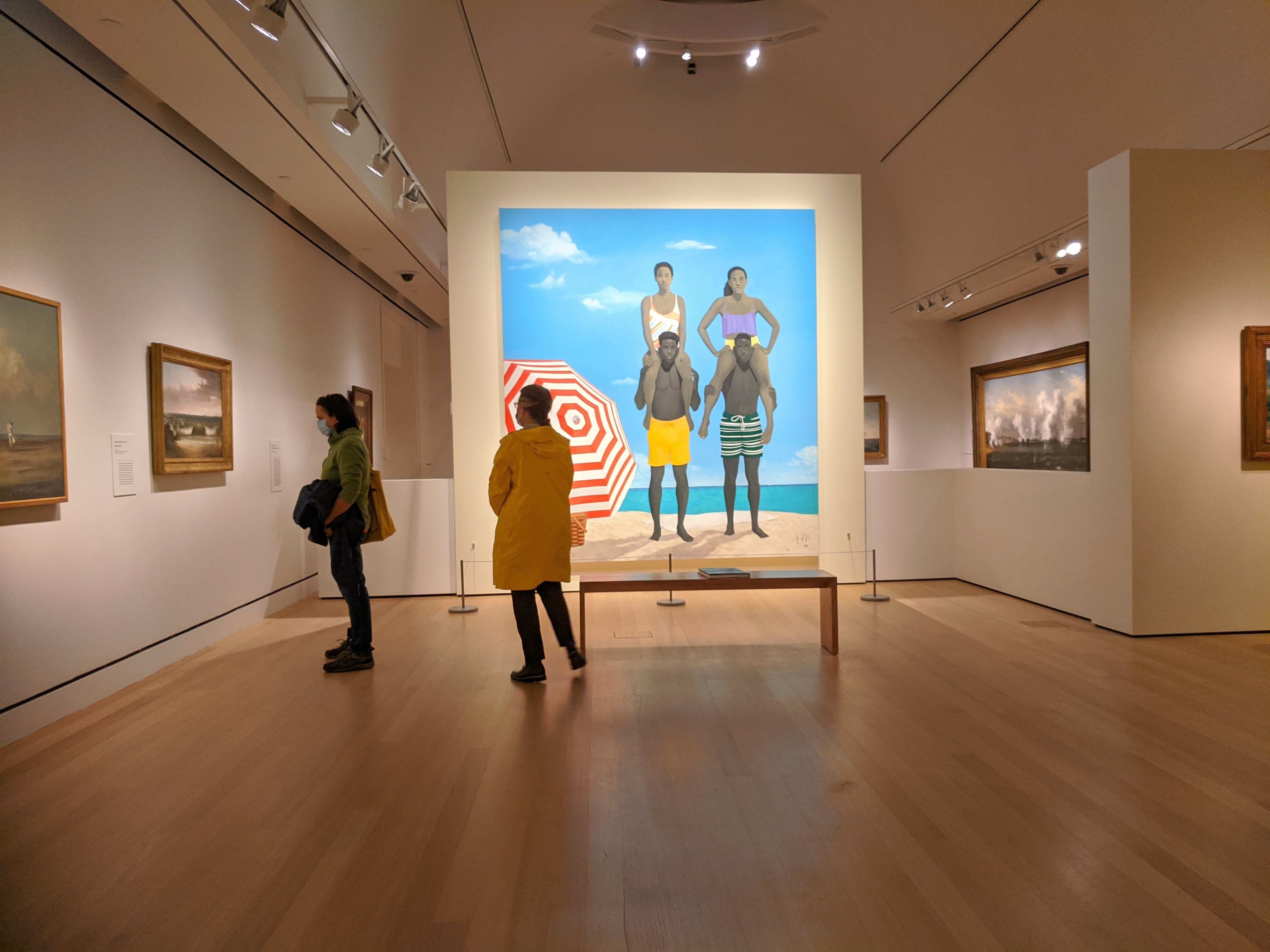
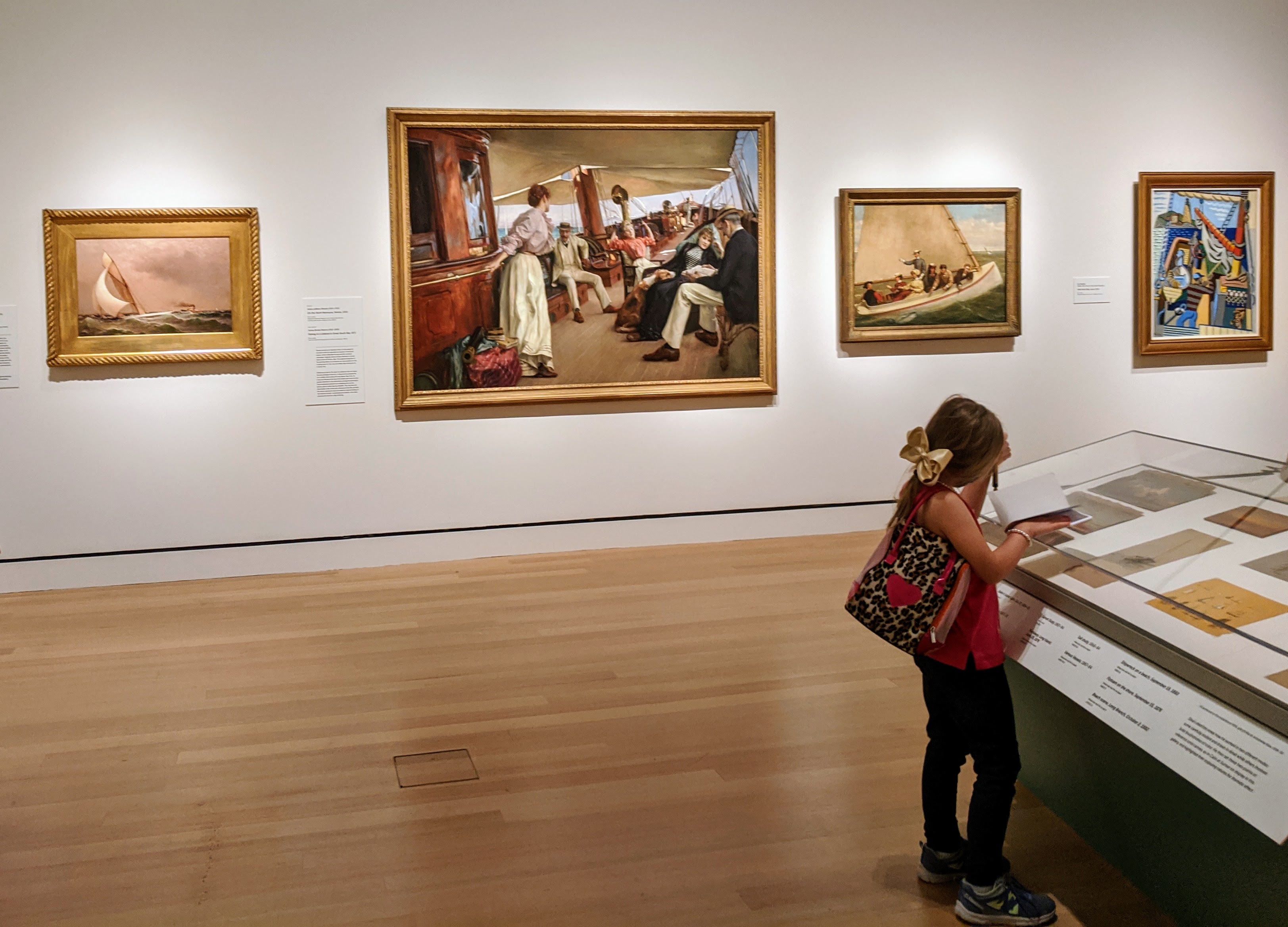
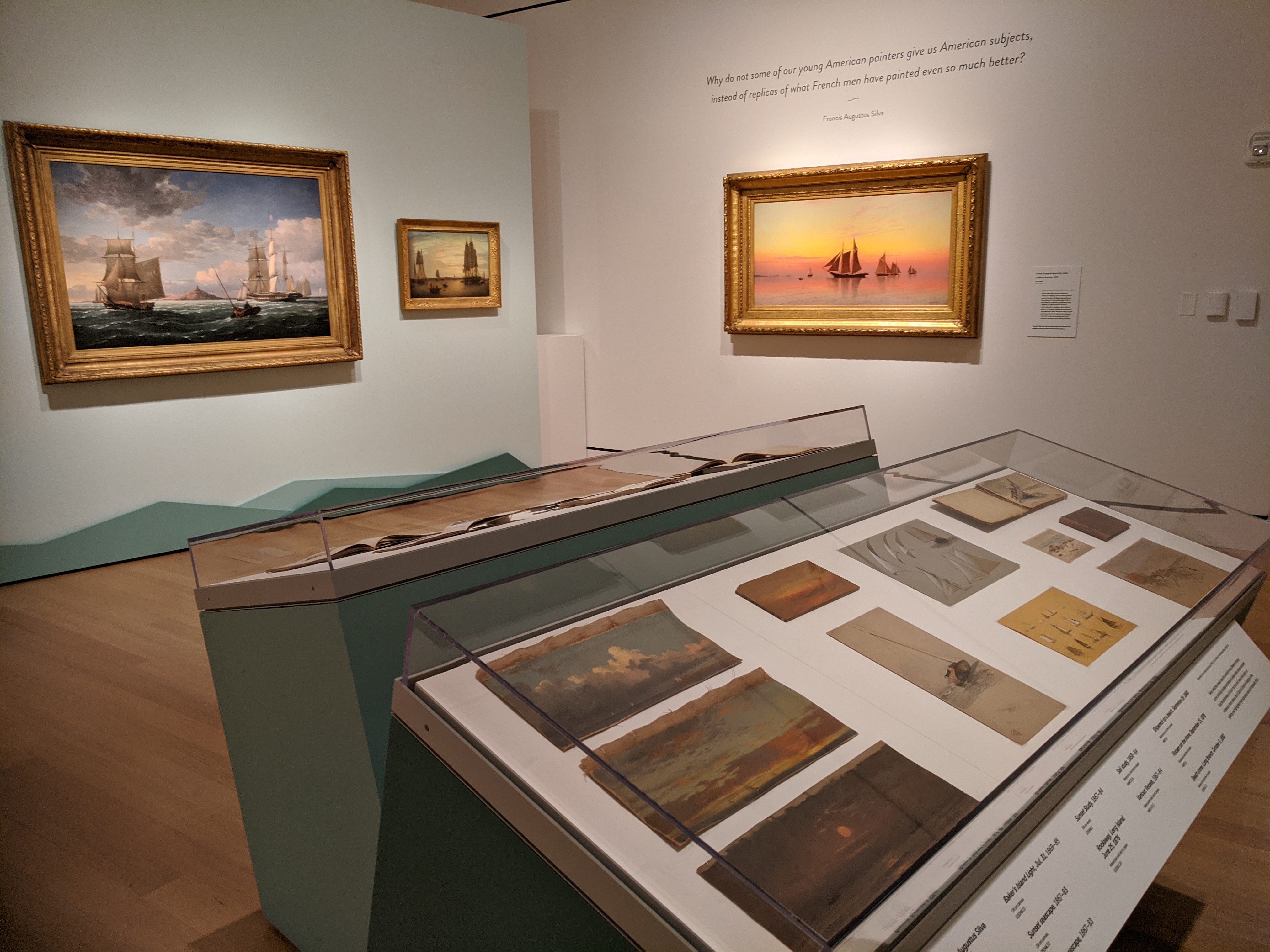
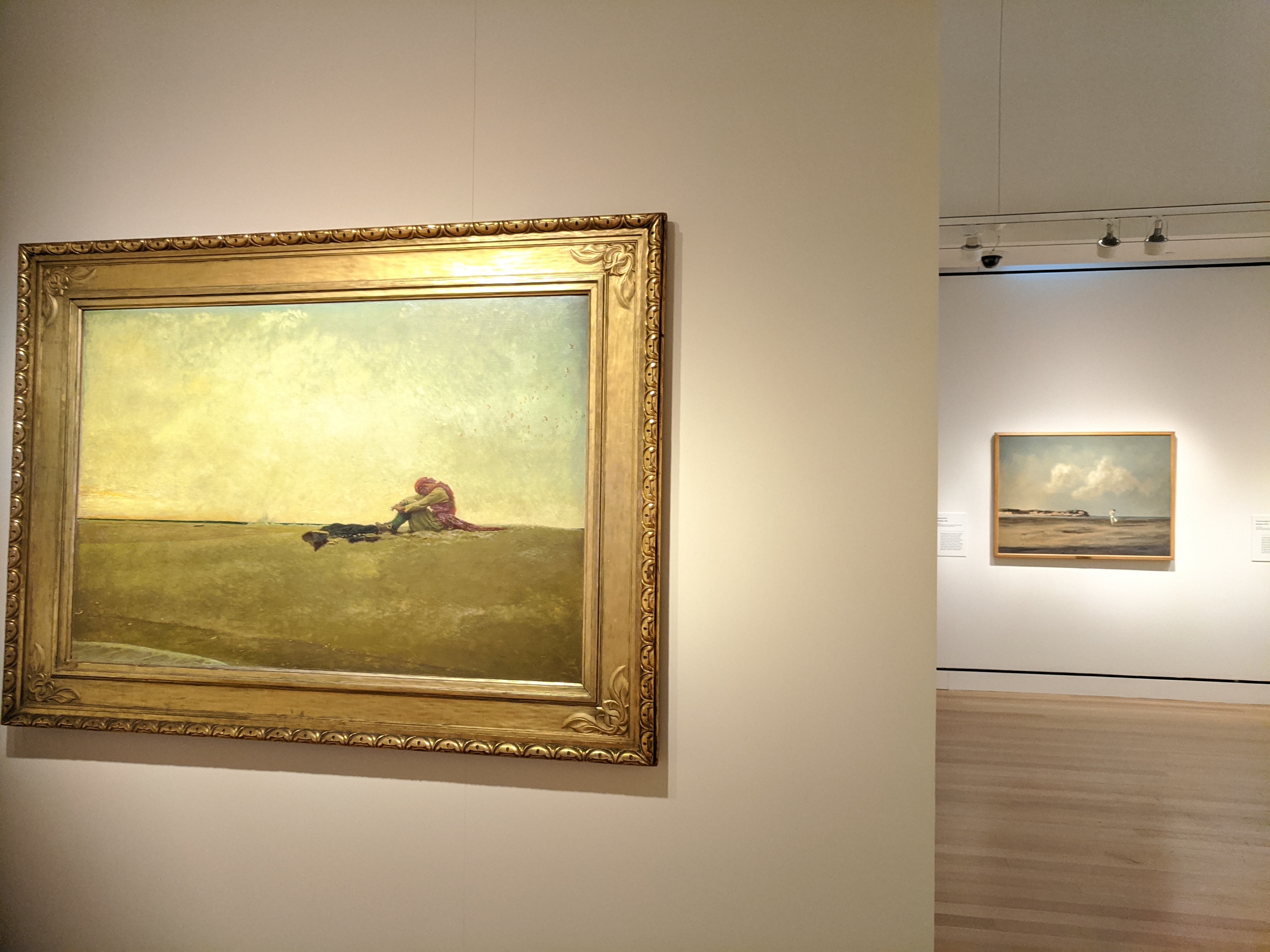
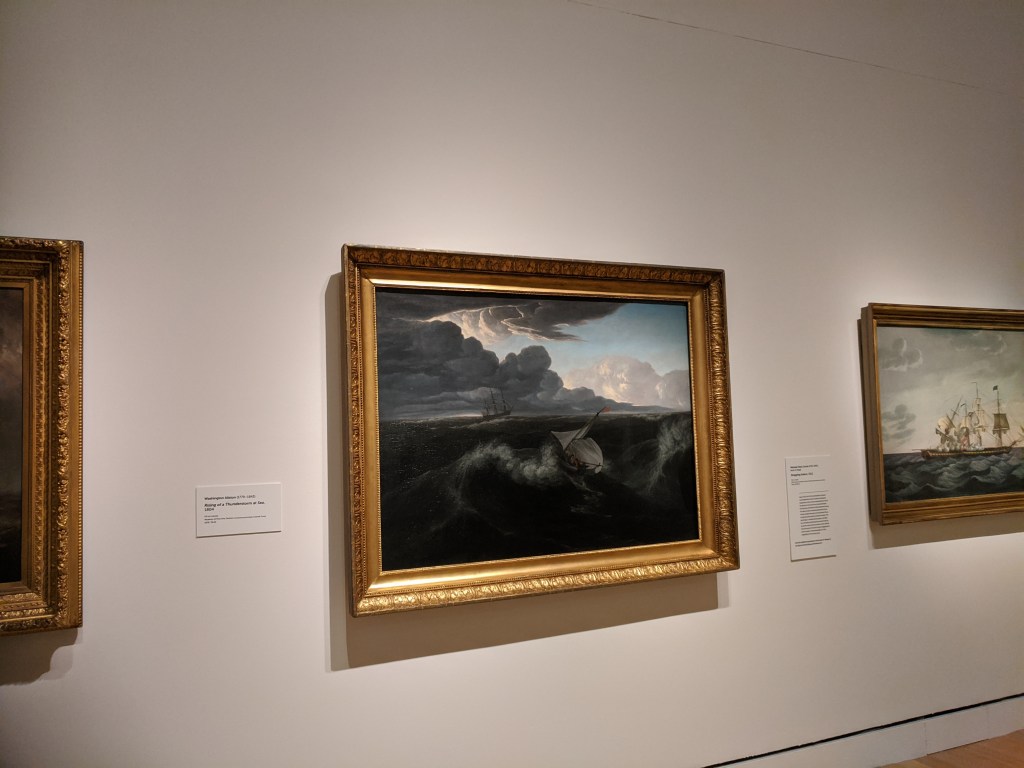
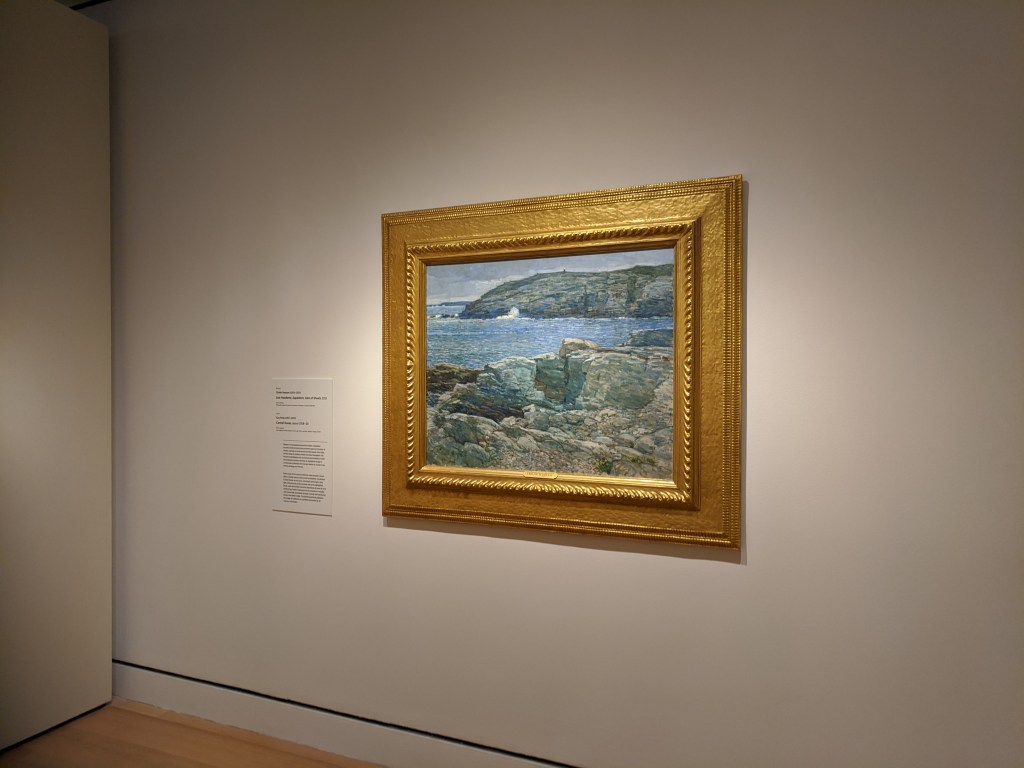
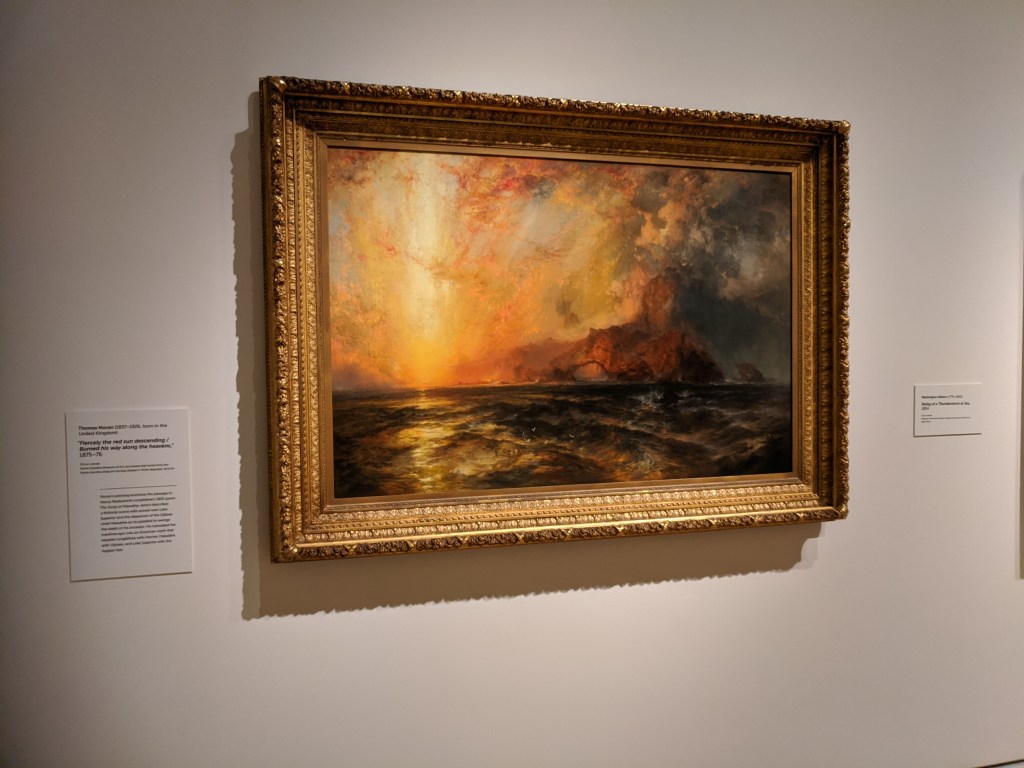
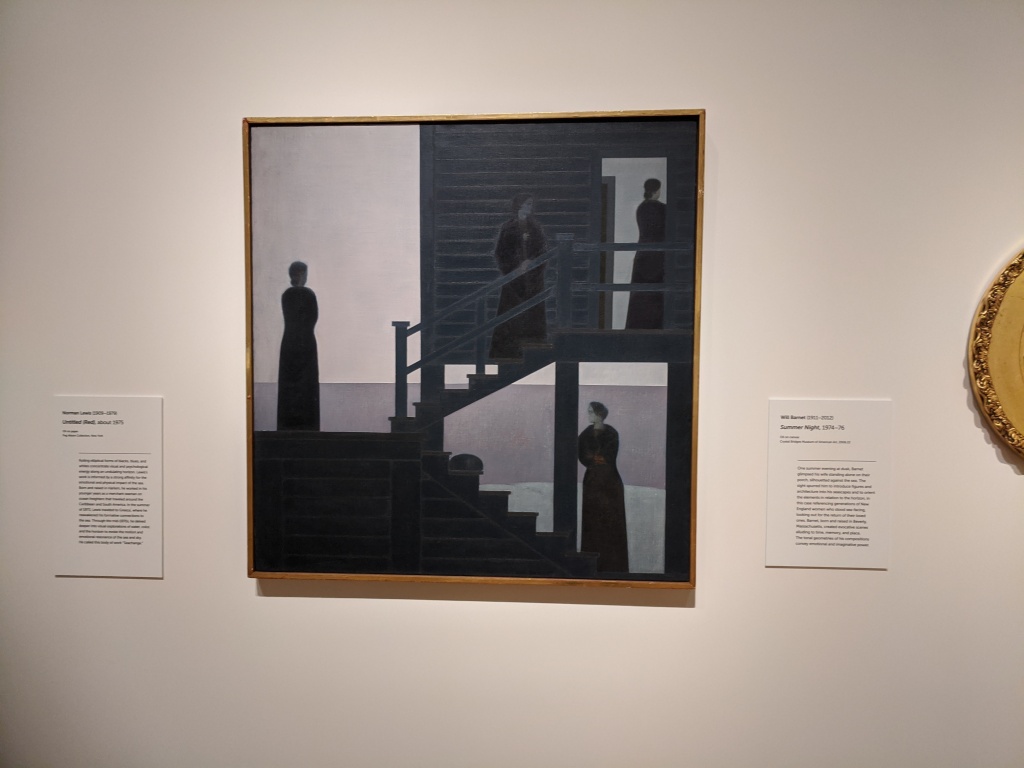
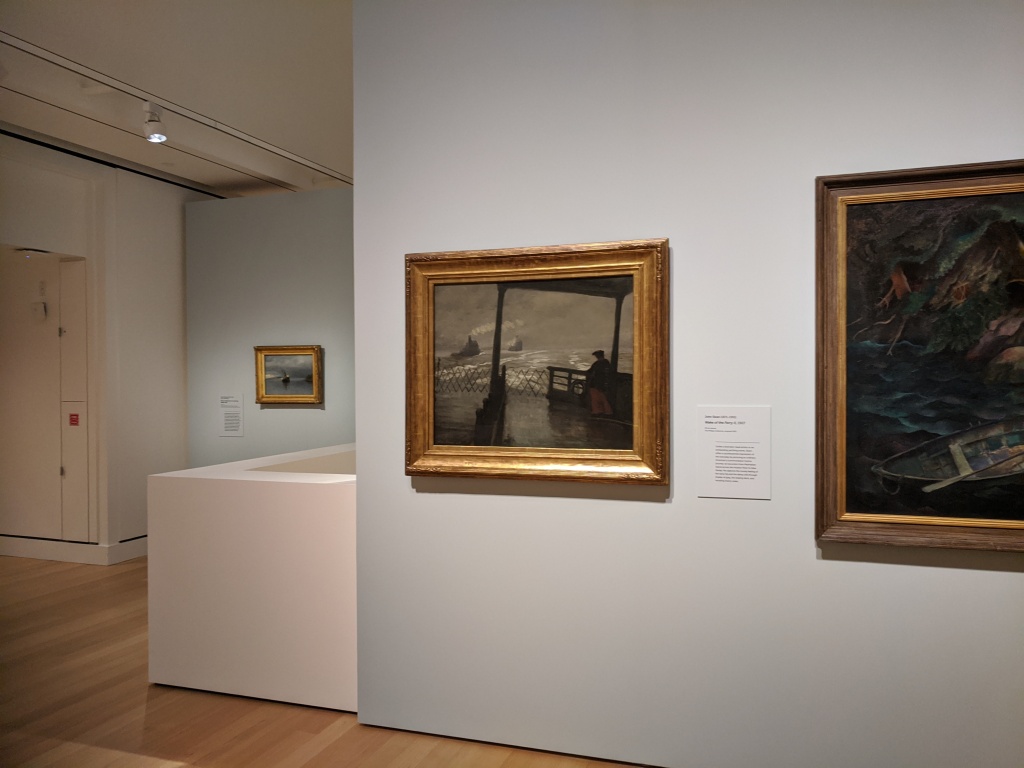
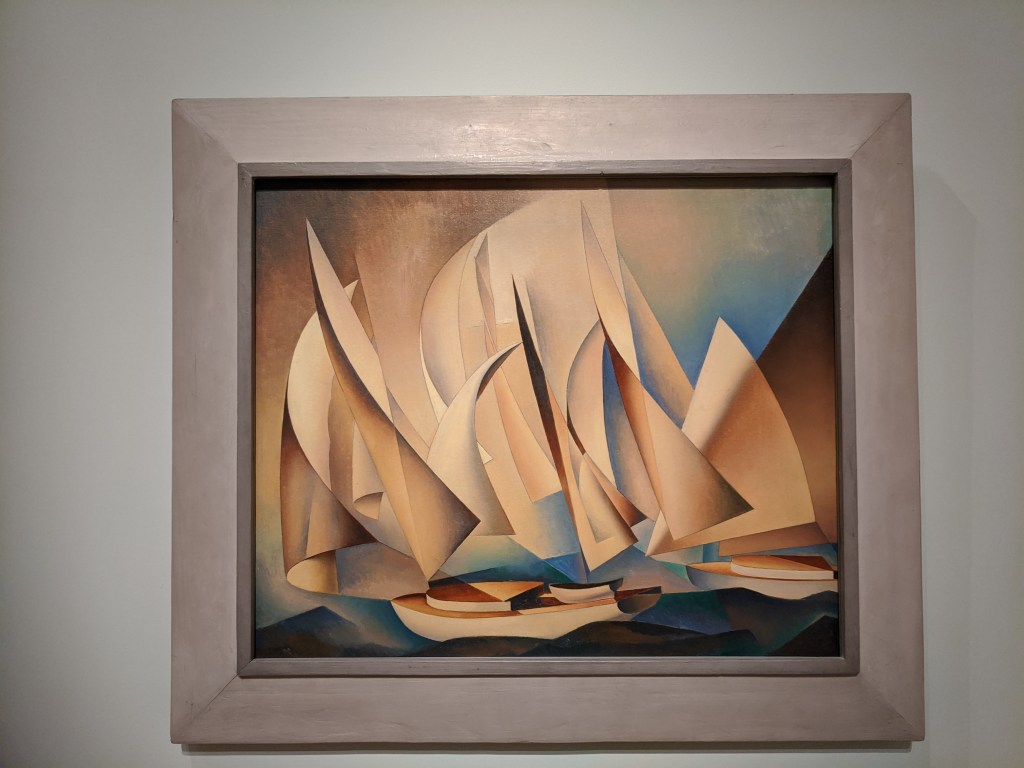
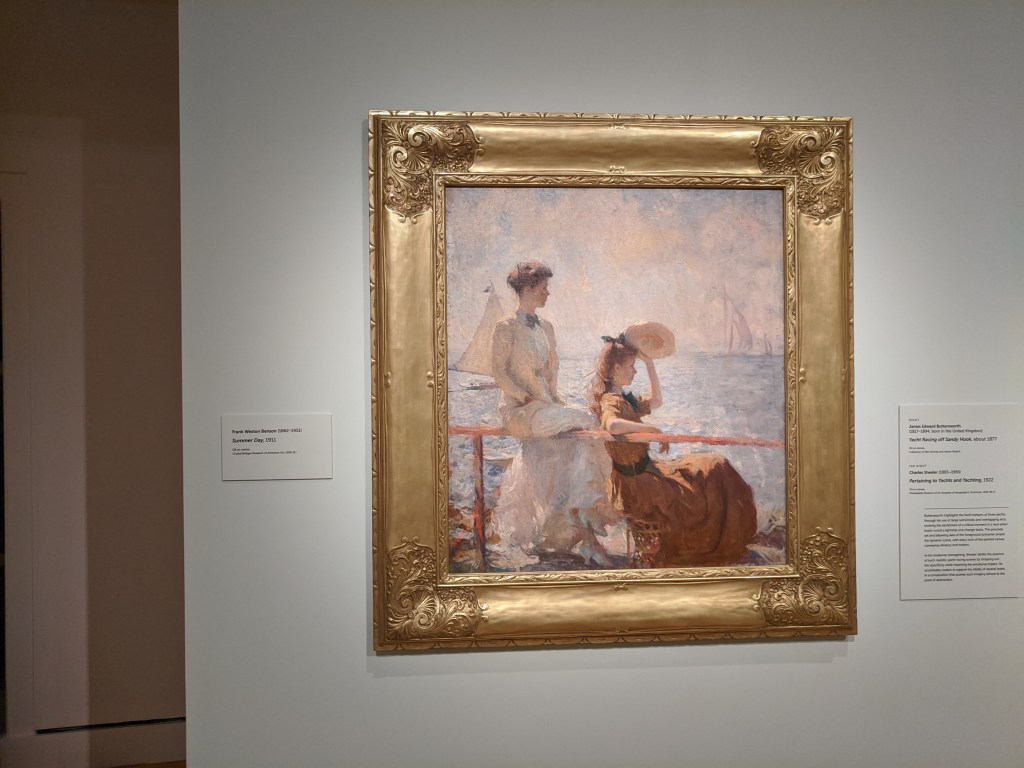
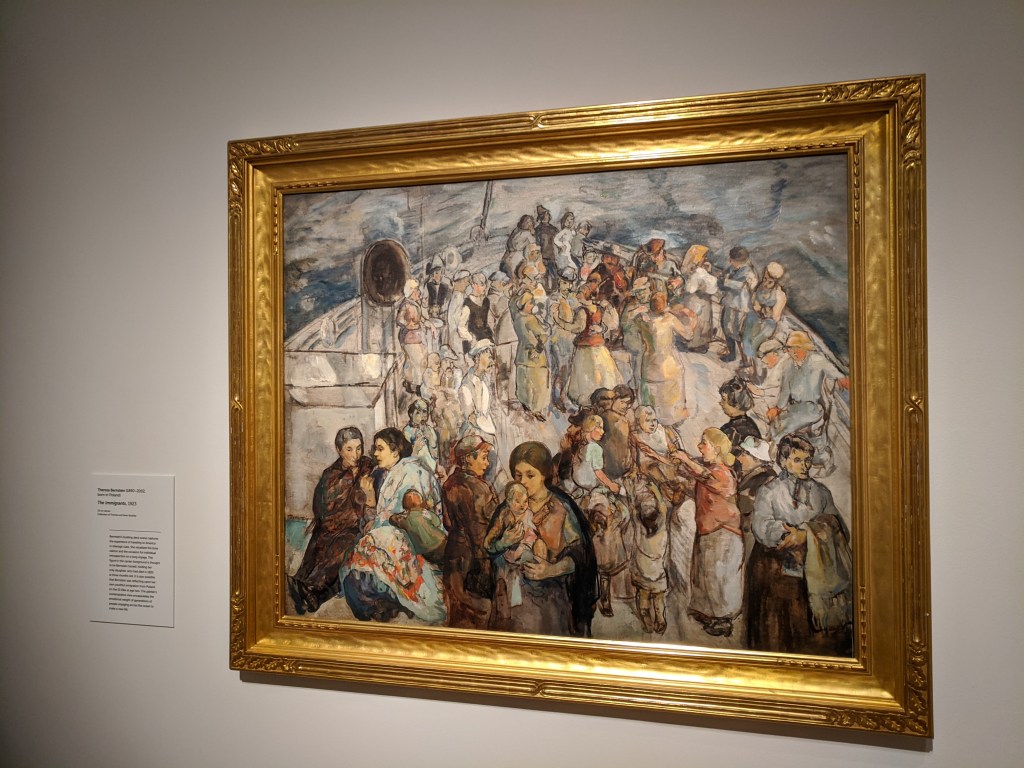
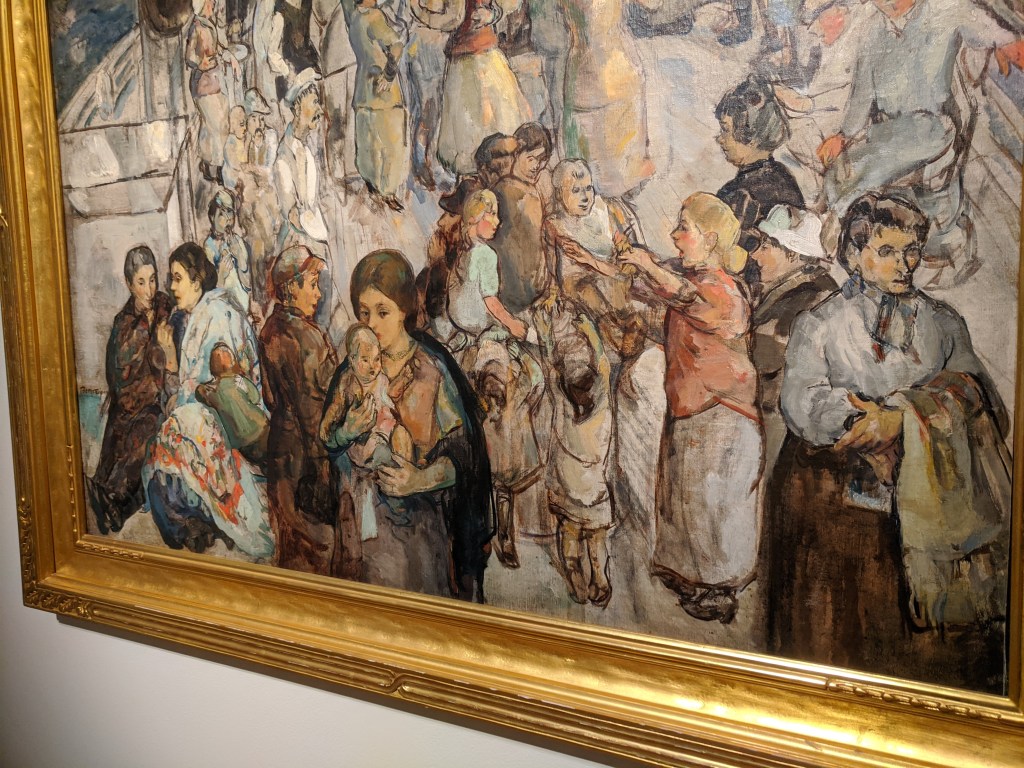
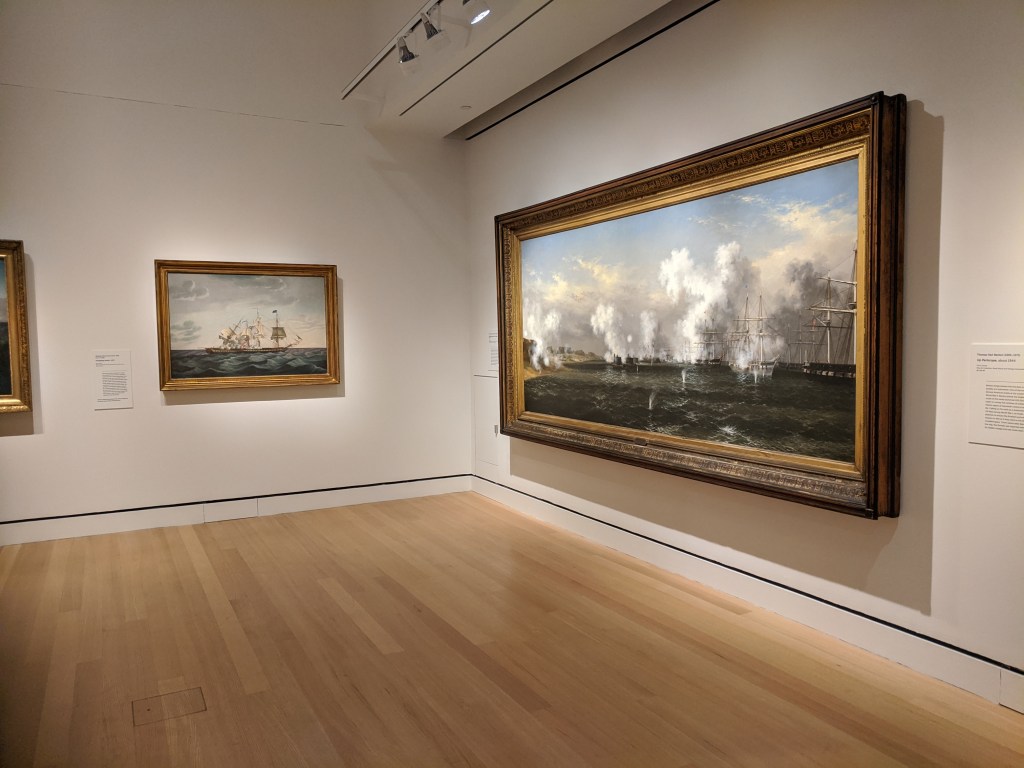
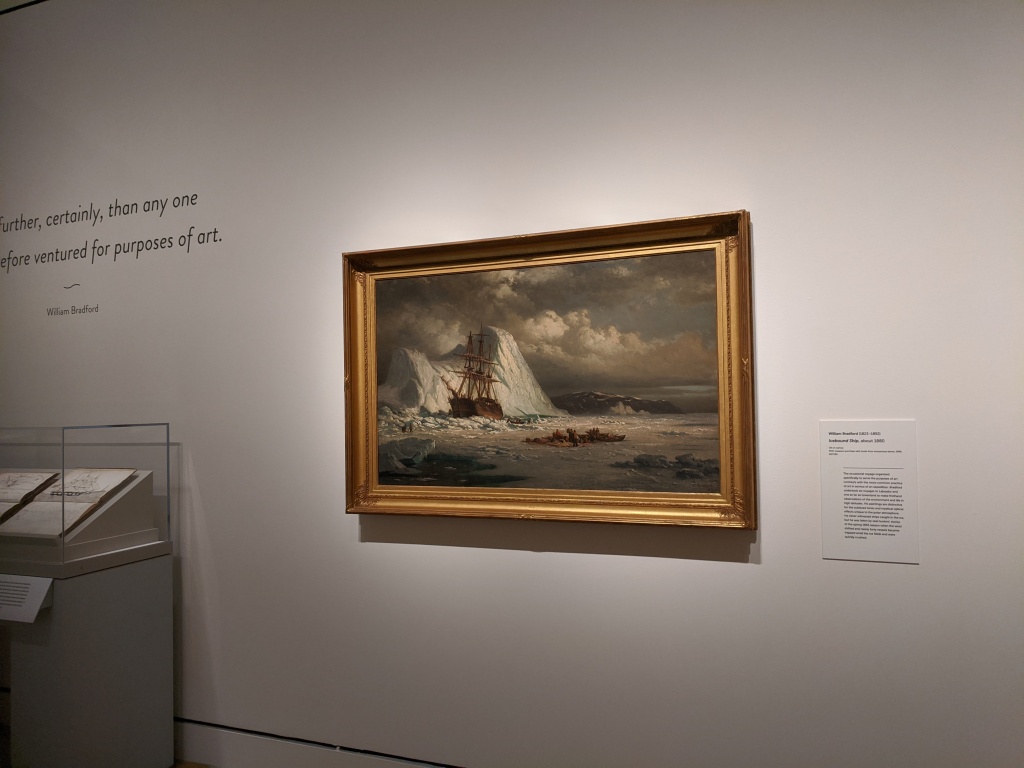
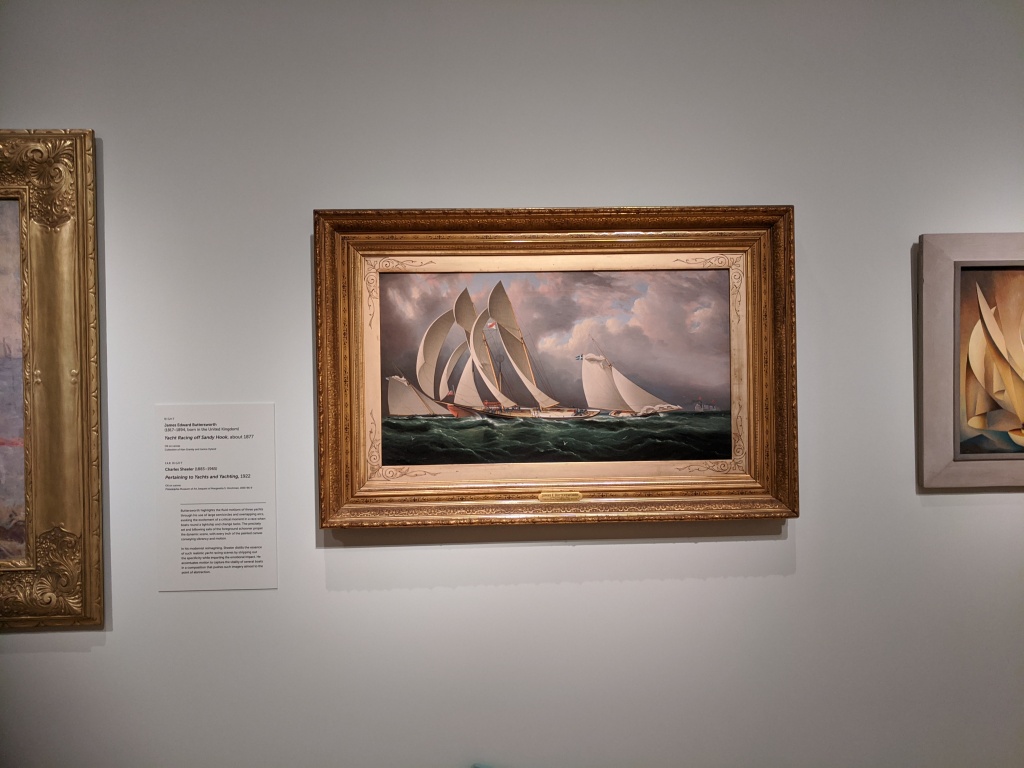
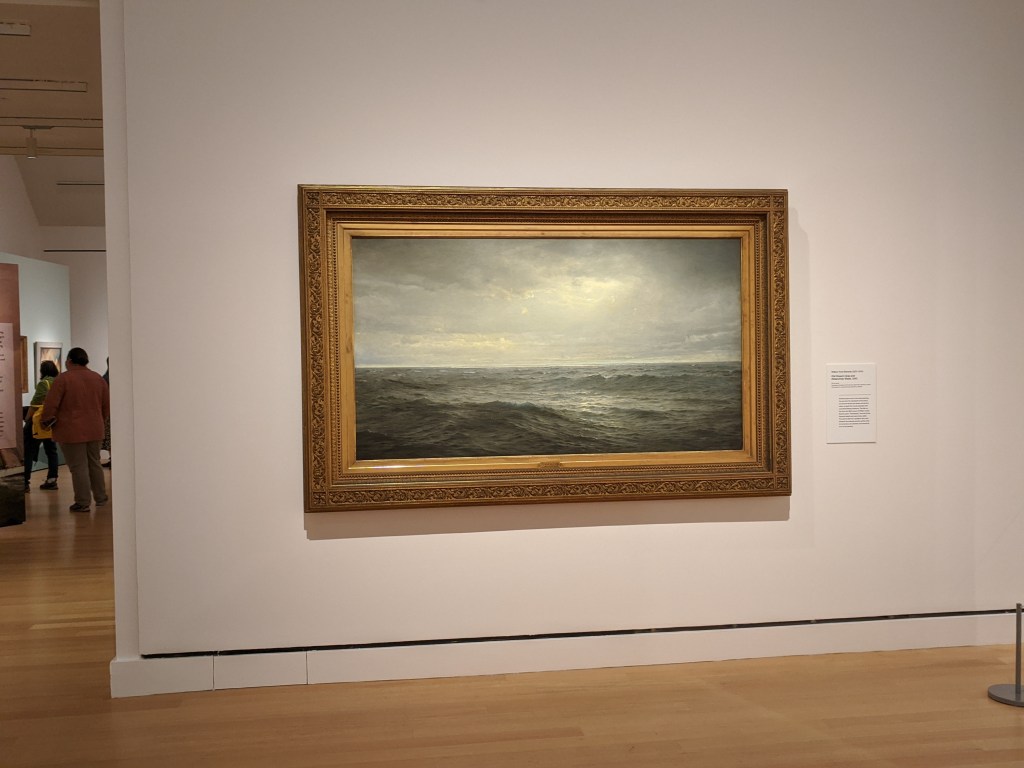
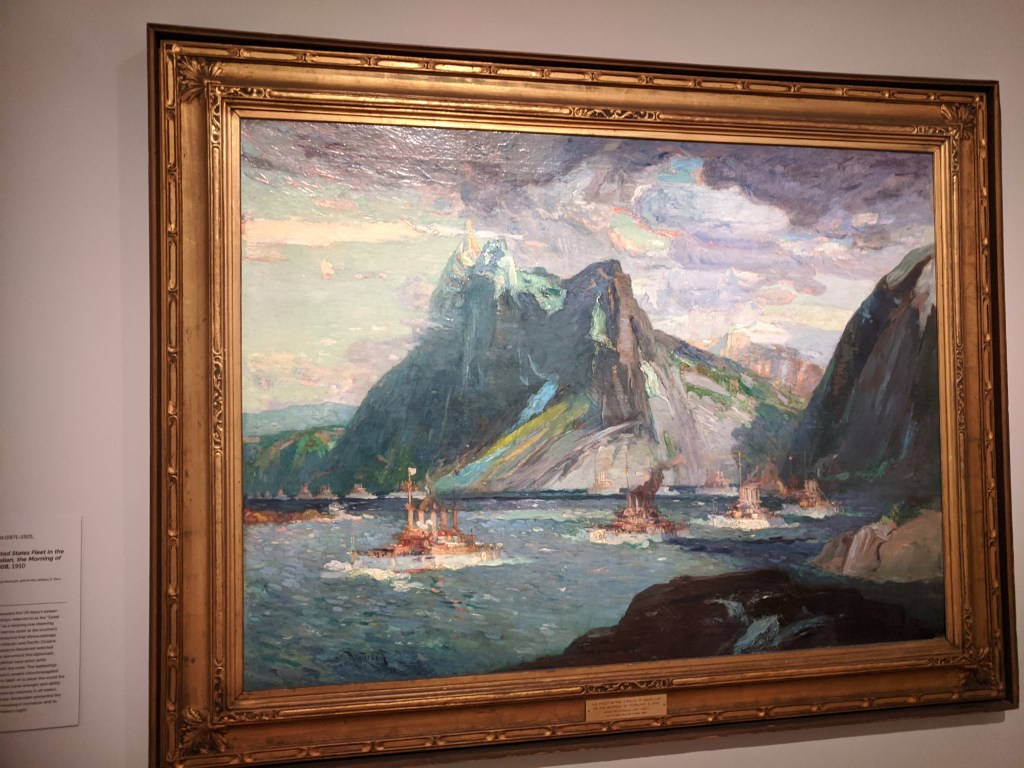
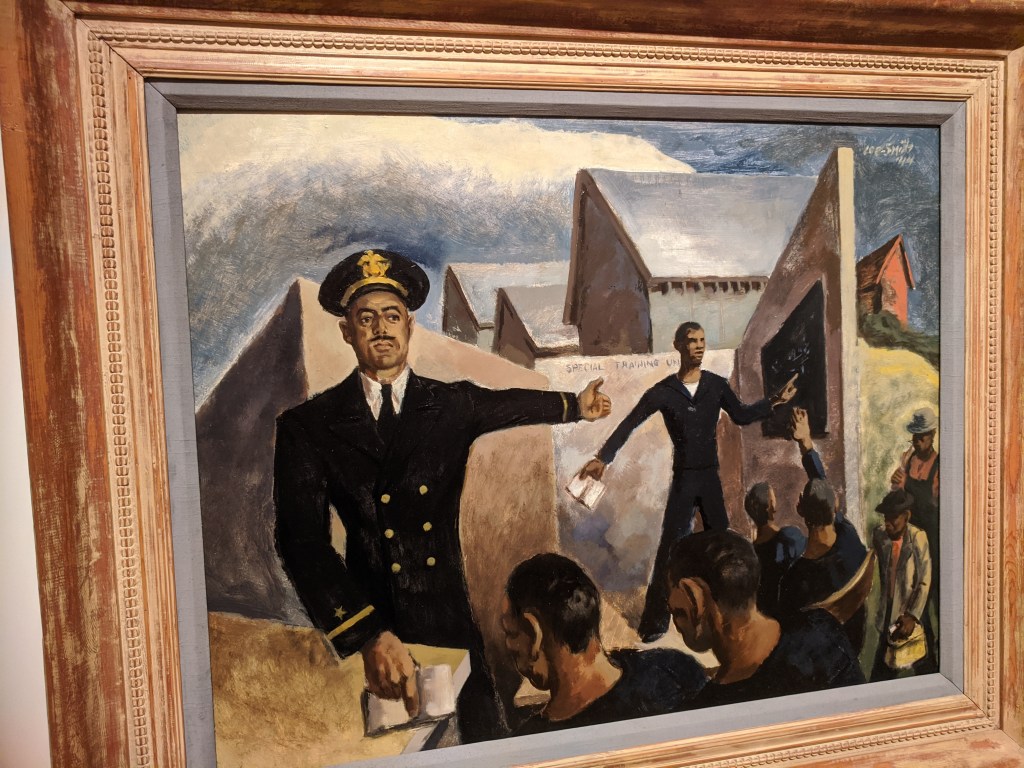
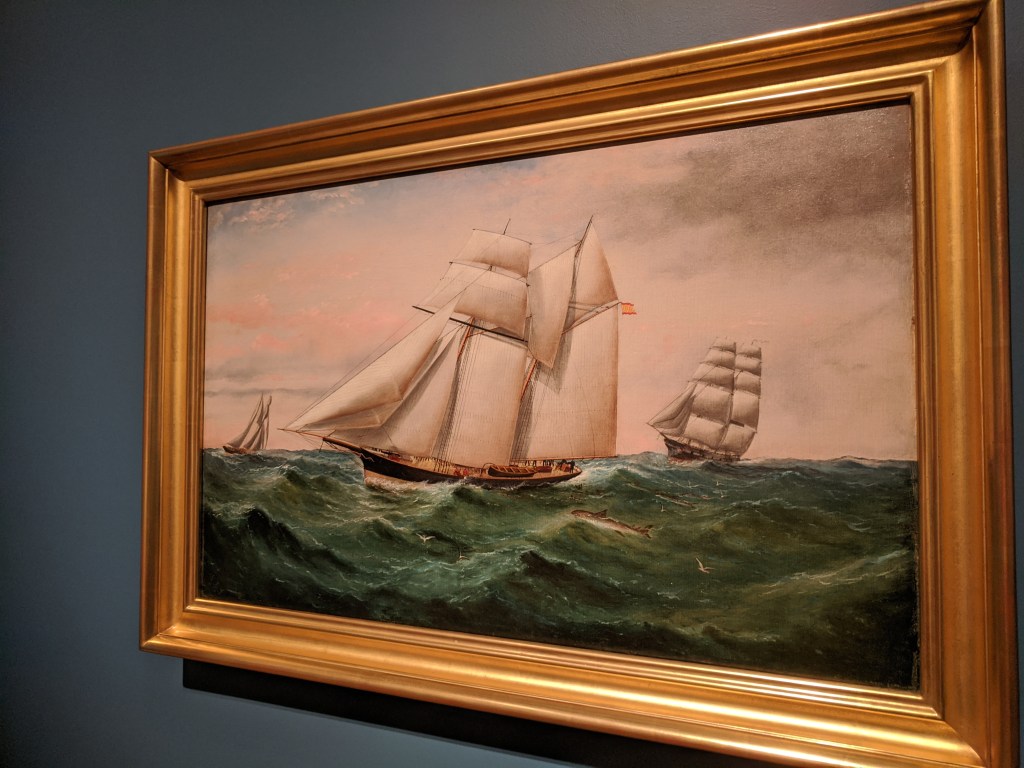
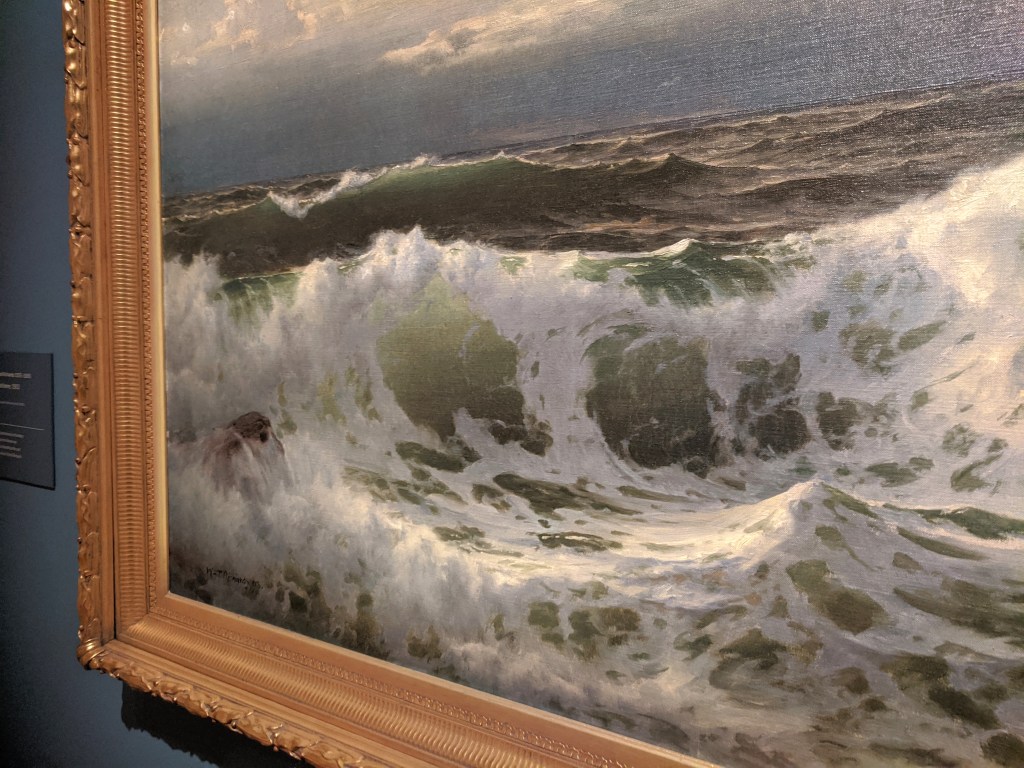
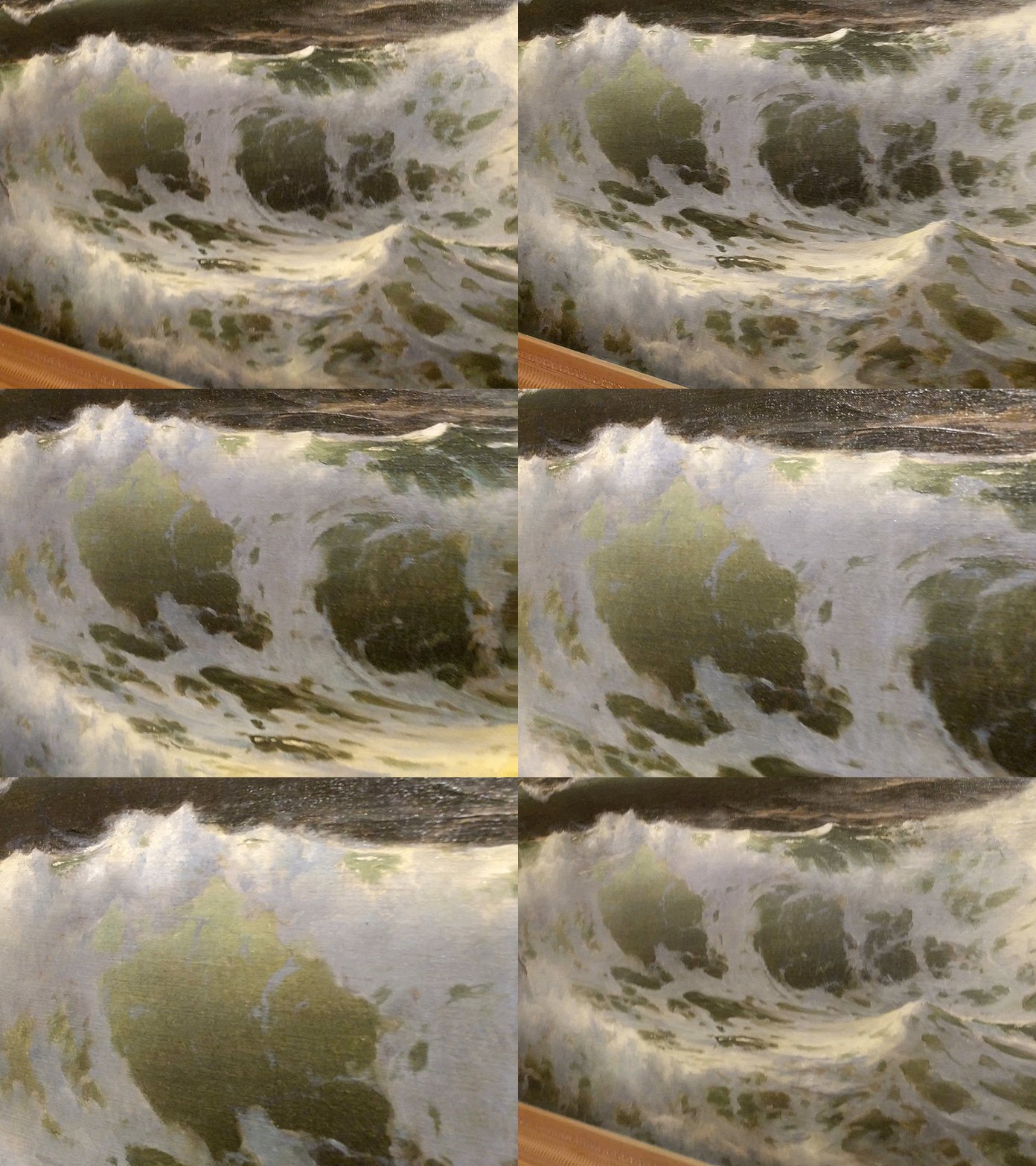
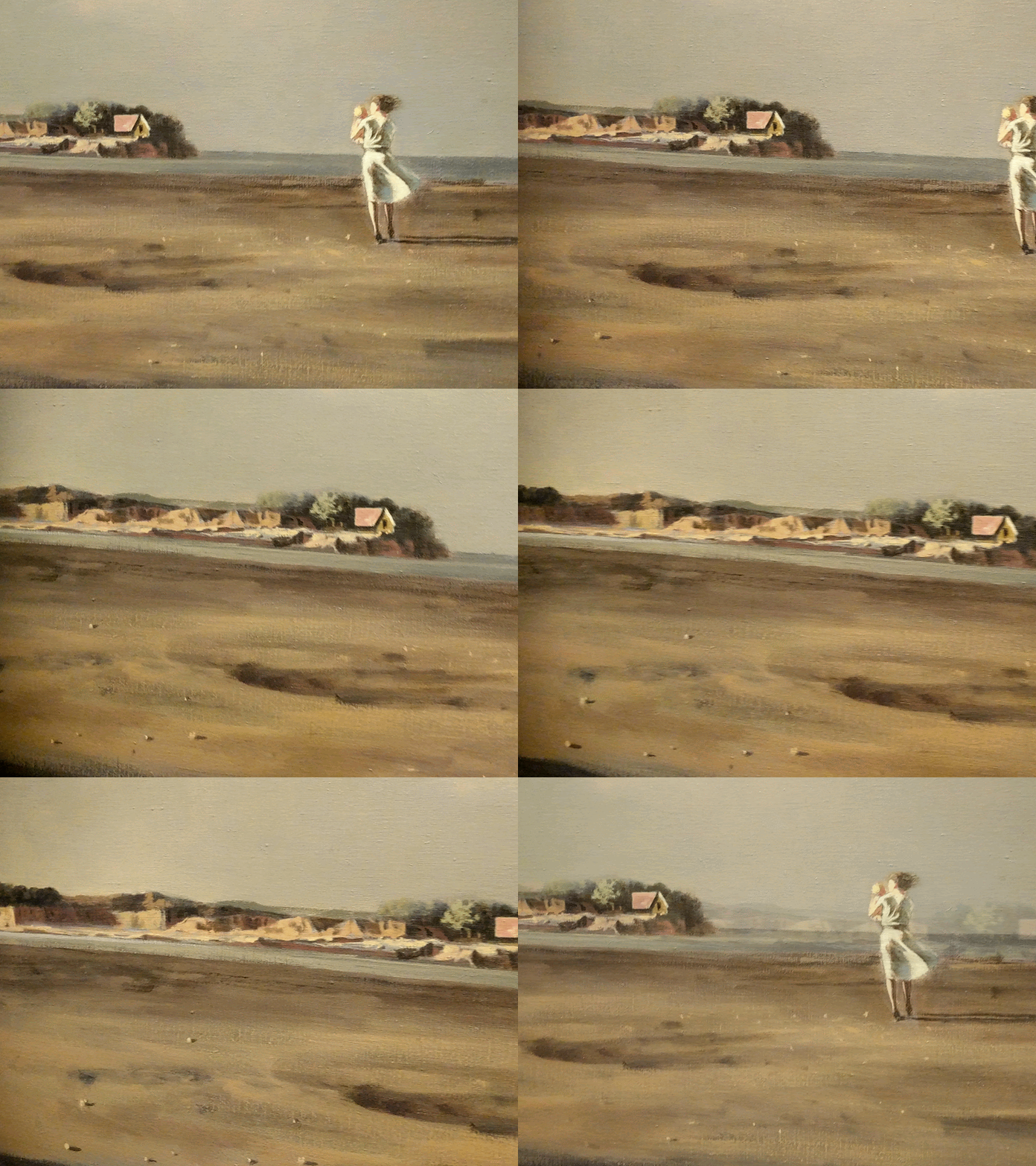
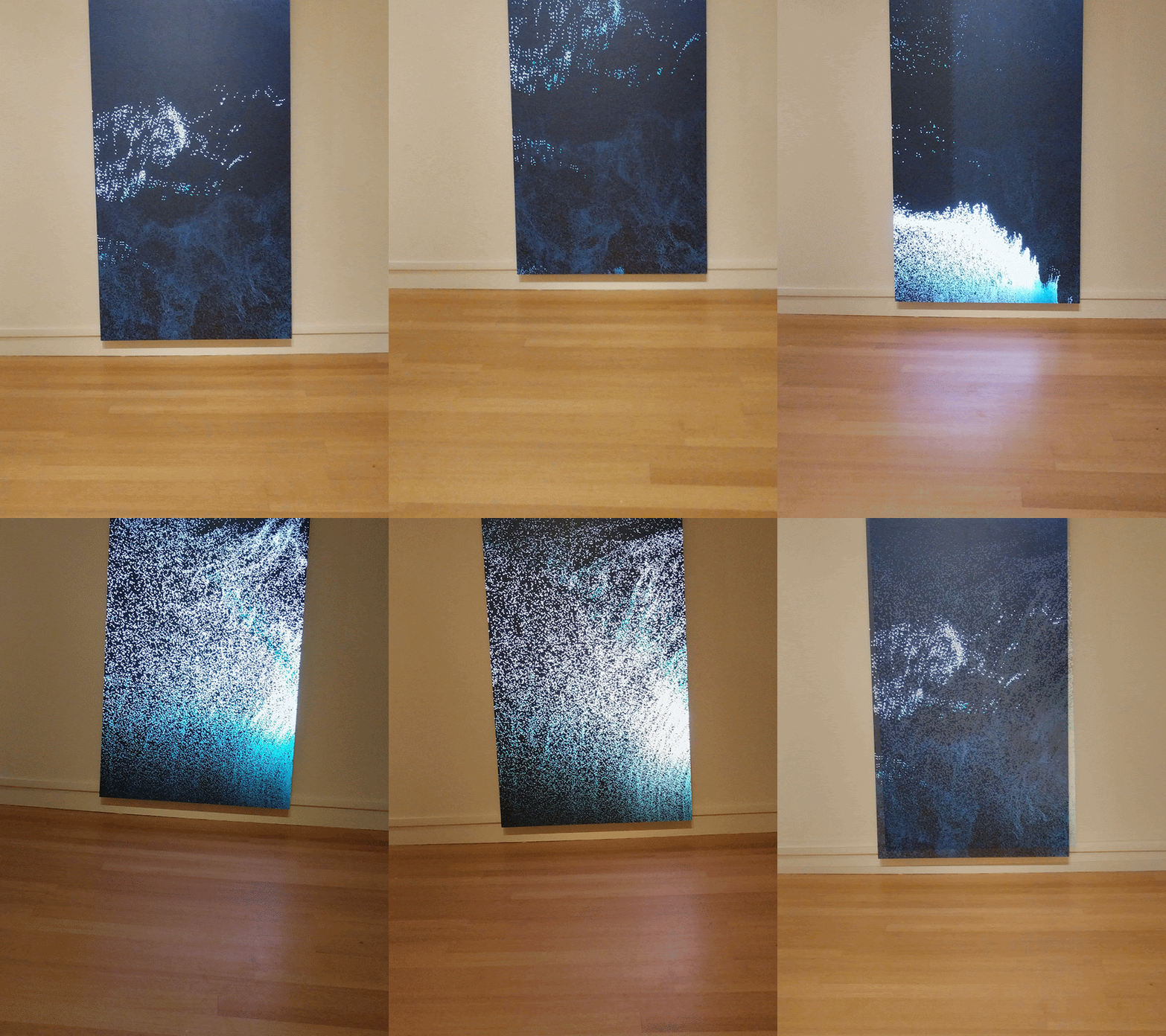
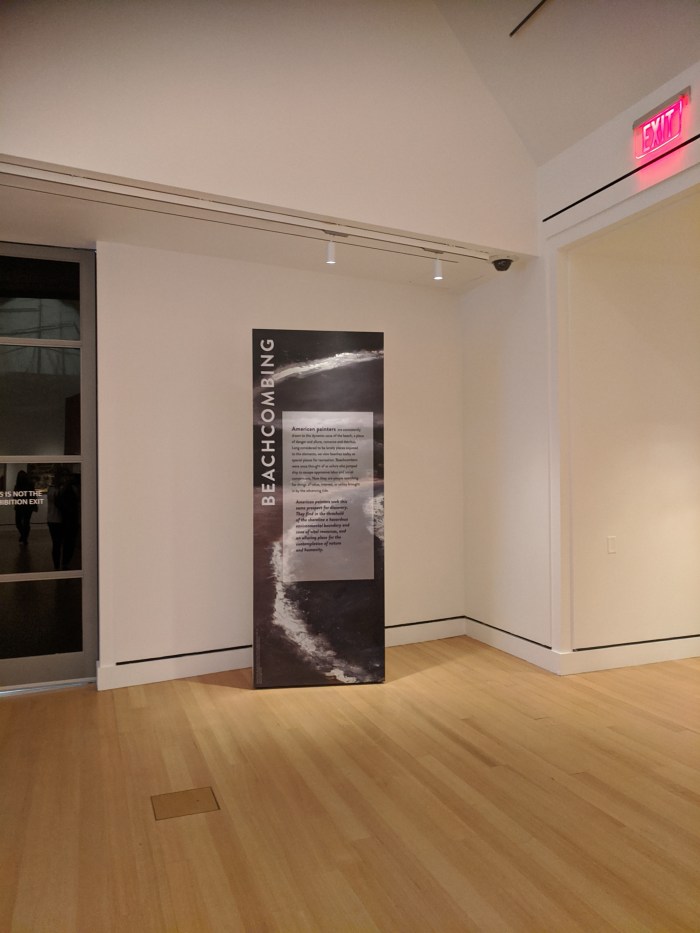
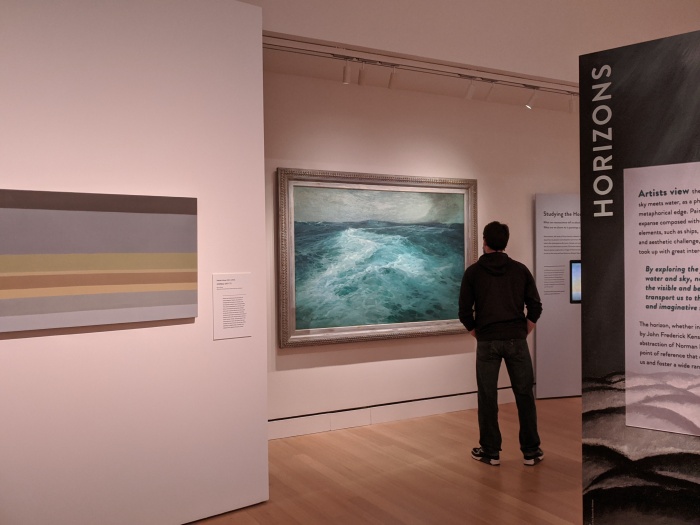
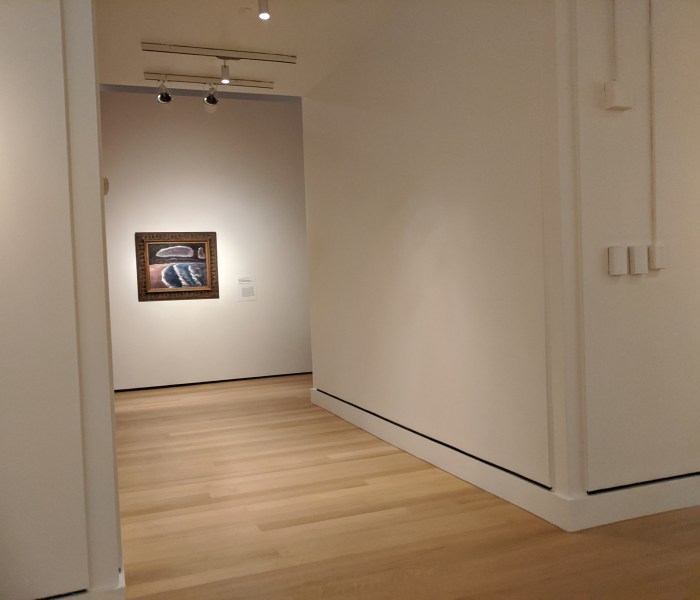
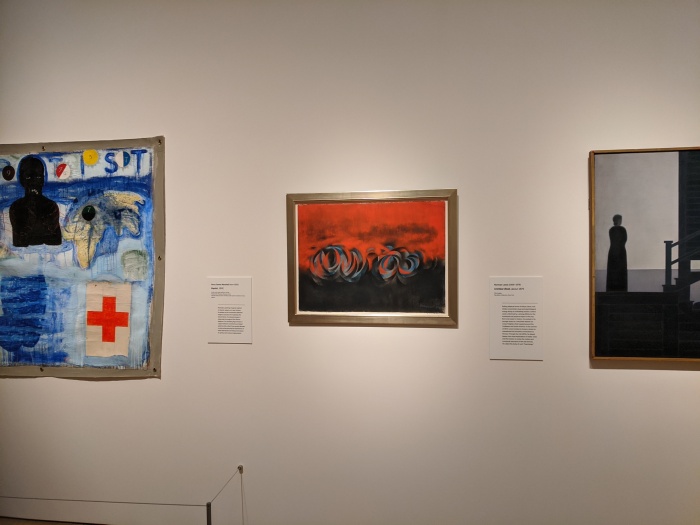
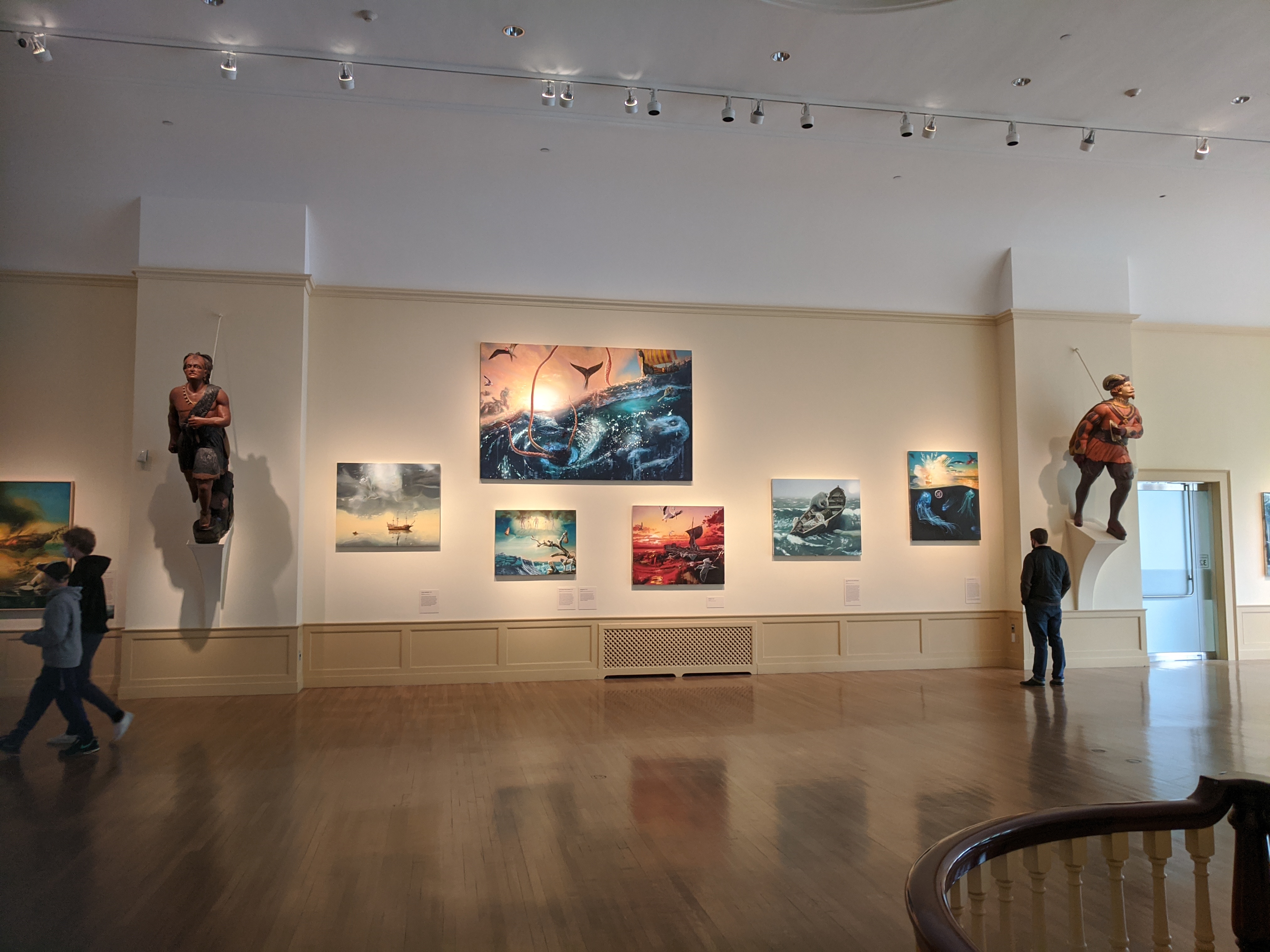
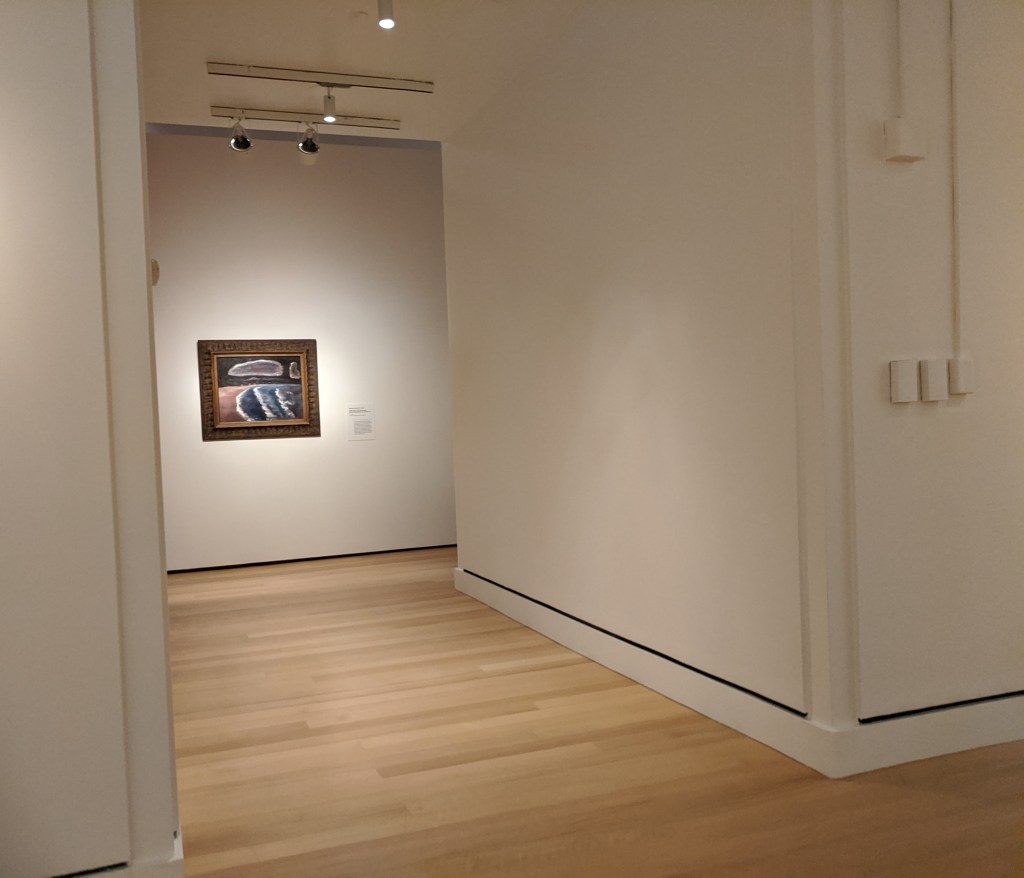
installation view photos
photos: c. ryan, May 29, 2021
Stunning installation design
*mostly (scroll through till end for some misses)
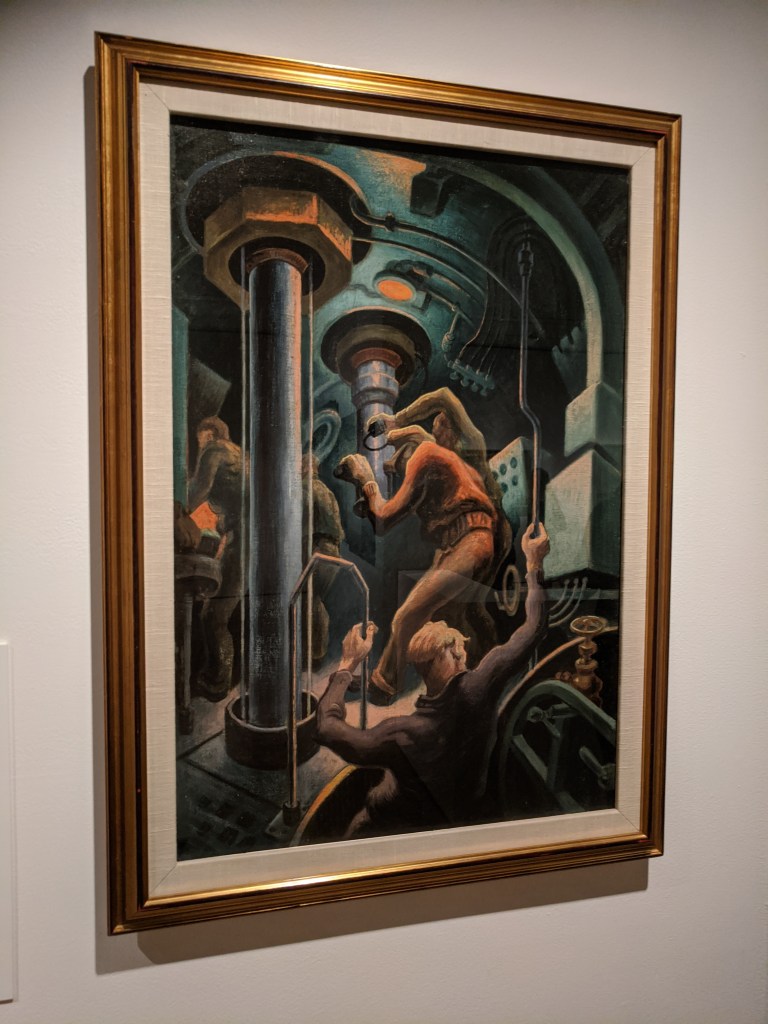
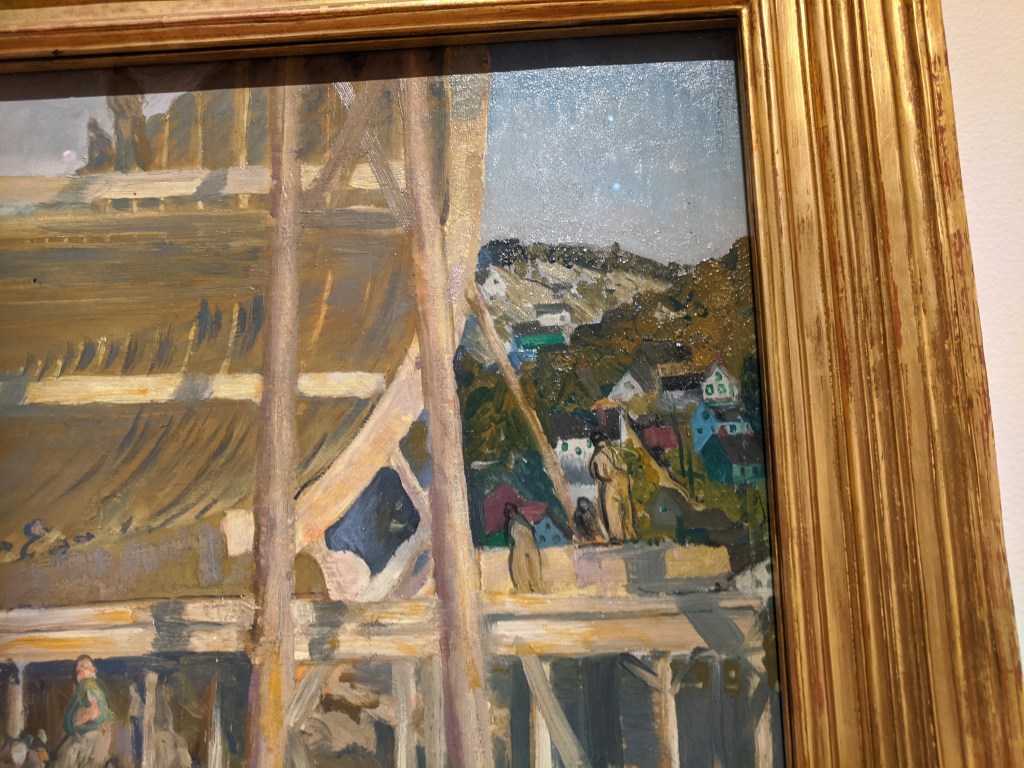
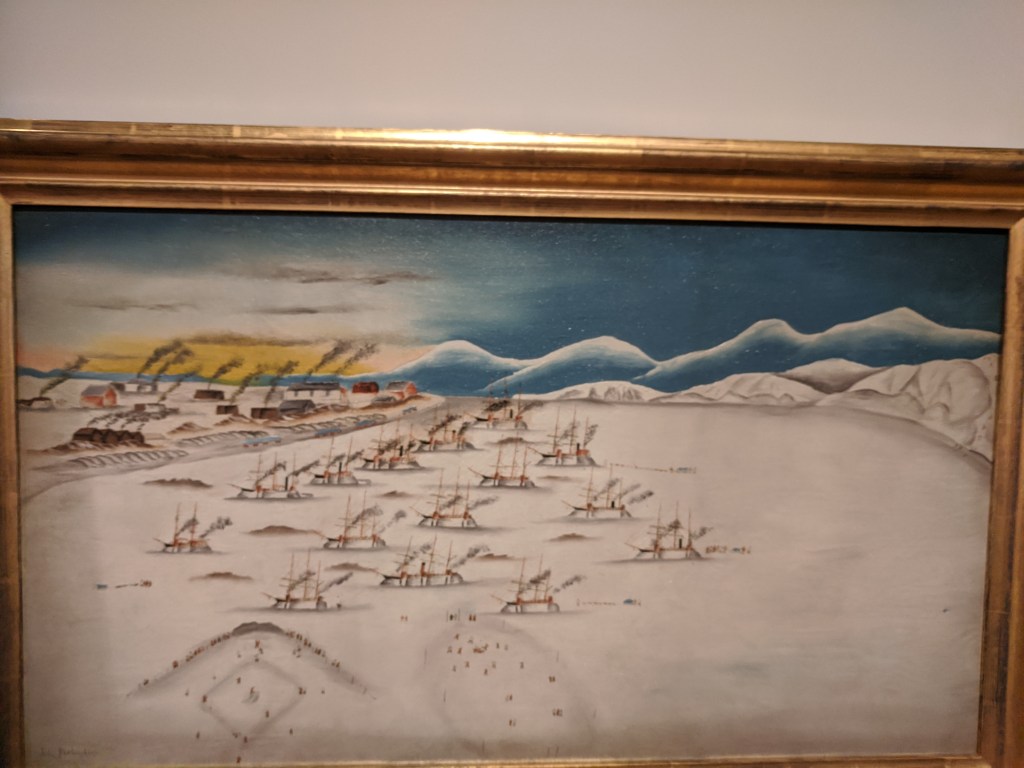
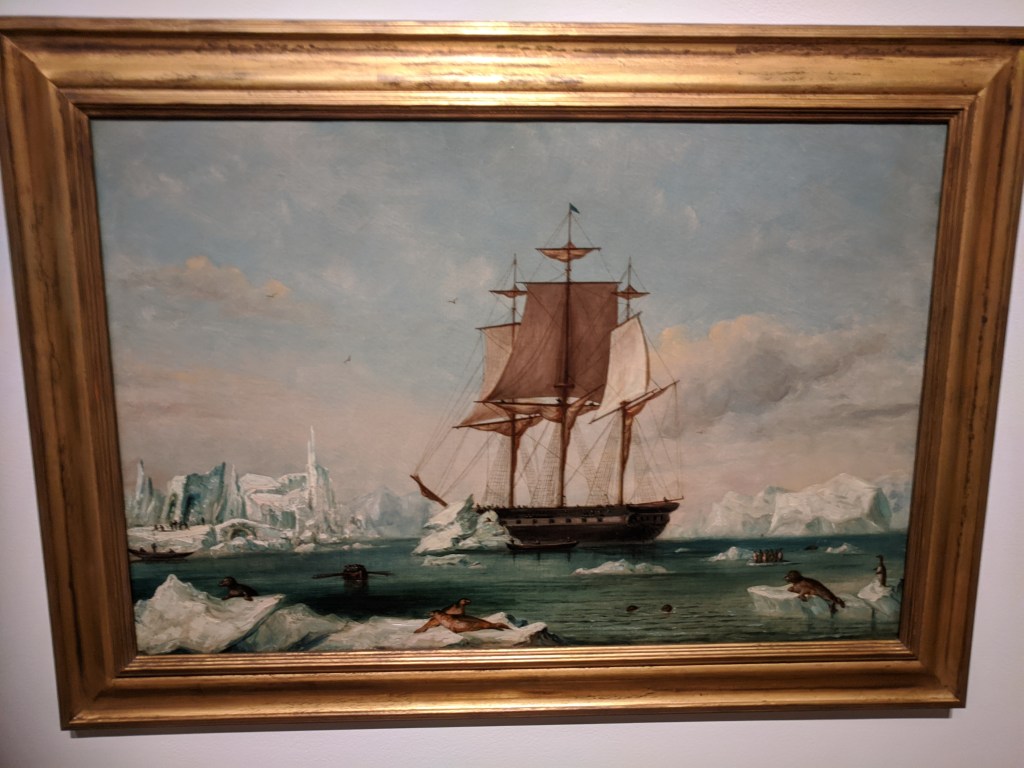
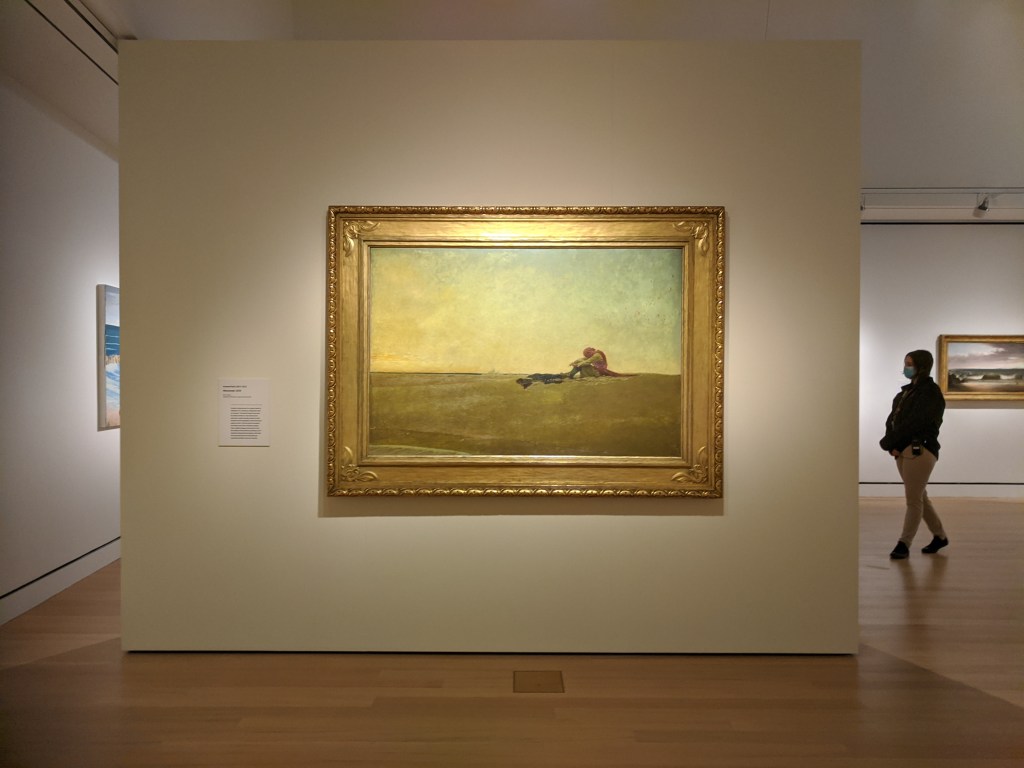
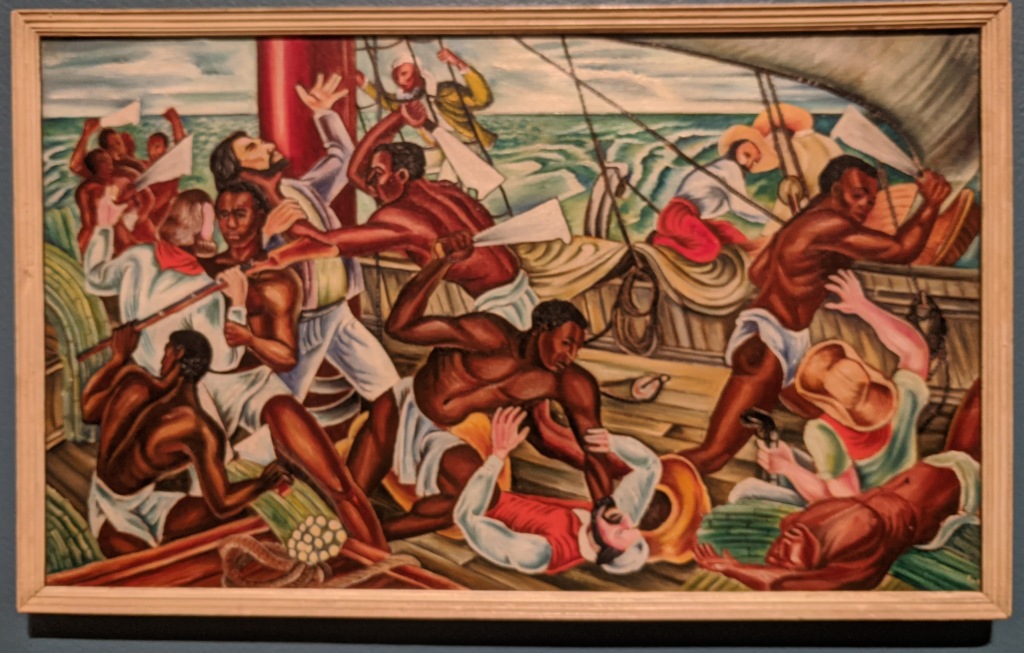
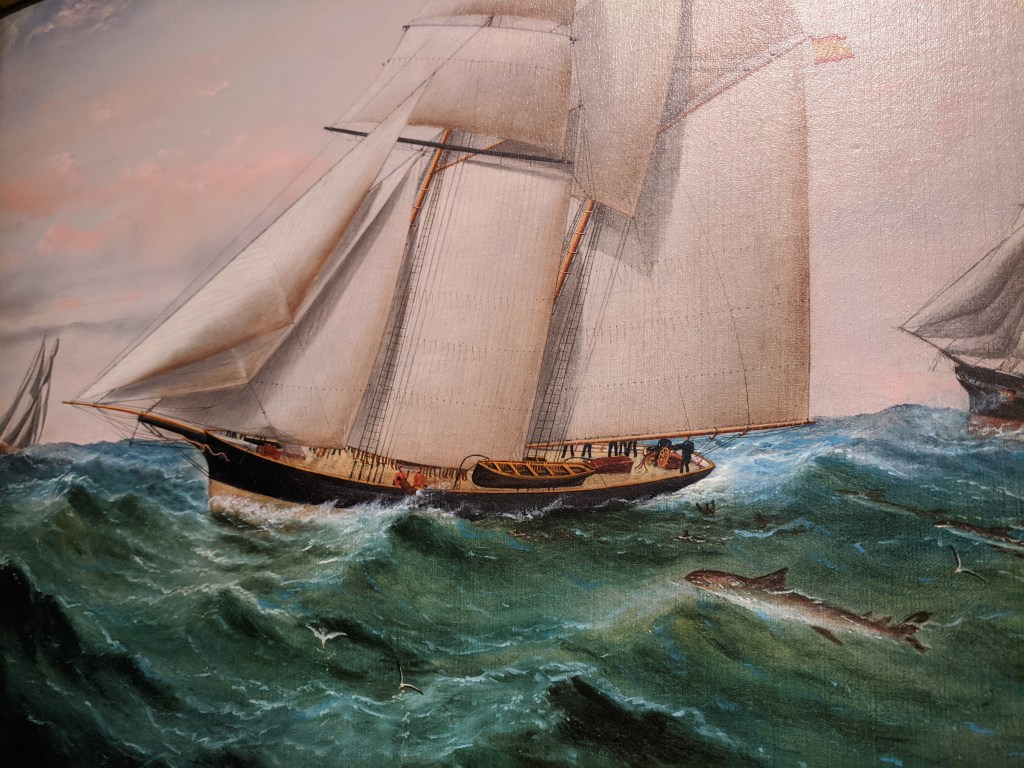
individual works
in no particular order
Animated some to help bring you there:
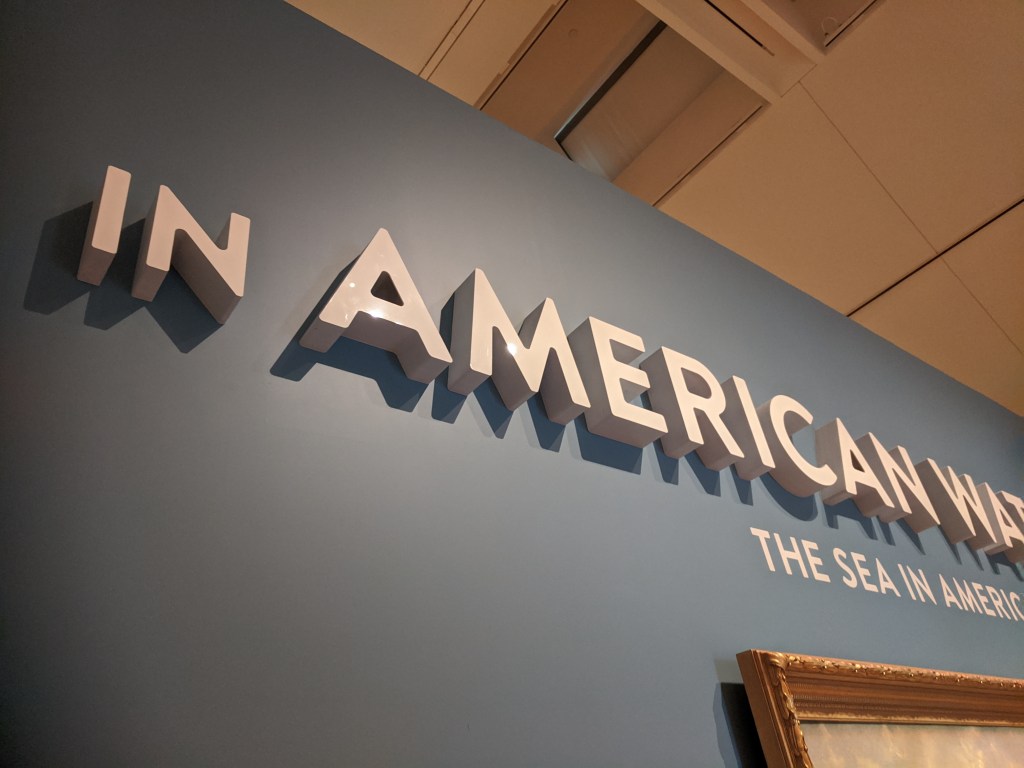
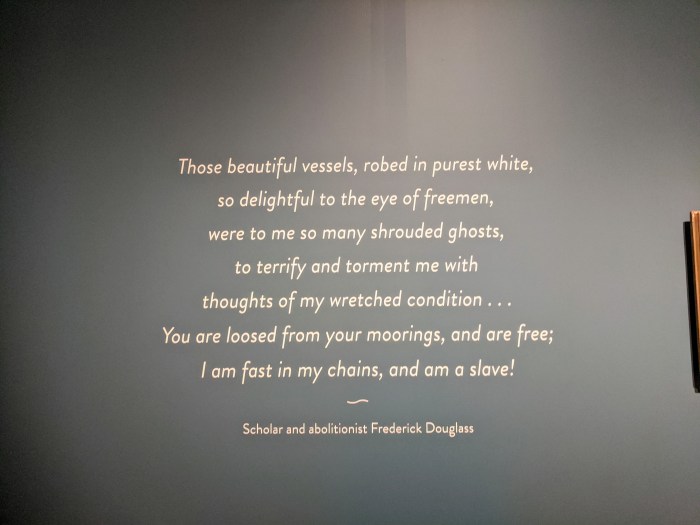
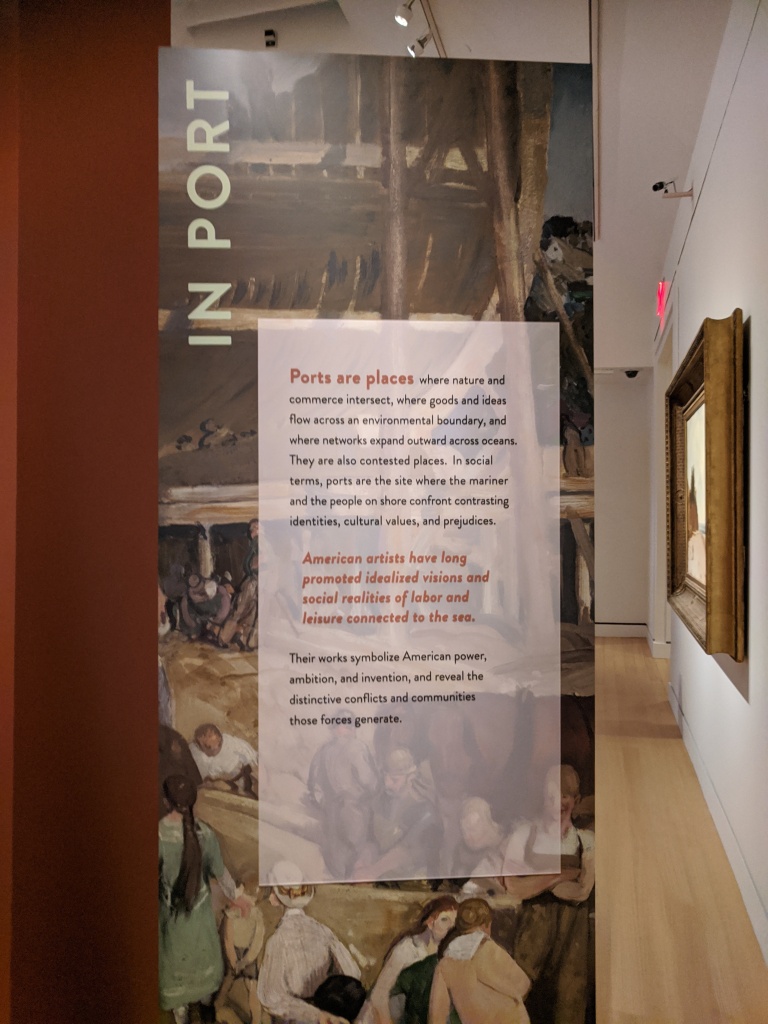
Museum wall labels – 3d letters, Frederick Douglass quote
Major American lending institutions and private collections including:
Crystal Bridges
Crystal Bridges partnered with PEM, so naturally most loans were procured from Arkansas.
William Trost Richards; Richard Diebenkorn; Frank Benson; Amy Sherald; Marsden Hartley
Philadelphia Museum of Art
Charles Sheeler; Jan Matulka
Pennsylvania Academy of Fine Arts
William Trost Richards
New York, Metropolitan Museum
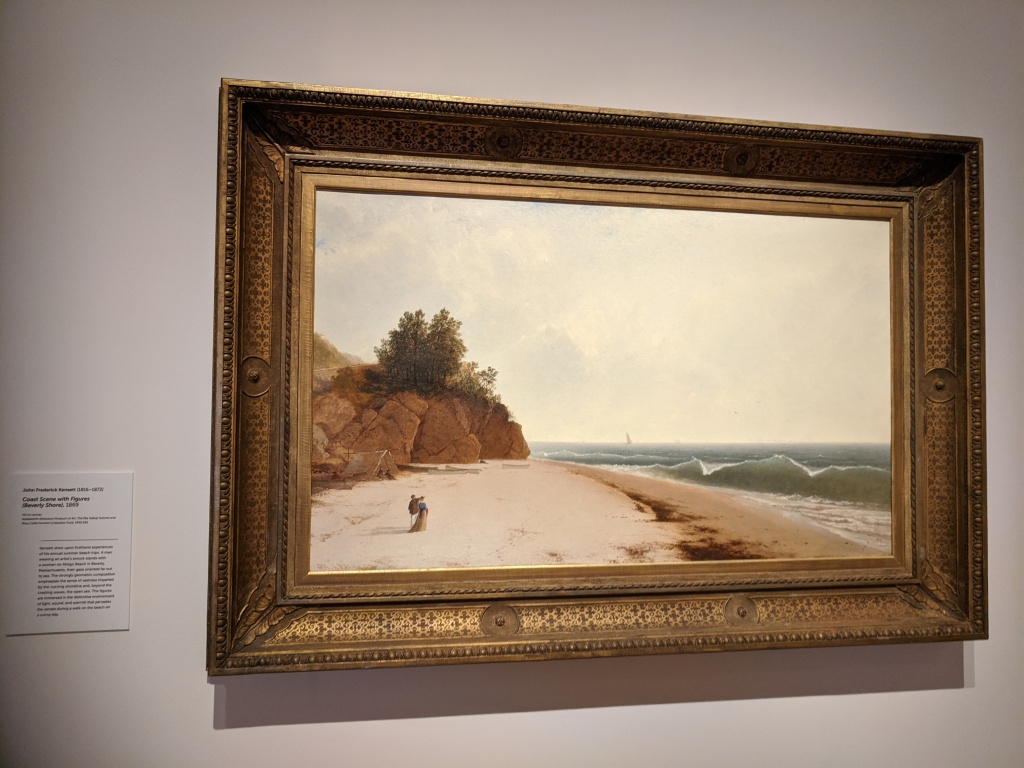
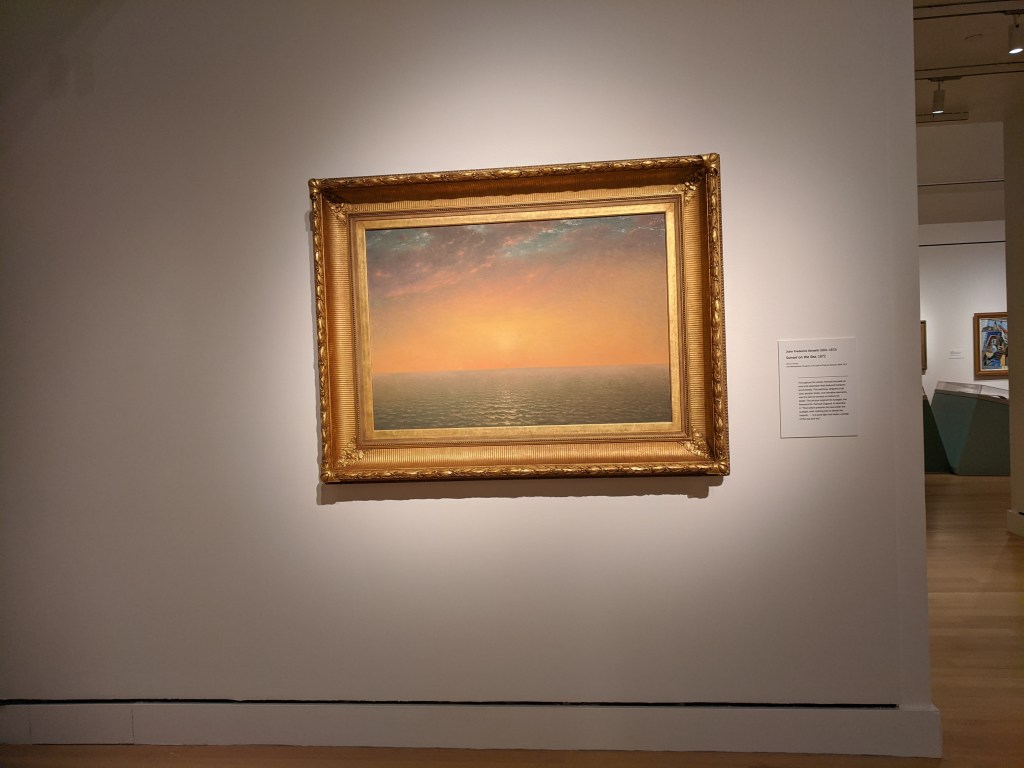
John Frederick Kensett
Collection of New York City
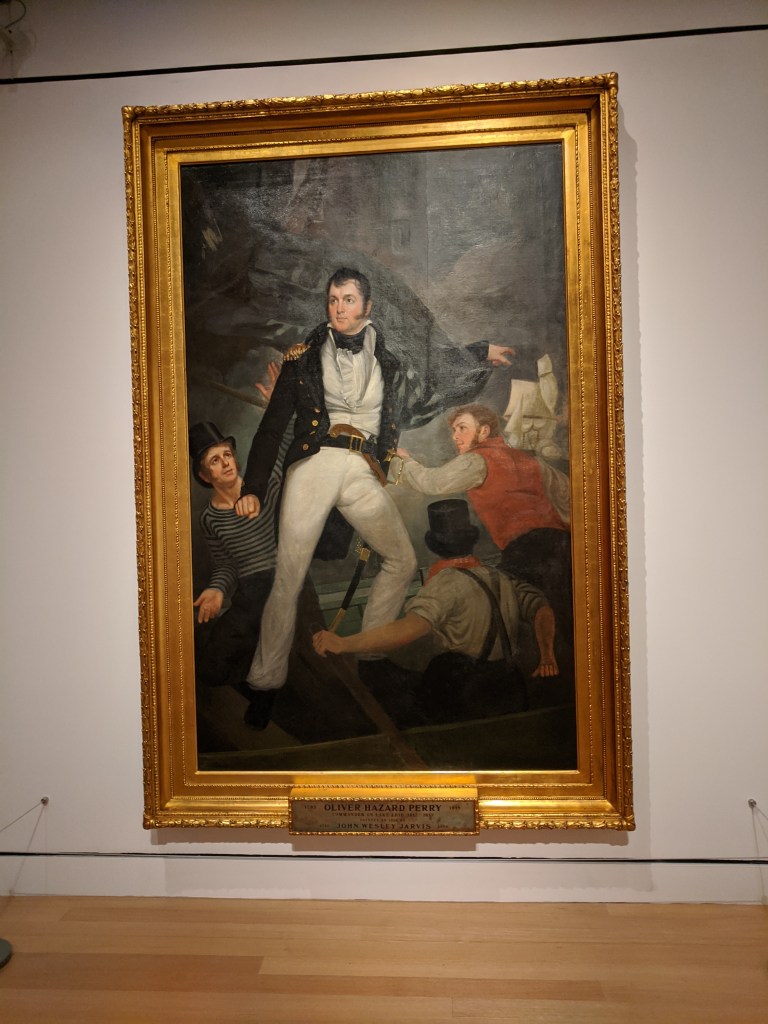
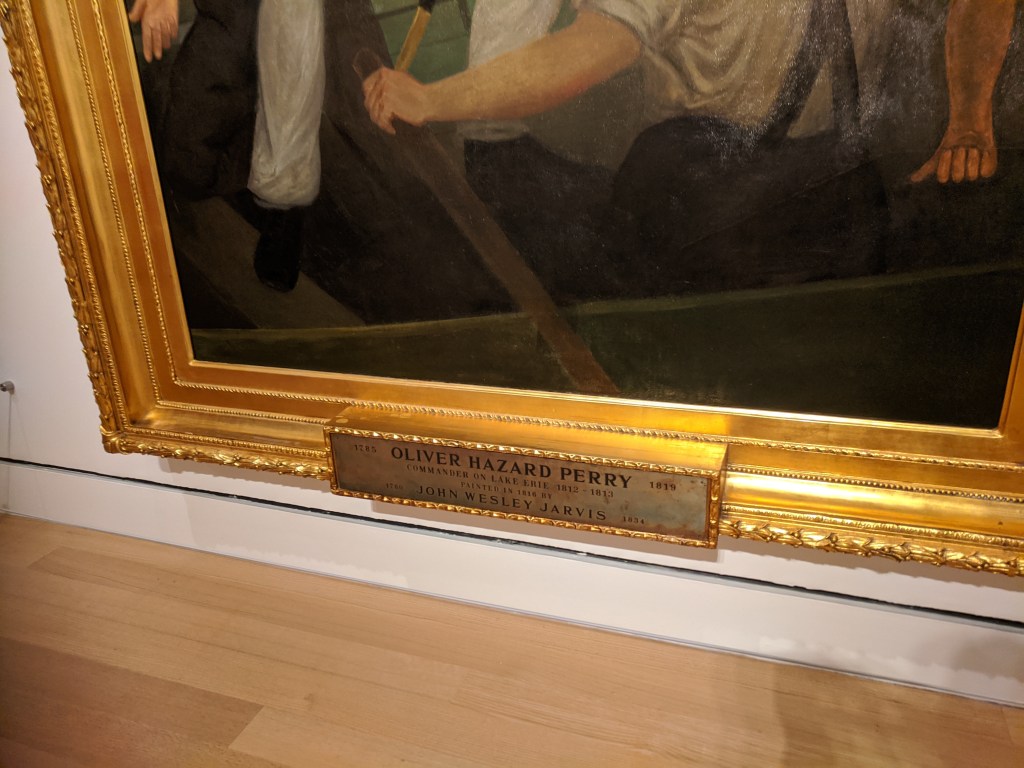
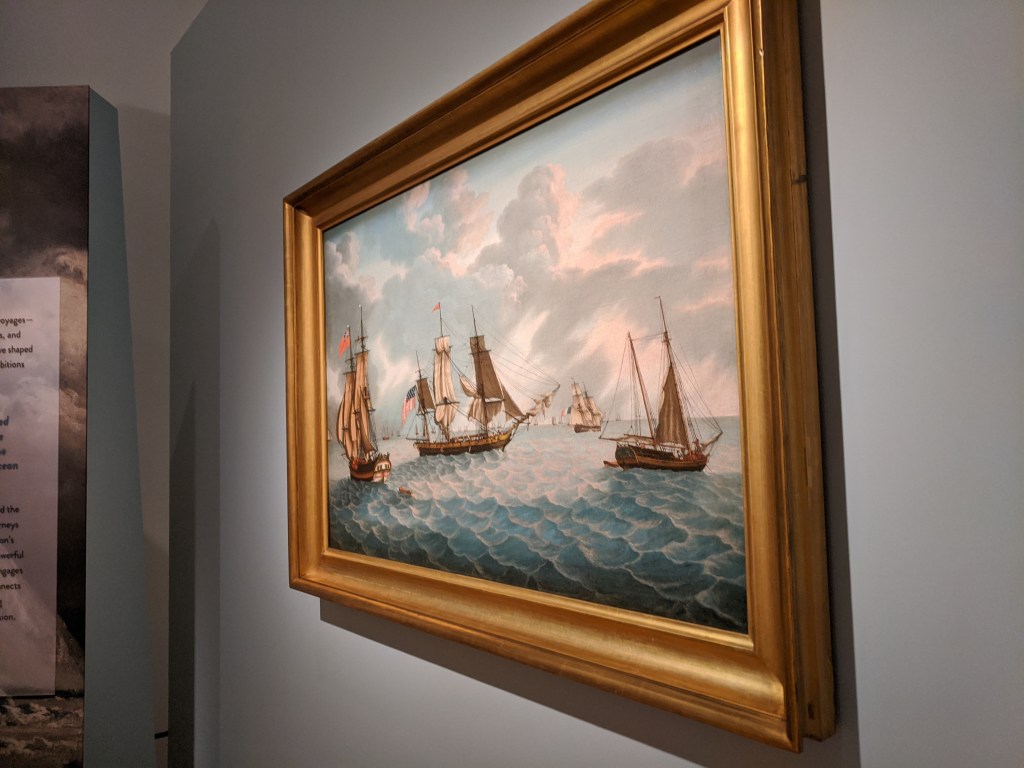
John Wesley Jarvis
Navy Art Collection
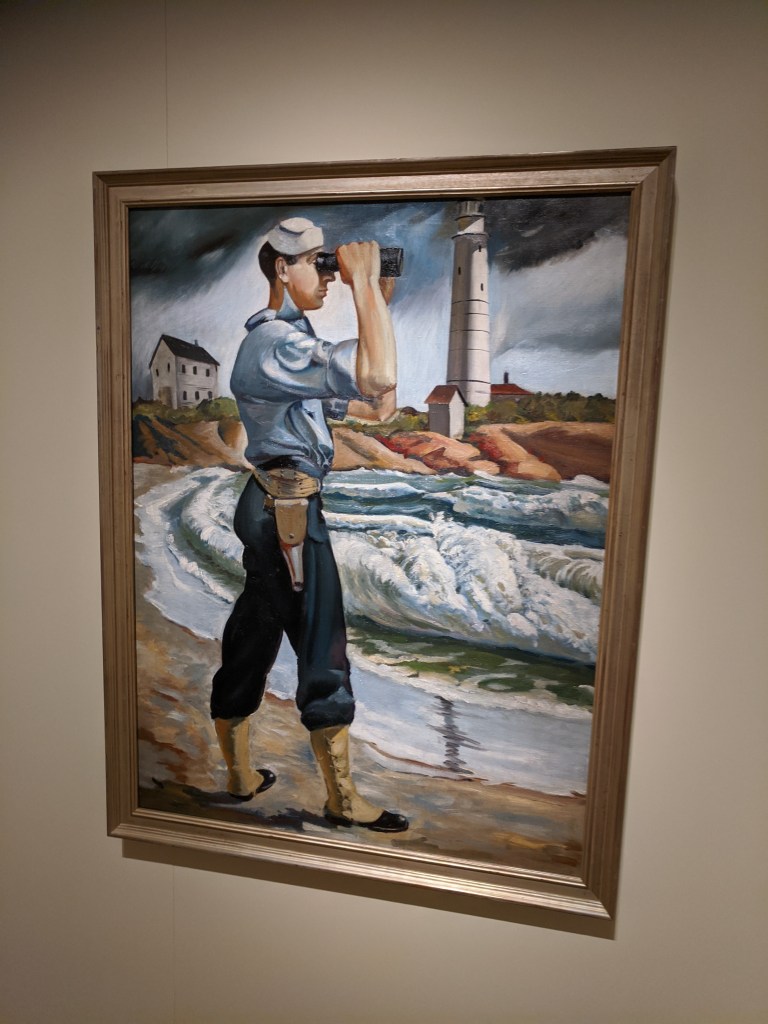
Hughie Lee Smith; Paul Cadmus
American Civil War Museum
Conrad Wise Chapman
Phillips Collection
John Sloan
Smithsonian
Stuart Davis; Hughie Lee Smith
Los Angeles County Museum of Art
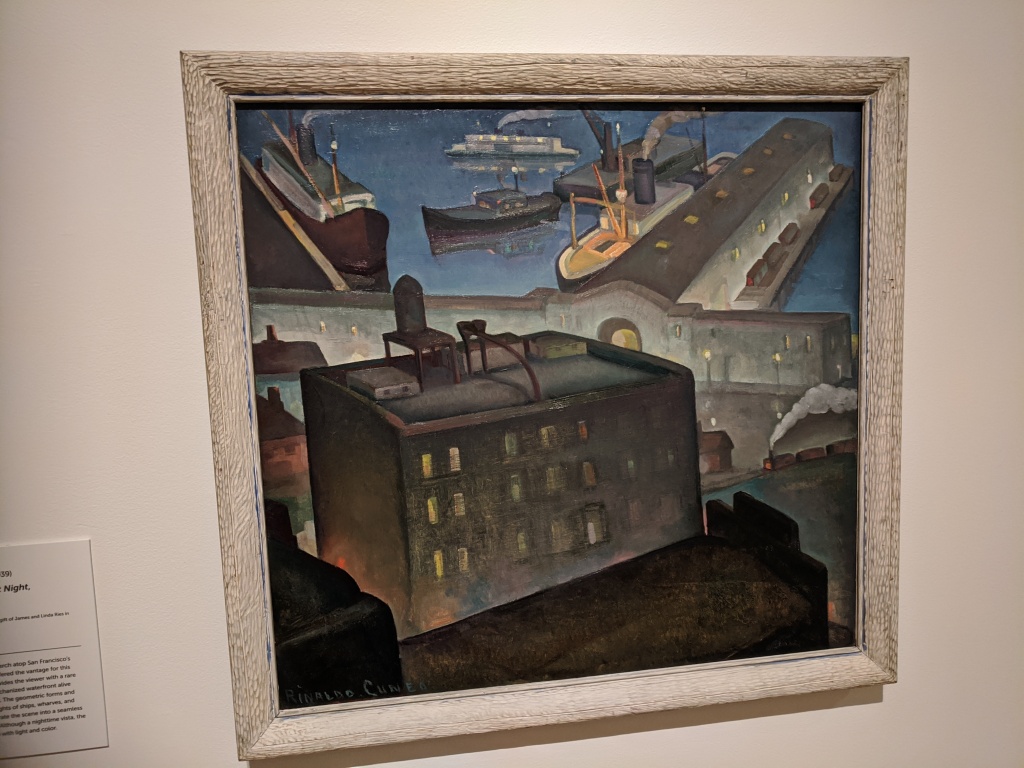
Cuneo
Brooklyn Museum
Rockwell Kent
MoMa Museum of Modern Art
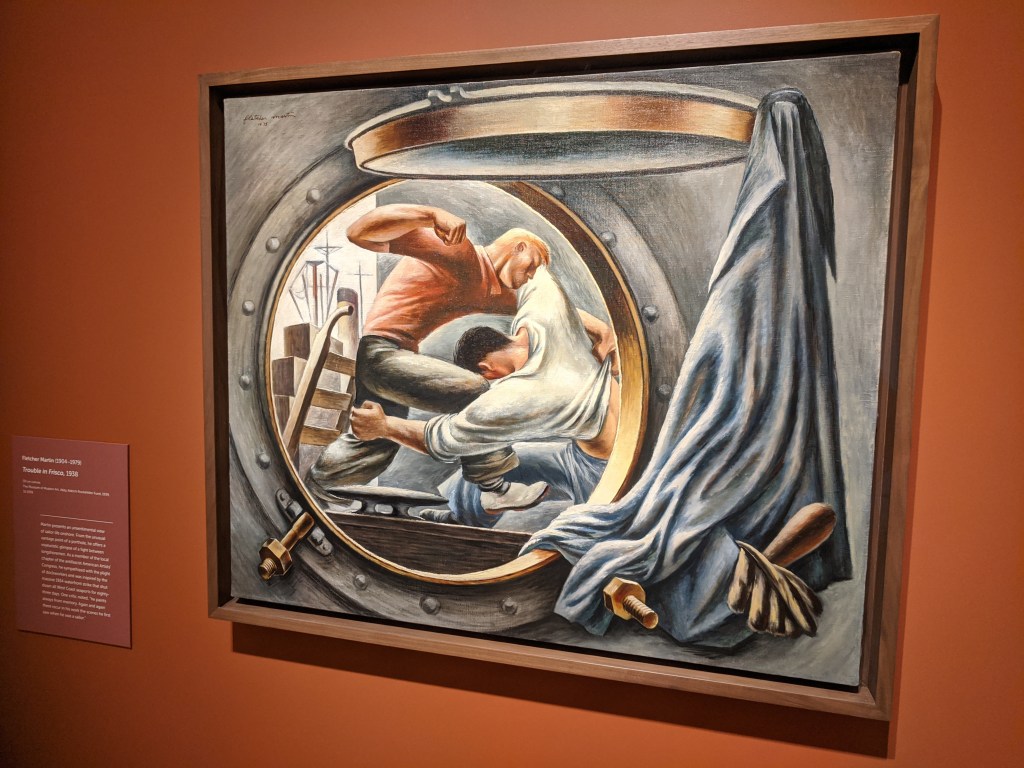
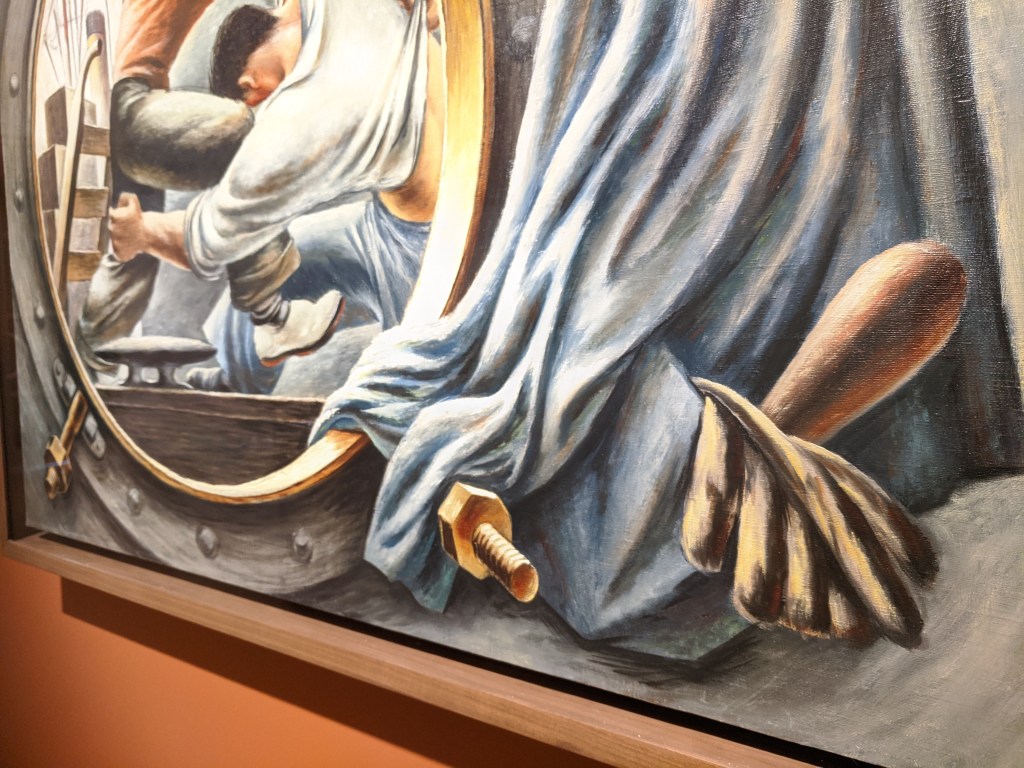
Fletcher Martin
Wadsworth Athenaeum
Kensett
Cahoon Museum American Art
North Carolina Museum of Art
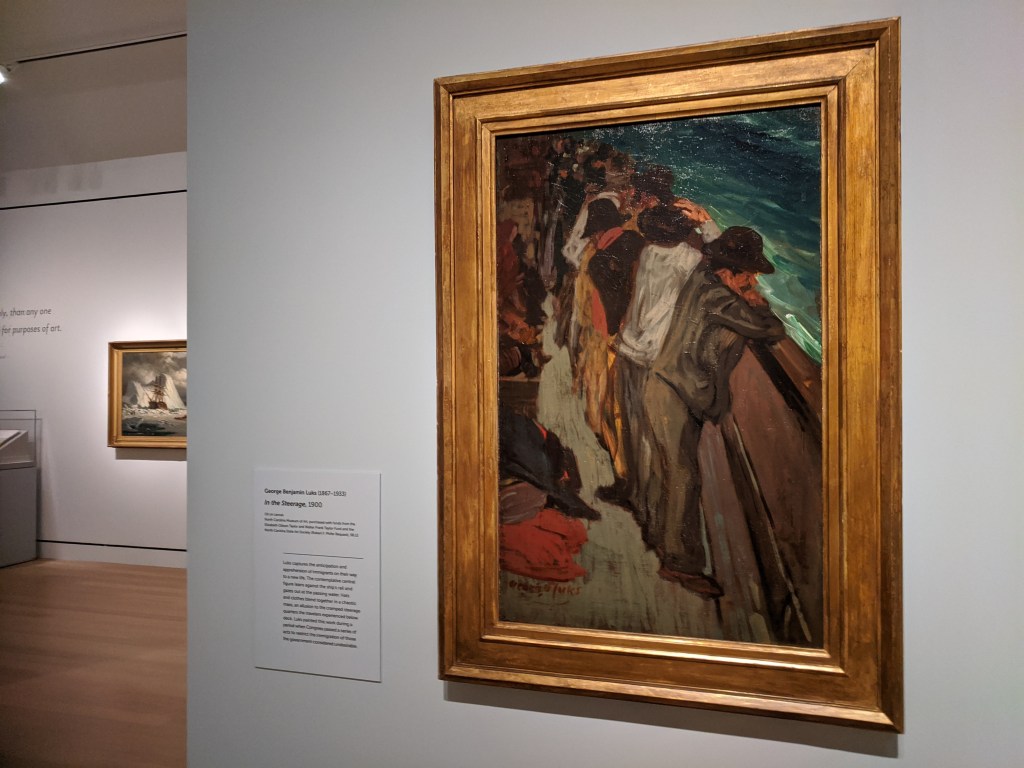
Luks
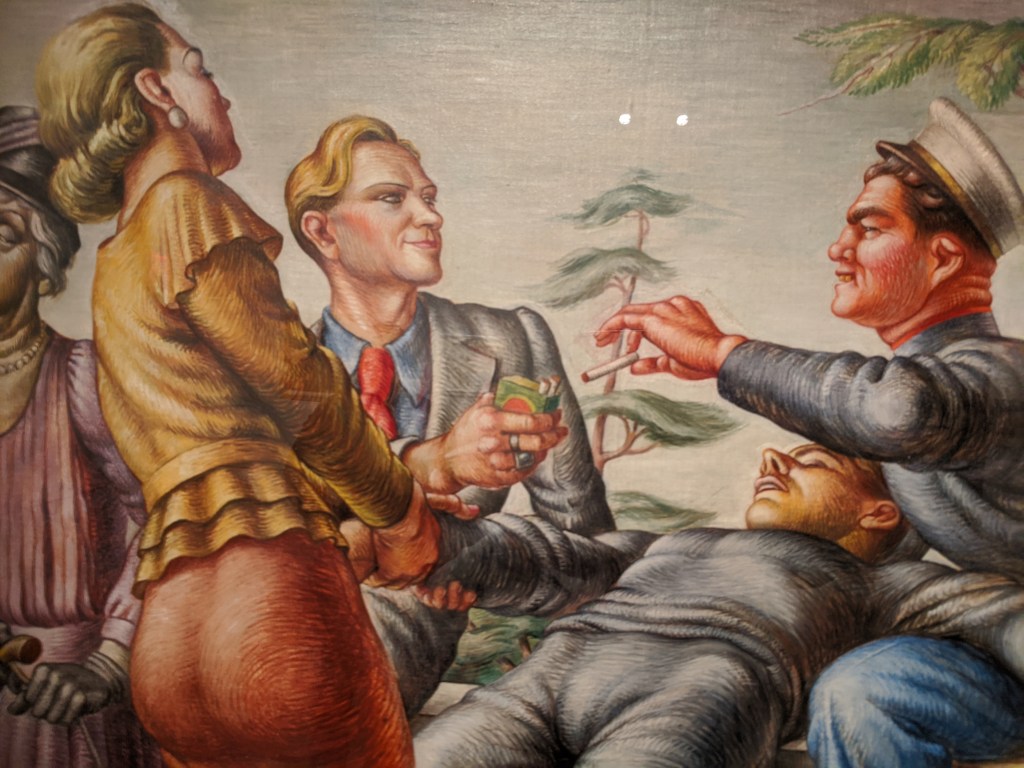
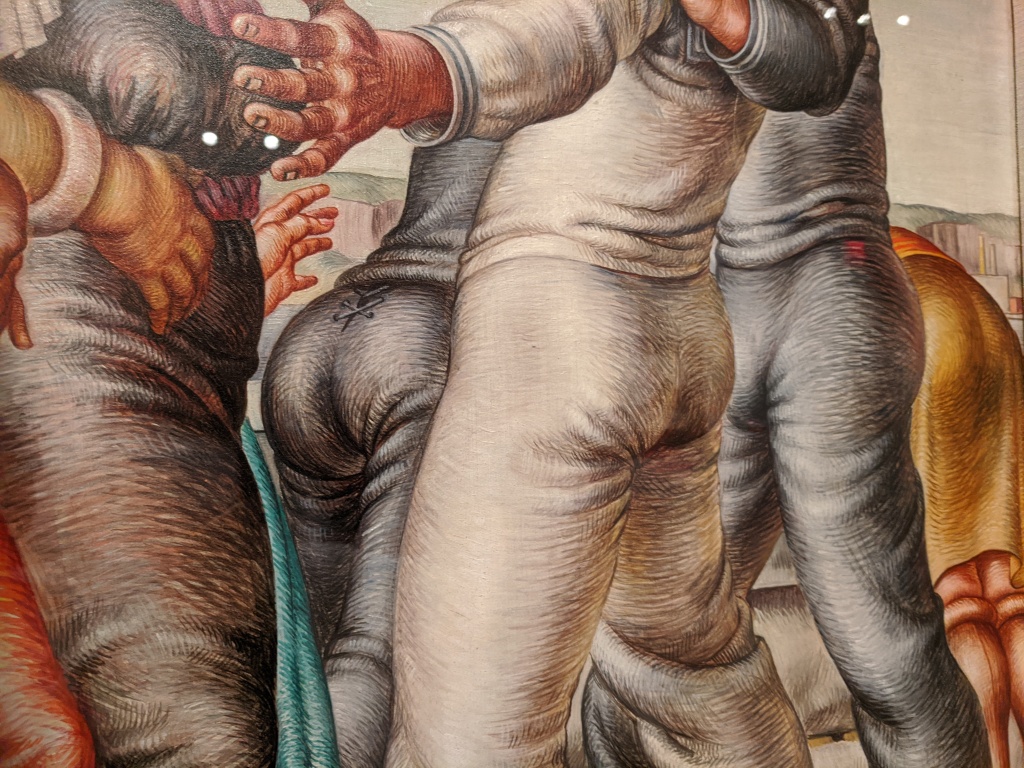
This show was also billed as one exhibition comprising PEM’s **new** Climate and Environmental Initiative. **Includes iconic American homoerotic art – Cadmus Fleet’s In and Fletcher Martin**
Installation views and museum labels more of a miss
Waters elsewhere on view from the Peabody Essex Museum
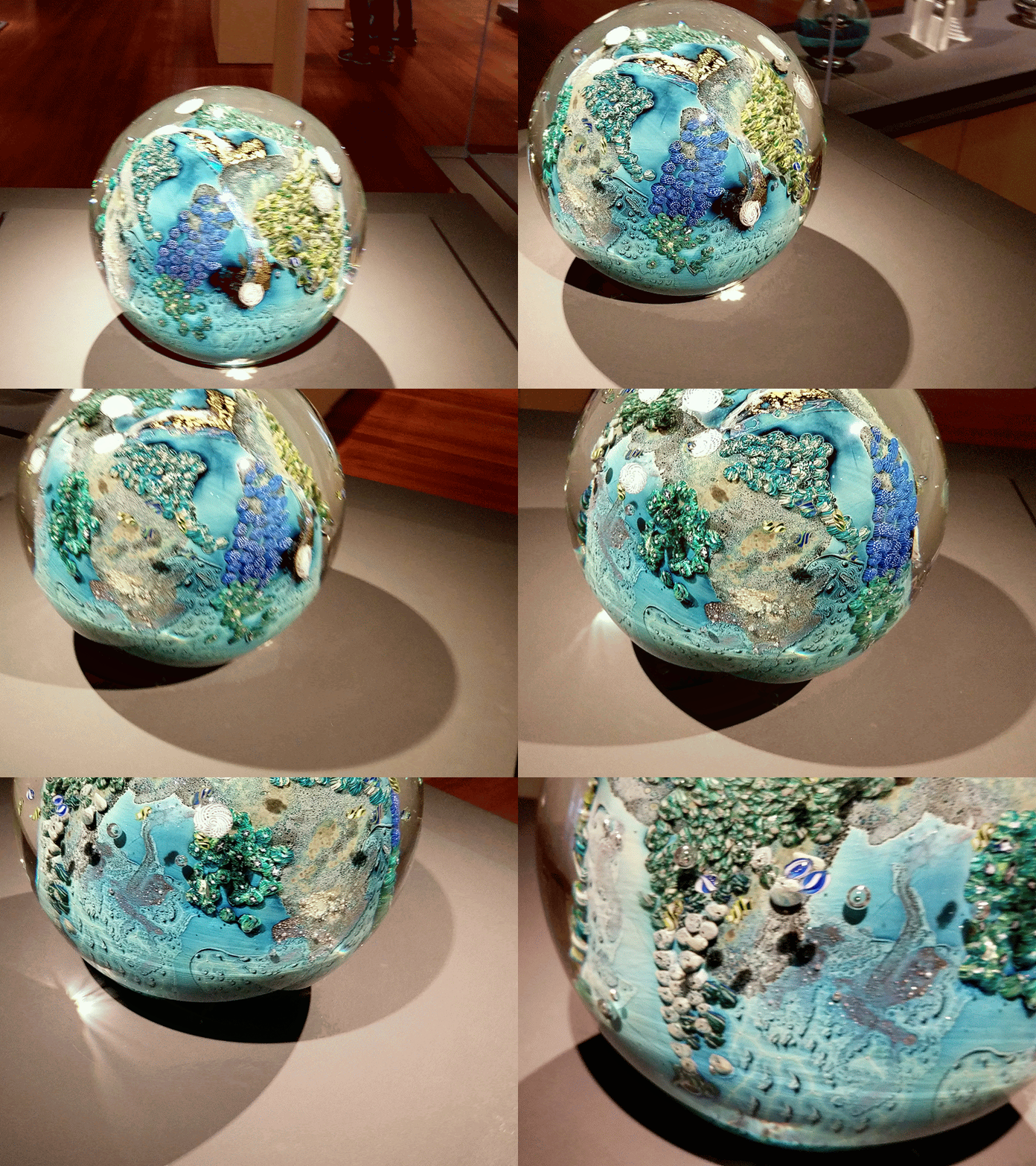
Josh Simpson megaplanet glass earth, 1989
Michael C. McMillen detail of The Pequod II
Sea Coco
installation view Rockman exhibit, May 29, 2021, see more here
Don’t be distracted by a simplistic thematic construct especially when it coaxes a mind game of “What about…?” as in: What about this artist or that one? Why aren’t they included? (Visual artists like May Stevens, Vija Celmins, Blanche Lazzell, Juane Quick to see Smith, April Gornik, Joan Nelson, Duncanson, Eric Aho, Morris graves, Rauschenberg, Fischl, Frankenthaler, Fitz Henry Lane, Winslow Hopper, and Edward Hopper sprang readily to mind. And more Lawrence.) What about the de rigueur annual summer exhibitions at major galleries and institutions, since late 1880s? Aren’t the planet’s oceans a global motif not limited by media or place? Ignore these categories or “chapters”.
Forget the sea change promise.
Just go!
Do make the must see trip to be awed and enjoy the momentous loans and great gift of seeing these selections displayed, together and their many moods of expression. Sensuous, tranquil, volatile, mysterious, distant, abstract–this major group show delivers art that conveys emotion, expressed and experienced.
installation views
C. Ryan May 29, 2021 – stunning installation design, mostly
individual works, no particular order
Animated some to help bring you there:
Museum wall labels – 3d letters, Frederick Douglass quote
Major American lending institutions and private collections including:
Crystal Bridges
Crystal Bridges partnered with PEM, so naturally most loans were procured from Arkansas.
William Trost Richards; Richard Diebenkorn; Frank Benson; Amy Sherald; Marsden Hartley
Philadelphia Museum of Art
Charles Sheeler; Jan Matulka
Pennsylvania Academy of Fine Arts
William Trost Richards
New York, Metropolitan Museum
John Frederick Kensett
Collection of New York City
John Wesley Jarvis
Navy Art Collection
Hughie Lee Smith; Paul Cadmus
American Civil War Museum
Conrad Wise Chapman
Phillips Collection
John Sloan
Smithsonian
Stuart Davis; Hughie Lee Smith
Los Angeles County Museum of Art
Cuneo
Brooklyn Museum
Rockwell Kent
MoMa Museum of Modern Art
Fletcher Martin
Wadsworth Athenaeum
Kensett
Cahoon Museum American Art
North Carolina Museum of Art
Luks
This show was also billed as one exhibition comprising PEM’s **new** Climate and Environmental Initiative. **Includes iconic American homoerotic art – Cadmus Fleet’s In and Fletcher Martin**
Installation views and museum labels more of a miss
Waters elsewhere on view from the Peabody Essex Museum
Josh Simpson megaplanet glass earth, 1989
Michael C. McMillen detail of The Pequod II
Sea Coco
installation view Rockman exhibit, May 29, 2021, see more here
2017. Christies, the New York auction power house, is currently marketing the Peggy and David Rockefeller art collection across the (art)world–Hong Kong, London, and Los Angeles– before the spring 2018 live sale back in New York. The collection includes a painting by American artist, Edward Hopper (1882-1967), that was inspired by Gloucester.
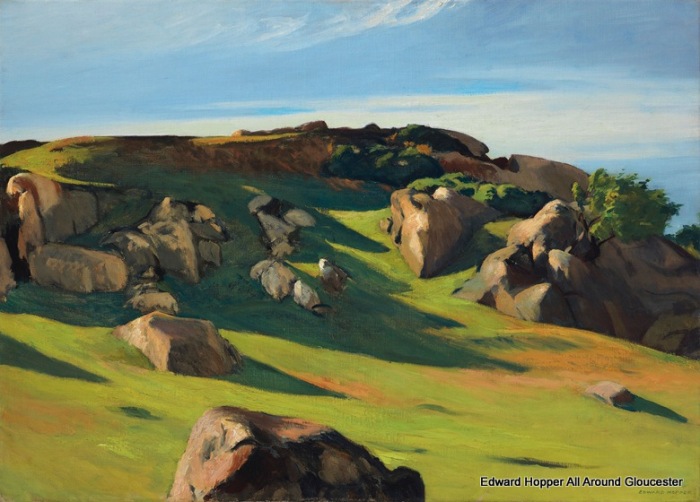
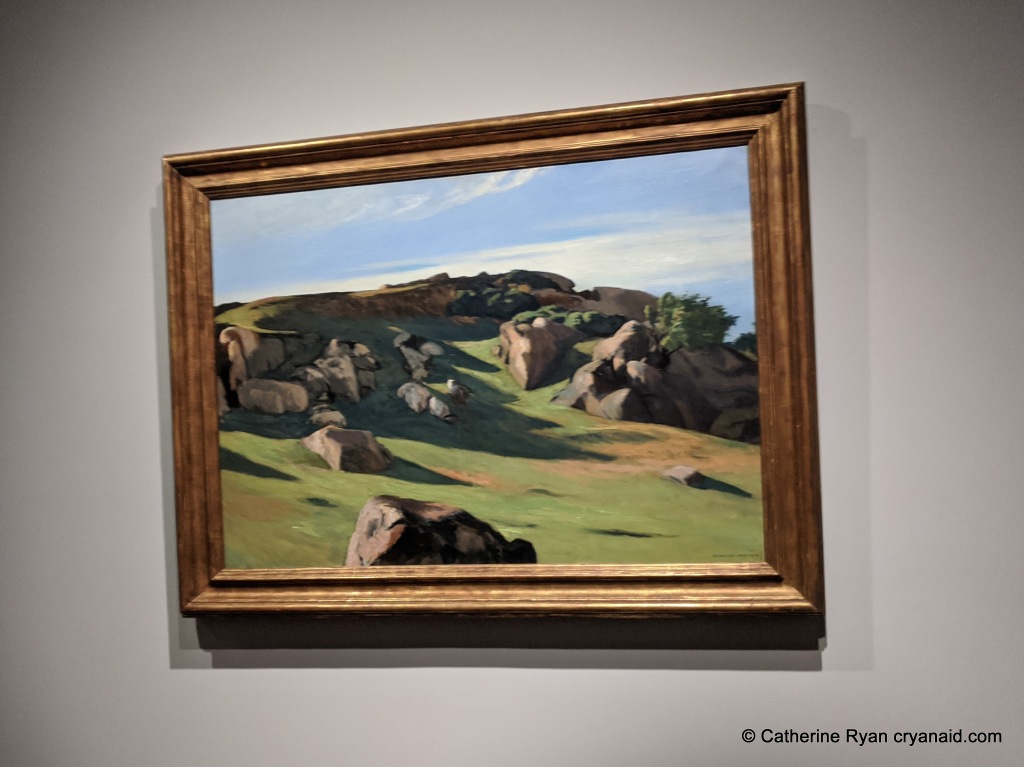
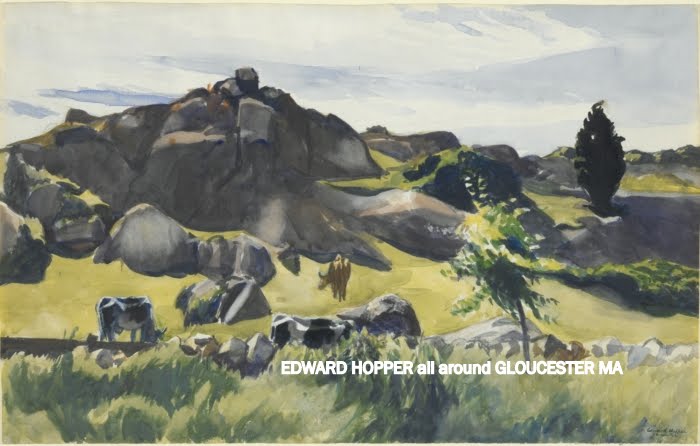
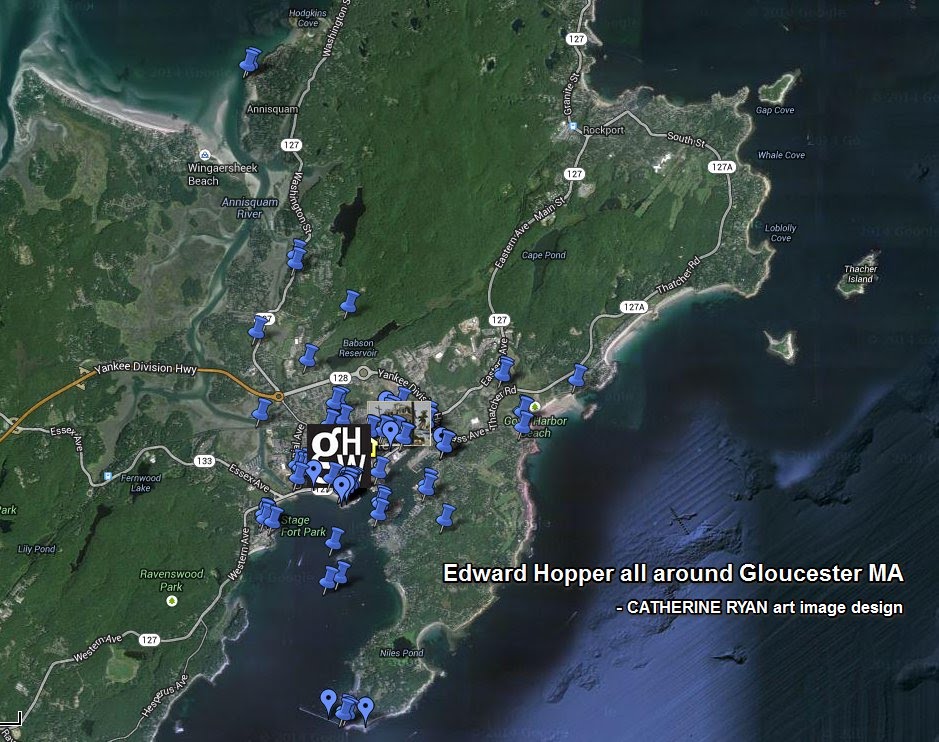
Cape Ann Graniteis one of the rare Hopper paintings remaining that’s not currently held in a museum. There are more than 110 Gloucester houses and vistas depicted by Edward Hopper.
Advance promotion of Christie’s upcoming Rockefeller auction have yet to illustrate the painting, although the artist’s recognizable name is mentioned in every press release and the painting is included in the world tour highlights exhibit. The catalogue for the sale is not ready.
two Former owners of Cape Ann Granite have in common connections to Harvard, banking, and art collecting
Billionaire and philanthropist, David Rockefeller (1915-2017), was a Harvard graduate and longtime CEO of Chase Manhattan bank (later JP Morgan Chase). His art appreciation began early, influenced by both parents and the Rockefeller family collections. His father was the only son of John D. Rockefeller, a co-founder of Standard Oil Corp. His mother, Abby Aldrich Rockefeller (1874-1948), helped establish the Museum of Modern Art, and the fund in her name helped secure Hopper’s Corner Saloon for the permanent collection. Several family members were Trustees. After his mother’s death, David took her Trustee seat.
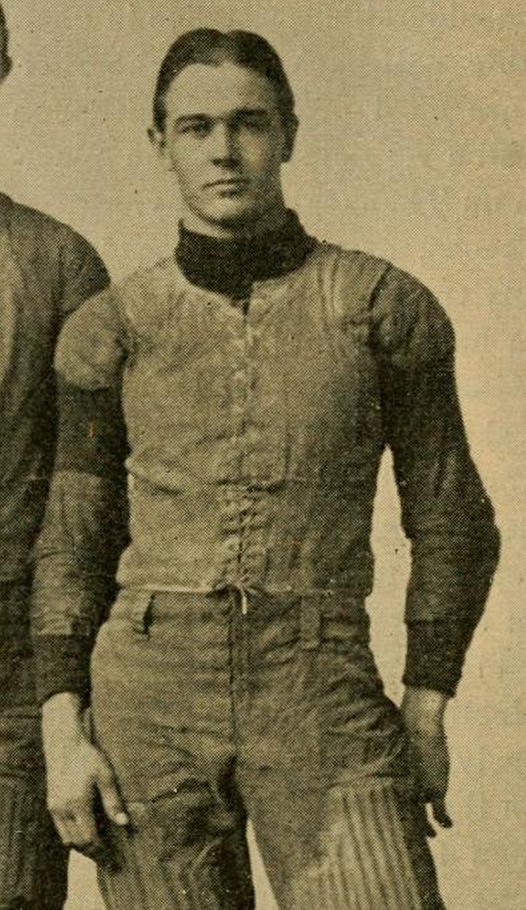
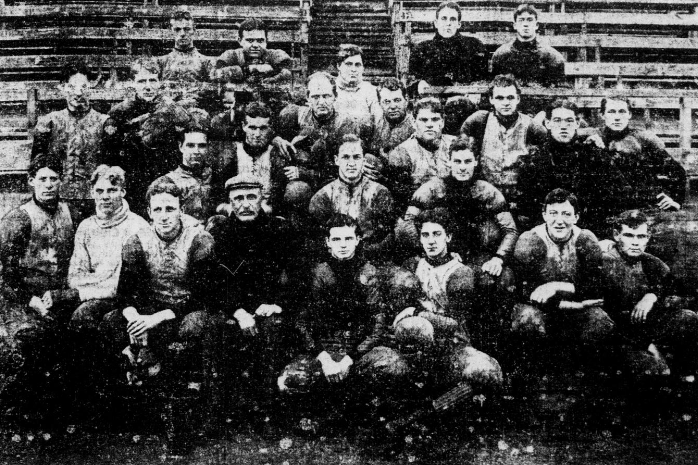
Like David Rockefeller, the first owner to acquire Cape Ann Granite was a Harvard graduate, art collector and financier, about the same age as Rockefeller’s parents, and Hopper. Benjamin Harrison Dibblee (1876 – 1945) was the scion of California businessman, Albert Dibblee. The family estate “Fernhill” was built in 1870 in Ross, California (later the Katharine Branson School). Benjamin H Dibblee was a Harvard graduate (1895-1899), an All-American Crimson football player (halfback and Team Captain), and head coach (1899-1900). W.H. Lewis, a famous center rush, was the Assistant Coach. (Harvard football dominated under this coaching team. See the standings below the “read more’ break.) In 1909, Dibblee donated his father’s historic papers concerning California’s secret Civil War group “The Home Guard of 1861” including its muster roll and pledge of loyalty to Lincoln and the Union cause.Dibblee was an alternate delegate from California to the Republican National Convention in 1912. As a Lt. Col. he was listed as one of five California committee members for the American Legion in 1919. He was a big wheel investment banker at EH Rollins & Sons, a firm impacted by the Wall Street crash of 1929.
Wikipedia photo of Dibblee from The Official National Collegiate Athletic Association football guide, 1899
It’s fun to think about Dibblee possibly visiting Gloucester during his time at Harvard, like so many students and faculty; then, decades later, acquiring a major Hopper because it was both a modern masterpiece, and a Gloucester landscape.
[The Hopper Cape Ann Granite painting has me itching to research all Crimson team photos– not simply varsity nor football circa 1895-97– because of the (remote) chance of another Gloucester-Harvard and athletic connection. In 1895 Dibblee was involved with sports at Harvard at the same time as author and Olympian, James Connolly. In 1899 both were involved with football; Dibblee as the Harvard coach and Connolly as Gloucester’s athletic director and football player*. Maybe they scrimmaged. Maybe they scrimmaged in Gloucester. *scroll down to notes below]
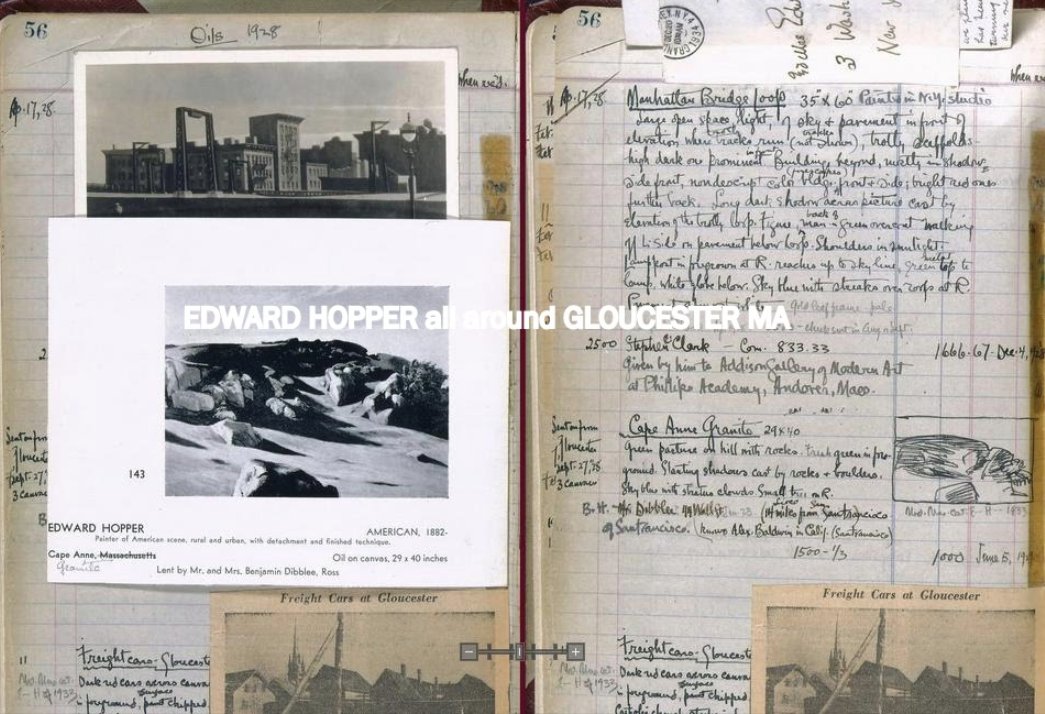
Hopper’s artist inventory log pages for ‘1928 oils’ itemizes Cape Ann Granite as follows: “Sent on from Gloucester September 27, 1928, 3 canvases. Cape Ann Granite, 29 x 40, Green picture on hill with rocks. Fresh green in foreground. Slanting shadows cast by rocks and boulders. Sky blue with clouds. Small tree on R. BH Mr. Dibblee 49 Wall Streeet of San Francisco (Lived near 14 miles from San Francisco. Knows Alex Baldwin in Calif. (SanFrancisco) 1500 -1/3. 1000 on June 5, 194 ”
Image: From Hopper’s Artist’s ledger -Book, ink graphite on paper, Whitney Museum of American Art, Gift of Lloyd Goodrich
The pencil annotation “Modern Masters EH 1933” accompanying the thumbnail sketch for the painting on the right of this entry may be mixed up. There was a “Modern Masters” exhibition at the Museum of Modern Art (MoMA) held in 1940 but it did not include this painting on the checklist. There was an Edward Hopper Retrospective held at MoMA October 30–December 8 in 1933 that did list this Gloucester painting, and the lender, Dibblee. (Incidentally, two other 1928 oils catalogued on that same inventory page, Manhattan Bridge Loop and Freightcars Gloucester, would both end up in the Addison Gallery collection at Phillips Academy.)
The Pure Landscapes
Excerpts from the 1933 MoMa Hopper retrospective exhibition catalogue:
“…When Hopper went to art school the swagger brushstroke of such painters as Duveneck, Henri, and Chase was much admired. Perhaps as a reaction against this his own brushwork has grown more and more modest until it is scarcely noticeable. He shuns all richness of surface save where it helps him to express a particular sensation…in spite of his matter-of-factness, Hopper is a master of pictorial drama. But his actors are rarely human: the houses and thoroughfares of humanity are there, but they are peopled more often by fire hydrants, lamp posts, barber poles and telegraph poles than by human beings. When he does introduce figures among his buildings they often seem merely incidental. Perhaps during his long years as an illustrator he grew tired drawing obviously dramatic figures for magazines. Hopper has painted a few pictures in which there are neither men nor houses. The pure landscapes Cape Ann Granite (9), Hills, South Truro (16), Camel’s Hump (22) occupy a place apart in his work. they reveal a power which is disconcertingly hard to analyze. Cezanne and Courbet and John Crome convey sometimes a similar depth of feeling towards the earth and nature…” Alfred Barr, 1933
“In its most limited sense, modern art would seem to concern itself only with the technical innovations of the period. In its larger and to me irrevocable sense it is the art of all time; of definite personalities that remain forever modern by the fundamental truth that is in them. It makes Moliere at his greatest as new as Ibsen, or Giotto as modern as Cezanne.” Edward Hopper, 1933
Yale owns a related watercolor by Edward Hopper, Cape Ann Pasture
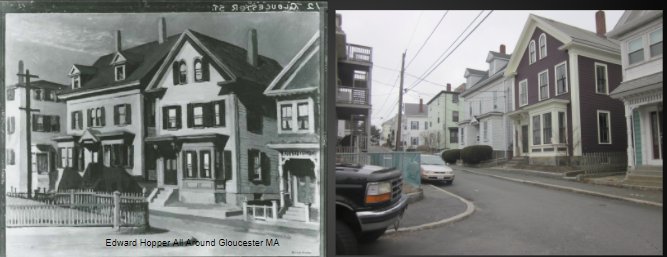
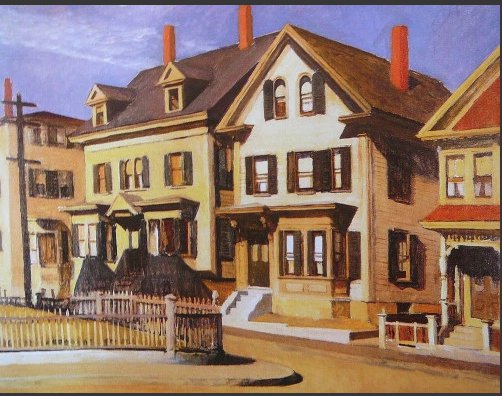
Proceeds from the sale of the Peggy and David Rockefeller art collection at Christie’s next spring will benefit 10 selected charities. Perhaps a magnanimous collector might consider this Hopper Dogtown purchase for the Cape Ann Museum, a philanthropic twofer in this case, and needed. Cape Ann Museum does not possess a Hopper Gloucester painting and if any museum should, it’s CAM. We need to eventually guide back the Hopper painting Gloucester Street, too.
Christie’s
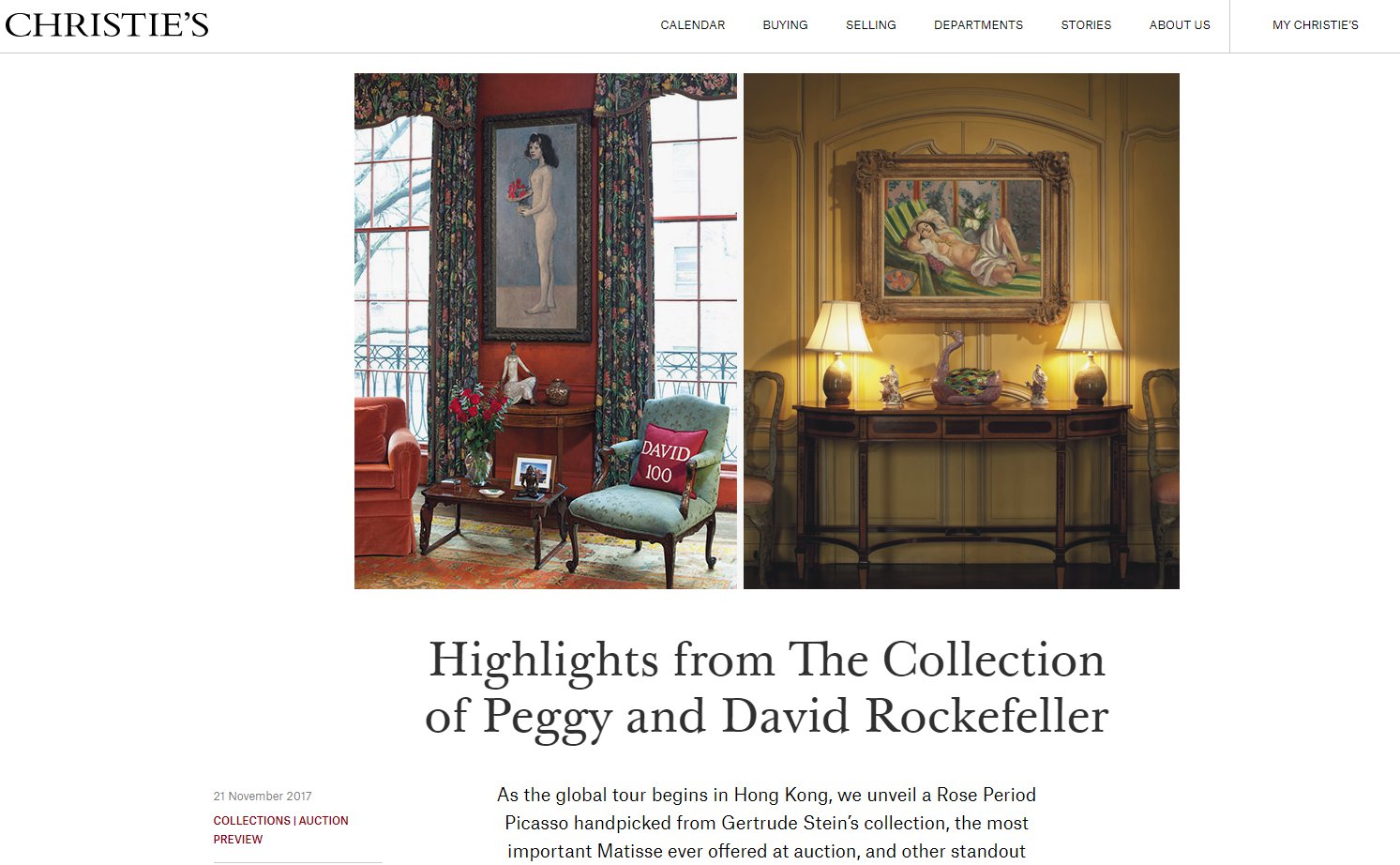
To date Christie’s auction house has promoted primarily a Picasso and Matisse as the star lots from this collection of masterpieces because of their hefty valuation. The presale estimate for the Matisse Odalisque couchée aux magnolias (1923) is 50 million. The Picasso painting, Fillette à la corbeille fleurie (1905), a “Rose period Masterwork”, is estimated to top 70 million. The presale estimate for the Hopper is 6 million to 8 million.
Image: Christie’s first press roll out features the Picasso and Matisse. Not the Hopper
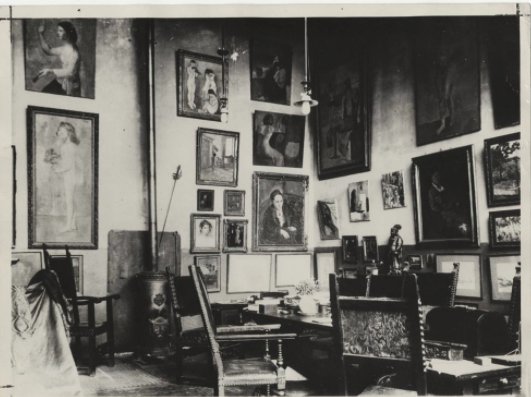
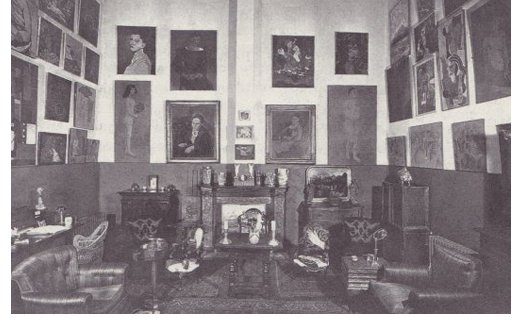
Picasso/Stein/Toklas/Rockefeller
The Picasso was displayed in the library of the Rockefeller Upper East Side mansion at 146 East 65th Street. The first owners were Gertrude and Leo Stein. Gertrude Stein hated it though her brother bought it anyway. After Alice B. Toklas (Stein’s partner) died in 1965, MoMa trustees drew lots and were offered first pass on the legendary Stein collection. David Rockefeller won first pick, and selected the Picasso. I wonder how it will fare in this #metoo awakening. At the time of her death, Toklas had long been evicted from their Paris home as she had no legal standing nor benefit from any estate sales.
installation Leo and Gertrude SteinImage: installation Gertrude Stein and Alice Toklas
Williams 29-0 Bowdoin 13-0 Wesleyan 20-0 Amherst 41-0 at Army (Westpoint) 18-0 Bates 29-0 Brown 11-0 Carlisle 22-10 Penn 16-0 Dartmouth 11-0 Yale 0-0 TIE
1900: 10-1
Wesleyan 24-0 Williams 12-0 Bowdoin 12-0 Amherst 18-0 Columbia 24-0 Bates 41-0 Army 29-0 Carlisle 17-5 Penn 17-5 Brown 11-6 Yale 0-28
Harvard Crimson Football team 1900
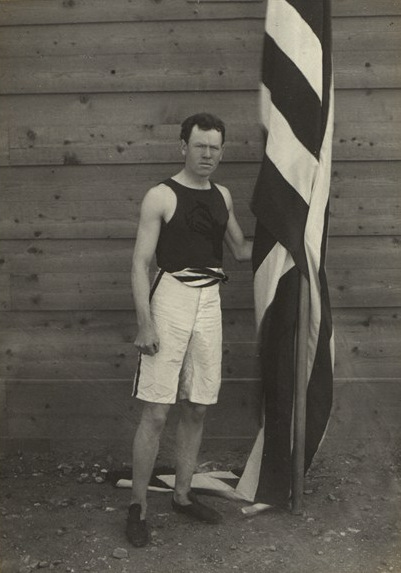
**I wrote about Connolly in a prior GMG post. “While still twenty-five pounds underweight from tropic fever, I took a job as physical director of the Gloucester Athletic Club. I played football on the Athletic Club eleven, spent the fall and winter (1899-1900) there, chucked that job in the spring, took a steerage trip to England, looked the London slums over, and went on to Paris, to take in the Paris Exposition, and, incidentally, compete in the Second Olympic Games.”
Image: James Brendan Connolly 1896 Olympics wiki commons image from Bulgaria State Archives
We have great teachers in Gloucester! For Ms. Mulkern
“I put those posters in my classroom windows to minimize the intense sun that streams in at certain times of the day – I was thinking Ellsworth Kelly when I saw them from outside – but Piet Mondrian works great!” – Joanna Mulkern ESL Teacher/O’Maley
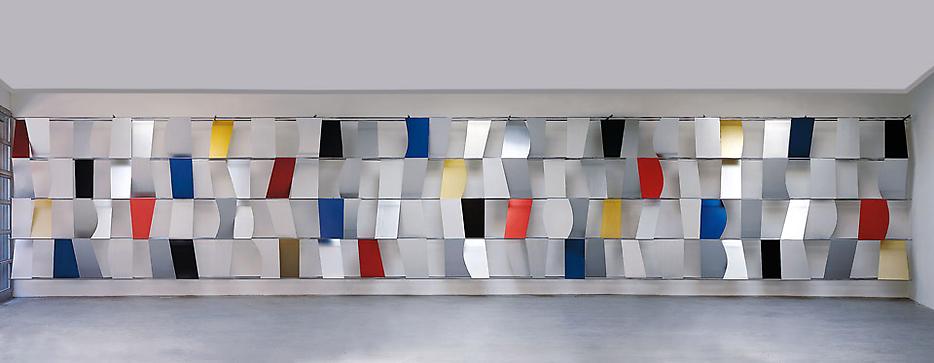
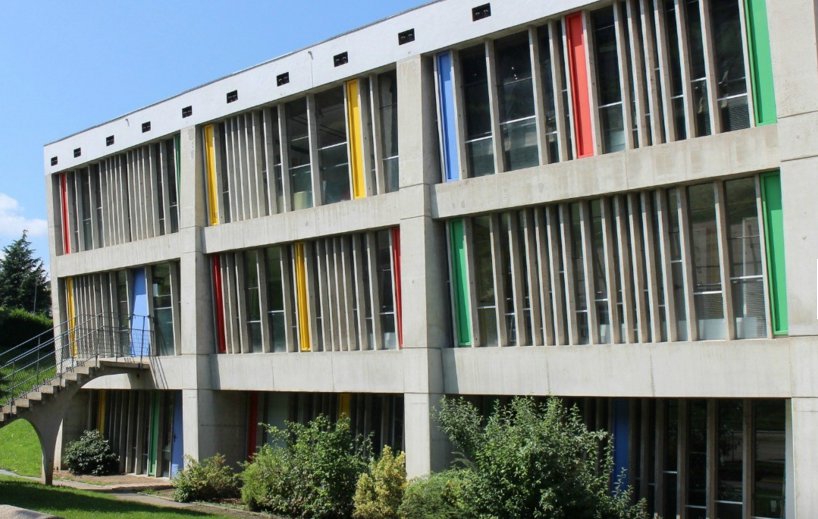
Thanks for adding the motivation behind your window design. Oh, yes! I see Ellsworth Kelly (1923-2015), too. And your comment pushed me to think about other visual artists such as Anni Albers, Edward Landon, Sol Lewitt, Al Held– and Matisse and Calder (who Kelly looked to.) Plus your Kelly comment relates to the architecture at O’Maley and Kelly’s years in Paris at the time of Le Corbusier’s influence. O’Maley is a bit red-brick bauhaus and other architectural styles. Does anyone know the architect?
Ellsworth Kelly’s Sculpture for a Large Wall, 1957, installation shot at Matthew Marks Gallery (now in MoMa)
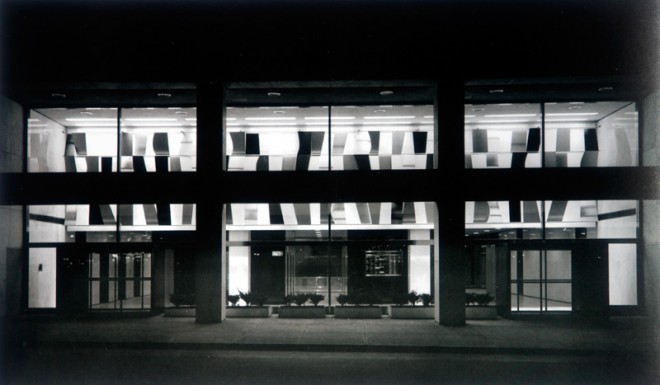
Ellsworth Kelly’s Sculpture for a Large Wall (Transportation Building Lobby Sculpture), 1957 original commission for the lobby of the Pennsylvania Transportation Building, Penn Center, Philadelphia, PA. It was sold to Ronald Lauder in 1998 when the building was redesigned. Jo Carole and Ronald eventually donated it to MoMa.
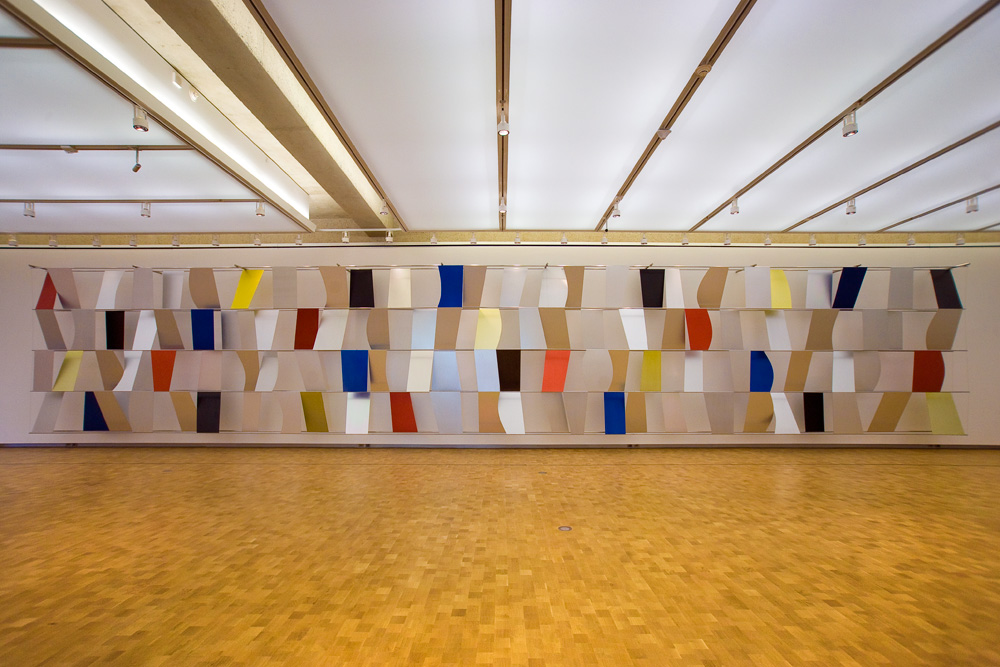
Installed at Matthew Marks Gallery (top photo) then Barnes Foundation in 2013 (this photo) prior to current installation at MoMa







































 Good Morning Gloucester