Years recorded with earthquake in Gloucester, Mass. (as of 1989): 1717, 1722, 1727-1730, 1737, 1755, 1757, 1761, 1763, 1805, 1874, 1925, 1889 (expected), and 1998. See index. Gloucester, Massachusetts: Historical Timeline, 1000-1999. Mary Ray. Editors, Sarah R. Dunlap, Gloucester Archives Committee (Gloucester, Mass.), 2002.
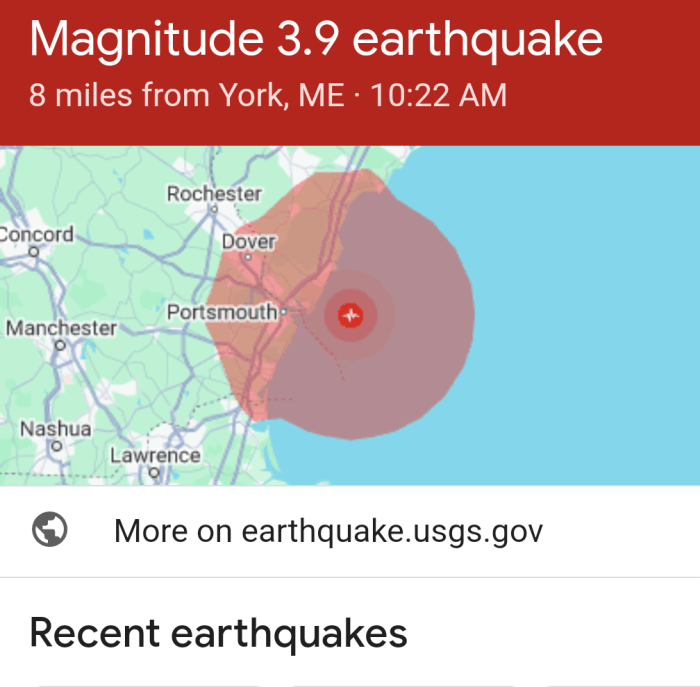
On April 30, 1722: “There was an earthquake in the town continued about a minute.”
Spread The GMG Love By Sharing With These Buttons:
Gloucester, Mass. A great teacher at Gloucester High School, Shaun Goulart, creates a local history scavenger hunt/trivia game for his 9th grade students that takes place weekly for 6 weeks. We’re taking the challenge paced one week after the students.
ANSWERS TO SHAUN GOULART’S LOCAL HISTORY SCAVENGER HUNT TRIVIA WEEK FIVE
1)What year was there an ordinance to establish a Police department in Gloucester? ANSWER: 1873 (according to the Gloucester Time Line archives book and the great Gloucester police website here : “In 1799, Isaac Elwell was appointed Inspector of Police. This was a term first used in Boston 14 years earlier to describe the men appointed to keep track of the night watchmen who patrolled the city after dark watching for fires. Constables assisted Elwell and other men who followed him as Inspector of Police until about 1847 when a petition was received by the Selectmen asking for some additional policemen to assist the Inspector of Police. Around 1850 the first night police were used. Only a few of the policemen were paid as the rest either served without compensation or were only paid for working during special occasions. In 1873, a city ordinance establishing a police department was put into effect with nine officers under the leadership of City Marshal William Cronin.”)
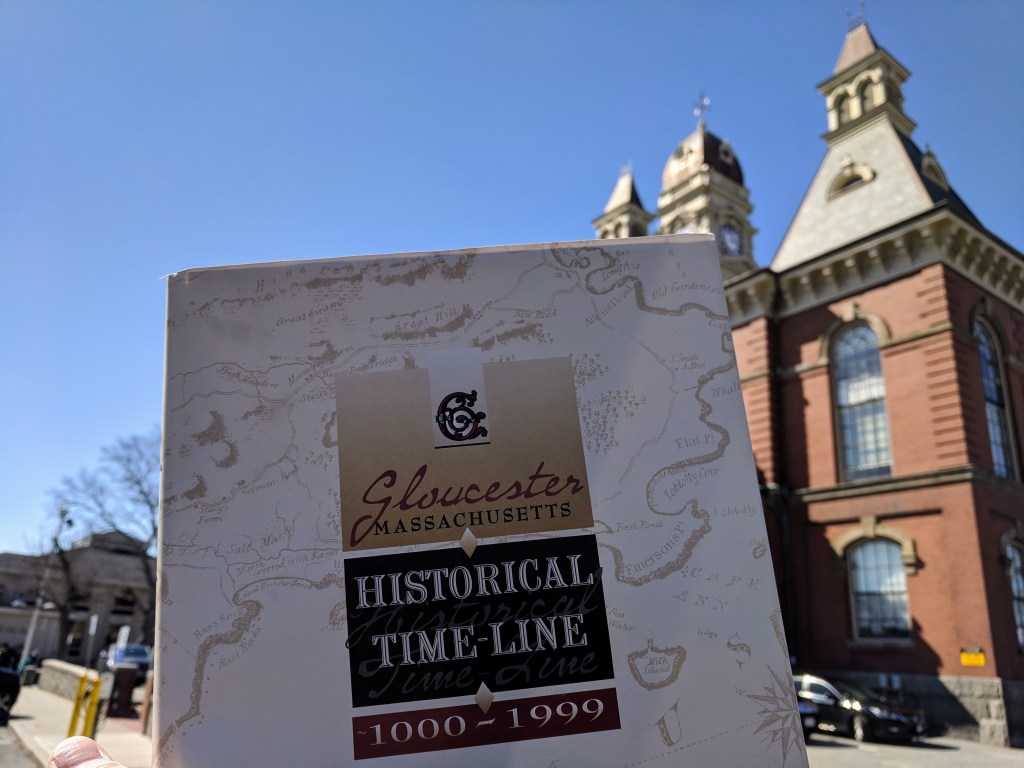
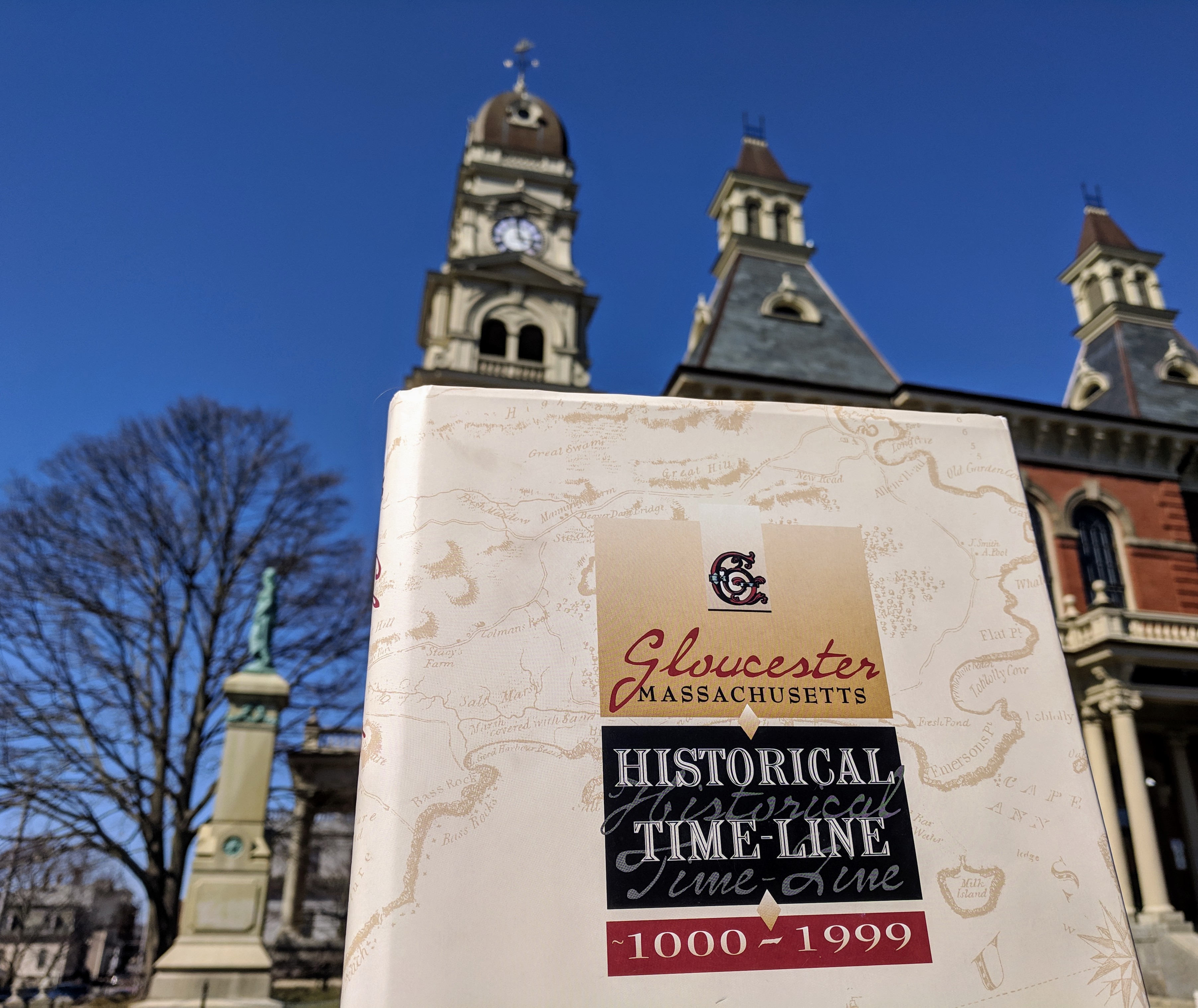
Gloucester Massachusetts Historical Time-line 1000-1999 Mary Ray, ed. Sarah Dunlap Gloucester City Archives published in 2002. You can purchase this book from the Archives.
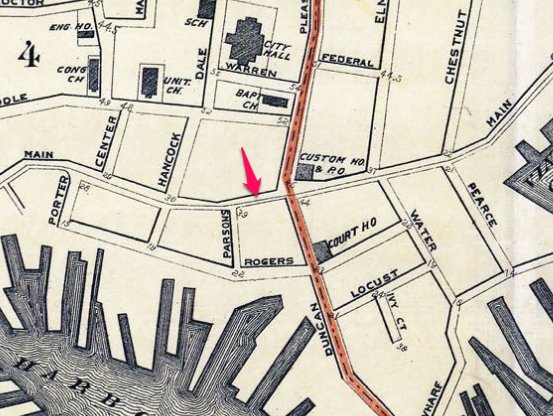
2)The original building used as a jail prior to 1889 was located on Rogers Block, take a picture of this area present day with a member in it. ANSWER: Main Street (harbor side) from Duncan to Porter
Rogers block = Main Street (from Porter to Duncan) detail from 1891 Walker map
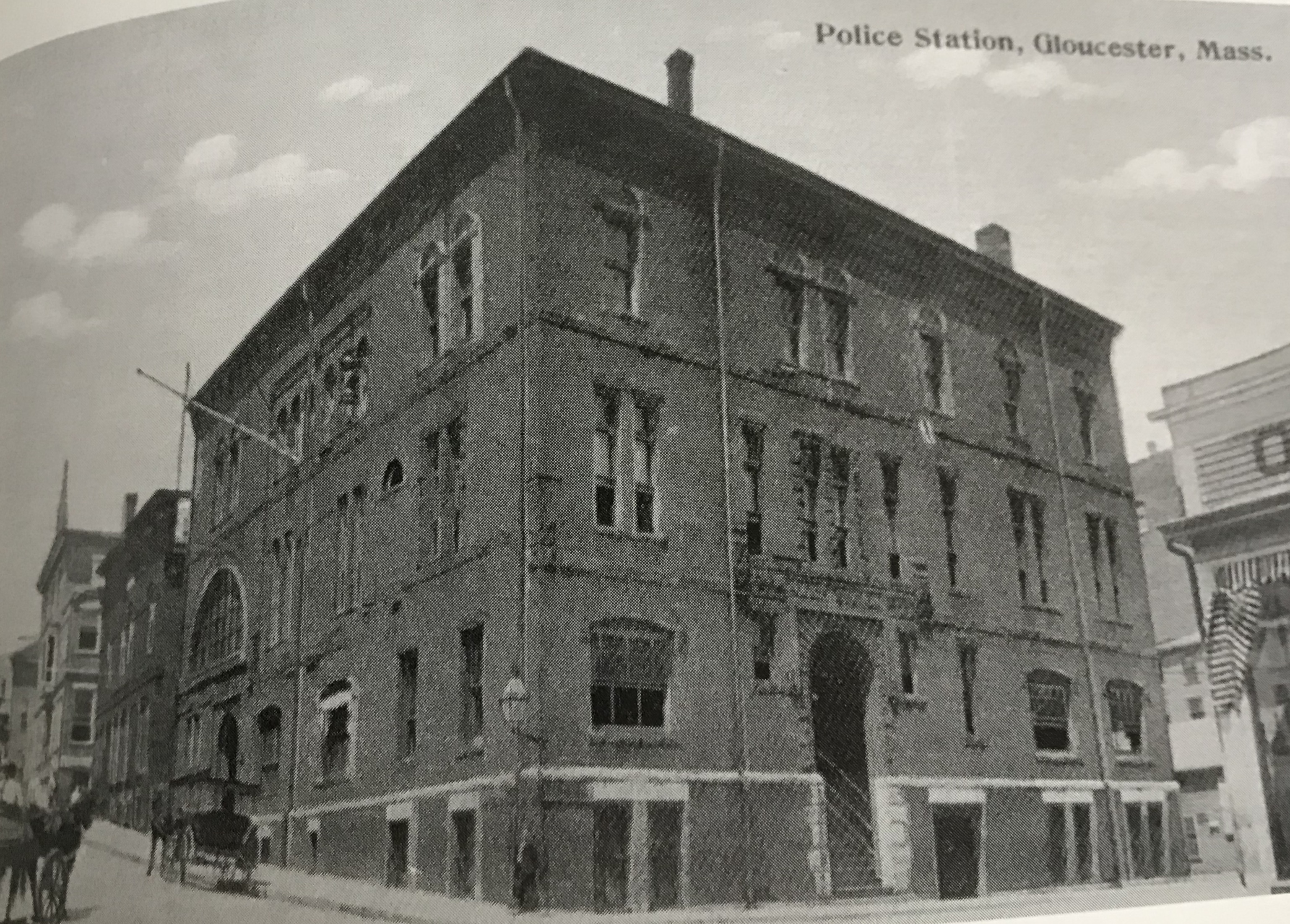
3)Where was the first Gloucester police station built in 1889, take a picture with a member in it at the location. ANSWER: corner of Duncan and Roger
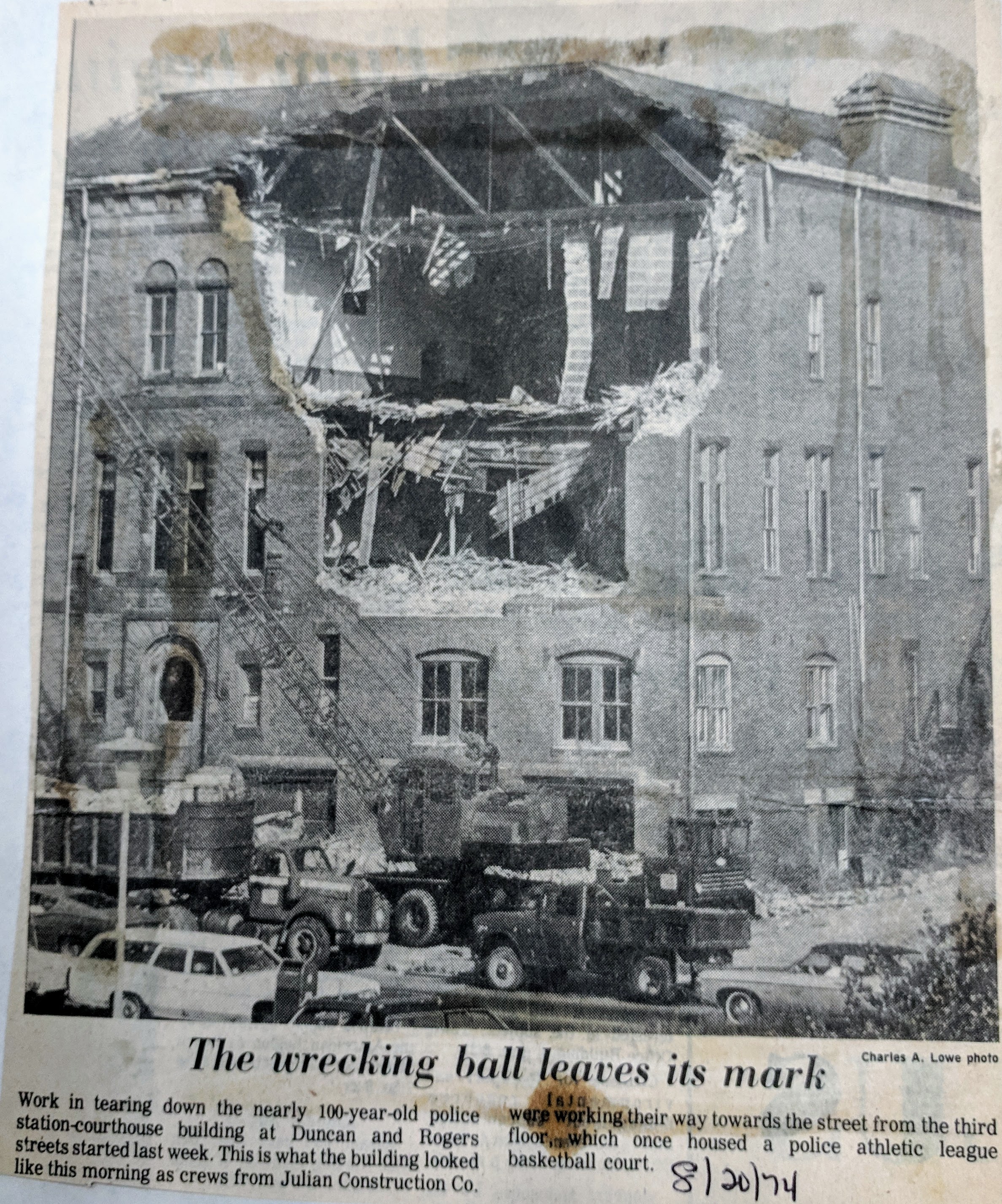
former site police station at Duncan & Rogers (now lot)
detail from 1899 Stadley Map
1899 “new” police station from Pringle history
4)Veterans of what war had a hall for them located on the third floor of the building? ANSWER: Spanish American in the police station that was built in 1899. City Hall Read about bronze veteran tribute plaques (including Spanish American) at City Hall here
from Mr. Goulart Old Police station built in 1899 at the corner of Duncan and Roger (2019 = police parking lot)
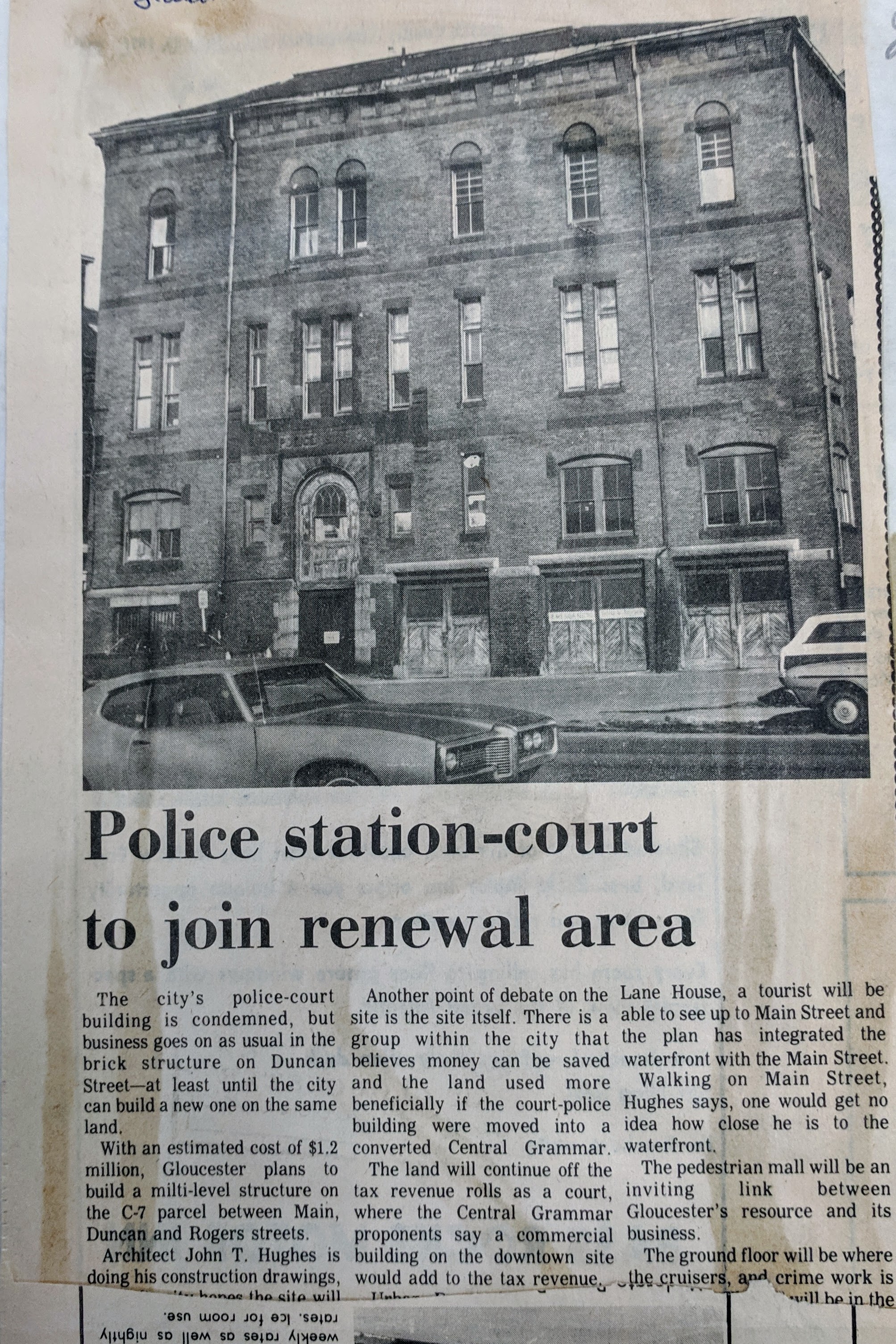
1971/1973 newspaper clipping from Sawyer Free
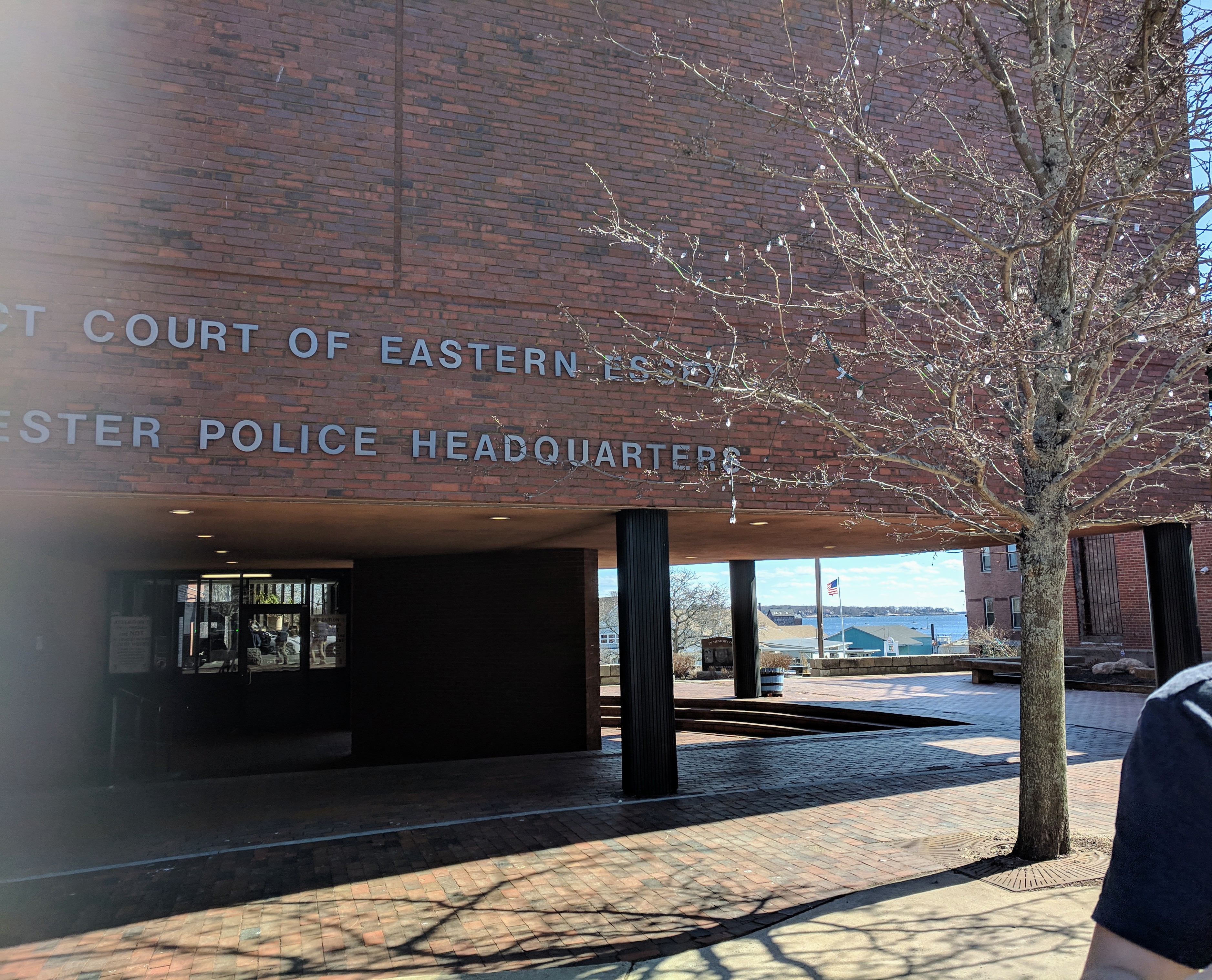
5)What year was the present day police station erected? Take a picture of it with a member in it. ANSWER: 1973
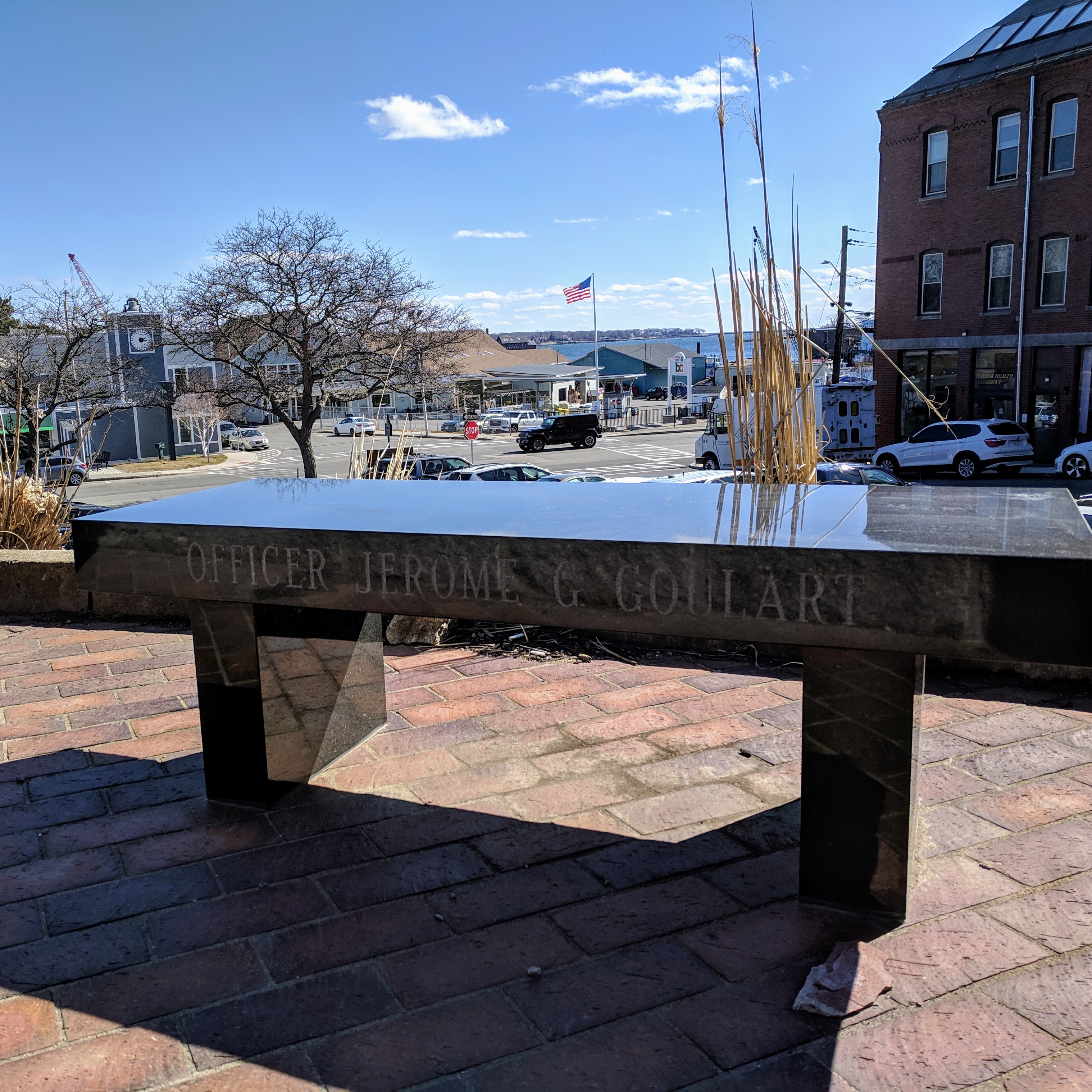
6)Go to the exterior of the police station and take a picture with an object that would be personal to Mr. Goulart (keyword: Goulart) ANSWER: Officer Jerome G. Goulart memorial bench
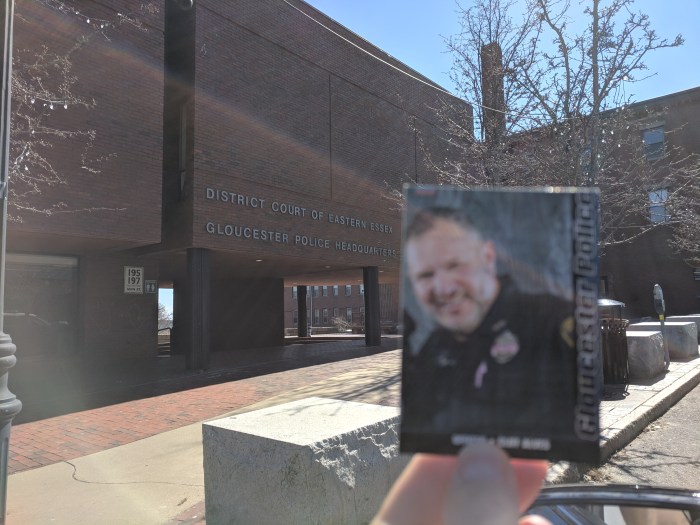
7)Take a picture with a Gloucester Police officer in uniform. Answ. How cool are these officer baseball cards!
8)Ask the cop: What is the code word for “lunch break” over the radio. Submit the answer. ANSWER: 1093
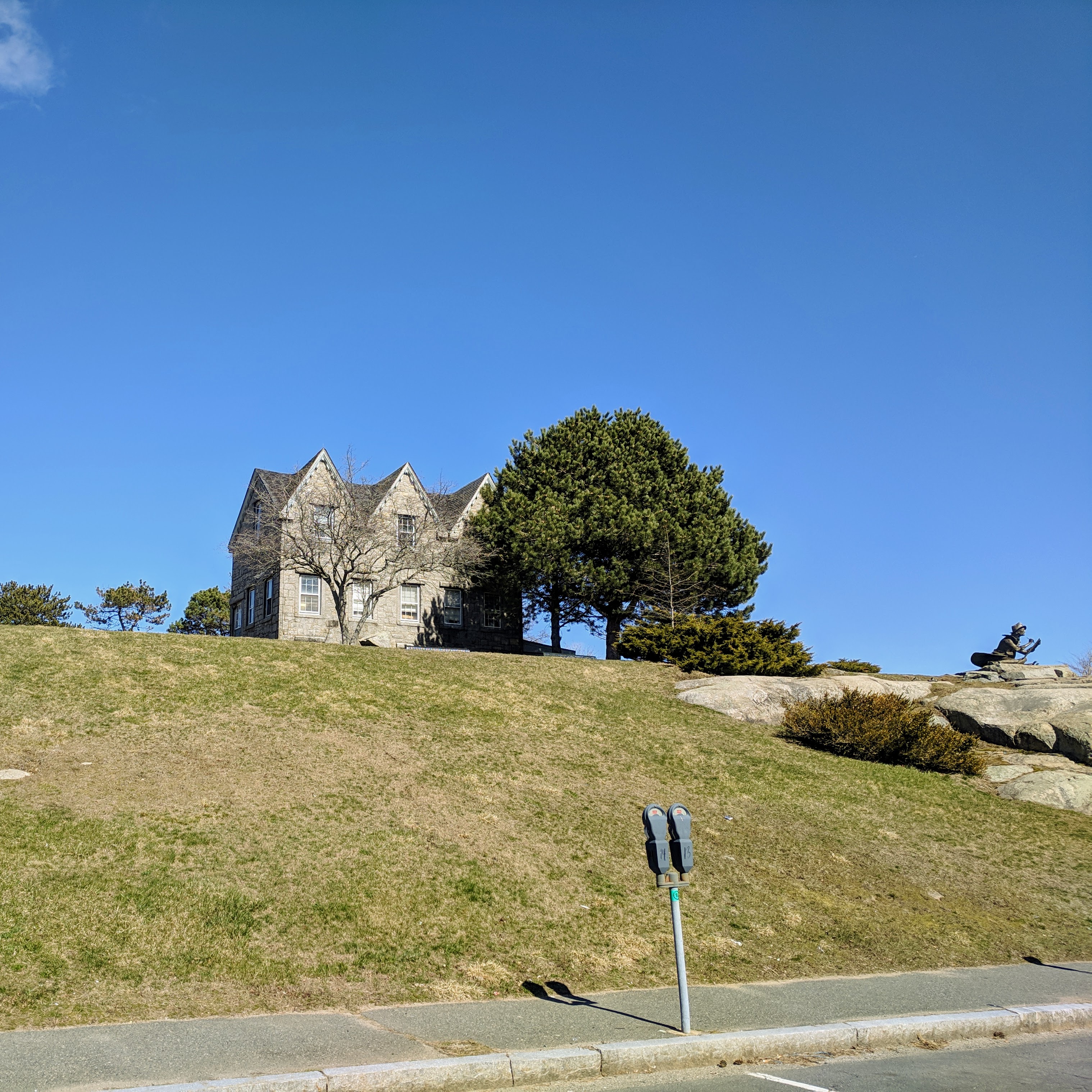
9)For a brief time the “Old Stone Jug” served as a jail, take a picture in front of it with a member in it. What is this building known as? ANSWER: Fitz Henry Lane former house and studio
10) Where does the term cop come from? ANSWER: not definitive though according to snopes meaning “nab” closest: “Instead, the police-specific use of “cop” made its way into the English language in far more languid fashion. “Cop” has long existed as a verb meaning “to take or seize,” but it didn’t begin to make the linguistic shifts necessary to turn it into a casual term for “police officer” until the mid-19th century. The first example of ‘cop’ taking the meaning “to arrest” appeared in print around 1844, and the word then swiftly moved from being solely a verb for “take into police custody” to also encompassing a noun referring to the one doing the detaining. By 1846, policemen were being described as “coppers,” the ‘-er’ ending having been appended to the “arrest” form of the verb, and by 1859 “coppers” were also being called “cops,” the latter word a shortening of the former.”- snopes






 Good Morning Gloucester