Are Coyotes the Cause of an Increase in Lyme Disease?
Struck by the recent interest in coyotes after the fascinating video Two Coyotes Versus One Deer by Shawn Henry was posted on GMG, I became interested in reading various studies and reports about coyotes, wolves, and foxes in Massachusetts and the Northeast. My primary interest at the onset was of concern for the Red Fox (Vulpes vulpes), which has seen a tremendous decline in numbers. I wondered if the presence of coyotes (Canis latrans) was negatively impacting the Red Fox. In the past, I often saw a Red Fox in the early morning hours trotting along the shoreline at Brace Cove. I wish so much that I had filmed the last one that I saw because it was a gorgeous scene; a strikingly beautiful creature so completely unaware of my presence and so at home in its realm, investigating rock and seaweed, pausing to sniff the air, and then resuming its journey. The last time I saw a Red Fox in our neighborhood was over three years ago. As I was reading about coyotes I learned the findings of some of the most recent studies indicate that because Eastern Coyotes out-compete the Red Fox, the coyotes are the cause of an increase in Lyme disease. More on that in a moment.

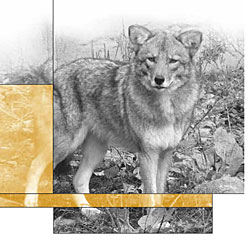
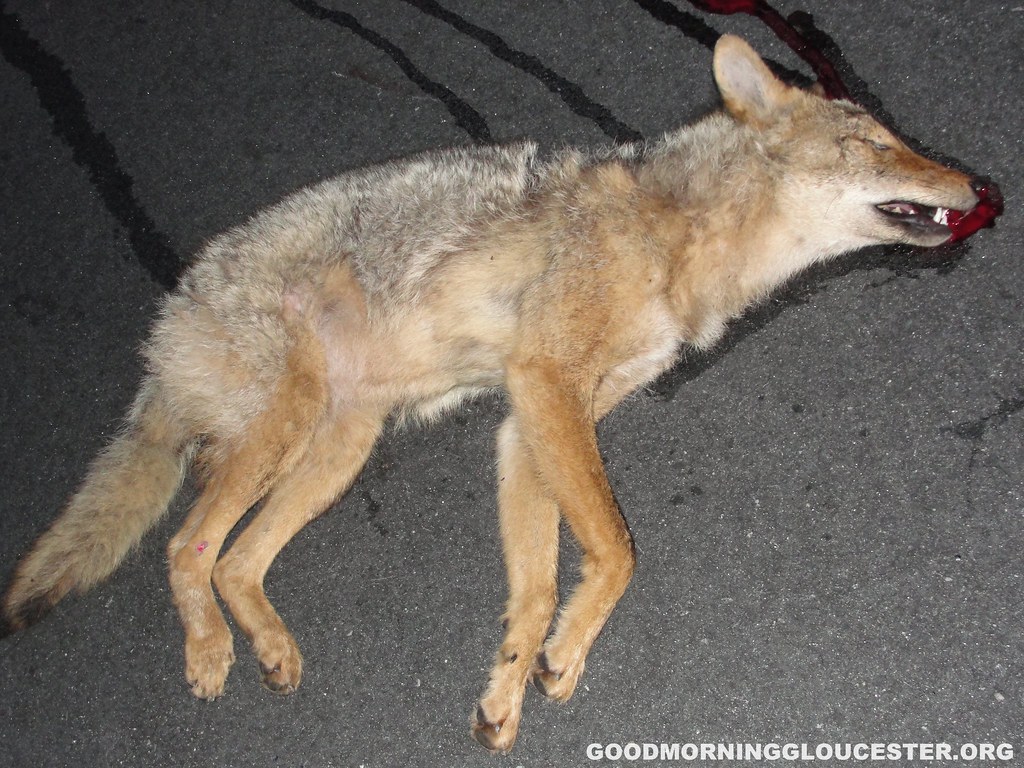
The coyotes that now inhabit every region in Massachusetts are an invasive species. They are a hybrid cross species of the Western Coyote (found west of the Mississippi) and Red Wolf (Canis lupus rufus). “Researchers now believe that the Eastern Coyote is a hybridization between the Western Coyote and Red Wolf many generations ago in the upper Great Lakes region of the United States. It is theorized that as populations of the Western Coyote increased, they were forced to move east and north in search of food. As they moved into Minnesota they crossbred with Gray/Red Wolves and produced a genetically hardy animal able to sustain itself through New England winters.” (Mass Audubon)
Coyotes are not “re-populating” this region because this new species was never in our region.
Eastern Coyotes have extremely broad food habits and many factors affect the coyotes’ diet, including competition with other mammals, abundance of prey, season, and weather. In the Northeast, their diet consists of shrews, rabbits, voles, woodchucks, mice, deer, beaver, muskrat, weasels, squirrels, and carrion. And according to Mass Audubon, “They eat ground-nesting birds and their eggs, as well as reptiles and amphibians. When other prey is scarce they will eat a variety of insects including grasshoppers, beetles and cicadas. When animal matter is scarce, they will eat available fruits including apples, cherries, grapes, and strawberries.”
The rapid invasion of the alien Eastern Coyote has negatively impacted many sympatric native species, as the coyote has assumed the role of top-order predator. The coyote has fundamentally altered the existing ecosystem and various species have experienced population declines as a direct result of their role as coyote prey or from direct competition for food. “Culturally and ecologically significant species including Red Fox decline dramatically in response to increasing coyote populations. Eastern Coyote and Red Fox share many common habitat requirements and occupy overlapping niches. Through time, the larger and more resilient coyote is able to out-compete and displace resident fox populations.” (Department of Natural Resources, Maryland.)
Studies have shown repeatedly that Eastern Coyote predation on deer is minimal. Most herds can handle the coyotes. Typically coyotes have success with fawns that are 4-5 weeks old (after they have become more active and are not by the mother’s side), weakened and sickly adults, and deer separated from the herd. These targets represent approximately one or two percent of the total deer population. While coyote diet studies show consistently the use of deer for food, it does not appear that coyote limit deer population on a regional scale.
Although the population of White-tailed Deer has stabilized, Lyme disease continues to increase. In June of 2012 researchers at the University of California Santa Cruz published their findings from the study “Deer, Predators, and the Emergence of Lyme Disease.” (Taal Levi, lead author.)
The study found that once where there was an abundance of Red Foxes, there is now an abundance of Eastern Coyotes. Even more significantly, fewer coyotes will inhabit an area once populated by more foxes. The greater number of foxes would have consumed a larger number of small tick-bearing animals, primarily White-footed Mice, Short-tailed Shrews, and Eastern Chipmunks, all of which transmit Lyme disease bacteria to ticks. It appears as though it is the Red Fox that once kept the population of these smaller rodents under control.
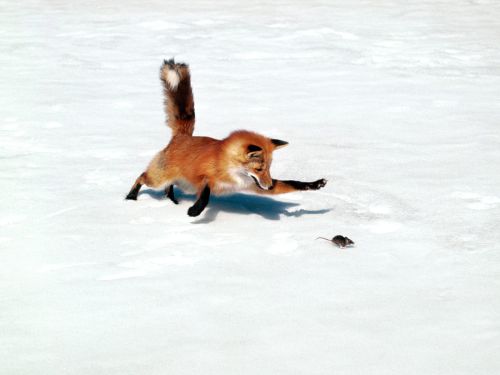
Even when there is a threefold rise in deer population, study after study now shows that the strongest predictors of a current year’s risk of Lyme disease are an abundance of acorns two years previously. How does that work?
Many acorns = many healthy mice and chipmunks.
Many healthy mice and chipmunks = many tick nymphs.
The following year when it may not be a bumper acorn crop = fewer mice.
Fewer mice and chipmunk = dogs and humans become vectors for the ticks.
While acorns don’t serve as a universal predictor because Lyme disease can be traced to forests where there are no oak trees, the data suggest that food sources and predators of small forest mammals are likely to be valuable in predicting Lyme disease risk for humans.
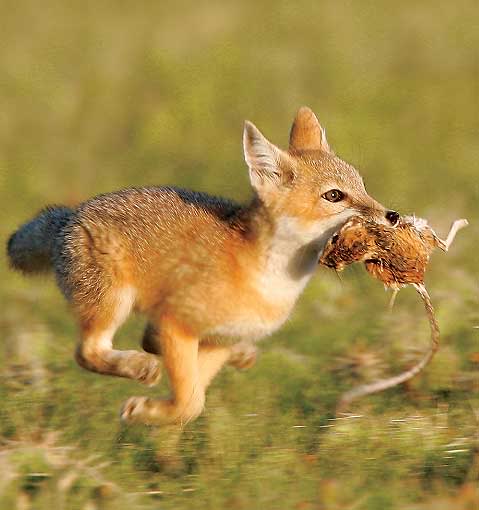
To summarize, multiple studies suggest that the invasive Eastern Coyote out-competes and kills the native Red Fox population, which leads to a rise in the number of small animals particularly the White-footed Mouse and Eastern Chipmunk, which in turn leads to an increase in ticks that carry Lyme disease. The impact of the Eastern Coyote on native deer population is negligible. And, as many family’s can attest, the impact of the Eastern Coyote on populations of domestic cats and small dogs has been devastating.
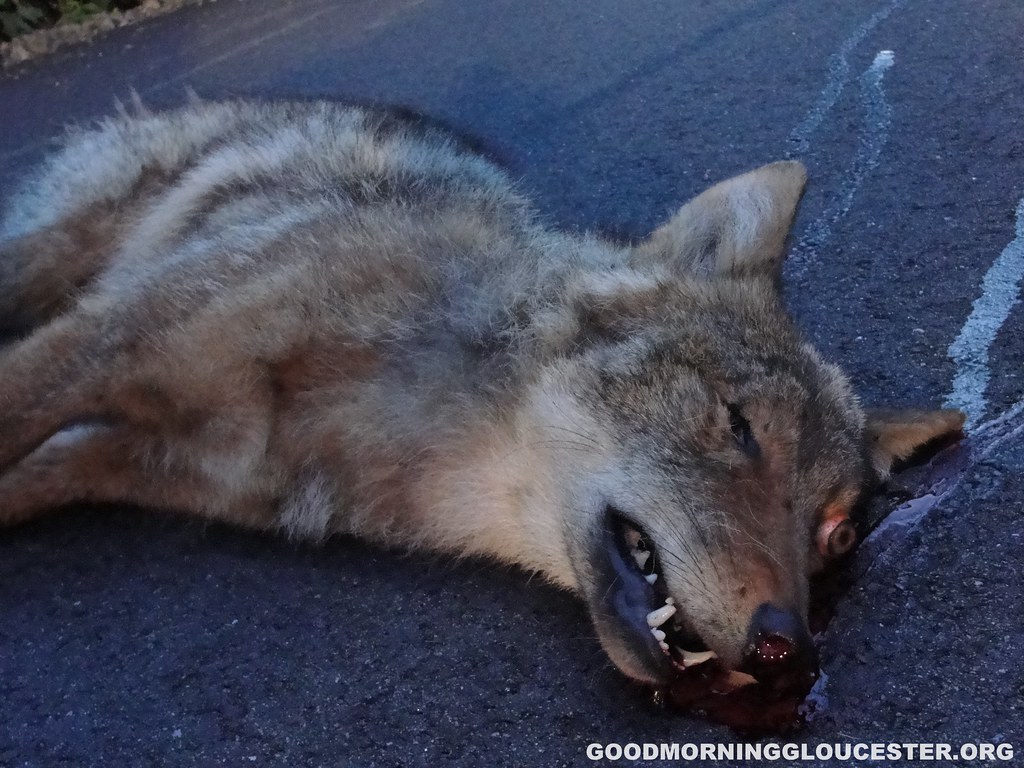
Typically the excuse given for unwanted encounters with wildlife is that people are encroaching on the animal’s habitat. That simply is not the case with the Eastern Coyote. The Eastern Coyote is advancing on humans–and they like what they see; no large predators, a reluctance on the part of people to hunt and trap, and an abundance of food. The environmentally and culturally destructive chain reaction caused by the Eastern Coyote invasion is taking on added urgency as the coyote strikes closer and closer to home.
It is legal in the state of Massachusetts to shoot and kill a coyote from your home. If confronted by a coyote, make as much noise as possible, if attacked, fight back aggressively.
Images courtesy Google image search.





 Good Morning Gloucester