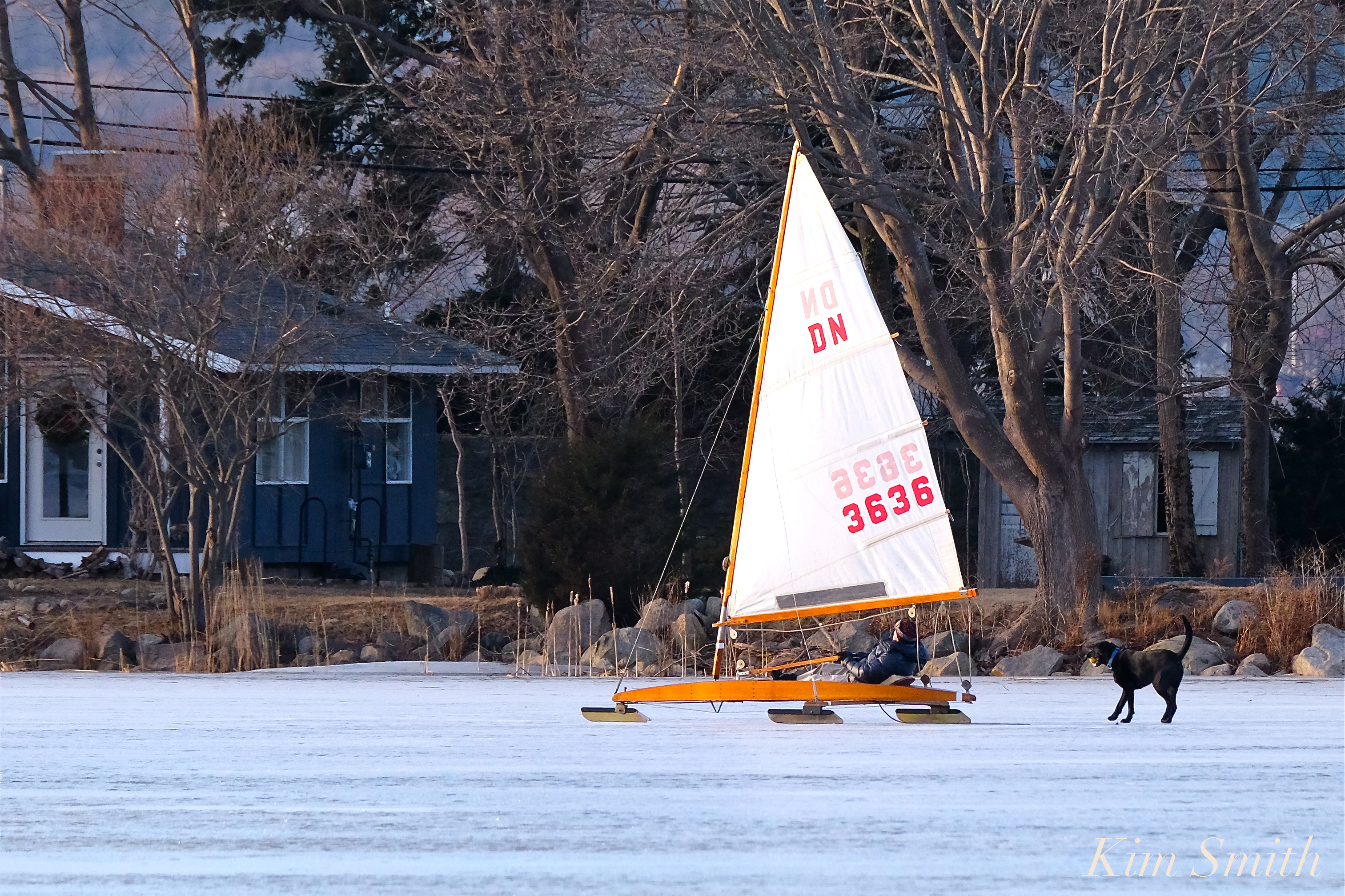
 Wonderful fun to see the ice boat racing on Niles Pond. The black lab has had no problem navigating the ice while trotting alongside his boy 🙂
Author: Kimsmithdesigns
Documentary filmmaker, photographer, landscape designer, author, and illustrator. "Beauty on the Wing: Life Story of the Monarch Butterfly" currently airing on PBS. Current film projects include Piping Plovers, Gloucester's Feast of St. Joseph, and Saint Peter's Fiesta. Visit my websites for more information about film and design projects at kimsmithdesigns.com, monarchbutterflyfilm.com, and pipingploverproject.org. Author/illustrator "Oh Garden of Fresh Possibilities! Notes from a Gloucester Garden."

LIVE FROM THE NYC WOMEN’S MARCH!!
Thanks to Liv for sharing photos of the 2018 Women’s March in NYC. Tens of thousands of folks are pouring in from the surrounding boroughs. That’s New York City’s Mayor Bill de Blasio in the first two photos.


Spread The GMG Love By Sharing With These Buttons:

GLORIOUS GOOD MORNING BROUGHT TO YOU BY TWIN LIGHTS!
“It was a good one this morning,” some old gent walking past me remarked, smiling from ear to ear. Yes, I concurred, equally as full of joy to see the day begin on such a note.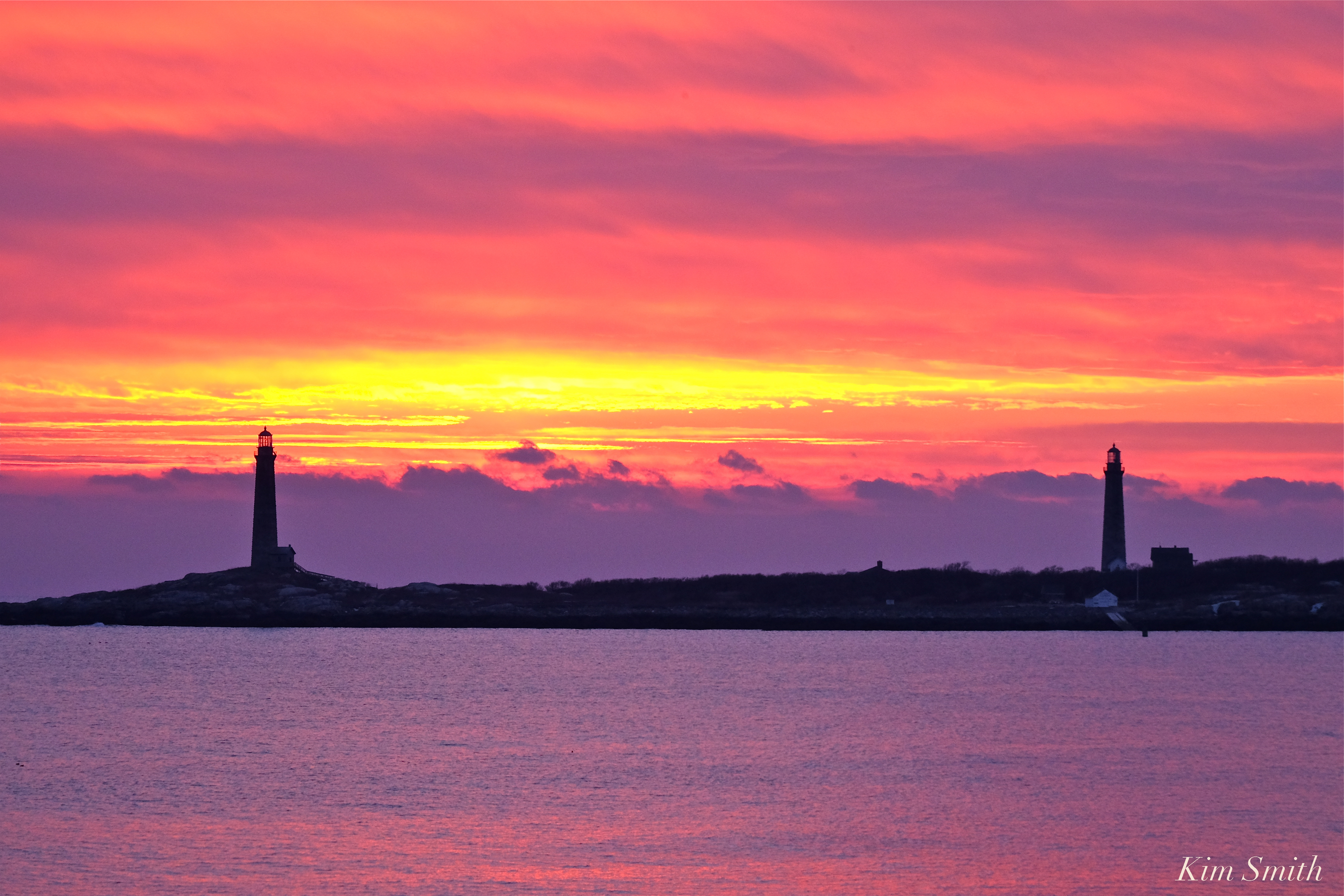 Twin Lights Thacher Island
Spread The GMG Love By Sharing With These Buttons:

ENROLL TODAY FOR WINTER YOUTH PROGRAMS AT GLOUCESTER STAGE
WINTER YOUTH PROGRAMS SET FOR GLOUCESTER STAGE
Gloucester Stage Youth Acting Workshop
Winter 2018 Session Accepting Students
Gloucester Stage Youth Acting Workshop is now accepting students ages 5-18 for the 2018 Winter Session of professional arts instruction beginning on Friday, February 2 for Children 5-10 years old and beginning on Saturday, February 3 for Teens 11-18 years old. The Youth Acting Workshop Winter 2018 Session features expanded instruction time of four class hours per week, lower tuition for all students and scholarship opportunities. Students will receive instruction in acting, directing, play writing, producing, magic, improvisation, creating characters and the world of the play and costume design during the six week session. Acting teacher, director and award winning actress Gloucester native Heidi Dallin will be joined by guest instructors : costume designer Lara Jardullo, the Costume Designer of the YAW’s annual production of Holiday Delights, to teach Costume Design; Tufts graduate Danvers native Sarah Vandewalle to teach How to Make A Musical and magician EvanNorthrup to teach The Principles of Illusion. Gloucester Stage Youth Acting Workshops are designed to provide young people an outlet to nurture their creative potential through developing self-confidence, communication and teamwork skills to use in their daily life as well as introducing them to the skills necessary for professional theater. Registration is now open for the Winter 2018 Session. Class size is limited and registration is on a first come basis. For further information and to register, call 978-283-6688 or go to www.gloucesterstage.com.


Spread The GMG Love By Sharing With These Buttons:

TEN POUND ISLAND SNOW DAY
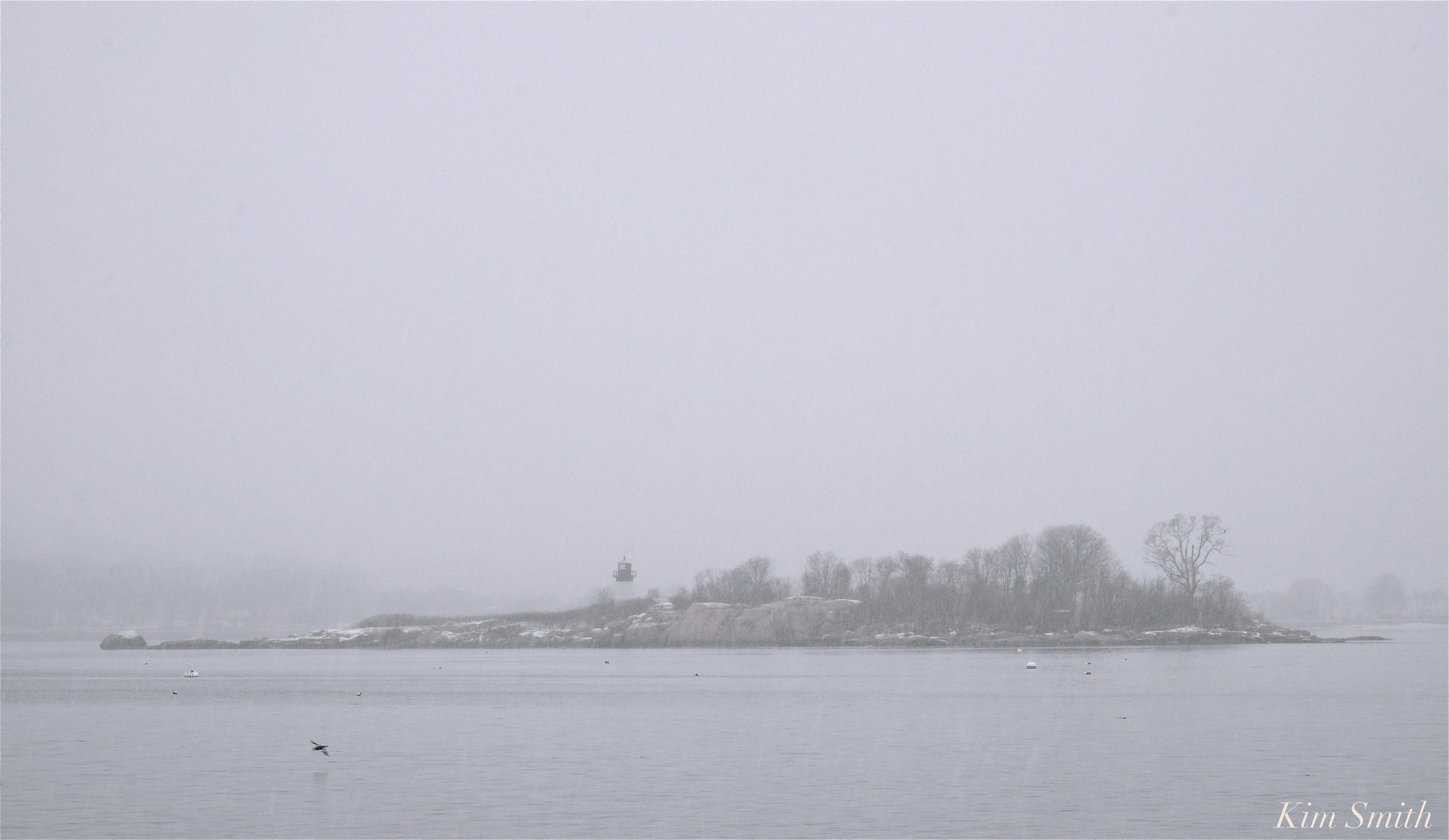 Ten Pound Island in the Snow
Spread The GMG Love By Sharing With These Buttons:

MESSAGE FROM DAVID CALVO AND CLASS SCHEDULE
Good Morning Gloucester Community,
I have all my school classes posted for 2018. I am offering five-day, two-day and one-day classes. I also offer a weekly carving class on Tuesday night. Last year we introduced basketry classes that were a big hit, so that is being added to the schedule this year. Please feel free check out my website or if you have any questions to contact me directly. (978)-283-0231
David Calvo

Spread The GMG Love By Sharing With These Buttons:

CAPE ANN WILDLIFE: A YEAR IN PICTURES 2017
 CAPE ANN WILDLIFE: A YEAR IN PICTURES 2017
By Kim Smith
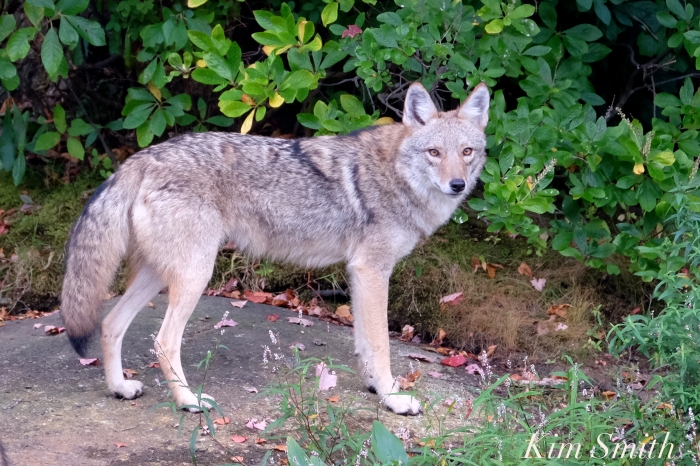
Cape Ann provides welcome habitat for a menagerie of creatures beautiful, from the tiniest winged wonder to our region’s top predator, the Eastern Coyote. Last year I posted a Cape Ann Wildlife Year in Pictures 2016 and I hope you will find the wildlife stories of 2017 equally as beautiful. Click on the image to find the name of each species.
WINTER
The only partially frozen ponds at the start of winter allowed for dabblers and divers such as Mallards, Mergansers, and Buffleheads to forage at the freshwater. Mr. Swan had his usual entourage of quwackers and daily heads to the other side of the pond to get away for his morning stretches. Sightings of Red-tailed Hawks and other raptors abounded. Although photographed in Newburyport, the owl photos are included because these species are found readily on Cape Ann. An Eastern Screech Owl (red-morph) was seen daily perched above a playground and Barred Owl sightings too were reported throughout the winter. Raptors live on Cape Ann all year round but are much easier to see in winter when the trees are bare of foliage.
The beautiful aqua green eyes of the juvenile Double-crested Cormorants were seen wintering at both Niles Pond and Rockport Harbor. And during a warm February day on a snowless marsh a turkey bromance shindig commenced.


SPRING
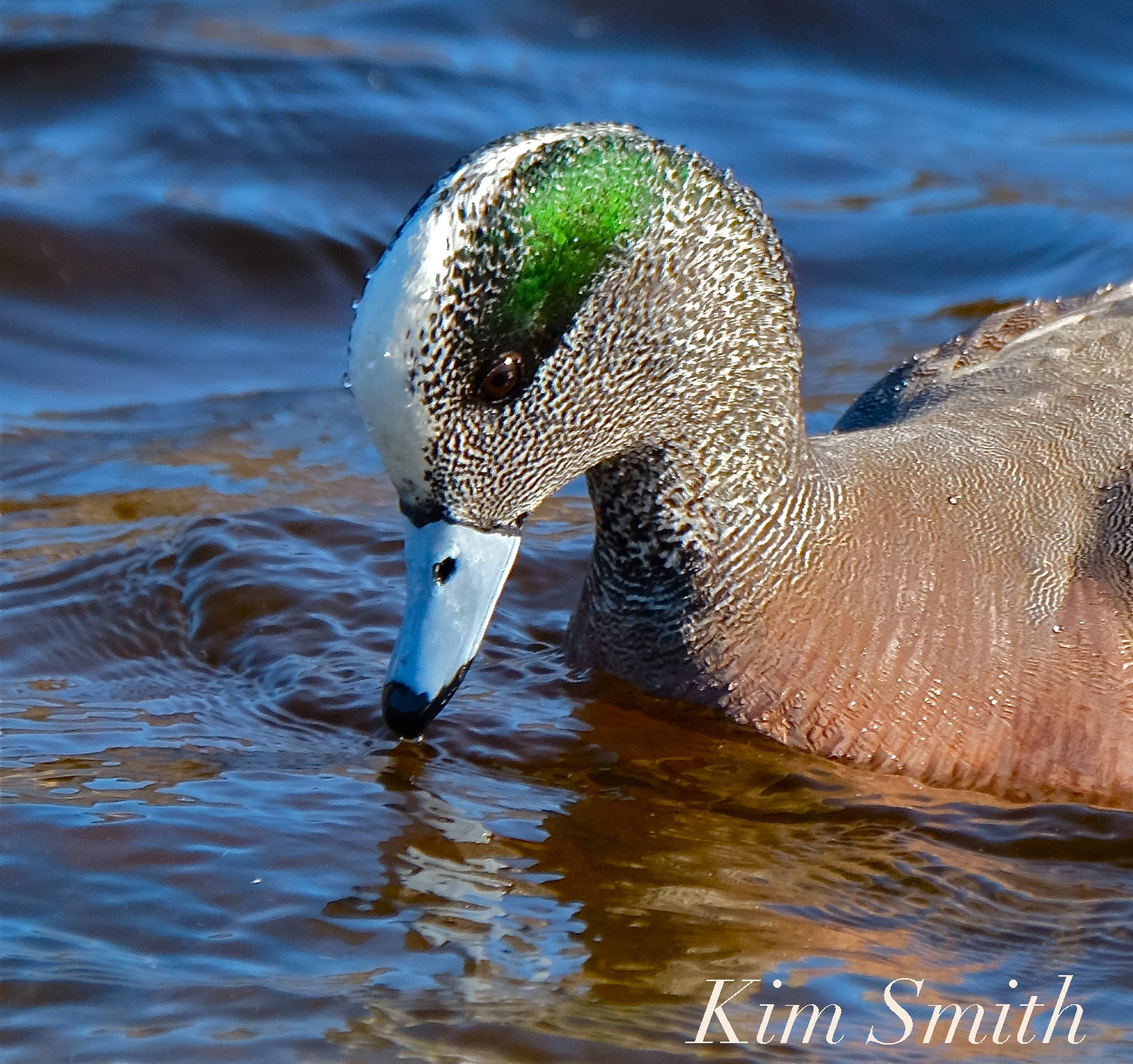


In early spring, a male and female American Wigeon arrived on the scene making local ponds their home for several weeks. In the right light the male’s electric green feathers at the top of his head shine brightly and both the male and female have baby blue bills.


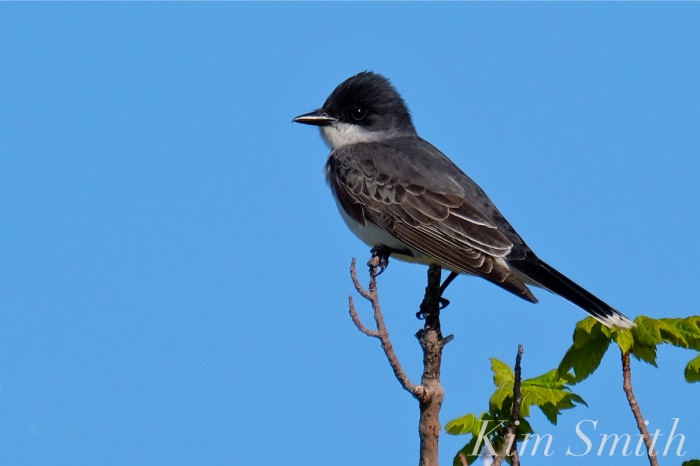
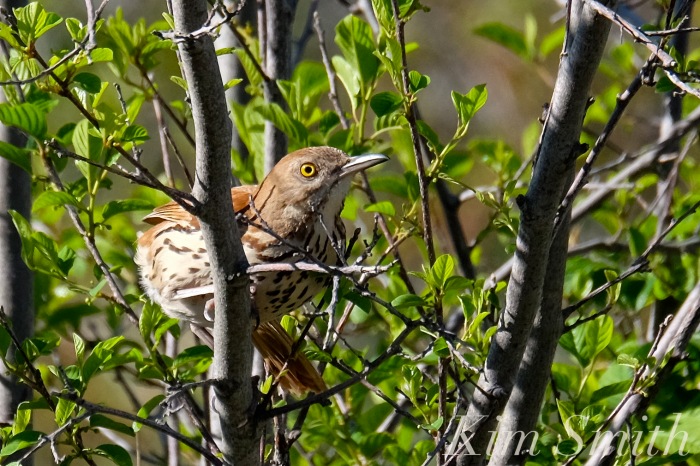
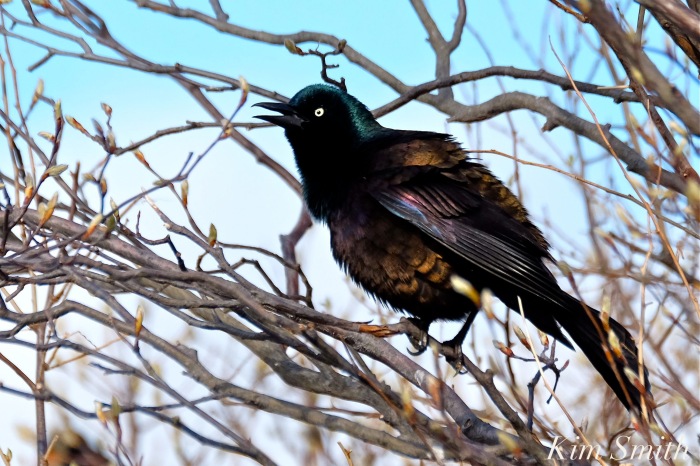
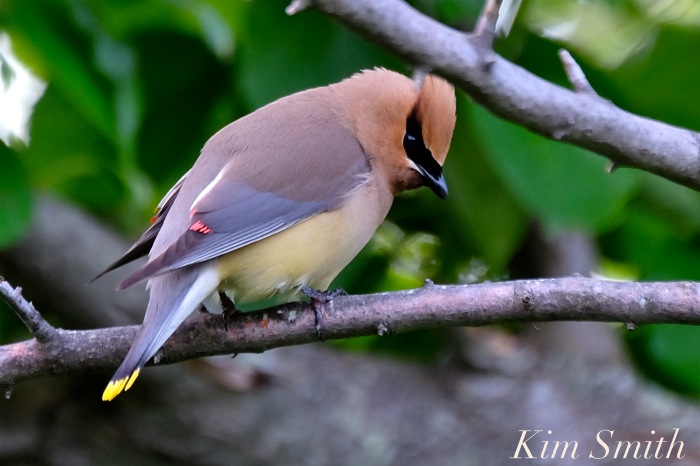

Meadow and marsh, dune and treetop were graced with the heralding harbingers of spring with photos of a Red-winged Blackbird, a pair of Cedar Waxwings, Northern Mockingbird, Brown Thrasher, Eastern Towhee, Eastern Kingbird, Tree Swallow, and Grackle included here.

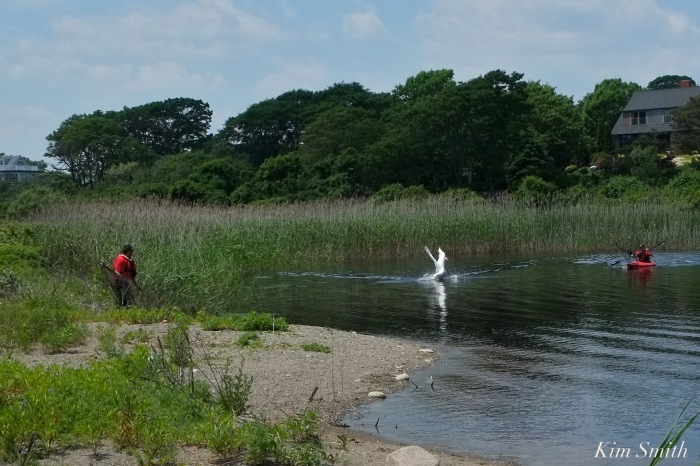

The Great Swan Escape story made headlines in Boston as Mr. Swan eluded captors for hours. He had re-injured his foot and someone took it upon themselves to call the animal rescuers, which would have surely meant death for our beloved 27-year old swan if he had been wrangled into captivity.


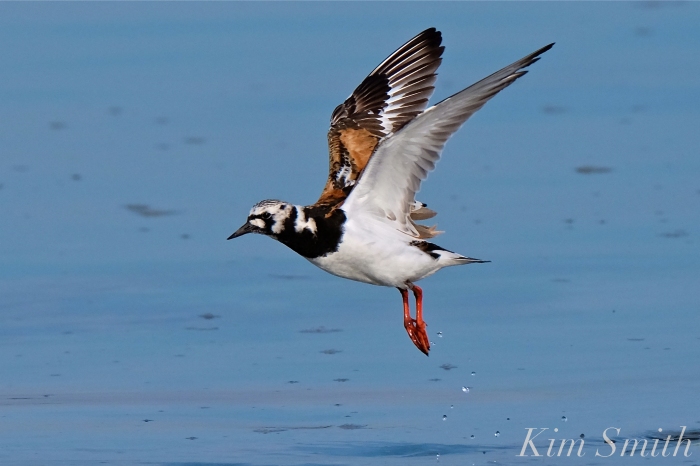
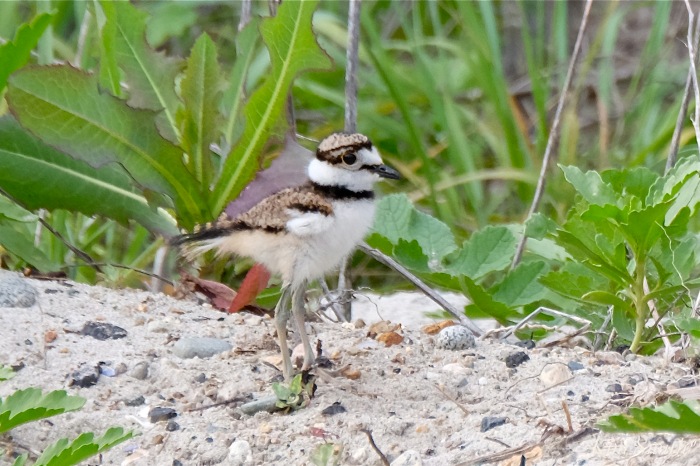
M is clearly for Migration through Massachusetts and the month-long arrivals and departures did not abate. Short-billed Dowitchers, winsome Willets, Yellow Legs, Brandt Geese, and Ruddy Turnstones are just some of the migrating birds spied on Cape Ann beaches and marshes. The best news in May was the return of the Piping Plovers. Of the five or six that camped at Good Harbor Beach to investigate potential nesting sites, one pair bonded and built their nest mere yards from the nesting pair of last year. Could it be the same pair? The nesting Piping Plover story took up much of the spring and by early summer four little Piping Plover chicks hatched over Fiesta weekend. Hundreds of photos and hours of film footage are in the process of being organized with a children’s book and documentary in progress.
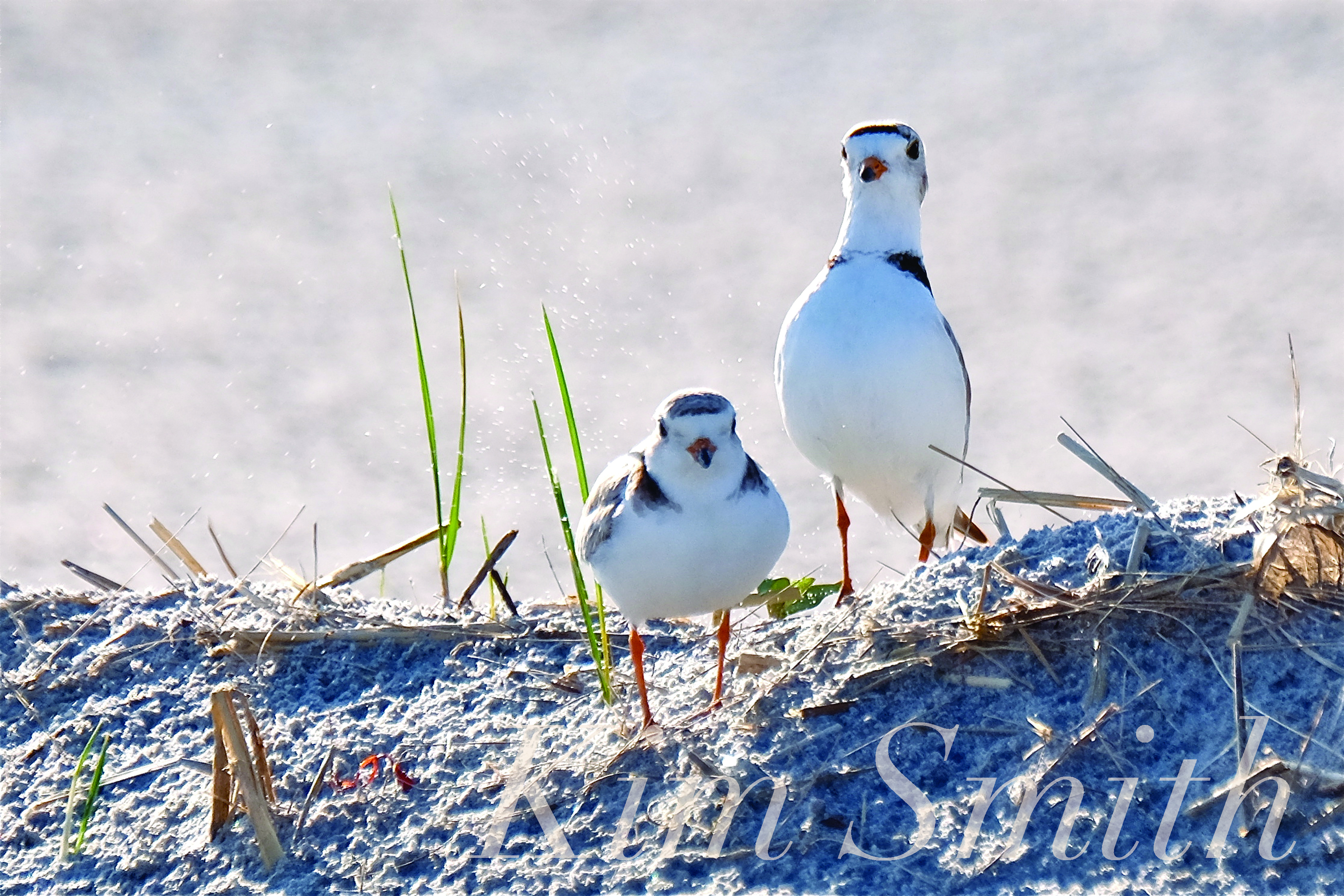 Piping Plover Courtship Dance
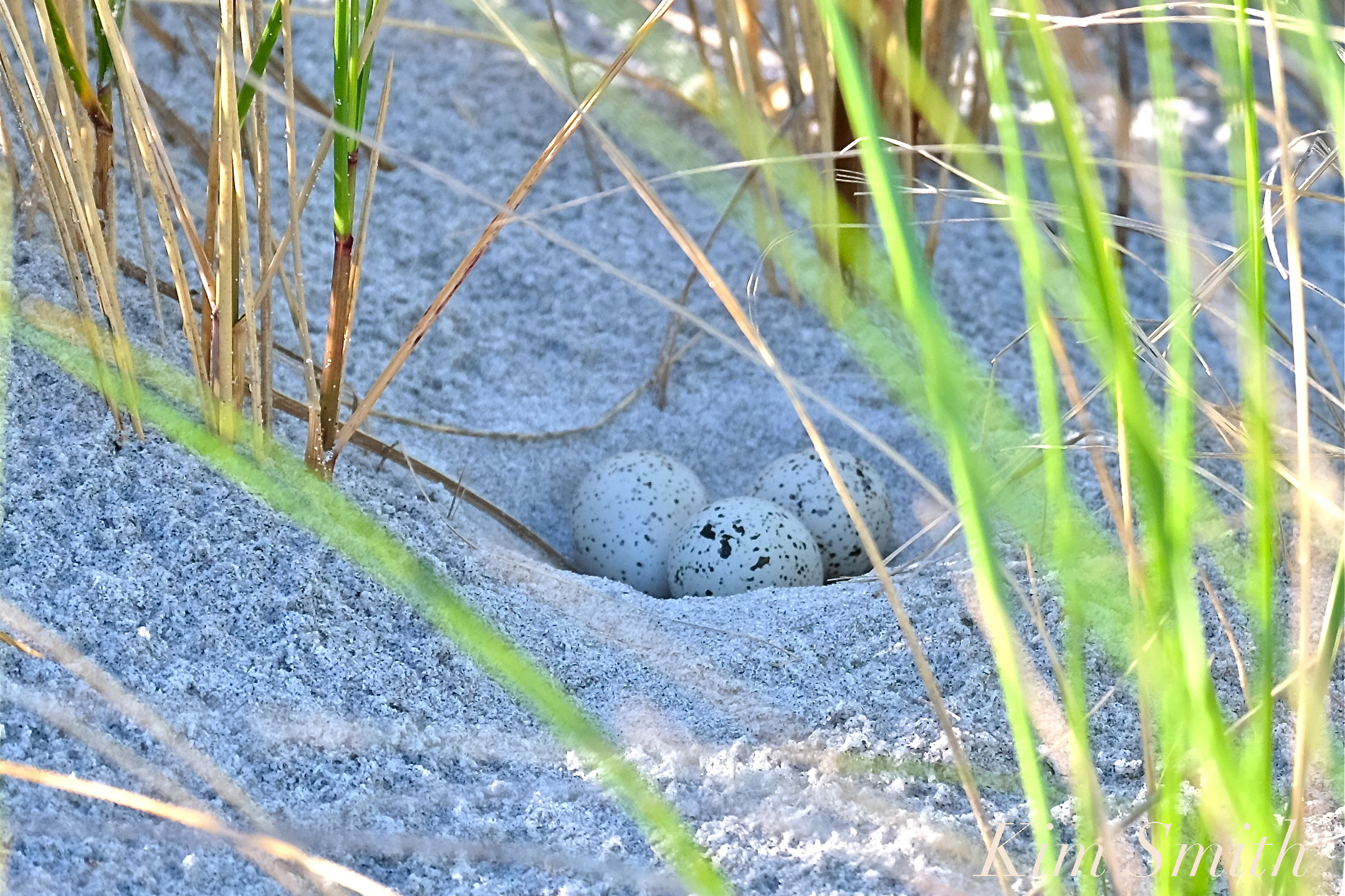 Piping Plover Nest


SUMMER
 OctoPop
The survival of one Piping Plover chick was made possible by a wholesale community effort, with volunteers covering all hours of daylight, along with Mayor Sefatia and her team, Ken Whittaker from the conservation office, Chief McCarthy, and animal control officer Diane Corliss all lending a hand.
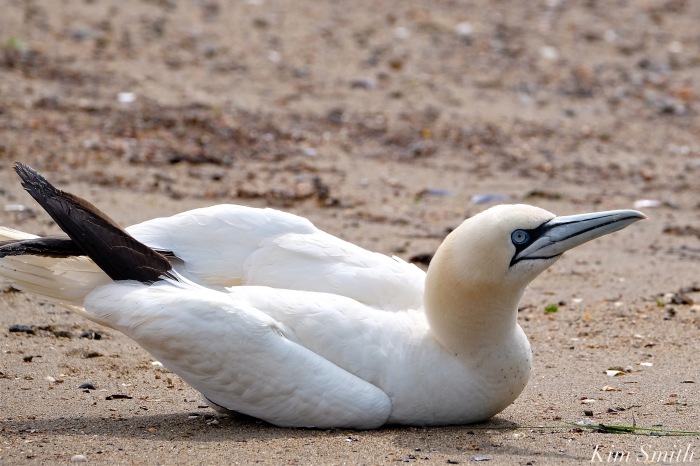

Sadly, several Northern Gannets came ashore to die on our Cape Ann beaches, struck by the same mysterious and deadly disease that is afflicting Northern Gannets in other coastal regions. During the summer season they are typically at their North American breeding grounds, which are six well-established colonies, three in the Gulf of St. Lawrence, Quebec, and three in the North Atlantic, off the coast of Newfoundland.
 An orphaned swan was introduced to Niles Pond, much to the dismay of Mr. Swan. Eastern Point residents Skip and Lyn kept watch over the two while they reluctantly became acquainted.


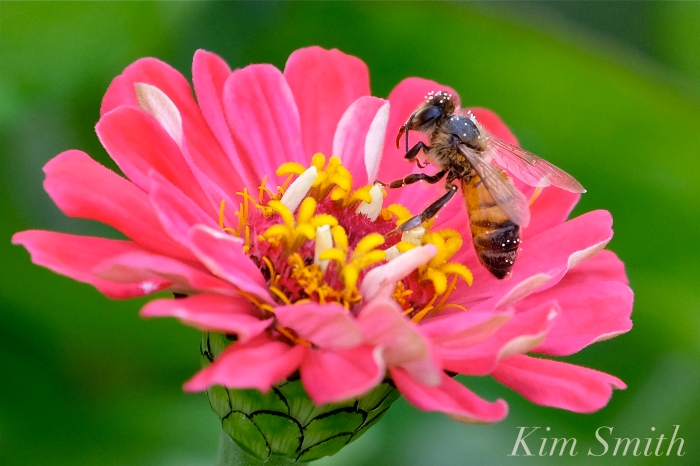
By mid-July many of us were seeing Monarchs in much greater numbers than recent years. Nearly every region within the continental United States experienced a fantastic Painted Lady irruption and butterflies of every stripe and polka dot were seen flitting about our meadows, fields, and gardens.

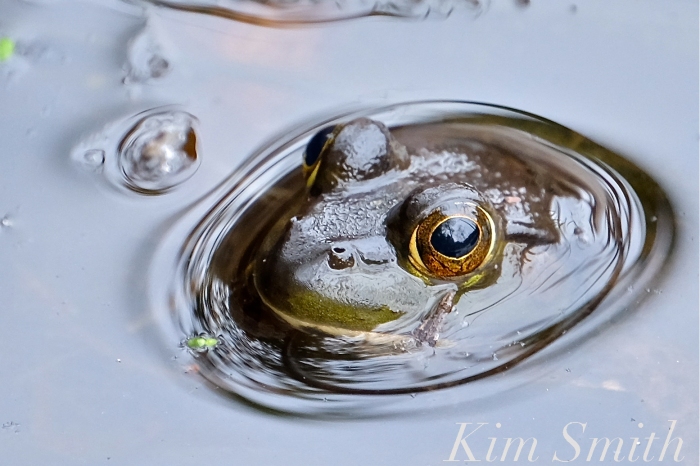
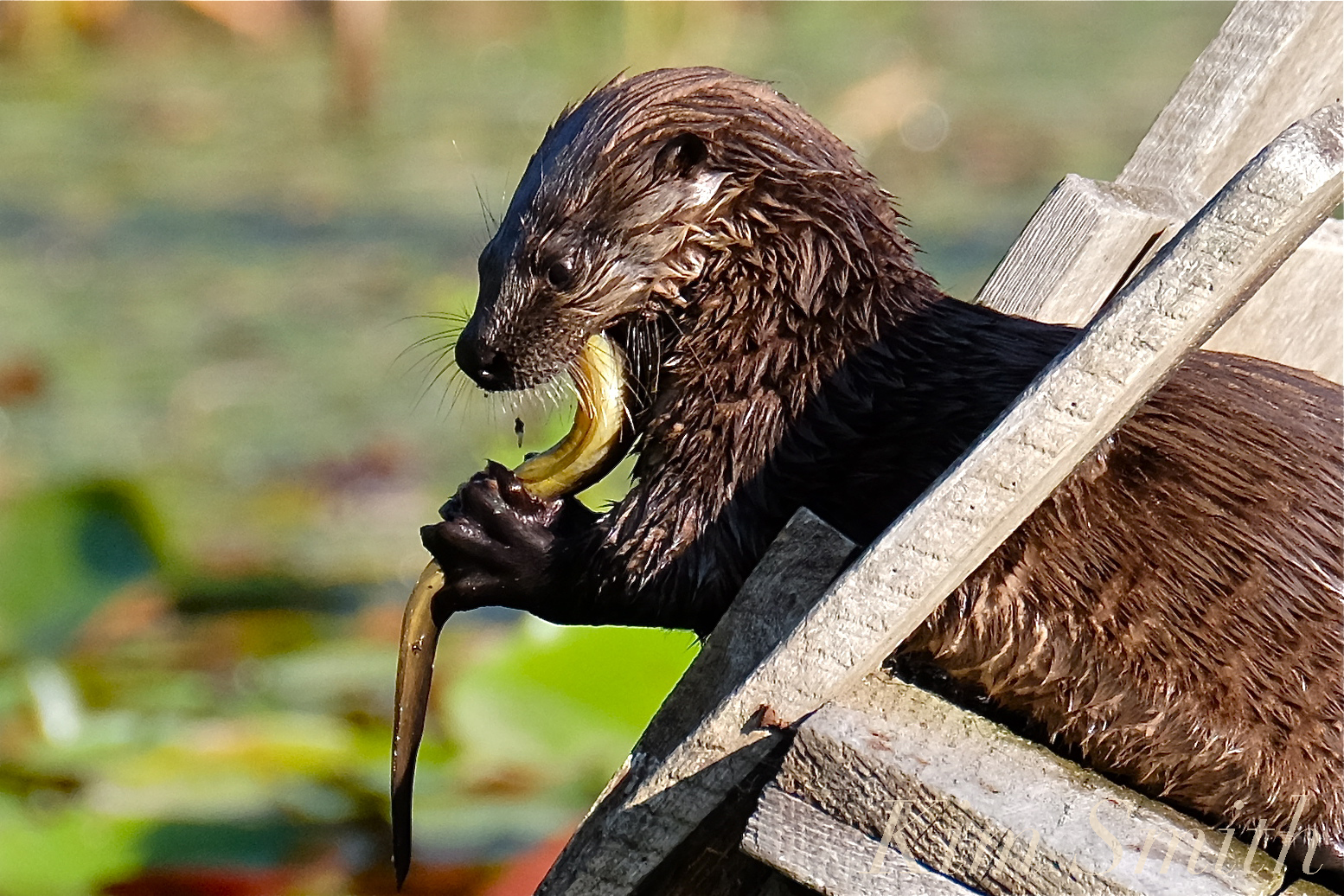
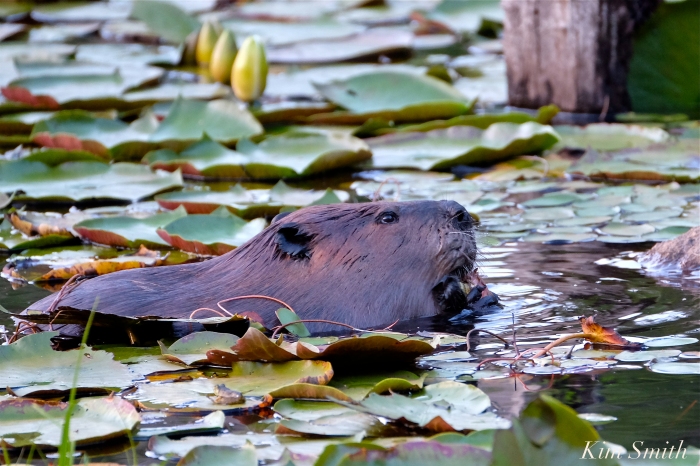
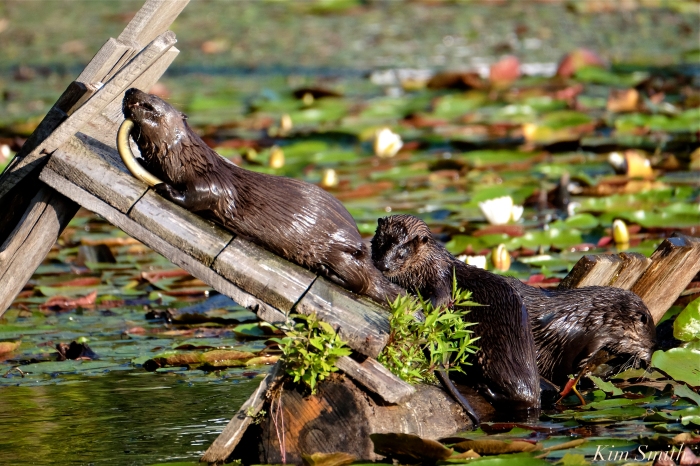
The tadpoles and froglets of American Bullfrogs and Green Frogs made for good eating for several families of resident otters, who are making their homes in abandoned beaver lodges. Little Blue Herons too, find plentiful frogs at our local ponds.


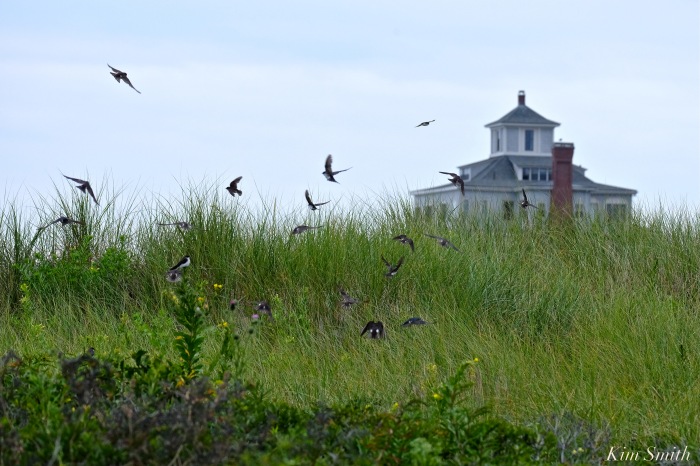
Tree Swallows Massing
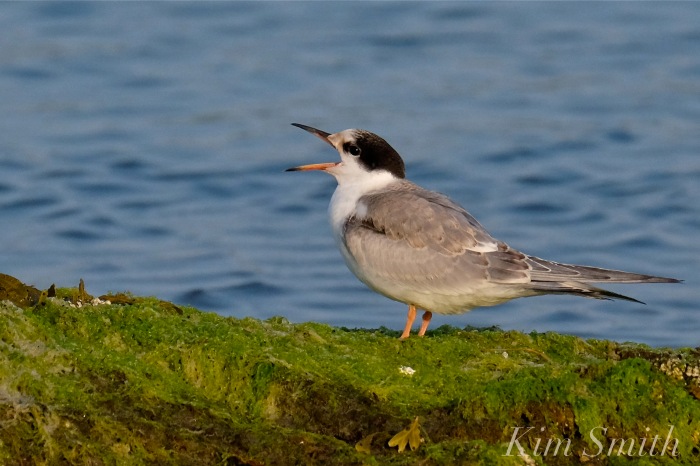
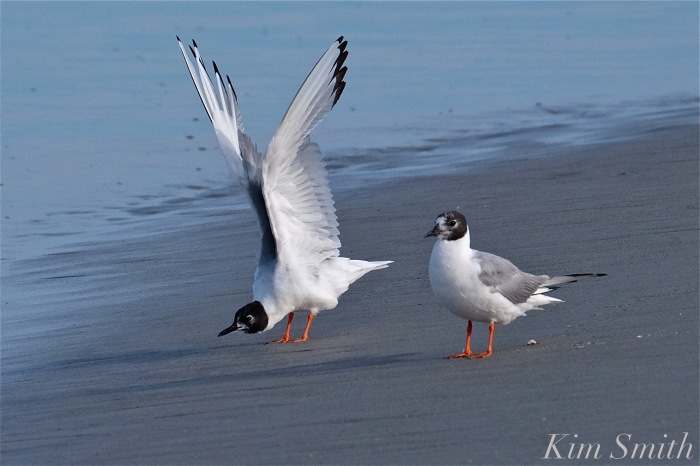
In early August we see the Tree Swallows begin to mass for their return migration. They find an abundance of fruits and insects in the dunes, headlands, and beaches. The Cedar Waxwings and Ruddy Trunstones were observed back again foraging on their southward journey, along with myriad species of songbirds, shorebirds, divers, and dabblers.










FALL
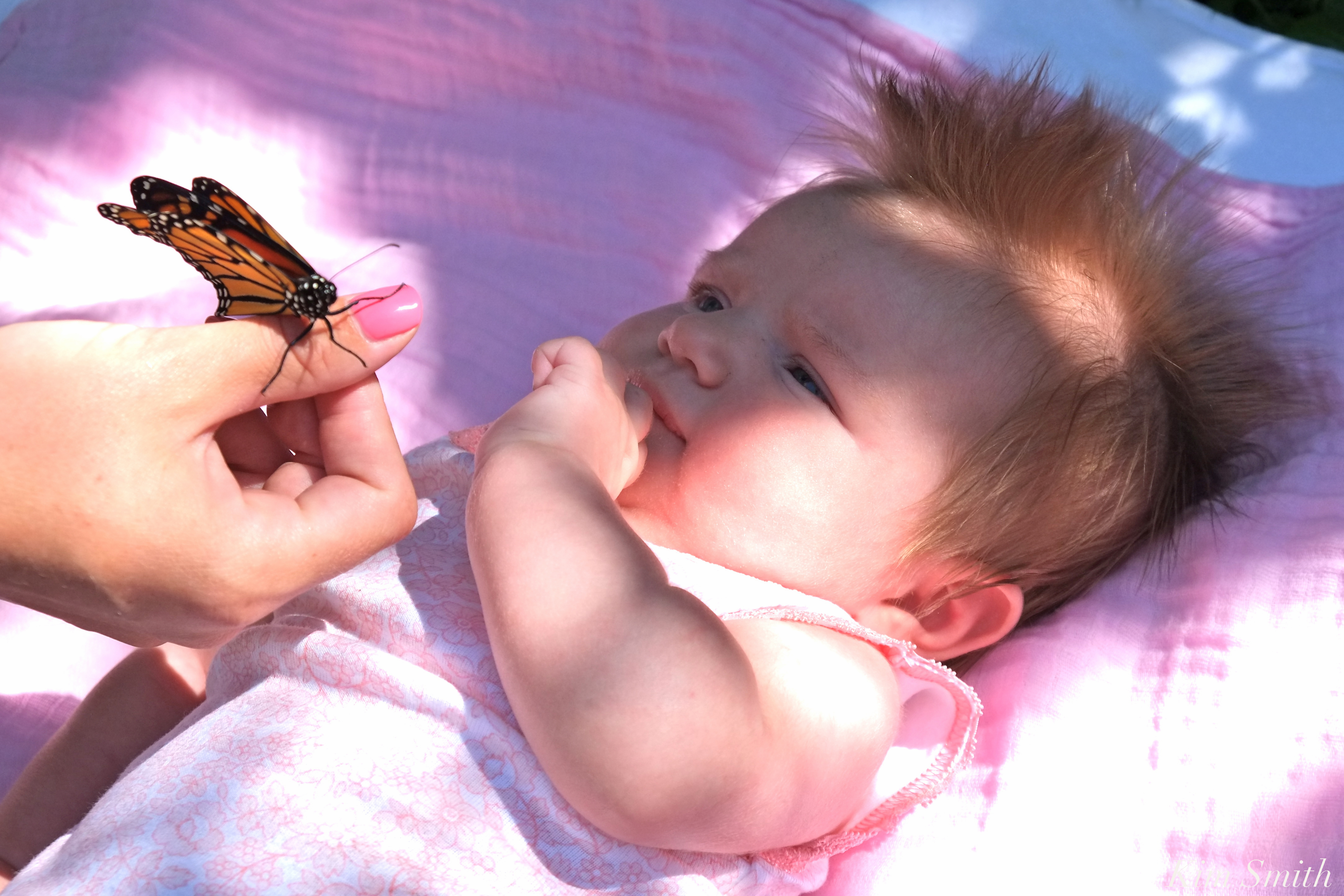


The Late Great Monarch Migration continued into fall as we were treated to a wonderfully warm autumn. Waves and waves of Monarchs came ashore and more butterflies arrived on the scene including new batches of Painted Ladies, Clouded Sulphurs and Common Buckeyes (nothing common about these beauties!).


A pair of Northern Pintails called Cape Ann ponds and coves home for nearly a month while we seem to be seeing more and more raptors such as Red-tailed Hawks, Osprey, Bald Eagles, and Peregrine Falcons. Juvenile herons of every species that breeds on Cape Ann lingered long into the fall—Black-crowned Night Herons, Yellow-crowned Herons, Great Blue Herons, Snowy Egrets, Great Egrets, and Green Herons.


Just as Mr. Swan and the Young Swan appeared to be warming to each other, the Young Swan, who has yet to learn to fly, became trapped in the ice at Niles Pond. He was rescued by caretakers Lyn and Dan and is now spending the winter at a cozy sanctuary built by Lyn and friends.


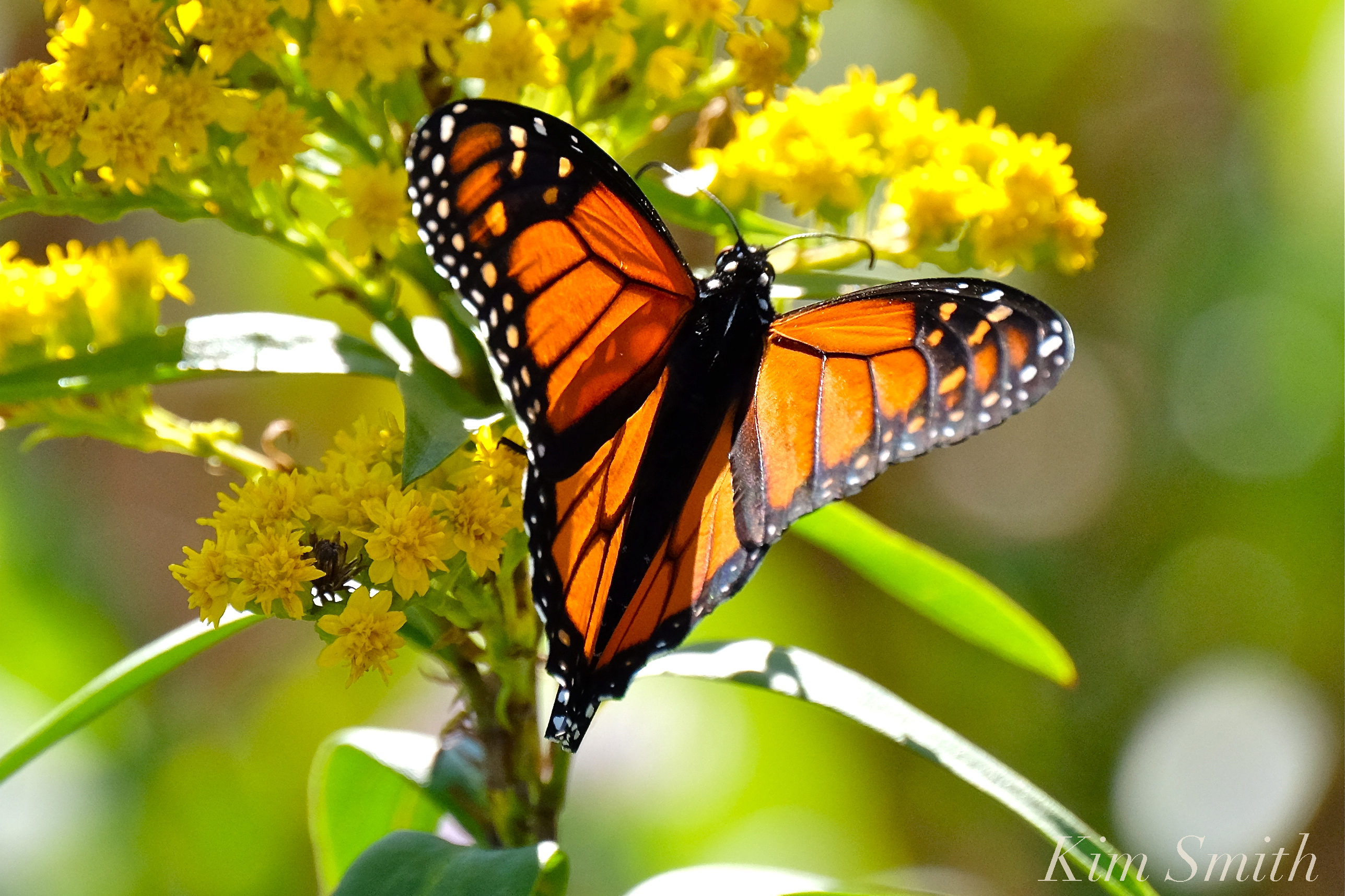 Heart Wings Monarch Butterfly
Thank you to all our readers for your kind comments of appreciation throughout the year for the beautiful wild creatures with which we share this gorgeous peninsula called Cape Ann. If you’d like to read more about a particular animal, type the name of the animal in the search box and the original post should come up
With its expansive marshes and dunes, bodies of fresh, clear water, saltwater coves and inlets, and geographic location within the Atlantic Flyway, 2017 has been a banner year for Cape Ann’s wild and wonderful creatures. I can’t wait to see what awaits in 2018!
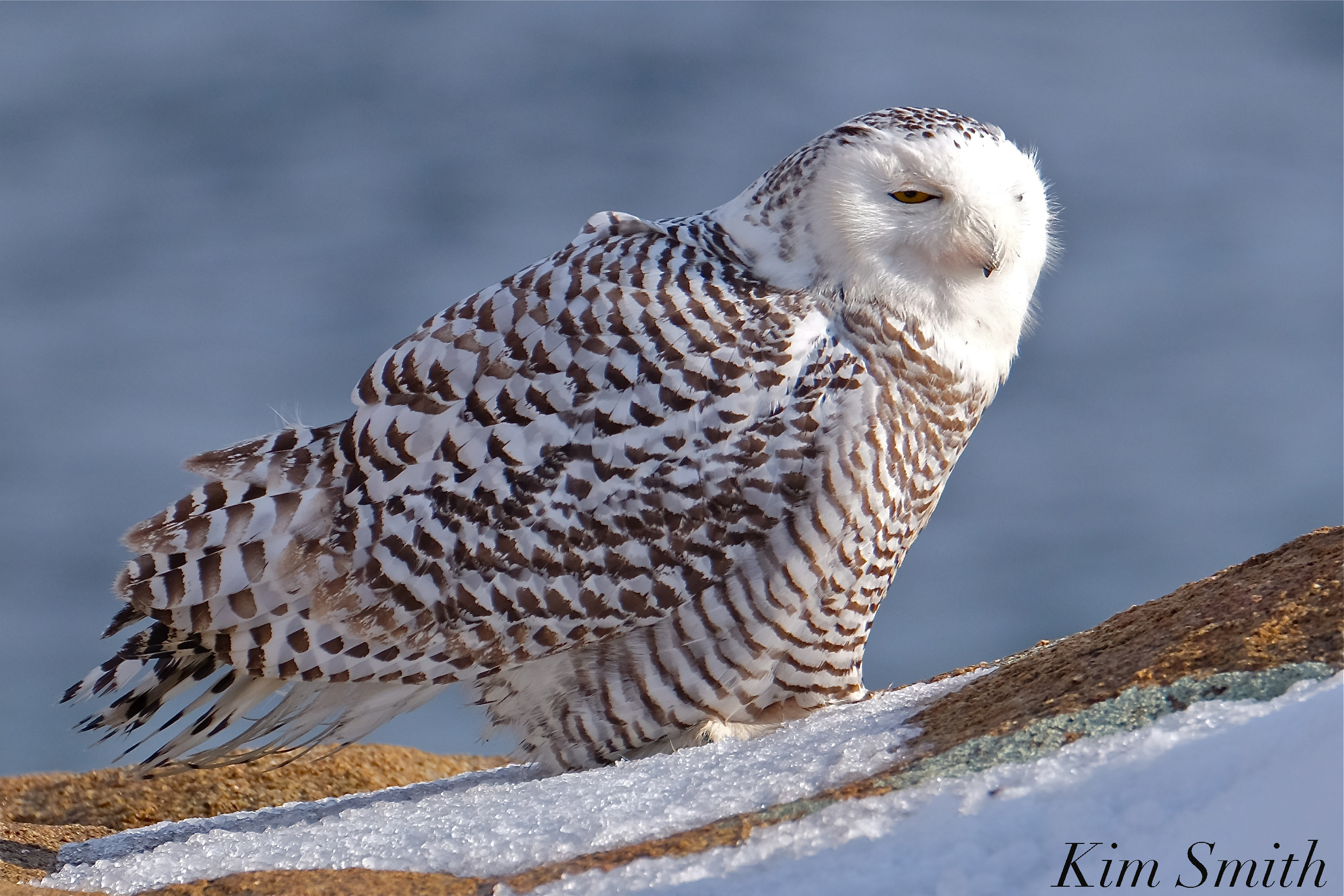
 Snowy Owl “Hedwig” January 2018 Backshore Gloucester
Spread The GMG Love By Sharing With These Buttons:

DUE TO THE PENDING STORM, KIM SMITH PROGRAM “THE FRAGRANT GARDEN” HAS BEEN POSTPHONED
I regret to say tomorrow’s program “The Fragrant Garden,” in Belmont, has been postponed until further notice. I know that a group of friends from Cape Ann were planning to attend and will let you know when the new date is scheduled. Thank you!
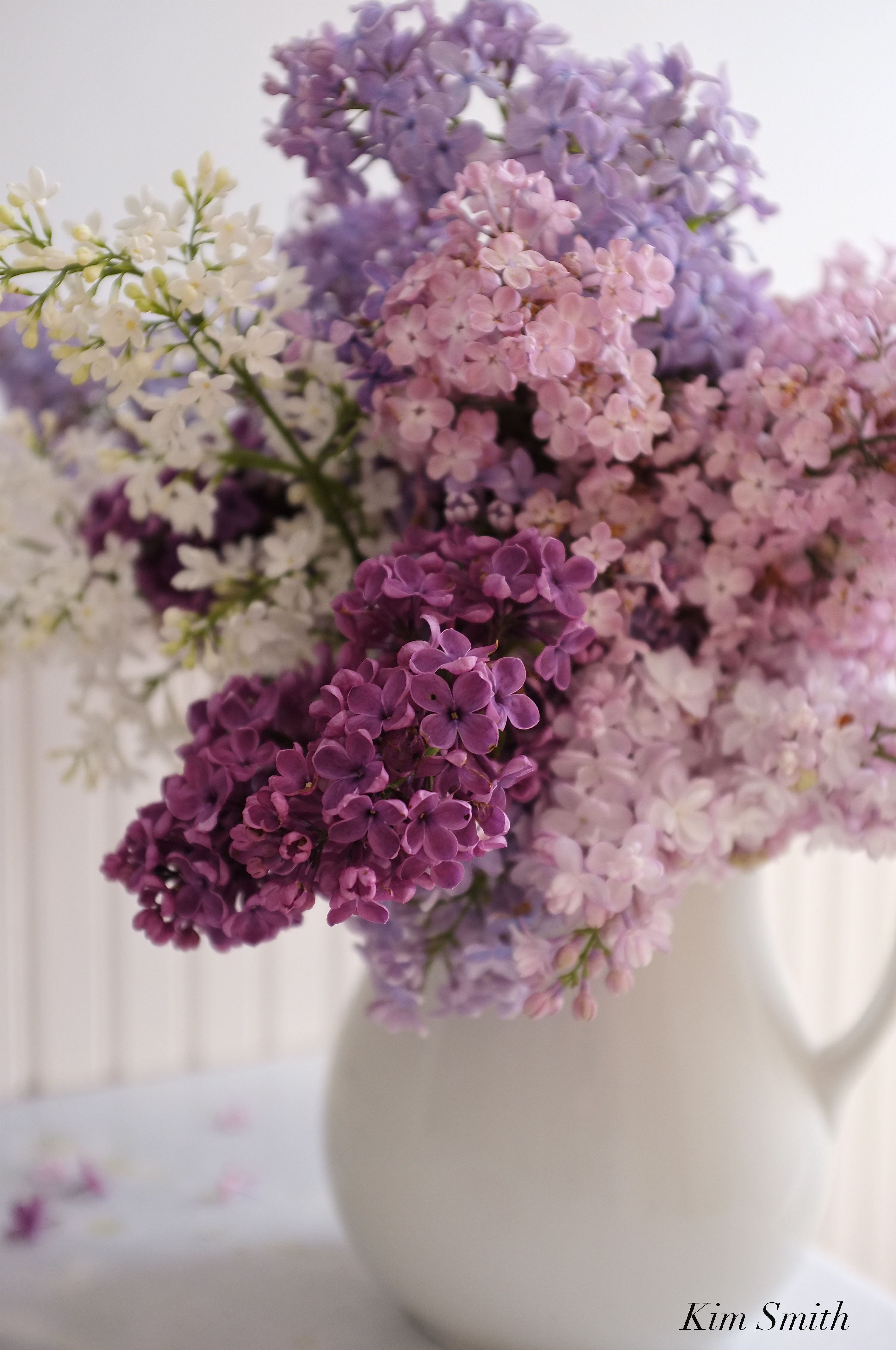
Mixed bouquet of different cultivars of S. vulgaris including Monge, Maiden’s Blush, Common Lilac,, Beauty of Moscow, and President Grevy.
Spread The GMG Love By Sharing With These Buttons:

REST IN PEACE DOLORES O’RIORDAN
So very sad to hear of the passing of the soulful songstress Dolores O’Riordan. She was only 46.
Spread The GMG Love By Sharing With These Buttons:

URGENT! OUR FRIEND ANDY AT MAITLAND MOUNTAIN FARM NEEDS YOUR HELP TODAY!!

URGENT! OUR FRIEND ANDY AT MAITLAND MOUNTAIN FARM NEEDS YOUR HELP TODAY!!
Our family and friends adore Maitland Mountain Farm pickles and condiments. If you’ve ever sampled any one of their scrumptious veggie products, you know that their pickling recipes are simply beyond compare. We purchase a bunch several times a month from Common Crow. Please read the following note from Andy and send emails to the city officials listed below. A sample email is provided. I just did it and it took all of five minutes. In the subject line I wrote, ‘We Love Maitland Mountain Farms.’ Better yet, go to the meeting tonight if you can and show your support. Thank you!
Dear Farm Friends:
We write today to ask for your help. In fact, we need your help. Many of you know us because you’ve met us at local Farmers’ Markets. Others may have seen our products (like Holly’s Spicy Pickles) in stores or on restaurant menus. But today, the future of our farm, Salem’s only commercial agricultural operation, is in peril. The City has thrown up a roadblock to our continued operation. Without so much as visiting us, the building department has decided that our primary use is NOT agriculture. The state says that as long as we earn $1000 per acre, we meet the requirement. We earn more than that. But some of our municipal officials don’t want to budge on their determination. We don’t know what this means for our future.
There is a public meeting Wednesday January 17 at 6:30pm and we need you to come and show your support. If you can’t make it, PLEASE email the Beth Rennard, Thomas St. Pierre, the City Clerk, and the Mayor to tell them that you value having farmers in your community. Emails are below. Please ask them to work with us rather than against us. We love farming and we love Salem. We want to continue doing what we love in the city that we love. The primary use of our farm IS agricultural. Most farmers live on farms; we are no exception. That’s what we need the city to understand. Thank you for your support.
Emails:
brennard@salem.com
tstpierre@salem.com
mayor@salem.com
clapointe@salem.com
citycouncilors@salem.com
Meeting: Wednesday January 17 at 6:30pm, City Council Chambers, City Hall, 93 Washington Street.
Sample email (feel free to adapt)
To Whom It May Concern:
The City of Salem is wonderfully diverse in many ways. One aspect of that diversity is the use of land for agriculture. Not many cities, or suburbs for that matter, can claim to be home to a working farm. Salem can make that claim because of Maitland Mountain Farm. I place a very high value on living in a city that knows the immense importance of agriculture not only as a tool for teaching our children about where their food comes from but also for actually producing the food that we eat. I enjoy seeing Maitland Mountain Farms at our Farmer’s Market and seeing their products on Salem’s restaurants’ menus. They are an integral part of what makes this city unique. Please reconsider your position that the primary use of their farmland is anything other than agriculture. Thank you.
Sincerely,
NAME
ADDRESS
Creative Salem
OctoCog
North Shore Wine and Dine Page
Salem Main Streets
Root
Salem Food Tours
Salem Food Digest
The Salem News
The North Shore Sea Lion
Salem Farmers’ Market
Salem No Place for Hate Committee
Kim Driscoll


Spread The GMG Love By Sharing With These Buttons:

CAPE POND ICE IN THE BOSTON GLOBE TODAY!
 Scott Memhard, president of Cape Pond Ice Company, at work in the historic building on the Gloucester waterfront.
Photo Credit Jessica Rinaldi, Boston Globe Staff
You know it’s freezing outside when the icehouse — kept at a constant 28 degrees — feels warm.
Inside the venerable ice-making plant, it’s so cold you can see your breath, and stalactites grow off the ceiling. But during the recent extended cold snap, Scott Memhard, president of Cape Pond Ice Company, retreated to the historic building on the Gloucester waterfront to keep warm.
With sub-zero weather, Memhard found his workplace unusually comfortable, even as he had to deal with flooding after the Jan. 4 storm. Tidal water wreaked havoc with the machinery, but after three decades in the ice business, Memhard kept a cool head. Ice is his life — bagged ice, block ice, dry ice, crushed ice, and sculpture ice.
Spread The GMG Love By Sharing With These Buttons:

Approaching Winter Storm Postpones CAS Annual Meeting from Wednesday, January 17 to Wednesday, January 24
Approaching Winter Storm Postpones CAS Annual Meeting from Wednesday, January 17 to Wednesday, January 24
Cape Ann Symphony Orchestra, Inc.
Notice of Annual Meeting
Wednesday, January 24, 2018 at 7:30 pm.
Gloucester House Restaurant
63 Rogers Street, Gloucester, MA
CAPE ANN SYMPHONY ORCHESTRA, INC.
NOTICE OF ANNUAL MEETING
Cape Ann Symphony Board President Thomas Mannle announced the Annual Meeting of Cape Ann Symphony Orchestra, Inc originally scheduled forWednesday, January 17 has been postponed because of the approaching winter storm. The new date for the Annual Meeting of the Cape Ann Symphony Orchestra, Inc. will be Wednesday, January 24, 2018, at 7:30pm at the Gloucester House Restaurant, 63 Rogers Street, Gloucester, MA. The meeting will be preceded by a cocktail reception at 6:30pm. ($36. per person/ cash bar). It is not necessary to attend the reception in order to attend the Annual Meeting. The purpose of this meeting is to hear reports of the past year’s activity by the Music Director, Treasurer, President, and Manager. The meeting is also convened to elect Directors and Officers for the period from January 20, 2017 through January 19, 2018. For information please contact David Benjamin, Business Manager,978-281-0543.
Spread The GMG Love By Sharing With These Buttons:
CAPE ANN RECOVERING FROM THE BOMBCYCLONE -By Kim Smith
Rain this past week melted the snow, revealing more destruction from the 2018 Bombcyclone. Stopping at favorite places along the backshore, the storm surge left in its wake damage to T-wharf, the road is completely washed out at Pebble Beach, and Eastern Point marsh and storm drains are clogged with debris.
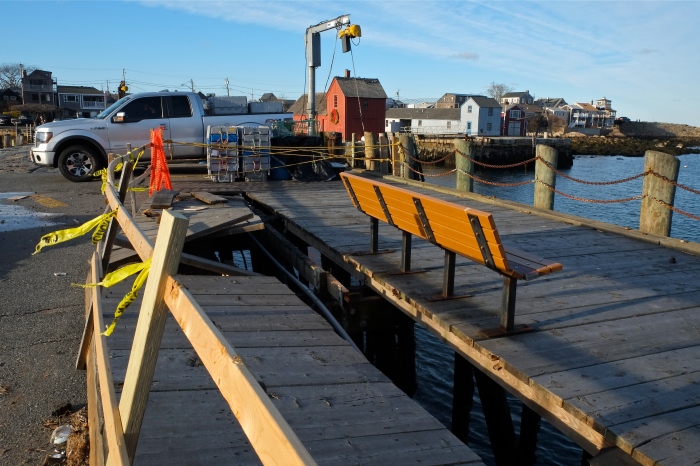
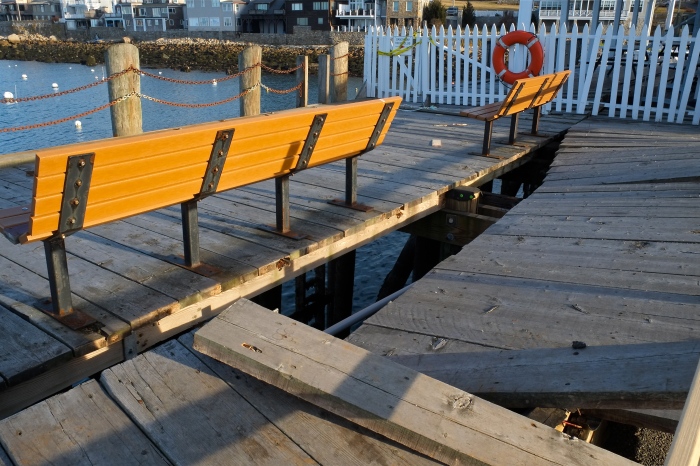
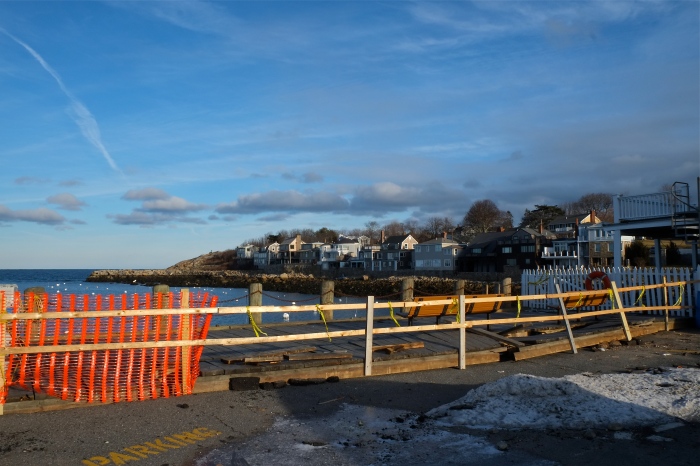
T-Wharf, Rockport
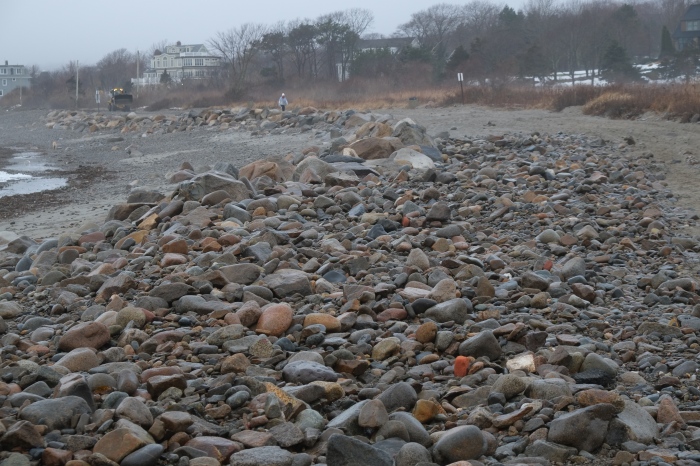
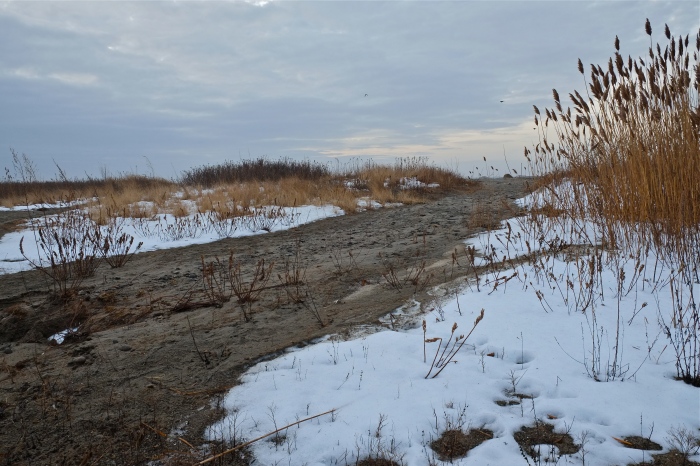
Pebble Beach and Henry’s Pond. The storm surged pushed the rocks over the bank and into the road. Saltwater found a path and gushed into Henry’s Pond.
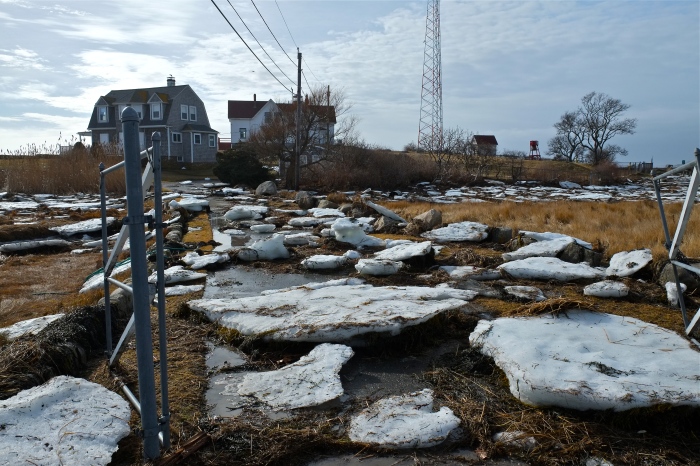
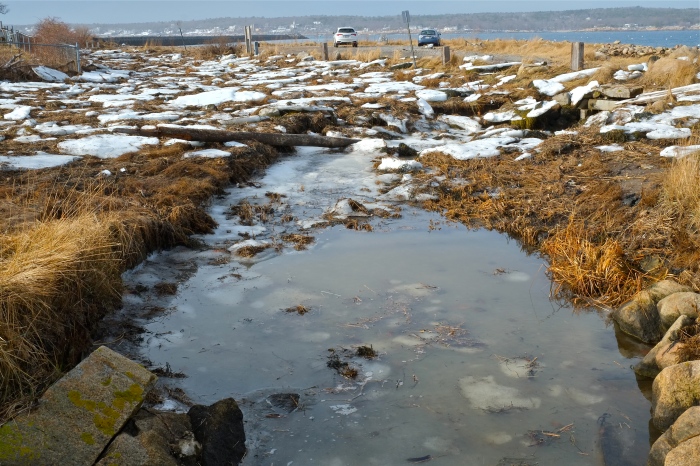
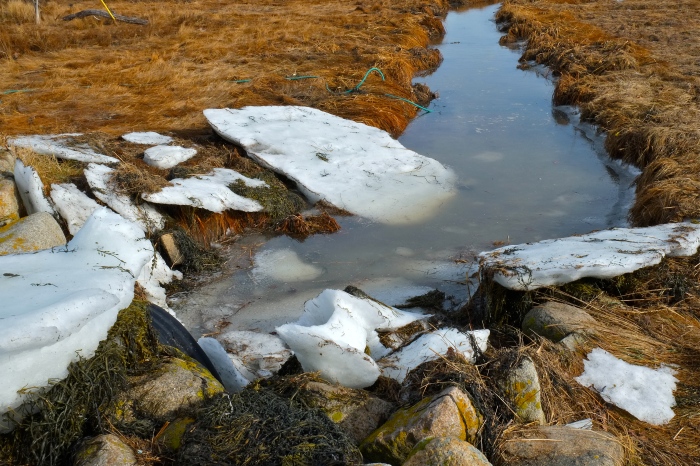
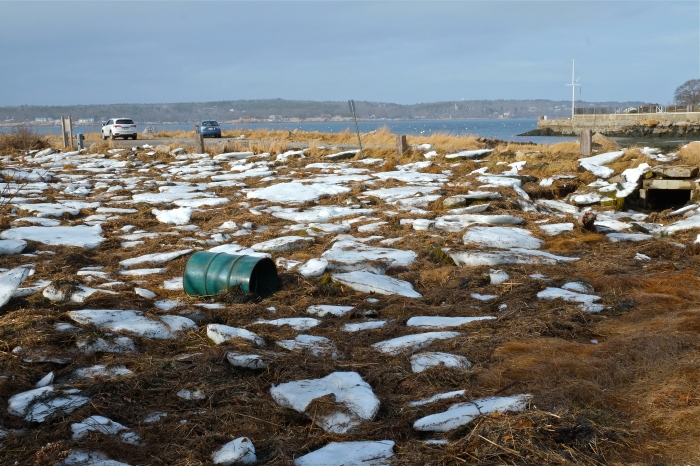
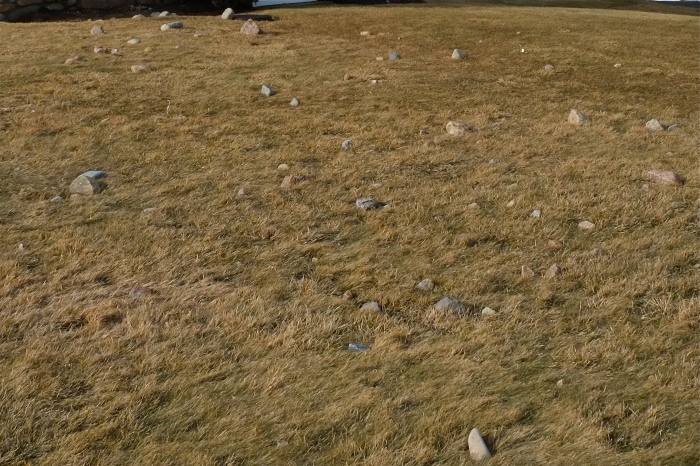
Popples strewn across the lawn and seaweed and debris clogged storm drains.
Spread The GMG Love By Sharing With These Buttons:

BREAKING: MR. SWAN RESCUE UPDATE -By Kim Smith
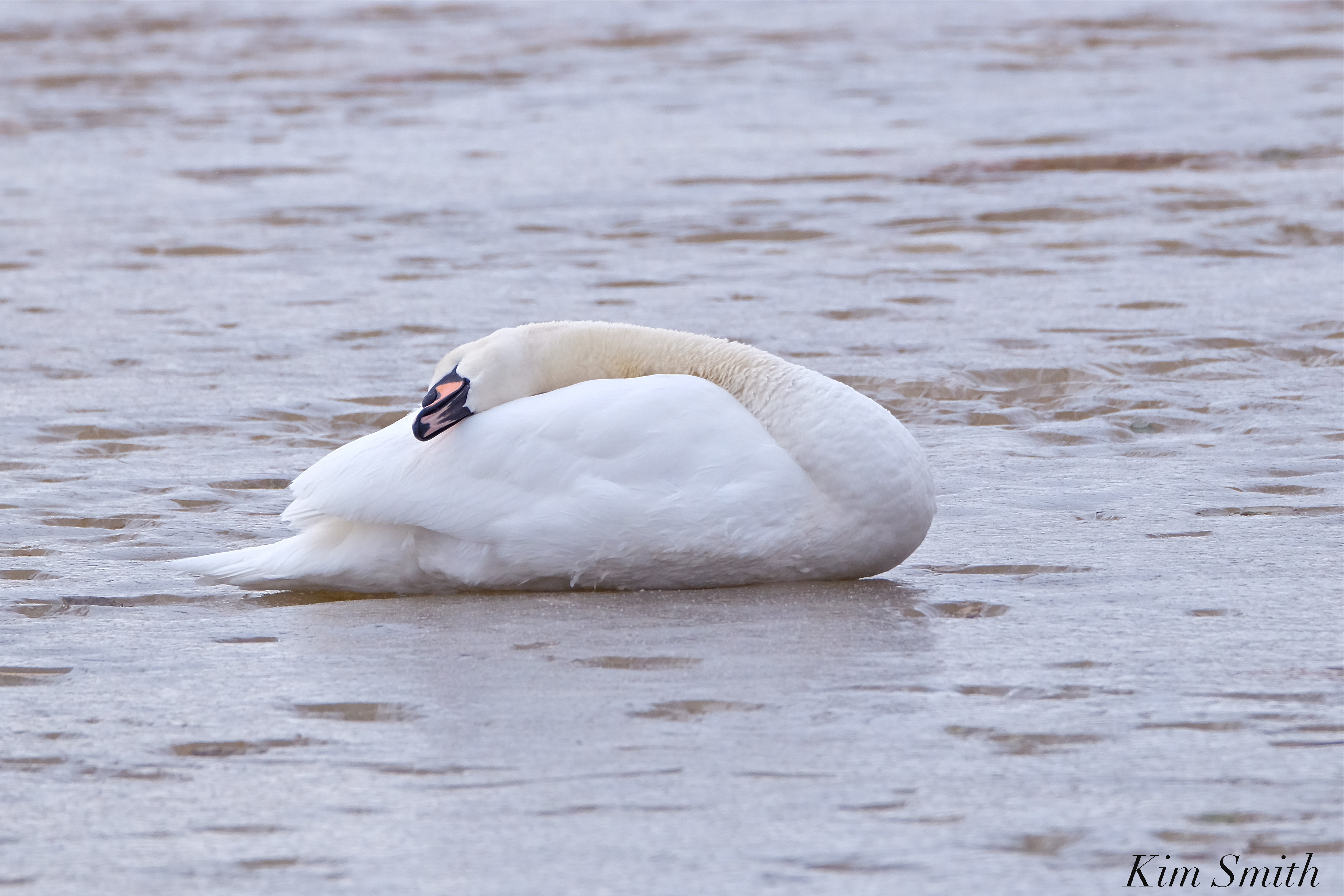 Angel Swan Sleeping
Thanks to Lyn Fonzo, Dan Harris, Skip Munroe, Skip Hadden, Duncan, Stephanie, Lillian, a bunch more Eastern Point residents, Steve Monell and a pair of “angel” swans, our Mr. Swan has flown off the ice at Niles Pond. As Lyn shared earlier, two Mute Swans flew to Niles Pond, precisely to the same spot where Mr. Swan was resting. They must have been very tired because the mysterious swans immediately closed their eyes and took a nap while Mr. Swan watched over the pair. He eventually dozed off, too. After a long rest, all three departed the Pond, circling around and then heading over Brace Cove towards Rockport. Mr. Swan had some difficulty but perhaps encouraged by the presence of companions, he successfully took off.
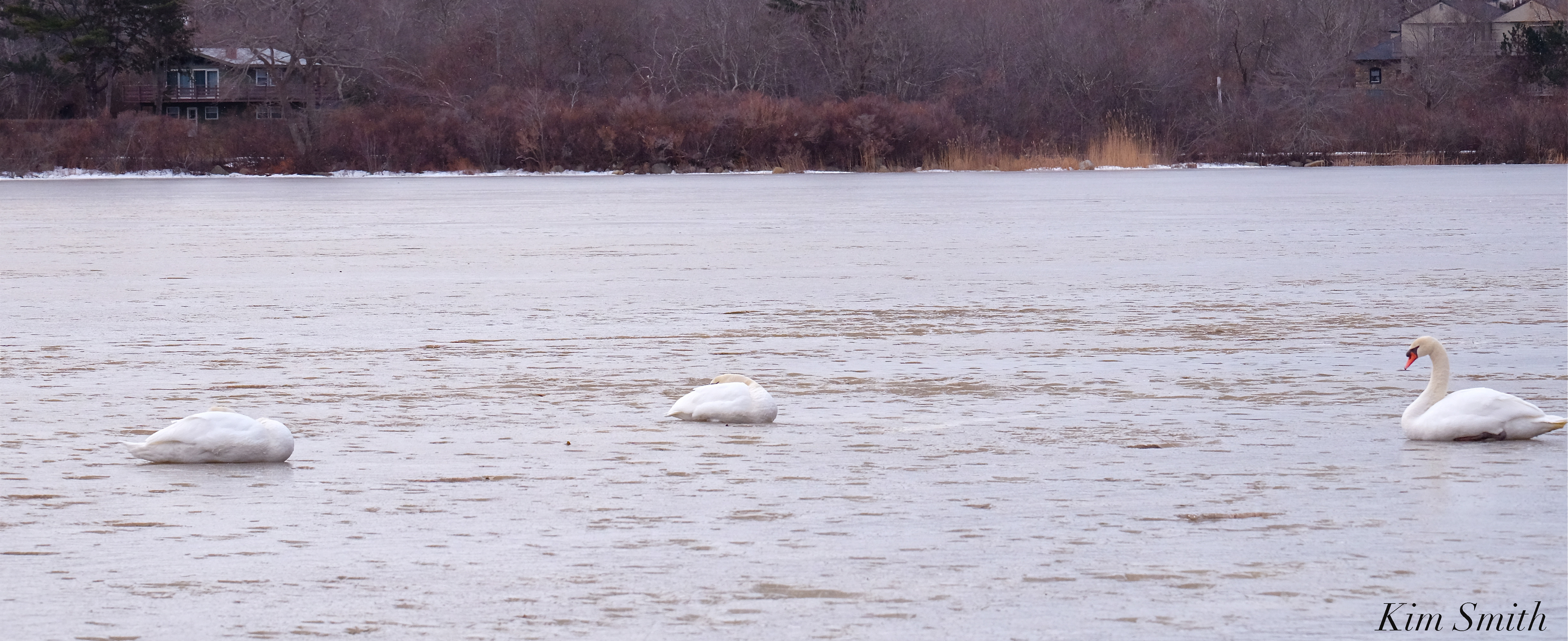 Cape Ann residents please be on the look out for the three swans!
Without Dan and Lyn’s overnight vigilance against a coyote attack, our daybreak watch, and the angel swans I think it unlikely Mr. Swan would have survived this latest escapade. Our most heartfelt thanks to all who are keeping good watch over Mr. Swan and friends.
 Notice the angel swans have black eyes. A friend asked if they could be Mr. Swan’s offspring. Possibly, but most likely not. Mr. Swan has blue eyes, which is not typically seen in these parts.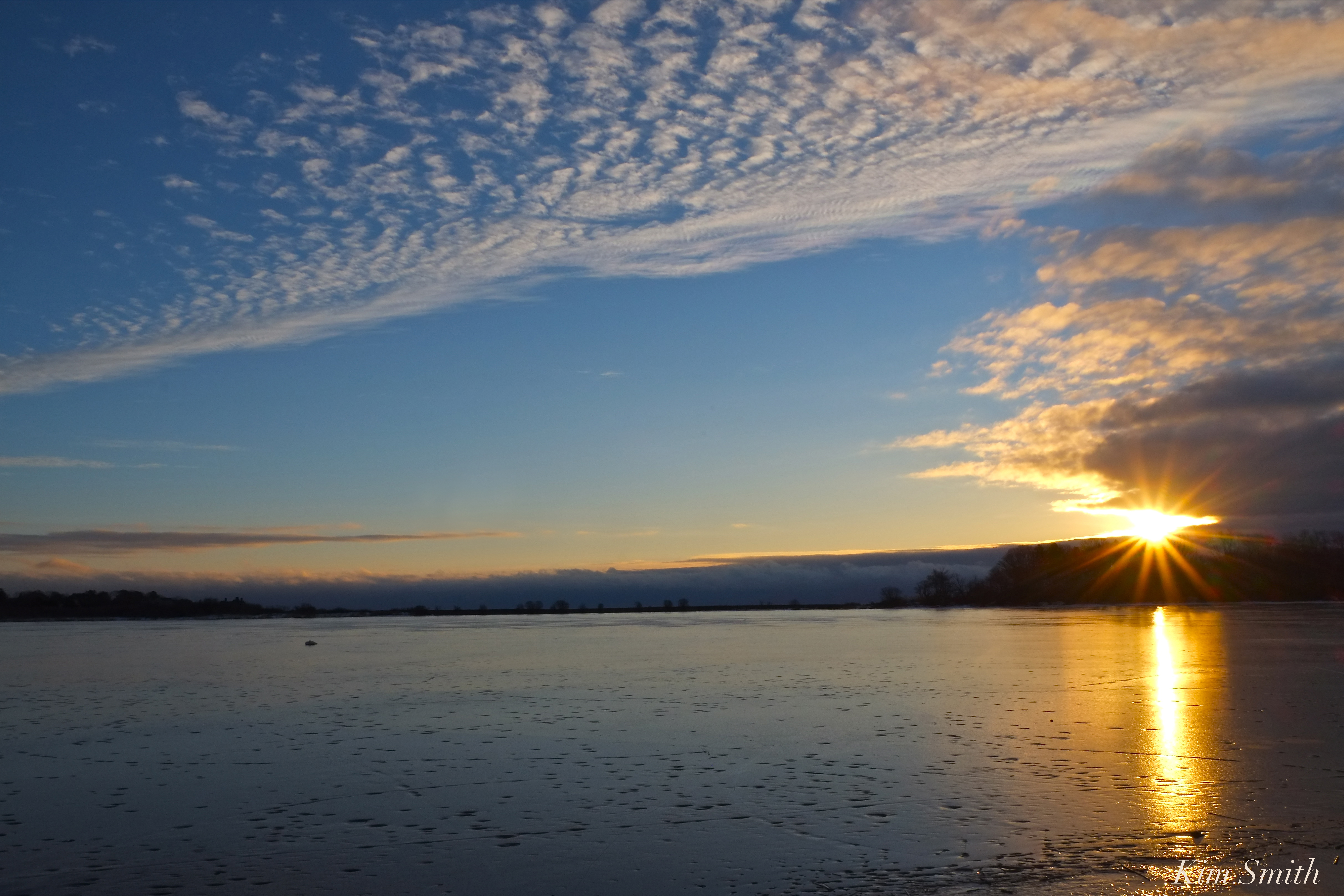
Mr. Swan is the tiny lump on the ice toward the left. We don’t want to see you at Niles Mr. Swan until the Pond thaws!
Spread The GMG Love By Sharing With These Buttons:

SNEAK PEAK BEAUTIFUL ART HAVEN ARTIST’S BUOYS PREVIEW AT CHARLES GALLERY -By Kim Smith
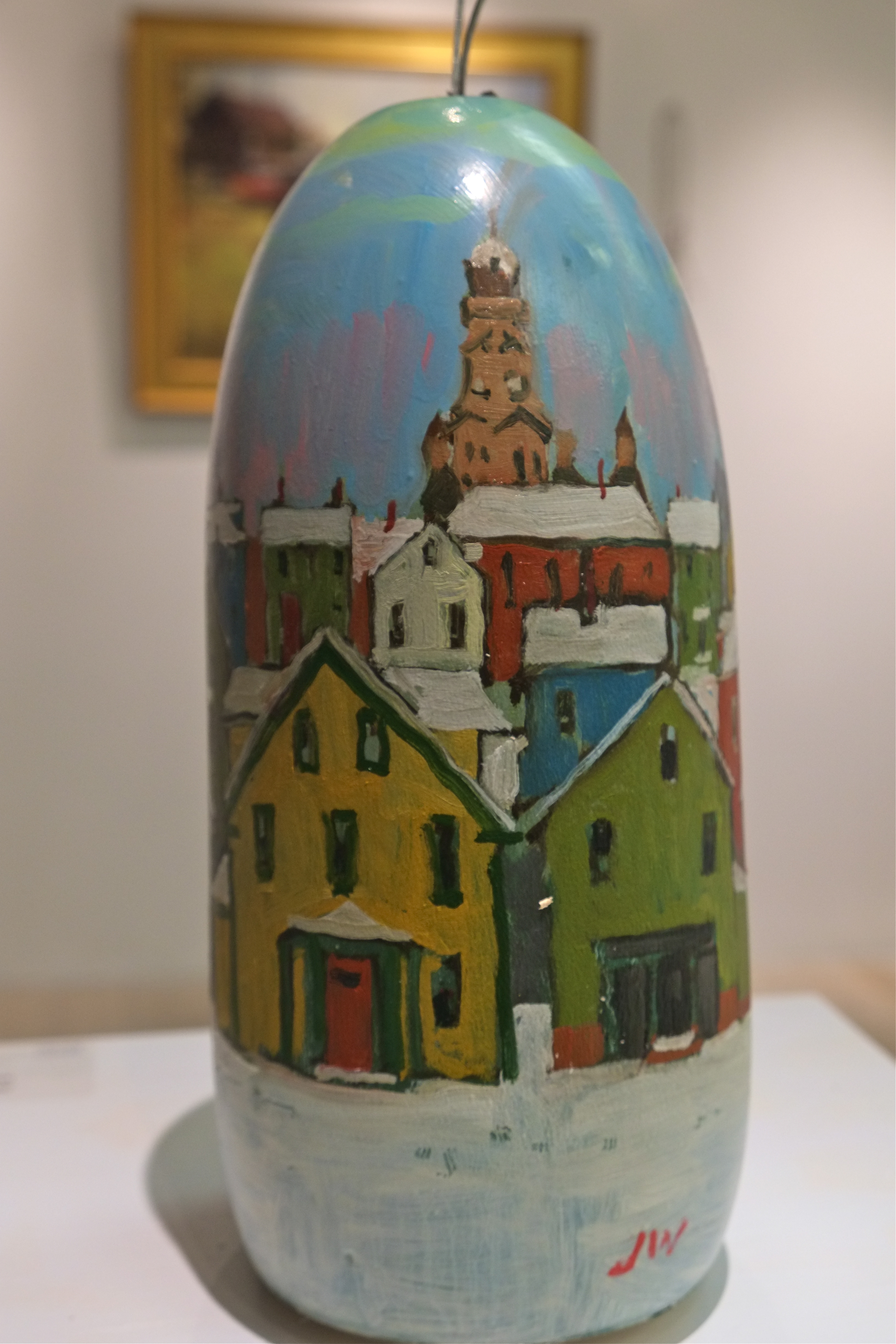 Jeff Weaver Buoy
Last night the opening for the fabulous show featuring the Art Haven Lobster Trap Tree Artist’s Buoys was held at the Charles Fine Arts Gallery. The buoys are painted by some of Cape Ann’s finest artists and are displayed either with works of art by the artist or with paintings that correspond in some way to the buoy.
The buoys are on display through the weekend of 20th-21st and people can call the gallery to place bids. Charles Fine Arts Gallery is located at 196 Main Street, Gloucester, and is open Tuesday through Sunday from 1pm to 6pm, or by appointment (978-559-7762).
The Cape Ann Art Haven Lobster Trap Tree awesome fun family buoy auction event is Friday, January 26th, from 5pm to 8pm at Crusieport.


Spread The GMG Love By Sharing With These Buttons:

MR. SWAN RESCUE UPDATE AND A PAIR OF MYSTERIOUS SWANS ARRIVE AT NILES POND!! BY KIM SMITH
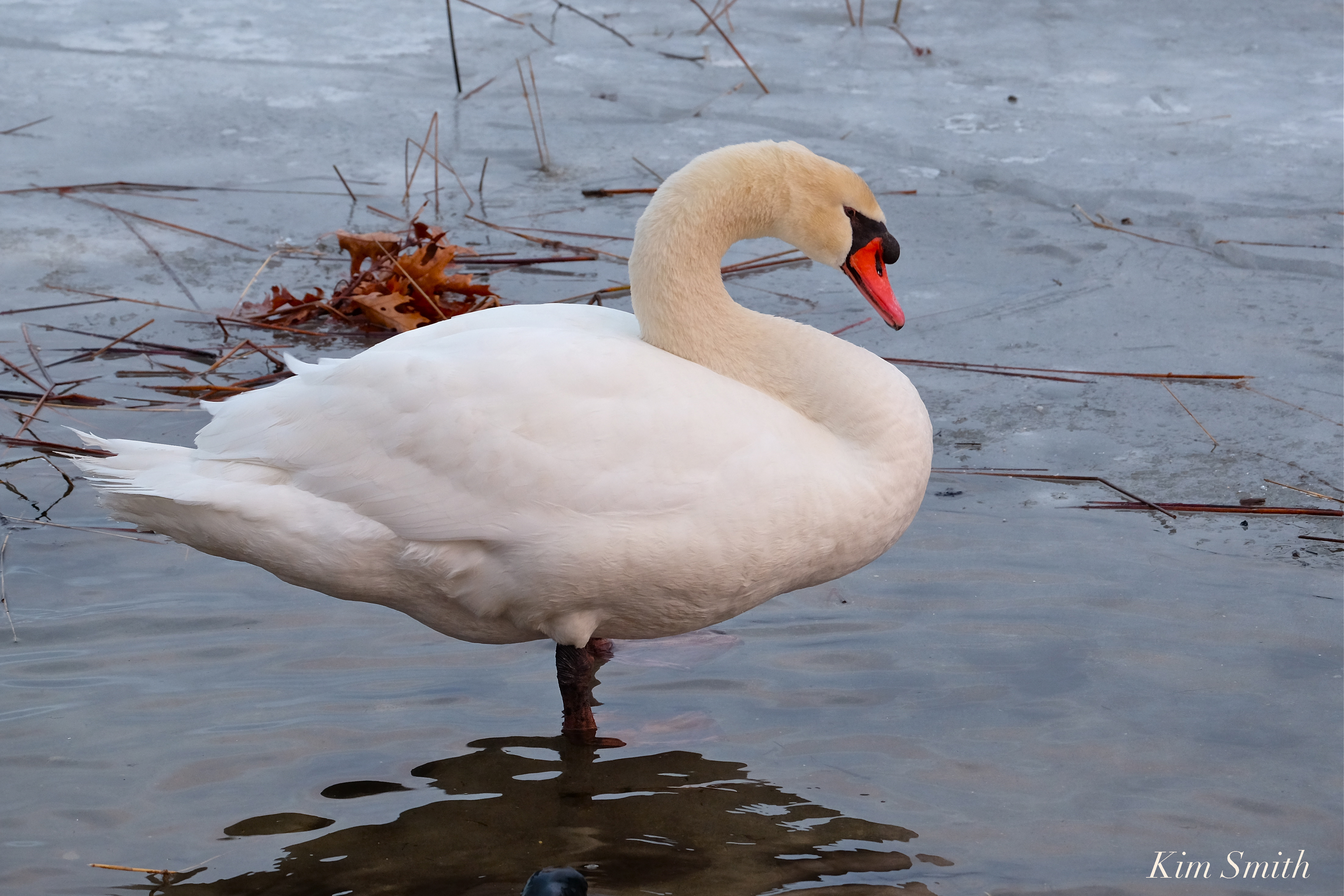
 Yesterday at mid-morning Mr. Swan flew to Niles Pond. This is an unfortunate occurrence as Niles Pond is frozen.
When temperatures plummeted in December, Mr. Swan moved to one of his favorite winter territories, Rockport Harbor and the adjacent coastline, where the salt water rarely freezes. My theory is that the January thaw we experienced over the past several days drew him to freshwater Niles Pond and I imagine, he expected to find a thawed pond. This is only a theory, but in trying to think like a swan and understand why he would be so uncharacteristically foolish, it is my best assumption.
Maneuvering on ice can be extremely difficult. In order to take off for flight, swans run a short distance on top of the water. Trying to gain the traction needed on ice may be nearly impossible.
https://www.instagram.com/p/Bd8KowKlxeu/
After spending a good part of the day in the center of the pond, I coaxed him over to the edge where there was a patch of open water. He ate a little bit of corn, although not nearly as much as usual. He appeared to enjoy the freshwater but then at dusk, he half flew-half ran back to the center of the pond.
Extremely concerned about coyotes, Mr. Swan’s caretakers Lyn and Dan checked on him throughout the night. I took the dawn shift and found him alert and preening. He made several attempts to walk, but then would plop down and tuck his head under his wing to sleep and to keep warm. Eastern Point residents Duncan and Stephanie, and ice boat sailor Steven, offered to help while Lyn, Skip Munroe, Lois, and I conferred on the phone. We decided the best plan of action would be to capture him and return him to Rockport Harbor. At 9am Skip and Dan determined that the ice was okay to walk upon. They fearlessly walked onto the pond and at one point Lyn followed with blankets. After first attempting to capture him, they then herded him over near Skip Hadden’s dock. Skip, Skip, and Dan again tried to capture him. He’s a very smart swan, wily and wild, and after several unsuccessful attempts, we decided to not tire him out and try to feed him, and help him as much as he would allow, from Lyn’s little beach.
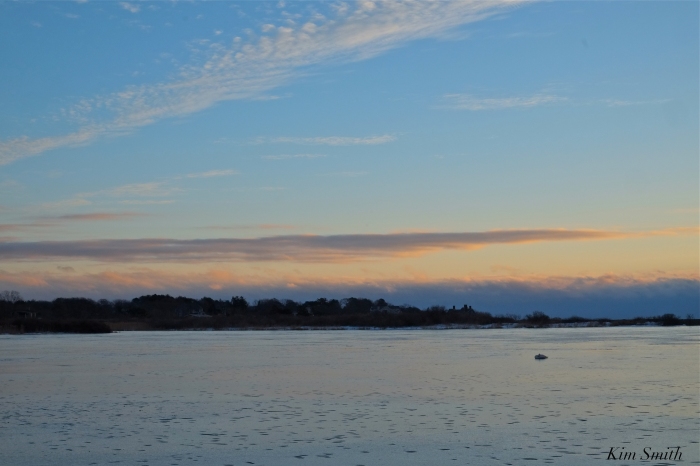
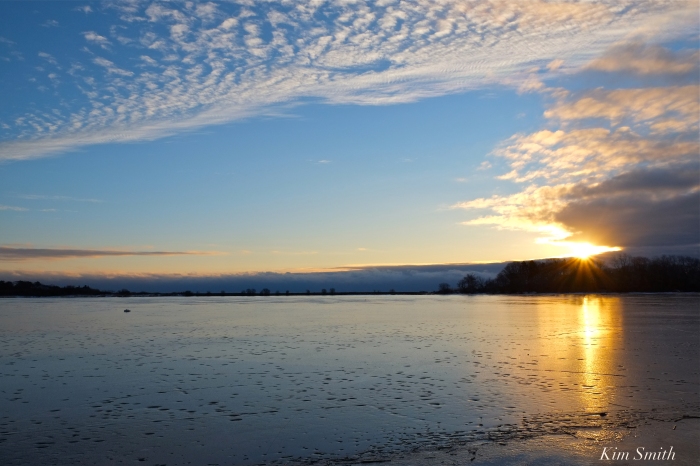

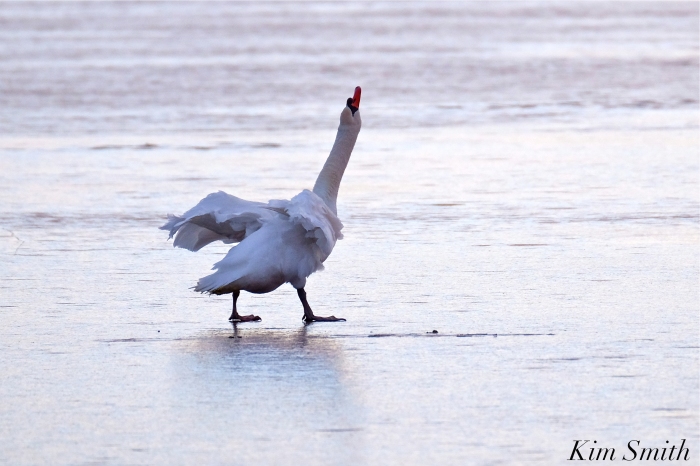
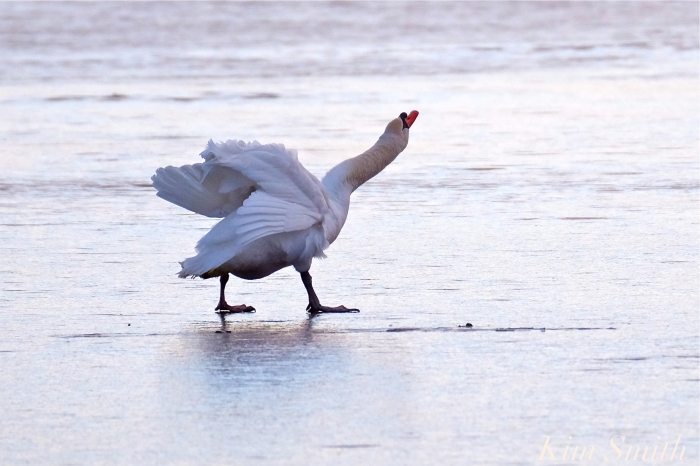

Mr. Swan at sunrise and trying to negotiate the ice.
Shortly after, and unbelievably, A PAIR OF TRAVELING SWANS flew into Niles, near Lyn’s beach, next to Mr. Swan. At the moment, while writing this post, all three are sleeping peaceably together in a little group!
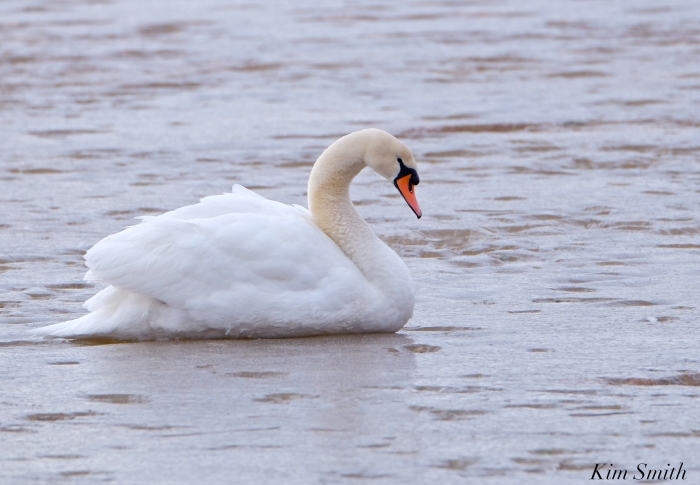
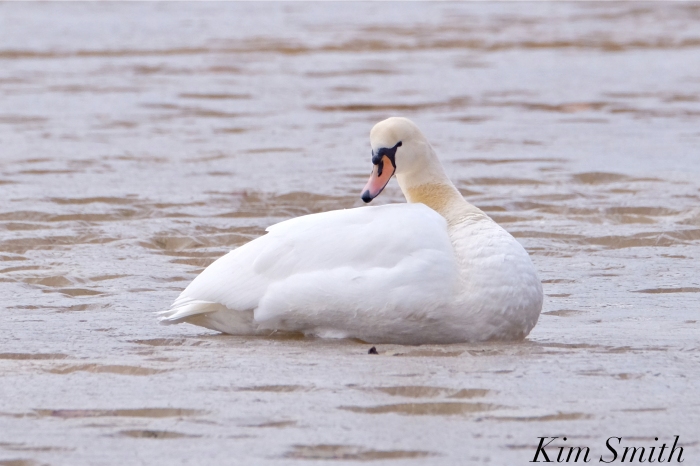
Newly Arrived Swans!
Spread The GMG Love By Sharing With These Buttons:

HOW TO TELL THE DIFFERENCE BETWEEN MALE AND FEMALE SNOWY OWLS
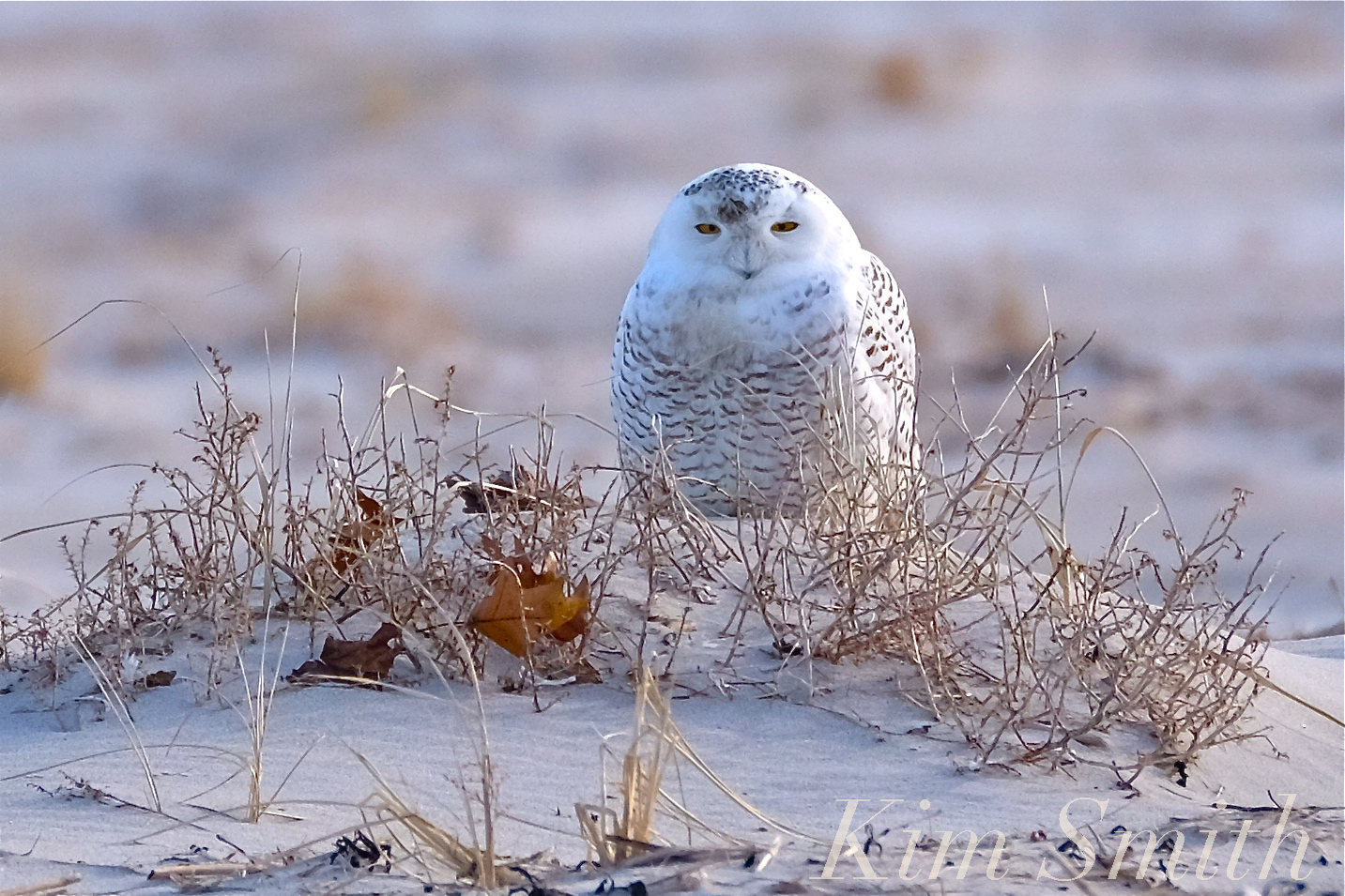 The winter of 2017-2018 has proven so far to be an irruptive year for Snowy Owls, as was predicted by scientists. In years when there is a lemming population boom, which is a staple of the Snowy’s diet, double, even triple, the amount of Snowy Owl hatchlings survive the summer breeding season. Arctic winter arrives and for whatever reason, either there is less food available or the first hatch year owls can’t hunt as well, a number of Snowies head south, both adults and juveniles, generally though, more juveniles than adults migrate.
Snowy Owls are white birds, with varying degrees of brown, black, and gray feather patterning. They are North America’s largest owl by weight. As with most bird of prey species, female Snowies are larger than the males, by about one pound. That is considerable, knowing that the average weight of a Snowy Owl is four pounds. A male may grow up to 25 inches, a female to 27 inches, and the wingspan of both is about equal. Because females are larger and more dominant, they usually don’t migrate as far south, staking out territory further north. Typically in our area we see first hatch year males, although currently there is thought to be an adult male at Salisbury Beach. The Snowy at Bass Rocks is presumably a female. When out in the field, the hardest to tell apart are the darkest males and the palest females.
In learning about Snowy Owls, I came across several very helpful photos of Snowy Owl specimens. And we have three examples, from Snowies found right here on the North Shore, from which to compare.
In the photo below, you are looking at eight Snowy Owl specimens from the Cornell University Museum of Vertebrates. One through five on the left are males; six, seven, and eight are females. Notice how similar, yet different, are five and six (male #5, female #6).
- Snowy Owl males are generally whiter.
- Snowy Owl females tend to be larger.
- Snowy Owl male’s tails have up to three bars, the female’s have from three to six.
- Snowy Owl females have wider and darker marks and bars on the back, nape, and tail.
- Snowy Owl males have a larger white bib.
Closeup of the intermediary male (five) and female (six).

Underside of the Owls, in the same order.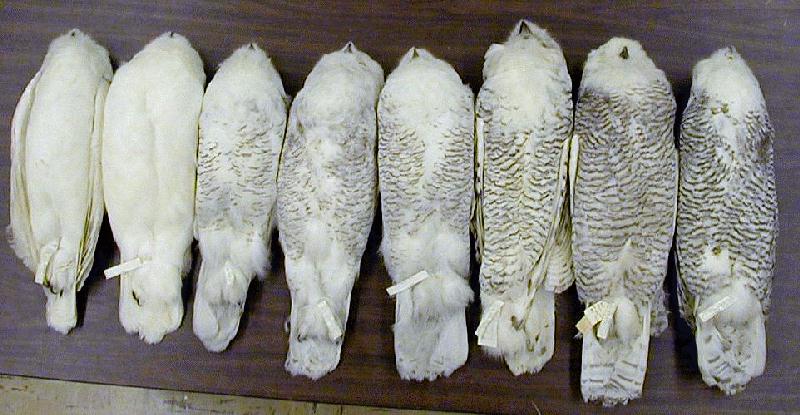
Comparing the above photos I think we can logically conclude that the Snowy Owl that was at Captain Joe and Sons in 2015 was a young male, with light markings and a large white bib.
 Young Male Snowy Owl
The Snowy Owl currently at Bass Rocks, I think it is safe to say, is a female, and most likely a juvenile. She doesn’t have much bib showing and her overall markings are wide and dark.
 Female Snowy Owl
We have our own example of an intermediate–is the Snowy Owl recently photographed at Cranes Beach a juvenile male or a female?
 Male or female?
Spread The GMG Love By Sharing With These Buttons:

WE LOVE YOU TOO SNOWY OWL!
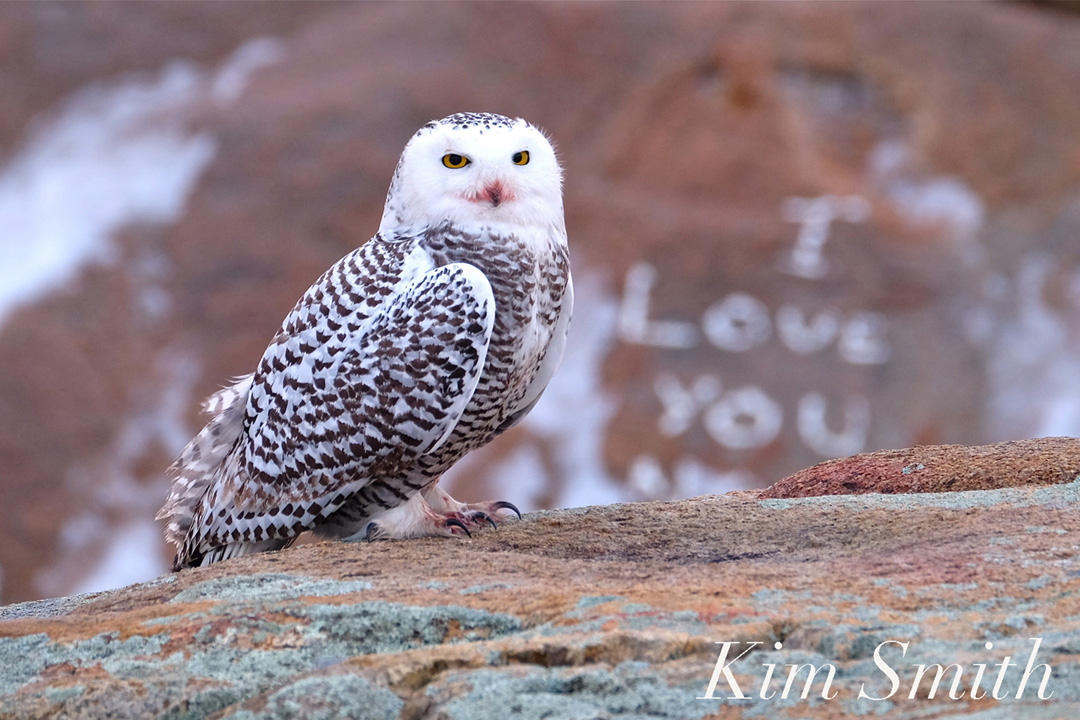 For the past several days there has been a remarkably tolerant Snowy Owl feeding and perching on the rocks at Atlantic Road. Perhaps she (or he) is the same Snowy that has been noticed on the backshore over the course of the past month. I write tolerant because this Snowy was perched about fifteen feet from the sidewalk and neither traffic nor birdwatchers seemed to faze her much. As word has gotten out, her fan club has grown, so much so that there was a bit of a traffic jam today. Every several hours I stopped by to check on her whereabouts. At 2:00 today, she had only moved about a foot from where she was at daybreak. By sundown, she had flown up onto the rooftops of an Atlantic Road resident.
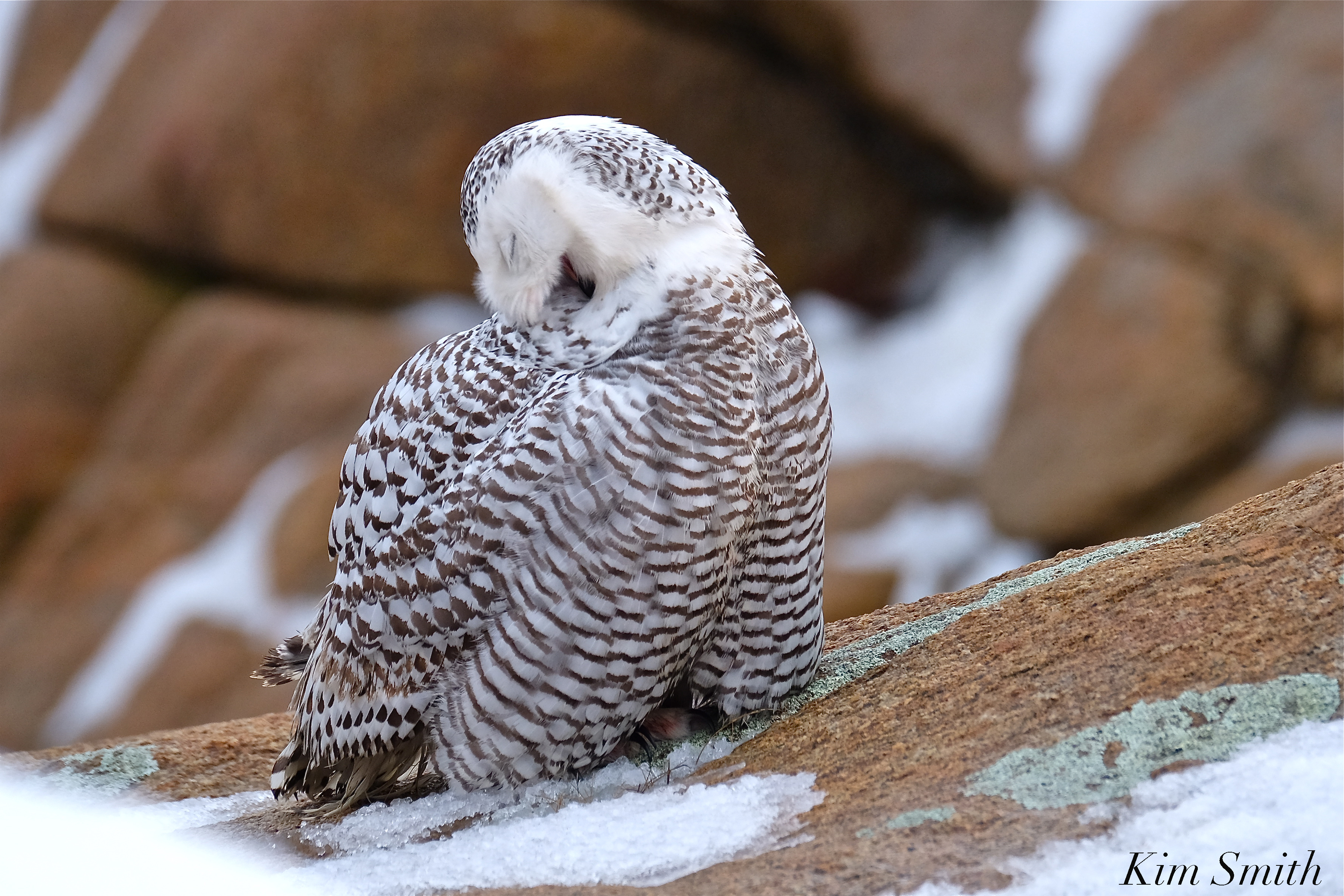
Many thanks to Kate for all her text alerts letting me know when the Snowy was on the backshore!
 Early morning and the Snowies face and talons were bloodstained, which is a very positive sign that she is feeding well. Snowy Owls wintering over in our region eat rabbits, rodents (lots of rats), songbirds, and ducks. Being good stewards of the Snowies means not applying rat poison around your home or business. There are several methods equally as efficient in killing rats as rat poison. When a bird of prey such as a Peregrine Falcon, Snowy Owl, Red-tailed Hawk, or Bald Eagle ingests a rat that has eaten rat poison, the raptor becomes sick and will usually die.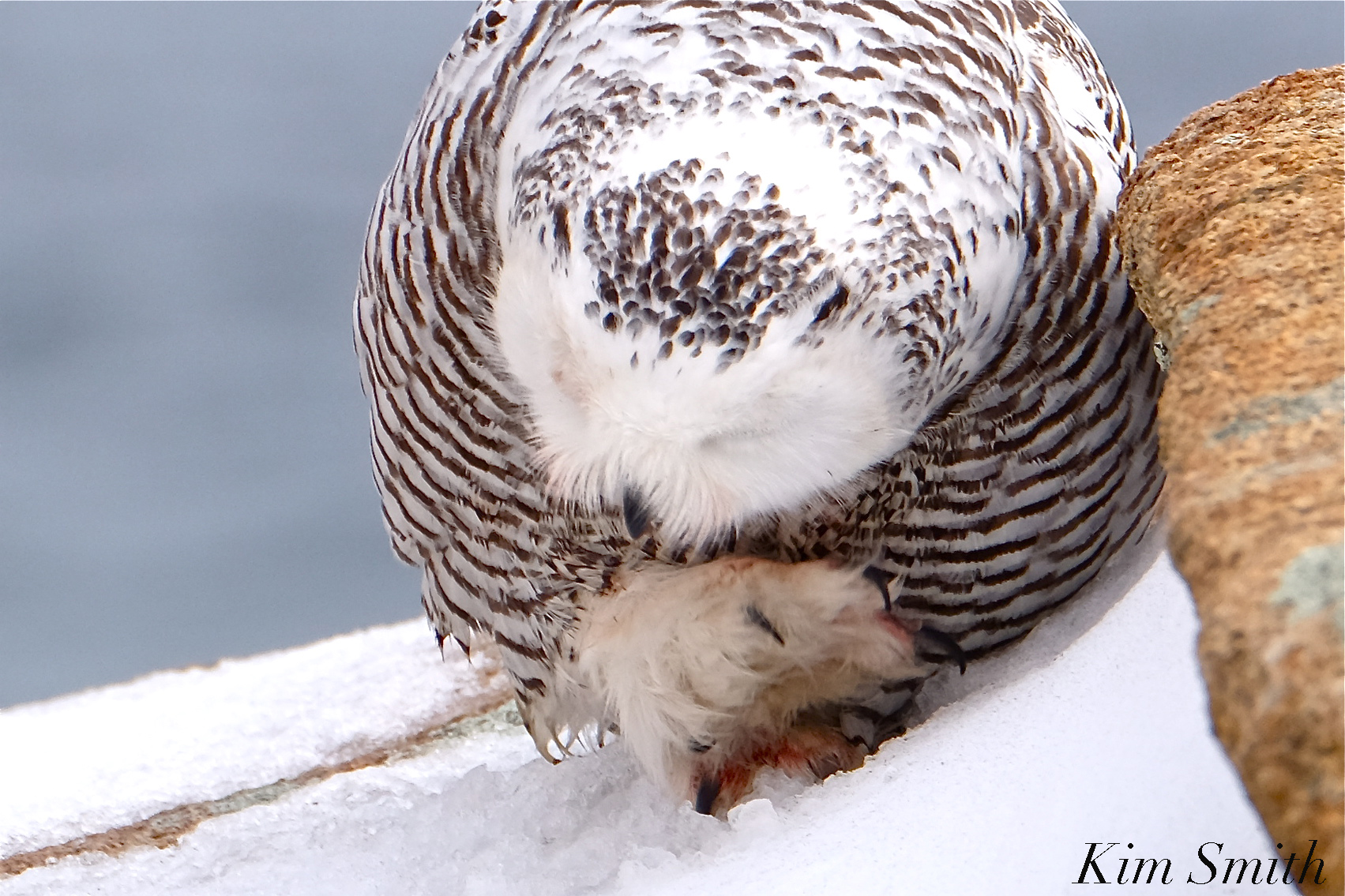
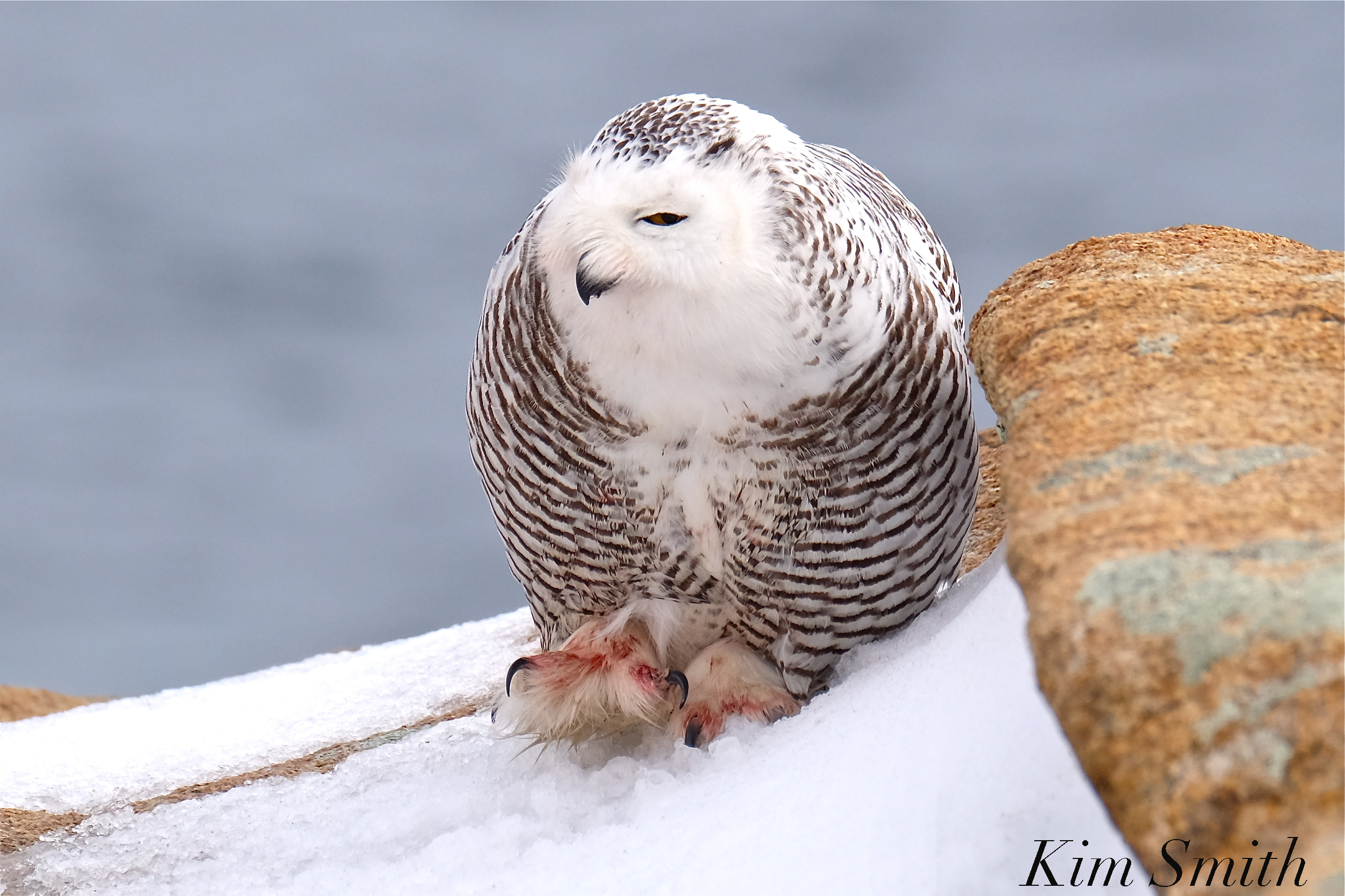 The Snowy spent the better part of the day mostly dozing, preening, cleaning her talons, and puffing her feathers for warmth. At one point she pushed her face into a snow patch but I couldn’t tell if it was to drink or to wash.
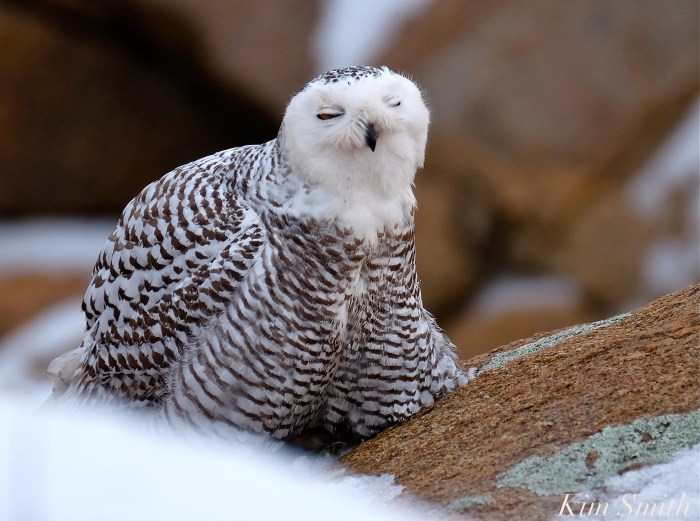
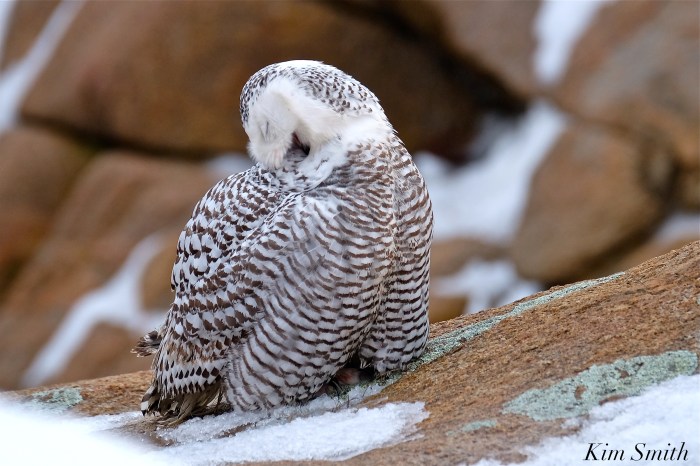
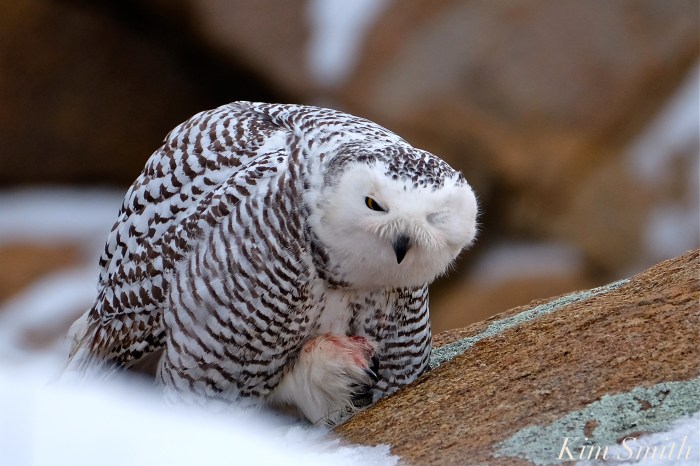
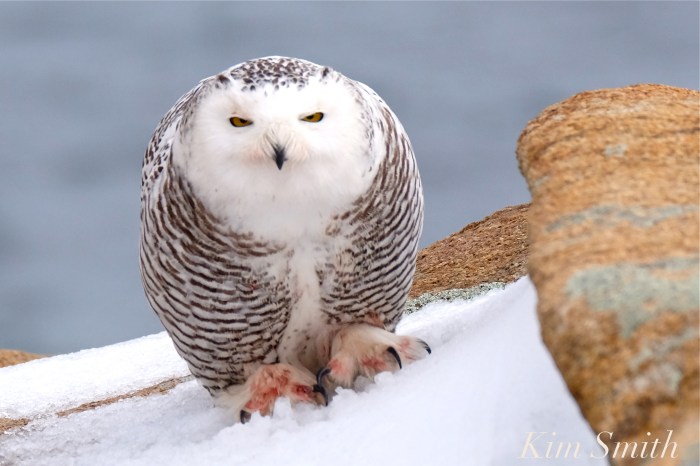
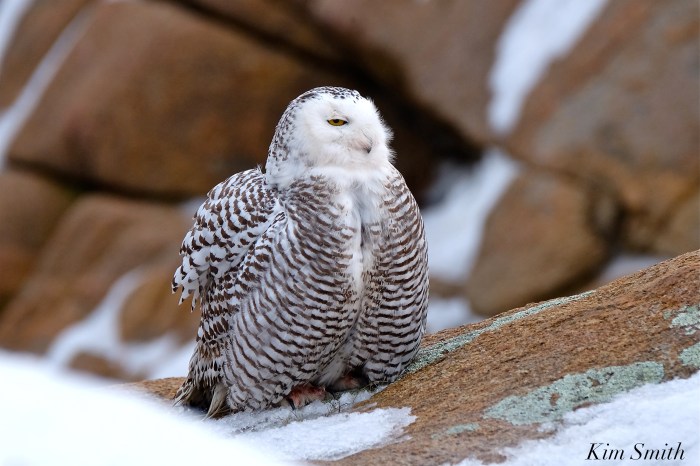
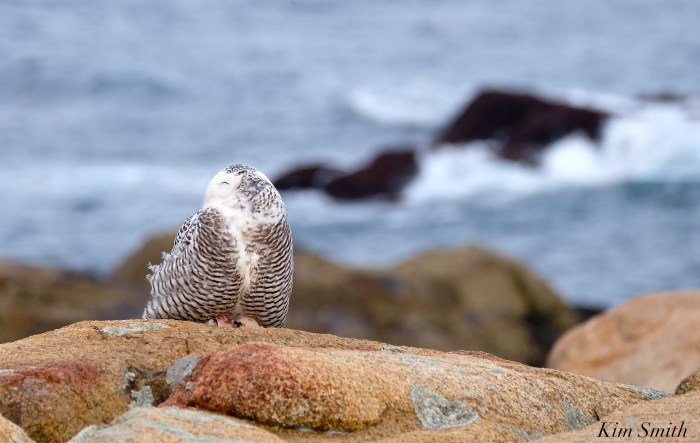
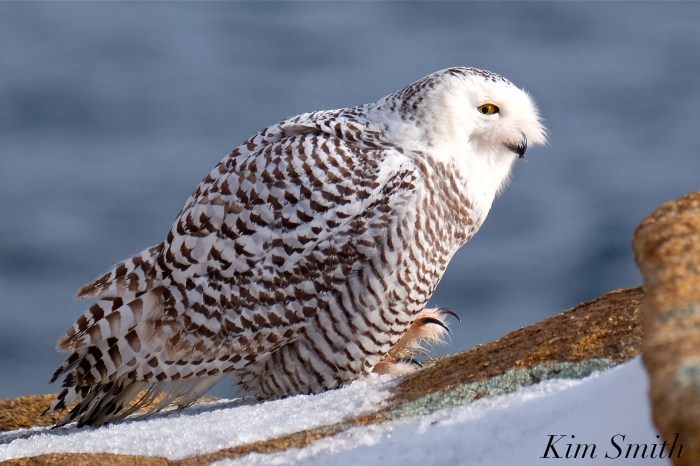
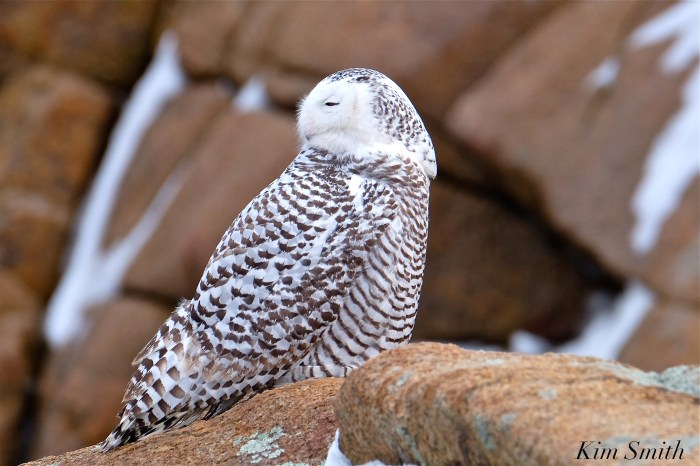
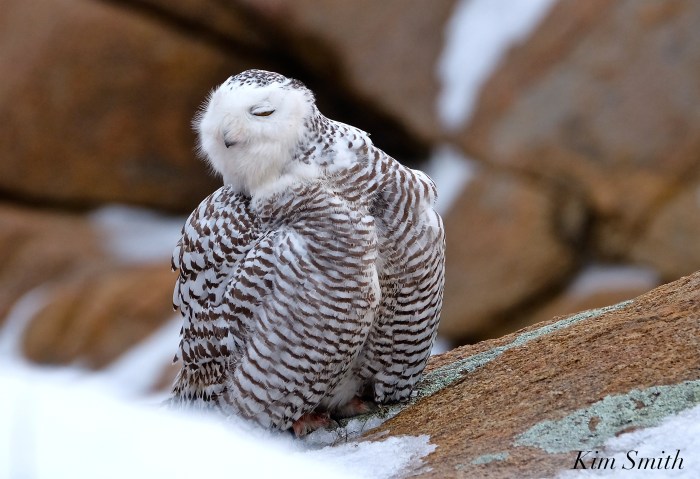
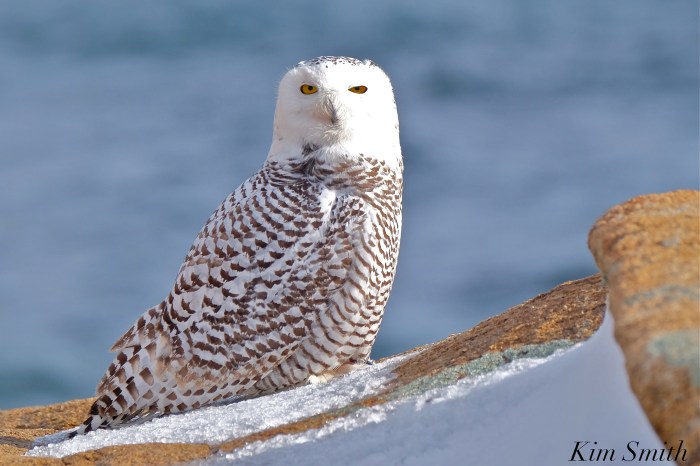
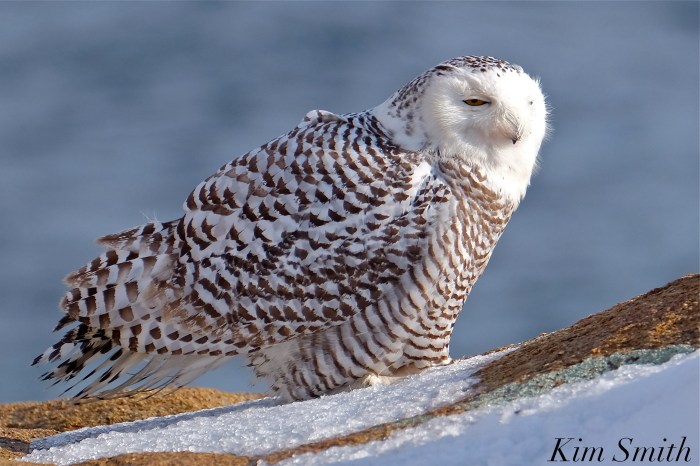
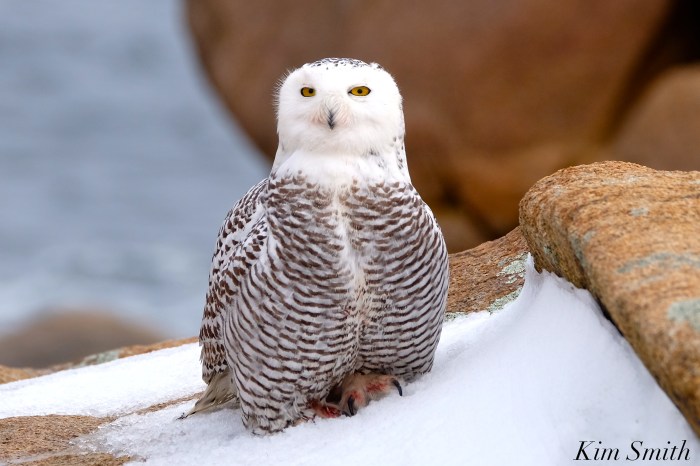
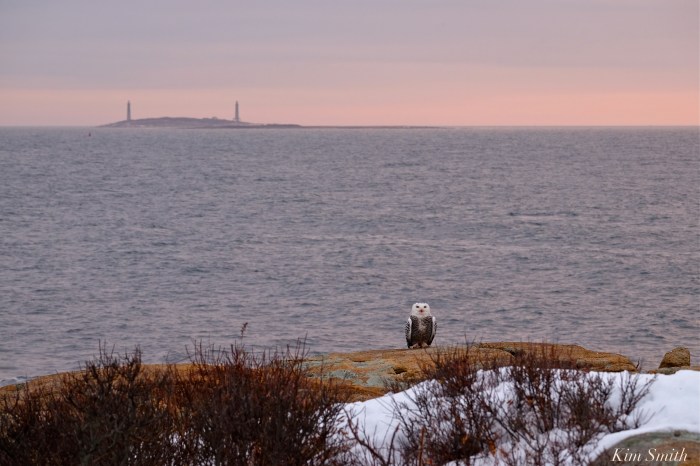
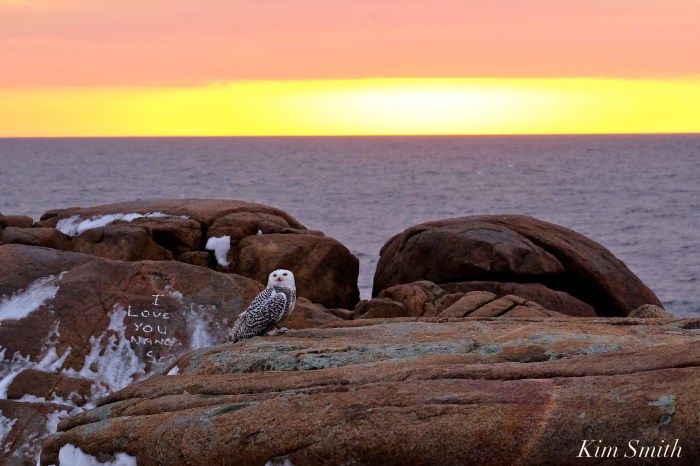
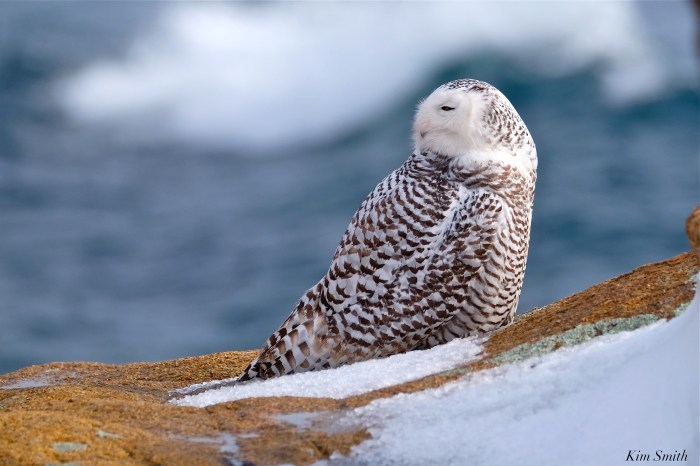
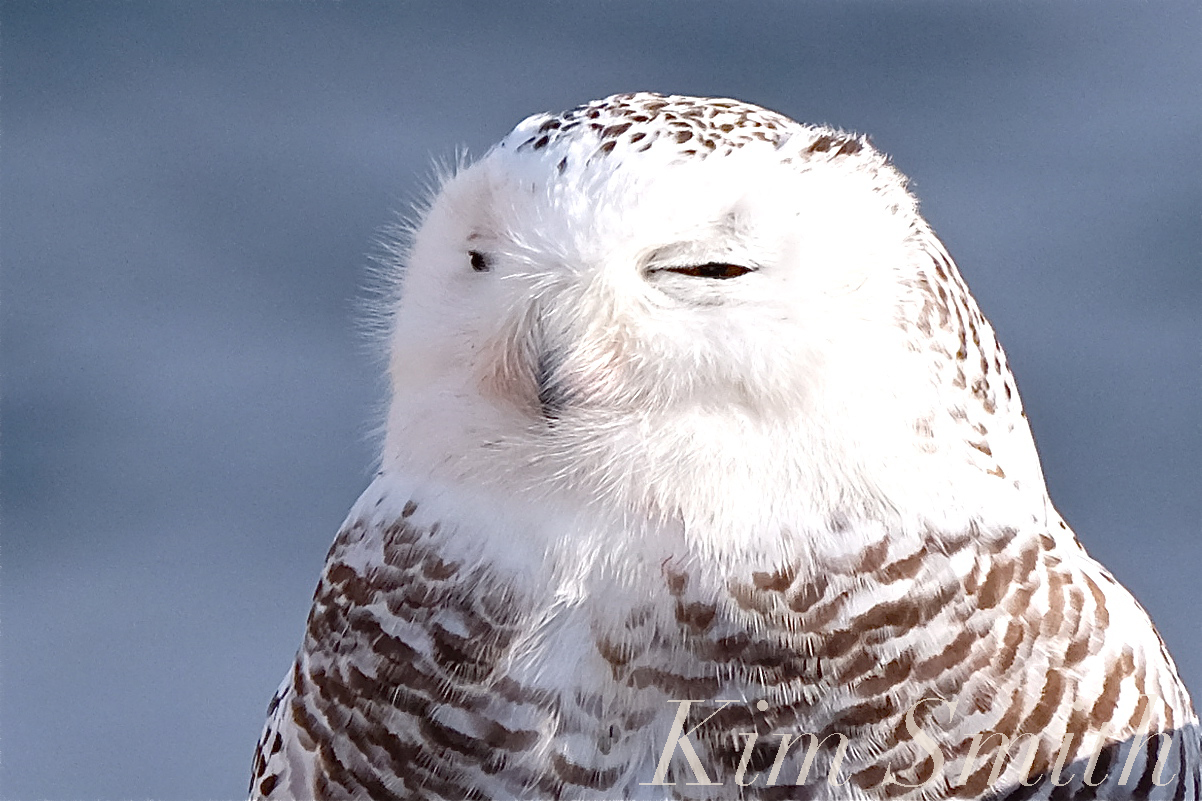
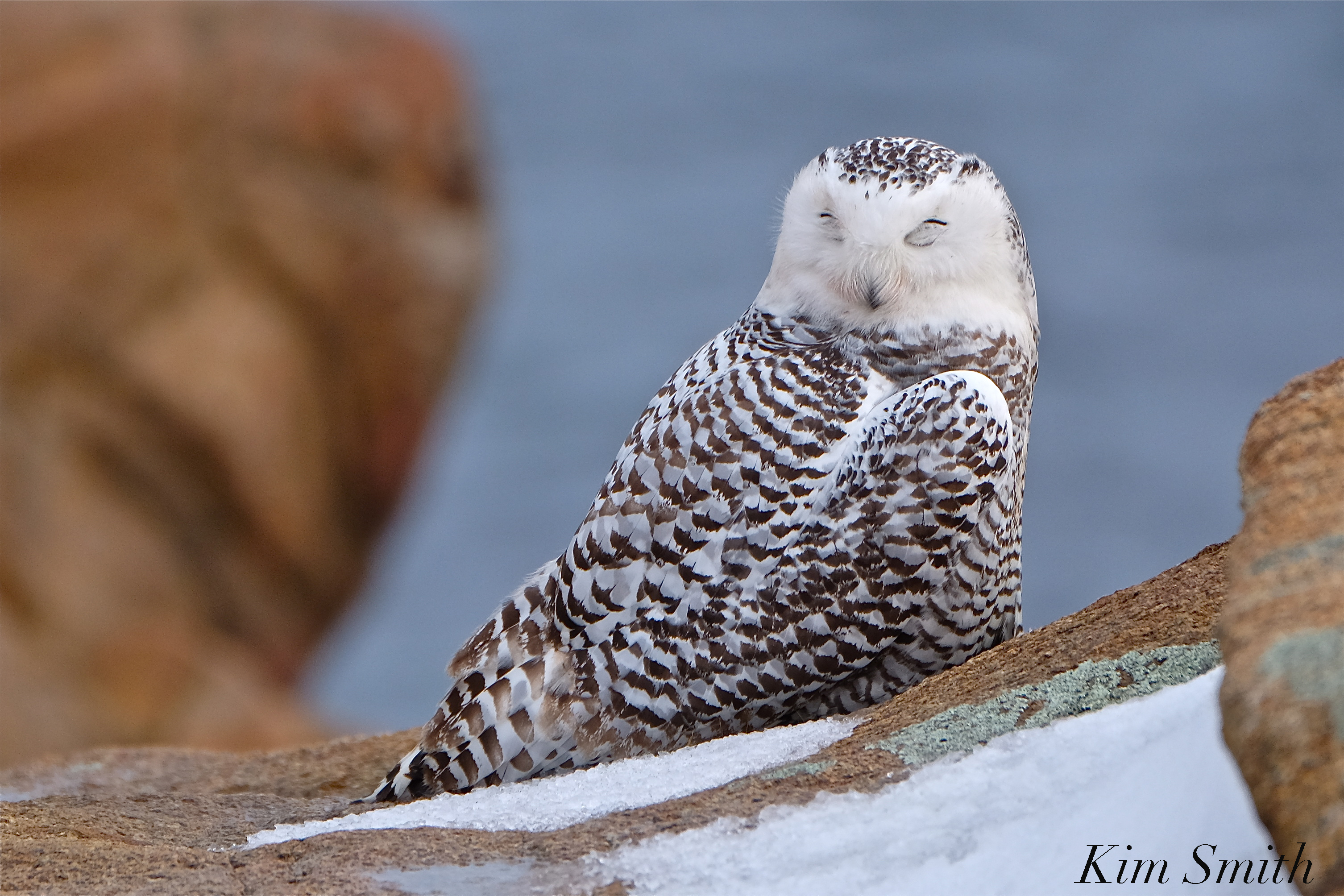 For a moment the Snowy sat bolt upright from a loud bang in the distance, but generally, she was a satiated and sleepy owl.
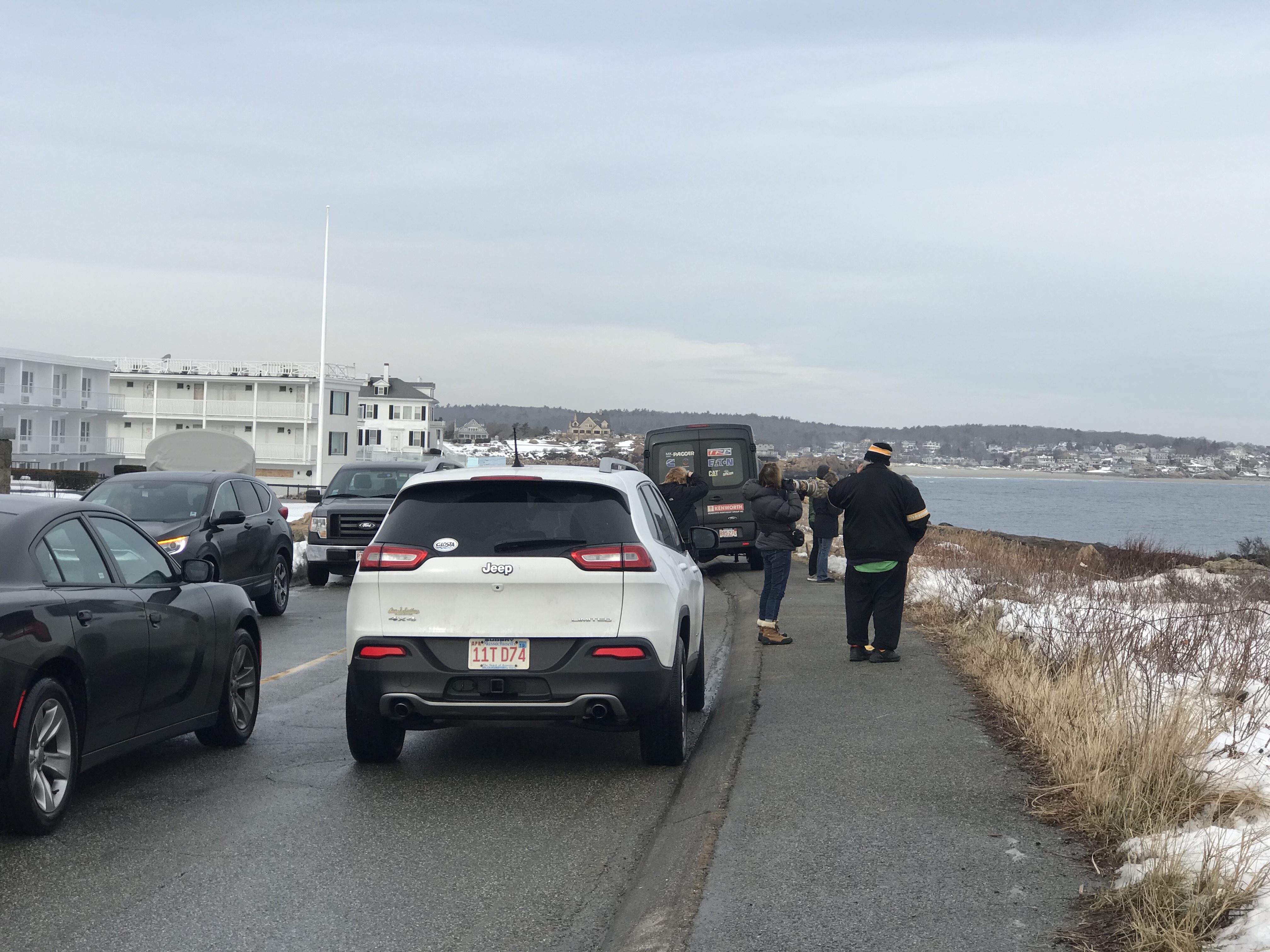 Snowy Owl Fan Club Traffic Jam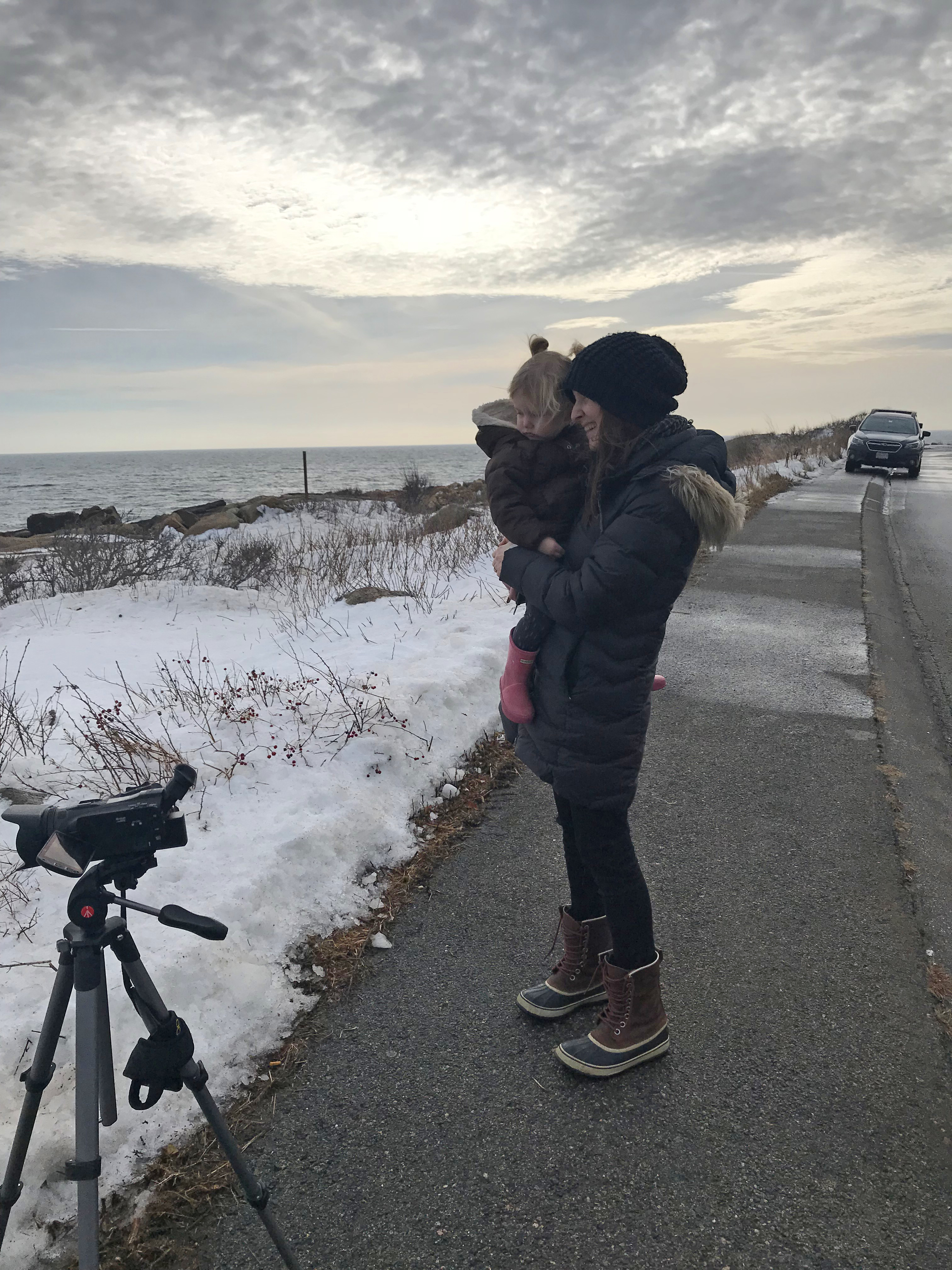
Spread The GMG Love By Sharing With These Buttons:

DNA SEXING TEST FOR THE RESCUE SWAN RESULTS ARE IN
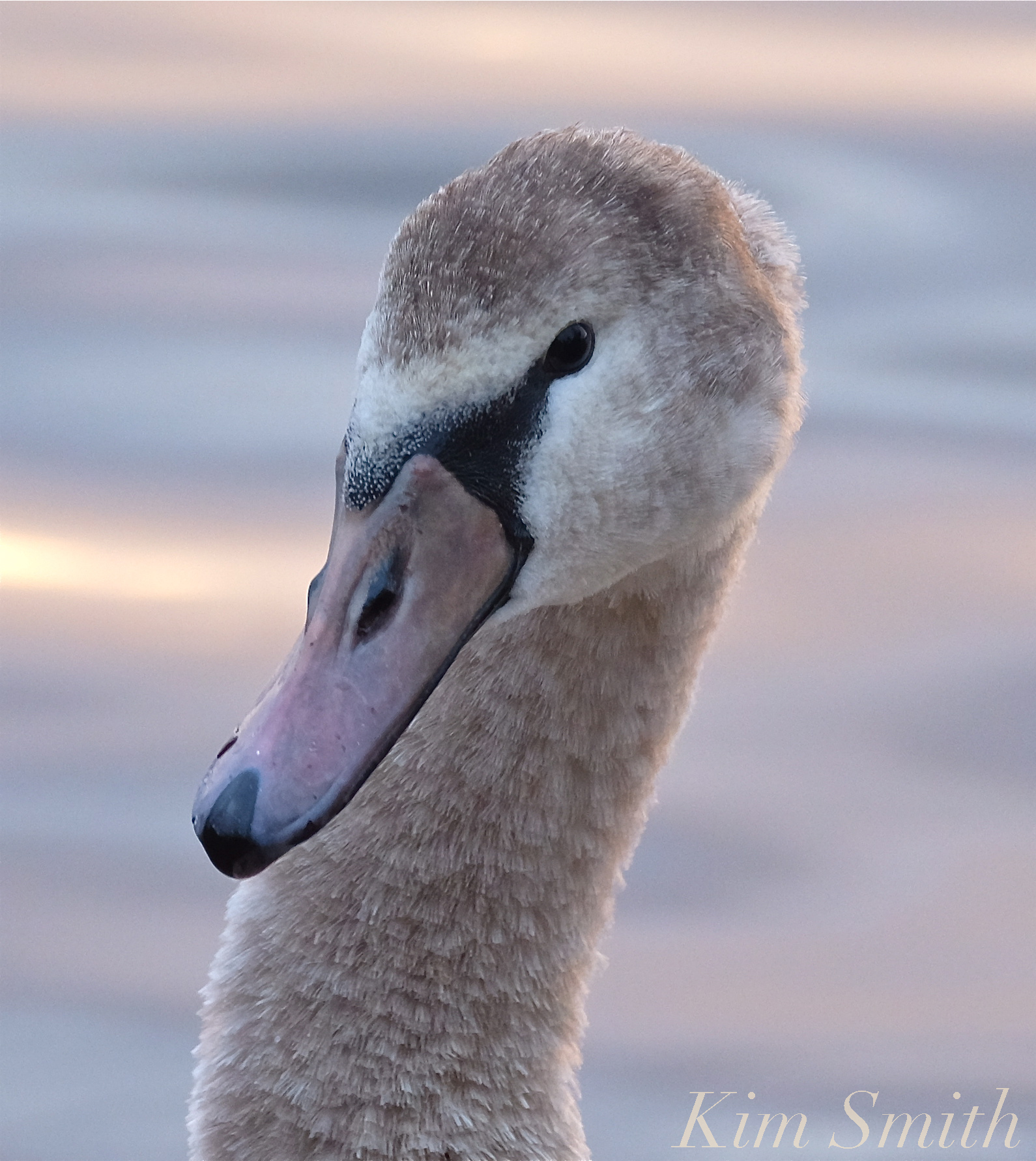 We’ve all been hoping so much that the Young Swan would be a female and that romance, or at the least friendship, would blossom between it and Mr. Swan. The results are in and our little she is actually a he. The news is somewhat dismaying because we do not know how Mr. Swan will react once he makes a determination. Will he allow the Young Swan to continue to live at Niles in the spring or will he drive him off? Perhaps Mr. Swan, who is at least 28 years old this year, will not be as territorial as would a much younger male Mute Swan and the two will live peaceably. For now, he is in the good care of Lyn and decisions won’t need to be made for a few months.
Notice how greatly the Young Swan’s plumage has changed over the past few months. In the photo on the left, he is four months old. In the next two photos, he is approximately eight months old.
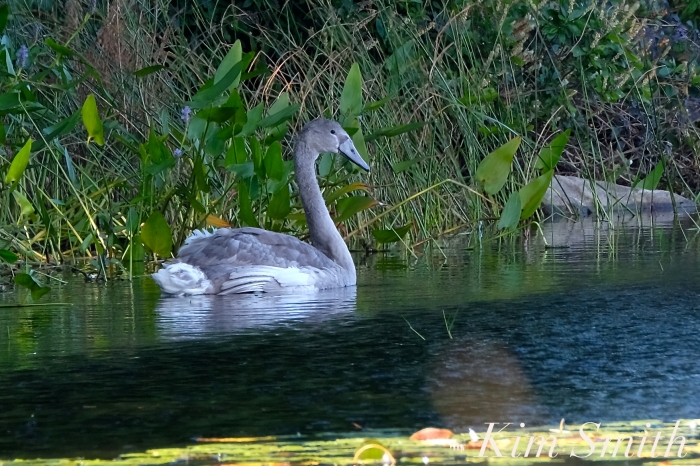
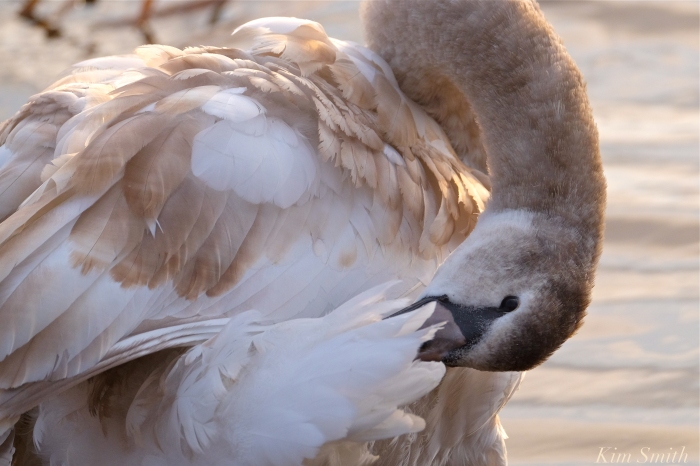
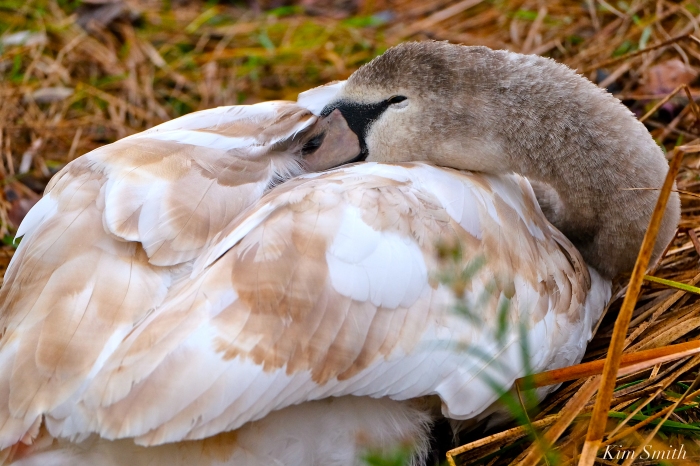
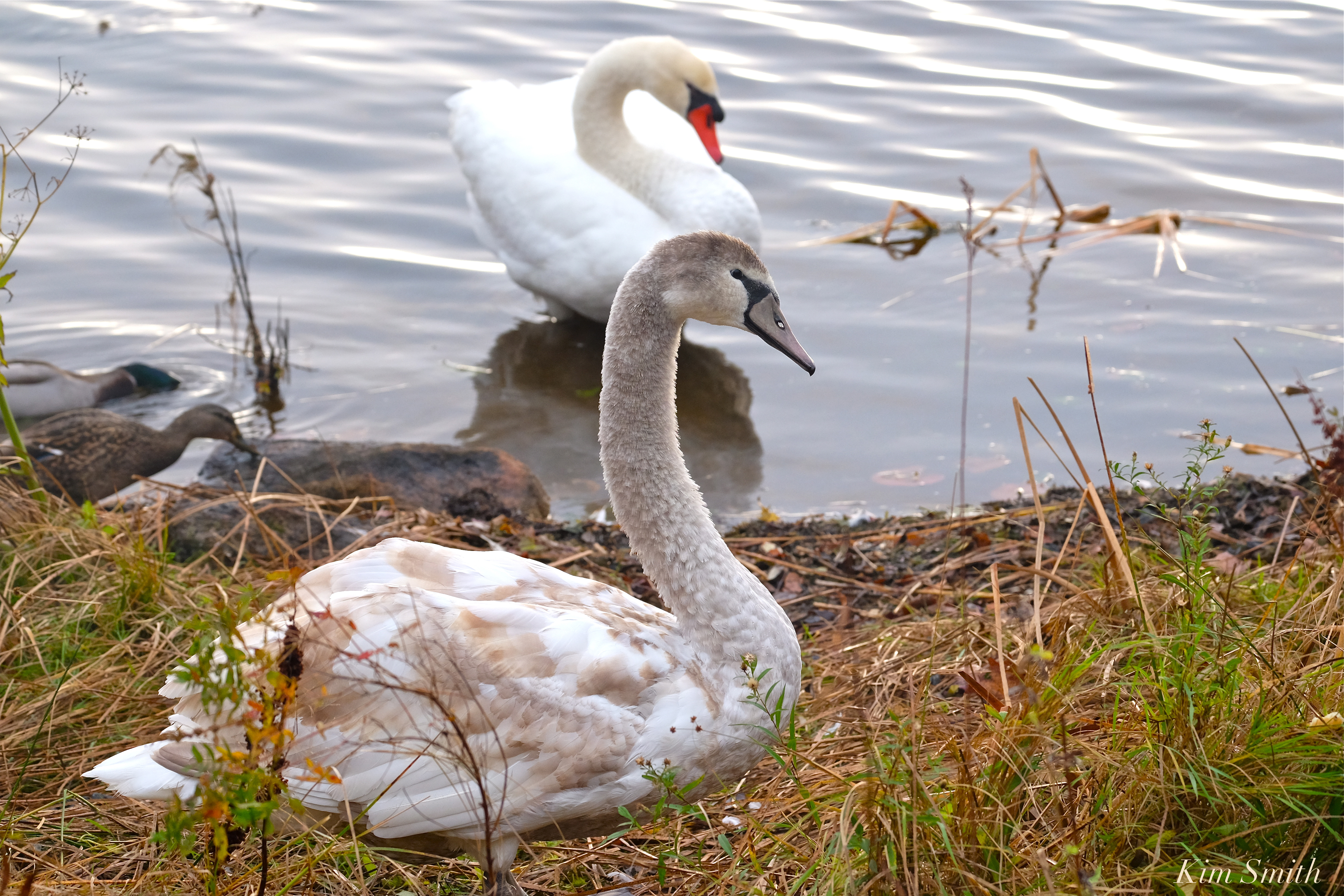 Mr. Swan and the Young Swan
Spread The GMG Love By Sharing With These Buttons:

BACKSHORE BIRDERS
Diana Peck reports that today along the backshore, the birders were finding Buffleheads, Goldeneyes, Red-breasted Mergansers, Common Eiders, Black Ducks & Mallards, and I overheard someone say when stopping to take a photo, Black Scoters.
https://www.instagram.com/p/Bdxpo7jFJlg/
 Good Morning Gloucester