Donna Ardizonni wrote to say that several summer’s ago a Black-capped Chicadee hit her house window. The photo she sent is so sweet, I thought you all would like to see it as well.
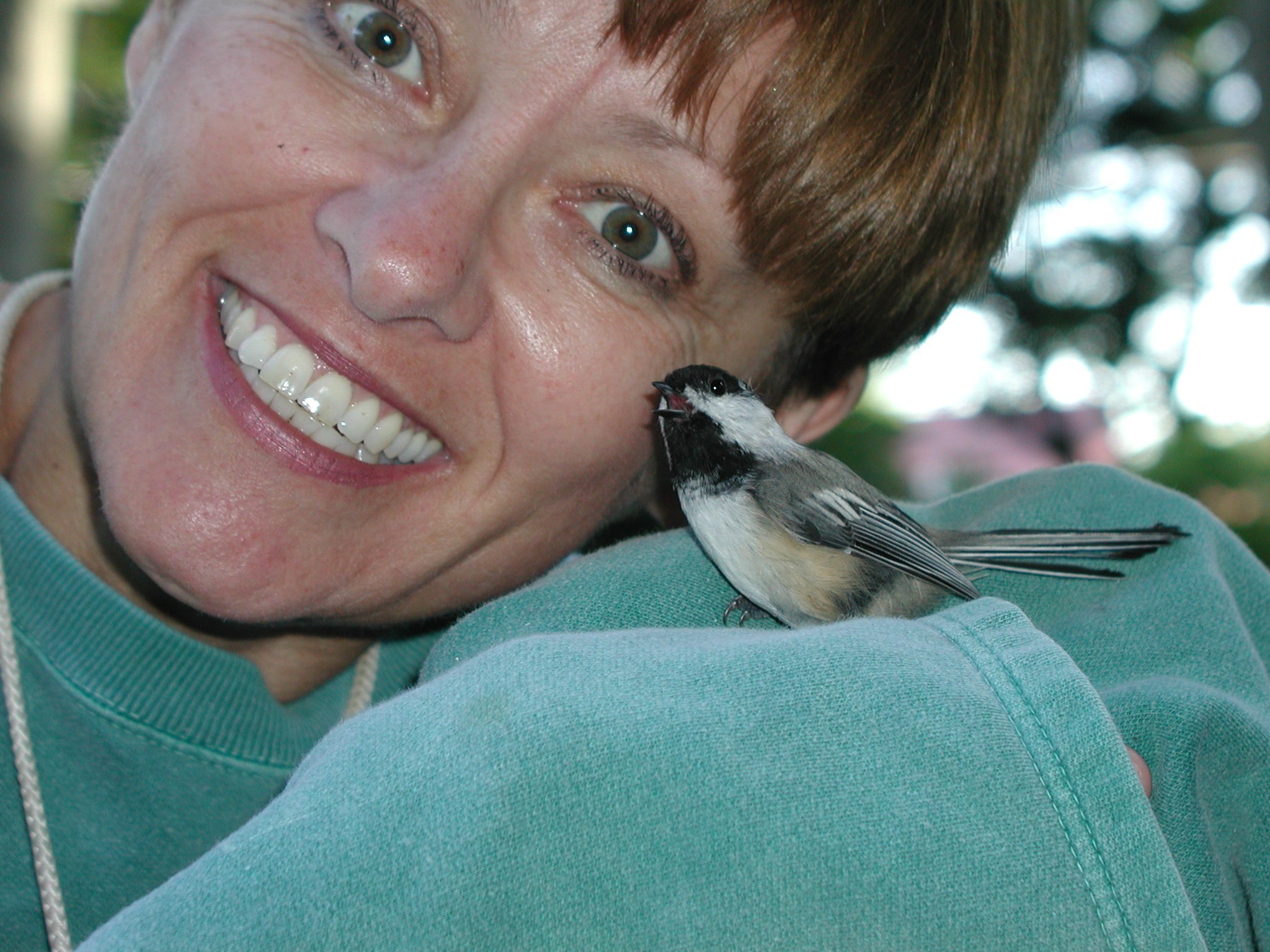 Donna and Black-capped Chicadee
My View of Life on the Dock
Donna Ardizonni wrote to say that several summer’s ago a Black-capped Chicadee hit her house window. The photo she sent is so sweet, I thought you all would like to see it as well.
Donna and Black-capped Chicadee

Each year we are visited by a breathtakingly beautiful migrant flock of American Robins. This year they arrived on leap day, many weeks later than is typical. There wasn’t much to eat as the Mocking Birds and Catbirds have eaten nearly all the berries on the Dragon Lady hollies. Fortunately, the winterberry had held its fruit. Unfortunately, the aggressive and pesky European Starlings were competing for what little fruit remained.
The following was originally posted December 2010 ~
The widely distributed and beloved American Robin (Turdus migratorius) hardly needs an introduction. The American Robin is the largest member of the thrush family—thrushes are known for their liquid birdsongs and the robin is no exception. Their unmistakable presence is made known when, by early spring, the flocks have dispersed and we see individual robins strutting about the landscape with fat worms dangling. Unmistakable, too, is the male’s beautiful birdsongs, signaling to competing males to establish their territory, as well as to entice prospective females. Read more about the American Robin including suggestions of native plants that provide nourishment for resident and nomad.

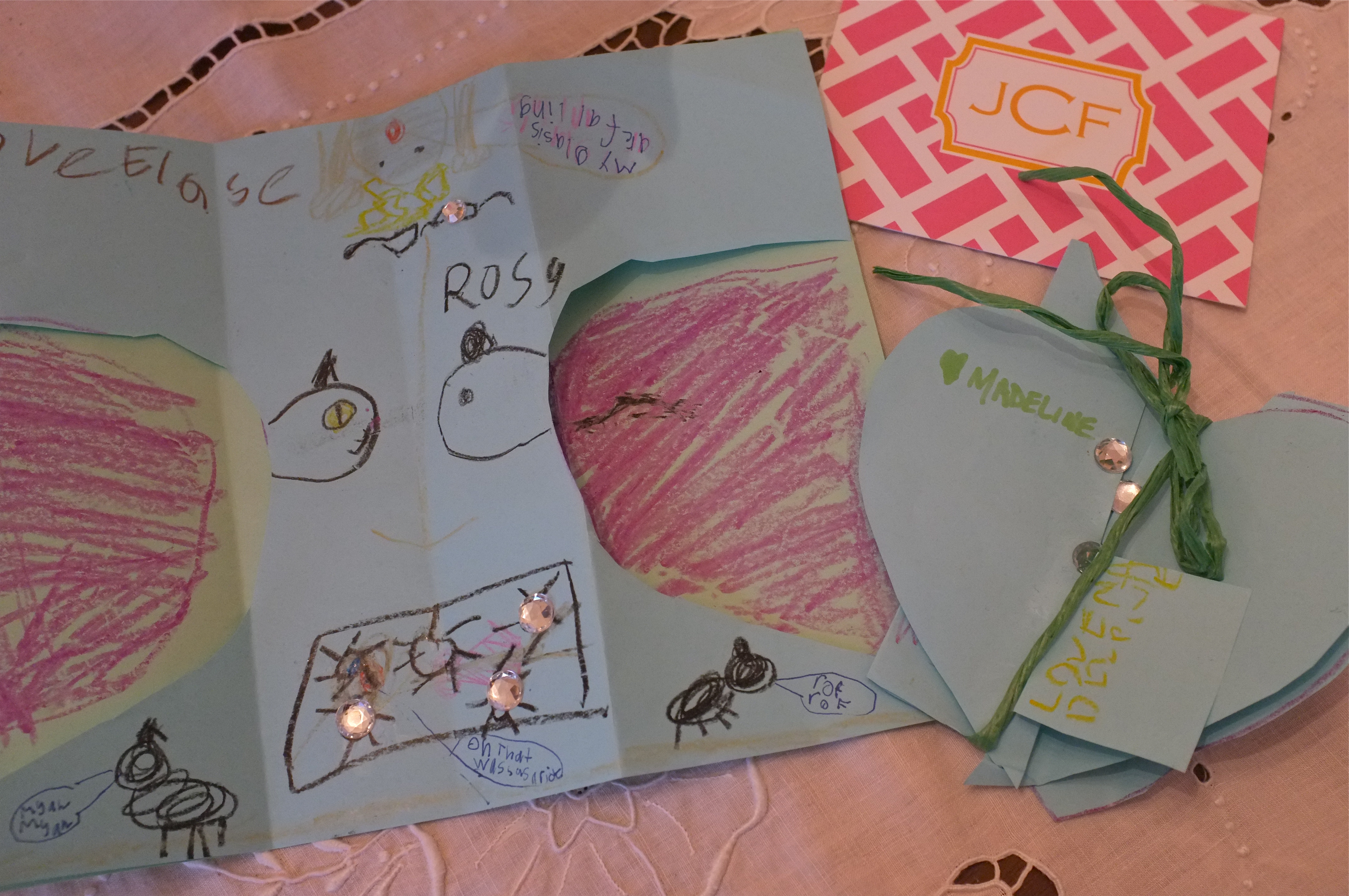
Sunday afternoon Eloise and Madeline and Joey stopped by, affording Mom Jill the opportunity to go to the market. We played dolls, but only for a moment—the girls were much more interested in Cosmos the Cat, Rosie the Dog, the magnifying glass, and butterflies. Several days later an envelope bursting with drawings made by the girls arrived in the mail; drawings of Cosmos and Rosie, butterflies and hearts, diamonds and sunshine. Thank you Elosie and Madeline for the super fun afternoon and beautiful drawings. I love your special gift!

Every year, in the United States alone, over 1,000,000,000—yes, that is one billon—birds are killed from flying into windows. Chris Leahy quoted this statistic at the talk he gave last week at the Sawyer Free Library. Coincidentally, earlier that day I had been speaking with my friend Kate who has this very problem of birds hitting her windows as her home is sited on a beautiful seaside meadow in Tiverton, Rhode Island. She wanted to share with my readers about spider web decals for glass windows.
I found a website that offers a range of innovative solutions to protect birds, for both the residential home and the commercial property, TONI Bird Control Solutions. Although based in Germany, the solutions are universal.
Spider webs reflect light in the UV spectrum and are a visible barrier to birds. When you think about it, we don’t often see birds entangled in a spider’s web. Taking cues from nature, the spider’s web is the basis for TONI’s ultraviolet bird pen, bird glass, and UV decals. TONI’s solution #2, the ultraviolet Bird Pen, is well suited for residential properties. Also, check with the Essex Bird Shop. I believe they carry ultraviolet decals, not visible to the human eye.
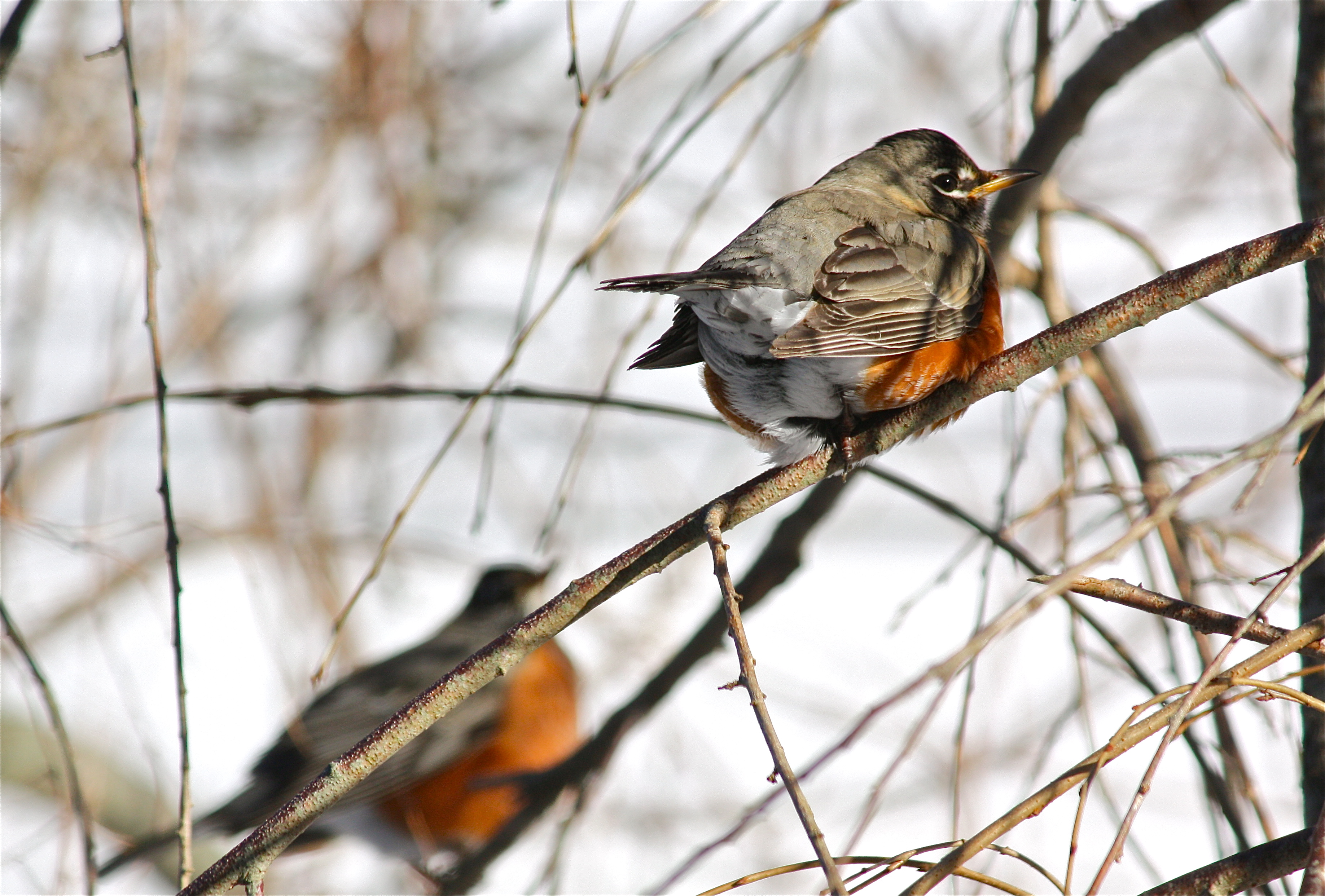 American Robin
If so many birds are killed, why don’t we see the dead bodies? The answer is simply, scavengers. Migrant songbirds fly at night, hitting the glass in the dark and the very early morning hours. Scavengers like gulls, vultures, crows, magpies, rats, and cats know where to look for injured and dead birds. At city skyscrapers, building maintenance daily sweep up bags of, and sometimes during peak migration, barrels full of, dead birds every morning at dawn. The high death rate around skyscrapers is also due in part to the bright lights left burning all night.
Another solution is perhaps not wash your windows quite as frequently, or wait to wash until after the spring and fall migrations. Fortunately, we do not have the problem of birds hitting our windows because of our many weathered and wavy window panes dating back to 1851. We have a different problem. During warmer months, I like to take advantage of the harbor breezes and usually have the windows wide open, and without screens (until mosquito season begins). We’ve had finches and sparrows and hummingbirds flying around my home office, but then again, none fatally injured.

Chasing Away the Winter Doldrums

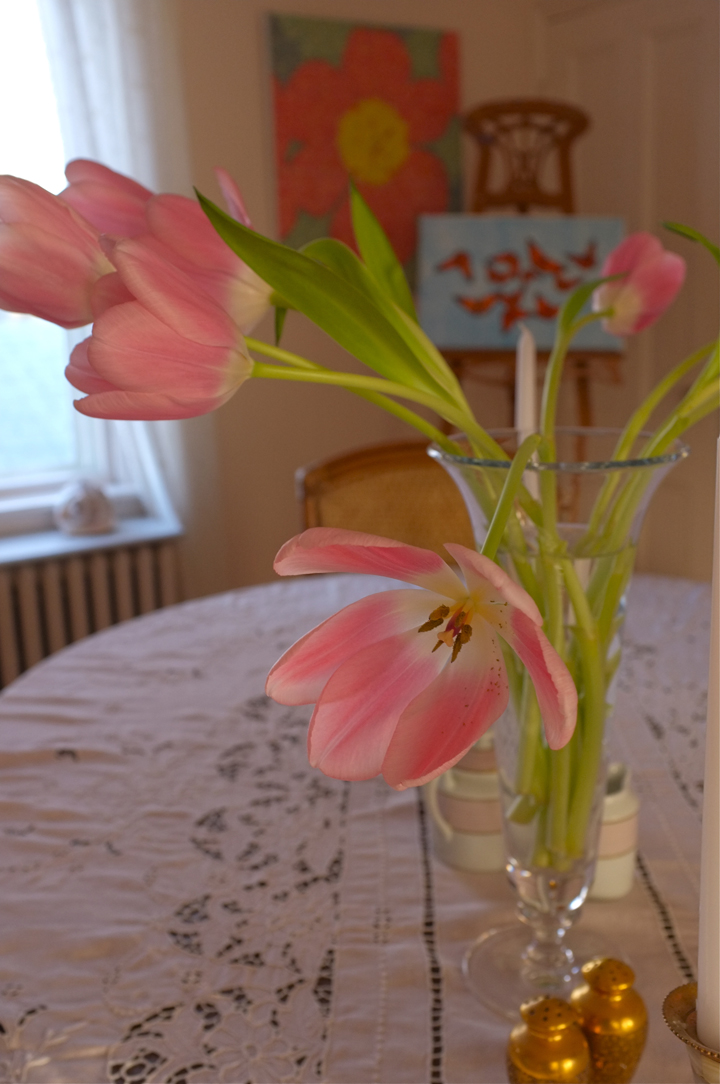
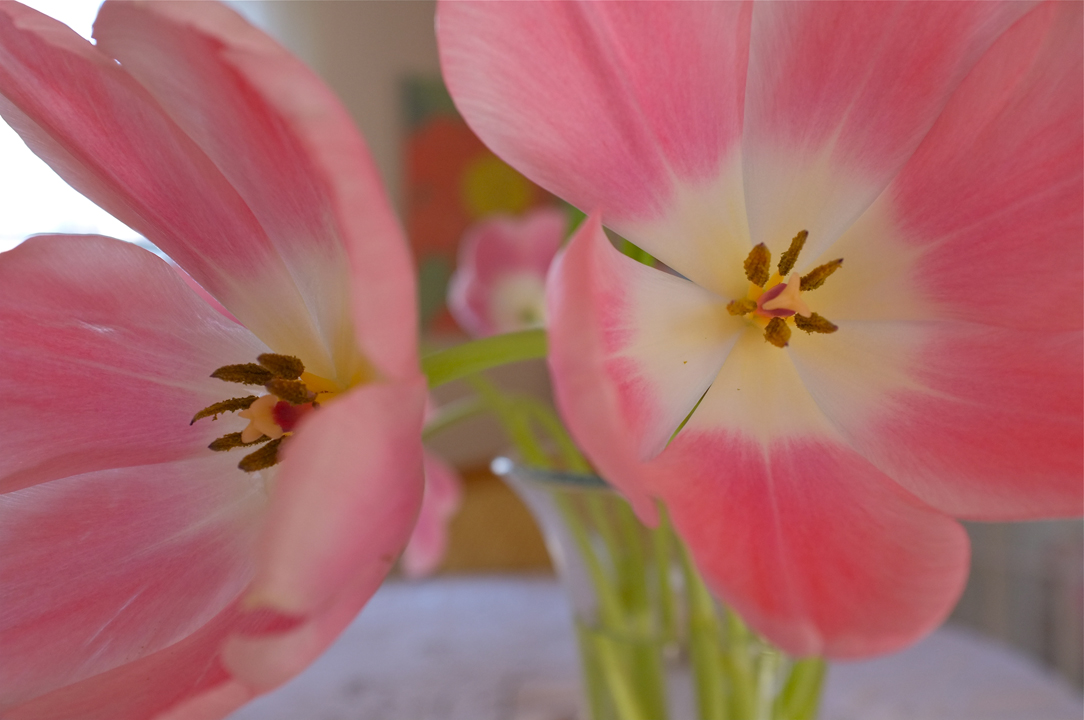
The stem I always manage to snap when unpacking the tulips-
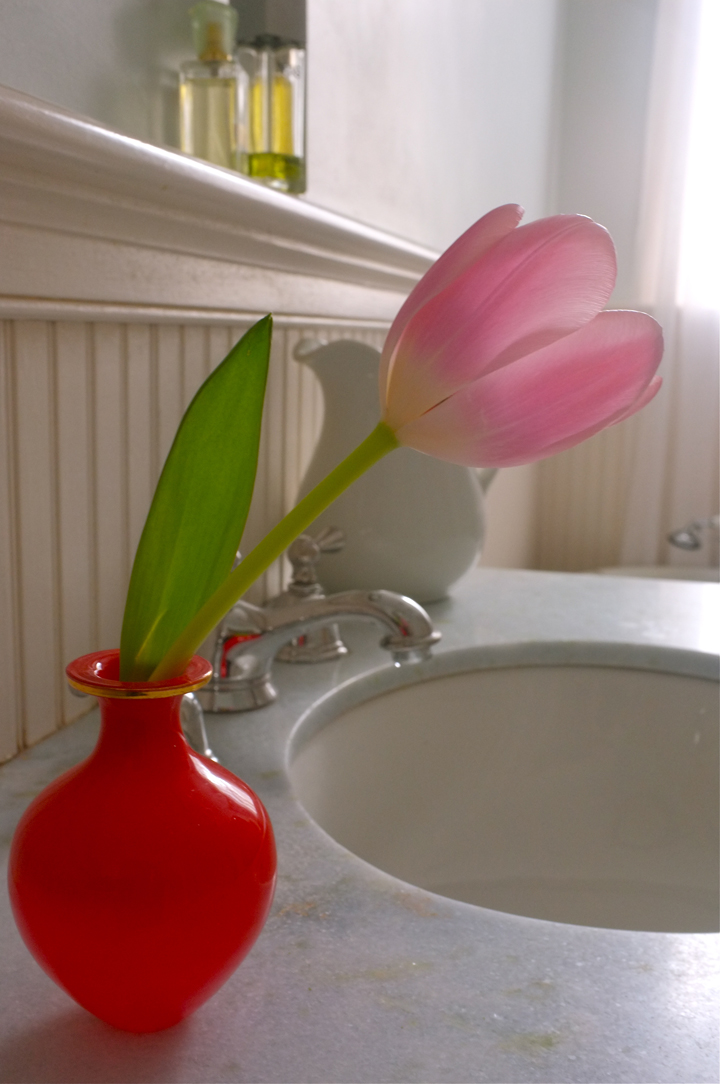
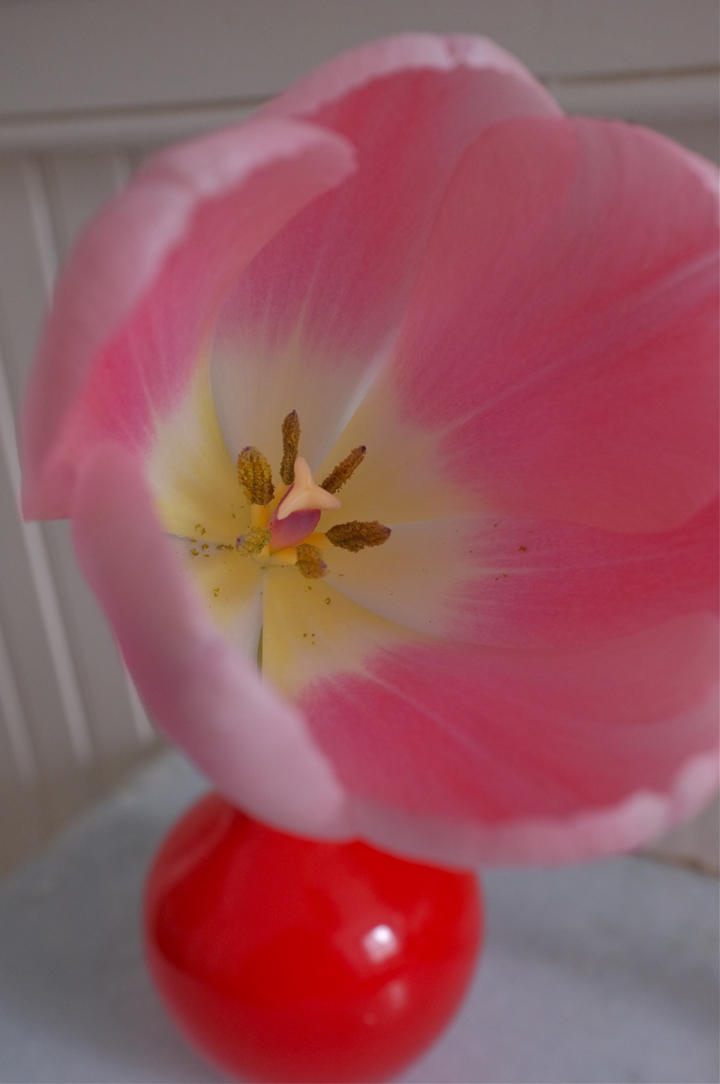
Kay Tompson sings Think Pink! in Funny Face (1957, starring Audrey Hepburn and Fred Astaire)
Think pink! when you shop for summer clothes.
Think pink! if you want that quel-que chose.
Red is dead, blue is through,
Green’s obscene, brown’s taboo.
And there is not the slightest excuse for plum or puce
—or chartreuse.
Think pink! forget that Dior says black and rust.
Think pink! who cares if the new look has no bust.
Now, I wouldn’t presume to tell a woman
what a woman oughtta think,
But tell her if she’s gotta think: think pink—!
-Music by George Gershwin with Lyrics by Roger Edens

I am looking for a Black Swallowtail chrysalis to film. The last generation of the previous summer’s Black Swallowtail caterpillars spends the winter in their chrysalis form. Often times the winter chrysalis is woody brown, not green. The late season caterpillar may pupate under the eaves of a house, along a porch or deck rail, or on a fence. I am hoping that amongst all the many GMG readers, someone has a brown Black Swallowtail chrysalis in their garden.
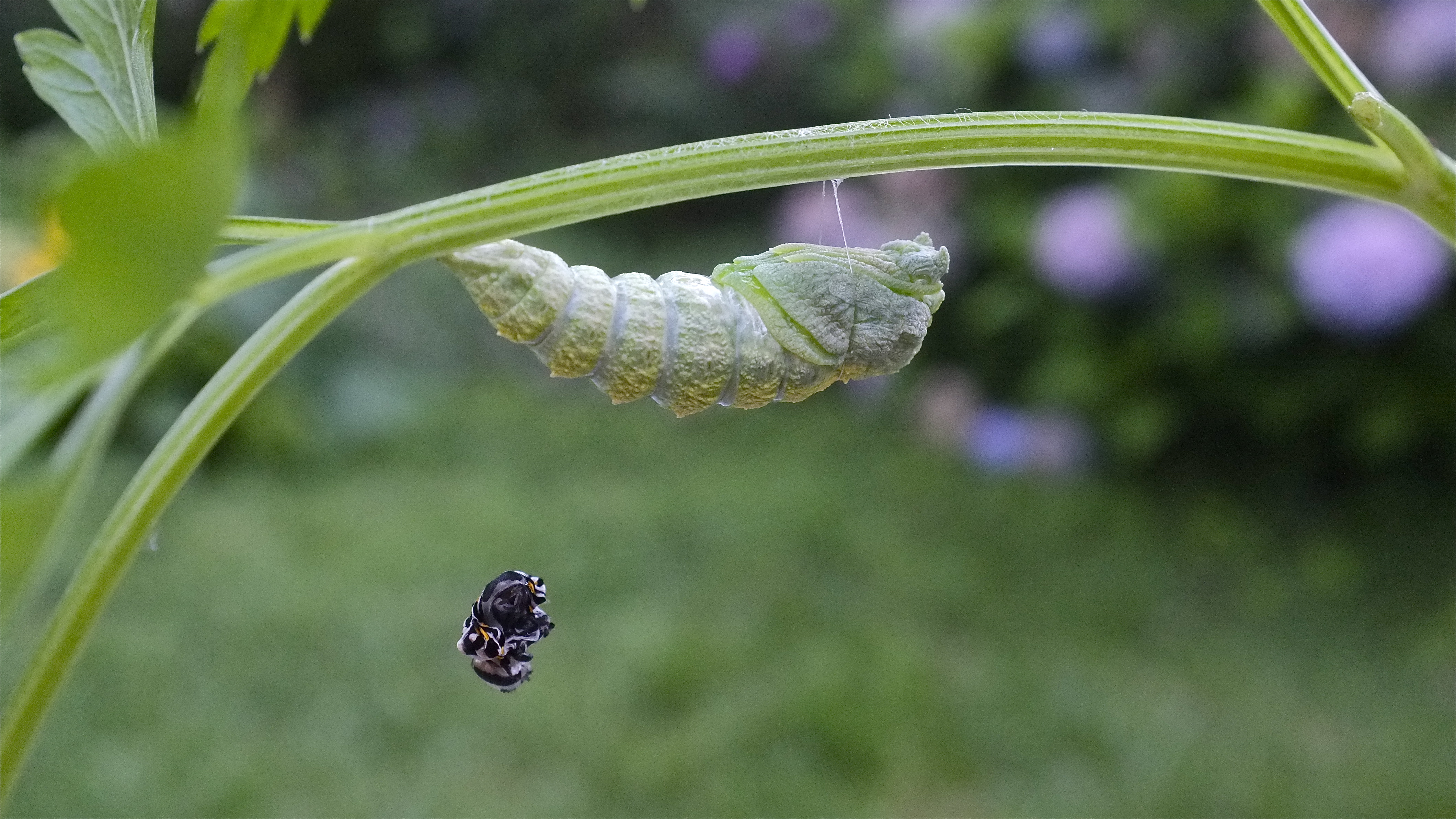 Black Swallowtail chrysalis, green form
There are several distributors from where butterfly and moth chrysalis may be purchased, but I would prefer to film a Cape Ann specimen in its natural habitat (or at least a Black Swallowtail chyrsalis from the New England area). Please let me know if you think you have the brown form of the Black Swallowtail chrysalis. THANK YOU!!!
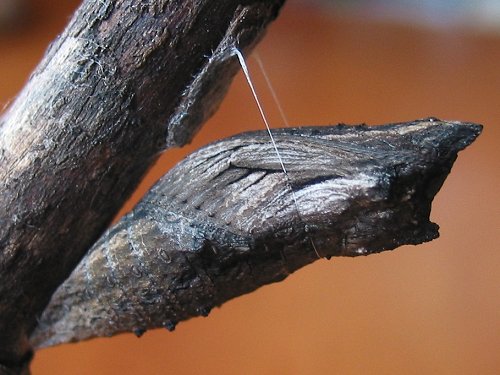 Black Swallowtail chrysalis, brown form–image courtesy Google image search

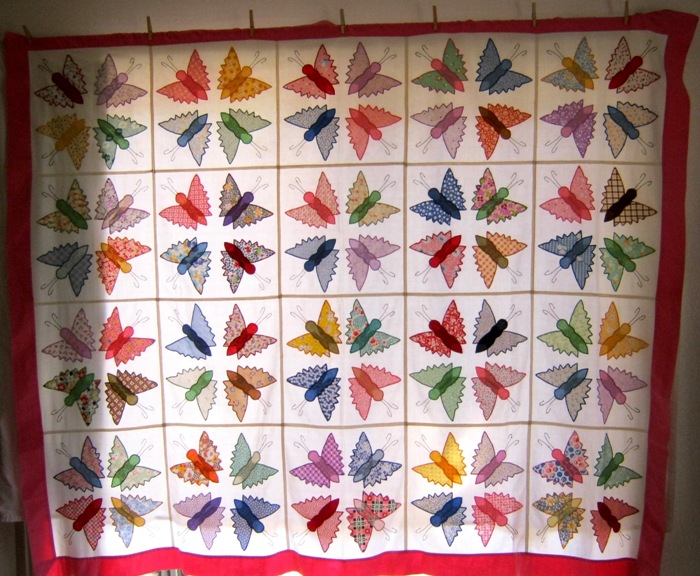 Depression Era Butterfly Quilt Top
Reader Sandra G recently wrote: Thank you for Sharing the Antennae For Design Article and Photo. I recently acquired a Vintage Butterfly Quilt Top*, that has me puzzled as to what the fabrics are and dating it ? The Butterflies appear to be very similar to your Photo. I am clueless about this Quilt Top and any help would be greatly appreciated. You have a great Website and Blog!
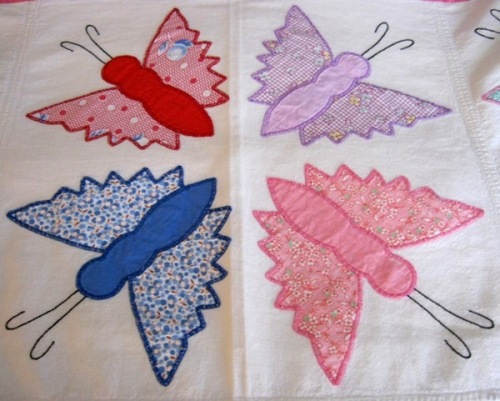 Butterfly Quilt Top Detail
I asked her to send photos and she did send several. I do think this is a Depression era quilt for several reasons. The red butterfly especially, with the cheery cherry printed over the red and white polka dot fabric, looks very 1930s-1940s. All the butterflies are hand-embroidered, which also leads me believe the top is from the Depression era. It’s really a charming quilt top, and beautifully made. I love the design placement of the butterflies. The colors are so vibrant–the finished quilt will make any room sing. What a great find Sandra G.!
* Note ~ a quilt top is just that; the top only. Quilt tops are a wonderful way to acquire a vintage quilt. For some reason or other, the quilt was never completed. Ideally the quilt top would have been tucked away and stored out of direct sunlight–just waiting for some industrious- type to complete the job! If stored properly, you’ll find the vintage fabrics in their original vibrant colors as sunlight and repeated washings are most damaging to textiles.
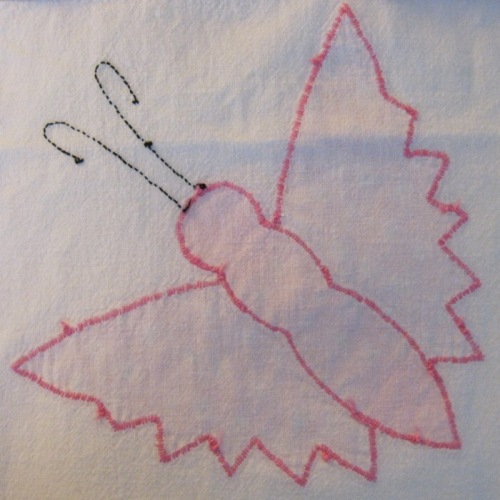 Butterfly quilt top hand embroidered detail

Chris Leahy spoke to a packed house at the Sawyer Free Library last night.
 As is usually the case with Chris, his talk was brilliant and depth of knowledge inspiring. Aren’t we fortunate that he resides in Gloucester and always gives so generoulsy of his time and knowledge. Thanks, too, to the Sawyer Free for hosting this event. Chris gave out to our community twenty-five copies of the beautiful and densely illustrated 60 page seminal report on the avifauna of Massachusetts. If you did not receive a copy last night, it is available to read in convenient online magazine form here: State of the Birds: Documenting Changes in Massachusetts Birdlife.
From the forward of State of the Birds, written by Edward O. Wilson, University Professor Emeritus in Entomology Harvard University. ”
Dear Friends,
It is with tremendous enthusiasm that I mark the release of Mass Audubon’s seminal report on Massachusetts avifauna, State of the Birds 2011. Though our Commonwealth is one of the smallest, most populous states in the union, it is blessed with spectacular landscapes filled with an astonishing biodiversity. The Berkshire Hills in their autumn splendor, Bald Eagles soaring over the Quabbin wilderness, the majesty of the sea at any season from Cape Ann to Cape Cod—these and many other treasures inspire our imagination and lift our spirits. These landscapes are home to birds—birds that can show us, when we watch and listen, how our environment is faring and how it is changing.
…Birds inhabit our myths, appear in our poetry, and inspire our music. Since ancient times, birds have been used in auguries to make critical decisions or predict the future. Now science rather than superstition is interpreting what the birds are telling us. We need to listen carefully.”
Sincerely,
Edward O. Wilson

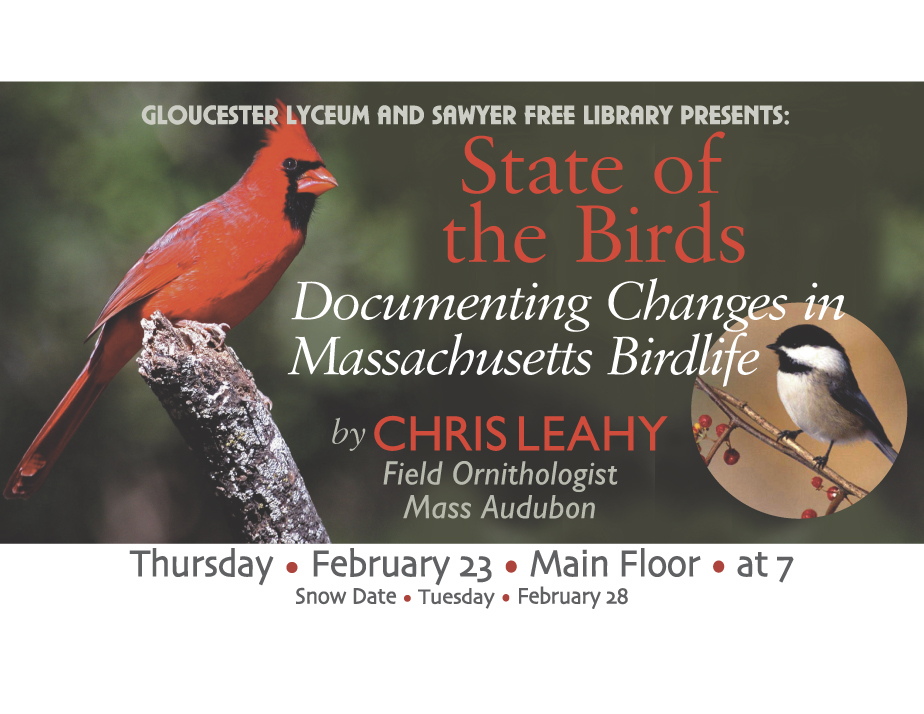
Tonight at the Sawyer Free Library, Main Floor, 7pm : State of the Birds ~ Documenting Changes in Massachusetts Birdlife
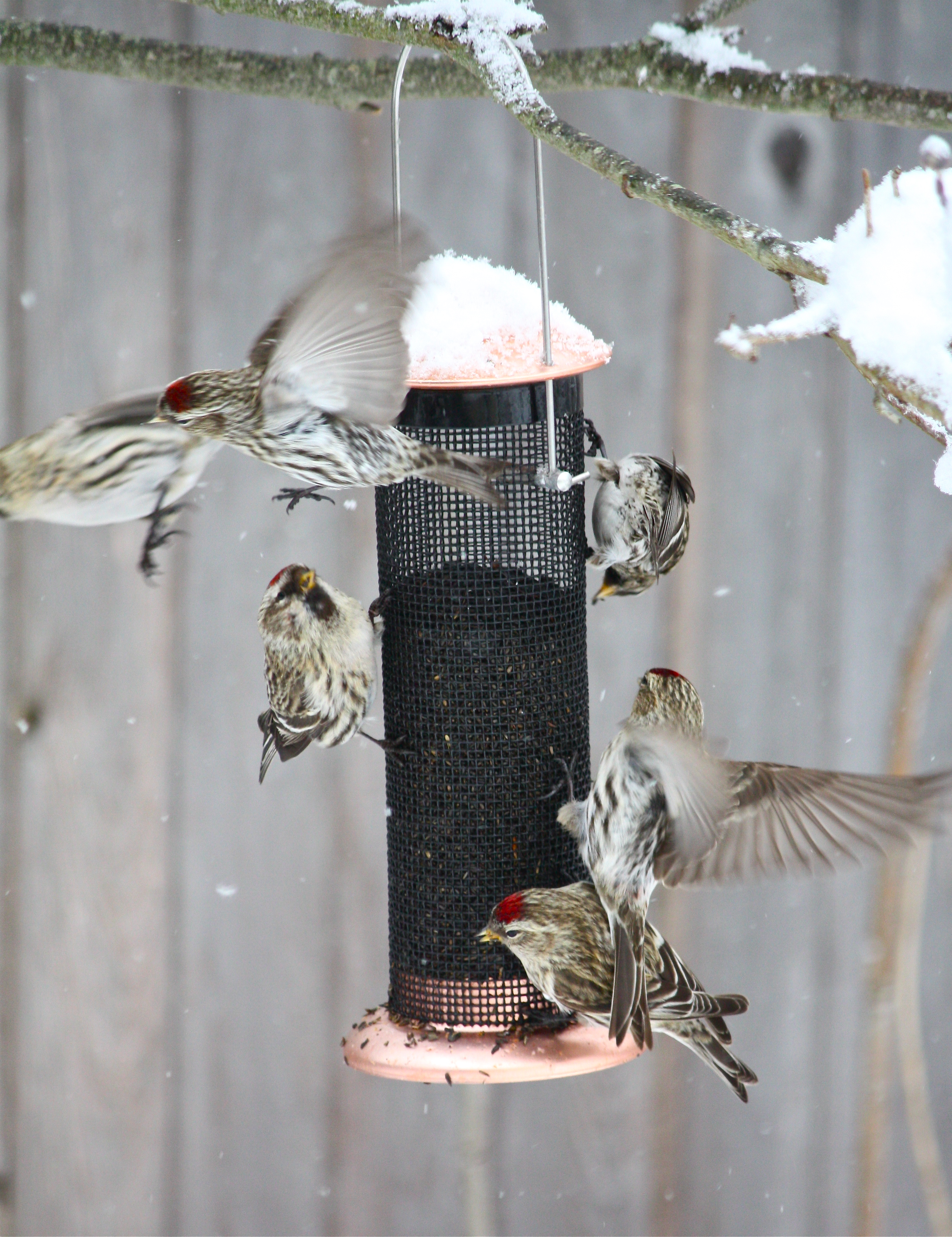 Common Redpoll (Carduelis flammea)

“Beauty and seduction, I believe, is nature’s tool for survival, because we will protect what we fall in love with.” –Louie Schwartzberg
Friends who are aware of my butterfly and nature film projects send me the most exquisite images and links to films and videos. Thank you Emily for sharing The Hidden Beauty of Pollination, created by Louis Schwartzberg, award winning photogragher and cinemetagrapher, who has been filming time-lapse flowers and pollinators for over thirty years. The video link takes to you the full screen version, which is without a doubt the best way to view this extraordinary short film (only about 7 minutes in length). The second link leads to a brief talk given by Schwartzberg, also very well worth seeing.
Louie Schwartzberg: The Hidden Beauty of Pollination
The second sentence in Schwartzberg’s quote reminded me of Baba Dioum’s quote (a noted Senegalese poet), “In the end we will conserve only what we will love. We will love only what we understand. We will understand only what we are taught.”
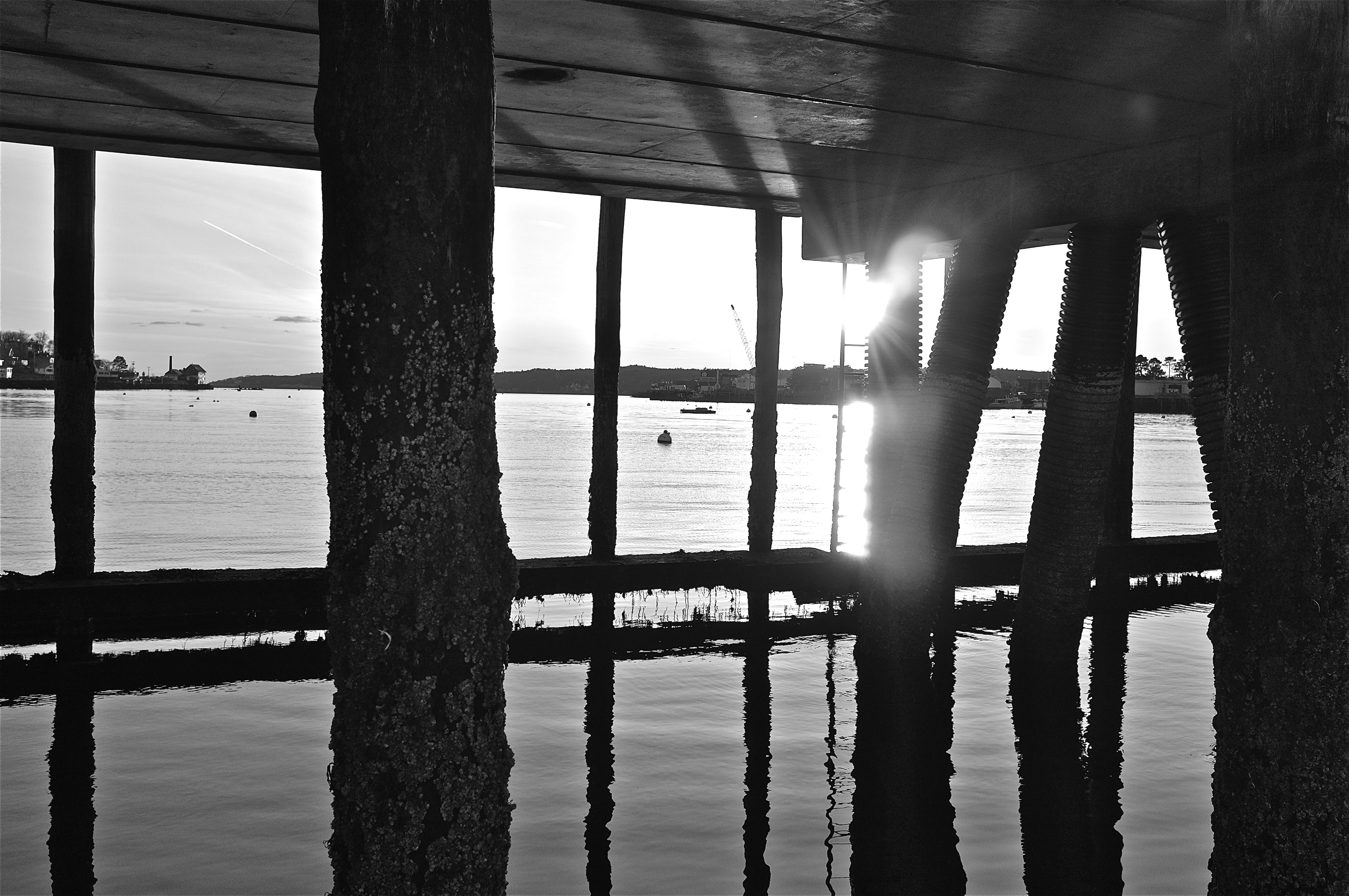
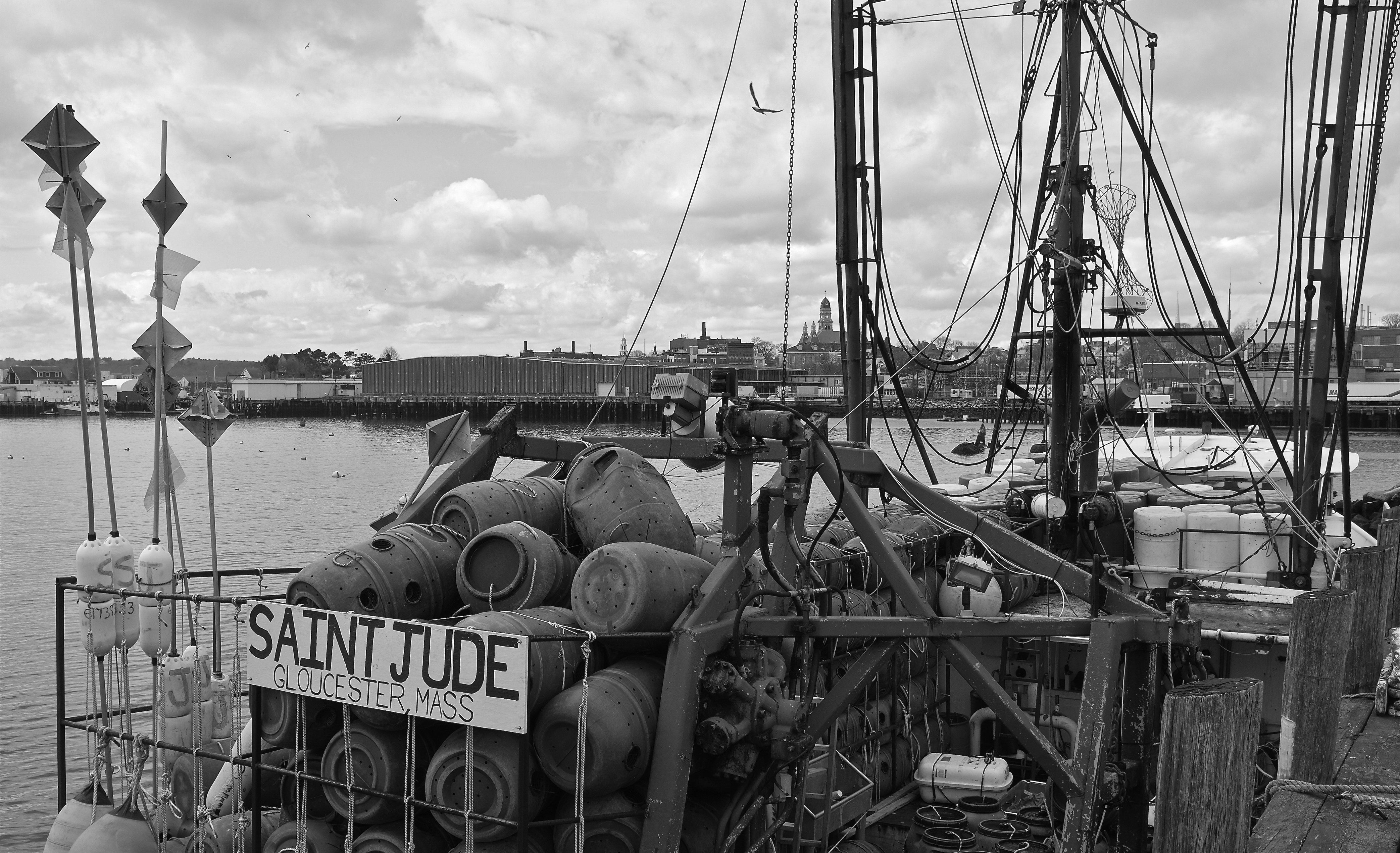
There is beautiful assortment of waterfowl inhabiting the harbor. While there filming the birds and trying to get closer (ever closer!), I’ve become fascinated with the graphic industrial compositions from atop and from below the pier. For example, the above snapshot of Gloucester’s iconic Paint Factory, through the piling’s grid.
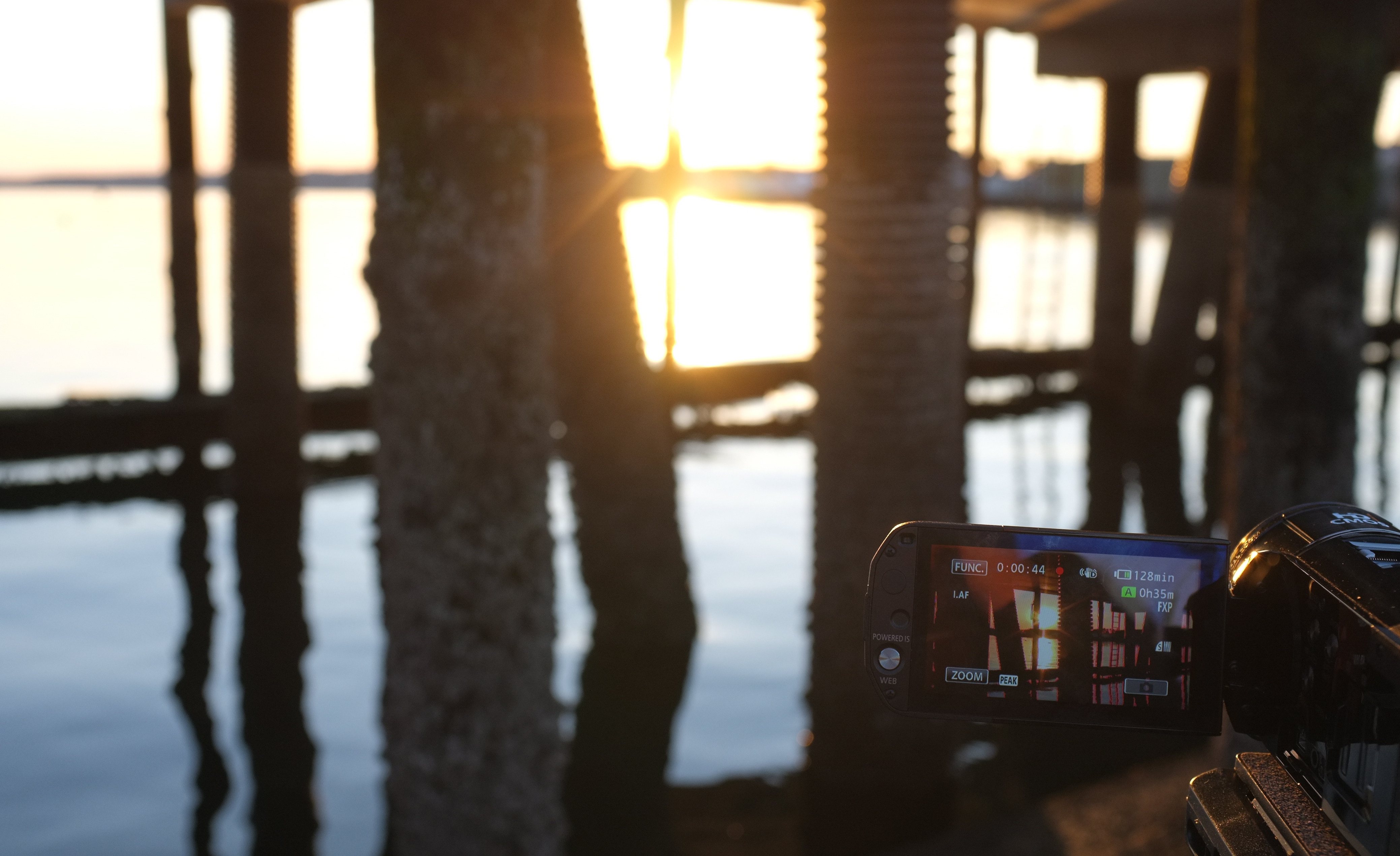

Snapshot from Jodrey State Pier
 Amazing light surrounds–aren’t we blessed?
Click photo to view larger version.

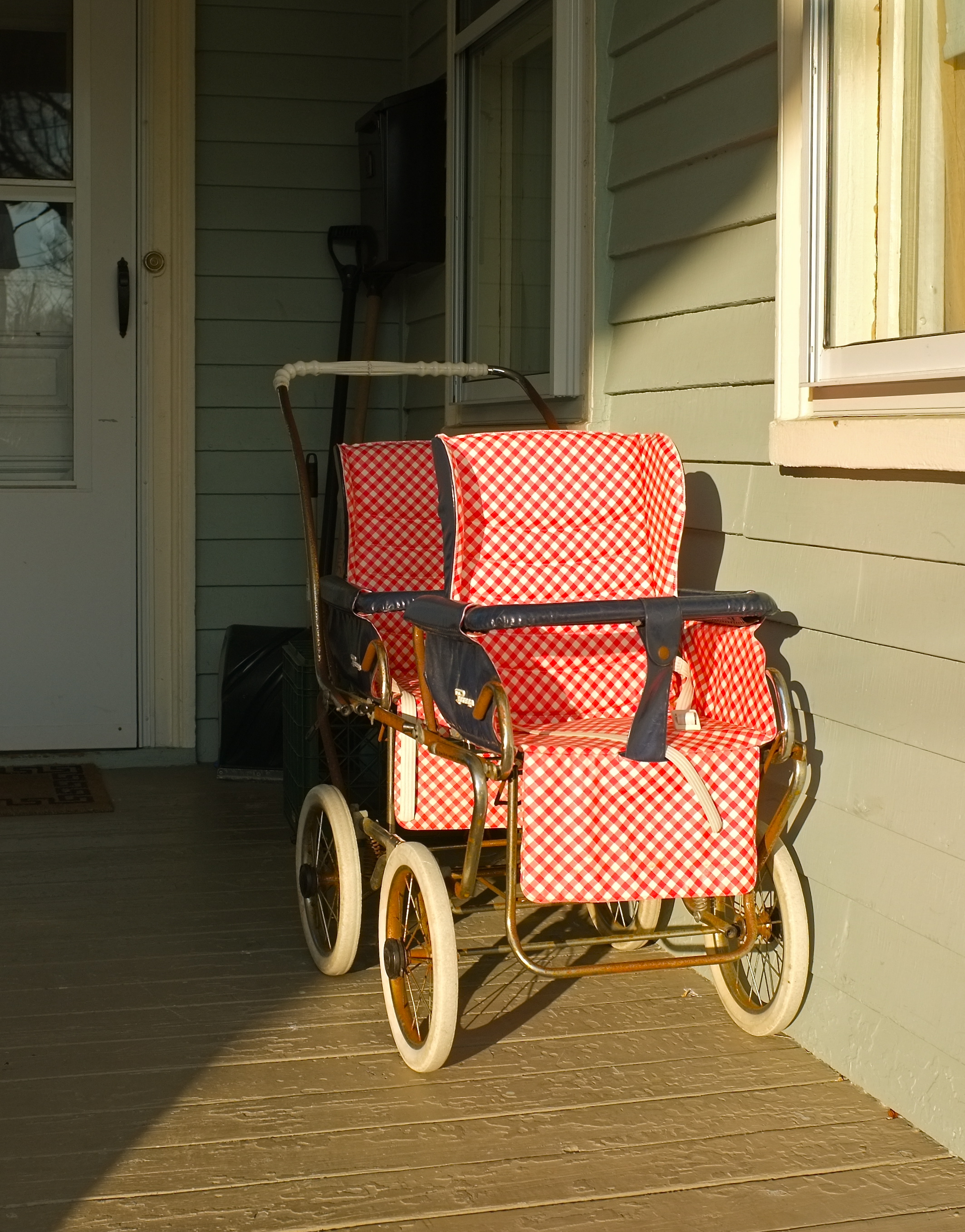
My neighbor’s stroller–so sweet–even more charming when she is strolling the neighborhood with her children. I love the vintage-look, but actually think it is a relatively new carriage.

The Jodrey State Pier is named after Everett R. Jodrey, a barber by trade and activist sympathetic to the fishing industry. Jodrey envisioned a changing waterfront and eventually won support to construct a state fish pier in Gloucester. The money was appropriated in 1931; the pier opened for business in 1938.

Chris Leahy is a fantastic speaker and I am looking forward to attending his lecture next Thursday night at the Sawyer Free. Chris holds the Gerard A. Bertrand Chair of Natural History and Field Ornithology at Mass Audubon. He has been a professional conservationist for more than thirty years and served as Director of Mass Audubon’s Center for Biological Conservation. His interests in natural history are comprehensive, and he is a recognized authority on birds and insects. His published works include Birdwatcher’s Companion to North American Birdlife, The First Guide to Insects, Introduction to New England Birds, An Introduction to Massachusetts Insects, and The Nature of Massachusetts. He grew up in Marblehead and has lived in Gloucester with his family since the 1970s. ~ Information found on Mass Audubon website.


As many know from reading my posts, my dear friend, and one of my favorite design clients, is Briar Forsythe, proprietor of Willowdale Estate, located in Topsfield. I was delighted to attend Briar’s birthday party, which was a wine and food tasting event, and held in the new conservatory at Willowdale. Usually when there I am up to my elbows in design projects so it was a real pleasure to get a sense of how it feels to be a guest. I’ll write more in a future post about the history of, and rebuilding of, the conservatory.
The party started at 4:00 and the late afternoon sunlight streaming through the conservatory windows lent a warm and welcoming glow to the event. The service was absolutely impeccable (do you find that is not often easy to say?). Chef Joe Joyce and staff had prepared simply the most divine courses, paired with wines that perfectly complemented each dish. All the wines were delicious and I can imagine they would be great paired with any number of meals. Unfortunately, I did not take a snapshot of the first course, which was a Duxbury Oyster with Champagne Foam and Blood Orange Caviar, served with a sparkling Dibon Cava Brut. I love sparkling wines and found this perfectly not overly sweet. I am not going to go on and on telling you how super delicious was all–it was–and hope the photos give an idea. The wines were provided by Geoffrey Fallon.
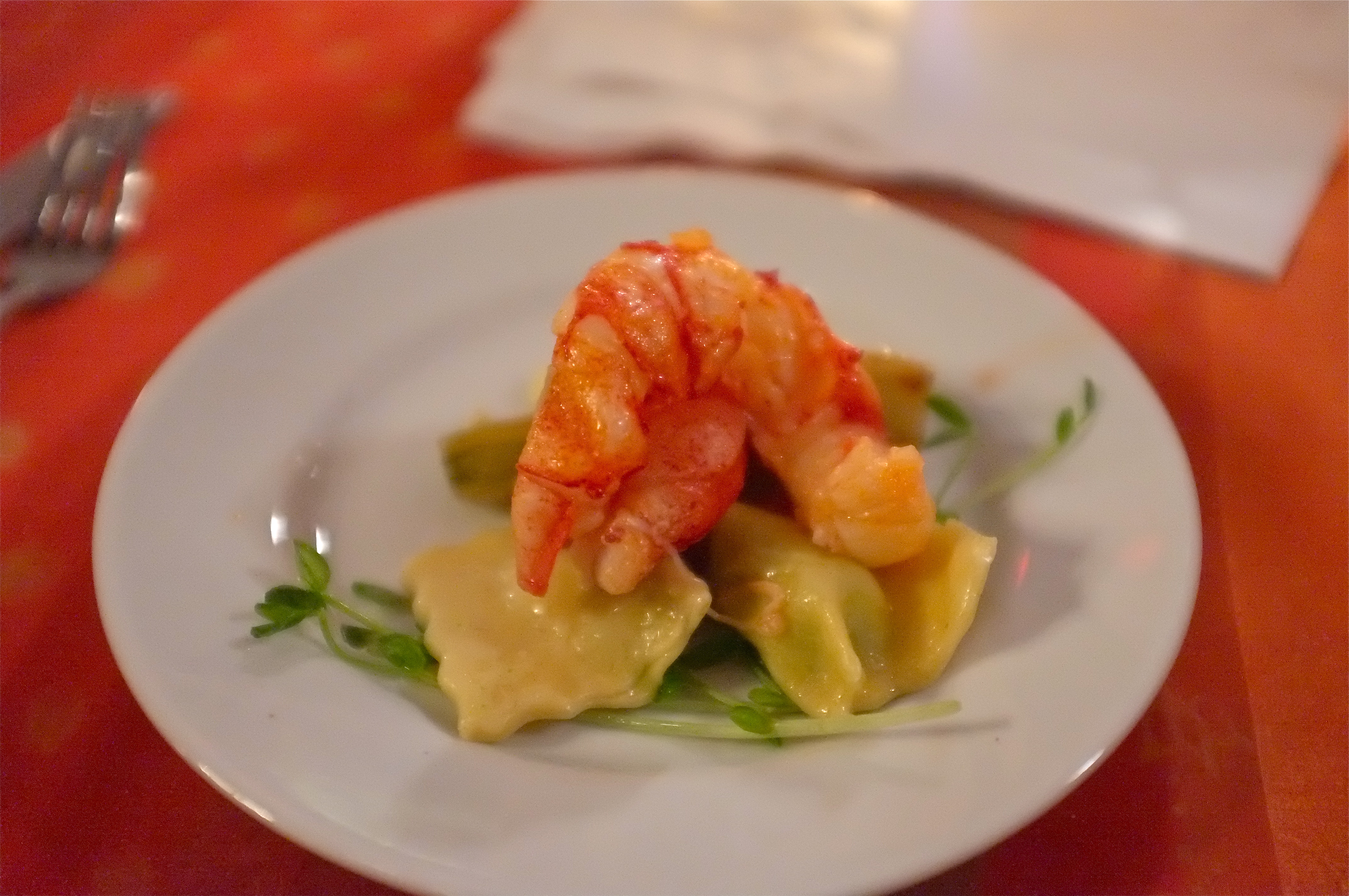 Sweet Pea Agnolotti, Lobster Tail, Vanilla Aioli and Pea Shoots
 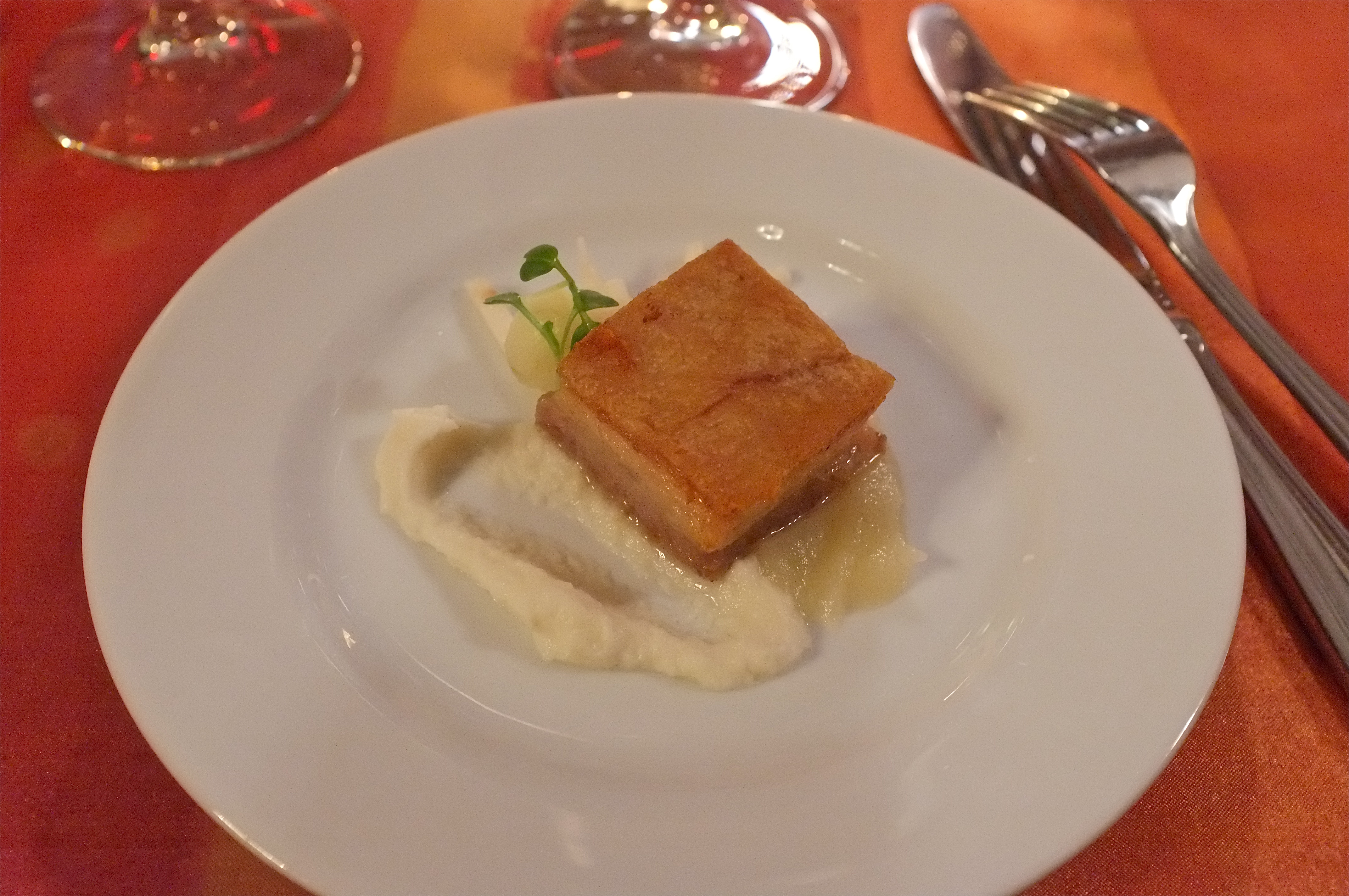 Crispy Pork Belly, Poached Apple, Celeriac Puree, Micro Dijon Greens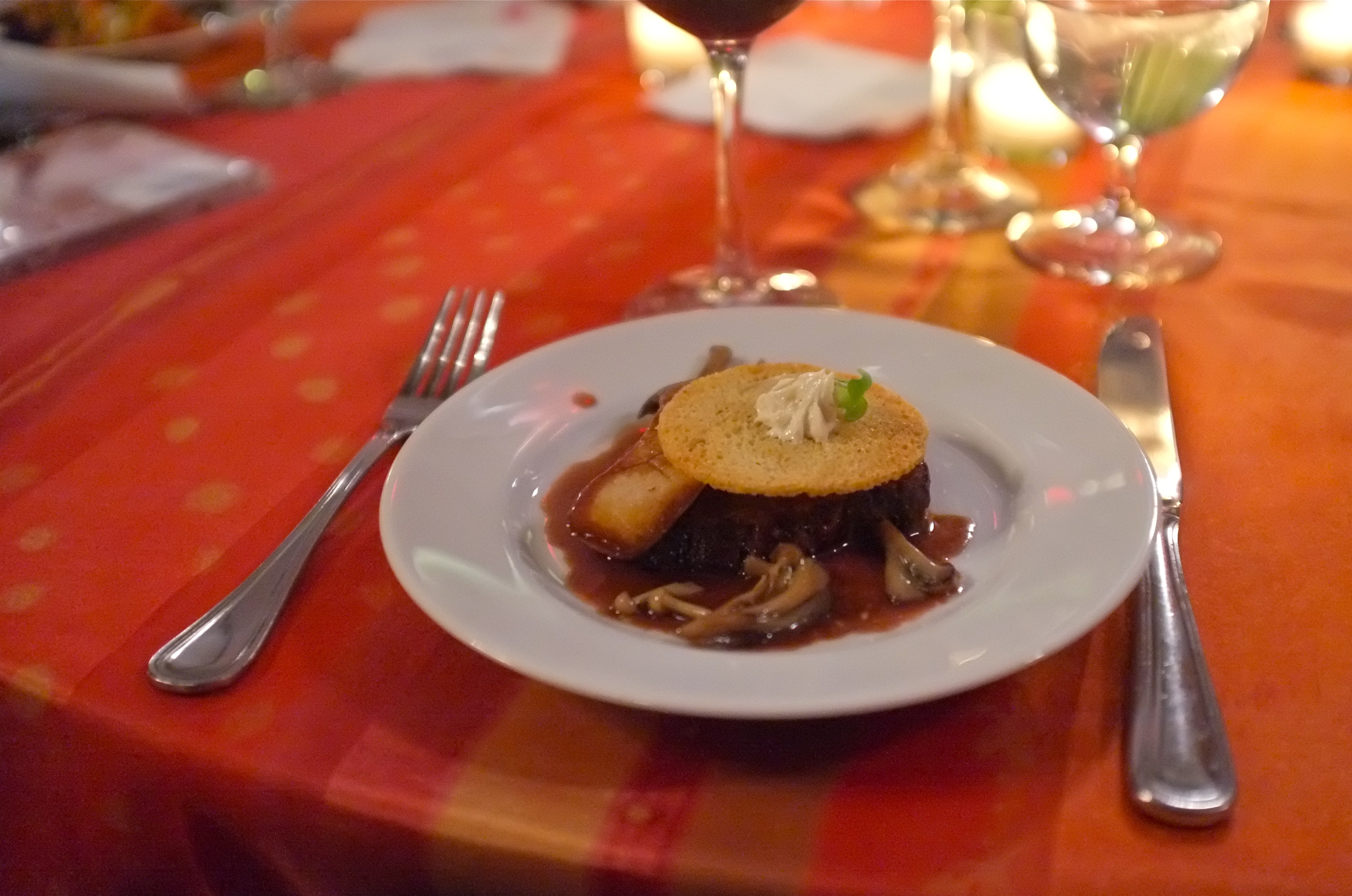
Seared Tenderloin of Beef, King Oyster Mushroom, Bone Marrow Cracker, and Bordelaise Paired with Pietrantonj Montepulciano d’Abruzzo
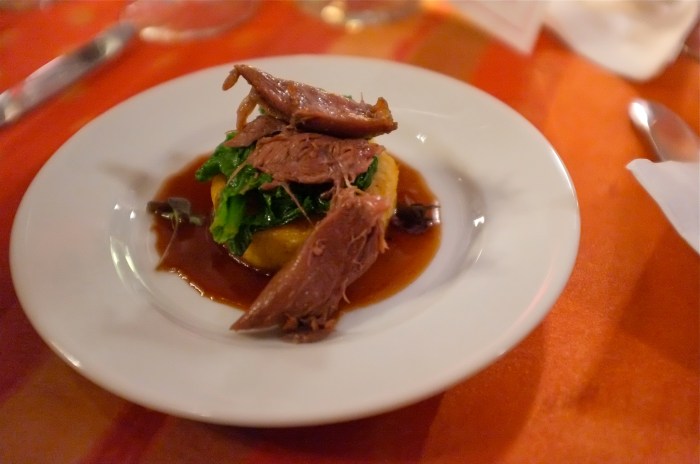 Braised Lamb Shank, Grilled Polenta, Mustard Greens and Baby Turnip Paired with Armandiere Cahors
Visit Willowdale’s website—they are a full service special events venue, specializing in their own in-house fabulous catering. Tours are offered throughout the year and many Gloucester companies do business with Willowdale, including several of our local florists and photographers.
Click last photo to see slideshow of all party pics.

Happy Valentine’s Day Gloucester!




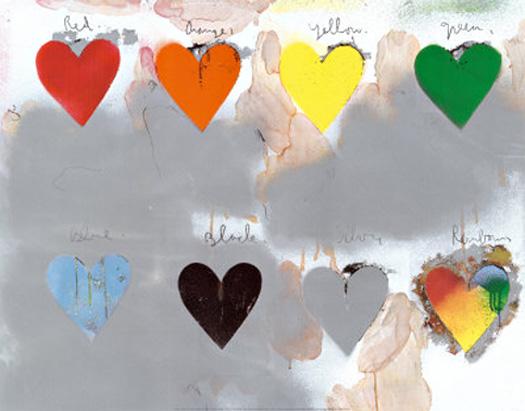 Birth of Pop Art
In 1962 Jim Dine’s (1935- ) work was included, along with Roy Lichtenstein, Andy Warhol, Robert Dowd, Philip Hefferton, Joe Goode, Edward Ruscha, and Wayne Thiebaud in the historically important and ground-breaking New Paintings of Common Objects curated by Walter Hopps at the Norton Simon Museum. This exhibition is historically considered one of the first Pop Art exhibitions in America. – wiki
Images courtesy Google image search.


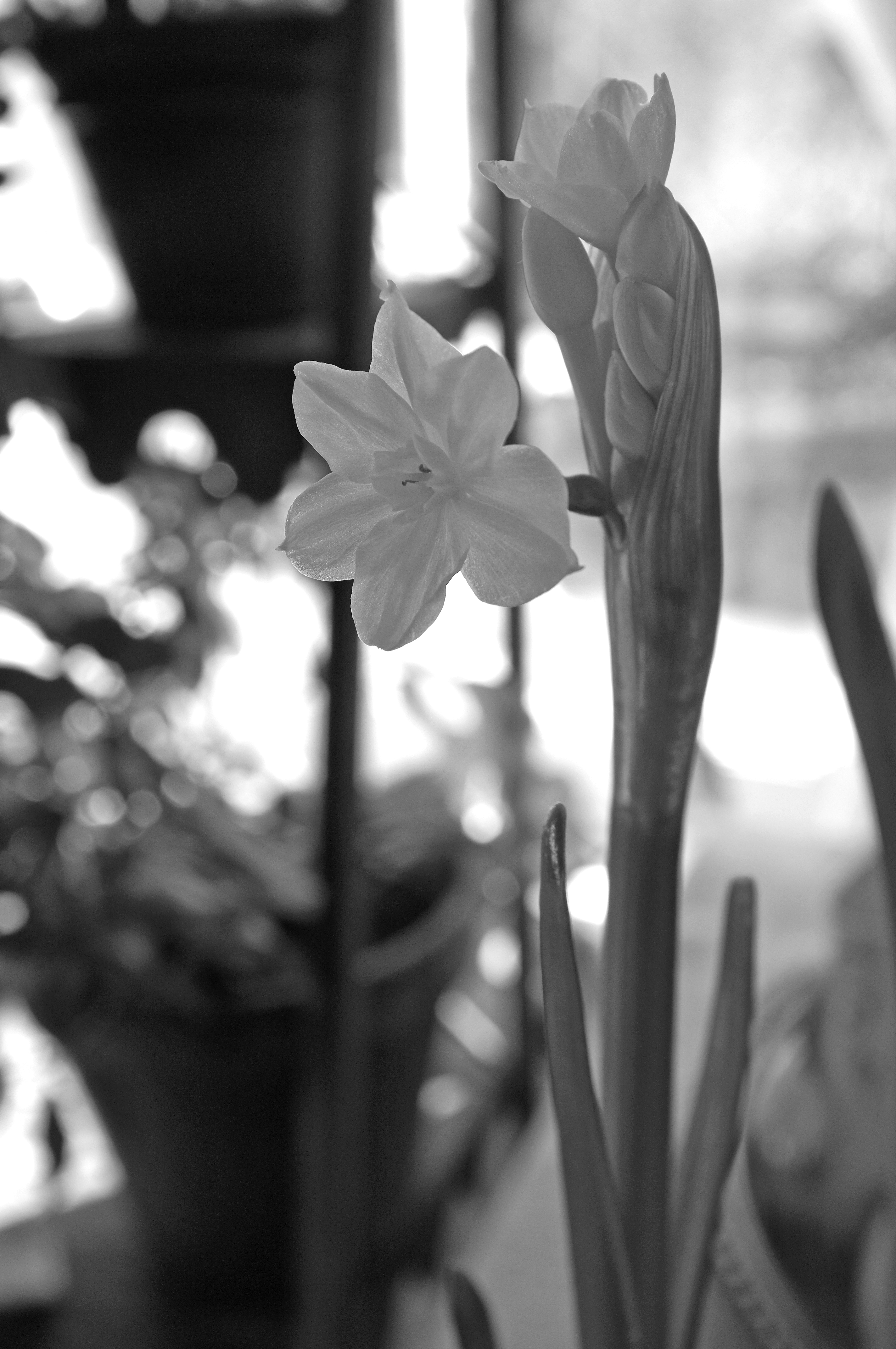
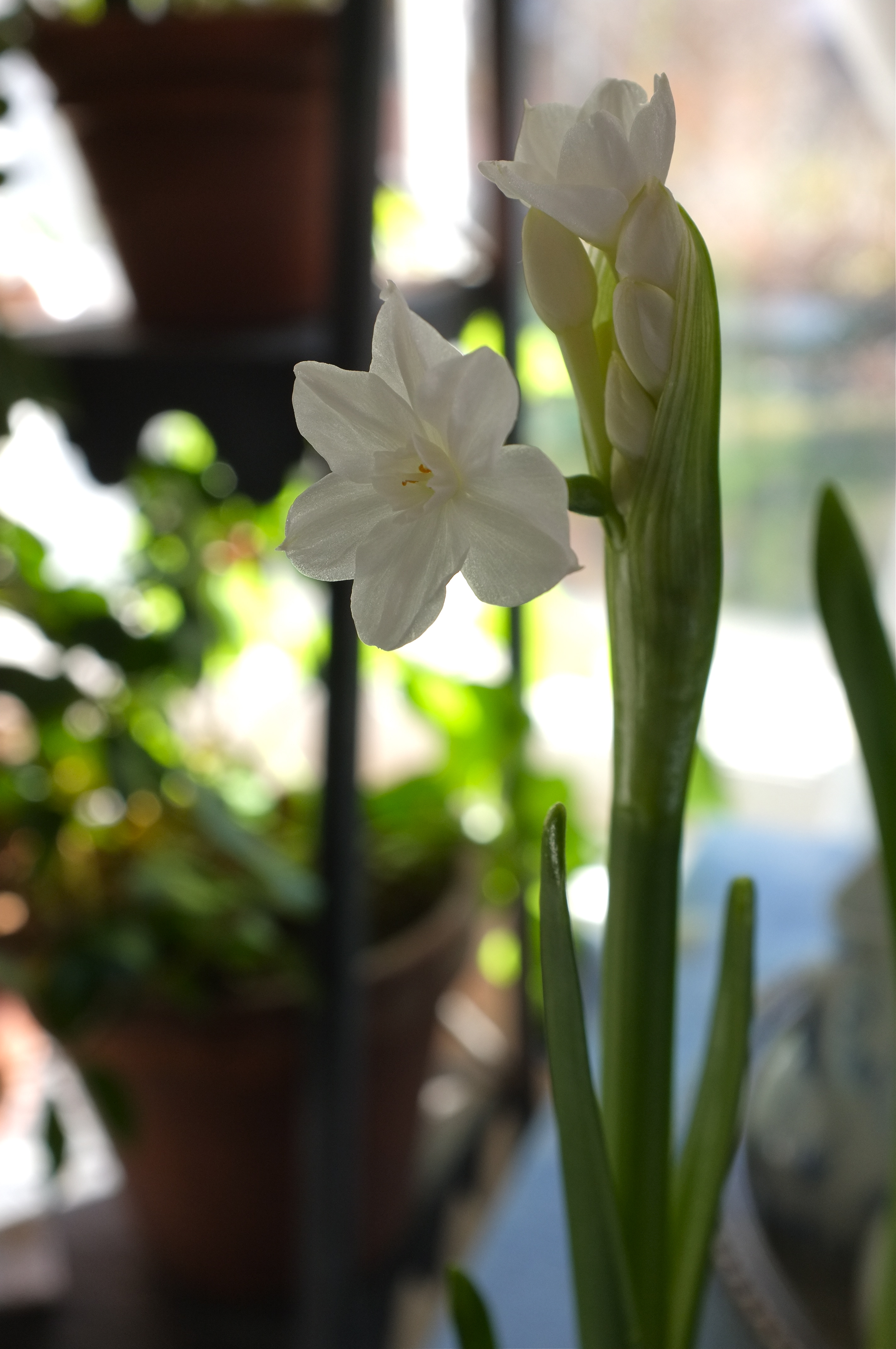 Narcissus ‘Ziva’
Which version do you prefer, black and white or color?
Beginning in November, we maintain a continuous flow of blooming narcissus by planting a new batch every two weeks or so. Paperwhites ‘Ziva’ blooms before the first of the year and ‘Galilee’ just after the holiday season. The ‘Chinese Sacred Lily’ (Narcissus tazetta var. orientalis) is almost as easy to force and has a sweeter, though no less potent fragrance. The scent is a dreamy blend of orange and honeysuckle. They are also a member of the tazetta group bearing multiple blossoms atop slender stalks, with white petals and cheery yellow cups. The ‘Chinese Sacred Lily,’ brought to this country by Chinese immigrants in the late 1800s, is traditionally forced to bloom for New Year’s celebrations.
With both paperwhites and ‘Chinese Sacred Lilies,’ place the bulbs in bowl or pot and cover with stones. The emerging green tips should be poking though the stones. Water up to the halfway point of the bulb and place in a cool dark room; an unheated basement is ideal. Water periodically and within a week or so, new growth will be visible. Then place the bulbs in the room away from strong light, continue to water as needed, and once in bloom, they will flower and scent your home for a week or more. Excerpted from Oh Garden of Fresh Possibilities! Notes from a Gloucester Garden.

The Public Trust Doctrine is a legal principle that dates back nearly 2000 years, which holds that the air, the sea and the shore belong not to any one person, but rather to the public at large.
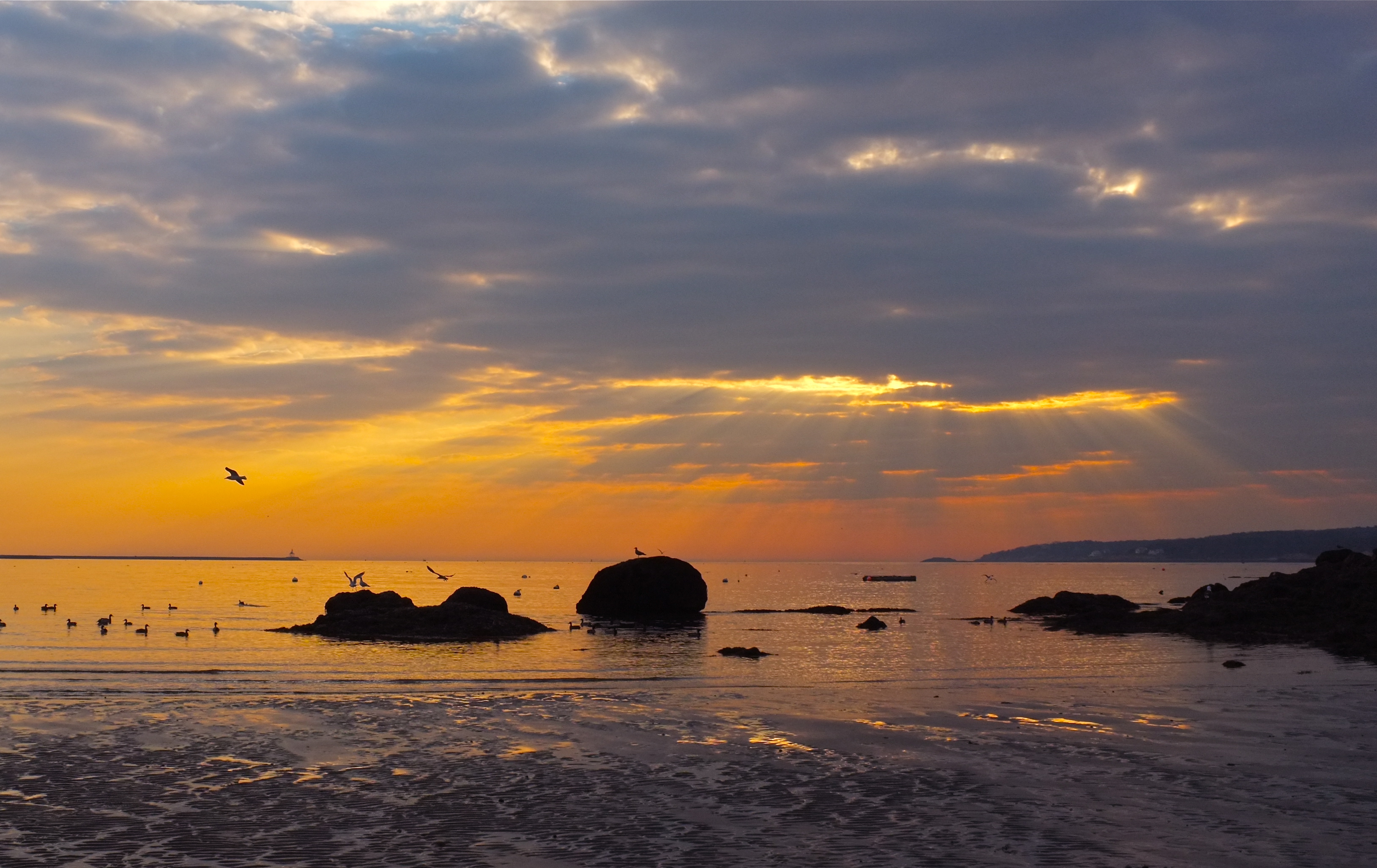 Wonson’s Cove Rocky Neck
Yesterday my husband, our dog, and I were walking along Wonson’s Cove in the muck of the low tide zone when a woman approached us, at first with a friendly hello. We smiled back and said hello. She immediately became confrontational and informed us that we were trespassing, demanding that we turn around and leave. We politely said that we believed we had the right to walk across the beach especially as we were heading to the Wonson’s public landing. She became livid and said she was going to call the police. I said okay, call the police. She then made some very rude remarks.
I do not wish to inconvenience or offend any property owner however, I had my camera and we were clearly only there to enjoy the great beauty of the cove. We were not littering or damaging the beach in anyway, as a matter of fact, large amounts of trash washes ashore and accumulates at that little beach and I have often come home with armfuls.
What has been your experience in a similar situation?
Below I’ve posted the Public Trust Doctrine of Chapter 91, The Public Waterfront Act, and underlined the information I think is particularly pertinent for photographers and for all lovers of nature. The complete chapter is posted in the Read More section and here is the link to the Mass DEP, or Massachusetts Department of Environmental Protection page that highlights Chapter 91.
Through Chapter 91, the Commonwealth seeks to preserve and protect the rights of the public, and to guarantee that private uses of tidelands and waterways serve a proper public purpose:
Preserves pedestrian access along the water’s edge for fishing, fowling and navigation and, in return for permission to develop non-water dependent projects on Commonwealth tidelands, provides facilities to enhance public use and enjoyment of the water.
Seeks to protect and extend public strolling rights, as well as public navigation rights.
Protects and promotes tidelands as a workplace for commercial fishing, shipping, passenger transportation, boat building and repair, marinas and other activities for which proximity to the water is either essential or highly advantageous.
Protects Areas of Critical Environmental Concern, ocean sanctuaries and other ecologically sensitive areas from unnecessary encroachment by fill and structures.
Protects the rights of waterfront property owners to approach their property from the water.
Encourages the development of city and town harbor plans to dovetail local waterfront land use interests with the Commonwealth’s statewide concerns.
Assures removal or repair of unsafe or hazardous structures.
Read More…
Continue reading “Public Access to Public Landings?”


