Yet another bird that was nearly hunted to extinction for its beautiful feathers, as of 2012 when the most recent study was concluded, there were only 3,600 breeding Piping Plovers along the Atlantic Coast.
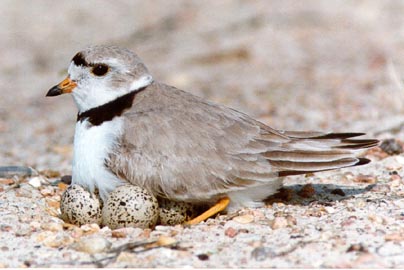 Piping Plover’s are a softy colored, mostly tan and white, pint-sized shorebird and like their nests and eggs, exquisitely camouflage with colors of sand and pebbles. This also makes them highly vulnerable to disturbances by humans; even if when people are trying to avoid their nesting sites, it is very easy to unwittingly crush eggs and chicks.
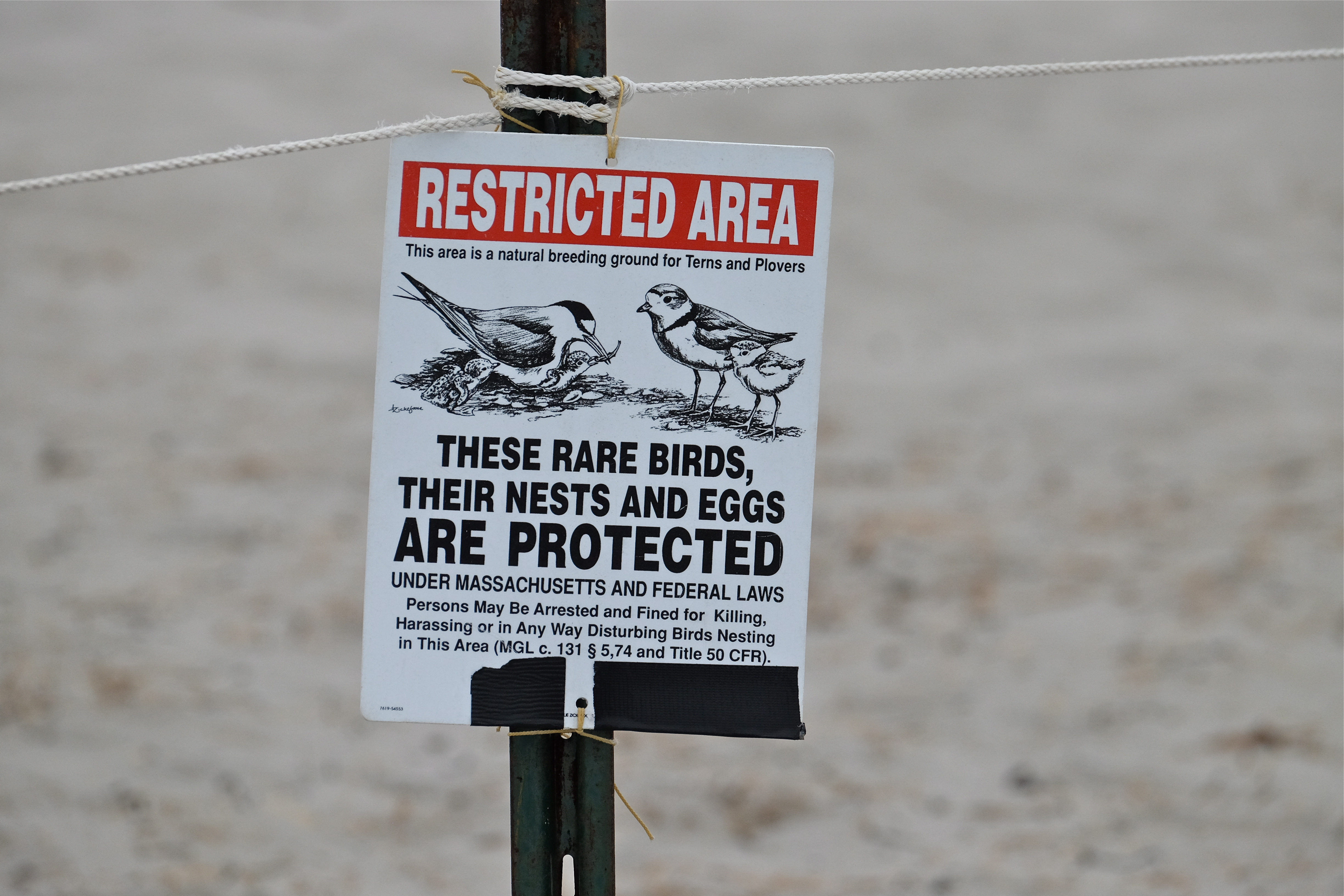
Piping Plovers have been observed on Good Harbor Beach this spring and could quite possibly nest here. The Gloucester DPW, working in conjunction with the Conservation Commission, MA Department of Wildlife, and Mass Audubon have cordoned off a roughly 200 feet by 200 feet area between the GHB bridge and boardwalk number three (the large rock that was exposed several storms ago lies within the area).
This area of the beach may be closed off for as long as eight weeks, possibly longer. If the nest is disturbed, the Piping Plovers will abandon the first and create a new nest, which will extend the time of beach closure.
It is to everyone’s benefit, plover and people alike, to heed the signs and to please keep dogs on leash at all times.
Are dogs allowed on the beach at this time of year?
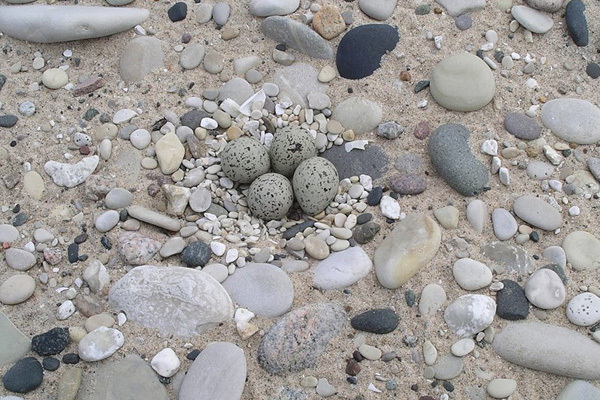
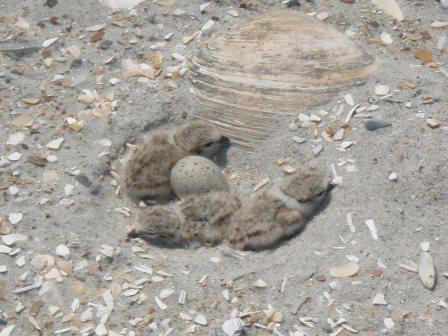
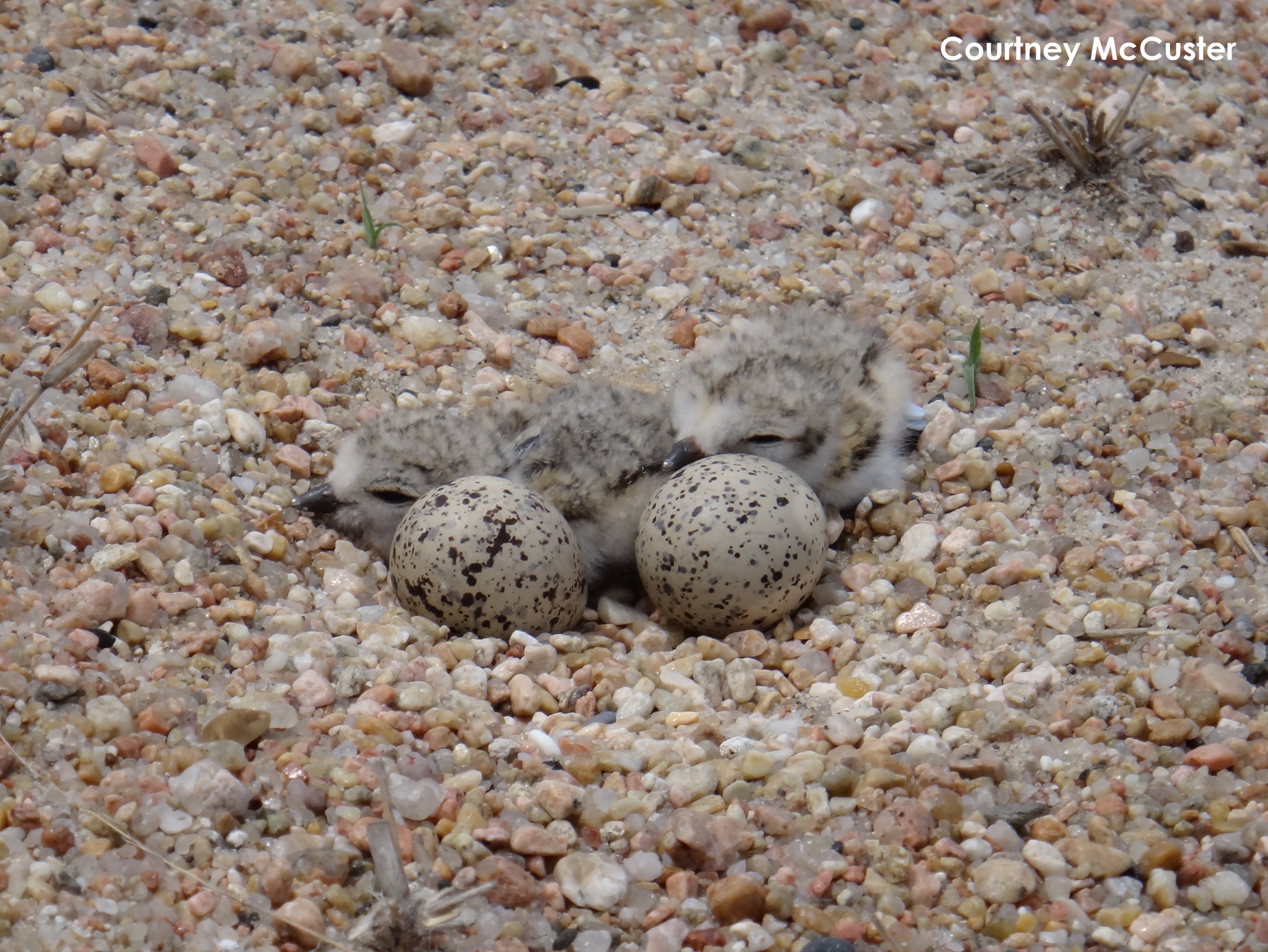
You can see from the photos of different Piping Plover nests from several regions of the country how perfectly the pebble-lined nests and babies meld with their surroundings–a good thing to keep them safe from predators, but not such a good plan for nests in well-trafficked areas.
The male selects the nesting site, defending it from other males. He scrapes a nest in the sand and both the male and female toss stones and bits of shell into the depression. Both the male and female incubate the eggs. It takes about 25 days to incubate the eggs and another three to four weeks for the chicks to fledge.
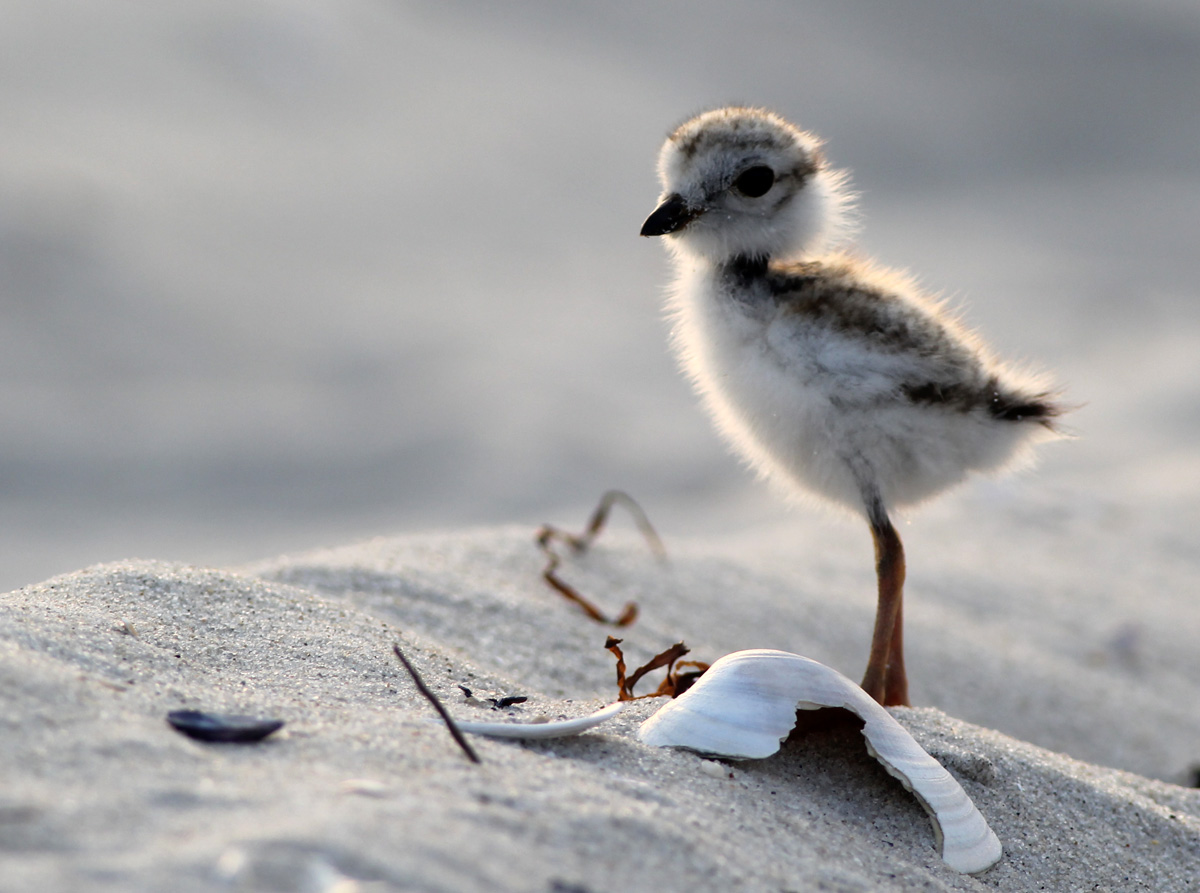
Like the Killdeer, Piping Plovers cleverly display a broken wing, a trick designed to distract predators from their nests and babies. Both Killdeers and Piping Plovers are in the same family, Charadriidae. The Piping Plover’s scientific name, Charadrius melodus, and common name, comes from its lovely melodic piping bird song.

https://www.instagram.com/p/BFrn9KYjyma/
ALL IMAGES EXCEPT THE LAST TWO, COURTESY GOOGLE IMAGE SEARCH


 Good Morning Gloucester
They are endangered and they knew where to come and be taken care of the spirit of human and wildlife are one! 🙂 Dave & Kim 🙂
LikeLiked by 1 person
🙂
LikeLike
Reblogged this on Wolf's Birding and Bonsai Blog.
LikeLike