
As long as supplies last if any GMG folks want a bumper sticker but can't drop down the dock, just send a self addressed and stamped envelope longer then 7 and a half inches and I'll drop one in the mail for you.
Send the self addressed and stamped envelope to the dock at 95 East Main St Gloucester Ma 01930 care of Joey (put my name in big letters to make sure it gets to me)
As long as supplies last if any GMG folks want a bumper sticker but can't drop down the dock, just send a self addressed and stamped envelope longer then 7 and a half inches and I'll drop one in the mail for you.
Send the self addressed and stamped envelope to the dock at 95 East Main St Gloucester Ma 01930 care of Joey (put my name in big letters to make sure it gets to me)


 Good Morning Gloucester
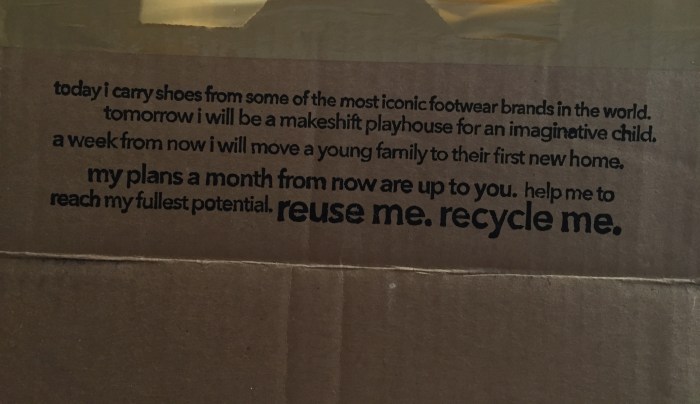
Excellent the message and they do a lot of recycling!! Long item but may find it interesting?
This view is more than likely an apartment complex! It’s sad because many do not follow it and if they can figure out who is throwing trash wrongfully and can be a very step fine one Million won which is
1000000 South Korean Won equals = $855.00 US Dollar cigarettes are like 25 dollars if caught
🙂 Dave & Kim 🙂
http://www.korea4expats.com/article-waste-disposal-recycling-korea.html
Garbage Disposal, Recycling
Garbage Disposal, Recycling
Korea uses a system called jongnyangje for the effective collection of garbage wastes and the reuse of natural resources. All garbage you produce must be disposed of properly, and you may be fined otherwise. Garbage must be separated according to whether it is “common garbage” (ilban sseuregi), food waste (eumsikmul sseuregi), recyclable (jaehwal yongpum), and large waste objects (daehyeong pyegimul). While some of the information below applies specifically to the Seoul Metropolitan Area, the same type of policies exist throughout the country (the attached list is from Busan city government).
Food Waste must be separated from general waste and placed in special disposal bags that can be purchased at your local supermarket and in some convenience stores in your neighbourhood. Each district has its own specific bags. The regular ones are called Sseulaegi Bongtu (쓰레기 봉투 ) while the food disposal bags are called Eum-shik-mool Sseulaegi Bongtu (음식물 쓰레기 봉투 ). Costs vary from one district to the other. Waste food disposal bags come in three sizes: 3 – 5 – 10 liter bags.Not all food waste can be put in the food disposal bags – the suggested rule of thumb is to include only what animals can eat as food waste.
The following items are not acceptable as food waste :
Fruits : seeds of peaches, apricots, persimmons, etc. as well as hard shells such as those of acorns, chestnuts, peanuts, walnuts, coconuts, pineapples, etc.
Meats: bones and feathers.
Fish/Seafood: shells of clams, abalone, sea squirt, crabs, lobsters, etc.
Others: tea bags, herb medicine residues, etc.
Recycling is mandatory and recycled items can be disposed of in any clear plastic bag or divided by items and bound – please rinse or wash before disposing of containers. As with general waste, recyclable waste should be placed outside the building or in designated areas. Check with your realtor or local district office for days/times.
Recyclable Items
Paper: newspapers, books, notebooks, wrapping paper, corrugated card board, paper bags, paper boxes, milk cartons
Glass: beer, liquor and soda bottles
Metals: beverage cans, spray cans, iron tools, butane gas bottles, iron wires, aluminum, stainless steel
Clothes: cotton clothing
Styrofoam: chock-absorbing materials for electronic products, boxes for electronic products, boxes for fruit and fish, clean instant noodle containers, etc.
PET Bottles: containers with the number ‘1’
Plastic: items with the numbers ‘2’, ‘4’ or ‘5’ written on the container
Film: candy wrappers with recycling symbols, instant noodle wrapping, instant coffee packaging
Milk Packs: milk containers
Fluorescent Lamps: light bulbs, non- broken lamps
Plastic bags: any plastic bag
Batteries: mercury/mercury oxide batteries such as those found in watches, etc. Also, nickel/cadmium batteries (rechargeable).
NOTE: In order to encourage the proper recycling of items that include metal parts which can be reused, the Yongsan District Office (and some others- check with your real estate agent) allows residents to place the following items out for pick up at no charge: computer, monitor, keyboard, printer, laptop, modem, game device, scanner, fax machine, clock, audio equipment, water cooler, gas range/oven (less than 1m across), humidifier, clothes iron, electric fan, vacuum, VCR/DVD player, telephone, electric heater, rice cooker, toaster, mixer, radio, and other such small electronic devices. To dispose of these kinds of items simply place them out on the same day as you do other recyclables.
* Please note that cell phones are not included in the list. These can be disposed of separately at your local community center.
Non-recyclable Items
Paper: plastic-coated paper bags, plastic-coated paper cups
Glass: sheet glass, mirrors, heat-resistant dishes, milky white bottles, cosmetic bottles, china dishes
Metals: paint and oil containers, any toxic material container
Clothes: bedding, pillows, bags
Plastic: items with either ‘3’ or ‘7’ marked on the container, writing instruments, buttons, sockets, electric heaters, toys, baby walkers, phones, items coated with PP or PE
Milk Packs: foil tops, container labels
Fluorescent Lamps: broken lamps or bulbs
Plastic bags: instant noodle wrappers, contaminated plastic bags
Batteries: mercury batteries are designated “NR MR”, mercury oxide batteries are designated “SR”.
Special disposal
Some other items, such as batteries, cell phones and unused medicine, require careful disposal. Community centers have a container for properly disposing of batteries and cell phones, while local governments recommend taking unused medicine to your nearest drug store for proper disposal.
General Waste:
The following should be treated as general waste: shoes, rice cookers, sweets containers, electronic products, videotapes, medicine bottles, home-delivered water containers, clocks, globes, window frames, brooms, hoses, floor coverings, and any other composite items. (Note that some communities, Daegu for example, have begun recycling programs for small household appliances.)
Disposing of large items such as furniture, electronic products, office items, heating/cooling products, etc. that cannot be put in standard size bags. There is a fee for disposing of these items that varies from W2,000 (chairs, 4-drawer dressers, vacuum cleaners) etc. to W8,000 for large items (refrigerators, air conditioners) to W15,000 for very large items (piano). Talk to your property owner or manager, real estate or relocation agent for the contact details of your local dong office – sometimes someone will have to go to the dong office, pay the fee and pick up the sticker that must be placed on the item before it will be picked up.
Most large apartment complexes will have marked boxes into which you must place your recyclables.
In 2007, houses and small apartments/villas were issued with net bags for their recyclables. Some still have them, but many have disappeared into the garbage trucks or simply been taken. If you don’t have the nets, you are expected to put the recyclables into a bag or box and place them outside your house or in the designated area of your building on the even of the recycling pick-up day.
Garbage Disposal Hours vary from one municipality (GU) to the other. Non-compliance can result in a fine of up to W300,000. Scroll down this page and click on Garbage Disposal Hours – Seoul for information on the hours in some of the ‘GU’.
Donation Option: A number of charities will either pick up items in good condition that you may wish to donate or provide donation bins in select locations. See our Recycling and Secondhand Outlets page for more details.
K4E Editors’ Note; Korea4Expats wants to provide information that is as complete and accurate as possible so if you notice any omissions or errors on this page please let us know at info@korea4expats.com.
LikeLike