LITTLE RED SQUIRREL OF THE WOODLAND

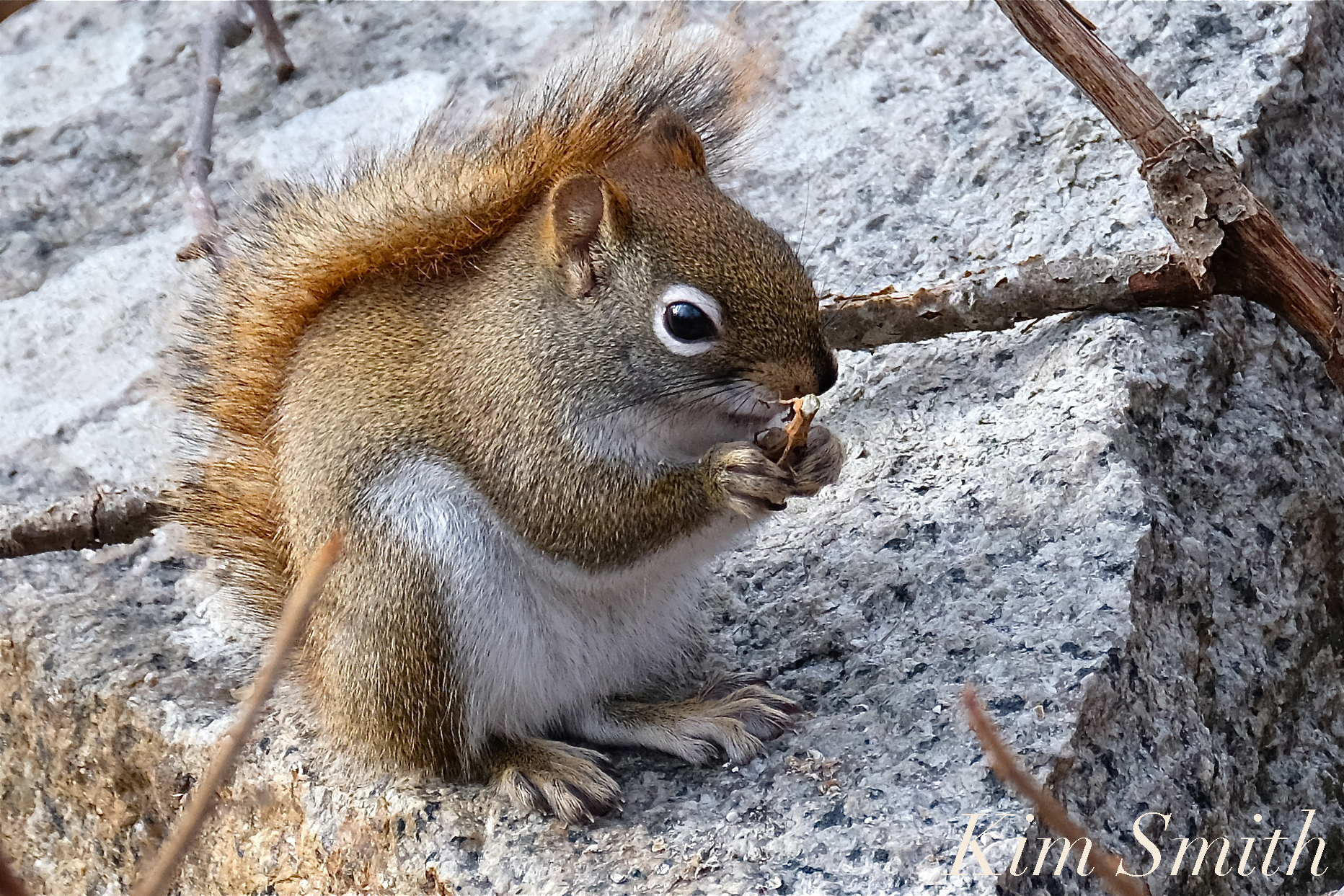
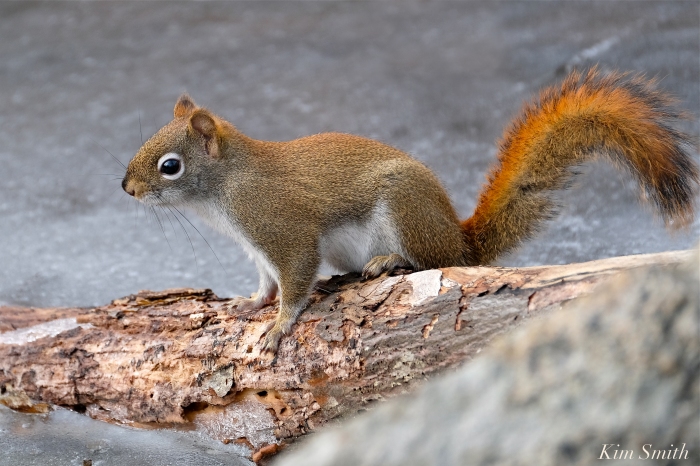
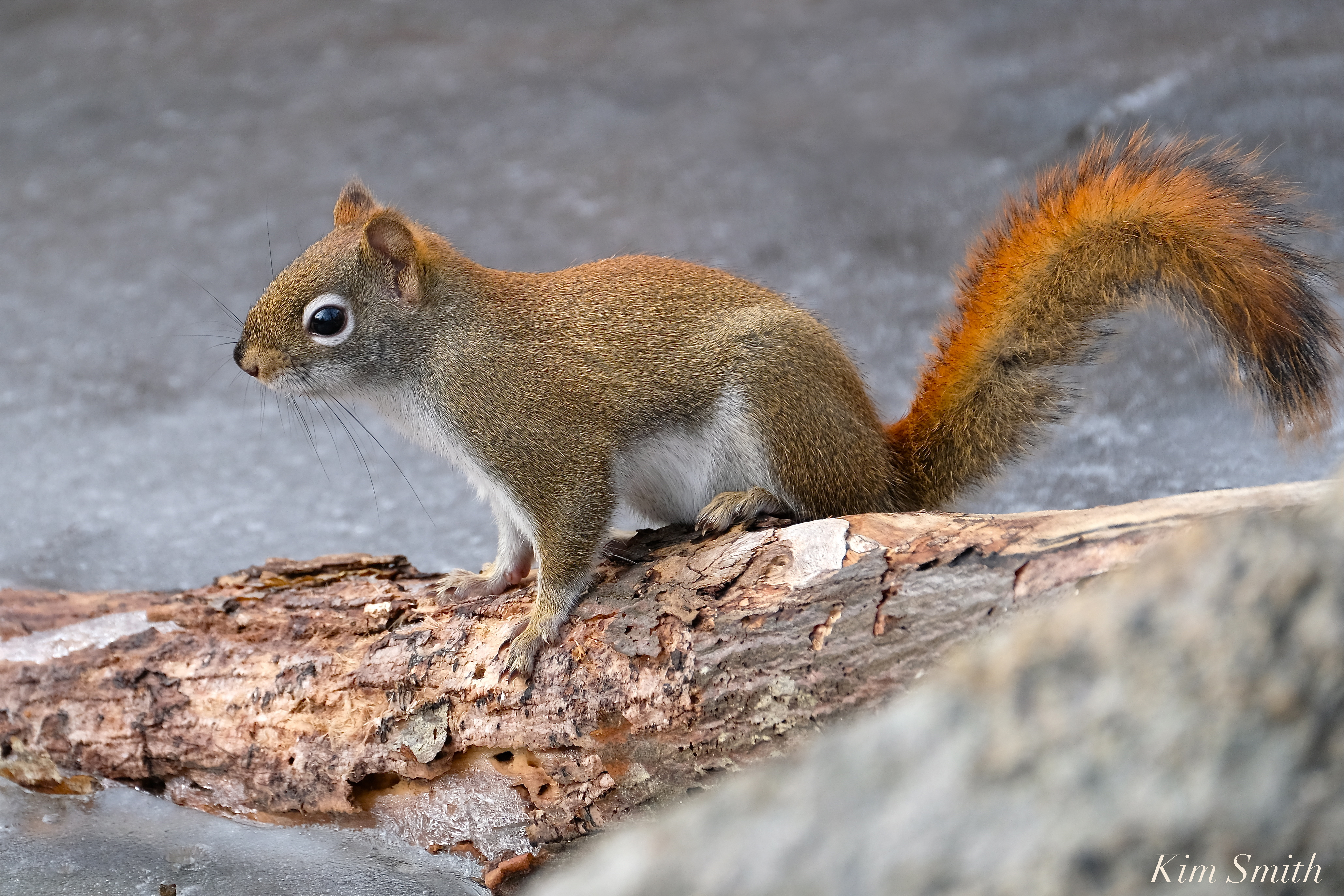
Much more common in my neighborhood are Gary Squirrels so it was a real treat for my daughter and I to see this little Red Squirrel on a recent walk at Halibut Point. He scampered over a quarry pool frozen with thick ice and then retrieved from a midden, hidden in a jumble of granite rocks, a sprig of what appeared to be Bayberry. The little fellow then proceeded to devour both the fruits and twig before retreating deeper into the wood.
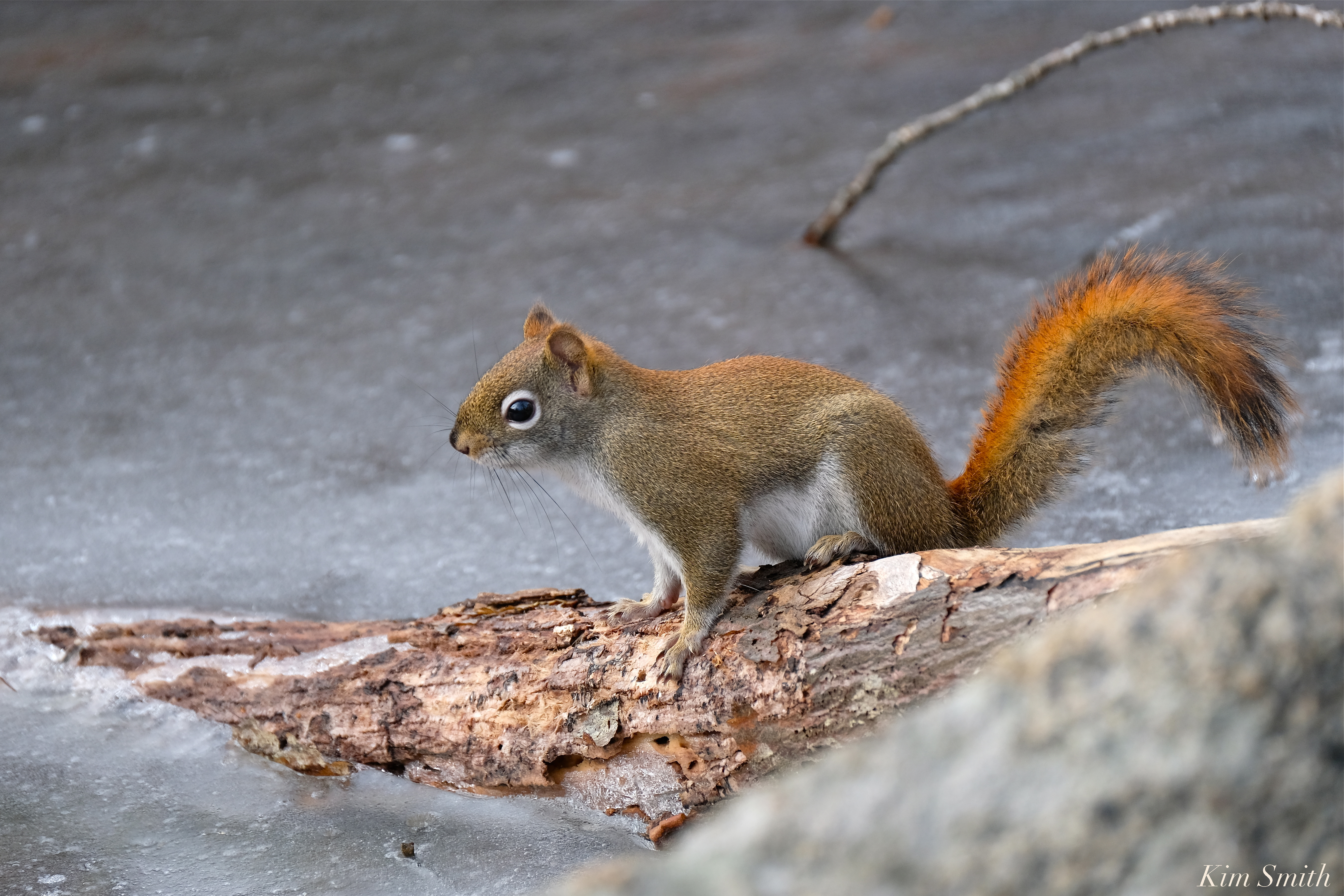
Red Squirrels eat a wide range of foods including seeds, bark, nuts, insects, fruits, mushrooms, maple tree sap, and pine seeds and pine cones. Occasionally, Red Squirrels also eat young birds, mice, and rabbits. And as we can see from the photos, Bayberry fruits and twigs.
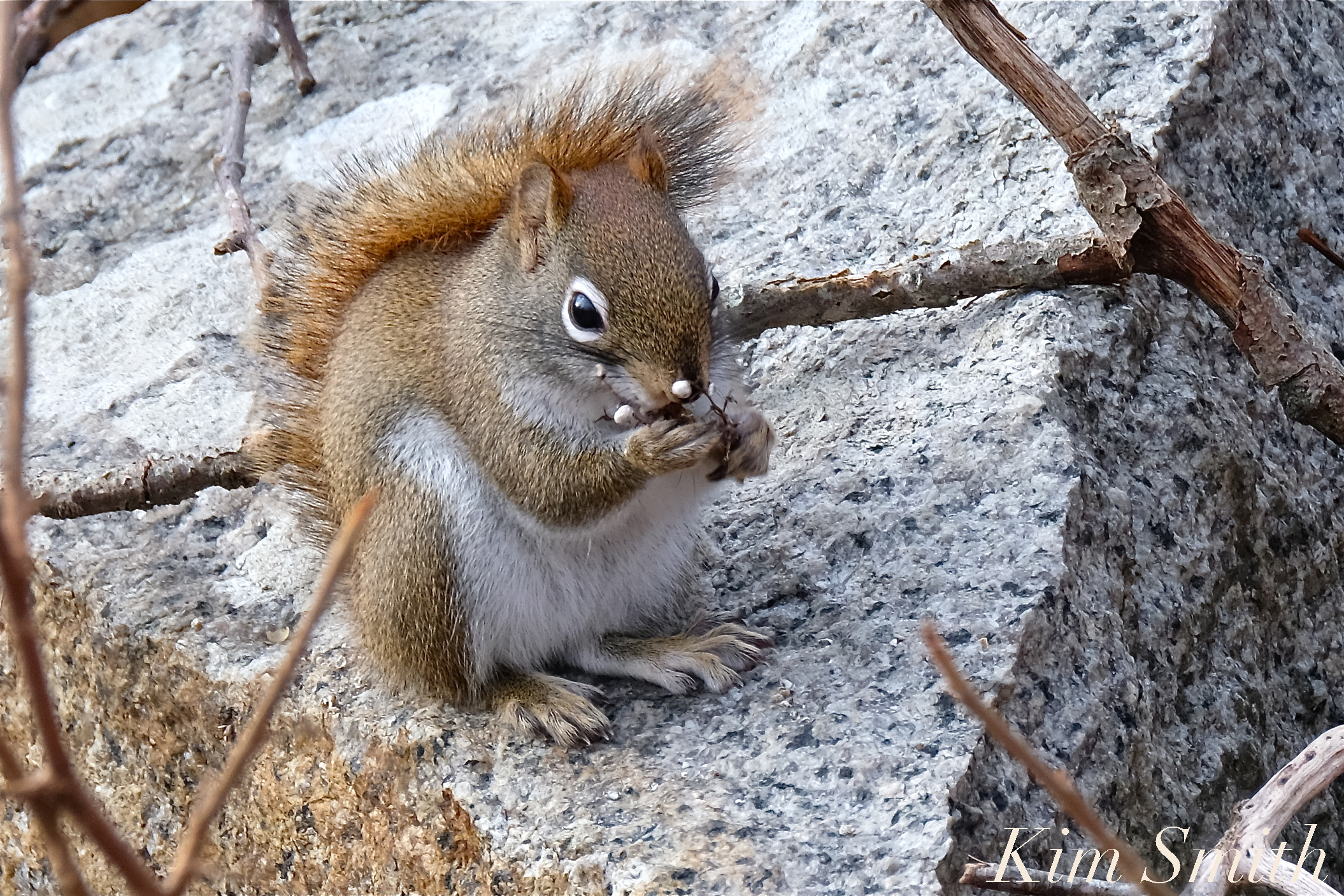
Going, going, gone

Bayberry (Myrica pensylvanica) is a wonderfully easy native plant that doesn’t mind salt, compacted soil, and is both heat tolerant and very tolerant of flooding. The waxy winter fruits of Bayberry are eaten by myriad bird species including Tree Swallows, Chickadees, Red-bellied Woodpeckers, Gray Catbirds, and Eastern Bluebirds. The wax coated fruits are high in fat, making them a great source of energy for migrating birds such as Cedar Waxwings and Yellow-rumped Warblers. Bayberry thickets also provide excellent nesting habitat for songbirds, offering protection from raccoons and other nest predators.
Deb Shares Her Red Squirrel Story

Deb von Rosenvinge from House of the Raven writes the following in response to GMG post American Red Squirrel Midden:

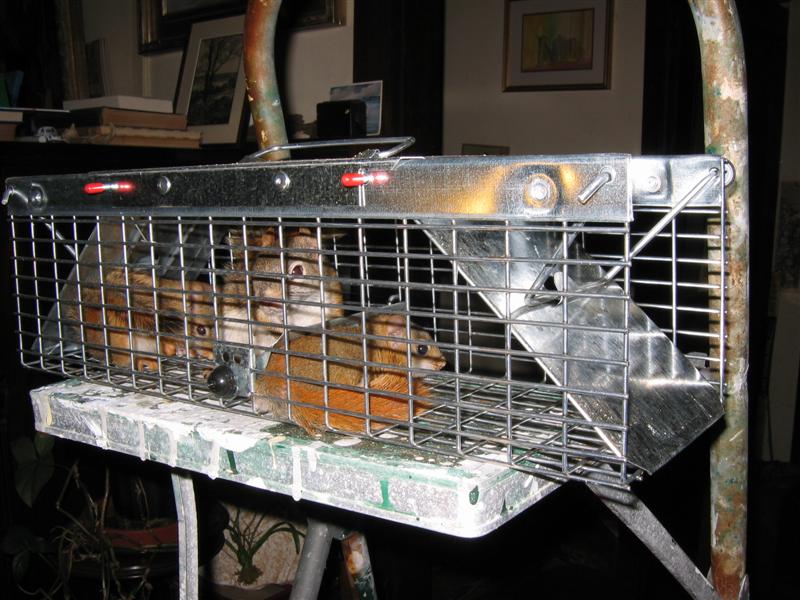
I too enjoy all your posts Kim. Also had a small family of reds move into my house via my crawl space. When I blocked the mother’s main entrance, she found another way in and actually poked her head out of the hole I had to make in my ceiling to get a trap up there, and chided me! I caught the whole family and even caught the mom with two babies at one time! They had foiled me several times of setting the trap– Got the bait, sprung the trap and yet escaped. I finally spread the peanut butter right on the trip mechanism and bingo! I’ll send you a picture of my multiple capture. Thought I should send it on to the Hav-a-Hart company!

All in my ceiling!  They sounded like a soccer team rolling around acorns and having a blast!

Thank you for sharing Deb. I read that American Red Squirrels experience severe early mortality; only about 22 percent survive to one year. So good that you were able to catch the mama and babies all together! Deb von Rosenvinge Photo

American Red Squirrel Midden

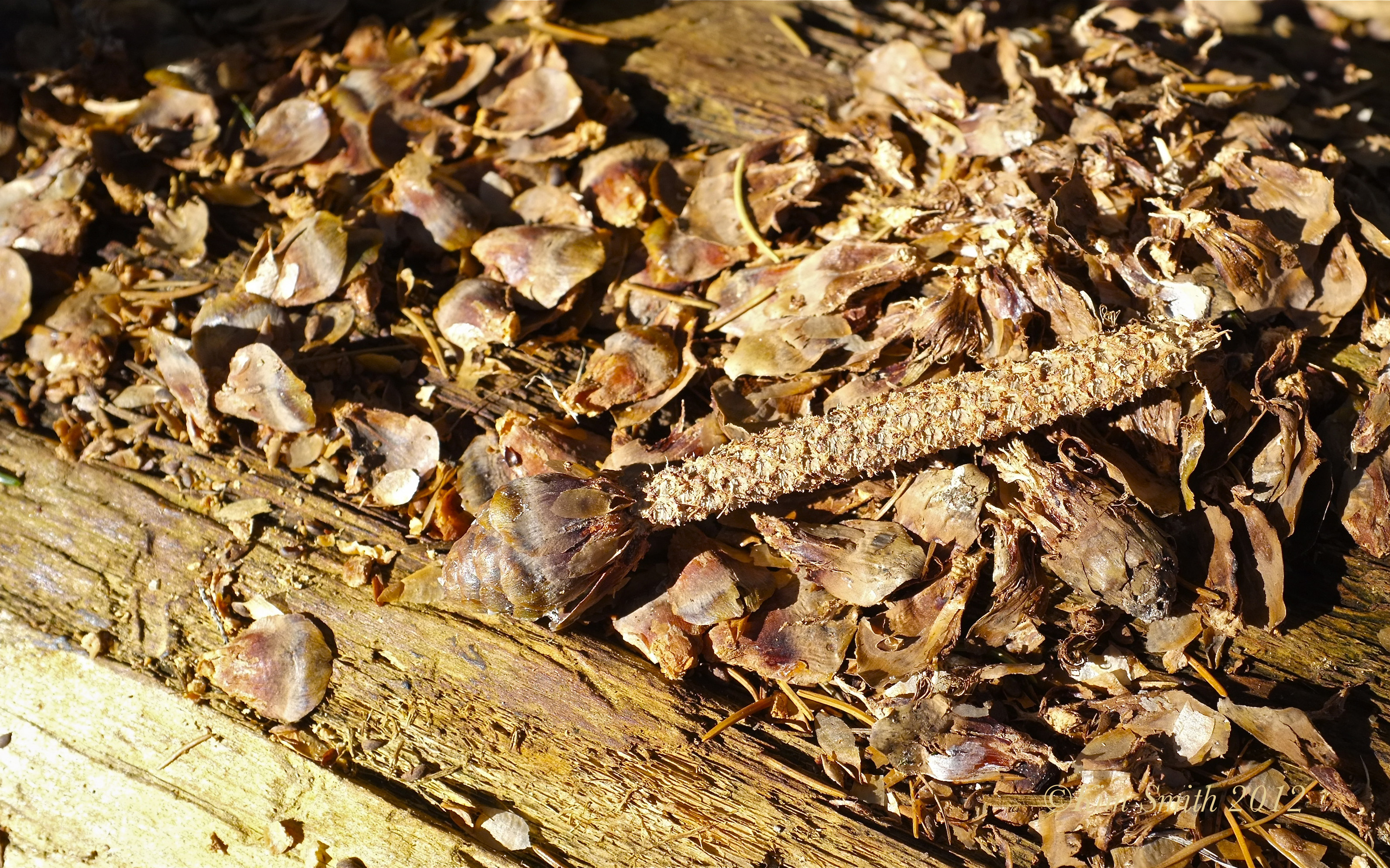
Pine cone eaten clear to the core, photographed at a Pine Squirrel midden. The mid-day light was very harsh and too contrasty-click images to view details.

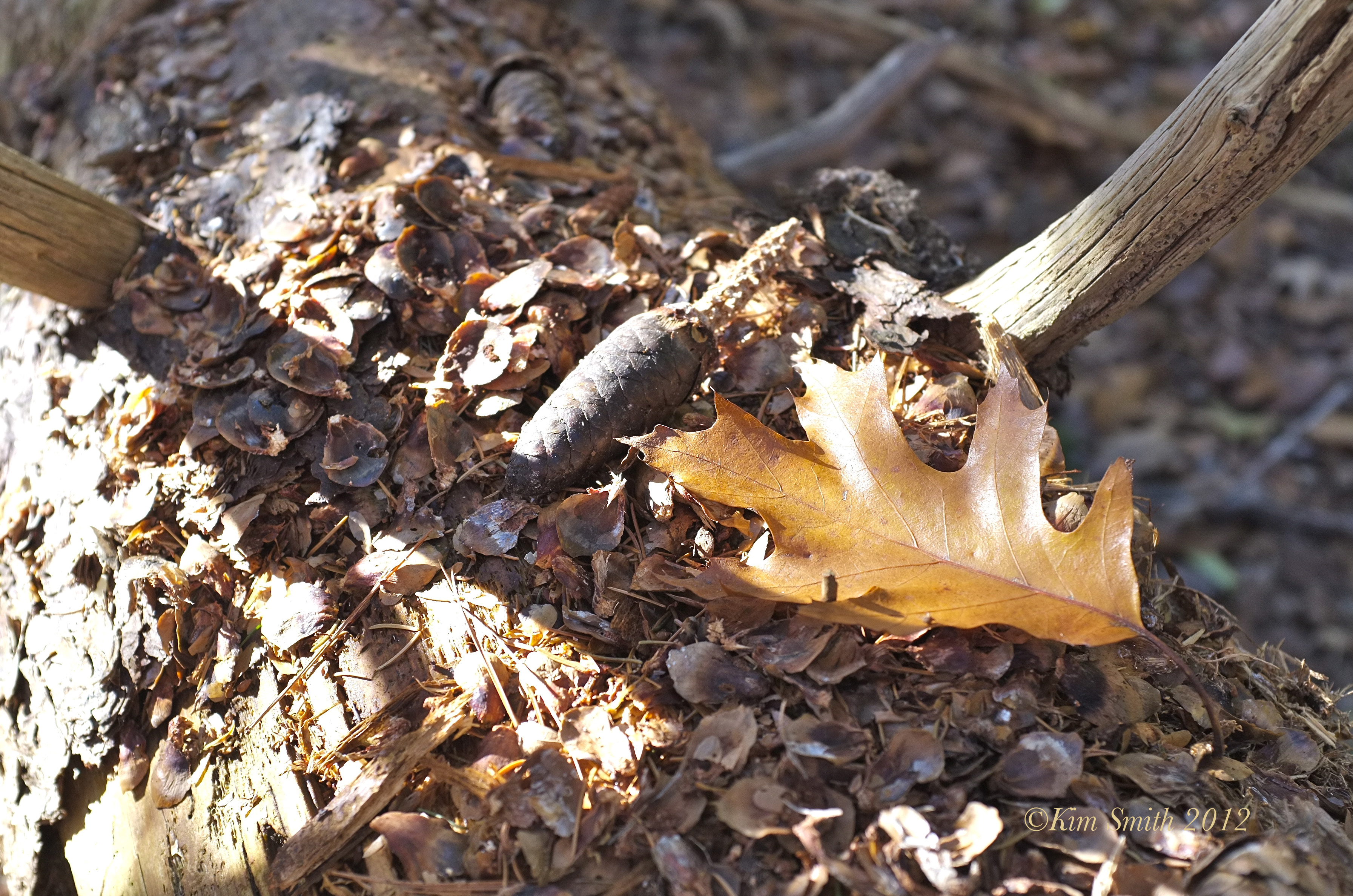
Adjacent to where we noticed the Japanese maple tree, Dale Resca, the Facilities Manager at Willowdale, discovered an American Red Squirrel (Tamiasciurus hudsonicus) midden.

American Red Squirrel Midden

A squirrel midden is essentially a squirrel’s favorite place to eat; the fallen scales from consumed seed cones collect in piles, called middens. Sitting on their claimed stump, fallen log, or branch, the squirrel pulls the scales off the cones to get to the seeds.

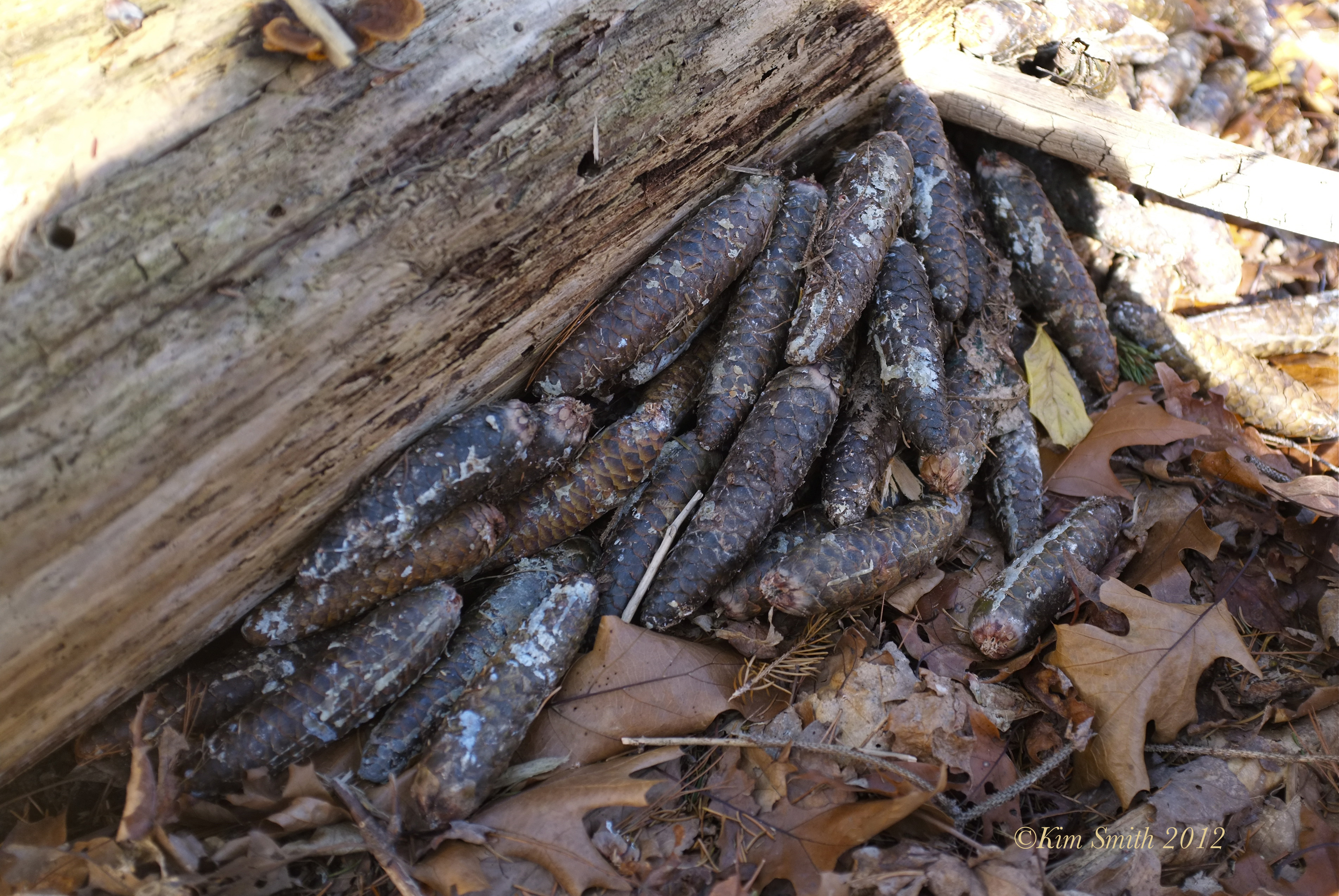
American Red Squirrel Cache of Pine Cones

You can see from the above photo why the American Red Squirrel is often referred to as the Pine Squirrel. Ripening in late summer, the squirrels collect pine cones and store in a central cache. American Red Squirrels do not hibernate during the winter months; the caches of cones supply nourishment when food supplies are running low.

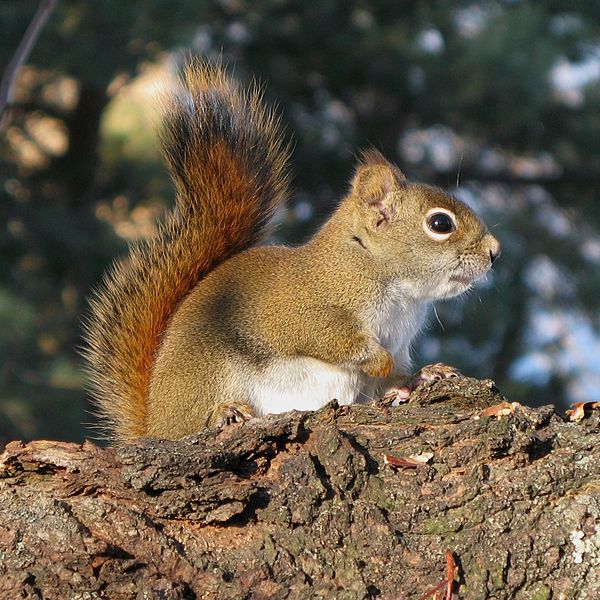
The American Red Squirrel is widely distributed throughout North America. They are smaller than a gray squirrel and somewhat larger than a chipmunk, with reddish fur and white venter, or underbelly.

American Red Squirrel (Tamiasciurus hudsonicus) ~ Image courtesy Google images