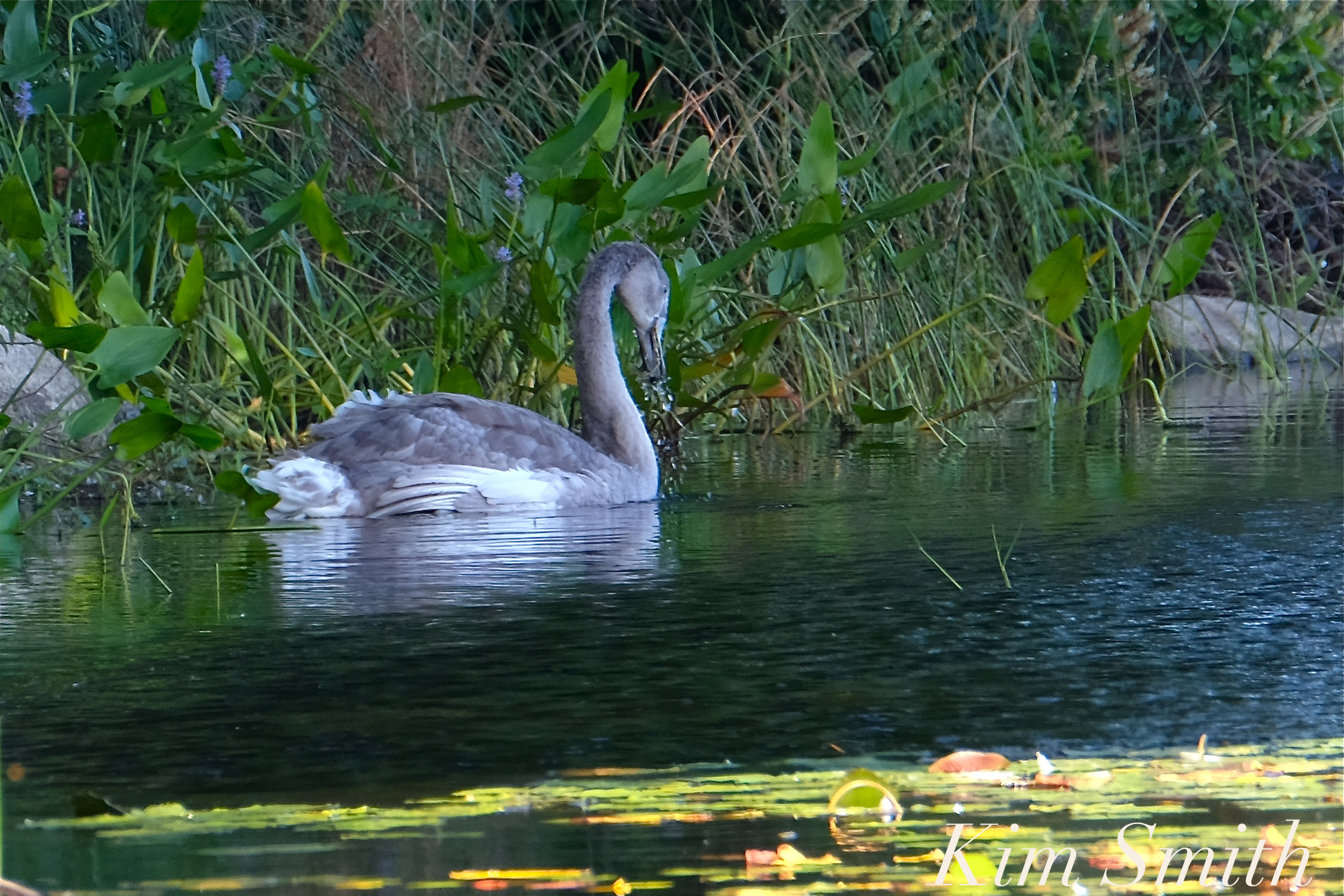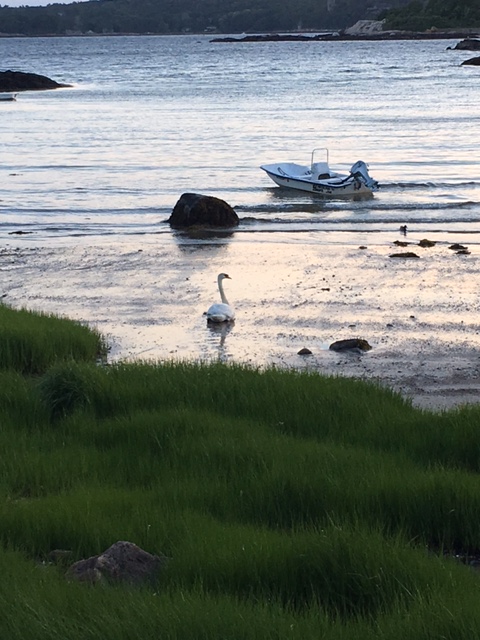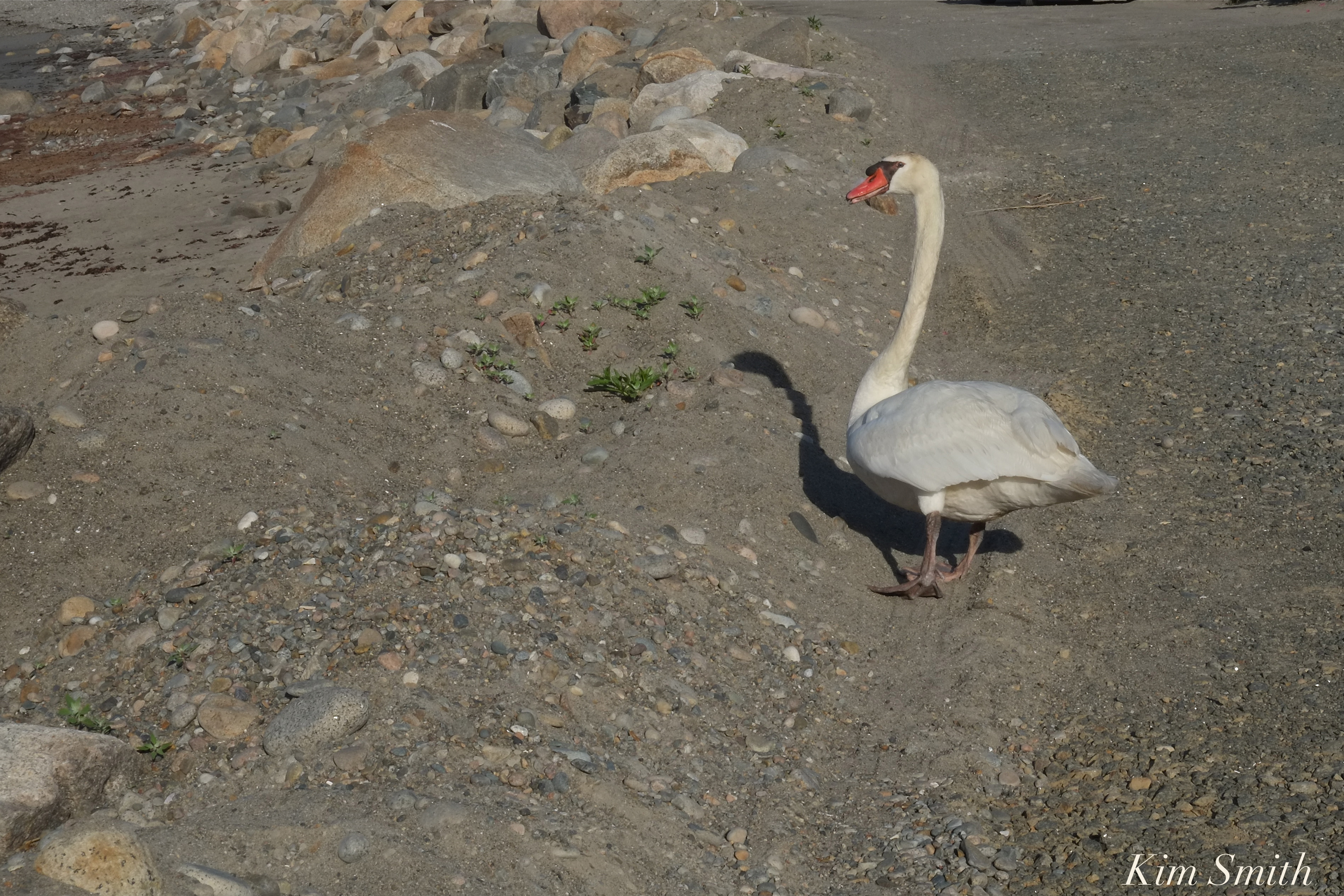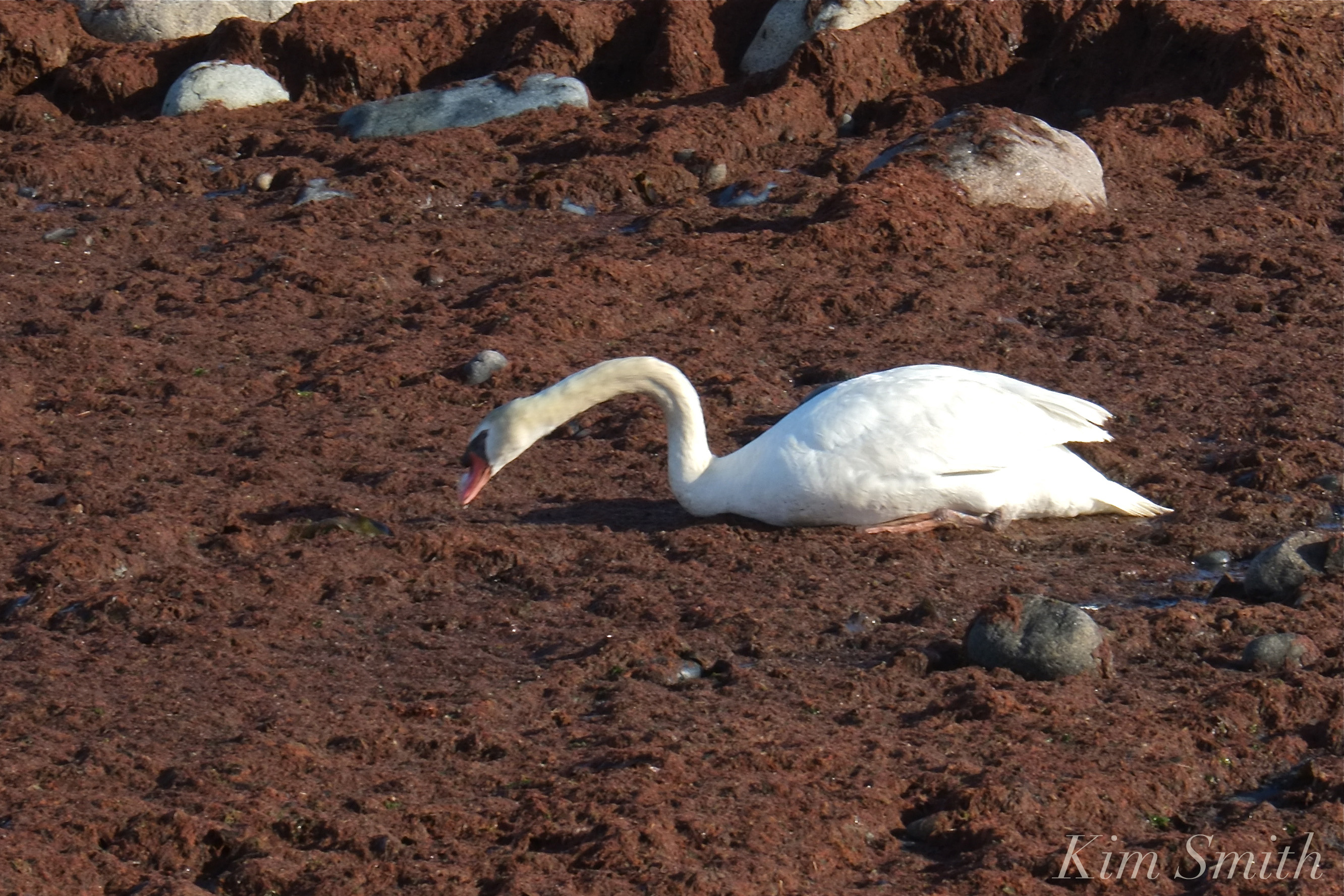
THE YOUNG SWAN GOES TO SEAPORT VETERINARY HOSPITAL

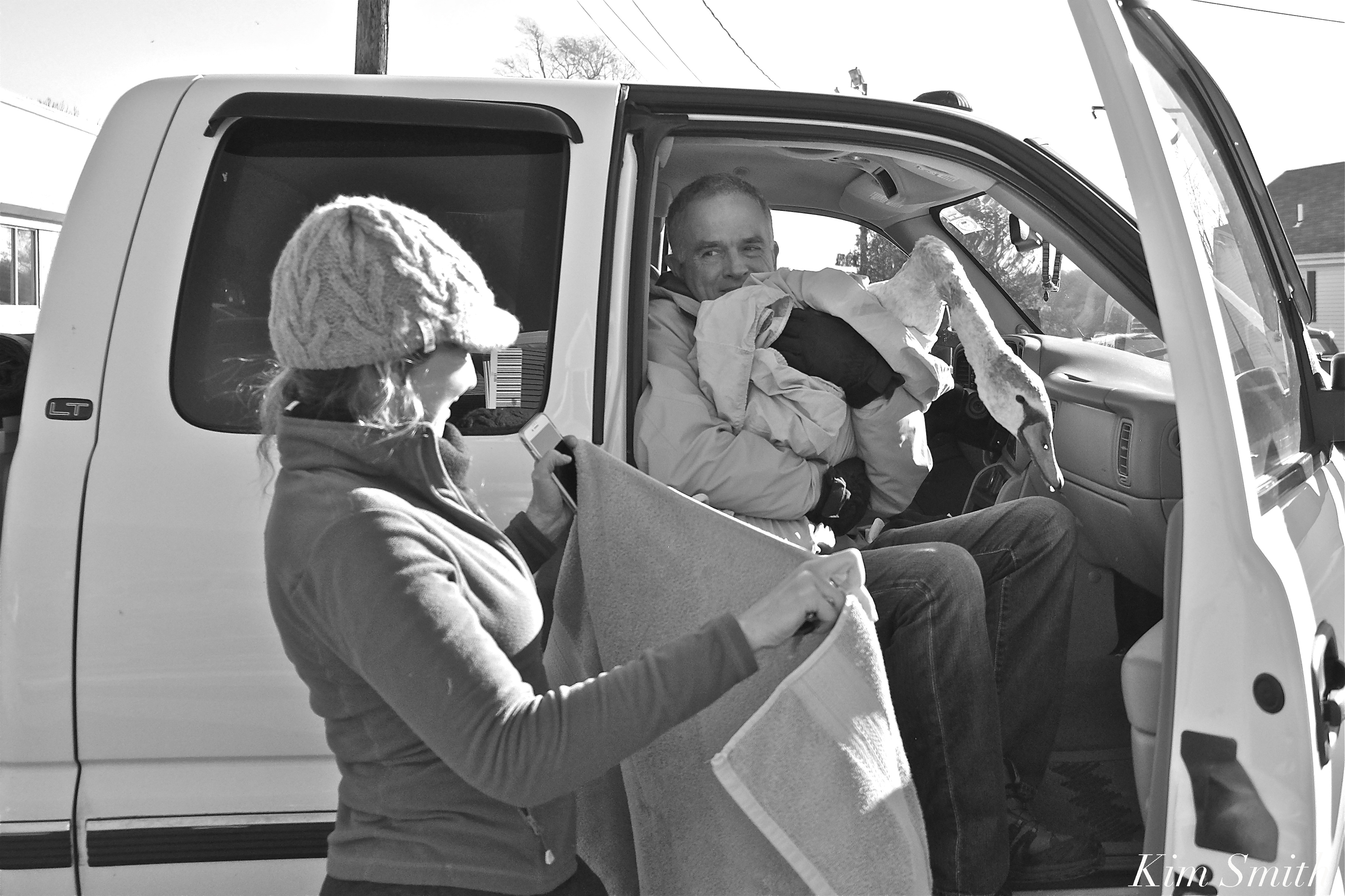
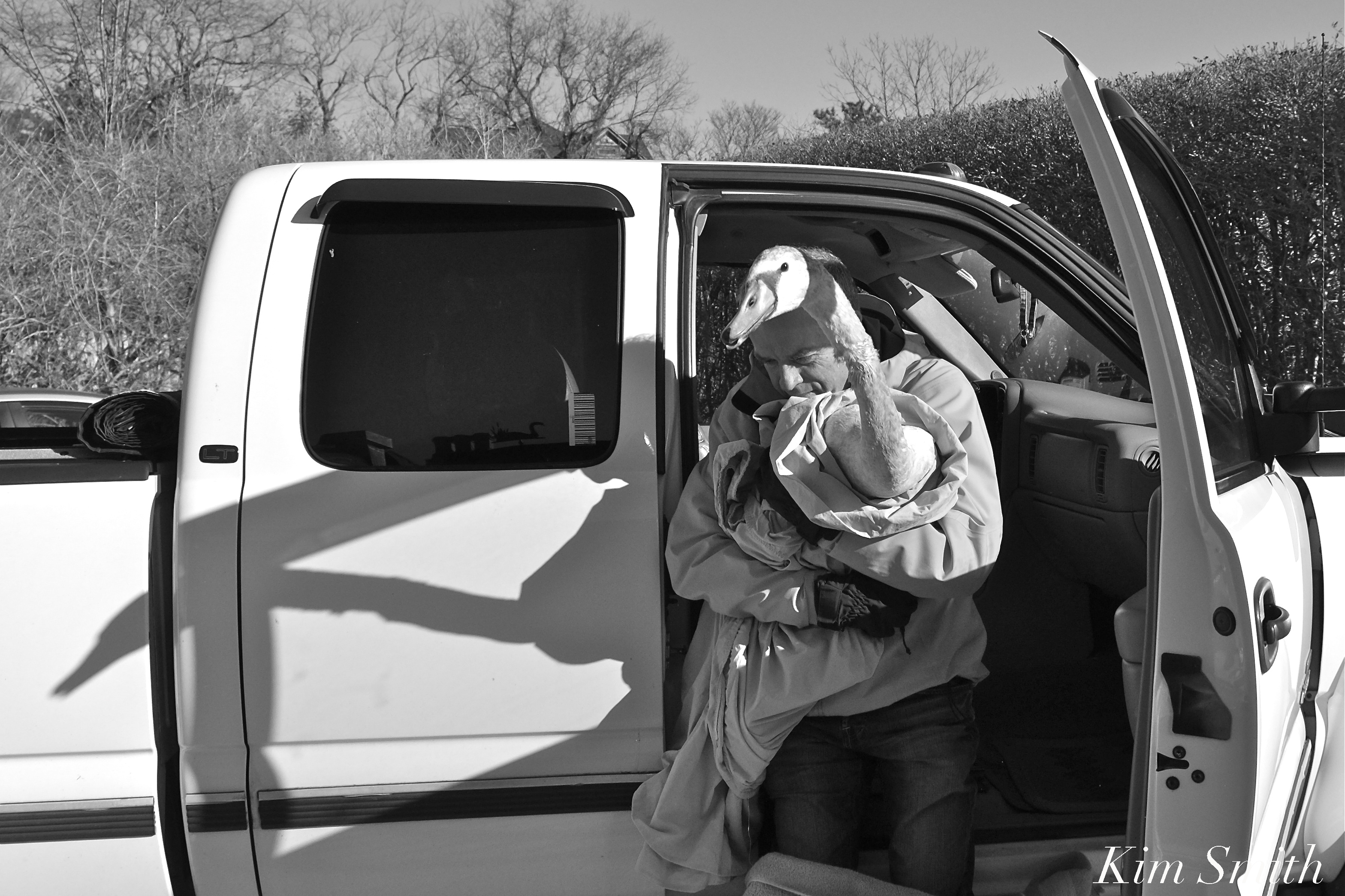
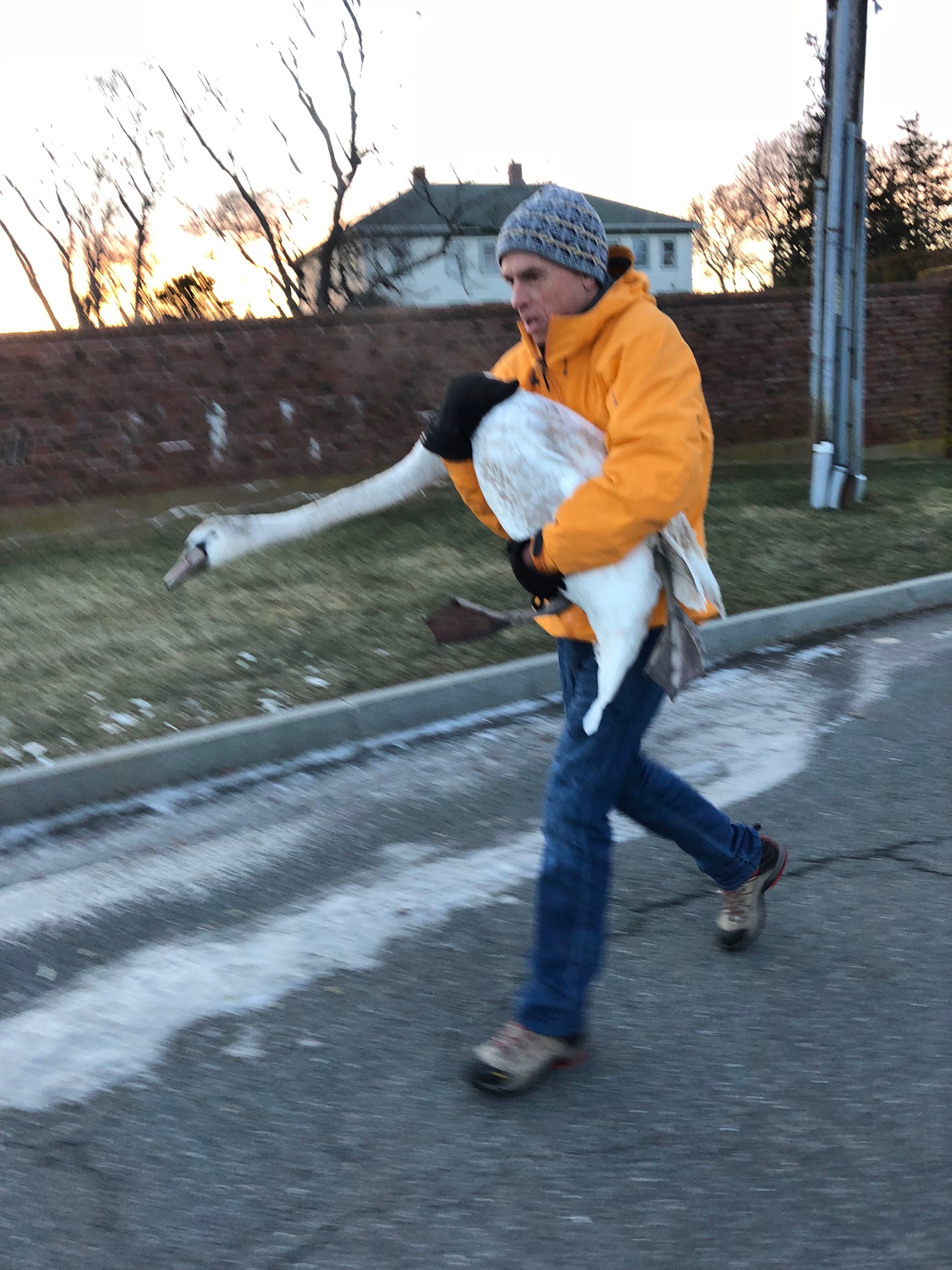
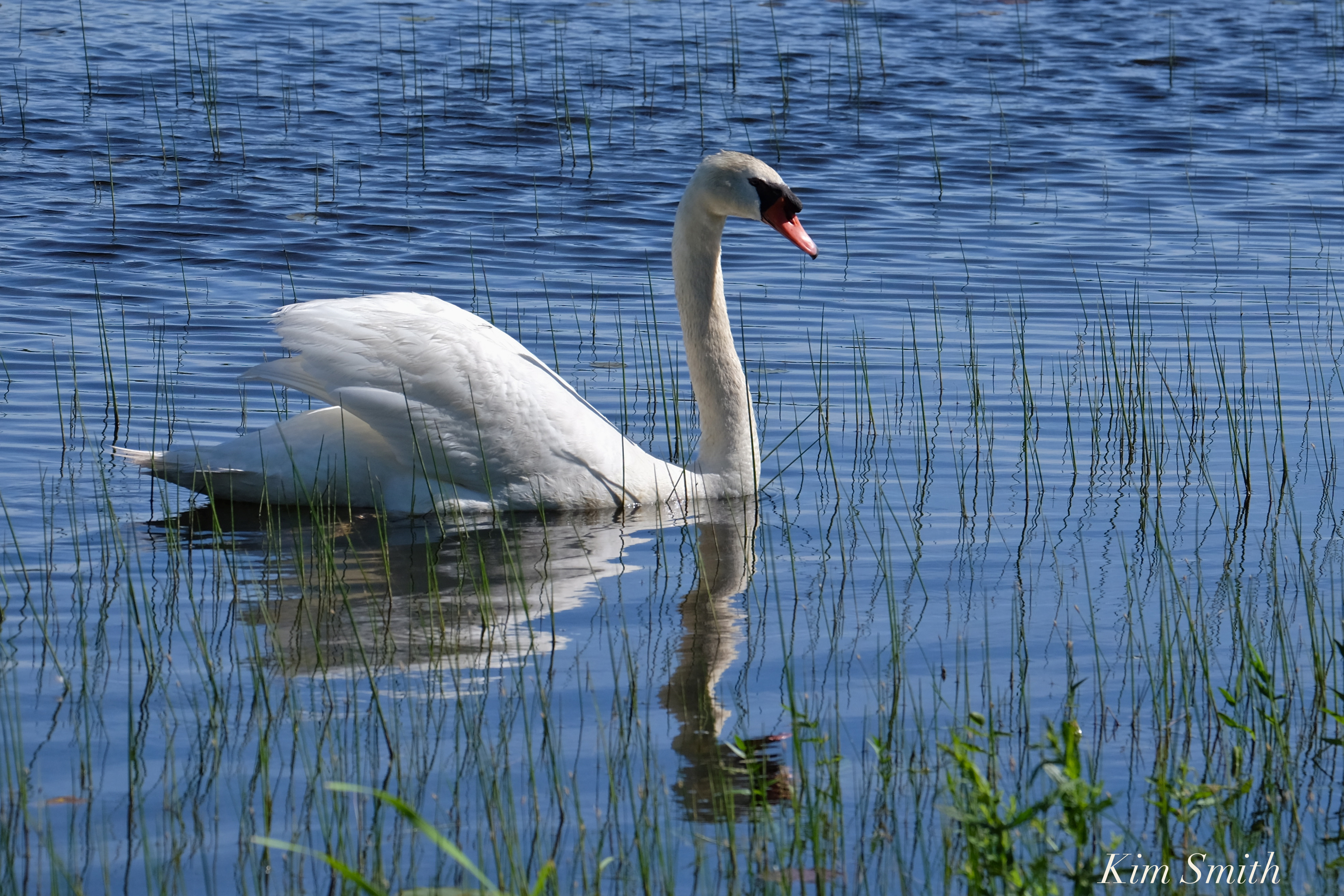
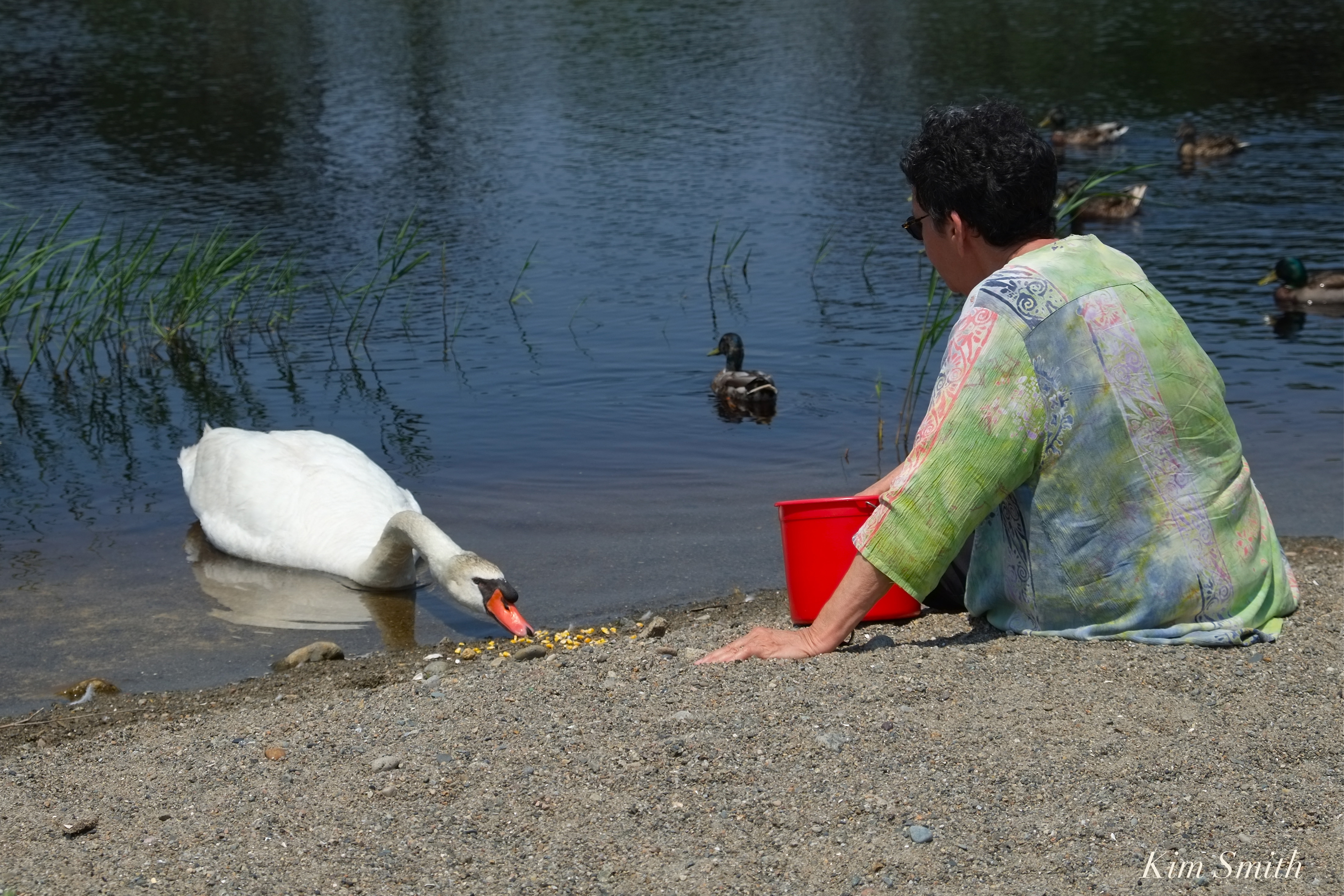
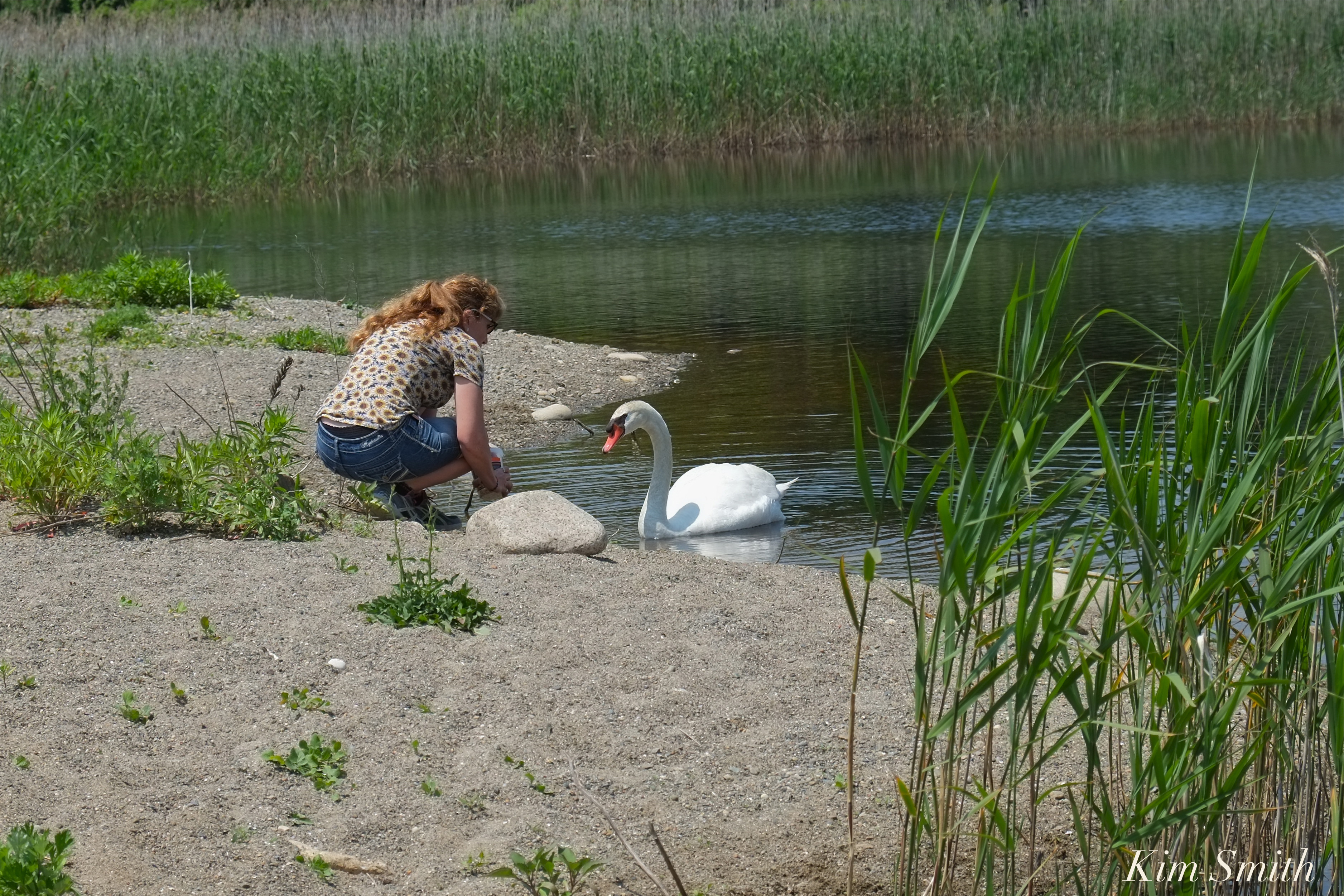
The Niles Pond Young Swan, rescued by Lyn Fonzo and Dan Harris on Friday, was taken to SeaPort Veterinary Hospital Saturday morning for a wellness checkup and because it is thought she may have contracted round worm at the shelter from where she originated. Dr. Cahill gave her a complete physical, checking on wings, feet, degree of fat on her bones, took an xray, and drew blood for a blood work up. His assistant also plucked a few feathers to send off to a lab to determine the sex of the young Mute Swan. It will take several weeks for the results of the tests, but based on Dr. Cahill’s visual assessment, she appears to be in excellent health!!
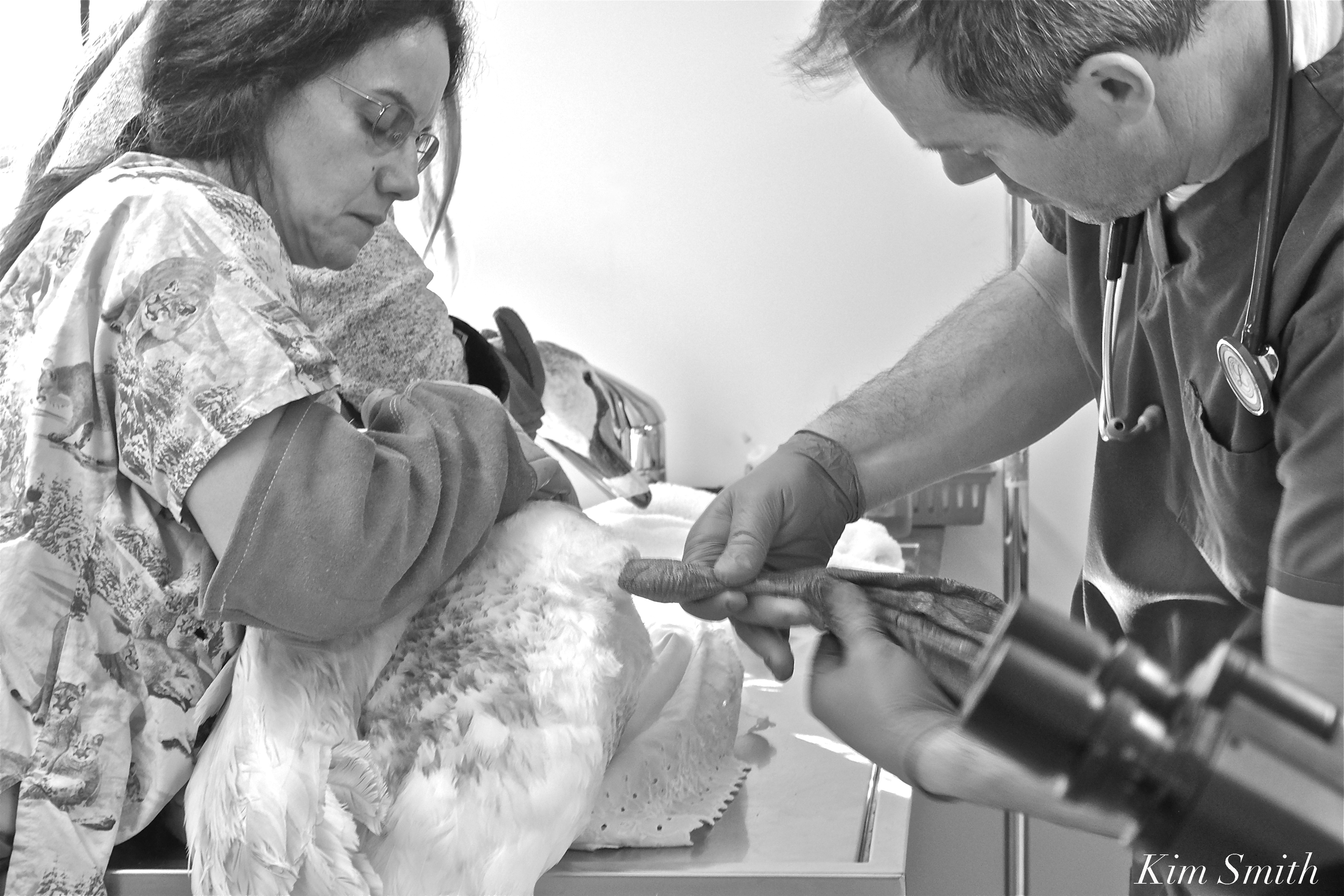
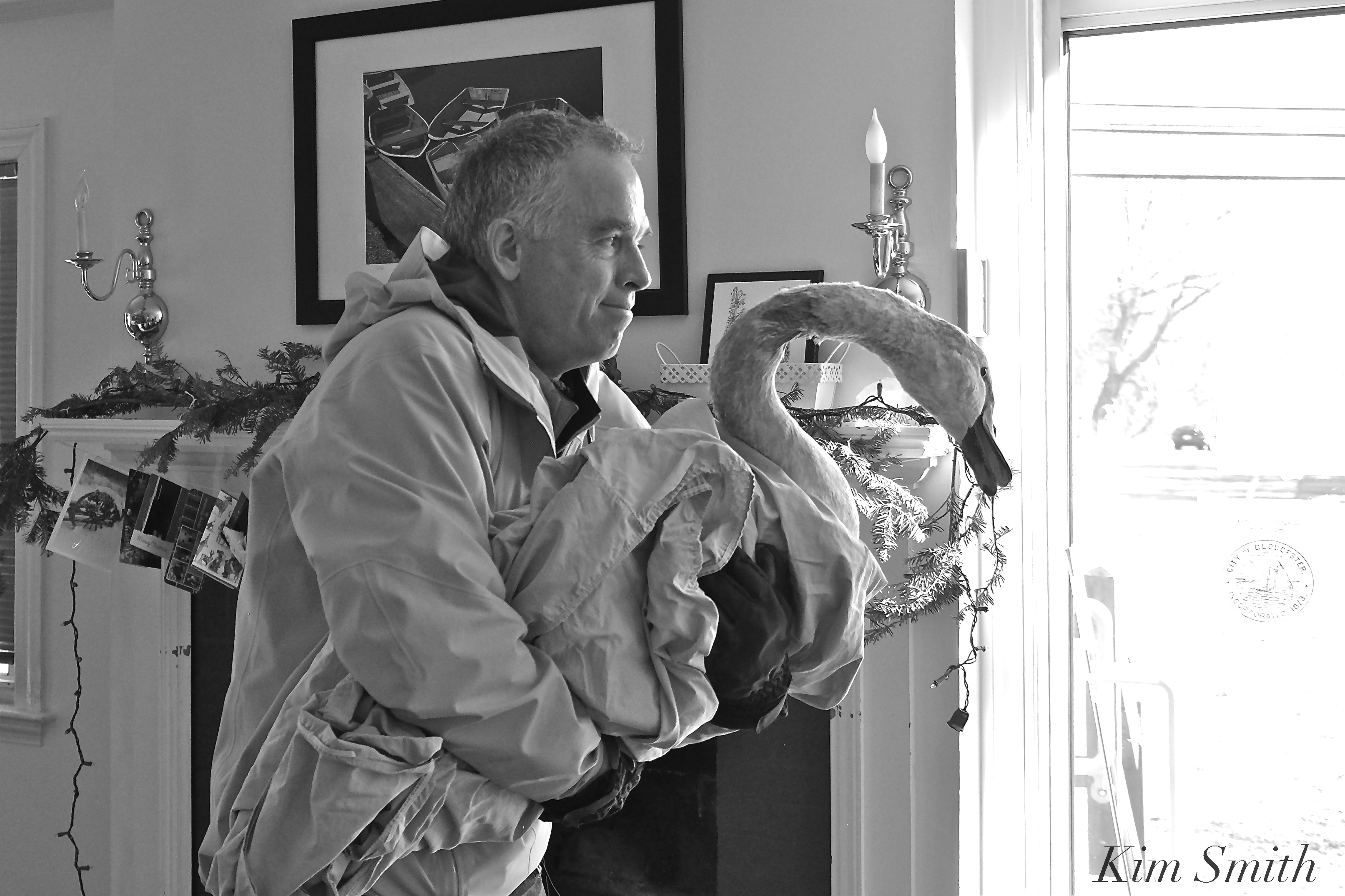
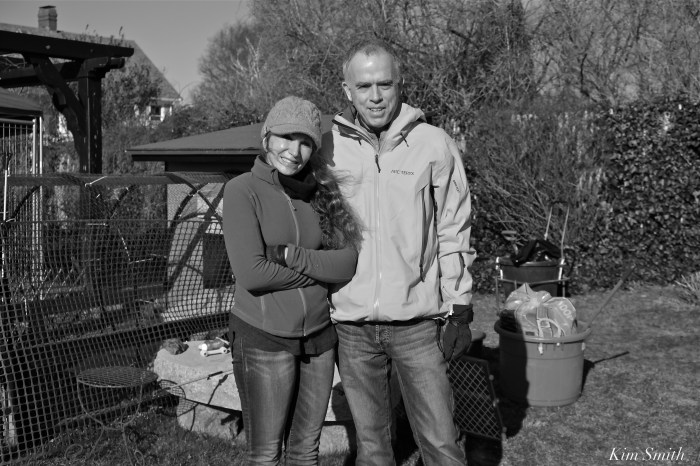
Swans can become very defensive when they feel threatened however, the Young Swan has a relatively speaking mild temperament. Lyn and Dan handled her with lots of tender care and caution and no one was bit during during transport and during the exam.

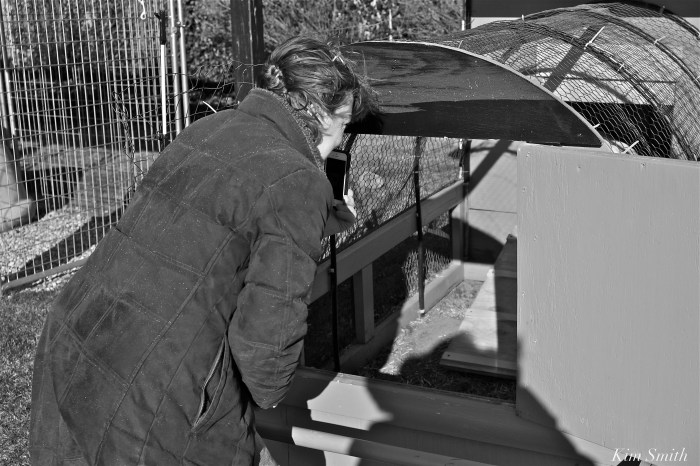
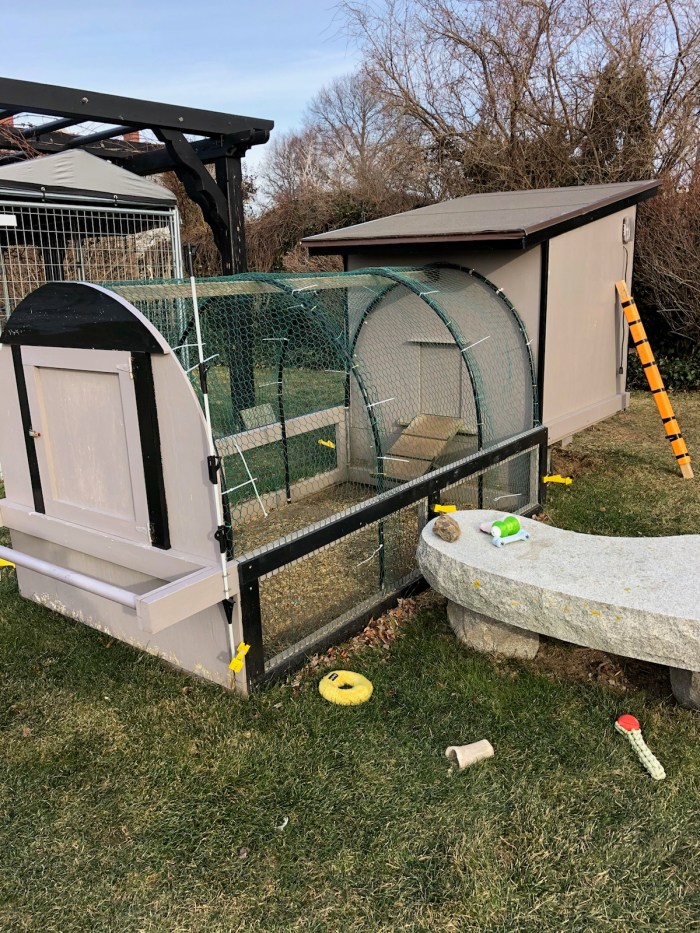
While we were at the vets, Joel Murnroe, one of Mr. Swan’s loyal caregivers and a fine carpenter, was back at Lyn’s home modifying Lyn’s chicken coop, with a larger entryway door and swan-sized rebuilt ramp.

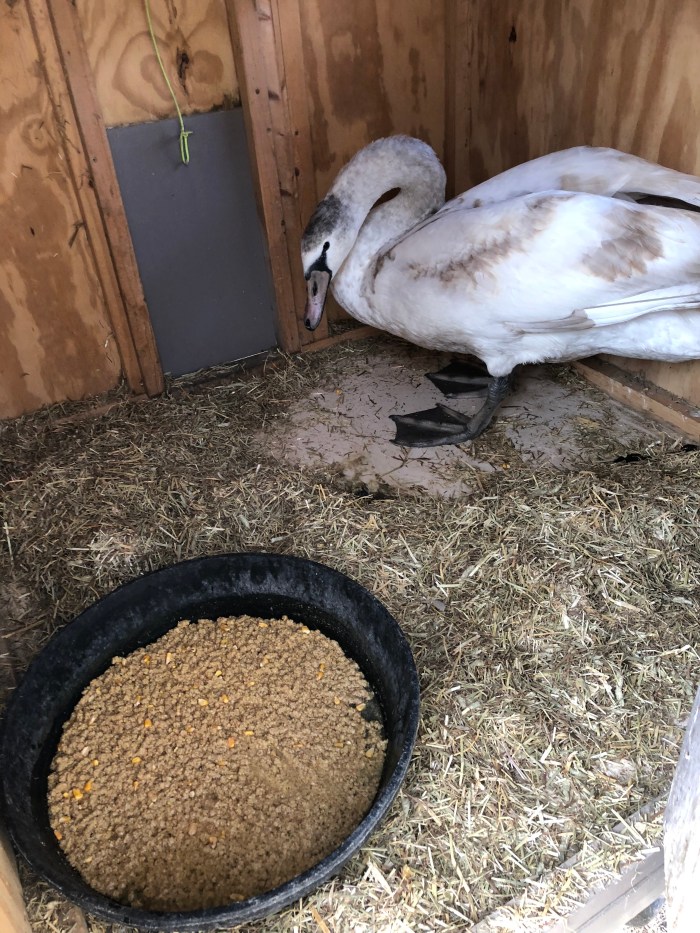
The Young Swan has had an eventful and productive first day in captivity. With much gratitude and thanks to Lyn for taking on the tremendous responsibility of caring for a wild swan for the winter. Our hope is that the Young Swan is a she, and that she will be re-released to Niles Pond this coming spring.

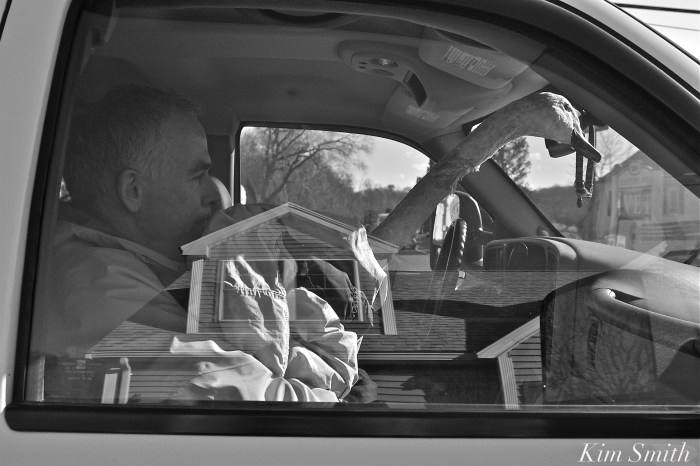
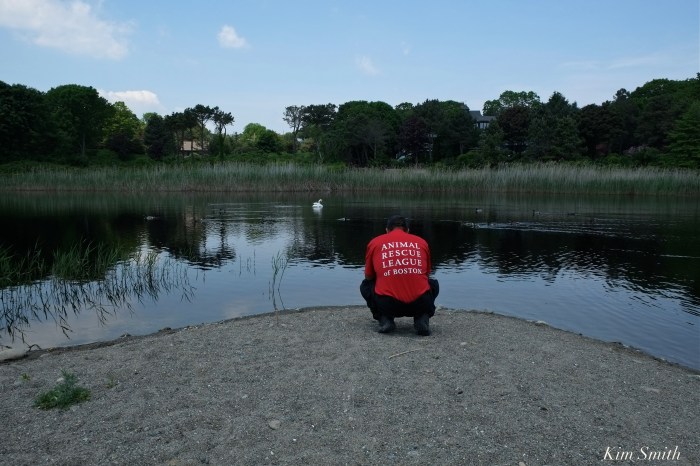
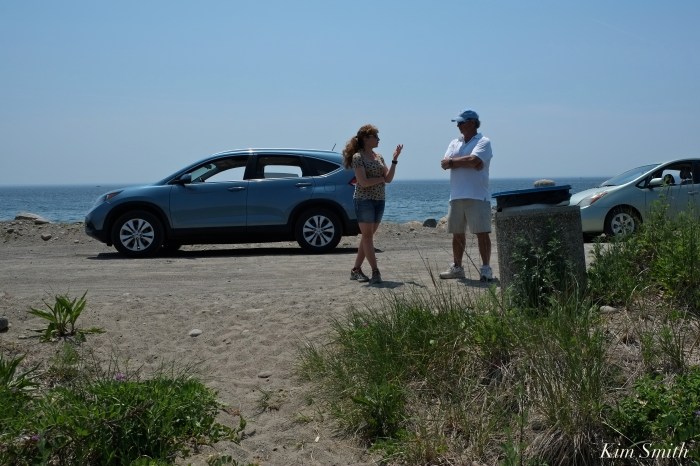
1) Lyn Fonzo and Dan Harris, 2) Joel Munroe, 3) Dan Harris and the Young Swan

BREAKING: THE NILES POND YOUNG SWAN RESCUED BY LYN FONZO AND DAN HARRIS

Eastern Point residents Lyn Fonzo and Dan Harris discovered the Young Swan frozen in the ice at Niles Pond early this morning. Dan reached into the water and scooped her up. She seemed relatively tame and did not try to bite Dan as we had imagined would happen. Dan and Lyn carried her to Lyn’s home, where she is currently living in one of Lyn’s chicken coops. Plans are underway to modify the chicken house to make it a bit more swan friendly. Joel Munroe, one of several of Mr. Swan’s caregivers, is also a carpenter and she is planning to help Lyn.

Tremendous shout outs to Lyn Fonzo, Dan Harris, Skip and Joel Munroe, and to Michelle Smith. West Gloucester resident Michelle formerly raised swans and emus on the family farm and she is providing excellent advice on how to care for swans in our New England climate.

Photos and video courtesy of Lyn Fonzo.

New digs for the Young Swan

Frozen!


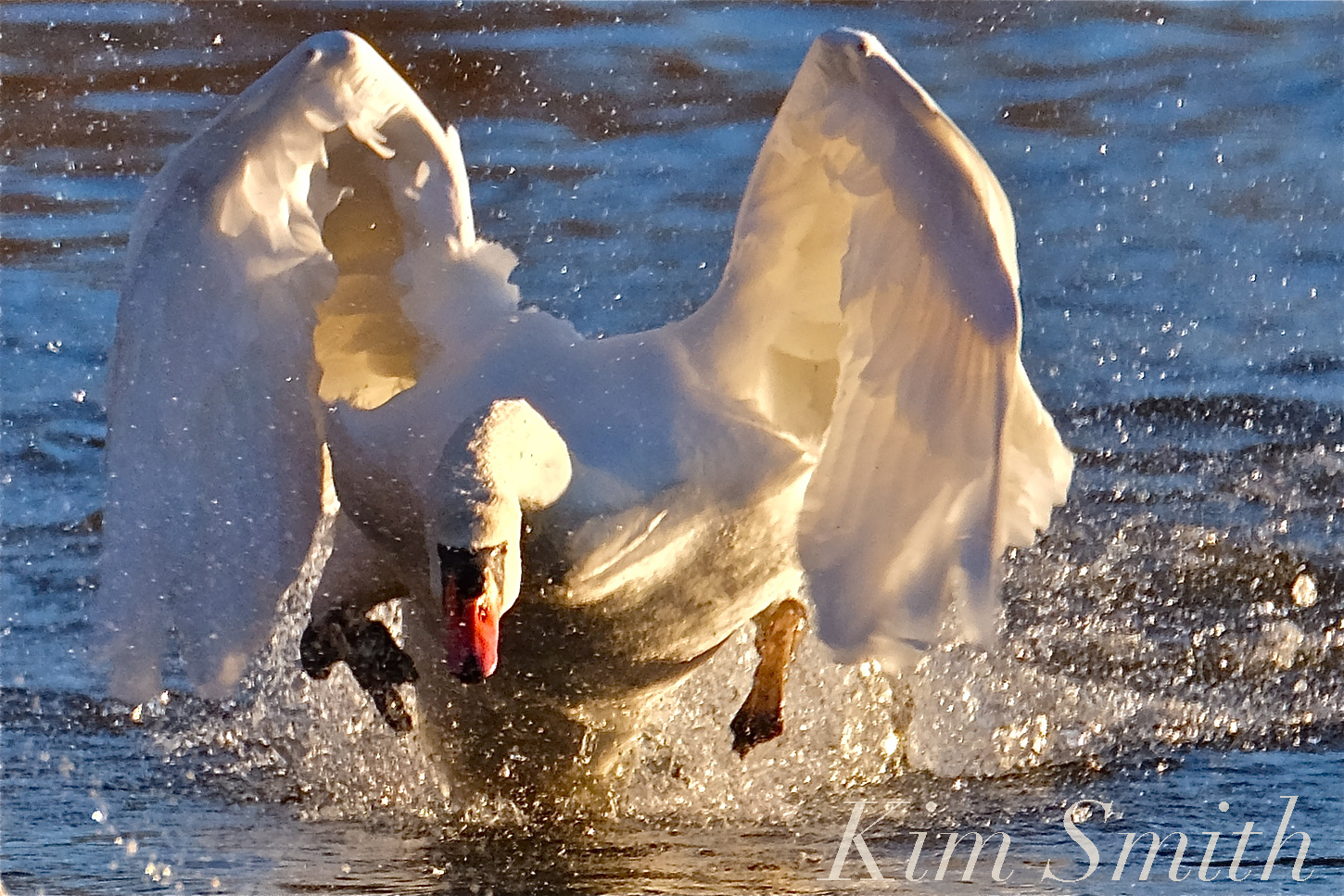
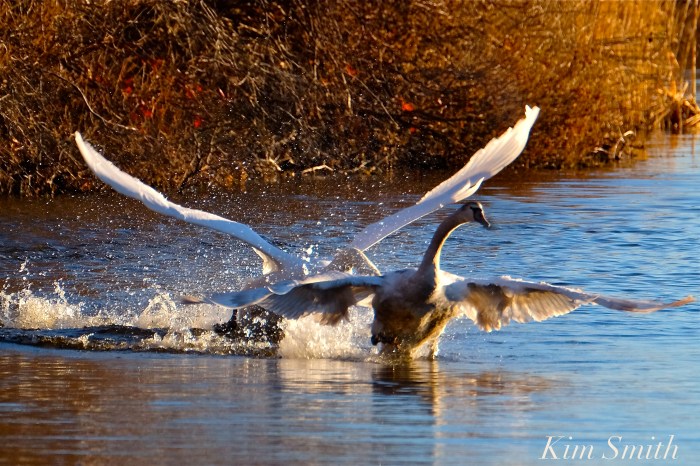
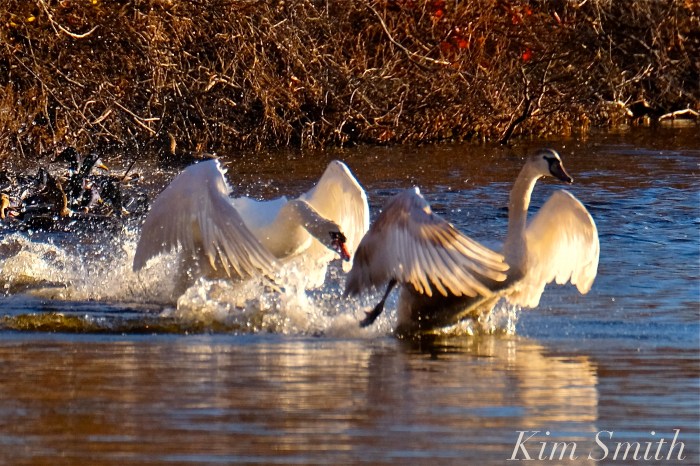
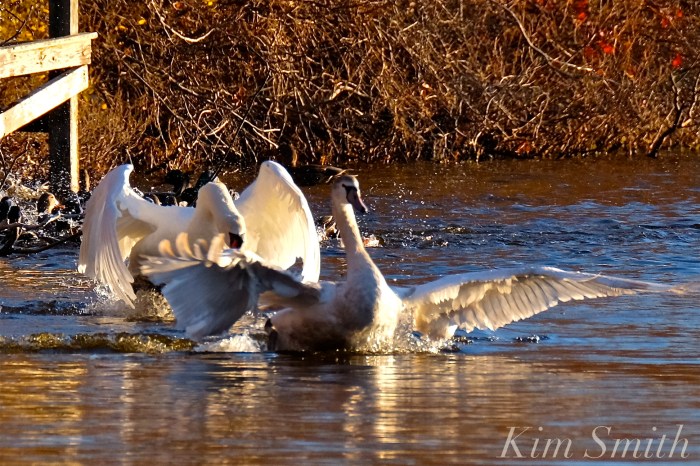
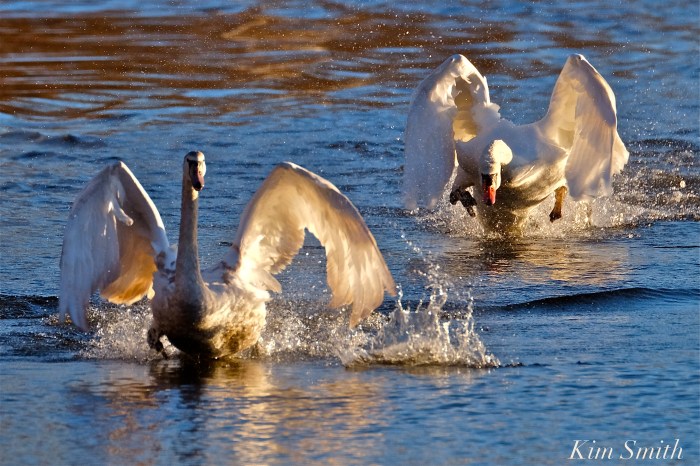
IS MR. SWAN TRYING TO SCARE THE BEJESUS OUT OF THE YOUNG SWAN?

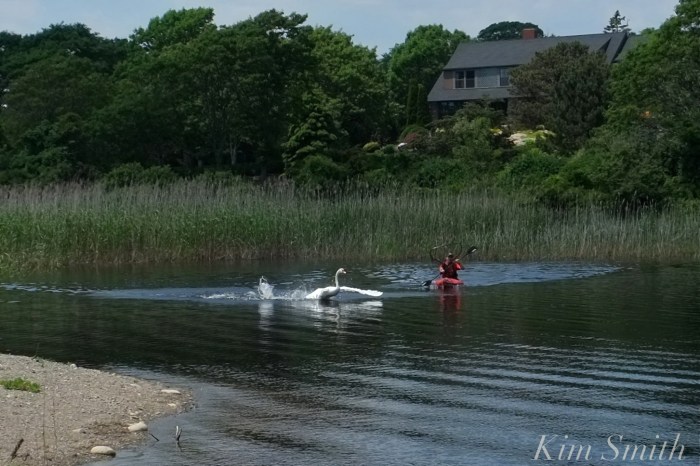
Doesn’t this scene look deadly brutal? It is a photo of Mr. Swan chasing the Young Swan.

The thing is, we think that this may be Mr. Swan’s way of encouraging the Young Swan to fly. If she is going to survive a New England winter in the wild, she has to move to saltwater coves and harbors. Niles Pond resident Skip Hadden has seen her fly but she seems to have no interest in leaving the Pond. Niles Pond is freezing over, and unless the Young Swan follows Mr. Swan’s lead, she will have to be relocated.

https://www.instagram.com/p/Bcr8NKXFjNZ/

SWAN LAKE

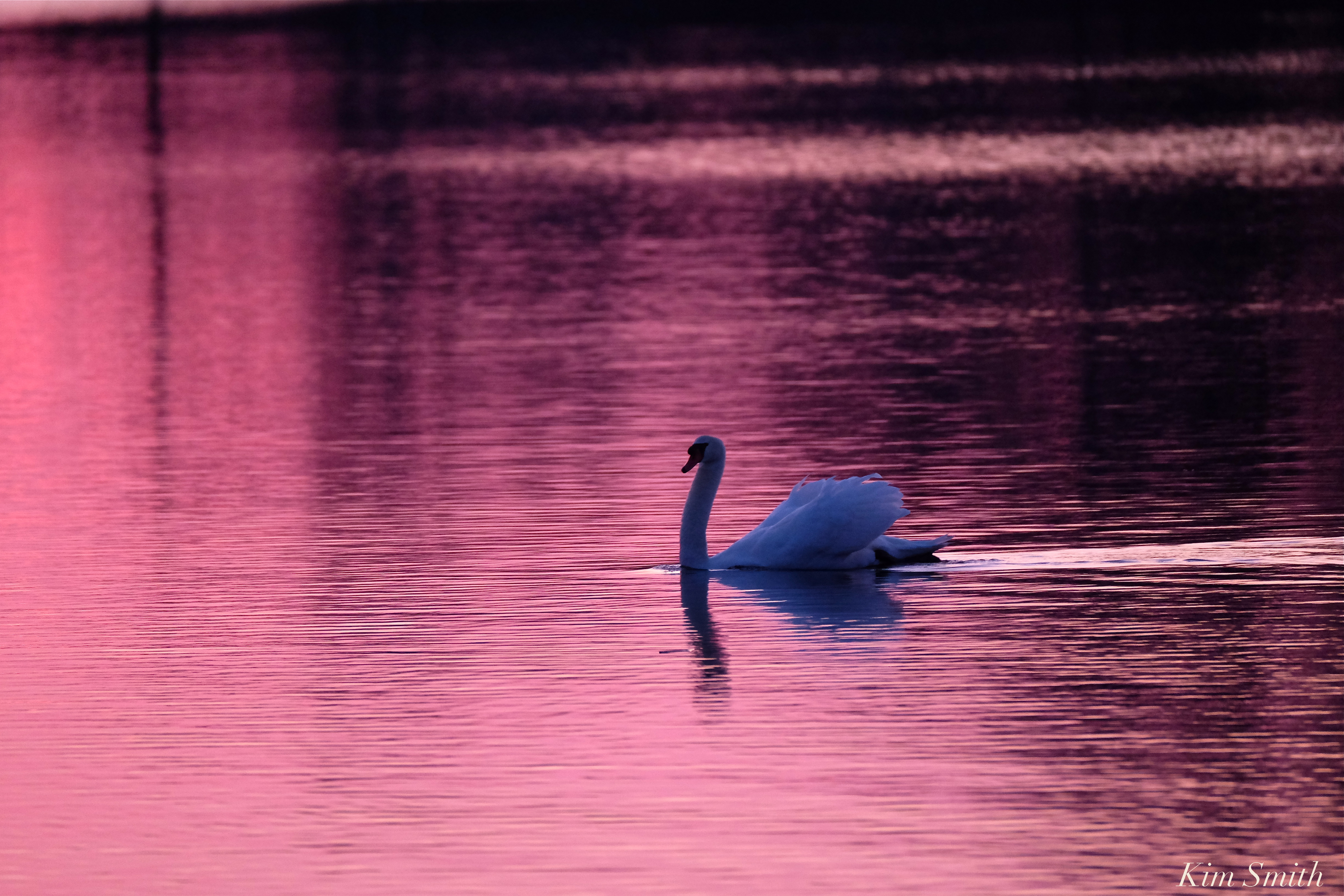
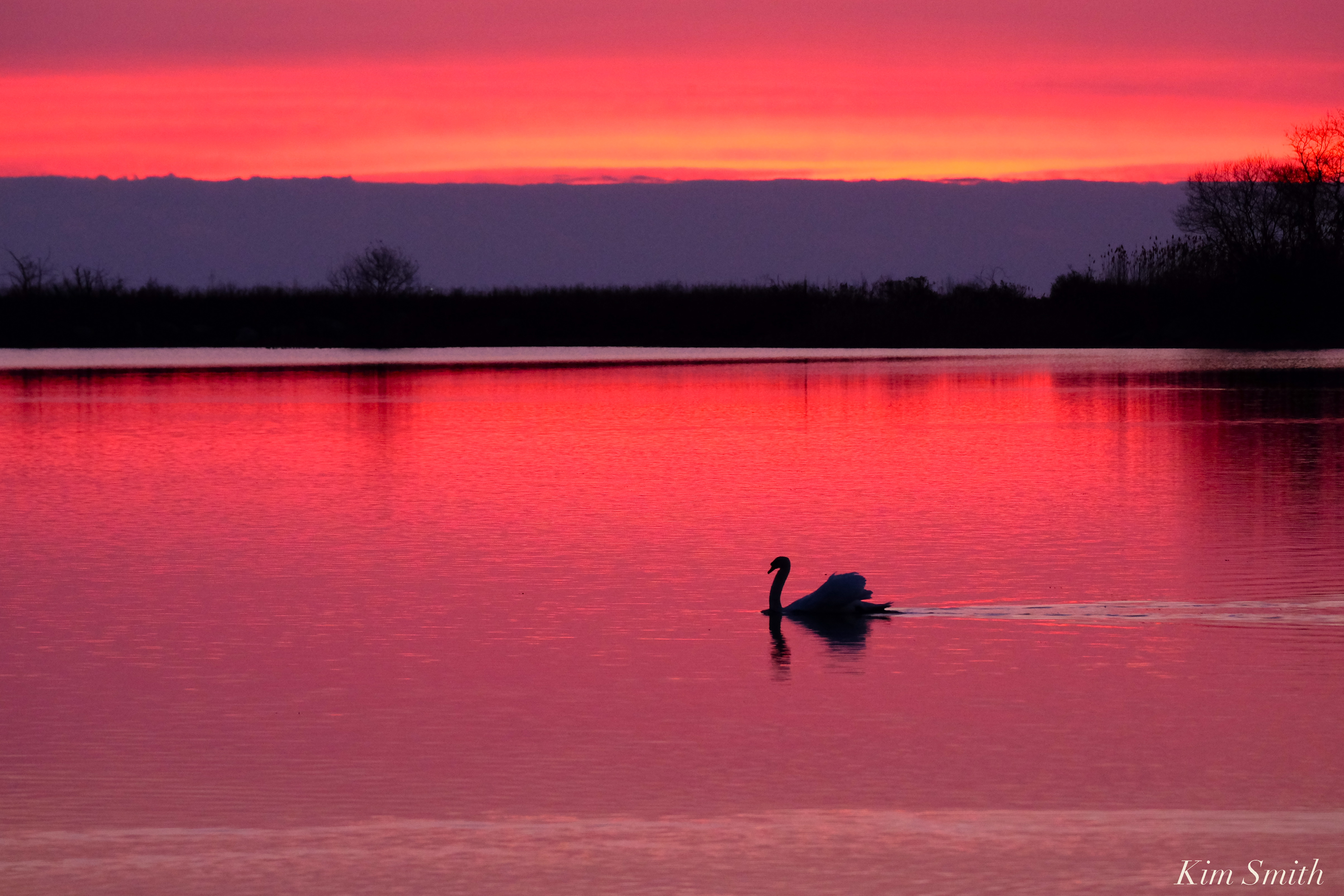
Fleeting few beautiful moments as Mr. Swan traversed Niles Pond at daybreak, moving from shadowy hues of violet to lava red.

LOOKING GOOD MR. SWAN!


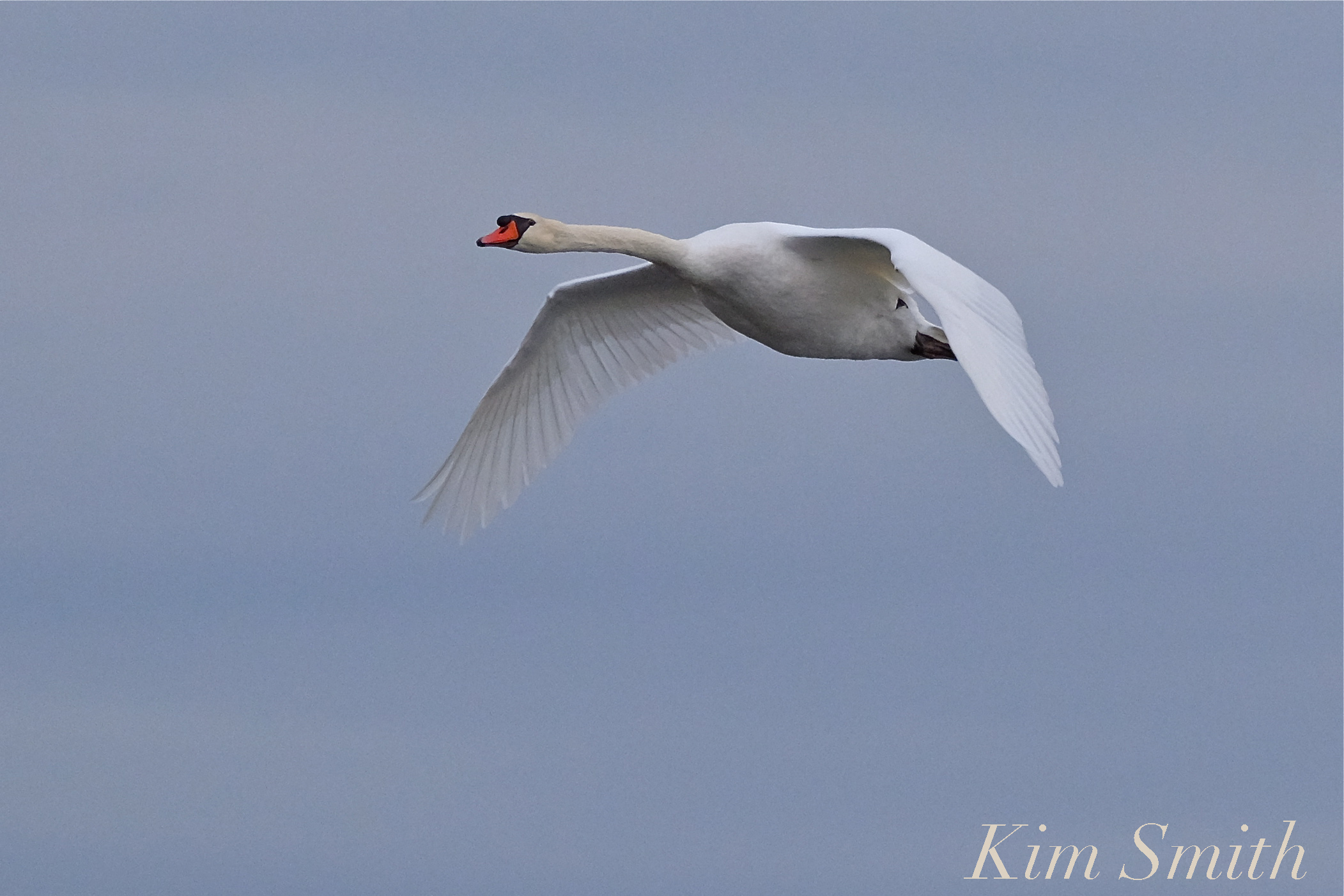
Soaring high overhead, our Mr. Swan is looking healthy at the onset of winter. Thanks to the care he received from his friends over the summer, it appears as though his foot is in much better shape. Keep on rockin’ Mr. Swan!

https://www.instagram.com/p/BbmYh6JlmL7/

https://www.instagram.com/p/BbnQMbJFO3B/

EASTERN POINT SUNSET AND MOONRISE (PHOTOBOMBED BY MR. SWAN)

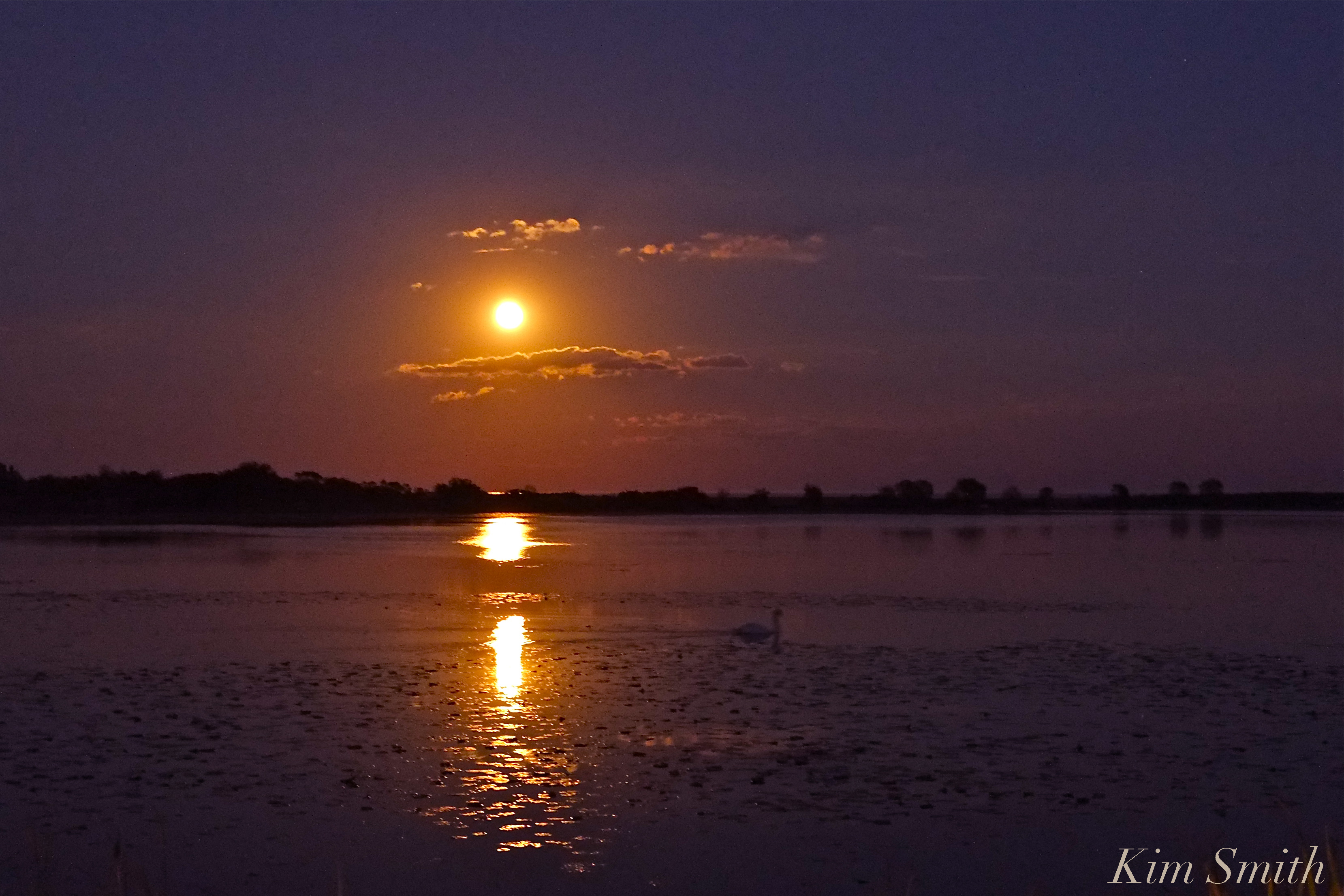
Watching the sunset from the Easternpoint Lighthouse I then headed to catch the moonrise over Niles Pond. Despite the full moon, it was so dark that I could barely see the ground that I was standing on and did not even know Mr. Swan was swimming about until looking through the photos just now! Niles Pond Moonrise


Eastern Point Lighthouse and Dogbbar Panorama

MR. SWAN AND THE “NEW GIRL” UPDATE

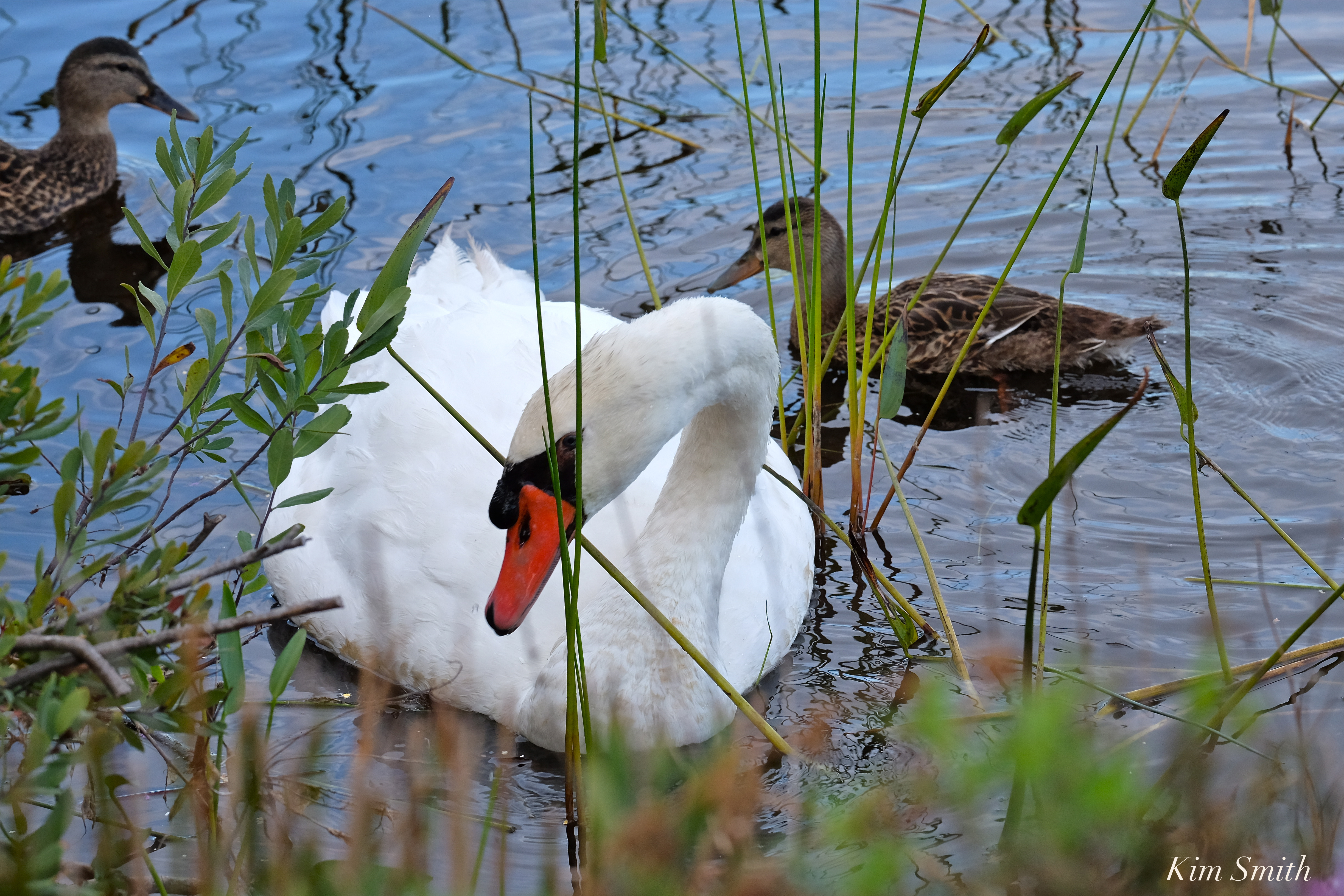
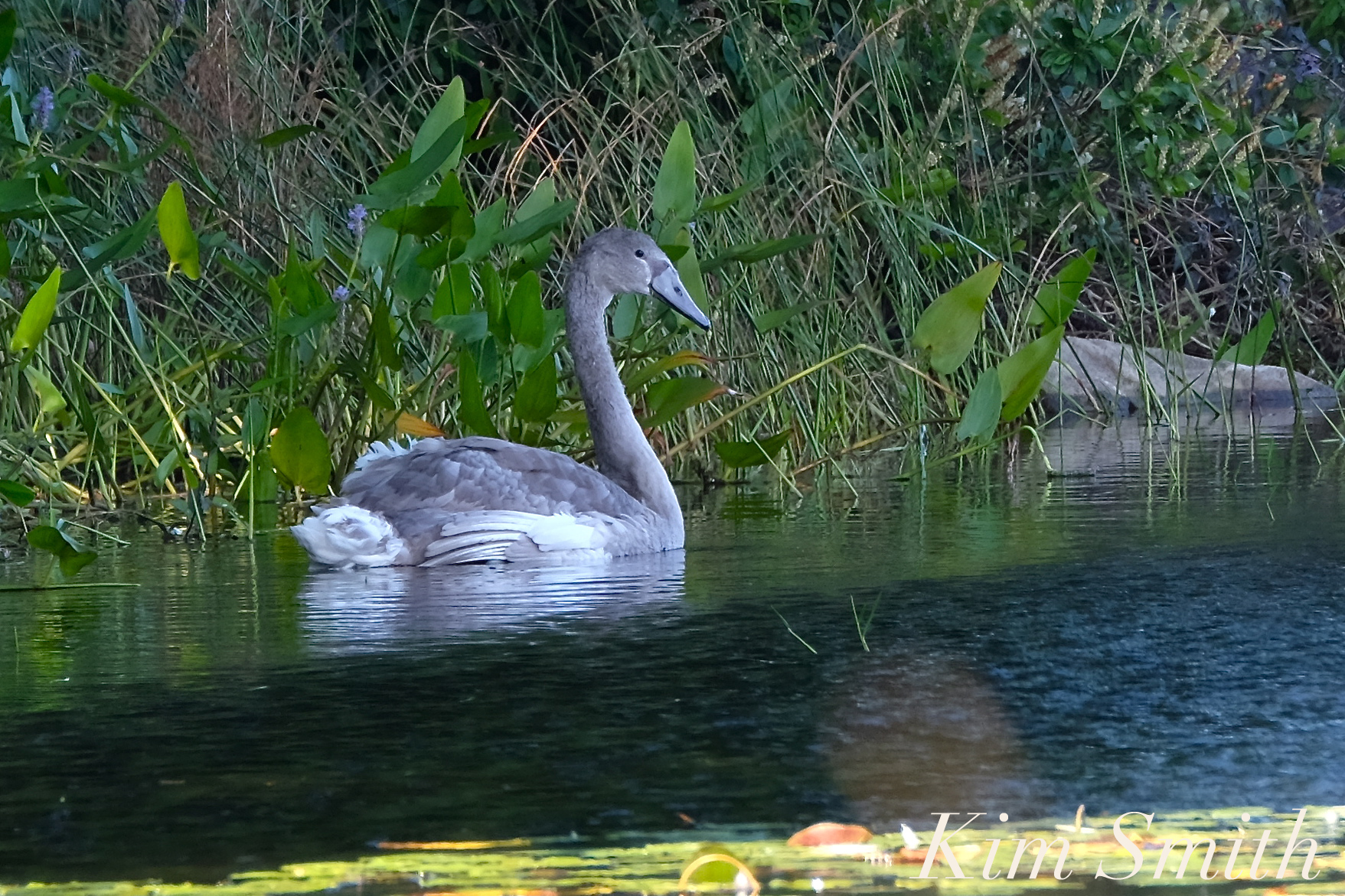
First off, I have to say, we don’t know if the new swan is a male or female. We are all hoping she is a female, for obvious reasons, and too because as the swan gets older, if a male, Mr. Swan will most likely chase a “him” off the pond.

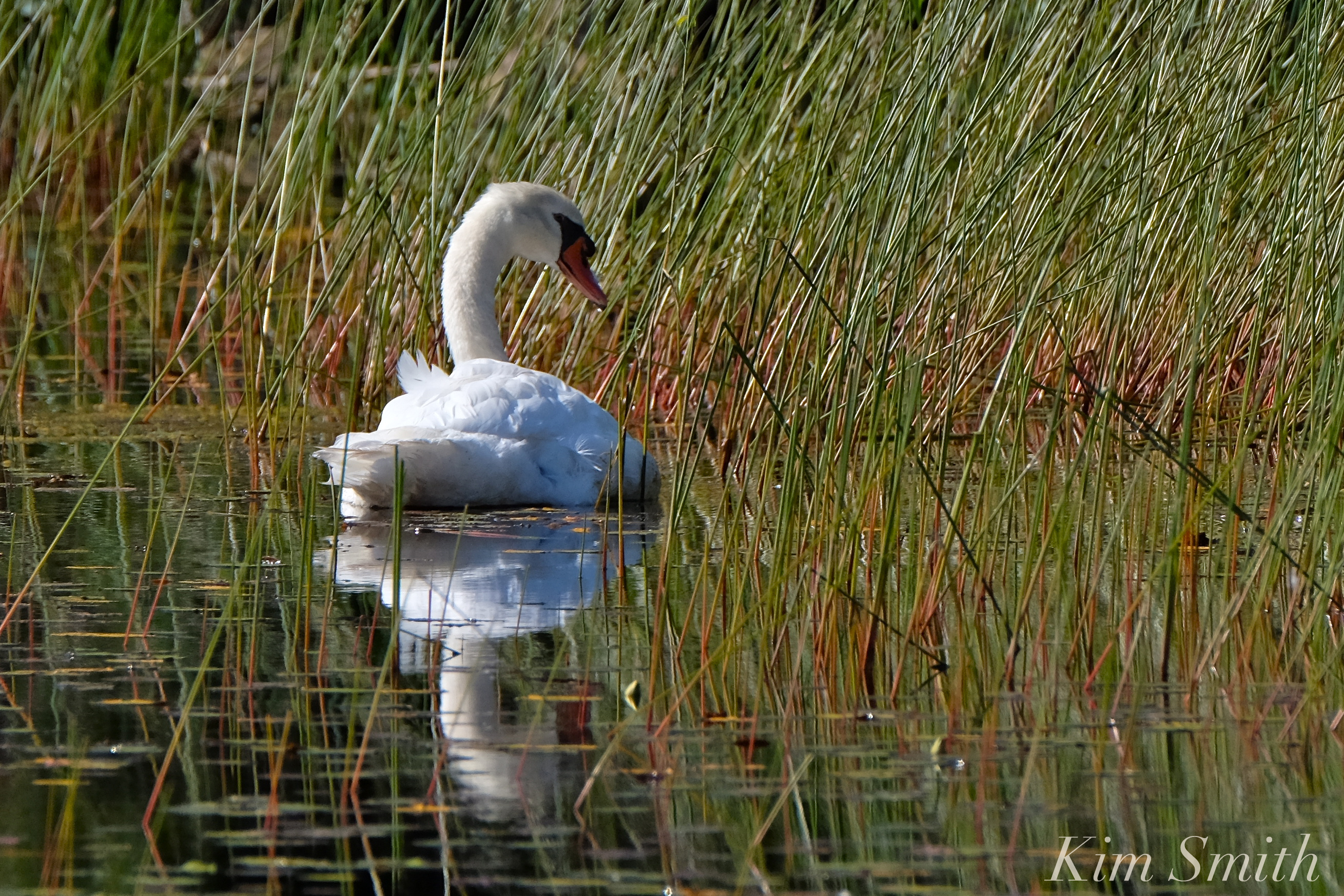
The young swan paddles back and forth on the far side of the pond, along the reeded edge.

Lyn Fonzo, Niles Pond resident, shares that the young swan is becoming increasingly tolerant of Mr. Swan, although she is still extremely shy and skittish. When Lyn feeds the swans in the morning, they are feeding adjacent to each other, which is a huge improvement from only a few days ago when she refused to come out from amongst the reeds.

Mr. Swan and His Coterie of Quakers

DAY TWO FOR THE RESCUE SWAN

Our Niles Pond rescue swan has survived her second night! She is still not venturing far from the reeds. Mr. Swan is definitely aware of her presence but is playing coy and for the most part, ignoring her. The good news, or great news I should say, is that he is not chasing and threatening her.

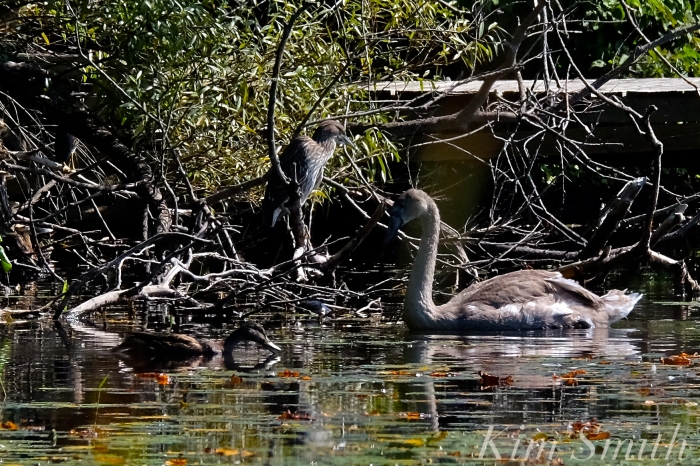
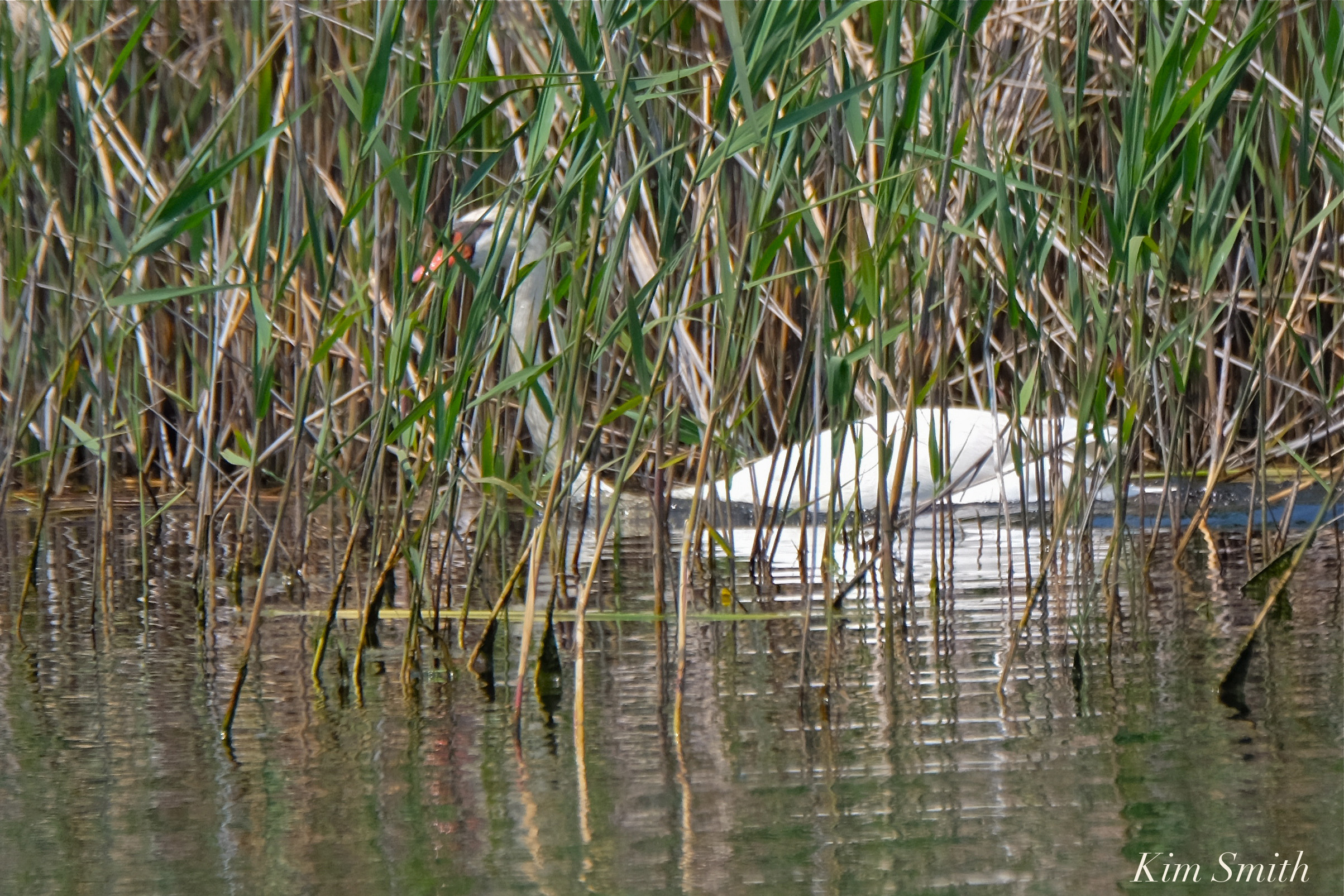
New Swan is continuing to feed on pond vegetation. I didn’t get a glimpse of her until around 11am when the light was very harsh, but here she is at the pond’s edge, photo bombed by a stealthy Green Heron.

BREAKING: A NEW COMPANION FOR MR. SWAN (HOPEFULLY!)

Cape Ann’s wildlife rehabilitation expert Jodi Swenson released a Mute Swan fledgling Saturday at Niles Pond. Jodi worked with Eastern Point resident Lyn Fonzo, where they set the young swan free from Lyn’s beach access to the pond’s edge. Lyn reports that the fledgling immediately headed to the reeds. Niles Pond is dense in vegetation, most notably at this time of year, and almost immediately, it was difficult to see her hiding, although easy to hear, as she moved through the phragmites and cattails.

Jodi, from Cape Ann Wildlife, shares that the Mute Swan baby has been in her care for several months. The cygnet came from Tufts and she/he appears to be about four months. Jodi raised the swan purposefully with minimal human contact so that the animal would remain wild. The now fledgling is very, very shy of humans, so please be respectful while the swan is becoming acclimated to her new environment. Cape Ann’s Mr. Swan is at least 27 years old and it is everyone’s greatest hope that he will “adopt” the new one, perhaps guiding her to maturity.

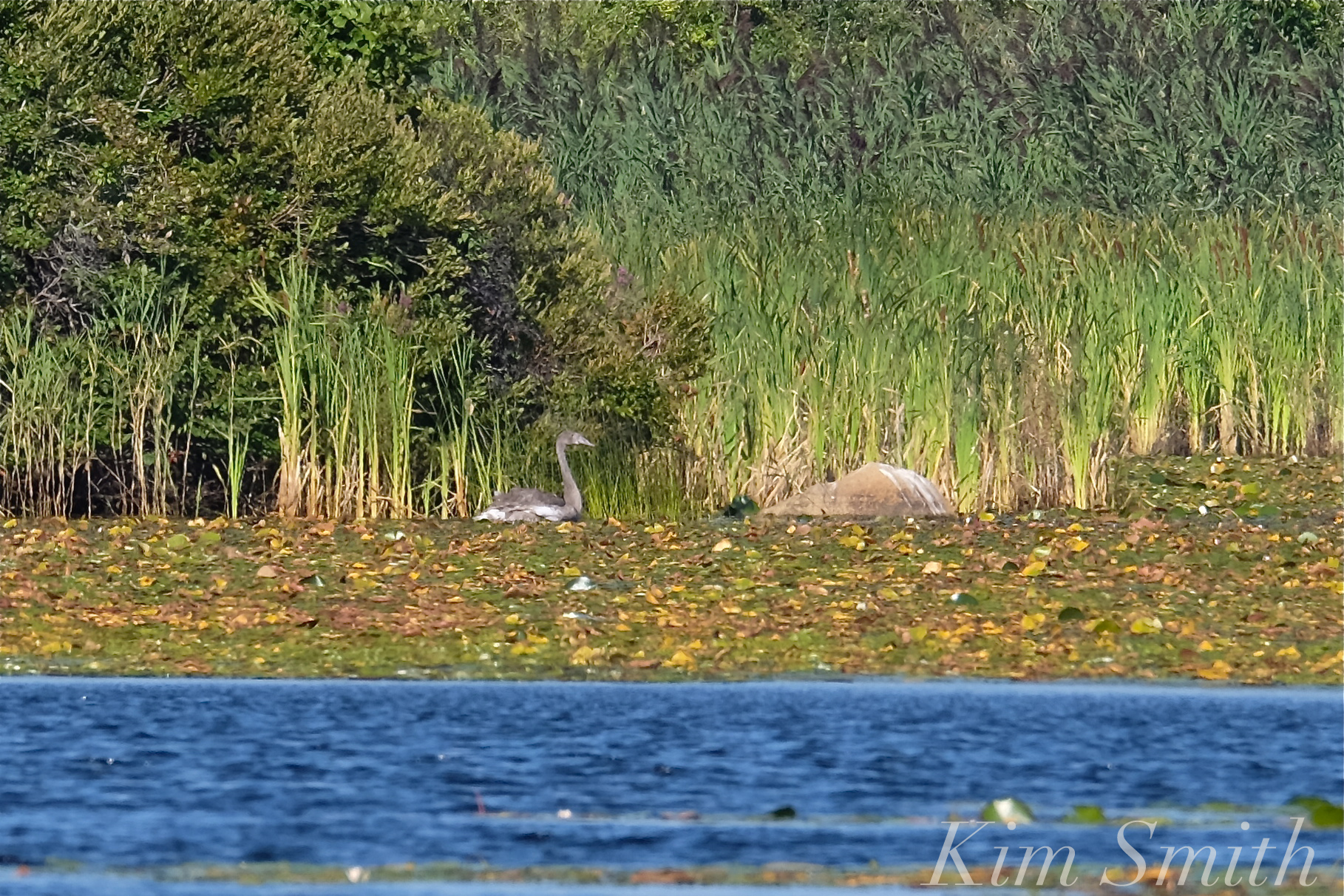
The above photo, although out of focus, is included here to show that the young one is foraging for food on her own. Look closely and you can see the pond vegetation dangling from her mouth. This is a great sign, that she can feed herself!!

Please visit Jodi’s website, Cape Ann Wildlife, Inc. I am sure we can all imagine how costly and time consuming it is to rehabilitate orphaned and injured wildlife. If so inclined, please think about making a tax deductible donation. Our deepest thanks and appreciation to Jodi for all the care and love she gives to Cape Ann’s most vulnerable animals. Until recently, Jodi was Cape Ann’s only wildlife rehabilitator. Jodi would like to give a shout out to Erinn Whitmore, who has been working with Jodi for many years, and who recently earned her state wildlife rehabilitator’s license. Erinn has founded GROWL: Gloucester Rehabilitation of Orphaned Wild Life, and will be specializing in caring for small mammals.

MR. SWAN CHILLAXIN AT WONSON COVE

Thank you to Rocky Neck resident Anne Malvaux for sharing her photo of Mr. Swan, spotted last night sitting on the beach at Wonson Cove. When I checked on him at Niles early this morning, he was sleeping peacefully in the middle of the pond. 

MR. SWAN IN THE BOSTON GLOBE!
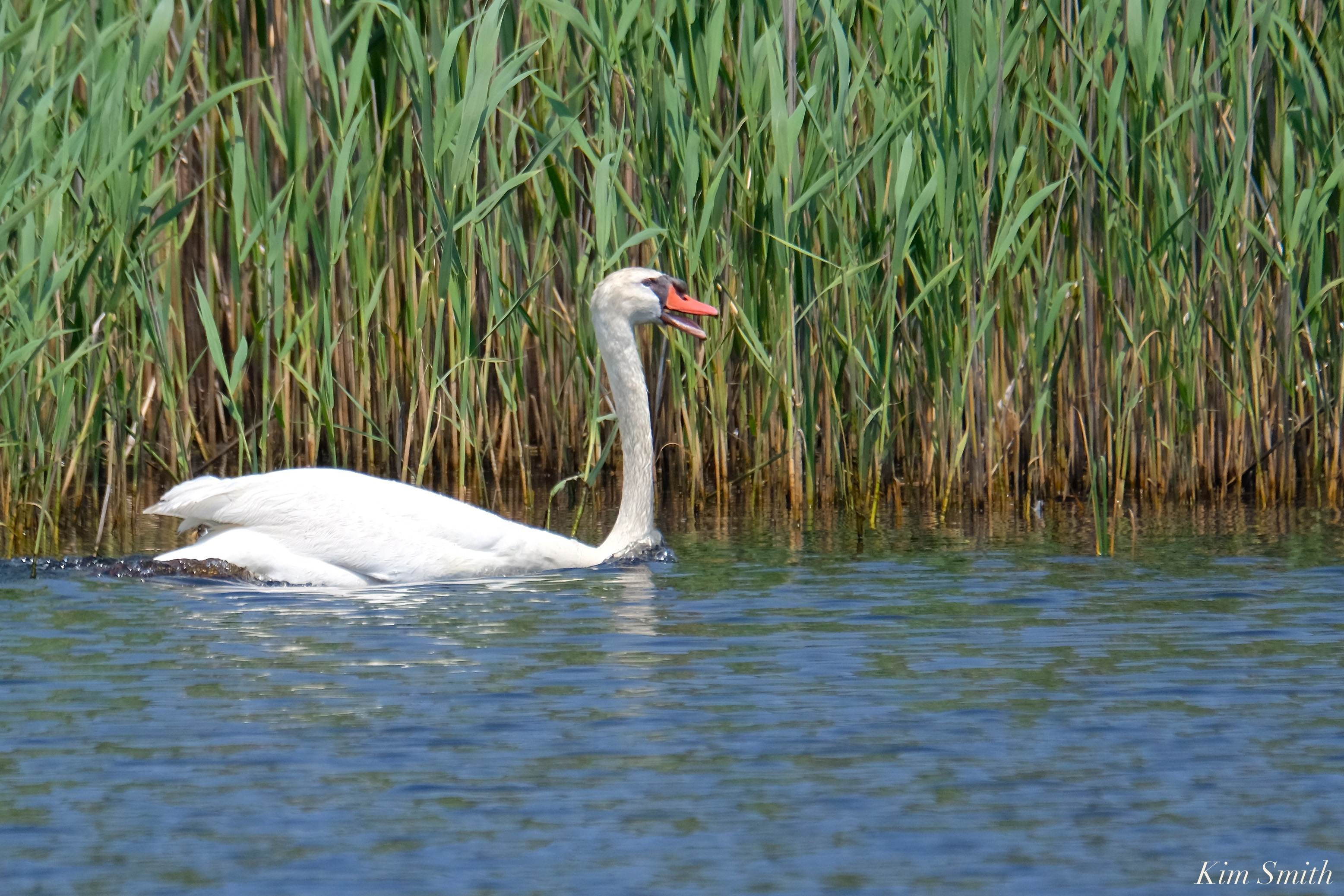
Mr. Swan super stressed and panting while being chased around Henry’s Pond.

Mr. Swan Makes the Big Time in the Boston Globe!

In Rockport, Chasing Mr. Swan

Article by Boston Globe correspondent Emily Sweeney

Photos courtesy Kim Smith

A popular swan at Henry’s Pond in Rockport managed to stay one step ahead of rescuers who were trying to capture him Tuesday.

The elderly bird, known affectionately as “Mr. Swan,” has been a common sight at the pond for many years. During that time, he’s fathered many cygnets and outlived two of his mates, and led a peaceful existence on the water.

But things took a turn recently when Mr. Swan hurt his leg. Although he could still swim, some people began to notice that Mr. Swan was having difficulty walking. And they began to worry.

Soon enough, the Animal Rescue League was called in to help.

“The swan is considered a community pet, so the goal was to capture it, have it treated, and then returned to the pond,” said Michael DeFina, a spokesman for the Animal Rescue League.

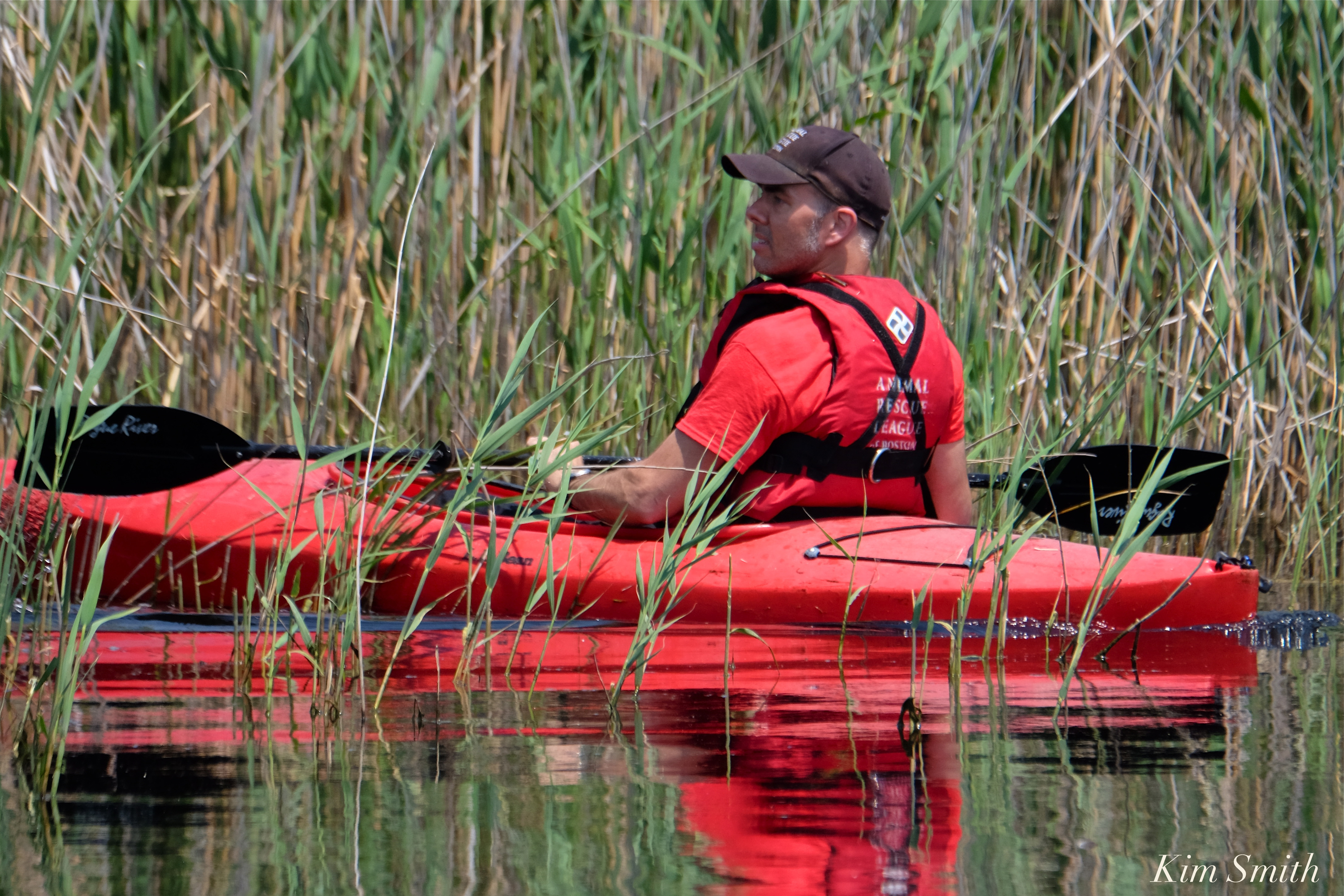
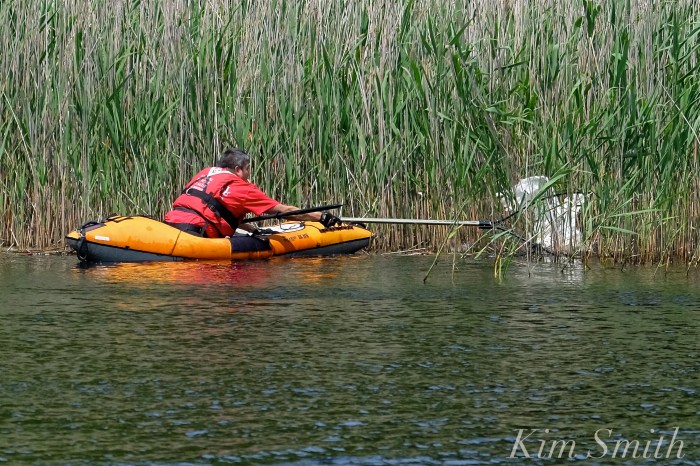
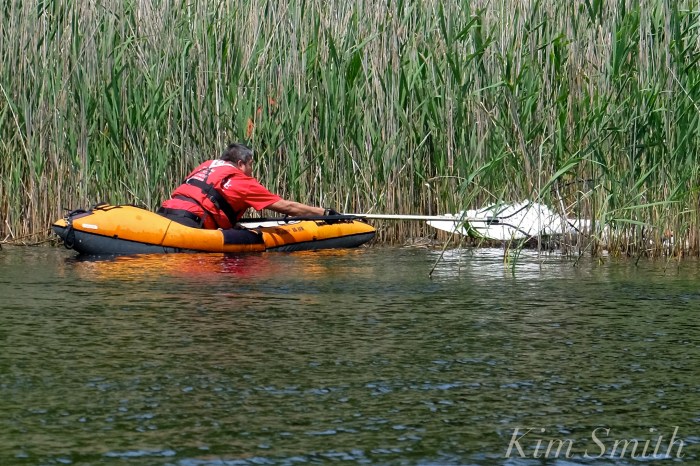
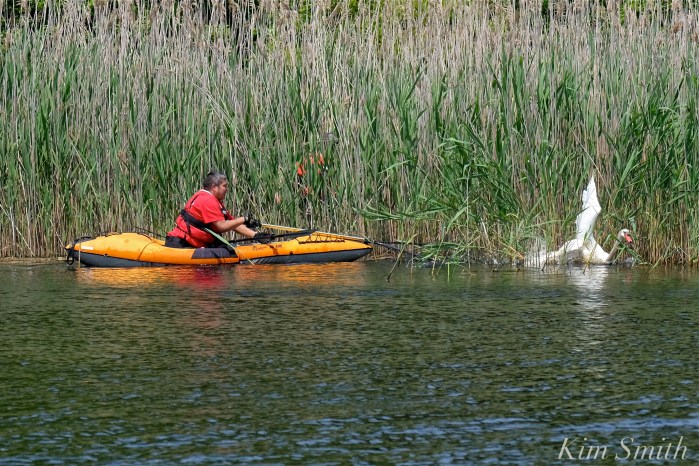
While that mission sounds simple, carrying it out proved to be anything but. Catching Mr. Swan turned out to be an impossible task for the organization’s rescue team. Armed with large nets, the two rescuers — Bill Tanguay and Mark Vogel — used kayaks to pursue Mr. Swan on the water. At one point, Vogel almost caught Mr. Swan in his net, but the bird was able to break free.

Mr. Swan eventually sought refuge in the reeds, and the rescuers decided to call off the chase.

“The swan was stressed, and the soaring temperatures made him very tired,” said DeFina. “The fact he eluded capture and was able to swim without showing obvious signs of pain led to the conclusion that the injury may not be that severe.”

“After giving up the chase, ARL and the concerned parties agreed to continually monitor the swan’s condition, and if it worsens, ARL will be contacted to get the swan medical attention, and again, have him returned to the pond,” DeFina said.

Kim Smith, a Gloucester resident who counts herself among one of Mr. Swan’s many fans, described the rescue attempt as a “wild swan chase.”

“He was chased back and forth across the pond,” she said.

What made his escape even more impressive is Mr. Swan’s age. According to Smith, sightings of Mr. Swan date back to the early 1990s, which would make him at least 27 years old. (Smith knows Mr. Swan well: she’s spent the past six years filming him for a documentary film.)

“He’s an amazing creature,” she said.

DeFina said that the average lifespan for a swan in the wild can be about 10 to 15 years due to the hazards they can encounter (getting caught in fishing gear, getting hit by a boat, etc.), while a swan living in a protected environment can live 20 to 30 years.

“It’s clear that there are certainly people in Gloucester who care for this swan, if he’s in fact been around that long,” DeFina said.

Smith said that although the Animal Rescue League’s efforts were well-intentioned, she’s happy that Mr. Swan eluded capture.

“He’s lived this long, he deserves to spend his last days in his own neighborhood with his friends,” she said.

Long live Mr. Swan.

https://www.instagram.com/p/BVSBFcSl46P/

Emily Sweeney can be reached atesweeney@globe.com. Follow her on Twitter@emilysweeney.

MR. SWAN CAPTURE UPDATE #2

After suffering the extraordinary trauma of yesterday’s attempted capture, Mr. Swan was seen late in the day by friends, peeking his head out between the reeds. I stopped by to see him this morning at about 6:30, thinking perhaps I would catch a glimpse, and to my utter surprise he was sitting on the edge of the road that divides Pebble Beach from Henry’s Pond. Very deliberately, Mr. Swan was heading to the open ocean. He was obviously extremely weary from the effort, and from the previous day’s event, taking only a few difficult steps at a time, before plopping down, then a few steps more. Slowly and determinedly he made his way. 

Crossing the road between Henry’s Pond and Pebble Beach

Friends Lois, Serena, and Skip Monroe stopped by to offer food and encouragement. After at least an hour of effort, he made it to the water’s edge and took off toward Niles Pond (it usually takes him about five minutes to cross the road).

Making his way through the super yucky red seaweed.

Shortly after we got a call from Lyn that Mr. Swan had arrived safely at Niles Pond. I stopped by Niles on my way to work to see him and he appeared so much happier and relaxed than earlier in the morning. A true survivor, he was gliding and preening and vocalizing. Long live Mr. Swan!

In regards to how old is Mr. Swan, I was reminded by another great Friend of Mr. Swan, Skip Hadden, that Mr. Swan is actually at least TWENTY SEVEN years old!! When Skip arrived at Niles Pond in 1992, Mr. Swan was an adult breeding male with a family (swans do not begin to breed until they are at the very least two years old).

Regarding Mr. Swan’s foot injury, Skip writes, “He has injured this foot in the past. He fell off our roof after crash landing there in turbulent winds circa 2000. Heartily agree in daily monitoring as he is one determined character. He has a strong chance of survival if left to his own devices and our small efforts to assist from a distance.”

Mr. Swan at Niles Pond this morning! I hope he chooses to stay here to recuperate.

MR. SWAN CAPTURE UPDATE

Despite repeated attempts by Boston Animal Rescue League workers Bill Tanguay and Mark Vogel to capture Cape Ann’s beloved swan, Mr. Swan escaped.

The day began a little after 6:00am when the Friends of Mr. Swan convened at Henry’s Pond to strategize on how to manage and understand the mysterious notice posted at the pond, which read, “Please don’t feed swan. He is being rescued on Tuesday.” The Friends of Mr. Swan are a group of people who feed and monitor Mr. Swan on a daily basis throughout the year and they include Skip Hadden, Lois, Serena, Skip and Joel Monroe, Lyn Fonzo, Elaine Somers, and myself. The news had spread quickly amongst the group about the scheduled rescue. Mr. Swan’s left foot appears to be sprained or in some way injured at the ankle (possible snapping turtle bite) but we had taken the tactic of allowing the foot to hopefully heal on its own. Wildlife capture can lead to euthanasia and that is truly the last diagnosis any of us would want for Mr. Swan (also known as Buddy, Poppa Swan, Old Blue Eyes, and Papa Swan).

Lois and her Buddy

Mr. Swan is at least 27 years old, has outlived two mates, and fathered many cygnets. With his beautiful blue eyes and pure white cygnet offspring, Mr. Swan is a rare form of Mute Swan (Cygnus immutabilis), thought to originate from the Baltic Sea region. All these many years that he has called Cape Ann home Mr. Swan has brought joy and happiness to countless people, especially to young children. At this point, he is not showing outward signs of physical pain, he is feeding and drinking, and maintaining his feathers (preening). We hope with all our hearts that his foot will heal but believe that if it his time to go, he should be permitted to live out his remaining days in his own neighborhood with his community of friends.

Lyn and her Poppa

The Friends agreed to take turns watching for the ARL workers. Our objective was to speak with them to learn more about the specifics of the capture and how it would impact Mr. Swan’s overall health, what would be the various courses of action based upon veterinary examination, if we could determine the outcome with covering his medical bills, and to insure that Mr. Swan be returned to Cape Ann, if he did have to undergo rehabilitation.

ARL’s Bill and Mark arrived at around noon. We discussed the various options and were assured that as Mr. Swan is a community “pet,” with plenty of friends to look out for him, he would less likely be euthanized.

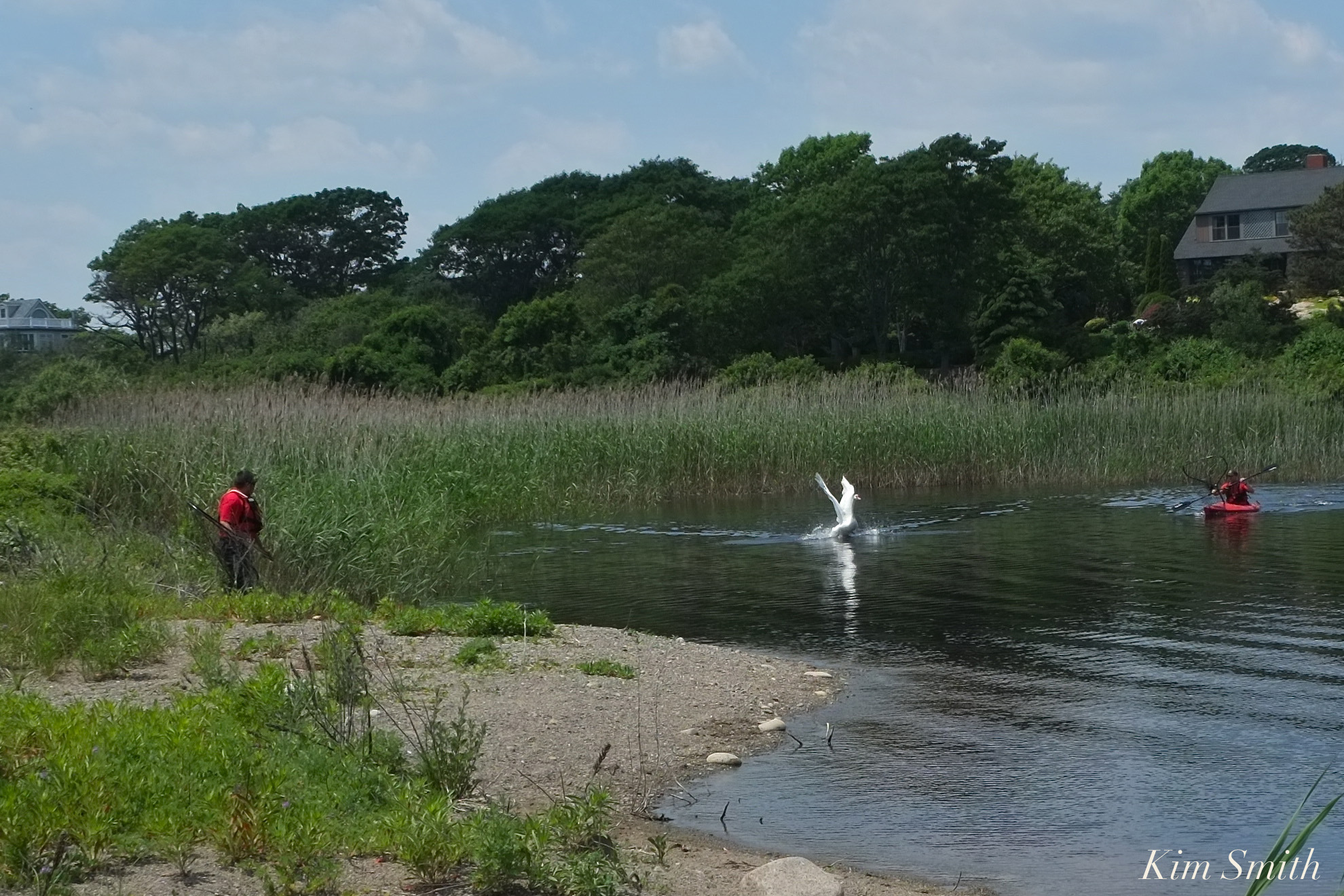
Coaxing Mr. Swan to the pond’s edge was easy when offered some favorite foods, but getting him to walk onshore was another story.  Out came the kayaks, where Mr. Swan led Bill and Mark on a wild swan chase back and forth from one end of the pond to the other. He skillfully led the workers through the thick reeds of phragmites, where he has a secret nest and many avenues of escape. At one point it appeared as though Mark had captured him with the swan-sized net, but he wriggled out and bolted free. We could see Mr. Swan panting and visibly tiring and at that point he slipped deep, deep into the reeds and was not seen again. We all came to the mutual decision that it was best not to continue as Mr. Swan was clearly super stressed and exhausted.

Nearly captured!

Super stressed and panting

Final slip into the reeds.

Bill, Mark, and the Friends decided that the logical course of action is to continue to monitor Mr. Swan on a daily basis. If his condition worsens we will at that time call the ARL. In the meantime, we are urging everyone to please follow these simple guidelines in helping Mr. Swan on his road to recovery.

  1. A healthy diet while healing is critically important. He should only be fed cracked or whole corn. Additionally, chopped lettuce or grass cuttings can be offered along with the corn. PLEASE NO JUNK FOOD, which includes bread, chips, and every other kind of processed food snack.
  2. Please do not bring your pooch to the shoreline where Mr. Swan is resting. Dogs, especially bird chasing dogs, create a great deal of stress for swans.
  3. If you see Mr. Swan in any kind of distress please contact any one of the Friends of Mr. Swan or email me at kimsmithdesigns@hotmail.com

THANK YOU FOR YOUR HELP!

https://www.instagram.com/p/BVSBifPF3Hu/


You can’t miss the Red-winged Blackbirds at the pond and they love cracked and whole corn, too.

MR. SWAN EMERGENCY

We Friends of Mr. Swan would like to know who posted the do not feed sign because there is a planned “rescue” of him, which is to take place tomorrow, Tuesday.

We are all aware of his injured leg, and expect that it will heal. If it does not heal, we will have a swan expert have a look at him and take him to Tufts, if needed.

To the well-intentioned person, Mr. Swan will be EUTHANIZED if he is rescued by the wrong group. Whoever is planning Tuesday’s rescue should be aware of the following information, passed on by Jodi Swenson, our region’s local bird rescue expert:

“Because he is non-native, Mr. Swan would have to go to New England Wildlife Center. But, if it is just a limp, or something like that, leave him alone because a hurt leg that won’t get better will make him non-releasable, and that means EUTHANASIA”

Please, please contact kimsmithdesigns@hotmail.com. THANK YOU.


Mr. Swan, filmed several days ago at Niles Pond. He is staying in the water, probably so as not to bear weight on his leg. He is eating fine and his feathers are well-groomed and in good shape, signs that he does not need to be rescued at this point. Also, in order to fly from Henry’s Pond to Niles Pond, he needs to run on his feet, otherwise he won’t become air born. Mr. Swan is well over twenty years old. If his leg is not curable, he deserves to live out his life in his own neighborhood with his friends.

https://www.instagram.com/p/BVA2oYWFuDW/

HAPPY EASTER, HAPPY PASSOVER, HAPPY SPRING!

Wishing all our readers a very Happy Spring, Happy Passover, and Happy Easter!

WHERE DO SWANS GO DURING A STORM?

We friends of Mr. Swan think he is practically a genius. You would have to be, to survive the oftentimes inhospitable shores of Cape Ann. And, too, he is well over twenty years old and has out lived two mates!

Mr. Swan at Brace Cove

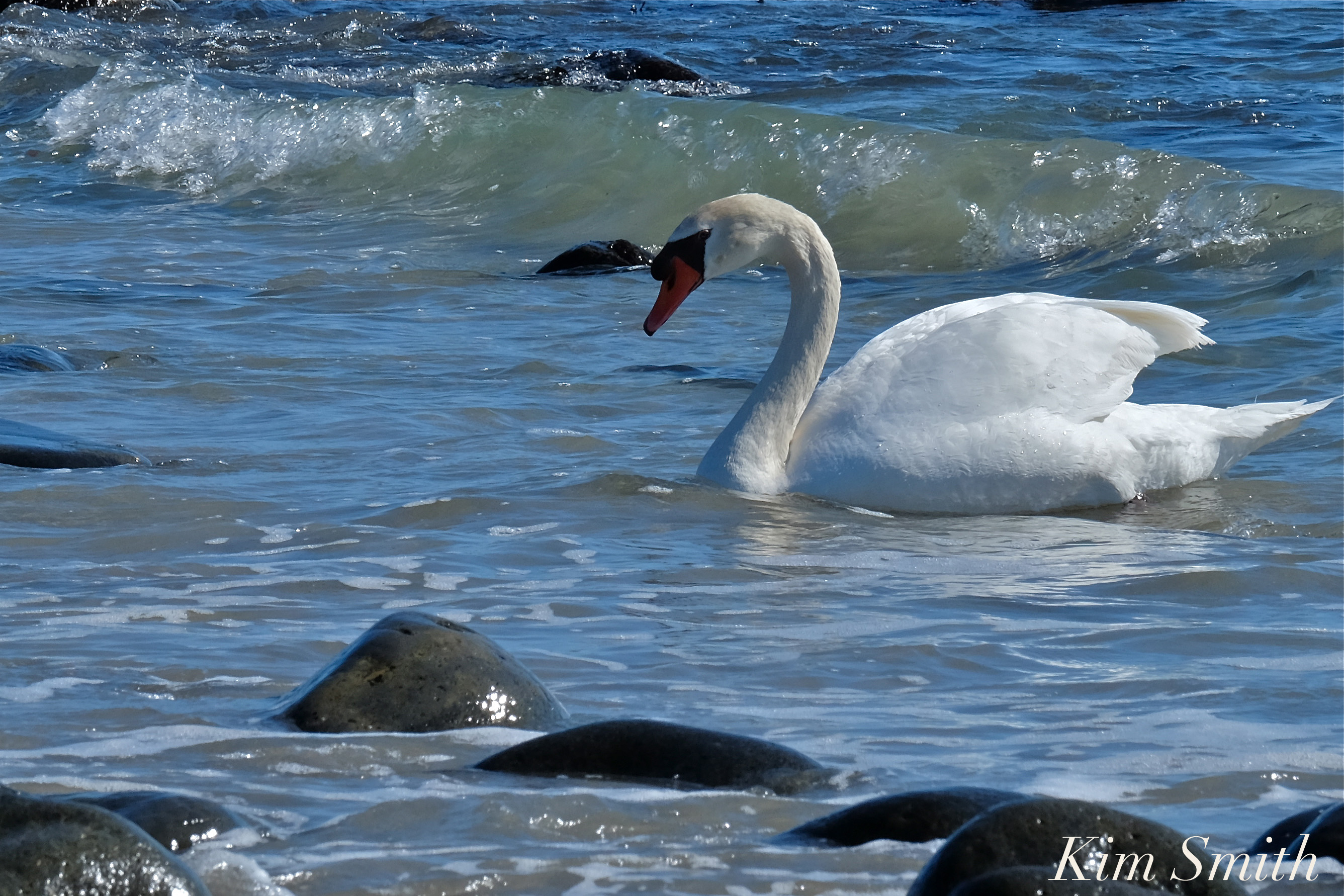
Mr. Swan is a species of swan called a Mute Swan, which do not migrate great distances. Instead, they move around from body of water to body of water within a region. When Mr. and Mrs. Swan were raising their young, by mid summer, when food was becoming less plentiful and water levels receding at Henry’s Pond, the entire swan family–mom, dad, and all the cygnets–would travel for the remainder of the breeding season to Niles Pond, a larger pond with a more plentiful supply of aquatic vegetation. Several weeks ago, the brackish water of Henry’s Pond thawed. Mr. Swan returned to the Pond, but then with a stretch of cold weather, it quickly refroze. He headed over to Pebble Beach to forage for food in the saltwater cove. This week, sensing the coming nor’easter, Mr. Swan moved over to Rockport Harbor, which rarely freezes, is less rough than Pebble Beach, and where a supply of food is readily available. Whether a September hurricane or March blizzard, Mr. Swan rides out the storm tucked in along the edge of pond or harbor.

Don’t you find it very interesting that although not indigenous to this country, Mute Swans have adapted many strategies for surviving our changing seasons, and with the seasonal changes, the differing types of, and amounts of, food available.

Mr. Swan at Rockport Harbor

If you see Mr. Swan at any of our local bodies of water, please be very kind to him. Dogs, no matter how well meaning, will make any swan feel threatened. And please, if you must feed him, only feed him whole corn. No junk food ever. Swan junk food includes bread, crackers, chips, and Doritos. In all the years that I have been filming Mr. Swan, never once have I fed him. Mr. Swan has friends, wonderfully kind stewards, who regularly look after his well-being, supplementing his native diet of pond greens and seaweed with cracked corn, and that is quite sufficient for his good health.

Thank you everyone for looking out for Cape Ann’s one and only Mr. Swan!

Mr. Swan at Henry’s Pond

Mr. Swan at Rockport Harbor and Niles Pond, with His Ever-present Entourage of Quackers

A GLORIOUS GOOD MORNING GLOUCESTER TO YOU!

Brought to you by Mr. Swan –

We’re happy to see our buddy surviving the winter without too much ado (except when he got himself frozen solidly into the ice).

A friendly note to folks who would like to visit Mr. Swan. He is very shy around dogs so perhaps leave your furry companion in the car. And if you plan to feed him, please, please only whole corn or shredded veggies (swans don’t have teeth, so no large chunks). Junk food is a killer and weakens their bones.

mr-swan-mute-swan-cygnus-olor-copyright-kim-smithMr. Swan doing his morning exercises.

CALM AFTER THE STORM

mr-swan-sleeping-2-copyright-kim-smithMr. Swan was safely nestled in along the shore at Niles Pond yesterday morning during the nor’easter. I found him this morning sleeping amongst the reeds, none the worse for the storm.

niles-pond-causeway-after-the-noreaster-copyright-kim-smith

Niles Pond Causeway

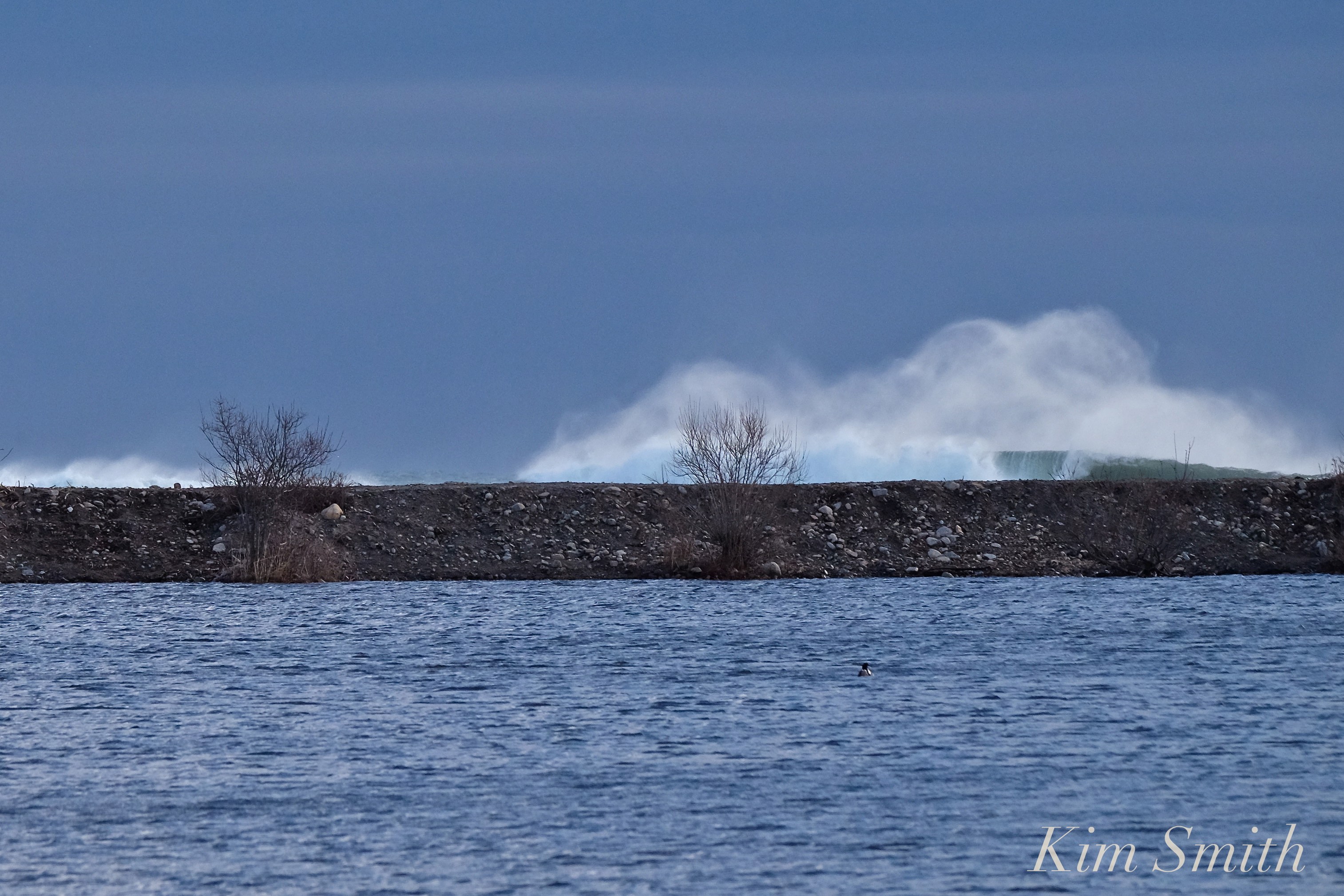
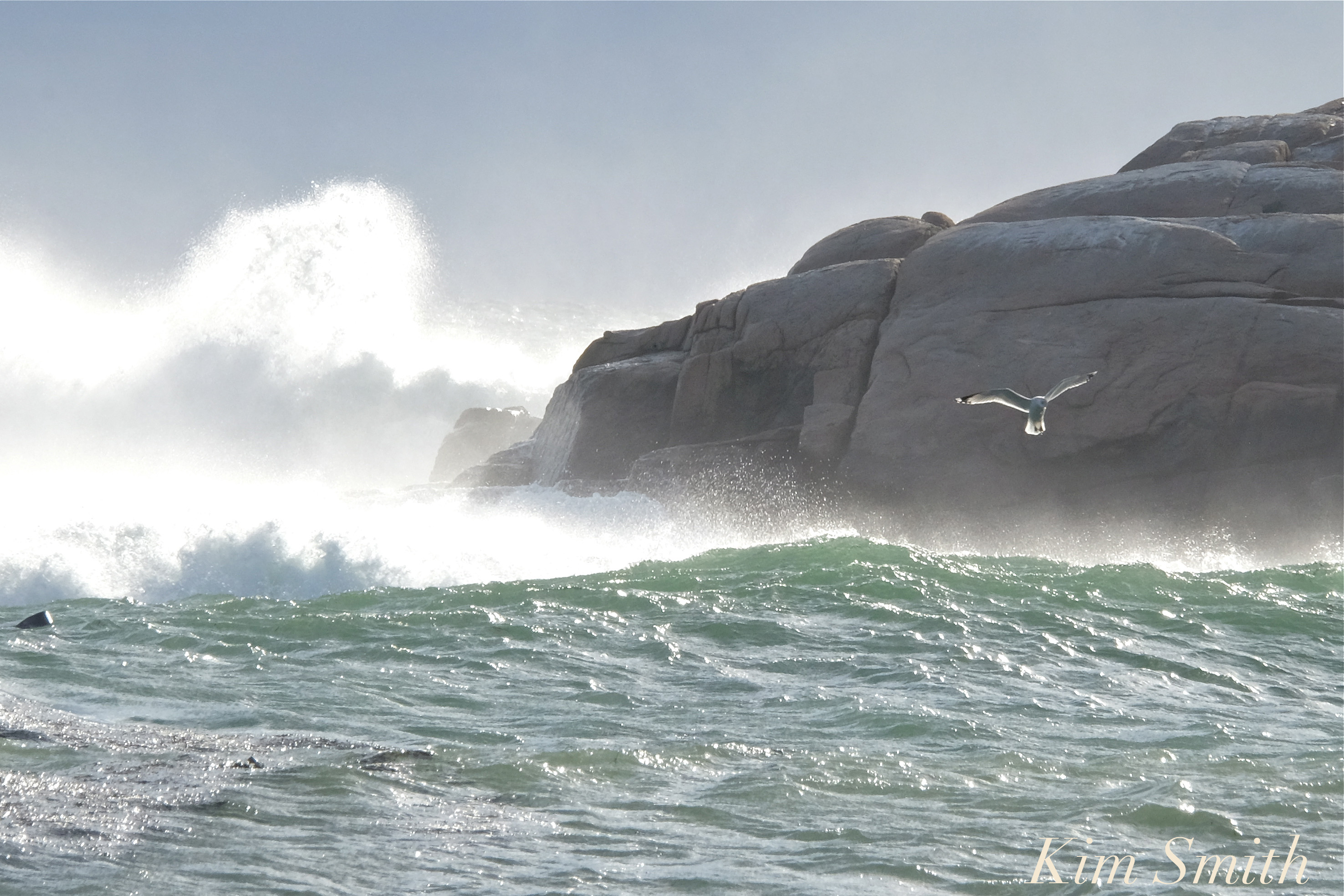
The newly restored causeway weathered the storm beautifully. By day’s end the waves had settled but this morning at high tide they were still packing some fury. In the next photo, I am standing on the far side of the pond, looking towards Brace Cove. As you can see, the waves were crashing into the causeway.

niles-pond-brace-cove-after-noreaster-copyright-kim-smith

brace-rock-seagull-copyright-kim-smith

https://www.instagram.com/p/BPsUMufldMP/

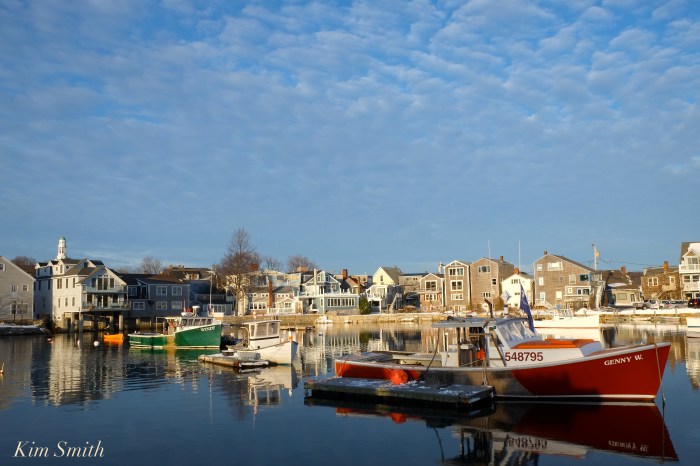
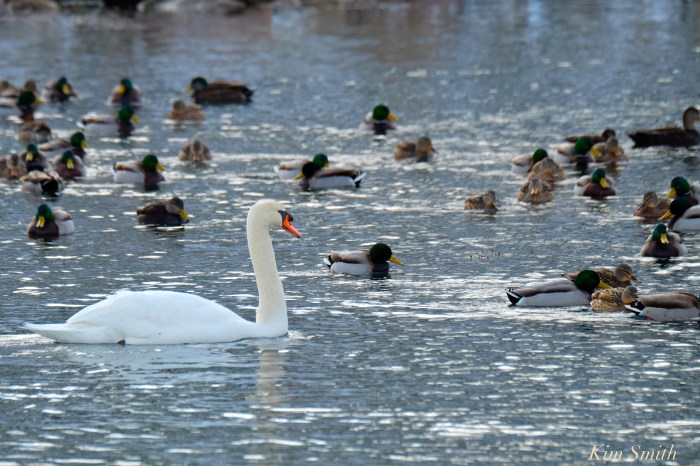
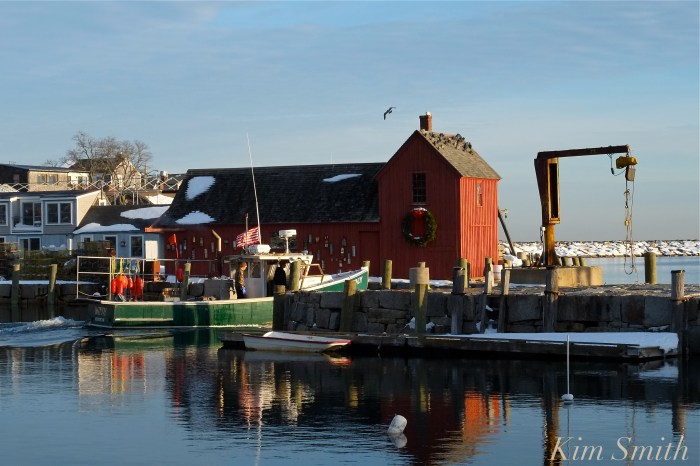
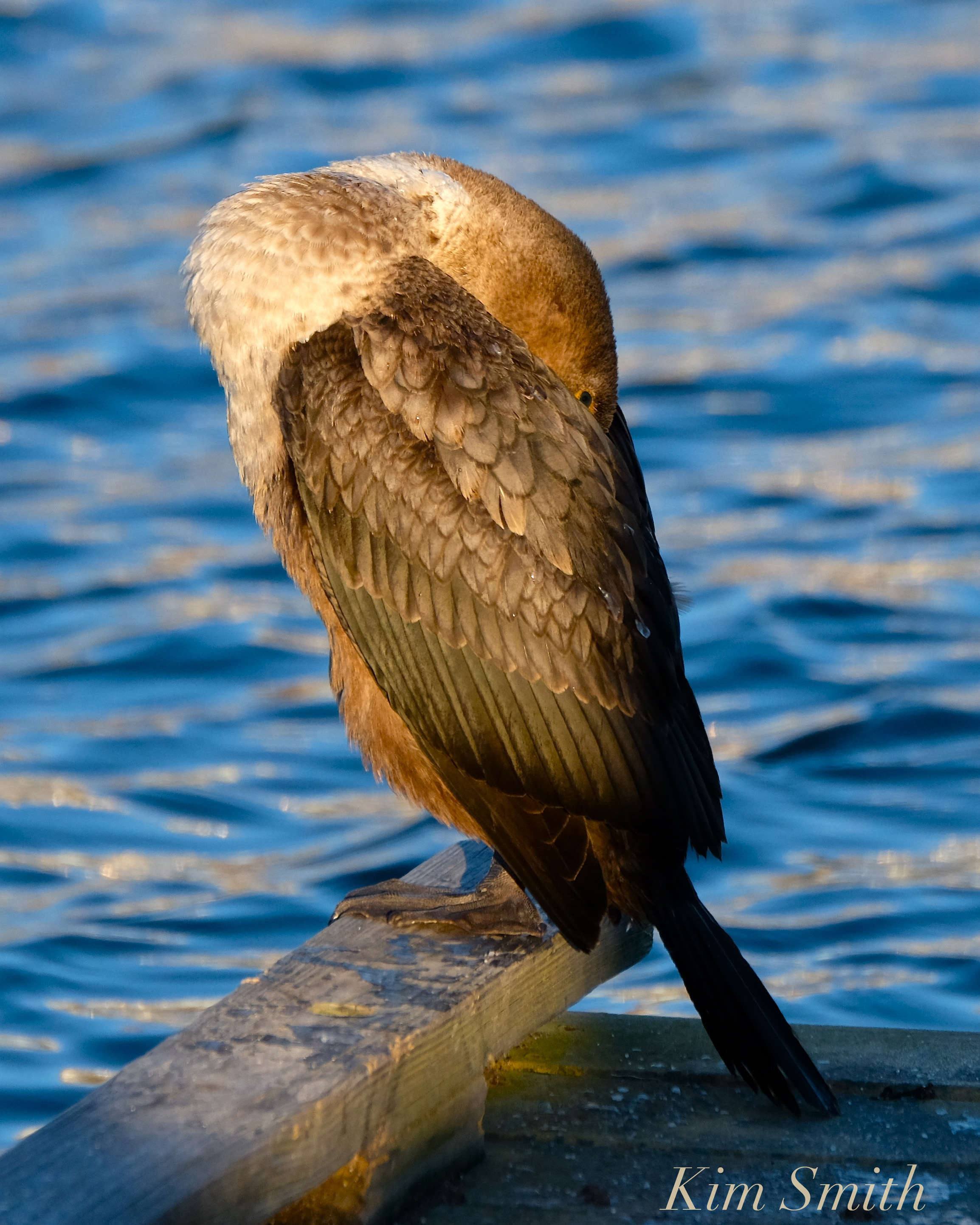
EARLY MORNING SCENES FROM BEAUTIFUL ROCKPORT HARBOR, GRANITE PIER, MR. SWAN AND DUCK ENTOURAGE, PAIR OF JUVENILE DOUBLE-CRESTED CORMORANTS, FV WINDY, AND OF COURSE, MOTIF NO.1

Photos from an early morning walk all around Rockport Harbor (sub0zero walk I should add). My technique for photographing when it’s 10 degrees out is to snap away until my fingers can’t stand it any more, run back to the car, which has been left running, warm up, and then try again. Repeat in ten to fifteen minute intervals. I have the utmost respect for the fishermen; I don’t understand how they can work on the water when the air temperature is so cold.

rockport-congregational-church-sun-rays-copyright-kim-smithRockport Congregational Church and Shalin Liu Sunrays

Double-crested cormorant-juvenile-sleeping-rockport-harbor-copyright-kim-smithOne of a sleeping pair of juvenile Double-crested Cormorants

GOOD MORNING GLOUCESTER, BROUGHT TO YOU BY THE SENSATIONAL MR. SWAN!

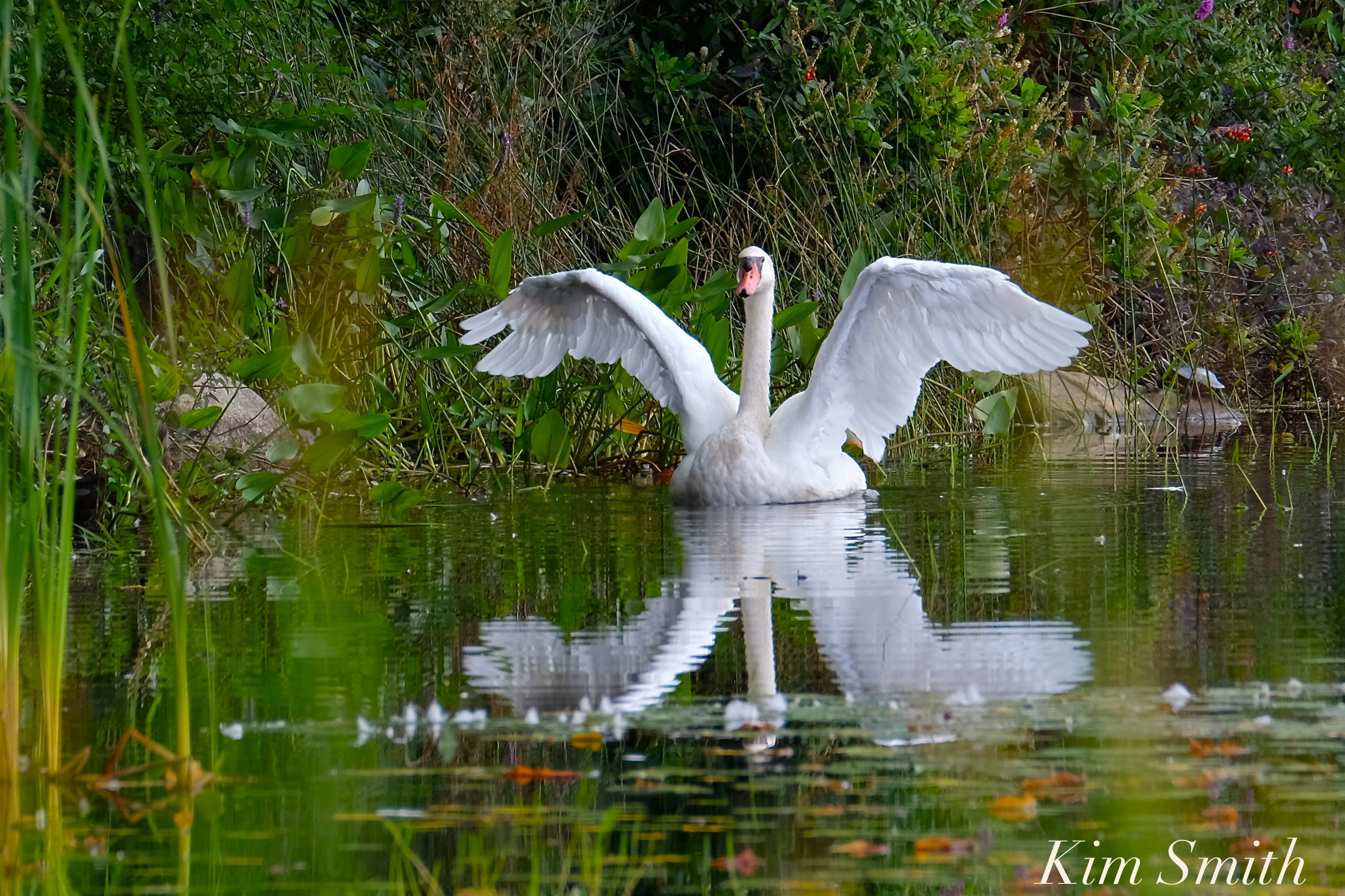
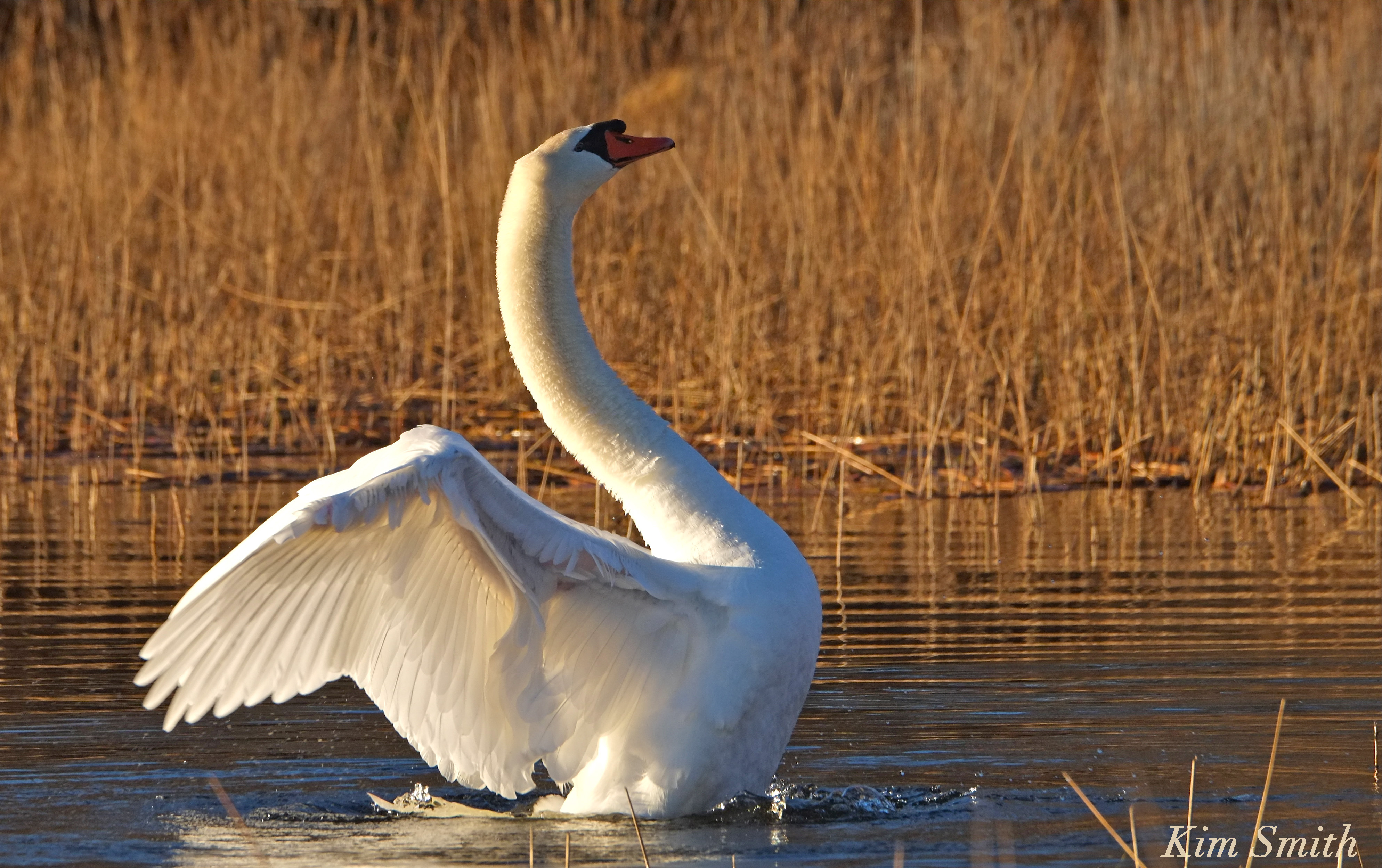
mute-swan-mr-swan-niles-pond-gloucester-ma-copyright-kim-smithGlorious swan’s wings! In these photos you can see Mr. Swan’s magnificent new set of feathers.

Mr. Swan has resumed his habit of traveling from body of water to body of water within his territory. Why does he not travel during the summer months, primarily dwelling at Niles Pond? Swans molt each summer and during the molting period, they cannot fly.

Mute Swans molt when their cygnets cannot fly. The female (pen) begins to molt almost immediately after the young hatch. The male, or cob, waits until the female’s flight feathers have grown back completely. The reason for this staggered molting period is because swans use their wings in battle and to defend their young. The swan family will never be left defenseless with at least one of the pair’s set of wings fully functional. The molting period lasts anywhere from four to seven weeks.

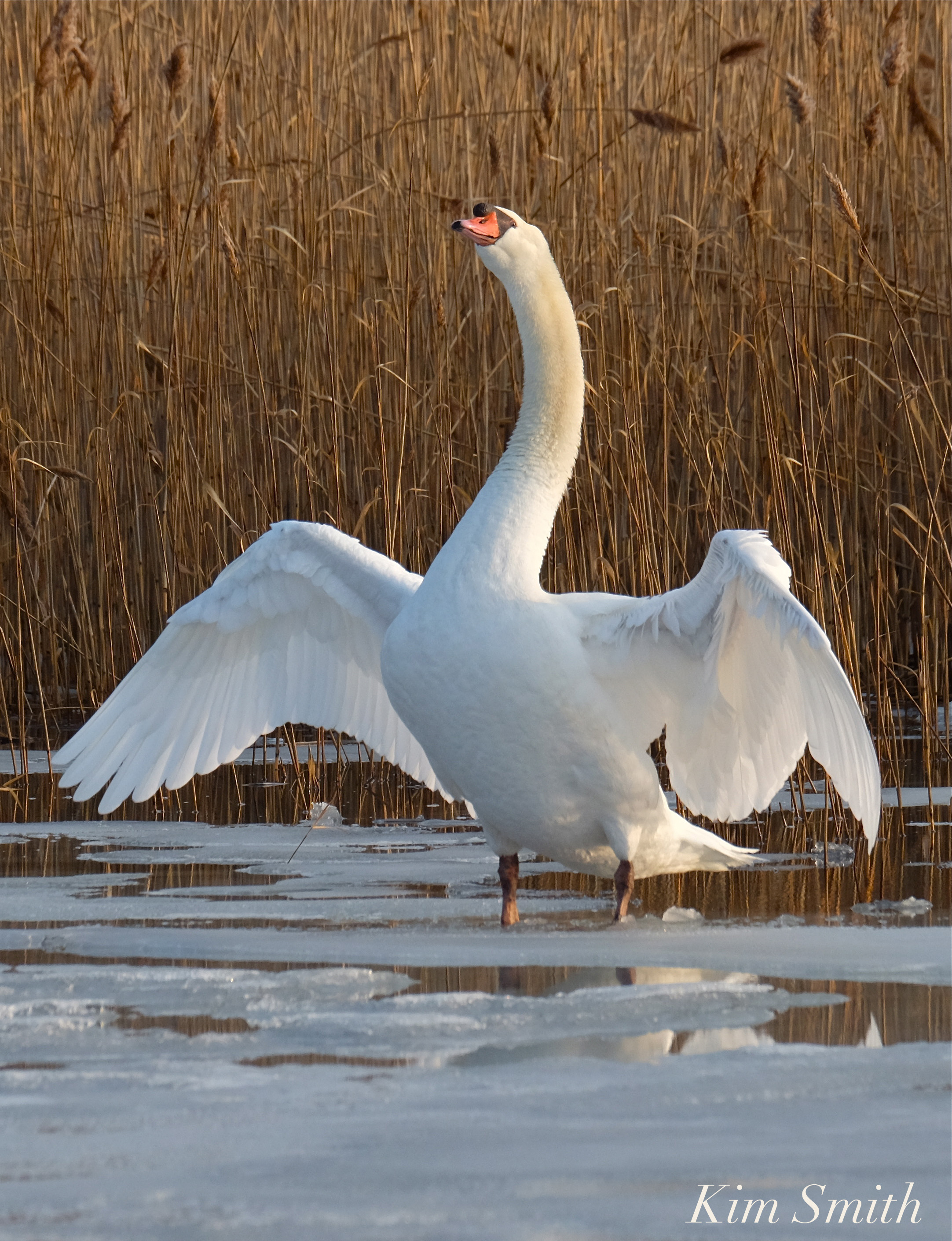
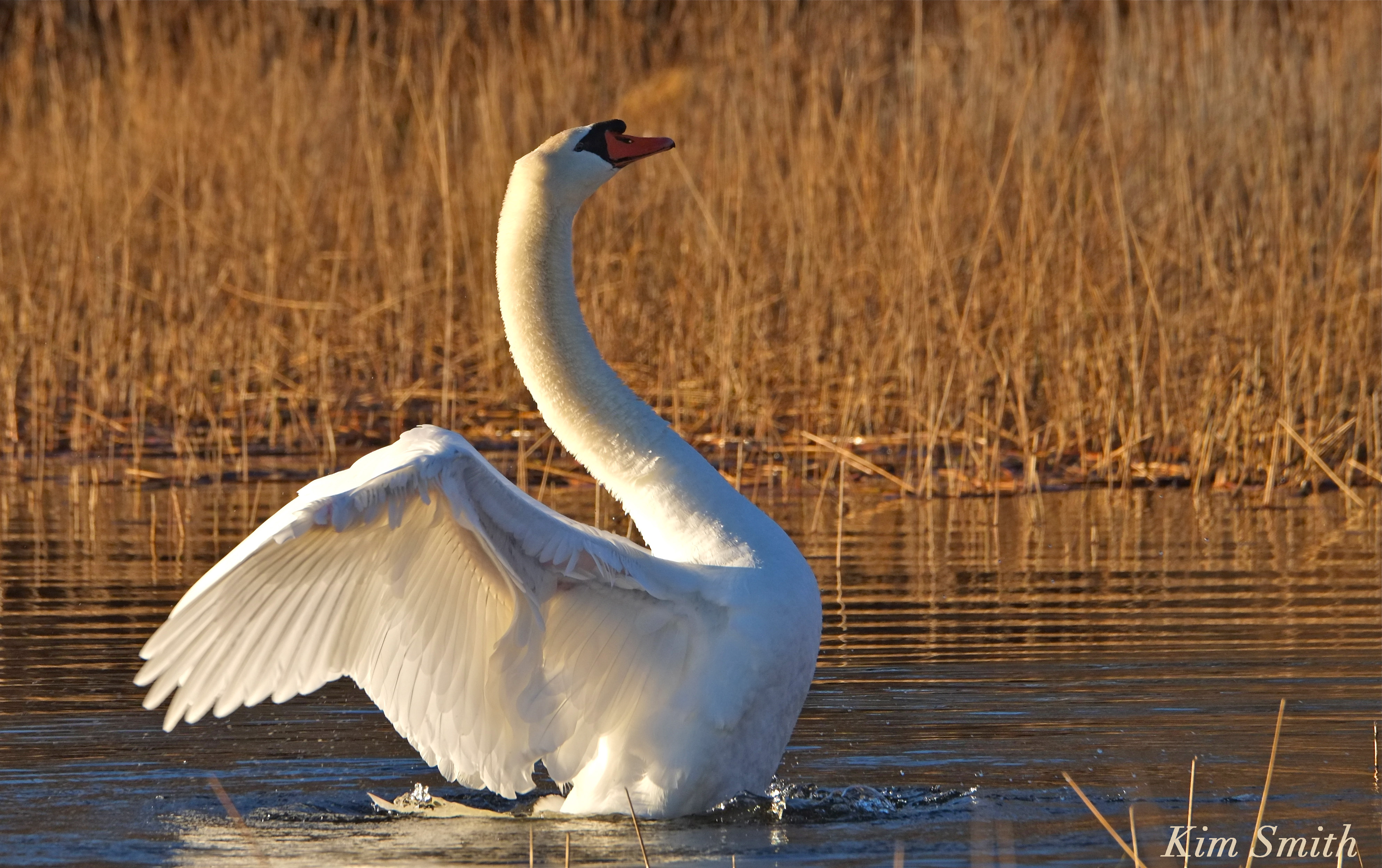
mute-swan-stretching-wings-niles-pond-gloucester-ma-copyright-kim-smithGood morning Gloucester! Mr. Swan’s big morning stretch before he sets off to patrol his territory