Monarch Butterflies in Crisis

Monarch Butterfly Overwintering Graph Journey NorthEach winter, since I began photographing the Monarchs in 2006, I compare this graph from Journey North to the number of butterflies observed on Cape Ann. As you can clearly see, this is the worst year on record, which corresponds to the near complete lack of Monarchs in our region this past summer.

Monarchs Gloucester 2012 �Kim Smith
Monarch Butterflies Eastern Point Gloucester

Many thanks to Kathy Chapman and our GMG Readers for forwarding the following New York Times update about the shrinking Monarch Butterfly popluation.

By Michael Wines

January 29, 2014

Faltering under extreme weather and vanishing habitats, the yearly winter migration of monarch butterflies to a handful of forested Mexican mountains dwindled precipitously in December, continuing what scientists said was an increasingly alarming decline.

The migrating population has become so small — perhaps 35 million, experts guess — that the prospects of its rebounding to levels seen even five years ago are diminishing. At worst, scientists said, a migration widely called one of the world’s great natural spectacles is in danger of effectively vanishing.

The Mexican government and the World Wildlife Fund said at a news conference on Wednesday that the span of forest inhabited by the overwintering monarchs shrank last month to a bare 1.65 acres — the equivalent of about one and a quarter football fields. Not only was that a record low, but it was just 56 percent of last year’s total, which was itself a record low.

At their peak in 1996, the monarchs occupied nearly 45 acres of forest.

The acreage covered by monarchs, which has been surveyed annually since 1993, is a rough proxy for the actual number of butterflies that survive the arduous migration to and from the mountains.

Karen S. Oberhauser, a conservation biologist at the University of Minnesota who has studied monarchs for decades, called the latest estimate shocking.

“This is the third straight year of steep declines, which I think is really scary,” she said. “This phenomenon — both the phenomenon of their migration and the phenomenon of so many individuals doing it — that’s at risk.”


Continue Reading Here

Request for Help from GMG Community and Monarch Film Update

Header Good FINAL FINAL

For the past three years I have been filming the life story of the Monarch Butterfly in backyards and along the shores of Cape Ann. My original intent was to tell the story of the butterflies primarily as it relates to their northern breeding grounds and specifically here in our community. Prior to filming, I wrote a children’s story about the Monarchs and during this entire time I have had an ongoing inner debate as to whether or not to travel to Mexico. While editing the film these past few months, I determined that capturing the butterfly’s story in their winter sleeping grounds as they are awakening in Mexico would only add to the film’s depth and beauty. To film in Mexico would be a dream come true.

If you listened to Joey’s GMG podcast yesterday, you heard that in February I am going to be filming the butterflies in Mexico!! This all has come about very quickly! I have to practice walking five miles a day, recall how to ride a horse, and learn enough Spanish so that if I am separated from my group or kidnapped by bandits, I can at least inquire as to where is the bathroom.

Does anyone know of a local outfit that gives lessons in trail riding? And does anyone have experience with a Spanish language lesson CD (basic)? If so, can you please recommend in the comment section. Thank  you!!!!!!!

Stay tuned for adventures from Mexico! Beauty on the Wing ~ Life Story of the Monarch Butterfly will premiere  in the summer of 2014.

Rather than wait until the film was complete, this weekend I made a new website for the film-in-progress. When you have a moment, I hope you’ll visit my website and read more about Beauty on the Wing here.

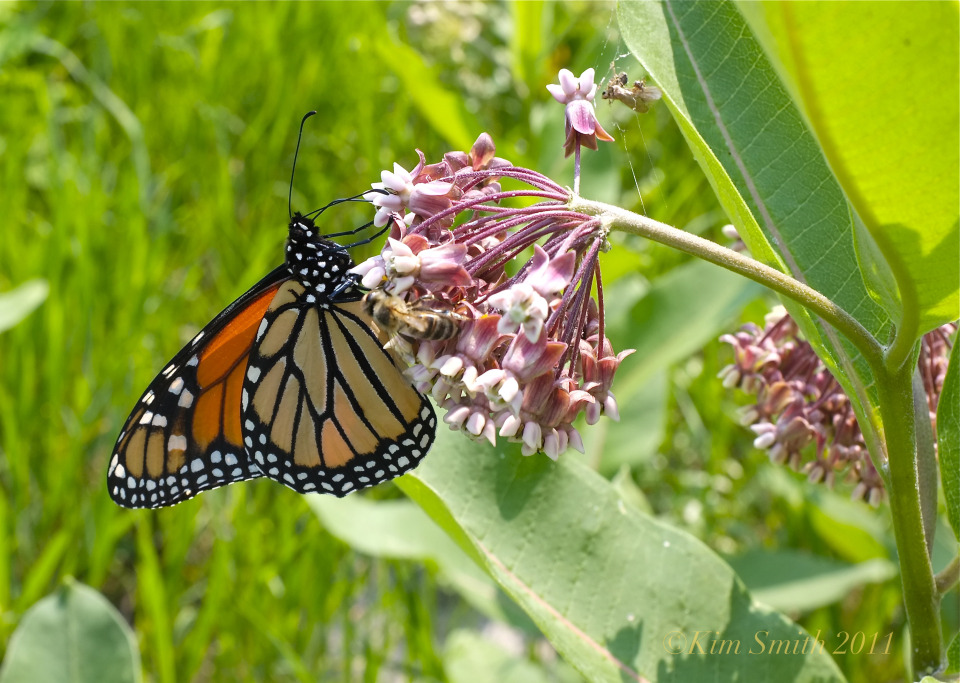
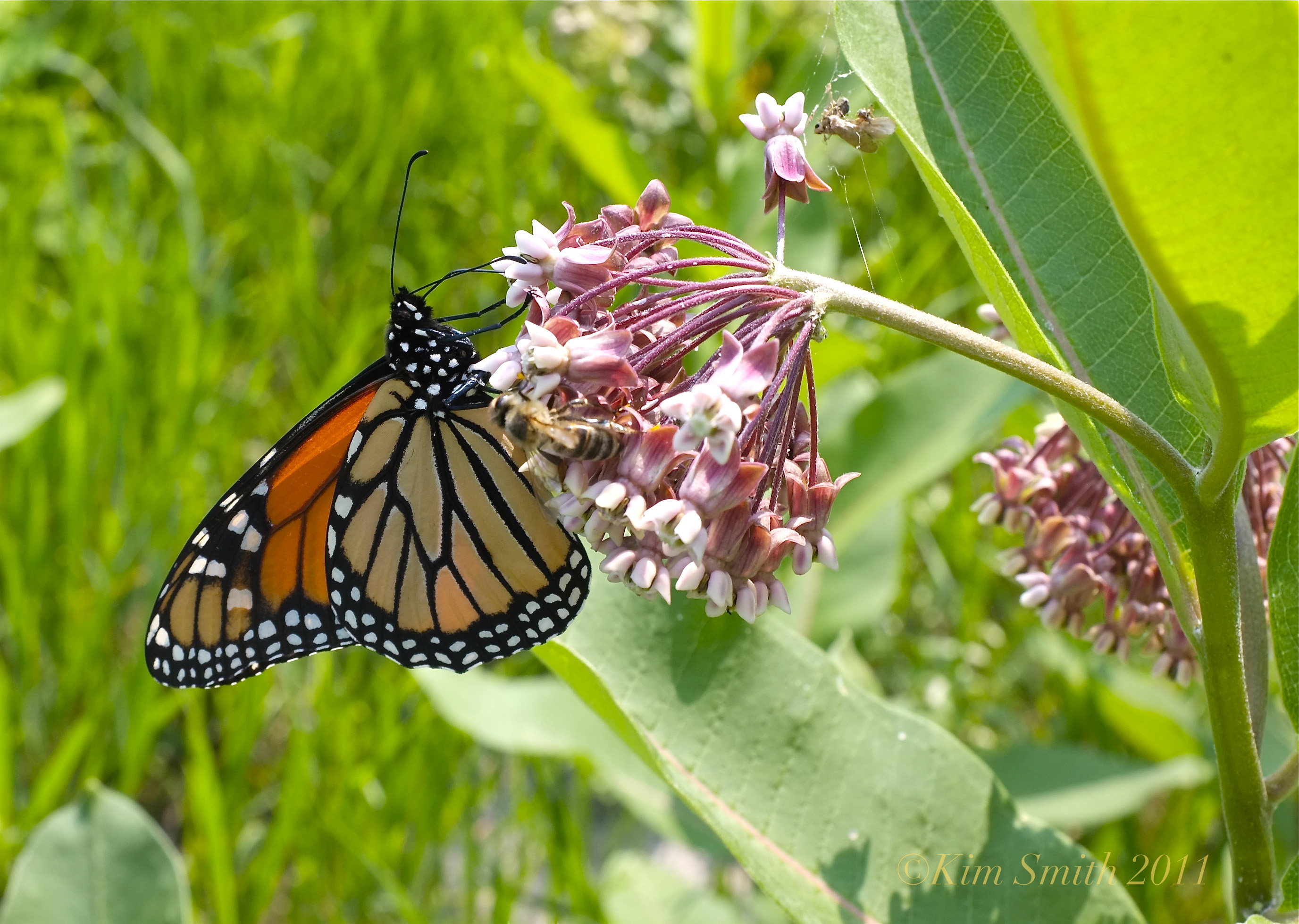
monarch-butterfly-milkweed-good-harbor-beach-c2a9kim-smith-2011Monarch Butterfly Nectaring at Common Milkweed ~ Good Harbor Beach, Gloucester

Beauty on the Wing celebrates the poetry and majesty of the uniquely North American phenomenon of the Monarch butterfly and its migration. There are no other butterflies the world over that travel this distance and it is a fascinating ecological link that connects Mexico with nearly every geographic region within the United States and Canada. How well the forested habitats of Michoacán are taken care of is as of equal importance to the Monarchs as how we in Gloucester conserve our habitats.

Setting the Table for a Regal Butterfly Comeback, With Milkweed

Monarch Caterpillar Milkweed ©Kim Smith 2013Monarch Caterpillar Eating Common Milkweed (Asclepias syriaca) Foliage

Thank you GMG readers and Monarch Butterfly friends for forwarding the following article from the NY Times!

By Michael Wines

Published December 20th, 2013

CEDAR FALLS, Iowa — Bounding out of a silver Ford pickup into the single-digit wind-flogged flatness that is Iowa in December, Laura Jackson strode to a thicket of desiccated sticks and plucked a paisley-shaped prize.

It was a pod that, after a gentle squeeze, burst with chocolate brown buttons: seeds of milkweed, the favored — indeed, the only — food of the monarch butterfly caterpillar.

Once wild and common, milkweed has diminished as cropland expansion has drastically cut grasslands and conservation lands. Diminished too is the iconic monarch.

Dr. Jackson, a University of Northern Iowa biologist and director of its Tallgrass Prairie Center, is part of a growing effort to rescue the monarch. Her prairie center not only grows milkweed seeds for the state’s natural resources department, which spreads them in parks and other government lands, but has helped seed thousands of acres statewide with milkweed and other native plants in a broader effort to revive the flora and fauna that once blanketed more than four-fifths of the state.

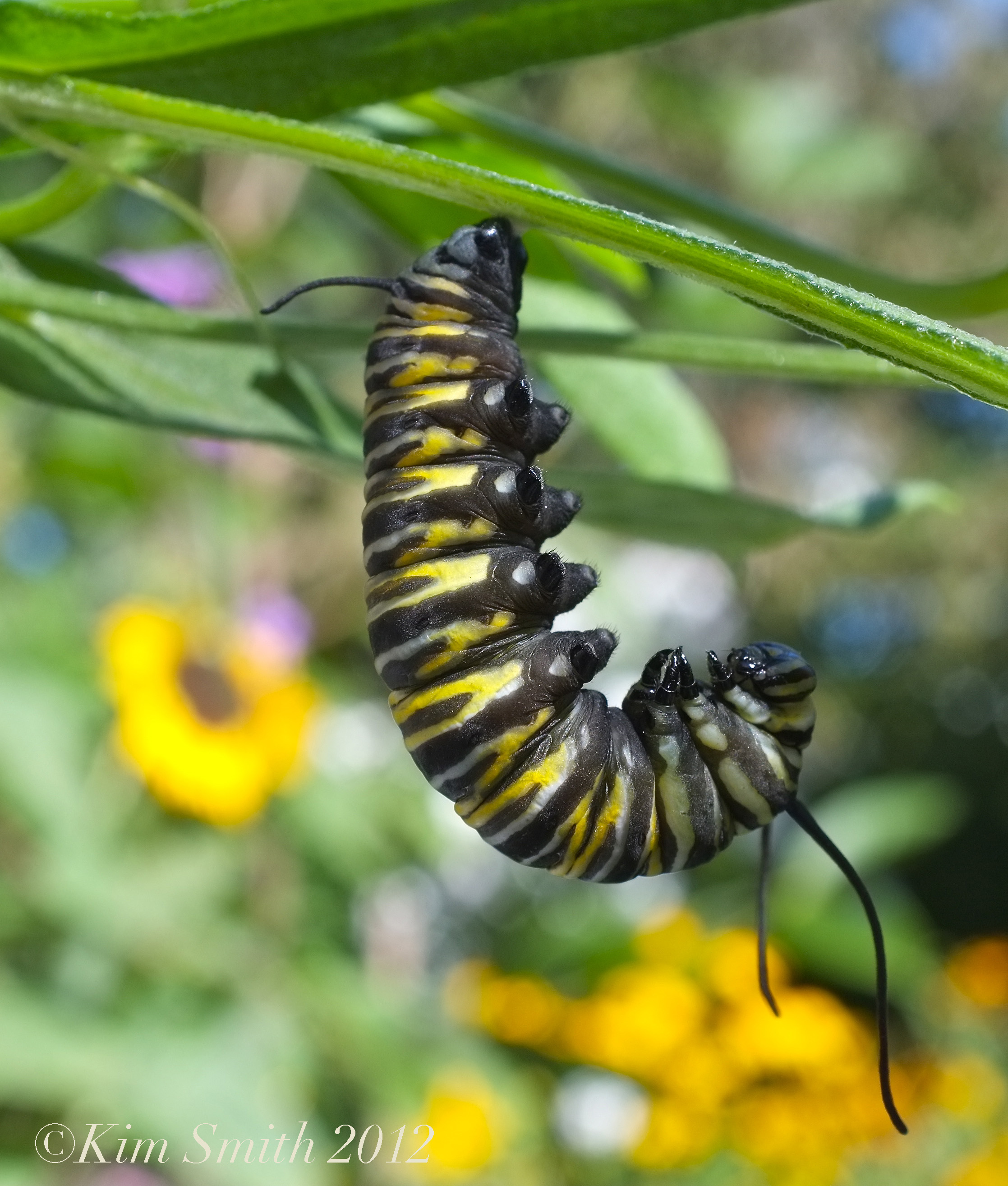
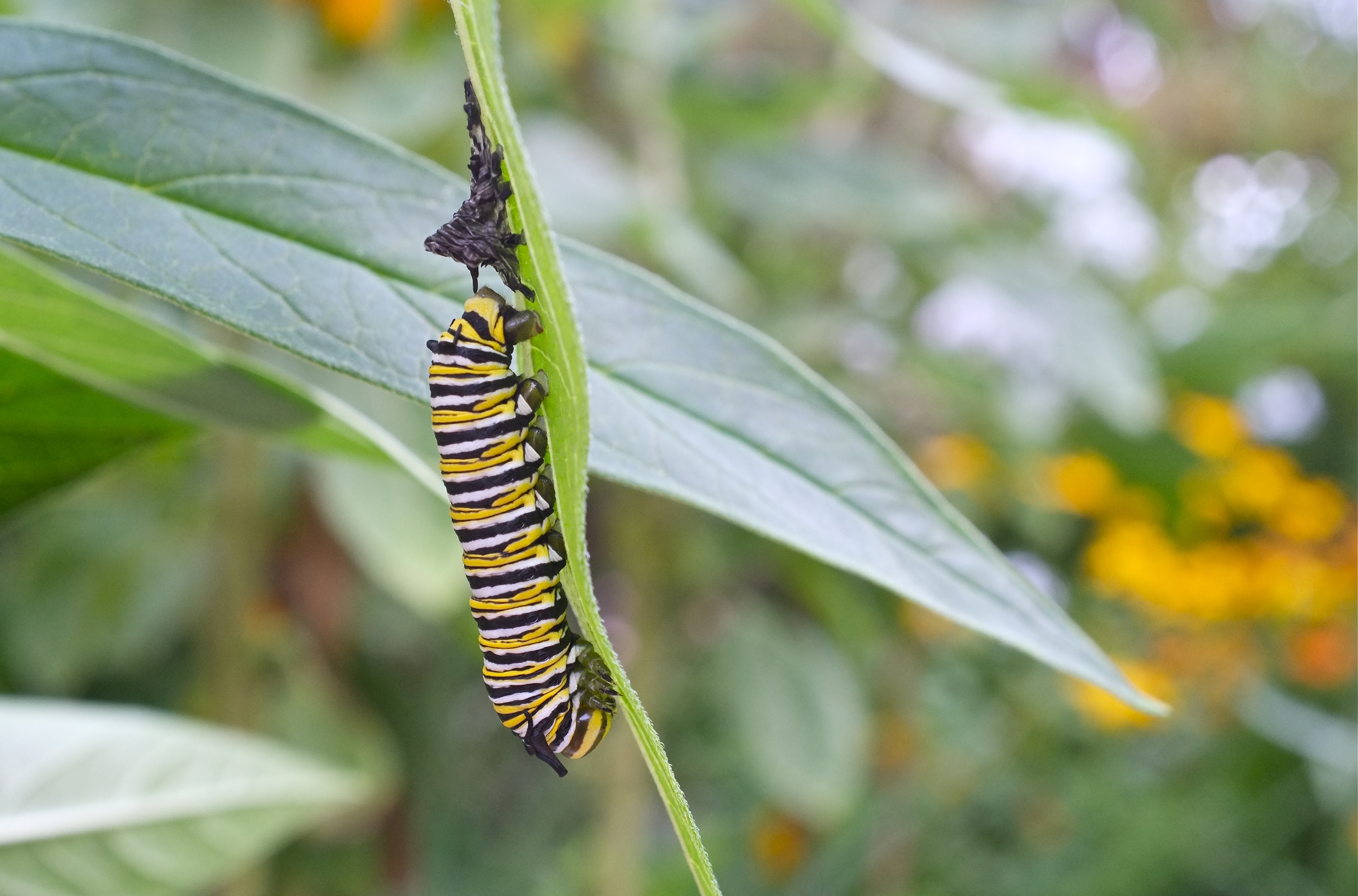
Monarch Caterpillar milkweed -2 © Kim Smith 2012Monarch caterpillar hanging from a Marsh Milkweed (Asclepias incarnata) leaf rib, in the characteristic J-shape, readying to pupate.

Nationwide, organizations are working to increase the monarchs’ flagging numbers. At the University of Minnesota, a coalition of nonprofits and government agencies called Monarch Joint Venture is funding research and conservation efforts. At the University of Kansas, Monarch Watch has enlisted supporters to create nearly 7,450 so-called way stations, milkweed-rich backyards and other feeding and breeding spots along migration routes on the East and West Coasts and the Midwest.

But it remains an uphill struggle. The number of monarchs that completed the largest and most arduous migration this fall, from the northern United States and Canada to a mountainside forest in Mexico, dropped precipitously, apparently to the lowest level yet recorded. In 2010 at the University of Northern Iowa, a summertime count in some 100 acres of prairie grasses and flowers turned up 176 monarchs; this year, there were 11.

Read the story here

New Film: Love Letters to Gloucester ~ Summertime 2013

Love Letters to Gloucester ~ Summer 2013 is a ten minute film compiled from butterfly films in progress and scenes from short films created for my community during the summer of 2013.

https://vimeo.com/76809483

Special thanks to the Ciaramitaro Family and my Good Morning Gloucester friends and family.

Stay until after all credits roll to see a preview of films yet to come!

Cast In Order of Appearance:

Good Harbor Beach Surfers, Pat Ciaramitaro, Dante Holding, Amanda Mohan, Vanessa Linquata, Greasy Pole Walkers, Nicky Avelis, Sleepy Pallazolla Family, Crazy Hat Ladies Robyn & Amy Clayton, Alicia Cox, Chris DeWolfe, Joey Ciaramitaro, Bex Borden, Toby Pett, Ed Collard, Melissa Cox, Craig Kimberley, Brian M. O’Connor, Captain Heath Ellis, Captain Tom Ellis, Donna Ardizonni, Cathy Kelley, Lillian LoGrasso, Rick Doucette, Felicia Ciaramitaro Mohan, Barry Mohan, Hannah Kimberley, Ron Gilson, Joan Gilson, BJ Mohan, Eloise Ciaramitaro, Madeline Ciaramitaro, Kathy Ryan, Bob Ryan

Creatures in Order of Appearance:

Great Blue Heron
Good Harbor Beach Harbor Seal
Mama Kildeer Searching for Baby Kildeer
Pair of Whimbrels
Shivering Monarch Butterfly Found at Daybreak
Eastern Tiger Swallowtail
Llama
Donkeys Zack & Abe
Black Swallowtail Butterfly
Luna Moth
Green Darner Dragonfly Migration
Eastern Point Light House Monarch

Links to Summer 2013 Film Projects:

Beauty on the Wing ~ Life Story of the Monarch Butterfly
Life Story of the Black Swallowtail Butterfly
Walking for Loved Ones ~ Sunday Greasy Pole Winner Nicky Avelis
Parade of Sails ~ Schooner Festival 2013
The Good Harbor Beach Seal PSA
Gifts of Gold Red Carpet Interviews
Good Harbor Beach Sunrise ft. the Great Blue Heron
Sunset Sail Aboard the Schooner Thomas E. Lannon
Happy Horribles
A Luna Moth Takes Flight

Where Are All the Monarchs?

Monarchs usually arrive in our region by the first week in July and go through several brood cycles. This year, barely any arrived. The Monarch’s sensitivity to temperature and dependence on milkweed make it vulnerable to environmental changes. Since 1994, U.S. and Mexican researchers have recorded a steady decline in the Monarch population in their overwintering grounds, with 2012-2013 being the lowest recorded to date.

Monarch butterflies daybreak willow tree ©Kim Smith 2012

Temperature change and habitat loss affect breeding success and longevity. Dr. Chip Taylor, a leading Monarch researcher at the University of Kansas reports that the widespread adoption of GMO corn and soybean crops resistant to herbicides, along with with intensive herbicide use, coupled with the federal government’s incentivized expansion of corn and soy acreage for the production of biofuels have caused a significant drop in milkweed throughout the heart of the Monarch’s range. Lack of milkweed equals no Monarchs. “Monarch/milkweed habitat has declined significantly in parallel with the rapid adoption of glyphosate-tolerant corn and soybeans and, since 2006, the rapid expansion of corn and soy acreage to accommodate the production of biofuels,” Taylor wrote on May 29.

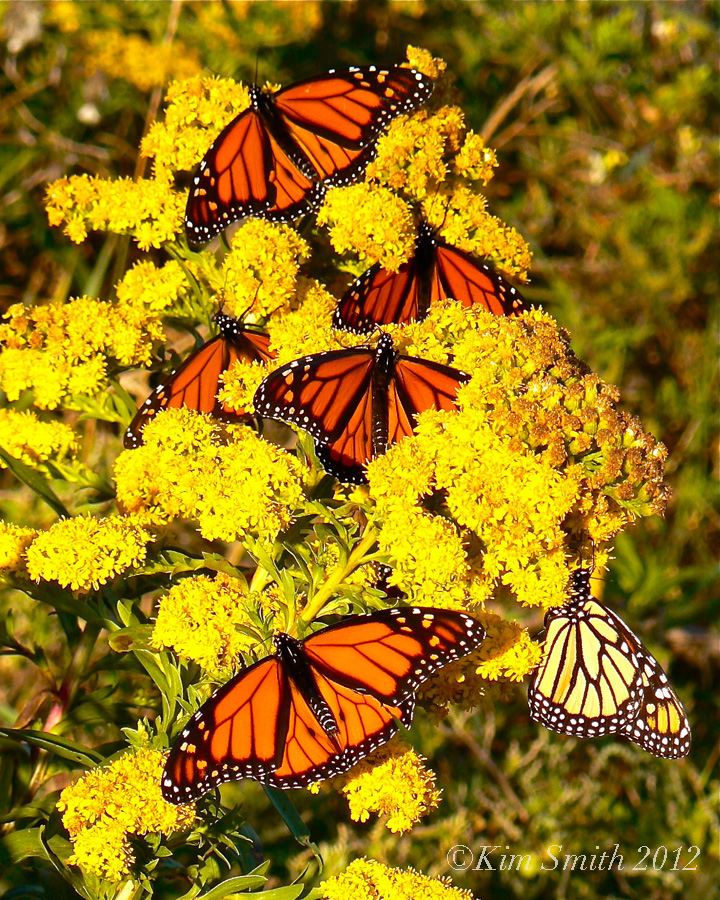
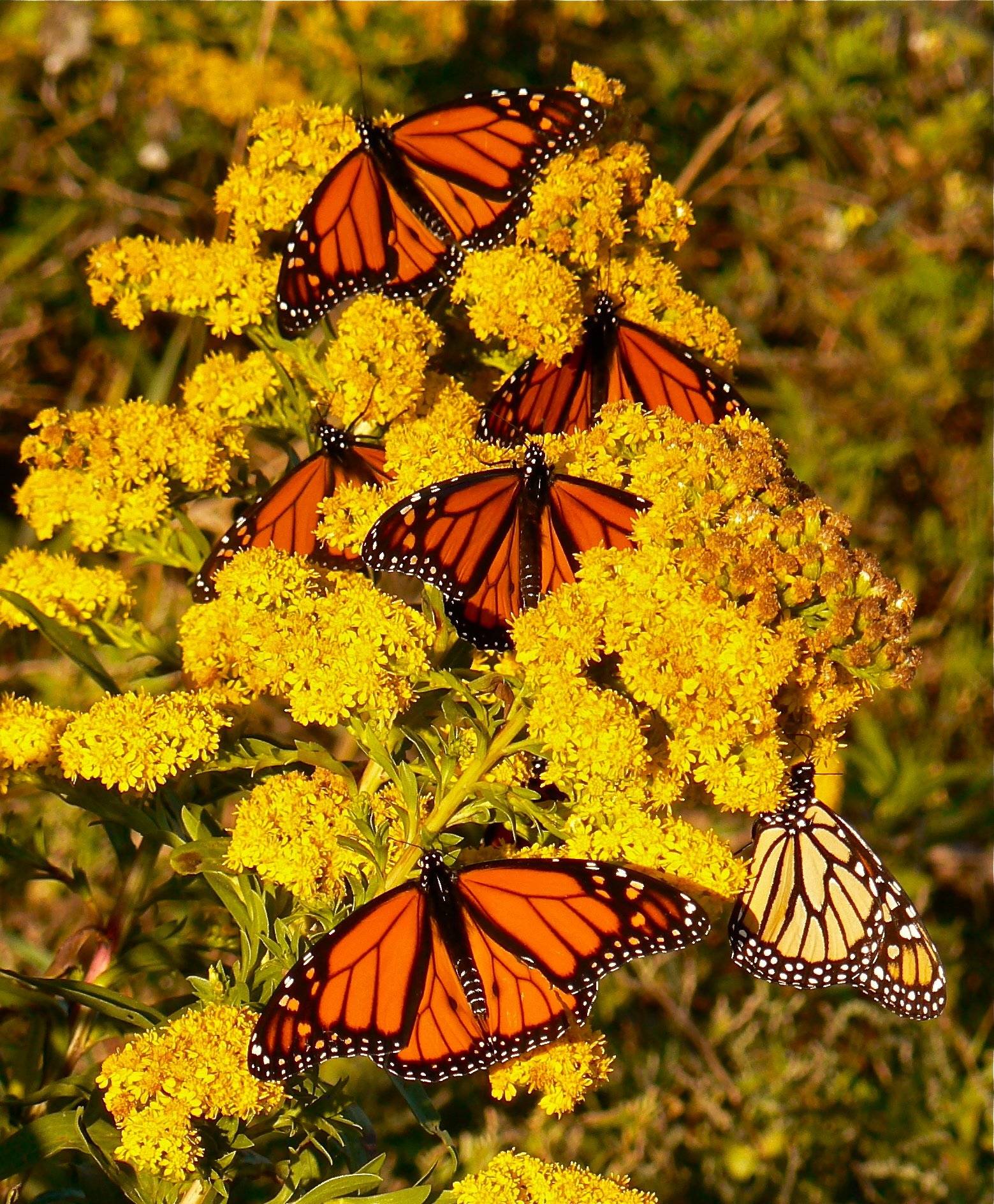
Monarch Butterfly Nectaring at Seaside Goldenrod ©Kim Smith 2011

Monarchs Nectaring at Seaside Goldenrod

What can we do? Encourage conservation organizations that conserve Monarch habitat, plant milkweed, plant nectar plants, and raise caterpillars. Hopefully the weather next spring and early summer will be more conducive to the Monarch’s northward migration and breeding success, and if and when the Monarchs arrive, they will find our milkweed plants.

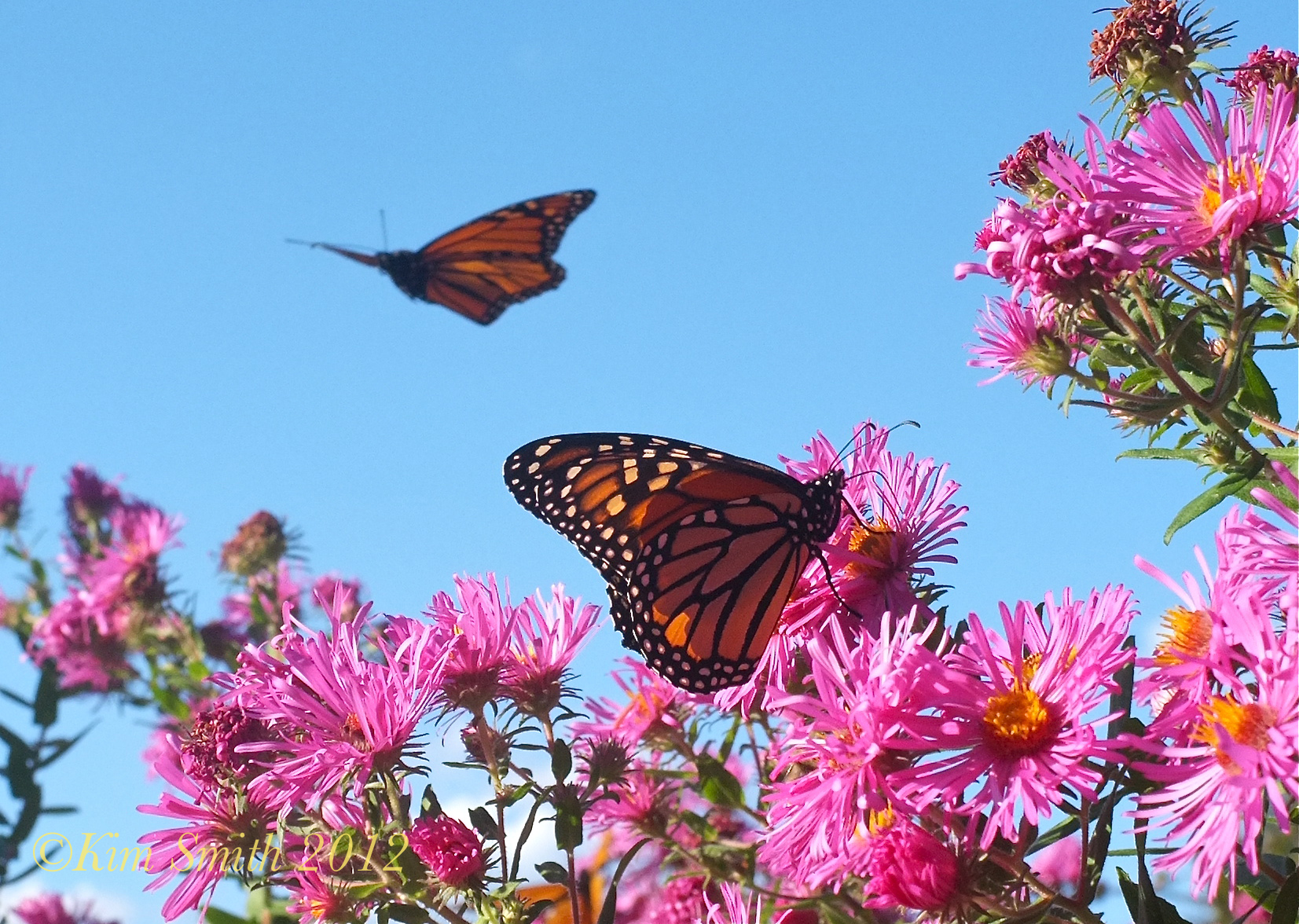
Monarch Butterflies New england Aster ©Kim Smith 2012

Monarch Butterflies Nectaring at New England Asters

If anyone sees a Monarch, please email me at kimsmithdesigns@hotmail.com or leave a comment in the comment section.

Update #2: Reader Jude Writes the following ~

Hi Kim,

I have maybe 30milkweed plants in the front yard. I would be happy to harvest the seeds, are there places you know of that would be willing or have a large enough property to seed them? Can you harvest them as soon as the pods pop? I remember as a kid finding the most beautiful cocoon I have ever seen. I haven’t seen many butterflies at all and of the ones I have seen are not Monarchs.

My reponse:

Hi Jude, I am putting it out there in GMG Land that if anyone would like your milkweed seed pods to please contact me.

Yes, you can harvest immediately after the pods pop, as a matter of fact, I recommend doing just that and sowing your seeds in the fall. The easiest method is to lightly scratch the surface of the soil where you wish the milkweed to grow. Scatter the seeds and water. That’s it.

Thank you so much for writing. Hopefully, we’ll find a home for your milkweed seeds.

Update: For more information, see previous GMG posts on Monarchs and Milkweed:

How Exactly is Monsanto’s Roundup Ravaging the Monarch Butterfly Population?

News Release: MONARCH WATCH ANNOUNCES ‘BRING BACK THE MONARCHS’ CAMPAIGN

Cape Ann Milkweed Project

GloucesterCast Podcast 4/25/13 With Guest Kim Smith

Monarch at the Gloucester HarborWalk Butterfly Gardens

Monarch Butterfly Migration Through Gloucester Reader Question

GMG Reader Becky Edleman writes:

“Hello! I was emailing you to inquire about the monarch butterfly migration that comes through Gloucester. I recently moved to MA and was told that the butterflies migrate through that area, but have found little evidence as to when this usually occurs. After doing some googling I came across your website discussing the migrating monarchs many times. If you have any information for me as to when I should plan to come up and where to go I would really appreciate it! I love reading your articles and am eager to find out more about the migration pattern! Thank you!”

Monarch Awakening ç Kim Smith 2012

Hi Becky ~ Thanks for writing and wonderful to know you found us through a Google search! The Monarch Butterfly migration through our region is not an exact science. The “when” of the migration depends on may variables including the success of their breeding during July and August, air temperature, and wind flow. When I look back through my records, I would say, generally speaking, we have the greatest number of Monarchs migrating though Gloucester beginning around the second week of September through October 1st. The butterflies are are found in  gardens and wildflower fields and meadows throughout our region. You can often see clusters near the Eastern Point Lighthouse.

Do you have space for a garden? If so, and you would like to attract the migating Monarchs to your garden, plant nectar-rich flowers that are in bloom during their migration. Seaside Goldenrod, New England Aster, and Smooth  Aster are just three gorgeous Massachusetts native wildflowers that will attract the Monarchs to your garden.

I hope you’ll stop by the dock and get a GMG sticker when you are visiting!

Many Thanks to the Positively Most Awesome Community Ever!

The Cape Ann Monarch Milkweed Project was positively a resounding success. Thank you to everyone who ordered and picked up your milkweed plants. Thank you to Joey who turned my small seed of an idea into a fabulous community-wide project and who also very kindly offered Captain Joe and Sons for mug up and pick up. Thank you to Felicia for taking valuable time from writing the world’s-greatest-cookbook-ever and spending the entire morning making and serving coffee and Sicilian gigilani cookies (I know that is totally misspelled) and for helping with the plants and for just being a great friend. Thank you to all my GMG fellow contributors and all the FOBs for coming, and for everyone’s enthusiasm in the project.

And, most importantly, the Monarchs thank you!!!

We have exactly fourteen plants remaining and all fourteen are spoken for. After all the plants are picked up and the money totaled, we will have enough to make a donation to the Rocky Neck Cultural Center. So thank you again. I am very inspired by the success of the program and plan to later in the summer have a Cape Ann Monarch Aster and Goldenrod Program.

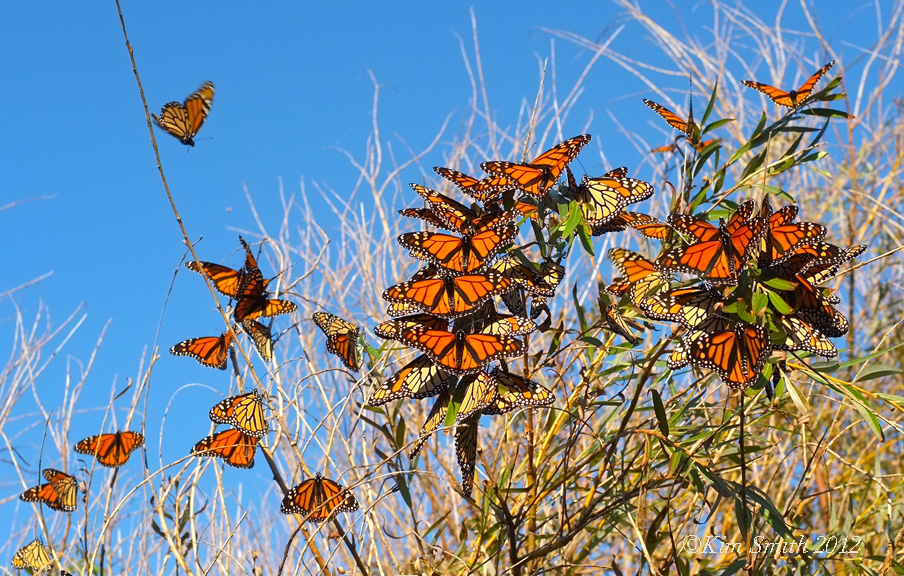
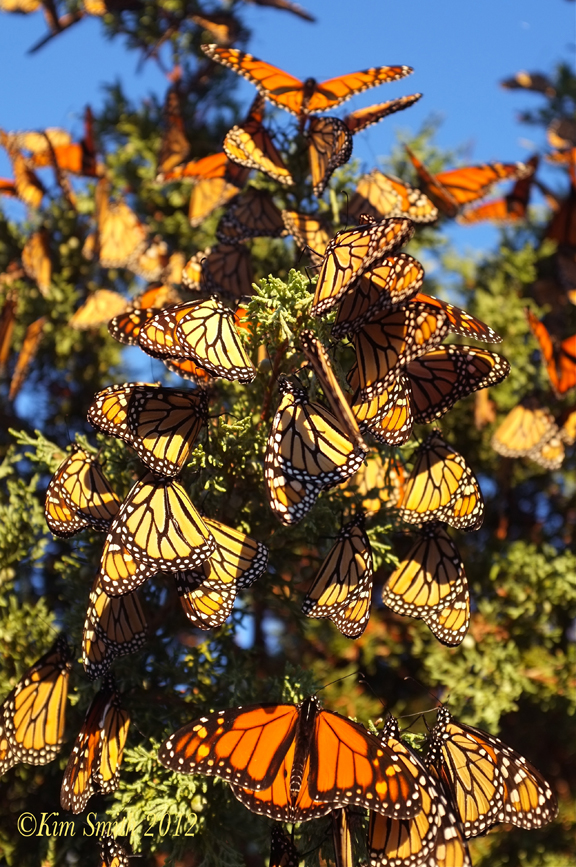
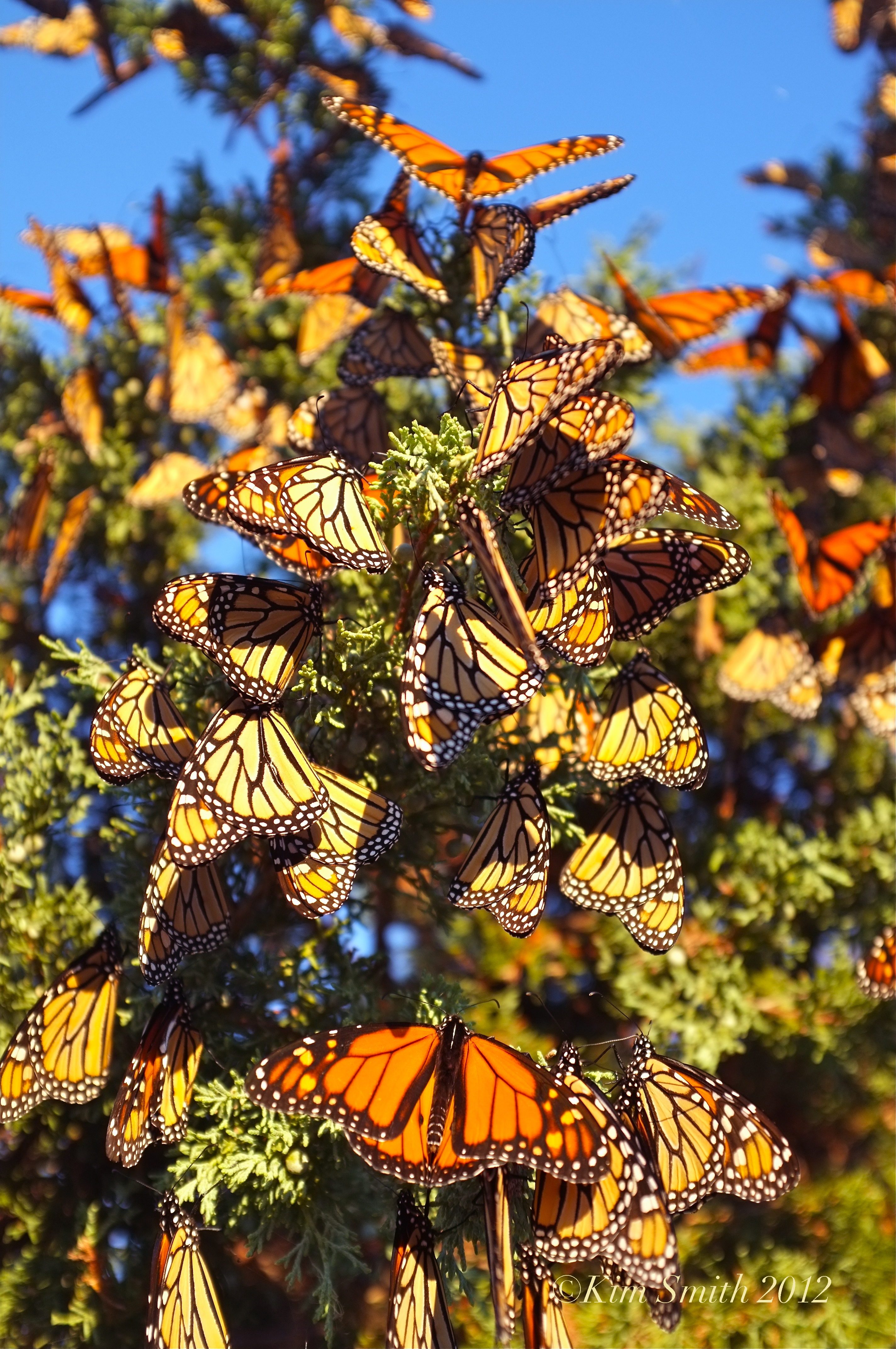
Monarch Butterfles Eastern Point Gloucester MA © Kim Smith 2012

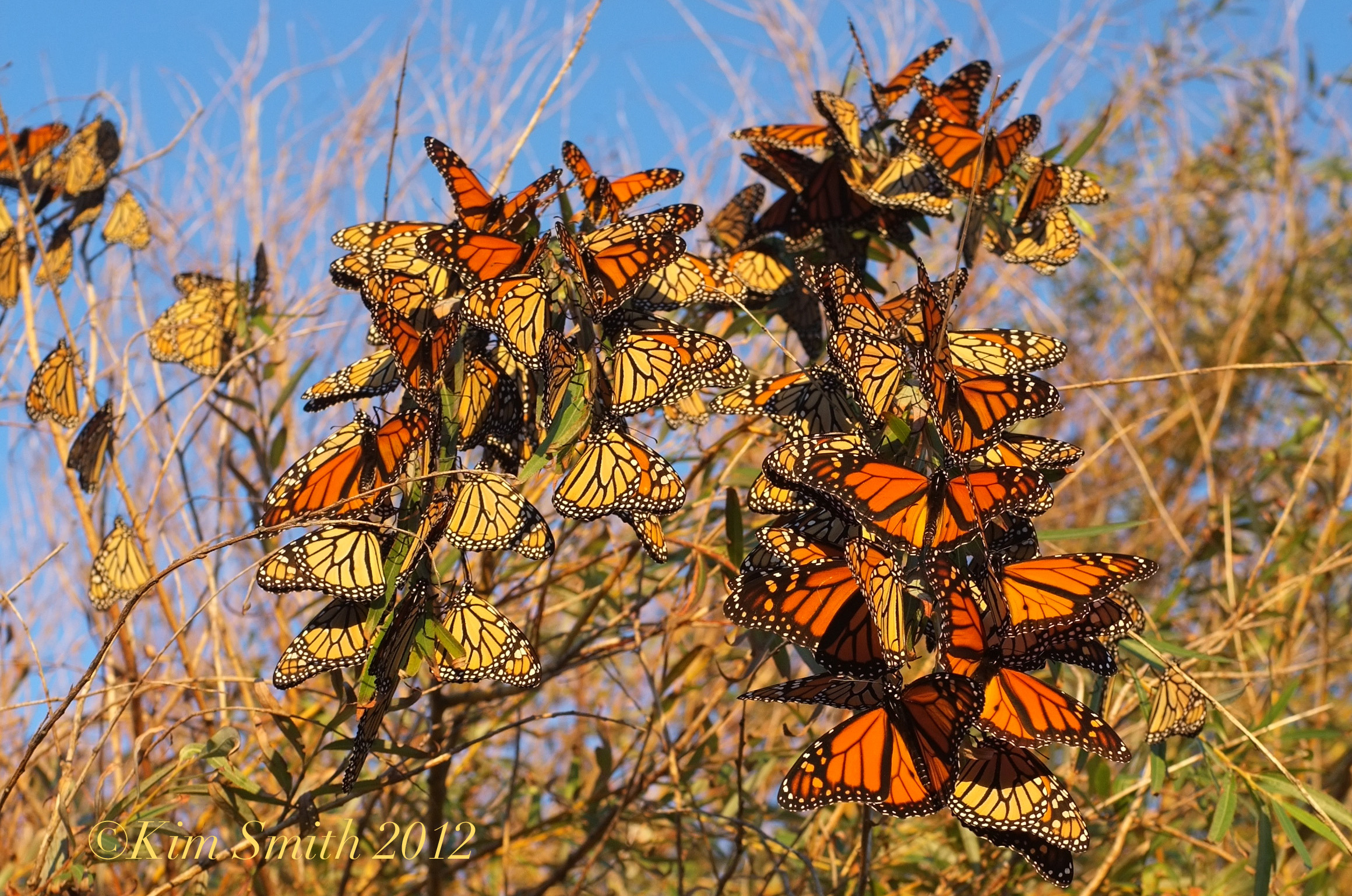
Monarch Butterflies at Eastern Point

How to Plant and Care for Your Milkweed Plants

Common Milkweed (Asclepias syriaca) has a taproot. Plants with taproots do not like to be disturbed once established so it is best to plant your Common Milkweed seedlings as soon as possible. Common Milkweed is not too fussy about soil and is the milkweed we see growing in fields, roadsides, dunes, and meadows. It can reach up to six-feet in height, but more commonly grows two- to four-feet. Common Milkweed spreads by underground shoots and by seed dispersal.

The Marsh Milkweed (Asclepias incarnata) are well-rooted year-old plants and can be planted in the garden now, or within the next month or so. Marsh Milkweed grows best in good garden soil and/or moist areas. Marsh Milkweed is clump forming and does not spread by underground shoots.

Both milkweed species prefer full sun, but will take some slight shade. Plant with the soil line equal to the soil line in the pot. Place a stake nearby so that you do not step on your little milkweed seedling. Water gently. Check frequently on your milkweed plant until it is fully established. Water when dry, but do not over water. Monitor for milkweed aphids. Milkweed aphids are tiny soft-bodied orange insects. If you do see any aphids, gently wash them away with water; no soap or strong pesticides needed!

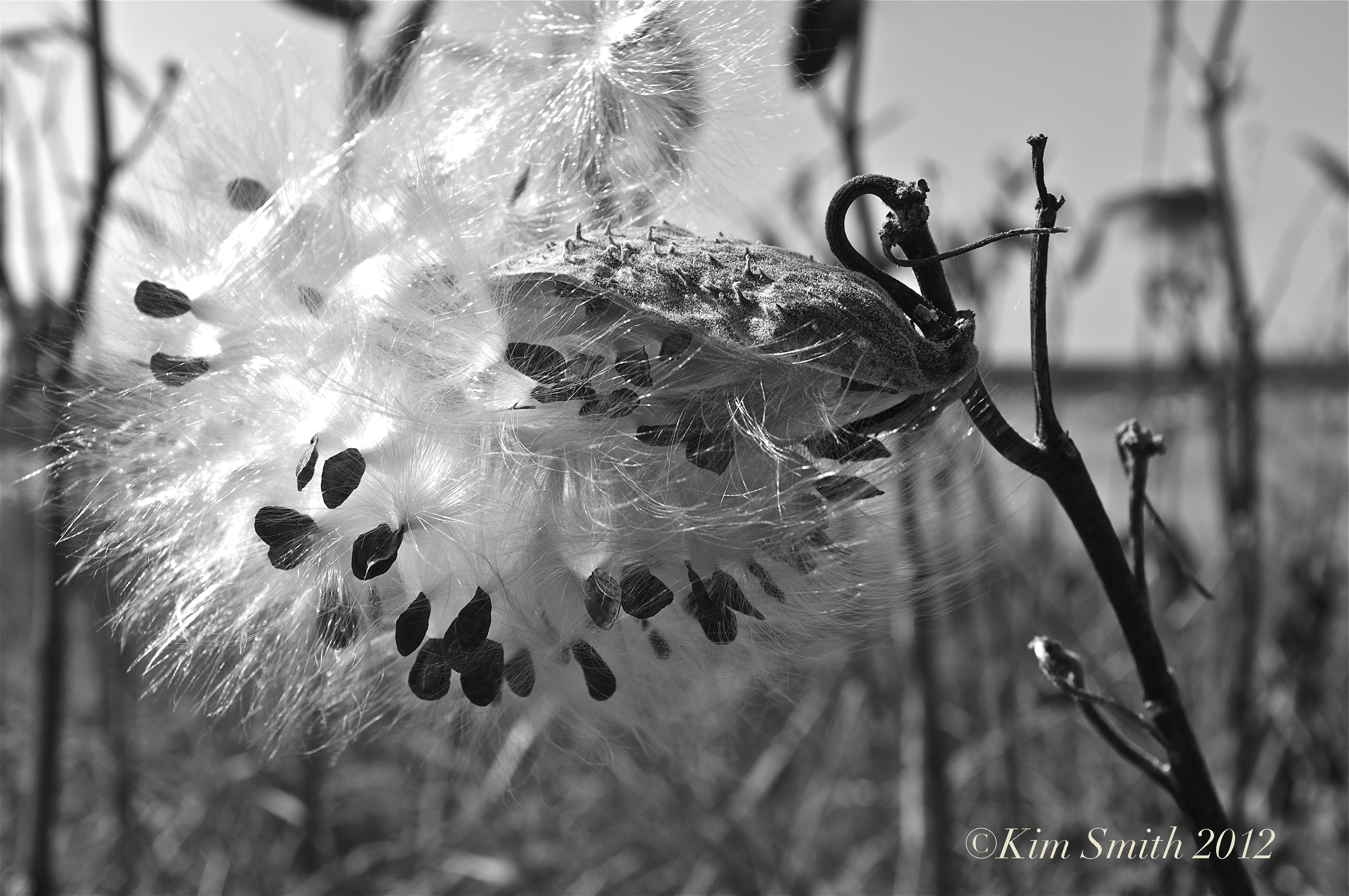
Milkweed seed pod bl-wh ©Kim Dmith 2012

GMG Monarch-Milkweed Mug Up This Saturday!

Update: Milkweed Plants Arrived Thursday and are  ready to go! See you Saturday morning!!!

Hooray–our milkweed plants shipped from Missouri Monday and should arrive to Gloucester by Thursday!!!

Plants will be available for pick up at Captain Joe and Sons, 95 East Main Street, Saturday morning at 9:00am and we will be there all morning until noon. Felicia is helping and we will have coffee for everyone. Written instructions will be provided on how to take care of your plants.  Looking forward to seeing you all at the first ever Monarch~Milkweed Mug Up!

I did not collect the funds ahead of time. Please everybody,  if you ordered plants, be sure to pick-up Saturday morning. I am counting on you!! If the project is successful, we will do this again later in the season, with Seaside Goldenrod and New England Asters, but we can only have another plant sale if everyone honors their commitment. Thank you!! 

For more detailed information, see previous posts:

GloucesterCast Podcast 4/25/13 With Guest Kim Smith

Cape Ann Milkweed Project

Cape Ann Milkweed Project ~ Last day to order plants

WOW and WONDEFUL—150 milkweed plants ordered!!! (Actually, 190 plants were ordered!!)

How Exactly is Monsanto’s Roundup Ravaging the Monarch Butterfly Population?

News Release: MONARCH WATCH ANNOUNCES ‘BRING BACK THE MONARCHS’ CAMPAIGN

Monarch Butterfly Marsh Milkweed ©Kim Smith 2011

Monarch Butterfly and Marsh Milkweed

WOW and WONDEFUL—150 milkweed plants ordered!!!

Thank you to everyone participating in our Cape Ann Milkweed Project!

Monarch Butterfly milkweed Good harbor Beach ©Kim Smith 2011

Monarch Butterfly Nectaring at Common Milkweed ~ Good Harbor Beach

Milkweed may not be for everyone’s garden; even if you did not order plants, you are welcome to come on down to the dock Saturday morning, the 18th of May, and learn more about the Monarch-milkweed connection. The plants are being shipped on Monday the 13th and I will keep you updated on their progress.

Cape Ann Milkweed Project ~ Last day to order plants

Monarch Butterfly Marsh Milkweed ©Kim Smith 2011

Monarch Butterfly on Marsh Milkweed

Order Your Milkweed Plants Today!

In case you missed the details see Sunday’s Post: Cape Ann Milkweed Project

Tonight I am placing the order for the milkweed plants. Please get your orders in.

Thank you to Everyone participating in the Cape Ann Milkweed Project!!!

Monarch Butterfly Twins ©Kim smith 2011

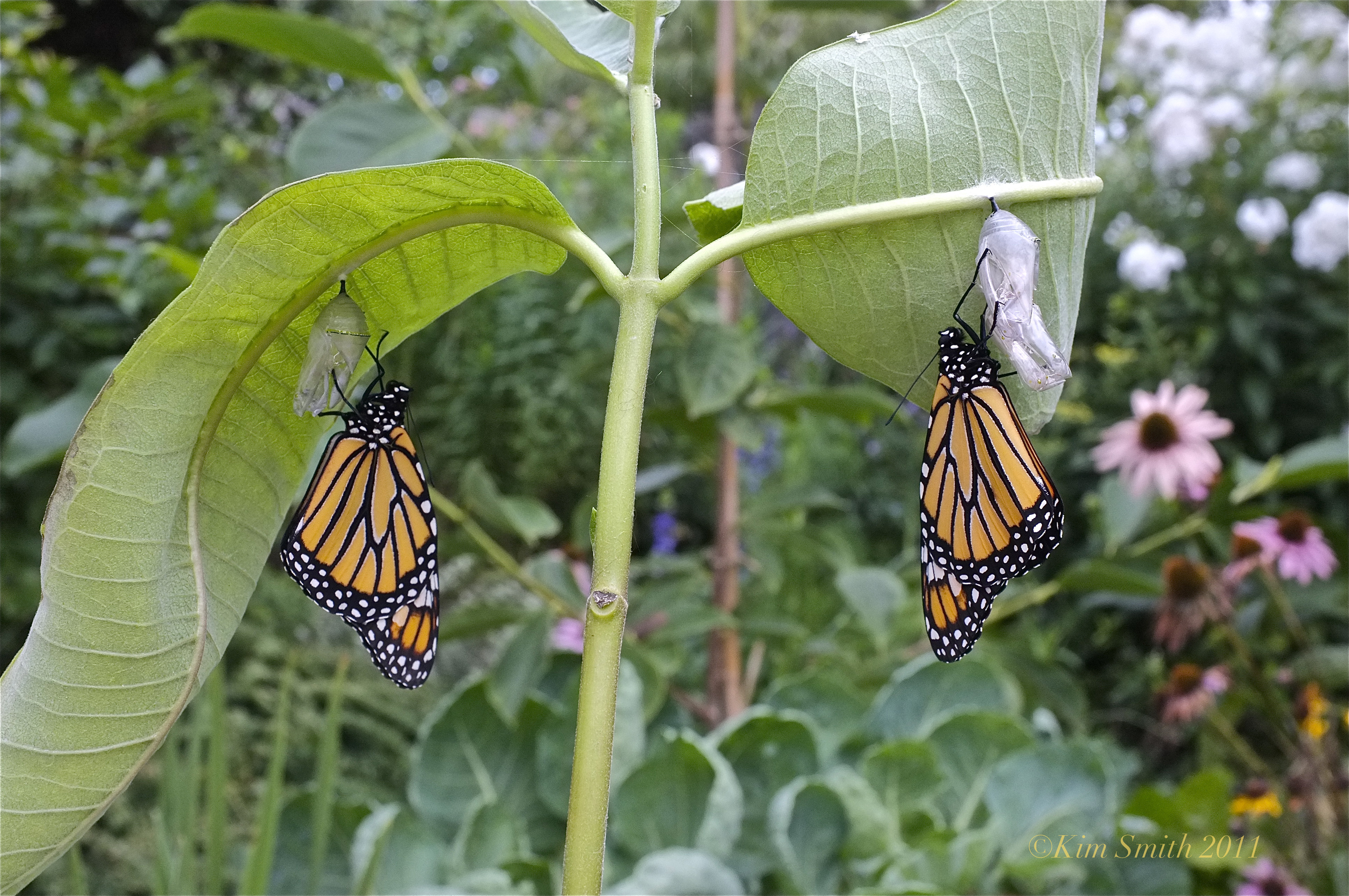
Newly Emerged Monarch Butterflies.  I called these two butterflies the” Twins,”  because they completed every stage of their life cycle within moments of each other, including pupating and emerging from their chrysalides.

Cape Ann Milkweed Project ~ Place your orders today

Order Your Milkweed Plants Today!

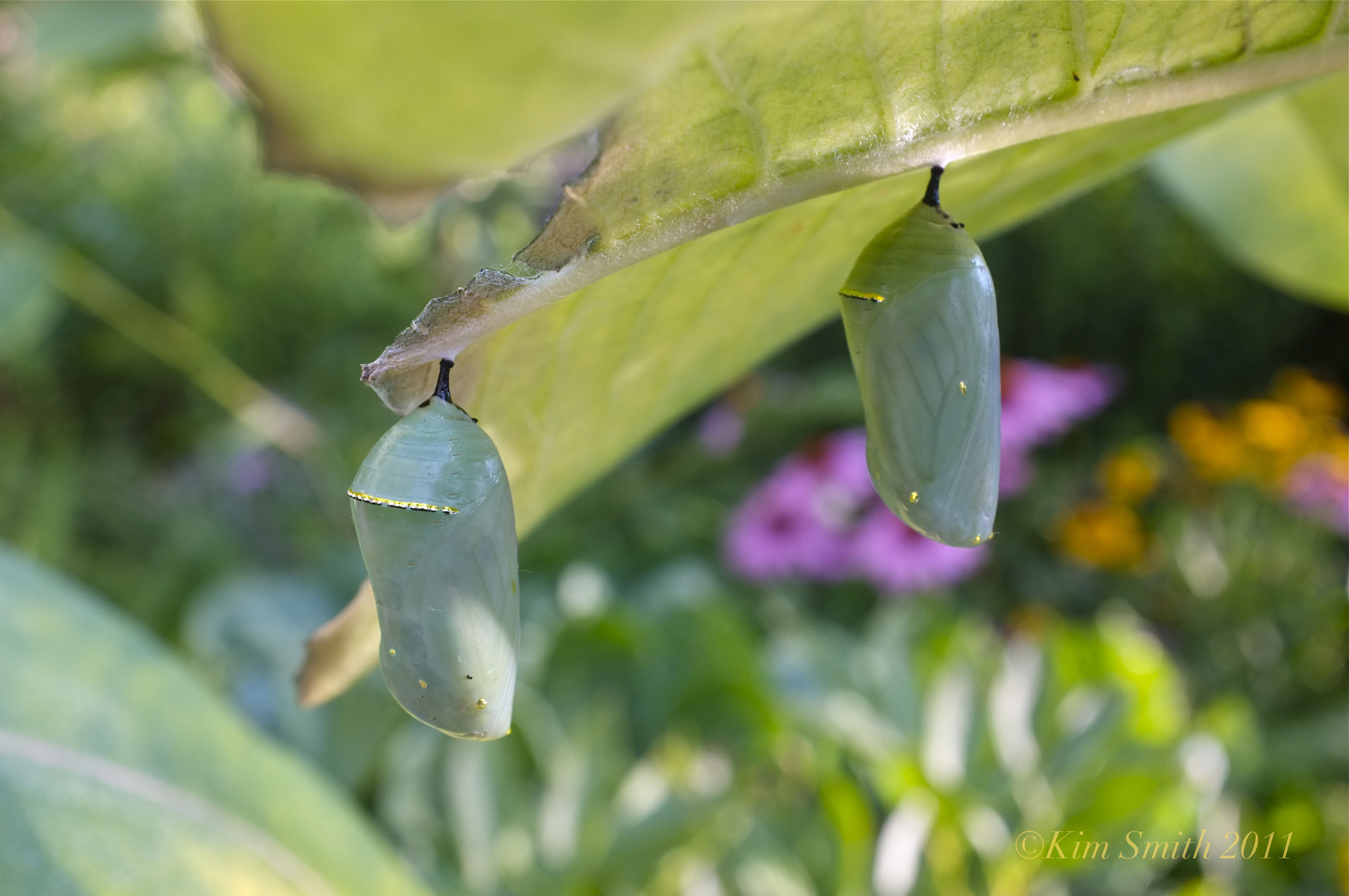
Monarch Chrysalis on milkweed rib ©Kim Smith 2011Monarch Chrysalis on Rib of Common Milkweed Leaf

Everyone who wrote in yesterday and placed an order has been recorded. Anyone interested in ordering either Common or Marsh Milkweed today, please place your order in the comment section of this post or yesterday’s post, which explains the project, and includes all details. Don’t forget to specify whether you are interested in Common or Marsh Milkweed and how many plants you would like.

Thank  you so much to everyone who is participating. Keep the orders coming!

Monarch Caaterpillars Feeding on Common Milkweed ©Kim Smith 2011

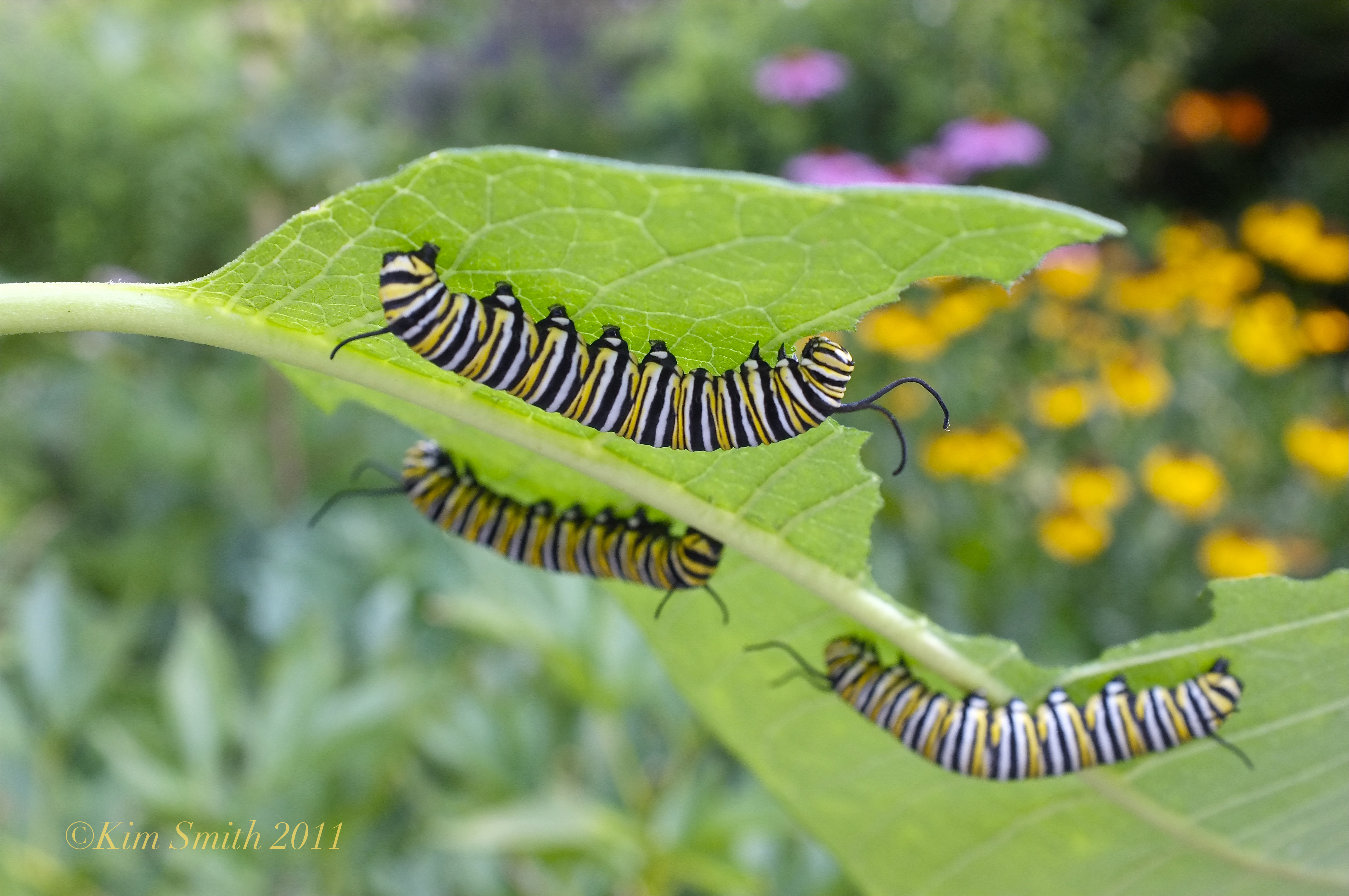
Monarch Caterpillars Feeding on Milkweed in the Summer…

Monarch Willow tree ©Kim Smith 2012 copy

Equals Millions of Monarchs in the Fall!!!

Cape Ann Milkweed Project

Monarch Butterfly Monarch Butterfly Emerging from Chryslais ©Kim Smith 2011

Monarch Butterfly Emerging from Chrysalis

Order Your Milkweed Plants Today!

In March I shared an article about bringing back the Monarch Butterflies. Great interest in planting milkweed was expressed by many. The way to bring as many Monarchs as possible to our region is to help recreate the butterfly’s habitat in our own gardens. The number one way to do this is by planting native wildflowers, milkweed for the summer caterpillars, and asters and goldenrod for the fall migrants. Number two is to make a commitment not to use pesticides, which will indiscriminately kill all the creatures that your milkweed plants invite to your garden.

Monarch Butterfly Eggs Common Milkweed ©Kim Smith

Monarch Eggs on Common Milkweed ~ see the tiny yellow pinhead-sized dots on the top of the upper leaves of the milkweed plants (click to view larger)

Milkweed is the only food plant of the Monarch caterpillar and the flower is a fantastic source of nectar for myriad species of bees and butterflies.

So many GMG readers wrote in requesting milkweed plants that Joey has very generously offered his place of business—Captain Joe and Sons—as our go-to-place for picking up plants!! It’s going to be a super fun morning–stop by with your coffee, visit, learn about milkweed and Monarchs, and pick up your order.

Please place your order today or tomorrow. I am not pre-collecting the money and am fronting the funds to purchase plants. I don’t want to have dozens of homeless plants, so I am asking everyone to please be on the honor system.

We are ordering two types of milkweed. The cost is 7.00 per plant, which will come in a 3.5 inch square pot. The plants are on the smallish side however, that is the ideal size for shipping and transplanting milkweed. I am writing instructions for planting and they will be provided at the time of purchase.

Monarch Caterpillars Common Milkweed ©Kim Smith 2011

Monarch Caterpillars J-Shape on Common Milkweed Getting Ready to Turn into a Chrysalis

Common Milkweed (Asclepias syriaca) is the milkweed we see most typically growing in our dunes, meadows, roadsides, and fields. It grows quickly and spreads vigorously by underground runners. This is a great plant if you have an area of your garden that you want to devote entirely to milkweed. It prefers full sun, will tolerate some shade, and will grow in nearly any type of soil. The flowers are dusty mauve pink and have a wonderful honey-hay sweet scent.

Marsh Milkweed (Aclepias incarnata) is more commonly found in marshy areas, but it grows beautifully in gardens. It does not care for dry conditions. These plants are very well-behaved and are more clump forming, rather than spreading by underground roots. The flowers are typically a brighter pink than Common Milkweed.

Monarch Butterfly Emerging from Chryslais ©Kim Smith 2011.JPG

Monarchs deposit their eggs readily on both types of milkweed and in my garden I grow Common Milweed and Marsh Milkweed side-by-side.

The cost of the plants includes shipping from Missouri. Hopefully everyone will be good and if they place an order, will honor their commitment. If there is any money beyond what was spent on plants and shipping we will donate it to the ongoing fundraising drive for the Rocky Neck Cultural Center purchase of the beautiful center on Wonson Street.

Plant pick-up is at Captain Joe and Sons, 95 East Main Street, Gloucester, on Saturday, May 18th from 9:00am to 12noon. If you cannot pick up your plants at that time, please ask a friend.

My order to the nursery is being placed on Tuesday night, so please get your orders in asap. Place Your Milkweed Order in the comment section of this post. Be sure to indicate which type of milkweed, Common or Marsh, and number of plants.

Our deepest thanks to everyone who is participating. 

Monarch Butterfiles Female left Male right Milkweed ©Kim Smith 2012

Female and Male Monarch Butterfly on Marsh Milkweed (Asclepias incarnata)

Rain date pick up: Sunday, May 19th from 9am to 12noon.

Happy Earth Day and Habitat Gardening 101

To celebrate Earth Day (Earth Week-Earth Month-Everyday is Earth Day!), I am beginning a new series on GMG titled Habitat Gardening 101. The series is based on the lectures that I give to area conservation groups, garden clubs, libraries, and schools and is designed to provide information on the relationships between our native flora and fauna, and how to translate that information to your own garden. You will find in this series information on how to support and encourage to your garden a wide variety of wildlife, including songbirds, butterflies, bees, moths, skippers, hummingbirds, and small mammals, and the trees, wildflowers, shrubs, vines, and groundcovers that sustain these beautiful creatures.

This series could just as well be titled Beauty in Our Midst because there are so many gems to be found along our shoreline, meadows, fields, wetlands, dunes, woodlands, and roadsides. Although the series will cover a wide array of flora and wildlife, the first posts will be about several butterfly attracting trees and shrubs because they are currently in bloom. Coming Wednesday, the North American native Pussy Willow will be featured. For today, the following is one of my Top Ten Tips for Attracting Lepidoptera to Your Garden.

 *

Habitat Gardening 101 Tip #1: Plant Caterpillar Food Plants

So you want to attract tons of butterflies to your garden and you plant lots of gorgeous, colorful nectar-rich plants—and that is wonderful. To your garden will come many beautiful, albeit transient, butterflies, along with an array of many different species of beneficial pollinators. However, if you want butterflies to colonize your garden, in other words, to experience the grand beauty of the creature through all its stages of life, from egg to caterpillar to chrysalis to adult, you must also plant caterpillar food plants.

Black Swallowtail Caterpillar egg fennel ©Kim Smith 2013

Black Swallowtail Butterfly Egg on Fennel (the pinhead-sized golden yellow dot)

Each species of butterfly caterpillar will only eat from a family of plants it has coevolved a relationship with over millennia. We call this a caterpillar food plant, host plant, or larval food plant.

Perhaps you may recall that the Monarch Butterfly only deposits her eggs on milkweed plants. The Black Swallowtail Butterfly deposits her eggs on, and the caterpillars feast on, members of Umbelliferae (Apiaceae), or carrot family of plants, including carrots, parsley, fennel, dill, and Queen Anne’s Lace. Some caterpillars, like the stunning Eastern Tiger Swallowtail feed from several plant families, like those of Magnoliaceae and Rosaceae, which species include the Wild Black Cherry, the Tulip Tree, and the Sweet Bay Magnolia.

  Black Swallowtail Caterpillar Eating Parsley

If you see a green, black and yellow striped and spotted caterpillar munching on your parsley plant, it is not a Monarch caterpillar; it is a Black Swallowtail caterpillar (I am often asked this question). Monarch caterpillars are striped yellow, black, and white, always. You will never find a Black Swallowtail caterpillar munching on milkweed; likewise you will never find a Monarch caterpillar eating your parsley and fennel.

Another question frequently asked is, if I invite caterpillars to my garden, will they devour all the foliage. The answer is, for the most part, no. The damage done is relatively minimal, the plant generally recovers quickly, and bear in mind too, that plants have evolved with many mechanisms to discourage their complete destruction. Remember, the plant was responsible for inviting the butterfly to its flower in the first place!

 Black Swallowtail Caterpillar fennel ©Kim Smith 2013

Note too, that if you invite butterflies to your garden to deposit their eggs, please don’t turn around and spray pesticides, which will kill all, indiscriminately. A habitat garden, by its very definition, is an organic garden, which means no herbicides, insecticides, pesticides, and chemical fertilizers.

*

Feel free to send any and all questions, suggestions for a topic, or curiosity, to the comment section under each post.

*

Cape Ann Milkweed Project Update: Because of the chilly spring weather, milkweed shoots are slow to emerge.

Link to a list of lectures and workshops at Kim Smith Designs

Farewell Monarchs

Inquiring minds want to know, “Where do the Monarchs go?” I am often asked this question, not by children, but by adults. Most children have studied, or are studying, the butterfly life cycle and the have some degree of knowledge about the Monarch migration. The reason the majority of adults never learned about the Monarch butterfly migration is because the great mystery of their winter destination was only discovered as recently as 1975! The Monarchs that are journeying through Gloucester at this time of year travel approximately 2,000 miles to the transvolcanic mountaintops of  south central Mexico, near the town of Angangueo. I have the National Geographic issue from 1975 that tells the tale of one man’s determination, including all the scientific intrigue that goes with great discoveries, and I will try to post more about this fascinating story in the coming weeks.

As everyone who reads GMG probably knows by now, I am in the midst of shooting my Monarch film. What you may not know is that I have written and illustrated a book that tells the story of this most exquisite of creatures and its extraordinary journey. I am hoping to find a publisher. If anyone knows a friend of a friend of a friend, or has a suggestion for a very high quality publisher or top-notch agent, please let me know. Thank you.

Newly Molted Caterpillar

Butterfly caterpillars molt four or five times as they grow. Each different caterpillar stage is called an instar.

In the photo below you can see the caterpillar’s crumpled discarded exoskeleton.

Molting Monarch Caterpillar

The caterpillar first grows a new skin under its old skin. Then the caterpillar draws its head out of its head capsule. Occasionally it will need to use its front legs to help remove the head capsule. Next the caterpillar crawls out of its old skin. This is called molting. After the molt and while the new skin is soft and pliable the caterpillar swallows a lot of air, which expands the body. As the new exoskeleton hardens it lets out the air to allow room to grow.

Molting takes a great deal of energy and after each molt, the caterpillar rests quietly for a brief period before then eating its discarded exoskeleton.

Madeline and the Monarch

The Ciaramitaro Family stopped by Willowdale today for a tour of the butterfly gardens. We were lucky to see several Monarchs and dozens of Painted Ladies.

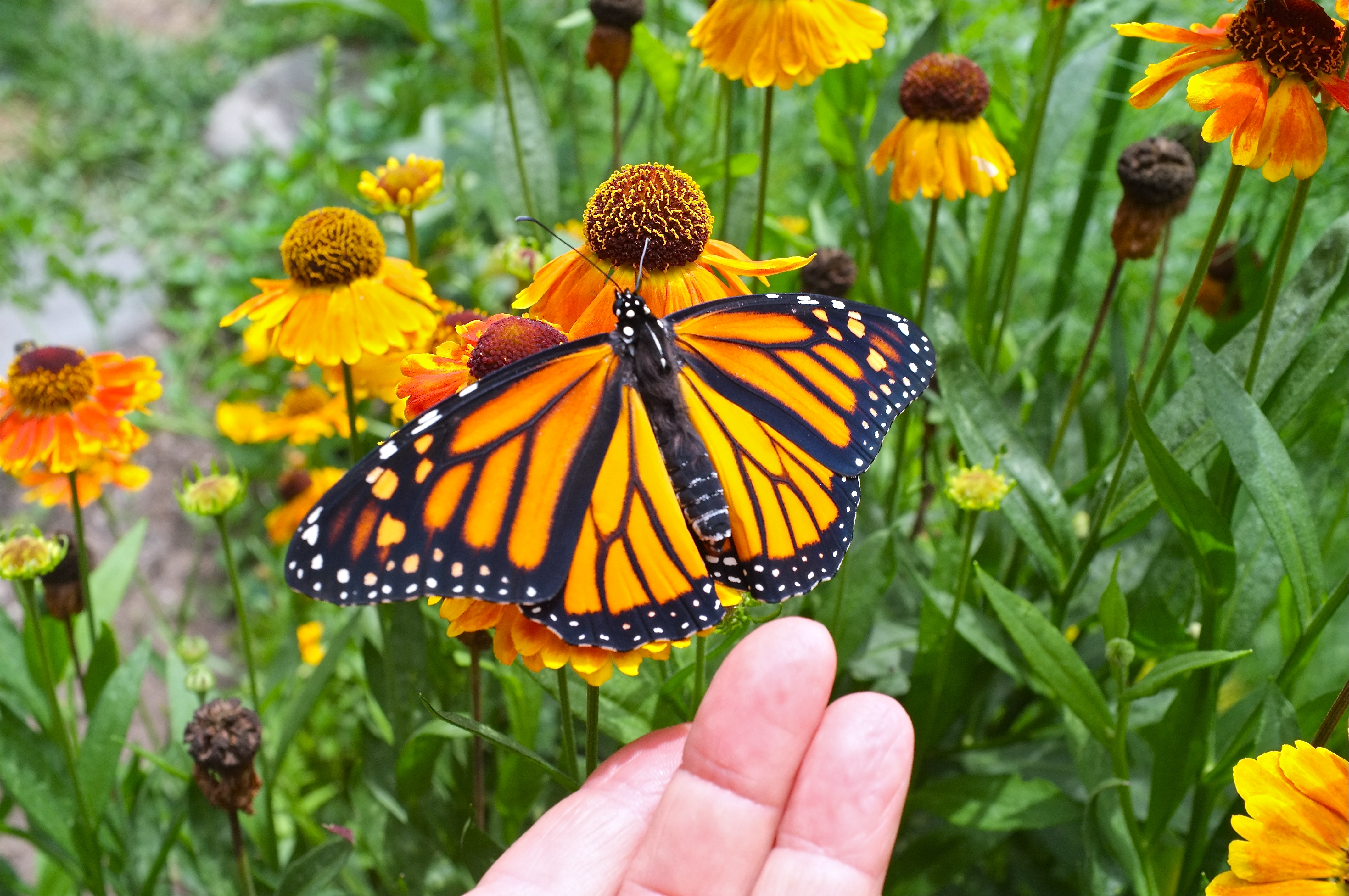
Click the photo to view larger and you will see the Monarch climbed onto Madeline’s finger–it takes great patience to hold still long enough to allow a butterfly to climb aboard!

Madeline was determined that a butterfly would climb onto her finger–first trying the Painted Ladies and then very, very patiently, and holding very, very still, encouraging the Monarchs. She was thrilled when one did–and did so several times–very sweet to see her joy. Madeline and Eloise were expertly identifying the male and female Monarchs and explaining to all in how to tell the difference.

How to Tell the Difference Between a Male and Female Monarch Butterfly

For Devera, who wrote in yesterday asking how to tell the difference between a male and female Monarch Butterfly ~

Click photos to view large.

The first photos shows all male Monarch Butterflies necatring at Seaside Goldenrod. Notice the pair of little black pockets, or dots, on the inner vein of the hind wings. These are pockets of pheromones, or what scientists actually refer to as “love dust,” which the male sprinkles on the female during courtship.

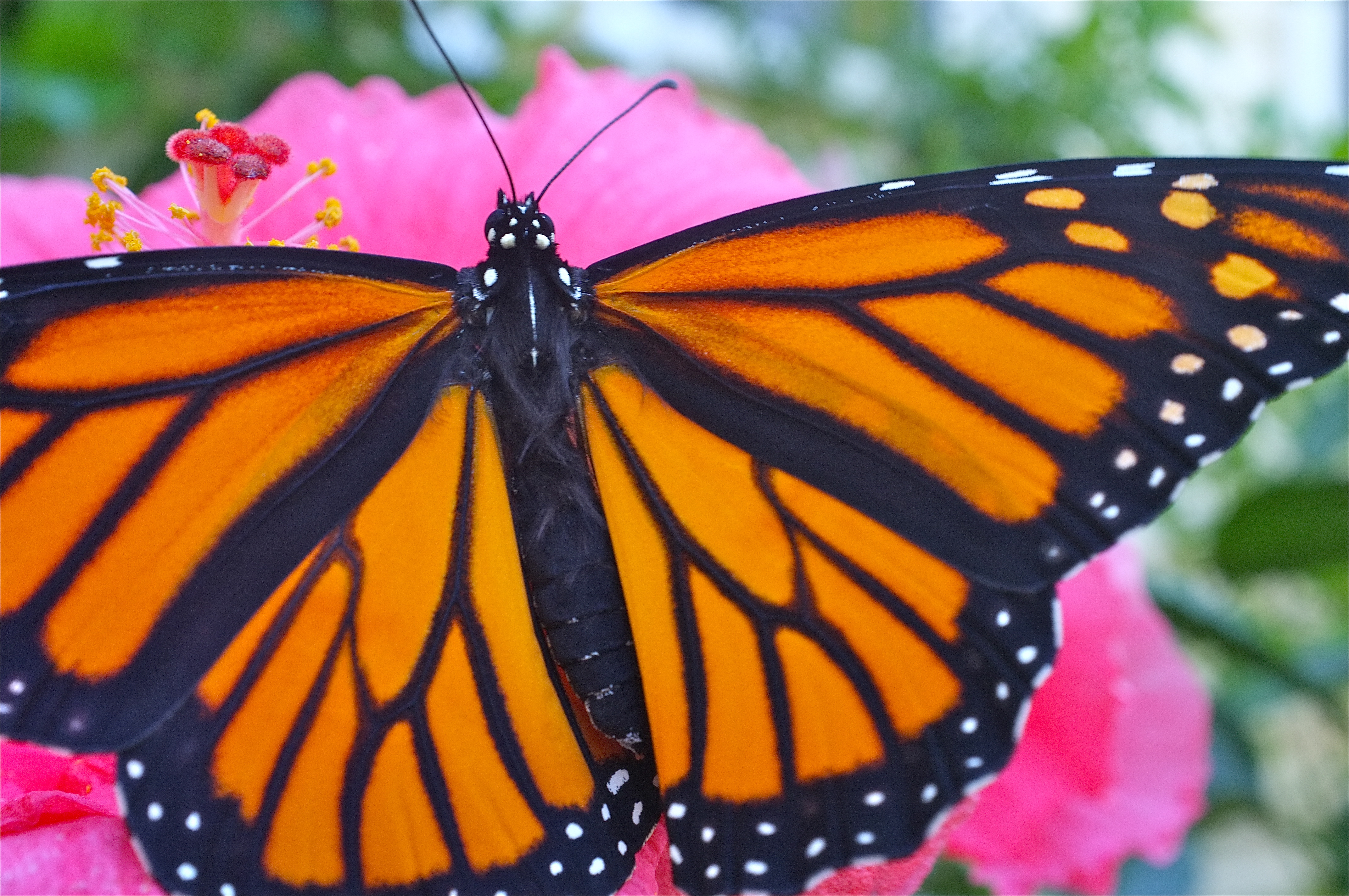
The female Monarch Butterfly lacks the the black pockets on her hind wings. Notice too that her wing veination is thicker and smokier.

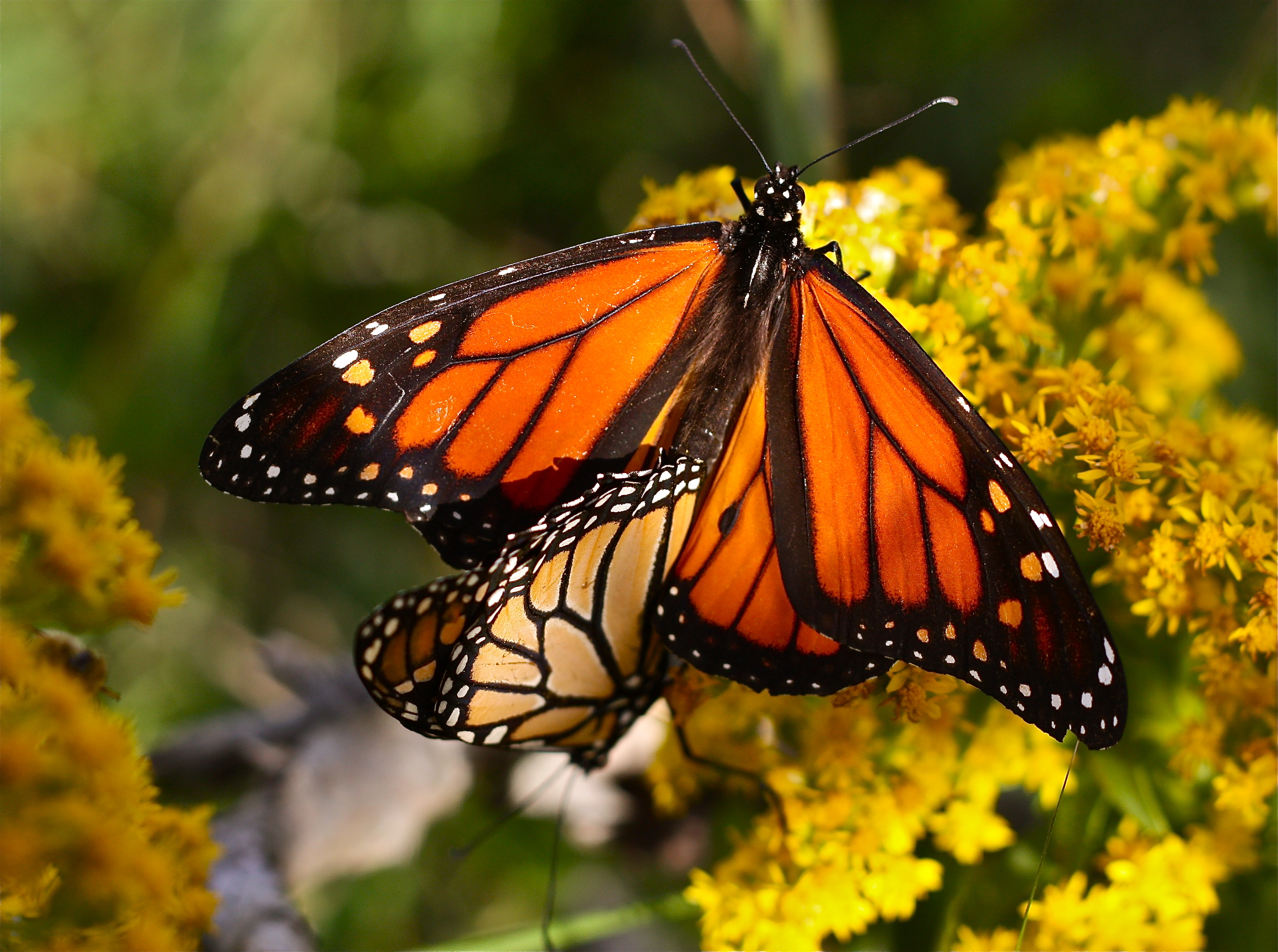
During courtship, male and female join, and he carries her to higher ground. This photo shows the male and female mating, with the male above.

Stained Glass

From our garden ~ Newly emerged female Monarch Butterfly drying her wings. Monday a male emerged, Wednesday a female–looks promising for another batch of Monarchs before summer’s end!

Newly Emerged Female Monarch Butterfly

Male Monarch Butterfly

Newly emerged male Monarch Butterfly drying his wings on the sunflower.