60 YEARS AGO TODAY: Listen to archival audio and video from the March on Washington. Can you help name the choir members?

Author’s Note: From the National Archives collection, this contemporaneous 20 minute highlights newsreel covers the sights and sounds from the historic March On Washington for Jobs and Freedom, distributed in 1964. In 2021, I timestamped the music splits, and identified the speakers and performers included in this particular POV reel. (Still missing a few. Can you help?) Re-sharing on this 60th milestone anniversary Aug. 28, 2023.

video title: The March on Washington, 1964 film by the US Information Agency compilation for overseas from the National Archives and Records Administration collection (20 min)

TIMESTAMP OF SPEAKERS AND PERFORMERS APPEARING IN FILM CLIP

Among the speakers and performers on the program (* appear in film clip):

Marian Anderson, Josephine Baker, Joan Baez* (audio early, then w/video 9:38-10:26), Harry Belafonte, Dr. Eugene Carson Blake* (16:59-17:28), Bobby Darin, Ossie Davis* (but only when he introduces Burt Lancaster 10:27), Ruby Dee (co-emcee with Ossie Davis), Bob Dylan, Freedom Singers* with choir (We shall not be moved 7:14 – 9:06), Dick Gregory, Martin Luther King Jr.* (18:18 – 18:59 press conference), Lena Horne, Mahalia Jackson, Eva Jessye Choir* (12:41 Freedom is the thing we’re talking about – Yolanda Clarke on organ), Burt Lancaster* (traveled from Paris to speak, 10:35-12:02), John Lewis* (video only – standing behind Reuther 17:29), Dr. Benjamin Mays* ( 14:34-15:36 benediction), Odetta, Peter Paul & Mary* (clips & audio of Blowin in the wind and If I had a hammer 3:18-4:33 first set), Asa Philip Randolph* (16:16-16:57 and again intro MLK 18:18), Bayard Rustin* (12:11 video only); Rev. Fred Shuttlesworth* (9:08- 9:27), Walter Reuther* (17:29-18:16), Camilla Williams (stepped up for the National Anthem; with the big crowds, Marian Anderson was too late, and would sing later in program. Williams famous, too, and worked with Jessye on Porgy & Bess.), Roy Wilkins* (13:41-14:28) and Josh White.

Opens with crowd walking and singing “we stay home and you’ll be gone…jail for more than a week, all I had was beans to eat…because my home is Danville” **Can you identify this song?**

Parade and marching band 4:34-5:40.

About the Eva jessye Choir

Eva Jessye Choir at 7:14-9:06 with Freedom singers “We shall not be moved” and later “Freedom is the thing we’re talking about” where Eva Jessye herself can be seen directing from back. Can you help identify the soloists- the gorgeous baritone, Robeson-esque at 12:36, and at 18:69 a stunning soprano soaring “We shall overcome” choir version, with crowd? The Eva Jessye Choir was the official choir for the March on Washington. Her long and storied career took off as chorus director for the Virgil Thomson and Gertrude Stein opera, “Four Saints in Three Acts” in 1934 and Gershwin’s “Porgy and Bess” the following year. She worked with Marian Anderson, Paul Robeson and more.

OTHER NOTABLES

Among the notables marching with the crowd and/or mingling with dignitaries and speakers already mentioned above: Faye Anderson, Josephine Baker, James Baldwin, Leon Bibb, Marlon Brando, Diahann Carroll, Tony Curtis, Bobby Darin, Sammy Davis Jr., Tony Franciosa, James Garner, Charlton Heston, Kiyoshi Kuromiya, Joseph Mankiewicz, Rita Moreno, Gordon Parks, Paul Newman, Rosa Parks, Gregory Peck, Sam Peckinpah, Sidney Poitier, Jackie Robinson, Bill Russell, Robert Ryan, and Joanne Woodward. Senators present: Phillip Hart (D-Mich), Wayne Morse (D-OR), William Proxmire (D-WI), and Mayor Wagner (NYC).
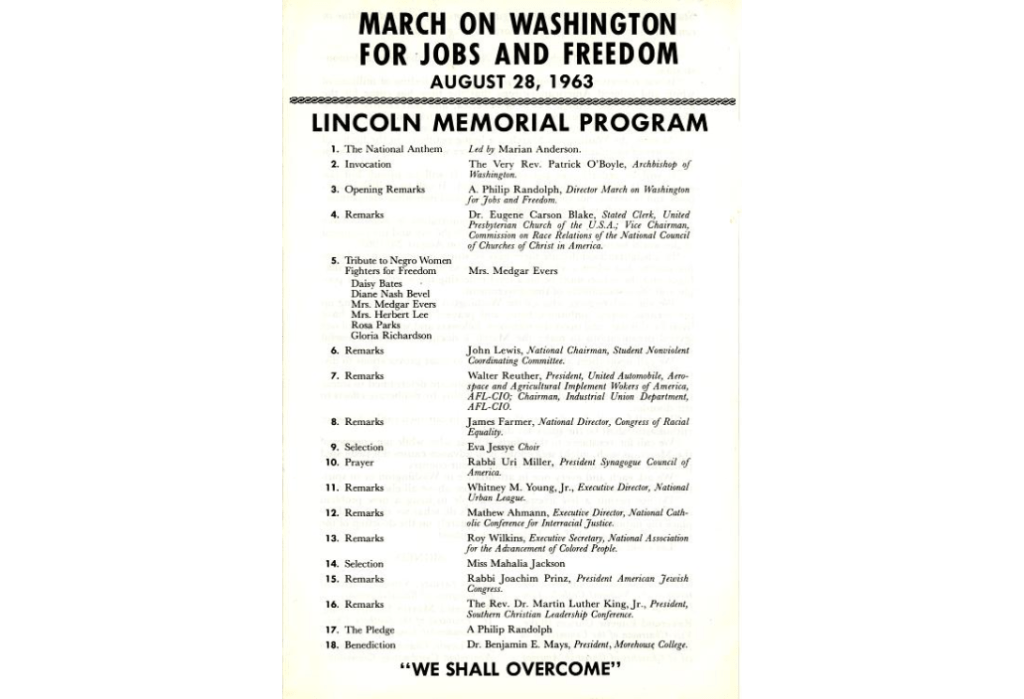
The ‘Lincoln Memorial’ program and the newsreel do not mention one tragic impetus for this specific date: Emmett Till (1941-1955) lynching happened August 28

King delivered an earlier iteration of the sermon in Detroit, orchestrated by Rev. C.L. Franklin, Aretha Franklin’s father. During the march, news spread that W. E. B. DuBois died the previous night in Ghana. So much hope and progress, and mere weeks later, retaliation. The Birmingham Baptist church bombing was on September 15, 1963. Within five years of the March on Washington, Malcolm X and King were killed.

“We’re going to march. We’re going to walk together. We’re going to stand together. We’re going to sing together. We’re going to stay together. We’re going to moan together. We’re going to groan together and after a while, we will have freedom, freedom, and freedom now. And we all shall be free.”

Rev. Fred Shuttlesworth not formally asked for the program but asked to speak that day, one of many adjustments on the fly, rose to the occasion, primed the crowd

1)Who were the choir members that day? [Eva Jessye Choir at 7:14-9:06 with Freedom singers “We shall not be moved” and later “Freedom is the thing we’re talking about” where Eva Jessye herself can be seen directing from back.]
2)Can you help identify the choir and soloists- the gorgeous baritone, Robeson-esque at min 12:36, and the women (with earrings )at min 18:69, and the stunning soprano soloist soaring “We shall overcome” choir version, with crowd?

National Archives description of the film (added 2009 and still as of 2021): 

“ARC Identifier 49737 / Local Identifier 306.3394. Scenes from Civil Rights March in Washington, D.C., August 1963. People walking up sidewalk; gathering on Mall, standing, singing. Lincoln Memorial, Washington Monument, crowd gathered on the Mall. People marching with signs, many men wearing UAW hats. People at speakers podium, men with guitars. Crowds outside of the White House, sign: The Catholic University of America. Band, people marching down street. Many signs, including All D.C. wants to vote! Home Rule for DC; Alpha Phi Alpha; and Woodstock Catholic Seminary for Equal Rights. Lincoln Memorial with crowds gathered around reflecting pool. People singing and clapping at speakers platform. Signs, people clapping. Man speaking, woman playing guitar and singing at podium. More speakers and shots of the crowd. A chorus, NAACP men in crowd. Close-ups of people in crowd with bowed heads. Shots taken from above of White House. More speakers, including Rev. Martin Luther King, Jr. Women at podium singing We Shall Overcome. Crowd swaying, singing, holding hands.”


1963

1963 GORDON PARKS COLOR PHOTOGRAPH

photo: installation view at The Cooper Gallery Harvard, Gordon Parks exhibition 2019 by C. Ryan — Parks’ photo journalist and cinematic chops in this sea of us momentous moment, March on Washington, 1963view from Lincoln Memorial to Washington Monument. [*Lincoln designed by Daniel Chester French unveiled 1922; Washington Monument designed by Robert Mills; completed by Thomas Casey and the U.S. Army Corps of Engineers, dedicated 1884.] For more about Gordon Parks work in Gloucester, Mass. see 2012-14 here
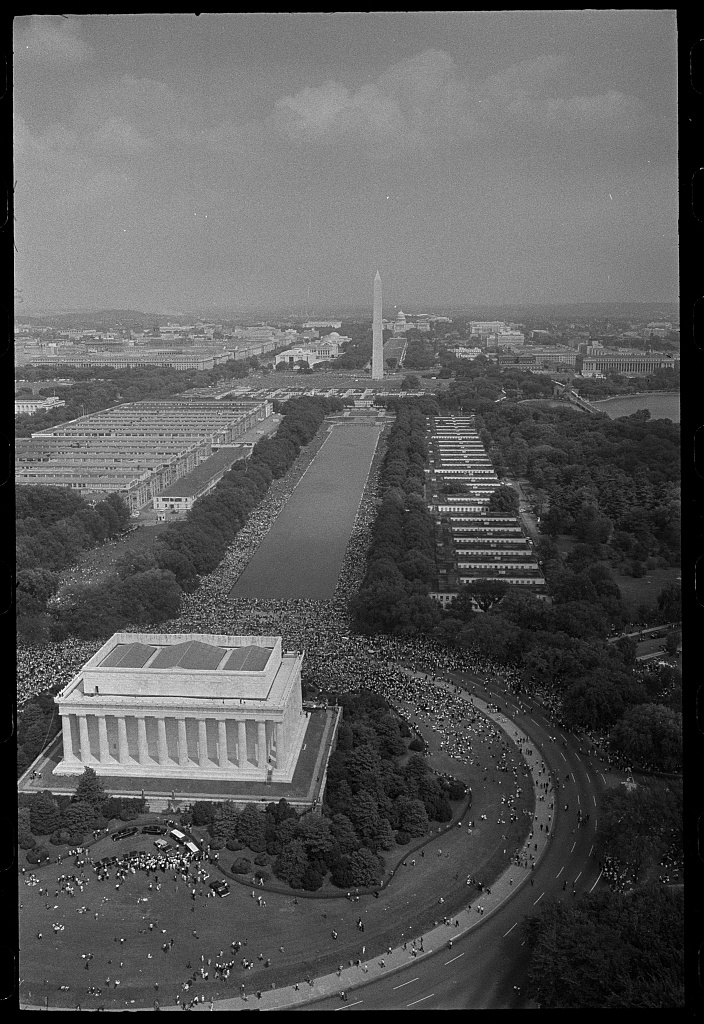
[photographer Thomas J. O’Halloran, aerial view of marchers, from the Lincoln Memorial to the Washington Monument, at the March on Washington, 1963, Library of Congress.]

Catherine Ryan on #GloucesterMA in landmark Farm Security Administration / Office of War Information (FSA/OWI) documentary photographs. Part 1 GORDON PARKS

CROSS-COUNTRY CHRONICLE

Catherine Ryan on Gloucester, MA in landmark Farm Security Administration/Office of War Information (FSA/OWI) documentary photographs. Part 1

Hey, Joey,

Have a look at Gloucester from this important collection. First up—the Gordon Parks post. 1942.

FOBs may recognize some of the faces, names, places. You recently featured the ‘American Gothic’Wallflowers, by this super artist on GMG which reminded me of the road less traveled within this historic collection of photographs archived at the Library of Congress and the New York Public Library.

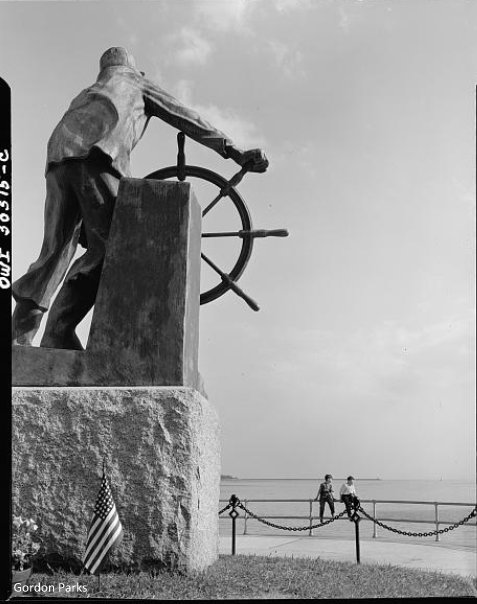
This post is Part 1 in a series on Gloucester images in this legendary FSA/OWI collection. If you are interested in the scope of any Gloucester material from this collection, we know that at least 4 of the FSA/OWI photographers came through Gloucester, MA. No surprise, each photographer took photo(s) of the Fisherman at the Wheel. They also show the impact of WWII. If you can id any of the Gloucesterpeople, please contact me. I’ve listed some known Gloucester names at the end of the post.

In 1934 during the Great Depression, Fortune magazine dispatched Margaret Bourke-White to cover the Dust Bowl. She sent additional images to the New Masses and the Nation.

In 1935, for one of its many New Deal programs, the US government sent photographers across the country on assignment. Initially their photographs were intended to illustrate the results of the country’s latest efforts to alleviate rural poverty.

Ultimately, they created a legendary photographic record of 1935-1945.

Here is a jaw-dropping list of established and future notables who Stryker hired for this incredible visual encyclopedia: Esther Bubley, John Collier, Walker Evans, Dorothea Lange, Russell Lee, GordonParks, Marion Post Walcott, Louise Rosskam, Arthur Rothstein, Ben Shahn, George Stoney, John Vachon, and Marion Post Walcott. Stryker also primed an extensive “orbit” of contacts and influence.

What is the FSA/OWI collection? (See explanation at the end of this post.)

American Photographer GORDON PARKS (1912-2006)

119 FSA/OWI photos for Gloucester, MA, May and June 1942


In 2012, the International Center of Photography in New York commemorated the centennial of GordonPark’s birth with a year-long installation featuring 50+ photos (one of the Gloucester ones was in there).

Gordon Parks believed the positive reaction he received for some of his early fashion images was his first break (Melva Louis, Joe Louis’ first wife). This support pushed him to set up a photography portrait business in Chicago. He also photographed out in the streets. He was inspired by Norman Alley’s bombing of Panay coverage (1937). FSA/OWI photographer Jack Delano saw his work and urged him to try to enter Stryker’s program via a Rosenwald fellowship. He was 30 when he was brought on board and thrilled to join this famous group. He was the first African American to be hired by Stryker. He worked there less than two years as the program ended. He followed Stryker into a commercial job. Gordon Parks was a man of dazzling talents. His FSA/OWI photos hint at his many future creative pursuits. This work though was rarely seen.
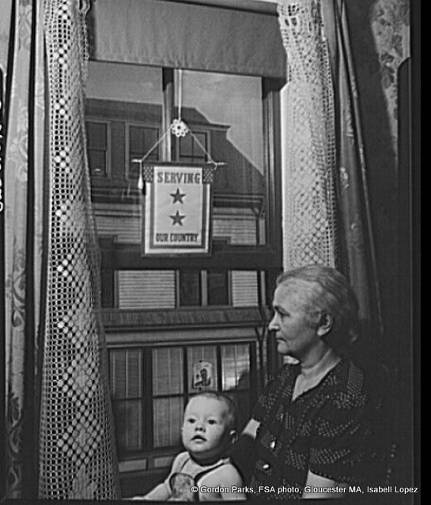
You can see Parks skilled portrait photographs: leaders of faith, presidents of universities, people working and at home, such as Mrs. Isabell Lopez of Gloucester, mother of 6 holding her grandchild.

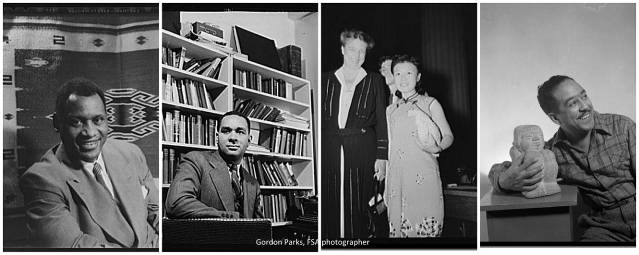
There are celebrity portraits: Paul Robeson, Mrs. Roosevelt with Wang Yung, Langston Hughes, and Richard Wright. Portraits and fashion were his bread and butter back in Chicago, before landing a post with this famous group.


You can see Gordon Parks the social activist. From left to right: pushing for safer streets, e.g. protection for our kids (devastating streetcar accidents); Jim Crow train FLA; his famous ‘American Gothic’ portrait of Ella Watson who cleaned nights at the FSA government office in Washington, DC. Parks thought this image heavy handed; there is essentially what amounts to a still-photo mini documentary of Ella Watson at home, with her family and at work for more of her story.


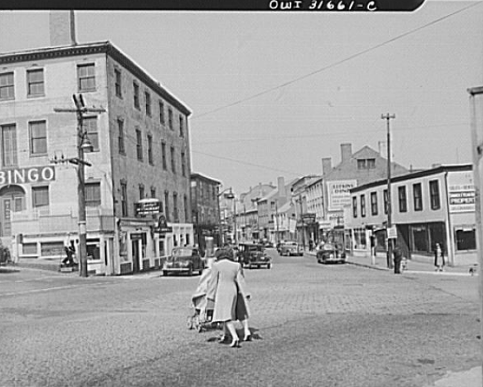
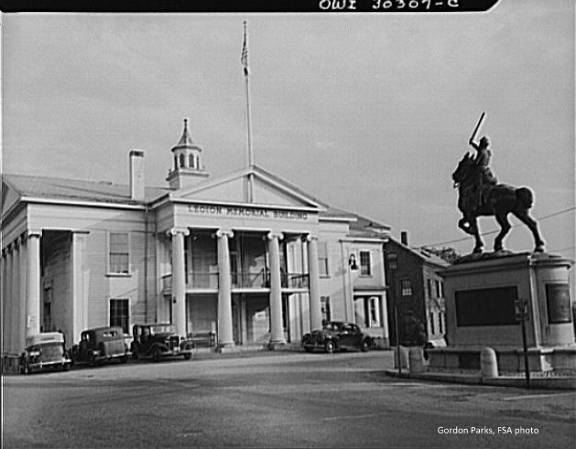
Gordon Parks did 1 Gloucester protection/safety photograph, a dangerous crossing.


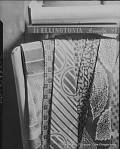
You can see Gordon Parks the fashion photographer. Welder on the left is Rosie the Riveter style; and on the right Mrs. Lopez’s daughter, at home Gloucester, MA. The still-lives are Duke Ellington’s colorful ties and one of Jay Thorpe’s Four Freedoms textiles.

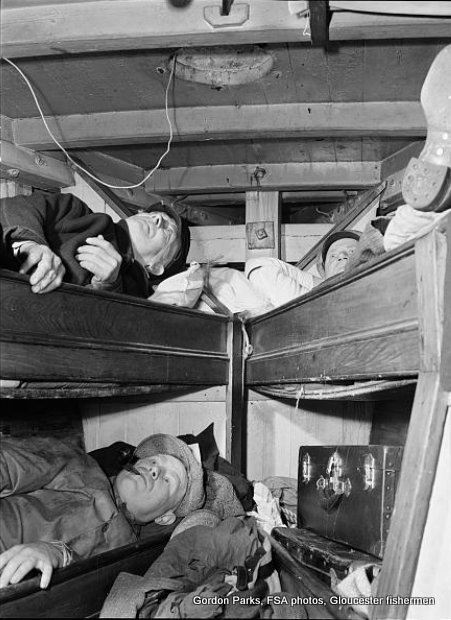
You can see Gordon Parks the humanist: ordinary big moments with Girls Scouts at a memorial service,Gloucester, MA; New York state camps where kids and staff are made up of diverse backgrounds; AldenCaptain and crew are relaxed, easy company together while in New York.

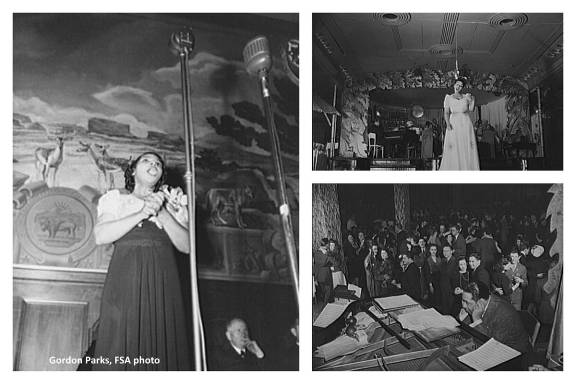
You can glimpse Gordon Parks the musician/composer through the arts he selected to cover while on assignment for the FSA/OWI. Marian Anderson’s broadcast at a mural dedication commemorating her Lincoln Memorial concert. Duke Ellington and the Orchestra at the Hurricane Club Ballroom, in New York City, April 1943.


There are also photos of Ellington trying to hear his band; Betty Rocha singing with the Orchestra; and individual portraits of musicians Rex Stewart, Ray Nance, Juan Tizol, Sunny Greer, and Johnny Hodges. The caption for Hodges includes the song title played during his portrait session, “Don’t Get around Much Anymore.” Parks also photographed the Club staff and customers


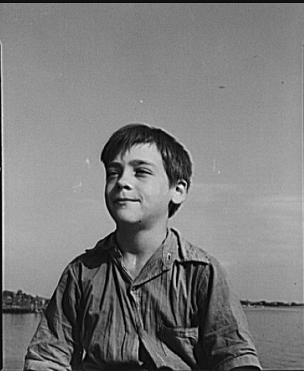
You can see Gordon Parks the movie Director. Some of his FSA/OWI work looks ready for neorealist cinema. (Rome, Open City global 1946.) The image on the left features generations of the women of the Machado/Lopez family. The boys at the Leonard Craske Fisherman at the Wheel memorial are not identified (one close up).

The center mirror image reminds me of film school students and their emulation of Citizen Kane (1941) and other camera tricks. The image in the mirror is from one of Parks early assignments with the FSA. Mirrors and reflections tend toward symbolism anyhow. Parks is there photographing HowardUniversity. It feels like he snapped this on the sly when seen with the other ‘dailies’. It’s Thanksgiving Dinner and President of Howard University, Mordicai Johnson, is being served by an African American.

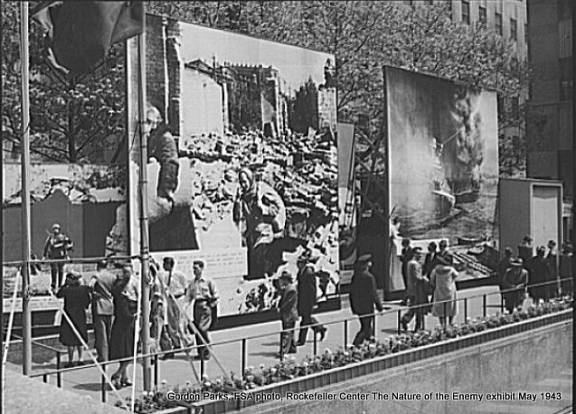
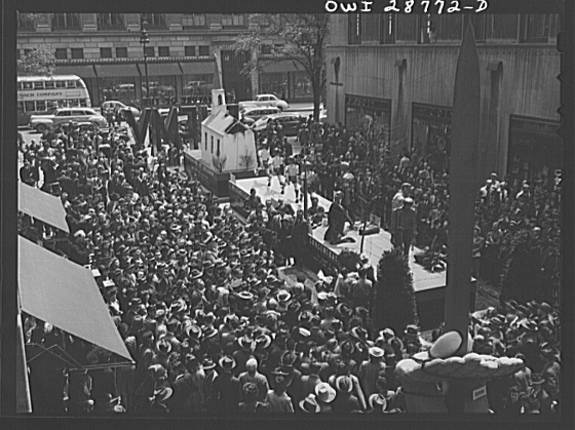
There’s scene shots: movie-scale streets and crowd shots teeming in NYC or downtown Gloucester. Gordon Parks filed 50+ pictures for the Nature of the Enemy show, the second exhibition of the “This is Our War” series of outdoor installations on the promenade of RockefellerCenter, May – July, 1943. ForGloucester, it’s Memorial Day services.


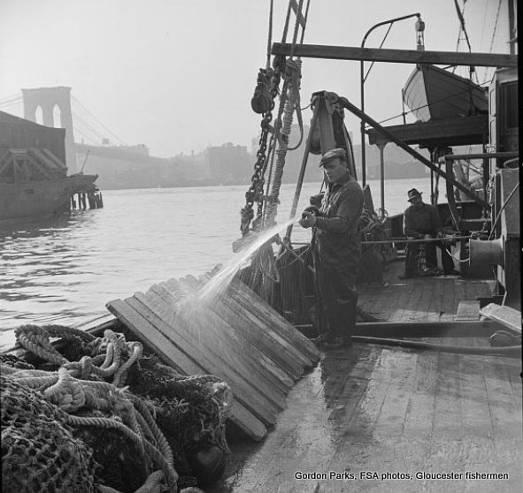
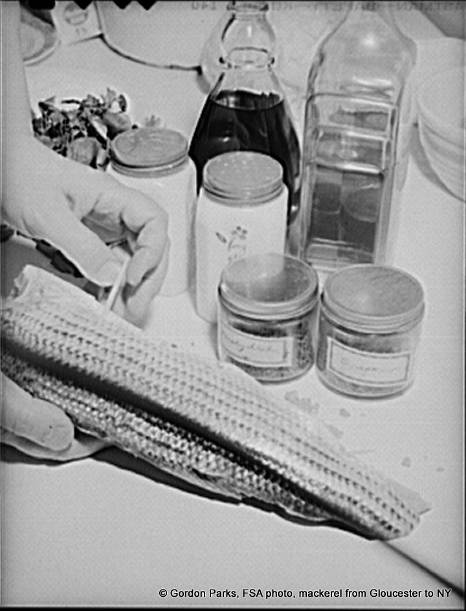
You can see GordonParks the photo journalist and author through the captions he wrote. For the Gloucester FSA/OWI photos there is a complete photo-journalism expose where he tracks a journey from sea to plate that begins in Gloucester and ends up in New York. The collaboration of GMG Gloucester photographers Kathy Chapman and Marty Luster Fish on Fridays series is such an interesting connection.

“The mackerel caught off the Gloucester coast ends up on the table of Mrs. Rose Carrendeno, NYC, for Friday’s supper. She prepared and served the fish that she bought earlier that day from Joseph DeMartino’s shop who buys his fish each morning from the Fulton Fish Market. She and her husband have three sons in the armed forces…She stops to chat with Mrs. DeMartino about the ration problems while Joseph DeMartino cleans the mackerel she has purchased.

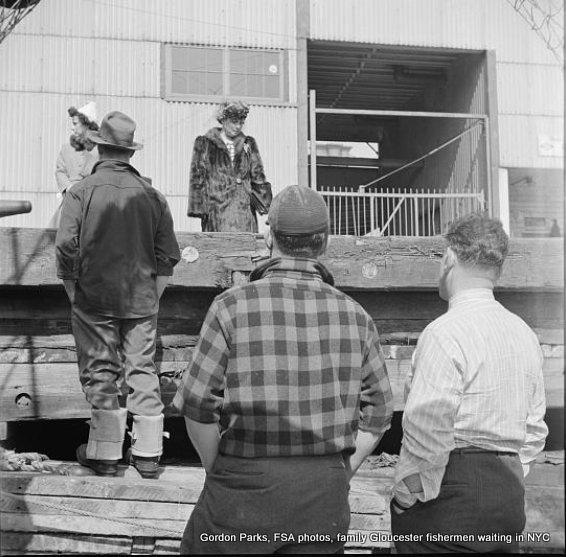
“Fishermen’s families often make trips down from New England towns to be in New York when the ship arrives. The fishermen consider that nothing is too good for their families.”

Close up of Mrs. Carrendeno’s ingredients for FOB


What is the FSA/OWI collection?

President Franklin Delano Roosevelt selected a social economist from ColumbiaUniversity, Rexford Tugwell, as Undersecretary of Agriculture in 1934. One of Tugwell’s policy directives included new analysis of assistance for dislocated farmers. He enticed a protégé, economist Roy E. Stryker, to come with him toWashington to direct the Resettlement Administration’s Historical Section.

Stryker was the perfect hire, and successfully eked out the program from 1935-1942. He believed photography would be the key tool. At Columbia, he was a master at amassing visuals and presentations to illustrate economic topics. While a Professor, he insisted his students get out and survey what’s around them, walk “the field”, “see.”

The FSA/OWI photographers documented daily life, the effects of the Depression and WWII across the country, the problems our country was facing, Main Streets, landmarks, portraits, workers, communities and families. There is great range of intention, style, subject and theme across the collection.

Some of the FSA/OWI photographs received nearly instantaneous and phenomenal fame.

The reputation of this work was so respected, so known, that employment in this program would later open doors to grants and commercial jobs, and for several artists, launched long illustrious careers.

Stryker promoted and protected these artists and the work as the best art dealers do: fleshing out projects, orchestrating exhibits, doggedly getting their work out there to be seen, and placing it in print– whether for church pamphlets or major media publications, or into galleries and collections. When he moved back to the private sector, he hired them. Unlike the art created for some other WPA-era agencies that was lost or destroyed, Stryker and his team had the foresight to try to protect all of it for perpetuity. At the closure of this program, he sought approval from President Roosevelt to transfer the master collection to the Library of Congress (nearly 280,000 items) as part of our National Archives, which was granted. Throughout the program he shipped boxes of prints to the New York Public Library (41,000 items) so that there would be an additional repository if a safe haven in Washington, DC, did not come together. As a result there have been two outstanding collections to study and access. (Other collections and institutions have smaller holdings of vintage prints.)

The Library of Congress remains the primary source for use and research. Through the 1950s, one could check out vintage prints along with books at the NYPL. As with many collections, the same images were often requested over and over. The Library of Congress digitized their FSA/OWI collection in the late 1980s and has been deeply committed to ongoing technological updates. In 2005 the NYPL determined that 1000 photos in their collection were actually “new” discoveries; they put these on line in 2012.

There are over 270,000 items in the Library of Congress Farm Security Administration/Office of War Information (FSA/OWI) archives, all digitized. IF you haven’t seen these images in person, look for exhibitions of the true vintage prints. There are many iconic photographs. Some capture a gap between ideals and reality. They have been studied, published and featured many times over. As the Gloucester images show, the collection is not solely images of farmers, rural problems, and Western states.

-Catherine Ryan / – all photos Library of Congress, FSA/OWI black and white photography collection

To search Gordon Parks FSA/OWI photographs for Gloucester, type in key words

Fishermen on the ALDEN

  • Frank Mineo, owner/Captain of the ALDEN
  • Cannela, Vito
  • Camella, Vito
  • Coppola, Vito cook
  • Domingos, Frank
  • Favozza, Gaspar
  • Frusteri, Giacomo
  • Giocione, Vito
  • Maniscaleo, Pasquale (engineer)
  • Milietello, Antonio (oldest)
  • Parisi, Anthony
  • Parisi, Franasco
  • Tello, Dominic
  • Tiaro (or Tiano), Antonio
  • Scola, Lorenzo
  • One photo of the Catherine C

Gordon Pew Fisheries worker, Joseph Lopez and his family

  • Machado, Mary, 97 year old grandmother, grandmother 11 men in armed forces
  • Lopez, Isabell, (Mary Machado’s daughter)
  • Lopez, Joseph (Mary Machado’s son-in-law); They have 2 boys in the armed forces and 6 children all together
  • Vagos, Dorothy (daughter of Mr. and Mrs. Lopez; husband Macalo)
  • Vagos, Macalo (son-in-law)
  • Vagos, Dorothy Jr (infant, great grandchild)
  • Vagos, Irene (has 2 boys and lives with mom/dad)
  • Vagos, Francis (Irene’s son)

Search for Gloucester landmarks. There are two or three photos in Rockport: the Pewter Shop and the owner Mrs. Whitney