Do you remember Dr. Ruth? Did you know about her life story? Allison Gilbert’s deft portrait about Dr. Ruth Westheimer’s ongoing professional arc is an eye-opener and memorable read.
“…I still will talk about sexual dysfunction. But I have done that.” She had recently turned 95, and after a long and spirited career as America’s most famous and least likely sex counselor, she was driven by a new challenge…”
…Dr. Westheimer insists, however, there was at least one upside to her confinement. She was grounded long enough to recall having written in her childhood diary about feeling lonely. And she had the time to look for it.
She found it.
The diary, started in 1945 when she was 17 and written in her native German and sometimes in Hebrew, recounts in painful detail what it was like for her to grow up in a Swiss children’s home during World War II.
Before her explosive rise to stardom as America’s sex therapist in the 1980s, Dr. Westheimer was born Karola Ruth Siegel to an Orthodox Jewish couple in the German town of Wiesenfeld.
She was 10 years old when she was put on a train to Switzerland, part of the Kindertransport of Jewish children seeking refuge from the Nazis. It was Thursday, Jan. 5, 1939…”
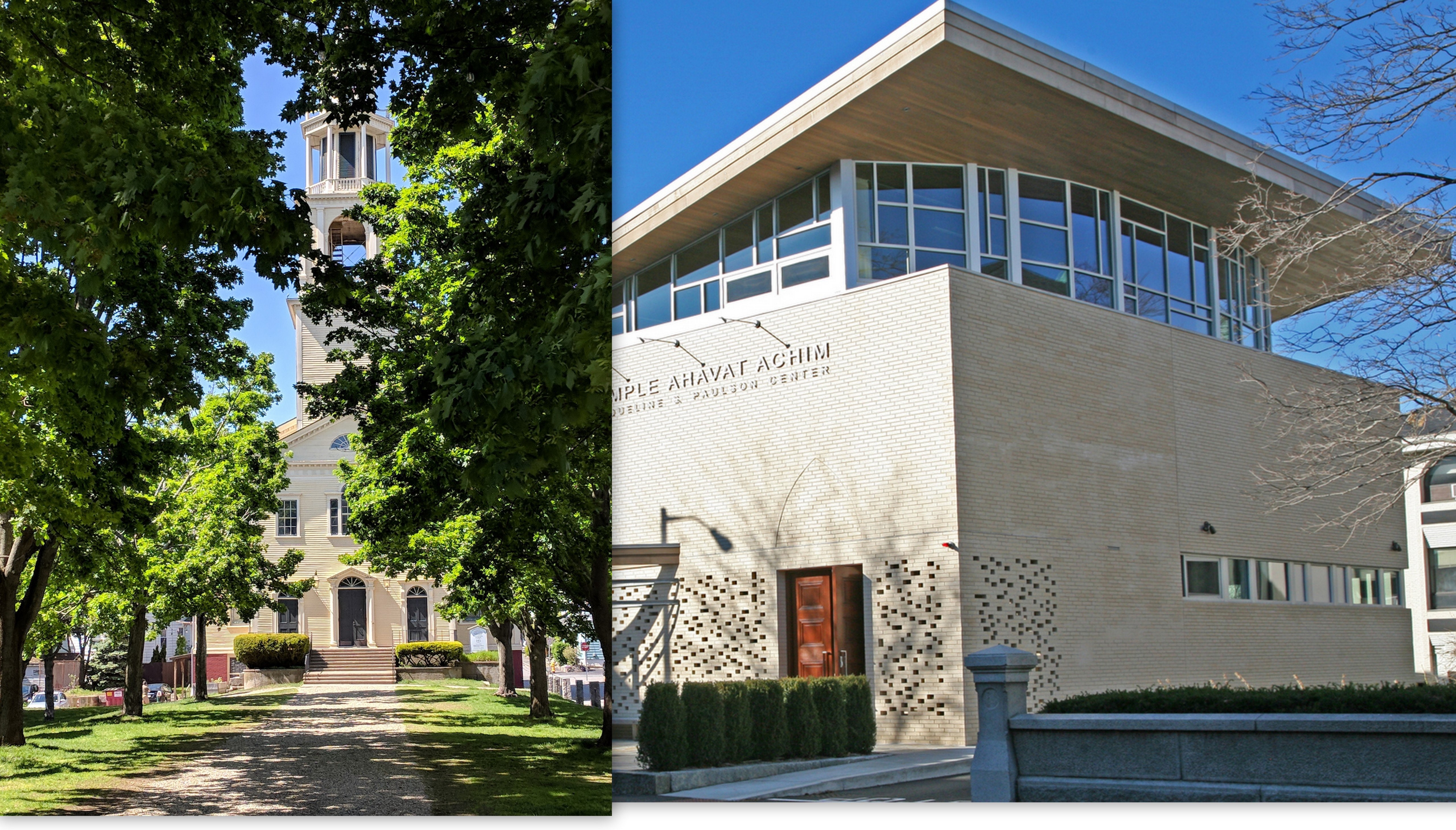
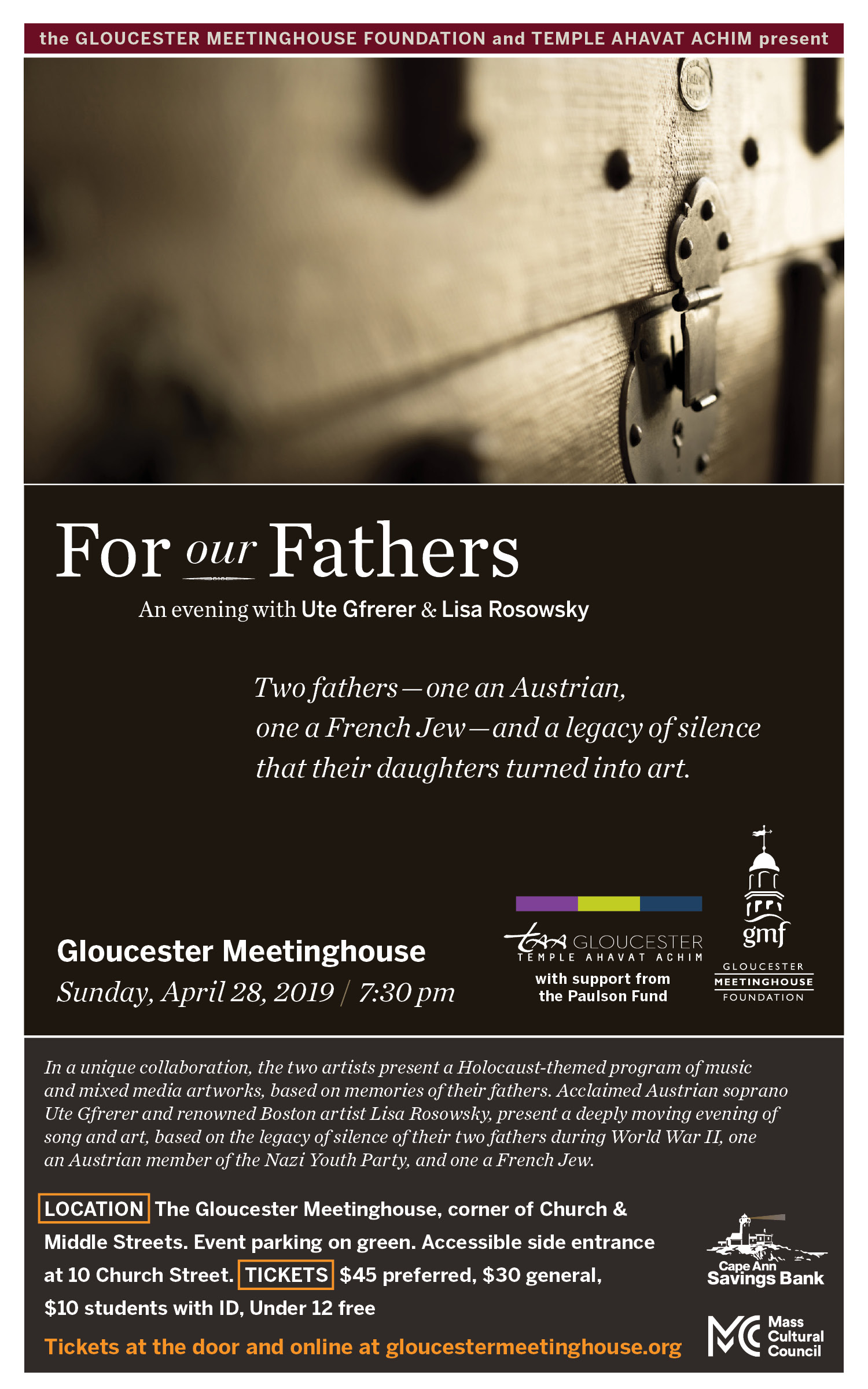
FOR OUR FATHERS, Sunday, April 28, 2019 7:30pm,at the Gloucester Meetinghouse: acclaimed Austrian soprano Ute Gfrerer, accompanied by pianist William Merrill, and renowned Boston artist Lisa Rosowsky present a deeply moving evening of song and art, based on the legacy of silence of their two fathers during World War II, one an Austrian member of the Nazi Youth Party, and one a French Jew. In a unique collaboration, the two artists present a Holocaust-themed program of music and mixed media artworks, based on memories of their fathers. The event is co-hosted with Temple Ahavat Achim. The Meetinghouse (home of the Unitarian Universalist Church) is located on the green at the corner of Middle and Church Streets (accessible side entrance at 10 Church Street with an elevator). Tickets ($45 preferred, $30 general, $10 students with ID, under 12 free) are available at the door and in-advance with more information at gloucestermeetinghouse.org
About the program from the artist, Lisa Rosowsky:
When we met in 2017, Ute had already developed a repertoire of musical performances incorporating music that had been set to poems by writers caught up in the Holocaust, and for more than a decade I had been creating mixed media works of art around being the daughter of a survivor. We knew we wanted to find a way to weave together our work into an audio-visual program, and it became my task to craft the presentation. We were amazed by how many of her songs matched up thematically with my pieces! Our goal was to move the audience seamlessly between each song and each work of art, setting both into historical context while offering insight into our individual experiences with our fathers. Over the course of a few months, we developed this performance, which we are pleased to share with you.
Benefit event: This event is co-sponsored by Temple Ahavat Achim with support from the Paulson Fund, by the Series Sponsors of the Gloucester Meetinghouse Foundation, and by the Massachusetts Cultural Council. Proceeds will be used to benefit the ongoing preservation of the historic (1806) Meetinghouse as well as to support Temple Ahavat Achim’s Rabbi Myron and Eileen Geller Endowment Campaign for the Sylvia Cohen Religious School and Family Learning
Spread The GMG Love By Sharing With These Buttons:
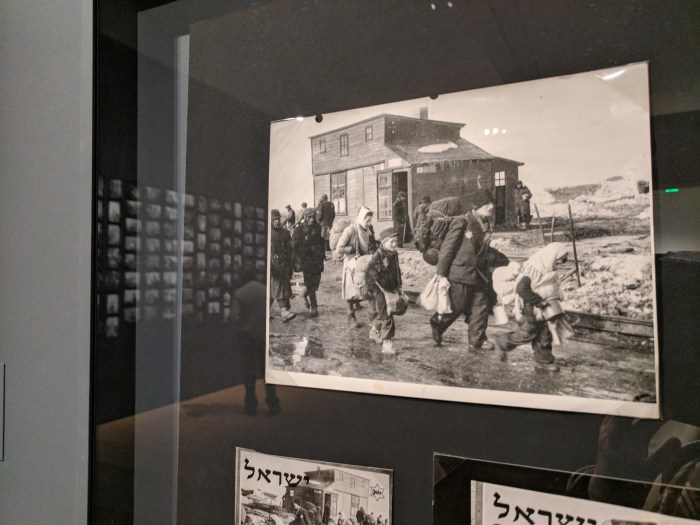
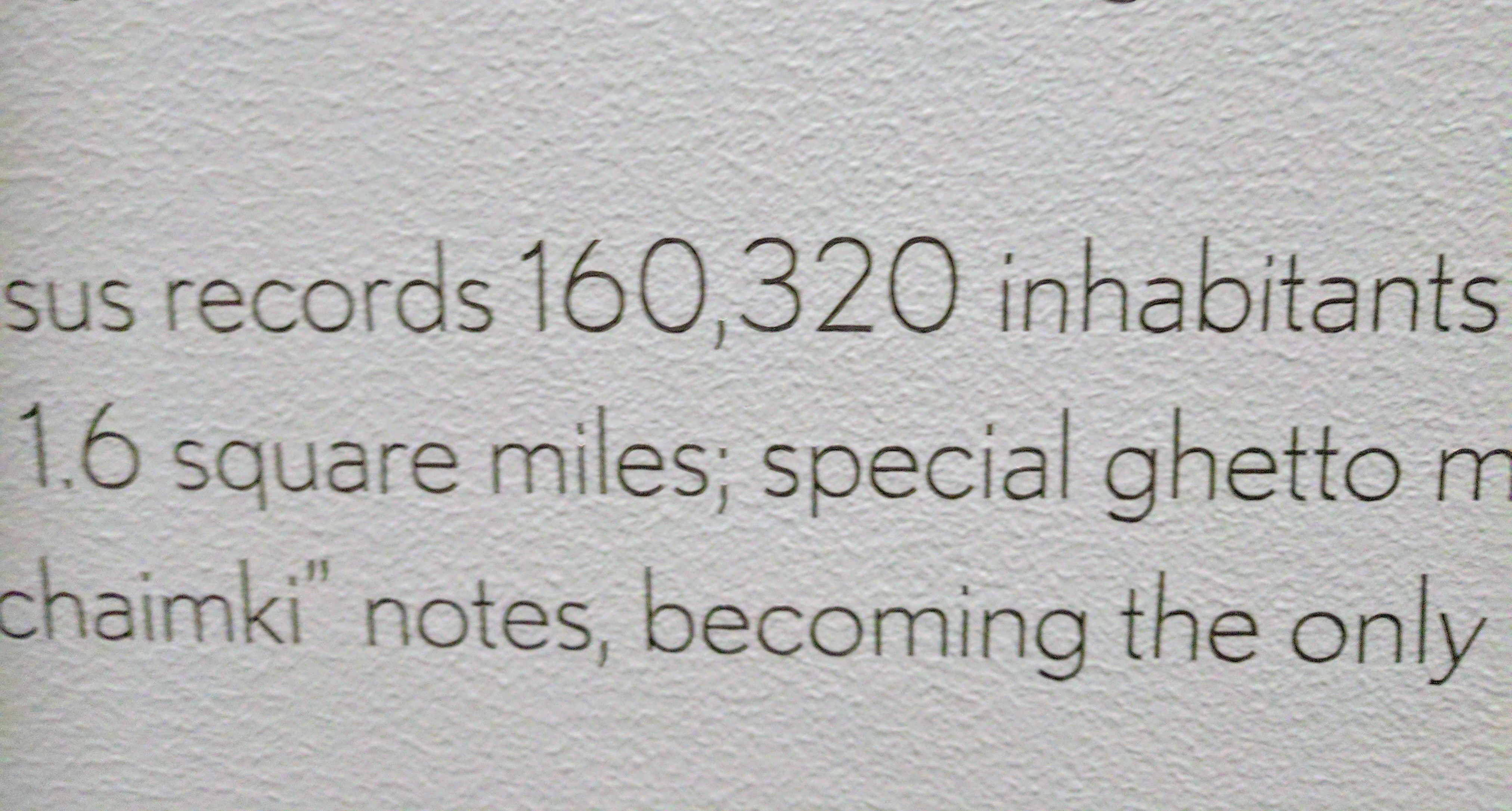
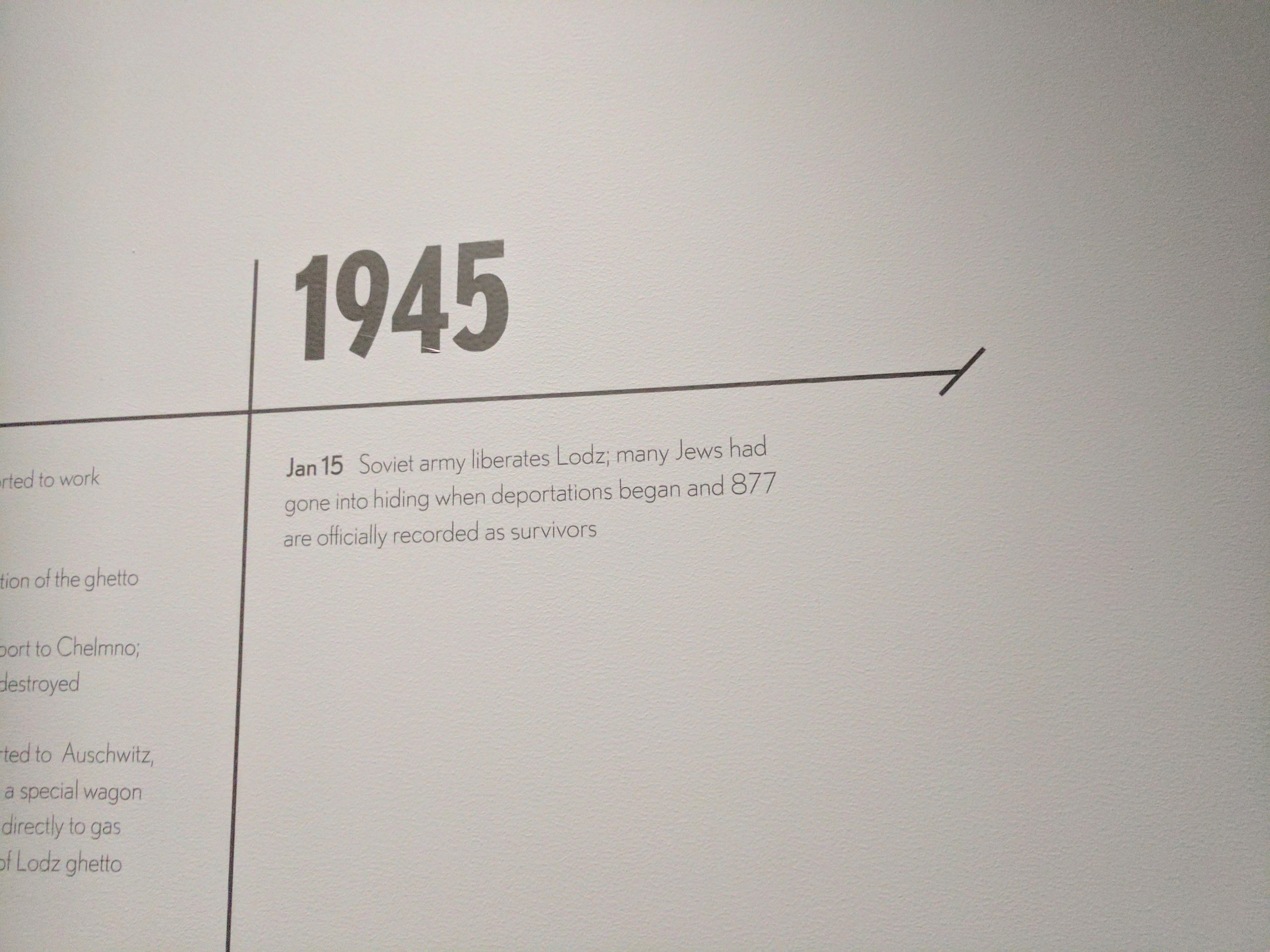
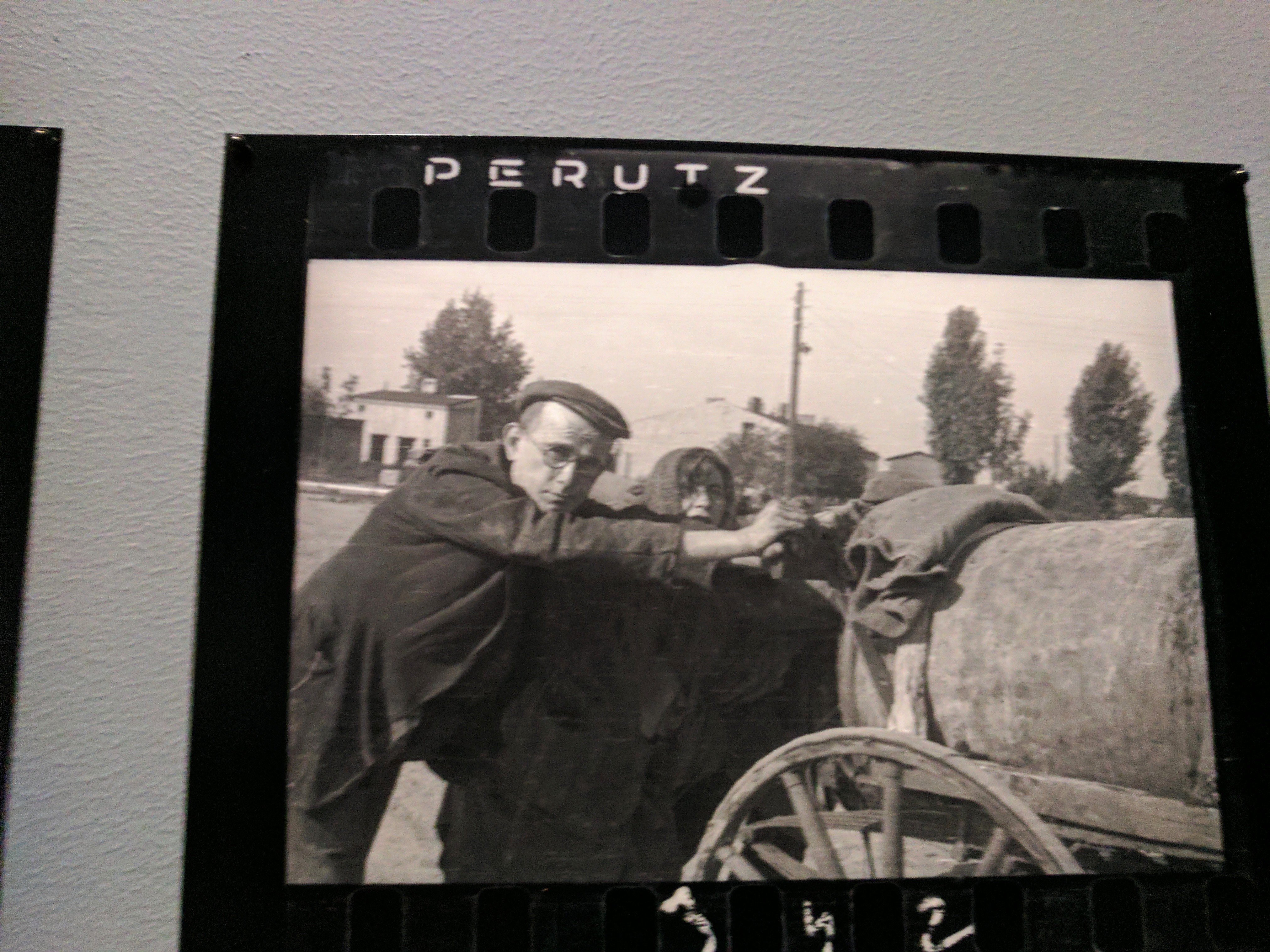
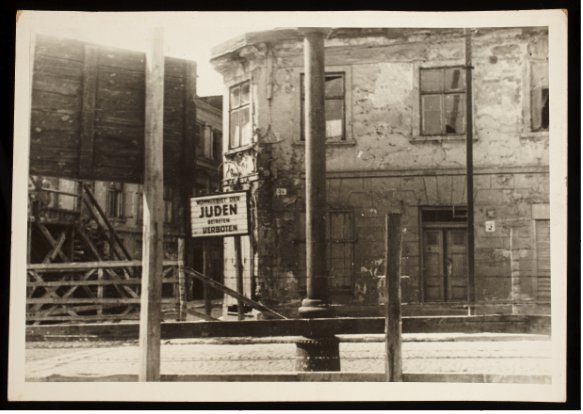
Henryk Ross (1910-1991) was one of less than 900 known survivors of 160,000 confined to the Lodz Ghetto murdered at Chelmno, the first extermination camp established by the Nazis.
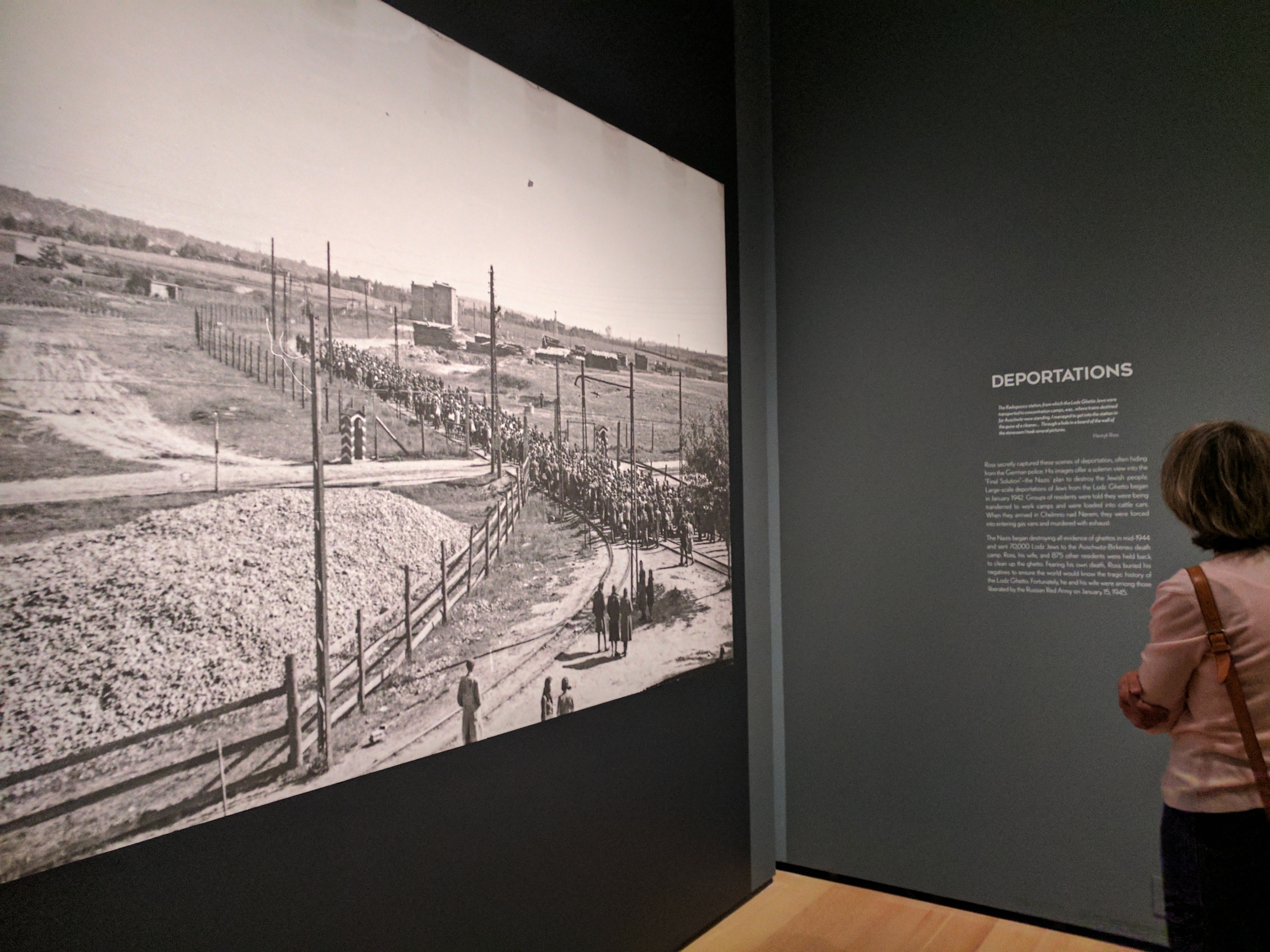
photo caption: details from exhibition wall text
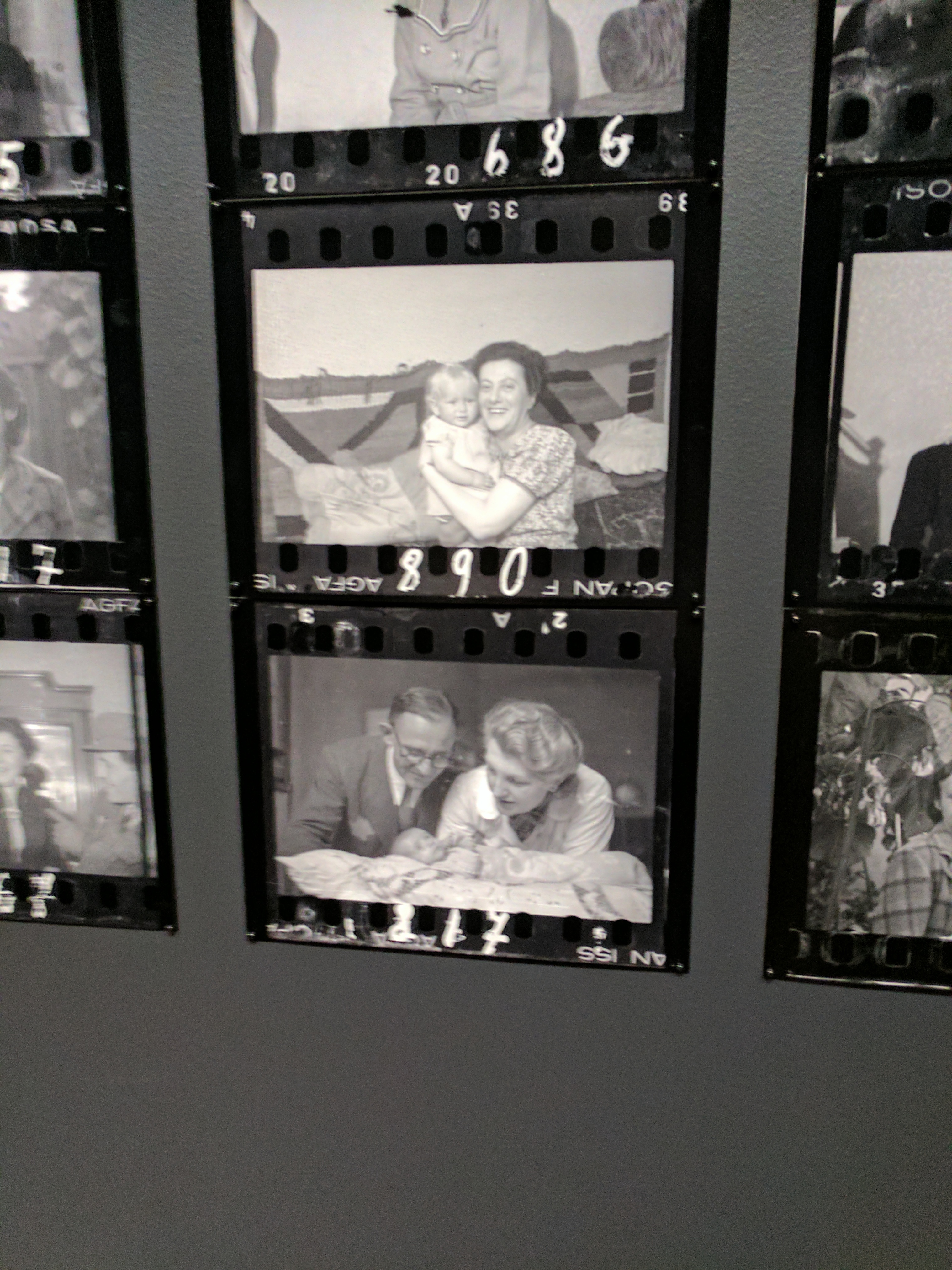
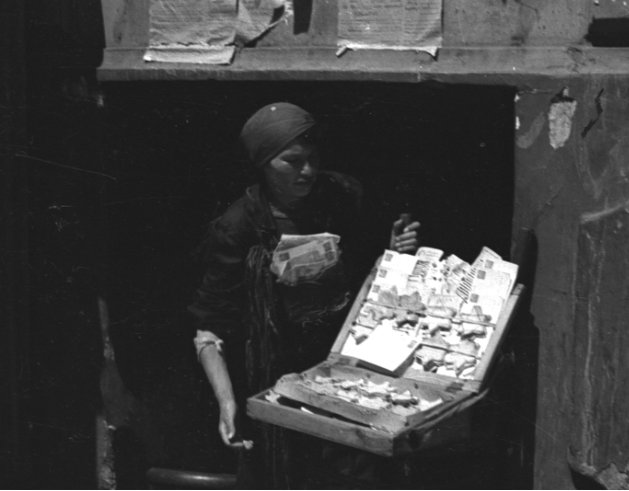
Before 1939, Ross was a photojournalist for the Polish press and heroically that didn’t stop in the ghetto. He was forced to photograph identity cards for every captive, promotional material, and assignments, often gruesome, for the oppressors’ “Department of Statistics”. While photographing ostensibly for “work” he snapped away bearing witness, building evidence and leaving a record. His wife Stefa was imprisoned there as well, aiding and encouraging his activity. They were married in the ghetto. Ross’s cover necessitated movement, access to equipment, developing, and film: His perilous “employee” theft went undetected.
Henryk Ross was a brave front lines prisoner and artist surreptitiously documenting specific and deteriorating realities of the innocents for five years– building a body of persistent resistance. He was a war photographer and patriot I did not know before this exhibition and will not forget.
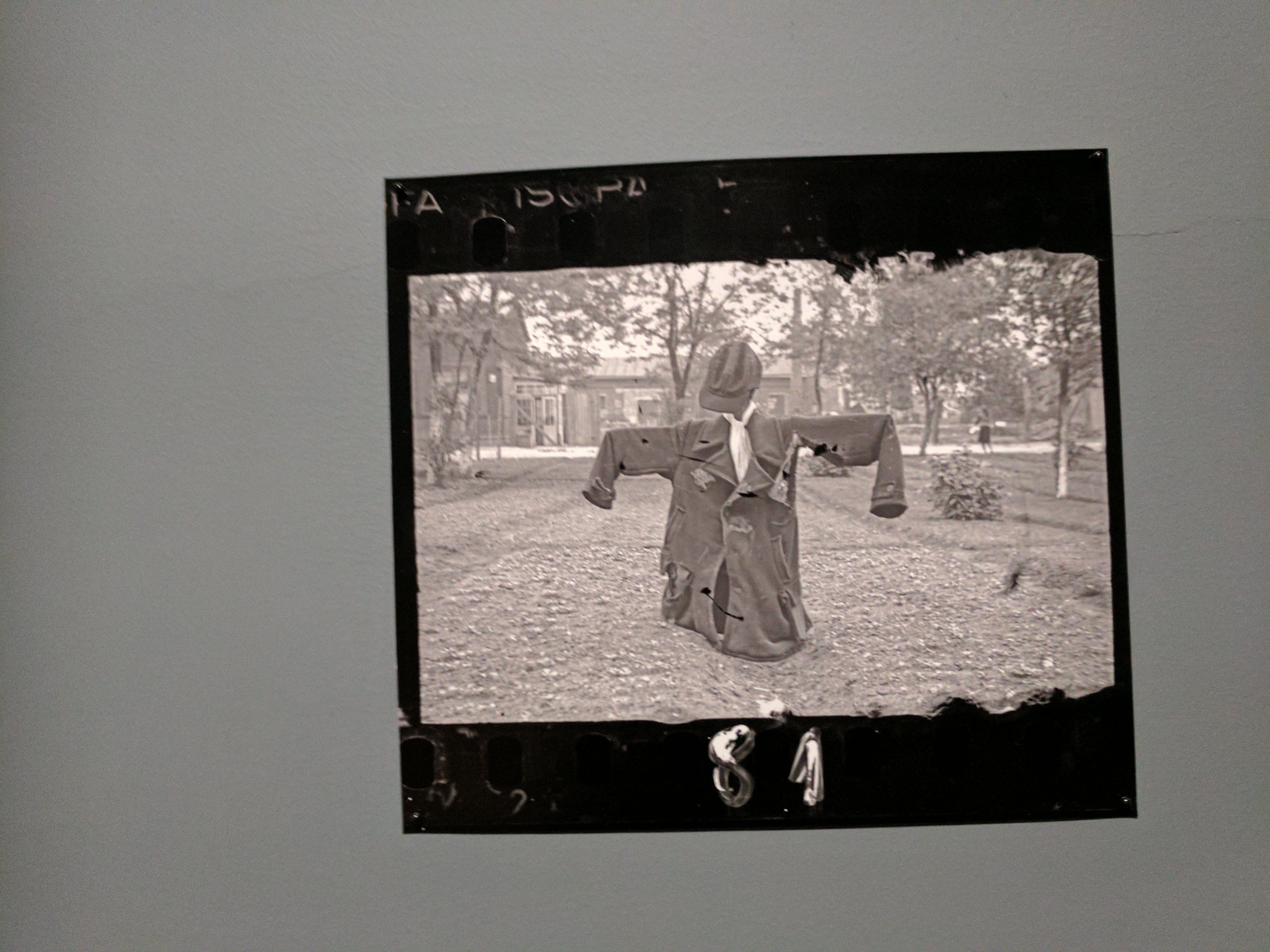
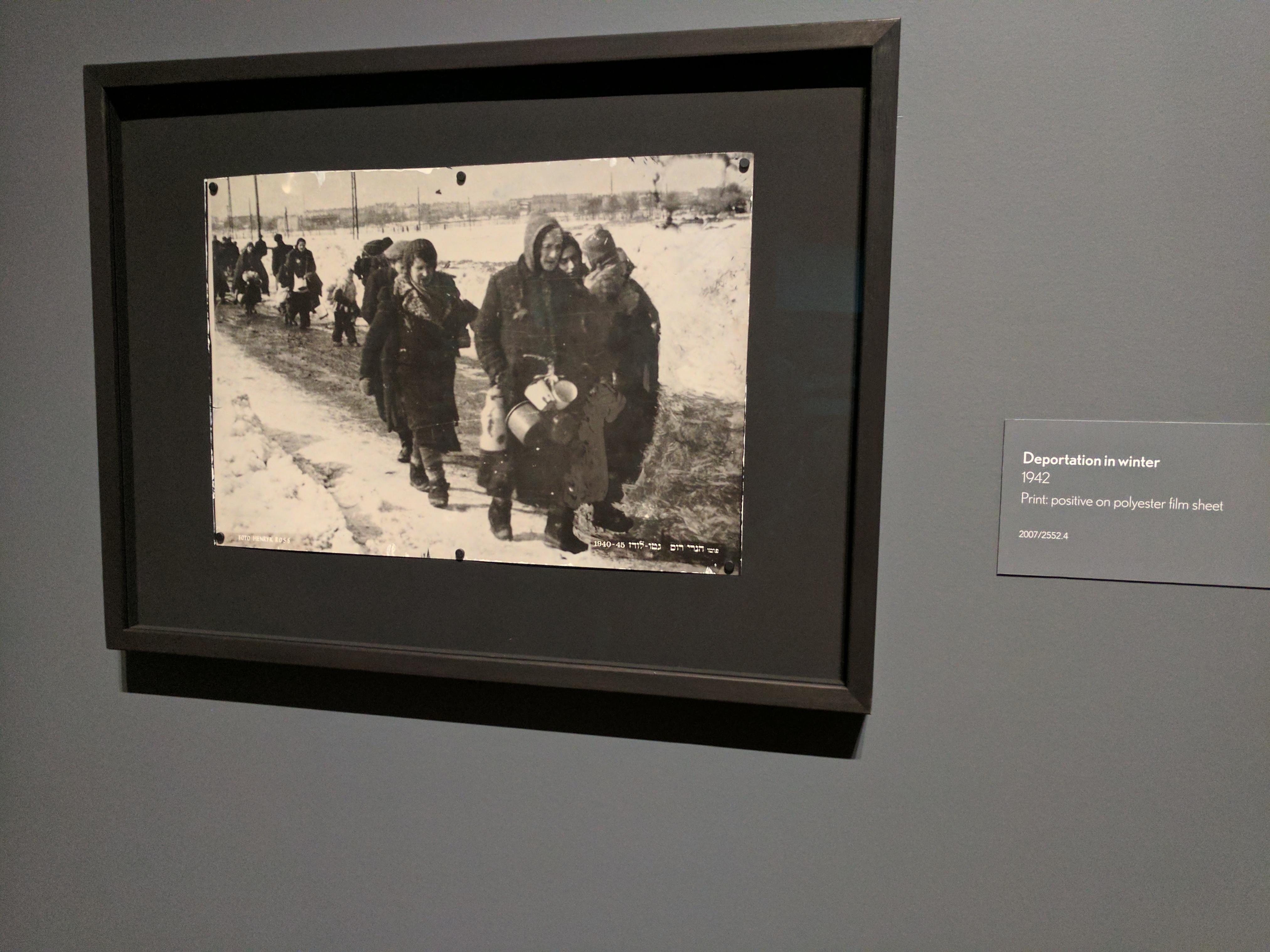
photo caption: selected photos on display at the MFA (click to enlarge and for more information) genocide day by day
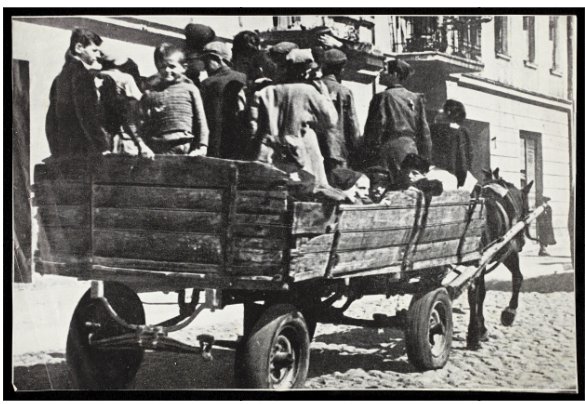
genocide of children is genocide of the childrenthere are no wordsweapon of starvationGhetto police bags of breadfecal workers series- some are barefootDirect gazeYellow star on scarecrow- star of david on back and arm DeportationHorrifying removal of children under 10 years old-
Miraculously both survived, and some negatives. Ross’s work was used as evidence in the 1961 trial of Nazi war criminal Adolf Eichmann. They testified together. By then he hadn’t photographed anything for years and wouldn’t ever again.
“I buried my negatives in the ground in order that there should be some record of our tragedy… I was anticipating the total destruction of Polish Jewry. I wanted to leave a historical record of our martyrdom.”
-Henryk Ross
I wonder if there is a memorial plaque on Jagielonska Street near where he hid them?
Humanity devoured–death march past synagogue ruins.
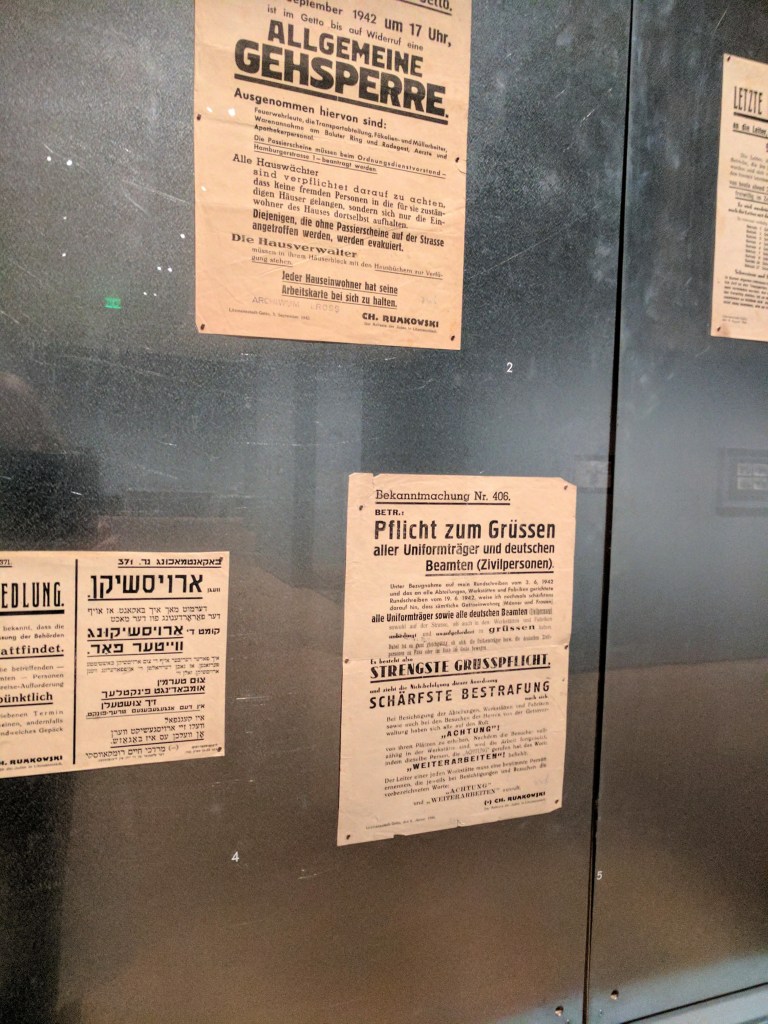
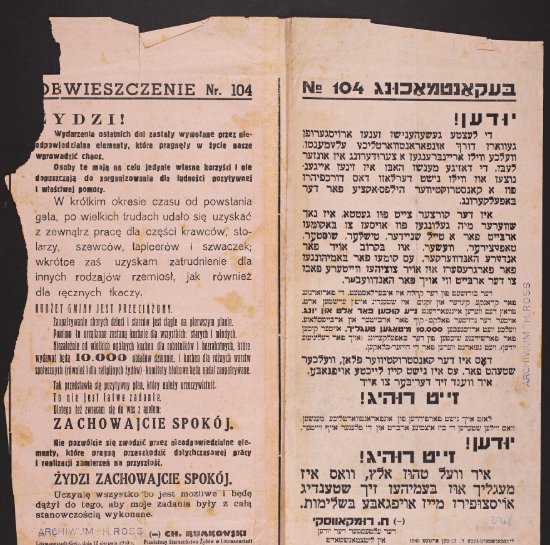
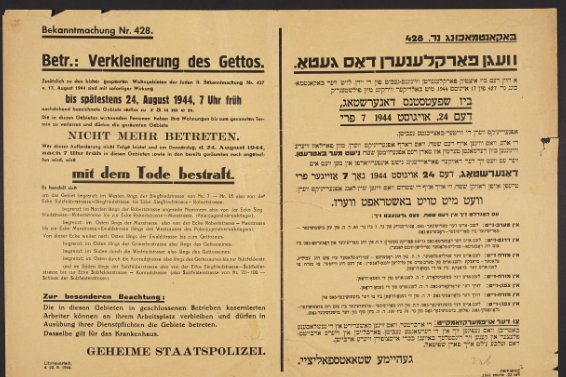
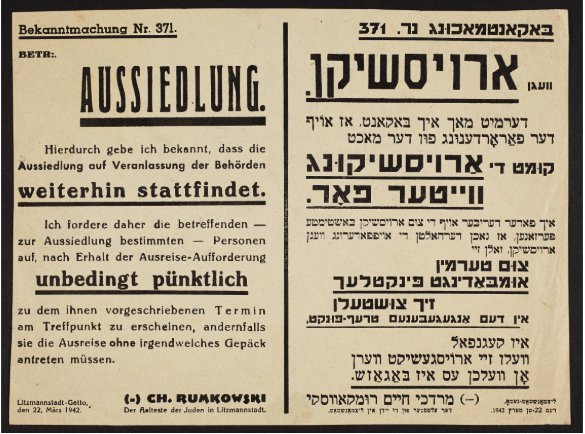
Lodz Ghetto Circulars
The exhibition included examples of the Lodz ghetto horrifying, gutting circulars. I used Google translate to transcribe a few of the letterpress announcements. I imagine that the Art Gallery of Ontario will crowd source volunteer transcription one day.
Keep Calm and Carry On pronouncements here, too Aug 12, 1940 Announcement 104: Jews! Remain Calm! The events of the last days were triggered by the responsible elements that we wanted to bring chaos into our cycle. These people are aimed at the only important benefits allowed to organize positive and appropriate help for the population. In a short period of time since the creation of the ghetto, after great hardships, it was possible to obtain work from the outside for parts of tailors, carpenters, shoemakers, lappers and seamstresses; soon I will get employment for other crafts, as well as for handicrafts. The Municipal Budget is Overstated. Supplying children and the elderly is still in the foreground. Pomino will be equipped with kitchens for all: old and young. Regardless of the (?) general kitchen for workers and the unemployed, which will be issued with 10,000 tanks per day and for various layers (also for religious Jews) – block committees will continue to be supplied. this is a positive plan that must be spotted. this is not an easy task. therefore I am appealing to you with an appeal: keep calm. Do not allow yourself to be misled with irresponsible elements that would hinder your previous work and fulfill your future intentions. I WANT TO SAVE PEOPLE. I will do everything that is possible and I will strive to ensure that my tasks are carried out with all due diligence – Ch. Rumkowski
March 22, 1942 Announcement No. 371 : Resettlement Subject: Orders concerning the transfer of the ghetto. Spatialization of the western ghetto part…From the Donnersiteg, the western part of the ghetto must be cleared of all residents and workers. the people living and working there must therefore be in the east… I hereby announce that the resettlement continues to take place on the initiative of the authorities. I urge the persons concerned – who are destined for resettlement – to do so. upon receipt of the departure request, it is essential that you arrive punctually at the meeting time prescribed by you, otherwise you will have to leave the country without any additional packing. litzmannstadt-ghetto the 22nd, marz 1942 Ch. Rumkowski* is the oldest of the Jews in Litzmannstadt
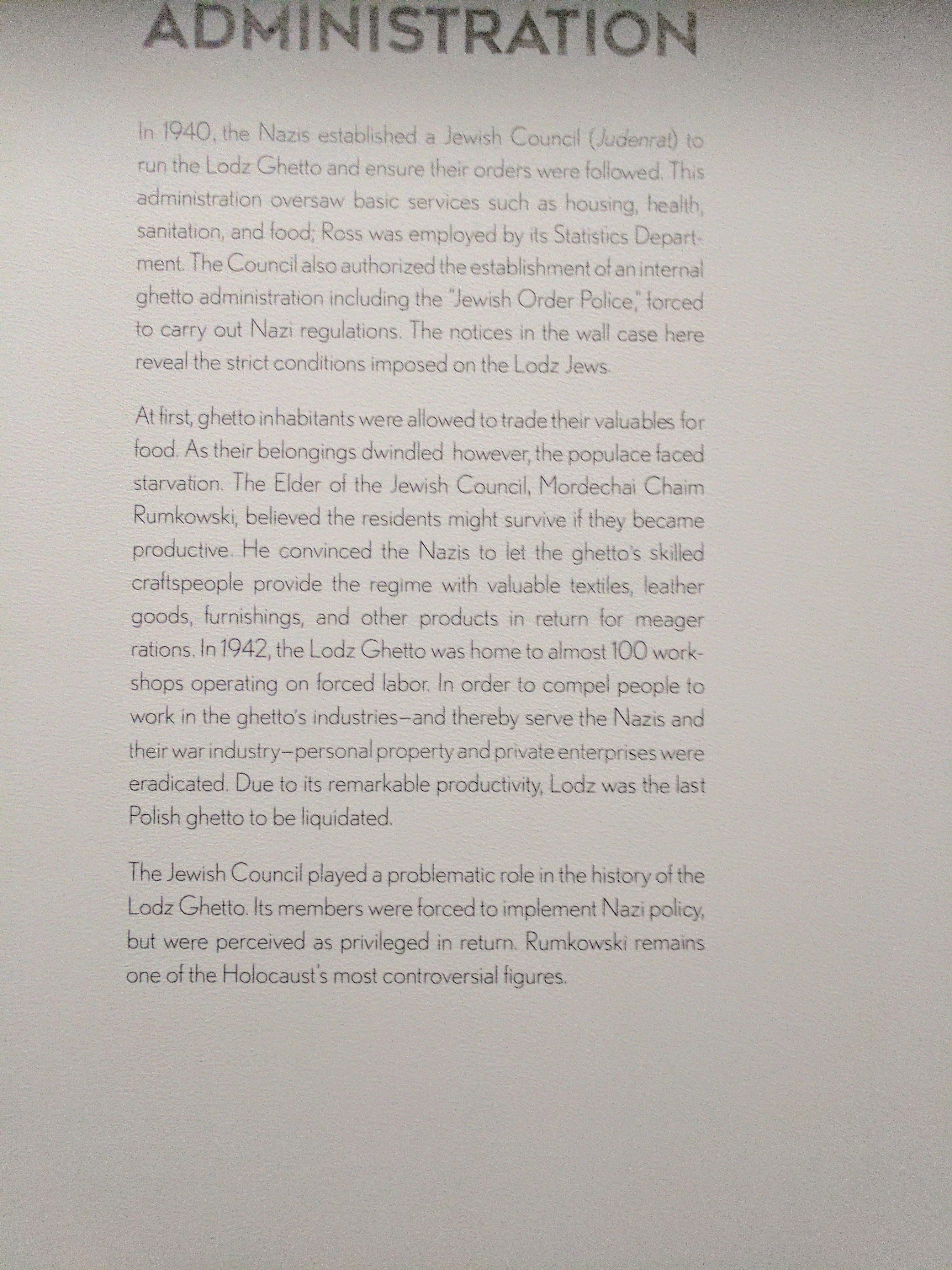
excerpt from the MFA museum label (photo below) concerning Administration and Mordechai Chaim Rumkowski: “…The Elder of the Jewish Council, Mordechai Chaim Rumkowski, believed the residents might survive if they became productive…Due to its remarkable productivity, Lodz was the last Polish ghetto to be liquidated. The Jewish Council played a problematic role in the history of the Lodz Ghetto. Its members were forced to implement Nazi policy, but were perceived as privileged in return. Rumkowski remains one of the Holocaust’s most controversial figures.”- MFA label
August 22, 1942 Announcement no. 428 Concerning the size of the ghetto In addition to the previously no longer enter. Who does not follow this request and on Thursday d. 24 august 1944, after 7 o’clock early in these areas as well as in the already cleared still encountered, is struck, with death… It is bounded by the area: in the west … limited: in the east … limited: to the south … limited; in the East… and slow to the south… For special attention Workers barracked in these areas in closed premises can remain in their workplace and be allowed to work in the same place. Secret State Police
September 4, 1942 Announcement No. 391 General Curfew in Ghetto
Museum of Fine Arts display label (see photo above) “On September 4, 1942, Lodz Ghetto populace was told that elderly and sick residents and children under the age of 10 would be deported from the ghetto. This notice forbade the remaining residents from leaving their homes while deportees were collected. “From Saturday September 5 1942 from 5pm on a general curfew is in effect until revoked. Excepted are: firefighters, the Transportation Department, feces and garbage haulers, workers involved in the reception of goods at the Baluty Market Square and the Radogoszcz (station), doctors and pharmacy personnel.”
From the digitized archives: click to enlarge and read description
As this repository was such an exacting chronicle and similar camera format, I thought about American FSA/OWI photographers, Ross’s contemporaries, working with home front goals in the same time span as Ross, safe an ocean away. (In 1942 Howard Lieberman and Gordon Parks official assignments included portraits in Gloucester, Massachusetts, of family members missing deployed husbands, brothers, sons and daughters, of a community honoring Memorial Day, of fishermen hard at work providing “Victory Food From American Waters”. People helping. Brave souls.) FSA photographers and FSA had earned clout pre-1937. Did they inspire Ross? Decades later, did these artists ever come to know each other’s works?
Spread The GMG Love By Sharing With These Buttons:

















 Good Morning Gloucester