The Piping Plovers have returned to nest on Good Harbor Beach. Last night I counted five plovers, and today four!
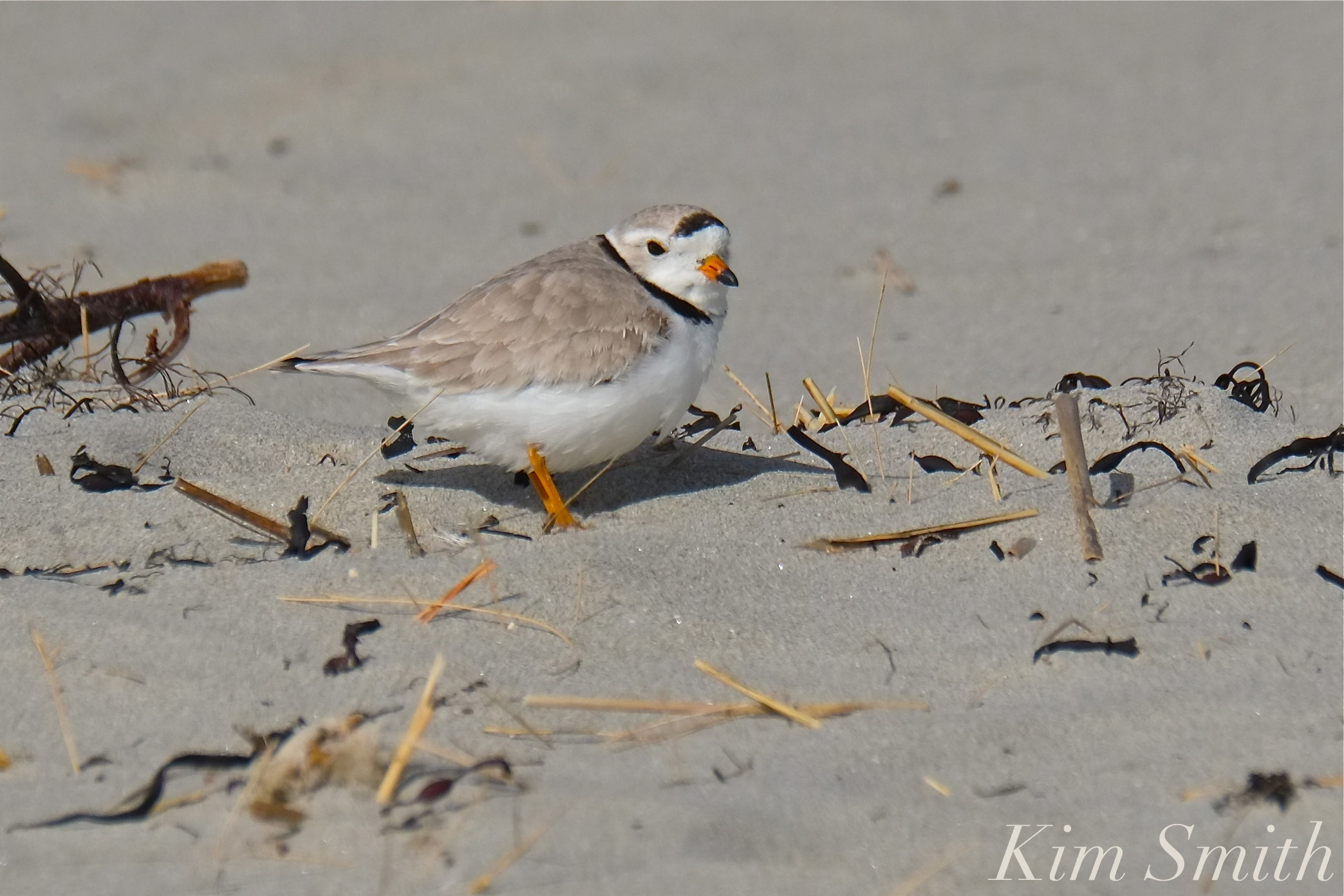 Above the wrack line, males are creating nest scrapes for females to approve (or disapprove, as is often the case). The gents use their back legs to vigorously dig a slight depression. They then sit in the scrape and beckon to the ladies with a continuous piping call to come inspect the potential nesting site.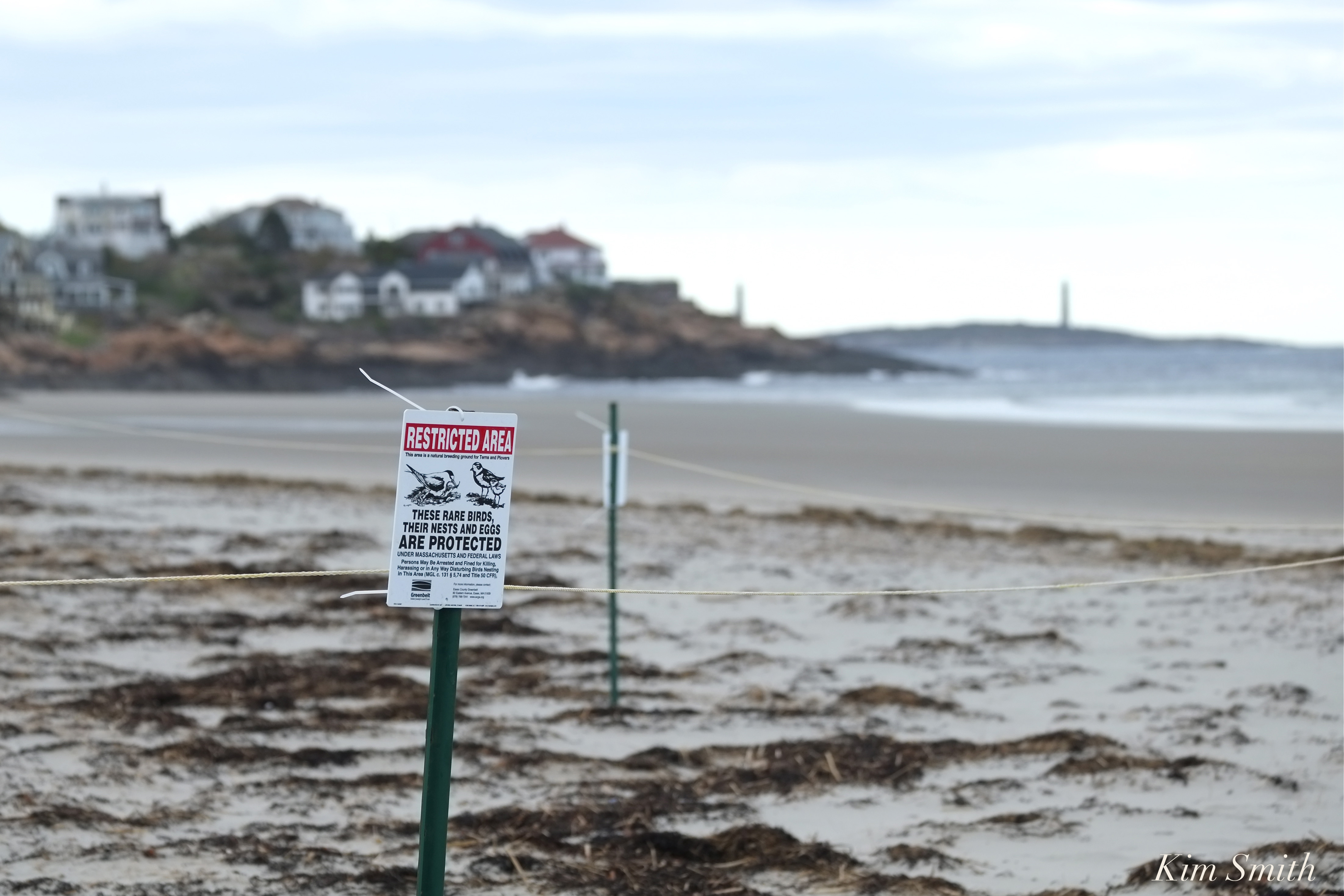
Dave Rimmer, Essex County Greenbelt director of land stewardship, this morning installed fencing around a possible nesting area. We are all hoping that the Piping Plovers will quickly establish a nest and the chicks will have hatched before the July 4th crowds descend upon the beach. Dave’s message to everyone enjoying GHB is that if the Plovers are left undisturbed, the chicks will have a far better chance of survival the earlier in the season they hatch. If the nest site is continually disturbed and egg laying is delayed again and again, the Plovers will be here all that much longer.
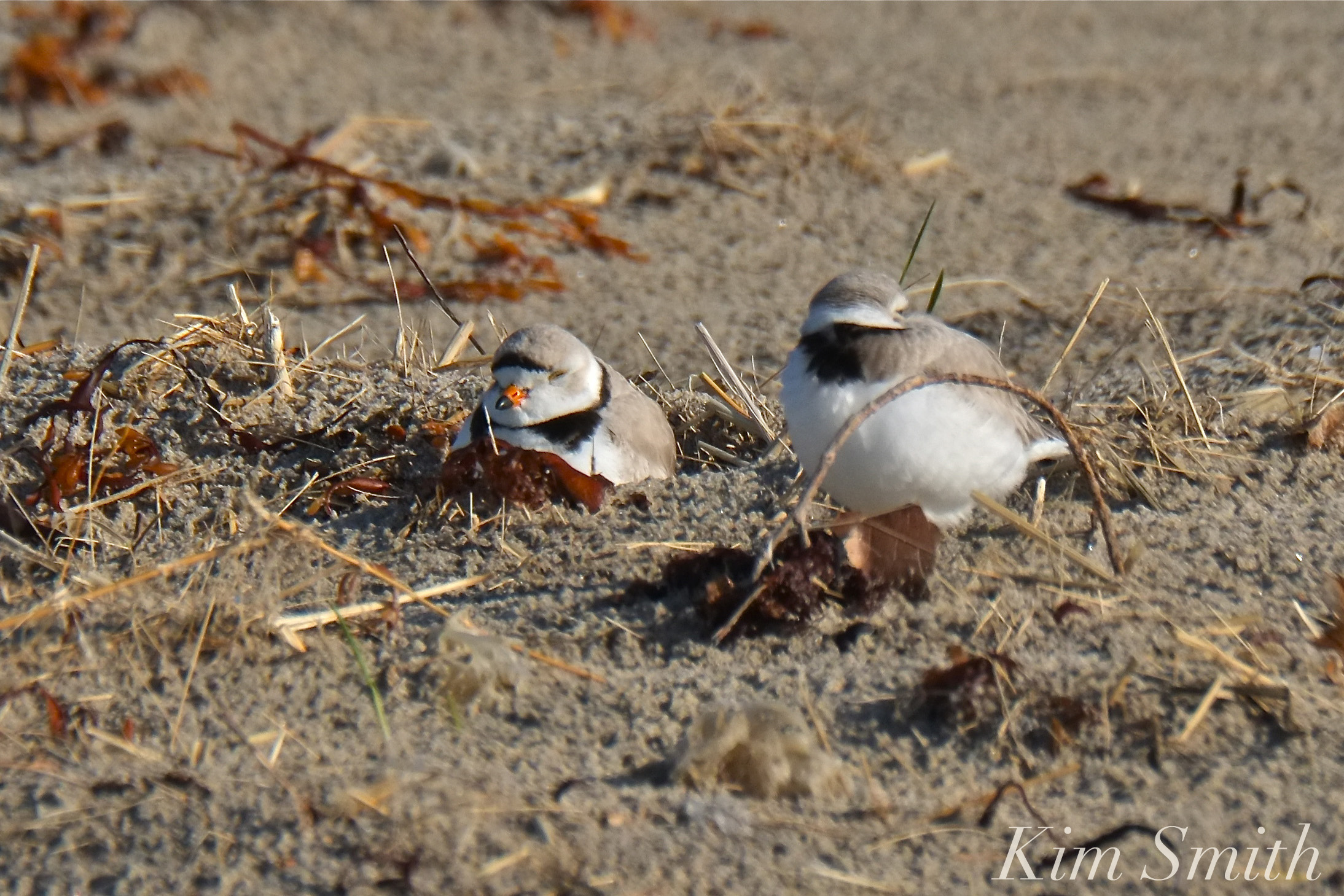 It’s not easy being a Piping Plover. Rest time between foraging and courting.
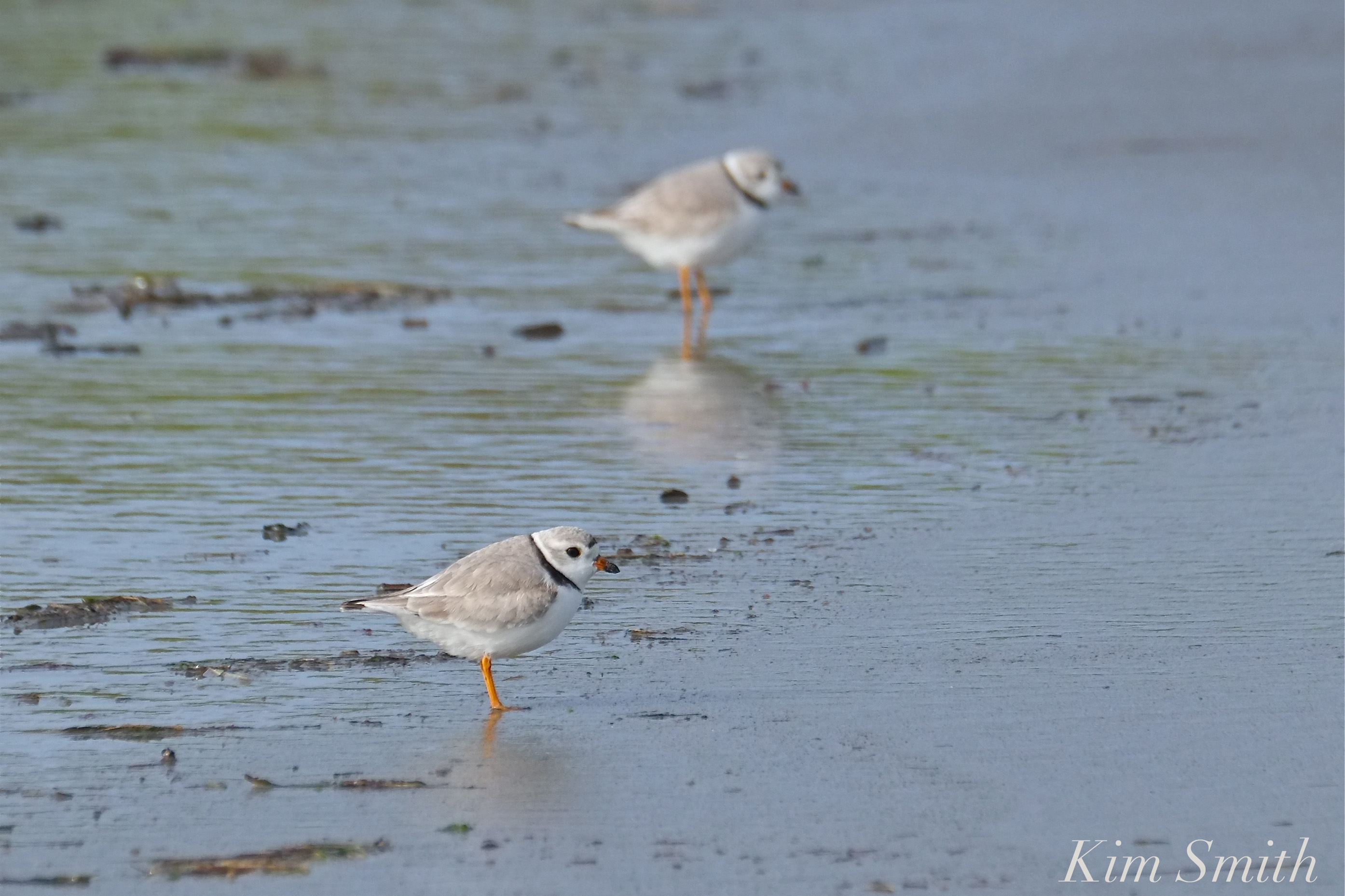
The Plovers have traveled many thousands of miles to reach our shores and are both weary from traveling and eager to establish nesting sites.
What can you do to help the Piping Plovers? Here are four simple things we can all do to protect the Plovers.
1) Don’t leave behind or bury trash or food on the beach. All garbage attracts predators such as crows, seagulls, foxes, and coyotes, and all four of these creatures EAT plover eggs and chicks.
2) Do not linger near the Piping Plovers or their nests. Activity around the Plovers also attracts gulls and crows.
3) Respect the fenced off areas that are created to protect the Plovers.
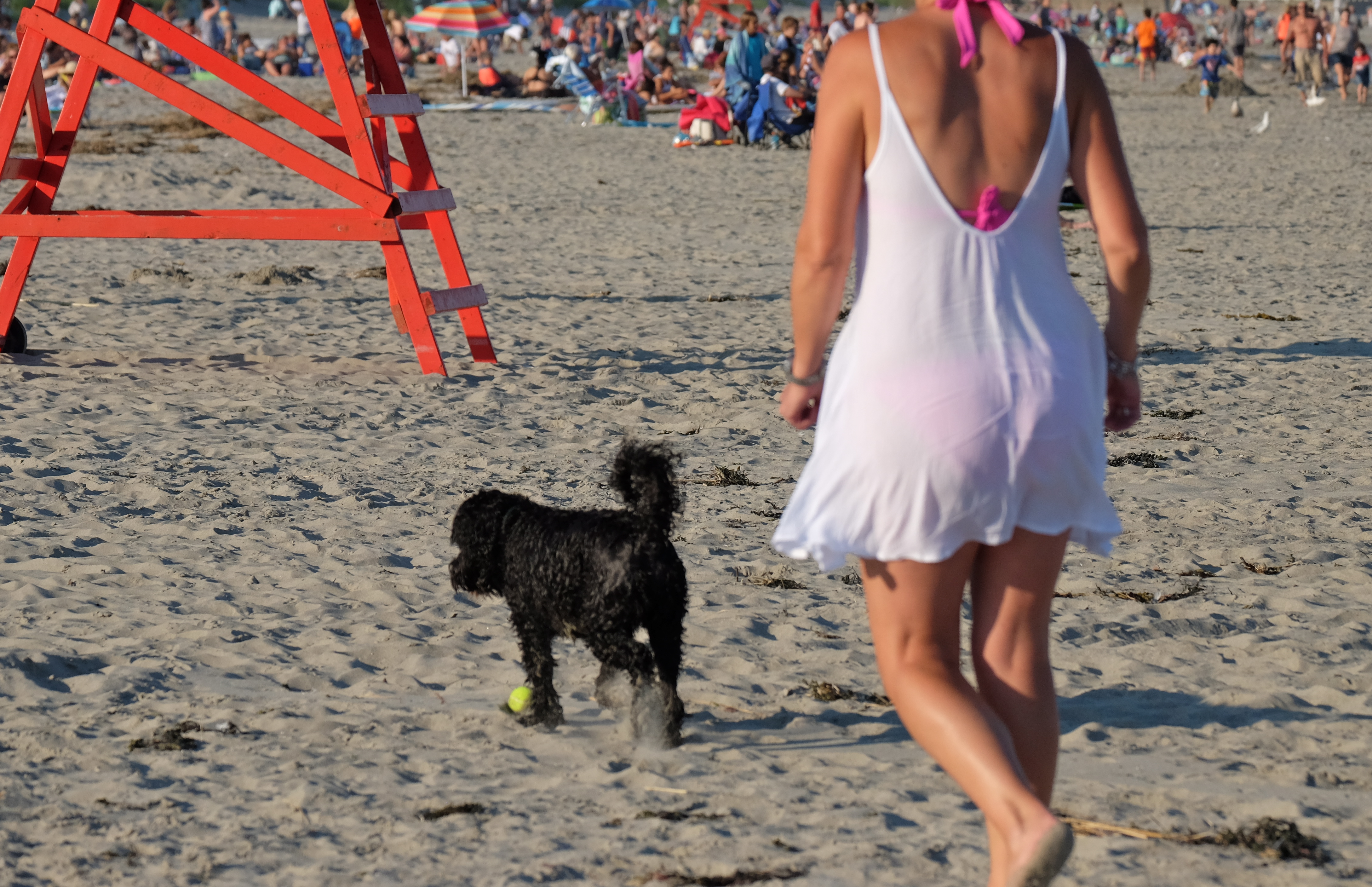
4) If pets are permitted, keep dogs leashed.
The last is the most difficult for folks to understand. Dogs threaten Piping Plovers in many ways and at every stage of their life cycle during breeding season, even the most adorable and well-behaved of pooches.
Dogs love to chase Piping Plovers (and other shorebirds) at the water’s edge. After traveling all those thousand of miles, the birds need sustenance. They are at the shoreline to feed to regain their strength.
Dogs love to chase piping Plovers at the wrack line. Here the birds are establishing where to nest. Plovers are skittish at this stage of breeding and will depart the area when disturbed.
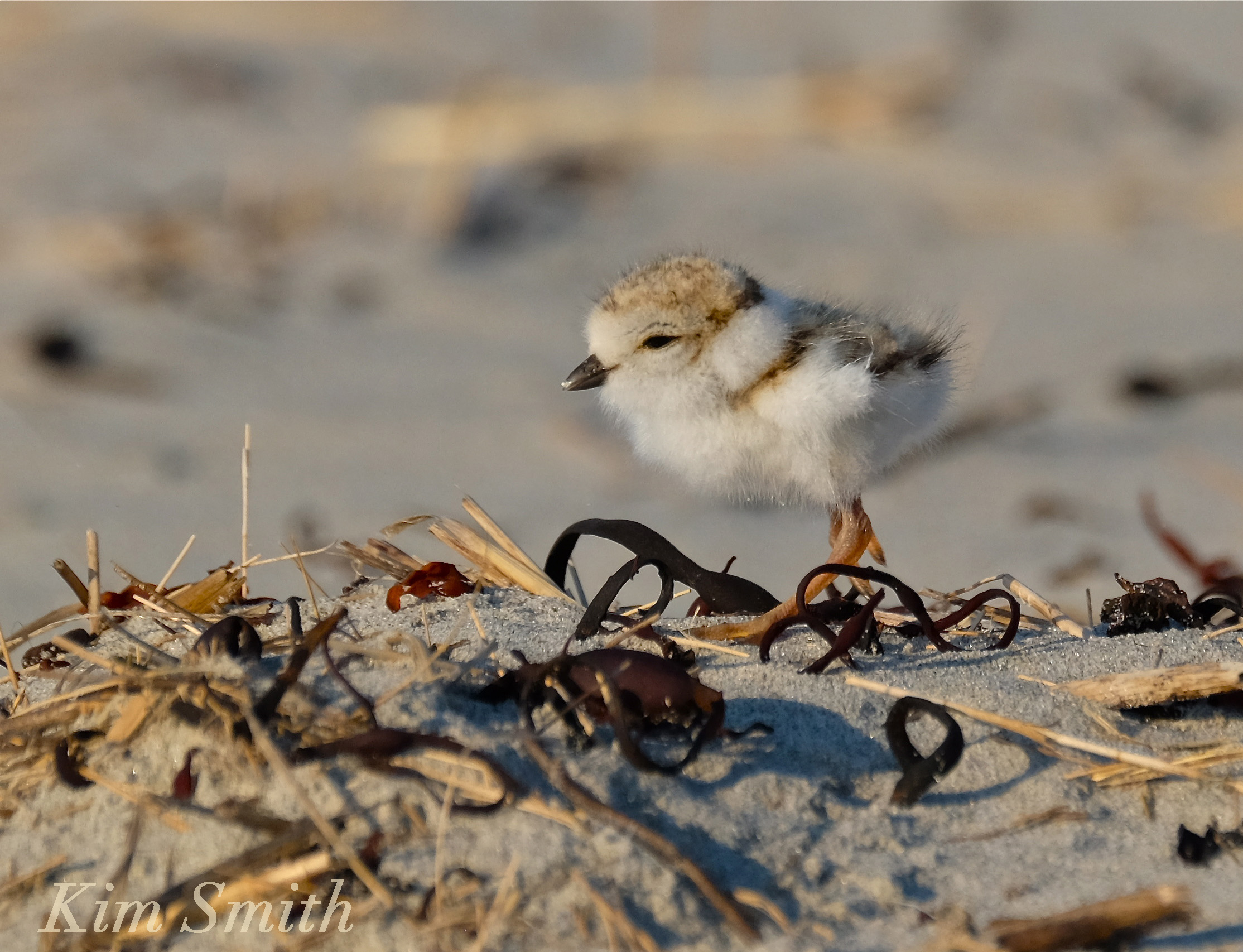
Dogs love to chase Piping Plover chicks, which not only terrifies the adult Plovers and distracts them from minding the babies, but the chicks are easily squished by a dog on the run.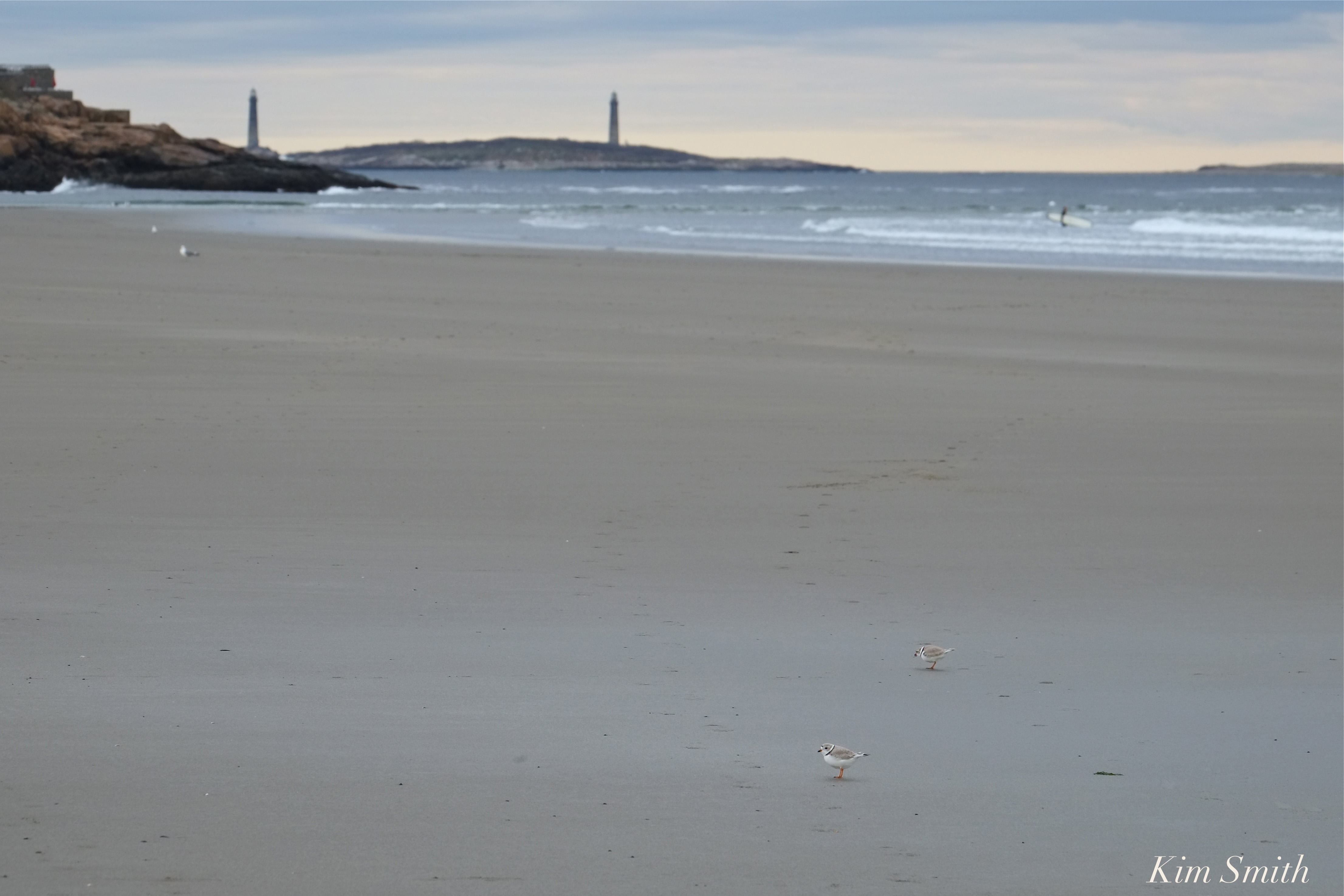



 Good Morning Gloucester