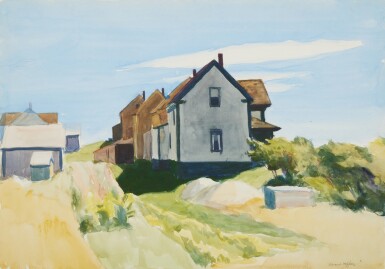
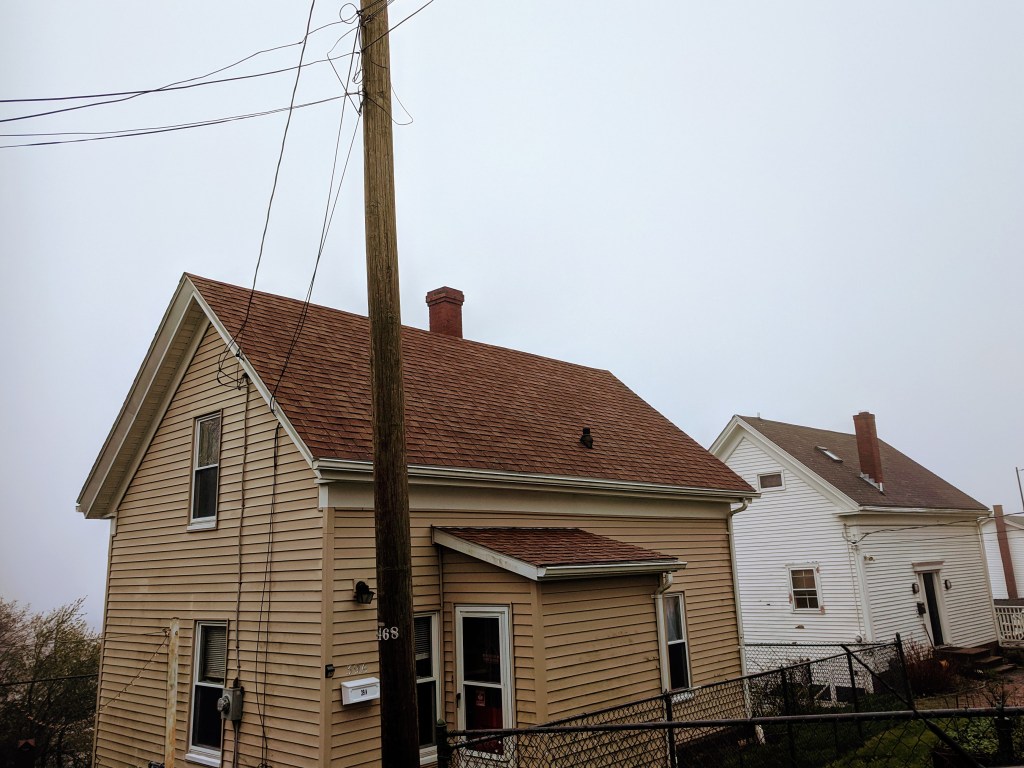
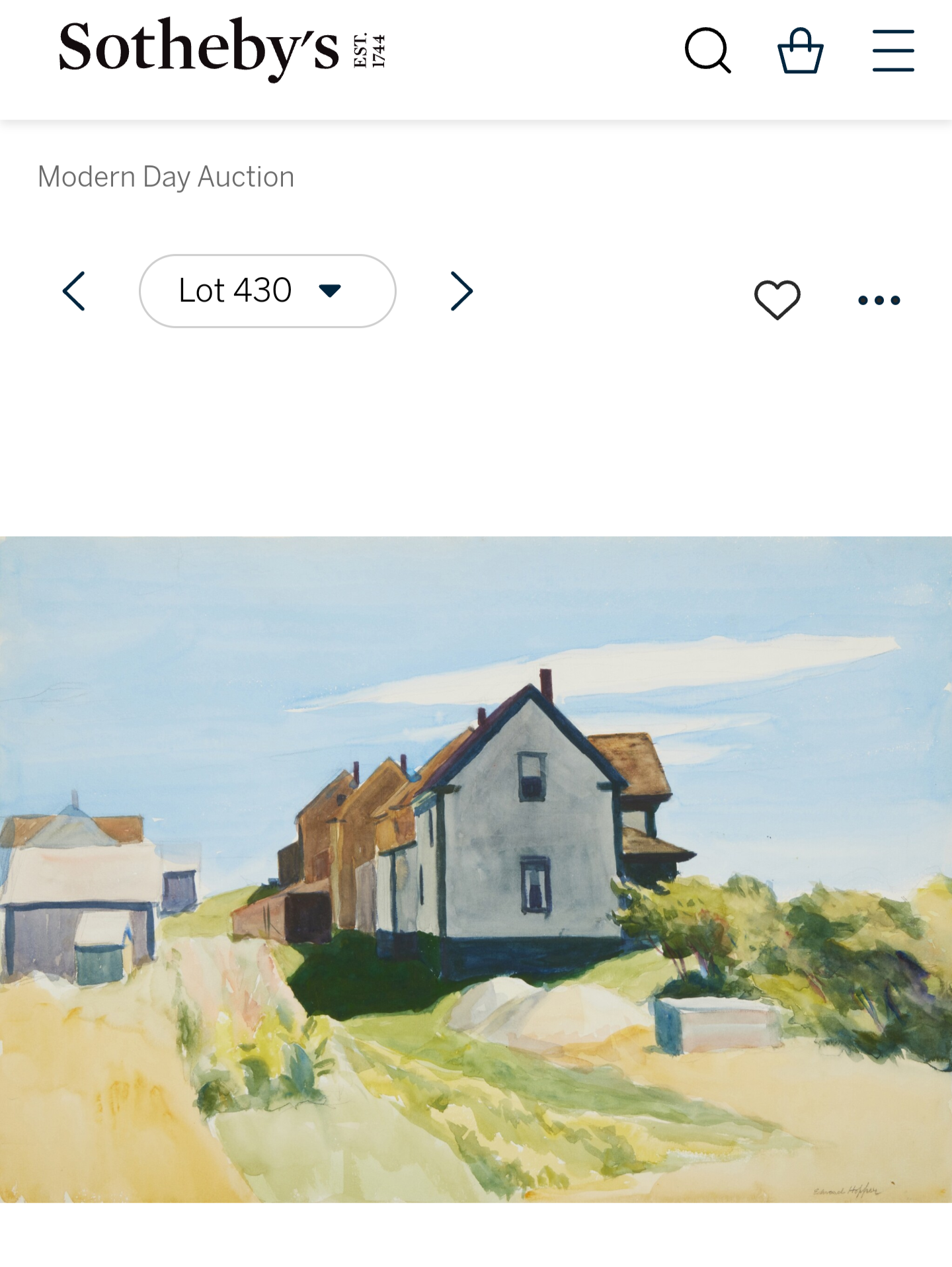
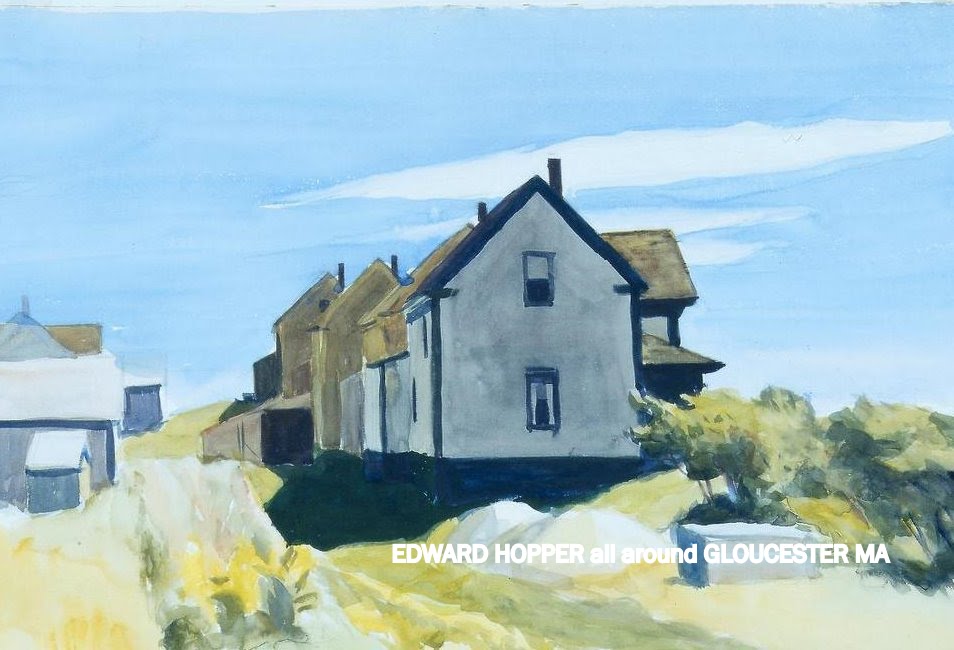
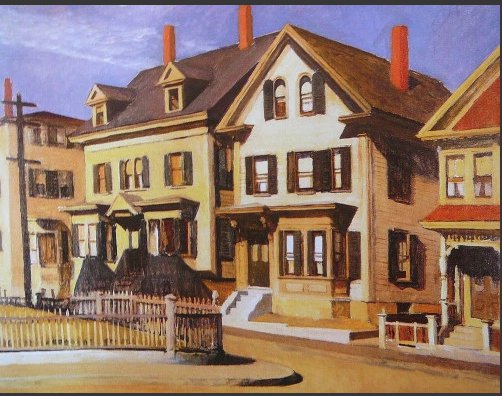
Do you know a cluster of homes perched like the subjects in this classic Edward Hopper watercolor painted here in Gloucester 100 years ago? Hallmark motifs and themes pair up throughout this bright and sunny scene: outhouse on the left and brush edged to the right (“nature calls”), passage between buildings and boulders, light and sharp shadow, double windows and curtains, roofline and sky, line up of chimneys, and the mystery of cropped views over the hill and off to the sides.
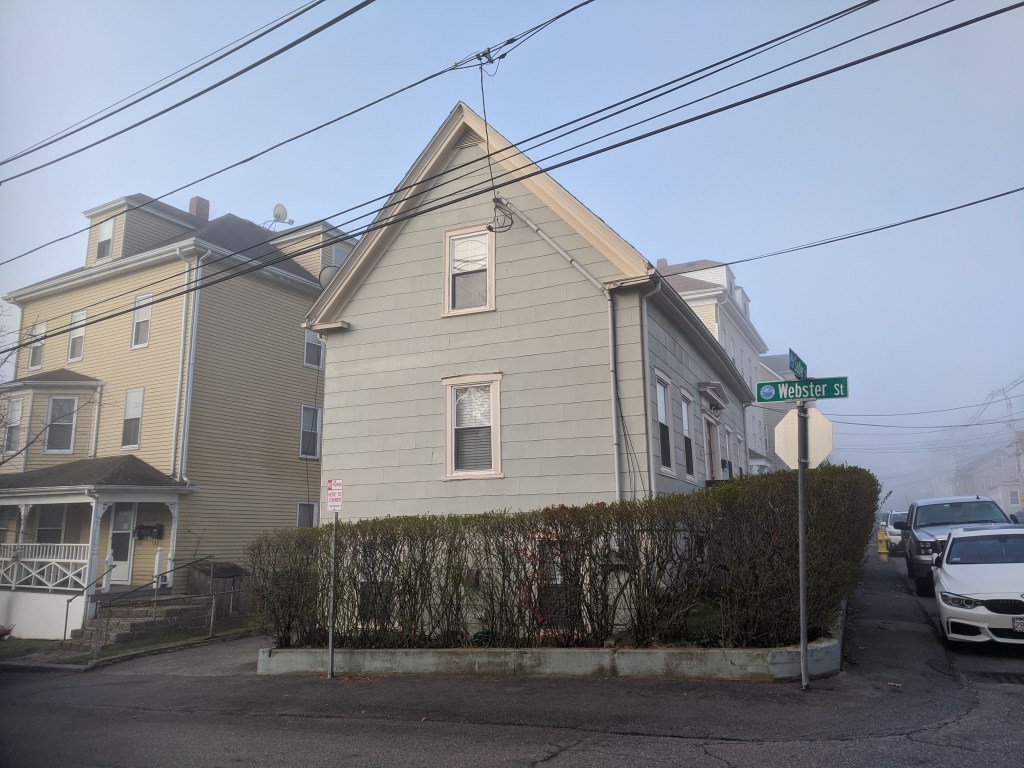
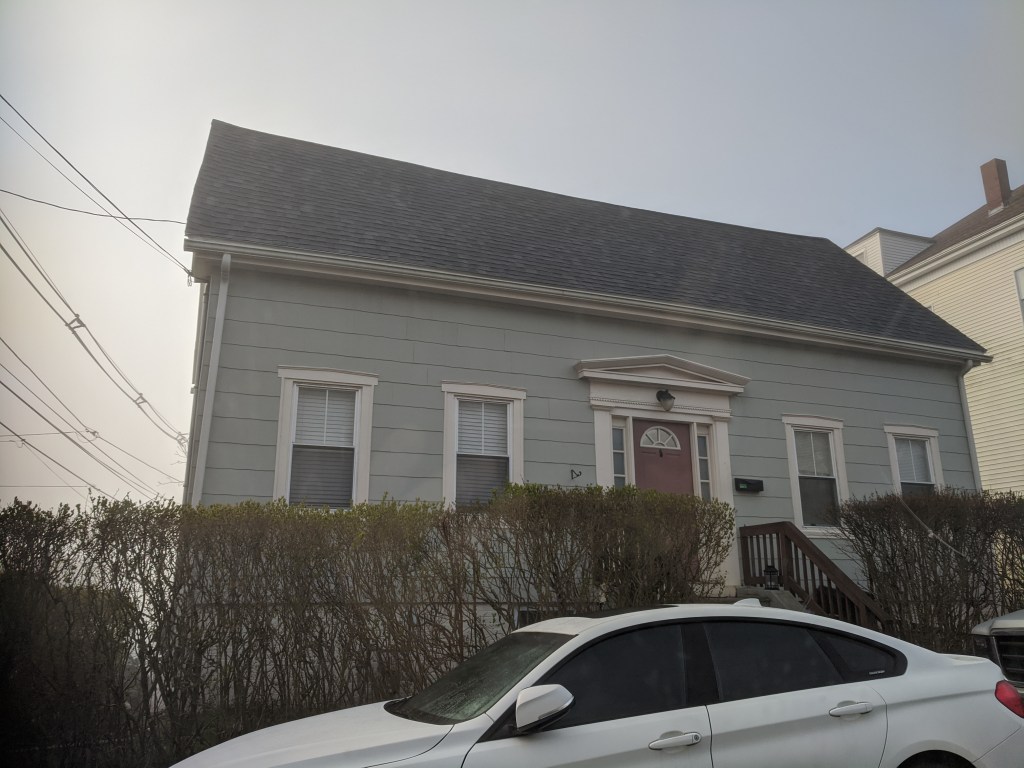
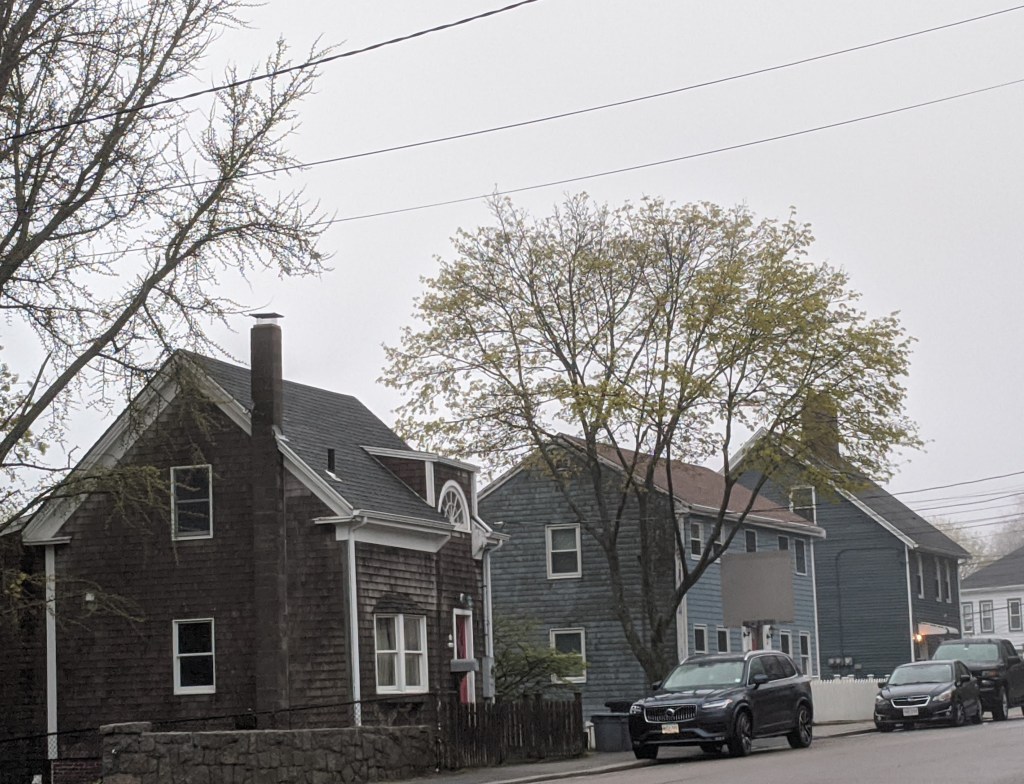
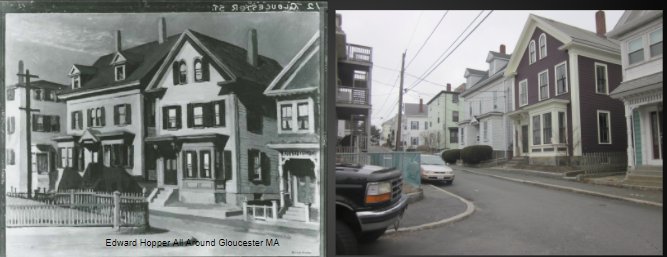
A house like the home on the right with dark trim and the pair of double stacked windows may appear to be a double story home from one side and as a single story from another. (A home at the corner of Webster and Sadler Sts. shows the vernacular charm and multi vantage points.)
At Sotheby’s May 2023
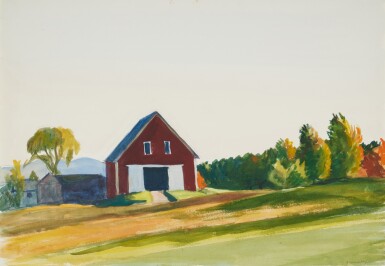
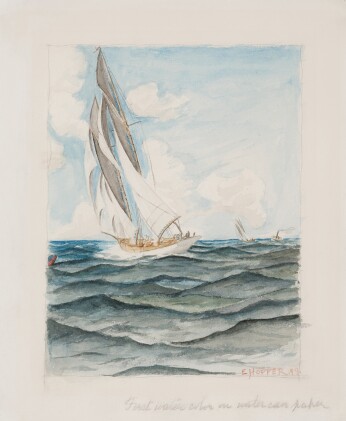
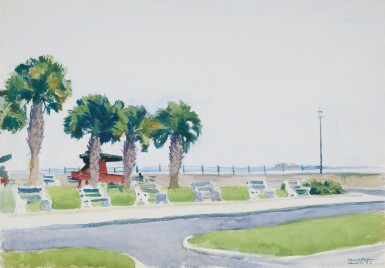
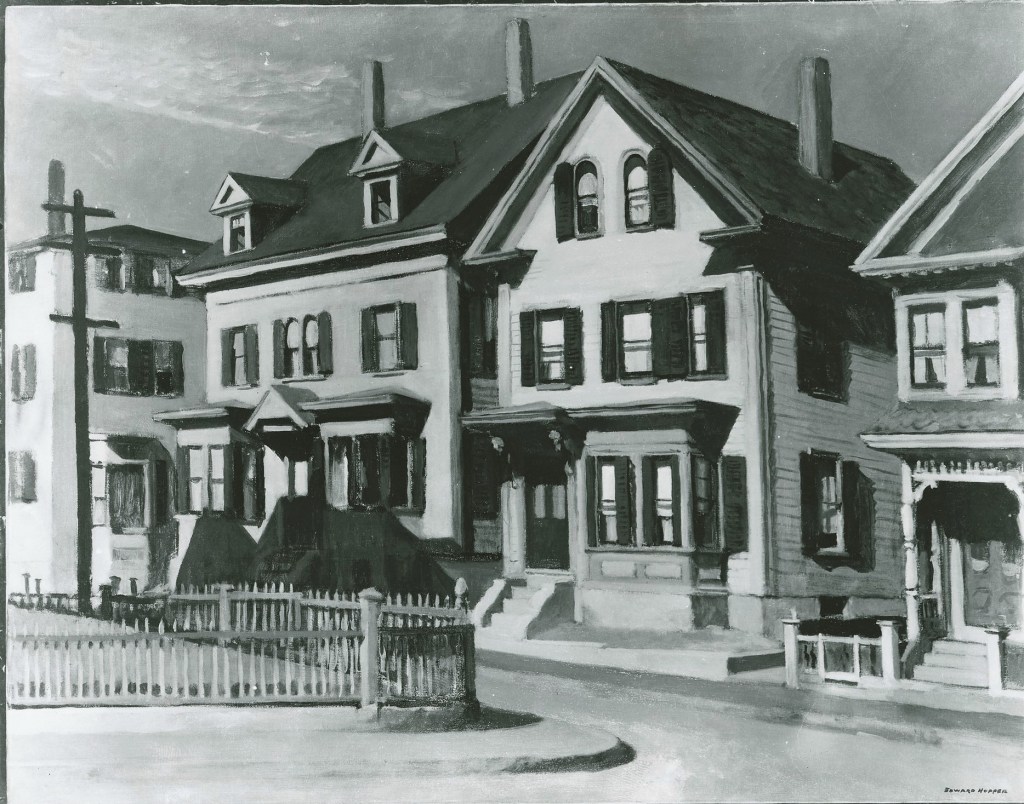
The drawing is available for purchase. The Whitney Museum of American Art is deaccessioning four Edward Hopper watercolors inspired by the artist’s travel to four locations: Gloucester, Truro, Vermont/NH, and South Carolina. Sotheby’s Auction House has listed them in their major upcoming New York spring sales: one painting for the Modern Evening auction May 16 and 3 paintings on paper for the Modern Day auction on May 17. A fifth Edward Hopper work on paper is included in the day sale.
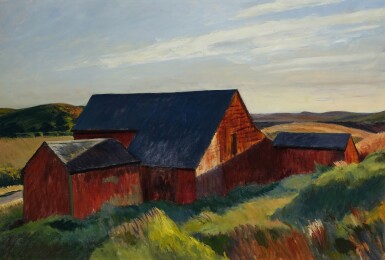
Images: Edward Hopper works from the Whitney collection at Sotheby’s auction May 2023, images left to right: Lot 434 Red Barn in Autumn Landscape, 1927; Lot 430 Gloucester Group of Houses 1923 est 500,000 – 700,000; Lot 432 The Battery, Charleston, SC 1929 est 500-700,000; Lot 145 Cobb’s Barn, South Truro, circa 1930-33, presale estimate 8-12 million. This painting was selected for display in the Oval Office* by President Obama. A later Edward Hopper Cape Cod watercolor from 1943, Four Dead Trees, with a presale estimate of 700,000-1,000,000, sold at Christie’s on April 23, 2023 for 1.5 million (price realized includes added fees). Lot 531 an Edward Hopper Sailboat study from 1899 from the Sanborn batch, presale est. $100,000 (w/ art and papers in the Nyack home following Hoppers’ deaths.)
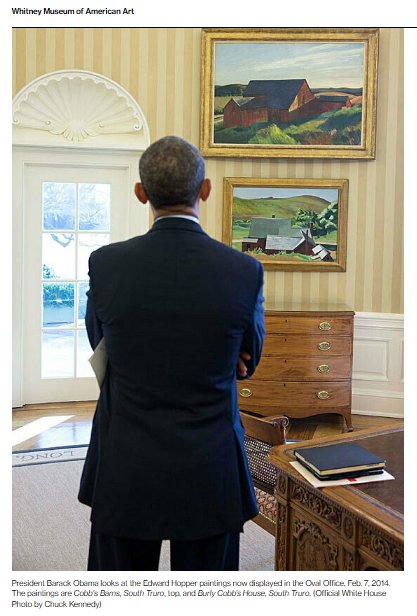
image: Portrait of President Obama viewing Edward Hopper paintings in the Oval Office by Chuck Kennedy. Loan from/by the Whitney Art Museum 2014 (and other selections and guidance see Michael Rosenfeld Gallery)
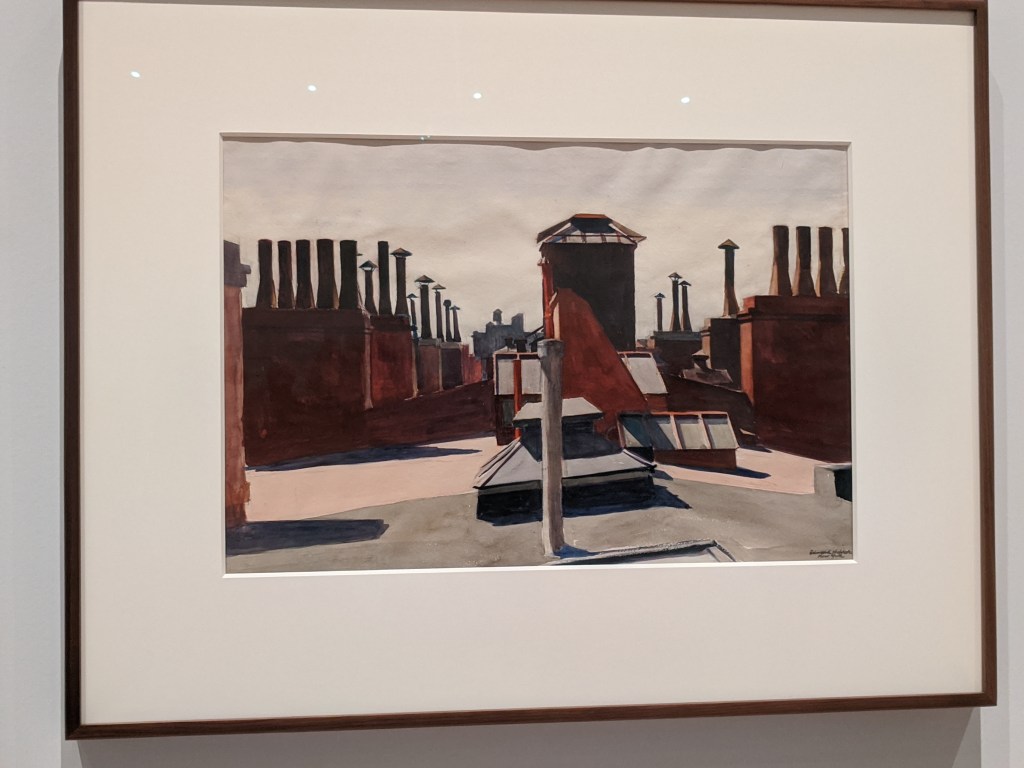
On right, Hopper’s NY Rooftops 1927 reminds me of the Gloucester forms ( installation view Whitney NY, Jan 2023), like vessels on the Hudson. Photo c ryan
—
*I wrote about art at the White House in 2014 which was published here on GMG in 2015:
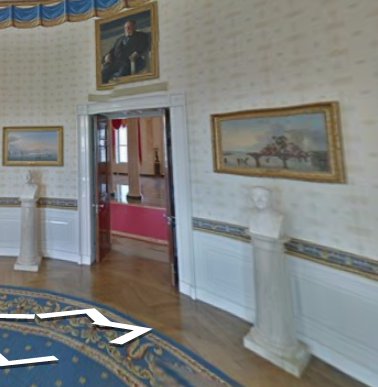
“What’s the best art inside the White House? No matter what is your artistic preference, Gloucester and the Commonwealth of Massachusetts could top the charts as the City and state with the best and most art ties featured at the White House. Let’s break down a selection of that Massachusetts list currently on display at the White House room-by-room, shall we?
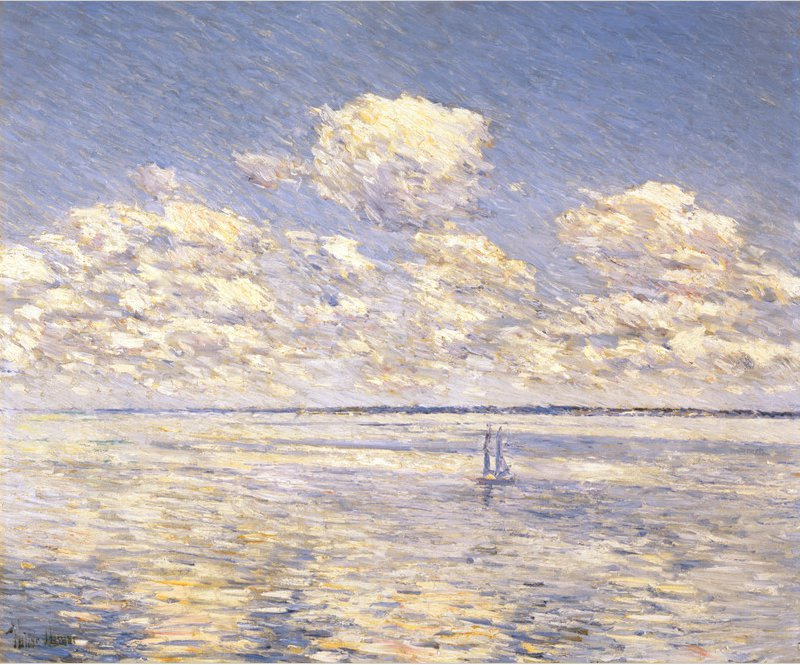
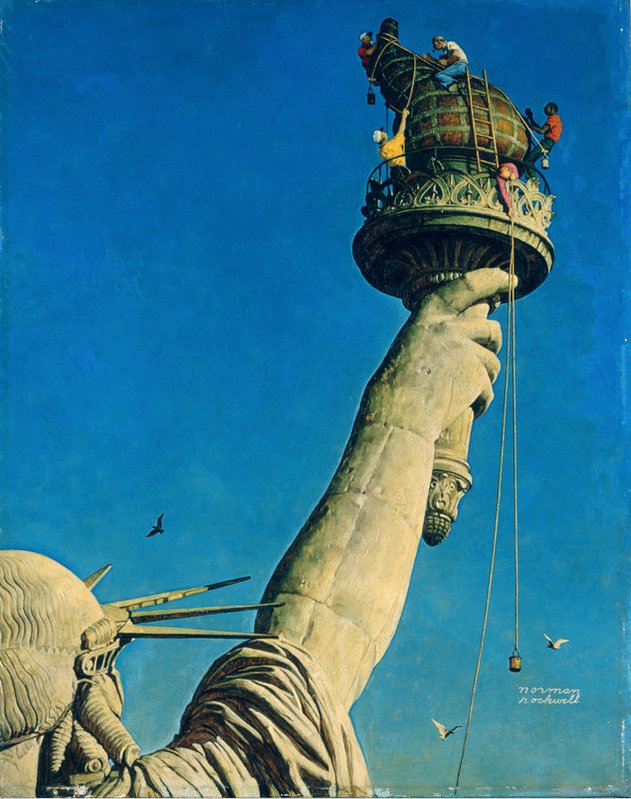
“Not one, but two Edward Hopper paintings, lent by the Whitney Museum of American Art, were installed one over the other, Cobb’s Barns, South Truro and Burly Cobb’s House, South Truro. The Childe Hassam’s painting, Avenue in the Rain, and Norman Rockwell’s painting, Statue of Liberty, were displayed nearby.
…How does the White House collection work? It is unusual for the White House to accept art by living artists. There are more than 450 works of art in the permanent collection. New art enters the collection after its vetted and is restricted to works created at least 25 years prior to the date of acquisition. For the public rooms, the Office of the Curator works with the White House advisory committee, the First Lady serves as the Honorary Chair, and the White House Historical Association. The private rooms are the domain of the First Family. Works of art from collectors, museums, and galleries can be requested for temporary loans and are returned at the end of the President’s final term. The Obamas have selected contemporary art, including abstract art, from the permanent collection, and borrowed work for their private quarters. Besides the Hopper paintings and John Alston’s Martin Luther King sculpture, they’ve selected art by *Anni Albers, *Josef Albers, Edgar Degas, Jasper Johns, Louise Nevelson, *Robert Rauschenberg, Edward Ruscha, and *Alma Thomas.” * indicates works that have been donated to the permanent collection.
Catherine Ryan, 2014
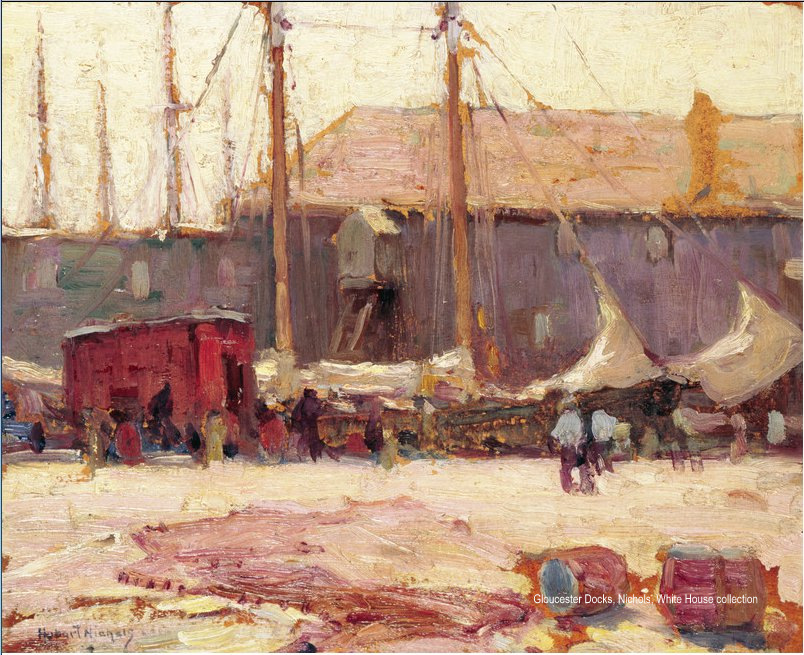
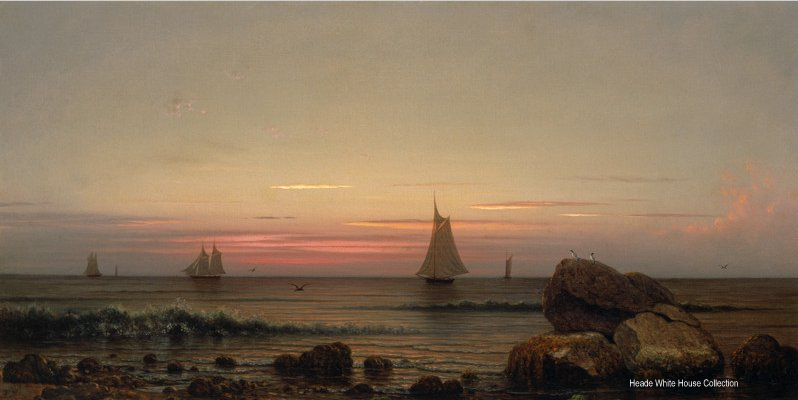
Works from the White House permanent collection
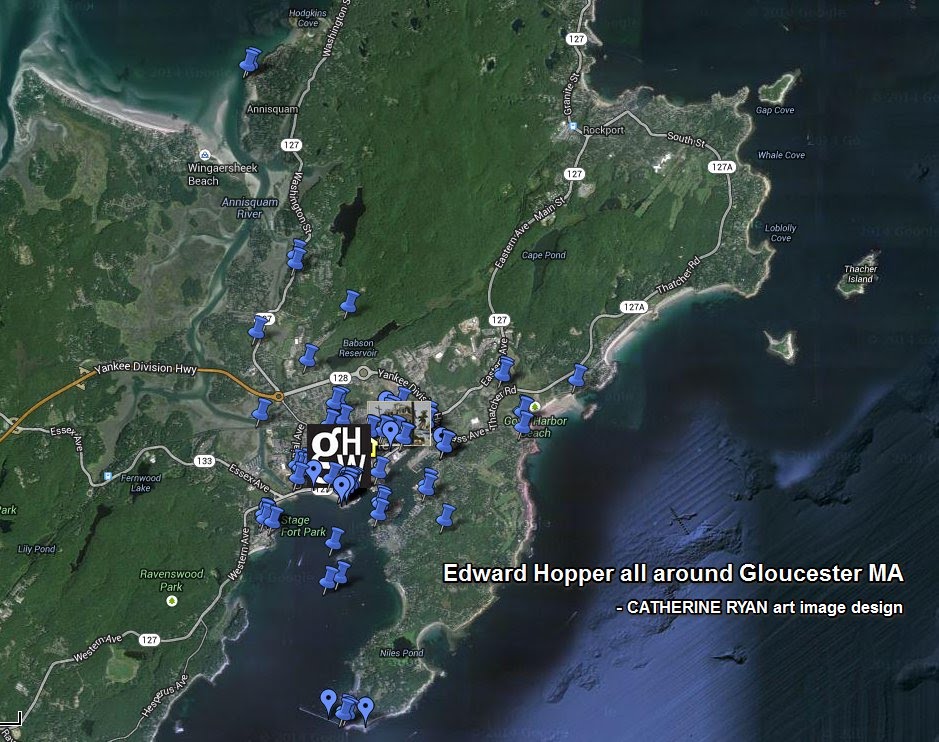
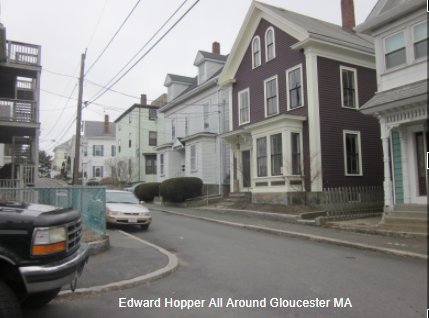
There are more than 120 Edward Hopper works inspired by Gloucester, MA. See Edward Hopper all around Gloucester. The Whitney Museum has sold Hoppers before. I’ll write more about that for another post.
Spread The GMG Love By Sharing With These Buttons:
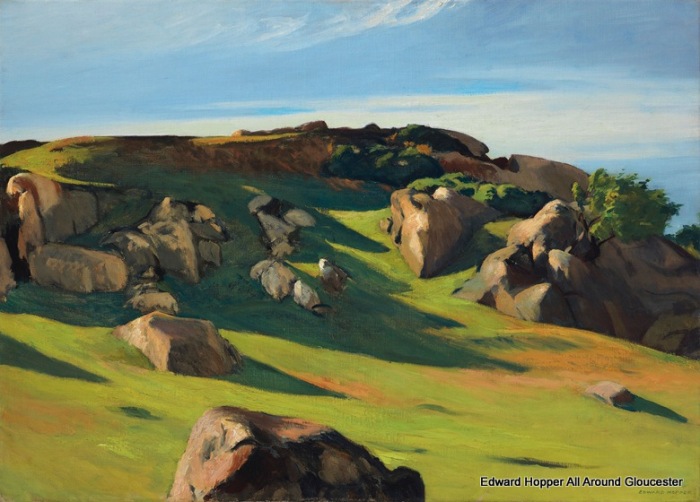
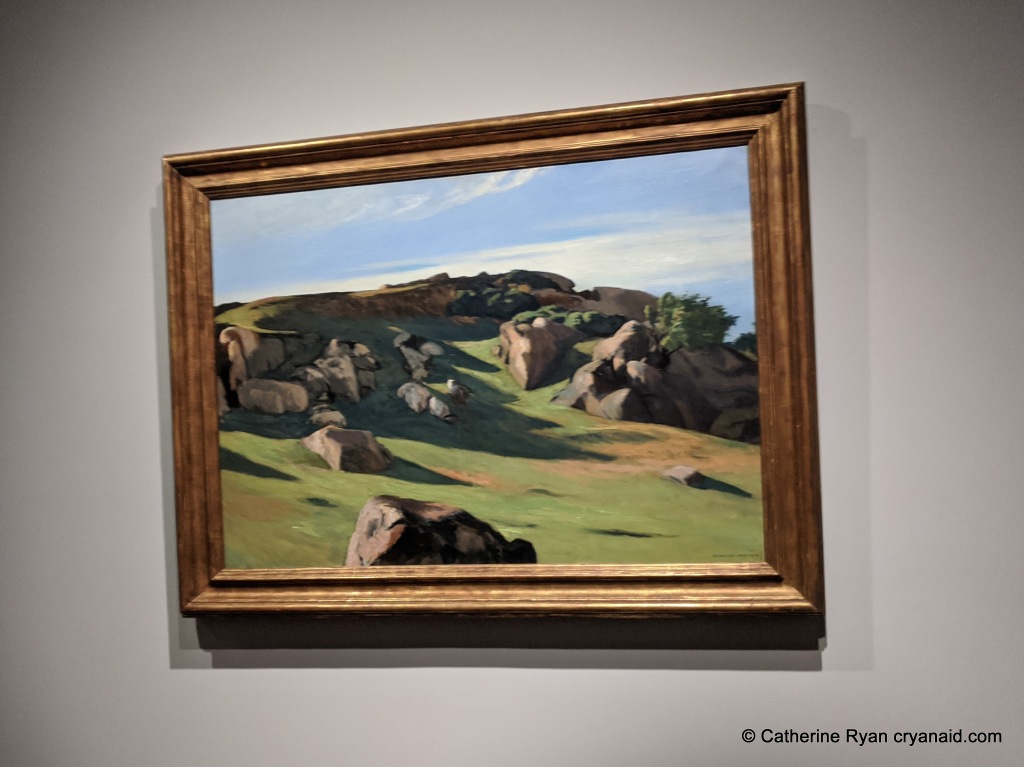
2017. Christies, the New York auction power house, is currently marketing the Peggy and David Rockefeller art collection across the (art)world–Hong Kong, London, and Los Angeles– before the spring 2018 live sale back in New York. The collection includes a painting by American artist, Edward Hopper (1882-1967), that was inspired by Gloucester.
Cape Ann Graniteis one of the rare Hopper paintings remaining that’s not currently held in a museum. There are more than 110 Gloucester houses and vistas depicted by Edward Hopper.
Advance promotion of Christie’s upcoming Rockefeller auction have yet to illustrate the painting, although the artist’s recognizable name is mentioned in every press release and the painting is included in the world tour highlights exhibit. The catalogue for the sale is not ready.
two Former owners of Cape Ann Granite have in common connections to Harvard, banking, and art collecting
Billionaire and philanthropist, David Rockefeller (1915-2017), was a Harvard graduate and longtime CEO of Chase Manhattan bank (later JP Morgan Chase). His art appreciation began early, influenced by both parents and the Rockefeller family collections. His father was the only son of John D. Rockefeller, a co-founder of Standard Oil Corp. His mother, Abby Aldrich Rockefeller (1874-1948), helped establish the Museum of Modern Art, and the fund in her name helped secure Hopper’s Corner Saloon for the permanent collection. Several family members were Trustees. After his mother’s death, David took her Trustee seat.
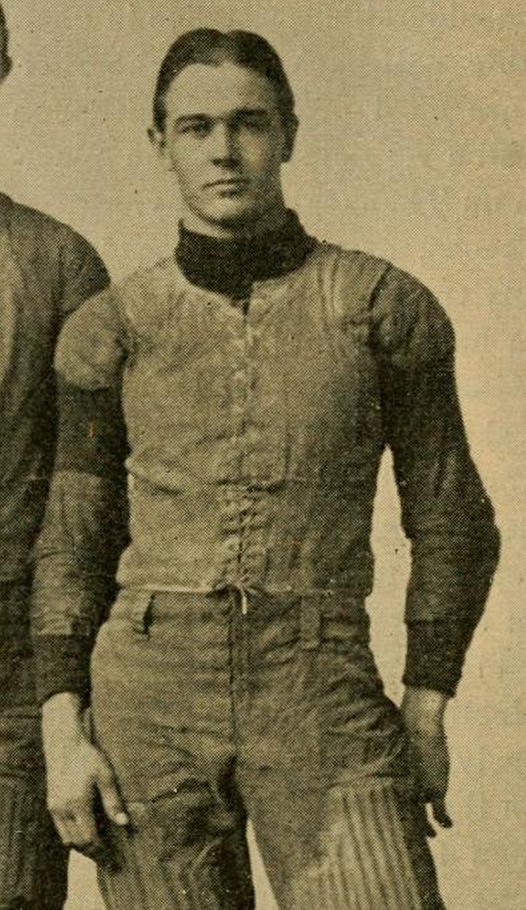
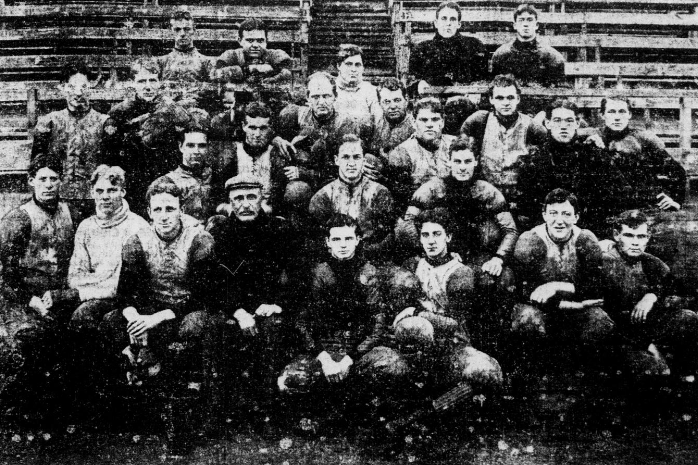
Like David Rockefeller, the first owner to acquire Cape Ann Granite was a Harvard graduate, art collector and financier, about the same age as Rockefeller’s parents, and Hopper. Benjamin Harrison Dibblee (1876 – 1945) was the scion of California businessman, Albert Dibblee. The family estate “Fernhill” was built in 1870 in Ross, California (later the Katharine Branson School). Benjamin H Dibblee was a Harvard graduate (1895-1899), an All-American Crimson football player (halfback and Team Captain), and head coach (1899-1900). W.H. Lewis, a famous center rush, was the Assistant Coach. (Harvard football dominated under this coaching team. See the standings below the “read more’ break.) In 1909, Dibblee donated his father’s historic papers concerning California’s secret Civil War group “The Home Guard of 1861” including its muster roll and pledge of loyalty to Lincoln and the Union cause.Dibblee was an alternate delegate from California to the Republican National Convention in 1912. As a Lt. Col. he was listed as one of five California committee members for the American Legion in 1919. He was a big wheel investment banker at EH Rollins & Sons, a firm impacted by the Wall Street crash of 1929.
Wikipedia photo of Dibblee from The Official National Collegiate Athletic Association football guide, 1899
It’s fun to think about Dibblee possibly visiting Gloucester during his time at Harvard, like so many students and faculty; then, decades later, acquiring a major Hopper because it was both a modern masterpiece, and a Gloucester landscape.
[The Hopper Cape Ann Granite painting has me itching to research all Crimson team photos– not simply varsity nor football circa 1895-97– because of the (remote) chance of another Gloucester-Harvard and athletic connection. In 1895 Dibblee was involved with sports at Harvard at the same time as author and Olympian, James Connolly. In 1899 both were involved with football; Dibblee as the Harvard coach and Connolly as Gloucester’s athletic director and football player*. Maybe they scrimmaged. Maybe they scrimmaged in Gloucester. *scroll down to notes below]
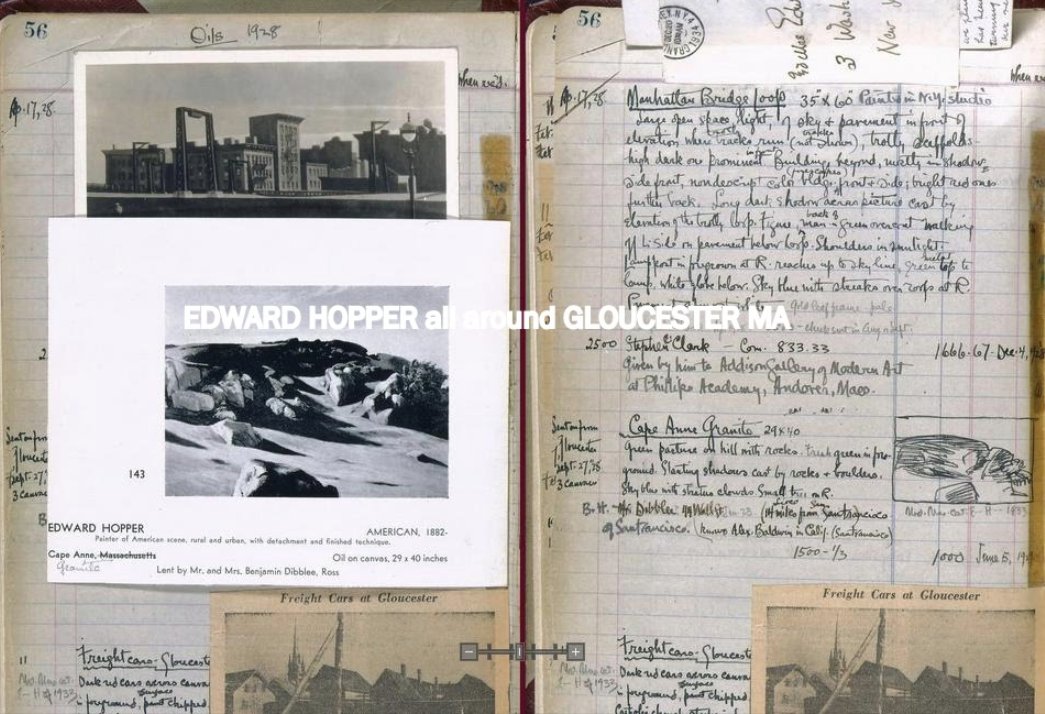
Hopper’s artist inventory log pages for ‘1928 oils’ itemizes Cape Ann Granite as follows: “Sent on from Gloucester September 27, 1928, 3 canvases. Cape Ann Granite, 29 x 40, Green picture on hill with rocks. Fresh green in foreground. Slanting shadows cast by rocks and boulders. Sky blue with clouds. Small tree on R. BH Mr. Dibblee 49 Wall Streeet of San Francisco (Lived near 14 miles from San Francisco. Knows Alex Baldwin in Calif. (SanFrancisco) 1500 -1/3. 1000 on June 5, 194 ”
Image: From Hopper’s Artist’s ledger -Book, ink graphite on paper, Whitney Museum of American Art, Gift of Lloyd Goodrich
The pencil annotation “Modern Masters EH 1933” accompanying the thumbnail sketch for the painting on the right of this entry may be mixed up. There was a “Modern Masters” exhibition at the Museum of Modern Art (MoMA) held in 1940 but it did not include this painting on the checklist. There was an Edward Hopper Retrospective held at MoMA October 30–December 8 in 1933 that did list this Gloucester painting, and the lender, Dibblee. (Incidentally, two other 1928 oils catalogued on that same inventory page, Manhattan Bridge Loop and Freightcars Gloucester, would both end up in the Addison Gallery collection at Phillips Academy.)
The Pure Landscapes
Excerpts from the 1933 MoMa Hopper retrospective exhibition catalogue:
“…When Hopper went to art school the swagger brushstroke of such painters as Duveneck, Henri, and Chase was much admired. Perhaps as a reaction against this his own brushwork has grown more and more modest until it is scarcely noticeable. He shuns all richness of surface save where it helps him to express a particular sensation…in spite of his matter-of-factness, Hopper is a master of pictorial drama. But his actors are rarely human: the houses and thoroughfares of humanity are there, but they are peopled more often by fire hydrants, lamp posts, barber poles and telegraph poles than by human beings. When he does introduce figures among his buildings they often seem merely incidental. Perhaps during his long years as an illustrator he grew tired drawing obviously dramatic figures for magazines. Hopper has painted a few pictures in which there are neither men nor houses. The pure landscapes Cape Ann Granite (9), Hills, South Truro (16), Camel’s Hump (22) occupy a place apart in his work. they reveal a power which is disconcertingly hard to analyze. Cezanne and Courbet and John Crome convey sometimes a similar depth of feeling towards the earth and nature…” Alfred Barr, 1933
“In its most limited sense, modern art would seem to concern itself only with the technical innovations of the period. In its larger and to me irrevocable sense it is the art of all time; of definite personalities that remain forever modern by the fundamental truth that is in them. It makes Moliere at his greatest as new as Ibsen, or Giotto as modern as Cezanne.” Edward Hopper, 1933
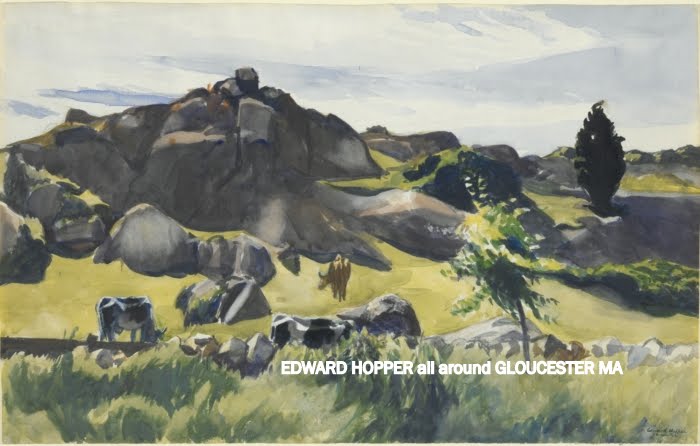
Yale owns a related watercolor by Edward Hopper, Cape Ann Pasture
Proceeds from the sale of the Peggy and David Rockefeller art collection at Christie’s next spring will benefit 10 selected charities. Perhaps a magnanimous collector might consider this Hopper Dogtown purchase for the Cape Ann Museum, a philanthropic twofer in this case, and needed. Cape Ann Museum does not possess a Hopper Gloucester painting and if any museum should, it’s CAM. We need to eventually guide back the Hopper painting Gloucester Street, too.
Christie’s
To date Christie’s auction house has promoted primarily a Picasso and Matisse as the star lots from this collection of masterpieces because of their hefty valuation. The presale estimate for the Matisse Odalisque couchée aux magnolias (1923) is 50 million. The Picasso painting, Fillette à la corbeille fleurie (1905), a “Rose period Masterwork”, is estimated to top 70 million. The presale estimate for the Hopper is 6 million to 8 million.
Image: Christie’s first press roll out features the Picasso and Matisse. Not the Hopper
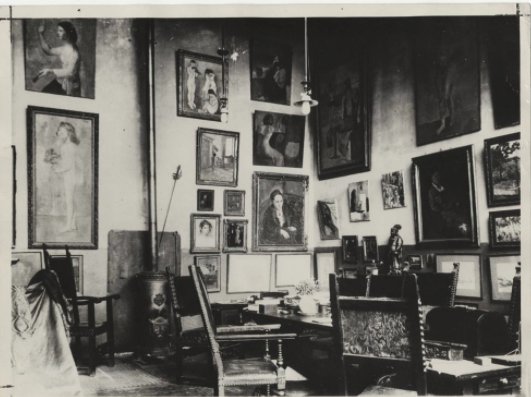
Picasso/Stein/Toklas/Rockefeller
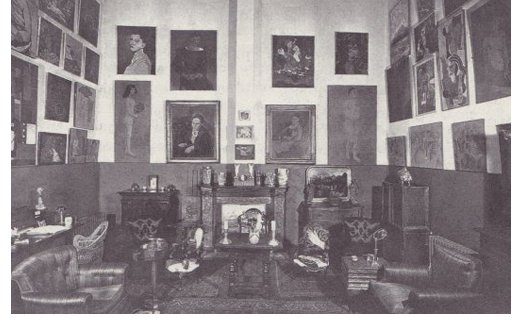
The Picasso was displayed in the library of the Rockefeller Upper East Side mansion at 146 East 65th Street. The first owners were Gertrude and Leo Stein. Gertrude Stein hated it though her brother bought it anyway. After Alice B. Toklas (Stein’s partner) died in 1965, MoMa trustees drew lots and were offered first pass on the legendary Stein collection. David Rockefeller won first pick, and selected the Picasso. I wonder how it will fare in this #metoo awakening. At the time of her death, Toklas had long been evicted from their Paris home as she had no legal standing nor benefit from any estate sales.
installation Leo and Gertrude SteinImage: installation Gertrude Stein and Alice Toklas
Williams 29-0 Bowdoin 13-0 Wesleyan 20-0 Amherst 41-0 at Army (Westpoint) 18-0 Bates 29-0 Brown 11-0 Carlisle 22-10 Penn 16-0 Dartmouth 11-0 Yale 0-0 TIE
1900: 10-1
Wesleyan 24-0 Williams 12-0 Bowdoin 12-0 Amherst 18-0 Columbia 24-0 Bates 41-0 Army 29-0 Carlisle 17-5 Penn 17-5 Brown 11-6 Yale 0-28
Harvard Crimson Football team 1900
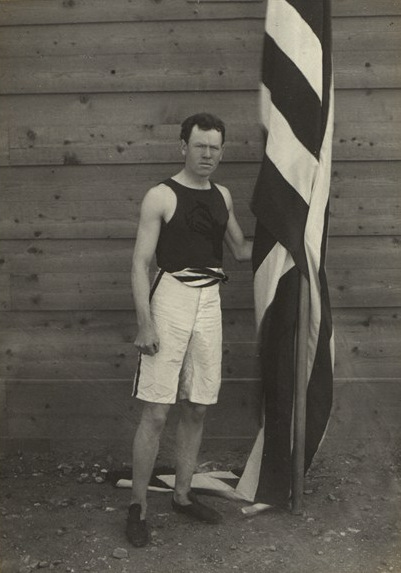
**I wrote about Connolly in a prior GMG post. “While still twenty-five pounds underweight from tropic fever, I took a job as physical director of the Gloucester Athletic Club. I played football on the Athletic Club eleven, spent the fall and winter (1899-1900) there, chucked that job in the spring, took a steerage trip to England, looked the London slums over, and went on to Paris, to take in the Paris Exposition, and, incidentally, compete in the Second Olympic Games.”
Image: James Brendan Connolly 1896 Olympics wiki commons image from Bulgaria State Archives
Legions of fans visit local, national and international museums to see icons of American 20th century art by Edward Hopper and Winslow Homer. Some of this art was inspired by Gloucester, MA. One more Hopper or Homer Gloucester scene in any collection would be welcome, but in Gloucester it would be transformative.
The City of Gloucester boasts a world class museum that would be the ideal repository for a major Hopper and Homer of Gloucester. It hasn’t happened, yet. It should! I feel not enough of a case has been made for having originals right here in the city that inspired some of their most famous works and changed their art for the better.
Edward Hopper Captain’s House (Parkhurst House), one of the few original Hopper works remaining in private hands, is slated as a promised gift to Arkansas’s Crystal Bridges Museum of American Art. Crystal Bridges opened in 2011 and will have acquired 4 examples of Hopper’s art — 2 paintings, 1 drawing and 1 print–with this gift.
I think Arkansas would have been ok with three.
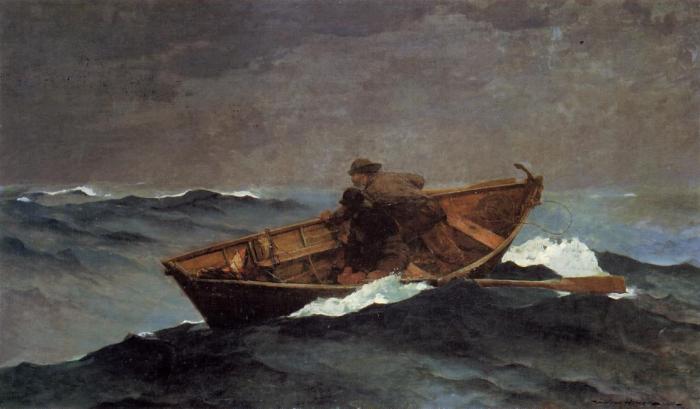
The only known Winslow Homer seascape painting still in private hands is a great one inspired by Gloucester. Bill and Melinda Gates own Lost on the Grand Banks, 1885. I saw it at the auction house back in 1998 just before the sale. What a fit for Gloucester and Homer if it found its way back here!
Edward Hopper’s Gloucester Street also went to the west coast, purchased by Robert Daly. I’d love to see this one in person! The corner hasn’t changed much since 1928 when Hopper painted the street scene.
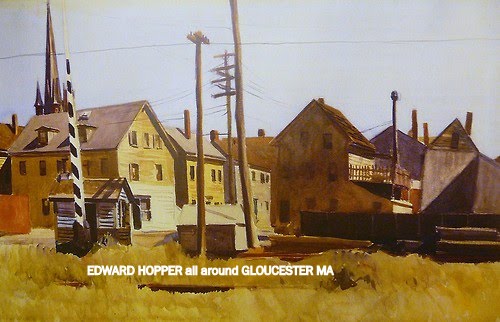
Hopper’s downtown Gloucester scene, Railroad Gates, is not on public display.
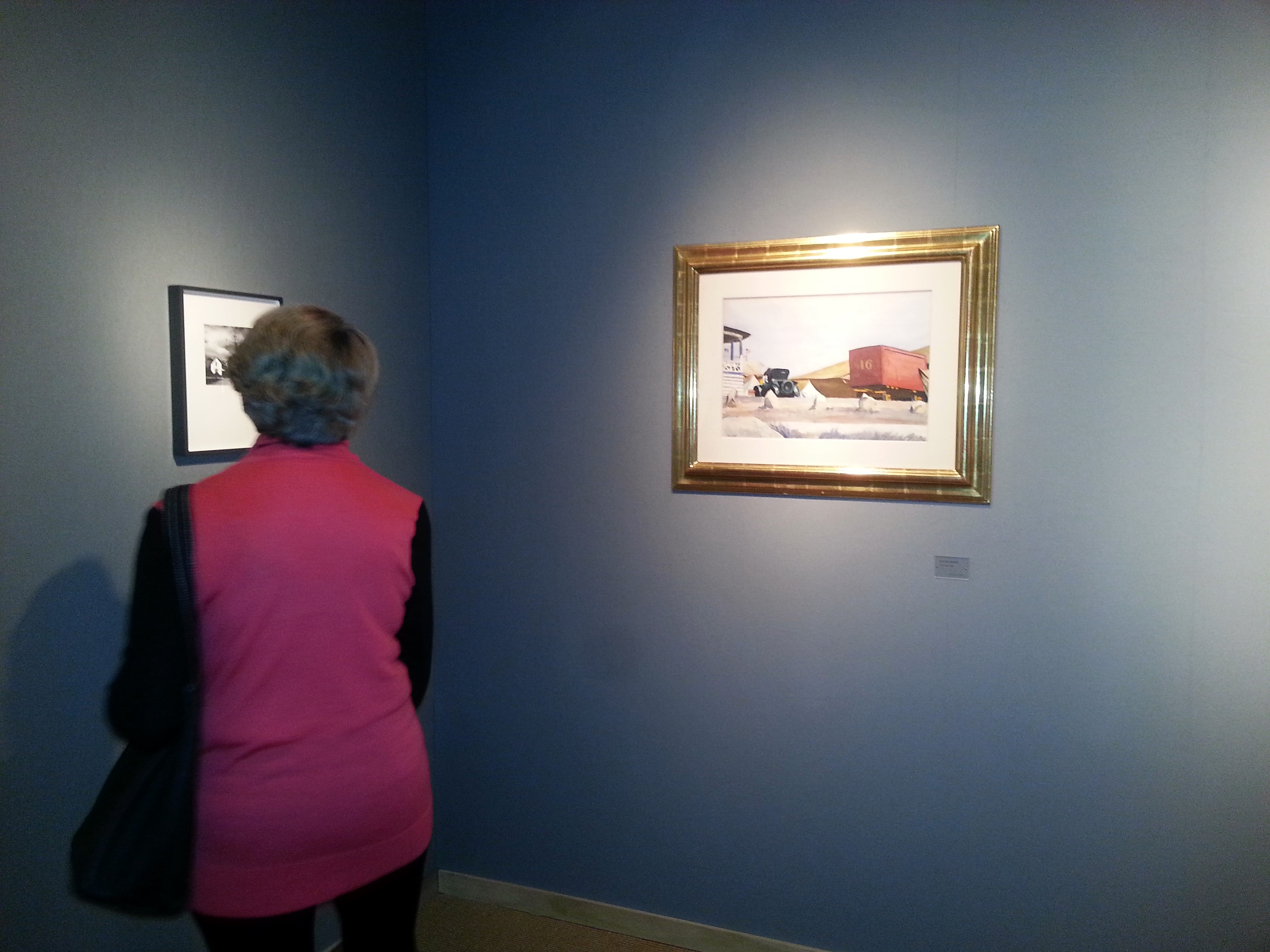
I’m surprised and hopeful that there are paintings of Gloucester by Hopper that could be secured. There are tens of drawings including major works on paper. I saw this Gloucester drawing, Circus Wagon, by Edward Hopper at the ADAA art Fair back in March 2016.
Davis House (25 Middle Street) was sold at auction in 1996.
I’m keeping tabs on most of them. The only way they’re going into any museum is through largesse. Why not Gloucester?
Homer and Hopper watercolors in private collections can’t be on permanent view due to the medium’s fragility. (Exciting developments in glazing and displays are being developed that go beyond the protective lift.) The Cape Ann Museum in Gloucester, MA, cares for works of art as well as any institution.
Spread The GMG Love By Sharing With These Buttons:









 Good Morning Gloucester