Open window

I noticed the open window because a bird hopped in. I didn’t stop to see what ensued but I was reminded about a GMG reader question: Who remembers Cher Ami and homing pigeons of Gloucester?
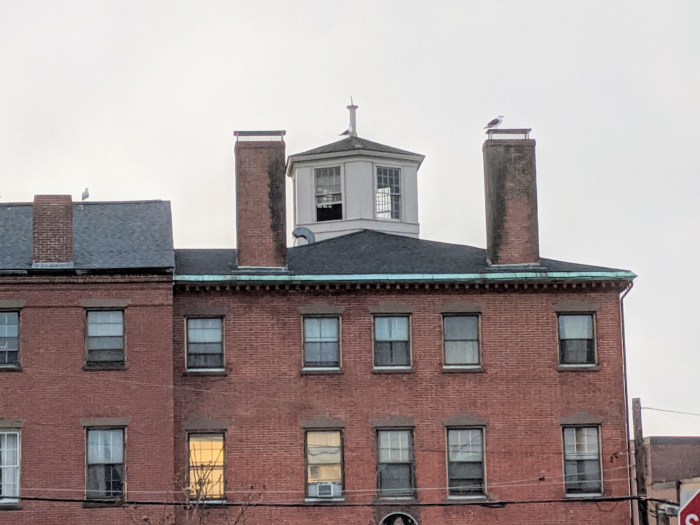
open window Puritan House_built by Tappan 1810_Gloucester Massachusetts_ Main & Washington Streets_photograph copyright © c ryan (5).jpg

There’s a 2nd  little pane missing on the Main Street side.


What’s in a name?

The 1810 brick building, Gloucester’s first, at the corner of 2 Main and 3 Washington Streets, now features Tonno Restaurant. The exterior has remained relatively unchanged since it was built in 1810 by Col. James Tappan. On the inside it’s been mixed use more often than not (various businesses, restaurants and lodgings). As a result it’s gone through a lot of rebranding: Puritan House, Tappan’s Hotel, Atlantic House, and Capt Bills are a few of the names associated with this historic structure. The Blackburn Tavern signs were added in 1978 for a restaurant.

Still Standing

The brick building at the other end of Main Street with Halibut Point Restaurant & Pub was Howard Blackburn’s actual tavern.
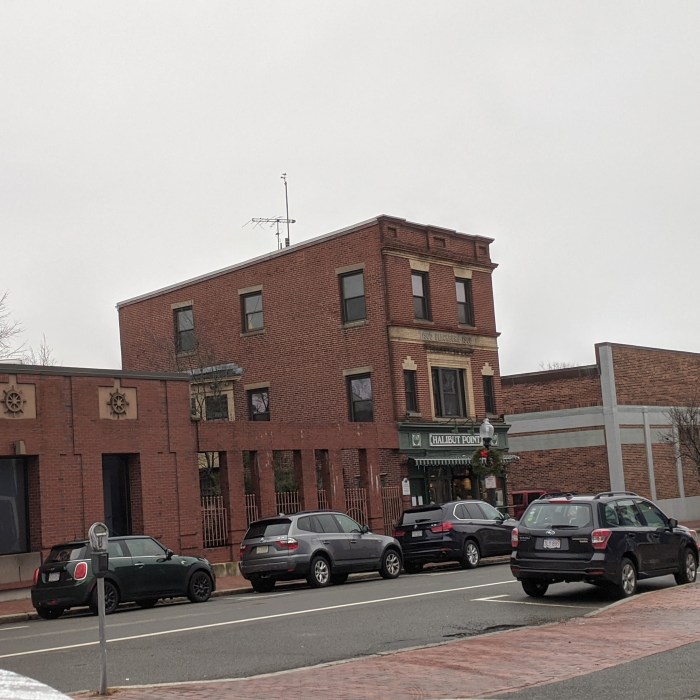
Howard Blackburn historic tavern_now Halibut Point Restaurant_20191231_Gloucester Mass. c ryan (1)

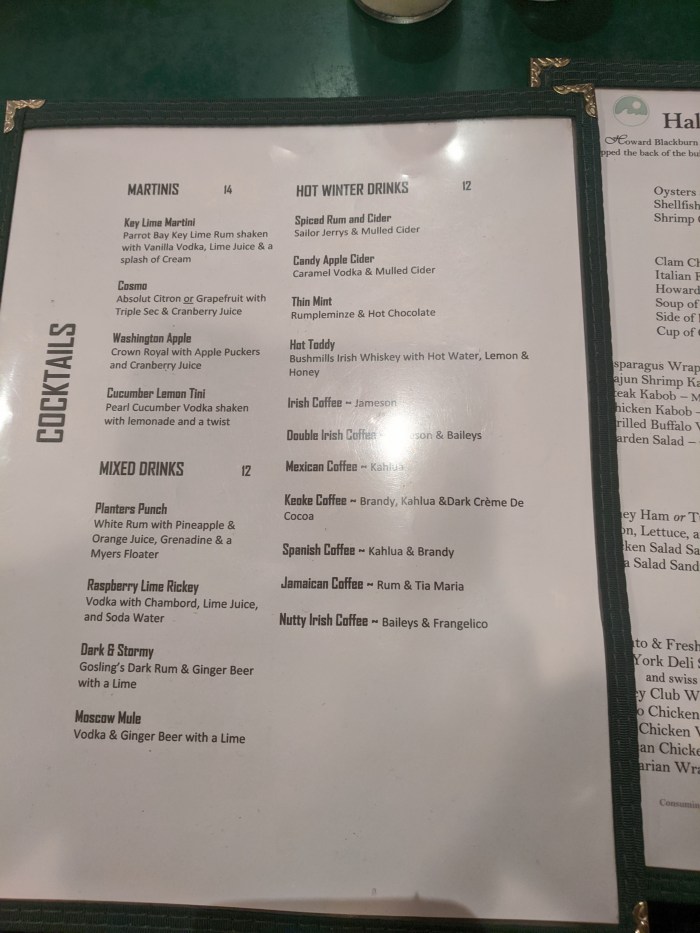
menu_Howard Blackburn historic tavern_now Halibut Point Restaurant_20191231_Gloucester Mass._ copyright c ryan

Fun fact: Col. Tappan taught young Daniel Webster.

Daniel Webster Quote of The Week From Greg Bover

“A strong conviction that something must be done is the parent of many bad measures.”

Daniel Webster (1782 – 1852)

A New Hampshire native and graduate of Phillips Exeter Academy and Dartmouth College, Webster, a member of the Whig Party, served New Hampshire in the House of Representatives and Massachusetts in the Senate during the turbulent years leading up to the Civil War. He worked tirelessly to preserve the Union, opposing efforts at secession by New England during the War of 1812, and by the South in the 1840’s and 50’s. Although known best for his fiery and (by today’s standards) flowery oratory in the Senate, he also served as Secretary of State in the Harrison, Tyler, and Fillmore administrations. Among his many accomplishments, it was Webster who filed legislation introducing pre-paid self-adhesive postage stamps in 1847; his portrait has appeared on Postal Service stamps 11 times, more than most presidents.