At the MFA Boston: Hokusai Inspiration and Influence with other legendary artists & teachers such as Ipswich’s Arthur Wesley Dow

Exhibition at the MFA Hokusai Inspiration and Influence 2023

Katsushika Hokusai (1760-1849) was a famous Japanese artist who came from humble beginnings and was active in the Edo period. He was an influential and revered artist and fine arts professor in his own lifetime. Hokusai eked out a living as a printmaker and illustrator, setting off on his own after years with the prestigious Katsukawa School, a premiere teaching and publishing powerhouse specializing in the ukiyo-e style color woodblock prints. A life in art and print publishing is tough going now and it was then. To supplement his income, Hokusai changed his name some 20 times, selling his surname or ‘brand’ to select pupils. He produced three of his most popular bodies of work when he was in his seventies. Hokusai died at 90 impoverished financially though not in obscurity. Students and friends paid for his funeral.

Hokusai: Inspiration and Influence at the MFA, lays out 100 examples of Katsushika Hokusai’s lifework in every period, genre, and medium, his famous woodblock series, new discoveries and rarities, and the Japanese and Western cultural exchanges that impacted his own practice. About 200 works of art by other artists spanning 200+ years demonstrate a sample of Hokusai’s relevance and inspiration to artists he knew or taught, and to artists and movements, generation by generation and around the globe, since his death.

The Museum of Fine Arts in Boston established one of the largest and finest Asian art departments in the world in the 1890s thanks to art historian curators, collectors, and benefactors. Highlights are featured with great care because of their fragility and easy rotation because of the depth of the museum’s holdings. The collection was amassed early and driven by four scholars. The inventory acquired by Ernest Fenollosa, an art historian, educator, and later, curator. was eventually purchased by Charles Weld, Boston physician and collector, with the stipulation that it be given to the MFA. The bulk of the MFA’s Hokusai trove were collected by Dr. William Bigelow.

Thanks to the MFA collections, its acquisitions and gifts, and great temporary loans, this exhibition celebrates Japanese art, especially Hokusai, emanating from his most iconic and lasting image, Under the Wave off Kanagawa (Kanagawa oki nami ura), 1830-32. Also known as The Great Wave ( an abbreviated and generalized title that amplified sales) the woodblock print is from Thirty-six Views of Mt. Fuji, a series so popular the artist increased it to Forty-six. You might not know the man but you likely know that surf.

MFA’s installation–loosely chronological

Japanese artist Katsukawa Shunshō operated the most popular ukiyo-e studio and Hokusai was employed there for over a decade until Shunsho’s death.  Eventually Hokusai became an independent artist & teacher.  The exhibition unfolds with masterpieces by both Hokusai and Katsukawa Shunshō and with exceptional work by their students and peers. After this introduction to the ‘lineage’ years, the installation is grouped by themes dear to Hokusai juxtaposed with work by artists in the decades following his death in 1849. The broad survey is an introduction to how the Japanese woodblock industry and ukiyo-e art and culture influenced French fashion, design, and the art movements which inspired modern art (and vice versa).

By the time of the Great Wave, Hokusai maximized landscapes which was novel at the time. With so much sea and sky, the color blue in every hue and tone is everywhere. Imported and available by the 1820s in Japan and cheap (unlike ultramarine), the synthetic dark blue pigment known as ‘Prussian blue’ was stable and could be used to create deep, rich velvety blue and great transparency—a game changer for artists and woodblock prints.

installation photos below: Catherine Ryan. Hokusai: Inspiration and Influence. MFA, Boston. March 30, 2023. Pinch and zoom to enlarge. Right click or select “i” for information for captions.

Floating the idea of the floating world

Ukiyo-e prints (images of the floating world) were invented when demand became so great a mass marketing innovation was required. Sellers could not afford to nor fill the orders which became too time consuming and limited by labor costs and pool of artisans. Although woodblock prints were original and labor intensive in other ways, hundreds of single sheets could be pulled in a day. Bright and colorful art for all, disseminated worldwide, ukiyo-e art was an early format example of mass media.

Shunsho | hokusai

Two Shunsho immersive six panel screens

Early Hokusai

fellow ARTISTS

Some students, some famous, some rediscovered- Hokusai II, Hiroshige, Kuniyoshi, Katsushika Taito II. Hokusai’s daughter signed her work Katsushika Ōi

LATE HOKUSAI and prussian blue

Mostly examples from series after 1830s on when he was in his 70s: 36 Views of Mt. Fuji, Large Flowers, Small Flowers, Waterfalls, Remarkable Views of Bridges, Fifty-three Stations on the Tokaido Road. (The far younger Hiroshige born in 1790 produced 10 prints of famous places in 1825 before Hokusai, 69 Stations Kiso Road in 1835, and 100 Views of Edo in 1856 two years before he died in the cholera epidemic.)

japonisme. Impressionism. Post-Impressionism. Art NOUVEAU. late 19th C

Ipswich icon Arthur Wesley Dow

Like Hokusai, Dow (1857-1922) was an artist and influential teacher. He spread the gospel of composition and design, Japanese culture and ukiyo-e art, in America. And similarly to Hokusai, fine arts students gravitated to his own wildly influential instruction book. A Dow woodcut and dory were grouped with Ushibori by Hokusai, from the Mt. Fuji series. See the blue!

20th C

Color woodblock prints by Edna Boies Hopkins, an American artist active in the early 20th C who lived in Japan and France, studied with Dow, and was an influential member of the Provincetown Printmakers are on view. I am proud to write that back in 1986, I co-curated the first Hopkins solo exhibition retrospective since the 1920s and authored the essay and catalogue. The research for the project meant time spent in Ipswich and the Ipswich Historical Society for a close study of Arthur Wesley Dow.

21st C – MITSUI’s lego gREAT wAVE

Christiane Baumgartner’s 2017 monumental woodblock print on Kozo paper, The Wave

RIP Yvonne Jacquette, so glad to see her complex work included, a fittingly zig zag aerial nocturne view of famous NYC bridges no less, Two Bridges III, 2008 woodcut printed in dark ink on Okawara paper and acquired by the MFA before her passing at the end of April.

People were thrilled to encounter Hokusai’s The Great Wave in person and waited in line because of its scale and beauty. Multi-generational families shared the experience and wanted to take pictures which moved me tremendously. Hokusai and his peers, and artists influenced by them, produced series of cherished vistas and visual poems and legends for all price points. The LEGO installation helped ground the show and bring the joy, humor and blockbuster awe that ukiyo-e genre and series did in its time–before movies, photography, animation, easy travel, etc..

The LEGO commission by master builder Jumpei Mitsui riveted visitors of all ages on the days I visited the exhibition (if not in the art press I’ve read since). When you know the price point and target audience for the ukiyo-e art, i.e. the commoner and its arduous, technical process, the LEGO Great Wave homage– colossal, blue, and an exacting marvel of another sort– was a great fit to underscore connections to the past and engage audiences. Its scale and drama heightened the perspective of the crews and the boats in a way that other selections did not.

People looking at art

on view at the MFA, Boston: Hokusai: Inspiration and Influence

On the nose pairings

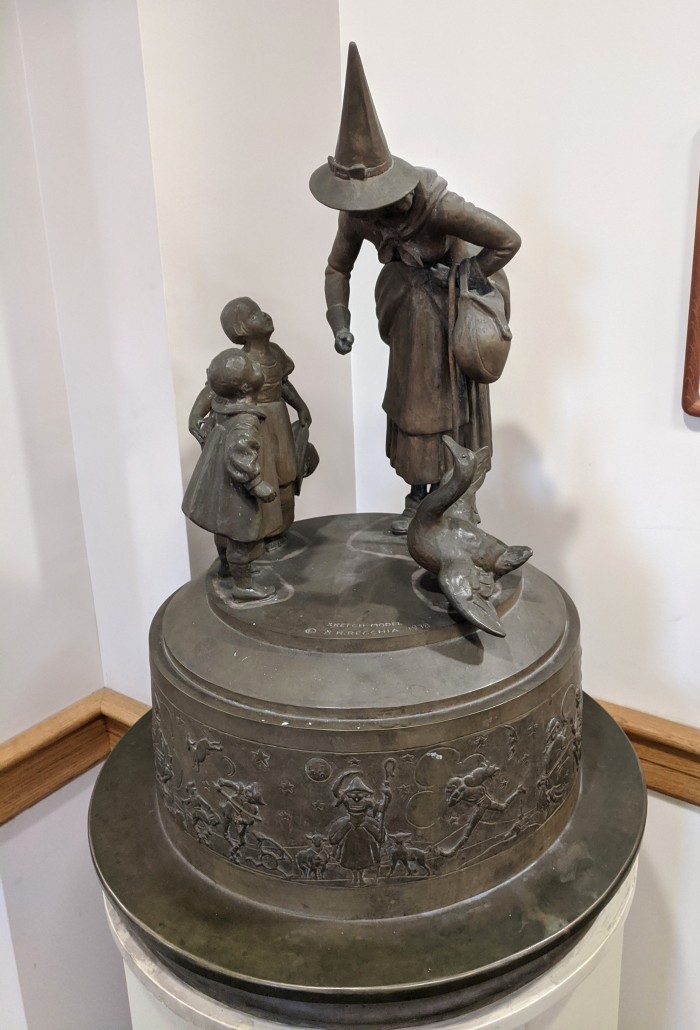
Mother Goose genius design | 1938 rotating sculpture by artist Richard H. Recchia and Sam Hershey WPA mural Rockport Public Library #RockportMA

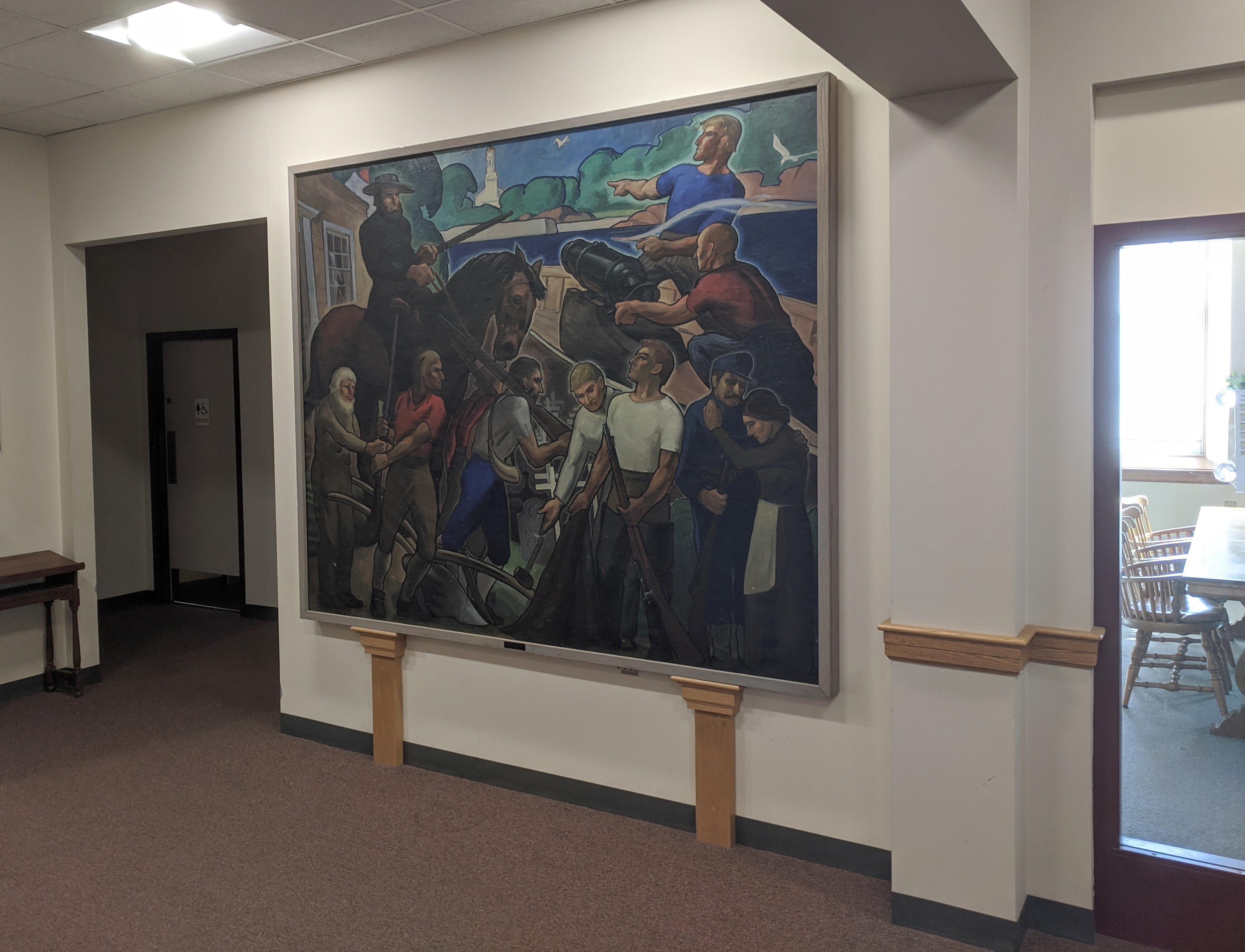
The Rockport Public Library maintains a wonderful art collection. When visiting the temporary Once Upon a Contest: Selections from Cape Ann Reads in the children’s room and the special Betty Allenbrook Wiberg installation, don’t miss the genius Mother Goose 1938 bronze by Richard H. Recchia, and the Sam Hershey WPA-era mural, Rockport Goes to War, 1939.

The new Josh Falk mural (2019) is behind the Rockport Public Library.

Photos & video clip: Catherine Ryan

Genius design bronze by Richard H. Recchia, Mother Goose, 1938

at the Rockport Public Library

This impression is annotated by the artist as a “sketch model sculpture by R. H. Recchia” (1888-1983). The sculpture rotates to illustrate the rhymes and beautifully expresses how children are captivated by stories. The sculpture is a tribute to his wife, Kitty Parsons (1889-1976), artist & writer, and one of the original founders of Rockport Art Assoc. It was originally situated within the library’s former smaller digs: the Rockport’s Carnegie Library established in 1906, a Beaux-Arts beauty around the corner, now a private home. It was one of 43 Carnegie libraries built in Massachusetts.  In 1993 the library moved to its current site in an 1880s mill building, the Tarr School, thanks to the Denghausen bequest.

Parsons & Recchia resided and worked at their home “Hardscrabble” at 6 Summer Street in Rockport. (Rockport was their permanent address from 1928 till his death.) Recchia was born in Quincy. His dad was a stone carver from Verona who worked for Bela Pratt and Daniel Chester French. Later, Recchia was Pratt’s assistant.

For more bas relief examples by Recchia, see his Bela Pratt in the Yale collection, digitized entry here ) Recchia public sculptures are on permanent display at the Rockport Art Association & Museum. More photos below.

snippet video of Recchia Mother Goose sculpture rotating

click/double click on photos to enlarge photos to actual size (or pinch and zoom) | hover to read caption

Sam Hershey WPA mural, 1939

Sam Hershey Rockport Goes to War featured Rockport Public Library; W. Lester Stevens WPA mural Preparing Rockport for Granite dating from the same year is across the street in the Post Office

Samuel F. Hershey WPA era mural 1939 at Rockport Public Library Rockport Mass. ©c ryan

Samuel F. Hershey Rockport Art Assoc catalogue members from 1940

Stevens 1939 mural Rockport Mass post office
W. Lester Stevens 1939 mural in Rockport Post Office

Josh Falk street mural outside

Josh Falk 

Once Upon a Contest

is displayed on the same floor as Recchia and Hershey works February 3 –  February 29, 2020.

clone tag: -6903914027485544744
Once Upon a Contest exhibit of children’s picture books is presented by the four libraries of Cape Ann with support from Bruce J Anderson Foundation | The Boston Fund . In this photograph, carved box by Lars and Betty Wiberg. Illustration by John Plunkett for Prince of Winter on left and illustration of dog by Mary Rhinelander on right.

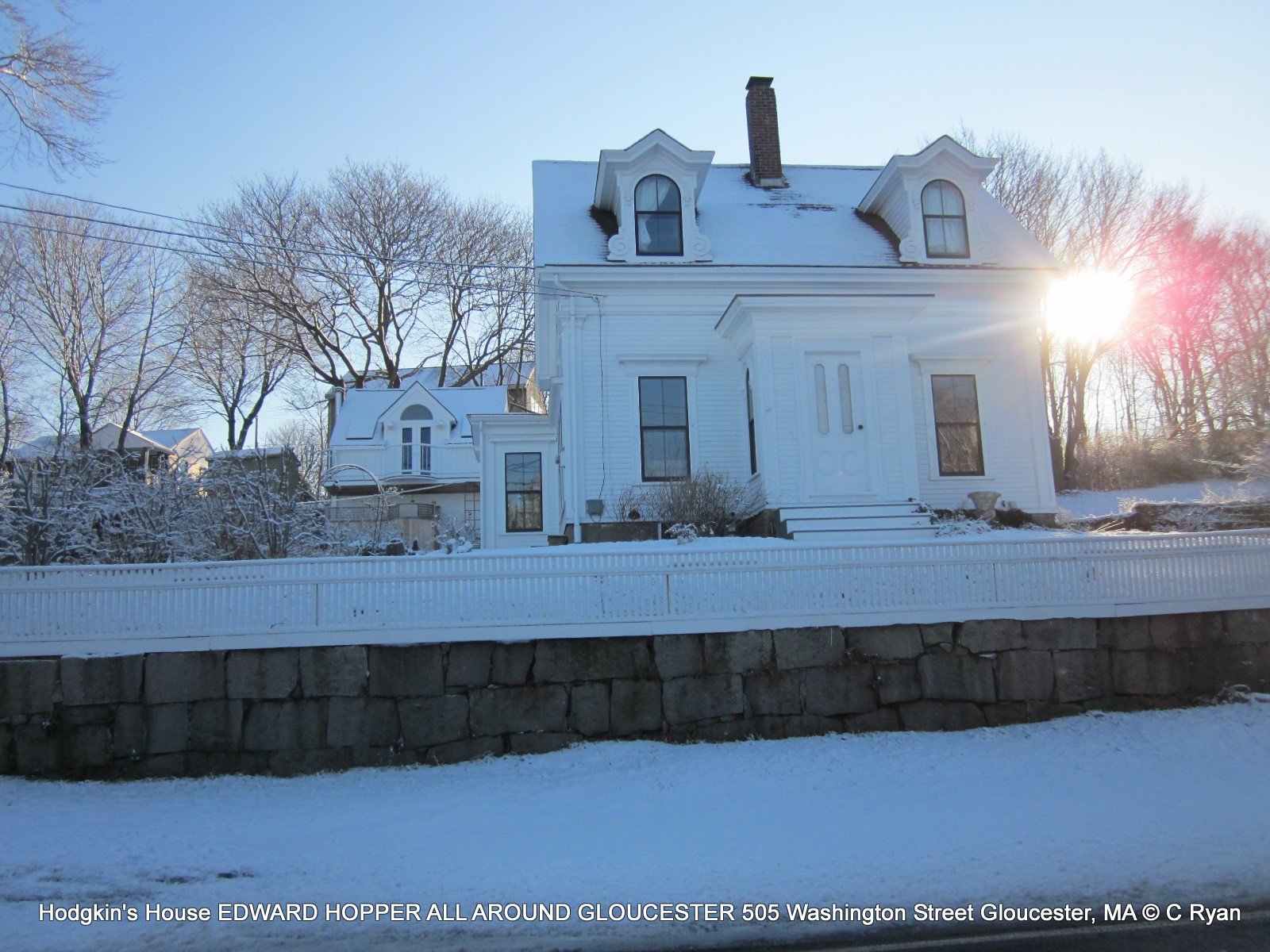
New York Times features Edward Hopper #GloucesterMA painting


“What was an important early personal acquisition?

“The Hopper painting. It’s called “Hodgkin’s House.” I was really nervous about it. It was at the time certainly the most expensive thing by far I had ever bought. It belonged to David Geffen. It’s one of the things that’s skyrocketed in value. There are just so few in private hands.”
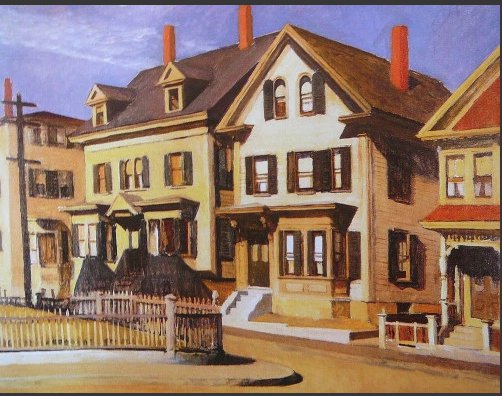
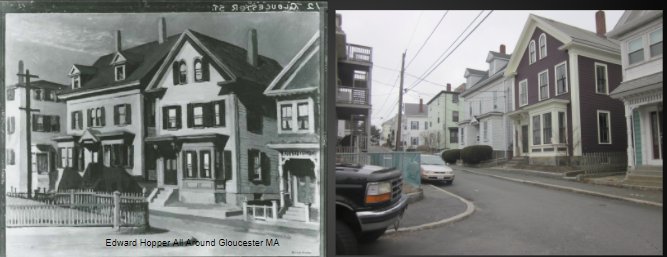
EDWARD HOPPER all around Gloucester Hodgkin's House 505 Washington Street GLOUCESTER MA© c ryan


New York Times Jan 8 2018 Laurie Tisch Edward Hopper Hodgkins House prior owner was David Geffen

Hodgkin’s House was one of nine Gloucester paintings included in the 1933 Museum of Modern Art Edward Hopper retrospective. The eight other paintings were: Cape Ann Granite,  Houses of Squam Light, Haskell’s House, Marty Welch’s House, Adams’s House,  Freight Cars at Gloucester, Italian Quarter, and Box Factory Gloucester
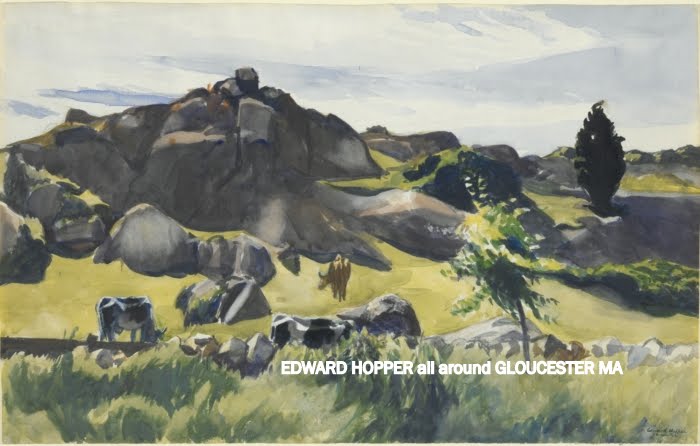
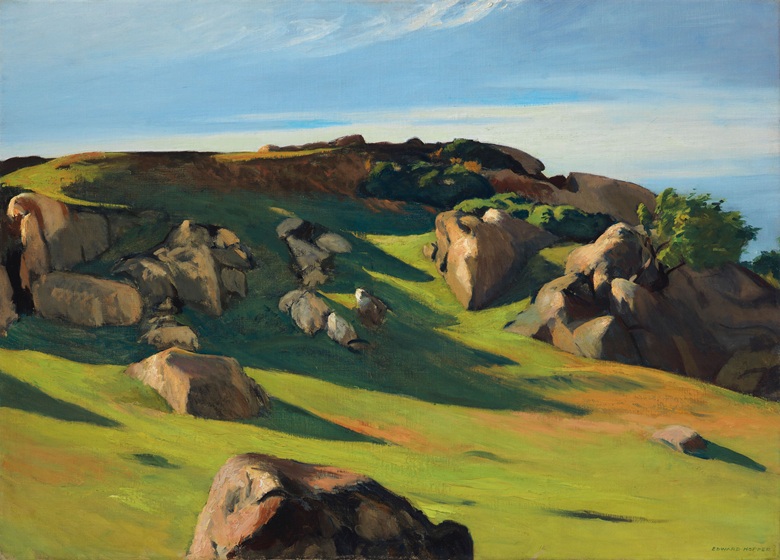
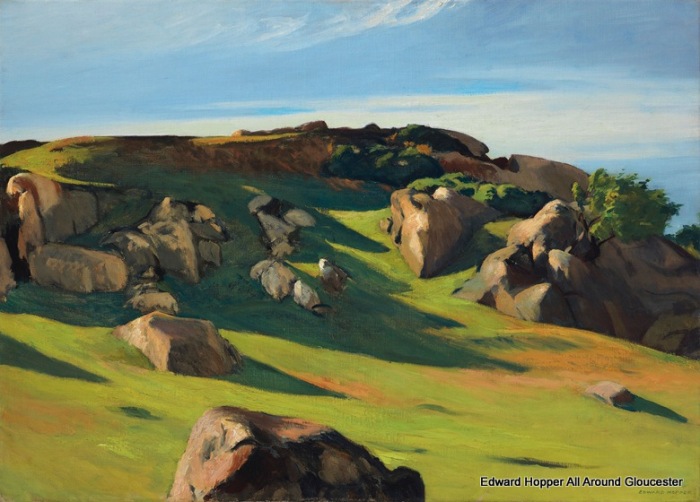
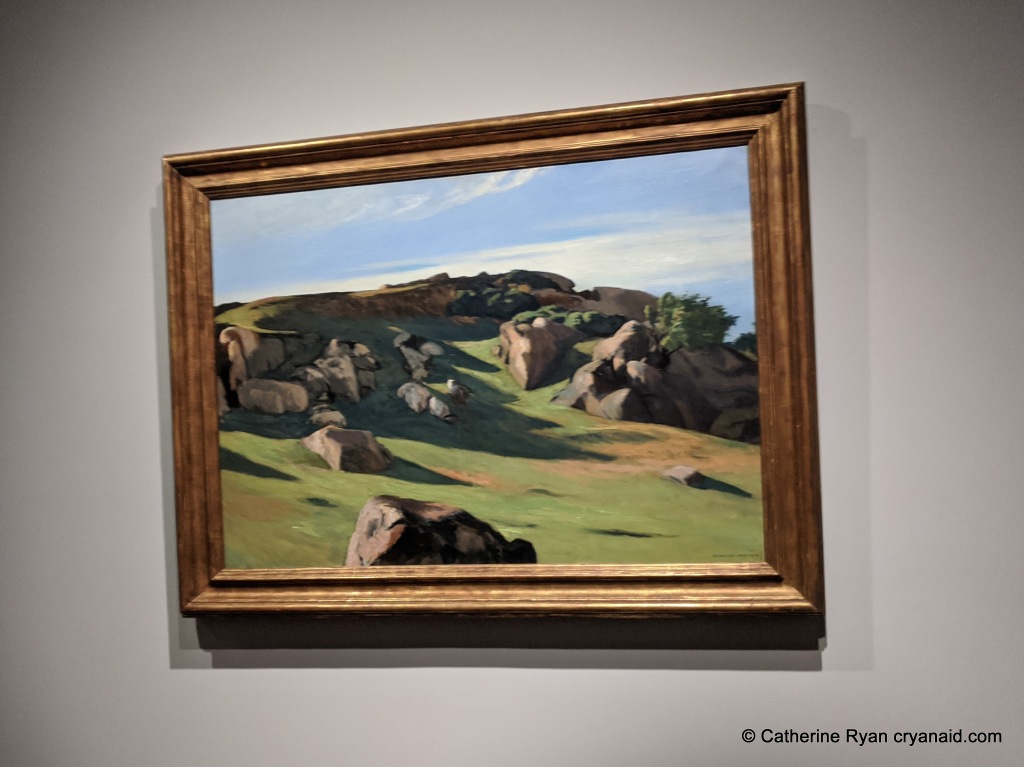
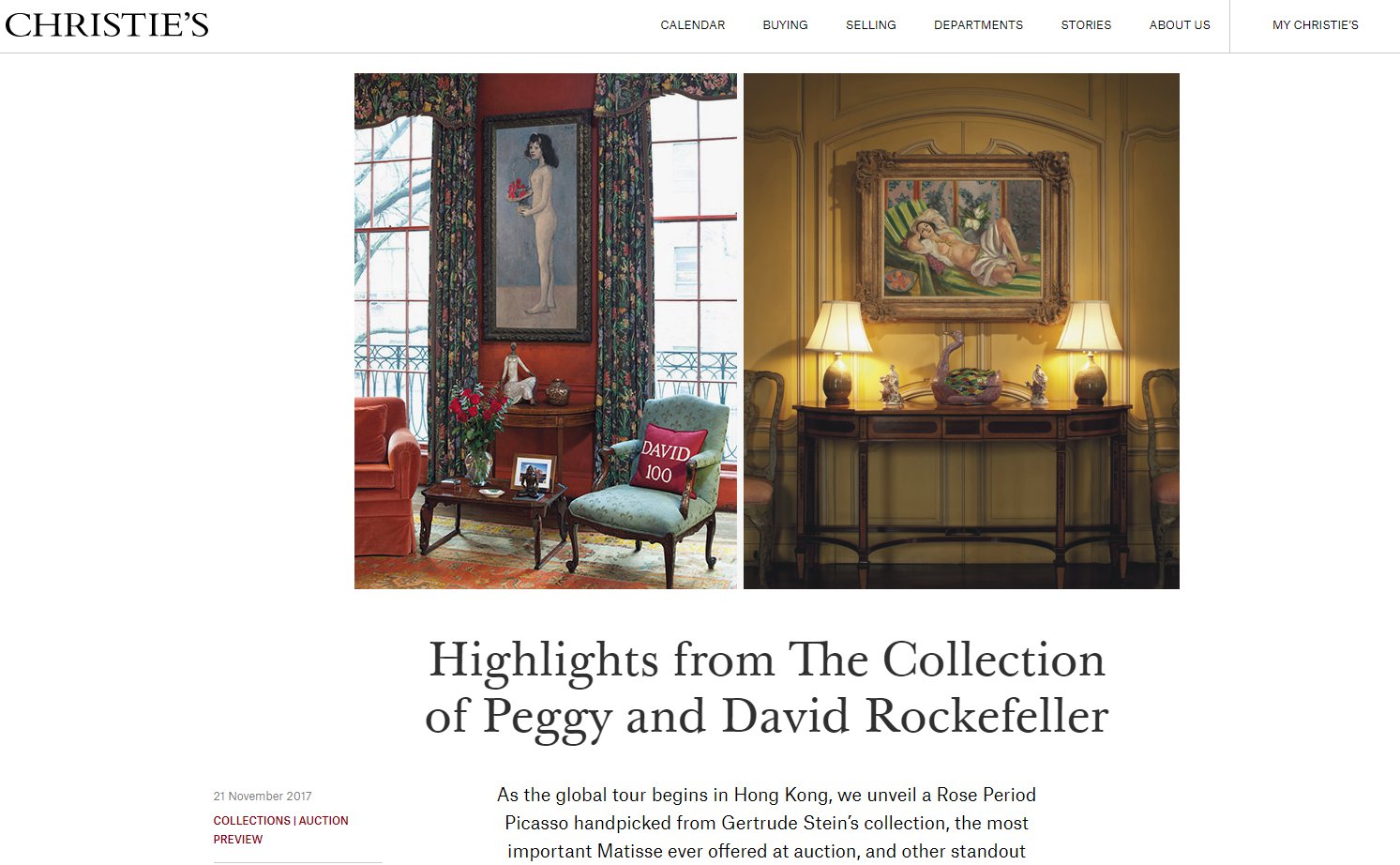
 Christie’s auction house has released more information about one of the upcoming Rockefeller sales. It includes a good reproduction of Cape Ann Granite.

Edward hopper Cape Ann Pasture ©Christies photograph 2017

Read more about Edward Hopper’s Cape Ann Granite in Part 2, Dec. 2017 here

Bring it home! The history behind Cape Ann Granite, the Rockefeller Edward Hopper #GloucesterMA Dogtown painting. At CHRISTIE’S Auction 2017

Image: C. Ryan

2017. Christies, the New York auction power house, is currently marketing the Peggy and David Rockefeller art collection across the (art)world–Hong Kong, London, and Los Angeles– before the spring 2018 live sale back in New York. The collection includes a painting by American artist, Edward Hopper (1882-1967), that was inspired by Gloucester.

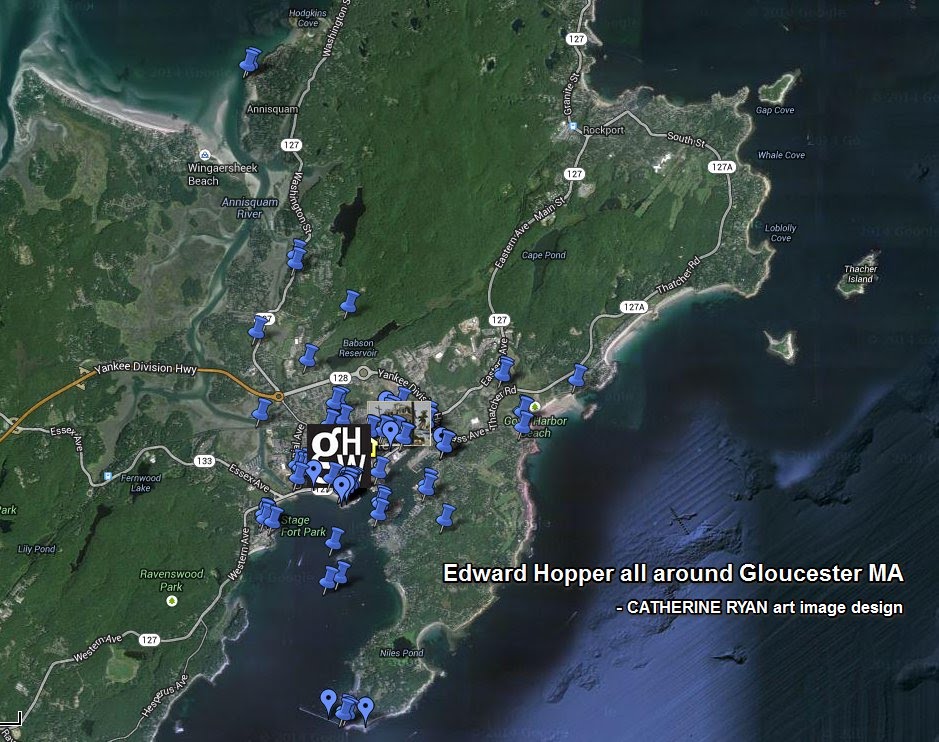
Cape Ann Granite is one of the rare Hopper paintings remaining that’s not currently held in a museum. There are more than 110 Gloucester houses and vistas depicted by Edward Hopper.

Advance promotion of Christie’s upcoming Rockefeller auction have yet to illustrate the painting, although the artist’s recognizable name is mentioned in every press release and the painting is included in the world tour highlights exhibit. The catalogue for the sale is not ready.

two Former owners of Cape Ann Granite have in common connections to Harvard, banking, and art collecting

Billionaire and philanthropist, David Rockefeller (1915-2017), was a Harvard graduate and longtime CEO of Chase Manhattan bank (later JP Morgan Chase). His art appreciation began early,  influenced by both parents and the Rockefeller family collections. His father was the only son of  John D. Rockefeller, a co-founder of Standard Oil Corp. His mother, Abby Aldrich Rockefeller (1874-1948), helped establish the Museum of Modern Art, and the fund in her name helped secure Hopper’s Corner Saloon for the permanent collection. Several family members were Trustees. After his mother’s death, David took her Trustee seat.

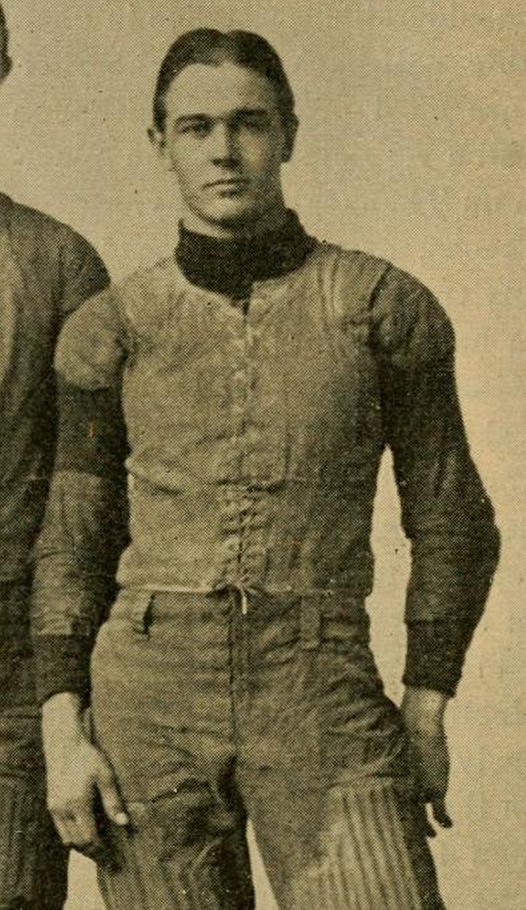
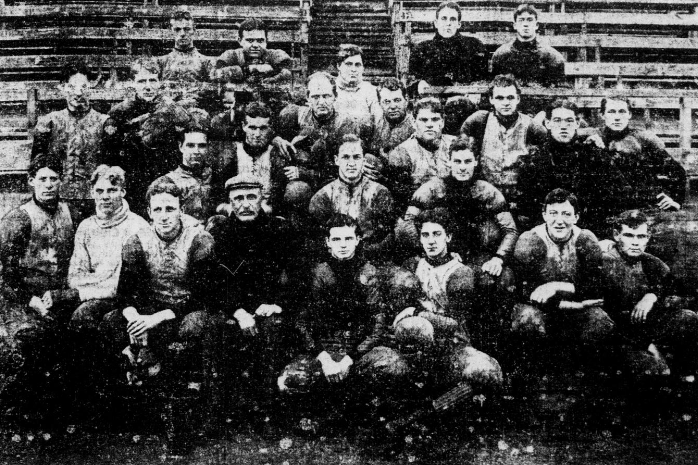
Like David Rockefeller, the first owner to acquire Cape Ann Granite was a Harvard graduate, art collector and financier, about the same age as Rockefeller’s parents, and Hopper. Benjamin Harrison Dibblee (1876 – 1945) was the scion of  California businessman, Albert Dibblee. The family estate “Fernhill” was built in 1870 in Ross, California (later the Katharine Branson School). Benjamin H Dibblee was a Harvard graduate (1895-1899), an All-American Crimson football player (halfback and Team Captain), and head coach (1899-1900). W.H. Lewis, a famous center rush, was the Assistant Coach. (Harvard football dominated under this coaching team. See the standings below the “read more’ break.) In 1909, Dibblee donated his father’s historic papers concerning California’s secret Civil War group “The Home Guard of 1861” including its muster roll and pledge of loyalty to Lincoln and the Union cause. Dibblee was an alternate delegate from California to the Republican National Convention in 1912. As a  Lt. Col. he was listed as one of five California committee members for the American Legion in 1919. He was a big wheel investment banker at EH Rollins & Sons, a firm impacted by the Wall Street crash of 1929.

Benjamin Harrison Dibblee Harvard Football all american then Captain Wikipedia photo first purchaser of Edward Hopper Cape Ann Granite Gloucester MA Dogtown painting later owned by Rock
Wikipedia photo of Dibblee from The Official National Collegiate Athletic Association football guide, 1899

It’s fun to think about Dibblee possibly visiting Gloucester during his time at Harvard, like so many students and faculty; then, decades later, acquiring a major Hopper because it was both a modern masterpiece, and a Gloucester landscape.

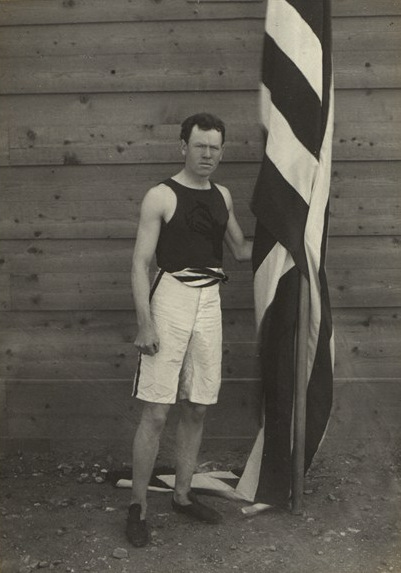
[The Hopper Cape Ann Granite painting has me itching to research all Crimson team photos– not simply varsity nor football circa 1895-97– because of the (remote) chance of another Gloucester-Harvard and athletic connection. In 1895 Dibblee was involved with sports at Harvard at the same time as author and Olympian, James Connolly.  In 1899 both were involved with football; Dibblee as the Harvard coach and Connolly as Gloucester’s athletic director and football player*. Maybe they scrimmaged. Maybe they scrimmaged in Gloucester. *scroll down to notes below]

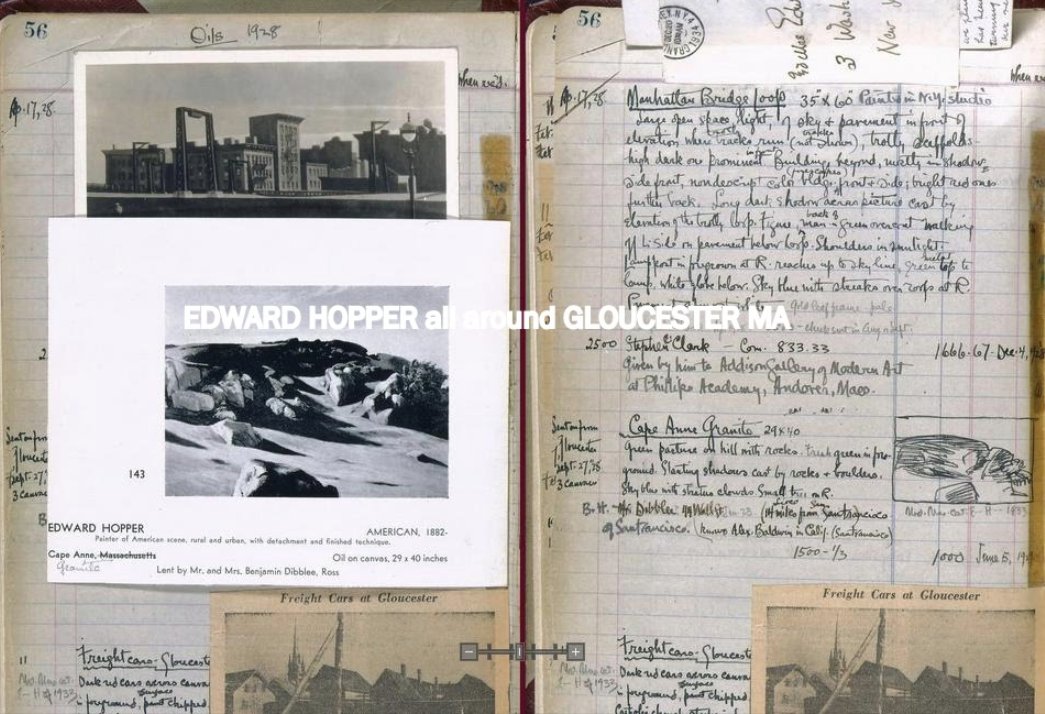
Hopper’s artist inventory log pages for ‘1928 oils’ itemizes Cape Ann Granite as follows: “Sent on from Gloucester September 27, 1928, 3 canvases. Cape Ann Granite, 29 x 40, Green picture on hill with rocks. Fresh green in foreground. Slanting shadows cast by rocks and boulders. Sky blue with clouds. Small tree on R. BH Mr. Dibblee 49 Wall Streeet of San Francisco (Lived near 14 miles from San Francisco. Knows Alex Baldwin in Calif. (SanFrancisco) 1500 -1/3. 1000 on June 5, 194 ” 

EDWARD HOPPER diary page includes Gloucester entries
Image: From Hopper’s Artist’s ledger -Book, ink graphite on paper, Whitney Museum of American Art, Gift of Lloyd Goodrich

The pencil annotation “Modern Masters EH 1933” accompanying the thumbnail sketch for the painting on the right of this entry may be mixed up. There was a  “Modern Masters” exhibition at the Museum of Modern Art (MoMA) held in 1940 but it did not include this painting on the checklist. There was an Edward Hopper Retrospective held at MoMA October 30–December 8 in 1933 that did list this Gloucester painting, and the lender, Dibblee. (Incidentally, two other 1928 oils catalogued on that same inventory page, Manhattan Bridge Loop and Freightcars Gloucester, would both end up in the Addison Gallery collection at Phillips Academy.)

The Pure Landscapes

Excerpts from the 1933 MoMa Hopper retrospective exhibition catalogue:

“…When Hopper went to art school the swagger brushstroke of such painters as Duveneck, Henri, and Chase was much admired. Perhaps as a reaction against this his own brushwork has grown more and more modest until it is scarcely noticeable. He shuns all richness of surface save where it helps him to express a particular sensation…in spite of his matter-of-factness, Hopper is a master of pictorial drama. But his actors are rarely human: the houses and thoroughfares of humanity are there, but they are peopled more often by fire hydrants, lamp posts, barber poles and telegraph poles than by human beings. When he does introduce figures among his buildings they often seem merely incidental. Perhaps during his long years as an illustrator he grew tired drawing obviously dramatic figures for magazines. Hopper has painted a few pictures in which there are neither men nor houses. The pure landscapes Cape Ann Granite (9), Hills, South Truro (16), Camel’s Hump (22) occupy a place apart in his work. they reveal a power which is disconcertingly hard to analyze. Cezanne and Courbet and John Crome convey sometimes a similar depth of feeling towards the earth and nature…” Alfred Barr, 1933

“In its most limited sense, modern art would seem to concern itself only with the technical innovations of the period. In its larger and to me irrevocable sense it is the art of all time; of definite personalities that remain forever modern by the fundamental truth that is in them. It makes Moliere at his greatest as new as Ibsen, or Giotto as modern as Cezanne.” Edward Hopper, 1933 

Yale owns a related watercolor by Edward Hopper, Cape Ann Pasture

EDWARD HOPPER, oil on canvas, Yale University collection, Edward Hopper All Around Gloucester by Catherine Ryan
Catherine Ryan art image design Edward Hopper all around Gloucester MA

Proceeds from the sale of the Peggy and David Rockefeller art collection at Christie’s next spring will benefit 10 selected charities. Perhaps a magnanimous collector might consider this Hopper Dogtown purchase for the Cape Ann Museum, a philanthropic twofer in this case, and needed. Cape Ann Museum does not possess a Hopper Gloucester painting and if any museum should, it’s CAM. We need to eventually guide back the Hopper painting Gloucester Street, too.

Gloucester Street private collection Edward Hopper all around Gloucester
Glou Street Edward Hopper

Christie’s

To date Christie’s auction house has promoted primarily a Picasso and Matisse as the star lots from this collection of masterpieces because of their hefty valuation. The presale estimate for the Matisse Odalisque couchée aux magnolias (1923) is 50 million.  The Picasso painting, Fillette à la corbeille fleurie (1905), a “Rose period Masterwork”, is estimated to top 70 million. The presale estimate for the Hopper is 6 million to 8 million.

Christies highlight page for Rockefeller does not show the Hopper yet Dec 12 2017
Image: Christie’s first press roll out features the Picasso and Matisse. Not the Hopper

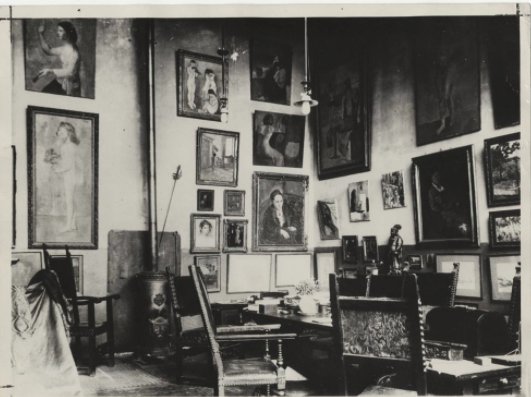
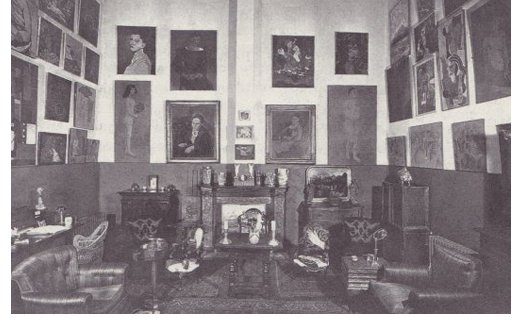
Picasso/Stein/Toklas/Rockefeller

The Picasso was displayed in the  library of  the Rockefeller Upper East Side mansion at 146 East 65th Street.   The first owners were Gertrude and Leo Stein. Gertrude Stein hated it though her brother bought it anyway. After Alice B. Toklas (Stein’s partner) died in 1965,  MoMa trustees drew lots and were offered first pass on the legendary Stein collection. David Rockefeller won first pick, and selected the Picasso. I wonder how it will fare in this #metoo awakening. At the time of her death, Toklas had long been evicted from their Paris home as she had no legal standing nor benefit from any estate sales.

Gertrude and Leo Stein Rockefeller Picasso provenance
installation Leo and Gertrude Stein
Gertrude Stein and Alice Toklas collection at home
Image: installation Gertrude Stein and Alice Toklas

Dibblee Harvard Crimson coaching stats | Connolly:

1899: 10-0-1

Williams 29-0
Bowdoin 13-0
Wesleyan 20-0
Amherst 41-0
at Army (Westpoint) 18-0
Bates 29-0
Brown 11-0
Carlisle 22-10
Penn 16-0
Dartmouth 11-0
Yale 0-0 TIE

1900: 10-1

Wesleyan 24-0
Williams 12-0
Bowdoin 12-0
Amherst 18-0
Columbia 24-0
Bates 41-0
Army 29-0
Carlisle 17-5
Penn 17-5
Brown 11-6
Yale 0-28

1900 Harvard Football Team.png
Harvard Crimson Football team 1900

**I wrote about Connolly in a prior GMG post. “While still twenty-five pounds underweight from tropic fever, I took a job as physical director of the Gloucester Athletic Club. I played football on the Athletic Club eleven, spent the fall and winter (1899-1900) there, chucked that job in the spring, took a steerage trip to England, looked the London slums over, and went on to Paris, to take in the Paris Exposition, and, incidentally, compete in the Second Olympic Games.” 

BASA-3K-7-422-18-1896_Summer_Olympics
Image: James Brendan Connolly 1896 Olympics wiki commons image from Bulgaria State Archives

Content copyright Catherine Ryan. Images copyright & credit Catherine Ryan unless otherwise noted.