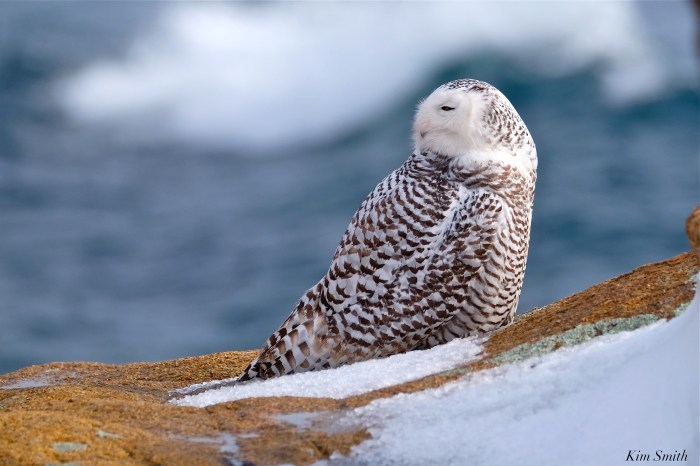
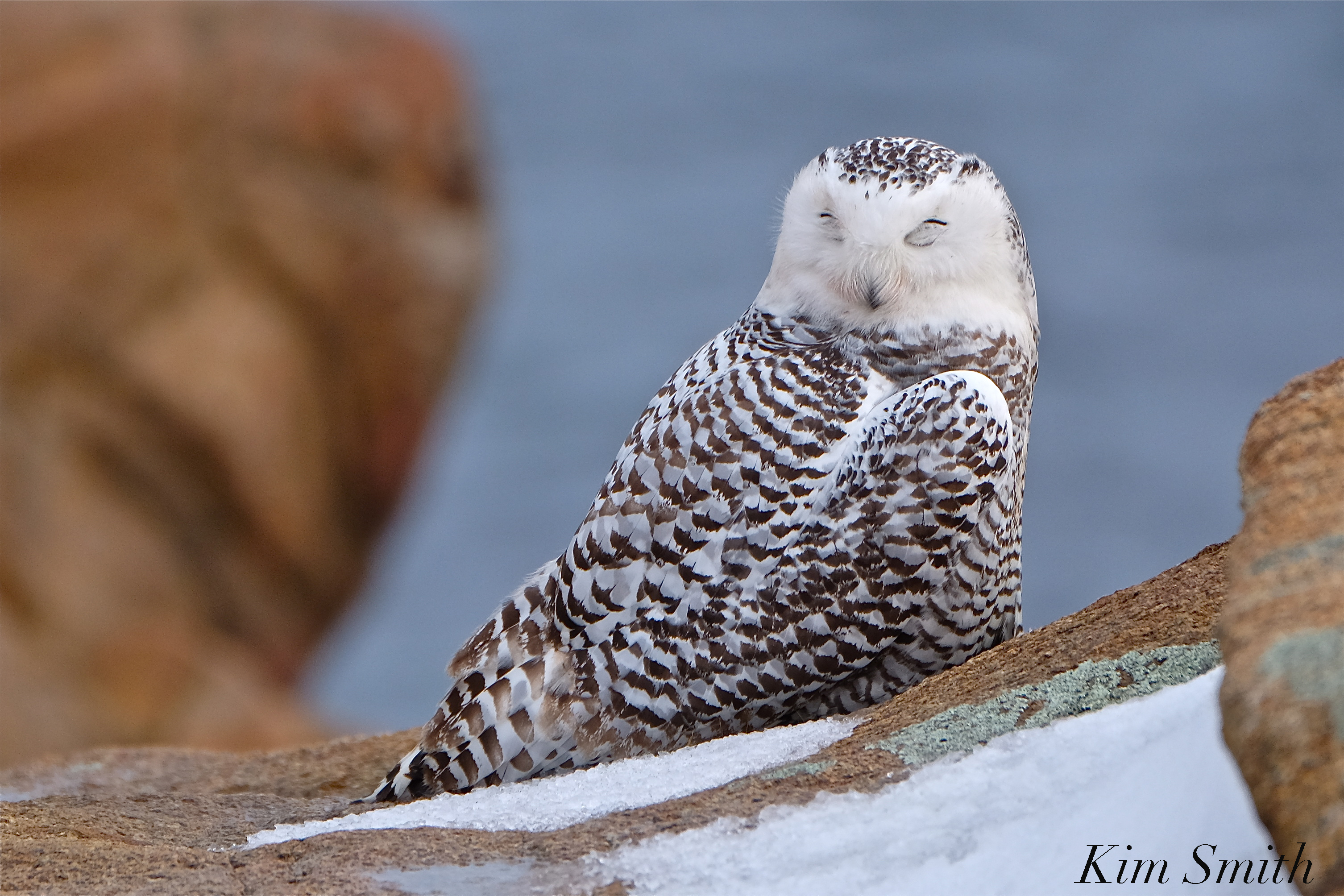
SNOWY OWL BUBO HAS A BOOBOO -By Kim Smith

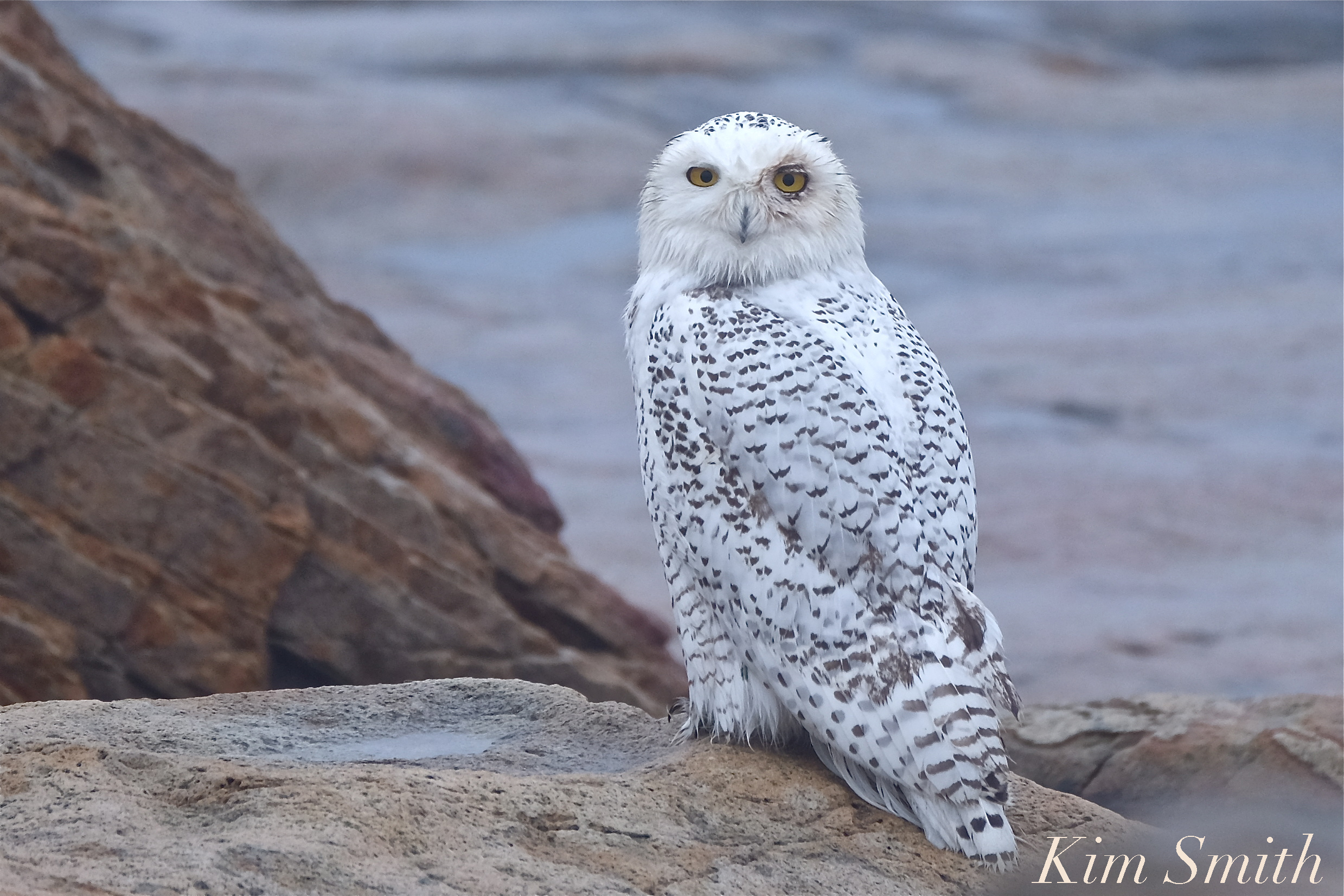
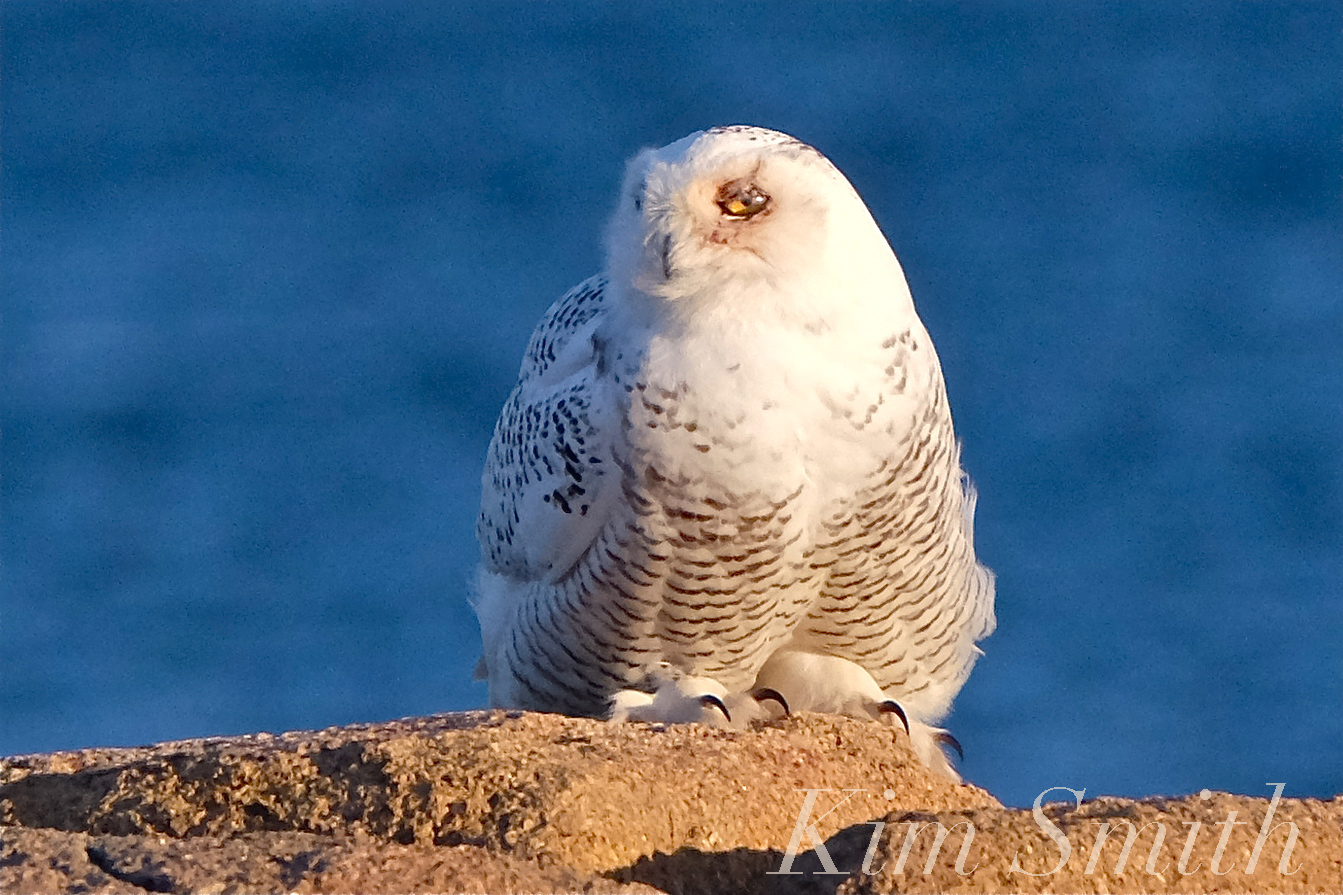
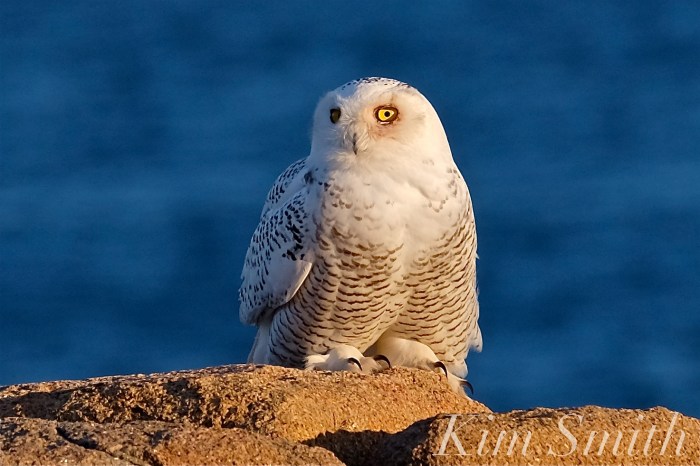
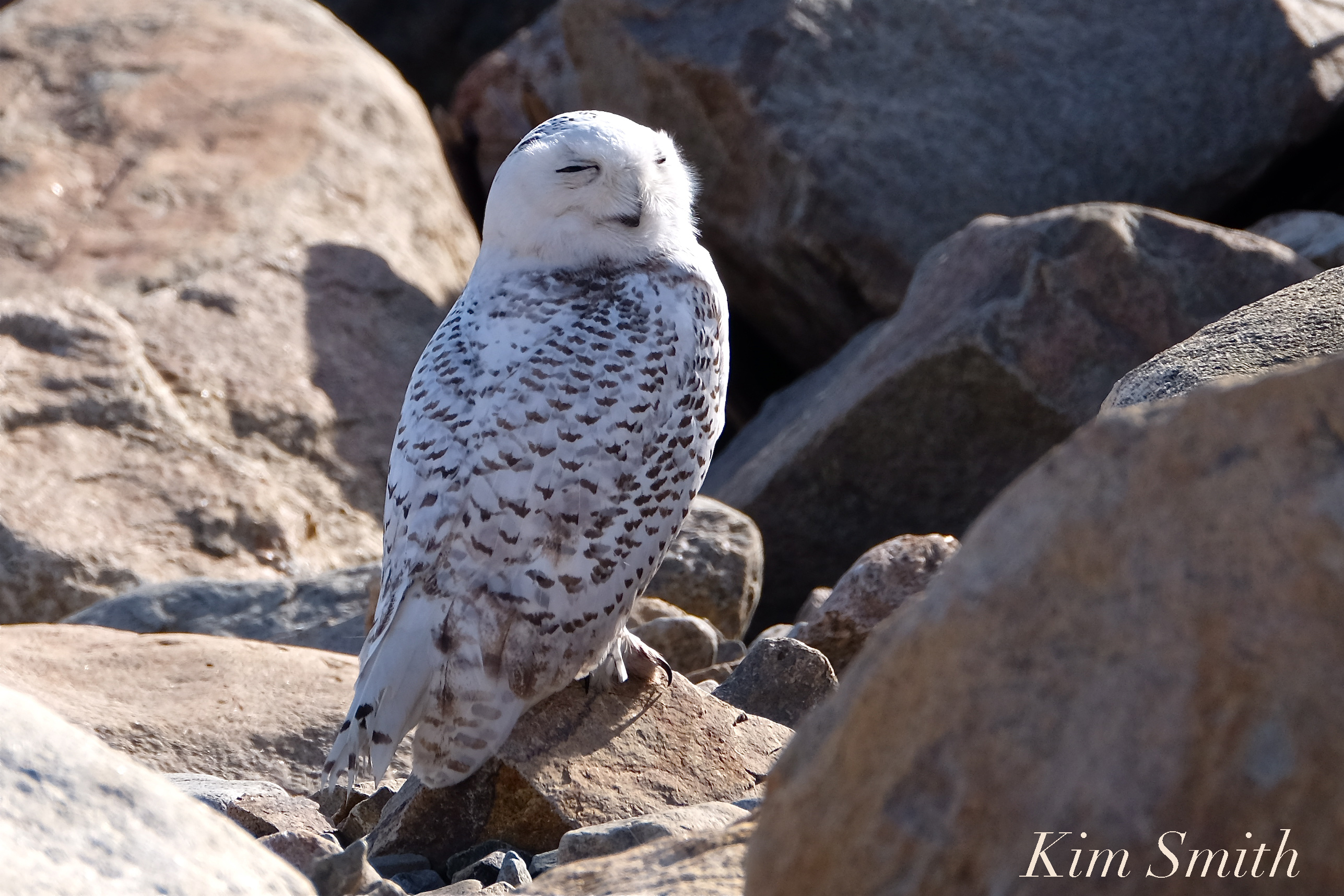
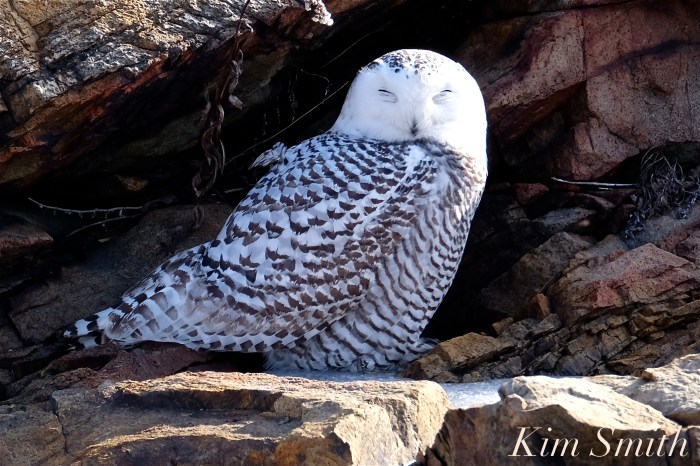
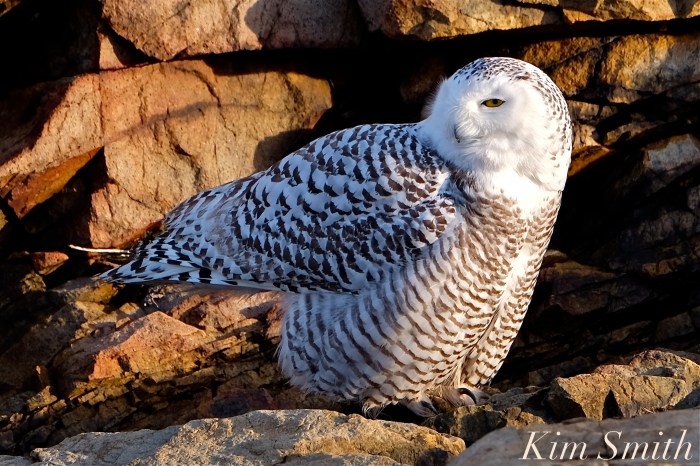
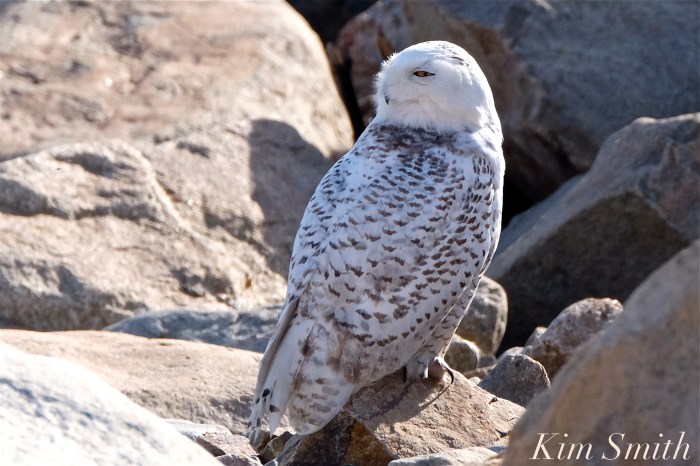
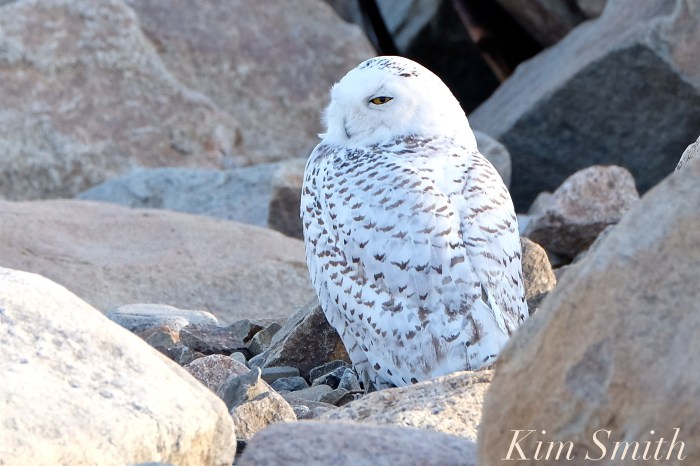
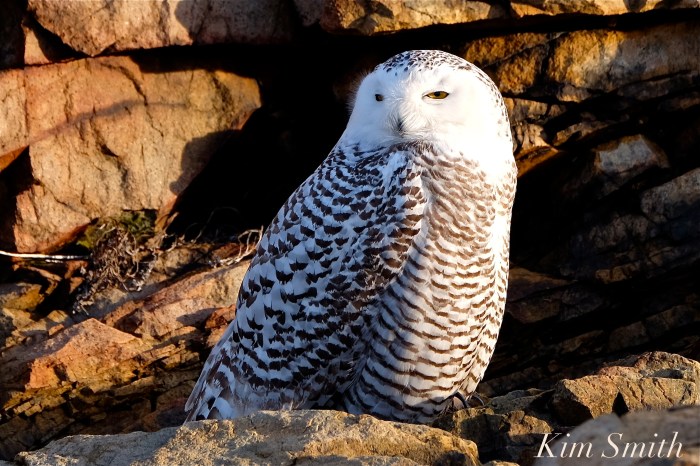
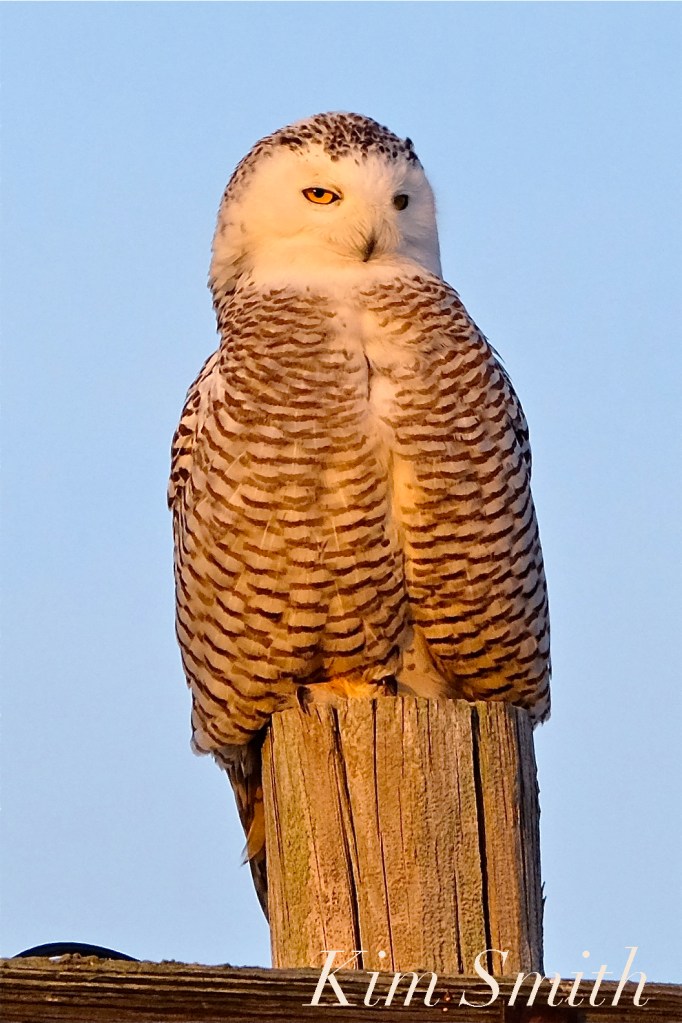
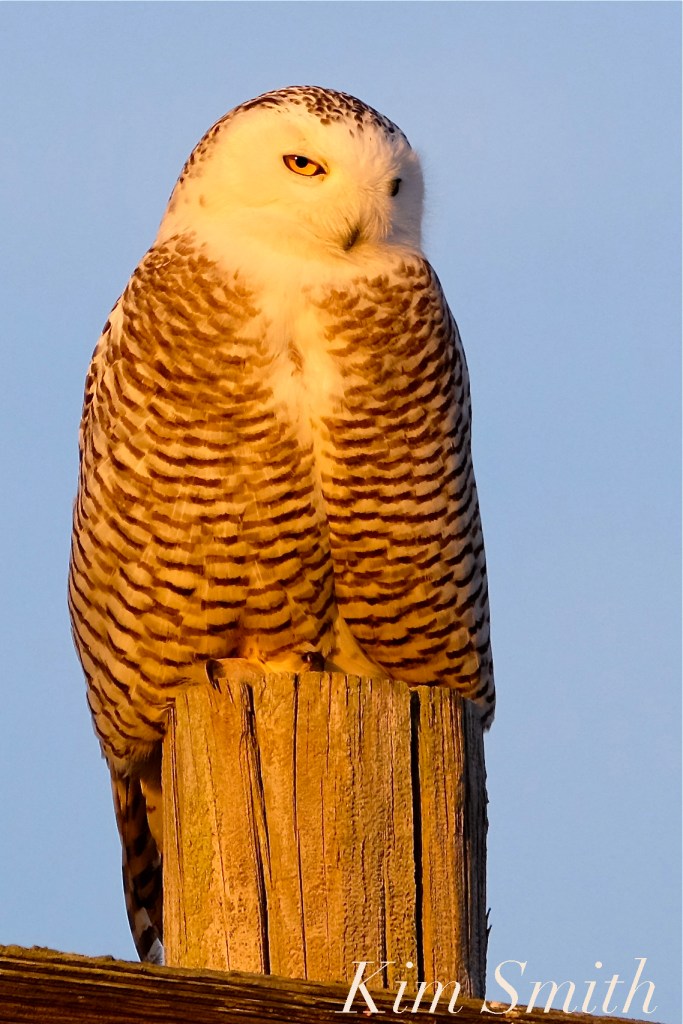
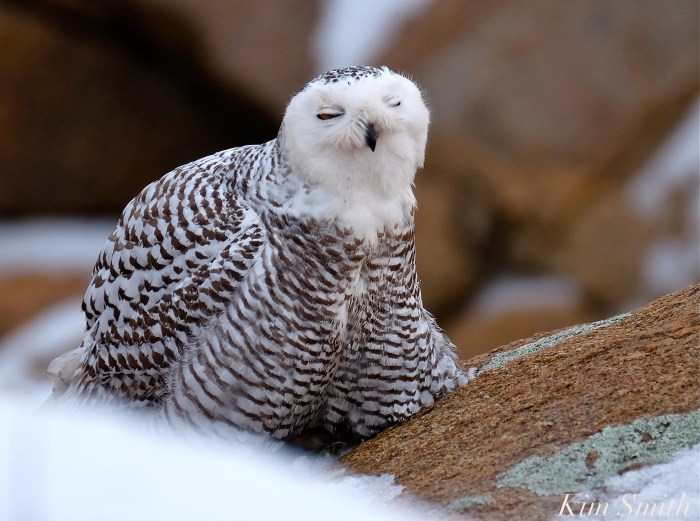
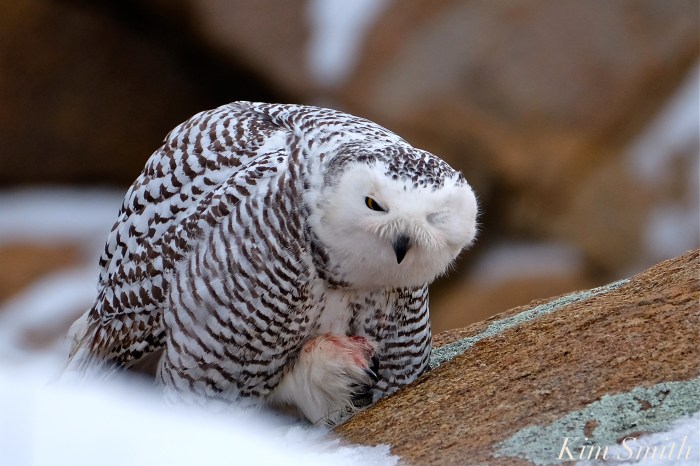
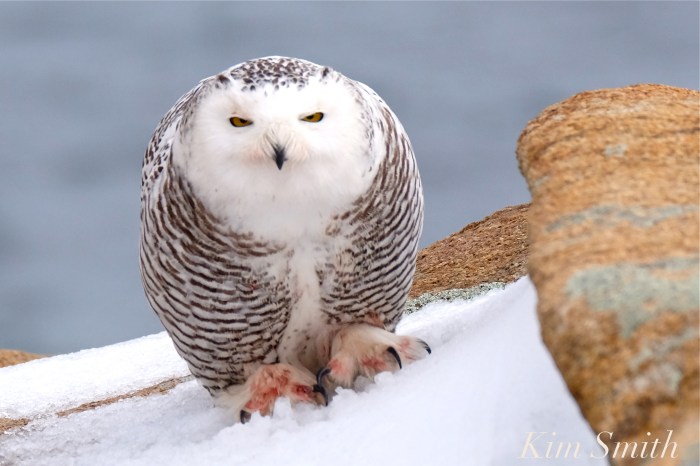
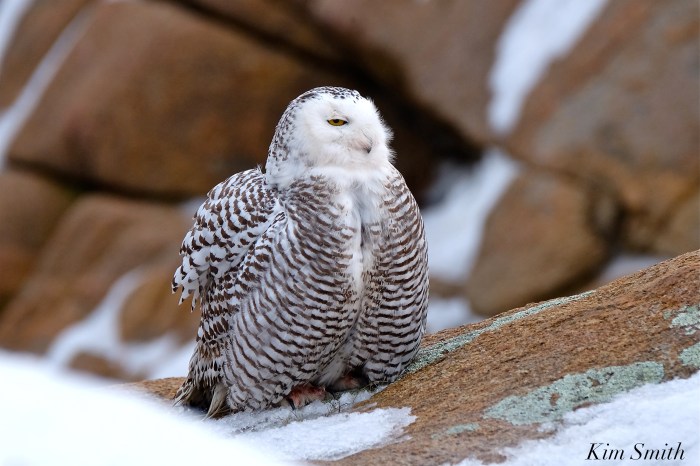
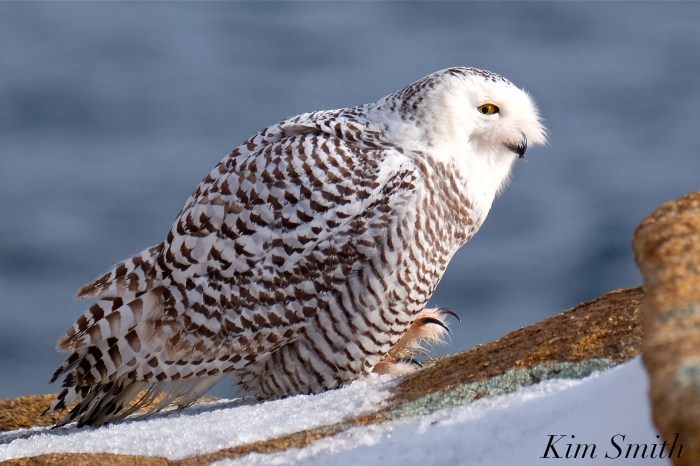
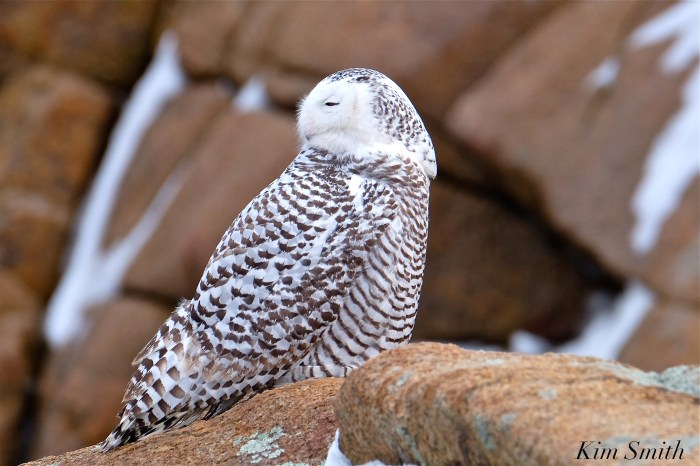
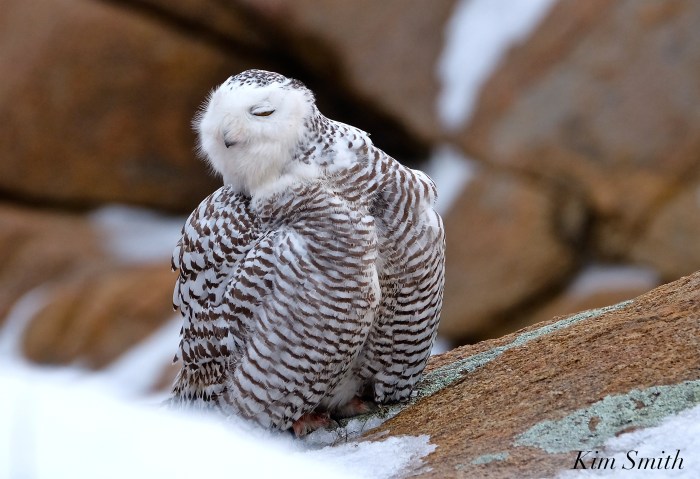
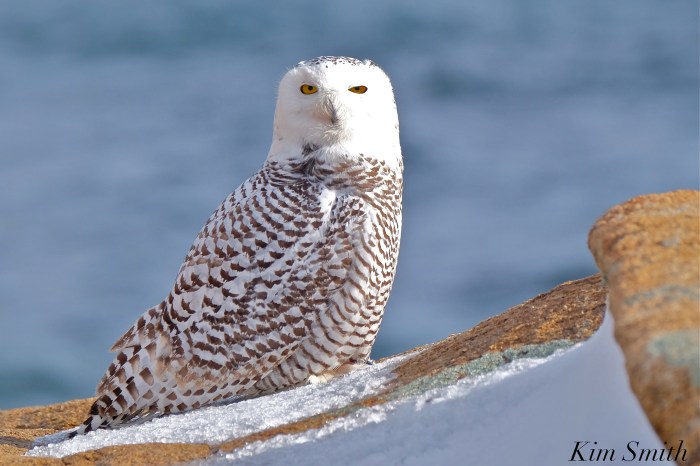
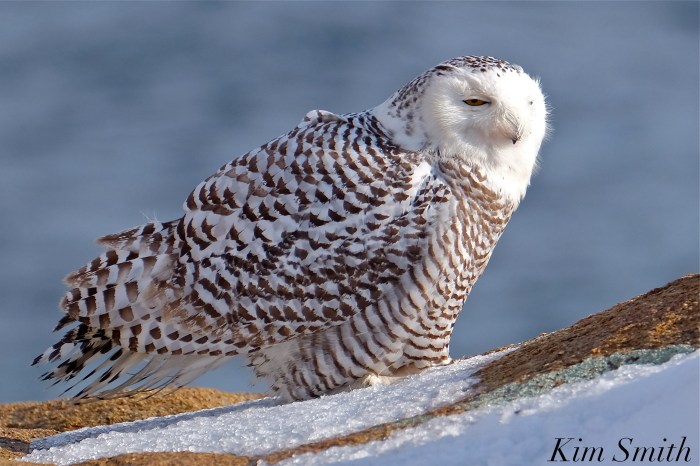
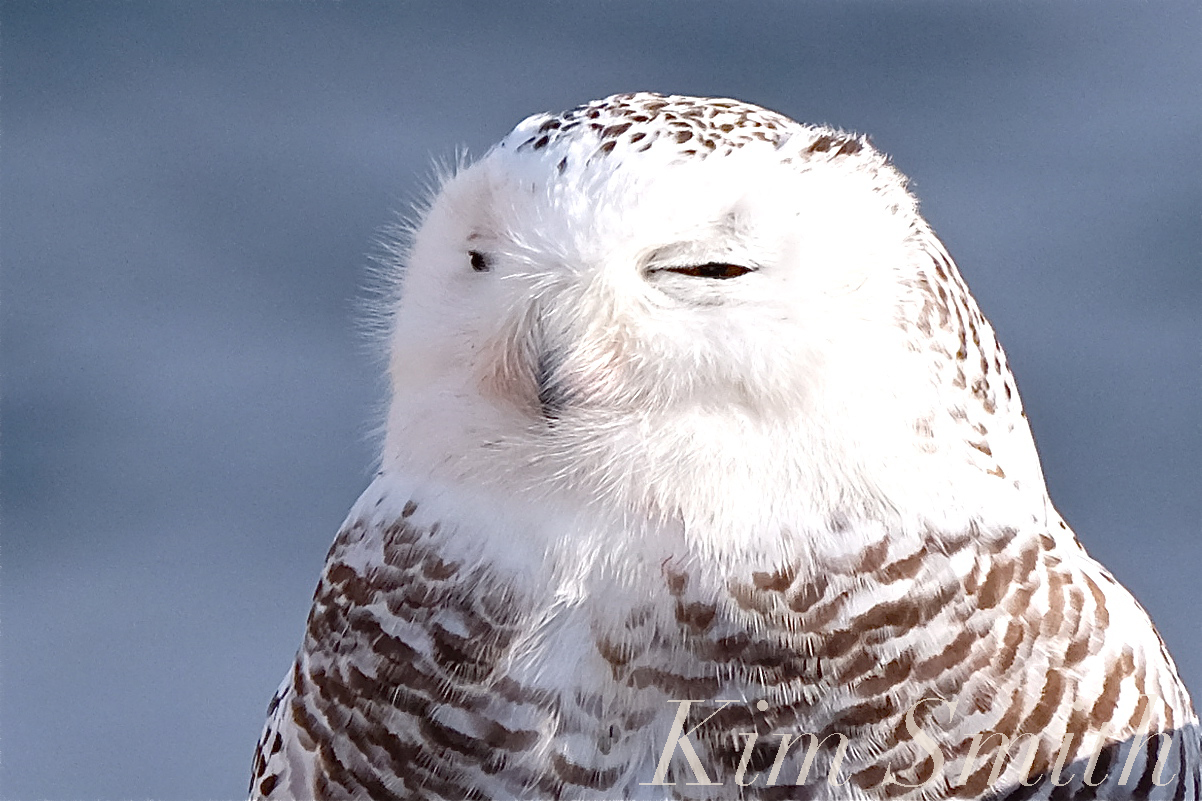
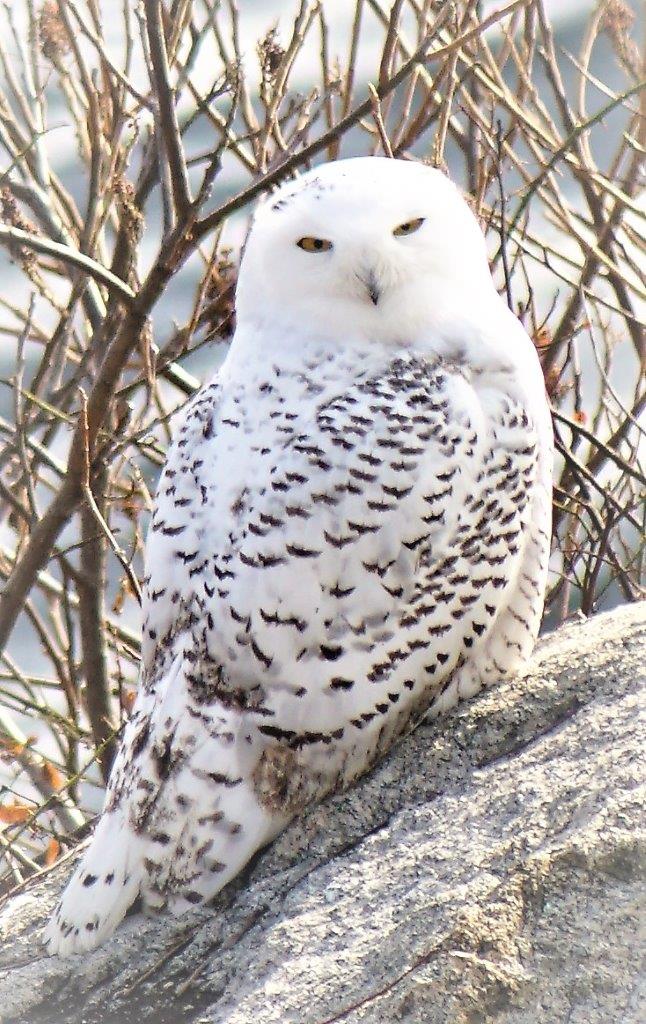
Although Bubo appears to have an injury surrounding his left eye, it did not seem to affect his ability to see. I sent a photo yesterday to Erinn Whitmore and both she and Jodi Swenson confirmed that he’s probably okay at this point.

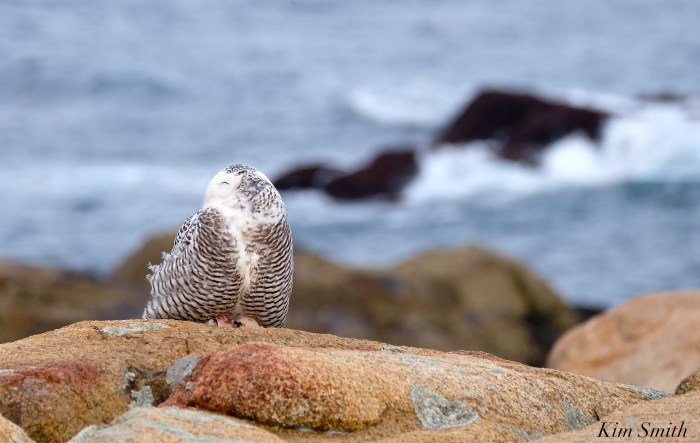
This afternoon he flew into Hedwig’s territoy, which had been hers all day, and after an aerial battle took place, he claimed her rock. I don’t know if it’s the light but Bubo’s eye does not look any better today. The crows and seagulls are vicious and unrelenting towards the Snowies, other raptors don’t want them in their territory, and they are battling each other–it’s easy to understand how an eye could become injured. Posting photos tomorrow of the Snowy battle.

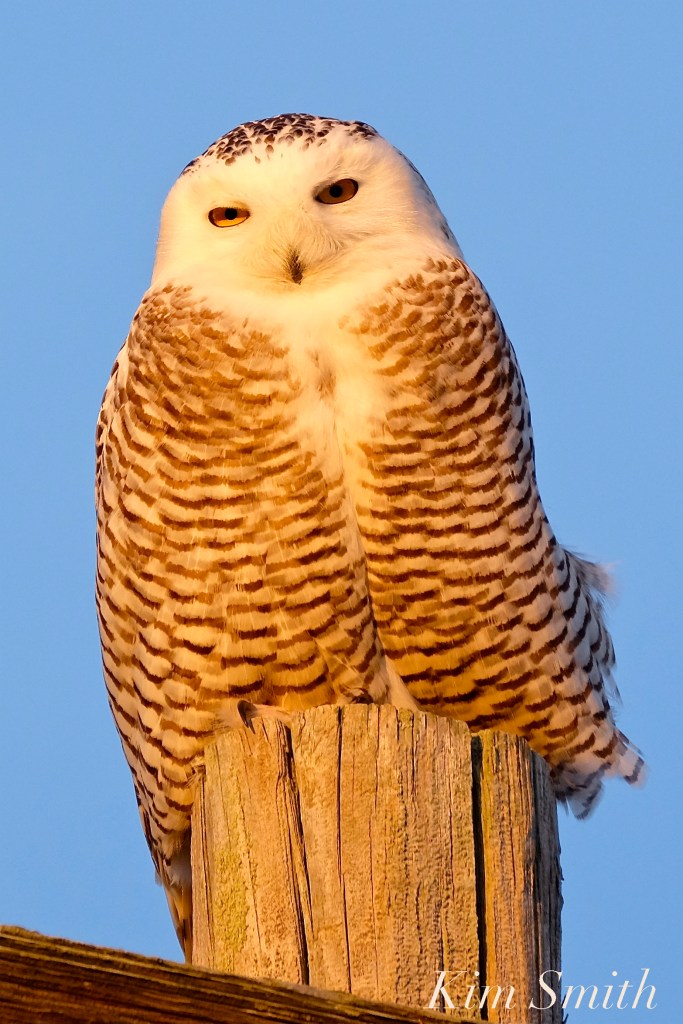
Comparing right eye versus left eye.

SNOWY OWL FIGHT AND HEDWIG AND BUBO WEEKEND UPDATE -By Kim Smith

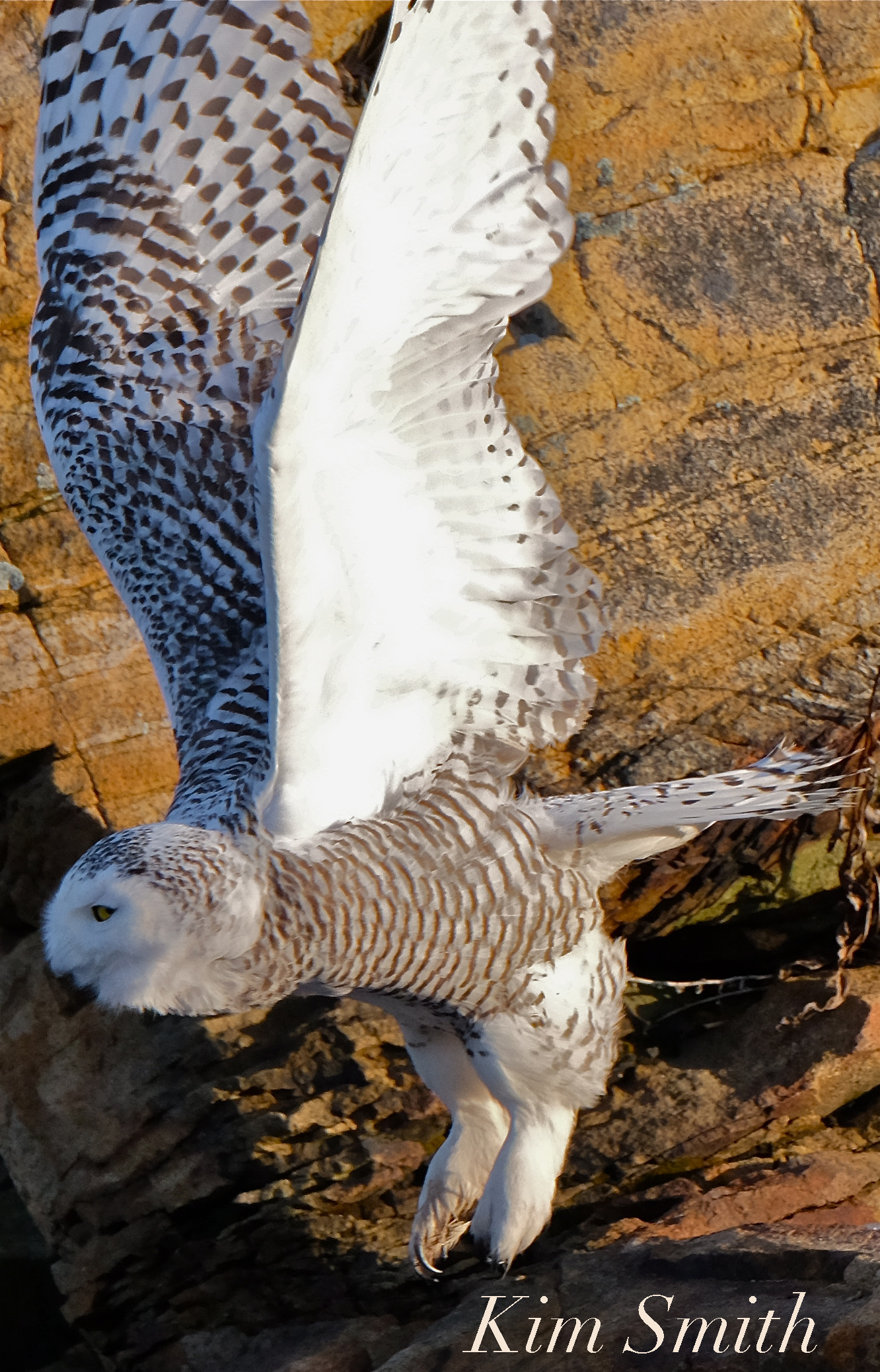
Hedwig preparing for take-off.

Reports by several photographers have come in that early Sunday morning Hedwig and Bubo had a tremendous fight. They were going at it talon to talon and the feathers were flying. This is normal behavior amongst Snowy Owls. They are not a mated pair; Hedwig arrived at Bass Rocks weeks earlier than Bubo, and Snowy Owls don’t migrate together. The two were most likely fighting over territory. As a matter of interest, we generally see more males in our region because the female Snowies are stronger and better fliers and they often stake out territory further north, closer to their Arctic home base.

Bubo after the fight.

The two Snowies retreated, spending the remainder of the day on the Atlantic side of Bass Rocks. Bubo was perched out in the open opposite the Inns, while Hedwig stayed tucked under the shelter of a rock outcropping.

At dusk they both flew to their favorite perches to begin a night of hunting. Hedwig was unfortunately being dive-bombed by a single crow and Bubo may have been chased from the area by a bunch of crows. Monday morning, as of this writing, only Hedwig was seen.

SNOWY OWL WATCHING TIPS: The following are some helpful tips for watching Snowy Owls, reposted from yesterday.

  1. Watch from a comfortable distance–comfortable for the bird that is. Nothing makes the Owls more stressed than people getting too close.
  2. Please keep children from throwing rocks towards the Snowy or anywhere within the vicinity of the Owl.
  3. Please don’t allow dogs to play near the Snowies.
  4. There have been reports of Snowies flying into cars. They often fly low when flushed and it is easy to understand why this may happen, especially as the Snowies are drawing so much traffic. Please be on the look out when you are in known Snowy Owl territory.
  5. Slamming doors, radios blasting, barking dogs, and loud mufflers all stress the Snowies.

Reader Amy Mcmahon shared the following blog post about observing signs of stress in owls Signs of Stress in Owls.

Many thanks to Amy for sharing!

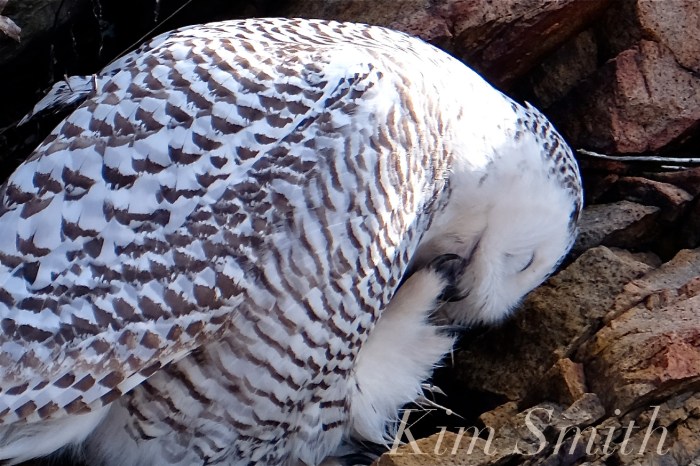
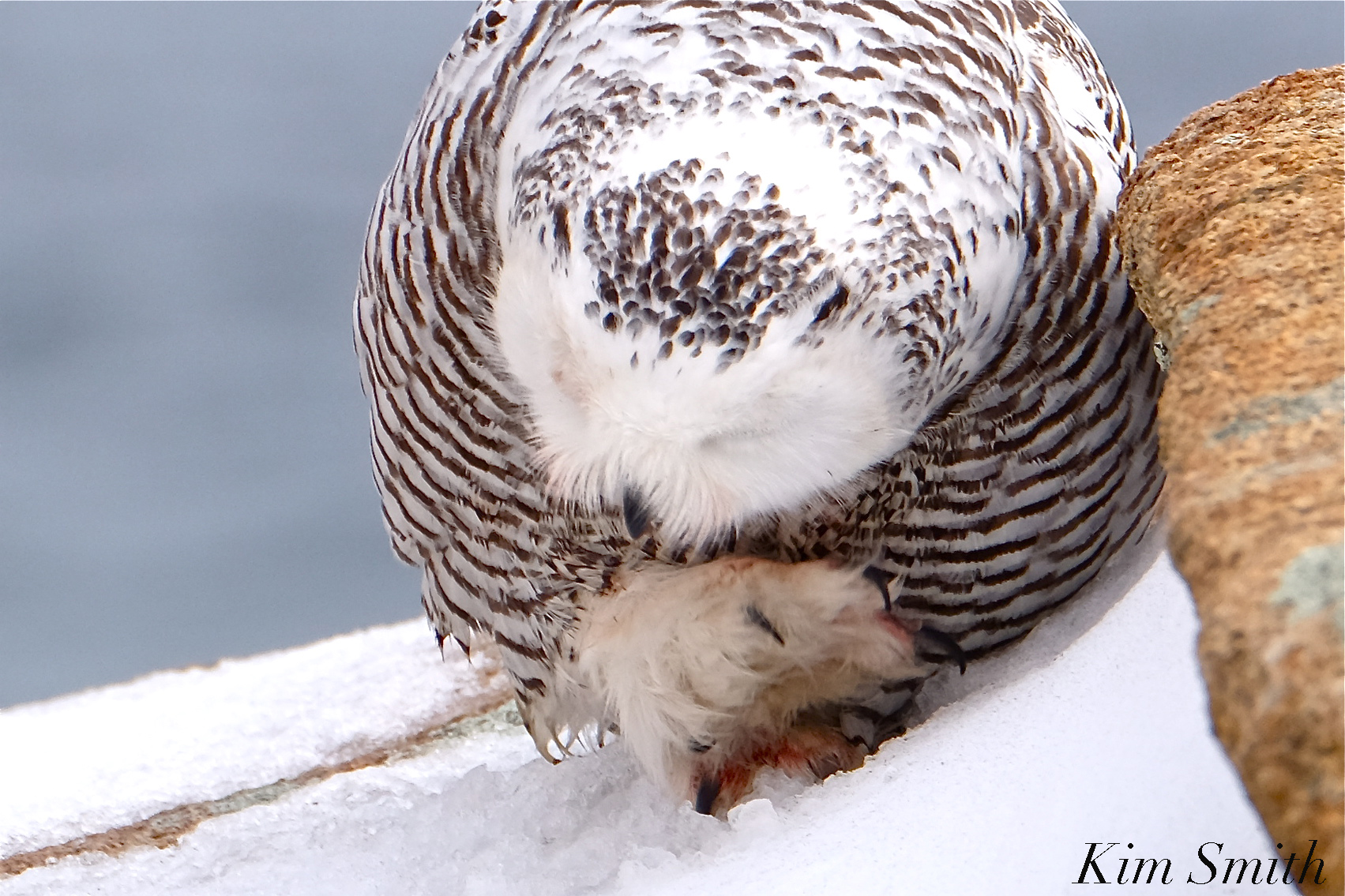
Hedwig grooming her feet and talons.

Hedwig in flight

NOT ONE, BUT TWO SNOWY OWLS ON THE BACKSHORE, PERCHED WITHIN METERS OF ONE ANOTHER! -By Kim Smith

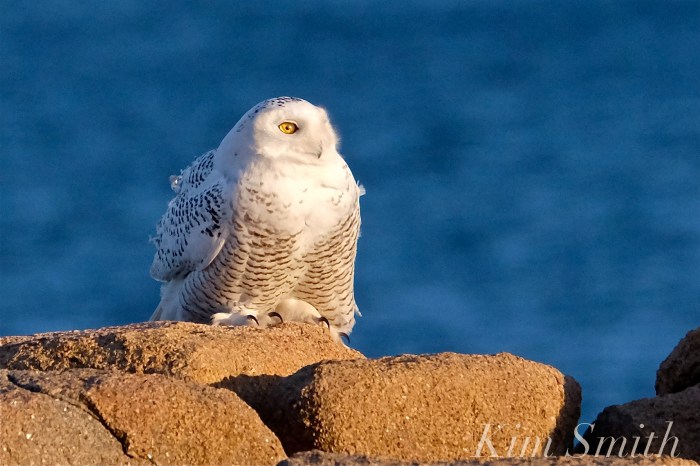
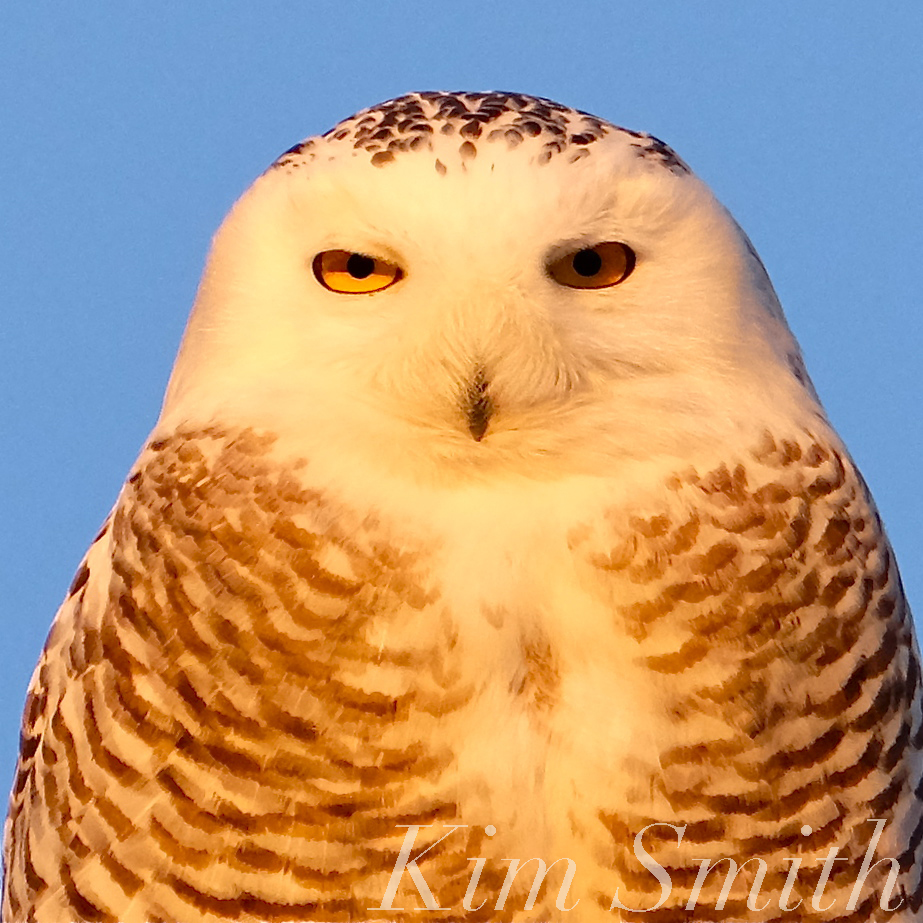
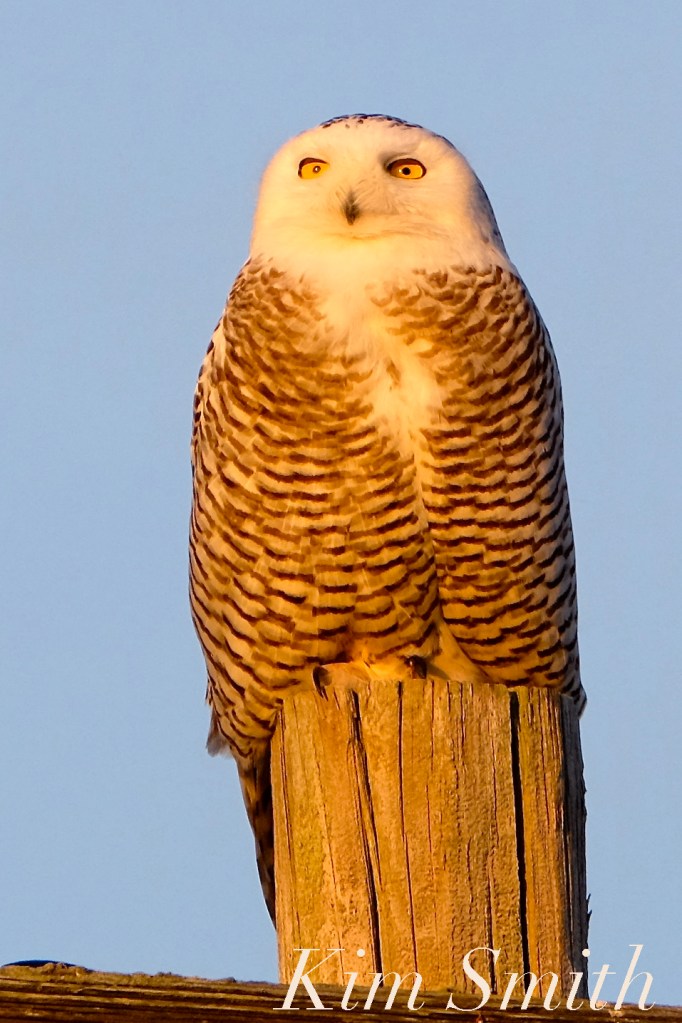
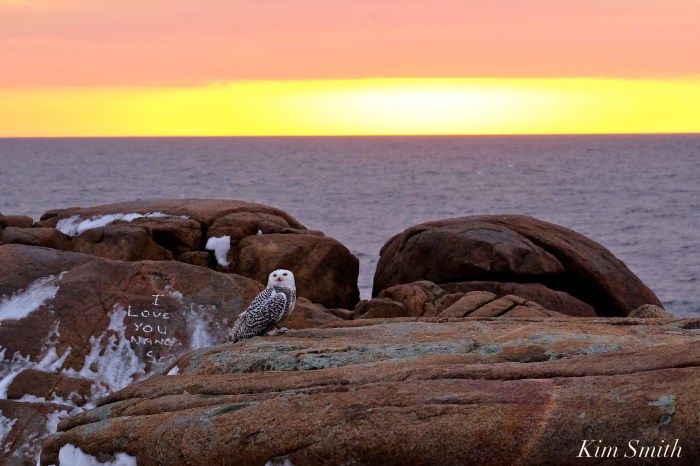
Golden Eyes of the Snowy in the Golden Light of Sunset

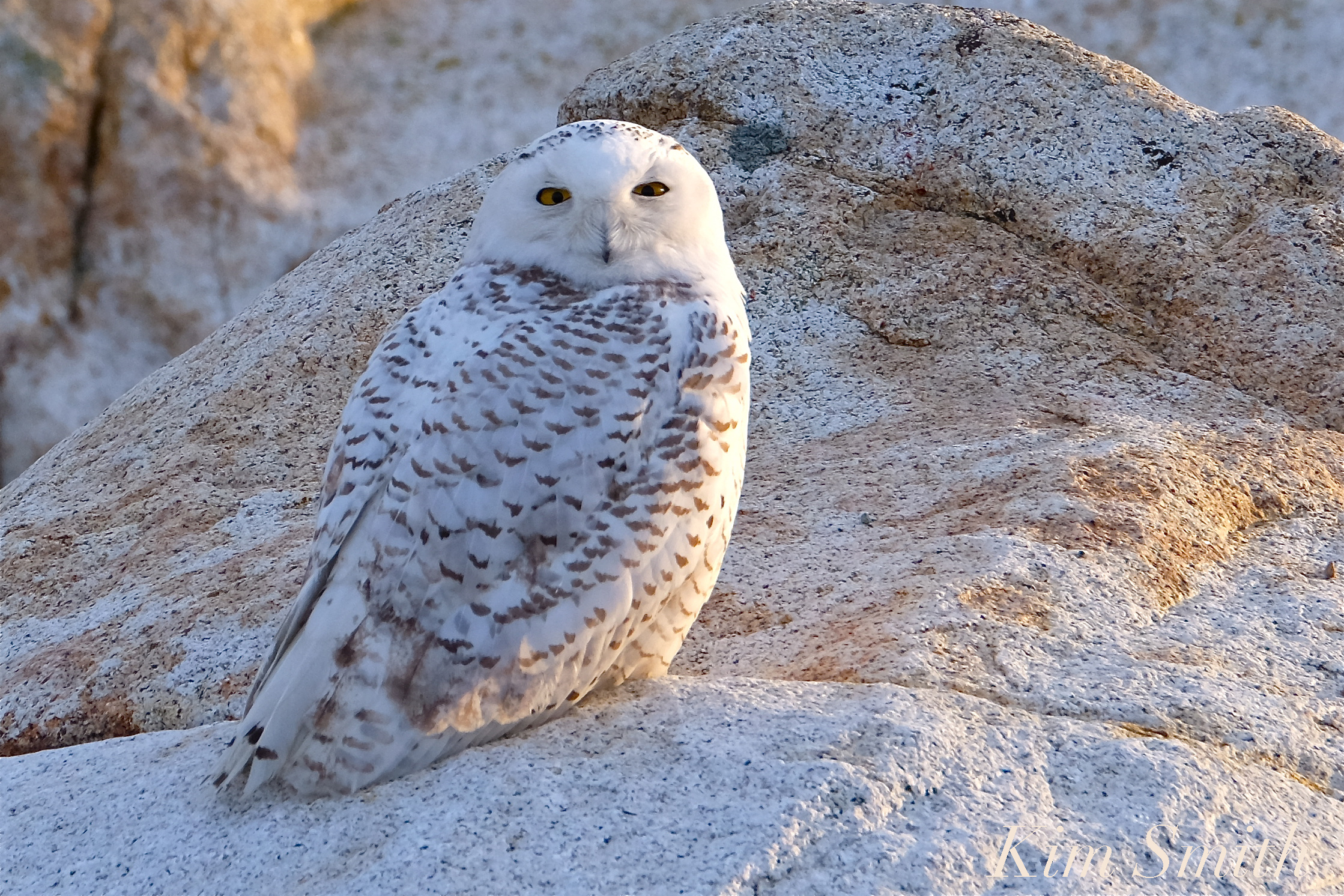
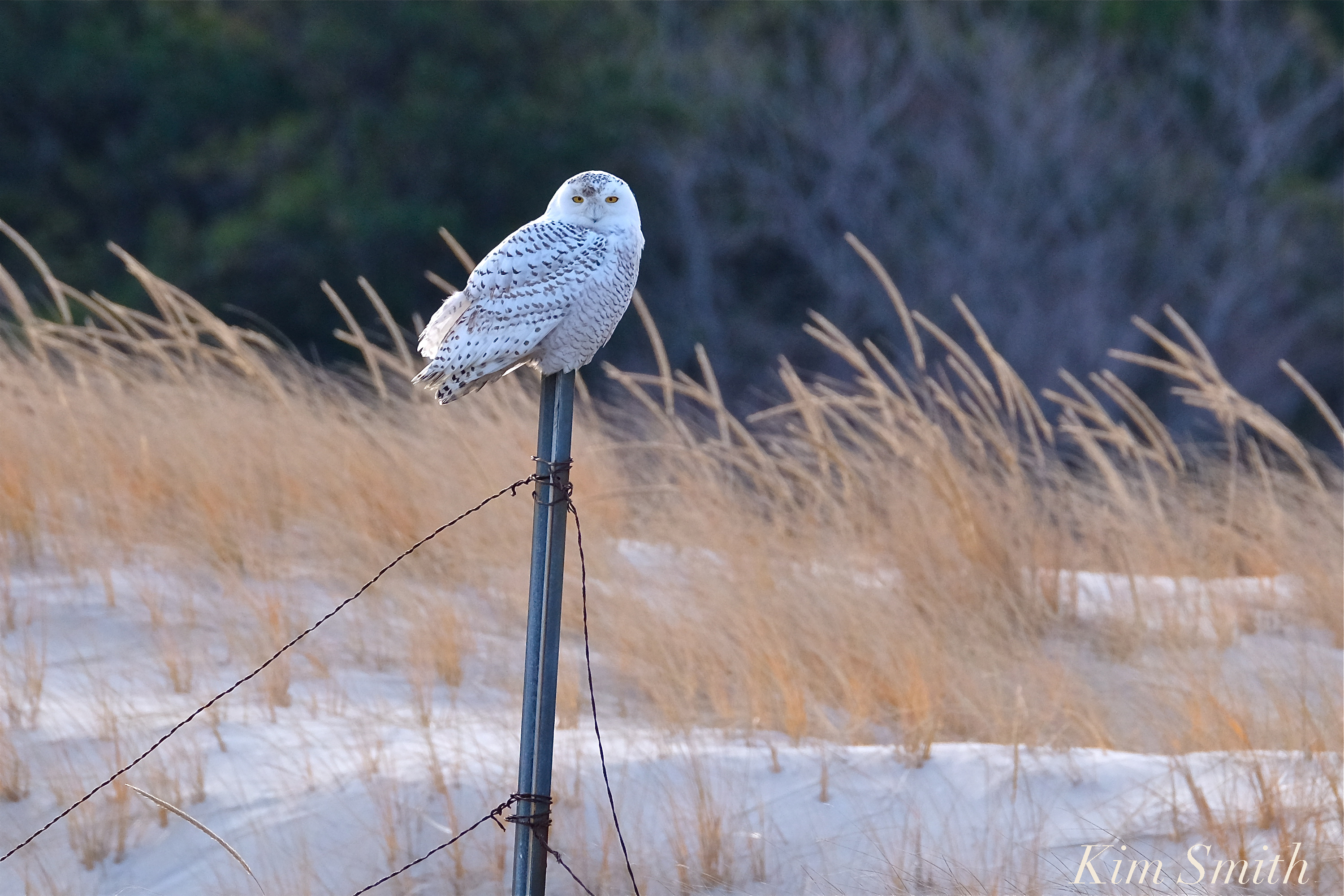
Snowy Owls once again this January drew crowds along the backshore Saturday and Sunday afternoons. Fans were treated to not one, but two Snowies, and for quite a good amount of time they were perched within meters of one another–the paler owl (most likely a male) sat atop the corner of the Ocean Inn and the owl with heavily barred feather patterning (most likely a female) perched at the top of a phone pole.

With the clear distinction between the owl’s feather patterns I think we could name the Snowies–the female, Hedwig (thank you Michele for the suggestion) and the male, Bubo. The scientific name for the Snowy Owl is Bubo scandiacus and the name Bubo may help us remember that fact.

The photos were taken Saturday and I’ll have time to post Sunday’s tomorrow.

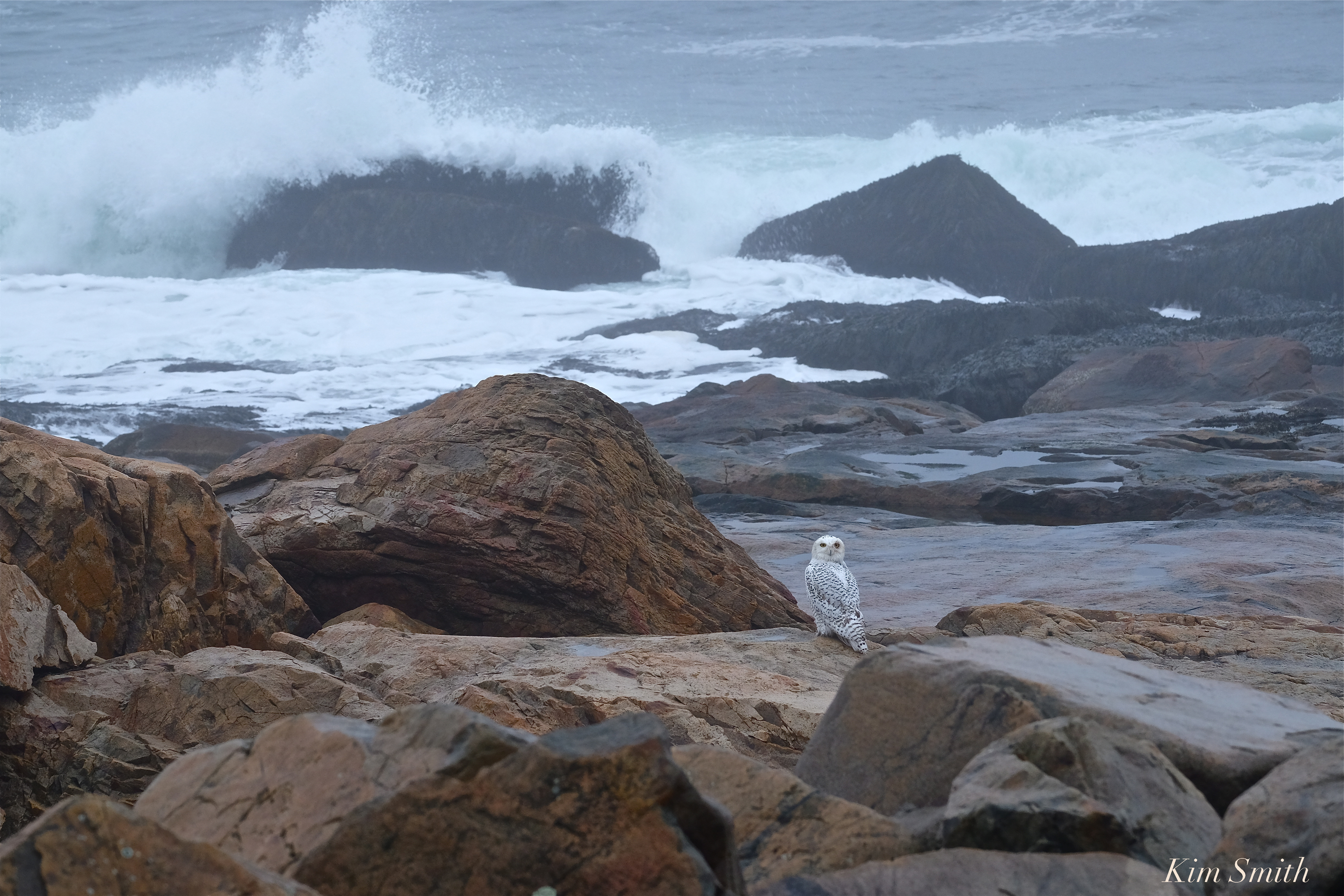
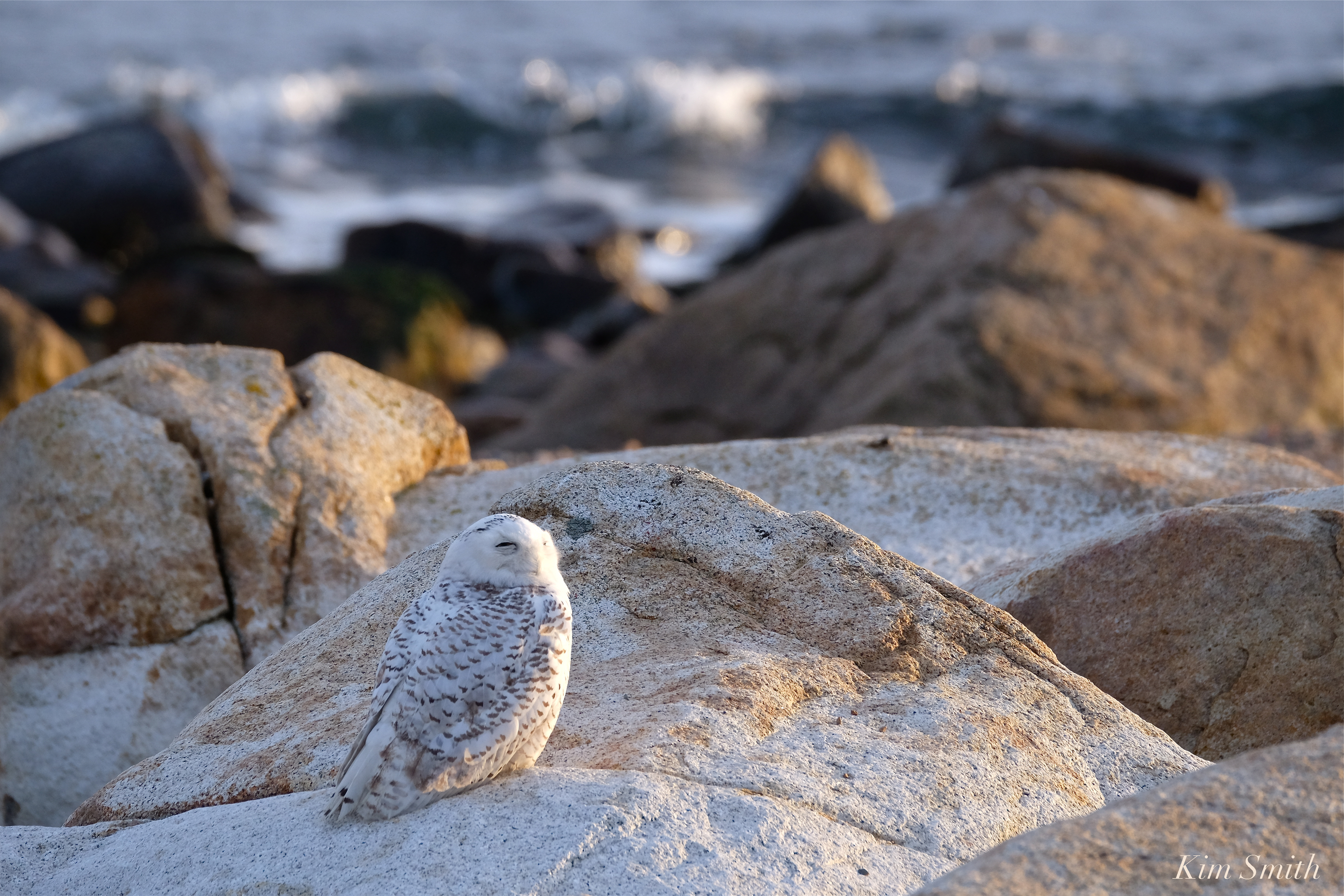
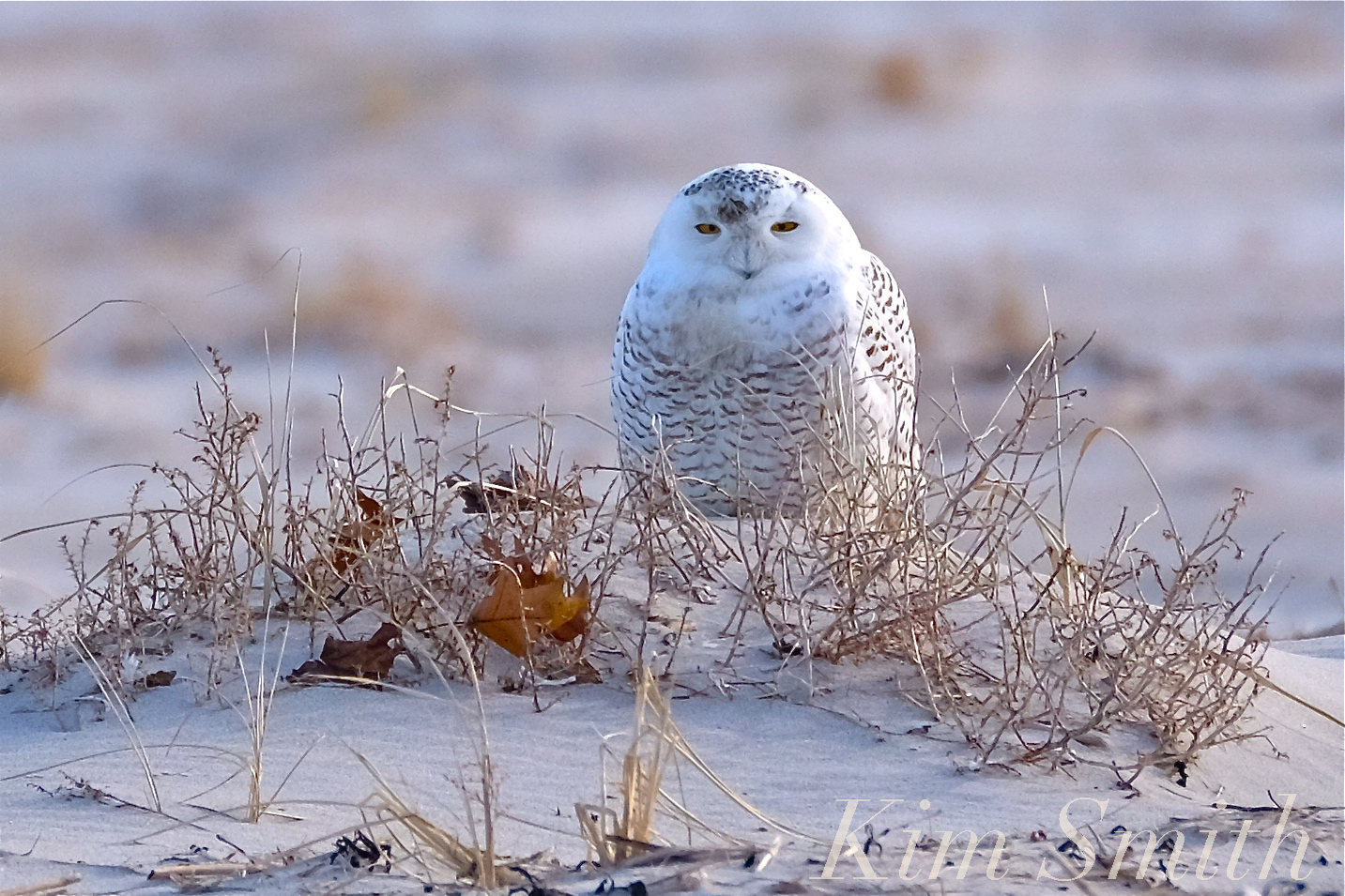
Notice how perfectly Bubo blends amidst the surrounding rocks.

It’s no wonder why the Snowies are drawing such crowds. Most owl species are nocturnal; Snowy Owls are diurnal, which means they hunt during daylight hours. It is logical when you think about the continuous daylight of the Arctic, they must be able to hunt during the day. Snowy Owls wintering in our region hunt during both the day and night, depending on what type of prey they are after.

SNOWY OWL WATCHING ETIQUETTE: The following are some helpful tips for watching Snowy Owls. You will get better photographs and you won’t stress out the Snowies.

  1. Watch from a comfortable distance–comfortable for the bird that is. Nothing makes the Owls more stressed than people getting too close.
  2. Please keep children from throwing rocks towards the Snowy or anywhere within the vicinity of the Owl.
  3. Please don’t allow dogs to play near the Snowies.
  4. Slamming doors, radios blasting, barking dogs, and loud mufflers all stress the Snowies.

Hedwig and Bubo have an ability to tolerate some human activity nonetheless, we want to help them survive and protect their time here on our shores. When Snowies are perching, it’s not for our enjoyment (although beautiful) but because they are either resting or on the look out for their next meal.  After all, if they have a good hunting season and survive the winter, perhaps they will return next year!


Fellow photographer friend Dave shared the above photo. You can see the guy is waaaayyyyy too close to Bubo and has caused him to flush.

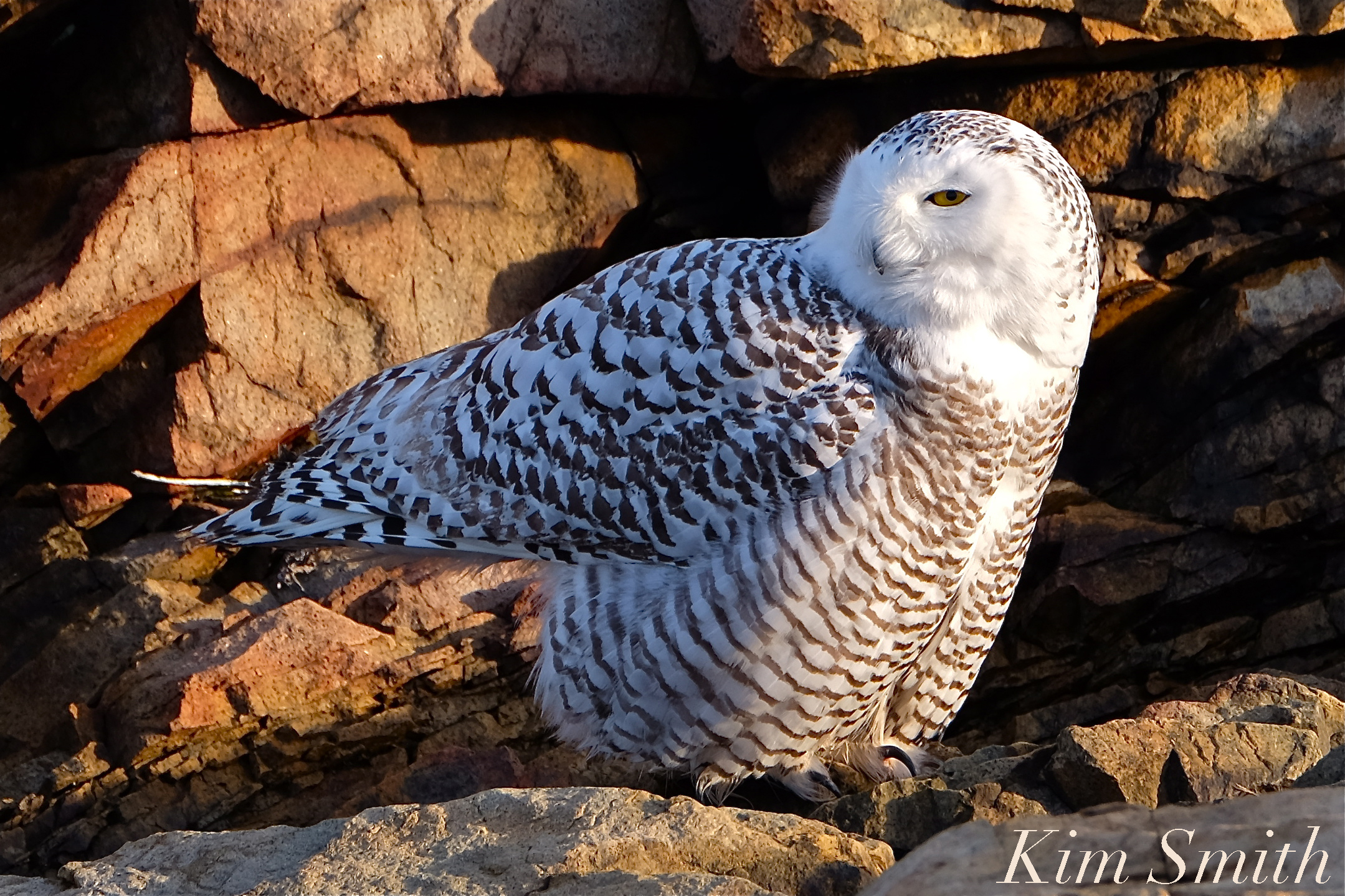
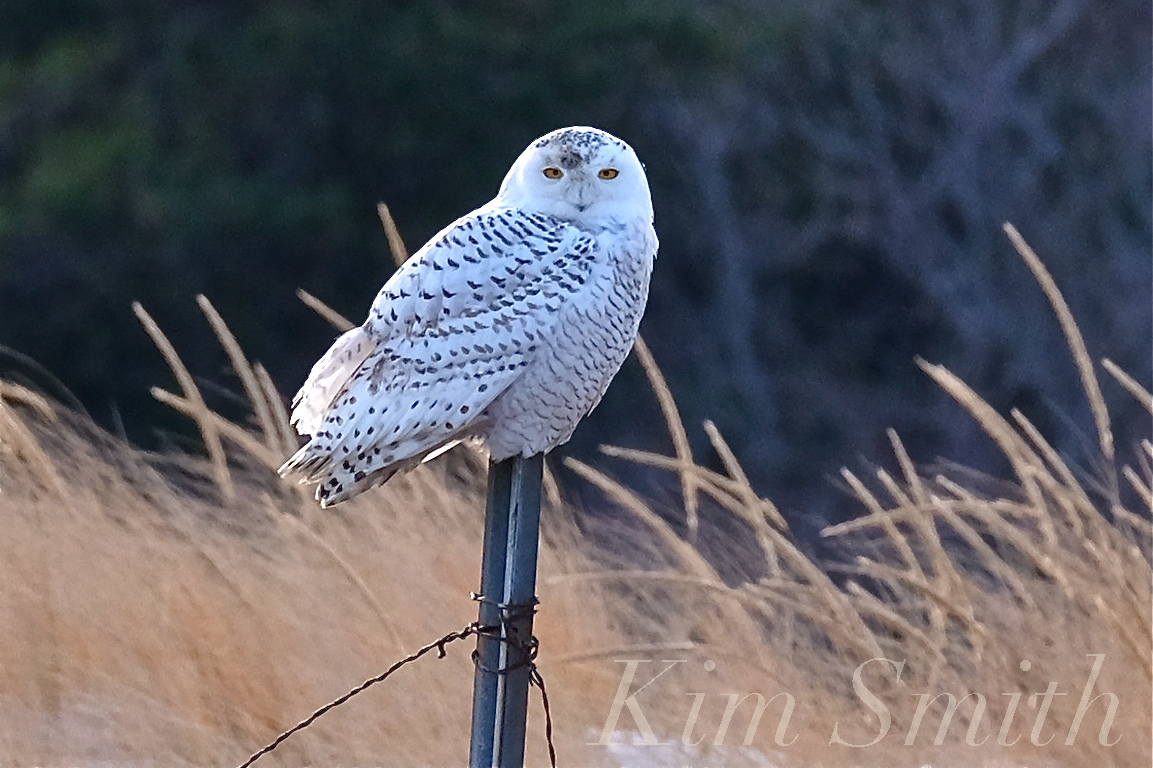
Snowy Owls have wonderfully expressive faces. Hedwig’s eyes lit up in the setting sun.

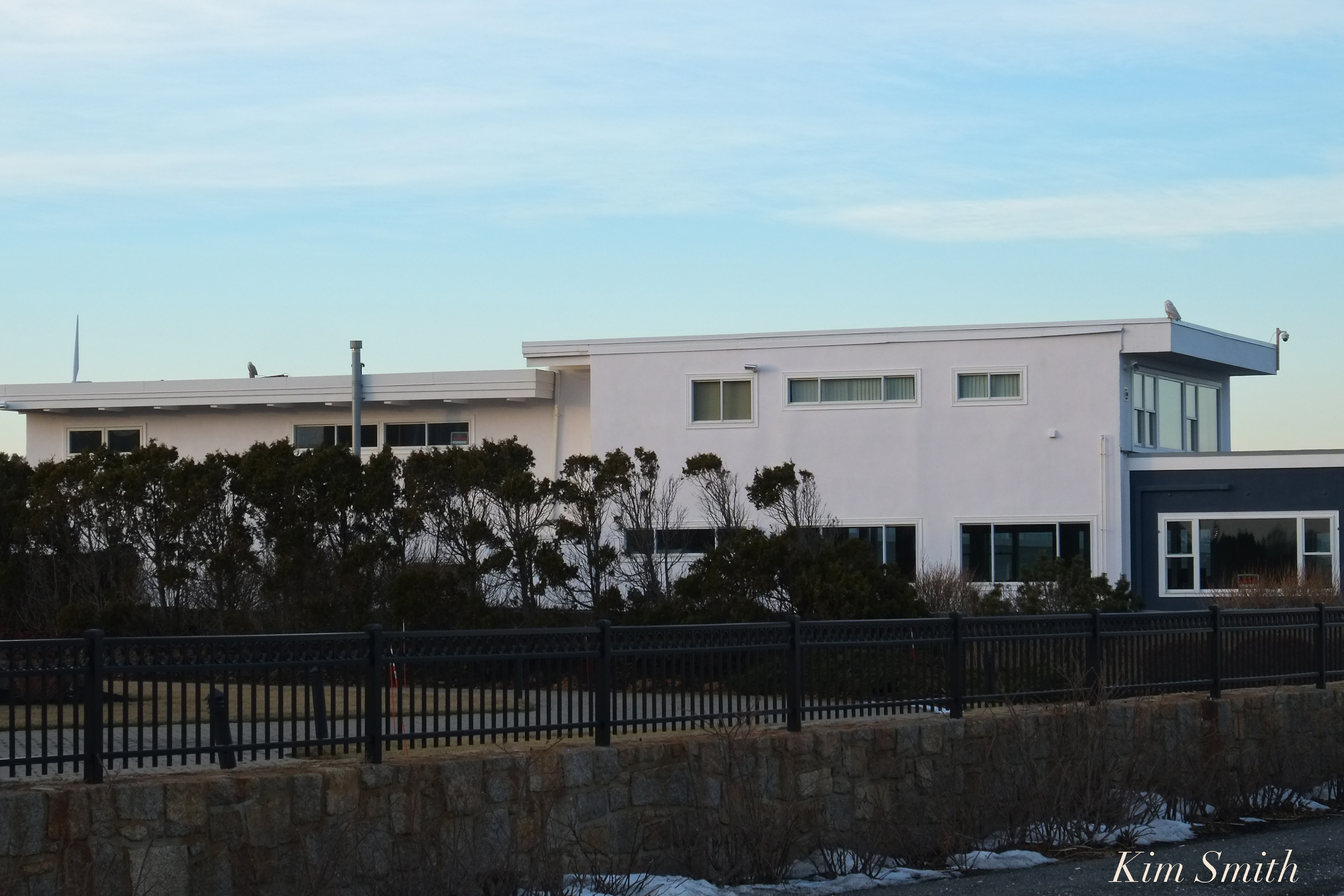
Female Hedwig perched in the distance on the far left, male Bubo perched on the corner of the Inn, to the right.

HOW TO TELL THE DIFFERENCE BETWEEN MALE AND FEMALE SNOWY OWLS

The winter of 2017-2018 has proven so far to be an irruptive year for Snowy Owls, as was predicted by scientists. In years when there is a lemming population boom, which is a staple of the Snowy’s diet, double, even triple, the amount of Snowy Owl hatchlings survive the summer breeding season. Arctic winter arrives and for whatever reason, either there is less food available or the first hatch year owls can’t hunt as well, a number of Snowies head south, both adults and juveniles, generally though, more juveniles than adults migrate.

Snowy Owls are white birds, with varying degrees of brown, black, and gray feather patterning. They are North America’s largest owl by weight. As with most bird of prey species, female Snowies are larger than the males, by about one pound. That is considerable, knowing that the average weight of a Snowy Owl is four pounds. A male may grow up to 25 inches, a female to 27 inches, and the wingspan of both is about equal. Because females are larger and more dominant, they usually don’t migrate as far south, staking out territory further north. Typically in our area we see first hatch year males, although currently there is thought to be an adult male at Salisbury Beach. The Snowy at Bass Rocks is presumably a female. When out in the field, the hardest to tell apart are the darkest males and the palest females.

In learning about Snowy Owls, I came across several very helpful photos of Snowy Owl specimens. And we have three examples, from Snowies found right here on the North Shore, from which to compare.

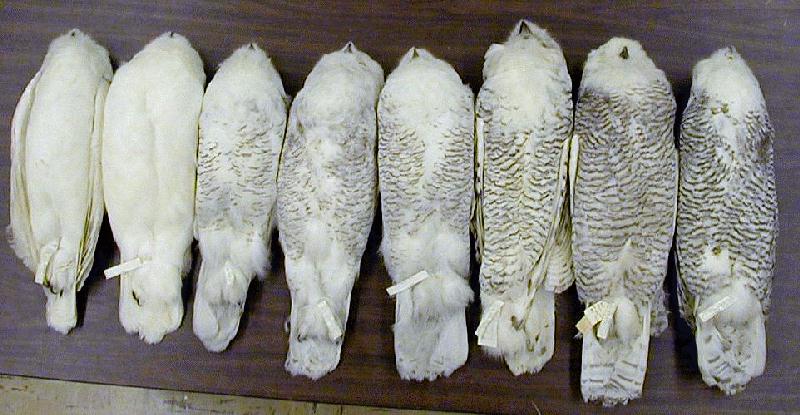
In the photo below, you are looking at eight Snowy Owl specimens from the Cornell University Museum of Vertebrates. One through five on the left are males; six, seven, and eight are females. Notice how similar, yet different, are five and six (male #5, female #6).
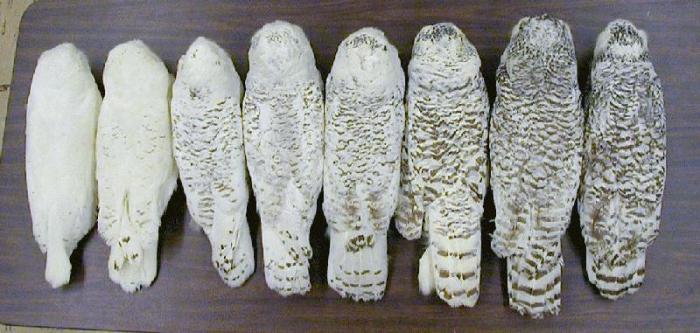
  1. Snowy Owl males are generally whiter.
  2. Snowy Owl females tend to be larger.
  3. Snowy Owl male’s tails have up to three bars, the female’s have from three to six.
  4. Snowy Owl females have wider and darker marks and bars on the back, nape, and tail.
  5. Snowy Owl males have a larger white bib.

Closeup of the intermediary male (five) and female (six).

Underside of the Owls, in the same order.

Comparing the above photos I think we can logically conclude that the Snowy Owl that was at Captain Joe and Sons in 2015 was a young male, with light markings and a large white bib.
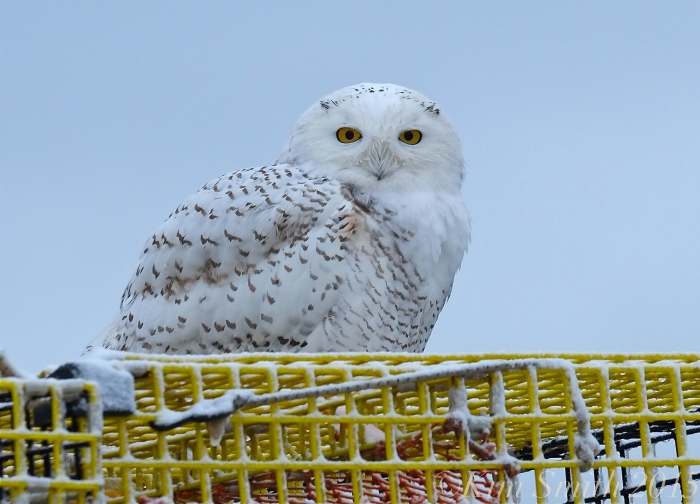
Young Male Snowy Owl

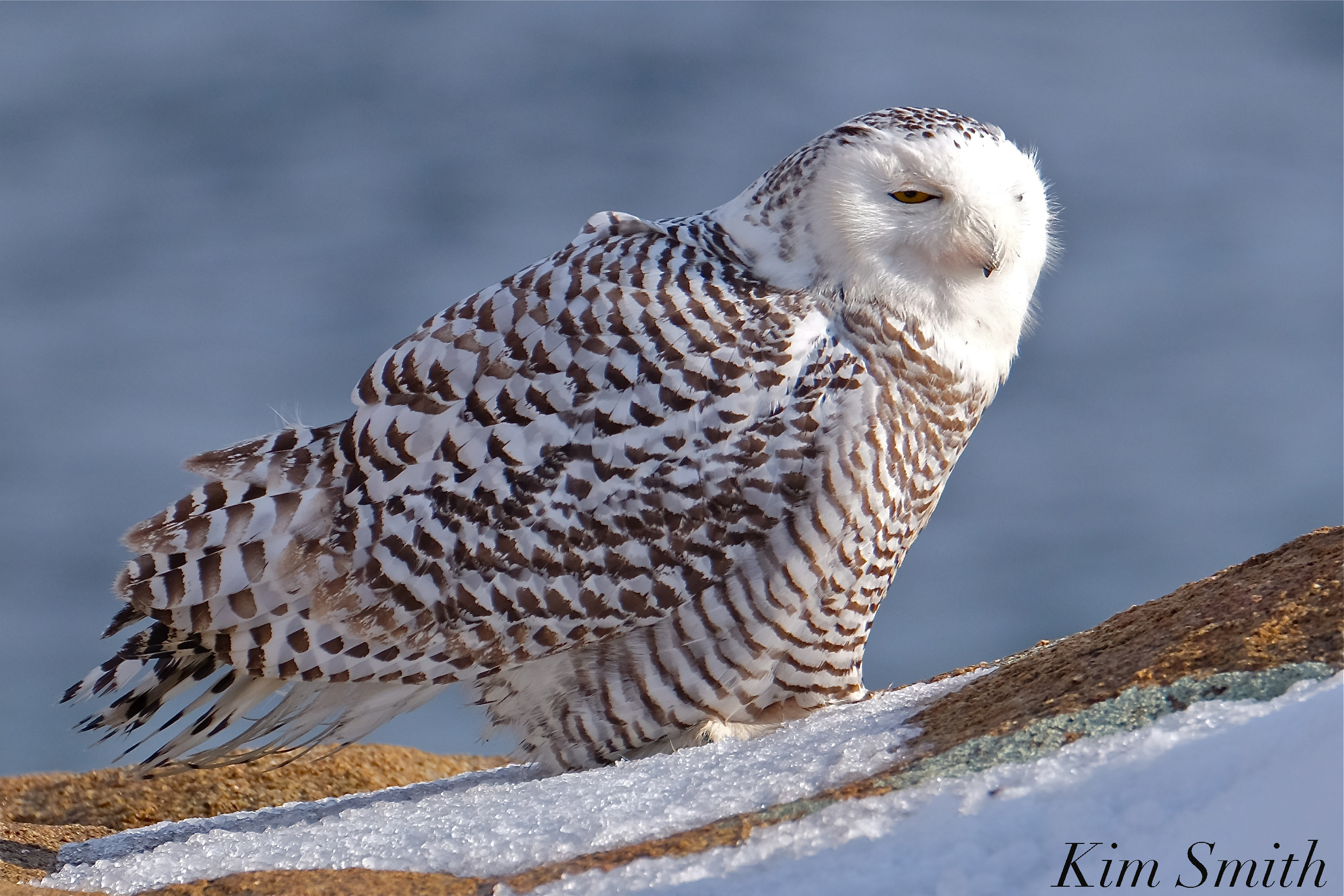
The Snowy Owl currently at Bass Rocks, I think it is safe to say, is a female, and most likely a juvenile. She doesn’t have much bib showing and her overall markings are wide and dark.
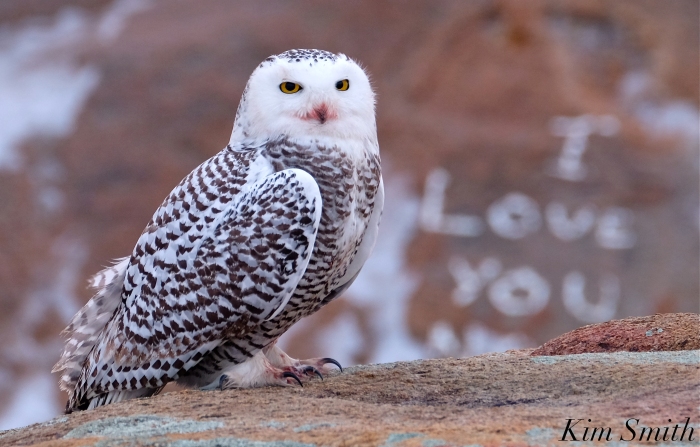
Female Snowy Owl

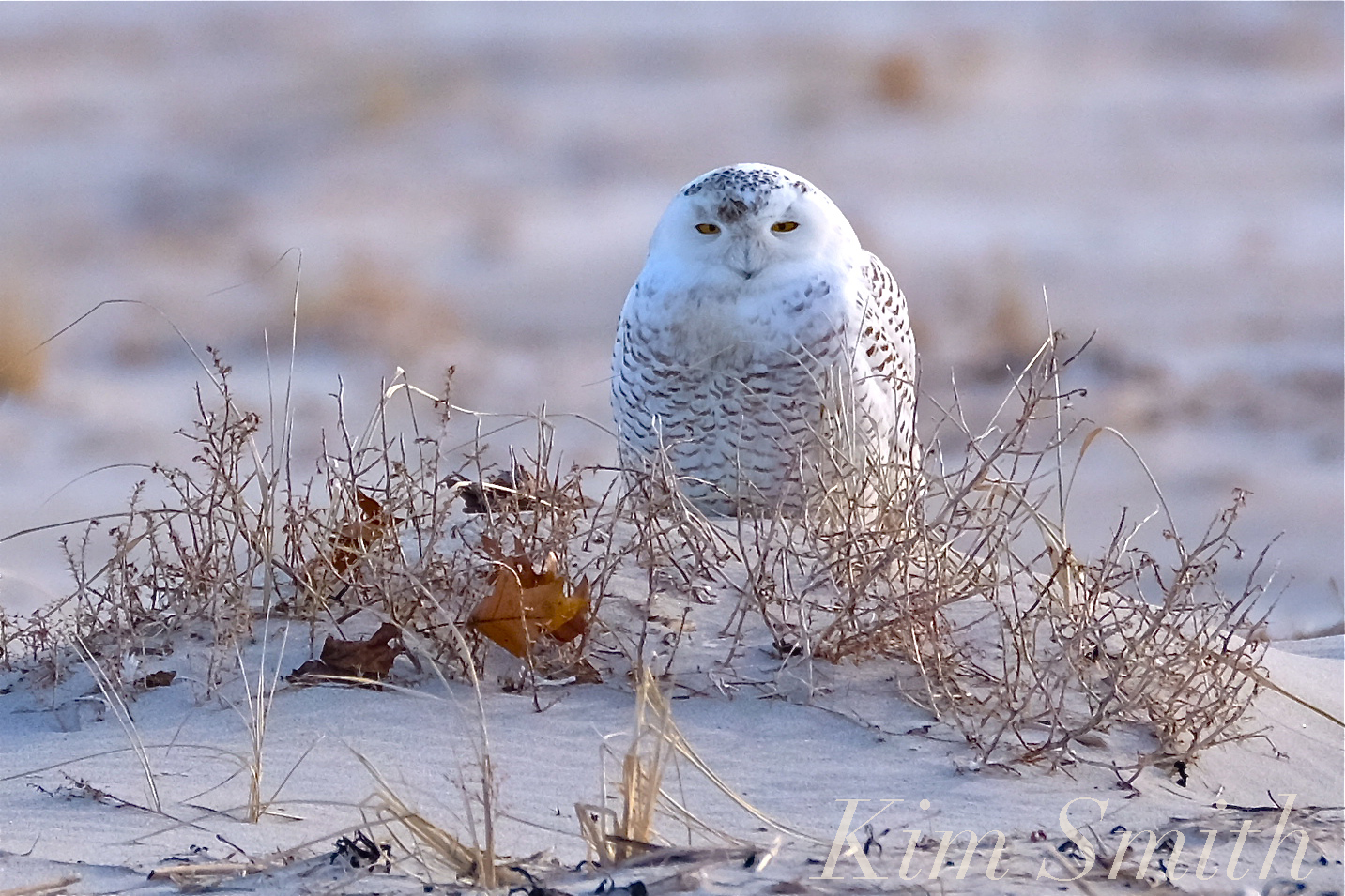
We have our own example of an intermediate–is the Snowy Owl recently photographed at Cranes Beach a juvenile male or a female?
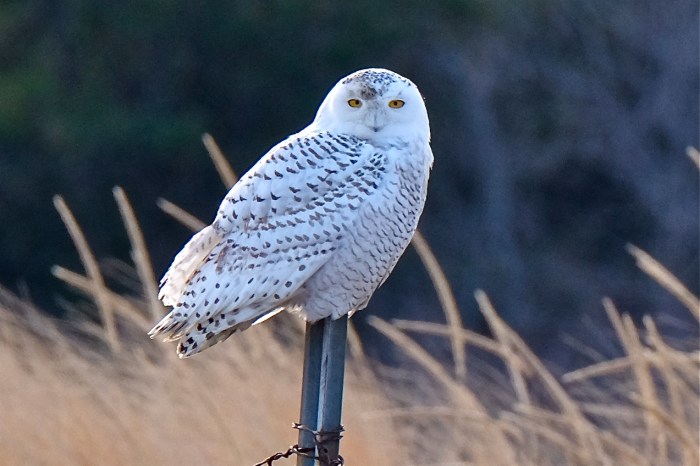
Male or female?

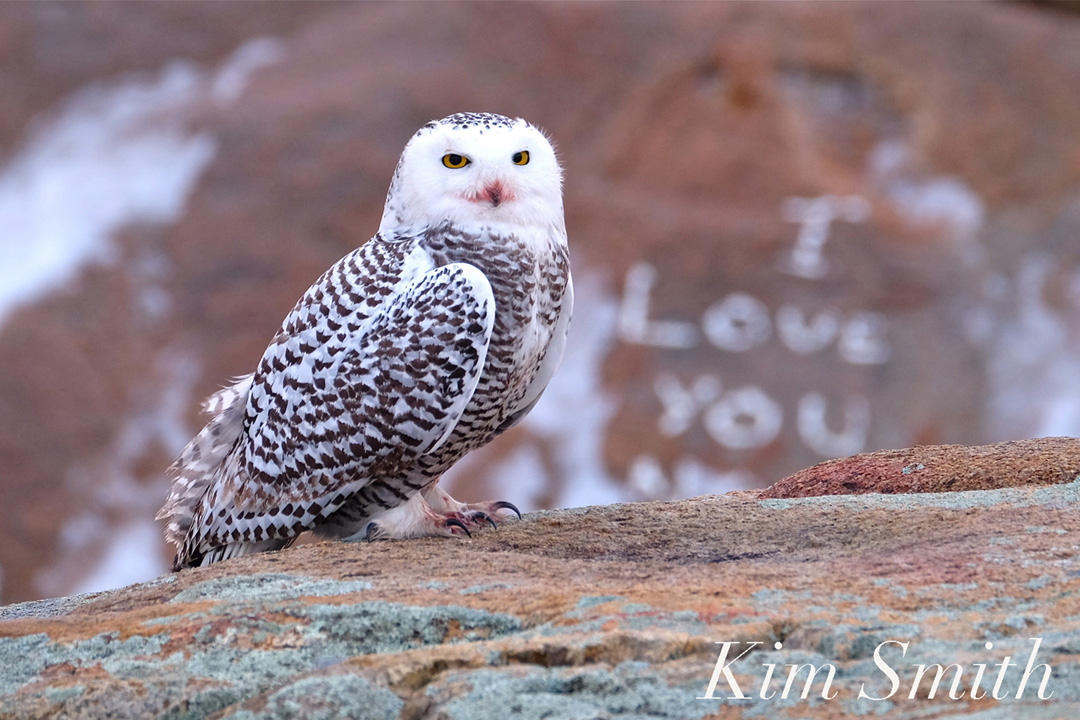
WE LOVE YOU TOO SNOWY OWL!

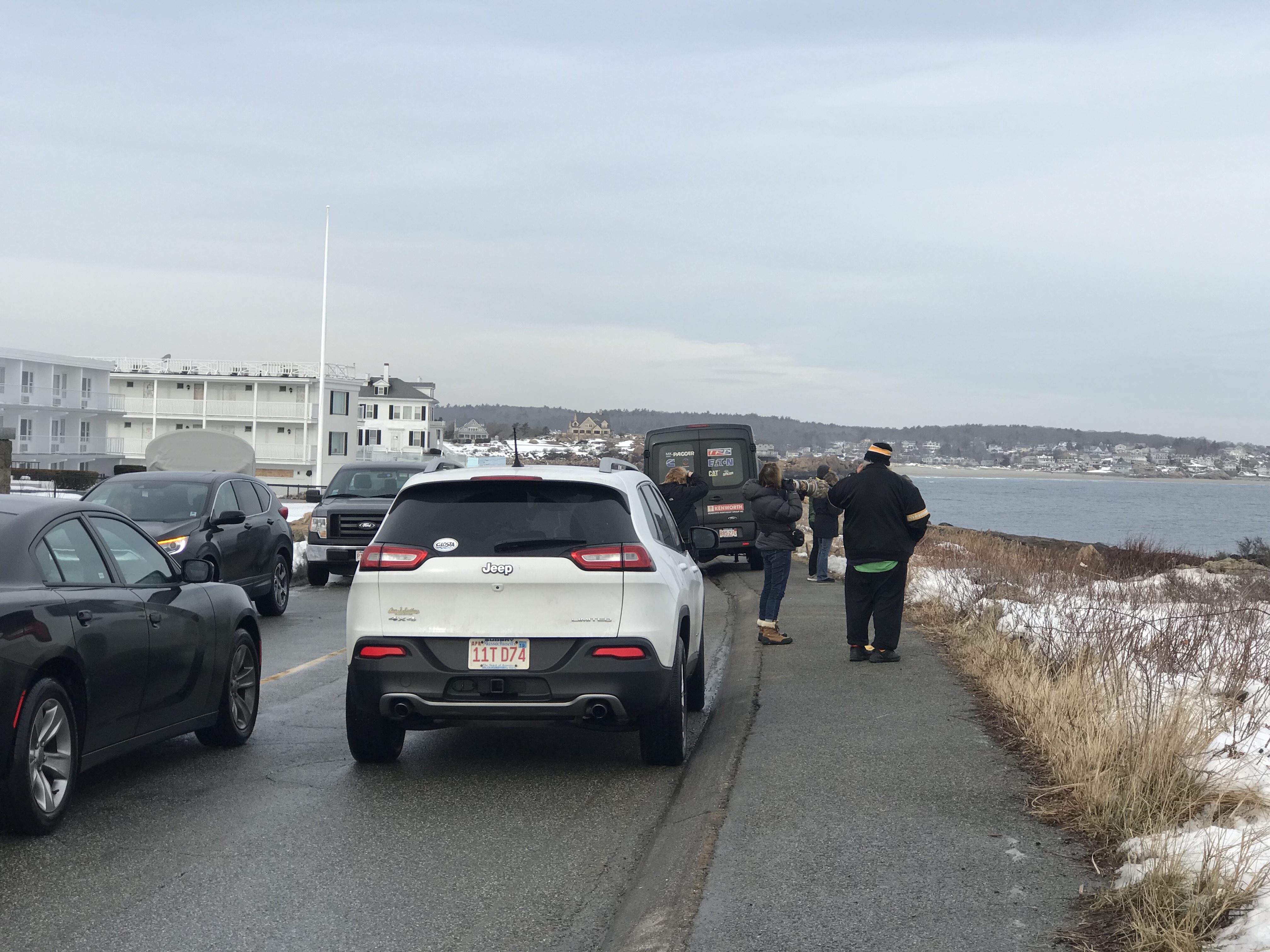
For the past several days there has been a remarkably tolerant Snowy Owl feeding and perching on the rocks at Atlantic Road. Perhaps she (or he) is the same Snowy that has been noticed on the backshore over the course of the past month. I write tolerant because this Snowy was perched about fifteen feet from the sidewalk and neither traffic nor birdwatchers seemed to faze her much. As word has gotten out, her fan club has grown, so much so that there was a bit of a traffic jam today. Every several hours I stopped by to check on her whereabouts. At 2:00 today, she had only moved about a foot from where she was at daybreak. By sundown, she had flown up onto the rooftops of an Atlantic Road resident.

Many thanks to Kate for all her text alerts letting me know when the Snowy was on the backshore!

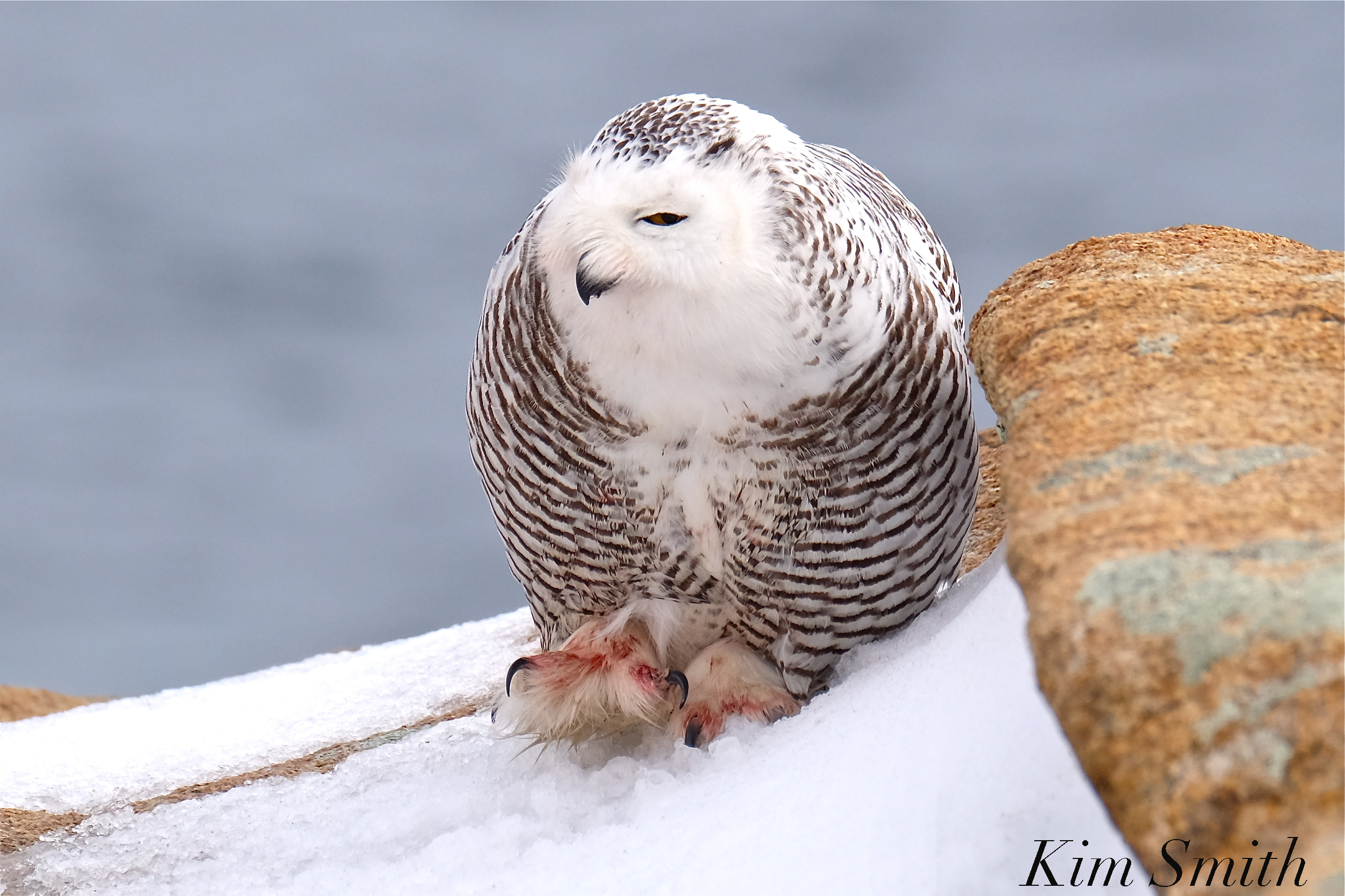
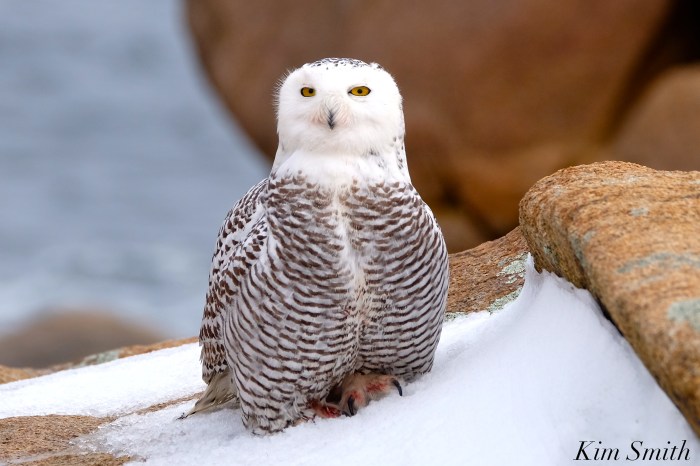
Early morning and the Snowies face and talons were bloodstained, which is a very positive sign that she is feeding well. Snowy Owls wintering over in our region eat rabbits, rodents (lots of rats), songbirds, and ducks. Being good stewards of the Snowies means not applying rat poison around your home or business. There are several methods equally as efficient in killing rats as rat poison. When a bird of prey such as a Peregrine Falcon, Snowy Owl, Red-tailed Hawk, or Bald Eagle ingests a rat that has eaten rat poison, the raptor becomes sick and will usually die.

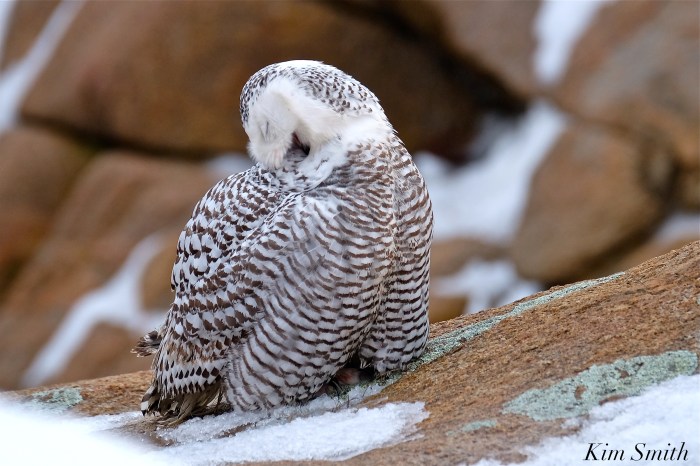
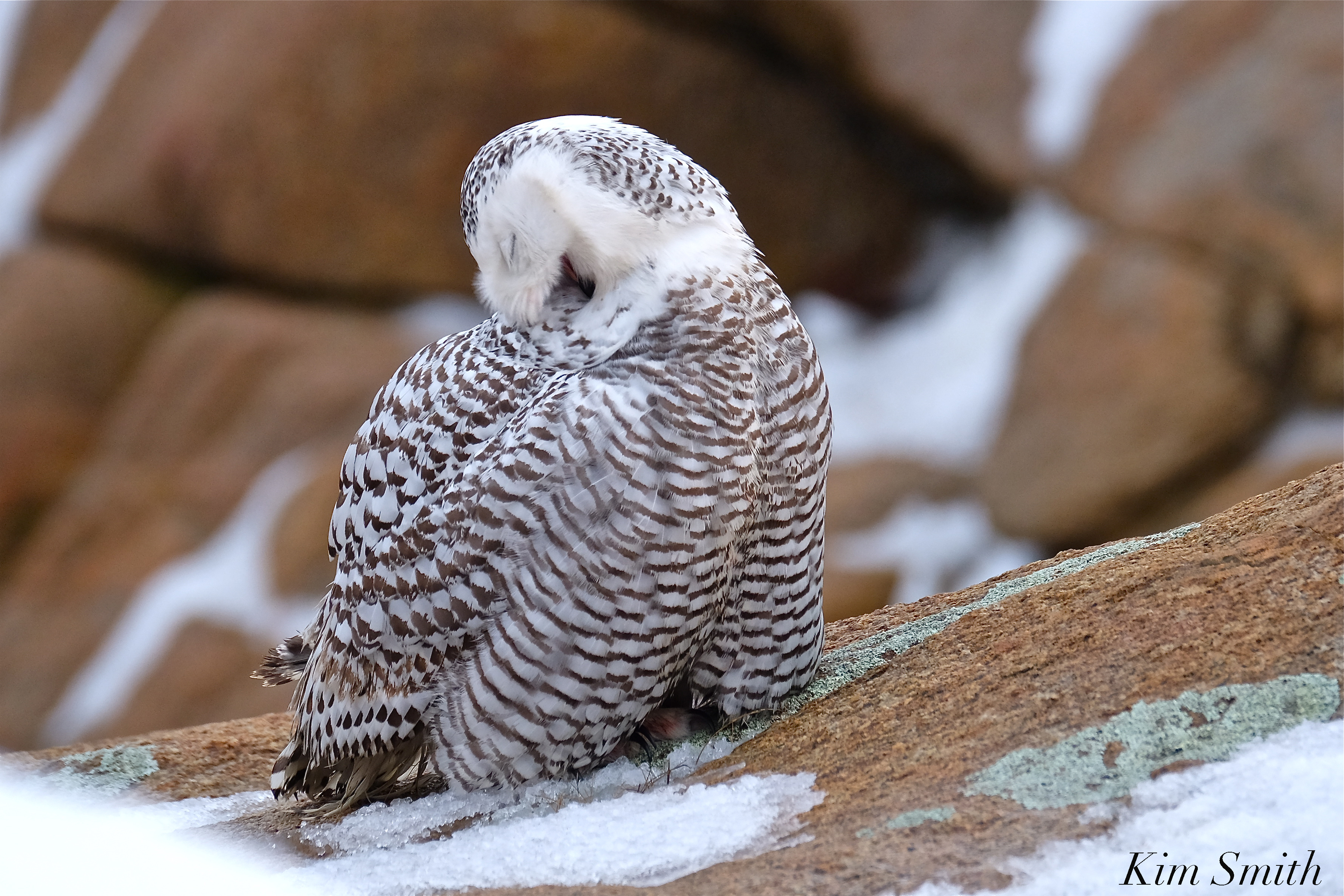
The Snowy spent the better part of the day mostly dozing, preening, cleaning her talons, and puffing her feathers for warmth. At one point she pushed her face into a snow patch but I couldn’t tell if it was to drink or to wash.


For a moment the Snowy sat bolt upright from a loud bang in the distance, but generally, she was a satiated and sleepy owl.

Snowy Owl Fan Club Traffic Jam

BEAUTY ABOUNDS WITH SNOWY OWLS, HORNED LARK, SNOW BUNTINGS, YELLOW-RUMPED WARBLERS, DUNLINS AND MORE!

With early predictions of a Snowy Owl irruption heading our way and several sightings in Gloucester, I have been periodically popping over to Cranes Beach in Ipswich. Thanks to Bill Foley, Cranes Chief of Police (and Kate’s awesome Dad!), who showed me around and provided some great tips on locating the Snowies, I was able to find one second time out. The first day was a bust because a dog owner had allowed his dog off leash. I watched the dog chase the Snowy, who then headed far and away over the dunes. This made me so very sad for myriad reasons, but especially so at Cranes Beach because there is a fabulously huge area that dogs are allowed off leash. Anyhow, seeing the Snowy that first day, and knowing he was there, was all I needed to keep trying.
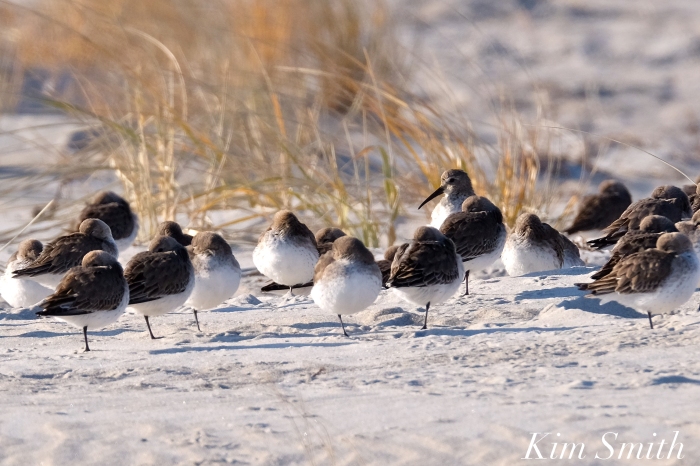
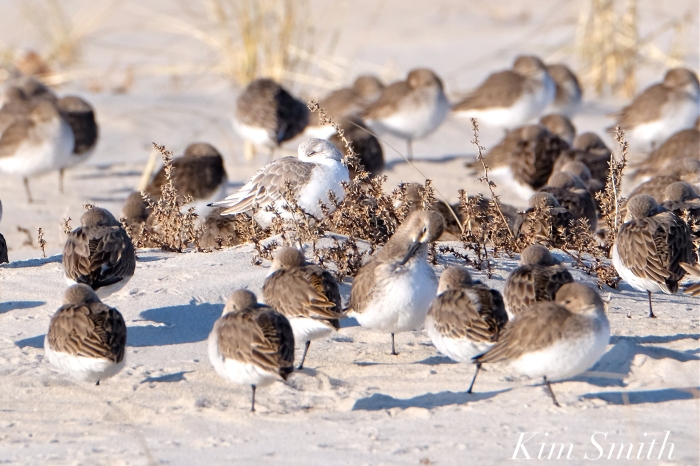
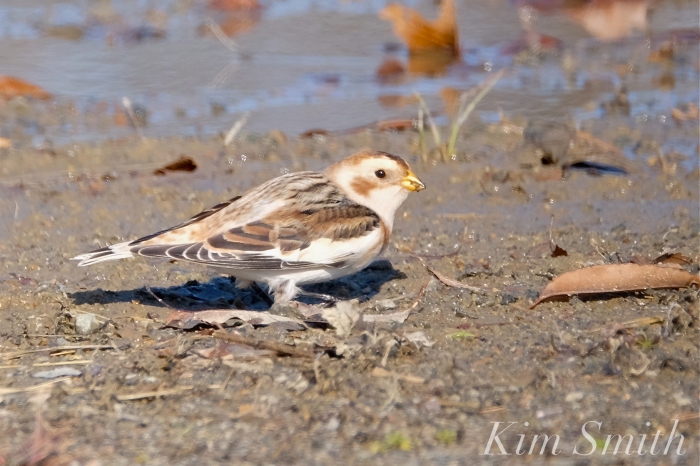
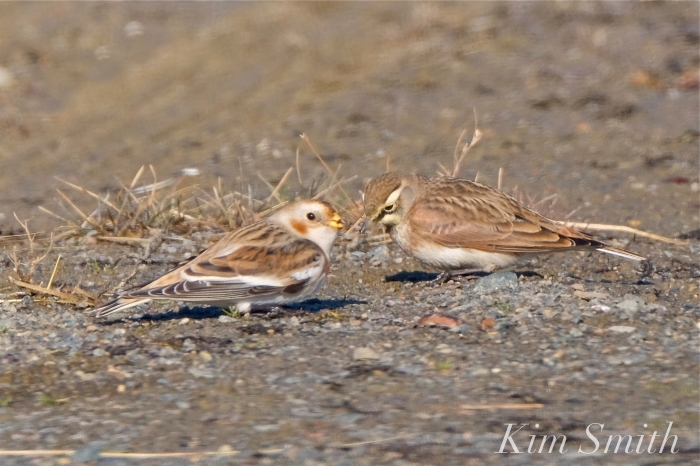
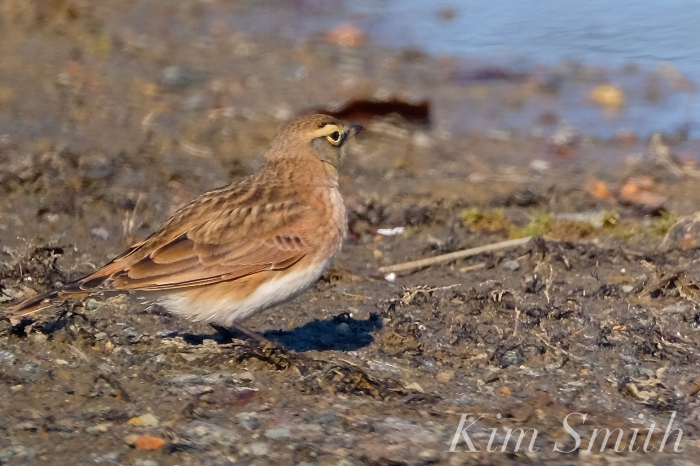
Dunlins, Sanderlings, Snow Buntings, and Horned Lark

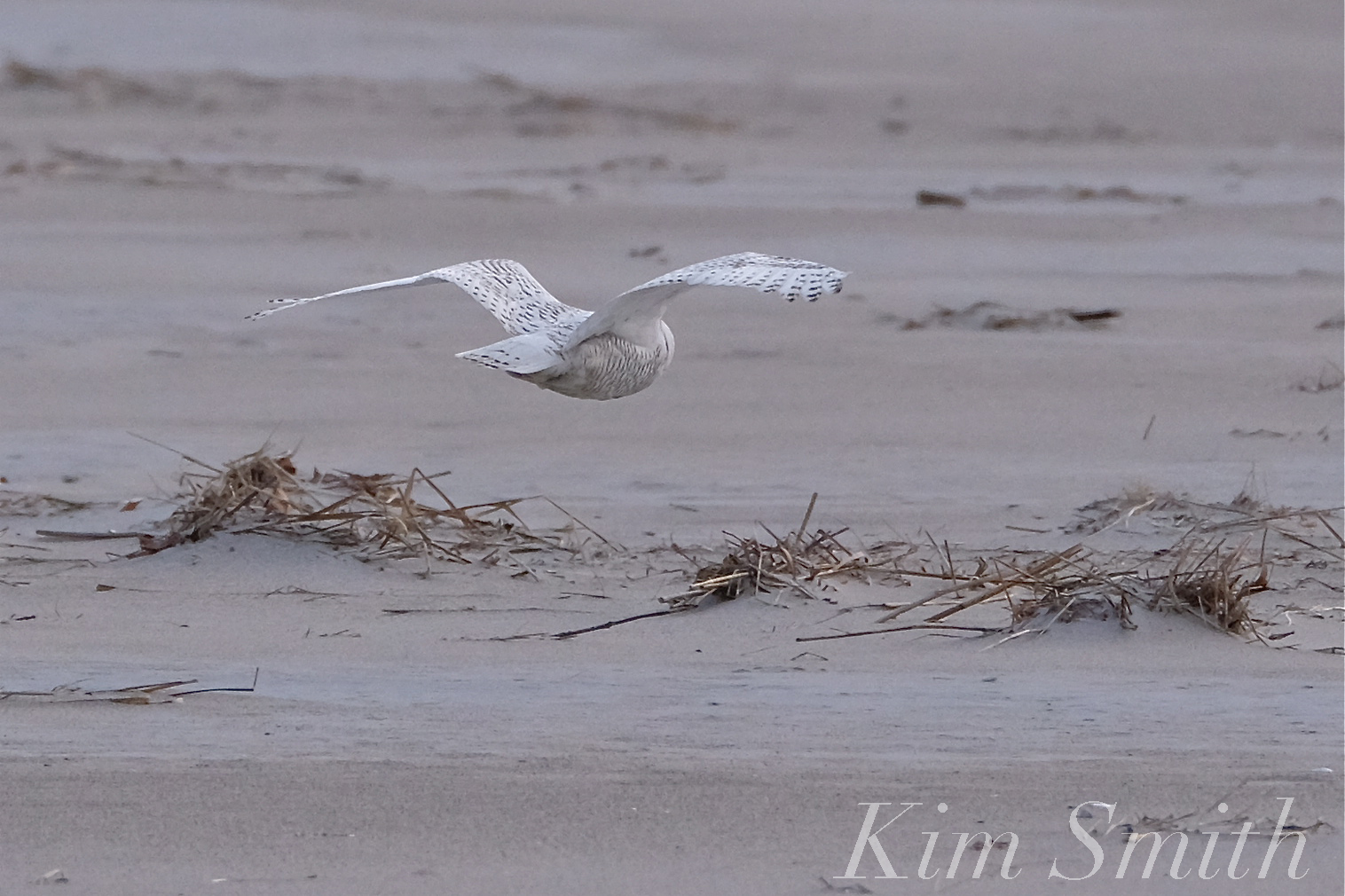
That day, a flock of Dunlins was resting in the sand, with one lone Sanderling, and there was a small flock of Snow Buntings in the parking lot. Feeding amongst the flock was, what I believe to be, a female Horned Lark!Second day out was wonderfully rewarding. Approaching the stairs to descend to the beach, I inadvertently startled a Snowy and he flew from the area, way, way down the beach, perching on one of the poles that mark the access to the Green Trail. Off I trudged in 15 degree weather, keeping my eyes peeled on where he was resting. He stayed for quite some time while I stood back at a great distance, not wanting to disrupt his hunting. Suddenly, and with what I thought, great bravery, he flew quite close and past me, heading over to the sandy beach. I wasn’t anticipating his flight and didn’t get much of a photo, but it was exquisite to see.The temperature had climbed to twenty, but I was getting worried about exposed photo fingers and frostbite. After taking a few more photos and some footage of the Snowy in the sand, I very reluctantly headed home.
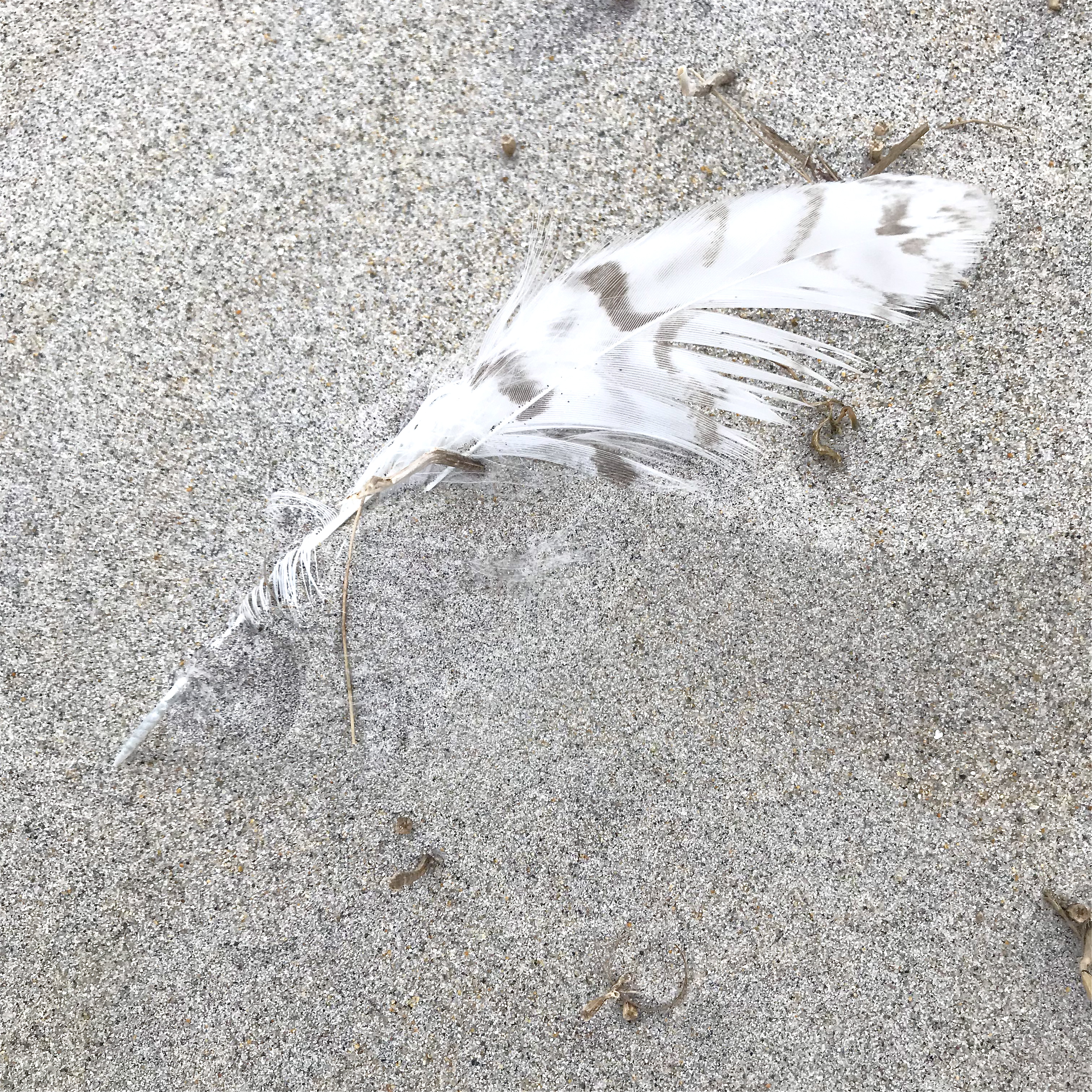
Today I didn’t see the Snowy Owl, but did find a scattering of Snowy feathers in the sand, in the same area where one had been hunting the previous week. I showed the ranger at the gate, Emily White, the feathers and she confirmed they were from a Snowy. She said that hawks and falcons will attack Snowies. I didn’t see any bones or body parts, so hopefully it wasn’t a fight to the death. Emily was super helpful and shared lots of useful information. This year’s Audubon Christmas Bird Count at Cranes was relatively uneventful, with fewer numbers counted than usual. Many more beautiful birds will be arriving to our shores in the coming weeks, foraging in the dunes and shrubby habitat, and hopefully, there will be lots more Snowy Owl sightings!Emily White, Cranes Ranger

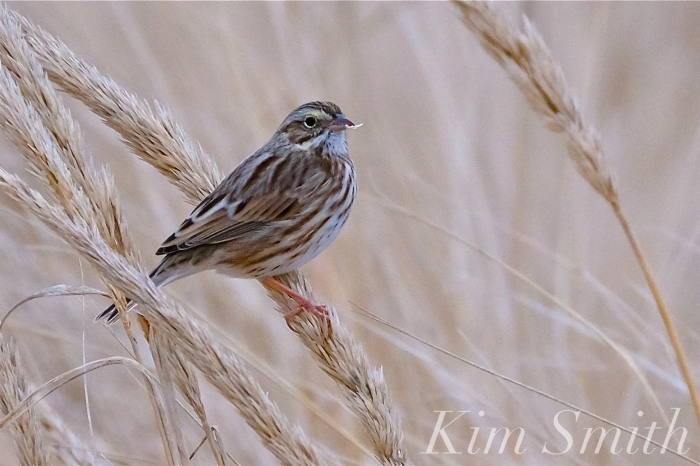
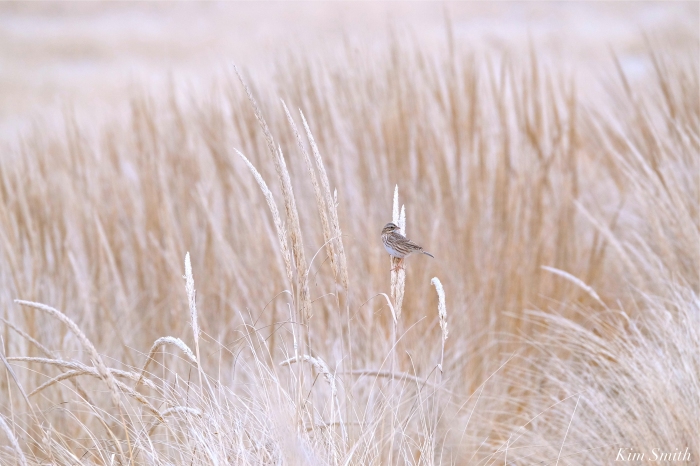
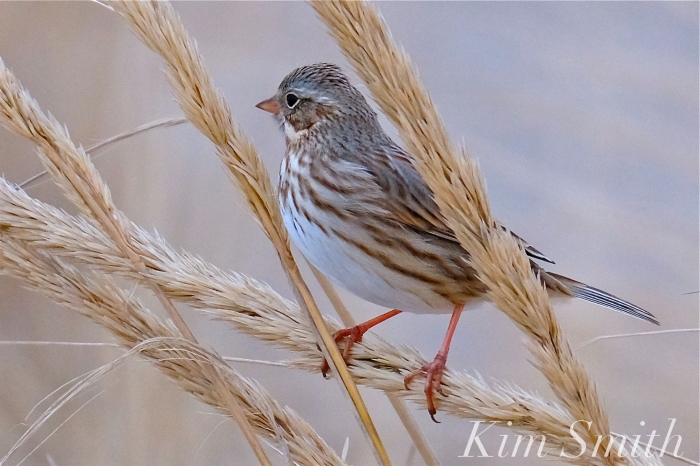
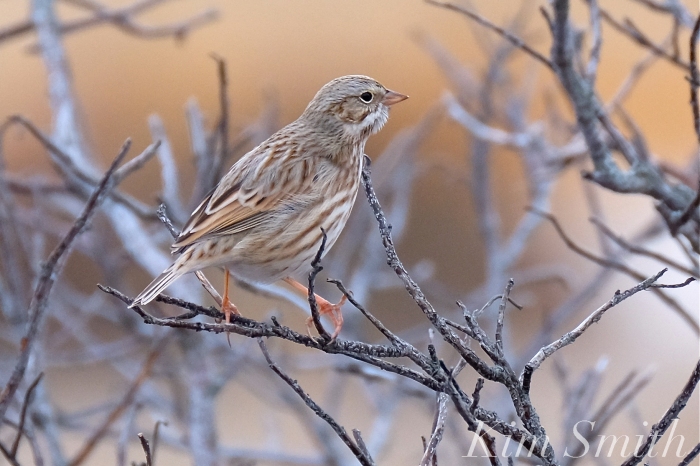
Song Sparrow eating ripe beach grass seed heads.

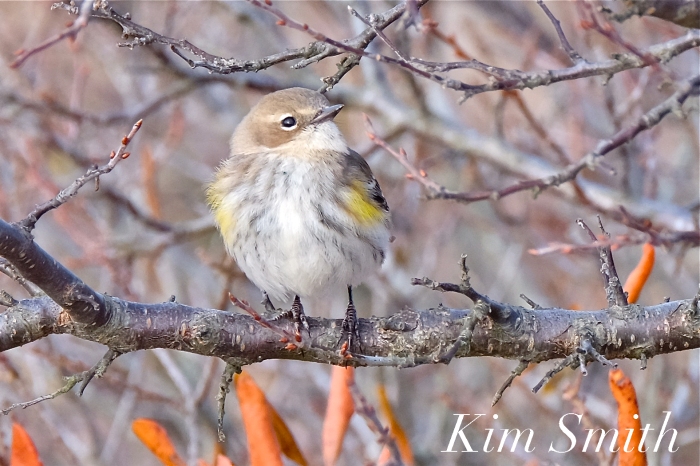
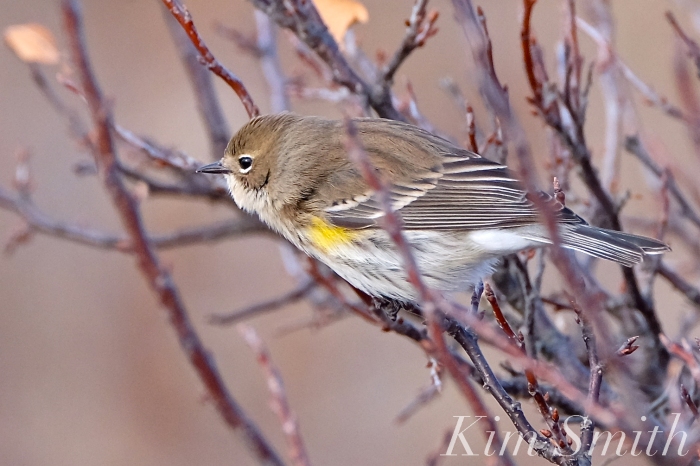
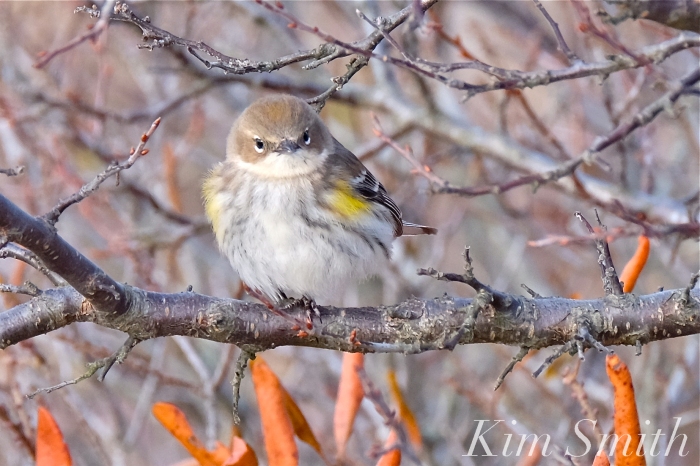
Yellow-rumped Warbler winter plumage.

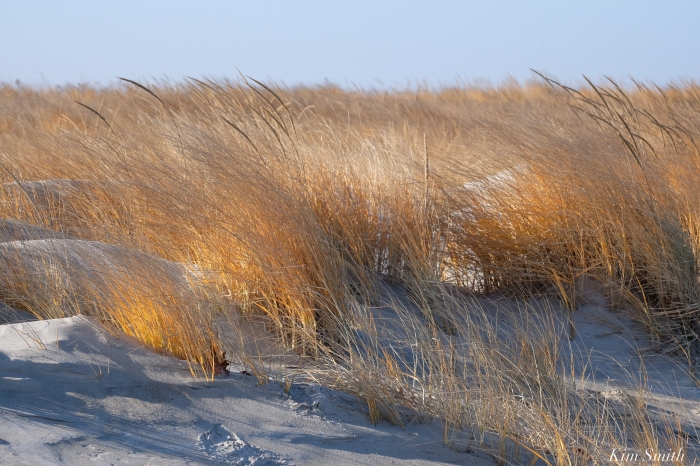
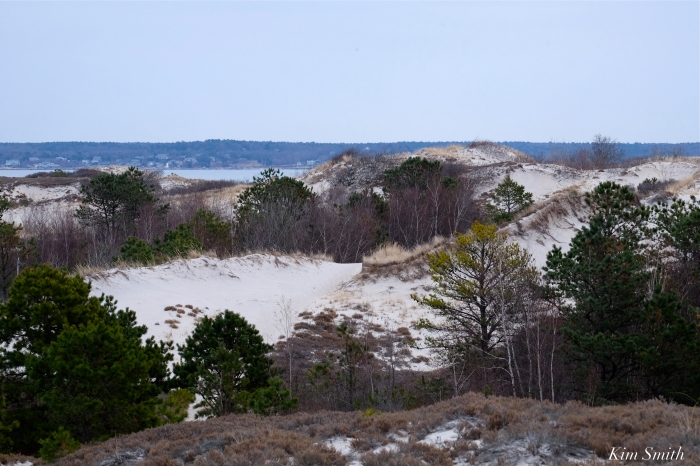
More scenes from the Green Trail

Scofflaw dog owner

SNOWY OWL FEATHERS IN THE SAND

Early morning, with snow-laden skies and Snowy Owl feathers in the sand. More on Snowies tomorrow, when I have time to write a longer post.

https://www.instagram.com/p/Bc2n_ZtlBIS/

A BEAUTIFUL SNOWY OWL COMES TO GLOUCESTER!

Photos contributed by Denise Merlino

I think this is the first reported Snowy Owl to arrive to Gloucester in what looks to be quite possibly a fabulous year for Snowy Owls.

READERS, please continue to let us know of your Snowy Owl sightings. Thank you!

Good Morning Gloucester FOBs (Friends of the Blog) Denise Merlino and John Felock write,

Hi Joey

I remember when the Snowy Owl visited you, well she is back! We named her Samantha the Snowy Owl. She was seen in our back yard and she is beautiful. Everyone keep an eye out for her.

Best

Denise Merlino and John Felock

READ MORE ABOUT THE 2017 SNOWY OWL IRRUPTION HERE:

A VERITABLE BLIZZARD OF SNOWY OWLS COULD BE COMING OUR WAY!

A VERITABLE BLIZZARD OF SNOWY OWLS COULD BE COMING OUR WAY!

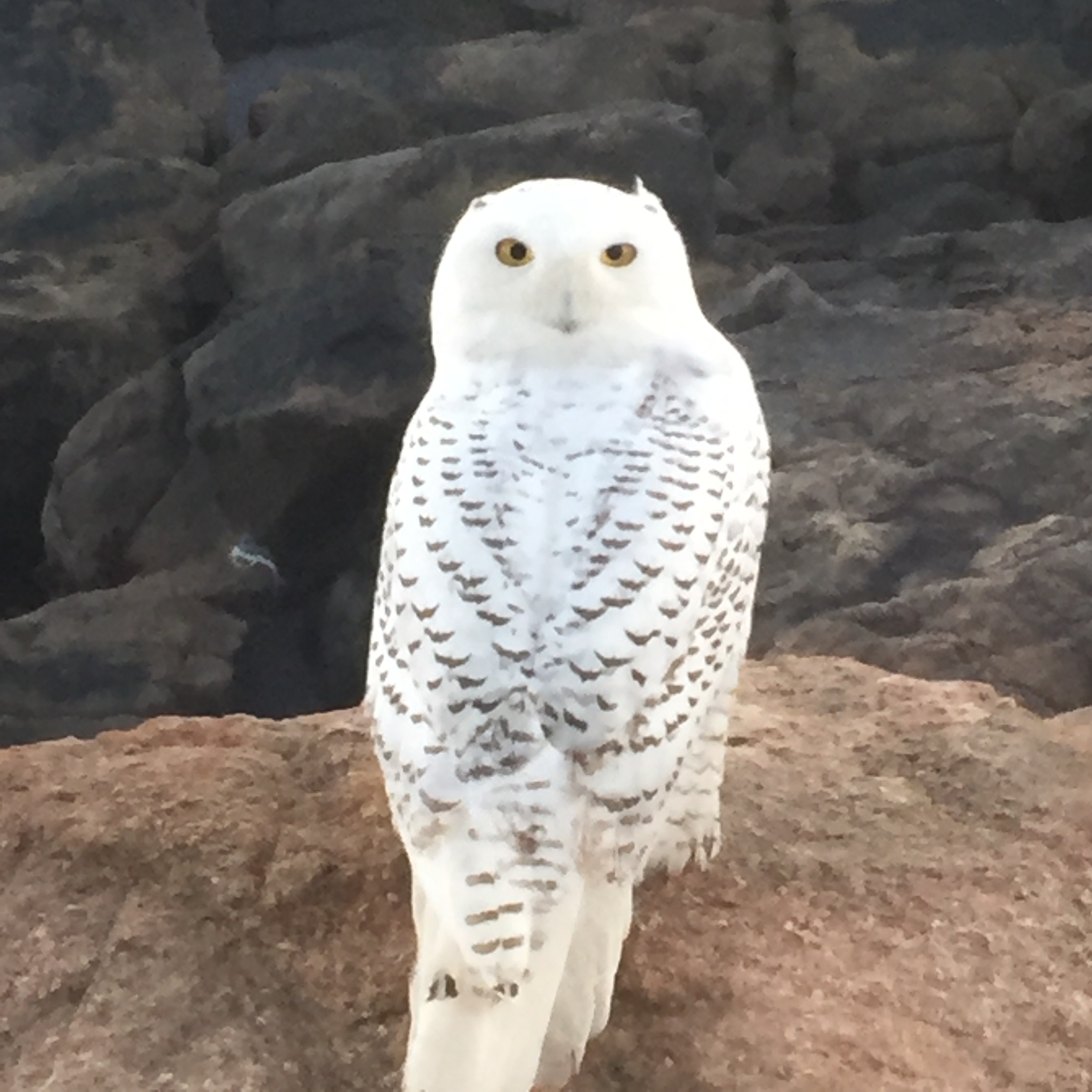
Snowy Owl at Captain Joe and Sons, East Main Street, Gloucester

Audubon “Birds in the News”
By Leslie Nemo
November 17, 2017

Will this winter bring an irruption of the Arctic raptors to the continental U.S.? A few clues from up north have Project SNOWstorm predicting yes.

Four years ago, thousands of Snowy Owls stormed the northern United States, taking up posts in surroundings drastically different from the flat Arctic tundra over which they typically preside. Some whiled away the hours peering at dog walkers from suburban fences; one learned to hunt around a Minnesota brewery with mouse problems. In a typical winter, around 10 Snowies visit Pennsylvania, but in 2013 the state was graced by 400. They were part of the largest Snowy Owl irruption, or influx of a species into a place they don’t usually live, the U.S. has seen since the 1920s.

If you missed it, you might be in luck. Project SNOWstorm, a volunteer-fueled Snowy Owl-tracking organization founded after that irruption, predicts another wave of Arctic raptors will hit North America this winter, according to their most recent blog post.

Scott Weidensaul, one of the directors of Project SNOWstorm, says the clues point to a big irruption, but the group also fully admits there’s no way to definitively know how big it could be or if it will even happen at all. “There’s a little bit of voodoo and black magic in all of this,” Weidensaul says. Though Snowy Owl migration patterns are mostly mysterious, there have been some tell-tale signs that the birds are on their way.

For one, some Snowy Owls already seem to be retracing the last irruption’s process. Data are sketchy and variable, but it appears that big southward movements occur about once every four years. That’s because lemmings, their preferred prey, go through regional population explosions at about the same interval. In 2013, those little Arctic rodents had a banner year on the Ungava Peninsula in Northern Quebec, fueling a highly successful breeding season for the owls that flocked to that area. Sure enough, this past breeding season, Canadian wildlife biologists studying caribou reported an unusually high number of owls flapping around the same area, reports others have confirmed.

READ MORE HERE

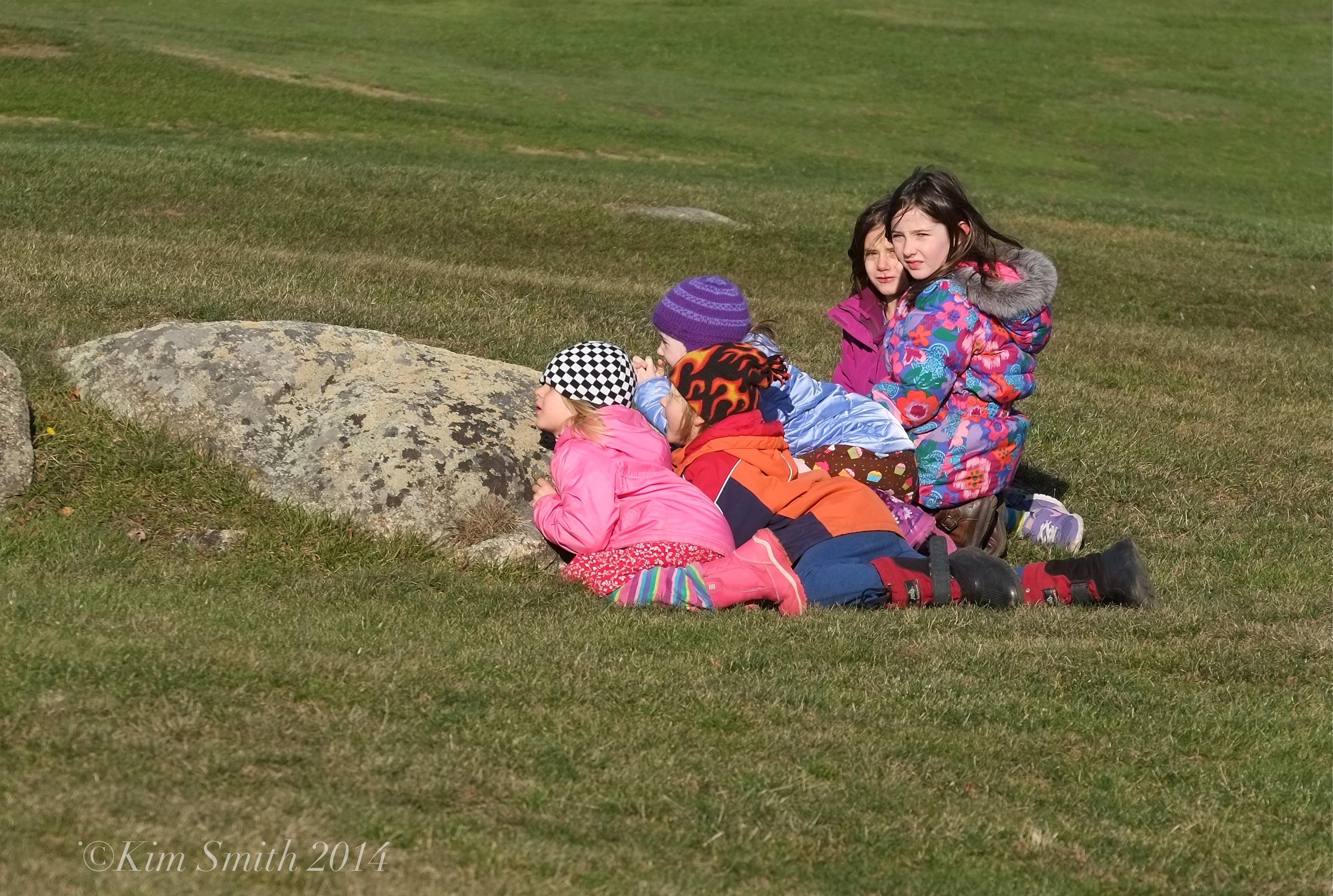
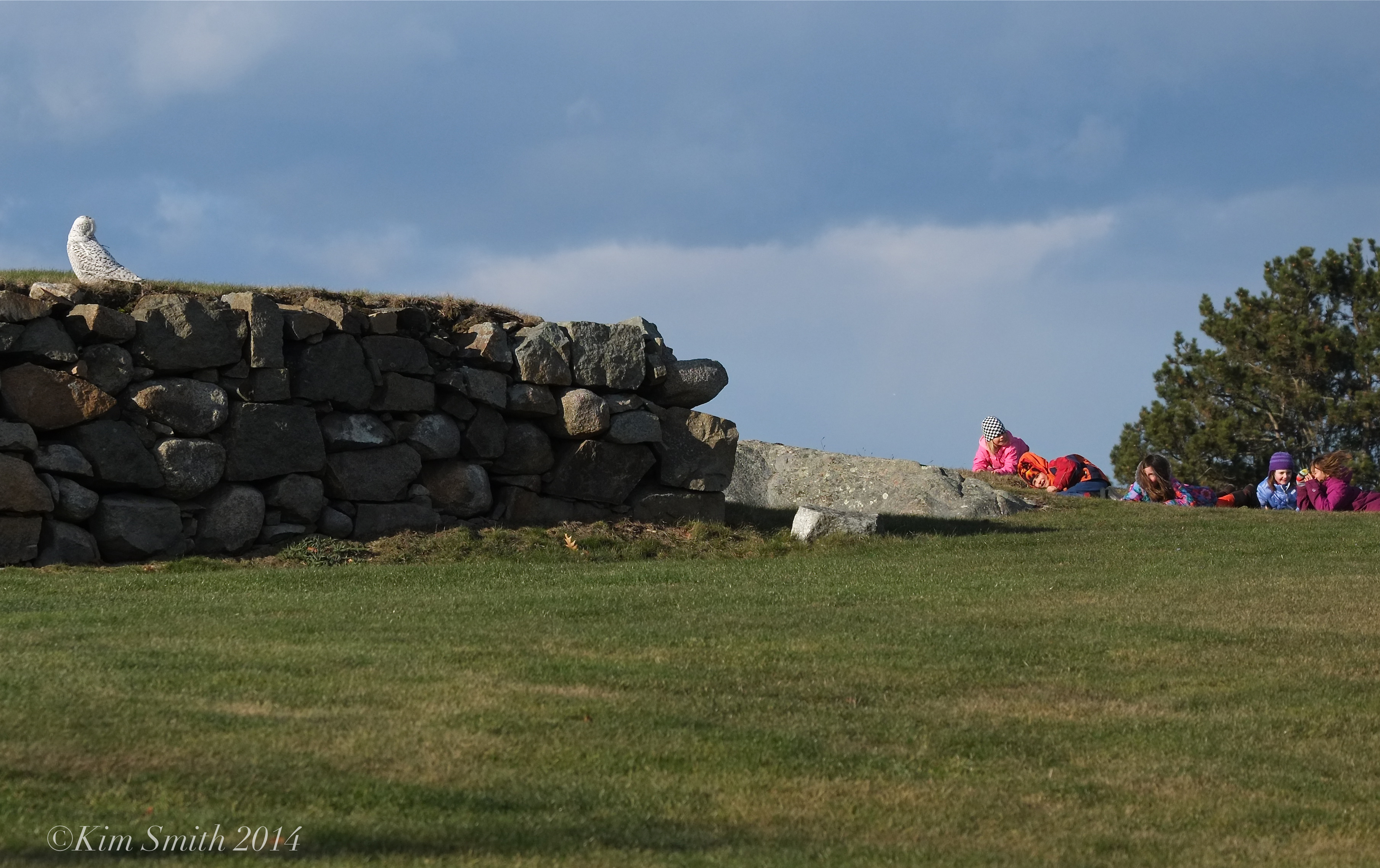
Snowy Owl and East Gloucester Kids at Bass Rocks

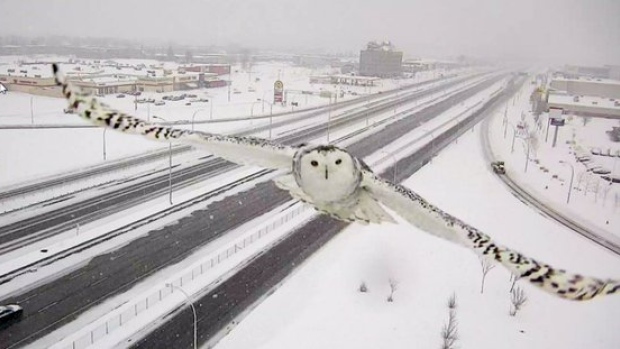
VERY COOL SNOWY OWL SHOT SOARING ABOVE TRAFFIC!

Thank you to Terry Weber and Eoin Vincent for alerting us to this fantastic Snowy Owl shot!!

snow-owl

CBS News:

Spectacular images of a snowy owl in flight have been captured by Transport Quebec’s traffic camera along Montreal’s Highway 40.

The images were captured on Jan. 3 by a traffic camera at Highway 40 and Sources Boulevard.

Transport Minister Robert Poëti tweeted about the owl early Thursday morning, and the province later released video footage.

See Video Here


THE SNOWY OWL PROJECT

https://www.instagram.com/p/_75p2Ejyl8/

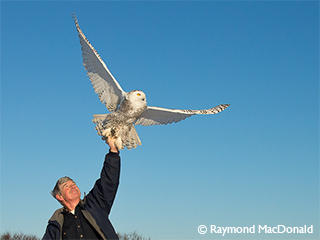
With all the wonderful recent Snowy Owl sightings in Gloucester, I have been reading much about the Snowies and in doing so came upon this great project being conducted by Norman Smith, Director of Mass Audubon’s Blue Hills Trailside Museum. Since 1981, Smith has been studying the Snowy Owls and as part of his research, he attaches bands and transmitters to the owls at Logan Airport, and then tracks their travels.

norman-smith-with-snowy-owl-lifting-off-c-raymond-mcdonald_large_landscape

From the Mass Audubon website:

Snowy Owls and Airports

As snowy owls migrate north and south, they look for stopping places that resemble their home, the Arctic tundra. To them, the land around Logan Airport fits the bill. It’s low and flat, with short scruffy plants and grasses, and there’s an abundance of small mammals and birds to eat.

Logan airport has the largest known concentration of snowy owls in the Northeast. The birds usually show up at the airport in early November; the earliest date recorded is October 22. They leave in early April; the latest date recorded is July 7.

The airport owls help by scaring away other birds that might endanger aircraft. Unfortunately, they are large enough to pose a threat themselves. To protect both birds and jets, Smith safely captures and relocates snowy owls each year.

Tracking Snowy Owls

Since 1997, Smith has attached tiny transmitters to the healthiest owls he relocates. These transmitters send data such as location, temperature, and altitude, enabling researchers to learn more about:

  • Snowy owl migration routes
  • The rate at which they travel
  • If and where they stop along the way
  • Where they spend the breeding season
  • Where they spend the winter

The transmitter batteries last 1-3 years, and the transmitter harnesses fall off once the batteries have worn out. Researchers have worked hard to determine the best size, weight, positioning, and attachment of the transmitters so that they don’t impact the behavior and health of the birds.

This project is a partnership with the US Geological Survey (USGS) and Boise State University (BSU).

Note: This work is performed with special permits. The public is not allowed to enter restricted airport property, or to capture any kind of owl or other raptor.

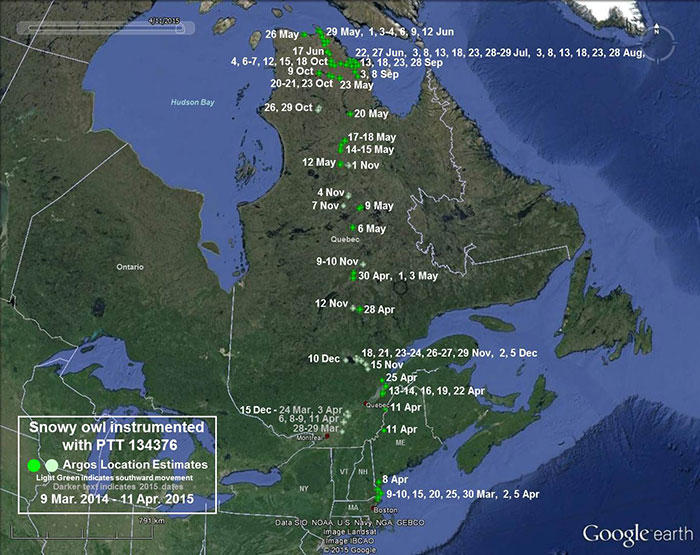
Migration movement of owl #134376 March 9, 2014- April 11, 2015.

owl-134376-movements-march-9-2014-april-11-2015_imagefull

More from Mass Audubon

Link to more very cool Snowy Owl migration maps.

Tips for Viewing Snowy Owls

About Snowy Owls


NEW VIDEO: SNOWY OWL AT CAPTAIN JOES!

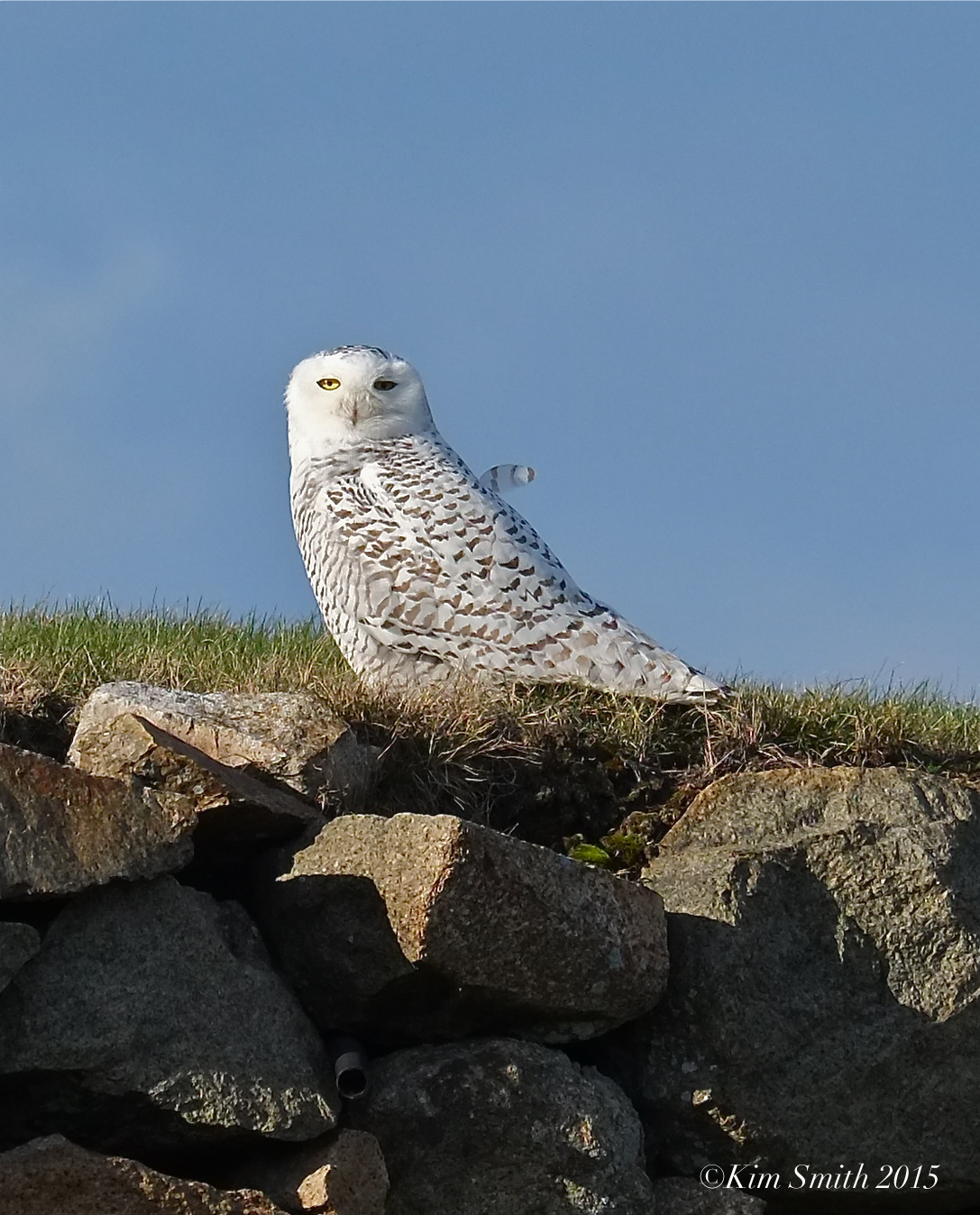
Snowy Owl Gloucester Massachusetts ©Kim Smith 2015So many thanks to Joey and Tom Ring for the wonderful tip. The Snowy is gorgeous!!! My right arm is a little unsteady with robo-cast but still managed to get a few moments. Notice how the Snowy Owl rotates its head, giving him nearly a 360 degree viewing vantage. The crows and a hawk* were noisily dive-bombing the Snowy, but he held his ground. I hope we see him again soon.

*Chris Anderson reports that the perching and diving bird is a Peregrine Falcon.

Snowy Owl Captain Joe and Sons ©Kim Smith 2015

YET ANOTHER GLOUCESTER SNOWY OWL SIGHTING! And Lemmings

Another Snowy Owl sighting, this submitted by Kim Bertolino in East Gloucester. Thanks so much to Kim for sharing her beautiful photo!

12432758_10207314033506833_941306720_o-1

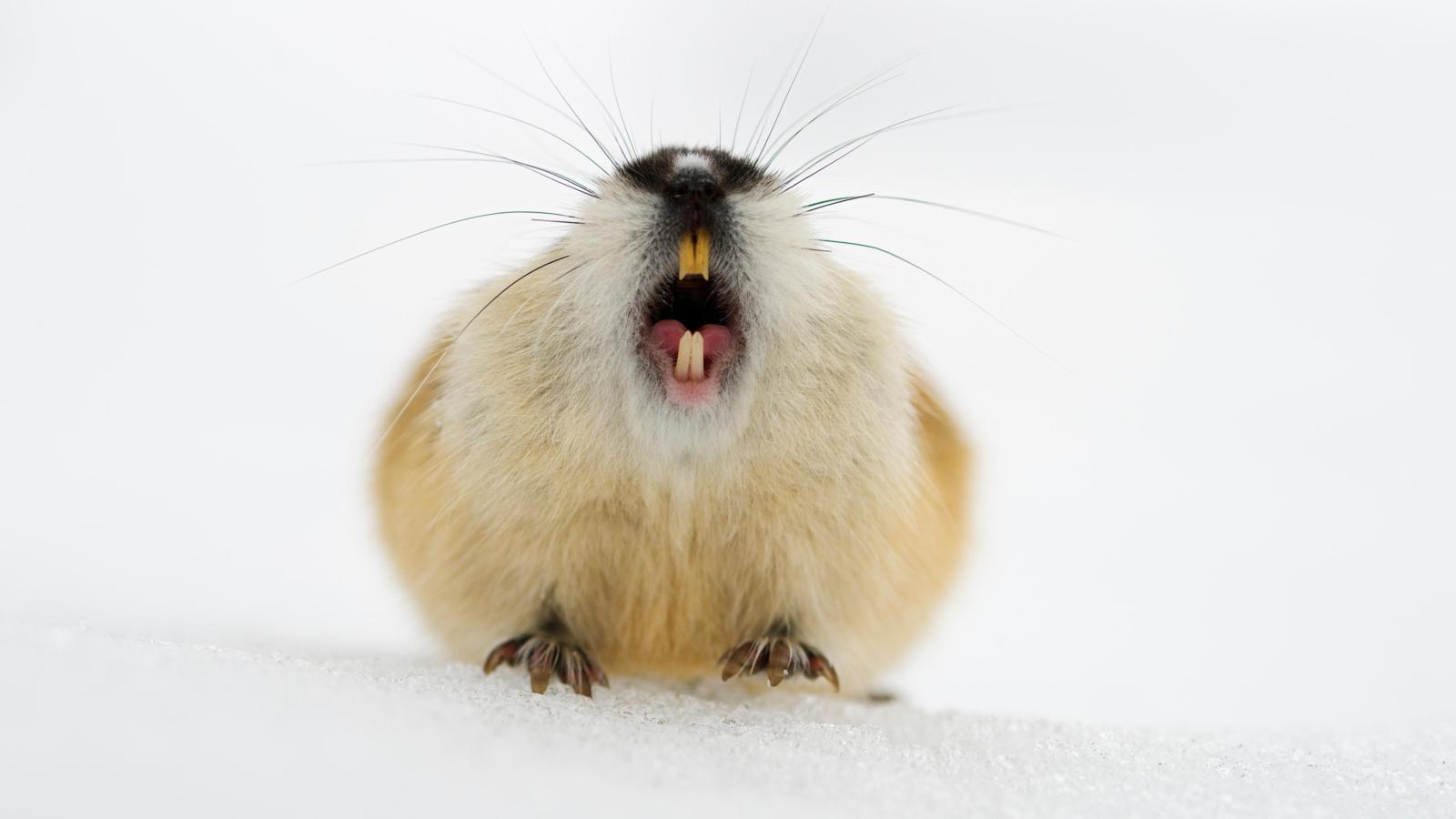
We were talking about Snowy Owls and lemmings in Sunday’s podcast when questions about where lemmings live and what do they look like came up. Lemmings are a small rodent that comprise the bulk of the Snowy Owl’s diet in their northern breeding grounds, the Arctic tundra. They are about 3 to 6 inches long with silky fur and short tales, and are closely related to voles and muskrats. The Snowy eats between three to five lemmings per day in the tundra! Read more about lemmings here.

Although we can’t offer the Snowies a diet of lemmings, we do have lots of mice and rats readily available to hunt during the winter months. Cape Ann’s open shoreline, of beaches, dunes, and rocky outcroppings, are a somewhat similar terrain to that of the tree-less tundra. Snowies are diurnal; they have evolved to hunt during the day and night because in the tundra during their breeding season the hours of daylight are continuous. A Snowy couldn’t survive in the Arctic if it could only hunt during night time like most other species of owls.

The following BBC article about lemmings is super interesting and well worth reading: The Truth About Norwegian Lemmings

E464P8 Norway lemming (Lemmus lemmus) calling on spring snow, Vauldalen, Norway, May
Norway Lemming (Lemmus lemmus)

Photo Credit: Nature Picture Library / Alamy

Snowy-Owl-Vyn-080625-0180

Adult male Snowy Owl delivering a lemming to a female on the nest. The female is feeding a chick. Bathurst Island, Nunavut, Canada. JuneGerrit Vyn Photography

bubo_scan_AllAm_map

(ONE MORE) SNOWY OWL SIGHTING!

This photo was sent to us by friends at Good Harbor Beach.

IMG_0291

If any of our readers spots a Snowy hanging around, and you have a spare moment, please, please email me at kimsmithdesigns@hotmail.com. I would really love to get a good Snowy Owl capture for a current film project. Thank you!

Snowy Owl ~ Ghost of the Arctic

Snowy Owls have captured our imaginations partly because Harry Potter’s faithful companion Hedwig is a Snowy Owl, but also because unlike most owls, Snowy Owls hunt during the day, allowing us to observe their movements and struggle for survival more easily than their nocturnal cousins. Like all owls, the Snowy possesses a superb sense of hearing, binocular vision, and the ability to turn its head 270 degrees. A Snowy Owl’s hearing is so astute, it can capture prey under snow, without ever seeing the intended prey!

Snowy Owl Gloucester Massachusetts ©Kim Smith 2015

The Snowy Owl that was spotted in East Gloucester several days ago displayed this very behavior. Perched on a rock wall with a panoramic view of the surrounding fields, it held its body stone still all the while rotating its head around and around, up and down, and side to side. At one point, its head seemed to rotate in its socket nearly 360 degrees. In the two photos you can see the head turned seemingly backward from its front facing body, the second photo to an even greater degree than the first. By comparison, a human’s neck bones would snap if rotated to that measure and the blood vessels would close down. Owls not only have 14 very flexible neck bones, they have specialized blood vessels. When the circulation is cut off, others open to allow blood to flow.

Snowy Owl Gloucester Massachusetts January ©2015 Kim Smith

 Snowy Owl Irruption Update

Are Snowy Owls having a second irruption, two years in a row? It’s too early to tell. Just as with last year’s histoic incursion, they are again showing up all over eastern Massachusetts. My brief encounter with the Snowy Owl only left me wanting more!

You can learn much about the Snowy Owl from the tremendous film, The Magic of the Snowy Owl, linked here from a GMG post during last year’s widespread irruption. GMG FOB Mary McCloud shared this article from an Annapolis magazine, published last January, 2014.

Exciting Immature Snowy Owl Sighting In East Gloucester Today!

Juvenile Snowy Owl  Gloucester Massachusetts. ©Kim Smith 2015

Immature Snowy Owl East Gloucester 

Esme, Meadow, Atticus, Pilar, ©Kim Smith 2015Budding Ornithologists Meadow, Atticus, Frieda, Esme, and Pilar

Snowy Owl East Gloucester Massachusetts ©Kim Smith 2015Thanks so much to my sweet friends Dawn and Michelle for thinking to call me to come see!

Snowy Owl East Gloucester Massachusetts. ©Kim Smith 2015See previous GMG Snowy Owl post: Birds of Cape Ann and the Magic of the Snowy Owl