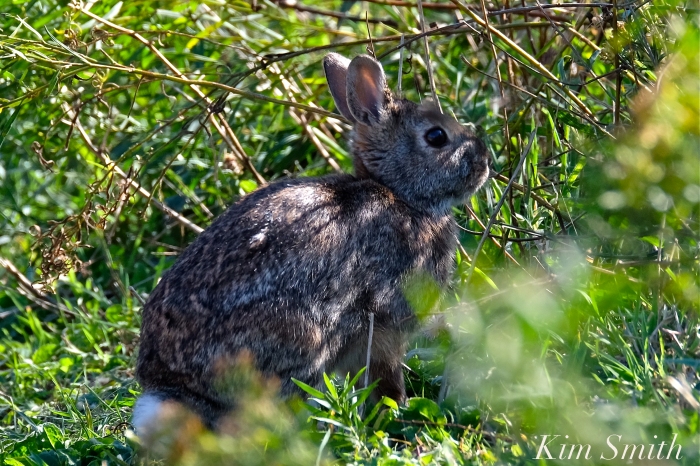
 Why does this little rabbit look so different from the rabbits we see so often in our gardens, alongside roadsides, and in meadows and dunes? Because it is a New England Cottontail!
Massachusetts has two species of cottontails, the New England Cottontail (Sylvilagus transitionalis) and the Eastern Cottontail (Sylvilagus floridanus). The introduced vegetable-and-flower-eating Eastern Cottontail has flourished, while this beautiful and illusive little creature’s numbers have dwindled to an alarmingly low number.
Prior to 1930, New England Cottontails were present in all 14 counties of Massachusetts and it was the only cottontail species appearing among 59 reports, except for 7 from Nantucket where Eastern Cottontails were introduced as early as the 1880s. Between 1924 and 1941, at least 16,200 Eastern Cottontails were imported from the mid-west and released. Another 4,600 were raised and released at a state propagation facility.
The most critical threat to New England Cottontails is loss of habitat. They can only survive in the ephemeral landscape of newly emerging forests, which provide low ground cover for shelter. Once a forest matures, the low growing plants become too sparse to offer food and shelter. Today the New England Cottontail resides in only about one fifth of its historic range.
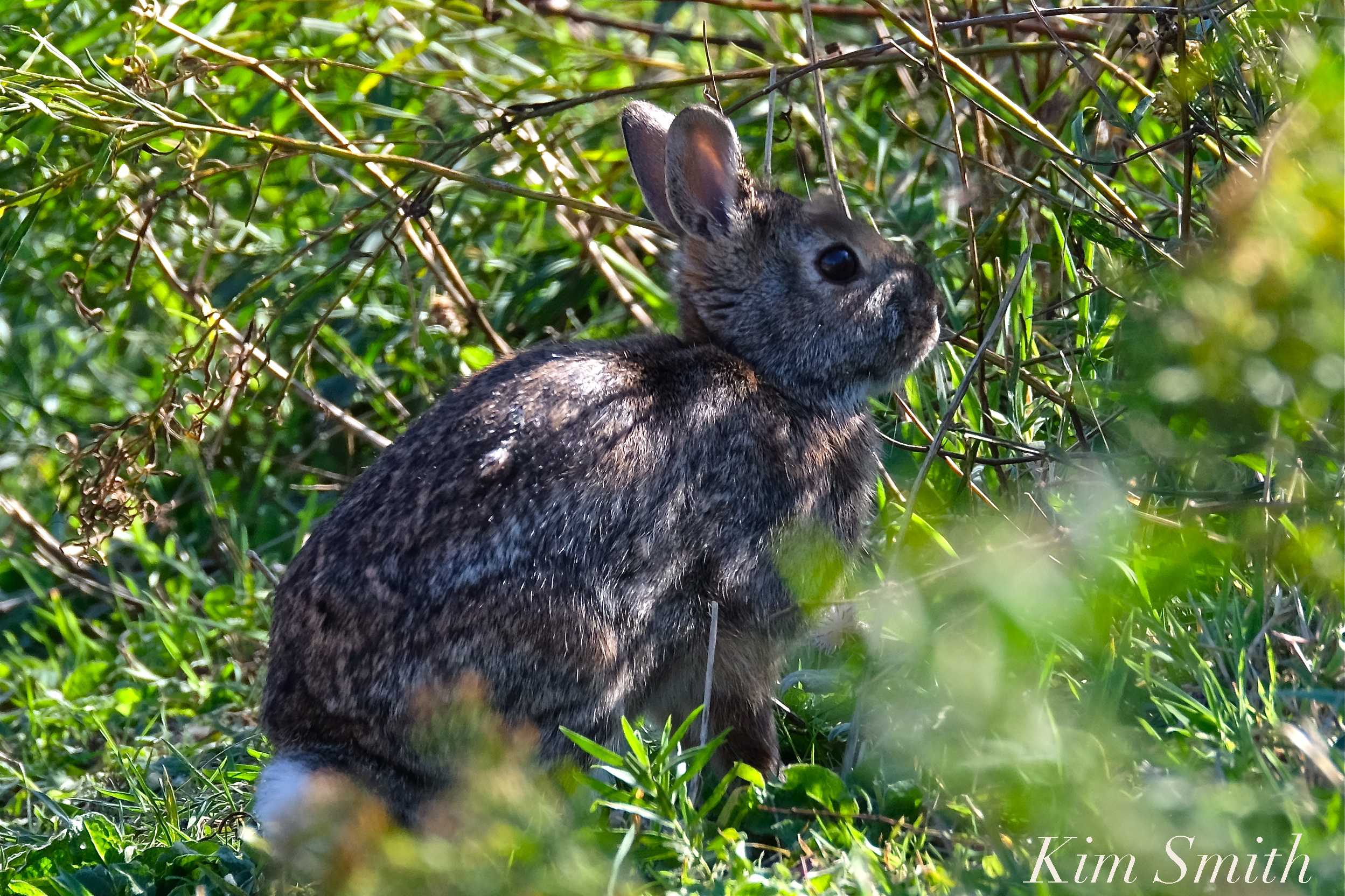
The photo above of the New England Cottontail was taken at Gooseberry Island in Westport. He shot across the path on the way to the beach and wish I had a better photo to share, but now that I know to look for them there, I’ll try again.
You can compare the difference in the rabbit species in the two photos. The New England Cottontail’s (above photo) ears are shorter and his fur a bit grayer than the Eastern Cottontail (below). When I caught a glimpse of him I immediately recognized the rabbits we saw daily at my grandparent’s home, built in the dunes on a bluff on Cape Cod, where at that time, there were few homes and lots of cool scrubby habitat for wild creatures.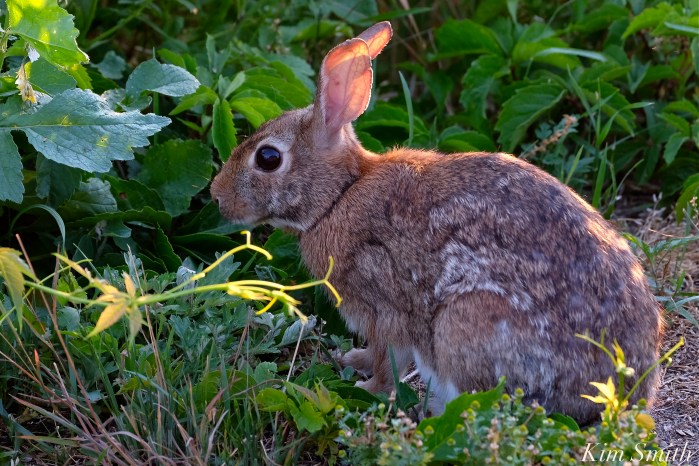 The ubiquitous Eastern Cottontail, Good Harbor Beach
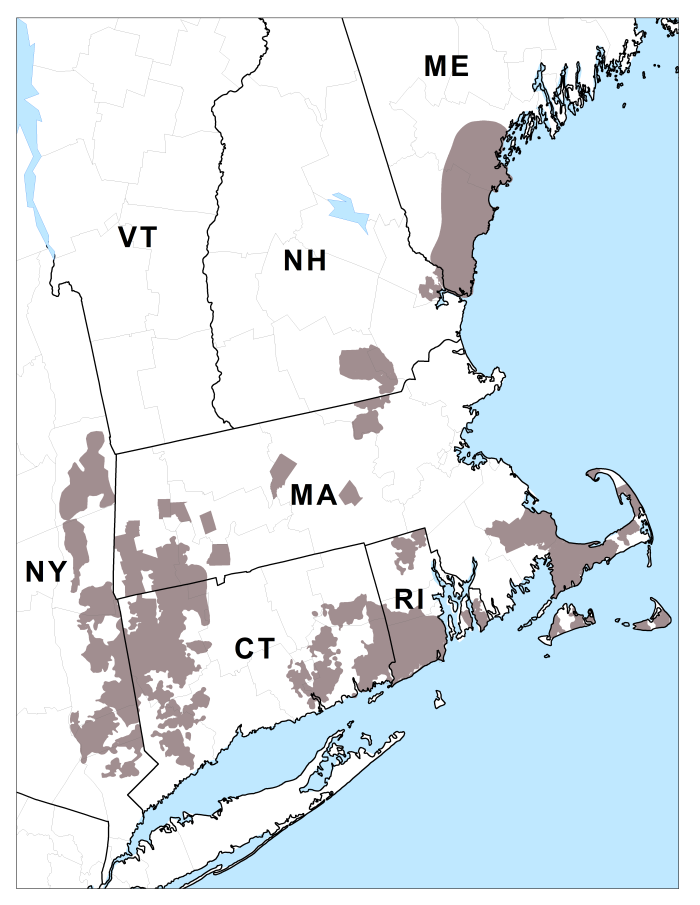 Dwindling New England Cottontail Range Map.
As you can see, New England Cottontails have been completely extirpated from Cape Ann and Essex County.
Learn more about New England Cottontails here.
Spread The GMG Love By Sharing With These Buttons:




































































 Good Morning Gloucester