Documentary filmmaker, photographer, landscape designer, author, and illustrator. "Beauty on the Wing: Life Story of the Monarch Butterfly" currently airing on PBS. Current film projects include Piping Plovers, Gloucester's Feast of St. Joseph, and Saint Peter's Fiesta. Visit my websites for more information about film and design projects at kimsmithdesigns.com, monarchbutterflyfilm.com, and pipingploverproject.org. Author/illustrator "Oh Garden of Fresh Possibilities! Notes from a Gloucester Garden."
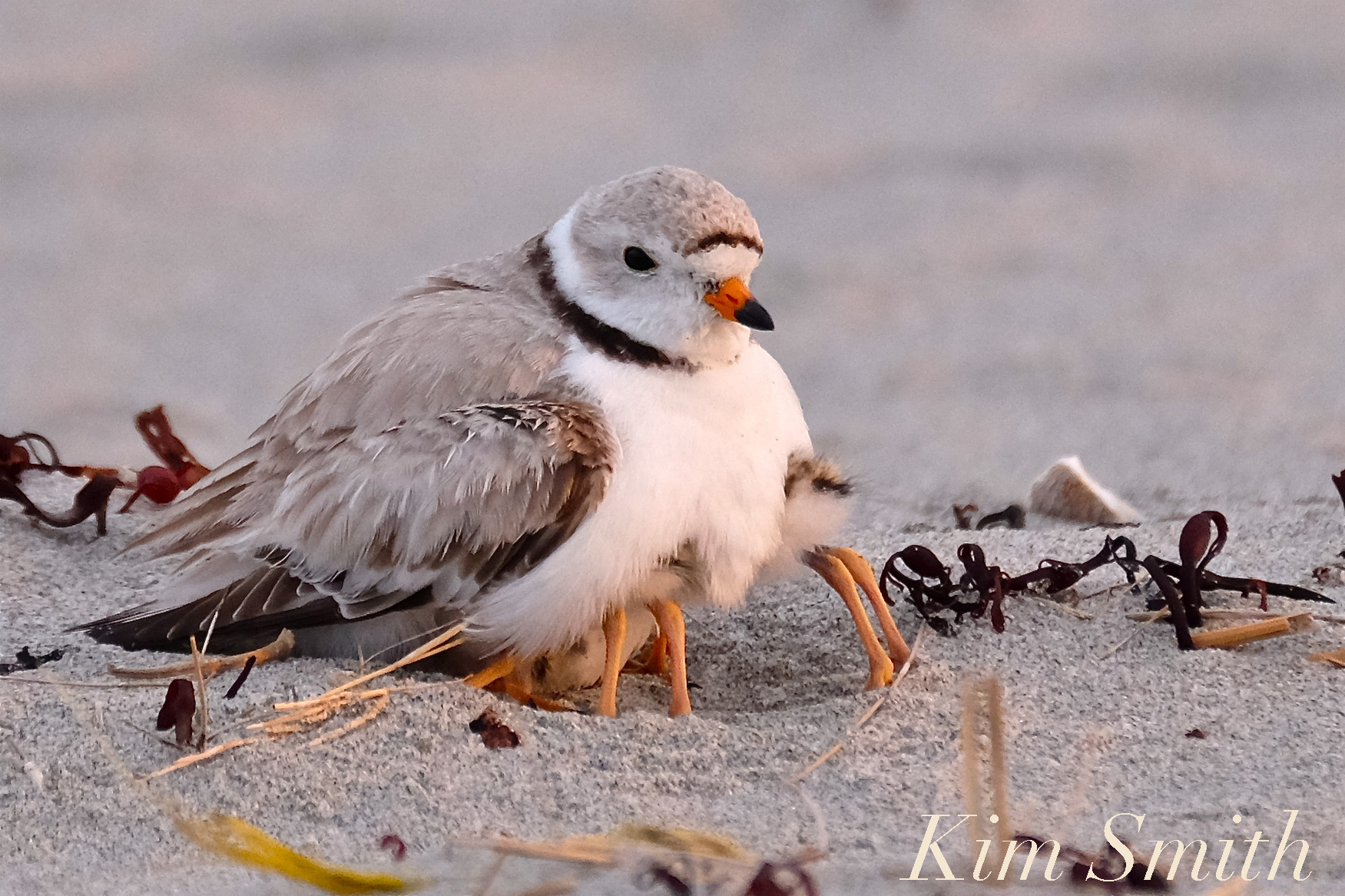
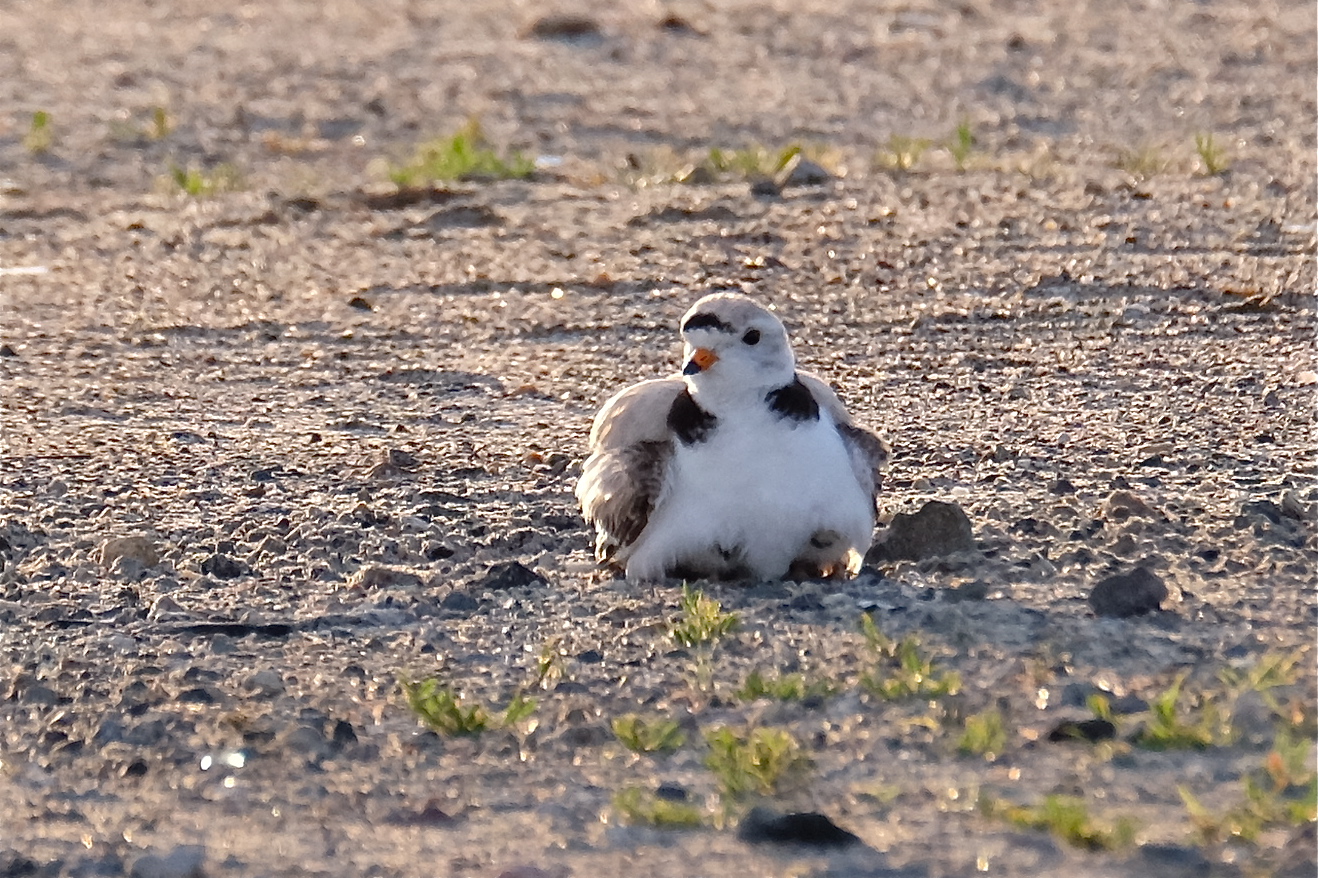
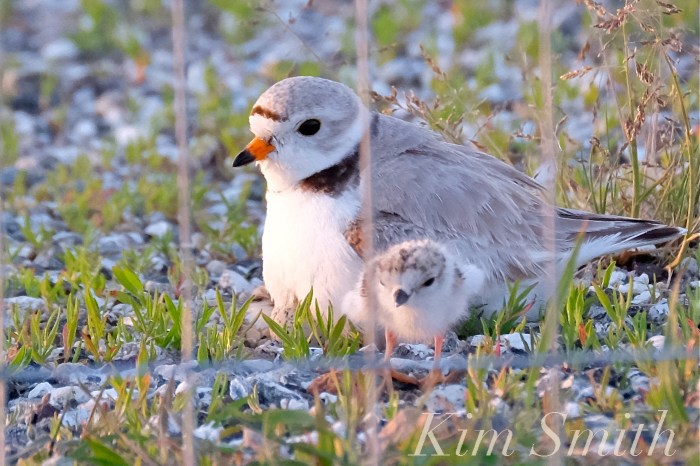
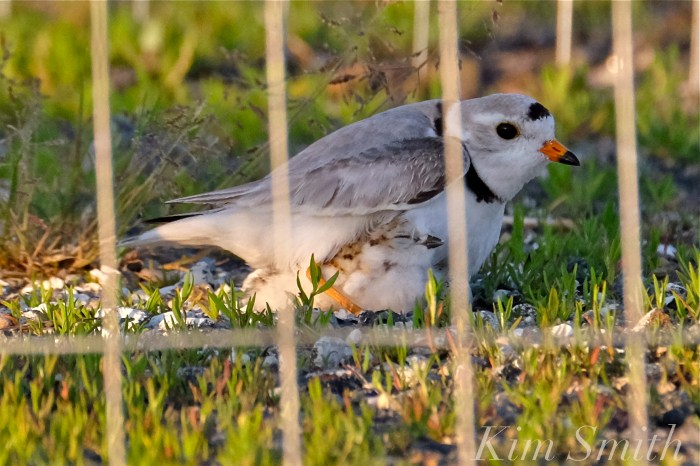
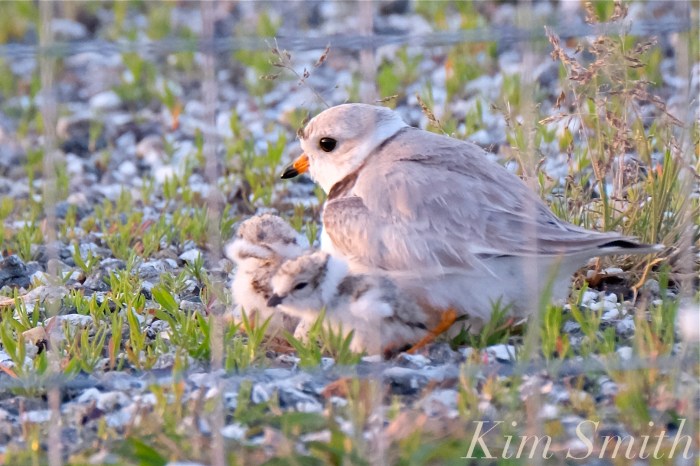
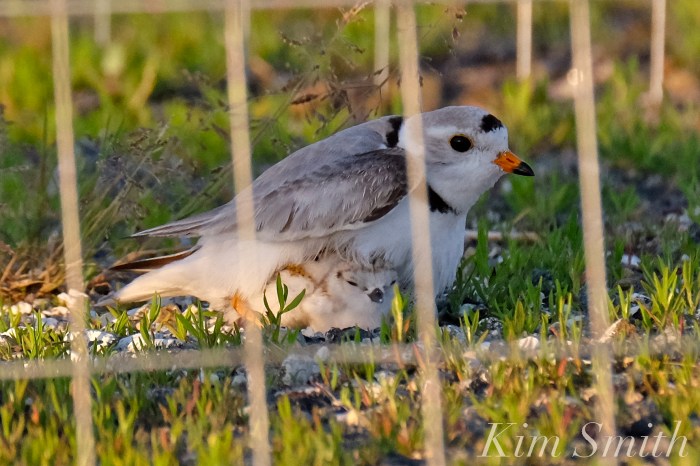
Whenever folks stop by to ask questions at the nesting area and they see the little chicks snuggling under the adult PiPl, they almost automatically assume it is the Mama Plover. Half the time it is the female, and the other half, the male. Mom and Dad share equally in caring for the chicks, generally in twenty minute to half hour intervals. They are always within ear shot and while one is minding the chicks, the other is either feeding itself, grooming, or patrolling for predators. Last year, as is often the case, the Mama Plover departed Good Harbor Beach several weeks before the chick fledged, leaving Little Chick entirely under Papa’s care.
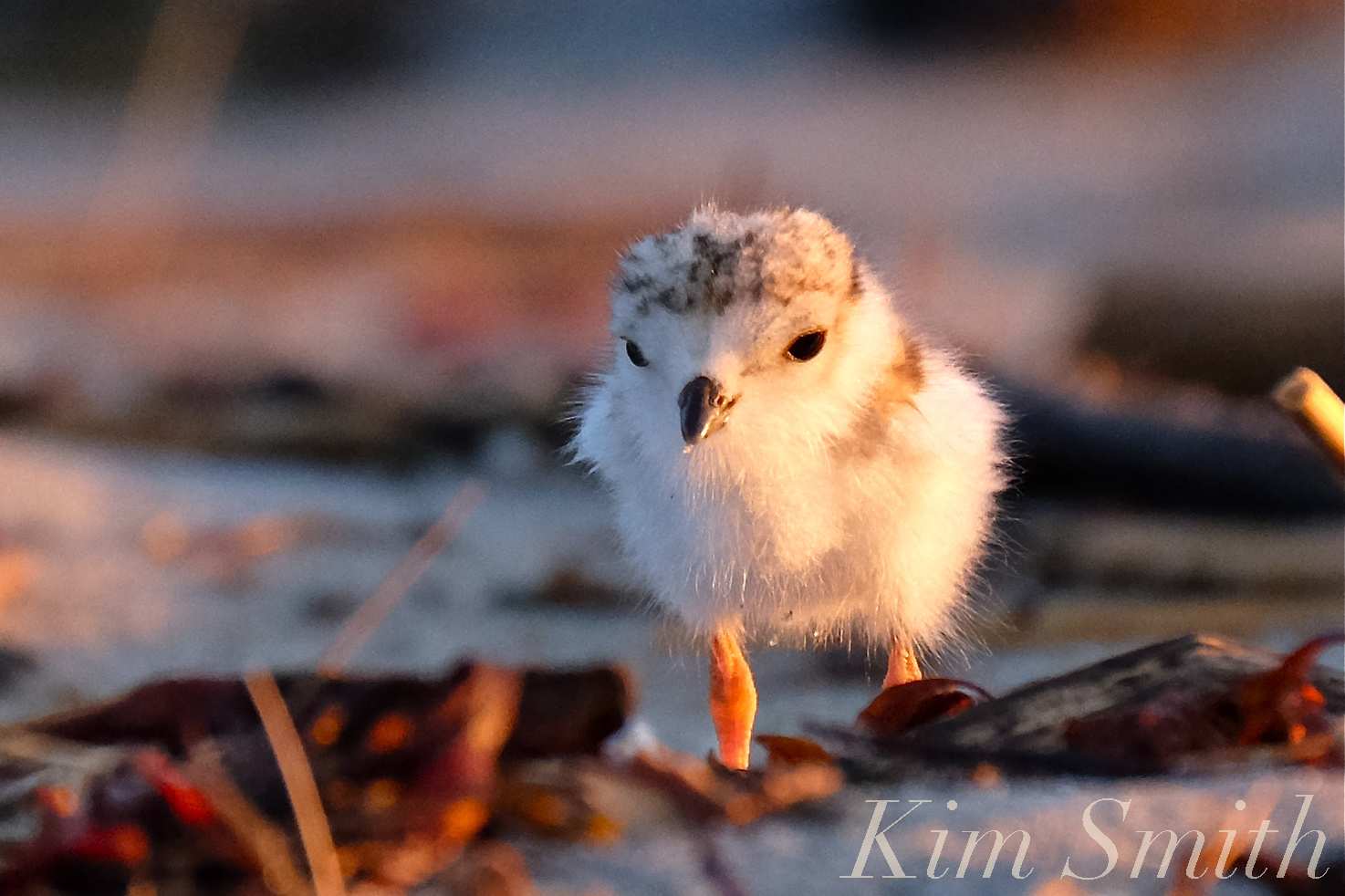
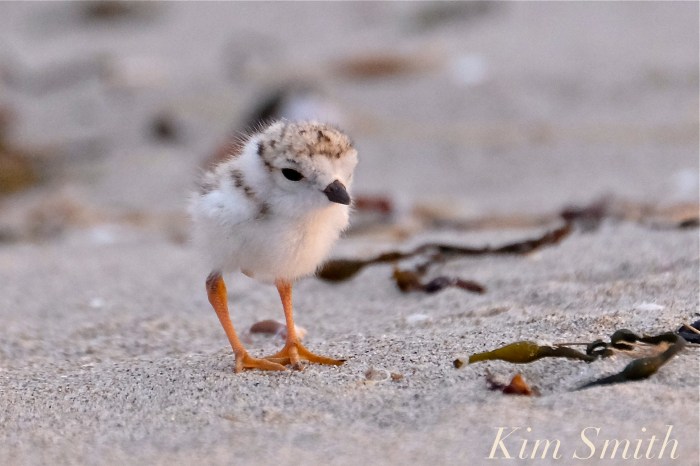
Eight-Day-Old Little Pip
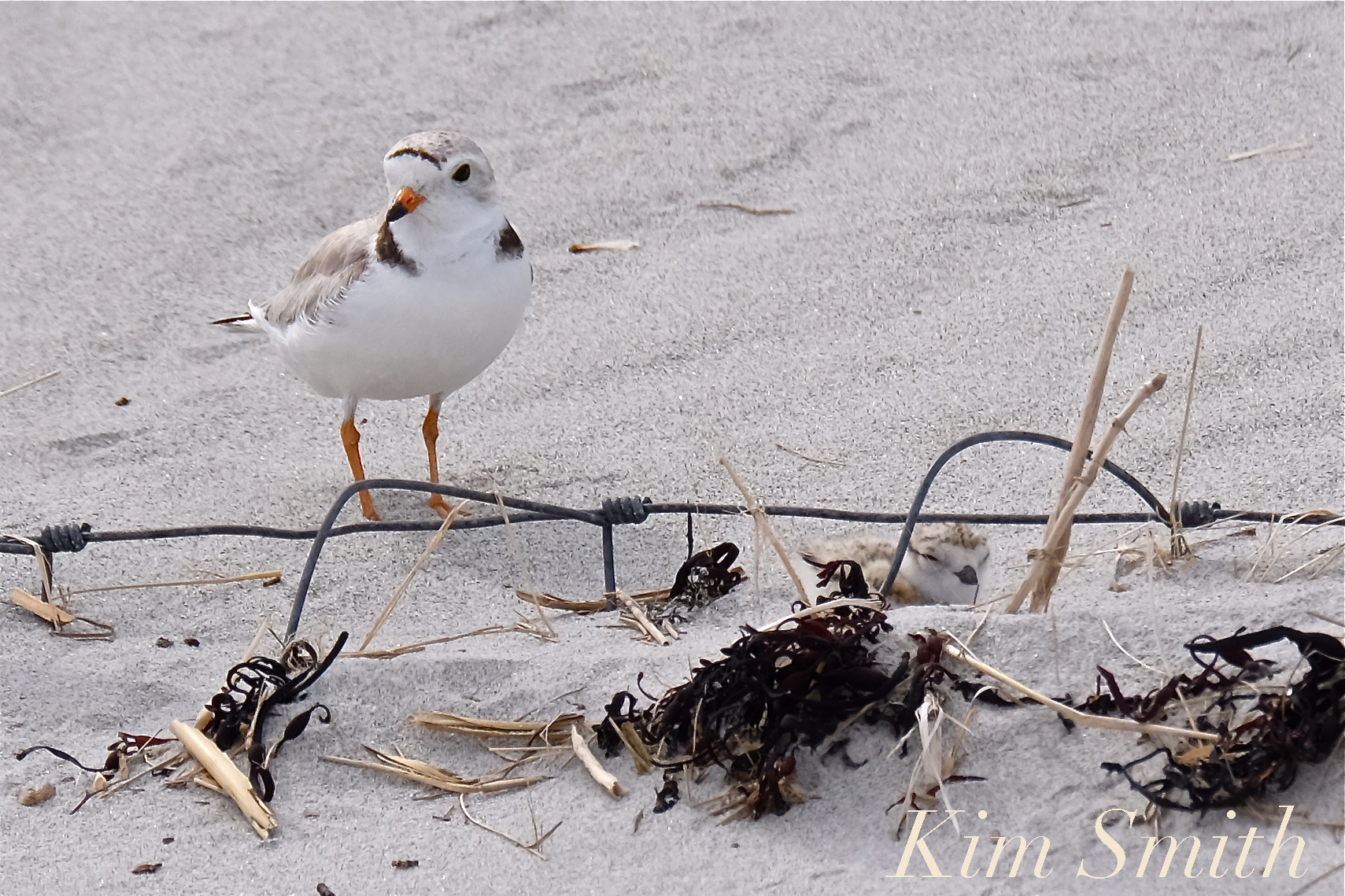
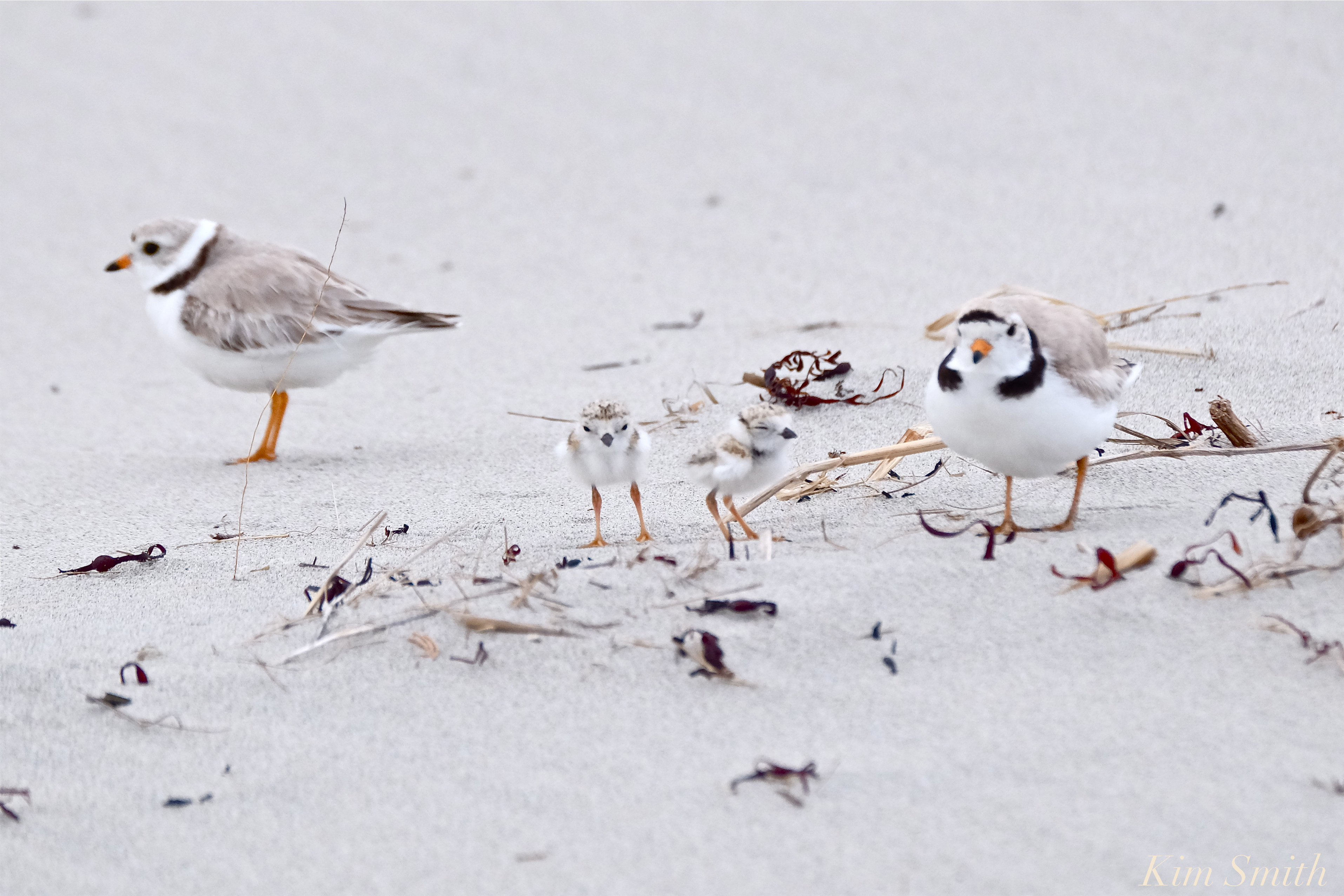
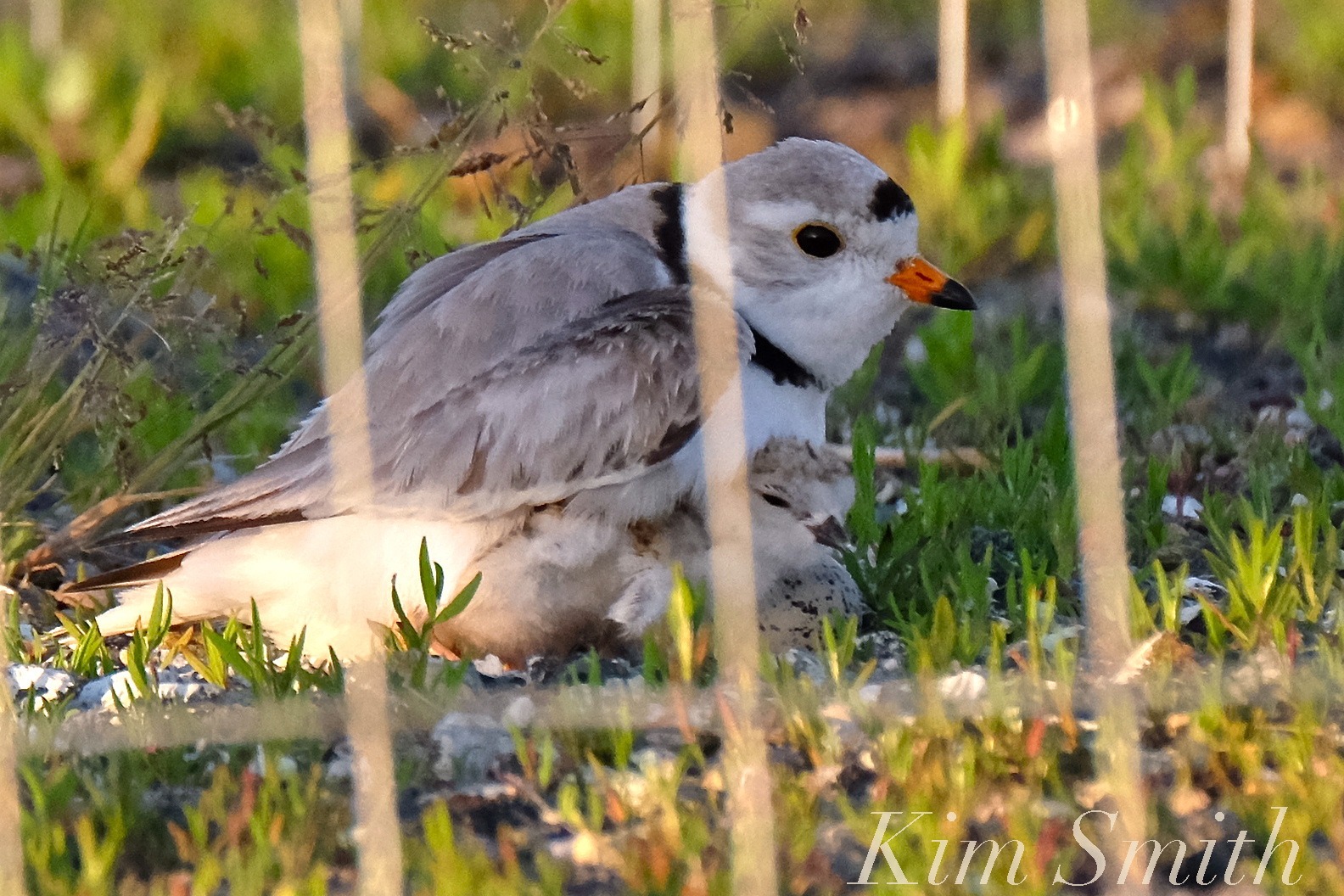
Papa piping a warning call to Mama, while snuggling Pip
If you would like to help monitor Pip and our PiPl family, please contact Ken Whittaker at kwhittaler-ma.gov.
Spread The GMG Love By Sharing With These Buttons:
We are so very sorry to share that the third chick was killed this morning. The seven-day-old chick was taken and eaten by a very large crow that swooped in unexpectedly, as witnessed by the volunteer monitors.
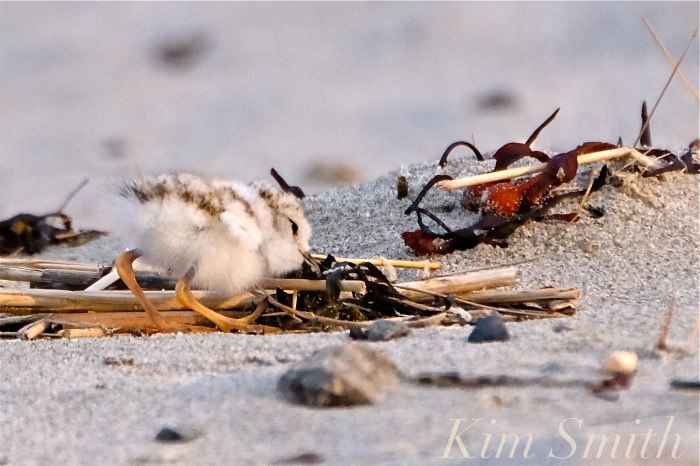
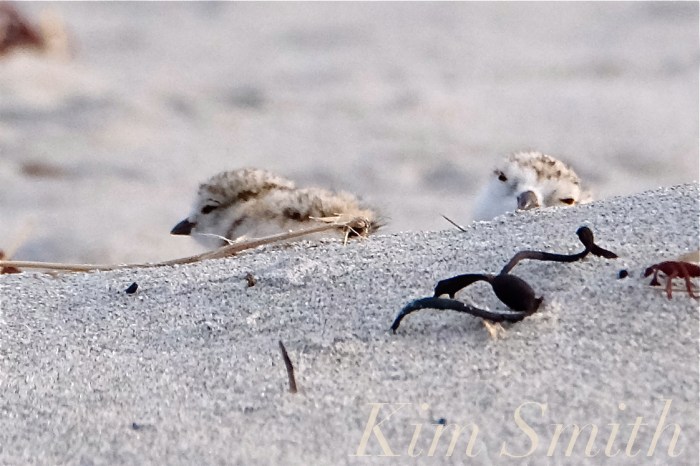
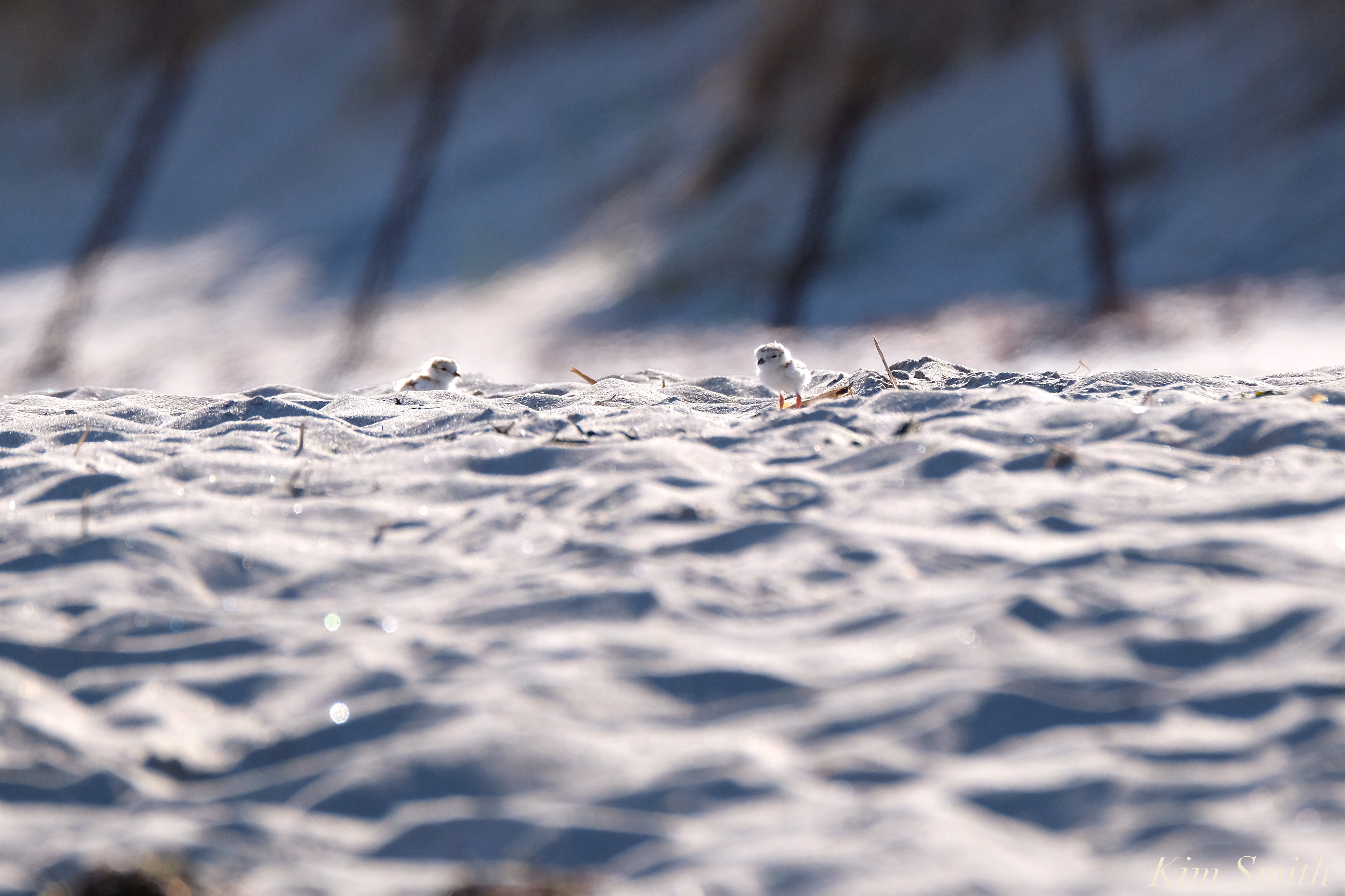
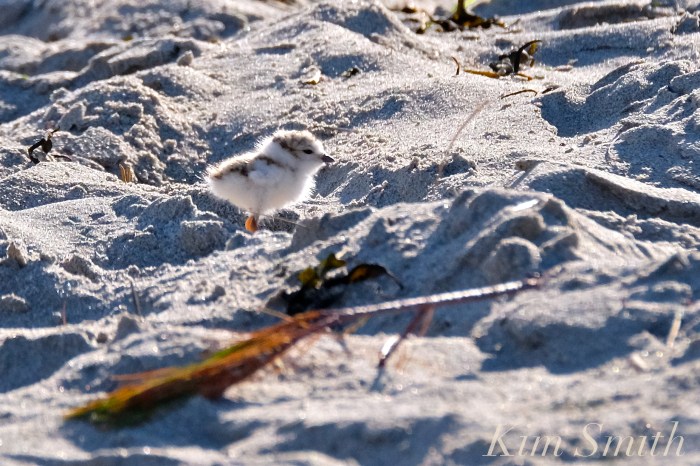
One week ago today all four Good Harbor Beach Piping Plovers hatched in the parking lot. We celebrated, but also knew that the really hard part was yet to come. Monitoring tiny marshmallow sized fluff balls, made the color of their surroundings, is like looking for sand upon sand. To do this several hours at a time is no small feat, made even more challenging on Gloucester’s busiest of beaches.
I would like to give a huge shout out and thank you to all our super dedicated PiPl monitors. Know that they are doing the very best they can to fend off predators of every kind, ill mannered people, astronomically high tides, diminished beach, people who have been drinking in the hot sun all day, garbage left behind on the beach (which attracts crows and gulls), and every other creepy thing you can think of. The core group is putting in many hours, are sunburnt, and neglecting their families.
A terrible mishap of death or injury to a chick could happen on anyone of our shifts. When you see a PiPl monitor at GHB, stop and feel free to ask questions about the plovers, and please thank them for their dedication. I honestly hope I don’t see one more facebook post/comment blaming the monitors about how we are not doing enough to keep the chicks safe and not reporting enough about the scofflaws. It is just plain cruel. Thank you.
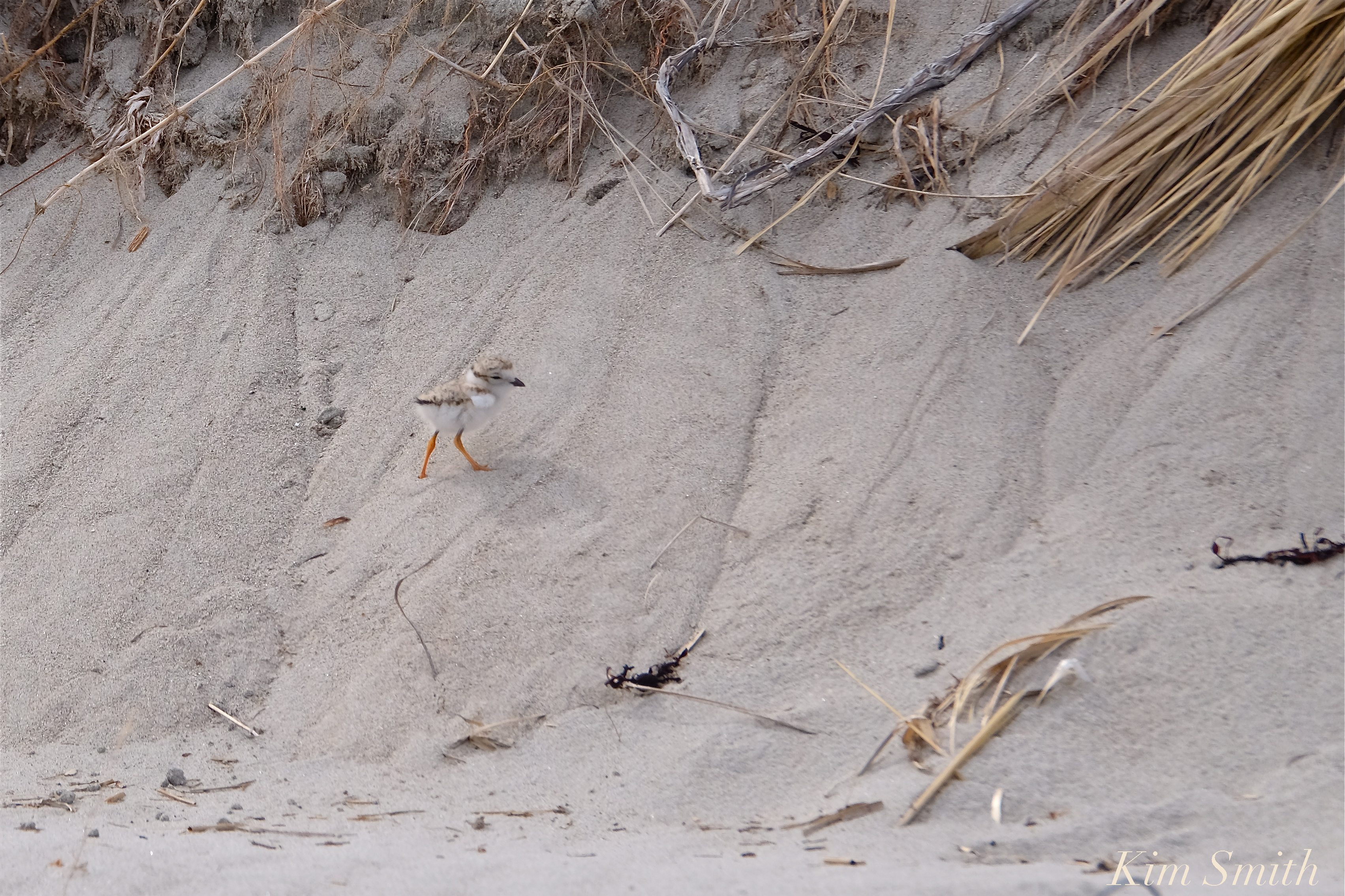
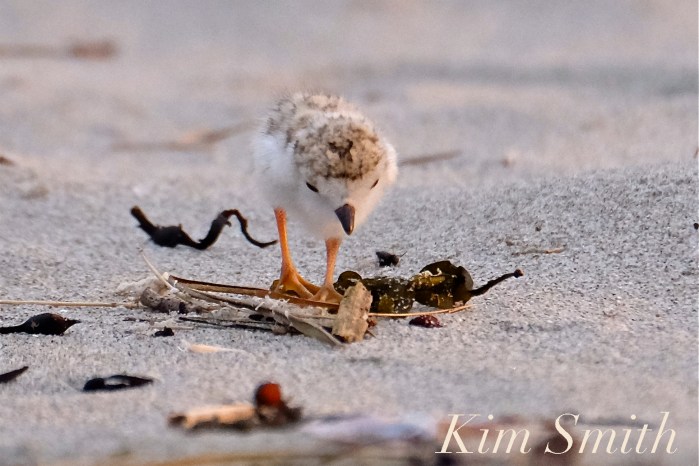
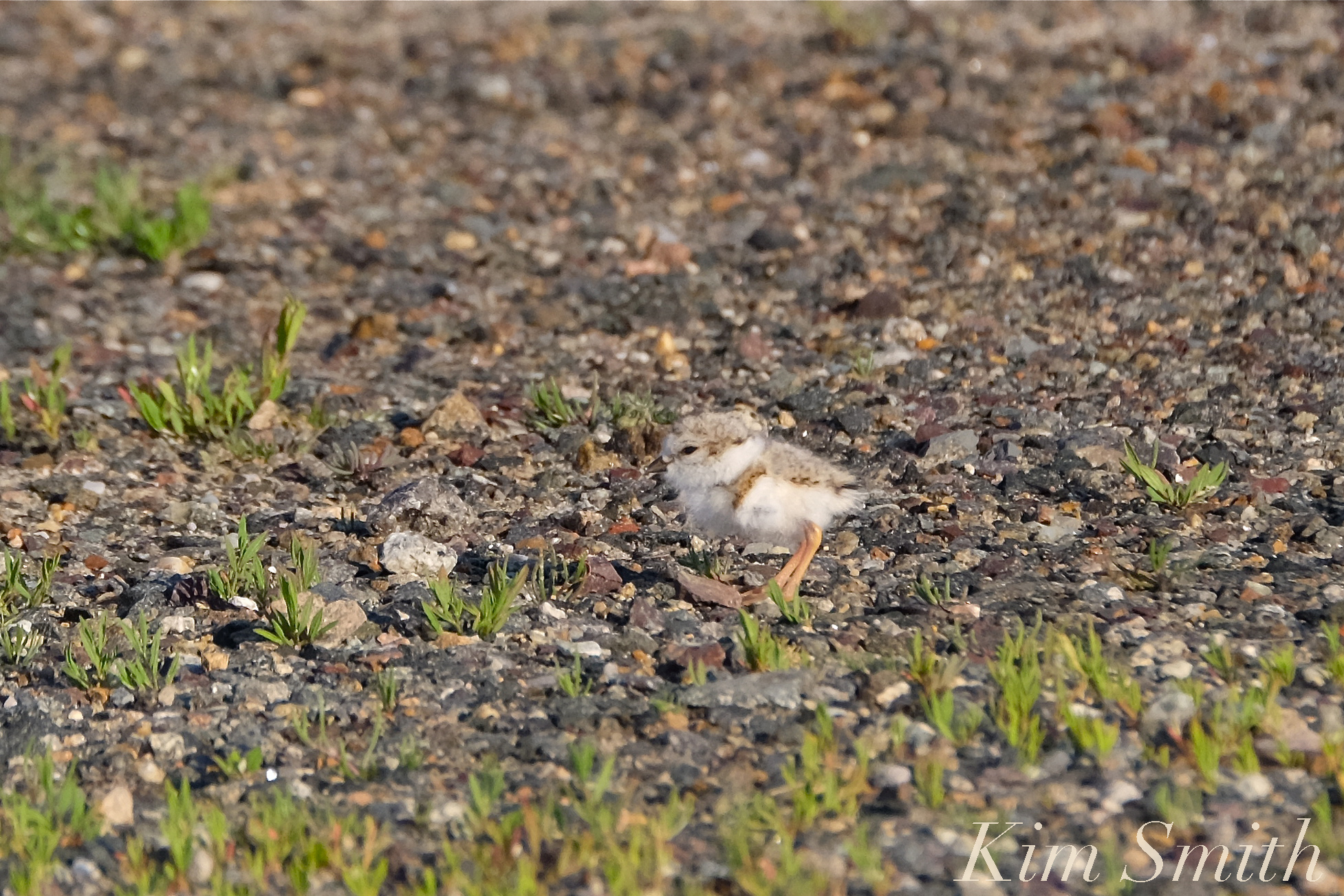
Our one remaining chick, the one volunteer monitor Heather Hall calls Pip, is the smallest of the hatchlings and the one we think hatched last. This afternoon Mom was keeping watchful eye while Pip was foraging between the foot of the dunes and line of folks at the rope’s edge.
Climbing Mount Washington
Mama Plover and Pip
Early this morning when we still had both chicks.
Spread The GMG Love By Sharing With These Buttons:
Check out this fantastic offer from the Schooner Ardelle, just for Dads! Fathers sail free when accompanied by the purchaser of one full priced ticket.Click here for more details.
Late afternoon sail aboard the pinky Schooner Ardelle.
Spread The GMG Love By Sharing With These Buttons:
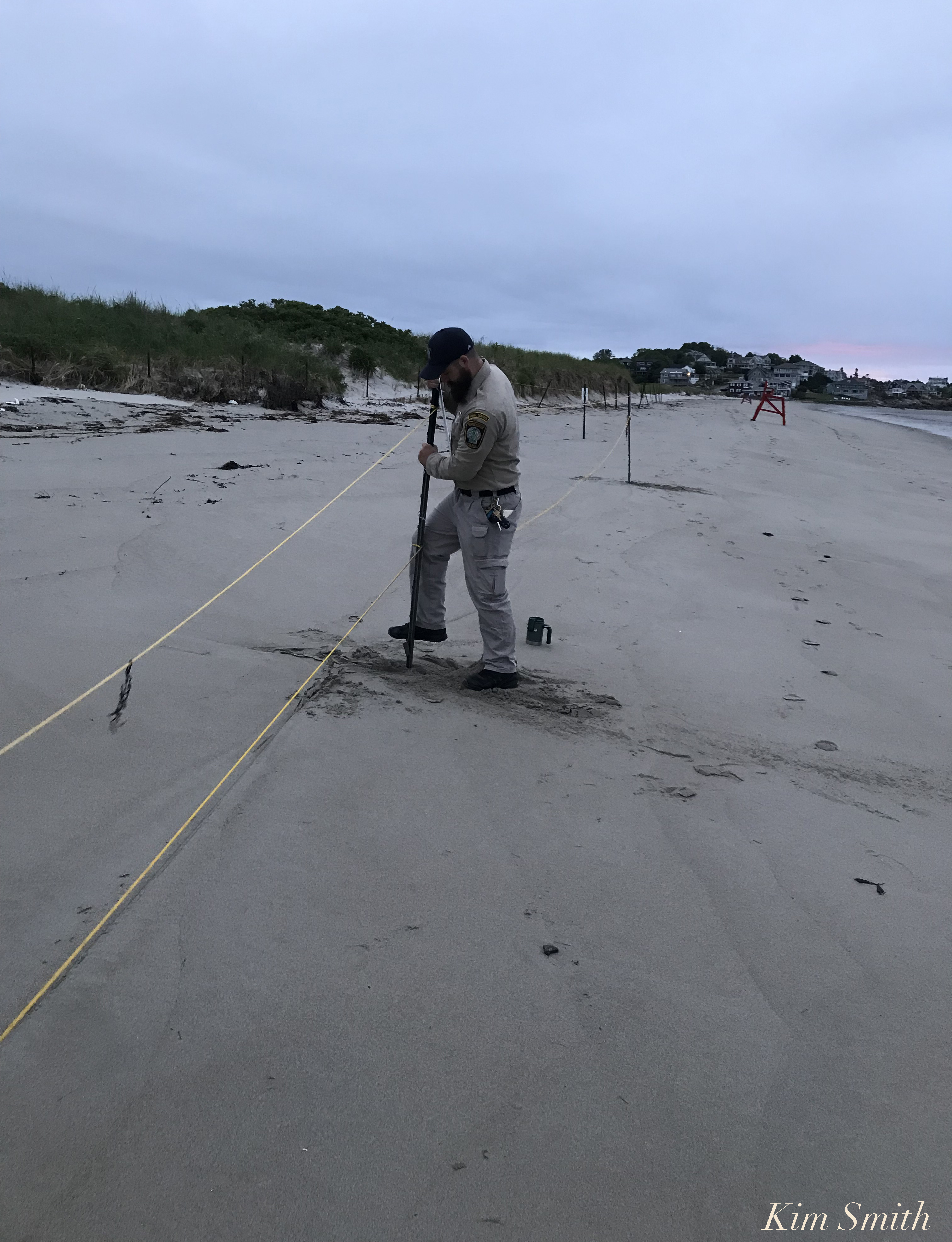
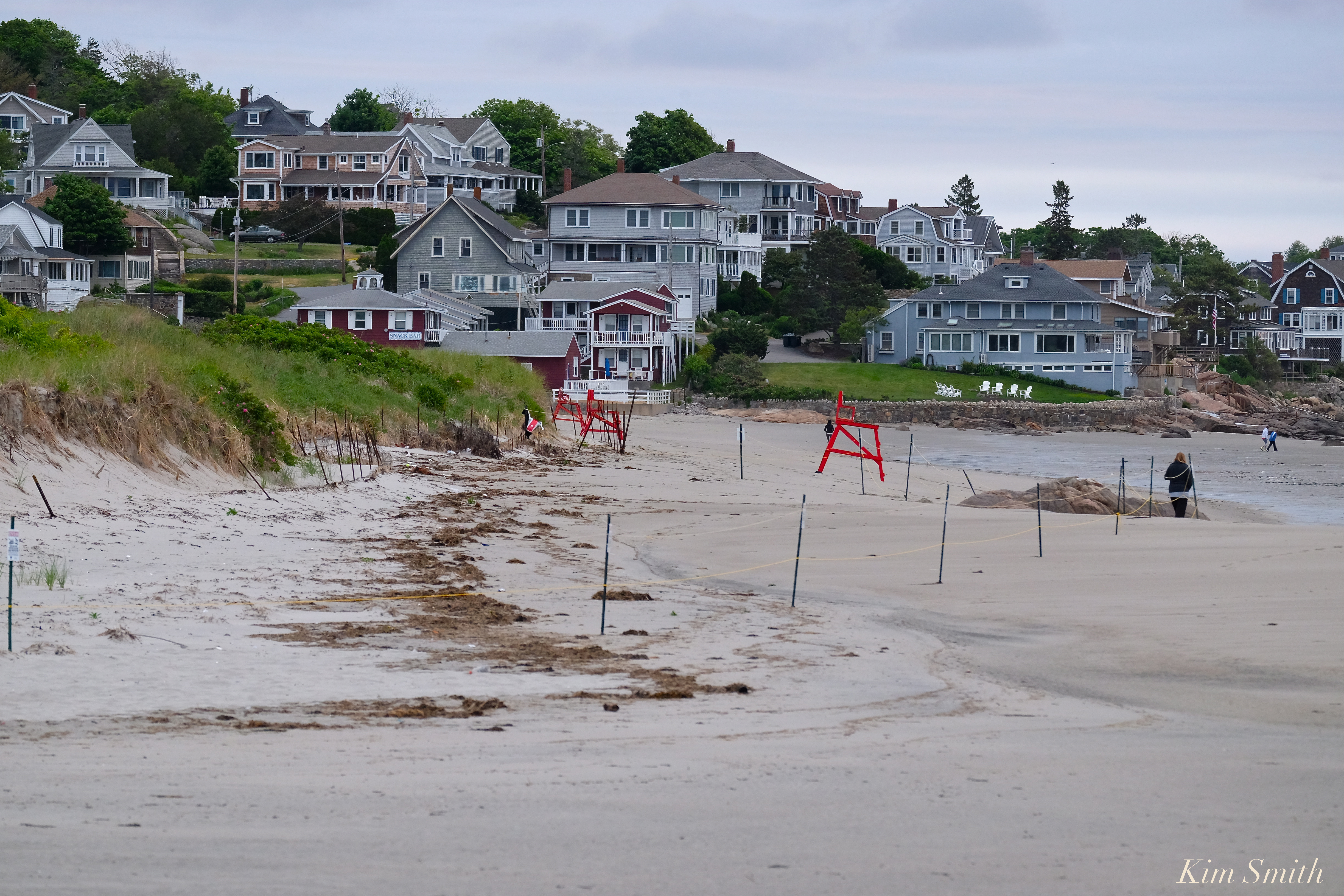
Gloucester’s Animal Control Officers Teagan and Jamie were on the scene at the crack of dawn at 4:30 this morning fixing the posts around the PiPl nesting area and writing tickets. Last night Jamie was on the beach as well. Thank you Jamie, Teagan, and Chief McCarthy for the stepped up patrolling.
The posts needed to be pulled out of the sand because last night we had yet another super high tide, all the way up to the bluff for most of the length of the beach.
I read a comment yesterday that stated falsely that the animal control officers make $80,000.00 a year and sit around and drink coffee all day. I have it on good authority that their combined incomes do not total $80,000.00 a year. Stating misinformation and disparaging the hard working people in our community is creating a false narrative and is hurtful to everyone involved, to the people, the dog owners, and to the shorebirds.
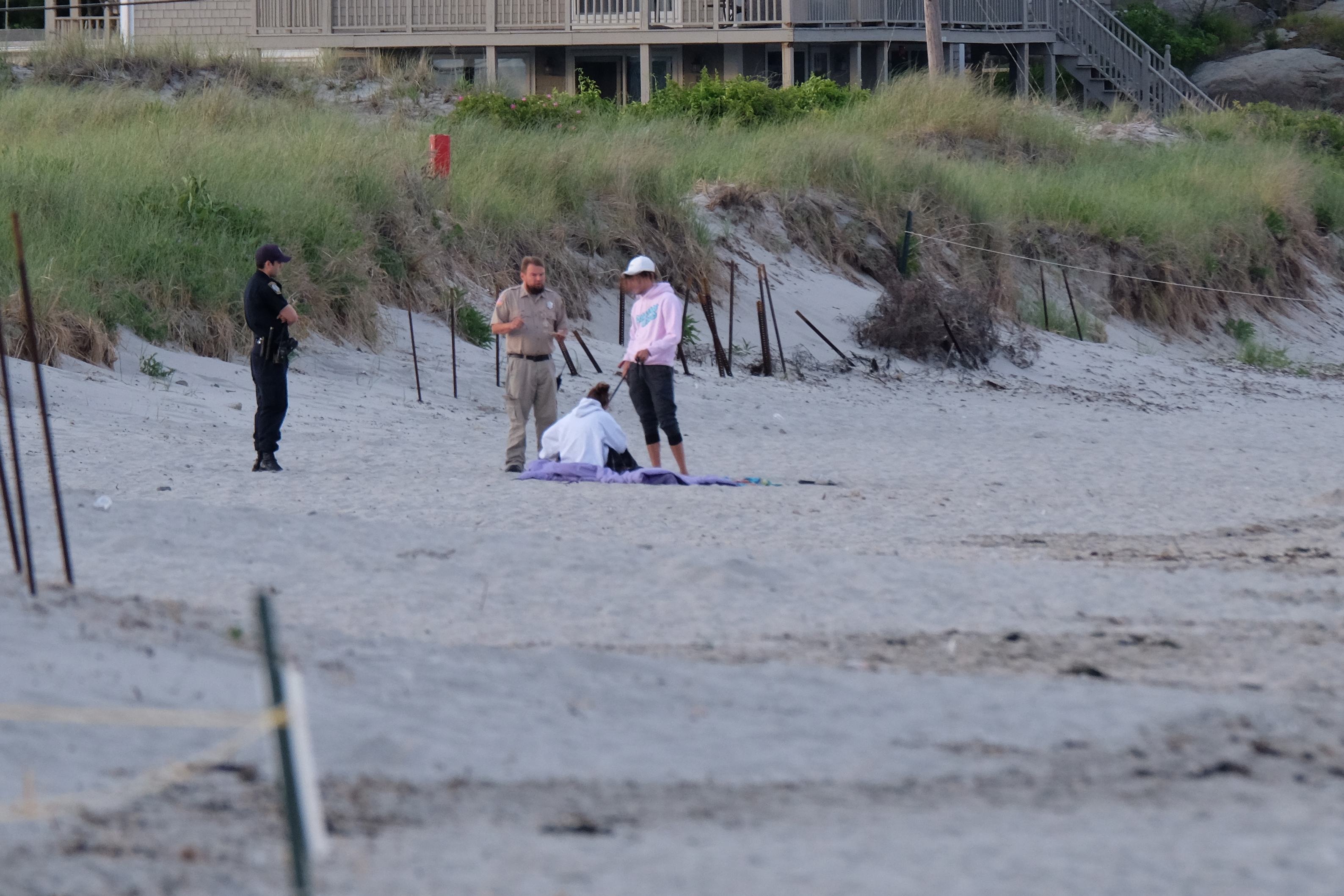
Teagan and Jamie writing tickets at dawn this morning.
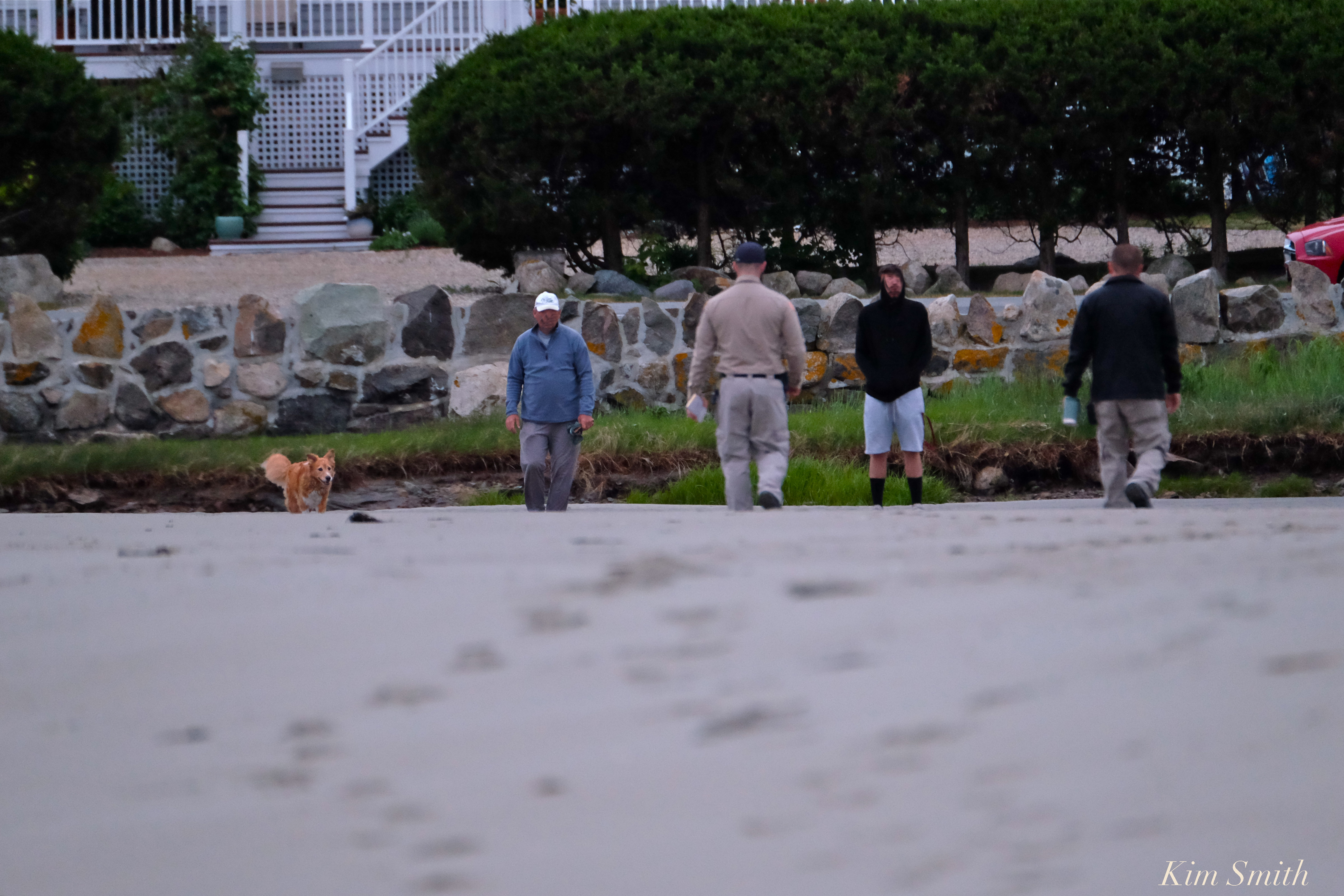
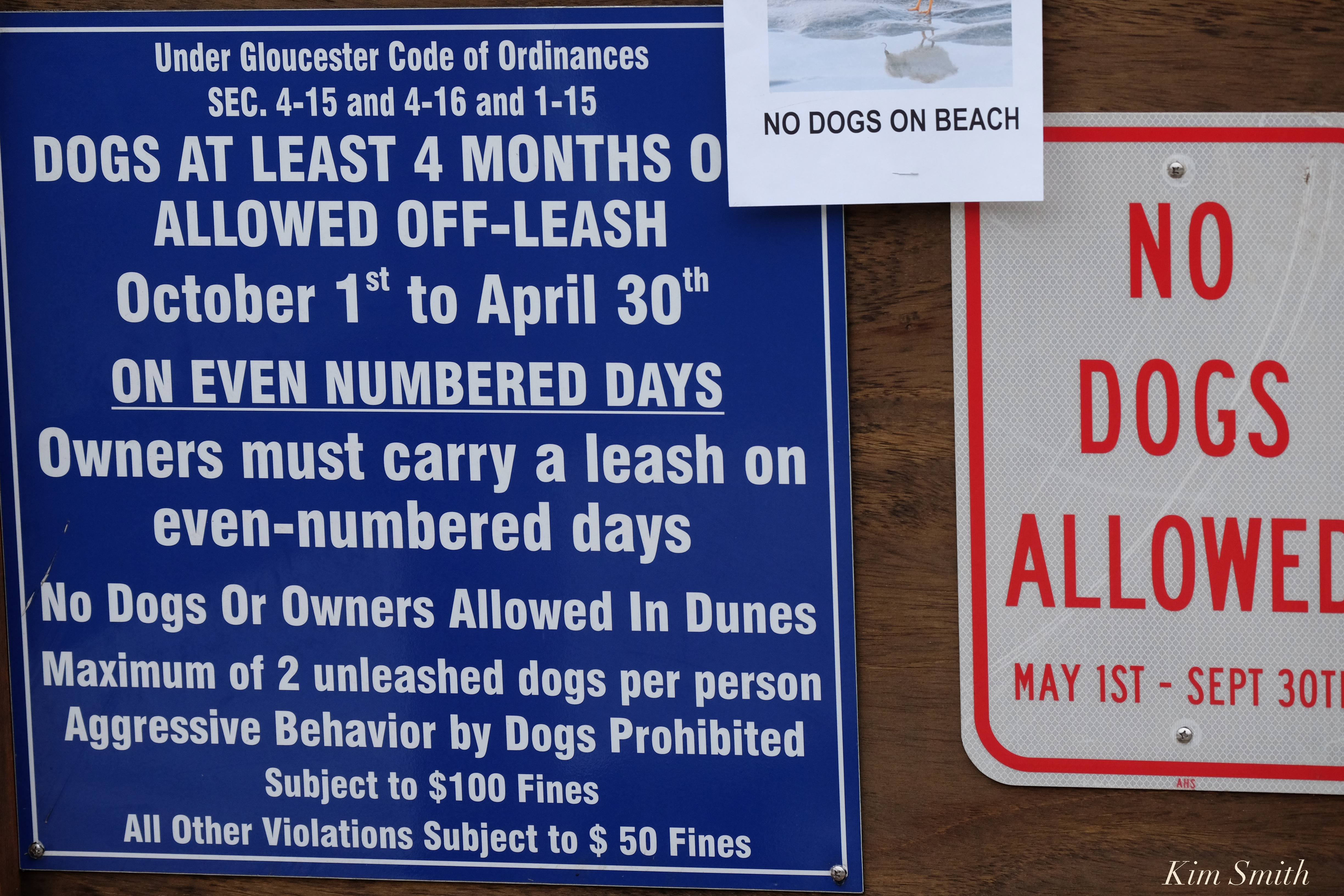
We don’t have as much an enforcement problem as we do an issue with entitlement and ignorance. Ignorance in the sense that scofflaws may be from out of town and may be unable to read, and entitlement in that some people know the rules and know the dangers that dogs pose to the shorebirds, yet choose to do as they please.
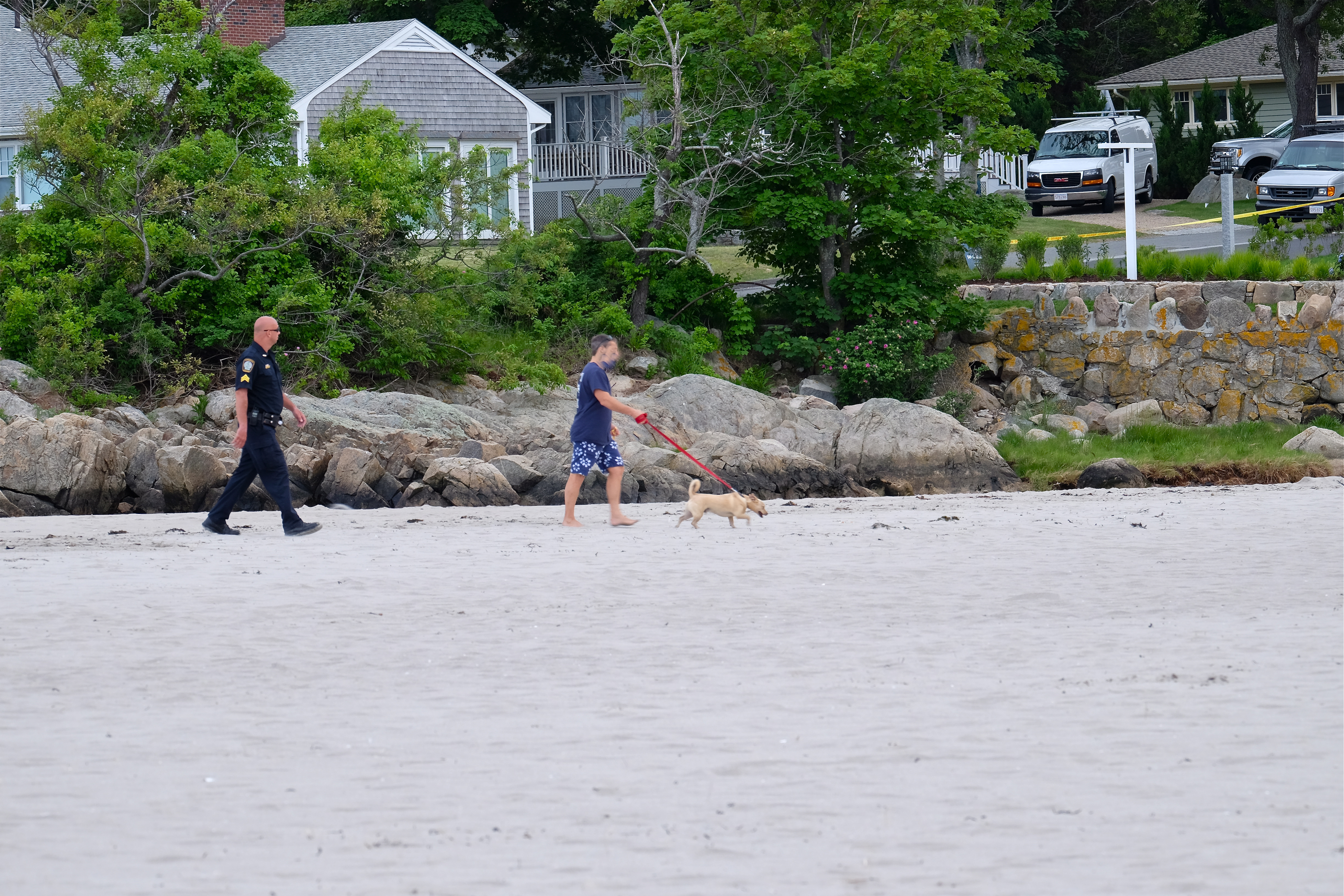
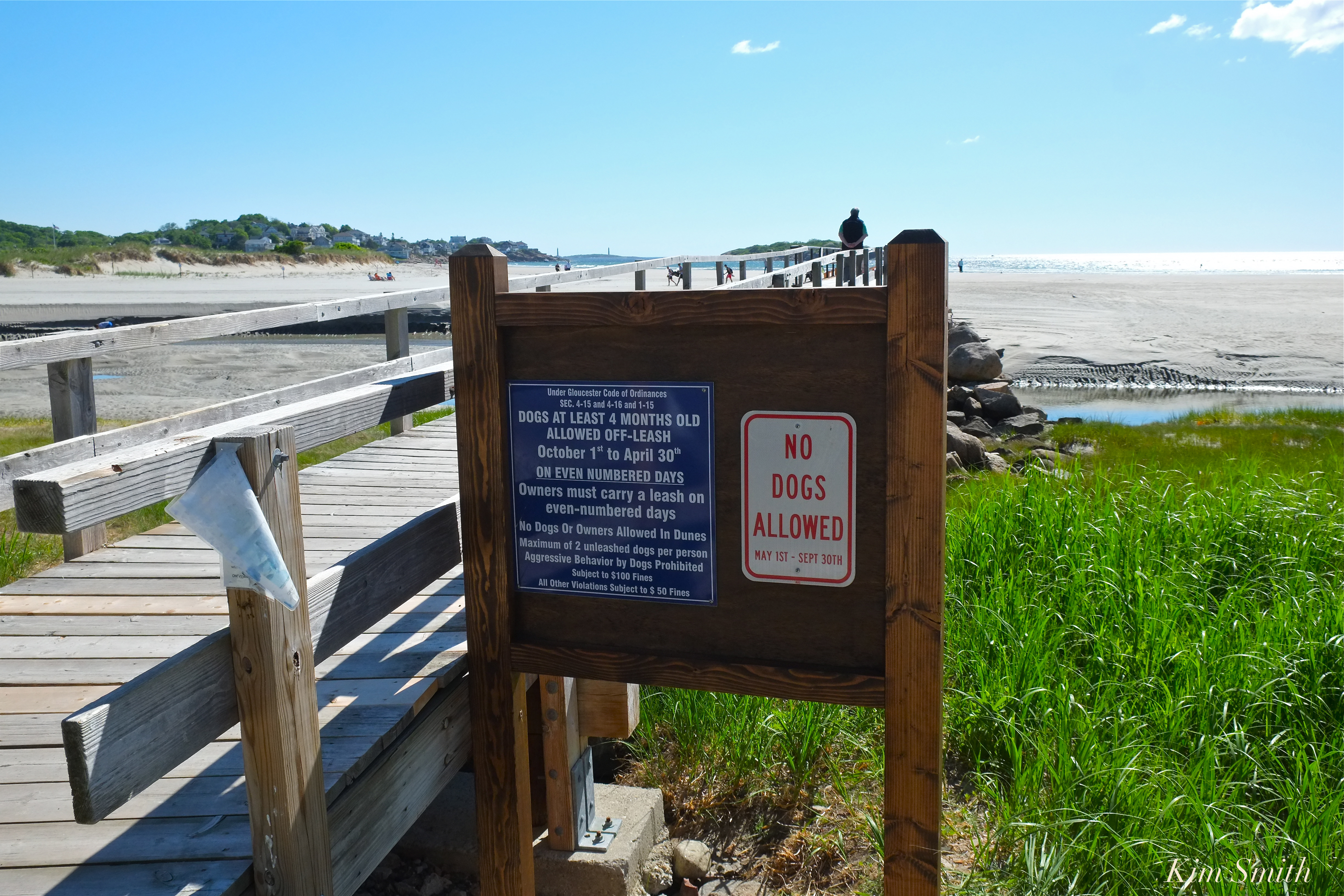
Upon entering Good Harbor Beach this morning, the scofflaws with their dog walked by these three signs.
Walking a dog on a beach is a purely recreational activity. For teeny tiny nesting shorebird chicks, protecting that same beach habitat is a matter of life and death.
If you see a dog at anytime or anywhere on Good Harbor Beach, please call this number: 978-281-9900.
As of late, it appears as though many more people now have the need of a service dog. Having a service dog requires that it be on leash at all times, not jumping on people, and not running through the dunes. Service dogs cannot go in the dunes, or anywhere on the beach that is restricted to humans.
Would the people with service dogs consider taking their dog to any other of Cape Ann’s stunning beaches, rather than to Good Harbor Beach during shorebird nesting season I wonder?
Folks getting ticketed and escorted off the beach.
Truly, the most important action people can take is to volunteer to help watch over the chicks. We have a number of folks posing as helpers but sadly, they are not actually volunteering for shifts. Two monitors on each shift would be ideal, but this year we have fewer volunteers, and don’t even have single person coverage during large chunks of time. Keeping watch over the baby birds will make a difference in whether or not the chicks survive. Anyone can be a volunteer and anyone of us can show you what to do. Finding people to help has been especially difficult on the weekends. Please contact kwhittaker@gloucester-ma.gov if you would like to lend a hand. Thank you so very much
Six-day-old Piping Plover Chick
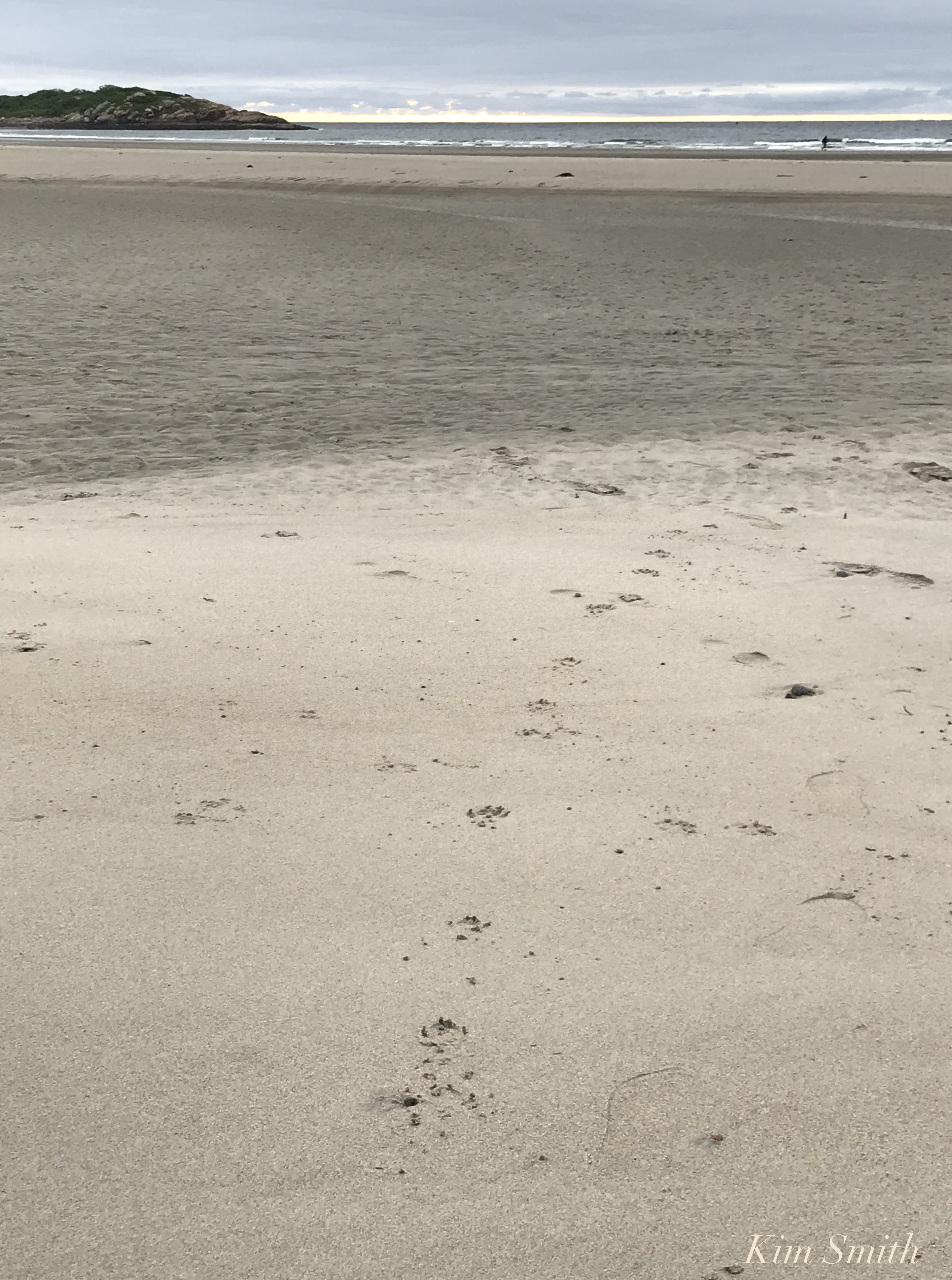
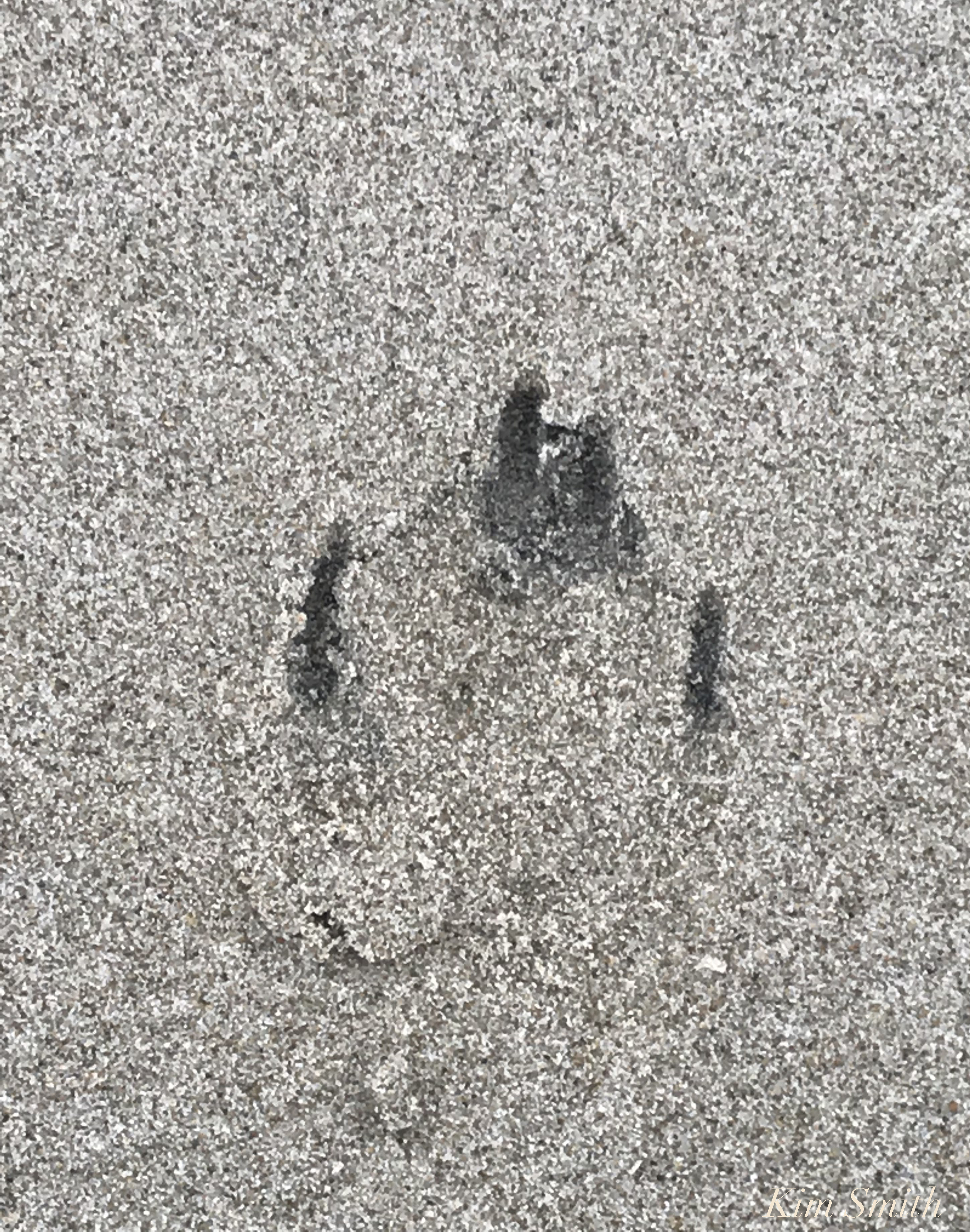
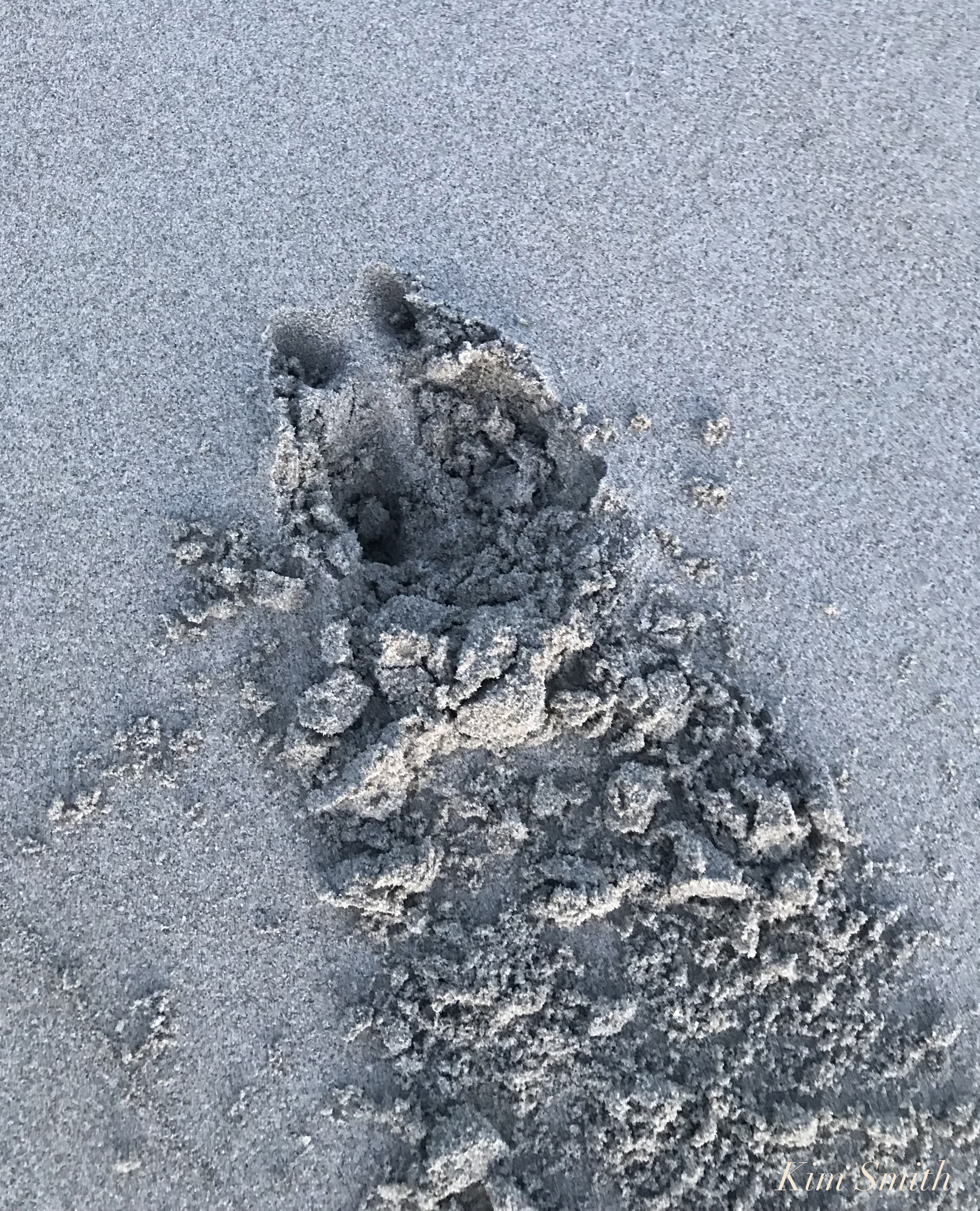
This morning’s dog tracks at Good Harbor Beach – Dog tracks are easy to spot and to differentiate from other canids (fox and coyote). For example, notice the sharp toenail indentation. Coyotes have rounded toe tip prints because they wear their nails down.
Dog tracks Good Harbor Beach
Look what other tracks were spied this week, deer! These too are easy to spot in the sand. The deer’s cloven hoof makes a broken heart shape.White-tailed Deer Tracks Good Harbor Beach
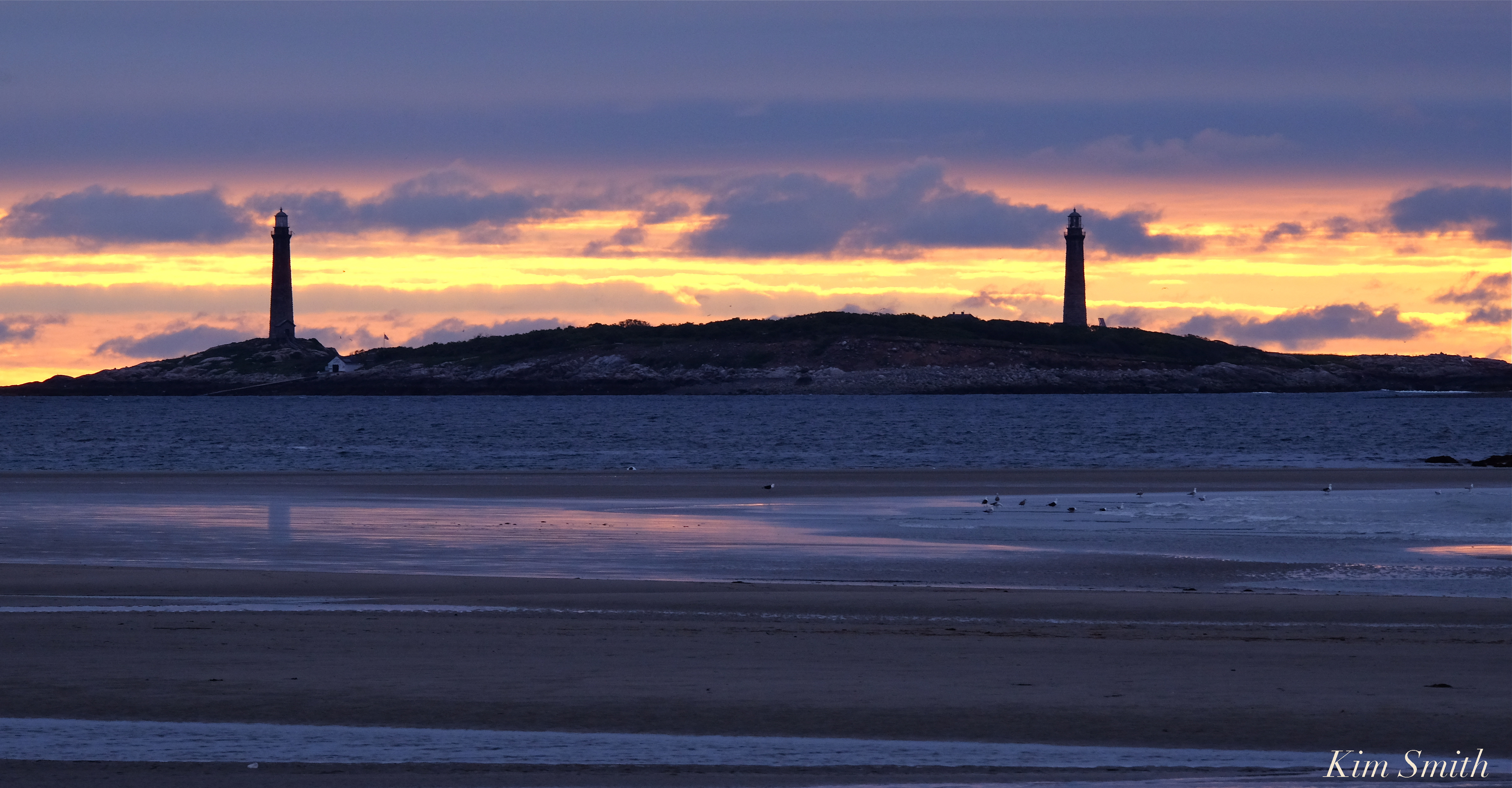
Today’s early morning Good Harbor Beach view of Thacher Island Twin Lights
Spread The GMG Love By Sharing With These Buttons:
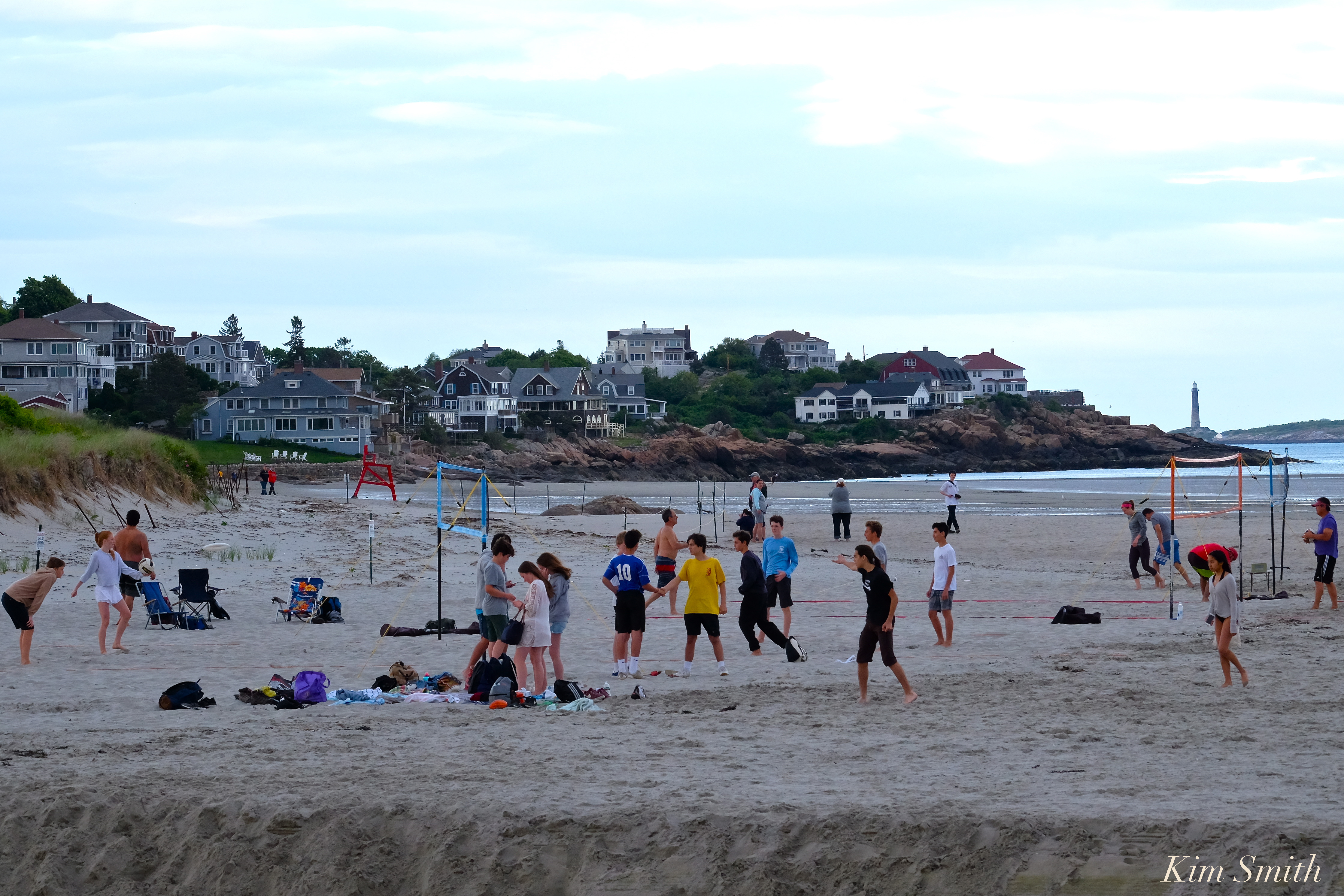
Last night the GHB volleyball players group appeared to be larger than usual yet, despite that, there wasn’t an ounce of trash left on the beach. Typically what happens after a large group gathering on the beach is that the gulls descend en masse, eating and dragging all over the beach the food and garbage that is left behind. It becomes particularly difficult for the PiPl parents to keep the chicks safe from the hovering and deadly dangerous gulls and crows. Keeping the beach clean helps tremendously in keeping the gulls away.Thank you!
Spread The GMG Love By Sharing With These Buttons:
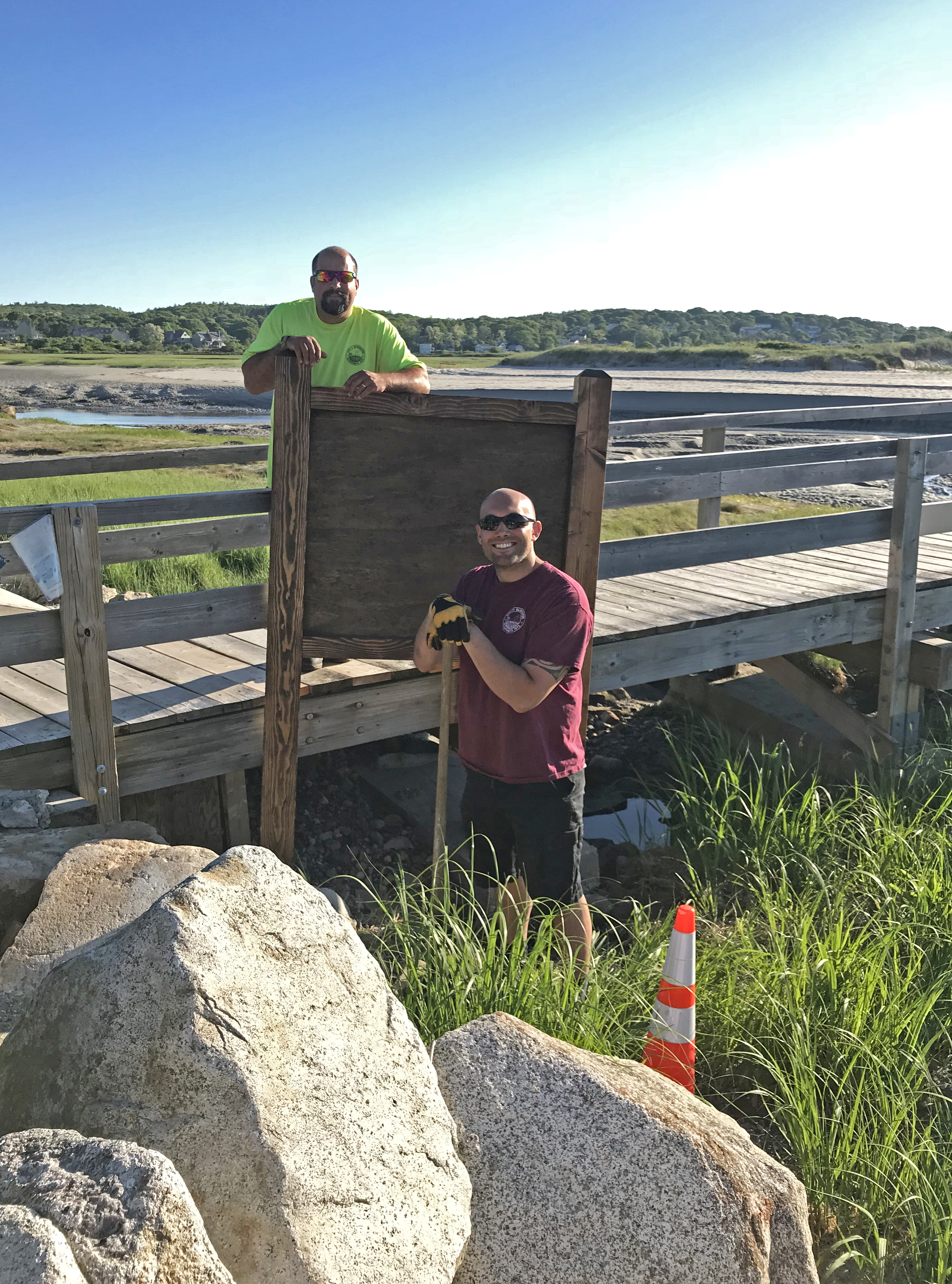
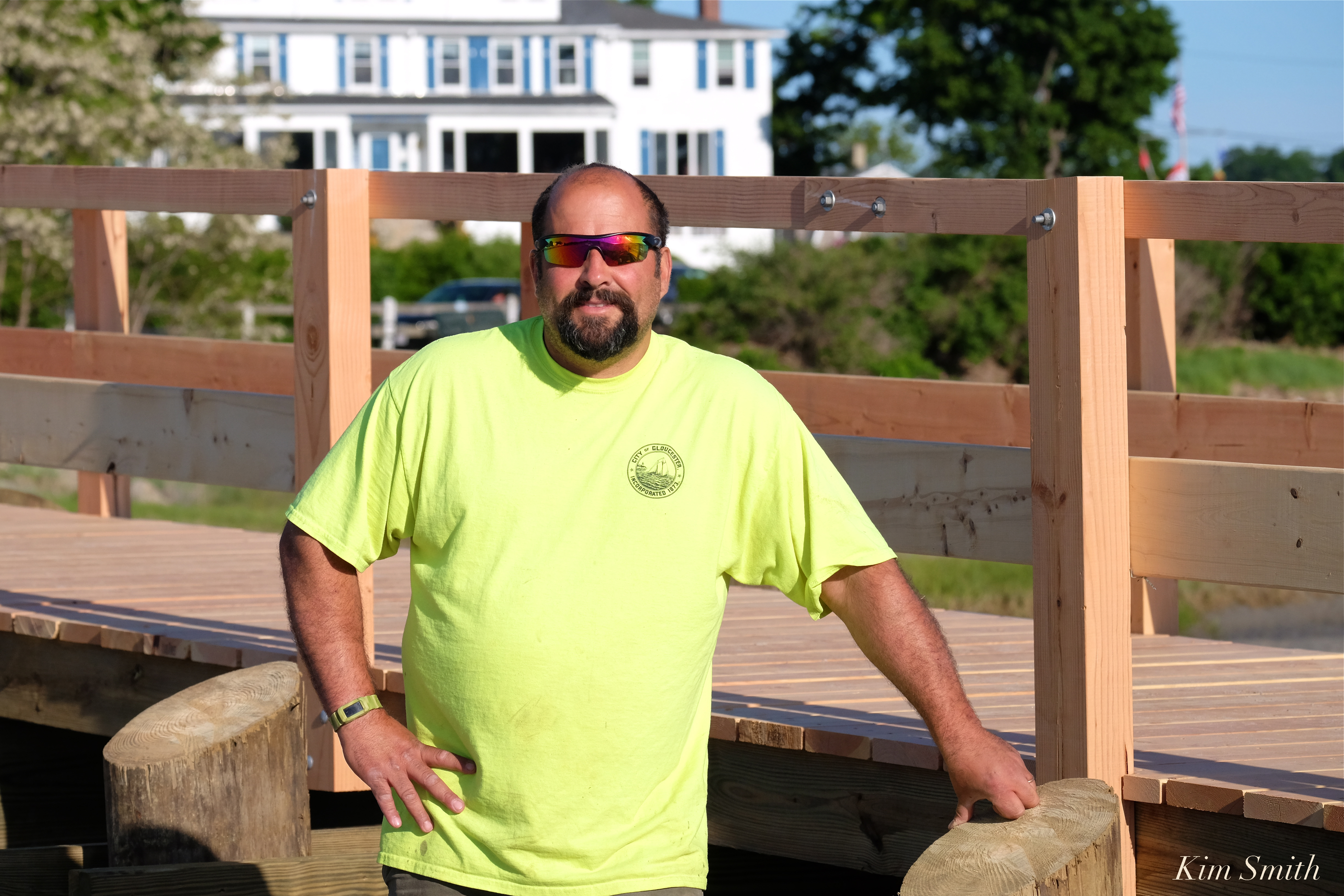
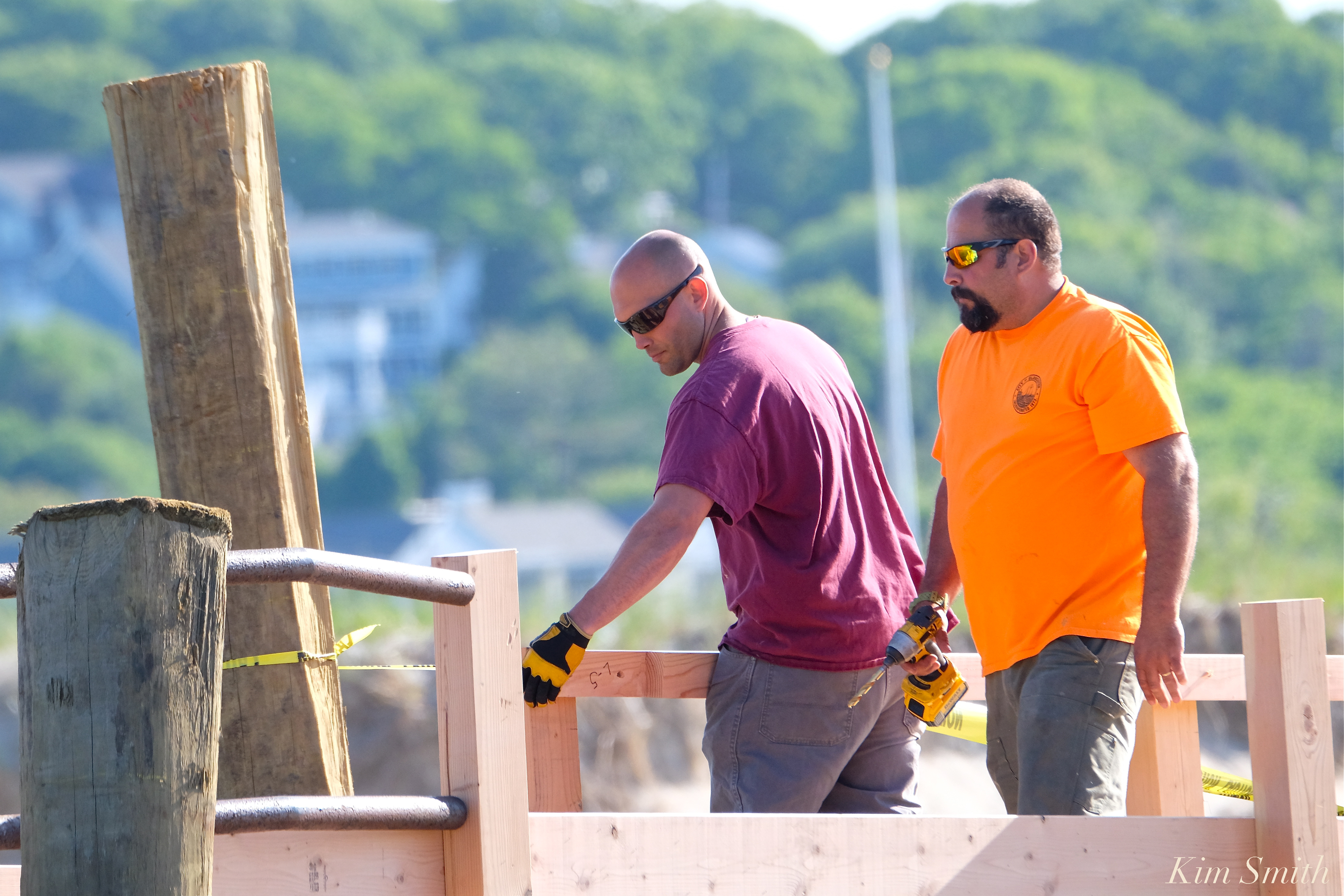
Phil Cucuru and Mike Tarantino installing the sign board.
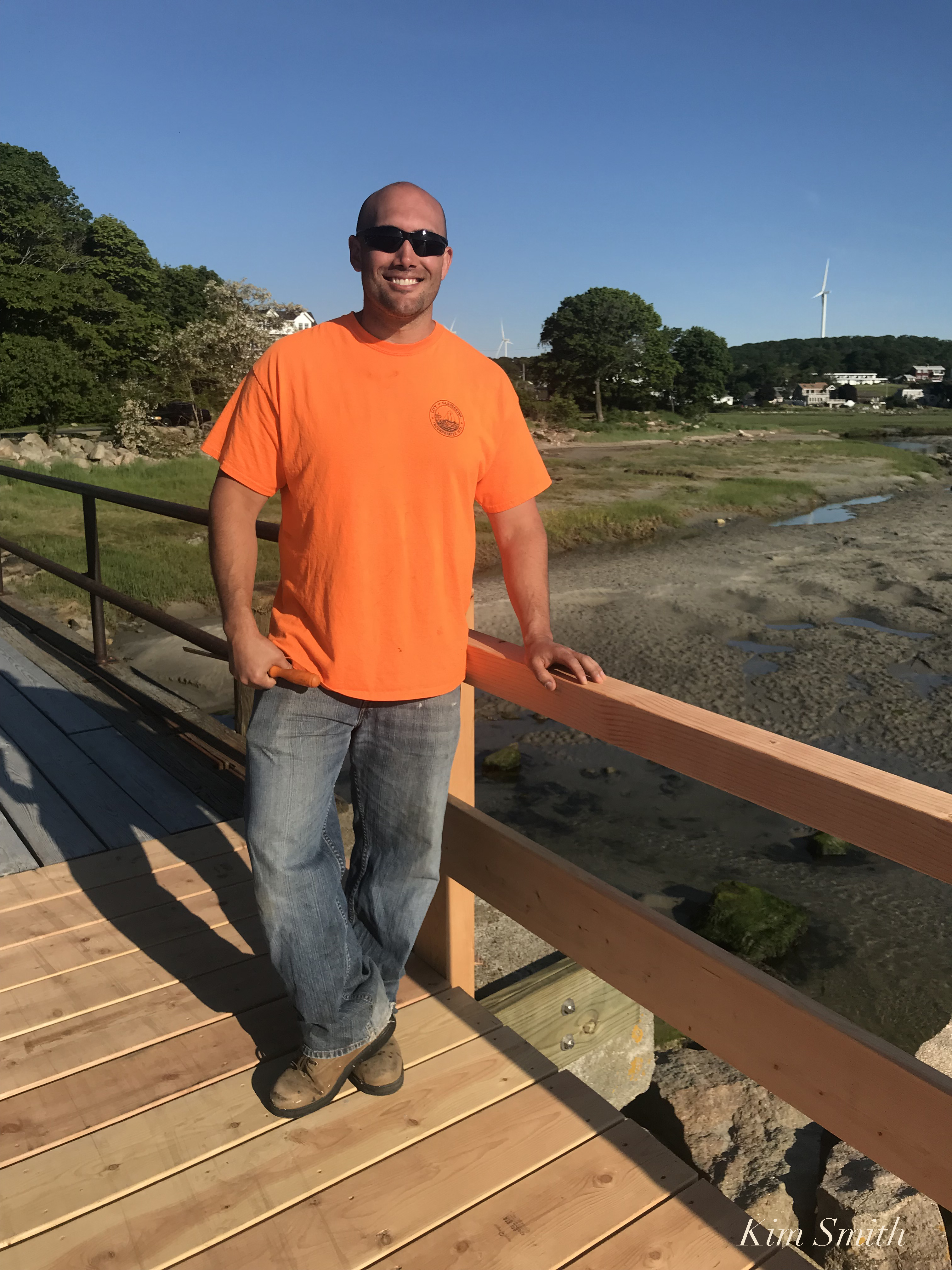
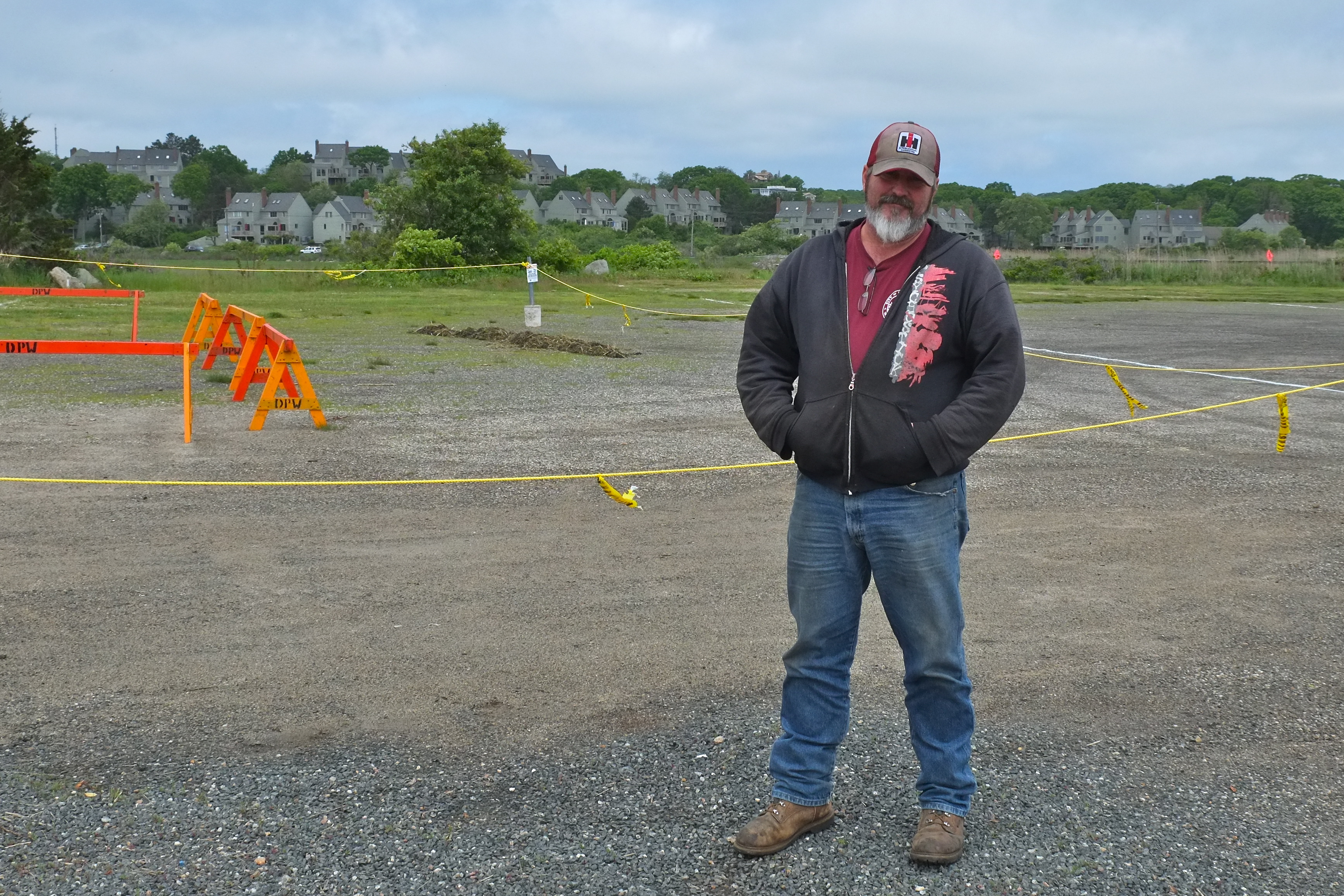
Thank you again to the Gloucester DPW, and again to Phil Cucuru and Mike Tarantino. The repaired footbridge looks beautiful and the signage placement is very noticeable. We are grateful to Phil, Mike, Joe Lucido, Tommy Nolan, Kenny Ryan, Newt, Cindy, and the entire DPW and Good Harbor Beach crew for their outstanding effort in helping our PiPl family, since when they first arrived, way back on April 3rd. Their assistance, interest, and kindness is making a difference. Thank you ❤That’s City Councilman Scott Memhard walking the footbridge to check on the PiPl. So sorry to Scott for not getting a better photo.
Spread The GMG Love By Sharing With These Buttons:
We’re so very sorry to write that two chicks were killed today. Catherine Ryan witnessed a terrible scene with a large dog tearing around in the nesting area at dawn, and a volunteer monitor observed one taken by a gull.All that’s left of our little GHB Pipl Family – Mama (left), Papa (right) and our two remaining chicks.
Please volunteer to be a PiPl monitor. You will truly be making a difference in whether or not our PiPl chicks survive. And you’ll meet the nicest bunch of people. Anyone of us can show you what to do. The shifts can be as long as you like, but an hour is all we are asking. The weather forecast looks gorgeous this weekend, and it is Father’s Day on Sunday, so we are hoping to have two on at each shift. Contact kwhittaker@gloucester-ma.gov.
Please share this post and help spread the word that we need volunteers. Thank you ❤
Spread The GMG Love By Sharing With These Buttons:
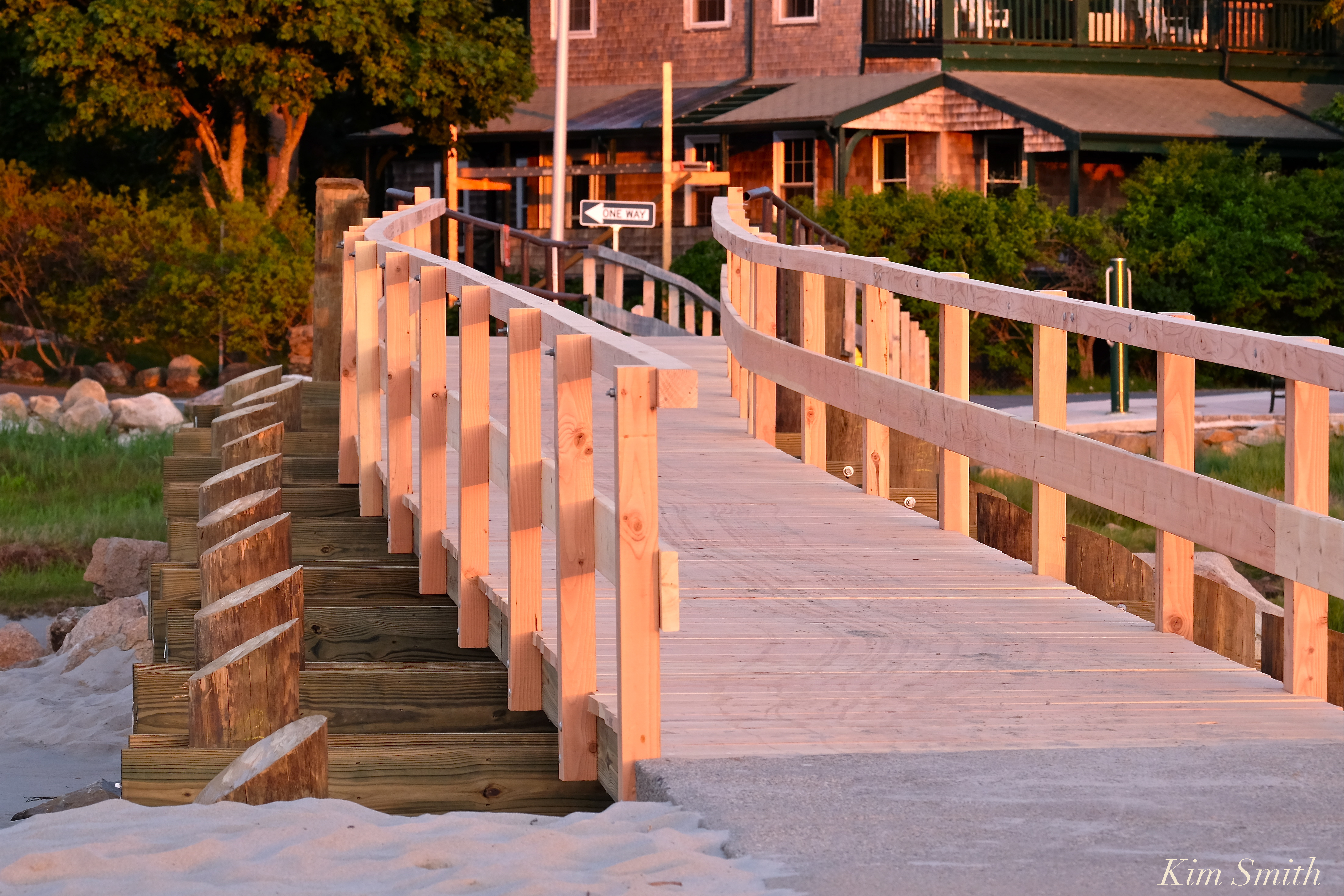
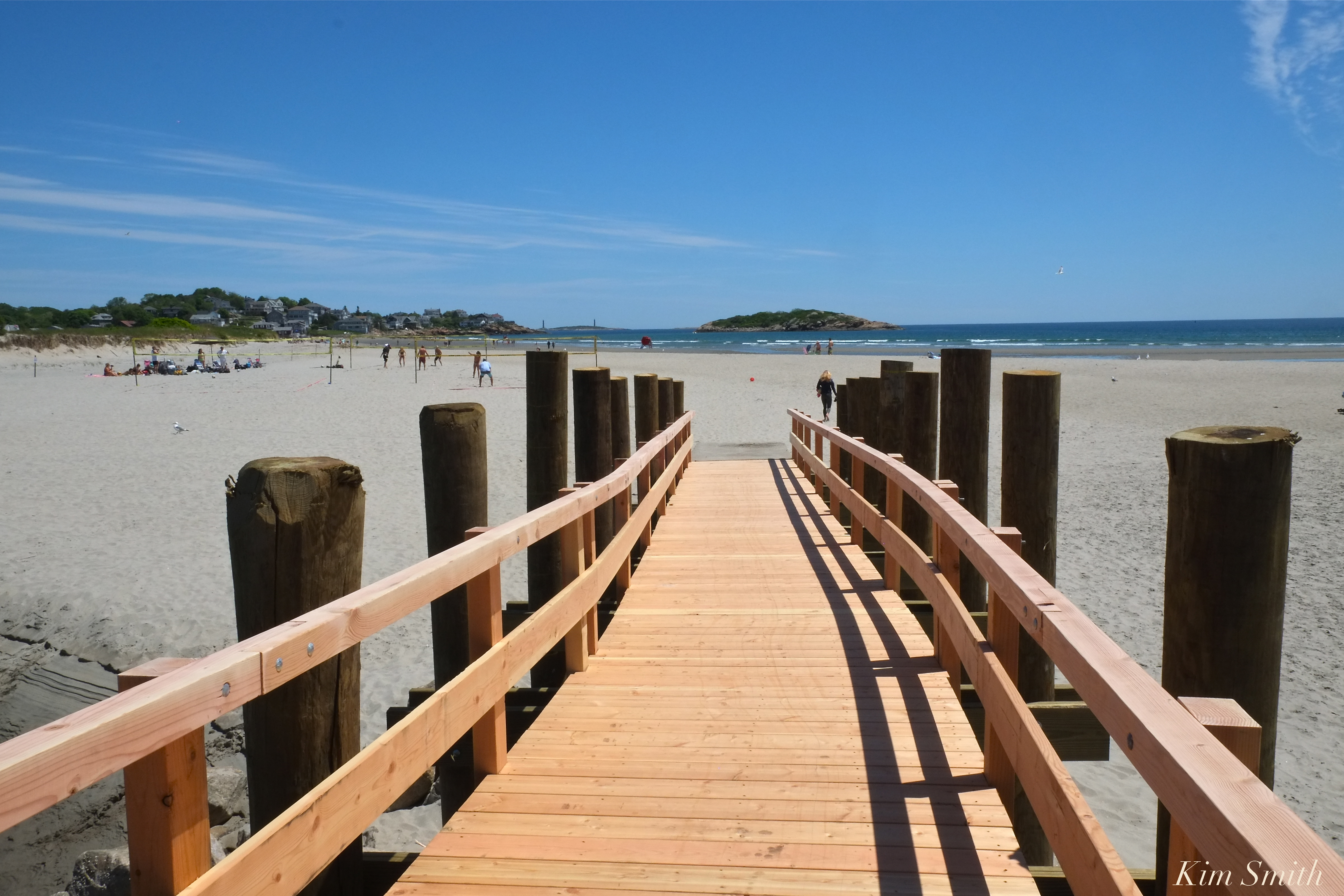
THE NEW FOOTBRIDGE LOOKS ABSOLUTELY FANTASTIC! Phil and Mike have been doing the finish work the past few days and a deep layer of sand was added to the beach end for safety sake. I think it looks super sharp with the diagonal cuts across the pilings.
It’s been a really tough spring for the DPW after the extensive damage caused by back to back nor’easters, but getting the bridge completed before the summer crowds was made a priority. Thanks so much to Phil and Mike for working though the weekend. If you see these guys around town, please tell them how great the footbridge looks!
Mike Tarantino
Spread The GMG Love By Sharing With These Buttons:
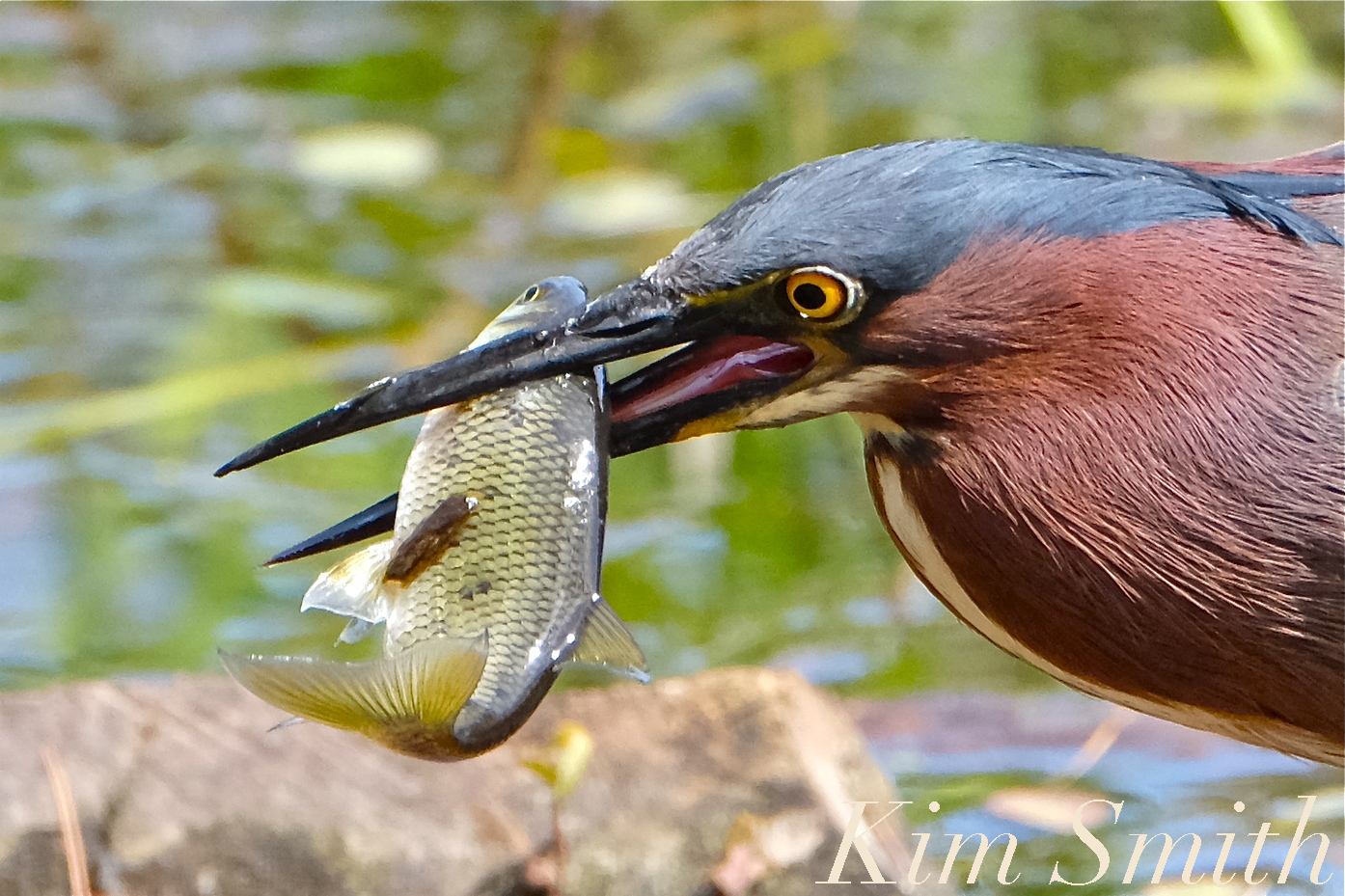
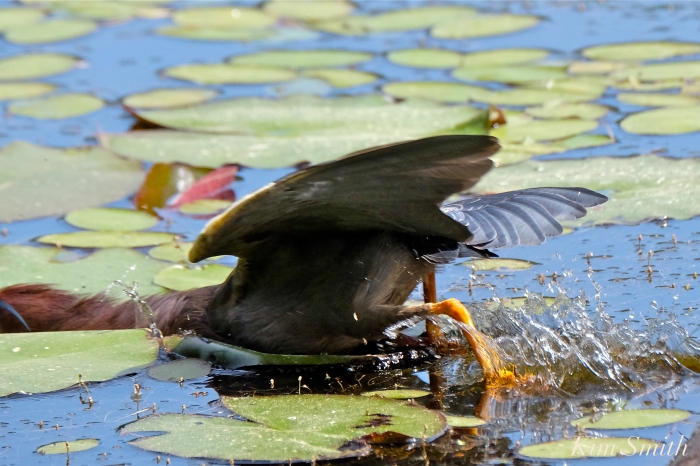
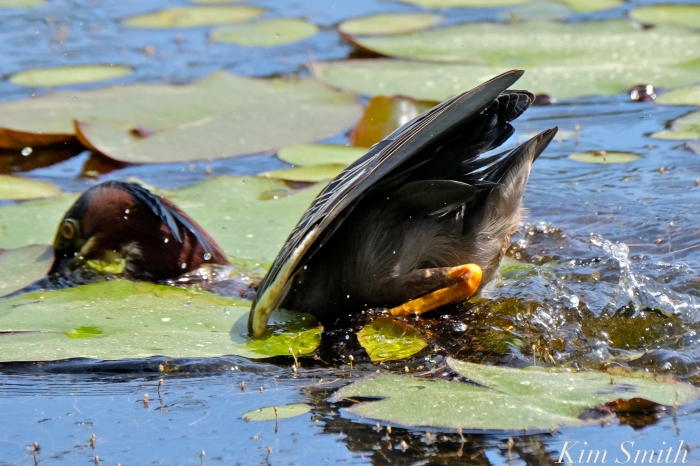
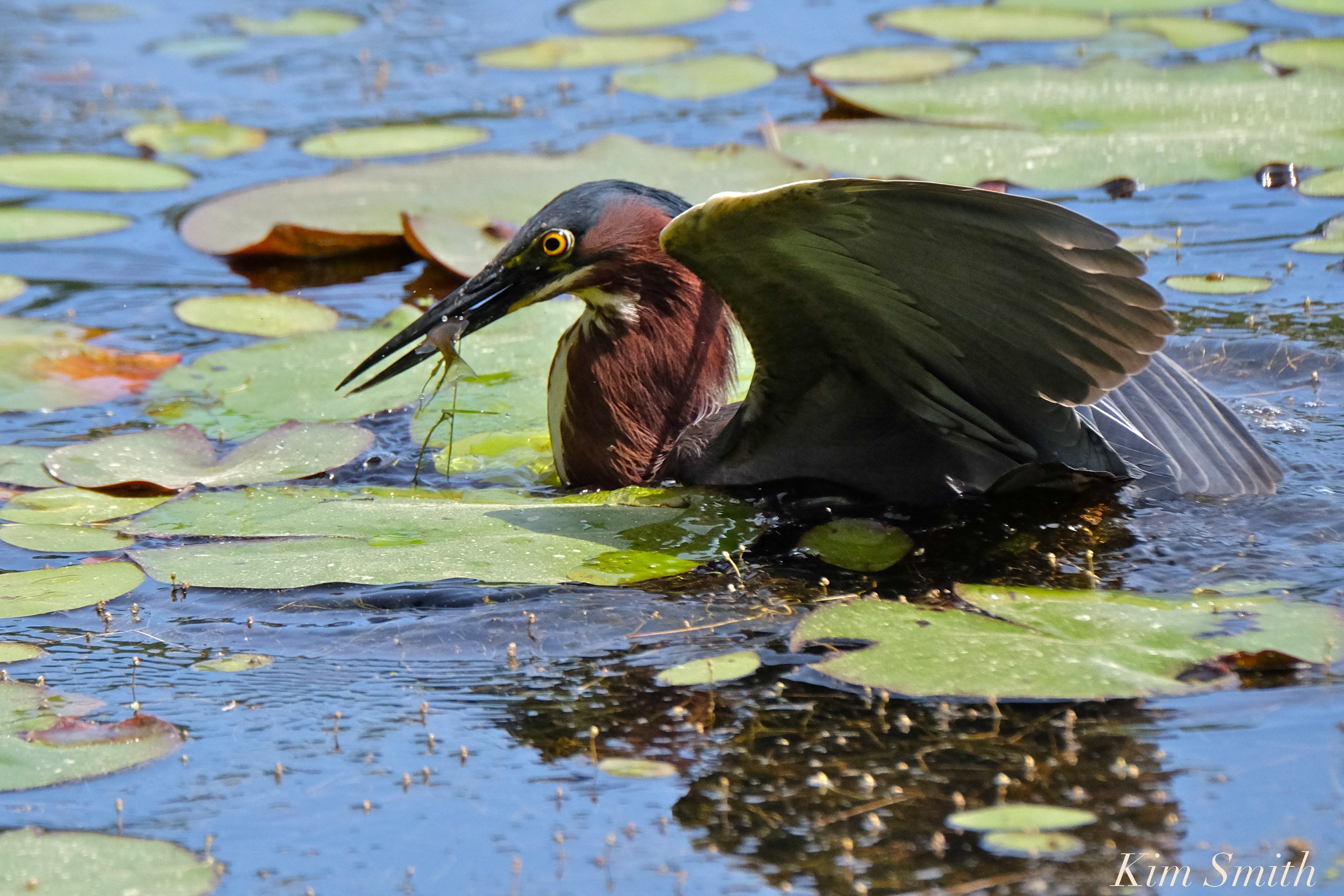
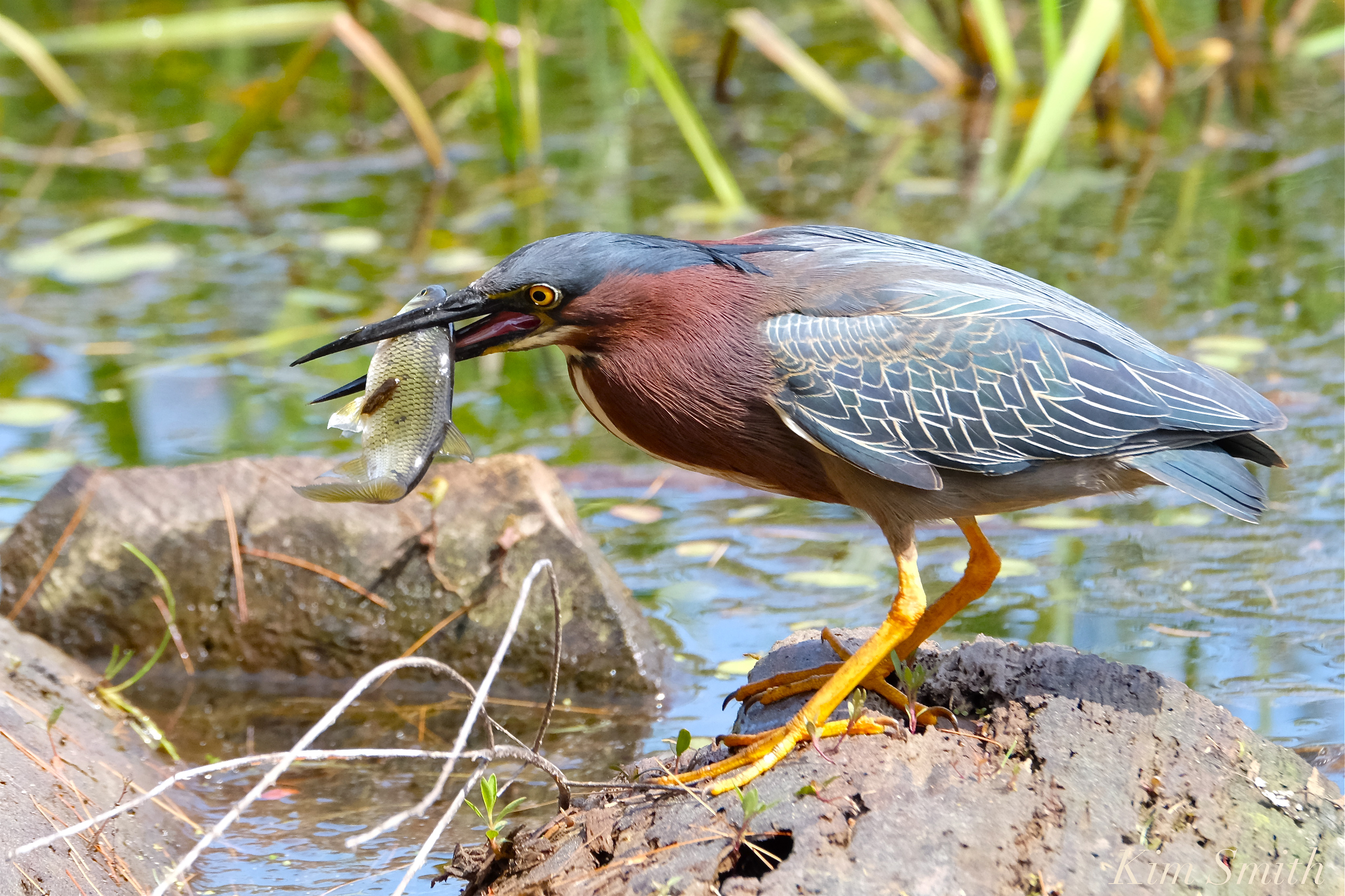
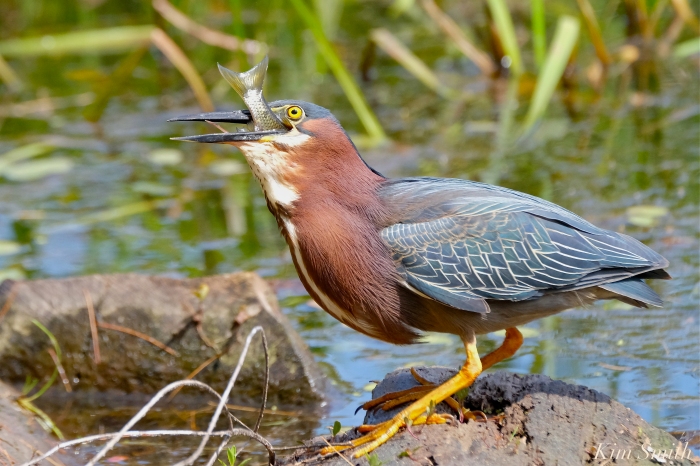
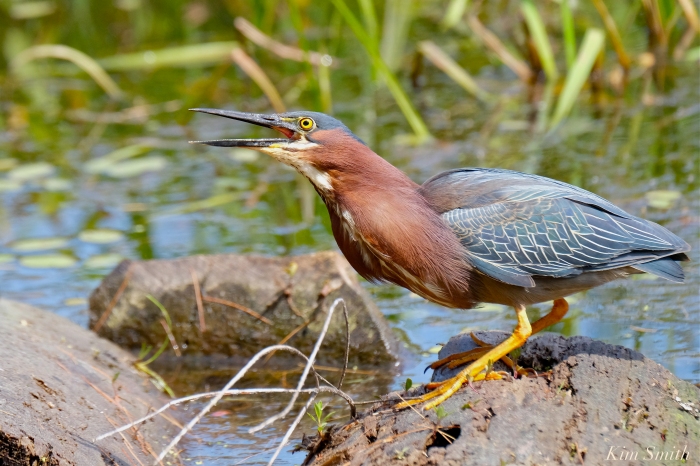
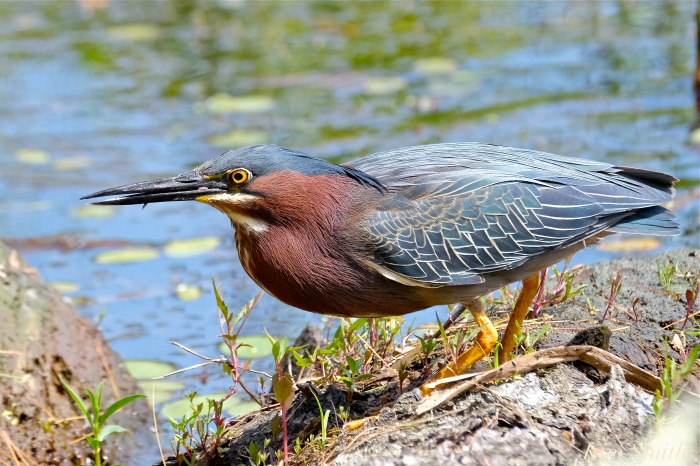
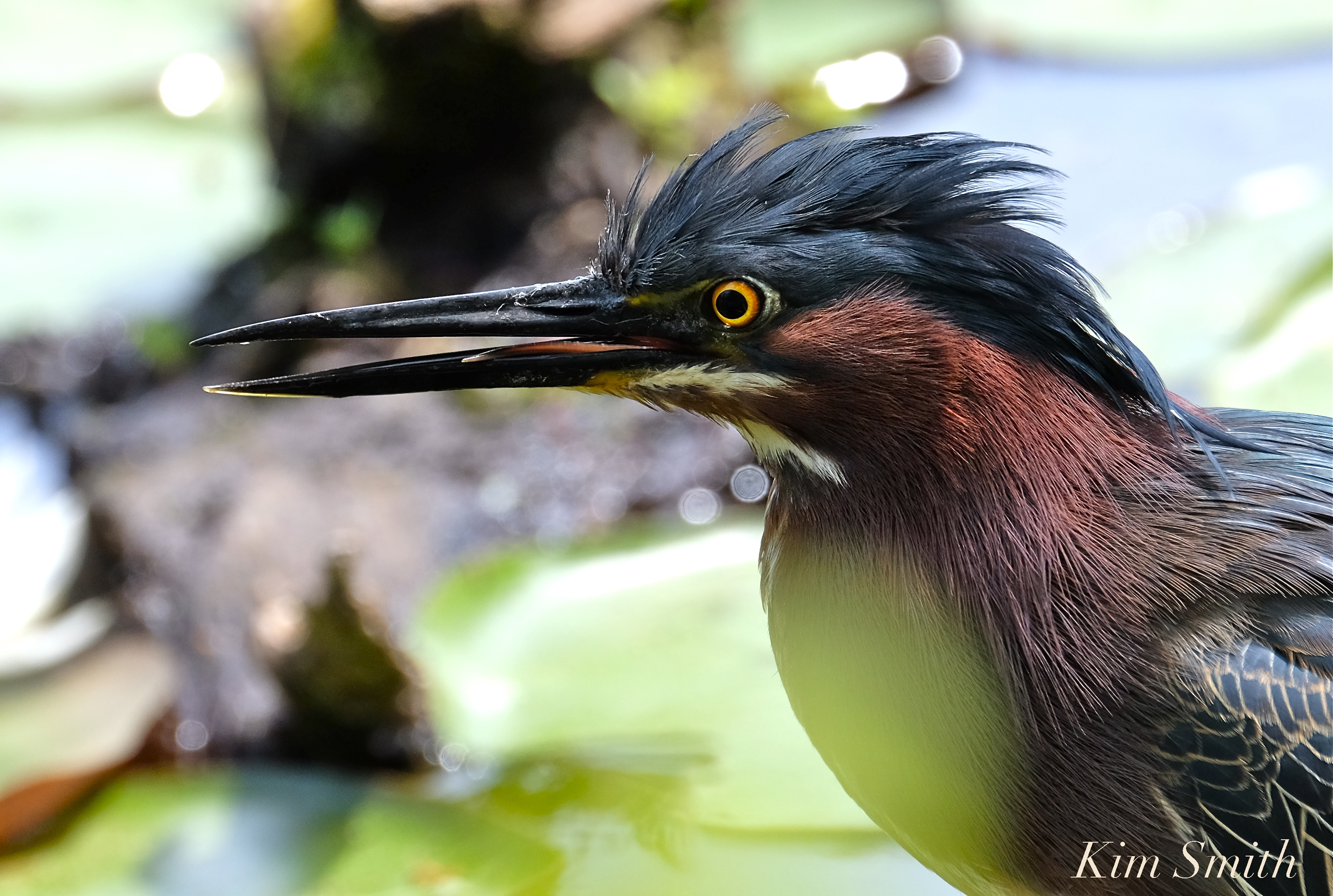
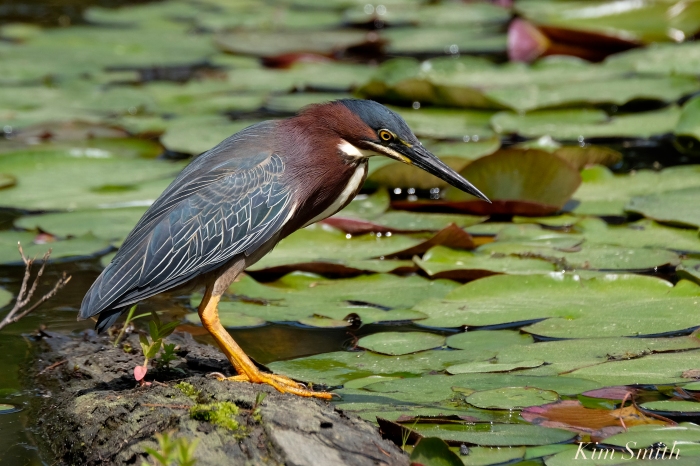
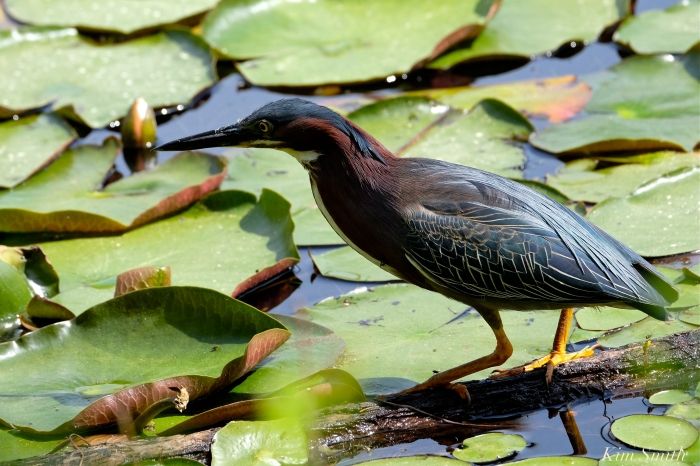
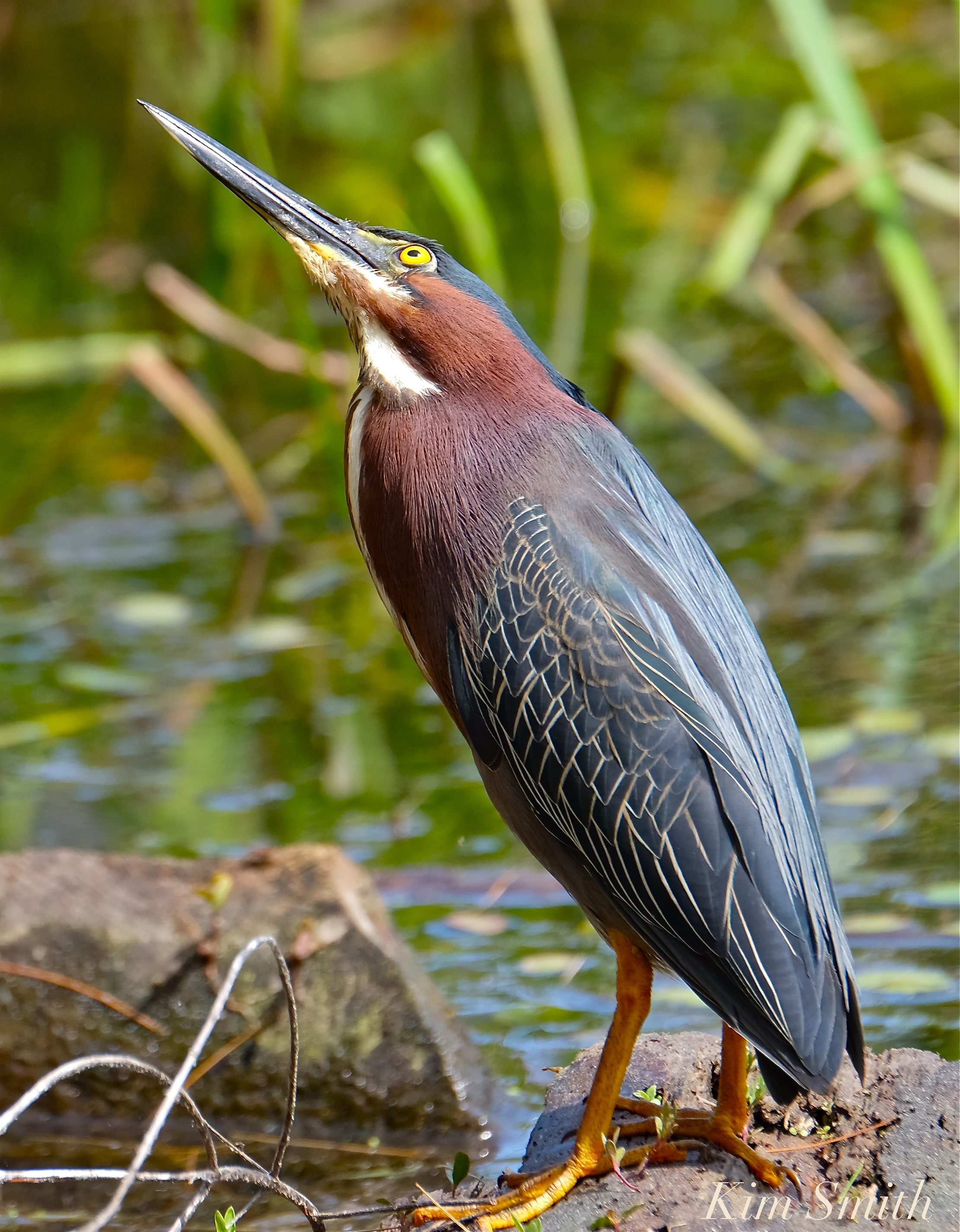
You never know what gift of beauty you will encounter in the “wild woods” of Cape Ann. I never leave home without my cameras and today was a perfect example why. Traveling the scenic way between jobs, I passed a stunning little Green Heron whose rich teal and maroon colored feathers were shimmering in the mid morning sun. I had to pull over, thinking I would at best take a few snapshots because in previous encounters, Green Herons usually fly away quickly. The bird tolerated me for some time as I watched him do a slow, stealthy dance around the pond’s edge, catching small minnows as he went. Imagine how delightful to then see him catch a fish as large as his dagger-like bill!!
The Plunge!
Green Herons eat a wide variety of fish and small creatures including minnows, sunfish, catfish, pickerel, carp, perch, gobies, shad, silverside, eels, goldfish, insects, spiders, crustaceans, snails, amphibians, reptiles, and rodents.
One large fish devoured in one large gulp!
The Green Heron is found throughout the US but is a species in decline in most regions, except California, where the bird appears to be increasing. Green Herons breed in Massachusetts coastal and inland wetlands.
Spread The GMG Love By Sharing With These Buttons:
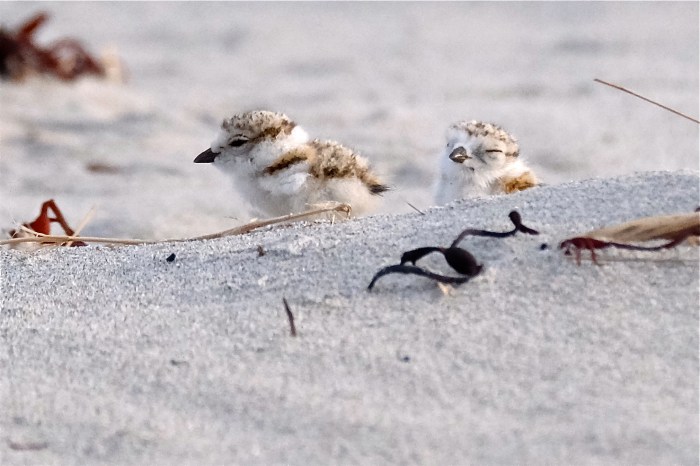
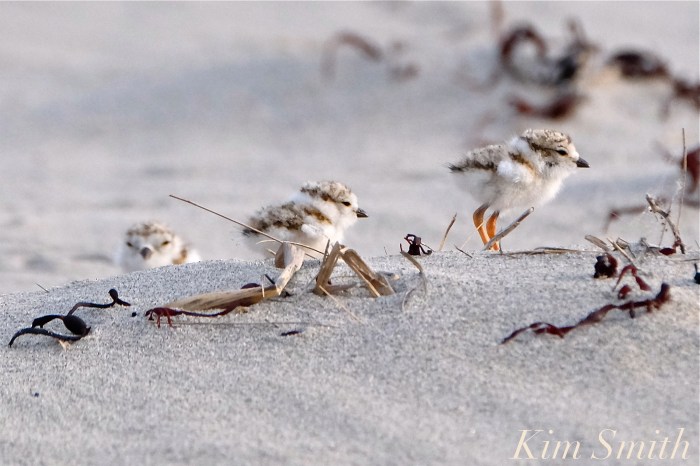
Our little family is settling in, most importantly, finding lots of tiny insects in the wrack area. Cars weren’t the only threat in nesting at the parking lot, there simply did not seem to be sufficient food in the gravel and hard pack. Today, the chicks spent the early morning snuggling often under Mama and Papa; the temperature was chilly and the wind had picked up. Once the sun was shining brightly, they made their way to the water’s edge, learning how to forage on teeny mollusks and sea creatures.
The seagulls were ferocious this afternoon, so much so that our fearless pint-sized PiPl Papa bit a comparatively ogre-sized Great Black-backed in the butt, and made him squwack! The gulls were attracted to a Dunkin munchkin box that had blown into the roped off area. And although I arrived at sunrise, a dog owner and its pet had made fresh tracks through the nesting area. Between the dogs and the garbage-hungry gulls, human-created threats are far more dangerous than natural predators.
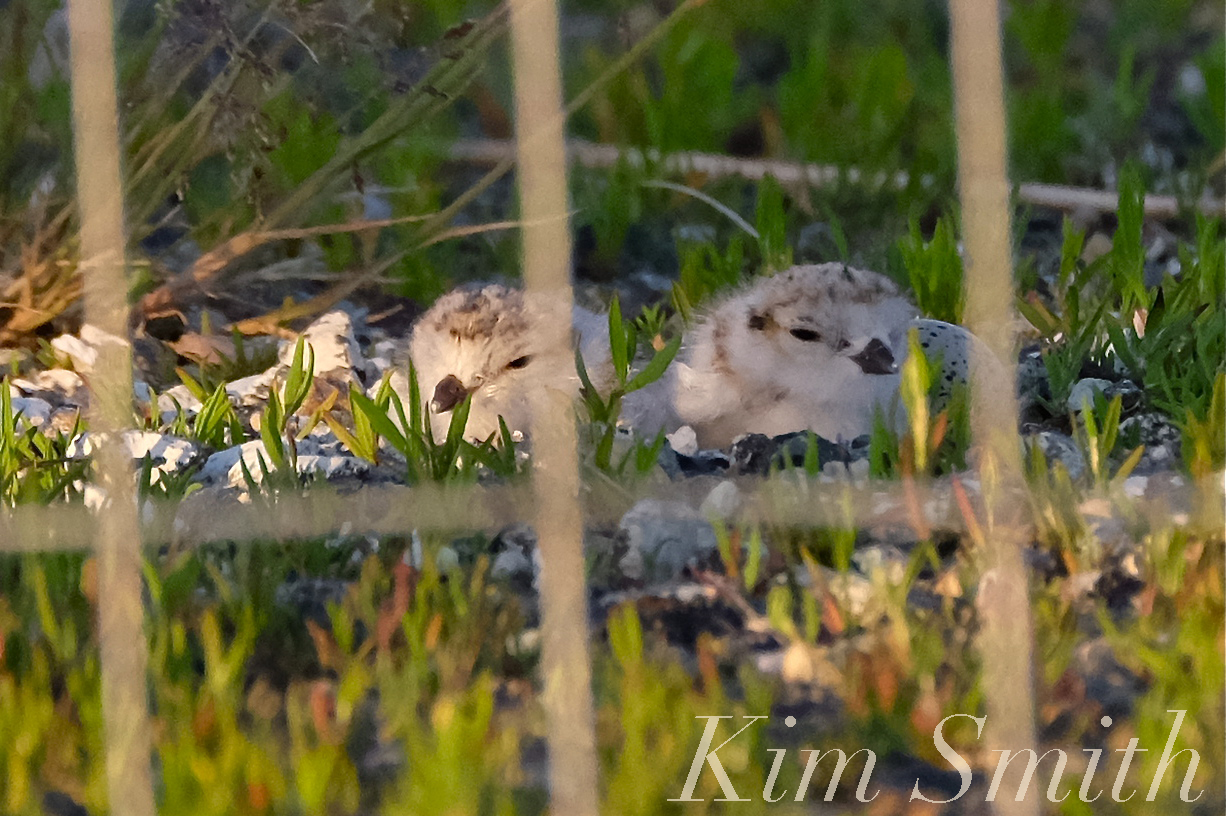
Sleepy eyes after morning snuggles
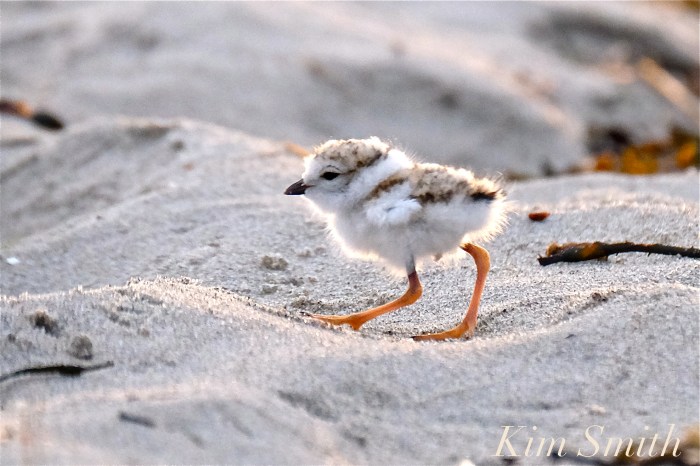
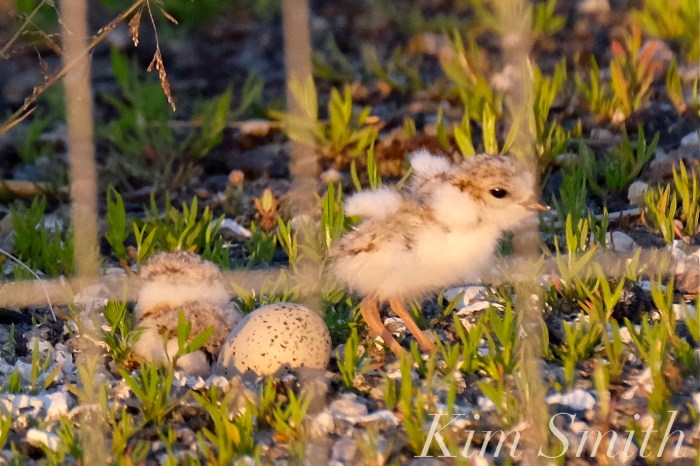
Looking mighty confident for only two-days old!
We definitely need more Piping Plover volunteer monitors, especially during the mid part of the day. If you would like to be a PiPl monitor, please email Ken Whittaker at kwhittaker@gloucester-ma.gov. Thank you ❤
Spread The GMG Love By Sharing With These Buttons:
Late this afternoon, Essex Greenbelt’s Dave Rimmer and my husband Tom observed the Plover family leaving the parking lot and heading toward the dunes. Dave shares that they first appeared to be heading to the beach via the marsh creek end, when they suddenly switched direction and started back in the opposite direction towards Boardwalk #3. They went part way down #3, then back toward the parking lot, then back down #3. The family next began to go through the dunes toward the the middle of the beach, away from the #3 roped off area. After all the zig and zagging, the little family returned to the boardwalk, and then headed straight through the dunes, in the direction of #3 nesting zone. Dave lost sight of the chicks, but could hear the parents urging them on. Out they tumbled, down the dune edge, and into the roped off #3 area!
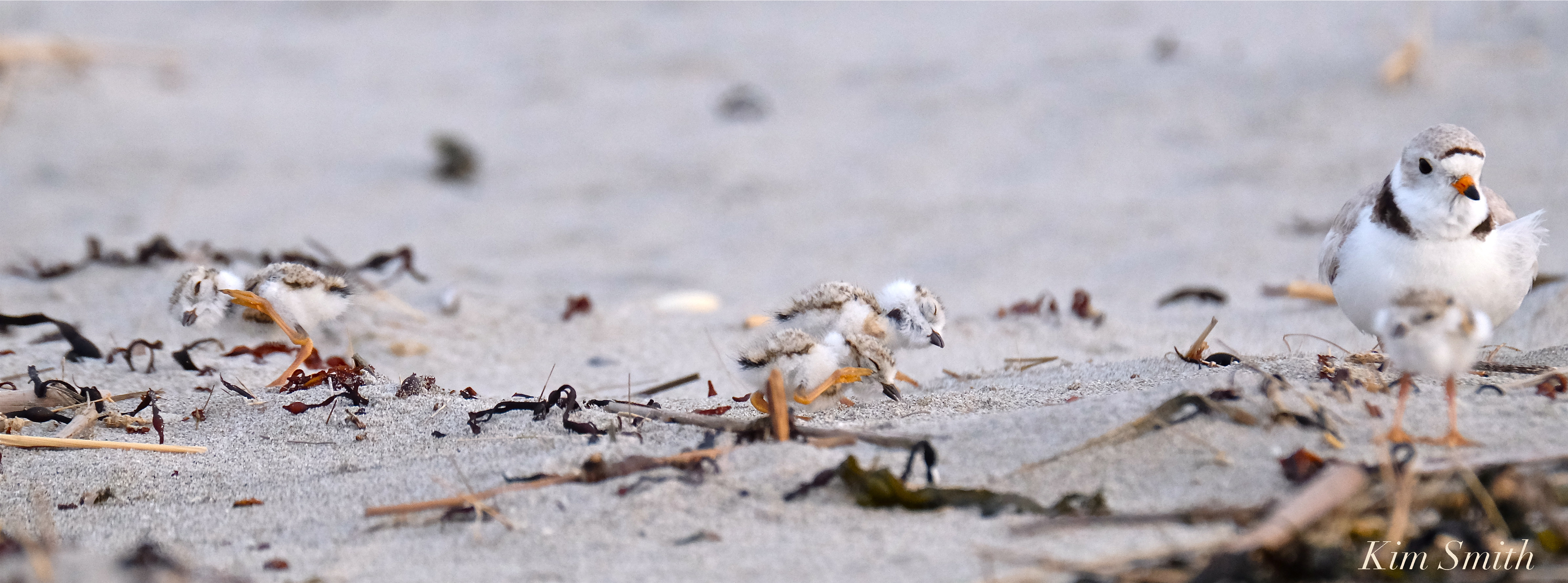
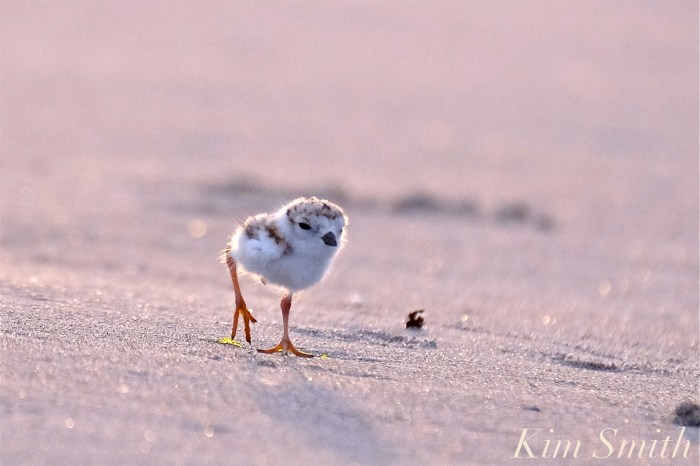
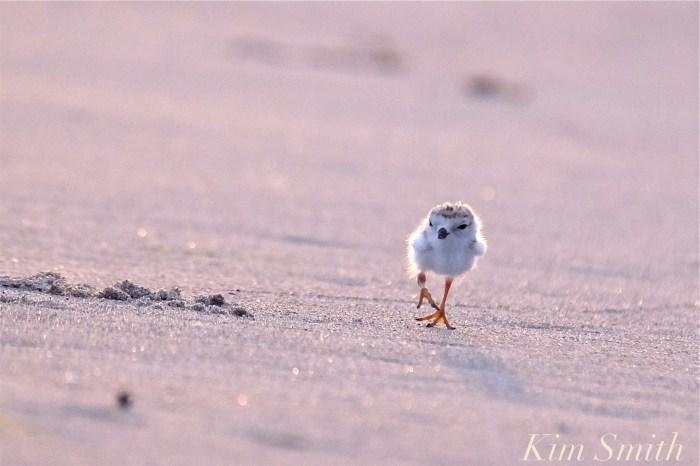
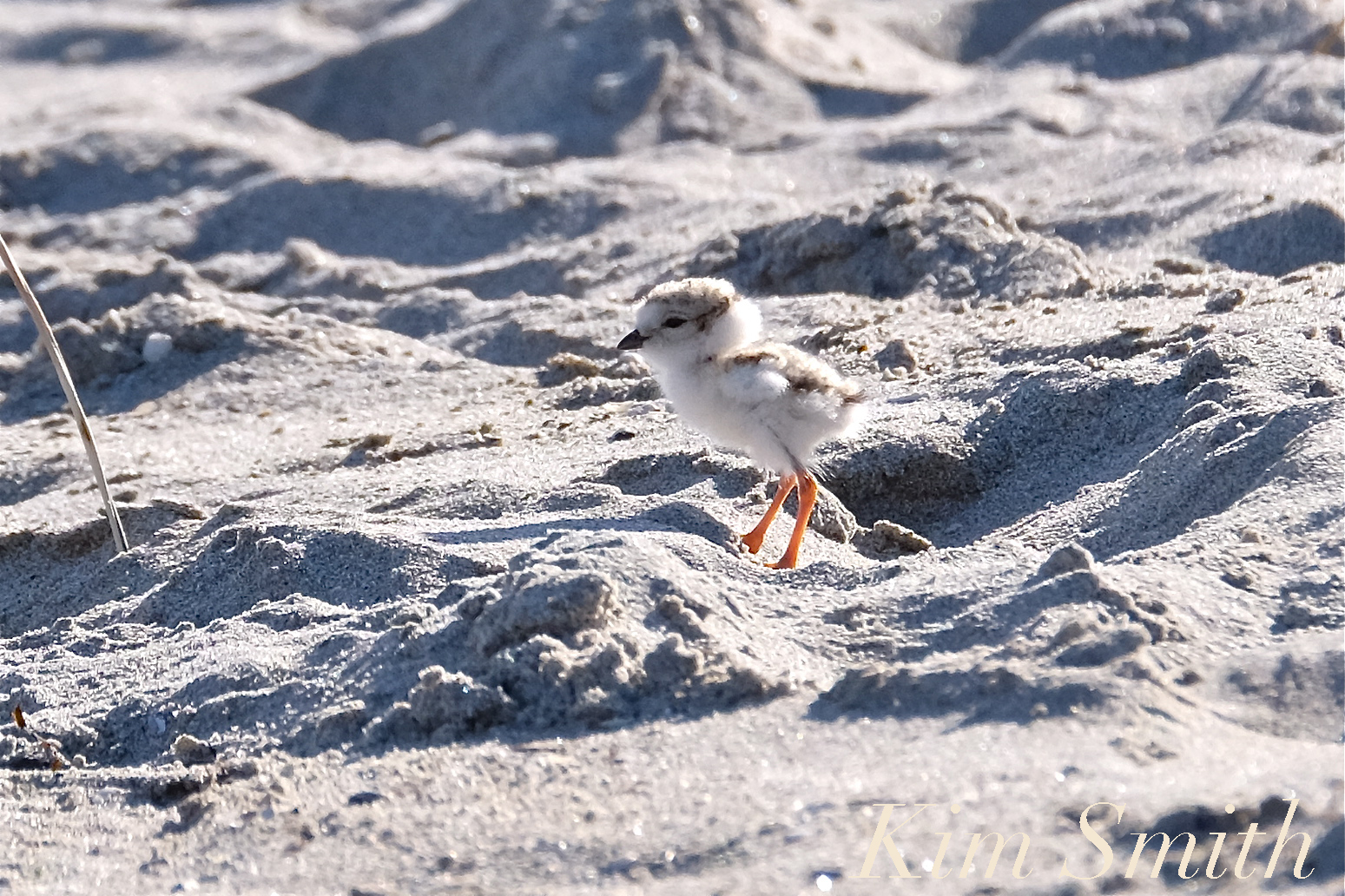
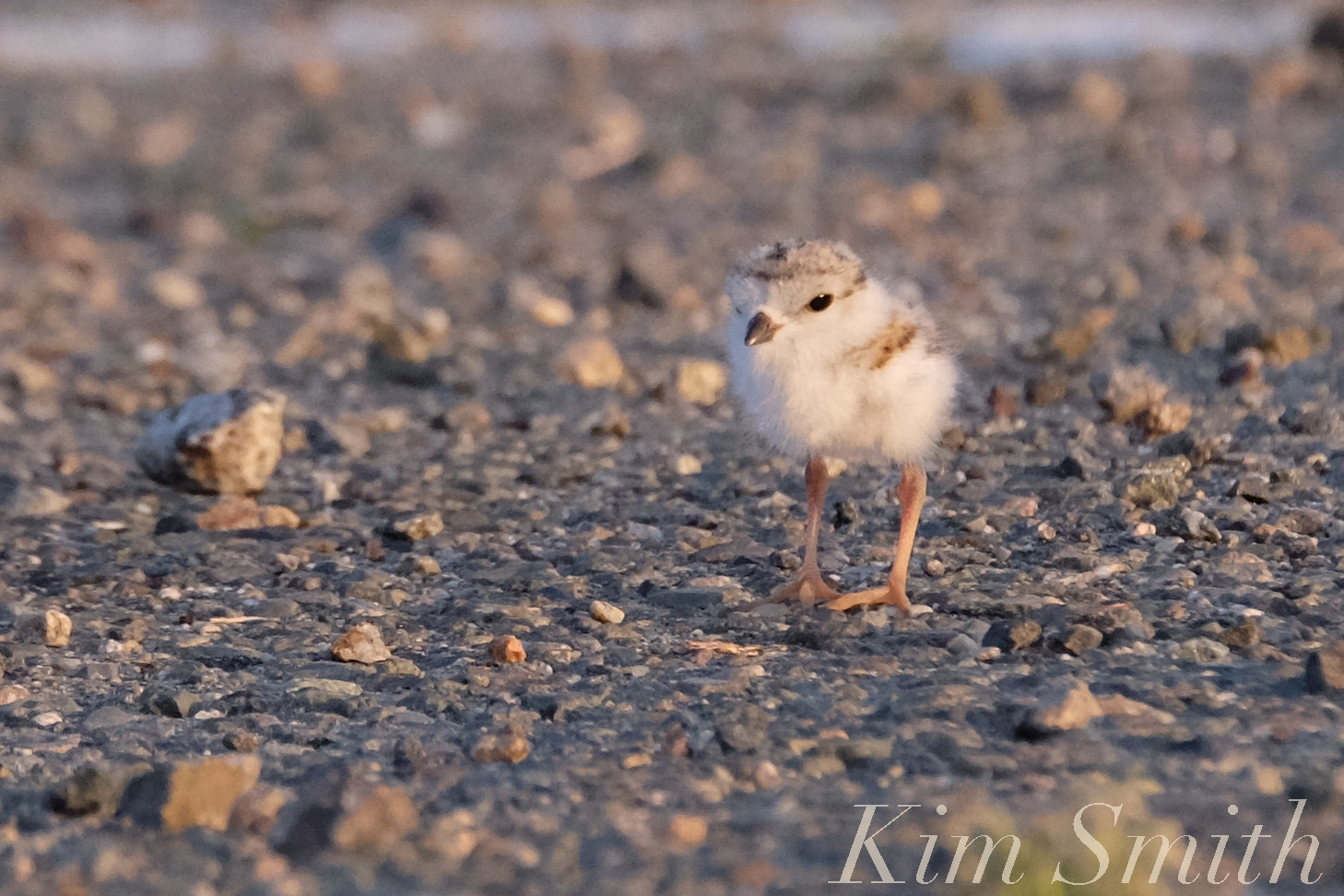
Please keep your eyes peeled for tiny toothpick-legged mini-marshmallow sized chicks zooming around in the sand.
We are elated that all four chicks made it safely out of the parking lot. Quite possibly this was the PiPl plan all along. Several times I observed the adults making the overland route at the very same time that they began nesting in the parking lot, which I had not seem them do in the the previous two years that they nested at GHB (in the very same location all three years).
The PiPl left the beach due to extreme dog disturbance while trying to court and nest, sadly finding the parking lot to be the quietest and safest place. Yesterday afternoon, we all observed folks trying to bring their dogs through the parking lot and onto the beach, after the life guards had left. The presence of dogs caused extreme alarm by the parents, they would pipe loud warnings and then leave the chicks to try to distract the dog. This is when chicks are at their most vulnerable, when the adults have to leave them to defend against predators. The problem is only going to get worse now that the footbridge has reopened.Please, please to the folks bringing your dogs to the beach after hours, now it is more critical than ever to please leave your pets at home. If any of our readers see a dog on the beach at anytime of day for any reason, first make sure the chicks are safe, and then please don’t hesitate to call the police.
Trash left on the beach is another huge issue for endangered shorebird chicks, of any species. Trash on the beach equals a plethora of seagulls. As do dogs, seagulls cause extreme duress for the PiPl parents. Even though the gulls prefer the easy garbage pickings left behind, they also eat baby chicks.
If you would like to be a a volunteer PiPl monitor, please contact kwhittaker@gloucester-ma.gov. Thank you!
Huge Shout Out to all our volunteers, Gloucester’s awesome DPW, Dave Rimmer, Ken Whitaker, Jasmine Weber, and Jonathan Regosin ❤
Both Mama and Papa are now able to tend the chicks, while they are also able to feed and take care of themselves simultaneously keeping within earshot and eyesight of each other.
Spread The GMG Love By Sharing With These Buttons:
Our GHB Parking Lot Family survived the first night and day two, despite shenanigans from Barn Swallows, Red-winged Blackbirds, and the ever present Bachelor. The Bachelor’s aggressive behavior seemed even more pronounced this morning. Unmated males will attack baby PiPls in hopes of mating with the female, but our Papa PiPl has his number and does his best to keep him at bay. As if they don’t have enough to contend with, Plover on Plover violence is a real threat.
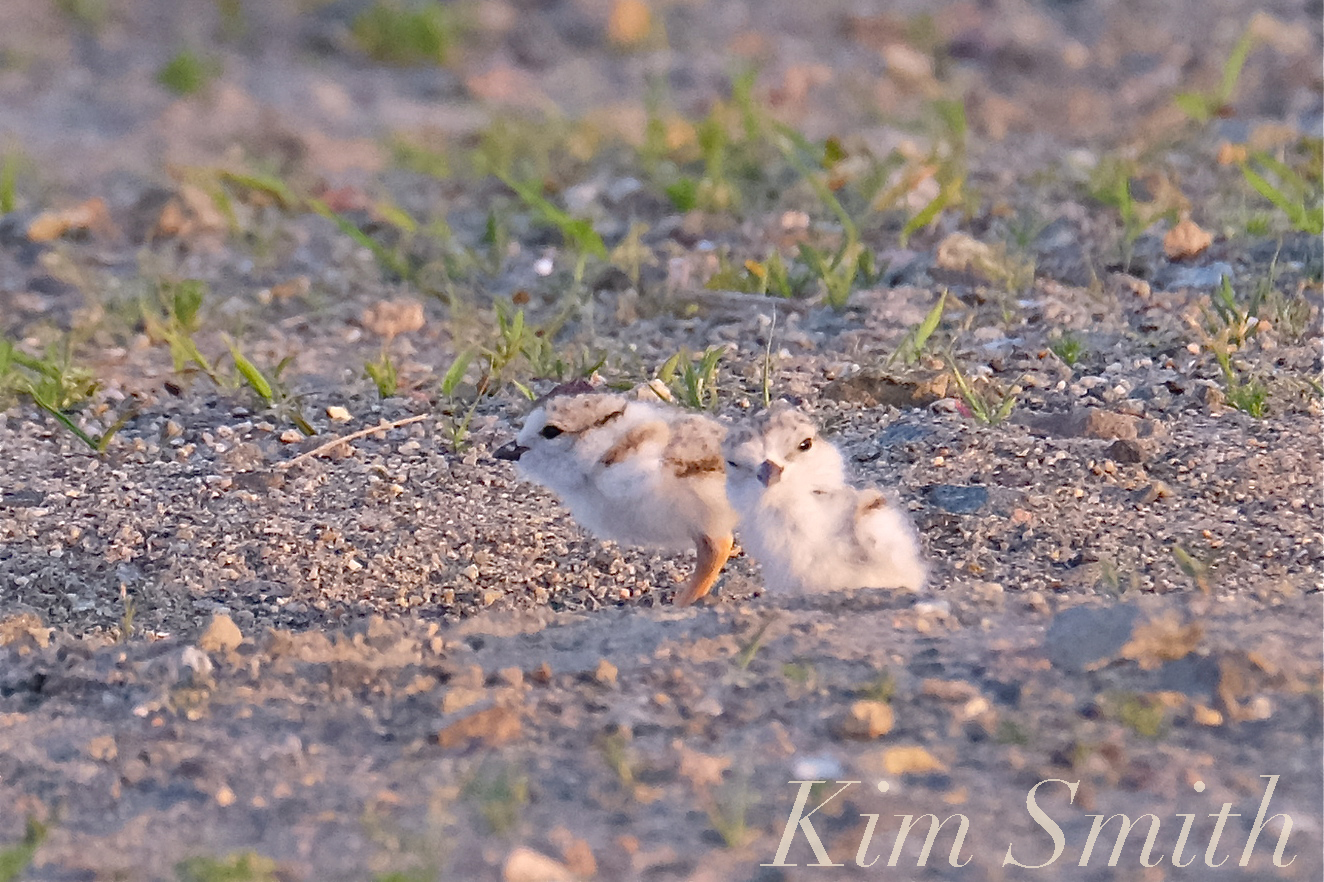
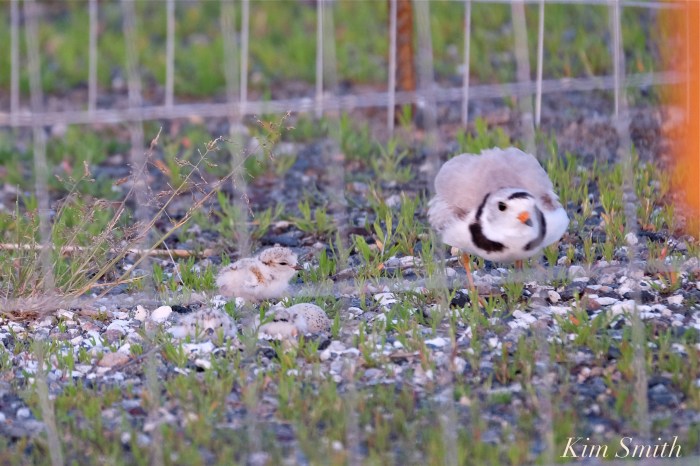
Here are the chicks waking up this morning after a snuggling session with Papa.
Thank you once again to Joe Lucido and Gloucester’s DPW for their interest and help throughout and to our amazing cadre of PiPl volunteers. If you would like to be a Piping Plover volunteer monitor, please email Ken Whittaker, Gloucester’s conservation agent, at kwittaker@gloucester-ma.gov.
Mass Wildlife intern Jasmine Weber and her aunt Terry Weber
Spread The GMG Love By Sharing With These Buttons:
Thanks to the hard work and dedication of Phil Cucuru and Mike Tarantino, it appears as though the footbridge temporary bridge construction is complete. When we taped the podcast this morning, I was under the impression an inspection was required, which may be the case however, folks are using the bridge, and it looks perfect!
Great Work Phil and Mike!!!
Spread The GMG Love By Sharing With These Buttons:
Thanks to today’s dozen or so volunteers, Gloucester’s DPW crew, and John and Jasmine from Mass Wildlife, our parking lot PiPl family made it through day one with flying colors (meaning all four chicks survived). It appears as if they are slowly advancing towards the beach. Plovers are active at night–perhaps they’ll make the migration tonight after the lot is closed–let’s hope.
We need more volunteers, at least two per shift would be fantastic. More eyes equals better coverage. Please contact Ken Whittaker at if you would like to be a PiPl volunteer monitor kwhittaker@gloucester-ma.gov.
Spread The GMG Love By Sharing With These Buttons:
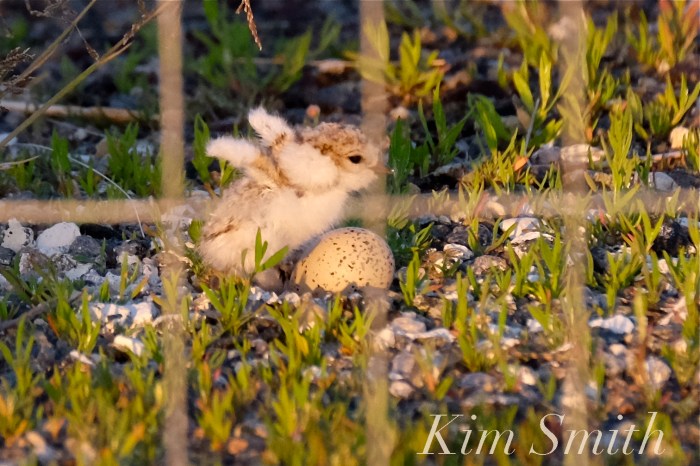
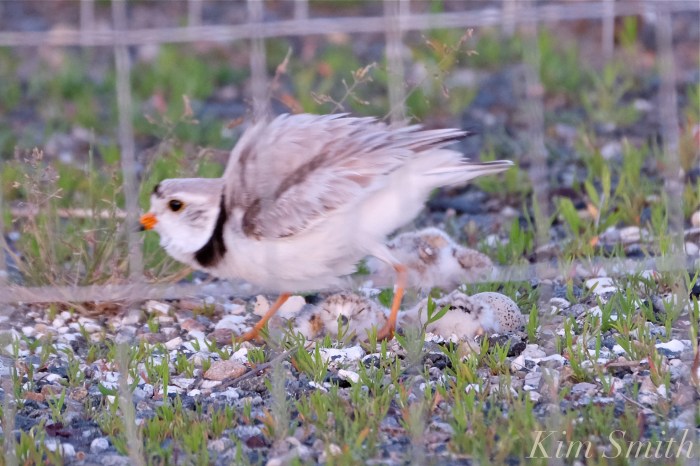
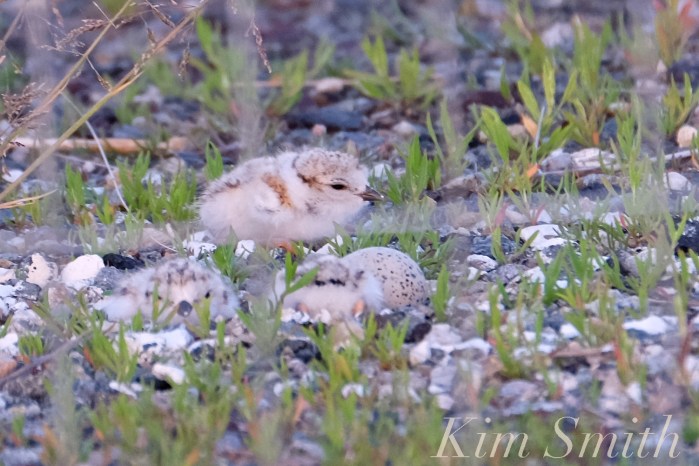
Our Piping Plover chicks began hatching yesterday afternoon. The fourth chick hatched today at 7:50am. We have all been on pins and needles and are overjoyed that all four babies appear to be healthy and vigorous.
Hopping over the yet-to-hatch egg and testing out tiny wing buds.
Piping Plovers lend true meaning to the expression “take under a protective wing.”
With thanks and gratitude to Joe Lucido and our amazing DPW, Gloucester’ s conservation agent Ken Whittaker, Mayor Sefatia, Dave Rimmer from Greenbelt, Jonathan and Jasmine from Mass Wildlife, and to all our volunteers (especially Heather Hall who has been at the GHB parking lot every single day for several hours) for helping us get this far. Now the truly challenging phase begins, which is helping the chicks grow to the next stage of life. Piping Plover Chicks fledge on average at about 35 days, which is almost to the day when last year’s Little Chick departed our shores.
We were hoping to keep the hatching on the down low for a few days, but the PiPl is out of the bag, so to speak. Volunteer Piping Plovers are most definitely needed. Please contact Ken Whittaker at kwhittaker@gloucester-ma.gov
The first to venture out of the exclosure (at 7am this morning). Piping Plovers are precocial birds, which means that within hours after hatching they are mobile and relatively mature. Piping Plover chicks begin to feed themselves within the first 24 hours after hatching.
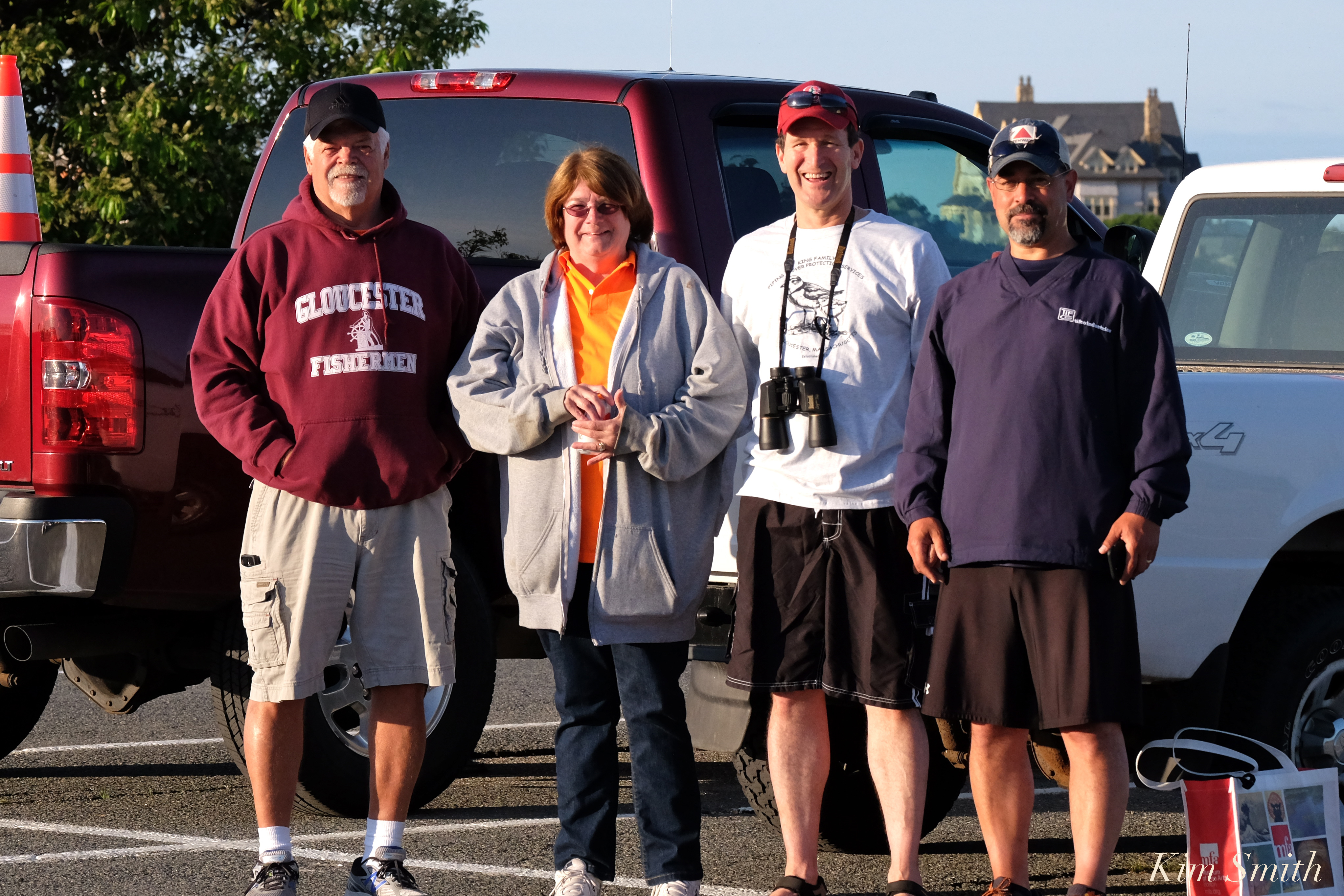
Kenny Ryan, Cindy Frost, Cliff King, and Joe Lucido
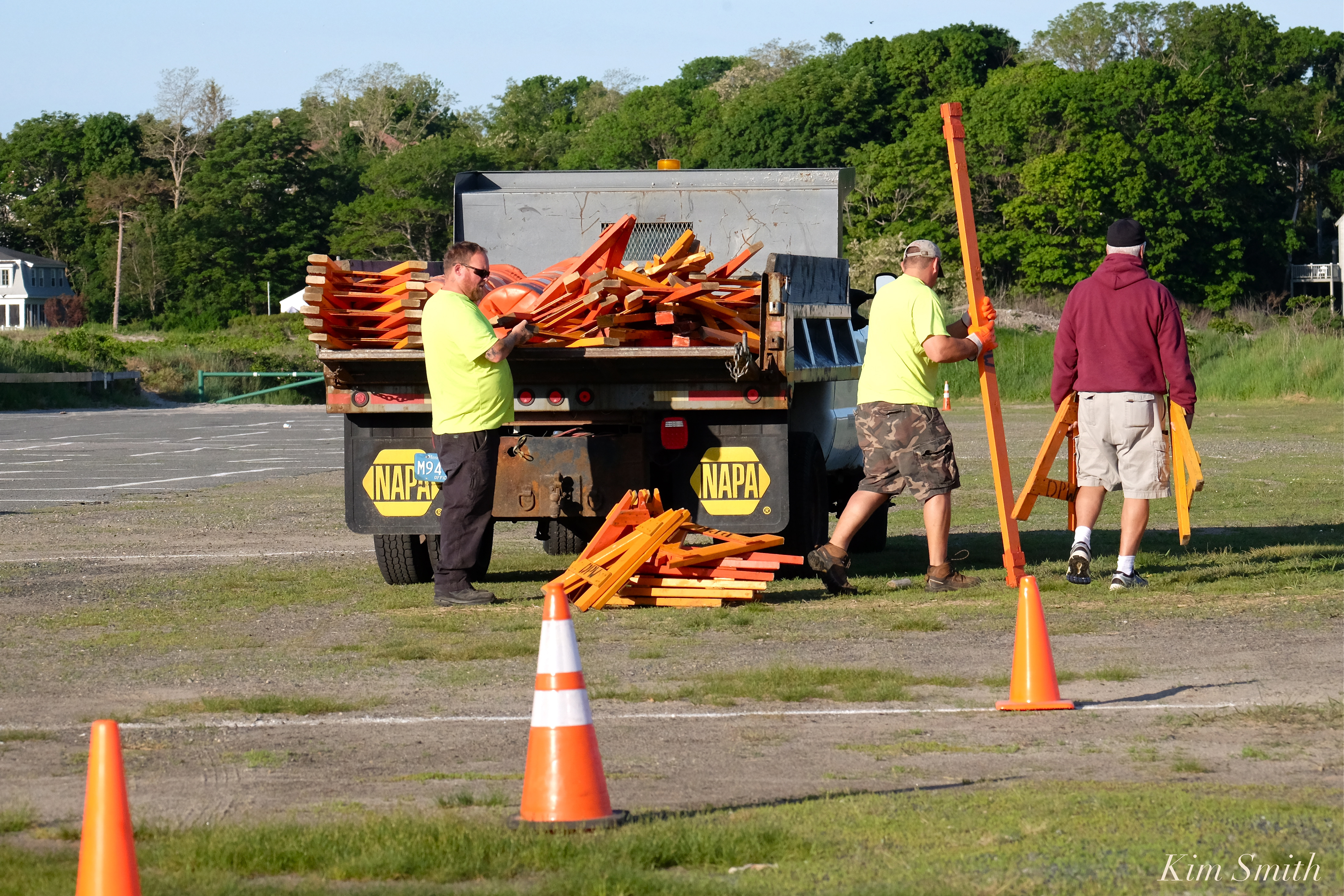
DPW Crew laying out the temporarily restricted parking area. The cordoned off zone will be in place this weekend and until the PiPl migrate to the beach.
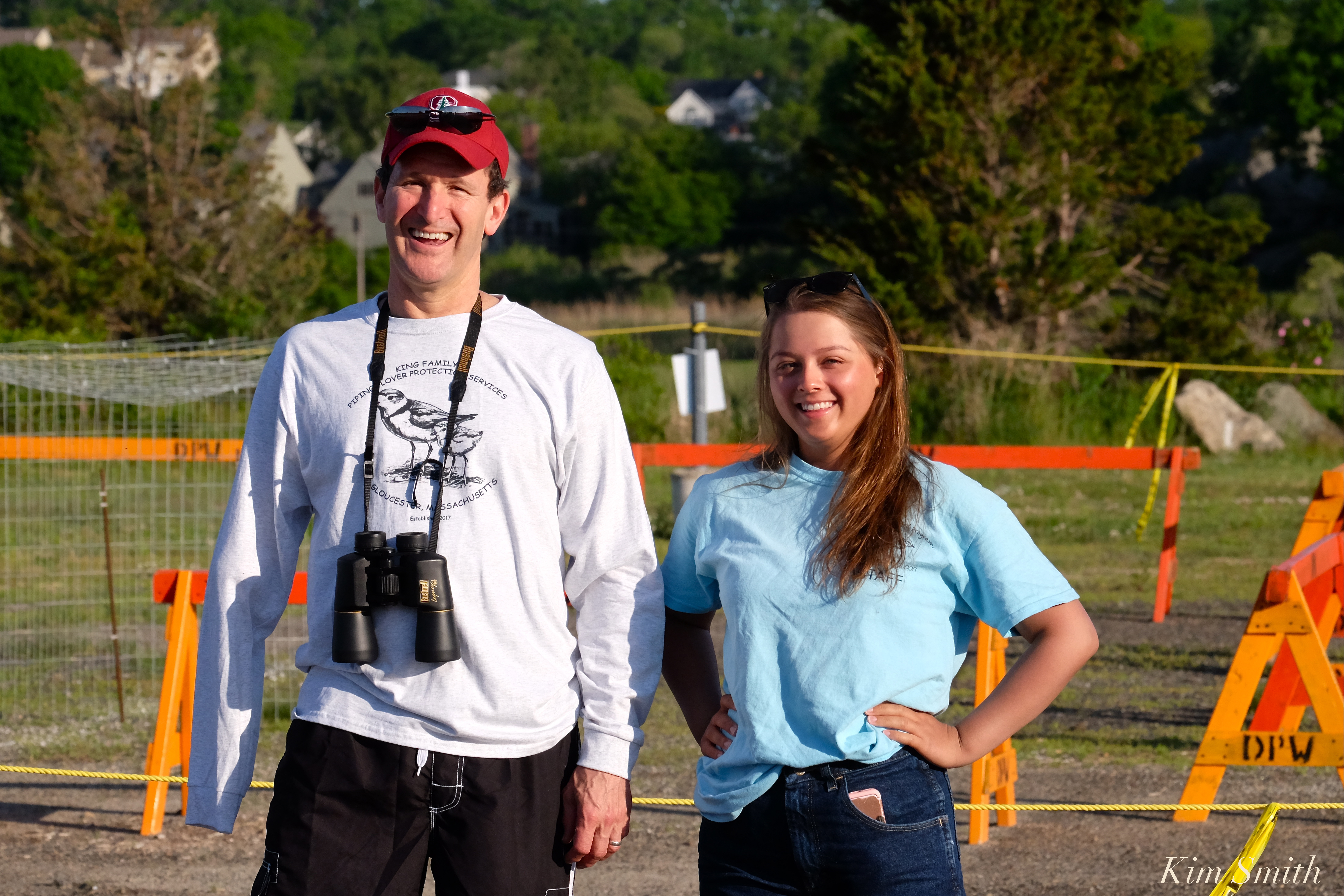
Cliff King and Jasmine Weber – Jasmine joined the team yesterday. She is an intern at Mass Wildlife and will be with us all weekend.
Early this morning the Bachelor appeared on the scene, again, causing yet another kerfuffle. Papa leapt off the nest and chased him away, with a good bit of ruffled feathers.
A few more snapshots–see how adorable they are–wouldn’t you like to be a Piping Plover monitor this upcoming month ❤
Spread The GMG Love By Sharing With These Buttons:
This has been a stunning week for loss of life, with the suicide of Anthony Bourdain coming on the heels of Kate Spade’s suicide. Please dear hearts, no matter how depressed and overwhelmed, suicide is never, ever the answer. I learned several days ago that a friend passed away. I had the great fortune to travel with Tom Emmel in 2014 to the Monarch butterfly sanctuaries and we developed a lasting friendship. He shared information generously–it was his 44th trip to Angangueo–and he was one of the first scientists to study the Monarchs in their winter home. Tom leaves behind a lifetime of friendships as well as his legacy in research and conservation.
Tom loved the people and town of Angangueo; here he is in his element at the Sierra Chinqua Monarch Butterfly Reserve.
THOMAS EMMEL
CHADBOURNE PH.D
It is with great sadness that the family of Dr. Thomas C. Emmel announce his passing on Saturday, May 26, 2018, while traveling abroad in Brazil. He was 77 years old.
Tom is lovingly remembered by his brother, John Emmel (Phyllis), his nephew, Travis, and his niece, Alexis. In addition, a multitude of friends, colleagues and former students will forever honor Tom – a noted conservationist, naturalist, prolific author and visionary – for his kindness, humor, encyclopedic knowledge and wide-ranging interests. He epitomized the ideal of the professor as educator, mentor, supporter and inspiration.
Born on May 08, 1941, Tom grew up in Los Angeles, California. His parents, Edward and Ardyce Emmel, met on an outing sponsored by the Sierra Club and encouraged an interest in nature, including taking Tom and his brother on many camping trips to all the national parks in the western U.S. Around age eight, at the suggestion of his father, Tom, then younger brother John, began collecting butterflies on all their family trips. This began a lifelong passion they shared. Their mother further encouraged their interest by driving them to entomological society meetings at Los Angeles County Museum of Natural History. His parents, a den mother and scout master, respectively, were very much involved with the scouting program, and the brothers were Cub Scouts, Boy Scouts, and Explorer Scouts, and became Eagle Scouts as well.
When Tom was a high school senior, he was one of 40 winners of the Westinghouse Science Talent Search, for which he won a trip to Washington, D.C. Upon graduating from high school, Tom went with ornithologist L. Irby Davis, for a three month trip to southern Mexico. Tom assisted Mr. Davis in recording bird songs in the early morning and evening, then collected butterflies during the mid-day. He returned to southern California with several thousand specimens – and his lifetime interest in tropical entomology was secured. As it would turn out, some of those specimens were representative of a new species – which in April 2018 was named Cyllopsis tomemmeli in his honor.
Tom earned his B.A. at Reed College in 1963. During the summer breaks from college, Tom was a nature counselor at Sanborn Western Camps for Kids, in Colorado. He earned his Ph.D. in Population Biology at Stanford University in 1967, and was a Post-doctoral Fellow in Genetics at the University of Texas from 1967-1968. His unbridled commitment to and support of the University of Florida began in 1968 when he joined its faculty as Assistant Professor of Biological Sciences & Zoology. In 1973, he became an Associate Professor of Zoology and three years later, in 1976, he became a Professor of Zoology. He served as department chairman for Zoology, directed the Department of Zoology Division of Lepidoptera Research from 1980-2003, and directed the UF Boender Endangered Species Laboratory since its inception in 1995.
In 2004, Tom was chosen to be the Founding Director of the Florida Museum’s McGuire Center for Lepidoptera and Biodiversity at the University of Florida. The McGuire Center was Tom’s vision and concept: A state-of-the-art research and teaching center that focused on Lepidoptera and the biodiversity they represent, and by extension a facility that engaged the public and created awareness of nature’s beauty and relevance to our lives. The Center was brought to fruition by the generous support of Dr. and Mrs. William McGuire, lifelong friends and admirers of Tom and his efforts. Under Dr. Emmel’s leadership, The McGuire Center for Lepidoptera and Biodiversity has become world-renowned for research on biodiversity, habitat loss, and Lepidoptera; a major publisher of related scientific studies; a force in public education about our environment and its biodiversity; and the repository for the largest collection of Lepidoptera specimens in the world
Tom authored more than 400 scientific publications, including 35 books. His many personal research interests included the endangered Schaus Swallowtail population in the Florida Keys; the effects of mosquito control pesticides on non-target wildlife and humans living in south Florida; microevolution, population biology, and ecological genetics of Cercyonis butterflies; chromosome evolution and macroevolution in the Lepidoptera; mimicry complexes in Mechanitis and Melinaea ithomiine butterflies in the Neotropics; biology, life histories, ecology, and conservation of the California butterfly fauna; fossil butterflies; and butterfly diversity in many areas of the world. He worked tirelessly to encourage efforts to promote conservation and natural habitat preservation, such as through the Miami Blue–Save Wild Florida license plate initiative and conservation biology efforts for the overwintering Monarch butterfly sites in southern Mexico. Throughout his lifetime, Tom mentored countless students – fostering and encouraging their careers in entomology, taxonomy, the study of tropical rainforests, and conservation biology.
Dr. Tom Emmel leaves behind a tremendous and unparalleled legacy. His vision, imagination, and energy in the service of conservation and Lepidoptera will continue to inspire and inform future generations of scientists, as well as the public in general. His life work contributed to making a better world, and the impact will be enduring.
In lieu of flowers, memorial donations in memory of Tom can be made to the Thomas C. Emmel Founding Director’s Endowment, which supports collections and research at the Florida Museum’s McGuire Center.
Funeral services and a celebration of life for Tom are to be announced in the near future.
Arrangements are under the care of MILAM FUNERAL AND CREMATION SERVICES 311 South Main Street Gainesville, FL (352) 376-5361 www.milamfh.com
Spread The GMG Love By Sharing With These Buttons:
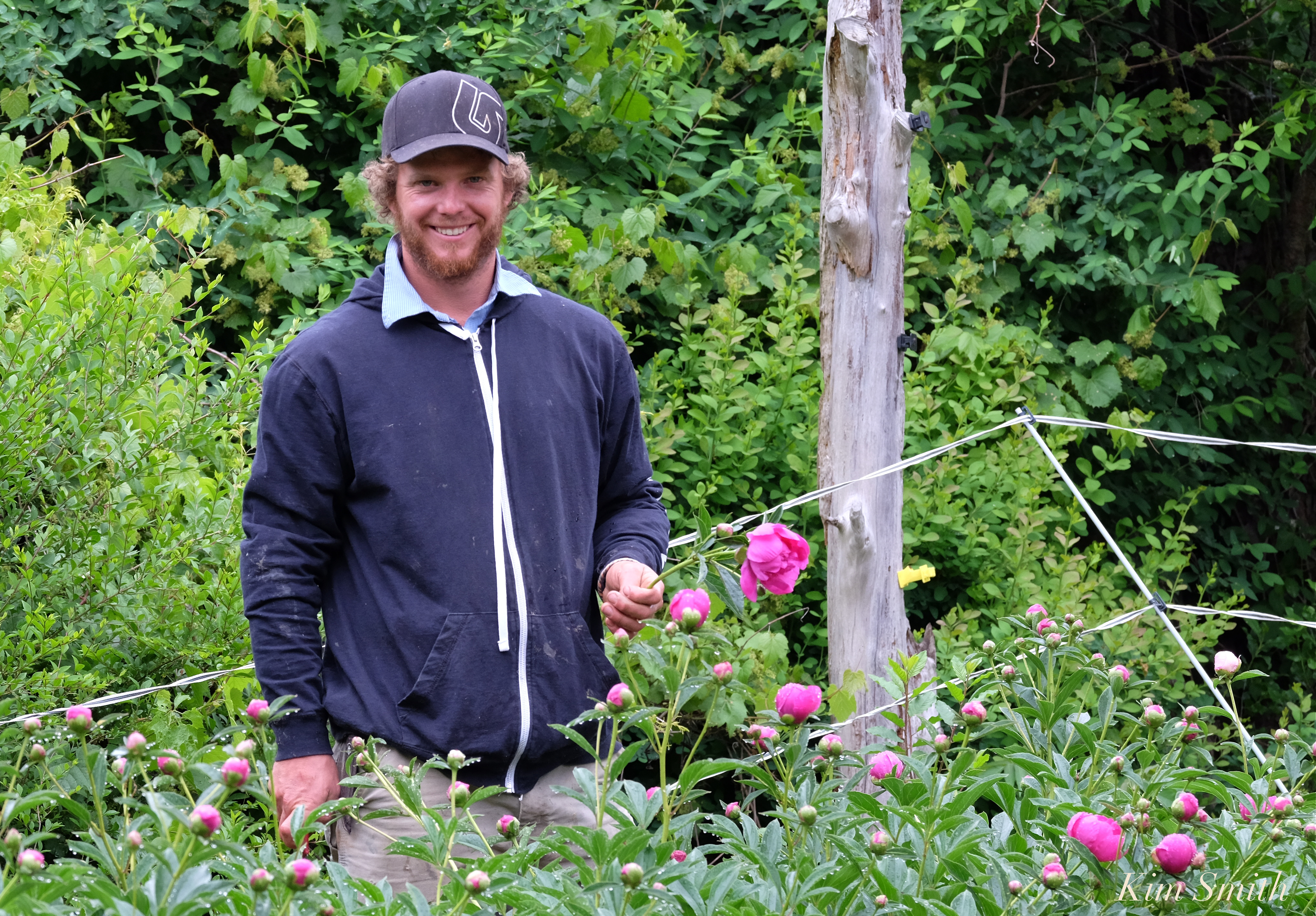
Cedar Rock Gardens has a gorgeous collection of deep rose pink, seashell pink, cotton candy pink, and ivory white peonies blooming right now. The mix of colors makes for a lovely bouquet and will last twenty ten times longer than anything in the stores. Go today and pick your own bouquet of fabulousness!
Cedar Rock Gardens owner Tucker Smith
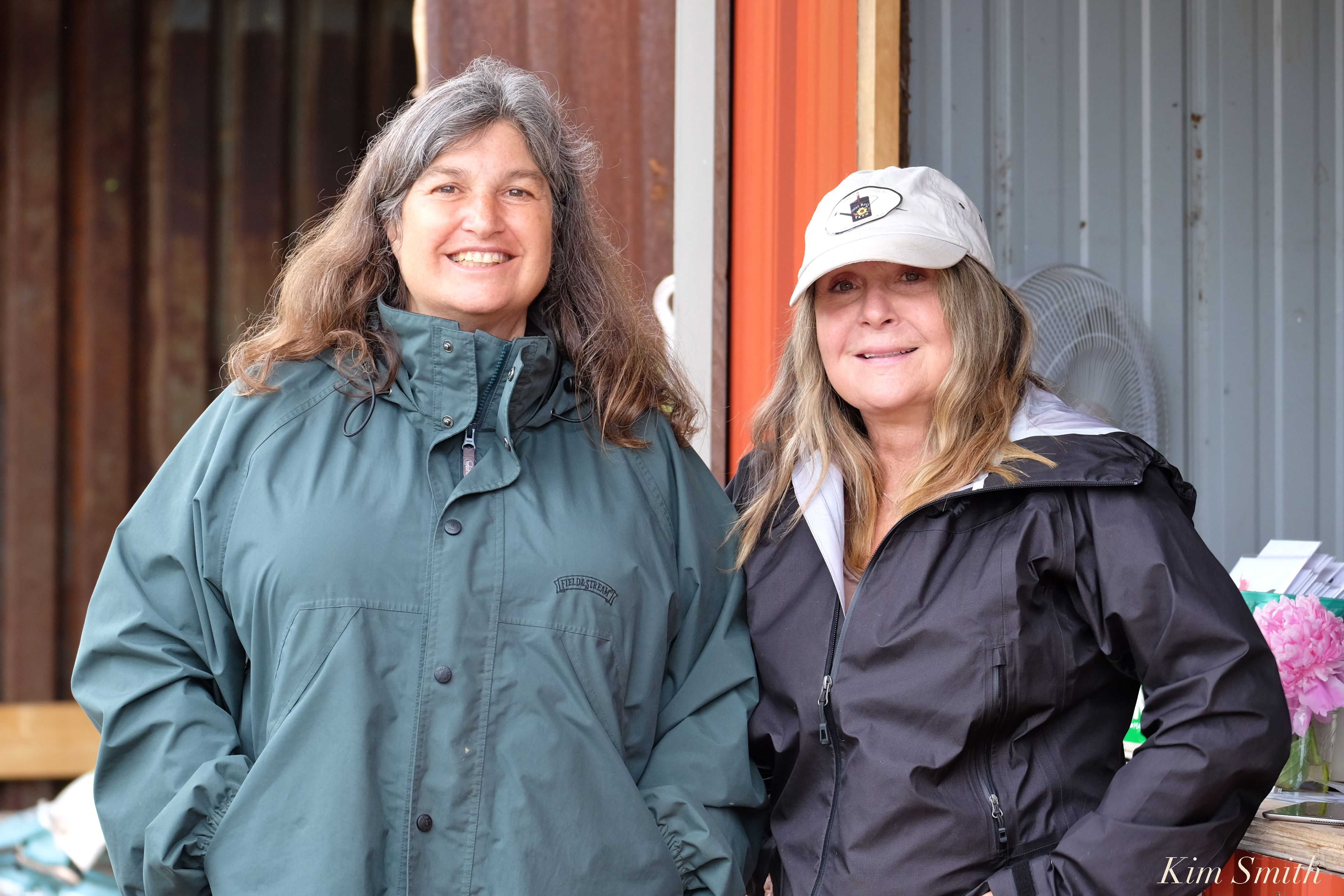
Cheryl and Kim – just one more reason to love Cedar Rock Gardens is their super friendly and helpful staff!
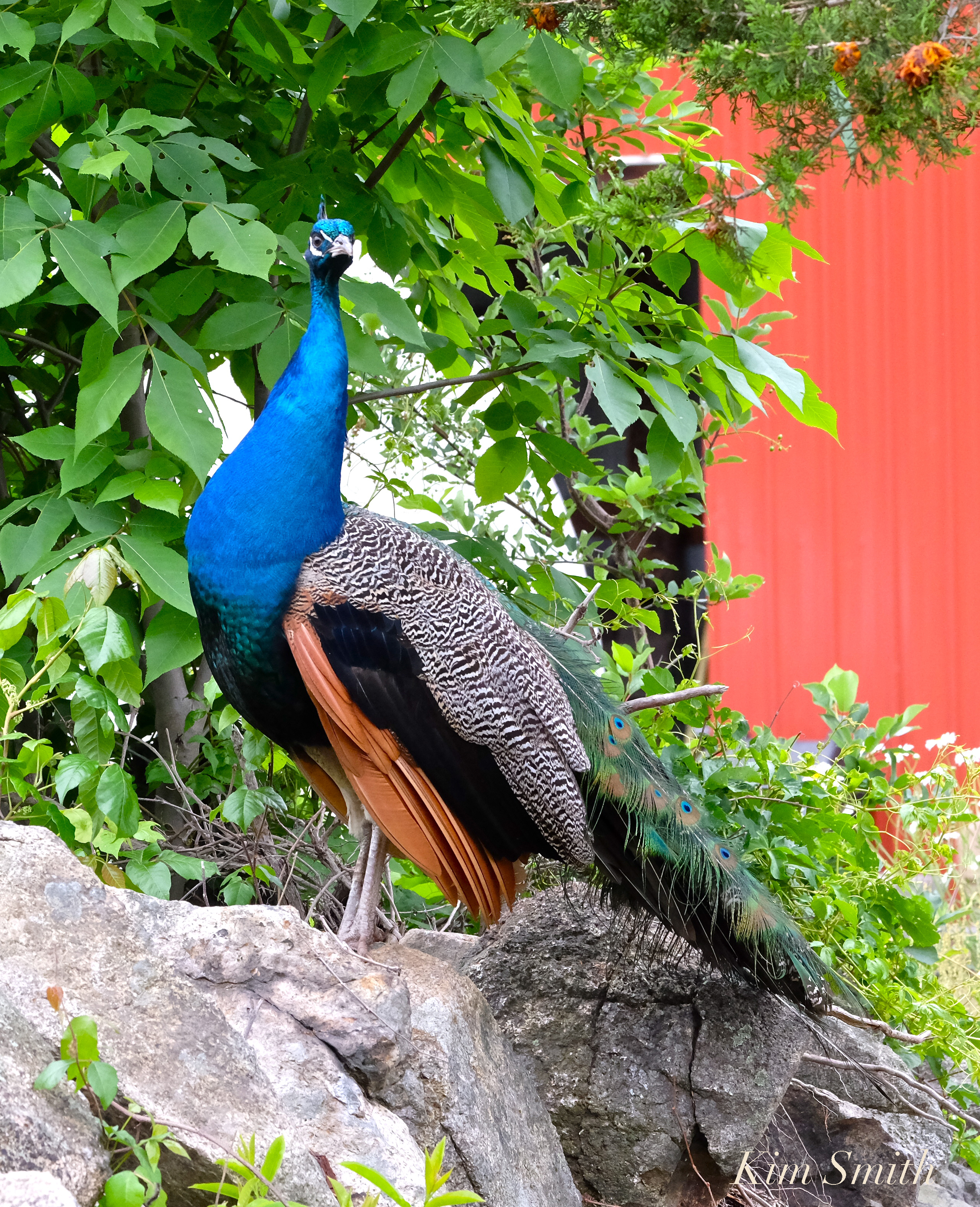
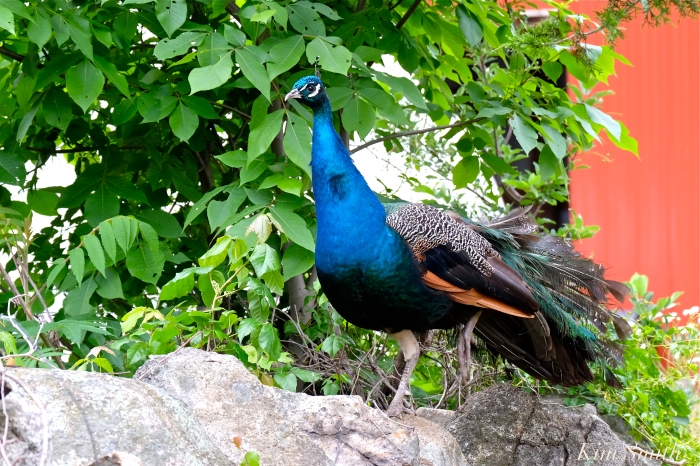
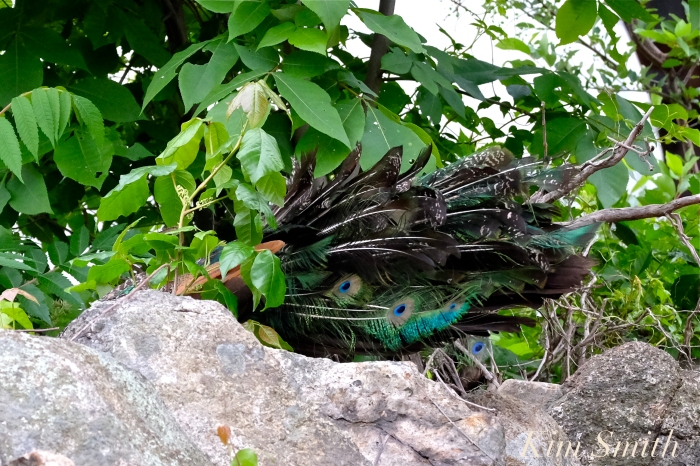
Cedar Rock Gardens newest family members – one is the leader of the pair of juvenile Peacocks and he jumped easily over the garden wall, the other – he tried several different routes before deciding to brave the jump and follow his brother.
Cedar Rock Gardens has a fantastic array of flowers, veggies, and herbs. The nursery is located at 299 Concord Street in West Gloucester.
Spread The GMG Love By Sharing With These Buttons:
Tommy Nolan helps keep both Wingaersheek and Good Harbor Beaches looking sparkling clean. He mans the beach rake, and last year did an incredible job of keeping an eye out for Piping Plover chicks. Tommy also has an interest in birds and enjoys watching the wildlife in his own backyard. He collected seaweed this week from Good Harbor and placed it around the nesting area. Thanks so much to Tommy and to the entire Good Harbor Beach team for looking out for our nesting PiPls 🙂
Spread The GMG Love By Sharing With These Buttons:
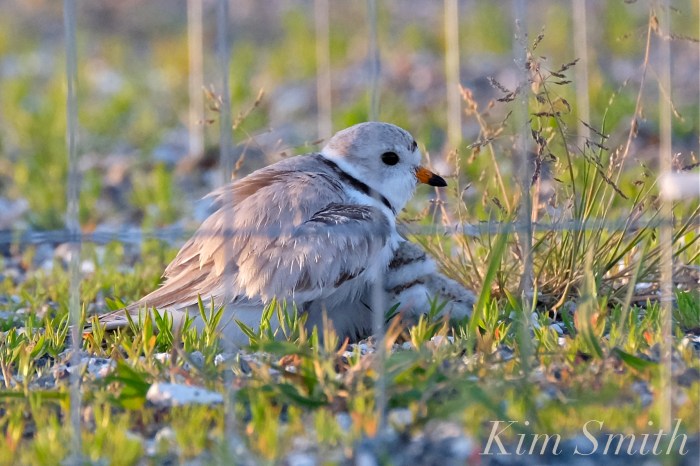
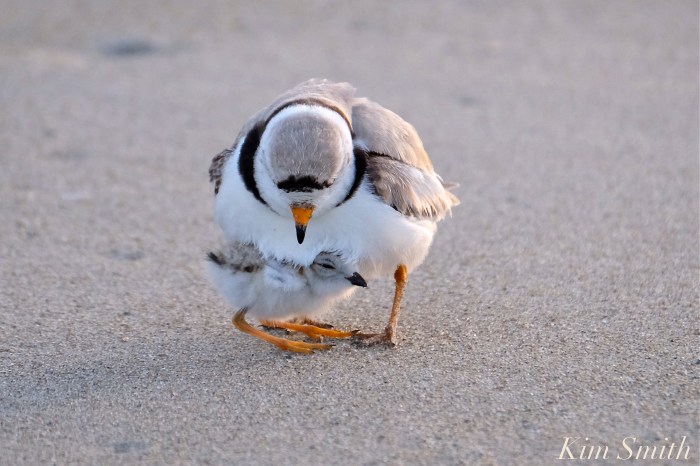 Papa and Pip snuggling today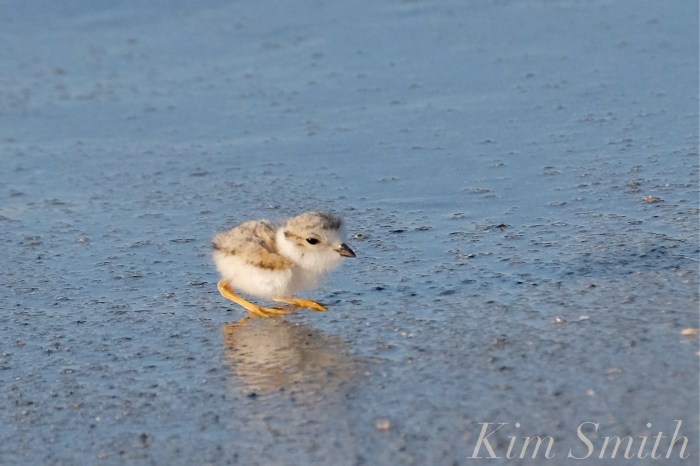
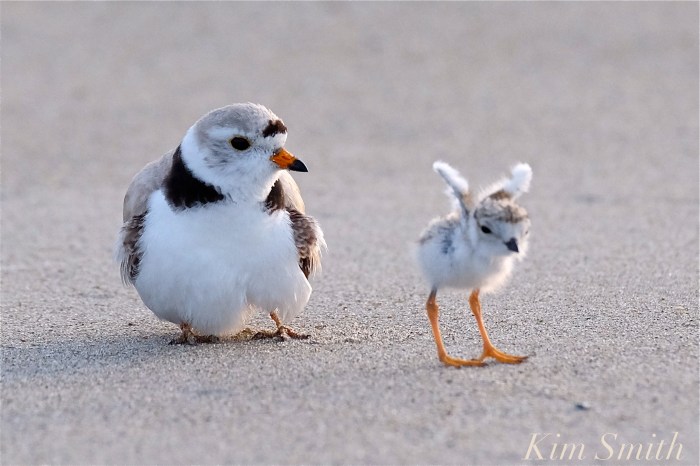
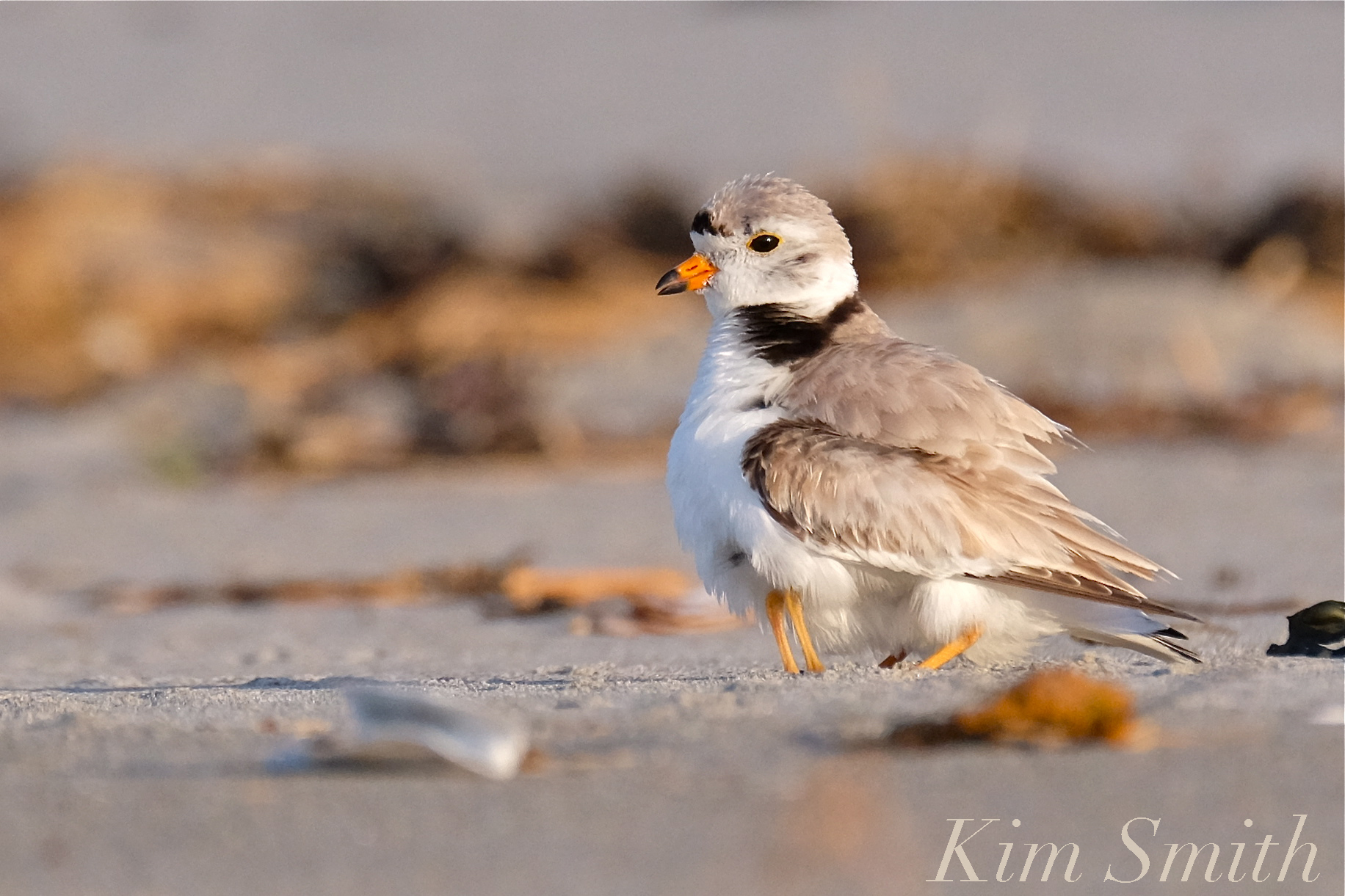 Papa piping a warning call to Mama, while snuggling Pip





























 Good Morning Gloucester