BLACK EARTH COMPOST – SIMPLY THE BEST ON THE PLANET!

I cannot say enough good things about BLACK EARTH COMPOST and the amazing guys, Andrew and Connor, who provide this fantastic product. My client’s gardens have never looked as lush and beautiful since I began using strictly Black Earth Compost to replenish the soil.

Andrew even delivers to my butterfly and ABC gardens at Philips Andover. Thank you Black Earth for making such a great product!!!

Black Earth Compost not only makes a great product, they provide residential, commercial, and municipal compost pickup. Go here to learn more about their excellent services.

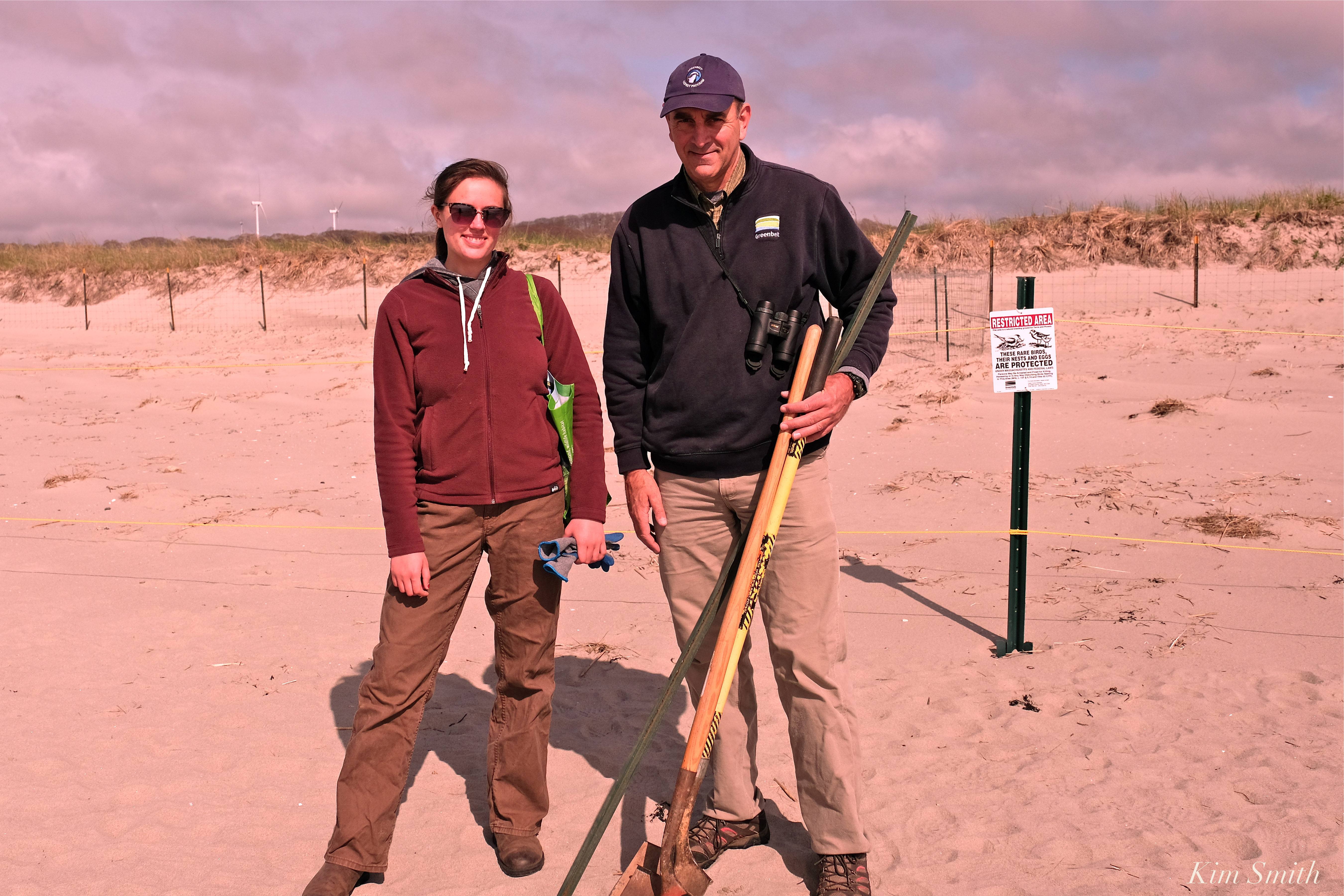
BREAKING NEWS – PIPING PLOVER NEST WITH FOUR BEAUTIFUL EGGS AND MANY THANKS TO ESSEX GREENBELT’S DAVE RIMMER AND FIONA HILL FOR INSTALLING THE WIRE EXCLOSURE!

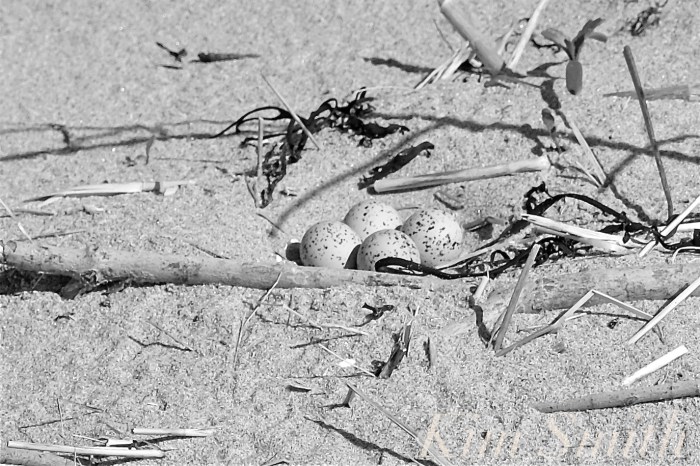
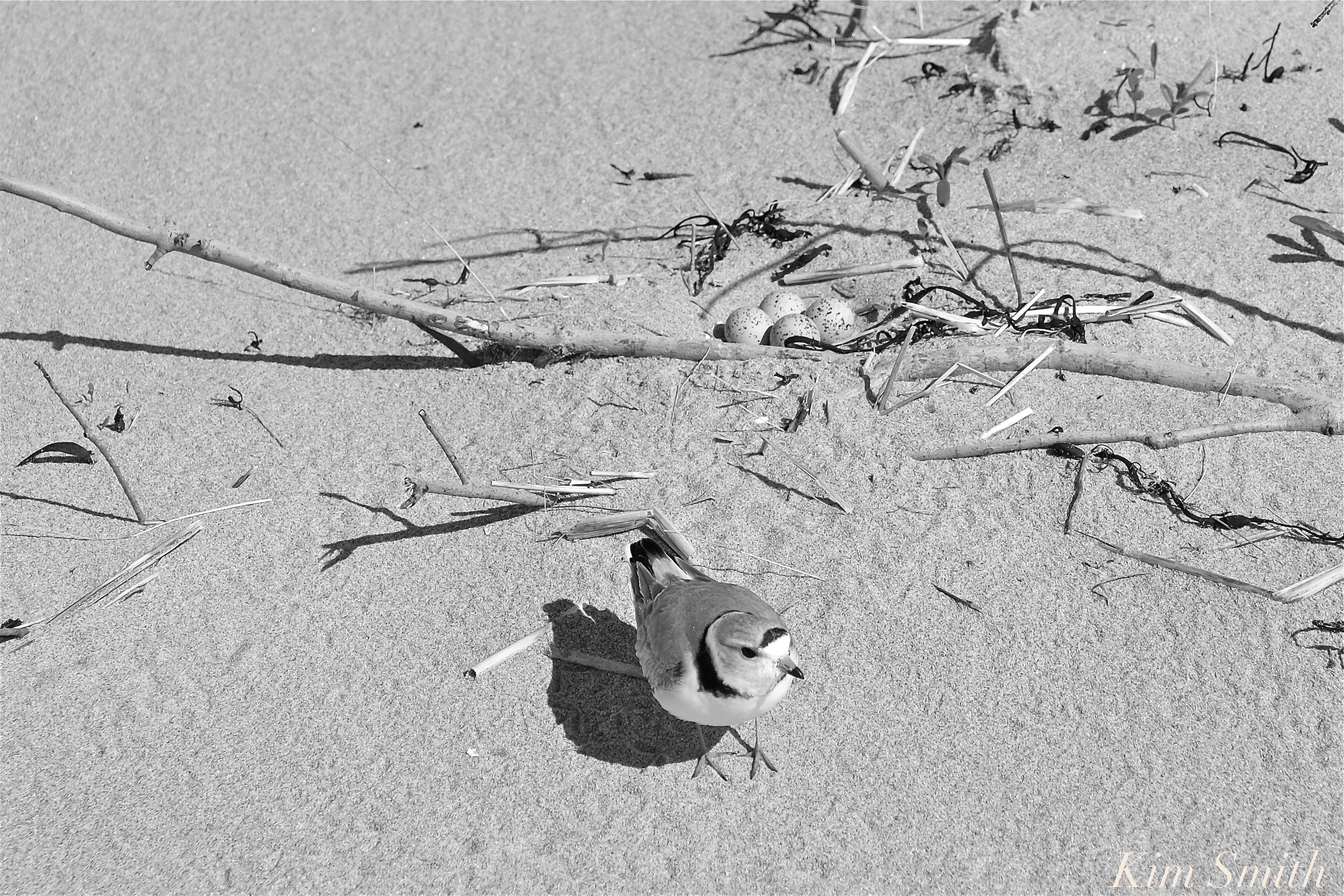
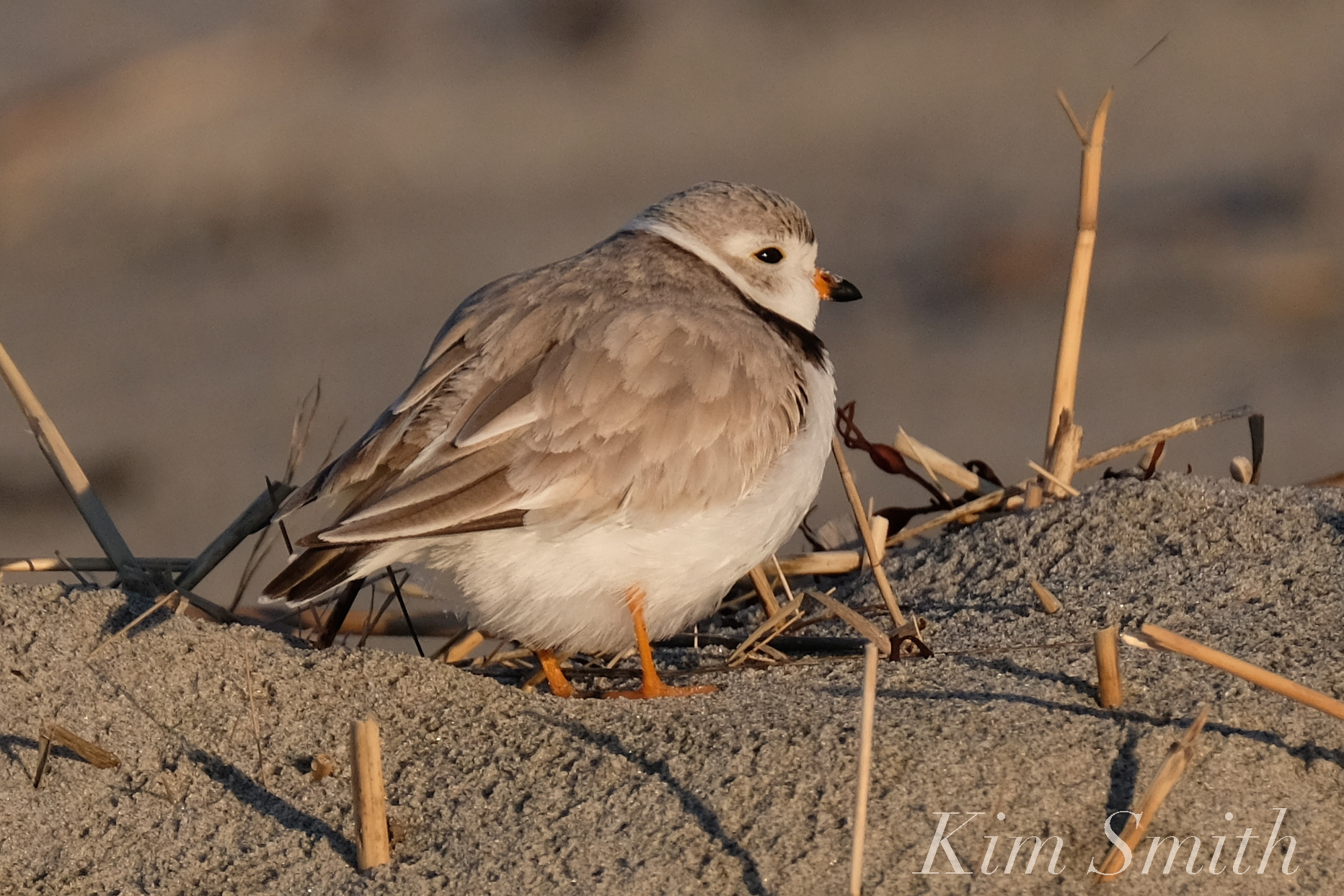
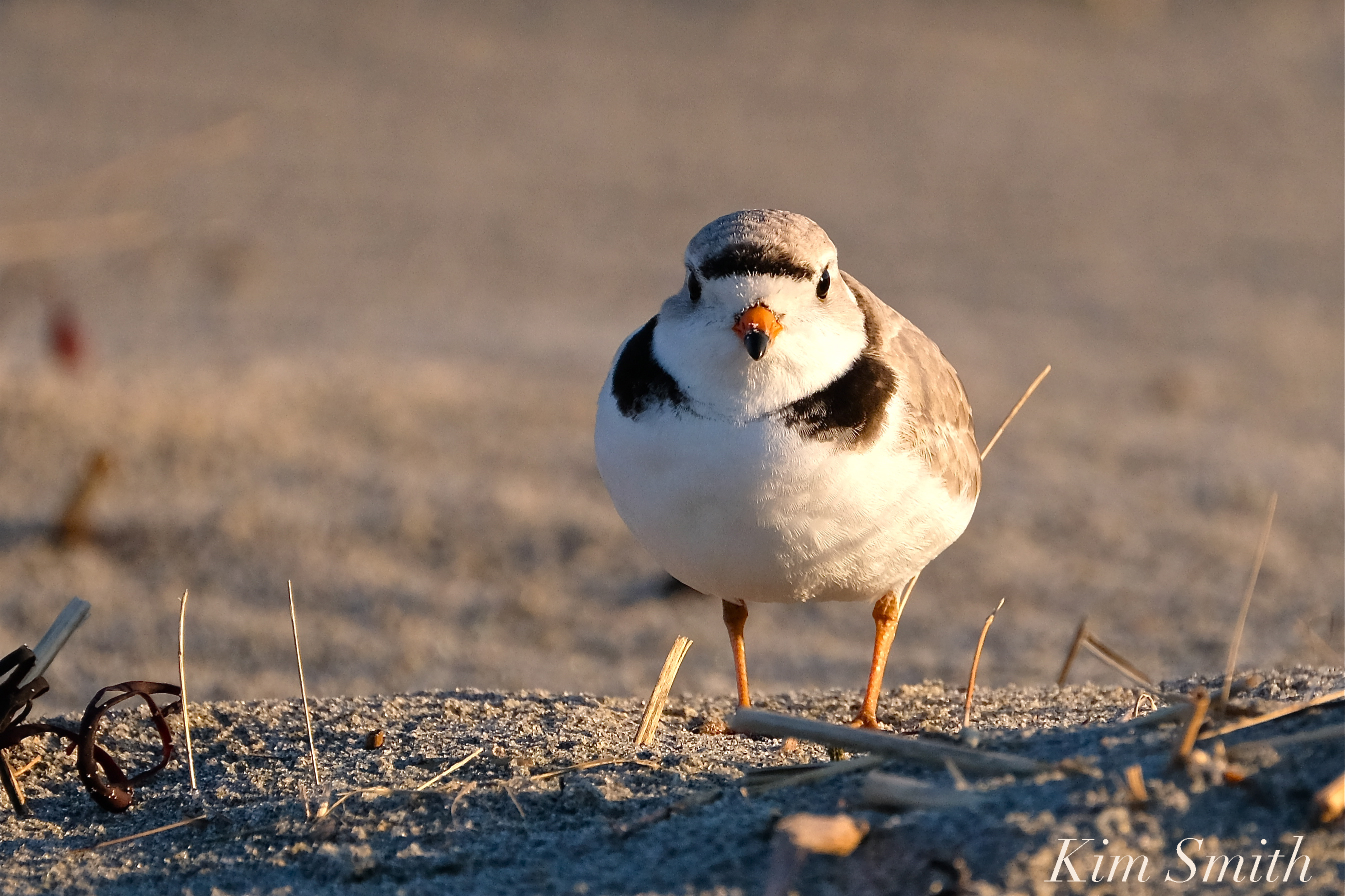
The Piping Plovers have a nest and it is not in the parking lot! Four beautiful, perfect eggs are now being tended to by both Mama and Papa Plover on the beach, in the same general location as the 2016 and 2017 nest locations.

Early this morning, Essex Greenbelt’s Dave Rimmer, assisted by intern Fionna Hill, installed the wire exclosure that helps protect the Piping Plover eggs from canid, avian, and human disturbance and destruction.

Dave is permitted by Mass Wildlife, and is an expert in, building and installing PiPl wire exclosures. Dave and Fionna constructed the exclosure together outside the nesting area so that when they actually had to step into the nesting area to place the exclosure there was minimal disturbance to the nest. Dave noted that it only took the two of them about fifteen minutes to install the wire structure around the nest, and Papa Plover was back sitting on the nest within one minute of completion.

Gloucester’s conservation agent Adrienne Lennon was present at the onset, but had to tend to issues related to the dyke construction at Goose Cove. Dave’s new assistant, Fiona Hill, will be helping to monitor the Plovers for the summer. She grew up in Newburyport and is a a junior at UMass Amherst. Welcome to Good Harbor Beach Fiona and we look forward to working with you!

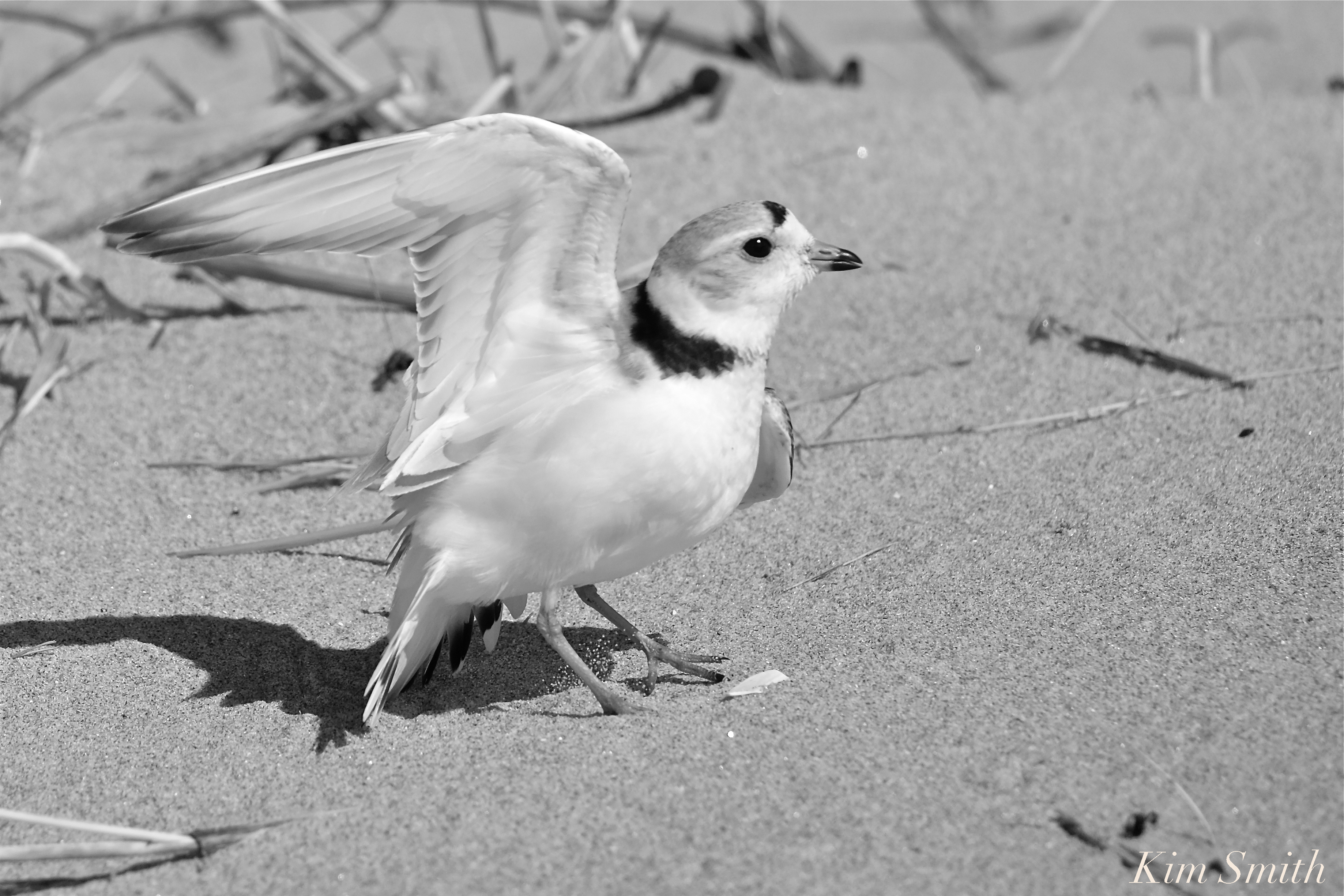
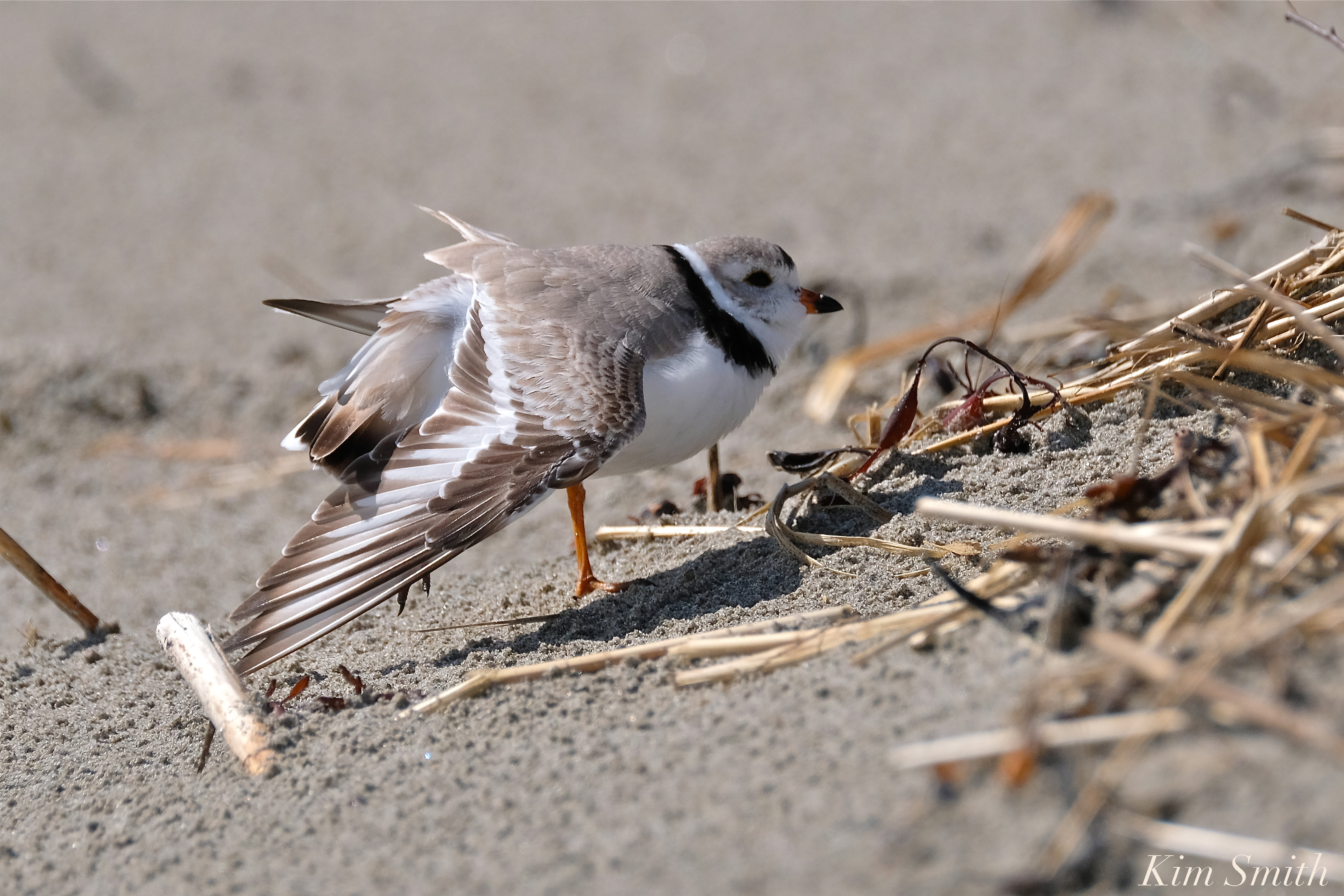
Papa feigning a broken wing in a classic diversionary display to distract predators.

So sorry the photos are very much on the pink side. I should convert the whole batch to black and white. My darling granddaughter was playing with my camera over the weekend and all the settings were messed up–the photos from the Cape Ann Museum were taken with the white balance set to underwater, and the beach photos this morning set to nine on the red scale! At least now I know how to fix it if it happens again 🙂

Papa back on the nest within a minute of exclosure installation completion.

https://instagram.com/p/BxIJsEBnOariOcakySGMutT2XKm8aFVEpLTtfY0/

https://www.instagram.com/p/BxIKWF6nl9mmOn3msQlnck_XQpIWs5TEMwHsMo0/

HOW TO ATTRACT HUMMINGBIRDS (AND KEEP THEM COMING) TO YOUR GARDEN

A Ruby-throated Hummingbird’s diet is comprised of nectar and insects. In early spring there isn’t much to offer in the way of flowering sustenance or insects. Around the first of April, we take our feeders out of storage, give them a good wash with vinegar, soap, and water, fill with a sugar/water mixture, and hang them throughout the garden.

Sugar water recipe: 4 parts water to 1 part sugar. Stir to dissolve thoroughly. Never add red dye or replace the sugar with honey. Provide fresh sugar/water every 4 – 5 days. The water will need to be changed more frequently in hot humid weather. Discard water that has black mold and clean feeders throughly.

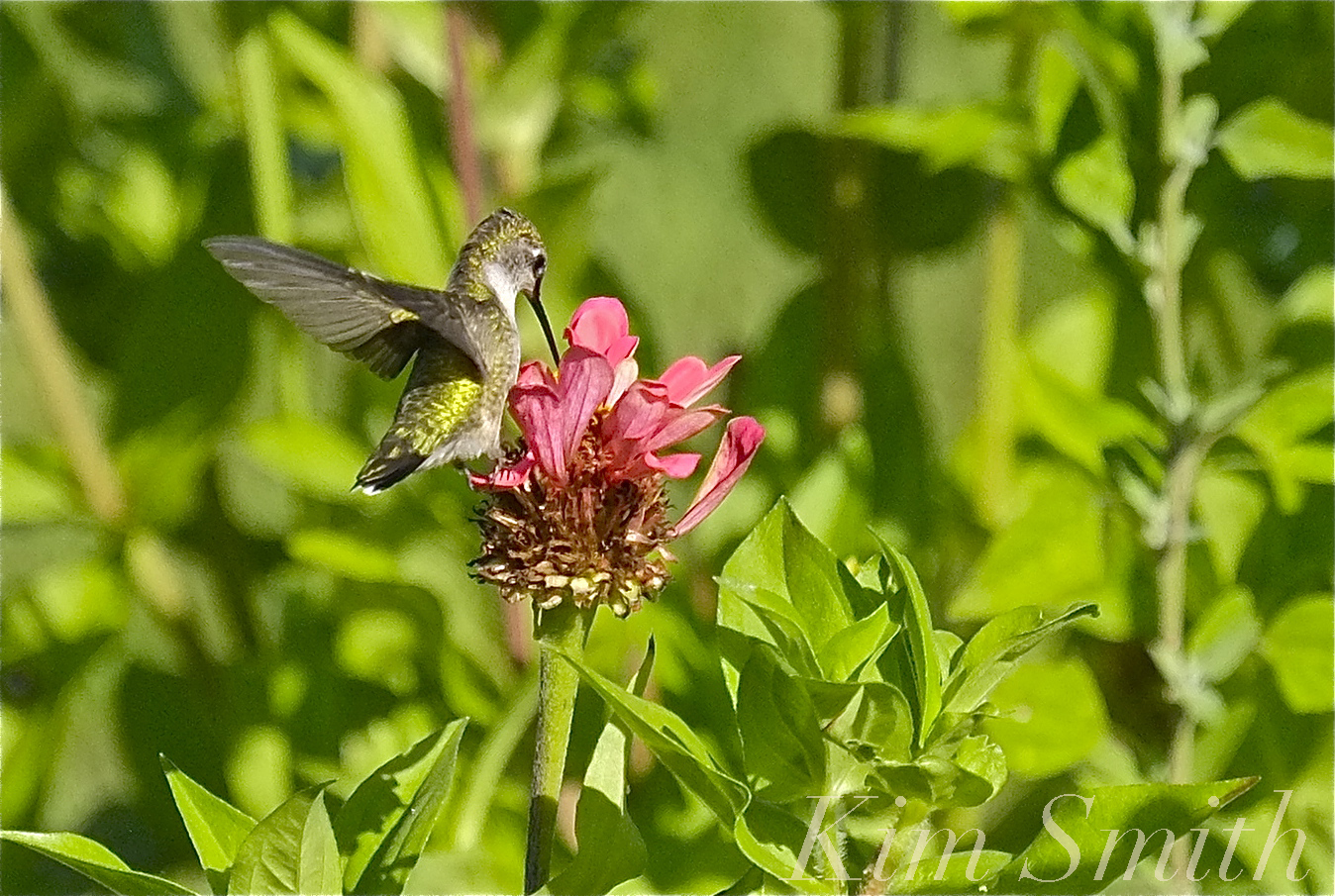
You can keep hummingbirds coming to your garden throughout the growing season by providing nectar-rich tubular-shaped flora in shades of primarily red, orange, and yellow (although I see them drinking nectar from a rainbow of hues), along with flowers comprised of small florets that attract small insects (the florets at the center of a zinnia plant, for example).

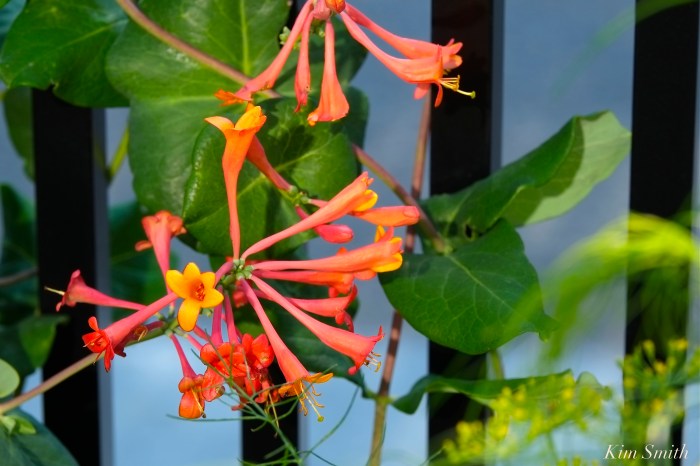
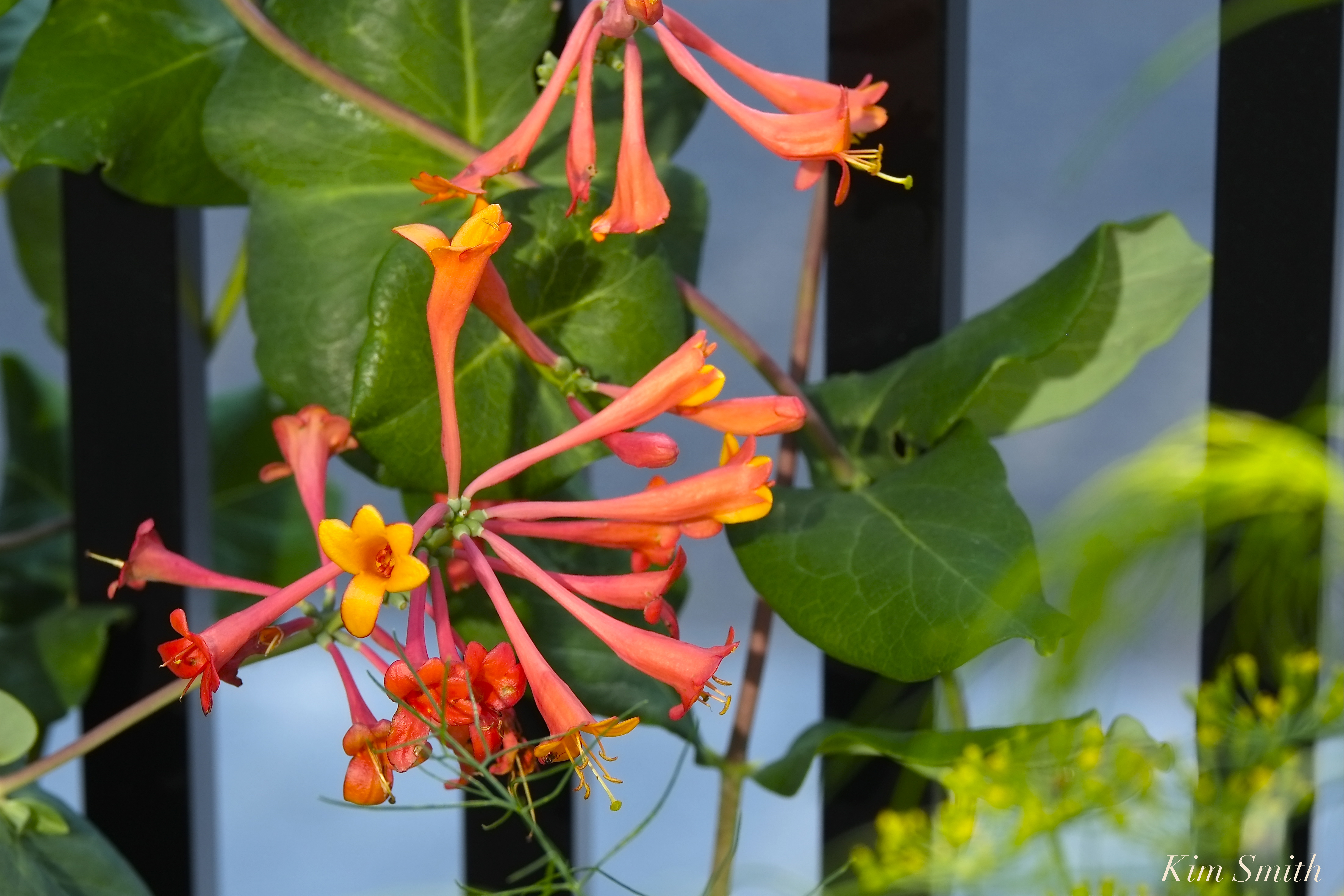
If I could only grow one plant to attract the Ruby-throats, it would be honeysuckle. Not the wonderfully fragrant, but highly invasive Japanese honeysuckle, but our beautiful native Trumpet Honeysuckle (Lonicera sempervirens) that flowers in an array of warm-hued shades of Spanish orange (‘John Clayton’), deep ruby red (‘Major Wheeler’), and my very favorite, the two-toned orange and red ‘Dropmore Scarlet.’


Lonicera sempervirens ‘Dropmore Scarlet’

Trumpet Honeysuckle has myriad uses in the landscape. Cultivate to create vertical layers, in a small garden especially. Plant Lonicera sempervirens to cover an arbor, alongside a porch pillar or to weave through trelliage. Allow it to clamber over an eyesore or down an embankment. Plant at least one near the primary paths of the garden so that you can enjoy the hummingbirds that are drawn to the nectar-rich blossoms. We practically bump into our hummingbirds as they are making their daily rounds through the garden flora.

Did you know Ruby-throated Hummingbirds make a funny squeaky sound? I began to take notice of their presence in our garden, when at my office desk one afternoon in late summer, with windows open wide, I heard very faint, mouse-like squeaks. Glancing up from my work, fully expecting to see a mouse, and was instead delighted to discover a female Ruby-throated Hummingbird outside my office window, nectaring at the vines. Trumpet Honeysuckle not only provides nectar for the hummingbirds, it also offers shelter and succulent berries for a host of birds.

The following are several posts written over the years to help readers attract Ruby-throated Hummingbirds to their homes and gardens.

Ruby-throated Hummingbird

A Hummingbird’s Perspective

Where to Place Your Hummingbird Feeders

A question written awhile back from my friend Kate:

Where do you place the feeders? Are they okay out in the open and, if so, do the hummingbirds become too nervous to feed if they can be seen by birds of prey?

Ruby-throated Hummingbirds prefer feeding at a station where they perch and observe the landscape, and then zoom in. Hang feeders on the lower limbs of trees and on shepherd’s hooks close to shrubs and above perennial wildflowers, about five to six feet off the ground. I haven’t read or heard too much about birds of prey in regard to hummingbirds; they move too fast, however, bluejays are said to attack nestlings. House cats and praying mantis pose a more serious threat to hummingbirds.

Eye-catching Red Riding Hood tulips, although not a good source of nectar, will attract by the sheer brilliance of their color, are a wonderful species tulip that reliably returns year after year, and multiplies. We plant Red Riding Hood tulips beneath the boughs of flowering and fruiting trees and shrubs, in hopes, that they too will lure the hummingbirds to our garden during their northward migration. And then, again with high hopes, that the hummingbirds will nest in our garden. For the past nine years, it has been our great good fortune to host throughout the nesting season female Ruby-throated Hummingbirds and then later in the summer, their fledglings!

Mallows provide nectar in later summer and Red Riding Hood tulips attracts by their color. Both are perennial.

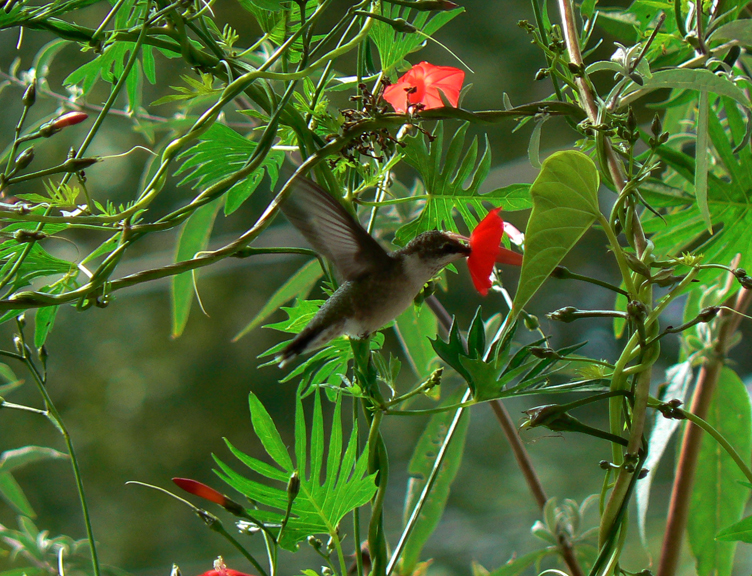
The later blooming annual vine, Cardinal Climber, provides nectar for southward migrating RT Hummingbirds.


A chance encounter with the brilliant emerald green feathered female Ruby-throated Hummingbird, drinking nectar from the Wild Sweet William growing in the sand at the base of the Welcome Good Harbor Beach sign.

She is drinking nectar from the wildflower Saponaria officinalis. The plant’s many common names include Soapwort, Bouncing-bet, and Wild Sweet William. The name Soapwort stems from its old fashioned use in soap making. The leaves contain saponin, which was used to make a mild liquid soap, gentle enough for washing fine textiles.

Saponaria blooms during the summertime. Although introduced from Eurasia, you can find this wildflower growing in every state of the continental US.

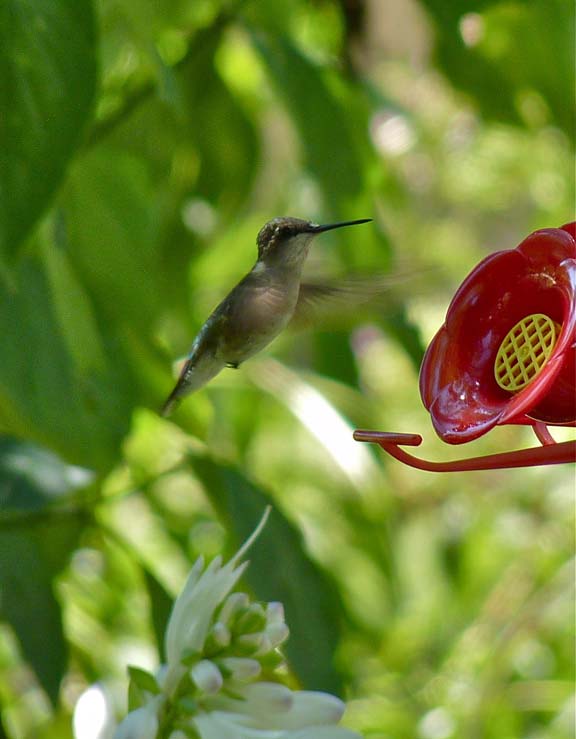
The hummingbird in the clip is a female. She lacks the brilliant red-feathered throat patch, or gorget, of the male. Ruby-throated Hummingbirds are all around us, you just have to know what to plant to bring them to your garden. Mostly they eat tiny insects but if you plant their favorite nectar-providing plants, they will come!

BEAUTIFUL COMMUNITY FAREWELL SEND OFF FOR CAPE ANN MUSEUM’S RHONDA FALOON

Cape Ann Museum’s beloved director Rhonda Faloon’s retirement celebration was held Saturday afternoon at the Cape Ann Museum. The Museum’s auditorium was filled to overflowing with friends and well wishers. Commendations and heartfelt speeches were given by Mayor Sefatia, Councilors Paul Lundberg and Scott Memhard (on behalf of all the City Councilors), Representative Ann Margaret Ferrante, and State Senator Bruce Tarr. Everyone spoke of the community’s deep appreciation for the outstanding work achieved by Rhonda during her tenure. 

Thank you to Rhonda for all she has given to the Cape Ann Museum and to the community. She has touched so many and will be deeply missed by everyone she has worked with. We hope so much Rhonda enjoy’s her retirement, and Emma and Maggie, enjoy a non-museum themed vacation 🙂


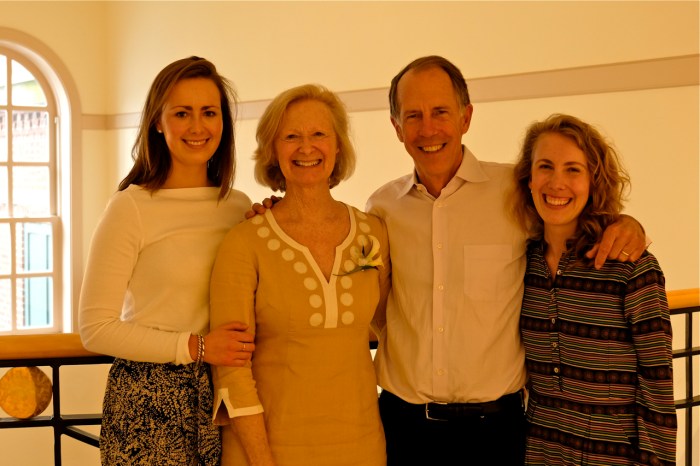
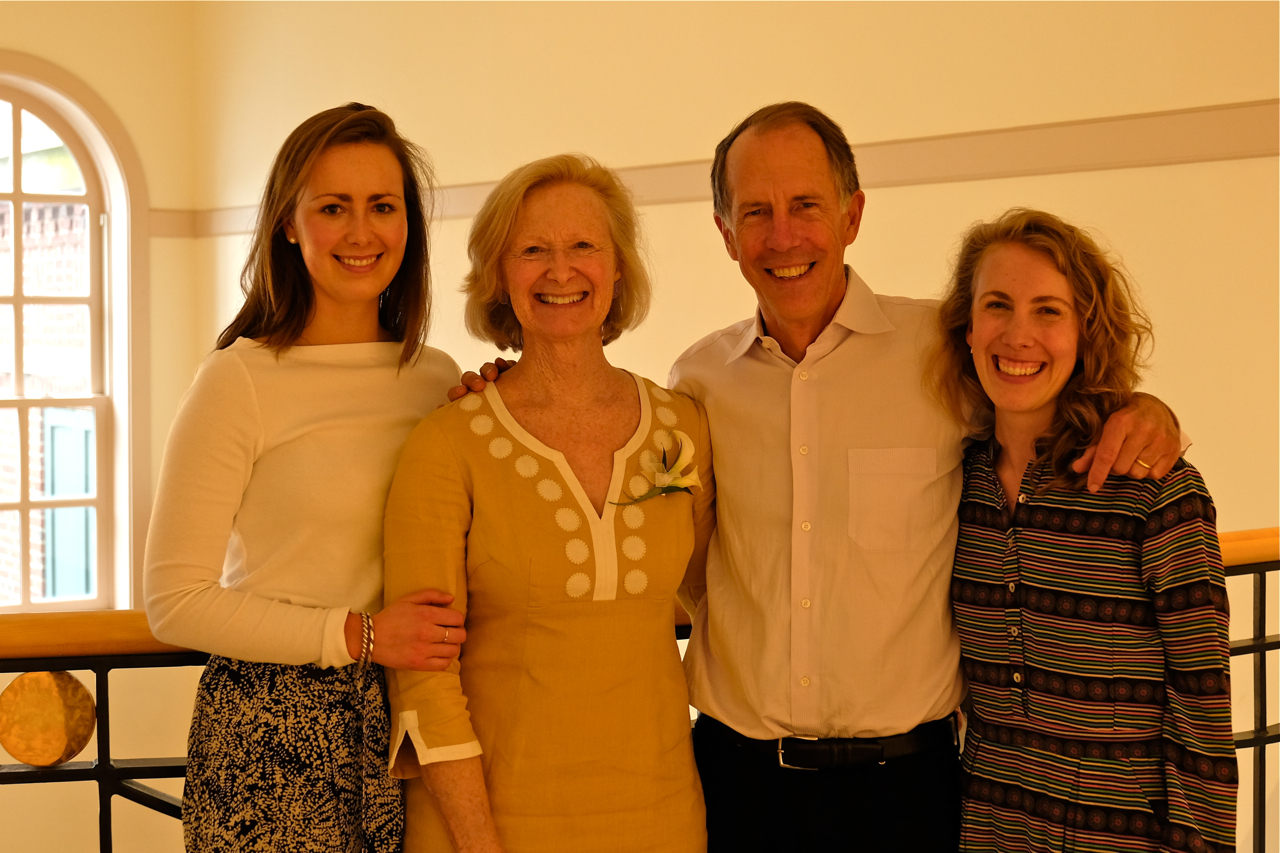
Emma, Rhonda, Rob, and Maggie

BSO GUEST ARTISTS AND HOLLYWOOD COMPOSER SET FOR CAPE ANN SYMPHONY SEASON FINALE

CAPE ANN SYMPHONY

THE 67th  SEASON

Yoichi Udagawa, Music Director

CAPE ANN SYMPHONY‘S FINAL CONCERT OF THE EXPANDED 67thSEASON FEATURES

BSO GUEST ARTISTS: LUCIA LIN & OWEN YOUNG

&

HOLLYWOOD COMPOSER MIKLOS ROZSA

Cape Ann Symphony finishes the orchestra’s 67th Concert Season on Saturday, May 18 at 7:30 pm at the Manchester-Essex High School Auditorium on 36 Lincoln Street in Manchester-by-the-Sea, MA and on Sunday, May 19 at 2 pm at the Dolan Performing Arts Center at Ipswich High School on 134 High Street, Ipswich, MA with From the New World and Beyond featuring BSO violinist Lucia Lin and BSO cellist Owen Young, and composers Miklos Rozsa and Antonin Dvorak. Cape Ann Symphony Music Director and Conductor  Yoichi Udagwa looks forward to this exciting program, “We are closing our 67th Season with Antonin Dvorak’s ever popularNew World Symphony and two works by Miklós Rózsa – the Parade of the Charioteers from the Academy Award winning score for the acclaimed major motion picture Ben Hur and Sinfonia Concertante for Violin, Cello and Orchestra. Violinist Lucia Lin and cellist Owen Young will be the soloists. Rózsa’s Sinfonia Concertante is an incredible work of virtuosity for the soloists and orchestra alike, and it is full of gorgeous melodies and fascinating harmonies. As it’s probably not familiar, we will introduce the music with some short examples/explanations. I know our audiences will love this music!”

In 1931 the then unknown composer Miklós Rózsa and his friend the esteemed Swiss composer Arthur Honegger presented an evening of chamber music in Paris, France, Honegger’s birthplace and home for most of his life. They played Rózsa’s Sonata for Two Violins and Honegger’s Sonata for Two Violins and some of Rózsa’s piano pieces. The evening was a great success with the audience. However, when Honegger said they earned $15; Rózsa declared, “Is that all? I am young; nobody knows me in Paris. But you’re a great master. How do you make a living?” Honeger replied: “I write film music.” Honegger composed over 23 film soundtracks during his career. Soon after that concert, Rózsa moved to Hollywood, and went on to produce scores for 96 films. He was nominated for an Academy Award for Best Original Score seventeen times and won the coveted award three times: 1946 for Spellbound, 1948 for ADouble Life and 1960 for Ben Hur. CAS Conductor Udagawa points out,” The orchestra will play The Parade of the Charioteers from the Ben Hur score. Many CAS audience members will recognize this iconic music from the hit film. It will be tremendously exciting to play such a majestic piece live for CAS audiences.”

Rózsa’s first major classical success was his Theme, Variations, and Finale, Op. 13, for orchestra which was premiered in Duisburg, Germany, in 1934. It was performed in Europe by Charles Munch, Karl Böhm, Bruno Walter and Hans Swarowsky, and in America by the Chicago Symphony Orchestra under Hans Lange and the New York Philharmonic under Leonard Bernstein. One of Rózsa’s most renowned concert scores is his Sinfonia Concertante for Violin, Cello and Orchestra , the piece which Cape Ann Symphony will play with guest artists violinist Lucia Lin and cellist Owen Young.

Lucia Lin made her debut performing Mendelssohn’s Violin Concerto with the Chicago Symphony Orchestra at the age of 11. Since then, she has been a prizewinner of numerous competitions, including the 1990 International Tchaikovsky Competition in Moscow. She has performed many solo recitals for the Cape Ann Symphony and throughout the U.S., making her New York debut at Carnegie Recital Hall in March 1991, and has appeared with the Boston Pops Orchestra, St. Louis Symphony Orchestra, Oklahoma Symphony Orchestra, Cincinnati Chamber Orchestra and Festival Orchestra in Graz, Austria. Ms. Lin is a member of the Muir String Quartet, the quartet in residence at Boston University. She is also a founding member of the Boston Trio and the chamber group Innuendo. Ms. Lin joined the Boston Symphony Orchestra in 1985 and served as assistant concertmaster from 1988 to 1991 and 1996 to 98.

Cellist Owen Young joined the BSO in August 1991. He is a frequent collaborator in chamber music concerts and festivals; he has also appeared as concerto soloist with numerous orchestras. One of the Cape Ann Symphony’s regular soloists, he also has appeared in the Tanglewood, Aspen, Banff, Davos, Sunflower, Gateway, Brevard, and St. Barth’s music festivals and is a founding member of the innovative chamber ensemble Innuendo. He has performed frequently with singer/songwriter James Taylor, including the nationally televised concert “James Taylor Live at the Beacon Theatre” in New York City. Mr. Young was formerly on the faculties of the Boston Conservatory, the New England Conservatory Extension Division, and the Longy School of Music; is currently on the faculty of Berklee College of Music; and is active in Project STEP (String Training and Education Program for students of color)

Founded in Gloucester in 1951, the Cape Ann Symphony is a professional orchestra of over 70 players from throughout the New England area. They perform a subscription season of four concerts per year plus several Pops and youth concerts. The Symphony Board of Directors named Yoichi Udagawa the Music Director and Conductor of the Cape Ann Symphony in the summer of 2000 after a yearlong search. In addition to his leadership of Cape Ann Symphony, he is Music Director and Conductor of the Melrose Symphony Orchestra, and the Quincy Symphony Orchestra and a cover conductor at the Boston Pops Orchestra. Maestro Udagawa is on the faculty of the Boston Conservatory where he teaches conducting. Frequently invited to guest conduct, Maestro Udagawa has worked with many different orchestras including the Boston Pops Esplanade Orchestra, Nobeoka Philharmonic Orchestra, the Pro Arte Chamber Orchestra of Boston, the University of Texas Symphony Orchestra, the Indian Hill Symphony, the Garden State Philharmonic, the Brown University Orchestra, the Syracuse Society for New Music, the Boston Conservatory Orchestra, the Midcoast Symphony Orchestra, the Newton Symphony, the Austin Civic Orchestra, and the Mid-Texas Symphony. Maestro Udagawa is at home in popular and contemporary music as well as the standard symphonic repertoire. He is known for his relaxed manner and ability to speak from the podium which has helped new audiences as well as enthusiasts gain a greater appreciation for symphonic music. His programs often include premieres of new works – some specially commissioned for the orchestra — as well as great orchestral works across the symphonic repertoire and lively Pops programs. He is also an integral part of the Cape Ann Symphony Youth Initiative.

Yoichi Udagawa, the son of a nuclear physicist father and singer/artist mother, was born in Tokyo, Japan in 1964. His family immigrated to the United States soon thereafter. He began playing the violin at age four and made his conducting debut at age fifteen. After receiving a music degree from the University of Texas at Austin, he continued advanced studies in conducting with Gunther Schuller, Seiji Ozawa, Morihiro Okabe, and Henry Charles Smith. A fan of many different styles of music, Mr. Udagawa also enjoys performing gospel music in addition to his conducting activities. He is also an accomplished violinist and an avid fan of exercise and yoga.

Cape Ann Symphony’s From the New World and Beyond is Saturday, May 18 at 7:30 pm at the Manchester-Essex High School Auditorium on 36 Lincoln Street in Manchester-by-the-Sea, MA and  Sunday, May 19  at 2 pm at the Dolan Performing Arts Center at Ipswich High School on 134 High Street, Ipswich, MA. Pre-Concert Lectures begin 30 minutes prior to the start of each concert.  Single ticket prices are $43 for adults, $38 for senior citizens, $15 for students of any age; $5 for youth 12 years old and under. For information, call 978-281-0543 or visit www.capeannsymphony.org

Photos:
Cape Ann Symphony Guest Artists
Lucia Lin, Violin
Owen Young , Cello
Courtesy photos

Free! Spring Bird Walk at Eastern Point Wildlife Sanctuary

Mass Audubon’s Ipswich River Wildlife Sanctuary is offering a free bird walk at Eastern Point Wildlife Sanctuary in Gloucester on Wednesday, May 8 from 9:00-11:00 a.m. Join Ipswich River Wildlife Sanctuary Director Amy Weidensaul for a walk that will traverse beautiful coastline and wetlands as well as forested habitat. We’ll search for migrating birds such as wood-warblers and flycatchers in the woodland edges, and for nesting birds such as Eastern Bluebirds, Bobolinks, and Field Sparrows in the grassland. We’ll also pay close attention to birdsong as we spend a slow-paced morning enjoying the nature of Massachusetts. Bring binoculars if you have them, or let us know when you register if you need to borrow a pair.

This program is supported in part by a grant from the Gloucester Cultural Council, a local agency which is supported by the Massachusetts Cultural Council, a state agency. Space is limited, and advance registration is required. To reserve your spot and get directions, call 978-887-9264 or register online at massaudubon.org/ipswichriver.

May 8, 2019 (Wednesday) 9:00am – 11:00am

Location:

Eastern Point Wildlife Sanctuary, Gloucester

Instructor:

Amy Weidensaul – Ipswich River Sanctuary Director

Audience:

Adult

THE EMPTY BOWL TONIGHT!

THE 19th ANNUAL EMPTY BOWL EVENT IS TONIGHT AT CRUISEPORT.

This wonderful family event raises money to support the Open Door hunger relief programs.

Empty Bowl

4 to 8pm

Cruiseport

6 Rowes Square Gloucester

978-282-9700

Cape Ann Finnish Theatre Opens

Eileen Fitzgerald and Terry Sands face off in The Betrothal the opening one act in a program of Finnish plays and scenes recreating the theatre world of the first Cape Ann Finnish immigrants this Friday May 3 at 7:30 and Sunday May 5 at 4 at the Lanesville Community Center, 8 Vulcan St., and on Saturday May 18 at 7:30 and Sunday May 19 at 4, at the Rockport Community House, 58 Broadway.

The $20 donation requested benefits the Lanesville Community Center and the Scholarship Fund Of Vasa Lodge 98, Spiran of Rockport.

Also in casts are: Karl and Heidi Pulkkinen, Anne Hyde, Martin Ray, Randy Dupps, Scott and Kierstin Hazzard, Chuck Francis, Tom Moriarty and Sarah Clark.

Show is produced by Valerie Nelson of  Lanesville Community Center and directed by Sarah Clark Of Rockport Community Theatre.

GOLFERS WANTED!! CASTING AGENT LOOKING FOR GOLFERS FOR UPCOMING PROJECT!

NOTICE FROM SLATE CASTING

GOLFERS WANTED!!!!!

We are currently casting GOLFERS for an upcoming project!
No acting experience required, but GOLF experience a must!!
See below and pass it along to all your golf buddies!

Non Union
GOLFERS
Male & Female
Age 30-60

Must be available May 7th or 8th

Pays $1000 (+20% if you have an agent) IF CAST

Interested?
Email us the following no later than Friday at 12pm:

1- Name
2- Contact Information including phone number
3- A couple recent photos of you
4- A short video of your golf swing
5- Give us a brief description of your golf experience

Send to SlateCastingSports@Gmail.com

Please put GOLFER in the subject line

Thanks so much!
Ashley & Marina

Slate Casting | 162 Columbus Avenue, Boston, MA 02116
Update Profile | About our service provider
Sent by slatecastingsports@gmail.com

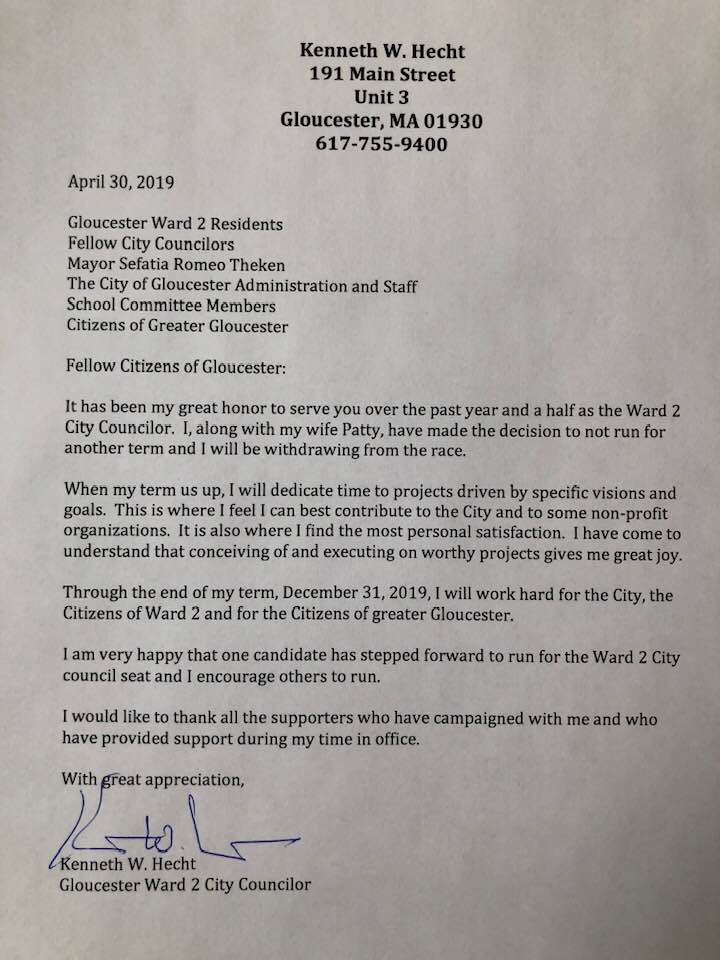
SO SORRY TO SEE WARD TWO COUNCILOR KEN HECHT WITHDRAWING FROM THE RACE

THANK YOU KEN FOR YOUR DEDICATION TO GLOUCESTER AND FOR ALL YOUR OUTSTANDING GOOD WORK AND GREAT INITIATIVES. 

Ken writes, “It has been and will continue to be a great honor to serve through the end of the year as Gloucester’s Ward 2 City Councilor. Today I am announcing my withdrawal from the race for that office. I have learned that setting a vision, identifying goals and executing towards a vision is something that gives me great personal joy especially when combined with what is good for Gloucester.

Be it the lights in the trees on Main Street, the holiday storefront decorating contest, the Wheelhouse Co-Working space or the West End Artist Studios, These have all brought great joy to me and I hope have been good for the city.

So the plan is to sharpen the focus and to work on great initiatives for the city and for particular non profits going forward. To bring more energy to these, not less.

Please have a look at the attached letter.

I want to sincerely thank all of the people who have supported me both in campaigning and while in office. Together I feel we have and will continue to make positives strides in the community that we love.

I will be in office through the end of the year and we have a lot to do so let’s keep going! And on January 1, and beyond let’s keep cranking!”

Nature rarer uses yellow

Nature rarer uses yellow
Than another hue;
Saves she all of that for sunsets,—
Prodigal of blue,

Spending scarlet like a woman,
Yellow she affords
Only scantly and selectly,
Like a lover’s words.

Emily Dickinson

Photos from the planters that surround the Black Sheep Restaurant at the Kendall Hotel. We made an extra beautiful mix this year, and many of the varieties are fragrant. The weather was kind to tulips and daffodils this year. The nicest thing though is when city dwelling passers-by stop to take photos and tell you how happy the flowers make them feel 🙂

Black Sheep Restaurant and Bar at The Kendall Hotel

350 Main Street

Cambridge, MA 02142

For reservations call 617-577-1300


THE GOOD HARBOR BEACH PIPING PLOVERS UPDATE

It’s been another unseasonably cold and wet week for the Good Harbor Beach Piping Plovers (and all of we humans, too!). This morning, April 29th, at 5:45 am it was 36 degrees, and I nearly lost my balance on the unexpectedly frost-covered footbridge.

Crickly creek frosty morning at Good Harbor Beach

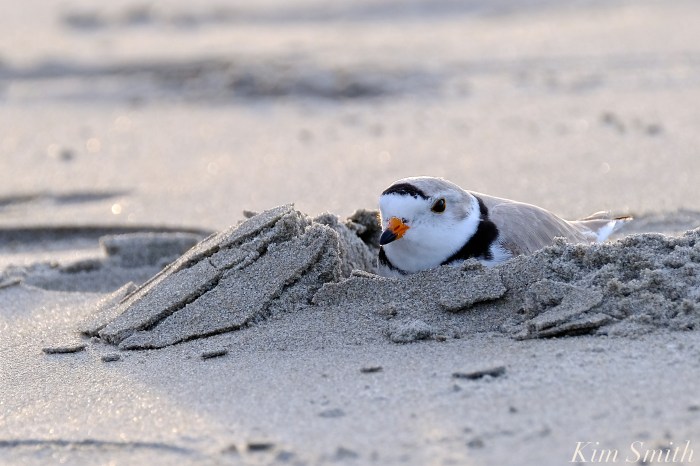
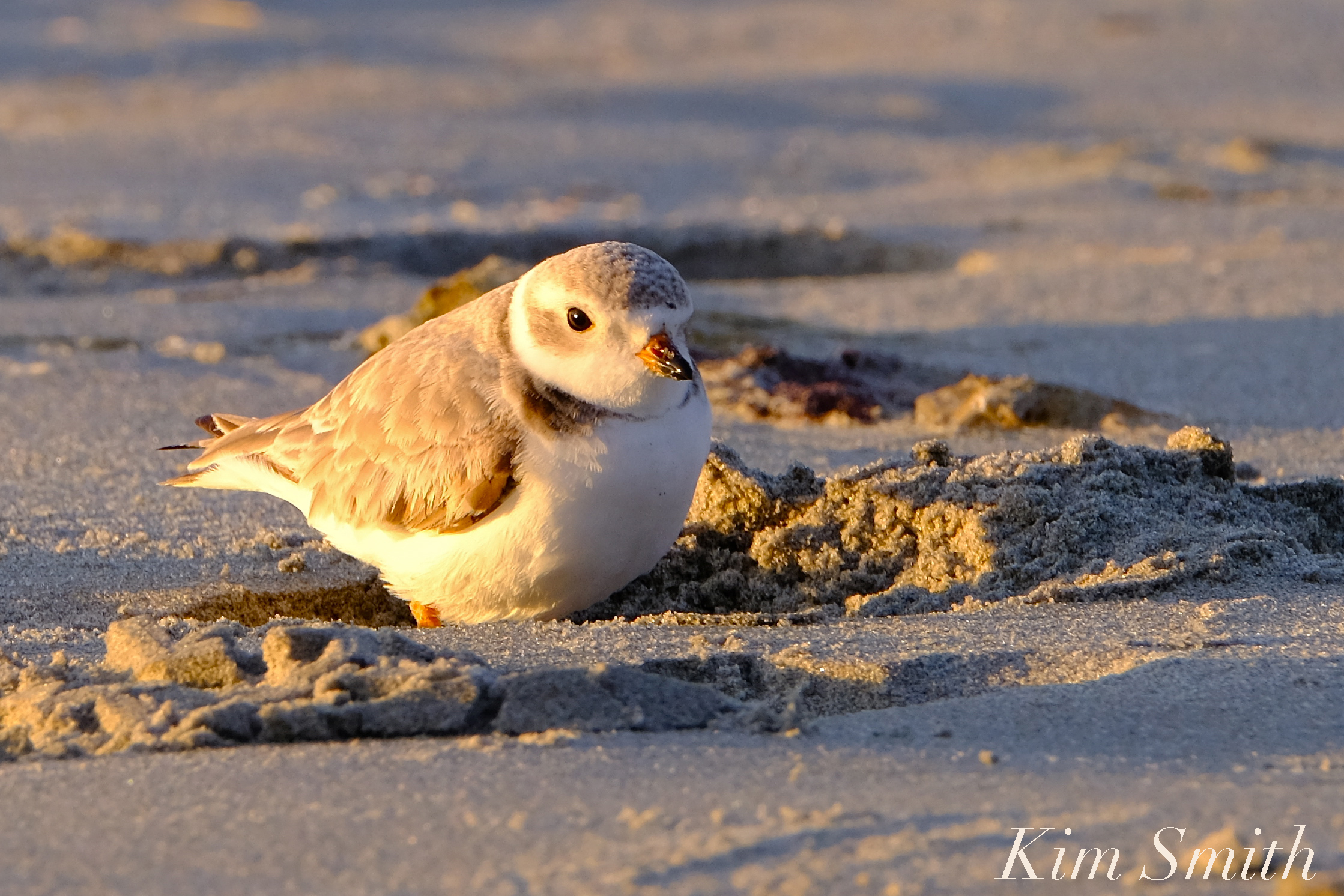
On the few warmer days we’ve had, the PiPls are courting and mating, but on freezing cold, wet, and windy days, they hunker down in divots and behind mini hills in the sand, and that’s exactly where I found them this morning. We should be seeing eggs any day now; perhaps Mama is just waiting for the weather to turn a bit warmer.

Hunkering down in sandy divots during cold, windy weather

The issue of dogs running through the roped off nesting areas has greatly subsided, thanks to the ordinance change, to increased enforcement by our dog officers Jamie and Teagan, to Piping Plover monitor presence over the past month, and to the bold new signage. We can see very clearly how fewer dogs on the beach has affected the plover’s behavior. Unlike the first two and half weeks of April where there were still many, many dogs on the beach, the PiPls are only occasionally seen in the parking lot.

Thank you to Gloucester’s awesome DPW crew, who in anticipation of the past weekend’s running race, encircled the plover’s nesting area with sawhorses and police tape.

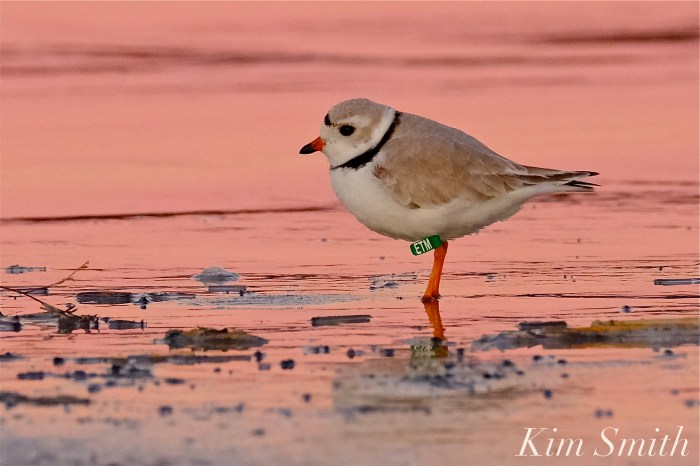
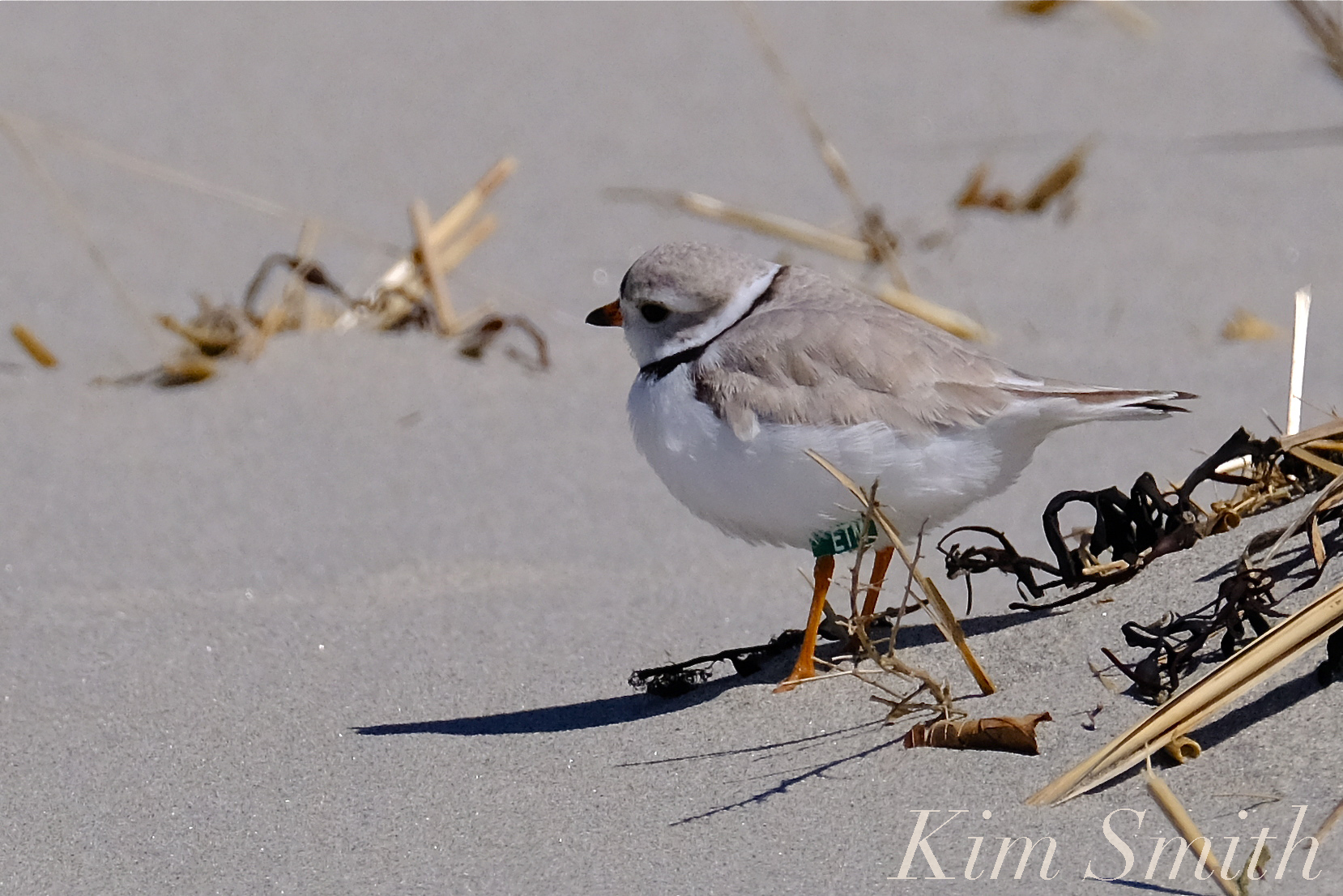
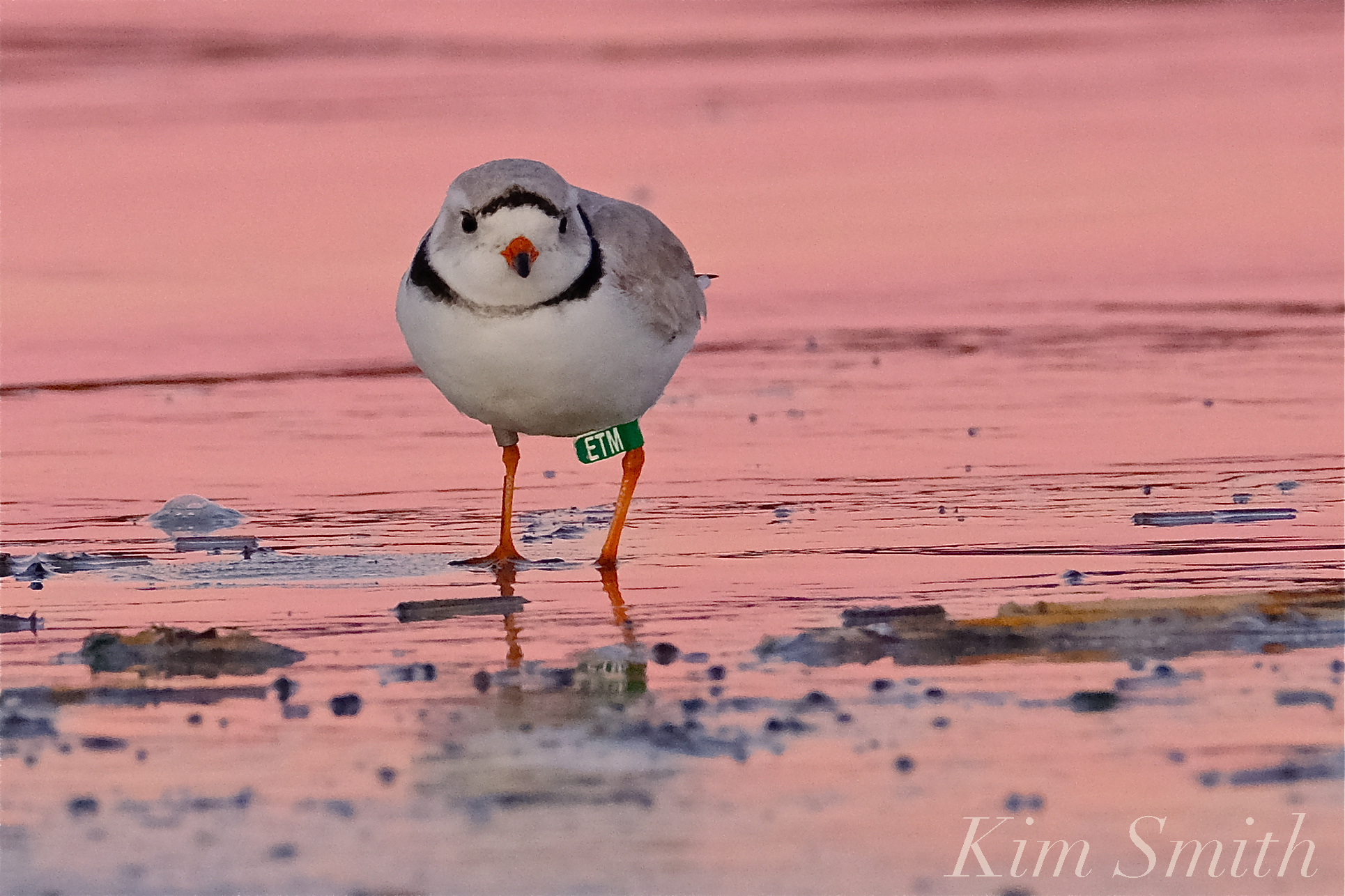
We have seen a total of FIVE different Piping Plovers at Good Harbor Beach over the past two weeks, our mated Mama and Papa pair, the Bachelor, ETM (the banded PiPl from Cumberland Island, Georgia that Heather Hall spotted), and a mystery fly-by-night female.

We were hoping the new girl would stay long enough to strike up a piping conversation with the Bachelor, but she flew in for a one night stopover and has not been seen since. She was very distinctly pale, with only the faintest head band and collar band.

Fly-by-night female

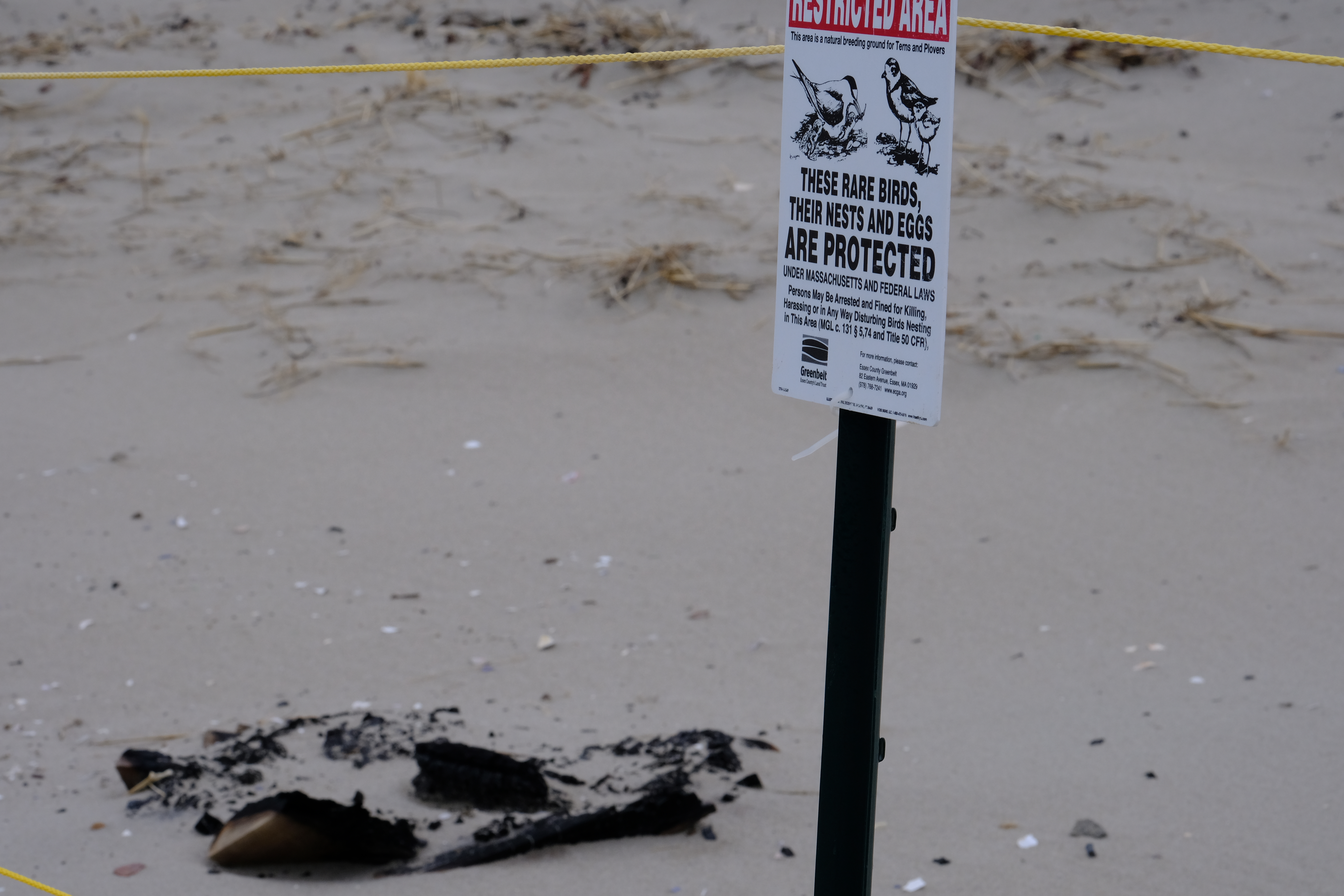
There is one bit of troublesome news to share and that is someone had a bonfire within the roped off nesting area. The police chief and and the federal agent assigned to Good Harbor Beach have both been made aware of the bonfire.

We are grateful and thankful to all who are helping the PiPls successfully nest, especially those who are using Gloucester’s alternative locations to walk their dogs.

Photos from PiPl check 4-29-19

Papa

Mama

Bachelor

Sawhorses and police tape in the parking lot, with thanks to the DPW staff

GLOUCESTER’S DPW MIKE TARANTINO AND KEVIN MAZZEO ON THE JOB!

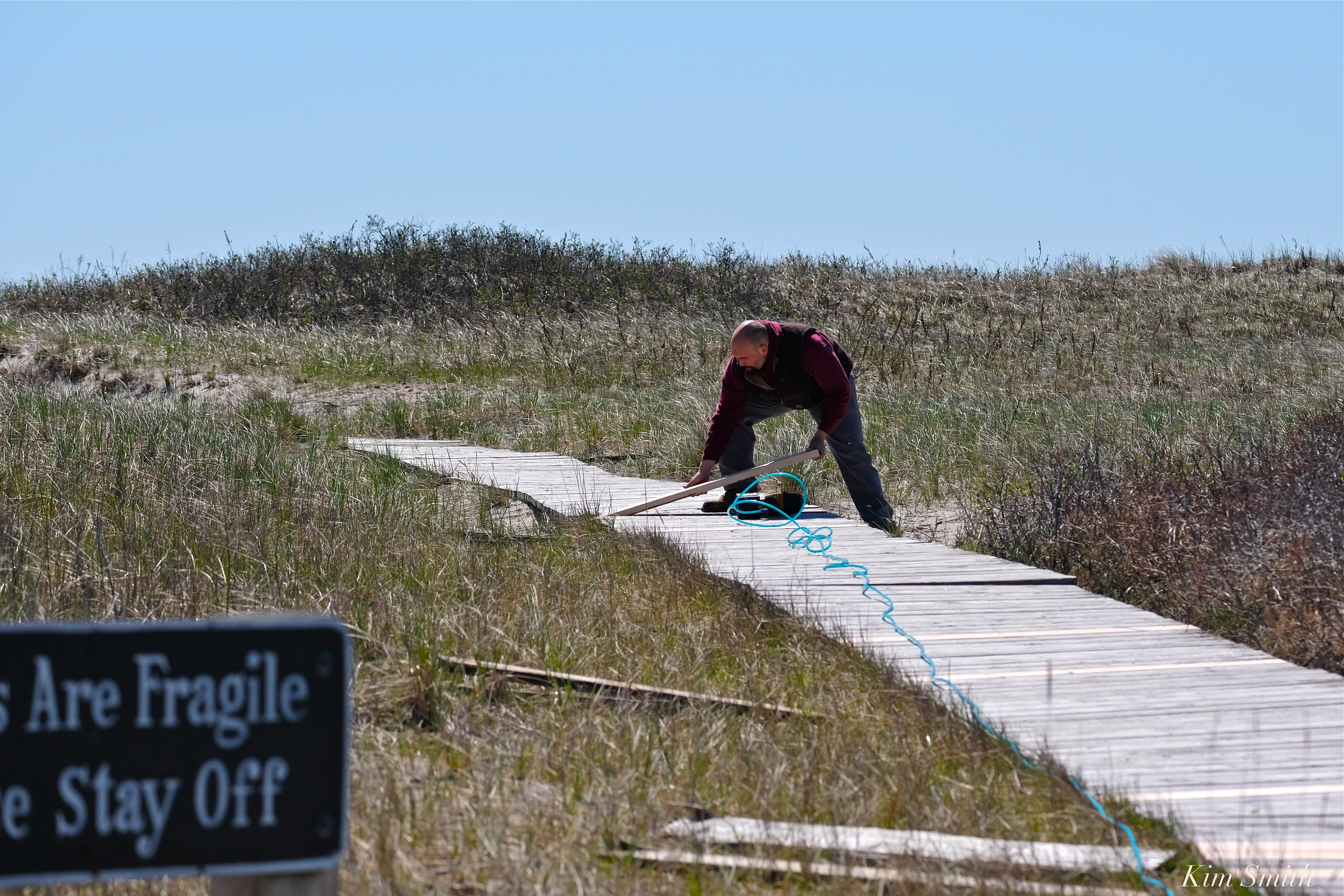
Kevin Mazzeo and Mike Tarantino repairing the No. 3 boardwalk today.

Thanks so much to Mike and Kevin, and to the entire DPW crew, who do such a tremendous job in keeping Gloucester citizens safe, and the City looking her best and most beautiful.

GROVE! A FABULOUS NEW NORTH SHORE RESTAURANT SERVING BREAKFAST, LUNCH, DINNER, AND BRUNCH – Check out their menus here!

The fabulous and fantastic brand new restaurant, Grove, opened this past week. The restaurant is part of the Briar Barn Inn, spa, and art gallery complex, which is located at 101 Main Street in Rowley. I was invited to attend a soft opening by my friend Sarah Boucher, Briar Barn Inn’s Director of Sales and Marketing, and had the joy of sharing breakfast with her charming husband Jeff and their adorable daughter Cordelia.

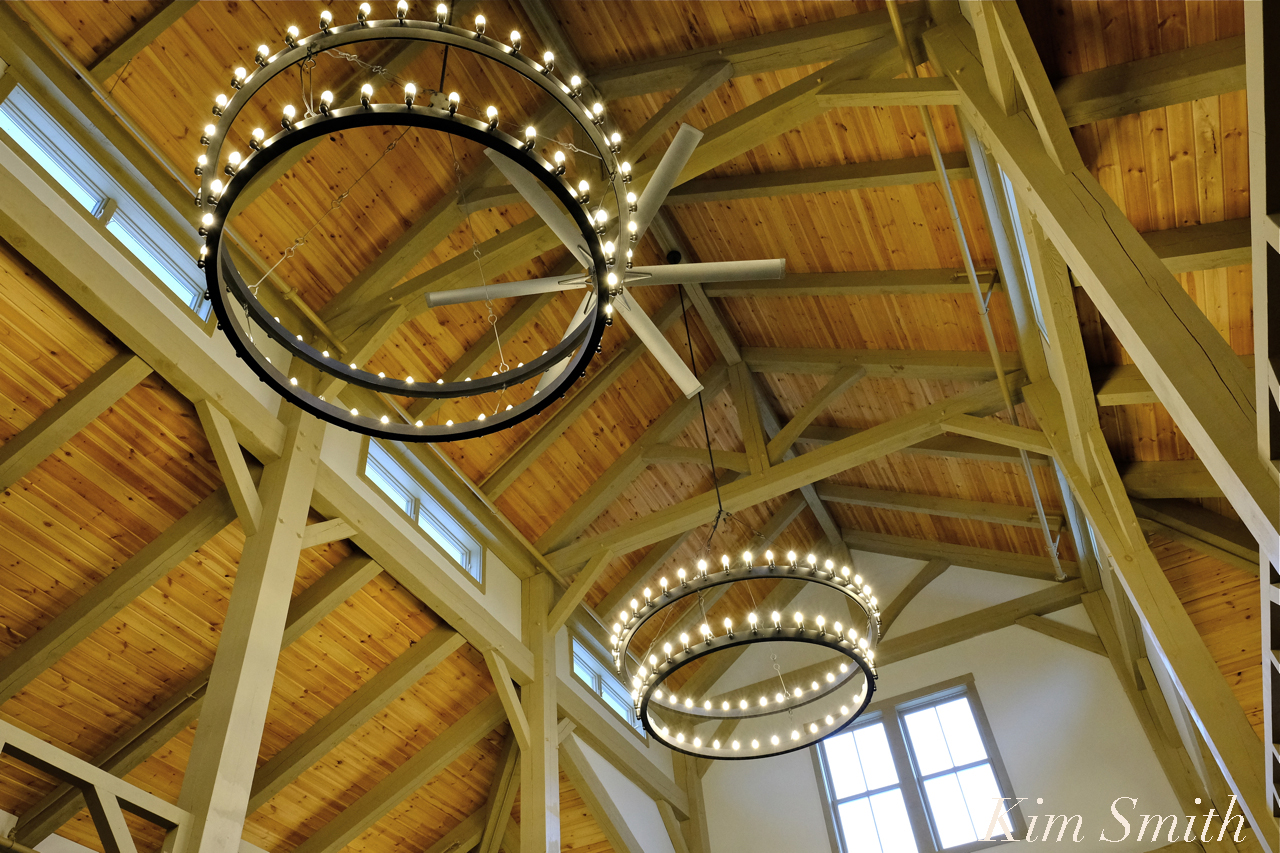
The country-style restaurant is simply beyond gorgeous, with soaring post and beam ceilings and natural light spilling in all around. The beautiful light fixtures create a warm, ambient glow and the furnishings are an inviting mix of modern comfort with Swedish farmhouse style and country French.

The space is not only open for breakfast, lunch, dinner, and brunch, but is ideally perfect for small to mid-sized weddings, as well as a host of events including company meetings and parties. And the staff is wonderfully kid friendly, too 🙂

If you have ever attended a wedding or special event at Willowdale Estate, then you know of their renowned catering team and how exquisitely delicious is the fare. Chef Ben Lightbody, Willowdale’s Executive Chef, is also the Executive Chef at Grove, and he has created an outstanding menu.

I really don’t need to say more, but just in case you have never sampled Willowdale’s offerings, Grove’s French toast, with cinnamon crème anglaise, is the best French toast I have ever had, and I make really good French toast. The outer layer was a thin perfectly butter browned crust, while the bread was moist and tender inside. The cinnamon crème anglaise was pure perfection and the candied pecans made for a wonderfully crunchy counterpoint. I cannot wait to bring my family and try lunch and dinner!

SPRING HOURS

Sunday: 9:00am – 9:00pm

Monday: Closed

Tuesday – Thursday: 7:30am – 9:00pm

Friday: 7:30am – 10:00pm

Saturday: 9:00am – 2:00pm

* Alcoholic beverage service begins at 11am

Call or Email for Reservations:

978-484-5166   |   Grove@BriarBarnInn.com

PLOVERS NESTING IN THE PARKING LOTS AT STAGE FORT PARK, O’MALEY, AND GOOD HARBOR BEACH

How to tell the difference between a Piping Plover and a Killdeer

This past week, we have received a half dozen reports of “plovers” nesting in local parking lots. Folks are correct, they are a type of plover, but they are not Piping Plovers. The bird is a more common sort, a Killdeer, and Killdeers, like Piping Plovers (and other species of plovers), share many similar courting, nest scraping, mating, and defensive behaviors.

Killdeer courting in the parking lot at Stage Fort Park

Killdeers have been nesting in the dunes and in the Good Harbor Beach parking lot for a number of years, and some years they even have two broods. Last year, the first brood of the season hatched from a nest in the dunes, the second brood, from a nest at the perimeter of the parking lot. For the second nest, Gloucester’s amazing DPW crew  put up a large rock adjacent to the nest, to prevent cars from driving over the nest.

We don’t hear as much about Killdeer Plovers because they are not an endangered species. Killdeers are found in every state of the continental US, Alaska, Canada, Mexico, Central and South America. They are the least shorebird-like of shorebirds because they breed and dwell in many types of habitats including grasslands, fields, urban areas, gravel pits, airports, parking lots, athletic fields, and golf courses. Despite their super ability to adapt to human habitats, it is a species in decline.

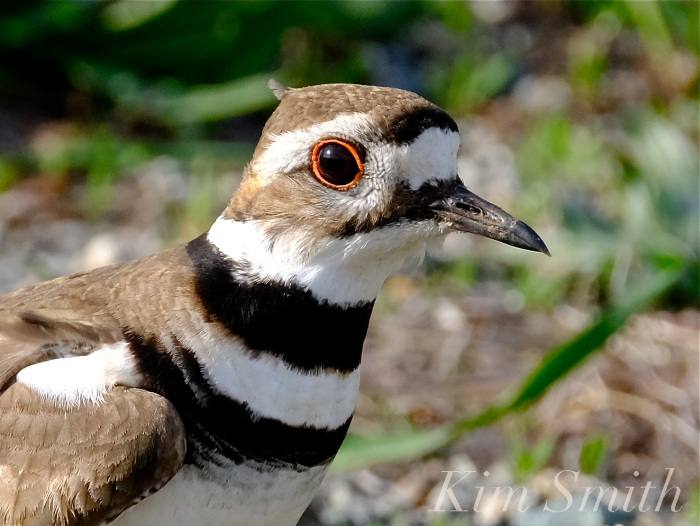
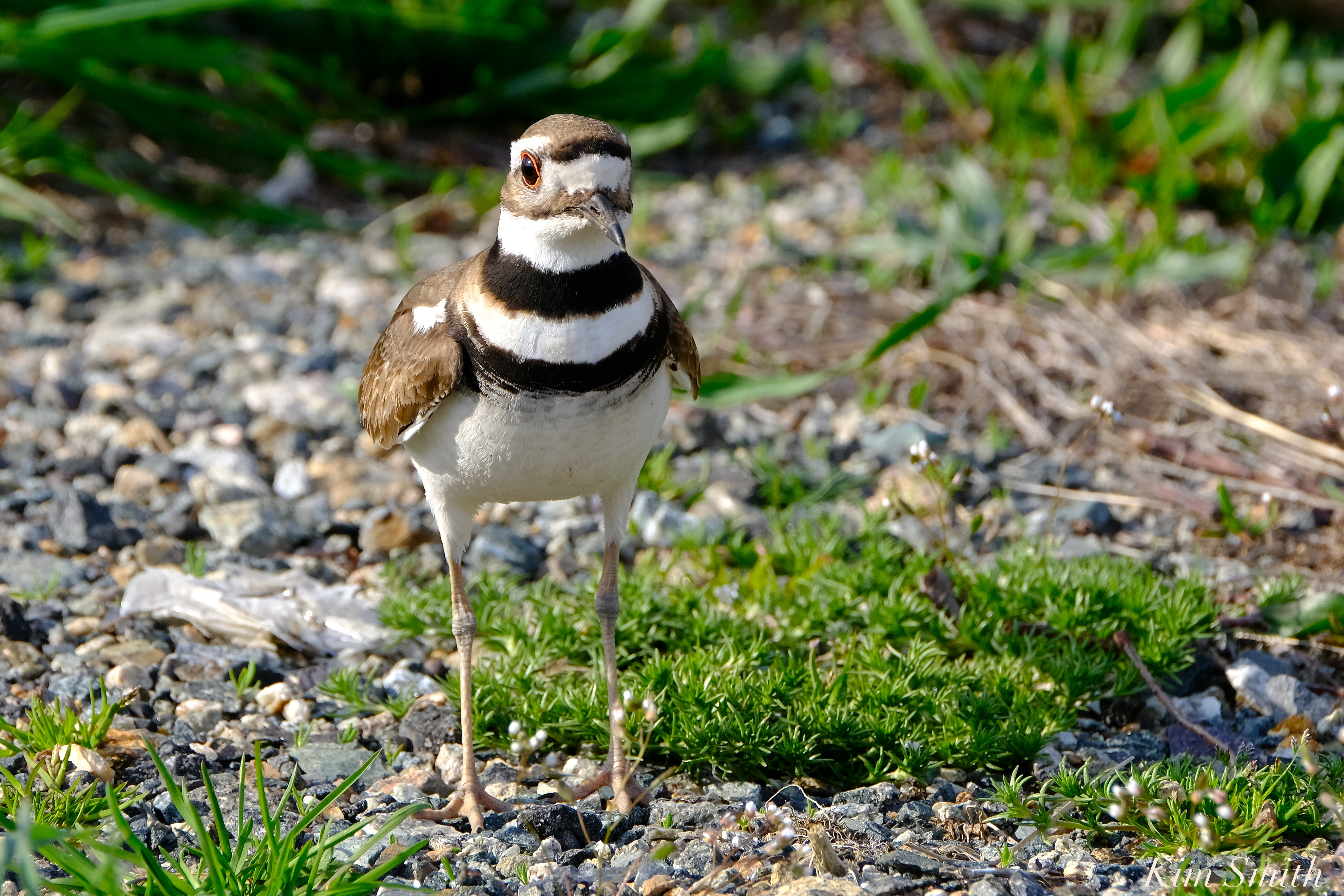
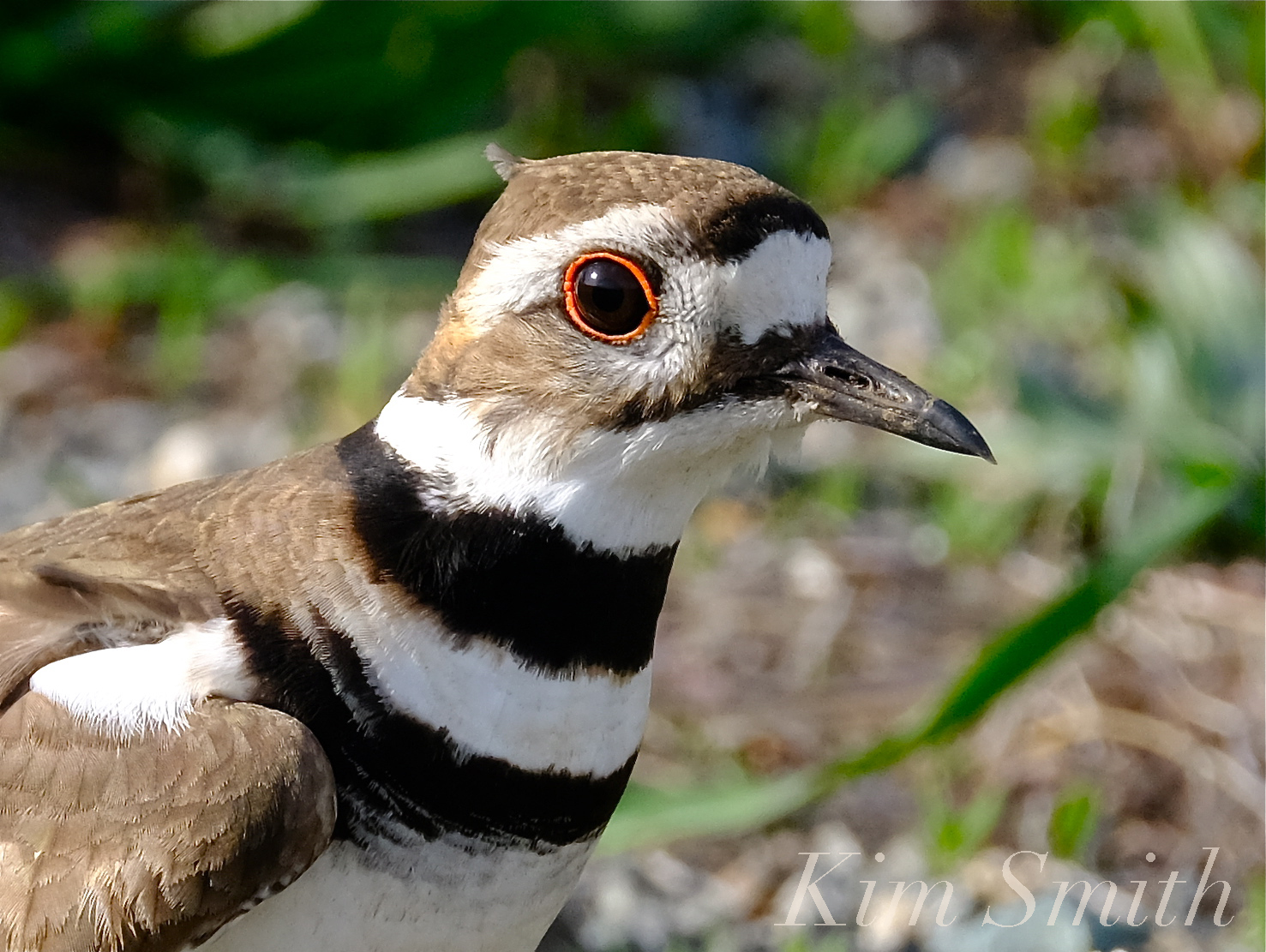
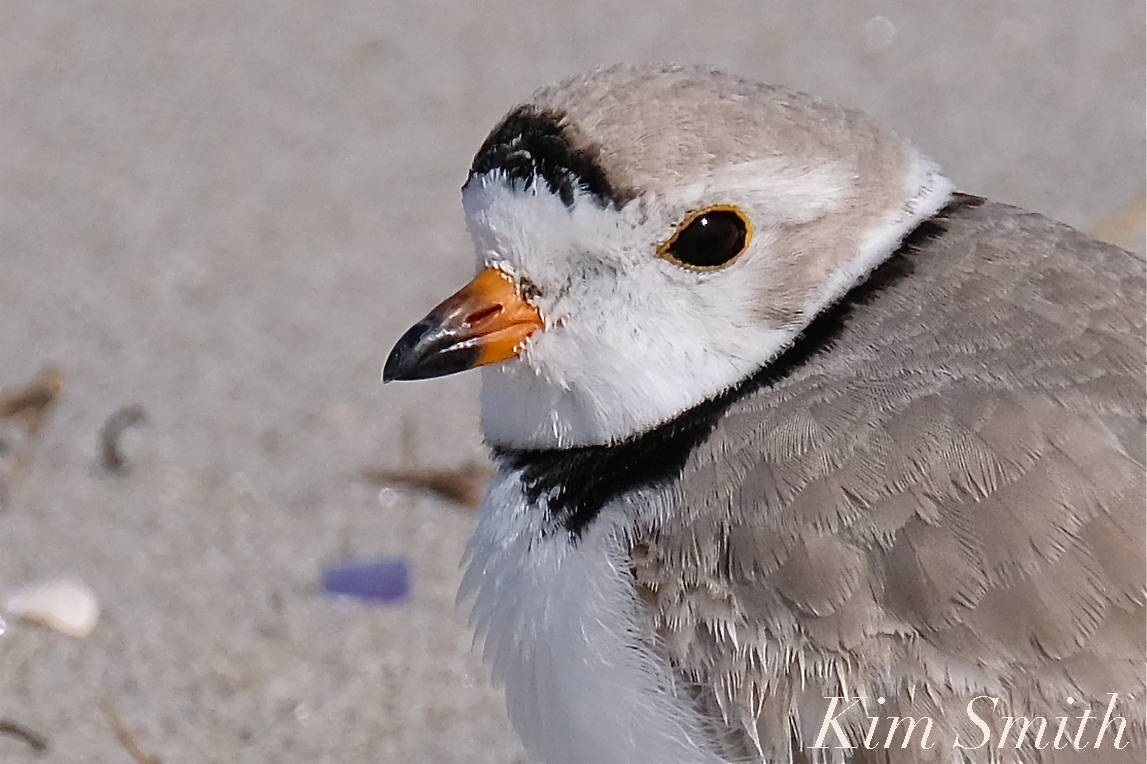
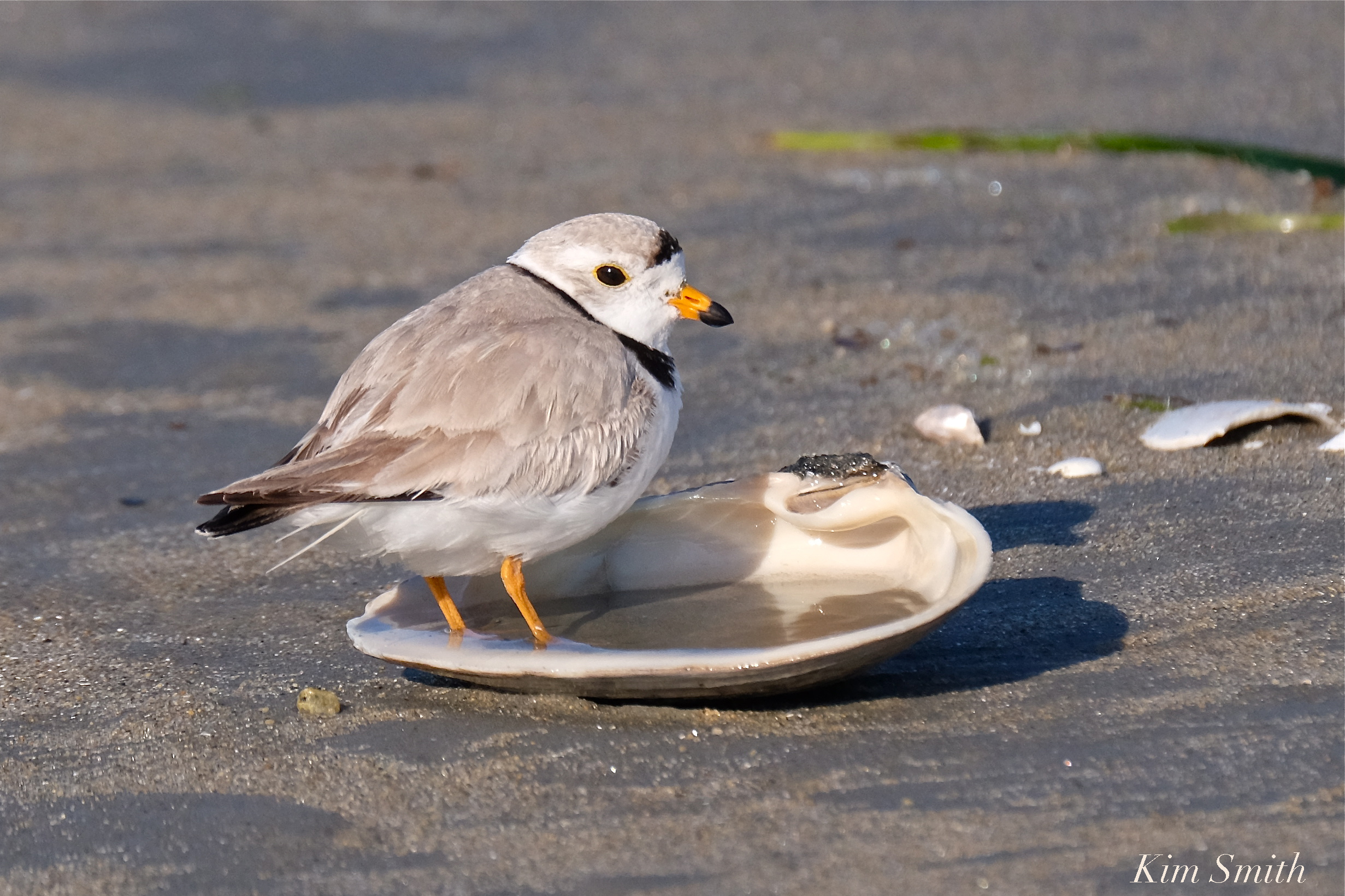
Killdeers are nearly twice as large as Piping Plovers, but you wouldn’t know that unless you see them side-by-side. The easiest way to tell the difference is Killdeers have two black collar bands whereas PiPls only have one.

Killdeers have a red eye ring, two collar bands, and a black, longer bill.

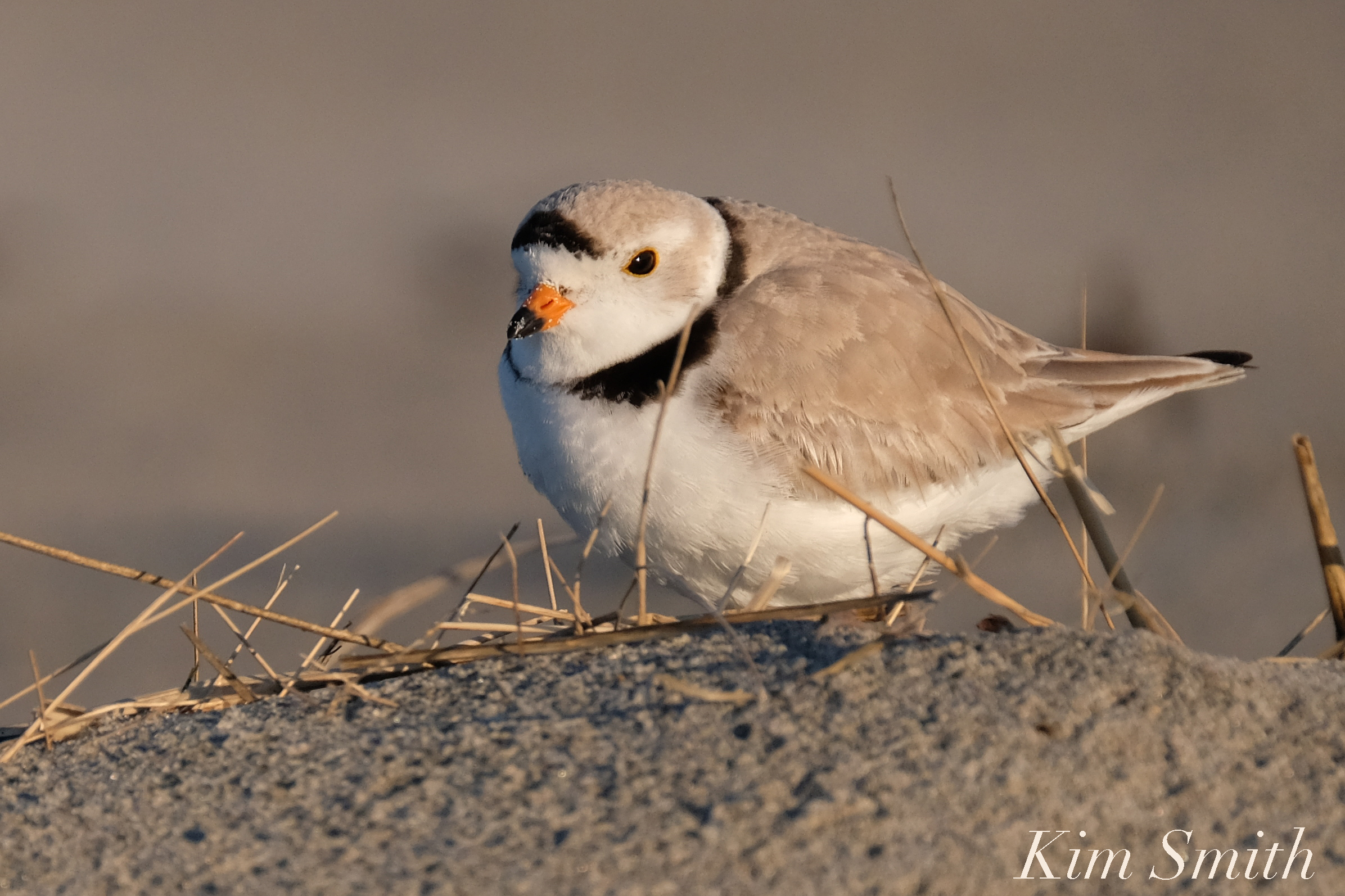
Piping Plovers have one collar band, no red eye ring, and an orange bill tipped black.

The back and wing feathers of the Killdeers are a mid-shade of brown, with rust and orange under wings. This coloration more easily blends with gravel pits, grasslands, and scrubby dune habitats. The Piping Plover’s wing and back feathers are a soft pale gray, in shades of driftwood and sand; the birds are much better camouflaged for beach life.  The Killdeer has a red eye ring, the Piping Plover’s eyes are jet black. Killdeer’s bills are more elongated and are a solid black, the PiPls’s is shorter and orange, tipped in black. Piping Plovers have orangish legs; Killdeer’s legs are light buff and light gray.

The feathers of the Killdeers at Stage Fort park blend beautifully with gravel, scrubby grass, and dirt found there in the parking lot. Notice in the third photo in the above gallery how the Killdeer blends with its grassy surroundings.

Piping Plovers are camouflaged in coastal hues of sand and driftwood

The same advice that applies to observing Piping Plover chicks as does to Killdeer chicks. Watch from a safe distance that does not cause the birds to flush and never pick up or touch the eggs or chick.

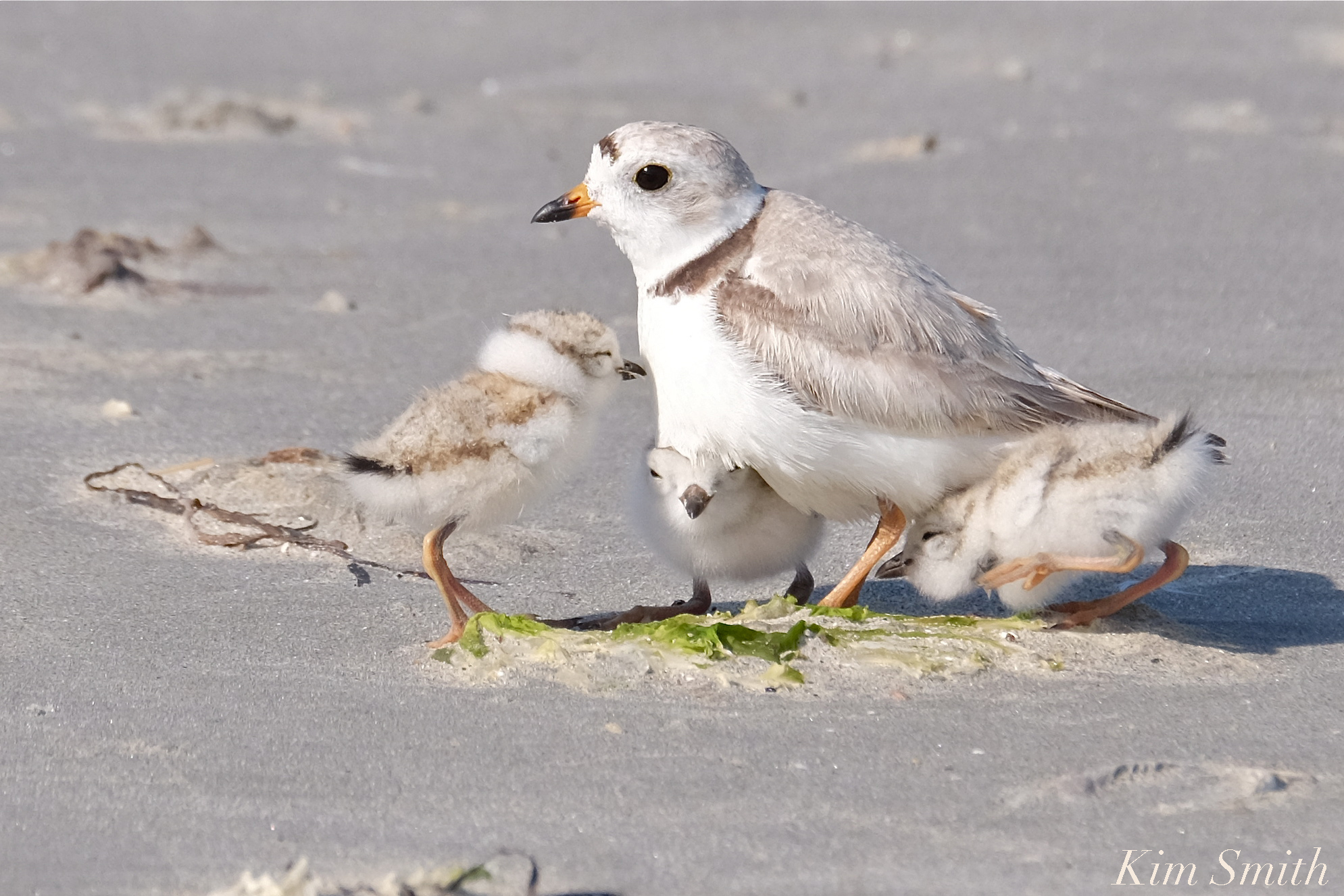
Killdeer and Piping Plover chicks are precocial. That is a word biologists use to describe a baby bird’s stage of development at birth. Precocial means that shortly after hatching, the bird is fully mobile. Plover chicks are not completely mature, they still need parents to help regulate their body temperature, but they have downy feathers and can run and feed themselves within moments after emerging.  Both Killdeer and Piping plover chicks are well camouflaged in their natural habitats.

The opposite of precocial is altricial. Birds that hatch helpless, naked, usually blind, and are incapable of departing the nest are altricial. Robins and Cardinals are examples of altricial birds.

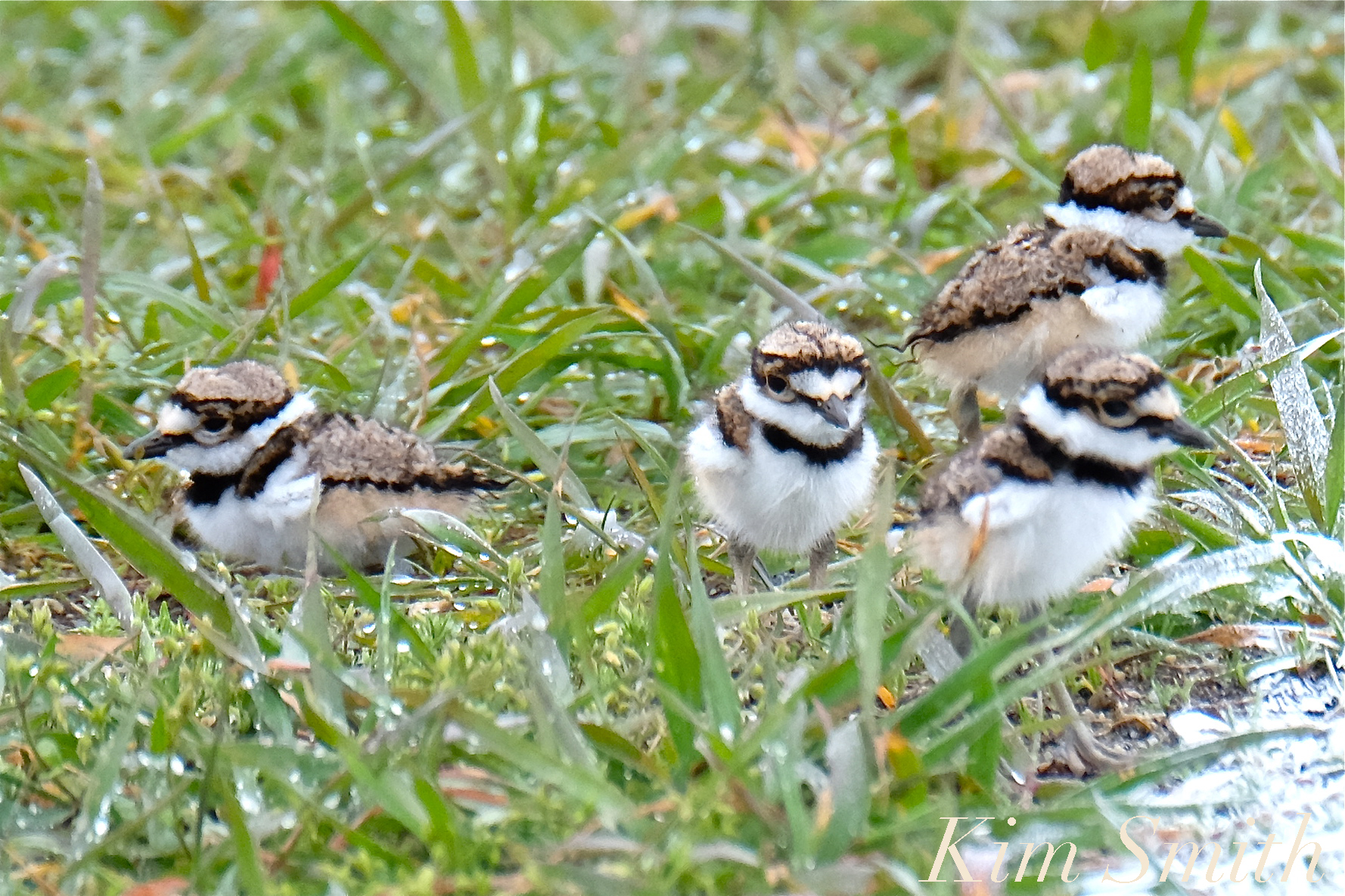
Killdeer chicks are well hidden in their habitats, as are Piping Plovers chicks in theirs.

Follow this link for more photos of Killdeers and chicks

Even though they are not Piping Plovers, we still love to hear about Killdeers and to learn more about where they are nesting in our area. Please email me at kimsmithdesigns@hotmail.com if you have any information you would like to share about Killdeers. Thank you.

FUN 411 UPDATE ON ETM, THE CUMBERLAND ISLAND BANDED PLOVER

As you may have read, a banded male Piping Plover was spotted by Piping Plover volunteer monitor Heather Hall late afternoon on April 16th. He was banded on October 7th, 2018, at Cumberland Island, Georgia. (Read more here). ETM has been spotted daily and often at Good Harbor Beach since the 16th.

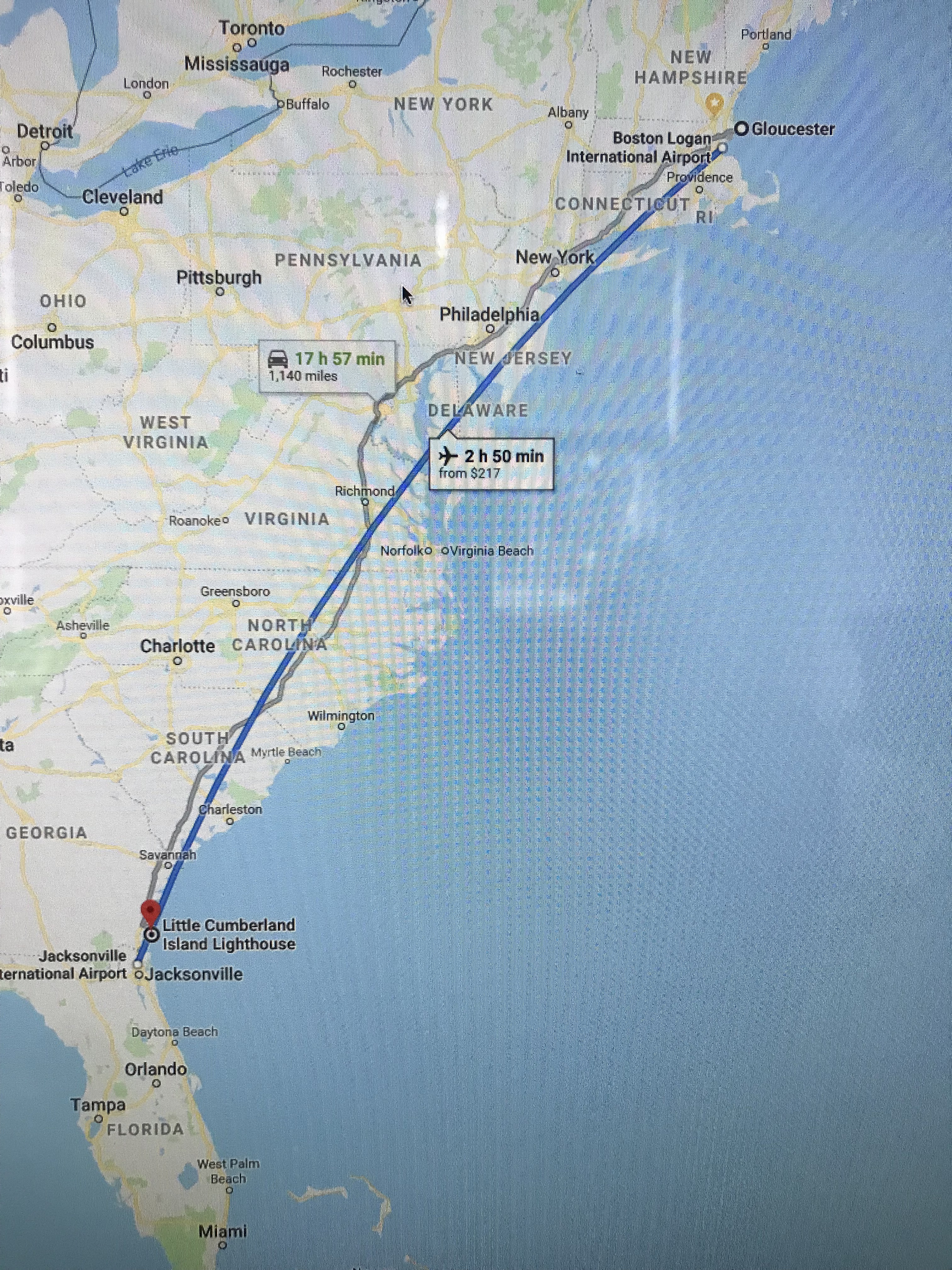
We’ve heard more from the Virginia Tech Shorebird Program biologists. ETM was last seen at Cumberland Island on April 11th, which means that in five days, or less, he traveled all the way from Georgia to Gloucester, approximately 1,140 miles, if traveling by airplane and overland. If he were traveling along the coastline, that would greatly increase the mileage. It’s no wonder that when we see shorebirds newly arrived at Good Harbor Beach in the spring, they appear weary and ravenous!

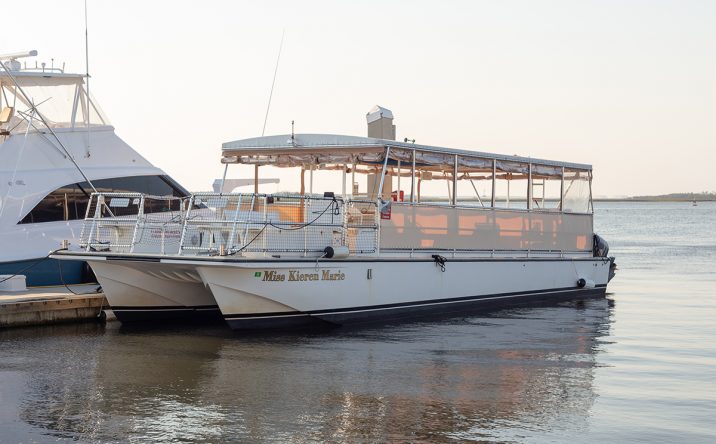
Reader Kevin McCarthy from Amelia River Cruises left a comment on our first post about ETM – “I was born and raised in Gloucester and grew up at Brier Neck but moved to Amelia Island Florida in 1968. Amelia Island is just south of Cumberland Island and for 20 years I have been operating Amelia River Cruises with narrative sighting boat tours along Cumberland Island. My wife’s family are among the very first English settlers on the island in 1740. Your plover may have been part of my Tours this winter.”

REMINDER – The Piping Plover volunteer monitor information meeting with conservation agent Adreinne Lennon is this Wednesday, April 24th, from 5:00 to 6:00pm at City Hall at the Kyrouz Auditorium

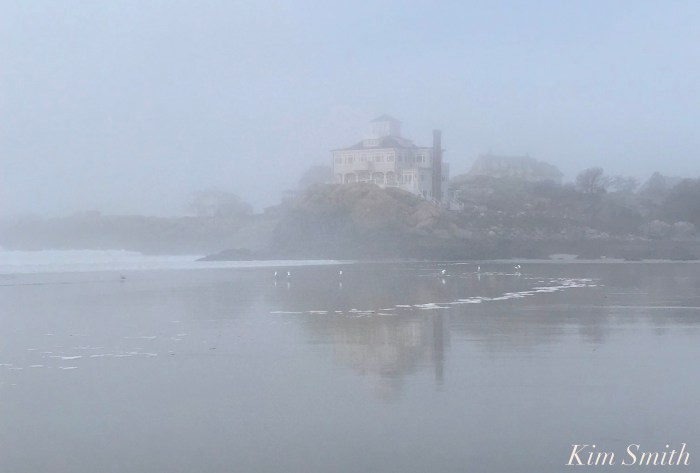
FOG SHROUDED GOOD HARBOR BEACH

From this morning’s Good Harbor Beach Piping Plover check – beautiful reflections and a glimmer of sunlight before the beach dissolved into fog.