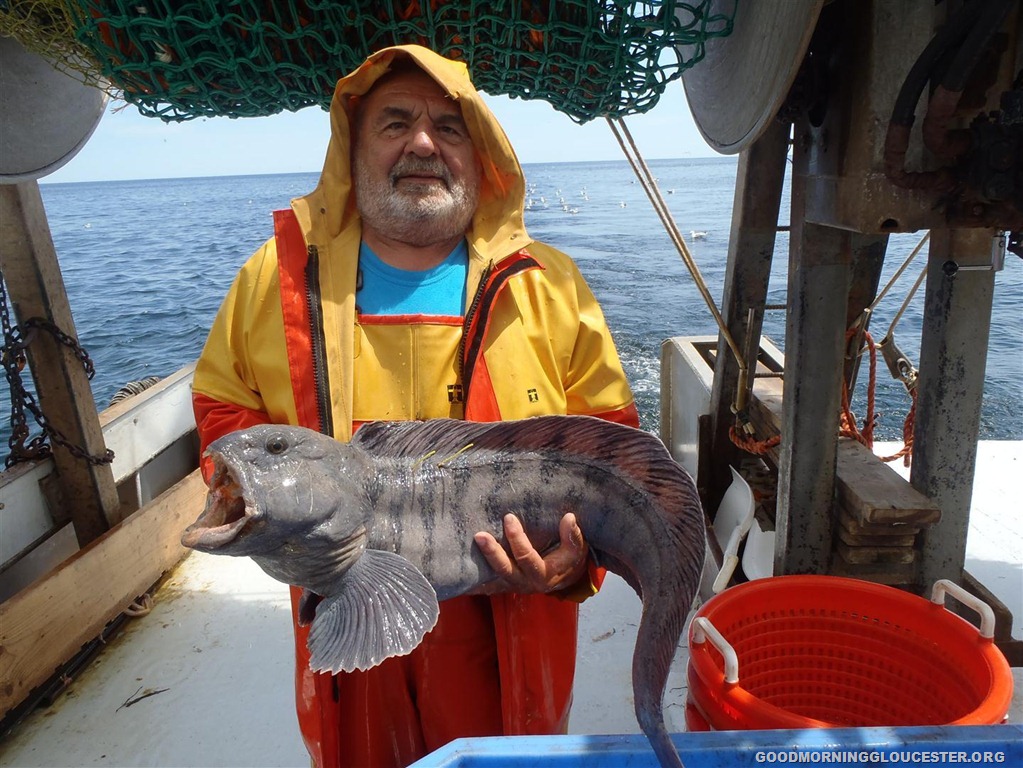
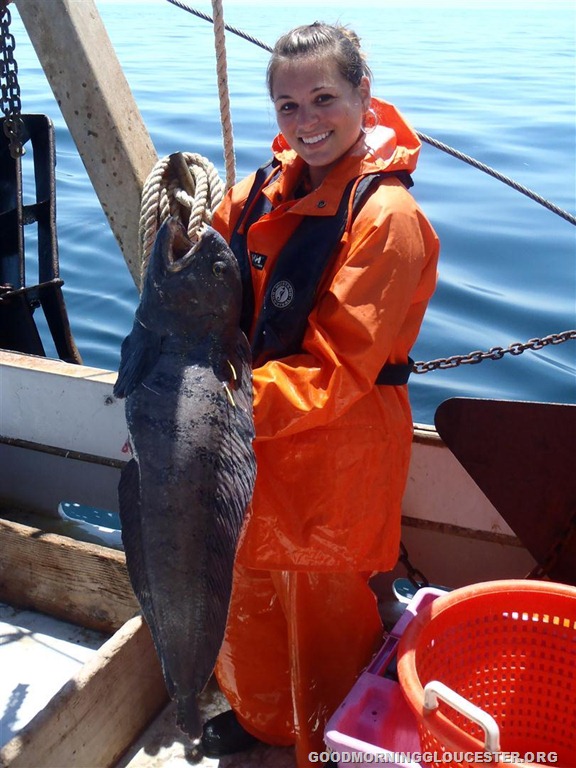
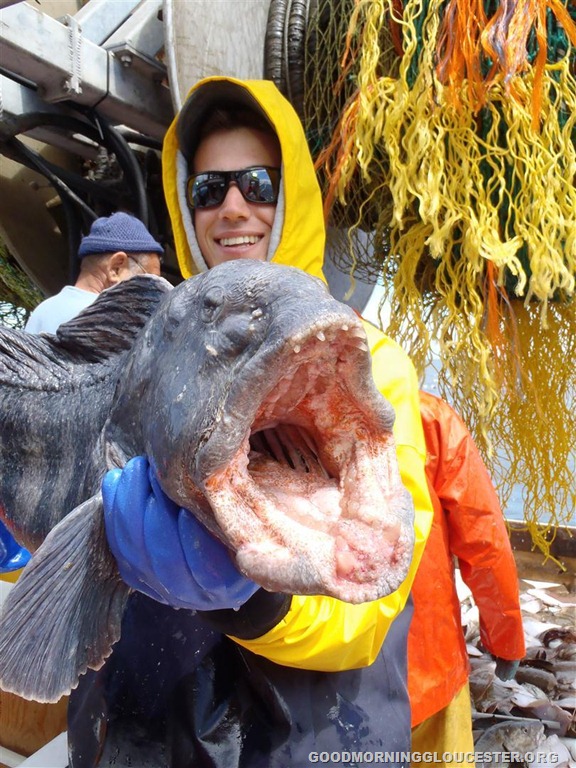
It’s not easy wrestling with an Atlantic wolffish, even when it’s on a ship’s deck, out of its element. Strong, slimy, and endowed with a brawny set of jaws sporting hefty canines, wolffish—ocean catfish, many locals call them—exude a bad attitude. Those teeth, designed for crushing clams, crabs, and sea urchins, seem just as determined to clamp onto a hand or boot.
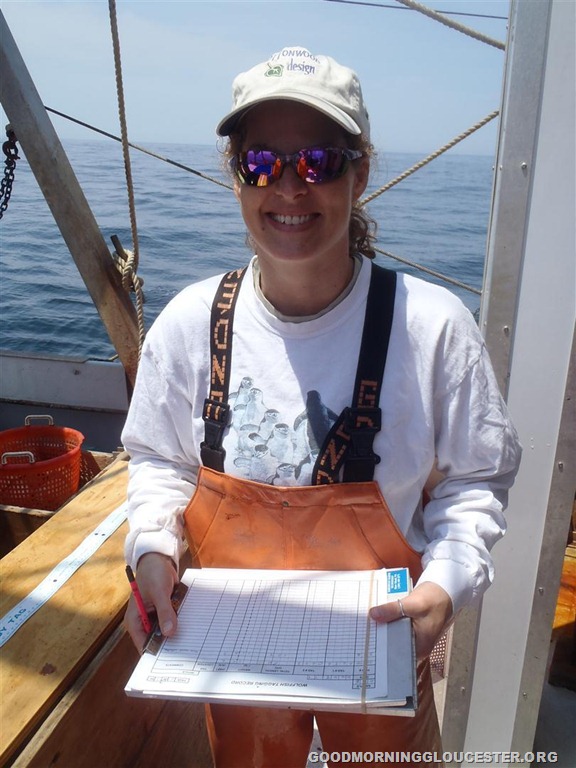
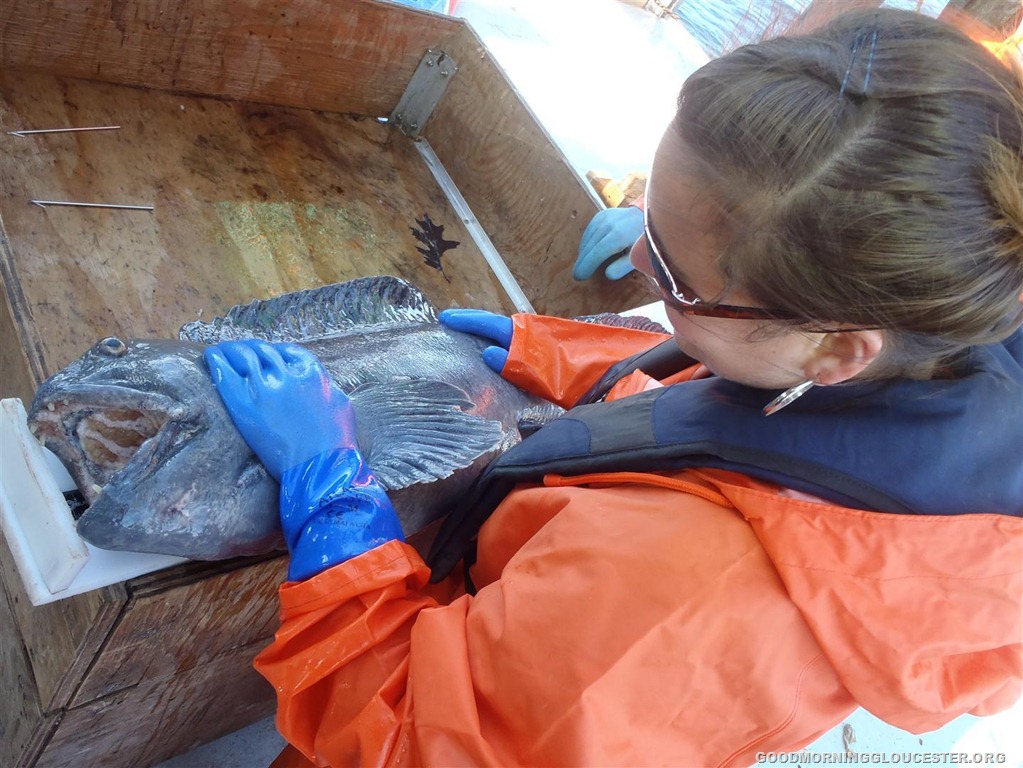
Just ask Dr. Elizabeth Fairchild, assistant research professor at the University of New Hampshire (UNH) and lead investigator for the Northeast Wolffish Tagging Project. For the past few weeks, Fairchild has has been wrangling, tagging and releasing wolfs aboard two commercial draggers, the F/V Stormy Weather (Capt. Carl Bouchard) and the F/V Lisa Ann II (Capt. Jim Ford), departing from the Gloucester Marine Railway on Rocky Neck. Assisting Fairchild in these tagging endeavors—restraining an angry 25-pound wolffish isn’t a one-man job—are Dr. Shelly Tallack, research scientist at the Portland-based Gulf of Maine Research Institute (GMRI), and GMRI interns Willy Goldsmith and Kristina Thorpe.
If you spend any time targeting groundfish off the Cape Ann coast, odds are you know two things about wolffish. First, they’re delicious—the “poor man’s lobster,” some say. Second, since May 2010, it’s been illegal for both recreational and commercial fishermen to keep them. The move to ban retention has sparked controversy, largely due to the dearth of data about wolffish biology, population structure, and migratory patterns. Enter Fairchild and crew.
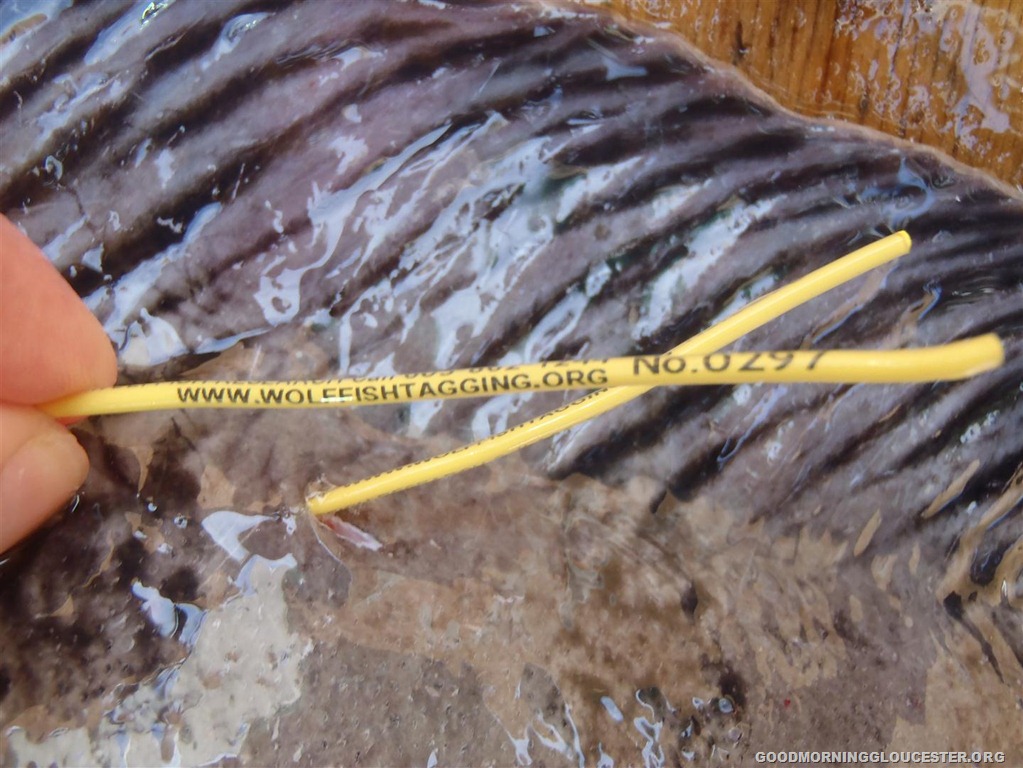
Funded by the Northeast Consortium, this research project aims to tag wolffish in Massachusetts Bay in order to learn more about their movements in the region. Each fish is weighed, measured, and marked with two yellow dart tags beneath the dorsal fin.
The project puts a premium on cooperative research, both among research institutions and between researchers and fishermen. Joining Fairchild and Tallack is Dr. Michael Armstrong of the Massachusetts Division of Marine Fisheries (MA DMF), based in Annisquam, who will look at age and growth patterns in the species.
A tagged wolffish is easy to spot—look for the bright yellow streamers just below the dorsal fin.
If you catch one, please leave the tag(s) in place, but note down the following information:
- Tag number
- Fish length
- Location captured
- Date
And if possible:
- Gear type
- Habitat type
- Spawning condition
- Water depth
To report your tag and claim your reward, you can:
- Call (603) 862-1244
All pictures and story provided by William Goldsmith

 Good Morning Gloucester