MOTHRA!

Cecropia Moth caterpillar copyright Kim SmithNoticeably growing larger day by day, the biggest caterpillar of our batch of Cecropia Moth caterpillars (nicknamed Mothra) still has a ways to go before he/she pupates and becomes a cocoon for the winter.

https://www.instagram.com/p/BJGVCuujVen/

The colorful protuberances with black spikes are thought to mimic either a poisonous plant or animal and are a defense against predators. Like most caterpillars, the Cecropia moth caterpillar has five pairs of prolegs. The green prolegs are blue at the base with a row of microscopic hooks, or crochets, that enable walking and clinging.
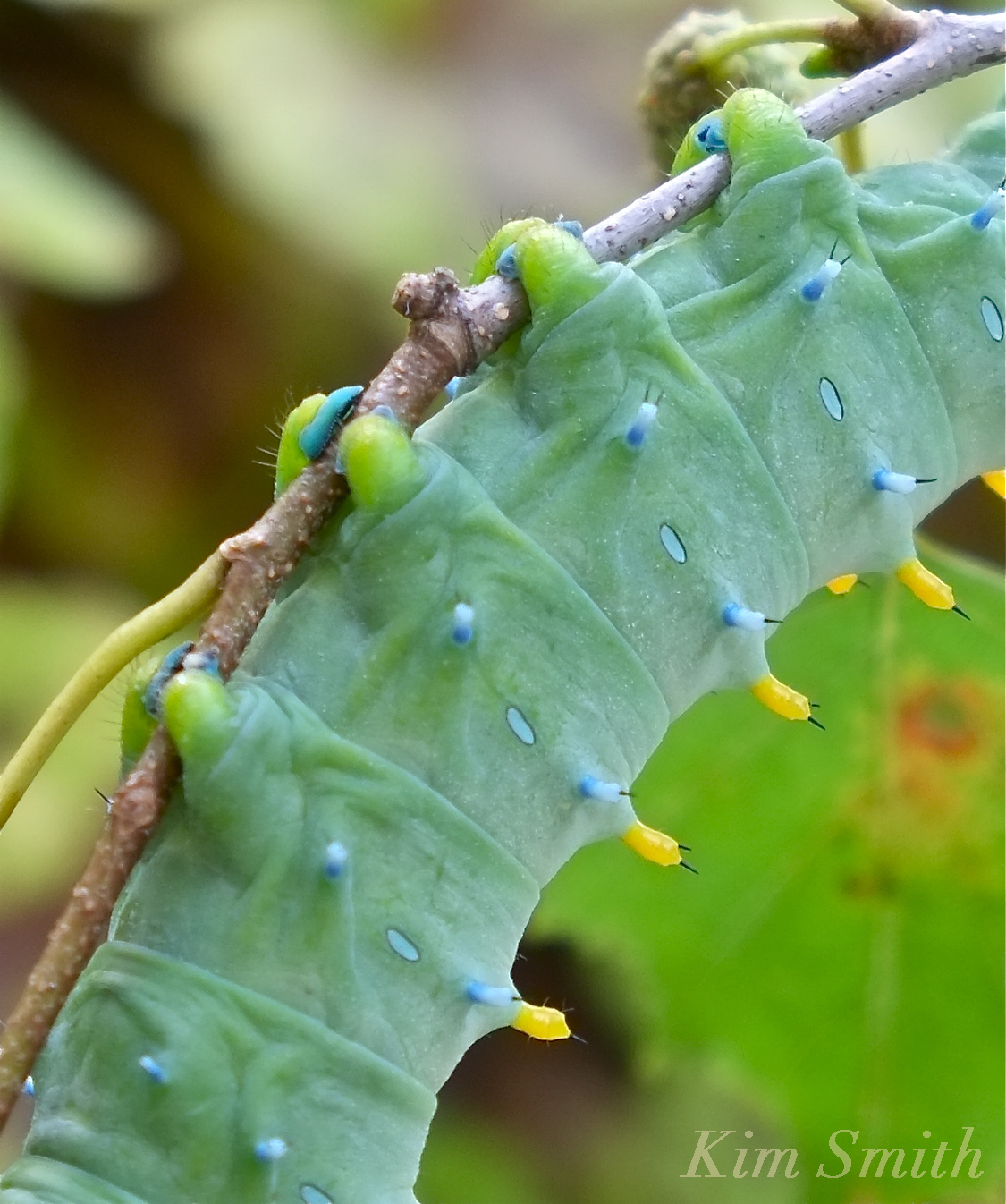
Cecropia Moth caterpillar close up feet copyright Kim Smith

Although the Cecropia Moth has the largest wingspan of any moth found in North America, its caterpillar is not the largest caterpillar. That honor goes to the caterpillar of the Royal Walnut Moth, also called Regal Moth, which in its caterpillar stage is called the Hickory Horned Devil.
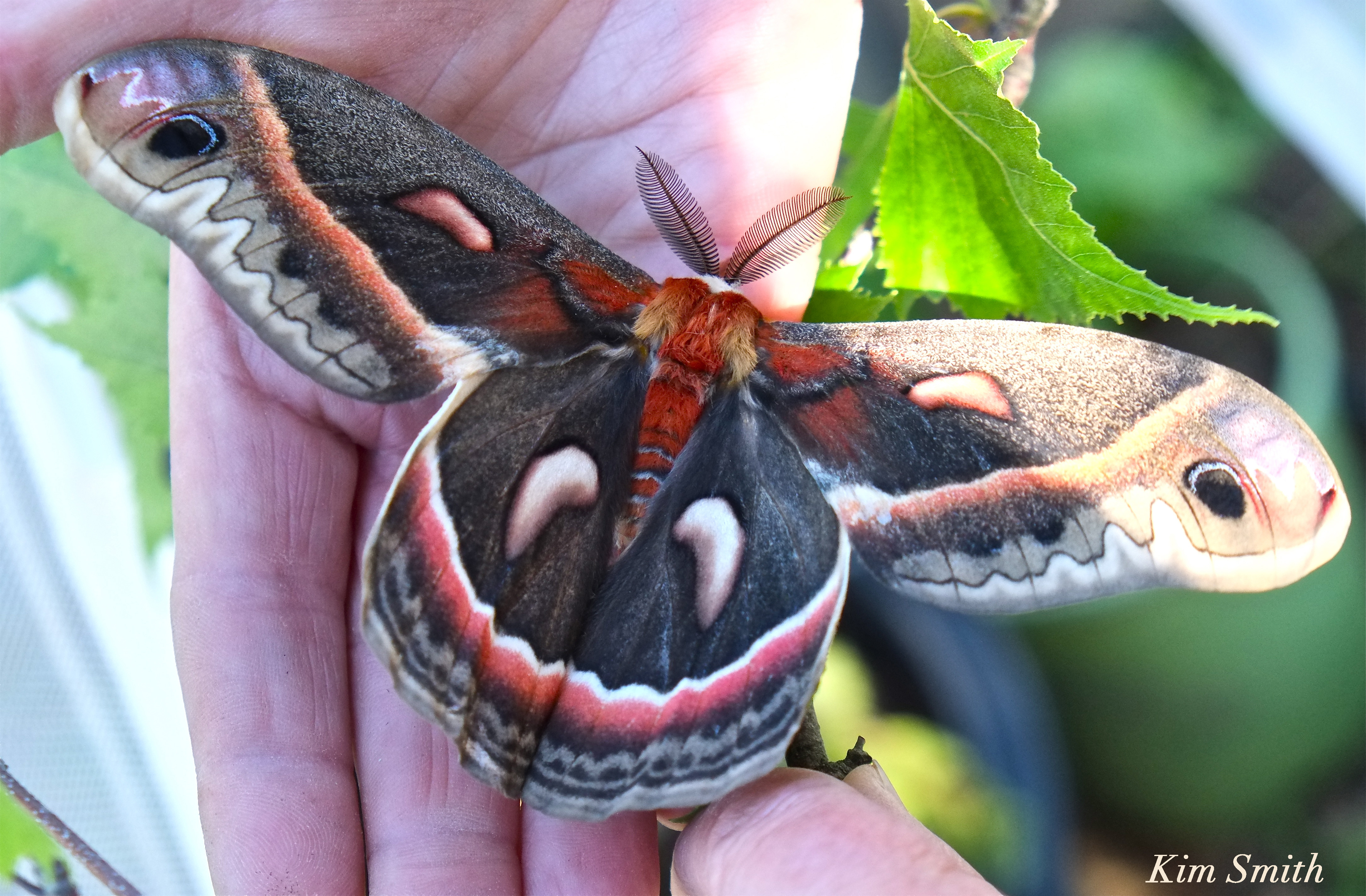
cecropia-moth-male-copyright-kim-smithAdult Male Cecropia Moth

Thank you again to friend Christine for the Cecropia Moth eggs. They are the offspring of the male Cecropia Moth that she is holding in the photo above.

Update on Giant Silk Moth Cocoon

No exciting news yet to report on our Giant Silk Moth Cocoon. The leaves of the American Birch Tree are unfurling, but no movement within the cocoon.

Giant Cocoon

I am so excited to tell you about this wonderful find. I was walking my pooch Rosie on our usual route down to the harbor and, dangling at eye level from a tree that I have passed a hundred times this winter, there was this structure. Thinking it was what it is, I ran home and checked my Lepidoptera books, and it is the cocoon of a member of the Giant Silk Moth Family, Saturniidaee (not to be confused with the oriental silk moth, Bombyx mori, from which silk fabric is spun).

Hanging from the tip of the American White Birch branch you could easily mistake it for a dry withered leaf, and that is exactly what the caterpillar has done, weaving the leaf around itself to pupate within. The cocoon is quite a good size, approximately two inches in length by one inch in width. The caterpillar pupates during the summer, overwinters in the cocoon stage, then emerges sometime in May or June. Giant Silk Moths live only for about a week. They mate soon after eclosing and then perish. Giant Silk Moths do not have mouth parts; all eating is done during the caterpillar stage.

Giant Silk Moth Cocoon

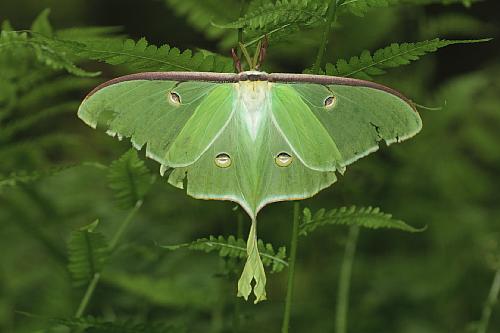
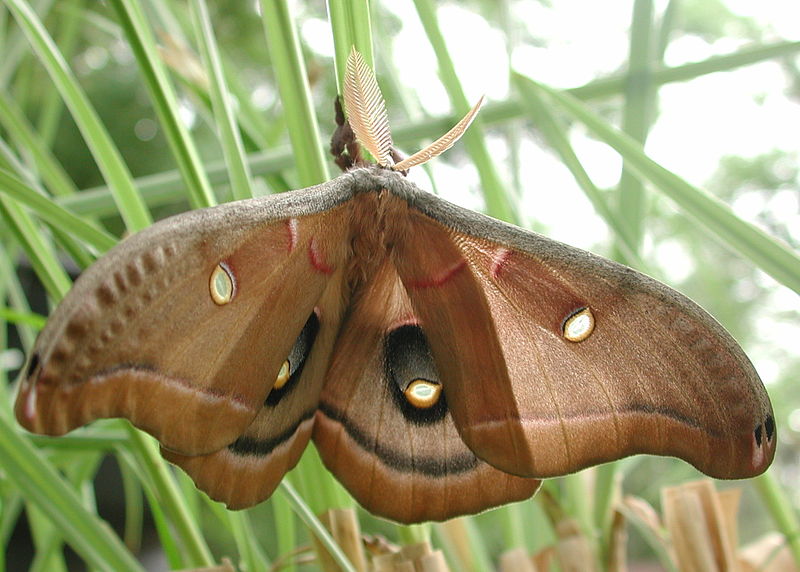
Several members of the Giant Silk Moth family of caterpillars eat birch leaves.  I am hoping (and it looks a great deal like) it is the cocoon of the simply stunning Luna Moth, however it could also be the beautiful Polyphemus Moth.

Luna Moth ~ Images courtesy Google

Polyphemus Moth ~ Image courtesy wiki