Oh Garden of Fresh Possibilities! ~ Notes from a Gloucester Garden

At this time of year, with the holidays knocking at our doors and the scramble for gift ideas beginning, I try to remember to post excerpts and information about my book Oh Garden of Fresh Possibilities! ~ Notes from a Gloucester Garden (which I both wrote and illustrated), and “The Pollinator Garden” lecture that I gave last evening in Pepperel reminded me to do so again this year. My publisher, Mr. Godine, always thanks me for this endeavor!

We sold a good stack of books last night and I was so appreciative for the opportunity to present my program to an interested audience engaged in learning more about the connection between what we plant and the pollinators we invite to our gardens. Oh Garden of Fresh Possibilities! speaks to both the greater and smaller concepts in garden-making and is a how-to design tutorial that covers the gamut from creating the framework to what to plant to attract the tiniest of butterflies. The design concepts are universal, and although set in Gloucester, Oh Garden makes for a thoughtful gift for anyone on your holiday gift-giving list!

Oh Garden of Fresh Possibilities! sells for only $14.00 on Amazon, which is a $21.00 value off the publisher’s list price of $35.00.

Click here to purchase a copy of Oh Garden.
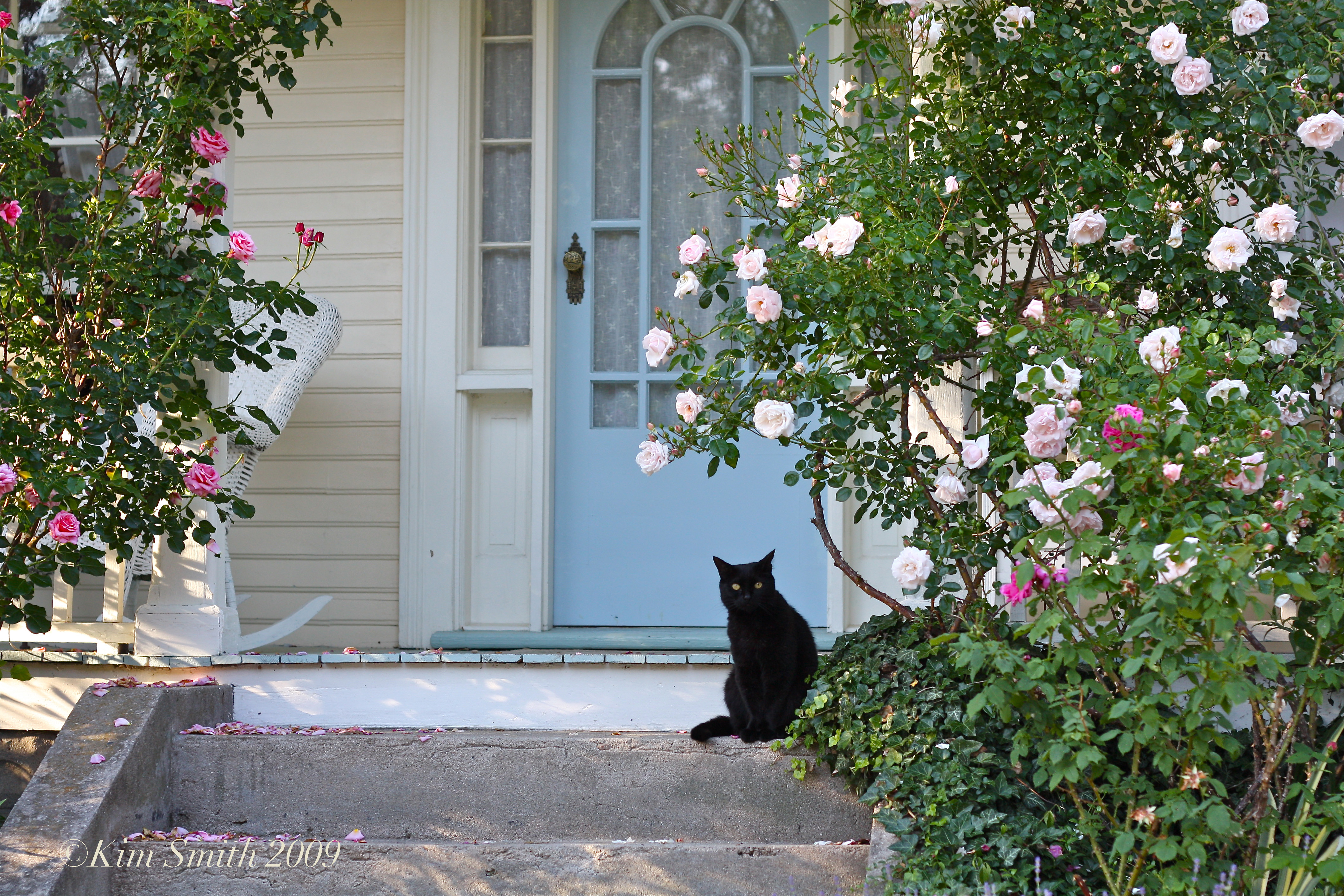
Front Door Cosmos Kitty ©Kim Smith 2009

From my book’s introduction ~

We all carry within us the image of a home to create and a garden to tend. Perhaps you dream, as I do, of a welcoming haven to foster family bonds and friendships and to rejoice in life’s journey. The garden and the home to which it belongs becomes a memory catcher to weave a life’s tapestry.

To imagine a garden paradise, one must live in one’s home and listen to its own particular music. Gradually, by degrees, the idea of the garden will grow. A home and a garden should look as though they had grown up together and will, when one takes the time and necessary thought. A garden cannot be hurriedly created. Delicious, blissful pleasure is derived from the garden’s use as a continuation of the home.

Our gardens provide a safe harbor from hectic lives, a place to celebrate life and an opportunity to express our creativity. The garden is an inviting sanctuary to guide one through the rhythms and harmonies of the natural world. Planted to nurture the imagination and hearten the soul, a “new” cottage garden is a whimsical, exuberant intermingling of scented flowers and foliage, fresh fruit, and savory herbs.

As a designer, I believe I am here to channel ideas for the benefit of many. This book is my communication of a profound desire to share with readers the immeasurable joy gleaned from creating a personal paradise of one’s own making.

The illustrations are of flowers, songbirds, and butterflies I love to draw and to paint, and selected because they only become more beautiful when intimately observed.

A poetic world lies waiting to be discovered. Let us open the garden gate and take a step within.

Garden Design Lecture Thursday Night in West Newbury

Think Spring!

Lilac and Red Admiral ©Kim Smith 2012

Lilac ‘Maiden’s Blush’ (Syringa vulgaris) and the Friendly Red Admiral

Tomorrow night I am presenting one of my garden design lectures in West Newbury. For a complete list of programs that I offer, see the Programs page on my blog. For a list of upcoming lectures and programs, see the Events page on my blog.

Note: Program Rescheduled for June 6th.

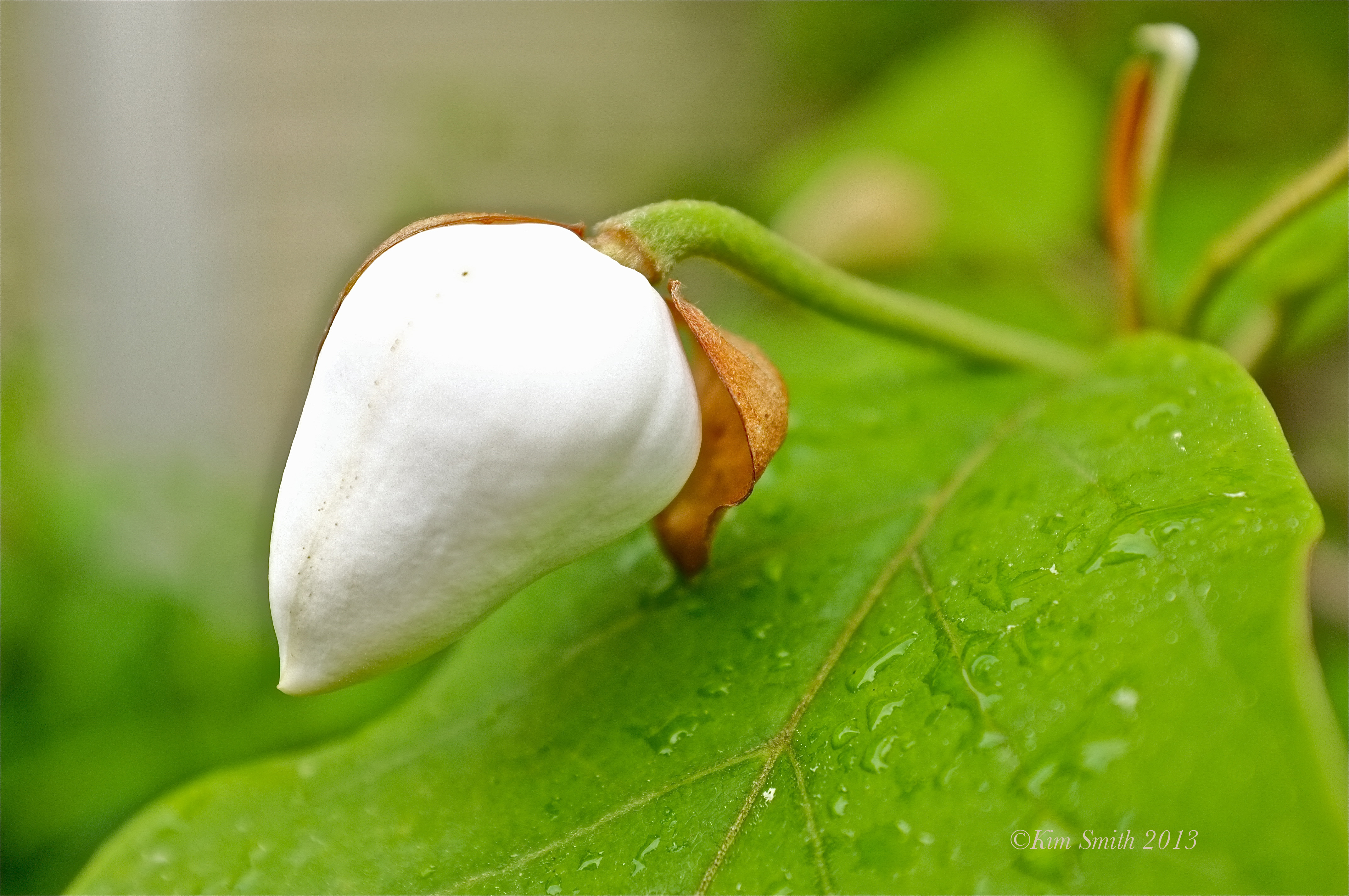
Magnolia sieboldii bud ©Kim Smith 2012

Oyama Magnolia Bud (Magnolia sieboldii)

The Oyama Magnolia is often planted adjacent to tea gardens in Japan because the blossom of the small tree nods downward, allowing the seated person to look up into the face of the flower. The first time I  saw (or should say smelled) Magnolia sieboldii was in a wholesale nursery close to the Rhode Island border, where a single large specimen was tucked in with other more common species of magnolia. The divine fragrance emanating from the tree had drawn me towards it. The tree was unmarked, but since I so strongly value fragrance in plants, I had read about it and knew exactly what it was. Spring had not yet sprung in Gloucester and the honeysuckle sweet and citrus fragrance was intoxicating to my winter weary brain. I tied my tag around to claim it and have adored this tree since the day our Oyama Magnolia arrived to our garden.
 

The Most Cherished Gifts of All ~ Our Daughters and Sons

For Christmas Liv gave me an early edition of Emily Dickinson’s poems. I cried. The poems of Emily Dickinson play a beautiful role in my book, Oh Garden of Fresh Possibilities, but the sweetest poem found within the books’ pages is the poem written by Liv, when she was only twelve.
Emily Dickinson early edition poem s©Kim Smith 2013

Emily Dickinson, published 1892

When Liv was twelve I hired her to transcribe the first draft of the manuscript for Oh Garden, which I had written in longhand, to our then new computer. I had not yet learned how to use the computer and she was quite proficient. The original manuscript included recipes and illustrations, but no poetry. She took her job of transcribing very seriously and one day, about halfway through the project, announced that I needed a poem for the book. She dashed upstairs to her bedroom, returning only half an hour later with her contribution, “My Mother’s Garden.” Her tender poem suggested to me that I include more poetry and it was a joyous experience searching for just the right poem to illuminate each chapter. The book grew to comprise many poems by Emily Dickinson, along with works by Federico García Lorca, John Keats, Amy Lowell, Chinese painter- poets, and even a funny and sweetly sarcastic poem by Dorothy Parker titled “One Perfect Rose.” When the time came, I showed my publisher, Mr. Godine, Liv’s poem. He was delighted to include “My Mother’s Garden” and it can be found on page 206.

Now I keep this cherished gift of Emily Dickinson poems by my bedside table and each time I reach to read it or simply when the cover catches my eye, I am reminded of her gentle, thoughtful love and of the most cherished gift of all, my daughter.

My Mother’s Garden

An exotic sunset-tinted rose

Intoxicating breath of a magnolia

The small windy brick path

Leading to a hidden paradise

Butterflies flutter their own petal-wings

Over the smiling face of a daisy

A hushed lullaby to the garden sings the stream

Honeysuckle vines twist their elegant tendril,

Grasping the delicate lattice

Gorgeous, vibrant hollyhocks stretch their faces

Towards the radiant sun

Drinking in the soft light

Soon the sweet mellow silence is broken

By a joyful cry of children,

Two, three, now four

Suddenly the garden is a place of singing and frolicking and dancing,

Youthful and inviting.

This blessed garden’s soul shines forth in each and every existence

From the flitting butterflies

To the smallest thriving plant

To the noisiest child that finds peaceful comfort,

In the gentle haven.

                    -Written by our Liv when she was twelve

Congratulations Emily Forshay Crowley-Winner of Oh Garden of Fresh Possibilities!

Dear Friends,

I truly wish I could give each and everyone of you who wrote your thoughtful and cherished comments a copy of Oh Garden. Thank you.

Warmest wishes for a joy-filled holiday season and many thanks again for your participation.

Kim

Oh Garden of Fresh Possibilities! .jpg

Oh Garden of Fresh Possibilities! On sale for 15.00 at David R. Godine, Publisher

How to Offend Flowers

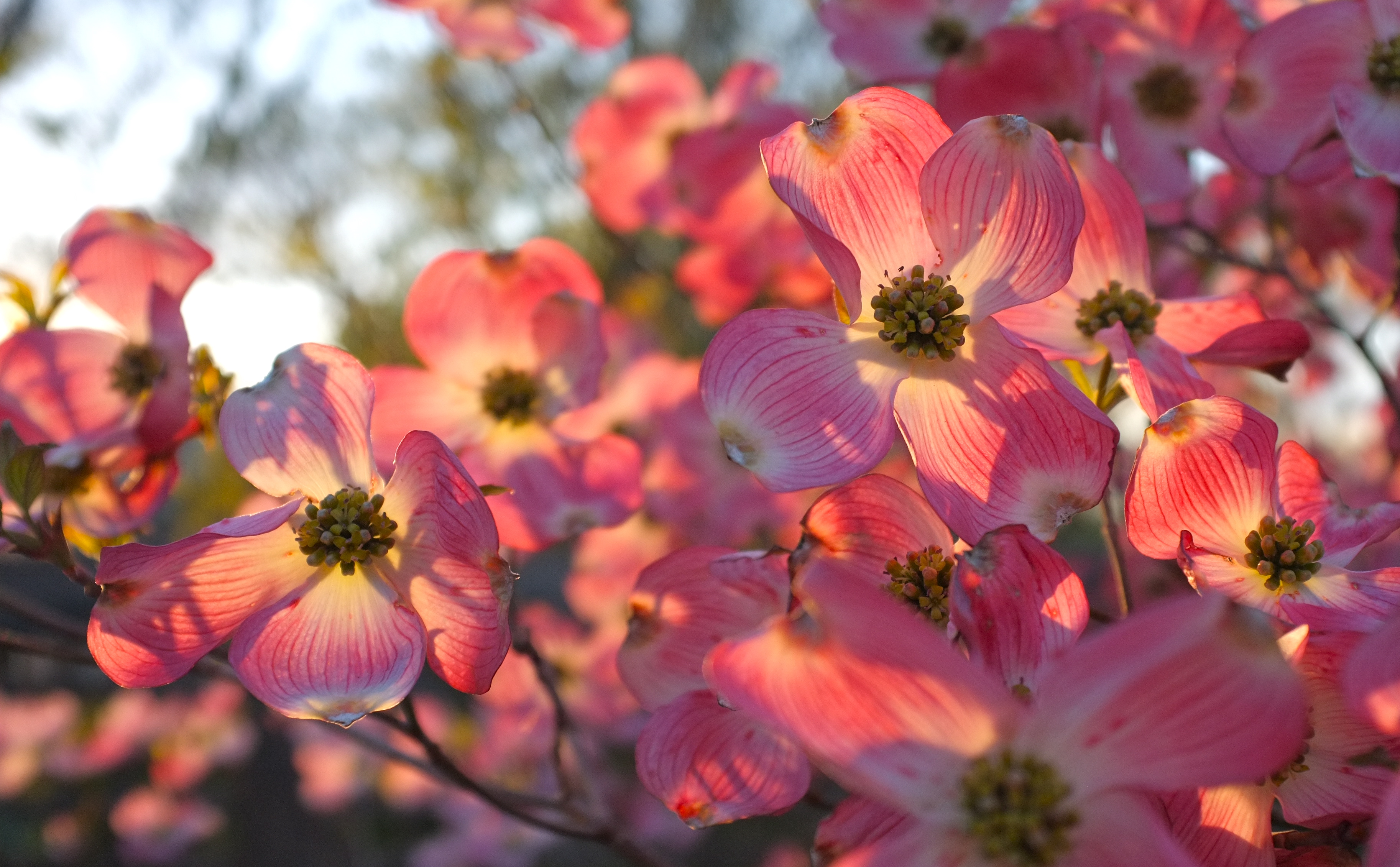
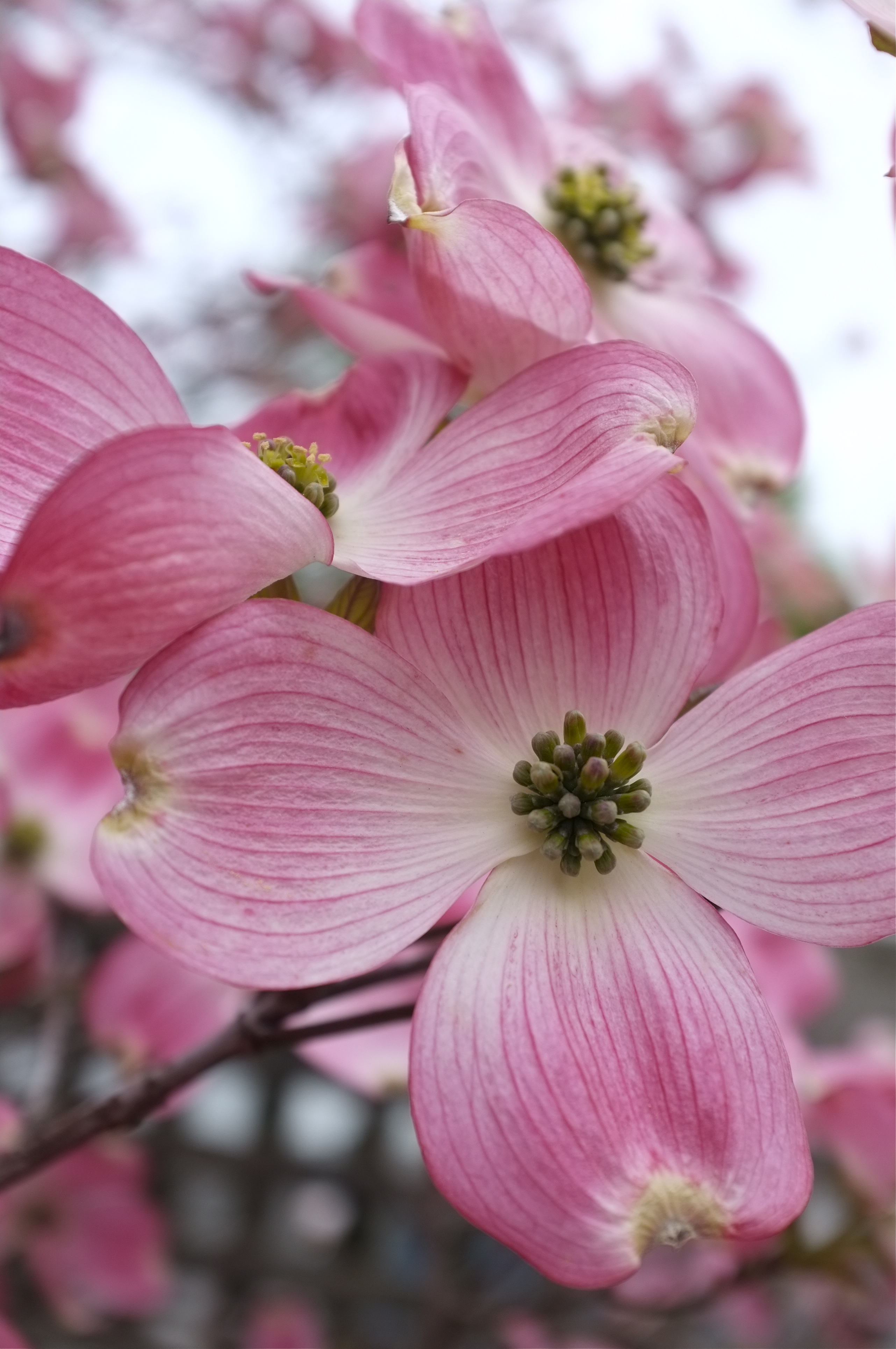
Cornus florida rubra ©Kim Smith 2012Native Pink Flowering Dogwood ~ Cornus flordia rubra

While writing Oh Garden of Fresh Possibilities! I would often come across what seemed at the time random information, but would jot it down anyhow hoping that it would find its way into the pages of my book. The following excerpt was found within a display of Ming Dynasty (1368-1644) porcelain at the Walters Art Museum in Baltimore where I was researching Chinese flower and bird painting. I laughed out loud when reading and it makes me smile with every subsequent read but wonder if it is only funny to we flower- lovers.

Enjoying flowers with tea is the best, enjoying them with conversation the second and enjoying them with wine the least. Feasts and all sorts of vulgar language are most deeply detested and resented by the spirit of the flowers. It is better to keep the mouth shut and sit still than to offend the flowers. 

—from a Ming Dynasty  (1368-1644)  treatise on flowers Walters Art Museum

The idea that flowers can be offended by bad manners reflects the belief that the world we inhabit is an organism in which all phenomena interrelate. By the same reasoning, someone who drinks tea from a peach- shaped pot will live longer (peaches symbolize longevity), and someone who dips his writing brush in a peony-shaped bowl will have good fortune, as the peony is a metaphor for success and wealth. The love of flowers was and continues to be a passion among the Chinese and trees and plants are genuinely loved as living creatures.

To win a free copy of Oh Garden of Fresh Possibilities ! Notes from a Gloucester Garden leave a comment or see yesterday’s post about the Magnolia virginiana.

The Emperor of China and How to Make Chrysanthemum Tea

Emperor of China Chrysanthemum ©Kim Smith 2012 copy

An ancient variety of chrysanthemum originating from China, the ‘Emperor of China’ resembles and is thought to be the chrysanthemum depicted in early Chinese paintings. Chrysanthemums are also grown for their medicinal properties, and their purported magic juices were an important ingredient in the life-prolonging elixir of the Daoist. Fragrant chrysanthemum tea was considered good for the health, and tonic wine was brewed from an infusion of their petals. Although thought to be rich in healing properties and lovely in form, a more modest well-being was conferred by the vigorous blossoming of the chrysanthemum. Perhaps the late flowering chrysanthemum suggests their connection to a long life, for other plants have finished flowering just as the chrysanthemums begin.

The techniques for learning to paint the orchid, bamboo, plum blossom, and chrysanthemum comprise the basis of Chinese flower and bird painting. They are referred to as “The Four Gentlemen” and are thought to symbolize great intellectual ideas. The orchid is serene and peaceful, though sophisticated and reserved from the world. Bamboo is vigorous and survives throughout the seasons, forever growing upright. The plum blossom expresses yin-yang dualities of delicate and hardy, blooming through snow and ice to herald the arrival of spring. Chrysanthemums continue to flower after a frost, are self-sufficient, and require no assistance in propogating themselves.

China owes its astonishing wealth of plant life to a combination of geographical incidents. The mountains escaped the ravages of the great ice caps and unlike much of Europe and North America, where many plants were wiped out, plant species in China continued to evolve. Additionally, the foothills of the Himalayas are moistened by soft winds from the south, creating an ideal climate for alpine plants. In this warm and moderate environment, three different floras – that of the colder, drier north; that of the sub-tropical south; and that of the alpine species – all mingled and crossed freely for thousands of years.

CHRYSANTHEMUM TEA

 Chrysanthemum tea is a tisane made from dried chrysanthemum flowers. The flowers are steeped in boiling water for several minutes, and rock sugar or honey is often added to heighten the sweet aroma. Popular throughout east Asia, chrysanthemum tea is usually served with a meal. In the tradition of Chinese medicine, the tisane is thought to be a “cooling” herb and is recommended for a variety of ailments including influenza, circulatory disorders, sore throats, and fever.

Excerpt from Oh Garden of Fresh Possibilities! Notes from a Gloucester Garden.Leave a comment to be eligible to win a copy. See yesterday’s post about the Magnolia virginiana. Continue reading “The Emperor of China and How to Make Chrysanthemum Tea”

Magnolia virginiana and How to Win a FREE Copy of Oh Garden of Fresh Possibilities!

Eastern Tiger Swallowtail-2 ©Kim Smith 2010

Tuesday through Friday of this week I will be bringing you expert gardening advice excerpted from my book Oh Garden of Fresh Possibilities! Notes from a Gloucester GardenMy book is currently on sale on my publisher’s website (David R. Godine) for the unheard of price of 15.00 (the list price is 35.00.) In response to Godine’s super sale, I am offering a free copy of my book.

Leave a comment or question on any of the posts by Friday at 8PM to be entered into the drawing to win. Multiple entries are allowed. One person will be chosen at random. The book will be shipped on Monday, the 17th, which should allow time for it to arrive by Christmas. Shipping is included to addresses within the United States and Canada.

Praise for Oh Garden: Smith’s writing is lithe and clean and her experiences in conjuring beauty out of her garden in Gloucester make for excellent reading.
Hawk and Whippoorwill

Excerpt from Oh Garden of Fresh Possibilities! Part One: Creating the Framework, Chapte Three ~ Planting in Harmony with Nature

Magnolia virginiana ~ Sweetbay Magnolia

Located in the heart of Ravenswood Park in Gloucester there is a stand of Magnolia virginiana growing in the Great Magnolia Swamp. It is the only population of sweetbay magnolias known to grow this far north. I took one look at the native sweetbay magnolia and breathed in the fresh lemon-honeysuckle bouquet of the blossoms, fell in love, and immediately set out to learn all I could about this graceful and captivating tree.

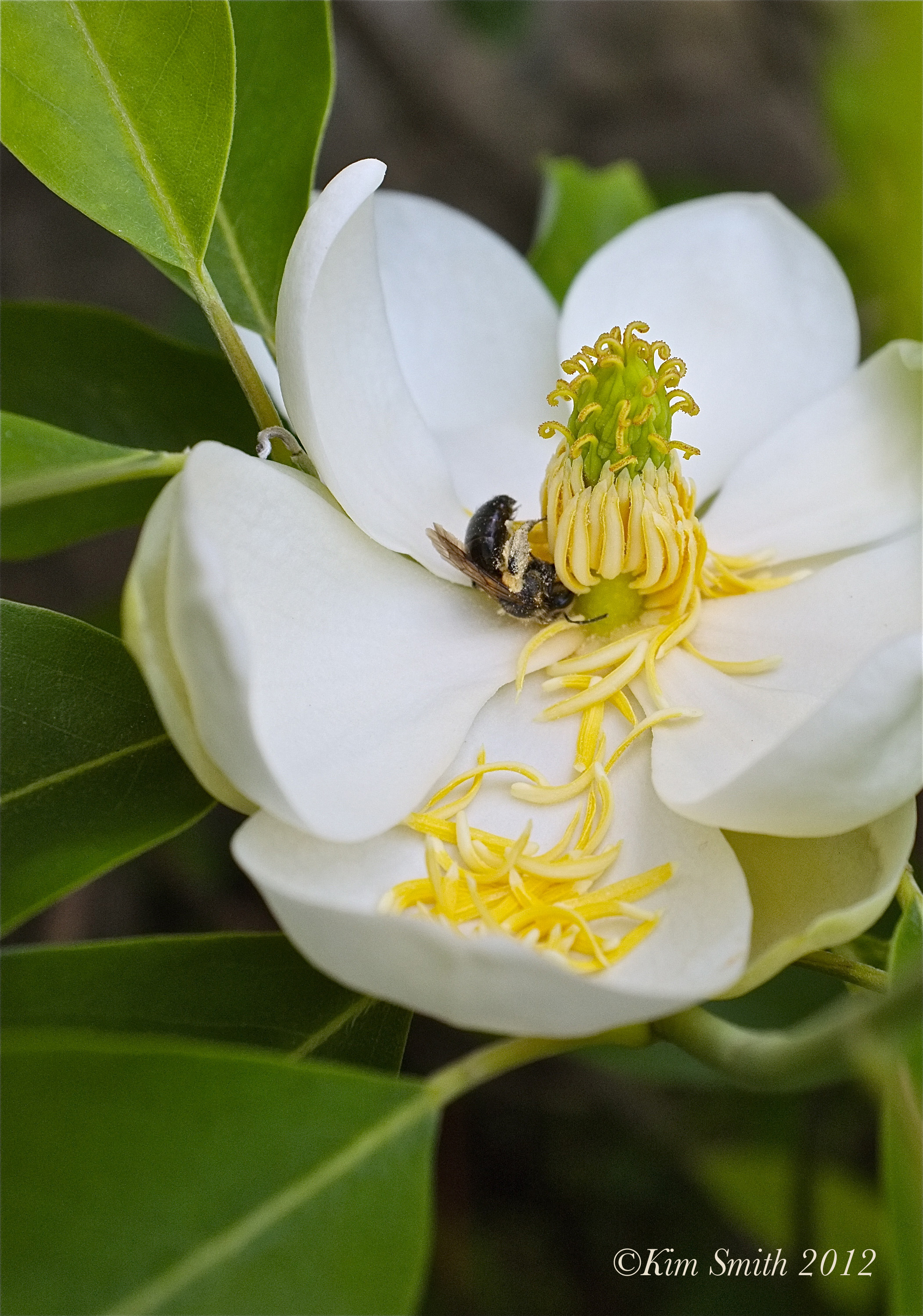
Magnolia virginiana ©Kim Smith 2012 copy

Returning from a trip to visit my family in northern Florida, I had tucked the bud of a the Southern magnolia (Magnolia grandiflora) into my suitcase to paint upon my return. I was dreaming of someday having a garden large enough to accommodate a Magnolia grandiflora and was elated to discover how similar our sweetbay magnolia is to the Southern magnolia. For those not familiar with the Southern magnolia, it is a grand, imposing specimen in the landscape, growing up to fifty feet in the cooler zones five and six, and one hundred feet plus in the southern states. M. grandiflora is the only native magnolia that is evergreen in its northern range, flowering initially in the late spring and sporadically throughout the summer. The creamy white flowers, enormous and bowl-shaped (ten to twelve inches across), emit a delicious, heady sweet lemon fragrance.

In contrast, the flowers of the sweetbay magnolia are smaller, ivory white, water-lily cup shaped, and sweetly scented of citrus and honeysuckle. The leaves are similar in shape to the Magnolia grandiflora, ovate and glossy viridissimus green on the topside, though they are more delicate, and lack the leathery toughness of the Southern magnolia. The lustrous rich green above and the glaucous silvery green on the underside of the foliage creates a lovely ornamental bi-color effect as the leaves are caught in the seasonal breezes.

Magnolia virginiana is an ideal tree for a small garden in its northern range growing to roughly twenty feet compared to the more commanding height of a mature Southern magnolia. M. virginiana grows from Massachusetts to Florida in coastal freshwater wetland areas as an understory tree. The tree can be single- or multi-stemmed. Sweetbay is a stunning addition to the woodland garden with an open form, allowing a variety of part-shade loving flora to grow beneath the airy canopy. The leaves are a larval food for the Eastern Tiger Swallowtail butterfly. Almost immediately after planting we began to notice the swallowtails gliding from the sunny borders of the front dooryard, where an abundance of nectar-rich flowers are planted specifically to attract butterflies, around to the shady border in the rear yard where our sweetbay is located.

Garden designs are continually evolving. Part of our garden has given way to a limited version of a woodland garden, for the shady canopy created by the ever-growing ceiling of foliage of our neighboring trees has increasingly defined our landscape. We sited our Magnolia virginiana in the center of our diminutive shaded woodland garden where we can observe the tree from the kitchen window while standing at the kitchen sink. Gazing upon the tree bending and swaying gracefully in the wind, displaying its shifting bi-color leaves, provides a pleasant view when tending to daily chores.

See Tuesday’s excerpt about pear trees

Eastern Tiger Swallowtail ©Kim Smith 2010

Win a FREE Copy of Oh Garden of Fresh Possibilities!

Tuesday through Friday of this week I will be bringing you expert gardening advice excerpted from my book Oh Garden of Fresh Possibilities! Notes from a Gloucester Garden. My book is currently on sale on my publisher’s website (David R. Godine) for the unheard of price of 15.00 (the list price is 35.00.) In response to Godine’s super sale, I am offering a free copy of my book.

Leave a comment or question on any of the posts by Friday at 8PM to be entered into the drawing to win. Multiple entries are allowed. One person will be chosen at random. The book will be shipped on Monday, the 17th, which should allow time for it to arrive by Christmas. Shipping is included to addresses within the United States and Canada.

Praise for Oh Garden! from The Boston Globe’s Carol Stocker ~ Oh Garden! is a treasure, and perhaps the best garden gift book of the season. Both dream-like and practical, it captures the gardener’s journey by integrating personal essays, hand’s-on advice, and paintings.
—The Boston Globe

Monarch Butterflies Mating.jpgA Pair of Monarchs Mating in Our Pear Trees 

Excerpt from Part One: Creating the Framework, Chapter One

He who plants pears, Plants for heirs

Pyrus communis, or common European pear, is not seen growing in the wild. The cultivated pears as we know them today are thought to be derived from Pyrus nivalis and P. caucasia. Few pears ripen well on the tree and that may be one reason they have not been grown as extensively in America as apples and peaches, although apple and peach trees are not as long lived as pear trees. A healthy pear tree can live and bear fruit for several centuries.

The trick to harvesting pears is to pick them as they are ripening, while they are still quite firm. If you wait until the flesh yields with pressure on the outside, the fruit will be rotted inside. Each individual variety of pears has an estimated ripening date from when the tree blooms. Note the date when the tree begins to flower and count the days forward to the approximate ripening time. The quality of the soil, where the tree is sited, as well as changes in the weather from year to year will influence the number of days until the pears are ready to be harvested. Bearing in mind that this is only an approximation, begin monitoring the fruit closely as the day approaches. Nearing the correct time of harvest, the color of the fruit will begin to change. For example, the ‘Beurre Bosc’ begins to turn a light golden yellow beneath its russet skin. Carefully hold the stem of the pear in one hand and the fruit-bearing spur in the other hand. Gently twist with an upward turn. Remove the pear and stem, not the bumpy, fruit-bearing spur. It takes several years for a spur to develop, and if damaged or accidentally harvested with the pear, the crop will be significantly decreased the following year.

Stack the fruit in the coldest section of a refrigerator and store for several weeks. After two to three weeks, remove a pear or two and let it ripen at room temperature for several days. At this point the pear will ideally be fully ripe and ready to eat. Depending on the cultivar, pears will keep for weeks to several months when kept well chilled.

See Monday’s post for more about Oh Garden of Fresh Possibilities!

My Book On SALE for ONLY 15.00!!! “Oh Garden of Fresh Possibilities! Notes from a Gloucester Garden”

Just in time for holiday gift-giving, my book, Oh Garden of Fresh Possibilities! Notes from a Gloucester Garden, which I both wrote and illustrated, is on sale for only 15.00 on my publisher’s website. The price is unbeatable as the list cost is 35.00. Oh Garden! makes an ideal gift for the garden-maker and nature lover on your holiday list and at this price, I recommend you buy one for yourself and one for a friend!

Oh Garden of Fresh Possibilities.jpgPraise for Oh Garden ~

Anyone who gardens along the Eastern Seaboard from Maine to South Carolina will appreciate Oh Garden of Fresh Possibilities! (David R. Godine, 2009, $35). This book is filled with design ideas and plants that work well in this coastal region, as author and garden designer Kim Smith relates her experiences with her garden in Gloucester, Massachusetts. The first part of the book, “Creating the Framework,” delves into trees, shrubs, and other elements for creating structure in the garden, while the second section addresses how to fill out the framework to create a harmonious living tapestry in your garden. —Viveka Neveln, The American Gardener

Oh Garden! is a 250 page hardcover book crammed full of the most excellent gardening advice you will find anywhere, guiding you through the four seasons, and woven throughout with over 85 illustrations, and fabulous plant lists. All this coming week I will be posting expert gardening advice on GMG and on my blog, with more praises from The Boston Globe and other literary reviewers.

Green Leaves Ignite!

“Green leaves ignite, transformed by a kaleidoscope of incinerating colors—devil-red, burnt tangerine, caramelized amber, searing saffron, and smoldering crimson-purple. The air is impregnated with the aromatic perfume of orchard fruits ripening in the fleeting flush of the sun’s warm light. Hazy, slanting rays gild the late season glory in the garden. Surrounded by flowers of dissipating beauty and juxtaposed against the dazzling brilliance of autumn foliage, we are urged to spend every possible moment savoring our gardens before the onset of winter.”

Excerpt from my book Oh Garden of fresh Possibilities! Notes from a Gloucester Garden. Written and Illustrated by Kim Smith, David R. Godine, Publisher. To read more of this excerpt, click link: Exquisite Flora in Autumn.

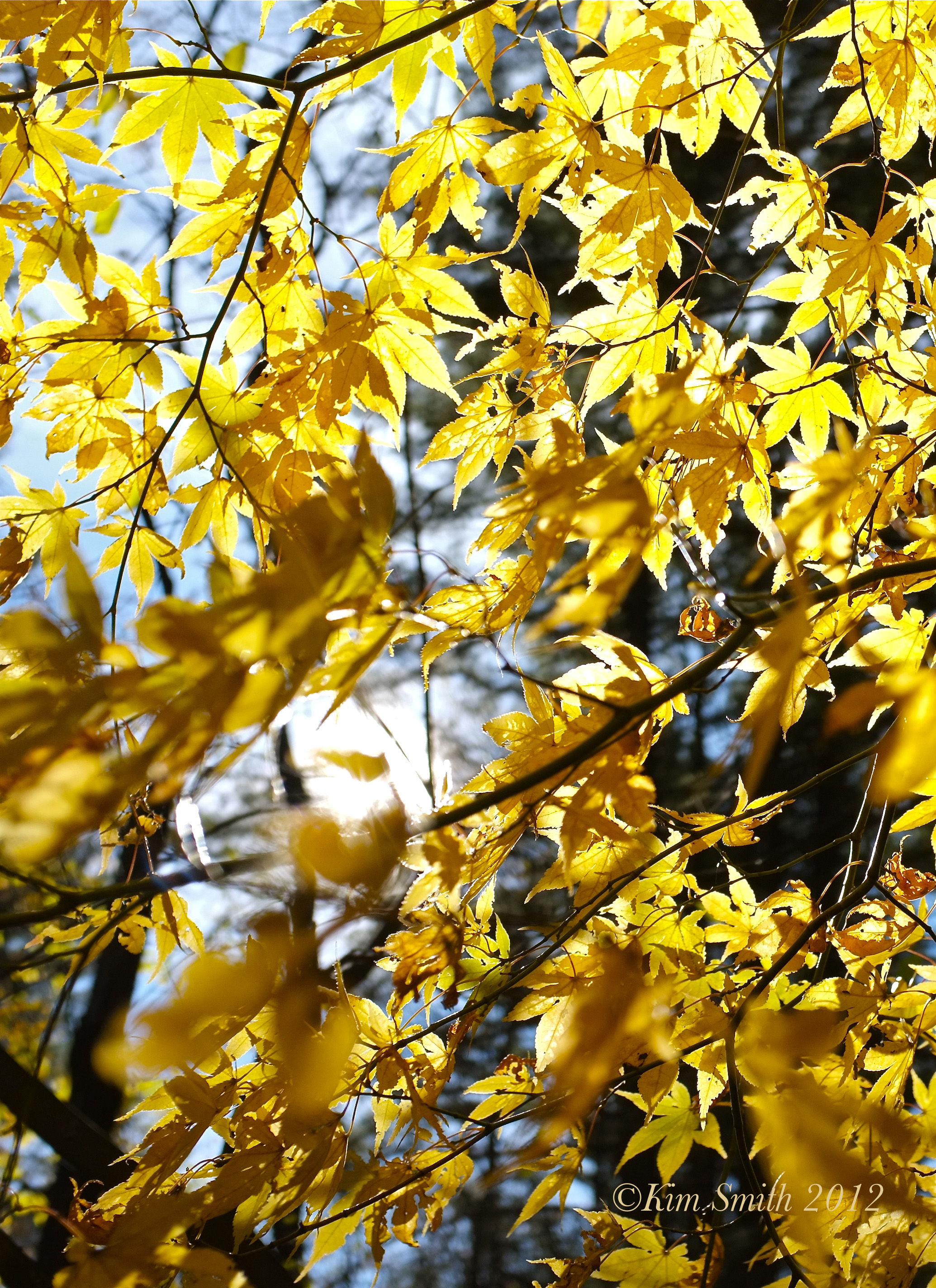
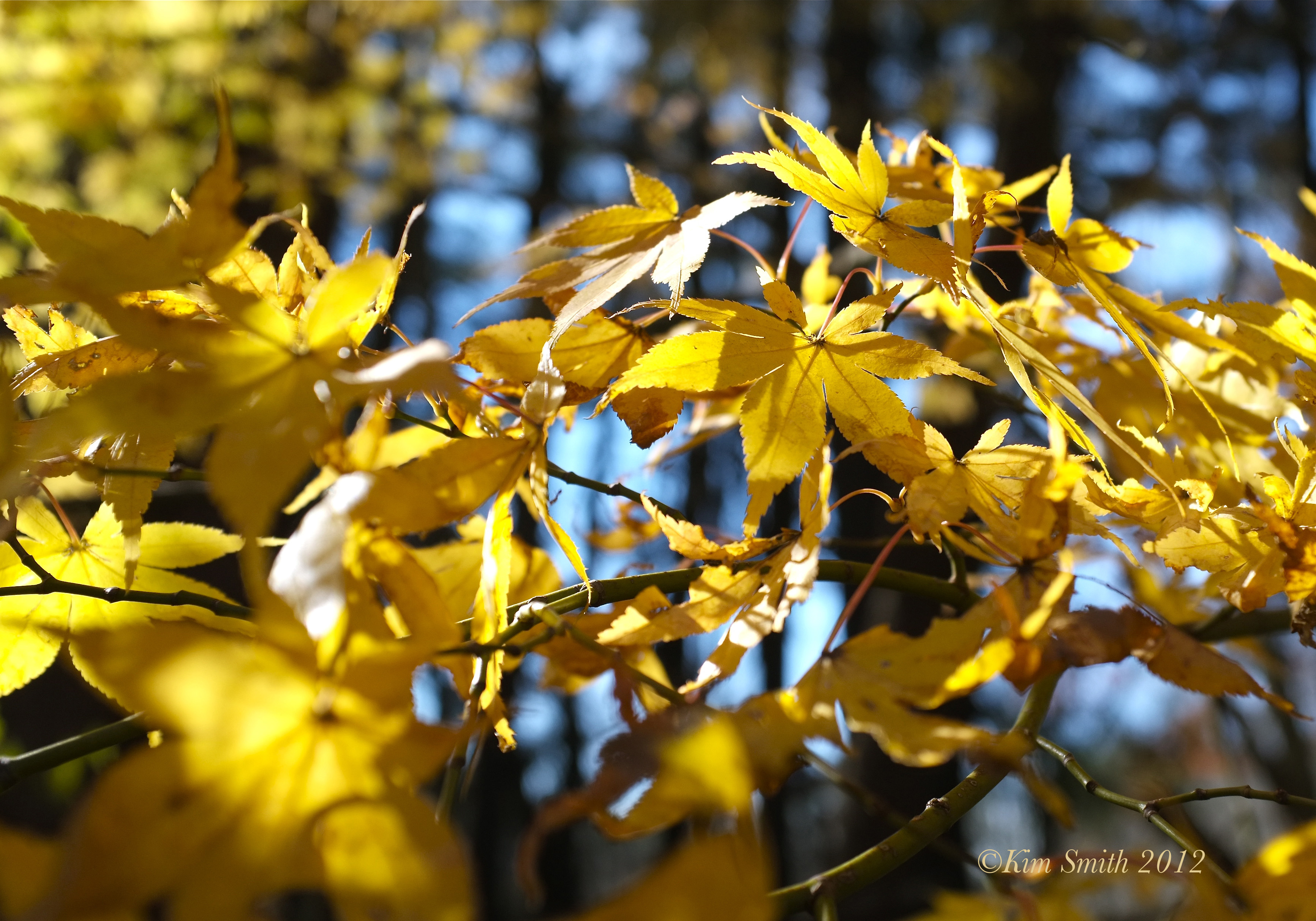
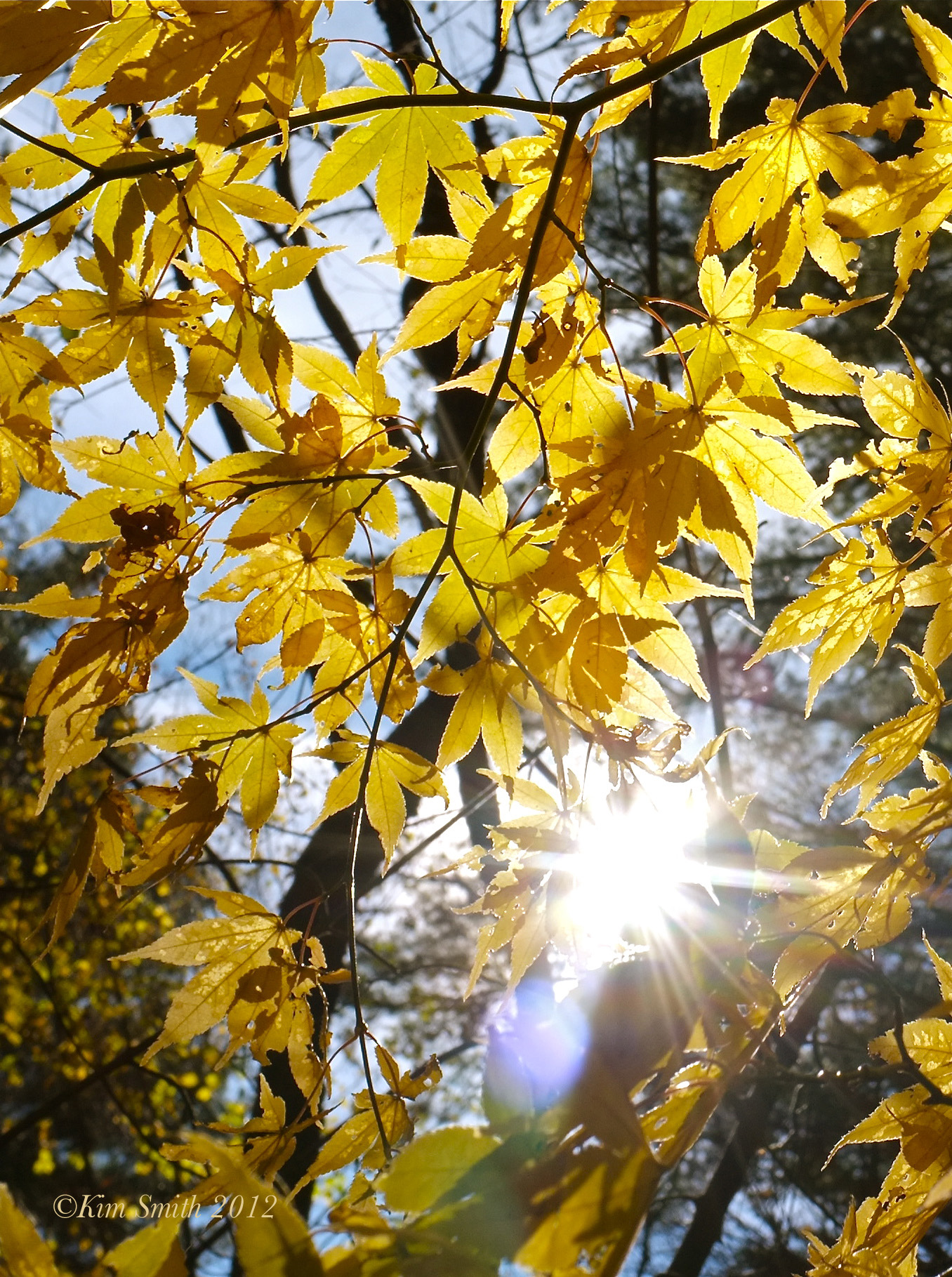
Beautiful saffron yellow maple found, glowing gold in a shady knoll beneath a hardwood tree canopy, at Bradley Palmer State Park.

I believe this little tree is a Japanese maple tree, not typically found in a forest of North American native trees.

Interested in Helping with the Historic Garden at the Sargent House?

Come join a group of garden-loving volunteers at the Sargent House Museum who work 1-2 hours a week making the garden shine. Volunteers receive a free tour of the fabulous home of Judith Sargent Murray, first feminist writer in the New World.  Please come join us between May 31 – August 26 on Thursdays  11 am-2pm, Fridays, Saturdays and Sundays noon-4 pm. Flexible schedule.  Contact Jo-Ann Michalak 781-729-9052.

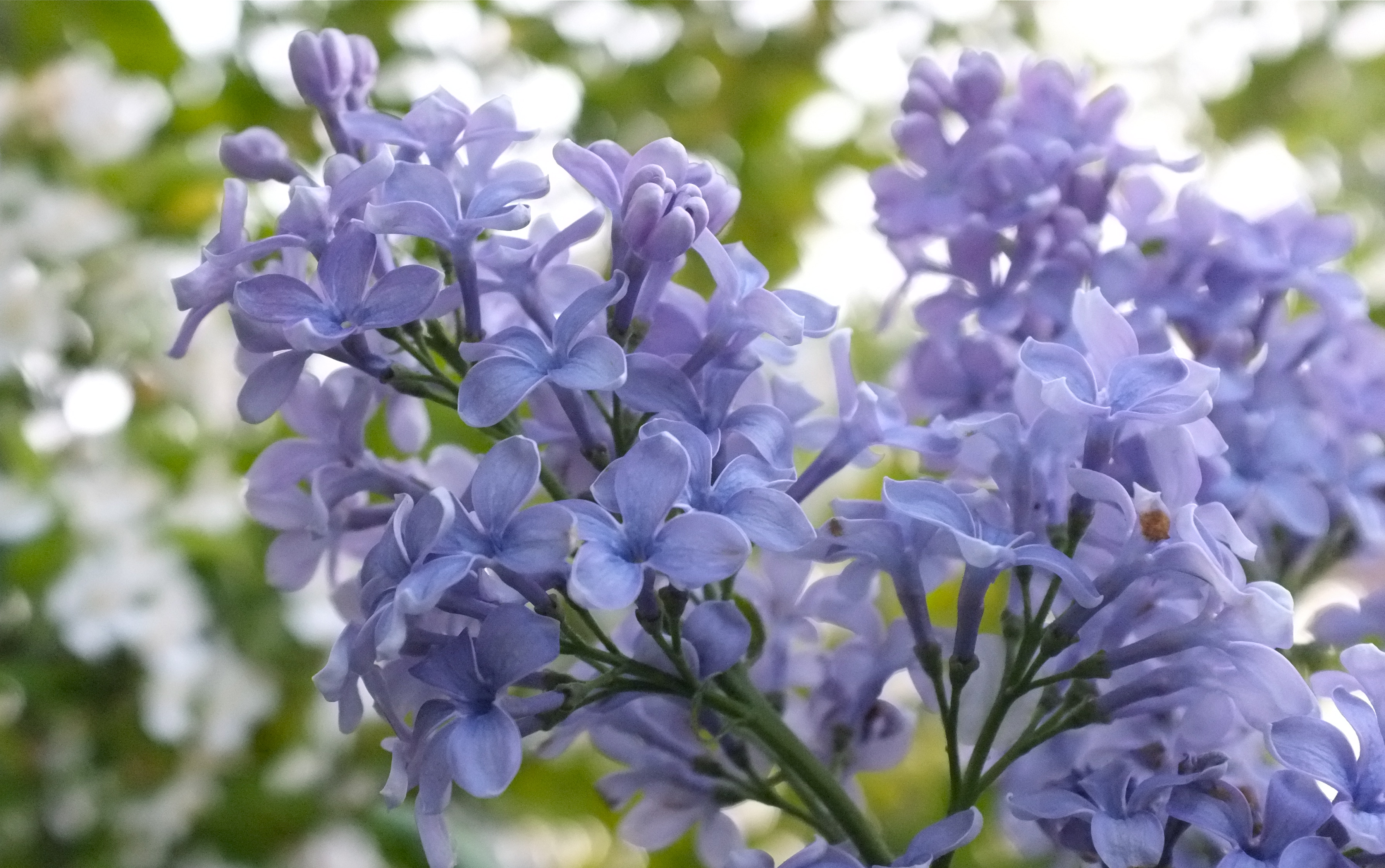
Blue Lilac ‘President Grevy’

Syringa vulgaris ‘President Grevy,’ hybridized by Lemoine in 1886. “Pure blue, immense panicles of sweetly scented starry florets.”    -Oh Garden of Fresh Possibilities!

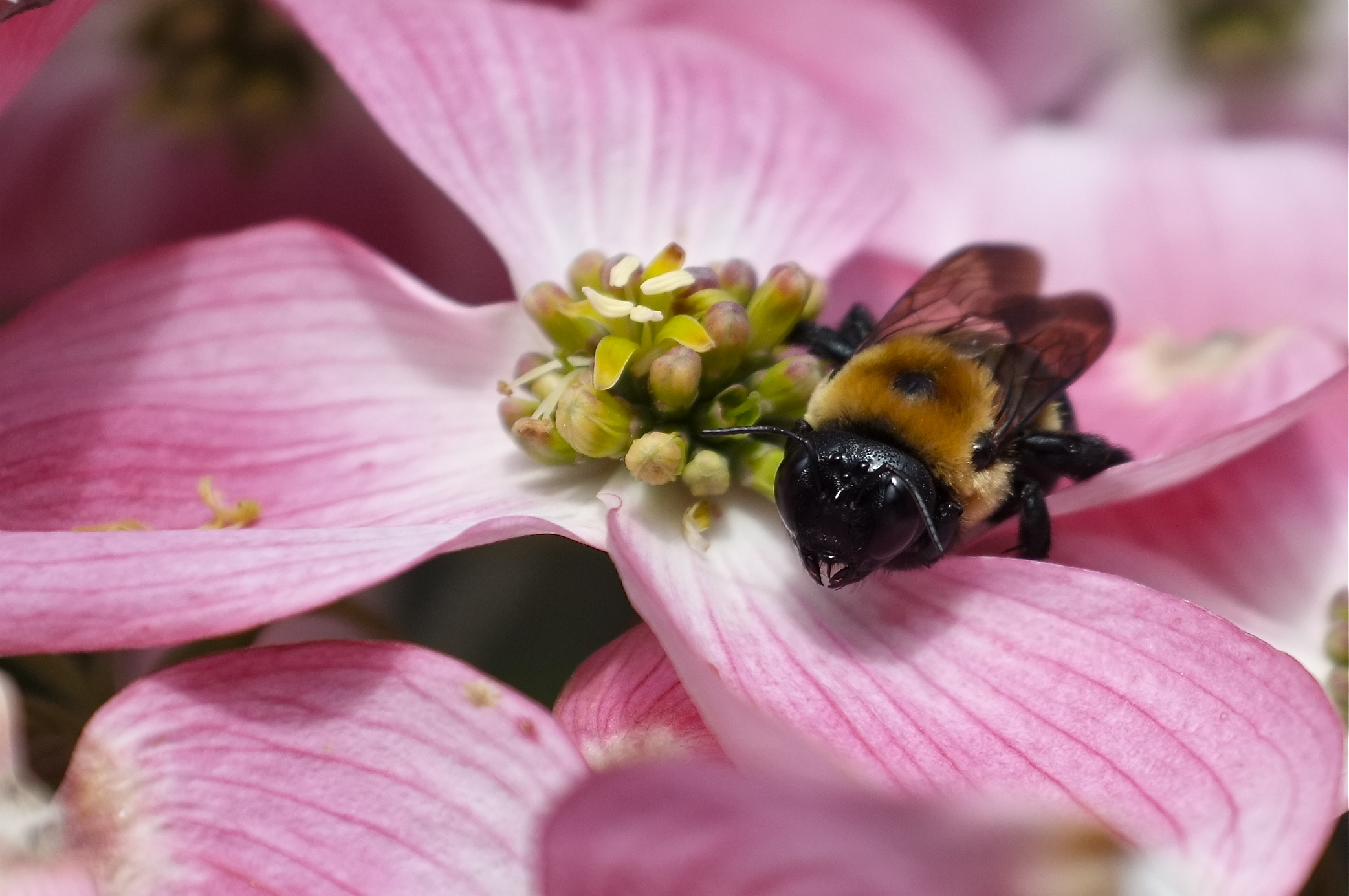
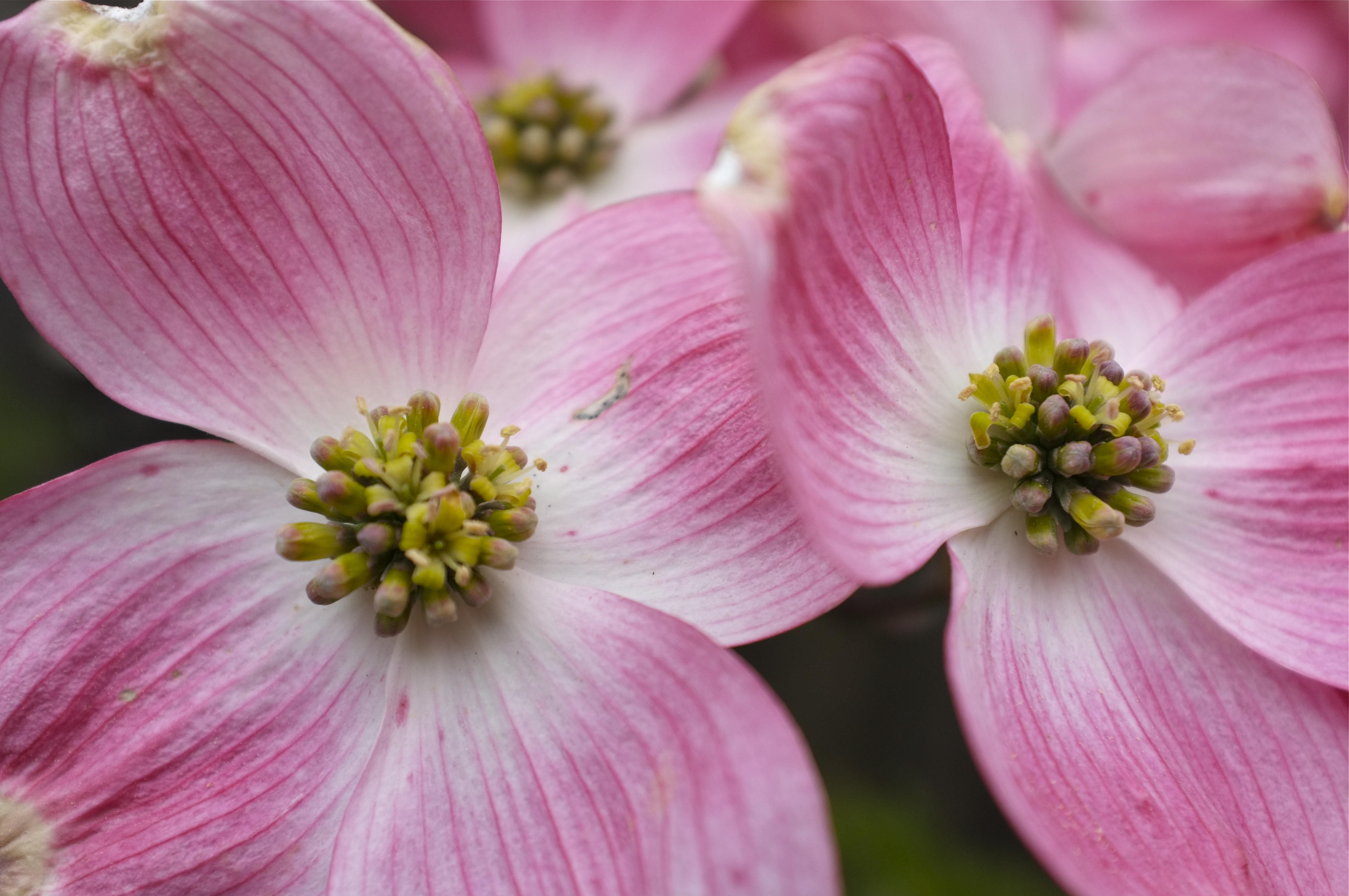
Flowering Dogwood

Is there a tree more lovely in flower than the North American native dogwood?

Whether flowering with the classic white bracts, the stunning rubra bracts, or the less often seen pale, creamy rose-tinted bracts, our native dogwood (Cornus florida) never ceases to give pause for beauty given.

NATIVE TREES SUPPORT NATIVE POLLINATORS!

At this time of year when traveling along southern New England roadways we are graced by the beauty of the dogwood dotting sunny roadside borders where meets the woodland edge. The bracts and flowers emerge before the leaves, serving only to heighten their loveliness. The fresh beauty of the bract-clad boughs is offset by the impressionistic symphony of tree foliage unfurling, shimmering in hues of apple green, chartruese, moss, and lime peel.

*Bract – A bract is a leaf-like structure surrounding a flower or inflorescence. The colorful bracts of poinsettias, the hot pink bracts of bougainvillea, and the bracts of dogwoods are often mistaken for flower petals.

The open florets (pea-green colored) and unopened buds are surrounded by the rose red-shaded bracts.

Read about how to help prevent an attack by the lethal dogwood anthracnose. Continue reading “Flowering Dogwood”

Some Favorite Jonquils and Narcissus

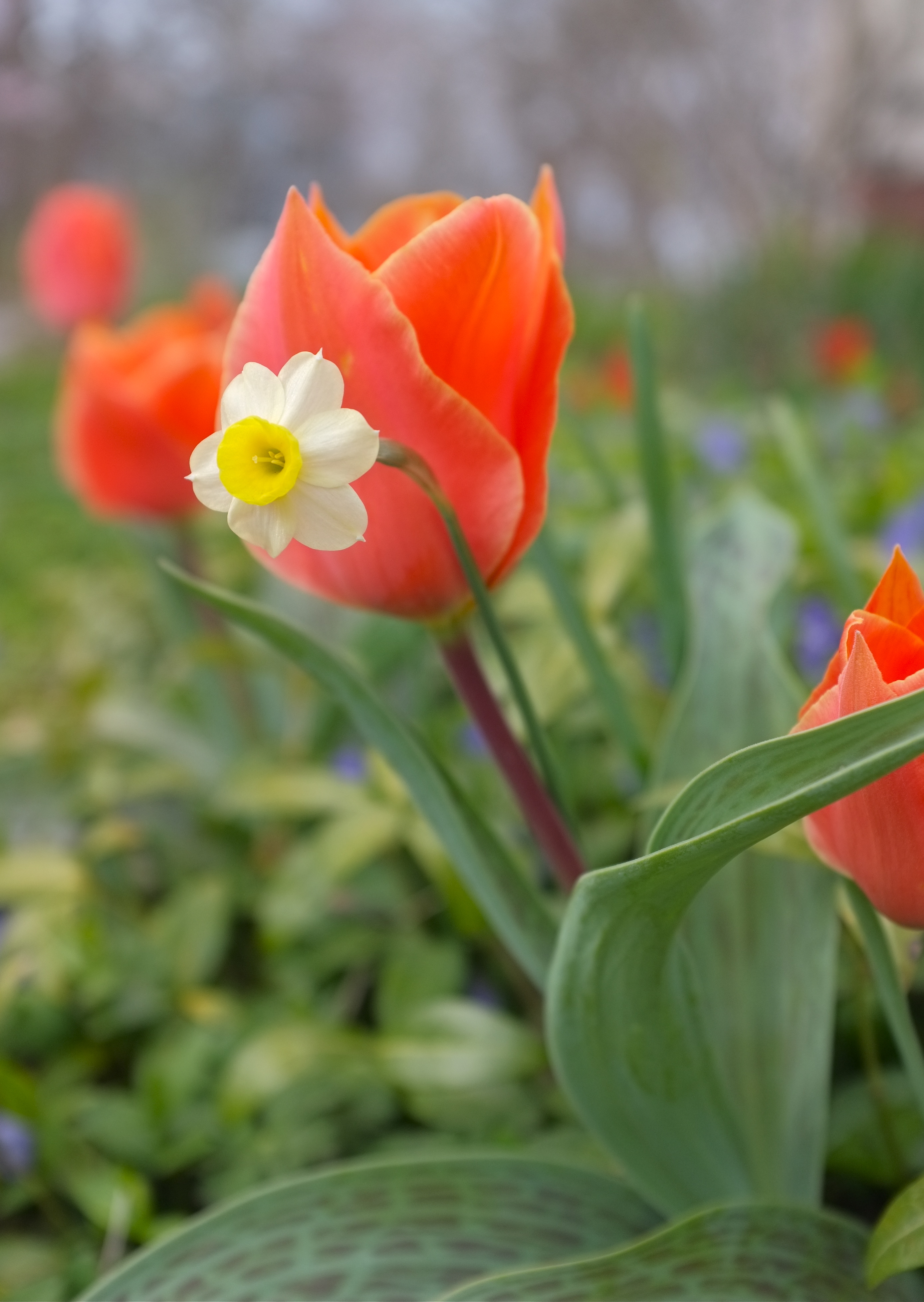
‘Minnow’ and Greigii Tulips 

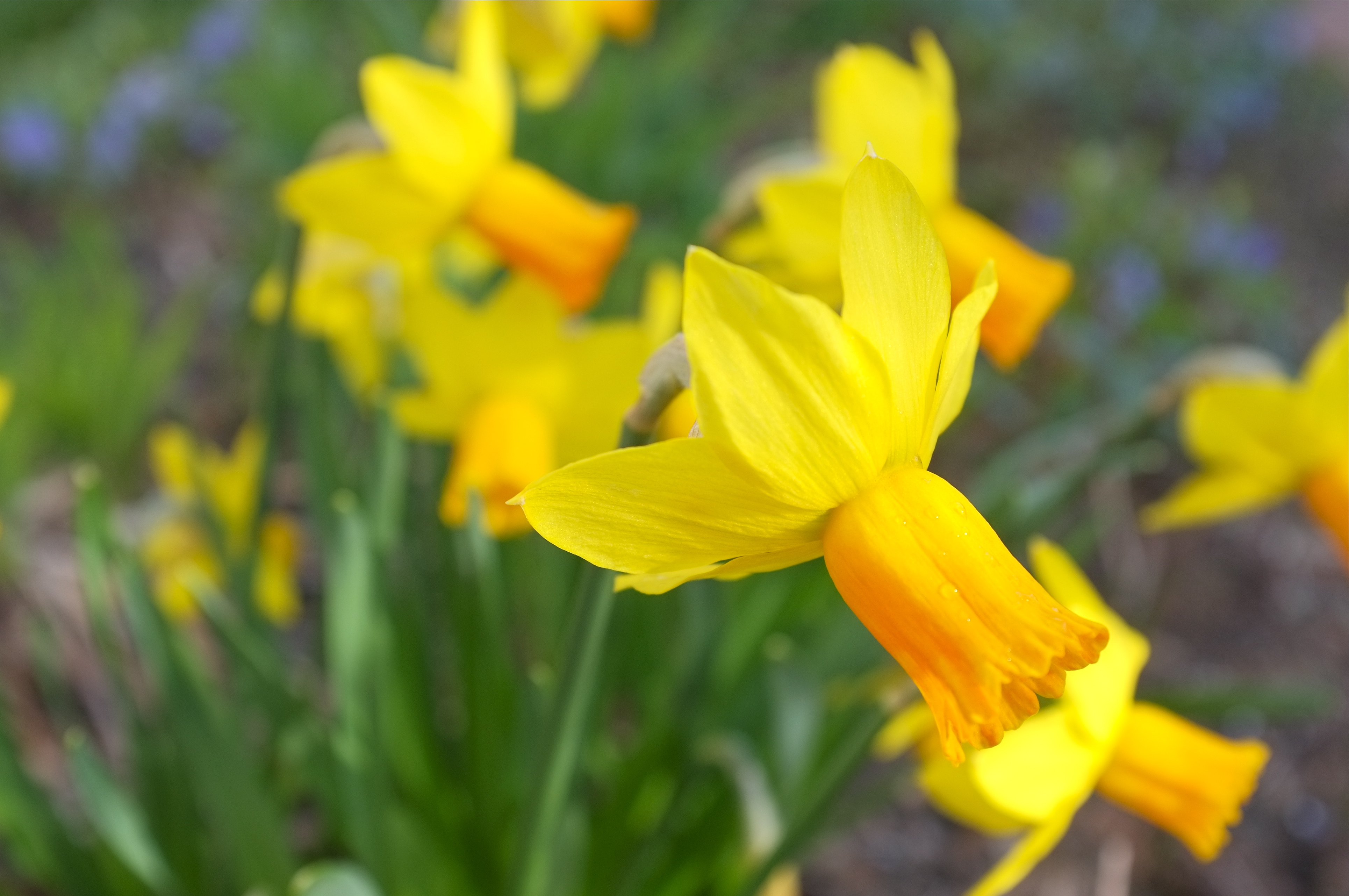
The first photo is of the petite and scented jonquil ‘Minnow,’ offset by the coral red Greigii species tulip. Both are low-growing, which makes them ideal for rock gardens, and both varieties reliably return annually. The second photo is an ever-increasing little patch of narcissus and I know not the cultivar’s name. It was a spring gift that had been purchased as a potted plant from the grocery market, then planted in the garden in early summer.

The third photo is perhaps my all time favorite and consider it the very best for several reasons. ‘Geranium’ is divinely scented—sweet with a hint of fresh lemon blossom; its color and shape meld beautifully with a wide range of spring flowering bulbs; and ‘Geranium’ not only reliably returns each spring, it also increases in number.

What more could one ask for from a bulb?

Narcissus tazetta ‘Geranium’

For more information about narcissus and jonquils, including a list of the most sweetly scented varieties, see my book Oh Garden of Fresh Possibilities! ~ Notes from a Gloucester Garden, page 178.

Cherry Blossom Time

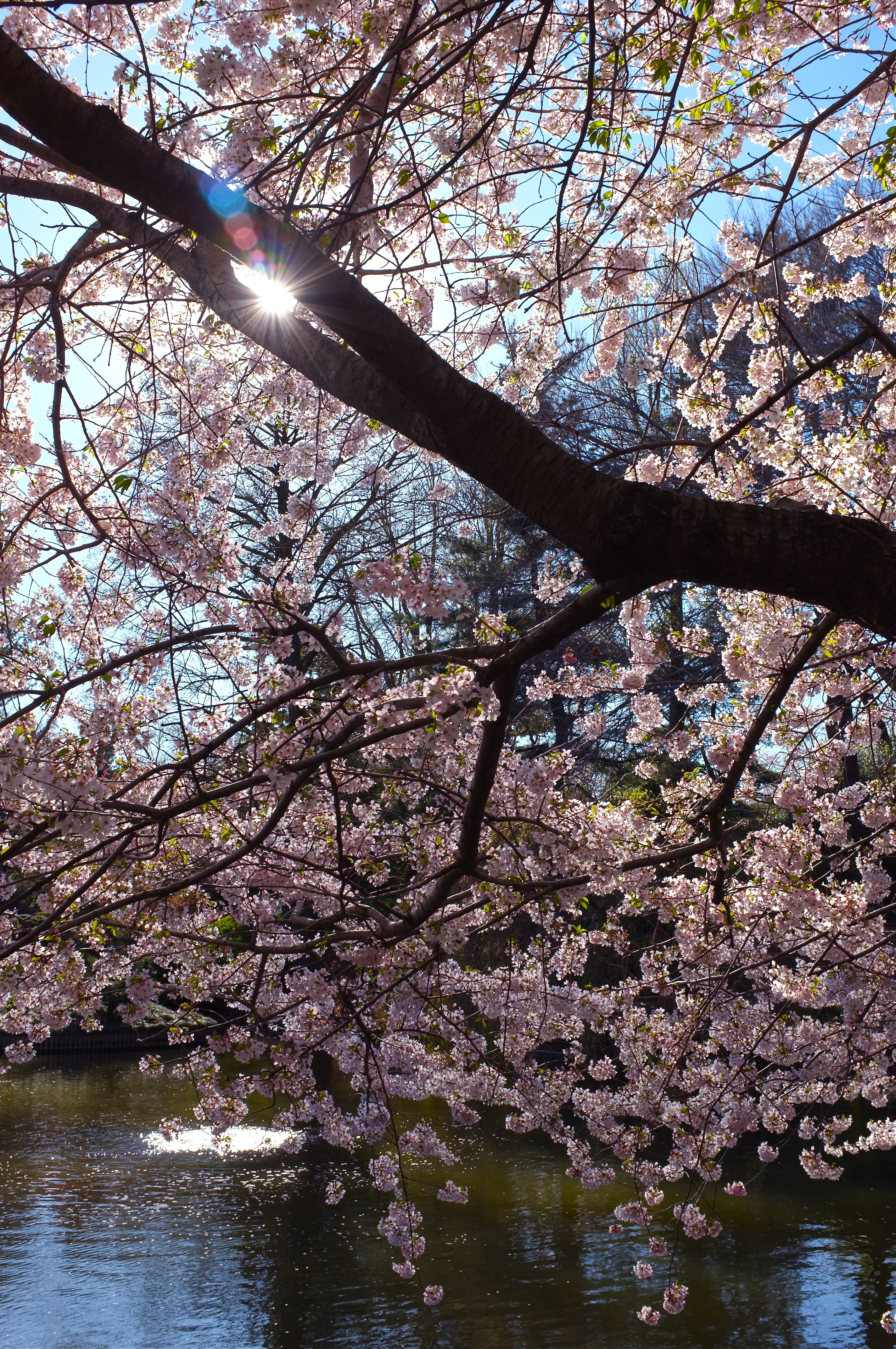
Happy Easter, Happy Passover, and Happy Cherry Blossom Time! I hope you are having a joyous spring!

Native to Japan, the Yoshino cherry (Prunus x yedoensis) is cultivated extensively and is also found growing wild on plains and mountains countrywide. For more than ten centuries, and continuing with no less enthusiasm today, cherry blossom time has been cause for joyful celebration that is deeply integrated in the Japanese culture.

When cherry blossoms begin to fall heavily, the flurry of blossoms is called “cherry snowstorm.” The following is a traditional Japanese song that has been passed down for generations.

Sakura

Cherry blossoms, cherry blossoms

As far as you can see.

Across yayoi skies

Is it mist? Is it clouds?

Ah, the fragrance!

Let us go, Let us go and see!

To see a cherry blossom snowstorm:

In the Japanese language the cherry is called “sakura,” which is generally believed to be a corruption of the word “sukuya” (blooming). Poets and artists strive to express the loveliness of its flowers in words and artistry. Called the flower of flowers, when the Japanese use the word “hane” (flower) it has come to mean sakura, and no other flower. Since the Heian period “hanami” has referred to cherry blossom viewing; the term was used to describe cherry blossom parties in the Tale of Gengi. Aristocrats wrote poetry and sang songs under the flowering trees for celebratory flower viewing parties. The custom soon spread to the samurai society and by the Edo period, hanami was celebrated by all people.

From ancient times, during early spring planting rituals, falling blossoms symbolized a bounteous crop of rice. Beginning with the Heian period (794–1185), when the imperial courtiers of Kyoto held power, the preference for graceful beauty and the appreciation of cherry blossoms for beauty’s sake began to evolve. The way in which cherry petals fall at the height of their beauty, before they have withered and become unsightly, and the transience of their brief period of blooming, assumed symbolism in Buddhism and the samurai warrior code.

The delicacy and transience of the cherry blossom have poignant and poetic appeal, providing themes for songs and poems since the earliest times. The motif of the five petal cherry blossoms is used extensively for decorative arts designs, including kimonos, works in enamel, pottery, and lacquer ware. Cherry tree wood is valued for its tight grain and is a lustrous reddish brown when polished. The wood is used to make furniture, trays, seals, checkerboards, and woodblocks for producing color wood block prints.

Read More:

Continue reading “Cherry Blossom Time”

Oh Garden of Fresh Possibilities!

Dear Friends,

It’s that time of year again for holiday gift making and gift giving. Possibly you are one of those fantastically super organized holiday spirits finished with your holiday shopping, or even more probably, you’re not in the mood to hear another holiday commercial. If so, please forgive, but I am writing to suggest that my book Oh Garden of Fresh Possibilities! ~ Notes from a Gloucester Garden, which I wrote and illustrated, makes a wonderful holiday gift. If you already own a copy, perhaps you will agree that it would make a thoughtful gift for that someone on your list who loves to garden, or a young couple who may have recently purchased a home and needs sound advice, or someone who simply likes to read about flowers, butterflies, garden lore, and garden-making.

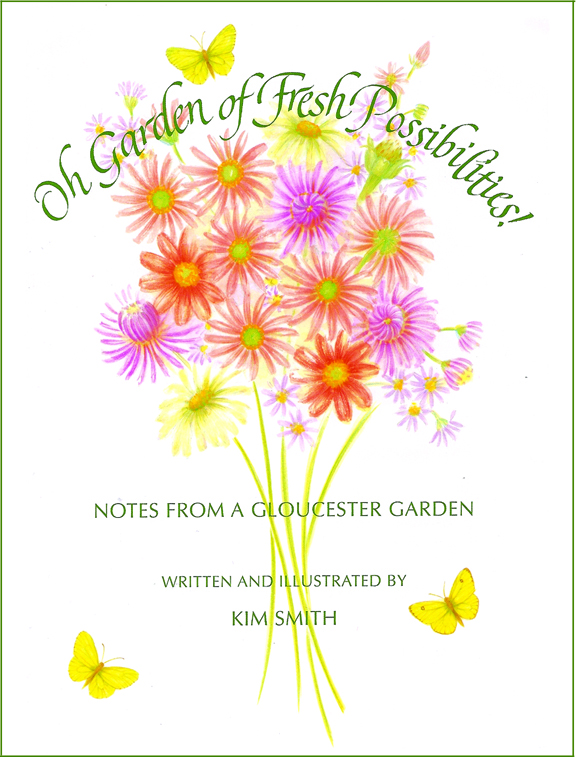
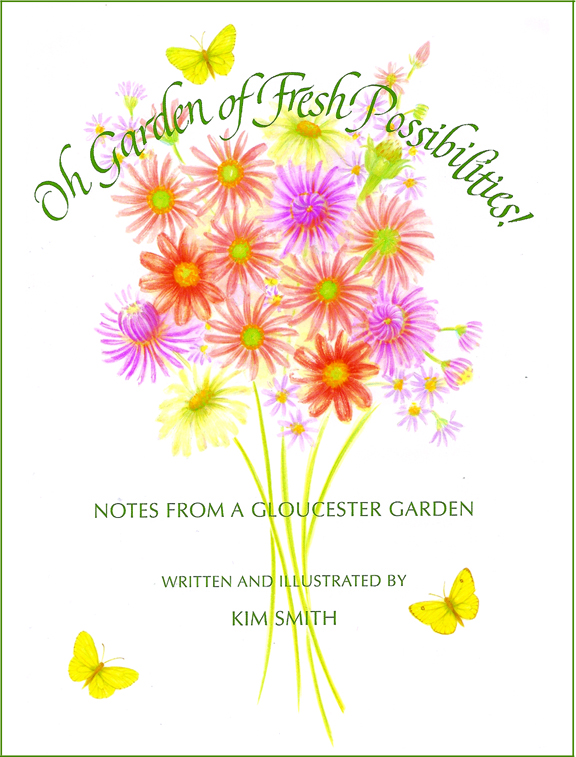
Oh Garden of Fresh Possibilities! Front Cover 

This is a link to the Press Page of my blog, where you can read excerpts of reviews by The Boston Globe’s Carol Stocker, Bloomsbury Review, Patriot Ledger, North American Butterfly Association, and more. With spending any spare hours blogging and my video projects and garden design newsletter, I am embarrassed to say that my website has not been updated in over a year, however, both the Book Page and Story Page on my website provide more information about Oh Garden. 

Oh Garden of Fresh Possibilities! is available at Toad Hall, and wherever fine books are sold.

Excerpt from the introduction ~

We all carry within us the image of a home to create and a garden to tend. Perhaps you dream as I do of a welcoming haven to foster family bonds and friendships and to rejoice in life’s journey. The garden and the home to which it belongs becomes a memory catcher to weave a life’s tapestry.  To read more