Monarchs usually arrive in our region by the first week in July and go through several brood cycles. This year, barely any arrived. The Monarch’s sensitivity to temperature and dependence on milkweed make it vulnerable to environmental changes. Since 1994, U.S. and Mexican researchers have recorded a steady decline in the Monarch population in their overwintering grounds, with 2012-2013 being the lowest recorded to date.
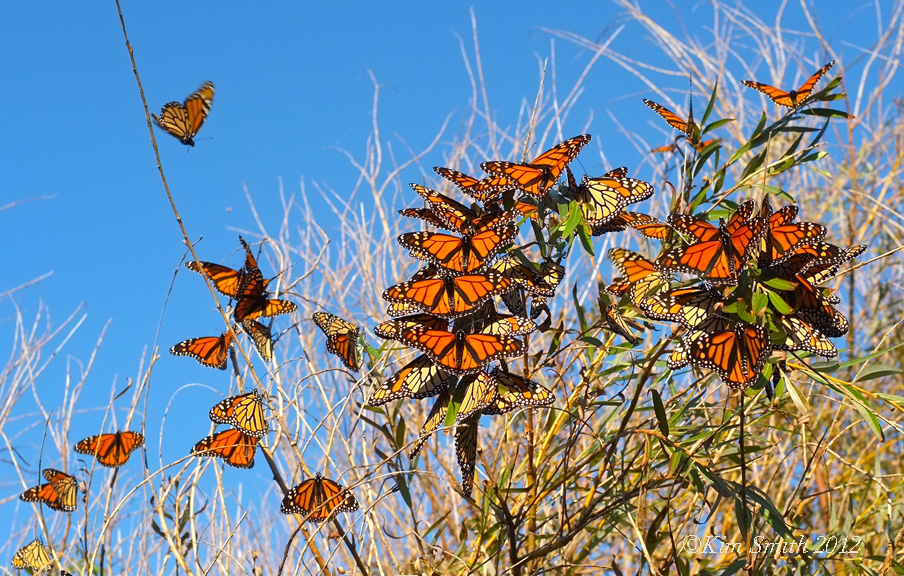
Temperature change and habitat loss affect breeding success and longevity. Dr. Chip Taylor, a leading Monarch researcher at the University of Kansas reports that the widespread adoption of GMO corn and soybean crops resistant to herbicides, along with with intensive herbicide use, coupled with the federal government’s incentivized expansion of corn and soy acreage for the production of biofuels have caused a significant drop in milkweed throughout the heart of the Monarch’s range. Lack of milkweed equals no Monarchs. “Monarch/milkweed habitat has declined significantly in parallel with the rapid adoption of glyphosate-tolerant corn and soybeans and, since 2006, the rapid expansion of corn and soy acreage to accommodate the production of biofuels,” Taylor wrote on May 29.
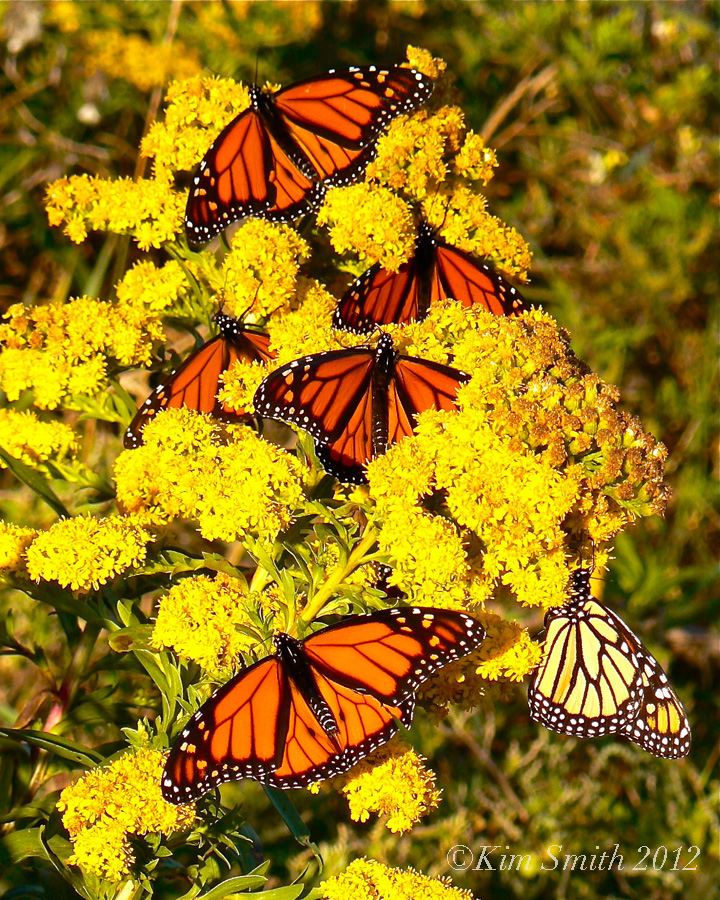
Monarchs Nectaring at Seaside Goldenrod
What can we do? Encourage conservation organizations that conserve Monarch habitat, plant milkweed, plant nectar plants, and raise caterpillars. Hopefully the weather next spring and early summer will be more conducive to the Monarch’s northward migration and breeding success, and if and when the Monarchs arrive, they will find our milkweed plants.

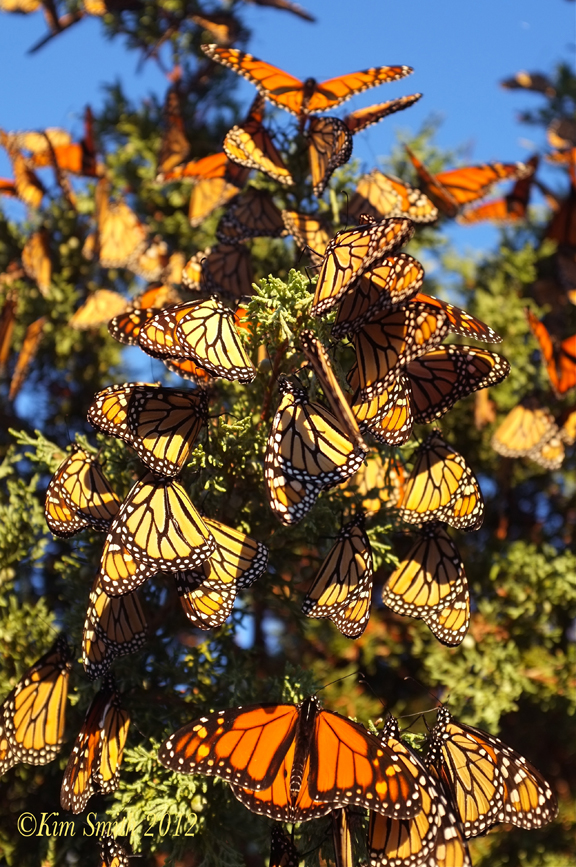
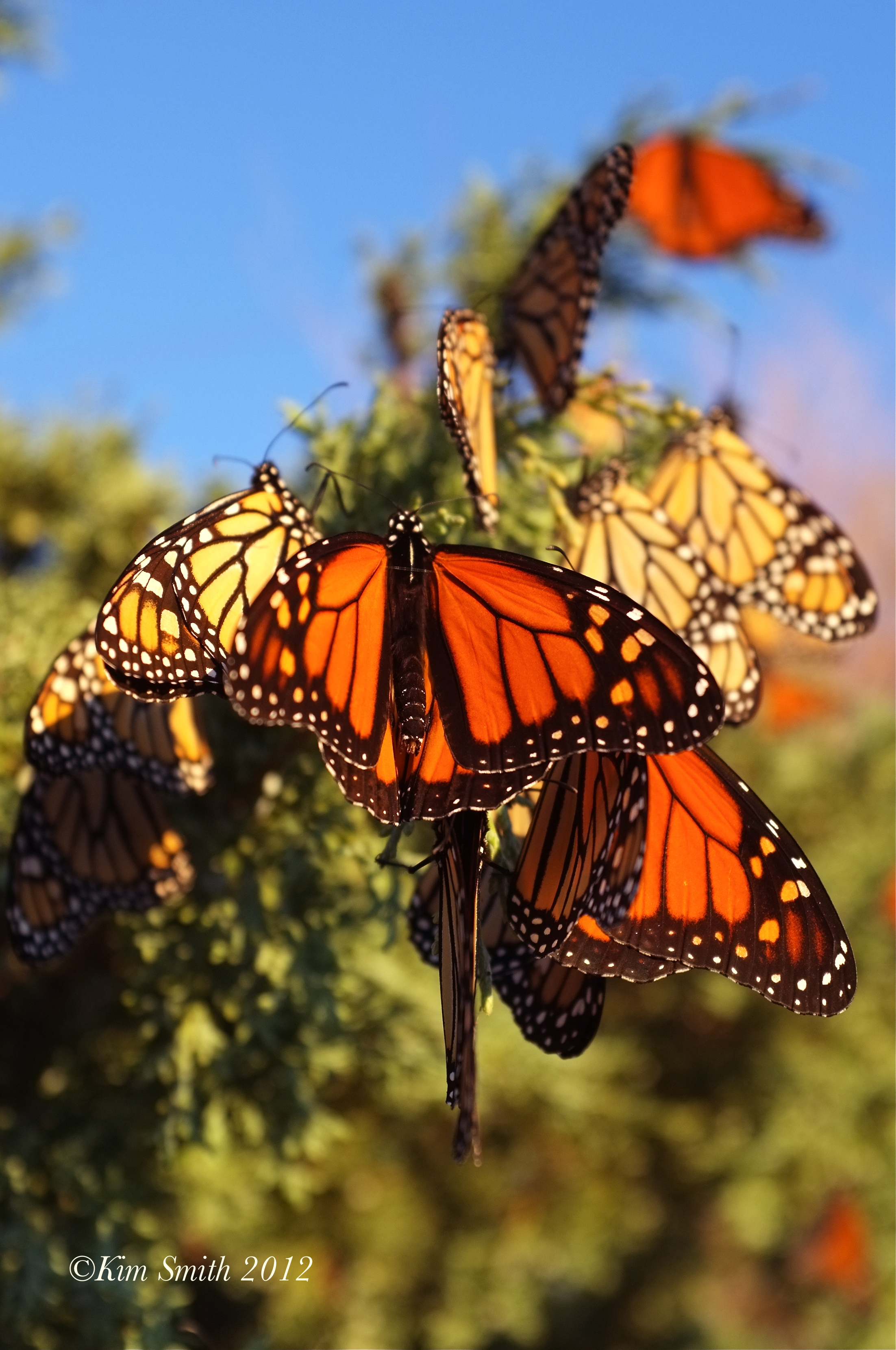
Monarch Butterflies Nectaring at New England Asters
If anyone sees a Monarch, please email me at kimsmithdesigns@hotmail.com or leave a comment in the comment section.
Update #2: Reader Jude Writes the following ~
Hi Kim,
I have maybe 30milkweed plants in the front yard. I would be happy to harvest the seeds, are there places you know of that would be willing or have a large enough property to seed them? Can you harvest them as soon as the pods pop? I remember as a kid finding the most beautiful cocoon I have ever seen. I haven’t seen many butterflies at all and of the ones I have seen are not Monarchs.
My reponse:
Hi Jude, I am putting it out there in GMG Land that if anyone would like your milkweed seed pods to please contact me.
Yes, you can harvest immediately after the pods pop, as a matter of fact, I recommend doing just that and sowing your seeds in the fall. The easiest method is to lightly scratch the surface of the soil where you wish the milkweed to grow. Scatter the seeds and water. That’s it.
Thank you so much for writing. Hopefully, we’ll find a home for your milkweed seeds.






 Good Morning Gloucester