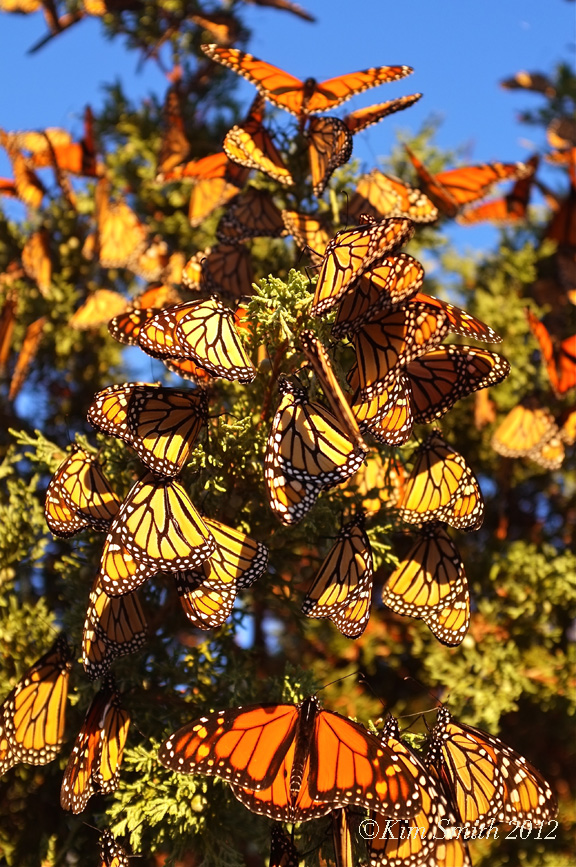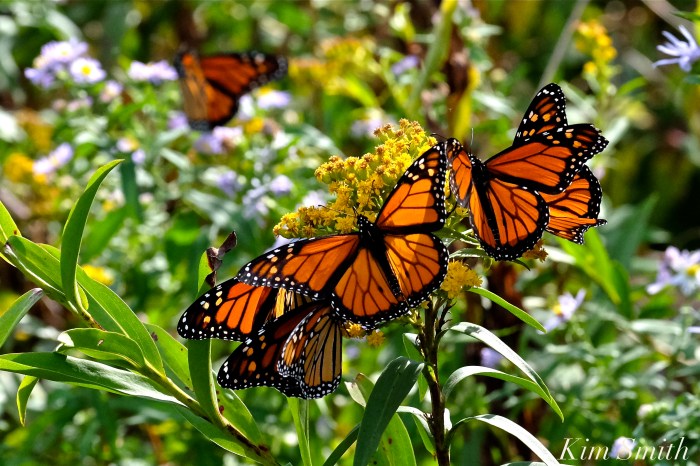
MONARCH MIGRATION UPDATE AND THANK YOU KIND DONORS FOR CONTRIBUTING TO MY DOCUMENTARY “BEAUTY ON THE WING!”

I AM OVERJOYED TO SHARE THAT WE HAVE RAISED OVER $2,500.00 IN THE FIRST WEEK OF “BEAUTY ON THE WING” ONLINE FUNDRAISER!!! MY DEEPEST THANKS AND GRATITUDE  TO NEW ENGLAND BIOLABS, LAUREN M., MARION F., ELAINE M., DONNA STOMAN, PEGGY O’MALLEY, JOEY C., CATHERINE RYAN, JOEANN HART, JANE PAZNIK BONDARIN AND ROBERT REDIS (BOTH FROM NEW YORK), NUBAR ALEXANIAN, PETER VAN DEMARK, PATRICIA VAN DERPOOL, FRED FREDERICKS, LESLIE HEFFRON, JIM MASCIARELLI, DAVE MOORE (KOREA), LILIAN AND CRAIG OLMSTEAD, TOM HAUCK, AND ANONYMOUS PERSONS FOR THEIR GENEROUS HELP.  
If you would like to help towards the completion of my documentary film Beauty on the Wing: Life Story of the Monarch Butterfly, filmed in the wilds of Cape Ann and Angangueo, Mexico, please consider making a tax deductible donation here:

DONATE HERE

Donors contributing over $5,000. will be listed in the credits as a film producer.

For more information, visit the film’s website here: Monarch Butterfly Film

For an overview of the film’s budget, please go here: Budget

Thank you so very much for your help.

With gratitude,

Kim Smith


Cape Ann Monarch Migration Update October 16, 2017
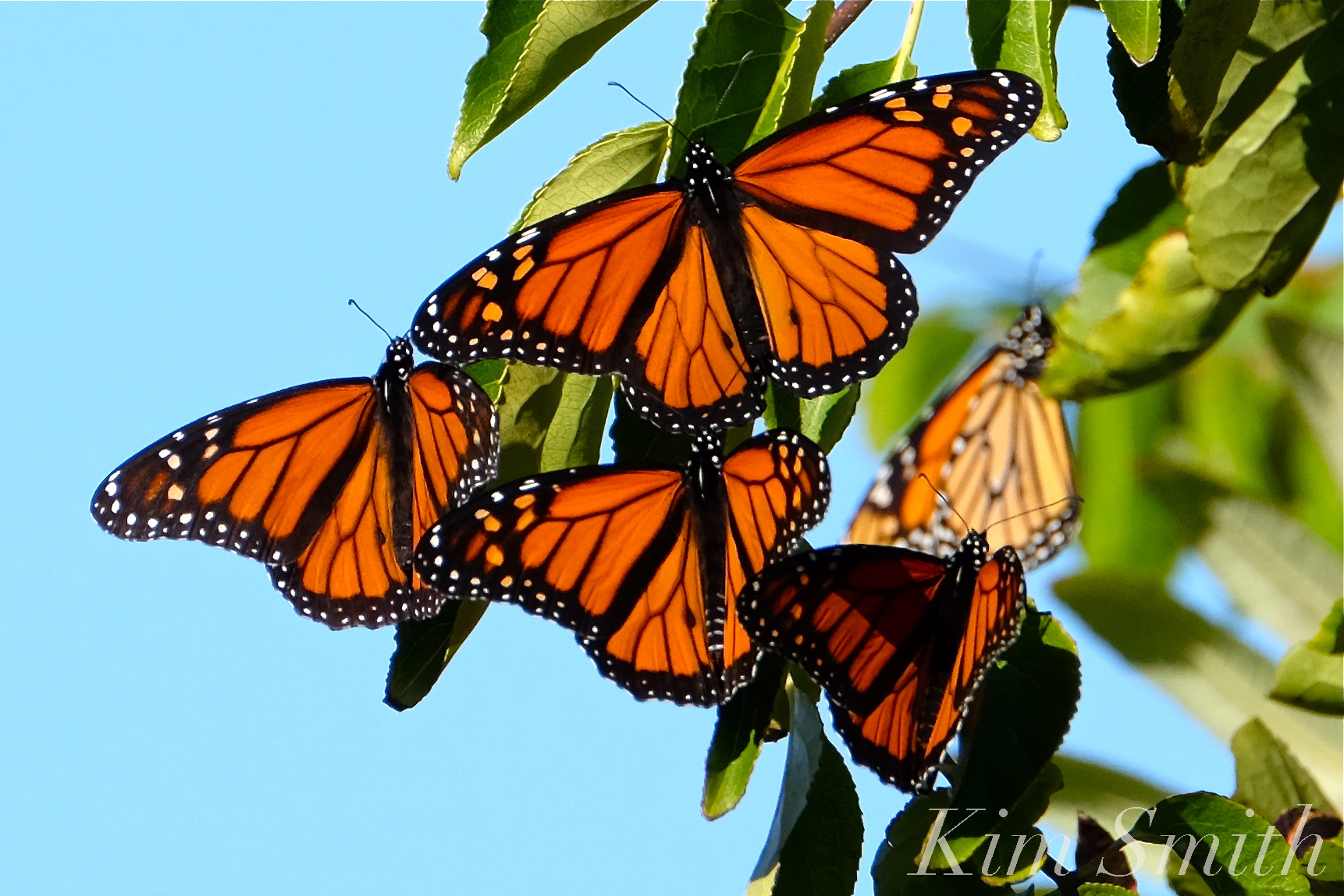
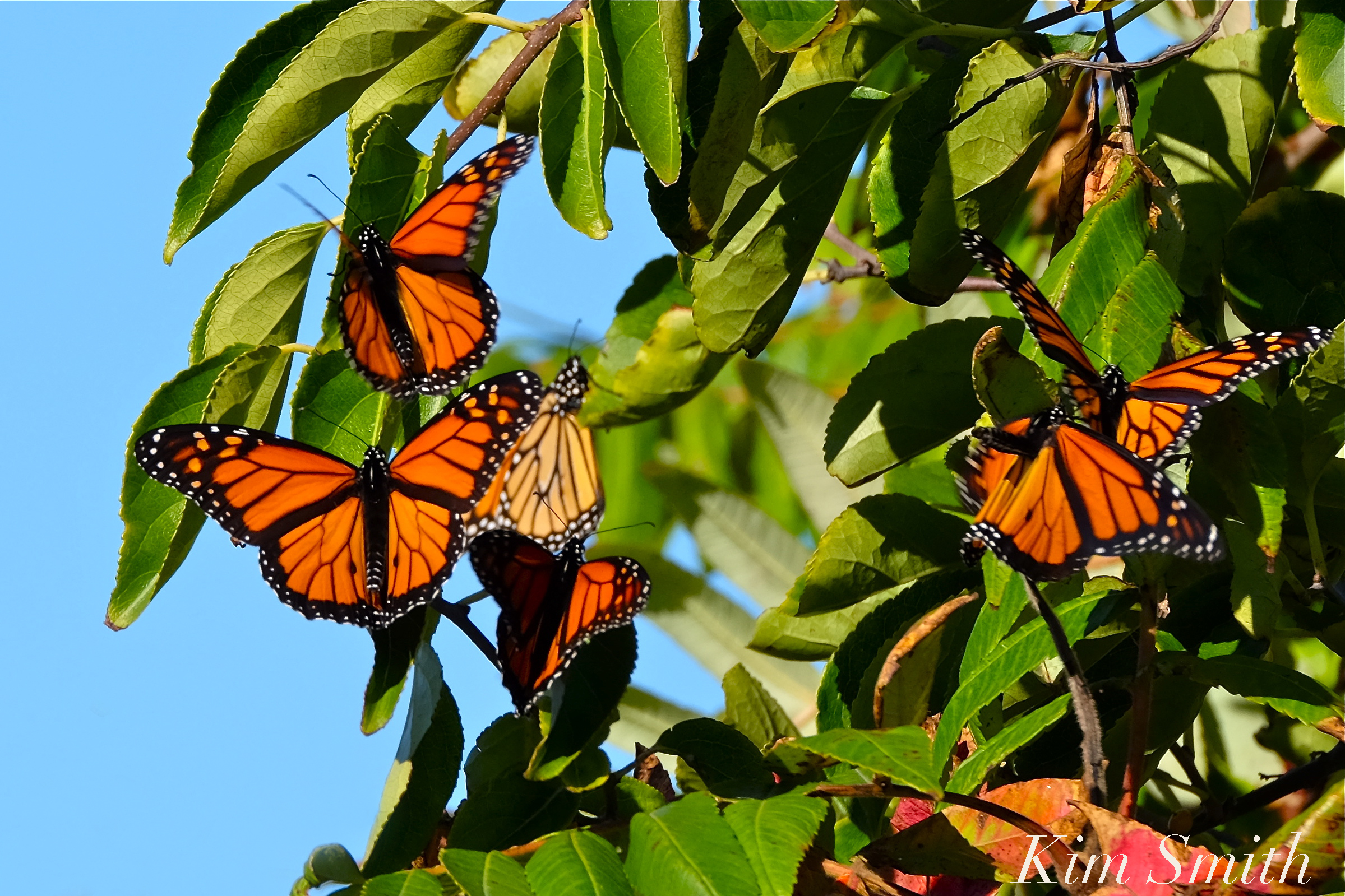
Monarchs roosting overnight in the old chokecherry tree.

We have had four beautiful waves of Monarchs pouring into Cape Ann. The first arrived on September 23rd and the fourth departed last Wednesday morning, on the eleventh of October. As there are reports of Monarchs still further north, we should be expecting at least one more wave, quite possibly this week. And, too, my friend Patti found several Monarch caterpillars in her garden only several days ago. These caterpillars won’t be ready to fly to Mexico for another week to ten days at least. If this warm weather continues, we may still yet have more batches coming through in the coming weeks.

What can you do to help the Monarchs, Painted Ladies, bees, Ruby-throated Hummingbirds, and all pollinators at this time of year? Don’t tidy up the garden just yet!  When you cut back remaining flowering stalks and sprigs, you are depriving winged creatures of much needed, and less readily available, nourishment. Bees, and migrating butterflies on the wing, especially Monarchs, need nectar throughout their journey to Mexico. Songbirds eat the seeds of expiring flowering stalks.
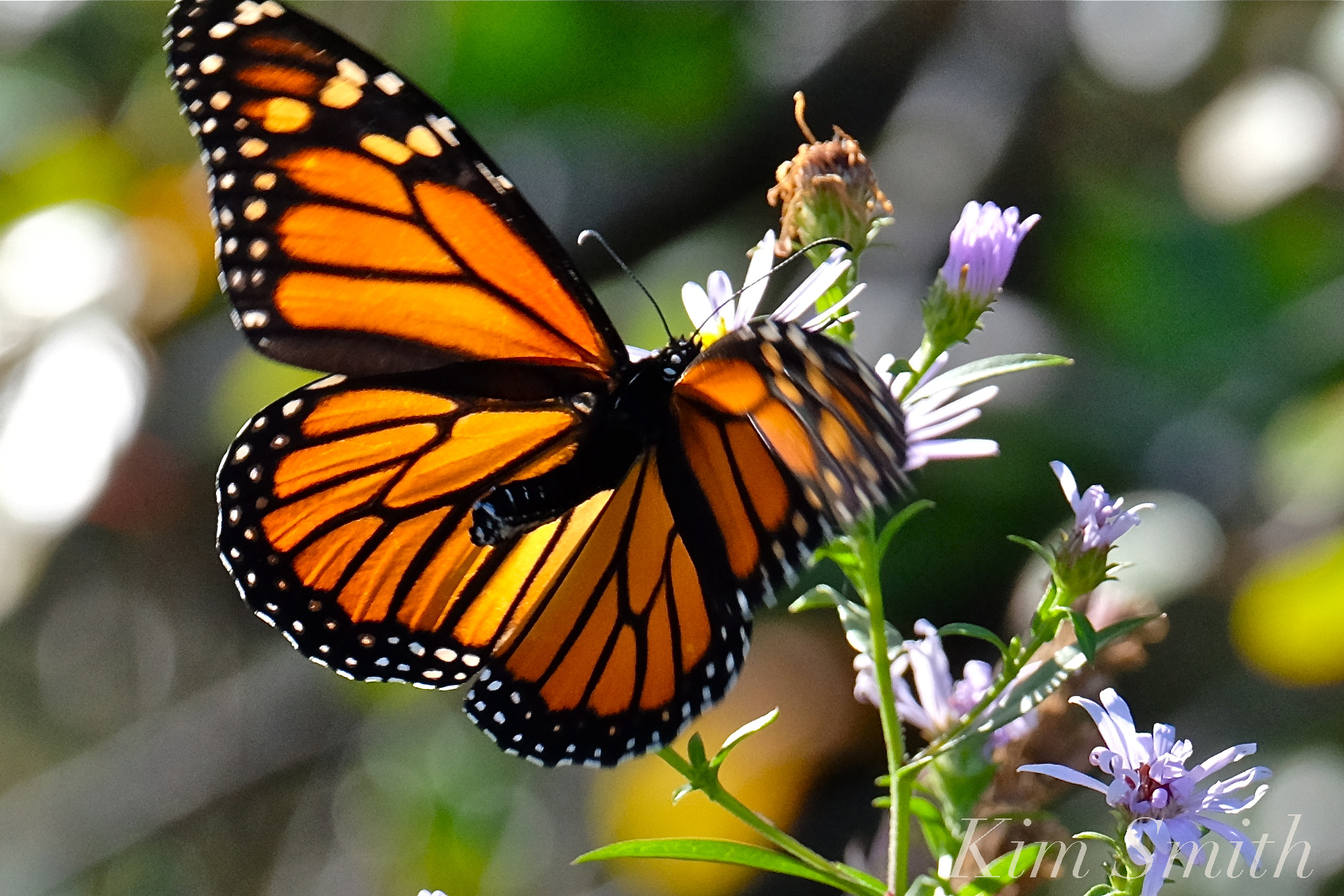
I keep my client’s gardens neat and tidy at this time of year by pulling out the occasional dead plant and trimming away dried out foliage. In deference to the pollinators, the very best time of year to plant bulbs and organize the garden for the following year, is after November 1st, at the very earliest. And even then, if for example my Korean Daisies are still blooming, I work around the plant. Usually in November and up until the first frost, it is covered in bees. I’ve had many a Monarch pass through my garden in November and the Korean Daisies were there at the ready to provide nectar for weary travelers.
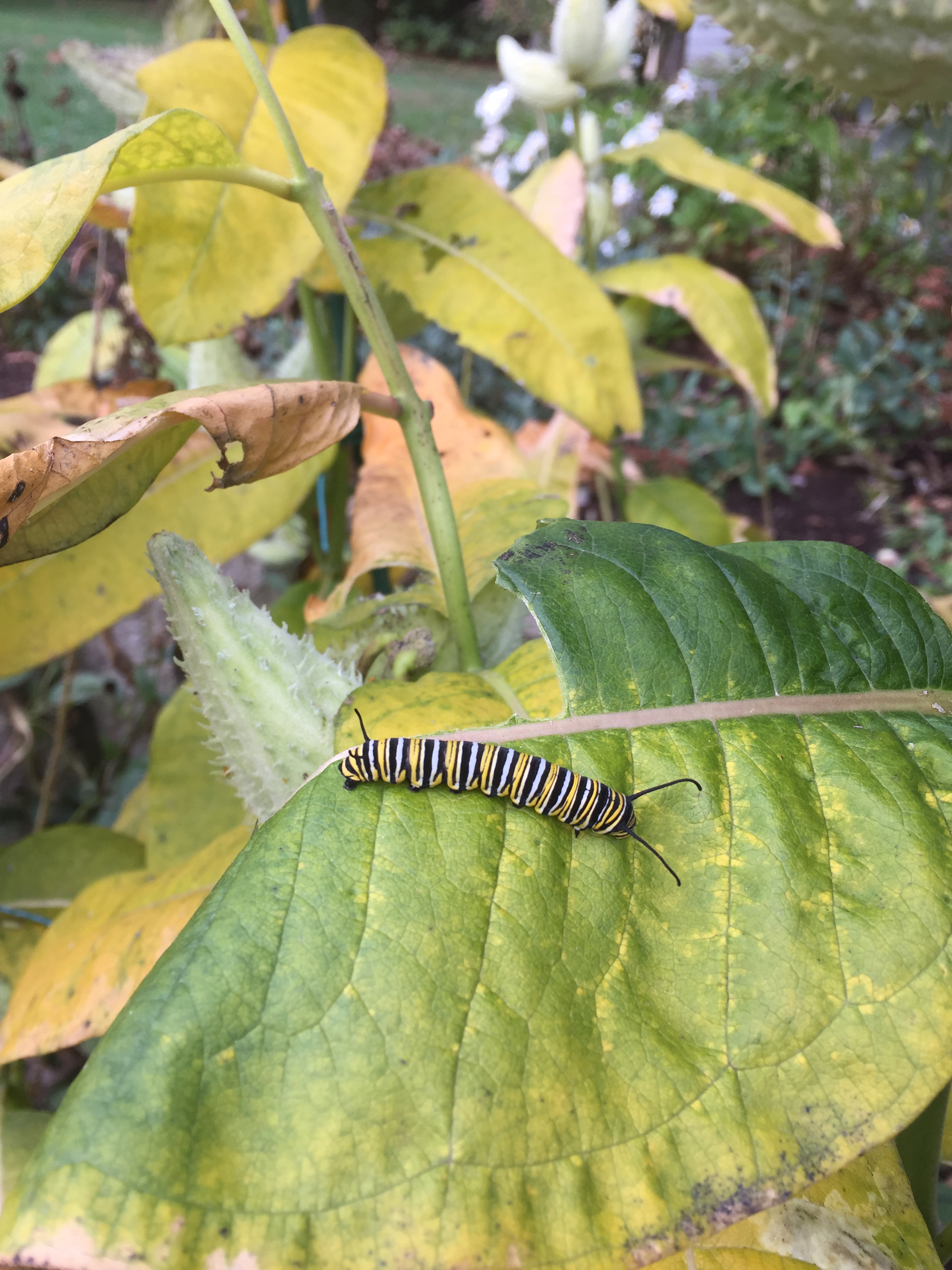
Patti’s Caterpillar, found in her garden on October 14th. He’s now at our home in a terrarium, happily munching away on Common Milkweed leaves. I leave him outdoors in a sunny location during the day but bring him indoors late in the afternoon because the air temperature is dropping considerably at night. Patti Papow Photo

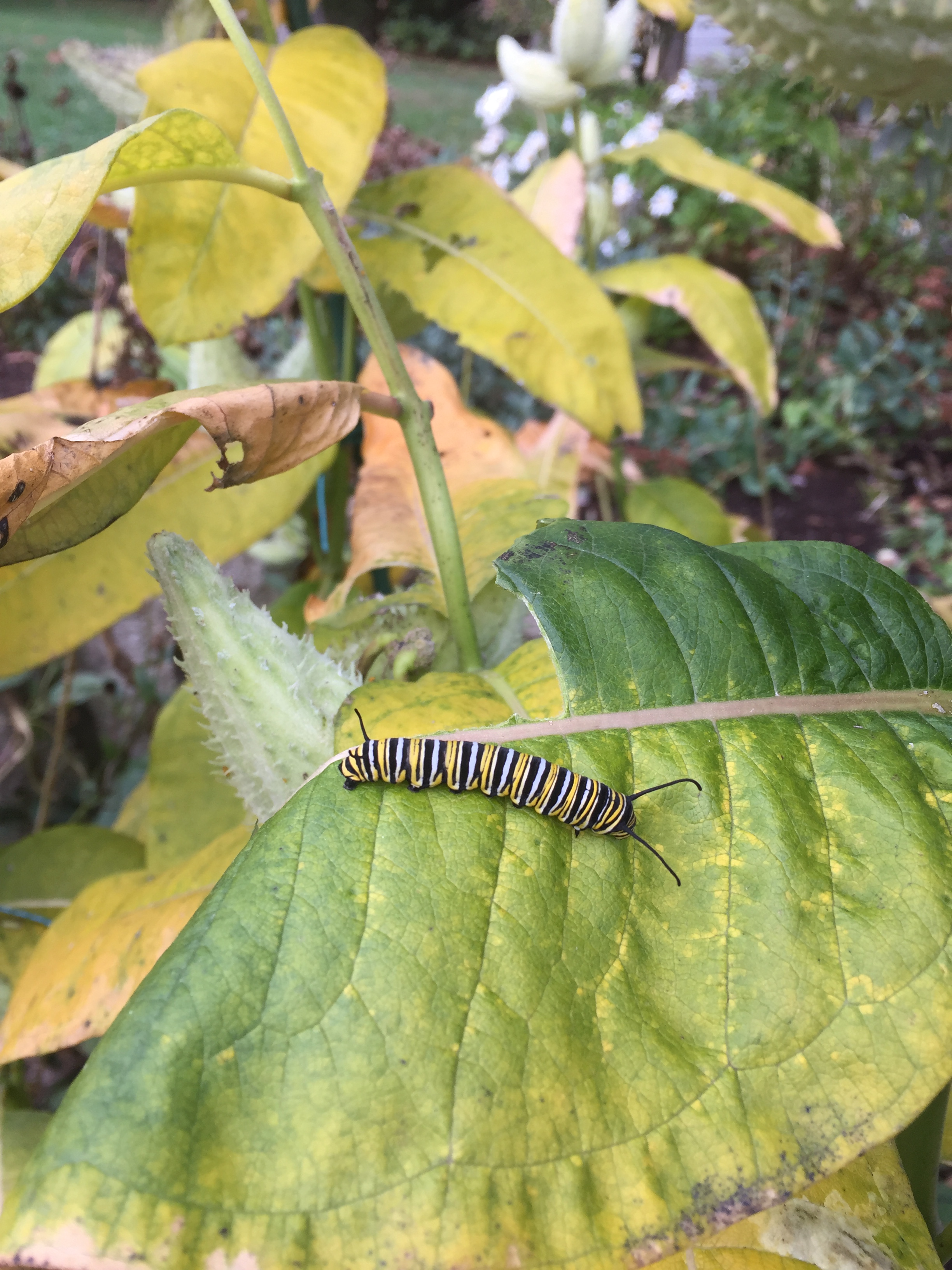
MONARCH CATERPILLAR JOINING OUR MILKWEED SEED POD DISTRIBUTION EVENT TODAY!

Patti’s Catty

While my friend Patti was collecting Milkweed pods for our event today she discovered this little Monarch caterpillar. He still has a few more stages to go through before pupating and won’t be ready to fly to Mexico for two weeks or so. I took him home and got the terrarium back out of the basement. I’ve never seen  Monarch caterpillar this late in the year but am hopeful (and excited, too!) #🦋

Patti

Patti’s Catty will be at the event today and I will be happy to answer any questions on raising Monarchs.

Captain Joe’s Dock

Sunday morning from 10:30 to noon.

Captain Joes is located at 95 East Main Street, Gloucester.

Patti Papow Photo

LOOK WHAT PATTI PAPOWS MADE FOR SUNDAY’S MILKWEED SEED DISTRIBUTION EVENT!!

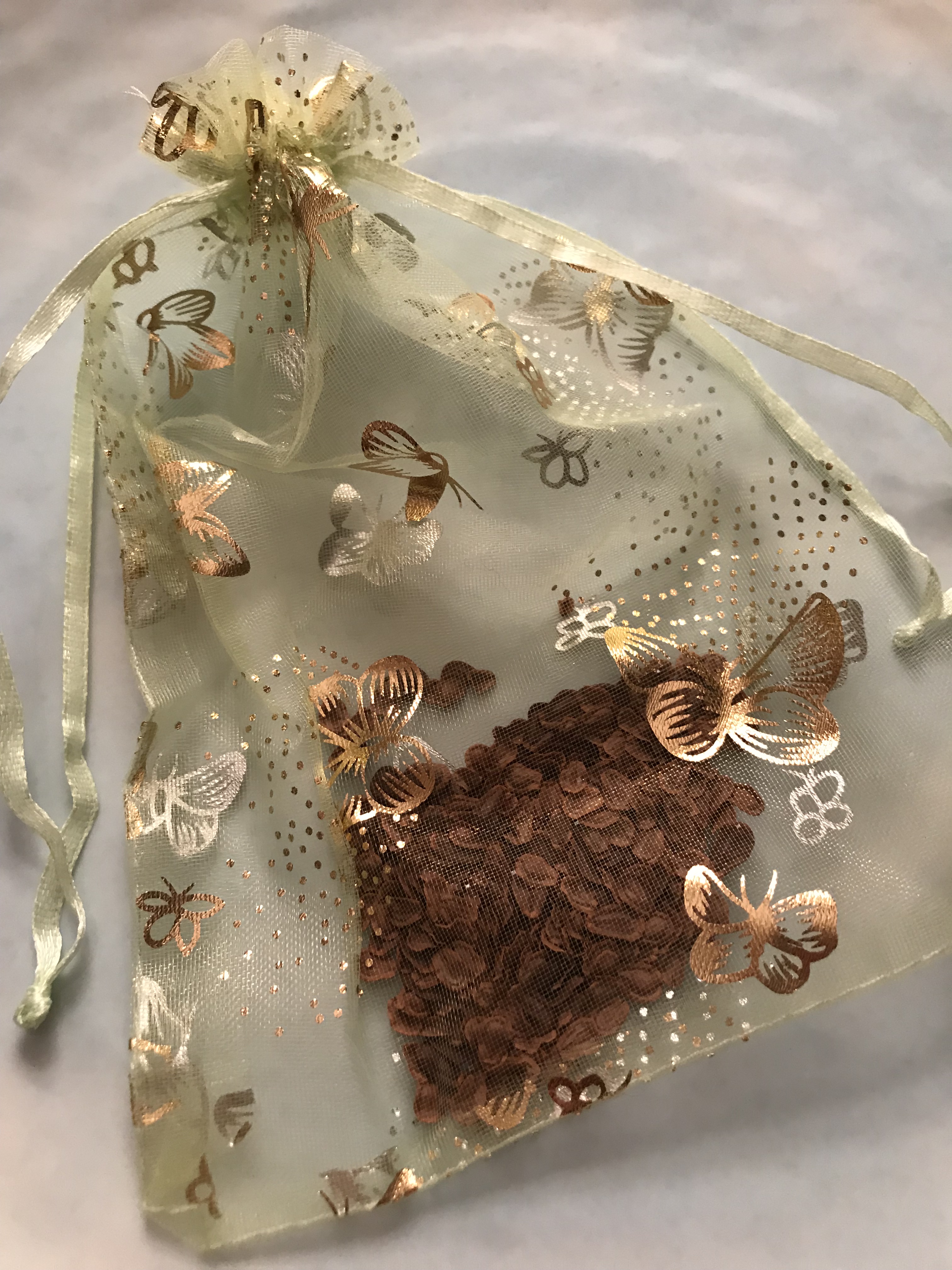
Thank you to Patti Papows for putting together these utterly charming pouches of milkweed seeds for our event tomorrow. We also have loads of milkweed pods and Joe-Pye seeds to distribute so come on down to Captain Joe’s dock Sunday morning from 10:30 to noon. We hope to see you there!Captain Joes is located at 95 East Main Street, Gloucester.

To donate toward the completion of my documentary film Beauty on the Wing: Life Story of the Monarch Butterfly, please visit the film’s website at www.monarchbutterflyfilm.com

WHEN A WEED IS NOT A WEED and Why Joe-Pye is So Darn Lovable!

A bodacious beauty possessing the toughest of traits, Joe-Pye Weed (Eutrochium) is the stalwart star of the eastern native plants garden. Large, airy dome-shaped flowerheads blooming in a range of shades from pink to lavender to purple provide food, by way of nectar, foliage, and seed heads to myriad species of bees, butterflies, and songbirds. Beginning in mid-July and continuing through mid-October, pollinators on the wing can find sustenance in a garden planted with Little Joes and Big Joes.

Joe Pye, the person, is thought to have been a North Carolina Native American medicine man who used these wildflowers to cure many ailments, including typhoid fever. The plants became know as Joe Pye’s weed.

A name changer from weed to wildflower would be a game changer for numerous species of native plants. Why do so many native wildflowers have the suffix weed? Because when the colonists arrived from Europe, they wanted their crops, as well as European cultivated flowers, to grow in their new gardens. Anything native that interfered with their plans was deemed a “weed.” Examples of beautiful and invaluable North American native pollinator plants with the name given weed are milkweed (Asclepias), sneezeweed (Helenium), ironweed (Veronia), and jewelweed (Impatiens capensis).

Three favorite and fabulous species for the New England landscape are Eutrochium purpureum, E. maculatum, and E. dubium. Joe-pye grows beautifully in average to moist soil, in full sun to light shade. Plant Joe-pye in the back of the border. E.purpurem grows five to seven feet tall, while Little Joe grows three to five feet. With their beautiful blossoms, robust habit, winter hardiness, and disease resistance, these long blooming members of the sunflower family are treasured for their ability to attract an array of butterflies, bees, and songbirds to the garden during the mid- to late-summer season.

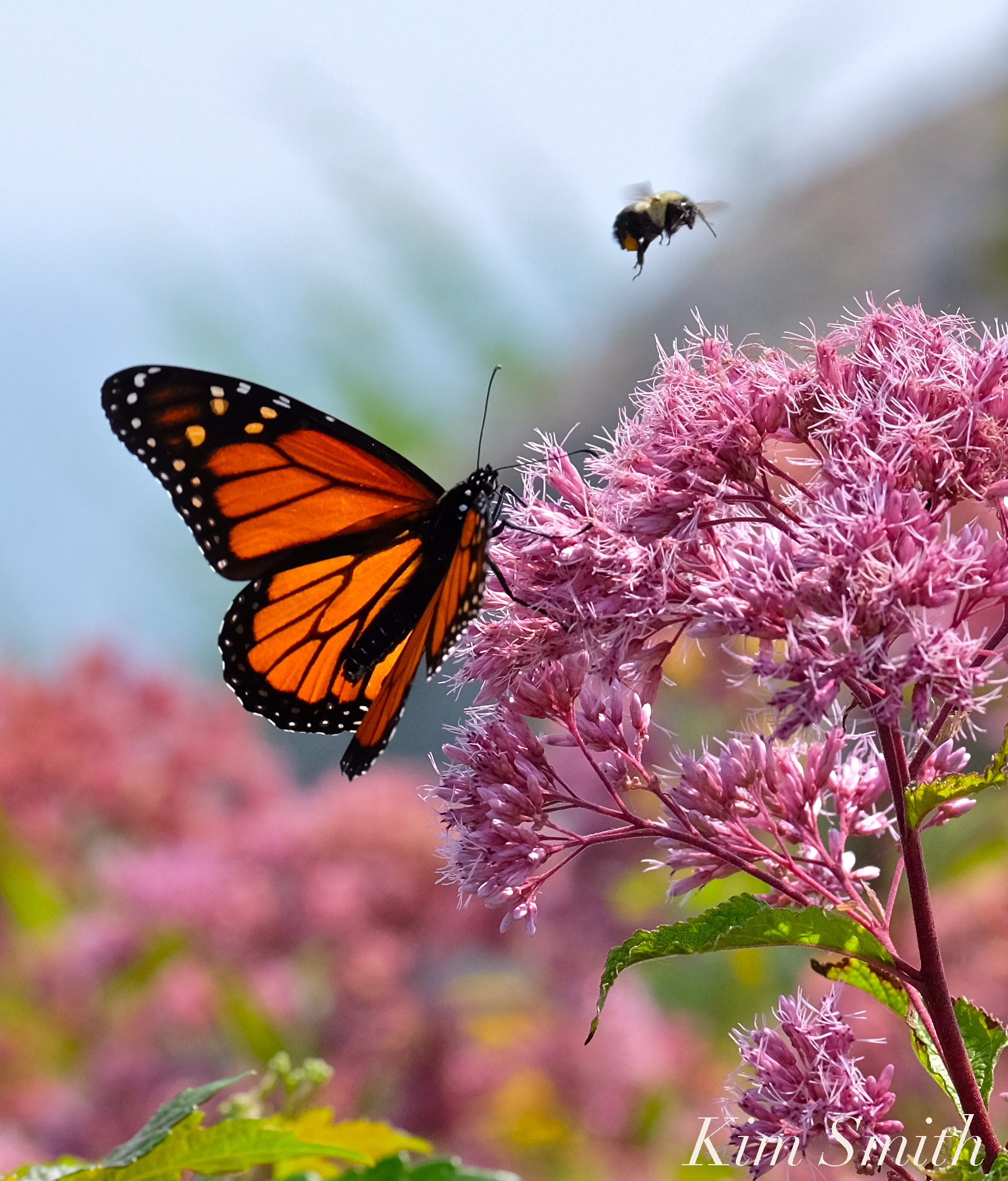
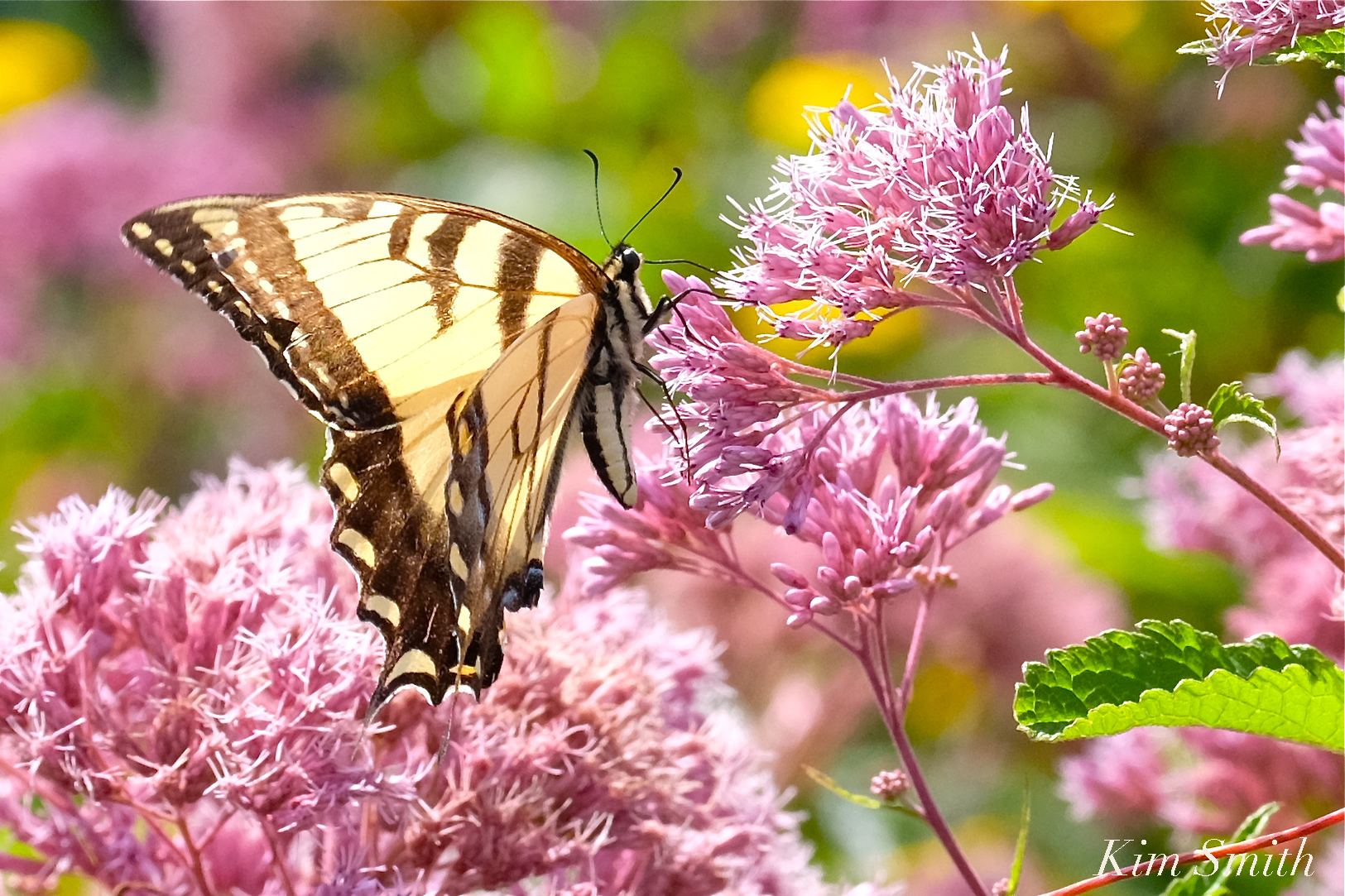
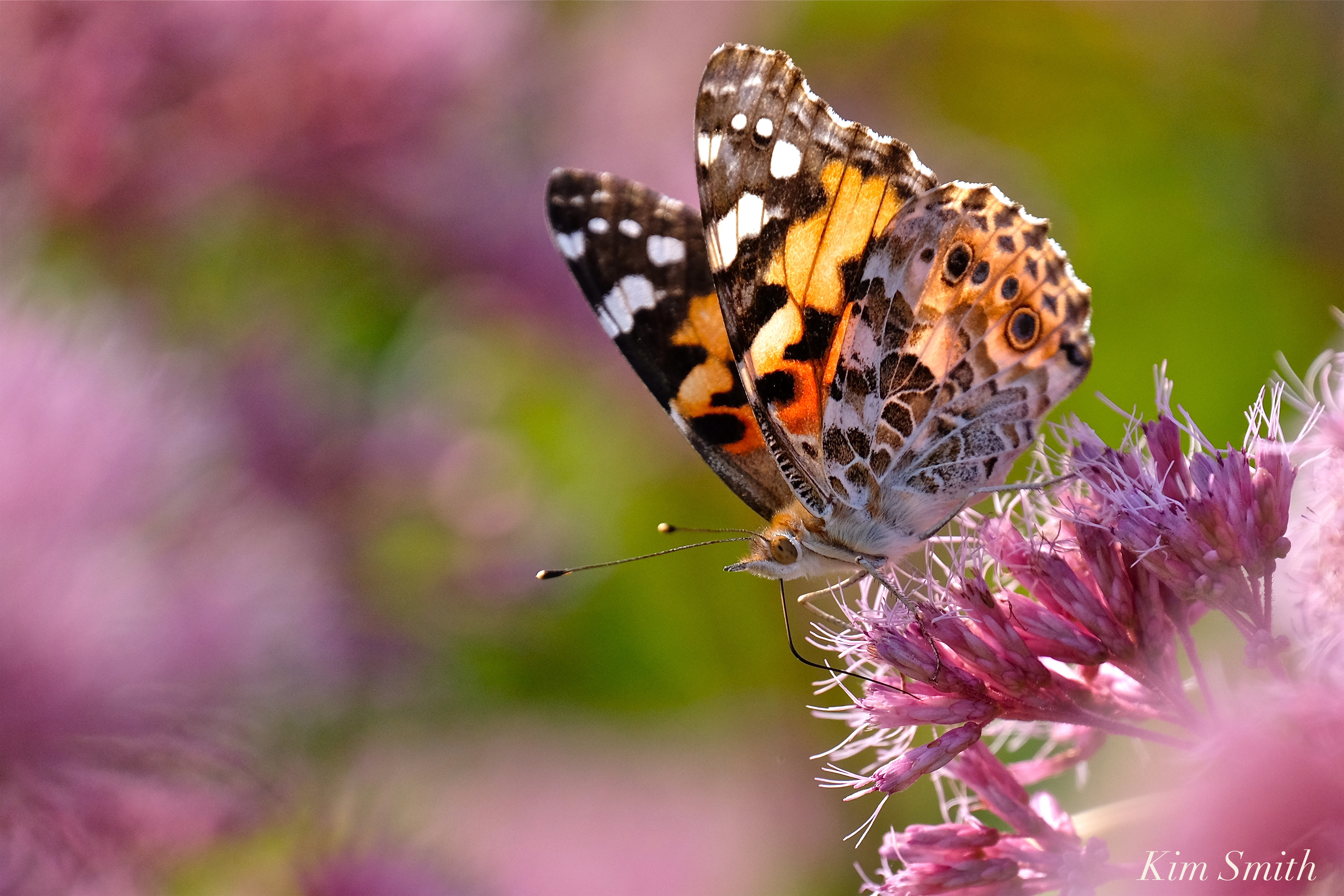
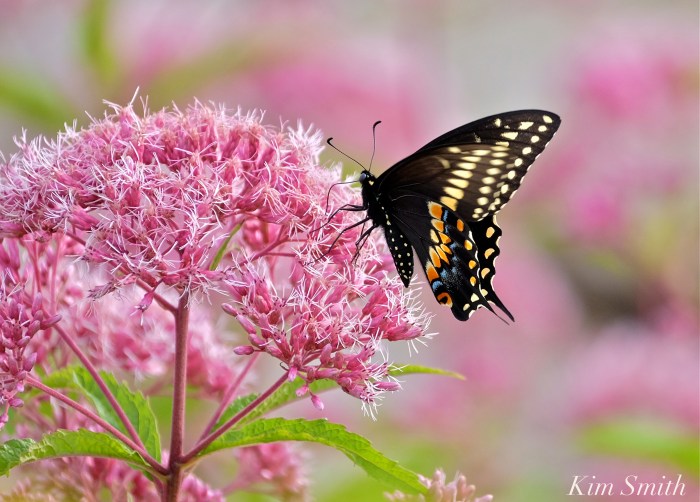
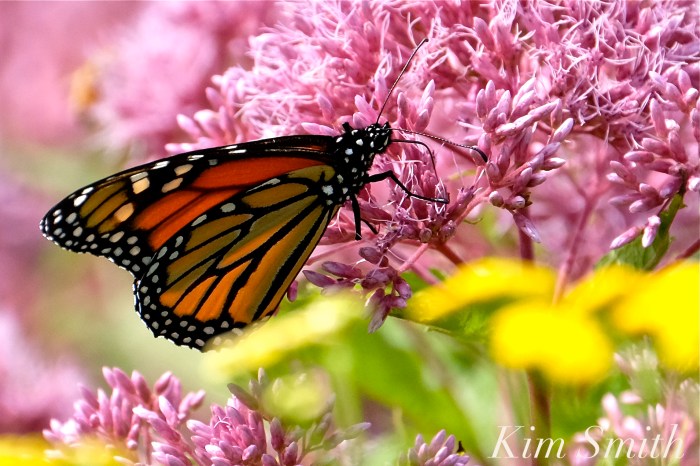
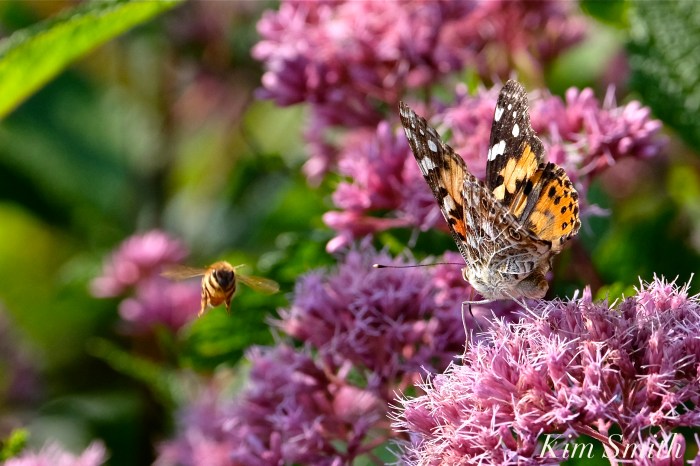
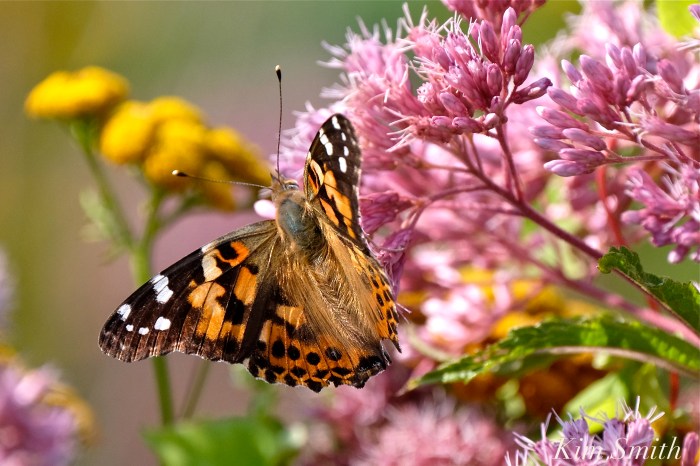
Just look at this sampling of the different species of Lepidoptera finding noursihment from the blossoms of Joe-pye!

Tiger Swallowtail

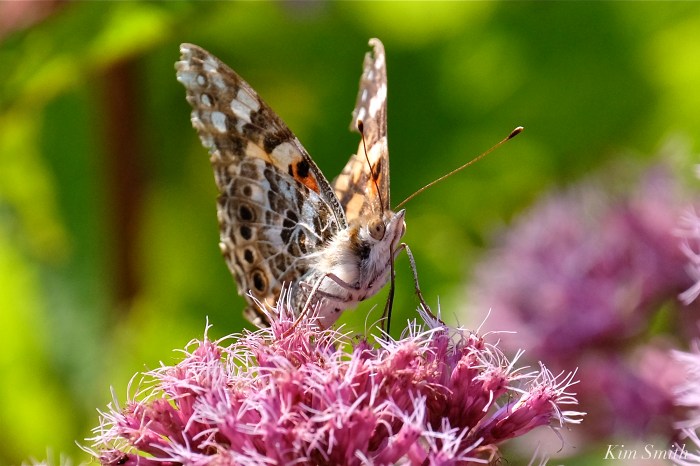
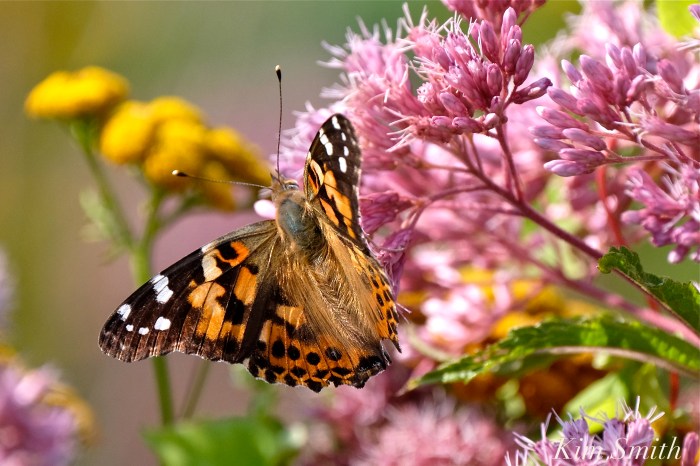
Painted Lady

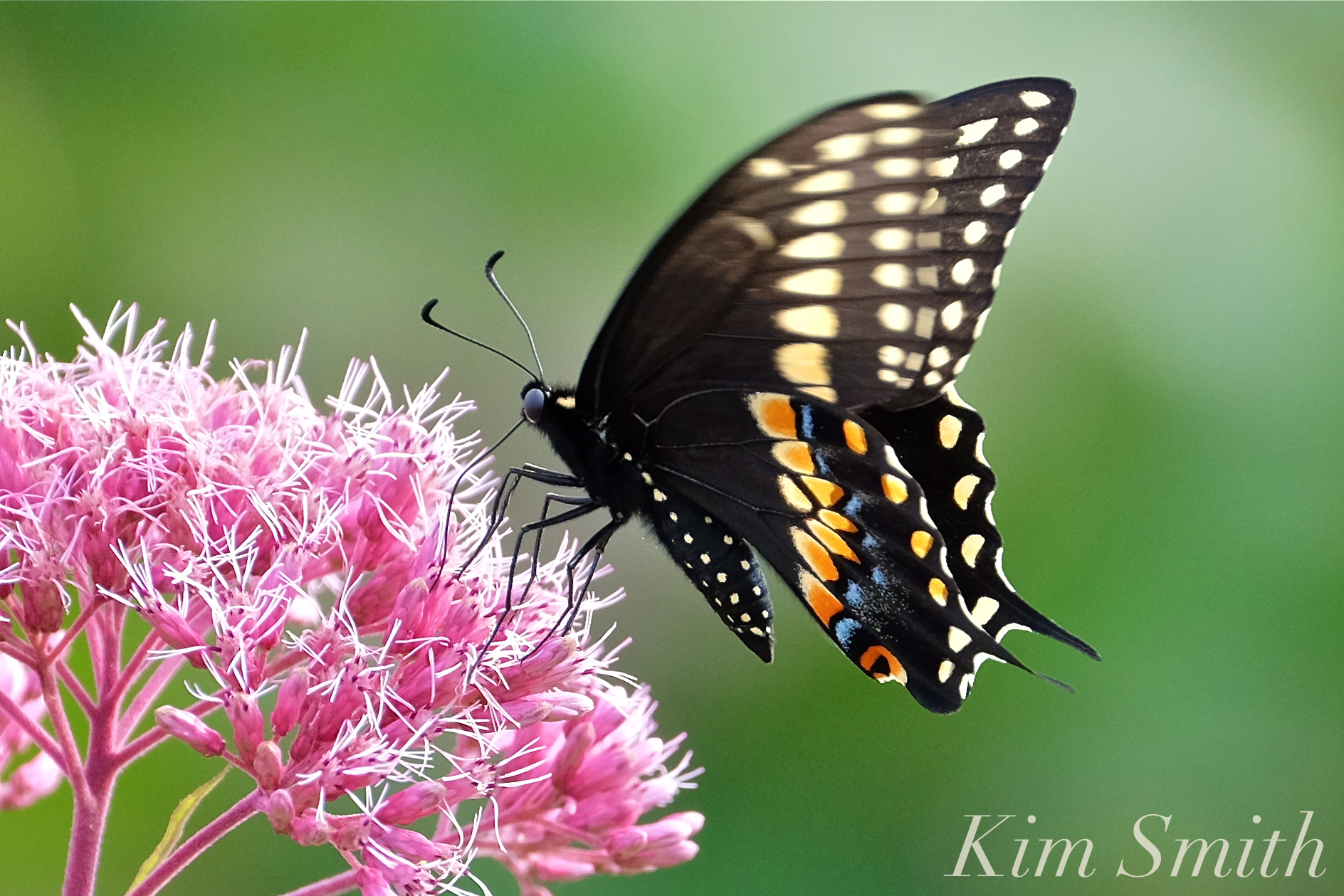
Black Swallowtail

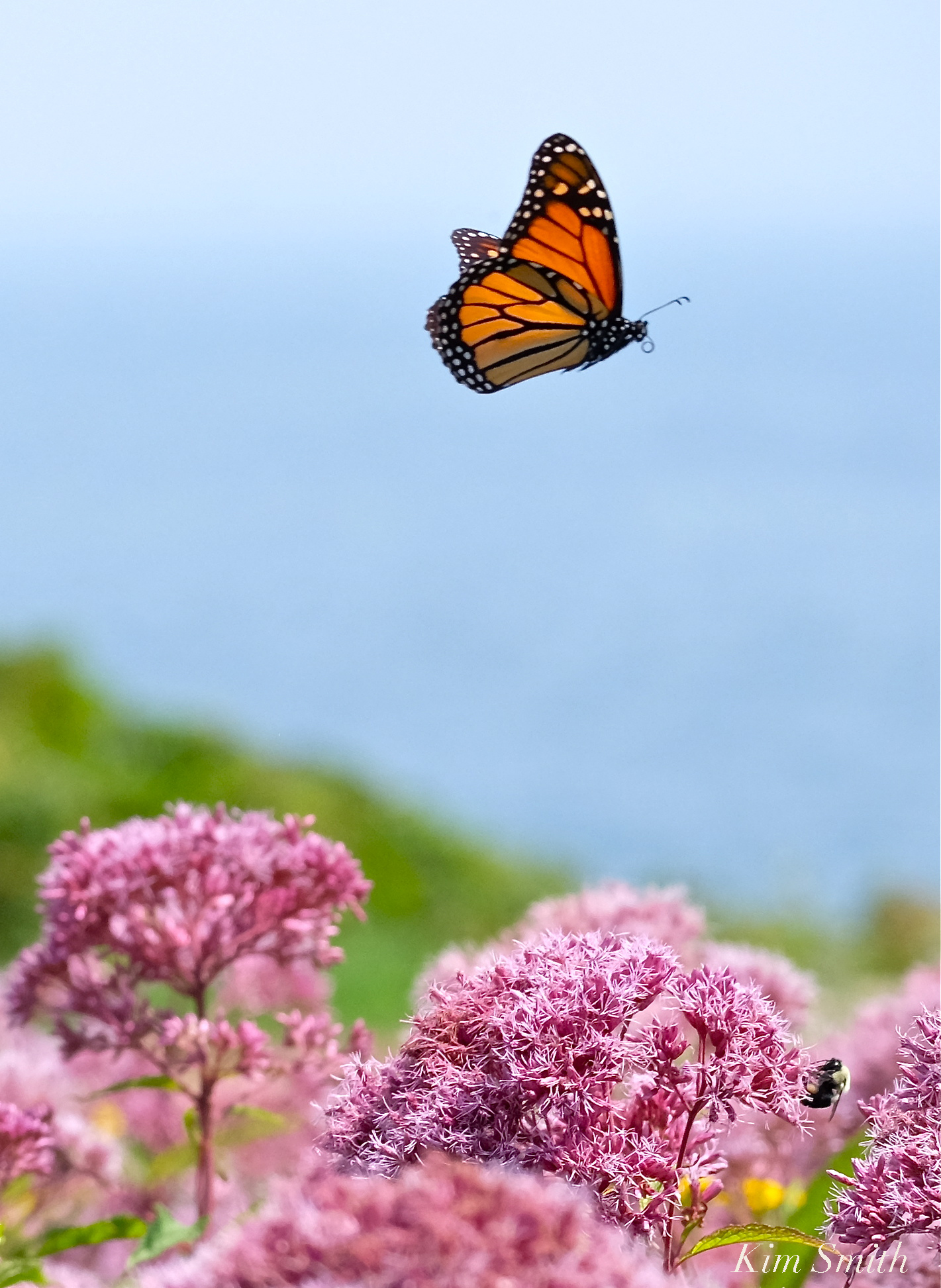
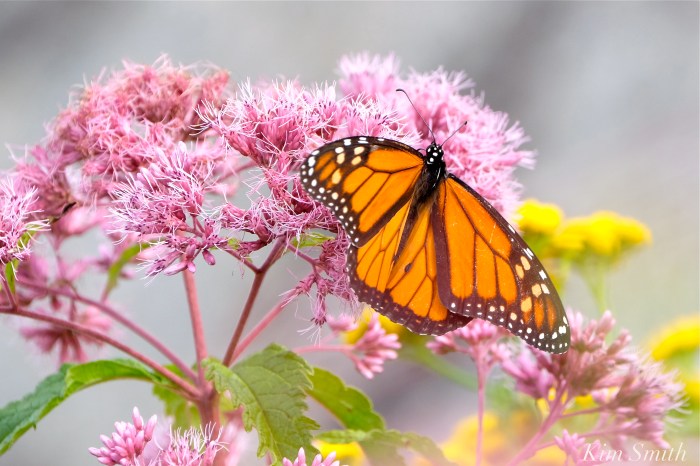
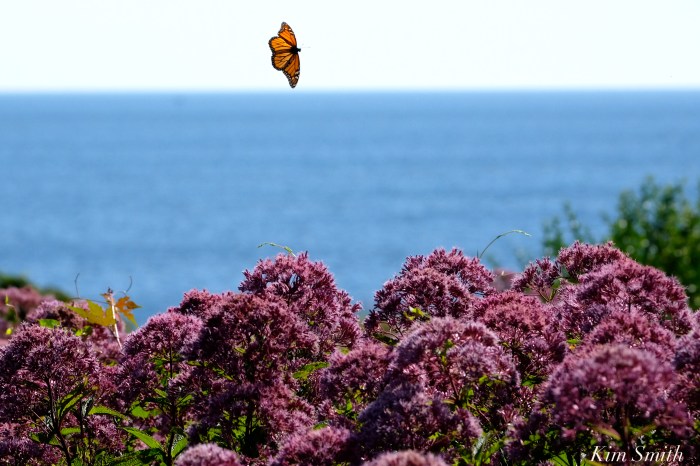
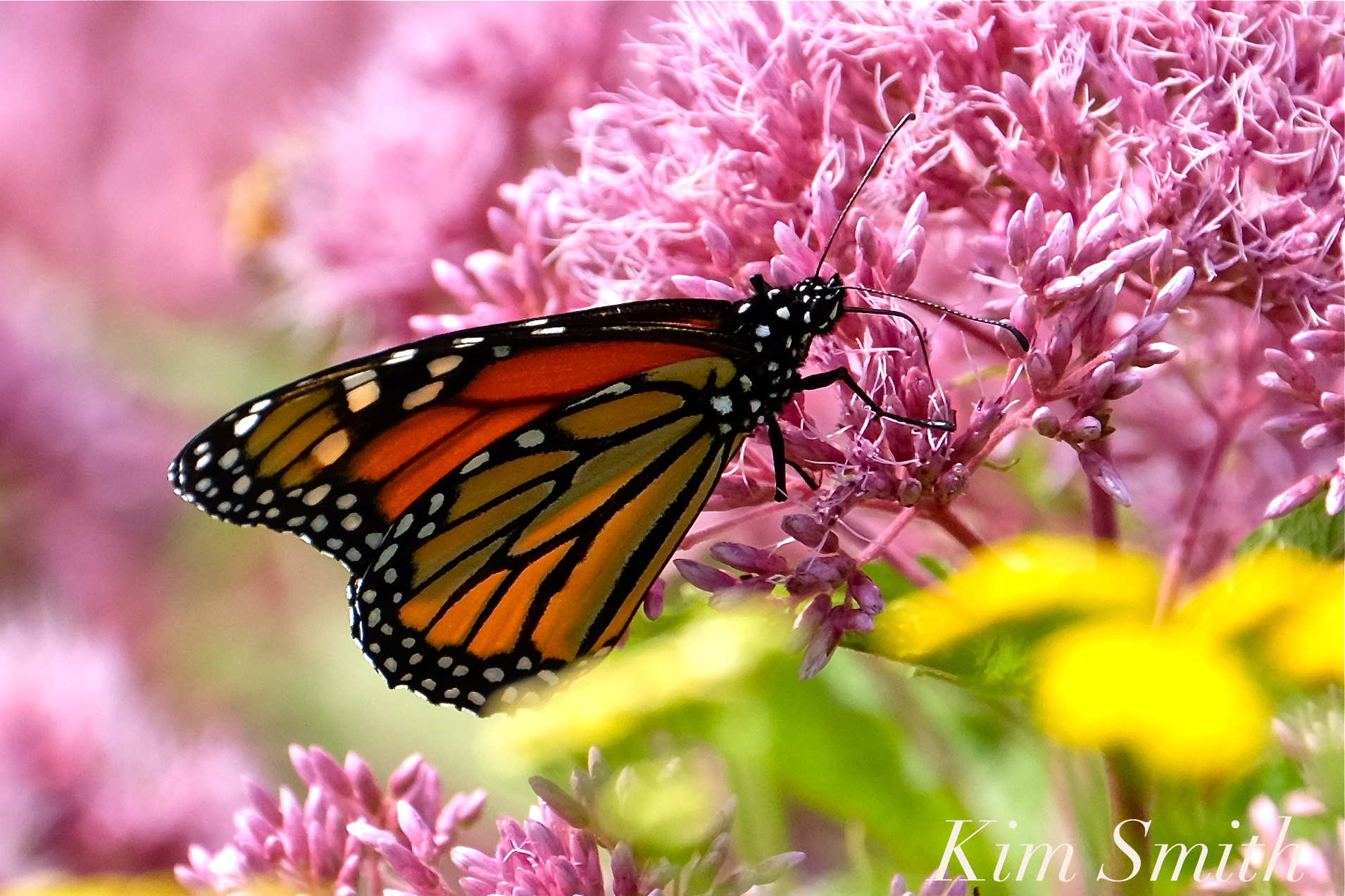
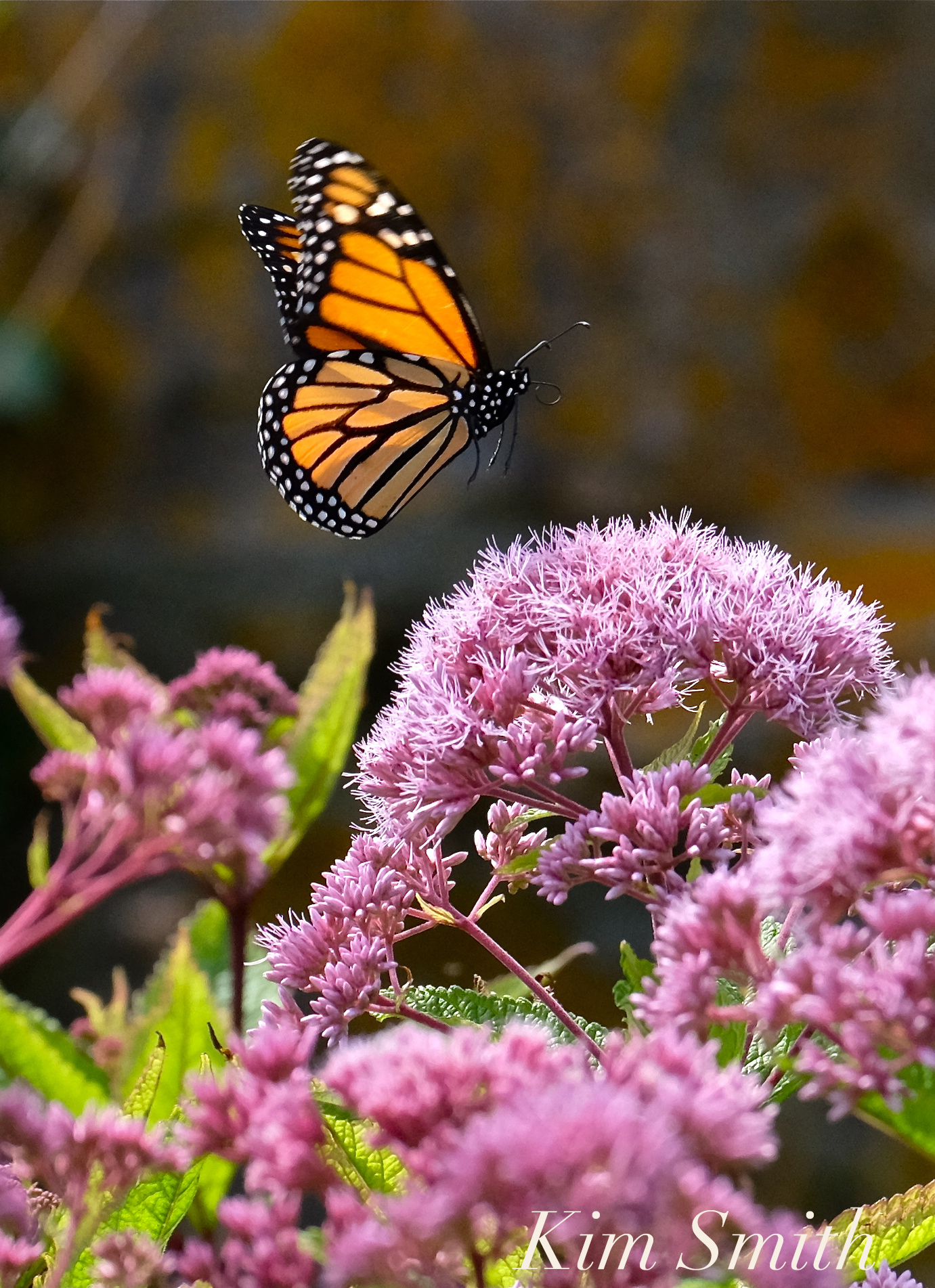
Monarch

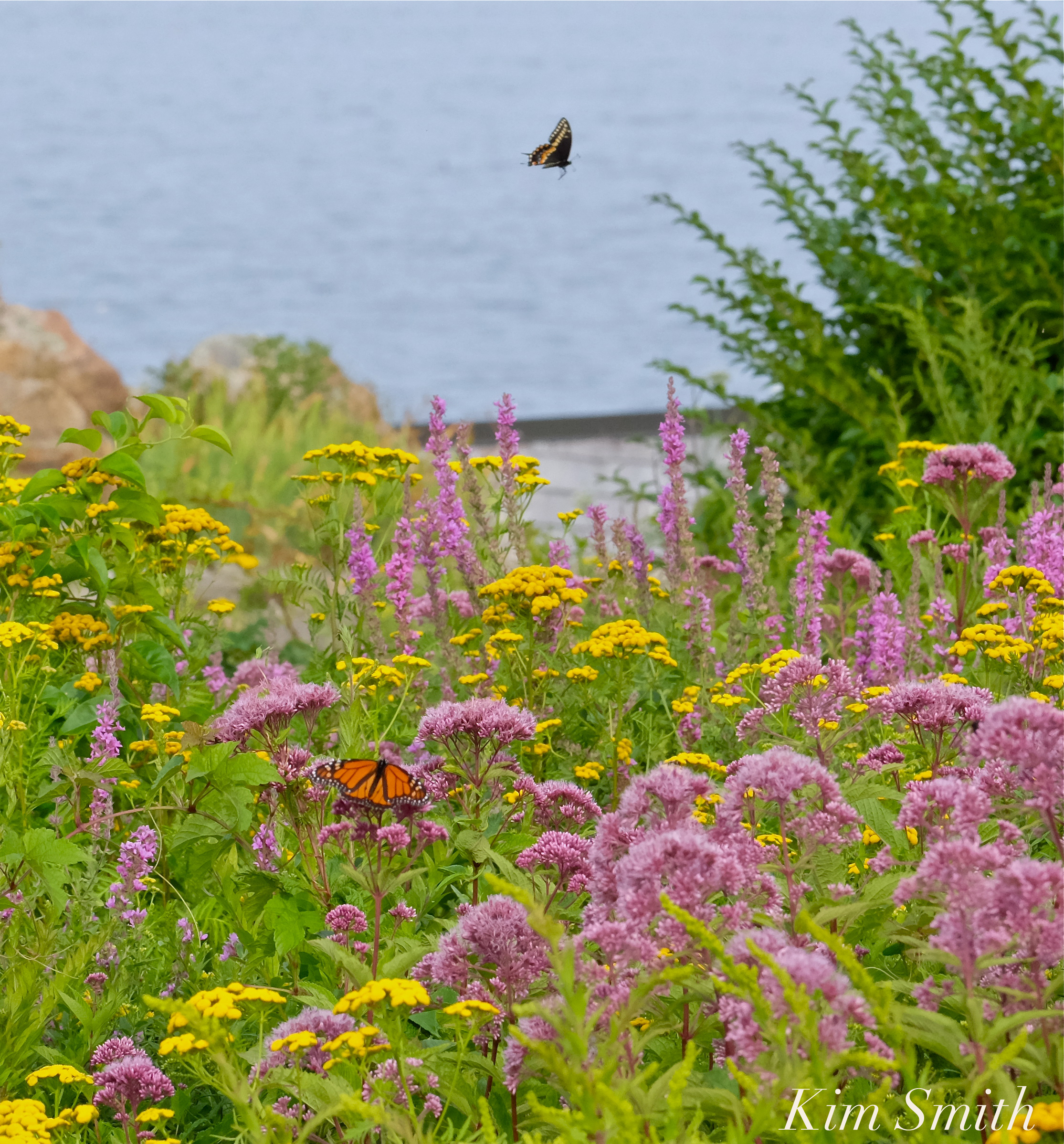
Joe-Pye does especially well in a coastal native plants garden.


If you enjoyed reading this post, I hope you will consider donating to the completion of my documentary film Beauty on the Wing: Life Story of the Monarch Butterfly. Every contribution is tremendously appreciated. For more information on how you can help, please visit the film’s website at www.monarchbutterflyfilm.com


COMMUNITY MILKWEED SEED POD PROJECT FOR THE POLLINATORS SUNDAY OCTOBER 15TH AT THE DOCK!

MILKWEED SEED COLLECTION AND DISTRIBUTION PROJECT SUNDAY OCTOBER 15TH
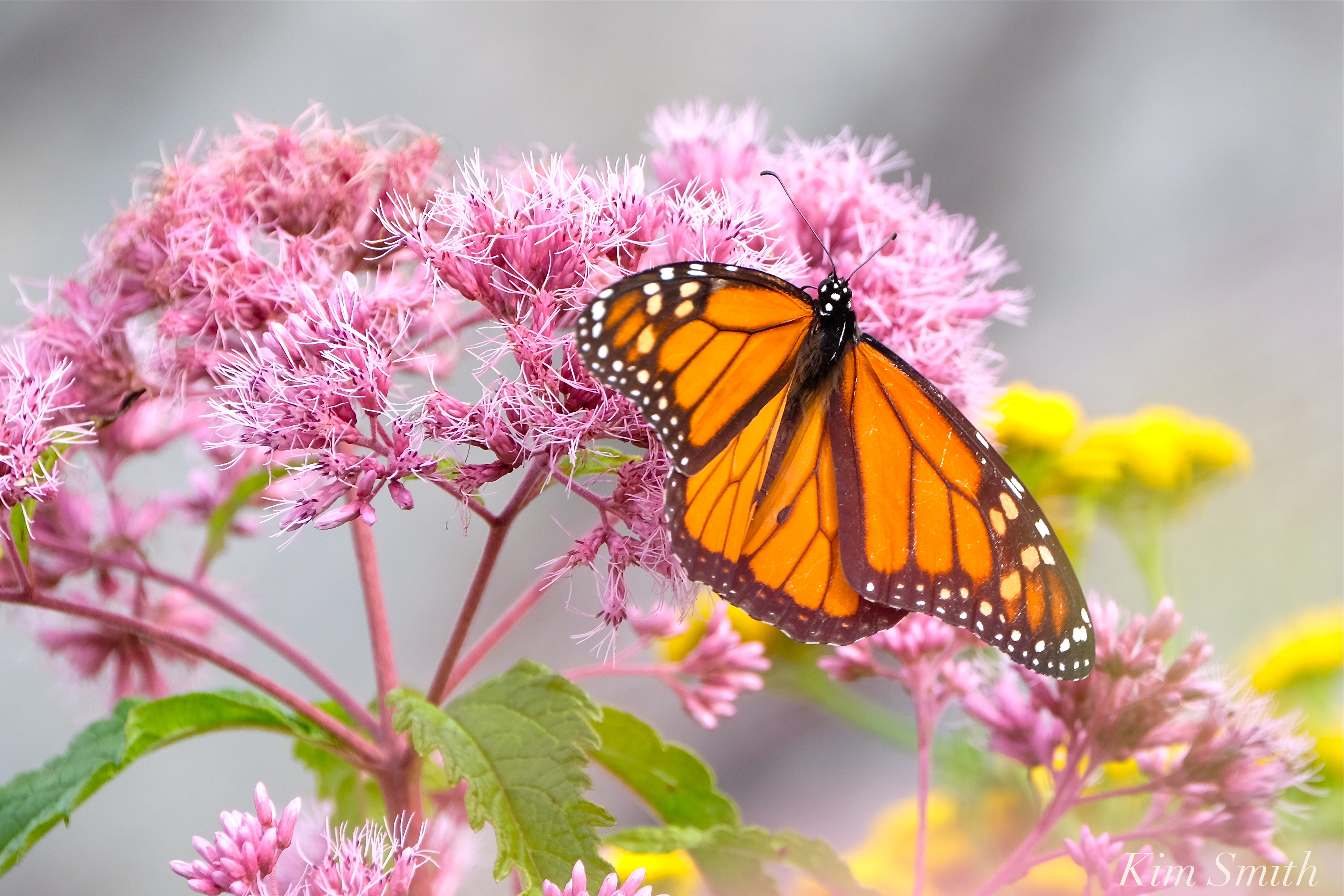
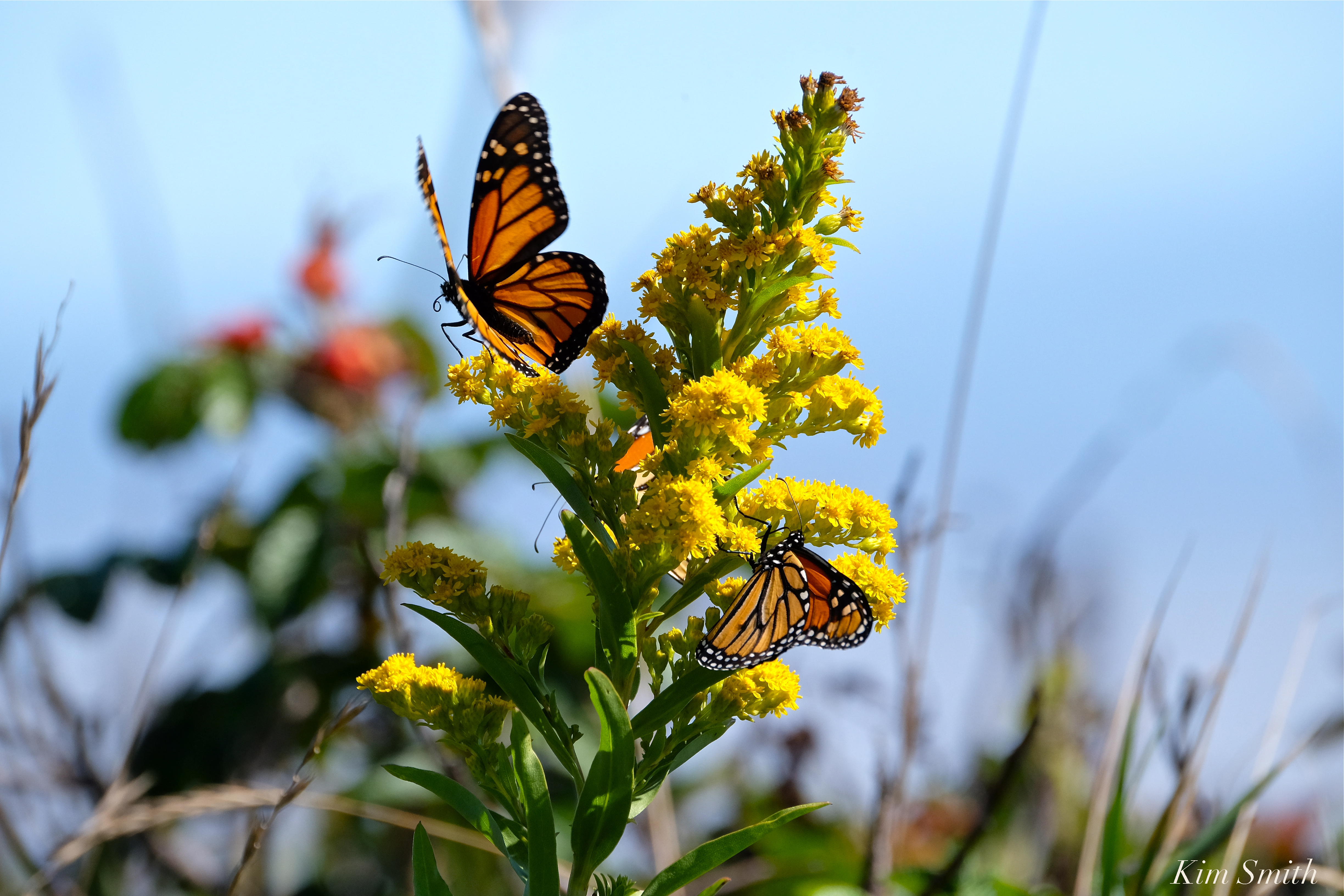
Collect ripe milkweed seed pods (only Common Milkweed and Marsh Milkweed please). Place in a paper bag, not plastic, as plastic can cause the seed pods to become damp and moldy.

Bring seedpods to Captain Joe and Sons on Sunday morning between 10:30 and noon. Captain Joes is located at 95 East Main Street, East Gloucester.

If you’d like to distribute seeds, meet at the dock between 10:30 and noon and I will show you what to do.

NOTE: It is easy to tell when milkweed seedpods are ripe. The seeds inside turn brown. Do not collect the pods when the seeds are white or green. If you pick them too soon, they will never be viable. You can check the seed pods by slitting the pod a tiny bit and peeking inside.

Any questions, please comment in the comment section or email me at kimsmithdesigns@hotmail.com. Thank you and I hope to see you Sunday morning!

WE HAVE SOME JOE-PYE SEEDS TO GIVE AWAY, TOO!!!

We are excited to share that in addition to milkweed pods, I have seeds of an especially gorgeous, and fabulous pollinator-attracting variant of Joe-Pye to share at our Milkweed Seed Pod Distribution event. 


To learn more about how you can help fund the documentary Beauty on the Wing and the Monarch Butterfly Film Online Fundraising event, please visit the film’s website at monarchbutterflyfilm.com.

SUPER FUN COMMUNITY MILKWEED SEED POD PROJECT FOR THE POLLINATORS!

Monarchs Mating in a Milkweed Patch, Good Harbor Beach Dunes

Recently, Good Morning Gloucester reader John Steiger gave me a large bag filled with ripe milkweed seed pods collected from his garden. I had a total blast throwing the seed pods around on my early morning walk, tossing alongside the road where ever I thought milkweed might have a chance to take hold (which is easy as milkweed even takes root in sidewalk cracks).

I’d like to do more of this and Joe had the great idea to ask folks to make it a community project as we did several years ago with the milkweed and New England aster seeds and plant sales. He has again very generously offered the dock on Sunday morning after the podcast, between 10:30 and noon. If you have ripe milkweed seed pods in your garden, please bring them Sunday morning. Anyone who wants to distribute the seeds, stop by the dock and we’ll arm you with seed pods. I’ll also be collecting Joe-pye, goldenrod, and aster seeds later this fall when these wildflowers go to seed. If we get more folks dropping off bags of pods than wanting to distribute, that will be okay. I know tons more places that need milkweed and I will be happy to do the distributing. These are areas that probably at one time had milkweed and other wildflowers growing there, but they have been mowed over or taken over by bittersweet and phragmites. As people are learning more about the importance of wildflowers and pollinators, I am hoping the wildflowers will have a better chance of becoming reestablished.

Female Monarch Depositing Eggs on the Undersides of Milkweed Leaves

MILKWEED SEED COLLECTION AND DISTRIBUTION PROJECT SUNDAY OCTOBER 15TH

Collect ripe milkweed seed pods (only Common Milkweed and Marsh Milkweed please). Place in a paper bag, not plastic, as plastic can cause the seed pods to become damp.

Bring seedpods to Captain Joe and Sons on Sunday morning between 10:30 and noon. Captain Joes is located at 95 East Main Street, East Gloucester.

If you’d like to distribute seeds, meet at the dock between 10:30 and noon and I will show you what to do.

NOTE: It is easy to tell when milkweed seedpods are ripe. The seeds inside turn brown. Do not collect the pods when the seeds are white or green. If you pick them too soon, they will never be viable. You can check the seed pods by slitting the pod a tiny bit and peeking inside.

Any questions, please comment in the comment section or email me at kimsmithdesigns@hotmail.com. Thank you and I hope to see you Sunday morning!

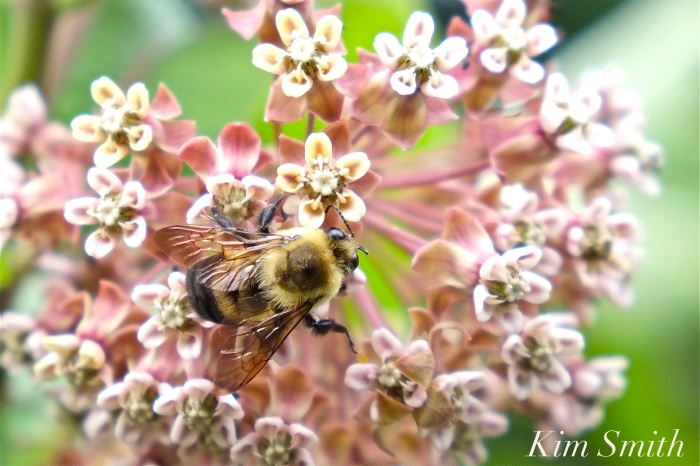
Milkweed is not only the Monarch caterpillar’s food plant, the florets are a very important source of nectar for myriad species of pollinators.

To learn more about how you can help fund the documentary Beauty on the Wing and the Monarch Butterfly Film Online Fundraising, please visit the film’s website at monarchbutterflyfilm.com.


KIM SMITH MONARCH BUTTERFLY LECTURE IN WOLFEBORO NEW HAMPSHIRE TUESDAY OCTOBER 10TH

Please join me Tuesday afternoon at 1pm, October 9th, for my lecture, slide presentation, and short films screening “Beauty on the Wing: Life Story of the Monarch Butterfly” for the Wolfeboro Garden Club. To see a complete list of programs, go to the programs page of my website at Programs and Bio.

Monarchs Awakening at Daybreak, Gloucester

The lecture will be held at the All Saints Episcopal Church, 258 South Main Street, Wolfeboro, New Hampshire.

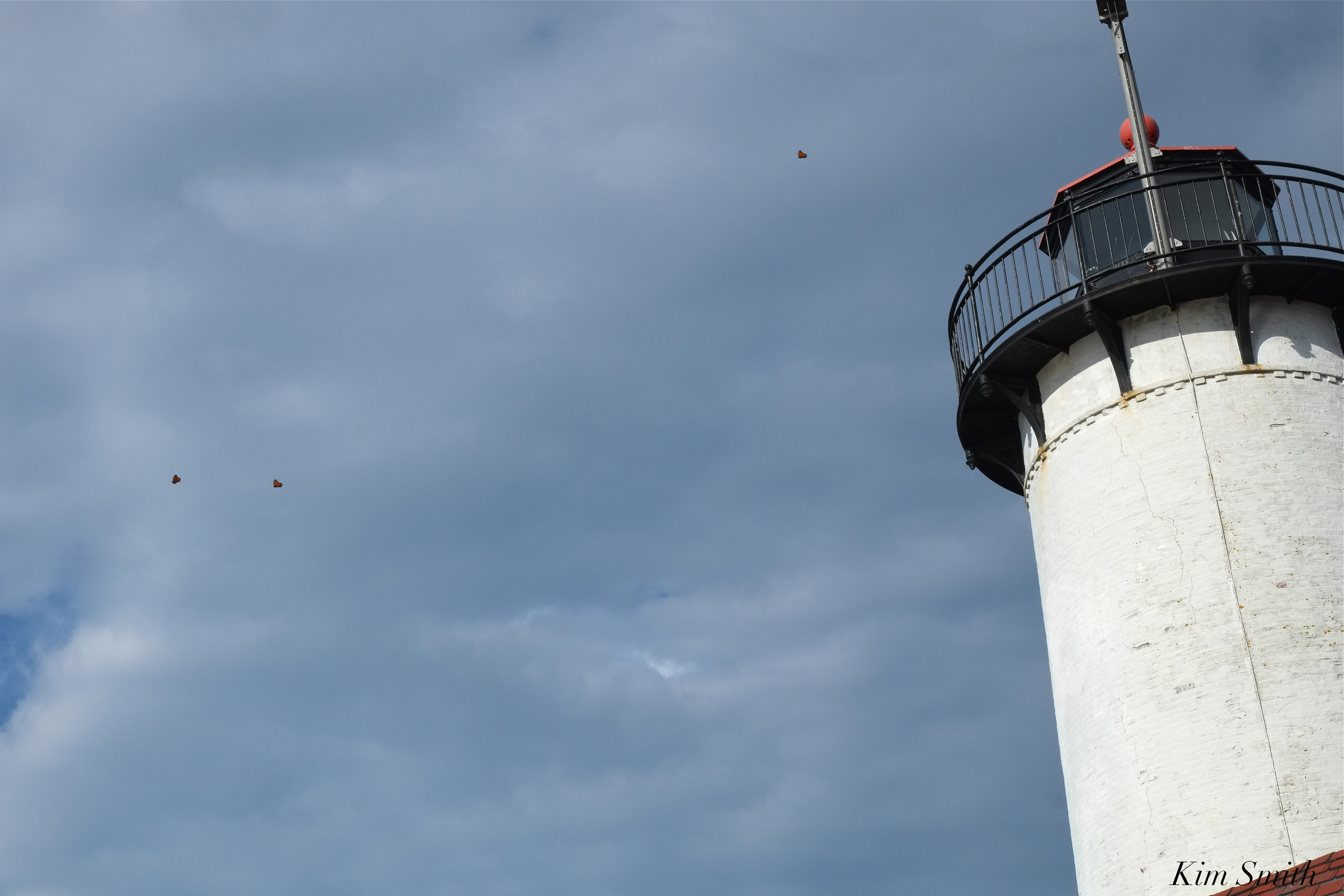
THANK YOU! AND MONARCH FLAKES AT EASTERN POINT LIGHTHOUSE

 Monarchs were streaming all along the coast of Cape Ann yesterday and it was a beautiful sight!

I AM OVERJOYED TO SHARE THAT WE HAVE RAISED 800.00 IN 24 HOURS!!! MY DEEPEST THANKS TO LAUREN M. FROM MANCHESTER, DONNA STOMAN AND PEGGY O’MALLEY FROM GLOUCESTER, JOEY C, AND ANONYMOUS FOR THEIR GENEROUS HELP. 

Please help towards the completion of my documentary film Beauty on the Wing: Life Story of the Monarch Butterfly, filmed in the wilds of Cape Ann and Angangueo. Thank you! DONATE HERE.

Massive Wave of Painted Lady Butterflies Lights up Denver Weather Radar

Thank you to Meg and Donna Stoman for sharing this fantastic story of a 70 mile wide “butterfly cloud!”

DENVER STAR

DENVER—A lacy, cloudlike pattern drifting across a Denver-area radar screen turned out to be a 110-kilometre-wide wave of butterflies, forecasters say.

Paul Schlatter of the National Weather Service said he first thought flocks of birds were making the pattern he saw on the radar Tuesday, but the cloud was headed northwest with the wind, and migrating birds would be southbound in October.

He asked birdwatchers on social media what it might be, and by Wednesday had his answer: People reported seeing a loosely spaced net of painted lady butterflies drifting with the wind across the area.

Schlatter said the colours on the radar image are a result of the butterflies’ shape and direction, not their own colours.

Midwestern radar stations occasionally pick up butterflies, but Schlatter believes it’s a first for Denver.

An unusually large number of painted ladies, which are sometimes mistaken for monarch butterflies, has descended on Colorado’s Front Range in recent weeks, feeding on flowers and sometimes flying together in what seem like clouds.

Sarah Garrett, a lepidopterist at the Butterfly Pavilion in Westminster, Colorado, said people from as far away as the Dakotas have called to report seeing the butterflies, whose population typically surges with plentiful flowers.

Research on the painted ladies in North America is limited, but scientists believe they migrate to the southwestern United States and northwestern Mexico in the fall. In Europe, studies using radio tracking have shown they migrate south from Europe to Africa in the fall and return in the spring. Studies also show that monarch butterflies often use wind to their advantage and glide on currents for periods of time, Garrett said.

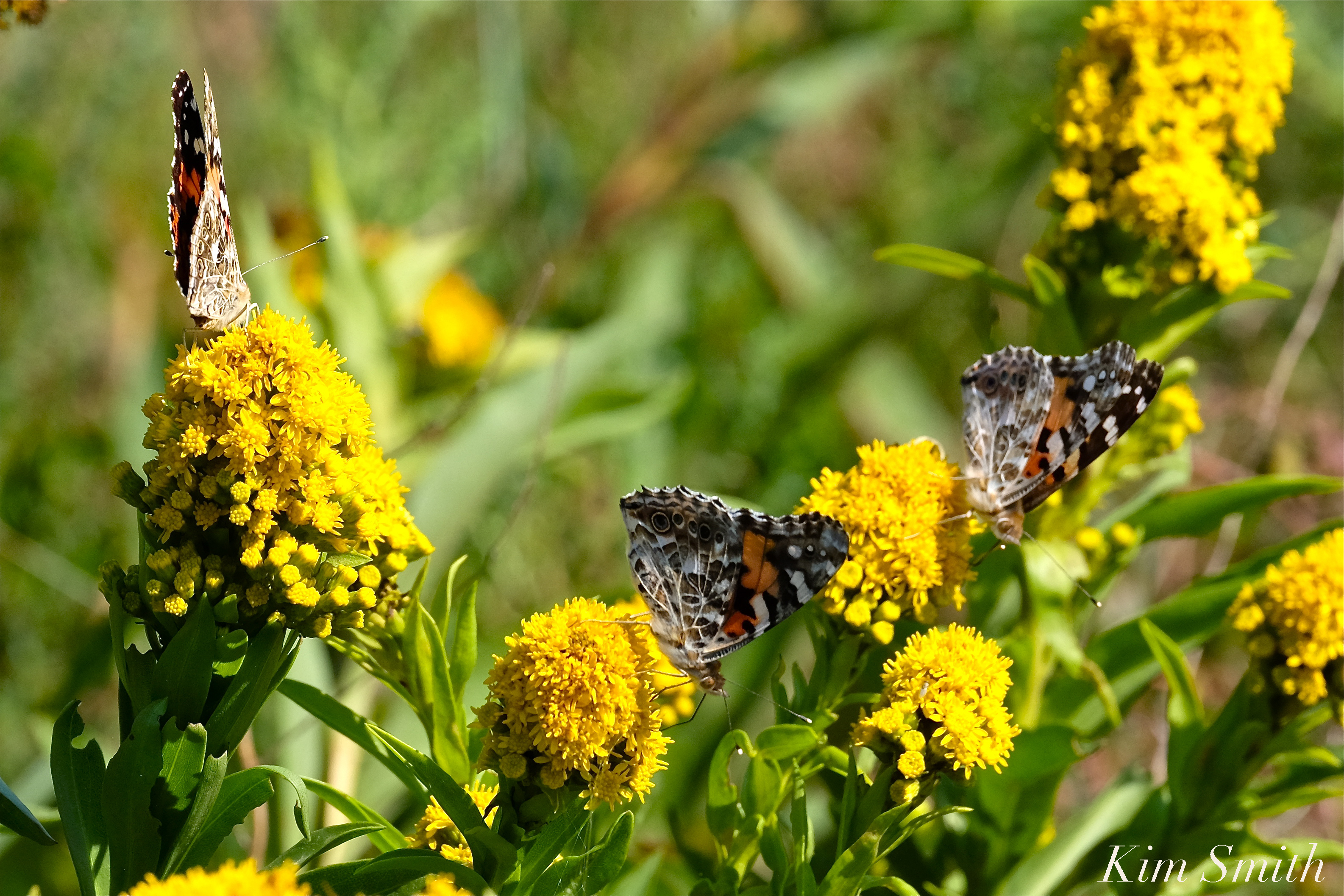
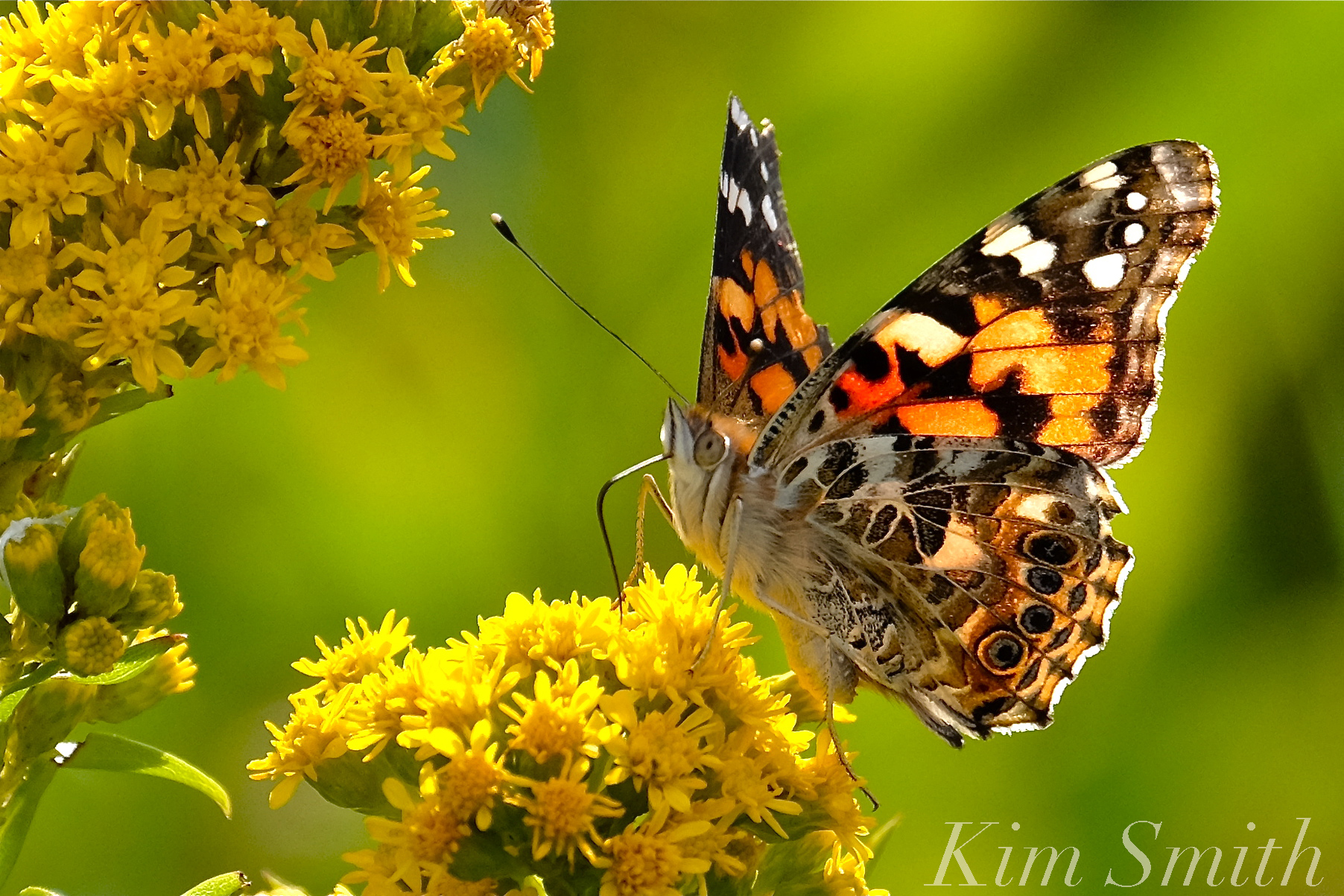
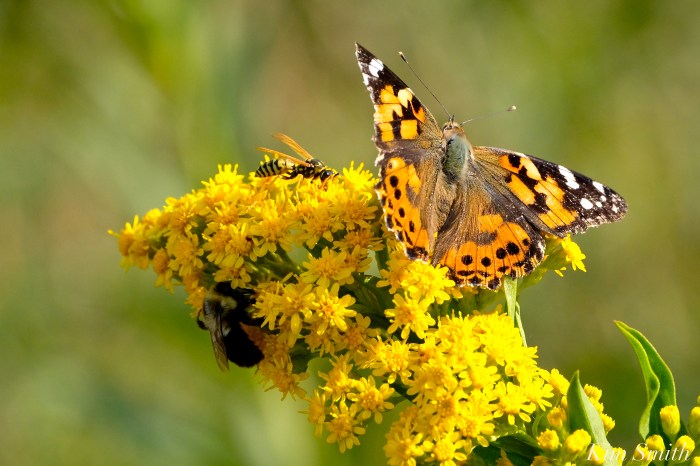
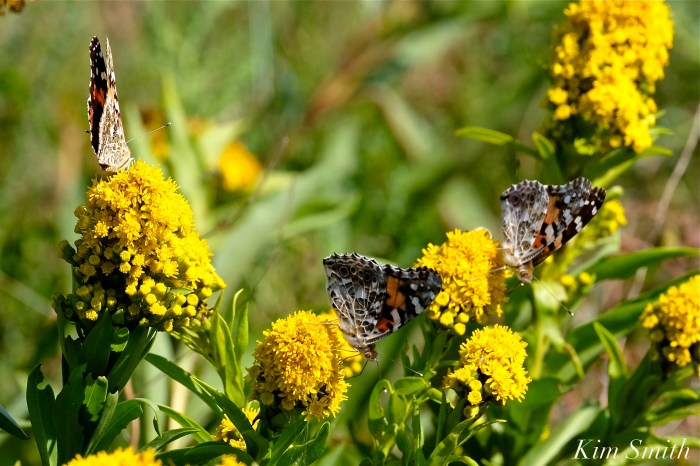
An irruption of Painted Ladies is occurring in the northeast and throughout the U.S. Painted Ladies drinking nectar at Seaside Goldenrod.

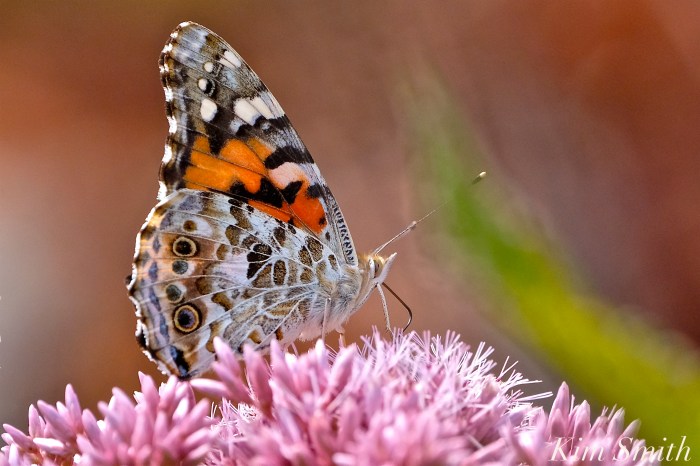
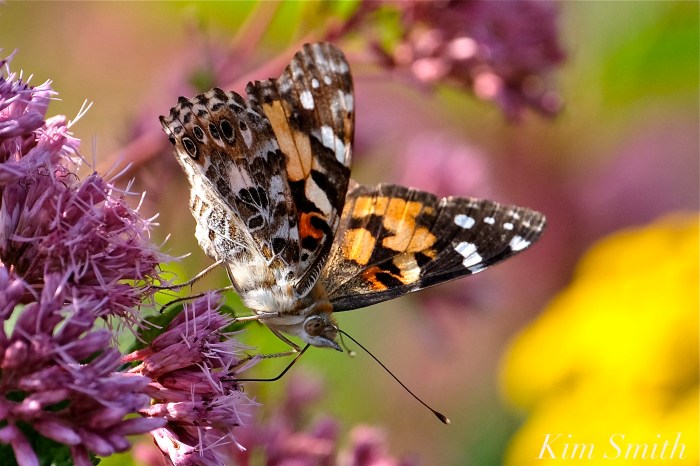
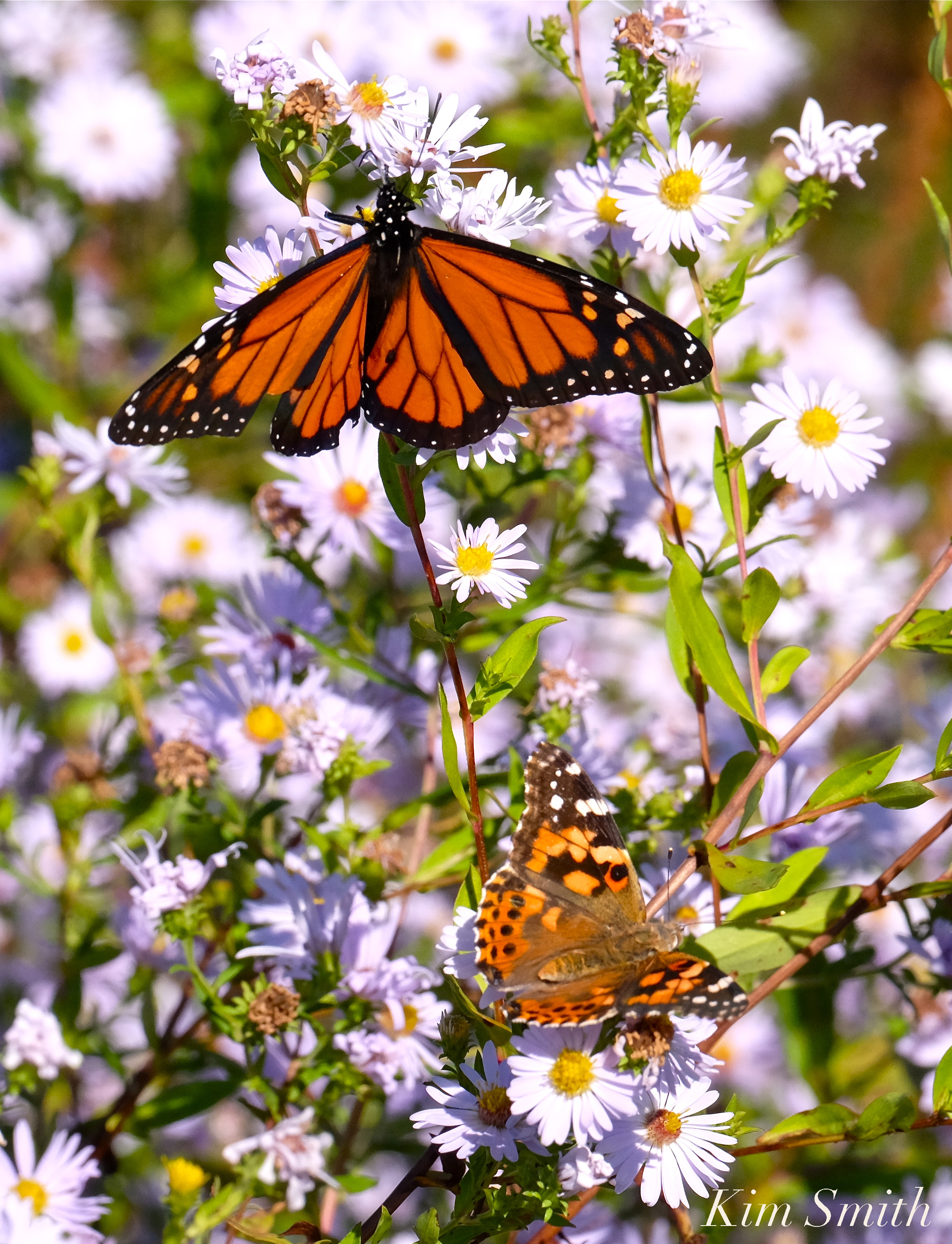
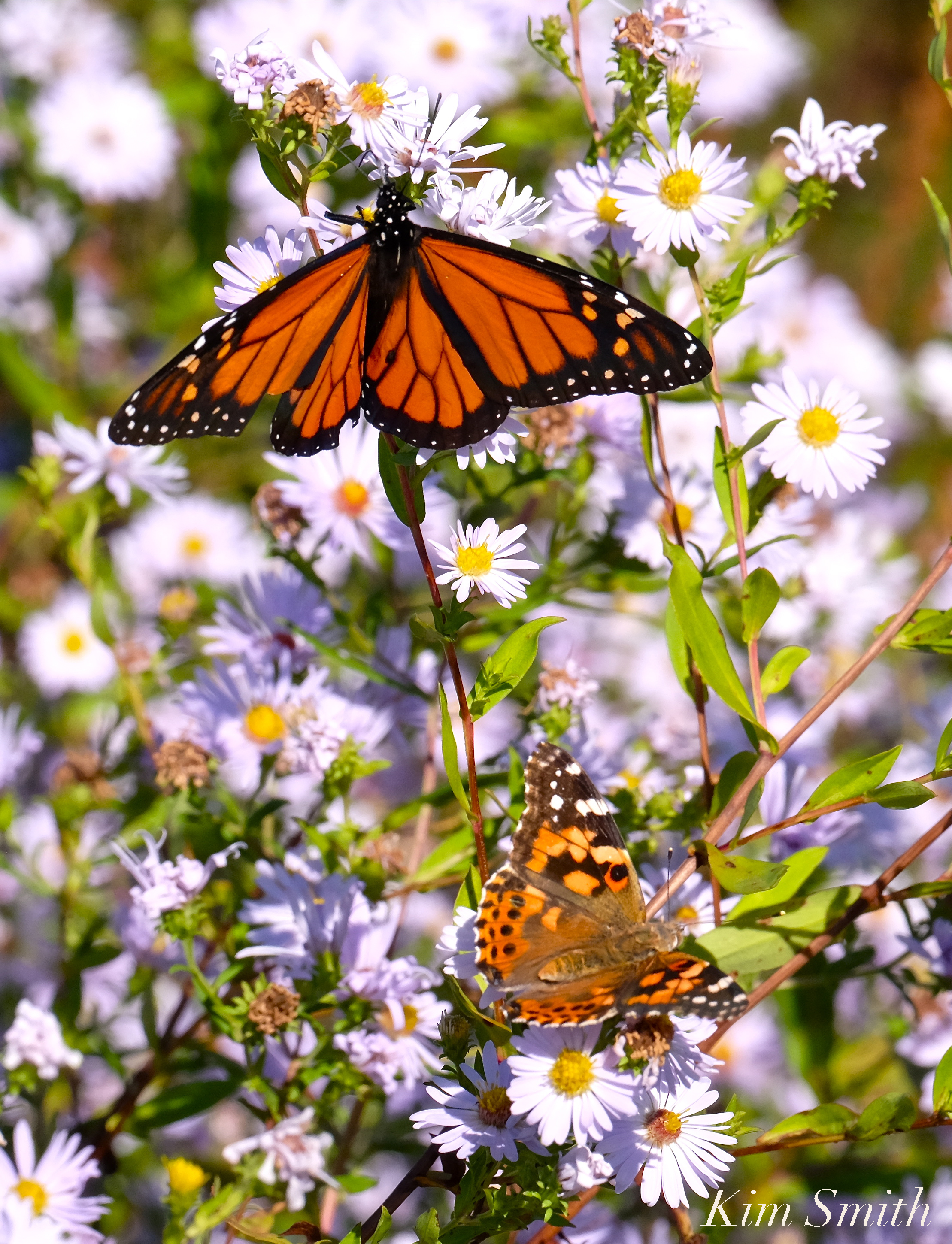
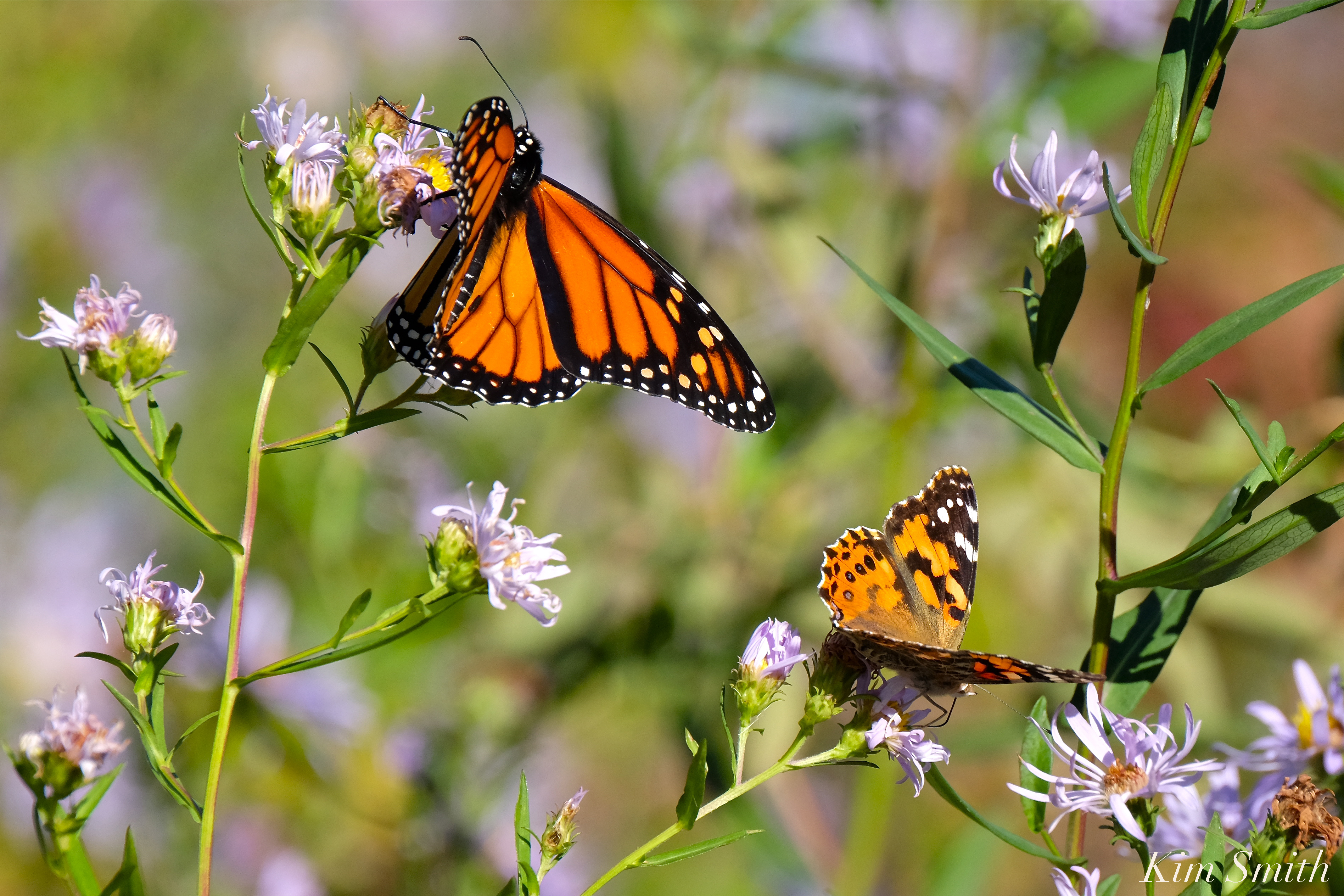
Compare the larger Monarch (top) to the smaller and richly patterned Painted Lady.

A SPECTACULAR PAINTED LADY BUTTERFLY IRRUPTION HAPPENING RIGHT NOW!

The sheer number of Painted Ladies migrating are stealing some of the Monarchs thunder!

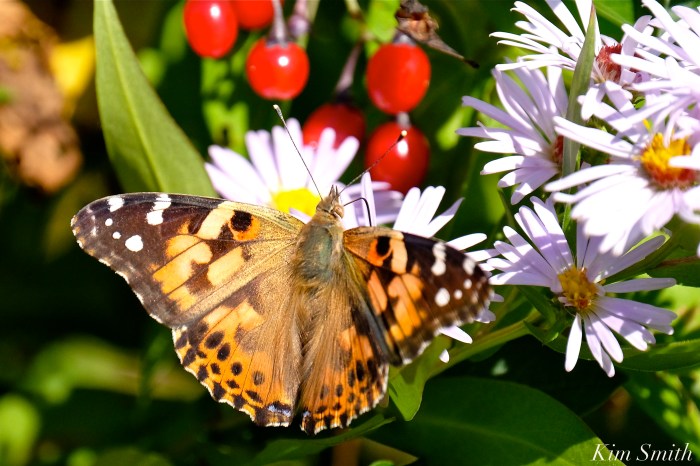
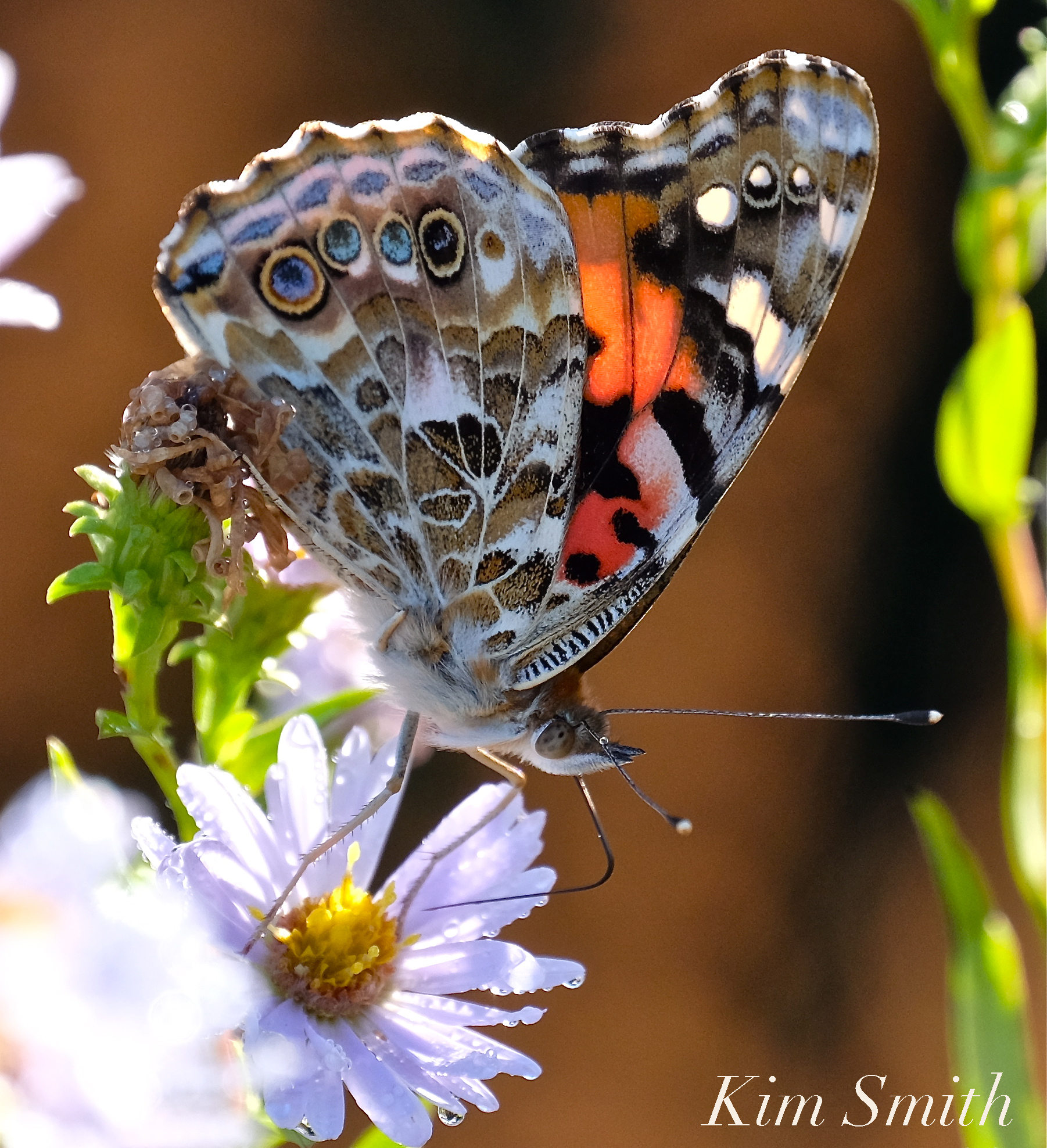
Many readers have written inquiring about the beautiful butterflies with wings in a tapestry of brilliant orange, brown, black, cream, and blue. Painted Ladies (Vanessa cardui) are often confused with Monarch butterflies, especially during the late summer. Both are currently migrating and you will often see the two species drinking nectar side-by-side.

As do Monarchs, Painted Ladies depart from Mexico to begin their northward migration in springtime. Both Monarchs and Painted Ladies belong to the brush-foot family (Nymphalidae) and can only survive in warm climates.Monarch Butterfly, top, and Painted Lady bottom. Note that the Painted Lady is about half the size of the Monarch

Sightings from the midwest recorded large numbers early in the season, and 2017 has proven to be an outstanding year for this most successful of butterflies. The Painted Lady is also nicknamed the “Cosmopolitan” butterfly because it is the most widespread butterfly in the world.

Painted Lady drinking nectar from the Seaside Goldenrod at the Gloucester HarborWalk

One reason we may possibly be experiencing a Painted Lady irruption in North America is because a rainy spring in the south was followed by a fabulous bloom of dessert annuals that provided abundant food plants for the caterpillars. Unlike Monarch butterflies, which will only deposit their eggs on members of the milkweed family (Asclepias), Painted Lady caterpillars eat a wide range of plants. More than 300 host plants have been noted; favorites include thistles, yarrow, Pearly Everlasting, Common Sunflower (Asteraceae), Hollyhock and many mallows (Malvaceae), various legumes (Fabaceae) along with members of Boraginaceae, Plantaginaceae, and Urticaceae.

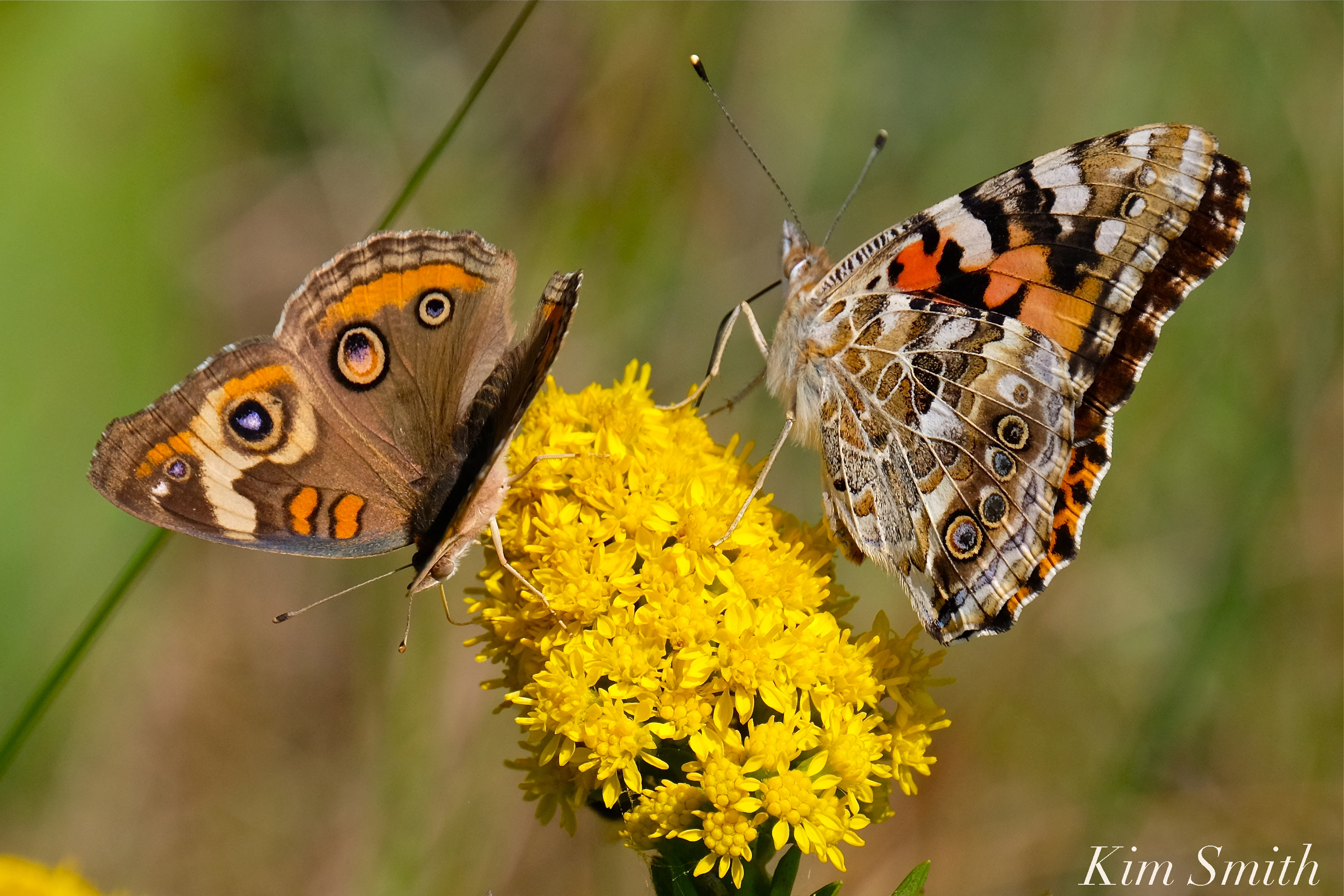
Common Buckeye and Painted Lady Nectaring at the Seaside Goldenrod at the Gloucester HarborWalk  

Much, much more remains to be discovered about the beautiful Painted Lady, its habits and how their behavior and seasonal distribution varies by geographic location.

Read More about Painted Ladies here:

DANCE OF COLOR AND LIGHT

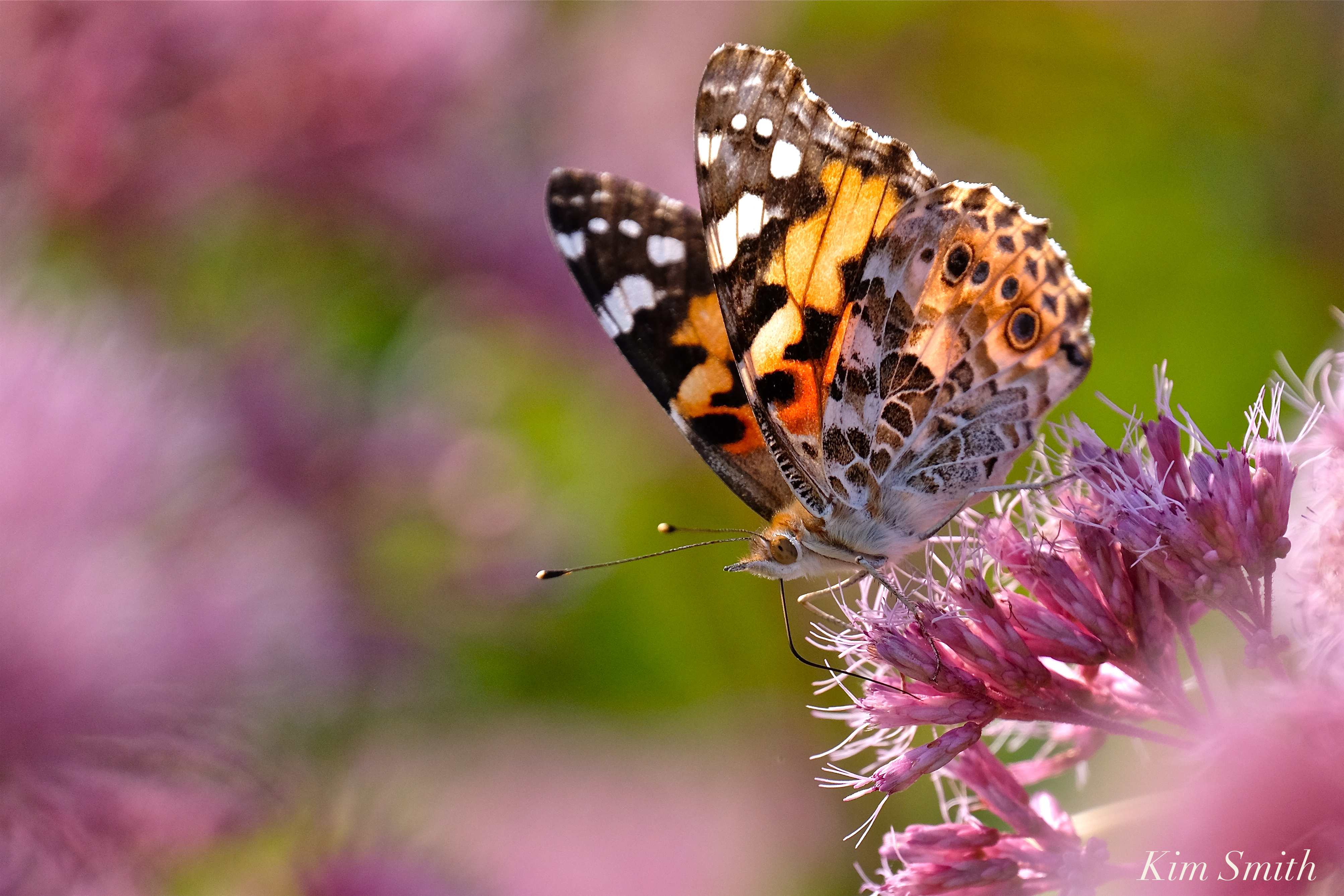
Painted Lady Drinking Nectar from the Purple-stemmed Aster

WELCOME TO PATTI PAPOWS SEASIDE POLLINATOR GARDEN!

Forty Oaks is the name given long ago to Patti and Jeff Papows lovely home, nestled on a hill overlooking the Atlantic. Many grand old oaks still surround the updated Shingle-style “seaside cottage.” Over the years the gardens have grown in beauty and maturity, with the newest addition being the native plants pollinator paradise–Common Milkweed center stage.

Welcome to Patti’s garden ~


 Hydrangea allée, with every species and color of hydrangea imaginable

Waist-high raised beds for lettuce and herbs.Dragonflies and Ruby-throated Hummingbirds dip, dive, and criss-cross the pool throughout the day.

Adorable and funny, Nellie is the “ham” of the family.
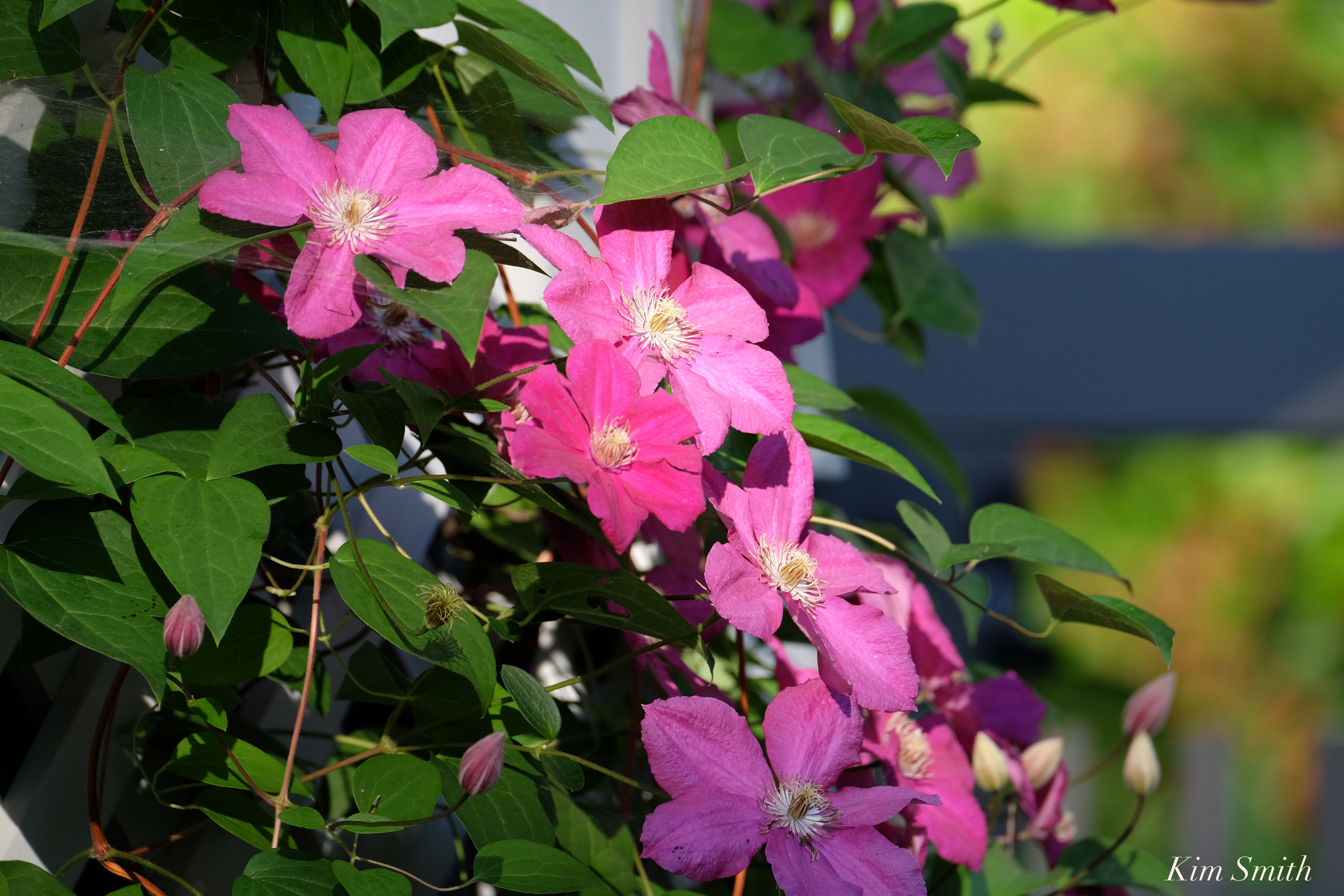
Trellises entwined with Clematis grace a garden wall.
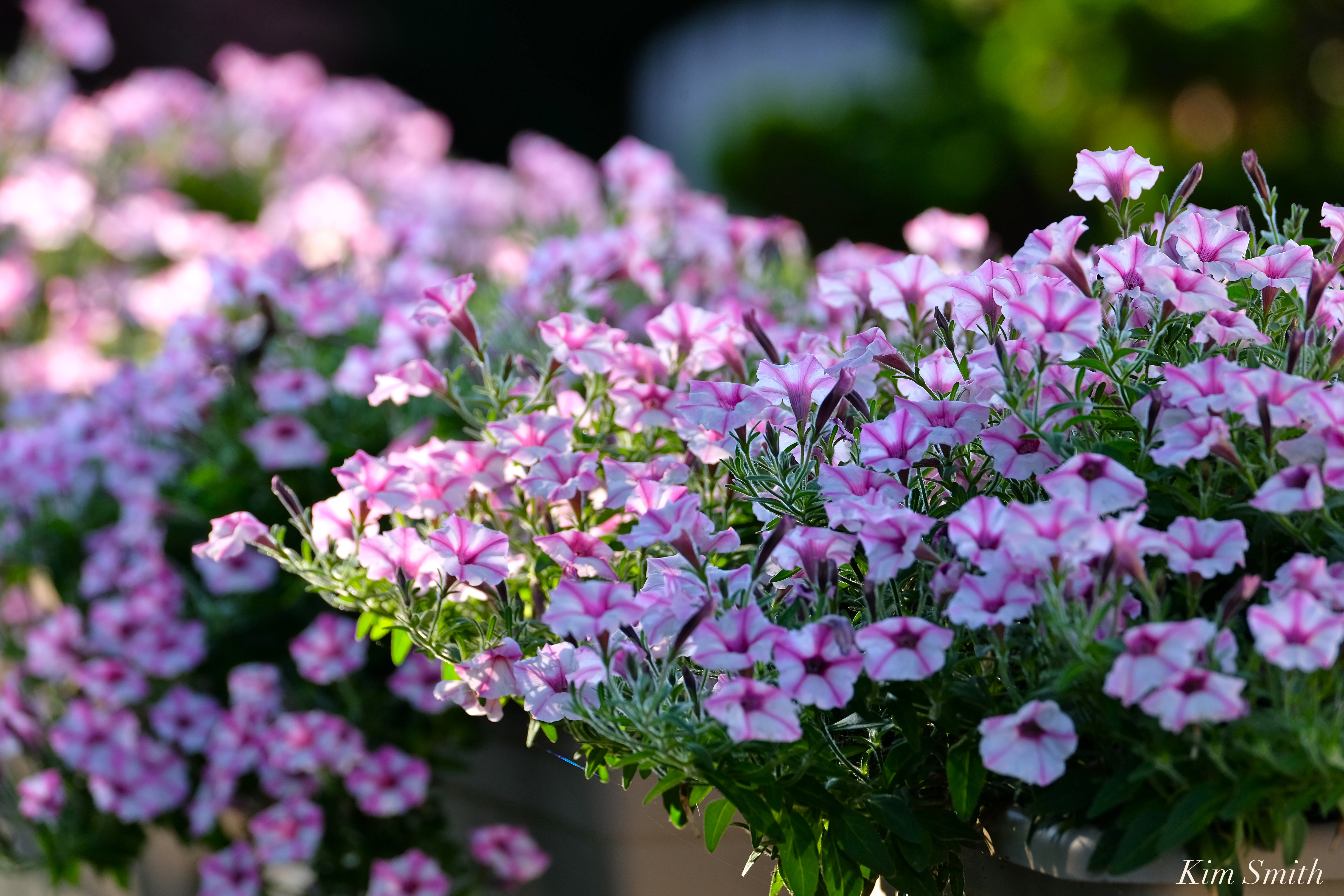
Planters bursting with beauty around every corner.
Vegetable Garden

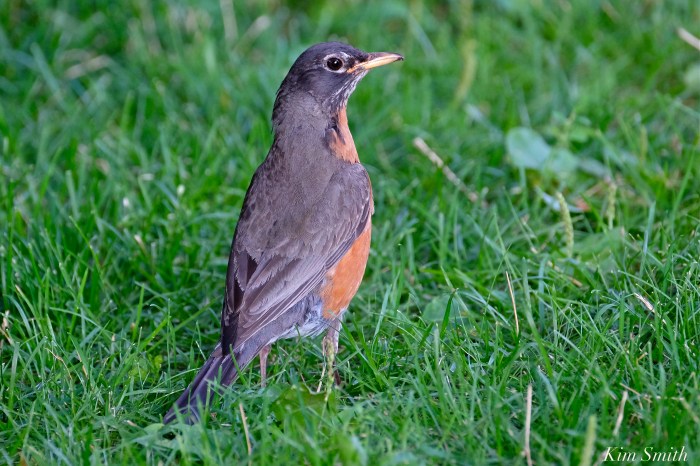
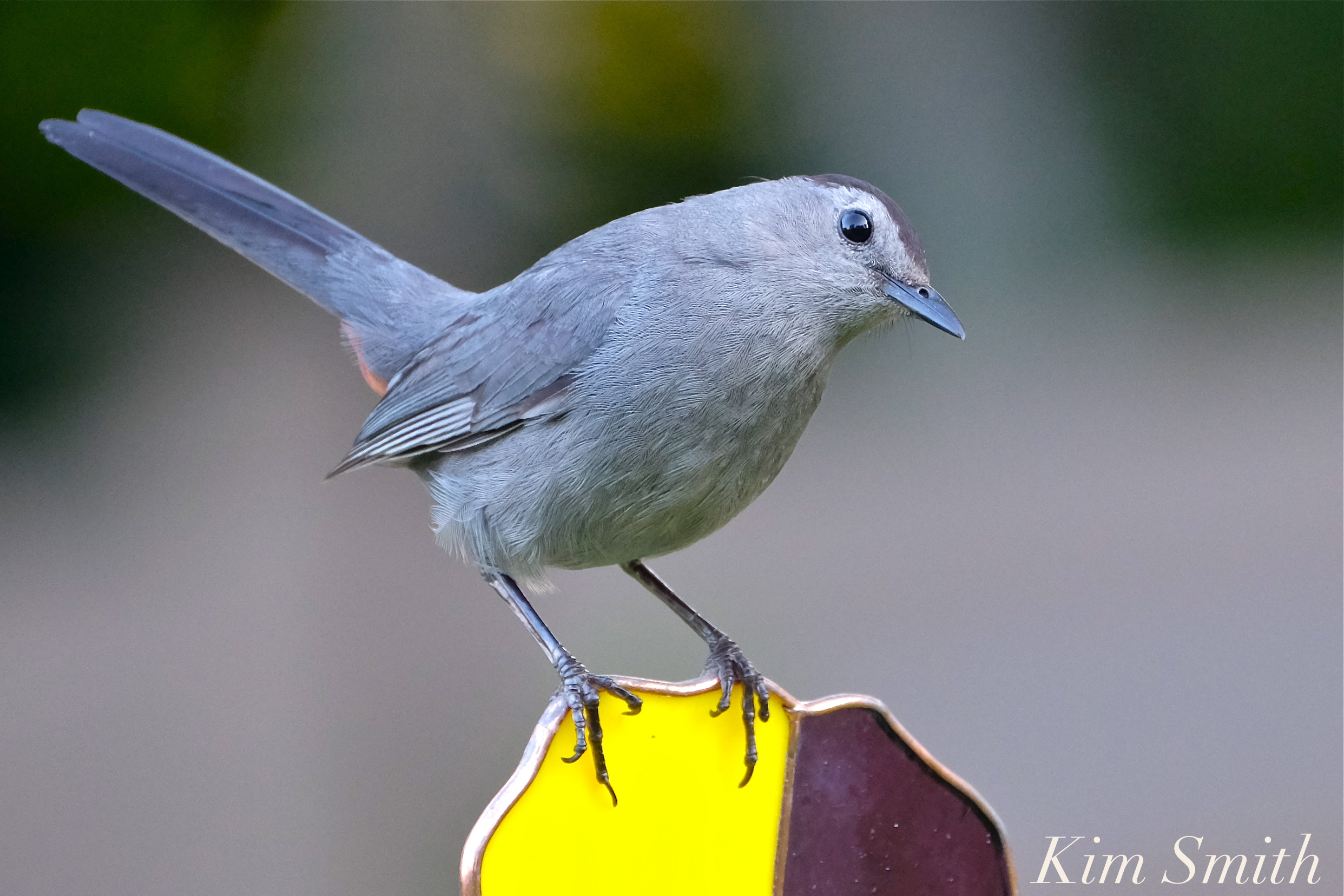
Catbirds, Robins, and Monarchs are just a few of the species of wildlife that find a welcoming haven in Patti’s seaside garden.

MONARCH FILM FUNDRAISING SCREENING PARTY

Dear Friends,

This past spring I had a tremendously inspirational experience. Out of the blue, a lovely woman from Concord, Laura Stevens, contacted me about the possibility of viewing my documentary film about the Monarch butterflies, Beauty on the Wing: Life Story of the Monarch Butterflies. I was reluctant at first, explaining that the film was in a rough cut form. Although the rough cut features the butterflies and Cape Ann in the most beautiful light, the film does need finessing.

Laura comes from a wonderful family and they all love Monarchs! Every year, she and her family gather together for a reunion based around a weekend of learning. Laura explained that it would be an extra special treat for the 27 women and children who attend the reunion to see the film. The more I thought about it the more I thought it would be a super idea, and sent her access to the film.

Several weeks passed when in the mail I received the most heartfelt thank you letters from Laura and her family members who had attended the screening, from the ninety-five year old great auntie to the youngest child there. And soon after that, donations towards the film’s completion arrived from this most generous family. I am so grateful to Laura and her family for the donations, and for their kind encouragement and enthusiasm.

At that time the thought crossed my mind that this would be a wonderful way to continue to raise funds for the documentary. Landscape design work and the story of Little Chick and the Piping Plovers has kept me from doing any recent fundraising, but my work typically slows for a brief period during the end of August and beginning of September.

READ MORE HERE Continue reading “MONARCH FILM FUNDRAISING SCREENING PARTY”

MONARCH FILM FUNDRAISING SCREENING PARTY

Dear Friends,

This past spring I had a tremendously inspirational experience. Out of the blue, a lovely woman from Concord, Laura Stevens, contacted me about the possibility of viewing my documentary film about the Monarch butterflies, Beauty on the Wing: Life Story of the Monarch Butterflies. I was reluctant at first, explaining that the film was in a rough cut form. Although the rough cut features the butterflies and Cape Ann in the most beautiful light, the film does need finessing.

Laura comes from a wonderful family and they all love Monarchs! Every year, she and her family gather together for a reunion based around a weekend of learning. Laura explained that it would be an extra special treat for the 27 women and children who attend the reunion to see the film. The more I thought about it the more I thought it would be a super idea, and sent her access to the film.

Several weeks passed when in the mail I received the most heartfelt thank you letters from Laura and her family members who had attended the screening, from the ninety-five year old great auntie to the youngest child there. And soon after that, donations towards the film’s completion arrived from this most generous family. I am so grateful to Laura and her family for the donations, and for their kind encouragement and enthusiasm.

At that time the thought crossed my mind that this would be a wonderful way to continue to raise funds for the documentary. Landscape design work and the story of Little Chick and the Piping Plovers has kept me from doing any recent fundraising, but my work typically slows for a brief period during the end of August and beginning of September. 

Don’t you think it auspicious for my film project that we are seeing so many butterflies this summer? I began documenting the Monarchs in our region in 2006, which was an outstanding year for the Monarch migration through Cape Ann. The year 2012 was quite strong as well, but in the past four years, as the worldwide population has plummeted, so have the Monarchs migrating through our area. Imagine that in 1977, when the Monarchs were first discovered at their winter sleeping grounds, the butterflies were counted by the billions, while today only by the millions.

My hope for Beauty on the Wing is that it will travel to the various conservation and environmental festivals, and then be made available to classrooms around the nation. Another dream for the film is that it will be translated into Spanish and French. Just as American and Canadian children are curious about the butterflies’ winter home after departing their northern breeding grounds, Mexican children are equally curious as to the butterflies’ destination after they leave the butterfly sanctuaries in central Mexico.

The intent of this letter is to learn if amongst our readers there is interest in hosting a screening of the film in its not quite completed form. The purpose of the screening would be to raise money towards the film’s completion and distribution. And, too, I thought it would be a more fun, educational, and personal way to fundraise. To date I have received over $5,000 in generous donations. I am working with the non-profit filmmaker’s assistance group, the Filmmakers Collaborative. Donations made through FC are tax deductible. An itemized budget is available upon request. Beauty on the Wing is 54 minutes long. I thought we could show twenty minutes of highlights and then discuss the current state of the butterflies. Viewer feedback would also be of tremendous help. Screening parties could be so much fun, especially at this time of year during the butterfly’s migration, and especially in 2017 while we are seeing so many Monarchs on the wing.

Readers, what do you think? Please comment on this post or write me at kimsmithdesigns@hotmail. Thank you so very much for your time, thoughts, and interest.

Warmest wishes,

Kim


Links:

Beauty on the Wing: Life Story of the Monarch Butterfly film website

A Flight of Monarchs

Trailer

Film Interview with Doctor Thomas Emmel at the Monarch Butterfly Biosphere Reserve at Sierra Chinqua

https://instagram.com/p/BW7wfw-F5o9/

https://instagram.com/p/BXjLQjZleLY/

https://instagram.com/p/BXjL7HgF2p2/

#POLLINATORHERO

Bees and butterflies, as we all know, pollinate flowers, but did you know that bats, songbirds, hummingbirds, wasps, beetles, moths, flies, midges, and even nasty mosquitoes also deliver pollen from plant to plant?

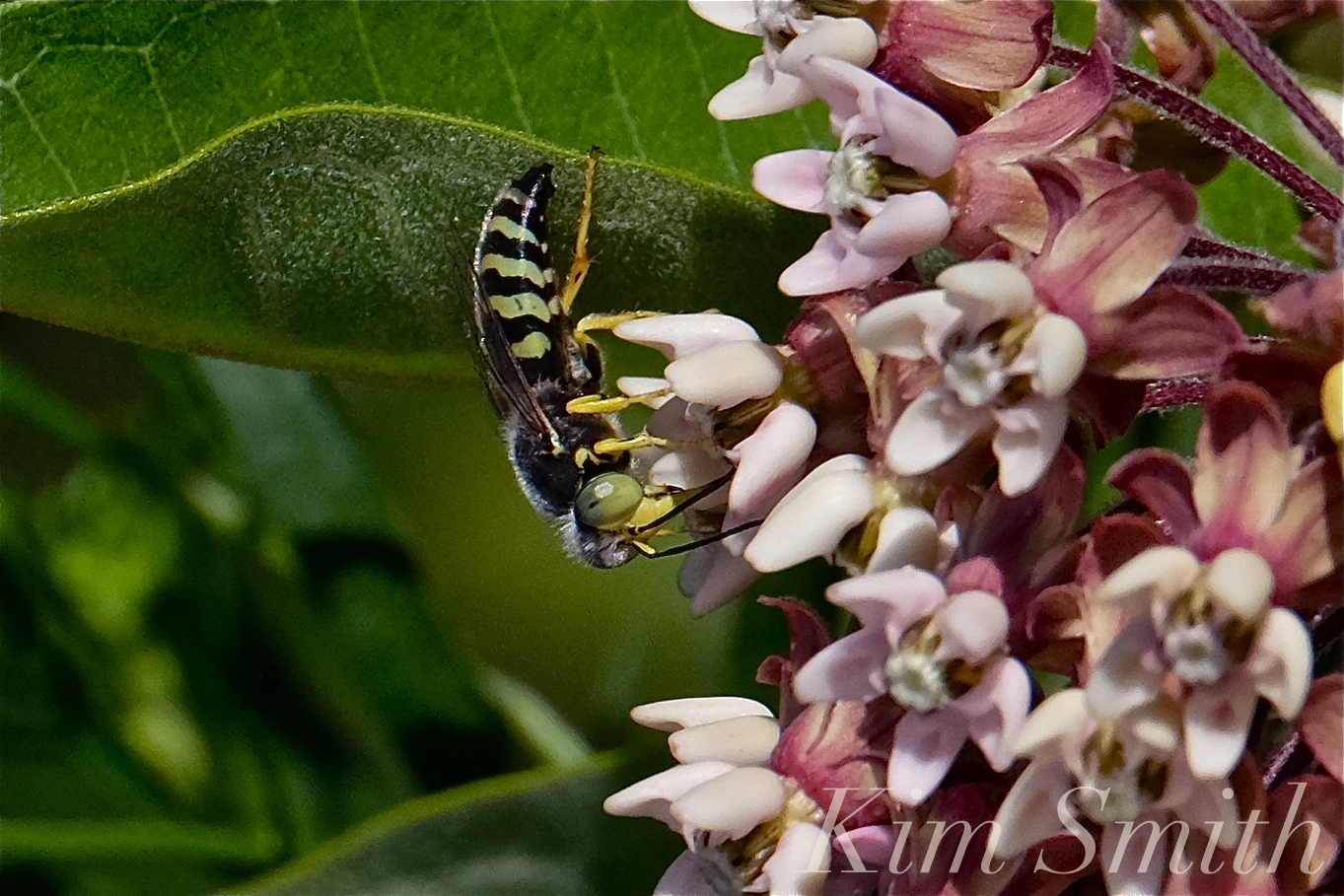
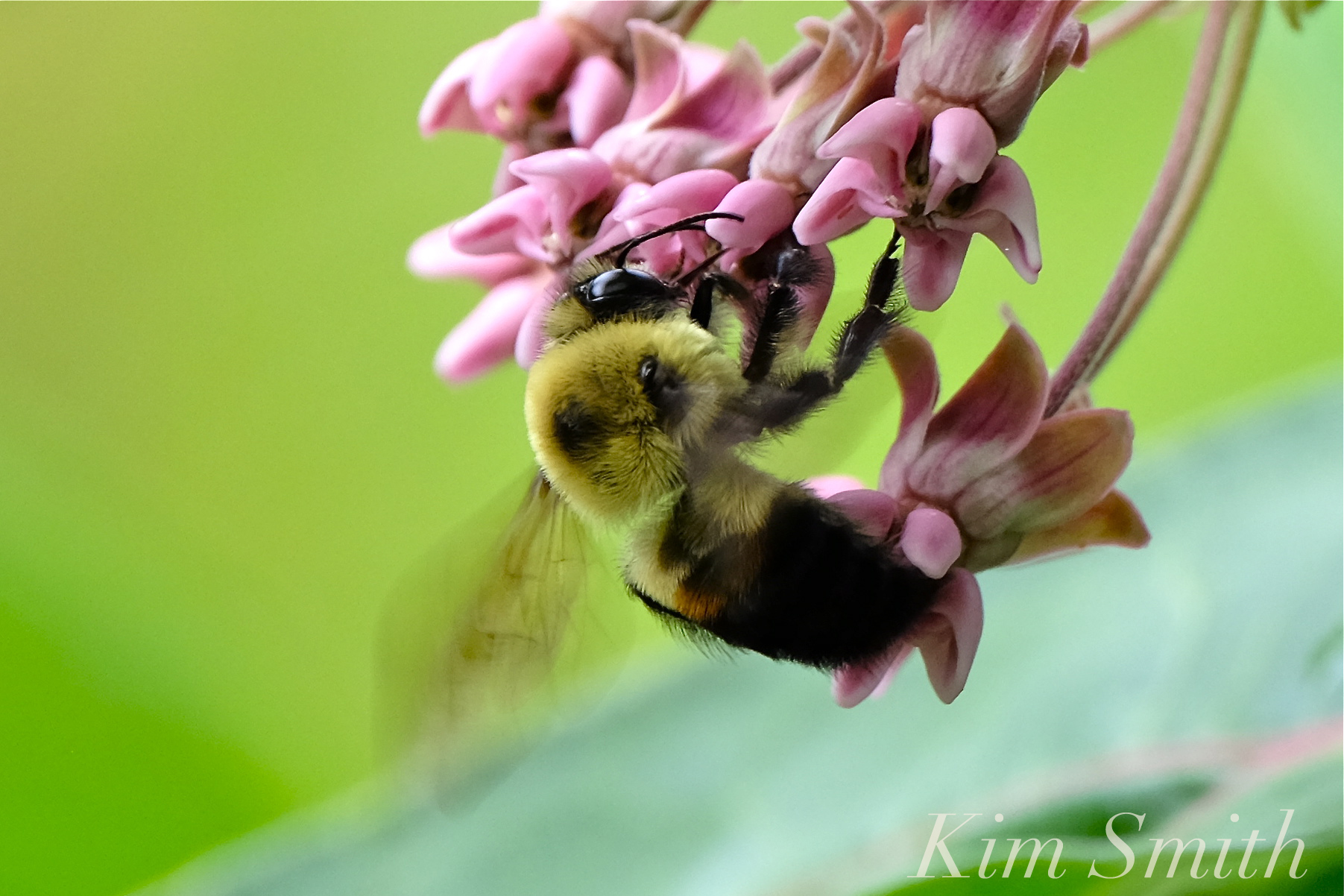
Flower pollinating Green-eyed Wasp drinking nectar from Common Milkweed florets.

The eyes of the male Green-eyed Wasp are larger than the females, all the better to see her, and predators. Green-eyed Wasps are also known as sand wasps because females excavate burrowing nests in sand (as well as soil).

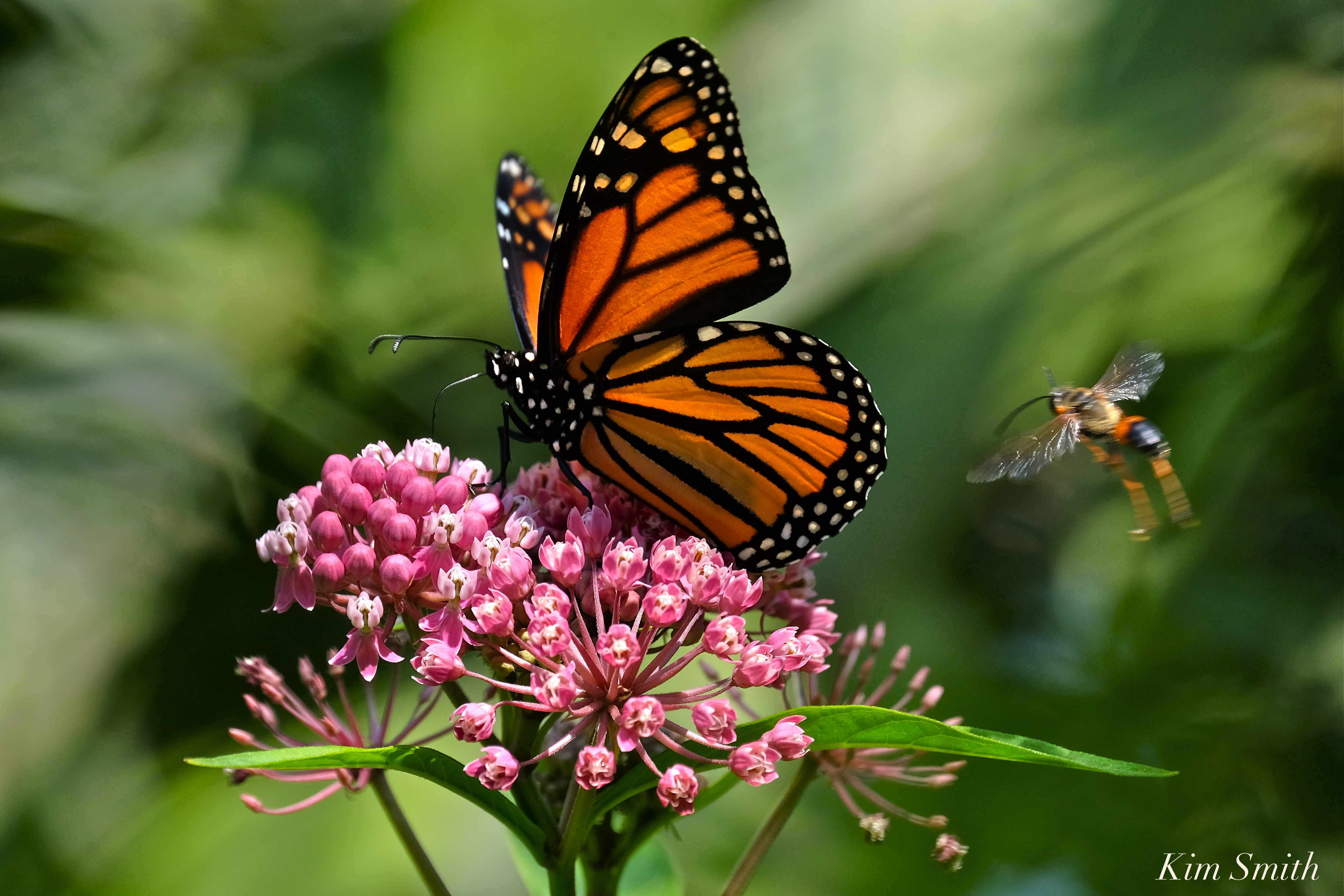
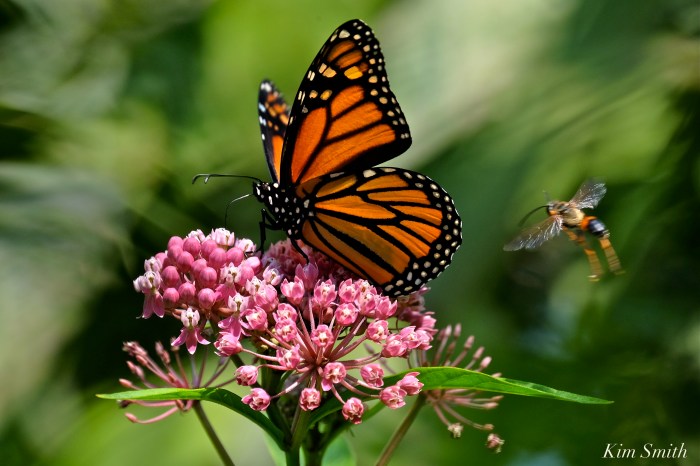
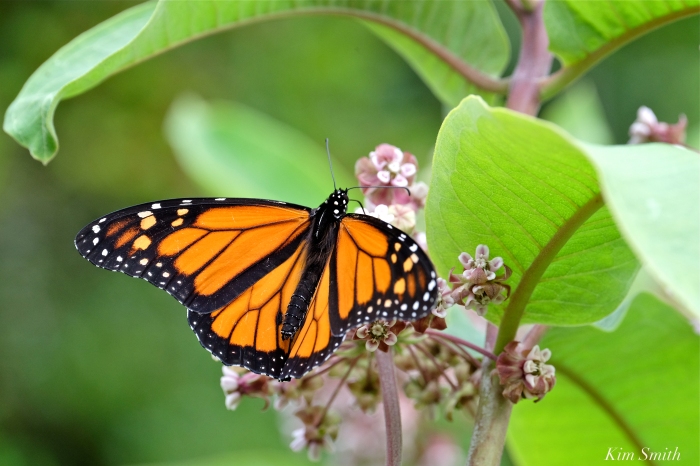
Male Monarch Butterfly flitting about our garden and drinking nectar from the Marsh Milkweed florets. Notice the mass of orange Milkweed Aphids in the background. Lady Beetles are another pollinator super hero because they help milkweed plants by eating aphids.
https://www.instagram.com/p/BXTNYD9F_We/

MONARCHS HERE, THERE, AND EVERYWHERE PART TWO AND PLEASE CONTINUE TO REPORT YOUR MONARCH SIGHTINGS

The title of the post could just as easily have read Monarchs, Eggs, and Caterpillars Here, There, and Everywhere. I haven’t seen this much Monarch activity on Cape Ann in over ten years and hope so much the number of Monarchs seen in gardens, meadows, and dunes indicates a strong migration.

Thank you to everyone who has written in with your Monarch sightings! The reports are tremendously informative and fun to read, so please, do continue to let us know. The rainy cool weather has temporarily put the kibosh on mating and egg laying, but they are here on our shores and just waiting for a few warm hours and the sun to come out to renew breeding activity.

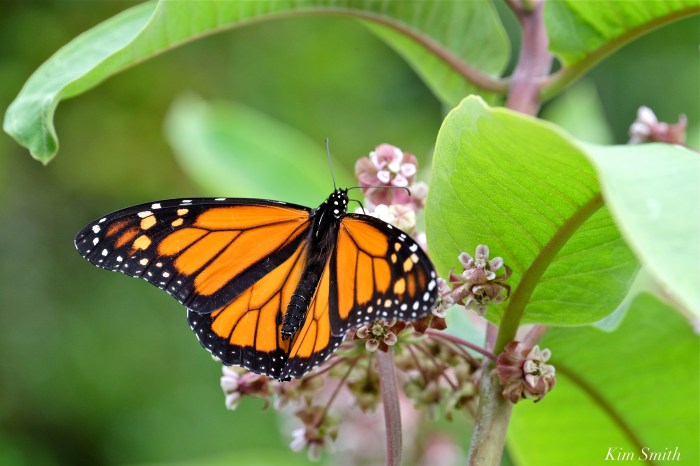
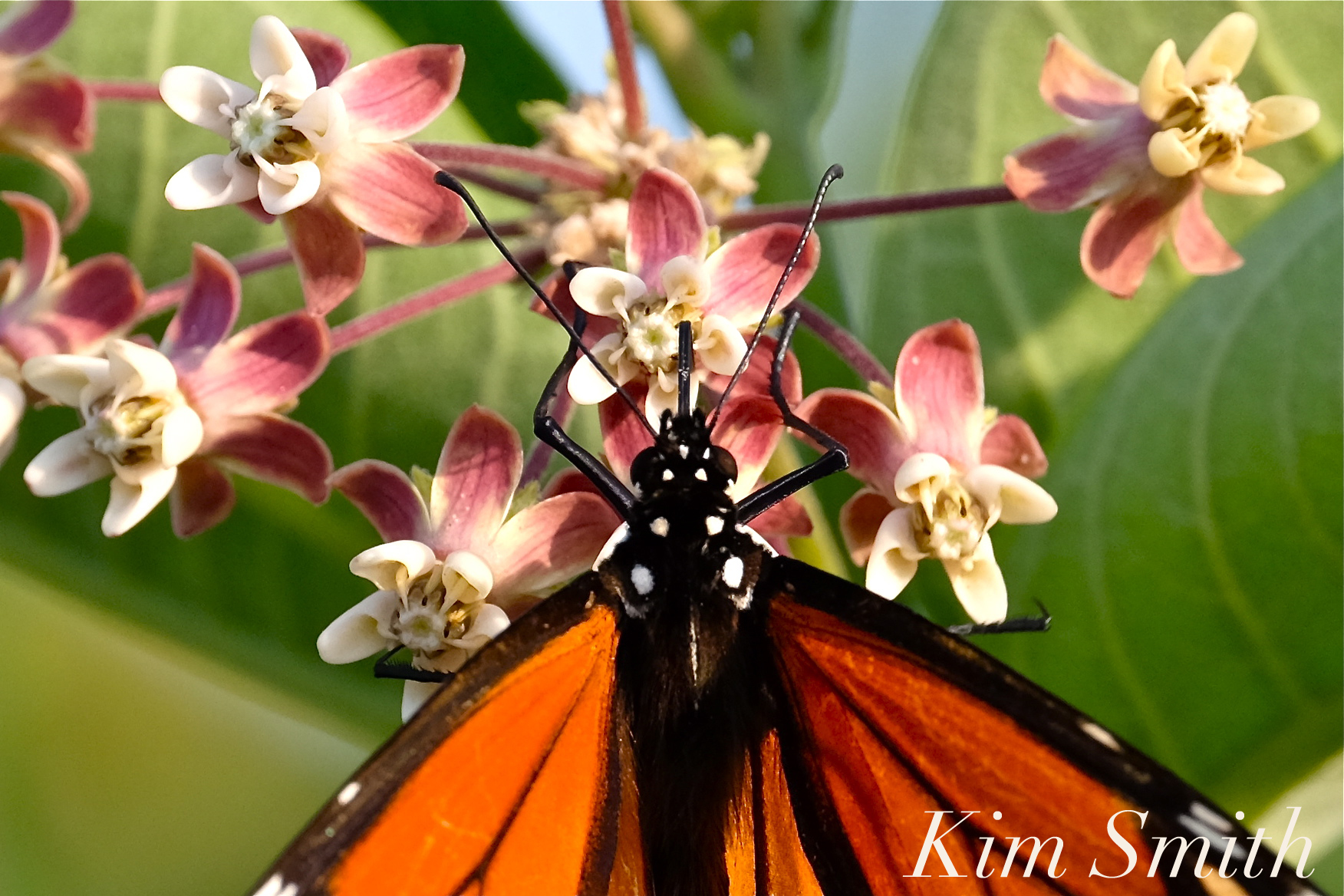
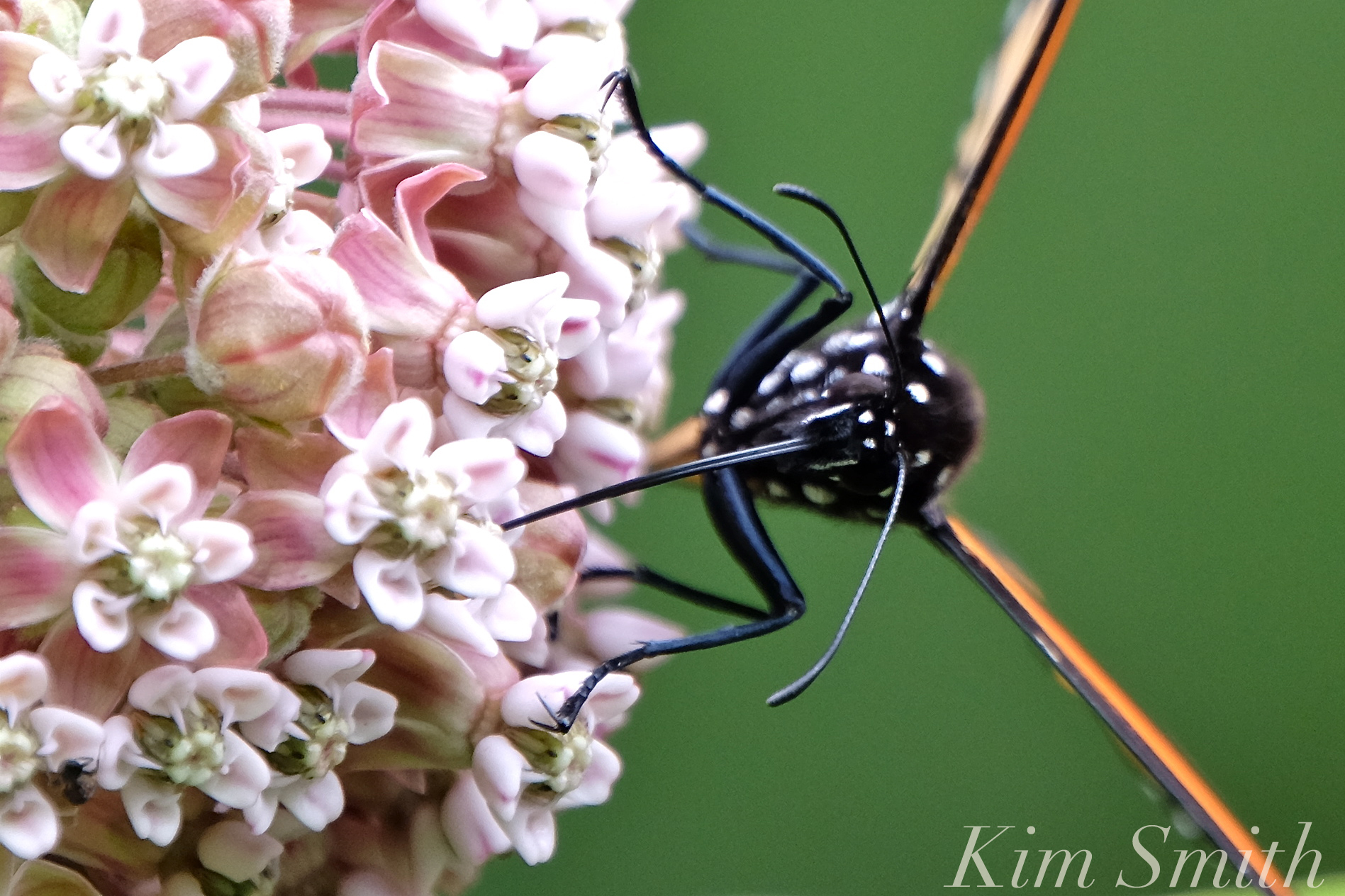
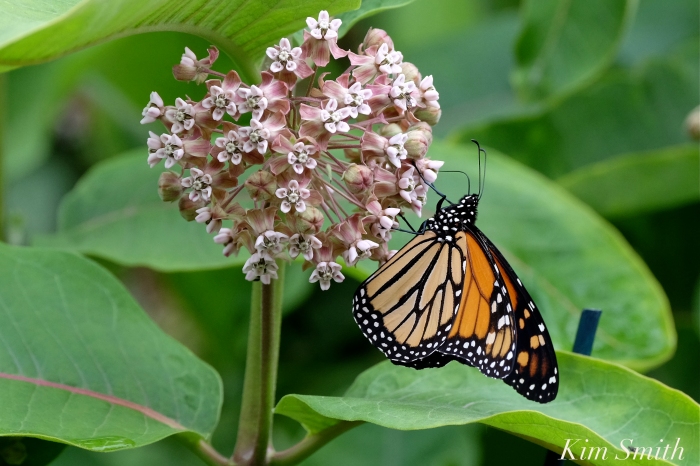
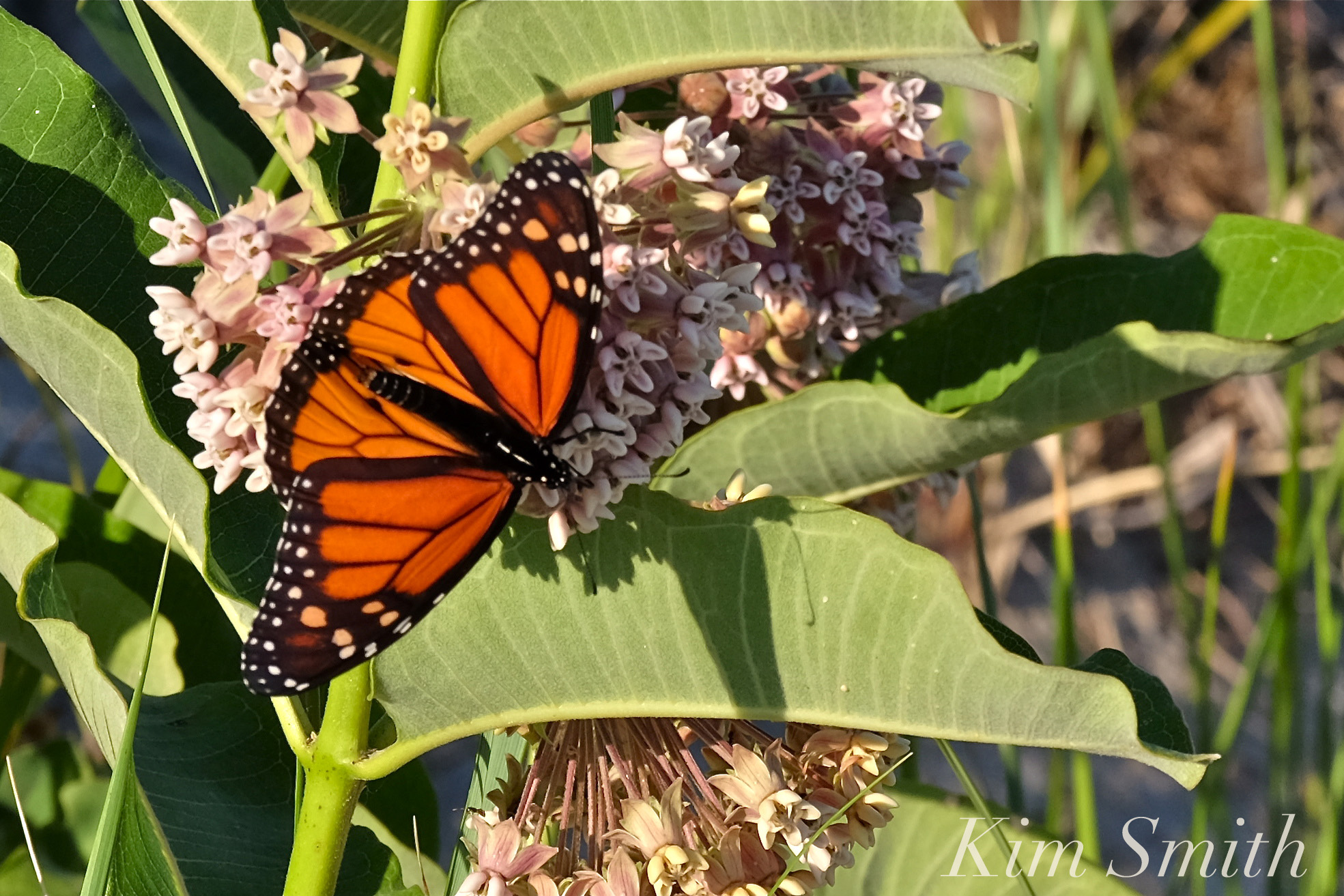
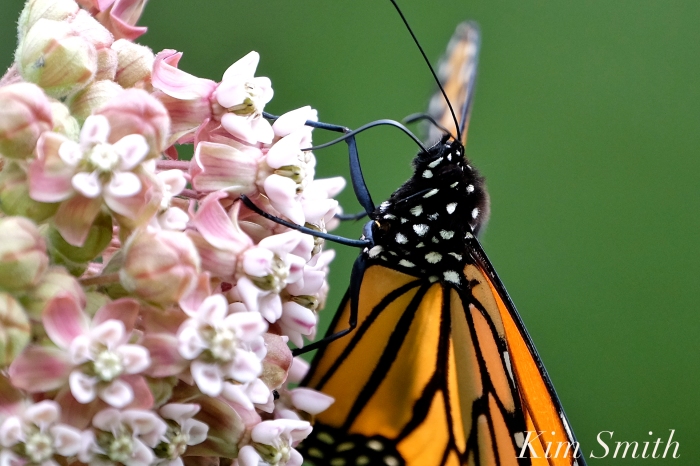
Monarchs not only drink nectar from the florets of milkweed, it is the only species of plant on which they deposit their eggs. In the above photo you can clearly see the Monarch probing for nectar with her proboscis, or drinking straw. 

Look for the butterflies, eggs, and caterpillars wherever milkweed grows. In our region, they are most often found on pink flowering Common Milkweed (Asclepias syriaca) and Marsh Milkweed (Asclepias incarnata), as opposed to the orange milkweeds, A. curassavica and A. tuberosa.

Female Monarch depositing an egg on an upper leaf of Common Milkweed.

The eggs are typically laid on the underside of the leaf, near the top of the plant. Tiny golden domes, no larger than a pinhead, Monarch eggs are easily confused with the eggs of other insects.

Once the tiny caterpillar emerges, it will stay towards the top of the plant, venturing further to larger leaves as it grows.

Four Monarchs in One Photo!

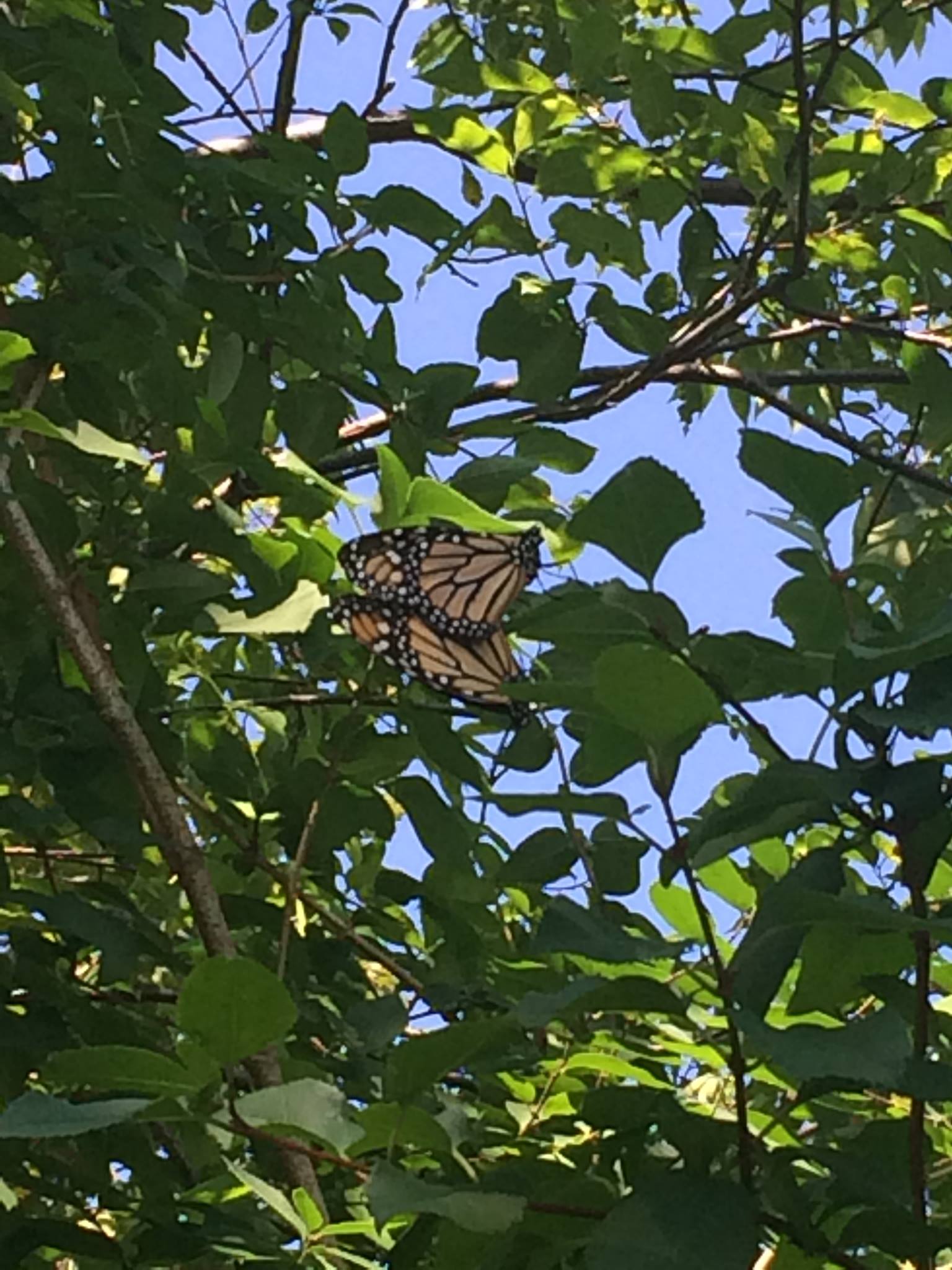
I was trying to take a snapshot of two Monarchs flying but not until I returned home did I realize that resting on a leaf were a pair of Monarchs mating. Lara Lepionka had just sent a photo the day before of a pair mating in a tree above her garden. Typically Monarchs will begin mating on the ground, or the foliage of a lower plant plant such as squash or milkweed. They will join together abdomen to abdomen and, once securely attached, the male then carries the female to a safer location. A male and female Monarch will stay coupled together for four to five hours before releasing (see photo below of a pair of Monarchs mating, towards center left. 

Lara Lepionka cell phone photo of Monarchs mating in a tree.Monarch and Common Milkweed Good Harbor Beach

Not everyone has a gorgeous milkweed patch like Patti Papows. Don’t despair. You don’t have to go far! I am finding tons of eggs and caterpillars on the Common Milkweed that grows around the edge of the parking lot at Good Harbor Beach.

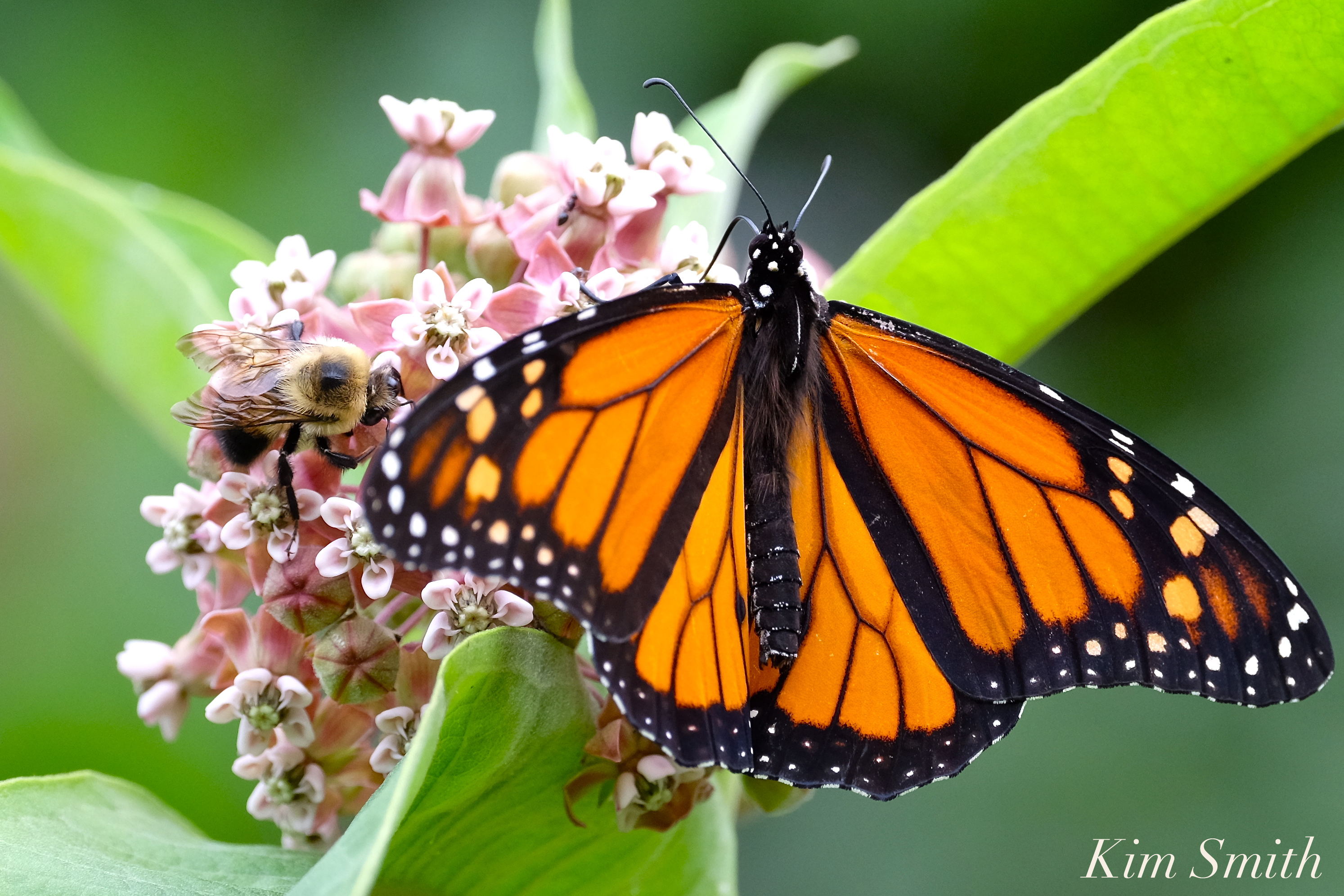
Patti Papows Common Milkweed with Monarch and Bee


https://www.instagram.com/p/BXBPKguFU2C/

https://www.instagram.com/p/BW7wfw-F5o9/

https://www.instagram.com/p/BXDTPFllQh9/

https://www.instagram.com/p/BW1R9IEFAoI/

https://www.instagram.com/p/BXAv8MHF0bO/

PATTI’S CATTIES AND OTHER TALES FROM THE PAPOWS BEAUTIFUL GARDEN

My friend Patti Papows very thoughtfully invited me to come film and take photos in her gorgeous garden, especially her milkweed patch. Patti purchased milkweed plants from our Cape Ann Milkweed Project several years ago, both the Common and Marsh Milkweed that we offered.

Patti’s Common Milkweed has really taken off this year. The plants are about five feet tall, lush and healthy, and bursting with sweetly fragrant blossoms. The Monarchs are daily visitors, coming not by the ones and twos, but by the dozen. Not only are her milkweed blossoms beckoning to the Monarchs, but the plants are also attracting every bee species imaginable found in a Cape Ann garden, as well as myriad other pollinating insects.

I showed Patti how to find Monarch caterpillars. She found three in about three minutes; we weren’t even trying that hard! They are safer from spiders in my terrariums, so I brought her tiny caterpillars home where they are developing nicely alongside a dozen Monarch eggs. These eggs were discovered in my garden, and at the Common Milkweed plants growing along the edges of the Good Harbor Beach parking lot.

https://www.instagram.com/p/BW7y-ywl3kb/

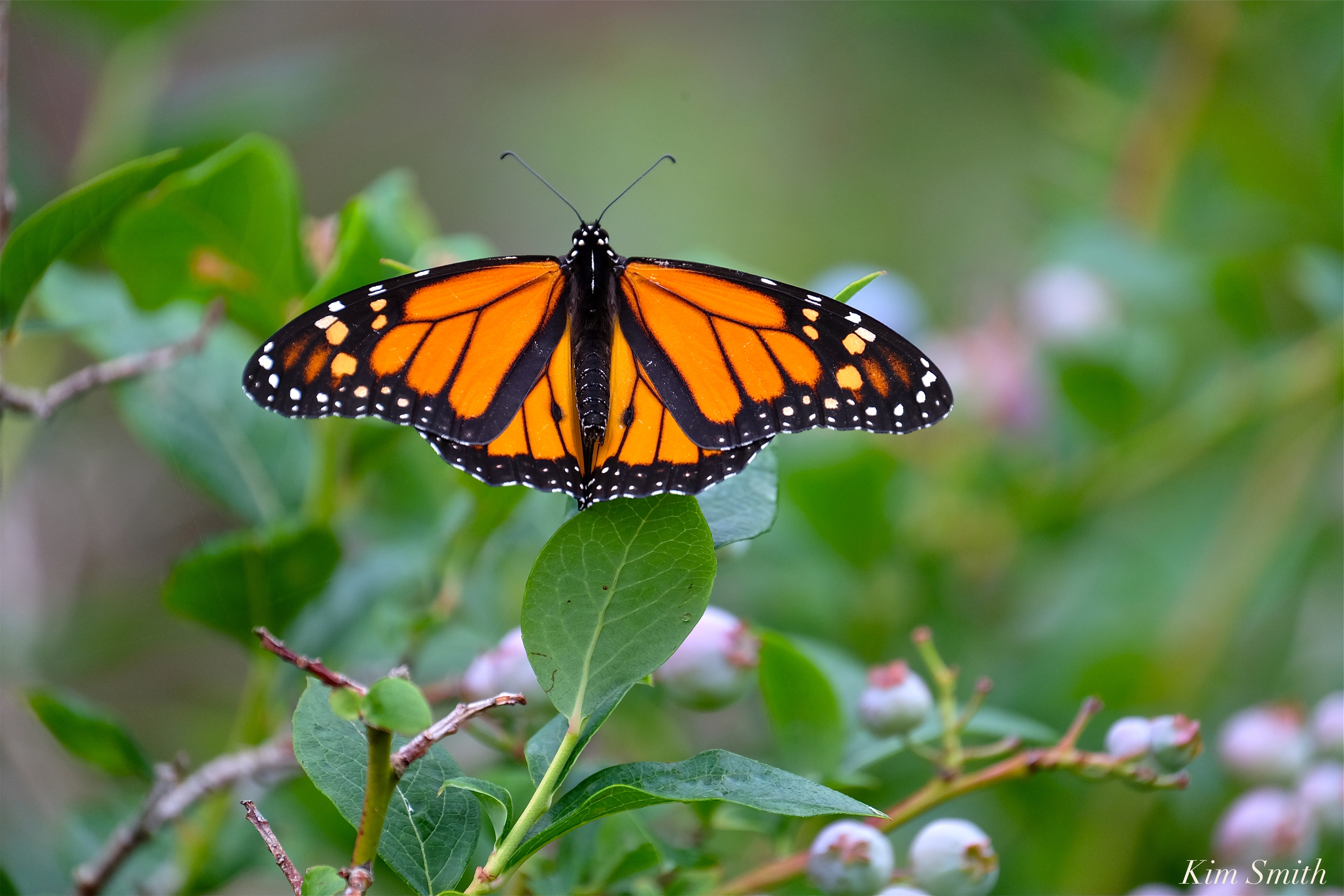
Patti’s patch of native highbush blueberries attracts loads of Catbirds, and dozens more species of songbirds and small mammals. This morning the foliage made a perfect perch for a male Monarch butterfly.

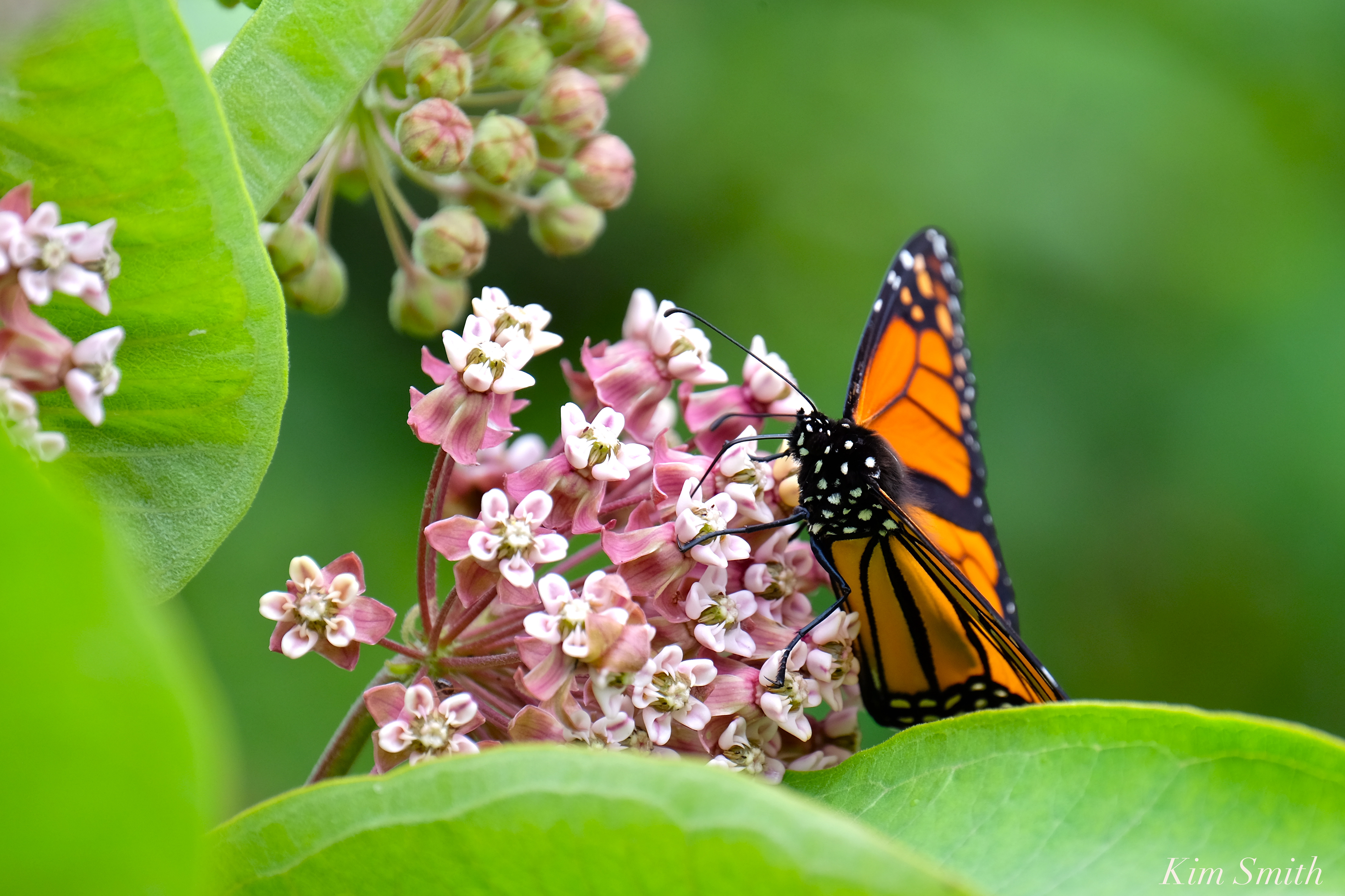
In the above photo you can clearly see the Monarch’s two-part tubular drinking straw, called a proboscis. The Monarch is probing deep into the Milkweed floret for a sip of sweet nectar. 

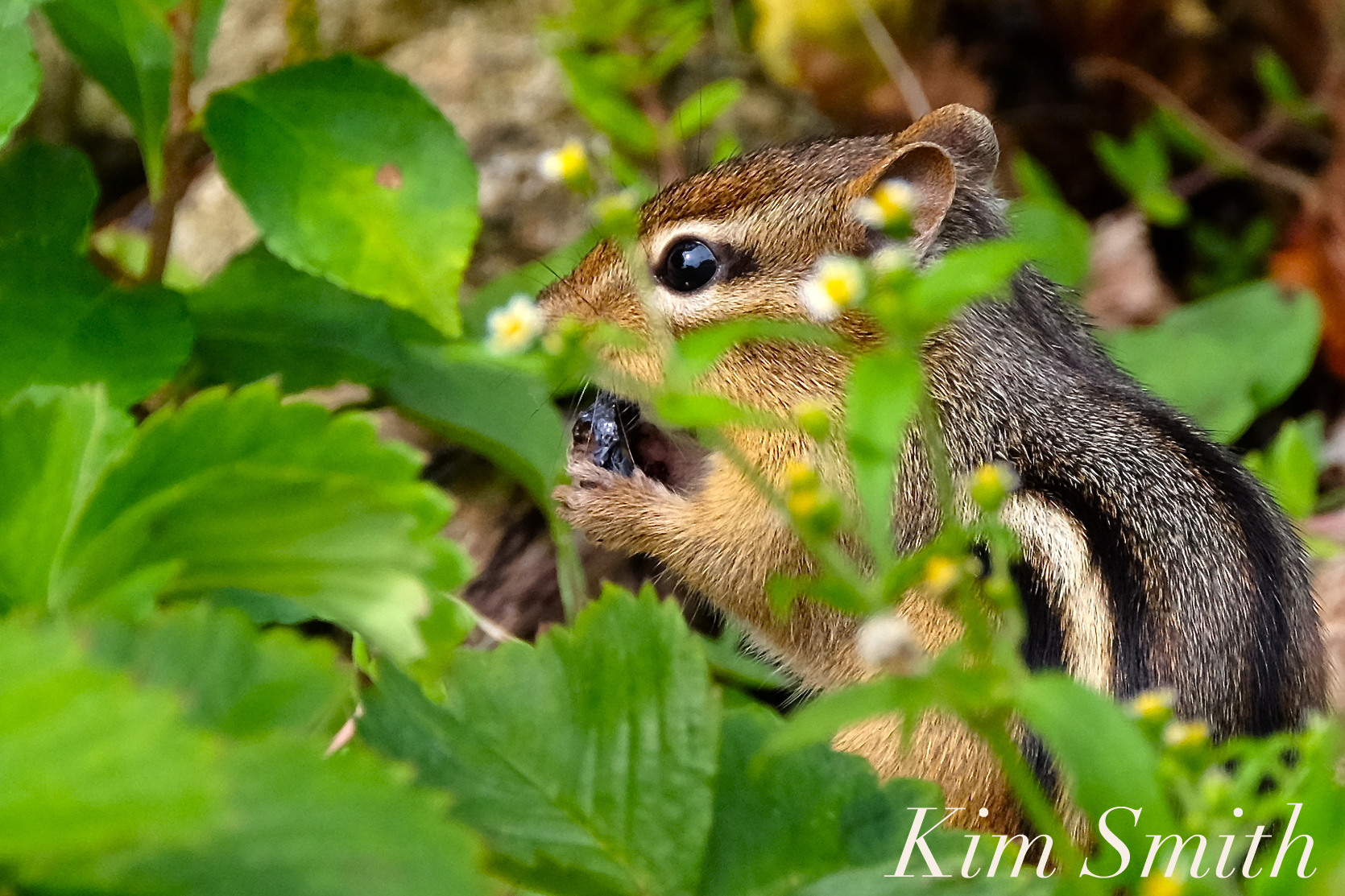
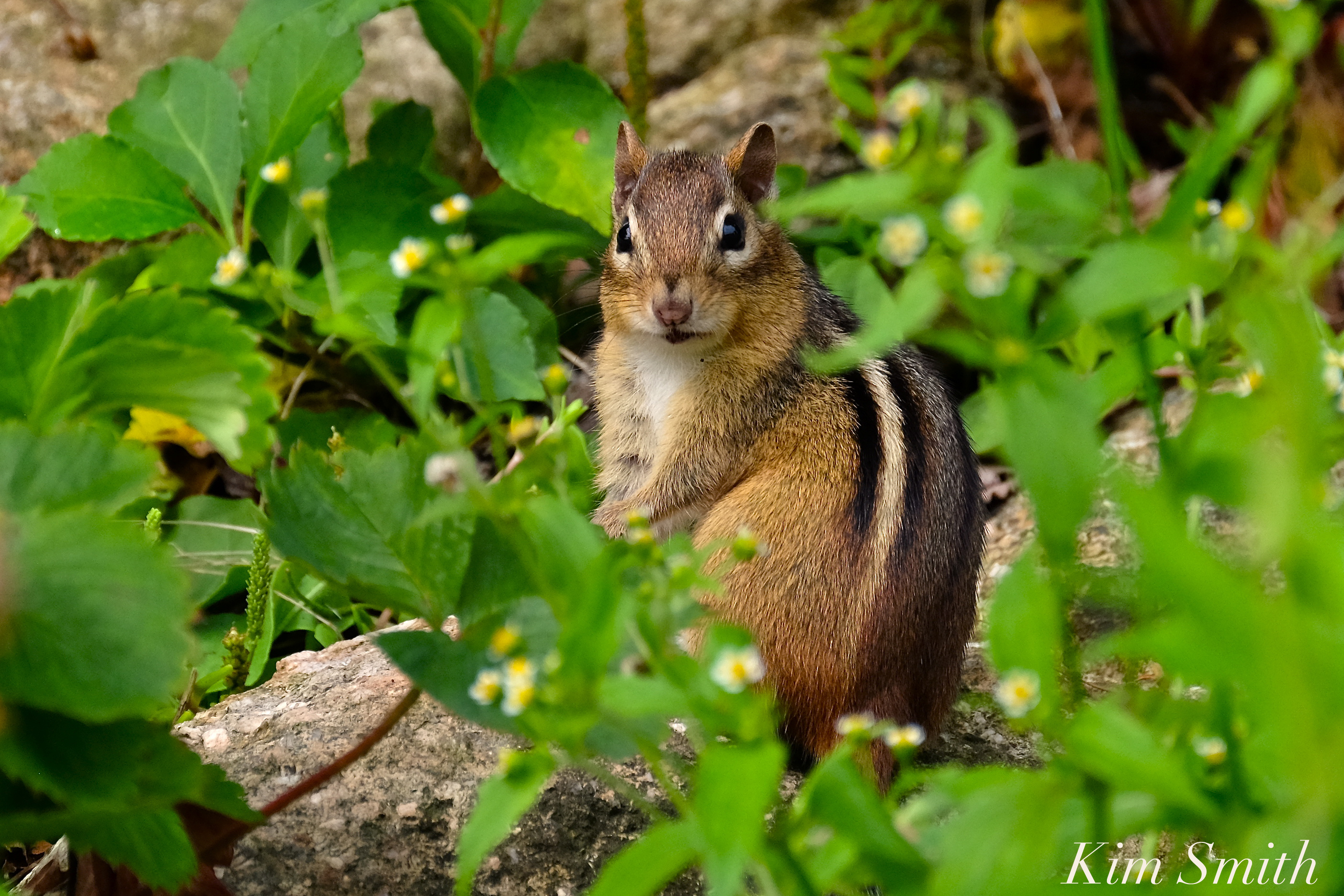
Who, me? I’m innocent! Chipmunk snacking at the buffet-of-plenty in Patti’s garden.

Patti placed the purple chair in the midst of the milkweed patch so that visitors can enjoy being surrounded by the beautiful pollinators buzzing all around and the delightful fragrance emitted by the Common Milkweed. I tried it out and her plan worked, it is pure Heaven!

I had an absolutely wonderful morning filming and photographing, despite the limiting overcast skies, and plan to return on a sunnier day, hopefully this week while the Monarchs are here on Cape Ann busy egg-laying and pollinating our gardens!


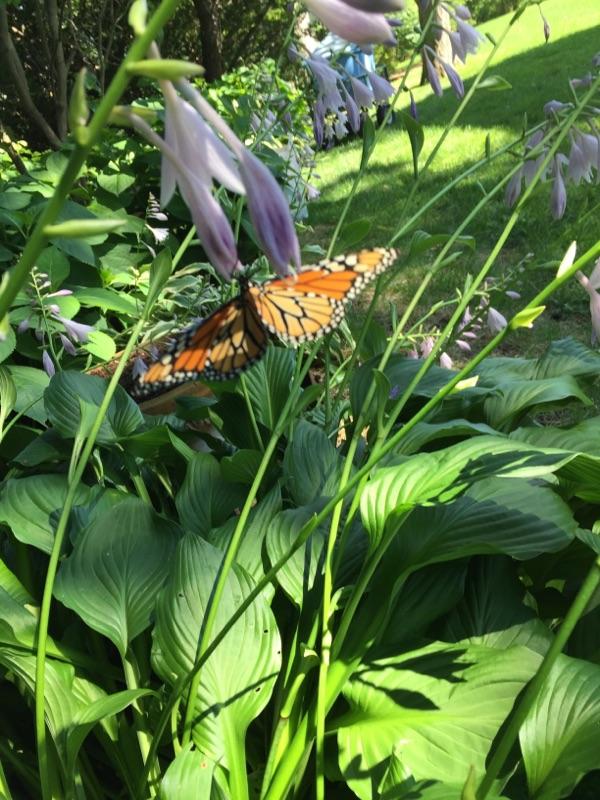
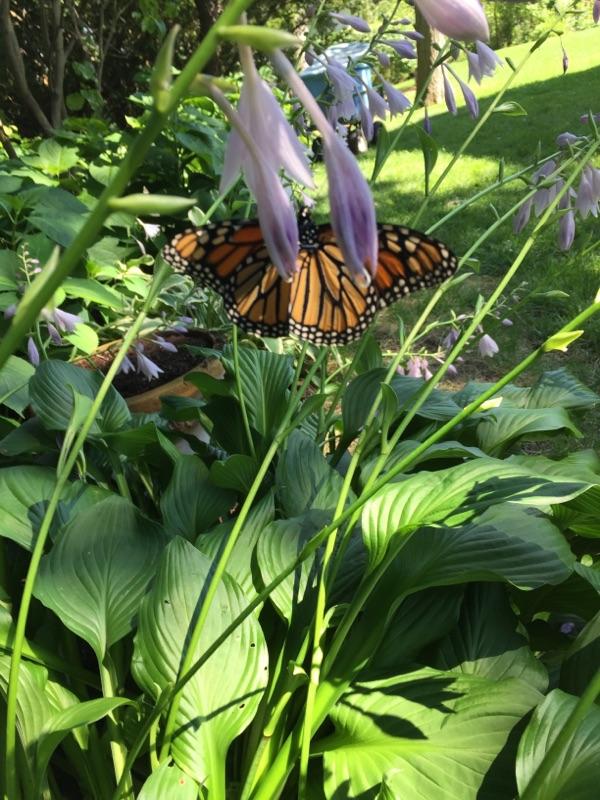
Patti shares that at the end of the day, her Monarchs are nectaring from the flowering hosta. She sent these photos this morning, taken yesterday afternoon with her cell phone. 

MONARCHS HERE, THERE, AND EVERYWHERE! PLEASE REPORT YOUR MONARCH BUTTERFLY SIGHTINGS (EDITED)

Reports of Monarch Butterfly sightings are coming in from all around Cape Ann, and beyond. I have seen more this this year than in recent summers. I wonder if higher numbers in July indicates a stronger migration in September. We can hope!

At this time of year, the females are depositing the eggs of the next generation.  You can find Monarchs at wildflower meadows, dunes, and gardens, where ever milkweed and nectar-rich flora grow. Typically, the eggs and caterpillars are found on the undersides of the uppermost leaves.

If you would, please report any Monarch activity that you have seen–eggs, flight, caterpillars, nectaring, mating, whatever you discover. Please share the approximate date and place. Even if you have shared previously in a comment, I hope to keep all the sightings in one place, so please re-comment. Thank you! 

*EDIT:

Thank you everyone for writing! How exciting that so many are being spotted, many more than the past several years. One was in my garden this morning, again, and two at Good Harbor Beach dunes earlier this morning.
Adding JoeAnn Hart, Susan Burke and Michele Del, as they commented on Facebook.

Patti, do you have caterpillars?? I’d love to stop by and see.

Please keep your comments coming. Thank you!!!!

When watching, note that the first two minutes of the film were shot in Gloucester. I think you will be dazzled by the numbers of Monarchs that travel through Cape Ann’s backyards and meadows during the peak of migration.
HOORAY FOR OUR TWENTY-THREE-DAY-OLD PIPING PLOVER CHICK!

Bravo to our little chick, who this evening, we are celebrating day twenty-three! Thank you to all our volunteers who are working so conscientiously to help the GHB PiPl survive Gloucester’s busiest beach.

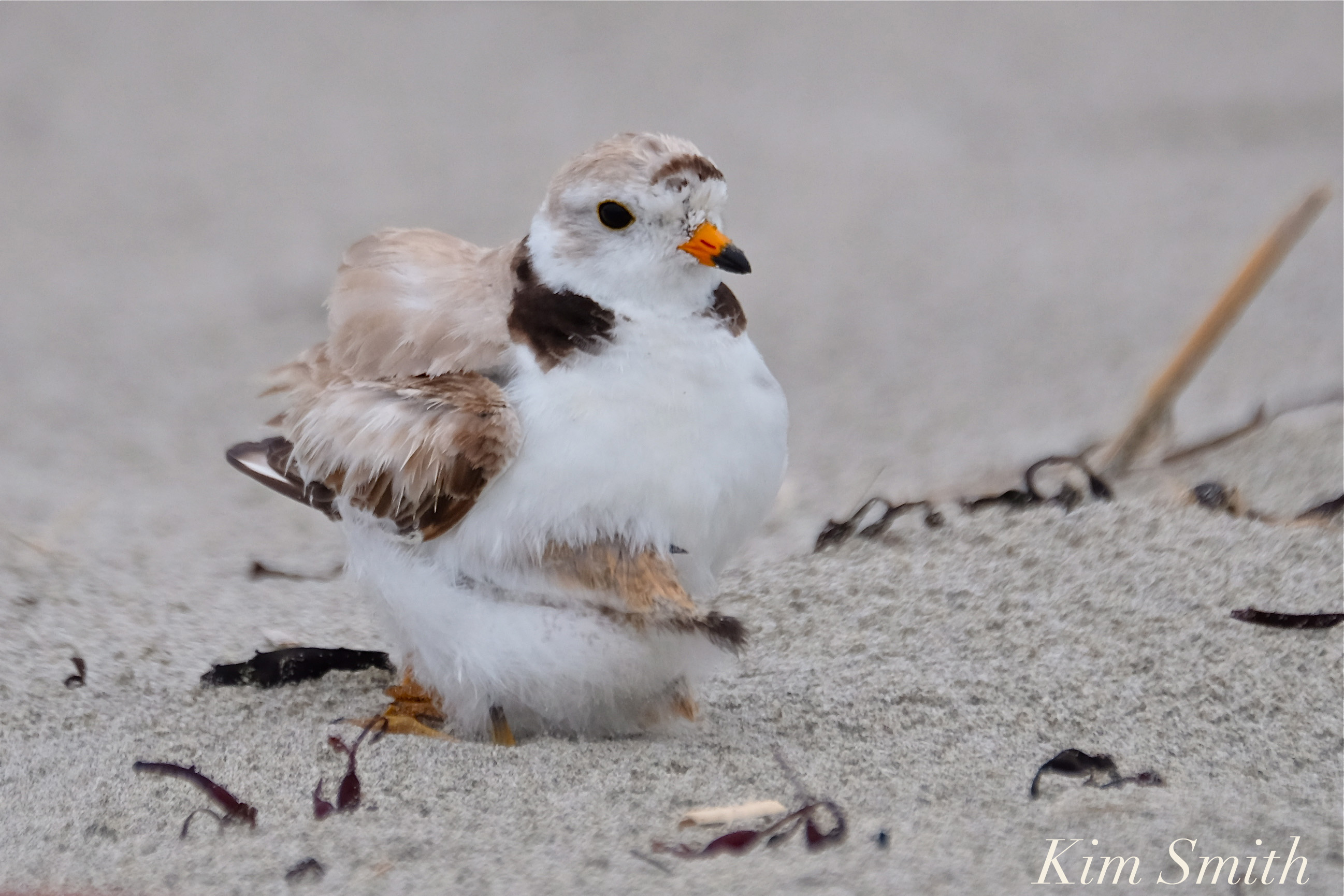
Despite the fact that he can’t exactly still fit under Papa and Mama, at twenty-three-days-old, Little Chick still needs snuggles to thermoregulate.

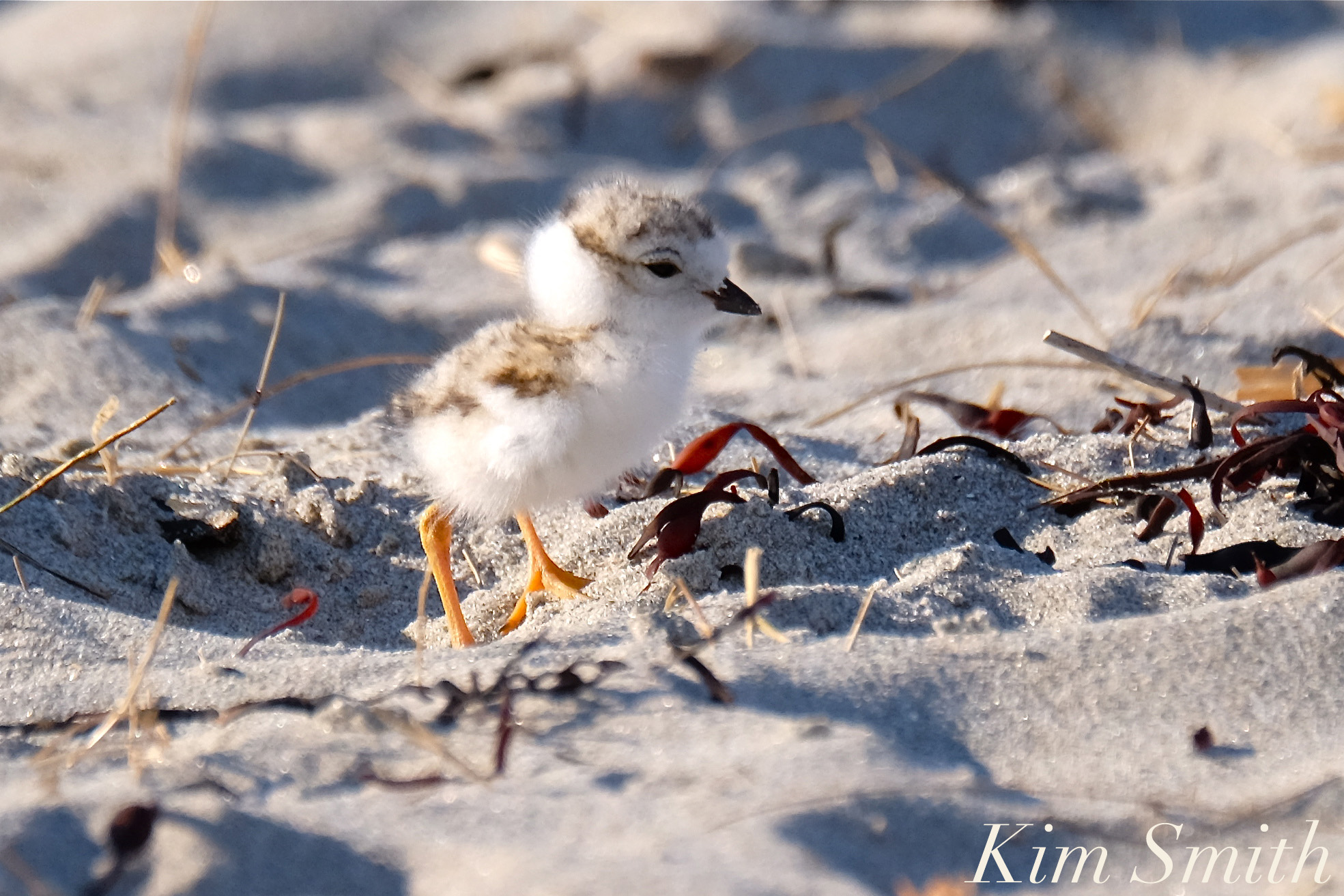
Note how large Little Chick’s beak is growing.

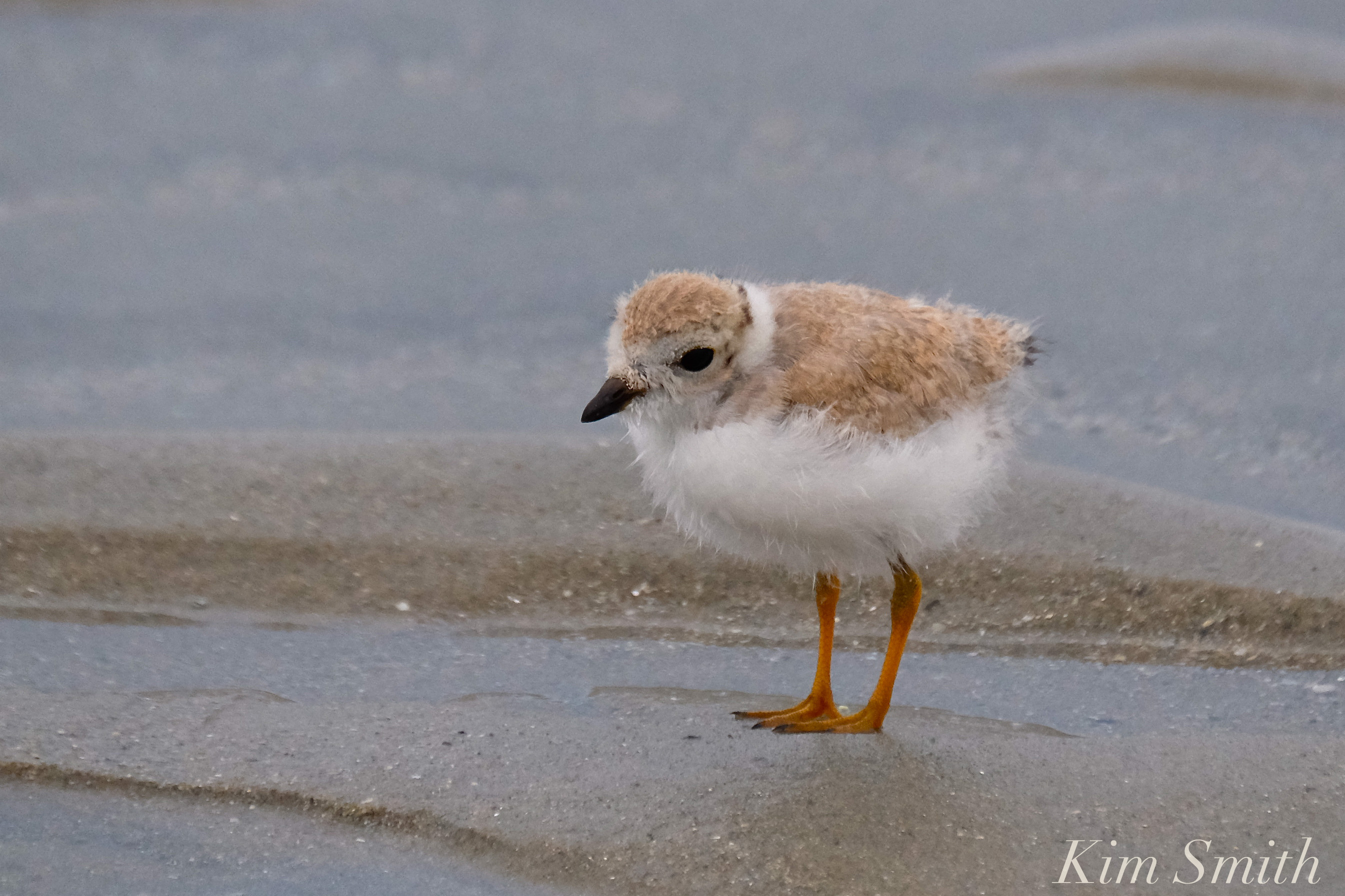
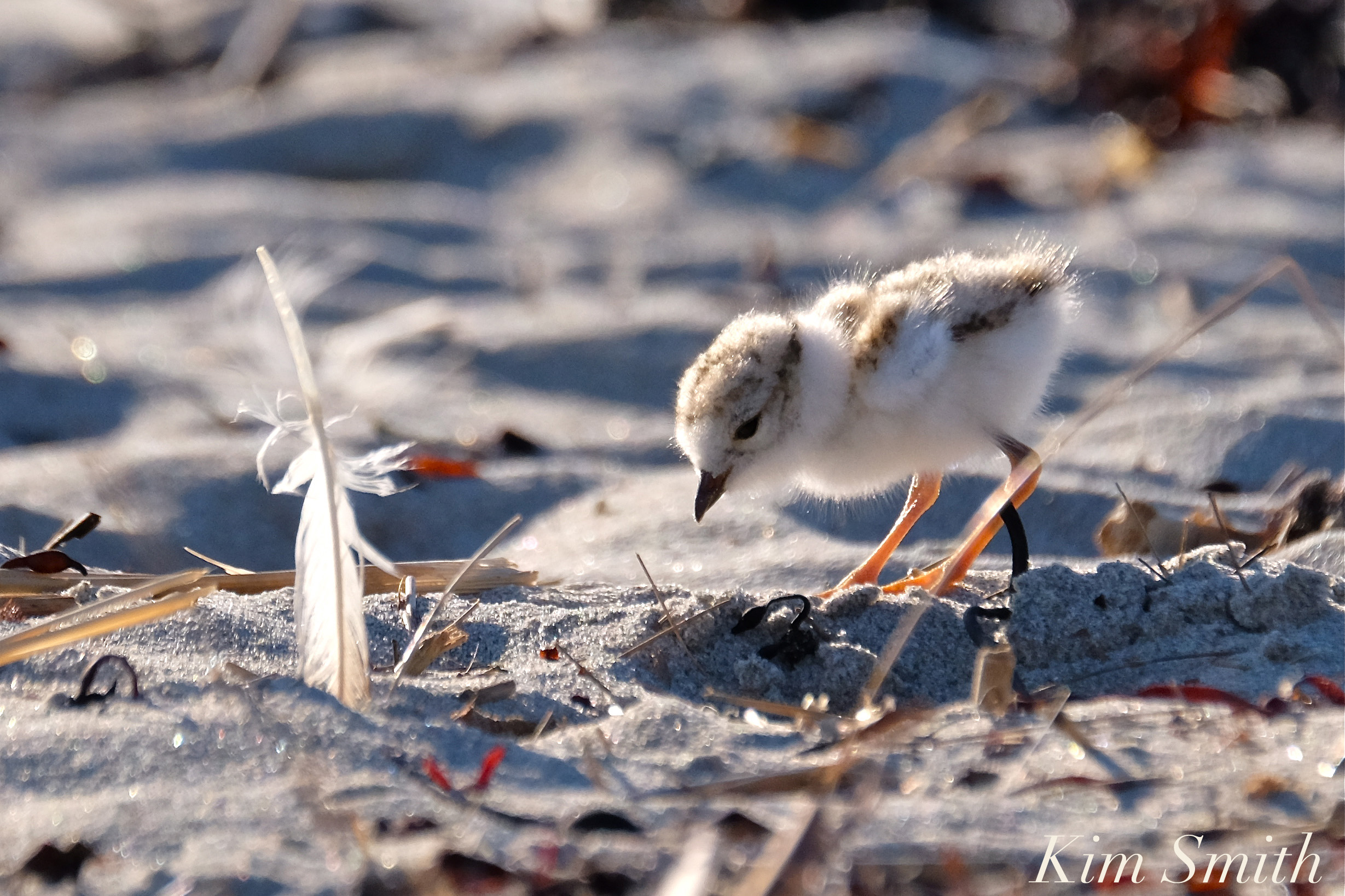
Twenty-three-day-old Piping Plover: Of the four Piping Plover chicks that hatched on the morning of June 22nd (the first hatched at about 6am, and all had hatched by noontime), our little chick is the sole survivor.

At 6:30 this morning another fight with the interloper took place. I was able to capture some of it on film and, surprisingly, a very similar battle took place later this morning between the Coffin’s Beach Piping Plovers.

The Good Harbor Beach dunes are teeming with life. I spied five Monarch Butterflies on the Common Milkweed this afternoon, with many reports shared by readers of Monarch sightings all around Cape Ann and Massachusetts. We’ll do a post about Monarchs this coming week, and in the meantime, please share your Monarch sightings.

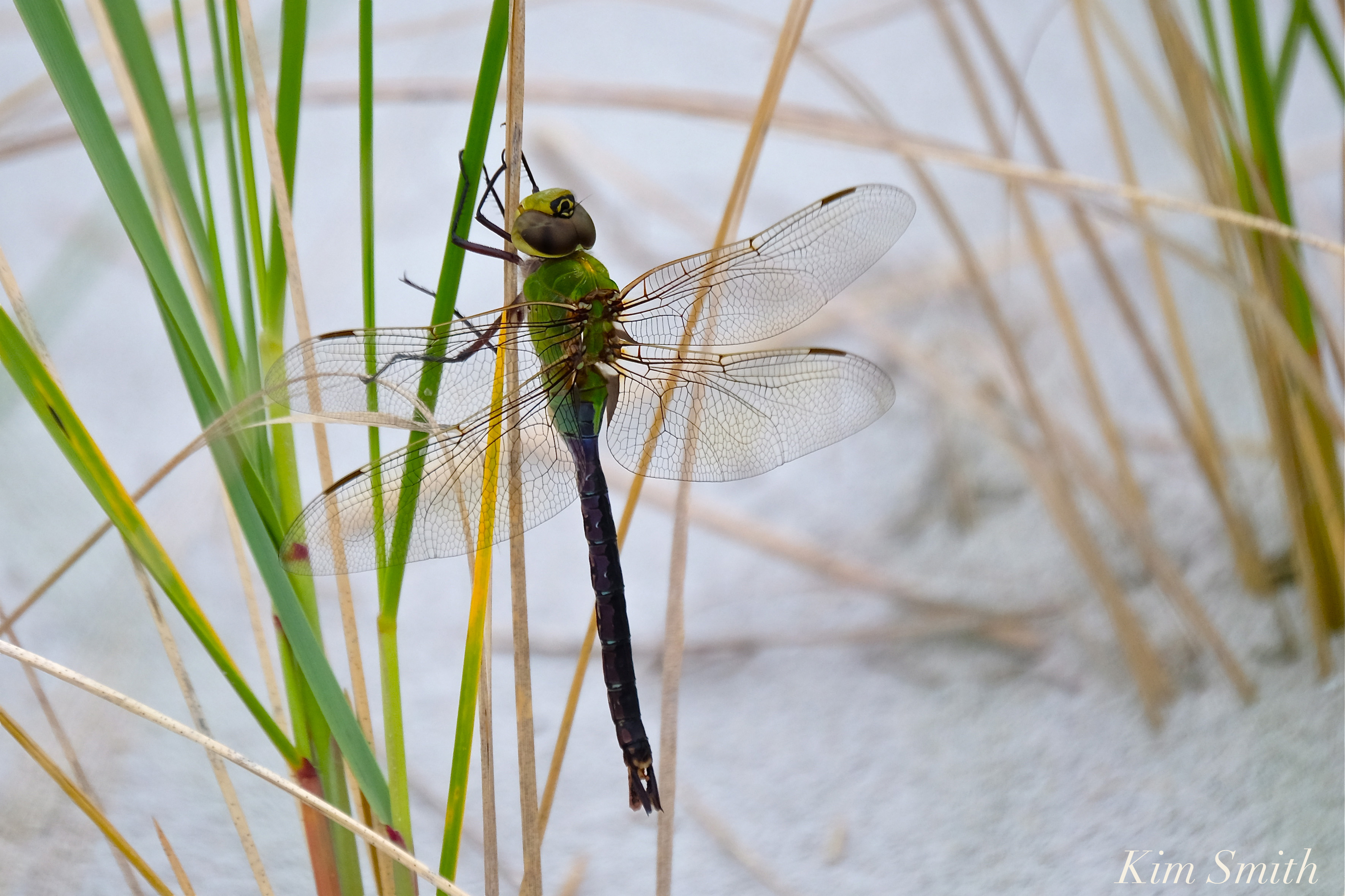
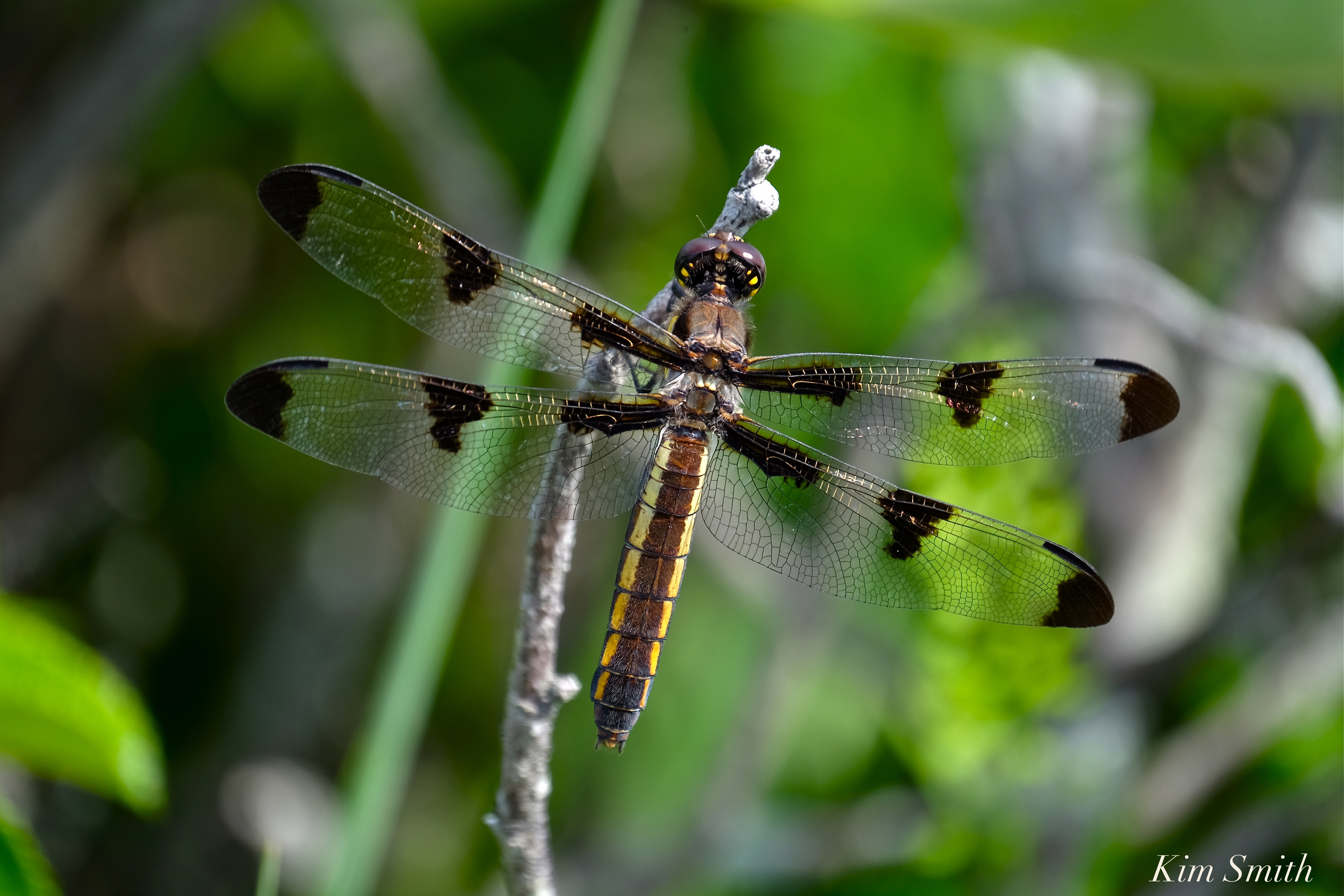
Dragonflies are predacious, and like our Piping Plover chick eat tiny invertebrates.

Green Darner Dragonfly and Twelve-spotted Skimmer lying in wait for insects.

Beach bunny munching wild salad greens for breakfast.

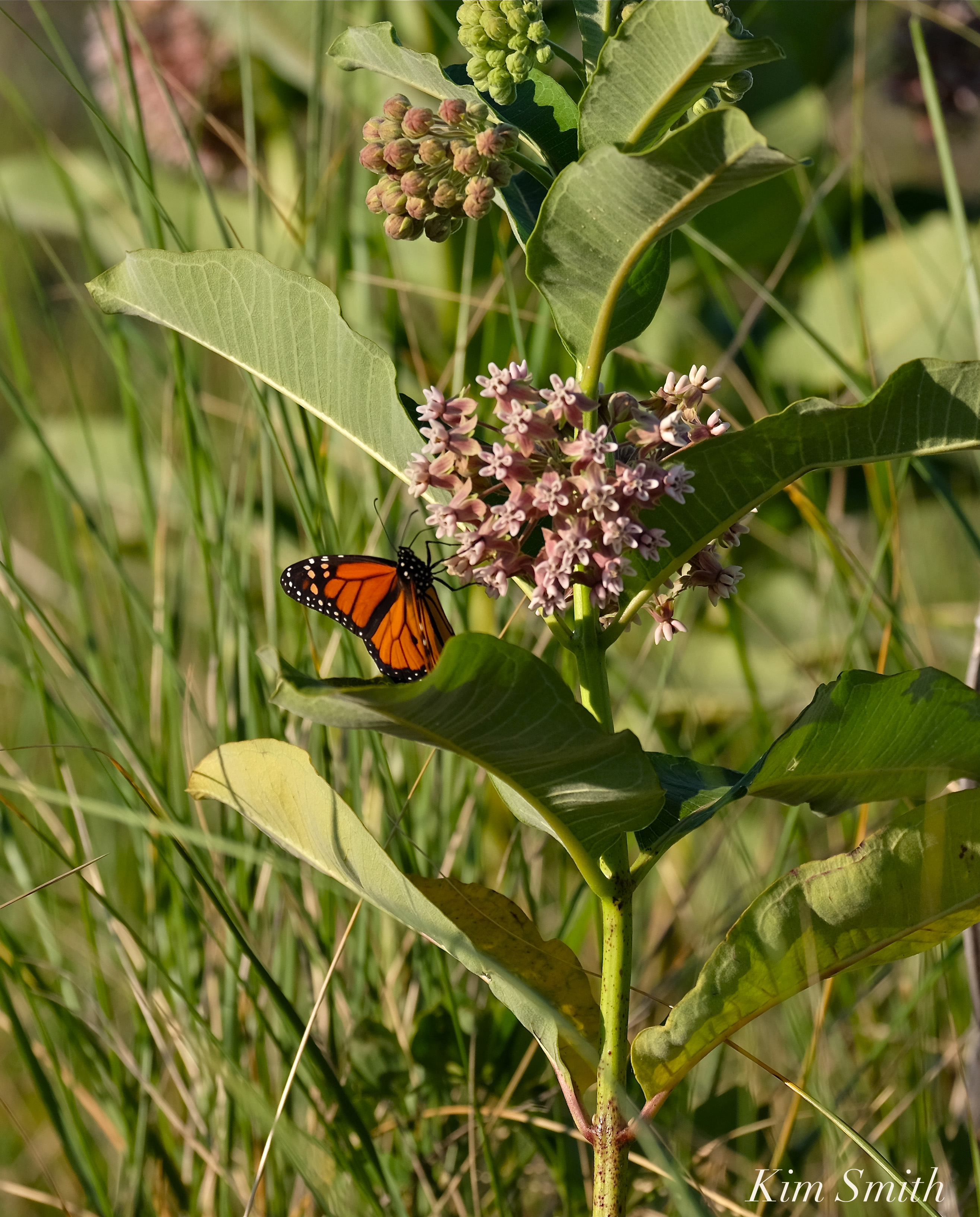
Monarch Butterfly and Common Milkweed, Good Harbor Beach

AWESOME VOLUNTEERS MONITORING THE PIPING PLOVER CHICKS AT GOOD HARBOR BEACH!

Day six, and all four Good Harbor Beach Piping Plovers are thriving! Their survival is in large part due to the efforts of Ken Whittaker, Dave Rimmer, and a growing assemblage of wonderful volunteers. If you would like to volunteer to take a shift babysitting the PiPl, please email Ken Whittaker at kwhittaker@gloucester-ma-gov. Ken is meeting groups on the beach to explain the protocol. The shifts are brief and it’s great fun to be at GHB as an ambassador for the Plovers while monitoring and answering questions.

https://www.instagram.com/p/BV44XOzF3s4/

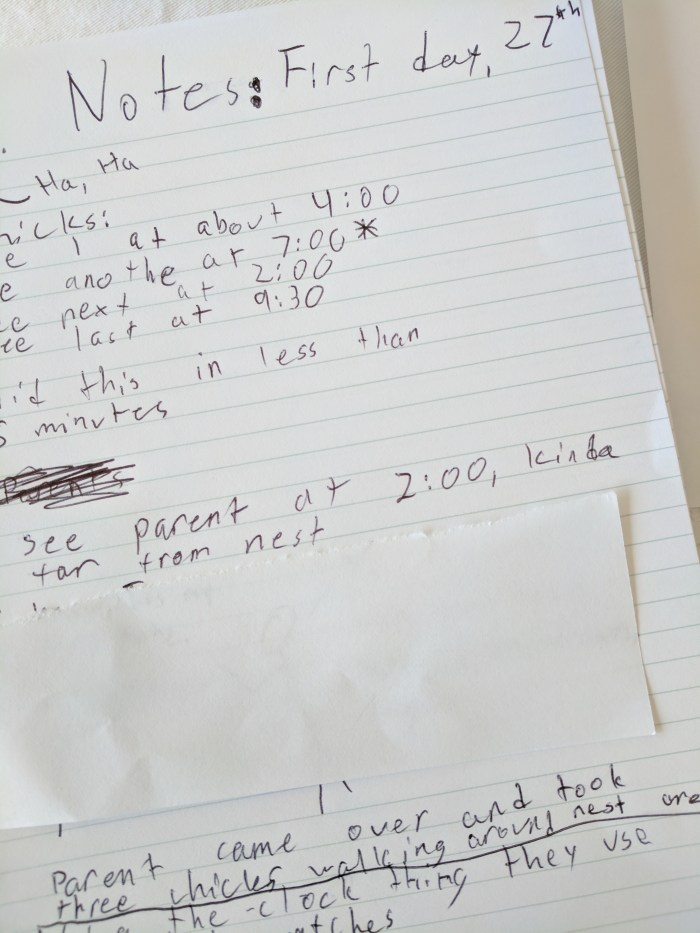
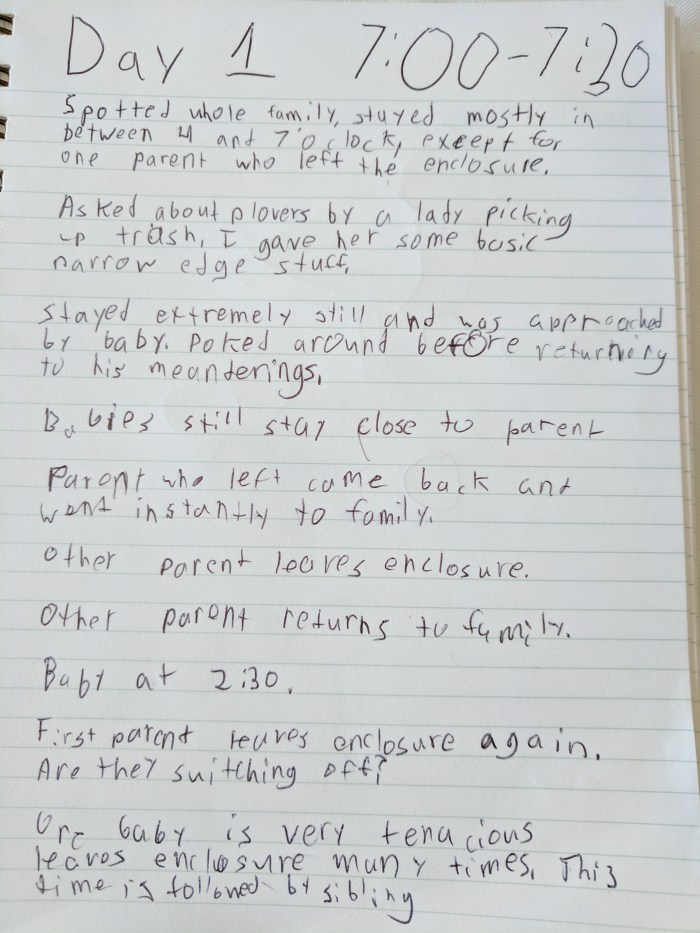
Catherine Ryan and her sons Charles and George King have the early morning shifts, from 6am to 7:30, and they are splitting it three ways, each taking a half hour. Piping Plover watchers are invited to take notes–here are one of the volunteers, Hazel’s, excellent notes:

“I was there from about 11.30 to 1 pm today June 26..

During that time I only saw one adult at a time, probably about once every 20 minutes, not doing much – preening, sitting on the sand, resting under a bush, moving around relatively slowly. I also saw one baby at a time moving about – except for the last 20 minutes when I saw 2, possibly 3, moving around at the same time (I had lent my binoculars to some interested bystanders so not sure of the number).

I spoke to 2 groups of young people playing with a ball and a frisbee – they were unaware of the plover nest and very agreeable to moving further away. One couple were seated very close to the rope, and also unaware of the plovers.  They said they would watch out for babies coming outside the enclosure, and later had been watching one of the babies moving around inside.

Two other groups were close to the enclosure and already aware. The second group arrived when two or three babies were moving around and excited to see them through binoculars.

I will be back tomorrow from 11 to 1 pm.

Hazel”

Loved reading the King brother’s notes. Great job Charles and George!!

https://www.instagram.com/p/BV45kMdlCg_/

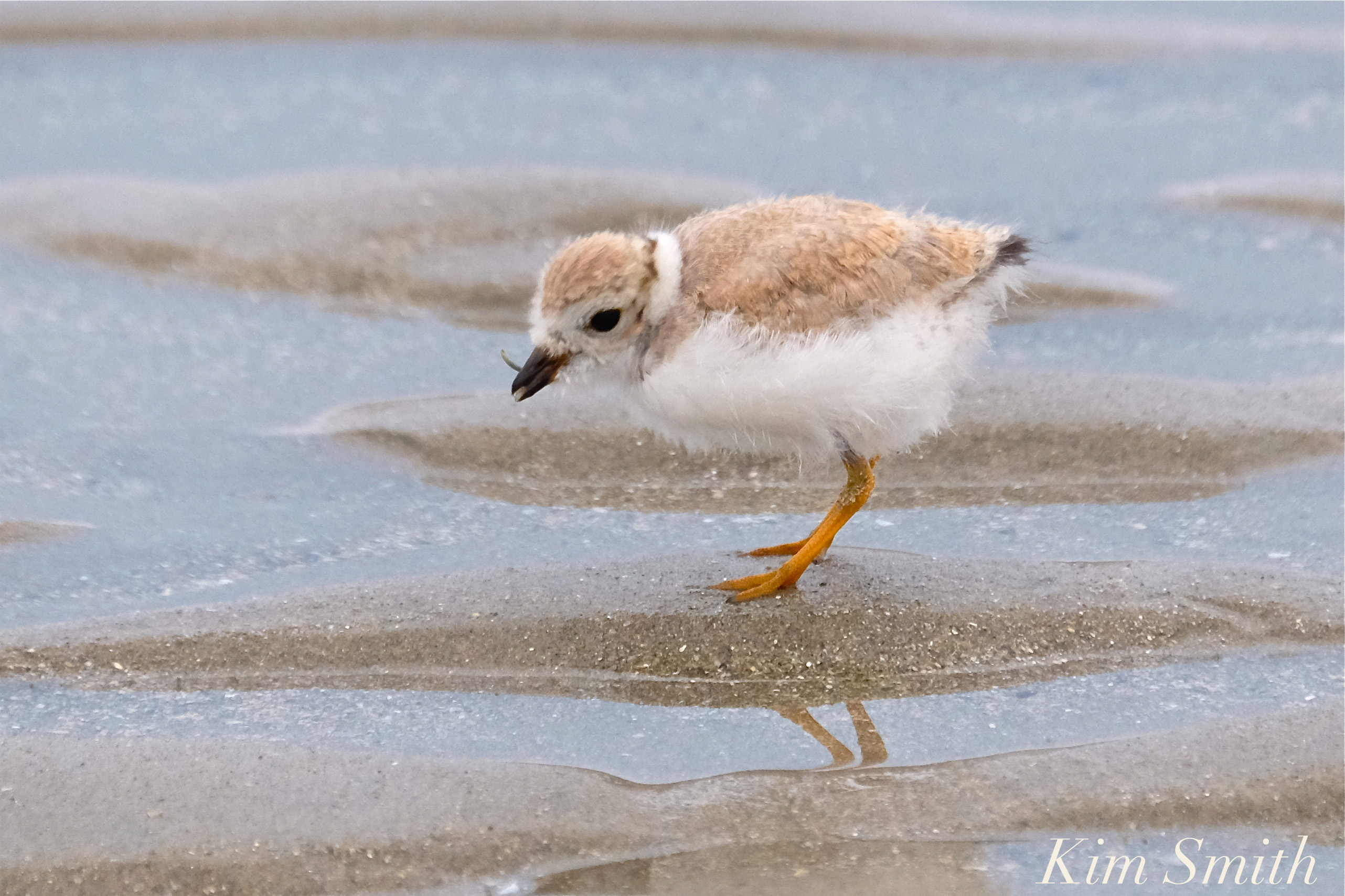
Five Day-Old Piping Plover Chick Foraging for Insects

While walking through the dunes on boardwalk 3 at Good Harbor on the way to volunteer, or simply to visit the PiPl, notice the Common Milkweed that is in full glorious bloom. You may catch a whiff of its wonderful honey-hay scent. And quite possibly, a Monarch sighting, or two!

Male Monarch Nectaring from Common Mikweed, Good Harbor Beach Dune

SHOUT OUT TO SHERMAN MORSS FOR SHARING GREAT ARTICLE ABOUT MONARCHS

Sherman Morss shares the following article from World Wildlife Magazine. He has a personal connection with Kevin Pourier, who participates in the Native American exhibits at the PEM. Check out Kevin’s gorgeous art and website here: Buffalo Horn Artforms. Thanks so much to Sherman!


Monarch Heroes: Across the Country People are Taking Action for Monarchs

KEVIN POURIER

In the Lakota language, plants and animals are known as Wamakaska—“Sacred Beings of the Earth”—and the Lakota People believe that these species came before us to teach humans how to live. For Oglala Lakota artist Kevin Pourier, no species has been more influential than the monarch butterfly. Pourier first became aware of the power and beauty of these insects during a traditional ceremony. The connection grew deeper when he saw a photo of Sitting Bull from the late 1800s, and noticed a monarch wing tucked into the famed Lakota leader’s hatband. Today, Pourier honors these iconic butterflies through his internationally renowned artwork. Using sustainably harvested bison horns, Pourier creates monarch-themed sculptures that both modernize a traditional Lakota art form and encourage others to cherish the monarch butterfly.

MARSHALL FIELD

Marshall Field became a conservationist the day he read Rachel Carson’s environmental clarion call,Silent Spring. The fifth-generation businessman and philanthropist joined WWF’s Board of Directors in 1973 and has been a stalwart champion of wildlife ever since. For years, Field focused on supporting efforts to save tigers, but his goals shifted when he heard of the rapidly disappearing monarch butterfly. He visited the insect population’s winter roosting grounds in Mexico, years before the population hit its 2013 nadir. “You had to yell to be heard over the sound of the butterflies beating their wings,” he recalls. The experience captivated him. “I think their migration is among the most mysterious natural phenomena there are,” says Field. “And if I’m interested in something, I’m going to get as many other people as I can interested, too.”

SISTER KATHLEEN STORMS

When Sister Kathleen Storms became director of the 200-acre Our Lady of the Prairie Retreat in Wheatland, Iowa, she saw few butterflies or bees on the grounds. Corn and soy crops covered the neighboring lands around the retreat; the region’s pollinator habitat was largely gone. Storms said she wanted to replant native flora, not only “for beauty, but also for the benefits they provide.” In fact, Our Lady of the Prairie has used the Conservation Reserve Program for the past two decades to secure natural spaces that make room “for quiet reflection.” Having grown up on a chemical-free dairy farm in Minnesota, Storms says she’s devoted to sustainable living, “to preserve this wonderful gift of creation, especially as we face climate change.”

READ MORE HERE

Monarch Butterflies Awakening in the Morning Light, Gloucester