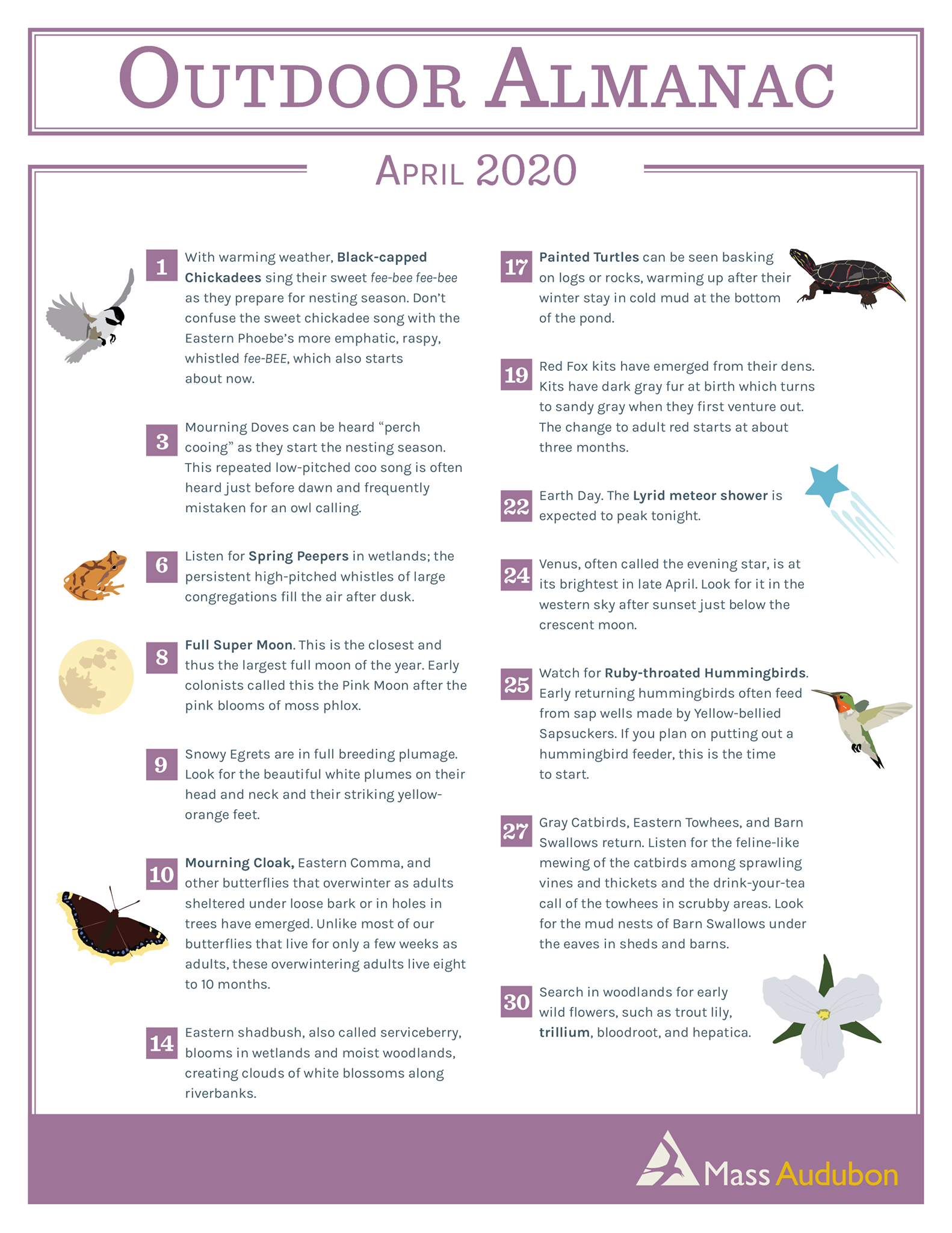
Love this poster from Mass Audubon!
Tag: Mass Audubon

TREMENDOUS COASTAL WATERBIRD CONSERVATION COOPERATORS MEETING!
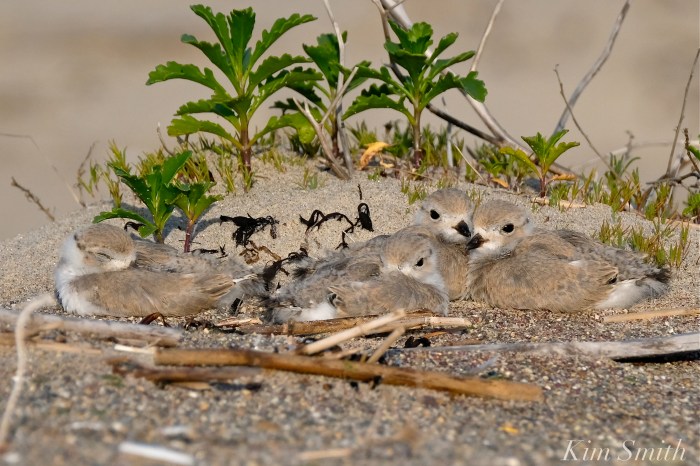
On Tuesday I attended the Coastal Waterbird Conservation Cooperators meeting, which took place at the Harwich Community Center on Cape Cod. The meeting is held annually to bring together people and organizations that are involved with population monitoring and conservation efforts on behalf of coastal waterbirds. Threatened and endangered species such as Least Terns, Piping Plovers, Roseate Terns, and American Oystercatchers are given the greatest attention.
I was invited by Carolyn Mostello, event organizer, to create a short film, Gloucester Plovers Go Swimming, for the “Strange and Unusual” section. The film features our three little chicks SWIMMING in the tidal creek (see next post). I also provided a group of photos of the late hatching chicks for DCR. The film and the photos were well-received, which was gratifying to me, to be of help in documenting and sharing these wonderful stories.


Conservationists from all seven Massachusetts coastal regions participated, as well as conservationists from nearby states, including representatives from Maine, Rhode Island, and New Hampshire. To name just some of the organizations presenting at the meeting-Mass Wildlife, Trustees of Reservations, Essex Greenbelt, Massachusetts Department of Conservation and Recreation (DCR), Mass Audubon, and US Fish and Wildlife.
In the morning, each region gave the 2019 population census report for nesting birds as well as providing information about problems and solutions. We all share similar challenges with predation from crows and gulls, uncontrolled dogs, enforcement, and habitat loss and it was very interesting to learn about how neighboring communities are managing problems and issues.
Trustees of Reservations Coastal Ecologist Jeff Denoncour presented on behalf of the north of Boston region, of which Gloucester is a part. Essex Greenbelt’s Director of Land Stewardship Dave Rimmer and intern Fionna were in attendance as well. Both Crane Beach and Parker River are having a fantastic year and the numbers are up across Massachusetts, Maine, and Rhode Island. There are still many young chicks yet to fledge on Massachusetts beaches so the final count has not been determined.
The afternoon session was filled with outstanding lectures presented by conservation biologists and all the programs were tremendously informative.
I met Beth Howard from Mass Audubon, who has been involved with care taking the L Street Piping Plovers and Paige Hebert from Mass Wildlife who has been helping manage Roseate Terns. The DCR staff managing the shorebirds at Nahant, Salisbury, Winthrop, and Revere Beach were all there and they are just a stellar group of young people.
It was a great day! Many attendees expressed congratulations for Gloucester fledging three chicks. Last year after attending the meeting I wrote the following and it’s wonderful that our hope for Gloucester’s Plovers was realized this year: “After attending the cooperators meeting, I am more hopeful than ever that our community can come together and solve the problems that are preventing our PiPl from successfully nesting and fledging chicks. What we have going in our favor is the sheer number of amazing super volunteers along with strong community-wide support.”
Spread The GMG Love By Sharing With These Buttons:

GLOUCESTER’S “PIPING PLOVER PLAN” REVIEWED BY KEN WHITTAKER AND MEET ADRIENNE LENNON, GLOUCESTER’S NEW CONSERVATION AGENT!
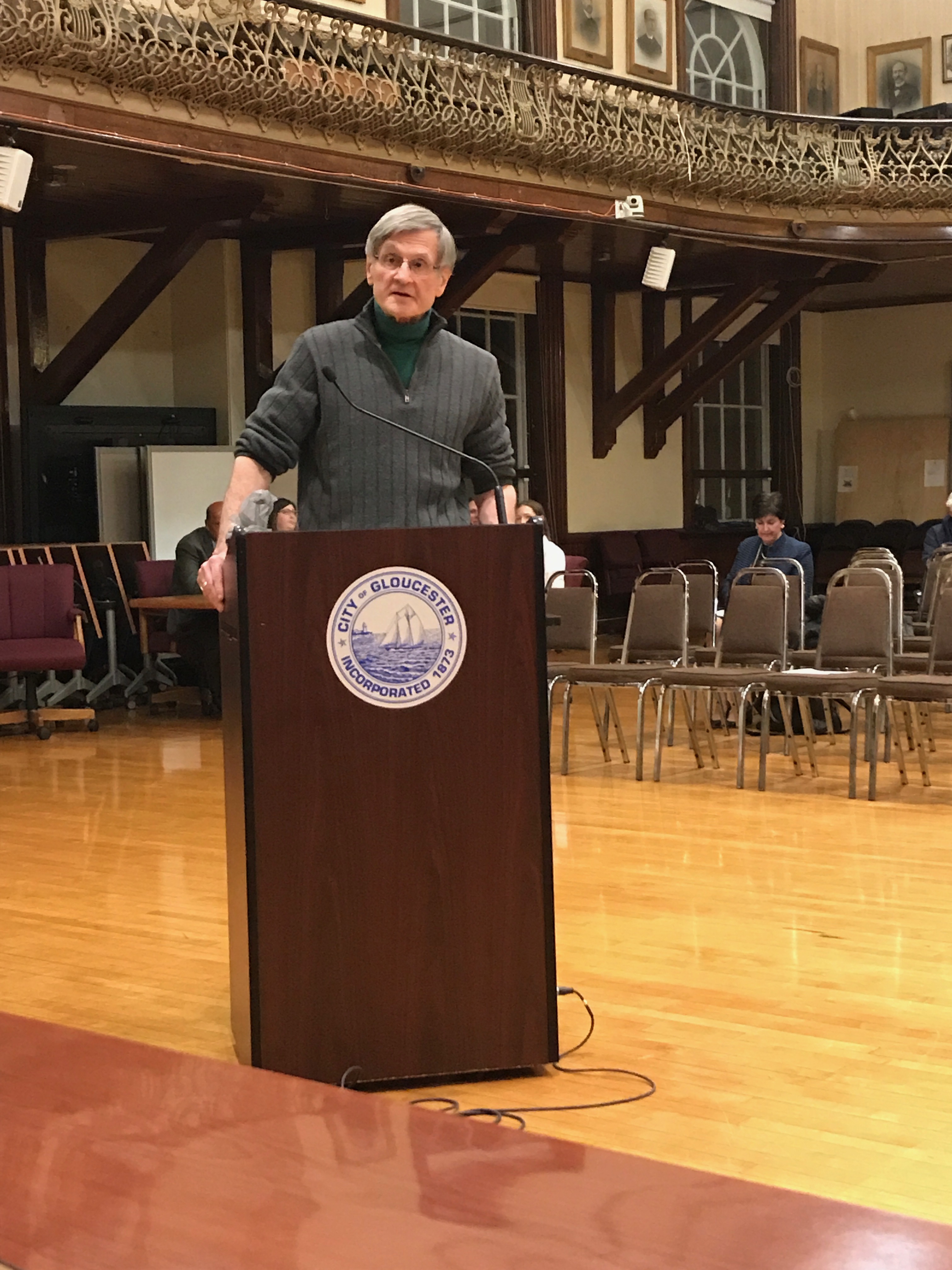 Last evening at the City Council meeting, former Gloucester conservation agent Ken Whittaker reviewed the City’s 3PPlan (Piping Plover Plan) with the Councilors.
We Piping Plover volunteer monitors are grateful for the time and effort Ken has put forth in helping to protect our threatened Piping Plovers. We’re especially appreciative of the time he spent coordinating the volunteer monitors–not an easy task! We wish Ken all the best in his retirement.
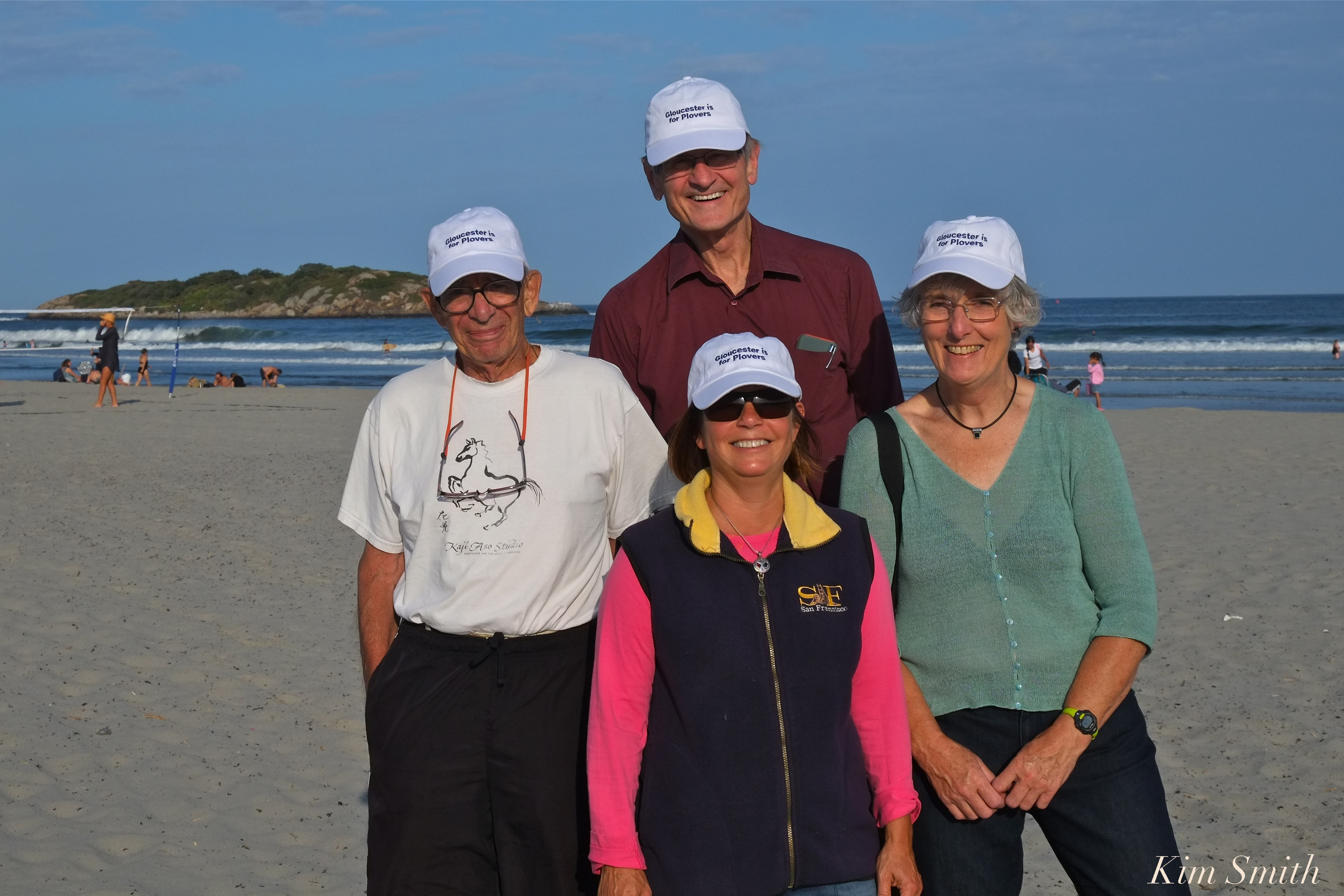 Ken and PiPl Volunteer Monitors, Good Harbor Beach
Ken and Jim Destino introduced Adrienne Lennon, Gloucester’s new conservation agent. We had a few minutes after the introduction to speak with Adrienne. Her experience includes working for seven years at Mass Audubon’s Joppa Flats Education Center, located in Ipswich on the Plum Island causeway, adjacent to the infamous Pink House. While there, Adrienne gained extensive knowledge in Piping Plover conservation. She is especially interested in preserving and protecting our beach dunes. Adrienne can be reached at alennon@gloucester-ma.gov.
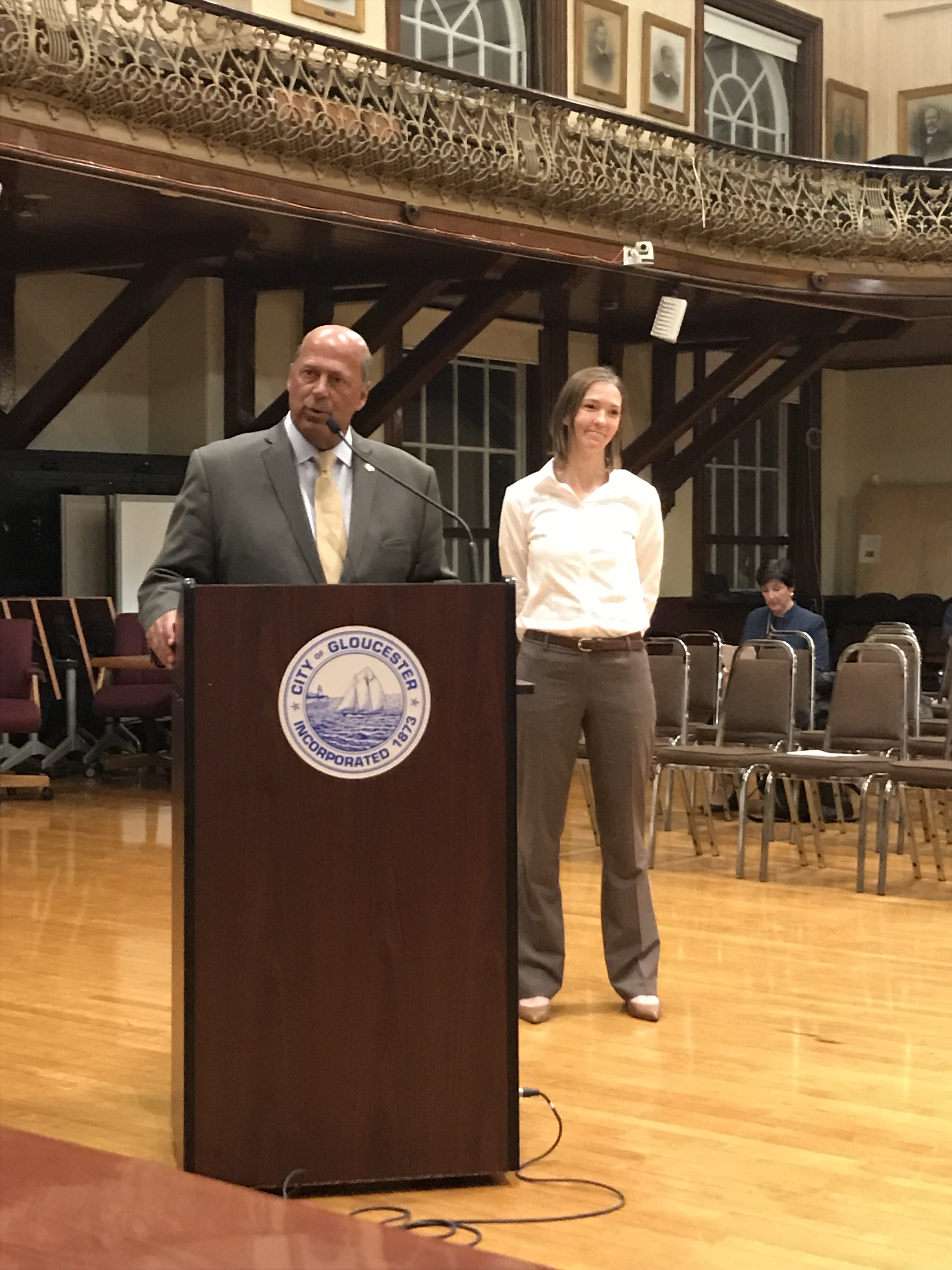
Best of success to Adrienne in her new position as Gloucester’s Conservation Agent!
Photos of Ken and Adrienne at City Hall courtesy of City Council Vice President Steve LeBlanc
During Piping Plover nesting season, I have visited the public beach at the northern end of Plum Island, Newbury Beach. I believe the PiPl nesting areas at Newbury Beach are monitored by Mass Audubon’s Joppa Flats Education Center. Newbury Beach is similar in several ways to Good Harbor Beach in that it is a popular town beach in a residential area with many access points and nearby hotels. Last year the beach and dunes were extremely hard hit by late winter storms, just as was Good Harbor Beach.
About Joppa Flats Education Center: Overlooking the Merrimack River and near the entrance to Parker River National Wildlife Refuge, the Joppa Flats Education Center offers unique educational opportunities for people of all ages. Here, you can explore the region’s wildlife-rich habitats (salt marshes, mudflats, rivers, bays, and coastal waters) through guided tours, marine touch tanks, art exhibits, drop-in programs, and interpretive displays.


Scenes from behind the Joppa Flats Education Center and Plum Island causeway.

Councilors Steve LeBlanc and Melissa Cox wearing Piping Plover monitor hats provided by Ken Whittaker.

Coffins Beach and Wingaersheek Beach are going to be more closely monitored this year for Piping Plovers. The above photo is from 2016 when NINE chicks fledged at Coffins Beach!
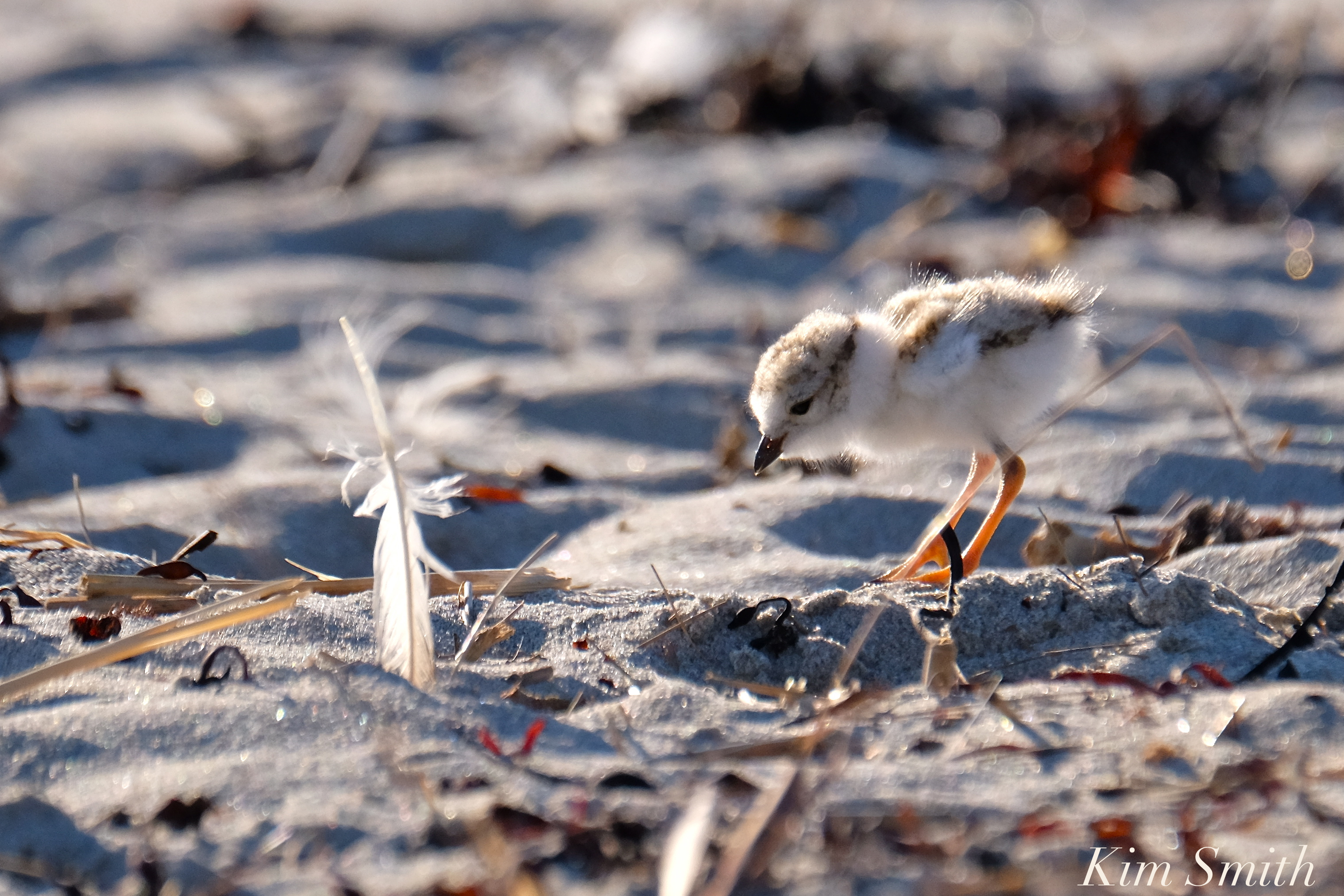
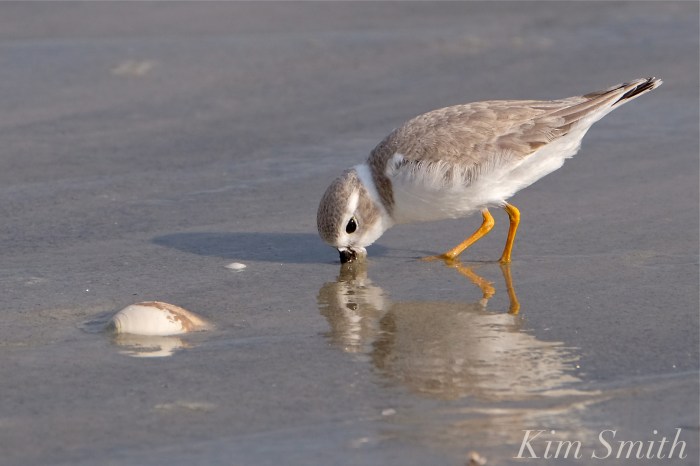
Three-day-old Piping Plover Chick, Good Harbor Beach
Spread The GMG Love By Sharing With These Buttons:

Mass Audubon: A Good Year for Monarchs?
The following post was shared by my sweet friend and GMG reader Lois. Thank you so much Lois!
During the last week of August, Regional Scientist Robert Buchsbaum and several Mass Audubon naturalists and scientists took a field trip to Conway Hills Wildlife Sanctuary just west of the Connecticut River in Conway, MA. While there, they were pleasantly surprised by what they saw. Here’s Robert’s report:
“The initial goal of our exploration was to document the odonates (dragonflies and damselflies) that are present at this sanctuary. Conway Hills is a relatively new sanctuary for Mass Audubon so our records of species that occur there is still a work in progress.
While rambling through a big field in the center of the sanctuary, we couldn’t help but notice the large number of monarch butterfly caterpillars that were feasting on the milkweed plants in the field. Just about every one of the Common Milkweed (Asclepias syriaca) plants had a Monarch caterpillar on it, busily chewing on leaves.
This was very heartening to all of us, given how scarce Monarch butterflies were last summer and the overall concern about the future of this stunning butterfly.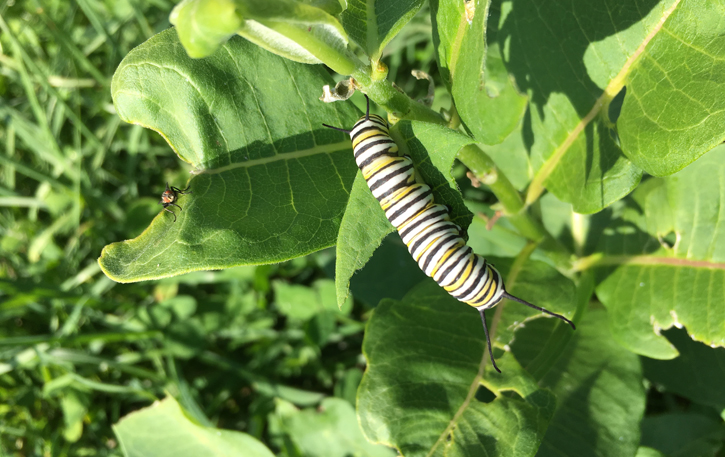

 Good Morning Gloucester