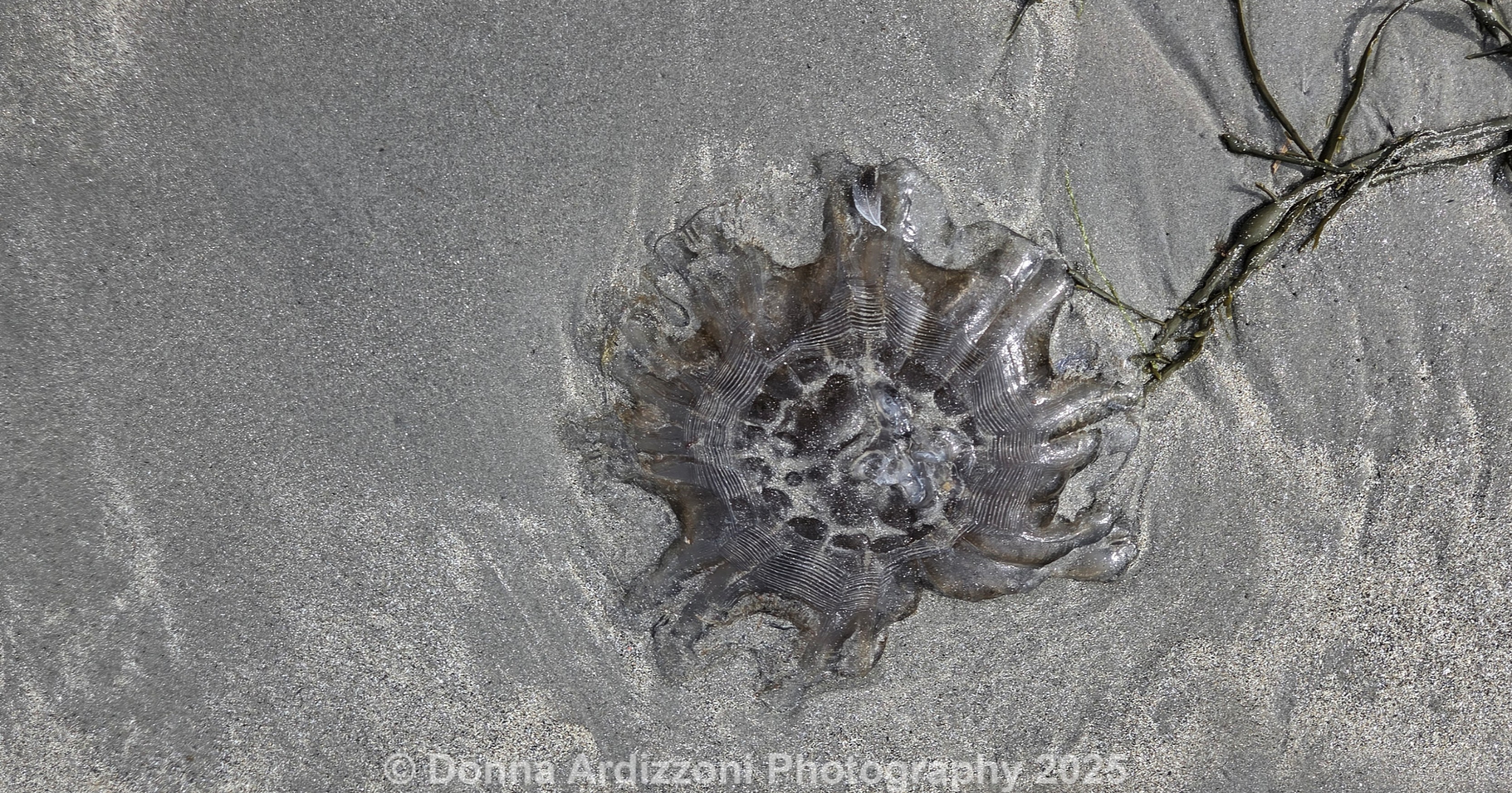
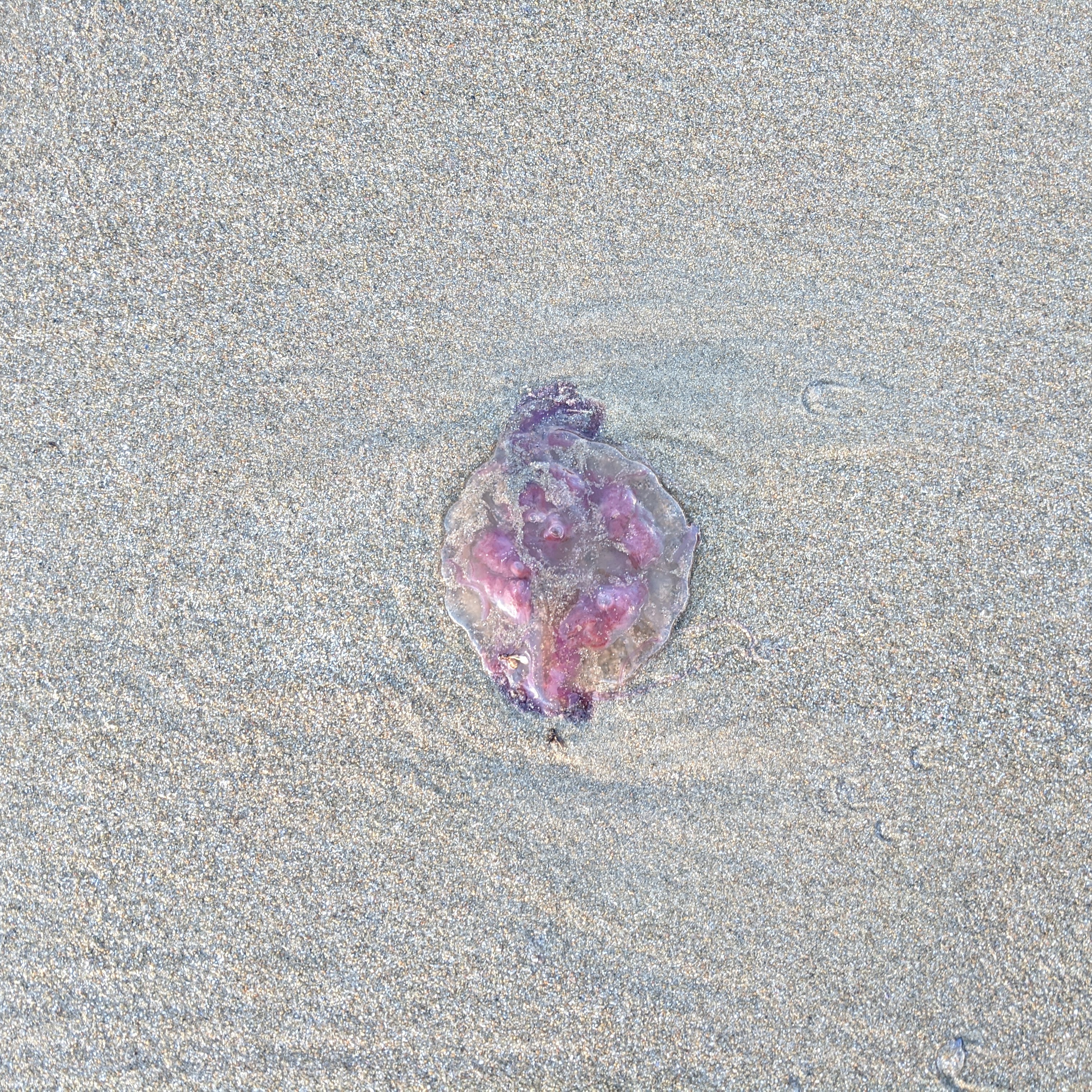
Lion’s Mane Jelley Fish on Magnolia Beach

Walking the beach noticed many lion’s mane jelly fish.  They can sting be careful.


Reblogged from Wipeakia

The lion’s mane jellyfish (Cyanea capillata) is one of the largest known species of jellyfish. Its range is confined to cold, boreal waters of the Arctic, northern Atlantic, and northern Pacific Oceans. It is common in the English ChannelIrish SeaNorth Sea, and in western Scandinavian waters south to Kattegat and Øresund. It may also drift into the southwestern part of the Baltic Sea (where it cannot breed due to the low salinity). Similar jellyfish – which may be the same species – are known to inhabit seas near Australia and New Zealand. The largest recorded specimen was measured off the coast of Massachusetts in 1865 and had a bell with a diameter of 210 centimetres (7 feet) and tentacles around 36.6 m (120 ft) long.[2] Lion’s mane jellyfish have been observed below 42°N latitude for some time in the larger bays of the East Coast of the United States.

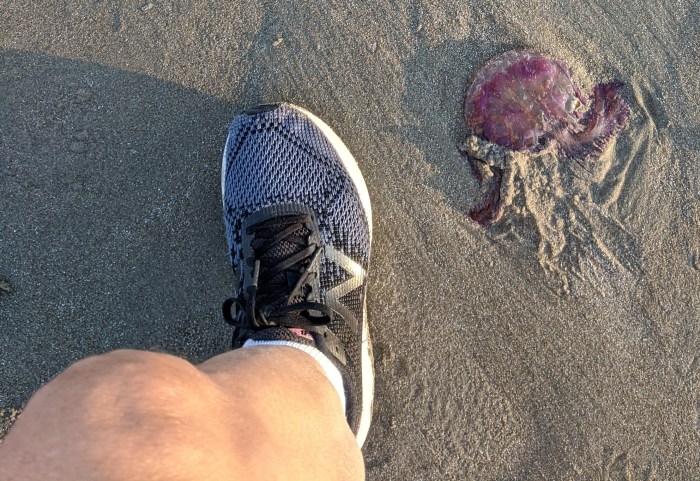
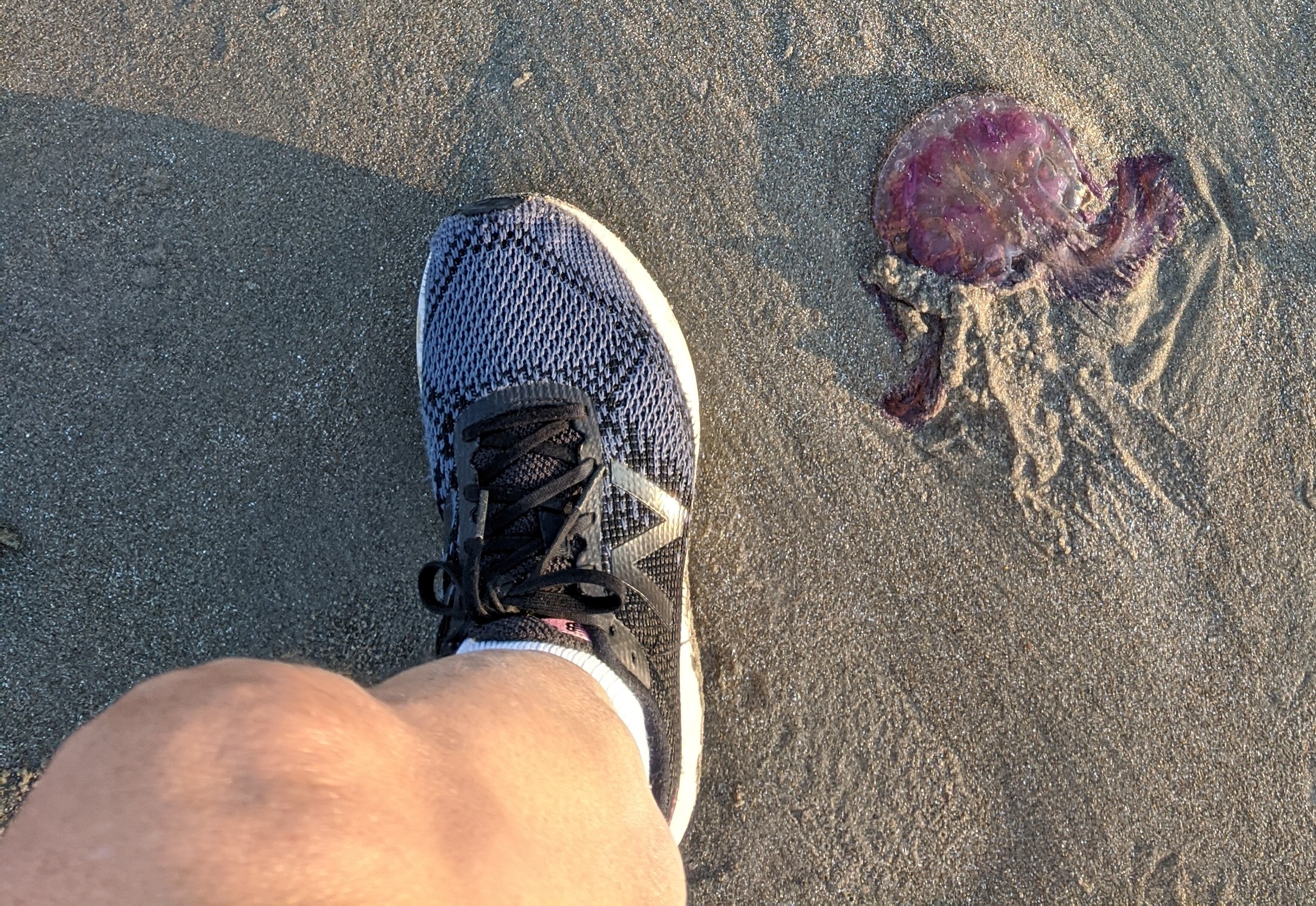
NEW BALANCE SNEAKER AND THE MYSTERY JELLYFISH LONG BEACH #ROCKPORTma #gLOUCESTERma

SCALE – New Balance sneaker size 8 (shout out to New Balance, fan of Gloucester) vs. grape magenta jellyfish beached

I’m adding a couple of photos to the great question about the mystery jellyfish Joey posted thanks to a GMG reader.

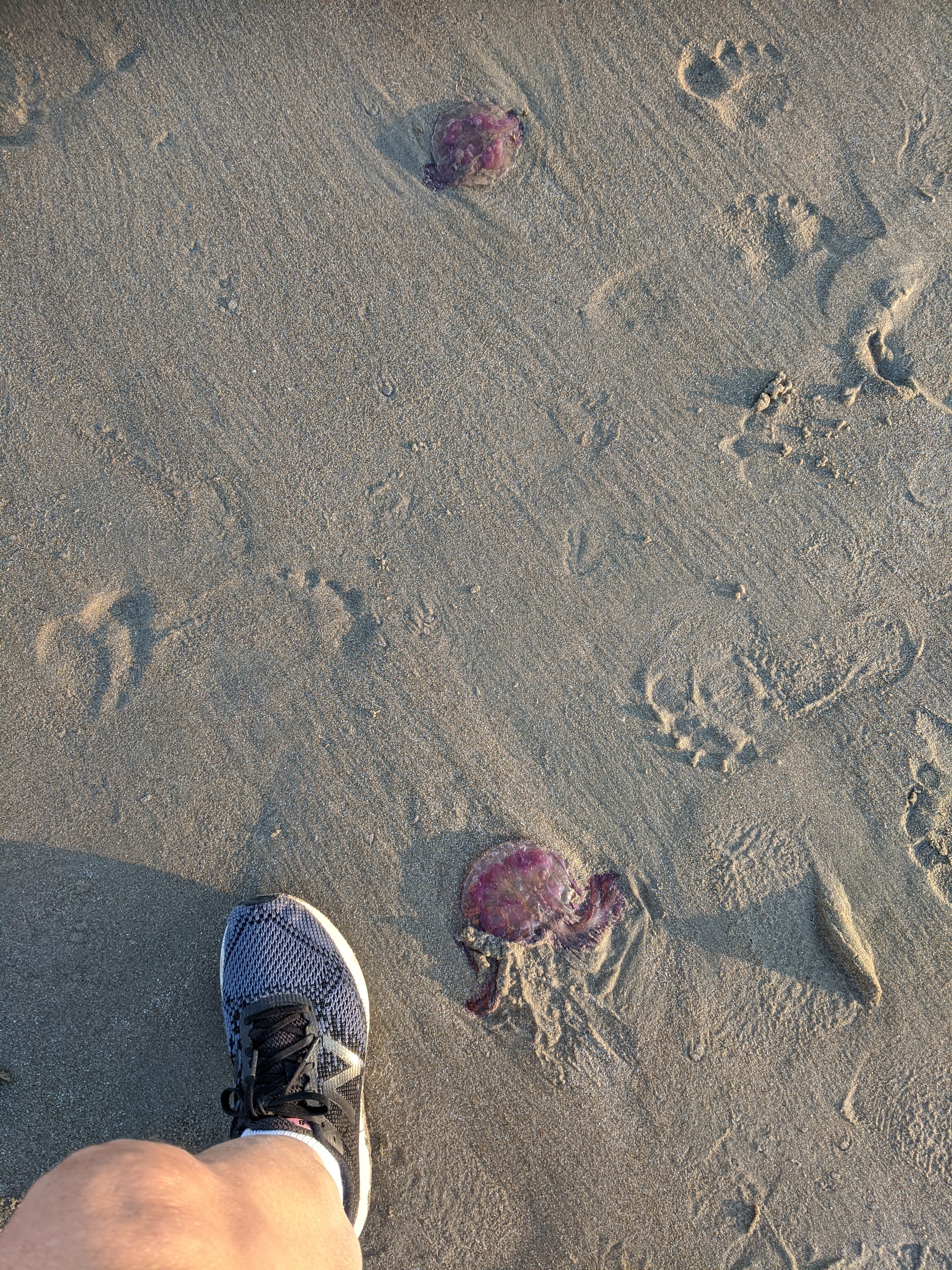
I saw them that same day on Long Beach, September 6, 2021. I only saw seven, and one was a piece rather than whole, so I can’t confirm hundreds were there.

The one in the photo with the sneaker was the largest I observed. They were hard to miss. Four were in proximity at that spot. On the other side of the beach, one group of kids scooped up a sample with a sand shovel, running back to the furthest Gloucester end to show their parents.

The two times I’ve seen lions mane on any beach, I was wrong. If these were lion’s mane this will be the third time they’ve looked like a different jellyfish to me. The beached jellyfish on Long Beach this week looked a bit like pictures I’ve seen of mauve stingers.

Everyone has been remarking how warm the water’s been, and these deposits followed Hurricane Ida. Storms bring in unusual gifts from the sea.

Looking forward to a marine educator helping us learn more!