Another Snowy Owl sighting, this submitted by Kim Bertolino in East Gloucester. Thanks so much to Kim for sharing her beautiful photo!

We were talking about Snowy Owls and lemmings in Sunday’s podcast when questions about where lemmings live and what do they look like came up. Lemmings are a small rodent that comprise the bulk of the Snowy Owl’s diet in their northern breeding grounds, the Arctic tundra. They are about 3 to 6 inches long with silky fur and short tales, and are closely related to voles and muskrats. The Snowy eats between three to five lemmings per day in the tundra! Read more about lemmings here.
Although we can’t offer the Snowies a diet of lemmings, we do have lots of mice and rats readily available to hunt during the winter months. Cape Ann’s open shoreline, of beaches, dunes, and rocky outcroppings, are a somewhat similar terrain to that of the tree-less tundra. Snowies are diurnal; they have evolved to hunt during the day and night because in the tundra during their breeding season the hours of daylight are continuous. A Snowy couldn’t survive in the Arctic if it could only hunt during night time like most other species of owls.
The following BBC article about lemmings is super interesting and well worth reading: The Truth About Norwegian Lemmings
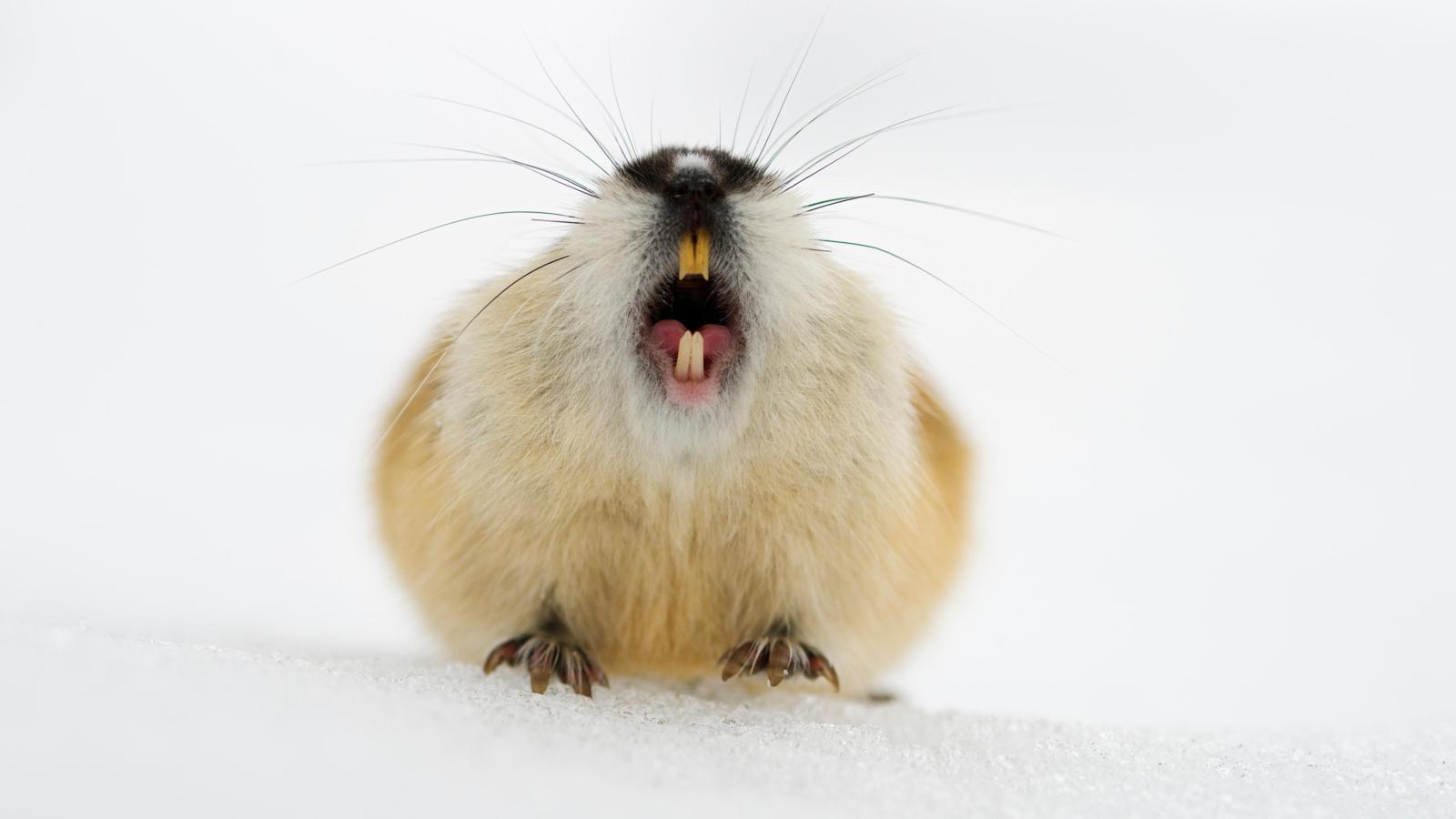
Photo Credit: Nature Picture Library / Alamy

Adult male Snowy Owl delivering a lemming to a female on the nest. The female is feeding a chick. Bathurst Island, Nunavut, Canada. JuneGerrit Vyn Photography


 Good Morning Gloucester