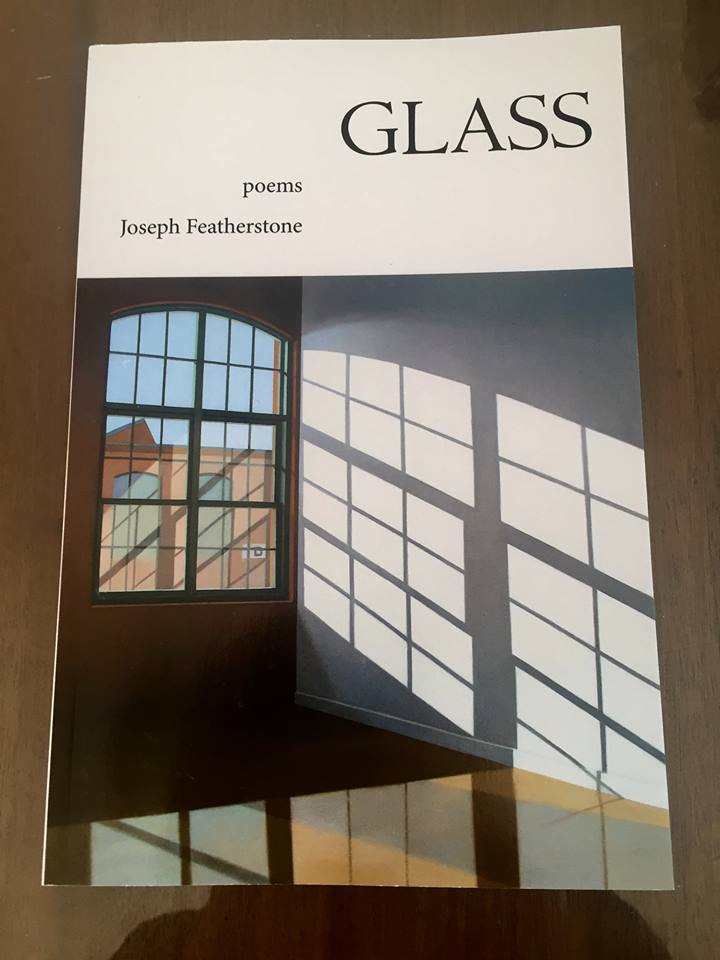
My friend Jay Featherstone will be reading from his new book of poems Glass at the Gloucester Writers’ Center on May 15th at 7pm. You can order Glass from fenwaypress.com, or from his website, jayfeatherstone.com, which has some sample poems and the beginning of a schedule of readings. Or ask a local bookstore to carry this book from an independent press.
Jay wrote another beautiful book about poems awhile back that you may be familiar with, Brace’s Cove, which is also available to purchase on his website
Spread The GMG Love By Sharing With These Buttons:
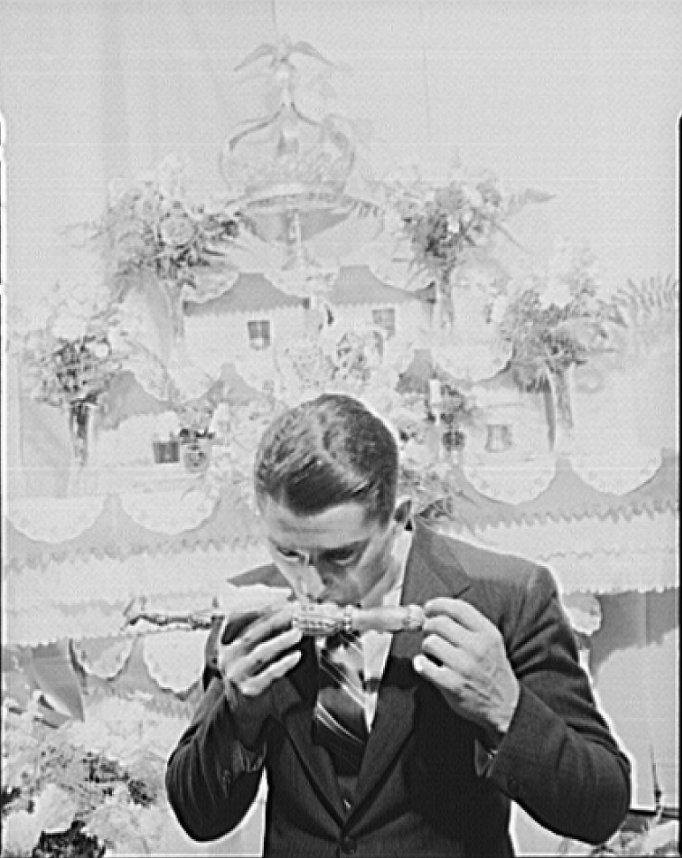
Gordon Parks, “Gloucester, MA. Frank Domingos kissing a vessel representing remains of a saint, during ceremonies at his father’s home…” Library of Congress
full title for the Gordon Parks photograph above: “Frank Domingos kissing a vessel representing remains of a saint, during ceremonies at his father’s home, part of the tri-annual fiesta of Pentacost. The celebration–including the chosing of an Imperator, and visiting, eating, drinking, and worship in the home, culminates in a parade and blessing by the priest–originated with ancient Portugeese fisherman, drought-stricken, who prayed for assistance and received it.”
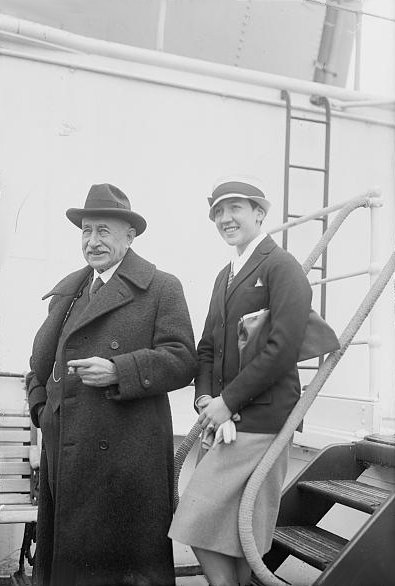
John Hays Hammond with daughter, Natalie Hays Hammond. collection Library of Congress
Captain’s Courageous was published in 1897. “During the winter of 1897-98 I made another trip to South Africa, and on the same boat with me were Rudyard Kipling (Rudyard was named after a place where his father and mother first met), his wife, and his father, Lockwood Kipling, the artist. They proved excellent traveling companions and we have maintained our friendly contact ever sense.” – John Hays Hammond
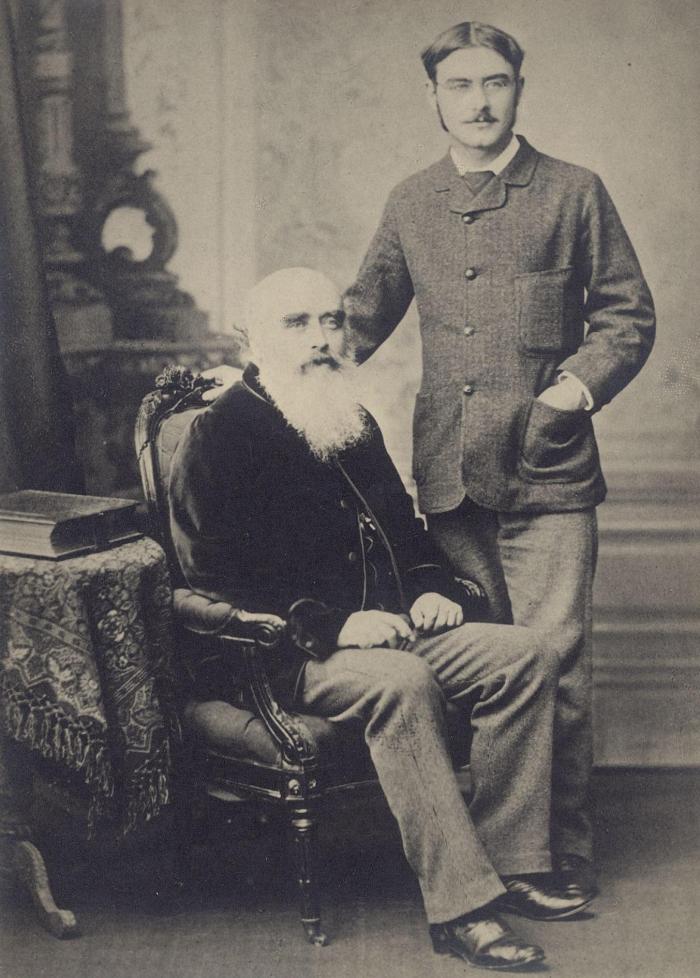
John Lockwood Kipling and Rudyard Kipling
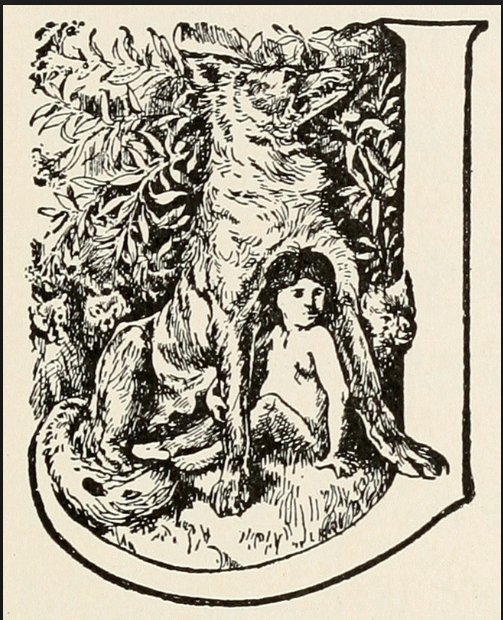
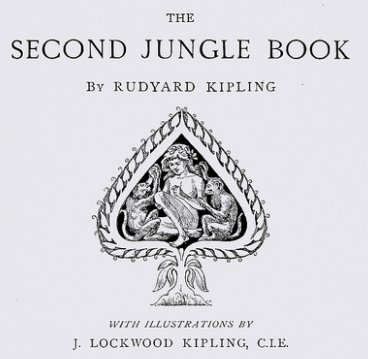
The Kiplings collaborated: the artist John Lockwood Kipling illustrated many of his sons’ books.
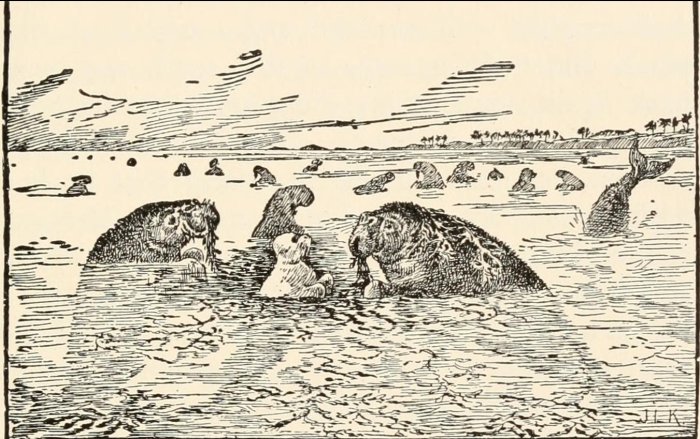
John Lockwood Kipling, The White Seal
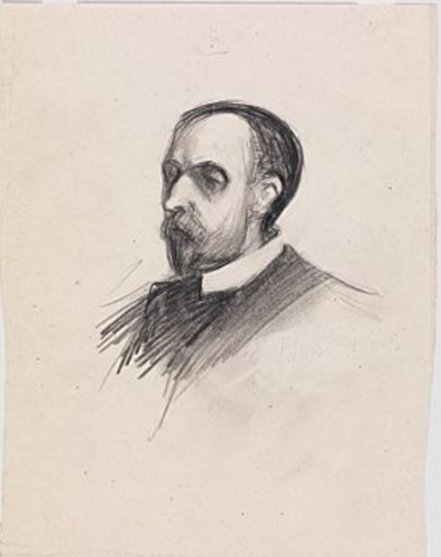
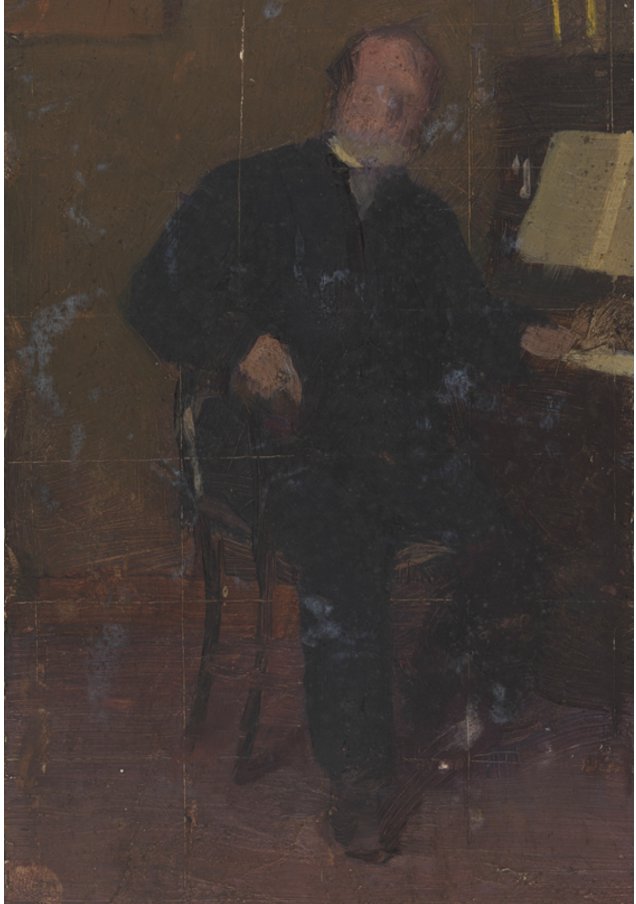
Cecilia Beaux, portrait sketch of William Foster Biddle, Pennsylvania Academy Fine Art, gift of Sandwith Drinker (Biddle like a father to Cecilia)
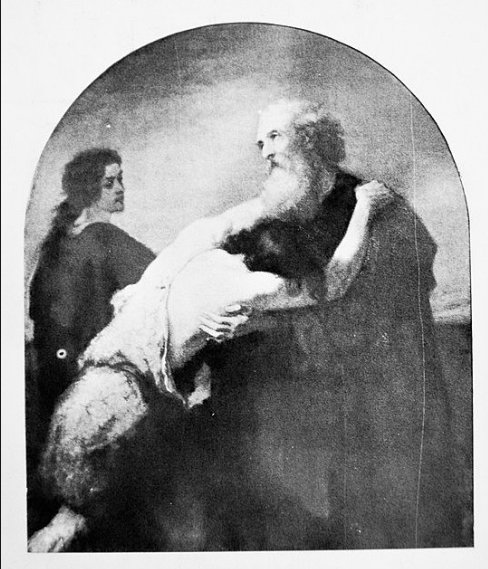
William Morris Hunt, Prodigal Son, Brattleboro Library
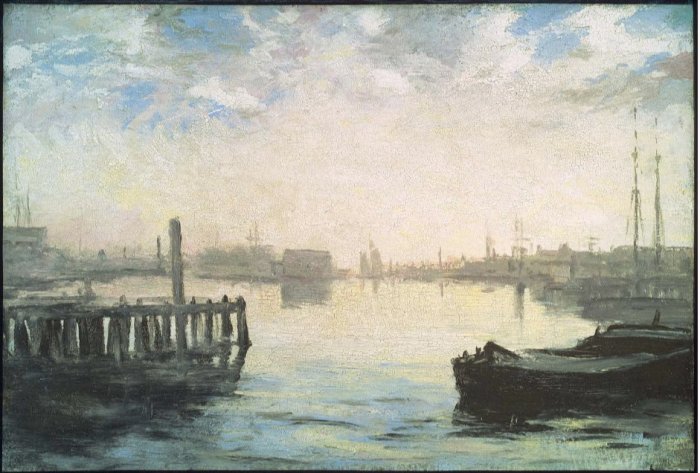
Hunt purchased a former barn and adjoining carpenter’s shop in Magnolia. “…in three weeks the old, unsightly buildings were converted into a picturesque structure with galleries on the outside, one of them ending in a seat in an old willow-tree. The carpenter shop was turned into a studio, the chief light coming from the wide-open door…The barn was two stories in height, the lower portion being occupied by the van, a phaeton and a dog-cart, as well as by stalls for two or three horses. The upper room was known as the “barracks”, and half a dozen cot-beds were arranged around the sides, as seats by day and beds by night…In a single afternoon his celebrated Gloucester Harbor was painted, and he returned to Magnolia aglow with enthusiasm. “I believe,” he exclaimed, “that I have painted a picture with light in it!…Go out into the sunshine, and try to get some of its color and light. Then come back here, and see how black we are all painting!”
William Morris Hunt, Gloucester Harbor, 1877, MFA Boston
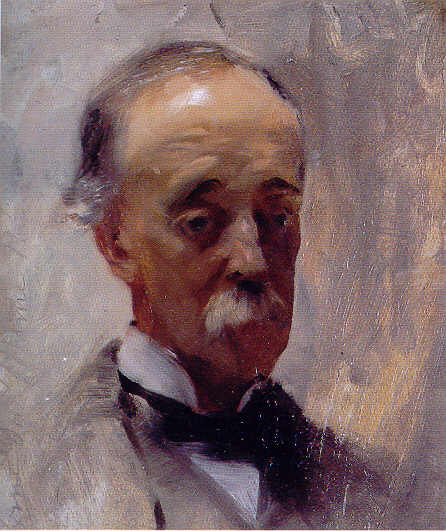
John Singer Sargent portrait of the artist’s father, Sargent House Museum
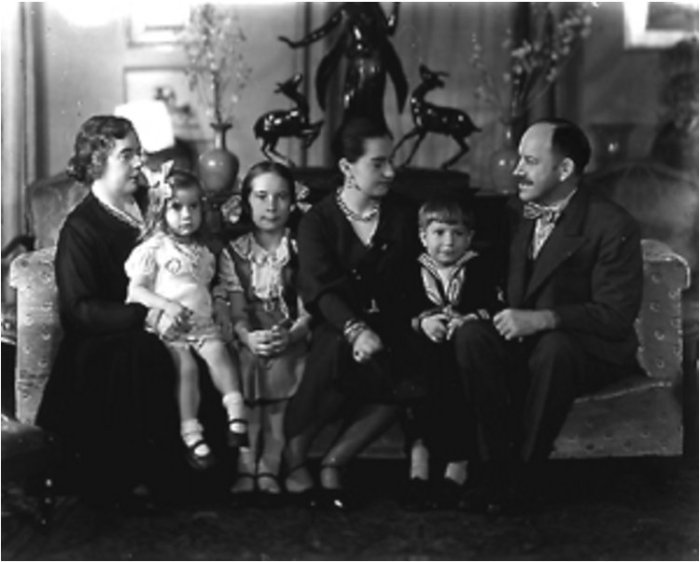
Family portrait: Isabel Manship, Sara Janet, Elizabeth, Pauline, John Paul, Paul Manship
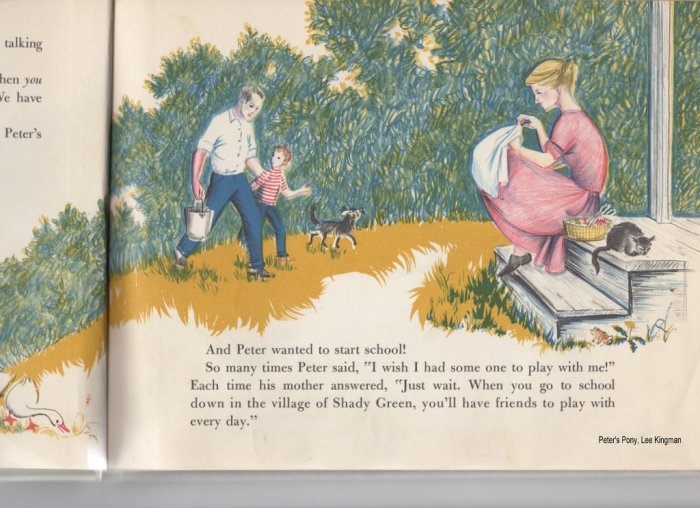
Lee Kingman, Peter’s Pony, 1963, with illustrations by Fen Lasell
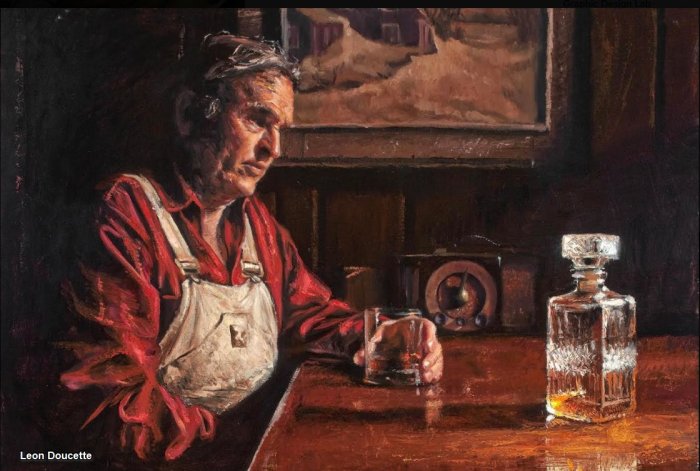
Leon Doucette, portrait of the artist’s father
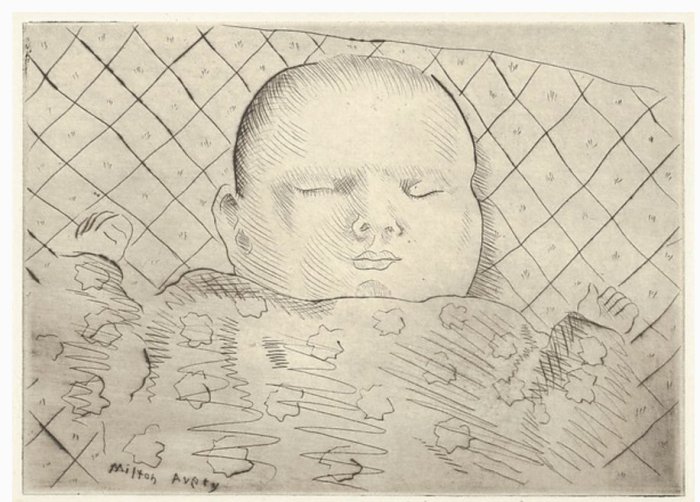
Milton Avery 1933 drypoint (March, his daughter)
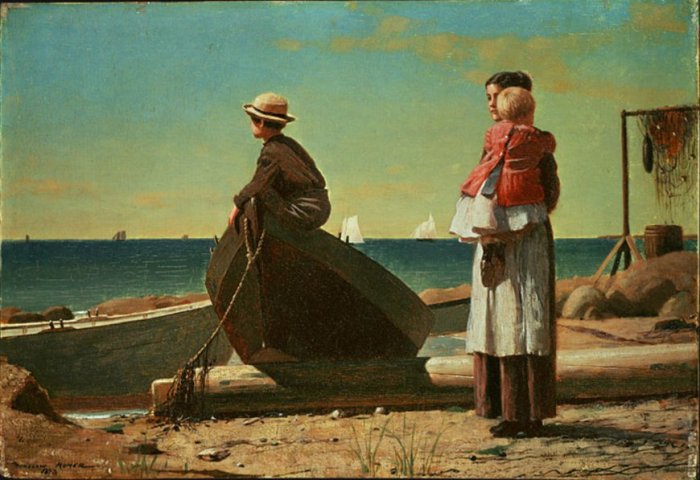
Winslow Homer captures the waiting and watching experienced by so many families in Gloucester. Homer’s father, Charles Savage Homer, left for extended start-ups: to California for gold, to Europe. Winslow Homer’s mother was a professional and gifted artist who raised three stellar boys solo, a lot. The Homer family remained tight knit.
Winslow Homer, Dad’s Coming, 1873, National Gallery of Art
Friday Nights at the A&P
By Ruthanne “Rufus” Collinson
When I was a kid
there were Friday nights to get lost in.
There was Mama
to take me shopping,
the smell of outdoors on her wool coat.
There was the A&P on Main Street,
the long spread out time
to wander the rolling floors
and smell the oranges and the coffee grinding.
There was no talking with Mama and me
She chose the food and I thought,
the long time of thinking away from Mama
in the A&P.
I watched the women
with heavy faces and deep frowns
weighing out their fruits
I thought about how bad they looked,
but I knew they didn’t want to die
because of the way they cared
about stacking the apples.
Sometimes I lost Mama and her sadness
but she would find me and take me
to the check out
where I picked up Daddy’s Pall Malls
and then stayed close to her wide sleeve
as we carried our lumpy brown bags
past Paul T. Reddy’s Dancing School.
I heard people dancing upstairs
Shadows in the window suggested music
and the end of time laid out like that.
Spread The GMG Love By Sharing With These Buttons:


 Good Morning Gloucester