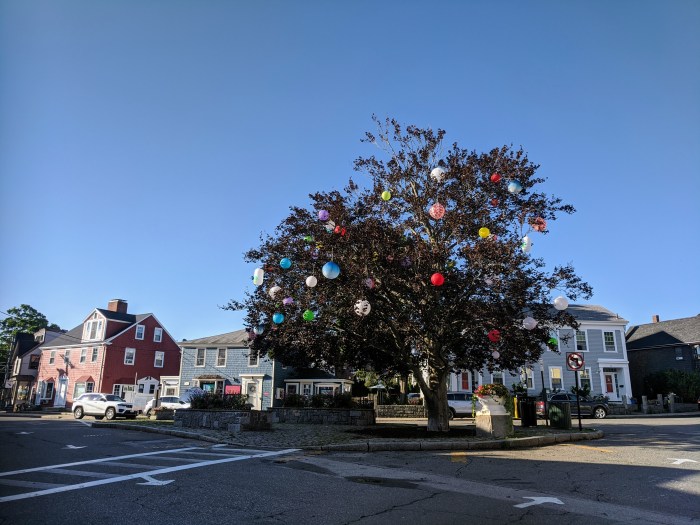
Reminder! Rockport’s annual Illumination is Saturday, August 12, 2023. 9pm Fireworks. Flyer below.
photos: paper lanterns downtown Rockport, Senior Center, Post Office, Library, storefronts, porches, Dock Square
As pretty as a picture! Perhaps Rockport Art Assoc and Cape Ann Museum can hang a selection to time with the annual Rockport Illumination (from their collections and new work by living artists responding to the art, illumination, and the summer celebration).
Spread The GMG Love By Sharing With These Buttons:
Katsushika Hokusai (1760-1849) was a famous Japanese artist who came from humble beginnings and was active in the Edo period. He was an influential and revered artist and fine arts professor in his own lifetime. Hokusai eked out a living as a printmaker and illustrator, setting off on his own after years with the prestigious Katsukawa School, a premiere teaching and publishing powerhouse specializing in the ukiyo-e style color woodblock prints. A life in art and print publishing is tough going now and it was then. To supplement his income, Hokusai changed his name some 20 times, selling his surname or ‘brand’ to select pupils. He produced three of his most popular bodies of work when he was in his seventies. Hokusai died at 90 impoverished financially though not in obscurity. Students and friends paid for his funeral.
Hokusai: Inspiration and Influence at the MFA, lays out 100 examples of Katsushika Hokusai’s lifework in every period, genre, and medium, his famous woodblock series, new discoveries and rarities, and the Japanese and Western cultural exchanges that impacted his own practice. About 200 works of art by other artists spanning 200+ years demonstrate a sample of Hokusai’s relevance and inspiration to artists he knew or taught, and to artists and movements, generation by generation and around the globe, since his death.
The Museum of Fine Arts in Boston established one of the largest and finest Asian art departments in the world in the 1890s thanks to art historian curators, collectors, and benefactors. Highlights are featured with great care because of their fragility and easy rotation because of the depth of the museum’s holdings. The collection was amassed early and driven by four scholars. The inventory acquired by Ernest Fenollosa, an art historian, educator, and later, curator. was eventually purchased by Charles Weld, Boston physician and collector, with the stipulation that it be given to the MFA. The bulk of the MFA’s Hokusai trove were collected by Dr. William Bigelow.
Thanks to the MFA collections, its acquisitions and gifts, and great temporary loans, this exhibition celebrates Japanese art, especially Hokusai, emanating from his most iconic and lasting image, Under the Wave off Kanagawa (Kanagawa oki nami ura), 1830-32. Also known as The Great Wave ( an abbreviated and generalized title that amplified sales) the woodblock print is from Thirty-six Views of Mt. Fuji, a series so popular the artist increased it to Forty-six. You might not know the man but you likely know that surf.
MFA’s installation–loosely chronological
Japanese artist Katsukawa Shunshō operated the most popular ukiyo-e studio and Hokusai was employed there for over a decade until Shunsho’s death. Eventually Hokusai became an independent artist & teacher. The exhibition unfolds with masterpieces by both Hokusai and Katsukawa Shunshō and with exceptional work by their students and peers. After this introduction to the ‘lineage’ years, the installation is grouped by themes dear to Hokusai juxtaposed with work by artists in the decades following his death in 1849. The broad survey is an introduction to how the Japanese woodblock industry and ukiyo-e art and culture influenced French fashion, design, and the art movements which inspired modern art (and vice versa).
By the time of the Great Wave, Hokusai maximized landscapes which was novel at the time. With so much sea and sky, the color blue in every hue and tone is everywhere. Imported and available by the 1820s in Japan and cheap (unlike ultramarine), the synthetic dark blue pigment known as ‘Prussian blue’ was stable and could be used to create deep, rich velvety blue and great transparency—a game changer for artists and woodblock prints.
installation photos below: Catherine Ryan. Hokusai: Inspiration and Influence. MFA, Boston. March 30, 2023. Pinch and zoom to enlarge. Right click or select “i” for information for captions.
Floating the idea of the floating world
Ukiyo-e prints (images of the floating world) were invented when demand became so great a mass marketing innovation was required. Sellers could not afford to nor fill the orders which became too time consuming and limited by labor costs and pool of artisans. Although woodblock prints were original and labor intensive in other ways, hundreds of single sheets could be pulled in a day. Bright and colorful art for all, disseminated worldwide, ukiyo-e art was an early format example of mass media.
Shunsho | hokusai
Two Shunsho immersive six panel screens
Early Hokusai
fellow ARTISTS
Some students, some famous, some rediscovered- Hokusai II, Hiroshige, Kuniyoshi, Katsushika Taito II. Hokusai’s daughter signed her work Katsushika Ōi
LATE HOKUSAI and prussian blue
Mostly examples from series after 1830s on when he was in his 70s: 36 Views of Mt. Fuji, Large Flowers, Small Flowers, Waterfalls, Remarkable Views of Bridges, Fifty-three Stations on the Tokaido Road. (The far younger Hiroshige born in 1790 produced 10 prints of famous places in 1825 before Hokusai, 69 Stations Kiso Road in 1835, and 100 Views of Edo in 1856 two years before he died in the cholera epidemic.)
japonisme. Impressionism. Post-Impressionism. Art NOUVEAU. late 19th C
Ipswich icon Arthur Wesley Dow
Like Hokusai, Dow (1857-1922) was an artist and influential teacher. He spread the gospel of composition and design, Japanese culture and ukiyo-e art, in America. And similarly to Hokusai, fine arts students gravitated to his own wildly influential instruction book. A Dow woodcut and dory were grouped with Ushibori by Hokusai, from the Mt. Fuji series. See the blue!
20th C
Color woodblock prints by Edna Boies Hopkins, an American artist active in the early 20th C who lived in Japan and France, studied with Dow, and was an influential member of the Provincetown Printmakers are on view. I am proud to write that back in 1986, I co-curated the first Hopkins solo exhibition retrospective since the 1920s and authored the essay and catalogue. The research for the project meant time spent in Ipswich and the Ipswich Historical Society for a close study of Arthur Wesley Dow.
21st C – MITSUI’s lego gREAT wAVE
Christiane Baumgartner’s 2017 monumental woodblock print on Kozo paper, The Wave
RIP Yvonne Jacquette, so glad to see her complex work included, a fittingly zig zag aerial nocturne view of famous NYC bridges no less, Two Bridges III, 2008 woodcut printed in dark ink on Okawara paper and acquired by the MFA before her passing at the end of April.
People were thrilled to encounter Hokusai’s The Great Wave in person and waited in line because of its scale and beauty. Multi-generational families shared the experience and wanted to take pictures which moved me tremendously. Hokusai and his peers, and artists influenced by them, produced series of cherished vistas and visual poems and legends for all price points. The LEGO installation helped ground the show and bring the joy, humor and blockbuster awe that ukiyo-e genre and series did in its time–before movies, photography, animation, easy travel, etc..
The LEGO commission by master builder Jumpei Mitsui riveted visitors of all ages on the days I visited the exhibition (if not in the art press I’ve read since). When you know the price point and target audience for the ukiyo-e art, i.e. the commoner and its arduous, technical process, the LEGO Great Wave homage– colossal, blue, and an exacting marvel of another sort– was a great fit to underscore connections to the past and engage audiences. Its scale and drama heightened the perspective of the crews and the boats in a way that other selections did not.
People looking at art
on view at the MFA, Boston: Hokusai: Inspiration and Influence
On the nose pairings
Spread The GMG Love By Sharing With These Buttons:
Veteran of the Boer War and WWI, a teacher, and doctor, Canadian John McCrae wrote In Flanders Fields in the spring of 1915 while still at the bloody battlefront in Ypres, Belgium, in an area known as Flanders.
The Germans had already used deadly gas.
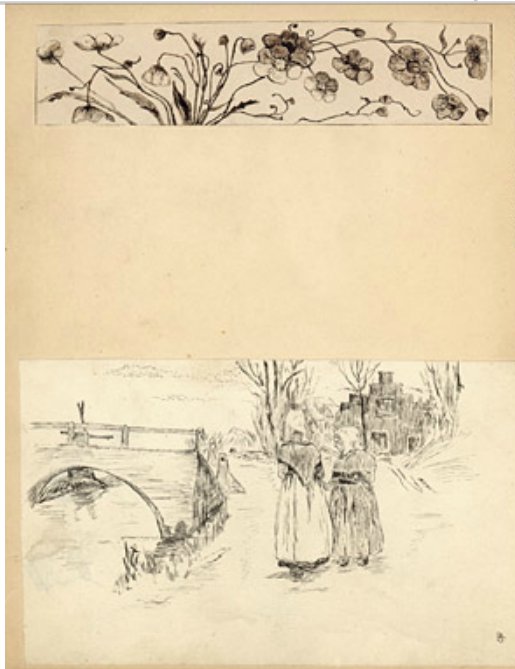
Dr. McCrae had been tending to hundreds of wounded daily. He described the nightmare slaughter: “behind it all was the constant background of the sights of the dead, the wounded, the maimed.” By this time he had already devoted his life to art and healing. He couldn’t save his friends. How could anyone? Twenty years prior, he sketched poppies during his medical residency in Maryland. He published poems and stories by the time he was 16. I’m not surprised he noticed the brilliant fragile petals and horror. He wrote for those who couldn’t speak and those who had to see. Meningitis and pneumonia killed him January 1918 after several months battling asthma and bronchitis. His poem and the emblematic poppy continue to inspire and comfort.
In Flanders fields the poppies blow between the crosses, row on row, That mark our place, and in the sky, The larks, still bravely singing, fly, Scarce heard amid the guns below. We are the dead; short days ago We lived, felt dawn, saw sunset glow, Loved and were loved, and now we lie in Flanders fields. Take up our quarrel with the foe! To you from failing hands we throw The torch; be yours to hold it high! If ye break faith with us who die We shall not sleep, though poppies grow In Flanders fields.
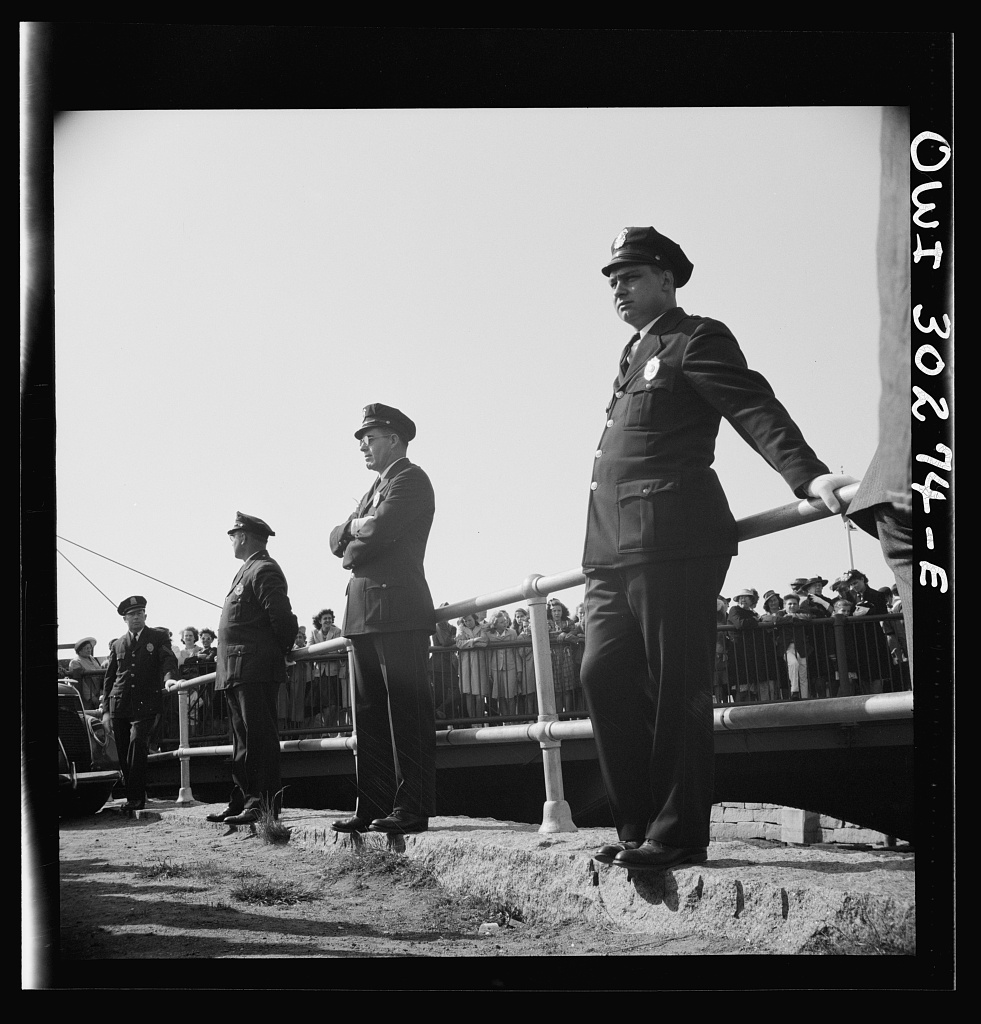
Images: Respectfully thinking about art that helps us celebrate, remember, remind and reflect every family who has suffered a loss in service.
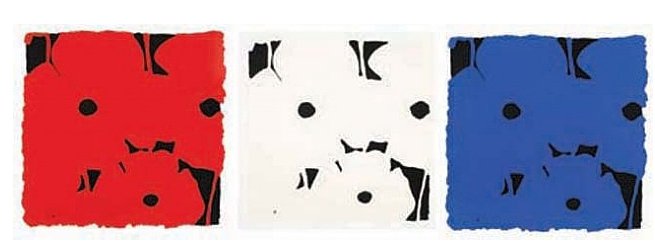
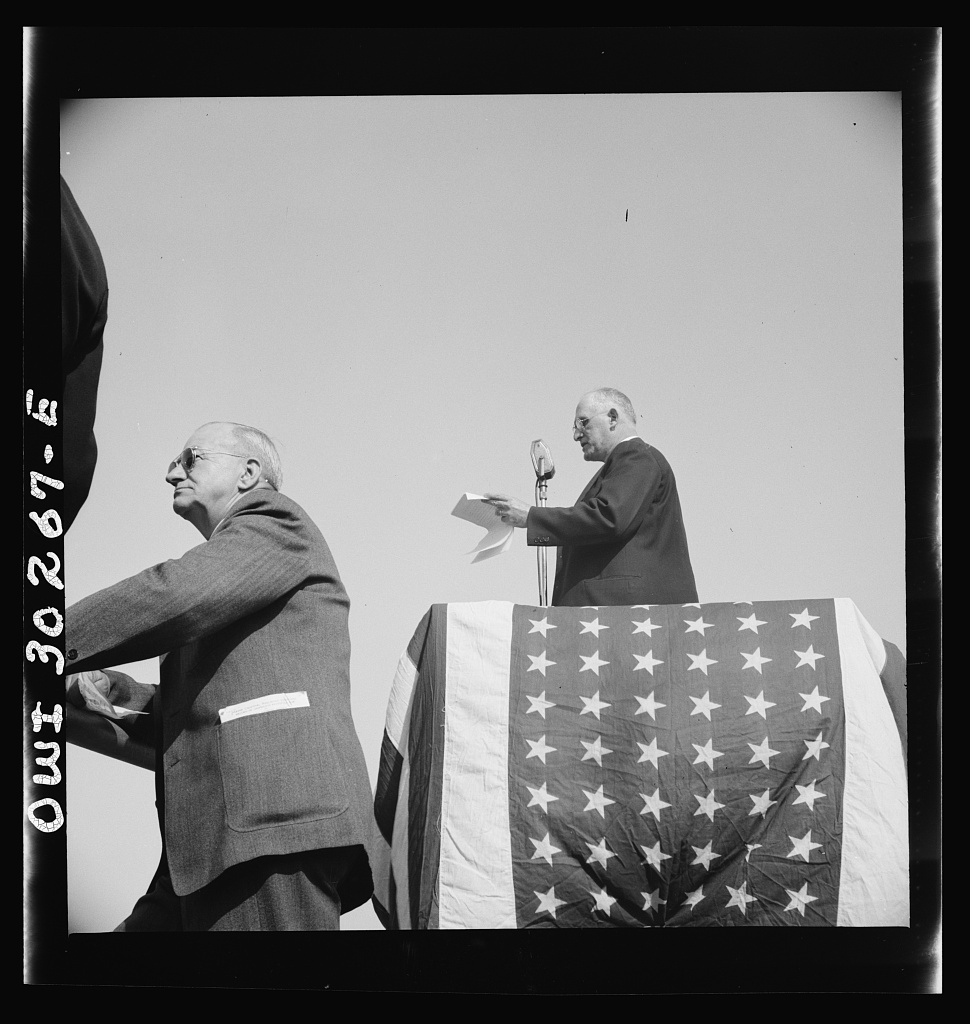
Donald Sultan Five Reds, Five Whites, Five Blues, 2008 color silkscreen with enamel, flocking and tar like textureGordon Parks, Library of Congress, 1943 photograph, Gloucester policemen, Memorial Day Ceremonies
A few poppy images follow. I was thinking about their poetic illumination before and after WW1 and layers of meaning and beauty.
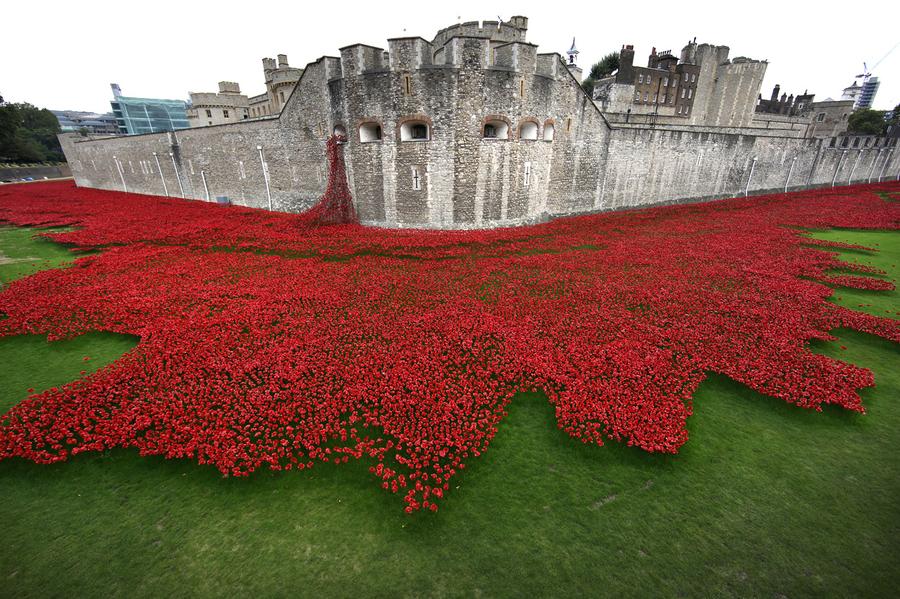
Paul Cummins, Blood Swept Lands and Seas of Red, 2014, Tower of London, individual cast ceramic poppies fill the moat (photo during installation in progress) commission to mark 100 years since the first full day of Britain’s involvement in WWI
Monet, Poppy Field in a Hollow near Giverny, 1888, Museum of Fine Arts, Boston





 Good Morning Gloucester