Danvers wins big Thanksgiving day…Part one today…part two tomorrow.
Tag: gloucester










































GHS Pep rally
Getting ready for the big game tomorrow morning….








































Spread The GMG Love By Sharing With These Buttons:

Twilight skies on friday
Beautiful Skies….all within about 10 minutes.




Spread The GMG Love By Sharing With These Buttons:

400 Anniversary committee
Some of the spokes’ people at Saturday’s meeting.


















Spread The GMG Love By Sharing With These Buttons:

Design Finalists for the 400th Anniversary gloucester medal
Presented to us at City Hall on Saturday …



Spread The GMG Love By Sharing With These Buttons:

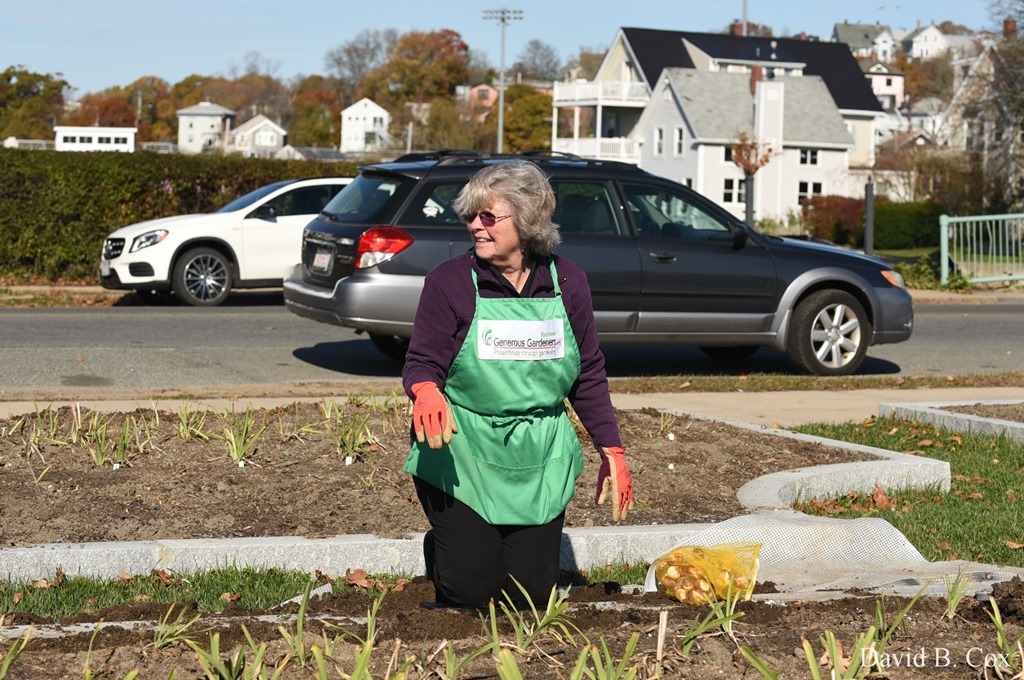
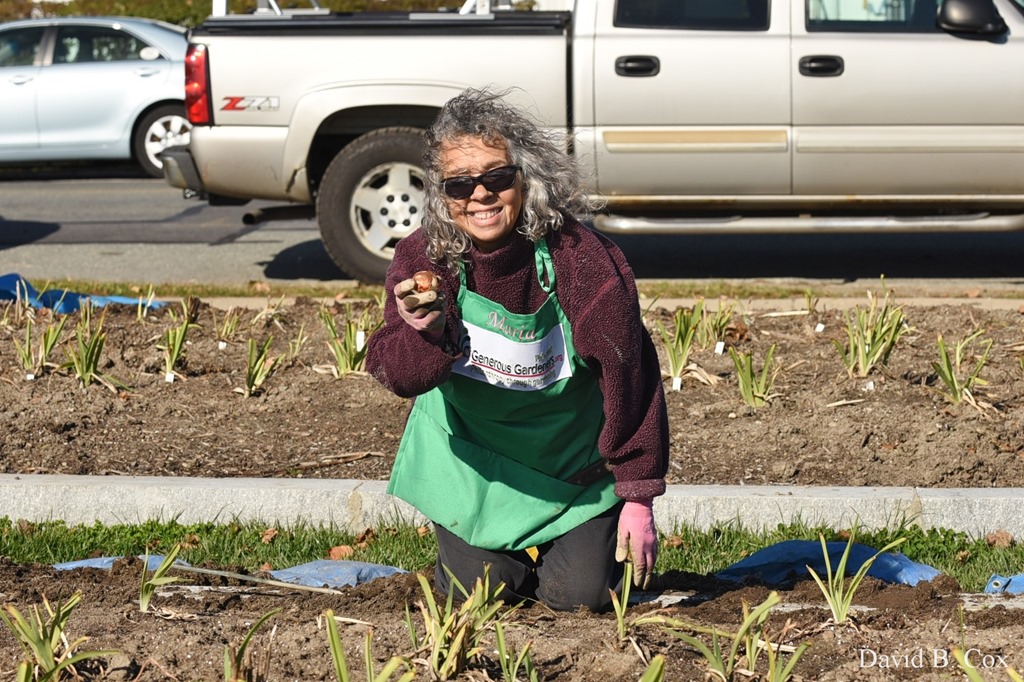
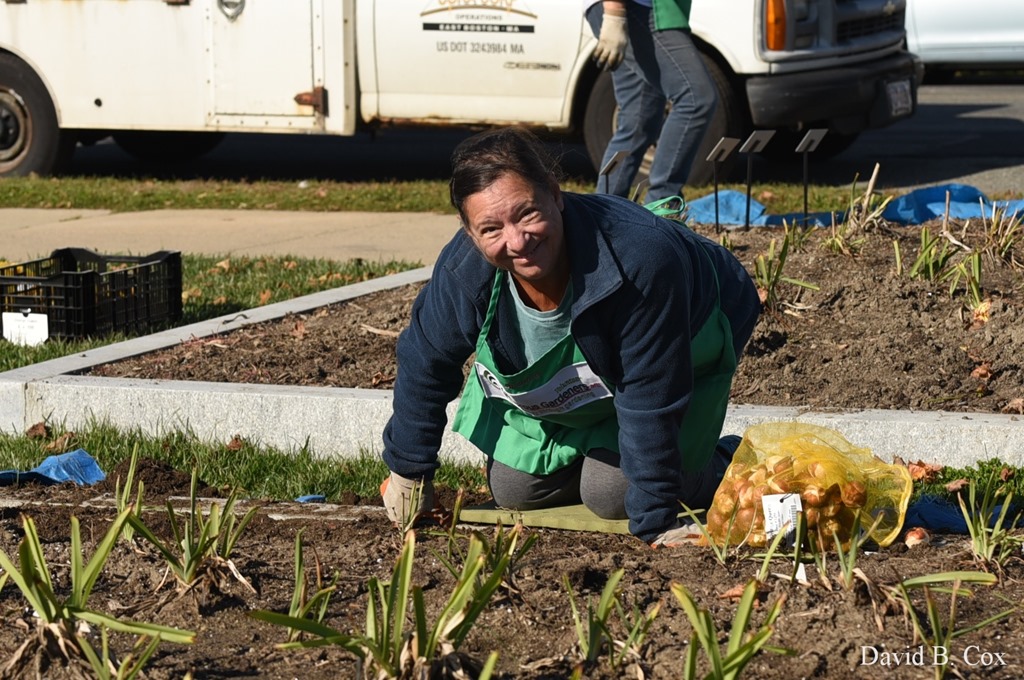
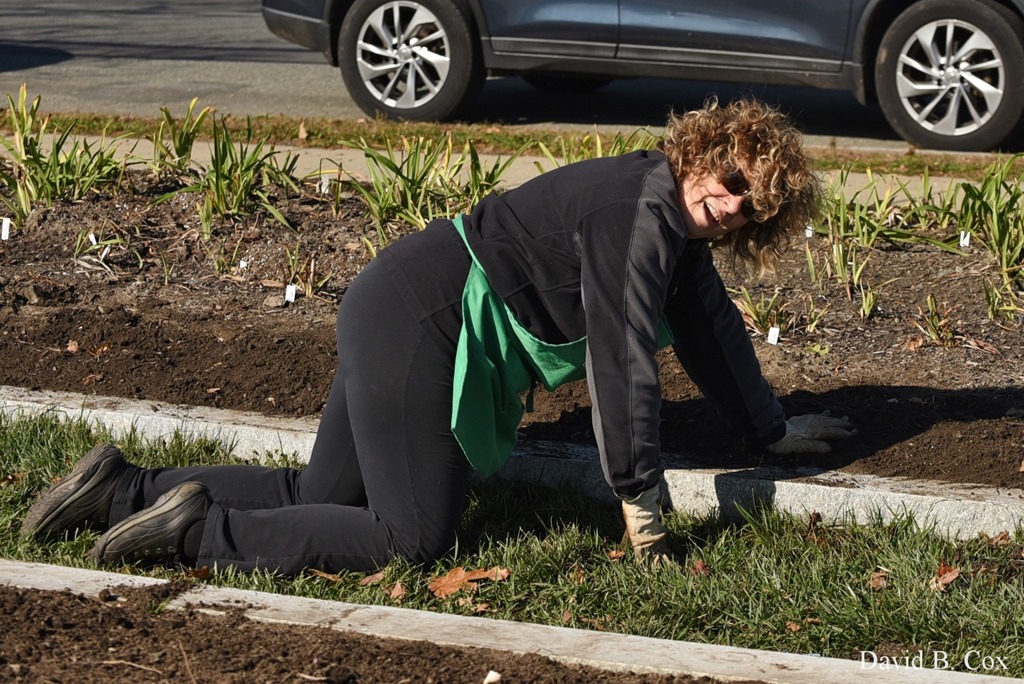
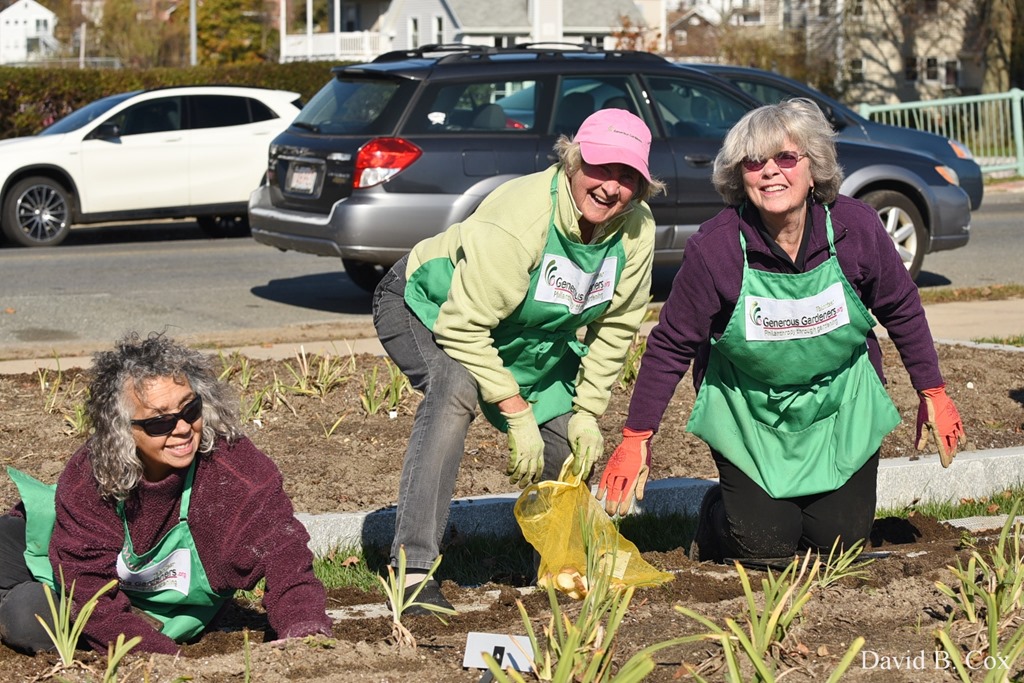
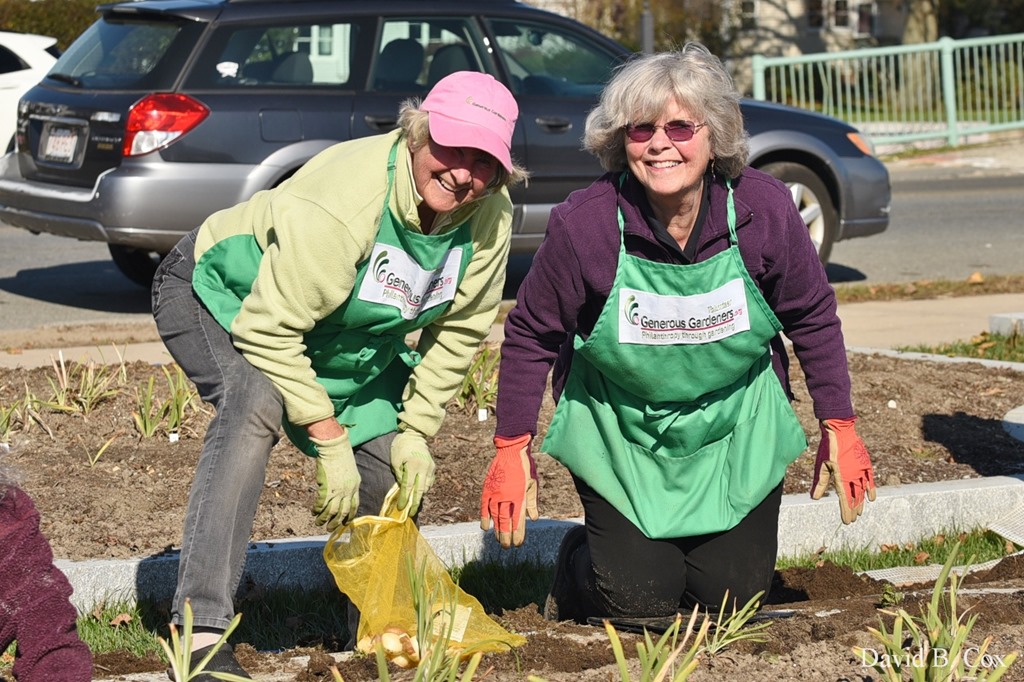
Around Town #134-Generous Gardeners at the boulevard
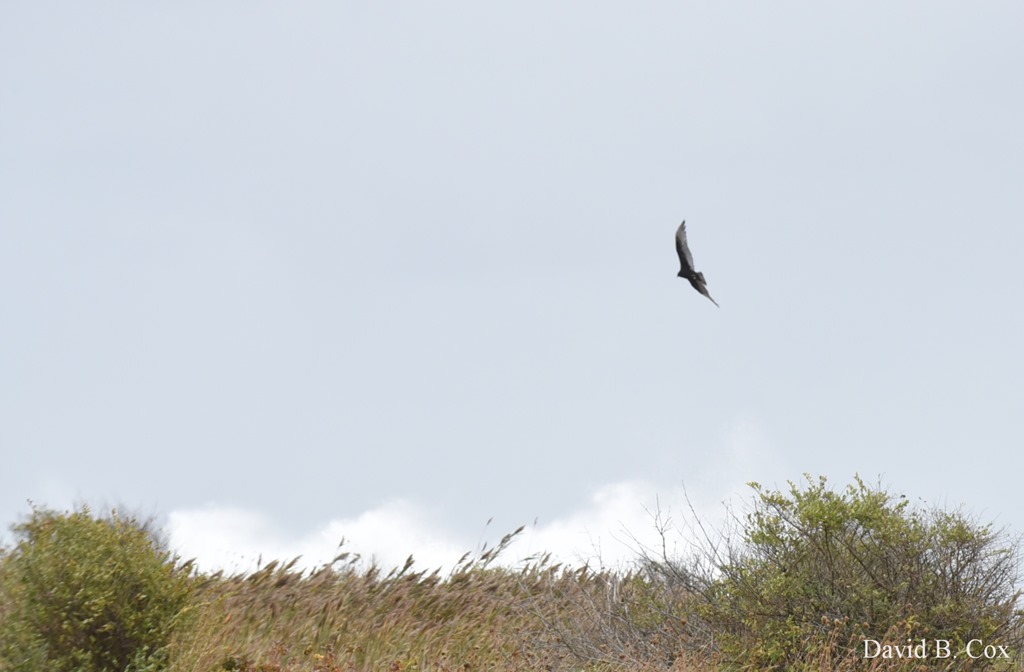
The Generous Gardeners working again ….planting tulips for next spring…They are great many times over!!! And a couple of sky photos for fun.





Spread The GMG Love By Sharing With These Buttons:


THE LOLLYGAGGERS HAVE RETURNED IN CONCERT – THIRTEEN SEALS HAULED OUT AT BRACE COVE SUNDAY AFTERNOON
Thirteen Harbor Seals warming on the rocks, plus a few bobbing heads spotted around the harbor. This charming duo was the most photogenic of the bunch 🙂


Spread The GMG Love By Sharing With These Buttons:


NEWLY COMPLETED PIPE ORGAN! CB FISK OPEN SHOP SATURDAY NOVEMBER 16TH

Join us at our Gloucester workshop to celebrate the creation of a new pipe organ. See and hear Opus 154, tour the shop, meet the staff, and learn about the art and craft of organ building. We look forward to seeing you then!
Saturday, November 16
2 pm – 6 pmC.B. Fisk, Inc.
21 Kondelin Road
2 pm – 6 pmC.B. Fisk, Inc.
21 Kondelin Road

OPUS 154
NORTHMINSTER PREYSBYTERIAN CHURCH
INDIANAPOLIS, INDIANA
2 manuals • 20 stops • 17 independent voices
(1:16 scale model shown)
Spread The GMG Love By Sharing With These Buttons:

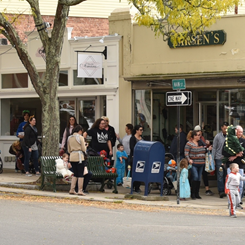
Kids Trick or treating on main street







































Spread The GMG Love By Sharing With These Buttons:

Around Town #132 from Dawn to dusk
It was quite a day…..












Spread The GMG Love By Sharing With These Buttons:

Storm surf again yesterday both morning and evening













Spread The GMG Love By Sharing With These Buttons:


NATURE RARER USES YELLOW
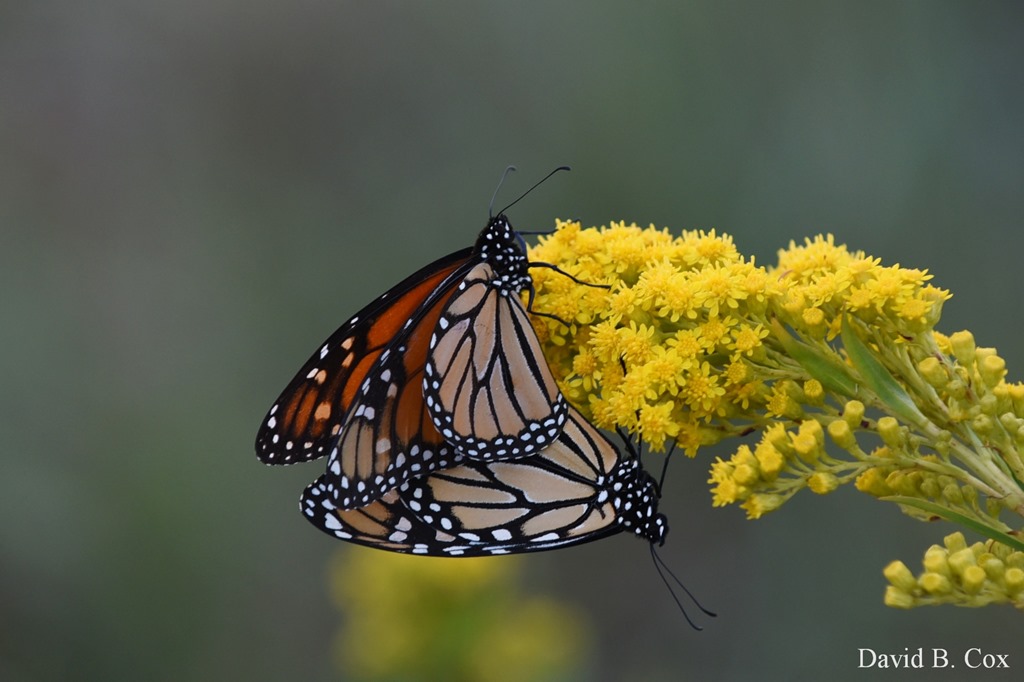
Day three of the October nor’easter so rather than post more photos of dreary gray skies and wind and waves, here’s a sunny yellow photo to lift your spirits. The photo was taken during this year’s historic Monarch migration. Loving this weather because it’s providing an opportunity to sort through the multitude of butterfly photos shot in September and October 🙂
 Monarch Butterflies Seaside Goldenrod
Spread The GMG Love By Sharing With These Buttons:

Around town #132 out at the Breakwater
The storm surf at the breakwater today was quite a sight.











Spread The GMG Love By Sharing With These Buttons:


BEAUTIFUL FALL MIGRATION
Cape Ann, and throughout Coastal Massachusetts, is experiencing a magnificent late summer and early fall migration, and not just with Monarchs. Other species of butterflies migrating in plentiful numbers include Painted Ladies and Buckeyes. All along our beaches and waterways, from Rockport to Gloucester to Manchester to Essex, we are seeing steady streams of shorebirds, waders, and songbirds gathering. Several mass movements of Green Darners have come ashore, too.
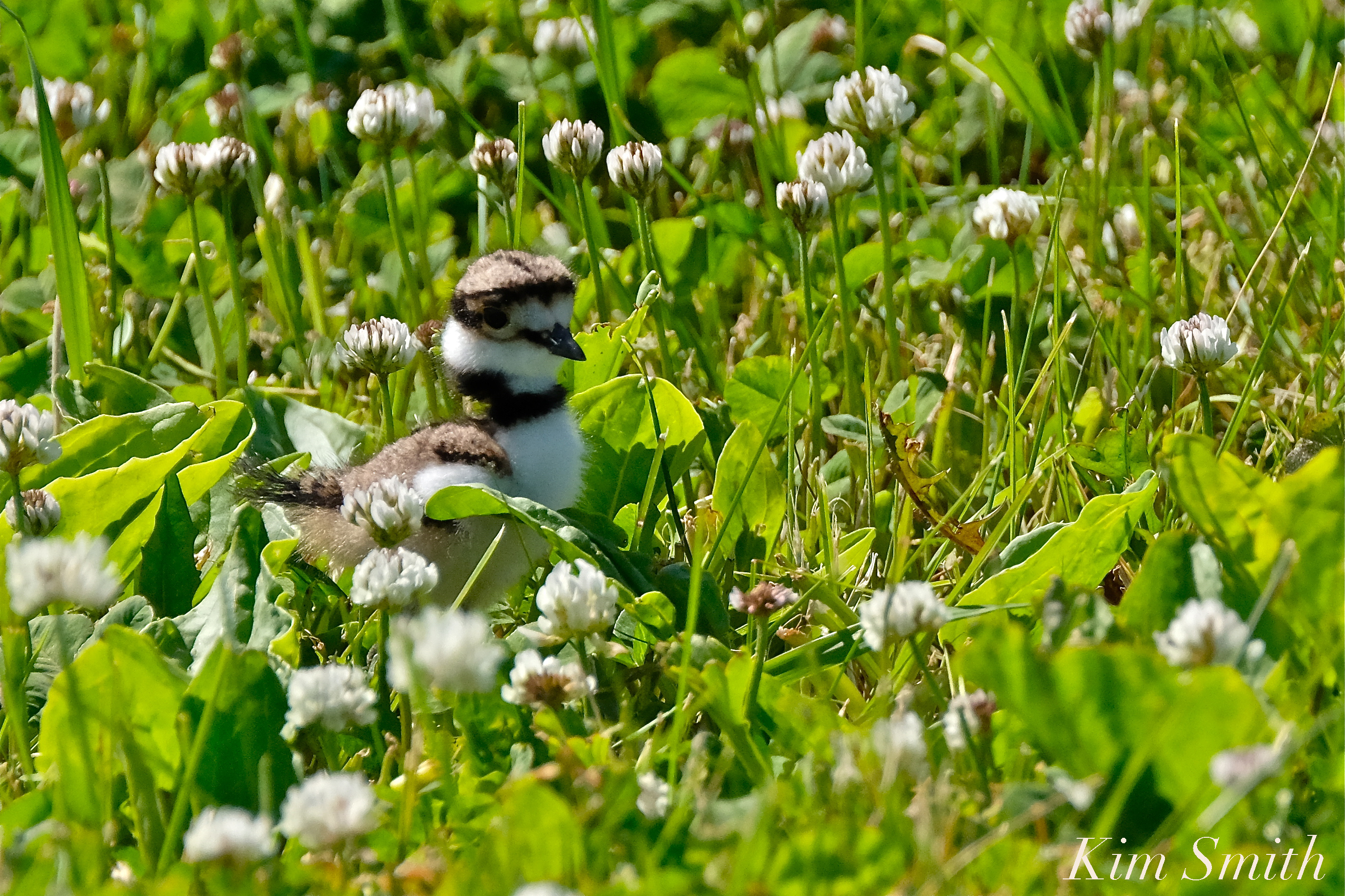 Clover Plover Killdeer Chick, June 2019
A small flock of Killdeers at Good Harbor Beach was recently observed. It’s difficult to know for certain if they are the same family that nested this summer (our Clover Plovers), but they certainly appeared to have a routine, first dining on crickets during the hour before dawn in the marsh, then flying over to the Creek to take a family bath.
 Killdeer eating a cricket at GHB


Killdeers Good Harbor Beach September 21, 2019
When out and about, take a look for Willets, Black-bellied Plovers, Ruddy Turnstones, Whimbrels, and Spotted Sandpipers, to name just some. The young Ring-tailed Duck is still here, too, and I am wondering if she’ll be calling Cape Ann home this winter.
 Ring-tailed Duck female nodding off while swimming
Spread The GMG Love By Sharing With These Buttons:

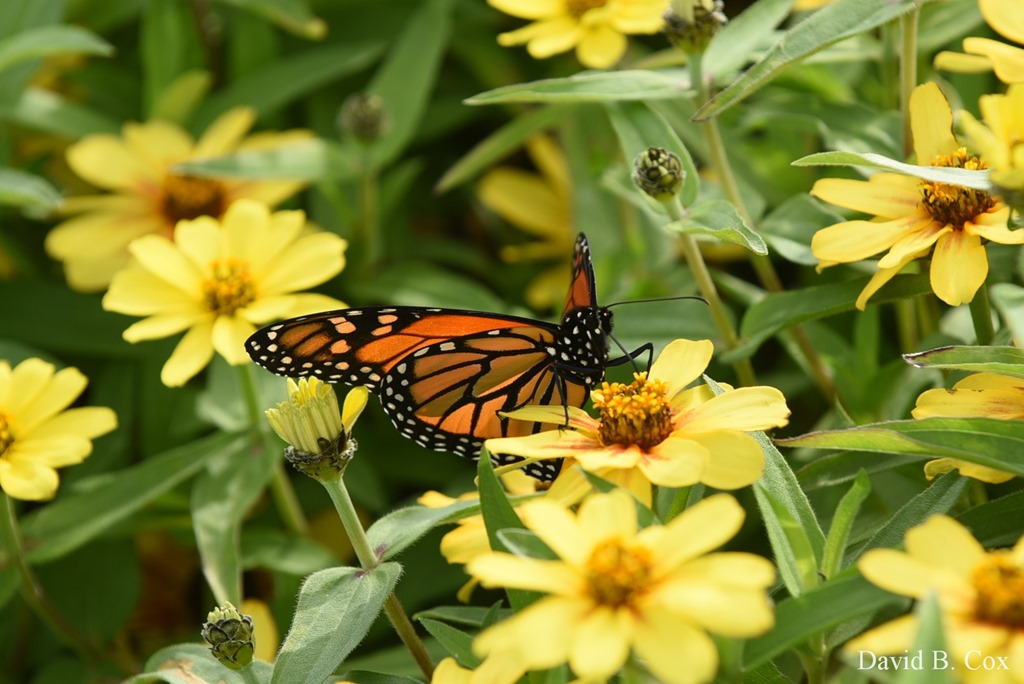
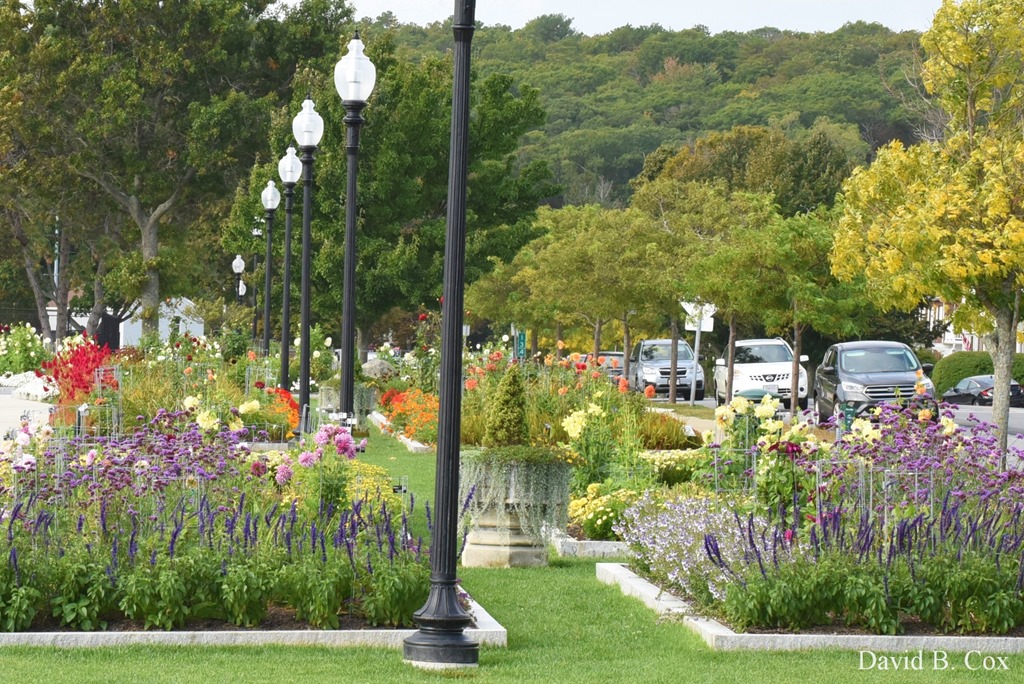
Around Town #131
Very Miscellaneous with flowers at the boulevard.








Spread The GMG Love By Sharing With These Buttons:

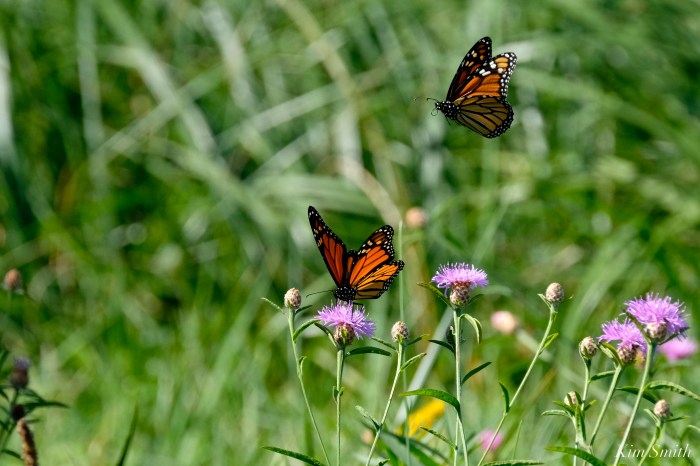
CHASING BUTTERFLIES!
I spent the weekend chasing butterflies and will post more about the historical migration we are currently experiencing, along with the fantastic Monarch celebration at The Stevens Coolidge Place in Andover, when I have more than a few moments to write a post.
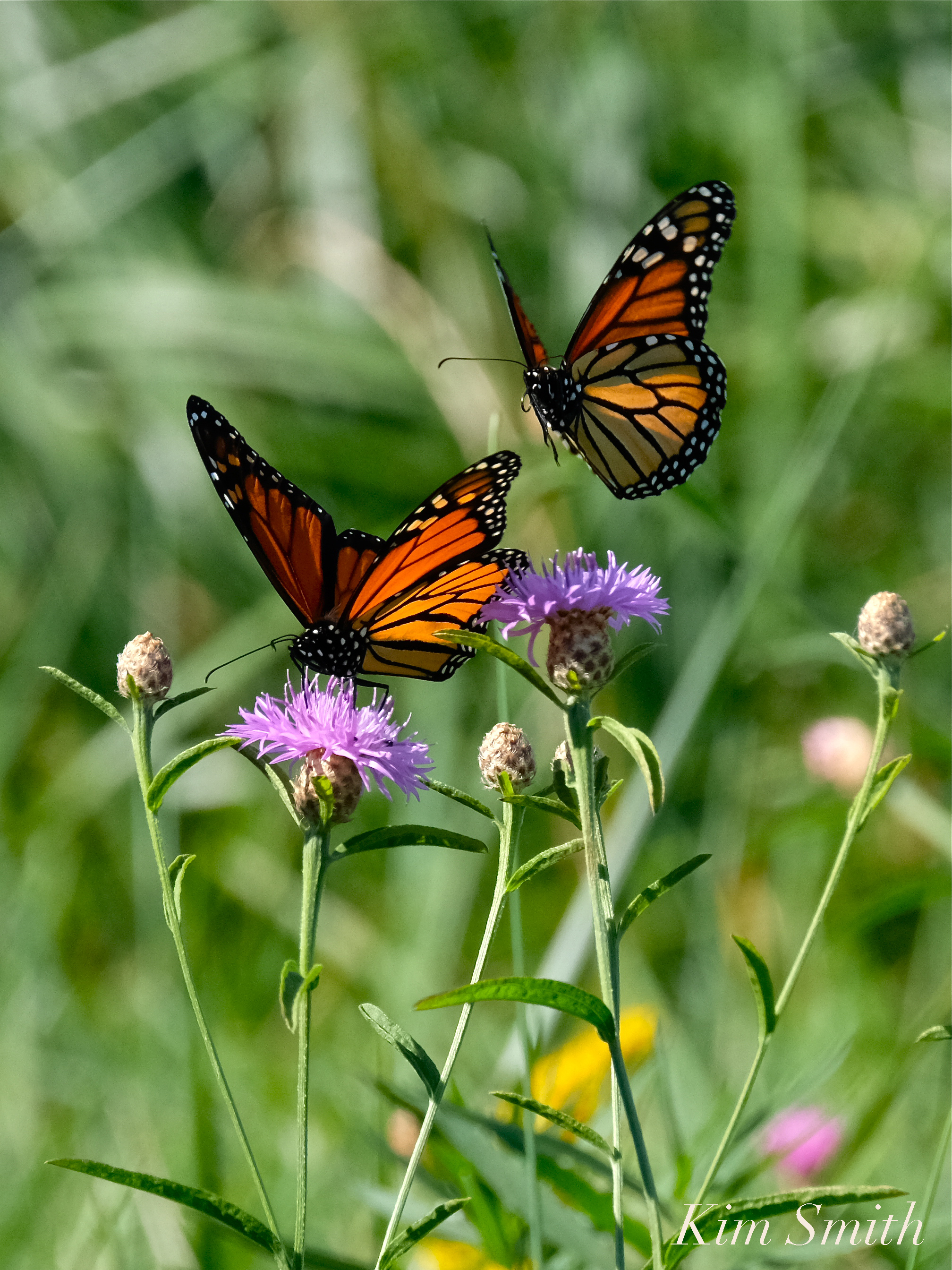
And I discovered several more of the magical butterfly trees that the migrating Monarchs roost in on cooler nights, and figured out how to find them!!! More about that in a future post, too 🙂
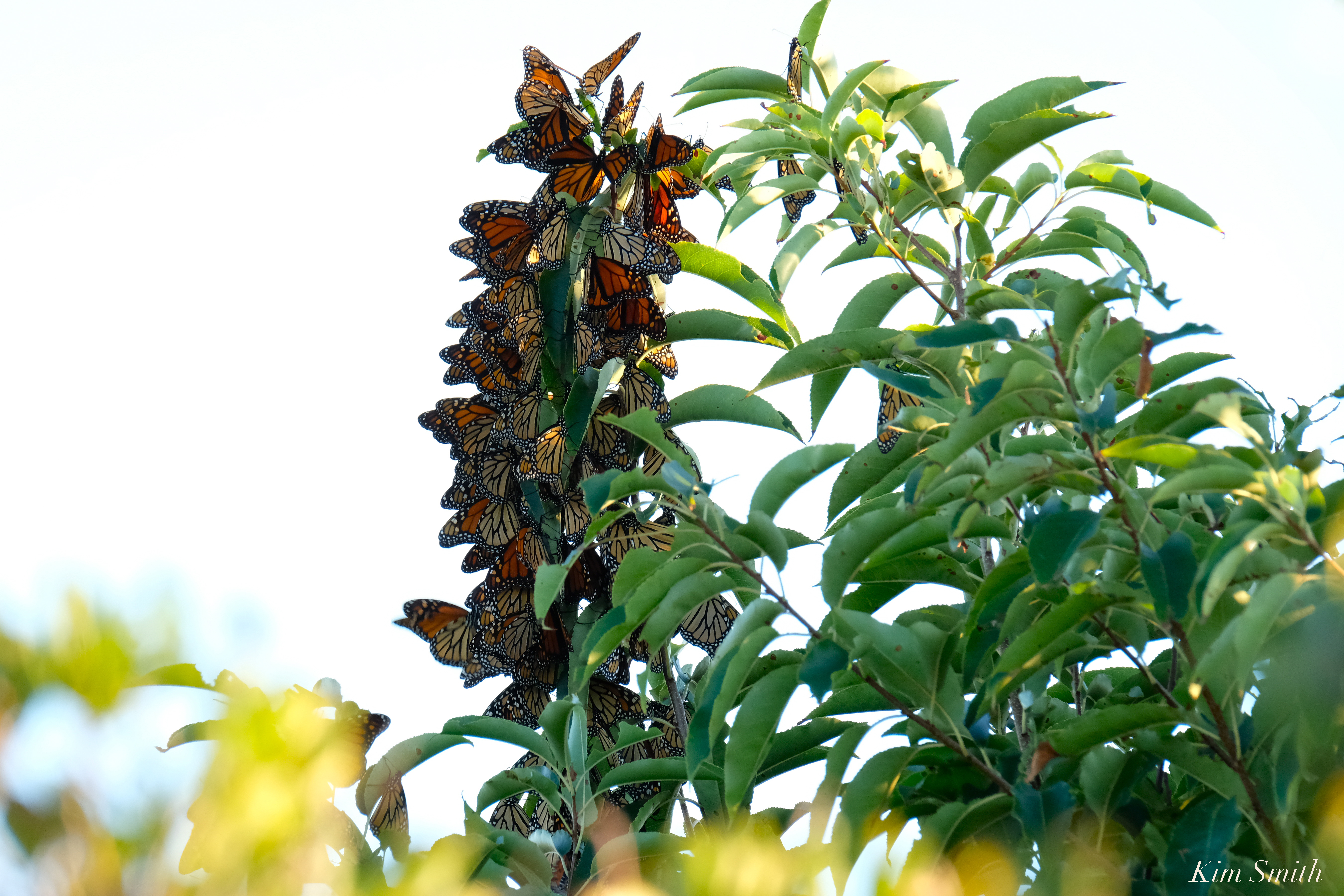 Butterfly tree at day’s end.
Spread The GMG Love By Sharing With These Buttons:

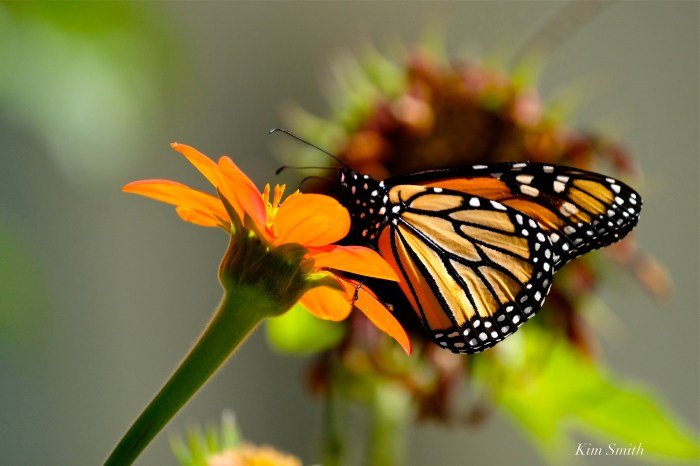
YOUR DAILY MONARCH PHOTO :)
Monarch nectaring at Mexican Sunflowers (Tithonia rotundifolia)
Spread The GMG Love By Sharing With These Buttons:


KIM SMITH MONARCH BUTTERFLY CONSERVATION PROGRAM SATURDAY OCTOBER 5TH AT THE STEVENS COOLIDGE PLACE ANDOVER
These magical creatures never cease to amaze and surprise. Early one morning I went looking in the butterfly trees for an overnight roost. Instead I found them sleeping like a dream in a golden field.
The light was pure rose gold for a few brief moments, casting a pearly pink glow over the butterflies, too.
I’ve seen a small cluster of sleeping Monarchs on a wildflower branch before, but never a field full. The wind was strong; perhaps they felt safer roosting closer to the ground.

It was funny to watch them awaken. Some flew off, but most stayed in place and began drinking nectar. Bees do this, they sleep in flowers, but it was a first to see Monarchs sleeping in their breakfast.

Come join me Saturday morning at The Stevens Coolidge Place in Andover for all things Monarch. I will be giving my Monarch conservation program at 10:30. For more information go here.
 Male (left) and Female Monarch Waking Up in Goldenrod Field
Spread The GMG Love By Sharing With These Buttons:


SAY WHAT! MONARCHS MATING IN SEPTEMBER???
This pair of Monarchs did not get the 411 that they are supposed to wait until next spring to mate!


Beginning in early spring, Monarchs depart Mexico. They lay eggs of the next generation and then perish. This next generation moves northward depositing their eggs on emerging milkweed. It takes four to five generations to reach the Monarch’s northern breeding grounds, of which Cape Ann is a part. The Monarchs that we see in the early summer only live for about four weeks.
The Monarchs that eclose at the end of the summer are a super generation of Monarchs. Another way to think about them is that they are also referred to as the ‘Methuselah’ Monarchs. This last brood of the summer lives for a very long time for a Monarch, about seven to eight months. The Methuselah Monarchs that we see migrating today will travel south all the way to the trans-volcanic forested mountains of central Mexico. They sleep through the winter in butterfly trees in a state of sexually immaturity known as diapause, then awaken in spring to move northward and deposit eggs of the next generation, thus completing the circle of the Monarch’s life.
So that brings us back to this atypical pair mating in the marshy meadow in September. Every year during the annual southward migration I see at least one pair of Monarchs mating. I wonder, will the pair survive and continue to migrate? Will their offspring survive and travel further south?
Please join me Saturday, October 5th, at 10:30 at The Stevens Coolidge Reservation in Andover for a Monarch Migration Celebration and for my conservation talk about the Monarchs. For more information, see here.

Spread The GMG Love By Sharing With These Buttons:

Around Town #130




 Good Morning Gloucester