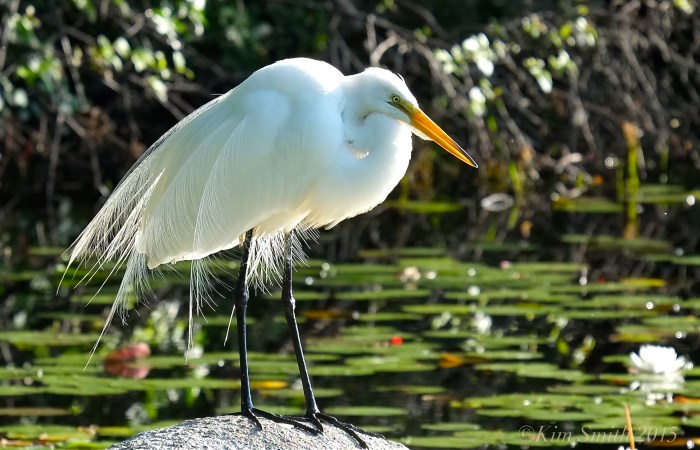
When talking about wild creatures on the Good Morning Gloucester podcasts, we often comment about how there seems to be so many more herons and egrets foraging and nesting on our shores. I think it is a combination of factors, most notably because our waterways have never been cleaner and because of global climate change. Whatever the reason, to see such grand beauty on a daily basis, we on Cape Ann are most certainly the beneficiaries.
Tag: Ardea alba
GREAT EGRET OF THE GOOD HARBOR BEACH SALT MARSH
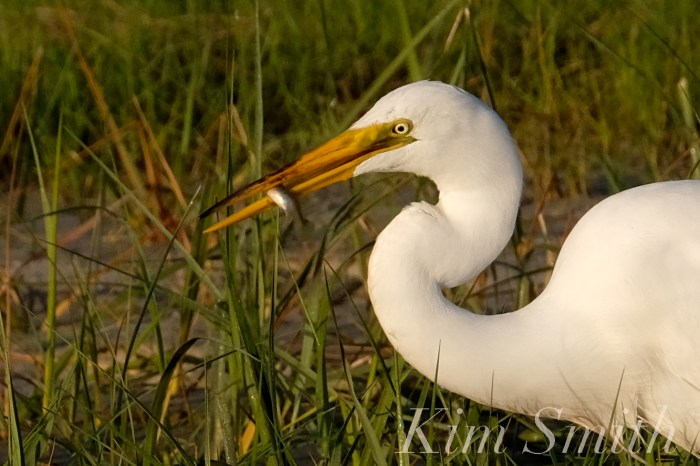
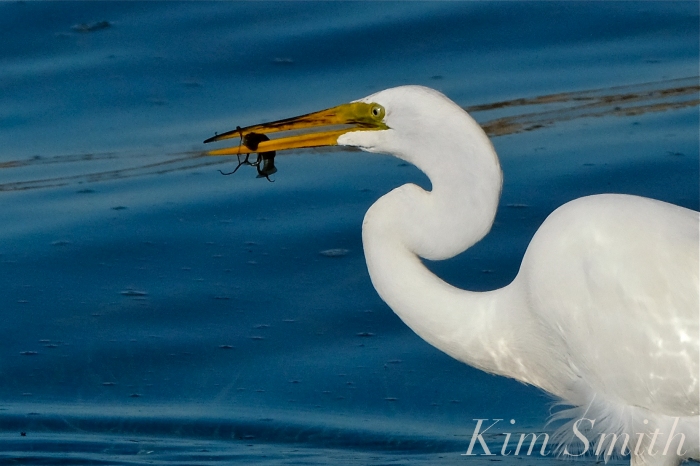
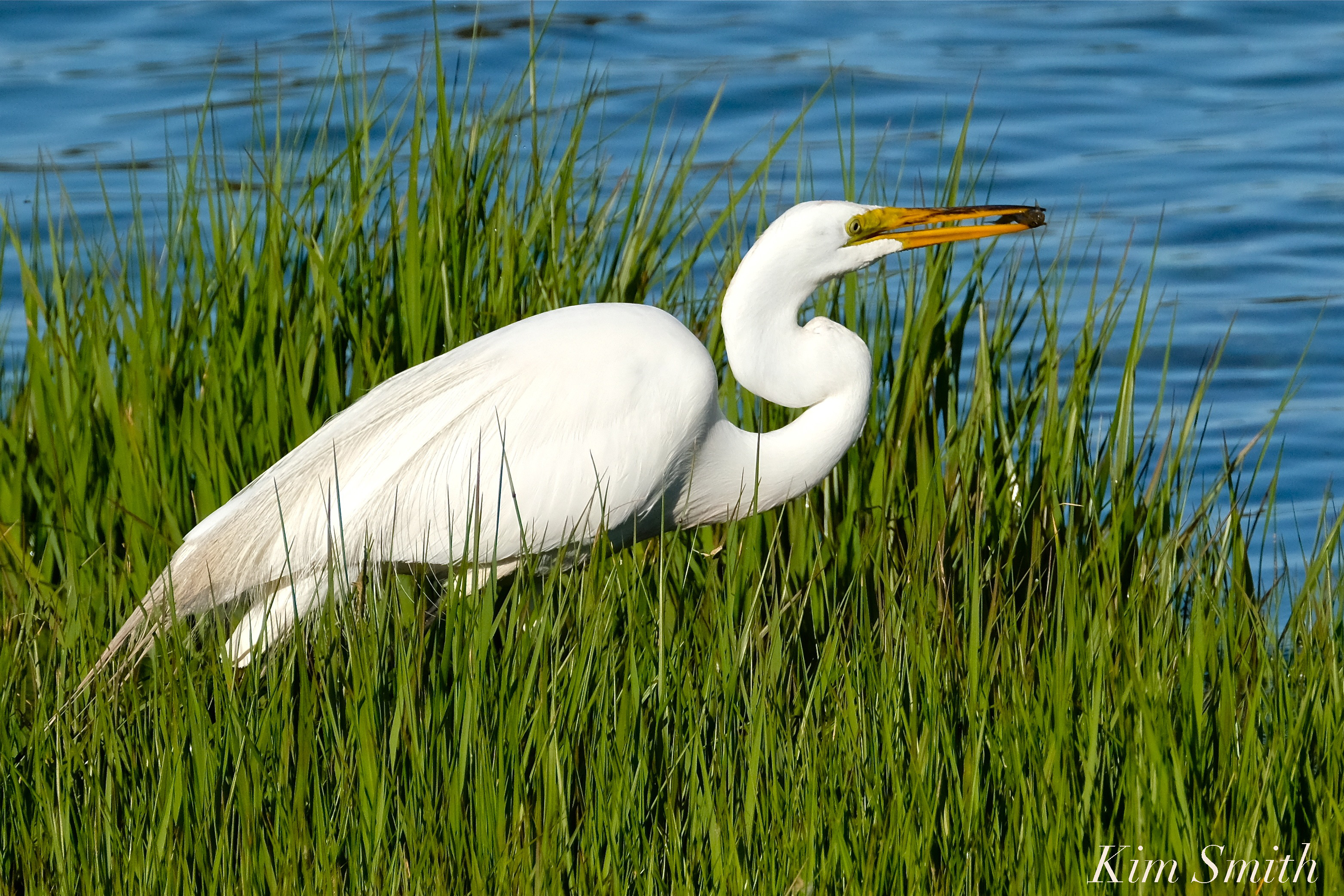
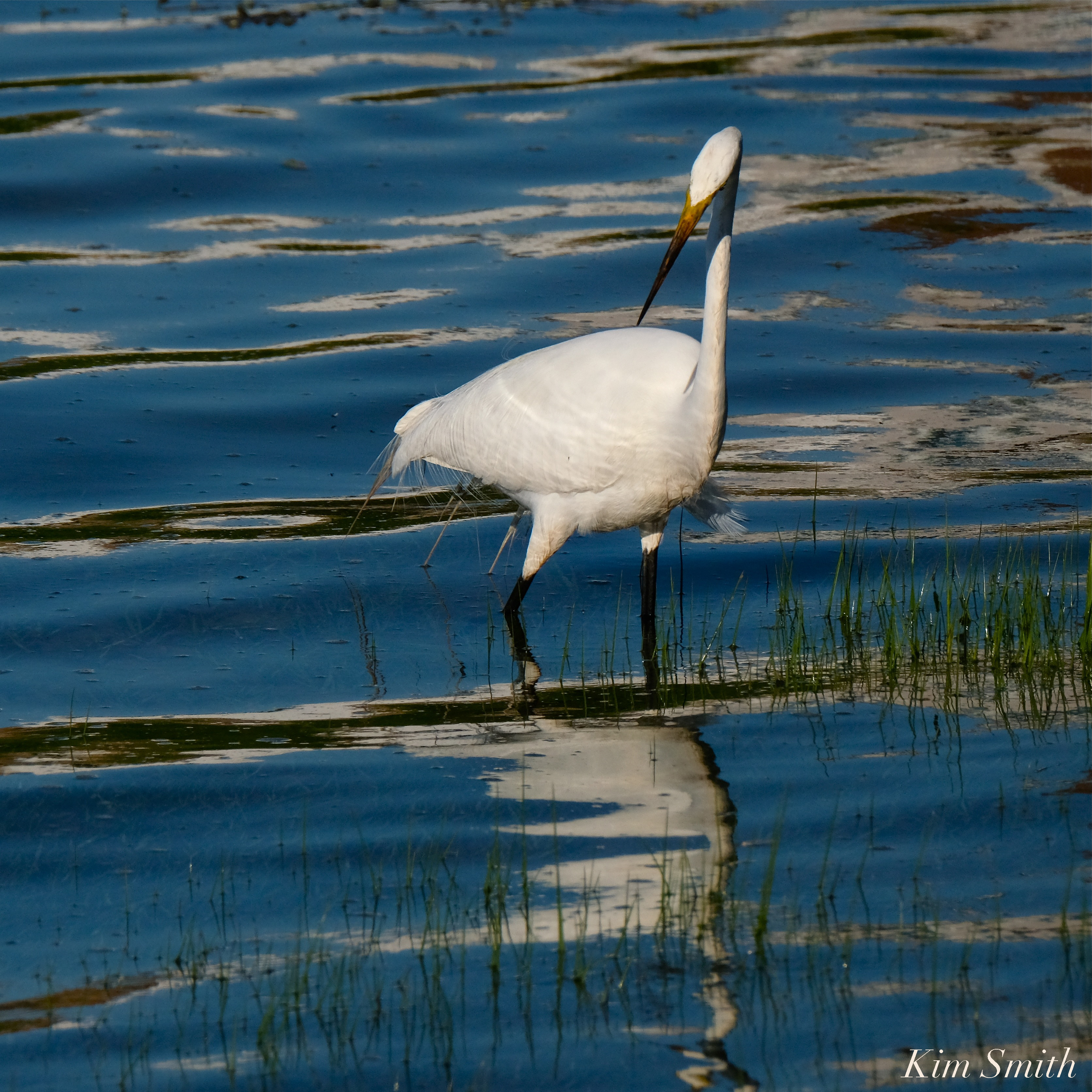
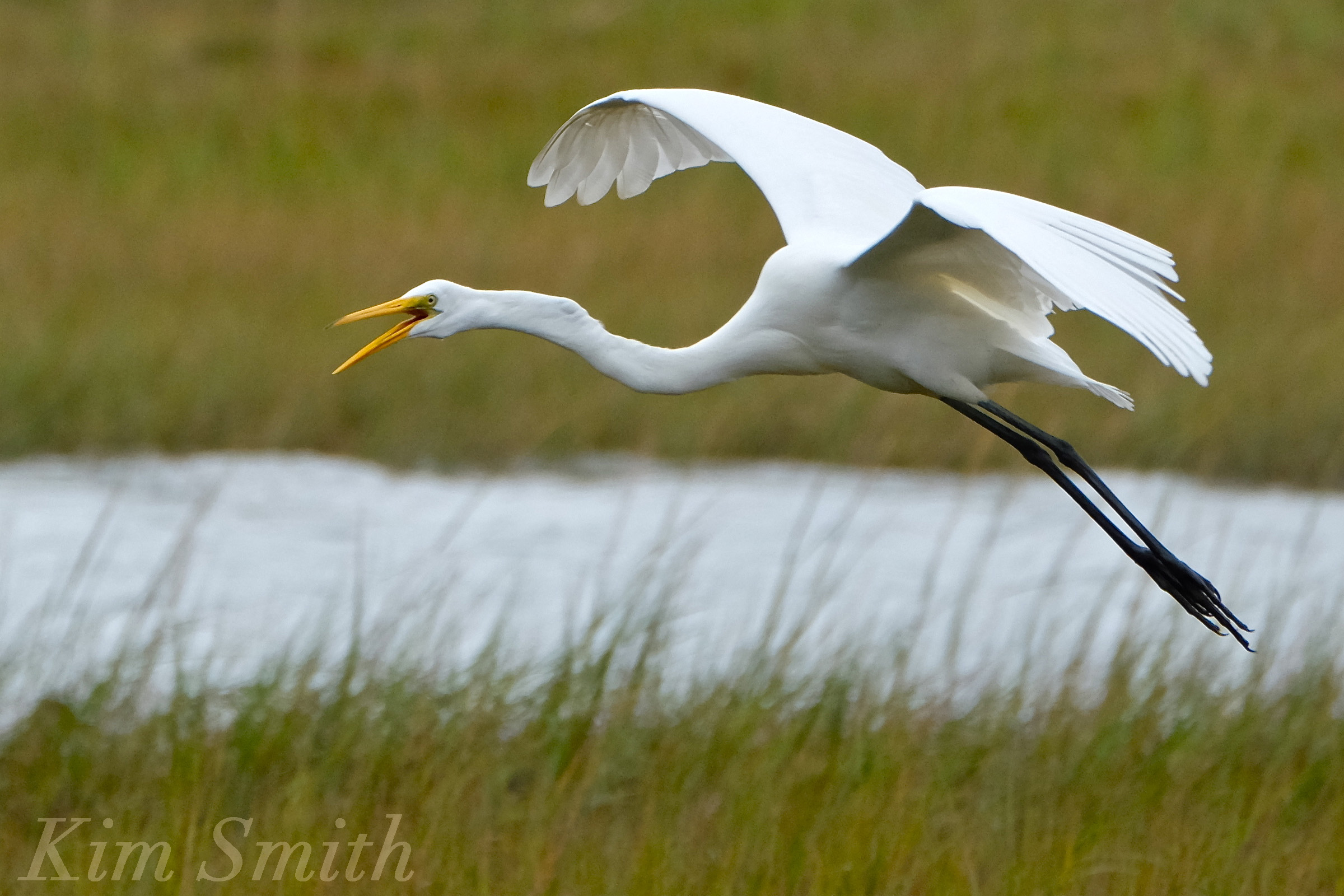
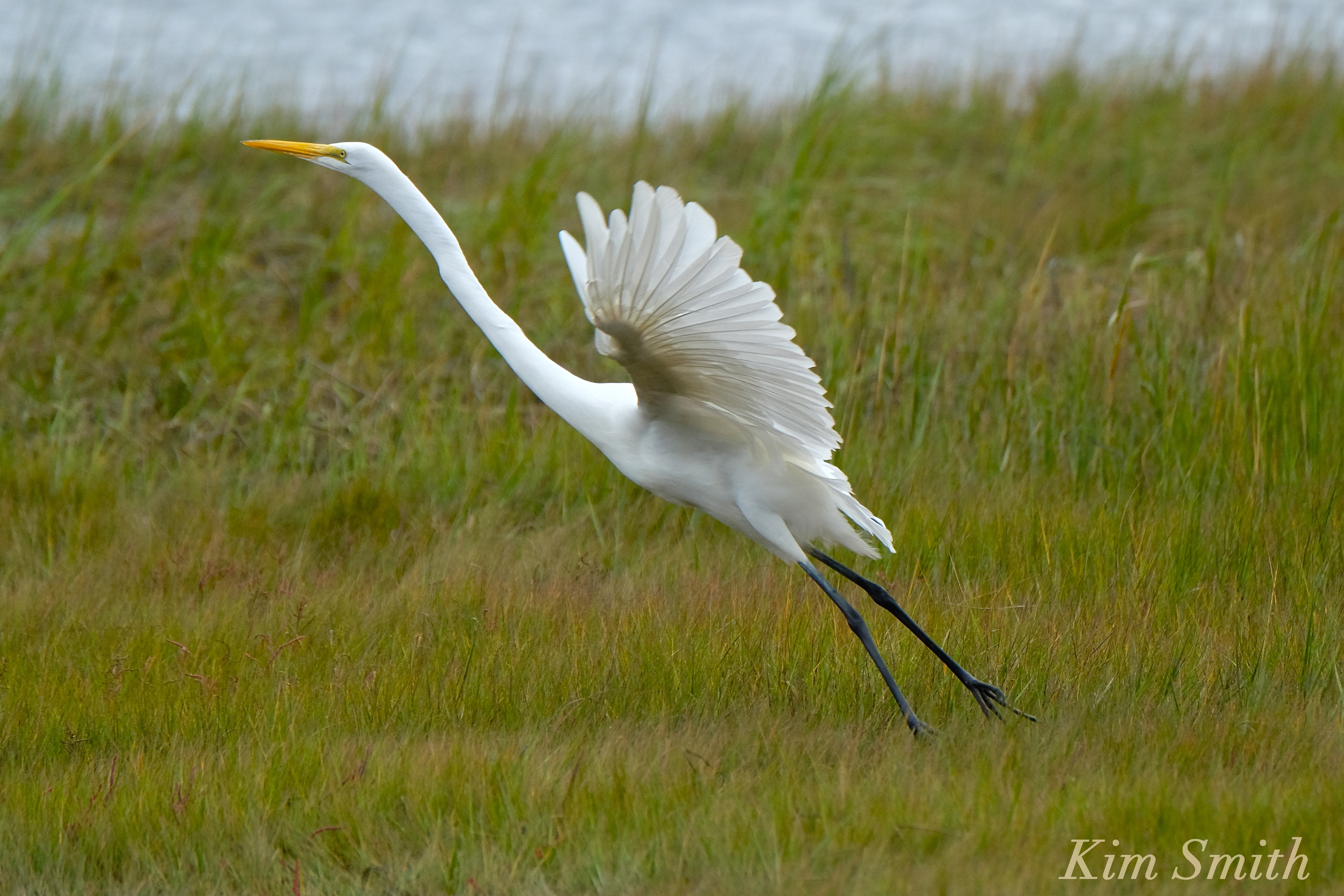
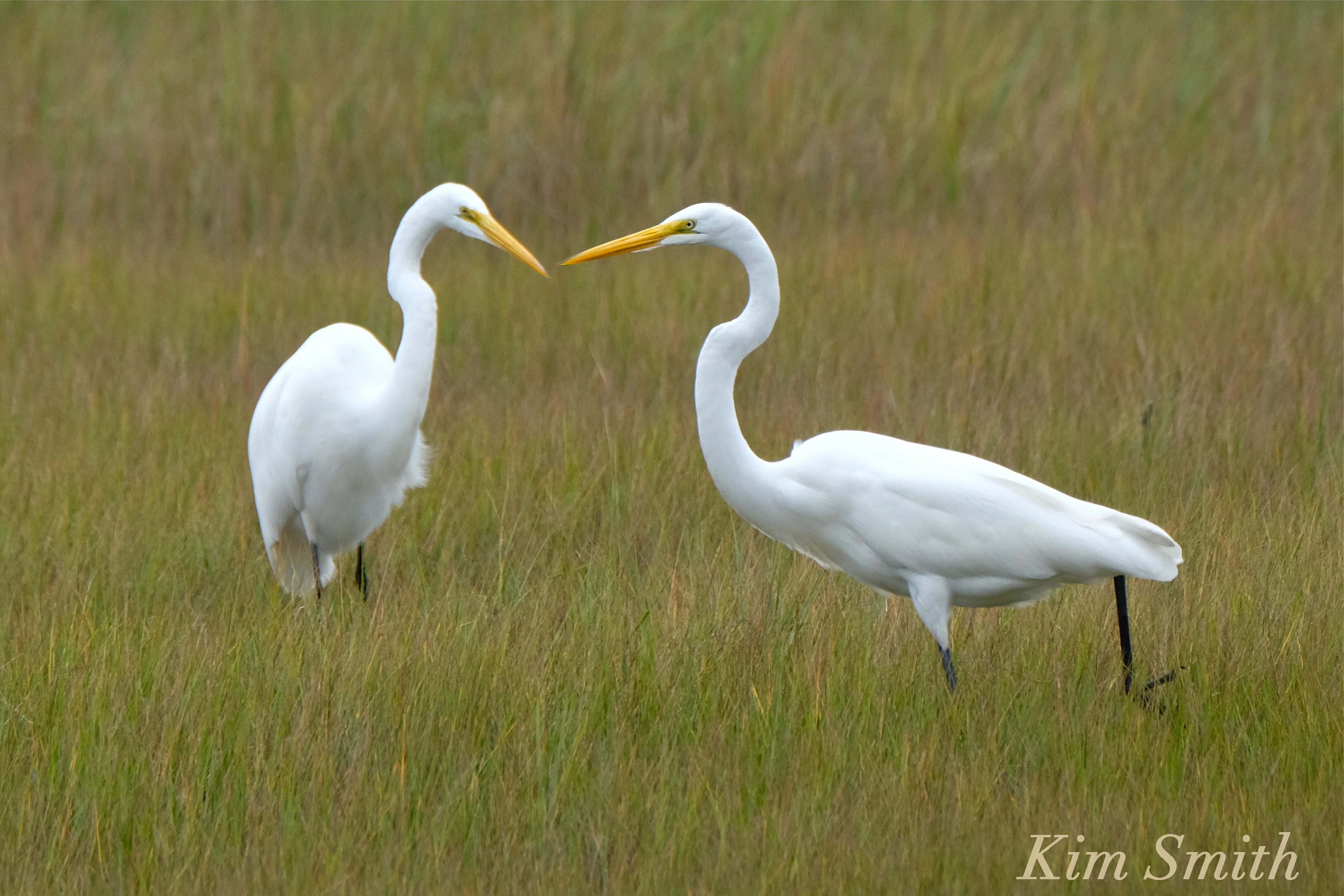
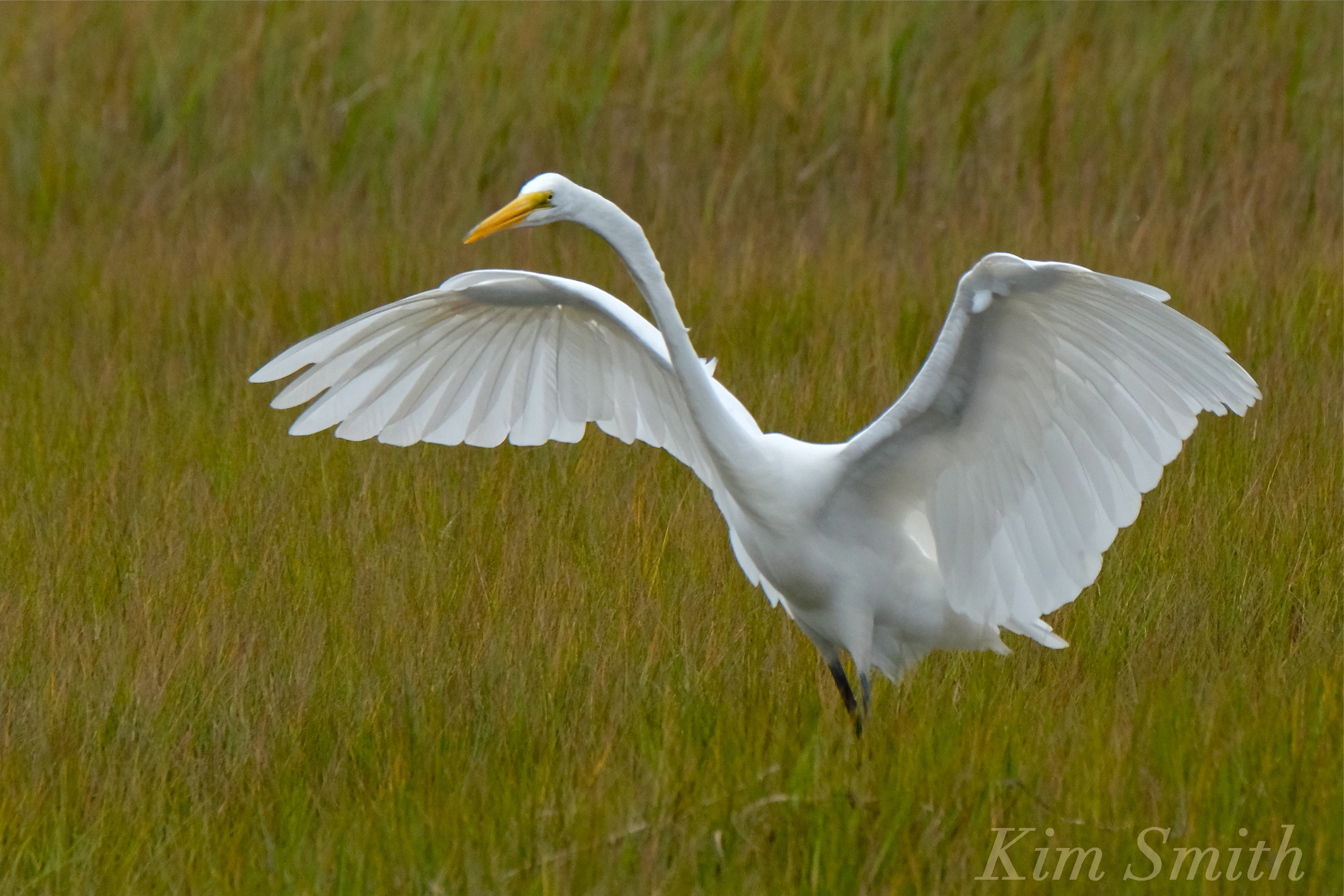
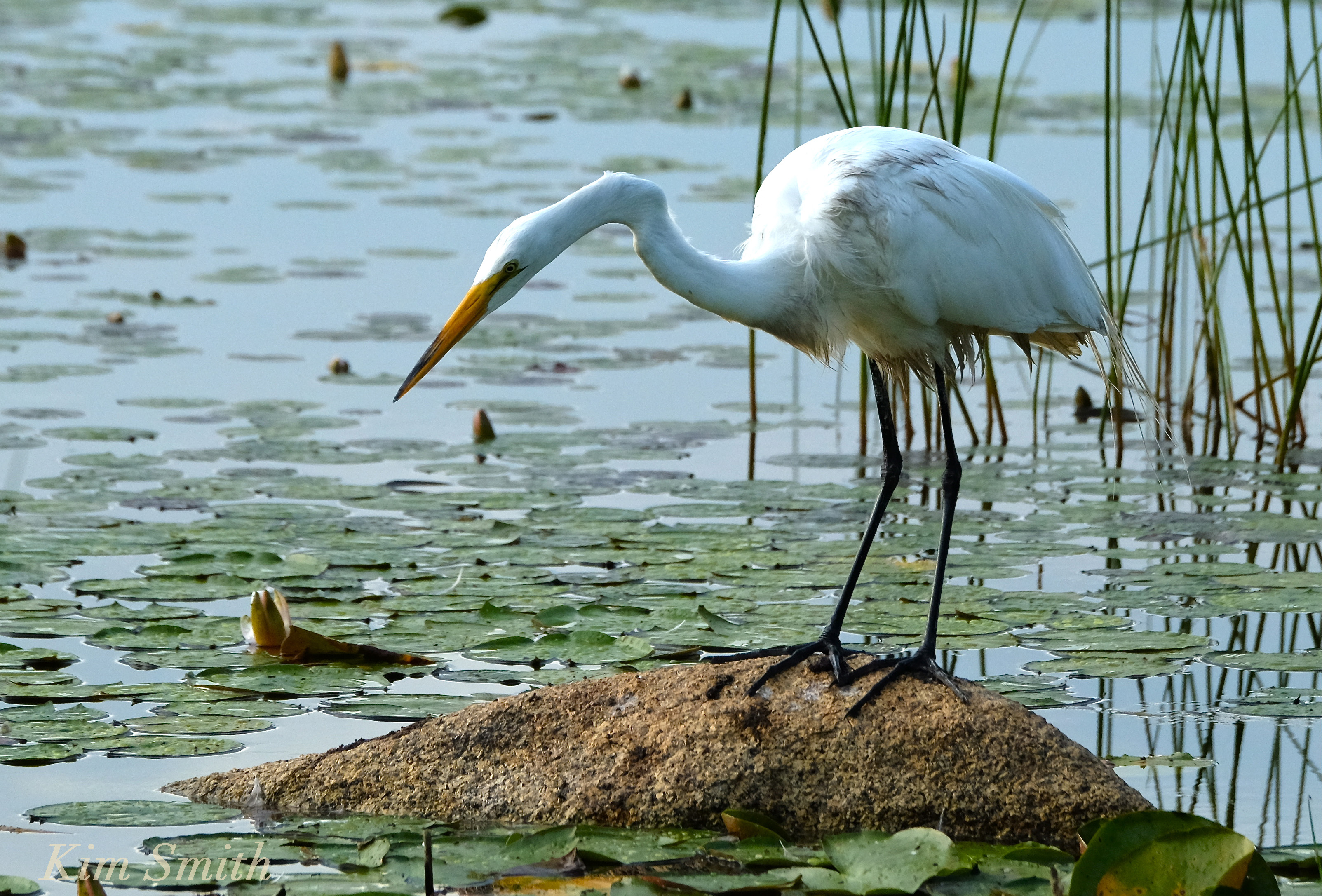
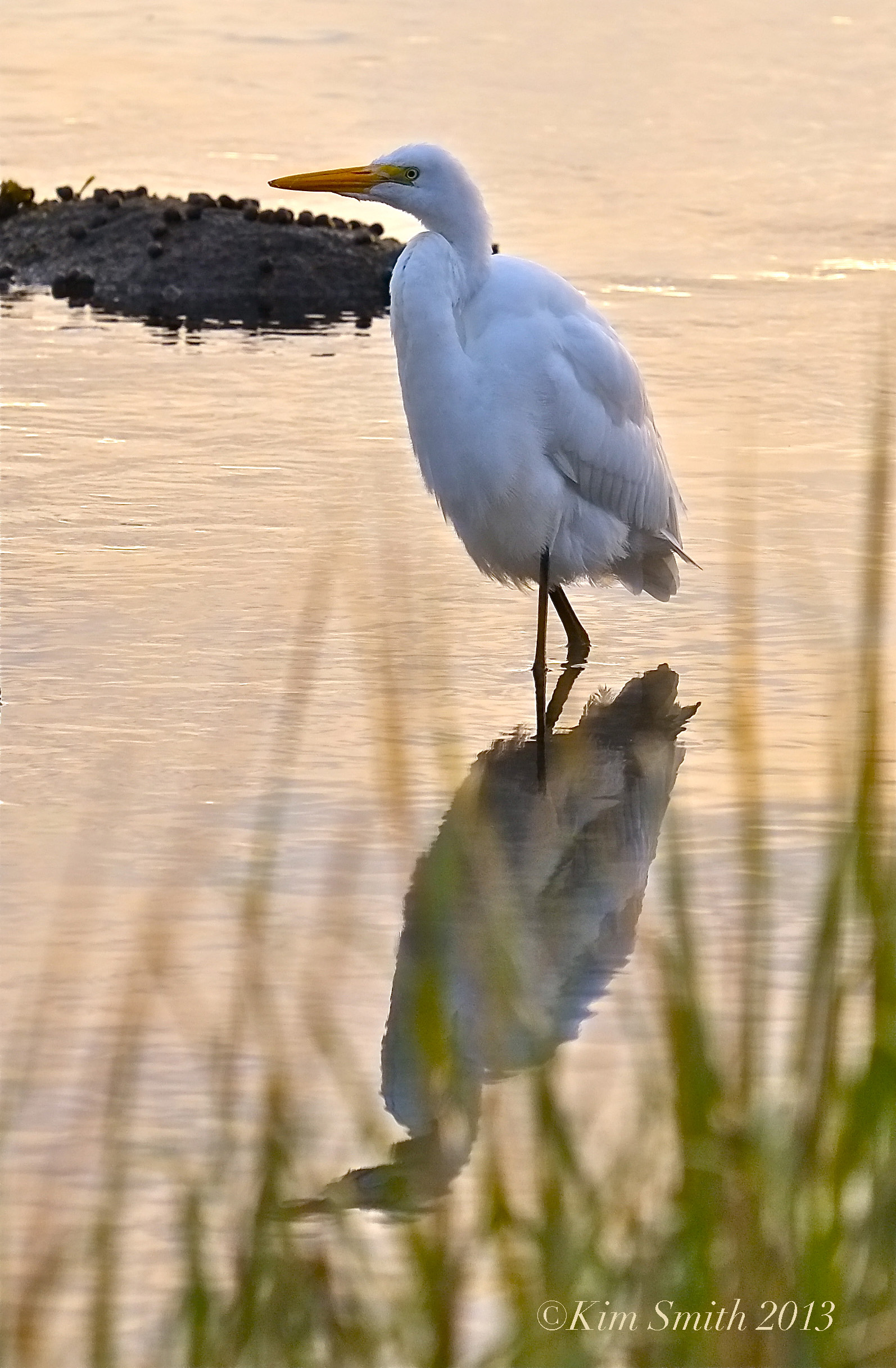
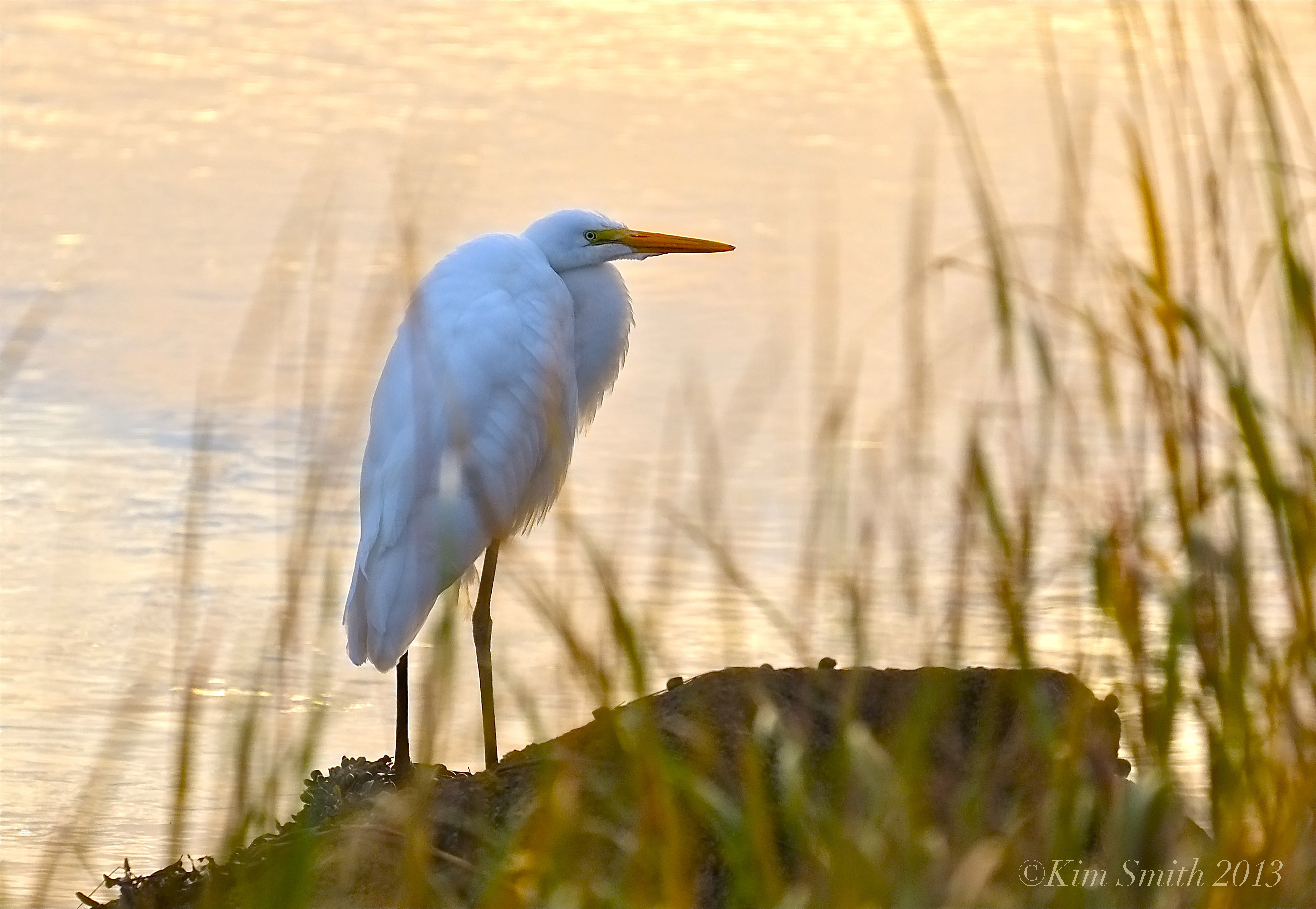
A grand Great Egret has been hanging out at the Good Harbor Beach marsh. He has been dining on small fish mostly. The photos are from Sunday but I didn’t spot him either yesterday or today; perhaps he has moved on.

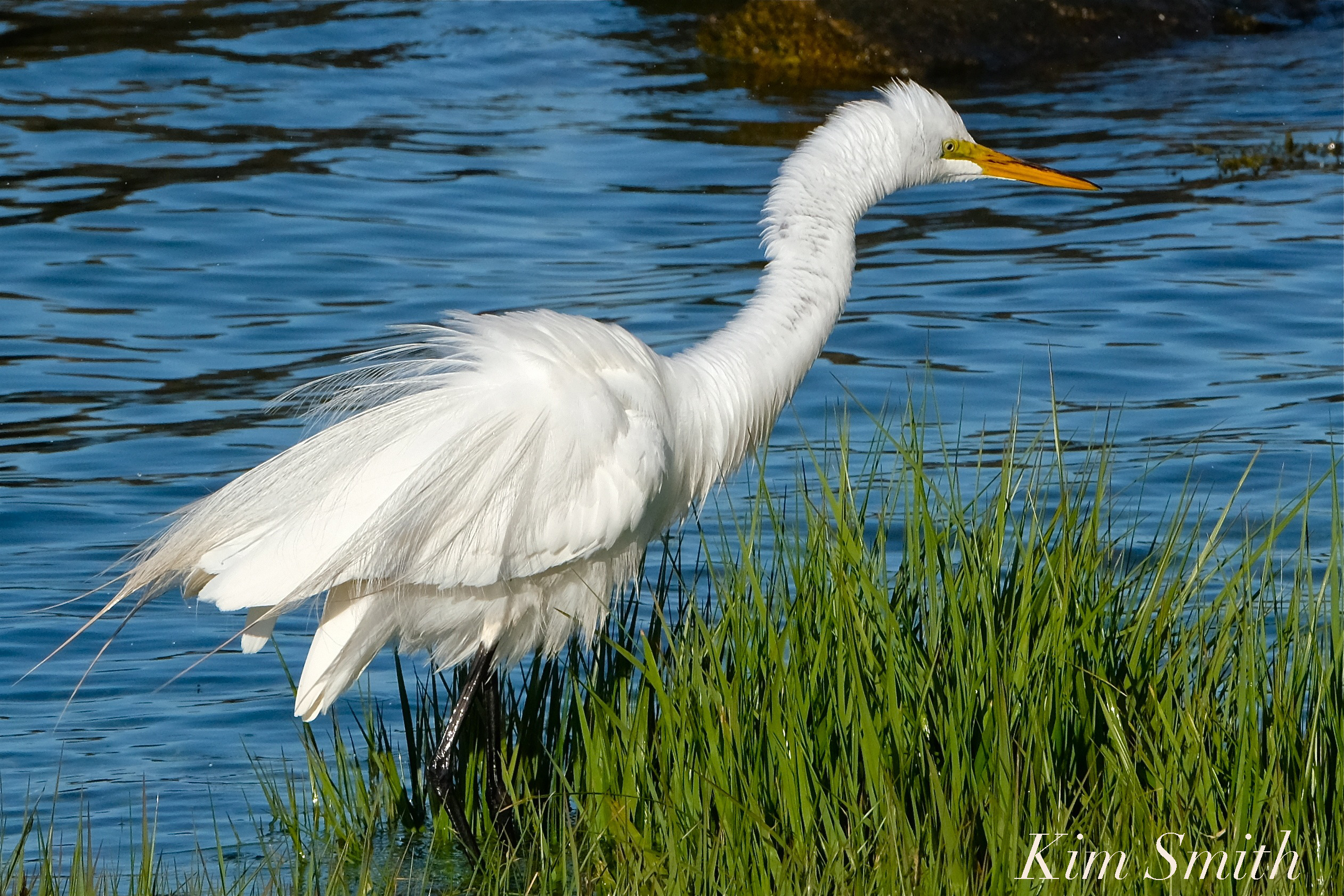
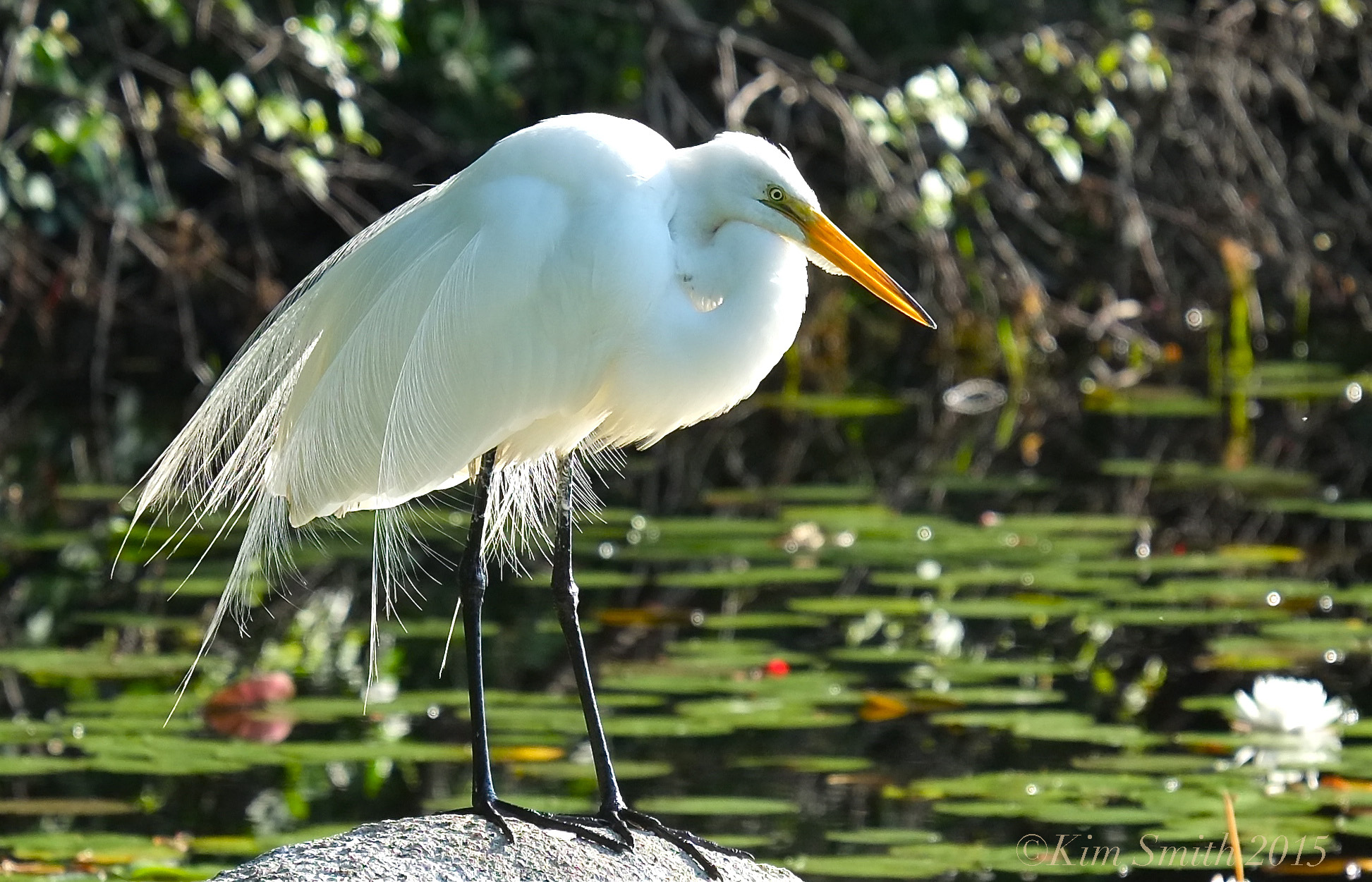
The long breeding plumes are called aigrettes.
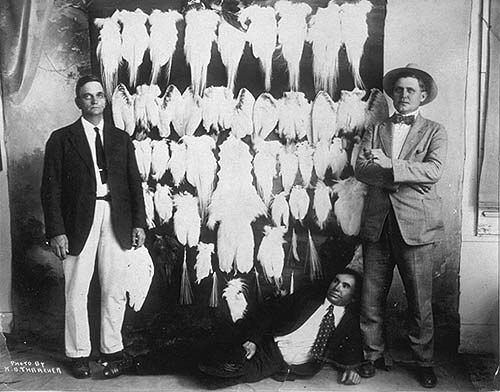
Cape Ann is part of the Great Egrets breeding range, particularly House Island. This Egret is in full breeding plumage, advertising to a potential mate how fit and desirable he is to other Great Egrets. These same beautiful feathers, and humanity’s indiscriminate killing of, are what caused the bird to become nearly extinct. During the late 19th and early 20th centuries, the long breeding plumes, called aigrettes, of many species of herons and egrets were prized as fashion accessories to adorn women’s hats. Thanks to the Migratory Bird Treaty Act of 1918, it is illegal to hunt or harm in any way gorgeous birds such as the Great Egret, and egrets and herons are making a comeback.
Fine dining in the marsh
Dagger-like bill
A THREE SPECIES MOMENT – GREAT EGRET, BLACK-CROWNED NIGHT HERON AND BLACKBIRD IN THE CATTAILS!
A SUMMER SIEGE
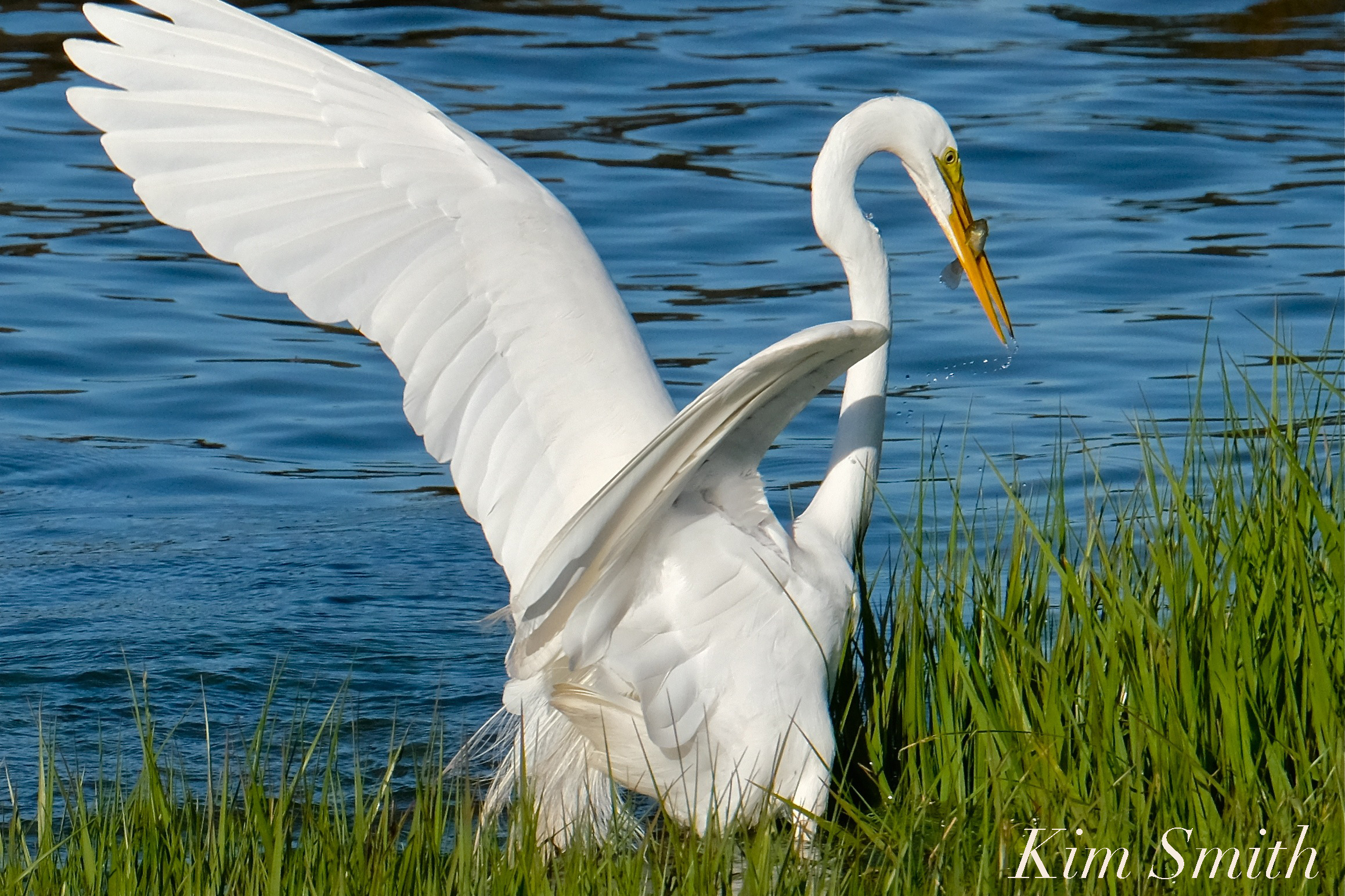
THE HAPPY-I-CAUGHT-A-FISH-DANCE, BROUGHT TO YOU BY A GREAT EGRET
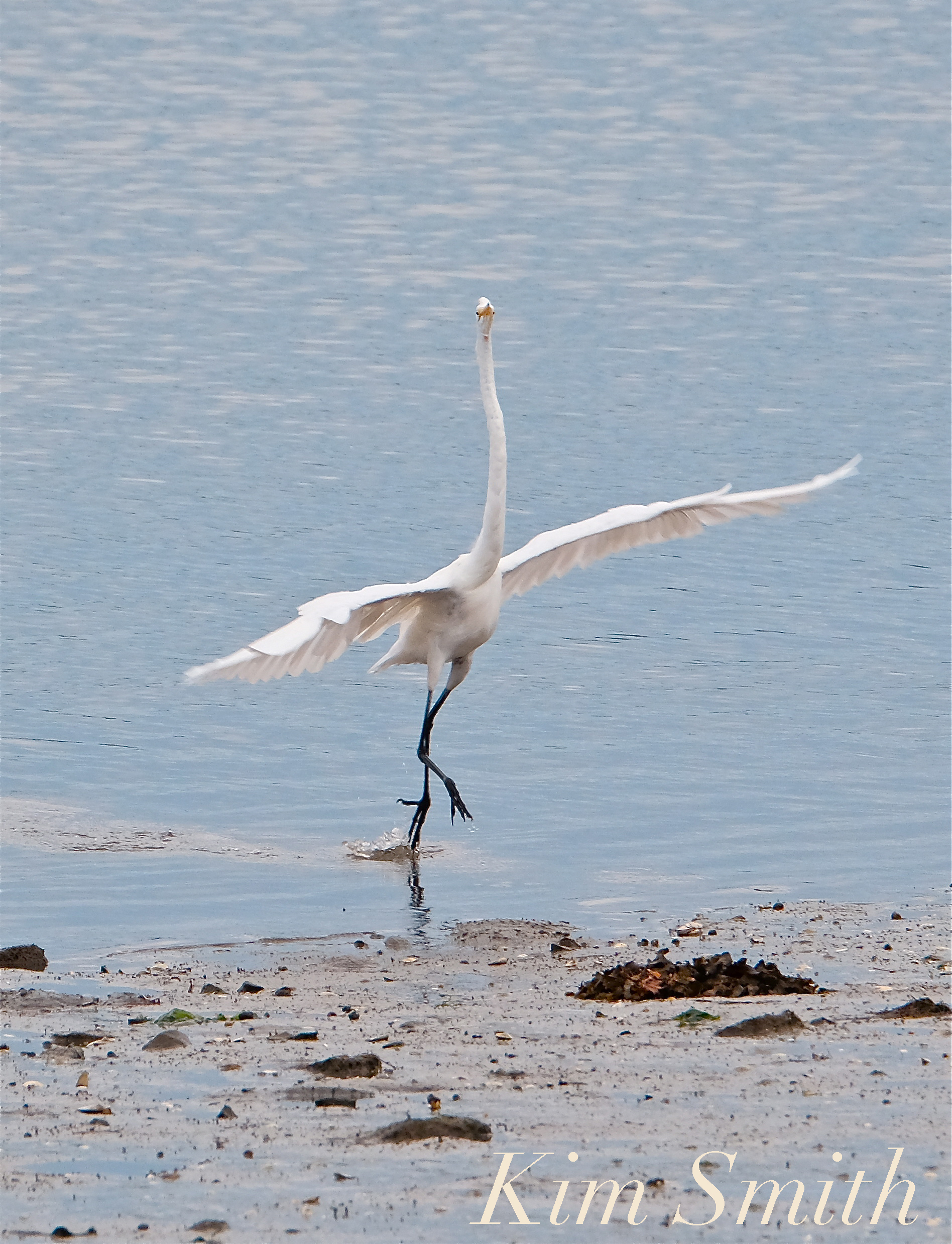
The Great Egret doing the happy dance was fishing with a group of mixed herons and egrets when he began to leap about and flourish his wings. I couldn’t tell why from the distance I was shooting until returning to my office to look at the photos and saw he had a minnow in his mouth. What a show-off!
GREAT EGRET EPIC BATTLE ROYALE
Don’t mess with these bad boys!
In no uncertain terms
The Victor
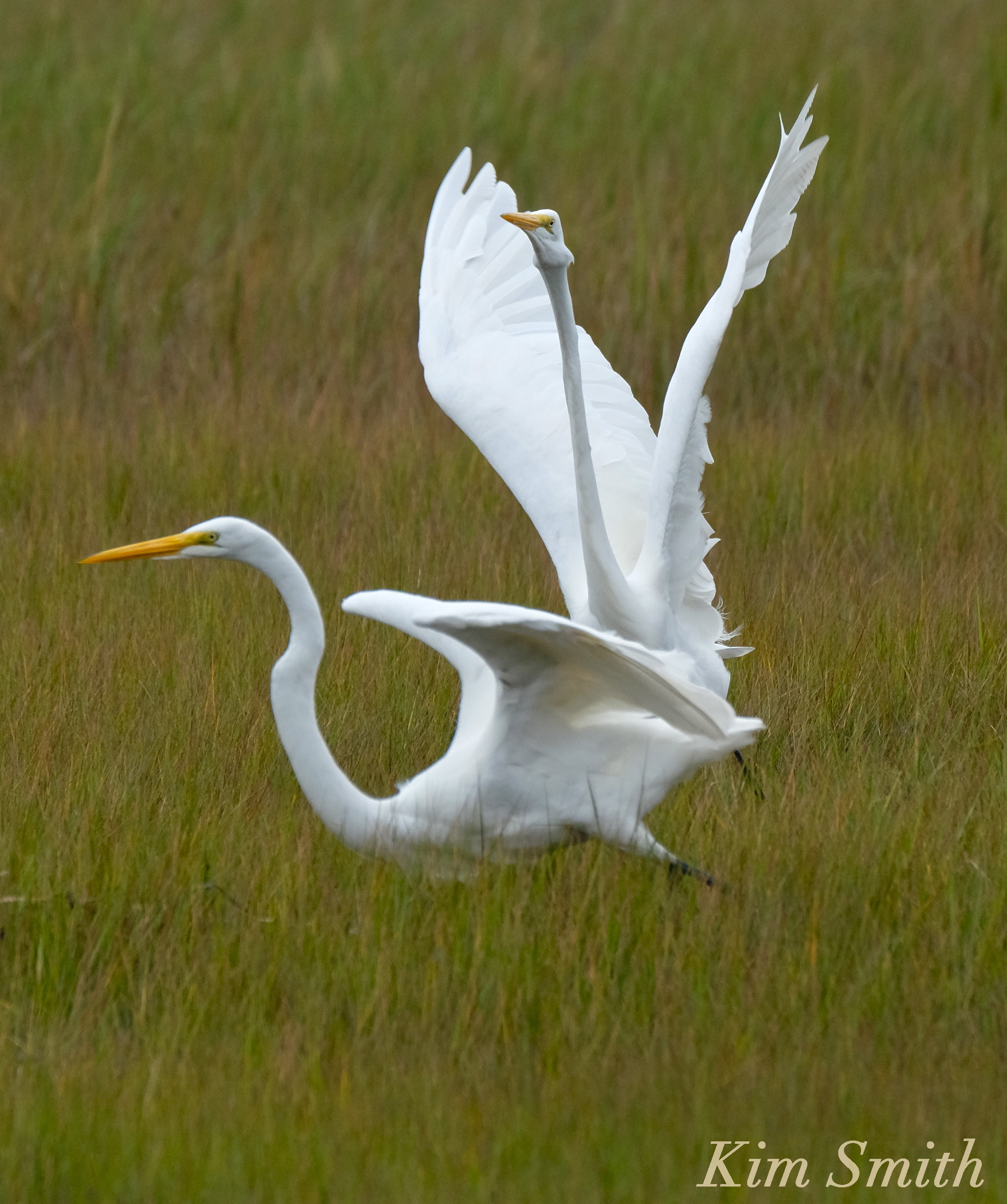
Tussles over turf pop up regularly between the egrets and herons feeding in the marsh. They often conglomerate in one small area to fish for minnows, occasionally steeling a catch from one another, and there is always one who appears to be the big kahuna of the marsh.
HOW TO QUICKLY TELL THE DIFFERENCE BETWEEN A SNOWY EGRET AND A GREAT EGRET
Often asked this question, I thought it would be helpful to post the answer again, especially as at this time of year when we see numerous numbers foraging in our marshes and along the shore. Both species of birds breed on Cape Ann and the coast of Massachusetts.
The first clue is size. Snowy Egrets are small, about the size of the Mallard Duck. Remember the letter S for small and snowy. Great Egrets are much larger, nearly identical in size to that of the Great Blue Heron.
Great Egrets have black feet and yellow bills. Snowy Egrets have reverse coloring, yellow feet and black bills.
Great Egrets stand very still while fishing. Snowy Egrets are wonderfully animated when foraging; they run quickly, walk determinedly, fly, and swish their feet around to stir up fish.
GREAT EGRET: HUNTED TO NEAR EXTINCTION
During the breeding season, Great Egrets grow long feathers from their back called airgrettes.
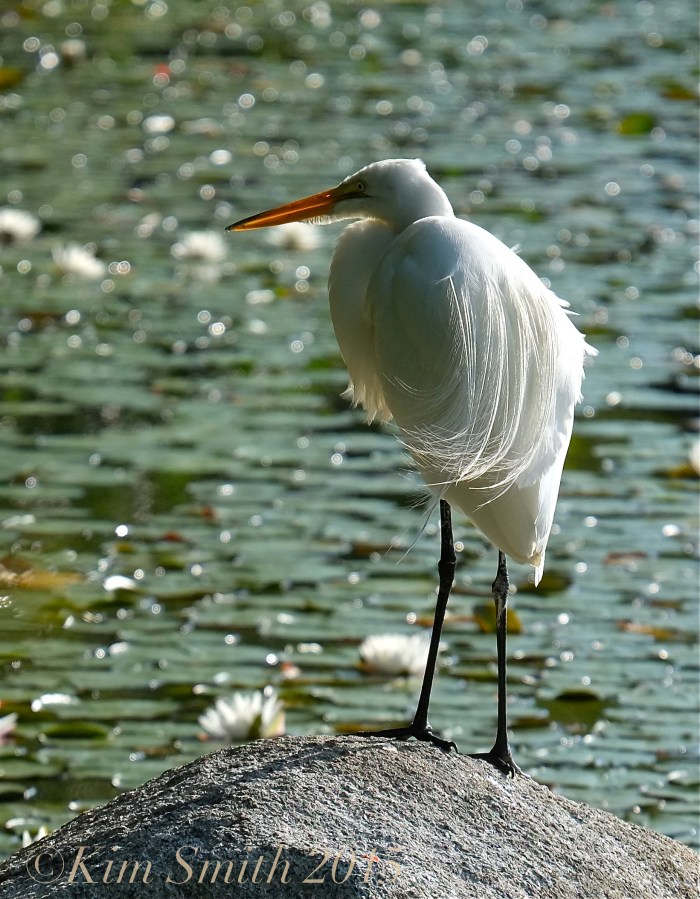
The airgrettes were the feathers sought by the 19th and early 20th century plume-hunters for the millinery trade.
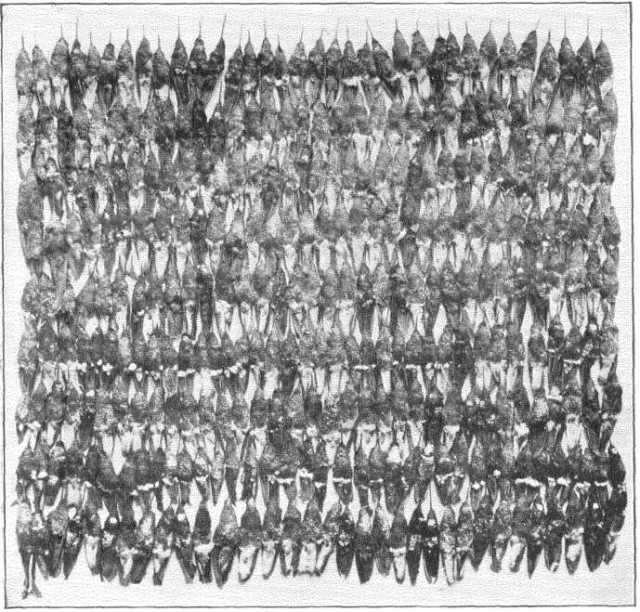
The magnificent Great Egret was very nearly hunted to extinction during the “Plume Bloom” of the early 20th century. Startling, cumbersome, and hideous, hats were fashioned with every manner of beautiful bird feather. Europeans were partial to exotic birds that were hunted the world over and they included hummingbirds, toucans, birds of paradise, the condor, and emu. The American milinery trade favored herons for their natural abundance. The atrocities committed by the murderous millinery led to the formation of the first Audubon and conservation societies however, what truly led to saving the birds from extinction was the boyish bob and other short hairstyles introduced in about 1913. The short cuts could not support the hat extravaganzas, which led to the popularity of the cloche and the demise of the plume-hunters.
Thousands of hummingbird pelts at 2 cents apiece

As absurdly ridiculous now as then
The Real Deal ~ Good Harbor Beach September Sunrise
Good Harbor Beach Sunrise ~ Click to view full size.
Below is the double exposure from several days ago, where you can see the sunrise is to the left of Salt Island, which is not possible in September. For the explanation, see post What is Mysterious About This Sunrise?
Birds of Cape Ann: Great Egret vs. Great Egret
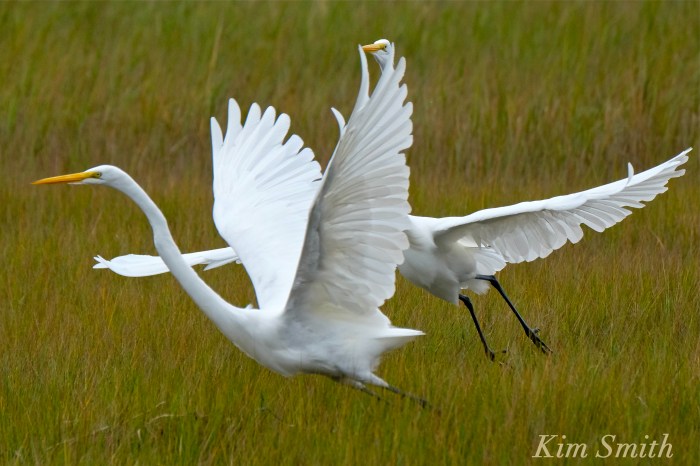
On a gorgeous dawn this past season I filmed an epic battle between two, possibly three, Great Egrets at the Good Harbor Beach marsh. The battle lasted nearly ten minutes with the defending egret aggressively flying lower and beneath the intruder, preventing it from landing anywhere on the marsh.
Great Egrets have interesting breeding behavior in that the male selects the nesting site and builds a platform nest of sticks and twigs in a tree, shrub, or on the ground near a marsh, prior to selecting a mate. Both parents incubate the eggs and feed the chicks, and both male and female vigorously defend the nesting territory. Perhaps that is what I had observed, a male and/or female defending their nesting site.
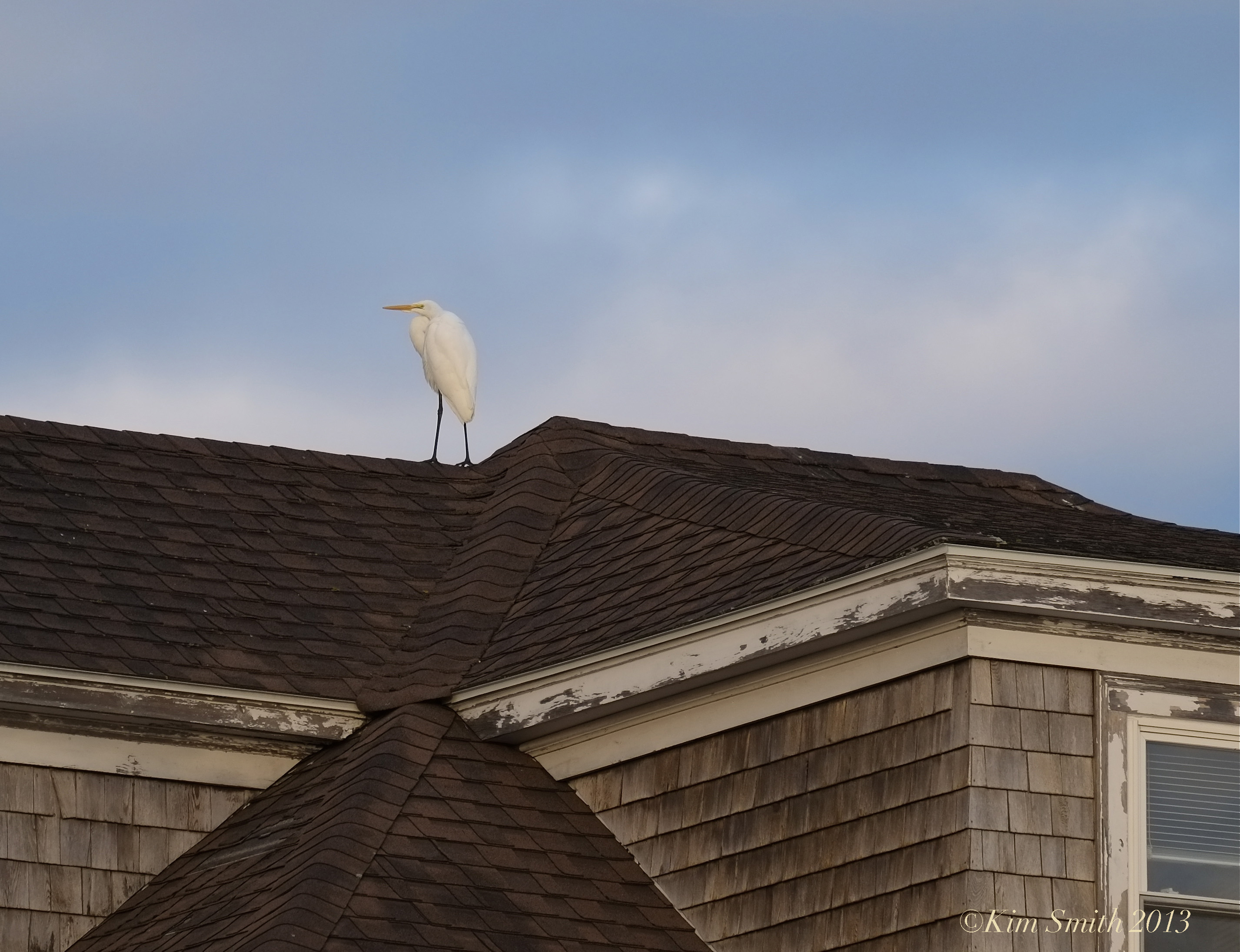
The Good Harbor Beach victor first surveyed the marsh from his perch on the adjacent cottage and, after determining his foe was defeated, swooped to the tide pool below to feed peaceably alonsgide the Great Blue Heron.
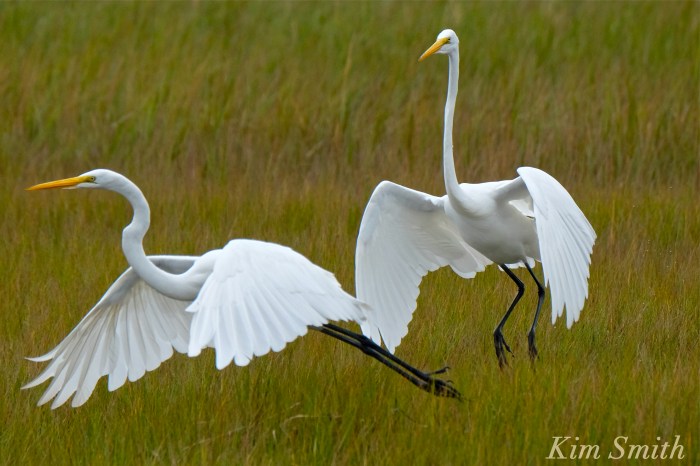
Great Blue Heron and Great Egret
Read More Here: Continue reading “Birds of Cape Ann: Great Egret vs. Great Egret”