Beautiful Fish: Slime Eel -By Al Bezanson

 Slime Eel, Snub Nosed Eel 

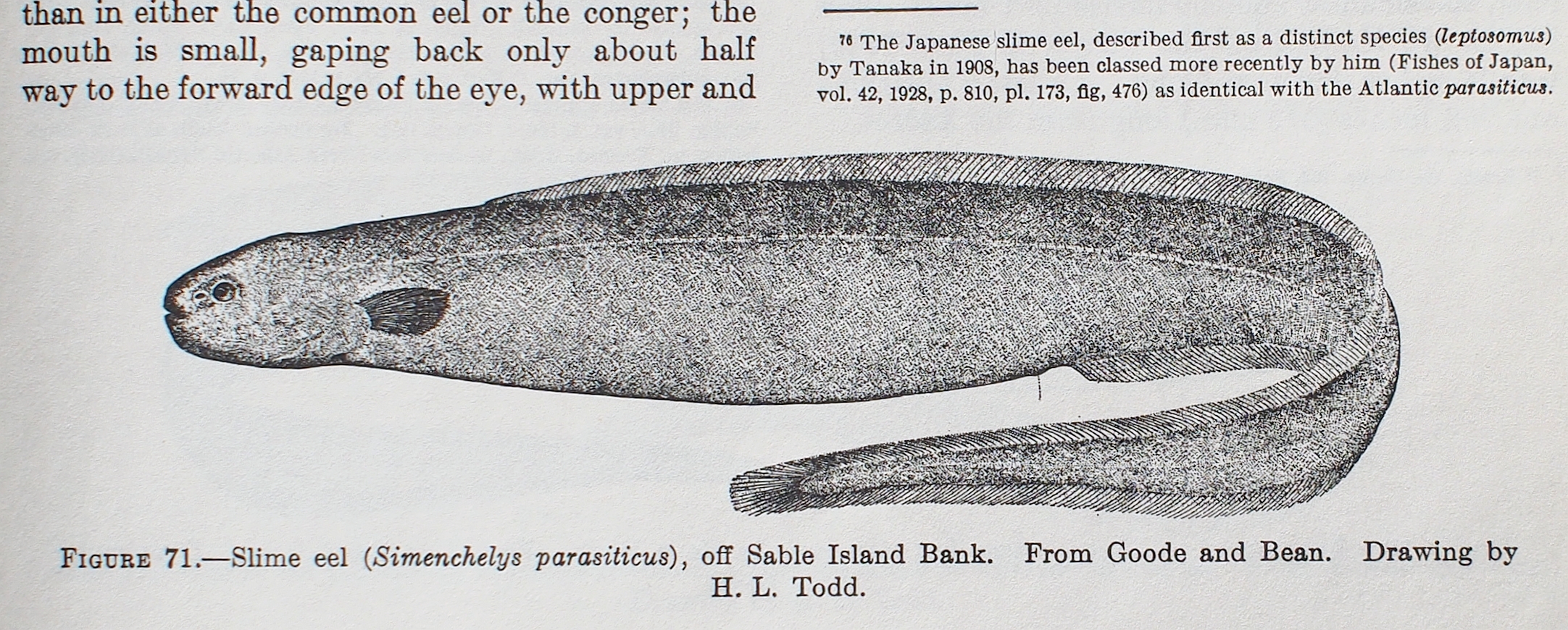
The most distinctive characters of the slime eel, its eel-like form, snub nose, long dorsal fin, and soft and slimy body.

From Fishes of the Gulf of Maine by Bigelow and Schroeder (1953) online courtesy of MBL/WHOI http://www.gma.org/fogm/Simenchelys_parasiticus.htm

This true slime eel is not the same as hagfish (described in yesterday’s post).  Hagfish have since earned the nameslime eel.  “Being worthless itself, the hag is an unmitigated nuisance, and a particularly loathsome one owing to its habit of pouring out slime from its mucous sacs in quantity out of all proportion to its small size. One hag, it is said, can easily fill a 2-gallon bucket, nor do we think this any exaggeration.”  (1953)  Hagfish, thanks to a market in Korea, are no longer worthless.


The Eel
I don’t mind eels

Except as meals.

And the way they feels.

Ogden Nash (1902-1971)  [photo from US postage stamp]


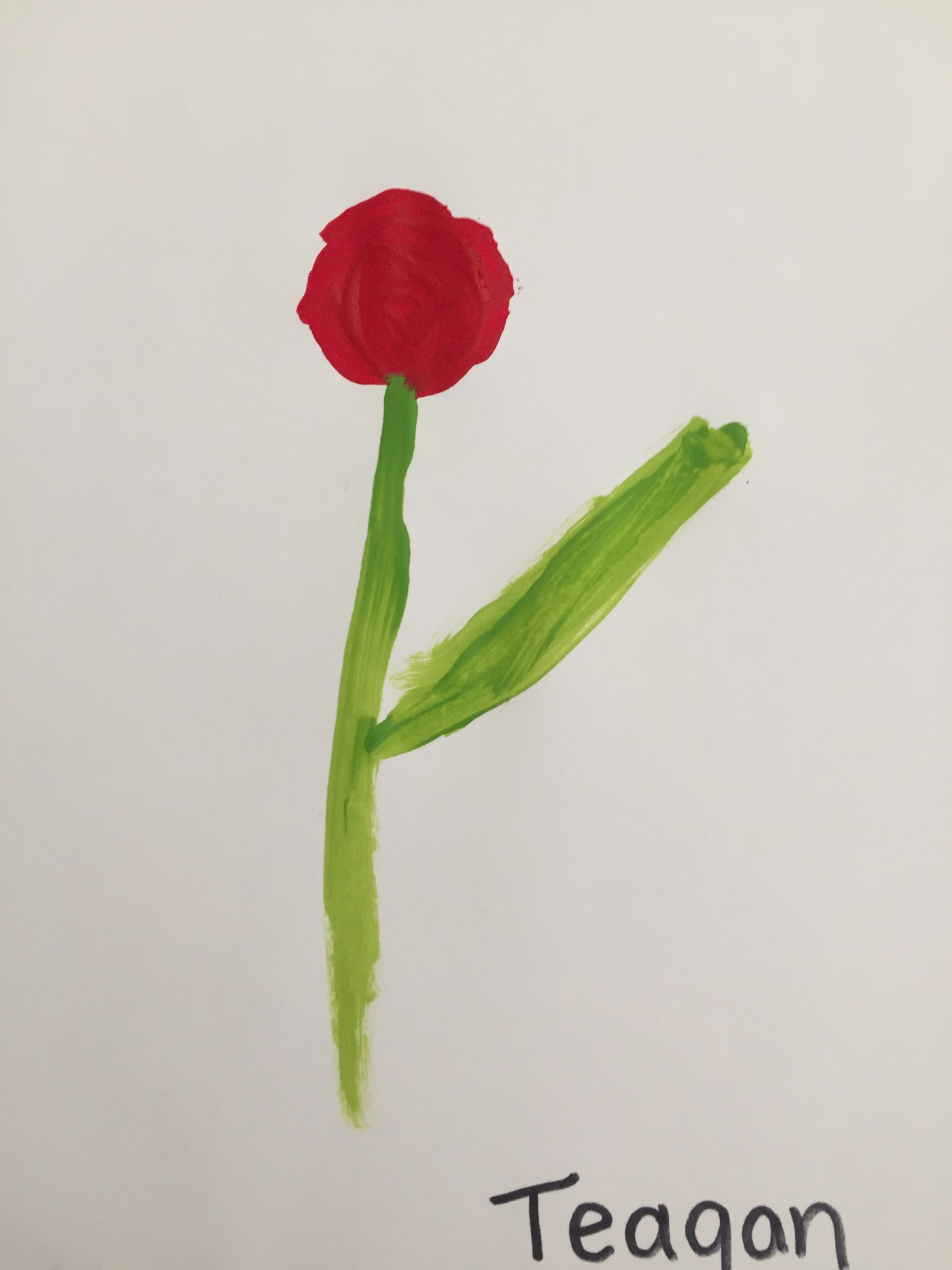
ARTS AND CRAFTS FOR LITTLE ONES: TULIP STUDY

My friend Colleen teaches the most wonderful children’s art classes from her Montessori Art Kitchen in East Gloucester. I can’t wait until our granddaughter is old enough to participate! Thank you to Colleen for sharing these lovely photos of works in progress, the perfect anecdote to a rainy April afternoon!
 
To register for May classes call Colleen at 978-648-0601 or email colleenapostolos@gmail.com

Lovely Article by Shelby Macri – Salem State University Keynote Speaker Spotlights Plight of the Monarch Butterflies

Salem State keynote spotlights beauty, plight of monarch butterflies

Smith, who spoke on campus Thursday, April 12, makes nature films and contributes to the daily blog Good Morning Gloucester. She also helps communities and individuals build gardens specifically aimed at attracting butterflies, bees and beneficial bugs.

On behalf of the Earth Days Planning Committee, Carol Zoppel, a campus librarian and co-chair of Earth Days Week, presented Smith with the Friend of the Earth Award.

“Salem State University’s Earth Days committee would like to recognize Kim Smith for her artistic and advocacy work on behalf of wildlife through her films, photo, gardens, and writings,” said Zoppel. Smith received her award and a framed poster of her program.

READ COMPLETE ARTICLE HERE


…Smith also reflected on our involvement with these creatures.

“I think compassion for all living creatures is really important,” said Smith. “Right here in our own backyards and beaches we have small winged creatures like Monarchs and Piping Plovers that are struggling to survive.”

She added, “Our actions and how we chose to live our lives has tremendous impact.”


BRIAR BARN INN CONSTRUCTION TIME LAPSE VIDEO

Check out this great time lapse construction video from Briar Barn Inn. The Inn has progressed tremendously since the video was shot over the winter, but you can see how beautifully the buildings are coming along.

MESSAGE FROM MAYOR SEFATIA REGARDING GLOUCESTER’S PIPING PLOVERS

Message from Mayor Sefatia Romeo Theken  

The Piping Plover is a “threatened” species under both the state and federal Endangered Species Acts.  As such, the City, along with the Commonwealth, is required to protect them under the law.  Having said that, we are committed to making every effort possible to protect the nesting Piping Plovers at our beaches while, at the same time, maintaining public access.
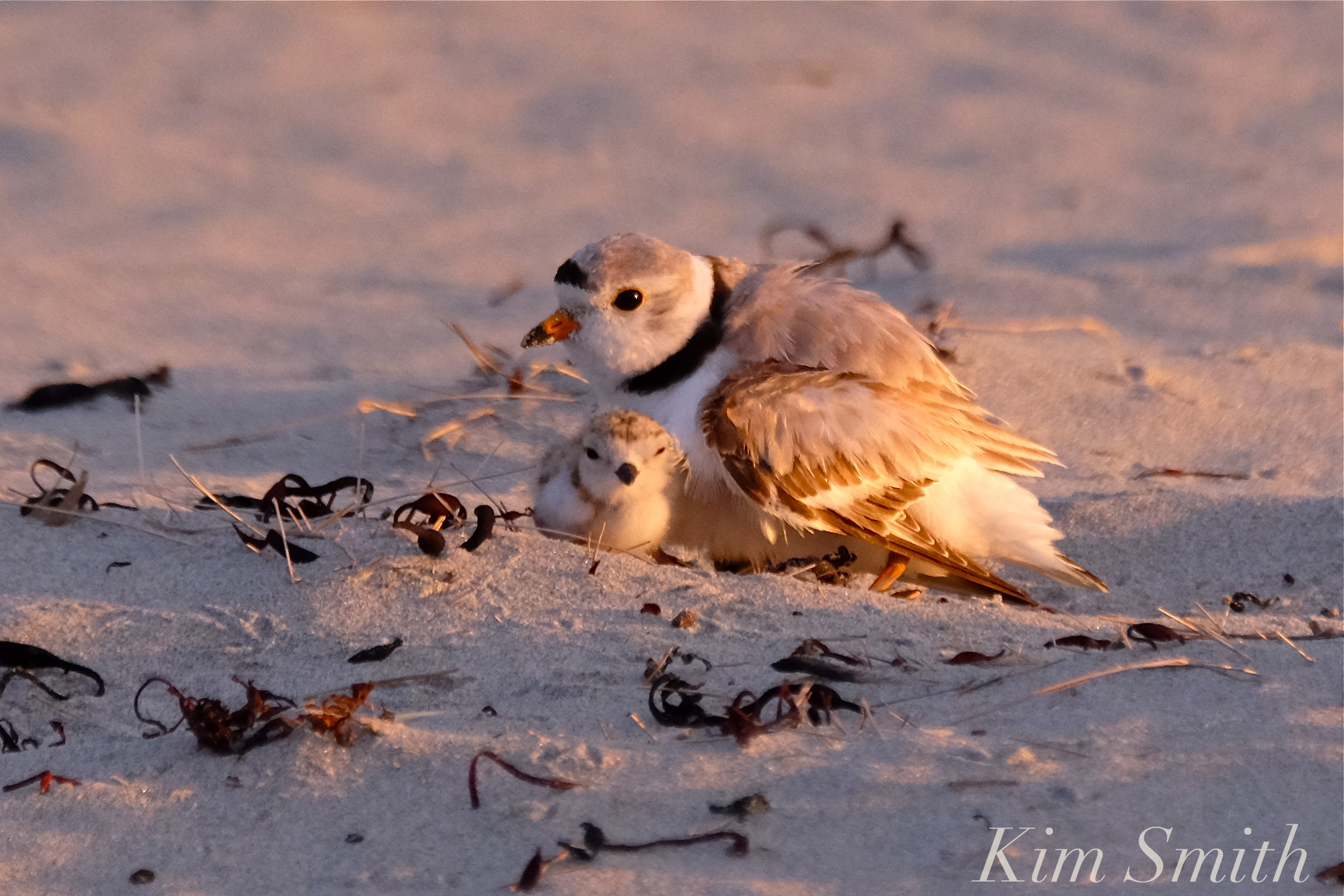
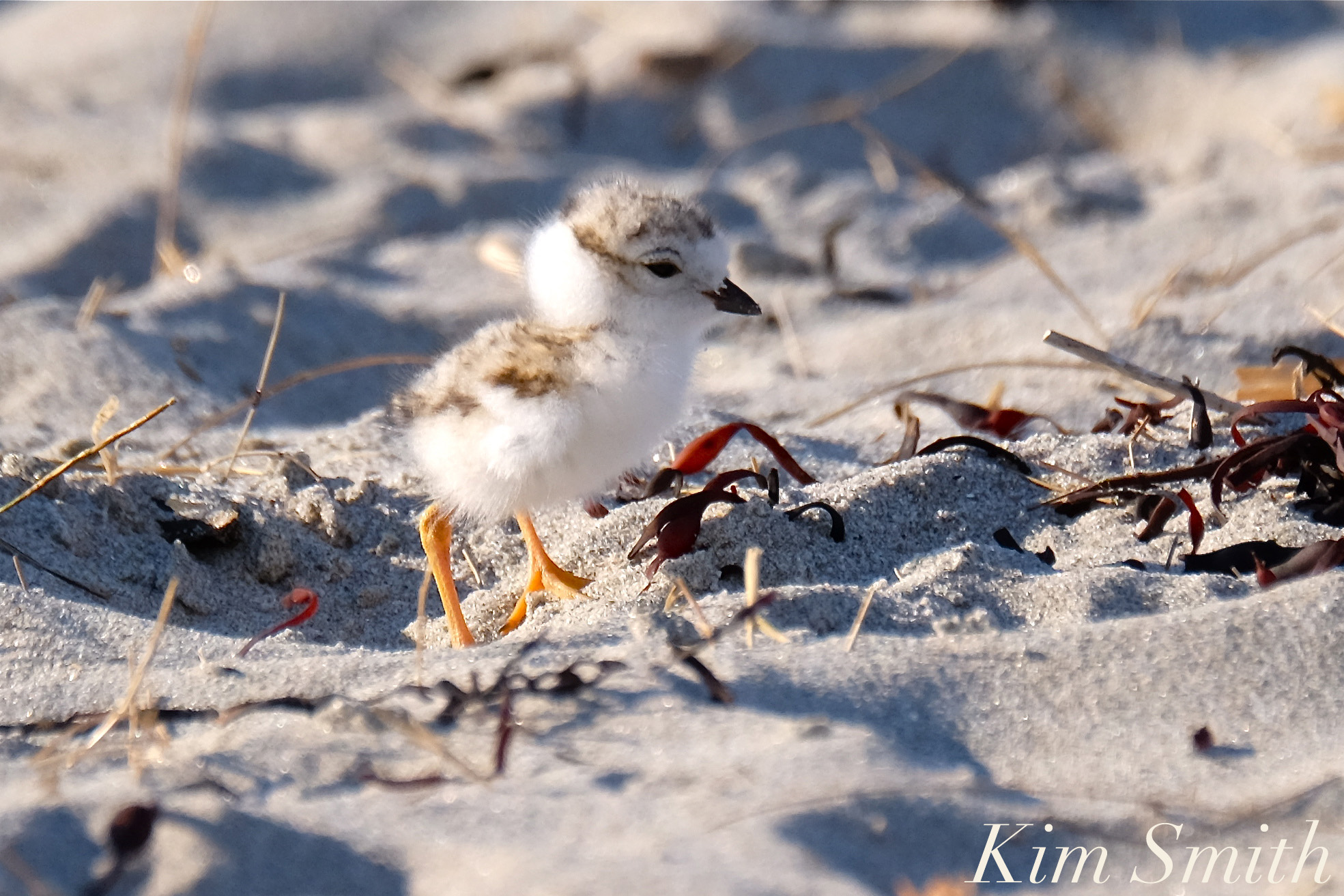
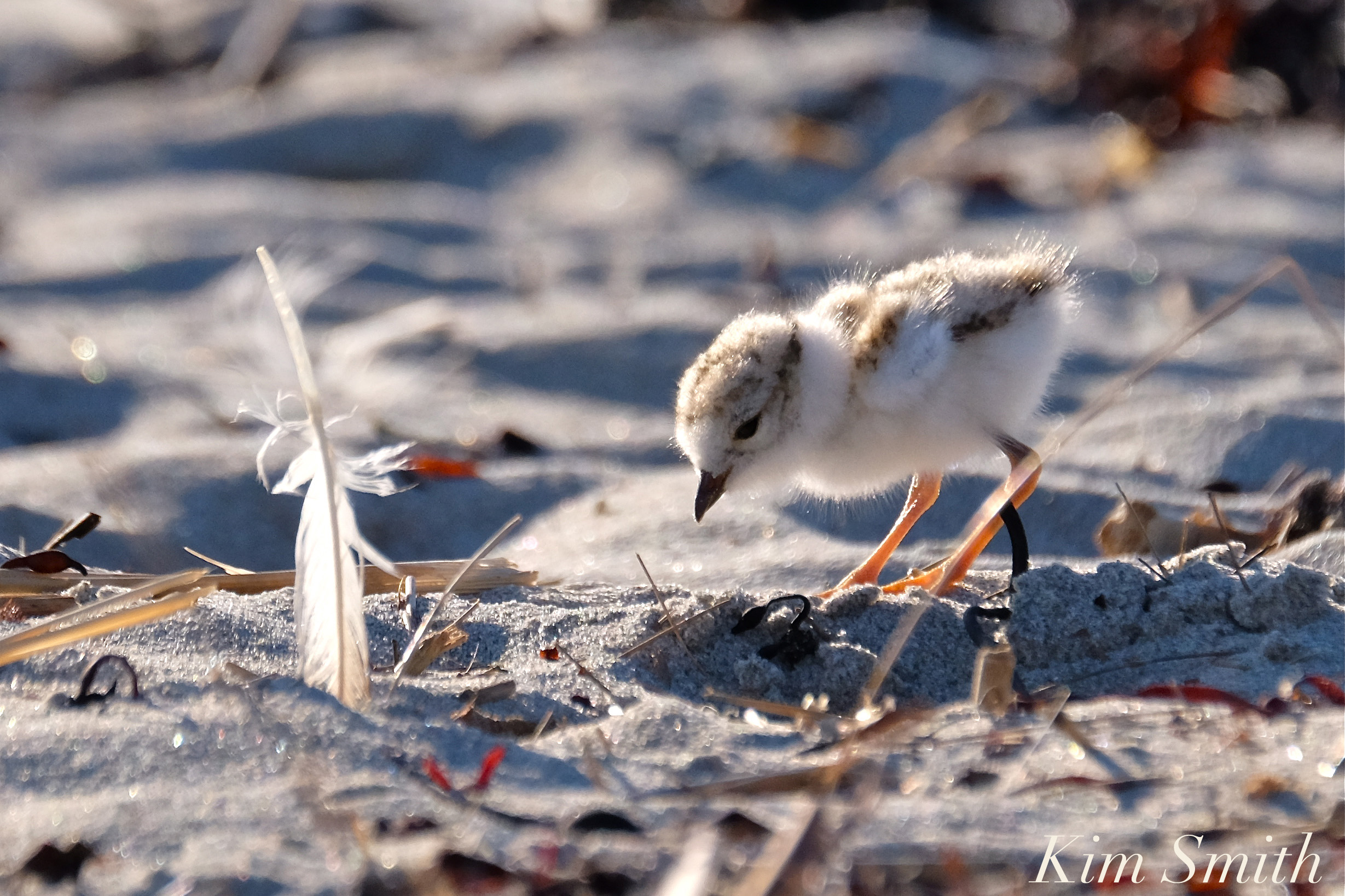
Piping Plovers typically arrive from their southern wintering areas to our local beaches in late March or early April.  Males and females quickly form breeding pairs that begin the process of courtship and select a nest site throughout April and May. During these months, it is critically important to limit any disturbance of the birds and their habitat.Chicks can hatch from nests in late May and are immediately mobile and move out of the nest in search of food.  As chicks grow older and larger, they will roam from the dunes to the water’s edge in search of food. Chicks are very vulnerable to human disturbance and are susceptible to predators like gulls, foxes, and dogs.
While dogs are allowed to run free during this time of year on many of our beaches, that right does not supersede the requirements under federal law to protect the Piping Plovers on those beaches.  Unleashed dogs can pose a very real threat to Piping Plover adults and chicks.  As such, dog owners are responsible for controlling their dogs and keeping them as far away from Piping Plover areas as possible.  The owner of any dog that adversely or negatively impacts the Piping Plovers and their habitats will be in violation of federal law and will likely face legal action.
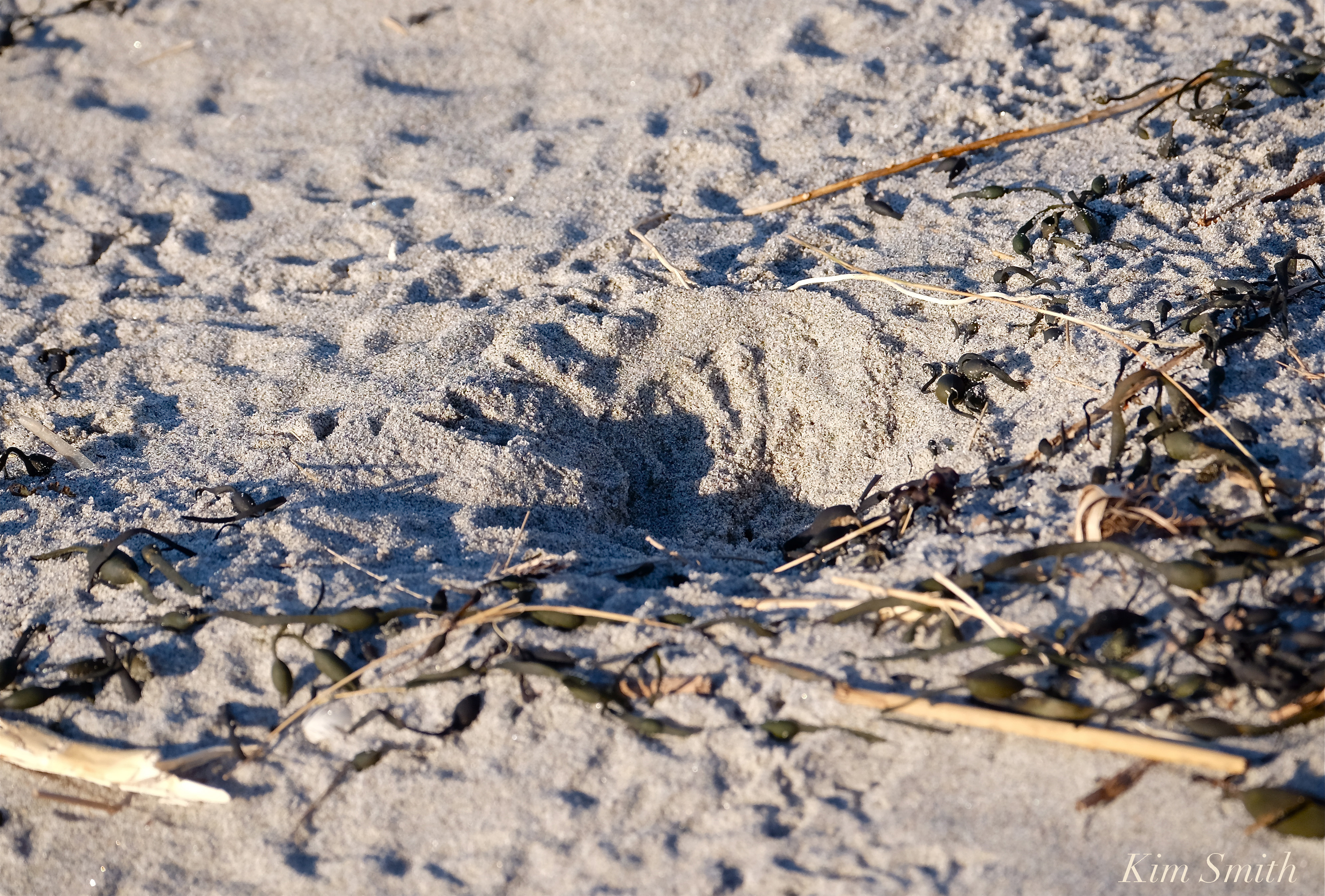
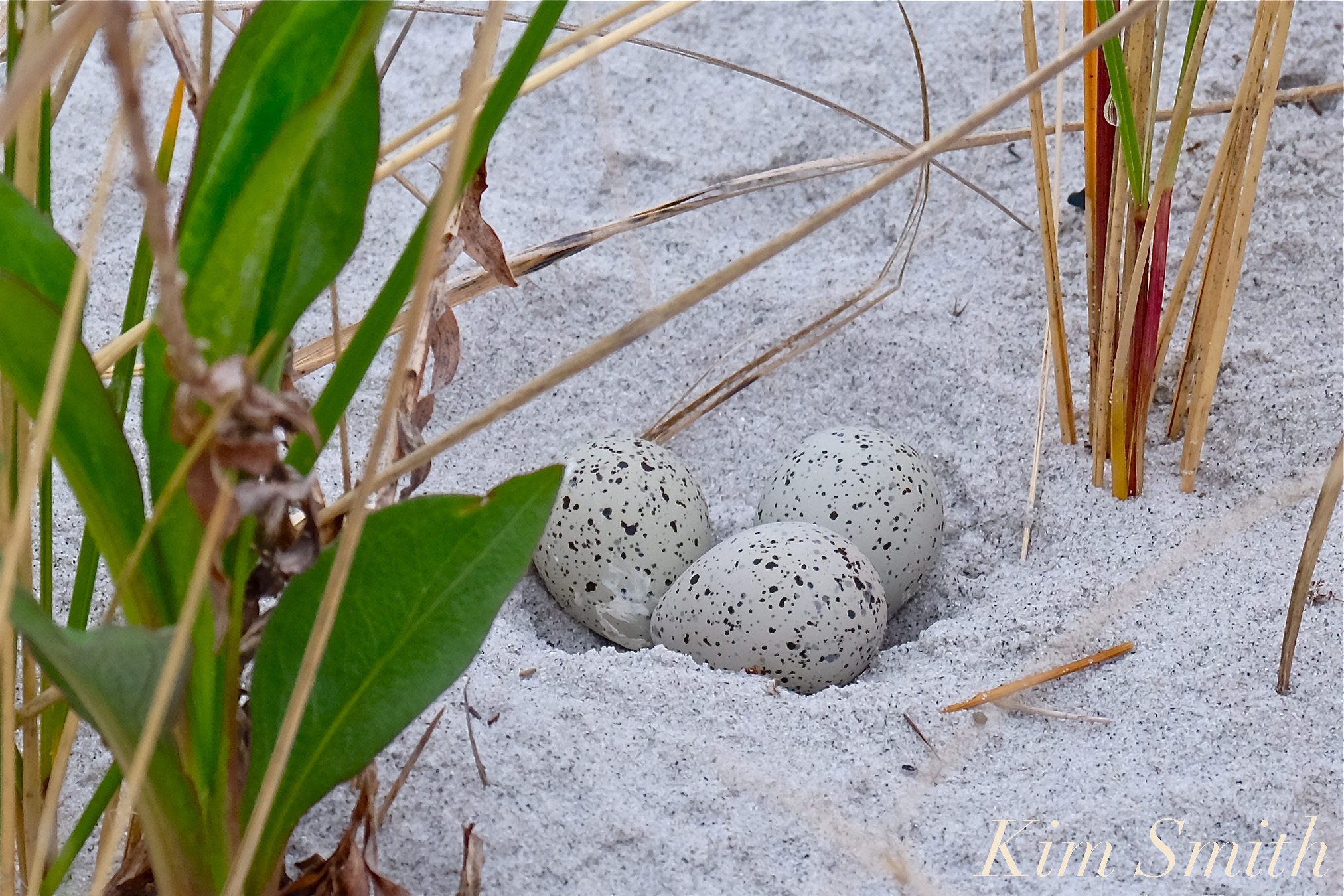
Please keep a close eye or your dog during this Piping Plover season.A Piping Plover nest is a mere depression in the sand.
Male and female Plovers do not begin sitting on the eggs 24/7 until all are laid, which takes about a week. Especially during that time, the eggs are often left exposed and are extremely vulnerable to being stepped upon by people and dogs.

PIPING PLOVERS FORCED OFF THE BEACH FOR THE SECOND WEEKEND IN A ROW

Despite best efforts, the Piping Plovers were again driven off the beach.

Knowing an off leash weekend day was going to be tough on the PiPl, I spent most of Sunday at Good Harbor Beach. During the morning hours, it wasn’t so bad because most dog walkers were with their pooches by the water’s edge. As the tide came in, the situation quickly deteriorated. Countless dogs ran into the roped off area; I lost track after forty. The PiPl gave up on courtship and tried to forage. A pair of bird dogs chased all three Plovers up and down the beach repeatedly, when they finally gave up.

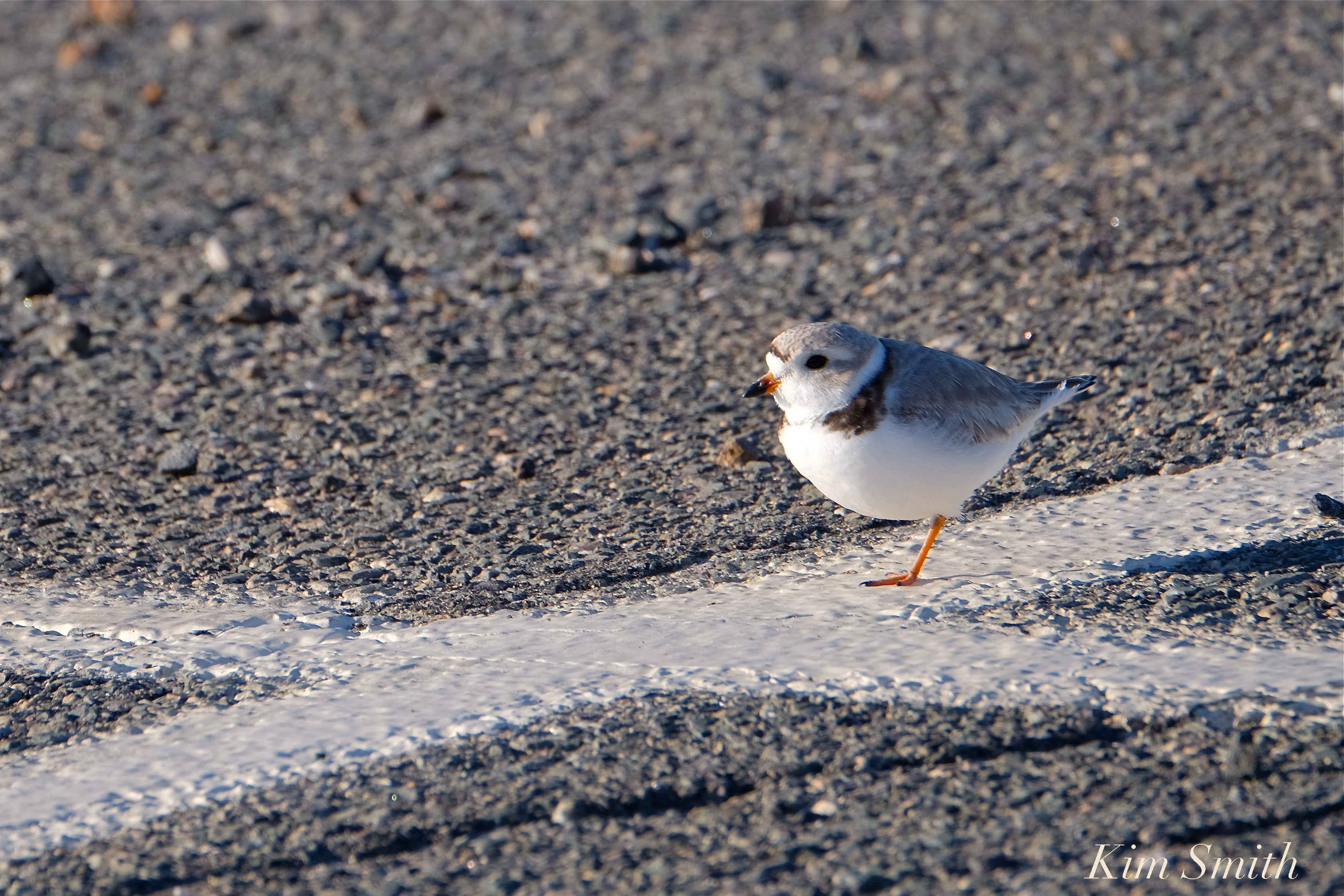
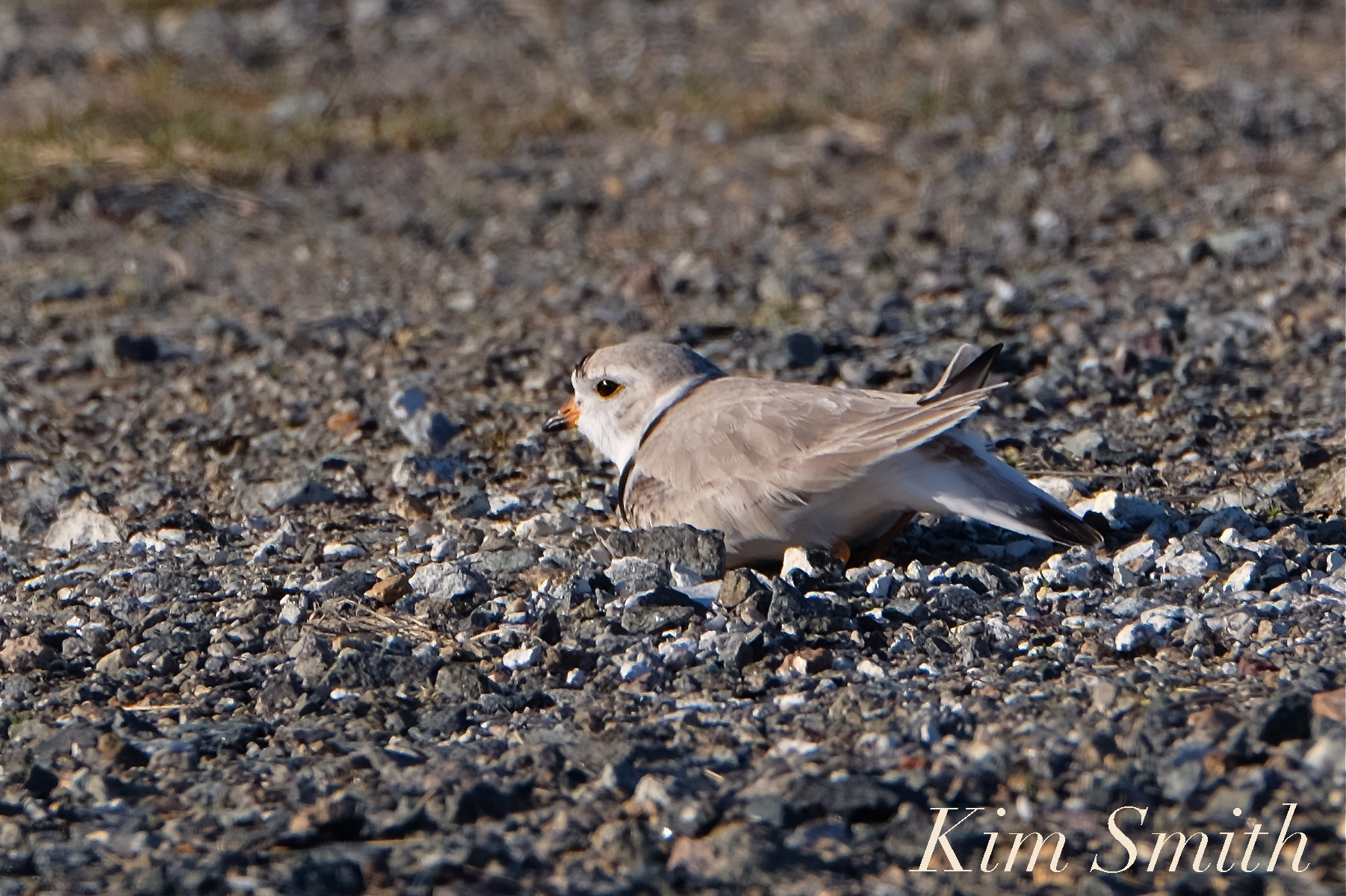
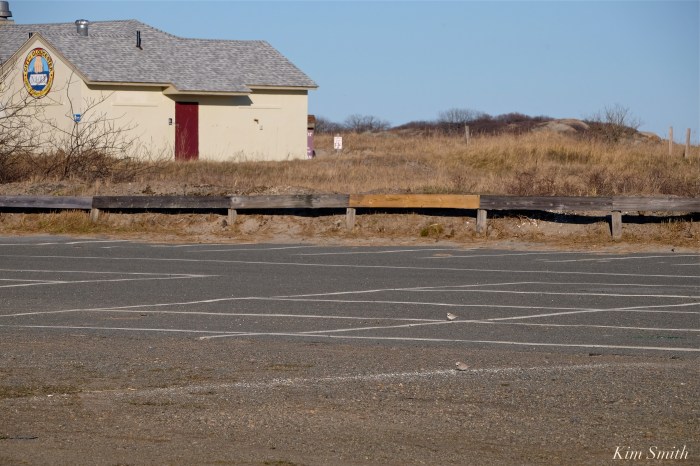
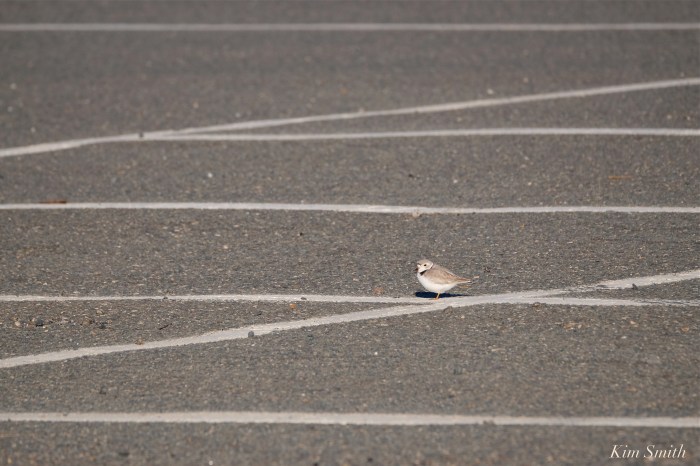
I searched for an hour and couldn’t find. As I was leaving, there were Mama and Papa, in the parking lot. Mama was sitting quietly on the painted white lines and Papa was desperately trying to dig a nest scrape in the course gravel. This exact same scenario happened last Saturday, on the off leash beach day.

Papa trying to scrape a nest in the gravel parking lot
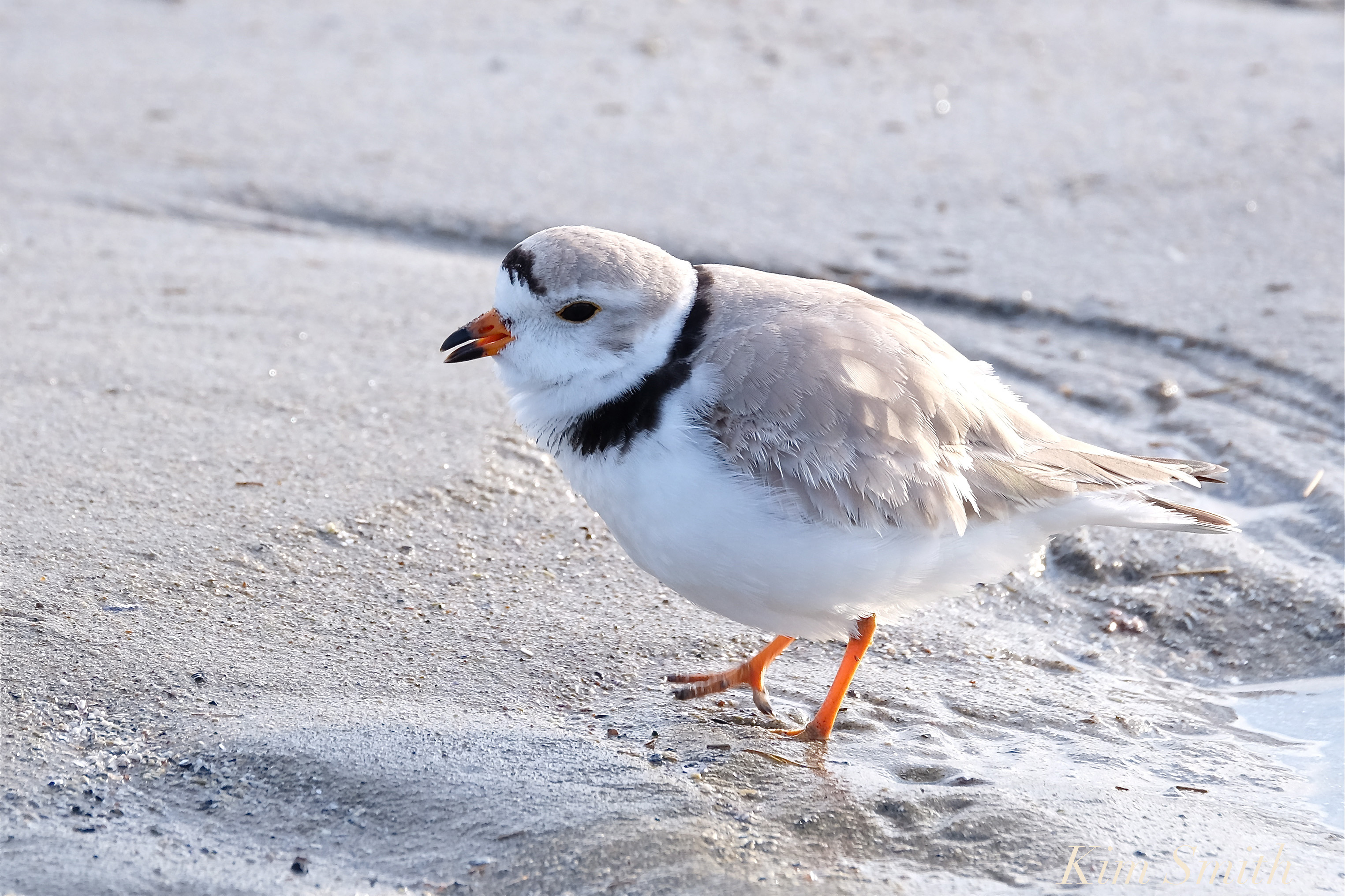
I had hoped that by spending the day trying to keep dogs out of the #3 nesting area, the parking lot scene would not be repeated. Volunteers are desperately needed during this last week of off leash days. For the area around #3, where I was stationed, at least two are needed, because as you are trying to keep dogs out of one side, they are coming in from the opposite end.

Please email Ken Whittaker if you would like to help. His email address is: kwhittaker@gloucester-ma.gov
The worst days are going to be Thursday, Saturday, and Monday, the three last off leash days of April, with Saturday being by far the hardest.

High tides for the upcoming weekend off leash days:

Thursday April 26th – 9:03 am – off leash day

Friday April 27th – 10:01am – on leash

Saturday April 28th 10:54am – off leash day

Sunday April 29th 11:42am – on leash

Monday April 30th 12:27pm – off leash day

Our Piping Plover pair are resilient. They left the parking lot and returned to the beach at sunset, but again, the same pair of dogs chased them off the beach.

Mama and Papa Plover, and the little Bachelor, survived this past off leash weekend day, but as you can imagine, courting and nesting are again delayed. The most important thing for folks to understand is that the earlier in the season the Piping Plovers are allowed to nest, the earlier the chicks will hatch, which means they will have a thousand fold better chance of surviving.

Some good news—overnight four new additional Piping Plovers arrived! They are in a battle with one another over turf at the roped off area by boardwalk #1.


Beautful Fish: Hagfish


The hag, like the lamprey, lacks paired fins and fin rays. Its skeleton is wholly cartilaginous, without bones, its mouth is jawless; and its skin is scaleless. It is easily recognized by its eel-like form; by its single finfold (a fold of skin, not a true fin) running right around the tail and forward on the lower surface of the body with no division into dorsal, caudal, and anal fins; by the single gill pore on each side, just forward of the origin of the ventral finfold; by its lipless mouth, star-shaped in outline when closed; by the single nasal aperture at the tip of the snout; by its peculiar barbels or “tentacles,” two flanking the mouth on either side and four surrounding the nostril; and by the evertible tongue studded with rows of horny rasplike “teeth.”  Being blind, it doubtless finds its food by its greatly specialized olfactory apparatus. It feeds chiefly on fish, dead or disabled, though no doubt any other carrion would serve it equally well.

It is best known for its troublesome habit of boring into the body cavities of hooked or gilled fishes, eating out the intestines first and then the meat, and leaving nothing but a bag of skin and bones, inside of which the hag itself is often hauled aboard, or clinging to the sides of a fish it has just attacked. It is only too common in the Gulf  of Maine; perhaps it is not absent there from any considerable area of smooth bottom.

From Fishes of the Gulf of Maine by Bigelow and Schroeder (1953) online courtesy of MBL/WHOIhttp://www.gma.org/fogm/Myxine_glutinosa.htm

Al Bezanson


ESME, MEADOW, AND SABINE!

Looked who stopped by to show off Mama Dawn Sarrouf’s handmade super fun PomPom hats!

East Gloucester neighborhood friends Esme, Meadow, and Sabine

MASSACHUSETTS WORKING WITH PARTNERS TO CONSERVE PIPING PLOVERS

The following video was produced in 2014. The number of Piping Plover chicks that have survived has gone down since that year, but I thought that what coastal biologist Jorge Ayub from DCR at Revere Beach has to say is especially relevant to our Good Harbor Beach. He begins speaking at 2:45.”We have seen this year an improvement, relative to last year, and acceptance. We’ve seen a tremendous amount of success. This year the Plovers fledged earlier in the season and the reason for that is thanks to the visitors and the residents who didn’t disturb them earlier in the season.”

Piping Plover Piping

KIM SMITH GUEST SPEAKER FOR THE WELLESLEY CONSERVATION COUNCIL ANNUAL MEETING

PLease join me Tuesday evening at 7:00pm at the Wellesley Free Library for the Wellesley Conservation Council Meeting. I am giving my newly updated Beauty on the Wing lecture. This program is free and open to the public. I hope to see you there!

Monarch Butterflies–Beauty on the Wing
How can Wellesley help Monarchs throughout Their Life Cycle?
WHAT: Wellesley Conservation Council Spring Lecture
WHO: Kim Smith, Naturalist and Award-winning Photographer
WHEN: Tuesday, April 24, 2018 – 7:00pm
WHERE: Wakelin Room, Wellesley Free Library
The Monarch’s life story is one of nature’s most incredible examples of adaptation and survival. But the Monarch migration is in great peril. Learn how you can help. Through photographs and discussion, Beauty on the Wing tells the life story of the Monarch Butterfly, the state of the butterflies’ migration and why they are in sharp decline, and the positive steps we can take as individuals and collectively to help the Monarchs recover from devastating effects of habitat loss, climate change, and pesticides.
Kim Smith is an award winning nature author, documentary filmmaker, native plant landscape designer, and naturalist. She specializes in creating pollinator habitat gardens utilizing primarily North American native wildflowers, trees, shrubs, and vines.
The Wellesley Conservation Council Annual Meeting for the election of officers and board members will precede the program at 6:30pm. This event is free and co-sponsored by Wellesley Free Library. For more information go to http://www.wellesleyconservationcouncil.org.

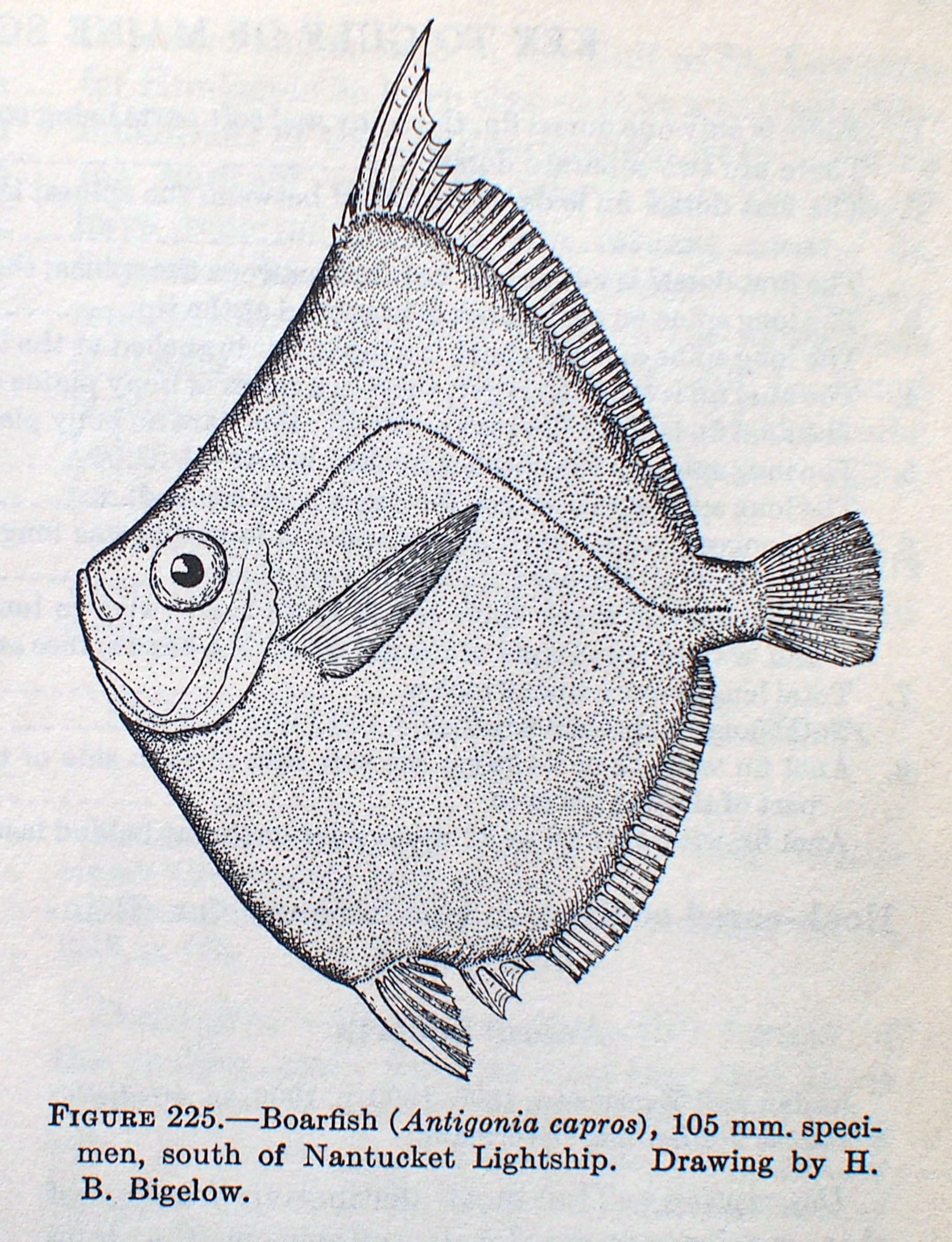
Beautiful Fish: Boarfish -By Al Bezanson

Its very thin body is deeper than it is long .

Color, in life, pink and pinkish white.  Maximum reported length about 1 foot.

General range— Tropical and subtropical Atlantic, mostly offshore.

Occurrence in the Gulf of Maine— We mention this fish because we have seen 8 specimens and heard of 6 others that were trawled in 55-80 fathoms, south of Nantucket Lightship in May 1950.  Other records of it near the American coast are one trawled by the Albatross III at 50 fathoms and a second at 22 fathoms off North Carolina, in January 1950. It has also been taken near Madeira, off the Barbados, and in Cuban waters.

From Fishes of the Gulf of Maine by Bigelow and Schroeder (1953) online courtesy of MBL/WHOIhttp://www.gma.org/fogm/Antigonia_capros.htm

Al Bezanson

GLOUCESTER CELEBRATES EARTH DAY! WITH GREAT NEWS: LYN AND DAN RELEASE THE YOUNG SWAN BACK TO THE WILD!

Throughout the community people took the time to participate in Earth Day cleanups and events.  I was only able to cover a small fraction of the events and locations. Let us know how you spent Earth Day weekend. We would love to post your stories on Good Morning Gloucester. Thank you so much!

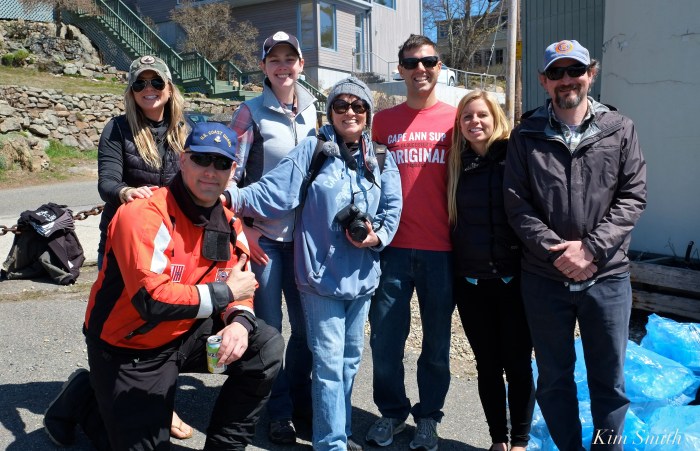
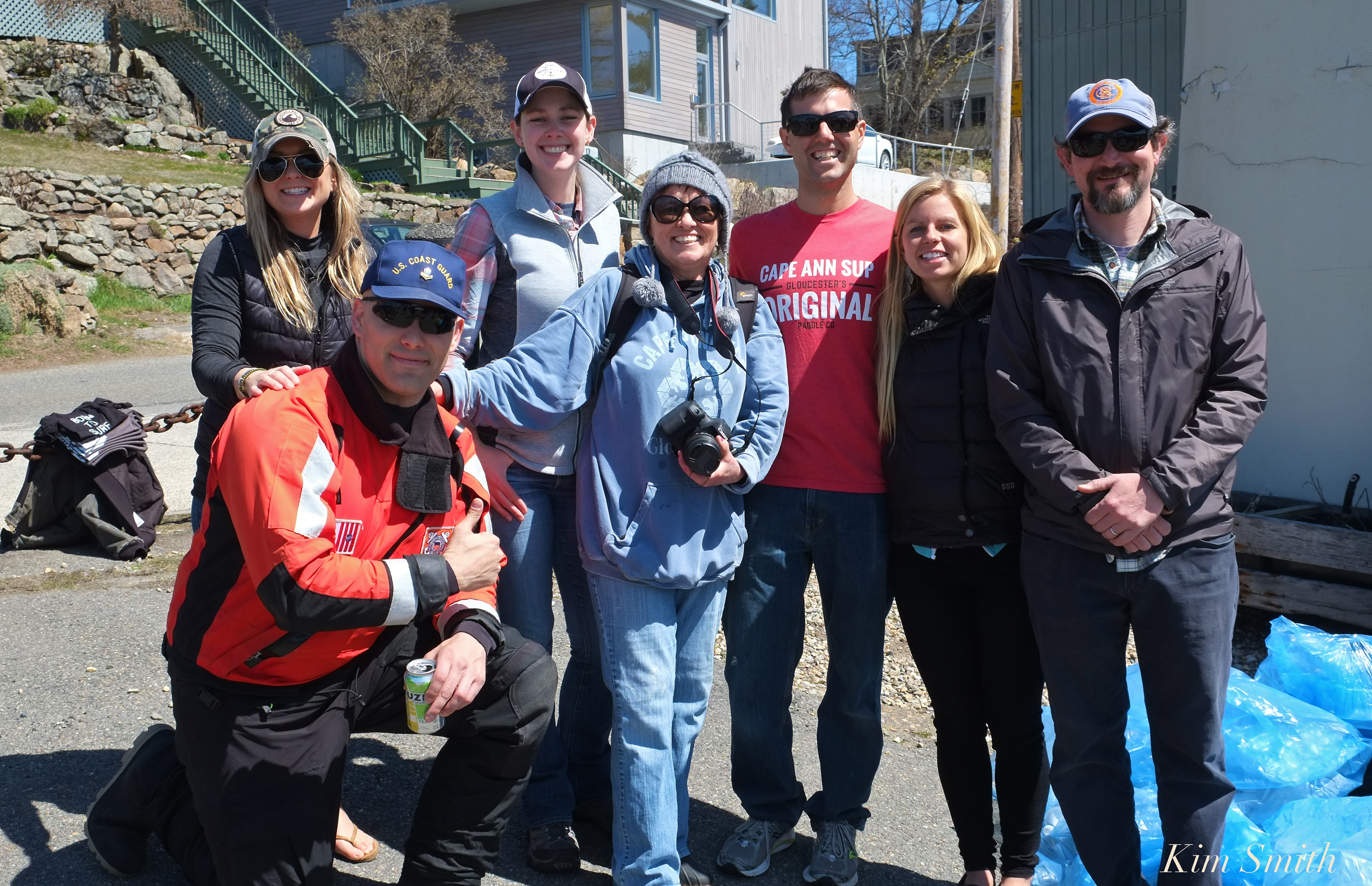
THE GREAT GLOUCESTER CLEANUP TEAM CAPTAINS

Organized by Ainsley Smith and Nick Illiades from Gloucester’s Clean City Commission, The Great Gloucester Cleanup took place at six locations–St. Peter’s Square, Pavilion Beach, Washington Street, Cripple Cove, Good Harbor Beach, and Horton Street.

The volunteers filled over ONE HUNDRED BAGS OF TRASH!!!!!!!!

THANK YOU TO ALL THE VOLUNTEERS FOR HELPING TO KEEP GLOUCESTER BEAUTIFUL!

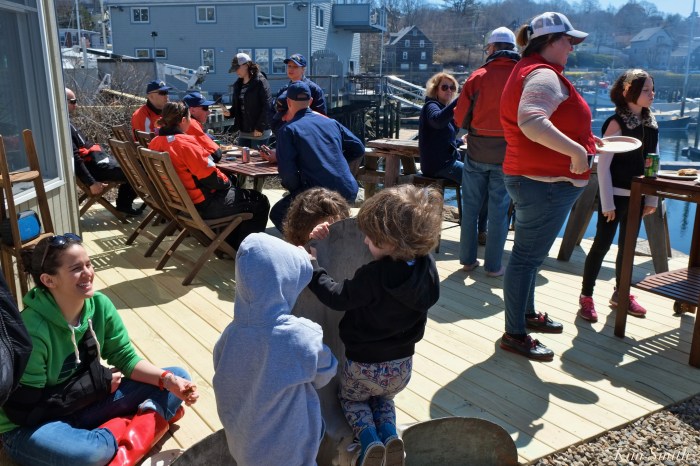
After the cleanup, a fabulous cookout was hosted by Jamie at her beautiful shop located right on the inner harbor, One Ocean One Love. Jamie provided the burgers and much of the food; Caffe Sicilia donated cookies; Pigeon Cove Ferments, the sauerkraut; and Ma and Pa’s, the pickles. Additionally Beauport Hotel, Clean Pro Gloucester, and Lone Gull provided breakfast. Please say thank you for supporting The Great Gloucester Cleanup to these local businesses by patronizing their establishments. 

Meanwhile, over at Good Harbor Beach, I was watching the Piping Plovers this morning from 8am to about 10:30. With many volunteers expected for the Good Harbor Beach clean up location I thought there would be lots of folks interested in learning more about the PiPl, and yes, there were!

While there, I also met Gloucester’s new animal control officer Teagan (rhymes with Reagan) Dolan. He’s very interested in helping the PiPl and the dog officer’s stepped-up presence at Good Harbor has had a noticeable impact on the number of dogs off-leash and in the dunes at Good Harbor Beach. Teagan is suggesting to dog walkers alternative locations such as Plum Cove Beach and Cressies Beach. I showed him where the roping that cordoned off the nesting area broke overnight and he got out his trusty pocket knife and fixed it on the spot!

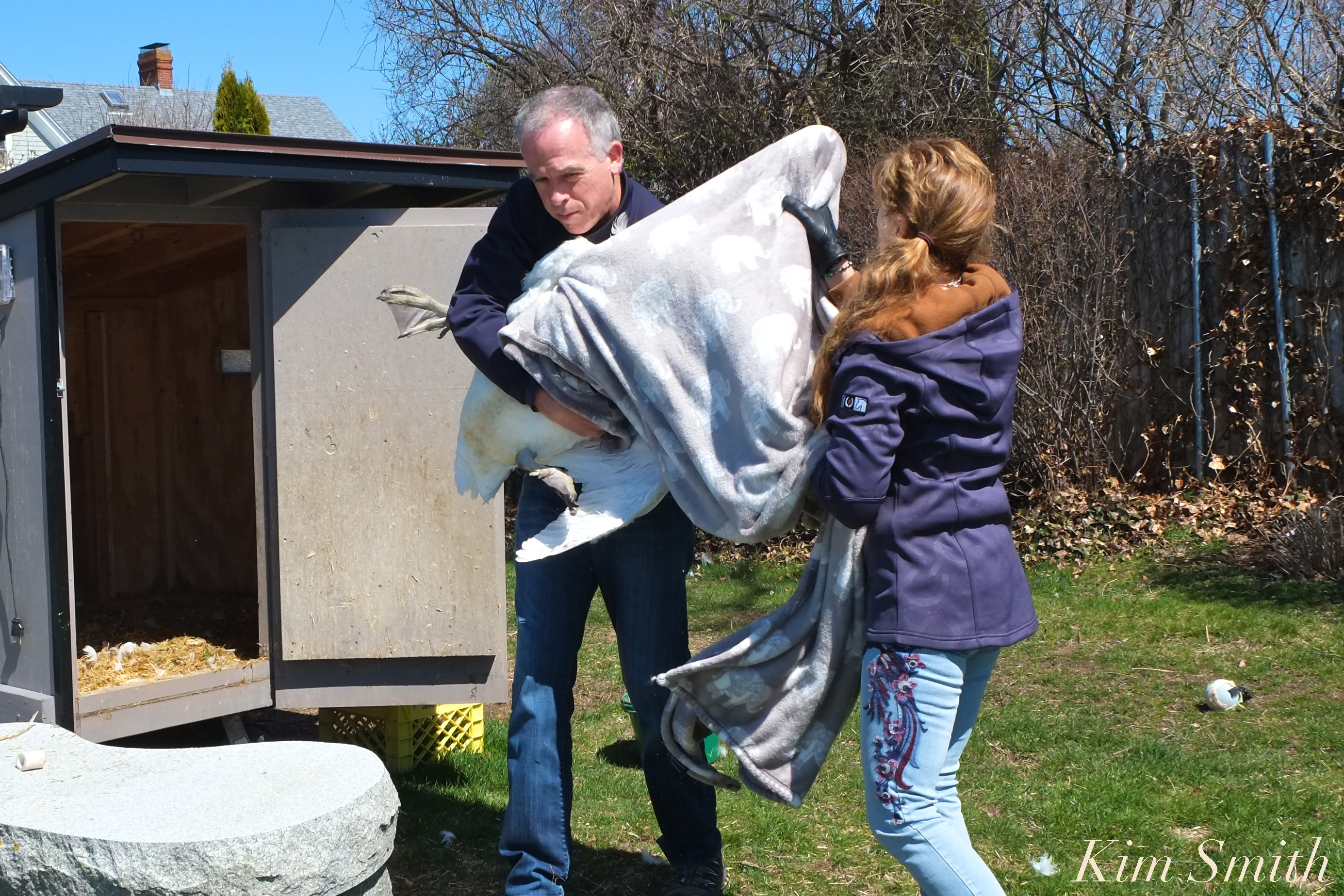
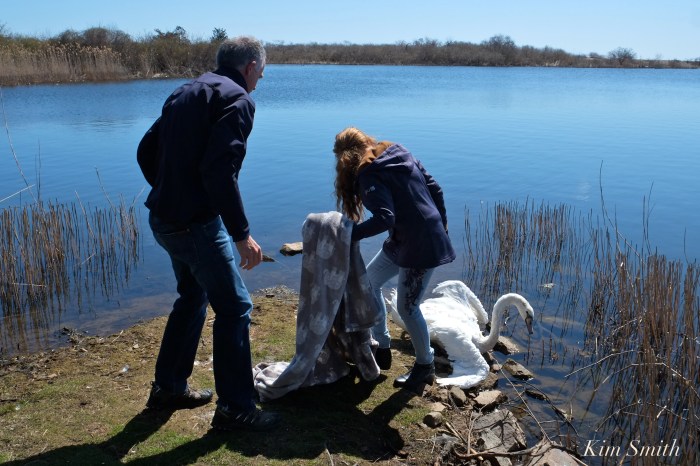
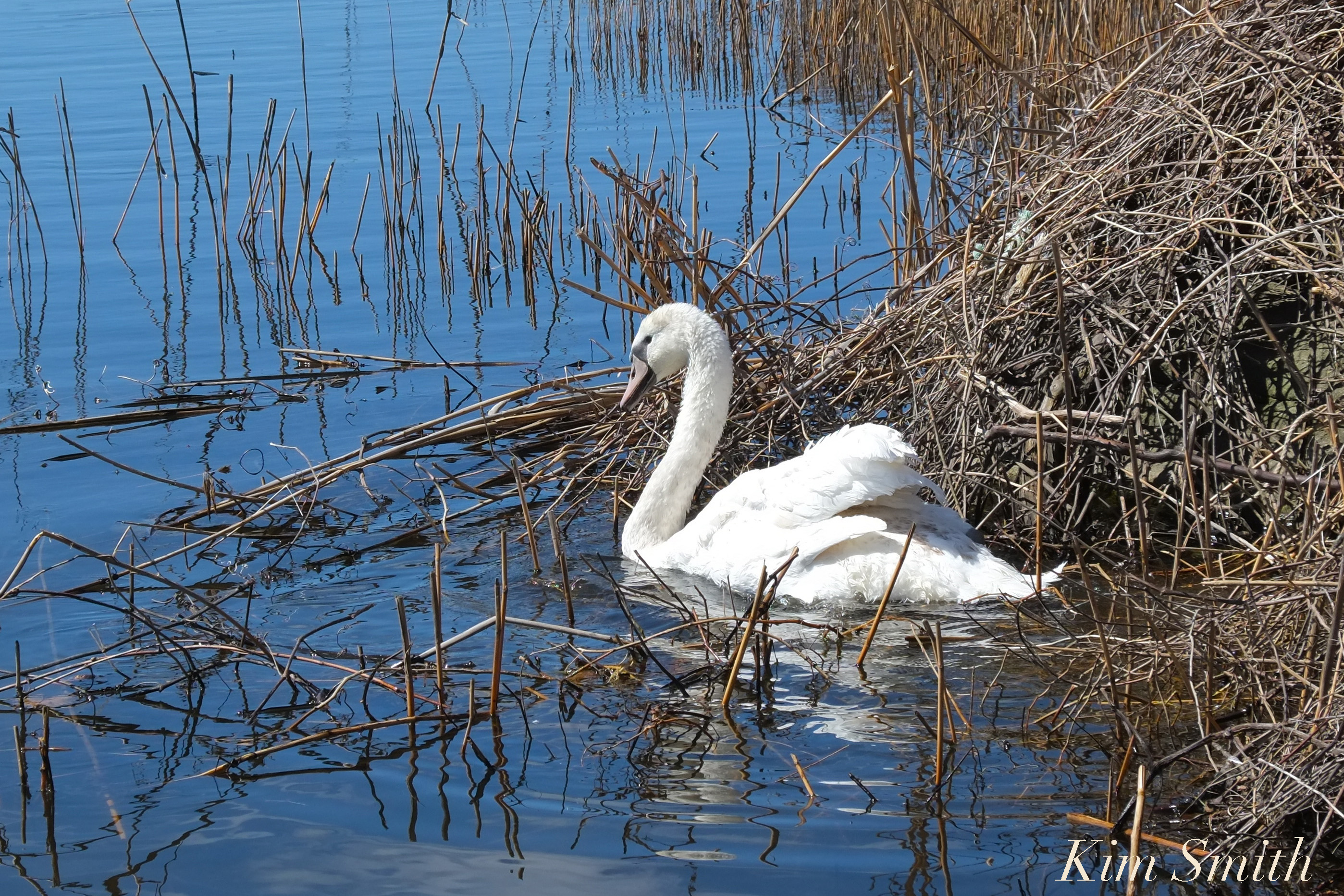
Then onto Eastern Point, with the great wildlife news of the weekend is that my friends Lyn and Dan released the Young Swan back to Niles Pond! You may recall that the Young Swan became frozen in the ice in early winter. Lyn has been kindly taking care of the immature swan all winter, housing him in a chicken coop remodeled (by carpenter Joel Munroe) just for a swan, replete with a heated pool.

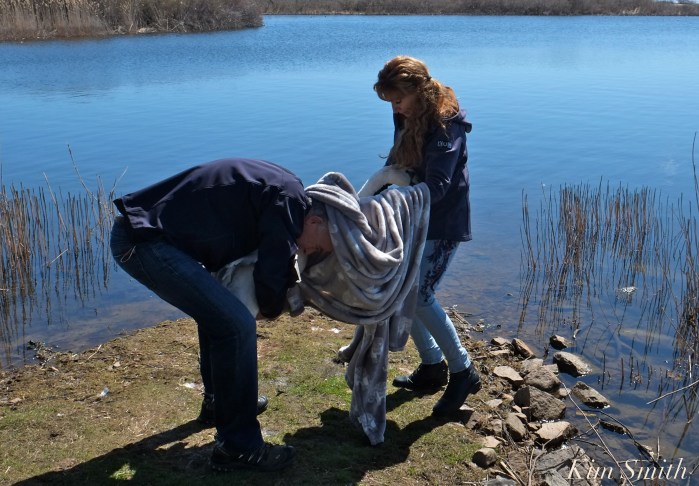
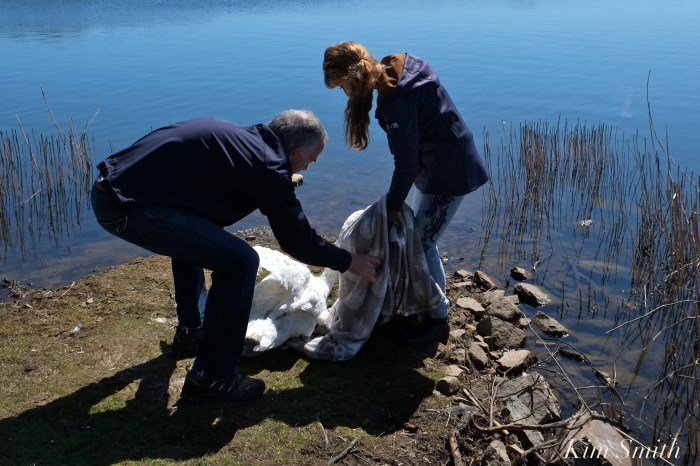
Releasing the Young Swan at Niles

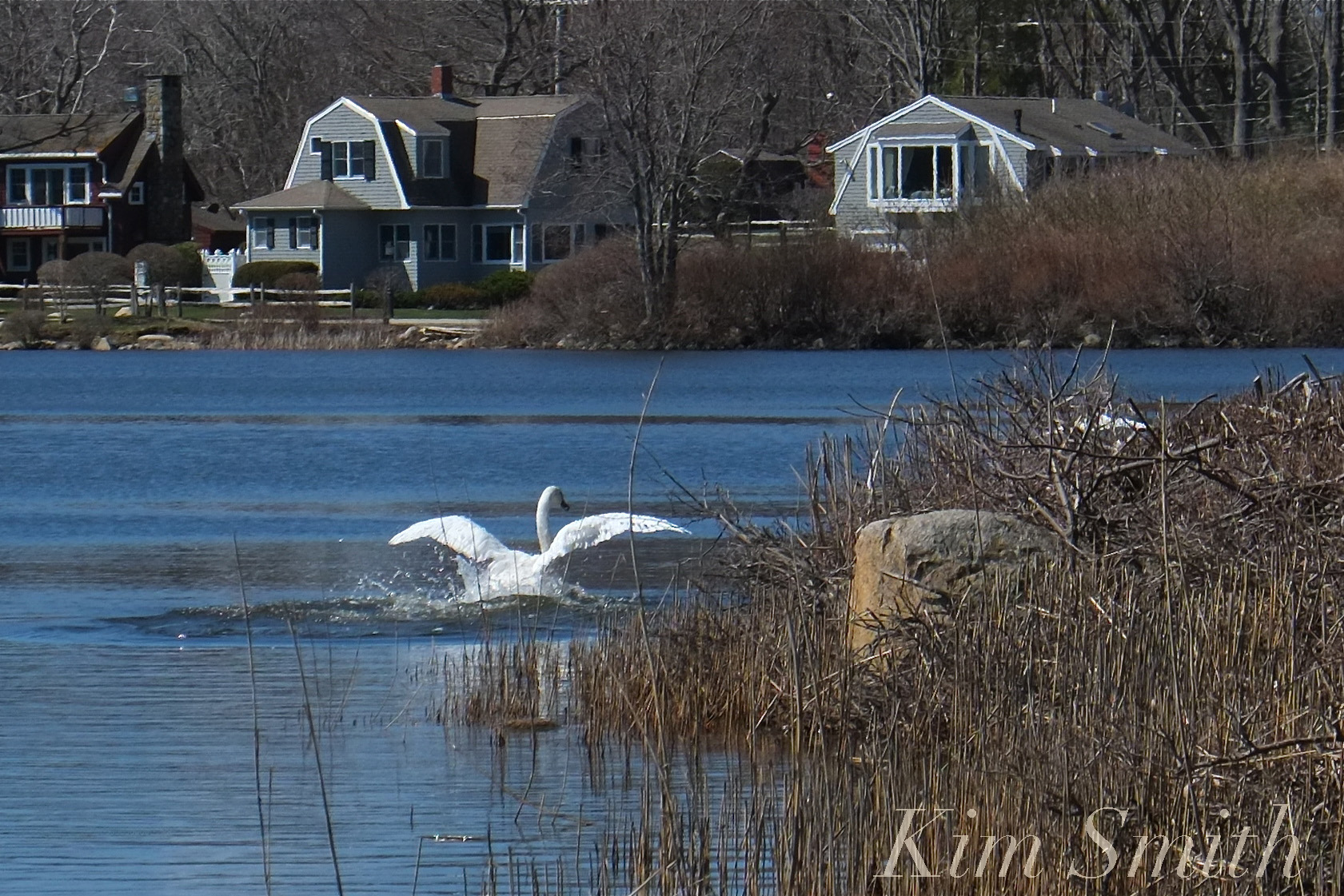
Lyn and Dan gently and humanely covered the swan with a blanket while carrying him to the water’s edge. Upon release, he immediately headed into a reeded area and then down to Skip’s dock where he took the longest swan bath imaginable, dip-diving and splashing for twenty minutes. When last I saw him, he was perusing the pond’s edge, becoming refamiliarized with his home territory.

Stretching his wings!

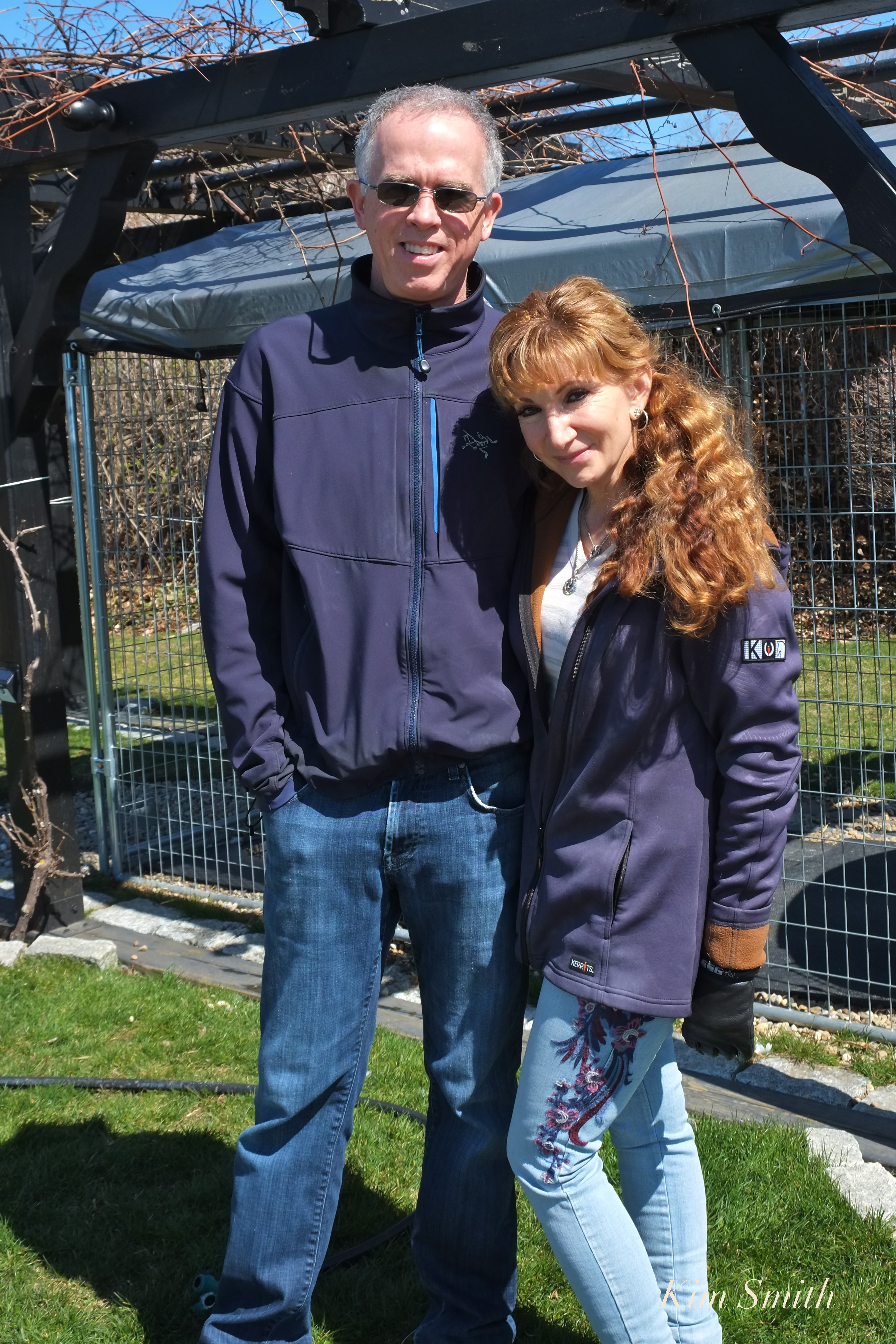
Swan Rescuers Lyn and Dan

Lyn’s little Little Aruba rescue puppy and Dan

HAPPY EARTH DAY FRIENDS!


Beautiful Fish: Wreck Fish

Wreck Fish, Wreck Bass

Reaches a length of 4½ to 5 feet at least, and a weight of more than 100 pounds. Small wreck fish are most likely to be found under floating logs or wreckage, as the common name implies. When larger, they take to bottom.

Occurrence in the Gulf of Maine—  The only report that has reached us of a wreck fish in any part of the Gulf of Maine is of one 24½ inches long, weighing 9 pounds 7 ounces (dressed), taken on the northern edge of Georges Bank, August 13, 1951, by the trawler Winthrop.  Another, 6 inches long, was caught on the surface off No Man’s Land Island, near Martha’s Vineyard, August 21, 1925; and two have been brought in from the Grand Banks, one of them many years ago, the second in 1929.

From Fishes of the Gulf of Maine by Bigelow and Schroeder (1953) online courtesy of MBL/WHOI http://www.gma.org/fogm/Polyprion_americanus.htm

Al Bezanson

THE GREAT GLOUCESTER CLEAN UP AND VOLUNTEER THANK YOU COOKOUT TODAY!

Join us for the second annual #GreatGloucesterCleanUp ! Today from 9 am to 11am. Last year, we had well over 100 volunteers join us in a one day cleaning spree!

This year’s locations are:
– St. Peter’s Square
– Pavilion Beach
– Washington Street
– Cripple Cove
– Good Harbor Beach
– Horton Street

HOW YOU CAN HELP THE PIPING PLOVERS -By Kim Smith

TIPS FOR OBSERVING AND HELPING PIPING PLOVERS

Thank you to all the friends of our Good Harbor Beach Piping Plovers, to dog owners who are staying away from Good Harbor Beach, and to all who are advocating for the PiPl.

Early this morning I found both Mama and Papa feeding in the intertidal zone, along with our little Bachelor. The second pair has not been seen since they were chased off the beach last weekend. There seemed to be fewer dogs on the beach this morning and I am so grateful to the dog owners who are helping to watch over the Plovers.

Yesterday was a much needed quiet day for the Plovers; it was cold and rainy, and an on-leash day. There were folks with dogs off-leash, though they weren’t near the PiPl. But there were fresh tracks running through the nesting area.

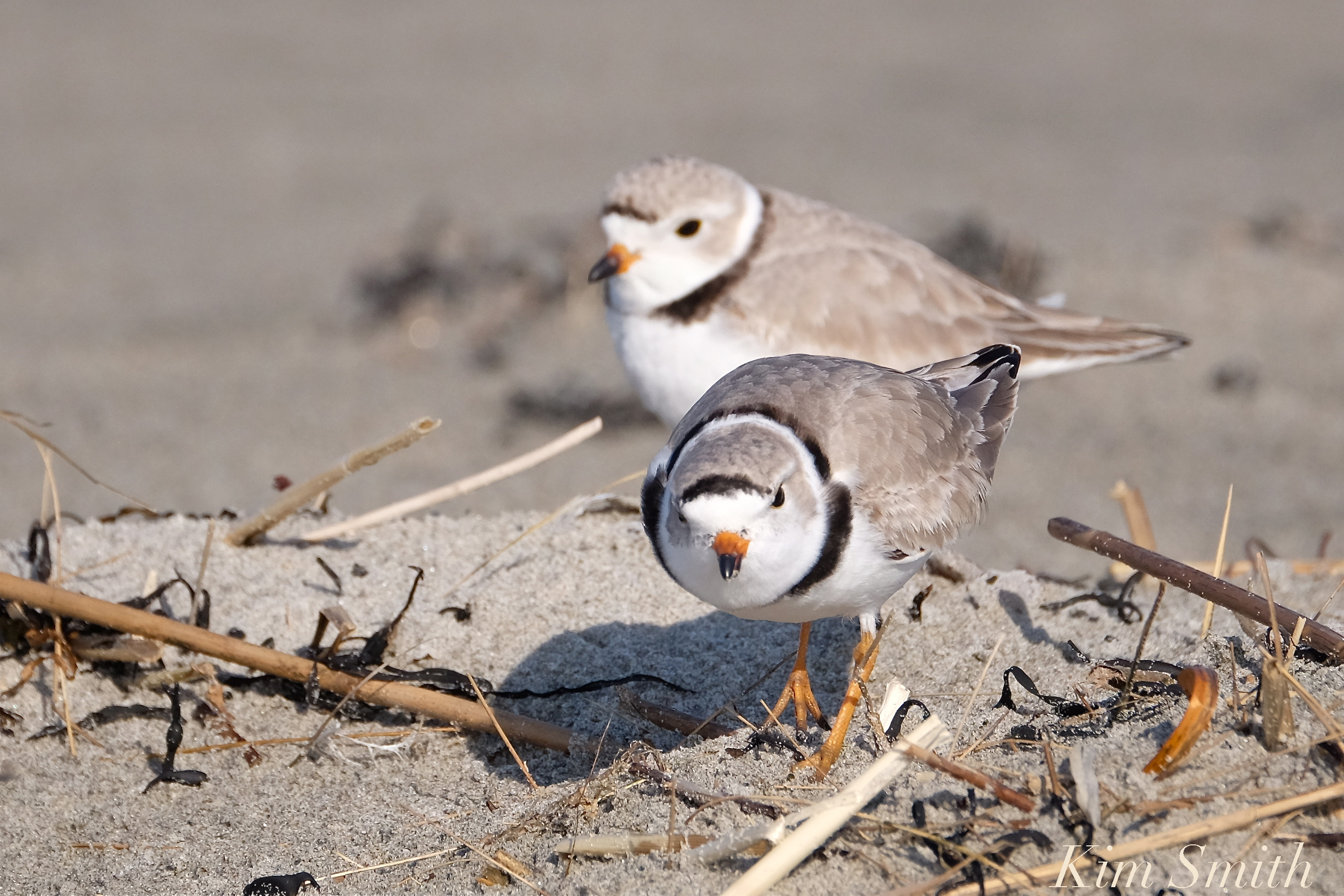
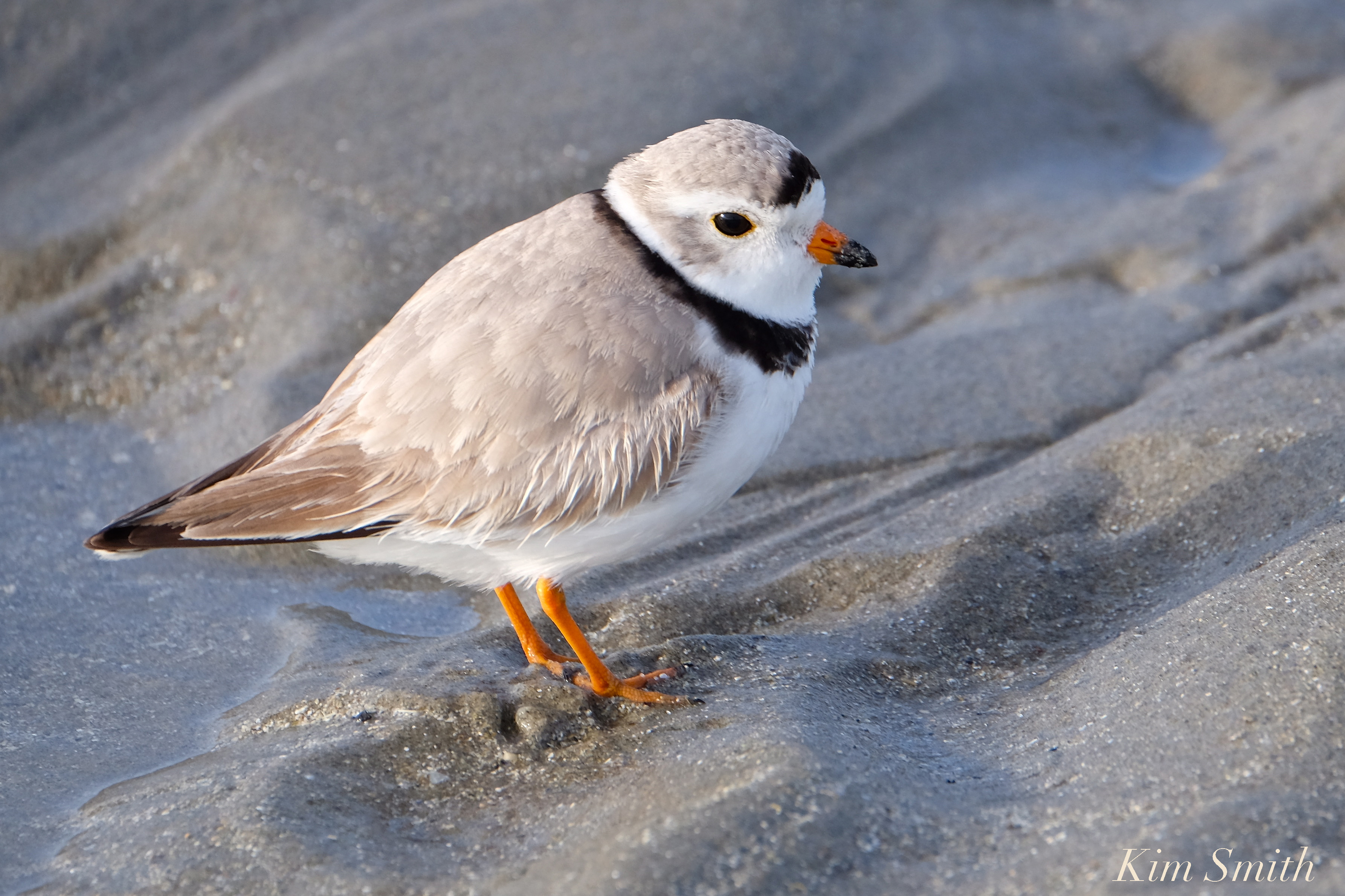
Here is why, at this very critical time during Piping Plover breeding, it is imperative to keep dogs and people out of the nesting area. The Plovers are actively courting. What does that mean exactly? 

  • The Plovers first stake out a territory. For the third year in a row, they have chosen the area around the big rock, by boardwalk #3.
  • Both male and female actively defend the territory from other Piping Plovers, as well as other species of large and small birds.
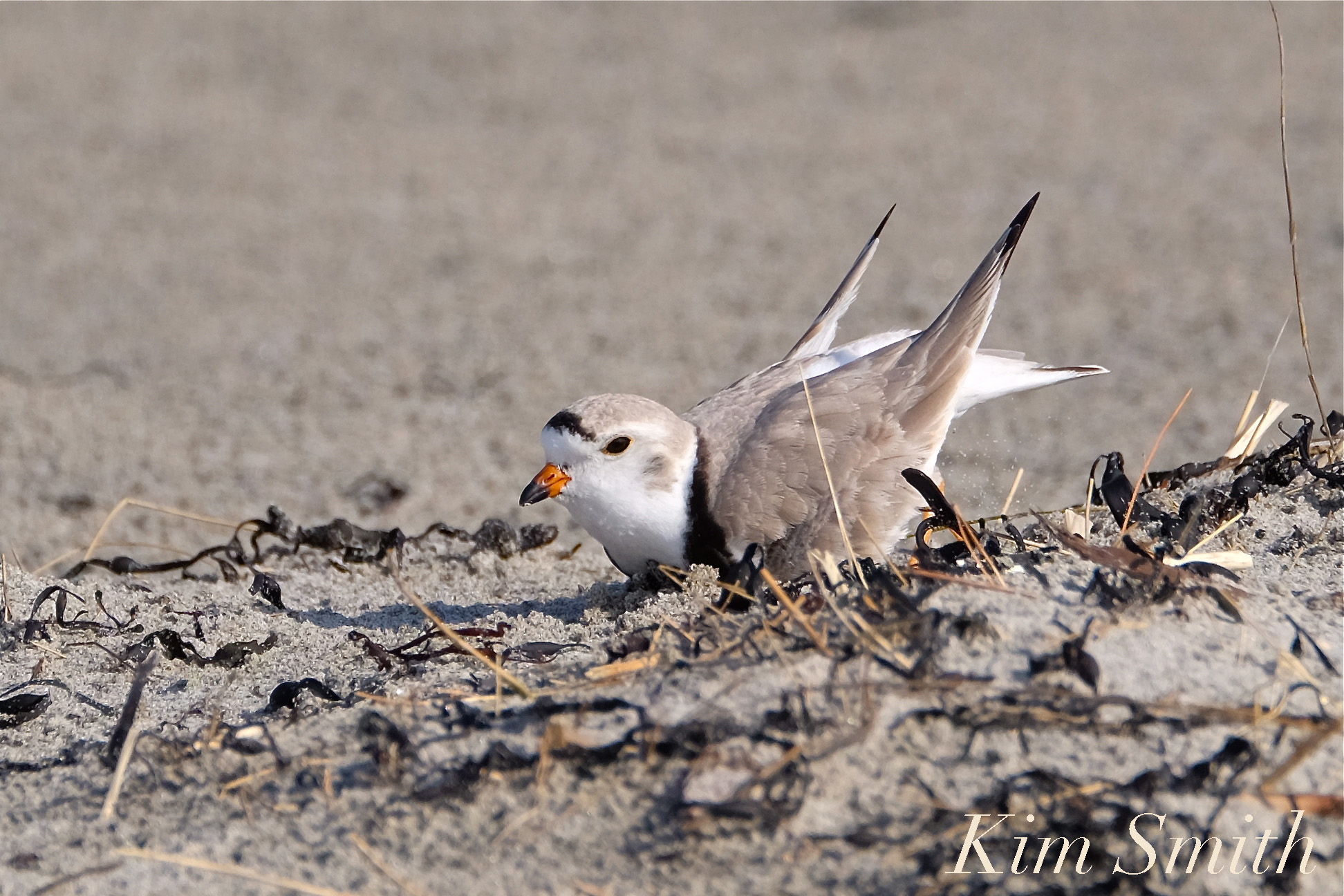
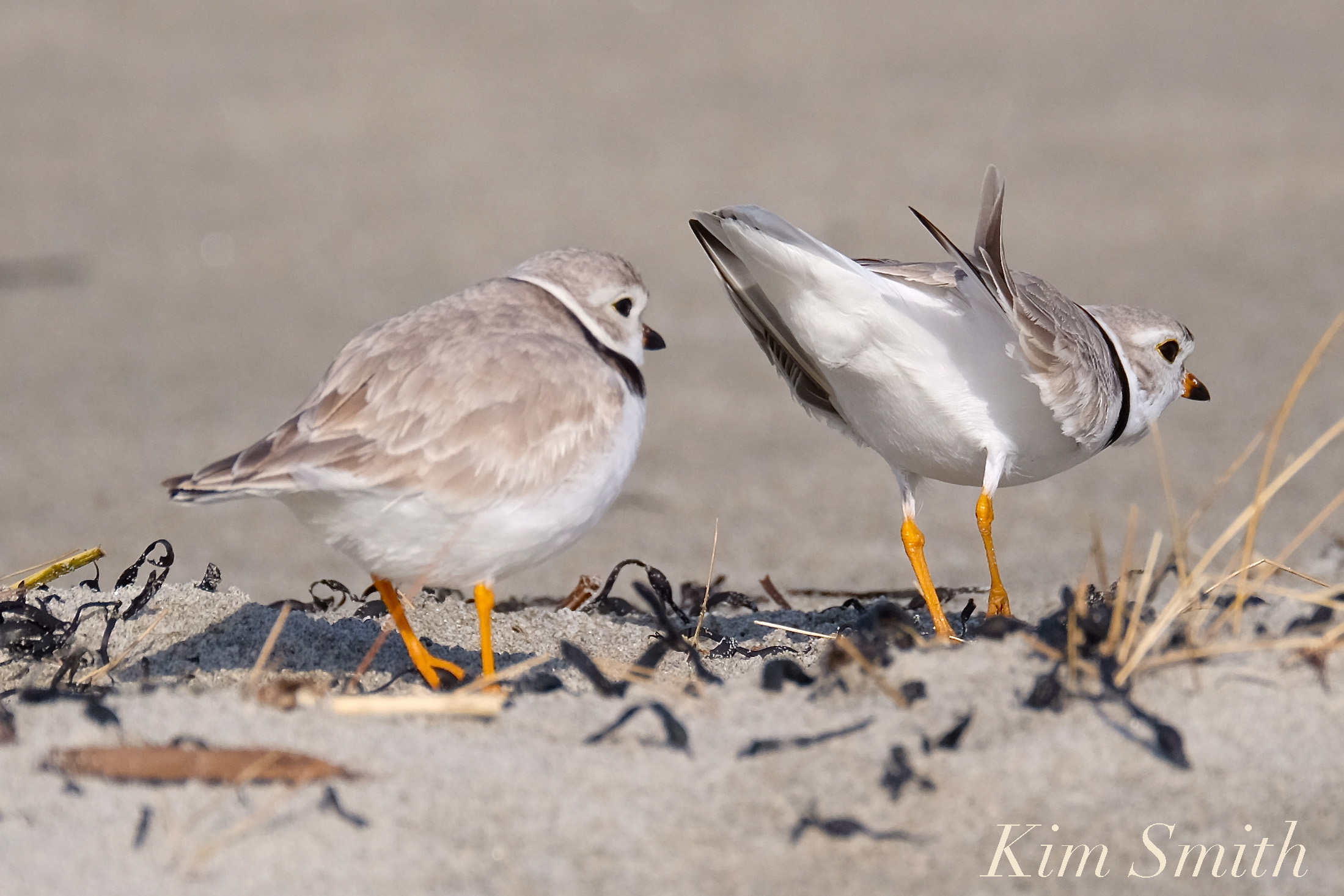
  • Throughout an average quiet day, the male PiPl builds many “nest” scrapes for the female to inspect. If the female is interested, the male displays an involved courtship dance. If she continues to be interested, he will mate with her by jumping on her back where they join together cloaca to cloaca, but for only mere seconds. During that time the male fertilizes the female’s egg.
  • Piping Plover courtship requires a tremendous amount of energy, and each courtship episode takes about twenty minutes, from nest scrapings to mating. If the birds are constantly interrupted by dogs tearing through, and people walking through, the nesting area, courtship and mating are delayed, over and over again.
  • If the Piping Plovers are allowed to mate early in the season, the chicks will be born that much earlier. The earlier the chicks hatch the greater their chance of survival, especially in the case of Good Harbor Beach, Gloucester’s most beloved and heavily trafficked beach.
  • In addition to repeated courtship interruptions, we are having an unseasonably cold April. The Piping Plovers are spending a great deal of energy just trying to keep warm. This is evidenced by how often they stand on one leg to thermoregulate.

Papa Plover defending all things Mama Plover.

Papa Plover vigorously building shallow teacup-sized nest scrapes.

Papa Plover inviting Mama Plover to inspect.

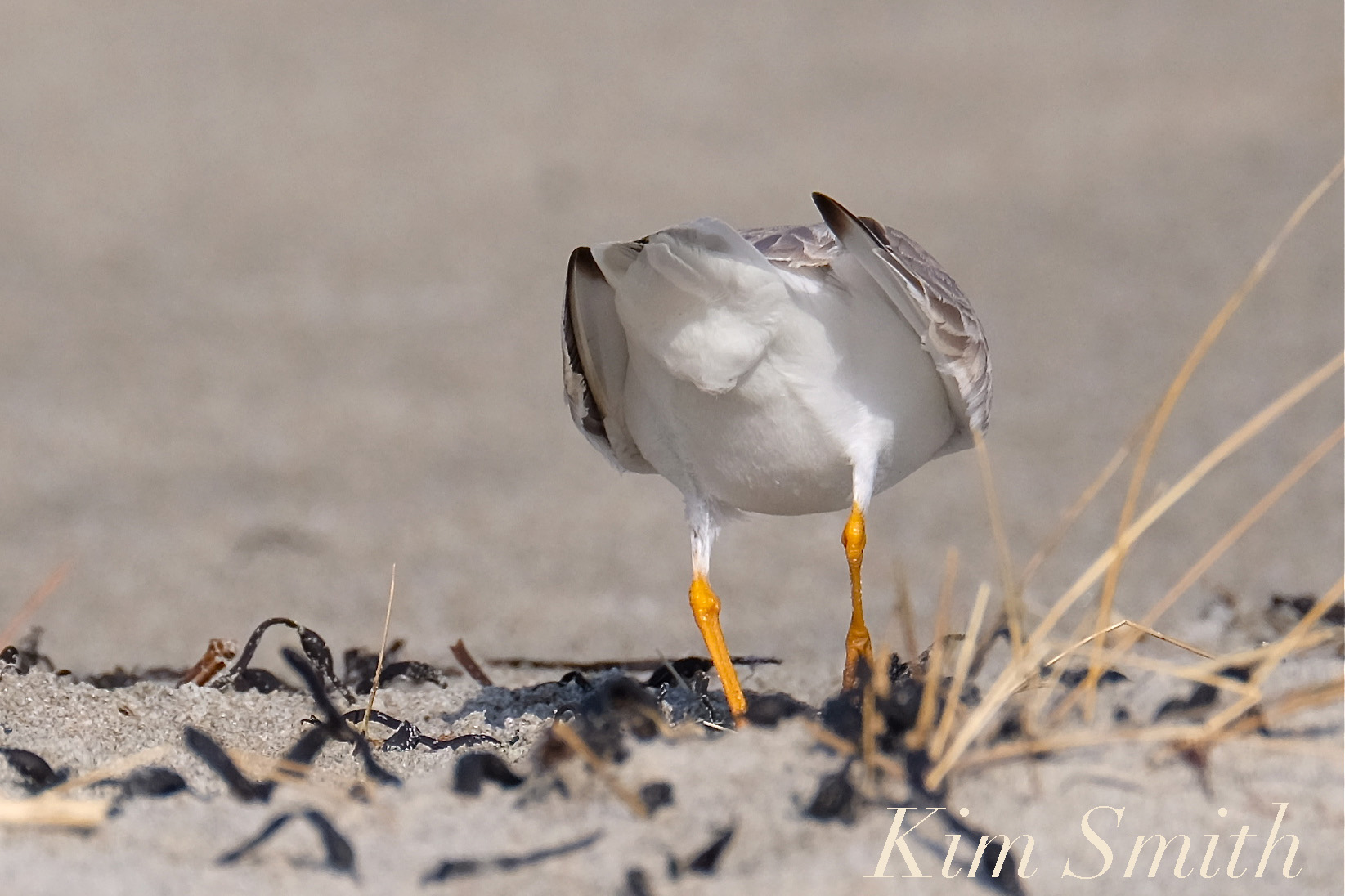
Male Plover cloaca. All birds have a cloaca, the V-shaped vent from where sperm, eggs, and pooh are emitted. During courtship, the male’s cloaca swells considerably.

Meet “the Bachelor,” the bird bane of Papa’s existence.

How You Can Help the Piping Plovers

1) Under no circumstances is it acceptable to enter the Piping Plover nesting area.

2) Keep ALL dogs far away from the nesting areas. A Piping Plover’s brain does not differentiate between a dog on- leash versus a dog off-leash. When a dog, off-leash or on-leash, comes within twenty feet of a PiPl, they immediately stop what they are doing, whether foraging, courting, mating, or resting.

3) During courtship, the Piping Plovers tolerate one or two quiet persons, from a distance, but crowds of three or more put them in panic mode.

4) Help spread the word about the Good Harbor Beach Piping Plovers.

5) Sign up to be a Piping Plover volunteer ambassador by emailing Ken Whittaker at kwhittaker@gloucester-ma.gov

Thank you, but most importantly, the Piping Plovers will thank you too when chicks hatch and chicks fledge!

https://www.instagram.com/p/Bhv_2wDHKpQ/

https://www.instagram.com/p/BhtnQCHnaRJ/

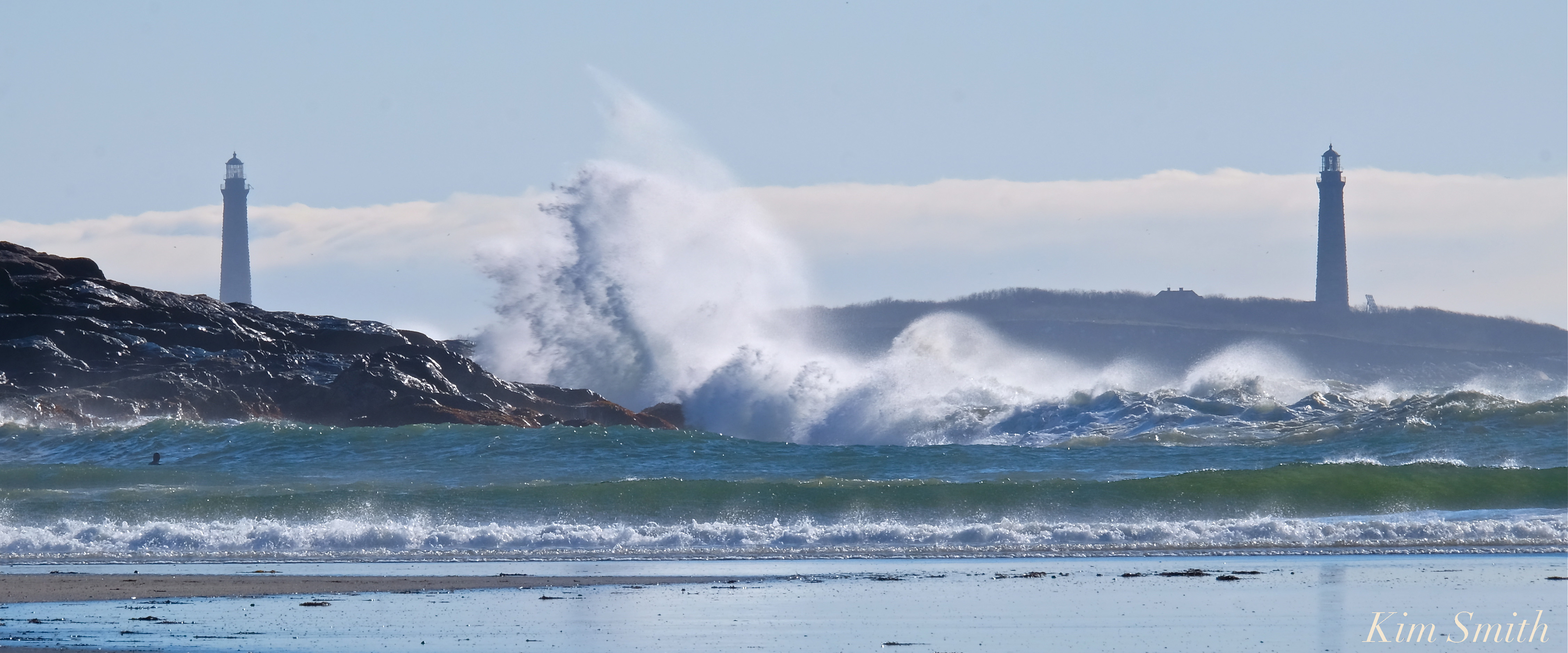
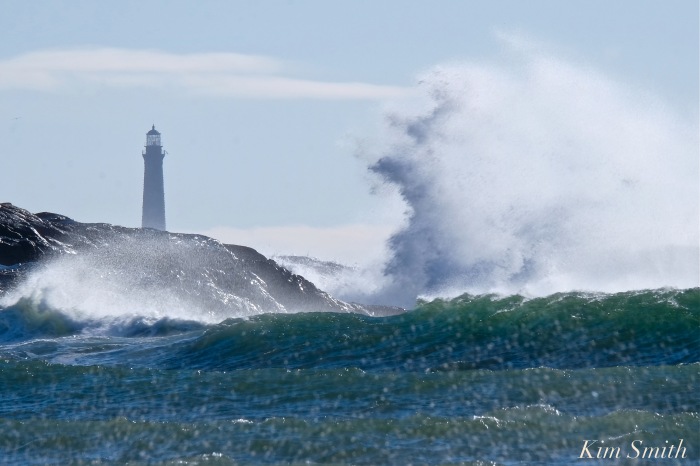
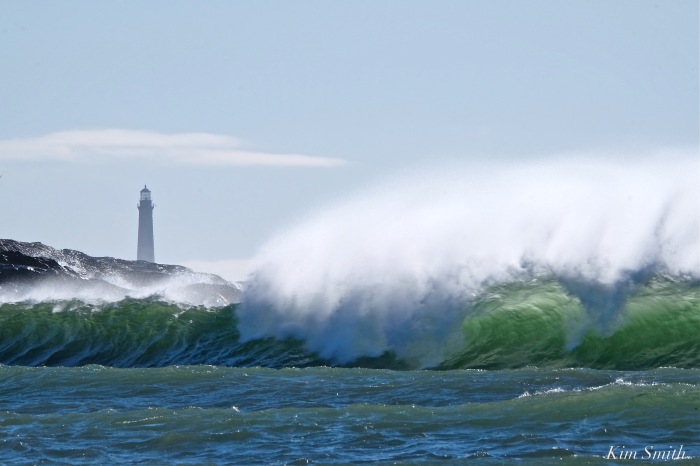
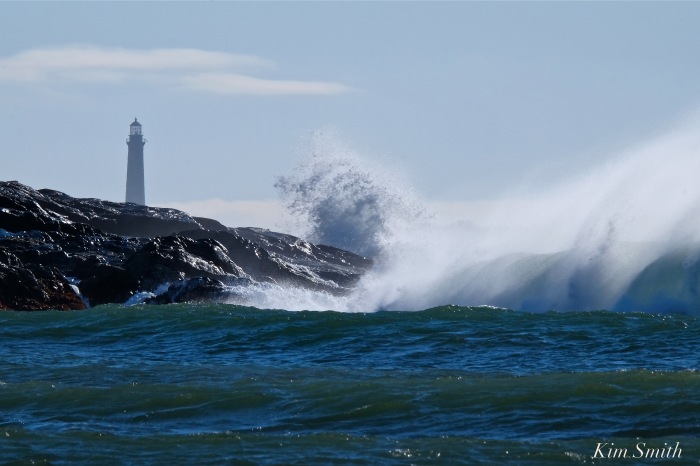
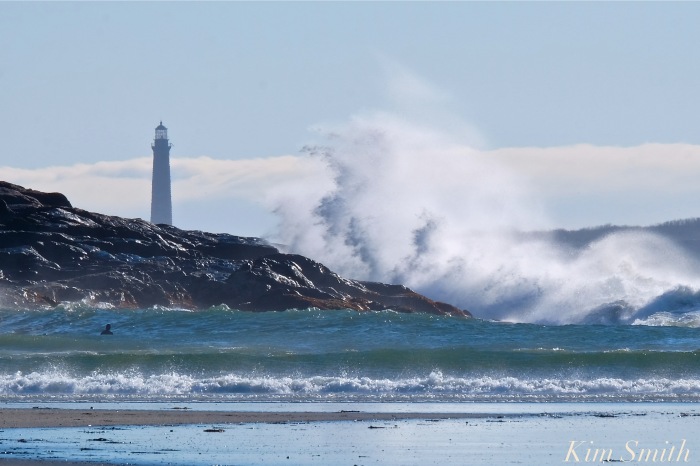
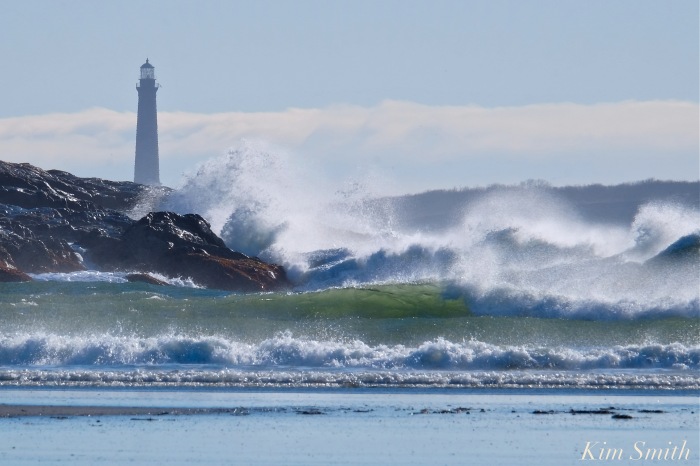
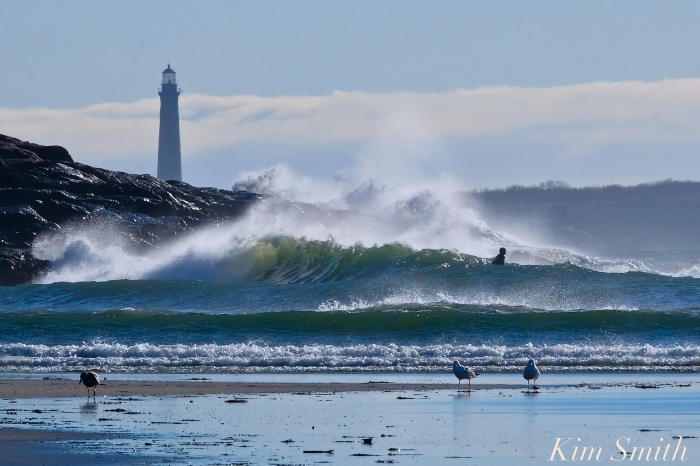
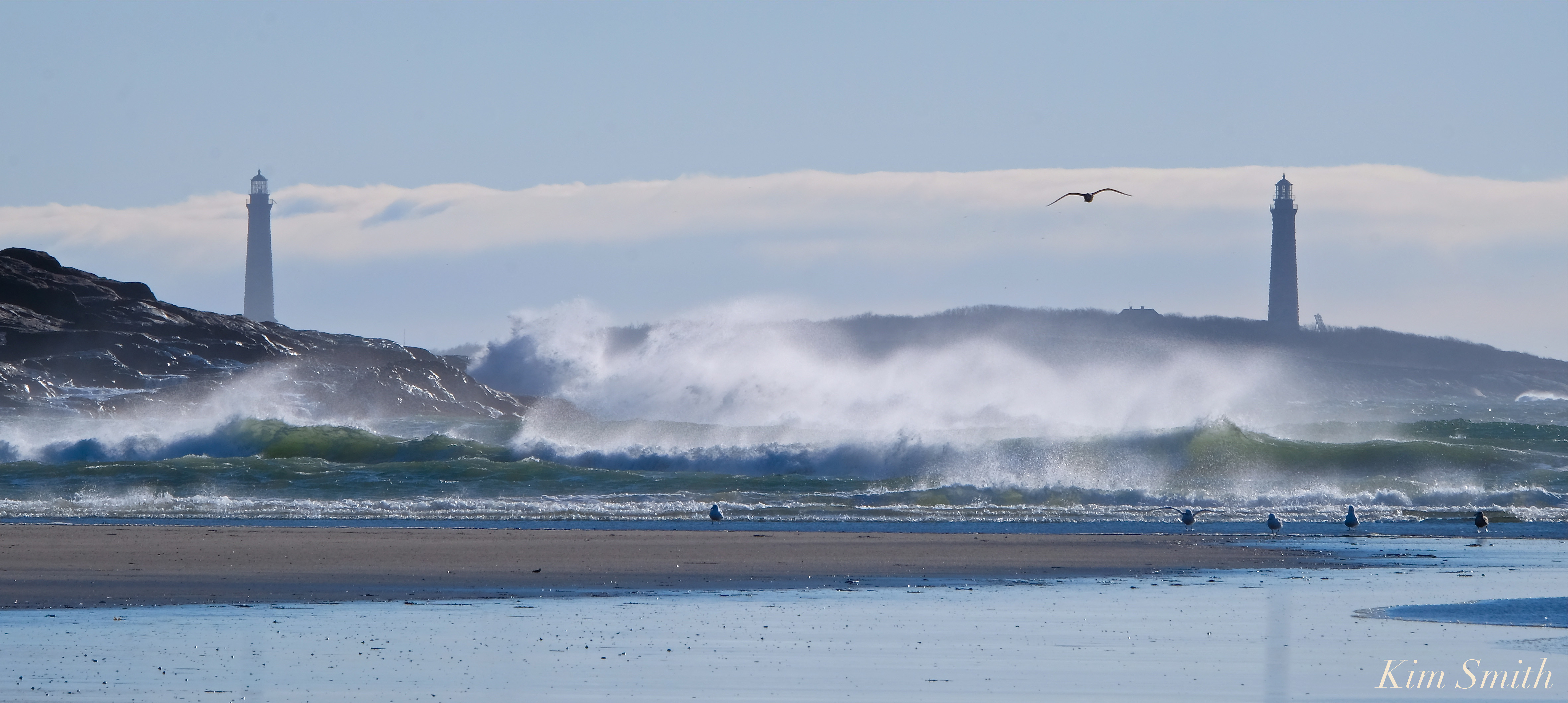
SPECTACULAR TWIN LIGHTS THACHER ISLAND WAVES -By Kim Smith

The photos were taken after the storm on Tuesday morning, at dead low tide, standing almost to Salt Island and looking toward Thacher Island. I don’t recall ever seeing such enormous waves at low tide and will stay tuned in the future. Look for the surfer’s head in the waves 🙂

MESSAGE FROM MAYOR ROMEO THEKEN AND THE GLOUCESTER COALITION FOR THE PREVENTION OF DOMESTIC ABUSE

On behalf of Mayor Sefatia Romeo Theken, Gloucester Health Department, and Gloucester Coalition for the Prevention of Domestic Abuse, we are pleased to announce that the 2018 Take Back the Night event will be held on April 23 at 5:30 pm at Gloucester City Hall ending at Unitarian Universalist Church. 

THE GLOUCESTER COALITION FOR THE PREVENTION OF DOMESTIC ABUSE

On April 23, 2018, the City of Gloucester, the Coalition for the Prevention of Domestic Abuse, the YWCA North Shore Rape Crisis Center, and HAWC will take a stand against sexual violence in all forms—dating abuse, rape, sexual assault, domestic violence – every type of sexual abuse.

Our event will begin at 5:30 PM at Gloucester City Hall (9 Dale Ave, Gloucester) and will end at the Unitarian Universalist Church, 10 Church Street, with a closing program which will include discussion about the issue of consent, as well as music and refreshments. People of all ages, races, religions, backgrounds, and genders are welcome to attend this free event and join us as we work toward a violence free Gloucester community.

Since the early 70’s, Take Back the Night Events (TBTN) have been held to bring together those committed to taking a public stand on behalf of sexual assault survivors in over 30 countries and 1000 locations around the world.  This will be Gloucester’s 6th Annual Take Back the Night event.

Once again, we will celebrate the voices of our community’s youth, as they lead the way in demanding an end to the injustice of sexual assault and harassment. Speakers at the event will include Mayor Sefatia Romeo Theken and representatives from the Gloucester Coalition for the Prevention of Domestic Abuse, the YWCA North Shore Rape Crisis Center, HAWC, the School Department and youth groups from the YMCA and GHS Gay Straight Alliance. Local Artist Nadia Robertson will provide a music performance.

Our TBTN event activities will include a gathering in honor of survivors of sexual violence and a walk to end all sexual and relationship violence.  Sexual assault is an extremely personal experience, often silent, often unspoken, but one that changes lives forever. Most importantly, we cannot forget that rape and sexual violence can be prevented in a caring community where we are all given the opportunity to be an ally to victims and survivors.

SEE SOMETHING. SAY SOMETHING.

According to Ross Steinborn from the YWCA North Shore Rape Crisis Center, “The reality of sexual assault can be overwhelming for both the victim and the larger community. It’s important to remember that sexual assault can be prevented – first by always respecting other’s boundaries, and secondly by safely stepping in and checking when you notice situations that might seem threatening in any way to another.”

We invite all members of the community to join us in recognizing that there is no excuse for abuse and that as a community, we will speak up to offer safety to victims, ongoing education to the community, and do all we can to reduce the incidence of sexual assault and domestic violence.

MAKE YOUR OWN SIGNS AND JOIN US!

CHECK OUT OUR STATE OF THE ART GMG PODCAST RECORDING EQUIPMENT!

Congratulations to Joey and cast of characters – we recorded our 275th podcast this morning!

Don’t forget to notice the super sleek new microphone stand.