Author: Kimsmithdesigns
Documentary filmmaker, photographer, landscape designer, author, and illustrator. "Beauty on the Wing: Life Story of the Monarch Butterfly" currently airing on PBS. Current film projects include Piping Plovers, Gloucester's Feast of St. Joseph, and Saint Peter's Fiesta. Visit my websites for more information about film and design projects at kimsmithdesigns.com, monarchbutterflyfilm.com, and pipingploverproject.org. Author/illustrator "Oh Garden of Fresh Possibilities! Notes from a Gloucester Garden."

ANNISQUAM VILLAGE PLAYERS PORCH TOUR RETURNS!
 Dear Friends of AVP,
The AVP Porch Tour is back, Friday, August 3, 2018 from 5:00 to 7:00 pm This self-guided tour through the charming village features private porches, many never available before, with stunning views of Lobster Cove, the Annisquam Lighthouse, and across Ipswich Bay.
At the conclusion of the tour, participants will be treated to wine and hors d’oeuvres at the final porch with a sunset serenade by AVP cast members performing some of the best-loved songs from The Little Mermaid.
Tickets are $30 and are available NOW at the Annisquam Exchange, 32 Leonard Street, Annisquam. 978-281-035
Tickets for our 2018 production of The Little Mermaid are also now available at our website and at the Exchange. The show runs August 7-12, 2018 at 7:00 pm.
We’re looking forward to seeing you this summer!
The Annisquam Village Players

Spread The GMG Love By Sharing With These Buttons:

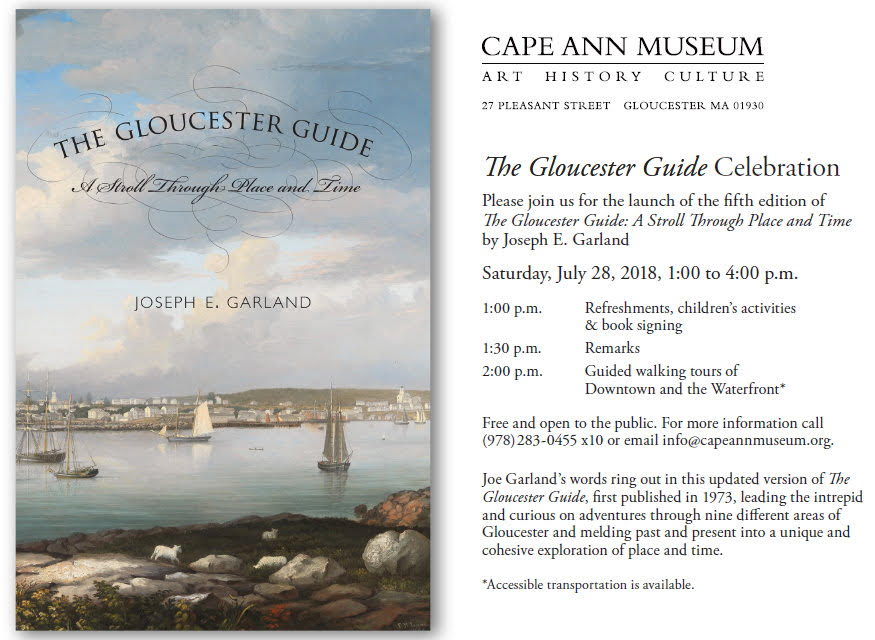
COME CELEBRATE THE LAUNCH OF THE FIFTH EDITION OF “THE GLOUCESTER GUIDE!”
Spread The GMG Love By Sharing With These Buttons:

LINK TO GLOUCESTER STAGE “CYRANO” CAST ON WGBH OPEN STUDIO WITH JARED BOWEN
“Cyrano” On Open Studio with Jared Bowen WGBH-TV: Guests Bob Walsh and Jeremiah Kissel
The episode premiered on Friday July 20 @8:30 pm and re-aired throughout the weekend on two PBS stations
In case you missed the airings on network tv, the show is available online now. Watch the entire show! There is another scene from Cyrano during the closing credits of the show!
Link to the show is below
Enjoy!!!
Heidi
Spread The GMG Love By Sharing With These Buttons:

TEN POUND ISLAND TWILIGHT AND SEINE BOAT
 Ten Pound Island Twilight
Spread The GMG Love By Sharing With These Buttons:

BENARY GIANT ZINNIAS AND MORE MONARCH SIGHTINGS!
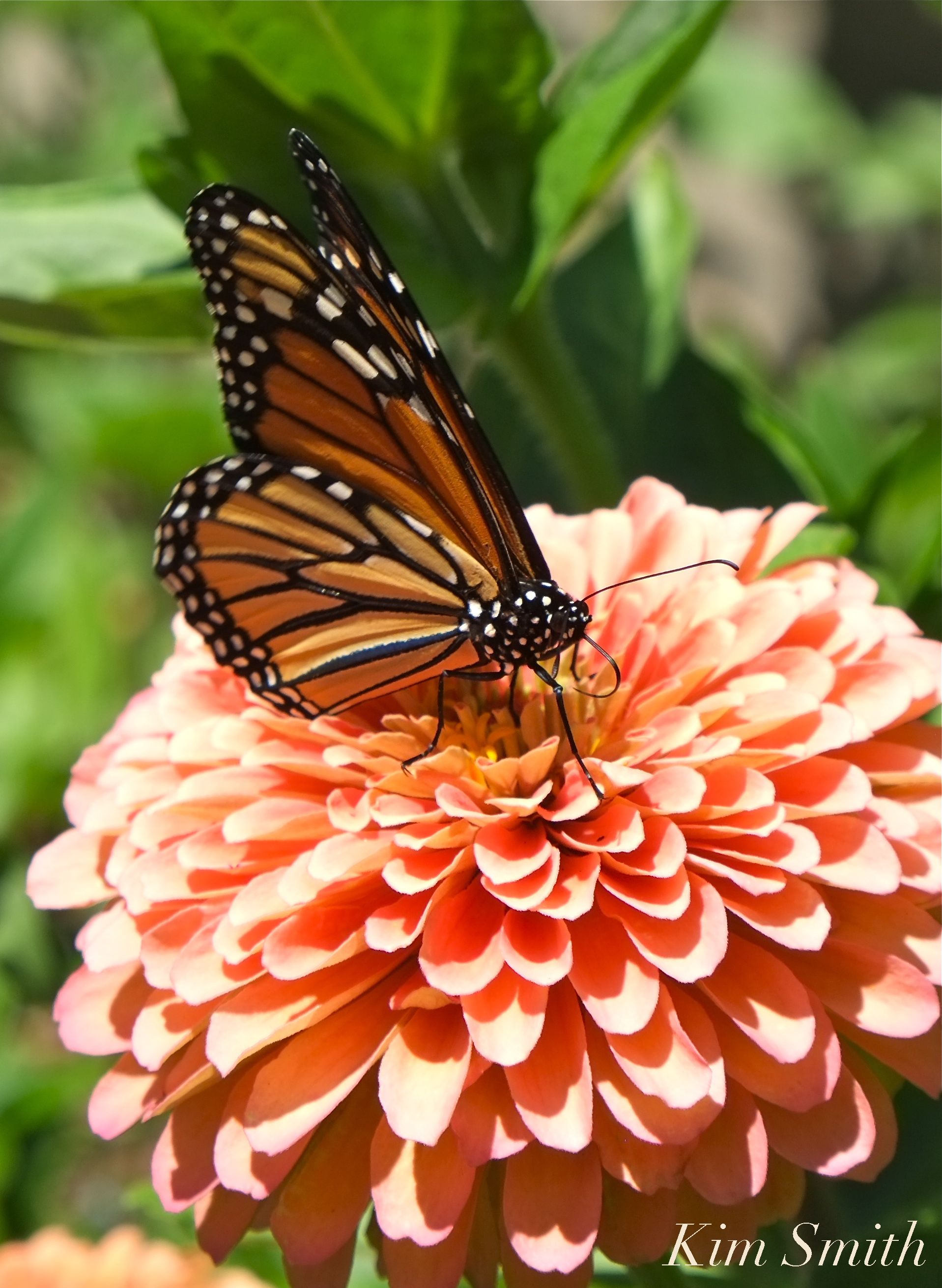 They don’t call these zinnias ‘Giant’ for nothing! One of my favorite zinnias, not only for its show-stopping size and sparkling array of colors, but these beauties are a magnet for Monarchs (and a bevy of other beneficial pollinators, too). Zinnias (Zinnia elegans) are a native North American wildflower and these grand beauties were developed by Ernst Benary, one of the oldest German seed companies, founded in 1843. You can purchase Benary Giant seedlings from Elise and Tucker at Cedar Rock Gardens in the spring.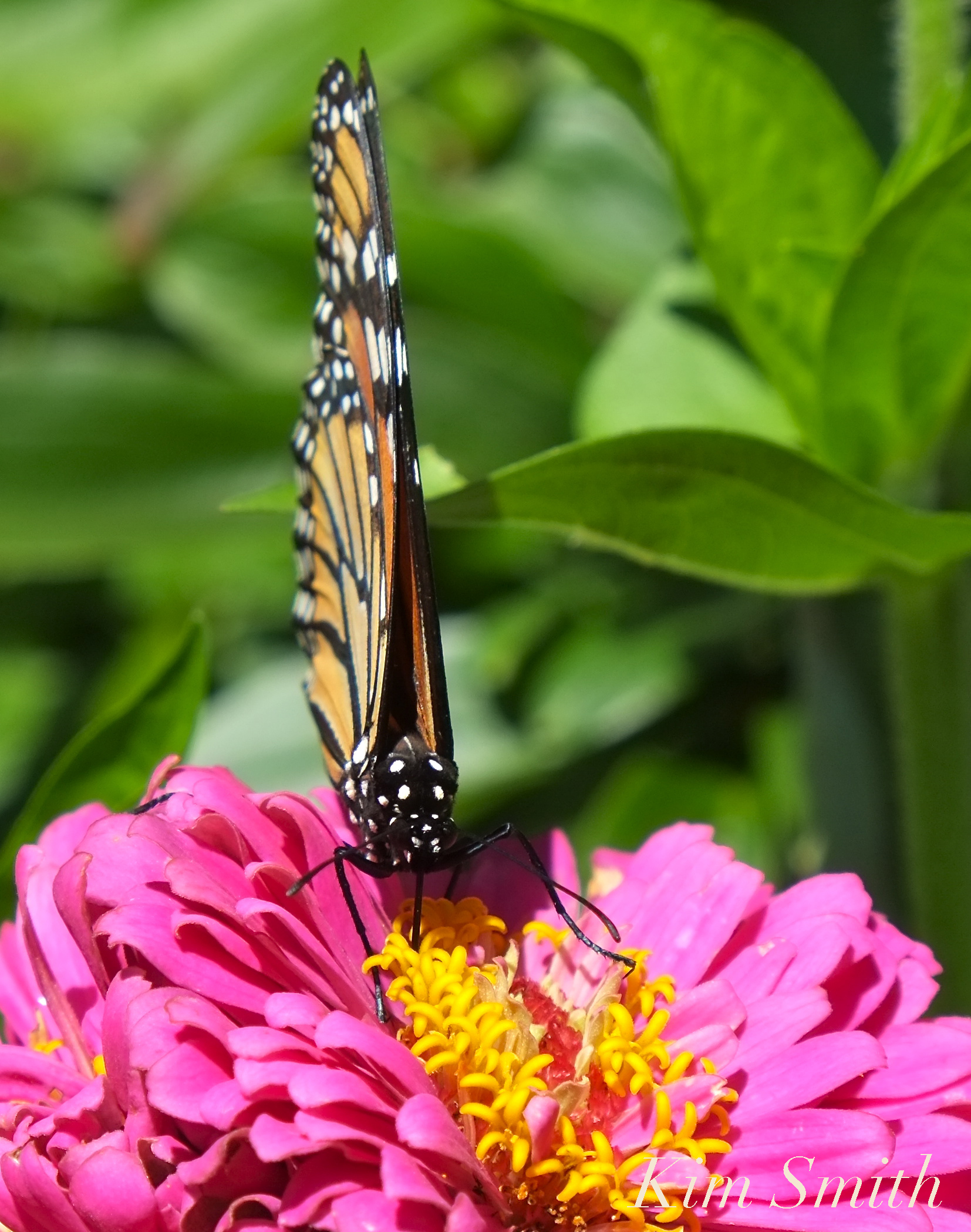
Benary Giant Zinnia and Monarch Butterfly
Elizabeth Redmond from Essex shares photos and writes,
“Hi Kim,
My little butterfly garden in Essex is only 4 feet by 6 feet and yet the monarchs find the Asclepias incarnata that I grew from seed—so gratifying! This week I’ve had two at a time (although not caught in photo). Thanks for your awareness-raising work and great photos!”
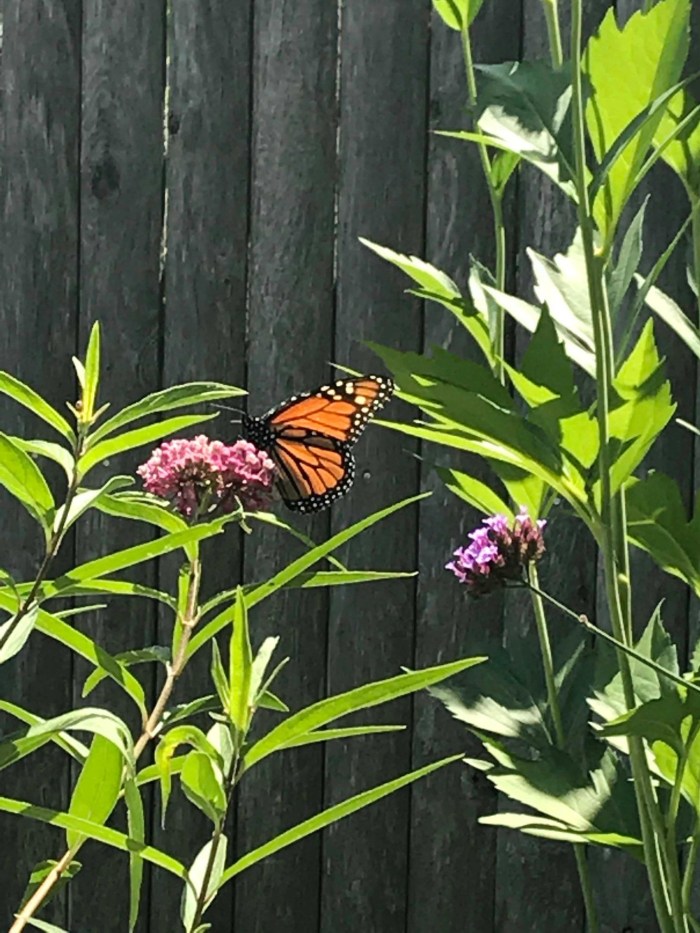

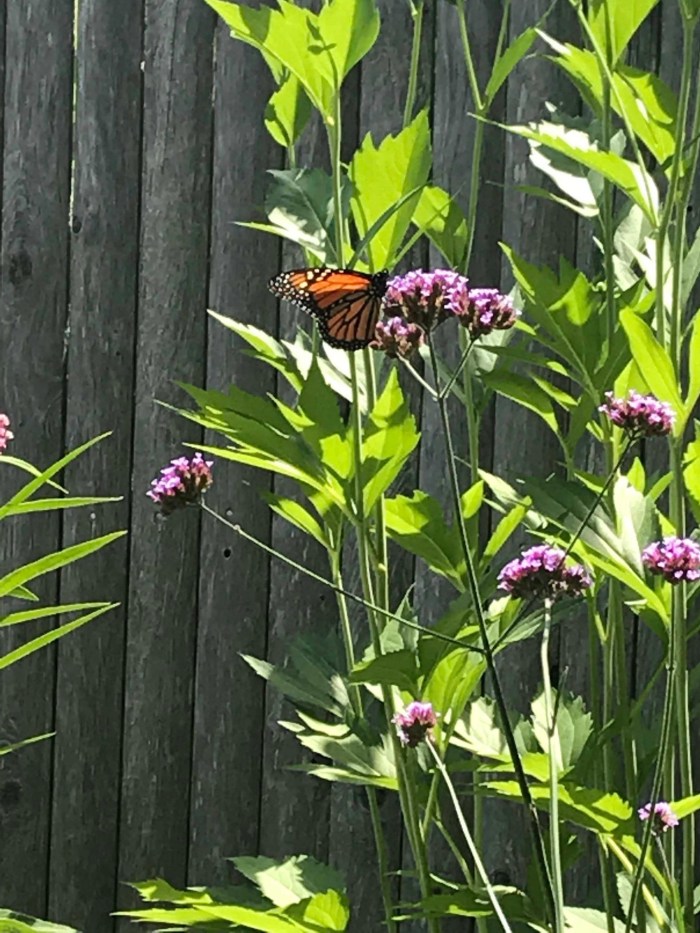
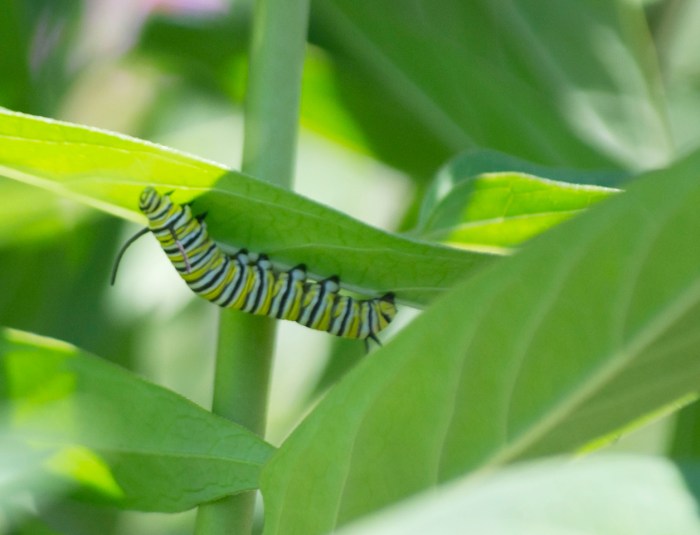
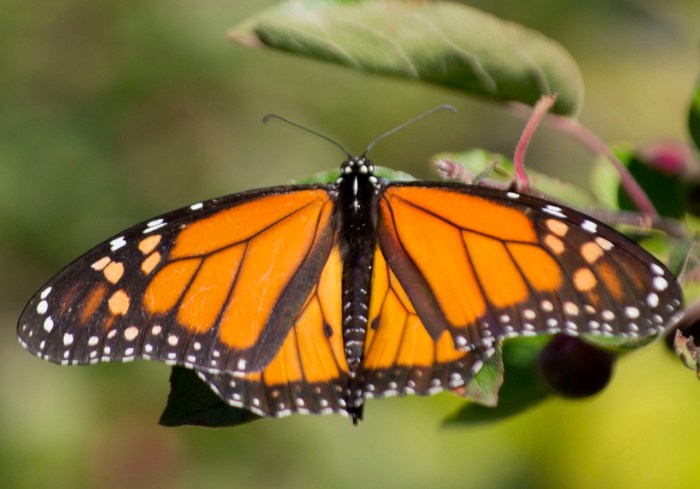
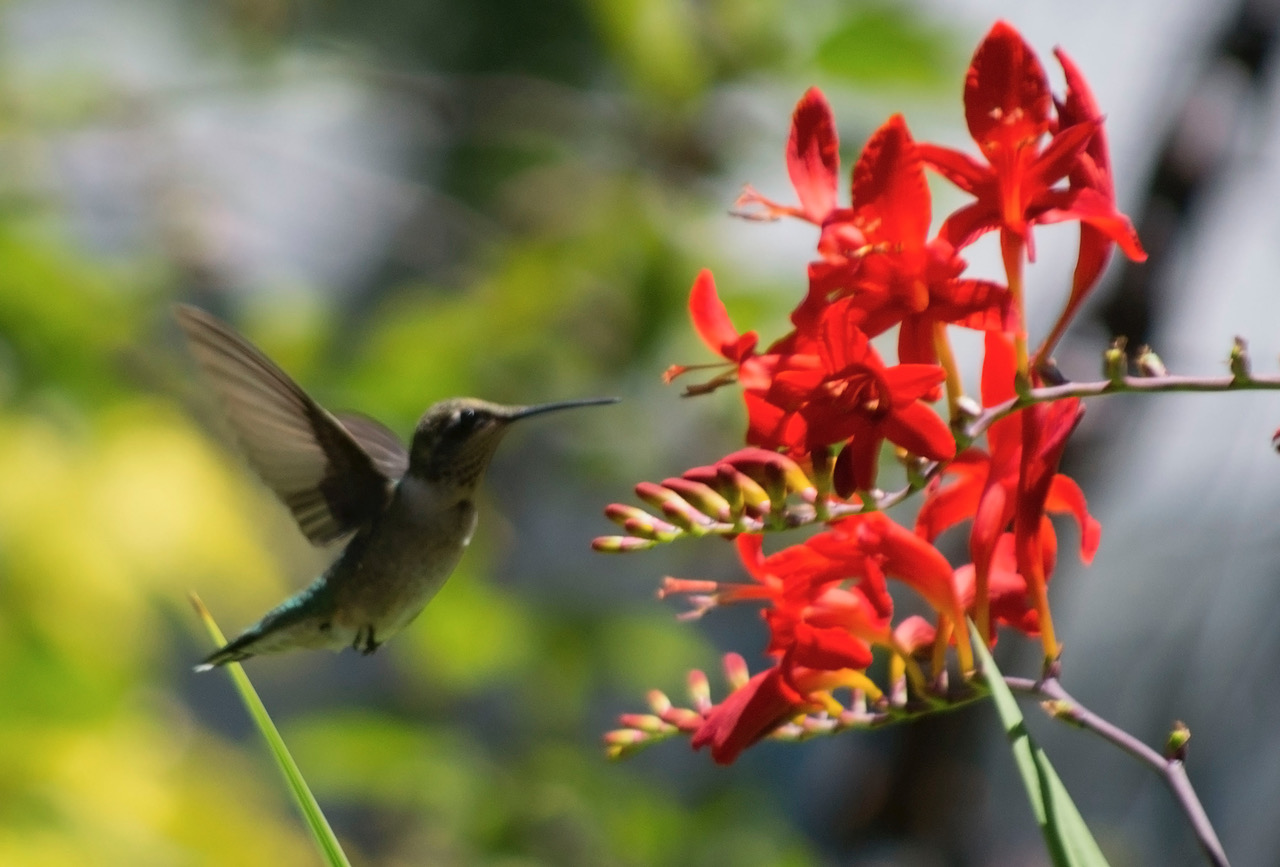
Jackie Bennet, who works at Corliss in Ipswich, shares recent sightings of a male Monarch butterfly and caterpillar, and a female Ruby-throated Hummingbird on the crocosmia.
Spread The GMG Love By Sharing With These Buttons:

GOOD MORNING FROM THE 15th ANNUAL REVERE BEACH INTERNATIONAL SAND SCULPTING FESTIVAL!
 While filming wildlife over the past week at Revere and Winthrop Beaches, it has been fascinating to see the sand sculptures taking shape for this weekend’s festive International Revere Beach Sand Sculpting exhibit and competition. The theme is “Celebrating Literacy,” and the sculptors have created interpretations of favorite works of literature written for children, teens and adults. A storybook castle is the centerpiece of the exhibit. It’s all so beautifully ephemeral. The whimsical sculptures will be gone next week.
The festival begins today, Friday, July 20th and runs through Sunday, July 22nd. A ferris wheel and merry-go-round add to the fun, and a fireworks display over Revere Beach is scheduled for Saturday night. The event is free and open to the public. Attached is the complete schedule. For more information visit: http://reverebeachpartnership.com/



Sculptors include:
Helena Bangert of the Netherlands
Deborah Barrett/Cutulle of Saugus, Mass.
Mélineige Beauregard of Quebec, Canada
Jonathan ‘Jobi’ Bouchard of Montreal, Canada
Enguerrand David of Belgium
Ilya Filmonstev of Russia
Remy Hoggard of Bulgaria
Paul Hoggard of England
Sue McGrew of Tacoma, Washington
Fergus Mulvany of Ireland
Pavel Mylnikov of Moscow, Russia
Rachel Stubbs of England
Steve Topazio of Tiverton, Rhode Island
Abe Waterman of Prince Edward Island, Canada
Jaku ‘Kuba’ Zimacek of the Czech Republic

Spread The GMG Love By Sharing With These Buttons:

CYRANO: FAST-PACED FAMILY FUN AT THE GLOUCESTER STAGE CO!
Cyrano: Fast-Paced Family Fun at Gloucester Stage Company
By Tom Hauck
With a script by Jason O’Connell and Brenda Withers, Cyrano, making its New England area premiere at Gloucester Stage Company, takes direct aim at our traditional notions of onstage storytelling. The opening scene, in which a group of people who appear to be real-life stagehands suddenly assume the roles of the characters, alerts us that this adaptation of the 1897 play by Edmond Rostand knows not the artificial boundary of the fourth wall. The costumes worn by the five energetic actors are a mishmash of ordinary street clothes, community-theatre “swashbuckler” capes, and various forms of period headgear, further reinforcing the idea that we’re seeing an edgy, improvisational performance.
The story is familiar and needn’t be told again here. During the two and one-half hour (including intermission) romp, the sparkling ensemble cast, anchored by Jeremiah Kissel as Cyrano and Andrea Goldman as Roxane, puts out enough comic energy to keep the audience riveted. James Ricardo Milord reveals the humility and humanity of love-struck Christian, and Erin Nicole Washington masterfully handles split-second costume changes to bring her five characters to life. Among his three other roles, GSC favorite Paul Melendy delights as Count De Guiche, the pompous commander of the army unit to which Cyrano and Christian belong, and who’s also smitten by Roxane.
Despite the slapdash appearance of the blocking, there are moments of precision choreography, most notably the breathtaking sword fight in which Cyrano efficiently dispatches a succession of foes. But again, the notion that we’re attending a contrived “play” is confirmed by seeing a vanquished actor roll off the platform only to spring to life, grab a different cloak, and attack again. Thus five actors economically create a swirling melee of dozens of combatants.
In keeping with the improv vibe, the set is minimal and the actors themselves are the stagehands, busily drawing curtains and positioning chairs as needed. Deftly directed by GSC artistic director Robert Walsh, Cyrano provides a feast of fine acting, frivolity, and family fun. Now through August 11. For tickets, go to www.gloucesterstage.com, or call 978-281-4433.
Spread The GMG Love By Sharing With These Buttons:

42 PAIRS OF PIPING PLOVERS NESTING AT CRANES BEACH!
July 9th 2018 – From the Trustees “The Piping Plovers at Crane Beach are doing great this year! 42 pairs have nested making this the third highest amount of nesting Piping Plover pairs since 1986. So far 42 chicks have spread their wings and flown. Many more chicks are still on the beach and we are waiting on more nests to hatch. Please remember to keep your distance and give these protected birds their space.”
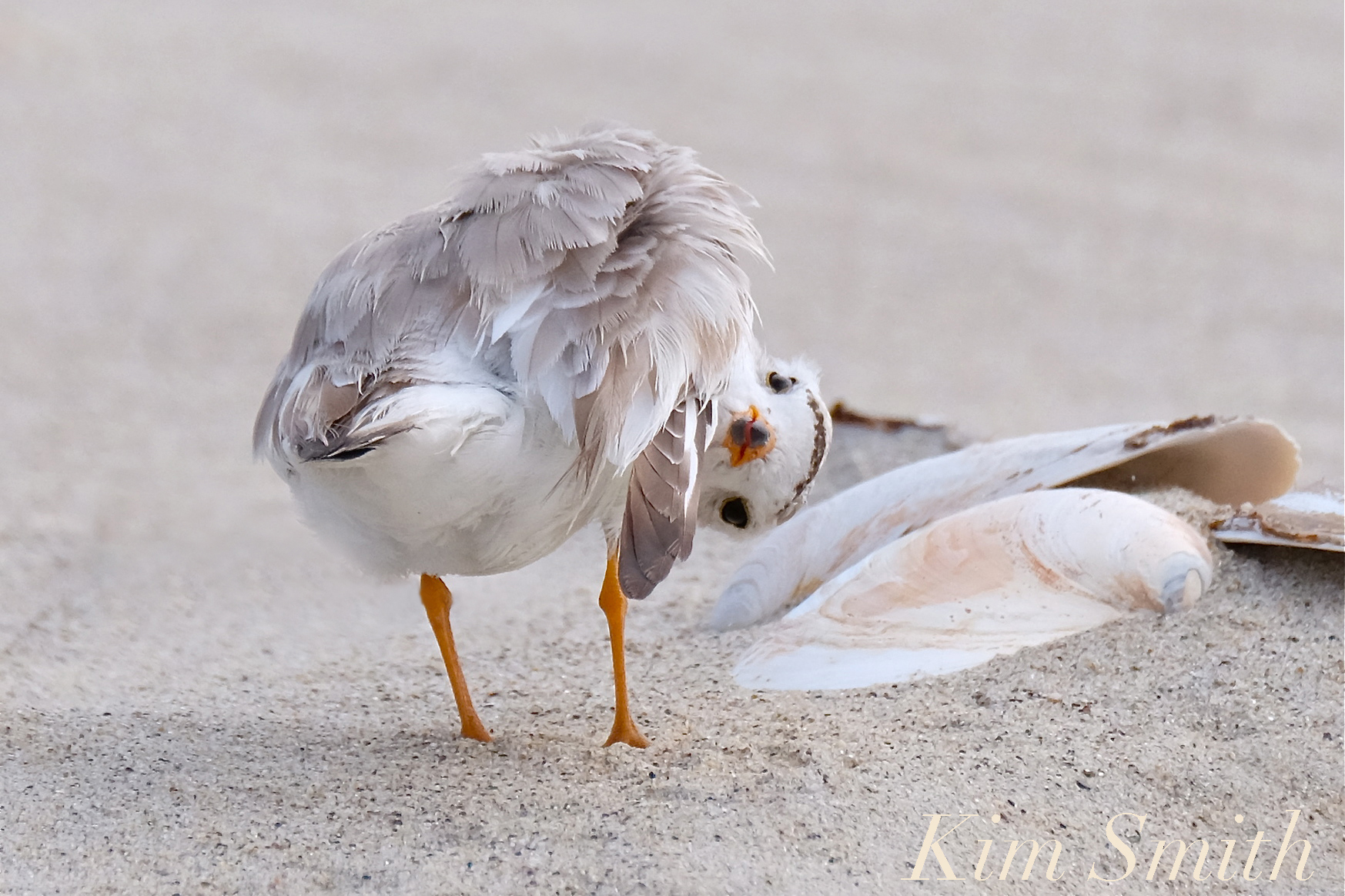 I love how the pale seashell coral pink in the clam shells mirrors the orange hues of the PiPl’s beak and legs. I don’t know why this photo strikes me as funny, but it just does. Tiny birds with huge personalities!
Spread The GMG Love By Sharing With These Buttons:

A FLOOD OF MONARCH SIGHTINGS, SOME SHARING THE BEST THEY’VE SEEN IN YEARS!!!
GMG Reader Leigh writes,
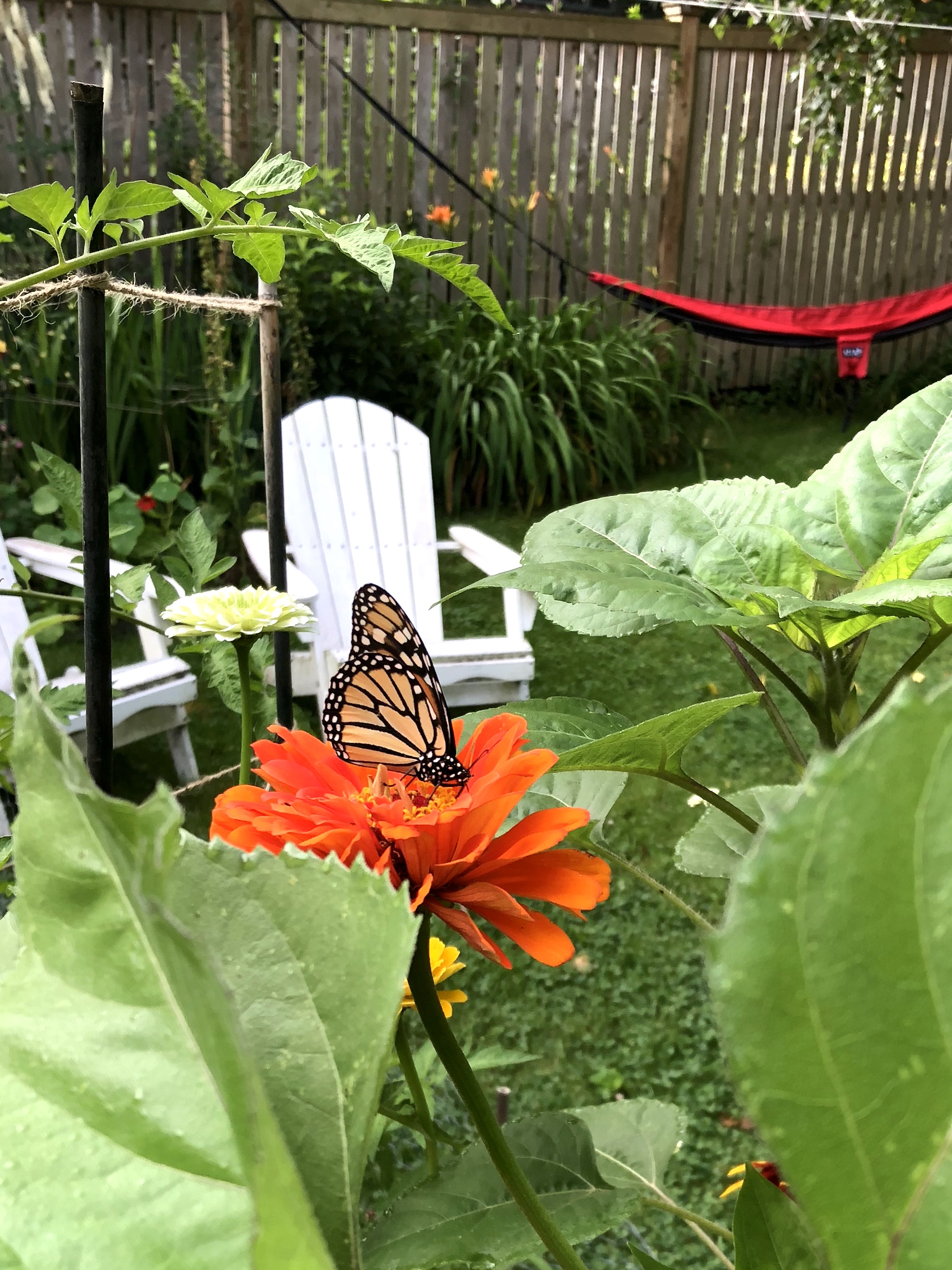
I just took this pict today (Tuesday July 17) and then saw your post tonight about sharing monarch picts. Spotted this one in my backyard in Rockport— on a zinnia, but near the swamp milkweed.
I enjoy your blog!
 Pamela shares a recent sighting of a Baltimore Checkerspot at Appleton Farm.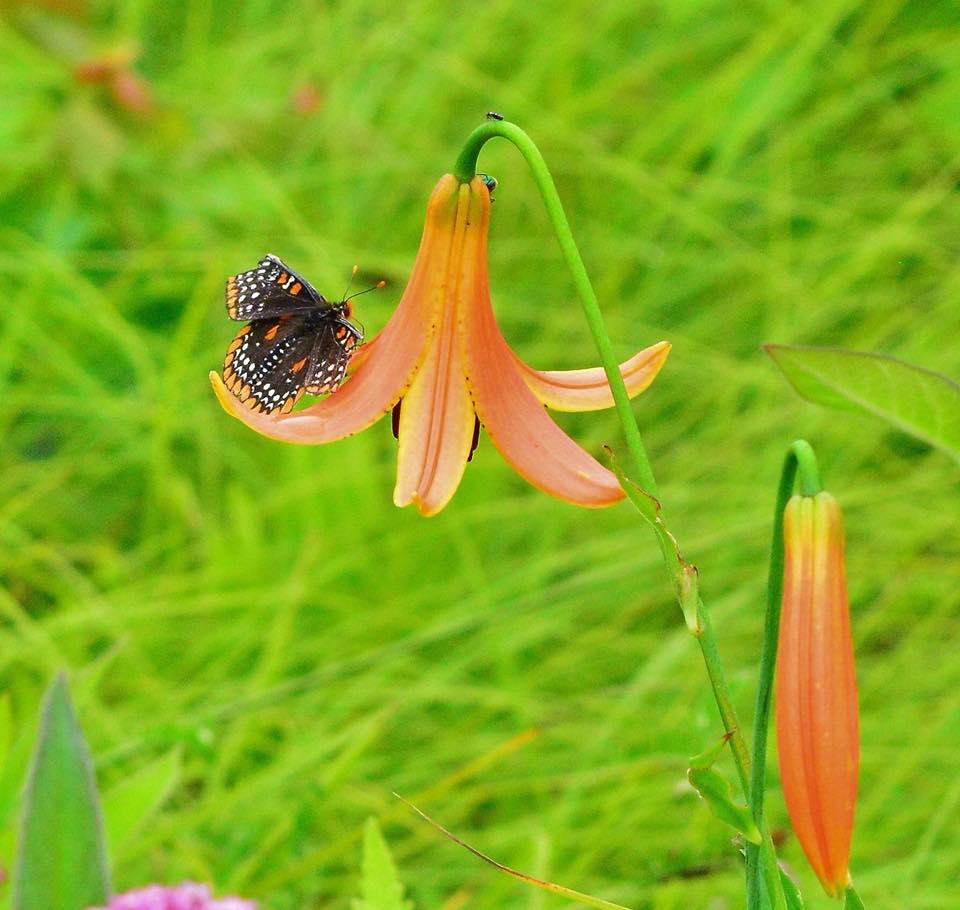
Sharon M saw one at Wingaersheek, Catherine M at Niles Pond, M.J. in her Gloucester garden and one in Lanesville, Aurelia Nelson is seeing tons at her milkweed patch in Beverly, Beverly M saw one at Riverdale, Whitney C in East Gloucester, Peggy A at Old Garden Beach Rockport, Lisa W at Magnolia Avenue, Ellen A Beverly, Betty L Pasture Road Rockport, Nancy L at her milkweed field in Salem, and Patti Papows adds that hers are coming daily to her milkweed patch not by the ones and twos, but by the threes and fours!
Today at my presentation in Beverly Farms, the North Shore Garden Club ladies report seeing tons in their gardens, and today I saw them in my garden, and while checking on the Piping Plovers, they were in the dunes at Good Harbor and on the beach at Revere. If this warm weather continues, 2108 could prove to be a promising year for the Monarchs. Please keep your Monarch (and other butterflies, too) sightings coming. Thank you! And feel free to email us photos of sightings: kimsmithdesigns@hotmail.com
Spread The GMG Love By Sharing With These Buttons:

LEONARD BERNSTEIN MUSICAL TRIBUTE AT THE ANNISQUAM VILLAGE CHIRCH SUNDAY, JULY 22

Spread The GMG Love By Sharing With These Buttons:

KIM SMITH MONARCH BUTTERFLY PROGRAM FOR THE NORTH SHORE GARDEN CLUB WEDNESDAY JULY 18TH
 Monarch Butterfly and native wildflower Joe-pye
Please join me Wednesday morning for my lecture and slide program “Beauty on the Wing: Life Story of the Monarch Butterfly” at 10am for the North Shore Garden Club at St. John’s Church in Beverly. I hope to see you there!
 Monarchs and native New England wildflower Smooth Aster
Spread The GMG Love By Sharing With These Buttons:

WHAT’S FOR BREAKFAST MAMA?
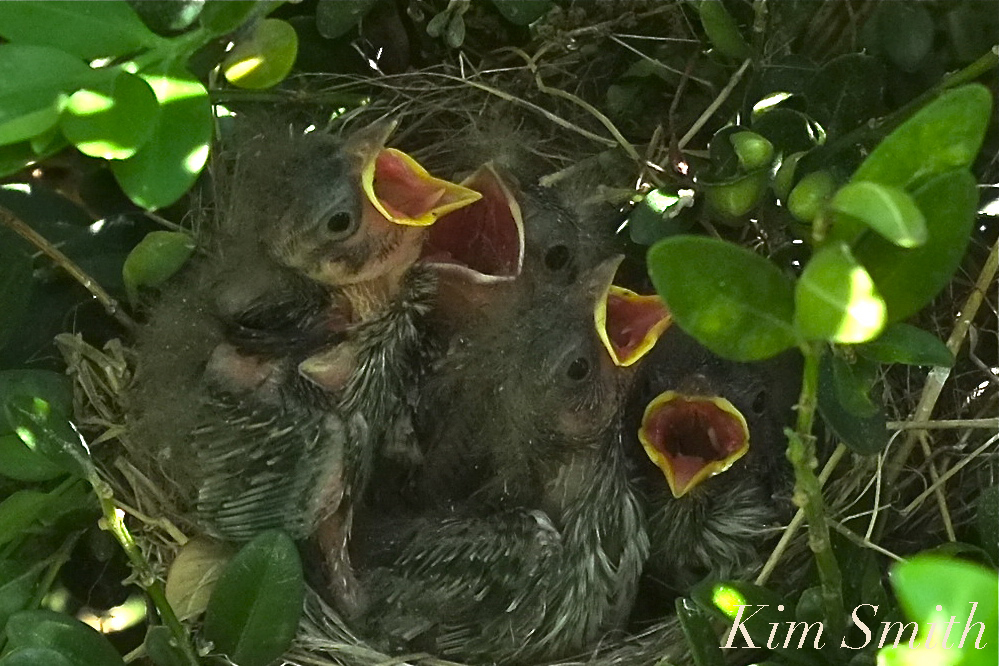 To and fro, to and fro, flying from the branches of the majestic old oak tree to the garden beds, and then into the thickest part of the small shrub at the edge of the vegetable garden, then back to the sheltering oak above, a pair of Chipping Sparrow parents tirelessly fed their hungry brood of tiny hatchlings. Chipping cheeraree cheeraroo all the while, despite beaks overflowing with worms, and every kind of larvae you can imagine.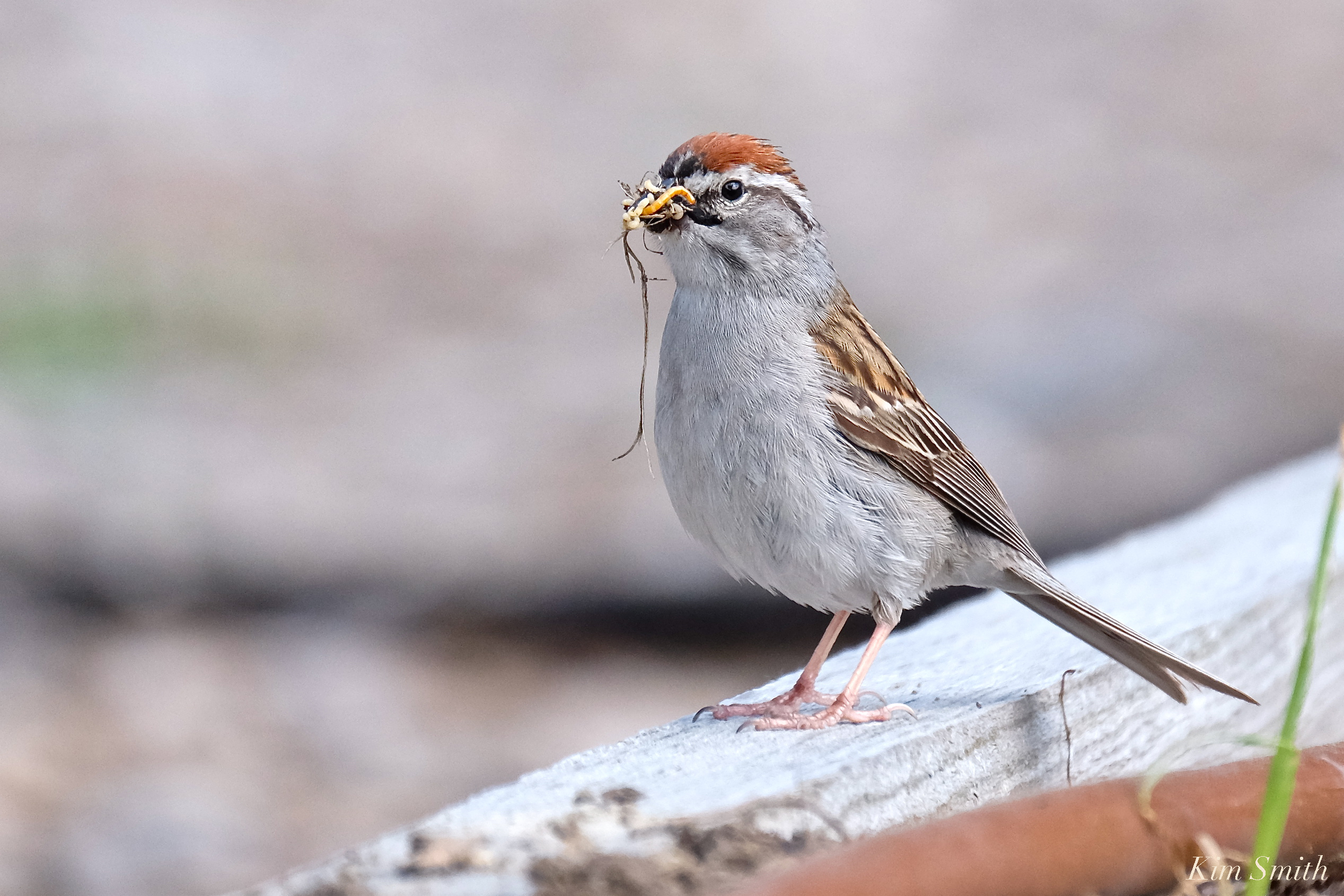
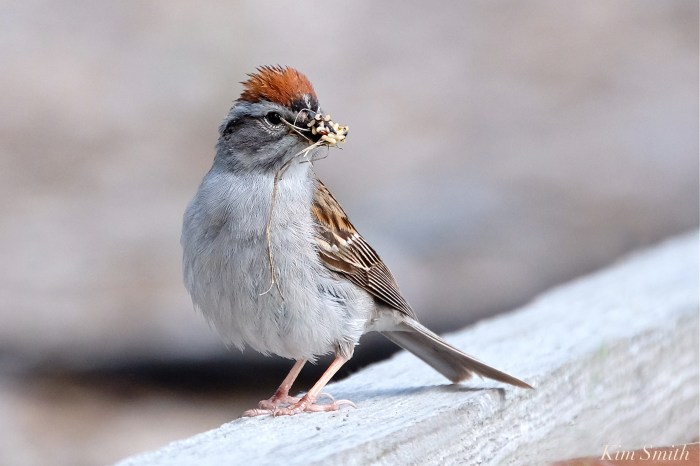
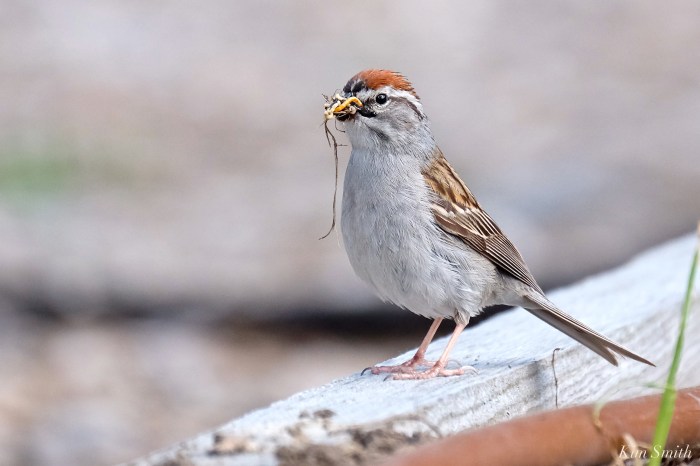
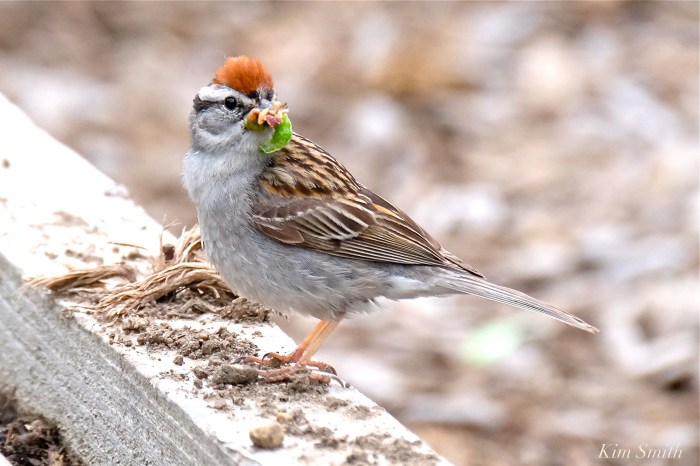
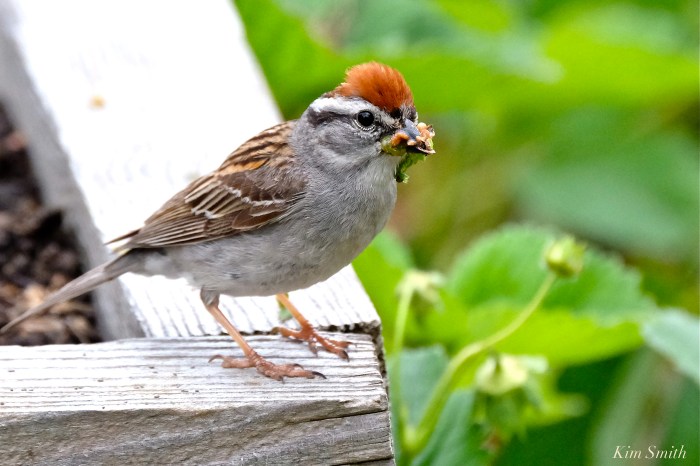
Chipping Sparrows are easily identified with their rufous red beret-like cap and cheery chipping. Massachusetts is part of their northern breeding range. Come fall they will begin to flock together and migrate to the southern US and Mexico. Chipping Sparrows were once more of a woodland species but today, they have become well-adapted to human habitats and nest in gardens, parks, and farmlands.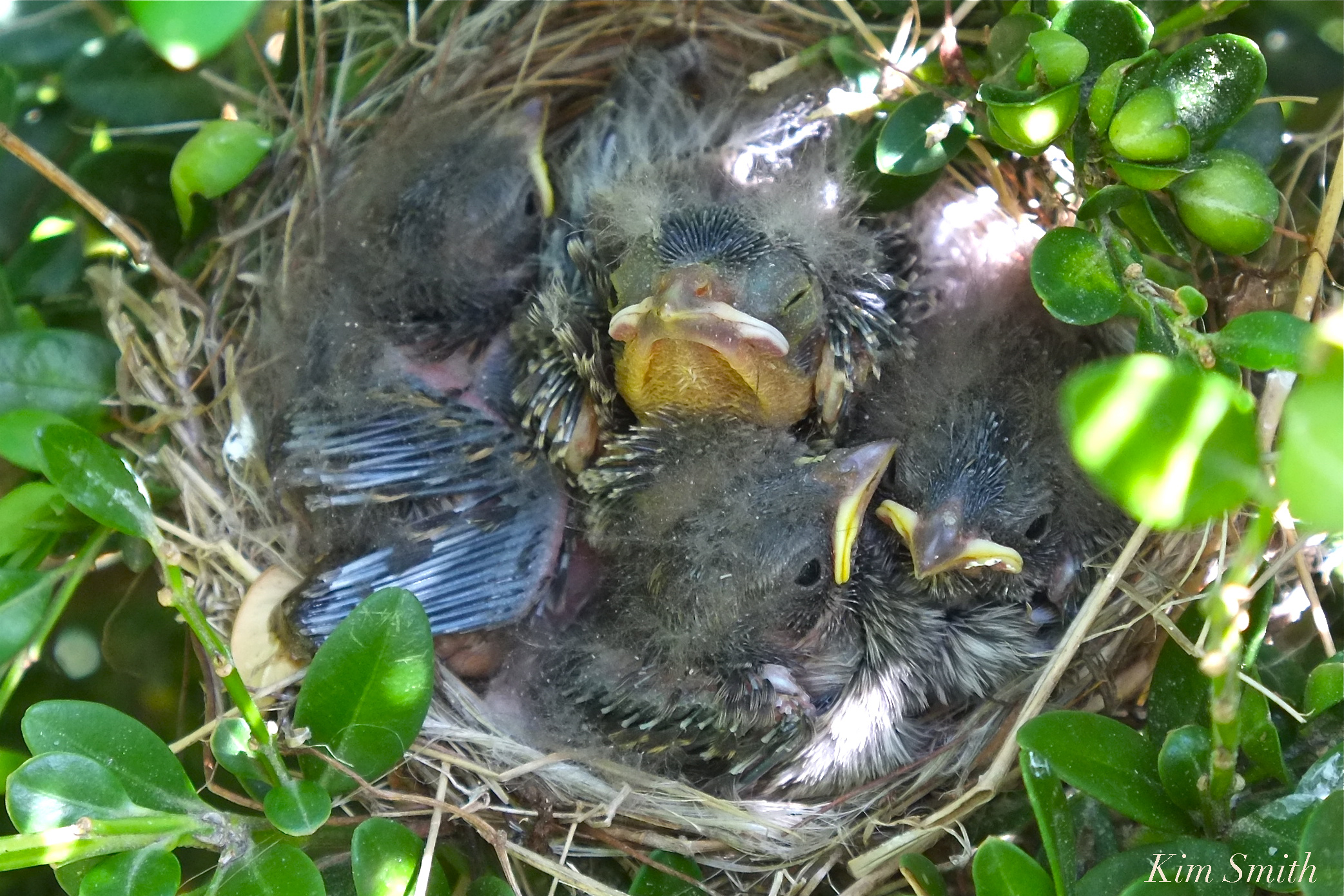
Like all song birds, Chipping Sparrow young are altricial, which means they hatch semi-undeveloped and are blind, naked, and helpless, needing constant care and feeding by the parents. Species of Plovers, such as Piping Plovers and Killdeers are precocial. They are fully mobile and can feed themselves within hours after hatching. The adults are needed to keep them warm and to protect the chicks from predators. Birds in the tern and gull family, such as Least Terns, are semi-precocial. They hatch with their eyes open, are covered with downy fluff, can walk (and in some cases swim) but must be fed by the parents.
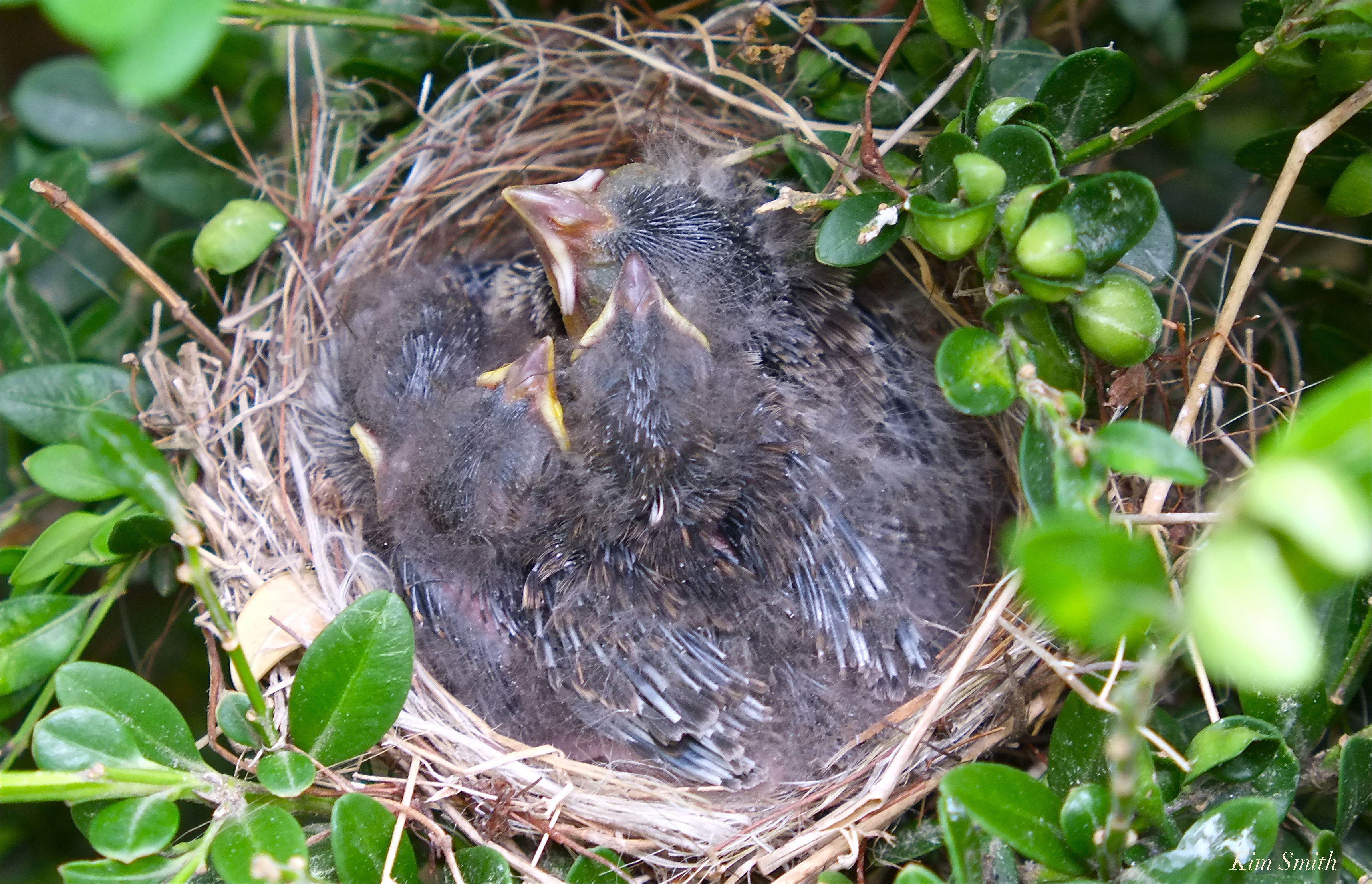 Chipping Sparrow Nestlings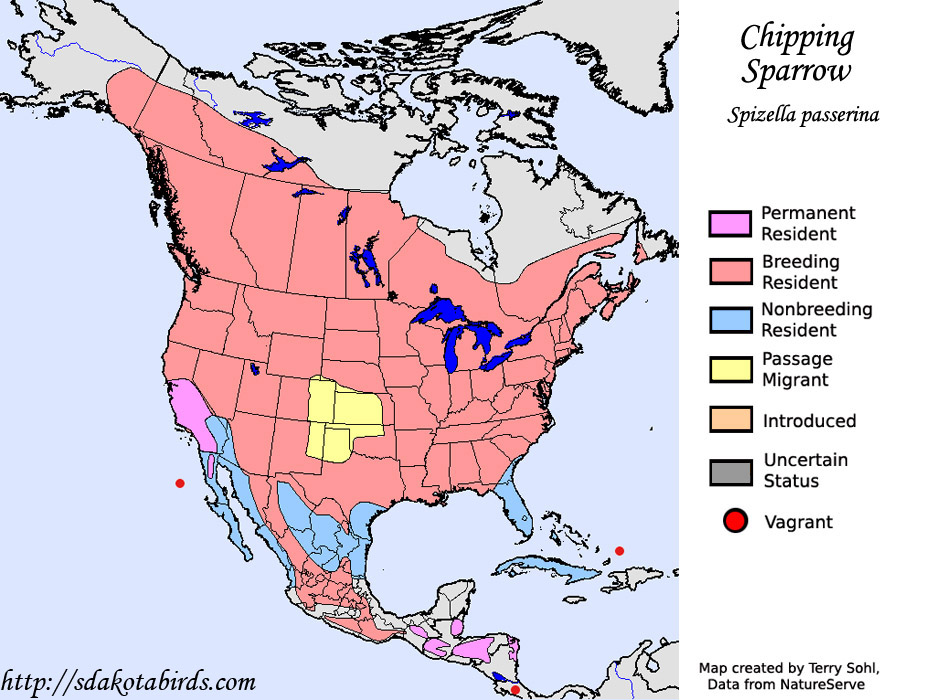
Spread The GMG Love By Sharing With These Buttons:

PLEASE SHARE YOUR MONARCH SIGHTINGS!
My friends Lauren from Manchester, Patti P from East Gloucester, Eric from Rockport, Cheryl from West Gloucester, and DB from Essex have all reported seeing Monarch butterflies and caterpillars in their gardens. Please keep your Monarch sightings coming (and any other beautiful butterfly or moth you may see)!
Patti shares photos from her garden –
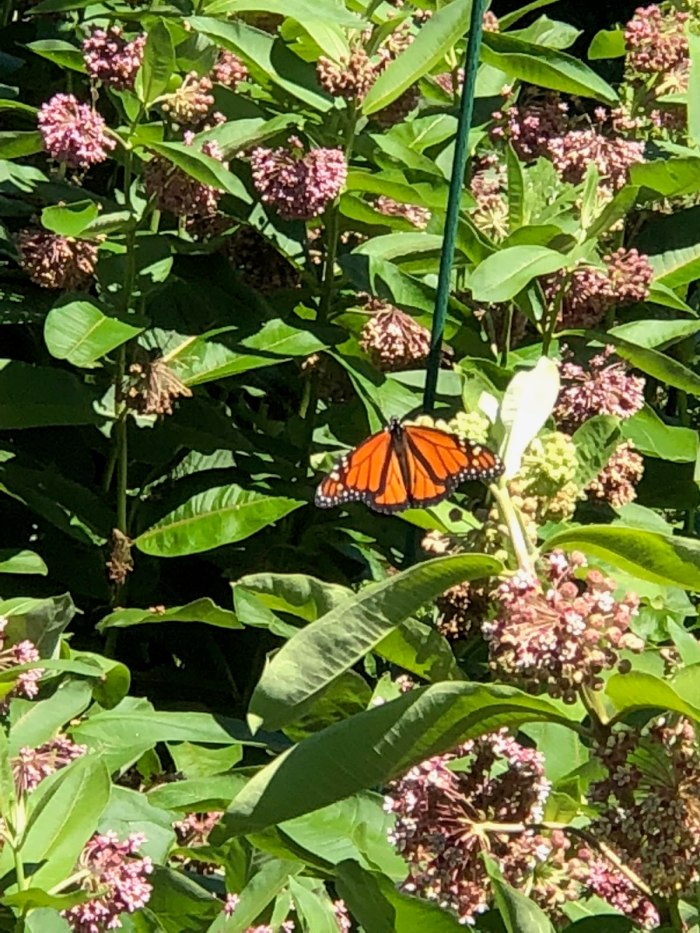
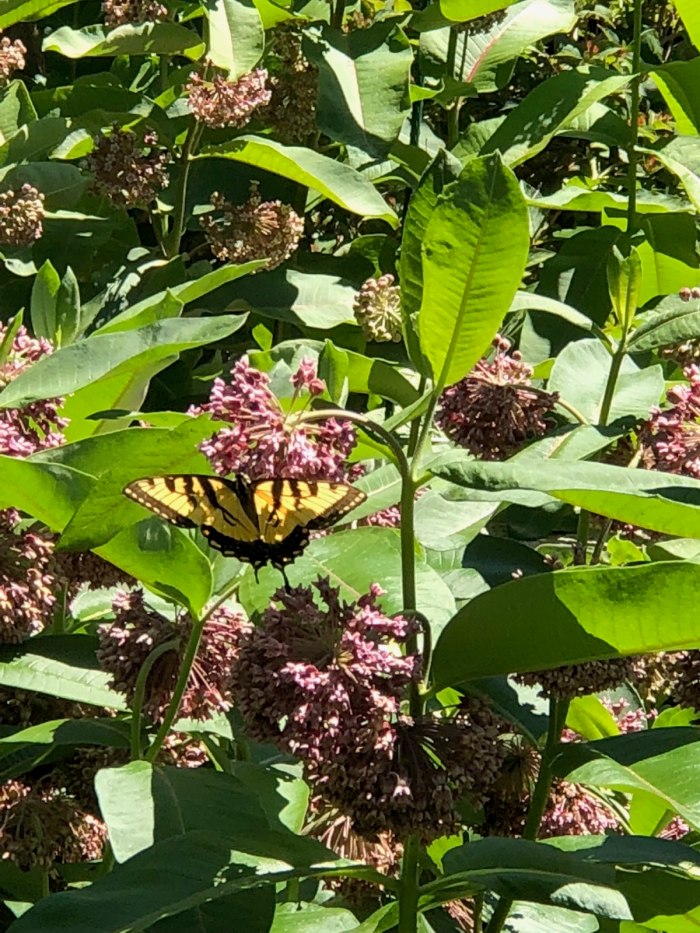
Monarch and Eastern Tiger Swallowtail – Patti Papows ever expanding patch of Common Milkweed attracts a bevy of pollinators.
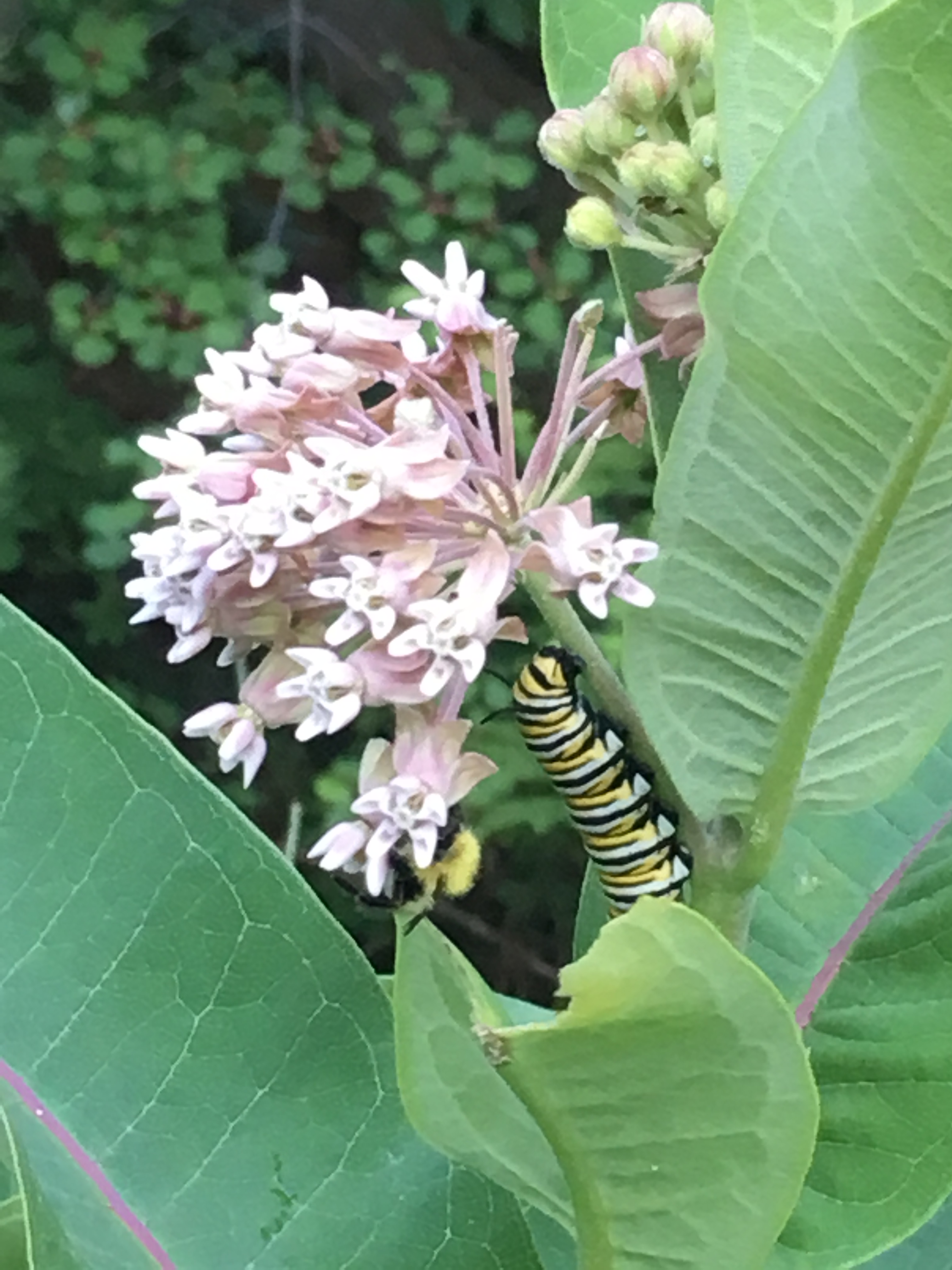 Eric Hutchins shares a photo of a Monarch on his Common Milkweed, grown from seeds he purchased at our milkweed seed sale a few years back.
Spread The GMG Love By Sharing With These Buttons:

BEYOND BEAUPORT BOOK LAUNCH
YOU’RE INVITED…
BEYOND BEAUPORT BOOK LAUNCH
JULY 29
6:30-8:30 PM
ROCKY NECK CULTURAL CENTER
GLOUCESTER, MA
**RSVP REQUIRED SEATING IS LIMITED. PLEASE RSVP BEFORE JULY 25.**
Join local author James Masciarelli to celebrate the launch of his novel, “Beyond Beauport”. The evening will include a presentation by James, opportunities for mingling, a book signing, wine & cheese, soft drinks, and a few surprises.
James’ discussion will include remarks about the journey he took to publication and fascinating little known facts about Gloucester’s seafaring characters of the past. James will also touch upon his novel’s main character, Shannon Clarke, and her mid-life quest for her seafaring ancestry. Her childhood dream of becoming a sea captain is revived when her long-lost Uncle Patrick comes to town with salty tales of their family’s connections to famous Gloucester sea captains and infamous pirates of the Caribbean. Shannon and her uncle take to the sea in Patrick’s brigantine in a voyage fraught with raw forces of nature, past traumas and present-day sea raiders. Their beliefs about family, identity and purpose are shaken to the core. James would be honored for you to join him for this special evening.
Seating is limited please RSVP today. Looking forward to seeing you!
RSVP AT EVENTBRITE.COM AND USE KEY SEARCH WORDS “BEYOND BEAUPORT”OR CLICK HERE: https://www.eventbrite.com/e/beyond-beauport-book-launch-tickets-47446611091
Spread The GMG Love By Sharing With These Buttons:

WHAT TO DO IF YOU FIND A BABY BUNNY NEST IN YOUR GARDEN?
 I can’t tell you how often I have accidentally uncovered a bunny nest while in the garden. The nest is usually only an inch or so below the ground surface, tucked under a perennial such as lavender or asters, and only covered with a thin layer of the mother’s fur.
If you find a nest, do not disturb. If you have accidentally disturbed the nest by raking or tidying up, place the fur back on top of the babies.
If the baby bunny has been accidentally handled or touched, still return it to the nest. The greatest myth is that Mama Cottontail will reject the baby if handled by a human. This definitely is not true and the Mama will definitely want her baby back!
Eastern Cottontail mothers do not stay with the nest all day. Rabbits are a prey species, in other words, they are hunted, and she does not want to draw attention to the nest. Cottontail Mamas typically return twice a day, at dusk and at dawn, to feed the babies. She nurses the babies by straddling the nest, so you want to keep everything as it was when you found the nest.
If you are worried because you have not see the Mama return to the nest to feed the babies, lay two pieces of string over the nest in an X shape. If after twenty four hours the string looks disturbed and the babies look plump and well-fed, you can be sure that the nest is not abandoned.
EDITED: To our Cape Ann readers- for bunnies and other small mammals that need rescuing I recommend contacting wildlife rehabilitator Erinn Whitmore.
It has just been pointed out that Erinn Whitmore is away until the fall. Erin Parson Hutchings also does small mammal rehabilitation and she too is a Mass Wildlife licensed rehabber. You can contact Erin through facebook. This tiny Eastern Cottontail was found today by Ari at Wolf Hill, in a nest located in some gravel. She accidentally uncovered the nest while tidying up around the plants.
Spread The GMG Love By Sharing With These Buttons:

GOOD MORNING! BROUGHT TO YOU BY ORANGE
 Good Harbor Beach Twin Lights Sunrise
Spread The GMG Love By Sharing With These Buttons:

FOUR WAYS IN WHICH WE CAN HELP THE GOOD HARBOR BEACH PIPING PLOVERS SUCCESSFULLY FLEDGE CHICKS: OUR RECOMMENDATIONS TO THE MAYOR
Dear Readers,
Last Tuesday we sent our letter to Mayor Sefatia and the City Councilors with a short list of recommendations, based on the past three years of daily Piping Plover monitoring by myself and our core group of volunteer monitors. We purposefully kept the recommendations modest out of consideration to both the Piping Plovers and to our Good Harbor beach going community. Please find below the recommendations suggested by the Piping Plover volunteer monitors.
July 9, 2018
Dear Mayor Romeo Theken and Gloucester City Councilors,
We, the Piping Plover volunteer monitors, are submitting our short list of recommendations regarding the Piping Plovers nesting at Good Harbor Beach. Our goal is to have in place by next April 1, 2019, measures and ordinances that will greatly increase the likelihood that the hatchlings of this tiny threatened shorebird will have a fighting chance at surviving life on Good Harbor Beach.
Piping Plovers began nesting at Good Harbor Beach in 2016. Each year, the PiPl are coming earlier and earlier. In 2016, they arrived mid-May, in 2017 they arrived at the beginning of May, and this year, they arrived on April 3. It would appear that the same pair is returning to Good Harbor Beach, as the male marks his territory and attempts to build a nest scrape only several feet from the previous year’s nest (at Boardwalk #3 nesting area). More Plovers than ever were seen at Good Harbor Beach this spring, and if not for constant interruptions in the Boardwalk #1 nesting area, we would have had two pairs nesting on the beach.
Why are the birds arriving earlier and earlier? We can presume that the pair are more experienced travelers and that Good Harbor Beach is their “territory.” Does this mean we will eventually have dozens of pairs nesting on Good Harbor Beach? No, because the PiPl are very territorial and they will defend a fairly large area, preventing other PiPl from nesting in their site.
This year the PiPl pair hatched four chicks. All four chicks were killed by crows, gulls, and dogs. All three are human-created issues, and all three can be remedied. The following are the four recommendations and actions we wish to see take place.
Recommendations
1) Change the dog ordinance to not allow dogs on the beach after March 31.
Currently, dogs are allowed on the beach from October 1 to May 1. The Piping Plover volunteer monitor core group, Dave Rimmer from Greenbelt, Ken Whittaker, and Mass Wildlife’s John Regosin, all agree that dogs should not be allowed on Good Harbor Beach beginning April 1, but that it would be safe for Piping Plover fledglings and other migrating shorebirds for dogs to return after September 15.
This new suggested time frame will allow birds to nest on the beach (as opposed to in the parking lot), with far less interruption, shorebirds will nest earlier in the season, which will help with the chicks survival rate, and the chicks will be stronger by the time Good Harbor fills with summer crowds.
This is a very logical and simple solution. Disallowing dogs on Massachusetts coastal beaches where shorebirds are nesting, beginning April 1, is the norm. Allowing them to return after September 15, and in many cases after September 30, is also very common. For Piping Plovers and other nesting shorebirds, protecting their habitat and sharing the shore is a matter of life and death.
2) Rope off the nesting area by April 1.
Poles, with threatened species signs, and a triple row of roping of nesting sites, to be in place no later than April 1. Essex County Greenbelt’s Dave Rimmer will assist with this measure.
3) Enforce the existing ordinances regarding dogs (and littering) at all times throughout the year.
Only enforcing dog ordinances at Good Harbor Beach during nesting season is creating hostility toward the Piping Plovers.
Additionally, we do not recommend extremely high fines as we feel that may become an impediment to issuing and collecting the fines. We know of at least one example where the magistrate dismissed the tickets issued to a woman who claimed to have a service dog. This woman was running rampant on the beach and throughout dunes with her service dog off leash throughout the entire time the PiPl were nesting, from April through May. Despite the fact that former dog officer Diane Corliss caught the woman on camera with her dog off leash on the beach, and in the dunes, all her tickets that were issued by the animal control officer were dismissed. This is neither fair to the officers who are working hard to keep the dogs off the beach or to the plover volunteers who are spending inordinate amounts of time trying to keep the PiPl safe.
4). Increase trash collection.
When no barrels are placed at the entrances to the beach, people dump bags of trash there anyway. When barrels are in place, people put trash in the barrels however, when the barrels become full, they again resort to leaving bags of trash behind, only next to the barrels. In either scenario, gulls and crows are attracted to the trash. Both gulls and crows rip open the bags and the trash is blown throughout the parking lot and marsh, soon finding its way onto the beach and into the ocean. Hungry gulls and crows waiting for people to leave their trash behind eat tiny shorebirds.
A friend who lives on a North Carolina beach shares how her community keeps their public beaches looking pristine. Not only do they have barrels, but every few weeks, police patrol the beach and hand out fines for littering. This is taken as a wake up call, everyone is good for a bit of time, but then become slack about littering again. Out come the officers for another round of ticketing.
Thank you for taking the time to consider our recommendations.
Sincerely yours,
Kim Smith
cc Paul Lundberg, Steven LeBlanc, Val Gilmam, Ken Hecht, Melissa Cox, Jen Holmgren, Scott Memhard, Sean Nolan, Jamie O’Hara, Dave Rimmer, Ken Whitakker
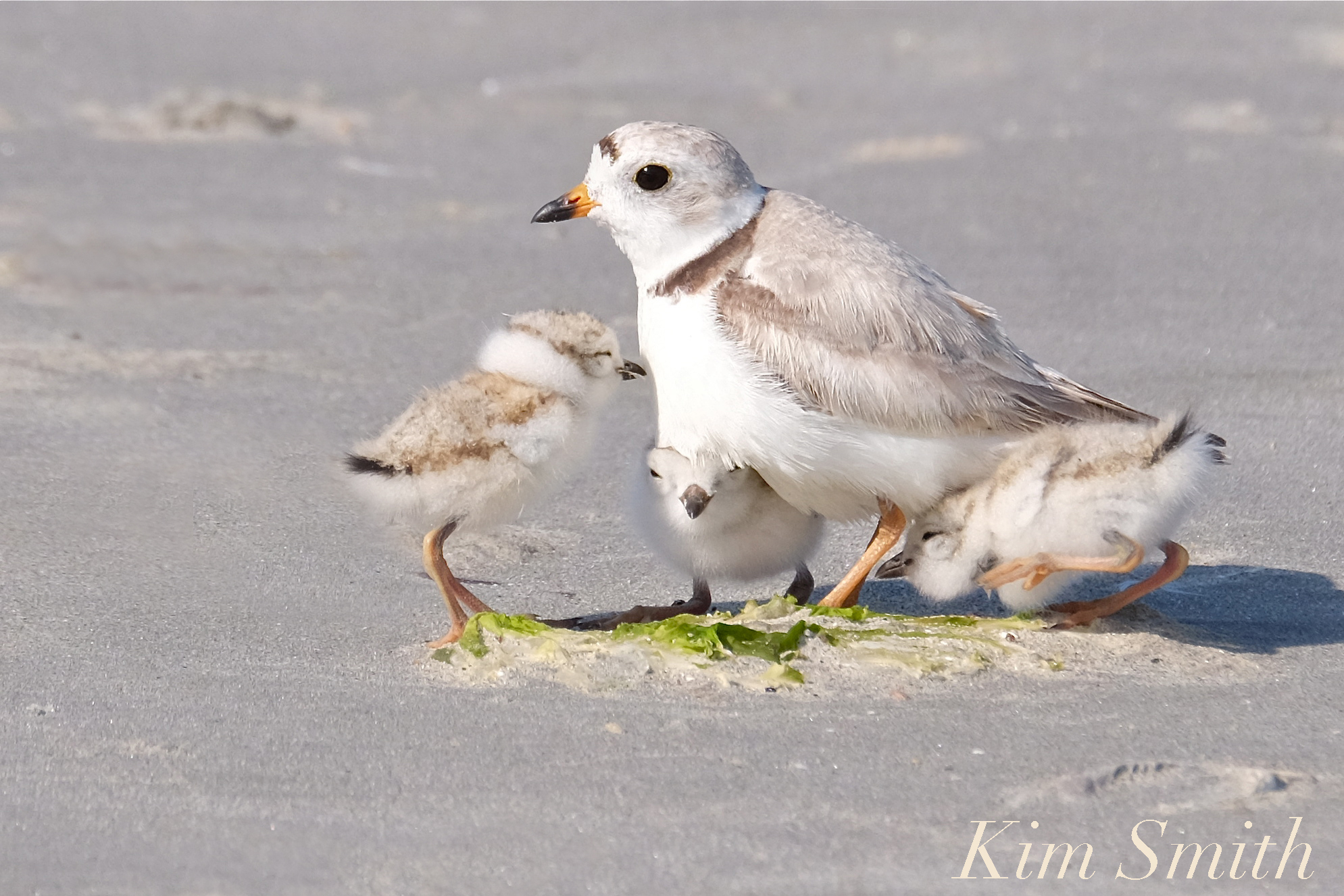 Piping Plover chicks coming in for some snuggles.
Spread The GMG Love By Sharing With These Buttons:

MORGAN FAUDLS PIKE’S GREAT RED FOX CAPTURE!
Gloucester sculptor and designer Morgan Faulds Pike’s arrestingly beautiful works of art are often inspired by the wildlife and wild habitats of Cape Ann. I love her description of a Red Fox she recently spied. Go here to Morgan’s website to see a collection of her stunning sculptures, carvings for pipe organs, and drawings. And of course, you can always visit her “Gloucester Fishermen’s Wives Memorial” on the boulevard.
Thanks so much to Morgan for sharing!!
Hello Kim,
Heading home Tuesday from an early morning run around the quarries, I saw this fox cross Granite Street toward the Tool Company. She munched on something under a bush in the empty lot while crows, and later mockingbirds, harassed her. I got out of the car and watched her calmly cross at the crosswalk, then head up Curtis street on the sidewalk. A beautiful animal with ink dipped feet and ears and a white tipped fat fur tail. Sorry it’s only iPhone resolution…
Morgan Faulds Pike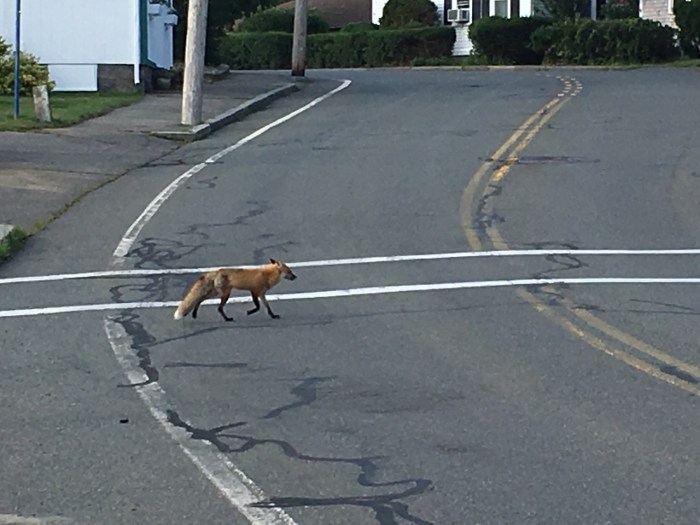
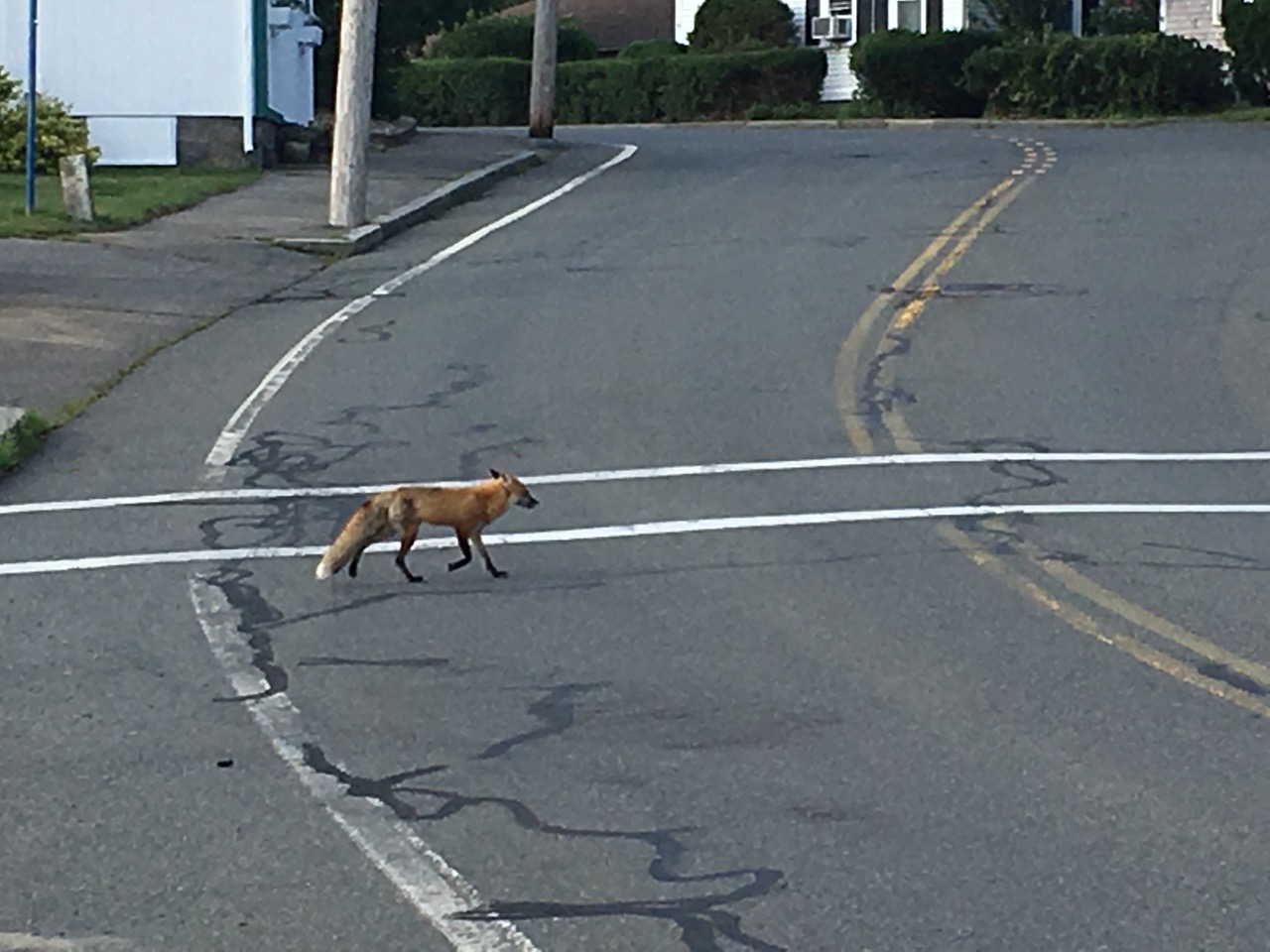
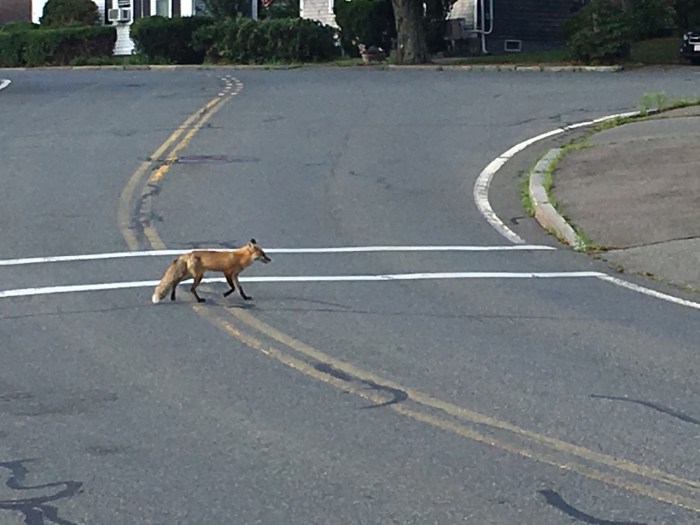
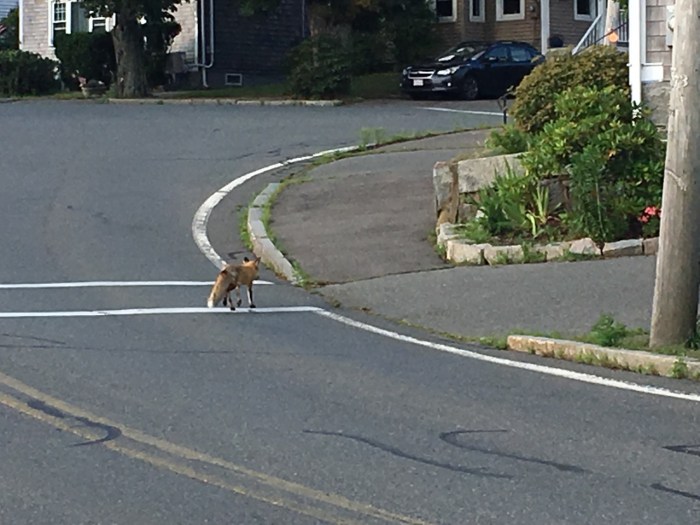
Red Fox are so elusive. We used to see them all the time in East Gloucester, especially on the backshore beaches, scavenging early, early in the morning. I see them now much more frequently in West Gloucester (and Gray Fox, too) and Joey recently saw one trotting along in East Gloucester, after years of no sightings.
I read that where you have a greater concentration of Eastern Coyotes there will be fewer Red Fox. I also read that because of habitat competition from the Eastern Coyote, they are now denning closer to people’s homes as these sites are deemed safer from coyotes. Coyotes typically sleep out in the open and don’t usually make a den, unless it’s pupping season, and then they may use a fox’s den.



 Good Morning Gloucester