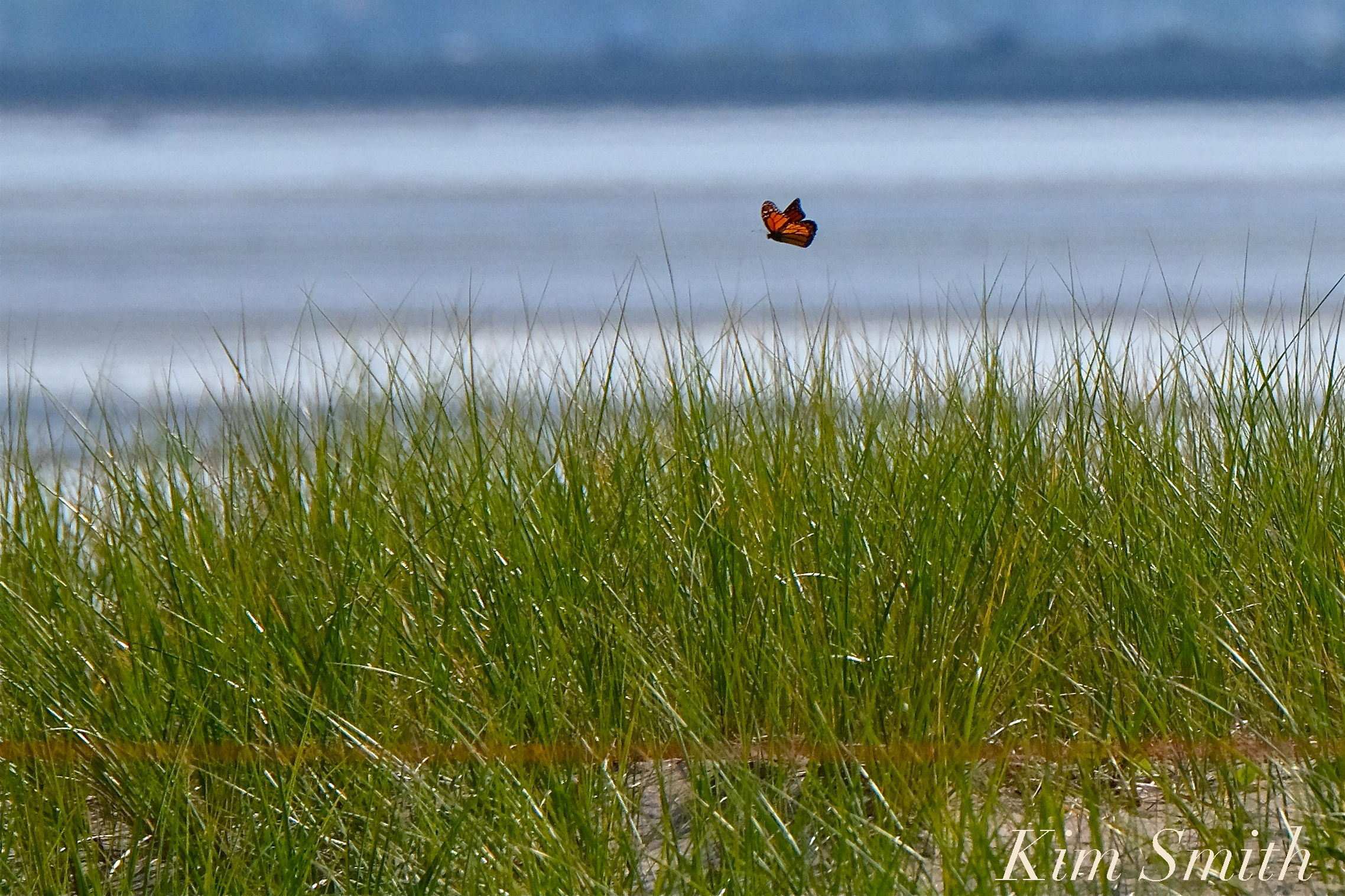
 It doesn’t matter which beach I am filming at this summer- Coffins, Good Harbor, Crane, Revere, Nahant, Winthrop, Sandy Point – Everyday I am seeing Monarchs come in over the water and resting on the beach. So interesting!
 The above photo was taken late in the day at my friend Patti Papows exquisite butterfly garden. More photos from her garden coming soon 🙂
Author: Kimsmithdesigns
Documentary filmmaker, photographer, landscape designer, author, and illustrator. "Beauty on the Wing: Life Story of the Monarch Butterfly" currently airing on PBS. Current film projects include Piping Plovers, Gloucester's Feast of St. Joseph, and Saint Peter's Fiesta. Visit my websites for more information about film and design projects at kimsmithdesigns.com, monarchbutterflyfilm.com, and pipingploverproject.org. Author/illustrator "Oh Garden of Fresh Possibilities! Notes from a Gloucester Garden."

4EVER FAB AT THE ANTONIO GENTILE BANDSTAND AUGUST 12TH

Beatles Tribute band, 4Ever Fab, appears in concert on Sunday, August 12, 2018, at 7pm at the Antonio Gentile Bandstand, Stage Fort Park, Hough Avenue, Gloucester MA. This outstanding band returns to the bandstand with a terrific and genuine Beatles sound. This show features spot-on renditions of your classic Beatles favorite.
This concert is sponsored by Cape Ann Savings Bank, who will provide free ice cream treats to the audience. The concert is free to the public. Parking is free and the venue and rest rooms are wheelchair-accessible. Bring a blanket or chair and perhaps a picnic dinner. The rain date is Tuesday, August 14, 7pm. For further information please visit DavidLBenjamin.com or call 978-281-2286

Spread The GMG Love By Sharing With These Buttons:

GOOD MORNING GLOUCESTER! BROUGHT TO YOU BY GREAT BLUE HERONS STROLLING ON THE BEACH
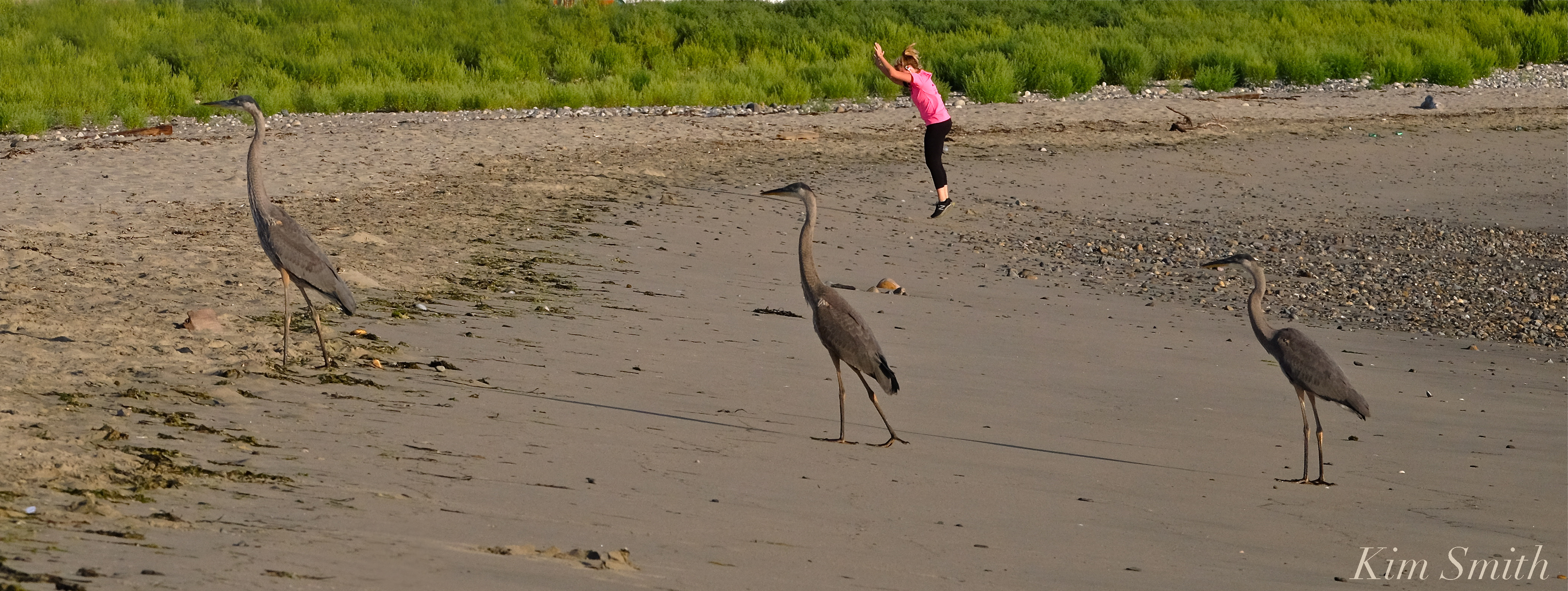 The woman exercising was intent upon doing her workout and didn’t notice the Great Blues on the beach. It just struck me as so funny because they were nearly as tall as was she when their necks were elongated, and because a single Great Blue Heron strolling on the beach isn’t something you see everyday, let alone three.
Spread The GMG Love By Sharing With These Buttons:

CAPE ANN SYMPHONY ANNOUNCES 67th SEASON
 CAPE ANN SYMPHONY 2018/2019
THE 67th SEASON: FROM THE NEW WORLD AND BEYOND
Cape Ann Symphony Launches Expanded Concert Season Featuring Unique Pairings of American & European Composers
Orchestra Season Expands to Eight Concerts & Two Venues in 2018: Manchester & Ipswich
Cape Ann Symphony proudly announces the launch of an expanded concert season for 2018/2019. The orchestra has expanded from its traditional five performances per season to eight performances for the 67th concert season. According to CAS Board President Fran White, “Due in part to sold out concerts in Manchester over the past two seasons and a highly successful debut concert in Ipswich last September, this season we are able to expand our outreach on the North Shore with a full schedule of concerts in Ipswich!” The new season features concerts in Ipswich in September, November and May in addition to the traditional concert schedule in Manchester. Cape Ann Symphony Music Director and Conductor Yoichi Udagawa looks forward to the orchestra’s expansion to Ipswich, “The orchestra and I are not only pleased to be playing regularly in Ipswich, but also to have the opportunity to play in the Dolan Center, a concert hall with such amazing acoustics.” In addition to the expanded season in Ipswich, CAS has announced an earlier start time of 7:30 pm for all evening concerts as well as the addition of a free Pre-Concert Lecture Series led by the CAS’s inaugural Conducting Fellow, Ipswich’s Michael Coelho, immediately prior to each concert.“We are confident that these changes will serve to provide yet another dynamic feature to our planned programs,” adds CAS Board President White, “We believe an earlier evening concert start of 7:30 pm better serves our audience. The new Pre-Concert lecture series will be entertaining and serve to provide interesting background on the concert programs as well as introduce our Conducting Fellow to CAS audiences.”
The 67th concert season features a year of unique parings of American and European composers in each concert as well as a celebration of Leonard Bernstein’s Centennial in September; the Cape Ann Symphony Chorus in the annual Holiday Pops Concert in November 2018; the CAS debut of renowned piano soloist Jonathan Bass and the return of esteemed local composer Robert J. Bradshaw with a Cape Ann inspired work in March; and the return of the BSO’s violinist Lucia Lin and cellist Owen Young in May. “We are so excited about our upcoming season,” continues CAS President White, “The planned concerts are spectacular! We continue to bring outstanding, quality professional classical musical performance to the North Shore.” Cape Ann Symphony Music Director and Conductor Udagawa is eager to open the CAS 67th Season, “The 2018-19 Season of the Cape Ann Symphony is going to be thrilling! In September, we will celebrate the 100th Anniversary of Leonard Bernstein’s birth with his Candide Overture and Symphonic Dances fromWest Side Story. On the same program, we will be presenting the wildly romantic music from Prokofiev’s Romeo and Juliet. Holiday Pops will feature the Cape Ann Symphony Chorus, as well as holiday inspired music from American and European composers. In March we will perform Norman’s Woe by Gloucester’s own Rob Bradshaw, and internationally renowned pianist Jonathan Bass will play Mozart’s gorgeous Piano Concerto No. 21. Audience favorites violinist Lucia Lin and cellist Owen Young will join us in May to play the passionate Sinfonia Concertante of Mikloěs Roězsa who was well known for writing music for such Hollywood blockbusters as Ben Hur. The musicians and I are looking forward to what is going to be a real tour-de-force of incredible music this coming season.”The orchestra’s 67th concerts season kicks off on Saturday, September 22 at 7:30 pm at the Manchester-Essex High School Auditorium on 36 Lincoln Street in Manchester-by-the-Sea, MA and on Sunday, September 23 at 2 pm at Ipswich High School on 134 High Street, Ipswich, MA with Bernstein & Prokofiev: The Agony and Ecstasy of Love. Season subscriptions for the four concert season are available to purchase. Single ticket prices are $43 for adults, $38 for senior citizens, $15 for Students of any age; $5 for youth 12 years old and under. For information, call 978-281-0543 or visit www.capeannsymphony.org
BERNSTEIN & PROKOFIEV: The Agony and Ecstasy of Love
Performances:
Saturday, September 22, 2018: 7:30 PM: Manchester-Essex High School, Manchester-by-the-Sea, MA
Sunday, September 23, 2018: 2:00 PM: Dolan Performing Arts Center, Ipswich High School, Ipswich,MA
Cape Ann Symphony kicks off the 67th season with Bernstein & Prokofiev: The Agony and Ecstasy of Love in Manchester and Ipswich. The season opening concert celebrates revered American composer Leonard Bernstein’s Centennial with his Candide Overture and Symphonic Dances from West Side Story and brings European composer Prokofiev’s soaring romantic interpretation of Romeo and Juliet with the Romeo and Juliet Suite to CAS audiences.
HOLIDAY POPS CONCERT
Performances:
Saturday, November 24, 2018: 2:00 PM Dolan Performing Arts Center, Ipswich High School. Ipswich,MA
Saturday, November 24, 2018: 7:30 PM Manchester-Essex High School, Manchester-by-the-Sea, MA
Sunday, November 25, 2018: 2:00 PM Manchester-Essex High School, Manchester-by-the-Sea, MA
The Holiday Pops Concert, Cape Ann Symphony’s joyful holiday tradition, features a program of holiday favorites from Strauss, Anderson, Mozart, Tchaikovsky and others. The Cape Ann Symphony Chorus under the direction of Rockport’s Wendy Betts joins the orchestra for this exciting celebration of holiday music including the annual audience sing -along.
BRADSHAW, BEETHOVEN, MOZART & BASS
Performance: Sunday, March 24, 2019: 2:00 PM Manchester-Essex High School, Manchester-by-the-Sea, MA
Bradshaw, Beethoven, Mozart & Bass features the CAS debut of guest artist pianist Jonathan Bass playing Mozart’s Piano Concerto No. 21. Renowned virtuoso piano soloist Jonathan Bass gave his New York debut at Carnegie Hall’s Weill Hall as the first-prize winner of the 1993 Joanna Hodges International Piano Competition. He appears frequently throughout the United States including with the Boston Pops at Symphony Hall, China, Japan, Israel, Poland, Spain and Russia. The concert also features Gloucester based composer Robert J. Bradshaw’s Norman’s Woe, inspired by the well-known Cape Ann Reef, immortalized in Longfellow’s poem Wreck of the Hesperus and Beethoven’s Symphony No. 2.
FROM THE NEW WORLD AND BEYOND
Performance: Saturday, May 18, 2018 7:30 PM Manchester-Essex High School, Manchester-by-the-Sea, MA
Performance: Sunday, May 19, 2019 2:00 PM Dolan Performing Arts Center, Ipswich High School. Ipswich,MA
Cape Ann Symphony favorites and Boston Symphony Orchestra’s violinist Luica Lin and cellist Owen Young return to collaborate with Conductor Udagawa and the CAS orchestra to perform Sinfonia Concertante by Miklos Rozsa. Rozsa is best known for his score of the classic film, Ben Hur for which he won an Academy Award for Best Original Score. The May concert program also includes the orchestra playing Rozsa’s Academy Award winning Parade of the Charioteers from Ben Hur and Dvorak’s New World Symphony.
SINGLE TICKET PRICES FOR CONCERTS
Adult/$43.00
Senior Citizens/$38.00
Students (of any age)/$15.00
Youth (Age 12 and Under)/$5.00
Season Subscriptions are Available.
For Information call 978-281-0543 or Visit www.capeannsymphony.org


Spread The GMG Love By Sharing With These Buttons:

MARTIN AND KELLY AT THE ANTONIO GENTILE BANDSTAND SUNDAY AUGUST 5TH
The exciting Country act of Martin & Kelly make their Gloucester concert debut on Sunday, August 5, at 7pm at the Antonio Gentile Bandstand, Stage Fort Park, Hough Avenue, Gloucester MA. Jilly Martin and Ryan Brooks Kelly are rising stars presenting a quality show for all. The free concert is sponsored by Institution for Savings. Parking is free and the venue and rest rooms are wheelchair-accessible. Bring a blanket or chair and perhaps picnic dinner. The rain date is Wednesday, August 8. For further information please visit DavidLBenjamin.com or call 978-281-2286.
Spread The GMG Love By Sharing With These Buttons:

NAKED HOUSE KEEPING
Stopping today to purchase a birthday treat for my daughter at one of our favorite Gloucester shops, which is run by a lovely and capable senior lady, with all senior citizen employees, and the conversation went something like this. Me, “It’s so nice and cool in here. I am not looking forward to going home and cleaning my house in this heat. Senior lady #1, “wear something cool my dear.” Senior lady customer #2, “or just go naked.” #3, “good idea.” #2 adds, “just be sure to pull the drapes closed.”
Our home is without air conditioning, but we usually have a cooling cross breeze coming up from the harbor. Not in this weather though. I wonder if back in the day, sans air conditioning, naked house keeping was a thing?
Spread The GMG Love By Sharing With These Buttons:

ANIMAL ADVISORY COMMITTEE MEETING TONIGHT
Animal Advisory Committee meeting tonight at 6:30 at City Hall: Piping Plovers on the Agenda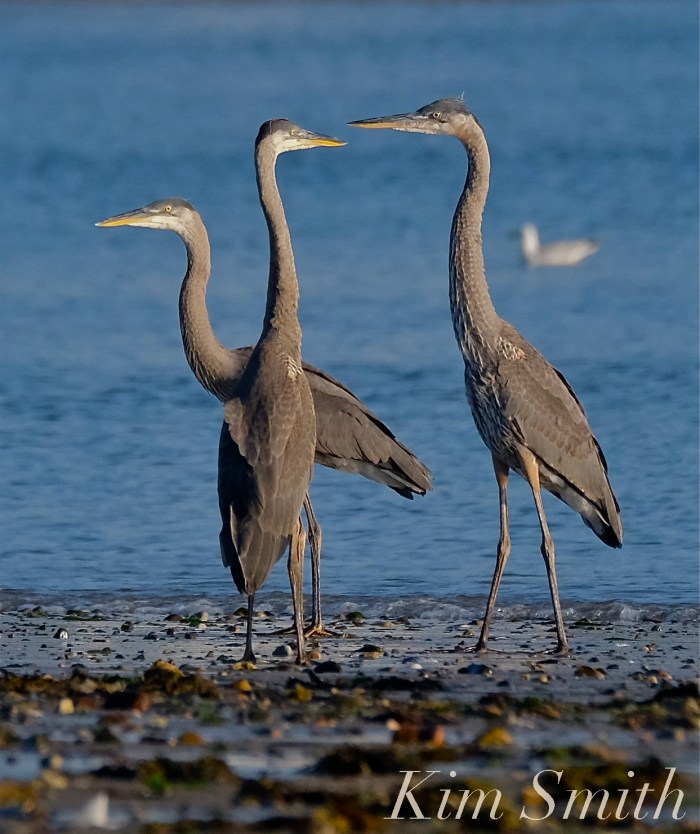
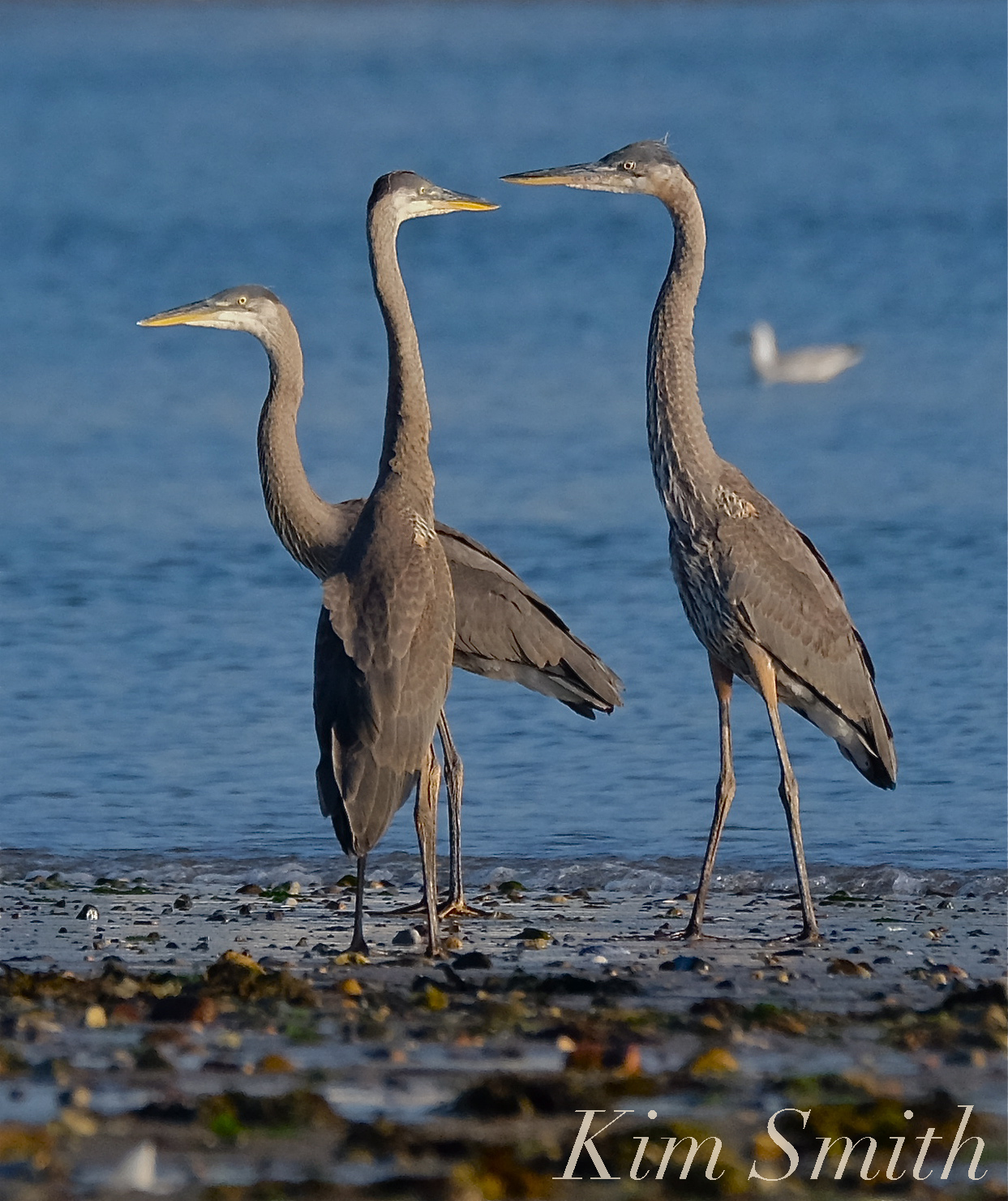
Photo of Great Blue Herons, because we share the shore with herons, too 🙂
Spread The GMG Love By Sharing With These Buttons:

PIPING PLOVER SYMBOLIC FENCING RECOMMENDATIONS
ANIMAL ADVISORY COMMITTEE MEETING THURSDAY AUGUST 2ND AT 6:30PM AT CITY HALL: PIPING PLOVERS ON THE AGENDA.
 Dogs romping within the clearly posted and cordoned off nesting area in April, forcing the Piping Plovers off the beach and to nest in the parking lot.
This past spring and summer we had a tremendously difficult time with our nesting bird symbolic fencing. The posted and roped off area is referred to as “symbolic” because it is not an actual physical barrier, but a visual warning to let people know to keep themselves and their pets out of the cordoned off area. People often ask, why can’t more permanent fencing be placed around the nesting area? After nearly thirty plus years of working with Piping Plovers, biologists have established that physical fences placed on the shoreline and in the wrack area are all too easily washed away with high tides, create safety issues and, too, you wouldn’t want to trap dogs and predators within a nesting area.
The difficulty with our metal posts is that they were knocked about and pushed down with nearly every high tide, dragging the roping into the sand as well. The rope and posts needed almost daily righting.
The Massachusetts Department of Conservation and Recreation (DCR), which successfully protects Piping Plovers and other endangered birds at dozens of Massachusetts beaches have come up with what appears to be a good fencing solution for areas within tidal zones. DCR uses long, narrow fiberglass rods which can be pushed easily into the sand. The poles are strung with two rungs of roping, and in some places three rungs. I measured the distances between the poles at Revere Beach; they are placed about every twenty to twenty four feet.
In early spring, before the Piping Plovers and Least Terns have nested, historic nesting areas are roped off. After a nesting pair establishes a territory, a second row of poles and roping are added around the perimeter of the nesting area. The fiberglass poles can be adjusted without too much difficulty.
Wooden poles are used to post the nondescript, but informative endangered species signs. According to DCR staff, the only time they have complications with the fencing is when the wooden posts are tied into the fiberglass poles and the tide takes both down.
I don’t understand why the fiberglass poles are less likely to shift in the tide, but they don’t shift and appear to work very well in the tidal zone–perhaps because they are flexible and less rigid. If anyone knows the answer to that, please write.
PIPING PLOVER VOLUNTEER MONITOR GOOD HARBOR BEACH NESTING AREA FENCING RECOMMENDATION:
- Symbolic fencing of the two historic Piping Plover nesting areas roped off between March 15th and April 1st (boardwalk #3 and boardwalk #1).
- Fiberglass poles placed every twenty feet to twenty four feet.
- One to two rungs of roping.
- Wooden posts with endangered species signs installed at the same time and in place by April 1st, but not attached to the fiberglass poles.
- When active nest scrapes are identified, adjust exisiting fencing, and add a second row of fencing around the perimeter.
- To the outer perimeter of fiberglass poles, use three rungs of orange roping attached to the poles, extending all around the perimeter. One rung at 12 inches above ground, one rung at about 24-30 inches above ground level, and the top rung at four feet above ground level.
- Piping Plover volunteers monitor fencing and adjust as needed.
 This photo, taken at Good Harbor Beach in early April, shows why it is so important to have the signs and roping in place by April 1st. People and dogs were playing in the nesting area while the PiPl were trying to nest. The top photo shows that a second, and even a third rung of roping, placed at dog height, may help to keep dogs out of the roped off area.
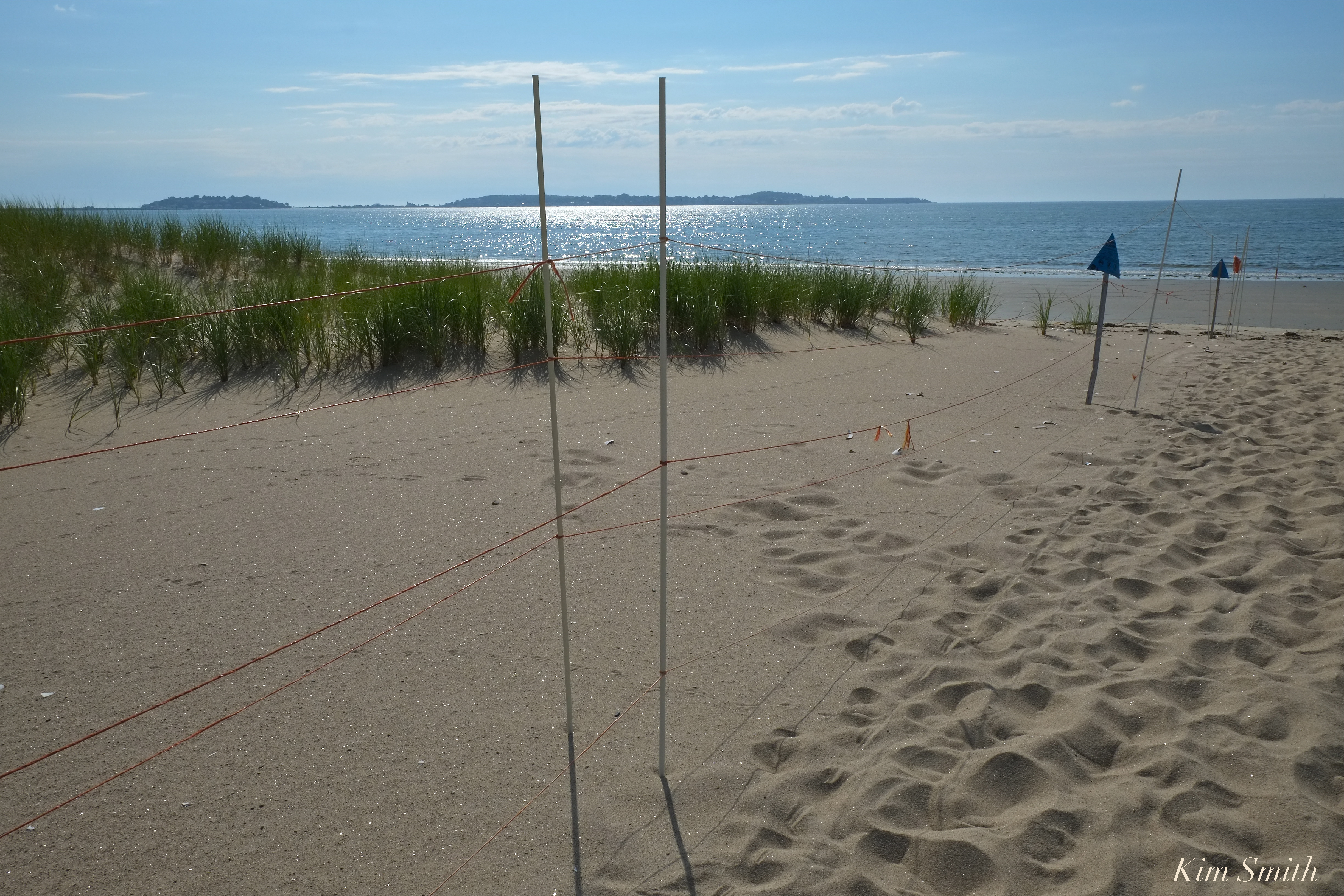 Examples of symbolic fencing areas at Revere Beach and Nahant Beach. Notice the double row of fencing and the double and triple rungs.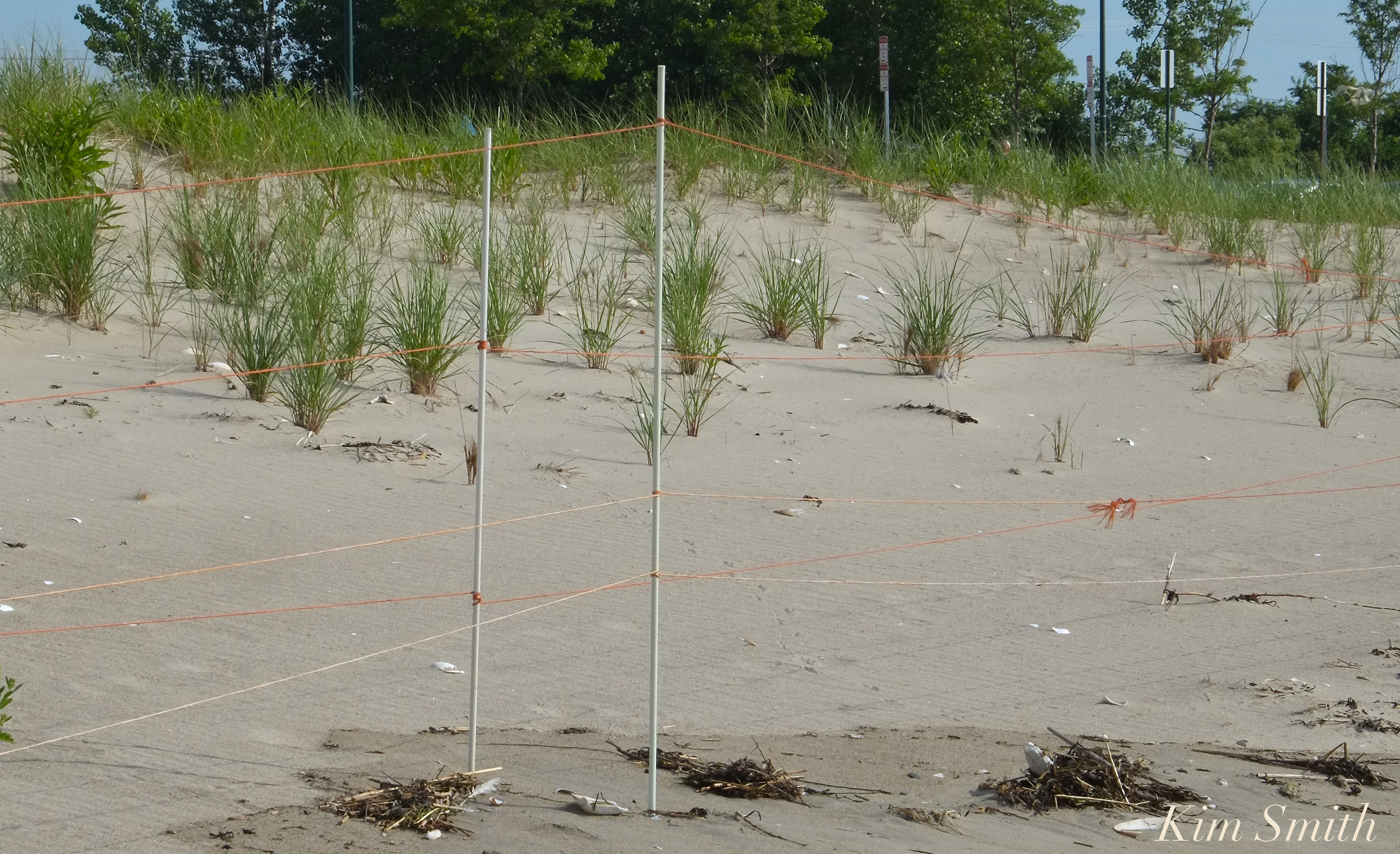
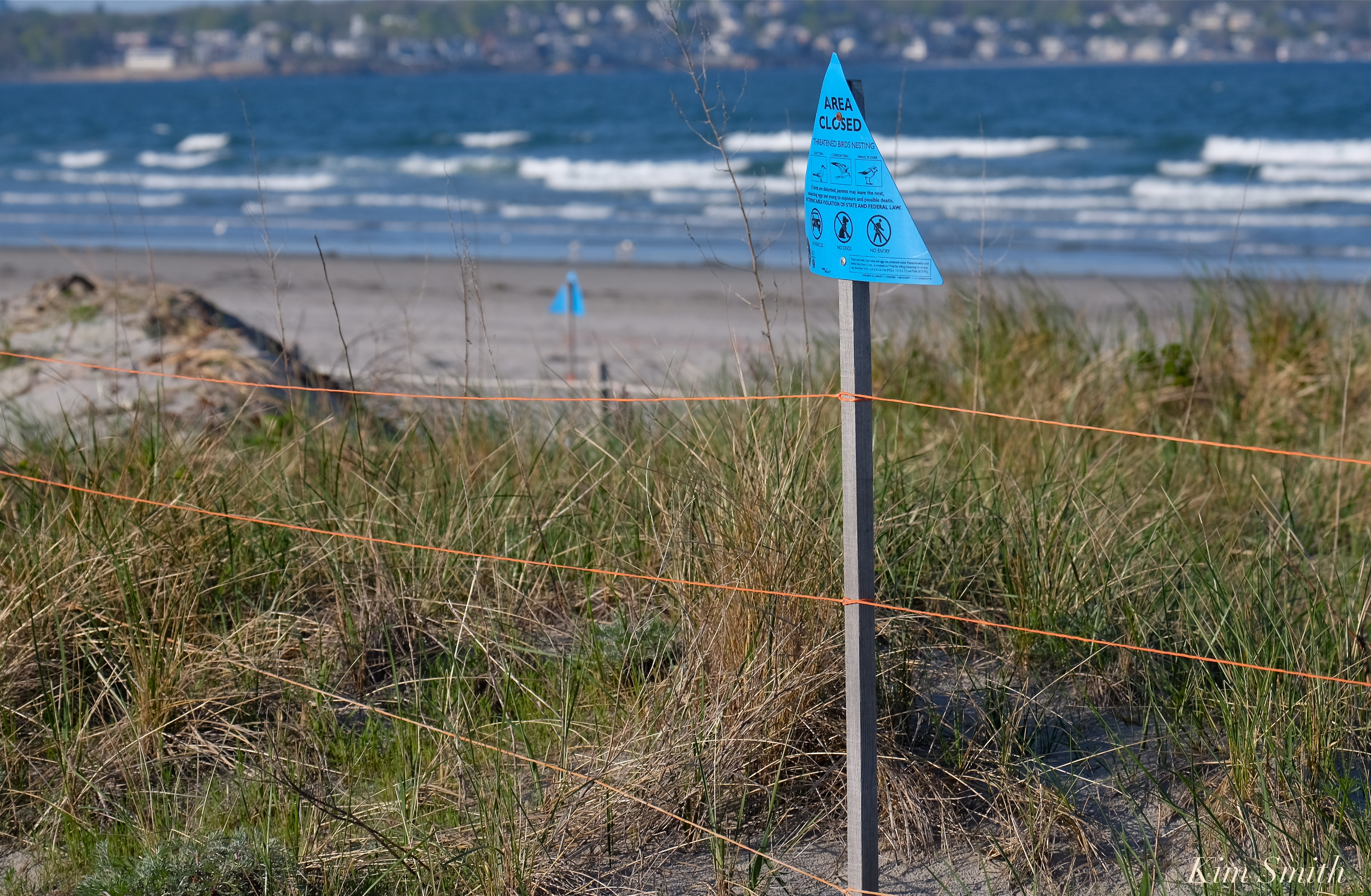
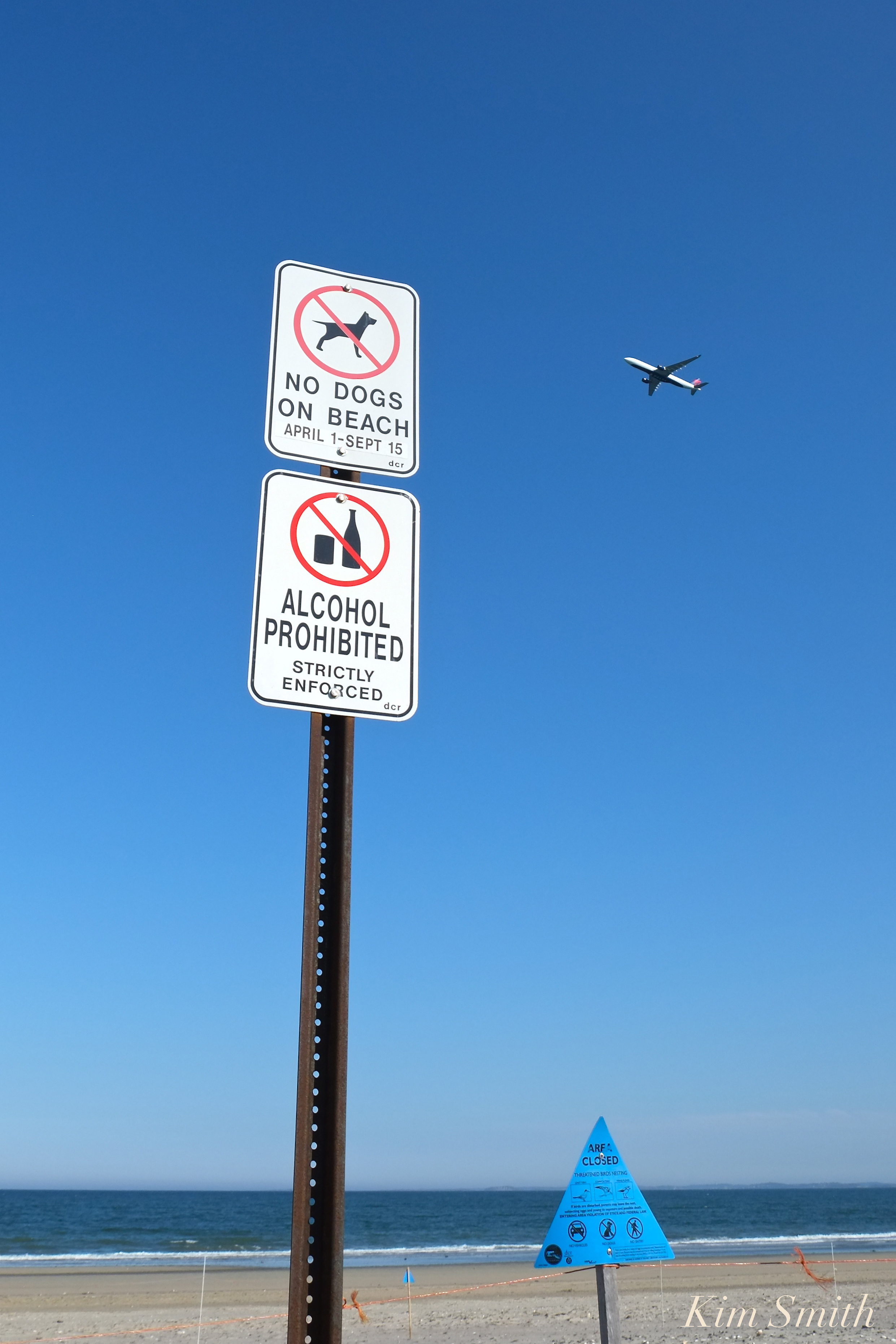 Information is unambigulously posted at Revere Beach
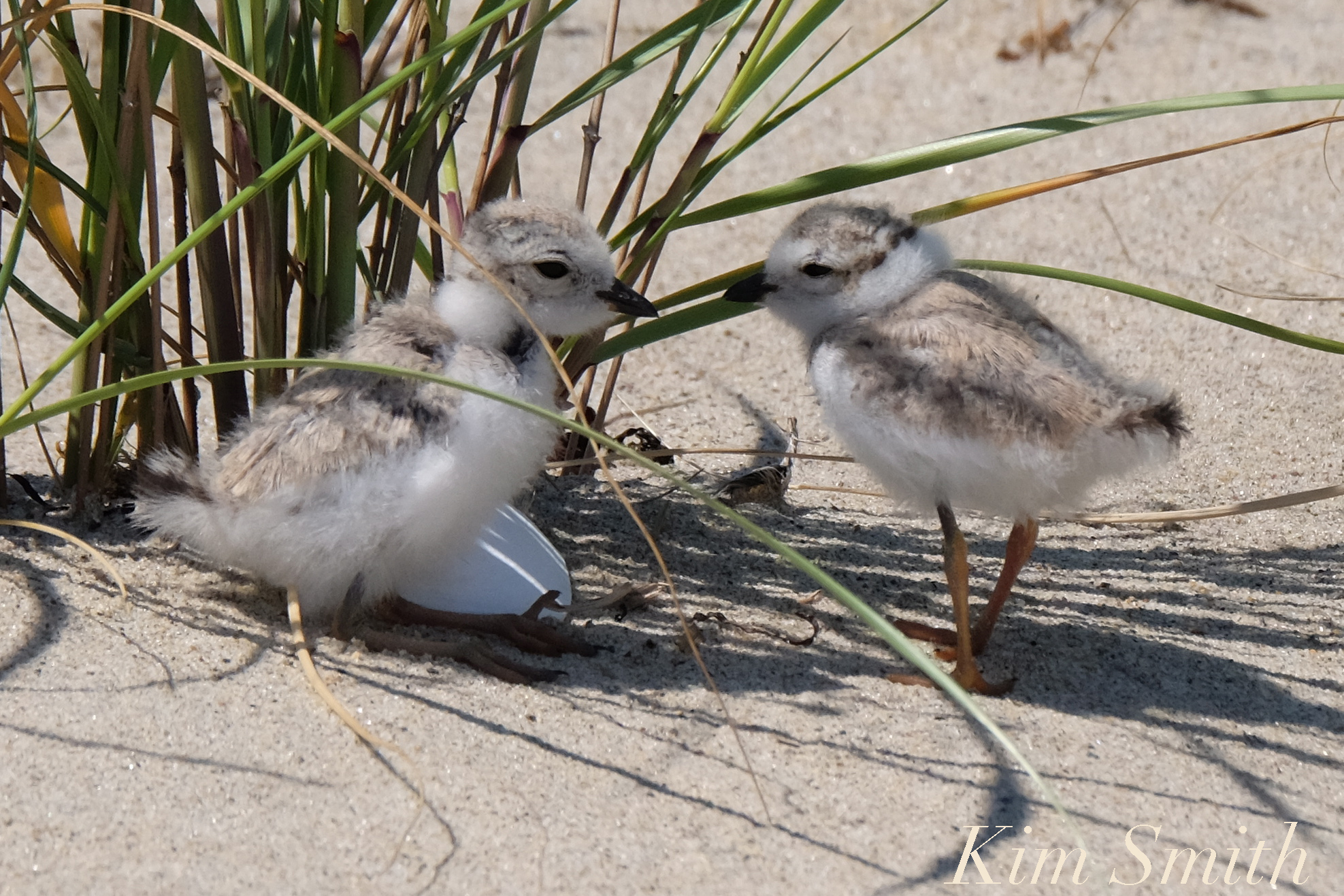 Piping Plover chicks finding shelter in the roped off nesting area on a hot summer day.
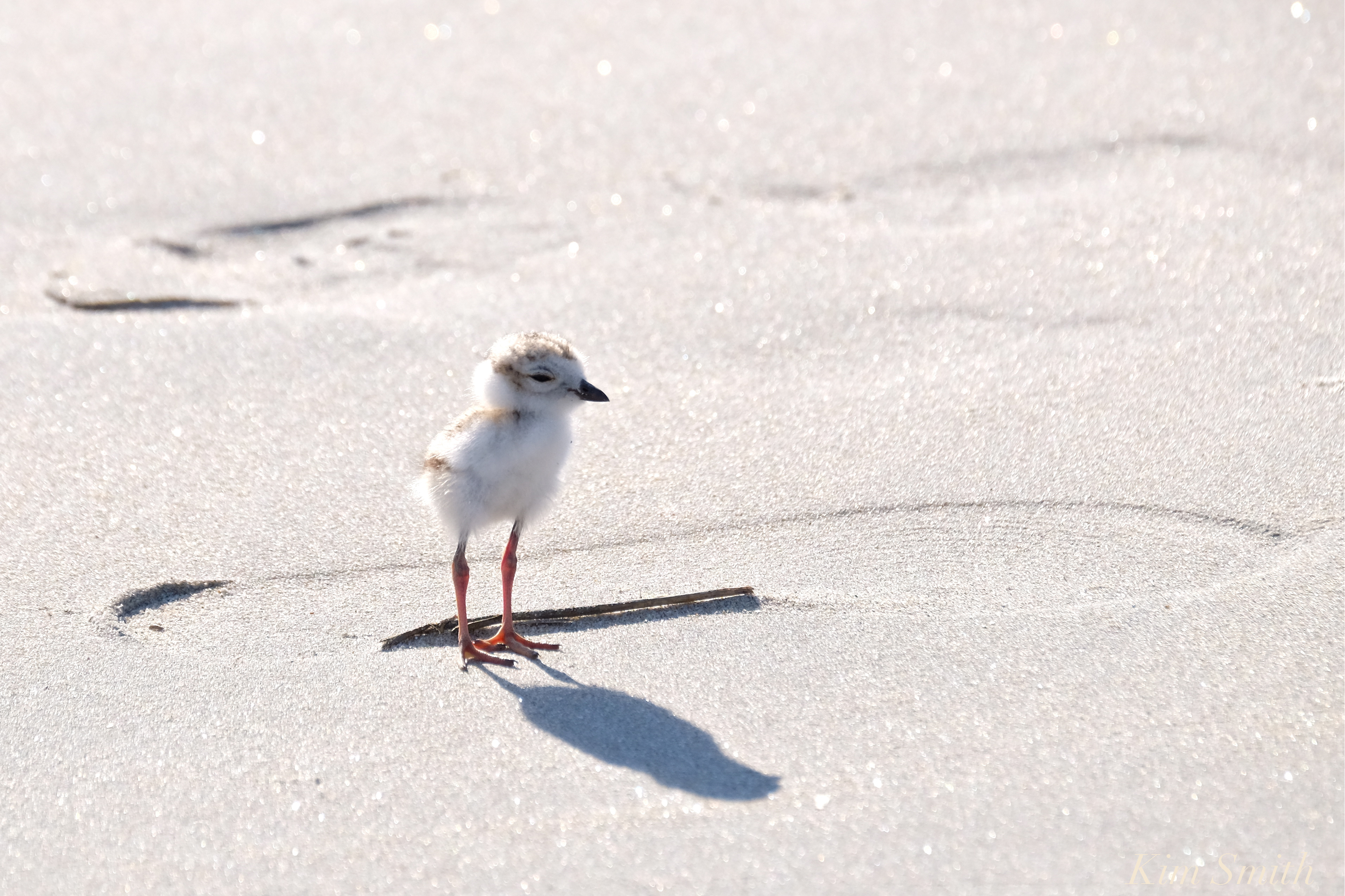 Treading lightly.
Spread The GMG Love By Sharing With These Buttons:

WELCOME TO THE MARY PRENTISS INN POLLINATOR PARADISE!
The exquisite Greek Revival architecture of The Mary Prentiss Inn complements perfectly our lively pollinator paradise, bursting with blossoms and bees. We’ve layered the garden in an array of nectar-rich perennials and annuals that bloom from spring through fall and the garden has become mecca for neighborhood pollinators (including seed-seeking songbirds).
Plant for the pollinators and they will come!
 Three-bee-species scene at The Mary Prentiss Inn pollinator garden.


 The Mary Prentiss Inn Owners Nicholas and Jennifer Fandetti
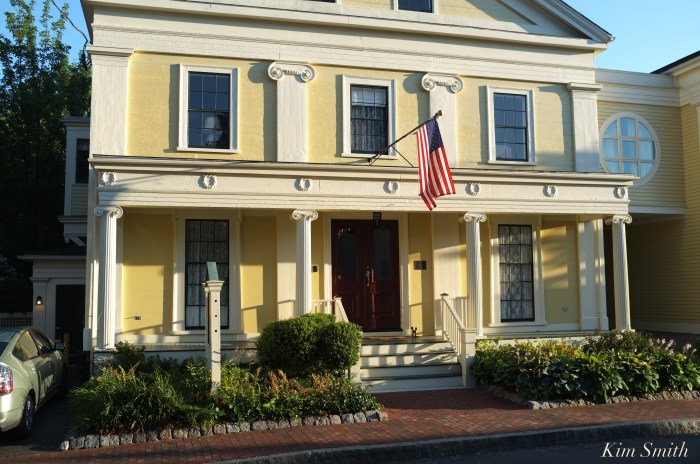

Perfectly lovely prior to turning the old garden into a pollinator paradise, but everyone agreed, it was time for a change.
 Bee and blossom alike dusted in a fine golden shower of pollen.
https://www.instagram.com/p/Bl3e4t0lBwA/
Spread The GMG Love By Sharing With These Buttons:

ANIMAL ADVISORY COMMITTEE MEETING THURSDAY AUGUST 2ND CITY HALL AT 6:30PM: PIPING PLOVERS ON THE AGENDA
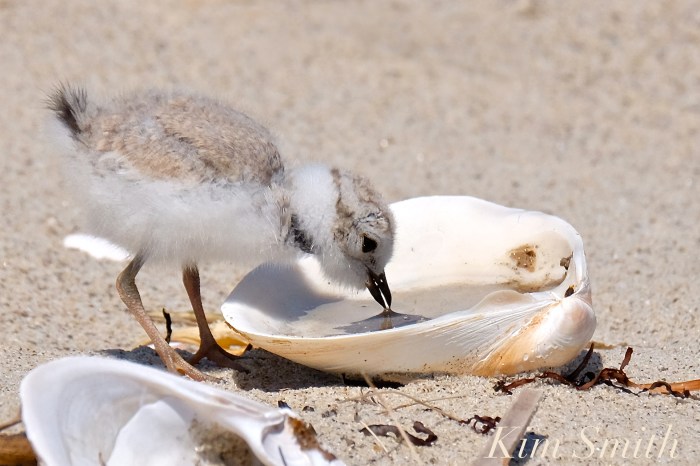 Please come and show your support for endangered and threatened shorebirds in Gloucester. Thank you!

On the Agenda:
- Open session for public comments.
- Approval of meeting minutes from 7/12/18.
- Review of ACO reports and citations.
- Piping Plover protections: ordinance recommendations.
- Clark and First Parish Cemetery -dog walking.
- Event planning
- Grants
- Annual report
 The chicks of threatened birds such as Piping Plovers and Least Terns evolved to blend perfectly with their surrounding shoreline nesting habitat. This trait helps afford protection from hungry predatory birds flying overhead, birds such as hawks and owls. Because they are so well camouflaged, the shorebird nestlings are at great risk from fast moving pets and unknowing beach goers.
PIPING PLOVER RECOMMENDATIONS TO THE MAYOR FROM THE PIPING PLOVER VOLUNTEER MONITORS ~
July 9, 2018
Dear Mayor Romeo Theken and Gloucester City Councilors,
We, the Piping Plover volunteer monitors, are submitting our short list of recommendations regarding the Piping Plovers nesting at Good Harbor Beach. Our goal is to have in place by next April 1, 2019, measures and ordinances that will greatly increase the likelihood that the hatchlings of this tiny threatened shorebird will have a fighting chance at surviving life on Good Harbor Beach.
Piping Plovers began nesting at Good Harbor Beach in 2016. Each year, the PiPl are coming earlier and earlier. In 2016, they arrived mid-May, in 2017 they arrived at the beginning of May, and this year, they arrived on April 3. It would appear that the same pair is returning to Good Harbor Beach, as the male marks his territory and attempts to build a nest scrape only several feet from the previous year’s nest (at Boardwalk #3 nesting area). More Plovers than ever were seen at Good Harbor Beach this spring, and if not for constant interruptions in the Boardwalk #1 nesting area, we would have had two pairs nesting on the beach.
Why are the birds arriving earlier and earlier? We can presume that the pair are more experienced travelers and that Good Harbor Beach is their “territory.” Does this mean we will eventually have dozens of pairs nesting on Good Harbor Beach? No, because the PiPl are very territorial and they will defend a fairly large area, preventing other PiPl from nesting in their site.
This year the PiPl pair hatched four chicks. All four chicks were killed by crows, gulls, and dogs. All three are human-created issues, and all three can be remedied. The following are the four recommendations and actions we wish to see take place.
Recommendations
1) Change the dog ordinance to not allow dogs on the beach after March 31.
Currently, dogs are allowed on the beach from October 1 to May 1. The Piping Plover volunteer monitor core group, Dave Rimmer from Greenbelt, Ken Whittaker, and Mass Wildlife’s John Regosin, all agree that dogs should not be allowed on Good Harbor Beach beginning April 1, but that it would be safe for Piping Plover fledglings and other migrating shorebirds for dogs to return after September 15.
This new suggested time frame will allow birds to nest on the beach (as opposed to in the parking lot), with far less interruption, shorebirds will nest earlier in the season, which will help with the chicks survival rate, and the chicks will be stronger by the time Good Harbor fills with summer crowds.
This is a very logical and simple solution. Disallowing dogs on Massachusetts coastal beaches where shorebirds are nesting, beginning April 1, is the norm. Allowing them to return after September 15, and in many cases after September 30, is also very common. For Piping Plovers and other nesting shorebirds, protecting their habitat and sharing the shore is a matter of life and death.
2) Rope off the nesting area by April 1.
Poles, with threatened species signs, and a triple row of roping of nesting sites, to be in place no later than April 1. Essex County Greenbelt’s Dave Rimmer will assist with this measure.
3) Enforce the existing ordinances regarding dogs (and littering) at all times throughout the year.
Only enforcing dog ordinances at Good Harbor Beach during nesting season is creating hostility toward the Piping Plovers.
Additionally, we do not recommend extremely high fines as we feel that may become an impediment to issuing and collecting the fines. We know of at least one example where the magistrate dismissed the tickets issued to a woman who claimed to have a service dog. This woman was running rampant on the beach and throughout dunes with her service dog off leash throughout the entire time the PiPl were nesting, from April through May. Despite the fact that former dog officer Diane Corliss caught the woman on camera with her dog off leash on the beach, and in the dunes, all her tickets that were issued by the animal control officer were dismissed. This is neither fair to the officers who are working hard to keep the dogs off the beach or to the plover volunteers who are spending inordinate amounts of time trying to keep the PiPl safe.
4). Increase trash collection.
When no barrels are placed at the entrances to the beach, people dump bags of trash there anyway. When barrels are in place, people put trash in the barrels however, when the barrels become full, they again resort to leaving bags of trash behind, only next to the barrels. In either scenario, gulls and crows are attracted to the trash. Both gulls and crows rip open the bags and the trash is blown throughout the parking lot and marsh, soon finding its way onto the beach and into the ocean. Hungry gulls and crows waiting for people to leave their trash behind eat tiny shorebirds.
A friend who lives on a North Carolina beach shares how her community keeps their public beaches looking pristine. Not only do they have barrels, but every few weeks, police patrol the beach and hand out fines for littering. This is taken as a wake up call, everyone is good for a bit of time, but then become slack about littering again. Out come the officers for another round of ticketing.
Thank you for taking the time to consider our recommendations.
Sincerely yours,
Kim Smith
cc Paul Lundberg, Steven LeBlanc, Val Gilmam, Ken Hecht, Melissa Cox, Jen Holmgren, Scott Memhard, Sean Nolan, Jamie O’Hara, Dave Rimmer, Ken Whitakker
Spread The GMG Love By Sharing With These Buttons:

CAR ACCIDENT ON NAUTILUS ROAD TODAY
Beach goers and sightseers were surprised to hear a car jump the rock wall that runs along the incline on Nautilus Road this afternoon. Fortunately, no was injured. Yikes, how does something like this happen?



Spread The GMG Love By Sharing With These Buttons:

LEAST TERN ONE DAY OLD CHICKS!
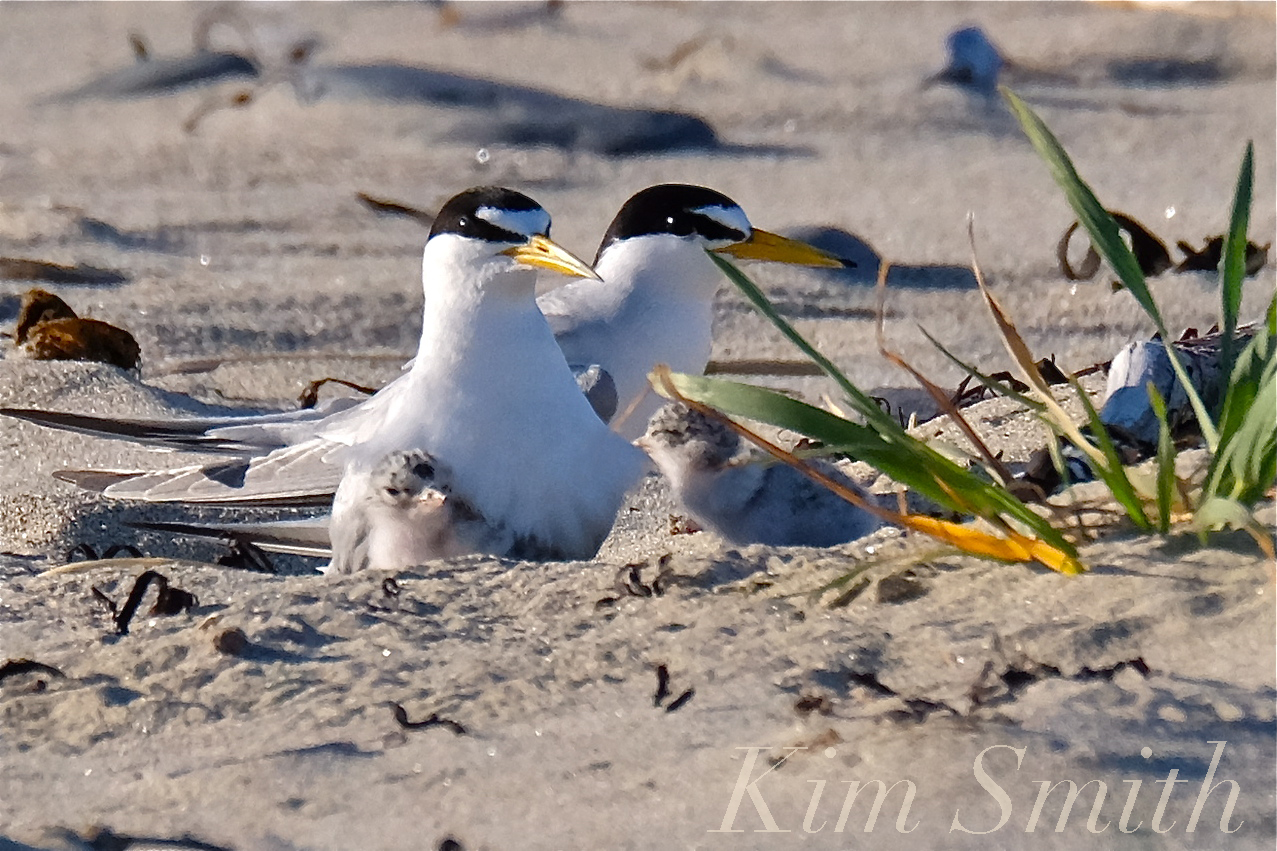 The Rosetti’s Least Terns hatched both eggs and both chicks are doing beautifully!
 Least Tern eggs are astonishingly well camouflaged on a pebbly beach, making them nearly impossible to see. It’s easy to understand why the species is threatened, and in some regions, endangered. Least Terns nest on sandy beaches with little vegetation, the same type of beach habitat that people love. Piping Plovers and Least Terns often nest in association with each other. In Massachusetts, the Least Tern is considered a Species of Special Concern.
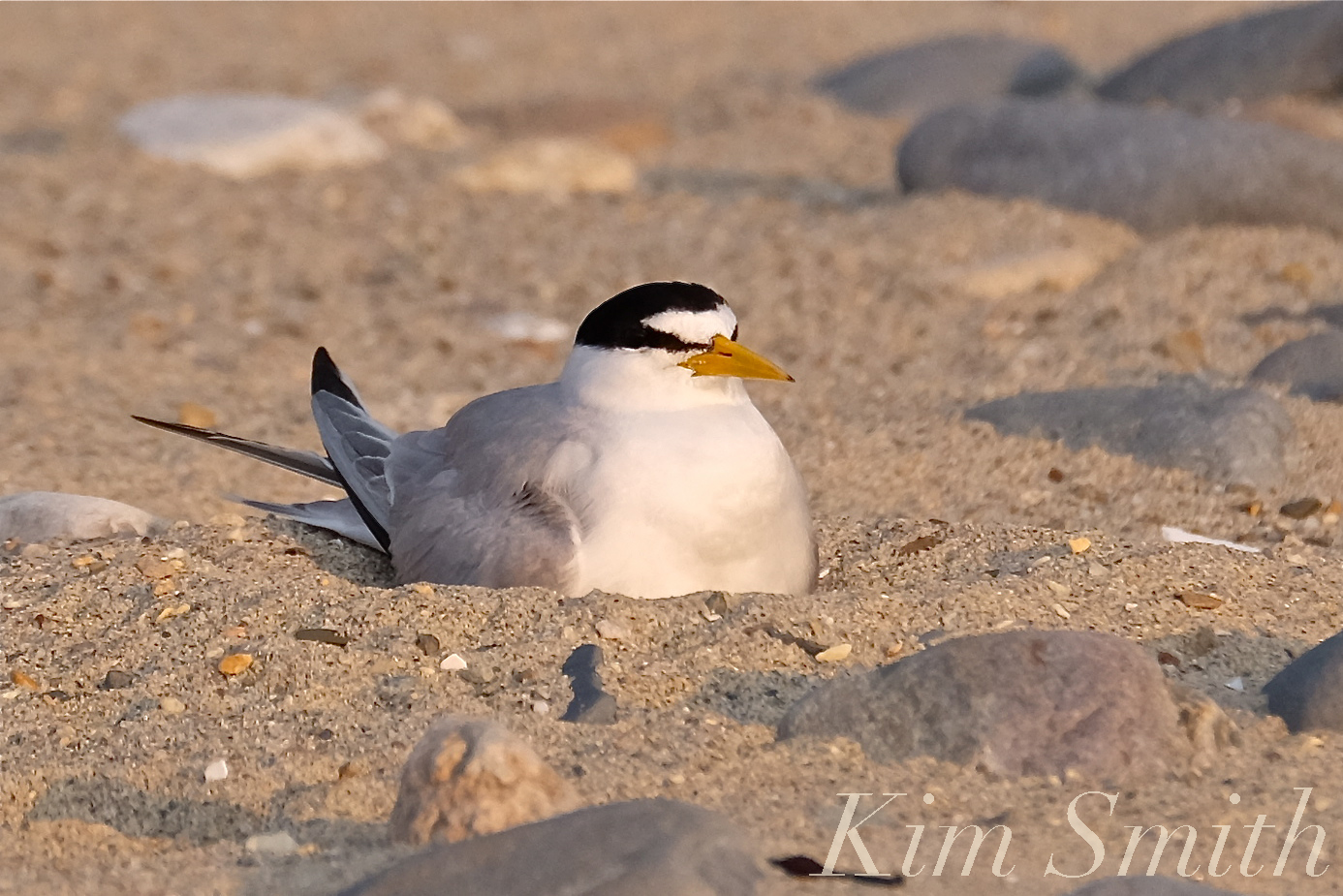

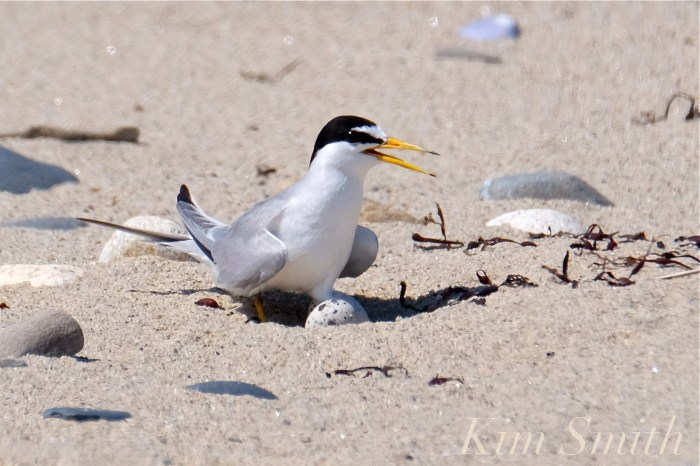
Mom and Dad Least Terns take turns brooding the eggs. Here they are changing places. Least Terns are monogamous and the Rosetti’s Least Terns are especially good parents.
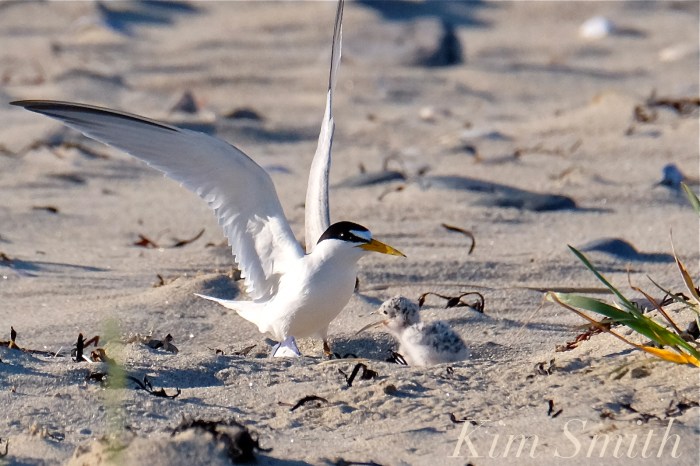
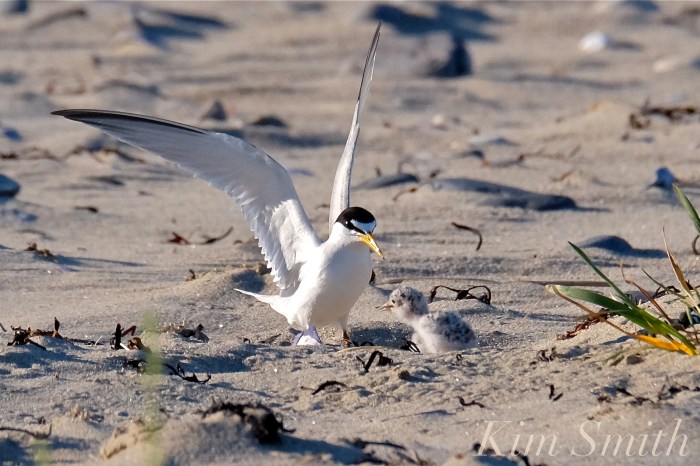
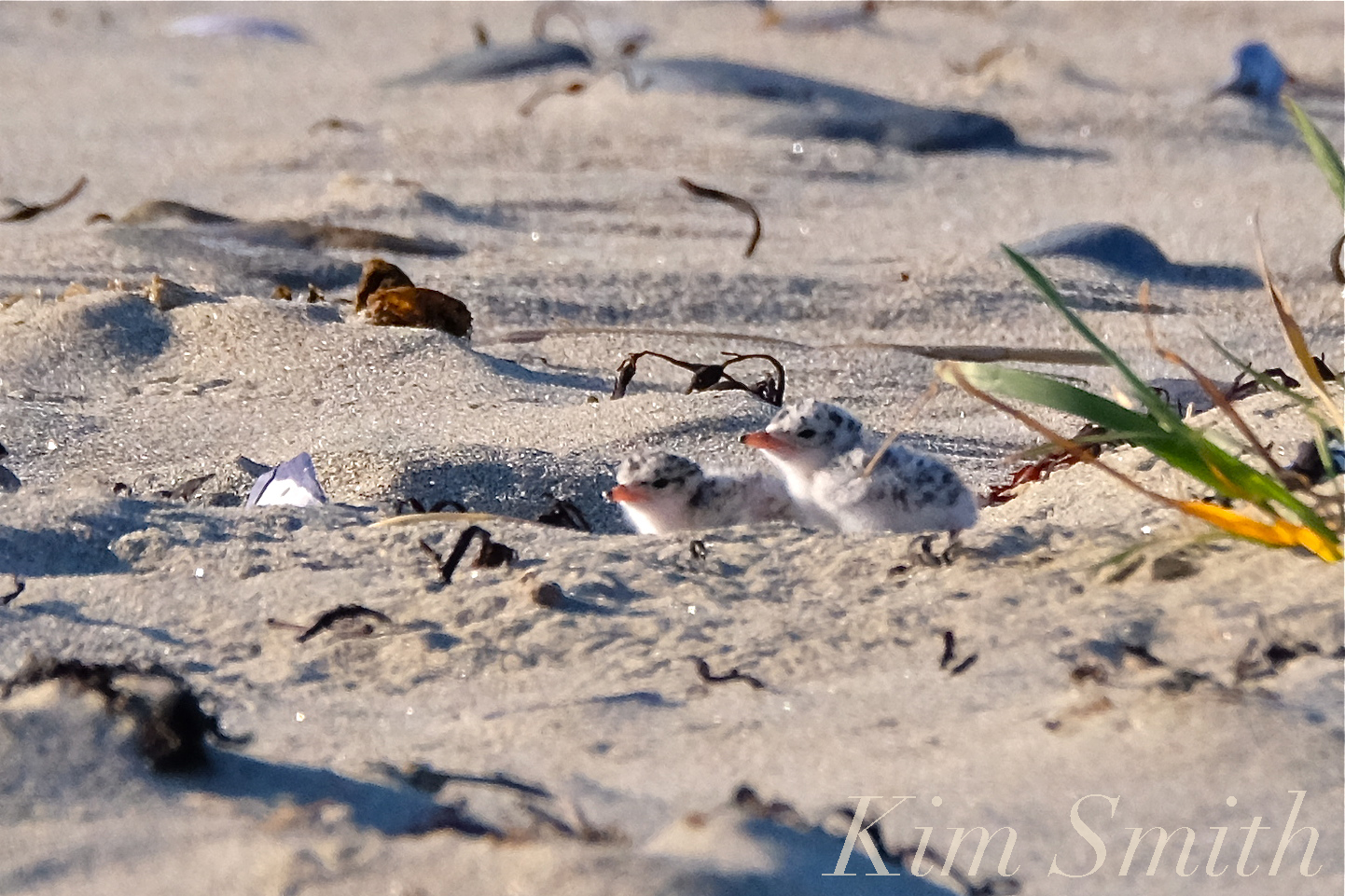 Least Terns are semi-precocial. Like Piping Plovers, which are fully precocial, Least Terns are mobile after one or two days and can leave the nest.
Unlike Piping Plovers, they cannot feed themselves and will be fed for the next eight weeks by Mom and Dad, a diet consisting mostly of tiny fish.
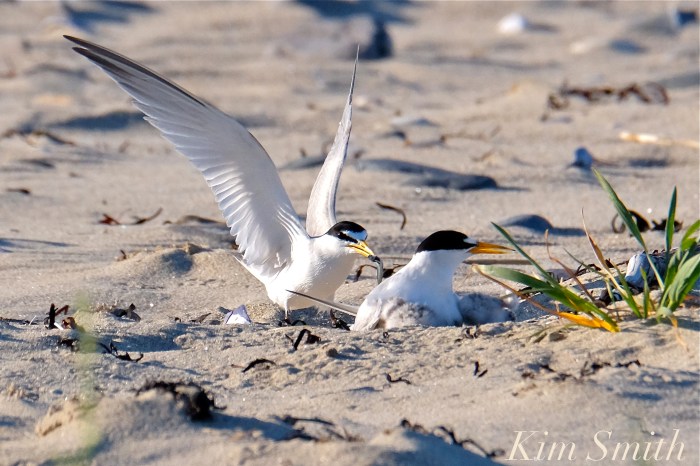
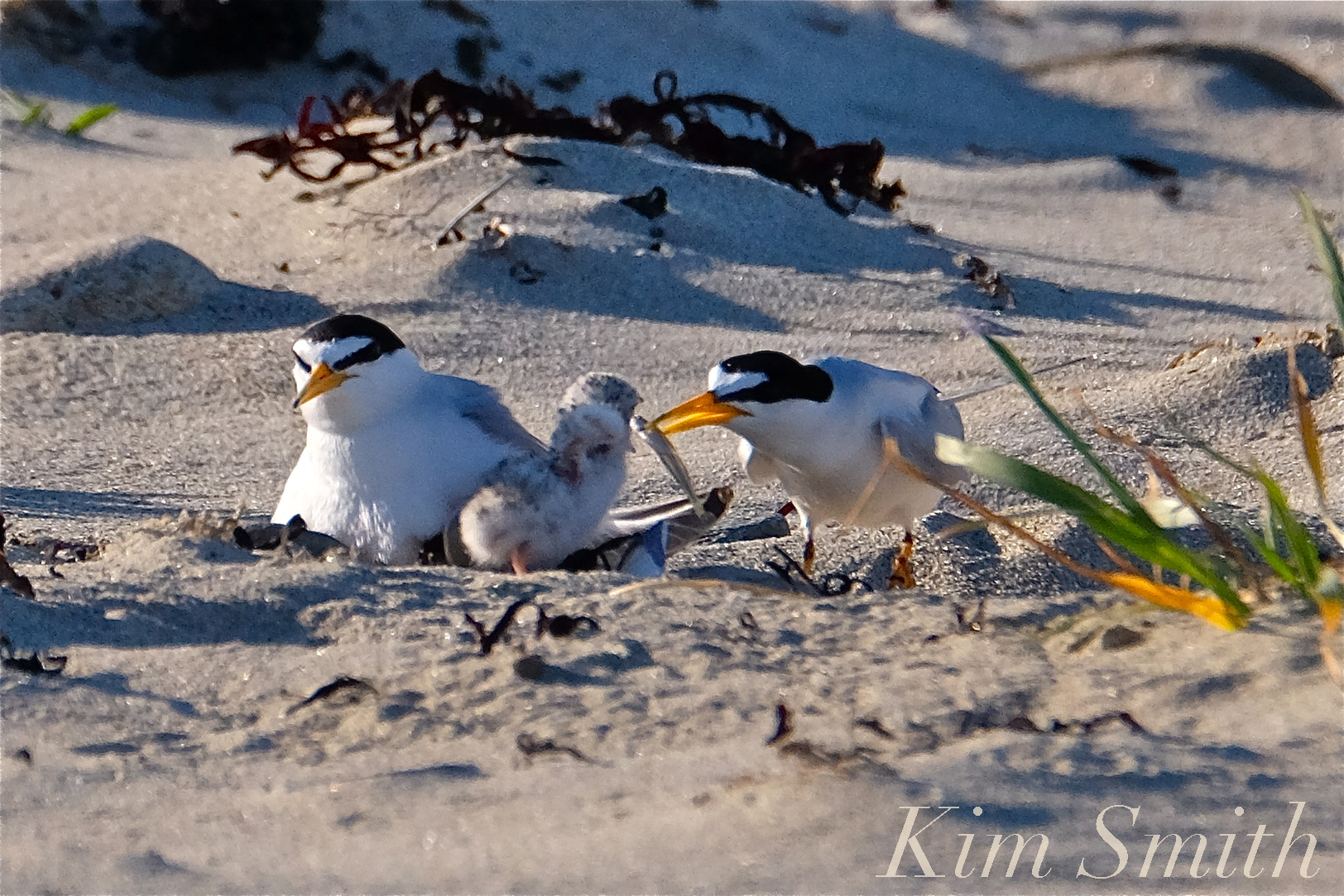 Tiny minnows, for tiny chicks. Dad does most of the feeding while Mom mostly broods the babies during the first few days. As the nestlings grow, the parents feed the chicks increasingly larger fish.

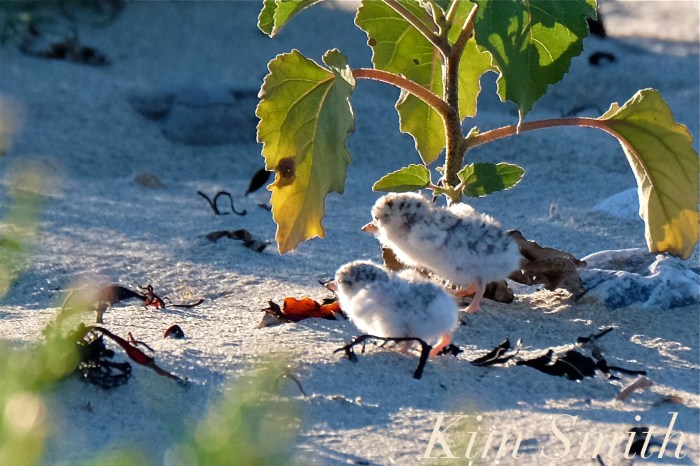
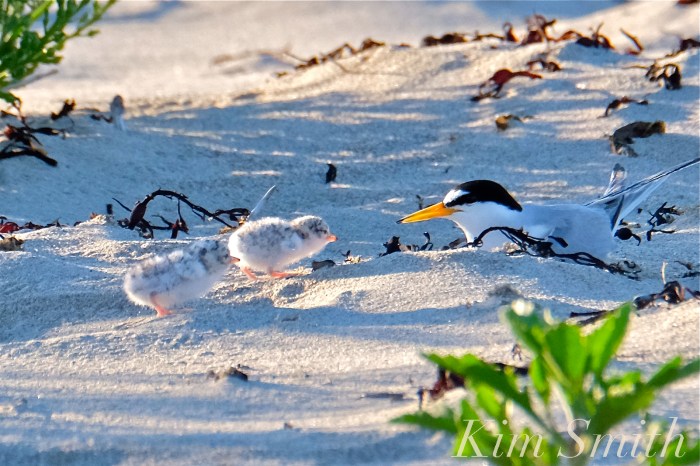
First day venturing away from the nest, and then returning to Mom for warmth and protection.
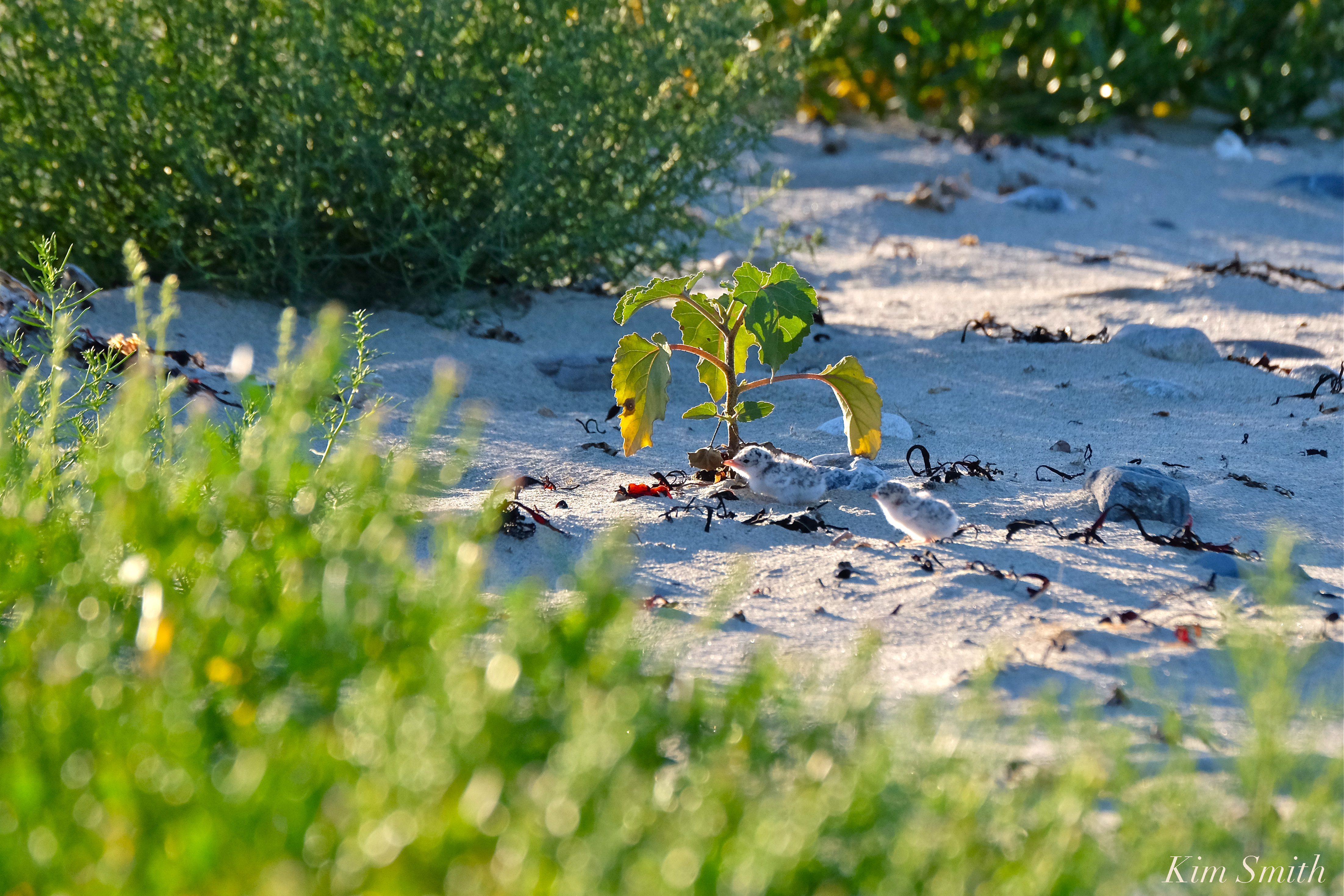 Just as the eggs are perfectly camouflaged, so too are the tiny chicks.
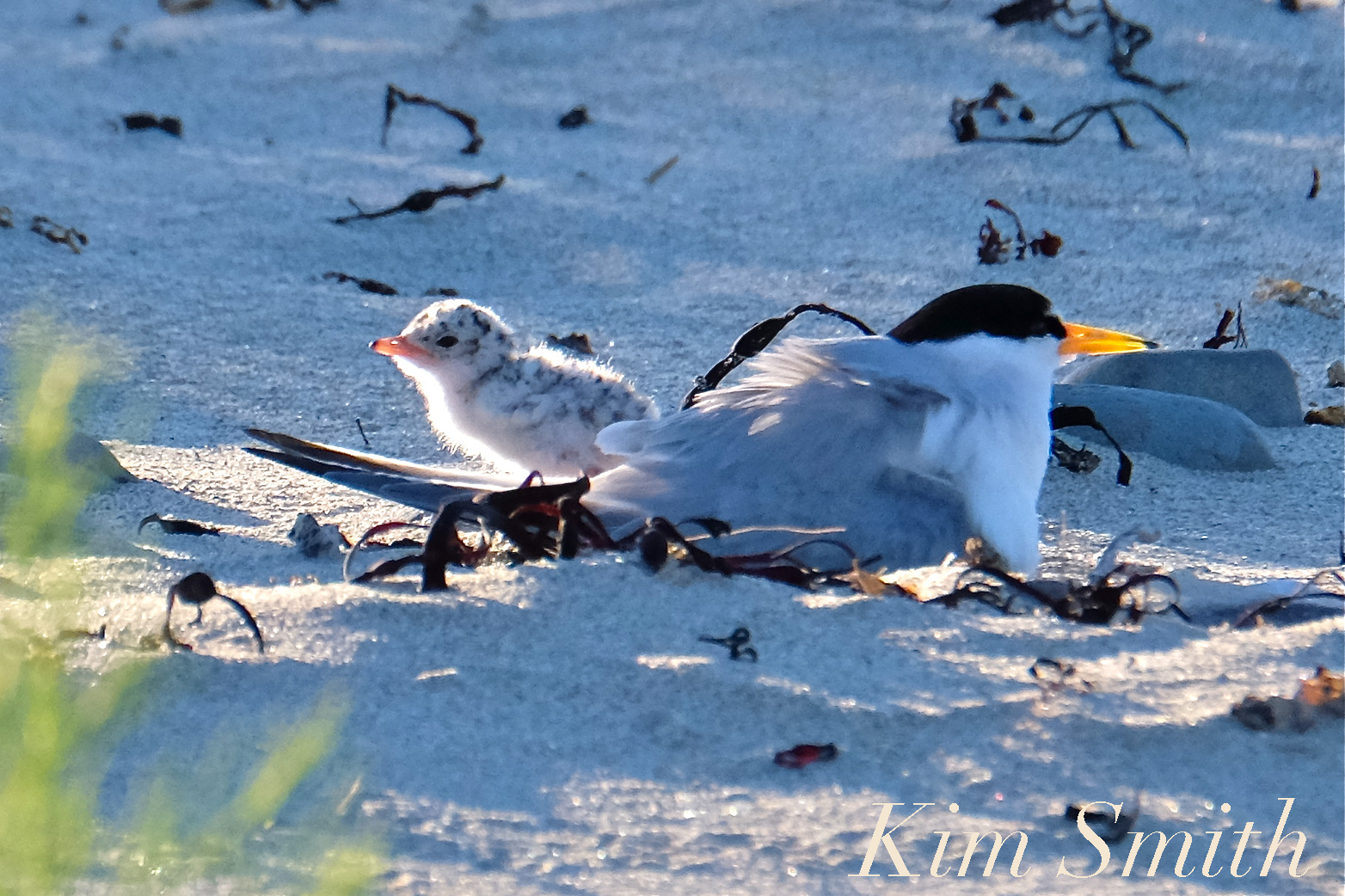
Almost as adorable as are Piping Plover chicks are Least Tern chicks. However, they are much, much harder to film and to photograph. Least Terns are shyer of humankind than are Piping Plovers. Anyone who has seen PiPl in action know that they have a high tolerance for people and may come right up to you especially if you are standing perfectly still and are perfectly quiet. Least Terns on the other hand are elusive and skittish. The nestlings quickly take cover behind a rock or clump of beach vegetation when disturbed. The Mom and Dad when both courting and nesting will let you know if you are too close by dive bombing and if you still can’t take a hint, will poop on your head. If either happens, then you know for sure you are way too close and are interfering with the chicks feeding. Back away and observe from a more considerate (considerate-to-the-Terns distance that is). Unfortunately, I recently observed a fellow photographer repeatedly being dive-bombed by a nesting pair of Terns, and that person has a humongously long telephoto lens. She would have gotten perfectly lovely photos from a distance more respectful of the Terns.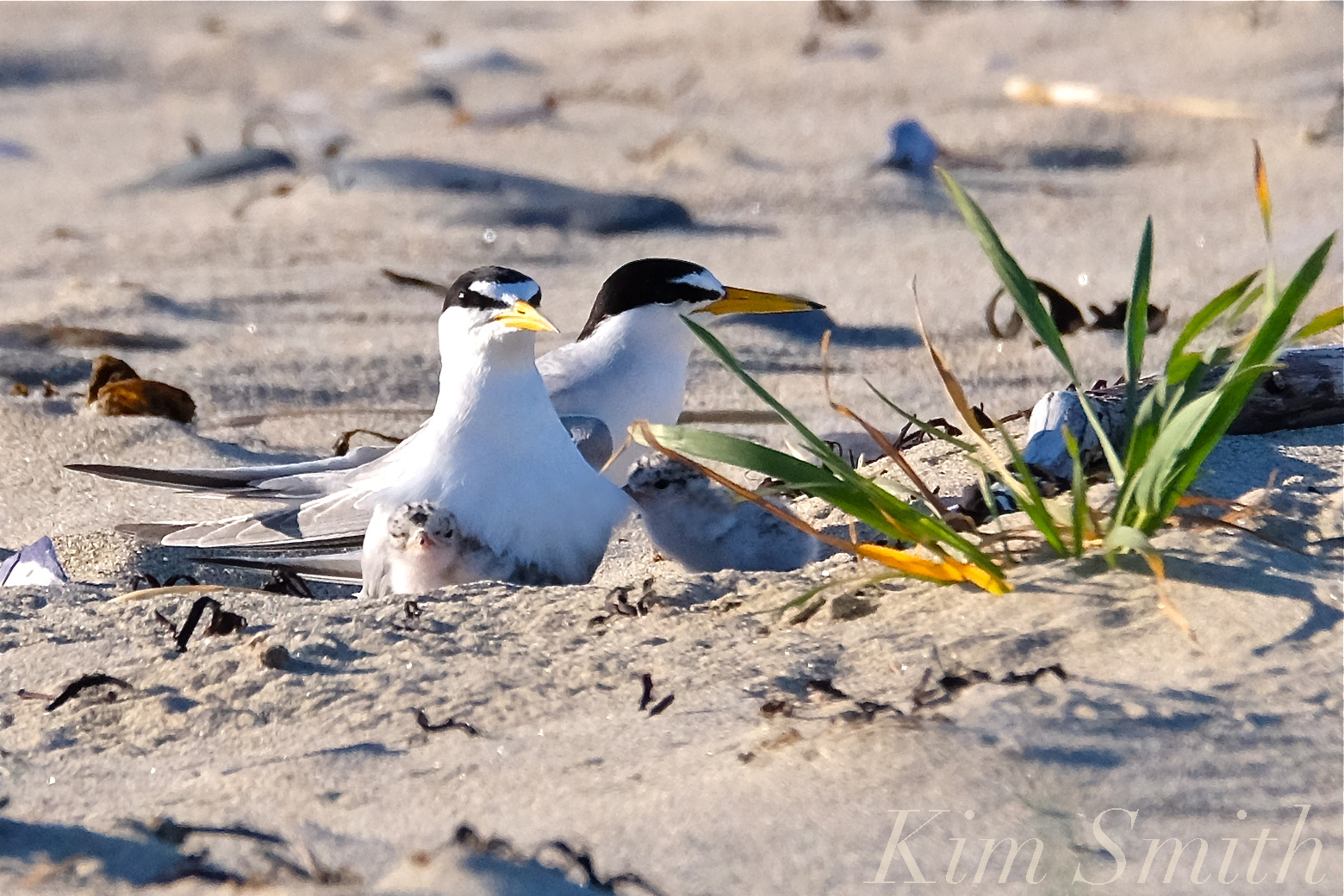
Spread The GMG Love By Sharing With These Buttons:

MONARCH PROTECTOR LINCOLN BROWER DIES
 By Matt Schudel WASHINGTON POST JULY 23, 2018
WASHINGTON — Lincoln Brower, one of the foremost experts on the monarch butterfly, who spent six decades studying the life cycle of the delicate orange-and-black insect and later led efforts to preserve its winter habitat in a mountainous region of Mexico, died July 17 at his home in Nelson County, Va. He was 86.
He had Parkinson’s disease, said his wife, Linda Fink.
Dr. Brower, who taught at Amherst College in Massachusetts and the University of Florida before becoming a research professor at Virginia’s Sweet Briar College in 1997, began studying the monarch butterfly in the 1950s.
He made key discoveries about how it protected itself by converting a toxic compound from its sole food source, the milkweed plant, into a chemical compound that sickened its predators, primarily birds.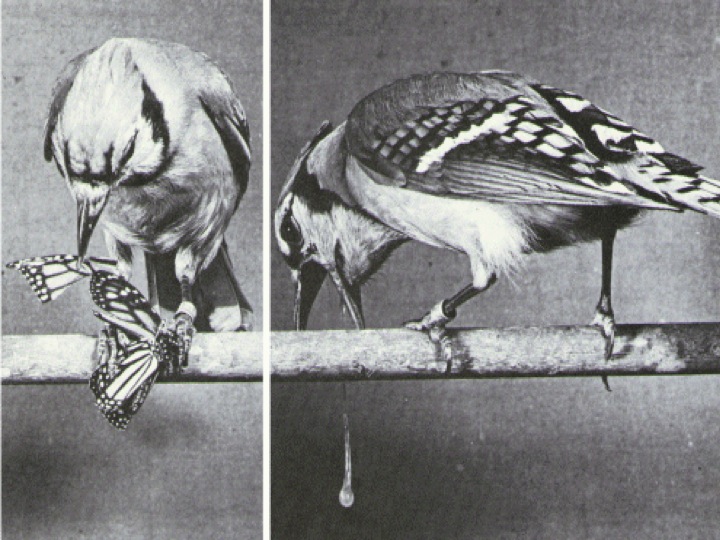
Dr. Brower’s famous “Barfing Bluejay” photo of a bird wretching after eating Monarchs, proved Monarchs don’t tast good. Dr. Lincoln Brower photo.
In the 1970s, other scientists discovered that monarchs had extraordinary migratory powers, more like birds or whales than insects. Each fall, monarchs from east of the Rocky Mountains travel thousands of miles to a Mexican forest, where they spend the winters. Monarchs from western North America migrate to California.
‘‘It has the most complicated migration of any insect known,’’ Dr. Brower told the Chicago Tribune in 1998. ‘‘Somehow they know how to get to the same trees every year. It’s a highly specific behavior that is unique to the monarch butterfly.’’
It takes three to four generations of monarchs to complete the one-year life cycle. After the migration to Mexico, the butterflies begin their return trip to North America, and a new generation is born en route, growing from larvae to caterpillars before taking flight.
With the arrival of cooler weather in the fall, the great-grandchildren of the monarchs that flew south the previous year will make the same trip, returning to the mountainsides visited by their ancestors.
‘‘It’s an inherited pattern of behavior and a system of navigation that we don’t really understand,’’ Dr. Brower said in 2007. ‘‘We don’t know exactly how they find their way. We don’t know how they know where to stop.’’
Dr. Brower first visited the monarchs’ winter quarters in a Mexican forest, about 80 to 100 miles west of Mexico City, in 1977. At an elevation of 9,500 to 11,000 feet, tall fir trees were entirely covered by hundreds of millions of butterflies.
When they stir their wings, ‘‘it sort of sounds like leaves blowing in the fall,’’ said Dr. Brower’s son, Andrew Brower, a biologist and butterfly expert at Middle Tennessee State University, in an interview. ‘‘It’s remarkable. You look up, and the sky is blue, but then it’s orange. It’s like an orange stained-glass window above your head.’’
During more than 50 trips to Mexico to study monarchs, Dr. Brower began to see that their numbers were shrinking.
In North America, Dr. Brower also pointed out, the monarchs face a further problem from the growing use of herbicide, which has eradicated much of their food source, the once-abundant milkweed.
There are still millions of monarchs in North America, but their numbers fluctuate from year to year, in an ever-downward trend. By some counts, the population has fallen by as much as 90 percent since the 1980s.
Dr. Brower joined efforts by environmental groups to have the monarch recognized as a ‘‘threatened’’ species.
Lincoln Pierson Brower was born Sept. 10, 1931, in Madison, N.J. His parents had a nursery and rose-growing business. He was 5 when he took notice of an American copper butterfly landing on a clover bloom. ‘‘I just stared at that tiny butterfly, and it was so beautiful to me,’’ he told NPR. ‘‘And that was the beginning.’’
He graduated from Princeton University in 1952, then received a doctorate in zoology from Yale University in 1957. Some of his early scientific papers were written with his first wife, the former Jane Van Zandt. That marriage ended in divorce, as did a second, to Christine Moffitt.
Mr. Brower leaves his wife of 27 years, Linda Fink, a professor of ecology at Sweet Briar College and a frequent scientific collaborator; two children from his first marriage, Andrew Brower of Christiana, Tenn., and Tamsin Barrett of Salem, N.H.; a brother; and two grandchildren.
 With President Jimmy Carter
READ MORE HERE:
Dr. Lincoln
Spread The GMG Love By Sharing With These Buttons:

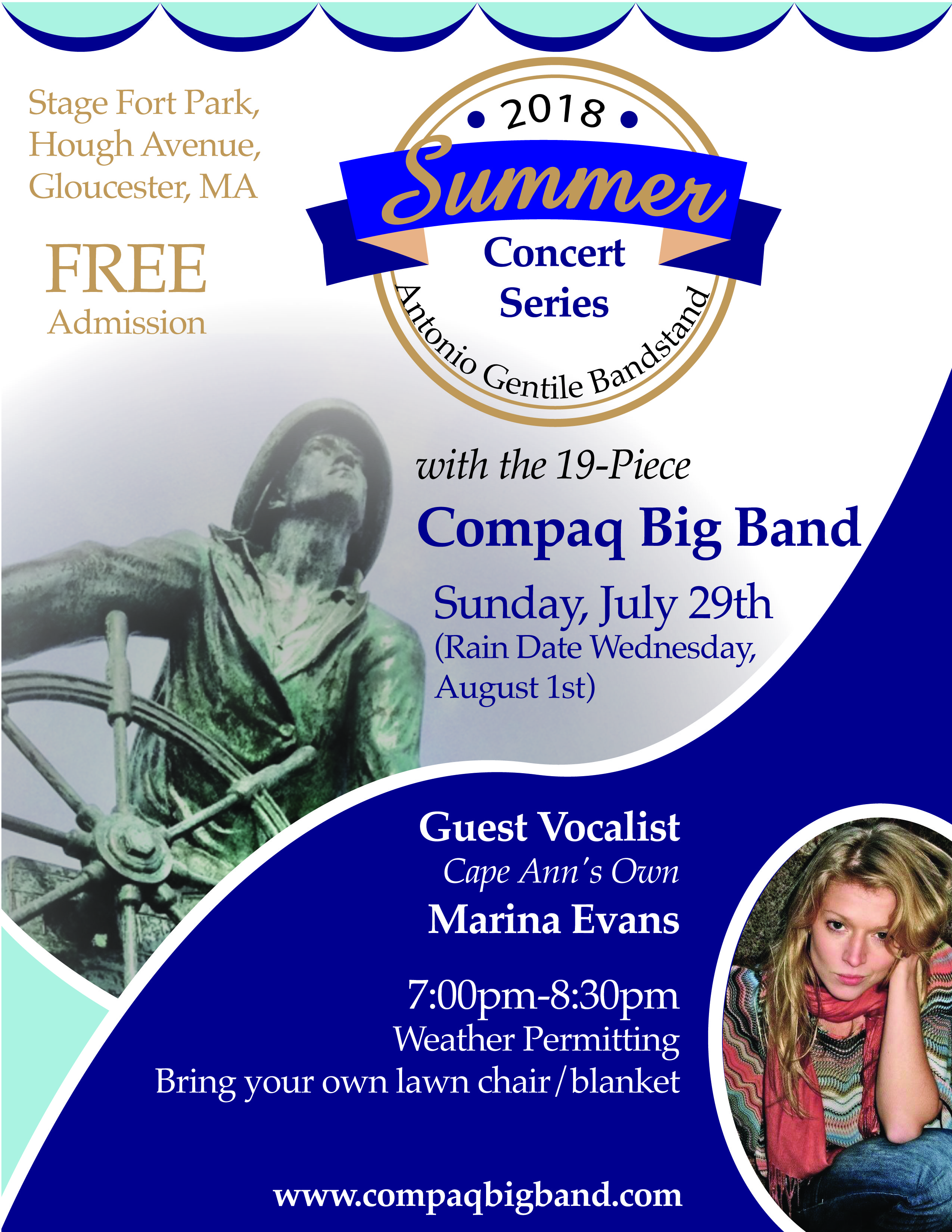
COMPAQ BIG BAND WITH MARINA EVANS SUNDAY JULY 29TH

Spread The GMG Love By Sharing With These Buttons:

RAREST OF RARE BIRD SIGHTINGS AT GOOD HARBOR BEACH!!
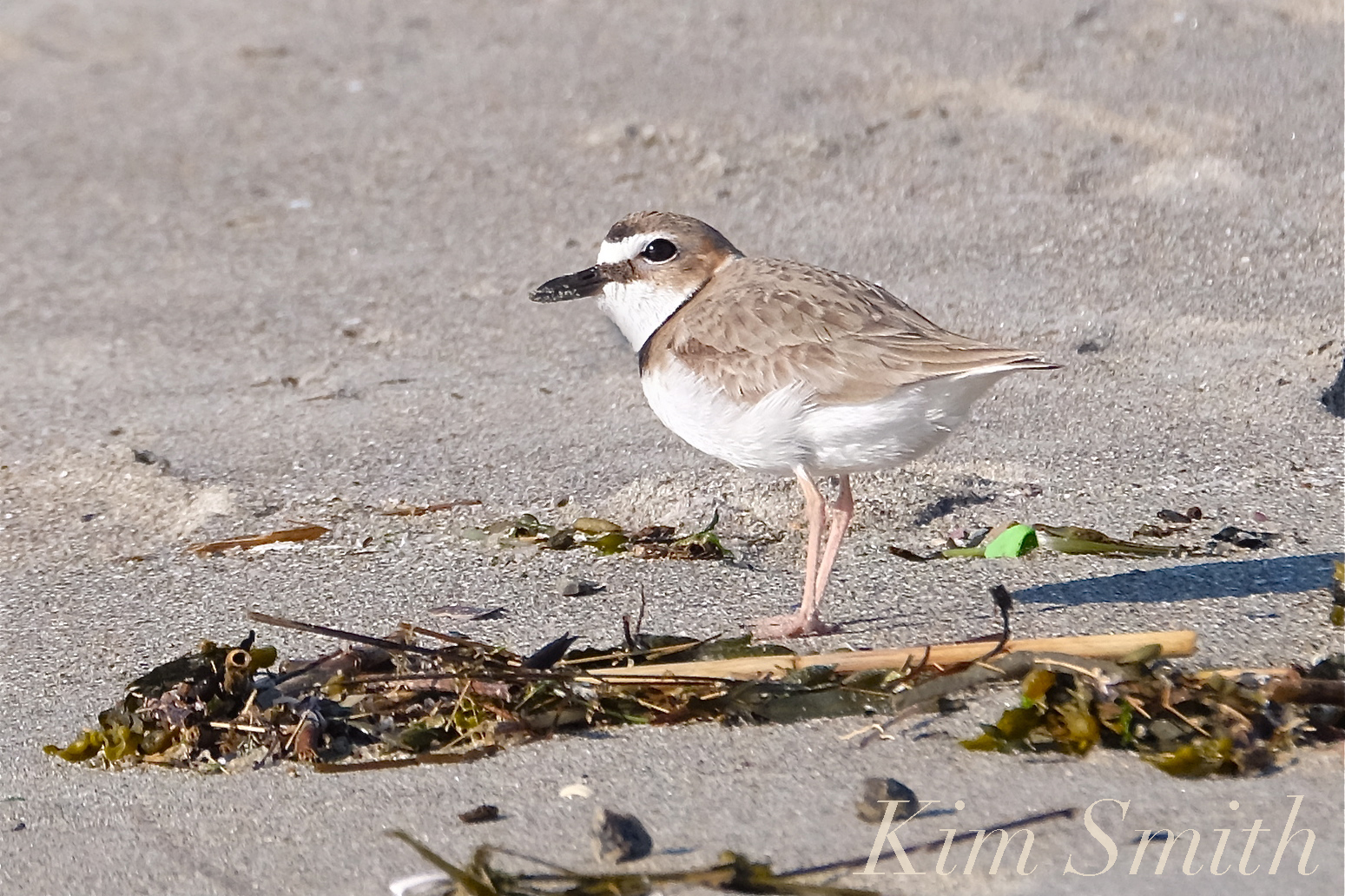 Last May you may recall that we posted photos of a tiny flock of three Wilson’s Plovers (Charadrius wilsonia) that were spotted at Good Harbor Beach. The fog was dense and I was on my way to work, so I only captured a few fleeting moments of footage and several photographs.
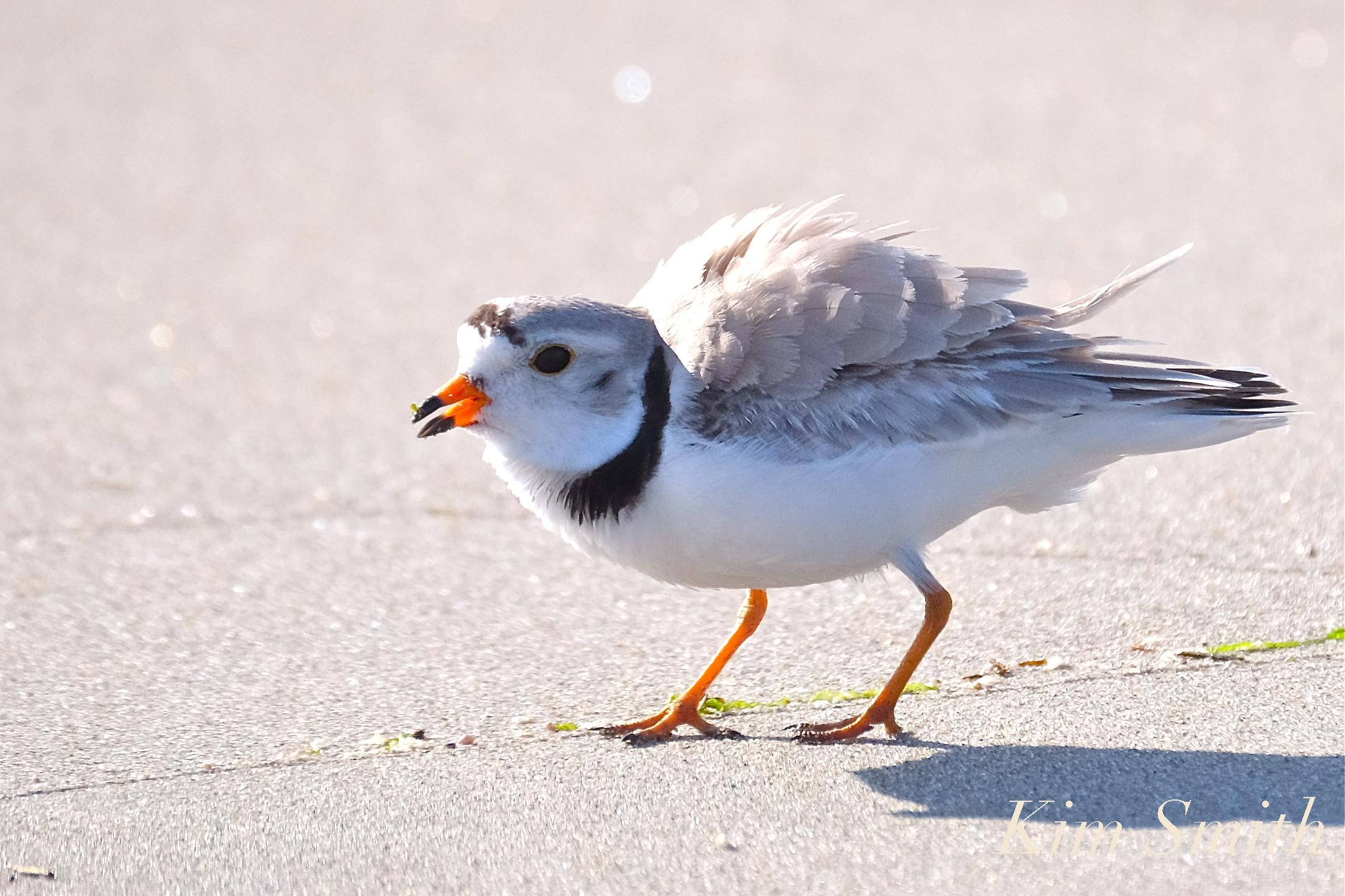 Compare Wilson’s Plover (top of page) to Piping Plover (above).
I was contacted by Sean Williams, secretary of the Massachusetts Avian Records Committee with a request to use my photos. Wilson’s Plovers are a southern species; it is quite rare to see them as far north as the New Jersey shore, let alone in Massachusetts. There is no previously known sighting ever of two or more Wilson’s Plovers ever seen before in Massachusetts history.
And to think this rare bird sighting happened on our Good Harbor Beach!
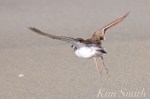
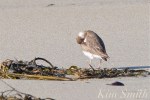

The Wilson’s Plovers were foraging by Boardwalk #3 in our Mama and Papa Piping Plover territory. There were a few minor skirmishes between Wilson’s and Piping but they all continued to go about their respective ways. The Wilson’s foraged at the wrack line, preened on the beach, and one took a bath in the shallow water of the incoming time.
You can see in the clip, Papa Plover giving brief chase to one of the Wilson’s Plovers.
Here is a copy of the report that MARC requested be filled out in the case of rare bird sightings.
Massachusetts Avian Records Committee (MARC)
Review List Species Report Form
Please answer each question with as much thought and detail possible. These details will help the MARC determine whether your review list species is sufficiently supported for acceptance. It is fine if you do not have all the details to complete the form; complete as much as possible.
Once completed, email this form to Sean Williams: seanbirder@gmail.com
- Species or subspecies: Wilson’s Plovers (3)
- Date, time, and location (please be specific, i.e. 17:40 on 30 Oct 2015, GPS coordinates or street address):
Approximately 8-9:00am on May 9th at Good Harbor Beach, 99 Thacher Road, Gloucester, MA
Number of individuals: 3 birds, two persons, myself and Essex County Greenbelt’s Dave Rimmer
- Situational details of the sighting—e.g., “I was walking down Race Point Beach when suddenly…”, or “I got a call from Ludlow Griscom and went to investigate a…”
I was walking on Good Harbor Beach checking on our Piping Plover pair and saw the three birds in the fog, plus one sandpiper. The birds were foraging in the wrack line. One went higher up on the beach to preen, another took a bath in the shallow water. The WP were in the PiPl’s nesting territory and there were several skirmishes between the PiPl, and one Wilson’s chased another Wilson’s. After a bit, all three flew further down the beach and out of sight. I stopped by later in the day, after the fog had burned off, to see if they were still there and they were not.
- Physical description. This is perhaps the most important part of the form. Include all observed physical details of the bird, including plumage, bill, feet, eyes, bare skin, shape, and size relative to nearby birds:
Pale pink legs, thick bill and overall black, plumage similar to PiPl, but a little darker, but not as dark as Semi-palmated Plover, tiny bit larger than Piping Plover.
- Vocal description. If the bird vocalized, describe the sound to the best of your ability, e.g. trill, buzz, high-pitched, “kser”, quavering, length of call, etc.
The waves were drowning out their vocalizing.
- Behavioral description. What behaviors did you observe?
Foraging, preening, bathing, territorial dispute with PiPl, and flying.
- Habitat:
Good Harbor Beach is a sandy beach, with the beach greatly narrowed this year because the beach dropped about six feet and the tide now comes right up to the dune during periods of high tides. The beach abuts a dune, large parking lot, and marsh.
- Total length of time and number of times bird was seen and/or heard:
Half an hour to an hour.
- How did you rule out other similar species?
Behavior and photos.
- Distance from the bird:
Twenty to thirty feet or so.
- Optics used to view the bird:
- Eyes and cameras. I may have film footage. Will check on that.
- 13. Lighting—e.g. sunny or cloudy, was the bird sunlit or backlit:
- Sunny at first, then dense fog came rolling in.
- Your contact information: kimsmithdesigns@hotmail.com
Spread The GMG Love By Sharing With These Buttons:

RAINBOW PAPER STRAWS AT LONG BEACH DAIRY MAID
https://www.instagram.com/p/BltbIEkH-ub/
Spread The GMG Love By Sharing With These Buttons:
WELCOME TO GOOD HARBOR BEACH!
A surprise meeting with a beautiful female Ruby-throated Hummingbird. She is drinking nectar from the wildflower Saponaria officinalis. The plant’s many common names include Soapwort, Bouncing-bet, and Wild Sweet William. The name Soapwort stems from its old fashioned use in soap making. The leaves contain saponin, which was used to make a mild liquid soap, gentle enough for washing fine textiles.
Saponaria blooms during the summertime. Although introduced from Eurasia, you can find this wildflower growing in every state of the continental US.
The hummingbird in the clip is a female. She lacks the brilliant red-feathered throat patch, or gorget, of the male. Ruby-throated Hummingbirds are all around us, you just have to know what to plant to bring them to your garden. Mostly they eat tiny insects but if you plant their favorite nectar-providing plants, they will come!
If I could only grow one plant to attract the Ruby-throats, it would be honeysuckle. Not the wonderfully fragrant, but highly invasive, Japanese honeysuckle, but our beautiful native trumpet honeysuckle that flowers in an array of warm-hued shades of Spanish orange (‘John Clayton’), deep ruby red (‘Major Wheeler’), and my very favorite, the two-toned orange and red ‘Dropmore Scarlet.’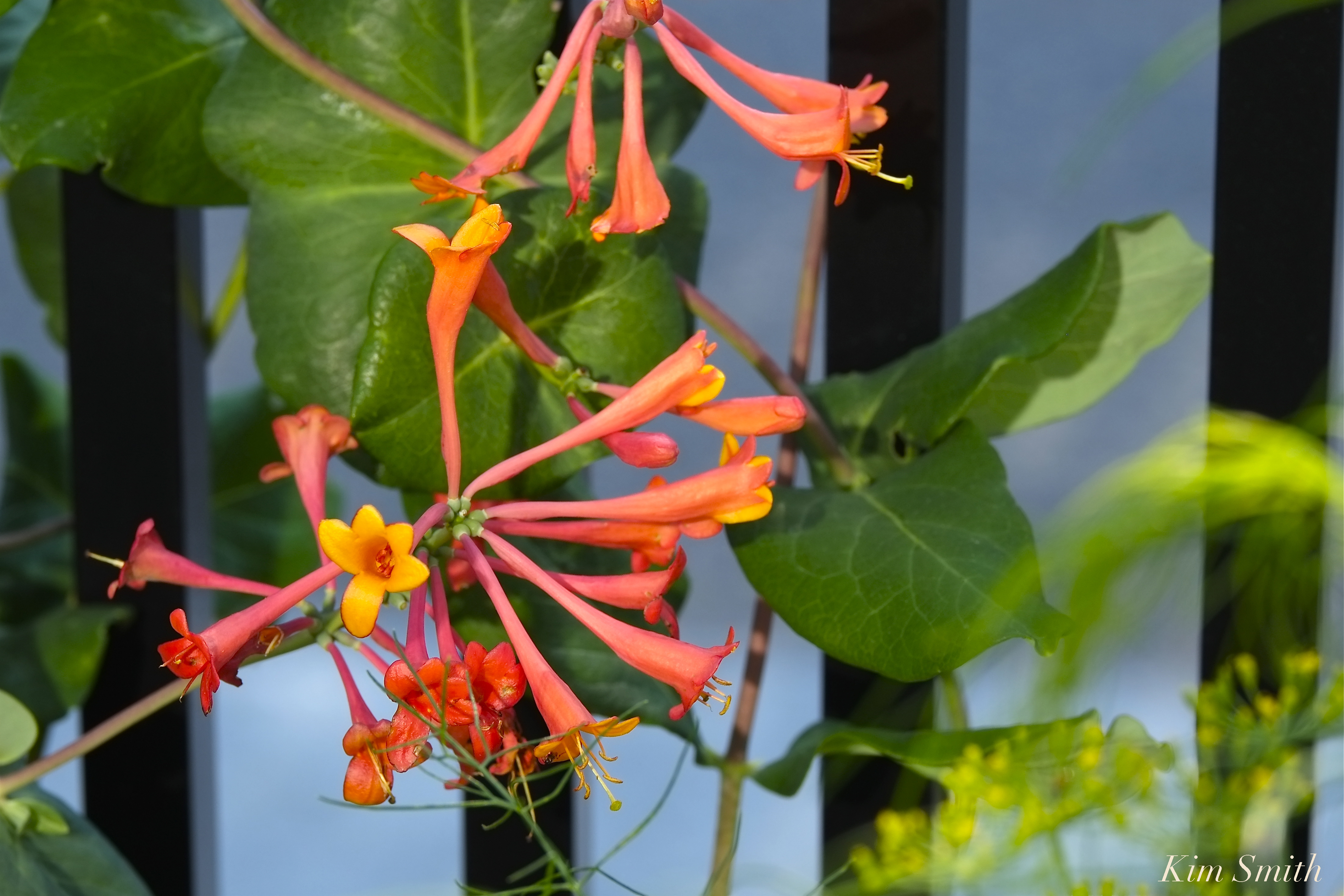 Lonicera sempervirens’ Dropmore Scarlet’
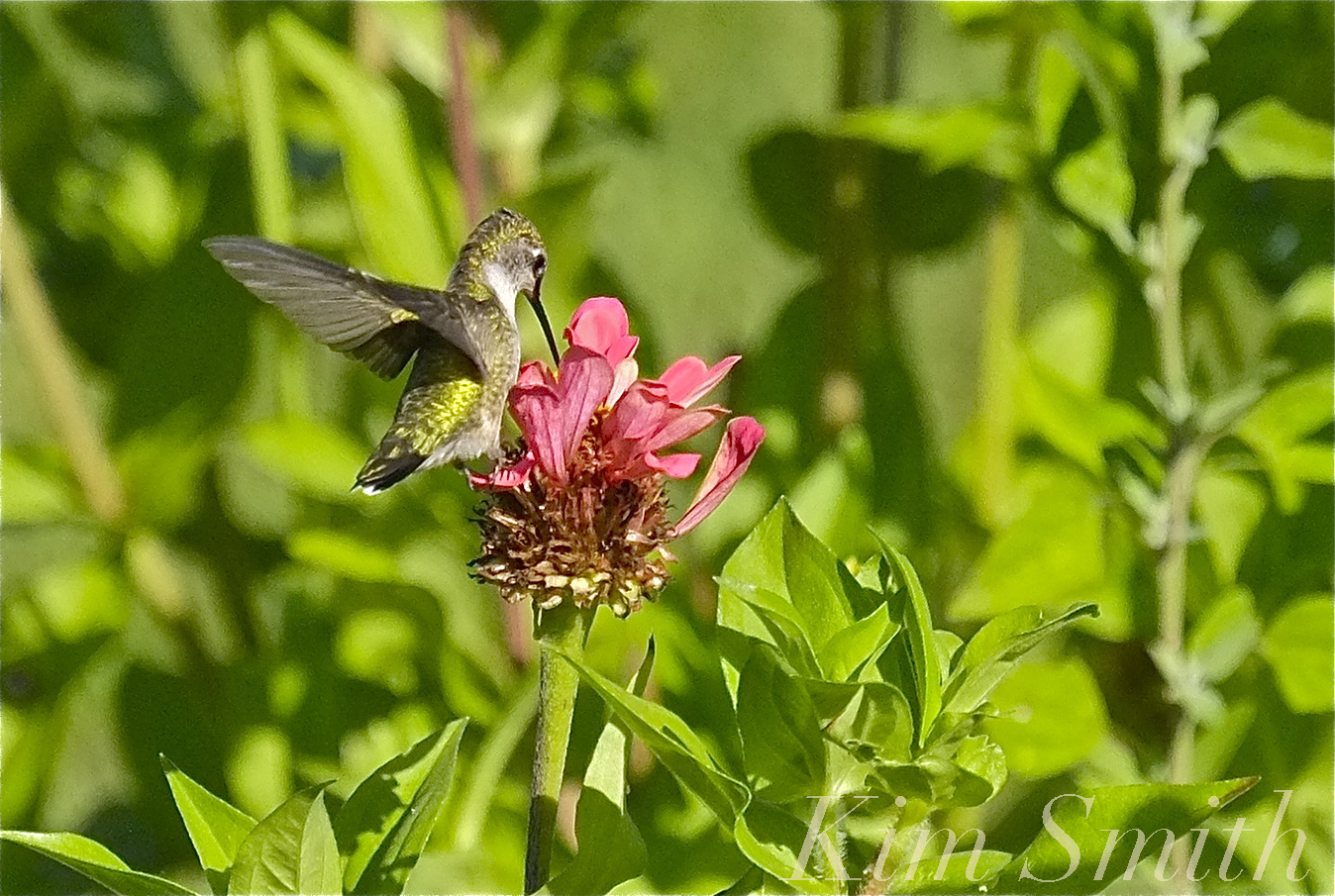 Female Ruby-throated Hummingbird drinking nectar from zinnia florets.
Spread The GMG Love By Sharing With These Buttons:

WAXING MOON RISING
Beautiful moon rise through the coral pink sunset clouds last night.
Spread The GMG Love By Sharing With These Buttons:

MORE WINGED BEAUTIES!
Reader Biranne writes,
Hi Kim, I have seen Monarchs in my yard but only managed to capture this Eastern Tiger Swallowtail. Pretty blue & orange tail! Brianne 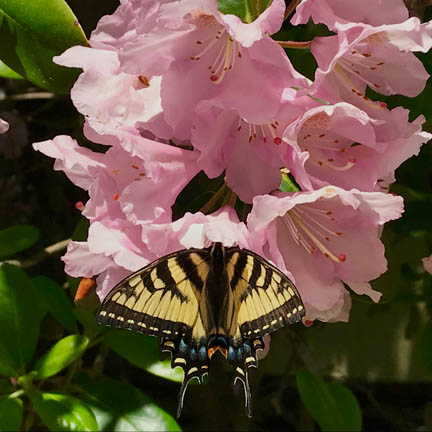
Eastern Tiger Swallowtail
This gorgeous moth was photographed by one of our readers and she wrote to ask what species? We have here a male Polyphemus Moth, a member of the Family Saturnidae (Wild Silk Moths). Polyphemus moths are widely distributed throughout Massachusetts but we rarely see them because they fly at night and because their life as an adult is so brief. This giant beauty is only on the wing for about two weeks, spending most of its life in trees in the caterpillar and cocoon stages. The caterpillars eat a wide variety of trees and shrubs including maple (Acer), and birch (Betula), oak (Quercus), and willow (Salix).
Like nearly all members of our Wild Silk Moth family, they are in sharp decline, mostly because of the pesticides people spray their trees to rid them of non-native invasive moths, and because of the tachnid fly, which was introduced to control Gypsy Moths, a biological control gone terribly wrong.
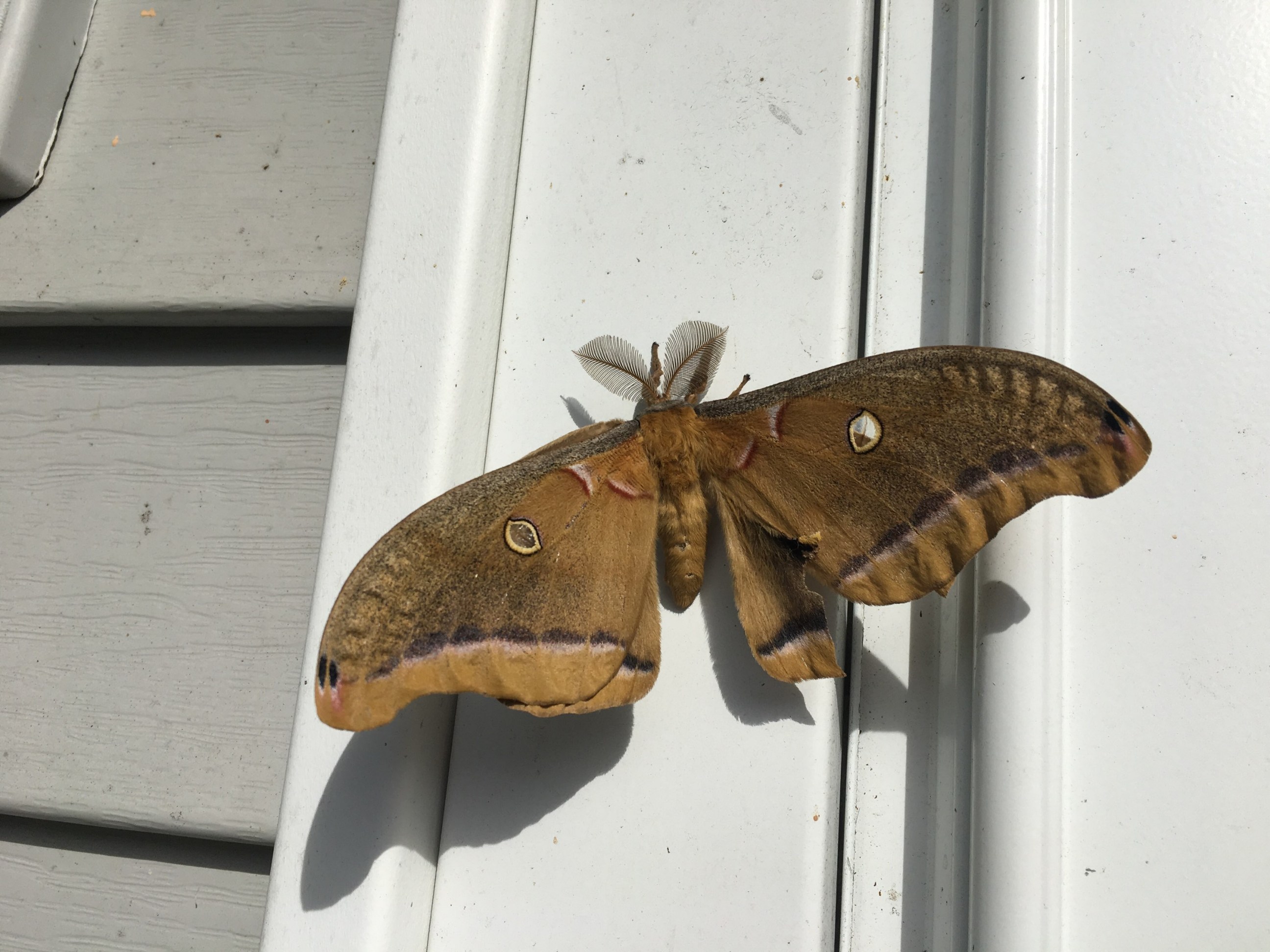
Polyphemus Moth
Debra Martell writes that on July 19th, Gloucester High School History teacher, Michael Perreault, captured this shot of a Monarch on Purple Coneflower in Magnolia.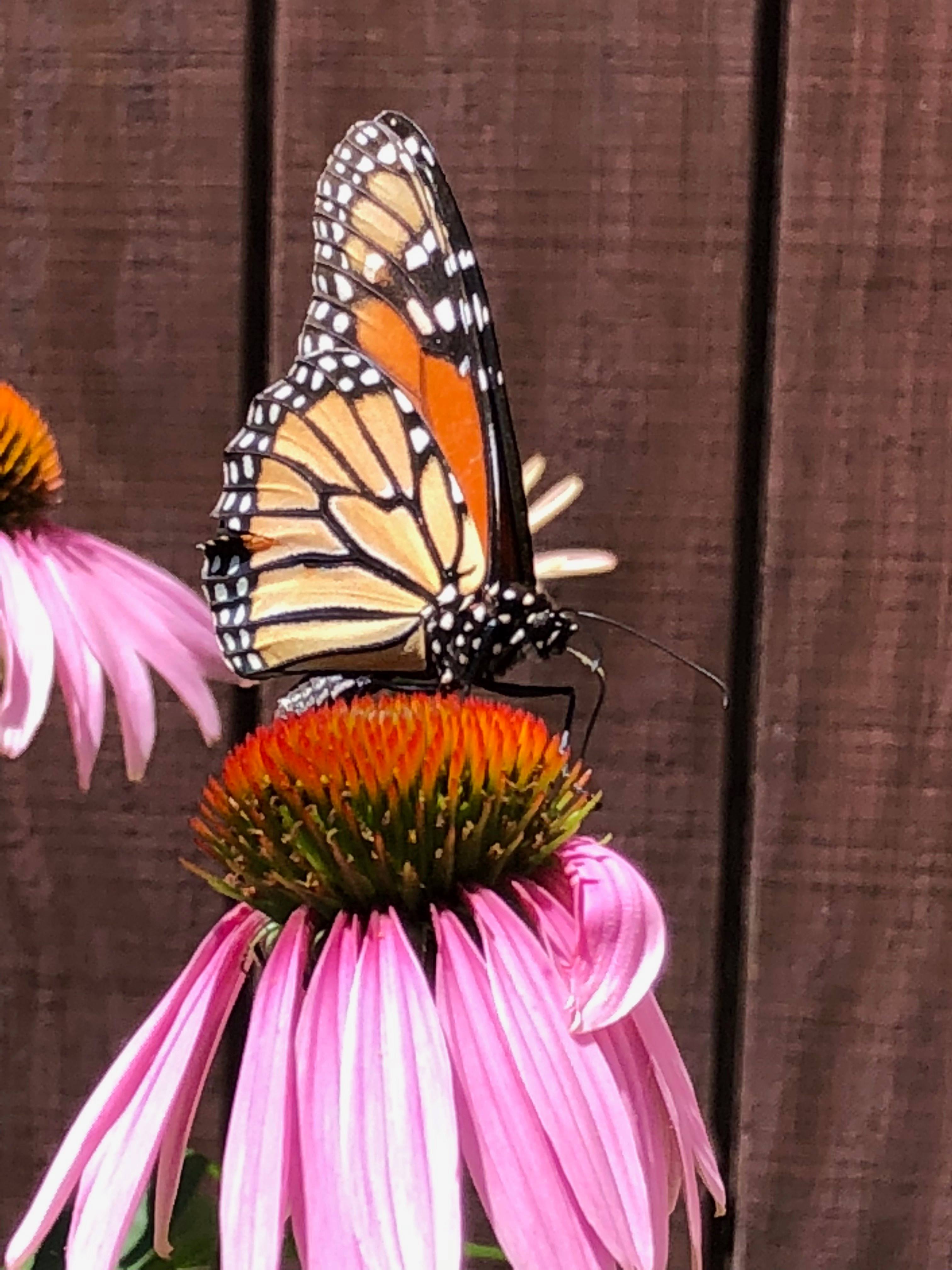 Monarch Butterfly
Spread The GMG Love By Sharing With These Buttons:

FISHING FOR SEX
FISHING FOR SEX
Or is it Sex for Fish? –The Quid Pro Quo Courtship of the Least Tern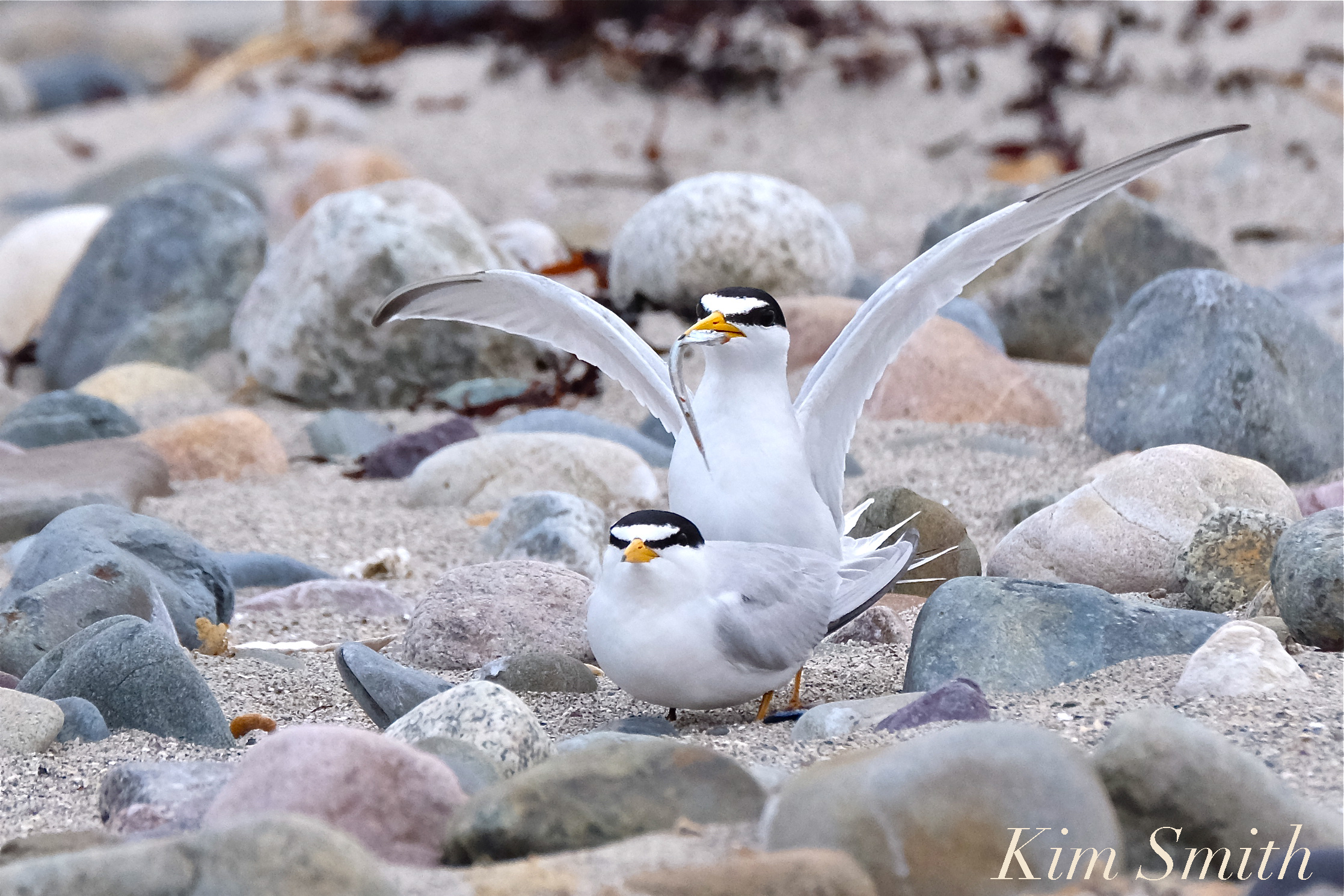
While learning more about Piping Plovers on North Shore beaches I happened to be on Winthrop Shore Beach on an afternoon in May when dozens and dozens of Least Terns were pairing up in an elaborate dance of courtship and mating. It was fascinating to observe their courtship feeding and I was so curious to learn more.
That very same afternoon, the “Rosetti’s” Piping Plovers were mating, too. Well known to the area is a pair of Plovers that nest every year directly in front of Café Rosetti’s, a fabulous Italian restaurant located on the main boulevard that runs along the beach. The Rosetti’s Plovers are very successful and each year they fledge a clutch of chicks. This year was no exception!
For the past several months I have been documenting through film and photographs the Rosetti’s Plovers and the Rosetti’s Terns, along with a family of PiPl at Revere Beach (more about the Winthrop and Revere Beach’s PiPl in future posts). Both species of birds are on the state and federal threatened species list. Piping Plovers and Least Terns began nesting on the area’s urban beaches as a direct result of the Boston Harbor cleanup, a wonderful, and very surprising to all involved, turn of events. In some regions, both species share the same habitat, as is the case with Winthrop Shore Reservation.
The more we learn about how and why Plovers (and other species of threatened shorebirds) successfully nest on other north of Boston much loved and much utilized beaches, the more we can help our Good Harbor Beach Piping Plovers successfully nest in years to come.
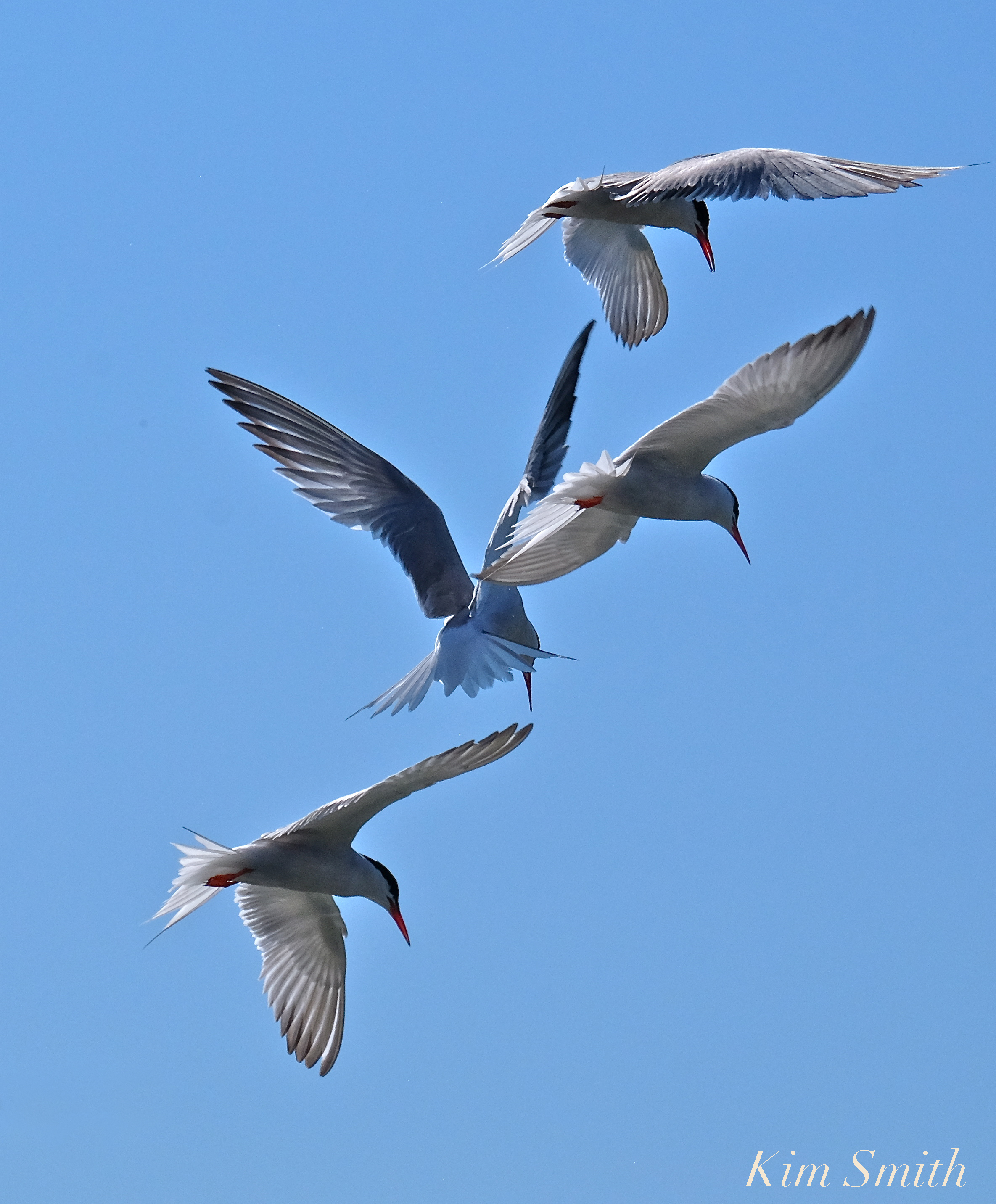 During the breeding season Least Terns perform courtship displays in the air and on the ground. In dramatic aerial display, a fish-carrying male is chased by the female, sometimes up to four females.
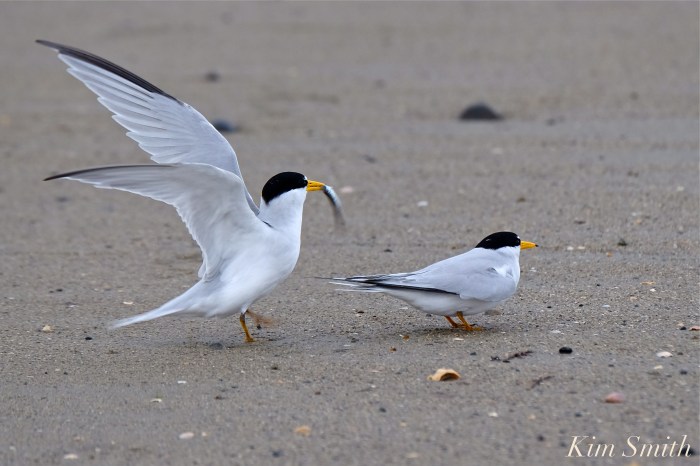
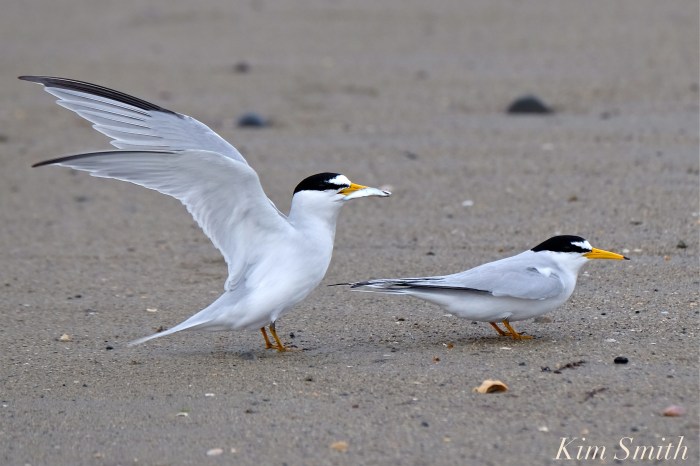
On the ground, the male parades his fish to a prospective mate. With fish dangling from his bill, he bobs his head from side-to side, then opens and closes his wings over the female.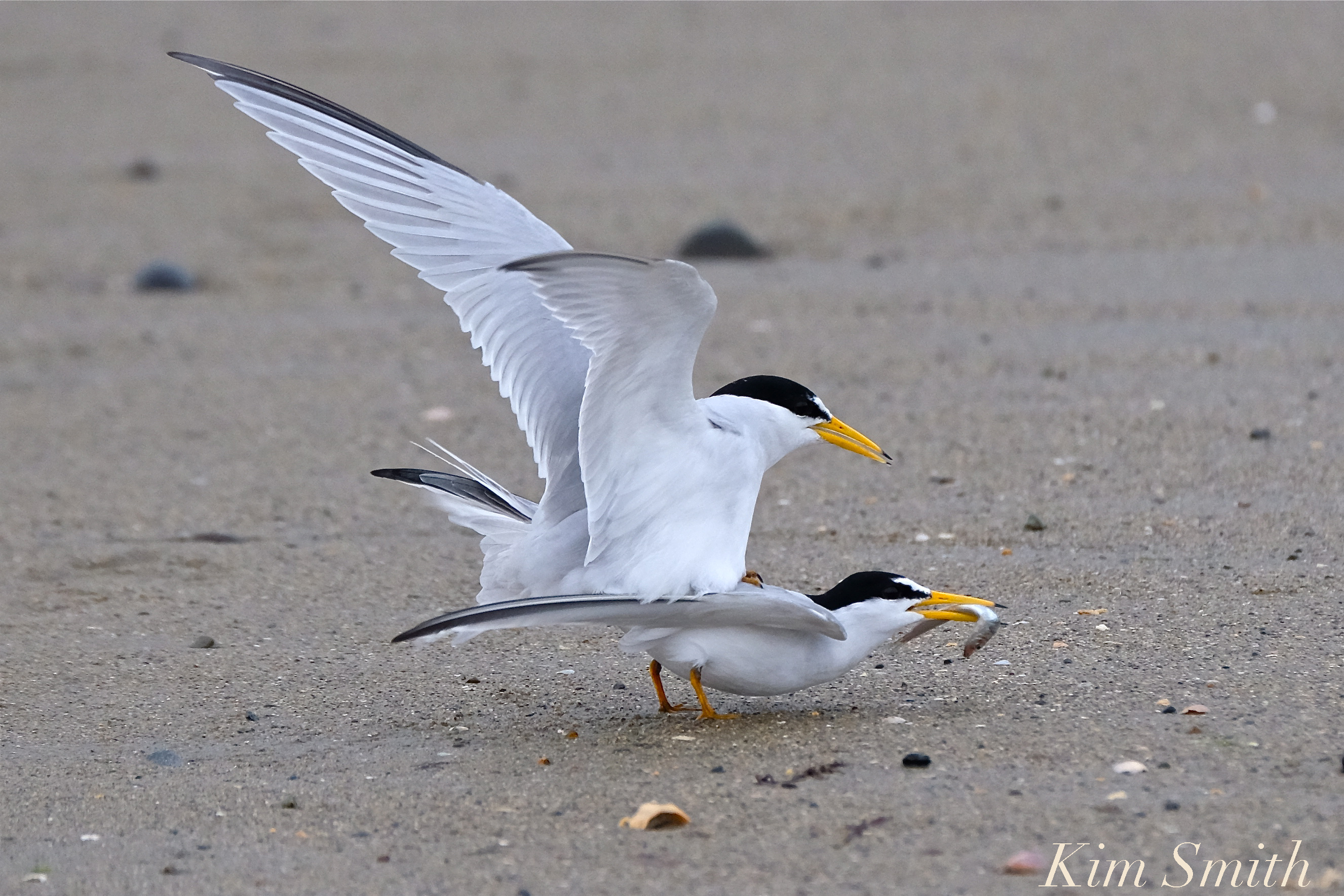
The male mounts the female, still with fish dangling. During copulation he passes the fish to the female.
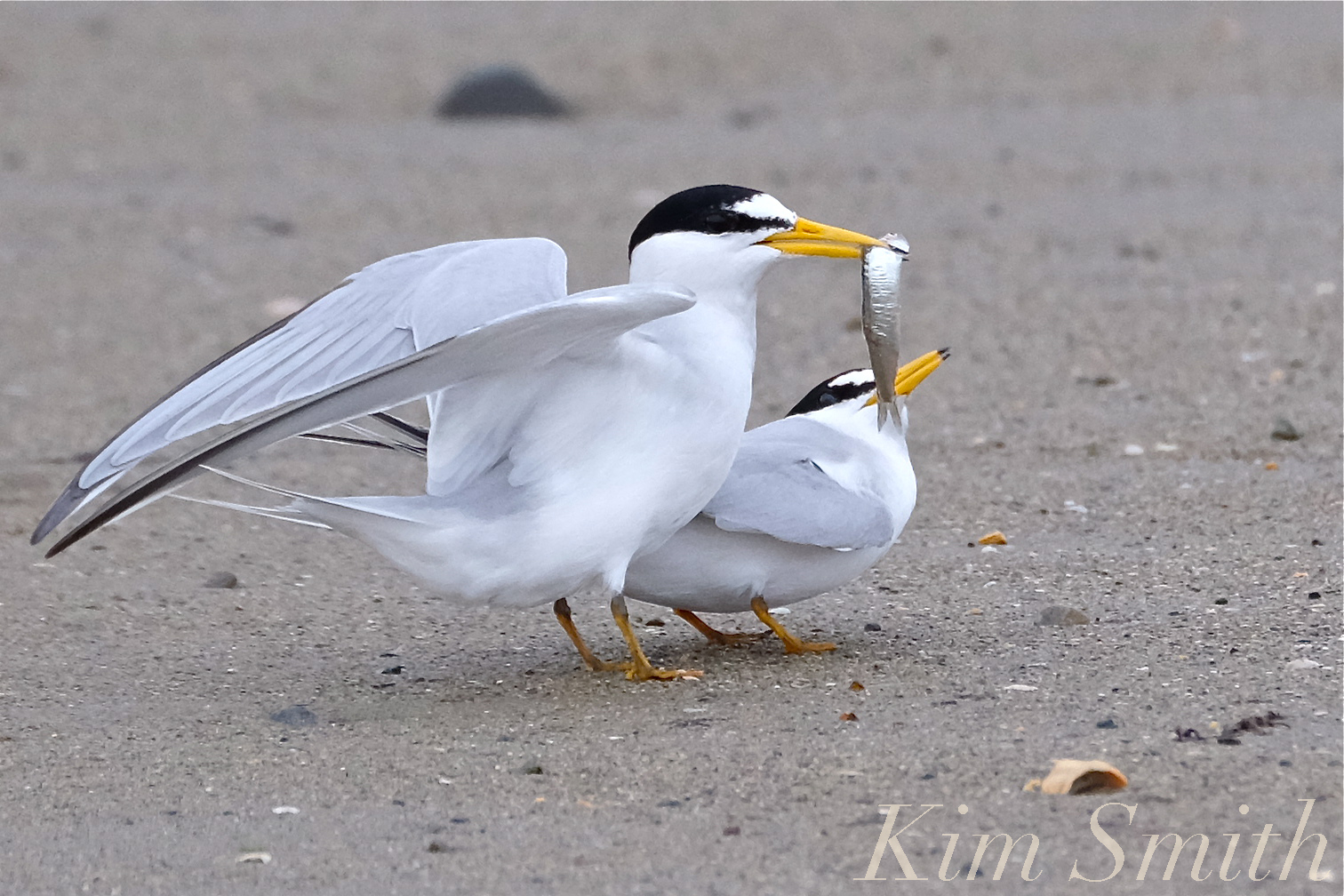 The funniest thing is, when the female allows the male to mount, she sometimes snatches the fish and flies away before mating has occurred.
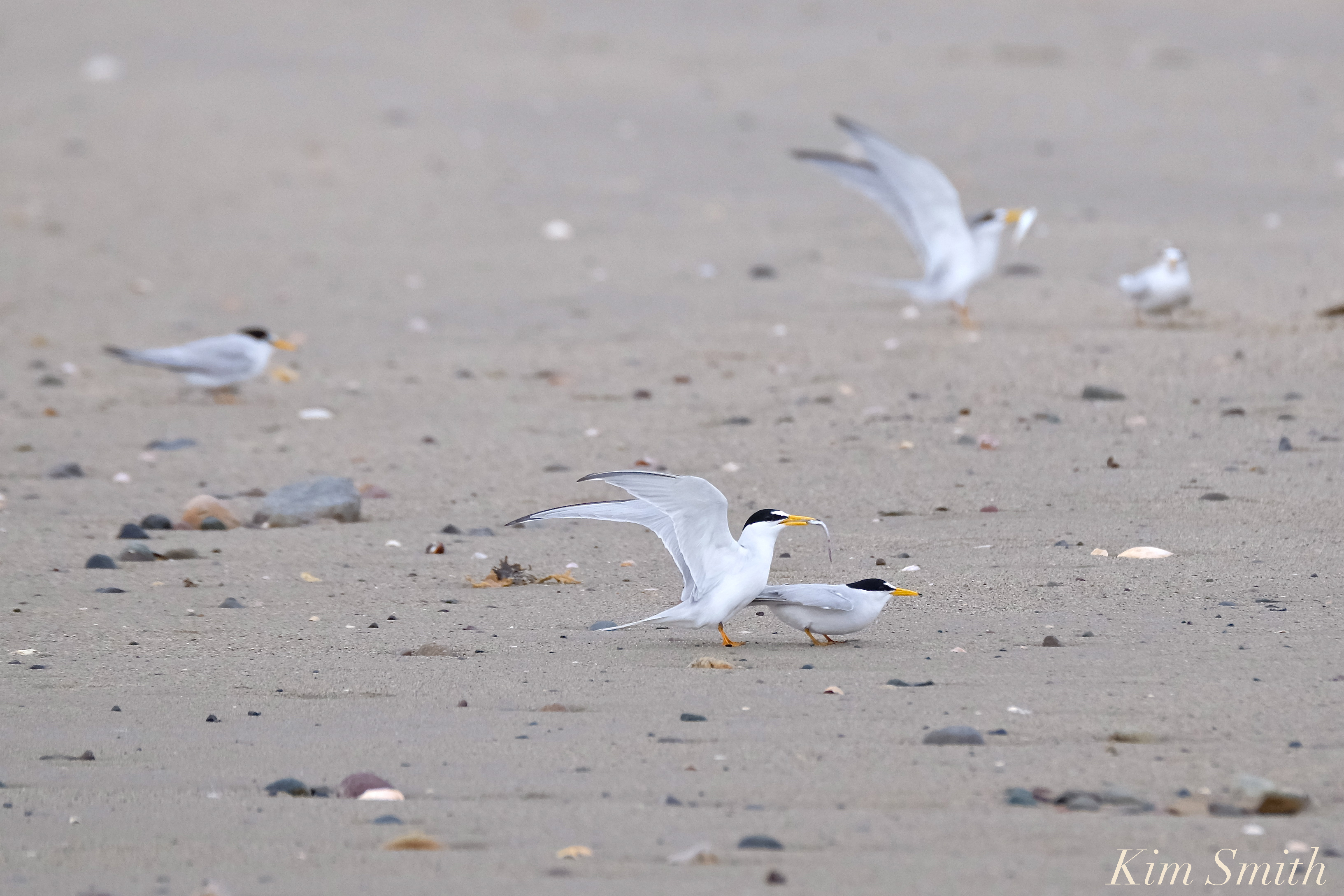 No privacy, and lots of piracy!
The male continues to feed the female throughout the incubation period. Both parents incubate the eggs however, the female does about eighty percent of the brooding, while the male provides most of the fish for she and the chicks.
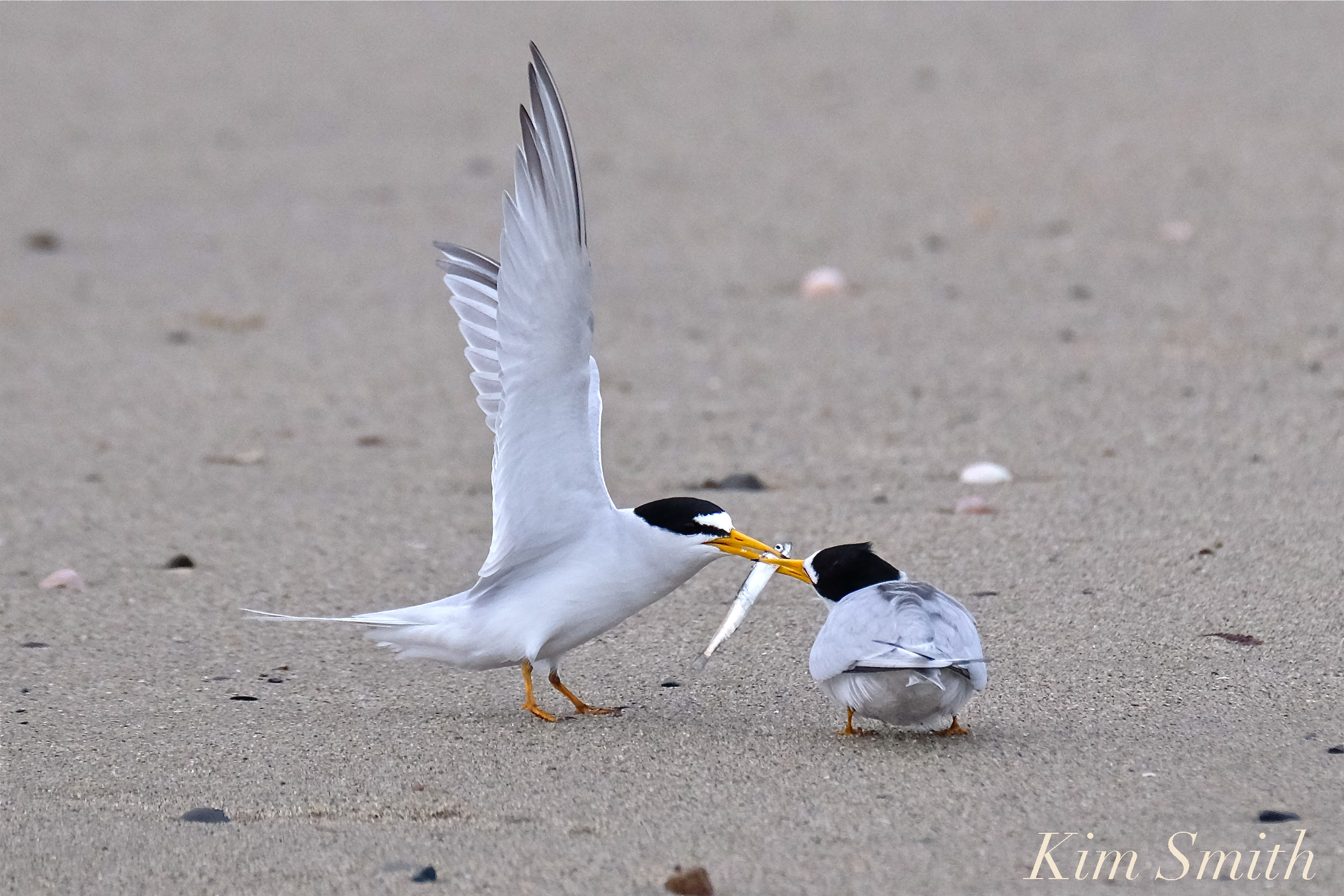 When one adult Least Tern feeds another, whether during courtship when the pair are first becoming established, or during the incubation period, this behavior is called “courtship feeding.”
The courtship feeding display perhaps provide the female tern the assurance that her male mate will be a good provider of fish for both she and the young. Both male and female Least Terns feed the chicks for the first several months after hatching; the better the fisherman, the stronger the chicks. Studies have shown too that courtship feeding provides the female with considerable nutritional benefit. The number of eggs, and weight of the eggs, are determined by the female’s nutritional status and how much food is fed her by her mate.
In Massachusetts, Least Terns primarily eats fish, including Sand Lance, Herring, and Hake. They also eat insects and crustaceans.
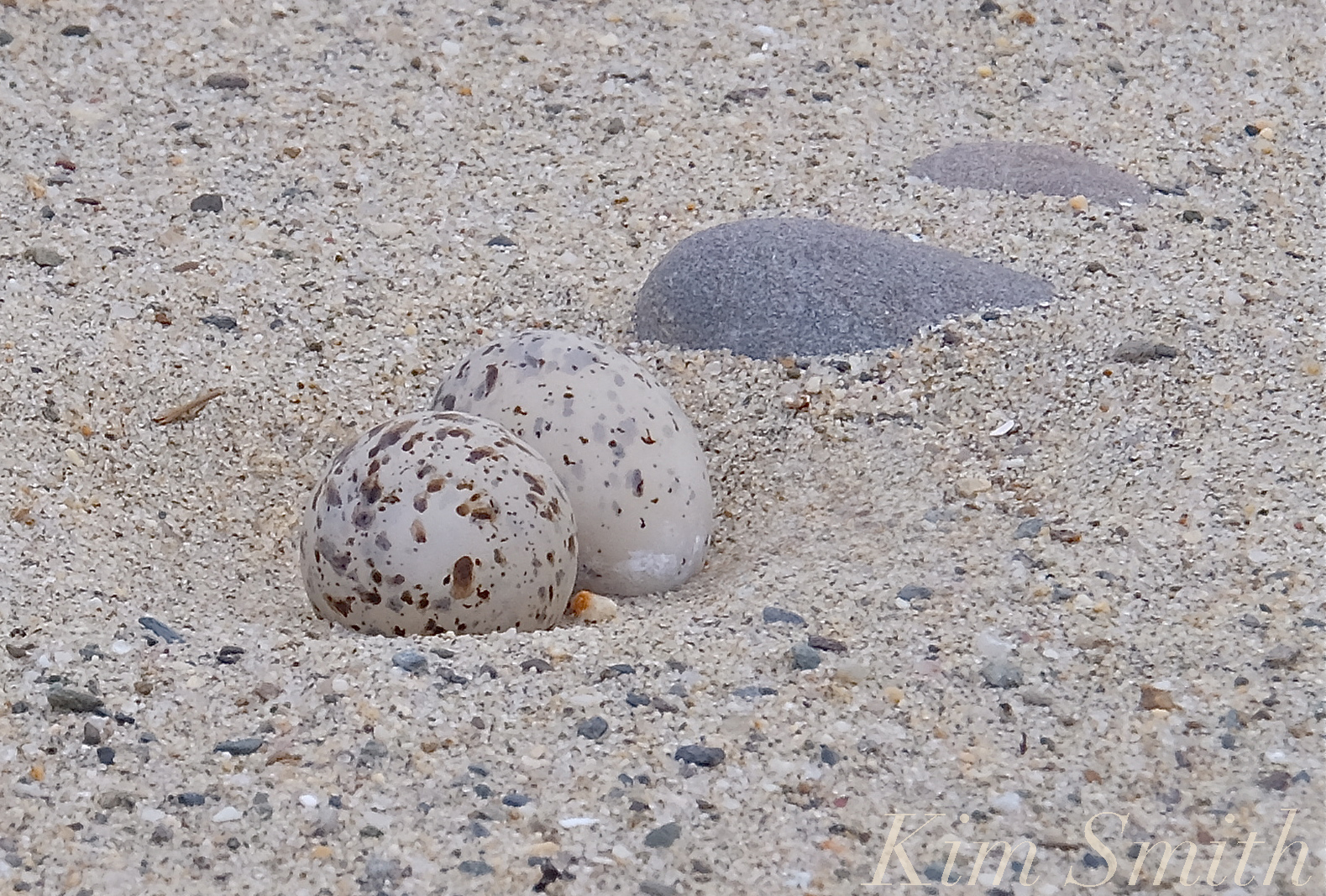 And we have a nest, with two eggs!
Read more about Winthrop Shore Reservation here.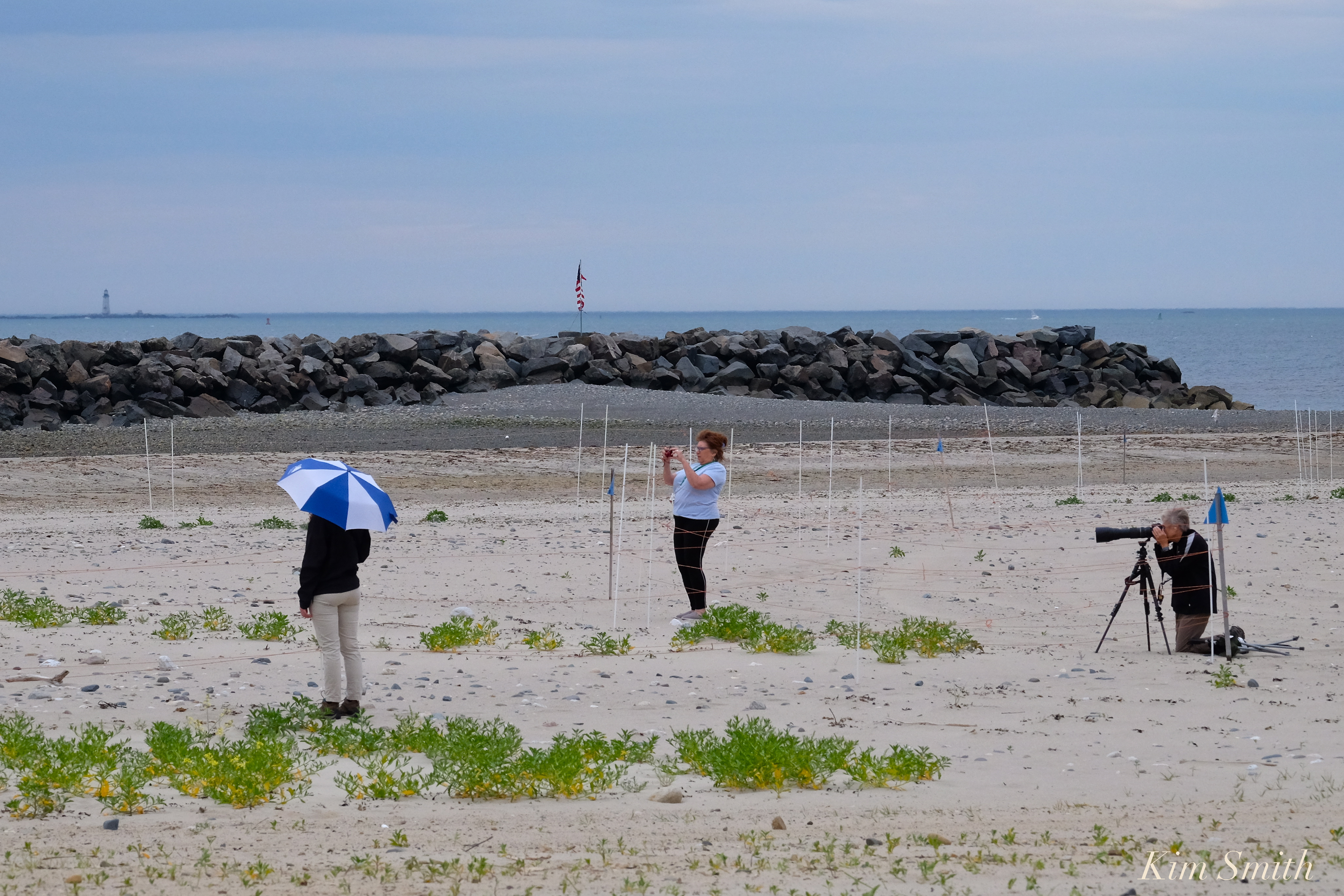 Winthrop Shore Reservation Nesting Bird Observers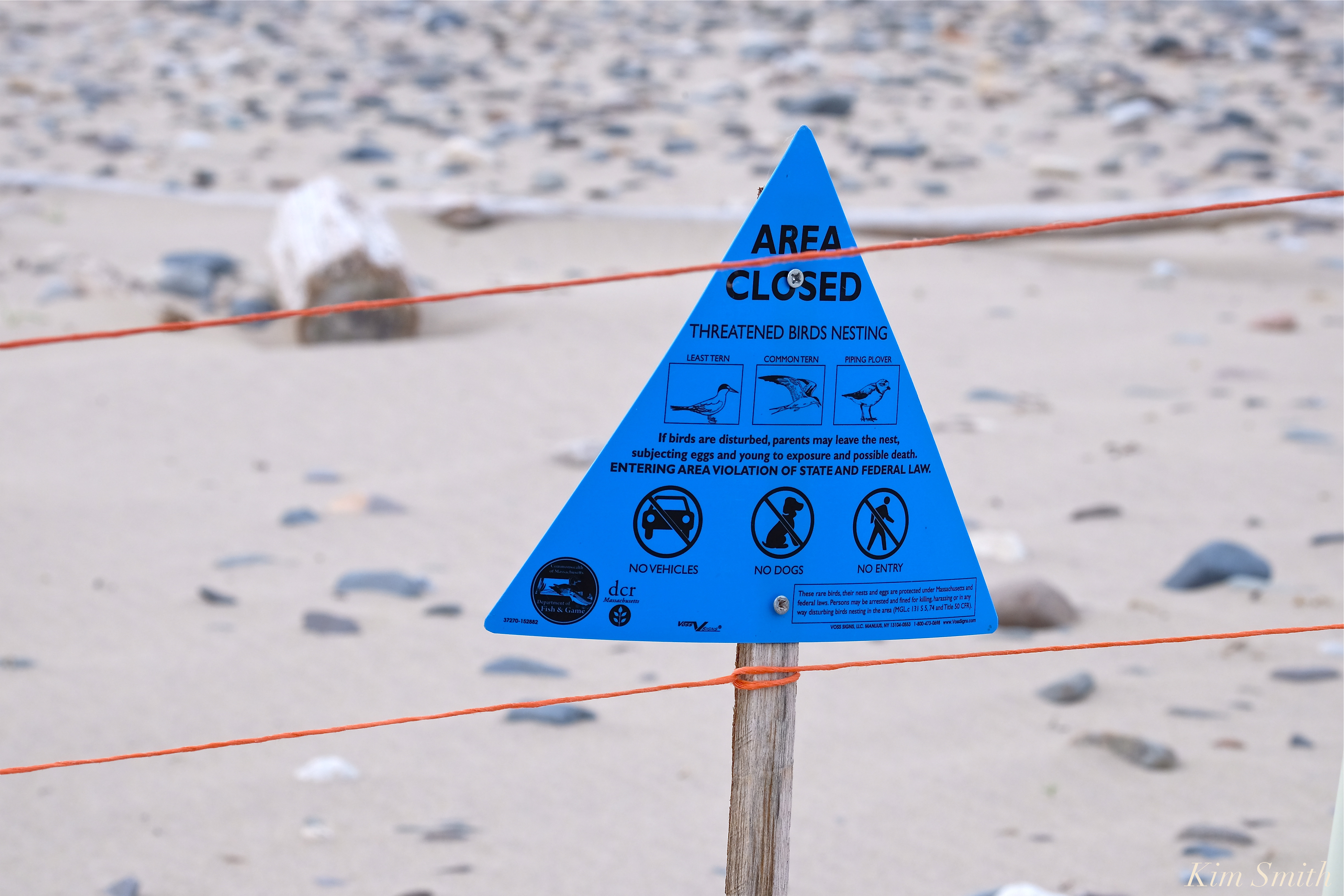

 Good Morning Gloucester