Reader Jackie Bennet shares photos from her backyard and from Corliss- Thanks Jackie for sharing!


My View of Life on the Dock
Reader Jackie Bennet shares photos from her backyard and from Corliss- Thanks Jackie for sharing!

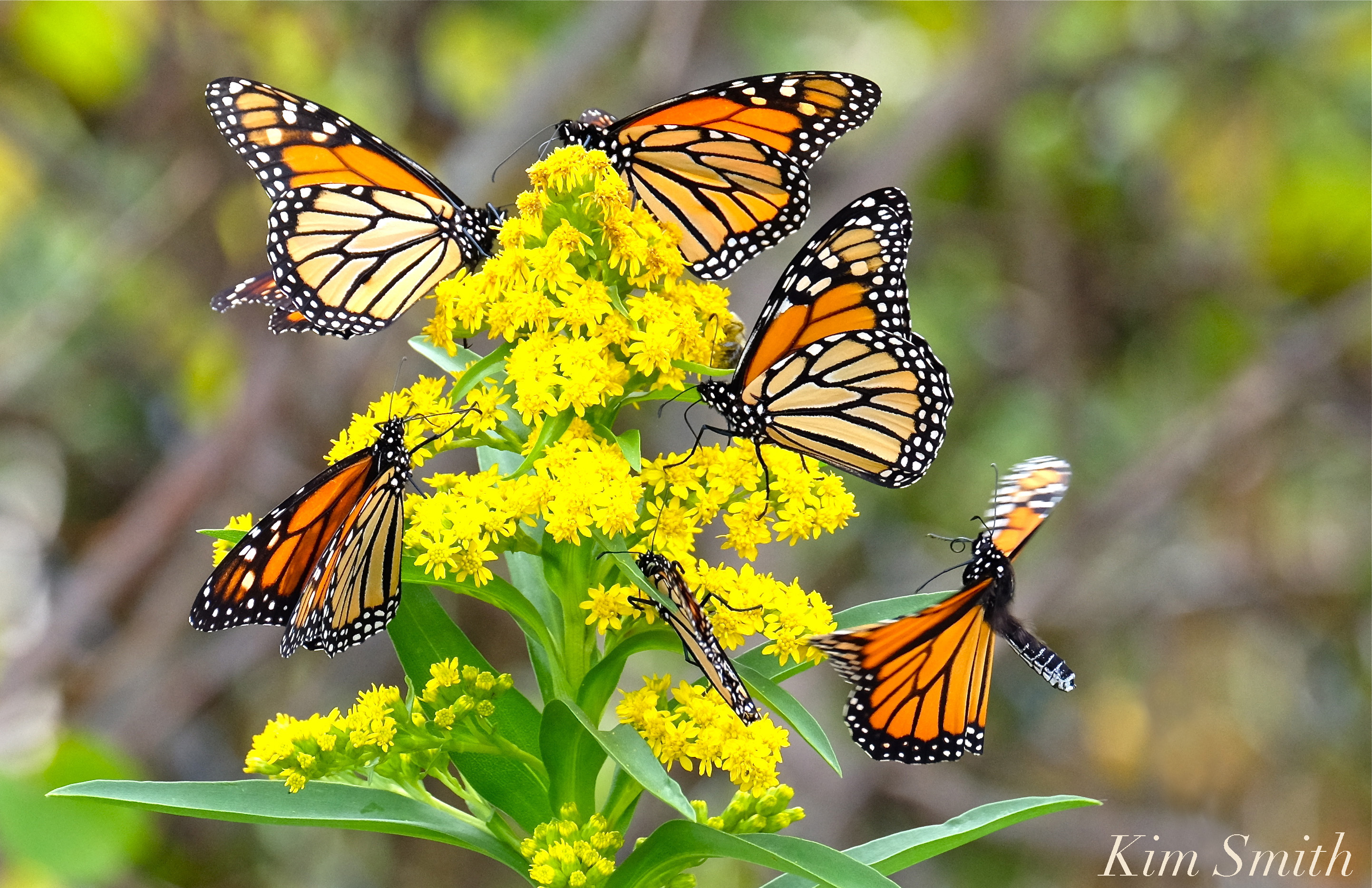 Join documentary filmmaker and photographer Kim Smith, creator of Beauty on the Wing: The Life Story of the Monarch Butterfly on Second Saturday CAM Kids. Learn all about the life story of the Monarch and how you can help the butterfly on its migration. The program runs from 10am to noon. To register, contact courtneyrichardson@capeannmuseum.org
Families of school aged children visit free on Second Saturday mornings. Visit the galleries, join a workshop, and more!
 Monarch Butterfly Emerging

I say a little prayer for you. Goodnight Beautiful Lady of Soul

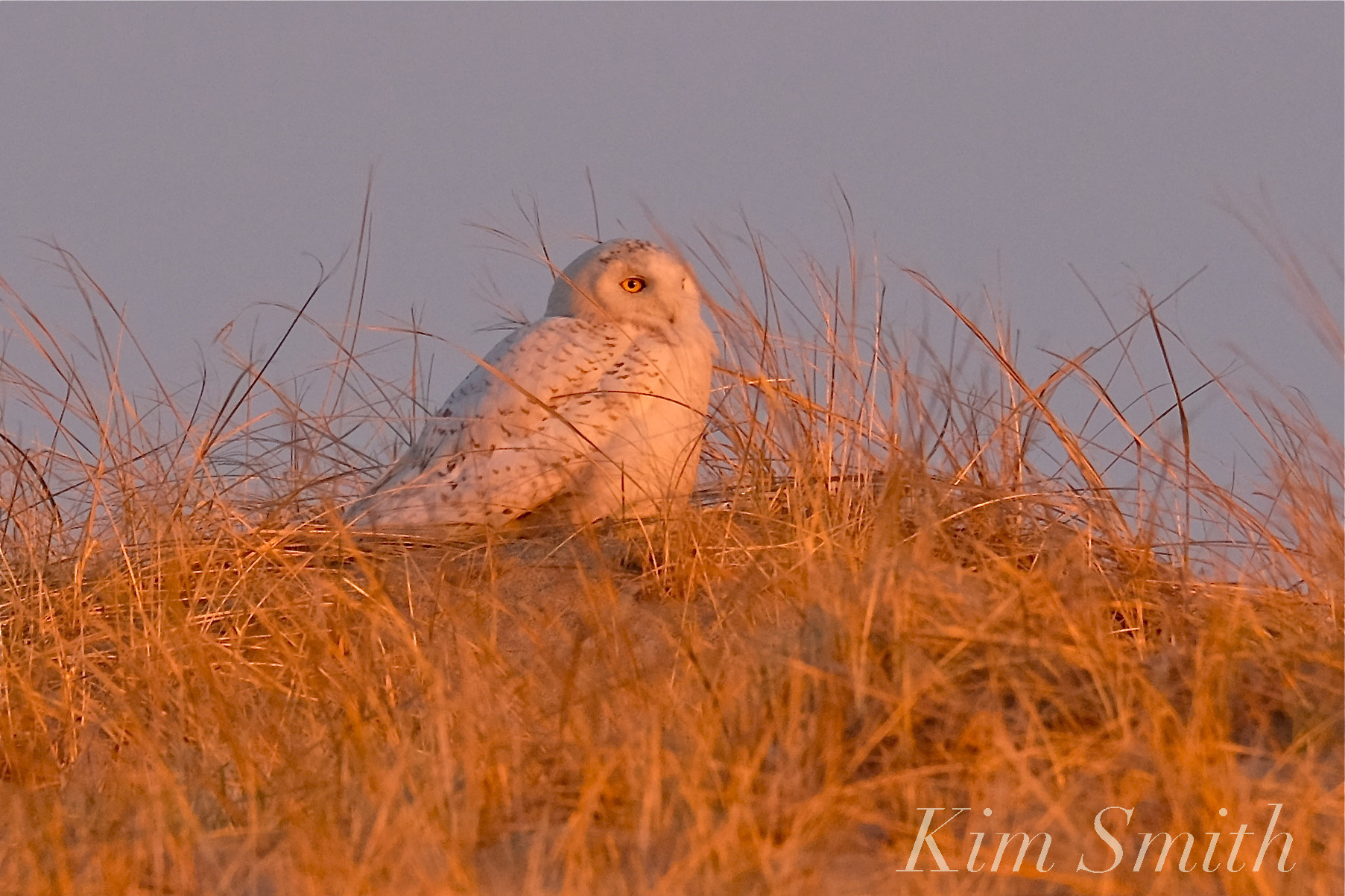 The Snowy Owl Project shares that not one, not two, not three, but four Snowy Owls remain in our area! This is highly unusual for August because most Snowies have left Massachusetts by May.
They are finding finding plenty to eat. The owls are being closely monitored and thus far have no health issues. This is the time of year that Snowy Owls molt, so if you see one, it may be brown and missing some feathers.

Hedwig in the moonlight
Tragically, a Snowy Owl was recently rescued at Logan Airport and was taken to Tufts, where it died of rodenticide poison. That brings this year’s total to eight that have been killed by rat poison. Imagine if in every region, this many were killed annually by rat poison. It’s no wonder the species is struggling, despite occasional irruptive years.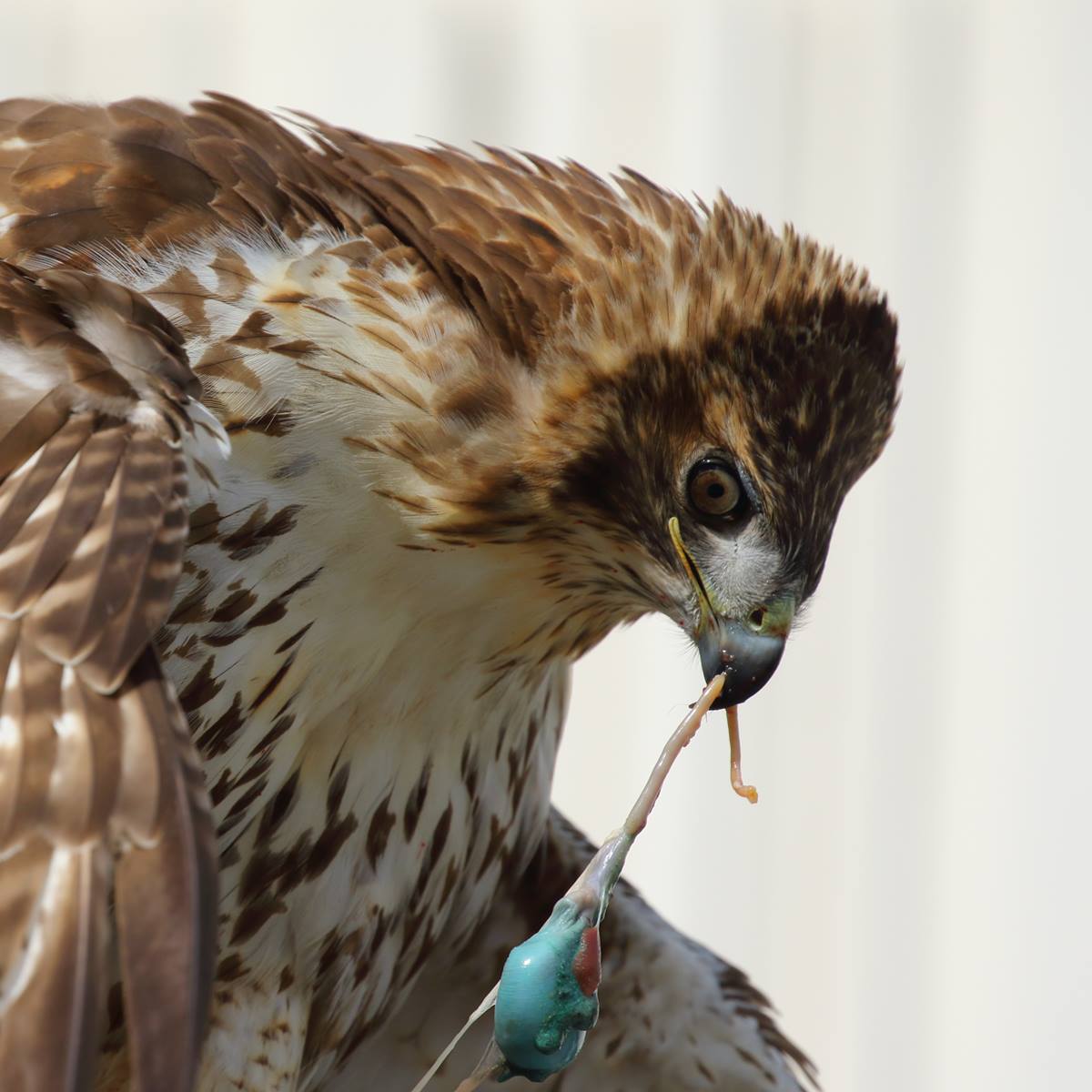 TOXIC LUNCH!
Photo Dan Vickers
Oregon Coast National Wildlife Refuge shares the following:
Do you have unwanted mice and rats around your home? Do you also have birds of prey and beloved pets using that same area? If you do, consider the potential deadly consequences of using toxic rodenticides on more than just the rodents.
Dan Vickers snapped this photograph of a Red-tailed Hawk eating a poisoned rat. The blue color you see in the gut of the rat is a fat-soluble dye used in anticoagulant rodenticides. Unfortunately, it is not uncommon for rat poisons to accumulate in the food web. Once this hawk consumes the poison, it too can die.
Please help minimize wildlife exposure to pesticides and consider the collateral damage and danger for other mammals, birds of prey, domestic pets, and humans.
Follow this link for more information and safer rodenticide alternatives:
A second generation of ultra-potent rodenticides creates a first-class crisis for people, pets, and wildlife.

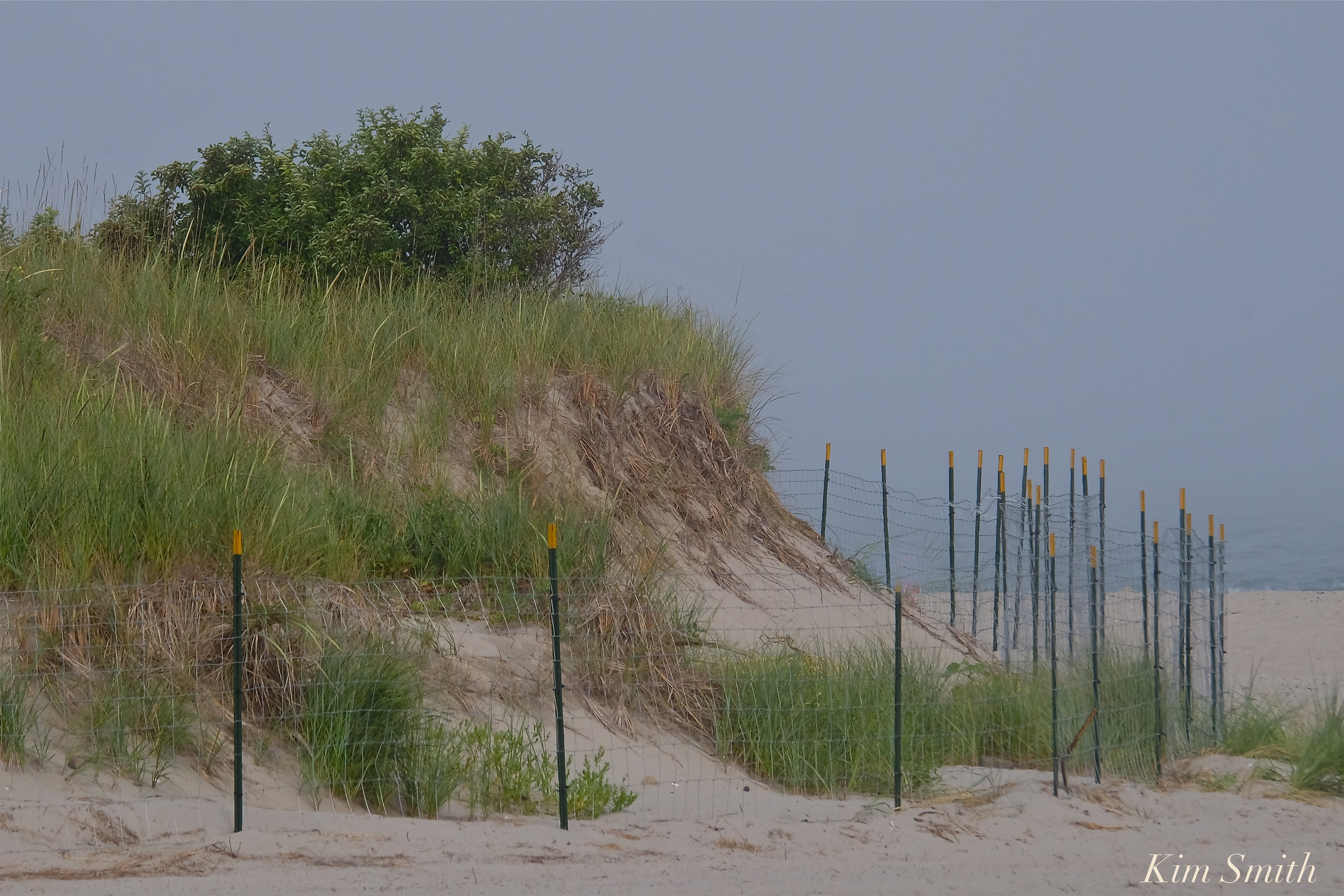 Check out the awesome new dune fencing recently installed at Good Harbor Beach by our DPW crew. The wire fencing runs along the length of the beach. The DPW did an outstanding job, very neat and unobtrusive.
Dune fencing plays an important role in reducing erosion. One of the main benefits of dune fencing is to help keep pets and people out of the dunes. Why is it detrimental to the dunes to allow uncontrolled dogs to run through the dunes and for people to use the dunes to access the parking lot, or worse, as their personal toilet? Repeated traffic through the dunes damages and kills the plants growing in the dunes. Plants help control erosion by stabilizing soil and sediments with their roots. Dune vegetation helps break the impact of of wave splash and rain, and also traps sand to help build up the dunes.
The fencing material installed by the DPW is an excellent choice for nesting shorebirds. This year especially, with much of the beach vegetation washed away and with the beach greatly narrowed, the Piping Plover adults and chicks had learned to use the area behind the old wire fencing for shade and to hide from predators. The open fencing still allows for small wild creatures to go in and out of the holes to find shelter and safety at the base of the dune.
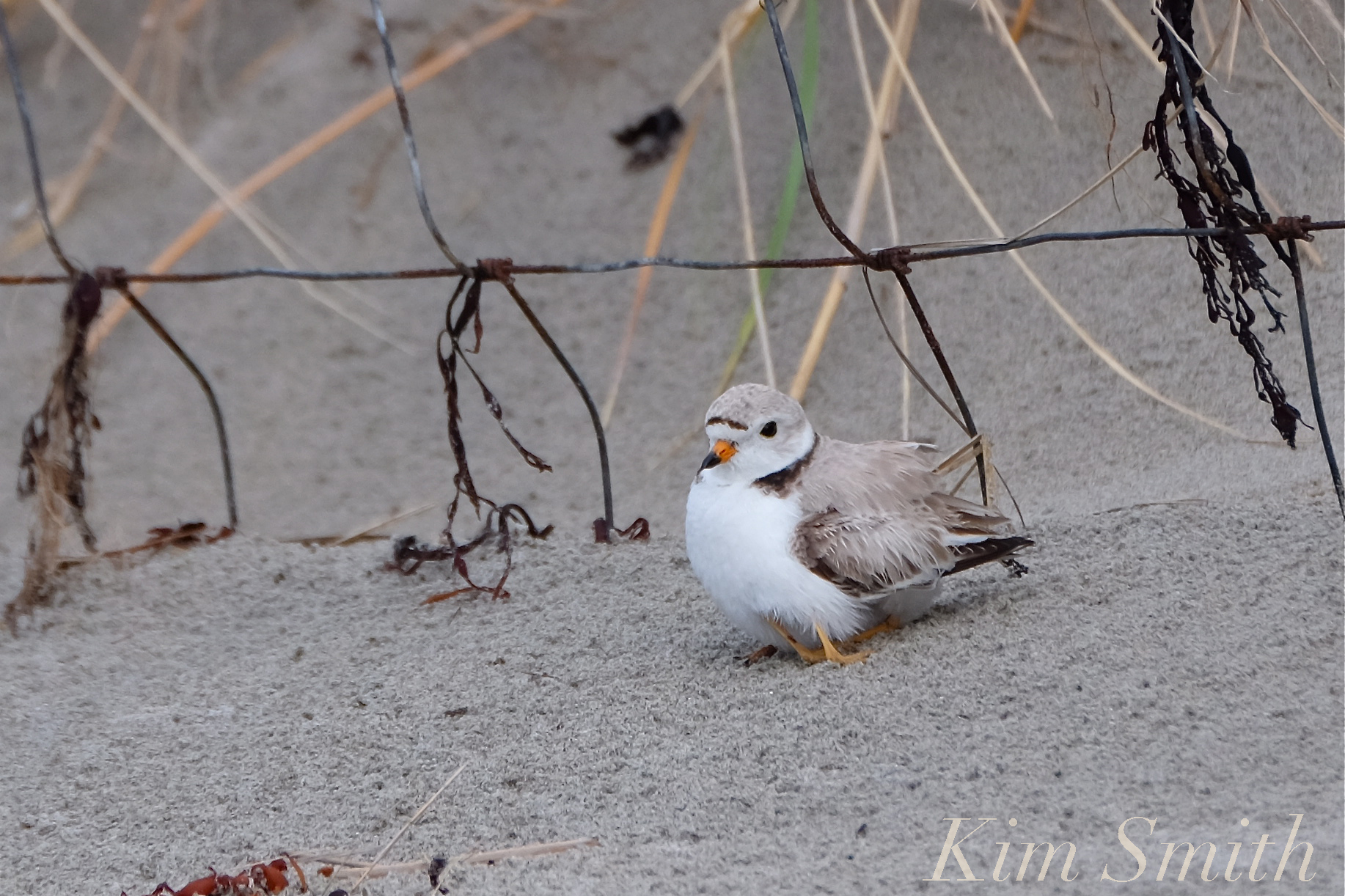 Pip snuggled under Mama PiPl at the old fence.
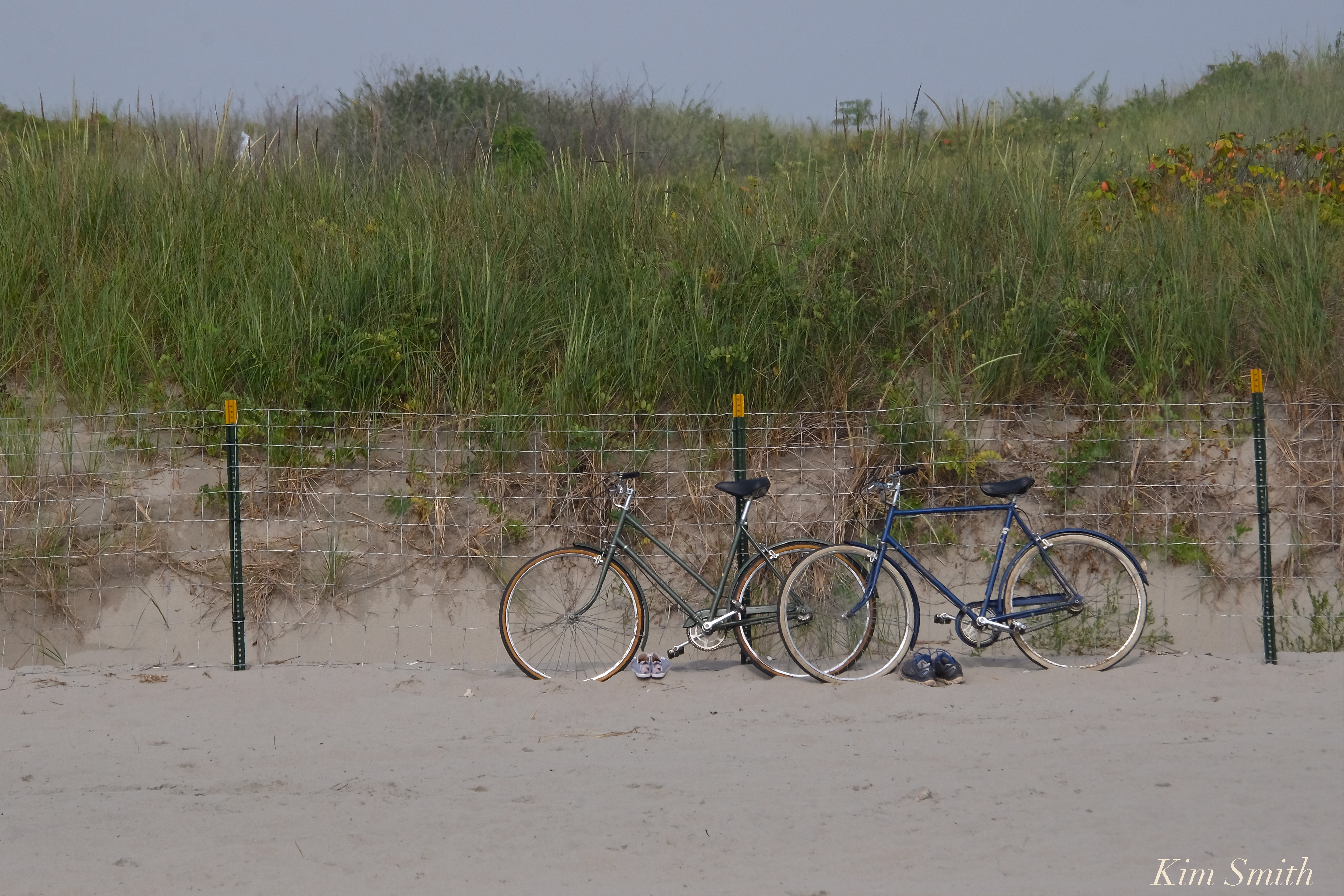 Thank you Gloucester DPW for a super job well done!
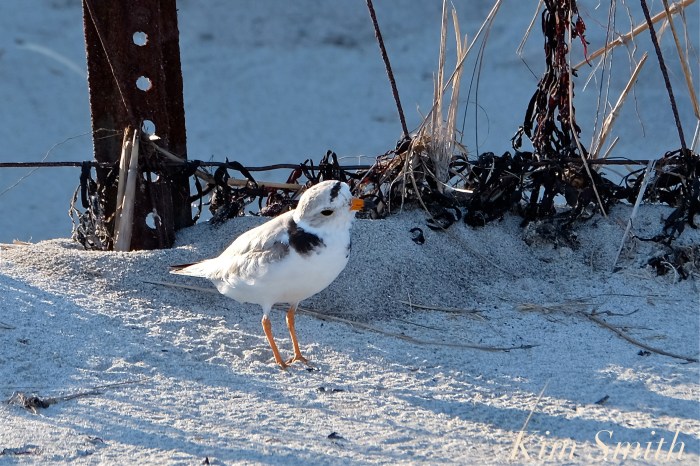
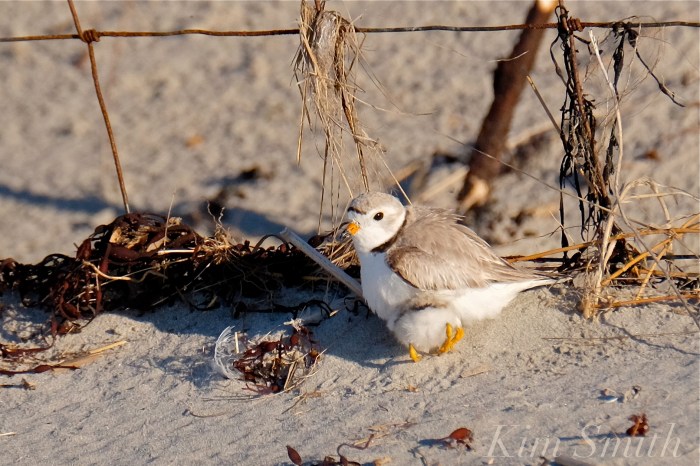
Adult Piping Plovers and chicks found shelter along the wire fencing (the Bachelor left, and Mama and Pip, right).

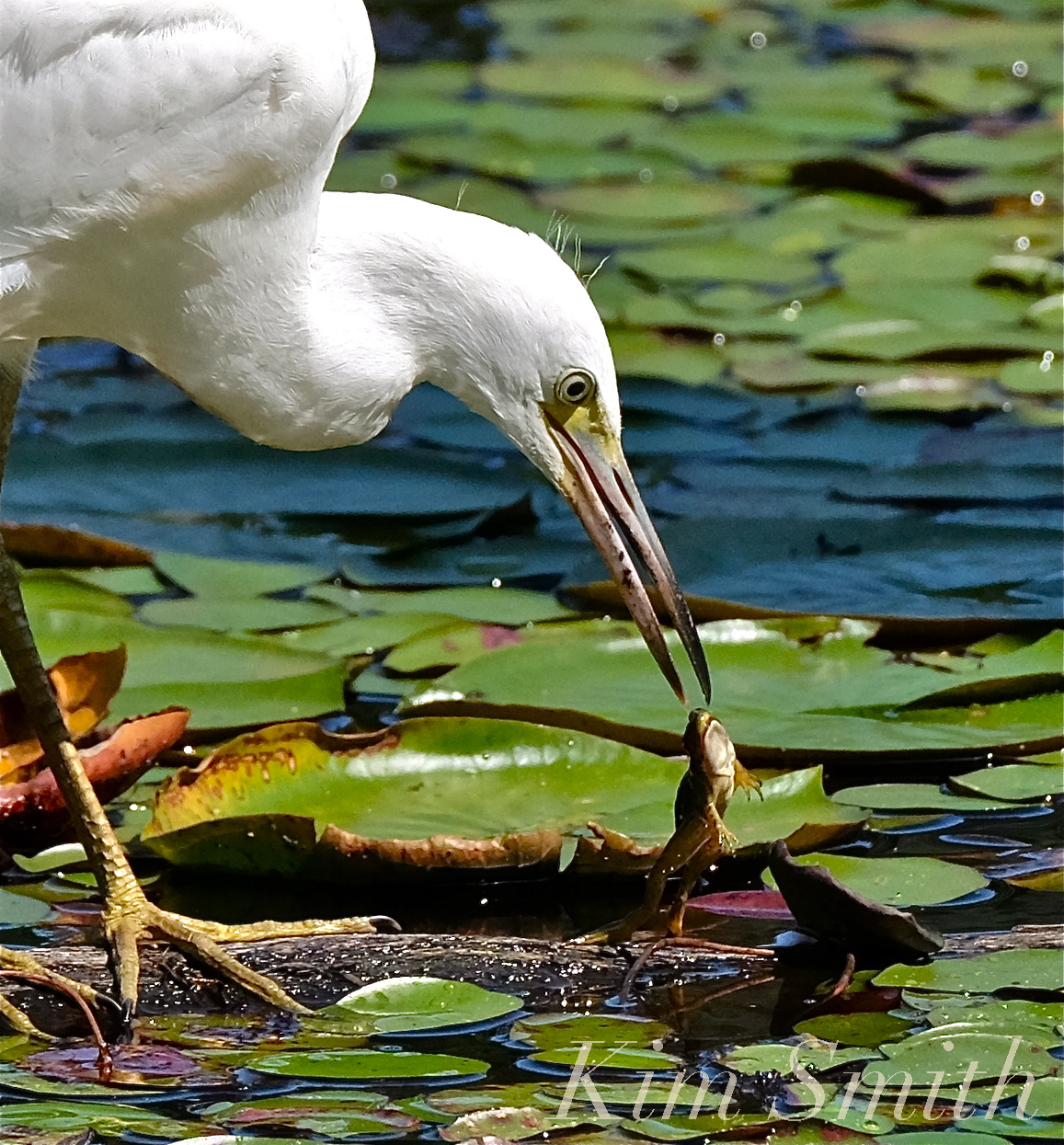
First hatch year Little Blue Heron catching an American Bullfrog
Why is this not so little white heron called a Little Blue Heron? Compared to a Great Blue Heron, it is relatively smaller. As to the entirely white plumage, this is a first hatch year Little Blue in its white phase. In the second spring and summer, the white feathers will gradually be replaced by beautiful slate blue feathers, giving the bird a temporary and unique calico appearance.
Little Blue herons are closely related to Snowy Egrets and the white immature morphs feed alongside the Snowys. You can tell them apart easily not only by bill and feet, but by their feeding habits. Snowy Egrets forage with a great deal of flourish, agitating the water with their feet, and vigorously fluttering, flapping, and flying along the shoreline. Little Blue Herons are stealth hunters, moving with slow deliberation before executing an exacting capture.

North American native Buttonbush attracts a bevy of butterflies and bees with pretty and fragrant flowerheads. Buttonbush grows easily in moist soil as well as average garden soil, in full sun to part shade. In our region it grows to about six to ten feet, and can be kept in check with an occasional pruning in early spring.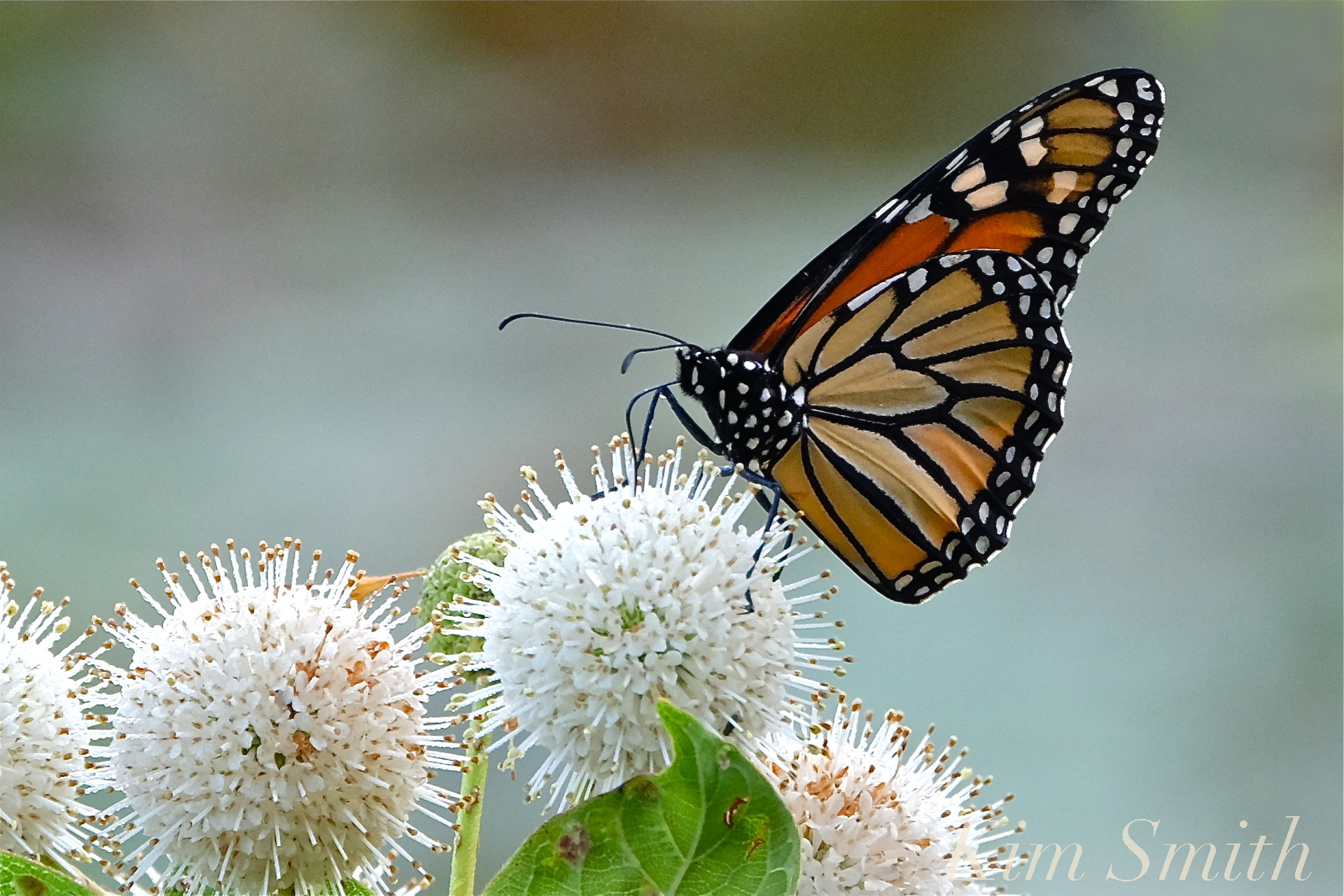
Monarch Butterfly drinking nectar from Buttonbush florets (Cephalanthus occidentalis)

 The CASC, under the direction of Wendy Betts, will begin rehearsals for its November Holiday Pops concerts on Tuesday September 4 at 7 PM in St. Paul Lutheran Church, 1123 Washington Street, Gloucester. Please bring $25.00 for your membership/music fee to our first rehearsal. Please call Wendy at 978-546-5220 or email her wendybetts@juno.com, if you are a new singer interested in joining our chorus. Concert performances are Ipswich High School on Saturday November 24 at 2 pm, Manchester High School that evening at 7:30 pm, and Sunday November 25 at 2 PM in Manchester. Rehearsals run 7-9 PM everyTuesday evening through November 20. New singers must audition with Wendy August 29-31 at 13 Penzance Rd, Rockport.

 Message from David Benjamin: The 4Ever Fab concert at the Antonio Gentile Bandstand scheduled for August 12, has been postponed until Tuesday, August 21, at 7pm. Please help get the word out. This is the only concert that does not have a “next Wednesday evening” rain date.


The Cape Ann Community Band, David Benjamin, Director, plays their annual concert on Sunday, August 19, 2018, at 7pm at the Antonio Gentile Bandstand, Stage Fort Park, Hough Avenue, Gloucester MA. The concert theme is “The Music of John Williams and Leroy Anderson; A Salute to the Boston Pops” featuring an exciting concert of John Williams’ movie music and Leroy Anderson’s classic pops pieces. Come hear your friends and neighbors play with this exceptional concert band.
This concert is sponsored by Bank Gloucester, who will provide free ice cream treats to the audience. The concert is free to the public. Parking is free and the venue and rest rooms are wheelchair-accessible. Bring a blanket or chair and perhaps a picnic dinner. The rain date is Wednesday, August 22, 7pm. For further information please visit DavidLBenjamin.com or call 978-281-2286.

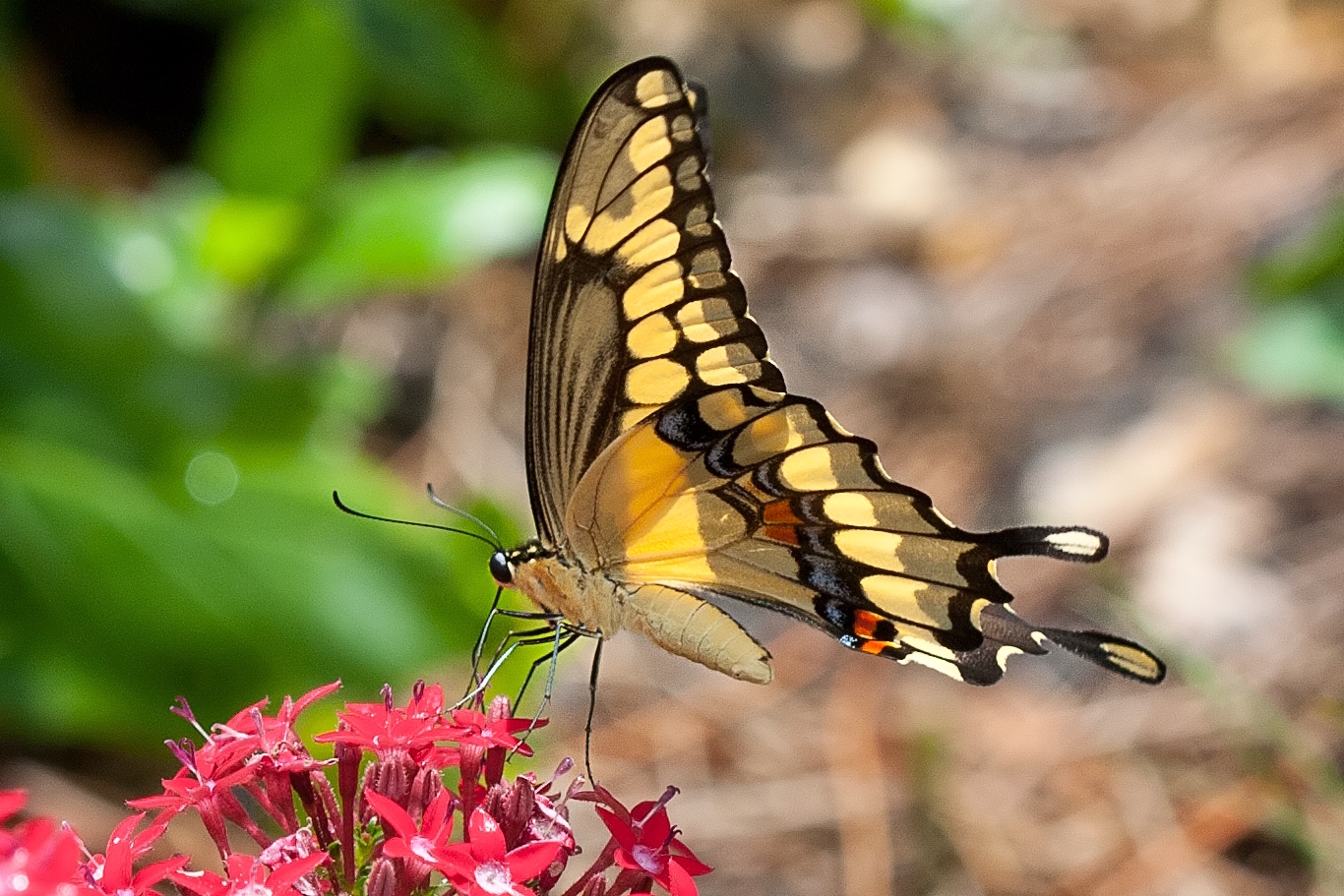 One of our West Gloucester readers, DB, spotted a Giant Swallowtail in her garden! She was too surprised by its appearance to take a photo, and I completely understand why. They are fantastically large in size, as large as a Cecropia Moth. Giant Swallowtails are more of a southern species, but sometimes make it this far north and east, especially during long stretches of hot, humid weather.
Readers, please keep your eyes peeled, and if you can, try to get a snapshot, and please let us know of your sighting. Look for them nectaring in your garden; they especially love native Marsh Milkweed, tropicals such as lantana and bougainvilla, also butterfly bushes, Wild Sweet William, and honeysuckle.
I have only see one once in my garden (in 2012) and it was drinking nectar from the lantana growing in pots on my patio. By the time I ran indoors and back to the garden with camera, it was gone. The photos are from wiki commons media so you can id the butterfly if you see one in your garden. Happy spotting!
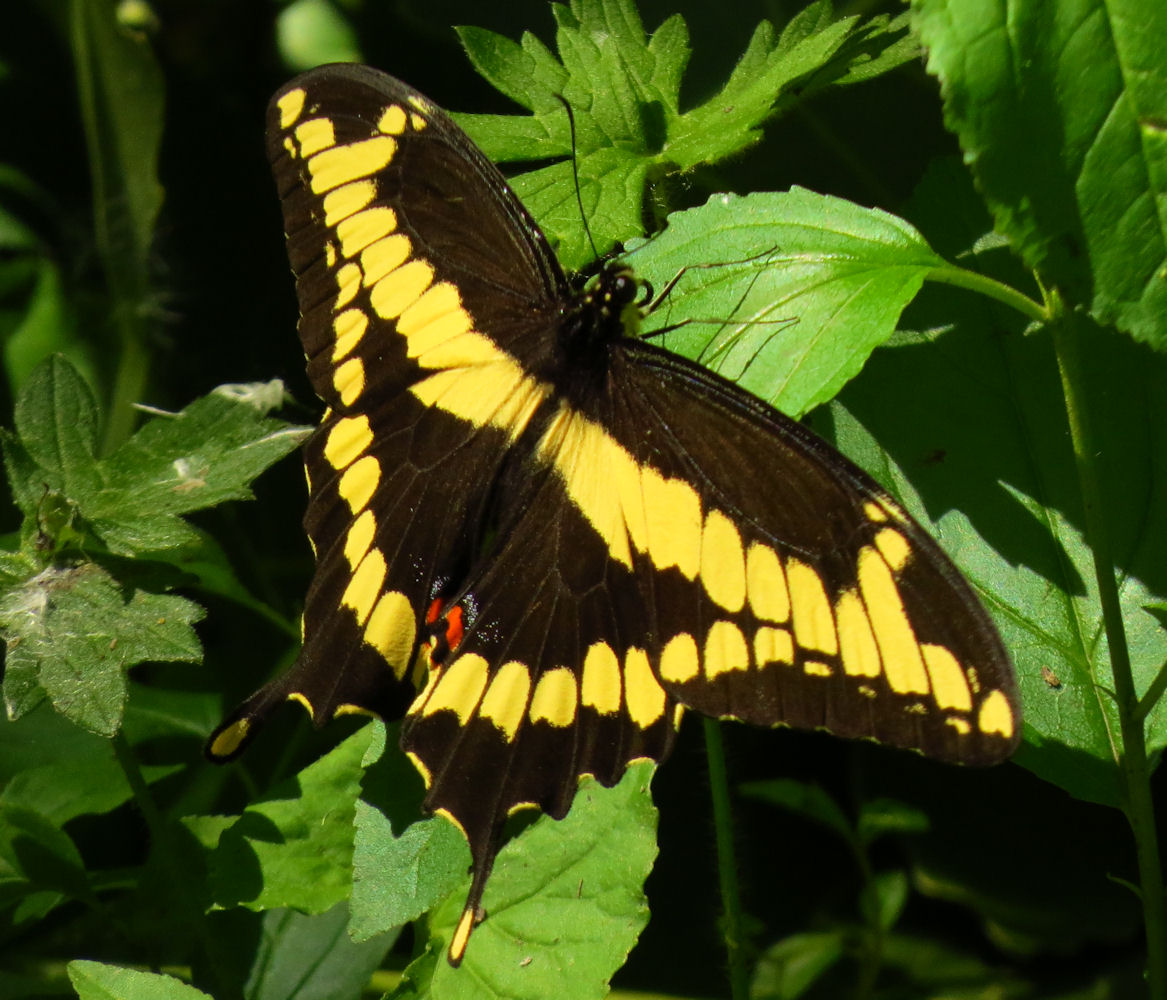 The yellow will be paler on an older butterfly as the scales wear off, but look for the arrangement of the spots for an id.
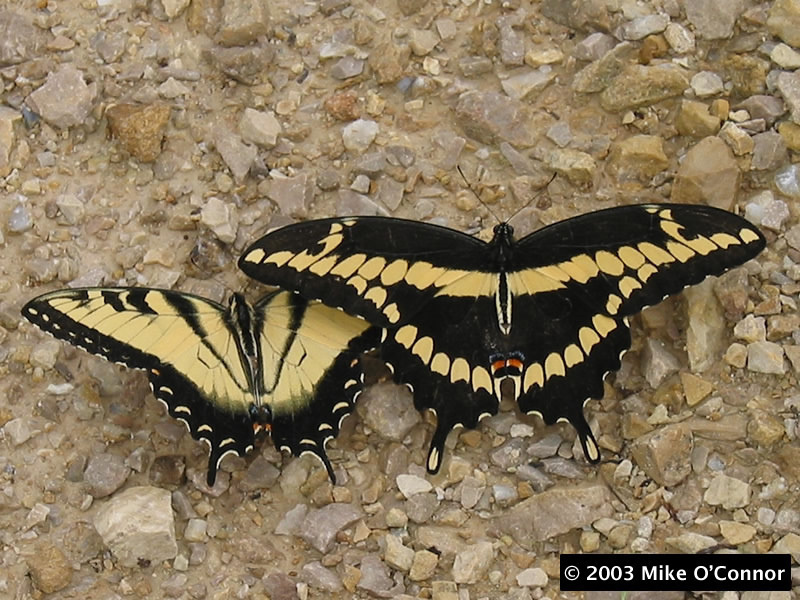 Giant Swallowtail Butterflies, with a wingspan of up to 6.5 inches across, are noticeably larger than Eastern and Canadian Tiger Swallowtails (Eastern Tiger Swallowtail, left, Giant Swallowtail, right).

Have you ever wondered about this amazing houseboat when you drive towards the bridge? Wouldn’t it be FANTASTIC to stay on it for a weekend? You can bid on a weekend stay at the live auction during the Kay Ellis Memorial Scholarship Fundraiser on August 20th!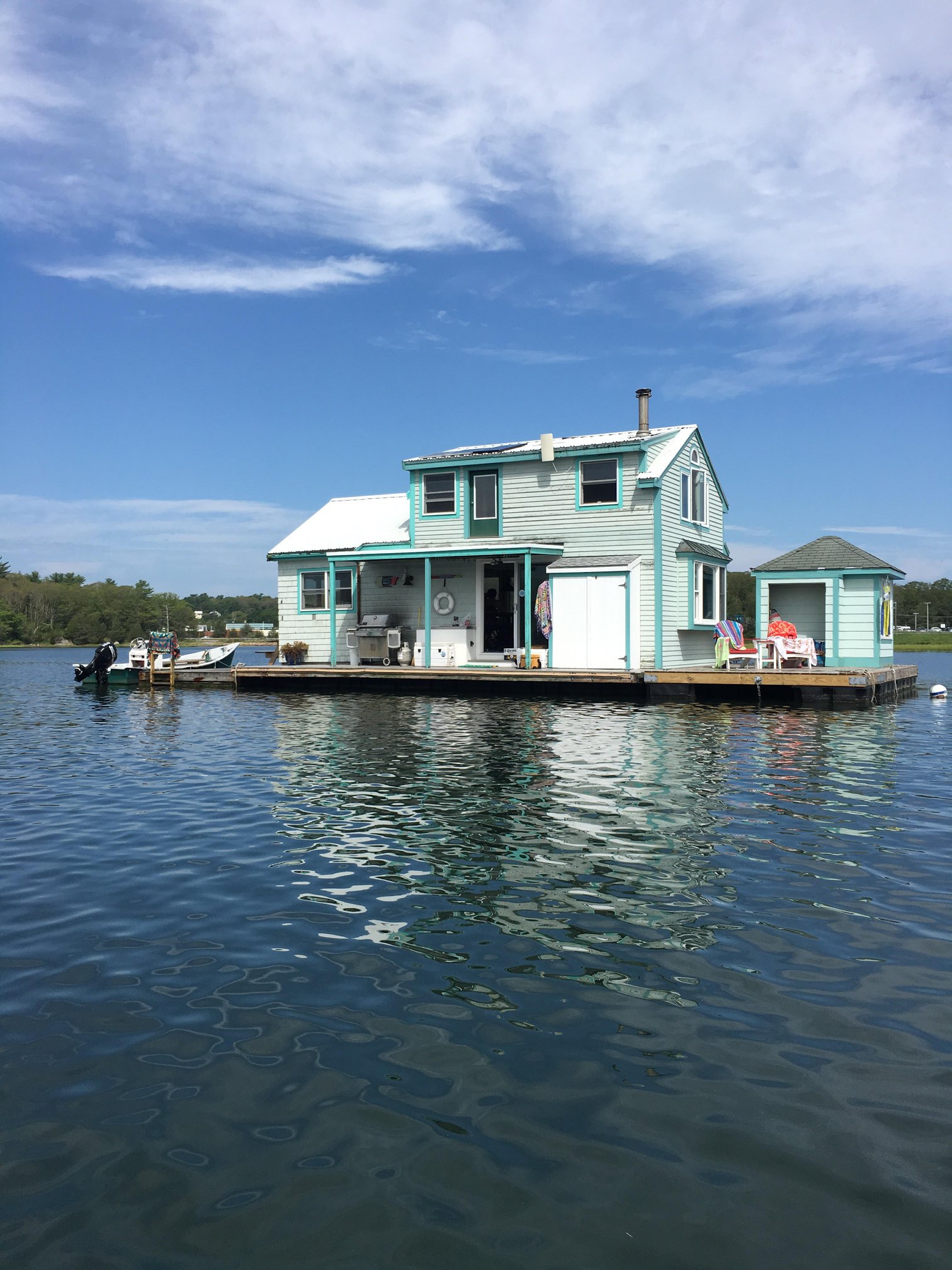
Enjoy a sunset schooner cruise aboard the Lannon or Ardelle, followed
by dinner, dessert, local music, and a pirate raffle.
In 2017, $9,000 was awarded to students studying Hospitality and Tourism.
Join us to help support the future youth of our Cape Ann industry.
Tickets and Donations online kayellisscholarship.org
Schooner Cruise and Dock Party $60
Dock Party $40
Schooner Lannon office 978-281-6634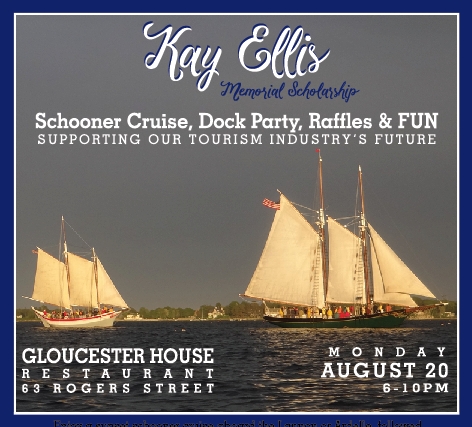
A scholarship fund to benefit local students of the tourism and hospitality industry has been set up in memory of Kay Ellis, who worked diligently for many years on many tourism ideas and issues and helped elevate Gloucester as a tourism destination. She loved the maritime and hospitality business and she put her heart and soul into it, working with the Chamber of Commerce and Discover Gloucester, all the while promoting Schooner Lannon. We hope to share her vision through the scholarships.
Monday, August 20, 2018 – 6PM
Gloucester House, 63 Rogers St.
Join us for a Schooner Cruise, Dock Party, Raffles, and FUN
Get Tickets On-Line Here


MUSIC and MORE CAMP!
Registration is now open and ongoing for CAPE ANN ARTS ALIVE – MUSIC AND MORE, a week-long day camp for children aged 5 – 13. Fostering knowledge and pride in the unique character of Cape Ann, the camp runs from August 20 – 24 (M – F), 8:30 AM – 12:30 PM. Based at St. John’s Episcopal Church at 48 Middle Street in Gloucester, the camp is now in its third year and is open to children from all traditions (religious or otherwise). It is sponsored by the North Shore Mission Hub and supported by the Episcopal Diocese of Massachusetts.
Daily visits to nearby local points of interest provide campers with experience and performance opportunities. Each year’s campers have built a foundation of singing, bell ringing, art, drama, and movement to create a repertoire in anticipation of Gloucester’s 400th Anniversary celebrations. Works related to Cape Ann’s rich cultural heritage (songs of Stephen Scotti and Leonard Bernstein, dances like “The Lobster Quadrille” from Alice in Wonderland, and artworks such as nautical pennants and papier mâché fish) provide a wide range of artistic endeavor and productive, joyful activity. This action-packed week ends at the renowned Shalin Liu Performance Center in Rockport on Friday, August 24 with a brief, free concert at 11:15 AM. All are welcome!
The camp is staffed by local musicians known for their successful work with children’s programs: Kathleen Adams (Annisquam Village Church), Eva DiLascio (St. Paul Lutheran), Kristina Martin (1st Congregational, Rockport), and Mark Nelson (St. John’s Episcopal). Registration is $50. More details are available at stjohnsgloucester.org/musicandmore or by contacting Mark Nelson mark@stjohnsgloucester.org or 978-283-1708.

 Dear Friends of AVP,
There are just TWO performances left of AVP’s production of The Little Mermaid: tonight and Sunday at 7:30 pm. Reviews are in and all agree it is one of our best productions yet.
Tickets for The Little Mermaid are now available at our website and at the Annisquam Exchange. NOTE: IF BORN PAPER TICKETS WEBSITE SAYS TICKETS ARE SOLD OUT, THERE MAY STILL BE SOME AVAILABLE. CONTACT AVP TICKETMASTER LINETTE FRENCH AT 978-505-8171 IF YOU GET THIS MESSAGE.
The new sound system we recently purchased with the Village Hall Association is up and running and will be available for village hall groups throughout the year. After a few missteps opening night, it is now running beautifully and enhancing the performances nicely. Click here to make a donation to help pay for the sound system or AVP in general.
We hope you can make it this weekend!.
Annisquam Village Players

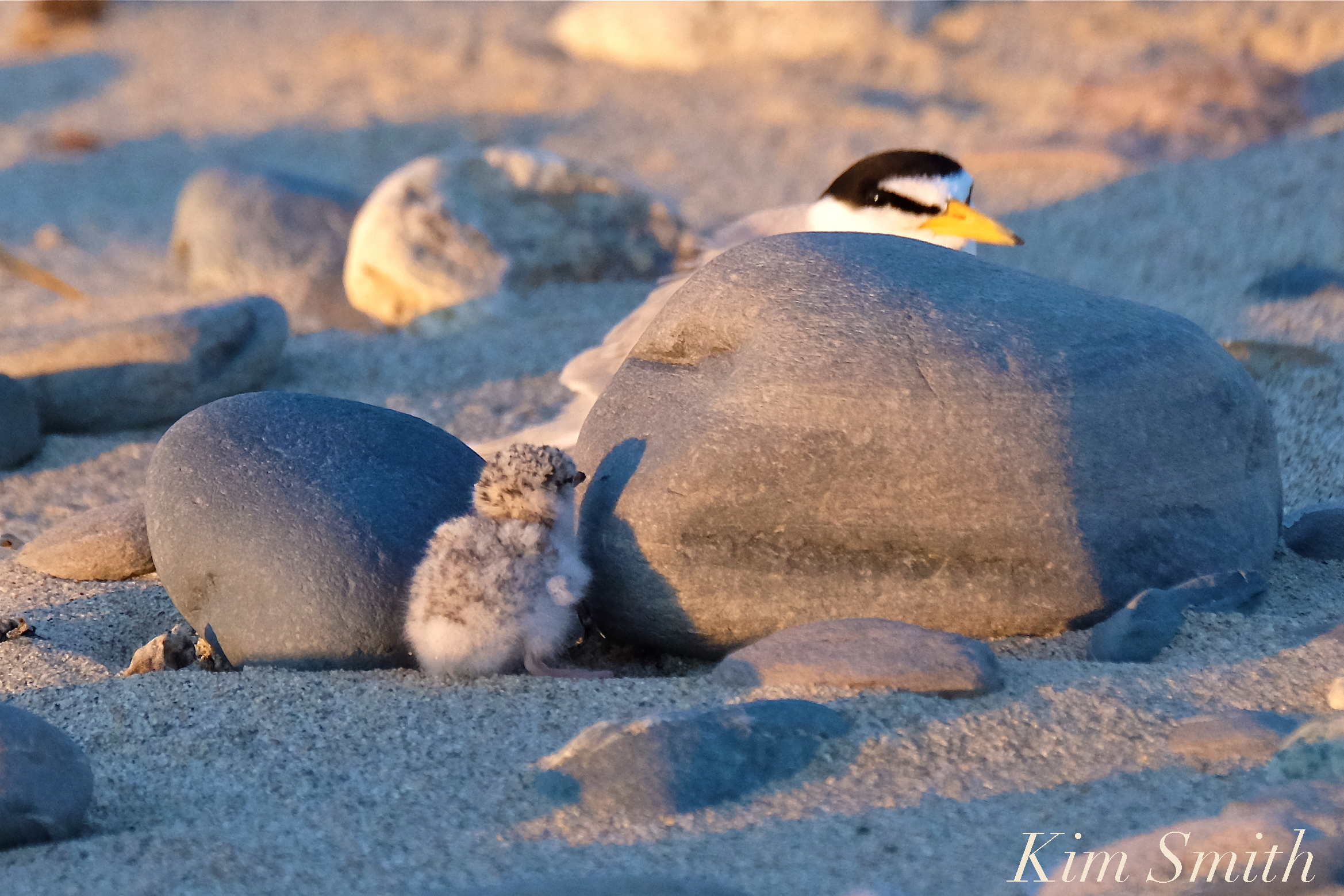 After exploring the beach, the three-day-old Least Tern chick decided to take a short cut through the rocks to nestle under Mom. She was well-camouflaged while brooding and keeping warm and cozy her second chick.
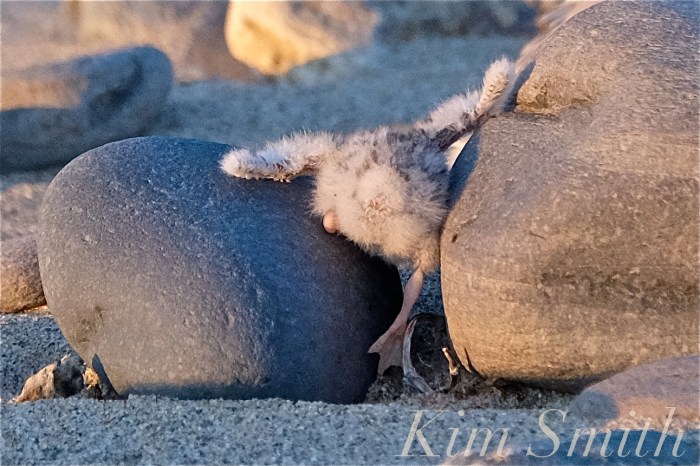
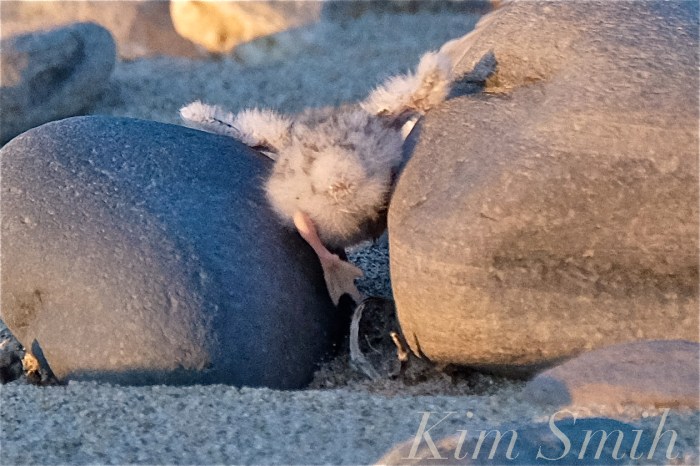
He tried and tried to get to her, first hopping from one foot to the other,
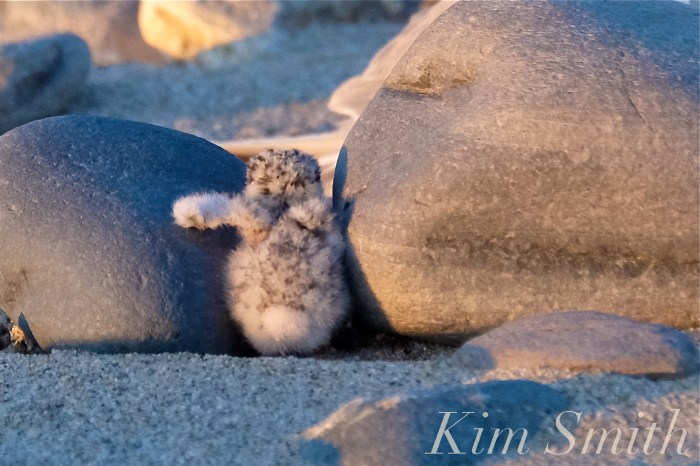
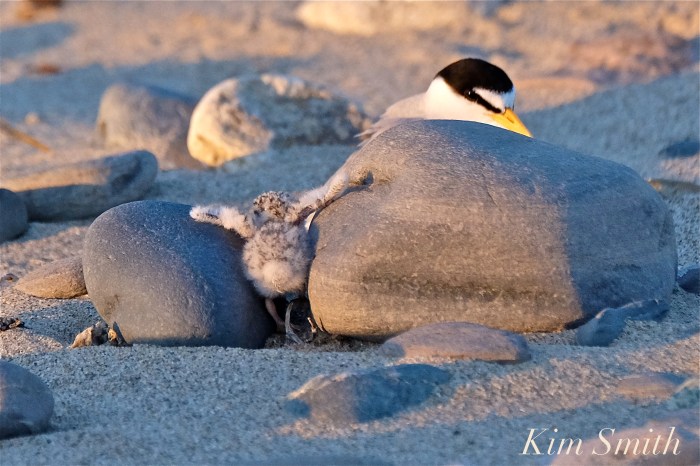
while trying to squeeze with all his tiny might through the space between the rocks…
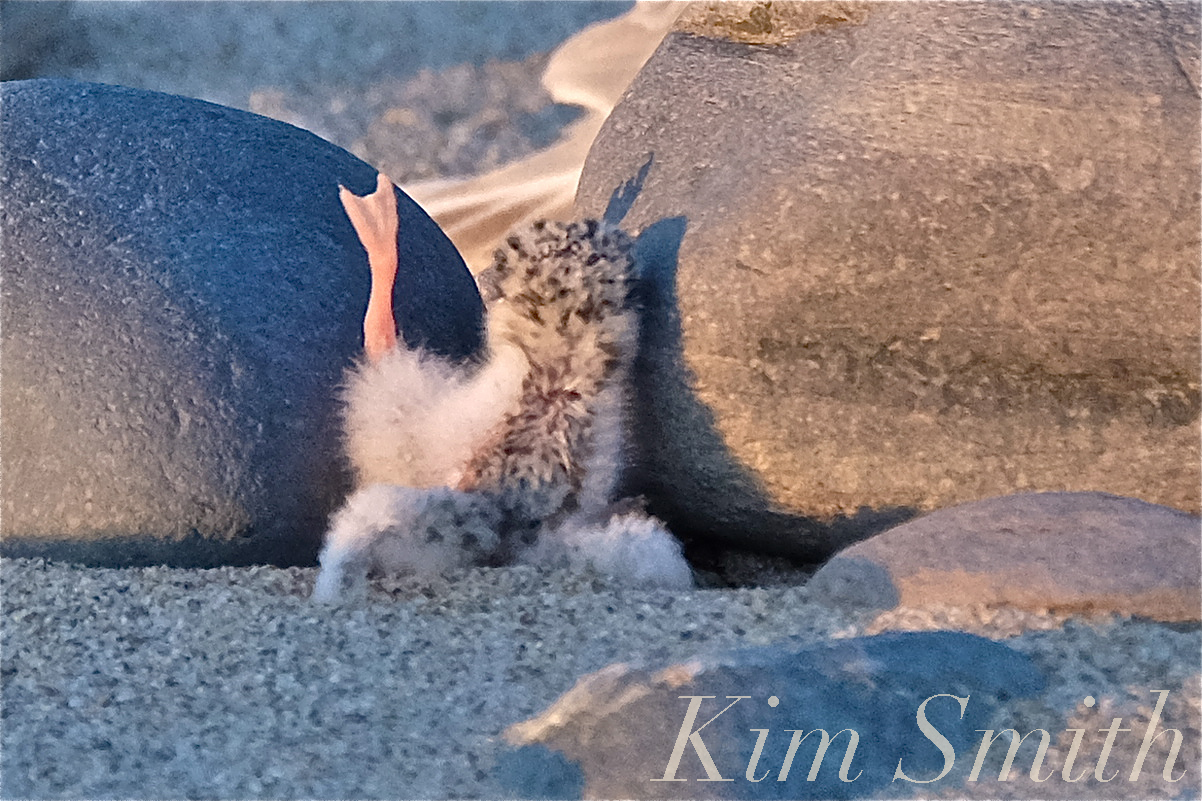 before tumbling backward, with legs splayed and wings all akimbo.
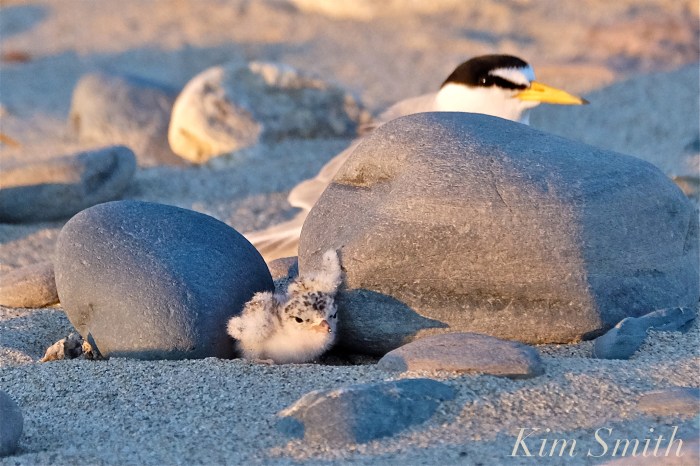
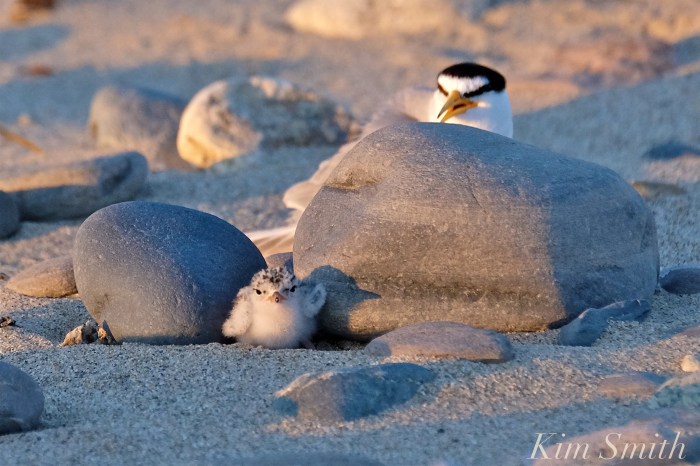
Quickly righting himself (with directives from Mom),
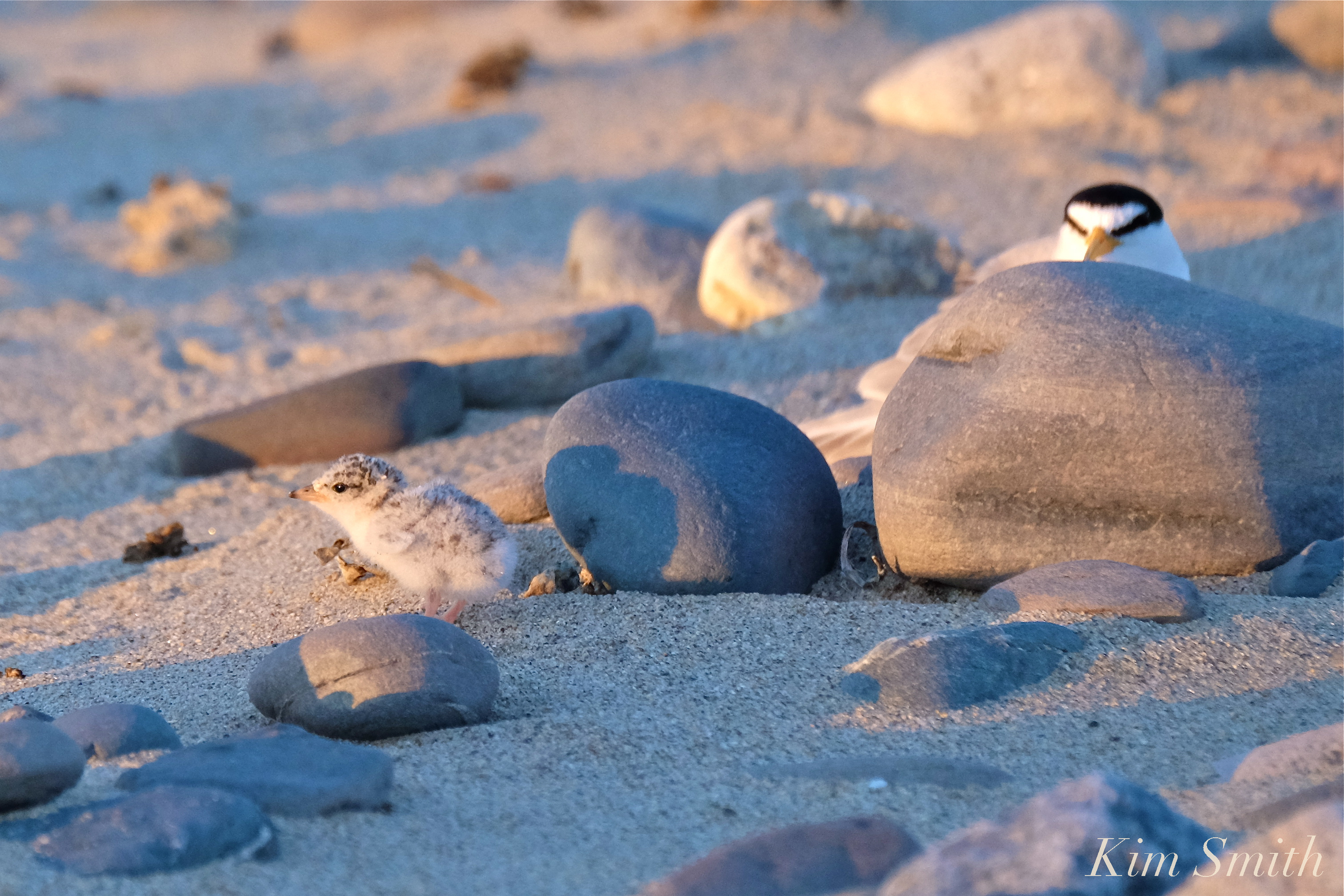 around he went the long way and had himself a good long snuggle under Mom.
While observing and thinking about tiny shorebird chicks, like Least Terns and Piping Plovers, I am continually struck by their resiliency, by their tenacity, and by their ability to prevail, despite the natural and manmade threats to their survival.

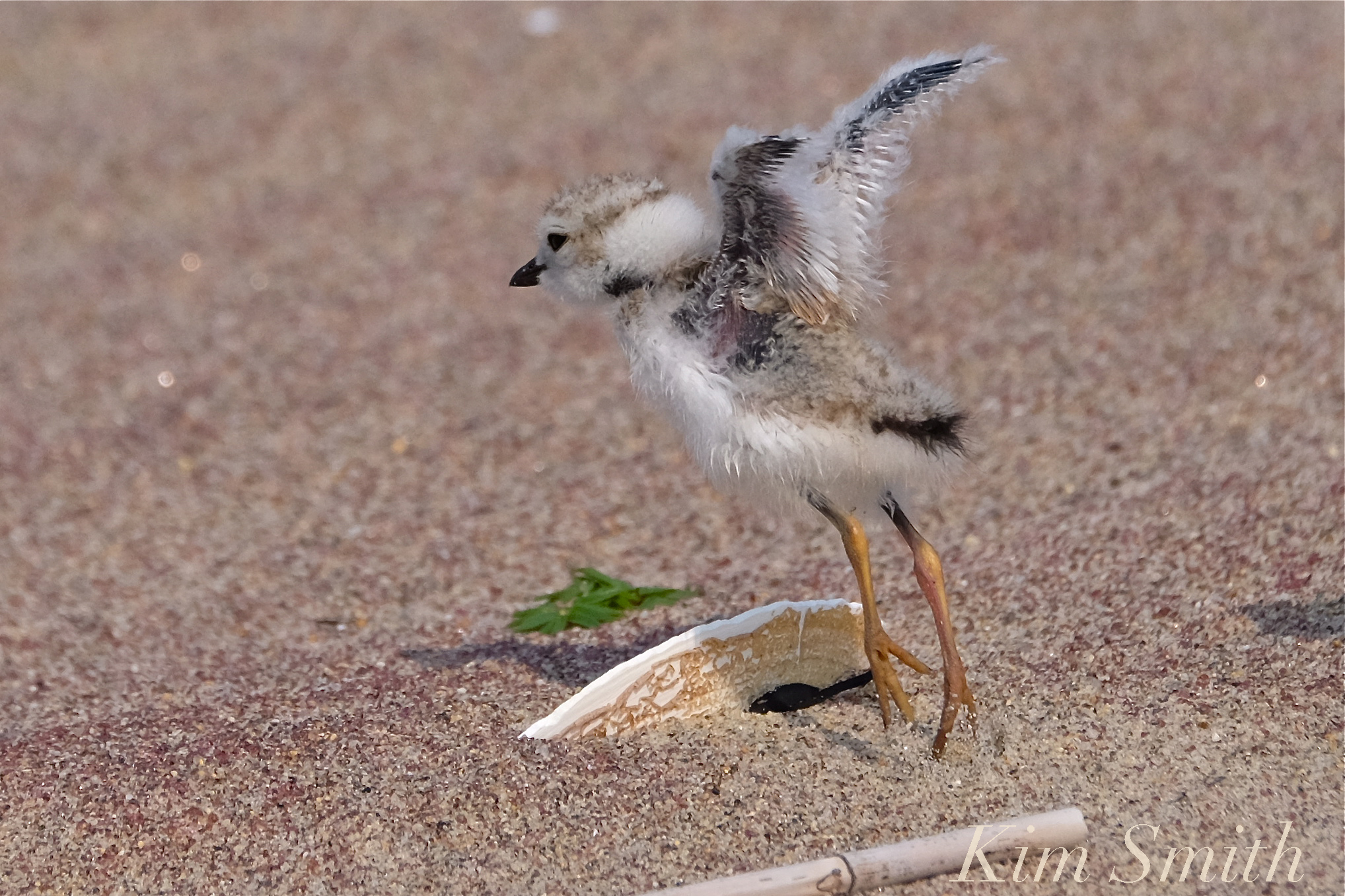 Piping Plover Chick Lift-off! – Not quite ready to fly yet, but testing his wings and airborne for a few seconds.
On Tuesday this past week my friend Deborah and I attended the Coastal Waterbird Conservation Cooperators meeting, which took place at Cape Cod Community College in Barnstable. The meeting is held annually to bring together people and organizations that are involved with population monitoring and conservation efforts on behalf of coastal waterbirds. Threatened and endangered species such as Least Terns, Piping Plovers, and American Oystercatchers are given the greatest attention, while the meeting also encompasses efforts on behalf of heron, cormorant, and egret species.

American Oystercatchers
Conservationists from all seven Massachusetts coastal regions participated, as well as conservationists from nearby states, including representatives from New Jersey, Maine, Rhode Island, and New Hampshire. To name just some of the organizations presenting at the meeting-Mass Wildlife, Trustees of Reservations, Massachusetts Department of Conservation and Recreation (DCR), and US Fish and Wildlife. Gloucester was well represented. In addition to Deborah and myself, two members of the Animal Advisory Committee also attended; chairperson Alicia Pensarosa and former animal control officer Diane Corliss. Many of you may remember our Mass Wildlife Piping Plover intern Jasmine. She was there to give a presentation on habitat vegetation utilized by nesting Piping Plovers. Her aunt, Gloucester’s Terry Weber, was there to support Jasmine. This was Jasmine’s first time speaking in public and she did an excellent job!
Each region gave the 2018 population census report for nesting birds as well as providing information about problems and solutions. We all share similar challenges with predation from crows and gulls, uncontrolled dogs, enforcement, and habitat loss and it was very interesting to learn about how neighboring communities are managing problems and issues.
Just one highlight of a day filled with helpful insights and useful information is that we can be very proud of our state—Massachusetts is at the leading edge of the Piping Plover recovery effort. The representative from New Jersey was there specifically to learn from Massachusetts conservationists on how they could possibly improve their recovery program as the New Jersey PiPl population is not growing, with fewer and fewer each year retuning to nest. As you can see from the graph provided at the meeting, the Canadian recovery is going very poorly as well.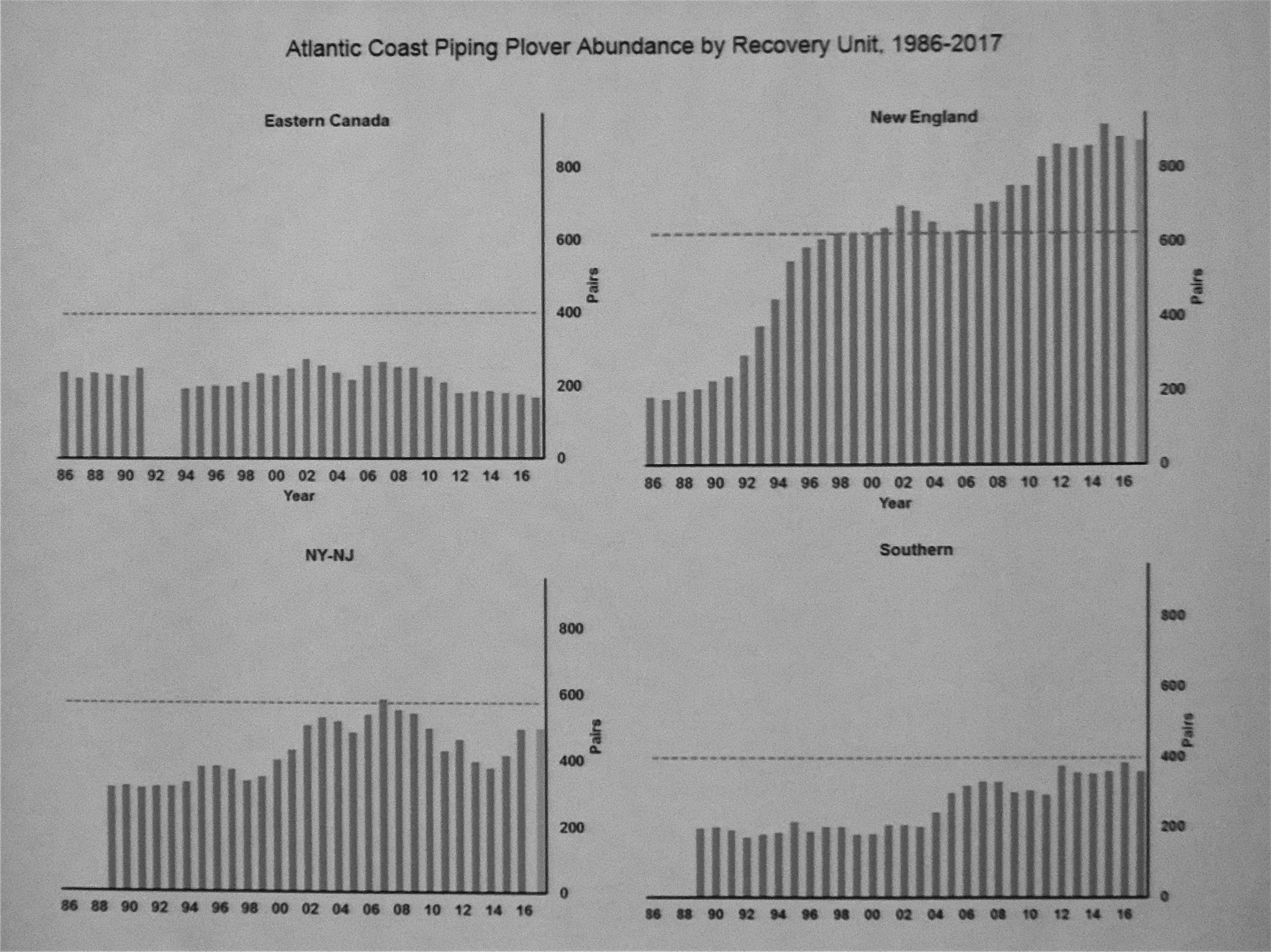
Readers will be interested to know that our region’s Crane Beach continues to have one of their best year’s ever. Trustees of Reservations Jeff Denoncour shared information on the latest census data from 2018 and Crane’s has a whopping 76 fledglings, with 25 more chicks still yet to fledge. Because of the huge success at Cranes Beach, the northeast region, of which we are a part, has fledged a total 136 of chicks in 2018, compared to 108 in 2017, and as I said, with more fledglings still to come! The northeast region encompasses Salisbury Beach to the Boston Harbor Islands.
Jeff noted that this year they had less predation by Great Horned Owls. Because of owl predation, several years ago Crane Beach gave up on the wire exclosures and now use electric fencing extensively. The Great Horned Owls learned that the Piping Plover adults were going in an out of the exclosures and began perching on the edge of the wire, picking off the adults as they were entering and exiting the exclosure.
Crane has an excellent crew of Trustees staff monitoring the Least Terns and Piping Plovers, as well as excellent enforcement by highly trained police officers. No dogs are allowed on Crane Beach during nesting season and dogs are prevented from entering at the guarded gate. As we saw from one of the graphics presented about nesting Double-crested Cormorants, when a dog runs through a nesting area, the adults leave the nest, temporarily leaving the eggs and chicks vulnerable to predation by crows, gulls, raptors, and owls.
 Crane Beach Least Tern fledgling.
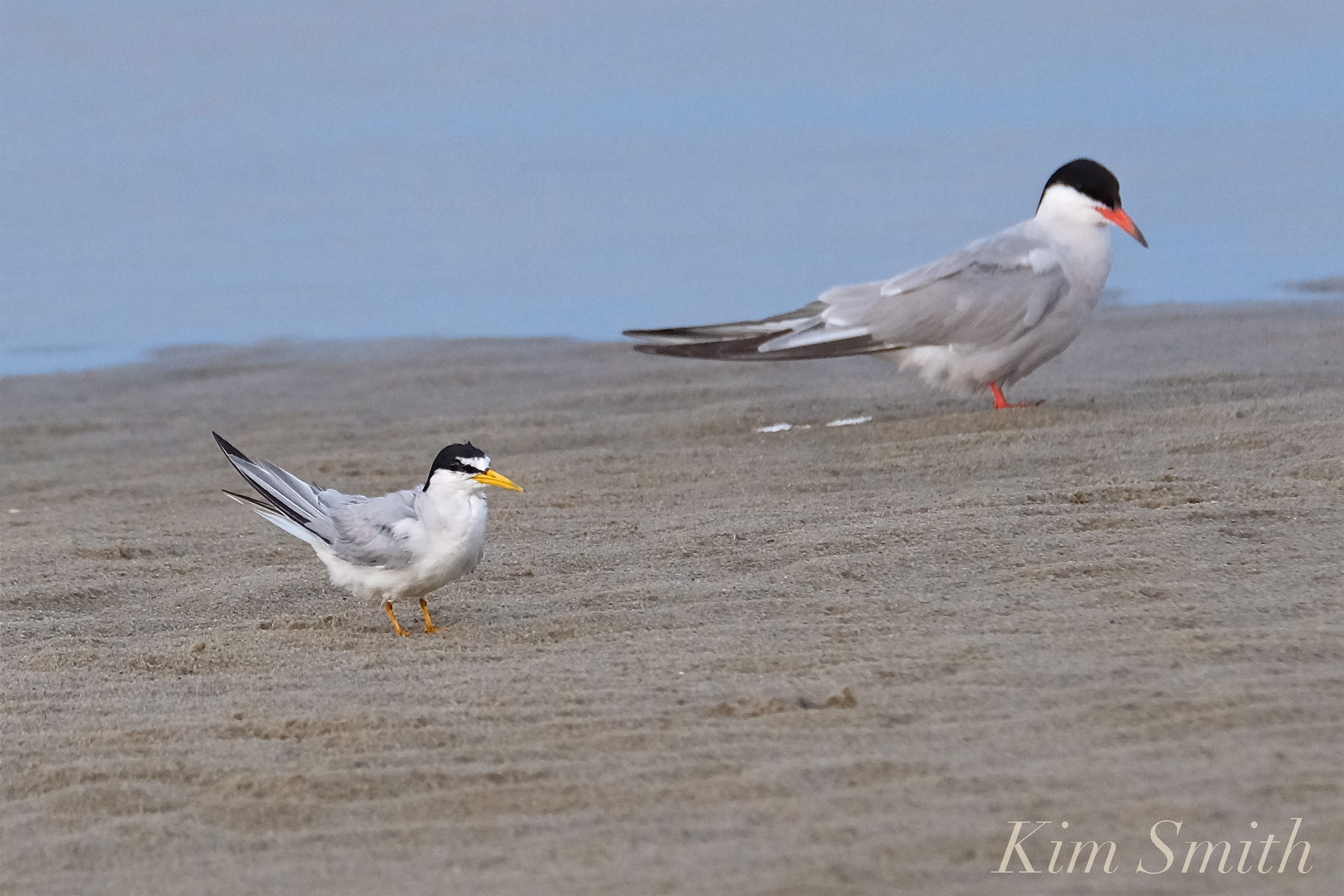 Compare the Least Tern to Common Tern in the above photo. It’s easy to see why the birds are called Least Terns; they are North America’s smallest member of the tern and gull family (Crane Beach).
Another interesting bit of information shared–if you listen to our podcasts, back in April, we talked about the potential dilemma of what would happen if Snowy Owls remained on the beaches as the Piping Plovers returned from their winter grounds. Knowing that Snowy Owls (Bubo scandiacus) and Great Horned Owls (Bubo virginianus) are close cousins and that the Great Horned Owl eats Piping Plover chicks and adults, I was concerned that a Snowy might eat our PiPl. At one particular beach on Cape Cod, a Snowy stayed through mid-July. An adult Piping Plover skull was found in the owl’s pellet.
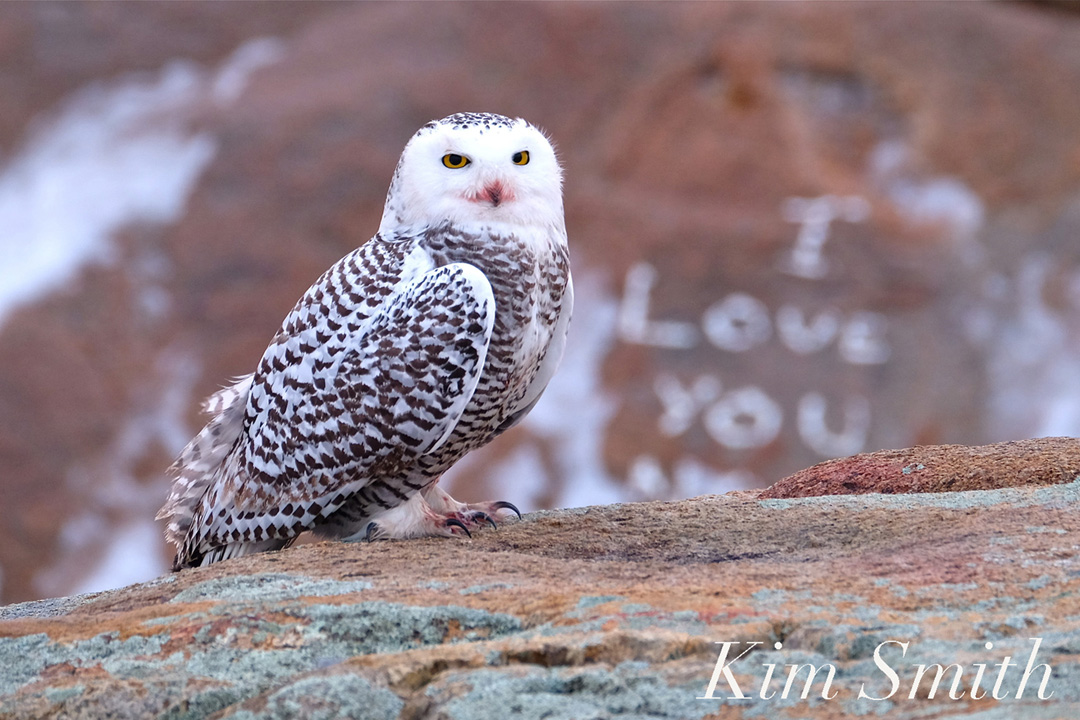 Snowy Owls remained in Massachusetts this year through July.
After attending the cooperators meeting, I am more hopeful than ever that our community can come together and solve the problems that are preventing our PiPl from successfully nesting and fledging chicks. What we have going in our favor is the sheer number of amazing super volunteers along with strong community-wide support.
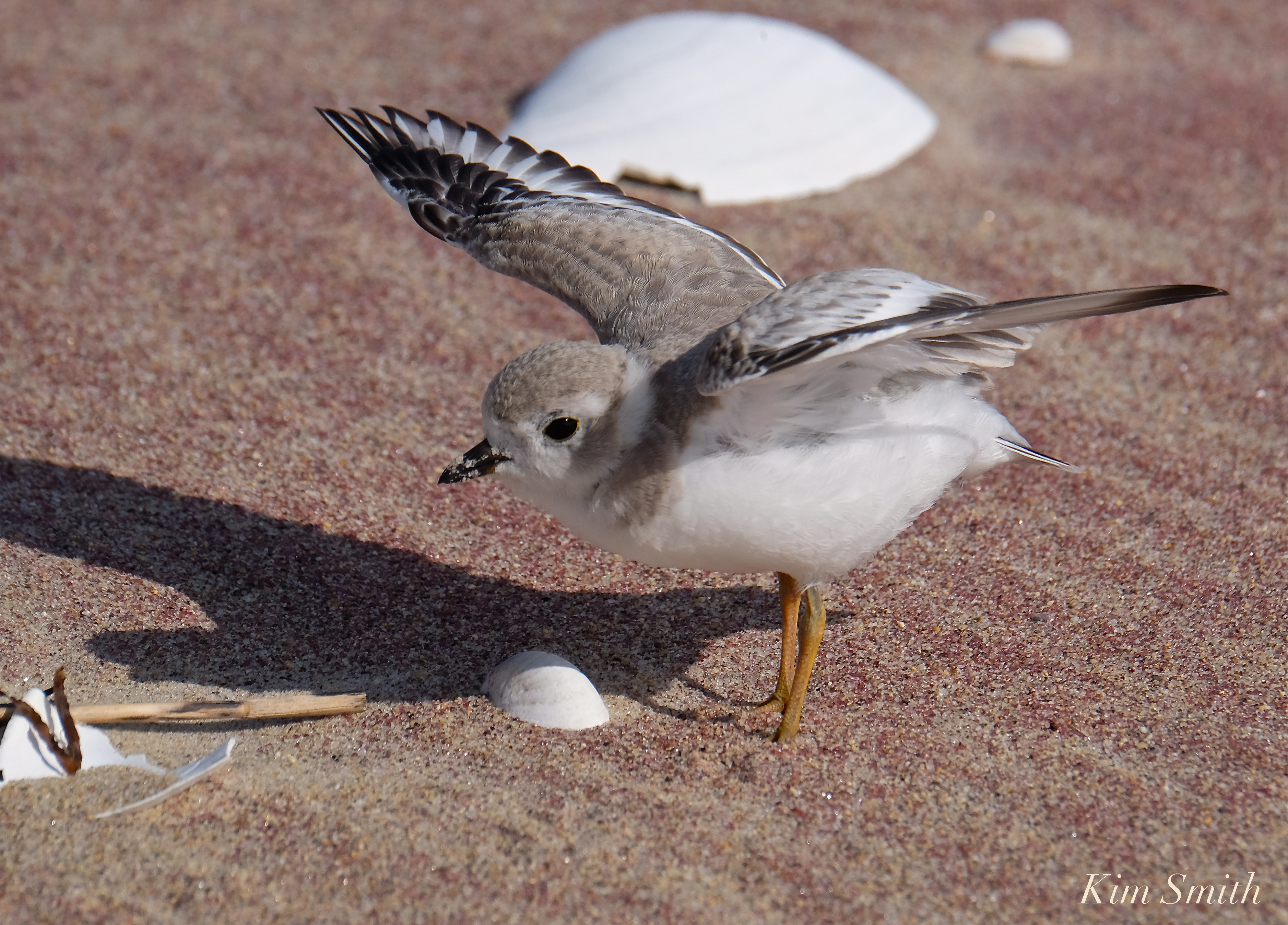 Piping Plover fully fledged and flying up and down the beach – we”ll have these next year!

 Brace Cove beautiful foggy summer morning at daybreak

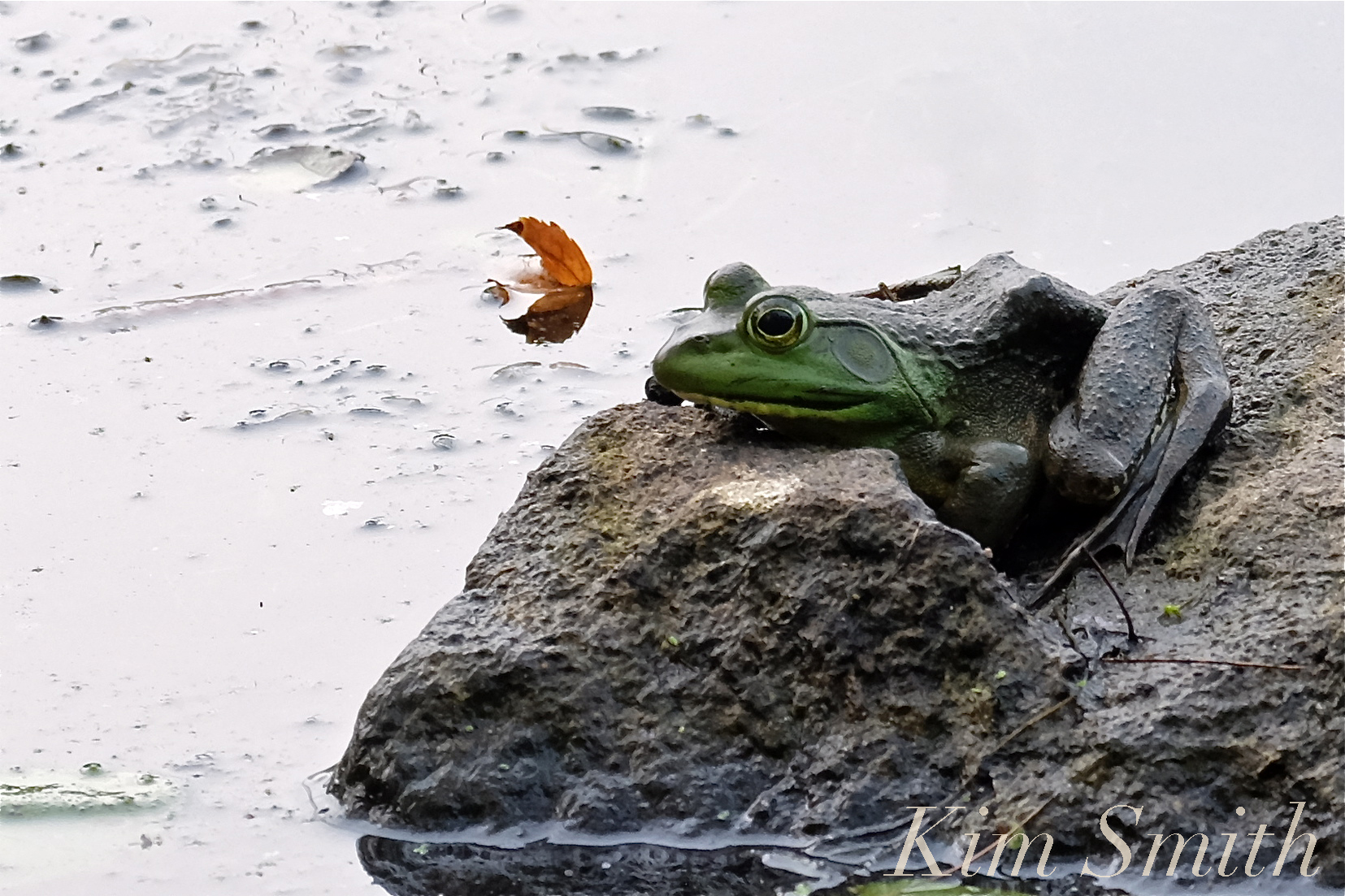 American Bullfog

 Storm sky over Gloucester.

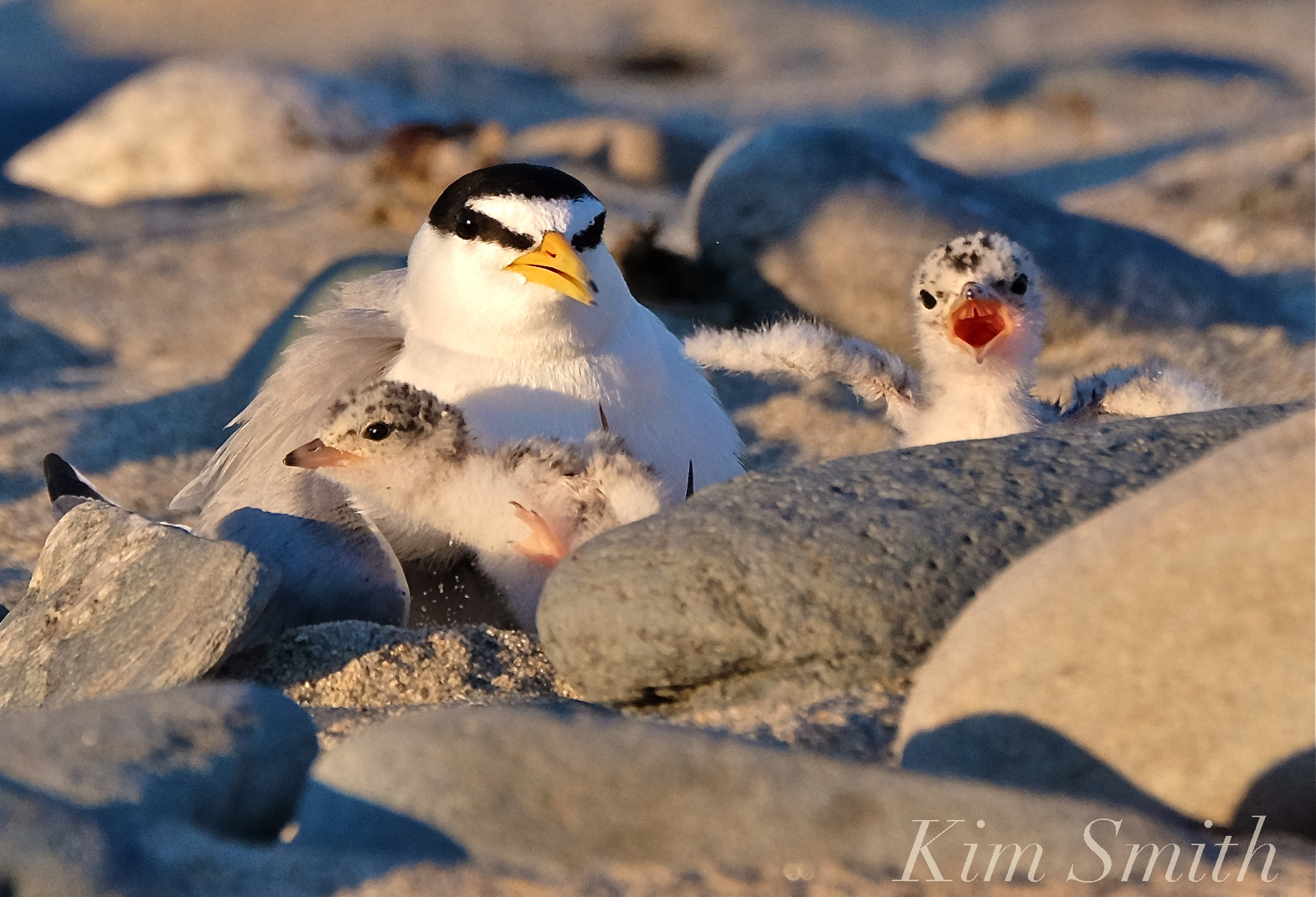 Clamoring for dinner, feed Me, feed Me!
In only one day’s time, you can see the teeny shorebirds gaining strength. As Dad approaches with dinner, the two-day-old Least Tern chicks stretch and flap their wings and open wide their beaks. The noisiest and flappiest is fed first. After depositing a minnow in one beak, off he flies to find dinner for the second sibling.
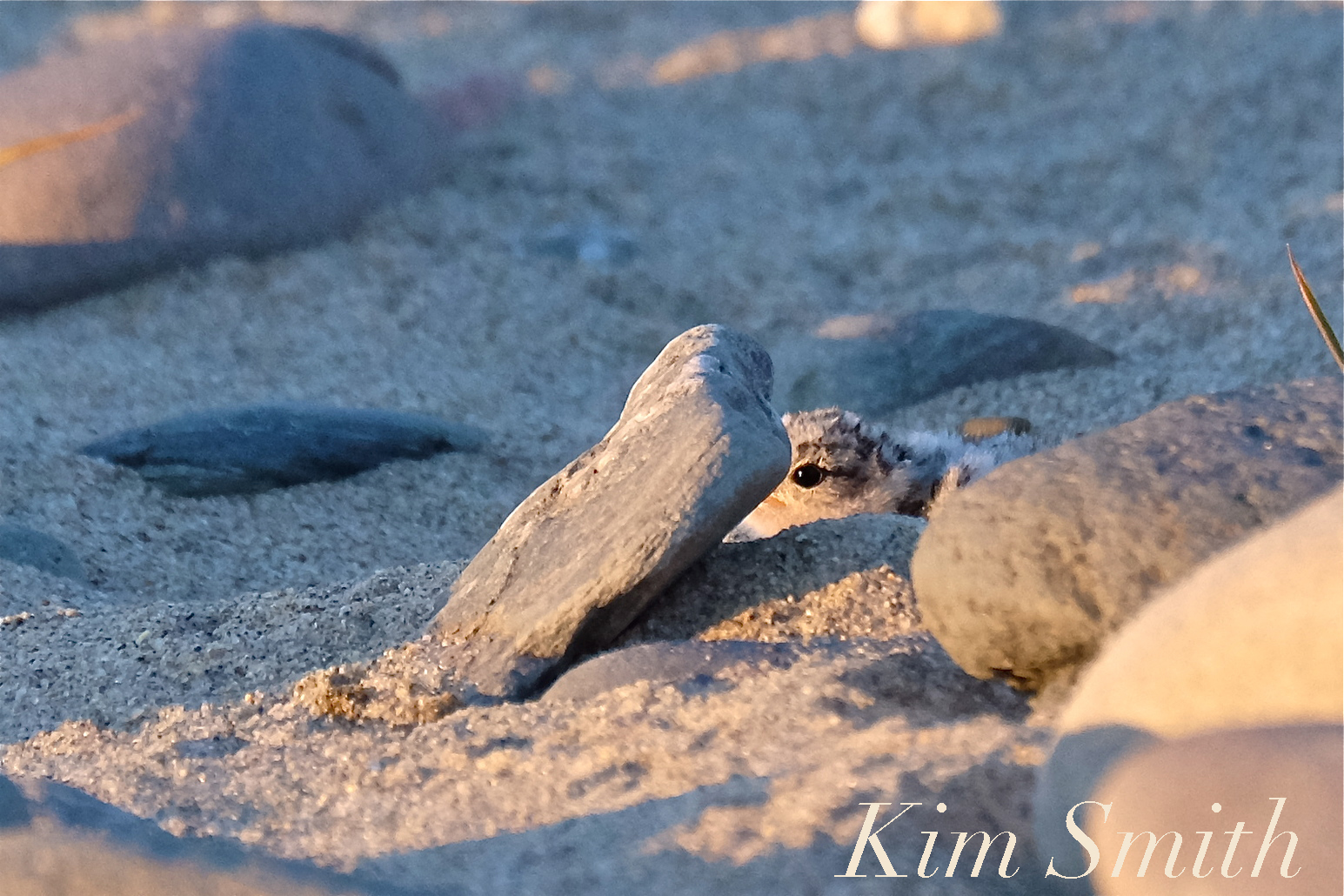 Camouflaged!
The polka-dot fluff balls blend perfectly with the surrounding sand and rocks. The brilliant red inside the chicks mouth makes it easier for the adult terns to find them against the monochromatic pebbly beach habitat.
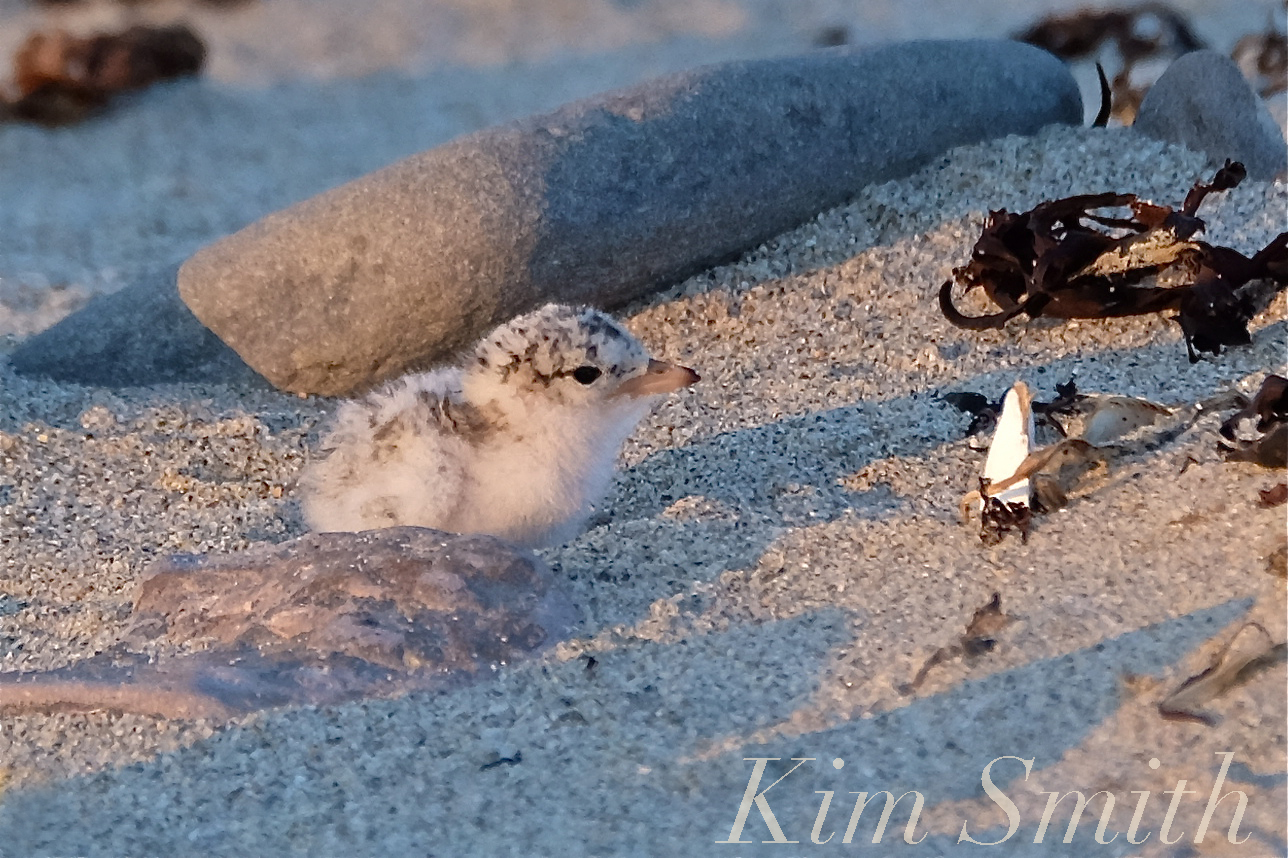 Waiting for dinner.
The tern parents will share feeding their chicks and fledglings non-stop for weeks; the chicks won’t be on their own for another two months.
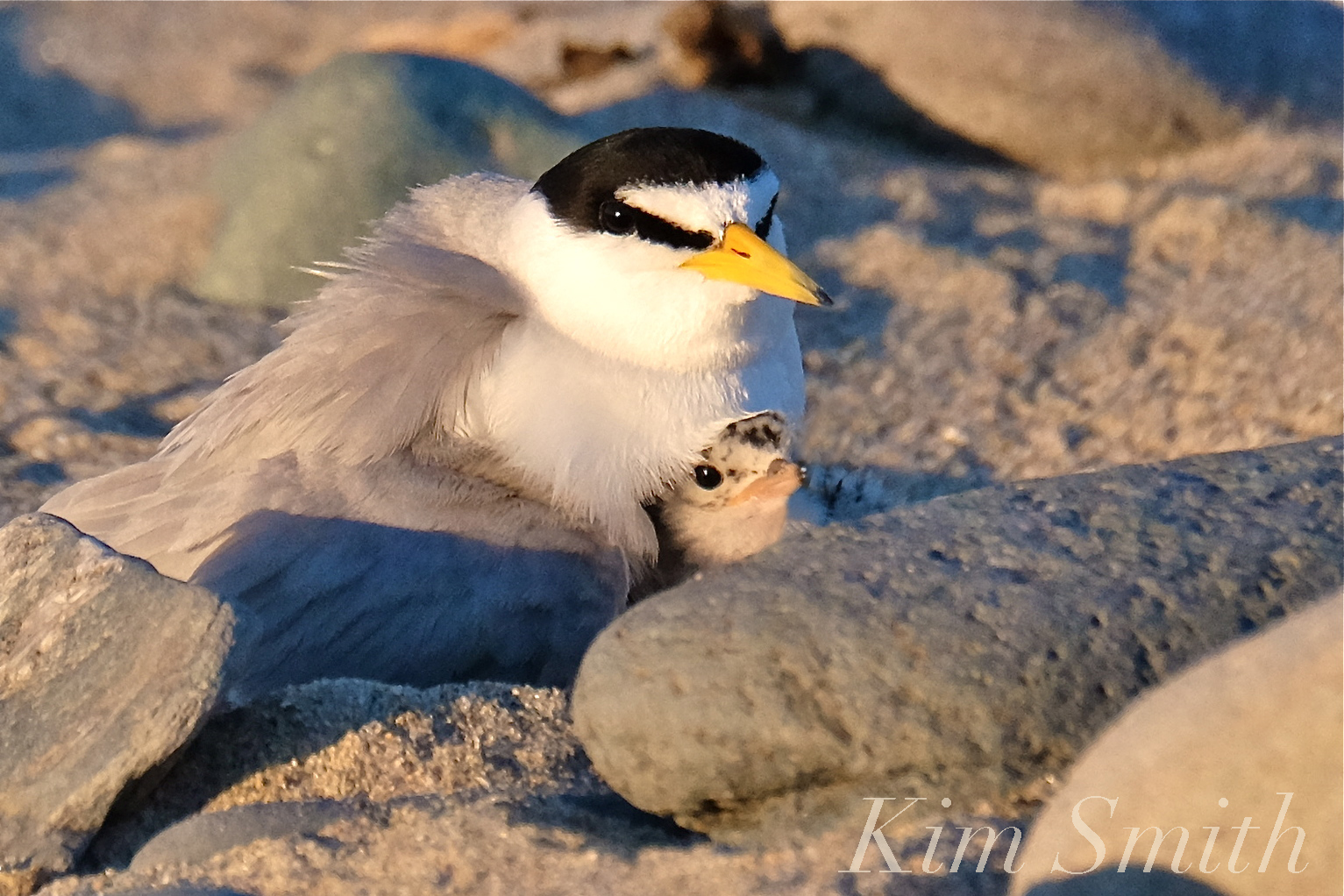 For the first several days after hatching, Least Tern chicks keep fairly close to Mom in scooped out scrapes and natural divots in the sand, or well-hidden hidden behind rocks and beach vegetation.
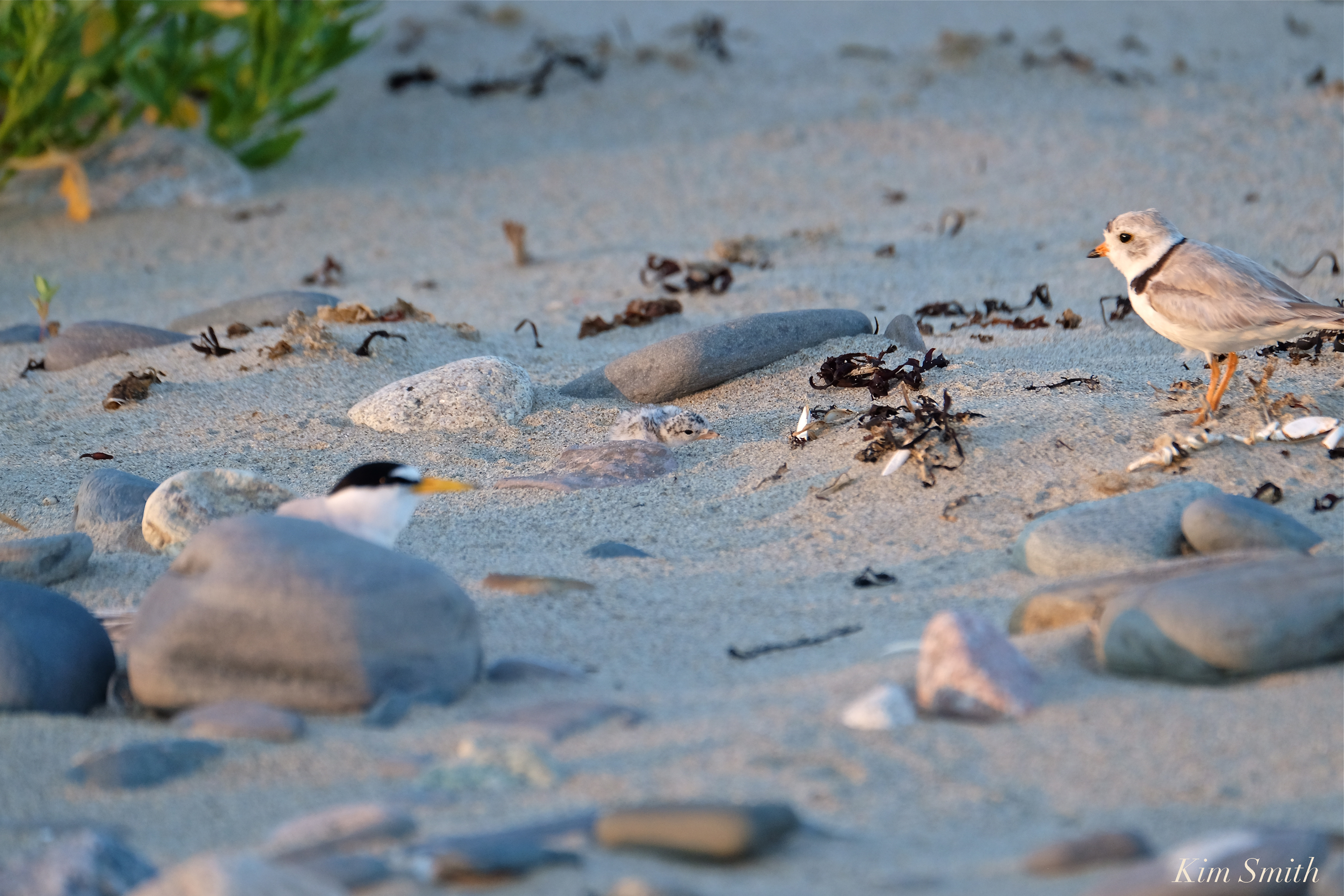 Tiny Least Tern Chick camouflaged in the sand, flanked by an adult Least Tern and Piping Plover male passing by (right).
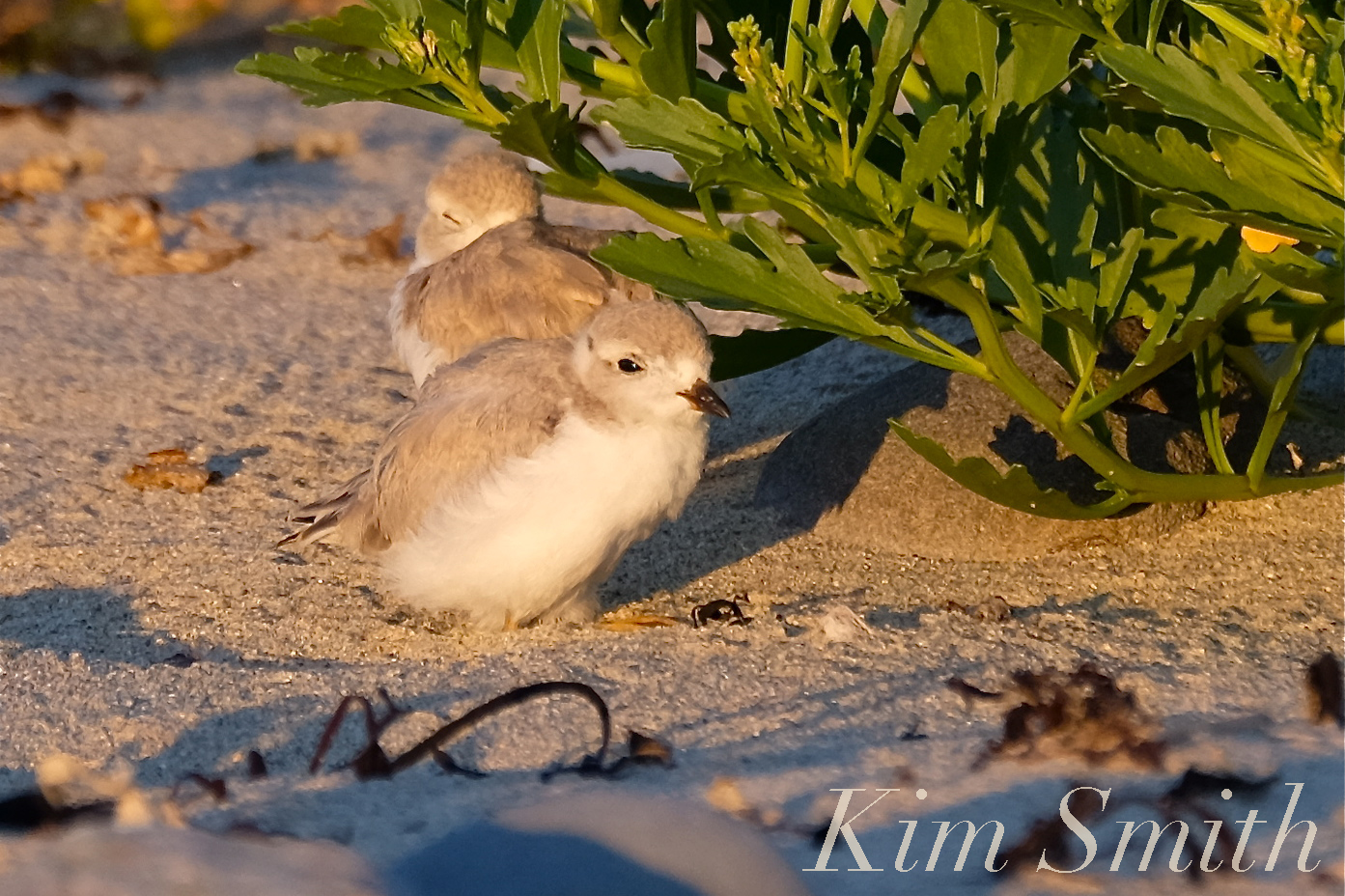 The Rosetti’s Piping Plover fledglings (three!) sharing the nesting site with the Least Tern Rosetti’s family.

 Good Morning Gloucester